
Does the text on the back of a 1993 acoustic record stand as his true literary peak? Here is how Dylan’s weird liner notes and his acoustic music go hand in hand.
Is World Gone Wrong Home to Bob Dylan’s Greatest Piece of Prose Writing?
Does the text on the back of a 1993 acoustic record stand as his true literary peak? Here is how Dylan’s weird liner notes and his acoustic music go hand in hand.
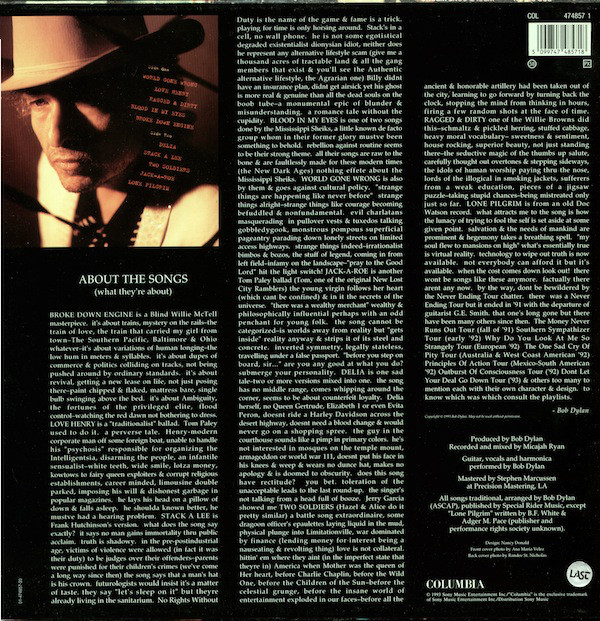 Known widely for a Nobel Prize and an iconic catalog of songs, Bob Dylan hides a distinct magic within his printed paragraphs. What’s more challenging for modern readers is that his complex, historical references can feel incredibly dense to decode.
All of this means one thing: standard album reviews aren’t always enough to help you grasp his artistic depth. Yet, the text on the back of his 1993 acoustic album, World Gone Wrong, is emerging as a perfect bridge between ancient blues and the modern age.
Here’s how his acoustic music and his raw prose go hand in hand and how to read them.
A Return to the Acoustic Roots
During a time when the music industry obsessed over slick, shiny studio tricks, Dylan chose the exact opposite route. Armed with only a guitar and a harmonica, he laid down traditional folk and blues tunes. Here is what that era of his music looks like:
- It sets a heavy, unforgiving mood.
- It praises the original blues artists as true heroes of the American landscape.
- It attacks a modern culture obsessed with greed and shallow entertainment.
Decoding such complex art is a stressful task for many. When expected to grasp the heavy history of early American music, you can easily feel an immense amount of pressure.
Because of this, the dense material often creates a vicious cycle of anxiety and confusion. Under such heavy stress, a tired student might just want to pay to write essay online rather than face these tough historical songs.
But it’s not just academic performance that can take a hit when you skip the liner notes. You miss out on a massive reward. His text acts as a map to a forgotten version of America.
What is This Liner Note Magic?
Put simply, Dylan’s prose is a chaotic, beautiful fever dream. He doesn’t just list basic facts about the songs; he invents strange mini-stories for each track. How he describes the song “Blood in My Eyes” is usually a good predictor of how vividly he views betrayal and societal collapse.
Of course, reading these notes isn’t a silver bullet that suddenly explains every Dylan mystery. You may still experience confusion, but you’ll be better at understanding the sorrow and anger present in his acoustic chords. The reason? His furious, fiery style connects old blues musicians directly to modern problems.
However, appreciating his prose doesn’t mean unrealistically expecting standard, polite sentences. That’s known as strict academic conformity, and it can lead to frustration over his unusual grammar.
The Structure of a Masterpiece Called World Gone Wrong
To understand how he constructs his sentences, experts often look closely at the text of World Gone Wrong. Jennifer Lockman, an editor-in-chief for EssayService’s blog, notes that his style breaks all traditional rules.
“Dylan ignores standard grammar to create a rhythm that feels exactly like a blues song,” she observes. When professionals at a top essay writing service look for examples of bold, unconventional prose, they frequently point to these specific album notes as a prime example of pure, unrestricted expression.
Let’s be clear: breaking the rules isn’t inherently bad. In fact, his World Gone Wrong text stands out precisely because he avoids the status quo. Here are the distinct methods he uses to build his masterpiece:
- Vivid Character Portraits: He breathes life into forgotten artists like Blind Willie McTell, treating them with ultimate reverence.
- Modern Connections: He mirrors the greed and chaos of the 1990s with century-old songs about floods and crimes.
- Dark Humor: He uses bitter jokes to mock the absurdity of modern plastic pop culture.
- Unusual Punctuation: Placed in strange spots, slashes and dashes force the reader to pause, acting like musical rests in a song.
Themes of a Broken Society
Heavy and profound themes anchor this text. Focusing on the negative aspects of modern life, Dylan highlights a society that appears to have lost its moral compass.
Replaced by technology and corporate greed, basic human empathy and connection take a hit. It may become a vicious cycle: society ignores history, the world takes a wrong turn, and on and on it goes.
Dylan prevents the listener from entering this vicious cycle by acting as a prophet who points out the flaws of humanity. Striking descriptions of love and betrayal fill the notes, treating romance as a dangerous, high-stakes gamble where lovers are always on the run.
How the Liner Notes Compare to His Books
To figure out if these liner notes are his true literary peak, we have to see how they stack up against his actual published books. Here is why the 1993 liner notes hold a special place.
Look Beyond Tarantula
It can be surprisingly easy to get lost in his 1966 book, Tarantula. While it is a frantic rush of surreal poetry, its abstract madness often confuses the reader. Don’t beat yourself up if you struggle to find a clear, grounded message in it. Instead, treat it as an experiment.
Don’t Compare It to Chronicles
Every piece of writing is different, and so is its goal. His 2004 memoir, Chronicles: Volume One, is defined by clear, sharp autobiographical text. However, the World Gone Wrong notes strike the perfect balance between wild poetry and focused, historical anger.
Let Go of Editors
A traditional mindset may force you to demand perfect grammar. Countering that cognitive pattern will help you appreciate his authentic voice. Untouched by an editor, his weird punctuation and wild ideas remain completely intact here. Straight from his typewriter, the text lands on the album sleeve without any outside interference.
Conclusion
The connection between Dylan’s acoustic music and his unfiltered liner notes is an ongoing field of study, but what we already know is profound. Hidden on an acoustic album cover, this short text remains his most intense, electric, and perfect piece of written work.
Of course, Dylan will always be a songwriter first and foremost. He can’t fix the world’s broken moral compass. But reading his fearless prose can still go a long way to make you appreciate his incredible literary skill.
Any Questions?
What is the main purpose of the World Gone Wrong liner notes?
The notes act as a bridge between ancient blues and modern problems. Rather than a basic summary, they amplify the sorrow and anger present in the acoustic guitar chords and attack a culture obsessed with shallow entertainment.
How does the text correlate with the music itself?
Overall, the bizarre sentences help the listener comprehend the dark tone of the album. Words and music lock together perfectly to create a unified mood, proving that his prose and his guitar playing are hard-wired to work together.
Can these notes improve a student’s understanding of Bob Dylan?
Yes. Thanks to his authentic, raspy voice and his vivid character portraits, readers gain a clear understanding of the historical weight behind early American music. They also stay engaged longer because his jagged, unpredictable sentences keep the mind alert.