
by Jochen Markhorst
In this series, we shine a spotlight on a thriving, fascinating, and polarizing fringe phenomenon within Dylanology: the semi-professional cover artist. And more specifically, on a veteran from the southern part of a small country on the North Sea: Jan Barten from Breda, the Netherlands.
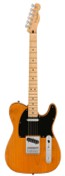 Jan: “A track with an unconventional chord progression (the chords themselves are simple). It begins with just an acoustic guitar and Fons Havermans’ vocals. Halfway through, the following come in simultaneously: piano (Nord Stage), bass (Roland keyboards), drums (TR 626 and played by hand) and electric guitar (Fender Telecaster). This arrangement is maintained right through to the end. Later on, there’s also an organ solo.”
“Can You Please Crawl Out Your Window?” is a song that Dylan struggles with for quite some time, comparable in that respect to “I’ll Keep It With Mine”, the song he also keeps fooling around with during these months. Can You Please Crawl gets seventeen takes during the Highway 61 session alone. Then two attempts in the no man’s land between the release of Highway 61 and the first real Blonde On Blonde session on 30 November 1965: on Tuesday 5 October, Dylan spends another long evening (three hours, an hour and a half break and then another four hours) in the studio for a session that will prove to be not very productive. “Medicine Sunday”, “Jet Pilot”, “Can You Please Crawl Out Your Window”, “I Wanna Be Your Lover” and two untitled “Instrumental Tracks”; a bunch of unfinished snippets and failed takes, not a single song is deemed good enough for Blonde On Blonde, and the best takes are not officially released until 1985, on the fascinating box set Biograph.
Those two “Can You Please Crawl Out Your Window” snippets we only get to hear in 2015, on Disc 8 of the acclaimed The Bootleg Series 12 – The Cutting Edge 1965-66. Unfortunately, both were cut short (after 0’57” and after 0’49”), both at a slower tempo than the H61 takes and both even more mercurial than those earlier takes.
Seven weeks after this “in-between session”, at the first real Blonde session on 30 November, the final attempt is made. First, fourteen attempts to record “Visions Of Johanna” to the master’s satisfaction (unsuccessful), and the rest of the evening is spent on Can You Please Crawl. Right from the first take, a false start, it is clear that Dylan has ironed out the main sticking point. The Rolling Stone-esque intro is replaced by an al niente, a “to nothing”, in which the band falls silent for a bar and only drummer Bobby Gregg taps the beat on a cymbal. The idea is so successful that it is also used after each chorus and becomes one of the song’s strongest features.
This version is accepted fairly quickly. During this final recording session, it hardly changes; in fact, only organist Garth Hudson is searching for a definitive part. The faltering rehearsals and breakdown are probably due to the slightly unusual chord progression of the bridge to the verses. The esteemed gentlemen musicians do have to stay focused here, but pace, arrangement and sound for the final version of the song itself have been found. The disturbing similarities from July have largely evaporated – partly because influential musicians such as Al Kooper and Mike Bloomfield are not playing on this version, of course.
It is released as a single, and Dylan has expectations. In No Direction Home, Shelton tells the story of how Dylan throws the doormat on duty, Phil Ochs, out of the car because Ochs is not overly enthusiastic about the single’s hit potential.
Still, Ochs is right. In the US, Can You Please Crawl barely makes it into the charts (number 58 in the Billboard Hot 100 is the highest position), in Canada it doesn’t make it past 42nd place, and in Europe the song only makes it into the charts in England, where it is still a hit, though a minor one: it stays in the charts for five weeks, with 17 as its highest position.
The covers of the song don’t score anywhere either. In the Netherlands, even national sweetheart Patricia Paay (1975) fails with a polished but still okay version, thanks to none other than Steve Harley – who, in his glory year (“Come Up And See Me (Make Me Smile)”), finds time to produce his sister-in-law’s entire debut album and calls in his Cockney Rebels Jim Cregan (guitar) and Duncan Mackay (keyboards). EMI apparently believes in it; not only do La Paay and Steve Harley get Abbey Road Studios at their disposal, EMI also pulls out the wallet for Herbie “Walk On The Wild Side” Flowers on bass and Tony “Rebel, Rebel” Newman on drums – the crème de la crème in the session musicians rolodex. Great musicians, very nice arrangement and a short, atmospheric Make Me Smile-style Spanish guitar solo… but still not enough.
The few other covers aren’t much to write home about either. The garage quality can be approximated, but a decisive quality factor of the song is indeed that crisp, clear organ sound as Nick Hornby appreciatively calls it. And the viciousness, of course – for that, you at least have to be able to get close to Dylan.
A few live recordings of Jimi Hendrix circulate, unfortunately of inferior sound quality, but even there Hendrix is nowhere near the level of the original or, for example, his unrivalled “All Along The Watchtower”. The tempo is usually too fast (and fluctuates annoyingly), which seems to compromise the vocals – messy and chaotic, all in all. Much better is the version recorded with more steadiness during a BBC session on 17 October 1967, enthusiastically introduced by Alexis Korner (“I’m sure that Bob Dylan would dig this version!”), but now Jimi suddenly sings dull and uninspired – and in fact plays some of the exact same licks and fills that he also delivers on his version of “Like A Rolling Stone”.
Jimi is early on it, but he is not the first. The New York band The Vacels were much earlier – remarkably even earlier than Dylan himself. Their single “Can You Please Crawl Out Your Window” b/w “I’m Just A Poor Boy” was released in September 1965 – three months before Dylan’s single came out in December. The Long Island band had just scored a minor hit with “You’re My Baby” in the Hot 100 (which entered alongside “Like A Rolling Stone” on 24 July; Dylan at 91, The Vacels at 90), and apparently had one of the misprints of “Positively 4th Street” on the turntable, the misprint on which the original version of Can You Please Crawl is accidentally included. It is an alright cover, somewhat overproduced by none other than Richard Perry, with rather intrusive brass but attractive, enthusiastic and energetic vocals.
Equally unnoticed goes Wilko Johnson’s cover on his solo LP Ice On The Motorway in 1980. Wilko is mean and energetic, sounding like Pete Townshend with The Jam as the backing band, but even that is still not enough. Thirty-four years later, in 2013, he tries again, inviting The Who’s Roger Daltrey to sing. The men craft a professional, but somewhat too ordinary rock song (on Wilko’s farewell album Going Back Home)
The first resuscitation attempt of the twenty-first century has at least a fascinating line-up. And some sort of official license; Carla Olson stepped onto Planet Dylan as a stand-in for Mick Taylor in that first official music video Dylan ever made, the promo video for “Sweetheart Like You” in 1983. In 2002, Carla then surprises with a fine rocking solo album, The Ring Of Truth, where we find her take on “Can You Please Crawl Out Your Window?” at number 7. The credits are promising: veteran and Dylan confidant John Sebastian on harmonica, veteran and Dylan confidant Mick Taylor on guitar. The contributions of both masters are beautiful enough, the sound is crisp – but despite all the superpower, Carla’s version still does not escape the shadow of the original. Her singing, while leaning towards Chrissie Hynde, simply lacks the bite, the nastiness.
Far more charming is the cover provided by a band from Brooklyn, The Hold Steady, with a contribution for the soundtrack of the Dylan film I’m Not There (2007). From start to finish a skilled Springsteen imitation, but what the heck; better well stolen than poorly invented – as the master himself has been demonstrating for more than sixty years now.
Just under twenty years later, Jan opts for the same approach: forget Dylan, see what the song actually needs. It’s not a stadium rocker, Jan knows – so no Springsteenaria. Instead, Cat Stevens-style, purely musical beauty, and a singer who, following the lead, doesn’t sneer or snap, but almost tenderly asks if she wouldn’t mind crawling out of the window – he’s a Romeo beneath the balcony.
To be continued. Next up Jan’s Take 15: Girl From The North Country
Previously in the series
- Jan’s Take 1: It Takes A Lot To Laugh, It Takes A Train To Cry
- Jan’s Take 2: It’s All Over Now, Baby Blue
- Jan’s Take 3: 4th Time Around
- Jan’s Take 4: To Be Alone With You
- Jan’s Take 5: Ballad Of Hollis Brown
- Jan’s Take 6: I Want You
- Jan’s Take 7: I Pity The Poor Immigrant
- Jan’s Take 8: Tonight I’ll Be Staying Here With You
- Jan’s Take 9: You’re A Big Girl Now
- Jan’s Take 10: Sooner Or Later (One Of Us Must Know)
- Jan’s Take 11: Lay, Lady, Lay
- Jan’s Take 12: Forever Young
- Jan’s Take 13: From A Buick 6