
Key West part 1: Andorra
by Jochen Markhorst
II The lyrics kinda float from person to person
McKinley hollered - McKinley squalled
Doctor said McKinley - death is on the wall
Say it to me if you got something to confess
I heard all about it - he was going down slow
Heard it on the wireless radio
From down in the boondocks - way down in Key West
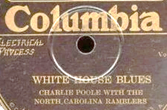 In ‘Markin’ Up the Score’, chapter 1 of his fictionalised autobiography Chronicles (2004), Dylan emphasises the positive influence that Israel “Izzy” Goodman Young had on both his well-being and his creativity. The owner of the Folklore Centre in Greenwich Village allows the young Dylan to use the back room to warm up, read and listen to music, and also mentors him:
“He’d pull out records for me. He’d given me a Country Gentlemen record and said I should listen to “Girl Behind the Bar”. He played me “White House Blues” by Charlie Poole and said that this would be perfect for me and pointed out that this was the exact version that The Ramblers did. He played me the Big Bill Broonzy song “Somebody’s Got to Go”, and that was right up my alley, too. I liked hanging around at Izzy’s. The fire was always crackling.”
Izzy is right. This must be set around 1960, and sixty years later, the echoes of “White House Blues” are still loud and clear.
McKinley hollered, McKinley squalled
Doc said to McKinley, "I can't find that ball"
From Buffalo to Washington
Charlie Poole – White House Blues:
… the first verse of Charlie Poole’s bluegrass classic from 1926, the opening lines of which Dylan reuses for the opening of his own classic from 2020, “Key West”. Demonstrating – intentionally or not – the truthfulness of his own words from twelve years earlier:
“That was “White House Blues” by Charlie Poole, all about McKinley’s assassination.
You know, a lot of early folk and blues songs have lyrics that are passed around from performer to performer. Each one putting their own spin on it, but the lyrics kinda float from person to person. You hear Charlie Poole singing: McKinley in the graveyard, he never wakes up. You know, that’s not too different from the way Blind Willie McTell sang about Delia: Delia is in the graveyard, she won’t ever get back up.”
… the words spoken by DJ Dylan on 13 February 2008 in his radio show Theme Time Radio Hour, episode 68 “President’s Day”, after playing the opening song – lyrics that are passed around from performer to performer. Perhaps at that moment, the DJ is only thinking back to something as inconspicuous as Poole’s bound to die, which he reused in 1962 in “Down The Highway”, but in any case, it is a remarkable foreshadowing of what he will do with Poole’s song in 2020.
“Putting their own spin on it” is, of course, something Dylan has been doing for decades. Here on Rough And Rowdy Ways even more so, and it also seems to be the modus operandi on this ‘Key West”. In this opening verse alone, we recognise three or four familiar word combinations, word combinations that float from person to person;
– The most original, least reused seems to be Death is on the wall, which appears to be a Dylanesque “own spin” on writing on the wall. In any case, it is congruent with the origin of that expression, with the Old Testament’s Daniel 5, the scene in which Daniel deciphers the writings on the wall and then has to tell King Belshazzar that his days are numbered. Dylan has already used writing on the wall twice in his oeuvre (in “Trouble” and in “Thunder On The Mountain”), and your days are numbered three times (in “When The Ship Comes In”, “Sign On The Cross” and “Mississippi”), so it was indeed about time to give it its own spin.
– The phrase going down slow in line 4 is in itself too generic to dwell on, but on an album brimming with references, nods and tributes to the classics, it surely is a nod to St. Louis Jimmy’s standard “Goin’ Down Slow” from 1941 – the song that is part of the repertoire of every blues great from Howlin’ Wolf to B.B. King and from Memphis Slim to Ray Charles, and which is one more time singled out by Dylan here on Side D, in “Murder Most Foul” (fifth verse; “Guitar Slim going down slow”).
– Heard it on the wireless radio are not words that are passed around from performer to performer, but seem to have crept in here thanks to
I am down on my knees
At those wireless knobs
Telefunken, Telefunken
And I'm searching for
Luxembourg, Luxembourg,
Athlone, Budapest, AFN,
Hilversum, Helvetia
In the days before rock 'n' roll
… thanks to the peculiar, mesmerising marathon song “In The Days Before Rock ‘N’ Roll” (Enlightenment, 1990), Van Morrison’s precursor to the “Wolfman Jack enumeration” in “Murder Most Foul”, the words spoken by Van’s collaborator, Irish poet Paul Durcan. The mere word “wireless” itself is of course, too thin to be labelled as “reuse”, but when we hear Dylan sing “Coming out of Luxembourg and Budapest / Radio signal’s clear as can be” in the next verse, the connection seems obvious.
– The closing line down in the boondocks is just as unmistakably passed around as the opening line. It undoubtedly got under Dylan’s skin thanks to Joe South’s 1965 country rock song “Down In The Boondocks”, which was Billie Joe Royal’s biggest hit:
Down in the boondocks, down in the boondocks
People put me down 'cause that's the side of town I was born in
Well I love her and she loves me
But I don't fit her society
Lord have mercy on a boy from down in the boondocks
Musically a rather shameless rip-off of Gene Pitney’s “Twenty Four Hours from Tulsa”, but what the heck – better well stolen than poorly invented, as Dylan himself knows only too well. Del Reeves also scores a minor hit with the song, as does Penny DeHaven, and over the years the tearjerker is recorded by A-list artists such as Ry Cooder, The Three Degrees, Kenny Loggins and more. And in 2020 the song achieves definitive immortality when it gets a name-check in a Dylan song. Twice even, as Dylan is winking at this song as well in the closing/bonus song “Murder Most Foul”: “Play “Down in the Boondocks” for Terry Malloy” (greeting Marlon Brando’s film character Terry Malloy from On The Waterfront in the same breath).
So much for the hardware, the chosen words, the lyrics that are passed around from performer to performer. As to why Dylan chooses these particular words: now, that is different question…
To be continued. Next up Key West part 3: Familiar sounding, but something’s off
Jochen is a regular reviewer of Dylan’s work on Untold. His books, in English, Dutch and German, are available via Amazon both in paperback and on Kindle: 
- Blood on the Tracks: Dylan’s Masterpiece in Blue
- Blonde On Blonde: Bob Dylan’s mercurial masterpiece
- Where Are You Tonight? Bob Dylan’s hushed-up classic from 1978
- Desolation Row: Bob Dylan’s poetic letter from 1965
- Basement Tapes: Bob Dylan’s Summer of 1967
- Mississippi: Bob Dylan’s midlife masterpiece
- Bob Dylan’s Greatest Hits
- John Wesley Harding: Bob Dylan meets Kafka in Nashville
- Tombstone Blues b/w Jet Pilot: Dylan’s looking for the fuse
- Street-Legal: Bob Dylan’s unpolished gem from 1978
- Bringing It All Back Home: Bob Dylan’s 2nd Big Bang
- Time Out Of Mind: The Rising of an Old Master
- Crossing The Rubicon: Dylan’s latter-day classic
- Nashville Skyline: Bob Dylan’s other type of music
- Nick Drake’s River Man: A very British Masterpiece
- I Contain Multitudes: Bob Dylan’s Account of the Long Strange Trip
- Bob Dylan’s Rough And Rowdy Ways – Side B
- Bob Dylan’s High Water (for Charley Patton)
- Bob Dylan’s 1971
- Like A Rolling Stone b/w Gates Of Eden: Bob Dylan kicks open the door
- It Takes A Lot To Laugh, It Takes A Train To Cry b/w Just Like Tom Thumb’s Blues – Bob Dylan’s melancholy blues
- Bob Dylan’s Rough And Rowdy Ways – Side A
- Bob Dylan takes Highway 61 – Seven mercurial songs
According to Washington Irving’s ” Tales Of Alhambra “, a mixture of actual and mythological history of Spain, to the west black clouds, wind, and rain block out the sun.
But to the east, the weather is better:
In all the tales of Granada they tell of Islam’s run
They lived beneath a Moorish lord, beneath the Moorish sun
Oh how we yearned to turn our faces to that glare
But down from the mountains came the rain to soak our hair
(The Zombies: Andorra)