
by Jochen Markhorst
XX The girl with the giggle in her voice
Wherever I travel - wherever I roam
I’m not that far from the convent home
I do what I think is right - what I think is best
Mystery Street off Mallory Square
Truman had his White House there
Eastbound – westbound - way down in Key West
 Google Maps has been kept busy by all the fans who, since 19 June 2020 – following the release of Rough And Rowdy Ways – have been zooming in on the street map of Key West. Amelia Street, Bay View Park, Truman’s White House, Mallory Square… they’re all there.
But “Mystery Street” doesn’t exist. At least, not in Key West. The nearest one is in New Orleans, over 1,000 miles away. A pleasant explanation would be that Dylan is having a bit of fun here. Knowing full well that the army of Dylan interpreters will turn his lyrics inside out, he adds one non-existent street name, and then goes and calls that non-existent street “Mystery Street” – a witty, light-hearted tease. Unlikely, but still….
In any case, the choice of name doesn’t fall into the category of “Desolation Row” or “Highway Of Regret” or “Rue Morgue Avenue” or “Twelfth Street and Vine” – street names with a weighty, metaphorical quality – but is closer to something like “56th and Wabasha” (from “Meet Me In The Morning”, 1975), a non-existent street name that sounds good.
In this case, because “Mystery Street” alliterates with “Mallory Square” and has the same metre (both —◡◡—, the choriamb, as the literature professor would say). With which Dylan mirrors the rhythm of the sequence under the sun – under the radar – under the gun from the previous verse, and – instinctively, presumably – more lines of verse in “Key West” in general; Radio signal clear as can be from the second verse, for example, and Forced me to marry a prostitute from the next verse. Apparently, the songwriter finds it a pleasing rhythm.
None of which sheds any light on the choice of the noun “mystery”. The world’s greatest songwriter could, of course, easily have come up with a hundred other names with the alliterating M-S in the same metre. Mulligan Street. Madison Circle. Melody Street. And he could even have chosen one from the street names register on Key West’s city map: Margaret Street, the street that connects Key West Cemetery with Harpoon Harry’s restaurant, a fifteen-minute walk from Truman’s Little White House. Anyway, Dylan decides on “Mystery Street”.
It leads analysts to a 1950s movie, a film noir that was not particularly successful at the time and which, for unclear reasons, is called Mystery Street (neither the street name nor any reference to it appears in the film – the choice of title was likely dictated by the PR department at Metro-Goldwyn-Mayer). It is a fine film, all right, featuring a leading role for forensic investigation that was remarkable for its time, an original take on the femme fatale cliché (the blonde ice queen Jan Sterling is murdered right at the start of the film; her skeleton is the plot-driving mystery) and an excellent Ricardo Montalban in the lead role. However: no connection to “Key West”, and too insignificant to lay claim to the honourable label of “Dylan inspiration”.
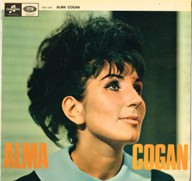
No, on an album full of song references and within a song full of song references, Ockham’s razor seems to point the way once again: Dylan sneaks yet another song reference into his song. And that would have to be the rather obscure “Mystery Street” by the girl with the giggle in her voice, by the forgotten Alma Cogan, a superstar in the UK until her death in 1966 (biggest hit “Dreamboat”, 1953). Dylan has met her once; when The Beatles visited him in his suite at the Savoy Hotel in May 1965, they had Alma with them – by then, she had long been Lennon’s extramarital indiscretion.
By 1965, Alma was past her artistic and commercial peak, but she had a magnetic personality; as well as being Lennon’s secret girlfriend, she was an enthusiastic hostess for house parties attended by guests such as Noel Coward, Audrey Hepburn, Michael Caine and Cary Grant, and was friends with many other figures in the music industry. Close friends, in fact; one of Alma’s merits is that she convinced Paul that he hadn’t heard “Yesterday” somewhere else, but that the song had truly come from within him. “I took it round to Alma Cogan, a friend of ours, and she said: ‘I don’t know it, but it is rather nice.’” And Alma’s mother also contributed:
“At this point there were no words. Alma’s mother came in and asked if anybody would like a snack of scrambled eggs. Paul began to play the tune over with new dummy lyrics, ‘Scrambled eggs/Oh my baby how I love your legs/oh scrambled eggs’, and this became the working title of the song: ‘Scrambled Eggs’.”
(Howard Sounes – Fab: an intimate life of Paul McCartney, 2010)
It is a story that Sir Paul often tells, in slightly varying versions, and which he more or less officially recorded in 2021 in the monumental, fascinating The Lyrics: 1956 to the Present: John didn’t know the melody, nor did George Martin, and “I got the same response from my friend, the singer Alma Cogan, who had a pretty comprehensive knowledge of popular songs” (p. 837. where he also officially states that Marvin Gaye’s version is his favourite).
Alma’s “pretty comprehensive knowledge” is evident in her discography as well – despite her short life (Alma died of cancer at the age of thirty-four), she recorded seven studio albums, five EPs and 78 singles. Including rather awkward novelty songs such as “Never Tango With An Eskimo” and “Skinnie Minnie”, über-dramatic versions of songs like “Eight Days A Week” and embarrassingly dated interpretations of “Help!” and “Bell Bottom Blues”, but also solid, timeless renditions from the American Songbook, of songs that Dylan would also tackle decades later (“You Belong to Me”, “But Beautiful”, “Somewhere Along The Way”, “As Time Goes By” and more).
Amidst all this, Alma’s “Mystery Street” still holds its own. With its menacing orchestration, a smooth, cool swing and Alma’s slightly husky, low delivery – thankfully without a giggle. And lyrics like something out of a film noir, suggesting that Mystery Street is indeed located somewhere in Dylan’s Key West:
Thrills you will find
There the dangerous kind
You may lose your heart
And then your mind
It is a forgotten gem from 1953 and a wonderful B-side (from the single “If I Had A Golden Umbrella”, which rightly flopped). We can certainly imagine that, some seventy years later, musical archaeologist Dylan would want to shed some light on it, dismiss Margaret Street and seize the opportunity to dust off “Mystery Street”. Off Mallory Square.
To be continued. Next up Key West Part 21: My motto is Treat ‘Em Like a Prostitute | Untold Dylan
Jochen is a regular reviewer of Dylan’s work on Untold. His books, in English, Dutch and German, are available via Amazon both in paperback and on Kindle: 
- Blood on the Tracks: Dylan’s Masterpiece in Blue
- Blonde On Blonde: Bob Dylan’s mercurial masterpiece
- Where Are You Tonight? Bob Dylan’s hushed-up classic from 1978
- Desolation Row: Bob Dylan’s poetic letter from 1965
- Basement Tapes: Bob Dylan’s Summer of 1967
- Mississippi: Bob Dylan’s midlife masterpiece
- Bob Dylan’s Greatest Hits
- John Wesley Harding: Bob Dylan meets Kafka in Nashville
- Tombstone Blues b/w Jet Pilot: Dylan’s looking for the fuse
- Street-Legal: Bob Dylan’s unpolished gem from 1978
- Bringing It All Back Home: Bob Dylan’s 2nd Big Bang
- Time Out Of Mind: The Rising of an Old Master
- Crossing The Rubicon: Dylan’s latter-day classic
- Nashville Skyline: Bob Dylan’s other type of music
- Nick Drake’s River Man: A very British Masterpiece
- I Contain Multitudes: Bob Dylan’s Account of the Long Strange Trip
- Bob Dylan’s Rough And Rowdy Ways – Side B
- Bob Dylan’s High Water (for Charley Patton)
- Bob Dylan’s 1971
- Like A Rolling Stone b/w Gates Of Eden: Bob Dylan kicks open the door
- It Takes A Lot To Laugh, It Takes A Train To Cry b/w Just Like Tom Thumb’s Blues – Bob Dylan’s melancholy blues
- Bob Dylan’s Rough And Rowdy Ways – Side A
- Bob Dylan takes Highway 61 – Seven mercurial songs
Did Alma Cogan appear in Magical Mystery Tour (the film, that is)?
The name “Mystery Street” is perhaps a pointer to something about Key West and the song, and not such a strange choice of name.
No, the film was shot about a year after Alma’s death.
I still find the choice of name a bit odd, though. After all, all the other places mentioned actually exist – this is the only one that doesn’t (hence my struggle to find an explanation).
I suppose Mystery Street as a remembered rather than, actual locale, again contextualizes the song as summoning an imagined place. Apparent from the start with the invocation of radio signals emphatically not transmitting across the wide water ( of time, of place). Keep on keepin’ on Jochen, taking us to these unknown lands.