by Jochen Markhorst
XIII The Fender Bender Poet
Put your head out the window, let the good times roll
There’s a party going on behind the grassy knoll
Stack up the bricks and pour the cement
Don’t say Dallas don’t love you, Mr. President
Put your foot in the tank and step on the gas
Try to make it to the triple underpass
Black face singer - white face clown
Better not show your faces after the sun goes down
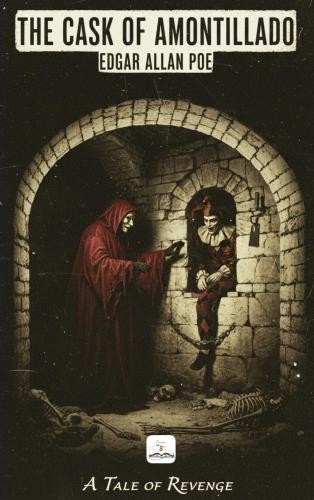 “I soon uncovered a quantity of building stone and mortar. With these materials and with the aid of my trowel, I began vigorously to wall up the entrance of the niche.” The words Dylan chooses between one Kennedy reference – ‘the grassy knoll’ – and the next – ‘Don’t say Dallas don’t love you, Mr President’ – have a sinister undertone, despite their originality. Taken on its own, the line Stack up the bricks and pour the cement has of course a – literally – constructive character. Roll up the sleeves, spit into your hands, let’s get to work – something like that. The sinister undertone here stems first and foremost from the context – the assassination of JFK – and, by extension, from that one instance where this is the action leading to a chilling murder: Edgar Allan Poe’s “The Cask of Amontillado”, which contains the words quoted above – the words with which Montresor recounts the moment he carries out his gruesome, senseless act of revenge.
Poe thus seems to be a minor recurring theme not only in Dylan’s body of work more generally, but on this album as well.
We’ve been familiar with the references and subtle nods since the 1960s, from snippets such as Rue Morgue Avenue in songs and name-checks such as Al Araaf in Dylan’s experimental prose poetry collection Tarantula, and in the 21st century Dylan has become more explicit. In his fictionalised autobiography Chronicles (2004), Dylan recalls that sometime in the early 1960s he learnt Poe’s “The Bells” by heart and “strummed it to a melody on my guitar” (which, if true at all, presumably vanished back into a drawer when Phil Ochs released his “The Bells” on All The News That’s Fit To Sing in 1964).
In that same year, 2004, Dylan even identifies – in hindsight – with Poe’s body of work when interviewer Ed Bradley (60 Minutes) asks him to describe his state of mind amidst the whirlwind of the mid-1960s: “It was like being in an Edgar Allan Poe story. And you’re just not that person everybody thinks you are, though they call you that all the time.” In 2007, DJ Dylan recites Poe’s “Annabel Lee” in its entirety in the episode Women’s Names of his Theme Time Radio Hour (at the end of which the DJ wittily describes Poe as a “fender bender poet” – actually a very appropiate honorary title for a poet who distinguishes himself with abundant internal rhyme, irresistible rhythm and fierce soundscapes).
In 2012, we hear further Poe paraphrases and allusions on Tempest (in “Duquesne Whistle” and “Tempest”, in particular), and in 2020 we hear Poe explicitly mentioned in a song for the first time:
Gotta tell tale heart like Mr. Poe
Got skeletons in the walls of people you know
I’ll drink to the truth of things that we said
I’ll drink to the man that shares your bed
I paint landscapes - I paint nudes . . . I contain multitudes
… in the second verse of the opening track of Rough And Rowdy Ways, in “I Contain Multitudes”. Dylan also mentions Poe’s “The Tell-Tale Heart” by name and with the line Got skeletons in the walls refers to – here too –”The Cask of Amontillado”, the short story in monologue form in which a Signor Montresor, against a Venetian-style backdrop, recounts how, fifty years ago, down in his enormous wine cellar, he immured the friendly Fortunato alive.
As revenge for an unspecified, and presumably imaginary, insult. Very similar to “The Tell-Tale Heart” in terms of both plot and structure; it too features the dramatic monologue of an apparently deranged murderer, also driven by a macabre form of paranoia, who, in a long monologue, tries in vain to elicit sympathy for his misdeed.
Dylan’s Stack up the bricks and pour the cement in this second verse of “Murder Most Foul” thus seems to be one of those “images which are just in there and have got to come out”, as Dylan attempts to explain the emergence of a yellow railroad in “Absolutely Sweet Marie” (in Paul Zollo’s book Songwriters on Songwriting, 1997).
That the connotation is sinister seems clear: immediately before this, Dylan mentions grassy knoll, a word combination that is in itself innocuous but which, since 22 November 1963, has been inextricably linked by United Press International reporter Albert Merriman Smith to the assassination (Smith was referring to a low hill on the north side of Elm Street from which several witnesses thought they saw at least one of the shots coming). And immediately following Dylan’s building engineering line comes Don’t say Dallas don’t love you, Mr President, presumably the last words Kennedy heard, spoken by Idanell Brill Connally.
Idanell was the wife of John Connally, then Governor of Texas. She and her husband were in the presidential limousine with JFK on that fateful day. And Idanell is said to have remarked a few seconds before the shots: “Mr President, you can’t say Dallas doesn’t love you,” to which JFK is said to have replied with his final words: “No, you certainly can’t.” Hardly uplifting, unfortunately. Lacking the cynical resonance of “The emperor is doing well” (Imperator se bene habet, Scipio before his suicide, 46 BC) or the monumental status of Jesus’ “It is finished” (John 19:30), and certainly not a poetic masterpiece like the finest of them all, spoken by Rutger Hauer:
“I’ve seen things you people wouldn’t believe. Attack ships on fire off the shoulder of Orion. I watched C-beams glitter in the dark near the Tannhäuser Gate. All those moments will be lost in time, like… tears in rain. Time to die.”
(as Roy Batty in Ridley Scott’s Blade Runner, 1982)
… still: Kennedy’s last words may be trite, but they are still Kennedy’s last words. And anyway: even a legendary fender bender poet like Edgar Allan Poe leaves us with a colourless “Lord, help my poor soul”. So there’s that.
To be continued. Next up Murder Most Foul part 14: A cool breeze from a camel’s ass
Jochen is a regular reviewer of Dylan’s work on Untold. His books, in English, Dutch and German, are available via Amazon in both paperback and on Kindle: 
- *Blood on the Tracks: Dylan’s Masterpiece in Blue*
- Blonde On Blonde: Bob Dylan’s mercurial masterpiece
- Where Are You Tonight? Bob Dylan’s hushed-up classic from 1978
- Desolation Row: Bob Dylan’s poetic letter from 1965
- Basement Tapes: Bob Dylan’s Summer of 1967
- Mississippi: Bob Dylan’s midlife masterpiece
- Bob Dylan’s Greatest Hits
- John Wesley Harding: Bob Dylan meets Kafka in Nashville
- Tombstone Blues b/w Jet Pilot: Dylan’s looking for the fuse
- Street-Legal: Bob Dylan’s unpolished gem from 1978
- Bringing It All Back Home: Bob Dylan’s second Big Bang
- Time Out Of Mind: The Rise of an Old Master
- Crossing The Rubicon: Dylan’s late-career classic
- Nashville Skyline: Bob Dylan’s other kind of music
- Nick Drake’s River Man: A very British masterpiece
- I Contain Multitudes: Bob Dylan’s Account of the Long Strange Trip
- Bob Dylan’s Rough and Rowdy Ways – Side B
- Bob Dylan’s High Water (for Charley Patton)
- Bob Dylan’s 1971
- Like A Rolling Stone b/w Gates Of Eden: Bob Dylan kicks open the door
- It Takes a Lot to Laugh, It Takes a Train to Cry b/w Just Like Tom Thumb’s Blues – Bob Dylan’s melancholic blues
- Bob Dylan’s Rough And Rowdy Ways – Side A
- Bob Dylan takes Highway 61 – Seven mercurial songs
- Bob Dylan’s Rough And Rowdy Ways – Side C