
Key West part 13
by Jochen Markhorst
She tears again my bleeding heart
The fishtail ponds and the orchid trees
They can give you the bleedin’ heart disease
People tell me - I oughta try a little tenderness
Amelia Street - Bay View Park
Walkin’ in the shadows after dark
Down under - way down in Key West
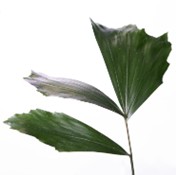 It does spark some debate on the fringes of the fan forums: “fishtail ponds”. The tenuous consensus is that Dylan is mistaken or has misspoken, that he actually means the very real “fishtail palms” – all the more so as that species of palm (Caryota mitis), though not native, can indeed be found in Key West. However, as the years go by and the number of Dylan’s performances of the song increases, the explanation proves untenable. At the premiere, in Milwaukee on 2 November 2021, it is still somewhat unclear and sounds something like “poan”, but three weeks later in New York, it is already clearly “ponds”, and so it remains. Most evident in the autumn of 2024, when Dylan has reduced the delivery to a recitative with fluttering piano accompaniment – somewhat in the style of “Murder Most Foul” – and meanwhile appears to be reading from the sheets of lyrics lying on his piano: “fishtail ponds”, clearly articulated. It is, we can now safely conclude, not a mistake or a slip of the tongue, but a deliberate catachresis.
With which Dylan the songwriter ushers in a brief revival of a stylistic device he was rather fond of in the mid-60s, during his mercurial years. Debatable, but “your temperature’s too hot for taming” from “Spanish Harlem Incident” (1964) is perhaps the first catachresis, the “misuse”, the unfamiliar, innovative combination of incompatible words, which nevertheless possesses the old, familiar power of proverbs or clichés. In the years that followed, the poet was keen to harness the power of abusio (as catachresis is also known). In “Farewell, Angelina” and especially in its twin “It’s All Over Now, Baby Blue” (seasick sailors, empty-handed painter and the saints are coming through, for example), in “Mr. Tambourine Man”, and it continues for a while on Highway 61 Revisited (“Mack The Finger”, for example), on Blonde On Blonde and especially in the Basement Songs.
The first recorded instance of this particular linguistic misuse dates all the way back to Alexander Pope (1688–1744, the poet to whom we owe the phrase fools rush in where angels fear to tread), but in the twentieth century, it was elevated to a figure of speech, a literary device, by the Dadaists, the Beat Poets and Jacques Derrida.
It is a figure of speech that derives its power from its euphony and from nearby associations – grist to the mill of an associative songwriter like Dylan. Apart from metaphors and character descriptions, he occasionally uses it in naming too: Captain Arab in “Bob Dylan’s 115th Dream” is a prime example (the nearby association being, obviously, Moby Dick’s Captain Ahab), and in The Basement Dylan juggles with semi-familiar names such as Tiny Montgomery and Quinn the Eskimo. All too often, however, the bard does not play with names – it easily degenerates into lame puns, after all.
Intuitively, fishtail ponds feels like a natural extension of absurdities such as honky-tonk lagoon (“Stuck Inside Of Mobile”) and it ain’t my cup of meat (“Quinn The Eskimo”); associations that spring to mind triggered by the sound. Saloon becomes lagoon, cup of tea becomes cup of meat, that sort of thing. And fishtail palms thus becomes fishtail ponds. Perhaps prompted by a desire to avoid an overdose of botany. We’ve already had hibiscus and tiny blossoms of a toxic plant in the preceding verses, and we’re about to get orchid trees, gumbo-limbo and bougainvillea… the herbarium is starting to overflow.
A similar line of thought seems to have led to the following bleedin’ heart disease. Amidst all those flowers and plants, Dylan’s meandering stream of consciousness presumably picks up on the genus bleeding heart (dicentra), the herbaceous genus fairly widespread in North America with its heart-shaped flowers – which, incidentally, are toxic as well. A beautiful, irresistibly poetic name with a dramatic connotation that transcends the rather unremarkable little flower. Perhaps a touch too dramatic; bleeding hearts feature – naturally – frequently enough in poems and songs, but never referring to a fascination with the flower. The Stones visit the Church of the Sacred Bleeding Heart of Jesus (“Far Away Eyes”, one of their finest country songs), Bono sings mysteriously “I don’t believe in painted roses or bleeding hearts” (in “One Tree Hill”, a highlight on The Joshua Tree, 1988) and perhaps the most beautiful bleeding heart of them all comes from Dylan’s one-off bandmate Roy Orbison:
She tears again my bleeding heart
I want to run she's pulling me apart
Fallen angel cries and I just melt away
She's a mystery to me
… from Orbison’s swan song Mystery Girl, the album released posthumously two months after Orbison’s sudden death on 6 December 1988 – ironically, one of his very best albums and his most commercially successful. Featuring the gorgeous hit single “She’s A Mystery To Me”, written, by the way, by Bono, who in 1988 apparently had a thing for bleeding hearts.
A relic with the Stones, a symbolism-laden tattoo with U2, a metaphor for heartbreak with The Big O… the botanical connection is usually overlooked. Except in the case of John Grant. We’ve caught the former frontman of The Czars out before on a funny, unintended, tenuous Dylan connection: in “I Wanna Go To Marz” (actually just: “Marz”), the most appealing song of 2010, on one of the finest albums of 2010, Grant’s stunning solo debut Queen Of Denmark. “Marz” is Grant’s moving ode to the sweet shop of his youth, which for the adult Grant has now become a sort of Shangri-La, a Key West. The chorus consists of a list of the imaginative, mysterious, funny names like Polar bear, cashew, dixieland, phosphate, chocolate from Marz’s range of sweets – which, coincidentally, have the same flavours as the list of pies in Dylan’s old country throwaway “Country Pie” (raspberry, strawberry, lemon and lime). And years before that, whilst still with The Czars, we heard John Grant reaching for the same stylistic device, of which he is rather fond:
Lilacs and tiger-lilies won't be enough for me when you're gone
Hollyhocks, gladiolas, will never replace this face
[…]
Bleeding heart, lily-of-the-valley
Snapdragon, rambling rose
You'll never make it in this world
If you're not one of those
… the enumeration, in this case a list of flowers in the little masterpiece “Little Pink House” on The Czars’ last album, the aptly titled Goodbye (2004). A song close to Dylan’s heart, presumably; a jazzy tearjerker, a beautiful guest appearance by singer Julie Monley, prevailing Shadow Kingdom vibes, Grant’s lyrical baritone… and lyrics with a poetic sheen that swings back and forth somewhere between Sinatra’s torch songs and Dylan’s cryptic impressionism.
Meaning that John Grant remains the only artist who, whilst hinting at dramatic connotations, nevertheless preserves the botanical identity of the dicentra. After all, with the simple addition of disease, Dylan too strips the bleeding heart of all its floral charm.
Which is, of course, no criticism; the orchid trees can give you the bleedin’ heart disease is a poignant, bittersweet lament from a man standing on the threshold of a paradisiacal afterlife, melancholy looking back before disappearing into the shadows.
————–
To be continued. Next up Key West part 14: To make this Key West dock my home
Jochen is a regular reviewer of Dylan’s work on Untold. His books, in English, Dutch and German, are available via Amazon both in paperback and on Kindle: 
- Blood on the Tracks: Dylan’s Masterpiece in Blue
- Blonde On Blonde: Bob Dylan’s mercurial masterpiece
- Where Are You Tonight? Bob Dylan’s hushed-up classic from 1978
- Desolation Row: Bob Dylan’s poetic letter from 1965
- Basement Tapes: Bob Dylan’s Summer of 1967
- Mississippi: Bob Dylan’s midlife masterpiece
- Bob Dylan’s Greatest Hits
- John Wesley Harding: Bob Dylan meets Kafka in Nashville
- Tombstone Blues b/w Jet Pilot: Dylan’s looking for the fuse
- Street-Legal: Bob Dylan’s unpolished gem from 1978
- Bringing It All Back Home: Bob Dylan’s 2nd Big Bang
- Time Out Of Mind: The Rising of an Old Master
- Crossing The Rubicon: Dylan’s latter-day classic
- Nashville Skyline: Bob Dylan’s other type of music
- Nick Drake’s River Man: A very British Masterpiece
- I Contain Multitudes: Bob Dylan’s Account of the Long Strange Trip
- Bob Dylan’s Rough And Rowdy Ways – Side B
- Bob Dylan’s High Water (for Charley Patton)
- Bob Dylan’s 1971
- Like A Rolling Stone b/w Gates Of Eden: Bob Dylan kicks open the door
- It Takes A Lot To Laugh, It Takes A Train To Cry b/w Just Like Tom Thumb’s Blues – Bob Dylan’s melancholy blues
- Bob Dylan’s Rough And Rowdy Ways – Side A
- Bob Dylan takes Highway 61 – Seven mercurial songs
You want clear spectacles, your eyes are dim
Your sins like mites in the sun do swim
With your silhouette when the sunlight dims
Into your eyes where the moonlight swims
“fish paons” ??
Why go there?
Best not to guess what Dylan is singing when he mumbles – fools and bulls rush in where gods and angels fear to tread
Each of us perceives Dylan in different ways, and I do feel that it is important to accept each different person’s appraoch and view – except the ones that say “don’t say this”. Otherwise we are each claiming the right to express our ideas, but not allowing others to express theirs.
Agreed, that’s why I did not say “don’t say this’ but said instead –
“why go there?”
-a valid inquiry, is it not?
The answer to the ‘why’ question about words in a Dylan song that are not at all clearly spoken or clearly heard is a mystery to me.
Even I, as the demi-mortal son of Apollo, do not know the answer to the question “why go there?”(lol).