
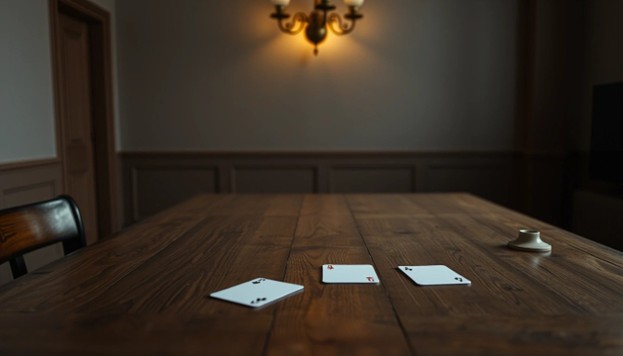
Bob Dylan spends close to nine minutes in “Lily, Rosemary and the Jack of Hearts” telling a story in which nearly every important character is named after a playing card, and almost nothing is spelled out. There is a robbery, a love triangle, a hanging judge, and a killing, and the whole thing is dealt out like a hand nobody at the table fully understands until the last trick falls. It is one of the strangest narrative songs on “Blood on the Tracks,” and it rewards the kind of slow reading this site tends to give Dylan. It also opens onto a much larger subject that fans rarely stop to consider: the deck of cards Dylan reached for was already worn smooth by a century of American songwriting.
Anyone curious how the map looks now, rather than in a chorus, can start with the editors at PlayUSA, whose PlayUSA casino insights track which states have switched legal betting on and what the resulting activity looks like.
Gambling imagery did not arrive in popular music with Dylan, and it did not leave with him. Cards, dice, luck, and ruin run through folk ballads, Delta blues, country radio hits, and rock standards, and they tend to show up at exactly the moments when a songwriter wants to talk about fate without naming it. What makes the pattern worth studying is that these songs did not invent their imagery from nothing. They grew up next to a real American gambling market that was itself moving from riverboats to saloons to Nevada to the phone in your pocket. The songs and the tables kept pace with each other, and reading them together tells you something neither tells you alone.
The Jack of Hearts Deals a Whole Ballad
Start with the Dylan song, because it is the cleanest example of a writer using a card game as architecture rather than decoration. Rosemary is drawn as a queen figure, one woman is called a princess, the drifter at the center is the Jack of Hearts, and the tension of the plot works exactly like a game of poker: bluffing, calculation, a hidden hand, and a payoff that lands only when the cards are turned over. The Wikipedia entry on the song notes that Dylan released it in January 1975 as part of an album he had already recorded once in New York and then largely re-cut in Minneapolis that December. The song survived both sessions, which suggests he knew the device was doing real work.
The card names are not window dressing. They let Dylan hide motive in plain sight, since a listener who hears “the Jack of Hearts” does not immediately know whether that is a man, a role, or a trick being played on the rest of the cast. That ambiguity is the whole pleasure of the song, and it is also the logic of a bluff. Dylan understood that a poker table is one of the few social settings where everyone agrees to lie at once, which makes it an efficient stage for a story about people concealing what they want. He did not have to explain the rules because his audience already carried them, and they carried them partly because American music had been teaching those rules for generations.
There is also a reporting instinct at work, one that connects the ballad tradition to modern coverage of the industry. The old songs kept a running account of where gambling stood in American life, which forms were legal, which were dangerous, and who tended to lose. Readers who like to follow how that account reads today, from one legislative session to the next, can keep up with PlayUSA on Facebook, where current reporting on state-by-state changes gets posted as it lands. The instinct is continuous. A blues singer noting that the tables had moved to the saloons and a modern writer noting that a new state has switched on mobile betting are doing recognizably similar work.
Frequently Asked Questions
Which Bob Dylan song uses the most gambling imagery?
“Lily, Rosemary and the Jack of Hearts” from the 1975 album “Blood on the Tracks” is the clearest example. Nearly every major character is named after a playing card, and the plot itself is structured like a poker game built on bluffing, hidden motive, and a payoff revealed only at the end.
Is “Lily, Rosemary and the Jack of Hearts” actually about a card game?
Not literally, but it borrows the entire logic of one. The card names function as roles and disguises, and the tension works the way a bluff works, with each character concealing what they truly want. Dylan uses the deck as a framework for a Western heist and a love triangle rather than describing an actual hand of cards.
Why do so many old American songs feature gambling?
Because gambling was a constant, and constantly contested, part of American life. Cards and dice gave songwriters a ready vocabulary for luck, ruin, and fate, and the imagery reflected real settings, from New Orleans halls and Mississippi riverboats to saloons and, later, Nevada casinos. The songs were partly reporting on a business that kept being outlawed and reappearing.
The influence ran from life into song. Musicians like Robert Johnson were working gamblers who played cards in the same rooms where they performed, so the imagery in songs such as “Little Queen of Spades” came from experience. The blues documented a gambling culture that already existed rather than inventing it.