
by Jochen Markhorst
Key West III Familiar sounding, but something’s off
I’m searchin’ for love and inspiration
On that pirate radio station
It’s comin’ out of Luxembourg and Budapest
Radio signal clear as can be
I’m so deep in love I can hardly see
Down in the flatlands - way down in Key West
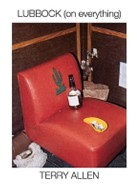 “Lubbock is so flat, that on a really clear day, you look in any direction, and if you look hard enough, you can see the back of your own head.” The true prophet of the flatlands is the versatile artist Terry Allen, the greatest artist to come out of Lubbock, Texas, since Buddy Holly. Dylan did once express his admiration, though that was for Allen’s visual art, when interviewer Elderfield asked Dylan if he followed contemporary art (“I don’t follow it that much. Owen Smith, Terry Allen, I like their work,” Asia Series interview, 2011). Still, Terry Allen’s songs are no less impressive and should delight Dylan equally. “New Delhi Freight Train”, the song that was taken to the stratosphere by Little Feat; “Amarillo Highway”; “The Beautiful Waitress” (the song Dylanologist Scott Bun hears echoing in “Highlands”); the entire Lubbock (On Everything) anyway, a beautiful sort of concept album from 1979 about which David Byrne wrote such a loving essay in 2016:
“Well, I’m here in NYC, chopping onions, and “Amarillo Highway” is playing—so I’m dancing and singing and crying all at the same time. It doesn’t get much better.”
(David Byrne, A Sleeping Bag in the West Texas Scrub, 2016)
In the essay, Byrne also points out – implicitly and unintentionally – an artistic kinship with Dylan in the field of songwriting:
“These songs are not as easy to play as I, for one, might have assumed. Sometimes there is an “extra” bar, and sometimes there’s an “extra extra” bar, as the music often follows the lyrics and the peculiar phrasing of the singer. Terry is a storyteller, after all, and the cadence and timing of the words cue the punchlines. Though the music might be vernacular—a mix of country, Latin, and Texas rock—he blends those genres to fit his own ends. It’s familiar sounding, but at the same time something’s off, and that something is what intrigues; it’s what keeps you paying attention.”
… “extra bars” as in “My Own Version Of You” and “extra extra bars” as in “Not Dark Yet”, music that follows the lyrics and “the peculiar phrasing of the singer”… David Byrne’s analysis fits perfectly with the exceptional nature of Dylan’s songwriting.
As an aside, Terry Allen’s career trajectory in the twenty-first century increasingly mirrors Dylan’s. In 2020, after a long hiatus (following Bottom of the World, 2013), the then 76-year-old songwriter releases another album of original material: Just Like Moby Dick – just as Dylan does in 2020 after an eight-year hiatus (following Tempest, 2012). Apart from the Dylanesque title, other notable features include: Dylan guitarist and protégé Charlie Sexton producing the album; the colourful tracklist; songs with a prominent accordion; the craftsmanship and crackling sound (thanks to Sexton, presumably); and Terry’s own take on Dylan’s all-time favourite “Pirate Jenny”;
The pirate Jenny
In her black ship she sails
Around, around the world
She'll take your money
Just to take your last penny
Ah, Jenny's a pirate girl
… with music strongly reminiscent of the highly atmospheric accompaniment to Dylan songs such as “Black Rider” and “Mother Of Muses”. Terry’s lyrics, however, are much more in the spirit of storytellers like Randy Newman or John Prine than Dylan’s poetic explosions, despite perfect, literary hits such as
On the battle for booty on the bloody Spanish main
And like the hiss of a soft kiss
And the twist of your air
In the midst of the smoke in the mist
She just disappeared
Never to be heard from again.
The flatlands for which Terry Allen displays his – semi-ironic – chauvinistic pride in songs like the irresistible “Flatland Farmer” and the equally witty “Flatland Boogie”, in which he also expresses a Dylanesque nostalgia for DJ Wolfman Jack are, however, different flatlands from those Dylan uses in “Key West”. Terry’s setting is the actual flat land of Texas, the endless plains around Lubbock. In Dylan’s song, the flatlands are fictional, symbolic – merely an anonymous place name in an accumulation of environments that are all used as a kind of antithesis to the paradisiacal Key West: the boondocks, the flatlands, the wrong side of the railroad track, the bottom… and in fact just as fictional and metaphorical as that pirate radio station comin’ out of Luxembourg and Budapest.
Radio Luxembourg was a popular radio station alright, especially in the 1950s and 1960s, thanks to pre-recorded, sponsored music programmes presented by DJs such as Alan Freedman and Pete Murray, the first DJ to play Bill Haley’s “Rock Around The Clock” on European radio (and playing it four times in a row) – but it was certainly not a “pirate station”, nor was it receivable in America, or hardly anyway. Even more metaphorical is Radio Budapest –not a pirate station either, nor one that broadcast “love and inspiration” and/or rock ‘n’ roll. Censored news reports, corny folk songs and Soviet propaganda were pretty much all that the radio signal coming out of Budapest had to offer.
It seems obvious that Dylan picked up the names from that Van Morrison song, “In The Days Before Rock ‘N’ Roll” (And I’m searching for Luxembourg, Athlone, Budapest, AFN, Hilversum, Helvetia), in which Van (or rather, co-author Paul Durcan) mainly evokes nostalgia for his old Telefunken, one of those old tube radios with the green eye, rather than the programmes recorded in Budapest – every Baby Boomer recognises the magic of those mythical names on the dial. Beromünster. Athlone. Lahti. And Luxembourg and Budapest, indeed. Familiar sounding, but something’s off.
Imagery, all in all. After the first verse, in which we are confronted with the drama of a deathbed, we now seem to enter a phase of resignation, a phase in which a dying man is at peace with his fate and looks ahead, seeking the path that will lead him to paradise – the guide from the mythical horizons Radio Luxembourg and Budapest, which will bring him the love and inspiration to take him to the mythical horizon Key West…
To be continued. Next up Key West part 4: The gentle lapping of the music
——————
Jochen is a regular reviewer of Dylan’s work on Untold. His books, in English, Dutch and German, are available via Amazon both in paperback and on Kindle: 
- Blood on the Tracks: Dylan’s Masterpiece in Blue
- Blonde On Blonde: Bob Dylan’s mercurial masterpiece
- Where Are You Tonight? Bob Dylan’s hushed-up classic from 1978
- Desolation Row: Bob Dylan’s poetic letter from 1965
- Basement Tapes: Bob Dylan’s Summer of 1967
- Mississippi: Bob Dylan’s midlife masterpiece
- Bob Dylan’s Greatest Hits
- John Wesley Harding: Bob Dylan meets Kafka in Nashville
- Tombstone Blues b/w Jet Pilot: Dylan’s looking for the fuse
- Street-Legal: Bob Dylan’s unpolished gem from 1978
- Bringing It All Back Home: Bob Dylan’s 2nd Big Bang
- Time Out Of Mind: The Rising of an Old Master
- Crossing The Rubicon: Dylan’s latter-day classic
- Nashville Skyline: Bob Dylan’s other type of music
- Nick Drake’s River Man: A very British Masterpiece
- I Contain Multitudes: Bob Dylan’s Account of the Long Strange Trip
- Bob Dylan’s Rough And Rowdy Ways – Side B
- Bob Dylan’s High Water (for Charley Patton)
- Bob Dylan’s 1971
- Like A Rolling Stone b/w Gates Of Eden: Bob Dylan kicks open the door
- It Takes A Lot To Laugh, It Takes A Train To Cry b/w Just Like Tom Thumb’s Blues – Bob Dylan’s melancholy blues
- Bob Dylan’s Rough And Rowdy Ways – Side A
- Bob Dylan takes Highway 61 – Seven mercurial songs
Ich musste laut lachen, Jochen Markhorst, als ich Deine Erwähnung von Radio Beromünster, in Key West part 3, las!
Dieser super konservative Sender mag während dem zweiten Weltkrieg eine Rolle gespielt haben, für mich war er aber eine Initalzündung.
1970, ich war 17, kam ich endlich zu meinem ersten Transistorradio und schob ihn Nachts unter das Kopfkissen. (Bob Dylan:”thats what radios are made for”)
Ein Zuhörer wünschte auf Radio Beromünster ein Lied, “Mr. Tambourine Man”, von einem mir unbekannten Sänger. Innerhalb von zehn Sekunden war ich total fixiert von dieser Stimme. Ein konstanter Bilderstrom passierte durch mein Gehirn, ich verstand jedes Wort. ( Ich kannte damals kaum ein Duzend englische Ausdrücke).
Ja, und seit jener Nacht höre ich Dylan täglich. Dank Beromünster,”on the wireless radio”. Und das seit 55 Jahren!
Ha! Hätte ich nie geraten, dass ausgerechnet Radio Beromünster sich rühmen kann, eine Tür zu Dylan geöffnet zu haben. Danke für diese posthume Rehabilitierung, Hannes!