
by Jochen Markhorst (with comments on the musical arrangement by Tony Attwood)
IV The gentle lapping of the music
Key West is the place to be
If you’re lookin’ for immortality
Stay on the road – follow the highway sign
Key West is fine and fair
If you lost your mind, you’ll find it there
Key West is on the horizon line
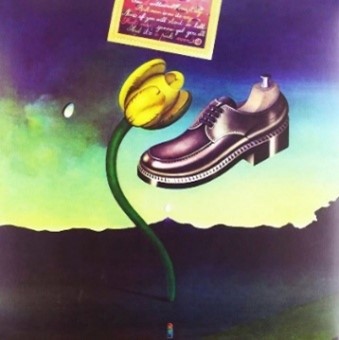 This third verse seems to be the first chorus. The form and musical accompaniment of all fourteen verses are similar, but verses 3, 6, 10 and 14 serve as a kind of chorus; only these four begin with a “Key West is…” message, only these four do not have an “I”, only these four avoid the anecdotal; they focus solely on enticement, on a tourist office-like, transcendent invitation to come to Key West, with the promise that Key West is the place to be. So, after the less-than-enthusiastic specifiers in the previous two verses (down in the boondocks and down in the flatlands), it does seem to be an idyllic place after all.
For the immortal Nick Drake, the longing for the place to be is not so much a poetic need for idyll, but more a despondent “anything better than this” aspiration: Now I’m darker than the deepest sea / Just hand me down, give me a place to be. “Place To Be” is the second track on Nick’s third and final LP, the heart-wrenching, brilliant, bare, stripped-down masterpiece Pink Moon from 1972. The similarity in wording to Dylan’s Key West is the place to be is insignificant and coincidental, but on re-listening, another distinctive stylistic feature catches the ear: Drake’s remarkable, inimitable phrasing and timing.
Nick Drake – Place to Be:
Like Dylan’s song, “Place To Be” is on paper not particularly groundbreaking. A simple three-chord pattern with a somewhat unexciting melody line. However, it is only when you attempt to play along that you are confronted with the uniqueness with which Drake elevates this song, and many of his other songs, to the stratosphere:
“Place to be” sounds to me like a slow four beats in a bar song, with each beat being subdivided into three. If you listen to the chords at the very start before the singing comes in, you can count three and a half slow bars before he starts singing.
Hearing it like this, the singing always start on the half beat between two and three (we could say beat two and a half)
When I was young, younger than before
1 2 3 4 1
Now this is very curious because it not only starts halfway through a bar, but that next bar has the word “than” as the first beat. In doing so, Drake generates a floating ethereal feeling, a feeling that is very much in keeping with his reminiscence. The line “younger than before” implies that he is old and weary now, but in the past his mind was free to roam. And by moving away from the rigid 4 beats in a bar with the first beat at the start of the first line with its strong accent, he emphasises that he is looking back through what is often called the “mists of time”, implying the memory may not be 100 percent accurate.
(Tony Attwood, 2026)
It is the stylistic device that gives many Nick Drake songs that floating ethereal quality. “Pink Moon”. “Which Will”. Or the most beautiful of all, “River Man”. That quality which, for lack of a more precise term, we refer to as “prosody”, the combination of rhythm, stress, intonation and volume that communicates a meaning, shifting the bare content of the words themselves. And which we hear again in an exceptional Dylan song like “Key West”. Also a three-chord song with a minimal melody, and also lifted by that “prosody”;
For example, the first beat of the first line of the verses is often not sung – we hear the band but no voice – it comes in half way between the first and second beat. That’s not a unique arrangement, but it is unusual. We might compare it with the opening of “Blowing in the Wind” where “How” as in How many roads is very much there on the first beat and very much grabs our attention and interest. Likewise “Once” at the start of “Like a Rolling Stone”. There’s no hesitation – we are in there, part of it, from the start.
And this is an important issue in the hesitant development of the theme of the song – Dylan reveals what and where he is singing about, but he is reflective, not forcing us to accept his words. This is a time of quiet contemplation – so much so that if one misses many of the lyrics it doesn’t matter, for the gentle lapping of the music is always there taking us forward.
Which is why there are so few chords used, and why they so closely link to each other – nothing is to disturb the gentle reflections.
(Tony Attwood, 2026)
In addition to the uninterrupted repetition of the same three chords, Dylan reinforces the “gentle lapping” with the ironclad, continuous rhyme scheme – tail rhyme in all fourteen verses (aab-ccb), the archaic rhyme scheme we have known since the Middle Ages, and whose musicality we have appreciated for just as long (all ten verses of the thirteenth-century Stabat Mater are six-line stanzas with the aab-ccb rhyme scheme, for example).
Popular for nursery rhymes, but somehow we also see the six-line tail rhyme stanza remarkably often in the Very Great Works of Art: foremost among them Paul Verlaine’s masterpiece “Chanson d’automne”, Autumn Song, an absolute highlight in world literature; Leonard Cohen’s “Hallelujah”; Shakespeare’s “Carpe Diem” (the song from Twelfth Night); “A Boy Named Sue”, Dylan’s own “You’re Gonna Make Me Lonesome When You Go” and “Where Are You Tonight?” of course, “Over The Rainbow”… certainly not the least of the songs, reaching Olympus with this aab-ccb. Partly due to the tail rhyme’s peculiarity, that incessant cycle of conflict (the first b), context (the cc) and harmony, or resolution, if you will (the second b), and the attractive, free bonus of its ingrained musicality.
Nick Drake resorts in his oeuvre to tail rhymes a few times. Playfully and astonishingly ingeniously in the anxious, hypnotic “Parasite” on his last LP, classically and masterfully in one of his most perfect songs, “River Man” on his debut album Five Leaves Left (1969). Not in “Place To Be” though, with its simplest rhyme scheme (aabb), but with that Dylanesque, inimitable timing and phrasing. And with that comparable romantic longing for being elsewhere, Fernweh, as our German friends call it. Darker romanticism, at first listen, than Dylan’s Sehnsucht in “Key West”, than Dylan’s longing to get away from here, but not that much darker, if we take Dylan’s admission criteria seriously: you should not only strive for immortality, but having lost your mind is apparently also a plus.
Nick Drake – River Man:
“Follow me close – I’m going to Bally-Na-Lee / I’ll lose my mind if you don’t come with me,” begs the narrator in the opening verse of the album, in the opening song “I Contain Multitudes”. On stage, Dylan changes that to the less poetic Follow me close – as close as can be / I’ll lose my mind if you don’t come with me, but the dramatic I’ll lose my mind remains. Which, sadly, seems to have been Nick Drake’s fate – after two mainly depressing, unhappy years following his last, at the time unsuccessful LP Pink Moon, Nick died in November 1974 at his parents’ house after taking an overdose of amitriptyline, an antidepressant. Let’s hope it took him to a land fine and fair.
To be continued. Next up Key West part 5: Doc Pomus liked my songs
Jochen is a regular reviewer of Dylan’s work on Untold. His books, in English, Dutch and German, are available via Amazon both in paperback and on Kindle: 
- Blood on the Tracks: Dylan’s Masterpiece in Blue
- Blonde On Blonde: Bob Dylan’s mercurial masterpiece
- Where Are You Tonight? Bob Dylan’s hushed-up classic from 1978
- Desolation Row: Bob Dylan’s poetic letter from 1965
- Basement Tapes: Bob Dylan’s Summer of 1967
- Mississippi: Bob Dylan’s midlife masterpiece
- Bob Dylan’s Greatest Hits
- John Wesley Harding: Bob Dylan meets Kafka in Nashville
- Tombstone Blues b/w Jet Pilot: Dylan’s looking for the fuse
- Street-Legal: Bob Dylan’s unpolished gem from 1978
- Bringing It All Back Home: Bob Dylan’s 2nd Big Bang
- Time Out Of Mind: The Rising of an Old Master
- Crossing The Rubicon: Dylan’s latter-day classic
- Nashville Skyline: Bob Dylan’s other type of music
- Nick Drake’s River Man: A very British Masterpiece
- I Contain Multitudes: Bob Dylan’s Account of the Long Strange Trip
- Bob Dylan’s Rough And Rowdy Ways – Side B
- Bob Dylan’s High Water (for Charley Patton)
- Bob Dylan’s 1971
- Like A Rolling Stone b/w Gates Of Eden: Bob Dylan kicks open the door
- It Takes A Lot To Laugh, It Takes A Train To Cry b/w Just Like Tom Thumb’s Blues – Bob Dylan’s melancholy blues
- Bob Dylan’s Rough And Rowdy Ways – Side A
- Bob Dylan takes Highway 61 – Seven mercurial songs
The place to be, or was, “Fern Hill”:
Oh I was young and easy in the mercy of his means
Time held me green and dying
Though I sang in my chains like the sea
(Dylan Thomas)
And I was green, greener than the hill
Where flowers grew and sun shone still
Now I’m darker than the deepest sea
(Nick Cave)