
by Jochen Markhorst
In this series, we shine a spotlight on a thriving, fascinating, and polarizing fringe phenomenon within Dylanology: the semi-professional cover artist. And more specifically, on a veteran from the southern part of a small country on the North Sea: Jan Barten from Breda, the Netherlands.
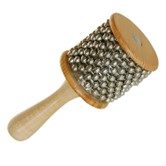 Jan: “As usual, I started with a drum track on the Roland TR-626, as a backing for Fons’ perfectly timed vocals. I added the bass, which gradually gave rise to a Latin-flavoured track, with a prominent role for the kabasha (shaker). I added some drum breaks manually on the Roland RD-600. Then a rhythmic part on the Wurlitzer and rhythmic, percussive accents on the electric guitar. In the background, you’ll hear a Hammond organ from the third verse onwards. I play the sharp solo after verse 3 on the Wurly.”
It is and always will be an enchanting song. In an (imaginary) Top 40 of the most covered Dylan songs, Baby Blue would undoubtedly feature in the top ten; on the compilation site secondhandsongs.com alone, there are more than 200 versions. Its popularity reaches a new peak in 2025, when Timothée Chalamet enchants yet another generation with a sparse, faithful cover in the Dylan film A Complete Unknown.
Musically, the song is apparently just as ambiguous as the lyrics; there are sweetly charming, brutally aggressive, sultry jazzy, troubled psychedelic and tight rock ‘n’ roll versions of the track. Among the better-known versions is Van Morrison’s or rather Them’s 1966 hit version, a dreamy rendition whose raw edge in turn inspired many later covers (in that category, the Chocolate Watch Band’s 1968 version is a standout). The Them rendition, incidentally, scores remarkably highly with the high priests of Dylanology; Greil Marcus once again loses himself in one of his ecstatic paeans when writing about it (in When That Rough God Goes Riding, 2010), and Clinton Heylin even claims that it “rivals the original” (in Can You Feel The Silence, 2003).
The Byrds just can’t quite put their finger on it this time; the two attempts from ’65 for the second album Turn! Turn! Turn! do not pass Roger McGuinn’s self-critical test (he is right, as we can hear years later when the recordings are released), and in 1969 they try again, in a much stripped-down and slowed-down version – which is then deemed good enough for the album Ballad of Easy Rider.
From the 1970s, the inevitable Manfred Mann (with his Earth Band, 1972) and veteran Link Wray (on Bullshot, ’79) are certainly memorable, but as usual, the ladies have the je-ne-sais-quoi, that certain something.
In the women’s category, Bonnie Raitt certainly delivers the finest intro (Steal This Movie soundtrack, 2000), whilst Joni Mitchell imbues her version with a mysterious and compelling atmosphere (Night Ride Home sessions, 1991). However, both veterans are surpassed by an outsider: actress Jill Hennessy is backed by a brilliant band and a skilled producer, and – surprisingly – proves to be a remarkably good singer; understated, world-weary and with appropriate restraint. On the soundtrack of the NBC hit series in which she plays the lead role, Crossing Jordan (2003).
And then there’s Jan Barten, who from the very first beat launches an assault on the honorary title “Most Beautiful Intro”; the Little Feat shuffle, including the characteristic, irresistible, artfully woven ping-pong interplay of guitars, keyboards and percussion – Lowell George is not dead, he’s alive. And Lowell continues to dictate the vibe of Jan’s cover, resulting in a wonderful love child: one of the finest songs of the 1960s, played by one of the best bands of the 1970s. Little Feat disciple Bonnie Raitt would undoubtedly step aside and give her blessing.
Jan: “Guest guitarist Arnold Hoekstra came up with that guitar riff, and yeah, he’s a fan of Little Feat….”
To be continued. Next up Jan’s Take 3: 4th Time Around