by Jochen Markhorst
XXI My motto is Treat ‘Em Like a Prostitute
Wherever I travel - wherever I roam
I’m not that far from the convent home
I do what I think is right - what I think is best
Mystery Street off Mallory Square
Truman had his White House there
Eastbound – westbound - way down in Key West
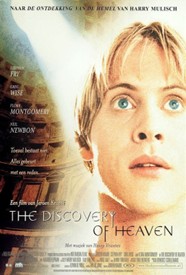
Harry Mulisch (1927–2010) was one of the “Grote Drie, Great Three,” one of the three greatest Dutch writers of the twentieth century. At the latest since The Assault (1982), the novel whose film adaptation won an Oscar, the Dutch expected year after year that Harry would finally win the Nobel Prize this year, but even the success of his magnum opus The Discovery of Heaven (1992) could not earn him this particular recognition. On other fronts, however, the mega-novel (905 pages) has been a success. Voted the Greatest Dutch Novel of All Time (2007), it has won international awards; the Wall Street Journal compared Mulisch to Dante, Milton, and Homer; “exhilarating, magnificent, and dangerous,” said Richard Todd in the Times Literary Supplement; it has been translated into more than thirty languages, from Japanese to Croatian and from Arabic to Korean; and successfully adapted into a film (Jeroen Krabbé, The Discovery of Heaven, 2001, starring Stephen Fry and Greg Wise).
It is, quite literally, a rather weighty work. Critics—and there are plenty of them—are often put off by its intellectual heaviness as well, though; Mulisch’s novel occasionally succumbs to philosophical musings, science, literature, historical references, and rather intrusive theological and mythological motifs. It is a fantastic story, still. Somewhere in our nineteenth century, God (“the Boss”) wants the Stone Tablets with the Ten Commandments back and sends an angel on a mission. The angel knows he needs a human with the perfect qualities to find the testimonium. To do so, he must manipulate the course of history; to bring together the parents of his dream detective, the angel needs an Auschwitz, and thus also a Second and a First World War—and so, in 1967, the DNA and the humans who will conceive Quinten Quist finally come together, seventy years after the angel received his assignment.
Talking Heads – Heaven:
The adventure aspect of the novel is a puzzle-filled mission making Dr. Robert Langdon’s cryptic quests in Dan Brown’s thrillers seem like scavenger hunts for elementary school children. Which is a stylistic hallmark of Mulisch’s creative work anyway; Harry loves Easter eggs, hidden jokes, cryptic hints, and wordplay. Quinten (“fives”) must find the two Tablets, each inscribed with five Commandments; his father is named Max (“the greatest”) Delius (“of Delos,” from the light, from the divine); names of people who cannot hide their identities are palindromes (“Onno,” “Ada”). And Mulisch is absolutely obsessed with numerical symbolism. The number 8 as a motif (suggesting both “God” and “infinity”); Harry writes his life’s work in the year he turns 65, and the novel thus has 65 chapters; the last word on page 100 is “one hundred,” and (much) more.
There is a rather persistent faction of Dylanologists who seek and find such a penchant for numerology and number games in Dylan’s body of work as well. Where, it must be said, tunnel vision usually prevails, and blinders are the most prominent job requirements. Every 3, 7, and 12—such as the 7 in “Seven Days”—is elevated to a “biblical number” (conveniently ignoring that 3, 7, and 12 hold symbolic power in virtually every religion and culture), or proving that “Rainy Day Women #12 & 35” is a drug song by 12×35=420 (conveniently ignoring that “420” only became a code word for cannabis in 1971, six years after Dylan’s song)—to name just two of the numerologists’ popular but meaningless eureka moments. It is often accompanied by the same mystical excitement that teenagers feel when they hear that Lincoln’s assassin’s name has the same number of letters as Kennedy’s assassin’s, or that “28 IF” on the license plate of the white Beetle on Abbey Road signals that Paul is dead (who would then have been 28—though he was only 27 on the release date, by the way).
Dylan himself does contribute in a way, of course. Not only by peppering so many songs with numerals and giving songs numerical titles (115th Dream, 4th Time Around, 2×2, I Shall Be Free No. 10, and many more), and through his self-analysis in the 1960s that his songs are “mathematical songs,” but also through a much-discussed, incomprehensible statement in his fictionalized autobiography Chronicles, the “Lonnie Johnson segment”;
“It’s a highly controlled system of playing and relates to the notes of a scale, how they combine numerically, how they form melodies out of triplets and are axiomatic to the rhythm and the chord changes.”
Dylan’s “explanation” doesn’t make things any clearer. “If you play the notes 2, 5 and 7 in a diatonic scale and then repeat that phrase, a melody emerges. Or you could play the 2 three times. […] I’m no numerologist. I don’t know why the number 3 is metaphysically more powerful than the number 2, but it is.” Or something like that.
Be that as it may, and in this respect the numerologists do have a point, Dylan seems receptive to numerical symbolism and playing with numbers. And that brings us to the opening of this bizarre verse from “Key West”:
Twelve years old and they put me in a suit
Forced me to marry a prostitute
Why 12? There is no religion or culture in which 12-year-old boys are forced to marry, let alone a prostitute. Some people try, rather awkwardly, to draw a link to the bar mitzvah, but apart from the fact that this would be rather blasphemous (is Jewish law a prostitute?), boys only become “sons of the commandment” at the age of thirteen – just like Dylan himself, incidentally, who had his bar mitzvah the day after his thirteenth birthday, as is proper.
No, it does indeed seem that Dylan is indulging in a bit of numberplay this time:
– Twelve is the first word of the twelfth verse of “Key West”;
– “forced to marry a prostitute” seems to refer to Hosea 1:2 (And the Lord said to Hosea, Go, take unto thee a wife of whoredoms).
… and that the rest of the bizarre opening seems primarily inspired by Dylan’s well-documented penchant for original rhymes, for the thrill of rhyming something that’s never been rhymed before, as he admitted in that 1991 interview with Paul Zollo.
It is plausible that Dylan feels a sense of finder’s pride in the rhyme in a suit/prostitute, although in all fairness it must be said that he is not quite the first. He himself came close to it as early as 1964 with “Chimes of Freedom” (For the mistreated, mateless mother, the mistitled prostitute / For the misdemeanor outlaw, chaineded an’ cheated by pursuit), but even closer are his colleagues in hip-hop and gangsta rap circles, who discovered this specific rhyme decades ago. Eminem’s “Chloraseptic” from 2018 presumably escaped Dylan’s notice, as did Snoop Dogg’s “Stacy Adams” (2000; I’m in a 3-piece suit / Looking too cute / Mashin’ flashin’ / Lookin’ for a prostitute / Boo boo you got that loot) and Notorious B.I.G.’s “Oh My Lord” (1995; Bitches with Donna Karan Catwoman suits, matching figure boots / Haircut cute, on tops and garters like prostitutes), but Ice Cube received a fair amount of airplay and attention at the time for his million-seller The Predator (1992) featuring the opener “When Will They Shoot?”;
Stalkin, walkin in my big black boots
The KKK has got three-piece suits
Using niggas like turkey shoots
My motto is Treat ‘Em Like a Prostitute
Ice Cube – When Will They Shoot:
It is a driving, exhilarating, intense hip-hop track set to the beat of Queen’s “We Will Rock You”, underpinned by a skilfully woven tapestry of samples spanning a quarter of a century of music history. From Charles Wright & the Watts 103rd Street Rhythm Band’s “Giggin’ Down 103rd” (1968) to a Public Enemy track from 1991; from The 5th Dimension’s “Workin’ On A Groovy Thing” (1969) to Bob James’ classic jazz-funk arrangement of Paul Simon’s “Take Me to the Mardi Gras”, one of the most sampled songs of all time; snippets of Michael Jordan in a cornflakes advert and a Pringles commercial; quotes from another sampling favourite, Melvin Bliss’s “Synthetic Substitution” from 1973… from thirteen very diverse sources, Ice Cube crafts his fiery “When Will They Shoot?”.
The album The Predator debuted at number 1 on the Billboard 200, shortly after the Rodney King riots; it has since gone double platinum and is regarded as a classic, one of the 1001 Albums You Must Hear Before You Die. According to certified superfan Leonardo Caprio, who has professed his love dozens of times in interviews, both when asked and unsolicited, it is Ice Cube’s magnum opus and a “voice for the angry and unheard during the 90s”.
A master of rhyme who is the voice of an angry, unheard generation, crafting his songs by borrowing from every conceivable genre and era… sounds familiar. Incidentally, Ice has 3 letters. “Ice Cube” has 7, and his real name, O’Shea Jackson, has 12 letters. Do with it what you will.
To be continued. Next up Key West part 22: The Big-Lipped Alligator
Jochen is a regular reviewer of Dylan’s work on Untold. His books, in English, Dutch and German, are available via Amazon both in paperback and on Kindle: 
- Blood on the Tracks: Dylan’s Masterpiece in Blue
- Blonde On Blonde: Bob Dylan’s mercurial masterpiece
- Where Are You Tonight? Bob Dylan’s hushed-up classic from 1978
- Desolation Row: Bob Dylan’s poetic letter from 1965
- Basement Tapes: Bob Dylan’s Summer of 1967
- Mississippi: Bob Dylan’s midlife masterpiece
- Bob Dylan’s Greatest Hits
- John Wesley Harding: Bob Dylan meets Kafka in Nashville
- Tombstone Blues b/w Jet Pilot: Dylan’s looking for the fuse
- Street-Legal: Bob Dylan’s unpolished gem from 1978
- Bringing It All Back Home: Bob Dylan’s 2nd Big Bang
- Time Out Of Mind: The Rising of an Old Master
- Crossing The Rubicon: Dylan’s latter-day classic
- Nashville Skyline: Bob Dylan’s other type of music
- Nick Drake’s River Man: A very British Masterpiece
- I Contain Multitudes: Bob Dylan’s Account of the Long Strange Trip
- Bob Dylan’s Rough And Rowdy Ways – Side B
- Bob Dylan’s High Water (for Charley Patton)
- Bob Dylan’s 1971
- Like A Rolling Stone b/w Gates Of Eden: Bob Dylan kicks open the door
- It Takes A Lot To Laugh, It Takes A Train To Cry b/w Just Like Tom Thumb’s Blues – Bob Dylan’s melancholy blues
- Bob Dylan’s Rough And Rowdy Ways – Side A
- Bob Dylan takes Highway 61 – Seven mercurial songs