
by Jochen Markhorst
In this series, we shine a spotlight on a thriving, fascinating, and polarizing fringe phenomenon within Dylanology: the semi-professional cover artist. And more specifically, on a veteran from the southern part of a small country on the North Sea: Jan Barten from Breda, the Netherlands.
“There were some more songs out of that same session… Sooner Or Later – that was on Blonde On Blonde. That’s one of my favorite songs.”
(Dylan, Rolling Stone Interview, 29 November 1969)
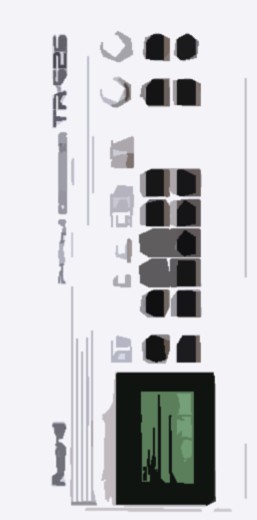 Jan: “The whole track is driven by a powerful guitar part, slightly distorted, accompanied by a clavinet (Nord Stage). Drums (Roland TR626 drum machine) come in later. In the background is an organ (Nord Stage); initially broad, later more rhythmic. This arrangement is maintained right through to the end. Vocals by Fons Havermans.”
So, it is one of his favourite songs, as the master reveals in the Rolling Stone interview in 1969, and one in which, by Dylan standards, an exceptional amount of love has been invested illustrated by the twenty (!) attempts, rehearsals, misses and alternatives on discs 11 and 12 of the unsurpassed The Cutting Edge – Collector’s Edition (2015). It is hardly surprising that the accompaniment changes in the course of such a session, but that the song also fans out so radically on the other fronts (lyrics, melody, tempo) is an eye-opener.
The studio talk, especially in the first two rehearsals, reveals intimate details about the creative process. Apparently Dylan has already had a first pre-rehearsal with Al Kooper. He searches his notes, finds them again, asks for help (presumably from the piano-playing Kooper) “How is the chorus?”, sings along a few words that will disappear later (“I’m glad it’s through, you’re mad it’s through”) and then interrupts: “That’s not right, Al. I don’t get it.”
Kooper answers something unintelligible, Dylan asks, “What’s the tempo?” and then starts, quite slowly, with the groundwork of the first verse as we know it: “I didn’t mean to hurt you so bad.”
Arriving at the chorus, Dylan interrupts once more, and again addresses Kooper: “Are you sure we played it at that tempo?”
It should be even slower… The first four lines now take 47 seconds. For comparison: in the final, 24th take, this first verse is played eleven seconds faster, in three-quarters of the original time.
Anyway: it is a beautiful song and it is rightly being released as a single. After the mega hit “Like A Rolling Stone”, “Can You Please Crawl Out Your Window?” did flop. Now “One Of Us Must Know” should capitalise on the momentum and deliver another Dylan hit
Which it doesn’t, strangely enough. The single does nothing in the US, only grazes the charts in Europe. It seems to be weighing on the artist’s mind, just like he is bothered a few years later, with the debacle of “Baby, Stop Crying”: Sooner Or Later disappears from his setlist for years and only after flattering sales pitches by sympathetic fans like the journalist Larry Sloman, it is picked up again – in 1976, ten years later.
Others have fewer reserves, but rarely know how to capture the beauty within. The Boo Radleys produce an original but tiring mix of trash and stillness on the tribute album Outlaw Blues (1992), Simply Red’s singer Mick Hucknall keeps it safe and pleasant (Chimes Of Freedom, 2012).
The covers that still stand out somewhat can also be found on tribute albums. One on Blues On Blonde On Blonde from 2003. Clarence Bucaro, an otherwise rather mediocre singer-songwriter from Brooklyn, opts for a roaring twenties arrangement, with clarinet, upright bass and acoustic jazz guitar, thus giving a nice nostalgic and melancholic touch to one of Dylan’s inexorable masterpieces. In 2020, Emma Swift released the wonderful Blonde on the Tracks, a tribute album featuring eight Dylan covers, each one more beautiful than the last. Highlights include “I Contain Multitudes”, “Simple Twist of Fate” and, above all, “One of Us Must Know (Sooner or Later)”. Greil Marcus agrees:
“Swift somehow reconstructs it. Her high, clear voice highlights each syllable, letting you hear the words form, one seemingly following inevitably from the other, until they feel handed down, fragments of old songs now speaking to each other. And the more you listen, the more you hear Robyn Hitchcock’s guitar, never in the way, always on the verge of fading out, making you say, no, no, not yet.”
(“Real Life Rock Top 10: August 2020”, Los Angeles Review of Books)
Yet, the most attractive professional cover, by far, is on Mojo’s 2016 Blonde On Blonde Revisited tribute, on the occasion of the monument’s fiftieth anniversary, by veteran Chip Taylor.
The seventy-six year old legend starts the song as an American Recording by Johnny Cash; talk-singing over a wavering guitar. Gradually, the song gets dressed up, sparsely, with a modest, mercury organ, then a discreet bass, light accompaniment on the floor tom and a goosebump-inducing second voice. The old-fashioned mellotron in the background, halfway through, is particularly elegant.
And brazenly squeezing his way into that Top 3 is the semi-professional Jan Barten from Brabant with a tight arrangement, driven by a Stevie “Superstition” Wonder-style clavinet, shaker and percussive guitar, interspersed with a mercurial organ. Demonstrating the same truth as Chip Taylor: less is often more.
To be continued. Next up Jan’s Take 11: Lay, Lady, Lay
Previously in the series
- Jan’s Take 1: It Takes A Lot To Laugh, It Takes A Train To Cry
- Jan’s Take 2: It’s All Over Now, Baby Blue
- Jan’s Take 3: 4th Time Around
- Jan’s Take 4: To Be Alone With You
- Jan’s Take 5: Ballad Of Hollis Brown
- Jan’s Take 6: I Want You
- Jan’s Take 7: I Pity The Poor Immigrant
- Jan’s Take 8: Tonight I’ll Be Staying Here With You
- Jan’s Take 9: You’re A Big Girl Now