Bob Dylan: Man Gave Names To All The Vegetables

By Larry Fyffe

Note: The Untold Dylan Offices received the following by mail in a plain brown envelope. Apparently, it’s a copy of a song re-written by Bob due to protests from vegetable rights groups – 

Man Gave Names To All The Vegetables

Man gave names to all the vegetables
In the beginning, in the beginning
Man gave names to all the vegetables
In the beginning, long time ago

He saw a vegetable that likes to grow
In big long rows that he has to hoe
Some coloured yellow, some coloured green
"Ah, I think I'll call it a bean"

Man gave names to all the vegetables
In the beginning, in the beginning
Man gave names to all the vegetables
In the beginning, long time ago

 He saw a vegetable with great big ears
It's very tall but it can not hear
Li'l Boy Blue come blow your horn
"Ah, I think I'll call it a corn"
 
Man gave names to all the vegetables
In the beginning, in the beginning
Man gave names to all the vegetables
In the beginning, long time ago

 He saw a vegetable with lots of eyes
It can't see, but it makes good fries
Sliced up nice by chef Van Gogh
"Ah, I think I'll call it a potato"

Man gave names to all the vegetables
In the beginning, in the beginning
Man gave names to all the vegetables
In the beginning, long time ago

He saw a vegetable that likes to sprout
Come on baby, we can work it on out
With a little help from Peter Rabbit
"Ah, I think I'll call it a carrot"

Man gave names to all the vegetables
In the beginning, in the beginning
Man gave names to all the vegetables
In the beginning, long time ago

Next vegetable that he did meet
Had bright red roots, and tastes like feet
Walkin' without boots in a boggy peat
"Ah, I think I'll call it a beet"

Man gave names to all the vegetables
In the beginning, in the beginning
Man gave name to all the vegetables
In the beginning, long time ago

He saw a vegetable with great big pods
Dancin' in the breeze, and givin' him nods
Saw it appear by a lake down near a tree
"Ah, I think I call it a pea"

Man gave names to all the vegetables
In the beginning, in the beginning
Man gave names to all the vegetables
In the beginning, long time ago

He saw a vegetable that made him tear
In Scarlet Town where a graveyard's near
There lies the body of Damon Runyon
"I think I'll call it an onion"

Man gave names to all the vegetables
In the beginning, in the beginning
Man gave names to all the vegetables
In the beginning, long time ago

He saw a vegetable he doesn't like
When nature walkin' on a hike
"What's it's name....I'll give you a guess
I think I'll call it .........."

What else is on the site

You’ll find an index to our latest posts arranged by themes and subjects on the home page.  You can also see details of our main sections on this site at the top of this page under the picture.

The index to the 500+ Dylan compositions reviewed is now on a new page of its own.  You will find it here.  It contains reviews of every Dylan composition that we can find a recording of – if you know of anything we have missed please do write in.

We also have a discussion group “Untold Dylan” on Facebook.  Just type the phrase “Untold Dylan” in, on your Facebook page or follow this link 

And please do note   The Bob Dylan Project, which lists every Dylan song in alphabetical order, and has links to licensed recordings and performances by Dylan and by other artists, is starting to link back to our reviews.

Posted in Uncategorized | 3 Comments

Dylan’s Apple Suckling Tree: let’s finish off the basement tapes

by Jochen Markhorst

“Let’s finish off with a track from the Basement Tapes,” Mary Travers says at the end of her radio interview with Dylan, “er, your choice.”

“Uh, okay… Oh! Apple Suckling Tree,” says Dylan, suddenly very awake, with an undertone that sounds like anticipation. Perhaps it is relief, relief that the interview is over (although it is a rather relaxed, pleasant interview with an old friend), but to the listener it seems as if the bard is eagerly looking forward to listening to a great song, to an old favourite he has not heard for a while.

The conversation, the first radio interview Dylan does since 1966, takes place in Oakland, April 26, 1975. Shortly after the release of Blood On The Tracks, shortly before The Basement Tapes is released – so both records get attention from Travers.

It is a striking choice and a remarkable enthusiasm. The Basement Tapes will be available in exactly a month and Dylan can choose from twenty-four titles. “Lo And Behold” was played at the start of the radio program and he probably has little knowledge of and even less feeling with the six songs that were recorded without him (“Bessie Smith”, among others), but sixteen songs from which he could have chosen instead of “Apple Suckling Tree” still remain. “Goin’ To Acapulco” for example, or one of the songs that are already known to the general public as a cover (“This Wheel’s On Fire”, or “Too Much Of Nothing”).

But the maestro’s ways are mysterious, as usual. He chooses “Apple Suckling Tree”.

For the first official release, The Basement Tapes from 1975, the second take was rightly chosen. On the release of the other recordings and takes (The Basement Tapes Complete, part 11 in The Bootleg Series, 2014), the very heedless, mustier first take appears to be interesting from a music-historical perspective, but nothing more.

The song itself is actually not too spectacular either, certainly not compared to masterpieces such as “Sign On The Cross”, “Tears Of Rage” or “I Shall Be Released”. The melody is a slightly rattling copy of “Froggie Went A-Courtin”, a well-known Scottish folk song from the sixteenth century, which Dylan will honour more respectfully in 1992, on Good As I Been To You, in a serious, long version. There are hundreds of recordings of the song and Dylan probably heard it from Woody Guthrie, or else from Pete Seeger – or perhaps from easily the best cover, the one by Uncle Pecos, from Tom & Jerry episode 96, “Pecos Pest” (1955). That is the episode in which Jerry receives a telegram from his uncle Pecos from Texas:

Dear Nephew
Me and my guitar on way to big city for television debut — stop
Will spend night with you.
Uncle Pecos

Jerry still has the telegram in his hands when there is a knock-knock-knockin’ on the mouse hole’s door: Uncle Pecos, who immediately starts singing “Froggie Went A-Courtin”. He scrambles the text, he stutters a lot and tries to yodel in between (there’s a yodel in thar somewhar, but it’s a little too high f’r me), but mainly he suffers from cracking strings – which he then every time replaces with a whisker’s hair from poor Tom.

On a side note: Uncle Pecos is spoken and sung by the legendary singing cowboy / actor / songwriter George Clinton ‘Shug’ Fisher, whom Dylan also remembers from the Roy Rogers films, from Gunsmoke and from The Beverly Hillbillies, but especially as a prominent member of the Sons Of The Pioneers, who regularly visit (four times) his Theme Time Radio Hour.

The lyrics Dylan then sings over this age-old melody is partly improvised and partly unintelligible. The official lyrics, as published on the site and in Lyrics, is teeming with debatable transcription attempts and obvious errors – as is often the case with the 60s songs in particular.

It is peculiar, though. Who transcribes those texts? In the first official publication, Writings & Drawings from 1973, no editor, cryptographer or transcriptor is mentioned, but the work is especiall’ dedicated to “the girls upstairs – Cathy, Miriam, Mildred & Naomi who put this heavy volume together”.

Choice of words (“the girls upstairs”) and the casual, not to say disrespectful limitation to the first names, suggests that transcribing the lyrics is a task that is outsourced to the girls of the typing pool, to the secretaries.

In Writings & Drawings, there are twenty-one song lyrics in the “From Blonde On Blonde To John Wesley Harding” chapter, the songs that will later be called Basement Tapes. “Apple Suckling Tree” is not listed, it only appears in The Songs Of Bob Dylan 1966-1975 and, later, in Lyrics and on the site. In those later publications, no hint is given anymore with regard to transcription.

Some text discrepancies are so radical that they must have been done by Dylan himself. The omission of a few couplets in “Call Letter Blues”, for example, and the rewriting of complete verse lines in the initially unreleased Basement song “Goin” To Acapulco”. The textual differences therein are certainly not due to poor transcription or mistakes. The lines

I’m just the same as anyone else, 
When it comes to scratching for my meat

… for example, are rewritten into

I’m standing outside the Taj Mahal
I don’t see no one around

And in “You Angel You” he intervenes in a similar drastic way (among other things, he changes the Dylan-unworthy you’re as fine as anything’s fine into it sure plays on my mind).

The semantical divergences in “Apple Suckling Tree”, however, are not that far-reaching and probably rather due to the girl upstairs on duty. Although … then I hush my Sadie and stand in line is a remarkable one. At any rate, it is now clear that this Cynthia or Miriam or whoever, is listening to the first take, and there Dylan sings quite intelligibly then I push my lady and stand in line.

It seems the type lady is also taking on Self Portrait today and especially “Little Sadie”: the hacks and buggies all standing in line (…) taking little Sadie to her burying ground..

It is not too important. The chorus seems to be somewhat prepared (because the men from The Band sing along) and there probably Ritchie Valens’ “Boney-Maronie” plays in his mind (boy, how happy we can be / makin’ love underneath that apple tree).

But the couplets are improvised, and Dylan is not really in great shape today. For the filling in Dylan relies on the spur of the moment, as is also apparent from the widespread differences between the first and the second version. Some parts are not much more than sounds, others are vague.

The forty-nine of you burn in hell, for example, must be an echo of the story about the Danaids, the fifty daughters of King Danaos who are forced to marry their fifty cousins. One princess, Hypermnestra, likes her groom, but her forty-nine sisters are less satisfied and kill their grooms. For that they are punished: to this day they are busy filling up a bottomless barrel (the Danaid barrel) in Hell. There are actually no other associations with a forty-nine of you in hell, and apart from that, there is no relationship with the rest of the text, just as no couplet makes any contribution to a coherent storyline or recognizable poetic impression.

Ten-a-penny melodies, unfinished lyrics, failed improvisation … it remains puzzling why Dylan wants to hear this particular song, in the radio studio with Mary Travers.

We know from producers Fraboni and Robbie Robertson that Dylan hardly interferes with the creation of The Basement Tapes. In his autobiography Testimony (2016), Robbie Robertson does not devote very many words to the album. Presenting the project (as usual) as his own idea, he confirms that some recordings have been slightly polished with overdubs (a bass part by Rick Danko here, Richard Manuel’s tambourine there) and he suggests that Dylan had no further involvement, apart from granting permission:

“I suggested going back to the original tapes to see if there were some tracks we could release properly. We didn’t want to put out music that was sonically unacceptable, but with the technology of the time, I thought maybe Rob Fraboni and I could reduce some of the hiss and improve the sound quality. Bob agreed to see what we could do.”

And Fraboni confirms that Dylan rarely showed up, in the Shangri-La Studio in Malibu, while working on The Basement Tapes. That disinterest is in line with the many testimonies we know from Dylan about the recordings in the Big Pink.

In this interview with Travers too, he is dismissive again (“Yeah, well these songs basically aren’t a tape, they were written like in five, ten minutes, you know”), and in the interview with Kurt Loder, for Rolling Stone in 1984, he is even more outspoken:

“I never really liked The Basement Tapes. I mean, they were just songs we had done for the publishing company, as I remember. They were used only for other artists to record those songs. I wouldn’t have put’em out. But, you know, Columbia wanted to put’em out, so what can you do?”

… just as derogatory as a year later, in November ’85 in Time:

“I didn’t pay much attention to the Basement Tapes. I thought they were what they were – a bunch of guys hanging out down in the basement making up songs. (…) I don’t listen to the bootlegged stuff. I really don’t have any feeling about it one way or another.”

It opens a door to a more likely explanation as to why Dylan sounds so cheerful when he chooses this “Apple Suckling Tree”, this minor trifle at Mary Travers, and listening back does support that. It is not anticipation. It is relief after all, though not relief that the interview is over. It’s relief that he remembers a song title from that unappreciated album at all – the master is really, intrinsically, deeply uninterested in that collection of scraps, nonsense and finger exercises.

Tom & Jerry “Pecos Pest” (part I):

https://youtu.be/0k2hCVVVq0M


You might also enjoy “Apple Sucking Tree: Bob Dylan revisits Froggie, not for the first time” 

What else is on the site

You’ll find an index to our latest posts arranged by themes and subjects on the home page.  You can also see details of our main sections on this site at the top of this page under the picture.

The index to the 500+ Dylan compositions reviewed is now on a new page of its own.  You will find it here.  It contains reviews of every Dylan composition that we can find a recording of – if you know of anything we have missed please do write in.

We also have a discussion group “Untold Dylan” on Facebook.  Just type the phrase “Untold Dylan” in, on your Facebook page or follow this link 

And please do note   The Bob Dylan Project, which lists every Dylan song in alphabetical order, and has links to licensed recordings and performances by Dylan and by other artists, is starting to link back to our reviews.
Posted in Uncategorized | 4 Comments

Why does Dylan like “I aint got no home”?

By Tony Attwood

Everyone knows that Woody Guthrie had a big influence on Bob Dylan.  But why?  What was it in Guthrie that Dylan liked so much?

The most obvious answer to me is that I suspect Bob Dylan, from his youth, saw himself as the outsider, the kid who liked music that others didn’t know about, the kid who was interested in things that meant nothing much either to his parents, his teachers or indeed his fellows in the classroom.  The musical rebel who loved Little Richard.  If his house was anything like mine in my youth the words “What is that noise?” might well have rung out on occasion.

I suspect therefore that as he started writing songs and playing guitar, he felt he had something, but quite possibly those around him, not too used to the type of music he was experimenting with, really didn’t think much of what he was doing.  Did he get told to “stop messing with the guitar, study hard, get a proper job”?   I don’t know but it wouldn’t surprise me if he did – and if that is the case then we can understand the link to Woody Guthrie more readily.

For Guthrie famously said, I hate a song that makes you think that you’re not any good. I hate a song that makes you think that you are just born to lose. Bound to lose. No good to nobody. No good for nothing. Because you are either too old or too young or too fat or too slim or too ugly or too this or too that….songs that run you down or songs that poke fun of you on account of your bad luck or your hard traveling. I am out to fight those kinds of songs to my very last breath of air and my last drop of blood.”

Woodie Guthrie was himself considered an outsider – an Oklahoman (Okie) living in California but he coped with his, from my understanding, by singing about the life he and his compatriots left behind.

From there he moved on to singing about corruption, about outlaws, the rights of migrant workers, and other regular causes of those promoting the well-being of those without, in a land where some people are very much “with”.

So the outsider is central to the Woody Guthrie theme, and “I Ain’t Got No Home” is a central part of that collection of songs – think of “Hard Travelin’” as well – a song referred to by Bob in his song for Woodie.

We also know from the biographies that Guthrie was unconventional in his thinking, a rebel, and an observer of all going on around him.

The big difference between Guthrie and Dylan, as far as I know it (and I am not an authority on Guthrie) is that he had a life of set-backs and hardships, and I sometimes wonder if Dylan didn’t think that really he ought to have had more hardships himself in order to be able to write more authentic songs.   He didn’t of course – the songs about the collapse of a way of life on Times they are a-changing, that total non-protest LP, suggest a complete understanding of what it is like to suffer as a member of a minority.

During the dustbowl period Woody Guthrie travelled – the hard travelling of riding on the freight trains, walking and begging lifts, that has become part of the story of the travelling blues man, the gamblers and the rest of just kept on moving on.

In New York in his later life Woody Guthrie teamed up with the blues men and folk singer of the era we now remember, creating the environment that Bob Dylan could fit into when he hit town, years later, and it was the Woody Guthrie songs that helped legitimise the music of the left wing folk singers.

“I ain’t got no home in this world anymore” was written in 1938 and appeared on the “Dust Bowl Ballads” album he released in 1940 – originally as a set of 78rpm discs.  It was the most successful collection or album that Guthrie ever made, although the record company refused to re-release it in the 1960s, uncomfortable with the left wing messages within many of the tracks.

So in many ways it would be curious, given what we know about Bob Dylan and his early songs, if he didn’t like this song in particular, symbolising as it does the most successful part of Guthrie’s carrier.

What the song does it give a dignity and humanity to the wandering hobo – establishing the credentials as human beings who are travelling not because they are feckless but because of the circumstances they find themselves in.   They have no home, not because they’ve wasted away their income on drink or other unworthy pastimes but because that is the hand that fate, or maybe God, has dealt them.

I ain’t got no home, I’m just a-roamin’ ’round,
Just a wandrin’ worker, I go from town to town.
And the police make it hard wherever I may go
And I ain’t got no home in this world anymore.

The point is truly made in the second verse with the use of the word “stranded” – there is no progress for these people, no way out of their misery, they are stuck where they are, as by-product of unforgiving capitalism.

My brothers and my sisters are stranded on this road,
A hot and dusty road that a million feet have trod;
Rich man took my home and drove me from my door
And I ain’t got no home in this world anymore.

And of course in such circumstances things can only get worse and worse

Was a-farmin’ on the shares, and always I was poor;
My crops I lay into the banker’s store.
My wife took down and died upon the cabin floor,
And I ain’t got no home in this world anymore.

And above all, there is no way out…

I mined in your mines and I gathered in your corn
I been working, mister, since the day I was born
Now I worry all the time like I never did before
‘Cause I ain’t got no home in this world anymore

And yet the song sounds almost upbeat which is the strange irony of the whole piece.

Thus Dylan started out by taking the song into his soul and making himself the man without a a home; he sings and feels the part totally.

But of course there is only so far that one can go with a song like that.  If you want to take it further you need to take it somewhere else…

 This version of I Ain’t Got No Home was recorded at the Woody Guthrie Memorial Concert in New York’s Carnegie Hall in 1968.   There was a particular reason for choosing the song at this time as this concert represented Bob’s first appearance in public for 18 months.

Also involved in the concert were Odetta, Pete Seeger, Jack Elliot, and Judy Collins.  Dylan played three Woody Guthrie songs: “Grand Coulee Dam,” “Dear Mrs. Roosevelt,” and “I Ain’t Got No Home.”

It is interesting that in 1967 Dylan composed and recorded  John Wesley Harding, which in much of its content really does give us Dylan’s insights into his view of the drifter as part of American society.   My Drifter’s Escape story is here, but if you are a regular here you will know where I am going with this…

From Woody Guthrie to Thea Gilmore.  That’s quite a journey.

What else is on the site

You’ll find an index to our latest posts arranged by themes and subjects on the home page.  You can also see details of our main sections on this site at the top of this page under the picture.

The index to the 500+ Dylan compositions reviewed is now on a new page of its own.  You will find it here.  It contains reviews of every Dylan composition that we can find a recording of – if you know of anything we have missed please do write in.

We also have a discussion group “Untold Dylan” on Facebook.  Just type the phrase “Untold Dylan” in, on your Facebook page or follow this link 

And please do note   The Bob Dylan Project, which lists every Dylan song in alphabetical order, and has links to licensed recordings and performances by Dylan and by other artists, is starting to link back to our reviews.
 

Posted in Uncategorized | 2 Comments

Bob’s Your Uncle – The Music of Seth & Luke Zimmerman

by Aaron Galbraith

I’m sure everyone here will at least be somewhat aware of the excellent work of Bob’s son Jakob both as a solo artist and as the front man with The Wallflowers (I’m been a fan since the first album and was lucky enough to catch them live when they opened for Lindsay Buckingham & Christine McVie last year).

Even Bob’s grandson Pablo Dylan has been getting some press these days following the release of his debut EP in February this year, “The Finest Somersault”.

Bob’s daughter with Carolyn Dennis, Desi Dennis-Dylan, has released some fine performances on YouTube, where she shows just how much she takes after mother in the vocal department! Here is her cover of Gnarls Barkley’s Crazy:


Dylan will never match that other Bob (Marley) for sheer number of musical offspring/siblings/wives/descendants I would like to talk about another 2 relatives of Bob who have been quietly making albums for several years now – Bob’s nephews Seth & Luke Zimmerman. They are the sons of Bob’s brother David.

Seth Zimmerman made his recording debut with his band Tangletown on their first and only album “Ordinary Freaks”, released in 1999.

The album was produced by Seth along with brothers Bobby Z (Prince’s drummer) and David Z. The album itself doesn’t sound much like Dylan & The Revolution instead the influences are pretty obviously acts such as The Band, The Replacements and more specifically cousin Jakob’s Wallflowers.

Tracks such as “See Right Through” and “Madeline Knows” would have fit on those first 2 Wallflowers album quite nicely.

We drove so fast I could hardly see
The white lines in hiding sight
And the wind
She'll take it on the chin again
when I say
She slip me back to yesterday
  • See Right Through (S. Zimmerman)


Perhaps the most Dylan-esque moment on the album comes with “Harlequin’s Device” a song about no talent bands who make it big.

She was Daddy's curse
He was puttin' up with the worst
And along came the joker and the queen
Even through those years
She was crying out all those tears
  • Harlequin’s Device (S. Zimmerman)


It’s an album that begs to be listened to again. Whilst it’s not quite as good as The Wallflowers in their prime it’s still full of gritty guitars, scratchy vocals and endless hooks to keep you listening right to the end and maybe even to press play once more when you get there.

Following the end of Tangletown things went quiet for Seth for a while (in terms of physical releases anyway, I’m sure he was gigging around the city). Then in 2007 he teamed up with some other established Minneapolis musicians and formed The 757s – named for the noise of the Boeing 757 on takeoff.

Seth shares lead vocal and songwriting duties with Paul Pirner and Jimmy Peterson. They have described themselves as:

“Hazardous—Not recommended for straight laced. Comedic stance. Bad disposition. Powerful. Able to withstand malt force. Sleek. Timeless and Stupid. The 757s.”

They quickly made three albums:

  • “Tell The Pilgrims It’s A Potluck” (2007)
  • “Freeway Surrender” (2009)
  • “Last Laugh” (2010)

The first album is probably the best and is available in full on Spotify. It’s a bit Strokes-y, a touch Combat Rock-era Clash with a wannabe Keith Moon drummer.

Here is the video for the track “Amateur” from “Freeway Surrender”:


Then in 2013 they released a single called “Trick Of The Light” with a new album to follow but nothing seems to have been released – unless I missed it…any information if anything else ever appeared from the band would be appreciated!


Again, Seth seems to have dropped off the radar for the last few years, but hopefully we will hear more from him again in the future.

Luke Zimmerman started his musical career in the short-lived outfit The Crow River Band. They released one album, the eponymous “The Crow River Band” album in 2003. Luke writes all the songs, sings lead vocals and plays guitar. It’s a fantastic album and I really wish I could link you to some of the tracks here but nothing seems to be available on Spotify or YouTube (beware: there is another band with the same name on YouTube).

Luke sounds a little like a young Lou Reed and a lot like Ben Kweller. The music bears some resemblance to those acoustic Velvet Underground tracks they sprinkled across their four great albums. Stand out tracks on the album include “I’m A Success”, “I’ve Forgotten You” and “Shades Of Grey” which has more than a passing musical resemblance to “The Ballad of Frankie Lee and Judas Priest”.

For me the absolute best track is “The Bluffs” with its hypnotic vocals and arrangement and the killer Dylan-esque line:

She said she’d always respect me
But that’s all right
I haven’t call her on it yet
  • The Bluffs (L. Zimmerman)

Whilst the first half of the album is all acoustic and rather lovely, musically things pick up on in the second half, with the rocking “On The Way To See The Priest” and “Shifty Stranger”.

Several lyrics do show the influence of his uncle Bob:

Ain’t I cute
You can listen to my flute
For eternity
  • Shifty Stranger (L. Zimmerman)
Harriett says to me
I got a dozen broken knees
And a nose that won’t sneeze
Stop your inquisition please
  • Harriett Iscariot (L. Zimmerman)

I really enjoy this album and can’t recommend it enough. It can still be picked up cheaply from Amazon or Ebay.

After the band split, Luke made the move to solo artist status and released his debut solo album “Twilight Waltz” in 2005. The whole album is available on YouTube this time but I will pick out some of my favourites to share with you here.

The album has been described as “an honest, heady mix of alt-country that combine the familiar sounds of Lou Reed’s art-rock, John Lennon’s pop, and Neil Young’s rustic folk-rock”. I can’t argue with that – again, it continues were the Crow River Band left off and is universally excellent throughout.

“I like that you turn it on and it has a consistent and coherent mood to it,” Zimmerman says. “The name sums it up. It’s from a book by [Frederick] Nietze, about how the whole trick to life is to maintain cheerfulness though there’s trouble all around you.”

Here is perhaps the most intriguing track on the album for a Dylan fan:


If you’re going home again
Go see my only friend
He’s the one who’ll be wrapped up tight
In his electric hospital bed
Tell him that I’m caught in a world that’s bought and sold
If you’re going home again
Please pay him what I owe


But I just can’t sit back ideally
And watch while someone’s living on the corn field of my youth
Tell her I’ll just be hiding in Duluth
  • Duluth (L. Zimmerman)

I’m not done knowing you
You’ve got your life now
  • Not Done Knowing You (L. Zimmerman)

Second album “Shoebox” was released in 2012. Luke describes it:

“Shoebox was an experiment in form and execution. I wanted to write a record that was basically one continuous story, told not through narration — like a musical — but through a series of songs. I chose to write about the destruction of a relationship; it was a love story. I recorded it all myself with help from friends who came out to record with me but I recorded it, produced it, mixed it. It took a few years to get it done, so by the end, I was burned out on love songs and sitting alone in a room staring at a computer”.

Like the preceding two albums this one is again very strong. One thing he has in common with his uncle is his strength as a lyricist as well as his melodies which stick with you way after the track has finished. “Shoebox” begs to be listened to over and over. Each time different tracks and snatches of lyrics jump out at you.

“I’m more of a writer than anything else, so I try to make the lyrics interesting, something to listen to, which I suppose is more of a folk sensibility. I try not to repeat a standard 1-4-5 blues progression and stick to major and minor chords so that’s where the jazz influence comes in”.

All my words were written for you
All my tears were dripping for you
All there was, was you and only you
  • You (L. Zimmerman)
The way you smile says you’re gonna leave
  • You’re The One I Love (L. Zimmerman)

The album seemingly didn’t receive a wider release. You won’t find it on Amazon or any other major retailers site. I picked the CD up from Luke’s own Bandcamp page (It was only $7 and is still readily available from there – and my copy came with a nice little signed note from Luke…which was nice)

Prior to the release of third album, the excellently titled “Heyday For The Naysayers” in 2014, one interviewer asked him the obvious question:

Do you ever get any comparisons to Bob Dylan? How do you feel about that?

“Sure I do. I think everyone who writes lyrics at this point probably gets compared to him by people who are interested in lyrics and know who he is. I get it more, surely. I think it’s an easy story to sell by people who are writing about music. I’ve had people come up to me at shows and tell me how they think we compare. I’d rather people listen to the songs and try to get something out of them as standalone things, but I realize that’s probably not that realistic. I’d hope that the songs are good enough to hold their own, but he’s generally regarded as one of the best songwriters out there and I think any critic who is comparing anyone to him is putting the musician in a hard spot.

It happened to Springsteen, and Conor Oberst, etc. (not that I’m comparing myself to them, now, too) and it’s like comparing a new painter to Picasso or Michaelangelo, someone established as an example of the medium. If you start out looking at a canvas knowing that everything you do will be compared to Van Gogh it’s hard to even pick up a brush. People will compare, that’s their prerogative. I think it’s sometimes in lieu of doing real criticism on the songs — which I’m not sure songs really need to be criticized in that way anyway. Music is personal. I hope people like the songs (or don’t like the songs) based on the songs themselves and not on who it may sound like or what backstory there is.”

Again, you will find the whole album available on YouTube and it really is worth checking out. I like it a lot and it is difficult for me to pick out my favourite tracks to share with you. I’ve gone with “Ship Sinking Down” and “Little Girl” – I hope you like them as much as I do!

Luke states: “I think the recording of “Everything Is Happening” turned out well. There’s a good build to it and I love Jake’s solo in it. “I Will Believe You” and “The Road to Damascus” have good beats.”Time Passing By” has sort of an unrelenting feel to it that I like. “Smile!” I think is a good recap of the record and has good performances, and “Ship Sinking Down” has some interesting lyrics.”


Meanwhile the idols
All strode through the turnstiles
The beautiful people with expandable keyholes
They’re wildly embracing while looking for somebody else
  • Ship Sinking Down (L. Zimmerman)
The world around you has gone insane

And I can’t stop the rain
  • Little Girl (L. Zimmerman)

Luke said of “Little Girl:

“I wrote the song a long time ago; I didn’t have kids. I wanted to try to get at the idea of things changing and the inability to stop change and the fear of change. When all around is storming and you’re looking for an umbrella — and there’s a helplessness. I always liked this 4-track recording my band did of the song, but it didn’t make it onto our record, so this new record came along, and I thought it was a good ideological fit and changed a few of the lyrics. I think it works.”

I had a lot of fun exploring this side street of Bob’s family (I hope you did too!) as it gave me a chance to go back and listen to these fine albums again and again over the last few weeks. There is not much information available online about the brothers’ work so it’s been a challenge to piece this small article together. My hope is that this in some way readdresses the balance and opens their music up to a wider audience.

I also hope that we will hear more in future from these 2 fine artists.

Smile, everybody smile!


Posted in Uncategorized | 2 Comments

Why does Bob Dylan not talk to the fans when he’s on stage?

By Tony Attwood

You’ll have heard about Bob stopping the show because of the flash lights going off at a recent concert.   The one where he said a few words which the media immediately called a “rant” before they showed us what a rant really is like, as they criticised Bob’s presentation of his songs at his concerts.

Anyway Bob turned away, slipped on an amp and then returned to face the audience.  Here’s the video

After that, as Pat reminded me, Dylan added Dignity to the set for a few gigs, including in the song of course this ending…

Someone showed me a picture and I just laughed
Dignity never been photographed
I went into the red, went into the black
Into the valley of dry bone dreams

So many roads, so much at stake
So many dead ends, I’m at the edge of the lake
Sometimes I wonder what it’s gonna take
To find dignity

Here’s a version that I really like – you might care to play it while reading on (if you want to read on that is)…

https://youtu.be/2Dlh-X1fpoQ

Anyway, this all feeds into the whole question of why Bob chooses not to speak to the audience very much these days.

And I say “these days” because I’m reminded of the long speech he used to give during the Christen period.  At that time no one seemed to listen – there was often more noise coming from the audience than from Bob.

Now when I put this point to a friend as I was thinking further on the topic, he replied simply that there was noise from the floor showing that the fans didn’t want to listen to his preaching.  Which is an interesting answer because it seems to suggest that those going to the concert should in some way be in charge of what happens – or at least be able to make a judgement.

And as one who makes judgements on Dylan all the time on this site, I don’t fancy that.  Judgements on blogs, fine.  But at the gigs?  No.

Take that further and perhaps a couple of days before a show we should vote for the songs we want Dylan to perform.  And yes of course I would love to hear Dylan do a live performance of “Tell Ol Bill” – but I still wouldn’t get it because most people would be voting for the regular favourites.

So that didn’t take us much further – as a second point occurred to me then: most musicians do speak on stage but they have very little to say.  Do we really want to hear Bob say, “Hello Nottingham how you doing?”   Probably not.

Or do we want him to be saying, “This is a song that I wrote in 1968; haven’t played it much since, but thought I’d give it one more run…”   Not really.

And so it goes on.  Few pop and rock musicians have anything to say of interest.  For Bob to say something of interest he would probably need ten minutes – ten minutes against members of the audience shouting out their favourite Dylan titles.  Is there any point?

In fact that led me on to the thought that a large number of people even talk through the songs, or shout or make whistles or noises.  I don’t know why they do it, but listen to any of the concert recordings and you will probably hear exactly that.

But there is more, because Dylan has on occasion presented us with some of his insights in lectures, and I am not too sure that the insights take us much further forward.  Perhaps the most informative speech is still the Musicare lecture which I have covered in some detail.  Really if you want to know what Bob thinks about his own writing read that – I don’t think he has gone much further since then.

In fact if you then go on to the Nobel lecture, we don’t really seem to go any further at all – if anything we go backwards.

And to be fair Bob has never presented himself as a speaker – even Theme Time Radio Hour had limited amounts of Dylan talk.  He has given some interviews but they are often contradictory and lacking in illumination.

But why should he be a speaker?  He doesn’t present himself as a speaker, he doesn’t offer to go on talk shows or lecture tours.  I think quite possibly he really doesn’t like talking in public, and that surely should be understandable to anyone.

During my time as a writer I have on occasion been asked to speak before a sizeable audience – that is my version of an audience, of maybe 500 at most, not Dylan’s 10,000 in an auditorium.  And I have had to talk for 50 minutes without notes, not least because on one occasion as I prepared myself to get up on the podium I was told that the key speaker of the event had said he wanted to talk on my subject, so could I talk on something else.

And OK I can do that, just as I can play in folk clubs and with small time rock bands.  But put me on stage in a play and I freeze –  I cannot do it at all.  So if Bob hates speaking in public, why should we demand that he has to do it?  The man is a genius songwriter and great performer; shouldn’t he have the right to stay quiet?

Besides the audience at Dylan shows know his work and most have seen him many times before.   Most, I suspect, know every line of every song.  So what do they expect Bob to say?   OK he might say, “You think this song is about my ex-lover but its actually about my friend’s dog.”   Maybe – but would you believe it?

So Bob doesn’t explain, and doesn’t give histories and in that regard he is probably unique – and I suspect he quite likes that.  And besides, really, what would you think if at the end of every gig he always said, “Thank you very much for coming?”   Is that what we want from Bob?

There was a time when every gig ended with “There must be someway out of here, said the joker to the thief…” and I used to wonder – is he trying to tell us something, or does he just like the song?  I never resolved that, and in a way I’m rather glad.  Either answer would be disappointing.

What else is on the site

You’ll find an index to our latest posts arranged by themes and subjects on the home page.  You can also see details of our main sections on this site at the top of this page under the picture.

The index to the 500+ Dylan compositions reviewed is now on a new page of its own.  You will find it here.  It contains reviews of every Dylan composition that we can find a recording of – if you know of anything we have missed please do write in.

We also have a discussion group “Untold Dylan” on Facebook.  Just type the phrase “Untold Dylan” in, on your Facebook page or follow this link 

And please do note   The Bob Dylan Project, which lists every Dylan song in alphabetical order, and has links to licensed recordings and performances by Dylan and by other artists, is starting to link back to our reviews.
Posted in Uncategorized | 10 Comments

Bob Dylan And Edward Taylor: Yes, No, or Maybe (Part IV)

by Larry Fyffe

Bob Dylan And Edward Taylor: the series

Bob Dylan And Edward Taylor (Part One)

Bob Dylan And Edward Taylor: If There’s An Original Thought Out There, I Could Use One Right Now (Part II)

Bob Dylan, Edward Taylor, And The Painted Face (Part III)

An odd duck is Puritan poet Edward Taylor, who having been exposed to the  writings of the Metaphysical poets, employs their witty style to expound the rigorous tenets of John Calvin.

To wit, you can’t have it both ways, writes Taylor. There’s no pussyfooting around with the tricky Devil when sure in your faith you are a member of God’s Elect; you be not holy enough to wear a crown of thorns like Jesus Christ Himself, but a prickly cushion of thorns you bear in a world that’s fallen into sin – it’s a touchy situation:

Not yea, not no
On tip toes thus? Why sit on thorns?
Resolve the matter: Stay thyself or go
Ben't both ways born

(Edward Tayor: An Address To The Soul Occasioned By A Rain)

Singer/song writer Bob Dylan transfers the poem’s rather amusing style to the down-to-earth relationship between the sexes:

I said, "Are you doing well?"
She says, 'Go ask your father"
I said, "Give me yes,  no, or maybe"
She say, "Why should I bother?"

(Jack Savoretti: Touchy Situation ~ Dylan/Savoretti)

Mainline Christians claim the Fall’s initiated by Eve with her being deceived by the Devil into tasting the juicy apple, and because Adam goes along with it, both get kicked out of the Garden of Eden – a conviction that’s particularly taken to heart by the Puritans who flee to America:

O woe is me! Was ever heart like mine?
A sty of fifth,  a trough of washing swill
A dunghill pit, a puddle of mere slime
A nest of vipers, hive of hornets' stings
A bag of poison, civet box of sins

(Edward Taylor: Still I Complain, I Am Complaining Still)

What artist amongst us could resist such stimulating synestheia:

What is it that you are trying to achieve girl?
Do you think we can talk about it some more?
You know, the streets are filled with vipers
Who've lost all ray of hope
You know, it ain't even safe no more
In the palace of the Pope

(Bob Dylan: Don’t Fall Apart On Me Tonight)

Taylor, a Puritan pastor, has no problem drawing from the Bible’s sensuous ‘Song Of Solomon’ (“And the roof of thy mouth like the best of wine…”) since  sex within marriage is considered a gift from God:

Nay, though I make no pay for this red wine
And scarce do say I thank ye for't; strange thing!
Yet were thy silver skies my beer bowl fine
I find my Lord would fill it to the brim
Then make my life, Lord, to thy praise proceed
For thy rich blood, which is my drink indeed

(Edward Taylor: Stupendous Love! All Saints’ Astonishment)

Creating art for art’s sake seems more to Dylan’s taste than swallowing down any of the vampiric lines from the Puritan poet:

I been to Babylon
I gotta confess
I could still hear the voice crying in the wilderness
What looks large from the distance, close up is never that big
Never could drink that wine, and call it blood
Never could learn to look at your face, and call it mine

(Bob Dylan: Someone’s Got A Hold Of My Heart)

Note the Dylanesque rhyme twist: ~ ‘wine’/’fine’ ; ~ ‘wine’/’mine’

Taylor sometimes arranges individual letters in a special way in a poem to form a particular pattern or word:

(A)spiring love, that scorns to hatch a wish
(B)eneath itself, the fullest, chiefest bliss
(C)ontained within heaven's crystal pale and shine
(D)oth wish its object always; so doth mine
(E)lect no more presented in desire
(F)or heaven's roof, aye, let not a wish soar higher

(Edward Taylor: Love Poem To Elizabeth Fitch)

And Dylan does the same sometimes in his song lyrics:

Sad-eyed lady of the (l)(o)(w)la(n)(d)(s)
Where the sad-eyed prophet says that no man comes
My warehouse eyes, my Arabian drums
Should I leave them by your gate
Or, sad-eyed lady, should I wait?

(Bob Dylan: Sad-Eyed Lady Of The Lowlands)

Sara [Lownds] be Bob Dylan’s first wife.

What else is on the site

You’ll find an index to our latest posts arranged by themes and subjects on the home page.  You can also see details of our main sections on this site at the top of this page under the picture.

The index to the 500+ Dylan compositions reviewed is now on a new page of its own.  You will find it here.  It contains reviews of every Dylan composition that we can find a recording of – if you know of anything we have missed please do write in.

We also have a discussion group “Untold Dylan” on Facebook.  Just type the phrase “Untold Dylan” in, on your Facebook page or follow this link 

And please do note   The Bob Dylan Project, which lists every Dylan song in alphabetical order, and has links to licensed recordings and performances by Dylan and by other artists, is starting to link back to our reviews.
 

Posted in Uncategorized | Leave a comment

“Find Me” – a Bob Dylan lost song. Now with added lyrics

By Tony Attwood

Bob recorded a number of songs at Cherokee Studios, Hollywood, CA, through the summer and autumn of 1985, many of which never made the cut onto a released album but were released on the bootleg “After the Empire”.

This one appropriately called Find Me… it really kicks in around the 1.20 mark…. once everyone else in the studio knows what is going on.

https://m.youtube.com/watch?v=GUpePcp2jQw


The song is based around three chords which are played through a couple of times at the start, and then Dylan starts to improvise lyrics and melody over the sequence.

We then get a middle 8 before the drummer comes in, by which time we have enough of an idea of the track for there to be an instrumental verse.  And it really does sound like the first time that the band heard the song.  This is, I am sure, the first and last rendition of the song.

But the band and singers  are in tune enough by now to know that after the instrumental verse we should go straight into the middle 8.

The key lyrics are such lines as “Find me, I’m under your spell, find me”.  But as for the rest of the lyrics, you will know if you are a regular here that I never feel confident enough to disentangle them, but if you would like to send in your hearing of the lyrics I will publish them – after all no one else has as far as I know.  (If there is a site that is running the lyrics, please write in with their URL and we’ll give them full credit.)

As for the song – it’s not a bad piece of rock n roll, but to my hearing it needs to have something else to give it a buzz that could make it worthy of recording on an album.  And that would surely be something extra that goes beyond the “Find Me” motif.   Dylan can do it – we know that because he has done it so many times – but he just needs the motivation.

Here is Larry’s version of the lyrics

I'm under your skin
Find me, on a way within
Oh baby, I'm not satisfied
Find me, I'm under your spell
Find me, I wanna dig your well
Oh I, I wanna find my way

You went awhirl, got away from your door
I don't matter, I know
When you're runnin' around the road
I'll be knockin', knockin' at your backroad door
Oh find me, I'm under your wing
Find me, you're my whirlwind
I got purpose, you got to find me a door

Give you what you ever wanted, but you're hesitant
I'll be on my way from you
I'm livin' on the government
Oh baby, what I'd for you
Oh find me, I'm under your wing
Find me - everything
Oh baby, you are my everything

Find me, I'm under your spell
Find me, I'll dig your well
Find me, or I'll be on my way
I'll be on a wonder sleeping bed
And you have a bunk or two
I'll be your lover, and you'll meet me there 
Or maybe do whatever you want me to d
 
Find me, a running bell
Find me, oh I wish you all well
Baby you are my everything
Posted in Uncategorized | 10 Comments

Dylan’s Floater (Too much to ask): from 1932 to Jewels & Binoculars

by Jochen Markhorst

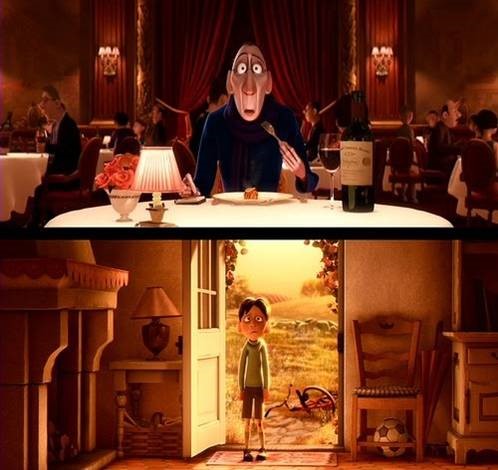
Nothing triggers the mémoire involontaire, the spontaneous memory, so strongly as scent does. Marcel Proust, who has coined the term, blames the breakthrough of childhood memories in À la recherche du temps perdue (1913) on the taste of the madeleine cake that is dipped in lime blossom tea, but our taste sense is actually too crude for that. It must have been the scent that triggered the narrator’s olfactory memory. Like how with Anton Ego, the feared restaurant critic in Pixars Ratatouille (2007), the explosive flashback to his deeply cherished childhood memory is not due to the food, but to the smelling of Remy’s masterpiece, as the smell of frying chicken carries Kris Kristofferson back to a long-lost dearness (“Sunday Morning Coming Down”, 1969), and as only the memory of The Scent Of A Woman (1992) can still enthrall the bitter, blind Colonel Frank Slade (Al Pacino).

Our olfactory nerves are plugged directly into the cerebral cortex. All other sensory perceptions first make the detour via the thalamus and are filtered there, and are briefly weighed up and weighed in on the importance of passing on to our consciousness or not, but smells are allowed to pass unhindered.

In Dylan’s mini-novella “Floater (Too Much To Ask For)” it is also a scent that triggers a Proust-like stream of memories with the narrator, the scent of burning softwood in this case. The narrator, presumably a floater, an odd-jobber perhaps, is on his way to an unpleasant task; he is going to kick someone out. His reluctance makes him susceptible to distraction; on the way, light, smells, sounds and images seduce him to flee into reminiscing.

Rural idyll, that might be the easiest way to summarize those memories. A slow, lazy summer day, in love with a second cousin, bobbing in a boat as he catches one catfish after the other. A setting like in The Adventures of Tom Sawyer (Mark Twain, 1876), presumably somewhere in Mississippi, Tennessee, or, given the tobacco reference, perhaps Virginia. Floating Along on the man’s dream sites, fractions of his life story do loom up. Raised in a harmonious family, in a family that apparently has been at home here for generations. And presumably that is one of the reasons he never got out of here, unlike most of his classmates.

The floater did stay, has given up its dreams and is now rummaging around without much ambition. Choice of words and the reference to the boss suggest that his livelihood is not very honourable; he has become one of those hangers-on, of the followers who do dirty jobs for the boss – like kicking someone out.

Perhaps. Or he will show his life partner, that second cousin, the door. She wants him to give something up, and she may shed tears all she wants – it’s too much too ask.

The ambiguous title points at a more criminal interpretation, though (a floater being a floating, unidentified corpse) and, more importantly, the most important source of the text: the Japanese gangster epos Confessions Of A Yakuza by Dr. Junichi Saga.

Dylan copies and paraphrases no fewer than eight text fragments – 144 of the 475 words, approximately one third, come almost directly from Saga’s novel. Among them memorable lines, like the punch line. At Saga it says: Tears or not, though, that was too much to ask. And the other 331 words are also hardly Dylanesque. A word like “dazzling”, for example, is nowhere to be found in Dylan’s abundant, word-rich catalog. Yes, one time in his autobiography Chronicles, but there he quotes from an age-old folk song (“Roger Esquire,” another song learned from Webber, was about money and beauty tickling the fancy and dazzling the eyes).

The word is somewhat archaic. In the work of Herman Melville, so admired by Dylan, it is used dozens of times (’tis good as gazing down into the great South Sea, and seeing the dazzling rays of the dolphins there, Redburn, 1849) and the English translators of Proust sometimes choose it too (for example On this day of dazzling sunshine, to remain until nightfall with my eyes shut was a thing permitted, from the fifth part of the Temps Perdue, ‘The Captive’, 1923).

The same applies to the unusual squall (blast, gust of wind, but Dylan also plays with the figurative meaning trouble, arguments) in the fourth verse; it is the first and only time that Dylan uses it. Melville uses it twenty-six times alone in Moby Dick, a multiple thereof in his collected works.

Now, since the Nobel Prize acceptance speech, we know that Moby Dick is in Dylan’s personal top three, so it’s not too surprising if idioms and twists and turns from that monument descend into his lyrics.

https://www.youtube.com/watch?v=oyTKhgzNTiA

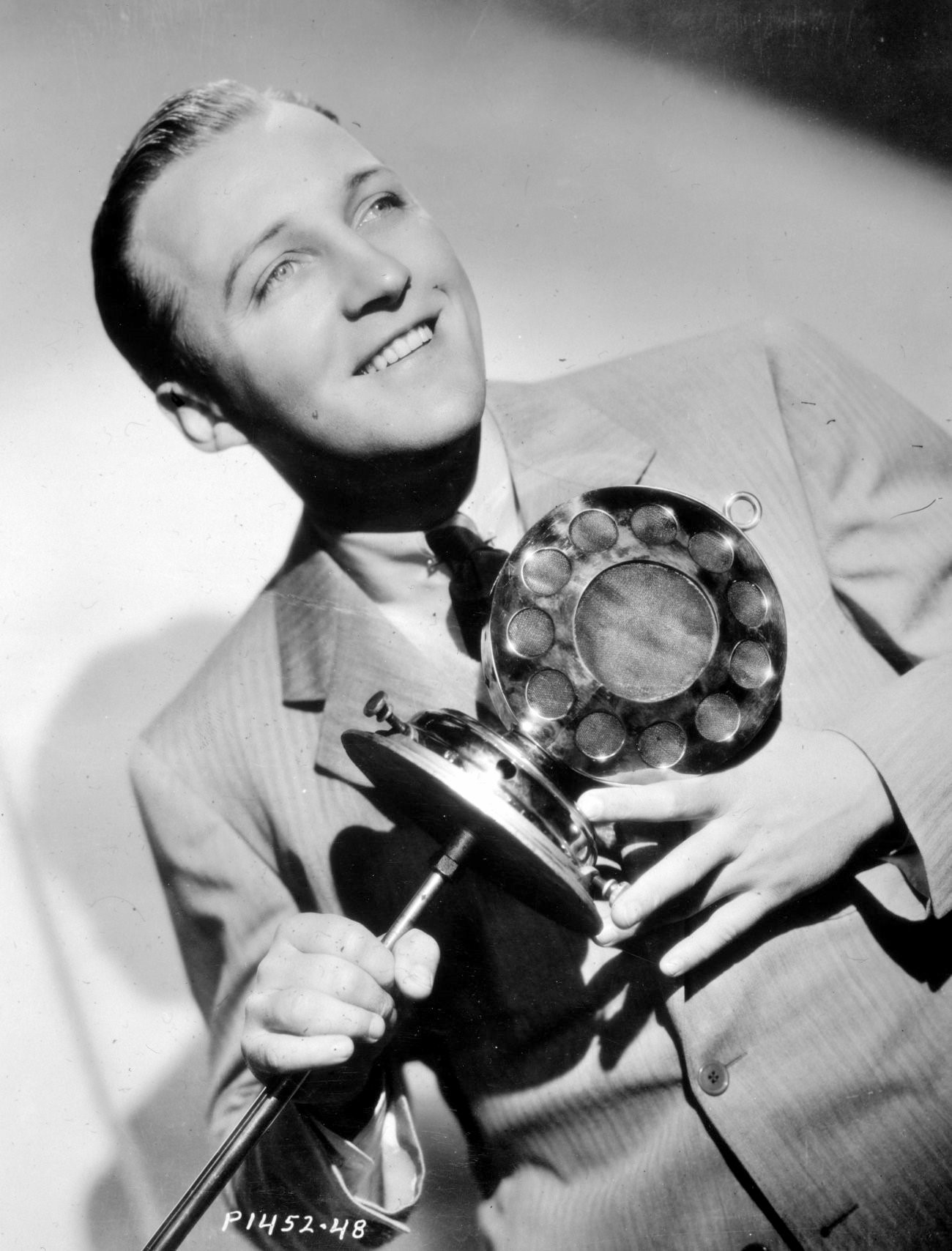
The music of “Floater” also does justice to the album title “Love And Theft”. Lovingly stolen, almost note by note, from “Snuggled On Your Shoulder (Cuddled In Your Arms)”, a 1932 song by Carmen Lombardo and Joe Young. The first version is recorded by Bing Crosby, who, still in 1932, manages to score a nice hit. It is likely that the original version is Dylan’s template. The best-selling record artist of the twentieth century (it is estimated that Bing Crosby has sold more than a billion records, “White Christmas” has been sold some hundred million times, according to Guinness World Records) is also idolized by Dylan. In his radio show Theme Time Radio Hour, Crosby comes along three times and twice Dylan takes a closer look at him, both times implicitly honouring the crooner as the founder of vocal jazz:

“One of the most influential singers in the 20th century. He changed the way we listen to singers. Before him, singers had to belt it out. …. to sing over a loud band in a concert hall. Emerging microphone technology allowed Bing, to add a level of subtlety, nuance and insinuation.”

(Theme Time Radio Hour, episode 13)

And with an admiring quite a man, quite a singer, the radio host closes his tribute.

For “Floater”, Dylan increases the pace of Crosby’s “Snuggled On Your Shoulder” a bit, but he tries to stay close to the sound. The stomp is absent in the more sentimental original, which was recorded without percussion, but the prominent role for the lonely violin in both songs is decisive in terms of atmosphere and sound. Dylan’s production is clear, clean, and yet the band achieves the grit of a 1930s recording – mainly thanks to the drummer, as he lets his cymbals rustle under the violin and steel guitar in the intermezzi. And thanks to the voice of the master, of course.

The singer Dylan delivers a first-rate performance again in this song. When cutting and pasting the text fragments gathered from here and there, the lyricist has only limited concern for the number of syllables, for the exact fit of the words. He apparently trusts his extremely flexible phrasing. Which does not, indeed, abandon him; the shortest couplet, the summer breeze couplet, has 29 syllables, the longest is the Romeo and Juliet couplet and is almost double of that (52). Dylan lays out that word procession in as many bars, in as many seconds, without cramming, without being forced or rushed – as he manages throughout the song to nail the vibe that he admires in Bing Crosby: Bing was able to sing more conversationally (Theme Time Radio Hour, episode 99).

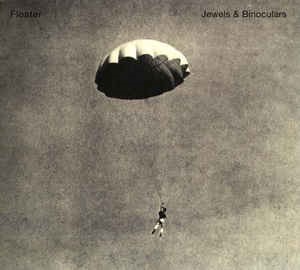
Dylan himself is content with the song. He plays it some ninety times between 2001 and 2007. The colleagues are less enthusiastic, and that is understandable. The antique atmosphere of the song, the required vocal acrobatics … and anyway: it is not really a Dylan song. Covers can therefore only be found in the tribute circuit, but none of them is worth looking up. Except for one: the praised jazz trio Jewels & Binoculars, the trio around saxophonist Michael Moore that specializes in melancholic, compelling, instrumental performances of Dylan songs. As breathtaking as “Visions Of Johanna” and (especially) “I Pity The Poor Immigrant” it is not every time, but their “Floater (Too Much To Ask)” on the album Floater (2004), for which Moore chooses the more the appropriate clarinet, is wonderful. Of course, he doesn’t have to sing it, the lucky wilbury.

Posted in Uncategorized | 1 Comment

Bob Dylan and Synesthesia: To Be Where The Angels Fly (Part III)

This article continues from

By Larry Fyffe

The Romantic poets turn to mental perceptions in their examination of the human condition because the senses directly link the environment outside to the brain inside. Those writers who focus on the intellect and reason, rather than on the artistic imagination, tend to distance their feelings from the world in which they exist.

The Romantic poets employ synesthetic images that refer to sensations like movement, touch, taste, smell, sound, sight; and to the way they intermingle within the human mind, and how they can be recalled therefrom.

Poet John Keats be the master of the technique of employing figurative language to create a sensual world, a place that is both beautiful and frightful:

O for a drop of vintage! that hath been
Cooled a long age in deep-delved earth
Tasting of Flora and the country green
Dance, Provencal song, and sunburnt mirth!
O for a beaker of the warm South
Full of the true, the blushful Hippocrene
With beaded bubbles winking at the brime
And purple-stained mouth
That I might drink, and leave the world unseen
And with thee fly away into the forest dim

(John Keats: Ode To A Nightingale)

Many of the poems of John Keats, and a number of song lyrics by Bob Dylan, both figuratively alliterative, feature a cauldron of mixed-up senses, i.e., of purple and mercury mouths:

With your mercury mouth in the missionary times
And your eyes like smoke, and your prayers like rhymes
And your silver cross, and your voice like chimes
Oh who do they think could bury you?
With your pockets well protected at last
And your streetcar visions which you place on the grass
And your flesh like silk, and your face like glass
Who could they get to carry you?

(Bob Dylan: Sad-Eyed Lady Of Lowlands)

Keats mourns the loss of the joyful taste of flowers, of a song bird’s music now ‘buried deep’ in the forest, while Dylan finds the loss of a girl that he loves leaves a sad taste in his mouth:

Now I'm wearing the cloak of misery
And I've tasted jilted love
And the frozen smile upon my face
Fits me like a glove
But I can't escape from the memory
Of the one that I'll always adore
All those nights when I lay in the arms
Of the girl from the Red River Shore

(Bob Dylan: Red River Shore)

In the song lyric below, the imagery serves as a correlative to objectify the sensation of sorrowful emotion:

The sun is sinking low
I guess it's time to go
I feel a chilly breeze
In place of memories
My dreams are locked and barred
Admitting life is hard
Without you

(Bob Dylan: Life Is Hard)

Edgar Allen Poe’s writing style is influenced by the synesthetic imagery of John Keats:

The mystery which binds me still
From the torrent, or the fountain
From the red cliff of the mountain
From the sun that 'round me rolled
In the autumn tint of gold
From the lightning in the sky
As it passed me flying by
From the thunder, and the storm

(Edgar Allen Poe: Alone)

Passed from Keats to Poe; from Poe to Dylan – note the Dylanesque ‘rhyme twist’ from the poem above in the song lyrics below:

~ ‘sky’/’by’; ‘by’/’fly’:

Some of us turn off the lights, and we live
In the moonlight shooting by
Some of us scare ourselves in the dark
To be where the angels fly

(Bob Dylan: Red River Shore)

The fear of losing the spirit of the imagination required to create worthy works of art haunts many of the lyrics of John Keats, Edgar Allen Poe, and Bob Dylan.

What else is on the site

You’ll find an index to our latest posts arranged by themes and subjects on the home page.  You can also see details of our main sections on this site at the top of this page under the picture.

The index to the 500+ Dylan compositions reviewed is now on a new page of its own.  You will find it here.  It contains reviews of every Dylan composition that we can find a recording of – if you know of anything we have missed please do write in.

We also have a discussion group “Untold Dylan” on Facebook.  Just type the phrase “Untold Dylan” in, on your Facebook page or follow this link 

And please do note   The Bob Dylan Project, which lists every Dylan song in alphabetical order, and has links to licensed recordings and performances by Dylan and by other artists, is starting to link back to our reviews.


Posted in Uncategorized | Leave a comment

Bob Dylan’s “Telephone Wire” – another missing song found.

By Tony Attwood

I guess Bob Dylan likes telephones – wasn’t there a Theme Time Radio Hour on telephones one time?

Anyway, here is a snippet about telephones – it really is no more than that; just a snippet of a song being tried out, with a telephone theme…

If you really know your obscure Dylan songs you might by chance get a quick flashback to Long Distance Operator which has the opening lyrics

Long-distance operator
Place this call, it’s not for fun
Long-distance operator
Please, place this call, you know it’s not for fun
I gotta get a message to my baby
You know, she’s not just anyone

This is of course a different song, but to add to the confusion, the lyrics printed on the site that carries the video above have nothing to do with the song – but are in fact from “Long Distance Operator”.  Funny how people put stuff up without checking!

Incidentally I have also seen a site with this video on it called “Telephone Line”.  And elsehwere it is also known on at least one site as “Las Vegas Blues” but I suspect that was just the site owner trying to think of a name for the extract.

Anyway this snippet was reputedly recorded on 1 May 1970 as part of the George Harrison sessions.  And these I think are the actual lyrics…

Wondering, I'm wondering when will my swamp catch on fire
Sitting here looking at that bad old telephone wire

Going to Las Vagas going by the evening sun
Going to Las Vagas going just as fast as I can run
Gonna win some money and give it to my hun

It is, as you can hear, a simple 12 bar blues with the guys just playing the standard three chord format and Dylan making up some lines as he goes along.

I must add a word of thanks to Aaron Galbraith who found this extract, and indeed has just sent me notes on a few more such missing Dylan songs which I hope to get to in the coming days and weeks.

What else is on the site

You’ll find an index to our latest posts arranged by themes and subjects on the home page.  You can also see details of our main sections on this site at the top of this page under the picture.

The index to the 500+ Dylan compositions reviewed is now on a new page of its own.  You will find it here.  It contains reviews of every Dylan composition that we can find a recording of – if you know of anything we have missed please do write in.

We also have a discussion group “Untold Dylan” on Facebook.  Just type the phrase “Untold Dylan” in, on your Facebook page or follow this link 

And please do note   The Bob Dylan Project, which lists every Dylan song in alphabetical order, and has links to licensed recordings and performances by Dylan and by other artists, is starting to link back to our reviews.

Posted in Uncategorized | 3 Comments

Dylan’s Angelina like you have never heard it before: the most beautiful rendition

by Jochen Markhorst

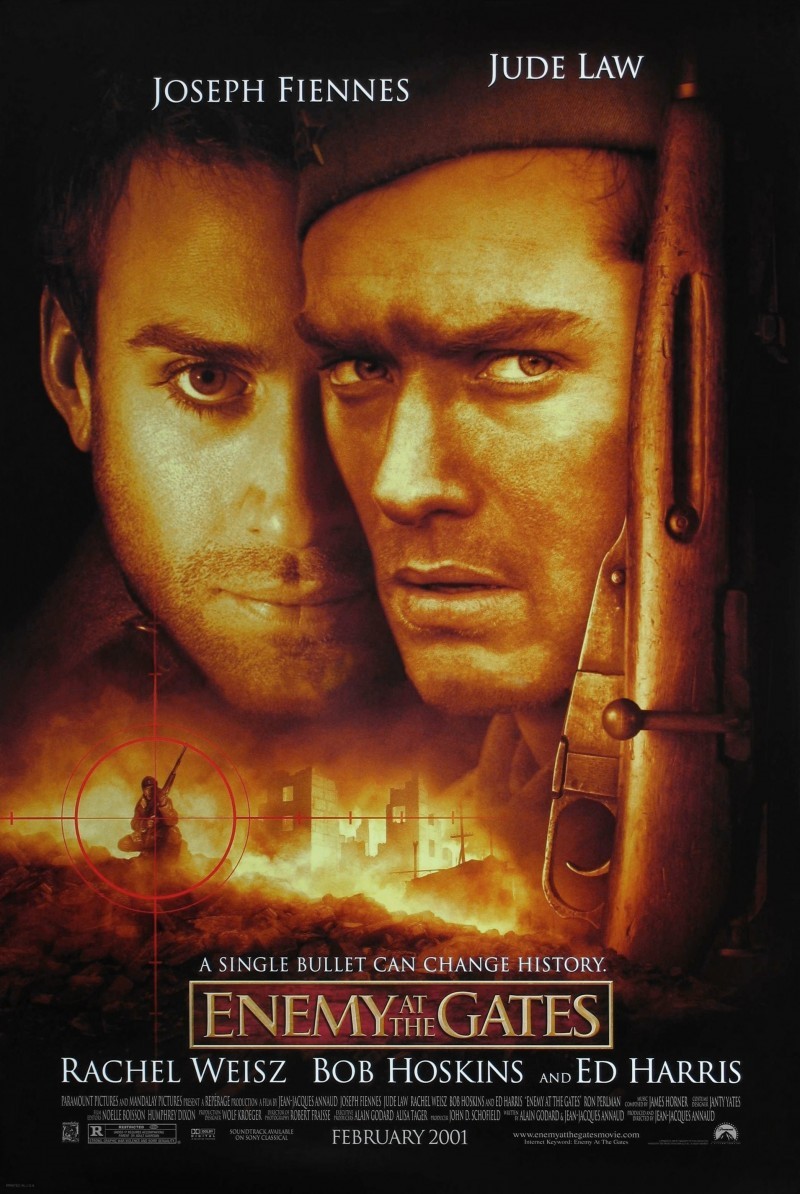
The first German officer who is shot by Vassili Zaytsev in Enemy At The Gates (Jean Jacques Annaud, 2001) is standing under an improvised shower in the remains of a house in the ruins of Stalingrad, which is under siege and constantly being bombarded. The officer’s transport has just arrived and is waiting in the combat zone, between the bomb craters and the debris: a black Mercedes 170V Funkwagen. Not a genuine one, by the way, but the Props Department has done its best.

Usually it is a more glamourous Mercedes. The Mercedes-Benz 200 Lang in Inglorious Bastards (Tarantino, 2009), for example, although in the opening scene SS officer Hans Landa arrives at Perrier LaPadite’s cottage in also an (open) Mercedes-Benz 170V. But preferably the top Nazis, from Hitler to Goering and from Himmler to Colonel Stauffenberg (Valkyrie, Bryan Singer, 2008), both privately and on the battlefields, to concentration camps and execution sites, are transported in the Mercedes-Benz 770 K Special -Tourenwagen 7-sitzer. That’s der Große Mercedes, the luxury car in which Hitler took the parades (a dark blue one, in this case), the car he gave Franco as a gift, in which Himmler visited the Konzentrationslager and Goering his Luftwaffekameraden. Emperor Hirohito was given a red one, Pope Pius XI a white one, but the Nazis generally preferred black, sometimes khaki.

And black are, consequently, almost all Mercedes in war films.

It is therefore a loaded, dark image, that the poet Dylan evokes in this one verse line of “Angelina”: There’s a black Mercedes rollin’ through the combat zone.

It does not stand alone, this dark brooding line. Blood dryin’ in my yellow hair as I go from shore to shore, for example. Incidentally, also an image that without much digging summons up associations with World War II and blond Nazis in Argentina, thus pushing fragments such as marching, stars and stripes, explode and tree of smoke also towards the battlefield.

However, in spite of this correlation, no coherent, unambiguous story or mood emerges from the lyrics; “Angelina” remains an enigmatic, threadless song.

It seems that an initial inspiration should be attributed to Harry Belafonte. Dylan writes the song when a Caribbean wind blows around his head, a few weeks after his schooner Water Pearl is launched. Reggae and calypso are in the air, there on those paradisiacal Little Antilles in the Caribbean Sea, and Dylan writes songs such as “Caribbean Wind”, “I And I”, “Heart Of Mine” and “Jokerman”, songs in which the sounds of the Windward and Leeward Islands echo.

It must have taken Dylan back to his first steps in the music business, to his harmonica contribution to “The Midnight Special” on Harry Belafonte’s eponymous 1962 album.

The experience does something with the young Dylan. He will honour the King of Calypso and “The Midnight Special” in the twenty-first century, in Chronicles and in “If You Ever Go To Houston”.

Belafonte’s album also features “Gotta Travel On”, which is already in his repertoire and which he will record later (Self Portrait, 1970) and apparently he also listens to Belafonte’s record before this one, Jump Up Calypso (1961). Its final number is released as a single: “Angelina”, with the chorus

Angelina, Angelina, 
Please bring down your concertina
And play a welcome for me 
'Cause I'll be coming home from sea

There are more echoes of the song in Dylan’s oeuvre, by the way. Harry’s from Curacao up to Tokyo becomes from Tokyo to the British Isles (“Caribbean Wind”) and a Dylanesque couplet like

Yes it's so long since I've been home
Seems like there's no place to roam
Well I've sailed around the Horn
I've been from San Jose up to Baffin Bay
And I've rode out many a storm

 … seems to resound in “Bob Dylan’s Dream”, “Lo And Behold!”, “Santa Fe” and “Heart Of Mine” – through the poetic vein of songwriter Lord Burgess (real name Irving Louis Burgie) flows the same blood as Dylan’s, and Dylan, hopping from Antillean islands to the West Indies, connects automatically. The jump to Belafonte and calypso is not that far, after all.

The strongest trigger is the chorus. Dylan started with the rhyme Angelina / concertina, presumably wrote a row of unrelated rhymes on a scrap paper (subpoena, hyena, Argentina, arena) and thought: we’ ll see what happens. Also a strategy that he shares with Belafonte’s main supplier Lord Burgess, who also jumps through the weirdest hoops to squeeze meaningless rhymes into a song. Like in “Gloria”, the B-side of the single “Angelina”:

Please marry me Gloria, 
Darling can't you see Gloria
With all your faults, 
I want you like a long dose of Epsom salts

 Or, at least as bizarre,

So please marry me Gloria, 
Darling can't you see Gloria
My belly does boil, 
I want you like a bad dose of castor oil.

But then again; Belafonte and Burgie don’t have the slightest ambition to suggest depth, of course – Belafonte is a song and dance man par excellence, certainly in those early years of his career.

The poet Dylan, on the other hand, does have some aspiration to be profound. And Biblical references is one of his strategies to insinuate any literary cachet. The New Testament, and especially the four Evangelists, this time. Matthew in the first verse (“do not let your left hand know what your right hand is doing,” 6:3), Mark in the third (as he walked through the crowd, the same scene Dylan refers to in “Scarlet Town”: I touched the garment), Luke 6:29 in the following (“If someone slaps you on one cheek, turn to them the other also,” from the Sermon on the Mount) and Peter’s denial from John (No, I have heard nothing about the man that you seek).

And that is by no means everything – “Angelina” is crammed with subtle and less indirect Biblical images and references. The last two verses quote Matthew and seem to refer to Armageddon, the pale horse is also from Revelation, the tree of smoke is an indication of the cloud in which God covers Himself when He speaks to Moses (Exodus, which is also the source for milk and honey) and the angel with four faces Dylan borrows from Ezekiel, from chapter 10, describing the cherubim: “each had four faces.”

All very expressive and most mysterious, but a coherent image still does not rise. In the end, as Dylan says in “Up To Me”, the lyrics do not come together: We heard the Sermon on the Mount and I knew it was too complex / it didn’t amount to anything more than what the broken glass reflects – and the proximity to again the Sermon on the Mount is probably not a coincidence.

Just like “Up To Me”, “Angelina” is rejected. Beautiful recording, beautiful melody and thrilling tension, that’s not the problem. But Dylan’s commentary on yet another dropped masterpiece, on “Caribbean Wind” seems to be applicable to “Angelina” one on one:

“That one I couldn’t quite grasp what it was about after I finished it. Sometimes, you’ll write something to be very inspired, and you won’t quite finish it for one reason or another. Then you’ll go back and try and pick it up, and the inspiration is just gone. Either you get it all, and you can leave a few little pieces to fill in, or you’re trying always to finish it off. Then it’s a struggle. The inspiration’s gone and you can’t remember why you started it in the first place.”

(Biograph, 1985)

Neither does the “Tangled Up In Blue”-artifice, the shuffling of personal pronouns and verb times, help. Just like in Tangled, there is a subcutaneous surmise of a triangular relationship, with apart from that unapproachable Angelina and the I-person, another man – but that “he” can just as well be the I-person himself, of course. Dylan himself does not have a clear picture either, or so it seems. The two versions of the third verse do illustrate that lack of clarity. The official, second version (the one on The Bootleg Series 1-3) describes the male antagonist (or the I-person):

His eyes were two slits, making a snake proud
With a face that any painter would paint as he walked through the crowd
Worshipping a god with the body of a woman well endowed
And the head of a hyena

… but in the first version Dylan still sings about Angelina:

Her eyes were two slits, making a snake proud
With a face that any painter would paint and well-endowed
Praising the dead as she rode a donkey through the crowd
Or was it a hyena?

Implementing that hyena remains somewhat difficult, but at least in this first version we escape from that alienating wink at Egyptian mythology (although there are actually no gods with the head of a hyena – jackals, yes). The Jesus reference is maintained, but this time refers to another scene: the entry into Jerusalem, where Jesus, seated on a donkey, makes His way through “a great crowd.” It is, incidentally, the chapter after the raising of Lazarus, so perhaps that should not have been praising the dead, but raising the dead.

There are hardly any covers, despite the success of The Bootleg Series 1-3 (1991),  the official release of the song. The only noteworthy version is from an old friend: Ashley Hutchings, the bassist and co-founder of Fairport Convention. At the time, in the late summer of ’67, Hutchings was one of the lucky ones who were allowed to rummage around in the Basement Tapes (and then chose “Million Dollar Bash”) and his dowsing rod still finds gold twenty years later; Hutchings’ “Angelina” is really beautiful. He changes Jerusalem into God’s country and fiddles with personal pronouns too (He’s surrounded by God’s angels becomes She’s surrounded), but the indecisive bard surely will not mind (on the collection The Guv’nor Vol. 1, 1993, which also includes the Fairport Convention outtake “Dear Landlord” and a Steeleye Span recording of “Lay Down Your Weary Tune”).

Dylan himself never plays the song. Not even when he performs in Berlin on April 4, 2019, at the Mercedes Benz Arena. Where a glittering black Mercedes is proudly showing off in front of the entrance.

Ashley Hutchings:

or try this one


What else is on the site

You’ll find an index to our latest posts arranged by themes and subjects on the home page.  You can also see details of our main sections on this site at the top of this page under the picture.

The index to the 600+ Dylan compositions reviewed is now on a new page of its own.  You will find it here.  It contains reviews of every Dylan composition that we can find a recording of – if you know of anything we have missed please do write in.

We also have a discussion group “Untold Dylan” on Facebook.  Just type the phrase “Untold Dylan” in, on your Facebook page or follow this link 

And please do note   The Bob Dylan Project, which lists every Dylan song in alphabetical order, and has links to licensed recordings and performances by Dylan and by other artists, is starting to link back to our reviews.


Posted in Uncategorized | 2 Comments

Bob Dylan: Master Harpist part 3 (with music to amaze you again and again)

By Mike Johnson (Kiwipoet)

‘The harmonicas play
the skeleton keys and the rain’

Towards the end of 2002 Dylan put down the guitar, got in behind the keyboards and changed his sound forever. Dylan and his guitar; they’d been inseparable for forty years, a part of his ever shifting persona. It was a radical move, at least as radical as moving from the acoustic to the electric guitar.

Increasingly in the late 1990s, Dylan’s sound had been dominated by his punky Stratocaster with, I have to say, mixed results. ‘He’s no Eric Clapton’, his detractors crowed, and you can see the truth of that on a You Tube clip of Dylan and Clapton playing ‘Crossroads’ together in 1999; Dylan’s stubborn banging away on one note hardly matches the smooth and fluid Clapton.

For our present purposes, however, one of the consequences of abandoning the guitar was to bring the harmonica within easy reach. At some point in the 1980s Dylan abandoned the neck brace that enabled him to play guitar and harmonica at the same time, which meant that in order to play the little instrument he had to either put down the guitar or sling it awkwardly over his back. There’s a somewhat comical incident on the Johnny Carson show in 1984 when Dylan gets halfway through ‘Jokerman’, puts down his guitar and wanders around the set looking for his harps!

Behind the keyboards, however, he can sit the harmonica just above the keys where he can pick it up and put it down at will. From this possibility he developed the technique of playing the harmonica with his left hand while vamping away on the piano with his right.

You can hear the early fruits of this collaboration between the harmonica and piano in this late 2002 performance of ‘Love Minus Zero No Limit’. He’s feeling his way through this gentle song, and the effects are not spectacular, but it signals a new era in Dylan’s performances. He will play the piano from 2002 to 2006 at which point he switches from piano to organ.

By all accounts, 2003 was an uneven year in terms of performance, but gave rise to some wonderful harmonica work. The band created a raw, rough and ready sound that year.

A Dylan compiler dubbed his collection for 2003 as ‘Piano Blues and Bar Room Ballads’, which captures that sound, as if you’d just walked in off the street into some joint, maybe in the late 1930s, and some old guy is banging away on the piano and blasting the place out with his harp.

This rocking performance of Desolation Row shows Dylan’s piano to advantage, the way he anticipates the beat in order to drive the song along, and knocks us back with a short but powerful harmonica solo in the middle. Blues without restraint.

Starting with long, clear notes, towards the end, by overlapping two or three notes, the master harpist makes it sound as if two or three harmonicas suddenly join in. All this brilliance, and the right hand never misses a beat on the piano. Take a moment too, to appreciate Dylan’s rough but forceful vocal. What a gem. Play it effing loud!

‘Senor’ from the album Street Legal in 1978 has never been a particularly easy song to perform given its slow, potentially dirge-like movement, a weariness that affects other songs on the album too, like ‘Love In Vain’.

‘Senor’ has always reminded me of that famous quote by Henry Thoreau, ‘The mass of men lead lives of quiet desperation.’ Weary desperation, perhaps, in the case of this song, coupled with a powerful yearning to break free. A desire to cut through the repetitive false and phoney to the real and the true. The problem with the song may be that while the lyrics build to a shattering conclusion from the borderlands of despair

‘let’s overturn these tables
disconnect these cables
this place don’t make sense to me no more’

the music has nowhere to go but into an elegiac fade out, from the last shouted line to a final dying fall. Clip-clopping into the sunset, perhaps.

If we slip back to 1995 for a moment, we can hear Dylan grappling with the issue of how to end the song by using the harmonica to up the ante and cut through some of the drear, but, good as the harp work is, the song still seems to lumber to a somewhat grandiose ending not much more effective than the old fade out:

In 2003 Dylan found a more radical solution, again with the harmonica, which he leaves to one side, no mid-song solo, until after the last lines, not shouted this time but understated, before launching into a virtuoso piece of harp work which turns Thoreau’s dictum from ‘quiet desperation’ to screaming desperation, and the song ends with a cumulative movement of anguish and claustrophobic panic. The master harpist makes that little instrument shriek as if Robert Johnson’s hellhounds had their teeth in him. We could ask for a better recording, to bring the harp forward a bit, but hardly for a better performance!

All through writing this Master Harpist series something of a dialogue with jazz cat friends of mine has been running through my head, and has surfaced from time to time. Dylan can’t play the harmonica was their absolute assurance, and they were wrong, but not only can Dylan play the instrument, he can play it like a jazz cat himself. More like a jazz cat than a blues man. Take this 2003 performance of ‘Floater’, for example.

We’ve entered another joint but this time we’ve time-slipped ten years back to the 1920s, the F Scot Fitzgerald days, summer days and summer nights, with gangsters and tough talk, but also with a pastoral twist, glimpses of an idealised childhood. A touch of Normal Rockwell in the images conjured. Our old guy with his piano have moved in down the road from Al Jolson.

Here we don’t find the harmonica solo in the middle, or at the end, but as a prelude, a way of introducing the song, establishing its mood, which is bright and breezy with a touch of nostalgia.

My argument along the way here is that Dylan uses his harp to amplify emotional valences or potentials in a song. With ‘Floater’ he uses it to capture the sound of an era, his introductory solo reminding me of way some of those old trumpet players like Louis Armstrong used a mute to give that loud instrument more subtle tones. If we heard this solo played note-for-note on a muted trumpet, I doubt that Bob Dylan would be the first name to jump into our heads.

It’s fair to say that none of the live performances of ‘Drifter’s Escape’ capture the plaintive quality of the 1967 studio recording, yet the song made the transition to stadium rock, and sounds pretty good when pushed along. The 2003 recording is a bit messy, really; it’s getting late for the old guy in the joint with his piano, band and harp. He leaves the harp to last minute, quite literally, but still manages rip through three choruses, kick-arsing the song into the stratosphere. It’s one hell of escape the drifter makes in this performance.

I can’t pass over 2003 without stopping for a listen to this crowd-pleasing, foot-stomping, harmonica-wailing ‘Tangled Up In Blue’. This song as a showcase for Dylan’s harmonica needs a separate article, one I’ll write as a postscript to this Master Harpist series, but it belongs here as well. We’re treated not only to an extended harmonica ending, in which Dylan pulls out all the stops, but a bouncy harmonica intro leading us lightly into the song before Dylan sits at the piano, which begins to duck and dive, driving the song forward into the vocals.

There’s a warm-up harmonica solo before the last verse, and in the finale we hear that harmonica see-sawing back and forward across the rhythm, doing its own celebratory dance. The harmonica celebrates liberation by liberating itself from the strictures of the beat and doing a butterfly frolic.

Once again we find Dylan wowing his audience. Wish I’d been there!

The fruitful collaboration between the piano and the harmonica continued through to 2006. This recording from 2005 of ‘Million Miles’ raises once more the whole question of Dylan’s jazz influences, and the role of the harmonica in bringing that jazzy strain into Dylan’s music.

This music is rooted the jazz sounds of the late 1940s, maybe, early 50s, an echo of the big band era spliced with some modern sounding guitar work. Underpinned by a honky-tonk effect piano (under-recorded), Dylan’s harp solo before the last verse doesn’t hit a lot of different notes but rather plays with the song’s timing in ways I don’t quite understand, staggering the note, holding it, withholding it – it’s all about timing. Another ‘mute trumpet’ solo.

It feels almost haphazard, the lyrics feel improvised, the music delightfully casual – but it’s utterly accomplished.

In 2006 Dylan switched from the piano to the organ, and a new sound emerged which once more ruffled feathers. We’d got used to his percussive, anticipatory piano style, all those wonderful piano blues and bar-room ballads, now we had to deal with a kind of rinky-dink organ grinder style of keyboard work that was not to everybody’s taste. There were moments when the music sounded close to burlesque, and the Dylan bashing press ran tales of people walking out of Dylan concerts in droves and so on.

Also, during the organ grinder period Dylan’s voice appeared to deteriorate to a hoarse croak. Given that later, in 2014, Dylan the crooner was to miraculously emerge, capable of easing his way through old standards like ‘Somewhere over the Rainbow’, hitting the high notes without difficulty, I am tempted to think that much of the hoarse croak was a deliberate vocal strategy. As someone commented at the time, Dylan has finally got the voice he’s always wanted. He finally began to sound like some old engine that broke its driving wheel.

I’ll leave this post with a taste of things of come in Master Harpist 4. A droll version of an underrated song, ‘Under the Red Sky’. The harmonica does the prelude, several choruses, tuning us into the light, irreverent mood of the song. Sadly, from my point of view, the harmonica doesn’t return in the instrumental break. Dylan rinky-dinks on the organ, pleasant, foot-tapping, but not much more.

However beware! That opening harp solo into might lull us with its casual, bouncy gaiety, its whimsical touches, but there’s a dark tone in Dylan’s vocal delivery that takes us beyond the little throw-away song the harp might have set us up for!

See you next time around!

Kia Ora!

You will, I am sure, also enjoy…

Bob Dylan: Master Harpist part one

Bob Dylan: Master Harpist part two


Posted in Uncategorized | 9 Comments

Bob Dylan: Cliff Richard, Black Sabbath and Henry Rollins. A twist of fate

By Larry Fyffe 

PreRomantic, ‘inward transcendentalist’ poet William Blake, diverges from Emanual Swedenborg’s rational-cum-mystical neoPlatonic religious outlook, and contends that within each and every human mind  lies the Imagination (it creates dreams, art, mythologies, and visions); the poet takes the New Testament Lamb of God as a symbol for the the Imagination – in contrast to the fearful, and materialistc Tiger God of the Old Testament.

Blake addresses a rather Gnostic-like question to the ‘demiurgic’ Tiger about  the Absolute One, the supreme Creator of the Universe:

Did he smile his work to see 
Did he who made the Lamb make thee?
Tyger, Tyger, burning bright
In the forests of the night

(William Blake: The Tyger)

And again in:

And was the holy Lamb of God
On England's pleasant pastures seen? ....
And was Jerusalem builded here
Among these dark Satanic mills?
Bring me my bow of burning gold 
Bring me my arrows of desire
Bring me my spear; O clouds unfold!
Bring me my chariots of fire!

(William Blake: Jerusalem)

Influenced by the poetry of Blake, the heavy metal band ‘Black Sabbath’ pictures modern man’s Imagination being held down by established social and economic institutions, personified as Satan who rebels against the anti-materialistic teachings of light-inspired Jesus, and sets up dark mills for labourers to work in:

Big black shape with eyes of fire 
Telling people their desire
Satan sitting there, he's smiling
Watch those flames get higher and higher
No, no, no, please God help me!...
Is this the end, my friend
Satan's coming 'round the bend
People running 'cause they're scared

(Black Sabbath: Black Sabbath)

Singer/songwriter Bob Dylan envisions the black shape of a figurative train comin’ slowly around the bend. Dylan does not provide the reader or listener with a clear vision. Like Blake, he fogs things up – seems like the engineer is Christ, but could it be Satan?:

Man's ego is inflated, his laws are outdated, they don't apply no more
You can't rely no more to be standin' around waitin'
In the home of the brave, Jefferson turnin' over in his grave
Fools glorifying themselves, trying to manipulate Satan
And there's a slow train comin' up around the bend

(Bob Dylan: Slow Train)

https://www.youtube.com/watch?v=Ijh42sc6P4E

Dylan brings it all back home to old time rocknroll:

I don't care about economy, I don't care about astronomy
But it sure do bother me to see my loved ones turned into puppets

(Bob Dylan: Slow Train)

Alluding to the following song lyrics:

You get 'A' in Biology
You get 'A' in Psychology ....
But when you go out with me
Baby, you get 'D', D' in Love

(Cliff Richard: D in Love)

Bob Dylan also pays tribute to Henry Rollins whose punk band ‘Black Flag’ is heavily influenced by the words and music of ‘Black Sabbath’. As pointed out by others, Rollins’ novels are referenced by Dylan in the following song lyrics:

I see people in the park, forgettin' their troubles and woes
They're drinkin' and dancin', wearin' bright coloured clothes
All the young men with the young women lookin' so good
Well, I'd trade places with'em in a minute, if I could
I'm crossin' the street to get away from a mangy dog
Talkin' to myself in a monologue
I think what I need might be a full-length leather coat
Someone just asked me if I'm registered to vote

(Bob Dylan: Highlands)

To wit: 

 I would have traded places with the guy in a second

(Henry Rollins: High Adventures In The Great Outdoors)

And:

 He comes up to me and says, "Are you registered to vote?"
I say, "Hell, no"

(Henry Rollins: Art To Choke Hearts)

You see, Lucifer and the Tiger can be creatively turned around into a symbol of strength that stands up against established authorities and moralities:

 We walked along by the old canal
A little consfused, I remember well
And stopped into a strange hotel
With a neon burning bright
He felt the heat of the night
Hit him like a freight train

(Bob Dylan: Simple Twist Of Fate)

Posted in Uncategorized | 1 Comment

Why does Bob Dylan like “October Song” by the Incredible String Band

By Tony Attwood

Jochen has forwarded me the text of an interview with Bob Dylan that appeared in 1968 in “Sing Out” in which John Cohen asked a series of questions about Dylan’s attitude towards the Beatles.

At one point dylan said apropos the Beatles, “they work much more with the studio equipment, they take advantage of the new sound inventions of the past year or two. Whereas I don’t know anything about it. I just do the songs, and sing them and that’s all.”  I mention that because it suggests Bob was in a serious mood, willing to take on the questions and give straight answers.

The follow up question then takes us to the element that interests me, for the interviewer says, again of the Beatles, “Do you think they are more British or International?”

Bob replies, “They’re British, I suppose, but you can’t say they’ve carried on with their poetic legacy, whereas the Incredible String Band who wrote this “October Song”…that was quite good.”

(And as an aside, this is not “October Song as recorded by Amy Winehouse, that is a totally different affair.)

The interviewer then asked what both Jochen and I find an incomprehensible question, saying, “As a finished thing — or did it reach you?”   Maybe if you speak 1968 English you can explain that to us, but Bob replied, “As a finished song it’s quite good.”

“Quite good” of course is not a wholehearted recommendation, but on the other hand the album from which the song came, named “Incredible String Band”, was released two years earlier, and although popular did not reach the heights.

The Incredible String Band album won the title of “Folk Album of the Year” in the magazine “Melody Maker” which by this time had dropped its original stance of covering jazz and was now covering the music of what was then called the Underground.

In its article on the album Wikipedia says, “… and in a 1968 Sing Out! magazine interview Bob Dylan praised Williamson’s “October Song” as one of his favorite songs of that period.”

So maybe Bob said a little more than we have found or maybe Wiki just expanded on reality.  “Quite good” for me doesn’t equate to “one of his favourite songs of that period.”   But it was the song Bob picked, so it is worth a look in our “Why does Dylan like” series.

But for me there is a further connection.  Being only a few years younger than Bob Dylan, I was a student in Brighton (on the south coast of the UK) at the time the album came out and I was utterly knocked out by it, and it is this song that I still remember.  Indeed I think there are only three “Incredibles” songs  across all the albums that have stayed with me through my life – this plus “Back in the 1960s”, “The first girl ever I loved”, from their second album.  I think “The first girl” also written by Williamson gives quite an insight into the musician and his music.

Here are the lyrics…

I’ll sing you this October song
Oh, there is no song before it
The words and tune are none of my own
For my joys and sorrows bore it
Beside the sea
The brambly briars in the still of evening
Birds fly out behind the sun
And with them I’ll be leavng

The fallen leaves that jewel the ground
They know the art of dying
And leave with joy their glad gold hearts
In the scarlet shadows lying
When hunger calls my footsteps home
The morning follows after
I swim the seas within my mind
And the pine-trees laugh green laughter

I used to search for happiness
And I used to follow pleasure
But I found a door behind my mind
And that’s the greatest treasure
For rulers like to lay down laws
And rebels like to break them
And the poor priests like to walk in chains
And God likes to forsake them

So why did Bob pick this song?

First, it was unlike anything else being produced at the time – and indeed there are few other songs that compare to it, other than those by Williamson himself.

Second, I think he wanted to point out to the interviewer that British music was not just the Beatles, but there were many other insteresting explorations going on at the time.

And third I suspect he loved the way the the lyrics evolve.  Dylan does not write lines like those opening the second verse, just as he never writes melodies like this, but I think he can admire that sort of writing.

The opening four lines of the second verse are, for me, unparalleled in popular and folk music, and as I’ve said that final quartet of lines takes us onto a new dimension.

I do recall the impact that final verse made on me. This was 1968 and I was not into the drugs scene at all (I was however trying to become either a rock musician or writer), and I loved not just the “door behind my mind” but also the final four lines, because they reflected my own views on authority, both of the state and the church.  And those lines – indeed all the lines in the song, are far more than “quite good”.  I am not sure if anyone can find any antecedents but I can’t.

Many people have recorded it, and indeed still do record it.   Here are just four songs – you can find many more on the internet.  And the variety of approaches show just how much there is within the lyrics and the melody, which as the first example below shows, is very closely related to the English folk tradition of hundreds of years before.

It is a song that has been part of my life since those late teenage years, and I think my life has been a little richer by having it with me through the years.   I do hope you will also go on and try the other versions below.

The Beatles it ain’t, and I think Bob Dylan was clearly saying, “yes that’s one way of going, but really, there are other people who are doing phenomonal ground breaking work.  You should listen.”

When Bob said, “quite good” I like to think he meant, “yes the Beatles sum up and exemplify all that has gone before, but if you want to find somewhere new to travel, try this.”

Maybe I’m taking it all to far, but that’s how I like to read that remark.  After all, a song that stays with you, all the way through your adult life, has to be more than “quite good”.

Dick Gaughan

Lauri Watson takes a different route, changing the chord structure beneath the lyrics…

Tom Gillfellon keeps the struture but gives us an interwoven complex accompaniment, which perhaps on first hearing overpowers the melody and lyrics, but give it several plays and there appears a sound that does indeed deliver October.

The late Maggie Boyle also recorded the song, which can be found here. It is a simple and delicate version that delivers the feeling of the Scottish countryside which I think was very much part of the original.

And finally, back to the composer, Robin Williamson.  He of course wrote other songs.  Here is one I particularly like… “The first girl ever I loved”

My thanks to Jochen for giving me a chance to write about, and perhaps introduce you to, an extraordinary band from the 1960s and a beautiful song that truly does need to be remembered.

And of course for showing me another reason why I love the music of Bob Dylan.  We both enjoyed the Incredible String Band.

An index to the songs in this series can be found here.

What else is on the site

You’ll find an index to our latest posts arranged by themes and subjects on the home page.  You can also see details of our main sections on this site at the top of this page under the picture.

The index to the 500+ Dylan compositions reviewed is now on a new page of its own.  You will find it here.  It contains reviews of every Dylan composition that we can find a recording of – if you know of anything we have missed please do write in.

We also have a discussion group “Untold Dylan” on Facebook.  Just type the phrase “Untold Dylan” in, on your Facebook page or follow this link 

And please do note   The Bob Dylan Project, which lists every Dylan song in alphabetical order, and has links to licensed recordings and performances by Dylan and by other artists, is starting to link back to our reviews.

Posted in Uncategorized | 10 Comments

She’s Your Lover Now: Bob Dylan’s 18 carat rough diamond

by Jochen Markhorst

JOSEPH
It’s very good. Of course now and then – just now and then – it gets a touch elaborate.

MOZART
What do you mean, Sire?

JOSEPH
Well, I mean occasionally it seems to have, how shall one say?
(he stops in difficulty; to Orsini-Rosenberg)
How shall one say, Director?

ORSINI-ROSENBERG
Too many notes, Your Majesty?

JOSEPH
Exactly. Very well put. Too many notes.

(Peter Schaffer, Amadeus)

Emperor Joseph II extensively compliments Mozart with Die Entführung aus dem Serail (K.384; The Abduction From The Seraglio) and also makes one critical comment that leads to a somewhat absurd, comical dialogue with the uncomprehending, hurt Mozart, but the Imperial Highness has a point. Die Entführung is certainly one of Mozart’s grand operas, but indeed, compared to the Big Four (Figaro, Don Giovanni, Cosí fan tutte, and Zauberflöte), it is perhaps a bit long-winded and it does – just now and then – suffer from too much ambition.

Almost two hundred years later, on January 21, 1966, Dylan could also use some constructive criticism too. He spends an entire production day grinding a rough diamond, but can’t get hold of the sparkle he suspects therein. Thanks to The Cutting Edge we are able to follow Dylan’s struggle, growing frustration and eventual capitulation, thanks to the same Cutting Edge we are witness to the resigned sigh, after the last rehearsal with the band, which has since been quoted by all fascinated reviewers, journalists and blogging fans: “I can’t hear the song anymore.”

After the release in 2014, the same recording gets some cult status because a powerless Dylan does not finish an expression of frustration: I can’t even. Is Dylan the mint master of this so hated fashionable, adolescent catchphrase from the twenty-first century? The respected literary-cultural magazine The Atlantic, established opinion-makers such as The New York Daily and trendy online news sites such as City Pages and The Daily Dot devote amused editorials to the find.

“She’s Your Lover Now” truly is a rough diamond, a song that holds eighteen carats, and it is one of the greatest lost classics in Dylan’s illegal bootlegging circuit for years. But unlike with peers such as “Blind Willie McTell”, “Mama You Been On My Mind”, “Series Of Dreams” or “Farewell Angelina” (the list is long) the admirers also hear: this song is indeed not finished. Or rather: the song is too full – Dylan tries to cram one and a half song into one song.

The three or four completed couplets each work sixteen lines of verse to the refrain line She’s your lover now and change the melody line five times along the way. That is a lot. Irregularly too; after six lines, then after three, after one, after two and after three lines. The chord scheme is very similar to “Like A Rolling Stone”, but is more restless and partly unusual, and then there is the question of the lyrics.

The lyrics are limping. The poet Dylan jerkely steers back and forth between a cynical, bitter statement à la “Positively Fourth Street” on the one hand and a kaleidoscopic fog curtain like “Visions Of Johanna” on the other.

Too many notes, Your Majesty.

The opening lines promise hazy poetry. Dylan introduces Blonde On Blonde archetypes, a roaring pawnbroker and a landlord, places a scorching sneer in the tradition of “Ballad Of A Thin Man” and “Like A Rolling Stone” with the very Dylanesque pain sure brings out the best in people, doesn’t it? but then switches to an edgy, unambiguous monologue in direct speech.

Initially the bard holds back on poetic imagery. She’s got her iron chain is a relatively traceable metaphor, just as the first poetic comparisons in the following verse (felony room and judge) are not too frenzied. Familiarly frantic again it does not get until the end of the third verse when the singer poetically expresses the unpredictable, hysterical character of the female lover: she is dancing on the bar with a fish head and a harpoon, and a fake beard on her brow.

In the unpublished fourth, final verse, the poet prolongs the surrealistic style. Bodybuilding legend Charles Atlas (1892-1972) is not out of place among the other passers-by on “Desolation Row” or the Mona Lisa, drunken politicians, Shakespeares and jugglers on Blonde On Blonde. Synesthetic imagery such as your voice is really warm, but has got no form would also fit on Blonde On Blonde, but not with the rest of this song, and the disdain of you were just there that’s all Dylan will eventually transfer to the closing song from side 1, to “One Of Us Must Know (Sooner Or Later)”.

After a final recording, the breathtaking solo performance by Dylan on the piano when the rest of the band has already been sent home, the master leaves the song definitively. A first official release can be found on The Bootleg Series 1-3 (1991), a ‘complete’ band version, but many fans are fond of that lonely piano version, which appeared on the bootleg CD The Lonesome Sparrow Sings (1994), well before The Cutting Edge. Part of the popularity lies within the unfinished character, is the result of the tension that the Japanese call wabi-sabi (侘 寂), the beauty that is found in inadequacy, in transience and in authenticity – in perfect imperfection.

Fragments are preserved. The next recording day will be spent almost entirely on the difficult birth of “One Of Us Must Know”, which will turn out to be a polished version of “She’s Your Lover Now”, at least: thematically. The recording process is even more difficult, but ultimately it is fruitful; the last, twenty-fourth take is even the only New York recording that is good enough for Blonde On Blonde.

Despite the hidden life and the unfinished nature of the song, every now and then a brave artist ventures into a cover. In 1977 the American band The Original Marauders produces a sympathetic tribute album with mainly songs from the twilight zone (“Farewell Angelina”, “Tell Me Momma”) which also takes its name from “She’s Your Lover Now”: Now Your Mouth Cries Wolf. However, their cover is, with all due respect, love and sympathy, horrible. The songs that tolerate a country or folk approach (“Mama You Been On My Mind”, “Dear Landlord”) are passable, but as soon as an electric guitar is taken from its case, it goes wrong. The pianist hammers unimaginatively, for incomprehensible reasons the singer starts pinching his voice and the drummer loses his sense of rhythm.

On YouTube there are some more horrific mutilations te be found (Rich Lerner & The Groove, to name just one) and the only – very – satisfactory grade an English professional receives: Howard Devoto.

Howard Andrew Trafford, as he is actually called, founded the illustrious punk rock band The Buzzcocks in ’76 and reached an artistic peak with his next band Magazine. Especially on the debut album Real Life (1978), Devoto impresses with his specialty: working towards a captivating climax in melodic, almost symphonic punk songs.

Just before he more or less withdraws from the music scene, Devoto makes two albums with the multi-instrumentalist Noko under the band name Luxuria. Entertaining enough, but he reaches a final peak in his career with his take on “She’s Your Lover Now”, which is released very modestly as B-side of the single “Redneck”. Recorded in 1987, so Devoto has been able to think more than twenty years longer than Dylan about an arrangement in which he can channel the fanning melodies. He succeeds, oddly enough in an lavish mosaic of three guitar parts, energetic, dramatic piano and dynamic organ; a particularly tight drummer and disciplined bass player keep the boundaries strictly guarded. It is a beautiful, seven-minute reverence to a secret high point from Dylan’s wild mercury period.


Posted in Uncategorized | 4 Comments

Bob Dylan And How I Learned To Love The Bomb

by Larry Fyffe 

With black humoured onomatopoeic lyrics, Beat poet Gregory Corso sarcastically chides his generation for being spooked by the A-bomb since it’s just another step in the wonderful technological achievements of man, a leap in the development of weapons of mass destruction designed by humans to kill fellow human beings:

O Bomb, I love you
I want to kiss your clank, eat your boom
You are paean,  acme of scream
A lyric hat of Mister Thunder

(Gregory Corso: Bomb)

Singer/songriter Bob Dylan turns the tables on Corso, and composes lyrics that burlesque the Beat’s poem entitled ‘Bomb’ – apparently, Bob doesn’t think  the poem by Corso is funny:

Go away , you Bomb, get away, go away

Fast, right now, fast, quick, you get me sick

My good gal don't like you none

And the kids on my corner are scared of you

And my friends are gettin' headaches that split and split

And that kind of feelin' is rubbin' off on me

And I don't like it none too good

(Michel Montecrossa: Go Away Bomb ~ Dylan/Montecrossa; the song is available on Spotify)

Dylan imitates the satirical style of a song taken from the musical “The Music Man” that portrays playing pool as though it were a serious sin in need of  a preacher’s condemnation:

Now friends let me tell you what I mean
You got one, two, three, four, five, six pockets in a table
Pockets that make the difference
Between a gentleman and and a bum
With a capital 'B'
And that rhymes with with 'P'
And that stands for 'pool' ...
Right here in River City
'Trouble' with a capital 'T'
And that rhymes with 'P'
And that stands for 'pool'

(Robert Preston: Ya Got Trouble ~ M. Willson)

Writes Dylan in somewhat the same manner as Willson:

I hate the letters in your word

'B' that means "bad"

You're so bad that even a dead hog in the sun would get up and run

'O' that stands for " 'orrible" 

You're so 'orrible that the word drops it's first letter and runs

'M' that stands for "morgue'

And all them folks in it are feelin' lucky

And I don't mind folks feelin' lucky, but I hate that that feelin' of envy

And sometimes when I get thinkin' 'bout how lucky they are

I get 'en-vicious', and that's a bad lonesome feelin' too

'B' that means "bad"

But that's the second time 'round so it's twice as bad

(Michel Montecrossa: Go Away Bomb ~ M. Wilson)

The fire and brimstone of an Edward Taylor evangelistic sermon sprews forth from Dylan’s apostrophe to the Bomb and it’s author:

I hate you 'cause you make my life seem like nothin' at all

I hate you 'cause  your name's lost its meanin', and you can fool anybody now

I hate you 'cause you're man-made, and man-owned,  and man-handled

And you might be miss-made and miss-owned, and miss-handled

And even miss-used

And I hate you 'cause you could drop on me by accident, and kill me

And I never liked you anyway, I'm against you to begin with

And I hate you twice as much as Jim Crow hates me

Corso uses understatement in his address to the Bomb and his audience to show that things have simply gotten out of hand:

Budger of history, brake of time, you Bomb

Toy of the universe, grandest of all snatched sky, I can not hate you

Do I hate the mischievous thunderbolt, the jawbone of an ass

The bumpy club of one million B.C., the mace, the flail, the axe

Catapult of da Vinci, tomahawk Cochise, flintlock Kidd, dagger Rathbone

And the sad desperate gun of Verlaine, Pushkin, Dillinger, Bogart

And hath not St. Michael a burning sword, St. George a lance, David a sling?

All man hates you; they'd rather die by car crash, lightning, drowning

(Gregory Corso: Bomb)

Dylan employs overstatement to parody Corso’s seeming indifference:

I want that bomb
 want it hangin' out of my pocket, and danglin' on my key-chain
I want it stickin' out of my boot, I want it fallin' out of my sock
I wanna wear it on my wedding finger
And I wanna tie it with bandanas to my head
I want that bomb
I want it settin' in my mouth like a cigar
I want it stickin' from my ears like a carrot
I wanna look in the mirror, and see it in my eyes

(Michel Montecrossa: Go Away Bomb ~ Dylan/Montecrossa)

Dylan makes a point of out-Corsoing Corso: 

I want one in both my hands

I want two in both arms

I want the bomb to be hangin', and hurtin', and shinin', and burnin'

I want it to be glowin', and backbiting, and whistlin', and sidewindin'

I want it showin' all over my living self

I want it breathin' from every porthole

I want it blowin' from every pore

I want it weightin' me down so I can't even walk right

I wanna get up in the mornin', and scare the day right out of its dawn

Then, I want to walk into the White House, and say

"Dig yourselves!"

(Michel Montecrossa: Go Away Bomb ~ Dylan/Montecrossa)

A song lyrics/poem by Bob Dylan that’s under-estimated by many of his critics who know not its background.


Posted in Uncategorized | 2 Comments

Why does Dylan like “The World’s Gone Wrong” – it’s the blues turned upside down.

By Tony Attwood

“The World’s Gone Wrong” was the opening track, and title of Dylan’s 29th studio album released in 1993.  It was a return to the approach of the first album – consisting of songs written by people other than Bob Dylan.

However according to BobDylan.com this song was “Written by Bob Dylan (arr)”.  That phrase, which they have used elsewhere, is, for me at least, highly misleading if not downright incomprehensible, and I really wish they would not do it.  

The song was written by Walter Vinson, who was born on 2 February 1901 and died on 22 April 1975 – so sadly never got to know just how famous his song would become.  However his estate (ie the inheritors of whatever he left after his passing) would probably have been able to claim income from the recording.  (I don’t know US law in such matters but in the UK they most certainly would have been able to make such a claim and it could not have been contested.)

The song is referred to in many quarters in its original form as “The world is going wrong” but when you listen to the original music, the vocal clearly does sound like “gone wrong”.

Walter Vinson was a member of the Mississippi Sheiks, and he also co-wrote the famous blues song Sitting on Top of the World“.   This song is not  to be confused with “I’m Sitting on Top of the World”, a popular song written by Ray Henderson, Sam Lewis and Joe Young (recorded by Al Jolson in 1926) which is now more widely known in popular music than the Vinson song that Dylan used.   Vinson, we should notice also wrote “Blood in my Eyes for You” which again on BobDylan.com is noted as “Written by: Bob Dylan (arr)”

The composer’s name is sometimes written as Walter Vincson and he turns up in some places as Walter Vincent and other times as Walter Jacobs   The lyrics of the song however don’t change and Dylan took the song exactly as Vincson had written it.  Here’s the original…

Strange things have happened, like never before.
My baby told me I would have to go.
I can’t be good no more, once like I did before.
I can’t be good, baby,
Honey, because the world’s gone wrong.

Feel bad this morning, ain’t got no home.
No use in worrying, ’cause the world gone wrong,
I can’t be good no more, once like I did before.
I can’t be good, baby,
Honey, because the world’s gone wrong.

I told you, baby, right to your head,
If I didn’t leave you I would have to kill you dead.
I can’t be good no more, once like I did before.
I can’t be good, baby,
Honey, because the world’s gone wrong.

I tried to be loving and treat you kind,
But it seems like you never right, you got no loyal mind.
I can’t be good no more, once like I did before.
I can’t be good, baby,
Honey, because the world’s gone wrong.

If you have a woman and she don’t treat you kind,
Praise the Good Lord to get her out of your mind.
I can’t be good no more, once like I did before.
I can’t be good, baby,
Honey, because the world’s gone wrong.

Said, when you been good now, can’t do no more,
Just tell her kindly, “there is the front door.”
I can’t be good no more, once like I did before.
I can’t be good, baby,
Honey, because the world’s gone wrong.

Pack up my suitcase, give me my hat,
No use to ask me, baby, ’cause I’ll never be back.
I can’t be good no more, once like I did before.
I can’t be good, baby,
Honey, because the world’s gone wrong.

Dylan mentioned the Sheiks in the notes on the LP saying that “rebellion against routine seems to be their strong theme. all their songs are raw to the bone & are faultlessly made for these modern times (the New Dark Ages) nothing effete about the Mississippi Sheiks.” 

But what Dylan has done here is slowed the song down considerably from the original version, so yes, the claim that he “arranged” it is valid.  It is the claim that the song was “traditional” (ie composed in the dim and distant past, with knowledge of who wrote it lost in the mists of time) that is false. 

The Sheiks broke up as a band in 1933, and after that Vinson travelled, working with a range of musicians in Jackson, New Orleans and Chicago.  He stopped performing in the mid 1940s but returned in the 60s before being taken ill in the early 1970s, dying in 1975 at the age of 74.

In 2009, a concert raised the money needed to place a headstone on Vinson’s grave which was erected in October of that year.   That suggests to me that the musician’s estate did not get royalties from the two tracks on the Dylan album, but of course I don’t have any sound evidence for or against.  I can only hope that the “traditional arranged Dylan” line did not lead to the composer’s estate not getting the money due.

Aside from Dylan’s reworking of the song BB King also recorded it…

https://www.youtube.com/watch?v=hJdyNHOEx9g

What Dylan does do in this song is play with the chord sequence, alternating in the first line between a chord we would write as Csus4 (ie C major with the fourth note of the scale – F – added to it) and the straight forward C major chord.

There is more such use of unusual chords as with the alternation of the chord of F with what a chord made up of D, F, Ab, C – it all adds to the sense of loss and abandon.

Dylan also modifies the last line of music for each verse, and the link between each verse – he’s clearly worked on the song and thought it through in great detail – this is not just a guy who likes the song, playing it – this is a proper re-arrangement (although that still doesn’t mean he wrote it).

What makes the song so fascinating is the way the first two lines of lyrics (the only lines that change from verse to verse) develop through the song.  It opens with a variant on the classic “My baby left me” approach

Strange things have happened, like never before.
My baby told me I would have to go.

The singer now has the blues

Feel bad this morning, ain’t got no home.
No use in worrying, ’cause the world gone wrong,

But he is not averse to suggesting violence even to one he loves…

I told you, baby, right to your head,
If I didn’t leave you I would have to kill you dead.

For in classic blues style it is always the woman’s fault never the man’s.

I tried to be loving and treat you kind,
But it seems like you never right, you got no loyal mind.

However it seems he doesn’t actually intend to go through with the threat…

If you have a woman and she don’t treat you kind,
Praise the Good Lord to get her out of your mind.

And he leaves the world of violence towards women behind and allows her to go – not with kindness, but at least he is allowing her to leave

Said, when you been good now, can’t do no more,
Just tell her kindly, “there is the front door.”

And he admits it is over, he just has to get on with it

Pack up my suitcase, give me my hat,
No use to ask me, baby, ’cause I’ll never be back.

As such it is quite a remarkable blues song – in effect the woman is not blamed except for saying she has no loyal mind, and it reflects the composer’s vision – for the same approach appears in his other most famous song, “Sitting on Top of the World”

Was in the spring, one summer day
Just when she left me, she’s gone to stay
But now she’s gone, and I don’t worry
Oh I’m sitting on top of the world

And it is the fact that the song is so famous, and indeed this twist in that the woman is not to be punished for leaving – it is the man who gets up and goes – that probably attracts Dylan.  The blues is in fact turned upside down – just as Dylan did in the lyrics he wrote.  The world has gone wrong because the woman has broken up the relationship, and the man is not threatening the woman – he’s just getting up and moving on. 

You will find other articles from the “Why does Dylan like” series through the series index.


Posted in Uncategorized | Leave a comment

Most Likely You Go Your Way (And I’ll Go Mine) (and the creativity of others)

By Jochen Markhorst

When Sonny Bono dies after a skiing accident in 1998, he is still the only member of parliament in the history of the American House of Representatives with a number one hit (“I Got You Babe”) – plus numerous top 20 hits. Bono is co-author of “Needles And Pins”, for example, and, in addition to the many hits with Cher, scores one solo hit (“Laugh At Me”, ’65). And of course he writes the world wide hit that will become the epitaph on his sober gravestone: “And The Beat Goes On”.

In politics his name lives on in the Sonny Bono Copyright Term Extension Act, better known as the Sonny Bono Act or under the mock name Mickey Mouse Protection Act. President Clinton signed the law in October 1998, nine months after Bono’s death, thereby extending copyright protection by twenty years – the work of an artist is now protected for seventy years after his death.

It is somewhat ironic though, Sonny Bono’s zeal for the protection of copyrights. He himself usually has little restraint when citing from other people’s work, not always with reference to the source, and that also applies to his inspiration.

After the success of The Byrds with “Mr. Tambourine Man”, for example, he keeps a close eye on what McGuinn and his colleagues are doing in the studio. While The Byrds are still busy mixing up another Dylan cover, “All I Really Want To Do”, he and his Cher rush down in a headlong haste to record their own version, with only one important quality requirement: the single must precede the one by The Byrds in the store. It does, however, not alter the fact that he is indeed a great, original, musical talent and really deserves a place in the Rock and Roll Hall of Fame.

The committee that has to decide on the bill, the Senate Committee on the Judiciary of the 104th Congress, hears proponents and opponents and reads written statements, including from Bob Dylan. Dylan declares that he is in favour of an extension, because the prospect that his heirs can benefit from his work longer encourages creation.

That sounds rather thin. It is quite unlikely that Dylan will write fewer songs if his heirs can benefit from them for 20 years less, or suddenly feels an extra incentive if that period is extended. Note: the deadline already was fifty years, so if Dylan should die in, say, 2020, “Blowin ‘In The Wind” would have been a golden goose for his great-great-grandchildren until 2070, 108 years after creation, which will now be 2090, so 128 years.

In addition to that rather thin argument, there is a ethical sore point. After all, the self-proclaimed thief of thoughts owes a substantial part of his colossal catalog to the creativity of others. “Blowin’ In The Wind”, for example, itself is a reworking of the old slave song “No More Auction Block”, which Dylan himself reveals with so many words (in a radio interview with journalist Marc Rowland, 1978). But Dylan makes no attempt to trace the heirs of the song’s author, or of any other song from which he “borrows”, for that matter; his engagement with copyright is not too idealistic.

Dylan’s move to a legal superpower in itself also raises some eyebrows. Judges, jurists and lawyers are Dylanesque archetypes in his songs – the legal profession is actually an overrepresented field in his catalog.

Never positive.

The judges are corrupt and abuse their power (“Seven Curses”, “High Water”), they are cruel and sadistic (“Percy’s Song”, “Jokerman”), disdainful (“Joey”) and simply unjust (“George Jackson”, “The Death Of Emmett Till”). The artist Dylan trusts the judiciary far less than the private person and the businessman Dylan does. The latter regularly goes to court if he thinks his interests are threatened and now does not hesitate to go to lawmakers, senators and congressmen to safeguard the commercial stakes of his still unborn great-grandchildren.

Conversely, from the judicial side, admiration and love for the artist Dylan is towering. Dylan is the only songwriter who is even quoted in statements from the Supreme Court of the United States. In 2008, Chief Justice John Roberts quotes – not quite literally – “Like A Rolling Stone”: When you got nothing, you got nothing to lose and his colleague Antonin Scalia follows two years later by writing in a judgment: “The-times-they-are-a-changin’ is a feeble excuse for disregard of duty ”

In courts and tribunals of a lower echelon than the Supreme Court, it is not uncommon that lyrics penetrate the idiom of both lawyers and judges, and there Dylan is also by far the most cited artist. The well-known verse line You don’t need a weatherman to know which way the wind blows from “Subterrenean Homesick Blues” is used countless times to reject witness statements and experts who just come to state the obvious. A New York court is unimpressed by a lawyer’s plea and replies that his defense amounts to “It ain’t me, babe,” and just as dry-humorous is the judge who is struggling to understand a plaintiff’s 40-page complaint and gives up. His written rejection of the case opens with the words from “Ballad Of A Thin Man”: Something is happening, but you don’t know what it is, do you, Mr. Jones?

So songs from the canon, mainly – “Blowin” In The Wind” is perhaps the most cited song – but occasionally a more obscure song comes along. When a father loses a custody case, he complains with a quote from “Hurricane” (All of Ruben’s cards were marked in advance / The trial was a pig circus, he never had a chance), the Indiana Supreme Court resorts to “Long Time Gone” to underline the right of the judicial body in this case: “A family court judge’s task is not easy, but it is terribly important, and at the end of the day those judges remember children’s faces best.

“Most Likely You Go Your Way” is the twelfth Dylan song in which a judge comes along, and once again he is not a friendly, wise magistrate: he is an unstable, haughty (he “walks on stilts”), resentful boss, who will call or even “fall on you”.

The passage about that judge can be found in the bridge and is the only part of the song that is ambiguous and colourful. The surrounding couplets and the chorus are remarkably unpainted – it’s the Beatles’ idiom of Rubber Soul, the vocabulary and theme of “You Won’t See Me” and “I’m Looking Through You”, the songs in which Paul McCartney says goodbye to his sweetheart Jane Asher. Dylan does the same here, to an unidentifiable lady.

“Probably written after some disappointing relationship,” he records in the booklet to Biograph, “where, you know, I was lucky to have escaped without a broken nose.”

The musical accompaniment is not too complex either. On The Cutting Edge we can follow the evolution: starting out as a pleasantly strolling tune, in which guitarist Robbie Robertson, apparently also inspired by the Beatles-like couplets, sounds like George Harrison. Charlie McCoy opts for a slightly silly polka party accompaniment on the bass, and after the second take the song is already fixed. There we also hear Charlie McCoy’s trumpet, who achieves the impressive tour de force to play bass and trumpet at the same time. Dylan initially rejects the trumpet part because he does not like overdubs. McCoy tackles that problem, as Al Kooper remembers in his superb autobiography Backstage Passes And Backstabbing Bastards:

“There was a little figure after each chorus that he wanted to put in on trumpet, but Dylan was not fond of overdubbing. It was a nice lick, too. Simple, but nice. Now Charlie was already playing bass on the tune. So we started recording and when that section came up, he picked up a trumpet in his right hand and played the part while he kept the bass going with his left hand without missing a lick in either hand. Dylan stopped in the middle of the take and just stared at him in awe.”

Because that stunt distracts him too much, Dylan asks if McCoy can stand behind a curtain while he sings.

Equally remarkable are the lyrics of the middle eight: initially just as straightforward as the rest of the song:

Now, over in the corner there you sit
You know he’s gonna call on you
But he’s badly built
And he walks on stilts
And he might fall on you

Apparently the poet feels the lack of a surrealistic touch. The following takes are interrupted each time before the bridge is reached, and on the sixth, final take suddenly that vindictive judge steps onto the stage.

It is a nice, driving blues rocker with funky accents, but the master doesn’t feel too much love for it after that successful recording. He ignores the song for eight years, until it is fully restored from 1974 onwards. At the first performances, January ’74, it is the bouncer, but soon it becomes both the opening ánd the bouncer of the shows. The beautiful live album Before The Flood also opens with a driven, dynamic performance of “Most Likely You Go Your Way (And I’ll Go Mine)”. After that Dylan puts the song on ice again, but from 1989 on it returns to the set list almost every year; he has played it more than three hundred times by now.

In between the song reaches some cult status when in 2007 Dylan allows the producer Mark Ronson to make a remix, intended to promote the compilation Dylan. Striking, because Dylan hardly ever allows that (the only other is the remix of “Like A Rolling Stone” by the Italian hip-hop collective Articolo 31, for the soundtrack of the Dylan vehicle Masked And Anonymous, 2003). Ronson restrains himself, mainly fiddling with the wind instruments and drums and creates a very swinging, soulful update from one of the crown jewels of Blonde On Blonde. Ronson’s approach is certainly not uncontroversial in fan circles and among music journalists, but the accompanying video clip can appeal to a broad audience; a beautiful, melancholic, moving walk through half a century of Dylan, perfectly produced.

Most covers are true to the original. Both the trumpet and the martial drums of Kenny Buttrey are often copied one on one, as well as the tempo. Only the early birds (1967) The Yardbirds ignite the turbo and reach the end almost a minute earlier – and that doesn’t do the song any good. Patti LaBelle, on the other hand, opts for a stretched performance, with thumping, winding funk bass, fantastic wind instruments and a cheerful piano part. Halfway she risks overproduction, but she switches back just in time. LaBelle also knows how to smirk, and at the end it even sounds as if Wanda Jackson herself is taking over (on her debut album LaBelle, 1977).

The Dutchman Gerry van der Laan is certainly distinctive in terms of arrangement; he limits himself to an acoustic guitar and dresses the song in a Jim Croce jacket. Nice, although the souce completely evaporates from such an approach.


Closer to the source remains the British progrock collective Hard Meat with a heavy, Teutonic approach plus Kinks-like guitar on their flopped debut album from 1970. Illuminated with psychedelic details, and still light years away from the thin mercury sound, of course, but it has an antiquarian charm.

This also applies, bizarrely, to Thomas Cohen’s contribution to the Mojo project, the Blonde On Blonde Revisited tribute disc (2016); Cohen’s contribution sounds like a recovered outtake from It’s A Beautiful Day or another random West Coast psychedelic rock band from, say,1971.

https://www.youtube.com/watch?v=FrhNj98cIGg

No, the little adventurous veteran Robben Ford is still the most enjoyable. Made his name as a guitarist for Joni Mitchell, Miles Davis and George Harrison, among others, but this time the major role is for a corny supermarket organ – only in the last minute he demonstrates a fraction of his skills on the six strings (on Bringing It Back Home, 2013). Let’s hope he paid the copyright.


Posted in Uncategorized | 5 Comments

Netting More Synesthesia In Dylan’s Song Lyrics (Part II)

by Larry Fyffe

This article continues on from Bob Dylan and the Synaesthesia of Nettie Moore.

The depiction of the traditional senses of touch, taste, smell, sound, sight, and other sensations (in similes and metaphors) as intricately entangled is a literary device detected in a number of Bob Dylan’s song lyrics.

Such literary synaesthesia is found in the Holy Bible – the sense of touch, of kissing a beloved, described in terms of the senses of taste and smell:

His cheeks are as a bed of spices, as sweet flowers
His lips like lilies, dropping smelling myrrh

(Song Of Soloman 5:13)

Not to be confused with the medically recognized neurological condition, below is a lyric by the singer/songwriter that employs the synesthetic technique – ‘black’ being a ‘colour’ oft associated with depression:

Winter's gone, the river's on the rise
I loved you then, and ever shall
But there's no one left here to tell
The world has gone black before my eyes

(Bob Dylan: Nettie Moore ~ Dylan, Pike, et al )

In another song, the senses of sight and of sound, without an inspirational Muse, are hyperbolically depicted as being damaged:

If not for you
Winter would have no spring
Couldn't hear the robin sing
I wouldn't have a clue
Anyway, it wouldn't ring true
If not for you

(Bob Dylan: If Not For You)

Writers of the Gothic ilk claim they sense a dark otherworld inhabited by spirits and ghosts:

By a route obscure and lonely
Haunted by ill angels only
Where an eidolon, named Night
On a black throne reigns upright
I have reached these lands but newly
From an ultimate dim Thule 
From a wild weird clime that lieth, sublime
Out of space - out of time

(Edgar Allan Poe: Dreamland)

A world not unknown to the singer/songwriter – from his ‘Time Out Of Mind’ album:

Last night I danced with a stranger
But she just reminded me you were the one
You left me standin' in the doorway
In the dark land of the sun

(Bob Dylan: Standing In The Doorway)

Many an artist sees the external world of reality as downright black and sorrowful –  it’s  bound  to tangle up your tongue:

I end up then
In the early evenin'
Blindly punchin' at the blind
Breathin' heavy
Stutterin'
And blowin' up where t' go
What is it that's exactly wrong?

(Bob Dylan: Untitled Poem)

That is Bob Dylan, or at least his persona, says the Romantic nature poets be too happy in their happiness:

I wandered lonely as  cloud
That floats on high o'er vales and hills
When all at once I saw a crowd
A host of golden daffodils
Beside the lake, beneath the trees
Fluttering and dancing in the breeze

(William Wordsworth: I Wandered Lonely As A Crowd)

The Universe itself may be personified – sensed as synesthetic – by the Transcendentalist poets, but, especially to the Modernist writers, Nature is simply unsympathetic to the human condition. Death awaits us all:

I stood unwound beneath the skies
And clouds unbound by laws
The crying rain like a trumpet sang
And asked for no applause

(Bob Dylan: Lay Down Your Weary Tune)

https://vimeo.com/88394333

Though not an apocalyptic writer because he glimpses signs of hope that this is not the end, Bob Dylan, nevertheless, senses something ominous passing through Walt Whitman’s leaves of grass:

He saw an animal as smooth as glass
Slithering his way through the grass
Saw him disappear by a tree near the lake
["Ah, think I'll call it a snake"]

(Bob Dylan: Man Gave Names To All The Animals)

Humans, like cats, have an inherent sense of fear when it comes to snakes:

A narrow fellow in the grass
Occasionally rides
You may have met him - did you not?
His notice sudden is ....
But never met this fellow
Attended or alone
Without a tighter breathing
And zero at the bone

(Emily Dickinson: A Narrow Fellow In The Grass)

What else is on the site

You’ll find an index to our latest posts arranged by themes and subjects on the home page.  You can also see details of our main sections on this site at the top of this page under the picture.

The index to the 500+ Dylan compositions reviewed is now on a new page of its own.  You will find it here.  It contains reviews of every Dylan composition that we can find a recording of – if you know of anything we have missed please do write in.

We also have a discussion group “Untold Dylan” on Facebook.  Just type the phrase “Untold Dylan” in, on your Facebook page or follow this link 

And please do note   The Bob Dylan Project, which lists every Dylan song in alphabetical order, and has links to licensed recordings and performances by Dylan and by other artists, is starting to link back to our reviews.


Posted in Uncategorized | 1 Comment

Why does Bob Dylan so like “Spanish is the Loving Tongue”

By Tony Attwood

This article comes from the series “Why does Dylan like” – you can find other articles from this series in the index.

“Spanish Is The Loving Tongue” by Billy Simon and Charles Badger Clark appeared on the album “Dylan” released in 1973 and then in a different version as the B side to “Watching The River Flow” when that was released as a single.  There are further versions, as you’ll appreciate if you stay with me through this article.

But first here is the “Dylan” version

https://www.youtube.com/watch?v=MejQAIp_NdY

The song, which has been recorded time and time again by numerous artists, is based on the poem “A Border Affair” written by Charles Badger Clark in 1907.   Clark is often spoken of as a “cowboy poet” due to the fact that he travelled through the American West, and is also described as the Poet Laureate of South Dakota – a title he gained in 1937.

Clark was born in 1883 the son of a Methodist preacher.  He himself started training for the ministry as a young man, but did not complete his training.  Instead he went travelling  but illness afflicted much of his life.   His poems were first published in 1917, and he continued to write poetry for most of his remaining years – he died in 1957.

Before Dylan made “Spanish is the loving tongue” popular to a wider audience Clark was known for “Lead my America” and “A Cowboy’s Prayer”, although many others before Dylan had realised the potential of the song.

The music for “Loving Tongue” was written in 1925 and among those who have recorded it we find  Tom Paxton, Judy Collins, and Marianne Faithfull.   Here’s Judy Collins…

The song was originally called “A Border Affair” and deals with love in a time of racial and class divisions, and it has continued its appeal perhaps because its hero doesn’t look much like a lover, and doesn’t have the job of a lover.   It is not an idealised love poem but a much more down to earth piece of realism.

These are, I think, the original lyrics…

Spanish is the loving tongue,
Soft as music, light as spray:
‘Twas a girl I learned it from,
Living down Sonora way.
I don’t look much like a lover,
Yet I say her love words over,
Often when I’m all alone —
“Mi amor, mi corazón.”

Nights when she knew where I’d ride
She would listen for my spurs,
Fling the big door open wide,
Raise them laughin’ eyes of hers;
And my heart would nigh stop beating
When I heard her tender greeting,
Whispered soft for me alone —
“Mi amor, mi corazón.”

Moonlight in the patio,
Old Senora nodding near,
Me and Juana talking low
So the Madre couldn’t hear;
How those hours would go a-flyin’!
And too soon I’d hear her sighin’
In her little sorry tone —
“Adios, mi corazón!”

But one time I had to fly
For a foolish gamblin’ fight,
And we said a swift goodbye
In that black unlucky night.
When I’d loosed her arms from clingin’
With her words the hoofs kept ringin’
As I galloped north alone —
“Adios, mi corazón!”

Never seen her since that night —
I can’t cross the Line, you know.
She was “Mex” and I was white;
Like as not it’s better so.
Yet I’ve always sort of missed her
Since that last wild night I kissed her;
Left her heart and lost my own —
“Adios, mi corazón!”

Broke her heart, lost my own,
“Adios, mi corazón!”

Among many other reasons why the song is so popular, it has the perfect title which is so easy to remember, and yet doesn’t exactly explain itself.  But it sets us up for a song that  is sentimental, but also poignant in a way that few songs achieve – which I think also explains why this is such a highly regarded song.  Clearly Bob is not the only person who adores this song – and part of that must be the possibilties that arise from the melody along with the elegance of the lyrics.

Here is the “B” side version

Here’s a recording of what I think was the only live performance Dylan gave of the song, in May 1976.

https://m.youtube.com/watch?v=MejQAIp_NdY

And here is the version fromthe Bootleg Series 10 – Another Self Portrait

Dylan’s affection for the song is not really much different from that of many other performers – it is a song that has moving lyrics and a poignant melody – one of the songs that just demands to be sung, and which allows multiple approaches to the delivery of the lyurics within the confines of the melody.

It is one of those extraordinary songs that simply works at all levels and gives the performer endless possibilities.

What else is here?

An index to our latest posts arranged by themes and subjects on the home page.  You can also see details of our main sections on this site at the top of this page under the picture.

There is an alphabetic index to the 550+ Dylan compositions reviewed on the site which you will find it here.  There are also 500+ other articles on different issues relating to Dylan.  The other subject areas are also shown at the top under the picture.

We also have a discussion group “Untold Dylan” on Facebook which mostly relates to Bob Dylan today.  Just type the phrase “Untold Dylan” in, on your Facebook page or follow this link 

And please do note   The Bob Dylan Project, which lists every Dylan song in alphabetical order, and has links to licensed recordings and performances by Dylan and by other artists, is starting to link back to our reviews.

Posted in Uncategorized | 2 Comments