As previously pointed out, singer/song writer Bob Dylan, who comes from a Jewish background, hits the over-demanding God of the Old Testament with a low burlesque blow:
Well, God said to Abraham, "Kill me a son"Abe said, "Man, you must be putin' me on"God said, "No"; Abe say, "What?"God say, "You do what you want, Abe, butThe next time you see me comin', you better run"
(Bob Dylan: Highway 61 Revisited)
Hal Lindsey, an evangelist Christian, claims in ‘The Late Great Planet Earth’ that the Old Testament armies of Magog, a land north of Judea and Samaria, are about to attack the united state of Israel for the last time (espousing the biblical linear cosmology of the ‘end-times’), even as he invests the money that he makes from the book in real estate. According to Lindsay, the unfulfilled prophecy contained in the Bible of a coming apocalyptic battle between the forces of good and evil is about to unfold; the Second Coming of Christ is at hand – yet again:
And thou shalt come from thy place out of the north partsThou, and many people with theeAll of them riding horsesA great company, and a mighty army
(Ezekiel 38:15)
There are those who claim that Bob Dylan likewise picks up on the worrisome ‘spirit’ of modern times to exploit an opportunity to gain fame and fortune:
I was going down for the last timeBut by His mercy I have been sparedNot by worksBut by faith in Him who calledFor so long I've been hindered For so long I've been stressed
(Bob Dylan: Saved)
In the above lyrics, Bob Dylan takes on the persona of a pew-seated Christian who dons the dogmatic cloak of original sin: individuals are not merely imperfect (a view more akin to the Jewish faith) but downright evil from the get-go, and can be saved from eternal damnation only by God’s grace (as most literal fundamentalists, following the doctrines of John Calvin, believe). Yikes, you can forget about gaining any indulgence from God for doing good deeds.
In earlier lyrics below, Dylan is more skeptical of God’s concern for mankind – he places Florence Reece’s labour song in a religious setting:
Praise be to Nero's Neptune, the Titanic sails at dawnEverybody's shouting, "Which side are you on?"
(Bob Dylan: Desolation Row)
Of Bob Dylan’s actual views on religion, the reader/listener is never quite sure.
The Bible’s ‘Song Of Solomon’ is interpreted by some Christians as the ruler of then united Israel being a good shepherd for others to follow, analogous to the Christ figure. Solomon sojourns to his pastures in Sumaria where he meets his devoted bride; as well, he’s a hard working king who looks after his people when he’s sits on his throne at home in Jerusalem, the capital of Judea:
Tell me, O whom my soul loveth, where thou feedestWhere thou make thy flock to rest at noonFor why should I be a one that runneth aside by the flocksof thy companions?"
(Song Of Solomon 1:7)
One thing we know for sure about Dylan is that the sound of words working together matter. The singer/songwriter appears to burlesque the Catholic Church, the so-called bride of Christ, in the WH Auden “O Where Are You Going”-like song lyrics below – the high priests of Mother Mary’s Church, seated in Rome, dress in the flowing gowns, and expect a good display of devotion whether from a poor farmer living off the land, or a wealthy king with a palace full of servants:
Said Mary to Matthew"I'd like to give my child away"Said Matthew to Mary"I got a pleasant farm, and I'll take good care of himThere's a diamond spring, and a big oak tree And he can climb on every dayA thousand doors couldn't hold me back from you"Said Mary to Matthew"You know this may never be I'm not going to give my child away for nothingbut an old oak treeJust then a man wearing women's clothes began to hopA thousand doors couldn't hold me back from you"
Much more serious is the criticism of America-supported Islamists for their attacks on the Bengali Muslims in the Bangladesh war for independence from Pakistan. Poet William Blake’s figurative anaphora that’s based on sound is used by Allen Ginsberg in his beat lyrics about the suffering of fleeing refugees that takes place in the land of the Bengal tiger:
Ring O ye tongues of the world for their woeRing out ye voices for love we don't knowRing out ye bells of electrical painRing in the conscious American brain
(Allen Ginsberg: September On Jessore Road ~ Ginsberg/Dylan)
What else is here?
An index to our latest posts arranged by themes and subjects on the home page. You can also see details of our main sections on this site at the top of this page under the picture.
There is an alphabetic index to the 550+ Dylan compositions reviewed on the site which you will find it here. There are also 500+ other articles on different issues relating to Dylan. The other subject areas are also shown at the top under the picture.
We also have a discussion group “Untold Dylan” on Facebook which mostly relates to Bob Dylan today. Just type the phrase “Untold Dylan” in, on your Facebook page or follow this link
And please do note The Bob Dylan Project, which lists every Dylan song in alphabetical order, and has links to licensed recordings and performances by Dylan and by other artists, is starting to link back to our reviews.
by Jochen Markhorst; musical examples selected by Tony.
They are Holden Caulfield’s last words in Catcher In The Rye (1951): “Don’t ever tell anybody anything. If you do, you start missing everybody.”
Some testimonies from people who knew Dylan in the early 60s recount that he was to play the role of Holden Caulfield in a film adaptation of that masterpiece. Robert Shelton mentions it in No Direction Home (1986) and in the Saturday Evening Post of July 30, 1966, Jules Siegel cites Playboy editor Arthur Kretchmer, who remembers meeting Dylan at a party:
“There was this crazy, restless little kid sitting on the floor and coming on very strong about how he was going to play Holden Caulfield in a movie of in the Rye, and I thought, this kid is really terrible; but the people whose party it was said, “Don’t let him put you off. He comes on a little strong, but he’s very sensitive – writes poetry, goes to visit Woody Guthrie in the hospital,” and I figured right, another one. I forgot all about him until a couple of years later he was famous and I wasn’t. You can’t always be right about these things, I suppose.”
Dylan never talks about the book or the alledged filming, neither in interviews nor in his autobiography, except for that one time, when he acts as if he barely knows the Catcher, in the Playboy interview with Ron Rosenbaum in 1977
RR: Did you read Catcher in the Rye as a kid? BD: I must have, you know. Yeah, I think so. RR: Did you identify with Holden Caulfield? BD: Uh, what was his story? RR: He was a lonely kid in prep school who ran away and decided that everyone else was phony and that he was sensitive. BD: I must have identified with him.
It is highly unlikely that Dylan, with his improbable memory, can no longer remember one of the most important American works of the twentieth century, but – the otherwise excellent interviewer – Rosenbaum is gullible enough.
A first influence of the book is perhaps indirect: the ballad “Lord Randall”, of which Dylan will borrow a recurring verse line and the structure for “A Hard Rain’s A-Gonna Fall”, is mentioned a few times. But those crushing final sentences, where only the really tough ones can hold back the tears, seem to be an adage for the poet. Don’t ever tell anybody anything. If you do, you start missing everybody. Dylan will never tell anything about himself in his songs. Yes, universal themes such as Love and Loss, Life and Fleeting Time, Mortality and Comfort can ocassionally be traced back to events and circumstances in the private life of the man Dylan, but never one-on-one, as the bard continues to emphasize, ad nauseam. Not if there is an “I” speaking (“Je est un autre,” Dylan then reminds us, with Rimbaud), not if a you is addressed, none of the mentioned he’s or she’s or we’s are real people from Dylan’s environment .
Well alright, one time he sinned, only once, the poet admits in the booklet with Biograph (he refers to the nasty “Ballad In Plain D” from 1964), “It was a mistake to record it and I regret it.”
The second time Dylan breaks the rule is almost forty years later, in “Lonesome Day Blues”. The song is a wonderful amalgam of paraphrases and thus a goldmine for diligent diviners. The title is easily found; “Lonesome Day Blues” was recorded by Blind Willie McTell in February 1932 and Dylan undoubtedly also knows the versions by Jesse James (1936) and Lonnie Johnson (1948).
The opening lines are almost literally the same as “Blues Before Sunrise” by Leroy Carr, whose work often inspires (“Alabama Woman Blues” from 1930 provides text fragments for It Takes A Lot To Laugh, for example).
And Harvard professor Richard F. Thomas cheerfuly recounts how hearing the tenth verse gave him the eureka moment for his contribution to a Dylan conference in Caen, 2005 and for his first seminar on Dylan at Harvard. In that tenth verse, he hears to his great joy the Aeneid of Virgil:
but yours will be the rulership of nations, remember Roman, these will be your arts: to teach the ways of peace to those you conquer, to spare defeated peoples, tame the proud.
The tireless Dylan watcher and successful deconstructor from Albuquerque, Scott Warmuth, had already found borrowed text fragments from Henry Rollins, Mark Twain and a W.C. Fields film.
Still, the brightest and most surprising discovery is the now historic discovery by Chris Johnson. Johnson is, like Dylan, from Minnesota and lives and works as an English teacher in Fukuoka, a metropolis on the southern island of Kyushu. One day he digs up Confessions Of A Yakuza from one Junichi Saga in the discount corner from a local bookstore. He is Dylan fan and knows “Love And Theft” by heart, so page 1 immediately makes him jump up (“My old man would sit there like a feudal lord” is almost identical to a line from “Floater”).
At that time, Confessions is still a rather obscure work; its ranking is close to 47,000 on the Amazon list of best-selling books, but since Johnson’s discovery it shot up tens of thousands of places (top position: # 173, even). For the album “Love And Theft”, Dylan did a good deal of browsing through this Japanese book. Especially for the beautiful song “Floater”, but phrases, word combinations and character descriptions from Saga can also be found in “Po’ Boy”, “Summer Days” and in “Honest With Me”. And for “Lonesome Day Blues”, Dylan borrows from two passages:
“Just because she was in the same house didn’t mean we were living together as man and wife… I don’t know how it looked to other people, but I never even slept with her – not once.” (Confessions Of A Yakuza, p. 208)
“There was nothing sentimental about him – it didn’t bother him at all that some of his pals had been killed.” (Confessions Of A Yakuza, p. 243)
When Vara Magazine’s Jan Vollaard is allowed to ask a question at a press conference in Rome on July 23, 2001, well before all these discoveries, he asks about “Lonesome Day Blues”. Dylan replies: “My lyrics develop in a stream of consciousness. I don’t linger long on every word that comes to my mind.”
Could be. Maybe. It is possible that all those Carr-, Twain-, Rollins-, Saga- and Vergilius-fragments were floating around somewhere in Dylan’s subconsciousness and have twirled down on paper uncontrollably when the poet started to work on a new song. It fits with the image of how studio musicians, independently of each other, over the decades, sketch Dylan’s working method: during the recordings he often sits down in a corner for a moment, fiddles down some couplets with a pencil stub, crosses out, scratches and corrects, and returns to the microphone again. Sometimes it takes hours and hours (“Sad-Eyed Lady Of The Lowlands”, for example), sometimes a few minutes (as George Harrison remembers the creation of “Handle With Care” and session musician Augie Meyers tells about the recordings of “Love And Theft”). In any case, he is not leafing back and forth in the Aeneid or Huckleberry Finn.
The capriciousness and the unfinished story lines in the lyrics also speak for such a spontaneous modus operandi. And it explains that one indiscreet, remarkable, once-in-forty-year personal outpouring of Dylan the poet: I wish my mother was still alive.
In Lyrics 1961-2012, Dylan has deleted this particular verse line and changed it to I’m telling myself I’m still alive, so apparently he regrets that all too specific, intimate outpouring. But by that time, his indiscretion has spread, of course, already in millions of copies across the world.
Dylan’s mother, Beatty Zimmerman, died the year before and that really has affected him. “Even to talk about my mother just breaks me up,” he says. In such a state of vulnerability, he has admitted this one, rare, confidence to one of his lyrics. Probably more, even. Originally “Lonesome Day Blues” was twice as long, Dylan explains in the interview with Robert Hilburn (September 2001):
“I overwrite. If I know I am going in to record a song, I write more than I need. In the past that’s been a problem because I failed to use discretion at times. I have to guard against that. On this album, “Lonesome Day Blues“ was twice as long at one point.”
… thus saying unequivocally that discretion is judge, jury and executioner when he starts to delete in such a long text, that Holden Caulfield’s adage is his guideline. Human and understandable, but unfortunate on a level above; who knows what comfort the removed words of a poetic genius about the death of his mother could have given.
What else is here?
An index to our latest posts arranged by themes and subjects on the home page. You can also see details of our main sections on this site at the top of this page under the picture.
There is an alphabetic index to the 550+ Dylan compositions reviewed on the site which you will find it here. There are also 500+ other articles on different issues relating to Dylan. The other subject areas are also shown at the top under the picture.
We also have a discussion group “Untold Dylan” on Facebook which mostly relates to Bob Dylan today. Just type the phrase “Untold Dylan” in, on your Facebook page or follow this link
And please do note The Bob Dylan Project, which lists every Dylan song in alphabetical order, and has links to licensed recordings and performances by Dylan and by other artists, is starting to link back to our reviews.
Aaron Galbraith, who has provided us with so many Dylan songs that I’ve missed in the past has found this previously unreviewed Dylan original from 1959… As he says, “I believe the writing of this may even predate When I Got Troubles…”
Aaron has also provided his take on the lyrics for which I am very grateful…
Well I got a new girlShe says she’s my oneBut my new girl she won’t come homeCome on now baby say you’ll be mine alwaysAnd I’ll be your one for eternityCome on little doll littleTake a little, give a little loveCome on little doll littleTake a little, give a little loveWell I got a new girlShe says she’s my oneBut my new girl she won’t come homeCome on now baby say you’ll be mine alwaysAnd I’ll be your one for eternity
The track was recorded by Ric Kangas, a high school friend of Dylan’s, in 1959. Today Kangas still has (or has auctioned off, depending on which web site you read) a recording with four songs where Dylan is heard either on guitar or vocal.
The song is listed in Heylin’s collection, and it is the fourth Dylan song he lists following, “Song to Brigit” (a song no one has heard but which was mentioned by Dylan when talking to Izzy Young in 1961), “Big Black Train” (possibly co-written with Monte Edwardson, in 1957 or 1958), “Hey Little Richard” and “When I got troubles” also known as “Teen Love Serenade.”
Heylin dismisses the song as Dylan doing an impression of Clarence Frogman Henry, which makes me think Heylin did not listen to the song, which he calls a standard teen wish fulfilment song – but on that he is probably correct.
What else is here?
An index to our latest posts arranged by themes and subjects on the home page. You can also see details of our main sections on this site at the top of this page under the picture.
There is an alphabetic index to the 550+ Dylan compositions reviewed on the site which you will find it here. There are also 500+ other articles on different issues relating to Dylan. The other subject areas are also shown at the top under the picture.
We also have a discussion group “Untold Dylan” on Facebook which mostly relates to Bob Dylan today. Just type the phrase “Untold Dylan” in, on your Facebook page or follow this link
And please do note The Bob Dylan Project, which lists every Dylan song in alphabetical order, and has links to licensed recordings and performances by Dylan and by other artists, is starting to link back to our reviews.
A lot of the whiskey made by European settlers after the Revolution in America is made from corn as it’s a native plant; apple seeds (originally brought over from Europe) are planted on the Western Frontier because apple trees are recognized as legal evidence that a settler has permanent rights to the land.
Swedenborgian Johnny ‘Appleseed’ Chapman plants apple seeds to establish property claims, but most apples produced, since they are not grafted, are better suited for making cider than they are for eating; in any event, apple cider is popular with the settlers because it’s never sure whether or not the water is safe to drink:
Under that apple suckling tree, oh yeahUnder that apple suckling tree, oh yeahUnderneath that treeThere's just gonna be you and meUnderneath that apple suckling tree, oh yeah
(Bob Dylan: Apple Suckling Tree)
Hidden away from the taxman, corn whiskey is distilled in the Appalachian hills of America, and immortalized in folk songs, and songs derived therefrom:
Get you a copper kettle, get you a copper coilFill it with new-made corn mash, and never more you'll toilYou'll just lay there by the juniper while the moon is brightWatch them jugs a-filling in the pale moonlightBuild you a fire with hickory, hickory, ash, and oakDon't use no green or rotten wood, they'll get you by the smoke
(Bob Dylan: Copper Kettle ~ AF Beddoe)
Similar to words spoken on a recording by a string band:
Cut some of them hickory polesGet some green ones nowThat won't make no smoke
(Gid Turner And His Skillet Lickers: Corn Lickers Still In Georgia)
A country blues singer/songwriter borrows a couple of lines from a traditional song about whiskey:
If the river was whiskey, babeAnd I was a duckIf the river was whiskey, babeAnd I was a duckI'd dive to the bottom, LordAnd I'd never come up
(Furry Lewis: I’ll Turn Your Money Green)
A Canadian country western singer sticks close to the original folk lyrics:
It's beef steak when I'm hungryRye whiskey when I'm dry ....If the ocean was whiskey, and I was a duckI'd swim to the bottom, and never come upBut the ocean ain't whiskey, and I ain't no duckSo I'll play Jack O' Diamonds, and trust in my luck
I'll eat when I'm hungry, drink when I'm dryAnd live my life on the squareAnd even if the flesh falls, flesh falls off of my faceI know someone will be there to care
(Bob Dylan: Standing In The Doorway)
The adventures of Johnny Appleseed are romanticized, but time-consuming grafting develops eatable apples which become a quintessential product of America. “As American as apple pie” enters the lexicon.
Bob Dylan’s more broad-minded than Johnny Appleseed:
Raspberry, strawberry, lemon, and limeWhat do I careBlueberry, apple, cherry, or plumCall me for dinnerHoney, I'll be there
(Bob Dylan: Country Pie)
https://youtu.be/pqvChb-fJoY
Not completely with tongue-in-cheek, one might postulate that the singer/songwriter personifies apple cider, and corn whiskey as two of his favourite muses:
Winterlude, Winterlude, my little appleWinterlude by the corn in the fieldWinterlude, let's go down to the chapelThen come back, and make up a meal
(Bob Dylan: Winterlude)
What else is here?
An index to our latest posts arranged by themes and subjects on the home page. You can also see details of our main sections on this site at the top of this page under the picture.
There is an alphabetic index to the 550+ Dylan compositions reviewed on the site which you will find it here. There are also 500+ other articles on different issues relating to Dylan. The other subject areas are also shown at the top under the picture.
We also have a discussion group “Untold Dylan” on Facebook which mostly relates to Bob Dylan today. Just type the phrase “Untold Dylan” in, on your Facebook page or follow this link
And please do note The Bob Dylan Project, which lists every Dylan song in alphabetical order, and has links to licensed recordings and performances by Dylan and by other artists, is starting to link back to our reviews.
Emanuel Swedenborg mixes together orthodox Christian dogma with various Gnostic mystical beliefs to come up with a new religion based on Jesus appearing as the physical correspondence of the far-away spiritual Godhead.
Gnostics focus on the continued acquiring of knowledge. According to Swedenborg, the Holy Bible is not to be taken literally, but read as a revelation expressed in symbolic terms that reveals Jesus be a man of goodly action. And so will be His followers who kindle the divine spark that lies within themselves. Getting in touch with the Godhead through divine action, rather than through faith alone, is the key to salvation.
Organized religions, especially Puritanism, be damned, says Swedenborg – Jesus makes a physical appearance on Earth to show that every human has the potential to merge with the spiritual Godhead; however, authorities of established churches stand in the way.
Many of Bob Dylan’s song lyrics are based on actual events in American history that are later reformulated into romantic legends – like the legend of Robin Hood in British history. John Chapman be an American missionary of the Swedenborg ‘Church’ – he takes divine action by planting apple seeds across the American Frontier, thereby spreading God’s Word of Goodness by planting the seeds of the symbolic tree from the Garden of Eden – the nourishing, regenerative fruit becomes a symbol of good work undertaken on earth as opposed to the discovery of ‘evil’ knowledge as represented in orthodox Judeo-Christian dogma.
Farmer John Chapman gets elevated in the chronicles of American history to the status of a saint; he becomes “Johnny Appleseed” – a legend known to most, but apparently not to all, Americans:
But in love, crazy love, you get straight A'sIn history, you don't do too wellYou don't know how to readYou could confuse GeronimoWith Johnny Appleseed
(Bob Dylan: Straight A’s In Love)
https://youtu.be/nHMohSQv6Jk
Geronimo, a native American ‘Indian’, takes revenge on European settlers for murdering his family.
Below, the somewhat Romantic Transcendentalist lyrics of a Swedenborgian hymn that Johnny Appleseed sings in a Walt Disney caroon movie:
Oh, the Lord is good to meAnd so I thank the LordFor givin' me the things I needThe sun, and the rain, and an apple seedYes, He's been good to me
(Dennis Day: The Lord Is Good To Me ~ Gannon/Kent)
The aforementioned fruit – often depicted in common speech as an apple – is what mankind ought to have avoided, according to the Holy Bible:
And the Lord God commanded the man, saying"Of every tree of the garden thou mayest freely eatBut the tree of the knowledge of good and evilThou shalt not eat of itFor in the day that thou eatest thereofThou shalt surely die"
(Genesis 2: 16,17)
Bob Dylan, with stinging irony, inverts the theme of Johnny Appleseed’s song:
Cold-blooded killer, stalkin' the townCop cars blinking, something bad going downBuildings are crumblin' in the neighbourhoodThey got nothin' to worry about 'cause it's all goodIt's all goodYeah, it's all good
((Bob Dylan: It’s All Good)
Nevertheless, Johnny Appleseed gets his due. Dylan, like Swedenborg, is skeptical about established religions as is poet William Blake – suppressed by many religious authorities are human feelings, including biological urges, that are inherent in every individual; the result is that his/her natural state becomes unbalanced:
And it grew both night and day Till it bore an apple brightAnd my foe beheld it shineAnd he knew that it was mineAnd he into my garden stoleWhen the night had veiled the poleIn the morning, glad I seeMy foe outstretched beneath the tree
(William Blake: A Poison Tree)
The ‘black dog’ of depression begins to howl:
I got my black dog barkin'Black dog barkin'Yes, it is nowYes it isOutside my yardYes, I could tell you what he meansIf I just didn't have to try so hard
(Bob Dylan: Obviously Five Believers)
https://youtu.be/Eng6xhp8B54
Pete Seeger, a mentor to Bob Dylan, spreads knowledge and inspiration in a column of ‘Sing Out!’ magazine that’s published for people interested in folksongs.
At first, folksinger Pete names the column “Johnny Appleseed, Jr.”; then he changes it to “Appleseeds”.
What else is here?
An index to our latest posts arranged by themes and subjects on the home page. You can also see details of our main sections on this site at the top of this page under the picture.
There is an alphabetic index to the 550+ Dylan compositions reviewed on the site which you will find it here. There are also 500+ other articles on different issues relating to Dylan. The other subject areas are also shown at the top under the picture.
We also have a discussion group “Untold Dylan” on Facebook which mostly relates to Bob Dylan today. Just type the phrase “Untold Dylan” in, on your Facebook page or follow this link
And please do note The Bob Dylan Project, which lists every Dylan song in alphabetical order, and has links to licensed recordings and performances by Dylan and by other artists, is starting to link back to our reviews.
If you know “Let It Be Me” the chances are you will know it as an Everly Brothers hit and as a song Dylan recorded a couple of times. Here’s the most famous version.
And if you know Bob singing it, it was performed three times in concert and appeared twice on recordings. Here’s the out take from Shot of Love.
In fact the song was originally a French piece, published in 1955 as “Je t’appartiens” sung by by Gilbert Bécaud. If you have never heard this but know Bob’s version or the Everly’s verson, it is worth a listen.
This song was a hit in France. It was translated into English by the American songwriter Manny Curtis. It was a minor hit before the Everly’s version in 1960 which became a top ten hit. Then in 1964 Betty Everett and Jerry Butler released their version which made it to the top 5.
https://youtu.be/LPYBExf5OpA
Here are the lyrics
I bless the day I found you
I want my arms around you
And so I beg you: Let it be me.
Don’t take this heaven from one
If you must cling someone
Now and forever, let it be me.
Each time we meet, love
I find complete love
Without your sweet love,
what would life be?
So never leave me lonely
Tell me that you love me only
And say you’ll always let it be me.
Dylan performed it first on Self Portrait and then again as the b side to the Heart Of Mine single.
B side version
https://m.youtube.com/watch?v=2LQxJQJzixA
And another version live in 81
https://m.youtube.com/watch?v=Y9zKsRGncqw
So what made Bob be so drawn to this song?
Certainly the lyrics are beautifully presented and it is a lovely melody that has clearly enchanted many people. But I think above all it is the attraction of performing a love song to an unknown, unmentioned person, wistfully announcing one’s feelings. Although the recording does not sound anything like Bob’s own work, if we think of “Love minus zero” and “She belongs to me” – these are Bob Dylan love songs that cannot approach the intensity of feeling engineered into “Let it be me”, and I think he just liked to celebrate a different kind of love song.
It is so incredibly plaintive, needy, wanting, hopeful – not emotions that I normally associate with Bob Dylan in terms of being united into one song. The nearest we have in terms of this type of music is “Forever Young”. Otherwise we are listening to “I’ll be your baby tonight” which is not related to the sort of feeling here.
So why does Bob like it? Because it is a song that does something his song’s don’t do, and I would suggest perhaps something he knows he can’t do.
The song has since long been forgotten and covered in dust, when the teenager Ketch Secor first hears “Rock Me Mama (Like A Wagon Wheel)” in the 90s, the half-mumbled, unfinished patch of a non-existent song on Peco’s Blues (1973) , a bootleg collection of session recordings from January and February 1973 for the soundtrack of Pat Garrett And Billy The Kid.
Teenagers, especially the male ones, are known to have a rather flexible prefrontal cortex, therefore they dare to ride down the hill in shopping carts, jump three floors down from the balcony into the hotel swimming pool and they do not mind messing around with a Dylan song. Ketch adds two great verses to the sketch, and merrily and often plays the song. Also he founded a band, the now world-famous Old Crow Medicine Show.
The boys record the song for a self-released EP (Troubles Up And Down The Road, 2001). In 2003 the band scores a record deal and, after copyright has been arranged with Dylan (it will be fifty-fifty), the song is recorded again, this time as the closing number for the acclaimed, untitled debut album from 2004. It is not a hit, it is not even released on single, but it is picked up. Initially by amateurs, on talent shows, by school bands, in karaoke bars and truck stops – the song is easy to play and has a high sing-along quality – but slowly and surely it seeps through to the higher echelons.
In 2013, Darius Rucker scores a number-1 hit with “Wagon Wheel” and the song finally penetrates the Great American Songbook. It yields Rucker a Grammy Award (Best Country Solo Performance, 2013) and membership of the Grand Ole Opry.
It does have a small spicy edge, Rucker’s success. Before his solo career, Darius Carlos Rucker has been the face of Hootie & The Blowfish, the band with which he records five albums and sixteen hit singles, tours around the world and sells tens of millions of records (the debut album from 1994, Cracked Rear Window, achieves sixteen times platinum and is the 14th best-selling album of all time). One of the biggest successes is the world hit “Only Wanna Be With You” (1995) and that song leads to a conflict with Dylan. Rucker has plundered Blood On The Tracks a little too enthusiastically. Starting with a chip from “You’re A Big Girl Now”:
Put on a little Dylan Sitting on a fence
Followed by a big bite from “Idiot Wind”:
Said I shot a man named Gray Took his wife to Italy She inherited a million bucks And when she died it came to me I can’t help it if I’m lucky
And in case we still don’t get it, the last verse opens with:
Yeah I’m tangled up in blue
Dylan’s management, the thief of thoughts who has a rather double-minded attitude with regard to citing someone else’s work without acknowledging the source, mobilises lawyers, threatens with a copyright infringement indictment and eventually Hootie & The Blowfish settles the case, for an unknown, but undoubtedly substantial amount.
Nevertheless, no hard feelings with Rucker, apparently. With “Wagon Wheel” he lines Dylan’s pockets once again.
The lines quoted from the opening verse of “Idiot Wind” are the most enigmatic of one of Dylan’s undisputed monuments. The remaining 574 words can be interpreted biographically without too much reading into it; if one song justifies the disqualification Divorce Record, it is this complex put-down. And therein, in the all too easily traceable private worries of the man Dylan, the puzzle’s solution to that mysterious opening seems to lie.
In the interview with Robert Hilburn (September 2001), Dylan states:
“I overwrite. If I know I am going in to record a song, I write more than I need. In the past that’s been a problem because I failed to use discretion at times. I have to guard against that.”
That concurs with the self-criticism he voiced in 1985, in the interview with Bill Flanagan for his book Written In My Soul:
Flanagan: Have you ever put something in a song that was too personal? Ever had it come out and then said, “Hmm, gave away too much of myself there”?
Dylan:
I came pretty close with that song “Idiot Wind.” That was a song I wanted to make as a painting. A lot of people thought that song, that album “Blood on the Tracks”, pertained to me. Because it seemed to at the time. It didn’t pertain to me. It was just a concept of putting in images that defy time – yesterday, today, and tomorrow. I wanted to make them all connect in some kind of a strange way. I’ve read that that album had to do with my divorce. Well, I didn’t get divorced till four years after that. I thought I might have gone a little bit too far with “Idiot Wind.” I might have changed some of it. I didn’t really think I was giving away too much; I thought that it seemed so personal that people would think it was about so-and-so who was close to me. It wasn’t. But you can put all these words together and that’s where it falls. You can’t help where it falls. I didn’t feel that one was too personal, but I felt it seemed too personal. Which might be the same thing, I don’t know. But it never was painful. ‘Cause usually with those kinds of things, if you think you’re too close to something, you’re giving away too much of your feelings, well, your feelings are going to change a month later and you’re going to look back and say, “What did I do that for?”
Flanagan: But for all the power of “Idiot Wind,” there’s part of it that always cracked me up. You talk about being accused of shooting a man, running off with his wife, she inherits a million bucks, she dies, and the money goes to you. Then you say, “I can’t help it if I’m lucky.” (Laughter.)
Dylan:
Yeah, right. With that particular set-up in the front I thought I could say anything after that. If it did seem personal I probably made it overly so – because I said too much in the front and still made it come out like, “Well, so what?”
Dylan once again asserts that he didn’t think the song was too personal, didn’t think he was giving away too much anywhere. And immediately afterwards, very Dylanesque, implies the opposite: “I mean, I give it all away, but I’m not giving away any secrets.”
With that concluding remark, and with that laboriously meandering answer to Flanagan’s question about indiscretion, Dylan again confirms the often quoted words from his son Jakob, in the New York Times, 10 May 2005: “When I listen to Blood On The Tracks, that’s about my parents.”
Also noteworthy is that Dylan mentions “Idiot Wind” when Flanagan asks if he is ever indiscrete. In the same year 1985, Biograph is released, the collection box with the rich liner notes recorded by Cameron Crowe. In it Dylan states – incidentally in response to “You’re A Big Girl Now”, another one of those allegedly indiscrete songs on Blood On The Tracks – that “Ballad In Plain D” is his only confessional song. And that he still regrets that one.
Autobiographical or not, “Idiot Wind” is a masterly, heartbreaking confessional song. If not from Dylan, then from a desperate archetype Disillusioned Love Partner.
The mastery lies within the vulnerability under the rawness. The narrator is mean, unreasonable and malicious, but does not succeed in becoming unsympathetic; we all hear the pain speaking, not the man himself. A corkscrew is twisted into his heart and just like a woman who curses her husband to hell during labour, this hurt, heartbroken man damns his beloved.
So the first verse is a diversionary maneuver, as Dylan himself explains. We see a witty echo fourteen years later, when Dylan, in line with the punch line I can’t help it if I’m lucky calls himself Lucky Wilbury in The Traveling Wilburys.
A relationship with the following couplets of “Idiot Wind” there is not.
Self-pity colours the second verse, with puberal indignation: even you believe all that nonsense “they” tell me about me. Unbelievable! After all those years! The classic assertive defense, in short, of the husband who is confronted with adultery accusations. And like all adulterous spouses, this protagonist does not opt for a calm, credible denial, but for the unreasonable counterattack, trying to get into the victim role himself: how could you think that of me. My, what a bad person you are.
Only in the third and fourth verse does the poet of “Desolation Row”, “She’s Your Lover Now” and “Sign On The Cross” shine through again, the poet who, in the words of Joan Baez, is so good at keeping things vague. That third verse opens with other words than the original version from New York. Initially Dylan sings I threw the I-Ching yesterday, it said there might be some thunder at the well, a line the bard probably rewrites because it might seem too personal – in ’65 he publicly, in an interview with the Chicago Daily News, stated:
“There is a book called the “I-Ching”, I’m not trying to push it, I don’t want to talk about it, but it’s the only thing that is amazingly true, period, not just for me. Anybody would know it. Anybody that ever walks would know it, it’s a whole system of finding out things, based on all sorts of things. You don’t have to believe in anything to read it, because besides being a great book to believe in, it’s also very fantastic poetry.”
The man Dylan apparently really has something with this Book Of Changes, so on closer inspection the poet prefers to omit a reference to it. Instead, he opts for the equally mystical, but somehow more run-of-the-mill I ran into the fortune teller, who said beware of lightning that might strike. In terms of content, no major difference, of course: both variants describe a supernatural entity warning of a fatal, major event. Also not too far from the person behind the poet, by the way; from his autobiography Chronicles we can conclude that Dylan is not completely insensitive to the transcendent. Concepts such as fate, destiny and spiritual come along dozens of times, even when he documents something as everyday as a break-up (in this case with Suze Rotolo): “Eventually fate flagged it down and it came to a full stop.”
Evoked images and chosen language in the continuation of this occult opening line seem familiar. A lonely soldier on the cross, a chestnut mare, the accumulation of antitheses (peace / war, truth / lies, he won after losin’, woke up / daydreamin) … familiar Dylan territory. The image of the smoke-emitting freight car (smoke pourin’ out of a boxcar door) is such an image that could have surfaced in “A Hard Rain’s A-Gonna Fall” or “Farewell, Angelina”. Impenetrable, but a strong stage piece, a piece scenery for a painting by Dalí or a twentieth-century Hieronymous Bosch – Dylan now and then succeeds in his intention to make the songs on Blood On The Tracks “like a painting”. That probably also explains the textual intervention with this excerpt. Originally watchin’ falling raindrops pour; from a radically different perspective, and visually much less strong than that smoldering wagon.
Bitter revenge, however, colours the last, lurid lines, in which the narrator accuses his beloved of hurtful lies and daydreams about her fate: her corpse in a ditch, flies buzzing around her dead eyes and her blood dripping along the saddle of that chestnut mare. A macabre, cinematic image that the thief of thoughts with a sense of tradition borrows from a nineteenth-century cowboy ballad, from “There’s Blood On The Saddle,” recorded in 1937 by the renowned Alan Lomax for the Library Of Congress.
This structure the poet extends in the fifth and sixth verse. Again a mystical opening (“destiny broke us apart”), a series of contradictions (good / bad, upside down, top / bottom, spring / autumn, I waited on the running boards), another hint to the yin yang of the I-Ching (the good is bad and the bad is good) and highly visual, wild metaphors. “You tamed the lion in my cage” can be placed, but what about “The priest wore black on the seventh day”? One might hear an echo of “Highway 61 Revisited” and as a character he fits effortlessly on Blonde On Blonde, but what bussiness does that priest have here? And why is the storyteller waiting on the running boards, at the cypresses?
The poet achieves at least the same as in the third verse: the setting in which his lying, blinded and shameful beloved is residing, is a filled tableau, perhaps in California, the land without seasons, and otherwise in an expressionistic representation of a Promised Land – it is, after all, both spring and fall in these parts, time is defied.
The real pain, bitterness and despair the poet saves for the last verses. The opening lines of the seventh verse are the most abrasive of the entire song. The narrator here exposes himself to such an extent that the listener gets the uncomfortable feeling of unwittingly reading someone else’s diary: he no longer tolerates her touch, not even indirectly, sneaks past her closed door … this is getting too painful. In that furious live version from ’76 (on Hard Rain), Dylan puts it even more lachrymosely: “I can’t even touch the clothes you wear, very time I come into your door, you leave me standing in the middle of the air.”
In the earlier version, from September, the poet opens this seventh verse less whiny. There he even expresses a shared guilt: We pushed each other a little too far, and he describes the inconvenience of the silent treatment (“In order to get in a word with you, I’d have had to come up with some excuse”).
Three months later, in Minnesota, the poet deletes those resignated lines and reignites the vindictive slander again. Awkward is the hurtful, childish self-pity with which the narrator tries to throw the final jabs, hooks and punches (“You’ll never know the hurt I suffered”) and the ridiculous, misplaced, acted superiority of the punchline it makes me feel so sorry.
Multicoloured and complex enough, those eight verses, but the status and reputation of the song are coined by the false, cutting chorus, in which the disillusioned narrator ad nauseam argues what an imbecile his ex-lover is. Of mythical proportions, is her silliness. When she starts speaking, the IQ drops from the Grand Coulee Dam (in the state of Washington, in the far west) to the Capitol (in Washington, D.C., in the far east), so throughout the country. The backwardness of her words stirs up dust, fluttering curtains, blows through our coats and desecrates the letters we wrote. The chorus is, in short, a put-down that even surpasses “Like A Rolling Stone”, “Positively 4th Street” and “She’s Your Lover Now” in malice. That false personality shift from the last chorus (“We’re idiots, babe”) does not alleviate it.
The intensity of Dylan’s rendering (“black energy and poison,” as band member David Mansfield calls it) during the Rolling Thunder Revue, the 1976 concert tour, makes it difficult to ignore personal, intimate involvement with the words sung. Here is really an artist who exposes the person behind the artist. Tension releasing, presumably, and after 1976 the bard seems to be relieved; “Idiot Wind” disappears from the set list. In the following years, however, the song remains a topic of discussion in interviews, sometimes at the initiative of Dylan himself, as in the above conversation with Flanagan in 1985. Or in 1987, when the director of the “multi-media musical” Dylan: Words & Music, Peter Landecker, says that he has spoken with Dylan:
“We talked about the show, which songs are included and why. Dylan asked if Idiot Wind was in. I said no and asked why he singled out that one. “It’s one of the most theatrical, dramatic ones”, he said.”
And in ’91, in the interview with Paul Zollo for SongTalk, Dylan goes into the work in more detail. It even seduces him into an atypical expression of pride. Regarding the different text versions of “Idiot Wind”, the poet states: “There could be a myriad of versions for the thing. It doesn’t stop. It wouldn’t stop. Where do you end?”
Dylan then pays some attention to people’s reactions to his songs and concludes his answer to Zollo’s question about “Idiot Wind” with a modest, yet satisfied, qualification:
“There’s just something about my lyrics that just have a gallantry to them. And that might be all they have going for them. [Laughs]. However, it’s no small thing.”
That is intriguing. Of all songs, Dylan chooses “Idiot Wind”, one of the most nasty and indiscrete songs in his oeuvre, to articulate a comprehensive qualification of his lyrics: they have a gallantry. That, as we can expect from Dylan, is by no means a unambiguous valuation. “Gallantry” can mean courage, fearlessness, as well as elegance, nobility, courtesy. The rest of the interview, Dylan is pretty clear, informative and serious, so we can assume that he is not throwing one of his good old smokescreens here, but that he means what he says.
In that case we can delete the meaning courtesy; Dylan himself also acknowledges that battery acid is the fuel of this song and would agree it is not really courteous, well-mannered to sing someone’s poor mental capacities for almost eight minutes.
Then remains: courageous, brave, fearless, “gallantry” as the opposite of cowardice. There is something to be said for that. At least: with this specific song. The narrator is not afraid to expose himself, that much is true. Whether, and to what extent, the qualification also applies to Dylan’s catalogue at all is another question. Among the majority of the Dylan followers, the word courageous will not come up to characterize the man’s work. At public praises such as the Oscar ceremony or the Nobel Prize enough adjectives are listed to praise Dylan’s work, but practically nothing that comes close to bravery. In fact, Dylan is pretty much the only one who repeatedly points out the gallantry of his work. Here, in this conversation with Zollo, as he also does in the (not too serious) interview with Jonathan Cott for Rolling Stone in 1977, alleging that the driving force behind Blood On The Tracks in general and “Idiot Wind” in particular is willpower. And again, for example, in his reaction to winning an Oscar for “Things Have Changed”:
“I want to thank the members of the Academy who were bold enough to give me this award for this song, which obviously… a song that doesn’t pussyfoot around nor turn a blind eye to human nature.”
Lofty words, but it is highly questionable whether the jury members recognize their choice in Dylan’s words. “Things Have Changed” is a beautiful, Oscar-worthy song, but a song which doesn’t pussyfoot around? The lyrics are full of disguising language (“some things”, “so much”, “things have changed”, “lot of other stuff” and so on) and dark imagery. “I’ve been walking forty miles of bad road” (Dylan writes in the fortieth year after his first record). A feeling comes over him as if he wants to put a worshiped lady in a wheelbarrow (?). The “next sixty seconds could be like an eternity” (the singer sings exactly sixty seconds before the end of the song). And the ultimate enigmatic verse of the last middle-eight, about one Mr. Jinx and Miss Lucy who jumped into a lake.
All in all, Dylan clearly has a different definition of gallantry, of boldness or courage, than the average jury member or the average Dylan follower.
All that talk about “Idiot Wind” leads to an unexpected, short revival: 1992, we are in Australia and suddenly “Idiot Wind” is on the setlist again. In Melbourne, April 5, he announces the song with the surprising words “Thank you, that was a recent song,” but presumably Dylan means the song he played before (1990’s “Cat’s In The Well”). In California, a few weeks later, he calls it an old song. He does not comment further on the unexpected choice, or on the song at all.
They are beautiful performances. The singer mainly follows the Blood On The Tracks version, the lyrics are not completely accurate and two couplets are dropped in favour of a harmonica solo. Nothing is left of the fury of sixteen years earlier (obviously), but more love has been given to the musical accompaniment – an ebb and flow arrangement with a spotlight on the steel guitar, giving the song an attractive country atmosphere.
Dylan plays it forty times, that spring and summer of ’92, and then brings the song ‘home’; the performance in Minneapolis, 30 August, is the very last one.
The colleagues stay far away from “Idiot Wind”, although the song is usually somewhere in the top 20 in the various lists of Best Dylan Songs. It is understandable, this restraint; too personal, despite everything the master undertook to make it only seem personal.
Mary Lee’s Corvette of course cannot avoid the song, when (magnificently) performing an integral Blood On The Tracks: Recorded Live At Arlene’s Grocery (2001), but with “Idiot Wind” singer Mary Lee Kortes loses track sometimes. The band makes up for a lot.
Safer, because instrumental, is jazz guitarist Jef Lee Johnson, who passed away too early, on his beautiful tribute album The Zimmerman Shadow (2009), a record with bold, mostly successful interpretations of sometimes exotic, exurbantly fanning out Dylan songs (“As I Went Out One Morning” develops into an exciting , fierce Jimi Hendrix-like 11-minute jazz exercise, for example). Johnson’s “Idiot Wind” remains serene and is supported by a tasteful, funky bass part, over which Johnson plays a partly pointy, partly dreamy guitar part – very attractive.
The only other notable professional cover is from The Coal Porters, the British-American bluegrass band of the respectable Dylanologist Sid Griffin, author of two excellent Dylan books. The first album, How Dark This Earth Will Shine (2004) is very nice, the bluegrass version of the old punk hit “Teenage Kicks” (The Undertones, 1978) is great, but “Idiot Wind” is a less fortunate choice; the veranda atmosphere does not really fit the song.
The amateurs are as enthusiastic as the pros are reluctant. YouTube is teeming with, mostly pathetic, living room recordings, though the diversity is striking. Lots of spectacled, white males in their fifties, of course, but also surprisingly many younger hipsters, blushing, shy teenagers and even some local heroes with homemade translations (Swedish and Hebrew, for example). Artistically not too uplifting, but it does reflect the indestructible appeal of the song over the decades.
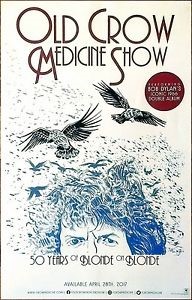
The Old Crow Medicine Show has not risked it either. The band received a lot of applause in 2016 with the tribute 50 Years Of Blonde On Blonde, the live registration of a complete rework of that legendary album. The accompanying tour, which leads the men to Europe as well, is just as successful, their “Wagon Wheel” was awarded an official Seal Of Approval from the master himself, as well as the successor “Sweet Amarillo” (at Dylan’s request completed by Ketch Secor and his men), so in 2025, at the fiftieth anniversary of Blood On The Tracks, we can expect the next recommendable cover of “Idiot Wind”.
They eventually released the YouTube video for the Dylan/Savoretti track Touchy Situation,
Here are my take on the lyrics (with help from my wife on a few places i couldn’t work out!)
I'd like to find out what places she's been
What's behind her locked door
Oh better yet, know if I'm out or I'm in
If the elevator still runs to the top floor
Perhaps she would say
She was a student of hope
And I'm dangling from the end
Of a disintegrating rope
But I don't wish to spark off
Her outraged imagination
I don't wish to get into any double edged conversation

It's a touchy situation
Woah-oh-oh, yes
It's a touchy situation
Oh-oh-oh yeah

Someday I'll find out
What I'm now afraid to ask
And I'll discover what lies there
Beneath the door mats
Perhaps she would say
That I'm just deathly afraid
To see her make the same mistake that I made

And it might lead to
Some sweet revelation
She knows I hate
Meaningless conversation

It's a touchy situation
Woah-oh-oh, yes
It's a touchy situation
Oh-oh-oh yeah

I said, "Are you doing well baby?"
She says, "Go ask your father"
I said, "Give me yes, no, or maybe"
She says, "Why should I bother?"
I said...
She says...
I said, "oh..."

I'll ask you tomorrow
I'll ask you tomorrow

If I could only break the code of her fears
I could expose the secrets to the river of her tears
Rattle her senses
Until she's pouring forthtears
Before she'd exercise
Those powers of manipulation

It's a touchy situation
It's a touchy situation
It's a touchy situation
Woah-oh-oh
It's a touchy situation
Woah-oh-oh

It's a touchy situation
It's a touchy situation
It's a touchy situation
Footnote from Tony:
I must say I was a little unsure about this song at first, feeling that we were hearing something (in terms of lyrics) that Dylan would have changed and manipulated (as we know happens from the notebooks we have seen and the early versions of songs that have survived) and that had he stayed with it he would have knocked it around.
But then that “middle 8” comes along
I said, “Are you doing well baby?” She says, “Go ask your father” I said, “Give me yes, no, or maybe” She says, “Why should I bother?” I said… She says… I said, “oh…”
and I am suddenly totally in love with the piece. Yes I am still sure the master songwriter in Dylan would have manipulated some of it, and I am not sure that as a songwriter he would have got that fantastic power out of the music at this point – but he would have got something amazing for those lines, of that I am certain.
The line “go ask your father” – implying (to me, and of course as always this is just my view) that the lady in the song is saying, “you are doing to me what your father has done to your mother” or even “what your father has done to you”, is fantastic. It comes out of the blue – or at least I was not ready for it, and the musical line and the orchestration are, for me, just right at that point.
“Why should I bother?” is the absolute final put down, goodbye line in a love affair – the opposite end of farewells from “It’s all over now baby blue.” It is far far stronger than “It ain’t me babe”; we are in the Positively 4th Street world at this point, or Ballad in Plain D, but now from the woman’s point of view.
What a find.
What else is here?
An index to our latest posts arranged by themes and subjects on the home page. You can also see details of our main sections on this site at the top of this page under the picture.
There is an alphabetic index to the 550+ Dylan compositions reviewed on the site which you will find it here. There are also 500+ other articles on different issues relating to Dylan. The other subject areas are also shown at the top under the picture.
We also have a discussion group “Untold Dylan” on Facebook which mostly relates to Bob Dylan today. Just type the phrase “Untold Dylan” in, on your Facebook page or follow this link
And please do note The Bob Dylan Project, which lists every Dylan song in alphabetical order, and has links to licensed recordings and performances by Dylan and by other artists, is starting to link back to our reviews.
Please note that the original posting of this article contained the wrong copy of “Masters of War”. This was entirely the mistake of the publisher (Tony Attwood). Mike sent the correct recording – I got them confused. My sincere apologies to Mike and all readers.
—–
Bob Dylan’s harmonica playing is as distinctive and controversial as everything else he does, and has come in for more than its fair share of savaging. In my first post on the subject, I argued that, on the songs it is used, Dylan’s harmonica is not merely decorative but integral to the music, and can extend the emotional range and impact of the song. Indeed, it can shape our response to the song, and our understanding of it.
My approach has been roughly chronological, from the very early songs, in which Dylan developed what I have called a ‘peppering’ technique in which many apparently random notes are played very fast, to a slower, more focused style with a sustained emotional intensity. I’d got to 1995 and the magnificently spooky Prague concert version of ‘Man in the Long Black Coat.’ My plan was to zoom on quickly into the 21st Century, when a new harmonica sound emerges and some of Dylan’s best harp playing can be heard.
In practice, however, I find it difficult to move on from that watershed year, 1995, without touching on three more outstanding performances. Commenting on my first article, a reader mentioned a gut-wrenching performance of ‘It Ain’t Me Babe’ from 1984. That reminded me of the Prague performance from 1995, and just how exquisite and emotionally sensitive Dylan’s harp work has been on this song over the years. I think we’re dealing with two merging forms of harmonica playing here, the first belonging to the quiet, more acoustic Dylan, and coming to the fore in love songs, the second a ‘blues harp’ sound more fitted to stadium rock. 1995 was a very acoustic year in which the more intimate Dylan comes across strongly. The vocal here is tender, almost bruised, and the harmonica ending brings out the emotional fragility inherent in the lyrics. This one is for Robert. Enjoy!
‘It’s all over Now, Baby Blue’ is another song from the same era as ‘It Ain’t me, Babe’ that has often featured the harmonica, although none, I would suggest, as emotionally far reaching as this one from the Prague concert (see link below).
Listening to these two performances leads us to a reflection on the nature of Dylan’s lyrics, and how they relate to the music and the vocalization. In an article I did on mishearing Dylan, a correspondent suggested an analogy with Shakespeare’s First Folio, the first collected version of his plays, in regard to the official lyrics on the Bob Dylan website. The analogy is apt.
The First Folio written editions were mostly actors’ scripts, never intended to be set in concrete, but adaptable stepping stones towards the actual performance. Dylan’s lyrics are similar in that they may contain possibilities of meaning, and potential emotional valences, but one of these potentials has to crystallize into a performance in real time, not the abstract space of the printed page. In other words, the lyric is something like a template, quite open-ended, which has to take on the emotional colour and overall significance from the manner in which it is performed.
For example, if ‘It’s all over Now’ is performed in a strident, declarative, in-your-face manner it might almost be classed as one of Dylan’s put-down songs: get yourself together and piss off! But sung the way he does at Prague, the song, all through the vocal, skirts the edges of heartbreak, and when the harmonica takes over, the mood is pushed into outright heartbreak. There’s been a lot of tedious speculation as to whether this song is for Joan Baez (do we really care?), or was written as a farewell to the protest movement (ho-hum), but what these speculations might obscure is that ‘It’s all over Now’ is a break-up song, which implies heart-break, finality, the end of love. It is love’s last song.
Suddenly the lyrics don’t sound so tough any more, and we wonder if he’s exhorting himself to get a new life as much as the ‘you’ he’s addressing. Listen to how Dylan lifts his voice in the last verse, how the harmonica takes over from where the voice leaves off, lays bare the real heartbreak and gives unrestrained voice to grief. Dylan can’t cry onstage, but his harmonica can, and boy it sure does, and how painful it is at the end as he repeats the same notes over and over, like one of those protracted goodbyes everybody hates but sometimes you just can’t escape. Just one more goodbye…one more… all the way to emotional exhaustion:
[Unfortunately we once more have to deal, not just with a rather annoying crowd at the beginning, but sound distortions as with ‘Man in the Long Black Coat’. More unfortunately, while the distortion doesn’t hit Dylan’s voice so much, it grievously affects the harmonica, giving it a blurred edge. Again, you have to listen through the distractions to what must be one of Dylan’s finest ever performances. If anyone in Sony Music is reading this*, and wondering what do for further official Dylan bootlegs, a digitally remastered Prague concert and some other material from that year would go down a treat!]
Just about everything I’ve said about ‘It’s all over Now’ can be said of ‘It ain’t me, Babe’. Behind the brash disavowals lies the spectre of grief. The lyrics may lay claim to ‘No, no no,’ but the harmonica solo tells a more nuanced story. And yet those tender nuances are inherent in lyrics steeped in tenderness:
‘Go lightly from the ledge, Babe
Everything inside is made of stone’
You need lyrics of this genius to sustain, and underpin this whimsical, tender harmonica performance, as if the instrument itself is learning to ‘go lightly’, to skip across those almost unstated griefs:
As we leave 1995, we have to pause for this compelling ‘Masters of War’. My old jazz cat friends would talk about, phrasing, and timing, and syncopation. Yes, it’s all here. Dylan can let rip with this song, and turn it into a howling rocker, but this performance it’s all restraint, a sense of holding back that emotion, which just breaks through the voice here and here, until we get to the harp, where we get a sharper, more trenchant comment. And if you should happen to be jazz cat, listen to the way the guitar and harmonica surge back and forward in a syncopated manner, while Dylan’s vocal and harmonica phrasing drive the song forward. Hard to find better Dylan performance than this:
Dylan’s harp work is often at it’s best in his acoustic moods, but right from the beginning of his electric sound he liked to work the harmonica in for a few bluesy blasts between verses. ‘Pledging my Time’ on Blonde on Blonde is a good example. That urban bluesy sound enables Dylan to adapt the instrument to stadium rock. This 1996 performance of ‘Drifters Escape’ has a sense of business-as-usual, another day at the office on the NET about it as the song settles into a chuggy beat, until the harmonica kicks in between verses and kicks the song along. By the time we get to the harmonica solo at the end, Dylan has warmed up and the performance has moved from chugging to rockin’. For brilliance of harp playing, listen how he takes off towards the end into a little jazzy riff that cuts across the rhythm of the song.
Slipping forward to the year 2000, we find two outstanding harmonica performances, again in the acoustic mode. ‘Girl from the North Country’ is one of the purest of Dylan’s love songs; I mean untouched by bitterness, or back-biting, or some like sting in the tail. But it can be given a very nostalgic spin, or driven to a lumbering, maudlin weariness as in Dylan and Johnny Cash’s duet version. In the following performance, the mood is upbeat, and while the vocal is sensitive and restrained, the bouncy harmonica solo at the end lifts the song into a celebration. It’s a perky, jazzy, cheeky performance, and the audience loves it.
There has always been a Celtic feel to ‘Gates of Eden’, and never more so than in this warmly received 2000 performance. As with Rank Strangers (see Master Harpist 1), at first I didn’t quite understand what I was hearing. A low wailing sound away in the Celtic mists, maybe like a the lonely sound of a bagpipe playing a single moaning note over an ancient battlefield:
‘Of war and peace
The truth just twists
Its curfew gull just glides’
Then it falls into place. It’s the harmonica! and what a haunting edge it gives the song. More fey sounds, friends! At first I thought it might be under recorded, but on reflection the balance is just right; the harmonica is supposed to be heard behind the sound, to creep up on us from a distance, a musical lament on the human condition.
It is said that Dylan ignores his audience. Not true. In this performance he’s playing the audience as much as the song. There is much of that magic that can spring up between audience and performer here.
That’s it for now. In my third installment of Bob Dylan: Master Harpist, I’ll be look at how Dylan’s harmonica play evolved when he switched from the guitar to the keyboard.
Kia Ora!
*Quite amazingly and unbelievably yes, we know that sometimes they are – Tony
Ben Carruthers And The Deep perform a jacked-up version of a John Lee Hooker traditional blues tune, but with the following fragmented lyrics:
Jack O' DiamondsOn the moveJack O'DiamondsOne-eyed knaveOn the moveHit the streetBumps his headOn the prowlHe's downYou'll only loseShouldn't stayJack O'DiamondsIs a hard card to play
(Ben Carruthers And The Deep: Jack O’ Diamonds ~ Carruthers/Bob Dylan)
There are those among us who wonder why Bob Dylan is given vocal credits for the song above. Well, it’s very clear that lines are taken directly from the following Dylan poem which alludes to the traditional Appalachian folk song ‘Jack Of Diamonds’:
Jack O' DiamondsJack O'DiamondsOne-eyed knaveOn the moveHits the streetsSneaks, leapsBetween the pillars of chipsSprings on them like SamsonThumps, thumpsStrikesIs on the prowlYou'll only loseShouldn't stayJack O' DiamondsIs a hard card to play
(Bob Dylan: Jack O’ Diamonds)
The song performed by Carruthers And The Deep continues:
Jack O' DiamondsWhewJack O' DiamondsThis one-armed princeWears a single gloveFor sureHe's not that lovin'Jack O' DiamondsBreak my handLeave me here to standJack O' DiamondsIs a hard card to play
(Jack O’ Diamonds: Carruthers/Dylan)
Dylan’s poem goes:
Jack O' DiamondsWrecked my handLeft me here t' stand ....Jack O' DiamondsOne-armed princeWears but a single gloveAs he shovesNever loves ....A high cardJack O' DiamondsBut ain't high enoughJack O' DiamondsIs a hard card to play
(Bob Dylan: Jack O’ Diamonds)
The song lyrics closely match those of the poem (printed on the cover of ‘Another Side Of Bob Dylan’ album):
Jack O' DiamondsIs a hard cardJack O' DiamondsIs a high cardJack O' DiamondsIs a high cardBut it ain't high enoughJack O' DiamondsCan open for richesJack O' DiamondsBut then it switchesColour by pictureBut it's only the TenJack O' Diamonds
(Jack Of Diamonds: Carruthers/Dylan)
The use of many phrases from Dylan’s long poem can hardly be called ‘sampling’:
Jack O' DiamondsCan open for richesJack O' DiamondsBut then it switchesA colourful picture, butBeats only the TenJack O' DiamondsIs a hard card to play
(Bob Dylan: Jack O’ Diamonds)
Dylan revisits the line “Left me here t’ stand” in his ‘Tambourine Man’ – “Left me blindly here to stand, but still not sleeping”.
Dylan mixes up the medicine, and samples a Late Victorian poem that’s a speech given by a personna (he’s won, not a card game, but a duel – ‘I stand here now’); the poem reveals the speaker’s regret at what he has done:
Take the cloak from his face, and at firstLet the corpse do its worst!How he lies in his rights of man!Death has done all death canHa, what avails death to eraseHis offence, my disgrace? ....I stand here now, he lies in his place!Cover the face!
(Robert Browning: After)
Regret is expressed from a third-person point of view in the following song lyrics:
William Zanzinger killed poor Hattie CarrollWith a cane that he twirled around his diamond ring finger ....But you who philosophize disgraceAnd criticize all fearsTake the rag away from your face .....William Zanzinger with a six month sentenceOh, but you who philosophize disgraceAnd criticize all fearsBury the rag deep in your face
(Bob Dylan: The Lonesome Death Of Hattie Carroll)
Note the the Dylanesque “rhyme twist” ~ ‘disgrace’/’face’.
What else is here?
An index to our latest posts arranged by themes and subjects on the home page. You can also see details of our main sections on this site at the top of this page under the picture.
There is an alphabetic index to the 550+ Dylan compositions reviewed on the site which you will find it here. There are also 500+ other articles on different issues relating to Dylan. The other subject areas are also shown at the top under the picture.
We also have a discussion group “Untold Dylan” on Facebook which mostly relates to Bob Dylan today. Just type the phrase “Untold Dylan” in, on your Facebook page or follow this link
And please do note The Bob Dylan Project, which lists every Dylan song in alphabetical order, and has links to licensed recordings and performances by Dylan and by other artists, is starting to link back to our reviews.
My absolute thanks to Aaron Galbraith for finding this track. It is a leftover from The New Basement Tapes collection with lyrics by Dylan of course, and this time music by Elvis Costello. Elvis is believed to have performed it live 8 times, we’ve got two recordings, below.
So, here’s a couple of the live versions.. This first one is not a very good recording but is included because Elvis Costello states “words by Bob Dylan” at the beginning
And here is a secnd recording from Leicester in 2015… The quality is better on this one but the lyrics are less clear.
Aaron has even gone so far as to provide a set of lyrics…. and I am doubly thankful for this because there’s no way I could make a stab at it.
Matthew Met Mary
Matthew met Mary
In a garden on a clear cool market day
Said Mary to Matthew
“I’d like to give my child away”
Said Matthew,
“I got a pheasant farm and I’ll take good care of him
There’s a diamond spring and a big oak tree
And he can climb on every limb
A thousand doors couldn’t hold me back from you”

Said Mary to Matthew
“You know that this may never be
I’m not going to give my child for nothing but an old oak tree”
Just then a man wearing woman’s clothes began to hop around
“So unto you and if I do and then maybe woe unto me
A thousand doors couldn’t hold me back from you”

There’s a diamond spring and a big oak tree
And he can climb on every limb
A thousand doors couldn’t hold me back from you
A thousand doors couldn’t hold me back from you
A thousand doors wouldn’t hold me back from you
Aaron added the comment in supplying us with the music and lyrics, “I’m not to sure where the line breaks come or even how to split up the verses but this was my best attempt!” and the comment, which I agree with, “A thousand doors wouldn’t hold me back from you is an amazing line don’t you think?”
I think Aaron has done a great job – certainly far better than anything I could have done.
For myself, I think these are some of the strangest Dylan lines I have ever seen – I wonder if they were just a sketch of ideas and lines from Dylan, which, had he wanted to go further, would have been edited and played with.
Certainly when I first looked at “Just then a man wearing woman’s clothes began to hop around” I really couldn’t believe that could be the right representation of the lyrics, but listening again and again I can’t come up with a better suggestion. Then I thought, “is this some sort of weird verse from the Bible that I’ve never come across before” – but no of course it can’t be.
So just a strange line in what is otherwise a song that is starting to make sense, but which Dylan thought was not going anywhere so left in his notebook.
But whatever is going on in that strange line, it is another Dylan song, so thanks very much to Aaron. And even better news, there’s another lost track comiing up shortly.
He is quite the dreamer, our minstrel. Browsing through the collected lyrics, dreams and dream descriptions appear to be among the constants in the catalogue. After sad, cheerful and dark dreams such as in “Bob Dylan’s Dream”, “Talkin’ World War III Blues” and “To Ramona” we have already arrived at “Bob Dylan’s 115th Dream” on Bringing It All Back Home (1965). And it doesn’t end there. True, in the last groove, in “It’s Alright, Ma”, the poet coquettishly sighs: And if my thought dreams could be seen, they’d probably put my head in a guillotine, but that doesn’t stop him, the fifty years thereafter.
Saint Augustine appears before the nocturnal mind’s eye, in “Time Passes Slowly” (1970) the narrator experiences time delayed not only here in the mountains, but also when you’re lost in a dream, “Durango” (1975) is a bloody nightmare, “Jokerman” is a dream twister, in “Born In Time” the love couple is not made of stardust, but of dreams and so on. Up until Tempest (2012) a watchman dreams of the demise of the Titanic and in the borrowed songs of Shadows In The Night (2015) the dreaming goes on (in “Some Enchanted Evening” and “Full Moon And Empty Arms”, among others).
In short, the collected works of the master are a series of dreams.
It is one of the more substantive overlappings with the work of Arthur Rimbaud (1854-1891), in whose relatively comprehensible oeuvre one reverie follows the other. Both artists even share their dreams, occasionally. Rimbaud dreams of war (in Illuminations XXXIX: Guerre – C’est aussi simple qu’une phrase musicale), as Dylan does in “Talkin’ World War III”, and the Frenchman’s Tom Thumb is a dreamer too (Petit-Poucet rêveur, j’égrenais dans ma course des rimes – Tom Thumb the dreamer, sowing the roads there with rhymes).
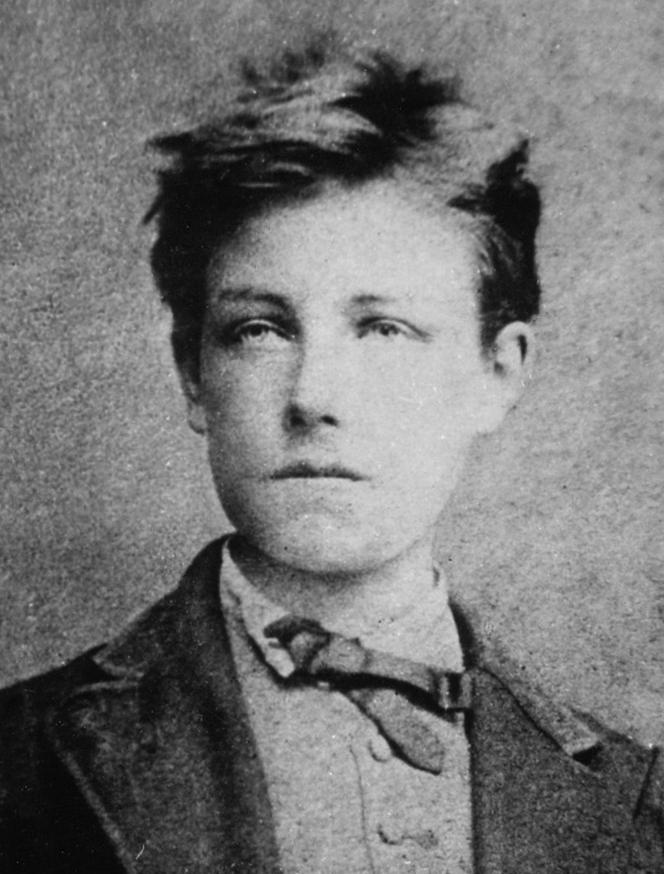
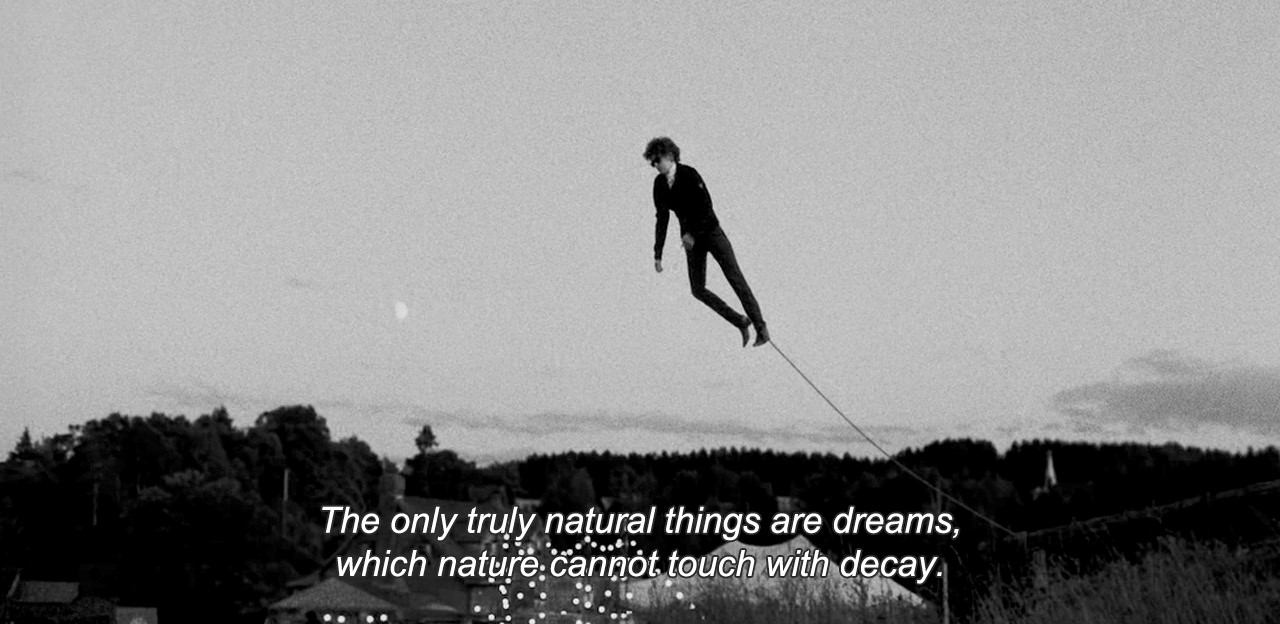
The director of the fascinating video clip to “Series Of Dreams” feels the connection well; in the final seconds of the clip, Meiert Avis edits the well-known youth portrait of Rimbaud in front of a musing Dylan, letters fleetingly appear and disappear: black a, white e, red i, green u and blue o – the Alchimie du verbe, the second délire from Un Saison En Enfer (1873).
The only 19-year-old genius defines poetry here as if he is talking about Dylan’s best work:
I invented the colour of vowels! A black, E white, I red, O blue, U green. – I regulated the form and motion of every consonant, and, with instinctive rhythms, I flattered myself I’d created a poetic language, accessible some day to all the senses. I reserved the translation rights.
It was academic at first. I wrote of silences, nights, I expressed the inexpressible. I defined vertigos.
‘Expressing the inexpressible’, ‘writing of silences, nights’, ‘defining vertigos’… the congeniality is also recognized in the Dylan film I’m Not There (2007). One of Dylan’s incarnations from that intriguing motion picture is a 19-year-old ‘Arthur Rimbaud’, masterfully performed by Ben Whishaw, haughty and vulnerable at the same time. He also receives the most rewarding texts, the most beautiful one-liners and aphorisms from liner notes, interviews and press conferences. Among them is the one from Shelton’s No Direction Home, which beautifully describes the Rimbaud-Dylan connection:
Yet “Series Of Dreams” is an atypical song in the series of dream songs by the bard. No extravagancies like in the 60s, nor the mystical quitened down dream references from the seventies and eighties – here the poet almost clinically administers the outlines of four dreams, some couleur is given by details such as a folded umbrella and the stage directions like the accelerated time (in a different version delayed time, by the way) and, moreover, the narrator declares: they are not too special and certainly not too scientific, none of them.
The latter remains to be seen. The founder of the scientific dream interpretation, Sigmund Freud, would know what to do with it. Any series of dreams is related anyway, as he teaches on page 171 of his Traumdeutung (1899), and despite the lack of details it is possible to predict in which direction Freud’s analysis would point.
The umbrella of course symbolizes the male genitals (“des der Erektion vergleichbaren Aufspannens wegen – because of the stretching out, comparable to the erection”), ‘climbing’ represents The Deed and ‘running’ fear – fear of dying, usually, but here Herr Doktor would probably steer towards fear of commitment. After all, the umbrella remains folded, the burning numbers symbolize the passing of the years, to witness indicates culpable passivity.
However, and on this count Dylan is right, it is not a coherent, specific interpretation, nor should it be, indeed. The poet does not describe a dream here, nor a series of dreams, but rather, after all those bizarre, melancholic, visionary and romantic dreams in his oeuvre, the act of dreaming in itself.
The fate of the song is now well known. Recorded during the Oh Mercy sessions, but to the dismay of those involved and to producer Lanois’s despair, Dylan refuses to put it on the album. His motives, as expressed in the autobiography Chronicles, are once again puzzling. After the recording, Lanois suggests something like reversing the bridge and the couplets. Dylan considers it, understands what his producer means, but then rejects the idea: “I felt like it was fine the way it was,” and then all of a sudden the song is gone. Wondrous.
His criticism of Lanois’ approach to that other rejected masterpiece, “Mississippi” from 1997, seems to point much more to his discomfort with “Series Of Dreams”:
“[Lanois] thought it was pedestrian. Took it down the Afro-polyrhythm route – multirhythm drumming, that sort of thing. (…) But he had his own way of looking at things, and in the end I had to reject this because I thought too highly of the expressive meaning behind the lyrics to bury them in some steamy cauldron of drum theory.”
A “Mississippi” recording with ‘multirhythm drumming’ is unknown, but the official releases of “Series Of Dreams” (on The Bootleg Series 1-3 and on Tell-Tale Signs) do fit that description. Still, the remarkable drumming is precisely what makes it so distinctive. The whole arrangement, but especially the percussion, provides the majestic grandeur which the sober, relativizing lyrics deny. Oh Mercy had indeed been a more beautiful album with “Series Of Dreams” on it, in this regard Lanois is unquestionably right.
It is an enchanting song. All the more remarkable is the fact that it has relatively few covers. Hard to improve or to match, that might be the reason. Most covers remain anxiously close to the source, in particular with regard to the rolling, thundering drum avalanche and the driving bass.
The single lone wolf who deviates from this, the Antwerp collective Zita Swoon for example (on Big City, 2007), is really attractive, but inevitably misses the elegant magnificence of the original.
No, the faithful copy of the Italian grandmaster Francesco De Gregori wins. Translations rarely work with Dylan songs, but ever since De Gregori’s version of “If You See Her, Say Hello” (“Non Dirle Che Non È Cosi”, on Masked And Anonymous, 2003), it is established that the Italian rendering of the Roman ‘Principe dei Cantautori‘ is the exception.
Apart from the translation, his “Una Series Di Sogni” actually adds little, but it is enough to be fascinated again. From the beautiful tribute album De Gregori Canta Bob Dylan – Amore E Furto (2015), on which also fairly loyal, but excellent cover versions such as “Dignità”, “Tweedle Dum & Tweedle Dee” and “Via Della Povertà” shine.
Pensavo a una serie di sogni
dove niente diventava realtà.
Tutto resta dov’è stato ferito,
fino al punto di non muoversi più.
Pensavo a niente di niente,
come quando ti svegli gridando
e ti chiedi perché.
Niente di troppo preciso,
solamente dei sogni così.
Italian truly is the language of dreams. Sogni che l’ombrello era chiuso.
What else is here?
An index to our latest posts arranged by themes and subjects on the home page. You can also see details of our main sections on this site at the top of this page under the picture.
There is an alphabetic index to the 550+ Dylan compositions reviewed on the site which you will find it here. There are also 500+ other articles on different issues relating to Dylan. The other subject areas are also shown at the top under the picture.
We also have a discussion group “Untold Dylan” on Facebook which mostly relates to Bob Dylan today. Just type the phrase “Untold Dylan” in, on your Facebook page or follow this link
And please do note The Bob Dylan Project, which lists every Dylan song in alphabetical order, and has links to licensed recordings and performances by Dylan and by other artists, is starting to link back to our reviews.
The self-proclaimed ‘garbologist’ AJ Weberman’s “A Listener’s Guide To Bob Dylan’s Tempest” might be hailed as Juvenalian satire at its best except the savage invective is so over the top that it makes Jonathan Swift look slow.
Weberman demonstrates that Bob Dylan’s song lyrics, if cherry-picked and ‘decoded’, can be twisted to show that the singer/songwriter is anything from a Communist to a fundamentalist Christian to an out-and-out neo-Nazi.
In the lyrics below, Weberman, believe it or not, contends that Dylan is telling white people to wake up and realize that African Americans belong to an inferior race:
How many roads roads must a man walk downBefore you call him a manAnd how many seas must a white dove sailBefore she sleeps in the sand?
(Bob Dylan: Blowing In The Wind)
According to Weberman, ‘roads’ is a Dylanesque pun on Cecil Rhodes, the white supremacist ‘dove’ who brings peace to South Africa by pointing out that blacks are destined to be ‘male servants’.
And just in in case listeners are not clever enough to pick up on the code by themselves, AJ provides another example:
Well, a childish dream is a deathless needAnd a noble truth is a sacred creedMy pretty baby, she's lookin' aroundShe's wearin' a multi-thousand dollar crown
(Bob Dylan: Tweedle Dee And Tweedle Dum)
The song above be not fragmented postmodernist quotes from poet Henry Timrod and a New Orleans travel guide, but, according to Weberman, it’s Dylan denying the Holocaust, and condemning the inflated ‘sacred creed’ of Zionists since the singer/song writer is certain that only a few thousand Jews (not millions) were killed by the Nazis.
Everybody smart enough to get that now? But it’s in the album ‘Tempest’ , according to Weberman’s listener’s guide, that Bob Dylan shamelessly bares his neoNazi beliefs:
Well, I'm grinding my life out steady and sureNothing more wretched than I must endureI'm drenched in the light that shines from the sunI could stone you to death for the wrongs that you've done
(Bob Dylan: Pay In Blood )
In the lyrics above, according to Weberman, Bob Dylan would like to attack the black ‘Muslim socialist’ President Hussein Barrack Obama, and stone him to death for stealing his hard-earned money through taxation.
Weberman’s decoding of Dylan’s song lyrics continues on and on:
Charlotte's a harlotDresses in scarletMary dresses in greenIt's soon after midnightAnd I've got a date with the fairy queen
(Bob Dylan: Soon after Midnight)
Deciphered: the immoral ‘scarlet’ whore of Babylon, the Democratic Party of Obama, meets in Charlotte, North Carolina where passives male homosexuals, known as ‘Marys,’ are easily duped, and same-sex marriage is celebrated.
There’s lots more of the same kind of insanity that sprews from the garbage mouth of AJ Weberman:
Listen to that Duquesne whistle blowingBlowing like it's gonna sweep my world awayI gonna stop in Carbondale, and keep on goingThat Duquesne whistle gonna rock me night and day
(Bob Dylan: Duquesne Whistle)
Weberman claims that in the song, Dylan accuses AJ of being Captain Fritz Duquesne, a South African Nazi spy arrested by the FBI in 1941. As I’ve pointed out, Humphrey Bogart, in the movie ‘All Through The Night”, breaks up a Nazi spy ring in New York City, alluded to in Dylan’s “Sweetheart Like You”. Weberman, however, says the the song above is about blowing the whistle on Dylan because Zimmerman is the actual Nazi sympathizer:
Listen to the Duquesne whistle blowingBlowing like she never blowed beforeBlue light blinking, red light glowingBlowing like she's at my chamber door
(Bob Dylan: Duquesne Whistle)
No reference to Edgar Allan Poe is this, but, decoded by AJ, it’s a reference to a laser beam from a gun pointed at Weberman’s door lest he expose Dylan as the white racist that he is.
Weberman has no doubt that he’s found the key to deciphering Dylan’s lyrics:
The light in my native land are glowingI wonder if they'll know me next time 'roundI wonder if that old oak tree's still standingThat old oak tree, the one we used to climb
(Bob Dylan: Duquesne Whistle)
The ‘old oak tree’ is one on which blacks were lynched, and Dylan, of course, wants it brought back into service.
For sure, these be the rants of a mentally ill man rather those of a satirist.
Bill Monroe is not one of those names that crops up all the time in Dylan’s commentaries about Dylan himself and his musical influences, but the references are there, including a reference in a 1987 Rolling Stone interview.
Loder asked, “Do you still listen to the artists you started out with?”
Bob replied, “The stuff that I grew up on never grows old. I was just fortunate enough to get it and understand it at that early age, and it still rings true for me.. I’d still rather listen to Bill and Charlie Monroe than any current record. That’s what America’s all about to me. I mean, they don’t have to make any more new records — there’s enough old ones, you know? I went in a record store a couple of weeks ago — I wouldn’t know what to buy. There’s so many kinds of records out.”
One of the key songs from Bill Monroe is “Molly and Tenbrooks” which is what I want to look at here.
Here are the full lyrics
Run oh Molly run, run oh Molly run
Ten-Brooks gonna beat you to the bright and shining sun
To the bright and shining sun oh Lord
To the bright and shining sun
Ten-Brooks was a big bay horse, he wore a shaggy mane
He run all ’round Memphis, and he beat the Memphis train
Beat the Memphis train oh Lord
Beat the Memphis train
Ten-Brooks said to Molly, what makes your head so red
Running in the hot sun with a fever in my head
Fever in my head oh Lord
Fever in my head
Molly said to Ten-Brooks you’re looking mighty squirrel
Ten-Brooks said to Molly I’m leaving this old world
Leaving this old world oh Lord
Leaving this old world
Out in California where Molly done as she pleased
She come back to old Kentucky, got beat with all ease
Beat with all ease oh Lord
Beat with all ease
The women’s all a-laughing, the children all a-crying
Men all a-hollering old Ten-Brooks a- flying
Old Ten-Brooks a- flying oh Lord
Old Ten-Brooks a- flying
Kiper, Kiper, you’re not riding right
Molly’s a beating old Ten-Brooks clear out of sight
Clear out of sigh oh Lord
Clear out of sight
Kiper, Kiper, Kiper my son
Give old Ten-Brooks the bridle and let old Ten-Brooks run
Let old Ten-Brooks run oh Lord
Let old Ten-Brooks run
Go and catch old Ten-Brooks and hitch him in the shade
We’re gonna bury old Molly in a coffin ready made
In a coffin ready made oh Lord
In a coffin ready made
Of course Bob doesn’t tell us quite what makes this song so attractive to him, but I suspect it is the sound of the overall piece, and not the lyrics. But we should remember that the song has its own pedigree, if you see what I mean…
The song first appeared as the B side of “I’m going back to Old Kentuck” and was then released again as the A side of a single in 1949 – which is when it became a hit.
The song comes from a traditional piece written sometime in the late 19th century. It was recorded by the Carver Boys in close to its original format, in 1929…
https://www.youtube.com/watch?v=ti67332R2x8
The song is a fictionalised version of a race in July 1878 between Ten Broeck from Kentucky and Mollie McCarty – although the notion that the race had a fatal ended is a fiction – in reality it didn’t.
However the idea of the song however goes back further – to Skewball, a British ballad from the 18th century. Here’s a reinterpretation of that original by Steeleye Span.
The Ten Broeck legend includes the notion that the owner of Ten Broeck bet the owner of Molly McCarthy $5,000 that his horse would win best two heats out of three in a 4 mile race.
This sort of story telling tradition can, in my view, been seen to have been incorporated into the Dylan song, “Lily rosemary and the jack of hearts”, a story from olden days which gets wilder each time it is told.
Of course Bob has never suggested in any interview that there is a link between the “Tim Brook” / “Ten Broeck” tale and the ramblng diamond mine story, but somehow I like to think there is. The concept of the ever changing tale is within both themes.
As for Bill Monroe he first gained national fame with the Grand Ole Opry, and his experimentation with blue grass music which for many years he played with Lester Flatt and Earl Scruggs to form the Blue Grass Boys. It was from this version of the band in 1946/7 that Molly and Tenbrooks emerges, along with “Blue Moon of Kentucky” – the song I guess most of us know in association with Bill Monroe, even if we don’t know the rest of his work.
Bill Monroe remained popular into the 1950s although he did have renewed success in the 1960s when there was a revival of interest in his music which led to the establishment of bluegrass festivals. He also played at Farm Aid IV – Farm Aid of course being an idea either dreamed up, or at least promoted by Bob Dylan.
Some of the other articles in the Why Does Dylan Like series can be found here.
What else is here?
An index to our latest posts arranged by themes and subjects on the home page. You can also see details of our main sections on this site at the top of this page under the picture.
There is an alphabetic index to the 550+ Dylan compositions reviewed on the site which you will find it here. There are also 500+ other articles on different issues relating to Dylan. The other subject areas are also shown at the top under the picture.
We also have a discussion group “Untold Dylan” on Facebook which mostly relates to Bob Dylan today. Just type the phrase “Untold Dylan” in, on your Facebook page or follow this link
And please do note The Bob Dylan Project, which lists every Dylan song in alphabetical order, and has links to licensed recordings and performances by Dylan and by other artists, is starting to link back to our reviews.
Nothing really matters muchIt’s doom alone that counts
(Shelter from the Storm)
It seems that there is a convenient Bob Dylan quote for just about every occasion. My poor partner has had to put up with this time out of mind. We’re in a traffic jam.
‘Okay,’ she says, ‘What’s your Dylan quote for this one?’
‘That’s easy – there must be some way out of here…’
Some habits are hard to break and some you just don’t want to. I was put in mind of Dylan lines when I read in The Guardian about a movement among women and couples to choose not have children because of “climate breakdown and civilisation collapse”.
I remembered these lines from ‘Masters of War’ written in 1962.
‘You've thrown the worst fear
That can ever be hurled
Fear to bring children
Into the world
For threatening my baby
Unborn and unnamed
You ain't worth the blood
That runs in your veins’
Of course these lines spring straight out of Cold War anxiety. We tend to forget how terrifying the prospect of nuclear annihilation was, and indeed, there was a lot of talk at the time of how wrong it might be to ‘bring children into the world.’ Although most went ahead and did so.
I suggest that there is an Apocalyptic vein that runs through Dylan songs, especially the early ‘protest’ songs, that is perfectly suited to our contemporary anxieties. Dylan’s language is in this case specific enough as well as open-ended enough to stay relevant after 50 years.
In 2004 ‘Masters of War’ was seen as too radical for a high school band to play. Can you imagine the Secret Service busting a high school band rehearsal because they thought the song advocated killing the president, George Bush! These masters of war are still there, still calling the shots, the situation has not changed except to get worse, so the song itself can’t fade into history; history won’t let it.
The specific yet open-ended nature of these lyrics can also be found in the lines:
‘You that hide behind walls
You that hide behind desks
I just want you to know
I can see through your masks’
What walls are these, exactly? The walls of the room? the wall of prejudice? the Berlin Wall? Hadrian’s Wall? Trump’s imaginary wall? the walls of silence? The walls are both real and metaphorical at the same time. These walls resurface again in 1997 in ‘Cold Iron’s Bound’, another anxiety ridden song:
‘The walls of pride, they’re high and they’re wide
You can’t see over, to the other side.’
In this instance, when we look over the walls what we see are young men and women, part of a movement known as Extinction Rebellion, making the most painful decision they will possibly ever make. And once again Bob Dylan anticipates the headlines.
Dylan began dropping the ‘fear to bring children’ verse from later performances of the song, but it sounds as strong as ever in this gutsy 1978 performance.
However, the song doesn’t necessarily need a young, angry voice to deliver the message, as this 2005 performance testifies. Dylan, at 64, sings with power and conviction. He misses out the ‘fear to bring children’ verse in favour of repeating the first verse at the end of the song. A passionate and heartfelt performance with Dylan on the piano.
Kia Ora
What else is here?
An index to our latest posts arranged by themes and subjects on the home page. You can also see details of our main sections on this site at the top of this page under the picture.
There is an alphabetic index to the 550+ Dylan compositions reviewed on the site which you will find it here. There are also 500+ other articles on different issues relating to Dylan. The other subject areas are also shown at the top under the picture.
We also have a discussion group “Untold Dylan” on Facebook which mostly relates to Bob Dylan today. Just type the phrase “Untold Dylan” in, on your Facebook page or follow this link
And please do note The Bob Dylan Project, which lists every Dylan song in alphabetical order, and has links to licensed recordings and performances by Dylan and by other artists, is starting to link back to our reviews.
In 1986, John Fogerty goes on tour again for the first time since Creedence Clearwater Revival, to promote his recently released solo album Eye Of The Zombie. He recruits the same musicians who assisted him in the studio, plus a few musicians. The first concert is in Memphis.
“I was overjoyed to be in Memphis, thinking about all the great music there. The day before the concert, we were at Handy Park, looking at the statue of W. C. Handy. And one of the dudes in my new band said, “Who was W. C. Handy?” If you could’ve read the little balloon over my head at that moment, it would’ve said, “Man, we in trouble now!”
(John Fogerty, Fortunate Son, 2015)
Fogerty’s dismay can be felt. William Christopher Handy, the ‘father of the blues’, the man who wrote “St. Louis Blues”,”Beale Street Blues” and especially “Memphis Blues”, the first song with the word blues in it, the father of all 20th century blues legends and grandfather of Elvis, Buddy Holly and well alright, even Bob Dylan … and then his new band, the men who have to play his music, who are professional musicians, never heard of W.C. Handy.
It will not be an unqualified success, that tour. Fogerty refers to that time as another dark period in my life.
Handy (1873-1958), an extremely talented musician and intelligent author, publishes his beautiful autobiography Father Of The Blues in 1941. The work masterfully paints an America that has since disappeared, but the song composer also reveals where his songs come from. Like the story on “Yellow Dog Blues”. That one starts in 1903, when Handy and his band tour through Mississippi and have to wait nine hours for the next train at Tutwiler station.
“A lean, loose-jointed Negro had commenced plunking a guitar beside me while I slept. His clothes were rags; his feet peeped out of his shoes. His face had on it some of the sadness of the ages. As he played, he pressed a knife on the strings of the guitar in a manner popularized by Hawaiian guitarists who used steel bars. The effect was unforgettable. His song, too, struck me instantly.
Goin’ where the Southern cross’ the Dog.
“The singer repeated the line three times, accompanying himself on the guitar with the weirdest music I had ever heard. The tune stayed in my mind. When the singer paused, I leaned over and asked him what the words meant.”
Amused, the ‘Southern Negro’ explains to him that he is talking about the town of Moorhead, where the north-south line crosses the east-west line, nicknamed the Southern and the Yellow Dog.
Handy commits a great commercial blunder when he sells the rights to “Memphis Blues” for $100, and does not make that mistake again when he releases “Yellow Dog Blues” ten years after that memorable meeting in Tutwiler. In chapter 14, Pace & Handy – Setting A Pace, he cheerfully tells how that song changes everything. He needs fifty dollars, can’t scrape it together at home and has to borrow it somewhere. Upon return there is an envelope and I saw that it contained a check of seven thousand dollars.
That must be a mistake. But then he sees that it is written out to his music publishing company, Pace & Handy Music Co. “And then I saw the number of Yellow Dog records that were sold – unbelievable!” The resulting demand for the sheet music to “Yellow Dog Blues” exceeds everything: more than one hundred thousand copies. The incoming money thereafter overshadows the first check. And all of that, W.C. Handy acknowledges, thanks to that one line he heard the improvising guitar player sing that evening in Tutwiler: Down where the Southern cross the Dog.
An intriguing mystery, by the way, remains the identity of that ‘lean, loose-jointed Negro,’ who in fact would then be the actual Father of the Blues. Charley Patton is a candidate, as is the legendary Henry Sloan.
About a hundred years later Bob Dylan, the most famous grandson of the father of the blues, brings a salute in one of his most fascinating songs of the twenty-first century, in “Nettie Moore”;
I’m going where the Southern crosses the Yellow Dog
Get away from these demagogues
And these bad luck women stick like glue
It’s either one or the other or neither of the two
… like that entire monumental song, and actually the entire album Modern Times, is a deep reverence to the sources of Dylan’s own music. That already starts with the choice for the sung Nettie. Dylan borrows the chorus and the first two lines from “The Little White Cottage, or Gentle Nettie Moore” from 1857, written by Marshall S. Pike and especially James S. Pierpont (the composer also of “Jingle Bells”). Dylan is undoubtedly familiar with Roy Rogers’ rendition, who records the song in 1934 (“Gentle Nettie Moore”).
In this Yellow Dog couplet, blues classics such as “Born Under A Bad Sign” and “It Hurts Me Too” (But you love him and stick to him like glue) echo through, for example. The next verse:
She says, “look out daddy, don’t want you to tear your pants.
You can get wrecked in this dance.”
They say whiskey will kill ya, but I don’t think it will
I’m riding with you to the top of the hill.
… paraphrases the old (probably nineteenth century) folk song “The Moonshiner” (If whiskey don’t kill me, I don’t know what will), as well as a novelty Christmas hit from 1955, “Nuttin’ For Christmas” (I did a dance on Mommy’s plants, climbed a tree and tore my pants) and a ballad from the American Civil War, “Two Soldiers”, the song Dylan also records for World Gone Wrong (Straight was the track to the top of the hill). Or maybe “Top Of The Hill” from 2004 by Tom Waits (Get me on the ride up / I’m on the top of the hill). Given the opening of the song, Lost John sitting on a railroad track, however, the nineteenth-century blues ballad “Railroad Bill” is more likely to have been an inspiration (Railroad Bill live way up the Railroad Hill, ride, ride, ride).
That opening line itself is also the first W.C. Handy connection to the song;
Lost John sittin' on a railroad trackSomething’s out of whackBlues this morning falling down like hailGonna leave a greasy trail
… is an adaptation of the old classic “Lost John” (also called “Lost Boy Blues”, “Long Gone”, “Lost John Dean From Bowling Green” and other titles). W.C. Handy claims, casually, he wrote that song too:
“Presently we moved on to Pittsburgh. While there I visited a friend at whose home I had once written a song called Long Gone from Bowling Green. She reminded me of something I had forgotten. On my first visit to her home I had been everlastingly at the piano, forever picking out notes and chords for Long Gone but never playing anything consistently.”
(Chapter 18, Down Memory Lane)
But most historians think it’s a traditional. Anyhow – in 1920, Handy protects the copyrights: music W.C. Handy, lyrics Chris Smith. And the second verse then is:
Long John stood on the railroad tie,
Waiting for a freight train to come by;
Freight train came just puffin' and flyin',
Ought-a seen Long John grabbin' that blind
The song, with the very catchy sing-along chorus, becomes very popular and is recorded hundreds of times. In the studio by legends like Bascom Lamar Lunsford, Merle Travis and Louis Armstrong, in prison by Alan Lomax (1933, sung by ‘Lightnin‘ & Group’) and live by Woody Guthrie, Roy Acuff and Doc Watson – just a small selection. There are about a hundred different couplets, and also variants thereof. Dylan may have the John Lennon version in mind (from 1970, published on Anthology, 1998):
Lost John standing by the railroad trackA-waitin' for the freight train to come back
… but probably one of the variants as sung by Roy Acuff and others, also with a seated John:
Lost John sittin' on the railroad trackWaitin' for the freight train to come back
Dylan takes a turn at the third line, to Robert Johnson (Blues fallin’ down like hail is the second line of “Hellhound On My Trail”, recorded during Johnson’s last recording session, 1937).
And like this, each verse offers references to, paraphrases of or tribute to the Songs of the Occident. Sometimes written on the wall (“Frankie And Albert” in the fourth verse) and other times more subtle (gone berserk in the same verse probably comes from Johnny Cash’s version of “The Road To Kaintuck”), and through it all Dylan illustrates his sparkling, fascinating confessions from that surprising MusiCares speech, February 2015:
“These songs didn’t come out of thin air. I didn’t just make them up out of whole cloth (…) there was a precedent. It all came out of traditional music: traditional folk music, traditional rock & roll and traditional big-band swing orchestra music. I learned lyrics and how to write them from listening to folk songs.”
And then the bard reveals how singing “John Lee” all those times leads to “Blowin’ In The Wind”, that Big Bill Broonzy’s “Key To The Highway” automatically delivers “Highway 61 Revisited”, that he owes “Maggie’s Farm” to “Roll The Cotton Down”, that “Deep Elm Blues” produces the template for “Just Like Tom Thumb’s Blues” and how after all those come all ye-songs “The Times They Are A-Changin’” will flow out of your pen by itself.
Sympathetic, modest words of course, and too modest; Dylan underestimates his own excessive talent. But the overall thrust is true – “If I have seen further, it is by standing on the shoulders of Giants,” as Sir Isaac Newton, equally modest, said in 1675 (copying the 12th-century philosopher Bernard of Chartres, by the way).
Dylan is a gold digger, a goldsmith, a thief of thoughts who chops raw chunks of unrefined minerals from the ore of centuries of song art and forges dazzling jewelry from it. Or timeless heirlooms, actually; American Civil War, whiskey distillers, W.C. Handy, Robert Johnson, Tampa Red, Johnny Cash … “Nettie Moore” transcends the centuries, as do, for example, “Highlands”, “Mississippi” and “Desolation Row”, the songs that will lead someday, probably within one year after Dylan’s death, to the opening of a Dylan Park in Duluth, Malibu, Hibbing or Greenwich Village.
With a statue. At which, one hundred years from now, some professional musician will look and ask, to his band leader’s horror: “Who was Bob Dylan?”
In a number of his song lyrics, Bob Dylan (and/or his persona) grapples with the Calvinist doctrine of predestination that underlies the poetry of Edward Taylor – from the get-go, you are either part of the chosen Elect, and favoured by God for Heaven, or you are among those damned to Hell with the Devil – now that’s an anxiety-inducing thought if ever there was one.
According to Puritan poet Edward Taylor, the Devil sows the seeds of Chaos – if you doubt that you are a member of the pre-chosen Elect in that you concern yourself with physical needs and material wants, then you certainly are not a part of the Elect; if you are sure you are pure at heart, and therefore a member of the Elect, you are guilty of the sin of pride which dooms you to the fiery pits of Hell.
Apostle Paul receives a reply from Jesus Himself:
And He said unto me, “My grace is sufficient for thee
For my strength is made perfect in weakness”
(II Corinthians 12:9)
Like the free-thinking poet William Blake, Bob Dylan has problems with accepting that kind of reasoning:
I hate myself for loving you and the weakness that it showedYou were just a painted face on a trip down Suicide RoadThe stage was set, the lights went out all around the old hotelI hate myself for loving you, and I'm glad the curtain fell ....Lady Luck, who shines on me, will tell you where I'm atI hate myself for loving you, but I'll soon get over that
(Bob Dylan: Dirge)
According to sociologist Max Weber, the psychological tension produced by the predestinarian doctrine causes Calvinists to seek a ‘sign’ that he or she is indeed in God’s Elect – success in one’s earthly “calling” being such a sign.
In some song lyrics, as below, the spokesperson therein presents Taylor’s view that, even for those who have sinned, the ‘faith alone’ path is the one to follow:
Many try to stop me, shake me up in my mindSay, "Prove to me that He is Lord, show me a sign"What kind of sign they need when it all comes from withinWhen what's lost has been found, what's to come has already been? Well, I'm pressing onTo the higher calling of the Lord
That is to say – faith changes one’s way of thinking and acting – so preaches Edward Taylor in the poem below:
In all their acts, public and private, nay,And secret too, they praise impartBut in their acts divine, and worship, theyWith hymns do offer up their heartThus, in Christ's coach saints sweetly singAs they to glory ride therein
(Edward Taylor: The Joy Of The Church Fellowship Rightly Attended)
Poet William Blake, being a skeptic, rejects Taylor’s doctrine of the predestination. He also rejects Emanuel Swedenborg’s neoGnostic Christian outlook that only special individuals can kindle the spiritual fire from sparks which lie within their physical bodies, enabling them to see through the ‘painted’ face:
For God, who commanded the light to shine out of the darknessHath commanded in our hearts, to give the light of the knowledgeOf the glory of God in the face of Jesus Christ
(II Corinthians 4:6)
In certain song lyrics, a modernistic Existentialist view is put forth by Bob Dylan – when gone, the only thing one knows for sure about what happens to the ‘souls’ of the likes of Edward Taylor, John Calvin and William Blake is that their thoughts live on in the writings that they leave behind:
Calvin, Blake, and WilsonGambled in the darkNot one of them would ever liveTo tell the tale of disembark
(Bob Dylan: Tempest)
Dylan, through his song lyrics above, pays tribute to poet William Yeats, the Romantic mystic and re-incarnationist, as well as indirectly to artists Edward Calvert, Richard Wilson, William Blake, Claude Lorrain, and Samuel Palmer:
When that greater dream had goneCalvert and Wilson, Blake and ClaudePrepared a rest for the people of GodPalmer's phrase, but after thatConfusion fell upon our thought
(William Butler Yeats: Under Ben Bulben)
Double-edged though they often be, in his song lyrics Robert Zimmerman presents a rather Jewish renewed covenant viewpoint where the naked individual has a responsibility to exercise a calling that God has predestined for him while he awaits the Messiah. In contrast, as Frederich Nietzsche points out, Christianity tends to make its followers feel unworthy.
What else is here?
An index to our latest posts arranged by themes and subjects on the home page. You can also see details of our main sections on this site at the top of this page under the picture.
There is an alphabetic index to the 550+ Dylan compositions reviewed on the site which you will find it here. There are also 500+ other articles on different issues relating to Dylan. The other subject areas are also shown at the top under the picture.
We also have a discussion group “Untold Dylan” on Facebook which mostly relates to Bob Dylan today. Just type the phrase “Untold Dylan” in, on your Facebook page or follow this link
And please do note The Bob Dylan Project, which lists every Dylan song in alphabetical order, and has links to licensed recordings and performances by Dylan and by other artists, is starting to link back to our reviews.
According to an article in the New Yorker, Bob Dylan has described Roscoe Holcomb’s work as exhibiting “a certain untamed sense of control, which makes him one of the best.”
I am not sure when Bob said, and indeed IF Bob said that, but it is a quote that turns up in all sorts of places. But there is an album by Roscoe Holcomb called “An untamed sense of control”. I’m not sure if Dylan nicked the phrase or the people releasing that record took it from Dylan. Either way it is a great phrase.
What makes me very suspicious is that each of the internet sites that quotes Dylan in this way just puts in the quote in a very similar style, says Bob said it, but without saying where and when he said it – which is usually a good indicator that someone just made it up.
Certainly one of Holcomb’s best known performances is “Man of Constant Sorrow” which of course Dylan recorded. Spotify has five songs by the artist available – including “Across the Rocky Mountain” which is well worth seeking out.
Holcomb lived from 1912 to 1981, came from Kentucky and performed Appalachian folk songs. The phrase “High lonesome sound” was apparently originally said by Holcomb’s friend John Cohen, and is now used as a general description of bluegrass rather than just Holcomb’s singing although it suits Holcomb well.
During the “folk revival” of the 1960s Holcomb became famous among those seeking out the origins of the music they were discovering. Much of his work is unaccompanied, despite his skills as a musician, because the Baptist church of which he was a member forbad the accompaniment of music, but did encourage singing.
Here’s a movie about Roscoe – if you don’t want to watch the whole thing just forward to 3 minutes 40 seconds to hear him perform.
https://youtu.be/dlQJcSy6lHA
Mike Yates, in an on line commentary on Holcomb says, “Roscoe’s music stems from a number of factors. It is rooted in the hard life that he was forced to endure in the mountains of eastern Kentucky. It takes in the traditions that were all around him, the old ballads and love-songs, the Baptist hymns and chants, the blues 78s that were played on treasured Victrolas, performers on the radio. But, whatever the source, Roscoe’s singing was, as I said, his and his alone.”
It is the second volume of Holcomb’s music that took the title “An untamed sense of control” – whether Bob said it before that is not clear, but either way the phrase is now placed in history. That album is available on Amazon, but you have to be a member to hear it. However (at least in the UK) you can sign in and have a month free, if you just want to hear the album. If you do, take a listen to “Train that carried my girl from town”. It’s not Bob Dylan in any way, but it is an early example of that link between the effect of the railways on love which all the singers of the era and since have continued.
Certainly Dylan knows a lot about the origins of popular music and of folk music so I can’t imagine Bob has not come across the music of Holcomb, but who created that phrase… well, I suspect not Bob, but I also suspect we’ll never know.
The successful comedy Bruce Almighty from 2003, with Jim Carrey in a starring role, will never get the status of a real classic. Director Tom Shadyak allows just a little too many corny jokes, banalities and sugary feel-good moments in the film. But it is a semi-classic. About five, six scenes survive in the collective memory, casting Morgan Freeman as God is a direct hit that has raised Freemans status to Olympic heights and above all: beneath all those pranks and Carrey’s overacting the script offers real depth, universal dilemmas and a well-nigh philosophical layer.
The be-the-miracle dialogue of God and Bruce could have been such a highlight, but alas: on the film set an overdose of saccharin is added and in the cutting room the most shiny accents are dropped.
The desperate, overburdened Bruce uses his Divine powers to, in Heaven’s name, answer all prayers, to satisfy all wishes, which of course creates a complete pandemonium. Intense fightings in the city, fires break out, an angry mob looting its way through the streets.
Bruce stands there, sees God as he originally found him, mopping. God looks up at Bruce, not surprised to see him.
BRUCE: They’re all out of control. I don’t know what to do.
GOD: You mind giving me a hand with this floor first?
Off Bruce’s look. . .
DISSOLVE TO: LATER
Bruce’s sleeves rolled up, mopping next to God.
GOD:
“Poor man wanna be rich,
rich man wanna be king,
And a king ain’t satisfied
‘Til he rules everything…”
(to Bruce)
Springsteen. I like a little Boss in my head while I’m workin’
They finish up. God looks back at the sparkling floor,satisfied.
GOD: There we go. Wonderful thing. No matter how filthy something gets, it can always be cleaned right up.
God collects Bruce’s mop.
BRUCE: What happened? I gave everyone what they wanted.
God sets the mops down.
GOD: Since when does anyone have a clue about what they want?
God singing Bruce Springsteen’s “Badlands” while mopping, it provides an alienating, yet appropriate, witty and symbolic charge to a scene that is a lot more tedious in the final, stripped version. But the central message remains, of course, maintained and identifies exactly the same human shortcoming as Dylan’s “When You Gonna Wake Up”:
Do you ever wonder just what God requires?
You think He’s just an errand boy to satisfy your wandering desires.
Further comparisons between the song and the Bruce Almighty script are unfavourable for Dylan. Morgan Freeman is in any case a much more sympathetic, forgiving God, but distinctive is above all: this God provides answers, does not only tell what He does not want, but also reveals what indeed does please Him.
Dylan’s long indictment, on the other hand, breathes the same discontended, short-sighted world view as Jim Carrey’s character before his purification. Displeased, the poet lists a long series of wrongdoings. Innocent people in prison, perverts in the church, criminal doctors, thugs with political power, aggressive men and gossiping women … all proclaimed from a high horse as if the Prophet of Doom Dylan denounces a disease of the time. But, of course, this is not a sharp reckoning with the zeitgeist or a biting analysis of our society; these are all excesses and imperfections that we already know since the Fall. Times may change, but people will not.
Unusual is the swipe at Henry Kissinger, who to the poet apparently symbolizes short-sighted politicians who bring more misery than prosperity. Admittedly, despite his Nobel Peace Prize (1973), Kissinger is not undisputed, but a ‘polluter of thoughts’? An activist Communicator of Truths with Dylan’s intellect and poetic super talent certainly could have chosen a better signifier than the arch-diplomat Kissinger.
Apart from that, the choice of a well-known politician, who has already been pushed to the background at the time of the song’s publication, seems inconsequential because of its ingrained datedness; after all, part of the strength of Dylan’s Nobel Prize-worthy song lyrics is due to its timeless power. “The Times They Are A-Changin’” remains relevant because the young poet is so wise to address nameless senators and congressmen, and not to name the hallway blocking governor George Wallace, “Pay In Blood” transcends the centuries by mirroring anonymously Julius Caesar’s Rome and twenty-first century America, “It’s Alright Ma (I’m Only Bleeding)” endures decades through nonfashionable visual language with universal power – all those Olympic qualities which are lost by elevating to metaphor such a timebound character like Kissinger.
A little more complicated is the choice for Karl Marx as an example of the stranglehold of ‘counterfeited philosophies’. Marx? Fake, phony, false? There is a strong case to be made against Marx’s ideas and the consequences of his reflections, but he was most certainly an original philosopher and, moreover, the most influential in our history. No philosopher has changed societies so radically and turned cultures so drastically as this German.
The aversion of the awakened Christian Dylan is probably due to Marx’s poignant religious criticism (‘opium of the people‘). If so, than the narrator does not recognize the essence of that criticism; it is anti-religion, not anti-God. Marx may have been an atheist, but he had no strong opinion about private belief in a Supreme Being. Very much though about how churches, religions and Christian politicians abuse that private belief – and that is an opinion Marx shares with Dylan, paradoxically enough.
Superficial and failing all in all, all those reproaches, observations and accusations in the couplets. But the real miss is the refrain. ‘When you gonna wake up‘ has the same self-indulgent, pedantic connotation that characterizes trolls on internet forums and discussion platforms. No arguments, no constructive, thought-provoking or inspirational explanations, but only ‘tis not‘ and at best idle phrases like ‘just listen‘, often in capitals and with three or more exclamation marks as ‘comments’.
A lttle sad is the unfounded superiority such a twit tries to emit: “I understand something that you do not understand and I am right to such an extent that I do not have to explain it.” Or, usually if there is religion in play, the helpless, meaningless defense: “You can not understand that.”
A similar reproach can be held against the edifying intention of “When You Gonna Wake Up?”. Okay, preacher, we wake up. Now what? What should we see, understand, acknowledge? We already know all the reported suffering and injustice from the couplets, we have been fighting it for centuries – with varying success, that is true. But still: that does not require awakening or awareness, we really do know that.
In any case, as can be understood from the continuation of the chorus, we should ‘strengthen the things that remain‘ – again a meaningless, unnecessary stating of the obvious. That is what we do. It is human. Both physically (everything we build is maintained, we try to make better, to strengthen), as well as metaphysical: our understanding of the ‘real’ reality is sharpened, tested, fought and rebuilt over the centuries. We build walls, go to war for it and we even descend to terror, that big is our obsession with the notion that we need to ‘strengthen the things that remain‘.
Most embarrassing is the similarity with hollow internet nitwits in the last verse:
There’s a Man up on a cross and He’s been crucifiedDo you have any idea why or for who He died?
(In live versions sometimes There’s a Man up on a cross and He’s been crucified for you / Believe in His power that’s about all you got to do of You know who He is and you know why He died, or variations thereof).
Insight and wisdom insinuating words without sharing any insight or wisdom, just like those indignant Caps Lockers are doing in the comment sections.
But it is actually a very complicated question, both theologically and philosophically. Why did Jesus die? “For our sins,” we all learned obediently in Sunday school and we all can rattle off well. But what does that mean? No theologian, church father or exegete can answer that satisfactorily. The original sin is not a biblical concept at all, just to turn into the first dead end street. Yes, from the inscrutable chapter Romans 5, with some juggling, something like an inherited sin and something about the mercy of Jesus Christ could be crafted. Clever boy who knows how to extract from those words ‘why and for who He died.’
No, even that final episode from Dylan’s song does not reveal to what we need to wake up, which insights we will receive.
Despite all naivety and mushiness of Morgan Freemans God, Bruce Almighty does convince. This preacher does give answers, after all. Of course, that be-the-miracle basically does not go much deeper than an unsophisticated aphorism like change the world, start with yourself, but at least it does not hide behind empty, complacent ‘advice’ like Just Wake Up and at least he does reveal ‘what God requires’: be the miracle yourself, do not seek help from above, but give help down.
The music saves the song. Like all songs from Slow Train Coming, the enthusiastic Dylan and the old master producer Jerry Wexler put this song in a particularly attractive jacket, too. The funky, übercool arrangement, the great horns and the soulful organ all work great, but the alternative approach of the live versions, such as the two versions of The Bootleg Series 13: Trouble No More (2017), the one rough and rocking (Oslo ’81), the other (Toronto ’80) with an exciting, tight drive, is just as successful; the song remains compelling.
The lyrics, however, remain equally daunting; the song is hardly covered. The only noteworthy interpretation is more an adaptation than a cover, but still an extremely nice adaptation: the one by Lee Williams and the Spiritual QCs, one of the most successful gospel quartets of the past decades. It is a soulful version, carried by the superior singing of the four men in a Slow Train Coming-like arrangement (2006, Soulful Healing, which also offers an irresistible “In The Midnight Hour”).
But then again, the gentlemen come from Tupelo, Mississippi, from Elvis’ birthplace. Elvis, Dylan, Jesus … maybe not the Holy, but surely a Holy Trinity.
An index to our latest posts arranged by themes and subjects on the home page. You can also see details of our main sections on this site at the top of this page under the picture.
There is an alphabetic index to the 550+ Dylan compositions reviewed on the site which you will find it here. There are also 500+ other articles on different issues relating to Dylan. The other subject areas are also shown at the top under the picture.
We also have a discussion group “Untold Dylan” on Facebook which mostly relates to Bob Dylan today. Just type the phrase “Untold Dylan” in, on your Facebook page or follow this link
And please do note The Bob Dylan Project, which lists every Dylan song in alphabetical order, and has links to licensed recordings and performances by Dylan and by other artists, is starting to link back to our reviews.
Note: Part one – Stuck inside Rome with the Jerusalem Blues Again Part I appears here.
Notwithstanding AJ Weberman’s vicious attack on singer/songwriter Bob Dylan that depicts his turning away from protest music as the abandonment of his Jewish background in favour of the golden rewards of modern Babylon, the humorous tragicomic writings of Sholem Aleichem clearly have an influence on a number of Dylan’s song lyrics.
Sholem Aleichem’s tales might be compared to the sun-lit outlook of the Romantic Transcendentalist poets combined with the dark, satirical writings of Mark Twain. ‘Fiddler On The Roof’ is a modern musical based on Aleichem’s ‘Tevye, The Dairyman’ – In Russia, where Jewish orphans are conscripted into the army, Tevye loses his milk business, and finally relents in his attempt to stop his frustrated daughters from abandoning Judaic tradition, and instead they marry for ‘love’ in order to distance themseves from Yahweh, the God that choses to make them poor and persecuted:
May you be like Ruth and EstherMay you be deserving of praiseStrengthen them, oh LordAnd keep them from the stranger's ways
(Fiddler On The Roof: The Sabbath Prayer)
https://youtu.be/618IKgQ2wys
For many of the Hebrew faith, as expressed in Dylanesque black humour, it’s off to modern Babylon, off to America :
Gonna raise me an army, some tough sons of birchesI'll recruit my army from the orphanagesI been to St. Herman's churchyard, I've said my religious vowsI've sucked the milk out of a thousand cows .....Gonna make a lot of money, gonna go up NorthI'll plant and I'll harvest what the earth brings forthThe hammer's on the table, the pitchfork's on the shelfFor the love of God, you ought to take pity on yourelf
(Bob Dylan: Thunder On The Mountain)
That his song themes are inconsistent is a mistake made by a number of analysts of Bob Dylan’s song lyrics since all he’s saying is it ain’t easy being hermetic (spiritual) in a gnostic ( material) world:
I can see that your headHas been twisted and fedWith worthless foam from the mouthI can tell that you are tornBetween stayin' and returnin' Back to the SouthYou've been fooled into thinkingThat the finishin' end is at handYet there's no one to beat youNo one to defeat you'Cept the thought of yourself feeling bad
(Bob Dylan: To Ramona)
Figuratively speaking, Dylan considers historical Time to be cyclical. If the American South is transformed into a reference to a map of Hebrew history – Judea with its capital at Jerusalem is the bottom southern abode of Yahweh, and Samaria is the top northern agricultural land of the golden calf. On the macro-social level and the micro-individual level, the basic problem of human existence is the eventual finding of a proper balance between physical urges and spiritual values, symbolized by the coming of the Messiah:
Universalized, mankind is still waiting, going mad, because he’s not yet figured out what is bad and what is good:
Idiot windBlowing every time you move your mouthBlowing down the back roads headin' SouthIdiot windBlowing every time you move your teethYou're an idiot, babeIt's a wonder you still know how to breathe ....Blowing through the buttons of our coatsBlowing through the letters that we wroteIdiot windBlowing through the dust upon our shelvesWe're idiots, babeIt's a wonder we can even feed ourselves
(Bob Dylan: Idiot Wind)
Dylan takes on the persona of Job-like Tevye in a tale, a dream, not about a milkman, but about a fisherman:
I had a job in the great North woodsWorking a a cook for a spellBut I never did like it all that muchAnd one day the axe just fellSo I drifted down to New OrleansWorkin' for a while on a fishin' boatRight outside of Delacroix
(Bob Dylan: Tangled Up In Blue)
In an instant, an island in Louisiana transforms into a Delacroix painting of an artist’s descent into madness that merges with a poem by Charles Baudelaire:
The intoxicating laughs that fill the prisonInvite his reason to the strange and the absurdDoubt surrounds him and ridiculous FearHideous and multiform, flows about him
(Charles Baudelaire: On ‘Tasso In The Madhouse ‘ By Eugene Delacroix)
Dylan’s an expert at deliberately doubled-edging diction:
Now everything's a little upside downAs a matter of fact the wheels have stoppedWhat's good is bad, what's bad is goodYou'll find out when you reach the topYou're on the bottom
(Bob Dylan: Idiot Wind)
What else is here?
An index to our latest posts arranged by themes and subjects on the home page. You can also see details of our main sections on this site at the top of this page under the picture.
There is an alphabetic index to the 550+ Dylan compositions reviewed on the site which you will find it here. There are also 500+ other articles on different issues relating to Dylan. The other subject areas are also shown at the top under the picture.
We also have a discussion group “Untold Dylan” on Facebook which mostly relates to Bob Dylan today. Just type the phrase “Untold Dylan” in, on your Facebook page or follow this link
And please do note The Bob Dylan Project, which lists every Dylan song in alphabetical order, and has links to licensed recordings and performances by Dylan and by other artists, is starting to link back to our reviews.

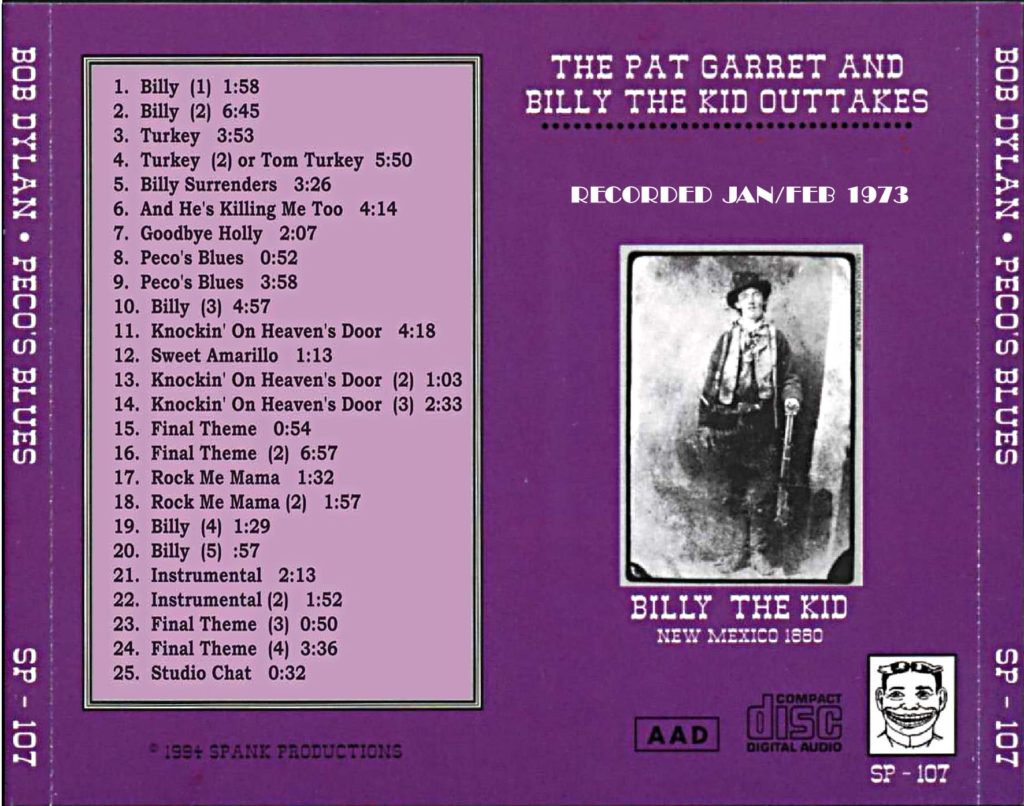
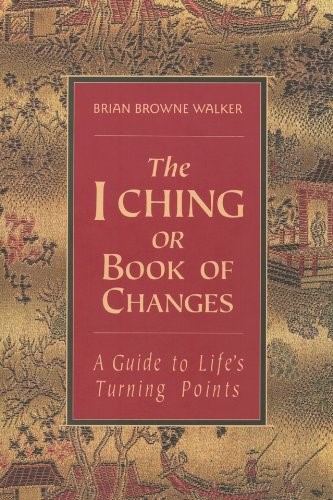
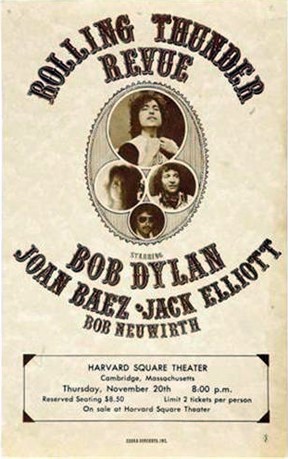 The intensity of Dylan’s rendering (“black energy and poison,” as band member David Mansfield calls it) during the Rolling Thunder Revue, the 1976 concert tour, makes it difficult to ignore personal, intimate involvement with the words sung. Here is really an artist who exposes the person behind the artist. Tension releasing, presumably, and after 1976 the bard seems to be relieved; “Idiot Wind” disappears from the set list. In the following years, however, the song remains a topic of discussion in interviews, sometimes at the initiative of Dylan himself, as in the above conversation with Flanagan in 1985. Or in 1987, when the director of the “multi-media musical” Dylan: Words & Music, Peter Landecker, says that he has spoken with Dylan: