I guess all songs is folk songs. I never heard no horse sing ’em. ~Big Bill Broonzy
For the first 11 years of my life I lived in London, and even though it was a multi-cultural multi-ethnic city, I had no contact with any members of the black community – my school and the area I lived in were totally white. At 11 the family moved to Dorset, a rural county on the south coast, in which there was no sign of a black community anywhere at all. I recall one lad of Indian descent, but the rest of the people I knew were English middle class white.
And yet, I can recall hearing “Black, White and Brown” somehow – maybe around the age of 15. It certainly wouldn’t have been played on the radio stations we could get, so it must have been in a folk club – and of course I still recall it. It shows just how powerful this song is.
The author was Big Bill Broonzy, one of the key Chicago blues singers, who up to the second world war and in the years immediately thereafter, recorded over 250 songs. These included “Key to the Highway,” “Hard Hearted Woman,” and “When Will I Get to Be Called a Man” and he is registered as the composer of many more songs.
Mostly he played with small bands often with a saxophone, clarinet or trumpet helping the melody along – and of course giving a jazz feel to some of the songs.
Later in life he helped younger musicians get a foot on the ladder – people like Muddy Waters, Little Walter, and Memphis Slim. Many of the rock stars of the 1950s onwards cite him as an influence.
Black Brown and White is one of his most powerful and most famous songs, and tragically in recent years it has been taken up by neo-fascist organisations in Britain as a straight recommendation of how Britain should be.
Here’s another version
Just listen to either (or better still both) of the versions of the song it becomes obvious why Dylan likes the song – it contains the elements of so much of Bob’s early music. There is the racial prejudice commentary and the ironic humour mixed together – exactly the sort of thing that Bob was experimenting with in the 1950s.
Here are the lyrics. The Jim Crowe reference in the last verse is to Jim Crow laws that enforced racial segregation enacted in the late 19th and early 20th centuries by white dominated state legislatures and which remained in force until 1965. The laws mandated racial segregation through the doctrine of “separate but equal”.
Here are the lyrics…
This little song that I’m singin’ about People you all know is true If you black and gotta work for a livin’ now This is what they been sayin’ to you
They said if you white, you’s alright If you is brown, stick around But if you’s black, oh brother Get back, get back, get back…
I was in a place one night They was all havin’ fun They was all buyin’ beer and wine But they would not sell me none
They said if you white, you’s alright If you is brown, you can stick around But if you’s black, mm mm brother Get back, get back, get back…
I went to an employment office I got a number and I got in line They called everybody’s number But they never did call mine
They said if you white, you’s alright If you is brown, you can stick around But if you’s black, mm mm brother Get back, get back, get back…
Me and a man was working side by side And this is what it meant They was payin’ him a dollar an hour But they was payin’ me fifty cent
They said if you was white, you’d be alright If you is brown, you could stick around But if you’s black, whoa brother Get back, get back, get back…
I helped win sweet victories With my plow and hoe Now, I want you to tell me, brother Whatchu gonna do about the ol’ Jim Crow
And if this is new to you, you might also like to venture here….
An index to our latest posts arranged by themes and subjects on the home page. You can also see details of our main sections on this site at the top of this page under the picture.
There is an alphabetic index to the 550+ Dylan compositions reviewed on the site which you will find it here. There are also 500+ other articles on different issues relating to Dylan. The other subject areas are also shown at the top under the picture.
We also have a discussion group “Untold Dylan” on Facebook which mostly relates to Bob Dylan today. Just type the phrase “Untold Dylan” in, on your Facebook page or follow this link
And please do note The Bob Dylan Project, which lists every Dylan song in alphabetical order, and has links to licensed recordings and performances by Dylan and by other artists, is starting to link back to our reviews.
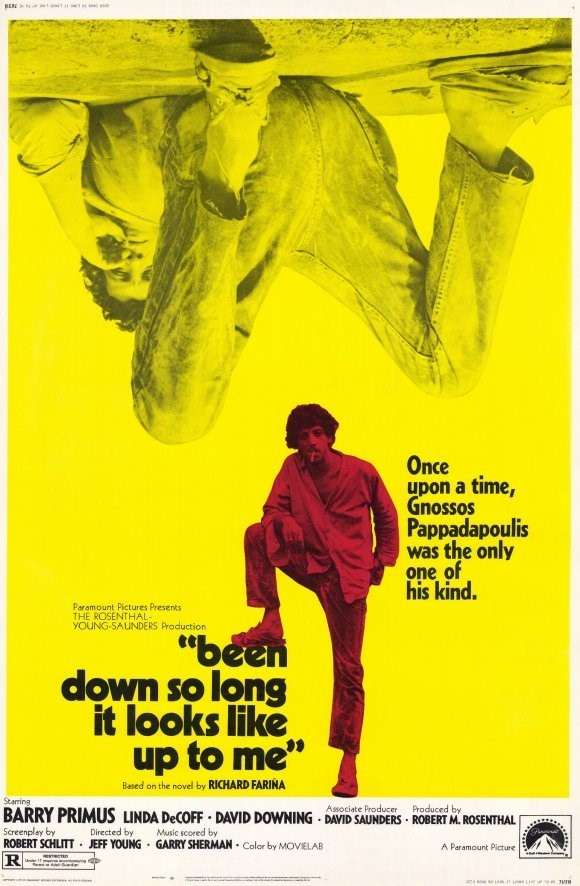
It is a beautiful melancholic title, the title of Richard Fariña’s only novel: Been Down So Long It Looks Like Up To Me (1966).
He did not make it up himself, but borrowed it from a song by the early blues giant Furry Lewis, from “I Will Turn Your Money Green”.
With Fariña’s traveling companion Dylan, the song also echoes through, albeit some decades later. The second verse of “Tryin’ To Get To Heaven” (Time Out Of Mind, 1997) opens with When I was in Missouri / They would not let me be – the opening lines of the same “I Will Turn Your Money Green”.
https://youtu.be/hZ-qmRS3-a4
Richard Fariña is a short, well-nigh cinematic and almost mythical intermezzo in Dylan’s life. The dropout student is already around in Dylan’s circles in the early 1960s. The men meet when Richard is still married to the popular folk singer Carolyn Hester (Dylan plays harmonica on her third album, in 1961). They become friends and the friendship gets an extra layer when Fariña remarries in ’63 with Joan Baez’s beautiful sister, the then seventeen-year-old, enchanting Mimi. That happiness does not last long; April 30, 1966, two days after the publication of his only novel, Richard is killed in a motorcycle accident in Carmel Valley, California, on a borrowed bike.
The book by David Hajdu, Positively 4th Street: The Lives and Times of Joan Baez, Bob Dylan, Mimi Baez Fariña, and Richard Fariña (2001) is a comprehensive and occasionally somewhat larmoyant [maudlin] historiography about the lives of the foursome, especially about those years in which that special carom of creative talent around the sisters Baez takes place.
Hajdu is rather stuck in the debatable conviction that Fariña was the real creative genius and Great Guide, but nevertheless the work offers a rich look at Dylan’s years with Baez, documented, among other things, with revealing and candid letters from Baez’s private correspondence.
That song by Furry Lewis is not the only line that can be drawn between “Up To Me” and Fariña. The title similarity between Dylan’s song “Up To Me” and Fariña’s novel is evident, and besides that the lyrics also offer small references. Thunderbird is also the name of the bookstore where Fariña has a signing session a few hours before his death, the second line, Death kept followin’, trackin’ us down, recalls the two motorcycle accidents where one (Fariña) finds death and the other, Dylan, escapes. And with some lenient interpretation, there are some lines of verse which can be read as a reply to Fariña’s farewell salute to Bob Dylan, the bittersweet song “Morgan The Pirate”.
That song is released posthumously, on the album Memories (1968). The liner notes on that album are usually mistakenly attributed to Mimi, but they are written by Maynard Solomon, producer and founder of Baez’s record company Vanguard. The notes claim that this song is Fariña’s last song and ‘waves farewell to Bob Dylan.’
In the lyrics, sung by Mimi over an uptempo folkrock song propelled by electric guitars, the melancholy seems to dominate, but through the melancholy Richard administers some quite nasty blows:
It's bye bye buddy have to say it once again
I appreciate your velvet helping hand
Even though you never gave it I am sure you had to save it
For the gestures of the friends you understand
Now you've gotten even higher
And become your own supplier
And the number one denier of the one or two hard feelings

One or two hard feelings left behind
In this last verse the poet suggests that he loses Dylan to the drugs, in the verses before he accuses him of opportunism, disloyalty and deceiving the public.
Sir Henry Morgan, Morgan the Pirate (1635-1688), was one of the most successful pirates in the service of the English Navy and the terror of the Spanish Empire in the Caribbean. A link with the lyrics is hard to find and why Fariña names a song about Dylan after the legendary buccaneer, is puzzling too. Because he considers Dylan a marauder, song stealer, thief of thoughts? Maybe they went to film together (1960).
If the song has made some impression on Dylan, then not so much that he has written a clear reply to it. But, as with any artist, reflections and resonances from the man’s life creep into his work. At any rate, the protagonist in “Up To Me” defends himself against the kind of accusations as expressed in “Morgan The Pirate”; if I’d lived my life by what others were thinkin’, the heart inside me would’ve died and the following I was just too stubborn to ever be governed by enforced insanity.
Too thin, all in all, to classify “Up To Me” as an answer song, but that the song expresses a confetti rain of private concerns from a reflective narrator, that much is obvious.
Those reflections also invite to look for lines to Dylan’s biography and can be found indeed. Especially that last verse, of course:
And if we never meet again, baby, remember me
How my lone guitar played sweet for you that old-time melody
And the harmonica around my neck, I blew it for you, free
No one else could play that tune, you know it was up to me
… which is at least a retrospective on a past love relationship, and is thankfully abused by most of the exegetes as a further ‘proof’ that Blood On The Tracks thematises Dylan’s marital problems and upcoming divorce.
Here too, however, love affairs in the life of the private person Dylan undoubtedly belong to the many impressions that one way or the other trickle down into his artistic output. But Dylan does not write songs à clef or confessional poetry. Masterpieces like “Tangled Up In Blue”, “Simple Twist Of Fate” or this “Up To Me” are much more facetted than that.
Narrative “Up To Me” also appears, but unlike those seemingly epical songs on Blood On The Tracks, this song starts in medias res, in the middle of an action. Not early one morning, the sun was shinin’ nor they sat together in the park as the evening sky grew dark, but wham-bam: everything went from bad to worse, money never changed a thing.
The style figure contributes to the cinematic character of the song. In the literature, such an opening without an introductory exhibition can be found often enough (Paradise Lost by John Milton, Shakespeare’s Hamlet, Edgar Allen Poe in The Tell-Tale Heart and equally in the epic poetry of classics such as Homer and Virgil), but it is much more common in the film noirs and thrillers. The Usual Suspects (1995), Kill Bill (2003), and especially in the crime films from the 40s and 50s. As in almost every film Dylan mentions in his autobiography Chronicles. “Joe, you’re under arrest,” is the opening of Rio Bravo (1959).
The Defiant Ones (1958) opens with the singing of someone in the back seat, out of view, and in the front the driver says to the co-driver: “Will you listen to him? We oughta make him ride up front. See how much singin’ he’ll do then.” The stranger, the protagonist Sidney Poitier, sings W.C. Handy’s “Long Gone” from 1920, a song that he will sing a few more times. The film seems to be summed up in the first verse of “Up To Me” and the song “Long Gone” gets a name-check (I know you’re long gone, I guess it must be up to me). And in the middle of the story starts La Strada (1954), so admired by Dylan:
Gelsomina! Mother says to come home right away. There’s a man here. He came on a big motorcycle. He says Rosa is dead.
The second big difference with the epic songs on Blood On The Tracks is the lack of a continuous storyline; not only the song itself, all twelve verses of “Up To Me” are equally abrupt overtures of film scripts, of film noirs, romantic dramas and psychological thrillers. The suggestion of a continuous storyline is there, sure. The protagonist is a retrospective I-figure in all twelve stanzas, the poet sprinkles reference words and indicative pronouns that seem to refer back to something that was told in a previous verse, conjunctions at the beginning of the verse insinuate that a thought from a previous verse is continued (‘And’, ‘So’).
However, it is only the suggestion of a plot. Unlike in the twin sister of “Up To Me”, in “Shelter From The Storm”, no comprehensive, coherent picture looms up; “Up To Me” appears to consist of puzzle pieces of twelve different puzzles, where at most – with some difficulty – one can distinguish ‘farewell’ or ‘love break’ as the overarching theme in ten of the twelve verses. The evoked images push the associations like a flaring pigeon swarm in all directions, and the images do not group themselves. Perhaps this song is the song that Dylan thinks about when he makes a mystifying point in Chronicles:
‘Eventually I would even record an entire album based on Chekhov short stories – critics thought it was autobiographical – that was fine.’
Probably a red herring, but true: blooming orchids, departing trains, a stale perfume smell, an officer’s club and an unhappy lover waiting outside all night … many images from “Up To Me” could just be borrowed from Chekhov’s stories. Though still slightly off: stale or attenuated smells are recurring at Chekhov, but it is always the stale smell of tobacco or cigars. Perfume is always ‘enchanting’, ‘intoxicating’ or ‘penetrant’. Orchids are not mentioned in any work, nor an officer’s club, no bluebirds or post office workers, only nightly languorous, unfortunate lovers sometimes do come along – but then again, that would apply to half of the world literature.
No, this is not a ‘song like a painting’, a song whose parts tell a different story than the whole. Only the music itself and the protagonist hold it together, but establishing a larger whole remains guesswork.
It does not detract from the beauty. The twelve miniatures contain beautiful one-liners (when you bite off more than you can chew you pay the penalty), enigmatic sub-characters (the old Rounder in the iron mask slipped me the master key), the softest put-down in Dylan’s catalogue (she’s everything I need and love but I can’t be swayed by that) and intriguing musings with beautiful metaphors. “We heard the Sermon on the Mount and I knew it was too complex / It didn’t amount to anything more than what the broken glass reflects.” The Sermon on the Mount complex? He can hardly mean Jesus’ Sermon on the Mount – that one excels in plain language and clear messages. The opposite of Dylan’s “Up To Me”, actually.
The verses are larded with half-known, sometimes archaic expressions that the poet picks from ancient songs, forgotten films and classical poetry. A rounder is an extinct expression for a vagabond, a designation we only know from old songs (“Cocaine Blues”, “Delia”, “Lady And The Tramp”, from songs by Dylan’s old heroes like Dock Boggs and Blind Willie McTell). The verse with ‘Dupree’ and ‘Crystal’ in the ‘Thunderbird Café’ sounds like the plot of a Tennessee Williams film and the ‘bluebird’ is sung in hundreds of songs, but the concept of the blue bird of happiness who is singing in this song , comes from the play L’Oiseau blue (1908, adapted for film seven times, so far) by that other Nobel Prize winner, by Maurice Maeterlinck.
In short: “Up To Me” is one more of those sparkling, chameleonic Dylan songs from the hors category in which we also classify songs like “Desolation Row”, “Things Have Changed” or “Not Dark Yet”. And one of those songs in which we recognize the artistic kinship with fellow Nobel laureate T.S Eliot, with the cut and paste in a masterpiece like The Waste Lands. ‘A heap of broken images’, as T.S. puts it in line 22 of that work.
The overall consensus on why Dylan passes this masterpiece for Blood On The Tracks is: it is too similar to “Shelter From The Storm”. The first official release of Dylan’s recording is in 1985 for the Biograph collection box. In the accompanying booklet, Cameron Crowe writes: “A companion piece to Shelter From The Storm, performed in the same spare style.” And Crowe also sees the final verse as ‘proof’ that Dylan is autobiographical here, but Dylan himself closes that comment off, with the rebuttal we often hear: “I don’t think of myself as Bob Dylan. It’s like Rimbaud said: ‘I is another’.”
Much earlier we have already been able to get acquainted with the song in the version of Roger McGuinn. Dylan gives his old friend the song for his most beautiful solo album, Cardiff Rose (1976), on which it is also, despite all the beauty surrounding it, the highlight. The ex-Byrd opts for an electric, very lively, almost enthusiastic country-rock approach and proves once again that he has the rather rare skill to raise a Dylansong. Or maybe even more so: producer Mick Ronson. Both men have just toured with Dylan, with the Rolling Thunder Revue, and from there they also take back to the studio star musicians Rob Stoner, Howie Wyeth and David Mansfield, to record Cardiff Rose in Los Angeles. During that tour, the remarkable talent Ronson has already shown that he can give especially successful, enriching twists to Dylan songs (to “Going, Going, Gone”, for example). Here, with the enormous influence that he has as a producer and multi-instrumentalist (Ronson plays guitar, zither, flute, piano, organ, percussion and accordion), he can perfectly decorate such a Dylan song to his taste. Successful, undeniably; even unyielding Nobody-Sings-Dylan-Like-Dylan zealots nod thriftily, but approvingly to this cover.
The only other cover that comes close to this one is from Roger McGuinn again. In the twenty-first century he records a folky, hypnotic version of “Up To Me” for a tribute album (Dylan Covered, Mojo Magazine September 2005). More monotonous and acoustical then his pièce de résistance from thirty years earlier and again close to the beauty of Dylan’s original – even without Ronson McGuinn can deliver a masterpiece.
Roger McGuinn 1976:
Roger McGuinn 2005:
What else is here?
An index to our latest posts arranged by themes and subjects on the home page. You can also see details of our main sections on this site at the top of this page under the picture.
There is an alphabetic index to the 550+ Dylan compositions reviewed on the site which you will find it here. There are also 500+ other articles on different issues relating to Dylan. The other subject areas are also shown at the top under the picture.
We also have a discussion group “Untold Dylan” on Facebook which mostly relates to Bob Dylan today. Just type the phrase “Untold Dylan” in, on your Facebook page or follow this link
And please do note The Bob Dylan Project, which lists every Dylan song in alphabetical order, and has links to licensed recordings and performances by Dylan and by other artists, is starting to link back to our reviews.
Missed by academic examiners of Bob Dylan song lyrics is the Dylanesque ‘rhyme twist”, a literary device employed by the singer/songwriter whereby he tips off the observant listener or reader as to the works of another artist that he sources:
With your silhouette when the sunlight dimsInto your eyes where the moonlight swimsAnd your match-book songs, and your gypsy hymnsWho among them would try to impress you?
(Bob Dylan: Sad-Eyed Lady Of The Lowlands)
No one, as far as I know, points out that the obvious referent in the above lyrics is Edward Taylor, the American Puritan poet who is nevertheless influenced by the witty, sometimes downright skeptical, Baroque poets. Their poems often examine the psychological tension between blind emotion and mindful reasoning.
Baroque (Metaphysical) poets utilize far-fetched comparisons (conceits), and complex imagery to express esoteric ideas:
You want clear spectacles: your eyes are dimTurn inside out , and turn your eyes withinYour sins like motes in the sun do swim ...
(Edward Taylor: The Accusation Of The Inward Man)
Note the Dylanesque ‘rhyme twist’: ~ ‘dims’/’swims’ in Sad-Eyed Lady;
~ ‘dim’/’swim’ in The Inward Man.
Indeed, it appears that Bob Dylan picks up the idea of the ‘rhyme twist’ from another favorite poet of his:
What the hammer, what the chainIn what furnace was thy brainWhat the anvil, what dread graspDid it's deadly terrors clasp? ...Tiger, Tiger, burning brightIn the forests of the night
(William Blake: The Tiger)
Who among us would not be impressed by the the similarity of Blake’s lyrics to those of Taylor’s below:
Upon what base was fixed the lath, whereinHe turned this globe, and riggalled it so trimWho blew the bellows of his furnace vastOr held the mold wherein the world was cast?
(Edward Taylor: The Preface)
The end-rhyme ‘twist’ is illustrated by the two poems ~ ‘grasp’/’clasp’;
~ 'vast'/'cast'.
And also take notice of the ‘bright’/’night’ end-rhyme in the Baroque-imaged song lyrics below that might otherwise be considered a coincidence:
And stopped inside a strange hotelWith the neon burning brightHe felt the heat of the nightHit him like a freight train
(Bob Dylan: Simple Twist Of Fate)
Luck, bad or good, plays a big part in Bob Dylan’s portrayal of the modern times in which he exists. A sure thing it is that God’s grace saves those through their faith alone in Edward Taylor’s fiery Puritan world:
One sorry fretAn anvil spark, rose higherAnd in thy temple falling, almost setThe house on fireSuch fireballs dropping in the temple flameBurns up the building. Lord forbid the same
(Edward Taylor: To The Soul Occasioned By A Rain)
A number of songs by Dylan are ‘jeremiads’ that lament a corrupt world in which man-made things are, but should not be, admired, idolized, or misused:
And I will utter my judgments against themTouching all their wickedness, who have forsaken meAnd have burned incense unto other godsAnd worshipped the works of their own hands
(Jeremiah I:16)
Though goodly works are considered important by Jewish-grounded Bob Dylan, many a song of his deals with emotional faith that has been burned and betrayed:
The priest wore black on the seventh dayAnd sat stone-faced as the building burnedI waited for you on the running boardsNear the cypress trees, while the springtime turnedSlowly into autumn
(Bob Dylan: Idiot Wind)
Editorial footnote:
Apologies for the long period without posting on this site while I was in Australia. A set of ludicrous technical problems were to blame. However we are back now in England, and resuming work here, and on our “Untold Dylan” Facebook Page
My sincere apologies for the long delay since the last post.
I am currently in Australia and had arranged to be able to post occasionally from here, as indeed I have done in each of the previous years when visiting my daughter.
But a fault plug has caused problems both with my phone and my laptop computer leaving me in some difficulties.
I hope to be able to post against shortly, but if not, service will be resumed when I return to the UK in early April.
“Mystery Train” was written by Junior Parker in 1953 as a Memphis blues, and it is this version that Bob Dylan has clearly been listening to whhe he recorded his own version with a view to having it included in the Shot of Love album.
Here’s Bob’s edition of the song…
https://www.youtube.com/watch?v=uY1mhyC2iJk
The song itself originally comes from the tradition that gave us songs like “Worried Man Blues” which near the end has the lines
The train arrived sixteen coaches long
The train arrived sixteen coaches long
The girl I love is on that train and gone
Re-using lines from other songs of course is a long tradition in folk and blues, and I doubt that Junior Parker really thought much about what he was up to putting those lines in his song.
Indeed the thinking behind the song, if there was any, is quiite hard to disentangle because as others have mentioned in considering the piece, there is no “Mystery Train” mentioned in the lyrics of “Mystery Train” the song.
So we get to..
Train I ride sixteen coaches long
Train I ride sixteen coaches long
Well, that long black train carries my baby home
but quite why the length of the train is important or significant is never made clear.
It was almost inevitably recorded for Sun Records in Memphis, (where else would it have been made?) in September / October 1953. The song was not a hit, altough Junior Parker’s previous record “Feeling Good” had been a R&B hit.
However it certainly did make the composer some money when Elvis Presley recorded it – although by this time Sam Phillips was noted as co-composer. The Elvis version was released in 1955 as the B side of “I forgot to remember to forget” and by 2003 Rolling Stone had the song listed as number 77 in the list of the greatest songs of all time. The single reached the top 10 of the Billboard country and western chart and became the first song that gave Elvis a position as a country music star across the US.
Which brings us to the question of why. Why did Bob think of putting this song on his album? Here are the lyrics…
Train, train
Comin’ round the bend
Train, train
Comin’ round the bend
Well that long black train
Good Lord she’s gone again
Train, train
Runnin’ down the track
Train, train
Runnin’ down the track
Well it’s got my baby
And he ain’t comin’ back
Train, train
Runnin’ down the line
Train, train
Runnin’ down the line
Well he took my baby
Lord knows he’s ??
Train, train
Runnin’ down the line
Train, train
Runnin’ down the line
Well she took my baby
Good Lord she’s mine all mine
Hey, hey
Hey hey hey
So we might well conclude that there is nothing in the lyrics that stand out when considering the sort of writing Dylan engaged in. Rather I think it must be the concept of the song – that old Dylan favourite of the railways and moving on, which I’ve mentioned a number of times in this series.
And not just any old moving on – it is the whole moving on concept without knowing where the end point of the journey is.
As I have often mentioned, the classic deliniation of the types of lyrics in popular music gives us three types of song: love, lost love, and dance. And here we are with lost love – and that classic blues and rock n roll form of lost love – the perfidious woman just gets up and goes.
Plus in Dylan’s version we have the real sound of the train, the clanking of the wheels on the tracks, the howl of the whistle – it is all symbolised therein.
What Bob does is take us to the original concept of the song (not the Elvis version) and tease out every single painful moment of the train taking the woman that the singer posseses.
Of course there is no modern equality of the sexes here: “she’s mine all mine”.
I think the version Bob gives us here is an absolute masterpiece of the blues with added rock; it is just how this music should be. And my, don’t the singers and musicians sound like they feel it and mean it.
It’s a fantastic rock blues of the era, and a classric rendition. Thank goodness for outtakes.
An index to our latest posts arranged by themes and subjects on the home page. You can also see details of our main sections on this site at the top of this page under the picture.
There is an alphabetic index to the 550+ Dylan compositions reviewed on the site which you will find it here. There are also 500+ other articles on different issues relating to Dylan. The other subject areas are also shown at the top under the picture.
We also have a discussion group “Untold Dylan” on Facebook which mostly relates to Bob Dylan today. Just type the phrase “Untold Dylan” in, on your Facebook page or follow this link
And please do note The Bob Dylan Project, which lists every Dylan song in alphabetical order, and has links to licensed recordings and performances by Dylan and by other artists, is starting to link back to our reviews.
Like many other writers, including the French Symbolist poet Arthur Rimbaud, Bob Dylan looks back to the works of previous artists for creative inspiration – such as old folk songs and nursery rhymes…
"Oranges and lemons"Say the bells of St. Clement's"You owe me five farthings"Say the bells of St. Martin's"When will you pay me?"Say the bells of Old Bailey"When I grow rich"Say the bells of Shoreditch"When will that be?"Say the bells of Stepney"I do not know"Says the great bell at Bow
(Oranges And Lemons ~ traditional; – a “farthing” was an English coin worth one quarter of a old penny – about one thousandth of a pound).
A Welsh poet copies the format of the lyrics above:
"O, what can you give me?"Say the sad bells of Rhymney"Is there hope for the future?"Cry the brown bells of Merthyr"Who made the mine owner?"Say the black bells of Rhondda"And who robbed the miner?"Cry the grim bells of Blaina
(Idris Davies: Bells Of Rhymney)
The poem also reveals another influence. The voice of William Blake is clearly heard. Blake be influenced by the writings of neoGnostic spiritualist Emanuel Swedenborg although the down-to-earth British poet disagrees with the Swede’s cosmological view:
Did he smile his work to see?Did he who made the lamb make thee?Tyger, tyger, burning brightIn the forests of the night
(William Blake: Tyger, Tyger)
The criticism by Idris Davies of the greed fermented by the capitalist system is reflected in the narrative song mentioned below:
Big Jim was no one's fool, he owned the town's only diamond mineHe made his usual entrance, lookin' so dandy, and so fine
(Bob Dylan: Lily, Rosemary, And The Jack Of Hearts)
The American singer/songwriter returns to Bible – St. Peter regrets forsaking Jesus; Martha witnesses Jesus raising her brother from the dead; and princess Catherine dies a martyr’s death due to her Christian beliefs:
Ring them bells, St. PeterWhere the four winds blow ...Ring them bells, sweet MarthaFor the poor man's son ......Ring them bells, St. CatherineFrom the top of the room
(Bob Dylan: Ring Them Bells)
Dylan often uses biblical imagery – below, to rage against the perceived moral relativism of the anti-Christian writings of the German philosopher Frederich Nietzsche:
I heard the sound of thunder, it roared out a warning
(Bob Dylan: A Hard Rain’s A-Gonna Fall)
An influence on American satirist Lord Buckley is an American Gothic poet who dwells on death:
Oh, the bells, bells, bellsWhat a tale their terror tellsOf despairHow they clang, and clash, and roarWhat a horror they outpourOn the bosom of the palpitating airYet the ear, it fully knowsBy the twangingAnd the clangingHow the danger ebbs and flows
(Edgar Allan Poe: The Bells)
Given the certainty of death, Bob Dylan struggles to maintain a bright outlook on life:
Hey, Mr. Tambourine Man, play a song for meI'm not sleepy, and there is no place I'm goin' toHey, Mr. Tambourine Man, play a song for meIn the jingle-jangle morning, I'll come following you
(Bob Dylan: Mr. Tambourine Man)
A British Baroque poet renders lyrics that are not so happy-go-lucky:
Therefore, send not to knowFor whom the bells tollsIt tolls for thee
(John Donne: For Whom The Bell Tolls)
Bob Dylan has no problem confessing that he steals from the poet above:
It takes a thief to catch a thiefFor whom does the bell toll, love?It tolls for you and me
(Bob Dylan: Moonlight)
Nevertheless, he keeps on truckin’, and tries to paint over the darkness of the night-time:
I can hear the church bells ringin' in the yardI wonder who they are ringing for?I know I can't winBut my heart just won't give in
(Bob Dylan: Standing In The Doorway)
What else is here?
An index to our latest posts arranged by themes and subjects on the home page. You can also see details of our main sections on this site at the top of this page under the picture.
There is an alphabetic index to the 550+ Dylan compositions reviewed on the site which you will find it here. There are also 500+ other articles on different issues relating to Dylan. The other subject areas are also shown at the top under the picture.
We also have a discussion group “Untold Dylan” on Facebook which mostly relates to Bob Dylan today. Just type the phrase “Untold Dylan” in, on your Facebook page or follow this link
And please do note The Bob Dylan Project, which lists every Dylan song in alphabetical order, and has links to licensed recordings and performances by Dylan and by other artists, is starting to link back to our reviews.
Brian Wilson is traumatized and mentally unstable, plagued by fairly serious psychological disorders, is deaf to an ear and one of the greatest pop composers of the twentieth century. I Am Brian Wilson (2016), the autobiography, by necessity sketches an imperfect, incomplete picture – Wilson recognizes that entire periods of his life have disappeared in a fog of drugs, depression and medication. Nevertheless, or perhaps because of this, the book is a moving portrait of a man who looks back on his life with grateful modesty, self-mockery and sometimes even irony.
The modesty is identical to the humble, admiring tone Dylan can adopt in Chronicles, the awe he demonstrates for artists of whom the reader thinks: but Mr. Dylan, you yourself are miles above them.
Brian Wilson tells how he is having lunch in New York in 2006 with two friends. He has already seen Carole King at another table, but of course he does not dare to address her. Then Brian has to go to the bathroom.
“I went to the men’s room, opened the door, and the first person I saw was Barry Mann. Now I thought I was dreaming, maybe. Pass the Brill Building, walk to lunch, imagine you see Carole King, and then see Barry Mann? He co-wrote so many great songs with his wife, Cynthia Weil. “Uptown” and “We Gotta Get out of This Place” and “I’m Gonna Be Strong”. I said ‘hi’ to Barry and took him to the table to meet the guys. I asked him if he wanted to sit with us.
“I’d love to,” he said, “but I’m sitting over there with Carole.” There was a silence at the table, which I guess he thought meant he had to explain. “Carole King,” he said. “And Cynthia.”
“Cynthia Weil?” I said. I was still thinking of all the songs they wrote together. I don’t know which one was in my head by that point. Maybe “He’s Sure the Boy I Love” or “Walking in the Rain”. Barry laughed. “Walk over there with me.”
To his unspeakable joy Brian is greeted warmly and embraced by Carole King and Cynthia Weill. On cloud nine he floats back to his table, overjoyed.
“Can you believe running into Barry Mann in a goddamned men’s room in New York?” I said. “I’ll be goddamned. We’re in the room with three of the greatest songwriters ever.”
Just like with Dylan in similar passages, it is not an act. Every pop music-loving reader will put Brian Wilson in the pantheon of the songwriters quite a few floors higher than Mann, Weill and King, but Wilson does not claim he has the right to stand even in the shadow of those names.
Great is his respect for Dylan too, who is mentioned a few times in these memoirs. The son he gets with his second wife, Melinda, he calls Dylan and when he holds him for the first time, Brian sings softly “Mr. Tambourine Man” to him. “The name felt good.” Before that he already quoted, awfully modest but still very proud, what kind words Dylan once said about him:
I don’t go around collecting things that people say about me, but there is one I like. It’s from Bob Dylan, and it’s one of the nicest compliments, and one of the funniest.
“That ear – I mean, Jesus,” he said, “he’s got to will that to the Smithsonian.” I might.
A remarkable anecdote concerns a gathering at Wilson’s home in Los Angeles, prior to that wondrous contribution from Dylan to Wilson’s song “The Spirit Of Rock And Roll” (1987). The meeting is just as unlikely coincidental as that meeting with Barry Mann:
Once I was in Malibu emergency room getting a weigh-in and this guy walked up to me. He had curly hair and was on the short side. “Are you Brian Wilson?” he asked.
“Yeah,” I said.
“Hi,” he said. “I’m Bob Dylan.” He was there because he had broken his thumb. We talked a little bit about nothing. I was a big fan of his lyrics, of course. “Like a Rolling Stone” was one of the best songs, you know? And “Mr. Tambourine Man” and “It’s All Over Now, Baby Blue” and so many more. What a songwriter! I invited him over to my house for lunch the next day. That was a longer conversation. We just talked and talked about music. We talked about old songs we remembered, songs before rock and roll. We talked about ideas we had. Nice guy. He added vocals to a song I was working on around that time called “The Spirit of Rock and Roll”.
But that was a rare bright spot. Most of the time that house in Latigo Shore was bad.
That broken thumb is a little documented injury, but Dylan himself also mentions something like that, in Chronicles, opening chapter 4, the chapter Oh Mercy. ‘It was 1987 and my hand, which had been ungodly injured in a freak accident, was in the state of regeneration. It had been ripped and mangled to the bone and was still in the acute stage — it didn’t even feel like it was mine.’ In the same chapter, Dylan reflects on most songs from the album Oh Mercy, including the dark pearl “What Good Am I?”
The lyrics he wrote, as he recalls, somewhere in the beginning of ’87, at night, at home in Malibu. Dylan summons observations from the previous days, but can not really put his finger on a source of inspiration for these particular words. ‘Maybe seeing the homeless guy, the dog, the cops, the dreary play and maybe even the antics of Guitar Shorty might have had something to do with it. Who knows?’
With the reader of I Am Brian Wilson, however, a completely different source of inspiration emerges: the narrator from “What Good Am I?” looks quite a lot like the I-person in that autobiography.
The most obvious give-away is the deaf ear, which the narrator turns to the ‘thundering sky’, an image that the poet uses only once in his entire oeuvre – in the same song he writes a few weeks after his encounter with the single-sided deaf Wilson.
The other Aha-moments go a bit deeper than that superficial, physical similarity. We get to know Wilson as a man who is tormented on all fronts by (among other things) fear of failure, by the question of whether he is good enough. He himself describes such an anxiety attack with the words frozen in place, just like the I from the song self-analyzes: ‘and I freeze in the moment like the rest who don’t try.’ Remarkably comparable are both main characters in the shortcomings they see in themselves. Wilson regrets how he has hurt relatives by ignoring them, how he has consciously shut himself off from someone else’s grief, uses similar words (“When I hear those voices, I try to shut them out”) and has turned away from his terrible father and not even attended the funeral (‘I just turn my back while you silently die’).
Personal matters the poet Dylan knows or does not know about, but it is very likely that the observing, sensitive Dylan carries with him impressions of that strange, moving Beach Boy, that spring 1987.
The song is beautiful anyway, and one of the much-vaunted highlights on Oh Mercy. The music, Dylan tells, only arises in the studio, about two years after he wrote the lyrics and stored them in a drawer. “We really had to hunt for a melody,” he recalls, and actually seems unhappy with the end result. “I liked the words, but the melody wasn’t quite special enough — didn’t have any emotional impact.” Dylan then agrees to settle with the positive opinion of producer Daniel Lanois.
Lanois is right, as he often is. The song is, indeed, not very melodic, but very effective and gruesomely beautiful. No lack of ‘emotional impact’, in any case.
Other greats agree. To Tom Jones, the song even means an unexpected turning point and a major upgrade of his career. The Welshman records “What Good Am I?” 2010 for his acclaimed album Praise & Blame. It is a beautiful, sultry cover and it yields the ultimate compliment: it pleases the master himself. Jones is one of twelve artists who are selected by Dylan to come over and sing a Dylan song at the MusiCares event in 2015.
In his autobiography Over The Top And Back (2015) Tom Jones remembers that honour with still bewildered gratitude, in the chapter that he also names What Good Am I. When, after the performances, he sits at a table and listens to that overwhelming speech by Dylan (‘the most remarkable piece of oratory I’ve ever heard from a musician’), he sits there ‘enthralled – enthralled and also amazed to have played a humble part in that evening.’
The somewhat too dramatic version of Dylan veteran Barb Jungr is less successful (Every Grain Of Sand, 2007), but the monument Solomon Burke, who in 2002, at the age of 62, has had just such a startling career relaunch as Tom Jones achieved, is pleasantly soulful and passionate (on Make Do With What You Got, 2005).
The Swedish greatness Louise Hoffsten is especially brave. At the presentation of the Polar Prize 2000 she visibly nervously delivers, under the eye of a critically observing Dylan in the front row, a fairly safe, but nevertheless very attractive, acoustic reading. And she plays the harmonica.
The most likeable, and perhaps the most beautiful cover, comes from Dylan’s natve region, from The Pines in Minneapolis and can be found on the very nice tribute album A Nod To Bob 2 (2011). It is a sparkling live version from a band which seems to have Dylan in the blood.
What else is here?
An index to our latest posts arranged by themes and subjects on the home page. You can also see details of our main sections on this site at the top of this page under the picture.
There is an alphabetic index to the 550+ Dylan compositions reviewed on the site which you will find it here. There are also 500+ other articles on different issues relating to Dylan. The other subject areas are also shown at the top under the picture.
We also have a discussion group “Untold Dylan” on Facebook which mostly relates to Bob Dylan today. Just type the phrase “Untold Dylan” in, on your Facebook page or follow this link
And please do note The Bob Dylan Project, which lists every Dylan song in alphabetical order, and has links to licensed recordings and performances by Dylan and by other artists, is starting to link back to our reviews.
Like everything he does, Dylan’s harmonica playing has been controversial, but not a lot of serious comment has been devoted to it. Plenty of put-downs. The first item to come up on a google search is a Reddit discussion of Dylan’s harmonica playing with almost every comment negative and to my mind, misdirected. Here is a typical example:
‘So many Dylan songs have harmonica solos in them, but many are actually atrocious to listen to. I think his harmonica playing is often, at best, superfluous. He plays in a manner that – I hope intentionally – is discordant and grating to listen to, and he sometimes puts the instrument at the very end of a song with no warning, as if to say “Fuck it! I’m Bob-Goddamn-Dylan!” Contrast this with artists like Tom Petty or Donovan, who use the instrument to produce a soothing, pleasurable tone. Am I taking crazy pills, or what gives with Bob Dylan and his harmonica playing?’
This post is an attempt to answer that last question, and present the positive case, for I have always loved Dylan’s harmonica playing and have always been disappointed when albums like Street Legal don’t feature it. I think much has to do with how our ears are attuned to music, and what we expect when we listen to a song. If we’re looking for a ‘soothing, pleasurable tone’ then we’re best off staying well clear of Bob Dylan, for even his most gentle and melodic songs are seldom soothing, and the pleasure than arises from listening to them comes from quite a different source.
I was brought up among jazz aficionados, weaned on on sax players like John Contrane (who never smiled), Charlie Parker (who could play faster than anybody else), Sonny Rollins (who could play two saxophones at once) and so on, with a nod to the trumpeters like Louis Armstrong. To these jazz cats, Bob Dylan was a two chord wonder, and any mention of his harmonica playing would raise a sneer. The verdict was unanimous: he couldn’t play the instrument. In his early songs Dylan developed what I call a ‘peppering’ technique in which many notes are played very fast, apparently at random. After listening to one such song, I listened to some Charlie Parker and what I heard were a whole lot of notes played very fast apparently at random. Any suggestion, however, that Dylan might also have a little jazz in his veins earned me some pitying looks from my jazz cat friends.
Audiences, however seemed to appreciate it, and Dylan’s ‘squeaky’ harmonica, mounted on a neck brace, quickly became a part of his waif-like, on-the-road image. In this wonderful version of Don’t Think Twice, from the 1964 Philharmonic Hall performance, we find a good example of the ‘peppering’ effect, and the audience’s appreciation of it. Note, by the way, the wonderful soaring vocal.
It was clear from the start that while he often used the harmonica as a way of filling in some beats between verses, blowing just a few notes, that thin, vulnerable, amateur-sounding harmonica was an essential component of the feeling tone of a song. It was an integral part of appearing ‘young and unlearned’, the frail kid talking truth to power with nothing but a guitar and a quavery harmonica he doesn’t seem to know how to play. It was all part of the image.
Consider once more this performance of Blowin’ in the Wind from 1963, and note how those whimsical little jazzy bits between the verses contribute to the forlorn nature of the song and the unanswerable questions it poses:
To my mind, however, it’s not until we get to Mr Tambourine Man that the peppering effect fully comes into it’s own as an integral component of the song and the themes of the song. The dancing harmonica solos in many great performances of this song during the 1966 tour reveal a mastery of the instrument, with those apparently random notes sewed into the Harlequinesque, carnivale ambience created. The notes can be rough, jagged, piercing, a little crazy, the choruses held together by long swooping blues notes; almost out of control, obsessive and repetitive, but miraculously brought back under control again. Then rising to a climax of high squeaky notes dancing poignantly on the circus sands at the end. Clearly there is a lot more going on here than just filling in a few desultory notes between verses. The emotional range of the song, and its ability to affect the audience, has been extended. These are fey sounds, friends!
Someone told me that while most blues harpists get their wah-wah-wah sound, with vibrato, by sucking on the instrument while cuddling it with two hands, Dylan tends to blow rather than suck, and his style has evolved through not handling the harp (that came later) because of playing the guitar at the same time. I don’t have the knowledge to be sure of that, but I do know that Dylan’s harp playing is so distinctive I can spot it within a few notes.
While that thin, vulnerable, lonely sound was an essential component of John Wesley Harding, and later Blood on the Tracks, the use of the harmonica waned during the 1970s. It never quite fitted with the violin during the Rolling Thunder Tour, or with the big band sound of 1978. The harmonica seemed to fit better with the more intimate, acoustic Dylan than the stadium rocker – but that too would change as Dylan’s sound evolved in the late 1980’s and into the 90’s, when his harmonica work again became important.
The gospel period is a frustrating one for the harp enthusiast. He only lets loose on one song, ‘What Can I do For You’, and in 1981 on old classics like Forever Young and Knocking on Heaven’s Door.
Clutching the harp in two fists, Dylan delivers a wrenchingly emotional performance, an outpouring of gratitude. Those readers who have Trouble No More can hear a sonically superior version to the You Tube clip, but beware, the CD included in the box set contains only half the song, the first harp solo having been cut! (Sacrilege!)
The harmonica featured only occasionally during the Tom Petty years in the mid to late 1980s, again not suited to Petty’s heavy, stadium style sound, nor do you hear it much in Dylan’s work with the Grateful Dead. However, in the second year of the NET, 1989, some strange piercing sounds were once more heard from the stage. Something new had entered the music. When I first heard the harp work on ‘Rank Strangers’, even after years of listening for, and to, Dylan’s harp, I didn’t recognise what I was hearing. I thought maybe GE Smith was playing above the frets or something. Take a listen to this. The first, astonishing harp solo begins around 3 mins 30 secs, but is repeated with variations after a brief guitar interlude. Incredibly, the harp solo ends with three notes from the dawn bugle call of the US military, known as Taps or ‘Day is Done’, repeated over and over.
I swear to all the jazz cats out there that I’ve heard Contrane and Parker do this, squeezing the reeds between their lips seemingly in effort to reach above audible sound, certainly above the normal range of a sax. Of course Dylan can’t squeeze the reed as on a sax, as the reeds are encased in tin, but by forcefully blowing the very top notes, and eliding between them, he succeeds in creating an unearthly, screaming sound in perfect counterpoint to the ghostly moan of the song. Again, it depends on how you’ve trained your ear, and the sounds you respond to; where I find sheer musical genius, others might hear metal scratching on glass… There are many other examples of similar style playing from that year, often with a feeling of improvisation about them, as if neither Dylan nor GE Smith quite knew where the song was going or when it would finish.
In the 1990’s, Dylan’s harp playing crept back into force. In 1992/3, the band began to sound quite jazzy and improvisational, with arrangements looser than Dylan normally prefers. The band pulls out the stops in this 1992 performance of ‘All Along the Watchtower’. Dylan’s voice was pretty scratchy during this period, and the vocal is unexceptional, but he clearly enjoys his whimsical harp interlude at the end of the song, so light and airy against the heavy beat of the music, while also giving way to the song’s urgency. The audience loves it too!
It is, however, in 1995 that Dylan’s harmonica playing reached new heights. Famously, Dylan had a cold at the Prague concert that year, which kept him off the guitar, but it didn’t stop some amazing vocals and unprecedented harmonica work. The pop and rock music of the 1980s veered towards creating sonic landscapes, orchestral sounds, and we don’t normally associate Bob Dylan with this kind of music, but in this grand and grandiose version of ‘Man in The Long Black Coat’ you hear Dylan and his band aiming for a full orchestral effect, which is where the harmonica comes in, lifting the song into one huge wall of sound. It’s a pity that the recording devices, or the original sound system for all I know, was not up to capturing the full range of this magnificent achievement – not to mention the limitations of MP3s! The fluctuation from soft to hard sound goes into distortion, but I think you can listen through that to what it might have sounded like, and it’s a sheer blast, with long sustained harmonica notes pushing the music ever higher, finally floating above the wall of sound, thin and insistent, and ultimately as haunting as the song itself. The first solo is just a warm up for the climax to follow the last verse.
For Dylan, the harmonica becomes another kind of voice, one which can take his own vocal sounds and extend them. In the last two decades Dylan has brought his harp playing to a new level of mastery, and that will be the subject of my next blog in a week or two. In the meantime, let us know your own favourite Dylan harp work, and what it adds to the song. And if you hate it, then, well… quit those crazy pills!
Kia Ora
What else is here?
An index to our latest posts arranged by themes and subjects on the home page. You can also see details of our main sections on this site at the top of this page under the picture.
There is an alphabetic index to the 550+ Dylan compositions reviewed on the site which you will find it here. There are also 500+ other articles on different issues relating to Dylan. The other subject areas are also shown at the top under the picture.
We also have a discussion group “Untold Dylan” on Facebook which mostly relates to Bob Dylan today. Just type the phrase “Untold Dylan” in, on your Facebook page or follow this link
And please do note The Bob Dylan Project, which lists every Dylan song in alphabetical order, and has links to licensed recordings and performances by Dylan and by other artists, is starting to link back to our reviews.
Persian poet Omar Khayyam, with his “jug of wine and thou”, holds on to the physical side of the human animal while the Zarathustra-influenced Mawlana Rumi seeks to ignite the divine spark within the individual:
When we are dead, seek not our tomb in the earthBut find it in the hearts of men
(Mawlana Rumi ~ translated)
Rumi is a ‘roomie’ type of character – not the ‘rummie’ kind, for sure:
The dark thought, the shame, the maliceGreet them at the door, and invite them inBe grateful for whatever comes
(Rumi: The Guest House)
The Surfi poet of yore uses music and dance as an earthly means to communicate with the spiritual Oneness of the Universe that lies, often dormant, within the physical body – “fire” be his key symbol:
Oh music is the meat of all who loveMusic uplifts the soul to realms aboveThe ashes glow, the latent fires increaseWe listen, and are fed with joy and peace
(Rumi: Remembered Music)
The mystical Persian poems of Rumi influence the writings of the Romantic Transcendentalist poets, and the lyrics of a present-day band of musicians:
When I awoke, the dire wolf, six hundred pounds of sinWas grinning at my window, all I said was, "Come on in"Don't murder me, I beg of you, don't murder mePlease, don't murder meThe wolf came in, I got my cards, we sat down for a gameI cut the cards to the Queen of SpadesBut the cards were all the same
The Queen of Spades, a symbol of death, the eternal servant that awaits us all – while we sing the blues:
Oh, the women on the levee, honey, hollerin', "Whoa, haw, gee"The men on the levee, hollerin', "Don't murder mePlease, baby, please, baby. Please, don't murder me"
(Lead Belly: I’m Down And Out ~ traditional)
The black queen – a Gothic symbol that singer/songwriter Bob Dylan employs:
Well, I return to the Queen of SpadesAnd talk with my chambermaidShe knows that I'm not afraid to look at herShe is good to meAnd there is nothing she doesn't seeShe knows where I'd like to beBut it doesn't matter
(Bob Dylan: I Want You)
In modernistic Freudian terms, the Grateful Dead’s ‘dire wolf’ represents the animal side of humankind – the Id- , the Darwinian monkey that dwells within us. In one song, based on Egyptian mythology, Bob Dylan’s persona tries to escape from his Id:
I picked up his body, and I dragged him insideThrew him down the hole, and put back the coverI said a quick prayer, and I felt satisfiedThen I went back to Isis, just to tell her I love her
(Bob Dylan: Isis)
Isis, the Sun-Queen Queen, stitches her twin and husband back together after he’s torn apart by their canine-like brother Seth. In the Holy Bible, the reverse happens – God does not like it when the settled down Cain does away with his brother, the pipe-playing shepherd Abel; God puts His cane to Cain:
And Abel was a keeper of sheepBut Cain was a tiller of the ground
(Genesis 4:2)
In the following lyrics, Dylan’s persona wishes not to suffer Cain’s fate:
One of these days, I'll end up on the run I'm pretty sure she'll make me kill someoneI'm going inside, roll the shutters downI just wanna say that Hell's my wife's home town
(Bob Dylan: My Wife’s Home Town ~ Dylan/Hunter)
https://www.youtube.com/watch?v=hrgXpz7e-Uw
The lyrics of Dylan’s songs are seldom as simple as they first appear.
At an early age Bob Dylan hears the voice of the God of Thunder commanding him to:
Write the things which thou hast seenAnd the things which areAnd the things which shall be hereafter
(Revelation 1:19)
Aiming to please, Dylan takes matters into his own hands, and adds the music of Zeus’ son, Apollo:
I saw guns and sharp swords in the hands of young children ....I heard the sound of a thunder, it roared out a warnin'Heard the roar of a wave that could drown the whole world
(Bob Dylan: A Hard Rain’s A-Gonna Fall)
Dylan helps to save a Gothic poet from the waters of oblivion in the process; the songster writes down the things that remain. The song above is an updated version of the biblical apocalypse, as well as a tribute to the poem below:
I stand amid the roarOf a surf-tormented shore ....Oh God! can I not saveOne from the pitiless wave?
(Edgar Allan Poe: A Dream Within A Dream)
Dylan repeats more than once the rather Gnostic view, and modernistic dark Existentialist view of the aforementioned poet:
Lo! Death has reared himself a throneIn a strange city lying aloneFar down in the dim WestWhere the good and the bad and the worst and the bestHave gone to their eternal rest
(Edgar Allan Poe: The City In The Sea)
Those who have eyes to see and ears to hear, let them. Below, along with the nearly direct quote, there’s the Dylanesque “rhyme twist” of ~ ‘best’/’rest’, and ~ ‘rest’/’best’:
In the dark illuminationHe remembered bygone yearsHe read the Book of RevelationAnd filled his cup with tearsWhen the Reaper's task had endedSixteen hundred had gone to restThe good, the bad, the rich, the poorThe loveliest and the best
(Bob Dylan: Tempest)
As do some other writers, Dylan finds such a dark view of human condition hard to take:
Down, down, down into the darkness of the graveGently they go, the beautiful, the tender, the kindQuietly they go, the intelligent, the witty, the braveI know. But I do not approve. And I am not resigned
(Edna St. Vincent Millay)
The poet above has hope that though the physical body of an individual decays that his or her works, done well, will live on. Like the writers of Romantic Transcendentalist poems, and of Christian gospel songs, Dylan grapples with the notion that an individual’s life has meaning beyond its earthly existence.
Following is a set down traditional song from the dark lumber woods of New Brunswick, Canada – previously referenced by Dylan -to which a Christian verse gets added:
There's danger on the ocean where the waves roll mountains highThere's danger on the battlefield where the angry bullets flyThere's danger in the lumber woods for death lurks sullen there ....Near the city of Boisetown where my mouldering bones do layA-waiting for my Savior's call on that great Judgement Day
(Peter Emberly ~ Calhoun/Munn)
Likewise, Dylan revises one of his own songs – the original quite Christian Gnostic in tone while the revision cleans up the monkey-like sexual imagery. Nevertheless, it’s again rather ambiguous:
I'm stepping out of the dark woodsTying to jump on the monkey's backYes, I'm all dressed up ....Every day you've got to pray for guidanceEvery day you've got to give yourself a chanceThere's are storms on the oceanStorms out there on the mountains tooStorms on the oceanStorms on the mountains tooOh LordYou know I have no friend without you
(Bob Dylan: Gonna Change My Way Of Thinking)
Seems Charles Darwin’s monkey man is still breathing.
What else is here?
An index to our latest posts arranged by themes and subjects on the home page. You can also see details of our main sections on this site at the top of this page under the picture.
There is an alphabetic index to the 550+ Dylan compositions reviewed on the site which you will find it here. There are also 500+ other articles on different issues relating to Dylan. The other subject areas are also shown at the top under the picture.
We also have a discussion group “Untold Dylan” on Facebook which mostly relates to Bob Dylan today. Just type the phrase “Untold Dylan” in, on your Facebook page or follow this link
And please do note The Bob Dylan Project, which lists every Dylan song in alphabetical order, and has links to licensed recordings and performances by Dylan and by other artists, is starting to link back to our reviews.
This article is part of the Why does Dylan like… series. The other articles in the series can be found via the link.
By Tony Attwood
When introducting this song on one of his “Theme Time” programmes Bob called this “One of the great blues songs of all time, one of the great car songs of all time, one of the great chauffer songs of all time! Sung by one of the great old ladies of all time.”
Here it is
https://youtu.be/UDrhVTSCdtk
It was also one of the songs mentioned by Bob Dylan in an interview with Scott Cohen and what makes this song even more interesting is the fact that Bob then took it and turned it into Obviously Five Believers.
Here’s the version by Memphis Minnie on her own…
It’s a variant on the classic blues format – but the way the variant works, with the added line of music after the repeat of the second line – plus the highly distinctive melody – really makes it stand out from the rest of the blues. I’m not enough of a blues historian to claim that the song kicked blues in a new direction, but I have a feeling this might have been the case.
The song later turned up in another variant form with Good Morning Little School Girl by Sonny Boy Williamson, also performed by Chuck Berry – not lyrics one would particualarly want to perform today but seemingly a lyric that no one got too worried about at the time.
So, moving onto the performer. Memphis Minnie (1897 to 1973), is said to have recorded around 200 songs, and this is probably the best remembered of all of them.
Although her life was very tough – as it was for all young female performers at the time, there are elements of that could be turned into a sanitised Broadway musical if anyone had a mind to (and assuming it hasn’t been done) – running away from home aged 13 with a guitar she was given for her 10th birthday, playing on street corners, joining the circus, and then playing in the blues clubs before being discovered by a record company talent scout playing with her husband in front of a barber shop. It was he who called her “Memphis Minnie”.
My Chauffeur Blues is also reported (differently by different sources) to have won a competition, the prize being a bottle of whisky and a bottle of gin. Another scene for the musical maybe.
The song was originally released as “Me and My Chauffeur Blues” on 21 May 1941, and this recording credits Ernest Lawlar (Minnie’s husband) as the composer, but in the subsequent 1953 release this credit was changed to Minnie herself and most commentators seem to feel she was the actual composer.
Here are the lyrics…
Won’t you be my chauffeur?
Won’t you be my chauffeur?
I wants him to drive me
I wants him to drive me downtown
Yes, he drives so easy
I can’t turn him down
But I don’t want him
But I don’t want him
To be ridin’ these girls
To be ridin’ these girls around
So I’m gonna steal me a pistol
Shoot my chauffeur down
Well, I must buy him
Well, I must buy him
A brand new V8
A brand new V8 Ford
Then he won’t need no passengers
I will be his load
Yeah, take it away
Going to let my chauffeur
Going to let my chauffeur
Drive me around the
Drive me around the world
Then he can be my little boy
Yes, I’ll be his girl, yes, I’ll be his girl
And then as we know Bob took it on a journey of his own. Here’s Bob doing Five Believers – and introducing the band.
https://youtu.be/Eng6xhp8B54
There’s a clear link between the two songs musically, but not in the lyrics. Here’s Bob’s version.
Early in the mornin’, early in the mornin’
I’m callin’ you to, I’m callin’ you to
Please come home
Yes, I could make it without you
If I just didn’t feel so all alone
Don’t let me down, don’t let me down
I won’t let you down, I won’t let you down
No, I won’t
You know and I know honey but
But honey, please don’t
I got my black dog barkin’
Black dog barkin’
Yes it is now, yes it is outside my yard
Yes, I’ll tell you what he means
If I just didn’t have to try so hard
Your mama’s workin’, your mama’s moanin’
She’s cryin’ you know, she’s tryin’ you know
You better go now
Well, I’d tell you what she wants
If I, but I just don’t know how
Fifteen jugglers, fifteen jugglers
Five believers, five believers
All dressed like men
Tell your mama not to worry because
They’re just my friends
Early in the mornin’, early in the mornin’
I’m callin’ you to, I’m callin’ you to
Please come home
Yes, I could make it without you
Honey, if I just did not feel so all alone
So why did Bob like it so much that he wanted to put it play it on his radio show, having re-used the song as one of his own?
It certainly is lively, and an outstanding song of its time, with a real entertaining element to it in terms of the lyrics – plus it is unusual in the way that it changes the standard blues format to make a song that is so lively and with so much energy. Plus the fact that it is a classic in the genre – one of the songs that everyone into the history of the blues after the original classic 12-bar composers, must know.
In short it is a song that really gave the blues a kick away from the poverty of the south songs, and really has fun with the lyrics and the whole concept of female power, many, many years before it became the everyday. But what is also interesting (to me at least if no one else) is what Dylan did with the lyrics in his version of the song: what exactly are they all about?
I can’t really find a meaning, and I am left with the notion that he simply put words in to fit with the music. Nothing wrong with that of course – but not something that those who believe everything Dylan writes has a meaning, really want to think about.
What else is here?
An index to our latest posts arranged by themes and subjects on the home page. You can also see details of our main sections on this site at the top of this page under the picture.
There is an alphabetic index to the 550+ Dylan compositions reviewed on the site which you will find it here. There are also 500+ other articles on different issues relating to Dylan. The other subject areas are also shown at the top under the picture.
We also have a discussion group “Untold Dylan” on Facebook which mostly relates to Bob Dylan today. Just type the phrase “Untold Dylan” in, on your Facebook page or follow this link
And please do note The Bob Dylan Project, which lists every Dylan song in alphabetical order, and has links to licensed recordings and performances by Dylan and by other artists, is starting to link back to our reviews.
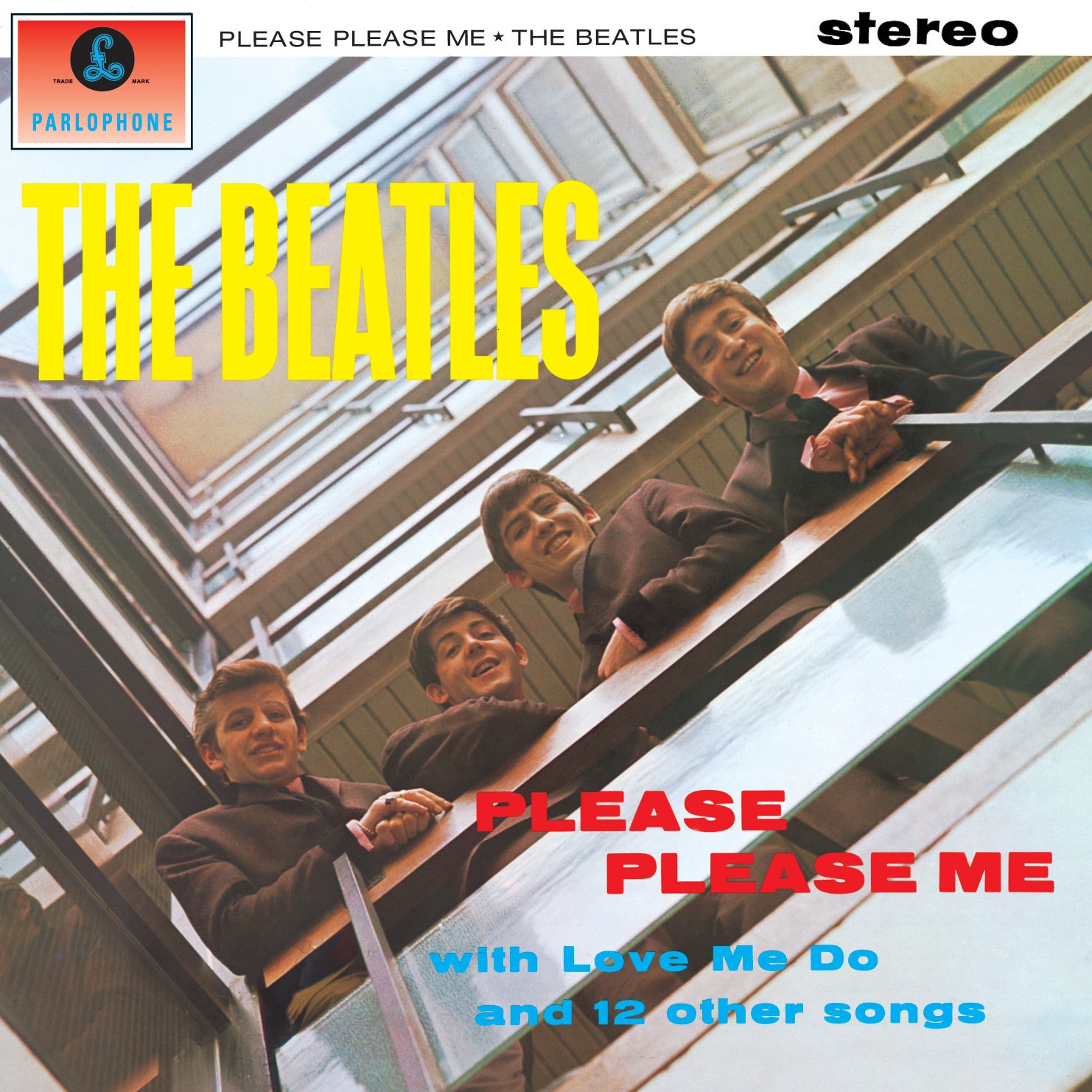
On Monday, February 11, 1963, The Beatles record all the songs (plus another, “Hold Me Tight”) for their debut album Please Please Me in 585 minutes. Straightforward, as a live performance, as they also play the songs in the Cavern Club. Just as Dylan records his first albums and as Dylan and The Band will record their songs in the Big Pink basement. The fun, the zest is evident, the increasing attrition of the vocal cords is audible and the album is just as exciting, fresh and infectious more than half a century later as when it was released on March 27, 1963.
The record is obviously deep in Robbie Robertson’s system. When Dylan, in that mythical summer of ’67, week after week pushes The Band back to the roots, to old blues, folk and country and then somewhere halfway comes up with “Odds And Ends”, the levee breaks. That pace, the rhythm, that chord scheme … we have arrived at Chuck Berry, at Mersey Beat and “Mystery Train”. The rocker Robertson wakes up and automatically the intro splashes out of his guitar: a perfect mash-up of “I Saw Her Standing There” and “Twist And Shout”, of the first and the last song on Please Please Me. In the same flow Robertson inserts the solo: not quite a copy, but still very much à la George Harrison on track 5, on “Boys”.
It speaks for Robertson that, unlike in other memories, he remains modest in his autobiography Testimony. “Meanwhile, Bob ripped off another gem on the typewriter called Odds and Ends and we tore that one up in the basement before Bob had to go home for dinner.” Levon Helm, who not yet has joined the men, has on return the distance to recognize the unusual class of the song:
I could tell that hanging out with the boys had helped Bob to find a connection with things we were interested in: blues, rockabilly, R&B. They had rubbed off on him a little. There was a great rock and roll song called “Odds and Ends“.
(Levon Helm, Wheels On Fire, 1993)
Helm is right, it is a great rock ‘n’ roll song, but most commentaries pay little attention to it. They mainly stay with the text. In general, there is agreement that Dylan shakes from his trouser leg some loose relational wailing and some vague sexual ambiguities, plus one poetic, Dylan-worthy one-liner: Lost time is not found again.
The vast majority of the lyrics indeed seem little inspired and even less thought-out, but then again: the narrative perspective is original. A male blues singer singing from the perspective of the cheated woman is not that common.
Spilling the juice has been an established metaphor for sexual intercourse since Robert Johnson’s “Traveling Riverside Blues” (1937):
You can squeeze my lemon 'til the juice run down my('til the juice run down my leg, baby, you know what I'm talking about)
… from which Dylan, as part of that same action, paraphrases that you know what I’m talking about (‘You know what I’m sayin’ and you know what I mean’).
But the protagonist in “Odds And Ends” is the receiving party of the juice, so if we assume for the sake of convenience that the poet does not have a sudden outpouring of gay-emancipatory fighting spirit, that narrator is a woman. A woman who venomously blames the man for not living up to his promises, for only using her for the satisfaction of his physical needs, and who now, in the third, last verse, advises him to pull up his pants again without having accomplished his mission and to seek his relief elsewhere.
Memphis Minnie emerges. The song fits effortlessly into her repertoire, somewhere between “I Don’t Want That Junk Outa You”, “Keep On Goin’” and “Hoodoo Lady”. Only that Dylanesque Lost time is not found again would be alienating.
Not in Dylan’s catalogue, obviously. In the very nice commercial video for IBM, Dylan talks to ‘Watson’, the computer that claims that he has analyzed all Dylan songs and has been able to filter out two recurring themes: the Passing of Time and the Fading of Love. In the video an amused Dylan does not contradict (“That sounds about right”), and a spokeswoman (Laurie Freedman of IBM) claims that it is really true; Watson really has analyzed Dylan’s entire oeuvre and really distilled these two Big Themes.
Superficially browsing through Dylan’s catalogue supports it – the word time is high up in the Top 10 of most used nouns. And especially in the songs that were written just before the motorcycle accident on June 29, 1966, when Dylan’s life is approaching the centre of an exhausting vortex of performances, recordings, drug use and sleep deprivation. The poet does not have to dig too deeply; time is a thing, these days. The word emerges in nine of the fourteen songs on Blonde On Blonde, for example, and in the rejected “I’ll Keep It With Mine” the I-figure even seems to be begging for the time he spent in “Pledging My Time” so generously:
But if I can save you any timeCome on, give it to meI’ll keep it with mine.
The beautiful, aphoristic Lost time is not found again, although it may have been thoughtlessly shaken out of Dylan’s sleeve, and even though it is somewhat misplaced in those otherwise little poetic lyrics, does build a bridge between Blonde On Blonde and the sense of displacement on John Wesley Hardin.
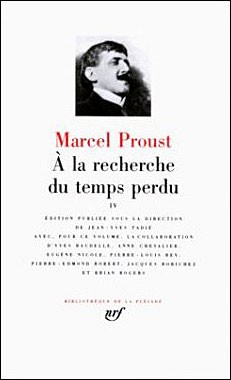
Poetic force the aphorism owes not only to the seeming familiarity and the recognizable beauty of the expression, but also to its literary roots. After all, it varies, not too different, on the title of Proust’s magnum opus, on À La Recherche Du Temps Perdu.
The last part of it, Le temps retrouvé (‘Time regained’) is a comforting reply to Dylan’s dispirited one-liner. The bard seems susceptible to it: from the nineties onwards he actively searches for the lost times and starts recovering, re-creating, retrieving the temps perdu. First by digging up old songs and recording them again, without modern fuss (Down In The Groove and Good As I Been To You), then by recreating the sound of the first half of the twentieth century more and more fanatically (“Sugar Baby” on “Love And Theft” is a good example) and finally, like the storyteller in Proust’s novel, when he puts down his memories on paper: in October 2004 the first volume of his autobiography, Chronicles, is published.
Therein, the influence of Proust is detectable. Like that great French novel, Dylan’s work is an associative work about an I-person whose intellectual and artistic growth is documented on the basis of a mosaic of memories. The truly identifiable connection, however, lies within a bit of cut and paste work by the Nobel laureate, as Dr Edward M. Cook from Washington has shown. In part 2, À l’ombre des jeunes filles en fleurs, Dylan apparently has marked two phrases (‘I caught a glimpse of the sea through the leafy boughs of trees’ and ‘I was no longer near enough to the sea which seemed to me not a living thing now, but fixed; I no longer felt any power beneath its colours’), and transfers them to Chronicles:
Walking back to the main house, I caught a glimpse of the sea through the leafy boughs of the pines. I wasn’t near it, but could feel the power beneath its colors.
(Chronicles, Chapter 4 ‘Oh Mercy’)
Illustrating that Dylan is serious about the verse that he sings about nine hundred times, most of all, in the twenty-first century. That is the core phrase from “Summer Days” (which is relatively, taking into account the song’s age, Dylan’s most played song – on average 51,1 per year since 2001):
She says, “You can’t repeat the past.” I say, “You can’t? What do you mean, you can’t? Of course you can.”
A line that, entirely in style, in itself is a repetition of the past, regained from the lost time: it comes from The Great Gatsby of F. Scott Fitzgerald, 1925.
Interesting, the relevance that such a single, carelessly written down line from a throwaway song appears to have half a century later, but it does detract from the real strongholder of the song: the pure rock ‘n’ roll fun of a relaxed club thoroughbred musicians. Although not infectious or inspiring enough, apparently; hardly any covers have been produced.
Apart from the usual, and usually hardly uplifting, versions of tribute artists, they can be counted on the fingers of one hand.
Usual suspects Coulson, Dean, McGuinness, Flint are the first, on their unsurpassed Dylan tribute Lo And Behold! (1972). Producer Manfred Mann clearly also heard The Beatles in the song and lets the men, even more than The Band, turn it into a Beatles rocker. Ringo-like drums, handclapping and a sax solo of the type that Paul McCartney loves to insert, a bathroom reverberation over the vocals à la John Lennon and as icing on the cake Harrisons guitar solo from “Dizzy Miss Lizzy”.
The English Italian Emanuele Fizzotti is less adventurous, but no less fun – an old-fashioned blues rocker with an iron stomp, sparkling harmonica and the obligatory guitar and piano solo, which makes the song last almost twice as long – and that’s no problem at all (Manny’s Blues, 2012).
The best cover comes from Dylan’s native region, from the neighbourhood of Minneapolis, and is from The Gated Community, a band that stands out with infectious cowpunk and joyous country folk. From “Odds And Ends” they make a speedy, dynamic country swing with – very bold – a self-written, very fitting bridge (on Country Hymn, 2016).
Exciting and fresh like good old Please Please Me, actually.
What else is here?
An index to our latest posts arranged by themes and subjects on the home page. You can also see details of our main sections on this site at the top of this page under the picture.
There is an alphabetic index to the 550+ Dylan compositions reviewed on the site which you will find it here. There are also 500+ other articles on different issues relating to Dylan. The other subject areas are also shown at the top under the picture.
We also have a discussion group “Untold Dylan” on Facebook which mostly relates to Bob Dylan today. Just type the phrase “Untold Dylan” in, on your Facebook page or follow this link
And please do note The Bob Dylan Project, which lists every Dylan song in alphabetical order, and has links to licensed recordings and performances by Dylan and by other artists, is starting to link back to our reviews.
“Lucille” was record by Little Richard in late 1956 or early 1957 and became an instant hit getting to the top of the Billboard R&B chart, number 10 in the UK pop chart, and 21 in the US pop chart. It was supposedly written by Albert Collins and Little Richard – although there is some contention about this and there is also the suggestion that Albert Collins wrote it and Little Richard bought 50% of the royalties from him.
The problem here is “who is Albert Collins?” This is certainly not the blues guitarist Albert Collins – and I have no information on this composer at all beyond the suggestion that he wrote this song and that maybe he spent time in prison.
https://youtu.be/u0Ujb6lJ_mM
Lucille, you won’t do your sister’s will? Oh, Lucille, you won’t do your sister’s will? You ran off and married, but I love you still.
Lucille, please, come back where you belong. Lucille, please, come back where you belong. I been good to you, baby, please, don’t leave me alone.
I woke up this morning, Lucille was not in sight. I asked my friends about her but all their lips were tight. Lucille, please, come back where you belong. I been good to you, baby, please, don’t leave me alone.
However what is sometimes forgotten, and what makes the claims about who wrote it more confusing, is that the song is actually based around another Little Richard composition “Directly From My Heart to You” recorded by Little Richard in 1955 for an album, but then dropped from the LP and simply released as a B side on a single.
And here I am going to divert (just because I can, and because we know that Bob did go to Frank Zappa and suggest they make an album together) I’m going to include a tribute version to this song by Frank Zappa and the Mothers of Invention, not least because I get so few opportunities to slip Zappa into this blog.
https://youtu.be/z6bCRqEA_NI
Direct Directly from my heart to you Direct Directly from my heart to you Oh, you know that I love you That’s why I feel so blue Oh, I pray Our love would last away I pray That our love would last away Yeah, we’d be so happy together But you’re so far away Well, I need (Oh, baby, need you baby) I need you by my side Well, I need Yes, I need you by my side Oh, I’d loved you little darlin’ Your love I could never hide
In a Rolling Stone interview in 1970, Little Richard said of Lucille “I don’t know what inspired me to write it, it may have been the rhythm.” And that would seem reasonable since the opening line doesn’t actually seem to make any sense, given that the sister doesn’t get involved in the song from there on in.
In an interview in 1999 interview for Mojo Little Richard added a little more, saying, “The effects and rhythms you hear on my songs, I got ’em from the trains that passed by my house. Like ‘Lucille’ came from a train – Dadas-dada-dada-dada, I got that from the train.”
And we know that Bob has a fascination with trains too, fascinated by the blues men who jumped the trains for a free ride to the next town, riding the mail train and supposedly writing the whole of John Wesley Harding on a train. (You also might want to look back to Larry’s article on Dylan, depersonalisation, planes and trains).
At the time of the recording Little Richard was one of the top selling songwriters and performers, and it is reported that in 1956 and 1957 alone over 32 million copies of songs written by him were sold.
Indeed “Lucille” was recorded by and became a hit for The Everly Brothers who managed to squeeze most of the energy out of the song (which was odd since it was the energy that made it work) but still had a hit.
Of course in one of his most famously quotable quotes, Bob Dylan once said, “I don’t think I’d even started out without listening to Little Richard” – one of a number of tributes he has slipped into the commentaries when talking about his musical background. And Little Richard has also spoken of his love for Dylan and his music…
“Bob Dylan is my brother. I love him same as Bobby Darin is my baby. I feel Bob Dylan is my blood brother. I believe if I didn’t have a place to stay, Bob Dylan would buy me a house. He sat by my bed; he didn’t move for hours. I was in pain that medicine couldn’t stop. My tongue was cut out, leg all tore up, bladder punctured. I was supposed to be dead. Six feet under. God resurrected me; that’s the reason I have to tell the world about it.” – Little Richard (to John Waters, 1987)
It has also been reported that Bob Dylan played Little Richard songs on the piano while at high school while in his high school year book he is reported to have written that his goal in life was “To join Little Richard”.
So what did this song mean to Bob?
Certainly the energy is infectious as is the piano playing – endlessly hitting the chords twice on every beat so you get the same chord played eight times to a bar – except occasionally Little Richard then plays the chords as triplets (he does it at the start and near the end) so instead of getting four beats to the bar with the chord played eight times you get four beats to the bar with the chord played 12 times. A very unusual effect that adds to the sense of speed and urgency.
And there are those meaningless words.
Lucille, you won’t do your sister’s will? Oh, Lucille, you won’t do your sister’s will? You ran off and married, but I love you still.
And we are left thinking simply, “What????????”
It is the sheer incomprehensibility of this combined with the excitement of the vocals and the pounding of the piano with its diversion into triplets that makes this simple song so incredibly powerful and all-encompassing, leaving the listener who appreciates it simply needing to play it over and over and over and over.
Plus one more thing: it was different. In fact very, very different. Below is a list of the 20 biggest selling singles in the US in 1957
1
Elvis Presley
Heartbreak Hotel
2
Elvis Presley
Don’t Be Cruel
3
Nelson Riddle
Lisbon Antigua
4
Platters
My Prayer
5
Gogi Grant
The Wayward Wind
6
Les Baxter
The Poor People Of Paris
7
Doris Day
Whatever Will Be Will Be (Que Sera Sera)
8
Elvis Presley
Hound Dog
9
Dean Martin
Memories Are Made Of This
10
Kay Starr
Rock And Roll Waltz
11
Morris Stoloff
Moonglow And Theme From “Picnic”
12
Platters
The Great Pretender
13
Pat Boone
I Almost Lost My Mind
14
Elvis Presley
I Want You, I Need You, I Love You
15
Elvis Presley
Love Me Tender
16
Perry Como
Hot Diggity
17
Eddie Heywood and Hugo Winterhalter
Canadian Sunset
18
Carl Perkins
Blue Suede Shoes
19
Jim Lowe
The Green Door
20
Four Lads
No, Not Much
When you look at that list what else is there to excite a hot blooded teenager? Only two songs in that list of 20 could be possible rivals to Little Richard’s approach to music – “Hound Dog” and “Blue Suede Shoes”. But Little Richard went so much further.
Of course Bob worshipped Little Richard. In this style of music, who else was there?
What else is here?
An index to our latest posts arranged by themes and subjects on the home page. You can also see details of our main sections on this site at the top of this page under the picture.
There is an alphabetic index to the 550+ Dylan compositions reviewed on the site which you will find it here. There are also 500+ other articles on different issues relating to Dylan. The other subject areas are also shown at the top under the picture.
We also have a discussion group “Untold Dylan” on Facebook which mostly relates to Bob Dylan today. Just type the phrase “Untold Dylan” in, on your Facebook page or follow this link
And please do note The Bob Dylan Project, which lists every Dylan song in alphabetical order, and has links to licensed recordings and performances by Dylan and by other artists, is starting to link back to our reviews.
Bob Dylan: Lady Lou, Jim McGroo, And The Ace Of Spades
By Larry Fyffe
Besides the movie ‘Rose Marie’, another Canadian-situated source of Bob Dylan’s “Lily, Rosemary, And The Jack Of Hearts” is the narrative poem “The Shooting Of Dan McGrew” by Canadian versifier Robert Service, “The Bard of the Yukon”:
A bunch of the boys were whooping it up in the Malamute SaloonThe kid that handles the music box was hitting a jag-time tuneBack of the bar, in a solo game, sat Dangerous Dan McGrewAnd watching his luck was his light-o'- love, the lady that was known as Lou
(Robert Service: The Shooting Of Dan McGrew)
Bob Dylan mixes up the medicine:
Backstage the girls were playin' five-card stud by the stairs ...Big Jim was no one's fool, he owned the town's only diamond mine ...It was known all around that Lily had Big Jim's ringAnd nothing would ever come between Lily and the kingNo, nothin' ever would, except maybe the Jack of Hearts
(Bob Dylan: Lily, Rosemary, And The Jack Of Hearts)
The Canadian poet draws the Ace of Spades, a symbol of death:
When out of the night, which was fifty below, and into the din and the glareThere stumbled a miner fresh from the creeks, dog-dirty, and loaded for bearHe looked like a man with a foot in the grave and scarcely the strength of a louseYet he tilted a poke of dust on the bar, and he called for drinks for the house ....And I turned my head, and there watching him was the lady known as Lou
(Robert Service: The Shooting Of Dan McGrew)
The American singer/songwriter shuffles the deck before he deals:
He was standin' in the doorway, lookin' like the Jack Of HeartsHe moved across the mirrored room, "Set it up for everyone", he said ....Then he moved into the corner, face down like the Jack of Hearts ....Lily called another bet, and drew up the Jack of Hearts
(Bob Dylan: Lily, Rosemary, And The Jack Of Hearts)
All hell breaks loose in the Malamute Saloon:
Then I ducked my head, and the lights went out, and two guns blazed in the darkAnd a woman screamed, the lights went up, and two men lay stiff and stark
Pitched on his head, and pumped full of lead, was Dangerous Dan McGrew
While the man from the creeks lay clutched to the breast of the lady that's known as Lou .....
The lady that kissed him, and pinched his poke, was the lady that's known as Lou
(Robert Service: The Shooting Of Dan McGrew)
And in the Cabaret too – except, this time round, it’s the Jack of Hearts who pinches the gold:
No one knew the circumstance, but they say that it happened pretty quickThe door to the dressing room burst open, and a cold revolver clicked ....Big Jim lay covered up, killed by a penknife in the back ....The only person on the scene missing was the Jack of Hearts
(Bob Dylan: Lily, Rosemary, And The Jack Of Hearts)
A famous satirist is at Robert’s service; uses hip-jive to burlesque “The Shooting Of Dan McGrew”:
There's a bunch of the studs was swingin' it up In the old Red Dog Saloon .....And hung back at the bar in a solar game Stood Swingin' Danny McGrooAnd diggin' his takes was his main day charge The stallion known as Lou
An index to our latest posts arranged by themes and subjects on the home page. You can also see details of our main sections on this site at the top of this page under the picture.
There is an alphabetic index to the 550+ Dylan compositions reviewed on the site which you will find it here. There are also 500+ other articles on different issues relating to Dylan. The other subject areas are also shown at the top under the picture.
We also have a discussion group “Untold Dylan” on Facebook which mostly relates to Bob Dylan today. Just type the phrase “Untold Dylan” in, on your Facebook page or follow this link
And please do note The Bob Dylan Project, which lists every Dylan song in alphabetical order, and has links to licensed recordings and performances by Dylan and by other artists, is starting to link back to our reviews.
In March 2015, Dylan’s publisher Simon & Schuster publishes Shane Dawson’s I Hate Myselfie, a memoir in which the popular YouTube vlogger dwells on eighteen of his most embarrassing events. It is a bit of a juvenile, sophomoric work, but still (or: therefore) a success, a New York Times bestseller and the umpteenth example in a long, long line of authors who exploit self-loathing literarily.
That Italian poet from the fourteenth century, Petrarca, composes in Canzoniere 134 “ho in odio me stesso, e amo altrui, I hate myself and love another,” Kafka’s oeuvre is one long exercise in self-hatred, with Brief an den Vater (‘Letter To His Father’) as a climax (or low point, depending how you look at it), the posthumously published Journals by Kurt Cobain can only be read as a run-up to his suicide and even Erasmus thinks that self-love is a moral sin; the true Christian is characterized by self-hatred (Handbook of a Christian Knight, 1503).
And a prominent place in Dylan’s record collection is occupied by Tampa Red, the blues wizard who records “I Hate Myself” in 1936, with the opening lines that inspire:
I hate myself for falling in love with you
'Cause you wrecked my life
And you broke my heart in two
From this perspective, Dylan joins a long tradition when he opens “Dirge” with I hate myself for loving you. But there is a big difference: with Petrarca, Kafka and Cobain, one does not doubt the sincerity of the words; the narrator really dislikes himself.
That is not the case with Dylan and that is due to his performance. Unambiguous the emotion is not. We hear some assertiveness, reproach and hurt, but self-hatred… no. Likewise, already the second line lacks any hint of self-reflection. ‘You were just a painted face on a trip down Suicide Road‘ is a good old-fashioned Dylanesque put-down, completely in line with the vitriol of “Can You Please Crawl Out Your Window?”, “Positively 4th Street” and “She’s Your Lover Now”, in line with the most vicious songs from 1965. The degrading ‘you were just a painted face‘ is a variant of the equally villainous ‘you just happened to be there, that’s all‘ from “One Of Us Must Know (Sooner Or Later)”, Suicide Road most likely being a side street of Desolation Row.
And not at all in line with the rest of the songs on this album, Planet Waves, an album on which, just as on predecessor New Morning, life-affirmation, joys of love and contentment are predominant.
That missing connection to the rest of the songs on Planet Waves does not stand alone; text internally “Dirge” is not very coherent either. Apart from maybe “Never Say Goodbye”, the other nine songs stay, verse line after verse line, decently true to one theme, varying on one message, staying neatly within the lines. “Forever Young” ties together fifteen interchangeable blessings, “You Angel You”, the most wordy song of the album, repeats the same message six times in six stanzas, just like “Going, Going, Gone” does in four verses.
“Dirge”, on the other hand, seems to be an exercise of free association and écriture automatique, in the vein of “Farewell Angelina” or “Tombstone Blues”, the surrealist masterpieces from that artistic peak in the mid-1960s. Or, looking in the other direction, a taste of the songs Dylan will write for Street Legal a few years later, idiomatic processions like “Changing Of The Guards” and “No Time To Think”.
Cold statistical data confirm this observation; “Dirge” is by far the most eloquent song of Planet Waves. Only “Wedding Song” has more words, but a much poorer ratio of words/unique words than “Dirge” (169 different words in a 275-word song).
Besides the similarity with the eloquence and the cryptic qualities of Street Legal, the lyrics of “Dirge” also have a matching ‘colour’. Verses have a self-standing, aforistic power and have no further relationship with the previous or following line.
And they are beautiful lines, by the way. ‘That hollow place where martyrs weep and angels play with sin‘ and ‘Like a slave in orbit, he’s beaten ’til he’s tame‘ for example, or ‘In this age of fiberglass I’m searching for a gem‘. Especially the latter has such an atypical, clinical metaphor, at best recalling ‘that trainload of fools bogged down in a magnetic field‘ in “Señor” from – again – Street Legal, just like the next line (‘The crystal ball up on the wall hasn’t shown me nothing yet‘) would fit in “Señor” instinctively, stylistically and intrinsically, but never in “Something There Is About You” or any other song on Planet Waves.
The conclusion that “Dirge” is such an odd duck out, provides new fuel to the admittedly apocryphal but amusing creation myth, as recorded by Clinton Heylin, among others. That story starts with the question of who this Martha is, from the original title “Dirge For Martha”. She is then said to be a friend of Dylan’s childhood friend Lou Kemp and would have triggered the creation of the song by saying to Dylan, after hearing the test recordings of “Forever Young”: “Are you getting mushy in your old age?”
Everything indicates that “Dirge” indeed was written last-minute in the studio, towards the end of the recording sessions for Planet Waves. Guitarist Robbie Robertson, who improvises the tasteful Spanish ornaments, also remembers in his autobiography Testimony the rather spontaneous, unannounced birth:
“As Rob [Fraboni, the producer] and I were setting up to mix the album, Bob came into the control room and asked me to play on one more song. He sat at the piano and I picked up an acoustic Martin D- 28. He played through one verse to give me the flavor and then we cut it. This was “Dirge for Martha,” and I think we only did one take. That session reminded me of late nights eight years earlier, Bob and me playing music in our hotel rooms.”
Whether or not we owe “Dirge” to that empty-headed tease from some Martha, Robertson does not mention. It does not seem very credible, though. It is hard to imagine that the hardened Dylan after all these years full of poisonous reproaches and aggrieved criticism from nitwits, journalists and disappointed fans really could be affected by some clumsy insult from an insignificant girl.
Still, producer Fraboni also remembers a ‘Martha’ incident and states how Dylan considers to skip the album highlight “Forever Young”, which eventually leads to that strange compromise to put a second, less mushy version on the album.
So maybe it is true after all; perhaps the remarkable eruption “Dirge” is provoked by some silly lass.
The exegetes have a field day. Predictably often Sara is brought in and with the comfortable benefit of hindsight, a faction of both professional Dylanologists and excited bloggers analyze that the song is a run-up to Blood On The Tracks, to the ‘Divorce Album’ of the bard. And solely regarding the style of the lyrics, there is some argument to be found; the same fragmented, associative labyrinth as “Up To Me”, content likewise in minor, in farewell mode and true, the song is incomparable to the colour of the other songs on this album. But then again, the divorce from Sara is not until four years later and anyway, as those unimaginative Sara-exegetes have to admit, it is pretty impossible to squeeze the rest of the lyrics into that mould.
Most other exegetes also search for the key by framing the you from the opening line ‘I hate myself for loving you‘. ‘Heroin’ is a popular candidate, ‘Joan Baez’ comes along (because of that one line ‘Heard your songs of freedom’), ‘a mistress’, ‘fame’, ‘Albert Grossman’ and even ‘Edie Sedgwick’. And subsequently, just like with the Sara-exegetes, it turns out to be impossible to fit more than two or three verse fragments into such an interpretation.
It is not very surprising. Dylan does not write songs à clef, nor confessional songs, nor lyrics with a hidden, coded ‘actual’ meaning. At best, he lets poetic expressions of private impressions twirl down into his lyrics. I am about t sketch You a picture of what goes on around here sometimes. tho I don’t understand too well myself what’s really happening, as Dylan writes in the liner notes of Bringing It All Back Home (1965) – ‘a sketchy rendering of personal impressions, without pretense of insight’
In that light, with that ‘key’, one would indeed be tempted to trace and check off the images from “Dirge” with biographical knowledge of the man Dylan. ‘A face with a lot of make-up, about to commit suicide?’ – check, Edie Sedgwick. And who is singing those songs of freedom? Joan Baez, obviously. Or perhaps Albert Grossman, who promises him financial and artistic freedom, if Dylan does what he is told. And comme ça, from every image, from every line of verse, a connection to a biographical reality from the author’s life can be drawn.
The poverty of such an approach is the obviousness with which is taken for granted that the I from the song is identical with the author. The lyrics, however, do not give any reason for this assumption, apart from the banal fact that the lyrics are written by Dylan. But that same writer Dylan has repeatedly, and credibly, stated that the I from his songs is not automatically me, Bob Dylan. Je est un autre, after all.
If we can let go of that starting point, the idée-fixe that the poet writes about himself, it also becomes easier to appreciate the song for what it is: a gripping jeremiade of a lost soul, an eloquent variant of a lamentation by Hank Williams (“Take These Chains From My Heart”, for example) or a heart-rending blues by Robert Johnson like “Love In Vain” or “Kind Hearted Woman Blues”; songs about pitiful suckers who are in love with the wrong woman.
Despite all beauty, “Dirge” remains in the shadow. Dylan never plays the song; a further indication that he indeed just pulled the song from his hat, that November day in 1973. The established colleagues ignore the song too.
The living room versions of the fans on YouTube are without exception unbearable, as are those of the tribute bands and beyond that only a few professional artists from the second division are worth mentioning.
The jazz version of the Jamie Saft Trio, on the splendid album Trouble (2006), reduces “Dirge” to a desolate depression, but is spectacularly beautiful.
https://www.youtube.com/watch?v=Ik1AToDgveg
The duo of Patches & Gretchen from Minneapolis attracts attention because Dylan’s Desire violinist Scarlett Rivera plays along, but their cover is not too distinctive. Gretchen is holding a rolling pin with an attached crib sheet for the lyrics, that has some entertainment value.
The most beautiful cover is on In Between, a 2010 album by Erik Truffaz. The Frenchman is originally a jazz trumpet player, and a particularly good one too, and makes excursions to hip hop, dance and rock. “Dirge” is a highlight on In Between. Guest singer Sophie Hunger is doing well, but overwhelming is the musical skill of the quartet. Beautifully arranged, sparse trumpet, great drumming and assertive, lyrical guitar. Superb Hammond organ, too.
Also not the slightest trace of any self-hatred either, but what the heck.
What else is here?
An index to our latest posts arranged by themes and subjects on the home page. You can also see details of our main sections on this site at the top of this page under the picture.
There is an alphabetic index to the 550+ Dylan compositions reviewed on the site which you will find it here. There are also 500+ other articles on different issues relating to Dylan. The other subject areas are also shown at the top under the picture.
We also have a discussion group “Untold Dylan” on Facebook which mostly relates to Bob Dylan today. Just type the phrase “Untold Dylan” in, on your Facebook page or follow this link
And please do note The Bob Dylan Project, which lists every Dylan song in alphabetical order, and has links to licensed recordings and performances by Dylan and by other artists, is starting to link back to our reviews.
To assert that singer/song writer Bob Dylan is influenced by traditional lyrics or by the written works of other artists does not mean that he necessarily immerses himself in reading or listening to the lyrics of the poetry, songs, and stories thereof, though he may well have.
But for sure, as part of the artistic community, he has at least some Jungian ‘collective unconscious’ awareness of their archetypical themes, motifs, images, and symbols – which he often messes with, and sometimes completely turns upside down, and inside out.
In many cases, the roots of historical sources used by the singer/song writer clearly lie bare. Bob Dylan pens:
"Oh, where have you been, my blue-eyed son?Oh, where have you been, my darling young one?""I've stumbled on the side of twelve misty mountainsI've walked and I've crawled on six crooked highways"
(Bob Dylan: A Hard Rain’s A-Gonna Fall)
Only a mad man thrashing around in the dark would say that Dylan never read the following traditional Anglo-Scottish border ballad:
"Oh where have you been, Lord Randal, my son?And where have you been, my handsome man?""I have been to the greenwood, mother, make my bed soonFor I'm wearied with hunting, and want to lie down"
(Lord Randal: traditional)
A more recent ballad based on the question and answer format of the above ballad goes:
"What makes the blood on the point of your knife?My son, now tell me""It is the blood of my old grey mareWho ploughed the fields for me, me, me"
(Sir David Dalrymple, et al: Edward)
‘Edward’ certainly is not Dylan’s direct source, but it’s reminiscent of the ballad below:
There were twa brothers at a schoolAs they were coming homeThen said one to the other"John, will you throw a stone?""I will not throw a stone, brotherI will not play at the ballBut if you come down to yonder woodI'll wrestle you a fall"
The first fall young Johnie gotIt brought him to the groundThe wee penknife in William's pocketGave him a deadly wound
(The Twa Brothers: traditional)
Which brings it all back home to the following Dylan song lyric:
Tweedle-dee Dee is a lowdown, sorry old manTweedle-dee Dum, he'll stab you where you stand"I've had too much of your company"Said Tweedle-dee Dum to Tweedle-dee Dee
(Bob Dylan: Tweedle Dee And Tweedle Dum)
And more obliquely to this song too:
The next day was hangin' dayThe sky was overcast and blackBig Jim lay covered upKilled by a penknife in the back
(Bob Dylan: Lily, Rosemary, And The Jack Of Hearts)
Below, another ballad creeps into the chamber of Dylan’s repertoire:
Then came the spirit of fair MargaretAnd stood at William's feet"God give you joy, you two true loversIn bride-bed fast asleepLo, I'm going to my green grass graveAnd am in my winding-sheet"When day has come and night was goneAnd all men waked from sleepSweet William to his lady said"My dear, I have cause to weep"
(Fair Margaret And Sweet William)
Dylan twists around the theme of that traditional ballad:
Scarlet Town in the month of MaySweet William Holme on his death bed layMistress Mary by the side of the bedKissing his face, and heapin' prayers on his head"So brave, so true, so gentle is heI'll weep for him as he would weep for me"
(Bob Dylan: Scarlet Town)
What else is here?
An index to our latest posts arranged by themes and subjects on the home page. You can also see details of our main sections on this site at the top of this page under the picture.
There is an alphabetic index to the 550+ Dylan compositions reviewed on the site which you will find it here. There are also 500+ other articles on different issues relating to Dylan. The other subject areas are also shown at the top under the picture.
We also have a discussion group “Untold Dylan” on Facebook which mostly relates to Bob Dylan today. Just type the phrase “Untold Dylan” in, on your Facebook page or follow this link
And please do note The Bob Dylan Project, which lists every Dylan song in alphabetical order, and has links to licensed recordings and performances by Dylan and by other artists, is starting to link back to our reviews.
Train of Love is a classic lost love song that Bob Dylan performed as a tribute to Johnny Cash in 1999, and both from the simple fact that Dylan selected the song and because he sang it with a fair amount of vim and vigour, it is clear that he likes this particular track. Here is the original…
And Bob’s tribute
The recording was made at the Hammerstein Ballroom in New York City. Bob says…
“Hey Johnny, I wanna say Hi and I’m sorry we can’t be there, but that’s just the way it is. I wanna sing you one of your songs about trains. I used to sing this song before I ever wrote a song and I also wanna thank you for standing up for me way back when.”
So it clearly is a song from Dylan’s youth – and that means it is something that hit his consciousness probably in 1957 or very soon thereafter. Bob was born in 1941, so we are talking about a song heard when he was 16 or so.
In terms of Dylan compositions we have When I got troubles by Dylan dated as 1959, the earliest composition we’ve been able to date on this site, so that fits with Bob hearing the song in 1957 or 1958 – before he wrote any songs.
As for the song itself, the single by Johnny Cash reached number one on the “Most Played C&W in Juke Boxes chart” from Billboard.
Here are the lyrics…
Train of love’s a-comin’, big black wheels a-hummin’ People waitin’ at the station, happy hearts are drummin’ Trainman tell me maybe, ain’t you got my baby Every so often everybody’s baby gets the urge to roam But everybody’s baby but mine’s comin’ home.
Now stop your whistle blowin’, ’cause I got ways of knowin’ Your bringin’ other people’s lovers, but my own keeps goin’ Train of love’s deceivin’, when she’s not gone she’s leavin’ Every so often everybody’s baby gets the urge to roam But everybody’s baby but mine’s comin’ home
Train of love’s now hastin’, sweethearts standin’ waitin’ Here and there and everywhere, there’s going to be embracin’ Trainman tell me maybe, ain’t you got my baby Every so often everybody’s baby gets the urge to roam But everybody’s baby but mine’s comin’ home
Train of love’s a-leavin’, leavin’ my heart grievin’ But early or late, I sit and wait, because I’m still believin’ We’ll walk away together, though I may wait forever Every so often everybody’s baby gets the urge to roam But everybody’s baby but mine’s comin’ home
So we can guess Bob particularly likes it because it was an early song that made an impact – and it probably made an impact because of the “lost love” theme – with the twist that everyone else is ok but I am the one poor person whose lover is not returning.
Given that at this age we may take it that Bob had not had too many lovers, and probably none who had left him and taken a train ride and then refused to return, this is a typical teenage fantasy of the land of being grown up. Being grown up here means being old enough to have had a lover and lost her and for her not to return – it is a case of having the emotions that affect people much later in life.
There is also an element of the isolated wanderer that has been such a part of so many Bob Dylan songs – the hobo, the man bidding his restless farewell, the woman sung about by Elvis Presley in his first record, “My Baby Left Me”.
It might be a woman that is the cause, as with the Presley song and with this Cash song, but it doesn’t have to be – just something inexplicable happens and the lady moves on – and in this case refuses to return.
By 1962 Dylan was himself writing songs within this tradition such as Down the Highway and was taking others as his own such as Corrina Corrina.
In fact we see this theme being used over and over again during the year with a number of other compositions such as
Clearly Dylan loved the theme and his love of this song is, I suspect, a reflection of that feeling for this type of song.
What else is here?
An index to our latest posts arranged by themes and subjects on the home page. You can also see details of our main sections on this site at the top of this page under the picture.
There is an alphabetic index to the 550+ Dylan compositions reviewed on the site which you will find it here. There are also 500+ other articles on different issues relating to Dylan. The other subject areas are also shown at the top under the picture.
We also have a discussion group “Untold Dylan” on Facebook which mostly relates to Bob Dylan today. Just type the phrase “Untold Dylan” in, on your Facebook page or follow this link
And please do note The Bob Dylan Project, which lists every Dylan song in alphabetical order, and has links to licensed recordings and performances by Dylan and by other artists, is starting to link back to our reviews.
Samuel Pepys’ diaries reveal that the indestructible evergreen “Barbara Allen” already was a popular song 350 years ago: on January 2, 1666 he tells us about a New Year’s party where one of his mistresses, the actress Elizabeth Kneipp, enchants him with her performance of “a little Scotch song of Barbara Allen.”
Between 1962 and 1991, Dylan plays the song over 60 times on stage. In interviews, he often refers to this song as example the timeless, eternal quality of traditional songs:
A: I became interested in folk music because I had to make it somehow. Obviously I’m not a hard-working cat. I played the guitar, that was all I did. I thought it was great music. Certainly I haven’t turned my back on it or anything like that. There is–and I’m sure nobody realizes this, all the authorities who write about what it is and what it should be, when they say keep things simple, they should be easily understood–folk music is the only music where it isn’t simple. It’s never been simple. It’s weird, man, full of legend, myth, Bible and ghosts. I’ve never written anything hard to understand, not in my head anyway, and nothing as far out as some of the old songs. They were out of sight.
Q: Like what songs?
A: “Little Brown Dog.” “I bought a little brown dog, its face is all gray. Now I’m going to Turkey flying on my bottle.” And “Nottemun Town,” that’s like a herd of ghosts passing through on the way to Tangiers. “Lord Edward,” “Barbara Allen,” they’re full of myth.
(1965, Nora Ephron & Susan Edminston interview)
Traditional music is based on hexagrams. It comes about from legends, bibles, plagues, and it revolves around vegetables and death. There’s nobody that’s going to kill traditional music. All these songs about roses growing out of peoples brains and lovers who are really geese and swans that turn into angels – they’re not going to die.
(1966, Nat Hentoff – Playboy interview)
The song is mentioned by a lot of musicians in autobiographies and interviews. Remarkably many of them seem to feel the same attraction, endow the same value as Dylan does.
Take for example Ralph Stanley (from The Stanley Brothers), in his memoirs Man Of Constant Sorrow, who uses almost identical words to describe his love:
Those songs are about things that did happen and that’s why they’re still around.They come from things that happen to people. I reckon with a lot of the old songs—“Little Mathie Grove,” “Barbara Allen,” “OmieWise,” “Banks of the Ohio” and so many others—those things actually did happen and they got turned into songs, and those songs are still living long after the people in the songs are dead and gone. The songs don’t die.
Or Judy Collins (in her autobiography Sweet Judy Blue Eyes):
I keep returning to these old, classic songs, often bringing them back to find new meaning and fresh interpretations. “Danny Boy,” “The Lark in the Morning,” “Barbara Allen,” “So Early, Early in the Spring,” and “The Gypsy Rover” have lasted for years and will endure for years more. They touch your heart, and for anyone trying to write new and original songs, they stand as an unspoken challenge: make something as good and as timeless as this and you will have won the heart of your listener. You also will have added something to the story of humankind.
Dylan paraphrases, almost recreates, the song in “Scarlet Town”, as does Elvis Costello in “I Want You” (You said “Young man, I do believe you’re dying”), although Costello’s memories of the song are not as fond as those of other artists:
Music lessons at my school had mostly consisted of making scraping noises on the violin, playing tunelessly on the wooden recorder, or lustily singing patriotic songs like “The British Grenadiers” or weird old ballads about dying for love like “Barbara Allen,” but that’s about as far as it went.
(Unfaithful Music & Disappearing Ink)
Perhaps a British thing; equally unmoved Mike Oldfield reports in his memoirs (Changeling):
One of the few things I enjoyed at St Edward’s was the singing lessons. We would sing traditional old English songs like ‘Barbara Allen’, with the music teacher playing the upright piano. I was in the choir at school, and I had a reasonable soprano voice.
But the timeless quality and the universal significance of the song is perhaps best illustrated by Suze Rotolo, in her book A Freewheelin’ Time:
The gossipy insinuations by the folkies around the Village hit hard. Bob had suffered publicly and as a result I was the villain, the Barbara Allen to his Sweet William.
She does seem to admire the song, though:
“He performed often and well and wrote beautiful songs about many things, including the pain caused by a lover who is far away. A recording from that time of him singing the traditional ballad “Barbara Allen” tears at the heartstrings.”
What else is here?
An index to our latest posts arranged by themes and subjects on the home page. You can also see details of our main sections on this site at the top of this page under the picture.
There is an alphabetic index to the 550+ Dylan compositions reviewed on the site which you will find it here. There are also 500+ other articles on different issues relating to Dylan. The other subject areas are also shown at the top under the picture.
We also have a discussion group “Untold Dylan” on Facebook which mostly relates to Bob Dylan today. Just type the phrase “Untold Dylan” in, on your Facebook page or follow this link
And please do note The Bob Dylan Project, which lists every Dylan song in alphabetical order, and has links to licensed recordings and performances by Dylan and by other artists, is starting to link back to our reviews.
Here’s the introduction to another western movie starring Gregory Peck:
Pearl, who was herself a wildflowerSprung from the hard clayQuick to blossomAnd early to die
(Orson Welles: Duel In The Sun)
Referenced above is the following poem:
Oh, come with old Khayaam, and leave the wiseTo talk; one thing is certain, that life fliesOne thing is certain, and the rest is liesThe flower that once has blown for ever dies
(Edward FitzGerald: The Rubaiyat Of Omar Khayyam)
In the movie ‘Duel In The Sun’, Pearl (Jennifer Jones), a half-Mexican/half-native American, dresses like a gypsy. Orphaned, she’s sent to live with a relative who has two sons: gentleman Jesse (Joseph Cotton), and lying ladies’ man Lewton (Gregory Peck). She falls for Lewt’s lust rather than Jesse’s love. Lewt kills the man she plans to marry, but refuses to take Pearl when he runs. Lewt wounds brother Jesse, and Pearl, amed with a rifle, goes after the gunslinger. They shoot it out on a mountain, and die in one another’s arms.
An episode of ‘Rocky And Bullwinkle’ centers not on a pearl, but instead on a ruby. The moose finds a toy boat christened ‘Omar Khayyam’ that has rubies on it, and the flying squirrel says, “this must be the Ruby yacht of Omar Khayyam”; the comical cartoon ends with the line, “join us next time for let’s drink to the Ruby, or stoned again.”
From Edward Fitzgerald’s translation of the Rubaiyat, there’s the line:
A book of verse underneath the boughA jug of wine, a loaf of bread, and thou
(Omar Khayyam)
And from a Bob Dylan song:
Well, they’ll stone you, and say that it’s the end
They’ll stone you, then they’ll come back again
(Rainy Day Women, No. 12&35)
It’s a mixed potion that Bob Dylan cannot resist:
‘How far are y’all going,’ Ruby asked us with a sigh
“We’re going all the way ’til the wheels fall off and burn
‘Til the sun peels the paint, and the seat covers fade,
and the water moccasin dies”
Ruby just smiled and said, ‘Ah, you know some babies never learn’
(Bob Dylan: Brownsville Girl)
The song speaks about waiting to see another movie:
Well, I’m standin’ in line in the rain to see a movie starring Gregory Peck
Yeah, but you know it’s not the one I had in mind
He’s got a new one out now, I don’t even know what it’s about
But I’ll see him in anything so I’ll stand in line
(Bob Dylan: Brownsville Girl)
Then it’s back thinking about ‘The Gunfighter’ and Pearl, the dark-eyed gypsy in ‘Duel In The Sun’:
Brownsville Girl with your Brownsville curls
Teeth like pearls shining like the moon above
Brownsville girl show me all around the world
Brownsville girl, you’re my honey love
(Bob Dylan: Brownsville Girl)
“Around the world” is sexual slang; don’t ask where the gunslinger’s trigger finger has been:
Been dark all night, but now it’s dawn
The moving finger is moving on
(Bob Dylan: Narrow Way)
Dylan ties a naughty knot in a line underneath the bow of the Ruby yacht:
The moving finger writes, and, having writMoves on; nor all your piety nor your witShall lure it back to cancel half a line
(Edward FitzGerald: The Rubaiyat Of Omar Khayyan)
What else is here?
An index to our latest posts arranged by themes and subjects on the home page. You can also see details of our main sections on this site at the top of this page under the picture.
There is an alphabetic index to the 550+ Dylan compositions reviewed on the site which you will find it here. There are also 500+ other articles on different issues relating to Dylan. The other subject areas are also shown at the top under the picture.
We also have a discussion group “Untold Dylan” on Facebook which mostly relates to Bob Dylan today. Just type the phrase “Untold Dylan” in, on your Facebook page or follow this link
And please do note The Bob Dylan Project, which lists every Dylan song in alphabetical order, and has links to licensed recordings and performances by Dylan and by other artists, is starting to link back to our reviews.
This article is part of a series on songs that Bob Dylan has confessed he likes in interviews, or self-evidently likes because they are among the small number of songs that Dylan has performed in concerts, but has not composed himself (the list of other titles in the series thus far appears at the end). This piece is about “Friend of the Devil” with music by Jerry Garcia and John Dawson, with lyrics by Robert Hunter. It appeared on the Grateful Dead’s album “American Beauty.”
We can immediately see some Dylan connections both in Grateful Dead and in Dylan’s own collaborator from time to time, Robert Hunter.
But I think the subject matter is the key – Dylan loves songs of the wanderer, the hobo, the lost soul on the run. I’ve mentioned quite a few of these on this site a number of times – “Drifter’s Escape”, “One too many mornings”It aint me babe,Don’t think twice – perhaps the classic Dylan “song of leaving” with “Look out your window and I’ll be gone – you’re the reason I’m travelling on”.
Beyond the more famous examples we have songs like Someday Baby which contains all the essential ingredients of the blues, and quite different there is Most likely you go your way. A touch of disdain, but just a touch.
And of course there is the Restless Farewell…
Friend of the Devil is of course quite different from Restless Farewell – but the theme is the same – it is the need to move on – “I bid farewell and go down the road”.
Here are the lyrics of Friend of the Devil.
 I lit out from Reno, I was trailed by twenty hounds
Didn't get to sleep last night till the morning came around.

Set out running but I take my time
A friend of the devil is a friend of mine
If I get home before daylight, I just might get some sleep tonight

Ran into the devil, babe, he loaned me twenty bills
I spent the night in Utah in a cave up in the hills.

Set out running but I take my time, a friend of the devil is a friend of mine,
If I get home before daylight, I just might get some sleep tonight

I ran down to the levee but the devil caught me there
He took my twenty dollar bill and vanished in the air.

Set out running but I take my time
A friend of the devil is a friend of mine
If I get home before daylight, I just might get some sleep tonight

Got two reasons why I cry away each lonely night,
The first ones named sweet Anne Marie, and she's my hearts delight

The second one is prison, babe, the sheriffs on my trail,
And if he catches up with me, I'll spend my life in jail.

Got a wife in Chino, babe, and one in Cherokee
The first one says she's got my child, but it don't look like me.

Set out running but I take my time,
A friend of the devil is a friend of mine,
If I get home before daylight, I just might get some sleep tonight
The story is put around that the song is based on the affairs and quick departures of Rock Scully the Dead’s road manager. And although, as I say, it is utterly different from Restless Farewell, the concept is the same – it all comes from the classic Irish folk song of the Parting Glass.
And the concept is captured at the end of that song…
Oh a false clock tries to tick out my time
To disgrace, distract, and bother me.
And the dirt of gossip blows into my face,
And the dust of rumors covers me.
But if the arrow is straight
And the point is slick,
It can pierce through dust no matter how thick.
So I'll make my stand
And remain as I am
And bid farewell and not give a damn.
Musically “the Devil” has a descending bass, and we’ve noted on this site many times how Bob loves the ascending (Like a Rolling Stone) and descending (Sad Eyed Lady) bass lines. And of course we must note that the song has become exceptionally well known, even by people who would normally not listen to the Dead. As Robert Hunter said, “that was the closest we’ve come to what may be a classic song.”
It is also a song that was itself on the move from its conception being played at different tempos, and with different solos interspersed – a favourite occupation of Bob Dylan with his own songs. Indeed even the lyrics change with Robert Hunter later adding a new verse…
"You can borrow from the Devil
You can borrow from a friend
But the Devil will give you twenty
When your friend got only ten"
I am not saying that extra verse is a particularly profound addition, nor is it Hunter at his best, but it takes the song towards the Dylan concept of the ever-evolving music.
And in the midst of all this let us not forget Dylan’s own desire to keep on moving on, as per the Never Ending Tour.
There is also the fact that the song does suit the musical style that Bob created with Tom Petty and the Heartbreakers – in particular with the way the harmonies work. It is a pure Petty approach that we can hear in the chorus of the version in the video above.
But above all it is a song that performers can do so many things with – if you take a moment to listen to Mumford and Sons handling the song, this becomes clear. I can’t find it as a video, but it is on Spotify if you are interested. And if you do make the trip there, do listen to the whole piece, even if you don’t take to the opening; it evolves.
My point is that the song lends itself to re-interpretation in so many ways – add that to the fact that the originators of the song were Bob’s mates, and well, yes it is fairly certain he would have a go.
And there is one other thing that live performers love – the opening is so instantly recognisable…
An index to our latest posts arranged by themes and subjects on the home page. You can also see details of our main sections on this site at the top of this page under the picture.
There is an alphabetic index to the 550+ Dylan compositions reviewed on the site which you will find it here. There are also 500+ other articles on different issues relating to Dylan. The other subject areas are also shown at the top under the picture.
We also have a discussion group “Untold Dylan” on Facebook which mostly relates to Bob Dylan today. Just type the phrase “Untold Dylan” in, on your Facebook page or follow this link
And please do note The Bob Dylan Project, which lists every Dylan song in alphabetical order, and has links to licensed recordings and performances by Dylan and by other artists, is starting to link back to our reviews.