by Jochen Markhorst
XV Amelia
The fishtail ponds and the orchid trees
They can give you the bleedin’ heart disease
People tell me - I oughta try a little tenderness
Amelia Street - Bay View Park
Walkin’ in the shadows after dark
Down under - way down in Key West
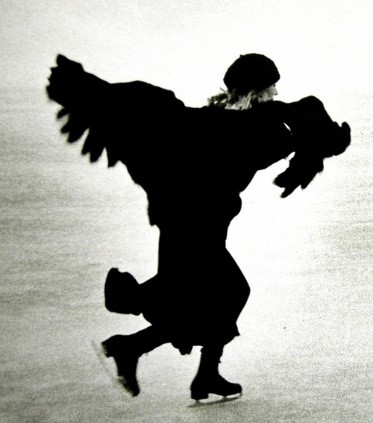 By the time we reach the eighth verse of Side C’s final song, we’ve already heard dozens of subtle, less subtle and overt references, tributes and nods to songs from all eras and genres. “All The Young Dudes”, “Red Cadillac And A Black Moustache” and William Blake’s “Songs of Experience”, “Pink Pedal Pushers” and “Be Bop A Lula”, Beethoven’s sonatas and Chopin’s preludes, “Hello Mary Lou” and “Miss Pearl”, “If Lovin’ Is Believin’”, Liberace and Robert Johnson… and that is just a fraction of the references and tributes we’ve heard on Side A alone. There’s no let-up on Side B, nor here on Side C. It all leads to the safe assumption that Amelia Street wasn’t chosen at random either.
It is not inconceivable that Dylan keeps a map of Key West on his desk for inspiration. Mallory Square and Truman’s White House are indeed marked on it, as are Bay View Park and, finally, Amelia Street. Admittedly, one of the oldest streets (laid out around 1820), but otherwise an unremarkable street with no particular history, so it is quite likely that Dylan was simply triggered by the name, and, like most of us, makes the connection with Joni Mitchell’s exquisite song “Amelia”.
Joni Mitchell – Amelia:
“Amelia” is the second track on one of Mitchell’s most perfect albums, Hejira (1976), and is understandably somewhat overshadowed by the opening track, the immortal “Coyote” – the song that DJ Dylan announced in 2009 on his Theme Time Radio Hour (episode “Noah’s Ark Part 2”) with:
“Here’s another strong-willed woman. And I mean that in the best possible way. Here’s a song by Joni Mitchell. From an album she did with a title that’s the Arabic word “flight from a dream”. The word is “hejira”. This song Coyote was one of the favourites from it. Here’s Joni Mitchell and she’s singing about a coyote – maybe the two-legged variety.”
Dylan, a witness for the prosecution, concludes with a gentle, good-natured dig at Sam Shepard. The versatile Shepard was appointed logbook writer for Dylan’s Rolling Thunder Revue in 1975, and spent his nights shuttling back and forth between Joni Mitchell’s bedroom and tour manager Chris O’Dell’s – Joni’s “Coyote”, written during the tour, is indeed about him.
It is the third time, after “Car On A Hill” and “California”, that the DJ has included a Joni Mitchell song on the playlist. The first time, in the episode Cars in July 2006, Dylan sang her praises at length. “Next up: the lovely and spectacular Joni Mitchell,” he begins, before reflecting on her childhood, her polio and the Pete Seeger instruction book (“I might have seen that same book”), and after the song ends, he adds:
“Car On A Hill was featured on Joni’s 1974 album called Court And Spark, one of my favourite records. Joni and I go back a long ways. Not all the way back, but pretty far. I been in a car with Joni. Joni was driving a Lincoln. Excellent driver, I felt safe.”
In interviews and in The Philosophy Of Modern Song, Dylan is just as consistent in his love and admiration. Nevertheless, the DJ skips the song that truly belongs in the Top 10 of Joni’s best songs – not even the theme of episode 35, Women’s Names, can sway him. An omission he may well make up for in 2020, here in “Key West”, with the name-check Amelia Street. Which would be a fitting tribute; “Amelia” is an exceptional song, carried by the “strange, augmented chords and half chords at unpredictable intervals,” as Dylan admiringly notes in The Philosophy, by Mitchell’s superior sense of melody, and the song possesses that unusual quality so common in a Mitchell song:
“Joni’s got a strange sense of rhythm that’s all her own, and she lives on that timetable… Joni Mitchell is in her own world all by herself, so she has a right to keep any rhythm she wants. She’s allowed to tell you what time it is.”
(Kurt Loder interview for Rolling Stone, 1987)
And, as is also common, with deeply poetic lyrics. Maybe I’ve never really loved/I guess that is the truth/I’ve spent my whole life in clouds at icy altitudes, she sings in the devastating final verse, echoing – whether intentionally or not – her own pièce de résistance “Both Sides Now”. Introduced by the novella-like opening
I was driving across the burning desert
When I spotted six jet planes
Leaving six white vapour trails across the bleak terrain
It was the hexagram of the heavens
It was the strings of my guitar
Amelia, it was just a false alarm
… with the subtle incorporation here of the six straight, unbroken lines of the I Ching, symbolising “the creative force”, followed by the Dylanesque allusion to a Greek myth (Like Icarus ascending on beautiful foolish arms) and, indeed, the Dylanesque theme of restlessness:
“I wrote the album while travelling cross-country by myself, and there is this restless feeling throughout it… the sweet loneliness of solitary travel. In this song, I was thinking of Amelia Earhart and addressing it from one solo pilot to another, sort of reflecting on the cost of being a woman and having something you must do.”
(LA Times, 1996)
And the enchanting melody is carried by the kind of characteristic song structure that only Joni Mitchell seems capable of crafting. The secrets of which we can unravel (well, sort of anyway) thanks to the wonderful Shadows and Light DVD. We hear – and, above all, see – Joni, accompanied only sparingly by Pat Metheny, performing “Amelia” live at the Santa Barbara County Bowl on 9 September 1979 – fortunately, the director doesn’t zoom in too much and keeps Joni’s guitar well within the frame, most of the time.
The guitar is once again in an unusual tuning—open C in this case—which allows Mitchell to execute those unusual chord changes in the first place, and that surprising, unconventional, fascinating modulation that keeps the song soaring; the intro in F, modulating to G as the vocals begin, and then modulating once more (to B♭) on the second line, before returning via two jazzy filler chords to the redeeming G beneath bleak terrain – although a seriously puzzling transcriber would probably render that as something like a Cadd9/G;
“I think because men need to solve things and come to conclusions. The sus chord… there’s a law that Wayne Shorter told me: never stay on a sus chord too long, never go from a sus chord to a sus chord. Well, I know I’m going from a sus chord to a sus chord to a sus chord, you know: chords of inquiry. Because my life was full of questions.”
(Woman of heart and mind: A life story, 2003)
“Joni is a strong-willed woman. And I mean that in the best possible way.”
——————-
To be continued. Next up Key West part 16: The Sonic Light Being
Jochen is a regular reviewer of Dylan’s work on Untold. His books, in English, Dutch and German, are available via Amazon both in paperback and on Kindle: 
- Blood on the Tracks: Dylan’s Masterpiece in Blue
- Blonde On Blonde: Bob Dylan’s mercurial masterpiece
- Where Are You Tonight? Bob Dylan’s hushed-up classic from 1978
- Desolation Row: Bob Dylan’s poetic letter from 1965
- Basement Tapes: Bob Dylan’s Summer of 1967
- Mississippi: Bob Dylan’s midlife masterpiece
- Bob Dylan’s Greatest Hits
- John Wesley Harding: Bob Dylan meets Kafka in Nashville
- Tombstone Blues b/w Jet Pilot: Dylan’s looking for the fuse
- Street-Legal: Bob Dylan’s unpolished gem from 1978
- Bringing It All Back Home: Bob Dylan’s 2nd Big Bang
- Time Out Of Mind: The Rising of an Old Master
- Crossing The Rubicon: Dylan’s latter-day classic
- Nashville Skyline: Bob Dylan’s other type of music
- Nick Drake’s River Man: A very British Masterpiece
- I Contain Multitudes: Bob Dylan’s Account of the Long Strange Trip
- Bob Dylan’s Rough And Rowdy Ways – Side B
- Bob Dylan’s High Water (for Charley Patton)
- Bob Dylan’s 1971
- Like A Rolling Stone b/w Gates Of Eden: Bob Dylan kicks open the door
- It Takes A Lot To Laugh, It Takes A Train To Cry b/w Just Like Tom Thumb’s Blues – Bob Dylan’s melancholy blues
- Bob Dylan’s Rough And Rowdy Ways – Side A
- Bob Dylan takes Highway 61 – Seven mercurial songs