In this series we are looking at live performances by Bob Dylan in which he transforms a song in a most unexpected way. Paul has selected the videos; the commentary is by Tony.
You can find the first article in the series here where we looked at Pretty Peggy O, Ring them Bells and the total reworking of Visions.
The second article took in Like a Rolling Stone, Positively 4th Street and Just like Tom Thumb’s Blues.
This time we are taking in Tears of Rage, Masters of War and Man of Constant Sorrow.
Here is Tears of Rage
https://www.youtube.com/watch?v=j8f4y336ts0
This is such a different interpretation of the song from that on the Basement Tapes that it is hard to express what is going on. Gone are the strange twists of the melody at the end of the lines, gone are the vocal harmonies, this is a stripped down version in which the lyrics rather than the music comes to the fore.
And given the history of the song and its co-writer it is thus much more powerful – if that is possible.
But it is the end of the chorus in this interpretation just tears me apart.
Come to me now, you know we’re so alone And life is brief
If she comes to him, all is ok, but if not all is lost. A whole life changed through one simple decision. And I have the feeling that is so often how it is.
Perhaps that is what moves me so much about the song, and thus about this performance. If you do feel that life is often ruled by chance, those two lines really take on such a powerful meaning. If not, well, I guess the impact is going to be a bit less.
In fact, there can’t be many songs that can make “Masters of War” seem like light relief but in this context it does happen – particularly when this re-imagined version of “Tears of Rage” is followed by this re-imagined version of Masters of War.
And actually I can’t believe anyone who heard this version of Masters of War knew from the introduction what song was about to emerge.
https://www.youtube.com/watch?v=n_bi7PJgyR8
What Dylan is doing here is deliberately singing off tune and bending the verse and line structure so that the neat divisions of the original are completely lost. As a result the horror of what would happen if the masters of war unleashed the powers they have created is made much more real.
An easy listen it certainly isn’t but the task for the listener here is completely different from when we first heard the song.
For when “Masters of War” appeared for the first time, we all needed to hear the lyrics, for this was a completely new and different type of anti-war song; one that got to the very heart of American society and the much lauded “American way”. It took the American dream and revealed it to have been turned into a nightmare by the people who were running the show.
Now the words have become so familiar to so many of us, how can the song be performed any more without it just becoming a set of words so oft heard that the meaning vanishes? The answer is through this extraordinary performance.
It is certainly not a comfortable listen, but then it wasn’t when we first heard it. All that has happened is that the original has become too familiar.
But if that transformation with “Masters of War” was unexpected, then what Dylan did to the early 20th century folk song “Man of Constant Sorrow” was even more unexpected – and indeed even more remarkable.
This song, originally called “Farewell Song” appeared for the first time around 1913 in a book published by Dick Burnett, and it has been part of the American folk song tradition ever since.
https://www.youtube.com/watch?v=HihJq1cgVB0
It is interesting how Dylan plays with the lyrics which interpret the original lyrics in a different way from the version on his first album.
Also the repetition of the last line of each verse give a much more dramatic impact to the whole piece. Here are the first three verses from this version
I am a man of constant sorrow
I’ve seen trouble all my day.
I bid farewell to old Kentucky
The place where I was born and raised.
(The place where he was born and raised)
For six long years I’ve been in trouble
No pleasures here on earth I found
For I’m bound to ride that railroad
Perhaps he’ll die upon this train.
Maybe your friends think I’m just a stranger
My face you’ll never see no more.
But there is one promise that is given
We’ll meet again on the golden shore.
We’ll meet you on the golden shore.
The three beats that pound through the whole piece are extremely powerful, leaving us unable to rest or jog along to the music (which is certainly something that can happen with the normal folk version of the song).
But all of that is actually the background, for there is something else here which gives us a very uncomfortable feeling about the whole song. Normally speaking the phrases of songs last for four or eight bars. Once you have heard a few dozen pop or folk songs you know exactly what is going on. You might not know any musical theory or know about four bar phrases, but you can certainly hear them and appreciate the roundness of the conception.
But here the first two lines of each verse lasts five bars. The next two lines take up another five bars. Then the final line is three bars line.
Dylan achieves this by stretching various parts of the song in unexpected ways. As a result it constantly tricks us, so we don’t know where we are. I have never come across a song doing this before.
The extension primarily happens at the start of each verse; it gives us that immediate sense of being on the edge – and being in constant sorrow. It is a remarkable technique. I hesitate to say it is unique – but I can’t think of anyone else doing it.
So another three re-interpretations. I hope you enjoyed them.
What else is on the site
You’ll find an index to our latest posts arranged by themes and subjects on the home page. You can also see details of our main sections on this site at the top of this page under the picture.
The index to the 500+ Dylan compositions reviewed is now on a new page of its own. You will find it here. It contains reviews of every Dylan composition that we can find a recording of – if you know of anything we have missed please do write in.
We also have a discussion group “Untold Dylan” on Facebook. Just type the phrase “Untold Dylan” in, on your Facebook page or follow this link
And please do note The Bob Dylan Project, which lists every Dylan song in alphabetical order, and has links to licensed recordings and performances by Dylan and by other artists, is starting to link back to our reviews.
“I Wanna Be Your Lover” is officially released only twenty years after the recording date, on the collection box Biograph (1985). Part of the charm of that box is the accompanying booklet with the liner notes from Cameron Crowe, which incorporates an extensive and fascinating interview with Dylan. The fifty-three songs are also commented separately, often with an addition by the master himself, and that is just as fascinating.
The short commentary on “I Wanna Be Your Lover” opens with a somewhat embarrassing error by the Rolling Stone editor. “A tip of the hat to the only song recorded by both The Beatles and the Rolling Stones – Lennon and McCartney’s I Want To Be Your Man.”
Apart from the annoying misspelling (it’s “I Wanna Be Your Man”): three-quarters of the participants of any given pub quiz in any friendly little country town would effortlessly rattle off four, five, six songs that were recorded by both The Beatles and The Stones. “Money”, “Carol”, “Memphis, Tennessee”, “Roll Over Beethoven”, “Little Queenie”, and if the pub quiz compiler likes trick questions, you can continue for a while with songs that the men recorded together “Dandelion”, “We Love You”, “All You Need Is Love”).
After that faux pas follows an intriguing remark from the master himself: “I always thought it was a good song, but it just never made it onto an album.”
Given the recording date (October ’65), the song was passed over for Blonde On Blonde, and that is quite understandable. Musically it would have been an enrichment – for example after Sad-Eyed Lady, to crush the descended, breathless awe with one cruel, disrespectful blow (much like the Beatles do with “Her Majesty” after the monumental “The End” on Abbey Road).
But the lyrics and the structure are both a carbon copy of “I Want You”, and that is probably why Dylan did not even bring the song to Nashville for the recordings of Blonde On Blonde. Which is a real shame, of course – how would “I Wanna Be Your Lover” have sounded with the thin wild mercury sound, what would a Charlie McCoy and a Kenny Buttrey have done to the song?
The similarities with the lyrics of “I Want You” cannot be ignored. Both songs have a – by Dylan’s standards – unusually simplistic chorus, in which the desire for an adored is expressed with little eloquence. And in both songs, that silly chorus is surrounded by a hallucinating Hieronymus Bosch-like multitude of colourful supporting actors, partly performing in both songs. The undertaker has a guest role both times, the midnight suit is patched into a Chinese suit and rhymes with cute both times, the rainman returns in “Stuck Inside Of Mobile”, just like Mona by the way, and yet another judge (after “She’s Your Lover Now” and “Most Likely You’ll Go Your Way”) tends to overkill.
Dylan must have acknowledged, all in all, that he is plagiarizing himself, that the lyrics were written with the Dylan-o-Matic at full capacity.
Blonde On Blonde thus escapes a black frayed edge. Although an ongoing story is not told here, almost all evoked images and actors do have a sinister charge. In these years, a rain man most likely indicates the man who supplies the marijuana, but he also symbolizes Evil or the Devil with the Illuminati, just as rain, in Ezekiel for example, is the punishment of a furious God.
The judge is, as is usually the case with Dylan, harsh, Mona does not get a bail and disappears behind collapsing walls, while the rainman turns into a werewolf. The funeral director dressed in black sees the masked man coming back to life, Jumpin’ Judy is an old acquaintance from many pre-war prison songs, Rasputin, the possessed monk, mysteriously dies and the tragic Phaedra is having a hard time too.
There is really no correlation between all those shreds, which was not the intention, either. The song does indeed originate from that little refrain, meant to be a parody, with which a playful Dylan at a lazy moment in some studio corner mocks that Beatles / Stones song. With a recognizable Dylan touch: the rhyme king manages to rhyme hers with yours (“yerrs”). That again inspires Lennon to a wink back – two years later he writes the ironically titled “Yer Blues” with the famous verse feel so suicidal just like Dylan’s Mr. Jones.
With superior bravado, Dylan cobbles together the surrealistic couplets around it, that same day in October 1965, presumably ignited by an urge to ridicule (“look here, this is how you do it”), rather than by the burning artistic ambition to poetically express an own reality.
The aftermath supports this option; Dylan immediately rejects the song. In the run-up to Blonde On Blonde, he is struggling more seriously with rejected songs like “She’s Your Lover Now” (sixteen takes) and “I’ll Keep It With Mine” (which he also tries to record in Nashville after the unsatisfactory takes in New York, tackling it ten times), but “I Wanna Be Your Lover” never gets any attention again – until 1985, when Dylan curiously declares to really appreciate the song. If so, why does he never play it?
Partly due to that heartless abandonment, the song remains a neglected cuckoo; it is rarely covered. The best-known cover is the one on the I’m Not There soundtrack and is quite beautiful. Yo La Tengo has been a favourite of pop journalists and music critics for twenty-five years, but the band does not really break through although fortunately they continue to make beautiful records.
In between, they have also shown respect for the Minnesota bard since 1989; almost every year a Dylan cover, usually a successful one, is released. The band from Hoboken, New Jersey produces even two covers for the soundtrack to the Dylan film; a beautiful languid, dreamy “Fourth Time Around” and an exciting restoration of “I Wanna Be Your Lover”. A lot of love has been put into it. Yo La Tengo reproduces the sound of the early Rolling Stones (including Brian Jones licks and Mick Jagger’s snarling stabs), copies an Al Kooper organ and has a harmonica honking along; smashing, all of it.
Very different, but just as attractive is the country-rock approach by the hairy quartet Coulson, Dean, McGuinness, Flint on their widely acclaimed but unjustly unsuccessful Dylan tribute album Lo And Behold (1972). More melodic than the original, with contagious monkeying around in the background during the choruses, evoking Rainy Day Women.
An extension of Coulson cum suis is Peter Keane’s country rock (on Milton Street, 2002), with rockabilly accents and here and there even half a yodel – also very nice, actually.
A version by The Beatles will probably not emerge. The Stones is still a possibility, though.
What else is on the site
You’ll find an index to our latest posts arranged by themes and subjects on the home page. You can also see details of our main sections on this site at the top of this page under the picture.
The index to the 500+ Dylan compositions reviewed is now on a new page of its own. You will find it here. It contains reviews of every Dylan composition that we can find a recording of – if you know of anything we have missed please do write in.
We also have a discussion group “Untold Dylan” on Facebook. Just type the phrase “Untold Dylan” in, on your Facebook page or follow this link
And please do note The Bob Dylan Project, which lists every Dylan song in alphabetical order, and has links to licensed recordings and performances by Dylan and by other artists, is starting to link back to our reviews.
UberChristian Kees de Graaf takes control of singer-songwriter Bob Dylan’s
“Things Have Changed”; then he shouts out “God is Great”, and plunges the song into the ground because it’s not ‘Christian’ enough.
According to de Graaf’s interpretation of the song lyrics, Dylan considers the Battle of Armageddon is on its way, and that is that; so he gives up, throws his hands in the air, and doesn’t care:
“Dylan’s observation as to where the world stands, and is moving to is very much to the Christian point from a Biblical point of view, but is at the same time very much ‘out of range’ – as far as his own (and for that matter our) responsibility is concerned.”
But is the song really that simple? The author of the song, or his persona anyway, presents a rather Gnostic-like point of view of the world: it’s a dark place in which humans are trapped. The symbolic Titantic sails at dawn; and the Creator God’s not awake. Alas, the Monad’s love light has travelled to earth from so far away that the sparks hereof ignite only a few of those on board.
Not unlike the view expressed by a blues, jazz, rocknroll singer/songwriter:
My head was in a bad place, and I'm wondering what's it good forI been in the right place, but it must have been the wrong timeMy head was in a bad place, but I'm having such a good time
(Dr. John: Right Place, Wrong Time)
“Things Have Changed” is a postmodern montage that combines lyrics from various sources, many of which de Graaf figuratively burns in the fires of the Inquisition if his ignoring them is taken as a signal:
I've been walking forty miles of bad roadIf the Bible is right, the world will explodeI'm trying to get as far away from myself as I canSome things are too hot to touchThe human mind can only stand so muchYou can't win with a losing hand
(Bob Dylan: Things Have Changed)
https://www.youtube.com/watch?v=wts1nD1t5Zc
A fan of movie star Humphrey Bogart, Bob Dylan messes with one of actor’s lines:
"And the only chance I've got .... is by staying as far awayas possible from you and the police because you'd onlygum up the works."
(Sam Spade: The Maltese Falcon)
The song lyrics suggest that the card decks of all humans contain the Ace of Spades that represents Death. Therein the song be also the alchemic symbols of earth, wind, water, and fire, and a number of Gnostics consider the Creator-God depicted in the Bible to be a Demiurge, a jealous offshoot of the fiery, far away practically unknowable Absolute Monad – who’s supposedly extremely difficult to get in touch with unless one dissolves his or her own ego:
Scatter, as from an unextinguished hearthAshes and sparks, my words among mankind .....If Winter comes, can Spring be far behind?
(Percy Shelley: Ode To The West Wind)
Unlike the Shelleyan imagery above, the song lyrics below only manage to strike a tiny match to light the dimness of modern times:
I'm looking up into the sapphire tinted skiesI'm well dressed, waiting for the last train
(Bob Dylan: Things Have Changed)
Even as the dark side of orthodox Islamic religion treats women unjustly, the Romantic poet of yesteryear is sure another train is on the way:
Column, tower, and dome, and spireShine like obelisks of firePointing with inconstant motionFrom the altar of dark oceanTo the sapphire-tinted skies
(Percy Shelley: Euganean Hills)
A modern dramatist/movie writer peers into this Gothic darkness; watches the kindly engineer as he heads the train out to the madhouse:
Blanche DuBois (Vivien Leigh) –
"Don't get up, I'm only passing through. You arenot the gentleman I was expecting."
(Tennessee Williams: A Streetcar Named Desire)
The words above are from a disturbing scene in the movie that are alluded to in Dylan’s song:
Lot of water under the bridge, lot of other stuff tooDon't get up, gentlemen, I'm only passing through
(Bob Dylan: Things Have Changed)
In short, there be other sources along with the Holy Bible by which to measure the meaning of “Things Have Changed”.
The first thing to note is that the song that Dylan played 30 times in concerts between 1999 and 2002 was one of two songs called “Somebody touched me”. The one Bob got attached to was written by John Reedy, and it is the original version of a song that has turned up in the repetorie of many singers.
The alternative song is also religious piece but is completely different and need not concern us here. I mention it because it can be easier to find the alternative – the one that was written by the Stanley Brothers.
So going back to the original here it is…
John Reedy performed with his sister Frances Reedy, and included the song “Somebody Touched Me” in their performances from the early days. It was often noted as “traditional” by way of composer, but there seems a general agreement that it was actually a Reedy composition. Citations of the song prior to Reedy are uncommon, and I am not sure they are valid – I’m staying with Reedy as the composer.
Once they started to make an impact the Reedy’s formed the Stone Mountain Hillbillys, with Glenn and Julian Ramey and recorded “Somebody Touched Me” in the late 1940s although I am not able to give an exact date.
The band played for many years on Kentucky radio stations before starting to perform alongside Chet Atkins and also with the Stanley Brothers, adding gospel music to their country songs.
And along the way lots of other people recorded the piece. Indeed on one web site I found the comment that the Boxcar Willie version of the song was the worst ever. I expected something truly awful, but really, is this so bad?
Anyway this is the song that Bob Dylan adopted for three years as an opener…
https://www.youtube.com/watch?v=Bc-CYc_S_yw
I can’t imagine you need any help with the lyrics but just in case…
Glory, glory, glory, somebody touched me,
Glory, glory, glory, somebody touched me,
Glory, glory, glory, somebody touched me,
Must have been the hand of the lord.
While I was praying, somebody touched me,
While I was praying, somebody touched me,
While I was praying, somebody touched me,
Must have been the hand of the lord.
Glory, glory, glory, somebody touched me,
Glory, glory, glory, somebody touched me,
Glory, glory, glory, somebody touched me,
Must have been the hand of the lord.
Well, it was on a Sunday, somebody touched me,
It was on a Sunday, somebody touched me,
It was on a Sunday, somebody touched me,
Must have been the hand of the lord.
Glory, glory, glory, somebody touched me,
Glory, glory, glory, somebody touched me,
Glory, glory, glory, somebody touched me,
Must have been the hand of the lord.
But this was not a case of Bob digging into the history of this type of music as the popularity of the song was continued by The Stanley Brothers who continuing playing it until the mid 1960s. This version is from 1961.
And indeed the popularity of the song has continued well on to the present day. Here for example we have the Dillards
https://www.youtube.com/watch?v=hnIP89KR24k
One of the noted performances by Bob came on 17 July 1999 at the Blockbuster -Sony Entertainment Centre, Camden NJ. Unfortunately the recording quality is not the best but I’m including it because it does get mentioned so often on web sites.
Thereafter the song was officially released as the opening track on the Japan only cd Live 1961-2000: Thirty-Nine Years of Great Concert Performances.
So why does Bob like this song so much? Well it’s lively, it’s simple, it’s religious in a celebratory sort of way, and it sort of bounces along in an unpretenious way. Rolling Stone it ain’t but it is fun. And above all else it makes for a good opener.
If you think about it, the guys in the band have to come on stage and without any warming up, have to hit the ground with something that is going to get the audience bouncing, and which for them is dead easy to play. And yes, dead easy to play is important because they are coming in cold. So in that regard it works.
Here is a list of some of the other songs we’ve included in this series of Why does Dylan like…
This is rather a long piece, but its length is necessary in explaining how Bob Dylan songs can be translated into languages other than English. The article is based on a university lecture I gave in Polish to my Polish students and I present it here for anyone who is curious what the Bob Dylan song translation is all about.
The song I analysed was Like a Rolling Stone; an obvious choice. My first intention was to write it down just to justify my approach to myself, and to see if I did anything wrong and if I could verify my translator’s choices.
One of the crucial verifying points for a translated song arises when you play and sing it. And here the song worked; it felt comfortable to be sung and played. But a song of the stature of Like a Rolling Stone is not only to be sung and played comfortably, it also has to have a purpose to be sung and played.
LARS is an emblematic song and so its translation required special attendance and attention. Being one of the most important songs in the whole music industry and within popular culture, it proved a single can have long duration; can be played very loud; can touch complicated matters with difficult words; can be passionate and scathing. And, last but not least, that it can be ABOUT SOMETHING.
As a translator, I always have to either find the true meaning or choose one way of interpreting the original text. The more alternating ambiguities I can impose on my translation the better, of course. But when you’re confronted with a song like Like a Rolling Stone you have to find yourself a thread that will lead you through the labyrinth.
All purely American and historical contexts were out of the question: when I translate a song I want it to be perfectly suited to the Polish mentality. Which does not necessarily mean I simplify things; I only try to excavate the universal meanings so the song will resonate in Polish ears and souls, so it talks to us and gives us space for our own reflections.
Thus, the Edie Sedgwick connection was out of my radar. I preferred the song to be about youths, the young and vigorous élite, who are suddenly confronted with real life in the street. Or/and about the author himself. A warning and an advice.
One of the most important differences between English and Polish is that our verbs have genders. It always matters whether we talk about a girl/woman or a boy/man. So I literally HAD TO choose the gender of the LARS protagonist. I chose a female.
And in December 2013 I started working.
When a song has an instantly recognized lyrical motif – a title phrase, a chorus – I begin with it because otherwise I can’t go on. Here, I paid my attention first to the chorus – which, by the way, is sung four times in the official studio version but is not repeated verbatim. There are slight differences. Apart from the title phrase, what matters really is that the first line, “how does it feel”, always rhymes with the last line of each verse. There’s a long tradition in Polish poetry and song of not using only pure rhymes but also assonances where only the vowels match.
So, “how does it feel” was my first bite. I opted for “i jak to jest, no jak to jest” which means literally “and how is it, well, how is it”. And immediately I put down “kęs”, a word meaning “morsel” to replace the original “meal” from the first verse’s ending.
The next three/four lines are attuned with the “-ome/-one” rhyme. So now I had to find the Polish equivalent for the “like a rolling stone”. This made me ponder a bit. Not only is it the most prominent phrase within the choruses, it’s the song’s title. Who is a “rolling stone”? A vagabond, a wanderer, a restless spirit… But not necessarily here. Not this time, baby. You’re alone, away from home, the times turned bad – so you’re not a free spirit by your own design but rather a spirit expelled into liberty you didn’t know nor want.
You’re on the outside of your previous life, you’re chased away from your comfort zone. An outlaw?
First I thought „to be without a home” would be perfectly matched by „gdy dom daleko masz” (= “when you have your home far away/when your home is far away”). Thus, either I had to find an A-vowelled word for “rolling stone” or start all over again.
Leafing through my synonyms thesaurus I ran into a word “łach”. Its meanings are: a rag (textile); an old nag; a bum. BINGO! So “jak bezdomny łach” (= “homeless bum”) would be fine if it was not for the repeated ‘home-‘ element. I decided upon “błądzący” (= ”stray”). The last thing was the line “like a complete unknown”. I remembered the unknown people are sort of invisible, transparent. Where does one look to recognize other people? At their faces. So I wrote: „i przezroczystą twarz” (close to: „when your face is transparent”). And so I had the first chorus:
And how is it
Well, how is it
When your home is far away
When your face is transparent
And you’re like a stray bum?
All right, I lost the „like a” repetition but you can’t have everything at once.
And now for the verses.
“Dawno, dawno temu” (= “long, long time ago”) is a typical intro to Polish fairy tales so it suited me best for “Once upon a time”. But it required rhymes because in the original we have “time – fine – dime – prime”. (And then: “call – doll – fall – all” and “didn’t you – kiddin’ you”). An AAAAC BBBBC pattern.
First I found the rhyme “fart” (= “luck”) and “żart” (= “joke”) for the C lines. But to obey the content and the rhymes (for “temu” there are few rhymes in Polish that would make sense here). So for “you dressed so fine” I opted for “byłaś jak z wybiegu” (= “you were straight from a catwalk”). Then, for “you threw the bums a dime” I wrote “datek ubogiemu” (= “alms to a poor man”) and for “in your prime” I sailed away a bit and coined “a ty wprost z Edenu” (= “while you, as if from Eden”). Eden is absent in this particular Dylan song but for me it symbolizes here a better world.
The rest of this part of the first verse went smoothly “ostrzegano cię” (= “you were warned”) “to się skończy źle” (= “It’ll turn out bad”), “znajdziesz się na dnie” (= “you’ll find yourself on the bottom”) “ty myślałaś, że” (= “you thought that”).
So the first lines went:
Long long time ago you were straight from a catwalk
Alms to a poor man while you as, if from Eden
You had luck
They warned you, „It’ll turn out bad
You’ll find yourself on the bottom”, and you thought that
it was just a joke
So you can already see one doesn’t need to translate it word for word but rather to capture the spirit of the message and to deliver it convincingly. I might be meandering and straying myself but this is how it went. The way leading to the result is much more interesting than the result itself!
The second part of the first verse also required rhymes „about – out – loud – proud”. And this “kęs” (“morsel”) to end it with.
All I had to do here was to rearrange the word order to have the rhythm but otherwise it turned out rather easy:
Z ludzi , których zdeptał los (= At people trampled by fate)
zawsze dotąd rechotałaś w głos (= until now you used to laugh loudly)
dziś ucichłaś, otóż to (= today you’re silent, that’s a fact)
dziś masz mniej zadarty nos (= today you keep your nose lower)
skoro nagle trzeba żebrać (= now that suddenly you have to beg
o kolejny każdy kęs (= for every morsel).
The second verse is not rhymed so strictly as the first one which is fine for me, especially since one-syllable word carrying meaning are rare in Polish (it’s a real curse to have to end oxytonic – that is with an accent on the last syllable – acute lines with pronouns or particles that do not sound well in the Polish syntax at the final position).
Here we have “lonely – only”, a distant alliteration of „taught – street – get” and a piled-up rhyme „juiced in it – used to it”.
And once again, as before and after, a confrontation of the heroine’s present shabby condition with a luxurious previous life.
The “Miss Lonely” was the first flank I charged at. It points at the gender but I wanted my Polish version to be universal. So, I thought of a noun that is female in gender (our nouns have gender too, as in French or German) but sexless in meaning. Since I already pictured the person who is the subject of the song as something of a ghost of previous times, someone otherworldly, I put down a “Samotna Zjawo” (= “O, Lonely Apparition”) phrase.
Then I dug at the rest of this part of the verse.
My final choices were:
Najlepsze szkoły za sobą masz (= You finished the best schools)
Samotna Zjawo (=  you Lonely Apparition)
ale przecież wiesz (= but you know after all)
że cię prawie (= you were nearly)
wyżymali tam (= wrung out there)
nie uczono cię, jak (= you werer never taught how)
przetrwać na ulicy (= to survive on the street)
a teraz pytasz (= and now you ask)
“Jak ja tu niby (= „How am I supposed)
sobie radę dam?” (= to make it down here?”)
nie chciałaś z tym guru żadnych umów, skąd
  (= you wanted no contracts with this guru, no, not at all)
zgrywałaś twardziela, teraz miękniesz, bo
  (= you played tough girl, now you get softer because)
na alibi z jego strony liczyć nie ma co
  (= you can’t count on any alibi from him)
gdy napotykasz jego pusty wzrok (= as you meet his empty gaze)
i robisz w jego stronę pojednawczy gest
  (= and make a conciliatory gesture to him) –
note the “gest” (= “gesture”) rhyme to “jest” in the chorus.
As you can see, I switched the “mystery tramp” for a “guru” and “make a deal” for a more general “conciliatory gesture”. These are triumphs and failures of a translator. Sometimes you have to sacrifice the literality for a flow, without losing the general idea altogether.
The second chorus contains one more line (talking all the time about the Highway 61 Revisited studio version). For the “to be on your own” I chose “gdy w krąg pusto tak” (= “when there’s desolation around”). And for the emblematic “with no direction home” which gave title for the famous Martin Scorsese movie I gave up trying to force the Polish version of the film’s title (“No Permanent Address”) into the song. It just wouldn’t work.
The third verse was the most difficult – I spent nearly a day on it, and then returned to it several times.
Who are the jugglers and their frowns? Who’s the diplomat on the chrome horse?
To translate a song as such you don’t have to truly understand the deep meaning – you create it, you enter into a kind of trance and you catch phrases blowing in your soul’s wind. It didn’t matter for me if the diplomat was Andy Warhol or Dylan’s aunt. It surely was someone important to the central figure of the song, with a vehicle, his/her ways through the upper world and… a Siamese cat. I just projected a meaning on my mind’s screen. And changed a “diplomat” for an “envoy”.
There are rhymes too, in the pattern of AAAAC BBBxC DDDDZ: “around – frown – clowns – down”, “understood – good – should”, “tricks for you – kicks for you”, “diplomat – cat – that – at – steal” (“steal” being a rhyme to “feel”, you remember).
And so my final choice was:
Za trikiem trik (= Trick after trick)
pokazywali ci (you were shown by)
magicy, ale ty (= the magicians you
w nosie miałaś ich (= didn’t care)
wściekli byli więc (= that’s why they were mad at you)
nie pojęłaś, że (= you didn’t understand that)
tak nie robi się (= it’s not polite)
zamiast ciebie jednak inni (= Yet others instead of you)
bawili się (= had their fun)
na konia ze stali twój poseł nieraz z tobą wsiadł
  (= on the iron horse your envoy got on with you more than once)
z syjamem na ramieniu – podobał ci się tak
  (= with a Siamese cat on his shoulder – you liked him very much)
aż tu nagle odkrywasz nieprzyjemny fakt
  (= and suddenly you discover an unpleasant fact)
że ukradł ci wszystko, co tylko chciał
  (= that he stole from you everything he wanted)
i w sumie oblał najważniejszy test
  (= and so he flunked the most important test)
I give literal re-translations here also to let you have a glimpse into a Polish syntax where we have much more freedom, thus a construction “on the iron horse your envoy got on with you” is perfectly understandable because of the grammatical suffixes determining the words role function and position within the sentence’s structure.
I think I saved the bulwark here although I drifted a bit from the original mainstream. I know I did.
The “test” flunked by the envoy is a distant equivalent of “wasn’t where it’s at”. And it gave me the „jest” rhyme from the chorus beginning.
Now for the fourth verse. It’s really thickly populated, we have a princess (a new star of the élite?), the pretty people (an in-crowd?)… Rhymes are fewer but, still, they protrude.
“The pretty people” can have their Polish equivalent in “młodzi-prężni” which stands for “the young and resilient”. And “prężni” rhymes with the first two syllables of “księżniczka” (“princess”) so I set my camp here. BTW, “na wieży” (= on the steeple”) and “wierzą” (= “believe”) have a very similar pronunciation so…
So the final verse in my interpretation goes on like this:
Bogaci, młodzi, prężni (= The rich, the young, the resilient)
piją zdrowie księżniczki (= drink to the princess)
na wieży, bo wierzą,  (= on the steeple because they believe)
że to piękne i że (= that it’s beautiful and that)
tak ma być (= it should be that way)
wymieniają się darami – (= they exchange gifts)
ty pierścionek z brylantami (= while you your ring with diamonds)
zdejmij lepiej z palca  (= better take off your finger)
i czym prędzej (= and as soon as you can)
do lombardu idź (= pawn it)
Napoleon w łachmanach tak rozbawiał cię
  (=Napoleon in rags used to amuse you)
językiem dziwnym budził twój głośny śmiech
  (= with his strange language, he caused your loud laughter)
słyszysz, woła cię właśnie, już do niego pędź
( (= do you hear, he’s calling you, run up to him now)
skoro nic już nie masz, nic nie stracisz też
  (= since you don’t have anything, you won’t lose anything either)
jesteś niewidzialna, więc to i twych tajemnic kres
  (= you’re invisible so it’s the end of your secrets too).
I worked on it for about two weeks. It turned out to be coherent, convincing (in Polish) though I’m almost sure one can give it another try and do it better. But what I’m aware and proud of, it proved efficient on the record and live.
‘The lonesome organ grinder criesthe sliver saxophones say Ishould refuse youthe cracked bells and washed out hornsblow into my face with scorn…’
Before leaping into what I have nicknamed Dylan’s organ-grinder period, which lasted from 2006 to 2011, we need to pause a moment and have a look at the Never Ending Tour, and perceptions of it.
If you listen to the nay-sayers, the NET is a kind of never ending failure, with Dylan dragging his sorry ass from venue to venue, cashing in on his former glory. Nothing could be further from the truth.
What the record shows (apart from some off nights and some off seasons even) is Dylan constantly reconceiving and reinventing his songs. Constantly rediscovering them anew. Over the thirty years of the NET, the sound Dylan and his band produced onstage changed from year to year, even from set to set. A continuous evolution and creative engagement with his material.
These phases have been a huge challenge to audiences, but none more so than the period we are entering. It is during this time that some of the worst reviews and responses Dylan’s ever got seemed to suggest a final nadir. I know one Dylan compiler who refused to listen to any Dylan after 2009, because that year was so bad. When I played my wife (who usually suffers my Dylan affliction with good humour) a 2009 performance of ‘Tangled Up in Blue’ (link below) she turned white and said, ‘Oh my God what’s happened to his voice,’ followed by, ‘he has to stop touring!’
Indeed, during this period there were other murmurings to this effect. It was time for Dylan to put his suitcase down. Of course, Dylan had a surprise in store for those folk, which he sprang in 2013/14 with the arrival of the baby grand and the soft-voiced crooner who could put his voice anywhere he wanted.
So, suitably forewarned, let’s venture forth into the NET’s strangest and darkest period!
In the previous post in this series, we saw that one of the effects of putting aside the guitar and getting in behind the keyboards in 2002 was to deprive Dylan of a lead instrument. Through the 1990’s the instrumental breaks, both electric and acoustic, were increasingly driven by Dylan on lead guitar. His punky Stratocaster. Putting it aside left a gap which that handy little instrument, the harmonica, might fill.
Dylan’s piano playing, at this stage, is percussive and rhythmic. He doesn’t begin to play the piano as a lead instrument until 2013, when the baby grand arrives. From 2002 to 2005 he uses the piano to urge a song forward, his method of anticipating the beat creating a momentum and excitement in something of a rough, roadhouse blues style. You can hear that best on the 2003 performance of Desolation Row (see Master Harpist part 3). He developed a technique for playing the harmonica with one hand while keeping up the rhythm on the keyboard with the other.
When he switched his little keyboard to organ mode in 2006, there was a further realignment of sound as Dylan did not, at least a first, use the organ in the same way as the piano, to drive the song forward, but created an eccentric, circus-like sound, an oddly mechanical, rinky-dink effect, with Dylan as organ-grinder. But the harmonica was still in easy reach.
In this odd take of ‘A Simple Twist of Fate’ from 2007, the circus-like organ provides just the right amount of pathos, while the oblique, tangential harp work helps keep us at a whimsical distance from the events in the song.
What marks this song in Blood on the Tracks is its freshness, as if we have just come from the experience, but how might it be remembered after 30 years or more? Through the hurdy-gurdy of memory – the song of a sad clown?
‘She belongs to Me’ (an ironical title for sure), written in 1964, is one of Dylan’s most enduring performance pieces, and it’s still there on his set lists. It’s a song that could be used to chart Dylan’s development over the years. A song about the mystery and inscrutability of love, and love’s humiliation; devotion edged with sarcasm. All our goddesses have feet of clay!
It is also a song closely associated with the harmonica, from the bluesy blasts of more recent years, to more delicate earlier interpretations. The current, hard-driving, drum-thumping version has its origins in 2006, and was a part of Dylan’s experiment with a more minimal, stripped back sound. During the first couple of years, Dylan played the organ very softly; the band softened down to match, allowing the harmonica space for his gentle, jazzy interpretations. Enjoy the laid-back sophistication of this performance:
Between 2006 and 2010 a new sound began to emerge from Dylan’s harmonica. He had always loved the high, shrieking edge, that wild, mercurial sound, and while he could always swoop low, it was in the high notes that he found his musical climaxes. Right from the start, Dylan’s ‘squeaky’ harmonica was distinctive.
I’ve suggested that Dylan’s style evolved from having to play the harp without hands, in a neck brace. Since he couldn’t always ‘cuddle’ the instrument in the manner of blues harpists, the resulting sound is thinner and sharper, with a lot less vibrato.
However a richer, more full-bodied, mid-range sound began to emerge when he switched to the organ. You can hear the beginnings of it in his 2006 performance of ‘Just Like Tom Thumb’s Blues’. It’s a pity that the harmonica break at the end of the song is under-recorded because it is beautifully paced, and builds satisfyingly through the mid-range to Dylan’s favourite high, clear flying notes. But even then it doesn’t go squeaky. A virtuoso performance hidden away here!
This song is something of a junky’s lament – his friends have deserted him and there’s a cold turkey on his trail. Once more Dylan amps the emotional charge of the song, gives it a cutting edge, with his harmonica, the instrument perfectly suited to capture the long, lonely despair of the road.
Along with discovering a more full-bodied sound in the mid-range, Dylan pretty much abandoned his rapid ‘peppering’ style for kind of ‘squirting out’ the notes by breaking them up. One, two or three notes forcefully pushed through the reeds. It’s a jazz technique often used by trumpeters to keep the breath flow going though that demanding instrument. With the harmonica we get a ‘tooting’ sound that begins to characterize Dylan’s harmonica style.
Imagine you are cruising through Kansas City one time. When you reach 12th Street and Vine you hear rough sounds coming from some dive. You stop in for a beer and there he is, the old guy you saw years back, the piano thumper, here with his band cooking up a storm. He’s got an axman with him onstage, a tenor if you’re not mistaken, and, wow, he’s playing alto to the sax’s tenor on the harp! Two reed men standing up in their creases duetting and duelling, sax and harp over top of one another. Jeez, buddy, you’ve seen nothing like it since Charlie Musslewhite and Paul Butterfield in the old South Side days… Beyond here lies nothing? You can say that again!
Plenty going on in this song, a suitably raucous introduction to 2009, but the general tendency of the performances in this year is towards a more minimal sound. The result was to push Dylan’s voice to the front, right at the time when his that voice turns gravelly.
By the time we get to 2009 we have some of Dylan’s roughest vocals ever. And some of his most jazzy harp performances. You can hear both on this little gem of performance of a gem of a song. Po’ Boy.
Like ‘Beyond here lies Nothing’, ‘Po’ Boy’ takes us right back to that era we are becoming familiar with. The 1930’s, Great Depression, not a good time to be a po’ boy having to be dodging Jim Crow laws. Dylan has sharpened the lyrics too by shifting lines around.
This is really a protest song, albeit a subtle one, laced with rye humour. The harp break is all casual subtlety with few jabs thrown in, a touch of nostalgia for a past era, jazz phrasing all the way.
‘Blowin’ in the Wind’ – What can you do with an iconic song like this after forty-five years, other than mess the words up a little? You swing it, give it a cheeky riff on the organ, throw in a few even cheekier, taunting harmonica blasts. Use the organ to give it bounce. A circus-barker voice rich with the irony of it all. Once around the dance floor with the same old, eternal and unanswerable questions.
‘Tangled up in Blue’ is a special case, and I want do a postscript to this series featuring the song.
The journey is from the reflective, quiet song of the first New York recordings in 1974 to the stadium rock epic of the nineties. Fast forward to 2009 and gone is the crowd pleasing, foot stomping, harmonica wailing, piano bashing days of 2003. Gone too is the performance of the song as a celebration of time and era. It’s been stripped right down.
It’s minimalist and downright weird, as if, somehow David Bryne of the Talking Heads turned into Bob Dylan for a moment (or the other way around).
We’re on the treadmill of memory, a constricted, mechanical beat from which the song struggles to escape. It’s not just the rigid bass riff, but Dylan rinky-dinks it on the organ, emphasizing the rigidity rather than fighting it. You can hear Dylan struggling to cut across it with a hoarse, exhausted voice.
But he can’t quite make it work, or just makes it – your call! When his voice falls into the beat, matching it, the results borders on the burlesque. Only the harmonica can cut loose from this cage and it sure does, sailing serenely above the mechanical beat, above the intractable struggle with memory, free as flight. At least one hand’s waving free! It’s so good Dylan must have liked it too, because he comes back for second flight before the last verse, and once more we are gliding through time, pushing higher into the stratosphere.
And, while we’re in weirdland, try this odd dumpty-dum performance of ‘Ballad of a Thin Man’. Perhaps the song itself, which is about an encounter with strangeness, is outlandish enough to sustain a performance like this. The circus really has come to town! And, by emphasizing the rigidity of the dumpty-dum, the harmonica break at end of song just pushes the performance from the weird to the bizarre. Oh my God, am I here all alone?
It’s useful to remember that during this so-called nadir phase in the NET, a whole bunch of new songs were coming on line from Time Out of Mind (1997) ‘Love and theft’ (2001) and Modern Times (2005).
I admired ‘Cold Irons Bound’ from Time out of Mind but could never quite get with the song. The opening clash between Dylan’s voice and the guitar seemed too dissonant for my ear, and early performances did pretty much the same. It wasn’t until we get that contentious year 2009 that we get a performance that got through to me.
A throbbing, sinister beat starts the song, with Dylan’s voice echoing in on top. For me, the song expresses an awful existential despair – like the universe has swallowed me whole – a prisoners’ song, and this cut-to-the-bone performance brings out the best of it. And the harmonica break! It just slashes back and forward across that sinister beat, whipping the song along. This has easily become my favourite performance of this one.
Also from Time out of Mind we have that wonderfully despairing ‘It’s Not Dark Yet.’ The only problem with the album version is that it’s not desolate enough for the lyrics. It’s swampy and evocative, in Lanoir style, but doesn’t push us to the edge of our mortality the way this 2010 performance does. Funereal and cheerless it is, with the harp’s dismal insistence, playing the same notes through the chord changes, bleak and relentless. Now he sounds like he really means it!
For me, nothing can replace the echoey trippiness of ‘Wheels on Fire’ from The Basement Tapes, 1967. Admirers of the song also need to check out Julie Driscoll’s wonderfully overwrought psychedelic version (find it on You Tube). Yet this rough-edged 2010 performance comes a close second. Arguably, the circus barker has some trouble sustaining the song, but there’ll be no argument about the power of the harp breaks. The harp work turns the performance into a tour-de-force. What I have called the ‘tooting effect’ with the harp is put to good use here. It’s all in the timing!
I want to finish this post with ‘Every Grain of Sand’ and one of Dylan’s greatest vocal/harmonica duets ever. We go beyond the idea of a harp ‘break’ or solo to what becomes, after the first verse, a duet for voice and harp, with the harp ‘talking’ back to the voice.
There is a long tradition of talking harmonicas in the blues. Aficionados might know of Sonny Terry and Brownie McGee. Sonny would sing verses and Brownie would insert harmonica replies and comments along the way. Champion Jack Dupree would talk to his harmonica that would talk back. It’s a lonely, on the road thing, just me and my little harp.
While I love the 1981 album performance on Shot of Love, and its wonderful swooping harmonica break, the production is pretty lush, nothing like this stripped down 2010 version. I had problems with some of the lyrics, at first, too. They seemed terribly uneven, but I hadn’t fully understood Dylan’s breathtaking ability to switch from the sublime to the cliché:
'Oh, the flowers of indulgenceand the weeds of yesteryearLike criminals, they have choked the breathof conscience and good cheer'
Perhaps I could never quite see weeds (or ‘leaves’ as he sings in this 2010 performance) as criminals. And the self-conscious poeticism of ‘yesteryear’ seemed, well… like the very flower of poetic indulgence.
Contrast that awkwardness and tendency to mixed metaphor with the masterful:
‘In the bitter dance of lonelinessfading into spaceIn the broken mirror of innocenceon each forgotten face’
However, listening to the old circus barker and his lonely conversation with his harp, my issues seem to melt away. Even the anachronistic ‘yesteryear’ feels fitting sung by an ancient who is looking back a long way to a vulnerable moment in time, a moment that called his faith, and his very being, into question. I am reminded of Robert Browning – ‘there is more faith in honest doubt than all of the established creeds.’
I’ll be back this way with the last in this series soon, I hope. Keep on keeping on, and enjoy!
Considering poet Arthur Rimburd as a precursor thereof, Andre Breton comes to lead the Surrealist Movement, an offshoot of absurdist anti-bourgeois Dadaism, and he attempts to reconcile the thoughts of Sigmund Freud and with those of Karl Marx. His poems depict the social contradictions experienced by ordinary people imprisoned by the supposedly ‘rational’ rules of capitalist economics.
To this end, ‘Tweedle-Dum’ Breton arranges words not in a standardized format, but by using a ‘stream of consciousness’ technique that produces images that flow, yet are fragmented, like the dreams of the subconscious when the conscious mind is asleep.
In translation:
My wife with eyes full of tearsWith eyes of purple panoply, and of a magnetic needleMy wife with eyes of water to be drunk in prison
(Andre Breton: Freedom Of Love)
Singer/songwriter/musician Bob Dylan tones Breton’s poetry down a bit:
Ramona, come closerShut softly your watery eyes ....Your magnetic movementsStill capture the minutes I'm in
(Bob Dylan: To Ramona)
‘Tweedle-Dee’ Jacques Prevert dwells on the fluidly thought processes of childhood being dammed up by socializing institutions(Lawrence Ferlinghetti translates the poem below):
At each mileEach yearOld men with closed facesWith gestures of reinforced concrete
(Jacques Prevert: The Straight And Narrow)
Bob Dylan too is concerned with the restrictive roles placed upon the young:
May your heart always be joyfulMay your song always be sungMay you stay forever young
(Bob Dylan: Forever Young)
The French poet, who writes the screenplay for the Romantic drama ‘Children Of Paradise’, laments the loss of the mysterious imaginings of the young. Below Jacques Prevert, in translation, correlates the emotion of sorrow with objects man-made, and from the world of Nature:
Dead leaves are picked up by the shovelMemories and regrets tooAnd the north wind carries them away In the cold night oblivionSee, I haven't forgottenThe song you used to sing to me
(Jacques Prevert: Dead Leaves)
A poem immortalized in a famous song:
Since you went away, the days grow longAnd soon I'll hear old winter's songBut I'll miss you most of all, my darlingWhen autumn leaves start to fall
(Bob Dylan: Autumn Leaves ~ Prevert/Kosma/Mercer)
A Canadian musician, and singer/songwriter, criticizes Dylan for his being a ‘plagiarist’ even as she sings:
I've looked at love from both sides nowFrom give and take, and still somehowIt's love's illusions I recallI really don't know love at all .....I've looked at life from both sides nowFrom win and lose, and still somehowIt's life's illusions I recallI really don't know life at all
(Joni Mitchell: Both Sides Now)
But, albeit in translation, there’s:
We love, and we liveWe live, and we loveAnd we don't really knowWhat life isAnd we don't really knowWhat the day isAnd we don't really knowWhat love is
(Jacques Prevert: Song)
What else is on the site
You’ll find an index to our latest posts arranged by themes and subjects on the home page. You can also see details of our main sections on this site at the top of this page under the picture.
The index to the 500+ Dylan compositions reviewed is now on a new page of its own. You will find it here. It contains reviews of every Dylan composition that we can find a recording of – if you know of anything we have missed please do write in.
We also have a discussion group “Untold Dylan” on Facebook. Just type the phrase “Untold Dylan” in, on your Facebook page or follow this link
And please do note The Bob Dylan Project, which lists every Dylan song in alphabetical order, and has links to licensed recordings and performances by Dylan and by other artists, is starting to link back to our reviews.
In Chronicles, the autobiographer recalls that producer Bob Johnston is trying to tempt him to come and record in Nashville. The first impressions and associations are not too positive:
“The town was like being in a soap bubble. They nearly ran Al Kooper, Robbie Robertson and me out of town for having long hair. All the songs coming out of the studios then were about slut wives cheating on their husbands or vice versa.”
But in the end they do go into that Nashville studio to record the monument Blonde on Blonde … the album with all those songs in which the protagonist tries to seduce one rainy day woman after the other, is scratching the door of someone else’s wife or himself is assaulted by some slut wife cheating on her husband. The studio air there is infectious, apparently. Not until side 4, until “Sad-Eyed Lady Of The Lowlands”, the protagonist will ultimately find erotic peace and finally face the One.
However, we are not there yet. We are on side 3 of the double album, at the elegant blues “Temporary Like Achilles”, and are witnessing yet another amorous disaster. The ninth, to be precise.
In “Pledging My Time” the pleading narrator stays in the cold, and the following Johanna remains a vision. The pushy girl from “Sooner Or Later” is being rejected with some difficulties, the desire for the adored from “I Want You” is still unfulfilled, so the Queen of Spades needs to offer some comfort. There are, of course, enough friendly ladies further down South, in Mobile. Mona, and a French girl, and Ruth, and a debutatnte who knows what he needs, but none of them really interests him, at least not so much as the fatal woman with her “Leopard-Skin Pill-Box Hat”. But alas, she is another slut wifecheating on him with the doctor.
Some love happiness promises the relationship from “Just Like A Woman”, but unfortunately, she turns out to be a pathetic poseuse – she is rather cooly discarded. One song later it’s the beloved from “Most Likely You Go Your Way” who is viciously boned out and ruthlessly dumped.
But: we are approaching the end of Lover’s Lane. After Achilles, the loser will still have to be humiliated by Sweet Marie, who once again is painting the town red, he has to make one more big mistake in “Fourth Time Around” and in conclusion falls into despair in “Obviously Five Believers” … and then he may finally, at last kneel down before the One, the Nonpareil with the smoky eyes and a voice like a chime, with her silky body and her glass face; his Sorrowful Dame from the Nether Countries.
The honey from “Temporary Like Achilles” is just as unapproachable as Sweet Marie and Johanna, forces the desperate lover on his knees and thus exhibits a side of the narrator we don’t see often: helpless, upset, no trace of the usual bravado or superiority, let alone of his vicious, sharp tongue. No, this suffering even lowers him to stalking, he is scratching at her door and is being treated like a nasty bug; honey sends her current boyfriend, her “guard” Achilles, out, who denies him entry and drives him out of the alley.
In earlier versions of the text, the rejected lover is submitted to a treatment even harsher: “I get beat up and sent back by the guard”.
Humiliating. But a bit more in line with the associations that are evoked by the choice of that loaded name Achilles, who was, after all, a first-rate jaw crushing ferocious fighter.
This choice of name is, obviously, the most striking thing about this song, but it doesn’t seem to be much more than name-dropping. Dylan does have some knowledge of ancient myths and classical Greek and Roman literature; in high school he attended the Hibbing High Latin Club for two years, and in Chronicles he tells he thanks a large part of his knowledge to the bookcase in one of his places to stay, in his first year in New York.
For the time being, that knowledge only indirectly trickles into his work. Later, in the twenty-first century, he loots exuberantly from the work of, for example, Ovid (in “Ain’t Talkin’”, 2006) and Vergilius (“Lonesome Day Blues”, 2001), but in the decades before it is limited to a single name or a single image.
In doing so, the poet is aiming more at the comic effect of alienation in the 1960s; the closing, nonsensical bottom note in his experimental prose-poem Tarantula (written ’65 / ’66, published in 1971) is signed by “Homer the slut”, the same Homer receives a meaningless name check in the cheerful homage “Open The Door, Richard” (“Open The Door, Homer”, Basement Tapes) and Phaedra pops up, too (“I Wanna Be Your Lover”). In the 70s and 80s, names such as Jupiter and Apollo and references to, for example, Hercules (“Jokerman”) and Odysseus (“Seeing The Real You At Last”) sometimes drop by, but they are no more than superficial references.
In the run-up to that symbolic name, we see the usual uncommon foggy poetry of Dylan’s lyricism in these years. The opening line is already disruptive: “Standing on your window”? A thoughtful mistake, we learn from the unsurpassed Cutting Edge. In the first take Dylan sings “Standing ’neath your window”, (semantically correct) in the aborted second take “Standing at your window” (nothing wrong with that) and in the third take the poet decides for the confusing on.
This play with words is not limited to the innocent prepositions. The I-person feels “harmless” and is languishing at her “second door”, the first couplet also reveals. Harmless, the listener only thinks in the second instance, is quite weird. Desperate, unhappy, lonely, that all fits. But “harmless”? Can a person feel “harmless“? Second door is equally strange. The expression has no figurative meaning, does not exist as a metaphor.
And yet, despite the linguistic inaccuracies, the image that Dylan conjures up is crystal clear: a pathetic, worn-out and excluded loser is pining at his ex-lover’s house. Just one spark of attention, one sterile greeting would be enough, but unfortunately, she does not budge. Retold like this, it sounds like a tear-jerking, sentimental penny novelette. And that pitfall is avoided by Dylan’s frantic choice of words; it provokes associative side-tracks which make the text sparkle.
He stays on this track. In the following verse, “he kneels ‘neath her ceiling” and is “as helpless as a rich man’s child” In the – beautiful – bridge, the poet excels in his beloved catachrese, the ‘misuse’ that still sounds very familiar. “Like a poor fool in his prime,” does not make sense, neither does the rhetorical question “is your heart made of stone, lime or solid rock?”
The metaphors in the third verse insinuate sexual allusions, but more than ambiguous suggestions they are not really. Many commentators lose themselves in nudge-nudge-wink-winks with regard to the velvet door. Recognized and high-quality Dylanologist Andy Muir knows that the window and the velvet door are “well-known blues metaphors for sexual apertures”, Clinton Heylin mentions it as an example of sexual innuendo and dozens of other Dylan exegetes cheerfully parrot it.
Baseless; a “velvet door” really is nowhere to be found in the blues canon or in the literature – sexual associations are obvious, indeed, but more appropriate is the interpretation that the poet plays with our associations here – the metaphor for someone who is soft on the outside and appears to be accommodating, but turns out to be hard and rigid. Also matches what is revealed to be behind that velvet door: a scorpion crawling across the floor.
Musically the song is a well-chosen resting point between the driving dynamics of “Most Likely You’ll Go Your Way” and “Absolutely Sweet Marie”. “Temporary Like Achilles” is carried by the clattering playing of the blind pianist Hargus “Pig” Robbins, and that alone distinguishes the song from the other pieces on Blonde On Blonde. It starts out like a traditional blues, but surprises halfway with an unusual tone change; not only does a middle-eight create an alien atmosphere in such a classic blues, the choice for minor chords is also unexpected. Normally the musician slides down to seventh chords. Unusual, but certainly very successful – thanks also to the beautiful melody. Though Dylan does not share that opinion, apparently. It is, bizarre enough, the only song from Blonde On Blonde he will never play and will be left without looking back (even the Sad-Eyed Lady is rehearsed once, in 1975).
Also from the amount of covers it can be deduced that “Temporary Like Achilles” is indeed the wallflower of Dylan’s most sparkling masterpiece, snowed in by all the beauty around it. Undeserved, of course – on an album by any other artist, this song would be the prom queen.
Amusing is the pleasantly swinging New Orleans approach of the rather obscure Don Olson Gang (2006). The neat version of a veteran, the gifted blues guitarist Deborah Coleman on the tribute album Blues On Blonde On Blonde, is spotless but not very exciting. And music magazine Mojo, which is initiating a sympathetic birthday project at the fiftieth anniversary of the LP, also has no surprise. On the CD that is filled with more and less successful, but in any case remarkable covers of all fourteen songs, “Temporary Like Achilles” stands out in a negative way; the stale, amateurish living room recording by the moderately talented Kevin Morby bores after just twenty seconds. Forgive him; there are very few Blonde On Blonde covers which do not collapse under the weight of the original.
In this second article in the series we continue to look at versions of Dylan’s songs which turn out to be quite different from the original recordings. This time we are looking at Like a Rolling Stone, Positively 4th Street and Just like Tom Thumb’s Blues.
You can find the first article in the series here where we looked at Pretty Peggy O, Ring them Bells and the total reworking of Visions.
So now, moving on…
“Like a Rolling Stone” presents Bob Dylan with a real problem because both the verse and the chorus are so singular they come to define the song. Change them and the song would be changed so much that it would no longer be Rolling Stone.
So yes that is a big problem, but our Bob knows a thing or two about music and so here he does two things. First the instrumentation in the verse is changed with additional runs from the guitars. That gives us a totally different feel. Second Bob gives up on any attempt to tell us what the lyrics are – he is assuming that we know them all off by heart as of course we do. He sings them, but in such a word the words merge one to another.
So everything comes out as a gabble of sounds; vocal sounds pour out one on top of the music. Indeed we may ask, “Are they words?” Well, yes occasionally we catch the last two or three words of a line, but nothing more.
And then… oh wow what a total surprise – an instrumental break unlike anything we’ve heard before in terms of Rolling Stone – or come to that virtually any Dylan composition. It is in total contrast to the blast that makes up each rush through of a verse.
The second break takes us on another journey. The chord sequence stops, and the song goes on hold. Then there is part of the sequence back again as we get to that gradual slow down, the last two chords are held… we wait, we wait, and the crash of the ending hits us. Clever stuff.
Bob is saying, “OK guys, you all know this, you probably know it better than I do, but there is more to this song that a lot of clever lyrics. Have you actually listened to the music?” And then he forces us to do just that.
https://www.youtube.com/watch?v=Gf5mTJUM9Qo
Moving on to our second revisitation, Positively 4th Street has had over 350 live outings. But in this version Dylan sings it with regret rather than the anger and disdain that the lyrics proclaim. Here he is sad not so much that the relationship is over but because of what the woman is, and the fact that she cannot be different. Maybe he recognises that there was something there originally – even though the lyrics tell a different tale – but overwhelmingly this is a tale of what is. “That’s how you are,” he says. “And that’s that. Nothing to get too worked up about.”
Of course that was the message on the single when we first heard it, but now it seems to be made even clearer.
The very laid back instrumental break just takes the song around and around, those two lines repeating and repeating and repeating, for she can never change, she can never be any different, she just is, the situation just is.
Positively 4th Street without the anger – as it was from the start, but now he is more distanced than ever. Just look at Bob’s face as he sings. He’s just a commentator now; there is no story, no involvement, just the recounting.
https://www.youtube.com/watch?v=jf0tl3MFPEA
Finally for this selection, “Just Like Tom Thumb’s Blues” from the early 2000s. Again we have Bob in relaxed style, telling the story as if he has no involvement in it whatsoever. He can just stand there an rock gently to the rhythm as the bass player takes a gentle stroll up and down behind him. And why not, we’re all just lolloping along.
But notice how clear Bob is enunciating the lyrics – this is what he is valuing here; the words so carefully crafted, that overlay the melody. Forget the tune guys, here’s where the genius is.
If we think again about those lyrics that we all probably know by heart yes they can be taken at this slow relaxed pace. Because as with 4th Street, it is now all over, he’s reflecting…
Now all the authorities They just stand around and boast How they blackmailed the sergeant-at-arms Into leaving his post And picking up Angel who Just arrived here from the coast Who looked so fine at first But left looking just like a ghost
Indeed it is only after he’s sung the last two lines of the whole piece, sung with extra feeling if not venom…
I’m going back to New York City I do believe I’ve had enough
do we find that the band can really pick up some energy. He’s done reflecting, he’s packed his bags, he’s going back home. Let’s play some riffs.
https://www.youtube.com/watch?v=AeA_GPiG_eg
Footnote from Tony
This series looking at selected live performances came about through an idea of Paul’s and this is now being explored in articles such as this.
Meanwhile Larry’s series of articles about the way Dylan uses language and the writings of others came out of his comments on some pieces I’d written. Jochan’s reconsidering of individual Dylan songs came from work he had already published in his native tongue. Jochen also suggested that we might look at the songs Bob mentions as being an influence on him, which became the “Why does Dylan like?” series. Likewise Mike Johnson came up with the idea for Dylan Master Harpist and is promising a new article in the near future.
And there must be 1000 of other ideas out there which we could explore in a series of articles. If you can think of one, please do write to me (Tony@schools.co.uk) and set out your thoughts. If you want to write the series or part of it, great. If not, that’s fine too – set out the notion and I’ll see if I can tackle it myself.
Many of Bob Dylan song lyrics comment on the human social predicaments that have existed from time out of mind; for example – sexual, racial, class, and generational antagonisms:
They walk among stately treesThey know the secrets of the breeze ....One is a lowdown, sorry old manThe other'll stab you where you stand(Bob Dylan: Tweedle Dee And Tweedle Dum)
The singer/songwriter examines America’s present state in the context of its past history, but does so in the manner of an artist in that it leaves songs open, though not wide open, to interpretations on the part of the reader/listener. Based on the music of a John Wright/Jack Anglin song, and the lyrics of an English nursery rhyme of yore, the Dylan piece above could be construed to feature two Romantic Transcendentalist poets – Walt Whitman and Henry Timod. On opposite sides of the American Civil War, both poets believe that they have God, whose Spirit is blowing in the breeze, on their side:
And high and hushed arose the stately treesYet shut within themselves, like dungeons, whereLay fettered the secrets of the breezeA childish dream is a sacred creed ...A childish dream is now a deathless needWhich drives him to far hills, and distant wildsThe solemn faith and fervour of his creed
(Henry Timrod: A Vision Of Posey)
Timrod supports the Confederate States during the American Civil War:
Well, a childish dream is a deathless needAnd a noble truth is a sacred creed
(Bob Dylan: Tweedle Dee And Tweedle Dee)
In more orthodox religious terms:
How do we standMove by faithBy faith, by faith, oh Lord
(Bob Dylan: Stand By Faith)
Mocked, in the following lyrics, are the ‘old bats’ who condemn the ‘voodoo’ dancing and music of the freed descendants of black slaves:
Who's that hiding in the tree tops?It's that rascal, the JitterbugShould you catch him buzzing 'round youKeep away from the JitterbugOh, the birds in the breezeAnd the bats in the treesHave a terrible, horrible buzzBut the birds in the breezeAnd the bats in the treesCouldn't do what the Jitterbug doesSo just be careful of that rascalKeep away from the Jitterbug, the Jitterbug
(Judy Garland: The Jitterbug ~ Arlen/Hardburg)
Dylan makes fun of the rigid Puritans guarding the gates of American towns:
This place ain't doing me any goodI'm in the wrong town, I should be in HollywoodJust for a second there, I thought I saw something moveGonna take dancing lessons, do the Jitterbug rag
(Bob Dylan: Things Have Changed)
Bob’s grabs a taxi named ‘Desire’, and heads to the Savoy Ballroom in Harlem:
Now here's old Father, a wicked old manDrinks more sauce than other bugs canHe drinks jitter sauce every mornThat's why jitter sauce was born
(Cab Calloway: The Call Of The Jitterbug)
There’s trouble in River City – ’emergency’ rhymes with ‘brain salad surgery’ (and that stands for fellatio); the rock goup ‘Emerson, Lake, And Palmer’ borrows the term:
I been running, trying to get hung up in my mindGot to give myself a good talking to this timeJust need a little brain salad surgeryTo cure my insecurity
(Dr. John: Right Place, Wrong Time)
https://youtu.be/7qWV1xXjny8
Times are a-changing so fast that things get all mixed up – it’s hard to keep up:
You're gonna make me wonder what I'm doin'Stayin far behind without youYou're gonna make me wonder what I'm sayin'You're gonna make me give myself a good talkin' to
(Bob Dylan: You’re Gonna Make Me Lonesome When You Go)
In 1968 Alan Lomax selects 111 titles from his many books on folk songs for the compilation Penguin Book of American Folk Songs. He categorizes the songs into six chapters, under titles such as Southern Mountain Songs and Spirituals and Work Songs and the table of contents looks like a retrospective of Dylan’s oeuvre. The final chapter, chapter VI, in particular, has apparently been ransacked by the bard. To begin with, that chapter is called Modern Times – it is the name giver of Dylan’s thirty-second studio album, from 2006. In that section, there are 26 songs, and from almost every song there is a line to be drawn to Dylan. Either because the song is on Dylan’s repertoire, or because it inspired a Dylan song: “Frankie And Johnny”, “Poor Boy”, “The Cocaine Song”, “The Titanic”, “Dink’s Song”, “Delia”, “The Rising Sun”… echoes and reflections can be identified throughout Dylan’s entire career, from 1961 to the present.
The eighth song of the chapter is song number 93, “The Midnight Special”, one of the most popular songs from the collection. It originated in the early twentieth century and Lomax records it, very appropriately, in prison, where Leadbelly (Huddy William Ledbetter, 1889-1949) in 1934 puts a large, invaluable collection of songs on tape for the music historian.
Appropriate, because “The Midnight Special” happens to be a prison song: every night around midnight, the Golden Gate Limited leaves from Houston’s Southern Pacific depot to San Antonio, El Paso and further west. Thirty miles outside of Houston, the train, nicknamed the Midnight Special, passes the Texas state prison in Sugar Land. The light from the headlight shines through the barred windows of the cells and for the prisoners the train noise is the sound from outside, from freedom.
The song is a constant in Dylan’s career. He gained his first studio experience as a session musician for Harry Belafonte, playing the harmonica on the opening and title song of Belafonte’s album The Midnight Special (1962).
He later calls his music publishing company Special Rider Music, images, melody and verse fragments reappear in songs such as “Santa Fe”, “Can’t Escape From You”, “Something’s Burning Baby” (please don’t fade away like the midnight train), “Precious Angel” (shine your light on me) and here, in “If You Ever Go To Houston”. More literally than ever, even. Leadbelly’s original third verse:
If you ever go to Houston, boys you better walk right
Well you better not stumble and you better not fight
Cause the police will arrest you, and they’ll carry you down
You can bet your bottom dollar, ‘penitentiary bound’
… provides Dylans opening:
If you ever go to Houston
Better walk right
Keep your hands in your pockets
And your gun-belt tight
You’ll be asking for trouble
If you’re lookin’ for a fight
But Dylan is familiar with more variants of the song, and picks lyrics from everywhere. Which is not always recognised. In some reviews and on fanfora, the literary level of the sixth verse is sometimes ridiculed, for instance:
Mr. Policeman
Can you help me find my gal
Last time I saw her
Was at the Magnolia Hotel
If you help me find her
You can be my pal
Mr. Policeman
Can you help me find my gal
… but Dylan only copies those lines from the 1946 “Midnite Special” version by the Delmore Brothers:
Oh, Mister Policeman, have you seen my gal?
Please help me find her and you’ll be my everlastin’ pal
Dylan mentions their “Riding On Train 45” in ’85, in an interview with Scott Cohen as one of his “twelve influential albums”. In March 2007, radio maker Dylan plays another Alton and Rabon Delmore train song, “Freight Train Boogie” (in episode 45, Trains, the same episode in which he also plays Leadbelly’s “Midnight Special”), acknowledging the impact of the brothers: “Their country-boogie sound was decisive for the emergence of rockabilly and the early rock ‘n roll.”
And earlier, also in 1985, he expresses his love candidly: “The Delmore Brothers – God, I really love them. I think they’ve influenced every harmony I’ve ever tried to sing!” (In the Mikal Gilmore interview for the Los Angeles Herald Examiner).
In short: those childish lines from “If You Ever Go To Houston” are really meant as a reverence to the Delmore Brothers. Still, the poet does not seem too comfortable with them; he does sing them live, but in The Lyrics this verse is deleted – without any comment, as usual.
The verse before it reveals another influential trigger: Cool Hand Luke, the classic film with Paul Newman from 1967. The lines The same way I leave here / Will be the way that I came paraphrase the word with which the Captain summarizes Luke’s career: “Come out the same way you went in.” And at the end of the film, Dylan sits up straight, when Luke is forced to dig and close a grave-like pit over and over again to the point of exhaustion. In the background his dismayed fellow prisoners watch, while “Tramp” plays the guitar and sings a song. “Tramp” is played by Dylan’s comrade Harry Dean Stanton, and what does he sing? “Midnight Special”, of course.
The film has been under Dylan’s skin for decades, by the way. Among the many memorable scenes is certainly the one in which Luke processes the news of his mother’s death, moving and bizarre – by singing lonely, sitting on his bed and accompanying himself on the banjo, “Plastic Jesus”, the song from which Dylan will craft “You’re Gonna Make Me Lonesome When You Go”. Presumably the version from the enigmatic Tia Blake (on her only album, Folksongs & Ballads from 1971) was the template for Dylan – in the live performances of ’76 the solo guitar emulates “Plastic Jesus” note by note.
But for this new song the memories of the session with Belafonte seem decisive, at least for the colourful, inconsistent lyrics. How profound the first experience with the King Of Calypso was, Dylan makes clear in Chronicles. In chapter 2, “The Lost Land”, the autobiographer devotes more than one page, more than 500 words to this best balladeer, fantastic artist, compares him to Elvis, Marlon Brando and Valentino, praises his radiance as an artist, as a person and as actor and concludes, with sympathetic modesty:
“Astoundingly and as unbelievable as it might have seemed, I’d be making my professional recording debut with Harry, playing harmonica on one of his albums called Midnight Special. Strangely enough, this was the only one memorable recording date that would stand out in my mind for years to come. Even my own sessions would become lost in abstractions. With Belafonte I felt like I’d become anointed in some kind of way.”
In an interview with Mojo, July 2010, Belafonte tells how much he was struck by Dylan’s declaration of love. He actually thought at the time that the one-syllable, inhibited Dylan, who flatly refused to play a second take, looked down on him and his music, but:
“It wasn’t until decades later, when he wrote his book (Chronicles), that I read what he really felt about me, and I tell you, I got very, very choked up. I had admired him all along, and no matter what he did or said, I was just a stone, stone fan.”
So there is mutual love and admiration. Dylan expresses that not only in Chronicles but also in the way he often chooses to do: with references in his songs. On this album he also does that in “Jolene”, the subtle nod to Mink DeVille’s oeuvre. We have seen it in Wilbury’s “Tweeter And The Monkey Man” (his respect to Bruce Springsteen) and the bow to W.C. Handy in “Nettie Moore”… it’s just a small selection.
Here it seems he is waving mainly at Belafonte’s album Sings The Blues (1958). Apart from the fact that Dylan’s beloved “Cotton Fields” and “Fare Thee Well” (Dink’s Song) can be found thereon, he name-checks the songs “Mary Anne” and “Sinner’s Prayer” in “If You Ever Go To Houston”: – and Lucy will then refer to Belafonte’s record before this one, to the song “Lucy’s Door”.
Unlike those other tributes though, it doesn’t really seem premeditated. The trips to The Delmore Brothers and to Cool Hand Luke indicate that “Midnight Special” is a springboard for Dylan’s meandering, associative mind – it takes him to Belafonte, but the latest verse is unquestionably a salute to George Hamilton IV, to his 1964 hit “Fort Worth, Dallas Or Houston”. In addition to Fort Worth and Dallas, Dylan also extracts Austin and SanAntone (the opening line is In Fort Worth, Dallas or Houston or in San Antone).
Only that street corner, Bagby and Lamar, cannot be traced to a song or a film – that actually seems like a true Dylan original.
It leads to questions from fans, Dylanologists and journalists, and even the Houston Press (7 May 2009) and the Houston Chronicle (10 October 2018) are not coming out. Unlike 56th and Wabasha (“Meet Me In The Morning”), this street corner really exists, nor is it a reverence like that to “Kansas City” in “High Water (For Charley Patton)”, in which the poet quotes Twelfth Street and Vine, so why this Bagby and Lamar? A library and the Museum Of Texas History can be found on that street corner in Houston, and that doesn’t really clarify.
Presumably Dylan is just fond of the poetic power of mere mentioning a street corner – it provides the lyrics a rough edge, elevates it to Big City Poetry à la Lou Reed’s “Waiting For My Man” (Lexington Avenue and 125th), “Love Waits For Me” by Charlie Rich (at the corner of 7th and Broadway – the same corner sung by Pet Shop Boys in “New York City”), “Emotional Weather Report” by Tom Waits (the corner of Sunset and Alvarado, also sung in “The Medication Is Wearing Off” by Eels), “53rd and 3rd” by The Ramones, and so on. To date, Hollywood and Vine in Los Angeles seems to be the most popular corner (sung by The Stooges, John Cale and Christina Aguilera, among others).
In short: from the 40s to the present day, songwriters have been reaching for the city map to provide their songs a worldly, cosmopolitan touch, and Dylan doesn’t feel too big for that either.
Less comprehensive than is the accompanying music, unfortunately. An ordinary blues scheme with one single riff (stolen from Clifton Chenier’s “I’m Here”), which quite easily exceeds the tolerance threshold of even the more loyal Dylan fans.
Initially, in 2009, Dylan himself seems to be very content with the song. It is the first song from Together Through Life that he takes to the stage (Dublin, May 5, 2009) and he then plays it at almost every show in 2009, but never again after a few times in 2011 – the counter is stuck on a meagre 32 renditions. By contrast, the opening track of the album, “Beyond Here Lies Nothing”, Dylan plays 417 times.
No, no ever lovin’ light shines on “If You Ever Go To Houston”, the status of a “Midnight Special” it will never reach.
https://youtu.be/vRjtAVYO9LU
What else is on the site
You’ll find an index to our latest posts arranged by themes and subjects on the home page. You can also see details of our main sections on this site at the top of this page under the picture.
The index to the 500+ Dylan compositions reviewed is now on a new page of its own. You will find it here. It contains reviews of every Dylan composition that we can find a recording of – if you know of anything we have missed please do write in.
We also have a discussion group “Untold Dylan” on Facebook. Just type the phrase “Untold Dylan” in, on your Facebook page or follow this link
And please do note The Bob Dylan Project, which lists every Dylan song in alphabetical order, and has links to licensed recordings and performances by Dylan and by other artists, is starting to link back to our reviews.
I’ve not seen any articles about Bob Dylan and gambling as such, so I can’t say if Bob likes the odd flutter, but I can say that Bob does, from time to time sing about gambling. And that of course is not surprising since it is one of the traditional themes of folk and contemporary music.
So I thought it might be interesting to compare the songs that he has written, arranged and performed, which take in this theme. And as ever, if I have missed some songs from the list, do let me know.
One early and famous reference comes from “House of the Rising Sun” which of course is not a Dylan composition, but comes from a traditional source often known as “Rising Sun Blues”. It’s the classic tale of the gambler who spends too much time at a night club with the ladies and the gambling tables.
If you know the version popularised by the Animals as performed by Bob sung on Freewheelin’ this version should come as an interesting surprise…
Now we move onto Rambling Gambling Willie which is a particularly confusing song as it turns up in several different versions by Bob. I’m going to start with this one immediately because I think it is the stand out edition, but of course each to his/her own taste.
The original piece originated from the traditional song “Brennan on the Moor” and as the song has mutated over the years so the lyrics have wandered around all over the place.
Dylan’s character is based on Wild Bill Hickock (known as “Willie O’Conley” in the song) and it was intended to be part of the second album. Interestingly, that album that we have always known as Freewheelin, was originally called Bob Dylan’s Blues, at least until late July 1962, when Dylan recorded “Rambling, Gambling Willie”.
The version in this video is really worth comparing with the version on Bootleg 1-3 and the Whitmark Version (sorry about the video, but I can’t find another version of the recording on line).
Returning to the version of the lyrics that is used in the two Bootleg series recordings, Dylan goes to some length to tell us what a great guy Willie was…
He gambled in the White House and in the railroad yards Wherever there was people, there was Willie and his cards He had the reputation as the gamblin’est man around Wives would keep their husbands home when Willie came to town And it’s ride, Willie, ride Roll, Willie, roll Wherever you are a-gamblin’ now, nobody really knows
It is in fact a romantic conception of the man…
Sailin’ down the Mississippi to a town called New Orleans They’re still talkin’ about their card game on that Jackson River Queen “I’ve come to win some money,” Gamblin’ Willie says When the game finally ended up, the whole damn boat was his And it’s ride, Willie, ride Roll, Willie, roll Wherever you are a-gamblin’ now, nobody really knows
Willie is presented as a positive figure throughout…
But Willie had a heart of gold and this I know is true He supported all his children and all their mothers too He wore no rings or fancy things, like other gamblers wore He spread his money far and wide, to help the sick and the poor And it’s ride, Willie, ride Roll, Willie, roll Wherever you are a-gamblin’ now, nobody really knows
Eventually Willie gets shot by a man who accuses him of cheating and he has the traditional dead man’s cards in his hands, the aces and eights. And so the last verse tells us that when your time has come, that’s it, there is no escaping the cards, or death.
Now I am going to go on to a couple more Dylan songs which also include gambling themes, but it is of course possible that if you do fancy a little time playing blackjack, you’ll want some musical background – while keeping your Bob favourites for other occasions. So being a helpful sort of chap, I’ve got a list of the best music other than Dylan to play while spending a little time on blackjack, which should help pass the time of day before you return to your Dylan tracks.
Which takes us on to Huck’s tune.
This was written for the movie Lucky You and is a song about poker, money and relationships. If you haven’t played your copy of Tell Tale Signs for a while do go back and play it, and particularly this extraordinary piece.
And this takes us on to the final piece in my list, “Lily, Rosemary and the Jack of Hearts” about which I think we have published more articles than any other song. Lily is the poker player of course and the theme of playing cards turns up all the way through the song.
And since all the songs in this little piece have been Dylan performances, here’s an alternative. After all you’ll know the original so well, you don’t need me to offer it again.
As previously noted by me, the influence of the writings of Percy and Mary Shelley be detected in Bob Dylan’s song lyrics. It has even been suggested that ‘All Along The Watchtower’ has a Shellyan shade to it, but, as so often is the case, no convincing evidence from the lyrics for such an interpretation is presented – seems that the interpreter’s whimsy is all that’s required.
Mary Shelley’s assembled monster sets the place on fire after a family who rejects him departs a cottage. A reader or listener might assert that the song verse below refers to that event:
Well, I'm leaving in the morning as soon as the dark clouds lift
Yes, I'm leaving in the morning just as soon as the dark clouds
lift
Gonna break in the roof, set fire to the place as a parting gift
(Bob Dylan: Summer Days)
https://youtu.be/TjFnzUgDzbc
Implying fiendish motives to the songwriter by venturing down the autobiographical route is more dubious. The burning of the Waco Davidians’ abode seems to be a better guess since the ‘Love And Theft’ album as a whole focuses on the southern United States. In any event, Dylan lovingly steals from “Confessions Of A Yakuza” by Janichi Saga: ” ‘Break the roof in!’ … splashed kerosene over the floor …”
Direct or near quotes from the Shelleys within the lyrics of a song be evidence that Shelleyan themes might lie therein. For example, ‘I’m looking into sapphire-tinted skies’ from “Things Have Changed”; or “All my doubts and fears are gone at last” from “Tell Ol’ Bill”.
Below, allusions to the famous novel by Percy’s wife:
You trampled on me as you passed
Left the coldest kiss upon my brow ....
The words are ringin' off my tongue
(Bob Dylan: Tell Ol’ Bill)
Says Mary Shelley’s hideous-looking creature:
I, the miserable, and the abandoned, .... kicked and
trampled on. Even now my blood boils at the recollection
of this injustice. Evil thenceforth became my good
(Mary Shelley: Frankenstein)
Mary alludes to poet John Milton’s “Paradise Lost”. Playing the Devil’s Advocate, Milton points his finger at God, and accuses Him of first abandoning the rebellious angel Satan, and then Adam and Eve. Are not both the Devil and Frankenstein’s monster deserving of some sympathy for being treated so by their creator?
Declares the fallen Satan:
So farewell hope, and, with hope, farewell fear
Farewell all remorse! All good to me is lost
Evil be thou my good
(John Milton: Paradise Lost, Book IV)
Sings Dylan’s persona:
Now everything's a little upside down ...
What's good is bad, what's bad is good
You'll find out when you reach the top
You're on the bottom
(Bob Dylan: Idiot Wind)
The singer/songwriter refers to Milton also:
Standing on the gallows with my head in a noose
Any minute now I'm expecting all hell to break loose
(Bob Dylan: Things Have Changed)
Finding him lurking in Eden, archangel Gabriel asks Satan:
But wherefore thou alone? Wherefore with thee
Come not all Hell broke loose?
(John Milton: Paradise Lost, Book IV)
According to the Bible, rebellious Satan gets revenge by causing humans to become mortal as well as getting them kicked out of Eden. He’s a trickster, and not about to give up:
Somebody seen him hanging around
At the old dance hall on the outskirts of town
He looked into her eyes when she stopped him to ask
If he wanted to dance, he had a face like a mask
Somebody said from the Bible he'd quote
There was dust on the man in the long black coat
(Bob Dylan: Man In The Long Black Coat)
https://youtu.be/LfGRvwBn7VU
All Frankenstein’s monster wanted is to be loved, but he’s abhorred by his creator who dies, and the creature has no hope of ever having a female companion, or anyody for that matter, to dance with.
What else is on the site
You’ll find an index to our latest posts arranged by themes and subjects on the home page. You can also see details of our main sections on this site at the top of this page under the picture.
The index to the 500+ Dylan compositions reviewed is now on a new page of its own. You will find it here. It contains reviews of every Dylan composition that we can find a recording of – if you know of anything we have missed please do write in.
We also have a discussion group “Untold Dylan” on Facebook. Just type the phrase “Untold Dylan” in, on your Facebook page or follow this link
And please do note The Bob Dylan Project, which lists every Dylan song in alphabetical order, and has links to licensed recordings and performances by Dylan and by other artists, is starting to link back to our reviews.
On Disc 3 of the Bootleg series 13, there is a song “Stand by Faith”. As far as I know it was never performed in concert, and just appeared once in a rehearsal in September 1979, and as Heylin says, it was also recorded at Rundown Studios that some month.
Stand by Faith is not listed on the official Bob Dylan site however. And probably that would be that if it were not for the fact that on the 13th and final track of the Blind Boys of Alabama album “Almost Home” released in 2017 we have “See by Faith” which appears to be the same song as that which appears on Bootleg 13, disc 3.
In some places it is described as a “bonus track”. And just to complete the connection with Bob, the album also includes “I shall be released”.
Here are the lyrics of the original
How do we move
Move by faith
How do we move
Move by faith
How do we move
Move by faith
By faith, by faith, oh Lord
How do we see
Move by faith
How do we see
Move by faith
How do we see
Move by faith
By faith, by faith, oh Lord
How do we love
Move by faith
How do we love
Move by faith
How do we love
Move by faith
By faith, by faith, oh Lord
How do we stand
Move by faith
How do we stand
Move by faith
How do we stand
Move by faith
By faith, by faith, oh Lord
How do we walk
Move by faith
How do we walk
Move by faith
How do we walk
Move by faith
By faith, by faith, oh Lord
Here’s the new release…
As you can tell from the video above, it is Bob at his most simplistic and unoriginal. It is in fact just one line per verse song which is kept alive by the orchestration and the fact that after every couple of verses the band use the old trick of going up a tone to give some sort of sense of progression.
And as you can tell from my review here, I really don’t think much of it. Indeed it is the sort of song anyone could have knocked up in a few moments. It represents, in my personal opinion, Bob trying to say something religious and just dropping into the sort of thing anyone could, and many did, write.
What else is on the site
You’ll find an index to our latest posts arranged by themes and subjects on the home page. You can also see details of our main sections on this site at the top of this page under the picture.
The index to the 500+ Dylan compositions reviewed is now on a new page of its own. You will find it here. It contains reviews of every Dylan composition that we can find a recording of – if you know of anything we have missed please do write in.
We also have a discussion group “Untold Dylan” on Facebook. Just type the phrase “Untold Dylan” in, on your Facebook page or follow this link
And please do note The Bob Dylan Project, which lists every Dylan song in alphabetical order, and has links to licensed recordings and performances by Dylan and by other artists, is starting to link back to our reviews.
It’s a peculiar chapter, the New Morning chapter in Dylan’s autobiography, Chronicles Vol. 1. Not so much because of the content, although that is also remarkable and, just like the other four chapters, packaged in a grand writing style, but surprising mostly because of the choice for this album as one of the five main points of the book. It is certainly a nice album, a good album even, and that it was celebrated as a comeback at the time can be traced. The cheers of some reviewers look a bit too ecstatic in retrospect (“superb”, Rolling Stone thinks, for example), but well alright: it does have some beautiful songs.
The wonder remains after reading the chapter. The writer has little appreciation for his own songs, looks back with lukewarm affection and makes clear he already felt that indifference at the time, during the recording:
“I felt like these songs could blow away in cigar smoke, which suited me fine. That my records were still selling surprised even me. (…) I was leaning against the console and listening to one of the playbacks. It sounded okay.”
Dylan explains that lovelessness from his private circumstances. The intrusiveness of the fans who demand the return of the Prince of Protest. The activists who call on him to take his responsibility and to be the voice of a generation again. When awarded the honorary doctorate at Princeton University, Dylan is disgusted as het gets honoured to be as the authentic expression of the disturbed and concerned conscience of Young America. Even Joan Baez sings on the radio that he has to go back to the barricades (Dylan refers to the gruesome, dreary, cheap melodramatic “To Bobby”, but, quite gallantly, abstains from any value judgment), and so on.
Hence, the chronicler claims, he intentionally releases inferior albums. He wants his peace and anonymity back. That claim is in line with earlier statements. Like in ’81, when he is asked about Self Portrait at a press conference in Travemünde, Germany:
“Well that was a joke, that album was put out at a time I didn’t like the attention I was getting. I never did want attention. At that time I was getting the wrong kind of attention for things I hadn’t done. So we released that album to get people off my back, so they would not like me anymore, that’s the reason the album was put out, so people would stop buying my records, and they did. (laughs)”
In this chapter of Chronicles we understand that the same applies to the predecessor Nashville Skyline (1969) and the successor New Morning; all intended to shake off his annoying, stalking disciples. The poet only says it more expressively, more pictorially:
“I released one album (a double one) where I just threw everything I could think of at the wall and whatever stuck, released it, and then went back and scooped up everything that didn’t stick and released that, too.”
The entire episode is embedded around the Archibald MacLeish echec. The elderly, monumental poet laureate has written a letter to Dylan inviting him to write songs for the musical Scratch, his adaptation of the classic The Devil And Daniel Webster. Dylan talks about his uncomfortable encounters with MacLeish and his inability to make the connection with the man he admired and with Scratch. With great difficulty he finally squeezes out “Father Of Night”, (presumably) “Time Passes Slowly” and “New Morning”. All three beautiful songs, but MacLeish seems to be disappointed and Dylan himself does not want to continue the project (“it was so heavy, so full of midnight murder”).
Anyway, when he throws those songs against a wall a few months later, they apparently stick and end up on New Morning.
The MacLeish anecdote is beautifully told and grants a revealing insight into Dylan’s soul stirrings. But it’s all nonsense, as producer Stuart Ostrow explains in his memoirs Present at the Creation, Leaping in the Dark, and Going against the Grain (2005). He obliterates Dylan’s version, calls it delusional even and reveals how it really went. MacLeish has never written a letter to Dylan and finds the idea that Dylan will write the music to Scratch “preposterous”. The producer keeps on pushing the idea, gets after some fruitless encounters with Dylan finally “several songs” from him and arranges a meeting of the Great Poet with the Musician in MacLeish’s home in Massachussetts. That will be a catastrophe. Dylan seems starstruck, doesn’t speak a word, doesn’t ask and doesn’t answer questions, but quickly befriends the house brandy and falls asleep.
Al Kooper, who is present at that one-off meeting (as Dylan’s “musical director”, according to Ostrow), remarkably enough does not tell anything about this memorable visit in his Backstage Passes And Backstabbing Bastards. He accompanies Dylan to an appointment with “some of these people” uptown, but in the taxi home Dylan decides “yanking the songs from the show and making them into a new album.”
Anyway, professor and blogger Edward Cook from Washington has shown that Dylan’s memories of his conversations with MacLeish can be found almost literally in the preface to The Complete Poems Of Carl Sandburg (1970), for which MacLeish wrote the introduction – the thief of thoughts strikes again with one of his compelling paraphrases without citing.
One more fun fact Ostrow does reveal: the song “New Morning” was originally intended as the opening for the musical. That would fit, indeed. The lyrics of the song have – by Dylan standards – a high the-kids-are-alright content. Nothing really happens, actually. Lyrics express the harmony, the peace of an idyll, carelessness and the joy of life.
Very lightly itches the question why the enamoured protagonist wraps his jubilation into denials. “Do you feel the same” is in love, “Don’t you feel the same” is insecure. Is there something wrong? Appropriate, in short, as an introduction to a drama in which dark clouds will soon enter the horizon (Scratch is a Faustian drama, the main character will sell his soul to the devil). The zealous fan with his guitar also notes that the musical setting is different: eleven chords if you play along well, fourteen if you want to squeeze in the extensions very precisely (E11, for example) – in both variants a multiple of an “ordinary” Dylan song, at any rate. It does not sound forced though; “New Morning” is a nicely flowing song.
Intended producer Bob Johnston has to drop out after a few sessions, after which Al Kooper jumps into the gap. Kooper has been quite busy with the album, but tells remarkably little about it in his book (less than a page). And that has a lot to do with the almost traumatic progress of his collaboration with Dylan in these days. Never again, a frustrated Kooper sighs, who eventually walks away when a fickle, indecisive Dylan for days and days shuffles back and forth the definitive song choice and sequence for the album.
Relatively commentless, he then hints at the frustration that he spent days chasing wild geese for arrangements, strings and wind instruments. Never released, he notes dryly (in brackets). Dylan hardly ever cooperates constructively with Kooper’s – often beautiful – ideas and rejects most of the embellishments. To the outside, however, in those days Kooper conceals his discord. In the Rolling Stone of October 15, 1970, four days before the release date, he declares very loyally that it is the best album Dylan has ever made. And that it will embarrass all those people who had already written him off.
Part 10 of The Bootleg Series, Another Self Portrait features ten of those alternative and rejected takes and Kooper’s frustration becomes completely clear. On hearing the alternative “New Morning”, for instance.
“With horn overdubs” it says, but in addition it is also a different mix, Kooper can be heard re-playing (parts of) his organ part, pieces of David Bromberg’s guitar are cut away, but most of all: a fantastic, rich brass section placed next to, in front of and over his own french horn. We already know the accents after the beat from his work at Blood, Sweat and Tears (strangely enough the wind instruments do not get credits, but it’s very likely we hear the men from BS&T), as well as the unorthodox bass trombone playing a tuba-like party. Dave Bargeron, presumably, who joined the band in ’70. Kooper’s own horn is the only melancholic nuance in the arrangement, and also the only horn who survives the final version, but colours much deeper, more melancholic among the other brass instruments than in the poorer album version.
All in all, it is a glorious version that manages to pimp up the already beautiful original.
Still, the song remains a lonely shining gem. Curiously enough, it is hardly ever picked up by colleagues, but that one noteworthy cover is very successful. The Grease Band, the old backing band of Joe Cocker, plays a beautiful, cheerfully pumping rock version of “New Morning” on the second album Amazing Grease in ’75,
As the opening track, as it should be.
What else is on the site
You’ll find an index to our latest posts arranged by themes and subjects on the home page. You can also see details of our main sections on this site at the top of this page under the picture.
The index to the 500+ Dylan compositions reviewed is now on a new page of its own. You will find it here. It contains reviews of every Dylan composition that we can find a recording of – if you know of anything we have missed please do write in.
We also have a discussion group “Untold Dylan” on Facebook. Just type the phrase “Untold Dylan” in, on your Facebook page or follow this link
And please do note The Bob Dylan Project, which lists every Dylan song in alphabetical order, and has links to licensed recordings and performances by Dylan and by other artists, is starting to link back to our reviews.
This song turned up in the volume “Bob Dylan in his own Words” in 1978, having been originally performed in New York by Dylan in April 1962. Dylan was a regular visitor at the Folklore Centre, and Izzy Young, the owner, persuaded Bob to write a talking blues about the centre, which he duly did.
Here is a copy of the Dylan original “Talkin’ Folklore Center”… performed here by Eric Bibb at the start of the excellent documentary of the same name.
The original manuscript of the song was signed “Bob Dylan 62 of Gallup, Phillpsburg, Navasota Springs, Sioux Falls and Duluth.” Heylin describes it as “a therapeutic diversion from the real stuff”.
Several people have suggested the influence comes particularly from Woody Guthrie’s “Talking Subway”. In this video “Talking Subway” starts around 1 min 30 sec.
Here are the lyrics to Bob’s song…
I came down to New York town,
Got out and started walking around,
I’s up around 62nd Street,
All of a sudden comes a cop on his beat;
Said my hair was too long,
Said my boots were too dirty,
Said my hat was un-American,
Said he’d throw me in jail.
So I got on a subway and took a seat
Got out on 42nd Street.
I met this fellow named Delores there,
He started rubbin’ his hands through my hair —
I figured somethin’ was wrong,
So I ran through ten hot-dog stands, four movie houses,
And a couple a dancing studios to get back on the subway train.
The wind it blew me north and south,
It blew me in a coffee house.
I met this fellow with sun glasses on,
He told me he sung folksongs —
I believed him ’cause he was wearing sun glasses.
He sung “Scarlet Ribbons” ’bout ten times or more,
He sung “Michael Row The Boat Ashore. ”
He sung “Where Do All The Flowers Go? ”
There was no folksong he didn’t know —
The ones he didn’t know he didn’t like anyway.
On MacDougal Street I saw a cubby hole,
I went in to get out of the cold,
Found out after I’d entered
The place was called the Folklore Center —
Owned by Izzy Young —
He’s always in back —
Or the center.
They got real records and real books,
Anybody can walk in and look.
You don’t have to own a Cadillac car,
Or a nine hundred and fifty-two dollar guitar —
Do like most people do —
Walk in —
Walk around —
Walk out.
But that’s not the way you see,
That ain’t the way it oughta be,
There’s just one way a lookin’ at it,
You shouldn’t take this place for granted —
That’ll always be here.
So go down and buy a record or book,
Don’t just walk around and look,
You can do that when you go uptown,
When you come down here you’re on common ground —
Common people ground —
Common guitar people ground —
We need every inch of it!
The guy with sun glasses is said to be Shel Silverstein who wrote “Bury me in my shades”. Macdougal Street is said to be a reference to “Macdougal Street Blues” written by Allen Ginsberg.
This video, which doesn’t include Folklore Centre, is said to be recorded at the centre with Dylan singing “Fixing to Die”, “House of the Rising Sun,” and “Ocean Pearl”
Izzy Young died earlier this year (2019) in Stockholm, at the age of 90. He opened the Centre in 1957 and from 1959 to 1969 wrote a column in “Sing Out”.
In Chronicles Dylan writes of his time at the Centre where Izzy Young welcomed him, letting Dylan go through the records and books. And indeed it was Izzy who produced Bob’s first concert at the Carnegie Chapter Hall on 4 November 1961.
Izzy also worked at the Folklore Centre with Peter Paul and Mary, John Sebastian, Joni Mitchell, Emmylou Harris and Tim Buckley – who produced a live LP at the Centre in 1967.
The Centre closed in 1973 when Izzy moved to Stockholm, opening the Folklore Centrum at Roslagsgatan in Vasastan running concerts featuring traditional Swedish folk musicians. In 1974 he also arranged a concert for Pete Seeger at Uppsala University.
His archives now survive as the Izzy Young Collection in the Library of Congress at Mannaminne at Nordingrå, in Sweden.
The United Kingdom Of Judah/Northern Israel takes the lion as its symbol, a strong country that ought not to be messed with – protected by a wrathful God who punishes His own people for straying from His commandments:
Judah is a lion's whelpFrom thy prey, my son, thou art gone upHe stooped down, he couched as a lionAnd as an old lion; who shall rouse him up?
(Genesis 49: 9)
Poet William Blake presents a symbolic mythology that advocates a balance between fierceness (the tiger), and gentleness (the lamb). Caught in Hollywood, between the historical towns of Jerusalem and Babylon, between light-filled Heaven and dark-filled Earth, singer-songwriter Bob Dylan utilizes biblical, Blakean, and Shelleyan imagery:
There's a babe in the arms of a woman in a rageAnd a longtime, golden-haired stripper on stage ....There's a lion in the road, there's a demon escapedThere's a million dreams gone, there's a landscape being rapedAs her beauty fades, and I watch her undrapeI won't but then again, maybe I mightOh, if I could just find her tonight
(Bob Dylan: Where Are You Tonight)
Mystical Gnostic battles are going on – inwardly and outwardly – between the proud lion and the meek lamb:
It was gravity which pulled us downAnd destiny which pulled us apartYou tamed the lion in my cage But it was no enough to change my heartNow everything's a little upside downAs a matter of fact the wheels have stoppedWhat's good is bad, what's bad is goodYou'll find out when you're on the topYou're on the bottom
(Bob Dylan: Idiot Wind)
In the lyrics below, Judah, the lion, resists the tyranny of modern quick-moving social values whilst the Christian lamb, albeit slowly, yields to them:
Your conscience betrayed youWhen some tyrant waylaid youWhere the lion lays down with the lambI'd have paid off the traitorAnd killed him much laterBut that's just the way that I am
(Bob Dylan: No Time To Think)
Dylanesque double-edged New/Old Testament lines entangle – those who are arrogant enough to think they’re the Absolute One will pay the price:
Like the lion tears the flesh off the manSo can a woman who passes herself off as a manThey sang 'Danny Boy' at his funeral, and 'the Lord's Prayer'Preacher talking 'bout Christ betrayedIt's like the earth opened, and swallowed him up He reached too high, was thrown back to the groundYou know what they say about bein' nice to the right people on the way upSooner or later you'll meet them comin' down Well, there ain't no goin' back when the foot of pride come downAin't no goin' back
(Bob Dylan: Foot Of Pride)
Dylan really socks it to those who are overly self-righteous in their righteousness. In the lyrics above, the singer, or at least his persona, recognizes that he, himself, is not immune from the hubris of haughtiness:
Let not the foot of pride come against meAnd let not the hand of the wicked remove meThere are the workers of iniquity fallenThey are cast down, and shall not be able to rise
(Psalms 36: 11,12)
A sentiment expressed in the following song lyrics as well:
There's a wall of pride high and wideCan't see over to the other sideIt's such a sad thing to see beauty decayOne look at you, and I'm out of controlLike the universe has swallowed me whole
(Bob Dylan: Cold Irons Bound)
In Romantic poetry, a warning that nothing’s so permanent as change:
My name is Ozymandias, King of KingsLook on my works, ye mighty, and despairNothing beside remains: Round the decayOf that colossal wreck, boundless and bareThe lone and level sands stretch far away
(Percy Shelley: Ozymandias)
As sure as the sky is blue, a lioness is hangin’ around, and she’s asking which side are you on:
There's a woman on my lap, she's drinking champagneGot white skin, got assassin's eyesI'm looking up at sapphire-tinted skies I'm well dressed , waiting on the last train ....Ain't no shortcuts, gonna dress in dragOnly a fool in here would think he's got something to prove
(Bob Dylan: Things Have Changed)
https://youtu.be/wts1nD1t5Zc
What else is on the site
You’ll find an index to our latest posts arranged by themes and subjects on the home page. You can also see details of our main sections on this site at the top of this page under the picture.
The index to the 500+ Dylan compositions reviewed is now on a new page of its own. You will find it here. It contains reviews of every Dylan composition that we can find a recording of – if you know of anything we have missed please do write in.
We also have a discussion group “Untold Dylan” on Facebook. Just type the phrase “Untold Dylan” in, on your Facebook page or follow this link
And please do note The Bob Dylan Project, which lists every Dylan song in alphabetical order, and has links to licensed recordings and performances by Dylan and by other artists, is starting to link back to our reviews.
In his days, the Italian baroque composer Giovanni Bononcini (1670-1747) is considered one of the Big Boys. After early years in Bologna, he experiences successes in Rome and Venice, becomes court composer for Leopold I in Vienna, conquers Berlin and then progresses to the Premier League: the Royal Academy of Music, the Italian opera house in London, engages Bononcini in 1720.
Over there he must, however, tolerate the living legend Georg Friedrich Händel next to him. The competition for public favour works well for the public and for fans of classical music at all, but drives Bononcini to fraud; in 1728 he is caught plagiarizing when he copies and publishes a madrigal by Antonio Lotti under his own name. He leaves London with his tail between his legs and he does not come back really well after that.
Little is left of his fame today. Among insiders and baroque enthusiasts the name Bononcini still rings a bell, but unforgettable he is only indirectly, thanks to John Byrom. The inventor of stenography and poet of rather stiff, religious hymns, also has a talent for pointy, witty epigrams and writes about the controversy Händel / Bononcini:
Some say, compared to Bononcini That Mynheer Handel’s but a ninny; Others aver that he to Handel Is scarcely fit to hold a candle; Strange all this difference should be Twixt tweedle-dum and tweedle-dee.
As far as we know, this is the first time the combination tweedle-dum and tweedle-dee is used, though tweedle and dum are already known separately. Byrom is probably also familiar with the children’s rhyme “The Frog And The Mouse”, a precursor to “Froggie Went-A Courtin”, which the Oxford Dictionary Of Nursery Rhymes traced back to 1549:
It was the Frogge in the well, Humble-dum, humble-dum. And the merrie Mouse in the Mill, tweedle, tweedle twino.
That, plus the fact that many pieces by Händel and Bononcini indeed, it needs to be said now, have a high tweedle-dee-dum content, is apparently inspiring Byrom to the indestructible find. The duo reaches world fame thanks to Lewis Carroll, who introduces the two little fat men Tweedledum and Tweedledee in chapter IV of the sequel to Alice In Wonderland, in Through The Looking Glass (1871). Illustrator John Tenniel turns them into twins under his own authority and this is how they are portrayed in all subsequent edits: identical twins, small and fat.
Dylan, the language-lover who demonstrates his faible for children’s rhymes and age-old folk songs like “Froggie Went A-Courtin” again in the 90s on Under the red sky and Good As I Been To You, cannot resist this sound combination, but this time does not transport it to a cuddly verse.
Not musically; “Tweedle Dee & Tweedle Dum” is an onward-rushing rockabilly with frenzied guitars and neurotically drumming percussion, a twenty-first century Highway 61. Part of a conscious, strategically motivated choice, we understand from the Robert Hilburn interview in The Los Angeles Times (16 September 2001):
“I didn’t want to get caught short without up-tempo songs. A lot of my songs are slow ballads. I can gut-wrench a lot out of them. But if you put a lot of them on a record, they’ll fade into one another, and there was some of that in Time Out of Mind. I sort of blueprinted it this time to make sure I didn’t get caught without up-tempo songs.”
And lyrically too, the poet alienates both Tweedles from their natural, nonsensical environment. Absurdities abound, of course, but the undertone is far from childish – the poet achieves the lurid, malignant connotation that he apparently also intends to reach. The day before the release of “Love and Theft” Edna Gundersen quotes the bard in USA Today:
“That evil might not be coming your way as a monstrous brute or the gun-toting devilish ghetto gangster. It’s the bookish-looking guy in wire-rimmed glasses who might not be entirely harmless. (…) I’ve never recorded an album with more autobiographical songs. This is the way I really feel about things. It’s not me dragging around a bottle of absinthe and coming up with Baudelairian poems. It’s me using everything I know to be true.”
Mysterious, poetic words, fully in the style of the writer of Chronicles and the poet of “Love and Theft”. Dylan copies and browses, cites and paraphrases, and then tinkers his “truth”, his “everything I know to be true”. It becomes a poetic wording of Hannah Arendt’s banality of evil; in an ebb and flow-like rhythm, Dylan describes relatively everyday, innocent observations, which are suddenly given a macabre charge. Two little boys throwing their pocket knife against a tree trunk, nothing wrong. But they are not boys, they are “two large bags filled with the bones of a dead person” and they “got their noses to the grindstones”. And above all, they live in the land of Nod, the land East of Eden, the land to which the first assassin, Cain, sought refuge. And just as Cain killed his brother Abel, Tweedle Dum in the last verse will also get rid of his brother Tweedle Dee.
Along the way, the poet slaloms past cultural icons such as A Streetcar Named Desire and His Master’s Voice, he seems to be winking at his own contribution to the American canon, at “Blowin ‘In The Wind” (“they know secrets of the breeze”) and past grotesque images (“brains in the pot, they’re beginning to boil”), imitating the carefree cruelty of antique children’s stories.
All this is accompanied by lovingly stolen loot from obscure sources, like Scott Warmuth, the alert detective from Albuquerque, proves for this song as well. The half-forgotten nineteenth-century poet Henry Timrod provides the aforementioned secrets of the breeze and one of the most beautiful lines from the work: a childish dream is a deathless need.
Warmuth finds other quotes in as improbable sources as a New Orleans travel guide by a Bethany E. Bultman. The verse They’re dripping with garlic and oliveoil he finds back literally in a restaurant review, elsewhere in the travel guide the remarkable word combinations multi-thousand-dollar gown and parade permit and a police escort.
He discovers other fragments of text in faded, forgotten songs by The New Lost City Ramblers and in a blackface minstrel sketch from 1856, the once famous sketch Box and Cox. In it the arguing main characters snarl at each other: “Your presence is obnoxious to me” and “I’ve had too much of your company” – exactly the same words Tweedle Dum uses in Dylan’s song.
The diligent Warmuth finds a whole slew of connections between songs from the New Lost City Ramblers and songs on “Love and Theft”. They come to him through the template of the music to “Tweedle Dee & Tweedle Dee”, the song “Uncle John’s Bongos” in the performance of Johnnie And Jack (1961). Like “Uncle John’s Band” by Dylan’s friends of Grateful Dead, that song is a sort of ode to John Cohen of the New Lost City Ramblers, and that fact inspires Warmuth to an entertaining, pleasantly wide-ranging essay on the influence of the Ramblers on “Love And Theft”: Bob Dylan’s Secret Answer Record: The Uncle John Connection (posted December 12, 2015 on his blog swarmuth.blogspot). It earns him the compliments of prominent Dylanologist Andrew Muir.
It is an overflowing little masterpiece, all in all. Dylan the poet starts in Genesis 4, in the land of Nod, chooses as main characters archetypes from English folklore of the sixteenth century, honours a poet from the American Civil War, takes off his hat to an old hero from the Greenwich Village of the 60s, visits the Mardi Gras in New Orleans and winks on the way to two blackface minstrels and to Tennessee Williams.
There are hardly any covers of this packed gem from Dylan’s catalog, like few songs from “Love And Theft” penetrate the set lists of colleagues.
The Roman Francesco de Gregori adds nothing to the music, but what the heck: in Italian Dylan’s songs usually get an extra charm (on De Gregori Canta Bob Dylan – Amore E Furto, 2015).
More lovely too; at De Gregori, the dubious protagonists are bambini, children, they do not come from the Godforsaken Nod, but from the earthly paradise of Shangri-La and when Tweedle Dum pulls his knife in the last verse, it seems to be an act of mercy; sarebbe molto meglio finirla qui – it’s better to just end it now.
Francesco de Gregori:
What else is on the site
You’ll find an index to our latest posts arranged by themes and subjects on the home page. You can also see details of our main sections on this site at the top of this page under the picture.
The index to the 500+ Dylan compositions reviewed is now on a new page of its own. You will find it here. It contains reviews of every Dylan composition that we can find a recording of – if you know of anything we have missed please do write in.
We also have a discussion group “Untold Dylan” on Facebook. Just type the phrase “Untold Dylan” in, on your Facebook page or follow this link
And please do note The Bob Dylan Project, which lists every Dylan song in alphabetical order, and has links to licensed recordings and performances by Dylan and by other artists, is starting to link back to our reviews.
This is the first in what we hope will be a series of articles looking at Bob Dylan’s live performances; performances which offer us quite different versions of the songs when compared with the original recordings.
In this first article we look first at how Pretty Peggy-O moved from a fast country ballad to a slow piece of modern Americana in 1999. Then we consider Ring Them Bells as it moved to being a big band number in Tokyo in 1997. And finally, how Bob reclaimed Visions of Johanna in 2002, turning it from being a song that we all know by heart, into a piece that can astound and amaze us once again.
Pretty Peggy O
https://youtu.be/K0wRk7KKDFY
This folk song appeared on the first Dylan album, and has been performed 52 times by Bob, according to the official site which includes that annoying concept that it was written by Bob but with the letters “arr” after the statement – meaning actually he arranged it.
The song originated as The Bonnie Lass o’ Fyvie, and has mutated many times since, but the essence generally remains the same; a solider meets a young maid, seduces her, is ordered to leave by his regiment, and abandons her. However in some versions matters are reversed and the girl says no she will not follow the solider, and when he is ordered away it is he who dies of a broken heart.
As with so many songs, Pretty Peggy O was taken from Scotland to America, where it changed further reflecting different political realities. Meanwhile the soldier’s personality is transformed in version to version – he can be cold hearted and exploitative, or he can be tender-hearted and ultimatedly broken hearted.
The lyrics in this live version are much expanded from the version to be found on BobDylan.com. But what makes this such a fine performance is that although Dylan has the verse-verse-verse construction of the song which doesn’t vary, and a very simple story to tell, yet it is the band that holds our attention – something that is emphasised by the instrumental break in the third minute.
In fact it is the instrumental breaks in general which drive the feeling and emotion forward as the band clearly feels the emotion. As a result these emotions which cannot be expressed so easily when this is a simple folk song, are now emphasised by the music. The detachment has gone: music and singer are now there, feeling the pain.
Ring Them Bells
Here the big band constricts Bob’s ability to expand and shorten lines to some extent, and yet as this recording shows he is still perfectly able to bend and twist melody and rhythm around the orchestra.
Quite clearly there has been a significant level of rehearsal here which is unusual for Bob – we are more used to hearing about him changing the key that a song is played in, in order to surprise his band on the night. But this is quite different. The orchestration is not overly complex, but the instrumentalists are not going to change just because Bob suddenly does. He has to bend his creativity on stage to the overall ensemble.
If this is going to be done to any song, Ring Them Bells is a perfect vehicle because of the moving chords that make up each verse. Indeed what the orchestra is doing is playing the chords that Bob played on the piano in the original recording.
The introduction of the orchestra changes the feel and the meaning totally. Previously the atmosphere is of the individual calling out to his religion, in order to reach out to the world. Now with the orchestral instruments and multiple percussionists at work the piece becomes a shout of triumph; no longer is it a reaching out to announce that the souls will be saved in the future, but a message that the saviour is here.
And all achieved without changing the lyrics!
Visions of Johanna
https://www.youtube.com/watch?v=7UwXNHGNPwc
Even though Visions is so famous and has been with us for so long, if one has not listened to it for a while, it can come as a shock to go back and hear the sparceness of the original LP version. That solo guitar, the harmonica and then the drums and bass, with the organ making its entrance so tentatively several bars in. It is space, space, space – we are in a room where the heat pipes cough, looking at the opposite loft with nothing to turn off. The whole message is that there is nothing here except the remembered images.
Now in this live version we don’t have much extra by way of orchestration, but we do have – as Paul put it – battling guitars. As a result the space has gone. The room is not so bleak, it is almost soft and cuddly.
Against this Bob’s voice comes in sudden bursts, like a series of slaps around the face. The inflections at the end of the line can go up or down – the cadences are challenges not resolutions.
The same is true at the start of the second verse – Bob pushes out the words like a soft machine gun. Indeed sometimes it is hard to imagine the lyrics moving any faster. And we get the impression that these are the New Visions, not the old visions that we heard before.
Because yes, somehow the Visions of Johanna have taken Bob’s place – the song is now more than the composer; it is so successful it has taken on a life of its own. A life without Bob. And so Bob is now pulling it back, taking it within his arms, giving it a good shake about, and saying, “well, that’s where we now are.”
Which is how it should be. We all know the song off by heart; it sure does need something special to jolt us out of our familiarity.
Coming up next in this series: Like a Rolling Stone, Positively 4th Street, Just like Tom Thumb’s Blues.
For the pleasure of the readers of ‘Untold Dylan’, take heed that ‘Tell Ol’ Bill’ is a Dylan song that’s loosely based on Shelley’s poem ‘The Revolt Of Islam’.
The Renaissance humanist poet Francesco Petrarch looks back fondly on the artistic achievements of the ancient Greeks and Romans as a ‘Golden Age’ of culture that darkens with the rise of Christianity after the fall of the the Roman Empire:
To make a graceful act of revenge
And punish a thousand wrongs in a single day
Love secretly took up his bow again
Like a man who waits for the time and place to strike
(Francesco Petrarch: To Make A Graceful Act Of Revenge
Like William Blake later on down the line, Petrarch presents himself as the archer and musician Apollo. Petrarch’s up against a religious establishment that’s very powerful, akin to the mythological Jupiter, and so the poet resorts to stealth – to figurative assassination. A former priest, he anguishes over the unrequited desire for Laura, a beautiful woman.
The imagery in many of the Gothic Romantic poems by Percy Shelley reveals the influence of this Italian poet from the fourteenth century. The Shelleys be Gnostics bound to a rock, in their spiritual, anti-establishment beliefs – Shelley’s wife Mary pens the novel “Frankenstein, Or Prometheus Unbound”.
Singer/songwriter Bob Dylan picks up on this Petrarchan dark versus light imagery:
There's a woman on my lap, and she's drinkin' champagne
Got white skin, got assassin's eyes
I'm looking into sapphire-tinted skies
I'll well dressed, waitin' for the last train
(Bob Dylan: Things Have Changed)
https://youtu.be/wts1nD1t5Zc
Beware, beware! The last train comin’ slowly up around the bend is carrying feminist assassins seeking revenge against males for derailing their revolution like the tyrannical Sultan smashed rebellions in the Ottoman Empire.
In a number of Dylan’s songs, though seldom noted by the oft Christian-fixated examiners of his lyrics, there are lots of Shelleyan images that reflect the desire for democratic values:
That night we anchored in a woody bay
And sleep no more around us dared to hover
Than, when all doubt and fear has passed away

It shades the couch of some unresting lover
(Percy Shelley: The Revolt Of Islam)
Bob Dylan borrows from Percy Shelley’s image of an unknowable Universal Spirit – below – manifested in terms of a female tiger:
You trampled on me as you passed
Left the coldest kiss upon my brow
All my doubts and fears are gone at last
I've nothing more to tell you now .....
Tell ol' Bill when he comes home
Anything is worth a try
Tell him I'm not alone
The hour has come to do or die
(Bob Dylan: Tell Ol’ Bill)
Cyntha, another name for Apollo’s twin sister, rides her steed to join Laon burning at the stake:
Fled tameless, as the brazen rein she flung
Upon his neck, and kissed his mooned brow
A piteous sight, that one so fair and young
The clasp of such a fearful death should woo
With smiles of tender joy as beamed from Cyntha now ....
'For me that world is grown too void and cold
Since hope pursues immortal destiny
With steps thus slow - therefore shall ye behold
How those who love, yet fear not, dare to die'
(Percy Shelley: The Revolt Of Islam)
Note the alliterative ‘do or die’/”dare to die’, and the ‘Dylanesque rhyme twist’ ~ ‘brow’/’now’. Dylan condenses Shelley’s long poem into a short postmodern can of soup.
Stealing the alchemic diction of William Blake, the ‘infidel’ Shelley writes:
And before that chasm of light
As within a furnace bright
Column, tower, dome, and spire
Shine like obelisks of fire
Pointing with inconstant motion
From the altar of dark ocean
To the sapphire-tinted skies
(Percy Shelley: Euganean Hills)
Prometheus of Greek mythology steals the fire of creativity from the gods, and gives it to humans. Likewise, artists, professionals ones, dare to steal from the greats who have shone before them:
Tiger, Tiger,  burning bright
In the forests of the night
What immortal hand or eye
Could frame thy fearful symmetry
In what distant deeps or skies
Burnt the fire of thine eyes
On what wings dare he aspire
What the hand dare seize the fire?
(Wiliam Blake: The Tiger)
Bob Dylan dares.
What else is on the site
You’ll find an index to our latest posts arranged by themes and subjects on the home page. You can also see details of our main sections on this site at the top of this page under the picture.
The index to the 500+ Dylan compositions reviewed is now on a new page of its own. You will find it here. It contains reviews of every Dylan composition that we can find a recording of – if you know of anything we have missed please do write in.
We also have a discussion group “Untold Dylan” on Facebook. Just type the phrase “Untold Dylan” in, on your Facebook page or follow this link
And please do note The Bob Dylan Project, which lists every Dylan song in alphabetical order, and has links to licensed recordings and performances by Dylan and by other artists, is starting to link back to our reviews.

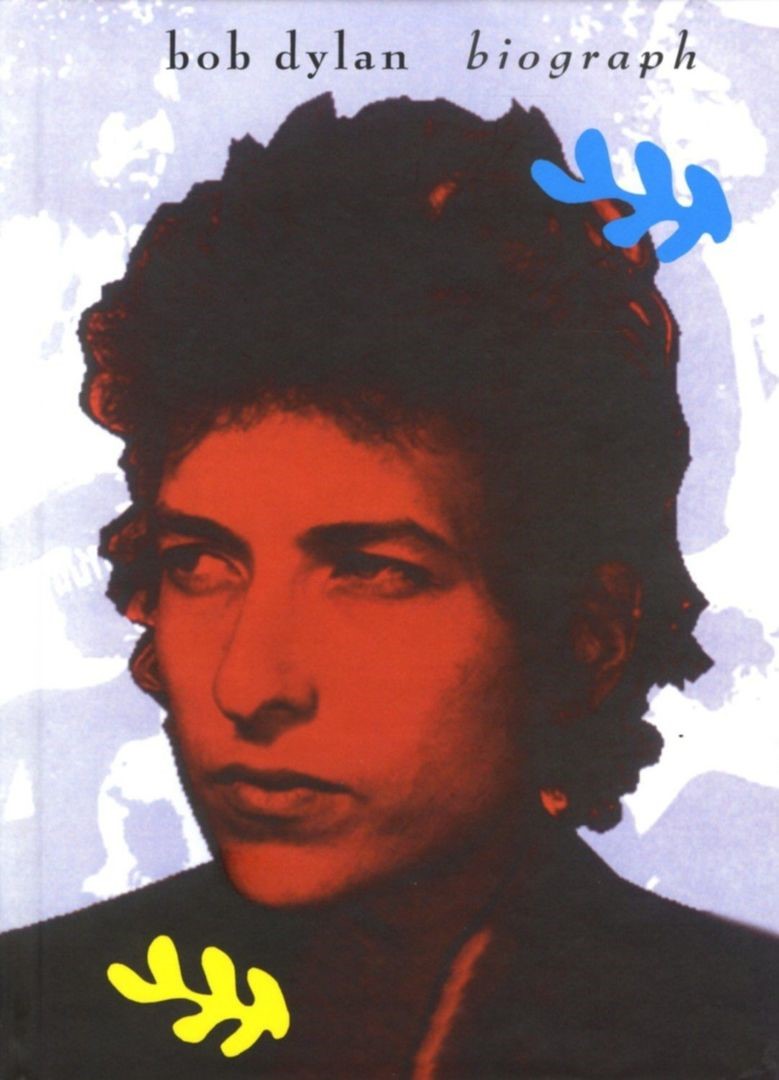
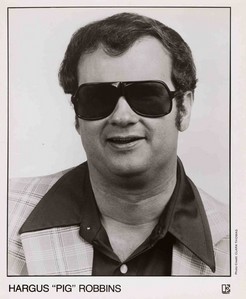
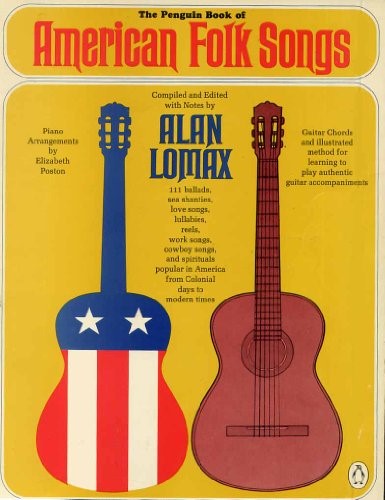
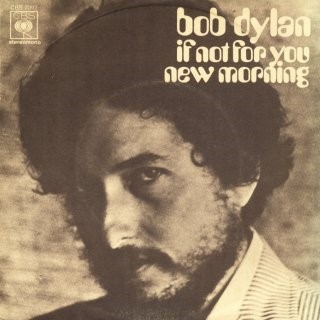

 In his days, the Italian baroque composer Giovanni Bononcini (1670-1747) is considered one of the Big Boys. After early years in Bologna, he experiences successes in Rome and Venice, becomes court composer for Leopold I in Vienna, conquers Berlin and then progresses to the Premier League: the Royal Academy of Music, the Italian opera house in London, engages Bononcini in 1720.