Señor (Tales of Yankee Power). He was just wearing a blanket.

Señor (Tales of Yankee Power) 

by Jochen Markhorst
At most concerts in 1978 Dylan has a hardly enlightening introduction talk to the Tales Of Yankee Power. A chat which, as the year progresses, fans out wilder and wilder. Initially, Dylan only reveals that he wrote it in the train on his way to Mexico. Later evenings he changes it into a train from Monterrey to San Diego, then again he reveals it was written in Chihuahua and gradually the story gets more savage. In November he tells that he recently was on the train to Mexico at night. At a stop in Monterrey an old Mexican gets in.

“He was just wearing a blanket, and he must have been 150 years old. I took another look at him an I could see that both his eyes were burning out. They was on fire. And there was smoke coming out of his nostrils. Ah, well this is a man that I want to talk to.”

And then Dylan starts to sing. Well.

His commentary in the booklet to the 1985 box set Biograph is easier to follow. This tells he has a kind of “Just Like Tom Thumb’s Blues” part 2 in mind. The song is one of them border type things, he says. “Nuevo Laredo, Rio Bravo, Brownsville, Juarez, I don’t know – ya know, sort of like lost yankee on gloomy Sunday-carnival-embassy-type of thing,and more images we already know from Tom Thumb and its inspiration, Lowry’s Under The Volcano. We do not have to search for much more, Dylan consoles.

In some kind of way I see this as the aftermath of when two people who were leaning on each other because neither one of them had the guts to stand up alone, all of a sudden they break apart… I think I felt that way when I wrote it.

Might be true – Dylan writes the lyrics in the autumn of 1977, shortly after the divorce of Sara (July ’77).

More reliable, however, seems to be a rare outpouring of candor in July 1978:

“This song is inspired by a man named Harry Dean Stanton. Some of you may know him.”

That is what Dylan says to announce the upcoming song “Señor (Tales Of Yankee Power)” at the Blackbush Aerodrome concert in Camberley, UK, July 15, 1978, and some supporting facts to this unveiling are known. At the previous performance, three days earlier in Gothenburg, Dylan reveals, again at the announcement of this song, that he wrote this song about six months ago during a tour, in which he seems to make an innocent slip:

“This is a new song written about six months ago on a trip through the southern part of the … northern part of the States. Anyway it’s entitled Tales Of Yankee Power.”

With actor Harry Dean Stanton, with whom he became friends on the set of Peckinpah’s Pat Garrett & Billy The Kid, Dylan has indeed undertaken a road trip, three-days holiday by car from Guadalajara to Kansas City, so actually through the southern part of the … northern part of the United States, to visit Leon Russel. Almost 1600 miles, so you have to sit on each other’s lip for a while.

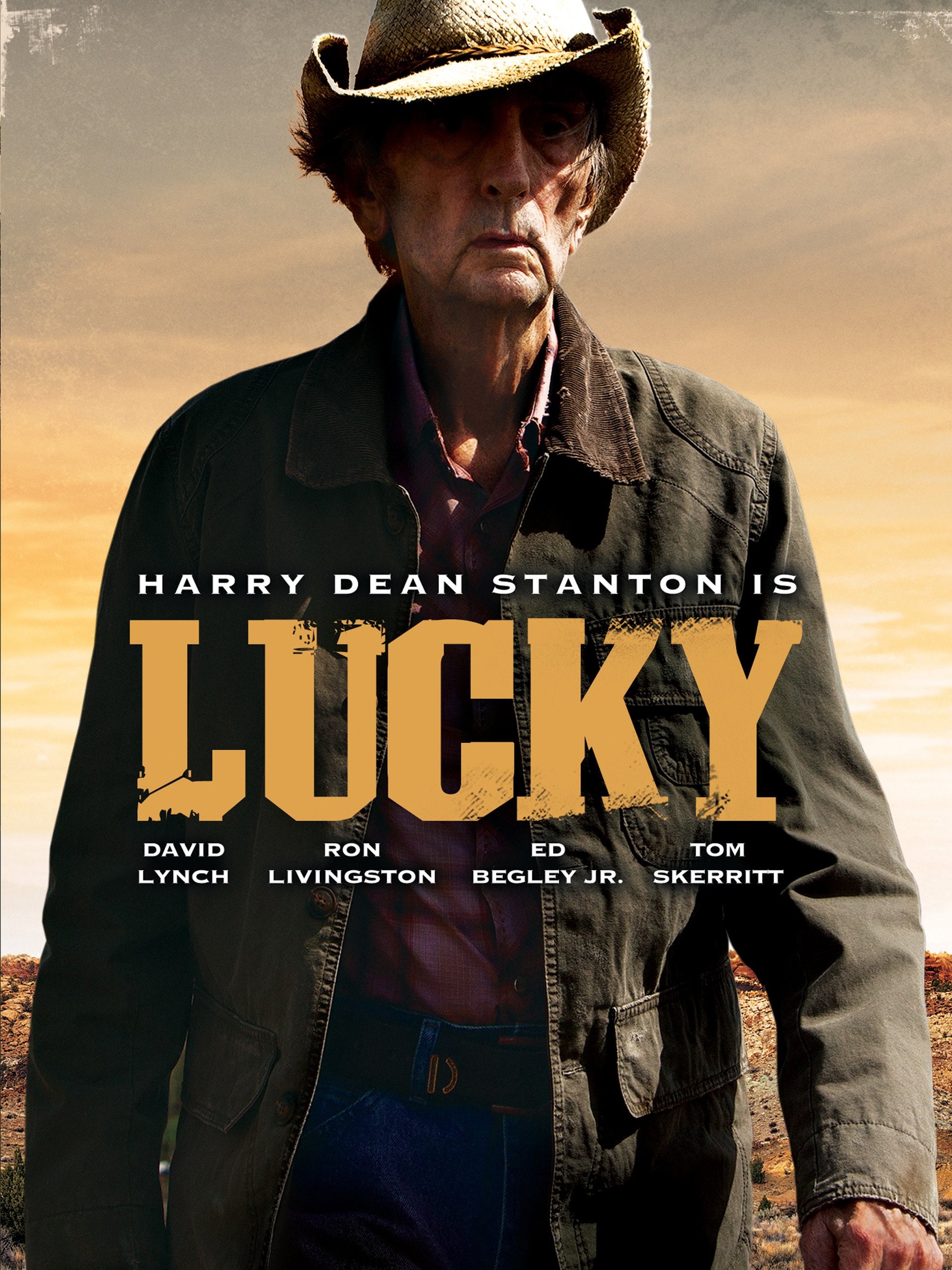
The Señor inspiration is palpable. Although Stanton comes from Kentucky, he has a southern, slow, desert-like aura. He plays in blockbusters like The Godfather II, Alien, Repo Man and Pretty In Pink, but ineffaceable is his leading role in Paris, Texas, poetic his portrait of plodding bootlegger in the Dylan clip for Dreamin’ Of You and immortal is Harry Dean in his last role, in Lucky (2017). Three motion pictures in which Stanton has a hat (or cap) and roams through a desert environment, in Texas, New Mexico or Arizona, silent and aimless, with a strong can you tell me where we’re heading-aura, with a mesmerizing ‘you know, kind of a lost yankee on a gloomy Sunday afternoon-carnival-embassy-like something’-allure. And in all three the actor is natural, he actually does not have to act and is therefore completely credible.

Inspired by this Harry Dean Stanton, the poet Dylan chooses a dry, exotic, but familiar decor and poetic imagery to express that displaced feeling, the words rhyme nicely and verses like Lincoln County Road or Armageddon are powerful and suggestive without telling all too much.

Lincoln County inspires clarifiers to find references to Dylan’s film experiences with Peckinpah, because Billy The Kid established his name in the so-called Lincoln County War of 1881. The geographical fact that the notorious UFO site of Area 51 in Lincoln County is located, places for others the inscrutable magnetic field in a meaningful context and even more superficial is the interpretation that Lincoln is a metaphor for ‘something good’ (compared to Armageddon as ‘something bad’). Incidentally, in the original version it is Portobello Road, which sort of relativises the overstrained mythical connotations.

In any case, the song is a highlight on Street Legal, the album that has been giving trouble since its publication. Authoritative critic Marcus Greil chops it into pieces. Dead air he calls it, the singing fake, fey and smug, the songs bad. Most American reviewers agree and the album sells moderately.

In Europe people are much more positive, the record gets cheering reviews even, and reaches the top of the charts. However, everyone agrees on one thing: the sound quality is lousy. Dull, messy, unfinished. The master himself is not too proud either, and apologizises with time and stress.

Apart from that, he does not seem too content with the songs: with one exception, he never considers playing any of them after 1978. Only “Señor” survives the twentieth century – until now Dylan has played this song 271 times. Quite rightly (it is a beautiful song), but ignoring the other eight is remarkable. “Is Your Love In Vain? “, “Changing Of The Guards” and “Where Are You Tonight?” all have the unusual qualities of a regular Dylan classic and the other songs are not that wrong either. In 1999 a polished, remastered reissue of Street Legal is released, and that one takes away some of the worst deficiencies – yes, a veil is lifted.

Musically, “Señor“ differs slightly from the other songs on Street Legal. Dylan works for the first time with a big band and stuffs the songs with wind instruments, backing vocals, percussion and keys. He holds back in “Señor“. True, here the ladies, the bongos, the bells and even a mandolin also play along, but there is still some air, still space between the notes.

Opinions about the lyrics are as divided as they are about the entire album. One sees a bad imitation of a quasi-profound Dylan text, others see that Dylan is only one step away from his conversion to Christianity. The Señor being the Lord, hence. True, in favour of that interpretation some hints can be found – there are enough biblical references in the text (Jesus overturning the tables, Armageddon, the cross around her neck) and Mary Alice Artes, the lady who introduced him to the Vineyard Christian Fellowship, is thanked on the cover (with the mysterious function indication ‘Queen Bee’).

But then again, Biblical references Dylan’s songs have throughout the decades and the lyrics are not that exceptional. Wonderful, but also run-of-the-mill Dylanesque.

Film references, for example, are a constant in Dylan’s catalog. Here we see a nod to Paint Your Wagon, that weird musical-western from ’69 with Clint Eastwood, and the tail of the dragon is that legendary, curvy road (Route 129 between Tennessee and North Carolina) from both Thunder Road (1958) and the weird cult classic Two-Lane Blacktop from 1971 (with James Taylor in his only film role). Even traces of Kafka lecture can be found again (just like on John Wesley Harding): the execution scene from Der Prozeß (‘The Trial’) seems to be the inspiration for ‘the last thing I remember before I stripped and kneeled’ (Josef K. also has to undress and go down on his knees), like the sobering ‘Son, this is not a dream no more, it’s the real thing’ characterizes Kafka’s entire oeuvre in one single line of verse.

In short: Bible, film, literature … ‘ordinary’ Dylan lyrics. Off-label is at most magnetic field; an outlandish term like for instance fiberglass in “Dirge”; terms that somehow, instinctively, do not seem to fit in Dylan lyrics.

The late Jerry Garcia has always been a devout fan, has made many successful Dylan covers, also and especially with his Grateful Dead, with whom he was also so lucky to accompany Dylan on a tour (1987). Garcia’s version of “Señor” on the soundtrack of Masked And Anonymous (2003) is fine.

Another direct hit can be found on another soundtrack: Willie Nelson & Calexico on I’m Not There (2007). Although the border-feeling with Calexico, Willie Nelson and Jerry Garcia, obviously, should be stronger, in 2011 a beautiful cover is produced in Slovenia, or all places. Ex-Walkabouts frontman Chris Eckman with The Frictions scamper dangerously close to power-pop, but score many points with ragged guitars and hollow, ghostly background vocals. Eckman’s piece de resistance is a Beatles cover, though – an eerie, unreal reading of “Yellow Submarine”.

A distinctive, and perhaps the most loving cover, is made by Joan Baez protégé Richard Shindell; a bit ominous orchestrated, a great singer he is not, but the dry, sparse mood suits the song perfectly (on South Of Delia, 2007).

No known cover by Harry Dean Stanton, although the song is almost literally tailor-made for him. As a musician he is not without merit, plays guitar and harmonica, makes music in several films (including in Twin Peaks: The Return and in Lucky) and legendary is his story about a recording with Bob Dylan, which he tells a few times, like here in an interview with the British The Observer:

“Dylan and I got to be very close. We recorded together one time. It was a Mexican song. He offered me a copy of the tape and I said no. Shot myself in the foot. It’s never seen the light of day. I’d sure love to hear it.”

We probably will never hear it. Harry Dean Stanton dies on September 15, 2017, two weeks before the premiere of Lucky.

You might also like

Senor, Tales of Yankee Power; on the road to Love’s Old Man and finding Christ.

What else is here?

An index to our latest posts arranged by themes and subjects on the home page.  You can also see details of our main sections on this site at the top of this page under the picture.

There is an alphabetic index to the 550+ Dylan compositions reviewed on the site which you will find it here.  There are also 500+ other articles on different issues relating to Dylan.  The other subject areas are also shown at the top under the picture.

We also have a discussion group “Untold Dylan” on Facebook which mostly relates to Bob Dylan today.  Just type the phrase “Untold Dylan” in, on your Facebook page or follow this link 

And please do note   The Bob Dylan Project, which lists every Dylan song in alphabetical order, and has links to licensed recordings and performances by Dylan and by other artists, is starting to link back to our reviews.
 

Posted in Uncategorized | 6 Comments

Why does Bob Dylan like “Not Fade Away”

By Tony Attwood

This article is part of our occasional series on why Bob Dylan likes specific songs that he either mentions in interviews or occasionally performs.  Other articles in the series are listed at the end.

Not Fade Away” was written by Buddy Holly, under his Christian names of Charles Hardin, and by Norman Petty, the producer (although some have doubted how much input Petty had).  Jerry Allison, the drummer of the Crickets, however is thought to have had an input into the song in terms of the distinctive Bo Diddley rhythm.  The song, recorded in May 1957, was originally released as the B side of “Oh Boy!”

The song was played by the band at Holly’s final concert before his death in a plane crash in 1959 – although not, as is often stated, as the very last song of the gig.  (Saying it was the last song makes a better story for journalists however).

https://www.youtube.com/watch?v=AyTtFNGzFsE

The song therefore has iconic status, and it certainly has an unusual approach – leaving aside the instrumental verse there are just two chorus, and an incredibly simple accompaniment.   And indeed it is that simplicity of musical movement that makes the instrumental break much more powerful as it leaps up to the sub-dominant and effectively jumps to a new key for a moment.

But much of the appeal comes from the simplicity of the rest of the song, both of the music and the lyrics.  Although love songs were of course very much the staple diet of popular music at the time, this simplicity of song construction was not.  And because of the simplicity everyone knew it and could recite the lines.

I’m gonna tell you how it’s gonna be
You’re gonna give your love to me
I’m gonna love you night and day
You know my lovin’ won’t fade away

My love is bigger than a Cadillac
I try to show you but you drive me back
Your love for me has got to be real
For you to know just how I feel
A love for real, not fade away

Buddy Holly’s singing style was unusual as well, and the overall sound took the listener into a different world – most particularly a world far, far away from parents (remembering this was a time when families tended to stay much closer together, have smaller houses – and thus little privacy for youngsters, and the whole notion of “teenager” as someone other than just a little adult, and the “teenage years” of rebellion were still in the future).

In such a scenario that opening line, “I’m gonna tell you how its gonna be” was not only addressed to the singer’s girlfriend, or hoped-for girlfriend, but to the entire older generation against whom a new rebellion was being formulated, if not yet raged.  It wasn’t yet a political rebellion, but it cleared the way ready for statements such as…

Come mothers and fathers
Throughout the land,
And don’t criticize
What you can’t understand
Your sons and your daughters
Are beyond your command,
Your old road is rapidly agin’,
Please get out of the new one
If you can’t lend your hand
For the times they are a-changin’

Mothers and fathers very much did criticise what they didn’t understand, and what they didn’t get was Buddy Holly’s voice, his music, his lyrics, his glasses… in fact all of it, and I think “I’m gonna tell you how it’s gonna be” symbolised the start of the new teenage journey.

Bob Dylan said in an interview in 1984, “I saw Buddy Holly two or three nights before he died. I saw him in Duluth, at the Armory. He played there with Link Wray. I don’t remember the Big Bopper. Maybe he’d gone off by the time I came in. But I saw Richie Valens. And Buddy Holly, yeah. He was great. He was incredible. I mean, I’ll never forget the image of seeing Buddy Holly up on the bandstand. And he died – it must have been a week after this. It was unbelievable.”

In 1998 Dylan spoke on the subject again.  “Buddy Holly. You know, I don’t really recall exactly what I said about Buddy Holly, but while we were recording [Time Out Of Mind], every place I turned there was Buddy Holly. You know what I mean? It was one of those things. Every place you turned. You walked down a hallway and you heard Buddy Holly records, like “That’ll Be the Day.” Then you’d get in the car to go over to the studio and “Rave On” would be playing. Then you’d walk into this studio and someone’s playing a cassette of “It’s so Easy.” And this would happen day after day after day. Phrases of Buddy Holly songs would just come out of nowhere. It was spooky. But after we recorded and left, you know, it stayed in our minds.”

There is a stunning simplicity in the lyrics from that opening of “I’m gonna tell you how it’s gonna be” through to the second verse with the extraordinary metaphor, “My love is bigger than a Cadillac” which everyone just accepted without question.   It’s not “All the world’s a stage” for sure, but it is something else.

And those two central lines in the second verse

Your love for me has got to be real
For you to know just how I feel

is a powerful image wrapped up in a way that we hardly notice.   It truly is a great song, hidden within its own simplicity.

Undoubtedly Bob loves it for its history, but also because it symbolises the opening of the door that he later so powerfully went through.

Postscript: since writing this piece Jochen has reminded me of what Dylan said about Buddy Holly in his Nobel Prize lecture.  Here it is…

If I was to go back to the dawning of it all, I guess I’d have to start with Buddy Holly. Buddy died when I was about eighteen and he was twenty-two. From the moment I first heard him, I felt akin. I felt related, like he was an older brother. I even thought I resembled him. Buddy played the music that I loved – the music I grew up on: country western, rock ‘n’ roll, and rhythm and blues. Three separate strands of music that he intertwined and infused into one genre. One brand. And Buddy wrote songs – songs that had beautiful melodies and imaginative verses. And he sang great – sang in more than a few voices. He was the archetype. Everything I wasn’t and wanted to be. I saw him only but once, and that was a few days before he was gone. I had to travel a hundred miles to get to see him play, and I wasn’t disappointed.

He was powerful and electrifying and had a commanding presence. I was only six feet away. He was mesmerizing. I watched his face, his hands, the way he tapped his foot, his big black glasses, the eyes behind the glasses, the way he held his guitar, the way he stood, his neat suit. Everything about him. He looked older than twenty-two. Something about him seemed permanent, and he filled me with conviction. Then, out of the blue, the most uncanny thing happened. He looked me right straight dead in the eye, and he transmitted something. Something I didn’t know what. And it gave me the chills.

I think it was a day or two after that that his plane went down.

Why does Dylan like these songs?

Posted in Uncategorized | 1 Comment

Bob Dylan And The Angel With Four Faces


By Larry Fyffe

Most analysts of the song lyrics of Bob Dylan do not grasp that all of his musical works are closely interconnected, centred on mankind’s existential condition with lyrics focused on common human needs.

They see him riding off on his literary horse in all directions when in fact the singer/songwriter intentionally takes on different points of view concerning the matter – views that might be labelled as gnostic, Judeo-Christian, romantic transcendentalist, surrealist, realist, naturalist, and so on and so forth. He then entangles them all up together throughout his artistic creations in an effort to create a hermetic unity.

Bob Dylan utilizes many literary devises to achieve this end. Let’s look at one in particular: high burlesque – a social, political, economic, or religious satire that takes a rather commonplace event and elevates it to a higher literary plain as though it were of grave importance – even essential to the very survival of the human race.

The figurative and imagistic style of the writings in the Holy Bible (that describe the end of the world due to the wrath of the Almighty) is imitated in varying degrees by Dylan to depict the end of a love relationship between two individuals, a happening that is often sad, seldom happy, but, nevertheless, is a rather  common occurrence.

Below, Bob Dylan treats a love relationship gone sour as though it were the end of the world, equal to the biblical Apocalypse:

Maybe someday you'll remember what you felt

When there was blood on the moon in the cotton belt

When both of us, baby, were going through some sort of test

Neither one of us could do what we do best

(Bob Dylan: Maybe Someday)

Some of the ornate style of writing in the Bible is observed in the verse quoted above; below, an anthropomorphic God displays His melancholia, and anger at his human creations:

And I beheld when he opened the sixth seal

And, lo, there was a great earthquake

And the sun became as black as sackcloth hair

And the moon became as blood

(Revelation 6:12)

The following song lyrics paint a picture of a love relationship (born of modern Babylon) lost in the wrathful manner associated with the Judeo-Christian God:

Something is burning, baby, are you aware?

Something is the matter, baby, there's smoke in your hair

Are you still my friend, baby, show me a sign

Is the love in your heart for me turning blind?

(Bob Dylan: Something’s Burning)

The imagery in the verse above suggests that the end-times are surely near:

And the kings of the earth

Who have committed fornication

And lived deliciously with her

Shall bewail, and lament for her

When they see the smoke of her burning

(Revelation18:9)

A sure sign that the end of a love relationship is coming soon, that its apocalypse is at hand, be that the ‘elements’ of earth, air, fire, and water are out of balance therein , and ‘humours’ like sorrow, anger, coldness, and unfaithfulness abound:

Thunder rolling over Clarksdale

Everything is looking blue

I just can't be happy, love

Unless you're happy too

It's bad out there

High water everywhere

(Bob Dylan: High Water)

Imagery that’s present in the Holy Bible:

And it came to pass after seven days

That the waters of the flood were upon the earth

(Genesis 7: 10)

Mind you, Bob Dylan is not beyond burlesquing himself when it comes to writing a song about a broken love affair:

Beat a path of retreat up them spiral staircases

Pass the tree of smoke, pass the angel with four faces

Begging God for mercy and weepin' in unholy places

Angelina, oh Angelina, oh Angelina

(Bob Dylan: Angelina)

Seems the former female lover is more than two-faced; she’s four-faced. She’s not only human, but a wild animal, and, at the same time, a tame animal. And she’s can fly like a bird:

As for the likeness of their faces

They four had the face of a man

And the face of a lion, on the right side

And they four had the face of an ox, on the left side

They four also had the face of an eagle

(Ezekiel 1:10)

What else is here?

An index to our latest posts arranged by themes and subjects on the home page.  You can also see details of our main sections on this site at the top of this page under the picture.

There is an alphabetic index to the 550+ Dylan compositions reviewed on the site which you will find it here.  There are also 500+ other articles on different issues relating to Dylan.  The other subject areas are also shown at the top under the picture.

We also have a discussion group “Untold Dylan” on Facebook which mostly relates to Bob Dylan today.  Just type the phrase “Untold Dylan” in, on your Facebook page or follow this link 

And please do note   The Bob Dylan Project, which lists every Dylan song in alphabetical order, and has links to licensed recordings and performances by Dylan and by other artists, is starting to link back to our reviews.

Posted in Uncategorized | Leave a comment

If Dogs Run Free: Bob Dylan explores the teachings of Diogenes


by Jochen Markhorst

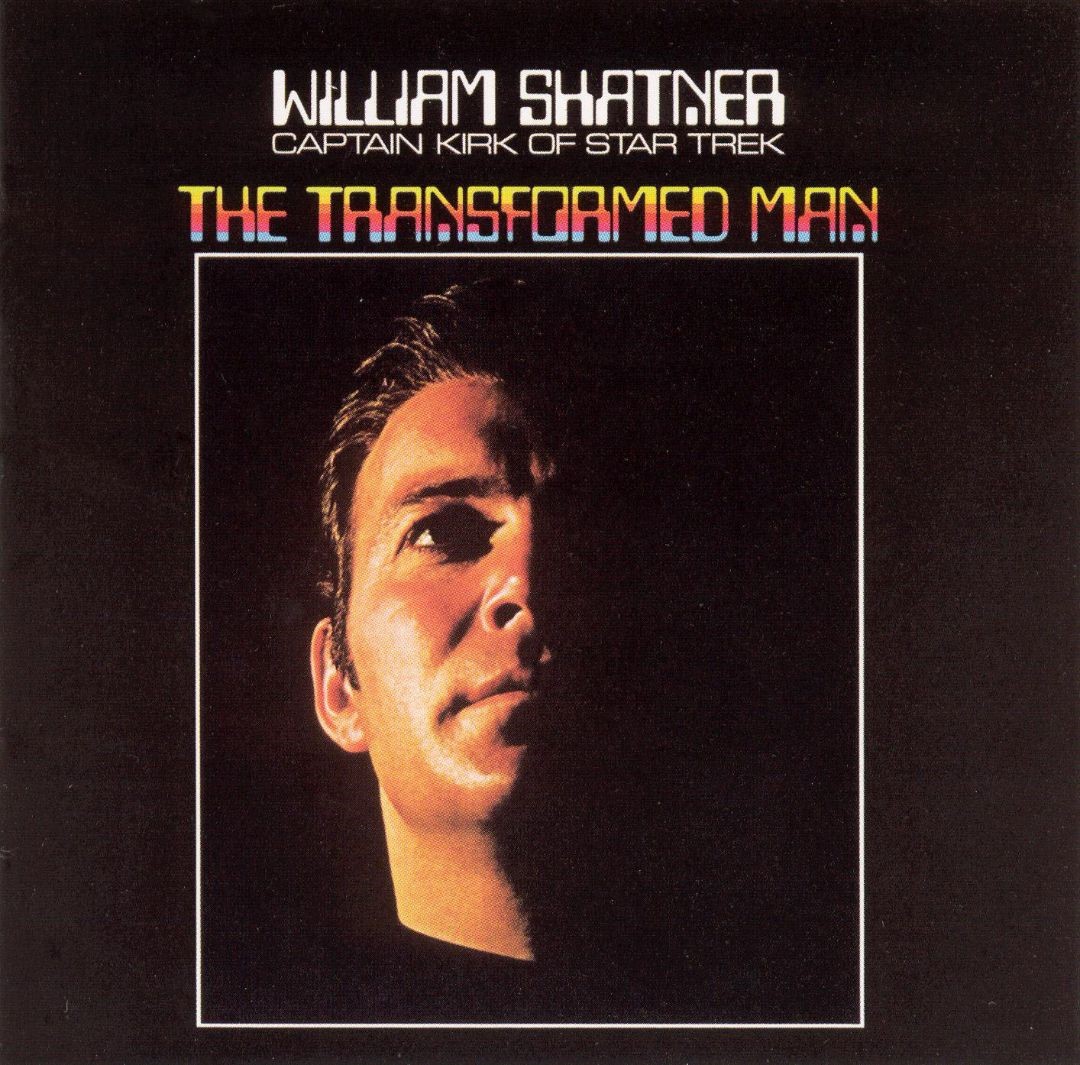
 After Star Trek he certainly has an admirable follow-up career. Prizes (a Golden Globe and an Emmy Award for his role in Boston Legal, for example), bestsellers, amassing a fortune of around $450 million with a travel website and reasonably successfully directing and producing, but he remains iconic thanks to that one role: as Captain Kirk. At first Star Trek is only moderately popular and William Shatner does not participate very long either; a little less than three years, 79 episodes (September ’66 – June ’69). But that gives him enough courage, and apparently also credit, to record an album: the bizarre, much parodied The Transformed Man (1968).

It is a painfully unsuccessful, über-pretentious project, in which an overacting Shatner links classical literature, especially Shakespeare, to pop songs, deconstructing both the stage texts and the lyrics, while in the background horrifically twisted show orchestral versions of the chosen songs are playing. “Lucy In The Sky With Diamonds” is a low point, but Dylan’s “Mr. Tambourine Man” is ripped to pieces, too.

From the self-written liner notes, press publications and first interviews it can be concluded that it is not meant as a joke, that Shatner has really given in to artistic inspiration and ambition, and that he, initially, is quite proud of the result. In later years, after the cartloads of scorn and hilarity, he occasionally tries to distance himself half-heartedly from the monstrosity, insinuating that it was actually a joke, but in his autobiography (Up Till Now, 2008) he explains again, with infectious self-mockery:

“During appearances on several talk shows I had spoken the lyrics of several popular songs without causing any permanent damage. But on my first album I wanted to do more than that, I wanted to explore the unique relationship between classic literature and popular song lyrics. I wanted to emphasize the poetry of language, in both its written and musical forms, used to express the extraordinary range of human emotion. That was my concept for this album.

“What I decided to do was find a selection of beautiful writing and use that as a lead-in to a song that complemented it. Or at least served as a corollary. For example, I would use a selection from Cyrano de Bergerac ending, ‘I can climb to no great heights, but I will climb alone,’ to segue into Bob Dylan’s ‘Mr. Tambourine Man,’ which had been interpreted to be Dylan’s allusion to his experiences with LSD— and I would perform it as a song sung by an addict bemoaning the fact that he is incapable of surviving without his drugs. In much the same way Hamlet’s classic speech, ‘To be, or not to be,’ led directly into ‘It Was a Very Good Year,’ made famous by Sinatra.

“It all made perfect sense to me. But apparently it was a bit obtuse for some other people. Okay, for many other people. All right, for most people.”

Surprisingly, one of Shatner’s more prominent victims, Bob Dylan himself, is one of the very few who do not think it is totally obtuse. Eighteen months after The Transformed Man, Dylan records “If Dogs Run Free”, the only song in his catalogue in which he does not sing or rap, but declaims. Less exalted than Shatner, but still.

The song is a little-loved in-between on New Morning, and absolutely unique in Dylan’s oeuvre. On the album version, the third and last take, Dylan talks his lyrics over cheap lounge jazz, including aimless guitar doodling and nerve-racking scatting by Martha Stewart. Looking back, in Chronicles, Dylan judges self-critical and full of contempt:

“Nothing was ever together. Not even after a song had been finished and recorded was it ever together. For one of those sets of lyrics, Kooper played some Teddy Wilson riffs on the piano. There were three girl singers in the room, who sounded like they were plucked from a choir and one of them did some improvisational scat singing. The whole thing was done in just one take and called If Dogs Run Free.”

https://youtu.be/8XocQNESUmQ

That sounds, apart from being harsh and unloving, also very honest. Historically it is not entirely correct, though. The cocktail jazz version might have been done in one go, but it is not the first take. The first take is released forty-three years later, on Another Self Portrait (The Bootleg Series 10). That version is a lot more conventional. Also babbling, but it now babbles over three guitars, a lazy bass and easy-going brushes on the drums. Dylan seems to believe in the song, seems to feel more happy with the country atmosphere of this variant, talk-singing the verses with more intonation and singing the chorus with some enthusiasm. The rejection of this take and the choice for the unusual, exhausting third take fits with the self-destructive phase in which Dylan claims to be in this period, with his allegedly conscious attempt to alienate his fans.

He succeeds with this song. It has not too many fans, some of the proponents struggle with the defence of the song and seem to do so mainly out of loyalty, and only a very small minority is sincerely touched by “If Dogs Run Free”. But: the general aversion to the song gives wings to the rare advocates.

One J.R Stokes writes a short play in three acts to express his love and interpretation of the song (published in Judas! 14 under the title Waking Up To A New Morning). In Austria, two architects with a soft spot for Dylan open their own cocktail bar and call it If Dogs Run Free (Vienna, Gumpendorfer Straße), illustrator Scott Campbell is inspired to create a children’s book (If Dogs Run Free, 2013) and philosophy professor Michael Chiariello sees in the song a reflection on the doctrine of the Cynics around Diogenes, who strive for the freedom of the dog, who reject human habits and customs and dream of a life in public, without shame. Cynics (the word is derived from the Greek word for dogs, κυνικός) “run freely like dogs, take life as it is, do their own thing and live like kings” – Dylan’s lyrics indeed fit very nicely with the teachings of Diogenes of Sinope (404 – 323 BC).

Ultimately, Dylan does not reject the song altogether. In Writings & Drawings (1973) it is already striking that he makes a drawing to this particular song and in 2000, thirty years after the recording, “If Dogs Run Free” unexpectedly resurfaces on the set list of the concert in Münster, of all places. The master has an unsteady memory of the correct lyrics, chooses a fairly safe swing jazz arrangement and thanks the audience after the last chord with a proud, surprised, atypical smile. It is not a one-off fad, but appears to be genuine, regained love: until 2005 Dylan will play it more than a hundred times.

The few covers remain more or less within reasonable, jazzy bounds. The Dutchman Richard Janssen, from the rather successful Fatal Flowers, records in 1998 under a new name (Rex) a pleasant version for the Twee Meter Sessions, ten years after he polished up another abandoned love from Dylan’s catalogue in that same studio, “Tell Me That It Isn’t True”.

The only other noteworthy cover comes from New York, from the swinging ensemble Dave’s True Story. Their debut album from 2005, Simple Twist Of Fate, offers some wonderful renditions of Dylan songs (“You’re A Big Girl Now” is the highlight) and a very loyal version of “If Dogs Run Free”. Including a scatting lady and a talking singer, with a harmonica as a bonus.

(Dogs run free starts at 1:48)

After Trekkies and hipsters gradually transform his Transformed Man into a cult classic, William Shatner relapses to recidivism. With some cautious irony, granted, he starts to again recite pop songs to smithereens in the twenty-first century (“Bohemian Rhapsody” being one of the most prominent victims, on Seeking Major Tom, 2011). Wisely though, he does not burn his fingers on that one song with built-in Shatner security: “If Dogs Run Free”.

What else is here?

An index to our latest posts arranged by themes and subjects on the home page.  You can also see details of our main sections on this site at the top of this page under the picture.

There is an alphabetic index to the 550+ Dylan compositions reviewed on the site which you will find it here.  There are also 500+ other articles on different issues relating to Dylan.  The other subject areas are also shown at the top under the picture.

We also have a discussion group “Untold Dylan” on Facebook which mostly relates to Bob Dylan today.  Just type the phrase “Untold Dylan” in, on your Facebook page or follow this link 

And please do note   The Bob Dylan Project, which lists every Dylan song in alphabetical order, and has links to licensed recordings and performances by Dylan and by other artists, is starting to link back to our reviews.



Posted in Uncategorized | 3 Comments

Enough is enough: Dylan played it three times and that was, enough.

By Tony Attwood

This is a rather obscure Dylan song about which different people have written different things (not for the first time!)  For example it is stated in some quarters that the first and last performance was at the Parc de Sceaux in Paris on 1 July 1984, but I suspect that is not right.

We do however have a live recording of the song…


But there were various other versions performed and during the various versions of the lyrics. changes were made.  A number of versions of the lyrics have appeared on line, but mostly vanished again, although I’ve found one here.

 This version comes from Rome in June 1984, and the whole series of versions were put together while Bob was busy re-writing Simple Twist of Fate and Tangled up in Blue.   The intention was to have the song released on the “Real Live” album but it was subsequently omitted and the song forgotten.

This is the transcription from Barcelona, June 28, 1984.  The chord sequence is unusual, alternating much of the time between G7 and Cm6, before running into the second half of the standard 12 bar blues sequence (C, G, D, C, G)

Hands off your feet, baby,
listen to this
This is what I can't be
Often it hurt me honey, I'm
looking at you but
You're looking at me too.
Because a dollar is a dollar
And the downtown boys play rough
Go all the way back, baby
Tell 'em enough is enough
Face on the gutter baby
which is which but I'd
rather be lucky than be rich
Off with the money honey
that is true, but I'm
Satisfied with you.
'cause a dollar is a dollar
And the downtown boys play rough
Go all the way back, baby
Tell 'em enough is enough.
All cities, honey, hard, is
soakin' wet, but there's
no more gold you can get
[...] I'm
facin' the wall, but
baby you took it all.
Because a dollar is a dollar
And the downtown boys play rough
You tell 'em baby,
That enough is enough.

Got a gold mining fever baby, which is which but
I'd rather be lucky than be rich
Go off with the money honey, that is true, but I'm
Satisfied with you.

I’m not too sure that we can get too much more out of this song – although if you can please do write in…, but what is interesting is to see the song as part of Bob’s evolution in musical terms through the year of 1984:

  1. I once knew a man
  2. Who loves you more
  3. Almost done
  4. I see you around and around
  5. Dirty lie
  6. Enough is Enough.
  7. Go way little boy
  8. Drifting too far from shore
  9. New Danville Girl / Brownsville Girl

Bob is clearly experimenting, trying to find his new approach, and this is something we find time and again.  A list of songs out of which suddenly comes something really different, new and memorable.   

So it was here.  The journey between the superb “I once new a man” and the ground breaking “New Danville Girl” is indeed curious in the extreme.  

Untold Dylan: who we are what we do

Untold Dylan is written by people who want to write for Untold Dylan.  It is simply a forum for those interested in the work of the most famous, influential and recognised popular musician and poet of our era, to read about, listen to and express their thoughts on, his lyrics and music.

We welcome articles, contributions and ideas from all our readers.  Sadly no one gets paid, but if you are published here, your work will be read by a fairly large number of people across the world, ranging from fans to academics who teach English literature.  If you have an idea, or a finished piece send it as a Word file to Tony@schools.co.uk with a subject line saying that it is for publication on Untold Dylan.

We also have a very lively discussion group “Untold Dylan” on Facebook with approaching 6000 active members. Just type the phrase “Untold Dylan” in, on your Facebook page or follow this link 

You’ll find some notes about our latest posts arranged by themes and subjects on the home page of this site.  You can also see details of our main sections on this site at the top of this page under the picture.  Not every index is complete but I do my best.

But what is complete is our index to all the 604 Dylan compositions and co-compositions that we have found, on the A to Z page.  I’m proud of that; no one else has found that many songs with that much information.  Elsewhere the songs are indexed by theme and by the date of composition. See for example Bob Dylan year by year.


Posted in Uncategorized | 6 Comments

Bob Dylan: Strengthen The Things That Remain

Bob Dylan: Strengthen The Things That Remain 

By Larry Fyffe

Make the style of art over anew, says Ezra Pound,  holding that a thing of beauty, a piece of art well done, is a joy forever; however, its wishful thinking that it will physically last forever, or even be appreciated as long as it does last:

I would bid them live forever

As roses might in magic amber laid

Red overwrought with orange and all made

One substance and one colour

Braving time

(Ezra Pound: Envoi)

Pound alludes to the following poem:

Small is the worth 

Of beauty from the light retired

Bid her come forth

Suffer herself to be desired

And not blush so to be admired

(Edmund Waller: Go Lovely Rose)

Though initially from a Presbyterian background, Ezra Pound turns his ‘one colour’ thoughts to establishing a perfect and permanent society based on fascist principles.

Better that he had taken the Judeo-Christian Bible more seriously:

Be watchful, and strength the things 

Which reman, that are ready to die

For I have not found thy works perfect before God

(Revelations 3: 2)

Singer/songwriter Bob Dylan takes the biblical ‘warning’ to heart – it’s easily interpreted as saying that one ought not to think that he or she has the perfect answer; ie, don’t trust a religious leader who does not look back on previous written works of biblical messengers, translators, theologians, and scholars without at least some degree of skepticism.

The following artist of which he speaks does not look back:

She's got everything thing she needs, she's an artist

She don't look back

She can take the dark out of the night-time

And paint the daytime black

(Bob Dylan: She Belongs To Me)

In other words, Bob Dylan, or his persona, looks back to find what values are worth keeping when times are a-changing; and what values enshrined in religious dogma ought to be tossed away since they manifest in harmful social behaviour on the part of followers:

God don't make no promise that he don't keep

You got some big dreams, baby

But in order to dream, you gotta still be asleep

When you gonna wake up, when you gonna wake

When you gonna wake up, and strengthen the things that remain

(Bob Dylan: When You Gonna Wake Up)

Some analysts of Bob Dylan claim he’s endorsing their religious beliefs, rather than admonishing religious leaders of the orthodox bent for asserting that human beings can achieve perfection of some kind or another without considering the social and environmental conditions as well as natural urges under which they exist: instead, according to Dylan, things be broken, and fragmented – it’s not dark yet,  but it’s getting there.

Christopher Ricks points out that Moderist/Post Modernist artists, in order to give their observers some participation in the creative process, leave their works deliberately open to interpretation. So the question becomes how far an personal interpretation should go when s/he’s a true believer in some creed, rather than open to free thinking. 

For instance, is there a secret embedded message when TS Eliot writes the following verse?:

No! I am not Prince Hamlet, nor was I meant to be

Am an attendant lord, one that will do

To swell a progress, to start a scene or two ....

(Pol)itic, cauti(o)us, a(n)d matr(i)culo(us)

Full of high sentence, but a bit obtuse

(TS Eliot: The Love Song Of J Alfred Prufrock)

TS Eliot, who reads Edward Fitzgerald’s “Omar Khayyam” at a young age, converts from the Unitarian church (that influences the Romantic Transcendenalist writers), and joins the Anglican Trinitarian church; above, he compares his Prufrock character to Polonius, a man of tedious aphorisms in William Shakespeare’s ‘Hamlet’.

Bob Dylan travels down a road covered with frost. The mother of poet Robert Frost be a devotee of Swedenborgian mysticism with its alchemic words of physical and spiritual ‘correspondences’ –  the ‘elements’ of earth, wind, fire, and water affect the extent of ‘spiritual’ actions on the part of human beings.  Dylan is thought by some to encode his wife’s former last name in “Sad-Eyed Lady Of The (Low)la(nds)”. 

What else is here?

An index to our latest posts arranged by themes and subjects on the home page.  You can also see details of our main sections on this site at the top of this page under the picture.

There is an alphabetic index to the 550+ Dylan compositions reviewed on the site which you will find it here.  There are also 500+ other articles on different issues relating to Dylan.  The other subject areas are also shown at the top under the picture.

We also have a discussion group “Untold Dylan” on Facebook which mostly relates to Bob Dylan today.  Just type the phrase “Untold Dylan” in, on your Facebook page or follow this link 

And please do note   The Bob Dylan Project, which lists every Dylan song in alphabetical order, and has links to licensed recordings and performances by Dylan and by other artists, is starting to link back to our reviews.


Posted in Uncategorized | 3 Comments

Gotta Serve Somebody: gotta change the lyrics. Bob Dylan in depth.


by Jochen Markhorst


The world’s best songwriter does not always strike home and occasionally misses to such an extent that simple mortals overcome all humility and dare to bark at the boss. Wiggle wiggle like a bowl of soup (from “Wiggle, Wiggle”, the opening song of under the red sky, 1990) is the definitive turning point for many critics; now Dylan’s expiry date really has been exceeded. And decades later he is still being blamed for that song, and especially for that particular verse line.

In 2011 the song is in Time‘s list of ‘The 10 Worst Bob Dylan Songs’, Rolling Stone asks the readers to vote for their least favourite Dylan song in 2013 where the song even takes first place and the respected Louis Theroux tweets precisely this one line to his two million followers to give in to his amazement at the Nobel Prize awarding (on his Twitter account @louistheroux, October 13, 2016).

To some, however, it is not the all-time worst low-point. To Joe Queenan, for example, a journalist from the American premier league. In his readable, though insulting and devastating, interview / essay The Free-Fallin’ Bob Dylan (Spy Magazine, August 1991) he writes about the wobbly soup: “Actually these are not the most embarrassing lyrics Dylan has ever written. Those lyrics are from his 1979 song “Gonna Serve Somebody”. You may call me Terry, you may call me Timmy / You may call me Bobby, you may call me Zimmy.”

Viewed clinically, the verse indeed is far from titanic. But then again: any poetic depth is not intended at all. Dylan here paraphrases a conference of those days, from the cabaret artist Bill Saluga. One of his characters was Raymond J. Johnson Jr., and his gimmick was that he did not want to be called ‘Mr. Johnson’:

“Now you can call me Ray, or you can call me J, or you can call me Johnny, or you can call me Sonny, or you can call me Junie, or you can call me Junior; now you can call me Ray J, or you can call me RJ, or you can call me RJJ, or you can call me RJJ Jr. . but you doesn’t hasta call me Johnson!”

Towards the end of the 70s, when Dylan writes his “Gotta Serve Somebody”, Saluga’s personage, with a variation on that monologue, can be seen almost daily for months in a national television commercial for a beer brand, for Anheuser-Busch Natural Light Beer.

Looking back, it is rather mysterious why the sketch and the persona were so popular. It is a saltless, pointless text of an over-acting cabaret artist without any recognisable charisma. Different times, apparently.

Saluga and Mr. Johnson are rightly forgotten, and with it the source of Dylan’s paraphrase. This leads within a few years to critics who are unable to place the lyrics in that cultural context, with consequently failing criticism.

Funny then at least are the analysts who bend over backwards in trying to find depth or poetic strength in that silly reference. Oliver Trager confidently asserts that ‘Timmy’, ‘RJ’ and ‘Ray’ are all aliases of Dylan, professor Christopher Ricks is once again inimitably delighted, this time about the supposed symbolic power of the switch from You may be in all previous couplets to You may call me in this last verse and several exegetes sharply conclude that Dylan drops his mask, exposes himself completely, returns to who he really is: Robert Allen Zimmerman – Zimmy.

It is something to get used to, this style. Dylan’s great, Nobel-worthy, poetic appeal has always been the brilliant expression of ‘his pictorial way of thinking’, as the Nobel Prize Committee says. Thereof is little to be found in this song, or on this album at all, for that matter. In “Gotta Serve Somebody” there is not even a single metaphor (well all right, young Turk is a metaphor for a political activist, but is not meant metaphorically here).

This temperance is not due to the chosen form. Dylan often writes ‘list songs’, lyrics that rely on the power of repetition. “A Hard Rain’s A-Gonna Fall”, “Forever Young”, “Everything Is Broken”, “Blowin’ In The Wind”, just to name a few of the better known – not the least songs and from Hard Rain, for example, one can hardly maintain that it is poor in images.

From that, lack of imagery, “Gotta Serve Somebody” suffers, and that indeed is a surprise. Dylan has just repented, sings and plays more energized than ever before, is passionate and inspired by the gospel and the Holy Scriptures, but apparently that fuels everything but his poetic brilliance. This specific repetition, for instance, the poet does not forge himself, but he steals it from Elvis (probably), from his fourth single “Baby, Let’s Play House” (1955):

You may go to college,
You may go to school.
You may have a pink Cadillac,
But don’t you be nobody’s fool

Or else from Memphis Slim, from the song that the radio show host Dylan runs in his second episode of Theme Time Radio Hour, “Mother Earth” (1951), which also comes close to Dylan’s song content-wise:

You may play race horses
You may own that race track
You may have enough money baby
To buy anything you like

Don’t care how great you are
Don’t care what you worth
When it all ends up you got to
Go back to mother earth

The content of all those You may’s appears not to be too beatific to the performing artist Dylan. The chorus is carved in stone, but on stage he comes up with dozens of variants of the verses. You might get naked and mow the lawn, he sings in ’87 in Brussels, and in Rotterdam that same year:

Might be Jimmy Connors, might be Al Capone
Might be living with a million people, might be living alone

At any rate, he fiddles around the most, by far, with that maligned last verse, the verse with Timmy and Zimmy. And he is not the only one either; quite a lot of artists who cover the song take the liberty to rewrite. Pastor Shirley Caesar, ‘The First Lady Of Gospel’ sings a version of which Dylan declares in Biograph’s booklet: “I liked her version better than mine.”

Shirley sings:

You might call me Sally, you might call me Jean
You might call me Sheila and you might even call me Irene
You might call me Molly, but my name is Shirley
But God gave me another name, I know I’ve been born again

Not too spectacular, all in all, and stylistically weak too, with that poor but my name is Shirley, but God gave me another name there at the end.

When Natalie Cole plunges onto the song (on Snowfall On The Sahara, 1999), the master is personally involved. At least, both the liner notes and The Bob Dylan Copyright Files 1962-2007 claim that Dylan has rewritten a verse. Producer Phil Ramone knows that the master has even written two verses for Natalie, as he tells in his autobiography Making Records – The Scenes Behind The Music (2007):

“One of the unexpected songs to top the list was Bob Dylan’s “Gotta Serve Somebody”, which Natalie’s sister suggested. Natalie loved the song, but after running it down at a rehearsal, she voiced a concern. ‘The message is powerful, but Dylan makes reference to guns in one of the verses, and I’m not comfortable with it,’ she explained.

“Gotta Serve Somebody” was a very strong choice, and I knew that Natalie would be disappointed if we didn’t include it. So I decided to ask Bob Dylan if he’d consider changing the verse in question for Natalie’s recording.

I sent Bob a message through his manager (Jeff Kramer), and Bob quickly sent back two new verses written especially for Natalie. They worked beautifully, and Natalie wrote Bob a note to thank him and to let him know how much of a musical influence he had been. Until then, I had no idea that she was a fan of his work.”

On the various websites that pretend to have Natalie Cole’s song lyrics, it seems in any case to go back to that mocked last verse:

Now you can call me Terry or you might call me Moore
You may call me David or you might call me Coe
You can call me RJ or you can call me Ray
You can call me anything, I don’t care what you say

‘Terry Moore’? That would be the name which Dylan’s associative spirit comes up with? Terry Moore is a famous actress who in the fifties causes a furore as a sexy tomboy, she is a popular pin-up model, befriends Elvis and is married to the immensely-rich, eccentric, womanizing playboy / pilot / filmmaker / aircraft manufacturer Howard Hughes (or not, Hughes’ heirs deny Moore and Hughes were officially a couple).

And, as it usually goes, Moore disappears from sight when she gets older, in the late sixties, but: in the 80s she returns to the front. In 1984, at the age of 55, she poses naked for Playboy, she reappears in small extras in films and TV series (Love Boat, Knight Rider and Murder, She Wrote, for example) and that restart is solid – Moore (1929) is back for good. Her supporting role in the hit series True Detective (2014) is memorable. But whether Dylan thinks of her in 1999, when he rewrites a verse from an evangelical masterpiece, is highly unlikely.

The intervention in the second line seems just as puzzling. David Coe? Dylan would refer to David Allan Coe, the outlaw country musician and songwriter, who is publicly honoured by him several times. For example in the Rolling Stone interview, May 2009, when he calls him one of my favourite guys and before that in his Theme Time Radio Hour, episode Tennessee:

“Here’s my man, the great David Allen Coe. A dangerous man, in and out of reform schools, correction centres and prisons since the age of 9. He supposedly spent time on death row for killing a fellow inmate who made advances to him. A Rolling Stone magazine reporter questioned Coe about this. His musical response was the song, ‘I’d Like To Kick The Shit Out Of You’.”

Agreed, a nod to Coe can be traced. But would still very wondrous in this edifying text.

It is not true, of course. When listening to Nathalie Cole’s version, it appears that Dylan has deleted two entire verses, including the latter, and replaced it with a fresh new verse:

You might be heading north, you might be heading south
You might be laying up in bed, with a gun up to your mouth
You might be going nowhere, or you might have been there before
Maybe all of a sudden you don’t know yourself no more

… and that indeed has more poetic power. In fact, it grabs you more by the throat, it is more Dylanesque and more beautiful than all the other lines of the original text. Incidentally, half of Ramone’s story does not survive: the gun has not been deleted and is now embedded in a context that is even more sinister than the original (laying in bed with a gun up to your mouth versus you might own guns).

The source of these erroneous lines with Moore and David and Coe is David Allan Coe himself, as further digging reveals. In 1983 he records the beautiful album Castles In The Sand.

The title song is a tribute, a passionate loyalty statement to Bob Dylan and an assertive tirade against all those journalists who sell nonsense and lies about his hero. That will have pleased the old bard. At least as charmed he probably is by the next song, an exciting country-funk version of “Gotta Serve Somebody”. And here Coe sings:

Now you can call me Terry or you might call me Moe
You may call me David or you might call me Coe
You can call me RJ or you can call me Ray
You can call me anything, I don’t care what you say

So: Moe – not Moore. And only chosen to let it rhyme with Coe.

All that fiddling with the last verse does not affect the strength and the popularity, the one-dimensionality of the other lines does not matter either, apparently. “Gotta Serve Somebody” is by far the most beloved song from Slow Train Coming. It is awarded with a Grammy Award, the single scores – by Dylan’s standards – very nice, it pops up regularly in films and TV series (in The Sopranos, for example) and it is, as opposed to the other eight songs of the album, endlessly covered. John Lennon’s villainous answer song, the vicious “Serve Yourself” does not change that.

The covers, certainly from the professional artists, generally do not differ too much and are always good. Shirley Caesar’s recording, so admired by Dylan, is truly beautiful and honourably selected for the soundtrack of the rambunctious Dylan vehicle Masked And Anonymous (2003). Just as steaming and swinging are comparable ladies as the aforementioned Natalie Cole, Dylan’s childhood love Mavis Staples (Tangled Up In Blues, 1999) and Etta James (Matriarch Of The Blues, 2000), and even the very British Marianne Faithfull remains remarkable close to the blistering gospelsoulfunk of both the source and the majority of the covers (with Jools Holland’s band, 2002).

In any case irregular, though not necessarily better are a few gentlemen. Veteran Eric Burdon does it without driving rhythm section, but semi-acoustic with a dry double bass and a funky guitar, Willie Nelson provides a vague Doobie Brothers vibe and Booker T. is – naturally – instrumental.

For non-artistic reasons Pops Staples scores the most points. The “Gotta Serve Somebody” on his second solo album, Father Father from 1994, is an ‘ordinary’ beauty, but the version on the posthumous Don’t Lose This (2015) is a smooth, contagiously optimistic live recording, sung by an audibly happy, ancient ancestor (recorded in 1998, he is 83) of the Staple Singers. He can only remember the first two verses and halves and improvises that damned last verse (You can call me Robert, you can call me Jimmy), but soit; it’s an 83-year-old Roebuck ‘Pops’ Staples and he’s irresistible.

Footnote from the publisher: The David Allen Coe song was added by me, not because it is immediately illustrative of the points made in the article, but because I love the piece, and you might not have heard it before.  Truth is not the way to sell subscriptions.  Tony.

What else is here?

An index to our latest posts arranged by themes and subjects on the home page.  You can also see details of our main sections on this site at the top of this page under the picture.

There is an alphabetic index to the 550+ Dylan compositions reviewed on the site which you will find it here.  There are also 500+ other articles on different issues relating to Dylan.  The other subject areas are also shown at the top under the picture.

We also have a discussion group “Untold Dylan” on Facebook which mostly relates to Bob Dylan today.  Just type the phrase “Untold Dylan” in, on your Facebook page or follow this link 

And please do note   The Bob Dylan Project, which lists every Dylan song in alphabetical order, and has links to licensed recordings and performances by Dylan and by other artists, is starting to link back to our reviews.


Posted in Uncategorized | 12 Comments

One Eyed Jacks: another missing Dylan track found

By Tony Attwood

This review updated 25 September 2020

With much thanks to Aaron Galbraith for his help in unearthing this, and many of the other more obscure Dylan moments that we’ve added to the site of late.

This article originally appeared with a link to the recording of this song on the internet, but sadly this has now been removed.  If you find another recording on line please do write to me and I’ll add it to the post.  Email Tony@schools.co.uk

The quality of that now-removed was pretty awful, and my comment upon hearing it was that “I’m not too sure there would be any reason to preserve this if it were not Dylan, but the aim has always been to get all his songs reviewed – or at least all those with lyrics – so here we are.  The recording becomes a little clearer as it progresses.”

I also added the note, “I have a feeling I have heard something very akin to this before, but for once my memory of blues songs I played in bands in my teens and 20s lets me down (well, actually not for once, it is always letting me down these days) and I can’t really place it.

The official Dylan site doesn’t seem to list the song in the index but does have a page for it in which they say it was played on 1 May and 1 June 1960 – so presumably Bob did go further and develop the piece a little more.  The location of at least one of these performances would thus be in St Paul Minnesota.

The queen of his diamonds
And the jack his knave
Won't you dig my grave
With a silver spade?
And forget my name.
I'm twenty years old.
That's twenty years gone.
Can't you see me crying,
Can't you see me dying,
I'll never reach twenty-one ...

And that’s about what I have – I don’t really think the music can be reviewed based on this tape, not least because I am not convinced at all this is a completed piece of music.  But if you have more information, or would like to do a musical review, please do be my guest.

What else is here?

An index to our latest posts arranged by themes and subjects on the home page.  You can also see details of our main sections on this site at the top of this page under the picture.

There is an alphabetic index to the 550+ Dylan compositions reviewed on the site which you will find it here.  There are also 500+ other articles on different issues relating to Dylan.  The other subject areas are also shown at the top under the picture.

We also have a discussion group “Untold Dylan” on Facebook which mostly relates to Bob Dylan today.  Just type the phrase “Untold Dylan” in, on your Facebook page or follow this link 

And please do note   The Bob Dylan Project, which lists every Dylan song in alphabetical order, and has links to licensed recordings and performances by Dylan and by other artists, is starting to link back to our reviews.

Posted in Uncategorized | 2 Comments

Bob Dylan and Robert Frost: this is not our fate

by Larry Fyffe

Robert Frost is a middle-of-the-road poet. In his lyrics about the cosmos, nature, society, and the individual, Frost swings back and forth between a gnostic-like vision and a romantic transcendentalist one:

I'd like to go by climbing a birch tree
And climb black branches up a snow-white trunk
Toward heaven, till the tree could bear no more
But dipped it's top, and set me down again
That would be good both going and coming back
One could do worse than be a swinger of birches

(Robert Frost: Birches)

Singer/songwriter Bob Dylan, too has a gnostic-like vision though a darker one,  along with a bit of Romantic optimism. In the song below, Dylan depicts mankind locked out of an ideal Edenic paradise:

At dawn my lover comes to me
And tells me of her dreams
With no attempt to shovel the glimpse
Into the ditch of what each one means
At times, I think there are no words
But these to tell what's true
And there no truths outside
The Gates of Eden

(Bob Dylan: Gates Of Eden)

Frost’s lyrics reveal that the narrator therof is just a busy man with little time for contemplating the beauty of Nature:

Whose woods these are I think I know
His house is in the village though
He will not see me stopping here
To watch his woods fill up with snow ....
The woods are lovely, dark and deep
But I have promises to keep
And miles to go before I sleep

(Robert Frost: Stopping By Woods On A Snowy Evening)

The singer/songwriter paints a picture where both woods and town are ‘dark’, and anything but ‘lovely’:

The evenin' sun is sinkin' low
The woods are dark, the town is too
They'll drag you down, they run the show
They will beat you black and blue 
Tell ol' Bill when he come home
Anything is worth a try
Tell him that I'm not alone
That the hour has come to do or die

(Bob Dylan: Tell Ol’ Bill)

The poet/narrator may reside in a somewhat busy place, but it’s ways of behaving appear to be rather calm and complacent – like himself when choosing which path to take when going for a walk in the countryside:

Then took the other, as just as fair
And having perhaps the better claim
Because it was grassy and wanted wear
Though as for that the passing there
Had worn them really about the same
And both that morning equally lay
In leaves no step had trodden black
Oh, I kept the first for another day!
Yet knowing how way leads on to way
I doubted if I should ever come back 

(Robert Frost: The Road Not Taken)

Not so calm is the rough-and-tumble world of which the singer speaks:
Took an untrodden path once, where the swift don't win the race
It goes to the worthy, who can divide the word of truth
Took a stranger to teach me to look in justice's beautiful face
And see "an eye for an eye, and a tooth for a tooth"

(Bob Dylan: I And I)

Interpreted from a gnostic point of view, the ‘stranger’ be a female spirit who separates from her male counterpart, and believes in taking an eye for an eye before she’s re-united with her male twin, and becomes the goddess of ‘wisdom'( Sophia).

The latter-day Romantic poet presents a rather biblically-based apocalyptic vision of a coming catastrophe, but the narrator really hasn’t got the time to think about it much:

Some say the world will end in fire
Some say in ice
From what I've tasted of desire
I hold with those who favour fire
But if I had to perish twice
I think I know enough of hate
To say that for destruction, ice
Is also great
And would suffice

(Robert Frost: Fire And Ice)

Bob Dylan (or his persona if you wish) admonishes complacent writers, like Robert Frost, that the Holy Bible’s prediction of an impending apocalypse is not a matter to to be taken lightly, and a warning needs to be sent to their readers and listeners to change the ways in which they behave lest everybody suffers the consequences – for example, by having an atomic bomb dropped on their heads:

'No reason to get excited', the thief he kindly spoke
There are many here among us who think that life is but a joke
But you and I we've been through that, and this is not our fate
So let us not talk falsely now, the hour is getting late' .....
Outside in the distance, a wildcat did growl
Two riders were approaching, the wind began to howl

(Bob Dylan: All Along The Watchtower)

Interpretations of the poem and song lyrics can vary to a certain extent, but there can be no doubt that Bob Dylan has read a number of Robert Frost’s poems.

 You might also enjoy “Frost fills the window: Dylan’s knocking on the door”

What else is here?

An index to our latest posts arranged by themes and subjects on the home page.  You can also see details of our main sections on this site at the top of this page under the picture.

There is an alphabetic index to the 550+ Dylan compositions reviewed on the site which you will find it here.  There are also 500+ other articles on different issues relating to Dylan.  The other subject areas are also shown at the top under the picture.

We also have a discussion group “Untold Dylan” on Facebook which mostly relates to Bob Dylan today.  Just type the phrase “Untold Dylan” in, on your Facebook page or follow this link 

And please do note   The Bob Dylan Project, which lists every Dylan song in alphabetical order, and has links to licensed recordings and performances by Dylan and by other artists, is starting to link back to our reviews.

Posted in Uncategorized | 3 Comments

Dancing to Dylan (or just be amazed at Dylan)

by Mike Johnson (Kiwipoet)

‘Cast your dancing spell my way

I promise to go under it…’

Ever since Bob Dylan won the Nobel Prize for Literature, there has been a tendency to think that the best way to appreciate a Dylan song is to sit, listen, and scratch your beard (if you have one).

It never used to be that way, at least not when we first began tuning into Dylan and nobody in their wildest dreams was thinking about the Nobel Prize. Go to any rocking party in the 1960s and it’s likely you’d be up and dancing to the Rolling Stones ‘Jumping Jack Flash’, Ray Charles ‘I got a woman’ or Bob Dylan doing ‘Tombstone Blues’, ‘From a Buick Six’, ‘I Want You’ or ‘Absolutely Sweet Marie’. And as the party moved into a slower phase, ‘Pledging my Time’ worked well with ‘You can’t always get what you want.’

We could get profound about this if we want to. Wei T’ai, a Song Dynasty poet, once commented, ‘If the poet…keeps nothing back to linger as an aftertaste, he stirs us superficially, he cannot start the hands and feet involuntarily waving and tapping in time, far less strengthen morality and refine culture, set heaven and earth in motion and call up the spirits!’

What is extraordinary about this statement is how poetry is seen culturally, not as something to be studied on the page and received intellectually, but which registers in the body, first, and by so doing can achieve some amazing ends.

If listening to Dylan doesn’t set your hands and feet involuntarily waving and tapping in time, you are unlikely to enjoy the experience. If you want to get what Dylan is about, get up and dance! It’s not what the song is about, it’s what it does. Forget, for the moment, about the words and treat Dylan’s voice like another instrument, and if you can feel that ‘high wild mercury sound’ that Dylan was after, you’ll be on your feet before you know it. The music is received at a viseral level.

We could push this further if we wanted to, and might find ourselves in some fairly strange territory. Some of Dylan’s performances, especially during the Rolling Thunder tour, I have thought of as ‘ecstatic rock’ (my term). Recall some of those hectic performances of ‘Isis’. The reverberating guitars, the swirling violin, the rolling drums and Dylan’s incantatory voice put me in mind of Shamanistic traditions and the whirling dances of the Sufi dervishes, the aim of the music being to put one into a state of religious ecstasy where one may indeed ‘set heaven and earth in motion and call up the spirits.’

For a long time I’ve thought of Dylan as an expression of the archetype of the Shaman, the voice that guides us through lands of the spirit, something like a Virgil to Dante’s narrator, guiding us through the levels of Hell, Purgatory, and Heaven, or, if you prefer, the Bardo planes of existence we find the the Tibetan Book of the Dead (‘I came to a high place of darkness and light’). But to get through you have to keep moving, you have to keep dancing. As the Beastie Boys put it: ‘Keep the body moving.’

In ancient musical traditions the relationship between the dancer and the musicians was reciprocal. The dancer would call forth the music as much as the music would bring out the dance. The dance begins in the body of the dancer, and the musicians then feed that movement with the right rhythms and sounds. It’s a co-creative exercise.

This can’t happen in the same way with recorded music, but through dancing, we might merge with the music in such a way as to feel as if we were somehow calling it forth. It issues not from our sound systems but from us. Speculative, heady stuff, I know, but sometimes I wonder who Dylan’s dancer was or is, what swaying muse is summoning his sounds into the world?

These thoughts came to a head recently when I decided to have a Dance to Dylan hour at my coming birthday celebration. I will be mumbledy mumble years old. Sorting out the playlist is totally the fun part.  Below are a few of the tracks I’ve set aside for the celebration. Dates indicate performances. Play them loud! Try them at your next dance party and see what happens…

One More Cup of Coffee: 1978. If this doesn’t get everybody on their feet nothing will. A three minute bongo-drum solo. Wow! That ‘valley below’ becomes a wild and adventurous place.


All Along the Watchtower 1978. There’s a feast of wonderful performances of this song, but you won’t find anything swirlier than this big band version. Violin to the fore! The wind begins to howl, and it’s a hurricane.

Ballad of Hollis Brown 1974. Fast paced blues has always been the staple of good dancing rock. The three chord, twelve bar structure is perfectly suited to it. Both fresh and familiar. Dylan and the Band are working sweetly on this one.

[insert song 3]

Wicked Messenger 2000. A kick ass version. Note the way the harmonica cuts across the music, upping the ecstasy quotient – high wild mercury?


Isis 1975. A little on the slow side for vigorous movement, but all the elements of ecstatic rock are there. The shaman is hard at work.

Blind Willy McTell: 2011.  Here the master harmonica player carries us through a bouncy, jazzy version that is top of my list of many superb versions. Just try to stay seated with this one!

Stay with it as the road unwinds, folks, and let those hands and feet take you to the music. Somebody is casting a dancing spell your way.

Kia Ora!

What else is here?

An index to our latest posts arranged by themes and subjects on the home page.  You can also see details of our main sections on this site at the top of this page under the picture.

There is an alphabetic index to the 550+ Dylan compositions reviewed on the site which you will find it here.  There are also 500+ other articles on different issues relating to Dylan.  The other subject areas are also shown at the top under the picture.

We also have a discussion group “Untold Dylan” on Facebook which mostly relates to Bob Dylan today.  Just type the phrase “Untold Dylan” in, on your Facebook page or follow this link 

And please do note   The Bob Dylan Project, which lists every Dylan song in alphabetical order, and has links to licensed recordings and performances by Dylan and by other artists, is starting to link back to our reviews.


Posted in Uncategorized | 4 Comments

Man Gave Names to all the Animals. But after Dylan, then what?

by Jochen Markhorst

The Alabama woman who is introduced in “Slow Train”, has a motherly, stern message:

Boy, without a doubt
Have to quit your mess and straighten out
You could go down here, be just another accident statistic

Stop fooling around and behave, otherwise you’ll get hurt. Wise words for which the two-year-old Tony McCrary, who is bouncing around in the studio during the recording sessions for Slow Train Coming in Alabama, is still too young. Tony is the son of Regina McCrary, one of the three background singers during Dylan’s evangelical period, from the beginning to the end. On the advice of her childhood friend Carolyn Dennis, the later Mrs. Dylan, she auditions at the end of ’78, she impresses and then accompanies Dylan on Slow Train Coming, Saved and Shot Of Love, as well as at the 150 concerts he performs until July 1981.

Dylan seems to appreciate the company of ladies of colour in those years, according to various sources. In the black community he does not have such a mythical status as outside, so the ladies are butt-naked honest; easily snap at him, treat him with a pleasant disrespect and do not suffer from that often embarrassing, paralyzing awe that intimidates the average interlocutor. To that awe, the master reacts with detachment, remembers the co-owner of Muscle Shoals Sound Studio, Jim Johnson, in the Alabama Entertainment (August 2017):

That thrill turned to awkwardness though upon meeting Dylan. “He was a very strange and interesting person,” Johnson says. “Matter of fact when we first met him he wouldn’t even speak to us and then we started treating him that way and then he flipped back and started getting nice. I don’t think we ever met anybody quite like him during all the years. But in the end it turned out our friendship was pretty good.”

Recording engineer Gregg Hamm shares similar experiences: “When you’re not familiar with somebody and they’re the status that he was, you’re walking on eggshells for a little bit until you figure things out.”

And drummer Pick Whithers adds that they (he and fellow Dire Strait Mark Knopfler) never spoke with Dylan, except during the work in the studio, at the coalface, in the trenches.

Johnson brings in a single nuance though, concerning the ladies:

“That’s not to say Dylan completely eschewed “Slow Train Coming” musicians’ company during the sessions.  Johnson laughs while recalling Dylan had all the album’s female backing singers staying with him at the Wilson Lake house he was crashing at.”

In those days the guesthouse at 1998 Lake Drive, Sheffield, is still owned by the studio, a beautiful, spacious house on the waterfront. Since July 2014, it has been rented out to individuals via AirBNB (from €95 per night) and of course Clay, the current owner, is advertising on the site with the historical fact that Dylan has lived here (Take a load off in the Bob Dylan room. Bob slept here…). Of course he retails that the house was once owned by Muscle Shoals Sound Studio and he reminds that Stephen Stills slept here. “The house has a great vibe and if you are a musician, this may be just the place where you compose your next number one song.”

Neither Stills nor Dylan are appealing examples for guests with hit-parade ambitions (Stills has never even had a Top 10-hit), but the ad text has a sympathetic, cozy charm – and distinctive is this house on the Lake Drive sure enough.

So in this house Dylan lives for a few weeks with his three background singers and kids: the toddler Tony foremost. We owe this little chap the salvage of “Man Gave Names To All The Animals”, the lighthearted tension breaker on Slow Train Coming. To Dylan himself, it is initially no more than a minor triviality, a Spielerei on the terrace of the Wilson Lake House, on the waterfront. But Tony crows with pleasure when he hears it, and Dylan notices how the little one is cracking up at “Ooh I think I’ll call it a cow” and “Ooh I think I’ll call it a pig”. The bard is persuaded.

“Dylan looked over, saw my son was laughing, and he said, I’m going to put that on the record,” Regina tells Scott Marshall in April 2000 (On The Tracks # 18). Presumably he recognizes at that moment the distinctive appeal, the breath pause quality of this song between those devoted, serious and strict songs on Side B of his first Christian album.

Uncontroversial the song is not. In the noteworthy poll Worst Bob Dylan songs by Rolling Stone (July 2013) “Man Gave Names To All The Animals” makes fourth place (“Wiggle Wiggle” is one, but the option none actually gets the most votes, two times as much as the ‘winning’ song). Dylanologists think it is goofy, foolish or even ‘horrible’, and Dylan fans are often ashamed of it.

But the song also has supporters, and not the least: the legendary Townes Van Zandt, the songwriter who is so admired by Dylan too, covers it for his tribute album Roadsongs (1994), the record with live recordings of songs of which ‘I wish I’d written every one. No such luck.

Johnny Cash recorded a terribly corny demo in 1981 and an unlikely Johnny Borrell (from the dynamic indie rock band Razorlight) produces a very dry, partly a capella version (The Atlantic Culture, 2016). The most famous cover is the one by Jason Mraz, a bonus track on his breakthrough album We Sing. We Dance. We Steal Things (2008), and that may well be the best one. Tim O’Brien’s version (Red On Blonde, 1996) is not too unattractive, but contains the same blunder as Johnny Cash’s: he screws up the pointe.

In itself the text is not too earth-shattering, of course. It is just a nursery rhyme, a children’s song, to the annoyance of many critics. Five couplets with a high Dr. Seuss quality:

He saw an animal up on a hill
Chewing up so much grass until she was filled
He saw milk comin’ out but he didn’t know how
“Ah, think I’ll call it a cow”

But the sixth verse Dylan intentionally does not finish:

He saw an animal as smooth as glass
Slithering his way through the grass
Saw him disappear by a tree near a lake

And then that last line remains empty. At performances the background ladies sometimes fill that emptiness with ominous hissing, but the punch-line is evident: here comes He Who Can Not Be Named, the Satan who comes in serpent form.

A nice find, that white line, and that inspiration elevates the whole at the last minute to just above the level of a nursery rhyme. Tim O’Brien and Johnny Cash, however, succumb to the horror vacui, to the fear of emptiness, and spoil Dylan’s find by singing “Ah, I think I’ll call it a snake” all the same. Pretty dull, actually.

Not that there is anything wrong with children’s songs. Dylan is prone to them and every now and then gives in to the attraction of a nursery rhyme. “Quinn The Eskimo”, “Minstrel Boy”, “Mozambique”, almost every song from under the red sky … and they always inspire booing. But following too: colourful children’s books are made of “If Dogs Run Free”, “Forever Young” and “If Not For You”, and “Man Gave Names To All The Animals” is transformed into a floridly decorated, fairly popular picture book by illustrator Jim Arnosky (in the Top 2000 of best-selling children’s books on amazon).

Criticism does not bother Dylan anyway. He plays it for three years at each concert and then occasionally once again. Sometimes he plays with the verses, deliberately breaks the rhyme scheme or improvises a new verse, like in Hamburg:

He saw an animal upon a lake.
He was afraid that his heart would break
He was tryin’ to drive a truck
I think I’ll call it a duck.

And when, to his surprise, he hears that “Man Gave Names To All The Animals” has been a number one hit in Belgium and France, he is quite willing to put it on the setlist in those countries (in 1987):

“I never think about whether a song is a hit. I don’t even know what has been a hit some places. We went to France and they asked why I didn’t do ‘Man Gave Names to All the Animals’, because they said it was No. 1 there. No 1. And I didn’t even know it was released there.”

(interview with Robert Hilburn, Los Angeles Times, 1987)

Regina McCrary, the attractive, talkative backing vocalist, is thanked for her services after Shot Of Love and falls into a black hole. A pretty deep black hole, too; she finds no work, gets depressed and seeks escape in drugs. A crack addiction plus a personal tragedy almost drive her to suicide, but a Christian aid helps her back on top of it, in the beginning of the twenty-first century. She picks up singing again, for example on the beautiful, successful tribute album Gotta Serve Somebody: The Gospel Songs of Bob Dylan from 2003; Regina sings the solo part in “Pressing On”, she preaches and she works as a drug counsellor; she helps drug addicts.

More tragic is the fate of the savior of “Man Gave Names To All The Animals”, her son Tony. Tony McCrary is murdered in 2000 under obscure, drug-related circumstances.

He could not quit his mess, straightening out did not work, he did go down and would only have been just another accident statistic if he had not laughed so contagiously over “Ah, I think I’ll call it a cow” – at least in Dylanology his name will continue to live on.

What else is here?

An index to our latest posts arranged by themes and subjects on the home page.  You can also see details of our main sections on this site at the top of this page under the picture.

There is an alphabetic index to the 550+ Dylan compositions reviewed on the site which you will find it here.  There are also 500+ other articles on different issues relating to Dylan.  The other subject areas are also shown at the top under the picture.

We also have a discussion group “Untold Dylan” on Facebook which mostly relates to Bob Dylan today.  Just type the phrase “Untold Dylan” in, on your Facebook page or follow this link 

And please do note   The Bob Dylan Project, which lists every Dylan song in alphabetical order, and has links to licensed recordings and performances by Dylan and by other artists, is starting to link back to our reviews.


Posted in Uncategorized | 9 Comments

“After the Empire”: Bob Dylan runs out of ideas.

By Tony Attwood

After the Empire is a recording session in which Bob Dylan and his fellow musicians work through a number of ideas that are not particularly well evolved.  I have reviewed the first track elsewhere (Baby’s coming back from the dead) and initially thought to review the whole album, but really these are just sketches and after writing a few reviews I find myself just saying the same thing over and over – which is no help to anyone.

One could approach this as a later version of the Basement Tapes but what I don’t hear here is any real sense of experimentation and seeking out new directions.   It is more just “here’s a line let’s see where it goes.”

So I’m putting the link here, and saying if you can find a way of reviewing anything here, that’s great please do and send it in to Tony@schools.co.uk ideally as a word document.  Give us the title of the song, and the rough starting time so the rest of us can find it.

What I would say is that this is a perfect example of exactly the way in which many bands who seek to develop their own material actually work – playing a riff and trying to find a line or two that works to the music.

Somehow however the Basement tapes went further – even the incomplete ideas that make up quite a few of the songs that we hear on the complete edition – I have the feeling that much of the time there were notes and thoughts already scribbled out.  Here I don’t think so.   But if you can find something to critique, please take centre stage and share your thoughts.

If not, I think we are going to have to agree that at this stage, Bob really had run out of ideas.

But maybe you can perhaps also help with the date.  As you can see the CD illustration says 1984, and yet I really do think a lot of Empire Burlesque was being written throughout 1984 and well into 1985.   Dark Eyes certainly comes from 1985.  So I am not sure that “After the Empire” is the correct title.

The listing of Dylan’s compositions in the 1980s is given here – if you has some information that helps us clarify what was composed or even tried out when, that would be helpful.

Posted in Uncategorized | Leave a comment

Social Realism: Bob Dylan And Paul Robeson (Part II)

By Larry Fyffe

Songs sung by the late and great Paul Robeson have a tremendous impact on singer/songwriter Bob Dylan:

Well, I don't know how it happened
But the riverboat captain, he knows my fate
But everybody else, even yourself
They just gonna have to wait

(Bob Dylan: Absolutely Sweet Marie)

 ‘Show Boat’ is a musical play, a Romantic look at the past that’s juxtaposed with a Social Realist one that deals with the plight of ordinary people. The stage play is made into a movie, starring Paul Robeson as stevedore Joe and Charles Winninger as riverboat captain Andy Hawks.

Life on the Mississippi riverboat is a lot like a circus – you laugh – but, believe it or not, there are serious problems to contend with – you cry. The play and movie, based on a novel by Edna Ferber, mixes light-hearted entertainment with dark socio-economic issues, like racism. 

The white characters on board the boat and the black ones on shore play their cards and take their chances. God’s river, however, is quite disinterested – it cares not who is happy or who is sad; who lives or or who dies:

I gets weary, and sick of tryin'
I'm tired of livin', and scared of dyin'
But Ol' Man River, he just keeps rollin' along

(Paul Robeson: Ol’ Man River~ Kerm et al/Show Boat)

Reflected in the following song lyrics:

Why only yesterday, I saw somebody on the street
Who just couldn't help but cry
Oh, this ol' river keeps on rollin' though

(Bob Dylan: Watching The River Flow)

Robeson usually records songs that have a Social Realist tinge to them in that they deal with the psychological trials and economic tribulations associated with the human urge for sex, and the desire for love, and acceptance:

Lindy, did you smell that honeysuckle vine last night?
Honey, he was smellin' so sweet in the moonlight
Clingin' round my cabin door
Reckon it's 'cause he loves you so
Honey, that's the way I love you
Mah Lindy Lou, Lindy Lou
I'd lay right down and die
If I could be as sweet as that to you

(Paul Robeson: Mah Lindy Lou ~ Strickland)

Robeson’s wishful sentiment is echoed by Dylan in the lines below:

Some of us turn off the lights and we live
In the moonlight shootin' by
Some of us scare ourselves to death in the dark
To be where the angels fly
Pretty maids all in a row lined up
Outside my cabin door
I've never wanted any of'em wantin' me
'Cept the girl from the Red River Shore

(Bob Dylan: Red River Shore)

For some writers, modern times are moving too fast – all but gone and forgotten are riverboats, and horse-drawn wagons; for others, the train of progress is coming up around the bend too slow:

Trains rushin' here and there
Flying machines flashin' through the air
Automobiles all shining and new
Poor people with nothing else to do
But when I wanna travel
To the soil I plead
I climb on my wagon and see
Wagon wheels, wagon wheels
Keep on turnin' wagon wheels
Roll along, sing your song
Carry me over the hill

(Paul Robeson: Wagon Wheels ~ Hill and DeRose)

Afro-American civil rights activist Paul Robeson stands and sings on the back of a flatbed truck strattled across the Canadian border when his passport is taken from him by government authorities.

Akin to poet Walt Whitman, some artists, because of its advanced technologies, consider modern times, at least in certain aspects, better than the  ‘good ol’ days’:

So rock me, momma, like a wagon wheel
Rock me, momma, any way you feel
Hey momma, rock me
Oh, rock me, momma, like the wind and rain
Rock me, momma, like a south-bound train
Hey momma, rock me

(Bob Dylan: Wagon Wheel)

What else is here?

An index to our latest posts arranged by themes and subjects on the home page.  You can also see details of our main sections on this site at the top of this page under the picture.

There is an alphabetic index to the 550+ Dylan compositions reviewed on the site which you will find it here.  There are also 500+ other articles on different issues relating to Dylan.  The other subject areas are also shown at the top under the picture.

We also have a discussion group “Untold Dylan” on Facebook which mostly relates to Bob Dylan today.  Just type the phrase “Untold Dylan” in, on your Facebook page or follow this link 

And please do note   The Bob Dylan Project, which lists every Dylan song in alphabetical order, and has links to licensed recordings and performances by Dylan and by other artists, is starting to link back to our reviews.

Posted in Uncategorized | 2 Comments

The Man In Me: the lyrics change, the song evolves. Dylan at work.

The Man In Me (1970)

by Jochen Markhorst

The colourful crackerjack guitarist and full-blooded musician Jack White may consider himself one of Dylan’s more intimate acquaintances and lives in a large house with a large piece of land in Nashville.

In March 2017 he receives a visit from journalist Alec Wilkinson, who writes an article for The New Yorker about this polymath, this uomo universalis and who is being shown around the site. Haughtily three snow-white peacocks parade around.

There are some buildings behind the house. In one of them is a studio, an upholstery – White has been trained as an upholsterer. In another building, White has had a bowling alley with three lanes, where he occasionally goes bowling with friends. The journalist notices the ball rack, with gaily decorated bowling balls, with nameplates. Bob Dylan’s ball is decorated with a portrait of John Wayne.

It is an intriguing, almost surreal image that now imposes itself: Bob Dylan in Nashville, watched by albino ornamental birds, bowling with the head of John Wayne, while Jack White keeps the score on a psychedelic upholstered bucket seat. An image that fits into the cult film that coined the Bob Dylan + bowling combination, The Big Lebowski (1998).

It is a special art, the skill to merge a film scene with a song so that the image settles in the collective consciousness of millions of viewers. There are not too many examples. “Stuck In The Middle With You” and the torture scene in Reservoir Dogs, “As Time Goes By” at Rick’s cafe in Casablanca, “The End” of The Doors in Apocalypse Now.

“The Man In Me” now also belongs to that exclusive club, and we owe that to T Bone Burnett, the “Musical Archivist” (he feels very uncomfortable with the usual function indication “Musical Supervisor”, hence). Burnett has since built up an Olympic status in the film world, also in the field of composing, and has won Grammy Awards, Oscar nominations (once won) and all other conceivable prizes, for his musical contributions to movies like The Hunger Games, O Brother Where Art Thou and Crazy Heart. He is a popular music producer as well, working with some of the greatest musicians: Roy Orbison, Elvis Costello and Los Lobos, just to name a few.

Dylan connections abound. Indirectly anyway: T Bone produces an album of the band of Dylan’s son Jakob, The Wallflowers, as well as his solo album Women & Country. And of course the Lost On The River project, the ambitious venture of A-artists like Elvis Costello and Jim James to put a pile of forgotten lyrics from Dylan’s Big Pink period to music.

The direct connection to Dylan goes back decades: in ’75 and ’76 Burnett participates in the Rolling Thunder Revue, where the extremely spindly and tall Texan is notable for his behaviour along the way, not only because of his grotesque appearance and swaying rumbling across the stage. Log writer Sam Shepard notes that Burnett “has a peculiar quality of craziness about him. He’s the only one on the tour I’m not sure has relative control over his violent dark side.”

In an interview with Rolling Stone, 1983, the protagonist does recognize some of that image: “I could be mean and sarcastic (…) and laughing in the face of death.”

However, in the following years Burnett recovers, becomes a born-again Christian and, as mentioned, reaches the top in his field. Choosing “The Man In Me” then, in 1998 as a Musical Archivist, is not entirely inspired by artistic insights – Burnett also confesses a missionary urge: “New Morning is one of my favorite Dylan records.”

The mission succeeds. “The Man In Me”, when appearing in 1970 on New Morning, does not really stand out, tucked away somewhere near the end of side 2. It certainly has a nice little melody, as Dylan would say, but it sounds a bit dull, the ladies’ choir does not really work and Dylan has a bit of a cold. And apparently the creator saw that it was good; more than two takes he does not grant the song, despite an audibly enthusiastic Al Kooper on the organ. After that second and last take, he spends the rest of the studio time mainly on the – not too complex – “Father Of Night” (eleven takes).

Initially, the song hovers in the grey zone of quite-okay Dylan songs, until it is picked up in 1978 by the master. It appears on the setlist for the Far East Tour, soon finds a beautiful new form during the practice sessions at the Rundown Studios in January and is indeed played at every concert in Japan and Australia. Only one time, in Adelaide (March 18) he introduces the song: “This is an old song. There’s a few new lyrics that keep it up to date.”

Intriguing words. Prior to “The Man In Me” Dylan has already played seventeen songs that are older, but never does he feel the urge to update any of the ‘old songs’. That would have been a bit bizarre, obviously, with timeless classics like Hard Rain, Tambourine Man and Rolling Stone, but apart from that it is a rather unusual, on a motivational level even unique maneuver. Dylan tinkers with and refines his lyrics all the time (from “Tangled Up In Blue” we heard dozens of variants, for example), but this is the only time he describes such an operation as an update.

It concerns the lines

I can’t believe it, I can’t believe it’s true,
I’m lying next to her, but I’m dreaming of you
I know you got a husband, and that’s a fact,
But, ah baby, turn me loose or cover my tracks,

… that indeed bring about a change of course – the you from the original text is apparently no longer near, has a husband (or: is officially still married to the narrator) and is now only worshipped from afar, while the protagonist is lying in another bed. And because of this textual intervention, it is rather difficult to avoid an autobiographical interpretation.

The original lyrics would, following that line of thought, have been a tender ode to Dylan’s wife Sara, the update is a sad post scriptum after the divorce. The obvious candidate for the mentioned her would be backing vocalist Helena Springs, who is repeatedly, not too gallantly, introduced as ‘my current girlfriend’ on this Far East Tour and now also hears night after night that her ‘current’ boyfriend boyfriend thinks of another when he is in bed with her.

And that is not all, in terms of deleting and rewriting. Already at those first practice sessions in January we hear, in addition to smaller revisions, a renewed second verse:

Lost on the river of no return
I try to make it to you, but I’m afraid my heart will burn

And a few months later, July ’78 in Paris, the last verse opens with

I go down to the border beneath the sun
Calling out her name, but, baby, you're the one

… wherein that border beneath the sun seems a poetic choice of words to express that he so missed the you while he is under the equator, in Australia.

Keepers are none of them. In the 21st century Dylan maintains the original New Morning lyrics both on his website and in the collected Lyrics.

A successful musical intervention is the repetition of middle-eight, a style break that Dylan seems to be rather fond of in this Street Legal phase. This bridge has a classic beauty and can be traced back: Dylan lends part of the words, the meter and the melody of “On The Street Where You Live”. The original, from the musical My Fair Lady (1956), is just a bit too saggy, but the song has been recorded dozens of times, and Dylan is undoubtedly familiar with the versions of big names like Andy Williams, Doris Day and Perry Como, but especially with that of one of his idols, Nat King Cole.

The biggest revelation, however, is the arrangement of 1978. Most live performances are very nice, but they rarely reach the breathtaking intensity of those January sessions. That version sets in like “How Can You Mend A Broken Heart” and is gradually enriched with the frayed edges and the cojones which are absent from Al Green’s masterpiece.

In the 70s, the song is already covered here and there. Usually pleasant readings. Dylan probably feels honoured by contemporary Lonnie Mack, who is an early bird (on the beautiful, The Band-like album The Hills Of Indiana, 1971), just like a-capella group The Persuasions (Street Corner Symphony, 1972 ). Noteworthy is the version of the British reggae band Matumbi, which owes the breakthrough to Dylan – the band scores a big hit in 1976 with “The Man In Me” and that again inspires Joe Cocker to record a reggae version (Stingray, 1976, on which also a sultry, fascinating cover of Dylan’s rejectee “Catfish” can be found). Similar reggae- or Maumbi-inspired is an outtake from The Clash (The Vanilla Tapes, 2004)

The most fascinating, until Dylan’s own revision in ’78, is the elaborate, kaleidoscopic interpretation by sidekick Al Kooper on his ambitious album A Possible Projection of the Future / Childhood’s End from 1972. Kooper seems to want to deal with the harrowing frustrations that he has accumulated in producing New Morning, with the original of “The Man In Me”; Hear, hear: this is what we could have done with the song. To Dylan fans it might be somewhat overproduced, but Kooper is clearly in love with the song and manufactures sparkling, multicoloured marquetry.

Since The Big Lebowski, the number of covers has increased exponentially, and a quality that only a handful of Dylan songs have, stands out: the song can hardly be ruined. Jim James, who already produced such an ethereal upgrade to “Goin’ To Acapulco”, repeats that achievement with his band My Morning Jacket.

Ray Lamontagne sings like he often does, a bit over the top, but his interpretation has an attractive, sober, intimate arrangement. Totally different from the jumpy, energetic, trashy, pleasantly disrespectful cover by punk band Say Anything from Los Angeles, the most magnificent adaptation of the past years.

Debatable, of course. Or, as The Dude would say: “Yeah, well, you know, that’s just, like, your opinion, man.”

What else is here?

An index to our latest posts arranged by themes and subjects on the home page.  You can also see details of our main sections on this site at the top of this page under the picture.

There is an alphabetic index to the 550+ Dylan compositions reviewed on the site which you will find it here.  There are also 500+ other articles on different issues relating to Dylan.  The other subject areas are also shown at the top under the picture.

We also have a discussion group “Untold Dylan” on Facebook which mostly relates to Bob Dylan today.  Just type the phrase “Untold Dylan” in, on your Facebook page or follow this link 

And please do note   The Bob Dylan Project, which lists every Dylan song in alphabetical order, and has links to licensed recordings and performances by Dylan and by other artists, is starting to link back to our reviews.


Posted in Uncategorized | 6 Comments

“I was young when I left home” Bob Dylan lets the images supplant the story.

By Tony Attwood

A song that I have missed while working through all the Dylan tracks, and (wrongly as it turns out) claiming that we have reviewed them all.  Apologies, this one should have been included long ago  It turns up on the No Direction Home soundtrack, and on a limited edition version of Love and Theft.

As many others have pointed out, the theme of the lyrics is the classic Ramblin Jack Elliott song “900 miles” – if you don’t know the piece the opening lines tell you everything you need to get the feeling…

I’m walking down this track,
I’ve got tears in my eyes,
Trying to read a letter from my home.
If this train runs me right
I’ll be home tomorrow night.
I’m nine hundred miles from my home.
And I hate to hear that lonesome whistle blow.

Dylan takes the same story but gets directly to the central theme…

I was young when I left home
 But I been out a-ramblin’ ‘round
 And I never wrote a letter to my home
 To my home, Lord, to my home
 And I never wrote a letter to my home
 
 It was just the other day
 I was bringing home my pay
 When I met an old friend I used to know
 
 Said your mother’s dead and gone
 Baby sister’s all gone wrong
 And your daddy needs you home right away

Then looking forward, although the theme is different the feel is the same as the absolutely magical Ballad for a Friend.  From the data available it looks like “I was young when I left home” was written in December 1961 and Ballad for a Friend in January 1962 – or at least those are the dates of the recordings – and I suspect Dylan was recording all the new material as it was written, not storing it up for later.

There is a very interesting and enjoyable version by Marcus Mumford available

I would not try and argue that this song can be considered to be at the same transformative level as Ballad for a Friend, but it gives us a sense of where that soon to be composed masterpiece came from.

This is then, for me, very much a scene setting song, a song that prepares the ground for what was to come next month.

But it is also interesting to consider just what Dylan was writing around this time.  Here is the list through 1961 and the early part of 1962

although not original music is a profound way to start your career as a lyricist.

In many ways Dylan was at this time, preparing his own image, re-writing his past to fit in with the histories of his heroes, saying “these tragedies have happened to me too, I am part of the blues”, and certainly it worked for the young composer.

Although the songs around this time do often contain some sort of storyline, it is not the storyline that is the key part of the song.  It is the focus on the images around the story.  Thus it is the images that are the key, and the storyline is the background, and I think that notion remained central to much of Dylan’s work for decades to come.

Indeed if we zoom forward to Lily Rosemary and the Jack of Hearts, we have this taken to its highest level – all we have is the images, the story doesn’t really fit together at all.

So, a fundamental part of Dylan’s preparation, and really worth a listen as well.

What else is here?

An index to our latest posts arranged by themes and subjects on the home page.  You can also see details of our main sections on this site at the top of this page under the picture.

There is an alphabetic index to the 550+ Dylan compositions reviewed on the site which you will find it here.  There are also 500+ other articles on different issues relating to Dylan.  The other subject areas are also shown at the top under the picture.

We also have a discussion group “Untold Dylan” on Facebook which mostly relates to Bob Dylan today.  Just type the phrase “Untold Dylan” in, on your Facebook page or follow this link 

And please do note   The Bob Dylan Project, which lists every Dylan song in alphabetical order, and has links to licensed recordings and performances by Dylan and by other artists, is starting to link back to our reviews.

Posted in Uncategorized | 9 Comments

The Emperor Jones: Bob Dylan And Paul Leroy Robeson (Part I)

by Larry Fyffe

Right wingers in American politics, prior thereto and during the 1960’s, see a hard-line Communist behind every bush, as they still do today. The folk-singing ‘Weavers’ member Jackie Alper notes that Bob Dylan spends a lot of time listening to Paul Robson records when he’s at her house in 1962. Ten years earlier, Paul Robeson, a former football player turned civil rights activist, with one foot on Canadian soil, performs before a crowd of nearly 40,000 after he’s ‘blacklisted’, thanks to Senator Joseph McCarthy, and deprived of a passport due to his ‘UnAmerican’ activities. 

One of Paul Robeson’s favourite numbers is a ‘spiritual’ originally sung by American slaves who escaped up north to Canada:

No more driver's lash for me
No more, no more
No more driver's lash for me
Many thousands gone

(No More Auction Block For Me)

 Bob Dylan considers himself blacklisted because he’s prevented from performing “Talkin’ John Birch Paranoid Blues” on the Ed Sullivan Show; he travels to Canada the next year, and records a number of songs for CBC-TV in Toronto.

The young singer/songwrite indirecty mentions Robeson in a song on an album released in 1964:

He said he's gonna kill me
If I don't get out the door in two seconds flat
"You unpatriotic, rotten, doctor, Commie rat"

(Bob Dylan: Motor Cycle Nightmare)

Untold is the profound impact that the Afro-American bass singer has on the Dylan, an impart still apparent in more recent lyrics.

As noted in a previous article, ‘Sweetheart Like You’ makes reference to the film noir ‘All Through The Night”, starring Humphrey Bogart. However, this song is haunted by the ghost of Paul Robeson. Playwright Eugene O’Neill makes Robeson famous by having him star in the movie ‘The Emperor Jones” that is based on an O’Neill play. Dylan’s song ‘Sweetheart Like You” is loosely based on the movie and play.

Influenced by the Naturalist School of Literature, Eugene O’Neill stresses how both heredity and the surounding environment affect human behaviour. Samuel Johnson, who befriends Oliver Goldsmith, opens the door for the Romantic Transcendentalist poets who react against previous writers who consider it dangerous to portray human beings as free-thinking individuals who do not  require authoritarian social control.

Then along comes the English Naturalist Charles Darwin and he shuts the door with his deterministic and empirically based Theory of Evolution. According to a number of writers, including O’Neill, (they turn Darwinian science into an art form), any hope of individual freedom is carried away, grasped as it is in the greedy claws of jingoistic patriotism and imperial capitalism.

Bob Dylan sums things up quite nicely:

They say that patriotism is the last refuge
To which a scroundrel clings
Steal a little and they throw you in jail
Steal a lot and they make you king

(Bob Dylan: Sweetheart Like You)

https://youtu.be/sDigsf8jJMU

Samuel Johnson’s 1775 aphorism is presented by Dylan to the listener (or reader); then it’s Paul Robeson speaking as Brutus Jones:

"For a little stealin', they put you in jail sooner or later
For big stealin', they make you emperor
and puts you in the Hall of Fame when you croaks"

(Eugene O’Neill: The Emperor Jones)

In the movie, the intelligent and muscular blackman Brutus Jones, departs fom his Hezekiah Baptist Church friends in the Ameican South,  and travels up North to New York City as a porter on a train where he starts gambling and womanizing, and ends up in a chain gang for killing a black friend; he clubs a white guard to death, jumps in a dump truck, and manages to steam off to an isolated West Indian island inhabited by blacks. There he gets sold to a white trader, but he outsmarts the island’s black ruler by demonstrating that he can only be killed by a silver bullet. 

Paul Robeson crowns himself ‘Emperor Jones’. Says to the trader:”Phew! This place smells more like a chain gang dump than a palace.” Imitatinng the behaviour of the white authorites that he’s used to back home, Emperor Jones is as exploitive and cruel to the islanders as were the historical slave-holders in the United States. 

Dylan’s song ‘Sweetheart Like You’ begins:

Well the pressures down, the boss ain't here
He's gone North for a while
They say that vanity got the best of him
But he sure left here in style

(Bob Dylan: Sweetheart Like You)

Emperor Jones overplays his hand, realizes he has stayed too long. War drums  beat and he flees into the jungle. Lost in the darkness, Jones goes mad from fear; he doesn’t know what is happening, and he shoots off his silver bullet at phantoms  – he’s been keeping it to kill  himself with should he be hunted down. Meanwhile, the angry islanders have manufactured silver bullets of their own.

At the end of the movie,  the white trader (who appears to get along with the islanders) says to the dead body of Jones:

"Where's all your high-and-mighty airs now, your bloomin' Majesty.
Silver bullets. Blimey. Anyhow, you died in the 'eighth of style."

At the time, American political authorities have problems with the O’Neill movie/play because of its oblique critique of the US Marine invasion of Haiti that forces the government there to allow foreign ownship of property 

(As well, civil rights groups express concerns about ‘The Emperor Jones’):

They got Charles Darwin trapped out
there on Highway Five
Judge says to the high sheriff
'I want him dead or alive
Either way I don't care"
High water everywhere

(Bob Dylan: High Water)

‘High Sheriff’ Joseph McCarthy does his utmost to destroy Paul Robeson’s career.

What else is here?

An index to our latest posts arranged by themes and subjects on the home page.  You can also see details of our main sections on this site at the top of this page under the picture.

There is an alphabetic index to the 550+ Dylan compositions reviewed on the site which you will find it here.  There are also 500+ other articles on different issues relating to Dylan.  The other subject areas are also shown at the top under the picture.

We also have a discussion group “Untold Dylan” on Facebook which mostly relates to Bob Dylan today.  Just type the phrase “Untold Dylan” in, on your Facebook page or follow this link 

And please do note   The Bob Dylan Project, which lists every Dylan song in alphabetical order, and has links to licensed recordings and performances by Dylan and by other artists, is starting to link back to our reviews.


Posted in Uncategorized | 38 Comments

Dear Landlord: the pearl that shines beyond John Wesley Harding


by Jochen Markhorst

When John Kiernan returns home from shopping, he sees two strangers standing in front of his house. He is not particularily alarmed. “Neil Young fan alert,” he says to his wife Patti Regan. Kiernan and Patti live in Winnipeg, as it so happens to be in the house where Neil Young grew up, and they are used to fans watching their home. While Patti puts the groceries in, John goes to chat with both men. They were a bit older than your typical Young fan, Kiernan remembers later. And while chatting, he notices that guy with the big cap is wearing really beautiful cowboy boots and cool leather pants. He studies his face closer and “it suddenly occurred to me that I was talking to Bob Dylan.”

The landlord asks if Bob wants to see inside the house, and Dylan is eager. Patti takes the men upstairs, to the former boys room of Neil, now a pink painted girl’s room of their sixteen-year-old daughter.

“So this is the room where he was listening to his music,” Dylan muses, “and this was his view.”

The bard hangs around for some twenty minutes, they talk about Neil Young, about the places in Winnipeg where he probably performed with his school band, the weather and life in the North. Then Dylan and his companion get back in the taxi that has been waiting in front of the house all this time, and leave.

“You were pretty cool talking to a huge celebrity,” John compliments his wife.

“What celebrity?” Patti asks.

“Bob Dylan.”

“That’s why he looked so familiar to me!” Patti screams and runs wildly waving and yelling to the neighbours who are raking leaves in the front yard. “There in that cab! Bob Dylan is in the cab!”

This takes place November 2, 2008, and John Kiernan cherishes the memory of the day he could do Bob Dylan a favour.

The in itself futile event touches a chord. The Winnipeg Free Press writes an article on it and in the course of the next weeks, media around the world deem it worthy a report. Understandable, actually; it is moving somehow, the world’s greatest songwriter, who, like an adoring fan is contemplating his idol in some girl’s bedroom.

Dylan’s respect and friendly feelings for Neil Young are well known. The sympathetic name-check in “Highlands” (1997, ‘I’m listening to Neil Young / I gotta turn up the sound’) does not come out of the blue – since the early seventies Dylan says nice, admiring things about the Canadian, occasionally joins him on stage and in his autobiography (Waging Heavy Peace: A Hippie Dream, 2012) Young confirms that Dylan sometimes comes over for dinner, that they call every now and then and that Dylan occasionally sends over gifts.

One time, however, in 1985, Dylan’s grapes are sour:

“The only time it bothered me that someone sounded like me was when I was living in Phoenix, Arizona, in about ‘72 and the big song at the time was Heart Of Gold. I used to hate it when it came on the radio. I always liked Neil Young, but it bothered me every time I listened to Heart Of Gold. I think it was up at number one for a long time, and I’d say, ‘Shit, that’s me. If it sounds like me, it should as well be me.’ There I was, stuck on the desert someplace, having to cool out for a while. New York was a heavy place. Woodstock was worse, people living in trees outside my house, fans trying to batter down my door, cars following me up dark mountain roads. I needed to lay back for a while, forget about things, myself included, and I’d get so far away and turn on the radio and there I am, but it’s not me. It seemed to me somebody else had taken my thing and had run away with it, you know, and I never got over it.”

This is during Dylan’s dry period, in the years that he hardly makes music. In this particular period he might be more petty, more sensitive in this area, but he does have a point: that thin harmonica, Kenny Buttrey on drums, Nashville, the austere production … yes, it could have been a John Wesley Harding song. Somewhere between “Dear Landlord”, the song in which Dylan sounds like Neil Young, and the last two songs, “Down Along The Cove” and “I’ll Be Your Baby Tonight”, which are so alienating, abruptly leaping to pure country, being the only songs accompanied by a steel guitar, like “Heart Of Gold”.

“Dear Landlord” is a pearl that shines even more outside the context of John Wesley Harding. On the album itself, between all those beautiful songs with similar structure, instrumentation and atmosphere, the song tends to drown a bit. Dylan selects it in 1985 for Biograph and here, between “Mr. Tambourine Man” and “It Ain’t Me, Babe” the song comes more into its own.

Dylan’s own comment in the accompanying booklet is just as skimpy as the arrangement: “Dear Landlord was really just the first line. I woke up one morning with the words on my mind. Then I just figured, wat else can I put to it?”

It is a beautiful, dark and foreboding first line. ‘Dear landlord’ is enough to evoke a naturalistic drama, or a bitter Woody Guthrie ballad, proletarians misery and crisis years atmosphere. And the word landlord has a double entendre to it, opens even more vistas – the road is paved towards religious associations or ironic portraits. Subsequently, most of the interpreters are moving exactly in that direction.

The pathetic A.J. Weberman, the stalking fool who even goes through Dylan’s garbage, thinks he can prove that the lyrics are settling accounts with manager Albert Grossman, who actually, literally, is Dylan’s landlord (from Dylan’s house in Woodstock).

Interpretations of the years after Dylan’s Christian phase, that is after 1981, are mainly leaning towards a religious interpretation. Well, at least there are more tangible handles supporting those perceptions: just like in nine songs surrounding this one, in “Dear Landlord” Bible quotations do echo. In majority from the New Testament, by the way, but not only from the four Gospels; Dylan keeps on browsing, through Romans and Corinthians in particular. 1Cor. 7:7, for example: ‘every man hath his proper gift’.

Conclusive none of them are, those dozens of readings. That is not surprising either, if one is to trust Dylan’s own words, taking into account verse 4: my dreams are beyond control. The poet has, after the night has given him the two words dear landlord, unlocked the gates to his subconscious and lets the stream of consciousness flow. It yields these three fascinating couplets, full of Kafkaesque guiltless guilt, clear and lucid, but impenetrable. In addition, Bible fragments, a phrase from an old song by Roy Acuff (when that steamboat whistle blows almost literally derives from “Steamboat Whistle Blues”, 1936) and archaic, Biblical clichés like my burden is heavy and heed these words.

The overall picture is a triptych, depicting three times a pitiful debtor who begs a higher authority to spare him. What that debt consists of and who the landlord is remains open, just like in Kafka’s stories. But granted, a thoroughly Christian setting, a triptych such as The Last Judgment by Lucas van Leyden (1527) fits well.

In 1969, Janis Joplin turns the song into a steamy, soulful blues rock exercise and completely misfires, of course – but it still has the surreptitious attraction of a guilty pleasure. That is less true for the comparable, but slightly safer Joe Cocker (also ’69). The song hangs in the air that year; Fairport Convention also picks it up for the masterpiece Unhalfbricking, but ultimately does not select it. Defensible – Sandy Denny sings great, but the accompaniment of Richard Thompson and his men is a bit lukewarm.

In the twenty-first century the Joan Baez rip-off from Wales Debbie Clarke attracts attention. Far too sterile, but the fact that she dares to choose “Dear Landlord” speaks for her, of course (Manhattanhenge, 2012, produced by the man-behind-Bowie Tony Visconti).

Closer to the source, because much rawer and frayed, is Mirah and the Black Cat Orchestra from Seattle (To All We Stretch The Open Arm, 2004).

For the time being, however, Thea Gilmore’s version, on her dazzling tribute album John Wesley Harding (2002), with beautiful dobro guitar, continues to lead the women’s and men’s competition.

For the time being, because Neil Young has yet to do his thing. Dylan is now over it, over that “Heart Of Gold”. Has even played Young’s “Old Man” on the stage a few times. The way is clear. The steamboat whistle blows.

You might also like:

What else is here?

An index to our latest posts arranged by themes and subjects on the home page.  You can also see details of our main sections on this site at the top of this page under the picture.

There is an alphabetic index to the 550+ Dylan compositions reviewed on the site which you will find it here.  There are also 500+ other articles on different issues relating to Dylan.  The other subject areas are also shown at the top under the picture.

We also have a discussion group “Untold Dylan” on Facebook which mostly relates to Bob Dylan today.  Just type the phrase “Untold Dylan” in, on your Facebook page or follow this link 

And please do note   The Bob Dylan Project, which lists every Dylan song in alphabetical order, and has links to licensed recordings and performances by Dylan and by other artists, is starting to link back to our reviews.


Posted in Uncategorized | 3 Comments

As we sailed into Skibreen: a Leven / Dylan collaboration.

By Tony Attwood


This is a song by Jackie Leven and Bob Dylan set to a melody that combines (at least to my ears) elements of “One too many mornings” and “Times they are a changing”.  However the story presented on most websites just says “One too many”.

In this case it seems that Leven wrote the lyrics and Dylan (or so these various sites that all seem to have been copied from the same source “suggested the tune of One too many mornings”.   But try as I do, I can’t hear this.  If he was told to use One too many, I think he strayed as he worked – although there is no harm in that.  But it really does remind me of “Times” whenever I listen to it.  Anyway the song is credited to Jackie Leven/Bob Dylan.

So this is what the various websites say…

“According to the ‘The Telegraph’, Jackie met Dylan in a Bar in Berlin on 5th Oct 1988 and they later travelled together by train from Berlin to St Petersburg.

“Jackie showed Dylan some lyrics he had written and Bob suggested he put the lyrics to the tune of ‘One Too Many Mornings’. Jackie did this and the song ‘As We Sailed into Skibbereen’ was released on a 4 track cd single and the album The Argyll Cycle Vol 1. Columbia got the track withdrawn in the uk but not in Germany, so it’s something of a collectors item.”

There is another song called “Skibbereen” which can be found on the internet, and which has been recorded by the Dubliners, but which is totally different.

Skibbereen itself is a town in County Cork, Ireland.  The name is sometimes written or said as “Skibb” which in Gaelic means “little boat harbour”.   The harbour is on the river Ilen which flows into the sea 12km down stream, at Baltimore.

The population of the town is around 2500.

So, it gets added to the list of Dylan co-compositions.  And it really is rather pleasant.

Posted in Uncategorized | 4 Comments

Cry A While, There’s A Mean Old Rhyme Twister Bearing Down On You


By Larry Fyffe

Jean-Jacques Rousseau utters his famous cry that man is born free but is everywhere in chains, and though he idealizes the ‘noble savage’, he remains a man of Reason. Oliver Goldsmith loosens the chains that bind him to an orderly British class society, and takes up writing for a living; he focuses on the trials and tribulations of lovers who are star-crossed because they dwell in a society that is inequitably structured. 

The idea that humans are part of the natural world – with a desire to be released from the social restraints imposed upon them by an ‘artificial’ society – is blowing in the wind. It’s the aristocracy’s turn to cry:

But nothing mirthful could assuage
The pensive stranger's woe
For grief had seized his early age
And tears would often flow

(Oliver Goldsmith: The Ballad Of Edwin And Angelina)

Himself many times accused of thefts from the works of other songwriters and poets, singer/songwriter Bob Dylan burlesques those who do not realize that the  practice has a long tradition in the world of the arts. As previously noted, Dylan often leaves his fingerprints at the scene of the crime by messing around with the rhymes as well as the lines that he steals from the poems and songs of other writers; he twists the rhymes into his own song lyrics, changing them in varying degrees.

Oliver Goldsmith be one of those writers who is accused of being  a ‘hack’ because he pockets the creative endeavours of others:

Well, I had to go down and see a guy named Mr. Goldsmith
A nasty, dirty, double-crossin' phony I didn't want to have to deal with
But I did it for you
And all you gave me was a smile
Well, I cried for you, now it's your turn to cry for awhile

(Bob Dylan: Cry A While)

 Note the internal rhyme in the last line ~ ‘I/cry’.

And the Dylanesque rhyme twist ~’smile’/’awhile’ ~ that echoes the end-rhyme in the verse below ~ ‘smiled’/ ‘beguiled’:

And spread his vegetable store
And gaily prest and smiled
And , skilled in legendary lore
The lingering hours beguiled

(Oliver Goldsmith: The Ballad Of Edwin And Angelina)

Mr. Goldsmith, the dirty rat, has spied with his little eyes an old ballad:

Thus every day, I fast and pray
And ever will do till I die
And set me to some secret place
And so do he, and so will I

(Gentlemen Herdsmen Tell To Me)


Therein above lies the same rhyme that the later poet Goldsmith gives to Angelina  ~ ‘die/I’.

And then in sheltering thicket hid
I'll linger till I die
'Twas thus for me my lover did
And so for him will I

(Oliver Goldsmith: The Ballad Of Edwin And Angelina)

The star-crossed lovers theme from Shakespeare’s “Romeo and Juliet” lingers on in another Dylan song:

She touched his head and kissed his cheek
He tried to speak but his breath was weak
'You died for me, now I'll die for you'
She put the blade to her heart, and she ran it through

(Bob Dylan: Tin Angel)

Dylan steals from himself:

Cry A While ~ ‘Well, I cried for you, now it’s your turn to cry for awhile’;

Tin Angel ~ “You died for me, now I’ll die for you”.

Not that the singer/songwriter would throw up the twist in anybody’s face:

Well, there's preachers in the pulpits, and babies in the cribs
I'm longin' for that sweet fat that sticks to your ribs
I'm gonna buy me a barrel of whiskey, I'll die before I turn senile
Yes, I cried for you, now it's your turn, you can cry for awhile

(Bob Dylan: Cry A While)

There’s ~ “die”/”I”; “cry”/”I”; and for good measure ~ “I’ll”/”senile”.

From the opposite loft, Bob Dylan burlesques the burlesquers, in this case a relatively recent satirical opera:

Last night 'cross the alley, there was a pounding on the walls
It must have been Don Pasquale makin' a two a.m. booty call
To break a trusting heart like mine was just your style
Well, I cried for you, now it's your turn to cry awhile

(Bob Dylan: Cry A While)

The comic opera is about love and theft. Dylan hangs a pun – ‘ booty’ is American street sang for ‘a piece of tail’. The lyrics directly above indicate that the American songwriter is aware that, in the Italian opera, old man Pasquale, in an attempt to stay forever young, gets his wealth – his booty – stolen by a young widow because he scorned her as unworthy for his nephew to marry.

Now it’s your turn to cry for a while. 


What else is here?

An index to our latest posts arranged by themes and subjects on the home page.  You can also see details of our main sections on this site at the top of this page under the picture.

There is an alphabetic index to the 550+ Dylan compositions reviewed on the site which you will find it here.  There are also 500+ other articles on different issues relating to Dylan.  The other subject areas are also shown at the top under the picture.

We also have a discussion group “Untold Dylan” on Facebook which mostly relates to Bob Dylan today.  Just type the phrase “Untold Dylan” in, on your Facebook page or follow this link 

And please do note   The Bob Dylan Project, which lists every Dylan song in alphabetical order, and has links to licensed recordings and performances by Dylan and by other artists, is starting to link back to our reviews.


Posted in Uncategorized | 1 Comment

Rainy Day Women #12 & 35: From North Mexico to Proverbs 27:15

by Jochen Markhorst

They’ll stone ya when you’re tryin’ to keep your seat

When Dylan sings these words, it is only ten years after December 1, 1955, the day that Rosa Parks in a bus in Montgomery refuses to give up her seat for a white fellow passenger. She is returning home from her job, she has bought a ticket and is on the front row of the ‘coloured’ section, the back half of the bus.

At the Empire Theater stop the white-only section fills up – not all whites can sit. Driver James Blake follows the guidelines, walks to the back and orders four black passengers to give up their seats. Rosa refuses, Blake calls the police and from that moment on, America has a heroine: in the end the commotion leads to the abolishment of the segregation laws. After her death in 2005, the first lady of civil rights is the first woman whose body is laid out in the Rotunda, the heart of the Capitol.

“Rainy Day Women # 12 & 35” is much more complex, multicoloured and more serious than a first acquaintance with the carnivalesque party song suggests.

Of course, Dylan does go all out to avoid any suspicion of seriousness. The stories surrounding the nocturnal recording session have indeed grown quite wild over the years, but it is farcical anyhow. Biographers like Howard Sounes report that Dylan orders in alcohol and marijuana, because he does not want to do such a song with a bunch of straight guys. Admittedly, the session is coloured with shrieks and laughter, and sounds like it was recorded in a pub. Equally, the previous rehearsal, which can be heard on The Cutting Edge, does not sound like a tightly directed rehearsal by level-headed professionals.

But tipsy or otherwise intoxicated, no. After Rainy Day Women the session continues for hours and final recordings of three songs are realized (“Obviously 5 Believers”, “Leopard-Skin Pill-Box Hat” and “I Want You”) – sober and focused, and in the studio chatter there is neither any trace of burly fun or suspicious fog. The only thing that Al Kooper reports in his superior autobiography Backstage Passes and Backstabbing Bastards about the Rainy Day session is: “Dylan was teaching us Rainy Day Women # 12 & 35 one night when Johnston suggested that it would sound great with a brass band, Salvation Army style. Dylan thought it over and said it might work.”

No word about alcohol and drugs.

So the rather mood-defining idea of ​​the brass players comes from producer Bob Johnston. Session musician Charlie McCoy himself plays some trumpet, calls a friend who plays trombone and when he arrives, the recording can start.

It is a simple and brilliant move by ​​Johnston. The basis of the song is a simple straightforward three-chord twelve-bar blues, and the pun with the double entendre of stoned is pretty much exhausted after one verse plus chorus.

The song therefore benefits from extra ambiance, from an extravagant upgrade. The addition of the corny wind instruments and the Comedy Capers piano part will appeal to Dylan’s sardonic, rancorous state of mind during this period; after his farewell to the acoustic folk music he has been booed around the world for months and confronted with the most insane reproaches, been called Judas, jester and liar, and everyone, even the most nit-witted journalist, feels justified in calling him to account.

Dylan has already responded with some vicious lyrics (“Positively 4th Street”, for example) and overpowered audiences at concerts by playing ‘f*cking loud’, but this time he chooses the weapon every tyrant fears: humour. And for that, the oom-pah-pah arrangement is exactly the coup de grace Dylan needs to knock out the fundamentalist ex-fans – that should end the moaning.

The humour is mainly brought on by the outrageous arrangement, the pun and the horsing around in the background. The verses as such are actually pretty sad. It is a woeful litany of a Calimero, paranoia seems to disturb his perception. He really can not do anything right, this narrator – even if he tries to do good, ‘they’ stone him.

In addition, Dylan gives enough hints to justify a biographical interpretation. They stone him when he plays his guitar, in “Positively 4th Street” there was also such a sneaky interlocutor who hypocritically wishes him good luck and that he feels so lonely, we’ve heard disturbingly often, lately. In “Ballad Of A Thin Man”, “Obviously 5 Believers” and “It’s Alright Ma”, for example. Depressing, all in all.

But he endures it with dignity; the storyteller counters the daily setbacks and inadequacy of life with happy resignation, with humour. Humor ist, wenn man trotzdem lacht, as the German writer Otto Julius Bierbaum teaches, “if you laugh anyway.”

After Blonde On Blonde, Dylan is hardly attacked anymore on his ‘betrayal’ of the folk movement, on his move to electrically amplified rock music. Now, however, on this ‘drug song’. Dylan’s response to questions about Rainy Day Women slaloms, and initially he denies that it has anything to do with drugs. “I never have and never will write a drug song,” he explains defensively and solemnly, and we hear that same tone years later with President Clinton (“I did not have sexual relations with that woman”).

“But that song has a lot of other meanings,” Dylan finally says to L’Expresse in 1978, before he reluctantly implies that it also sings drug use: “Marijuana isn’t a drug like the others.”

When Dylan is a guest in a radio program in 1986 and answers telephone questions from listeners, he nibbles out any drug references again: It’s about “when you go against the tide,” but throughout history people have always “taken offence to people with a different viewpoint on things. And being stoned is just a kind of way of saying that.”

The most hilarious though are the Monty Python-like dialogues that unfold in the first hectic weeks shortly after publication, especially at press conferences. And with a praiseworthy persevering radio host in Sweden:

“Rainy Day Women happens to deal with a minority of, you know, cripples and orientals and, uh, you know, and the world in which they live, you realize, you know, you understand, you know. It’s another sort of a North Mexican kind of a thing, uh, very protesty. Very, very protesty. And, uh, one of the protestiest of all things I ever protested against in my protest years.”

That North Mexico will resonate for a while, by the way. A week later, in London, a reporter asks for a title explanation. “Have you ever been down in North Mexico?” Dylan asks. The reporter has to deny. “Well, I can’t explain it to you then,” the bully says, full of pity.

The mysterious title has occupied many. The most academic solution is offered by Clinton Heylin, who finds among all those stonings in the Old Testament: a continual dropping in a very rainy day and a contentious woman are alike (Proverbs 27:15).

Yeah well. Okay, in one verse we find both rainy day and woman and ‘stoning’ could be a metaphor for ‘contentious’, but then still: why would a Bible-inspired poet add #12 & 35 to it?

Even more desperate are the readers who stick to the story that two ladies came in during these nighttime sessions, hiding from the rain. A 35-year-old mother and her daughter of twelve.

A convincing key there is not. With good reason: it does not exist. Dylan very well understands that he can not call the song “Everybody Must Get Stoned” and improvises a random one off the cuff, neatly in line with a dozen other song titles. During the rehearsal we can hear him shake another, equally meaningless, title from his sleeve: A Long-Haired Mule And A Porcupine Here – Dr. Seuss could work with that, but what would a Clinton Heylin come up with?

Still, rainy day woman is a relatively traceable metaphor. A rainy day means, after all, something like the lean years or bad times. Following that thought, a woman for a rainy day would be a poetic depiction of a one-night stand, of a lady one visits out of boredom late at night because she happens to live nearby and there is no more attractive option. By now we know our promiscuous protagonist; on Blonde On Blonde, more nightly passersby, friends for one night, road gigs are sung.

The Louise in “Visions Of Johanna”, the worshipping devotees in “One Of Us Must Know” and “Most Likely You’ll Go Your Way”, the adulterous trollop from “Leopard-Skin Pill-Box Hat”, Sweet Marie (but she is not at home) and damn it, Achilles’ girlfriend keeps the door closed too. It is a whole procession of rainy day women which the singer only on Side Four, in the arms of his Sad-Eyed Lady, can finally leave behind.

The fellow artists consider it a popular party song. There are dozens of covers and most of them like to copy the infectious, festive surface – during concerts, success is guaranteed, with the audience invariably cheering along with the chorus. Sammy Hagar, the Red Rocker, is an excellent example and also The Black Crowes, the band of seasoned Dylan fan Chris Robinson, regularly switches over to Rainy Day Women when Robinson feels the atmosphere is getting too languid.

Studio recordings, however, rarely come close to the original, especially because the monkeying around in the background soon feels artificial and little spontaneous. Also the more radical variants, such as the trance-approach of the British band Saint Etienne and the uninspired copies, such as the stale, perfunctory attempt by Lenny Kravitz, are usually lifeless and unsuccessful. Brian Stoltz’ funky approach (on the tribute album Blues On Blonde On Blonde, 2003) is more bearable, as well as the somewhat alienating bluegrass version by Flatt & Scruggs (on Nashville Airplane, 1968).

Most entertaining is Mavis Staples’ band leader, Rick Holmstrom, who on his album Late In The Night (2007) molds an instrumental, fascinating mix of Chicago blues and Duke Ellington-like jazz from Dylan’s bizarre smash hit, but most infectious is The Old Crow Medicine Show, opening their brilliant 50 Years Of Blonde On Blonde tribute show.

One may try, but it is impossible to keep your seat.


What else is here? 

An index to our latest posts arranged by themes and subjects on the home page.  You can also see details of our main sections on this site at the top of this page under the picture.

There is an alphabetic index to the 550+ Dylan compositions reviewed on the site which you will find it here.  There are also 500+ other articles on different issues relating to Dylan.  The other subject areas are also shown at the top under the picture.

We also have a discussion group “Untold Dylan” on Facebook which mostly relates to Bob Dylan today.  Just type the phrase “Untold Dylan” in, on your Facebook page or follow this link 

And please do note   The Bob Dylan Project, which lists every Dylan song in alphabetical order, and has links to licensed recordings and performances by Dylan and by other artists, is starting to link back to our reviews.

Posted in Uncategorized | 16 Comments