In the song ‘Maybe Someday’, Bob Dylan takes a somewhat Gnostic point of view – physical human bodies are bound up in a physical world from which there is no happy escape – alas, imagined spiritual paths leading to some fanciful utopia, sensual or otherwise, are strewn with broken hopes. Into the mix, Dylan adds sprinklings of Existentialist angst, and black comedy – due to the music industry’s profiting from overly sentimental songs:
When I ridin’ ’round the world
And I’m doin’ this and signing that
And I’m tryin’ to make some girl
Who tells me, ‘Baby, better come back, maybe next week
‘Cause you see, I’m on a losing streak’ ….
I can’t get no satisfaction, no satisfaction
(Jagger and Richards: Satisfaction)
The above Rolling Stones sentiment – perhaps you’ll find satisfaction, but more likely you won’t – is expressed by Bob Dylan in a number of his own songs:
Maybe someday you’ll be satisfied When you’ve lost everything You’ll have nothing left to hide When you’re running over things Like you’re walking ‘cross the tracks Maybe you’ll beg me to take you back (Bob Dylan: Maybe Someday)
In the lyrics above, Dylan alludes to one of his songs:
You used to be so amused At Napoleon in rags and the language that he used Go to him, he calls you, you can’t refuse When you ain’t got nothing, you got nothing to lose You’re invisible now, you got no secrets to conceal (Bob Dylan: Like A Rolling Stone)
Below is another song by Dylan from whence he gets the title for ‘Maybe Someday’:
Every thing passes, everything changes Just do what you think you must do And someday maybe, who knows baby I’ll come and be cryin’ to you (Bob Dylan: To Ramona)
‘Romana’ is also an old movie of tragic love between an American ‘Indian’, and a ‘half-breed’ maiden that features the following song:
Ramona, when the day is done you’ll hear my call
Ramona, we’ll meet beside the waterfall
I dread the dawn when I awake and find you gone
Ramona I need you my own
(Gilbert et al: Ramona)
(Ramona Davies (March 11, 1909 − December 14, 1972) usually performed as Ramona and her Grand Piano, was a cabaret singer and pianist, most popular in the 1930s. She became a vocalist and pianist for Paul Whiteman’s Orchestra in the 1930s as well as in Whiteman’s jazz group.)
It’s not a ‘maybe’ that Dylan often leaves clues to where the sources of his love songs lie:
Someday you’ll find someone you really care for
And if her love should prove to be untrue
You’ll know how much this heart of mine is broken
You’ll cry for her the way I cried for you
Everybody’s somebody’s fool
Everybody’s somebody’s plaything
And there are no exceptions to the rule
Yes, everybody’s somebody’s fool
(Greenfield, Keller: Everybody’s Somebody’s Fool)
https://www.youtube.com/watch?v=JW-gGcgjyoU
Dylan chuckles to himself that the love he expresses in many of his song lyrics is never his own, i.e., life imitates art as far as Oscar Wilde, for one, is concerned:
Maybe someday you’ll find out
Everybody’s somebody’s fool
Maybe then you’ll remember what it would
have taken to keep me cool
Maybe someday when you’re by yourself alone
You know the love that I had for you was never my own (Bob Dylan: Maybe Someday)
There’s this song too:
Found some letters you wrote this letter
They told of a love we once knew
Now they’re gone, I burned them to ashes
Don’t want nothing to remind me of you
Burning bridges behind me
It’s too late to turn back now
(Walter Scott: Burning Bridges)
Alluded to by Bob Dylan in the lines below:
Maybe someday you’ll have nowhere to turn You’ll look back and wonder about the bridges you have burned (Bob Dylan: Maybe Someday)
Dylan is well-read, and that he’s been through all the verses of the Holy Bible, is well-known:
The sun shall be turned into darkness
And the moon into blood
Before the great and the terrible day
Of the Lord to come
(Joel 2:31)
Burlesque, mock-seriousness, quite often shows up in Dylan’s song lyrics:
Maybe someday you’ll remember what you felt When there was blood on the moon in the cotton belt When both of us, baby, were goin’ through some kind of test Neither one of us could do what we do best (Bob Dylan: Maybe Someday)
Another biblical reference alluded to is the following:
For we which are always delivered unto
death for Jesus’ sake
That the life also of Jesus might be manifest
in our mortal flesh
(II Corinthians 4:11)
The above critical attack by spiritualist St. Paul, a partisan follower of Jesus, against the Gnostic’s dualistic juxtaposition of spirit and flesh, of light and dark forces, Dylan has hyperbolic fun with:
Maybe someday you’ll hear a voice on high Saying, ‘For whose sake did you live, for whose life did you die?‘ (Bob Dylan: Maybe Someday)
From off a movie sound track, Dylan picks up pieces of irony:
John Malcolm: “He didn’t break any bedroom door down to get to you”
(Burt Lancaster: ‘Separate Tables’: movie)
Heard as the singer/songwriter Bob Dylan drops pieces of metal in a jar by the door:
Forgive me baby for what I didn’t do For not breakin’ down no bedroom door to get to you (Bob Dylan: Maybe Someday)
Another movie is sourced in the song:
Whit Sterling: “Do you know San Francisco?”
Jeff Bailey: ”I’ve been there to a party once”
(Kirk Dougles, Robert Mitchum: ‘Out Of The Past’)
From which comes these ironic lyrics:
You said you were goin’ to Frisco, stay a couple of months I always liked San Francisco. I was there for a party once (Bob Dylan: Maybe Someday)
Finally, a quote from a famous Modernist poet:
And the cities hostile and the town’s unfriendly
And the villages dirty and charging high prices
A hard time we had of it
(TS Eliot: Journey Of The Magi)
Dylan knocks out hilarious burlesque:
You’ll look back sometime when the lights grow dim And you’ll see you look much better With me than you do with him Through hostile cities and unfriendly towns (Bob Dylan: Maybe Someday)
‘Maybe Someday’ is misunderstood by some analysts, critics, and listeners who are not familiar with the allusions therein. But maybe – just maybe – someday they will fully appreciate the song for what it is.
You’ll find an index to our latest posts arranged by themes and subjects on the home page. You can also see details of our main sections on this site at the top of this page under the picture.
The index to the 500+ songs reviewed is now on a new page of its own. You will find it here. It contains reviews of every Dylan composition that we can find a recording of – if you know of anything we have missed please do write in.
We also now have a discussion group “Untold Dylan” on Facebook. Just type the phrase “Untold Dylan” in, on your Facebook page or follow this link
And please do note The Bob Dylan Project, which lists every Dylan song in alphabetical order, and has links to licensed recordings and performances by Dylan and by other artists, is starting to link back to our reviews.
The first thing to say is that although we don’t know of any songs Bob has written in recent years that isn’t definite proof that he hasn’t been playing around with some new ideas while on tour. In the old days we used to get copies of the sound check tapes (the sound checks often being used to try out songs – sometimes terrific songs that we never heard thereafter) and of course recordings from hotel rooms.
We don’t get these any more, but that doesn’t mean he’s not writing.
And the second thing to say is that even if Bob isn’t writing at the moment, that is not to say he won’t suddenly go into a studio and start putting down tracks. After all, that’s what he’s done before – and as I’ll try to show in this little piece, his writing up til now has not been a smooth progression year on year.
If, like me, you are what we call in England being “of a certain age” you might well have been listening to Dylan in the 1960s, in which case you will have got used in those early days to the music just pouring out and pouring out.
Even if you didn’t know the totals, you’ll have been aware that the number was high: 35 compositions in 1962, 29 in 1963, 19 in 1964, 29 in 1965… and so it went on and on and on.
In fact it didn’t stop until 1968 when Dylan wrote just one song Lay Lady Lay – and even that was delivered so late it never got used for the film that had commissioned it.
After that Bob seemed to settle down for a moment with maybe around 15 songs a year being written, but we also began to see that periods of not writing were also part of Bob’s style.
And equally interesting was the fact that sometimes in these fallow periods the songs that did emerge were particularly fine. 1971 for example saw Dylan write just four songs of which two, When I paint my masterpiece and Watching the river flow will live forever in my memory even if not in everyone’s. (And I note with interest that “Masterpiece” is being played on the current Australian tour).
Then we were off again with songs – many of them of the highest Dylan quality – coming out year on year until 1976 was a year of pause before another explosion which ended with Where are you tonight?
My point here is not to bore you stupid with a count of the number of songs Dylan wrote year by year, but rather to say, if there is a pattern to Dylan’s writing it is that after those first few years of explosive writing, he has not been a regular writer. He has often had times where he has simply stopped, times when he collaborated, times when he wrote some songs that were not always of the top Dylan standard.
Of course we’ll all have our own opinions on that, and I’m not writing this piece to convince you of my view, but I suspect everyone will feel that some years are better than others. We find 17 songs written in 1978 for example, but for me, this is far from being a bumper year.
So it goes on and even at times when Bob was seemingly losing his way a bit he’d still come up with a number of classics, which in anyone else’s portfolio would have been the absolute career highlights. In Dylan’s case, some of them never even made the regular LP of the day.
But then we really did get a big stop of 1991 to 1995 – a period that made many of us who tended to keep a regular eye on the old fella, feel that the writing days were over. Indeed even the songs that are credited from the end of that period can be argued to have had an origin way back in the leftovers of 1984. (Although one co-composition from that time Well well well really is an absolute beauty.)
But the fact that songs that were from 10 years earlier were being recycled and re-written, and the fact that there were just four of them really did seem to indicate that as a songwriter Bob had had it.
And then what did he do? In 1996 he created a collection of songs including Mississippi and Not Dark Yet But although these are masterpieces that for any other songwriter would be the all time highlight of a career, the pace was slowing down. Six songs (all of the highest quality) in 1997, nothing in 1998 and then Things have Changed in 1999.
In the 21st century it has been harder to track down exactly when Bob wrote each song, since we don’t get the outtakes any more – those engineers must be frisked as they leave the studio each day – but in this century we have had four bursts of songwriting – 2001, 2005/6, 2008/9, 2011/12.
So here we are in 2018 – six years since Bob finished writing the sequence that included such masterpieces as Narrow Way and Long and Wasted Years – and we await something new.
Will Bob deliver? Who knows – he certainly never does what we expect, and equally certainly never works to order. Maybe that’s it. Or maybe, sitting in his hotel room during the current tour he’s putting the finishing touches to a new collection which will recorded as soon as he takes a break from touring.
Or maybe not. After all he’s written over 500 songs (I must check our listing, but I think we’ve reviewed something like 545 different songs that Bob has written or co-written), so it’s not as if he’s done us short. But yes, I can’t help wishing for just one more collection. Just one more CD. That last collection of songs that tell us, “This is how I see it all now.”
In fact Bob, if one of your close associates who keeps an eye on what the fans are saying, ever passes this inconsequential little ramble onto you, you can have “This is how I see it all now” as a song title. Or even an album title. And you can say, a little bit like you said way back in the 60s, “This is a title given me by some guy over in England”.
“This is how I see it all now.” Bob Dylan’s new album.
You’ll find an index to our latest posts arranged by themes and subjects on the home page. You can also see details of our main sections on this site at the top of this page under the picture.
The index to the 500+ songs reviewed is now on a new page of its own. You will find it here. It contains reviews of every Dylan composition that we can find a recording of – if you know of anything we have missed please do write in.
We also now have a discussion group “Untold Dylan” on Facebook. Just type the phrase “Untold Dylan” in, on your Facebook page or follow this link
And please do note The Bob Dylan Project, which lists every Dylan song in alphabetical order, and has links to licensed recordings and performances by Dylan and by other artists, is starting to link back to our reviews.
Chronocentrism, it is called; the very human phenomenon in which one believes to be living in an exceptional time. With politicians it is a chronic ailment; they refer to ‘these difficult times’ in every discussion, or ‘these uncertain times’, and variants.
But intellectuals also fall for it. Respected Dutch philosopher Joke Hermsen meets broad agreement with her writing “Quiet Down The Time” in which she notes how busy, busy, busy we are and that we have less and less time at our disposal – also an idée fixe that we have been telling ourselves for centuries. In every era, opinion formers and trendsetters sigh that we live in weird times, in troubled times, that time flies and that times are hard.
In 63 BC Cicero complained about the corruption and the badness of modern times with the famous exclamation O tempora, o mores, (which deplores customs and corruption of his time) but in the centuries after him none of these mores seem to be time-bound.
Goethe hits the nail on the head in Faust (1808). The great poet-thinker is annoyed by his valued colleague and former teacher Johann Gottfried Herder, who has just coined the term Zeitgeist, and replies through the old scholar Faust. Faust knocks some sense into his assistant Wagner when he starts twaddling about the Zeitgeist, the ‘Spirit Of Ages”:
Was ihr den Geist der Zeiten heißt,
Das ist im Grund der Herren eigner Geist,
In dem die Zeiten sich bespiegeln.
“What you the Spirit of the Ages call / Is nothing but the spirit of you all / Wherein the Ages are reflected.”
Dylan follows Goethe and does not share the short-sighted view that we helplessly float along on the waves of an autonomous time. We ourselves will change times, he argues in ’63, in “The Times They Are A-Changin’” the song that so calmly echoes in “Things Have Changed“. In later songs, the narrator withholds commentary on chronocentric narrow-mindedness. The exhausted Ruby in “New Brownsvile Girl” may be sighing how hard the times are, but the narrator does not participate. We live in times where one commits crimes.
Thus “Political World” is a despondent observation of a cynical narrator who sees that neither the times nor the people are essentially changing, and in “Floater” (2001) the poet has reached the maturity to conclude:
They say times are hard, if you do not believe itYou can just follow your noseIt does not bother me - times are hard everywhere.
It is a beautiful, resigned aphorism from a beautiful, enigmatic song, but it comes shortly after the one time that Dylan blames the times for his detachment, a year earlier in his Oscar winning masterpiece “Things Have Changed”. The wandering, lost protagonist has to give up, but that is not his fault: no, the people are crazy and they are strange times.
It is a state of being in which Dylan’s protagonists often find themselves, the lost, dream-like and passive state of detachment. We recognise it from Tom Thumb, from the young man who longs for Johanna, the drifter who escapes, the I-persons in “Watching The River Flow”, “Going Going Gone” and “Simple Twist Of Fate”, the interlocutor of Señor – and the list goes on through “Mississippi” and “Things Have Changed” until well into the twenty-first century. Just like “Just Like Tom Thumb’s Blues” most of those songs have an epic quality, they tell (snippets of) a story. Here it hardly does. “Things Have Changed” is mainly lyrical, expresses in unrelenting, poetic images the discomfort of a displaced, numb narrator, through which the poet strings mysterious observations and half-known references.
The first verse starts as a classic novella, with the introduction of the protagonist, but it is confusing right away. He is worried, has nothing to gain, nor to lose. Admittedly, he only has to lift a finger for sensory pleasure, but apparently he does not care anymore. For the description of his appearance the narrator confines himself to two characteristics: he is white and has the eyes of an assassin. That alone is already intriguing. This metaphor is usually reserved for sports heroes. According to his biographer, basketball legend Michael Jordan has “the gaze of an assassin” and in the summer of 2015 football coach Steve McLaren of Newcastle United introduces his new purchase Aleksandar Mitrovic to the press: “He’s got assassin’s eyes.” With only eight goals from Mitrovic in thirty games, the club were relegated in May 2016, so that was a bit disappointing.
Dylan’s main character is probably not a sports hero, but he certainly is a man with a mysterious aura. He has not an open, honest gaze, at any rate, and resembles the man Angelina is looking for (““his eyes were two slits that would make a snake proud”“) and also the Satan from “Man Of Peace” (“both eyes are looking like they’re on a rabbit hunt, nobody can see through him“) or, on the opposite, the God from “Durango” (“with His serpent eyes of obsidian“). But perhaps Dylan just looked in the mirror.
The film for which Dylan writes the song, Wonder Boys by director Curtis Hanson, appears incidentally, in the second verse, and then only indirectly. So indirectly that it could also be about another (film) character: Blanche DuBois from A Streetcar Named Desire (Elia Kazan, 1951) in particular. The closing words do not get up to gentlemen, I’m only passing through are lifted from her closing monologue, when the men in the white coats drag the now completely empty Blanche into the institution.
With some effort, there are some similarities to the target film to be found in the lyrics, but the concerns of the drudging professor Grady Tripp (played by Michael Douglas) will not have been much more than a superficial source of inspiration. This is also evident from the words of gratitude that Dylan expresses at the Oscar presentation: “A song that doesn’t pussyfoot around nor turn a blind eye to human nature.” Dylanesque nebula, again.
The lyrics are full of concealing language use (“some things”, “so much”, “things”, “lot of other stuff” and so on) and dark imagery. “I’ve been walking forty miles of bad road” (Dylan writes in the fortieth year after his first record). He feels like he wants to put a beautiful lady in a wheelbarrow (?). “The next sixty seconds could be like an eternity” (sings the singer exactly sixty seconds before the end of the song). And the ultimate enigmatic sentence of the last middle-eight, about one Mr. Jinx and Miss Lucy jumping into a lake. Mr. Jinks is the cat in the cartoon series Pixie and Dixie, the beagle that Dylan buys during the Rolling Thunder tour, he calls Miss Lucy. Those facts do not help.
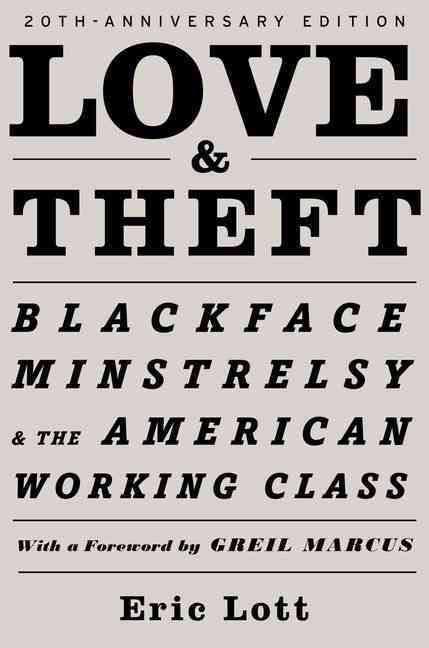
A jinx is a kind of curse that lays a constant stream of small accidents and bad luck on the accursed, or the name for a person who brings bad luck – that fits better. And Miss Lucy? Dylan knows Miss Lucy from the song “Miss Lucy Long”, a song from the nineteenth century that is sung in the blackface minstrel shows and is analyzed by Eric Lott in his “Love & Theft”, in the work that is on Dylan’s bedside table in this period. This Lucy does not jump in the lake, but still times do change for her. She has a big mouth and is therefore exchanged for a bag of corn.
Explicable or not, even the impenetrable verses contribute to that one image that rises from the song: the evening twilight of a extinguished human life that Dylan painted in a similarly large way in that other monument, in “Not Dark Yet”.
Imagery like ‘waiting on the last train‘ and ‘head already in the noose‘ is not necessarily overwhelming, but effective. Distinctive, however, are the philosophical one-liners. ‘All the truth in the world adds up to one big lie’ has the same dark, sombre beauty as ‘my sense of humanity has gone down the drain’ from “Not Dark Yet”, like the masterly, melancholy phrase ‘I used to care, but things have changed’ is an echo of ‘I just do not see why I should even care’ from that same song.
The lament is accompanied by a driving, almost swinging music part with a high hum-along quality. Unusual for Dylan are the many middle-eights; the master lets the bridge play no fewer than four times. It is not annoying, for it is indeed a beautiful bridge, as the whole song is captivating. “Things Have Changed” is already in Olof Bjorner’s Top 20 of most performed songs – with over eight hundred performances a proud Dylan has already played it more often than “The Times They Are A-Changin”.
There are not that many noteworthy covers, but among those few attempts some pearls shine. Most colleagues extrapolate the jazzy elements of the original, with walking bass and brushes, and opt for the wandering pace that Dylan already has abandoned in his live performances. Usually one enters J.J. Cale’s territory.
That applies in any case to the beautiful version by late bloomer Grant Peeples, on Prior Convictions from 2012. Pure swing jazz produces the hobbyproject String Swing from Swedish jazz singer Josefine Cronholm (Waiting for the Good Times, 2008, with a magisterial guitar solo á la Wes Montgomery), but Cronholm does not come close to her superior colleague Barb Jungr. Jungr continues tirelessly to play the Bob Dylan Songbook to this day and is still getting better every day. Her version of “Things Have Changed”, which was recorded in 2002, is fascinating, and distinctive too: Jungr turns it into a tango.
However, the ladies competition is decided by veteran Bettye LaVette. LaVette’s soulful cover opens the 2018 tribute album Things Have Changed is rough, driving and swings like a pendulum.
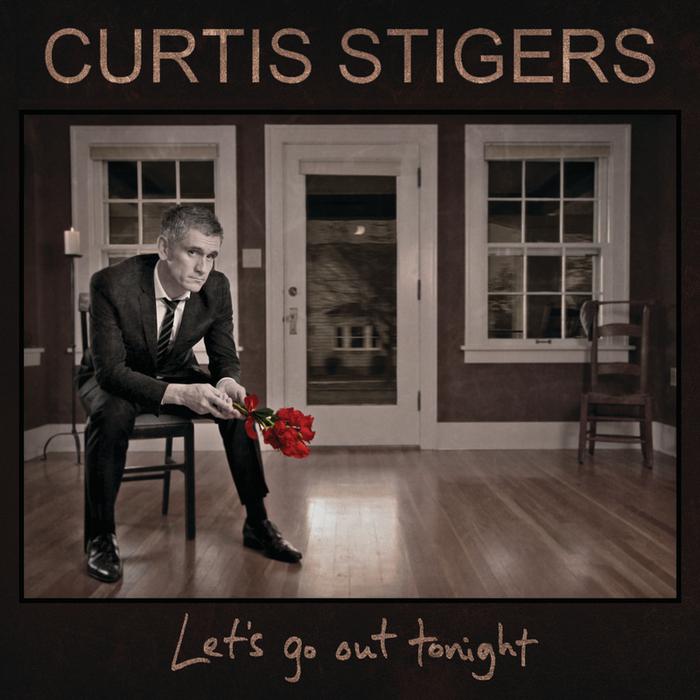
The most beautiful cover so far is sung by another jazz celebrity, by Curtis Stigers. His Don’t Think Twice from 2003 is one of the most brilliant renditions of that evergreen, and with “Things Have Changed” (Let’s Go Out Tonight, 2012) he reconfirms his class. Superb, supercooled production with dozens of small, loving surprises in the arrangement, and on top of that the declamatory art of Stigers; it is a version that earns a place next to the original.
You’ll find an index to our latest posts arranged by themes and subjects on the home page. You can also see details of our main sections on this site at the top of this page under the picture.
The index to the 500+ songs reviewed is now on a new page of its own. You will find it here. It contains reviews of every Dylan composition that we can find a recording of – if you know of anything we have missed please do write in.
We also now have a discussion group “Untold Dylan” on Facebook. Just type the phrase “Untold Dylan” in, on your Facebook page or follow this link
And please do note The Bob Dylan Project, which lists every Dylan song in alphabetical order, and has links to licensed recordings and performances by Dylan and by other artists, is starting to link back to our reviews.
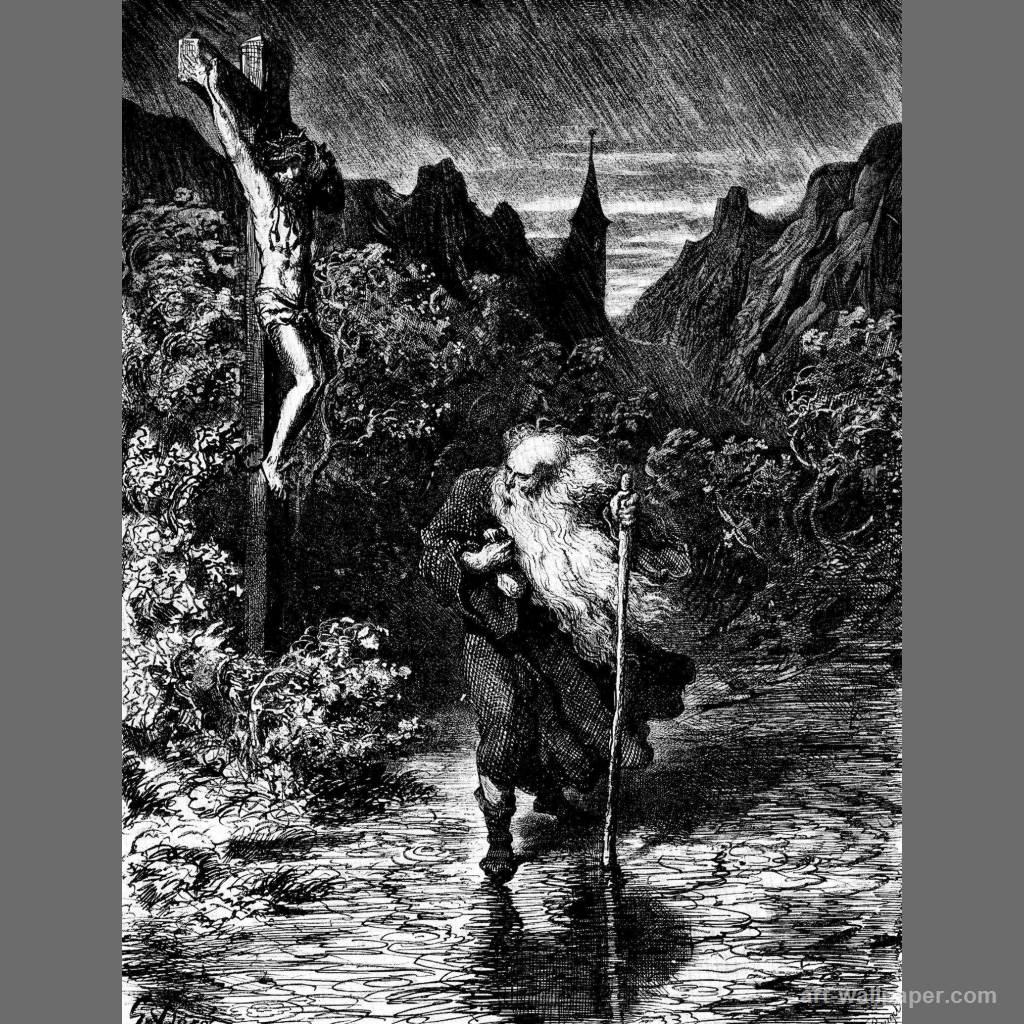
The gatekeeper of Pontius Pilate, one Cartaphilus, is a most unpleasant man. When Jesus tries to pass, at the beginning of the Stations of the Cross, this Cartaphilus strikes a nasty blow on His back and snarls that He should hurry up. “I will go,” the Lamb of God replies, “and you shall wait until I return.” With this curse He condemns the porter (a Jew, in some versions a Roman centurion) pretty much to immortality; for Jesus will not return until Judgment Day.
It is a popular, apocryphal story from the late Middle Ages and it engages literati, high clergymen and even royal circles until the twentieth century. In other versions the boor is a Jewish shoemaker from the Via Dolorosa, called Ahasverus, “the Wandering Jew”, in a French national sage he is named Isaac Laquedem, elsewhere Giovanni Buttadeo and Hans Gottschläger, but he is always a restless, Eternal Wanderer who is punished for his loose hands and disrespectful treatment of Christ. Punished with immortality, that is.
There are more stories in which immortality is presented as a terrible curse (the Flying Dutchman, for example), but even more in which immortality is desirable, or at least pleasant. It doesn’t depress the wizards and the elves in The Lord Of The Rings, for one thing. Grail Knights sacrifice years of their life to avoid mortality through the Holy Grail, Alexander the Great kept searching for the Fountain of Youth all over Asia, and even Christ Himself recruits followers with the promise of an eternal life.
This duplicity of the curse has been bothering Dylan, apparently. On the one hand it is of course an attractive mystical, archaic doom, but then doubt pinches in: is immortality really such an horreur? Dylan’s solution is macabre. The treacherous judge in “Seven Curses” will not be able to die, nor will he really live. Him awaits an eternity of maddening loneliness, much like the last days of the beetle Gregor Samsa in Kafka’s Die Verwandlung (The Metamorphosis): to see without being seen, to hear without being heard, to suffer without the prospect of alleviation.
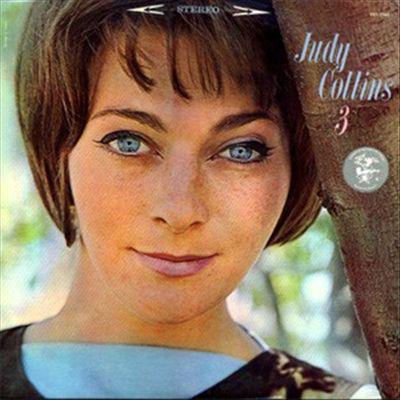
In doing so, the young poet gives his own twist to a well-known, centuries-old story. Child Ballad No. 95, “The Maid Freed From The Gallows”, Leadbelly’s “Gallows Pole”, Shakespeare’s Measure For Measure… the story of the young woman who is abused and betrayed by a conniving judge (or hangman) in a desperate attempt to save herself or a loved one from the gallows, has been told for centuries, in dozens of variations. Dylan is familiar with the version from Judy Collins, who in those early 60’s often and gladly plays “Anathea”, which in turn is an adaptation of the Hungarian “Féher Anna” (“White Anna”). According to an admiring Collins, Dylan picked up her version of the song and then did “what he has always done – he connects it with this inner, subterranean river of the subconscious.”
True, she might be expressing herself somewhat airy-fairy, but Judy does have a point here. In 1963, the 22-year-old troubadour is already a walking encyclopedia of old folk songs and he senses well what “Anathea”, with its judge “thirteen years bleeding” and his in-curability, is still missing: apart from such a mythical damnation of old-testamentarian caliber, also a psychological more exciting shift of perspective to a father, who prefers to die, rather than allowing an old pervert to touch his daughter.
The musical upgrade is at least as profound and lifts Dylans song to a level high above the Anathea’s and the Gallows Poles. Dylan renounces frills and frolics and melodic richness, and chooses a soundtrack-like approach. Almost monotonous, a bleak and sombre bass accompaniment with sparse, ghastly accents on the higher strings – it’s a sound curtain, an acoustic backdrop that enhances the sinister content of the thriller.
The effect is great and the result is an enchanting song. Unfortunately, however, it seems that the maestro himself is less content. In 1963 he plays it twice on stage (both times in New York), he records, also in New York, a stunning version for The Times They Are A-Changin’ (which eventually will surface in 1991, on The Bootleg Series) and one last time “Seven Curses” flutters down on a set list, at a relatively obscure gig in February ‘ 65 in New Brunswick, New Jersey – the bard never took the song any further than 36 miles from Greenwich Village.
One can understand that Mr. Dylan chose to reject the recording, in those days. It doesn’t, indeed, fit seamlessly between songs like “Hollis Brown” and “Hattie Carroll”. But meanwhile it has been over fifty years of not looking back on it – which surely proves an incomprehensible disinterest. The master, he works in mysterious ways.
In the meantime, the colleagues are grateful. Through the decades, dozens of covers have been recorded, and especially after the success of The Bootleg Series the song experiences a hefty revaluation. Pretty much everyone succumbs to the temptation to rig the song musically more exuberantly than Dylan did. Arrangements usually copy the Led Zeppelin-model of “Gallows Pole”, with a dramatic, ominous opening and a shift to a nervous, hectic, unnerving continuation, around the third verse.
https://www.youtube.com/watch?v=p8JQQOOcY3g
It becomes “Seven Curses” less well. After all, “Gallows Pole” doesn’t have a linear tension buildup, but rather builds on repetition until the dramatic shift when the sister offers her body. One rescuer after the other is anxiously awaited, one rescuer after the other turns out not having be able to scrounge up enough gold or silver to redeem the horse thief, and though the hangman accepts every bribe, even the sister’s soulwarming can’t save the protagonist.
Dramaturgical objections aside, such an interpretation does supply compelling covers of “Seven Curses”. The version by Solas (on For Love And Laughter, 2008) and the one by folk veteran June Tabor (in 2011, with the Oyster Band, Ragged Kingdom) are equally gorgeous. More exciting, anyway, than the ones that remain faithful to the austere inflection of Dylan, such as Andy Hill and Renee Safier on their Dylan tribute It Takes A Lot To Laugh (2001) – but that one is as well a particularly attractive, albeit a little too clean, interpretation.
You’ll find an index to our latest posts arranged by themes and subjects on the home page. You can also see details of our main sections on this site at the top of this page under the picture.
The index to the 500+ songs reviewed is now on a new page of its own. You will find it here. It contains reviews of every Dylan composition that we can find a recording of – if you know of anything we have missed please do write in.
We also now have a discussion group “Untold Dylan” on Facebook. Just type the phrase “Untold Dylan” in, on your Facebook page or follow this link
And please do note The Bob Dylan Project, which lists every Dylan song in alphabetical order, and has links to licensed recordings and performances by Dylan and by other artists, is starting to link back to our reviews
by Larry Fyffe In his basement, singer/songwriter/musician Bob Dylan mixes up various forms of artistic medicine. In the romantic drama, ‘Now And Forever’, Gary Cooper stars as an unscrupulous swindler named Jerry Day who plans to sell the custody rights of his daughter ‘Penny’ – until he meets the young girl, that is.
Smitten, he has a change of heart. Unable to hold down a job, he steals a necklace from Penny’s little old lady friend. Jerry’s girlfriend takes the blame so that Penny (Shirley Temple) will not forsake her father. Jerry repents and returns the necklace, gives custody of Penny to the old lady, and turns himself into the police. Bob Dylan gives Penny a new name, and changes the age of Shirley Temple in the following song: Well, you know that even before learned her name You know that I loved her just the same And I tell them all wherever I may go Just so they’ll know that she’s my little lady And I love her so Peggy Day stole my poor heart away Turned my skies from blue to gray Love to spend the night with Peggy Day (Bob Dyan: Peggy Day)
https://vimeo.com/231149215
Dialogue from the movie: Shirley Temple: ‘What’s your name?’ Gary Cooper: Jerry Shirley Temple: ‘ Mine is Penny Day’ There’s a strong connection to the heart of an old folk song: Come down the stairs, pretty Peggy-O Come down the stairs, comb back your yellow hair Bid a last farewell to your mammy-O …. You’re the one that I adore, Sweet Willy-0 But your fortune is too low And I fear my mother would be angry-O (The Bonnie Lass Of Fyvie: Scottish folk song)
Which links to another song by Bob Dylan: Well, I can’t escape from these memories Of the one that I’ll always adore All those nights when I lay in the arms Of the girl from the Red River Shore (Bob Dylan: Red River Shore) Now back to our movie: Jerry: ‘Close up they don’t look as large as they do from a distance” (Gary Cooper: Now And Forever) Dylan hears Cooper’s voice – takes on his persona to a certain extent: I can hear his voice crying in the wilderness What looks large at a distance Close up ain’t never that big Never could drink that blood and call it wine Never could learn to hold you, love, and call you mine (Bob Dylan: Tight Connection To My Heart) Typical of Dylan, the lyrics directly above are open to different levels of interpretation, including Dylan’s or his persona’s rejection of Christian orthodoxy and ritual. Little Shirley Temple in the movie ‘Now And Forever’ makes an allusion to a famous playwright: Jerry: ‘Honour bright?’ Penny: ‘You can only say that when it’s honest to goodness true’ The reference is to the Bard: Ulysses: ‘Perseverance, dear my lord Keeps honour bright’ (William Shakespeare: Troilus And Cressida -Act III, sc.III) The movie’s a real tear-jerker: Now the chimney is rotten And the wallpaper’s torn The garden in the back Won’t grow no more corn The windows are boarded With paper mache And even the dog Just ran away (Bob Dylan et al: Shirley Temple Don’t Live Here Anymore)
Through the diaries of Samuel Pepys (1633-1703), the English have inherited an enviable cultural and historical treasure. For ten years, from 1660 to 1669, the senior official (a Secretary of the Admiralty and reorganiser of the Royal Navy) keeps a diary, in which he wittily, precise and above all very boldly records everything that haunts him in his private life, while also meticulously reporting on life outside his four walls.
He writes on the Black Death, the Great Fire of London, the Second Anglo-Dutch War, to name but a few, we thus gives us unique eyewitness accounts. Pepys is quite a gentleman, as the description of the Dutch enemy Michiel de Ruyter (the Raid on the Medway is also described) shows: “In all things, in wisdom, courage, force and success, the Dutch have the best of us.”
Equally colourful and detailed are the descriptions of his many sexual escapades, but those are written in a self-invented code, in some kind of shorthand. That was finally deciphered in the nineteenth century, and it was not until well into the twentieth century, before a full, unedited version was entrusted to the public.
And to music historians the diary is a source as well: thanks to Pepys, we know that the indestructible evergreen “Barbara Allen” is a popular song already in his time: on January 2, 1666 he tells us about a New Year’s party where one of his mistresses, the actress Elizabeth Kneipp, enchants him with her performance of “a little Scotch song of Barbara Allen.”
The song, in many variants, remained popular for centuries. The setting is London, sometimes Dublin and then Reading – relocation to the nonexistent Scarlet Town is probably a wordplay on Reading (pronounced Redding). That is not the variant that Dylan sings at The Gaslight October ’62; that one opens in Charlotte Town, “not far from here” but in the much more dramatic version in 1988 it’s “Scarlet Town, where I was born.” The ailing young man is called William in both versions, but becomes Sweet William again in the later version; initially it was Poor William.
The excerpts Sweet William on his deathbed lay and the opening line with town name both travel along to one of the highlights of Dylan’s beautiful album Tempest (2012): “Scarlet Town”. On that record, quite rightly received with jubilant cheers, the Dylan touch that we have seen developing roughly since “Highlands” (1997), culminates: that sparkling amalgam of poetic, epic and lyrical influences, quotations and paraphrases from centuries of world literature, from ancient Greece to modern Japan, from the Bible to film noir, from seventeenth-century Scottish folk songs and songs from the Civil War to dusty swing records from the early twentieth century, and rock ‘n’ roll classics from the 50s, 60s and 70s.
“Scarlet Town” is a highlight of that sparkling amalgam, a highlight that manages to capture the time transcending appeal of Dylan’s later work. Besides “Barbara Allen” more song references sail on by: “Little Boy Blue” is a nursery rhyme that is already cited in Tommy Thumb’s Little Song Book (1744), “Set ’em Up, Joe” is a country song by Vern Gosdin from 1988, which in turn also respectfully quoted the 1941 song “Walking The Floor” by Ernest Tubb.
However, those winks at folk music tradition do not define the song; at most they add some couleur. Predominant is the apocalyptic, Sodom and Gomorrah-like doom, although the lyrics do not end in downfall, but in reconciliation.
Biblical references abound, and thereby Dylan comes close to what he originally intended with this record: “I wanted to make something more religious. I just didn’t have enough [religious songs]. Intentionally, specifically religious songs is what I wanted to do.”
Clearly inspired by the spirit of the New Testament, we find in the song many references from especially Matthew. In “Narrow Way” we hear Matt. 7:14 (“Because strait is the gate, and narrow is the way”), and Matt. 26:42 (“if this cup may not pass away from me, except I drink it”).
In “Pay In Blood” we see bits of Romans, Corinthians and Peter and “Scarlet Town” does not remain behind. I touched the garment but the hem was torn the poet lends from Matt. 9:20; “And, behold, a woman (…) touched the hem of his garment” (- the story of the woman who heals thanks to the strength of her faith) and the location of Scarlet Town (“under the hill”) does not bode well; Jesus refers to his disciples that they are to be the light, the salt of the earth, a city on the hill (“A city that is set on a hill can not be hid” Matt. 5:14).
The American vocabularyincorporated A city on a hill centuries before as a metaphor for responsible, exemplary citizenship. In the twentieth century both J.F. Kennedy and Ronald Reagan use the image in speeches. This Scarlet Town, however, is under the hill, thus doomed.
The poet Dylan does seem to choose his actual birthplace, Duluth in Minnesota, as the setting for this lyrical sketch of a Judgment Day. Ivy leaf is the poisonous leaf of that nasty poison ivy that is a plague in Minnesota (toxicodendron rydbergii), the street names you can’t pronounce is perhaps a witty hint to the Bob Dylan Way, unveiled by the proud people of Duluth in 2006 on the occasion of Dylan’s sixty-fifth birthday, Walnut Grove and Maplewood are a village and a small town in Minnesota, and in that vein there are some other, more and less far-fetched, allusions to be found.
This now is the setting to the Last Daybreak, with matching dancing-on-the-volcano behaviour of mortals. Heaven comes down. Mary kisses the dying Sweet William, the end is near, Good and Evil come back together and human forms seem glorified (“Therefore let no man glory in men. For all things are yours” 1 Cor. 3:21.). It does not matter, because sin is not possible anymore. We stay up late and dance with the skinny junkie whore while the Heavenly Smile descends.
The last verse opens with the original, catchy aphorism If love is a sin, then beauty is a crime, which Dylan subsequently connects to the biblical classic Ecclesiastes 3. Famous, because Pete Seeger put it to music and sang Turn, Turn, Turn after every verse, more than famous after The Byrds turn it into a worldwide hit in 1965.
“Turn! Turn! Turn! (To Everything There Is A Season)”, as the song is officially called, quotes verse 1 through 8. Dylan reads a little further and then underlines verse 11, “He hath made every thing beautiful in his time”, and Dylan saw those lines, that it was good: the ideal completion for the masterful mosaic that “Scarlet Town” is. With good reason he then holds back in terms of musical accompaniment; more is less now. Dylan chooses a smooth melody, a thin chord progression and the faltering pace of a funeral procession; it truly is an enchanting song.
You’ll find an index to our latest posts arranged by themes and subjects on the home page. You can also see details of our main sections on this site at the top of this page under the picture.
The index to the 500+ songs reviewed is now on a new page of its own. You will find it here. It contains reviews of every Dylan composition that we can find a recording of – if you know of anything we have missed please do write in.
We also now have a discussion group “Untold Dylan” on Facebook. Just type the phrase “Untold Dylan” in, on your Facebook page or follow this link
And please do note The Bob Dylan Project, which lists every Dylan song in alphabetical order, and has links to licensed recordings and performances by Dylan and by other artists, is starting to link back to our reviews
“Nobody has ever captured the sound of 3 a.m. better than that album. Nobody, even Sinatra, gets it as good.” (Al Kooper)
Synesthesia is the peculiar disorder in which the holder mixes up sensory perceptions. He sees sounds, for example, hears colours or smells images. There are as many as sixty varieties, including less common ones, like connecting a flavour to a shape and experiencing specific movements at specific sounds. A more common form is called colour-graphemic synesthesia:lettersornumbersare perceived as inherently coloured. Just like Dylan’s hero Rimbaud describes in his second délire from Un Saison En Enfer (1873). Colour-graphemic synesthesia, and Rimbaud connecting it to his personal definition of poetry:
I invented the colour of vowels! A black, E white, I red, O blue, U green. – I regulated the form and motion of every consonant, and, with instinctive rhythms, I flattered myself I’d created a poetic language, accessible some day to all the senses. I reserved the translation rights.
It was academic at first. I wrote of silences, nights, I expressed the inexpressible. I defined vertigos.
Supposedly, about four percent of all people have a more or less mild form of synesthesia, and with artists, especially musicians, it seems to be more common: in studies at Art Academies the percentage synesthetes fluctuates around 23%. Documented among others are Frank Zappa, Kanye West, Rimsky-Korsakov, Duke Ellington and Pharell Williams, on others there is a strong suspicion. Franz Liszt would call out to a distraught orchestra during rehearsals: “A little more blue in this passage, please!”, Rembrandt and Baudelaire are posthumously also diagnosed as synesthetes.
Science acknowledges the phenomenon only since 1866, but in the arts the mixing of sensory impressions is much older, of course. The Romantics at the end of the eighteenth century indiscriminately use colours or flavours to describe moods and sounds; for centuries heroic protagonists have felt fire flowing through their veins. And in everyday language synesthetic expressions like warm colours, bitter words or heavy footsteps have been established forever.
Dylan’s poetry is swarming with sensory blends. It’s the sixties, so at first one wonders to what extent it should be attributed to the influence of Baudelaire and Rimbaud, and/or drug use. In “Chimes Of Freedom” bolts strike shadows in the sounds, the sky cracks poems and the rain unravels tales. In “Love Minus Zero / No Limit” the beloved laughs like a flower and the wind is howling like a hammer, and in “Mr. Tambourine Man” the morning seems to be quite jingle jangle, the trees are frightened and one can hear the spinning across the sun – but then again, that’s the song in which the narrator admits:my senses have been stripped.
However, when the French symbolistes and hallucinogenic drugs have long been abandoned, the organs of perception continue to be disturbed. Not only in the songs, but also in interviews Dylan hints at synesthesia with some frequency.
The most cited interview excerpt comes from the March 1978 issue of Playboy and describes Dylan’s attempts to articulate the sound of Blonde On Blonde:
“The closest I ever got to the sound I hear in my mind was on individual bands in the Blonde on Blonde album. It’s that thin, that wild mercury sound. It’s metallic and bright gold, with whatever that conjures up.”
Pure synesthesia. In 2001 interviewer Rosenbaum delves further into his memory and searches his notes to write a piece for The Observer on Dylan’s preoccupation with sound. And then notices that Dylan is trying to capture the sound of light:
“That ethereal twilight light, you know. It’s the sound of the street with the sunrays, the sun shining down at a particular time, on a particular type of building. A particular type of people walking on a particular type of street. It’s an outdoor sound that drifts even into open windows that you can hear (…) usually it’s the crack of dawn.”
So that is a jingle jangle morning. Still more explicit is Dylan in the ABC-TV interview in 1985, when he is asked whether he considers his song lyrics as poetry:
It’s more of a visual type thing for me: I could picture the colour of the song or the shape of it or who it is that I’m trying to appeal to in this song and what I’m trying to almost reinforce my feelings for. And I know that sounds sort of vague and abstract, but I’ve got a handle on it when I’m doing it.
Curious as well is the confession at a press conference in Rome, 2001:
Dylan: I consider colours ugly.
Q: You don’t like colours?
Dylan: Sometimes colours are okay. But when I have the choice, I prefer black & white. For my eyes that harmonizes better.
Remarkably enough, so far, but what stands out the most, when Rosenbaum rereads that interview, is the vast importance that Dylan seems to attach to capture the right sound. It seems more important, at any rate, than finding a melody or the right words (!):
I’m not just up there re-creating old blues tunes or trying to invent some surrealistic rhapsody. it’s the sound and the words. Words don’t interfere with it. They… they… punctuate it. You know, they give it purpose. [Pause] And all the ideas for my songs, all the influences, all come out of that. All the influences, all the feelings, all the ideas come from that. I’m not doing it to see how good I can sound, or how perfect the melody can be, or how intricate the details can be woven or how perfectly written something can be. I don’t care about those things.
And thereby Dylan downplays the endless exegesis of his lyrics. First and foremost comes the sound of the words, not so much the content. Disconnecting content and sound, or the feeling that a word evokes, is impossible, at least to a mentally healthy person. Someone with synesthesia can distinguish between reality and the synesthetic experience – seeing an orange ball at a certain sound does not have the disruptive power of a hallucination; the synesthetic knows that the orange ball is not there in reality. Likewise will a poet like Dylan not experience empty sounds in a word – he is mentally healthy, so the semantic content will always colourize the word experience. But nothing more; decisive for the choice of a word is the sound, not the content.
This knowledge helps in understanding one of Dylan’s most kaleidoscopic, impenetrable love songs, the legendary “Sad-Eyed Lady Of The Lowlands”. In the course of the half-century since the publication of the song, tens of thousands and tens of thousands again have ventured to an interpretation. A Google search for “Sad-Eyed Lady Of The Lowlands” + “meaning” produces 65,000 hits, “+ interpretation” about as much, the Wikipedia page about Sad Eyed hits 1570 on average per month. And those are just the English-language hits. Those interpretations reveal a lot of creativity and even more despair (and remarkably often the observation that the song lasts twenty minutes – there are really only eleven minutes and twenty seconds). What are warehouse eyes, what is a geranium kiss, what are matchbook songs?
Untranslatable actually, as even the more persistent translators have to recognise. In almost every line the translator has to make a choice between sound and meaning, weighing whether the sound is more important than the image evoked by the content of the words.
Bindervoet and Henkes, tremendously creative and skilled Dutch translators of lyrics and literature altogether, dare to let go of the meaning, but then inadvertently unleash other forces. Your eyes like smoke and your prayers like rhyme becomes je ogen als rook en je gebedje gespreid. Runs like a charm, but it means something like your eyes like smoke and your warm welcoming prayer, including a laborious jeu de mots which drags the text quite a few floors down.
Musician Ernst Jansz tries it on his own and transforms that line into je ogen als rook en je gebed als een chanson(Your eyes like smoke and your prayers like a chanson). True, closer to the source. But leaving the ‘i‘-sound is a rupture, and downright awkward is the increase of number of syllables (four more), which debunks the rhythm.
The tight form in which Dylan pours his ode is a restrictive corset. We see demonstrated what Goethe meant when he said In der Beschränkung zeigt sich erst der Meister (“It is in working within limits that the master reveals himself”): framed within a strict form only a true master can create a moving work of art. For the translator that stringent form creates an extra, almost insurmountable limitation.
With your mercury mouth in the missionary times And your eyes like smoke and your prayers like rhymes And your silver cross, and your voice like chimes
Dylan chooses an unusual rhyme scheme and an unusual, waltz-like meter (6/8, same signature as he later uses on “Sara”), and is dazzlingly generous with literary figures of speech like internal rhyme, assonance, alliteration, anaphora, repetition and rhetorical questions, to name a few – happy trails, translator. The three rhymes of the first three lines are intertwined with the centre of this trio (like rhymes and like chimes with like smoke), the opening line alliterates three times and connects the opening mouth with respect to content to the end of the terzetto voice, the religious connotation of missionary is maintained in line two (prayers) and in line three (cross), the repetition of the opening words of the three lines, and the three metallic metaphors should be saved (mercury, silver, chimes).
Every translator already stumbles over these first lines, most of them move out of way and flee to association.
In Spain, J.M. Baule, a persistent Dylan interpreter, doesn’t praise a Distressed Looking Lady from the Lowlands, but some Sweet Lady from the Southern Countries (“Dulce Dama de las Tierras del Sur”) and turns it into a tear-jerker with hints of Canticles:
Con tu cara divina, de las diosas de los templos,
y tus ojos como miel, y tus plegarias como ruegos.
Y tu luna de oro y plata, y tu voz como un consuelo.
So this Dulce Dama has a divine face, looks like the goddesses in the temples, eyes like honey, and prayers like supplications. And a moon of gold and silver, her voice a consolation.
Very loosely translated, all in all, in which Baule allows himself an admittedly kitschy, yet somewhat dylanesque wordplay; choosing miel (honey) in line two and luna (moon) in line three, evokes to any Spaniard luna de miel: honeymoon.
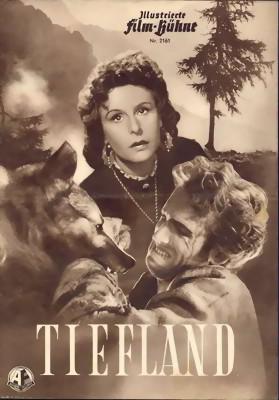
The Danish Bob Dylan, Steffen Brandt, also considers those Lowlands too far away, and turns it into a Girl from the Province of (“Pigen fra Provinsen”) and the German ladies Agnes Banes & Eva Maria Staudenmeier embark on thin ice in naming the song “Traurige Lady aus dem Tiefland”; Tiefland also happens to be the name of the last movie of nazi director Leni Riefenstahl, who summoned quite a lot concentration camp prisoners for the film (and sent them back after the shooting, most prisoners eventually died in Auschwitz).
Translation of this song is, in short, a brave undertaking, but seems to be a lost cause, and you should ask yourself: what is there to be gained? The content of the text won’t be any more understandable, it gets pushed around in all kind of directions, and you lose the sound.
The major stumbling blocks are, of course, the inimitable metaphors. Those first two already cast a language barrier by using nouns as adjectives; the poet does not call it a mercurial mouth, but a mercury mouth, like missionary times an alienating combination of two nouns. Dylan does permit himself this, this linguistic freedom, not for the first time, and this time more extreme than ever. Who among them do they think could carry you is simply incorrect. Consistent in his linguistic aberrations the poet is certainly not; in the following verses the syntax is correct again (who among them would try to impress you, for example) and he connects, very reassuring, nouns occasionally with neat adjectives. First of all Sad-eyed lady, and Spanish manners, dead angels, holy medallion, saintlike face … all of them grammatically correct and semantically understandable.
Apparently, and this confirms Dylan’s own thoughts regarding the sound, he indeed bases his word choice on this assumed synesthetic judgment. Mercury mouth is not substantively different from mercurial mouth, although it may evoke other images (‘mercury mouth’ perhaps sooner brings to mind a set of teeth with many fillings rather than ‘mercurial mouth’ does, which might summon the image of a unpredictable, clever, witty speaker), but somehow it just tastes, or sounds, or looks, or feels more correct than the linguistically logical variant.
It seems as if he started the song off as an old-fashioned blason, the medieval poetic form in which the poet in overblown terms praises the beauty of (parts of) his adored. Like some Italian poet from the thirteenth century (okay, fourteenth) does:
That frail life, that still exists in mewas the clear gift of your lovely eyes,and your voice, angelically sweet.I recognise my being comes from them:
Dylan keeps hanging around the face, and gets carried away, as he admits a few years later, in a rare mood of openness to Rolling Stone‘s Jan Wenner:
“It started out as just a little thing, Sad-Eyed Lady Of The Lowlands, but I got carried away, somewhere along the line. I just sat down at a table and started writing. At the session itself. And I just got carried away with the whole thing… I just started writing and I couldn’t stop. After a period of time, I forgot what it was all about, and I started trying to get back to the beginning. (Laughs) Yeah.”
That takes place on the second day of recording in Nashville, on the night of 15 to 16 February 1966, and session musician Charlie McCoy confirms the thrust of Dylan’s memories.
When [Dylan] first came in … he asked us if we’d mind waiting a while. They had stopped at an airport in Richmond and he didn’t have a chance to finish his material. … So we all went out and let him have the studio to himself. He ended up staying in there [writing] for six hours.
Al Kooper recalls it too in his autobiography:
(…) he would sit in there for five hours without coming out and just play the piano and scribble. The atmosphere was as if clocks didn’t exist. The musicians were truly there for Bob and if it meant sitting around for five hours while he polished a lyric, there was never a complaint.
Yet all exegetes do agree about “what it all was about”: about Sara obviously. And of course, there is a lot to support that claim. First of all Dylan’s own confession in the song “Sara” (1975): “Staying up for days in the Chelsea Hotel / Writing Sad Eyed Lady of the Lowlands for you “.
Furthermore, every interpreter points at the many biographical references. Sara does have ‘sad eyes’, the sheet-metal memory refers to her childhood as the daughter of a scrap dealer, she was married to a magazine-husband, the magazine photographer Hans Lownds, with whom she has a child, the child of a hoodlum and her last name Lownds reappears in Lowlands.
The isolated position of the song on the double album, physically secluded on side four, is a further hint – after three record sides filled with those girlfriends for a few hours, trollops like Sweet Marie and night-moths and women for a rainy day, Dylan eventually finds The One and honours her on her own, untainted record side, in a grande finale.
Quite convincing, so far. But not completely. The historical inaccuracy of Dylan’s claim that he wrote the song in the Chelsea Hotel, might be poetic license. But there are plenty of passages which grant particularly Joan Baez the right to feel honoured. Or, only slightly more far-fetched, the mother of Joan Baez.
Ms. Joan Chandos Baez Bridge (1913-2013) also has beautiful, sad eyes, and was actually born in the Scottish Lowlands, in Edinburgh, a daughter of a preacher man and descendant of the English Dukes of Chandos – so in Dylan’s entourage she is the only real, genuine, literal Lady of the Lowlands.
Her daughter Joan has a much-discussed, long-term and turbulent love affair with Dylan, and is more entitled to lay claim to the musical references in the song than Sara. Like it or not, but Joan has a voice like chimes, sings prayers like rhymes (“The Lord’s Prayer” for example, 1963) and also your matchbook songs and gypsy hymns really still rather refer to a singer than to a model and ex-secretary. Baez has a Mexican father and moreover actually lived in Spain in her youth, resulting perhaps in Spanish manners, and she really lives on the coast, with the sea at your feet.
Half-time score Sara – Joan: 5-5.
The descriptions of the appearance will not score uncontroversial, decisive points. Baez’ eyes are slightly larger and hang off more; sadder than Sara. Sara’s appearance is fragile and one will rather associate hers with a face like glass, and saintlike … well, that fits both. But basement clothes suits neither ladies; both Sarah and Joan are usually reasonably fashionable and dressed for the day.
The hypnotic music accompanying the ode is highly valued, generally. From unexpected sources, too. The musician Tom Waits packs his admiration lyrically, with Biblical imagery:
For me, “Sad-Eyed Lady of the Lowlands” is a grand song. It is like Beowulf and it ‘takes me out to the meadow.’ This song can make you leave home, work on the railroad or marry a Gypsy. I think of a drifter around a fire with a tin cup under a bridge remembering a woman’s hair. The song is a dream, a riddle and a prayer.
Roger Waters, the leader of Pink Floyd, claims with sense of drama that the song has changed his life and encouraged him to write such long, or even longer, songs.
This length of the song has been mythologized somewhat, though. Session drummer Kenny Buttrey explains the unusual dynamics of Sad Eyed from the fact that the musicians didn’t know how long it would take, and therefore prematurely climaxed.
“If you notice that record, that thing after like the second chorus starts building and building like crazy, and everybody’s just peaking it up ’cause we thought, Man, this is it…This is gonna be the last chorus and we’ve gotta put everything into it we can. And he played another harmonica solo and went back down to another verse and the dynamics had to drop back down to a verse kind of feel…After about ten minutes of this thing we’re cracking up at each other, at what we were doing. I mean, we peaked five minutes ago. Where do we go from here?”
Great story, and it is often and gladly retold. But it’s baloney. The recording that ends up on the record, is the fourth take. On The Cutting Edge we hear two recordings more, one of them even a minute longer than the final recording, plus a practice session. Okay, it’s late at night, it’s been a long day, but it’s very unlikely that Kenny, or any of the other musicians, at the fourth take still would be surprised by the length of the song. Apart from that: the day before the men recorded among others “Visions Of Johanna”. The final take clocked 7’33” – by now the esteemed gentlemen musicians would have learned that with Dylan, you’re not there after three minutes.
Originally, Dylan himself is passionately pleased with Sad Eyed. “This is the best song I’ve ever written,” he tells Robert Shelton, and to journalist Jules Siegel: “Just listen to that! That’s old-time religious carnival music!” Which is quite a surprising mark. By carnival he means those traveling freak shows or funfairs. In his early years, Dylan knocks up his own biography and tells journalists the most outrageous stories about his childhood. One of the stories he insists upon, with peculiar persistence, in multiple interviews, relates to his childhood at the carnival. Annually, from the age of thirteen, he travels the whole country and that is where he learns so many songs.
This tattle he repeats again in a radio interview in October 1961 and as an example of such a carnival song he then plays “Sally Gal”. Half a year later, another radio interviewer, Cynthia Gooding from WBAI FM Radio in New York, also wants to hear one. From his vast collection of carnival songs Dylan chooses “Standing On The Highway”. Another one, which he himself has written about an elephant lady whom he has met at the fair, is called “Won’t You Buy A Postcard” but sadly, he can not remember how the song goes.
“Standing On The Highway” now has Dylan’s name on it, but like with “Sally Gal” and Sad-Eyed, Dylan’s association with carnival songs is not comprehensible. Sally is attacked by a tramp (two thirds of the song consists of repetition of the line “I’m gonna get you girl Sally”), accompanied by a haunting, flippant guitar and ditto harmonica. Highway is a monotonous, neurotic blues with a hardly detailed reference to Death. The roving narrator is standing at some crossroads where one road leads to the tomb, he is staring at an ace of spades, and wonders in his solitude if his maiden prays for him.
True, there are some vague hints at religion and yes, some mystique hovers over the song. And elusive as “Sad Eyed Lady Of The Lowlands” may be, it is in any case an ode to an unearthly, sublime lady with mystical qualities, the song has Biblical references (Ezekiel, especially), a symbol loaded card metaphor and some religious triggers (missionary, prayers, cross, angel, saint and holymedallion). Thin, but to Dylan apparently thick enough to ratify the song as religious carnival music.
A satisfying musical interpretation is just as impossible as a translation, evidently. There are some artists who take a swing at this relic, but almost every time it is sacrilege. Both Joan Baez (1968) and Julie Felix (Starry Eyed And Laughing, 2002), as well as Steve Howe (1999, with Yes colleague Jon Anderson) attempt to adopt the hypnotic cadence, but get stuck in silky boredom. Richie Havens is at least distinctive. He provides a funky, soulful Schwung, the bass player seems to think that he joined the Doobie Brothers and Havens’ voice is always compelling, but alas – the mystical glow of the original is completely lost (Mixed Bag II, 1974).
The only entirely satisfactory score is produced by the versatile talent Jim O’Rourke, who unleashes his productional mastery on his contribution to the tribute-CD Blonde On Blonde Revisited (2016) of the magazine Mojo. The austere interpretation (acoustic guitar and bass) with a stunning second voice in the chorus is already beautiful, but the real find is the background noise: O’Rourke has recorded the sounds of the city in the wee small hours. In the distance we hear a metro train rattling, footsteps on a wet road, passersby talking muffled, a patch of a car, a skateboard, squealing tires, horns, a police siren.
He is the only one that comes close to the synesthetic experience that Dylan manages to convey without gimmicks: catching the sound of three o’clock in the morning.
What else is on the site?
You’ll find an index to our latest posts arranged by themes and subjects on the home page. You can also see details of our main sections on this site at the top of this page under the picture.
The index to the 500+ songs reviewed is now on a new page of its own. You will find it here. It contains reviews of every Dylan composition that we can find a recording of – if you know of anything we have missed please do write in.
We also now have a discussion group “Untold Dylan” on Facebook. Just type the phrase “Untold Dylan” in, on your Facebook page or follow this link
And please do note The Bob Dylan Project, which lists every Dylan song in alphabetical order, and has links to licensed recordings and performances by Dylan and by other artists, is starting to link back to our reviews
In May 2018, television company Fox announces that after three seasons the plug is to be pulled from the popular series Lucifer. The announcement provokes the predictable protests, sadness, indignation and the inevitable #savelucifer action, but Fox does have a point: the series has weakened, diluted, Americanized since the first episodes.
The premise, based on the stylish, layered graphic novel series Lucifer from DC Comics, is intriguing: after all those millennia Lucifer has had enough of his role as Satan, as Ruler of Hell. He takes on a human form and establishes himself in Los Angeles, in the City of Angels, as the elegant, attractive nightclub owner Lucifer Morningstar…
In the first episode of the TV series he gets involved in a murder crime, he helps the charming detective Chloe Decker to resolve that crime and from then on he is her consultant.
Lucifer Morningstar is attractive, catches crooks, steals the heart of Chloe’s six years old daughter, never lies, is genuinely outraged by amoral behaviour, rewards the good and punishes evil – Satan comes as a man of peace.
The television adaptation is quite a bit earthier than the source, that graphic novel, but the underlying dilemma also pops up in the first season of the TV series: exactly why does the fallen angel Lucifer stand for Evil, why is ‘Satan’ a synonym for bad?
Lucifer, too, explicitly wonders about that: I do punish evil, right? And I have been doing so for centuries and centuries. Hell is a penal institution – you would not think that the warden of a prison is Evil himself, right? And to the reproach that he at the very least entices to sin, Lucifer also has a reply: you have received the great Divine gift of Free Will. It is not me who commits those sins; you really do that yourself, out of your own Free Will and always with the choice of not doing it.
The poet Dylan seems to thematize the same dilemma in “Man Of Peace”, one of the highlights of Infidels (1983), and to share those same questions. Satan, the narrator teaches, can appear in any possible form. In extremis as the Führer, but just as easily as the local clergyman, as a boring neighbour or even as a philanthropist, and not just any philanthropist, no, a Great One – one in the Bill Gates category, something like that.
At that point, in the sixth verse, the listener starts wondering: where is Evil? If this Satan relieves famine, builds schools and transports medicines to Africa, and also “knows where to touch you” and apparently has a “tender touch” at his disposal … then why is he blameworthy, why should we avoid him? If only there were more Satans!
The last verse does not answer those questions. On the contrary: now the poet is getting close to sheer worship. Or blasphemy, depending on your look at it. At the very least, he suggests that Satan is a follower of Jesus. He follows a star, the same star the Three Wise Men from the East followed, the star that leads to Jesus. That star is, to enlarge the confusion, the planet Venus, also called the Morning Star: Lucifer.
Following that last line of thought, the poet here even tells us that Satan is our guidepost, the Man Of Peace that leads us to Jesus. Finally, the job description Man Of Peace completes the ambiguity: thus, the poet positions him as the pacifist opposite of Jesus, who, after all, did not come to bring peace, but the sword (Matthew 10:34).
Complicated enough, this theologically difficult question about the nature of the fallen
angel Satan, but the poet does not write a flaming pamphlet. That provocative refrain of “Man Of Peace” is a reflective setting in which the rhyming and reasoning language artist Dylan plays out his rhetoric, winking and aphoristic one-liners.
The first lines, for example, seem to be a friendly nod to his producer and guitarist Mark
Knopfler, to his first hit “Sultans Of Swing”. Where Mark Knopfler sings:
South of the river you stop and you hold everything A band is blowing Dixie, double four time
Dylan sings:
Look out your window, baby, there’s a scene you’d like to catch The band is playing “Dixie,” a man got his hand outstretched
In the second and third verse the comparison with the artist Dylan himself is inevitable. His radio program Theme Time Radio Hour and his own oeuvre already demonstrate it, but the amazement by and admiration for the man’s encyclopedic knowledge of songs from all ages and genres is also a recurring refrain among biographers and interviewed session players.
And that same harmonica-playing omniscient singer now sings he got a harmonious tongue / He knows every song of love that ever has been sung.
Just like a self-mocking portrait looms up from the following verse: First he’s in the background, then he’s in the front / eyes are looking like they’re on a rabbit hunt.
In this way casual observations become aphorisms, such as the notion that good intentions can be evil; a stripped paraphrase of the expression that tells us the road to hell is paved with good intentions. Or the especially bizarre notion that he can ride down Niagara Falls in the barrels of your skull.
A sample of the Nobel Prize winner’s “pictorial way of thinking”, but even by his standards a rather frantic, surrealist metaphor for mind games, for the psychic games that Satan can play with his victims – and for the games that the poet Dylan plays with his audience.
And not for the first time.
After “Jokerman”, the opening song of Infidels, it is the second song on this album in which the poet sows confusion about the identity of the protagonist, and also in the omitted masterpiece “Foot Of Pride,” and more explicitly in another highlight of the record, “I And I”. There Dylan plays around in that fogginess.
The remarkable lyrics are being carried by a beautiful, propulsive stomp, thanks to the unbeatable rhythm section, the duo Robbie Shakespeare and Sly Dunbar. They lay out the concrete floor for that dynamic, slightly neurotic rhythm guitar by Knopfler, who plays a catchy copy of his part on “Skateaway” (Making Movies, 1980), his unique variation of chicken-picking – not with single notes, but more percussive, with whole and half chords.
That works even better if you have a tandem like Sly & Robbie behind you.
The musical setting inspires beautiful covers. The Swedish country rockers from Georga produce a gritty, Creedence-like gem, but unfortunately they insist on singing everything in Swedish (“Civilklädd Präst” on Rakt In I Min Famn, 2014).
Better known is Joe Perry’s contribution to the Amnesty album Chimes Of Freedom (2012). Even more crunchy and filthy, and in the documentary we see the sincere love of a
seasoned Dylan fan, so it is a real pity that the Aerosmith guitarist cannot sing that well – the sly instrumental coda is the highlight.
The Holmes Brothers are immaculately good. Also with a swampy Creedence Clearwater Revival approach, rugged and irresistible. The vocal qualities of the brothers are of course beyond dispute and their sweaty mix of gospel, soul, blues and funk is created for this song, for this steamy “Man Of Peace”. With compliments to the producer, to Dylan disciple Joan Osborne, to whom we owe this best-sounding, rough-haired, sharp-edged album by The Holmes Brothers: Speaking In Tongues.
You’ll find an index to our latest posts arranged by themes and subjects on the home page. You can also see details of our main sections on this site at the top of this page under the picture.
The index to the 500+ songs reviewed is now on a new page of its own. You will find it here. It contains reviews of every Dylan composition that we can find a recording of – if you know of anything we have missed please do write in.
We also now have a discussion group “Untold Dylan” on Facebook. Just type the phrase “Untold Dylan” in, on your Facebook page or follow this link
And please do note The Bob Dylan Project, which lists every Dylan song in alphabetical order, and has links to licensed recordings and performances by Dylan and by other artists, is starting to link back to our reviews
Of course I can’t do the actual greatest reworkings of songs by Dylan, because there are so many new workings of the songs and new recordings appear – and sadly disappear. But I can pick a few that I rather enjoy, just in case you missed them.
I’ve also noted a few other articles related to the song, that you might (or might not) find interesting.
But…
This has turned out to be a far more time consuming exercise than I thought, since I’ve ended up listening to more and more and more Dylan reworkings of Dylan, not to mention correcting a few broken links in the reviews.
If you’d like to help me out, send in any lings to live performances that really do add something new to the original recorded version and I will continue to head towards the 50 promised in the article title.
In this it is not so much the singing that shines out, but rather the accompaniment which allows everything in those words (which of course we all know by heart, and which if I was going to be buried rather than cremated I’d consider having on my gravestone) suddenly rise up and turn us over, inside out and upside down.
Long distance operator: putting the call through for the Visions, by looking at what Dylan wrote immediately before Visions.
You’ll find an index to our latest posts arranged by themes and subjects on the home page. You can also see details of our main sections on this site at the top of this page under the picture.
The index to the 500+ songs reviewed is now on a new page of its own. You will find it here. It contains reviews of every Dylan composition that we can find a recording of – if you know of anything we have missed please do write in.
We also now have a discussion group “Untold Dylan” on Facebook. Just type the phrase “Untold Dylan” in, on your Facebook page or follow this link
And please do note The Bob Dylan Project, which lists every Dylan song in alphabetical order, and has links to licensed recordings and performances by Dylan and by other artists, is starting to link back to our reviews
The unifying theme (expressed throughout the Untold articles on singer / songwriter / musician Bob Dylan) that brings Bob Dylan’s works together is not so much found in the Holy Bible as it is in the movie ‘Children Of Paradise’.
The film deals with Man’s fate from birth to death under the enchantment of Woman: Robert Graves’ ‘White Goddess’, the Trinitarian Weaver of the Golden Loom – Moon Virgin, Earth Mother, Ace Of Spades, all in one.
The movie features imagined characters based on real people: The child-like Mime who’s in love with Garance, the ‘red flower’ showgirl, and run-around courtesan who uses sex to dominate men; she loves the Mime, but she becomes the mistress of the wealthy and conservative Count de Montray whom she detests:
And the princess and the prince Discuss what’s real and what is not It doesn’t matter inside the Gates of Eden (Bob Dylan: The Gates Of Eden)
Then there’s Nathalie, a mime actress whose performances are affected by her sadness, but she’s the loving wife of the faithless Mime, and mother of his son; there’s Nathalie’s father, a serious but flamboyant actor; there’s the womanless and spiteful ragman; and there’s the fearful thief who aspires to be an actor, and kills the rich Count – filmed as they act out their parts in an absurd circus of tight-rope walkers where nothing ends happily – somewhat akin to Dylan’s song about the Jack Of Hearts, Lily, Big Jim, and Rosemary.
The film makes a strong impression on Bob Dyan – he reprises it’s characters in song:
Ah, the ragman draws circles Up and down the block I’d ask him what the matter was But I know that he don’t talk And the ladies treat me kindly And they furnish me with tape But deep inside my heart I know I can’t escape (Bob Dylan: Stuck Inside Of Mobile With The Memphis Blues Again)
Says Garance in the movie: “Simple. You go your way, and I’ll go mine.”
Dylan adds a caveat – to be a good mime, one has to learn how to express oneself well, and the same rule applies when using spoken language – lest not just one tight-rope walker, but two, the speaker and the lisener, take a fall:
I didn’t know what you could show me Your scarf it kept you mouth well hid I didn’t know how you could know me But you said you knew me, and I believed you did When you whispered in my ear And asked me if I was leaving with you or her I didn’t realize just what I did hear I didn’t realize how young you were (Bob Dylan: Sooner Or Later One Of Us Must Know)
Says the Mime in the ‘Children Of Paradise’ movie: “You were right, Garance. Love is so simple.”
Bob Dylan sings, with double-edged words, full of irony:
Love Is simple, to quote a phrase You’ve known it all the time, I’m learnin’ it these days Oh, I know where I can find you In somebody’s room It’s a price I have to pay You’re a big girl all the way (Bob Dylan: You’re A Big Girl Now)
Says Garance in the film:
“I’m not afraid of thieves. What’s there to steal?”
Apparently, Dylan’s been with her too:
She lulled me to sleep In a town without pity Where the water runs deep She says, ‘Be easy, baby There ain’t nothin’ worth stealin’ in here (Bob Dylan: Tight Connection To My Heart)
You’ll find an index to our latest posts arranged by themes and subjects on the home page. You can also see details of our main sections on this site at the top of this page under the picture.
The index to the 500+ songs reviewed is now on a new page of its own. You will find it here. It contains reviews of every Dylan composition that we can find a recording of – if you know of anything we have missed please do write in.
We also now have a discussion group “Untold Dylan” on Facebook. Just type the phrase “Untold Dylan” in, on your Facebook page or follow this link
And please do note The Bob Dylan Project, which lists every Dylan song in alphabetical order, and has links to licensed recordings and performances by Dylan and by other artists, is starting to link back to our reviews
When Jochen Markhorst made the comment that he had collected about 9000 Dylan covers over which roughly 1200 are worth a second listen and that “out of those 1200 there are (so far) 152 really, really good covers – some of them surpass the master” I was perhaps a little unbelieving.
But I certainly wanted to investigate the list of he gave me. The first of these was Tangled up in blue by the Indigo Girls. I then abandoned listening to the rest because I became so hypnotised by this version.
Why is it so good? Of course the song is brilliant in itself which helps, but also they do things with it that I would never have thought of. They build it from a simple start, which is not what the lyrics imply at all. They change the chord sequence slightly which nerdish musicians like me always pick up. And the instrumental break is something to behold.
1 Tangled Up In Blue – Indigo Girls
But then I did go on, and here is the rest of that top ten.
2 Not Dark Yet – Severa Gjurin
Oh so gentle, with notes held a fraction longer than you expect.
3 Down In The Flood – Derek Trucks Band
OK by now I am thinking that our correspondent is a genius. Where is he finding these versions? Is this a full time occupation?
4 Is Your Love in Vain? – Barb Jungr
Here I got stuck. I can’t find a video and it is not listed on Spotify where I am (in the UK – it might be different in other countries). If anyone can locate a version on the internet please do tell.
5 Acapulco – Jim James and Calexico
At last one that I actually knew, so I could stop feeling like I had been writing this web site while looking in the wrong direction. I agree – this is haunting.
6 To Ramona – Alan Price
As I have mentioned about 2 million times before, one of my slight claims to fame is that I played in a band that was a warm up for the Animals when Alan played in the band. This is a surprisingly delicate rendition; his electric piano is delicately added.
7 Visions Of Johanna – Chris Smither
If you have been exploring on this site you’ll know that Visions is always in my top 2 Dylan songs (Tell Ol Bill is the other) and that I went berserk when the Old Crow version came out – as the headline confessed the first hearing of their version, it literally had me in tears because it was the version that I had always imagined could exist ever since I had first heard the song.
This is a delightful and thoughtful and gentle reinterpretation. For me, personally it is not up there with Old Crow, but wow, this is sure worth a listen and then some.
8 Clothes Line Saga – The Roches
If you had asked me if this was possible I would have laughed. I could not believe anyone could make this much out of this song. I shall have to go back and totally re-write my review of the original on this site.
9 The Mighty Quinn – Manfred Mann’s Earth Band
This is what started it. My revised review including the link to the Manfred Mann album version is now on the site.
10 Lord, Protect My Child – Susan Tedeschi with the Persuasions
And we finish with one that I knew. Yes it is something to behold.
By now I am suffering mega overload, and my colleagues in editorial are ringing to ask where the adverts are that I should have written this morning. But how can I possibly go on? I mean who needs advertisements when there are recordings like this around to be listened to?
Actually, that’s not right, because it is the ads that pay my salary that pays the mortgage and buys the food and wine. But wow what a morning I’ve just had.
You’ll find an index to our latest posts arranged by themes and subjects on the home page. You can also see details of our main sections on this site at the top of this page under the picture.
The index to the 500+ songs reviewed is now on a new page of its own. You will find it here. It contains reviews of every Dylan composition that we can find a recording of – if you know of anything we have missed please do write in.
We also now have a discussion group “Untold Dylan” on Facebook. Just type the phrase “Untold Dylan” in, on your Facebook page or follow this link
And please do note The Bob Dylan Project, which lists every Dylan song in alphabetical order, and has links to licensed recordings and performances by Dylan and by other artists, is starting to link back to our reviews
In a funny film noir ‘All Through The Night’, Humphrey Bogart plays gangster-turned-gambler ‘Gloves’ Donahue. He and Leda are chased by Nazis through the streets of New York – she finds out how it feels to make a deal with those who participated in ‘The Night Of The Broken Glass’.
The Geman Nazi Party blames Jews for destroying the economy. Its leaders prey upon the negative attitude that many Christians of the time have toward the Jews, i.e., blaming them for the death of Jesus.
Bob Dylan’s lyrics of the song ‘Sweetheart Like You’, though in a fragmented Post Modern format, reflect the movie to some degree.
Dylan’s Bogart persona talks to ‘sweetheart’:
You know you can make a name for yourself You can hear them tires squeal You could be known as the most beautiful woman Who ever crawled across cut glass to make a deal
In the movie, Leda tells the gambler that his reputation as a no-good, double-crossing chiseller has preceded him. In the song, Dylan turns the tables, and warns ‘sweetheart’ to be on her guard:
You know, the news of you has come down the line Even before you came in the door They say that in your father’s house there’s many mansions Each one of them got a fire-proof floor Snap out of it baby, people are killing for you They smile to your face, but behind your back they hiss What’s a sweetheart like you doing in a dump like this?
Indeed, they claim that Jesus is the Son of God, the Messiah, and everyone is welome in His house:
In my Father’s house are many mansions
If it were not so, I would have told you
I go to prepare a place for you
(John 14:2)
But Dylan’s persona has his doubts; the lyrics indicate that to be accepted into Christian society those of the Jewish faith have to show tangible signs that they are worthy. They have to outpray Christians in the House of the Golden Calf. ‘Sinnier than thou’ is the name of the game; the other method to redeem onself, not that appealing, is to give the Eternal Footman your coat to hold while you wait for Doctor Death – what Frederich Nietzsche calls ‘the morality of slaves’.
With venomous words, Dylan sings of the New Babylon:
Got to be an important person to be in here, honey Got to have done some evil deed Got to have your own harem when you come in the door Got to play your harp until your lips bleed They say that patriotism is the last refuse To which a scoundrel clings Steal a little and they put you in jail Steal a lot and they make you king There’s one step down from here, babe It’s called the land of permanent bliss What’s a sweetheart like you doing in a dump like this?
(Bob Dylan: Sweetheart Like You)
Most of the characters Humphrey Bogart plays in movies are very cynical – they have little faith in human goodness, and sarcastically doubt sincerity – a cynicism that hides a heart of gold.
Bob Dylan, in many of his songs, performs in the manner of such characters:
Well, I’m grinding my life out, steady and sure
Nothing more wretched than what I must endure
I’m drenched in the light that shines front the sun
I could stone you to death for the wrongs that you’re done (Bob Dylan: Pay In Blood)
Whether he’s upset at an individual, at people in general, or the United States in particular, Dylan clings to the hope of a better future, an optimism that’s found in the lyrics of the traditional songs of America, and in the poems of the Romantic Transcendentalists like Walt Whitman.
“What’s a sweetheart like you doing in a dump like this?” is the question asked over and over again when Bob Dylan sings ‘Sweetheart Like You’.
The question is taken from the Humphrey Bogart, somewhat humorous, film noir ‘All Through The Night’. In the movie, ‘Gloves’ Donahue (Bogart), a big shot Broadway gun-carrying gambler in New York City, is watched over by his motherly mother. Upon entering a dark warehouse with one of his two pistol-packing pals, he says to ‘Sunshine’:
‘What would a sweetheart like that Hamilton dame be doing in a dump like this?’
His mother has told Bogart that nightclub singer Leda Hamilton is somehow mixed up with the killing of his cheesecake maker. ‘Gloves’ is suspected of the murder, and starts following Leda around because she knew the baker. He discovers that she is working with a ring of Nazis operating out of the warehouse; she forced to do so because she thinks it’ll save her father’s life who is in a concentration camp overseas. When Bogart finds out that her father is dead, Leda helps ‘Gloves’. He convinces his shady associates to disrupt an important meeting being held by the Nazis in the warehouse.
Considering Bob Dylan as Bogart in the context of the movie, then as far as he is concerned, the Judaic Shepherd has abandoned His sheep, ‘gone North’, and left in charge complacent Jewish leaders on Earth who forsake them. Bogart realizes that he has to rely on his own resources:
Well the pressures down, the boss ain’t here He’s gone North for a while They say that vanity got the best of him But he sure left here in style
The song envisions a scenario where the Jews have again been abandoned in the wilderness, and where the hoped-for Promised Land in America is at risk of being taken over by New Babylon. In Dylan’s song version, Leda has been taken in by a beautiful swan; underneath, she could well be an ugly duckling:
By the way, that’s a cute hat And the smile’s so hard to resist What’s a sweetheart like you doing in a dump like this?
‘Gloves’ Dylan is a gambler, and he cheats – he’s conversing with that Hamilton dame while playing a hand of poker in the New York nightclub with the once nasty Judaic God and the dualistic God/Son of Christianity. But he’s more interested in the Queen of Spades:
You know, I once knew a woman who looked like you She wanted a whole man, not just a half She used to call me ‘sweet daddy’ when I was only a child You kind of remind me of her when you laugh In order to deal in this game, gotta make the queen disappear It’s done with the flick of the wrist What’s a sweetheart like you doing in a dump like this?
As ‘Gloves’, Dylan puts on his best Humphrey Bogart performance tie, and gives his lady friend fair warning that neither is he totally immune from Babylon’s influence:
You know a woman like you should be at home That’s where you belong Taking care of somebody who’s nice Who don’t know how to do you wrong Just how much abuse will you be able to take? Well there’s no way to tell by the first kiss What’s a sweetheart like you doing in a dump like this?
(Bob Dylan: Sweetheart Like You)
Be sure to turn in next time for the exciting conclusion to the action-packed
thriller ‘Sweetheart Like You’!
Untold Dylan contains a review of every Dylan musical composition of which we can find a copy (around 500) and over 300 other articles on Dylan, his work and the impact of his work.
You’ll find an index to our latest posts arranged by themes and subjects on the home page. You can also see details of our main sections on this site at the top of this page under the picture.
The alphabetical index to the 552 song reviews can be found here. If you know of anything we have missed please do write in. The index of the songs in chronological order can be found here.
We also now have a discussion group “Untold Dylan” on Facebook. Just type the phrase “Untold Dylan” in, on your Facebook page or follow this link
And please do note The Bob Dylan Project, which lists every Dylan song in alphabetical order, and has links to licensed recordings and performances by Dylan and by other artists, is starting to link back to our reviews.
Many well-respected interpreters of Bob Dylan’s song lyrics focus on biographical information about Bob Dylan when doing so. They fail to examine his work as a whole, as art in and of itself; in a nutshell, they see the trees, but not the forest. ‘Untold Dylan’ strives to rectify the situation.
Thus by biographical-prone analysts, the song ‘Absolutely Sweet Marie’ is considered to be one that refers, at least in part, to Dylan’s stepdaughter Maria, or to an earlier political protester ‘Sweet Marie’ that Dylan’s heard of, or to fellow folksinger Buffy Sainte-Marie, or to Dylan’s immediate protest- predecessor Woody Guthrie.
Pointed out is that Guthrie wrote:
‘I love a good man who lives outside the law just as much as I hate a bad man inside the law’
Bob Dylan writes and sings:
But to live outside the law, you must be honest I know that you always say that you agree All right, so where are you tonight, sweet Marie? (Bob Dylan: Absolutely Sweet Marie)
Some analysts, however, point instead to a film noir about two killer drug smugglers in which one of them says:
‘When you live outside the law, you have to eliminate dishonesty’
(The Lineup)
Such a reference is not in any real sense ‘biographical’ because the line drawn upon is done to enhance the work of art. Art for art’s sake, as it were. The present ‘Untold Dylan’ article demonstrates that this be the case in many of Dylan’s songs – in relation to the line: ‘I know that you always say that you agree’, for example.
‘Sweet Marie’, as it turns out, is pure fiction. No, she’s not a Canadian chocolate bar, but she’s somewhere up in the north woods of Canada. As previously noted in another ‘Untold’ article, Bob Dylan’s song ‘Lily, Rosemary, And The Jack Of Hearts’ cross-references a somewhat satirical operetta, and its followup movie ‘Rose-Marie’.
The characters in the two formats of ‘Rose-Marie’ include French Canadian opera singer Rose-Marie de Flor; her fugitive brother Jack Flower (James Stewart) whom she loves dearly; Jim, the gold miner; and Metis ‘half-breeds’.
The movie version, produced by MGM, a film company headed by Canadian Louis B. Mayer, features a riverboat, lots of snow, and a log cabin in the Canadian North. It’s quite different from the operetta – the melodious Northwest Mountie shadows Rose-Marie, who’s got word from Jack, so that he can track down and jail her brother.
The Mountie says to Rose-Marie:
“I’ve always said it’d be a dull world if we all agreed ”
And sings to her:
Oh Rose-Marie, I love you
I’m always dreaming of you
No matter what I do, I can’t forget you
Sometimes I wish I never met you
Yet if I should lose you
It would mean my very life to me
Of all the queens that ever lived, I’d choose you
To rule me, my Rose-Marie
(Rose-Marie: Hammerstein et al)
https://www.youtube.com/watch?v=mhocT0ozPY0
Bob Dylan borrows a couple of lines from the lyrics above for use in another song lyric:
I’m sick of love, I wish I’d never met you I’m sick of love, I’m trying to forget you
(Bob Dylan: Love Sick)
Note what I’ve labelled the Dylanesque ‘rhyme twist’ technique: the inverted end-rhymes: ‘met you’ and ‘forget you’ – rhymes that are in both songs.
Singer/songwriter Bob Dylan revives and revises the role of James Stewart of the aforementioned movie in which Jack’s sister ends up with the Mountie – albeit in a fragmented Post Modern song format:
Well I don’t know how it happened But the riverboat captain, he knows my fate But everybody else, even yourself They’re just gonna have to wait …. Well I been in jail where all my mail showed That a man can’t give his address out to bad company And now I stand here lookin’ at your yellow railroad In the the ruins of your balcony Wondering where you are tonight, sweet Marie (Bob Dylan: Absolutely Sweet Marie)
Heretofore, Dylan flees to Canada to a make-believe log cabin in the north woods where he’s joined by ‘Joe Two Rivers’, and by others wearing plaid shirts like the jacket worn by Stewart in the movie:
Remember, too, that you can find out important information like this only by
reading ‘Untold Dylan’. It’s not to be found anywhere else!
——————–
What else is on the site?
Untold Dylan contains a review of every Dylan musical composition of which we can find a copy (around 500) and over 300 other articles on Dylan, his work and the impact of his work.
You’ll find an index to our latest posts arranged by themes and subjects on the home page. You can also see details of our main sections on this site at the top of this page under the picture.
The alphabetical index to the 552 song reviews can be found here. If you know of anything we have missed please do write in. The index of the songs in chronological order can be found here.
We also now have a discussion group “Untold Dylan” on Facebook. Just type the phrase “Untold Dylan” in, on your Facebook page or follow this link
And please do note The Bob Dylan Project, which lists every Dylan song in alphabetical order, and has links to licensed recordings and performances by Dylan and by other artists, is starting to link back to our reviews.
Commentary by Tony Attwood; lyrics by readers of this site, as noted in each case.
This song is the most popular of what one might call, “the more obscure” or even “lost” or perhaps “bootleg only” Dylan songs on this site. Indeed in terms of the articles that are read the most each year, the original review of this song is the one that dominates all the reviews of lesser known songs.
Aside from being on YouTube it appeared on the bootleg “Hearts of Fire” Sessions with Eric Clapton in 1986 which can be found here
This song turns up at around the 56 minute mark. Elsewhere on the recording there are a lot of versions of “Had a Dream about you baby” plus several versions of “Old Five and Dimers Like Me”.
To the very best of my knowledge this is the only version of the song we have. One commentator wrote to say that it was performed in Florence in 2009 but the official list of songs from BobDylan.com for that gig does not show it mentioned. If that is right and it was performed there it would be a major breakthrough if anyone had a copy of it recorded that night but so far no one has posted it.
This is the third “Untold Dylan” article on this song. Here are the other two.
Here are the lyrics, with the transcriber noted in each case…
By Larry Fyffe
My deal go down, my day is real
Like a dying eye upon the stage
And me just roll, from me, from you
What paradise, what can I do?
There dying am I, and the day is dark
I can believe far in the touch
What I could find for time is around
To fall in love with you, to fall in love with you
To fall in love with you
The day is dark, our time is right
Day in the night, deep in the night
I cleaned every bag I had in my supply
I see it in your lips, I knew it in your eyes
Well, I feel your love, and I feel no shame
I cannot ease your heart, I call your name
What good to me, what can I do
To fall in love with you, to fall in love with you
To fall in love with the you?
It just rolls upon the sand
Never this and now had made the man
And makes you be what I can find
I know it in my day, in my very mind
Where the ages roll, where the ages fly
I hear your name where the angel lie
What do I know, what a-come it’s true
To fall in love with you, to fall in love with love
To fall in love with you
How can the door trust on a nail
I cannot be surprised most every day
I read it in the road, I can’t be the same
I feel no love, I feel no shame
Okay, what’s to be, am I alone with a dusty man?
I gave my tears to go, I did not like goodbye
With lack of doubt
To fall in love with you, to fall in love with you
To fall in love with you
By Shyam
A leaf falls down,
in the autumn light,
my day has run,
to another night,
moon on the rise,
in the evening wind,
but your eyes,
has got me sinned,
my heart has sank,
in your smiles,
I’ll swim to your hand,
a million miles,
where should I go,
what can I do,
to have your love,
to have your love,
to have your love,
what can I do?
A lone soldier,
stranded on a field,
there is a tear,
that’s got me kneeled,
I’ll be going home,
down the dusky road,
my mind would roam,
your dream would flow,
but I wish I knew,
wish I had the key,
to your heart so true,
where could it be,
where should I go,
what can I do,
to have your love,
to have your love,
to have your love,
what can I do?
There is no rose,
without a thorn,
in time I’d know,
if your flame would burn,
but what could fall,
to keep this in me,
I’ll forsake it all,
it’s plain to see,
cause I hear your name,
in the autumn winds,
I feel no shame,
you drove me to this,
where should I go,
what can I do,
to have your love,
to have your love,
to have your love,
what can I do?
By Oaks
To Fall in Love with You
My tears go down
My day is real
Like your dying eyes
Upon the sea
And makes the road
For me from you
What paradise?
What can I do?
That time of mind
When the game is done
I can’t believe
Or end the trying
What I could find?
For time is around
For feeling love
To fall in love
To fall in love with you
The day is done
Our time is right
Day in the night
Deep in the night
You can’t have me back
I hear to my surprise
I see it in your lips
I knew it in your eyes
But I feel your love
And I feel no shame
I can’t release your heart
I call your name
What does it mean?
What can I do?
To fall in love
To fall in love
To fall in love with you
The ancient road
Upon the sand
Never did slow down
And made the man
That meant to be
I walked out to find
I know it in my days
Or in my daily mind
Oh, will ages roll?
Will angels fly?
I hear your name
Where angels lie
What do I know
What’s to come? It’s true
To fall in love
To fall in love
To fall in love with you
I’ve been adored
I trust not in vain
How can I be surprised
Most every day?
Are you just then to roam?
I can be the same
I feel no love
I feel no shame
I cannot watch the pain
And am I unknown?
Was I just a man?
I can’t have missed it all
I didn’t know I could find
What I could doubt
To fall in love
To fall in love
To fall in love with you
by EC Groce
To Fall in Love with You
My tears go down, my day is real
But your drying eye upon the sea
And ages roll from me from you
What paradise, what can I do?
Well damned am I and the day is dark
I can’t believe for in your trust
What I can find, oh time is right
If I fell in love, to fall in love
To fall in love with you
The day is dark, our time is right
Stay in the night, deep in the night
I can’t yet be back, I heard it by my surprise
I see it in your lips, I knew it in your eyes
Well, I feel your love and I feel no shame
I can’t unleash your heart, I call your name
What you’re to me, what can I do?
To fall in love, to fall in love
To fall in love with you
Ages roll upon the sand
Ever this and now and made the man
Can a picture be what I can find?
I know it in my days, in my dreary mind
Well ages roll, well ages fly
I hear your name where angels lie
What do I know, far to come it’s true
To fall in love, to fall in love
To fall in love with you
How can the door trust on a nail?
Can I be surprised of most everything?
In the distant road, I can’t be the same
I feel no love, I kill no shame
I can’t watch the bay out on my own
With a destined man, I can attest it all
I didn’t wave goodbye, where I could go
To fall in love, to fall in love
To fall in love with you
By Julian Morgan (with commentary)
My feel go down…my day is real ( what we feel IS reality ! )
Like a dying eye…upon this day. ( memento mori )
And it just rolls…from me , from you . ( universal- beyond right and wrong ! )
What paradise…what can I do ? (Personal- universal )
That dying am I …and the day is dark ( fear )
I can’t believe …far in your touch. ( very personal … Universal insecurity ,Well done Dylan ! )
What I can find…oh the time is around ( but we DO have enough time !)
For feel in love.. To fall in love with you ( illumination )
That day is dark….my time is right! ( embracing ones fear )
Day in the night…deep in the night .
I cleaned every bag…I heard my surprise. ( I’ve given you ALL I can ..still don’t know !)
I see it in your lips…I know it in your eyes. ( you still want more ? )
But I feel your love…and I feel no shame.
I can’t release your heart !…I call your name ! ( story of my life ! .. Yours too I imagine )
What good to me ?…what can I do ?
I just fall in love .. Just fall in love…to fall in love with you ( that’s life ! )
It just rolls…upon the sand.
Ever this and now ….hath made the man ( universal .. ‘ hath’ biblical .. The nature of man .)
And it makes you be ….what I can find (relationship with listener – part complaint ? )
I know it in my days….ah, my daily mind. ( that’s what I live with !)
Where ages roll….where ages fly
I hear your name …..where angel lies ( double entendres intended I think . Worth reflex ion )
What do I know ?…what to come it’s true ( self confession )
To fall in love with you etc.
How can the doors ….trust on a nail ( universal )
I tend to be surprised…most every day ! ( personal)
I’m reading in the road….I can’t be the same !( personal- universal )
I feel you love….I feel no shame. ( try it ! )
I dunno what’s to pay…and am I in awe ( self reflexion )
With a dusty man….l gave my tears to go. ( personal-universal .. The great paradox )
I did all I could buy!…what I could do ! ( that’s all everybody .thats my best ! )
To fall in love with you etc. ( my life adds up to that ! )
By Tony Attwood
A tear goes down my day is real
but your drying eye upon the shame
Each needs a road for me from you
what paradise? what can I do?
That die for my and the day is dark
I can’t believe for your touch
What I could find oh time is right
If I fell in love to fall in love
To fall in love with you
The day is dark, our time is right
day in the night deep in the night
I can’t yet be back I heard my- surprise
I see it in your lips I knew it in your eyes
Well I feel your love and I feel no shame
I can’t unleash your horde I call your name
What you’re to me what can I do?
To fall in love to fall in love
To fall in love with you
It just rolls upon the sand
ever this for now I’m made a man
can make you see what I can find
I know it in my days ah in my daily mind
Oh will ages roll will ages fly?
I hear your name where angels lie.
What do I know? for to come it’s true
To fall in love To fall in love
To fall in love with you
How can the doors trust on a nail?
how can I be surprised of most every day?
In the distant road I can’t be the same
I feel no love I feel no shame
I can’t watch the bay out on my own
we’ve a destined man I can attest it all
I didn’t I could find where I could go
To fall in love to fall in love
To fall in love with you
By Daniel
A tear goes down
My day is reached
Like a dying eye
Upon the stage
And makes the road
For me from you
Towards paradise
What can I do?
That doubt of mine
And the day is dark
I can’t believe
For the end of time
What I could find
Or what time is right
If I fell in love
To fall in love
To fall in love
To fall in love
With you
The day is dark
Our time is right
Day in the night
Deep in the night
I can’t yet be back
I heard my surprise
I see it in your lips
I knew it in your eyes
Well I feel your love
And I feel no shame
I came to unleash your horse
I call your name
What good to me?
What can I do?
To fall in love
To fall in love
To fall in love
With you
The ancient road
Upon the sand
Never missed an hour
I’m made a man
Can’t make you be
What I design
I know it in my days
In my very mind
Where ages roll
Will ages fly?
I hear your name
Where angels lie
What do I know?
Are the comets true?
To fall in love
To fall in love
To fall in love
With you
How can the doors
Trust on a nail?
How can I be surprised
Of most everything?
In the distant road
I can’t be the same
I feel no love
I feel no shame
I can’t watch the bay
Out on my own
With a destined man
I came to risk it all
I didn’t know what I could find
What I could do
To fall in love
To fall in love
To fall in love
With you
What else is on the site?
Untold Dylan contains a review of every Dylan musical composition of which we can find a copy (around 500) and over 300 other articles on Dylan, his work and the impact of his work.
You’ll find an index to our latest posts arranged by themes and subjects on the home page. You can also see details of our main sections on this site at the top of this page under the picture.
The alphabetical index to the 552 song reviews can be found here. If you know of anything we have missed please do write in. The index of the songs in chronological order can be found here.
We also now have a discussion group “Untold Dylan” on Facebook. Just type the phrase “Untold Dylan” in, on your Facebook page or follow this link
And please do note The Bob Dylan Project, which lists every Dylan song in alphabetical order, and has links to licensed recordings and performances by Dylan and by other artists, is starting to link back to our reviews.
Detected in his song lyrics is Bob Dylan’s keen interest in American history from the first settlements to the Western Frontier, the Civil War, the Roaring Twenties, the Great Depression, the World Wars, and the Nuclear Age of modern times. Dylan’s clever use of double-edged words leaves his lyrics open to varying levels of interpretation.
The motion picture ‘Bend Of The River’ strongly impacts some of Dylan’s songs. That western film features James Stewart as Glyn McLyntock, and Arthur Kennedy as Emerson Cole. They are both ‘border raiders’ who flee down the Snake River to escape their past. The Missouri border raiders, including the Jesse James gang, fight the abolutionist ‘Jayhawkers’ who are inspired by John Brown.
Glyn wants to change his life; Emerson, not so much. McLyntock decides to become a farmer, to make a new Eden in the Northwest Territory. He leads a wagon train of settlers along the Oregon Trail to Portland. On the way, he meets up with Emerson Cole who’s more interested in the gold rush, and the fast life of a city. Their love interest Laura (Julie Adams) opts for Emerson – she believes that she can change him. Emerson steals the settlers’ supplies, aiming to sell them to the gold miners; Laura realizes she’s made a big mistake. In a fight, Glyn drowns Emerson.
‘Seeing The Real You At Last’ is a song written and sung by Bob Dylan. It’s in the form of a dramatic monologue. Laura from the western movie becomes Dylan’s persona; s/he imagines talking to Emerson’s corpse.
Dylan constructs the monologue by using a Post Modernist technique. He takes lines from various motion pictures, and pastes them together to reveal flaws in Laura’s character. She’s blind to the fact that there are some men who just can’t be reformed, neither by themselves nor with the help of a good woman. Water is one of the primary elements of proto-science – it’s associated with the personality of the female:
Well, I thought the rain would cool things down But it looks like it don’t I’d like to get you to change your mind But it looks like you won’t
Dylan takes a line from another movie that stars James Stewart; featured is Thelma Ritter:
I thought the rain would cool things down – all it did was make the heat wet
(Rear Window)
Speaker Laura Dylan plants a clue as to what movie is the song’s central reference:
From now on I’ll be busy Ain’t goin’ nowhere fast I’m just glad it’s over And I’m seeing the real you at last
That clue be Julie Adams’ voice – she’s talking to Arthur Kennedy. Laura finally wakes up, and realizes that living on James Stewart’s farm doesn’t sound that boring anymore – compared to living with Emerson Cole:
It gave me a chance to see you – for the first time
(Bend Of The River)
Dylan as Laura continues to talk to Emerson’s body that lies a-moulding in the river. She says for him she turned down a sure thing; took a chance, and lost:
Well, didn’t I risk my neck for you Didn’t I take chances? Didn’t I rise above it all for you The most unfortunate circumstances?
Bob Dylan draws a card from a Humprey Bogart gangster movie that features Edward G. Robinson:
Didn’t I take chances?
(Key Largo)
After suffering an arrow wound, Hell, not Eden, is where Laura chooses to stay – Portland, Oregon, during the days of the gold rush:
Well, I have had some rotten nights Didn’t think that they would pass I’m just thankful and grateful To be seeing the real you at last
An allusion to a detective film that features Mary Astor, and stars Humprey Bogart:
I’ll have some rotten nights, after I’ve sent you over, but that’ll pass
(The Maltese Falcon)
Laura tells Emerson, who loves only gold, that she made a mistake by staying with him:
I’m hungry and I’m irritable And I’m tired of this bag of tricks At one time there was nothing wrong with me That you couldn’t fix
Words borrowed from a Humphrey Bogart and Lauren Bacall movie:
“What’s wrong with you?”
“Nothing you can’t fix”
(The Big Sleep)
Laura tells the lifeless body of Emerson Cole that she is as strong as Ulysses, capable of resisting the lure of glittering gold because she knows that Glyn McLyntock is still waiting for her:
Well, I sailed through the storm Strapped to the mast But the time has come And I’m seeing the real you at last
She continues her speech:
When I met you baby You didn’t show no visible scars You could ride like Annie Oakley And could shoot like Belle Starr
She at first sees Emerson as having both a good side and a bad side. Oakley, a horse-riding sharpshooter, is associated with ‘Buffalo Bill’ Cody. Cody, who once lived in Toronto, Canada, joins the Union Army. Starr, a sharpshooter, is associated with the James gang, its members sympathetic to the Confederate cause.
Dylan refers above to a rodeo movie that stars Clint Eastwood:
I’m looking for a woman who can ride like Annie Oakley, and shoot
like Belle Starr
(Bronco Billy)
Laura comes to see Emerson for what he is – a ‘bushwhacker’ -after he steals the supplies needed by the settlers:
Well, I don’t mind a reasonable amount of trouble Trouble always come to pass But all I care about now Is that I’m seeing the real you at last
Alluded to is the classic film noir that stars Humphrey Bogart:
I don’t mind a reasonable amount of trouble
(The Maltese Falcon)
Says Laurie to her now Annabel Lee-like boyfriend:
Well, I’m gonna quit this baby talk I guess I should have known I got troubles, I think maybe you got troubles I think maybe we’d better leave each other alone
With words borrowed from a movie that stars Paul Newman as ‘Fast Eddie’, and features Piper Laurie:
Eddie, look I’ve got troubles, and I think maybe you got troubles. Maybe it’d be better if we just leave each other alone
(The Hustler)
The monologue concludes:
Whatever you gonna do Please do it fast I’m still trying to get used to Seeing the real you at last
With words taken from a movie featuring Marta Toren, and starring Humphrey Bogart:
I’ve got to move fast
(Sirocco)
Laura warns the corpse that it better show some signs of life very soon because she’s tired of waiting for Emerson to change. But he dead.
Untold Dylan contains a review of every Dylan musical composition of which we can find a copy (around 500) and over 300 other articles on Dylan, his work and the impact of his work.
You’ll find an index to our latest posts arranged by themes and subjects on the home page. You can also see details of our main sections on this site at the top of this page under the picture.
The alphabetical index to the 552 song reviews can be found here. If you know of anything we have missed please do write in. The index of the songs in chronological order can be found here.
We also now have a discussion group “Untold Dylan” on Facebook. Just type the phrase “Untold Dylan” in, on your Facebook page or follow this link
And please do note The Bob Dylan Project, which lists every Dylan song in alphabetical order, and has links to licensed recordings and performances by Dylan and by other artists, is starting to link back to our reviews.
Intro by Tony Attwood; new lyrics and commentary by Julian Morgan.
We first published a review of “To fall in love with you” two years ago and during the past 12 months that review has been the fourth most viewed page on this site – which considering we get around 1 million page views a year, is quite an achievement.
In case you are interested, the top four for the past 12 months have been
You’ll notice of course that the only three songs that come above “To fall in love with you” are three absolute classics. “To fall in love with you” has never been released and can only be found via one bootlegged recording. (There’s a link to it below).
It is the “lost” song more than any other that has engaged, and continues to engage, Dylan fans endlessly.
In the original review, linked to above, I put in one version of the lyrics, and since then several other commentators have been kind enough to put in their versions too. And it seems to have been worthwhile – if you type “To fall in love with you Bob Dylan” into Google then in many parts of the world our review comes up under links to the recording. That’s rather encouraging.
In a short while I am going to put up another page on this song, and of course an index to the various articles on the song, so the alternative versions of the lyrics can be read more easily. But here I want to put up a set of lyrics and a commentary by Julian Morgan.
Julian and I have been exchanging thoughts on this song for some while, and it’s only right that his hearing of the lyrics should get a page to themselves.
New lyrics and commentary by Julian. The link to the song itself follows below the commentary.
My feel go down…my day is real
Like a dying eye…upon (this day-the sail)
And it just rolls…from me from you
What (paradise – paradigm)…what can I do
That dying am I …and the day is dark
I can’t believe…far in your touch
What I can find…and the time is around
To feel in love…to fall in love
To fall in love …….with you.
That day is dark…our time is right
Day in the night…deep in the night
I cleaned every bag…I hear’ed my supply
I see it in your lips…I knew it in your eyes
Well I feel your love…and I feel no shame
I can’t release your heart…I call your name
What good to me…what can I do
To fall in love…to fall in love…
To fall in love …..with you .
It just rolls…upon the sand
Never this and now…hath made the man
And makes you be…what I can find
I knew it in my days…ah! in my daily mind
Where ages roll…where ages fly
I hear your name..where angel lies
What do I know…what to come it’s true
To fall in love…to fall in love
To fall in love ……with you .
How can the doors…trust on a nail
I tend to be surprised…most every day
I read it in this road…I can’t be the same
I feel your love …I feel no shame
I dunno ( don’t know) what’s to pay…and am I in awe
With a dusty man…I gave my tears to go
I did all I could buy…what I could do
To fall in love…to fall in love
To fall in love…….with you .
Commentary:
Line 13 (I cleaned every bag…I hear’ed my supply) is the line I can least vouch for , although Dylan is definitely cleaning something . What I have written is , I believe coherent to the coherent structure .
I’m also definitely hearing a ‘ hear’ed ‘ which , similarly to the ‘ hath ‘ in line 22, ( Never this and now…hath made the man) infers a statement as of biblical gospel.
This particular Dylan song is remarkable, as it is clearly setting the emotional substance of subjective reality over the intellectual , noting the conflict between the two.
The first and last lines are clearly clinchers . It embodies a similar message , I feel , to one song which comes to mind of Will Oldham , which ends with the statement…
” And even if love were not what I wanted …. Love wound make love the thing most desired “.
I think it would be shallow to interpret Dylan’s use of ” you” in this song as referring to a single person . This is certainly a ‘This is MY relationship with MYSELF and ALL OF YOU’ song , and therefore makes it perhaps the closest thing to a self revelation as we are ever likely to get from him; and very touching considering his self guarded personality.
I think he left the song rather cryptically, like the tip of his iceberg. That it brings a lump into my through if probably enough for me!
What else is on the site?
Untold Dylan contains a review of every Dylan musical composition of which we can find a copy (around 500) and over 300 other articles on Dylan, his work and the impact of his work.
You’ll find an index to our latest posts arranged by themes and subjects on the home page. You can also see details of our main sections on this site at the top of this page under the picture.
The alphabetical index to the 552 song reviews can be found here. If you know of anything we have missed please do write in. The index of the songs in chronological order can be found here.
We also now have a discussion group “Untold Dylan” on Facebook. Just type the phrase “Untold Dylan” in, on your Facebook page or follow this link
And please do note The Bob Dylan Project, which lists every Dylan song in alphabetical order, and has links to licensed recordings and performances by Dylan and by other artists, is starting to link back to our reviews.
A creative technique of Post Modernist poetry and song lyrics is to take a number of quotes collected from a variety of sources – from movie or television shows, for example -, and to reconstruct some sense of order out of the apparent chaos – double-edged meaning and irony often resulting therefrom.
A Post Modernist writer leaves it up to the listener or reader to seek an even more coherent unity in the work of art based on his or her internalized cultural values. Canadian literary critic Northrop Frye contends western art is permeated with themes that come from the Old and the New Testament.
Some listeners have difficulty understanding Bob Dylan’s song lyrics because he uses this Post Modernist technique – think that his lyrics make no sense because they are not interrelated enough – too fragmented, too broken, to form a unified theme extolled by the culture at large. Such listeners and readers are conditioned to a culture where language is ‘structuralized’. That is, there is an order – if not obverved in Nature itself, then at least there is an ordered structure in the language used to describe it.
Post Modernists take these Structuralists to task by holding that human language itself is plugged full of ìnherent contradictions. Everything is broken. It’s just that a particular culture imposes order on the language spoken and written which, in turn, imposes order on human society, and on the world of nature. Singer/sonwriter Bob Dylan takes these contrasting viewpoints and tests them out in the lyrics; creates tension within them.
‘Tight Connection To My Heart’ is a good example of how Dylan uses the Post Modern technique:
In a ‘film noir’ (a ‘Sirocco’ is a warm humid wind), Harry Smith (Humphrey Bogart), runs guns to Syrian rebels, and gets into trouble with the French authorities; Harry finds his relationship with Violette burdensome, but, given the circumstances, in the end he helps her to escape from the danger:
I’ve got to move fast: I can’t with you around my neck
(Sirocco)
A follower of Northrop Frye might interpret the movie in a conventional thematic way that’s more in tune with themes from the New Testament than those from the Old, i.e., God ends up saving His Son (represented by Violette) though at first He thinks that His Father (represented by Harry) has abandoned Him. In the end, Harry, as both Father and Son, becomes more loving, and sacrifices himself.
The singer songwriter draws another cue card from the deck of an adventure movie. A pirate captain, played by Anthony Quinn, is betrayed in a court of law by a child in order to save her own skin, and he’s executed by the authorities. Zac is first mate on the pirate ship.
The singer/ songwriter refers to a song of his own that alludes to an episode from the TV series ‘Star Trek’:
There must be some kind of way outta here
Said the joker to the thief
There’s too much confusion
I can’t get no release (Bob Dylan: All Along The Watchtower)
Bob Dylan’s lyrics above and below can be interpreted as Jesus thinking His Father plays some kind of big joke on Him, and the Saviour’s not yet ready to forget about what the result was. After all, He’s been made to suffer on a cross:
I’ll go along with the charade
Until I can find my way out
I know it was all a big joke
Whatever it was about
Someday maybe
I’ll remember to forget (Bob Dylan: Tight Connection To My Heart)
In the pirate adventure movie, at the end of the trail for murder, the captain of the pirates sardonically says to his first mate:
‘Zac, you must be guilty of something’
(A High Wind In Jamacia)
Easily considered an allusion to the trail of Jesus before Pontius Pilate, procurator of Judea.
Canadian actor William Shatner plays Captain James Kirk of the Star Ship ‘Enterprise’ – he’s faces false accusations in a medieval castle:
Lieutenant Sulu: ‘How long do we go along with this charade?”
Captain Kirk: “Until we can think our way out”
(Star Trek: ‘The Squire Of Gothos’)
‘Tight Connection To My Heart’ is open to the interpretation that God requires sinful humans in order to carry out His Big Plan – that is, to save sinners through the sacrifice of His Son on a bloody cross. At the end of the song, Dylan, or at least his persona, can be said to have second thoughts about the vampiric aspects of Gothic Christianity:
Untold Dylan contains a review of every Dylan musical composition of which we can find a copy (around 500) and over 300 other articles on Dylan, his work and the impact of his work.
You’ll find an index to our latest posts arranged by themes and subjects on the home page. You can also see details of our main sections on this site at the top of this page under the picture.
The alphabetical index to the 552 song reviews can be found here. If you know of anything we have missed please do write in. The index of the songs in chronological order can be found here.
We also now have a discussion group “Untold Dylan” on Facebook. Just type the phrase “Untold Dylan” in, on your Facebook page or follow this link
And please do note The Bob Dylan Project, which lists every Dylan song in alphabetical order, and has links to licensed recordings and performances by Dylan and by other artists, is starting to link back to our reviews.
Details of the other articles so far published in this series are given at the end.
By Larry Fyffe
Singer/singwriter Bob Dylan, in a number of his song lyrics, makes references to movies that, more often than not, present a cynical view of human nature.
In one that he alludes to a southern belle named Regina Giddens, played by actress Bette Davis, who relies on her husband for financial support. She tells her sick husband:
‘It wasn’t what I wanted, but it didn’t take me long to find out my mistake’.
The movie is referred to in the following song lyrics:
What was it you wanted Tell me again so I’ll know What’s happening in there What’s going on in your show (Bob Dylan: What Was It You Wanted)
In the film noir, Regina says to her husband:
‘ I hope that you die. I hope you die soon. I’ll be waiting for you to die’
(The Little Foxes)
The singer/songerwriter makes a reference to the film in one of his early songs:
I hope that you die And your death will come soon I will follow your casket On a pale afternoon (Bob Dylan: Master’s Of War)
In a wartime drama, Humphrey Bogart plays ‘Steve’ Morgan, a captain of a fishing vessel. He ends up smuggling a couple of French resistance fighters with the help of his girl friend ‘Slim’ (Lauren BaCall). When ‘Steve’ asks a member of the French resistence if it’s fishermen who want to hire his boat, the reply is:
‘No, some friends of friends of mine’
A tribute is paid the movie in the song lyrics below:
In these movies and in the song lyrics by Dylan, there be a beleaguered search for a way to escape from a world that is morally dark to one that radiates the light of love, a theme characteristic of the Romantic Transendentalist poets.
Some of the movies lighten up the darkness more than others. In a movie of adventure, Clark Gable, as Jack Thornton, heads to the Yukon in the Canadian North in search of gold, and finds love. Jack claims to follow the natural law of the wild:
‘If you want something, take it’
(The Call Of The Wild)
The movie is loosely based on a short novel written by Jack London:
Well it’s the nature of man
Is to beg and to steal
I do it myself
It’s not so unreal
The call of the wild’s
Forever at my door (Bob Dylan: You Changed My Life)
Bob Dylan is an artist who follows the law – he begs and steals from classic movies.
Untold Dylan contains a review of every Dylan musical composition of which we can find a copy (around 500) and over 300 other articles on Dylan, his work and the impact of his work.
You’ll find an index to our latest posts arranged by themes and subjects on the home page. You can also see details of our main sections on this site at the top of this page under the picture.
The alphabetical index to the 552 song reviews can be found here. If you know of anything we have missed please do write in. The index of the songs in chronological order can be found here.
We also now have a discussion group “Untold Dylan” on Facebook. Just type the phrase “Untold Dylan” in, on your Facebook page or follow this link
And please do note The Bob Dylan Project, which lists every Dylan song in alphabetical order, and has links to licensed recordings and performances by Dylan and by other artists, is starting to link back to our reviews.
Having claimed that we had reviewed every song that Dylan wrote of which there is a recording, I found I’d missed one. And it isn’t one that a reader paying attention pointed out to me – I suddenly realised it was missing from the lists when I was updating the review of Silvio.
This song, with lyrics written by Robert Hunter has music by Bob Dylan (which is why it requires to be listed here), and what Dylan has given us is a variant 12 bar blues – it becomes a 12 bar during the instrumental breaks. In the verses two extra lines are added.
The Bob Dylan official site (bobdylan.com) does have the lyrics up even though they are not by Dylan, so I imagine the song’s royalties are shared 50/50. It credits both guys as co-writers.
Here’s the opening; it tells you most of what you need to know about the song – but it is somewhat rescued by a perfectly decent melody and accompaniment. Nothing special, but it is fine. I think however I could do without these lyrics.
The woman that I love she got a hook in her nose her eyebrows meet, she wears second hand clothes She speaks with a stutter and she walks with a hop I don’t know why I love her but I just can’t stop
You know I love her Yeah I love her I’m in love with the Ugliest Girl in the World
If you don’t know it, and don’t have “Down in the Groove” the album is of course on Spotify although given those lyrics I am not sure it is worth the bother of going there. Musically it is not the most inspiring of songs, but is not that bad; it is just the lyrics that seem to me to be… well, unnecessary I suppose. Hardly illuminating, uplifting, or revealing of a deeper truth.
As for finding a version other than the album recording there is a remix that is rather amusing, or at least somewhat droll, although again I am not sure it takes us any further in understanding why the song was written or why it was put on the album.
There is also a live version by a band supposedly doing a Dylan tribute. It’s actually not very good in my opinion, but if you have never heard the song, don’t have the album and don’t know how to get onto spotify and listen to it for free, then I guess you could try this. But really I don’t recommend it. (That’s not the reason that there is no video at this point, I just can’t find one that is on
Last, I can’t work out when it was written, so in the chronology files I have taken a guess. If you have any thoughts on when the guys wrote it, please do write it – ideally with some sort of evidence.
Otherwise I think it is a song we can readily forget, but the aim of this site is to review all the songs Dylan wrote or co-wrote, so I’m adding it. A bit late, but better late…
What else is on the site?
Untold Dylan contains a review of every Dylan musical composition of which we can find a copy (around 500) and over 300 other articles on Dylan, his work and the impact of his work.
You’ll find an index to our latest posts arranged by themes and subjects on the home page. You can also see details of our main sections on this site at the top of this page under the picture.
The alphabetical index to the 552 song reviews can be found here. If you know of anything we have missed please do write in. The index of the songs in chronological order can be found here.
We also now have a discussion group “Untold Dylan” on Facebook. Just type the phrase “Untold Dylan” in, on your Facebook page or follow this link
And please do note The Bob Dylan Project, which lists every Dylan song in alphabetical order, and has links to licensed recordings and performances by Dylan and by other artists, is starting to link back to our reviews.