Key West part 17: It’s a game


by Jochen Markhorst

XVII     It’s a game

I play the gumbo limbo spirituals
I know all the Hindu rituals
People tell me that I’m truly blessed
Bougainvillea bloomin’ in the summer and spring
Winter here is an unknown thing
Down the flatlands - way down in Key West

So, rhyme master Dylan opts for a fairly classic, not overly complex rhyme scheme in “Key West”: six-line stanzas, aab-ccb, the shortest tail rhyme (or end rhyme) that is. It isn’t particularly common in modern pop music, although we have heard it resurface from time to time in recent years (Taylor Swift’s “Our Song”, Dua Lipa, Lana Del Rey). But Dylan has decades of experience with it (every verse of “I Don’t Believe You” from 1964 begins with a sestet in tail-rhyming, for example), and generally demonstrates his mastery of rhyme within that aab-ccb framework. As he does here; rhyme finds such as railroad track/Kerouac, gateway key/purity, the land of Oz/unworthy cause, in a suit/prostitute and middle/signal illustrate the sincerity of Dylan’s words from 1991, in the SongTalk interview with Paul Zollo:

Is rhyming fun for you?
“It’s a game. You know, you sit around… you know, it’s more like, it’s mentally… mentally… it gives you a thrill. It gives you a thrill to rhyme something you might think, well, that’s never been rhymed before.”

In fact, it can be an end in itself. “You get the rhymes first and work back and then see if you can make it make sense in another kind of way,” Dylan readily admits in that same interview segment; the rhyme can trump the intended meaning of a verse. Although it can be a pitfall, as he argues in his collection of essays The Philosophy Of The Modern Song (2022):

“Then there’s the trap of easy rhymes. Revolution/evolution/air pollution. Segregation/ demonstration. John Lennon got away with it by using his cheeky sense of humor to create a postmodern campfire song all about bag-ism and shag-ism. But in less sure hands one might as well write about the periodic table of elements with built-in rhymes about calcium, chromium and lithium.”
(Chapter 17, Ball Of Confusion)


Dylan seeks the thrill of rhyming something that’s never been rhymed before, recognises the pitfall of easy rhymes, but nevertheless surprises us with this ninth verse of “Key West”; in terms of rhyming, the weakest verse of the song.

That sense of surprise begins right from the first rhyme. Gumbo spirituals/Hindu rituals is not only impure (the metre doesn’t match), but is above all an identical rhyme – after all, it rhymes rituals with rituals. Unusual, and generally a stopgap measure by an uninspired songwriter. Which is certainly not the case here – in the hundreds of performances following the release of Rough And Rowdy Ways, Dylan rewrites dozens of verse fragments, deletes lines and changes words, but gumbo spirituals/Hindu rituals remain unchanged in all performances of the song. Apparently, he is satisfied with it, and the impurity and the identical rhyme do not bother him. Which then leads to the “philosophical” reflections in Chapter 56, Black Magic Woman:

“It’s important to remember that these words were written for the ear and not for the eye. And as in comedy, where a seemingly simple sentence can transform into a joke through the magic of performance, an inexplicable thing happens when words are set to music. The miracle is in their union. […] All the self-styled social critics who read lyrics in a deadpan drone to satirize their lack of profundity only show their own limitations. They are as useless as the police officer reading the transcript of Lenny Bruce’s act in the courtroom during his obscenity trial. Just as that police officer misses the essential spark in Lenny’s performance, so do the others miss the magic that happens when lyrics are wed to music.”

… with which the essayist suggests that an unconventional choice like Hindu rituals contributes to the song’s magic.

Seems debatable. After all, as the master himself explained as far back as 1978 in that superb Playboy interview with Ron Rosenbaum, a prerequisite for a song’s melodiousness is: “It’s the sound and the words. Words don’t interfere with it. They… they… punctuate it.” How pleasant the sounds of hin-du are in combination with the underlying music is, to a certain extent, subjective, but that the word Hindu interferes is beyond dispute. Within the lyrics anyway; if an exotic, religious touch fits into “Key West” at all, then the setting invites sooner something like voodoo rituals or Rastafarian rituals, and given the atmosphere of the song’s lyrics in general, Buddhist rituals would in any case “interfere” less than Hindu – which is, after all, quite a catch-all term, and one that moreover rather clashes with the narrator’s slightly boastful claim I know all the Hindu rituals (of which there are thousands, spread across the various traditions). Well, perhaps the narrator is referring to the sixteen sanskaras then.

Within Dylan’s body of work, the choice of Hindu is just as puzzling. Over the course of sixty years, across more than six hundred songs, Hinduism is never explicitly mentioned, and only implicitly so if one views it through a particularly tolerant lens. Themes such as suffering and transience begin to emerge more prominently from roughly Time Out Of Mind (1997) onwards and, with a little goodwill, can be reconciled with Hinduism; on this album, for instance, we have already heard “the path in my mind”, “sightless eye”, “the gods” and a few others, phenomena which, if one so wishes, can be seen as Hindu concepts. Too tenuous and far-fetched, however, to elevate Hinduism to a motif on the album – or in Dylan’s oeuvre at all. No, we must simply assume that the combination of the sound patterns, the underlying music and the lazy identical rhyme does work that particular magic, at least in Dylan’s own synaesthetic experience; “the magic that happens when lyrics are wed to music”.

Still, this is even harder to follow in the subsequent, clichéd rhyme summer and spring/an unknown thing, which is even a bit awkward. Justifiable, at best, because the songwriter simply needed a context for the ever-melodious bougainvillea bloomin’. Or, and this is an unlikely but far more charming interpretation, to pay a small, subtle tribute to Dickey Betts. The Allman Brother whom Dylan, according to all sources, held in such high esteem, whose “Ramblin’ Man” he knows by heart, who gets a name-check in “Murder Most Foul” (“Play Oscar Peterson, play Stan Getz / Play, ‘Blue Sky,’ play Dickey Betts”), and whose second album (Dickey Betts & Great Southern, 1977) concludes with the beautiful, drawn-out “Bougainvillea” – written after he had, in his own words, snagged a sort of masterclass:

“I was out there getting to know Bob. It was kinda selfish on my part, but that’s the way you learn, you get around people. I’d written songs before, but I was just trying to improve myself. And it helped. I wrote some pretty good stuff.”
(interview Ray Padgett, Pledging My Time, 2023)

Dickey Betts & Great Southern – Bougainvillea:

Incidentally, featuring backing vocalist Don “Sonny Crockett” Johnson, co-writer of the song and winner of the 1988 Key West World Cup in the Super Boat Class in his monstrous racing boat. In waters he knew well – all the speedboat scenes from Miami Vice were filmed way down in Key West.


To be continued. Next up Key West part 18: Mankind’s spiritual odessey through life

————-

Jochen is a regular reviewer of Dylan’s work on Untold. His books, in English, Dutch and German, are available via Amazon both in paperback and on Kindle:


Posted in Uncategorized | 1 Comment

The Philosophy of Modern Song: From “Masters of War” to Edwin Starrr.


The Index of the current series of articles on this site can be found on the home page: Untold Dylan    Links to all the articles relating to songs nominated by Bob Dylan in the “Philosophy of Modern Song” are given at the end of this piece.

By Tony Attwood

“War” by Edwin Starr was written by Norman Whitfield and Barrett Strong,  is one of those songs that large numbers of people can remember and indeed of which they can recite the key line, “What is it Good For? Absolutely Nothing,” not least because that phrase is repeated over and over throughout the song.

The song is centrally associated with the Vietnam War and the rejection of America’s engagement in it as expressed by vast numbers of people not only in the USA but in much of the rest of the world.   It also benefited from having some extraordinarily powerful and memorable lines within the song, and of course, because it caught the spirit of the moment among many younger people.   As such, the song seemed to retain a place as not only a protest against the Vietnam War but also against war in general (although, as I write this in the midst of the USA / Iran war it seems that all of its messages have long been forgotten – along with this song itself.  At least beyond those who tend to know a fair amount of Dylan’s music).

However, the song “War” became a number one hit, not just for its message but also for its unique musical arrangement, for it really didn’t sound like any other pop/rock song we’d heard before.

But what I found most interesting, talking around this subject with a few friends as I prepared to write this little piece, very few people know any of the lyrics beyond the catch line “War, what is it good for, absolutely nothing”.  Although a couple did recall “It ain’t nothing but a heart-breaker, Friend only to The Undertaker.”

It is noted in commentaries as the most famous of all the protest songs of the era, and I guess it really does show how widespread the protest song concept eventually spread, since many would also include “Times they are a changin” as a protest song.    “War” of course did have the benefit of its simple title, and of carrying within its lyrics, the whole notion of being against the whole entire concept of war.  Whereas “Times” had a more generalised message to the effect that parents cannot expect their children to live and think as they did.

“War” was originally conceived as a song to appear on an album by the Temptations, and it was only on second thoughts that it was offered to Edwin Starr.   But we must also note that it was part of a period of songwriting and production that turned away from the traditional themes of love, lost love and dance as the central concerns of popular music, as the label, and its artists, ventured into songs such as “Money – that’s what I want” and “I heard it through the grapevine”.

And I think one can understand at once why Bob Dylan would be interested in such music that ventured beyond the original strictures of what a song could be about, as his own work incorporated in its lyrics themes that were never previously considered appropriate for songs.

“War” was first recorded in 1970, and I do also find it interesting that it took popular music so long for non-folk orientated performers to latch onto the theme, given that in 1963 alone Bob had written and recorded not only “Masters of War”, but also “John Brown,” “Talkin World War III Blues” and then the following year “With God on our Side”.

Indeed, one might say it took popular (as opposed to “folk”) music seven years to catch up on what Bob had been doing for years, and I suspect the reason for that was the inward-looking approach to the world of music of radio programme producers, and of course, record label directors.

Here’s a live performance of “Masters of War” that I really do like….

Between 1963 and  2025 Bob performed “Masters of War” 895 times,  and as the recording above reveals, it has within it a certain flexibility that allows it to be transformed, despite the first six lines being in essence a recitation over one chord.   
And yet it has the power which many other anti-war songs do not have.  I still value it deeply.

Previously in this series

Posted in Uncategorized | Leave a comment

Bob Dylan’s greatest composition of 1970


By Tony Attwood

Details of all our current series and recent articles can be found on the home page

Previously in this serie which offers my choice of Bob’s greatest composition year by year  we have….

This series is wholly personal to me, and I’m writing it because I enjoy the challenge of selecting something as arbitrary as the best song of each year, and because of the memories that looking back at Bob’s work in each particular year brings to me.    For I find myself not only taken back to the music, but also to the people and events that I suddenly remember from focusing on each year.

You can find a list of all the songs Bob composed, arranged year by year, via this link and I feel the need to stress that I am absolutely not making any claim to the notion that my selection of the best song of each year is somehow right.  Rather, I think I am mostly enjoying myself by making these selections, and in that way suggesting you might like to do the same.  I’m certainly enjoying the exercise.

Indeed, if you do and your selection is different from mine, you could always email it to me (with or without comments) and I’ll publish your list (if you give me permission).   Tony@schools.co.uk

Anyway, enough rambling, here is 1970, a year regarding which I offered the article Dylan in 1970: a stuttering return to song writing reflecting on the notion that Bob had been producing 20 or more excellent songs each year through much of the 1960s, but had at the end of the decade, come to a bit of a halt.

Reading through this list once again, and hearing the songs in my head, I still think Bob was struggling a bit, although there are some good works here, nothing immediately leaps out to me now, in 2026, as being a song that I must dig out and play.  Sometimes it is the music, sometimes the lyrics, sometimes both – nothing seems to leap forth.

Songs like “If not for you” are certainly good, but “good” was never the accolade that we used for Bob – he was (at least most of the time) much better than “good”.  And there are songs here that I really haven’t played more than a couple of times since first getting the album.  Indeed, I’ve just played “Three Angels” for the first time in decades and I really didn’t want to hear more than maybe 20 seconds.

In the end, I settled on the first song Bob wrote during the year as my prime choice: “Time Passes Slowly”.   But I did then go a bit further.

I still do like the accompaniment in the way that the piano and guitar interact in different styles and manners, and the fact that Bob has written an exciting and original melody.   There is also on occasion, an interaction between the piano and guitar as if the two are arguing with each other.  Maybe that’s how Bob felt.

“Time” is one of the words Bob has used most in the title of his songs, but even that, and the fact that this was the opening of the album, doesn’t really lift the song much above the level of “best of the bunch” half a century after the composition.

And I really do like sometimes to reflect on the notion that we don’t have to be rushing here, there and everywhere all the time, and that we can just stay in the countryside and look and listen.  Of course, in this I am helped by the fact that although originally a Londoner who did rush here there and everywhere, I do now live in a small village, ancient enough to be in the Domesday Book, with the Domesday map showing the manor house and river exactly as it is now, 940 years later.  That thought keeps me going.

But what fascinated me more than anything was that Bob, the man who sang “Times they are a changin'” in praise of change, now sings of a song in praise of the exact opposite.  A song of stability, a song telling us there is no reason to travel anywhere at all because nothing changes.

Although certainly, for myself at my advanced age, that is what I feel.   It wasn’t always thus, I was forever on the move, visiting and even living in weird places, but now I’m happy just here.   Although I appreciate that there “ain’t no reason to go anywhere” I still feel that sometimes there is.   As, for example, this afternoon when I plan to take a little present to one of my grandchildren.  So sometimes there is a reason to travel, but certainly not as much as I used to.

There was one alternate version of the song recorded, which had George Harrison on guitar, while adding some harmonies.   The alternative version is here.

But in fact, despite this song being a strong feature of New Morning, Bob never felt inclined to perform it, and so all we have is the album version and the rejected version, and nothing more.

In case you are interested, our list of the songs Bob wrote in 1970 is still avaialable, showing alll the songs Bob wrote in the 1970s, in the order he wrote them (as far as we can ascertain).

And for me, looking through that list, it still does seem that Bob was experimenting with his work, but not yet finding the new sound or new approach that perhaps he felt was still out there, waiting for him to discover it.    He wrote 15 songs in all during the year (or perhaps I should say, 15 songs that have survived and of which we have found copies of Bob performing all of them – except one), and I still feel all these years later that Bob was primarily looking for something musically that he couldn’t find.

If one listens to, for example, “If not for you” it is a simple love song.  There’s nothing wrong with it, and I’d certainly listen to it if it came on the radio, but there is nothing there that immedaitely make me want to play it a second time as there is with Dylan’s greatest works, no matter how many times I have heard them before.

If there is one other song that I might rate highly this year, it would be “Day of the Locusts” but again, there are no live performances of the piece, so I guess Bob didn’t like it.     Maybe it is the number of times the line “The locusts sang” turns up.  Maybe it is his admission about how out of place he felt.

But no, musically, the song doesn’t do much for me.  And maybe this is a personal thing, for I remember when I got my research degree, and my wife and parents were there.  One of my proudest moments.  I’m sorry Bob didn’t get anything out of his award.

No, all things considered, I need to go back to “Time Passes Slowly”.    I write this on a beautiful spring morning, looking toward a manor house that was here at the time the Domesday Book was written, and that is enough for me.  Although I know that Bob only wrote six songs in the following year – 1971 – two of them are in my list of all time favourites.   So that’s going to be an easier article to write – although it was good to revisit “Time passes slowly” one more time.

Posted in Uncategorized | Leave a comment

Key West XVI      The Sonic Light Being


by Jochen Markhorst

XVI      The Sonic Light Being

I play the gumbo limbo spirituals
I know all the Hindu rituals
People tell me that I’m truly blessed
Bougainvillea bloomin’ in the summer and spring
Winter here is an unknown thing
Down the flatlands - way down in Key West

 When the enchanting Mrs Tori Amos performs a stunning cover of “The Times They Are A-Changin’” for BBC Radio 2’s Piano Room in February 2026, she makes up a little for having left Dylan out of her exceptional cover album Strange Little Girls (2001). The covers are still exciting enough, though. Her frenzied, dreamy, fierce, poetic and melancholic interpretations of songs such as “I Don’t Like Mondays”, Tom Waits’ “Time” and Neil Young’s “Heart Of Gold” are fascinating; her unsettling “Happiness Is A Warm Gun” is elevated to an oppressive anti-gun manifesto; and in the opener, the Velvet Underground’s “New Age”, the reckless Amos presents a complete rewriting of Lou Reed’s untouchable verses – Tori even altered the immortal lines And when you kissed Robert Mitchum / Gee, but I thought you’d never catch him (in her version: It seems to be my fancy / To make it with Frank and Nancy), yet she remains effortlessly compelling; it is a masterful cover.

The fact that she ignores Dylan’s songs is all the more striking when we read about Tori’s artistic sensibilities in the autobiography she wrote in 2005 in collaboration with Ann Powers:

“The song appears as light filament once I’ve cracked it. As long as I’ve been doing this, which is more than thirty-five years, I’ve never seen the same light creature in my life. Obviously, similar chord progressions follow similar light patterns, but try to imagine the best kaleidoscope ever—after the initial excitement, you start to focus on each element’s stunning original detail. For instance, the sound of the words with the sound of the chord progression combined with the rhythm manifests itself in a unique expression of the architecture of color-and-light. Some are dark. But their beauty astounds me.”
(Tori Amos, piece by piece: a portrait of the artist: her thoughts, her conversations, p. 140)

And a little later, she tells: “I listen to other songwriters and think they have translated their Sonic Light Being more concisely, so I study them,” because she wants to become a better interpreter of light into sound. Tori describes, using similar wording, the same process, the same synaesthetic experience of art that Dylan so often describes. As in the famous quote: “that thin, that wild mercury sound. It’s metallic and bright gold, with whatever that conjures up,” as in:

“That ethereal twilight light, you know. It’s the sound of the street with the sunrays, the sun shining down at a particular time, on a particular type of building. A particular type of people walking on a particular type of street. It’s an outdoor sound that drifts even into open windows that you can hear (…) usually it’s the crack of dawn.”
(Ron Rosenbaum interview, Playboy, 1978)

Just as Tori Amos’s explanation of “the sound of the words” mirrors Dylan’s words in that same interview with Rosenbaum: “It’s the sound and the words. Words don’t interfere with it. They… they… punctuate it.” Synesthesia, then. As diagnosed in musicians such as Zappa, Franz Liszt (who, during rehearsals, would scold a distraught orchestra: “A bit more blue in this passage, please!”), Rimsky-Korsakov, Duke Ellington and Pharrell Williams, and as the phenomenon Billie Eilish has repeatedly put into explicit words, as here in 2019, in iHeart:

“I have synesthesia, so everything that I make I’m already thinking of what colour it is, and what texture it is, and what day of the week it is, and what number it is, and what shape, “Bury a Friend” is just dark, black, gray, brown—everything dark. “Xanny” is smooth and silk, maybe velvet, like if you could feel smoke.”

The corresponding sensitivity to the “colour” of a sound is readily apparent in Amos’s lyrics, but generally speaking, her lyrics seem to lean more towards confessional poetry and topical songs than Dylan’s – with the resulting implications for the importance of content versus the “colour” of the chosen words. Every now and then, however, the two coincide entirely:

Natal plum
Black magic ti
Mexican bush sage
Gumbo limbo
Golden shrimp
Belize shrimp
Senna


“Dātura” is the longest track on Amos’ fifth studio album To Venus and Back (1999) and presumably the only other song in Western music history in which the tree species gumbo limbo is mentioned by name. It’s a poetic name with a beautiful “colour”, but according to Tori, it was a happy coincidence. The song is a list song. Most of the lyrics consist of the names of 55 plants in Tori’s garden in Cornwall, catalogued by the gardener, and the gumbo limbo tree just so happens to be in her garden. Just as the bleeding heart which also makes an appearance in Dylan’s “Key West”, for example. But aside from the remarkable lyrics, it is a remarkable song in its own right; it has a particularly complex arrangement, the time signature switches from 6/8 to 7/8, and from 8/8 to 9/8, electronic noise clashes with Tori’s recognisable, melodious piano playing, the song is woven together from three very diverse sections and, above all, the ingenious drumming is fascinating.

And the drumming is precisely where the second, rather striking point of contact between Amos and Dylan lies: “Dātura” was partly created through improvisation with drummer Matt Chamberlain in Tori’s studio in Cornwall. Matt Chamberlain. The man who, some twenty years after this session with Amos, is Dylan’s drummer on Rough And Rowdy Ways and thus also on “Key West”. A fun fact that would make any statistician question their grasp of probability theory. Billions of songs, only two that mention “gumbo limbo”, 21 years apart, separated by an ocean and nearly 9,000 km (about 5,500 miles). Calculate the probability that the same drummer plays on both songs.

The ninth verse of “Key West” opens with the song’s third and most playful botanical catachresis, following fishtail ponds and bleedin’ heart disease: the “gumbo limbo spirituals”. Dylan’s appreciation for the euphony of gumbo limbo must surely have been instilled in him some sixty years earlier by Hank Williams, through Hank’s greatest hit:

Jambalaya and a crawfish pie and a fillet gumbo
'Cause tonight, I'm gonna see my ma cher amio
Pick guitar, fill fruit jar and be gay-o
Son of a gun, we'll have big fun on the bayou

… through the ever-popular “Jambalaya” (1952), that is. Admittedly, the Cajun dish fillet gumbo has nothing to do with the tree species (filé gumbo is a stew flavoured with filé powder—ground dried sassafras leaves), but it seems obvious that the word “gumbo” has been etched into Dylan’s mind since his adolescence, thanks to Hank Williams.

How Dylan’s meandering mind then arrives at the catachresis gumbo limbo spirituals is less obvious. Via “Jambalaya” to the Gullah Geechee spirituals such as “Kumbaya”, “Nobody Knows The Trouble I’ve Seen” and “Roll, Jordan, Roll” perhaps, to the Creole songs of the Sea Islands. Or perhaps not. Either way: gumbo limbo spirituals sounds good. It is wild mercury and bright gold. It is a Sonic Light Being.


To be continued. Next up Key West part 17: It’s a game


Jochen is a regular reviewer of Dylan’s work on Untold. His books, in English, Dutch and German, are available via Amazon both in paperback and on Kindle:


Posted in Uncategorized | Leave a comment

Bob Dylan Theme time radio hour: three final selections and one complete show


Recent posts

By Tony Attwood

Sometimes I have what I think is quite an interesting idea, but then after a while I find I’ve expressed most of my view and feel it is time to stop.   This was how I was feeling when I discovered a complete copy of one of the “Theme Time Radio Hours” shows that I rather like, so I thought, time to stop and just offer up that complete show – in case you haven’t found it.

Now, when this happened, I was partway through working on the episode “Radio” so I have kept three recordings from that programme, and then below offer the complete programme “Number 1” just in case you have not heard it, or have lost your copy, or…. well, just in case

So I start with “Turn your radio on” from Grandpa Jones recorded in 1965.  It is in case you don’t know it, summed up by the opening lines

Come and listen in to a radio station
Where the mighty host of Heaven sing

The second song I selected from Episode 18 (Radio) was one I actually remembered from earlier days, and I include this for two negative reasons.  One is I find the video rather disturbing (that must be something to do with my brain, but I find all sped-up videos like this very unhelpful to my well-being), and the other is I don’t enjoy the song with its endless procession of just two chords.  I know there are variations but …. well…   it is a long time to wait to get to what is a rather uninspiring organ solo.

The third choice has the added attraction of actually having a melody, not to mention some form.   Plus the fact that Elvis Costello knew how to write songs that are varied from the mainstream in terms of rhythm, melody, sequence, and indeed surprises.

So, just in case you haven’t got this, here is Bob’s Theme Time Radio House – Number One.   In full – the whole one hour.   But in doing this I am reminded why I decided to offer the songs without Bob’s chat.  I do utterly love his music, of course, otherwise I wouldn’t run this site, but really, I don’t find his chats very interesting or endearing.  But here they all are, across one complete show – just in case you had forgotten how the songs went.

First broadcast: 2 January 2008.   The songs Bob played were….

  1. “One” – Harry Nilsson
  2. “First Time I Met The Blues” – Buddy Guy
  3. “The One You Slip Around With” – Jan Howard with Wynn Stewart’s Band
  4. “Dedicated to the One I Love” – The 5 Royales
  5. “One Night” – Smiley Lewis
  6. “One Night” – Elvis Presley
  7. “First I Look at the Purse” – The Contours
  8. “Johnny One Note” – Anita O’Day
  9. “One Meat Ball” – Josh White
  10. “I’m The One Who Loves You” – The Impressions
  11. “Make Us One” – Miriam Makeba & The Skylarks
  12. “One Time, One Night” – Los Lobos
  13. “Just One More Time” – Billy Gayles with Ike Turner’s The Kings of Rhythm
  14. “One Step Beyond” – Prince Buster
  15. “Just One More” – George Jones
  16. “One More Mile To Go” – Otis Spann
Posted in Uncategorized | Leave a comment

The Philosophy of Modern Song: Everybody Cryin’ Mercy


Recent posts

Index of current series

By Tony Attwood

One of the great delights of Bob’s post-doctorate book, the “Philosophy of Modern Song”  is that (for me at least) it constantly throws up songs and afrtists that I don’t know – or maybe did know but have now forgotten.

The song Bob chose from Mose Allison has been recorded by multiple artists, multiple times, including of course, by the composer himself as above.

In essence, it is a very simple song, but what makes it so memorable and such a wonderful composition is the way the composer has integrated the jazz chords with the melody.  Even if you don’t read music or play a chord-based instrument, you’ll probably recognise that these chords are not part of the normal structure of songs….

G7         Db9         C9#11        D7#5

I don't believe the things I'm seein'

Just listening to the change from G7 and Db is enough to make many of us realise that this is a fairly unusual way of opening a song with two chords, but no, there is more to it than this.   For what we’ve got is Db9, which means that an Eb note is added to the standard Db chord.  As for when we get to C9#11, what we actually have to find are the notes of C, E, G (which are in the C chord) plus D (which is the 9th), plus an F#, which is the sharped 11th and in classic musical terms has nothing to do with the chord of C.

Now, in trying to illuminate this, what various websites then do is show you how to play that on the guitar, but of course Mose Allison plays these chords on the piano, which is what gives the pieces its very particular sound.   With this version, we can get a real insight into just what is within the song….

I utterly love this version….

Now I could go on listening to the different versions of this song all day long, but I appreciate you might want to get back to actual Bob Dylan things, so what I will give here is a site which takes you to around no less than 40 different versions of the song.  And if you think that is a bit over the top, I would say, do just try one or two, just to see what is going on….

Mose John Allison was born in 1927 and died in 2016, and was known for the way he mixed blues and modern jazz, doing so perhaps more successfully than any other songwriter.  He was considered one of the greatest (some would say THE greatest) of the blues composers in the mid to late 20th century.

Pete Townshend, Georgie Fame, John Mayall and the Clash, among many others, became aware of his work and recorded some of his compositions as well as including them in their shows.

What’s more, it is often noted that the music of Mose Allison influenced composers throughout the 20th century.  I am not sure if we can say that he also influenced Dylan, but it is certainly most interesting to find that Bob included Mose Allison in his Philosophy, and once more shows the depth of Bob’s awareness of contemporary music’s evolution.

Previously in this series

Posted in Uncategorized | Leave a comment

Bob Dylan’s greatest compositions year by year: 1969 – I’ll have you any time


By Tony Attwood

Details of all our current series and recent articles can be found on the home page

Previously in this series….

As we saw in the last episode of this series (1968) Bob had a compositional slow down at this time, and in 1968 wrote only one song, but it was a real corker (sorry that might be a phrase only known in the UK – it means something really good), so that’s what I included in the last episode.

But in 1969 things were back to normal with 15 songs being composed.  Except that I personally don’t really rate any of them except one – and that was a co-composition: “I’ll have you any time” written with George Harrison.

Now there are a few articles about how the two composers worked together, but I’ve not read anything in which one of the composers sets out how this song was written.

So, without such guidance, I am offering my guess.   And that is that George wrote most of the song, and then Bob added what became the “middle 8” (the bit where the verse stops and a new section of music comes in) – which starts “All I have is yours.”

Therefore, I am guessing that the two composers each wrote a separate part of the song and then these two parts were welded together.   George, I believe, wrote the music of the verses (and I am specifically talking about the music here, not the lyrics) and Bob wrote the chorus.

Musically, in the verse as you can perhaps hear, we go through a series of chords which are not related to each other in terms of how music conventionally works.  And indeed I can’t think of a song that Bob wrote which uses such sequences as Gmaj7, Bbmaj7, Cm7, G, Am, Em, D.  That is not a Bob Dylan chord sequence.

The song clearly is in G major, but the first three chords are not chords that are normally found in songs in G major.   They can be, but it is not normal – any more than it is normal to start a song with three chords that aren’t directly from the key one is playing in.

But George Harrison did this in his compositions sometimes, so it is not too much of a jump to say he wrote that.

However, then we have the chorus, and here the whole approach to the music changes, which now has a somewhat ambiguous feeling toward the issue of key, but if one is forced to say it is in a partiuclar key, that key has to be A major – where it starts and ends.

A      E       D
 All I have is yours
C        G      F   A
 All you see is mine
        D                D/C
And I'm glad to hold you in my arms
D/B           D/Bb  A  Asus4 A
 I'd have you any - time

Now we may argue about exactly which key each part of the song is in, but one thing is clear: the chorus and the verse are in different keys.  In fact, one might even say that they are from different songs – which is a bit of a giveaway when two famous composers have come together to write a piece of music.

So my guess is the song was written by George Harrison, but without the “All I have is yours” bit which Bob then wrote and added into the full composition.

As a combined it is unusual in the way that it moves keys, but it works.  And there is another thing: the lyrics of the chorus really are quite different from the lyrics of the verses.  I don’t know if that means Bob wrote the lyrics and the music of his part, but that is a possibility.

Now just to do a bit of boasting, I wrote the above before looking up any background on the song, and it does appear that there is a general acceptance of this approach to the song – along with some comments about Bob being keen to learn some of the more unusual chords and chord sequences that George Harrison was known for using – and indeed used here.

It does make for a very good and very enjoyable song, although one can debate whether the change of chord in the sequences from the start, which runs Gmaj7, Bbmaj7, Cm7, G, Am, Em, D.   That is nothing like a sequence you will hear in a Dylan song.

So it could be argued that the jump from the verse to the chorus is rather forced, with each composer, firstly, unused to working with the other (or indeed any other), and secondly, that the composers were more interested in the chord sequence than the overall effect and feel of the song.

But the two master-composers obviously liked the result, and in fact it was used as the opening track to Harrison’s first solo album.

And what is generally not mentioned is that the other songs Bob wrote in 1969 didn’t seem to have a specific flavour or the flair that we had come to expect from him.  In fact, it can be argued that this was a composition that helped Bob unlock his creative spirit once more after a time when it had been blocked.

Of course I don’t deny Bob wrote 15 songs in the course of 1969 (there is a list on the chronology page for the decade), but the fact is that beyond this song, I don’t find that final burst of uniqueness in the writing that we had come to expect from Bob, if not in every song, then at least in a few each year.

As I have suggested before, I get the feeling that Bob was struggling to get the compositional urge moving again, having only written one song the previous year (“Lay Lady Lay”) so working with George Harrison could have helped him quite a lot.

According to one review, “The song reflects the environment in which it was written, as Harrison’s verses urge the shy and elusive Dylan to let down his guard, and the Dylan-composed choruses respond with a message of welcome.”  Maybe so.  It seems a nice thought and I think I’d agree.

Indeed, we might also note that the above recording has Eric Clapton on lead guitar and Phil Spector as co-producer.  With Bob as a co-writer on this song seemed to have everything – although other than those lines of Bob, as I started to gather my thoughts on writing this review, the only other song from the album that I could eventually conjure up before I dug the box set out and put it on the turntable was “Beware of Darkness,” and if you do choose to listen to this song, do spare a moment to listen to the chord sequence.  That is exactly what Bob was asking George to talk to him about.

If there are a set of words not written by Bob that have stayed with me across these years, it is these…. (it is the curse of the writer and the composer)…

Watch out now, take care
Beware of the thoughts that linger
Winding up inside your head
The hopelessness around you
In the dead of night

But back to the main purpose of today’s ramble…

There is another Harrison version of the song on this demo album.  It starts at around 5 minutes 30 seconds.

That’s it for the 1960s.  The best song of 1970 will be selected in a few days.

Posted in Uncategorized | Leave a comment

Key West part 15: Amelia


by Jochen Markhorst

XV       Amelia

The fishtail ponds and the orchid trees
They can give you the bleedin’ heart disease
People tell me - I oughta try a little tenderness
Amelia Street - Bay View Park
Walkin’ in the shadows after dark
Down under - way down in Key West

 By the time we reach the eighth verse of Side C’s final song, we’ve already heard dozens of subtle, less subtle and overt references, tributes and nods to songs from all eras and genres. “All The Young Dudes”, “Red Cadillac And A Black Moustache” and William Blake’s “Songs of Experience”, “Pink Pedal Pushers” and “Be Bop A Lula”, Beethoven’s sonatas and Chopin’s preludes, “Hello Mary Lou” and “Miss Pearl”, “If Lovin’ Is Believin’”, Liberace and Robert Johnson… and that is just a fraction of the references and tributes we’ve heard on Side A alone. There’s no let-up on Side B, nor here on Side C. It all leads to the safe assumption that Amelia Street wasn’t chosen at random either.

It is not inconceivable that Dylan keeps a map of Key West on his desk for inspiration. Mallory Square and Truman’s White House are indeed marked on it, as are Bay View Park and, finally, Amelia Street.  Admittedly, one of the oldest streets (laid out around 1820), but otherwise an unremarkable street with no particular history, so it is quite likely that Dylan was simply triggered by the name, and, like most of us, makes the connection with Joni Mitchell’s exquisite song “Amelia”.

Joni Mitchell – Amelia: 

“Amelia” is the second track on one of Mitchell’s most perfect albums, Hejira (1976), and is understandably somewhat overshadowed by the opening track, the immortal “Coyote” – the song that DJ Dylan announced in 2009 on his Theme Time Radio Hour (episode “Noah’s Ark Part 2”) with:

“Here’s another strong-willed woman. And I mean that in the best possible way. Here’s a song by Joni Mitchell. From an album she did with a title that’s the Arabic word “flight from a dream”. The word is “hejira”. This song Coyote was one of the favourites from it. Here’s Joni Mitchell and she’s singing about a coyote – maybe the two-legged variety.”

Dylan, a witness for the prosecution, concludes with a gentle, good-natured dig at Sam Shepard. The versatile Shepard was appointed logbook writer for Dylan’s Rolling Thunder Revue in 1975, and spent his nights shuttling back and forth between Joni Mitchell’s bedroom and tour manager Chris O’Dell’s – Joni’s “Coyote”, written during the tour, is indeed about him.

It is the third time, after “Car On A Hill” and “California”, that the DJ has included a Joni Mitchell song on the playlist. The first time, in the episode Cars in July 2006, Dylan sang her praises at length. “Next up: the lovely and spectacular Joni Mitchell,” he begins, before reflecting on her childhood, her polio and the Pete Seeger instruction book (“I might have seen that same book”), and after the song ends, he adds:

Car On A Hill was featured on Joni’s 1974 album called Court And Spark, one of my favourite records. Joni and I go back a long ways. Not all the way back, but pretty far. I been in a car with Joni. Joni was driving a Lincoln. Excellent driver, I felt safe.”

In interviews and in The Philosophy Of Modern Song, Dylan is just as consistent in his love and admiration. Nevertheless, the DJ skips the song that truly belongs in the Top 10 of Joni’s best songs – not even the theme of episode 35, Women’s Names, can sway him. An omission he may well make up for in 2020, here in “Key West”, with the name-check Amelia Street. Which would be a fitting tribute; “Amelia” is an exceptional song, carried by the “strange, augmented chords and half chords at unpredictable intervals,” as Dylan admiringly notes in The Philosophy, by Mitchell’s superior sense of melody, and the song possesses that unusual quality so common in a Mitchell song:

“Joni’s got a strange sense of rhythm that’s all her own, and she lives on that timetable… Joni Mitchell is in her own world all by herself, so she has a right to keep any rhythm she wants. She’s allowed to tell you what time it is.”
(Kurt Loder interview for Rolling Stone, 1987)

And, as is also common, with deeply poetic lyrics. Maybe I’ve never really loved/I guess that is the truth/I’ve spent my whole life in clouds at icy altitudes, she sings in the devastating final verse, echoing – whether intentionally or not – her own pièce de résistance “Both Sides Now”. Introduced by the novella-like opening

I was driving across the burning desert
When I spotted six jet planes
Leaving six white vapour trails across the bleak terrain
It was the hexagram of the heavens
It was the strings of my guitar
Amelia, it was just a false alarm

… with the subtle incorporation here of the six straight, unbroken lines of the I Ching, symbolising “the creative force”, followed by the Dylanesque allusion to a Greek myth (Like Icarus ascending on beautiful foolish arms) and, indeed, the Dylanesque theme of restlessness:

“I wrote the album while travelling cross-country by myself, and there is this restless feeling throughout it… the sweet loneliness of solitary travel. In this song, I was thinking of Amelia Earhart and addressing it from one solo pilot to another, sort of reflecting on the cost of being a woman and having something you must do.”
(LA Times, 1996)

And the enchanting melody is carried by the kind of characteristic song structure that only Joni Mitchell seems capable of crafting. The secrets of which we can unravel (well, sort of anyway) thanks to the wonderful Shadows and Light DVD. We hear – and, above all, see – Joni, accompanied only sparingly by Pat Metheny, performing “Amelia” live at the Santa Barbara County Bowl on 9 September 1979 – fortunately, the director doesn’t zoom in too much and keeps Joni’s guitar well within the frame, most of the time.

The guitar is once again in an unusual tuning—open C in this case—which allows Mitchell to execute those unusual chord changes in the first place, and that surprising, unconventional, fascinating modulation that keeps the song soaring; the intro in F, modulating to G as the vocals begin, and then modulating once more (to B♭) on the second line, before returning via two jazzy filler chords to the redeeming G beneath bleak terrain – although a seriously puzzling transcriber would probably render that as something like a Cadd9/G;

“I think because men need to solve things and come to conclusions. The sus chord… there’s a law that Wayne Shorter told me: never stay on a sus chord too long, never go from a sus chord to a sus chord. Well, I know I’m going from a sus chord to a sus chord to a sus chord, you know: chords of inquiry. Because my life was full of questions.”
(Woman of heart and mind: A life story, 2003)

“Joni is a strong-willed woman. And I mean that in the best possible way.”

——————-

To be continued. Next up Key West part 16: The Sonic Light Being


Jochen is a regular reviewer of Dylan’s work on Untold. His books, in English, Dutch and German, are available via Amazon both in paperback and on Kindle:


Posted in Uncategorized | Leave a comment

Theme Time Radio Hour: Dogs and neighbours

Dogs and neighbours

By Tony Attwood

This is where I seriously begin to get worried abut Bob and his choice of music, or perhaps more accurately about my ability to write any more in this series.   And I wonder, am I am only one?   I mean the second song in this episode was “How much is that doggie in the window?” which I am not going to put in a link to here – I will leave that to you – because I think it is so ghastly.   Indeed the fact that the “dogs” episode actually ended with the theme music from “Lassie” made me worried too.

But of course I should have been prepared because Bob did write “If dogs run free” which is not one of my favourite Bob songs, and yes I know he has had dogs as pets.   So in this regard we are different people.   I didn’t even watch the TV series Lassie (the theme from which was actually part of this episode of “Theme Time”.)

So for the second time in this series I am going to jump an episode and move on to Friends and Neighbors (it is spelled differently in my country, but in deference to Bob, I’ll use the American spelling.)

But even here I really did have to ponder what Bob was up to by this time, as he chose as one of the songs, “Neighbours” by the Rolling Stones, which I find a pretty naff song.

And if you have considered that track compare it with this Carole King classic.   It is the other end of spectrum in terms of song writing.

Now you may have guessed already that again I am struggling to find any songs here that I would rave over.   Take this next one, “Why can’t we be friends” which opens with the same line repeated over and over, followed by a couple of lines, and then back to that one repeated line.

Bob, what were you thinking about here?   Do you really play these songs?   Indeed if you (that is you, my reader, not Bob, who of course has better things to do) are reading and listening, can you explain to me why this song is included?   There was incidentally a Howlin Wolf piece from 1952 included, but I can’t find an online recording of it so maybe there is a copyright injunction on that one.   Maybe it was the one good track!

Indeed the further I went on through Bob’s list of songs for this episode the more I felt like stopping the episode and going out for a very long walk.

And I really did try, but again if you want to hear Hank Williams Sr (as Luke The Drifter) perform “Too many parties and too many pals” you will have to go looking for it yourself.  I certainly found it, but wish I hadn’t.

And even though Ronnie & Delinquents – Bad Neighborhood has a great name for the band and the song, it disappoints.  It’s under two minutes long and really not worth the effort, but if you insist it is on the internet.

So I began to wonder – really what was Bob doing here?   Surely he didn’t actually like all these songs did he?   Or was he caught out, having said he would do the series, and come up with the show titles, only to find there was not much going under that name

But I did find one bit of fun with T Bone Burnett…

OK it’s not my favourite song of all time, and maybe I have just been worn into the ground by the other songs in this selection, but I do wonder what Bob was up to in this selection.

So again, if you have an insight into how Bob made these selections, do write in and put me right.

But it does raise an interesting point, for me at least, even if no one else.  I love Bob’s music, as must be obvious, and up to around this point I have liked many of the songs in the series that Bob selected – but now I find my interest drifting away.

I guess that is just me….

And just in case you are interseted, here is the full list of the tracks that Bob played for the neighbours episode.

  1. “Howdy Neighbor” – Porter Wagoner & the Wagonmasters (1967)
  2. “Don’t Take Everybody To Be Your Friend” – Sister Rosetta Tharpe (1946)
  3. “Diamonds Are a Girl’s Best Friend” – T Bone Burnett (1982)
  4. “La Valse d’Amitie” – Doc Guidry (1966)
  5. “Make Friends” – Moon Mullican (1963)
  6. “My Next Door Neighbor” – Jerry McCain (1957)
  7. “Let’s Invite Them Over” – George Jones & Melba Montgomery (1963)
  8. “My Friends” – Howlin’ Wolf (1952)
  9. “Last Night” – Little Walter (1952)
  10. “You’ve Got a Friend” – Carole King (1971)
  11. “Bad Neighborhood” – Ronnie & The Delinquents (1960)
  12. “Neighbours” – Rolling Stones (1981)
  13. “Too Many Parties and Too Many Pals” – Hank Williams Sr as Luke the Drifter (1953)
  14. “Why Can’t We Be Friends?” – War (1975)

Unless anyone writes in and says, “You really must listen to…” and gives me the name of an episode, I am going to leave it there.

Previously in this series

Posted in Uncategorized | 1 Comment

Dylan’s Legacy Lives on in the Gaming World

When people think about gaming soundtracks or slot themes, Bob Dylan is not usually the first name that comes to mind. His unique brand of music sits firmly in the folk and rock tradition, built on strong lyrical storytelling rather than instrumental spectacle and drama, the usual qualities of gaming soundtracks.

There is, of course, Rambling, Gambling Willie, his song that is all about gambling and continues to be a favourite for anyone checking out their favourite casino games. It is one of the most direct examples of gambling imagery in Dylan’s catalogue, and stays relevant as it captures the same sense of unpredictability that shows up across many contemporary games.

The interesting part is that Dylan didn’t rely on a single song to touch on those ideas, for example, in Song to Woody, written as a tribute to Woody Guthrie, there’s a line about walking a road other men have gone down, often interpreted as a nod to the risk and uncertain choices that make up the universe of a gambler.

Meanwhile, Brownsville Girl includes references to playing cards, adding another subtle link to the gambling culture that pervaded working class America at the time. These moments might not be as direct as Willie’s story, but still show how often those themes appear in his writing.

Beyond lyrics, Dylan’s influence has made its way into the gaming world in a more literal sense through the all important soundtracks. Some of his most iconic songs have appeared across a wide range of titles over the years, chosen by the designers deliberately to lend a certain tone or atmosphere to the experience.

Knockin’ on Heaven’s Door, originally from the album Pat Garrett & Billy the Kid, added heavily to the atmosphere in games such as True Crime: New York City and later also featured in Rocksmith releases. Like a Rolling Stone from Highway 61 Revisited has shown up in music-focused games, while anyone who’s played Rock Band 2 will have recognised Tangled Up in Blue from Blood on the Tracks.

More of Dylan’s work stretches across different genres, and that versatility is reflected in its game appearances. All Along the Watchtower from John Wesley Harding featured in Guitar Hero 5, while Subterranean Homesick Blues from Bringing It All Back Home appeared in early builds tied to Grand Theft Auto V. Even more recent projects have kept that presence going, with remixed versions of Masters of War from The Freewheelin’ Bob Dylan showing up in newer titles and trailers, including Battlefield releases.

As gaming continues to pull inspiration from different areas of culture, Dylan’s work remains part of that mix and his influence continues to show up in unexpected places. Despite his songs not being written with modern slot reels or digital tables in mind, the themes carry across naturally, whether through direct references like Rambling, Gambling Willie or through soundtrack appearances in major titles, In the end, Dylan’s legacy in gaming is less about direct branding and more about creating atmosphere, storytelling, elements that translate easily across mediums, helping his music find a place alongside today’s ever-expanding gaming landscape.


Posted in Uncategorized | Leave a comment

Do the earliest of Dylan’s recordings actually entertain, or indeed tell us anything?


Recent Posts

By Tony Attwood

“I Got a New Girl” is one of the tracks on the recently released Dylan collection, Volume 18.   And in a sense, I can see its value as a piece in an audio museum, but as a piece of music that I actually want to play, I really don’t get it at all.   For me, and of course, all reviews like this are totally personal; it is very difficult to listen to, and leaves me with no feeling either that I have learned something, or that I want to go back and listen to it again.

But it is not just the song, for what I find particularly distressing is that the guitar is out of tune.   And I can’t imagine why Bob kept going without tuning the guitar properly.

It raises the question for me: Is every scrap of recording that Bob ever made to be valued?  If so, would that include him singing a nursery rhyme, if such a recording existed?  And if yes again, should I really be charged money for obtaining a recording of that?

It is, of course, interesting to hear how a great composer creates his compositions, but I am not at all sure that this recording tells us much in that line either, particularly since we now have hundreds of different recordings of Bob varying his own compositions.   The fact is that we know he can do it, and do it with great aplomb, so what does this recording tell us?

Indeed, I would say, in terms of actually offering pleasurable listening, the track doesn’t score at all.   Nor does it tell us anything about how Bob wrote any of his later, more important pieces.

But I am not trying to dismiss this totally and say, “I’m right, it is of no value.”   Rather, I would like to know what I am missing.  In short, I want to know why this song is worth keeping and offering on a rather expensive album collection.  Is it just so we can have a copy of every single Dylan recording he ever made?   And if so, “Why?”

Now the official note about the album released by the record company reports that “Through The Open Window tells the story of Dylan’s emergence and maturation as a songwriter and performer, from Minnesota   to the Greenwich Village bohemia in the early 1960s.”

And I would ask whether that is actually true, at least in terms of this track (and indeed others, but I will stay with this one.   And of course, I know that in a sense, studying the early work of any artist working in any field tells us something, but often not very much.   This recording maybe tells us that Bob started out using the lyrical themes that were commonplace in popular music at the time, but I am not sure that is a very valuable bit of knowledge.   We can also learn from this piece of music that Bob was using the standard guitar chords to be found throughout rock n roll and popular music, at the time.  Again, not much of a revelation.  And that he was using very, very basic rhythmic structures – but then all contemporary writers of popular and folk music do that.

When we turn to the lyrics, the same concerns arise.

Well I got a new girl
She says she's my one
But my new girl she won't come home
Come on now baby say you'll be mine always
And I'll be your one for eternity

Come on little doll little
Take a little, give a little love
Come on little doll little
Take a little, give a little love

Well I got a new girl
She says she's my one
But my new girl she won't come home
Come on now baby say you'll be mine always
And I'll be your one for eternity

To a degree, the lyrics are interesting in that Bob has not bothered at all with rhyme, which suggests that the lyrics are improvised, given that, through most of his work, Dylan has used rhyme as part of the “glue” that holds each piece together.   But there is a sense of improvised lyrics even in the middle section with the line “Come on little doll little” which doesn’t seem to have much meaning or offer much in the development of the music.

We could instead say that this is interesting because it gives an insight into how Bob started writing, but I am still really not sure that is so.  It would be quite a stretch of the imagination to take that central “come on little” part of the lyrics and suggest it led anywhere significant in Bob’s writing.

This is not to say that the recording should not be made available to fans, musicologists, historians etc, but I suspect with this piece that it really isn’t of much (if any) significance even to the most august researcher, unless he is determined to find a meaning in every scrap of music Dylan ever wrote.   I am led instead to thinking about Picasso drawing five lines at random on a piece of paper aged six, and being told this has significance.  It might do, but it might also just be five lines on a piece of paper.

And then finally back to my headline question…  For me, recordings either entertain or inform.  If they don’t do either, then I am not sure of their value.   And I guess I am saying here that I was neither entertained nor informed by anything in this recording.   But of course, if you got something out of it that I missed, then I’m wrong, and it is mewho is missing out.  But for now, the only other reason that I can see for including this song on the collection is simply to fill up the album.   And that doesn’t seem to me to be a very good reason, for it would imply that Dylan, making up songs as he went along, at the age for five or six, as many children do, would tell us something.   But I doubt it does.

Posted in Uncategorized | 2 Comments

The Philosophy of Modern Song: Key to the Highway – the origin of the blues


A list of the other songs nominated by Bob within his post-doctorate  book, which we have already covered, is given at the end.   Each article has at least one recording of the song within it.

—————–

By Tony Attwood

“Key to the Highway” was a song that initially emerged as an improvisation, and then was subsequently recorded with credits to Chas Segar and Big Bill Broonzy.    Big Bill later says that both he and Chas were singing the song in their routines at the same time,  implying that in fact, neither of them actually originated the song.  Who actually wrote it we don’t know, but many people now cite this song as the origin of what we now know as the blues, and indeed also of rhythm and blues.

The version above is one of the best known and is performed by Little Walter and is the version Bob selected on his radio show, but I’ll include a few other versions in this piece as I am sure Bob would know them all.  And besides I do think this one of those songs we all ought to know and celebrate as part of the origins of the blues, rock, and contemporary folk music.

Musically, it is a classic blues variation, with a chord sequence of I, V, IV, I, V, I,  and that sequence just runs on as the verse in a standard strophic (ie verse, verse, verse) style.    One might even call it an eight-bar blues.  One certainly can call it the start of modern blues.

It being a blues song performed by multiple artists, there are multiple variations on the lyrics but in essence it is always the same 8 bar blues, celebrating the blues singer travelling around the United States having had a break-up with his lover, who invariably is to blame because she was two-timing him.   (The blues is a very sexist form of music!)

I got the key to the highway, billed out and bound to go
I'm gonna leave here runnin', because walkin' is much too slow ...
Give me one more kiss mama, just before I go
'Cause when I'm leavin' here, I won't be back no more

The song over time has become an absolute standard of the blues genre, and is very appealing to blues bands because it offers a relief from the classic 12 bar blues that dominates the genre.   The Little Walter version (above) from 1958 is in what has become known as the “Chicago blues.”

Bob performed the song in 1995.

But we can tell just how much the song mutated over time with the recorded version from Charlie Segar below.   This is said to be the original, and it uses a completely different chord sequence, which sounds like a 12 bar blues, but which also has, quite extraordinarily for the blues, a modulation in the final line.   Such variations were quickly removed from the blues so that the chords used were just I, IV and V.   As such, this is a really rare, and musically very informative recording.

One of the most popular subsequent versions came from  Jazz Gillum, who recorded with Broonzy on guitar, using the eight bar version without the modulation.

Wiki, in its review of the history of the song notes that “Gillum gave conflicting stories about who wrote the song: in one, he claimed sole authorship, in another, he identified Big Bill Broonzy as ‘the real author’.”

The Little Walter version above is often said to date from the late 1950s, being recorded as a tribute to Big Bill Broonzy who died in 1958.   It was Little Walter’s only record to make it into the charts.

An (obviously) much later version came from Eric Clapton

I must admit I am not enough of an expert on the blues to give a proper fulsome review of the history of this song, but I think it should be said that “Key to the Highway” is known among those with much more insight into the history of the blues than I have, as one of the most influential blues songs of all time.  It has been recorded over and over again,  although not always with the original chord sequence, which made it so influential.

It is perhaps too much to say that the modern upbeat blues all came from this song, but it it is a story that is worth holding on to, for without this tale we don’t really have any indication that holds up of know how all this music actually came to be with us.  And personally, I like to hold onto this song, because it gives an origin, even if in the end it is not the right origin.

Previously in this series

Posted in Uncategorized | 1 Comment

Dylan’s song of the year: 1968. Bob stops, but even so….


Previously in this series….

1968 – Bob stops but even so…

If you know your Dylan history either from reading everything about Bob, or from just meandering through the chronological list of Dylan’s songs published on this site, you will know that after writing or improvising the Basement Tape songs, he also wrote and recorded the John Wesley Harding songs – which is why I felt the need to have two goes at picking a Dylan song for 1967.

I knew that I would face the problem of picking a song from 100 or so recorded by Bob in 1967 and so before the series started, I also knew that 1968 would have to have at least two parts.   But rather stupidly, I didn’t then think about 1969, because as far as I can tell Bob only wrote one song in that year.

Now, as it turned out, it is an utter stunner of a song, but really, it seems a bit silly to choose as the song of the year the only song Bob wrote that year.   But the series has started, and I have made bigger goofs in the past than forgetting that this problem will arise, so here we are with 1968 and the song of the year has to be the only song we know of that Bob wrote that year – Lay Lady Lay.

The song appeared on Nashville Skyline, of course, and between 1969 and 2010 Bob played it 407 times.  Then some 16 years ago, he bid farewell, at least as far as I can see, and hasn’t played it since.

One of my favourite performances is on Daily Motion which you can find here.   And then you can find the real contrast in styles by comparing that with this one below…

Now I must admit I would have been incredibly disappointed if Bob had used his year out of composing to deliver a song that musically was, to all intents and purposes, musically much the same as other songs.  By which I mean a 12-bar blues or something like that.

But what Bob actually delivered here was a song with a chord sequence which is not only utterly different from anything he had written before, but also different from anyone else’s.   And if you have bothered yourself with my recently concluded series on Dylan’s music (as opposed to his lyrics) you will know my view that the chord sequences Bob uses or invents are of some significance in terms of his work as a musician.

And even if you don’t know too much about music and chords, you might recognise that the chord sequence of the first line is not just unusual but quite possibly unique – or at least unique at the moment Bob created it.   That chord sequence runs

A major,  C#minor,  G major,  B minor  A major.

Now, from a musician’s point of view, the start and end of that line being on the chord of A major tells us we are in the key of A major.  Except that the G major chord that appears halfway through is a real blues chord – by which I mean you can find it in a blues (and indeed a rock song) in A major – although in classical terms the chord of G is completely alien.

To simplify that rather confusing previous sentence, what I mean is that musically, Bob is joining together the classical notion of chord sequences from which we might take A, C#m, Bm and then of course A, and also throwing into the middle of that, the chord of G major, which in this context would be considered a “blues” chord, and not one that was available to the classical musician.

And it works brilliantly.   We might not know it, but we are led along a path that says, “this is a classical sort of song,” and then jerked out of that, and then pushed back.   At the same time, what we have is a superb melody – none of those endlessly repeated notes except at the end of the lne where they work, because they give us the song’s essence.  It is not any old bed, it is a much more sexy Big Brass Bed that she is lying on.

But that is not all, because in the “bridge” or “middle 8” section (the part of the song where the verse is left behind and an alternative commentary, both musically and lyrically, appears), we get another surprise.

Bob doesn’t change keys – he is still in A major, but he starts the middle 8 on C sharp minor (C#m as we normally write it).  Now, although that is a chord that is perfectly allowable in classical terms in relation to a song written in A major, it is rare indeed to find it at the start of a line.   So we get a shock musically as we hear, “Why wait any longer.”  Even if we know no music theory, it is a surprise.

However, the essence of that line is reassurance – you don’t have to wait any longer, it says, so quickly we move on to E major, there is a passing chord of F# minor and we are back to the key chord of A.  We are home, everything is ok.

Yes, it is complex and unusual, but it feels absolutely right.   If you have a moment, just play a recording of the song and listen to this middle 8 – you will, I am sure, feel that it is an additional commentary – an extra view – on the situation, but it is a reassuring one.

And although the line about having your cake and eating it too (a phrase that was often sent my way as a child in post-war London when we had years of rationing, but being a child, I asked for more) rings extra true for me.   For here we are told you can have everything.  You don’t have to wait any longer.

But notice that Bob taunts us musically, for although “love” as in the “one you love” is reassuringly sung against the major (ie positive) chord, there is still that edge, that feeling that she is not appreciating how the world is, by having the line “When he’s standing in front of” sung against the B minor chordmoving on to C sharp minor – chords that musically suggest something is still wrong.  Especially when we get those two minor chords one after the other

                    C#m                    Bm

When he’s standing in front of you

Even if we are so taken by the overall song, or perhaps because we have heard the song so often that we know what is happening, it means that the opening of the next line “(Lay Lady Lay” at the start of verse 3), starting on the key chord of E is utterly reassuring musically, as it is lyrically.

This song is therefore somewhat more complex than we are used to, both in terms of melody and chords, and in fact overwhelmingly complex in terms of its chord sequence.   This is undoubtedly why Bob restricted the piece to the pop-classic construction of verse, verse, middle 8, verse.   And we might note, that is all we get.

This is indeed the classic format of popular songs of the age, and it was the way most popular songs of the era were written.   But what Bob has done is taken that structure and used a set of accompanying chords that really are very rare indeed in popular music of the era.  You might find them in the 1940s – and of course, there will always be examples to be found in other eras – but in a song from Dylan, no, this was something else.

And I think we might pause to consider this point.   Dylan had recorded around 100 songs the year before, almost all of which were in the classic mode of popular songs, often only using three standard chords, often just being strophic (ie verse after verse) or occasionally with an additional chorus.

Everything about Lay Lady Lay is different, to the point of being utterly “challenging”.  Even if we just consider the way in which the third line of each verse has a musical and revolutionary tone against the earlier two lines

Lay lady lay, lay across my big brass bed
Whatever colours you have in your mind 

I am sure that you will be able to find another song from the era that does that, but my point is not that this is unique (although it is quite possible that it is), but rather, within the context of Dylan’s own compositions, and the popular songs of the era, this is different.   And with this song, Bob was announcing, “ok I have not written anything much this year, but you are certainly going to remember this.”

And we have.

PS – when I selected the above recording, I didn’t realise what it would move on to immediately after “Lay Lady Lay” it would give us another of my choices of Dylan songs of the year.  The utterly, utterly, beautiful “Angelina”.   One of the songs which I had ever written, I would then have simply stopped and said, “That’s it, I’m done”.   There’s no connection with “Lay Lady Lay” – just a coincidence.  And of course, with the way the internet is, it might come up with something different for you.

Posted in Uncategorized | 2 Comments

Key West part 14: To make this Key West dock my home


by Jochen Markhorst

XIV      To make this Key West dock my home

The fishtail ponds and the orchid trees
They can give you the bleedin’ heart disease
People tell me - I oughta try a little tenderness
Amelia Street - Bay View Park
Walkin’ in the shadows after dark
Down under - way down in Key West

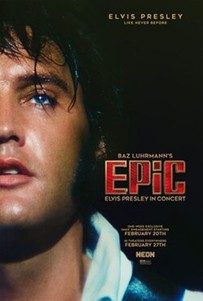
 The highlight of EPiC, the documentary Elvis Presley in Concert (Baz Luhrmann, 2025), the stunning film about Elvis’ Las Vegas years, is undoubtedly the “Polk Salad Annie” segment, masterfully pieced together from three different performances. Thanks also to the magical mystery wizard Peter Jackson, who in 2021 demonstrated with his Beatles documentary Get Back what patience, vision and technical mastery can mean for audio. A second, equally magnetic highlight is the clip in which Elvis sits down on a stool at the front of the stage and starts playing “Little Sister” on his guitar. In itself a fine, Elvis-worthy Doc Pomus song, of course, but the magic only really begins to sparkle when The King seamlessly integrates “Get Back” into the song.

Elvis Presley – Little Sister Get Back (Rehearsal 1970):

A stylistic trick similar to the move with which Otis Redding elevated “Try A Little Tenderness” to nobility a few years before Elvis’ Las Vegas gig. Until 1966, until Otis, “Try A Little Tenderness” was just a “regular” little masterpiece in the American Songbook. First recorded in 1932 by Ray Noble and his Orchestra, it was a minor hit for Ruth Etting in 1933. Bing Crosby recorded it, Sinatra recorded it for the first time in 1946, and when Ol’ Blue Eyes recorded it again in 1960, this time in a sublime arrangement by the legendary Nelson Riddle, the song became an indisputable American Songbook standard.

And the song reaches a next level when Otis shines his light. In the autumn of 1966, he is in the studio with Booker T. & The MG’s and producer Isaac Hayes. Hayes and Otis throw themselves onto an arrangement for “Try A Little Tenderness”.

The opening is slow and soulful, still somewhat close to the Sinatra standard: sultry and elegant. The change in the second verse then completely transforms the song and sets a new standard. Drummer Al Jackson awakens, doubles the tempo with rimshots, short, vicious taps, striking the rim of the snare drum, and continues to impose a compelling pulse like a metronome. “Exciting” is too weak a description. The entire band – piano, organ, guitar, bass, horns – seems to struggle out of a straitjacket for two verses, filled with such longing, such unfulfillable longing, as Salieri sighs in Shaffer’s Amadeus.

The apotheosis, from 2’35”, when Jackson gives the signal by starting to “really” drum is perfect. Otis growls and snarls, throws in Duke Ellington’s “Just Squeeze Me (But Please Don’t Tease Me)” over an agonisingly slow climb to the climax. A find that Hayes and Redding apparently recognise as the perfect finale – so have it played twice more.

Otis himself also realises that he has created something special. The song remains on his set list for the rest of his far too short career, and is his swan song: it is the last song Otis plays at his final performance, on 9 December 1967 in Cleveland – the day before the fatal plane crash.

Otis Redding – Try A Little Tenderness 9 December 1967:

The nod to “Try A Little Tenderness” in this eighth verse of “Key West” fuels the idea that Otis was one – or perhaps even the – trigger for the song’s creation. After all, one step higher than “Try A Little Tenderness” is:

Sittin' here restin' my bones
This loneliness won't leave me alone
Two thousand miles I roamed
To make this Key West dock my home
Now I'm sittin' on the dock of the bay
Watchin' the tide roll away
Sittin' on the dock of the bay
Wastin' time

In 1981, David Allan Coe relocates the scene to Key West in his version of Otis’ greatest song and pièce de résistance, Otis’ last song “(Sittin’ On) The Dock of the Bay” (1967). On the same record from which DJ Dylan picked “Tennessee Whiskey” for his radio show, and Dylan may also have recognised his old 1960s comrades Pete Drake on steel guitar and Hargus “Pig” Robbins on keyboards. Coe leaves the song as unfinished as Otis did at the time. Well, “unfinished” according to co-author, guitarist and producer Steve Cropper, anyway, who, of course, has some authority on the matter:

“On the record, he started whistling because he didn’t really have anything to fade out with. If you listen to almost 99 per cent of all of Otis’ other songs, he’s got a fadeout that he goes into, a chant or a rap or something that’s totally different from the rest of the song. But on that particular one, he couldn’t think of anything — and he started whistling. He really didn’t get it right until about the third take, and that was it.”
(Morton Through Midnight, BBC Radio Scotland, 22 November 2014)

After the concert in Madison, Otis and the Bar-Keys were supposed to return to Memphis to finish the recording, presumably with lyrics for that last verse, Cropper thinks. But Otis would never return, and producer Cropper decided, through his tears, to mix the final recordings, including Otis’s whistling. Though engineer Ron Capone did have an opinion thereon, an amused Cropper recalls:

“There’s some outtakes, and Ron Capone gets on the talk-back mic, on the original session, and said something about: ‘Otis, one thing for sure; you’ll never be a whistler.’ [Laughs] I guess Otis showed him!”

Dylan attempted “(Sittin’ On) The Dock of the Bay” once, on 3 March 1970, during the fourth Self Portrait session in New York, but that recording was never released. More well-known is the story that Dylan offered “Just Like A Woman” to Otis on 8 April 1966 in the dressing room of the Whisky a Go Go on Sunset Boulevard in Los Angeles, a fact reported by Robbie Robertson, Otis’ manager Phil Walden, photographer Lisa Law and Dylan himself. Dylan’s account is somewhat less colourful than those of Robertson and Walden (“Well, I didn’t necessarily think it was a good song for him to do, but he asked me if I had any material. It just so happened that I had the dubs from my new album,” Rolling Stone interview with Jann Wenner, 1969). Otis seems delighted, but a recording never appears. Years later, Robertson happens to run into Otis’ manager Phil Walden and asks him why the cover never appeared. Otis did indeed attempt the song, Walden says, but couldn’t get the bridge over his lips:

“Otis went into the studio to record that song and couldn’t get through it. When he got to the bridge and the part about “amphetamine and pearls,” he couldn’t get those words to come out of his mouth. It just didn’t fit, and he had to scrap the idea.”
(Robbie Robertson, Testimony, 2016)

Amphetamines and pearls do indeed carry more weight than dallying on a sunny pier or the soft words spoken so gently in “Try A Little Tenderness”. On the other hand: ‘La chanson est si peu souvent l’œuvre, c’est-à-dire la pensée chantée et comprise du chanteur – The song is so rarely the work, that is to say, the singer’s sung and understood thought,’ according to Rimbaud (the line before the famous Je est un autre in his “Lettre du Voyant”, 1871). Amply demonstrated by Harry Woods, the writer of “Try A Little Tenderness”. Harry was born without fingers on his left hand and was known for his drinking and violent temper. A fight in a bar escalated so badly that the police were called. Woods held his opponent by the throat with his good hand and beat the man’s face to a pulp with his stump. A woman present in the bar was shocked. “Who is that terrible man?” she asked. One of Woods’ drinking buddies replied, “That’s Harry Woods. He wrote “Try a Little Tenderness”.” (Tin Pan Alley: An Encyclopedia of the Golden Age of American Song – David A. Jasen, 2004).


To be continued. Next up Key West part 15: Amelia


Jochen is a regular reviewer of Dylan’s work on Untold. His books, in English, Dutch and German, are available via Amazon both in paperback and on Kindle:


Posted in Uncategorized | 1 Comment

Theme Time Radio Hour: Eyes – and one of the greatest songs Bob selected


By Tony Attwood

This episode focused on “eyes” and was first broadcast on 9 August 2006.    And what strikes me with this selection is that it is much more modern than many of the earlier selections Bob made in this series.  Indeed, the final song that I have chosen to include here comes from just 22 years ago, or in fact just four years before the broadcast.   (There are also some wild ravings by me about that song when we get to it… if you don’t want wild ravingins it might be a good idea to look away before the end – although I would prefer it if you played the track.)

But of course, it is not all modern music, and in this episode, we have one song from 1930, and then we leap into seven songs from the 1950s.  And I wonder, does the subject matter of songs run in a kind of fashion?  In that, did one person write a song about eyes, and the other songwriters of the day think, “hey that’s a good theme, we haven’t done anything on that,” and so they leap in as well?   There’s no way of proving it, but it seems possible, since every songwriter by the 1950s would be hearing everyone else’s song on the radio – at least in the USA, if not in the UK (where the playing of recorded popular music was strictly controlled until the 1970s).

So to go back to the earliest days, the oldest track in this selection was My Blue Eyed Jane by Jimmie Rodgers, from 1930

Thinking back to some of the earlier articles in this series, he was yet another artist whose health suffered because of the touring lifestyle he adopted following the success of some of his recordings.   And from that, he got the nickname of “the Father of Country Music”.  And then died aged 36.  Indeed, little was done by management or record companies to protect their “assets” for the feeling was that for every singer who couldn’t handle the success or the money or both, there were a dozen more waiting to be “discovered”.  Success indeed meant success for the record companies, not necessarily the artists.

But moving on, and indeed for a change, we have a couple of performers who managed to have a career lasting over 40 years.  They were brought up with a very strong Christian belief, and of course, with gospel songs that were part of that tradition.  They started out performing on the local radio station and got sponsored by a local coffee company. and began making records in 1936.

Not happy with the way music was developing and the sort of music they were being asked to play, they retired from music in the early 1950s, but then returned.   In fact, they retired twice and each time moved into other areas of work, but each time they came back and found they still had a huge audience.  They finally stopped performing in the mid-1970s.

Moving on, in each of the shows Bob presented I did, of course, listen out for songs that I knew – although generally there really aren’t many of them.  But this time we did get “Brown Eyed Handsome Man” by Chuck Berry, which I can actually remember from my youth.

And it really puzzled me:  what on earth was special about brown-eyed men?  (I am blue-eyed).   This recording came from 1956.

Such thoughts send me shuffling with blushes, quickly to the more recent songs, and that took me 2004, and a song that I am sure I have never heard before.   And it really did pull me up; I was completely bemused by this – and not just because of the London accent with which the spoken verses are delivered.   (As I may have mentioned before I am a Londoner born and bred, and although I have changed my accent as I learned to do during my time in the theatre, I still get the old goose bumps when I hear the accent – living as I do now in a small village where, if I spoke with my original style, I would not be understood).

And although I normally offer more recordings than this, within each episode in this series, I am going to stop here, because I still find this song completely overwhelming.

Now I know I can get criticism for this sort of reaction – mostly along the lines that, “It’s just another song”.  Maybe it is the accent, maybe it is because Mike Skinner and I were born just eight miles apart (although of course we have never had any connection with each other – he wouldn’t have a clue who I am, I’m absolutely sure) but even so…

In one single moment, your whole life can turn 'roundI stand there for a minute, staring straight into the groundLookin' to the left slightly, then lookin' back downThe world feels like it's caved in, proper sorry frownPlease let me show you where we could only just be for usI can change, and I can grow, or we could adjustThe wicked thing about us is we always have trustWe can even have an open relationship if you must

I look at her, she stares almost straight back at meBut her eyes glaze over, like she's looking straight through meThen her eyes must have closed for what seems an eternityWhen they open up she's looking down at her feet

Dry your eyes, mateI know it's hard to take, but her mind has been made upThere's plenty more fish in the seaDry your eyes, mateI know you want to make her see how much this pain hurtsBut you've got to walk away now, it's over

So then I move my hand up from down by my sideShaking, my life is crashing before my eyesI turn the palm of my hand up to face the skiesTouch the bottom of her chin and let out a sigh'Cause I can't imagine my life without you and meThere's things I can't imagine doing, things I can't imagine seeingIt weren't supposed to be easy, surelyPlease, please, I beg you, please

She brings her hand up towards where my hands restedShe wraps her fingers 'round mine with the softness she's blessed withShe peels away my fingers, looks at me and then gesturesBy pushing my hand away to my chest, from hers

Dry your eyes, mateI know it's hard to take, but her mind has been made upThere's plenty more fish in the seaDry your eyes, mateI know you want to make her see how much this pain hurtsBut you've got to walk away now, it's over

And I'm just standing thereI can't say a word'Cause everything's just goneI've got nothingAbsolutely nothing

Trying to pull her close out of bare desperationPut my arms around her, trying to change what she's sayingPull my head level with hers, so she might engage andLook into her eyes to make her listen againI'm not gonna fuckin' just fuckin' leave it all now'Cause you said it'd be forever and that was your vowAnd you're gonna let our things simply crash and fall down?You're well out-of-order now, this is well out of town

She pulls away my arms that tightly clamp around her waistGently pushes me back as she looks at me straightTurns around so she's now got her back to my faceTakes one step forward, looks back, and then walks away

Dry your eyes, mateI know it's hard to take, but her mind has been made upThere's plenty more fish in the seaDry your eyes, mateI know you want to make her see how much this pain hurtsBut you've got to walk away now, it's over

I know in the past I've found it hard to sayTelling you things, but not telling straightBut the more I pull on your hand and sayThe more you pull away

Dry your eyes, mateI know it's hard to take, but her mind has been made upThere's plenty more fish in the seaDry your eyes, mateI know you want to make her see how much this pain hurtsBut you've got to walk away now

I am so utterly knocked out that Bob chose this song, because it has so much about it.  Not only does it express the deep, deep pain that can be felt at the moment of breaking up, but if you have a mind to, I would urge you to play it a second time and this time listen to the accompaniment.   Whoever thought of adding a string quartet is a total genius.   The band is there doing its stuff, the singer declaims the hurting, painful lyrics, and then the chorus comes in with those perfect harmonies, and we get the hint of what the instrumentation is going to be later on.

And because we have had some technical problems of late on the site, I am going to put this recording in again, as I couldn’t bear for this to get lost and you not have a chance to hear it.

If I wanted to thank Bob for anything, of course I’d thank him for some specific songs he wrote which have had a profound impact on me (the “Song of the Year” series is working its way through these) – and of course if you have a mind to, you can find some of my ravings about individual pieces on this site.  But I think I would also try and say a special “thank you” to Bob for including this track.   Even if the band came from New Zealand (about as far away from my birthplace as I think one can get – they, like me are north Londers)) I’d want to thank them, of course.  But for including this song…. that is something else.

Can you imagine what it must be like to be in a band and find Bob chooses one of your songs to play on his radio series?  It must be amazing.  But I guess by that moment, you’d know you have written a song of utter genius.

Previously in this series

Posted in Uncategorized | 1 Comment

Beyond the era of the genius composer – the utterly unexpected journey of one Dylan song

Publisher’s note: The original version of this post was fine upon putting it up, but it subsequently corrupted.  My apologies for this – I’ve not seen this happen before and it has taken me a day to get it sorted out.   I’ve had to remove one of the musical examples and part of the text but otherwise it is still the same article.

By Tony Attwood

I began my series on the music (as opposed to the lyrics) of Bob Dylan with an article

I found the issue to be one of some interest, and so chose to evolve that thought into a series of six articles (the links to which, if you are interested, are published at the end of the article referenced above.   and  I reached the conclusion through those articles that Bob had at one stage in his career turned away from making the lyrics the key element in each song, and instead made the music and the lyrics of equal importance in each of his compositions.   As a result the compositions were significantly different from those hehad written before.

This pattern of composing continued through to the writing of the song Isis which sought to return to the most simple approach to the music of a rock song (it is based on three chords repeated over and over through the song) but with a remarkable range of variations in the melody.

Of course I am not sure if Bob specifically thought that this was what he was doing, but as we look at the sequence of his writing, this is certainly how it appears that the compositions evolved.

Thus musically, the end of 1974 and the early period of 1975 was one of Bob’s greatest periods of compositional virtuosity.  Idiot Wind had that unprecedented chord change at the start of each verse, while One More Cup of Coffee moved us through the pain of departure- the opposite of the vigour of moving on through one’s own decision to go out and find pastures new.

In this regard, the series ended with Isis, a song that showed once more that three chords repeated over and over could still create incredible music that just demanded to be listened to if the melody and lyrics were right.  The three chords give us the repeated background of life, the pattern of day following night, but within that, there can be infinite variation.

This then whetted my appetite for more writing about Bob’s music, although hopefully within it, there is some recognition of the fact that my audience is primarily made up of people who enjoy Bob’s compositions and performances, but are not musicians.   That series began with the article “If only there had been a Nobel Prize for music” which took as its starting point not just the fact that most people comment not just primarily but solely on Bob’s lyrics, and so the revolution he created in popular music as music was, in such commentaries, largely ignored.

That it was ignored can be seen by reading the reviews of Bob’s work, for although there are exceptions, by and large they make little reference to his music.   Yes, we now have access to many of Bob’s initial recordings of songs, and we can hear the music as well as the lyrics evolve through recording sessions, but compared with the level of discussion of the lyrics, there is little said about the way the music changes.

I attempted to pick up this point with the series “If only there had been a Nobel Prize for Music” which opened with the forthright claim that Bob had deliberately taken us, at this point, into a new musical world as he had taken us years before into a new lyrical world.

The very first song I noted in what was to become a rather long series is repeated below, and I think if you just listen to this with an ear for the music, the point that I have laboured over during these months may make itself clear.  I doubt anyone would nominate the lyrics of this song as one of the high points of Bob’s compositional achievements, but with this new accompaniment, suddenly the song takes on new meanings and reaches new insights that were hard (if not impossible) to perceive previously, not just in Dylan’s writing but in anyone’s lyrics.

Now I know I have given my favourite example of this multiple times, so please do skip forward if you are now bored with it, but if you have not heard this before, or if, like me, you can never hear it enough, just consider this example below.  If you want the whole journey of this song’s mutation, it is here.  But if you want to take my word for it, here it is in its final edition…

The question I asked myself when I first heard the version above was quite simply, how on earth could any composer get from the original version to this new version?

Bob Dylan both wrote and recorded “Tweedle Dee & Tweedle Dum” in May 2001 and it was released four months later, as the opening track of “Love and Theft”.   Musically, it is a development of the classic 12-bar blues, but reduced from its normal three-chord format to two chords.  Bob obviously felt the song was important: it was, as I have just noted, the opening track of the album.  But I wonder, did many of us really appreciate its depth?  I certainly did not.

———————

Posted in Uncategorized | Leave a comment

Key west Part 13: She tears again my bleeding heart

Key West part 13

by Jochen Markhorst

She tears again my bleeding heart

The fishtail ponds and the orchid trees
They can give you the bleedin’ heart disease
People tell me - I oughta try a little tenderness
Amelia Street - Bay View Park
Walkin’ in the shadows after dark
Down under - way down in Key West

It does spark some debate on the fringes of the fan forums: “fishtail ponds”. The tenuous consensus is that Dylan is mistaken or has misspoken, that he actually means the very real “fishtail palms” – all the more so as that species of palm (Caryota mitis), though not native, can indeed be found in Key West. However, as the years go by and the number of Dylan’s performances of the song increases, the explanation proves untenable. At the premiere, in Milwaukee on 2 November 2021, it is still somewhat unclear and sounds something like “poan”, but three weeks later in New York, it is already clearly “ponds”, and so it remains. Most evident in the autumn of 2024, when Dylan has reduced the delivery to a recitative with fluttering piano accompaniment – somewhat in the style of “Murder Most Foul” – and meanwhile appears to be reading from the sheets of lyrics lying on his piano: “fishtail ponds”, clearly articulated. It is, we can now safely conclude, not a mistake or a slip of the tongue, but a deliberate catachresis.

With which Dylan the songwriter ushers in a brief revival of a stylistic device he was rather fond of in the mid-60s, during his mercurial years. Debatable, but “your temperature’s too hot for taming” from “Spanish Harlem Incident” (1964) is perhaps the first catachresis, the “misuse”, the unfamiliar, innovative combination of incompatible words, which nevertheless possesses the old, familiar power of proverbs or clichés. In the years that followed, the poet was keen to harness the power of abusio (as catachresis is also known). In “Farewell, Angelina” and especially in its twin “It’s All Over Now, Baby Blue” (seasick sailors, empty-handed painter and the saints are coming through, for example), in “Mr. Tambourine Man”, and it continues for a while on Highway 61 Revisited (“Mack The Finger”, for example), on Blonde On Blonde and especially in the Basement Songs.

The first recorded instance of this particular linguistic misuse dates all the way back to Alexander Pope (1688–1744, the poet to whom we owe the phrase fools rush in where angels fear to tread), but in the twentieth century, it was elevated to a figure of speech, a literary device, by the Dadaists, the Beat Poets and Jacques Derrida.

It is a figure of speech that derives its power from its euphony and from nearby associations – grist to the mill of an associative songwriter like Dylan. Apart from metaphors and character descriptions, he occasionally uses it in naming too: Captain Arab in “Bob Dylan’s 115th Dream” is a prime example (the nearby association being, obviously, Moby Dick’s Captain Ahab), and in The Basement Dylan juggles with semi-familiar names such as Tiny Montgomery and Quinn the Eskimo. All too often, however, the bard does not play with names – it easily degenerates into lame puns, after all.

Intuitively, fishtail ponds feels like a natural extension of absurdities such as honky-tonk lagoon (“Stuck Inside Of Mobile”) and it ain’t my cup of meat (“Quinn The Eskimo”); associations that spring to mind triggered by the sound. Saloon becomes lagoon, cup of tea becomes cup of meat, that sort of thing. And fishtail palms thus becomes fishtail ponds. Perhaps prompted by a desire to avoid an overdose of botany. We’ve already had hibiscus and tiny blossoms of a toxic plant in the preceding verses, and we’re about to get orchid trees, gumbo-limbo and bougainvillea… the herbarium is starting to overflow.

A similar line of thought seems to have led to the following bleedin’ heart disease. Amidst all those flowers and plants, Dylan’s meandering stream of consciousness presumably picks up on the genus bleeding heart (dicentra), the herbaceous genus fairly widespread in North America with its heart-shaped flowers – which, incidentally, are toxic as well. A beautiful, irresistibly poetic name with a dramatic connotation that transcends the rather unremarkable little flower. Perhaps a touch too dramatic; bleeding hearts feature – naturally – frequently enough in poems and songs, but never referring to a fascination with the flower. The Stones visit the Church of the Sacred Bleeding Heart of Jesus (“Far Away Eyes”, one of their finest country songs), Bono sings mysteriously “I don’t believe in painted roses or bleeding hearts” (in “One Tree Hill”, a highlight on The Joshua Tree, 1988) and perhaps the most beautiful bleeding heart of them all comes from Dylan’s one-off bandmate Roy Orbison:

She tears again my bleeding heart
I want to run she's pulling me apart
Fallen angel cries and I just melt away
She's a mystery to me


… from Orbison’s swan song Mystery Girl, the album released posthumously two months after Orbison’s sudden death on 6 December 1988 – ironically, one of his very best albums and his most commercially successful. Featuring the gorgeous hit single “She’s A Mystery To Me”, written, by the way, by Bono, who in 1988 apparently had a thing for bleeding hearts.

A relic with the Stones, a symbolism-laden tattoo with U2, a metaphor for heartbreak with The Big O… the botanical connection is usually overlooked. Except in the case of John Grant. We’ve caught the former frontman of The Czars out before on a funny, unintended, tenuous Dylan connection: in “I Wanna Go To Marz” (actually just: “Marz”), the most appealing song of 2010, on one of the finest albums of 2010, Grant’s stunning solo debut Queen Of Denmark. “Marz” is Grant’s moving ode to the sweet shop of his youth, which for the adult Grant has now become a sort of Shangri-La, a Key West. The chorus consists of a list of the imaginative, mysterious, funny names like Polar bear, cashew, dixieland, phosphate, chocolate from Marz’s range of sweets – which, coincidentally, have the same flavours as the list of pies in Dylan’s old country throwaway “Country Pie” (raspberry, strawberry, lemon and lime). And years before that, whilst still with The Czars, we heard John Grant reaching for the same stylistic device, of which he is rather fond:

Lilacs and tiger-lilies won't be enough for me when you're gone
Hollyhocks, gladiolas, will never replace this face
[…]
Bleeding heart, lily-of-the-valley
Snapdragon, rambling rose
You'll never make it in this world
If you're not one of those

… the enumeration, in this case a list of flowers in the little masterpiece “Little Pink House” on The Czars’ last album, the aptly titled Goodbye (2004). A song close to Dylan’s heart, presumably; a jazzy tearjerker, a beautiful guest appearance by singer Julie Monley, prevailing Shadow Kingdom vibes, Grant’s lyrical baritone… and lyrics with a poetic sheen that swings back and forth somewhere between Sinatra’s torch songs and Dylan’s cryptic impressionism.

Meaning that John Grant remains the only artist who, whilst hinting at dramatic connotations, nevertheless preserves the botanical identity of the dicentra. After all, with the simple addition of disease, Dylan too strips the bleeding heart of all its floral charm.

Which is, of course, no criticism; the orchid trees can give you the bleedin’ heart disease is a poignant, bittersweet lament from a man standing on the threshold of a paradisiacal afterlife, melancholy looking back before disappearing into the shadows.

————–

To be continued. Next up Key West part 14: To make this Key West dock my home


Jochen is a regular reviewer of Dylan’s work on Untold. His books, in English, Dutch and German, are available via Amazon both in paperback and on Kindle:


Posted in Uncategorized | 5 Comments

Would you care to review one song from, one CD of or indeed all of Bootleg 18?


By Tony Attwood

As you probably have seen, Bootleg 18 has been released as an 8CD or 2CD collection, and I thought it would be an interesting idea to see if you (or you and your friends) would like to review it.  (Apparently it is also availabe as a set of LPs as well).

And by “it” I don’t necessarily mean the whole collection of eight CDs.  No, certainly not, although you could do that if you wanted.  But equally, you could pick out your favourite track or tracks and write about that or them.  That could be something that stands out, or indeed doesn’t, if that is how you feel..

If you have missed the full track list of songs, there is a complete listing here.    And if you want to listen, then the place to start is here.

To make life easier, Spotify has the collection on its service as well.  And just to be clear, I’d be as happy to receive a review of one particular song as I would a review of the whole collection.  Or indeed a commentary on the way the collection has been offered, the packaging, the price and in fact anything else.

And if you just want a place to start, I would suggest you might take a listen to “Moonshiner” but of course, that is just one performance that struck me, as I worked my way through the collection.

In short, if you have any thoughts about this collection you would like to share, then by all means write a comment below, or indeed write out an article and email it Tony@schools.co.uk with the words Bootleg 18 in the subject line.   I’d be delighted to hear from you.

I've been a moonshinerFor 17 long yearsI've spent all my moneyOn whiskey and beer

I go to some hollowAnd sit at my stillAnd if whiskey don't kill meThen I don't know what will

I go to some bar roomAnd drink with my friendsWhere the women can't followAnd see what I spend

God bless them pretty womenI wish they was mineTheir breath is as sweet asThe dew on the vine

Let me eat when I am hungryLet me drink when I am dryA dollar when I am hard upReligion when I die

The whole world's a bottleAnd life's but a dramWhen the bottle gets emptyIt sure ain't worth a damn


Posted in Uncategorized | 1 Comment

Dylan Song of the Year: 1967 part 2 – “I’m not there”


Previously in this series….

I have raved over “I’m not there” since the earliest days of this website, and there is of course, a link between this song and the other song I have chosen for this year: “Drifters Escape”.  The two songs, for me, simply fit together.  Although obviously they didn’t for Bob for he kept one, but lost the second.

I didn’t intend to cheat in this series by having two songs of the year, but on reaching 1967 I really did find myself torn between two different Dylan compositions, and since I am writing this, I’m making the rules.

“I’m not there,” the movie, was released in 2007 along with Dylan’s version of the song.  The film has six actors who have been “inspired by the music and the many lives of Bob Dylan.”  The album of the movie includes the Dylan performance of “I’m not there” taken from the Basement Tape days.  The Sonic Youth version of the song comes from this album.

So why does it haunt me?  The chord sequence is fairly unusual but not that unusual, the vocals are interesting but not that stunning… so what is it?

For me I think it is the atmosphere of that the song creates – that alternation between the cast down vocie in one verse and the desperate pleading in the second verse.


The song has ten verses in groups of two, the first with the vocals almost growling in the lowest register Dylan can reach, and the answering voice an octave higher.

I’m personally not convinced by the Bob Dylan version any more – it used to fascinate me but over time its allure has faded, and for it has been replaced by the version above.  Maybe I’m just getting older.  Maybe I’ve been working on this site too long – but then maybe we all should change over time.  But in case you don’t know it, Bob’s version is further down the page.

The late John Bauldie, who wrote the quarterly magazine, The Telegraph, called it “Dylan’s saddest song, achieved without benefit of context or detail. It’s like listening to the inspiration before the song is wrapped around it.”

Take just one verse…

“Well it’s all about diffusion and I cry for her veil, I don’t need anybody now beside me to tell.   And it’s all affirmation I receive but it’s not, she’s a lone-hearted beauty but she don’t like this spot and she’ gone.”

It is a perfect statement of utter confusion, of the singer wanting to get to know her, and be with her and understand her, but she doesn’t share any of that – she just moves on.    It is that feeling of starting to know about what is going on in the world, and finding someone else with views that are interesting, but somehow not being able to get close.

It is that feeling of saying “I am so close to you but you won’t come anywhere close to me.”   It is being utterly confused and finding someone who seems to be able to sail through all this confusion and move on, leaving one behind, lost, isolated, unsure.

Even if this song were nothing else, it gives us one of the great insights into Dylan’s songwriting technique.  But of course, it is much more.   So much, much more.

The fact that so much of the world has just past this song by without a second thought tells us a lot about the world, and indeed about relationships and about music.

It is of course just a rough recording, and Bob probably doesn’t even remember he wrote it.  But from the first time I heard it, onto today, it has been part of my life.   And that I think is the point, not just for me, but for many other people too.   There’s no point having one or two lines of this song, it is so much more.

But if we were to be required to explain in terms of one line why this song is so wonderful, I would select the ending

I wish I was there to help her but I’m not there, I’m gone.

If you want to get a different perspective on this song try the lyrics written like this…

Things are all right and she’s all too tight in my neighbourhood, she cries both day and night I know it because it was there. It’s a milestone but she’s down on her luck and she’s daily salooning about to make a hard-earned buck; I was there. I believe that she’d stop him if she would start to care, I believe that she’d look upon the side that used to care. And I’d go by the Lord anywhere she’s on my way but I don’t belong there. No, I don’t belong to her, I don’t belong to anybody she’s my Christ-forsaken-angel but she don’t hear me cry, she’s a lone-hearted mystic and she can’t carry on when I’m there she’s all right, but then she’s not, when I’m gone.

Heaven knows that the answer she’s not calling no one she’s the way, forsaken beauty for she’s mine, for the one and I lost her hesitation by temptation lest it runs but she don’t honour me but I’m not there, I’m gone.

Now I’ll cry tonight like I cried the night before and I’m left on the highway  but I still dream about the door; it’s so long, she’s forsaken by her faith, where’s to tell? it don’t have consternation, she’s my all, fare-thee-well.  Now when I’ll teach that lady I was born to love her but she knows that the kingdom waits so high above her, and I run but I race but it’s not too fast or still but I don’t perceive her, I’m not there, I’m gone.

Well it’s all about diffusion and I cry for her veil I don’t need anybody now beside me to tell and it’s all affirmation I receive but it’s not she’s a lone-hearted beauty but she don’t like this spot and she’ gone. Yeah, she’s gone like the radio below the shining yesterday but now she’s home beside me and I’d like her here to stay. She’s a lone, forsaken beauty and she don’t trust anyone and I wish I was beside her but I’m not there, I’m gone.

Well, it’s too hard to stay here and I don’t want to leave it’s so bad, for so few see, but she’s a heart too hard to need. It’s alone, it’s a crime the way she hauls me around, but she don’t fall to hate me but tears are gone, I’m her painted clown. Yes, I believe that it’s rightful oh, I believe it in my mind I’ve been told like I said one night before, “Carry on the crying” And the old gypsy told her like I said, “Carry on,” I wish I was there to help her but I’m not there, I’m gone.

Posted in Uncategorized | 3 Comments

Theme Time Radio Hour: The Devil”

By Tony Attwood

With my personal review of some of the songs in Theme Time Radio Hour we have reached “The Devil”, and when I came to this episode, without looking back at Bob’s selection of songs, I immediately thought of Robert Johnson, and of course, there he is, as Bob didn’t disappoint.

Of course the blues has a very particular story associated with its supposed origins, in that it is said that Robert Johnson sold his soul to the devil in return for the ability to play the guitar.   And in regard to this, I rather do like the comment that Google’s AI gave me this morning to the effect that “While popular, the story is largely folklore…”   I mean, “largely” folklore?    Which is to suggest that there is a part of the tale that is true?      I must be more careful with using Wiki for information.  Although to be fair, even the Guardian newspaper goes so far as to tell us that it all happened at the “intersection of Highways 49 and 61 in Clarksdale, Mississippi.”   But at least they are not suggesting that even one fraction of the tale is true.

Bob of course, had to include a Robert Johnson song in his collection of songs relating to the Devil, and I’ll come back to that in a moment, for first I want to mention the earliest song in this collection, which comes from 1931.   And I want to focus on this as for the blues, it makes a nice change, as it varies the order of the chords from the normal sequence.  And as any musician who has listened carefully to the recording and then tried to replicate the guitar playing will testify, the tuning of the guitar is really weird.

But to go back a bit, as we might expect, the first song in Bob’s collection was indeed a Robert Johnson song, “Me and the Devil Blues” from 1936, although some sources quote it as a year later, being recorded in Johnson’s last ever recording session.

The devil tells the singer to wake up, as “it is time to go”.  Robert Johnson died in 1938, aged just 27.


The lines below which make up the opening of the final verse are followed by the comment that “I don’t care what you do with my body…”

"You may bury my body down by the highway side
So my old evil spirit can catch a Greyhound bus and ride.

Of course, Bob’s selection isn’t just made up of recordings from the original blues artists – for he takes us right up to 1987 with Tom Waits “Way Down in the Hole”, with a recording that shows that there is far more to be got out of the 12 bar blues variations than we could ever imagine.

This was recorded in 1987 and really does take us somewhere completely new.  The fade out is totally unexpected – at least for me.

But even more recently, we have “Devils Haircut” – which shows we really don’t have to be restricted to 12 bar variations, in these songs.  (Or indeed worry about the correct use of apostrophes).

And indeed there was a bit of fun within the songs as well, and  I really do want to lighten this selection from Bob’s show a little bit, so my last song taken from Bob’s collection, although being a 12 bar blues, is in a different mood…

The blues has always been associated with the devil, and with the singer being in a bad state of mind.  But it is good to find the occasional uplift or at least a bit of fun.  The instrumental sections after the sung verse really cheered me up.

Previously in this series

Posted in Uncategorized | 1 Comment