This is the 30th article in our unique series looking at the artwork on Bob Dylan’s albums. A full list of the articles in the series is published here.
The album: Dylan
Released: November 16, 1973
Illustration: Richard Kenerson
Art-director: John Berg
The exact date Bob Dylan signed a contract with Asylum is nowhere to be found. Some suggest there may be no contract at all. According to Rolling Stone, it was a gentlemen’s agreement, sealed with a handshake.
Therefore it is not clear what the arrangements are for the Dylan album, in the switch from the singer to another record company, after 12 years with Columbia Records.
According to one story, the album is seen as an act of revenge by his old firm, to ridicule the renegade artist by releasing substandard material. Others think it is the last straw, after which Dylan closes the door and makes the switch. Away from the firm that sees him as a has-been and would rather lose him than keep him.
Anyway, for the first time ever, Bob Dylan has no say in the cover of one of his records.
As asking Dylan to pose for a cover photo is not an option, the graphics department has to work with existing material. A photo by Al Clayton is chosen. Curiously, it was previously printed on the inner sleeve of Self Portrait. The photo, taken on May 3, 1969, shows Dylan, along with some musicians, listening to a playback of a recording, while his son Jesse is playing on the floor.
Richard Kenerson uses an enlarged view of Dylan’s head from this photo as the basis for a screen print. The portrait in profile is placed in front of a metallic, silver-colored background and then enhanced with a red, yellow, purple and black stripe. It remains a guess as to the intention.
Dylan’s head from this photo as the basis for a screen print. The portrait in profile is placed in front of a metallic, silver-colored background and then enhanced with a red, yellow, purple and black stripe. It remains a guess as to the intention.
There is not much more information on the cover. And a little piece of information provided, raises further questions: “Back cover photograph and album design by John Berg.”
Remarkable, because the image of the front is simply reproduced once more, albeit in a more sober version without the colored stripes. Perhaps Berg provided the photo placed over it: something that most resembles boulders in a river bed.
A few weeks after the album was released, there is a single: “A Fool Such As I”.
Apparently, a more recent photo of the singer has been found to promote it. Its’ a black-and-white photo, taken during the filming of Pat Garrett and Billy the Kid.
Dylan is shown squinting into the lens, with a look that is somewhere between amused and annoyed. Wouldn’t this have been a better image for the cover?
This is episode 35 of All Directions at once, in which I am trying to explore Dylan’s songs in the order they were written, and seeing how they interlink, rather than treating each song as a separate entity.
As we have seen in recent episodes the theme throughout Dylan’s writing of 1975 has been of people and places, without an over-arching desire for a portrayal of reality.
Indeed what boring songs these would have been if strict reality, instead of reality extended into fantasies had been the central concept. Imagine how “Mozambique” would have sounded if it had lines telling us that the country had just come out of a long and devastating civil war, instead of being a mock tourist advert.
It seems to me, by the time the pair got to the end of their work together they had really got the hang of the relationship and were able to launch into much more exciting and interesting works of fiction inspired by facts. If only they had had time, or the inclination, to develop this side of their work further we could have had a second album of collaborative fiction, rather than having to wait a couple of years for “Street Legal” (although in the end it turned out to be worth the wait).
And it clearly was Levy who was not only creating the lyrics, but also pushing Dylan into the Mexican feel. True, Bob had been in Mexico in 1972/3 but there seems to be little influence on his music from this period – until now.
But since Levy stated in an interview that the two writers wrote the opening of “Durango”, and then Levy finished it off, perhaps (according to Heylin) to Dylan’s slight annoyance, we do have to see this as primarily as Levy composition.
So maybe the Mexican input was Levy’s all the way through these tracks, although another or parallel explanation, given to us through Dale Ward who kindly wrote into this site, is that there exists a Durango in Colorado near to Aztec, New Mexico. What’s more Dale tells us the town of Aztec contains a large set of Anasazi ruins…
But whatever the source, this is one of those songs where we have two excellently arranged different versions – the slow version on the album, and the upbeat Biograph live version. Heylin makes it very clear that it prefers the Biograph version, but I fear he misses something profound in the original album version, namely the extraordinary way in which Dylan plays with the timing.
Indeed I can’t imagine how the song was possibly recorded with the whole band playing together (as is Dylan’s preferred style), as there are so many twists and turns in the way the lyrics influence how the music is performed. Sometimes an extra beat appears at the end of a line, sometimes the line takes an extra beat or two at the end. The time signature changes wildly as we go; I can imagine Frank Zappa rehearsing this to perfection, but not Dylan!
The only thing I can think is that they multi-tracked the whole thing, and then kept the Dylan lyrics and gradually replaced all the instrumentals around that. Certainly there is a hell of lot happening in there, and the normal odd slips by the instrumentalists that we get on Dylan albums are all missing.
But whatever the explanation, what we have here is the summation of the work of these two fine artists, by this time utterly used to working together. And I think, despite the way the songs slip into each other on Desire, with Black Diamond Bay seeping out of Durango, it is worth just occasionally playing the sequence in the order the songs were written. It does give a different understanding to this period of work.
As for the song itself, is there a more evocative opening of any Dylan song than this?
Hot chilli peppers in the blistering sun
 Dust on my face and my cape
 Me and Magdalena on the run
 I think this time we shall escape.

Sold my guitar to the baker's son
 For a few crumbs and a place to hide
 But I can get another one
 And I'll play for Magdalena as we ride.
What works so brilliantly here is that within eight lines we have the whole picture, just through the simple selected images. Our minds create the actual images, but the essence of the situation is there, clearly painted in eight lines. Songwriting at its very very best.
Then the Spanish phrases set the scene… Here are my simplistic translations of the Spanish in case you need them (but really my Spanish is poor to non-existent so please do give me a better version if you can)
No llores mi querida  (Do not cry my darling)
 Dios nos vigila (God is watching over us)

 Agarrame mi vida (hold me, my love, my life)
And we have the history and culture mingled with the hopes of the poor.
Past the Aztec ruins and the ghosts of our people
 Hoofbeats like castanets on stone
 At night I dream of bells in the village steeple
 Then I see the bloody face of Ramon.
And just as I am sure you can improve on my language skills, so I quickly found when I first reviewed this song we have many readers more versed in Mexican history than me, and indeed having been corrected earlier by Francesco also on this site, I am happy to agree that the Ramón and Magdalena are linked by Dylan to Pancho Villa.
I am not in a position to judge what is real and what not, but David did add the interesting thought that “Dylan is exercising poetic license here with respect to the Aztec ruins. Northern Mexico, where the story takes place, was never part of the Aztec empire and no Aztec ruins are found there. Ruins from other pre-Columbian peoples are found in the area, though, for example at Casas Grandes.” He adds in relation to another comment, “Tom is correct that the ‘serpent’s eyes of obsidian’ refers to the Feathered Serpent.”
The song was played 38 times by Dylan between October 30 1975 and October 17 2015. It is, for me a most fitting and insightful end to an era in Dylan’s writing. With the death of the outlaw at the end of the song, the curtain comes down on a singular period in Dylan’s career. When he took up songwriting again, we found we were in a new land.
But although the collaboration between Dylan the Jacques Levy ended here, Bob now retained the notion of writing about people and places, as the next song he composed was Sara.
Clearly Dylan was writing about his wife in general, since he says her name four times in each chorus, but whether he was writing about her in specifics is another matter. No one ever said songs have to be true, and the songs written just before Sara made no attempt to fix exact reality.
But it is hard to relate “Sara” back to earlier compositions this year. And what a change it was musically, for we come out of all those Mexican rhythms and find ourselves in a waltz. Although to be clear – the theme of the album of people and places is of course continued.
Musically the song is at the very least highly unusual for Dylan – perhaps even unique for Dylan in that it is in a minor key modulating to the relative major in the chorus before returning to the minor in the last line. Dylan uses minor keys rarely, and this sequence never before nor (as far as I know) since.
The chord structure, for anyone used to playing Dylan, is truly unexpected:
The verse: Em Am D Em (repeated)
The chorus: G Bm Am D C Em (repeated)
In effect the verse is in E minor and the chorus is in G major. And it works perfectly to give a strange backdrop to the lyrics – lyrics which talk of the background environment as well as the lady in the song.
But is it about Sara Dylan? Yes and no. Maybe and perhaps. Up to a point; but really it doesn’t matter. It is a beautiful reflective love song. The fact that we have all heard that she took half the earnings from the songs written during the marriage is really not too important in the context of the song, unless Dylan wants to write a song about that. Here he doesn’t; he wants to write a song about his love for Sara and what brought them together.
It won’t all be true, and it doesn’t have to be true. After all why would it? Dylan is the ultimate storyteller. He gets ideas from the real world and spins them into his tales – a perfectly reasonable and legitimate approach to songwriting. After all we don’t expect any of the other songs on this album to be true, so why should this? Maybe he did drink white rum in a Portugal bar, but whether he did or not doesn’t actually affect the song.
But as our correspondent Jake said, in response to my earlier review, “Sara, whoever she is, seems strangely absent. She is there, as the character’s love interest, object of devotion, etc, but we don’t learn much about her.”
Which is indeed true. As Zaphod said in a comment, “Why is she gone? Has she changed? Her love for him died? It made me sad, remembering a loss of my own.” Oh I can so relate to that!
Looking at and listening to Dylan’s songs for the remainder of the year – this unique year of people and places – I find myself now seeing Dylan as pondering. He’s done the phenomenal series of songs with Levy, he’s written Sara, and now…
It’s a song of stepping apart, of being removed. There’s a real feeling (for me if no one else) of being unsure of where to be, where to go. It is a song of separation and distance, which makes sense after “Sara”, but considering that this comes from the same year as “Isis” it hardly seems as if it could be the same composer. Although from Isis to “Sign Language” is quite an interesting journey in itself.
If we compare this with the opening of the last song written with Levy, we have…
Hot chilli peppers in the blistering sun
Dust on my face and my cape
Me and Magdalena on the run
I think this time we shall escape.
There is comparison in the sense that Levy took the world around the central character and turned it into a way of setting the song quickly. Dylan was, perhaps, attempting to do the same, but the level is so prosaic (what is there that is interesting about eating a sandwich?) that (for me) it doesn’t work.
And perhaps Dylan felt this, which is why in effect the song writing stopped – and why there is that reference to Link Wray. This is back to the old Dylan, citing those who have influenced him. The journey really has finished – however far you want to be from Isis and Durango and the rest we surely are now there.
We’re almost at the end of the year – but Dylan still had two more little surprises in store. The first is the improvised “Patty’s Gone to Laredo”. It is not possible to put up here a copy of the single Dylan recording, and no one else seems to have recorded it, so in case you don’t have access to the song, I’ve put up a version I’ve recorded – not to try and suggest a particular insight or ability on my part, I assure you, but so you can get an idea of what the song is about, (or isn’t about, since it clearly was improvised and is far from being finished) in case you are interested and don’t have access to the single Dylan recording.
Then, finally, after all this there was indeed one more song, “What will you do when Jesus Comes?” from Renaldo and Clara.
Chris Hughes in Blasting News suggested that the post-existentialist experiences a life in which, “We need life to be occupied 24/7. We need to worry about work, money etc, because these worries distract us from existential worry. Only, if we find living difficult and troublesome, do we forget to ask, what is the point of living? The awkwardness of living provides an escape from the awareness of the futility of it all. The tedium of living needs to be horrible so that we don’t have to confront the horror that, in the end, it may all be pointless anyway.”
So when Jesus returns for the Second Coming there is every chance that we’ll be so busy with the mundane reality of life that we don’t even notice.
It’s a thought. And indeed given all the songs that have come before in this extraordinary year, he could have a point.
Do you have a tale to tell via Untold Dylan?
We now have over 2000 articles on this site, and many of them are personal tales about attending a concert, listening to Dylan, cover versions, or the individual writer’s own appreciation of Dylan and his music.
These articles are written for Untold by Dylan fans, and if you have a view of Dylan that you feel could be of interest to others, we’d love to hear from you.
To see the variety of approaches we have included in this site, just go to the top of the page and look at the various headings under the picture – each one contains an index of articles on a Dylan theme. Or look at the latest series listed on our home page. If you write a piece you can add to these, or create your own theme, or simply send in a one-off contribution. As long as it gives a different insight into Dylan and his work, we may be well interested in publishing it.
Sadly, we don’t have the funds to pay, but Untold Dylan does have a very wide readership, so your work will be seen by a huge number of people. If you have an article please email Tony@schools.co.uk If the article is ready, please attach as a word file.
One other thing: we never ask for donations, and we try to survive on the income from our advertisers, so if you enjoy Untold Dylan, and you’ve got an ad blocker, could I beg you to turn it off while here. I’m not asking you to click on ads for the sake of it, but at least allow us to add one more to the number of people who see the full page including the adverts. Thanks.
And one other, other thing: we also have a very lively discussion group “Untold Dylan” on Facebook with around 8500 active members. Just type the phrase “Untold Dylan” in, on your Facebook page or follow this link And because we don’t do political debates on our Facebook group there is a separate group for debating Bob Dylan’s politics – Icicles Hanging Down
Little Tommy Thumb,
With his little pipe and drum,
Is come to give you a dance;
And Lovechild so taper
Will shew you a caper,
Dunoyer brought from France.
She is pleas'd that you look
Into her little book,
And like her songs so well,
That her figures you know
Before that you can go,
And sing them before you can spell.
From the original of “Tommy Thumb’s Song Book for all little Masters and Misses; to be sung to them by their Nurses ’till they can sing themselves.” By Nurse Lovechild. To which is added, a Letter from a Lady on Nursing from 1744 unfortunately no copies have survived, but a reprint from 1788 is most probably identical to that original. From the sequel, Tommy Thumb’s Pretty Song Book Voll. II (also from 1744), at least one original copy has always existed, since long safely in the British Library, and in 2001 a second copy was found.
Both song books contain the kind of songs Dylan has a soft spot for, the songs he refers to in the interview with Ephron and Edmiston in the summer of ’65, three weeks after recording “Just Like Tom Thumb’s Blues”:
BD: It’s weird, man, full of legend, myth, bible and ghosts. I’ve never written anything hard to understand, not in my head, anyway, and nothing as far out as some of the old songs. They were out of sight. E/E: Like what songs? BD: Little Brown Dog, “I bought a little brown dog, its face is all gray. Now I’m going to Turkey flying on my bottle.”
Dylan improvises on “Little Brown Dog”, which he will record in 1970 as “Tattle O’Day” (but which will not be released until 2013, on The Bootleg Series: Another Self Portrait). A year before that, he has already written “Who Killed Davey Moore?” on the format of Tommy Thumb’s “Who Killed Cock Robin?”, more exuberantly he will demonstrate his love in 1990, when he makes a record filled with nursery rhymes (under the red sky), and in between he lives out that side of his creativity on far out songs like “Quinn The Eskimo” and “Three Angels”.
It all makes it a little more likely that the title choice for “Just Like Tom Thumb’s Blues” is a tip of the hat to that antique nursery rhyme collection. And not, as many commentators like to point out, to Rimbaud – who indeed does mention Tom Thumb, once, in the English translation of “Ma Bohème” (“Stargazing Tom Thumb, I sowed rhymes along my way”, the translation of Petit-Poucet rêveur, j’égrenais dans ma course des rimes).
Little Tommy Thumb,
With his little pipe and drum,
Is come to give you a dance
The basis is bare and simple. Three chords, a common blues scheme, six verses, no chorus. But the packaging is all the more beautiful. One of the most important pillars of the mercury sound is the find to use two pianos, a honky-tonk and an electric Hohner pianet. This was quite unusual in the pop music of the sixties and came about more or less by accident. After all, Al Kooper had sneaked into the “Like A Rolling Stone” session hoping to play guitar at a Dylan session. He is already in the studio, waiting for Dylan, when a guy unknown to him arrives with a guitar case:
“The guy just shuffled over into the corner, wiped it off with a rag, plugged in, and commenced to play some of the most incredible guitar I’d ever heard. And he was just warming up!”
Kooper is intimidated, backs down, a bit embarrassed, and docilely takes his place on the other side of the window again, in the control room. And limits himself to what producer Tom Wilson has given him permission to do: watch a Dylan session. But the band struggles with “Like A Rolling Stone” and when organist Paul Griffin moves to the piano, Kooper sees an opportunity, slips in, and clandestinely plays an uncertain organ part on the next take.
“If you listen to it today, you can hear how I waited until the chord was played by the rest of the band, before committing myself to play in the verses. I’m always an eighth note behind everyone else, making sure of the chord before touching the keys.”
Wilson is not too impressed, but Dylan is immediately touched. “Turn the organ up,” he says, while listening back to the take. Kooper is on cloud nine, he’s in and he’s also a bit confused. Producer Tom Wilson, of course, has a point when he objects: “That cat’s not an organ player.” Dylan couldn’t care less. Kooper spends the rest of the day, and is eventually on the final version too, playing the organ. Afterwards Dylan asks for his phone number. “Which was like Claudia Schiffer asking for the key to your hotel room.”
Dylan remembers Kooper’s added value to the mercury sound and indeed uses the phone number – and so guitarist Kooper suddenly becomes a keyboardist and six weeks later, 2 August 1965, he is in the studio again for the rest of Highway 61 Revisited. Mike Bloomfield is also back, as is Paul Griffin (“probably the best damned studio keyboard player in all of New York City and certainly the funkiest”). Kooper switches between organ and electric piano today – on Tom Thumb he plays that Hohner pianet. The strolling rhythm section, Griffin’s tinkling piano and Bloomfield’s languid guitar do build the melodic, unworldly backdrop for the kaleidoscopic lyrics, but the spaced-out, detached quality is mainly down to Kooper, who indeed plays just behind the beat here too, deploying his aural tapestry between the one and the two.
In his autobiography, Kooper recounts his newly acquired status as a keyboardist with infectious self-mockery;
“For kicks, I’d go out and buy all the records that aped the Dylan sound. I’d take them over to Dylan’s house, and we’d play them and laugh. The imitation Kooper organ was one of the stellar attractions. I had a “style” based on ignorance. And then to hear these great musicians imitating my inexperience!”
… but he underestimates, or downplays out of modesty, the irresistibility of the rough and rowdy, the tension that the Japanese call wabi-sabi (侘 寂), the beauty that is found in inadequacy, in transience and in authenticity – in perfect imperfection.
Nurse Lovechild is pleas'd that you look
Into her little book,
And like her songs so well,
That her figures you know
Before that you can go,
And sing them before you can spell.
To be continued. Next up: Just Like Tom Thumb’s Blues part VIII, the finale: The covers
Jochen is a regular reviewer of Dylan’s work on Untold. His books are available via Amazon both in paperback and on Kindle:
We now have over 2000 articles on this site, and many of them are personal tales about attending a concert, listening to Dylan, cover versions, or the individual writer’s own appreciation of Dylan and his music.
These articles are written for Untold by Dylan fans, and if you have a view of Dylan that you feel could be of interest to others, we’d love to hear from you.
To see the variety of approaches we have included in this site, just go to the top of the page and look at the various headings under the picture – each one contains an index of articles on a Dylan theme. Or look at the latest series listed on our home page. If you write a piece you can add to these, or create your own theme, or simply send in a one-off contribution. As long as it gives a different insight into Dylan and his work, we may be well interested in publishing it.
Sadly, we don’t have the funds to pay, but Untold Dylan does have a very wide readership, so your work will be seen by a huge number of people. If you have an article please email Tony@schools.co.uk If the article is ready, please attach as a word file.
One other thing: we never ask for donations, and we try to survive on the income from our advertisers, so if you enjoy Untold Dylan, and you’ve got an ad blocker, could I beg you to turn it off while here. I’m not asking you to click on ads for the sake of it, but at least allow us to add one more to the number of people who see the full page including the adverts. Thanks.
And one other, other thing: we also have a very lively discussion group “Untold Dylan” on Facebook with around 8500 active members. Just type the phrase “Untold Dylan” in, on your Facebook page or follow this link And because we don’t do political debates on our Facebook group there is a separate group for debating Bob Dylan’s politics – Icicles Hanging Down
Robert Herrick generally writes simple musical poems, often containing a mixture of Greek/Roman mythology, folk lore, and Christian thought about the joys of youth, and the pleasures of sex – in spite of the spectre of Death; nonetheless he can be grouped with the Metaphysical or Baroque poets because of his use of conceits, and his seize-the-day philosophy:
Gather ye rosebuds while thee may
Old Time is still a-flying
And the same flower that smiles today
Tomorrow will be dying
(Robert Herrick: To The Virgins To Make Much Of Time)
Referencing a poem by Shakespeare in which the Bard notes that a work of art outlasts the beauty of a youthful actor:
Shall I compare thee to a summer's day
Thou art more lovely, and more temperate
Rough winds do shake the darling buds of May
And summer's lease hath all too short a date
(William Shakespeare: Sonnet 18)
In the poem below, it be a female Muse that inspires:
I must confess, mine eyes and heart
Dotes less on Nature than on Art
(Robert Herrick: Art Above Nature:To Julia)
In the following song lyrics, the ‘rose’ is again a symbol of youth as well as of physical love; fade it may, but regenerated it can be:
Now when all the flower ladies want back what they have lent you
And the smell of their roses does not remain
And all of your children start to resent you
Won't you come see me Queen Jane
(Bob Dylan: Queen Jane Approximately)
In the following double-edged lyrics, the creation of a beautiful piece of art apparently has side benefits:
I'm going down to Rose Marie's
She never does me wrong
She puts it to me plain as day
And gives it to me for a song
(Bob Dylan: Going To Acapulco)
These creative artists imagine within Nature a spirituality, both dark and light, that lies beyond that which is revealed by the physical world:
I sing of times trans-shifting; and I write
How roses first came red, and lilies white
I write of groves, of twilights, and I sing
The court of Mab, and of the fairy king
(Robert Herrick: The Argument Of His Book)
So be it as well in the song lyrics quoted beneath – albeit the character of Mab is somewhat humorously darkened:
Charotte's a harlot
Dresses in scarlet
Mary dresses in green
It's soon after midnight
And I've got a date
With the fairy queen
(Bob Dylan: Soon After Midnight)
In the poem below, there’s a hedonistic theme ~
Let us eat, and drink
For tomorrow we shall die (Isaiah 22:13):
Born I was to be old
And for to die here
After that, in the mould
Long for to lie here
(Robert Herrick: Anacreontic, A Drinking Song)
Too in the following song lyrics:
I was born here, and I'll die here, against my will
I know it looks like I'm moving, but I'm standing still
Every nerve in my body is naked and numb
I can't even remember what it was I came here to get away from
(Bob Dylan: Not Dark Yet)
Do you have a tale to tell via Untold Dylan?
We now have over 2000 articles on this site, and many of them are personal tales about attending a concert, listening to Dylan, cover versions, or the individual writer’s own appreciation of Dylan and his music.
These articles are written for Untold by Dylan fans, and if you have a view of Dylan that you feel could be of interest to others, we’d love to hear from you.
To see the variety of approaches we have included in this site, just go to the top of the page and look at the various headings under the picture – each one contains an index of articles on a Dylan theme. Or look at the latest series listed on our home page. If you write a piece you can add to these, or create your own theme, or simply send in a one-off contribution. As long as it gives a different insight into Dylan and his work, we may be well interested in publishing it.
Sadly, we don’t have the funds to pay, but Untold Dylan does have a very wide readership, so your work will be seen by a huge number of people. If you have an article please email Tony@schools.co.uk If the article is ready, please attach as a word file.
One other thing: we never ask for donations, and we try to survive on the income from our advertisers, so if you enjoy Untold Dylan, and you’ve got an ad blocker, could I beg you to turn it off while here. I’m not asking you to click on ads for the sake of it, but at least allow us to add one more to the number of people who see the full page including the adverts. Thanks.
And one other, other thing: we also have a very lively discussion group “Untold Dylan” on Facebook with around 8500 active members. Just type the phrase “Untold Dylan” in, on your Facebook page or follow this link And because we don’t do political debates on our Facebook group there is a separate group for debating Bob Dylan’s politics – Icicles Hanging Down
We have been considering Bob Dylan’s compositions in 1975 in the order they were written, and what is so noticeable is that while in 1974 Dylan had the theme of relationships at the heart of almost all his songs, now in 1975 as he worked with Jacques Levy he wrote about individuals and places.
This change of direction does not normally come across in the reviews of Dylan’s compositions which either contemplate each song individually, or instead take a whole album, and then ignore all that has gone before when considering the next album.
Yet here, as we have moved through each song in 1975 was can see the two writers moving through make-believe people and real or imagined places, occasionally incorporating actual locations and participants, but with the people seen in a way that some critics felt was wrong because they were not accurate enough.
And we can notice that when Bob and Jacques have played with places and developed a fictional place from a real place, no one seems to mind. So one rule for the people, another for the places it seems. The critics demand that reality is required; but only up to a point.
Moving on we find that “Black Diamond Bay” does two things: it describes the volcanic eruption from the perspective of those affected, and sees it also from the point of view of those who merely consume the story as a piece of news. This is a very different take from the earlier compositions for the album in that previously the perspective is that of the singer or central character. The inspiration was the novel “Victory” by Joseph Conrad and Conrad is indeed pictured on the sleeve, but the imagination both musical and poetic, is from the two men working together.
And of course no one objects that the story told is not accurate. They get the notion of fiction at this point, even though they could not cope with the fictionalisation of real people in the earlier songs.
For myself, and it is just my view, with such a mix of songs and viewpoints, it is as if the composers are jointly telling us that in the end there is no reality. It is all perspective – which is of course the opposite of what the critics have said – and personally I’d always prefer to think about Bob’s broader message through a collection of songs, rather than labour through the argument of accuracy. Because in the end, no description is ever accurate.
And now, at this point, to show how far this can be taken we have, as a wonderful bonus, Jacques Levy’s fabulous recording which not only gives us his version of the song, but a brief introduction.
What fantastic piano playing! What a vision! What fun!
So we can now see what Levy and Dylan were playing at: it wasn’t just extending the reality of the people portrayed in the earlier songs, but it was a case of exploring how far reality and fiction could be pushed and merged, merged and pushed, step by step taking the project ever forward. Once again, by considering the songs in the order composed we can, not for the first time, understand the overarching concept of shifting realities, which those who insist on the notion of “one song at a time” fail to perceived.
For me, the Levy rendition is invaluable because, it strengthens the whole concept of the ever changing reality, with people swimming in and out of the frame, with nothing quite certain. The gambling and the Panama hat all fly back to “Victory” but much else is new.
It is above all, such extraordinary vibrant fun – and also explains my sudden venture into quoting PG Wodehouse in the “Does Dylan really care about these people he writes about” episode. Yes they care, but these people remain characters. As Bob himself once so famously said.
All these people that you mention, yes, I know them,
                                   they're quite lame
I had to rearrange their faces and give them all another name
And then there was a break.
Of course the Dylan/Levy partnership needed the occasional break and time to explore other ideas, as much as any other combination of writers. Indeed after writing “Black Diamond Bay” both men might well have been inclined to take a bit of time reflecting on what else was possible.
And this was certainly the case with their next composition was “Catfish”: another look at an individual person, felt through an exploration of what might be possible in a different way of doing things – rather as Mozambique is.
It is a slow atmospheric blues with a reverberating harmonica played throughout – while the blues band does its blues band thing. So here we are again playing with an event (this time a sports event) turning it into an aesthetic moment that speaks to us about the essence of human life, exactly as the blues can do.
I must admit my first thought was to doubt whether the two composers were deadly serious in what they were doing here; but that view changed with the Joe Cocker version (below) shows us exactly where this song can be taken. Sometimes it does take another performer to show us just what is possible…
So the character and place theme is continue through the pitcher Jim (Catfish) Hunter, who at his National Baseball Hall of Fame Induction Day Speech in 1987 is reported to have said, “Winning isn’t everything. Wanting to win is.” Although it is not a style of life that I aspire to, I can see his point.
Thus, we continue, people and places, places and people – it seems so obvious, but it is anything but, for I certainly can’t think of another set of songs that are so diverse and yet which so successfully extend a theme. However it is interesting that no one seems to complain about the portrayal of Catfish as they do about other people in these songs.
And then we are off to Mozambique
I’m sticking with the album version here, rather than a live version, because for me, Bob never quite conveys the simple elegance of the song when playing it live. Returning to this version I find it held back just enough to make it shine forth.
This song has been highly criticised as being rather trivial and trite – a throw away – as if every song has to be a “Johanna” or “Desolation Row”. But why? Of course if one does not understand that this is an album about people and places, then the question arises, what is Bob Dylan doing singing about Mozambique tourism? Isn’t there a cause he should be chasing down at this point? Where is the protest or the blues?
Well no there isn’t, and that is the point of the album; and how difficult is that to grasp? After all the lyrics make it clear enough, and it is not as if Bob has not changed directions a thousand times in the past.
Indeed if we had here an album which contained some of Dylan’s earlier themes, and then he threw in Mozambique that would be rather strange, but no, this is not that sort of album at all. If you want a word for it, it is a travelogue. But more than that, it is a beautifully executed travelogue.
And if you want it to mean more, it is surely a sarcastic commentary on the super rich travelling to a country gripped by a civil war which lasted 16 years and which ended just before the song was written and recorded. A country in which most of the land is owned by women, many of whom are led into forced marriages. Did the critics really think Bob and Jacques didn’t actually get that?
But we move on, and as we shall see in the next episode, there are still places to go and people to see. And anyway what is so wrong with that? If we don’t go and look, how on earth will we ever know?
Do you have a tale to tell via Untold Dylan?
We now have over 2000 articles on this site, and many of them are personal tales about attending a concert, listening to Dylan, cover versions, or the individual writer’s own appreciation of Dylan and his music.
These articles are written for Untold by Dylan fans, and if you have a view of Dylan that you feel could be of interest to others, we’d love to hear from you.
To see the variety of approaches we have included in this site, just go to the top of the page and look at the various headings under the picture – each one contains an index of articles on a Dylan theme. Or look at the latest series listed on our home page. If you write a piece you can add to these, or create your own theme, or simply send in a one-off contribution. As long as it gives a different insight into Dylan and his work, we may be well interested in publishing it.
Sadly, we don’t have the funds to pay, but Untold Dylan does have a very wide readership, so your work will be seen by a huge number of people. If you have an article please email Tony@schools.co.uk If the article is ready, please attach as a word file.
One other thing: we never ask for donations, and we try to survive on the income from our advertisers, so if you enjoy Untold Dylan, and you’ve got an ad blocker, could I beg you to turn it off while here. I’m not asking you to click on ads for the sake of it, but at least allow us to add one more to the number of people who see the full page including the adverts. Thanks.
And one other, other thing: we also have a very lively discussion group “Untold Dylan” on Facebook with around 8500 active members. Just type the phrase “Untold Dylan” in, on your Facebook page or follow this link And because we don’t do political debates on our Facebook group there is a separate group for debating Bob Dylan’s politics – Icicles Hanging Down
A piece of hop with black coffee and a shot of tequila
By Jochen Markhorst
I started out on burgundy
But soon hit the harder stuff
Everybody said they’d stand behind me
When the game got rough
But the joke was on me
There was nobody even there to call my bluff
I’m going back to New York City
I do believe I’ve had enough
When, at the beginning of Goethe’s Faust, Mephistopheles sets out with Faust, the Devil first takes the old scholar to the pub, to Auerbachs Keller in Leipzig. For, as both Goethe and the Devil know: “Alcohol… because no great story started with a glass of milk.”
The clichéd pub-crawlers’ excuse has long been disproved, of course. First by Anthony Burgess and the film version of his A Clockwork Orange (Kubrick, 1971), later by Luc Besson’s Léon (1994), the moving contract killer who starts every job with a good glass of milk, and finally by the most spectacular story that starts with a glass of milk: Quentin Tarantino’s Inglourious Basterds (2009). Though, to be fair, Alex and his droogs at the beginning of A Clockwork Orange are drinking “moloko-plus” there in the Korova Milk Bar, milk laced with the customer’s drug of choice.
But in 1965, when Dylan is writing his “Just Like Tom Thumb’s Blues”, alcohol was still the go-to beverage to get a good story started. Burgundy, in this case, mainly for rhythmic reasons presumably.
The opening of this last verse, I started out on burgundy, but soon hit the harder stuff, retroactively suggests something like a narrative. Similar to the structure of a farcical film like The Hangover (2009), for example.
The Hangover story, after a character- and set-introducing prelude, actually begins with a morning hotel room scene in a bewildering state of decomposition. Alcoholic bodies are scattered haphazardly throughout the suite, a chicken is walking around. One of the main characters sort of wakes up. He barely has the strength to get up. Gravity fails. With the last of his life force, he drags himself into the bathroom to pee, where he is snarled at by a vicious tiger. In a cupboard, they find a baby unknown to everyone present. One of the main characters has disappeared. The rest of the film is a quest to find out what on earth happened last night, in the hope of finding Doug, the missing friend.
We get the solution to the mystery, as we do with Dylan, in the last part. The clumsy Alan wanted to increase the party atmosphere by sneaking xtc pills into the opening toast with Jägermeister, but mistakenly used roofies. After that, the men went crazy. I started out on Rohypnol, but soon hit the harder stuff.
It is a tried and tested narrative structure: first the consequence, to arouse curiosity, and only later, to satisfy that curiosity, the cause. Usually humorous, especially when the cause turns out to be alcohol. Rudyard Kipling already used the trick, in his Departmental Ditties, Barrack Room Ballads and Other Verses (1890). Like in the hungover “Cells”, which opens like a Hangover scene:
I've a head like a concertina: I've a tongue like a button-stick:
I've a mouth like an old potato, and I'm more than a little sick
… only to reveal the Tom Thumb– and Hangover-like cause a little further on:
i started o' canteen porter, i finished o' canteen beer,
but a dose o' gin that a mate slipped in,
                     it was that that brought me here.
And Kipling was not the first, of course – already with the medieval François Villon we find ballads that tell the cycle of events in a rather reverse order, as Dylan puts it. Dylan says this in 1968 in response to John Cohen’s interview question about the songs on John Wesley Harding. Reflecting on the phenomenon of “real ballads”, by which Dylan – rightly – means narrative poems, he takes “All Along The Watchtower” as an example:
“… which opens up in a slightly different way, in a stranger way, for here we have the cycle of events working in a rather reverse order.”
So not that strange or different, actually – we’ve been telling “the cycle of events in a rather reverse order” for centuries.
Dylan himself has been doing it since before John Wesley Harding. The last verse of “Desolation Row”, the I received your letter yesterday couplet, opens up the possibility of interpretation that all the previous verses express the contents of that letter. And well, even the embryonic “Ballad For A Friend” (1962) opens with its finale (“Sad I’m a-sittin’ on the railroad track”) and only then reveals the cycle of events that has led to the narrator being so sad on the track.
The last verse of “Just Like Tom Thumb’s Blues” offers a similar possibility of interpretation. Now, with this hindsight, we understand why the narrator was walking around so hazily, lost in the rain, in an exotic setting, why he didn’t have the strength to take another shot, why he felt so bad that he asks my best friend the doctor for advice, how he ended up in the room of a lady of questionable repute, and why his deranged senses thought to register “boasting authorities”, “ghost-like Angels” and duty neglecting sergeants-at-arms. Blame the harder stuff.
Details of the plot are, as we have seen, owed to Kerouac, but apparently also to Brother Bill, William Burroughs, who describes a similar decline in his taboo-breaking debut Junky. Especially when he once again tries to kick the habit with the help of alcohol, which requires increasingly harder stuff:
“At first I started drinking at five in the afternoon. After a week, l started drinking at eight in the morning, stayed drunk all day and all night, and woke up drunk the next morning.
Every morning when I woke up, I washed down benzedrine, sanicin, and a piece of hop with black coffee and a shot of tequila.”
And the attempts to get rid of the junk with the help of peyote lead to Tom Thumb-like hallucinations (“I looked in the mirror and my face changed and I began howling”). The book ends with Burroughs’ intention to travel south from Mexico to Colombia in search of the mythical drug yage;
“Maybe I will find in yage what I was looking for in junk and weed and coke. Yage may be the final fix.”
… but as we know, and as Dylan, sitting at a café table in Greenwich Village with Burroughs in the spring of ’65, knows first hand, Brother Bill is going back to New York City. He did believe he had enough.
In Auerbachs Keller, the devil entertains the clientele by magically making Rhine wine, Champagne and Tokayer (not Burgundy) flow, but Faust is not impressed. Mephisto therefore takes him to one of his servants, who brews the harder stuff in her Hexenküche, in her witch’s kitchen. After that, things get pretty out of hand. Only decades later, at the end of Faust II (1831), Faust returns to his old life.
He’s had enough too.
To be continued. Next up: Just Like Tom Thumb’s Blues part VII
Jochen is a regular reviewer of Dylan’s work on Untold. His books are available via Amazon both in paperback and on Kindle:
We now have over 2000 articles on this site, and many of them are personal tales about attending a concert, listening to Dylan, cover versions, or the individual writer’s own appreciation of Dylan and his music.
These articles are written for Untold by Dylan fans, and if you have a view of Dylan that you feel could be of interest to others, we’d love to hear from you.
To see the variety of approaches we have included in this site, just go to the top of the page and look at the various headings under the picture – each one contains an index of articles on a Dylan theme. Or look at the latest series listed on our home page. If you write a piece you can add to these, or create your own theme, or simply send in a one-off contribution. As long as it gives a different insight into Dylan and his work, we may be well interested in publishing it.
Sadly, we don’t have the funds to pay, but Untold Dylan does have a very wide readership, so your work will be seen by a huge number of people. If you have an article please email Tony@schools.co.uk If the article is ready, please attach as a word file.
One other thing: we never ask for donations, and we try to survive on the income from our advertisers, so if you enjoy Untold Dylan, and you’ve got an ad blocker, could I beg you to turn it off while here. I’m not asking you to click on ads for the sake of it, but at least allow us to add one more to the number of people who see the full page including the adverts. Thanks.
And one other, other thing: we also have a very lively discussion group “Untold Dylan” on Facebook with around 8500 active members. Just type the phrase “Untold Dylan” in, on your Facebook page or follow this link And because we don’t do political debates on our Facebook group there is a separate group for debating Bob Dylan’s politics – Icicles Hanging Down
Here are more poems with rhymes for ‘door’ by famous poets who have influenced Bob Dylan to one degree or another.
Only this time it’s left up to the readers of ‘Untold Dylan’ to decide which of his songs that also contain ‘door’ rhymes best correspond to a poem cited; ie, in regards to meaning:
And yet the threshold of my door
Is worn by the poor
(Robert Herrick: A Thanksgiving To God For His House)
[For example-
John Wesley Harding
Was a friend to the poor ...
He opened many a door
(Bob Dylan: John Wesley Harding)]
Here then are more ‘door’ poems:
Glad of a quarrel, straight I clap the door
“Sir, let me see your works, and you no more”
(Alexander Pope: Epistle To Dr. Arbuthnot)
The parlor splendors of the festive place
The whitewashed wall, the nicely sanded floor
The varnished clock that clicked behind the door
(Oliver Goldsmith: The Deserted Village)
Beneath them sit the aged man, wise guardians of the poor
Then cherish pity, lest you drive an angel from your door
(William Blake: Holy Thursday)
What loud uproar
bursts from that door
(Samuei Coleridge: The Rime Of The Ancient Mariner)
Sleeping, most probably, when at her door
Arose a clatter might awake the dead
If they had never been awoke before
(Lord Byron: Don Juan, Canto I)
He will awake no more, oh, never more
Within the twilight chamber spreads apace
The white shadow Death, and at the door
Invisible Corruption waits to trace
(Percy Shelley: Adonais)
A chain-dropped lamp was flickering by each door
The arras, rich with horseman, hawk, and hound
Fluttered in the besieging wind’s uproar
And the long carpets rose along the gusty floor
(John Keats: The Eve Of St. Agnes)
And as thee cock crew, those who stood before
The tavern shouted, “Open the door
You know how little while we have to stay
And once departed, we may return no more”
(Edward Fitzgerald: The Rubaiyat Of Omar Khayyam)
The boat is drawn upon the shore
Thou listenest to the closing door
(Lord Tennyson: In Memoriam)
Loud prays the priest; shut stands the door
Come away, children, call no more
(Matthew Arnold: The Forsaken Merman)
I have been here before
But when or how, I cannot tell
I know the grass beyond the door
The sweet keen smell
The sighing sound, the lights around the shore
(Dante Rossetti: Sudden Light)
Watch the slow door
That opening, letting in, let’s out no more
(Christina Rossetti: Echo)
If, when hearing that I have been stilled at last, they stand at the door
Watching the full-starred heaven that winter sees
Will this thought rise on those who will meet my face no more
“He was one who had an eye for such mysteries”
(Thomas Hardy: Afterwards)
‘Well, it's sugar for sugar
And salt for salt,
If you go down in the flood,
It's gonna be your own fault.’
Part 1. The Prague Revelation: Sugar for Sugar
‘Dylan opens the year with one of the most remarkable performances of the “Never Ending Tour,” despite still visibly suffering the after effects of the bug (at several points he sits on the drum rise, scrunched up in some discomfort)… the shock of the evening is not in his song selection.. but the fact that he performs almost the entire show without a guitar.. harmonica in hand, making strange shadow-boxing movements, cupping the harmonica to his mouth on nearly every song, blowing his sweetest harp breaks in years.’
Clinton Heylin (Bob Dylan: A Life in Stolen Moments Day by Day 1941-1995)
‘Anyone who has watched a sunrise over the ancient city of Prague will feel they have visited a city of magic & wonder. Anyone who has heard Dylan’s performance on the 11th will have felt a similar sense of awe.’
Andrew Muir (One More Night: Bob Dylan’s Never Ending Tour)
On March 11, 1995, Dylan descended on Prague to kick off the year’s tour with a sizzling three night stand. These concerts would astonish and tame a pretty unruly audience with a series of masterful performances that have gone down in NET history. It is possible to argue, as I will here, that the NET reached a peak in 1995, with these Prague concerts as the jewels in that crown. It would reach another peak around 2000.
At the end of the last post (see NET, 1994, part 5), I suggested that the NET had been on a rising curve since 1991 as Dylan struggled with his voice and the task of welding his band into a responsive vehicle for his wonderful songs. As we saw, 1994 was a lift off year, with an especially powerful set of acoustic performances, but in 1995 he soars into the stratosphere with some of his best performances ever, many of them from those three days in Prague.
The story of these concerts has now become part of the Dylan legend. Apparently he had the flu and was not up to playing the guitar. At least not until the 13th, the third and last concert, when he begins to get back into it. So mostly he fronted the audience with just his voice and his harp. This was new; Dylan had always put his guitar between himself and his audience – unless playing piano.
The flu might have knocked out his guitar, but his voice is capable of reaching a clarity and luminosity rarely heard since the 1960s. He can still give his voice a tearing edge when he wants to, but by softening the tones, giving them a quiet intensity, he achieves the vocal mastery we so much love in Dylan.
It’s tempting to think that these performances are so good because Dylan is not playing the guitar. An heretical thought but a persistent one. Mr Guitar Man’s insistent, complex, heavy electric guitar sound is not to everybody’s taste. But there is more to it than that. These performances are the fruition of a long development.
And in reading this and the next couple of posts, you have a treat in store. I’m swerving from my usual practice of concert jumping to focus on Prague, 1995, working my way across the three concerts with some thirty performances lined up for you. I won’t try to follow the set-lists through as he plays them, but rather jump around to create my own extended set-list. I’m eager to get started.
So I’ll start right from the beginning, the opening song of the first night, March 11, ‘Crash on the Levee (Down in The Flood)’. The performance of this bluesy, irreverent song from the Basement Tapes (1967) is nothing too special, although the energy is all there. There are hints of Dylan’s vocal power and the possibilities to come. After a bit of a shaky start, he soon finds his feet and away we go. A great song to get the energy pumping. A settling-in song.
Crash on the Levee
The recordings of this first night are somewhat sharper than the second and third nights. You can hear that clearly in the difference between the following two performances. This one is from the first night, the 11th:
Ballad of Thin Man
And this is from the second night, the 12th :
These performances show how effective the softly-softly approach can be, giving the song, with its bizarre characters and situations, a sinister touch. It also allows Dylan to stretch his voice on the high notes to dramatic effect. I prefer the second one, but that may just be the recording. And, as Dylan takes a rest at the end, the band find their feet without Mr Guitar Man.
There can be few performances of ‘Mr Tambourine Man’ as gentle and tender as the Prague versions, despite a couple of slip ups with the lyrics. By slowing the song right down, and taking advantage of the echo of the venue’s sound system, this nostalgic rendition of Dylan’s great hymn to escapism achieves a plaintive quality I haven’t heard in previous performances. It’s eerie, like an echo from the past. The invitation to go
‘down the foggy ruins of time
far past the frozen leaves
the haunted frightened trees’
has never sounded quite so ghostly. Listening to that ‘spirit voice’ reminds me of these lines from Percy Shelly:
‘Oh! there are spirits of the air,
And genii of the evening breeze,
And gentle ghosts, with eyes as fair
As star-beams among twilight trees:—
Such lovely ministers to meet
Oft hast thou turned from men thy lonely feet.’
Thinking of Shelly, a Dylan like character, at least in my mind, I’m reminded of Matthew Arnold’s description of Shelly as ‘a beautiful and ineffectual angel, beating in the void his luminous wings in vain.’ I invite you to contemplate that quote as you listen to these two performances by our contemporary Shelly.
The first one is from the 12th. A particularly plaintive, wistful harp.
Mr Tambourine Man (A)
This second is from the 13th. Except for a stuff up at the beginning with the lyrics, this is another superlative performance, equally ethereal.
Mr Tambourine Man (B)
And while on the subject of Dylan’s sixties classics, while he didn’t favour them as heavily as he did in 1994, we have two wonderful performances of Dylan’s masterpiece ‘Desolation Row.’
In this song we meet some of the denizens of Dylan’s circus, a host of crazy characters, all the outsiders and fucked-up ones, all in drag disguise (‘I had to rearrange their faces/ and give them all another name’). This song, along with ‘Visions of Johanna’, stands at the apex of Dylan’s post protest sixties song writing. This first performance on the 11th is wonderful by most standards, although it lacks the harp break, and Dylan’s voice feels a bit under-recorded. In the light of the second performance, however, from the 12th, it sounds more like a rehearsal. The sharp-edged harmonica from the second performance caps it all off.
Desolation Row (A)
Desolation Row (B)
There are only a few videos from these Prague concerts and they tend to be patchy and too dark. The only one worth watching to my mind is ‘Shelter from the Storm’ and even then it is interspersed with stills. It does however give the flavour of the performance, Dylan’s constant, restless movements on stage, that ‘strange shadow boxing’ referred to by Heylin.
This slow, soft version, from the 11th, stands in stark contrast to the harsh, fast 1976 performance. After a super-slow start, it kicks into an easy rhythm, and it soon begins to sound more like a love song than other performances. That easy pace allows Dylan to stretch his lungs. Listen to the magnificent vocal performance starting around 2.15 mins. (I have added the sound file in case the video should one day vanish).
Shelter from the Storm
‘Lay Lady Lay’ began life as a seductive, somewhat tongue-in-cheek number from Nashville Skyline, 1969, became a raucous cry of desire during the Rolling Thunder Tour (1975/76), to become here a tender, passionate love song. Again the hero of the story is Dylan’s voice. He whispers, entreats and cries out for love. It is from the 13th, Dylan has picked up the guitar for this one, and Mr Guitar Man is in excellent form. You’ll be hard put to find a better performance of the song.
Lay Lady Lay
While on the subject of tender love songs, let’s consider ‘Boots of Spanish Leather’. Not only is it one of Dylan’s most affecting love songs, dealing with the feelings we have when about to be separated from someone we love, but perhaps his most successful conversation songs. Bits of conversation and dialogue are a hallmark of Dylan songs, but in ‘Boots of Spanish Leather’ we have a full two-sided conversation. The boots themselves become emblematic of all those strange exotic places his love will be visiting. His love, about to depart, presses him on the matter:
‘Ah, but I just thought you might want something fine
Made of silver or of golden
Either from the mountains of Madrid
Or from the coast of Barcelona’
But all he wants, of course, is his love.
‘Oh, how can, how can you ask me again?
It only brings me sorrow
The same thing I would want today
I will want again tomorrow’
I don’t know we can say that Dylan has ever written a tear-jerker, but this comes pretty close.
My problem here is I have two versions both dated 13th March. They can’t both be right. I’m pretty sure that this softer performance is really from the 13th. Dylan fumbles the lyrics again near the beginning but soon finds his feet. My info has it that Dylan is playing acoustic guitar on this one.
Boots of Spanish Leather (A)
And I’m guessing from the sound quality that this next one is from the 12th. Either way, we have two stand-out performances of the song. And in both cases we get those ‘sweetest harp breaks’ that Heylin refers to, the first being more ethereal than the second.
Boots of Spanish Leather (B)
In the early sixties, Dylan would kick off his concerts with ‘The Times They Are A-changing.’ Sung in a strident, challenging voice, as he did then, it sounds like a call to arms. Sung in a more reflective tone, it becomes a meditation on time and eternal recurrence. Performed slowly it becomes, in Dylan’s soft Prague voice, tinged with sadness.
The times they are a-changing
For us, it’s a good place to pause before the next instalment, The Prague Revelation Part 2, Salt for Salt.
We now have over 2000 articles on this site, and many of them are personal tales about attending a concert, listening to Dylan, cover versions, or the individual writer’s own appreciation of Dylan and his music.
These articles are written for Untold by Dylan fans, and if you have a view of Dylan that you feel could be of interest to others, we’d love to hear from you.
To see the variety of approaches we have included in this site, just go to the top of the page and look at the various headings under the picture – each one contains an index of articles on a Dylan theme. Or look at the latest series listed on our home page. If you write a piece you can add to these, or create your own theme, or simply send in a one-off contribution. As long as it gives a different insight into Dylan and his work, we may be well interested in publishing it.
Sadly, we don’t have the funds to pay, but Untold Dylan does have a very wide readership, so your work will be seen by a huge number of people. If you have an article please email Tony@schools.co.uk If the article is ready, please attach as a word file.
One other thing: we never ask for donations, and we try to survive on the income from our advertisers, so if you enjoy Untold Dylan, and you’ve got an ad blocker, could I beg you to turn it off while here. I’m not asking you to click on ads for the sake of it, but at least allow us to add one more to the number of people who see the full page including the adverts. Thanks.
And one other, other thing: we also have a very lively discussion group “Untold Dylan” on Facebook with around 8500 active members. Just type the phrase “Untold Dylan” in, on your Facebook page or follow this link And because we don’t do political debates on our Facebook group there is a separate group for debating Bob Dylan’s politics – Icicles Hanging Down
This is episode 33 of the series “All Directions at Once” which considers Bob’s compositions not as a series of isolated songs, but as a constant evolution of Dylan’s talent, with each song related to the world around him, and what had gone before.
A full index of the articles in the series appears here
In my last piece I meandered around the issue of how real people (whether they be still alive or no longer with us) are represented in songs, and why some people get so worked up about the issue of accuracy within song lyrics.
Not everyone is of course worried by such matters. The Allmusic review of the Joey calls it, “One of the finest songs on Desire” and notes that regardless of the questionable character the song is about, “it’s a beautiful creation. Dylan sings many of the verses, especially One day they blew him down in a clam bar in New York... with heartbreaking skill and timing, and is very persuasive in his evocation of Gallo’s life, whom he sees as a decent, kind man, a “king of the streets” and a man with morals (“But Joey stepped up, and he raised his hand/Said ‘We’re not those kind of men’…”)
Rolling Stone however took a different line, arguing that, “When Bob Dylan sings about historical figures, he often gets a lot wrong. “Hurricane” is riddled with errors, and “The Lonesome Death of Hattie Carroll” is almost worse. “Joey” has some issues too, but it’s mainly objectionable for the simple fact that it glorifies a vicious mobster. Judging solely by the song, one would think he was a saint. It does this across 11 minutes, and is ultimately interminable.”
So we must face the question, does accuracy matter in songs? And if yes, then we ask, why does it matter in this particular art form, when it doesn’t seem to matter in any other?
Between 1987-2012 Dylan played “Joey” at concerts 87 times, mostly, according to Heylin, forgetting the words along the way, including apparently in Brixton in late March 1995, “the night after they buried East End hoodlum Ronnie Kray.”
The accuracy of lyrics in songs never worries me, largely because to be worried I’d have to have some sort of dividing line such as, “If the person is alive or has been dead for less than 20 years, the song should be accurate…” which actually seems rather daft.
So my problem with the song, in all the years before I picked up on who Joey was (and it really wasn’t that easy to get that information in England in the days before the internet) was musical. It just doesn’t have enough musical or lyrical fascination to carry the length. In which regard it is the opposite of “Isis” which pushes out such a huge amount of energy one can hardly catch one’s breath.
But many others liked the song. In a readers’ poll conducted by Mojo magazine, “Joey” was rated the 74th most popular Bob Dylan song of all time. In a Rolling Stone survey of the 10 worst Dylan songs of all times, “Joey” got listed along with “If Dogs Run Free” and “Wiggle Wiggle”. Dylan seems to have responded by playing each of the last two named songs over 100 times in concert.
Levy did however have an interesting comment saying that, “I think the first step was putting the song in a total storytelling mode, I don’t remember whose idea it was to do that. But really, the beginning of the song is like stage directions, like what you would read in a script: ‘Pistol shots ring out in a barroom night…. Here comes the story of the Hurricane.’ Boom! Titles. You know, Bob loves movies, and he can write these movies that take place in eight to ten minutes, yet seem as full or fuller than regular movies”.
And of course all of us are used to films of life stories being inaccurate – they have to be in order to become watchable movies, because the reduction of the events of maybe 30, 50 or even 70 years to two hours means a lot is cut.
What I guess those who don’t like what’s going on here are unhappy about is the age-old concept of “poetic licence” (which the Oxford Dictionaries define as “The freedom to depart from the facts of a matter or from the conventional rules of language when speaking or writing in order to create an effect”). It is a phrase that has been with us since the 18th century, so we’ve had plenty of time to get used to the idea – and indeed I think as a culture we are totally used to and accepting of the concept – except when it doesn’t fit with the social or political views of critics like Heylin.
Of course ultimately poetic licence can go so far that the resultant artwork becomes a parody of the facts of the case. But mostly judgement in such matters is clouded by belief. Indeed as Picasso said in 1948, in Russia they hated his work and loved his politics, whereas in the US the situation was reversed.
And as so often I am drawn back to Dylan’s comment, “I’ll let you be in my dream if I can be in yours,” which comes down to the fact that if we have the talent we can put our ideas across with artistic licence, and those who want to share the visions can then do so. As for everyone else, just look and listen elsewhere.
My view, for what it is worth, is that people who argue to the contrary, fail to understand the nature of poetry. For as Dylan Thomas said, “A good poem helps to change the shape and significance of the universe, helps to extend everyone’s knowledge of himself and the world around him.” And as Plato said in the Republic, “We are, at all events, aware that such poetry mustn’t be taken seriously as a serious thing laying hold of truth…”
But we should never forget that Dylan’s works are songs, for the most part consisting of music and lyrics, mostly doing what songs generally do which is to offer the listener an emotional experience (in contrast, shall we say, to the official record of a day’s proceedings in court which aim to strip out emotion and give us facts).
Once more we can turn back to “Times they are a-changin'” for guidance. It is an emotional piece in which the overall emotional content suggests that things are really going to get better, because that’s what we all want. The logical analysis shows us that what the lyrics actually say is the change will happen come what may, but emotionally many listeners to the song feel that they are part of making this change happen.
In my view, it is worth noting both what the lyrics say, and what the emotion is that is generated, and indeed many far more astute that myself have explored this field. I would note, for example the Nobel Prize-winning psychologist Daniel Kahneman who theorised that “people judge an experience largely based on how they felt at its peak (i.e. its most intense point) and at its end, rather than based on the total sum or average of every moment of the experience.”
If we go back to “Isis” that suggests (and I think rightly) that we might judge the song by how we feel when Dylan sings
She said “You going to stay?” I said "If you want me to, yes"
We none of us have clear access to all our past memories, because our memories are filtered and jostled around by other memories all the time, so somehow our brains pick and choose the memories we consider to be the points that define who and what we are.
The arts are part of this, and we hold on to art works, or moments from the art that moves in time (such as songs) – but what we hold is always incomplete. In relation to the songs we know what we feel; it is moments from the songs – lyrical and musical phrases.
Of course there is nothing wrong with highlighting key moments from songs to help us highlight what we are. People who do this, so the theory of Selective Exposure Theory goes, and who manage to focus on happy memories, are happier people. People who don’t actively redefine their memories and so pick up the peak of negative memories as much as positive memories, tend to be more miserable. Listening to Dylan and remembering key phrases from the songs can indeed make many of us very happy. Analysing the songs and complaining that the lyrics are inaccurate just… well, nothing much. Certainly there is no uplift if that is what one considers to be important.
But we can (and I believe many people do) select moments from songs which embody what we love about the song. The critic however ignores all this emotional response, because she or he has to write a logical piece which ignores the fact that the art work is an emotional experience. The critic tends to reduce the song to the logic of whether the reportage is accurate or not.
And issues of accuracy bedeviled this series of joint compositions, as we can also see through the next song the duo composed: “Rita Mae”, a song which according to a lot of commentators (as Jochen has noted before) comes from Bertha Lou.
But this song has more than a strong link to an earlier piece, but it is also known for being about (in full or maybe just in passing) the writer Rita Mae Brown.
When I suggested this might be the case, Claudia Levy, Jacques Levy’s widow, wrote back to Untold Dylan saying that suggestion was wrong, saying the Jacques held Rita Mae Brown in high regard, and that the song was a parody of prevalent attitudes toward women.
As Jochen noted in his review, in the Prism Films interview in 2004, in which he describes the song as “a simple fifties rock thing, which is part of my background and Bob’s background too.”
Obviously one can judge by reading Rita Mae Brown’s works, if you don’t have the time, these phrases certainly help give an insight…
One of the keys to happiness is a bad memory.
Creativity comes from trust. Trust your instincts. And never hope more than you work.
Good judgement comes from experience, and often experience comes from bad judgement.
About all you can do in life is be who you are. Some people will love you for you. Most will love you for what you can do for them, and some won’t like you at all.
I finally figured out the only reason to be alive is to enjoy it.
Apparently the song was written in the same week by Levy and Dylan as the duo wrote Joey, and being so utterly different in style and in the nature of the lyrics it might well have been an antidote to all the work on Joey.
But it was thought to be worthy enough to be kept and it was as the B-side of Stuck inside of mobile and be put on the “Masterpieces” album.
So we have now had in quick succession two songs about people: Joey and Rita May. And then immediately after that the two songwriters came up with a third: Hurricane.
Indeed, from the commentaries written concerning this period, after Joey there was a definite determination to continue with the notion of songs in the “outlaw” mode of writing. But once again the criticism of the accuracy of Dylan’s portrayal of the outlaw which surfaced with “Only a pawn” and continued through to “Joey,” turns up again.
Meanwhile most commentators don’t consider the music Dylan composed for the song, within which there is something extraordinary; a power, the drive, the energy, as Dylan’s vocalisations are combined with the most amazing improvised violin counterpart throughout, making for an utterly remarkable performance.
What’s more, aside from the sheer drive and energy of the song, we are also transported along by the uncertainty of where we are – a feeling that is perfect for the lyrics. And we have the arguments against the song, which once more are simply saying there is something wrong with the song because it isn’t accurate. No one seems to think too much about the music.
So we start with a minor (Am) and shift to F – back and forth back and forth for four lines of power, drive and uncertainty, until we get to the chorus where are rocking instead from C to F major before chords tumble over each other as we have the last line of the chorus, “Put in a prison cell but one time he could have been the champion of the world”.
The question that arises is thus simple: is the art affected if the songs are not historically accurate? If the art is propaganda on behalf of a prisoner, does that make it any less a piece of art? Really, I can’t see how.
Eventually it was ruled in 1985 that Carter had not received a fair trial and he was released. In 1988 the prosecution said they would not seek another trial and the case came to an end. But the arguments went on, with those against the version portrayed in Hurricane saying there is no mention of the boxer’s criminal past and a reputation for a violent temper continued their arguments. But still I argue, this is art – art doesn’t have to be accurate or complete. It offers insights not total truth. If you write a love poem you mention the beauty, not the clicky knee. To move away from all this would move us away from all poetry, and all art. (I just wish someone would one day turn up a love poem written by Clinton Heylin; it would be something to behold).
But there is one more thing that I want to mention about this song. What we do get in this work is something that we don’t see too often in Dylan – an onrushing, never stopping, full speed story line, from the opening
Pistol shots ring out in the barroom night
Enter Patty Valentine from the upper hall
onwards to…
Three bodies lyin’ there does Patty see
And another man named Bello, movin’ around mysteriously
This is the power and drive and storytelling of Isis, transformed into a re-write of a real-life story. It is a phenomenally hard thing to pull off – to keep the format of the song, but having it streaming forwards throughout with the storyline coherent and driving.
In the end I do think poetic licence allows the artist to emphasise one approach against another without seeking to balance the evidence, and without any attempt to consider opposing views. My view, for what it is worth, is that people who argue to the contrary, fail to understand the nature of poetry, of song, and indeed human emotion.
As Dylan Thomas said, “A good poem helps to change the shape and significance of the universe, helps to extend everyone’s knowledge of himself and the world around him.” And as Plato said in the Republic, “We are, at all events, aware that such poetry mustn’t be taken seriously as a serious thing laying hold of truth…”
So Dylan has given us songs about real life people and situations. The question now was, could this be done with the same level of detail, by creating a series of fictional tales?
We were about to find out.
Do you have a tale to tell via Untold Dylan?
We now have over 2000 articles on this site, and many of them are personal tales about attending a concert, listening to Dylan, cover versions, or the individual writer’s own appreciation of Dylan and his music.
These articles are written for Untold by Dylan fans, and if you have a view of Dylan that you feel could be of interest to others, we’d love to hear from you.
To see the variety of approaches we have included in this site, just go to the top of the page and look at the various headings under the picture – each one contains an index of articles on a Dylan theme. Or look at the latest series listed on our home page. If you write a piece you can add to these, or create your own theme, or simply send in a one-off contribution. As long as it gives a different insight into Dylan and his work, we may be well interested in publishing it.
Sadly, we don’t have the funds to pay, but Untold Dylan does have a very wide readership, so your work will be seen by a huge number of people. If you have an article please email Tony@schools.co.uk If the article is ready, please attach as a word file.
One other thing: we never ask for donations, and we try to survive on the income from our advertisers, so if you enjoy Untold Dylan, and you’ve got an ad blocker, could I beg you to turn it off while here. I’m not asking you to click on ads for the sake of it, but at least allow us to add one more to the number of people who see the full page including the adverts. Thanks.
And one other, other thing: we also have a very lively discussion group “Untold Dylan” on Facebook with around 8500 active members. Just type the phrase “Untold Dylan” in, on your Facebook page or follow this link And because we don’t do political debates on our Facebook group there is a separate group for debating Bob Dylan’s politics – Icicles Hanging Down
In his words below, a Puritan poet takes a poke at the established Church of England – apparently suggesting its corrupt clergy are wolves in sheep’s clothing, and they will be sent directly to Hell; they’ll get no second chance to redeem themselves:
But that two-handed engine at the door
Stands ready to smite once, and smite no more
(John Milton: Lycidas)
In the biblical verse below, Jesus informs apostle Peter:
And I will give unto thee the keys of the kingdom of heaven
And whatever thou shalt bind on earth
Shall be bound in heaven
And whatever thou shalt loose on earth
Shall be loosed in heaven
(Matthew 16:19)
Taken, at least by religious literalists, to mean humans head off somewhere beyond the clouds to God’s Heaven, or down to Satan’s subterranean Hell after they die – depending on whether they are judged by Saint Peter (who holds a golden key and an iron one) to have been naughty or nice.
That verse (from the New Testament) revises the rather earthly one below (taken from the Old Testament) in which ‘the prophet’ predicts that, in order to rid Judea of corruption, God will install the son of Hilkiah as controller of its coffers; the “Promised Land” will be reformed, its false idols smashed:
And the key of the house of David
Will I lay upon his shoulder
So he shall open it, and none shall shut
And he shall shut, and none shall open
(Isaiah 22: 22)
In many of his song lyrics, Bob Dylan presents a metaphorical middle path that leads to ‘a golden mean”. For instance, the singer/songwriter mixes the Puritan view – that worldly success achieved by the sweat of one’s own brow be a sign of God’s approval – in with the view of Persian Dervish poets like Rumi and Saadi ~ that one needs to empathize with all the Almighty’s s creatures.
Below, some words of an American Romantic Transcendentalist writer:
Barefooted Dervish is not poor
If fate unlock his bosom's door
So that what his eye hath seen
His tongue can paint as bright as keen
And what his tender heart hath felt
With equal fire thy heart shalt melt
(Ralph Emerson: Saadi)
Though written by a Puritan poet in America, the images in the following alliterative lines paint a rather pantheistic picture of the Cosmos:
I kenning through astronomy divine
The world's bright battlements,  wherein I spy
A golden path my pencil cannot line
From the bright throne unto my threshold lie
And while my puzzled thoughts about it pore
I find the bread of life in it at my door
(Edward Taylor: I Kenning Through Astronomy Divine)
Likewise, by extented metaphor, the accumulation of material things for their own sake, and having lustful thoughts are seen to detract mankind from seeking his spiritual soul; Blakean be the following lines:
You want clear spectacles, your eyes are dim
Turn inside out, and turn your eyes within
Your sins like motes in the sun do swim; nay, see
Your mites are mole hills, molehills mountains be
(Edward Taylor: The Accusation Of The Inward Man)
Taylor-like, in form and content, with the inclusion of dark sunglasses, be the song lyrics below:
With your silhouette where the sunlight dims
Into your eyes where the moonlight swims ...
My warehouse eyes, my Arabian drums
Should I put them by your gate
Or sad-eyed lady, should I wait
(Bob Dylan: Sad-Eyed Lady Of The Lowlands)
Below, a New England Puritan poet confronts the Gothic-like memory of her shut-in past; she’s estranged from it now:
I years had been from home
And now before the door
I dared not enter, lest a face
I never saw before
Stared stolid into mine
(Emilk Dickinson: I Laughed A Crumbling Laugh)
The great influence of Emily Dickinson on the writings of Bob Dylan largely ignored:
Now I'll cry tonight
Like I cried the night before
And I'm 'leased on the highway
But I dream about the door
(Bob Dylan: I'm Not There)
Do you have a tale to tell via Untold Dylan?
We now have over 2000 articles on this site, and many of them are personal tales about attending a concert, listening to Dylan, cover versions, or the individual writer’s own appreciation of Dylan and his music.
These articles are written for Untold by Dylan fans, and if you have a view of Dylan that you feel could be of interest to others, we’d love to hear from you.
To see the variety of approaches we have included in this site, just go to the top of the page and look at the various headings under the picture – each one contains an index of articles on a Dylan theme. Or look at the latest series listed on our home page. If you write a piece you can add to these, or create your own theme, or simply send in a one-off contribution. As long as it gives a different insight into Dylan and his work, we may be well interested in publishing it.
Sadly, we don’t have the funds to pay, but Untold Dylan does have a very wide readership, so your work will be seen by a huge number of people. If you have an article please email Tony@schools.co.uk If the article is ready, please attach as a word file.
One other thing: we never ask for donations, and we try to survive on the income from our advertisers, so if you enjoy Untold Dylan, and you’ve got an ad blocker, could I beg you to turn it off while here. I’m not asking you to click on ads for the sake of it, but at least allow us to add one more to the number of people who see the full page including the adverts. Thanks.
And one other, other thing: we also have a very lively discussion group “Untold Dylan” on Facebook with around 8500 active members. Just type the phrase “Untold Dylan” in, on your Facebook page or follow this link And because we don’t do political debates on our Facebook group there is a separate group for debating Bob Dylan’s politics – Icicles Hanging Down
Now all the authorities
They just stand around and boast
How they blackmailed the sergeant-at-arms
Into leaving his post
And picking up Angel who
Just arrived here from the coast
Who looked so fine at first
But left looking just like a ghost
For his book Dirty Boulevard – The Life And Times Of Lou Reed (2016), Aidan Levy interviewed childhood friend and bassist of Reed’s first band LA And The Dorados, Richard Mishkin:
“We really loved Bob Dylan,” Mishkin says. “We would sit around in Lou’s apartment and learn the chords and fingerings to every one of his songs.” Not only did Dylan have a nontraditional singing voice and a quirky style and phrasing to match, he didn’t have the typical good looks of a star. He was also a Jew. Despite all this, Dylan became the yardstick that his contemporaries were measured against. He never let the times shape him; he shaped the times. Lou idolized Dylan and aped his rhythm guitar style, but soon jettisoned the harmonica to avoid comparison to the throngs of campus Dylan imitators.
It is, John Cale tells, exactly what initially bothered him. He hears Bob Dylan, when Reed plays him “I’m Waiting For My Man” and “Heroin”. “I missed the point because I hated folk songs, and it wasn’t until he forced me to read the lyrics that I realized these were not Joan Baez songs.” But it is unmistakable, indeed. For the early Velvet Undergrounds song “Guess I’m Falling In Love”, Reed borrows the opening words of “Absolutely Sweet Marie”;
I got fever in my pocket
You know I gotta move
Hey babe, I guess I'm falling in love,
… and even more Dylanesque is the dismissed “Prominent Men” that Lou Reed recorded with John Cale in their little flat on Ludlow Street, just before the Velvet Underground really started, before Maureen Tucker joined the band;
The harmonica, the guitar playing, Reed’s nasal way of singing, the Dylanesque opening line Through all of the highways, the byways I’ve travelled and the linguistic pleasure of a socially critical text in a “One Too Many Mornings”-like verse like:
The streets that have life with the cat's underbelly
Aligned with their tracks of a thousand good-byes
A poor woman screams with the heat of disaster
As the prominent men sit and strengthen their ties
… it is quite understandable that John Cale thinks his new friend Lou is a Dylan clone.
But Lou Reed hears it too, throws away his harmonica and his acoustic guitar and – thankfully – takes new paths. He does not dismiss Dylan, however. In interviews he keeps expressing his admiration, he openly acknowledges Dylan as the greatest rock poet and his contribution to Dylan’s 30th Anniversary Concert Celebration in 1992 is an undeniable highlight: a blazing performance of the obscure Infidels outtake “Foot Of Pride”. True love, we understand later, when Reed is asked about his remarkable choice of songs:
“It did that, because I thought it was one of the funniest songs ever written. I was listening to it almost every day because it made me fall down laughing. You know: Did he make it to the top? Well yeah, but then he dropped. Some really, really funny lines in that thing.”
And when, in the twenty-first century, he records Blind Lemon Jefferson’s “See That My Grave Is Kept Clean” (for Wim Wenders’ The Soul Of A Man, 2003), he almost automatically shifts into Dylan mode – presumably Lou got to know the song through Dylan’s version on his 1962 debut album. In between those embryonic Dylan copies, the open reverence and the late imitation, Dylan echoes keep recurring in Reed’s work. Like from “Just Like Tom Thumb’s Blues” in a 1978 Street Hassle outtake, in “Here Comes The Bride”:
Somebody call his Aunt Carrie
And tell her that her nephew Jimmy
Is comin’ in from Vermont via the coast
And somebody call up his old man
Tell him that his son’s arriving
And he’s looking like a ghost
The song is released on Reed’s own Biograph-like compilation box, the less than enthusiastically received Between Thought And Expression (1992). The box, like many compilation albums in those years, is released in the wake of the success of Dylan’s Biograph, but like many of those releases, it too makes the mistake of being little more than a slightly pimped up Best Of or Greatest Hits.
Unfortunately, “Here Comes The Bride” is nowhere near the allure of “I’ll Keep It With Mine”, “Up To Me” or “Abandoned Love”, one of the many highlights of Dylan’s box set of original material. Lou Reed’s “Here Comes The Bride” suffers from exactly the same flaw that he blames others for: he doesn’t really try. It’s a song Reed can do in his sleep, a lazy mix of “Sweet Jane” and “Walk On The Wild Side”. But: with another Dylan echo, in this case a Jimmy who is arriving from the coast, looking just like a ghost. The beautiful title of the compilation box, by the way, Reed took from the very Dylanesque opening verse of his magnificent, hypnotic Velvet Underground song “Some Kinda Love”;
Some kinds of love
Marguerita told Tom
Between thought and expression lies a lifetime
Situations arise because of the weather
And no kinds of love
Are better than others
Dylan, for his part, still seems to be varying his Kerouac impressions in this sergeant-at-arms couplet. “Angel” is, obviously, one of the most frequently used nouns in Desolation Angels, and an angel-looking-like-ghost is also encountered, in Chapter 55:
“I look at Pat and he looks like somebody else—Not only that but soon as we’re in the kitchen and he’s walking beside me suddenly I get the eerie feeling he’s not there and I take a good look to check—For just an instant this angel had faded away.”
… although images and word choice may have entered Dylan’s associative mind from other angles too, of course. Anyway, the verse breathes the same uncanny atmosphere as the superhuman couplet from “Desolation Row”,
Now at midnight all the agents
And the superhuman crew
Come out and round up everyone
That knows more than they do
… with the threatening, alienating presence of a nameless authority abusing its power. The same oppressive menace as in Kafka’s The Trial – although this particular Tom Thumb couplet pushes the Kafka associations more towards the fascinating, gruesome short story The Penal Colony (1919). The story in which the soldier is cruelly punished, though not for leaving his post, but because he fell asleep at his post. One of the very few stories, by the way, that received kind-of-approval from Kafka himself. Close friend and executor of the will Max Brod found a short note in Kafka’s study, addressed to him:
“Of all my writings the only books that can stand are these: The Judgment, The Stoker, Metamorphosis, Penal Colony, Country Doctor and the short story: Hunger-Artist. . . When I say that those five books and the short story can stand, I do not mean that I wish them to be reprinted and handed down to posterity. On the contrary, should they disappear altogether that would please me best. Only, since they do exist, I do not wish to hinder anyone who may want to, from keeping them.”
When Brod read that, Kafka had already succumbed. Starvation, presumably – the tuberculosis had so damaged his throat that he could no longer eat. On his deathbed he edited his last work, The Hunger Artist. And then he left, looking just like a ghost.
To be continued. Next up: Just Like Tom Thumb’s Blues part VI:
Jochen is a regular reviewer of Dylan’s work on Untold. His books are available via Amazon both in paperback and on Kindle:
Who is the most profound and insightful reader? An academic? A student, perhaps? A literary critic?
Well, none of them. At least the way I see it; the greatest attention to the various levels of any text is paid by its translator. And why, you may ask. Because to translate a piece of prose or poetry and to do it properly and adequately you need to fully understand (and enjoy) the original.
As far as I could judge so far, none of the regular Untold Dylan contributors are currently translators (although one was in the past I believe). If I’m wrong, just correct me and tell me to go somewhere else where I rather belong.
But if I’m right, I assume this is partly why nobody here has written anything about Tarantula. The possible authors either read it and didn’t like it at all or the they didn’t read it (I mean, really READ it) so they don’t have much to say about it.
I translated Tarantula into Polish three years ago. I was even nominated in 2019 for the most important Polish award in translation (I lost but so did three other nominees, still, it was one of the five best translated books in 2018). But I write this not to boast but rather to explain I really had to dig deep into the matter and found some revelatory material there.
Of course, I’m a foreigner to the English-speaking world, to the American culture and spirituality of the Sixties. Therefore I can’t understand each and every possible level of meanings and senses hidden within Tarantula. What I could – and had to – do was to project myself on the text and at the same time to imagine a Polish world of Tarantula, its Polish sensibility, its Polish resonance, its first reason for being translated. To put it shortly, I had to READ it core-deep.
When the publishing house I collaborate frequently with asked me if I could face the task I said, “no”. Not because I didn’t like it. But because I didn’t know it. All I knew was the pusillanimous gossip, ironic hearsay, disdainful remarks by people very proud of their own mediocrity who just “knew better”. I said no because I was afraid I wouldn’t be able to get through and succeed. And afraid all my effort and hard work would be in vain because nobody would read it. Who needs Tarantula?
Eventually, I agreed because they told me no one else would. I thought it might cost me, maybe, a whole year to do it. I finished my translating job in three months. As I explained later, I’d been in a trance, and that trance was arguably the only reasonable way to say the same thing in Polish. A shot of Tarantula language proved enough. Those who read the original and then my Polish version said later on, I succeeded. Polish Tarantula is adequate, is Dylan-resonating, is in harmony with the original.
Asked to write an intro spur on the back cover, I wrote a pastiche of what waited for the readers inside (here’s my rough translation into English): “reader / at home in a bus on a beach & wherever you may be holding this book / stop wondering if it’s a novel & how t call what you try t read / reader you’re much wiser & bolder than yr habits / tarantula is a spider / tarantula is a trance”.
What struck me when I started a hard job to promote the book all over Poland was that the book really worked when read aloud. The things that seemed enigmatic, confusing or horrible at first sight proved entertaining and funny when they were put into sounds. My friend, an avant-jazz clarinettist even planned to record his improvs around my Tarantula readings. Perhaps one day we’ll do it. All in all, people looked incredulously into the book but they immediately queued for it when they heard it read. (It’s the best way to absorb poetry, by the way – to read it all by oneself, aloud).
But what was really revelatory was its content, as I saw while translating. Maybe Tarantula is a bit outdated nowadays in America but it really sounds very up-to-date in Poland. In 1966 when it was mainly written, in 1969 when it was “booklegged,” or in 1971 when it finally came out officially, we were still deep in the gloomy reign of so-called communism where life was stable, dull (or tragic at times) and very quiet, with a quietude of a concentration camp. People loved and hated, were born and died, worked and bought food but had just three newspapers, three radio and two TV channels to choose from (and each and every one sold the same bullshit). We didn’t know all that media hullabaloo and political racket you Westerners ate each morning for breakfast.
What I’m trying to say is Tarantula is so rich, vibrant and cacophonous that it resembles the modern world. It arguably IS the modern world. The way the words climb on each other, their hasty running hot on each other’s heels, their chaotic hubbub – ain’t it just like the day you go into a shopping mall? With so many different musics coming from each shop, meddling and mixing into an end-of-the-world soundtrack? Ain’t it just like the night you surf the Internet among hyperlinks, headlines, pop-up ads and news, each one pretending to be the most important?
The abundance of people, creatures, objects of desire and of repugnance, factitious fictions and fictitious facts, figures, proverbs and off-the-cuff quotes within Tarantula is overwhelming. It may not be the book you like or want to return to. It certainly is not something we would talk about had Bob Dylan not written outstanding songs before publishing it. But it is not gibberish. There’s much more to it than meets the common sense. (Neither our world nor Tarantula observe the rules of common sense).
For me, Tarantula is a photograph of our world. And if somebody translated it into Polish back in 1972 it would not have been understood at all, nobody could have grasped its warning. I was lucky and happy to be able to do it in the last weeks of 2017 because then I knew what I was dealing with.
We now have over 2000 articles on this site, and many of them are personal tales about attending a concert, listening to Dylan, cover versions, or the individual writer’s own appreciation of Dylan and his music.
These articles are written for Untold by Dylan fans, and if you have a view of Dylan that you feel could be of interest to others, we’d love to hear from you.
To see the variety of approaches we have included in this site, just go to the top of the page and look at the various headings under the picture – each one contains an index of articles on a Dylan theme. Or look at the latest series listed on our home page. If you write a piece you can add to these, or create your own theme, or simply send in a one-off contribution. As long as it gives a different insight into Dylan and his work, we may be well interested in publishing it.
Sadly, we don’t have the funds to pay, but Untold Dylan does have a very wide readership, so your work will be seen by a huge number of people. If you have an article please email Tony@schools.co.uk If the article is ready, please attach as a word file.
One other thing: we never ask for donations, and we try to survive on the income from our advertisers, so if you enjoy Untold Dylan, and you’ve got an ad blocker, could I beg you to turn it off while here. I’m not asking you to click on ads for the sake of it, but at least allow us to add one more to the number of people who see the full page including the adverts. Thanks.
And one other, other thing: we also have a very lively discussion group “Untold Dylan” on Facebook with around 8500 active members. Just type the phrase “Untold Dylan” in, on your Facebook page or follow this link And because we don’t do political debates on our Facebook group there is a separate group for debating Bob Dylan’s politics – Icicles Hanging Down
Text by Larry Fyffe, recordings selected by Tony (with a plea that you please listen to this cover of Duquesne while reading Larry’s commentary)
* * *
If one were inclined to do so, many of the rhymes for ‘door’ employed by Bob Dylan might be considered to come from his unconscious ‘collective’ memory. That is to say: once upon a door in the deep blue Jungian Sea, five poets float – all influences on singer/singer. They are by name: Edward Taylor, Ralph Emerson, Henry Longfellow, Edgar Poe, and Emily Dickinson.
Ancient Rhymers they be ~
And while my puzzled thoughts about it pore
I find the the bread of life in it at my door
(Edward Taylor: A Kenning Through Astronomy Divine)
Complete evaporation to the core
Though I tried, and failed to find the door
(Bob Dylan: Love Is Just A Four Letter Word)
Turn the key, and bolt the door
Sweet is death forevermore
(Ralph Emerson: The Past)
From behind the curtain, the boss crossed the floor
He moved his feet, and he bolted the door
(Bob Dylan: Tin Angel)
Barefooted Dervish is not poor
If fate unlock his bosom’s door
(Ralph Emerson: Saadi)
Was a friend to the poor ….
He opened many a door
(Bob Dylan: John Wesley Harding)
Behold, he watches at the door
Behold his shadow on the floor
(Ralph Emerson: Saadi)
Babe, I couldn’t even find the door
Couldn’t even see the floor
Bob Dylan: If Not For You)
While thou sittest at thy door
On desert’s yellow floor
(Ralph Emerson: Saadi)
Forever at my door …
While being chained to the floor
(Bob Dylan: You Changed may Life)
Out of an unseen quarry evermore …
Round every windward stake, or tree, or door
(Ralph Emerson: The Snowstorm)
Then he fines you every time you slam the door
I ain’t gonna work for Maggie’s brother no more
(Bob Dylan: Maggie’s Farm)
And next the deacon issued from his door …
A suit of sable bombazine he wore
(Henry Longfellow: The Birds OF Killingworth)
Smoke pouring out of a boxcar door …
In the final end, he won the war
(Bob Dylan: Idiot Wind)
Drag home the stingy harvest, and no more
The feathered gleaners follow to your door
(Henry Longfellow: The Birds Of Killingworth)
Open the door, Richard ….
But I ain’t gonna hear it said no more
(Bob Dylan: Open The Door, Homer)
Oft have I seen at some cathedral door …
Enter, and cross himself, and on the floor
(Henry Longfellow: Divine Commedia)
Lean against your velvet door …
Who crawls across your circus floor
(Bob Dylan: Temporary Like Achilles)
At the end, an open door
Squares of sunshine on the floor
(Henry Longfellow: The Ropewalk)
Your lover who just walked out the door …
Has taken his blankets from the floor
(Bob Dylan: It’s All Over Now Baby Blue)
Through the pale door …
And laugh – but smile no more
(Edgar Poe: Haunted Door)
I can’t shoot them anymore …
I feel I’m knocking on Heaven’s door
(Bob Dylan: Knocking On Heaven’s Door
Then shuts the door …
Present no more
(Emily Dickinson: The Soul Selects Her Own Society)
I can’t use it anymore …
Feel I’m knocking on Heaven’s door
(Bob Dylan: Knocking On Heaven’s Door)
That I could fear a door …
And never winced before
(Emily Dickinson: I Laughed A Crumbling Laugh)
Blowing like she never blowed before …
Blowing like she’s at my chamber door
(Bob Dylan: Duquesne Whistle)
Out of the foxglove’s door …
I shall but drink the more
(Emily Dickinson: I Taste A Liquor Never Brewed)
Throw my troubles out the door
I don’t need them anymore
(Bob Dylan: Tonight I’ll Be Staying Here With You)
Finally, the assonant ‘rhyme’ ~ ‘door’/’Lord’:
But Thou, sweet Lord, has with the golden key
Unlocked the door, and made a golden day
(Edward Taylor: Reflection)
Closed the door behind him …
Lord, Lord, they cut George Jackson down
(Bob Dylan: George Jackson)
Do you have a tale to tell via Untold Dylan?
We now have over 2000 articles on this site, and many of them are personal tales about attending a concert, listening to Dylan, cover versions, or the individual writer’s own appreciation of Dylan and his music.
These articles are written for Untold by Dylan fans, and if you have a view of Dylan that you feel could be of interest to others, we’d love to hear from you.
To see the variety of approaches we have included in this site, just go to the top of the page and look at the various headings under the picture – each one contains an index of articles on a Dylan theme. Or look at the latest series listed on our home page. If you write a piece you can add to these, or create your own theme, or simply send in a one-off contribution. As long as it gives a different insight into Dylan and his work, we may be well interested in publishing it.
Sadly, we don’t have the funds to pay, but Untold Dylan does have a very wide readership, so your work will be seen by a huge number of people. If you have an article please email Tony@schools.co.uk If the article is ready, please attach as a word file.
One other thing: we never ask for donations, and we try to survive on the income from our advertisers, so if you enjoy Untold Dylan, and you’ve got an ad blocker, could I beg you to turn it off while here. I’m not asking you to click on ads for the sake of it, but at least allow us to add one more to the number of people who see the full page including the adverts. Thanks.
And one other, other thing: we also have a very lively discussion group “Untold Dylan” on Facebook with around 8500 active members. Just type the phrase “Untold Dylan” in, on your Facebook page or follow this link And because we don’t do political debates on our Facebook group there is a separate group for debating Bob Dylan’s politics – Icicles Hanging Down
Up on Housing Project Hill
It’s either fortune or fame
You must pick up one or the other
Though neither of them are
      to be what they claim
If you’re lookin’ to get silly
You better go back to from where you came
Because the cops don’t need you
And man they expect the same
In its April 2003 issue, Spin Magazine publishes an amusing Top 5: “Top Five Unintelligible Sentences From Books Written by Rock Stars”. Henry Rollins, Jim Morrison, Jewel and Nick Cave, respectively, are number five through two, and the list is proudly headed by a line from Dylan’s prose debut Tarantula:
“Now’s not the time to get silly, so wear your big boots and jump on the garbage clowns.”
A totally random choice, of course. Tarantula has at least ten phrases on every page that are exactly the same in terms of “intelligibility”. Spin Magazine went no further than page 3 and – again, completely at random – highlighted a random phrase. At least, it is unlikely that anyone will think that an equally random phrase on, say, page 82,
“i, who am holding a glass of sand in one hand & a calf’s head in the other – i look up & say “are you hungry?”
… or on, say, page 128,
“she is not going on any goodwill tours this year – there is a false eyelash in her transmission… there is not many places she can taste”,
… is more or less intelligible than the chosen phrase.
It is a bit ironic, though. Spin Magazine manages to select one of the very few sections of text with a fairly unambiguous sneer; by garbage clowns, the young, hounded poet is no doubt referring to the relentless, sensation-seeking journalists. Also, just as ironically, this is the only sentence in that Top Five Unintelligible Sentences From Books Written by Rock Stars that is misquoted (in Tarantula on page 3 it says to act silly, not to get silly). And the dozens of magazines, newspapers and websites that report on Spin‘s amusing list all unerringly copy that incorrect quotation.
The experimental prose poem Tarantula (written ’65/’66, published in 1971), which is signed “Homer the slut”, is not really a highlight of Dylan’s output. In fact, it seems mainly an attempt to copy Burroughs’ cut-up technique, as well as a half-hearted attempt to cash in on Dylan’s then emerging literary status. Dylan himself turns his back on it, after its publication. He insinuates that it is more manager Grossman’s idea than his own, and demonstrates little pride:
“That was an opportunity for me to write a book rather than a book I wanted to write. I just put down all these words and sent them off to my publishers and they’d send back the galleys, and I’d be so embarrassed at the nonsense I’d written I’d change the whole thing. […] The trouble with it, it had no story. I’d been reading all these trash books, works suffering from sex and excitement and foolish things which only happen in a man’s mind.”
(Hubert Saal interview for Newsweek, 1968)
But on another level, it is fascinating indeed; Tarantula offers some insight into the meandering, poetic part of Dylan’s creativity during the mercurial 500 days, the days from Bringing It All Back Home to Blonde On Blonde. Almost all the supporting characters from “Desolation Row”, for example, appear in Tarantula as well. Noah, Einstein, Romeo, Robin Hood, the hunchback and the good Samaritan, Neptune, and Ezra Pound, just like the scenery (the Titanic, beauty parlor)… and like this, every page offers aha moments, remarkable idioms, striking scenery and exceptional supporting characters we meet again in the mercurial songs.
This starts already on Bringing It All Back Home (March 1965). The closing line of the opening track “Subterranean Homesick Blues” (the vandals took the handles) is also the title of a Tarantula chapter, three chapters after the Subterranean Homesick Blues & The Blonde Waltz chapter, by the way. Another chapter echoes “Mr. Tambourine Man” (Sacred Cracked Voice & the Jingle Jangle Morning), three quarters of the nouns from “On The Road Again” can be found (Napoleon, Santa Claus, milkman, hot dog, mailman, cane), and so on.
The next album, the Highway 61 Revisited-album with “Like A Rolling Stone”, “Desolation Row” and this “Just Like Tom Thumb’s Blues”, again offers dozens of intersections. And similar echoes of likely sources of inspiration; Tarantula, too, is a gathering place of legendary, fictional folk characters as well as blues artists and historical figures. The song character Willie Moore, traces of whom we hear in Sweet Melinda and Saint Annie, is mentioned on page 87, in the same breath as Willie’s colleagues Lord Randall, Sir James Fanny Blair, Matty Groves and Barbara Allen – mainly protagonists of murder ballads, by the way, that resonate somewhere in Dylan’s sixty-year song catalogue. And likewise, names like Bo Diddley, Delilah, Gypsy Davy, the pretty things and Galileo come along both on Highway 61 Revisited and in Tarantula.
“Just Like Tom Thumb’s Blues” bubbles up from a chapter like Hopeless & Maria Nowhere, apparently set in Mexico, in which a “Maria” says that the narrator is a foreigner and in which the protagonist admits: “ok. so i shoot dope once in a while.” Apart from that we find, like in most mercurial songs, in Tom Thumb almost all words that can also be found in Tarantula. Peasants, gloom, howling, cops, silly… and if we can’t find it in Tarantula, we’ll find it in Dylan’s bookcase or in Dylan’s record collection. Like the aforementioned Housing Project Hill in Kerouac’s Desolation Angels (although the unusual housing is also found in Dylan’s novel; “from the pay phones to the housing developments,” p. 6) and Poe’s Rue Morgue.
The unspectacular fame or fortune in this fourth verse could be a rare Smokey Robinson reverberation. Less far-fetched than it seems; when Dylan is asked in 1965 about his favourite poets, he mentions Smokey Robinson in the same line-up as Rimbaud and Allen Ginsberg. And at the time of Tom Thumb’s conception, Robinson has just written one of his greatest hits, “My Girl”;
I don't need no money, fortune or fame
I've got all the riches baby
That one man can claim
… from which both that fortune or fame and the rhyme with claim do descend in this Tom Thumb verse.
Four years later though, in the Rolling Stone interview with Jann Wenner, November ’69, Dylan distances himself from his admiration for Smokey Robinson’s poetry:
JW: What about the poets? You once said something about Smokey Robinson…
BD: I didn’t mean Smokey Robinson. I meant Arthur Rimbaud. I don’t know how I could have got Smokey Robinson mixed up with Arthur Rimbaud. [laughter] But I did.
… which is verifiable hogwash. In 1965 Dylan said:
What poets do you dig?
BD: Oh, Rimbaud, I guess. W. C. Fields. The Family, you know, the trapeze family in the circus; Smokey Robinson, Allen Ginsberg, Charlie Rich… he’s a good poet.
So, there is most certainly no question of a “mix-up” with Rimbaud. On the other hand, we don’t have to take him too seriously here. Dylan surely is a fan of Charlie Rich, and as a radio broadcaster (he plays the Silver Fox four times in Theme Time Radio Hour) he carries his admiration out into the twenty-first century – but even a commercial and artistic highlight like “Lonely Weekends” does poetically not offer much more than
You said you'd be (ooh-wah) good to me (ooh-wah-wah)
You said our love (ooh-wah) would never die (ooh-wah-wah)
You said you'd be (ooh-wah) good to me (ooh-wah-wah)
But baby, you didn't even try.
No, Smokey Robinson, W.C. Fields and Charlie Rich are, with all due respect, not poets who can be nominated for membership of the Pantheon with any chance of success.
Unless you’re lookin’ to get silly.
To be continued. Next up: Just Like Tom Thumb’s Blues part V: The ghosts of our people
———-
Jochen is a regular reviewer of Dylan’s work on Untold. His books are available via Amazon both in paperback and on Kindle:
We now have over 2000 articles on this site, and many of them are personal tales about attending a concert, listening to Dylan, cover versions, or the individual writer’s own appreciation of Dylan and his music.
These articles are written for Untold by Dylan fans, and if you have a view of Dylan that you feel could be of interest to others, we’d love to hear from you.
To see the variety of approaches we have included in this site, just go to the top of the page and look at the various headings under the picture – each one contains an index of articles on a Dylan theme. Or look at the latest series listed on our home page. If you write a piece you can add to these, or create your own theme, or simply send in a one-off contribution. As long as it gives a different insight into Dylan and his work, we may be well interested in publishing it.
Sadly, we don’t have the funds to pay, but Untold Dylan does have a very wide readership, so your work will be seen by a huge number of people. If you have an article please email Tony@schools.co.uk If the article is ready, please attach as a word file.
One other thing: we never ask for donations, and we try to survive on the income from our advertisers, so if you enjoy Untold Dylan, and you’ve got an ad blocker, could I beg you to turn it off while here. I’m not asking you to click on ads for the sake of it, but at least allow us to add one more to the number of people who see the full page including the adverts. Thanks.
And one other, other thing: we also have a very lively discussion group “Untold Dylan” on Facebook with around 8500 active members. Just type the phrase “Untold Dylan” in, on your Facebook page or follow this link And because we don’t do political debates on our Facebook group there is a separate group for debating Bob Dylan’s politics – Icicles Hanging Down
English poet William Blake opens the door for personal mythologies – no adherent to the Established Church is he:
If the doors of perception were cleansed
Every thing would appear to man as it is - Infinite
For man has closed himself up
Til he sees all things through narrow chinks of his cavern
(William Blake: The Marriage Of Heaven And Hell)
According to the pre-Romantic above, although man’s brain be enclosed in a skull, the intuitive imagination of the mind is capable of communicating to others via creative language a vision of happiness that exists beyond bodily sensations.
According to Blake, orthodox religion pre-empts the expansion of the human imagination by building solid walls of dogma designed to prevent even the experiencing of physical joy on the part of i parishioners.
A vision by the Daniel-like poet:
And the gates of this Chapel were shut
And "Thou shalt not" writ over the door ....
And priests in black gowns, were walking their rounds
And  binding with briars, my joys and desires
(Willian Blake: The Garden Of Love)
The season of winter, personified as an old bearded man by Blake, is a tyrant who bounds humanity in the iron chains of law and reason:
O winter, bar thine adamantine doors
The north is thine, there hath thou built thy dark
Deep-founded habitation; shake not thy roofs
Nor bind thy pillars with thine iron car
(William Blake: To Winter)
Below, the energetic, high-flying spiritual eagle is led astray by the materialistic city-dwelling crow:
The eagle never lost so much time
As when he submitted to learn from the crow
(William Blake: Proverbs Of Hell)
Having dealt extensively with Blakean mythology in a number of previous articles, let us move on to the personal mythology of singer/songwriter Bob Dylan. He envisions the United States as a Promised Land that’s been corrupted. Spiritualism has gone with the wind; America (it’s national Seal being that of an eagle grasping arrows in one of its claws) becomes the New Babylon where lots of its people worship the golden calf of the Almighty Dollar – a materialistically oriented religion that includes the commercialisation of love and sex.
In the song below, it’s a hell of a place from which to escape, or so the song can be interpreted; escaping is worth a try even if it’s only through the creative imagination:
I'm gonna walk across the desert 'til I'm in my right mind
I won't even think about what I left behind
Nothing back there anyway that I can call my own
Go back home, leave me alone
(Bob Dylan: Narrow Way)
Seems to say the song ~ it’s now up to God to show if things are going to change, and He needs to hurry up about it:
It's a long road, it's a long and narrow way
If I can't work up to you
You'll surely have to work down to me some day
(Bob Dylan: Narrow Way)
In days of yore, according to the Holy Bible, God has no trouble dealing with the wayward King of Babylon who gets his due punishment, and it has the desired effect – Nebuchadnezzar changes his evil ways:
And he was driven away from men
And did eat grass as oxen
And his body was wet the dew of heaven
Till his hairs were grown like eagles' feathers
And his nails like birds' claws
(Book Of Daniel 4:33)
Venom-mouthed Dylan paints a word picture of the New Babylon, the Mother of Harlots and the Abominations of the Earth; it’s certainly not a flattering portrait. But the gal’s attractive, and hard to resist:
I got a heavy stacked woman with a smile on her face
And she has crowned my soul with grace
I'm still hurting from an arrow that pierced my chest
I'm gonna have to take my head, and bury it between your breasts
(Bob Dylan: Narrow Way)
Thus speaks the walking contradiction – partly truth, and partly fiction.
Do you have a tale to tell via Untold Dylan?
We now have over 2000 articles on this site, and many of them are personal tales about attending a concert, listening to Dylan, cover versions, or the individual writer’s own appreciation of Dylan and his music.
These articles are written for Untold by Dylan fans, and if you have a view of Dylan that you feel could be of interest to others, we’d love to hear from you.
To see the variety of approaches we have included in this site, just go to the top of the page and look at the various headings under the picture – each one contains an index of articles on a Dylan theme. Or look at the latest series listed on our home page. If you write a piece you can add to these, or create your own theme, or simply send in a one-off contribution. As long as it gives a different insight into Dylan and his work, we may be well interested in publishing it.
Sadly, we don’t have the funds to pay, but Untold Dylan does have a very wide readership, so your work will be seen by a huge number of people. If you have an article please email Tony@schools.co.uk If the article is ready, please attach as a word file.
One other thing: we never ask for donations, and we try to survive on the income from our advertisers, so if you enjoy Untold Dylan, and you’ve got an ad blocker, could I beg you to turn it off while here. I’m not asking you to click on ads for the sake of it, but at least allow us to add one more to the number of people who see the full page including the adverts. Thanks.
And one other, other thing: we also have a very lively discussion group “Untold Dylan” on Facebook with around 8500 active members. Just type the phrase “Untold Dylan” in, on your Facebook page or follow this link And because we don’t do political debates on our Facebook group there is a separate group for debating Bob Dylan’s politics – Icicles Hanging Down
View from the crowd, ABC Ritz Cinema Belfast, May 6th 1966 (Note wrought iron railings and Compton Melotone organ under tarp at foot of the stage) photo by Tiger Taylor, found on Twitter
By now it must be obvious to any reader of this site that, in the UK at that time, everything as far as the music media went, arrived in the form of photographs. Indeed even some LPs became available quite a bit after they were seen and heard in the States.
The Bob Dylan that we last had a visual reference to was from his short news-based television appearances while touring in Britain a year previous to this in 1965, and the cover photograph of his last album Highway 61 Revisited.
Even then, it was mostly only through the form of the publicity photographs in the music press of the time that we could tune into him visually, unless you had been among the lucky audiences of the previous year’s concerts in what we in Northern Ireland would refer to as, ‘Across the water’. They had all been acoustically presented and the Dylan that was seen by very few even then, most people wouldn’t catch up with until the film of that tour, Don’t Look Back, was first shown in ‘art’ cinemas beginning in the States two years later.
Dylan’s Blonde on Blonde album would not be released for another two months and the rail-thin Medusa-haired figure on the double-disc folding album cover with his out-of-focus scowl and checkered scarf hadn’t been seen on this side of the Atlantic yet. It wasn’t that future version of him I was scanning around the inky precincts of the cinema for. I didn’t know it, but I was still looking for someone who had already been left far behind. Where the hell was that Bob Dylan? He was nowhere to be seen, but he must be there somewhere out in the darkness. And with an even bolder quick body craning and neck stretching scan of the whole front of the stage expanse, I spotted someone way far over on the other side of the theatre sitting completely alone. A slumped figure under a hazy mop of explosive hair was sitting sunk down low in the front row of the cinema seats, crossed-legged and completely still. It could only be him. He was wearing dark glasses in the dark. My heart began again to turn into one continuous thrum. This was it. The moment I’d come up to Belfast for was here.
Turning to the left and almost crouching, I tip-toed along the length of the dark and narrow corridor that allowed the musicians of the orchestra to take their places up in the pit on both sides.
As I arrived at the short set of steps that rose over at his position, I gradually and quietly emerged up to the second step from the top to see directly in front of me, exactly the above image. I was quite shocked years later to come across a photograph of Dylan in the identical position that he had taken up that day. It was first seen in the booklet accompanying the 1998 Bootleg series volume 4 that captured the sounds and atmosphere of these Ireland/UK 1966 concerts, of which this was the second to be played in Ireland before going on to play other dates in Britain.
As far as I know, this image had never been published prior to these recordings being released 32 years later. There was the same pale face and dark glasses under the penumbra of dark curls that I rose up the steps to behold that afternoon. I was about ten feet away from the slouched figure and at the same slight angle where this shot was taken from and barely able to breathe from the sheer terror that I felt coming over me from my side of the elaborate railings separating our two completely different worlds.
What was I to do? I couldn’t begin to even think of simply standing up and exposing my existence to him. As it was, I was barely able to think. So, I decided what I really should do was absolutely nothing. Just sit there trying to get control of my emotional response to this series of events. I could not get my heart to quieten down. I was convinced that he could hear it. Gradually, as things began to settle a bit, I began to realize that the strange young man sitting right in front of me was fast asleep. With the swirling phantom of the opera crescendos flying out from the various keyboards and fingers of Garth Hudson I couldn’t imagine how he could be, but there he was; completely sphinx-like and unmoving. He was dead to the world in the cacophony of microphones being plugged in with “testing, testing” and all the other rackety goings on from the stage.
I took up my sketchpad and began to draw, barely able to see the surface of the paper in the darkness. I completed one quick sketch and began another on the same page. Completed that one and began a third and then sat back and waited. An hour went by and I swear that every minute seemed like ten. I began to wonder if he was alright. He literally hadn’t moved a muscle. After about an hour and a half sitting down there in the dark, I noticed the beginnings of a slight movement. The leg was slowly uncrossed, and the hands rose in front of a long and back arching yawn. He was alive. Very gradually he shifted in his seat and began to slowly get to his feet. The curled fingers went up to the curls on his head and started that now well known “I fuss with my hair” pincer movement starting at the back of the neck and working upwards.
He looked over to his left towards the small group of people gathered around the camera set-up at the other side of the stage. How he could see anything through the dark glasses in this gloom I simply didn’t know, but he began to stroll over in that direction with a bobble-headed shoulder stretching gait that gradually took him the distance across the front of the orchestra pit railing and almost out of my sight. I sat there completely stunned.
I’d never seen a human being who looked like that before. Was that actually my poetically complex singing hero Bob Dylan?
I decided that I would follow his lead and crept back along the under-stage corridor to the position that I had started from just below the small group gathered around the camera; a gathering of four or five people that now included Dylan. Arriving back there and still in darkness at the bottom of the five or six stairs at that side of the orchestra pit again, I took up my old position and sat down on the bottom step.
Different people (I recognized no one then of course apart from him, but can now identify one or two of them) were looking through the camera and fiddling about with various accoutrements to do with that operation. There was a lady (Jones Alk) with a silk scarf tied over her head leaning on the rail, a couple of guys with slightly long hair for the time, one of them likely Bob Neuwrith and a bigger man with a beard; a couple of other guys now recognizable as members of the band, later ‘The Band’. Technical details were being dealt with and there seemed to be a fair amount of coming and going. Someone joined the throng from the door on the right side of the cinema and the group drifted over to the left out of my view leaving the rail above free and enabling me to emerge a little higher out of the darkness at the bottom of the steps and almost fully into the still fairly dim available light above.
I could see Dylan again now, sitting on an equipment case facing another one directly in front of him. On the edge of the case he was facing, someone had laid out about six different chocolate bars in their wrappers. He picked each up and studied it and replaced it on the case. Beginning again at the end of the row he slowly unwrapped the tip of each candy bar and nibbled at the exposed contents, like a wine connoisseur tasting a precious vintage, then set it down again. He did exactly the same thing with each bar, lost in a concentrated taste test of each one and then setting each one back down. Nothing was said that I could hear. No report on the merits of each bar, just something approaching a kind of awe at the sumptuous range of ‘new to him’ delicacies available in this foreign country that had been specifically brought to his notice and for his exclusive delectation. It was the strangest behaviour by the strangest looking adult that I had ever witnessed.
The lady with the headscarf and Dylan eventually idled back over towards the curving railing they had previously occupied and I slid back down into the darkness like a cautious moray eel below a pair of threatening divers. There were quiet discussions I couldn’t quite make out going on and every so often I could hear Dylan’s distinct timbre of voice inquire as to when the taxi was coming to take him back to the hotel. My astonished young ears couldn’t quite believe how he phrased these inquiries. “When’s the fuckin’ taxi comin’ man, I wanna get back to the hotel”.
Hearing Dylan say the word fuck actually surprised me no end for some reason. It wasn’t like I had never used it all too often myself, but weren’t deities supposed to be different, somehow above all that? A few minutes later. “Come on Richard, where’s the fuckin’ taxi man”. Getting slightly more exasperated with each asking and then back to quieter conversation with the lady in the headscarf at the railing. Something had to give. I had to make something happen before I lost my chance and he disappeared without my even being noticed by him. I decided very gradually to make my presence known and accept the consequences, good or bad. I just hadn’t reckoned on what was about to happen could possibly be that bad. My fall from grace was imminent.
Once again I positioned my sketchpad at an appropriate angle with my pencil poised and very gradually, I eased myself upwards and into the half light of the third or fourth step. The headscarf lady noticed and turned her head and looked down. She stared at me in the gloomy shadows and turned towards Dylan leaning at her shoulder on her immediate left about eight feet directly above me and said, “There’s someone down there drawing you”.
Dylan looked down at me for what seemed about ten very long seconds and said in a slightly louder voice, “I’ll fuckin’ draw him”. It was at this moment that I distinctly felt my mind separate from my body, and, as I began to stand up and very slowly, with all my effort, managed to make my disembodied and bloodless legs work hard to push me upwards towards the top of the steps to where I then stood quite close beside the two silent staring figures to my right on the other side of the railing.
They said nothing. I didn’t look at them directly and just kept moving forward as I slowly passed them until I reached the front and lifted my right leg over the top of the railing. I’d just finished lifting my left leg over when I was surrounded by what seemed to be about five or six very startled members of the group of guys moving around close to us who had sprung into action and had become a tense wall of protection between me and Dylan.
“Wadda ya doin’ here, wadda ya want?”. “Wadda think yer doin’ man?” “Where did youcome from?” they all seemed to say at once. I stammered something like, “I’m not doing anything, just drawing” and literally just stood there and hung my head like a thief caught in the act. There were lots of other things being said but it all became a complete blur of voices as I very gradually walked away from the angry Dylan protectors towards the seats at the front of the cinema and then over to the centre aisle leading up to the back of the stalls.
I didn’t look back. I proceeded slowly up the aisle towards the chest-high wooden wall behind the back row of seats and when I reached that spot, I slowly turned around. Dylan was striding up the same aisle after me with some determination. I stepped to the left behind the chest-high barrier and put my hands holding the sketchpad on the top.
“Hey Bob, the taxi’s here” someone shouted up the incline of seats and Dylan suddenly stopped absolutely still facing me about 15 feet away. I could see the subdued glow of the stage lights reflecting on one side of his highly pronounced jawline with his facial muscles clenching and unclenching in a quickly pulsing rhythm of anger and disdain. I saw the light softly accentuating his enormous cascade of curly hair above an odd over-size military-style suede jacket with epaulettes at the shoulders and his boldly pinstriped pants.
I had half my face hidden behind the sketchpad that I was now instinctively holding vertically on the top of the wooden wall, for either something just to hide behind or for real physical protection. He just stood staring at me through his dark glasses. “Hey Bob, come on the cab’s waiting man”, the same voice said loudly from down front. At this point I really didn’t know what was going to happen. Was he going to continue towards me? Was he going to shout at me or even start a physical fight? I was at a point of complete terror that I was literally going to either turn around and run away from or start crying. I honestly didn’t know which would’ve been the more embarrassing.
At that moment he then turned on his Cuban booted heel and started back down the aisle towards the group moving away from the stage railing and off towards the door at the left side of the auditorium without saying a word. I watched him go all the way and breathed again in what seemed like a very long time. A flood of relief washed over me and I put my head down on my hands on the barrier wall and felt I’d just come through something both ominous and truly frightening.
But also I felt that I somehow had been terribly in the wrong. I can still feel the emotions of that moment now as I type, 55 years later. I walked down the incline of the aisle and, hesitating until they had gone, I followed the group out of the side door and turned a sharp right walking away quickly along the alley to the corner where it joined the street. The first of two black taxis arrived as I turned around to see Dylan sitting in the back seat staring out of the window. As the taxi stopped before turning left I was once again in his dark glasses-fixed stare. I was wondering if he even realized that I was the same kid he’d just reduced to a quivering jelly in the darkness of the cinema. I watched as they both turned and disappeared into the traffic knowing that my life had been completely altered in an inexpiable way.
The concert that night was one for the ages. Anyone that has reached my present vintage (72) who was there for any one of the concerts during that tour in 1966 knew they had witnessed something difficult to begin to describe. Something unique and special and precious to have been part of, even at a time of grave turmoil and horror on the other side of the world in Vietnam and Cambodia.
The supposed culpability for this American war of death and destruction (quite apart from his departure from their ‘purest’ ideas regarding the amplification of his music) being laid on the slim shoulders of a young man not yet 25 at the time by a few booing sign holding protesters during the beginning of the amplified second half of the concert, must’ve been soul destroying. Certainly far beyond what we in the rest of the utterly mind blown audience’s imaginations could fathom.
We felt cringingly embarrassed for these idiots. The sheer pressure of his daily existence would’ve laid waste to a lesser mind. The anger and exasperation that I felt truly terrified by earlier in the day, I know now was coming from a person hanging on by his very fingernails to reality and sanity and had been resorting to what C.P. Lee referred to as, a kind of “alchemical pharmacy in order to carry on”.
I’m so glad to have had a long lifetime’s journey within the same timeline of his astounding ability to, not only survive this period in his life, as many close to his world did not, but to have continued to give us his all … and for our what? Our education? Our elucidation? Our entertainment? I say all of the above. I’ve never felt in the least way let down by him at any stage along the way. I’m sure I feel as we all do for just being offered a ticket to come along for the amazing ride: eternal gratitude.
It was only sometime after the above events when I had grown up a bit that I began to come to terms with feeling so guilty about having done something both wrong and sneakily intrusive on that day in May. I would eventually recognize that I’d been just one of the thousands of young people that had made his life a misery everywhere he went back then, “hunted like a crocodile”, and that it was just part of the times we were all living in. What we know now we didn’t know then.
Eleven days later in Manchester he would endure the sheer impertinence of being loudly called ‘Judas’ halfway through a concert. An accusation that would go down in musical history on a night that C.P. Lee brilliantly captures in his 1998 publication Like the Night : Bob Dylan and the Road to the Manchester Free Trade Hall. Or that a couple of months after that he would disappear from view for a full eight years, retreating away from this on-the-road madness and try to get back to as normal a life as possible after falling off his motorcycle near Woodstock on July 29th.
A certain chapter in the life of the young Bob Dylan had come to a necessary stop. In a contemporary letter to his late childhood friend Tony Glover recently sold at auction, he explained that in the months that followed the 1966 tour “it took a long time to get all that out of my system”. I don’t know if he was referring to the insanity of his reception during the tour, or the ‘alchemical pharmacy’ required to get himself through it. Perhaps both.
If you have read my recent post here about my old art college friend Charlie Whisker’s input into the making of the Series of Dreams video 25 years after the events described above in 1991 (Series of Dreams : who and how) you’ll know that my fascination with Bob Dylan’s art has never waned and it continues to this day. I’ve never considered myself an ardent Dylanologist or an overly obsessive collector of his work; just an average but focused appreciator of a unique talent who has given me a sort of innate aural soundtrack to this life in all its mystery and grandeur and sometimes, yes, its utter confusion.
For songs to work well they must first let you in… but they must also let you out again. Bob has always invited us to come and go as we please. I can’t think of anyone as constant and as generous with their genius as he has been in the modern world of music and song. From Highway 61 all the way down to Key West, it’s been a great privilege and an enormously enduring pleasure.
My three drawings from that day burned up in a house fire that also destroyed a lot of the film archive of another art college friend, John T. Davis. John is a well known and highly regarded Northern Irish documentary filmmaker (Shell Shock Rock, Dust on the Bible, Hobo and The Uncle Jack) and a talented singer/songwriter among many other gifts (Indigo Snow). He was also the cameraman hired by his friend Van Morrison to film Van singing, and Bob pretending to, outside on a hillside in Athens a few years ago that gets posted regularly on sites such as this one.
Do you have a tale to tell via Untold Dylan?
We now have over 2000 articles on this site, and many of them are personal tales about attending a concert, listening to Dylan, cover versions, or the individual writer’s own appreciation of Dylan and his music.
These articles are written for Untold by Dylan fans, and if you have a view of Dylan that you feel could be of interest to others, we’d love to hear from you.
To see the variety of approaches we have included in this site, just go to the top of the page and look at the various headings under the picture – each one contains an index of articles on a Dylan theme. Or look at the latest series listed on our home page. If you write a piece you can add to these, or create your own theme, or simply send in a one-off contribution. As long as it gives a different insight into Dylan and his work, we may be well interested in publishing it.
Sadly, we don’t have the funds to pay, but Untold Dylan does have a very wide readership, so your work will be seen by a huge number of people. If you have an article please email Tony@schools.co.uk If the article is ready, please attach as a word file.
One other thing: we never ask for donations, and we try to survive on the income from our advertisers, so if you enjoy Untold Dylan, and you’ve got an ad blocker, could I beg you to turn it off while here. I’m not asking you to click on ads for the sake of it, but at least allow us to add one more to the number of people who see the full page including the adverts. Thanks.
And one other, other thing: we also have a very lively discussion group “Untold Dylan” on Facebook with around 8500 active members. Just type the phrase “Untold Dylan” in, on your Facebook page or follow this link And because we don’t do political debates on our Facebook group there is a separate group for debating Bob Dylan’s politics – Icicles Hanging Down
Here are song lyrics by Bob Dylan that use ‘door’ as rhyme word.
From behind the curtain, the boss crossed the floor
He moved his feet, and he bolted the door
Shadows hid the lines in his face
With all the nobility of an ancient race
(Tin Angel)
Well, I see you got a new boyfriend
You know, I never seen him before
Well, I saw you making love with him
You forgot to close the garage door
(Leopard-Skin Pill-Box Hat)
Listen to that Duquesne whistle blowing
Blowing like she never blowed before
Blue light blinking, red light glowing
Blowing like she's at my chamber door
(Duquesne Whistle)
All night long
I lay awake, and listen to the sound of pain
The door has closed forevermore
If indeed there ever was a door
(Forgetful Heart)


To protect you, and defend you
Whether you are right or wrong
Someone to open each and every door
But It ain't me you're looking for, babe
(It Ain't Me Babe)


I've heard it said before
Open the door, Richard
I've heard it said before
But I ain't gonna hear it said no more
(Open The Door Homer)


Well I rush into your hallway
Lean against your velvet door
I watch upon your scorpion
Who crawls across your circus floor
(Temporary Like Achilles)


She said, "Would you like to take a shower?
I'll show you up to the door"
I said, "Oh, no, no
I've been through this movie before"
(Motorpsycho Nightmare)


Was a friend to the poor
He travelled with a gun in every hand
All along this countryside
He opened many a door
(John Wesley Harding)


Pretty maids all in a row lined up
Outside my cabin door
I've never wanted any of them wanting me
'Cept the girl from the Red River shore
(Red River Shore)


All your sea sick sailors, they are rowing home
Your empty-handed army is going home
Your lover who just walked out the door
Has taken his blankets from the floor
(It's All Over Now Baby Blue)


If not for you
Babe, I couldn't find the door
Couldn't even see the floor
I'd be sad and blue
(If Not For You)


Come baby find me, come baby remind me of where I once begun
Come baby show me, come baby show you know me, tell me you're the one
I could be learning, you could be yearning to see behind closed door
But I'll always be emotionally yours
(Emotionally Yours)

Throw my ticket out the window
Throw my suitcase out there too
Throw my troubles out the door
I don't need them anymore
(Tonight I'll Be Staying Here With

He asks you with a grin
If you're having a good time
Then he fines you every time you slam the door
I ain't gonna work for Maggie's brother no more
(Maggie's Farm)

Outside the crowd was stirring
You could hear it from the door
Inside the judge was stepping down
While the jury cried for more
(Drifter's Escape)

Mama, take this badge off of me
I can't use it anymore
Getting too dark, too dark to see
Feel I'm knocking on Heaven's door
(Knocking On Heaven's door)

I ran right through the front door
Like a hobo sailor does
But it was just a funeral parlor
And the man asked me who I was
(115th Dream)

Smoke pouring out of a boxcar door
You didn't know it, you didn't think it could be done
In the final end, he won the war
After losing every battle
(Idiot Wind)

Complete evaporation to the core
Though I tried, and failed to find the door
I must have thought there was nothing more
Absurd than that love is just a four letter word
(Love Is Just A Four Letter Word)

The call of the wild is
Forever at my door
Wants to fly like a eagle
While being chained to the floor
(You Changed My Life)

Now I'll cry tonight
Like I cried the night before
And I'm 'leased on the highway
But I dream about the door
(I'm Not There)
Footnote from Tony:
This series has really got me thinking about the words people use in their songwriting and I came across a piece of research into how various best selling songwriters use words.
The artist with the widest vocabulary was reported as Eminem, using 8,818 words in the songs studied with a note added to the effect that he uses a word he has not previously used every 11 words. Following on are Jay Z, Tupac Shakur, Kanye West and then Bob Dyal on 4,883. The Beatles are 76th.
Of course it is not just the words that are important, but getting them in the right order helps as well.
———–
Do you have a tale to tell via Untold Dylan?
We now have over 2000 articles on this site, and many of them are personal tales about attending a concert, listening to Dylan, cover versions, or the individual writer’s own appreciation of Dylan and his music.
These articles are written for Untold by Dylan fans, and if you have a view of Dylan that you feel could be of interest to others, we’d love to hear from you.
To see the variety of approaches we have included in this site, just go to the top of the page and look at the various headings under the picture – each one contains an index of articles on a Dylan theme. Or look at the latest series listed on our home page. If you write a piece you can add to these, or create your own theme, or simply send in a one-off contribution. As long as it gives a different insight into Dylan and his work, we may be well interested in publishing it.
Sadly, we don’t have the funds to pay, but Untold Dylan does have a very wide readership, so your work will be seen by a huge number of people. If you have an article please email Tony@schools.co.uk If the article is ready, please attach as a word file.
One other thing: we never ask for donations, and we try to survive on the income from our advertisers, so if you enjoy Untold Dylan, and you’ve got an ad blocker, could I beg you to turn it off while here. I’m not asking you to click on ads for the sake of it, but at least allow us to add one more to the number of people who see the full page including the adverts. Thanks.
And one other, other thing: we also have a very lively discussion group “Untold Dylan” on Facebook with around 8500 active members. Just type the phrase “Untold Dylan” in, on your Facebook page or follow this link And because we don’t do political debates on our Facebook group there is a separate group for debating Bob Dylan’s politics – Icicles Hanging Down
This is episode 32 of the series “All Directions at Once” which considers Bob’s compositions not as a series of isolated songs, but as a constant evolution of Dylan’s talent, with each song related to the world around him, and what had gone before.
A full index of the articles in the series appears here
Thus the last song we dealt with was Isis, which raised the question of whether it matters or not what a poet (or any other form of artist) says when it comes to the truth. And this question now reaches a new height as we move on to “Joey” (and indeed thereafter, “Rita May”), the next two songs Bob Dylan wrote. This article confines itself to Joey, and the issue of truthfulness in songwriting.
Joey and Rita May have each caused a lot of argument and controversy (Jochen’s piece on Rita May is particularly interesting in this regard I think, if you want to leap forward and not bother with my ramblings below).
For whatever our position on such matters, we can see that by now the two writers were settling down with each other, flexing the songwriting muscles (if there are such things) and seeing what they could do together. And this brings us right up against the issue of facts and accuracy.
And as I have tried to point out in a previous article in this series, (When it comes to Bob, does truth matter?) I don’t think the issue of accuracy really is as straightforward as some commentators make it out to be.
In terms of “Joey,” Dylan has always seemed to like outlaws and indeed the song composed immediately before “Joey” (“Isis”) could be seen as a song about a person living her own life, beyond the law and beyond the control of others.
But, critics will in general have none of this, for when there is a fight to be had with Bob, many will immediately take up the cudgels, not least because it gives them something to write about while suggesting the writing is not simply “a fan”, but is instead a “proper critic”.
Thus the discussion of this song has focused much of the time not on the song itself but on who Joey Gallo was and what he did, a focus sharpened by Lester Bangs and his article “Dylan Dallies with Mafia Chic” sub-headed, “Joey Gallo was no hero”.
Dylan is thus criticised not for writing about real-life characters but for getting the facts wrong. But that to be is a really silly stance to take. What have the critics had to say about the historical accuracy of thousands of other songs which relate to contemporary and historic events, none of which are accurate because they are not histories, they are…. songs. Not much I feel. Dylan, it seems to me, comes in for special treatment.
Indeed I am reminded of the PG Wodehouse comment, “A certain critic — for such men, I regret to say, do exist — made the nasty remark about my last novel that it contained ‘all the old Wodehouse characters under different names.’ He has probably by now been eaten by bears, like the children who made mock of the prophet Elisha: but if he still survives he will not be able to make a similar charge against “Summer Lightning”. With my superior intelligence, I have out-generalled the man this time by putting in all the old Wodehouse characters under the same names. Pretty silly it will make him feel, I rather fancy.”
In short, while it might be true that the biographer aims to understand the character he studies and writes about, and is required by his genre to be factually correct while exploring the relevant history, motives and outcomes, the poet, like the painter, like the playwright, like the novelist, like the songwriter, is not there to do the historians job. And the songwriter is most certainly not there to be a biographer with added music. He is there to entertain, to go beyond the bounds of mere fact, to play with possibilities, to explore new options…
It matters not that Wodehouse created his characters but made some of them caricatures of archetypal members of the prewar British aristocracy; they were his characters and he could do with them as he pleased. And although Dylan takes actual real-life people and turns heroes into villains, and vice verse, that is his choice as an artist.
I would have thought that it was clear enough that he is not a biographer, but is a songwriter, just as Wodehouse felt it ought to be clear enough that it was up to him how he created and manipulated the characters he invented. Certainly if the biographer claims his work is a truthful review of his subject, then that’s what he must deliver. But Dylan the songwriter does no such thing. He wrote songs that made no claim to be anything other than songs. Songs are not biography; if they were they would be called, err… biographies. Just as Wodehouse’s comic novels which make fun of the British aristocracy, are comic novels. It is so simple a point, I can’t understand why some commentators don’t get it.
In short, the moment the critic loses touch with the simple reality that his subject is a writer of songs, and that songs are not accurate history but vehicles to express emotion and feeling, then the critic has, I fear, slipped into a fantasy world of his own aggrandisement, believing he can tell us mere mortals not just what is good and what is bad art, he can now also tell us what is and what is not real – as if we can’t tell for ourselves.
Dylan, in short, like songwriters throughout the ages, is spinning tales. He is doing what artists do: playing with and manipulating reality so that the rest of us are given the chance to be able to perceive the world around us in new ways.
And my point, in case I am getting rather obscure here, is that Bob has always understood this. Which explains why Ewan McColl got so angry with Bob – because of the way Dylan manipulated folk songs, and merged the oeuvre with pop and rock instrumentation. McColl appreciated the traditional British folksongs as the pure art of the 19th working man, an art form that should be preserved and not mucked about with. Dylan saw it as the foundations on which he could build something new, something as relevant as “First time ever I saw your face” was relevant to McColl when he wrote it, and as songs such as “Butter and Cheese” were relevant to rural folk in 1820s England.
Lester Bangs asks the question as to whether Dylan really cares about these people he writes about or whether he is using these people to ensure his own relevance. To me that is like asking whether PG Wodehouse cared about his characters such as The Hon. Galahad Threepwood, Bertie Wooster and the butler, Jeeves. The answer is obviously yes, because both artists care about their creations. People don’t write songs about others they are not interested in.
But take the song above. We can have a laugh at what is going on in the song, and we can care about the characters at the same time. And if we change the song – so what? Does that show disrespect for the people who sang it 100 years ago? Songs are not real life any more than the novels of PG Wodehouse with all their preposterous characters living 100 years ago, are real life. They are windows on the possibilities and options that life gives us.
So when “Hard Times of Old England” turns up with a full rock band, does that destroy the memory of the people who toiled away for a pittance in the 18th century? Are the starving families now long since passed away lessened in some way by our recreation of the songs that they had, reworked in a pop rock format?
I think not. In fact, if we want true reflections of the real world, then we read serious, well-researched history, or listen to the songs written at the time and make sure they are preserved – which of course we can do, and many of us still choose to do. But that does not stop us listening to re-worked versions, any more than it stops us both listening to Dylan’s song “Joey” and also reading a serious historical account of Joey’s life. We can do both if we wish – the mere existence of Dylan’s song, does not stop me going to the bookshop.
When I earned a living for a while arranging traditional English songs in a contemporary style so that children could experience, understand and enjoy them, was I acting in some evil way, destroying the past? Personally I don’t think so, and thankfully no one ever accused me of that, even though the arrangements were quite widely used throughout UK schools.
But this is Dylan, so it seems different rules apply. But the reality is that if you want history as history read the works of historians, but if you want to know about the feelings of people, feel their lives and then consider these in relation to today, you also need the work of artists.
And of course this reworking can go on and on through all directions at once…
So my point is, there is a place for understanding the exact reality of the past, and that is what we do through the academic study known as history. But there is also a past for exploring, sharing and making it relevant to what we are now. And thus there is a place for the creative artist to re-write history, just as has always been the case.
Does it worry us that the Robin Hood who supposedly lived in Sherwood Forest was nothing like the image used by Nottingham City Council to bring in millions of pounds each year to the city’s coffers? Those who get particularly worried by this should avoid the city work as a historian. But those not so worried can appreciate the art – the songs, the drawings, the theatre. After all, if you wanted to know about the life and death of Hamlet, the last thing you’d consult would be a play written by a guy from Stratford living in London who never travelled overseas, writing 300 years after the events portrayed.
Of course I have no idea what Bob’s motivation was in writing about Joey Gallo, but I treat the result as a work of art, just as I treat Hamlet as a work of art. If we are to criticise Dylan, the only criticism I would level is that Abandoned Love, is a much better song than Joey, and yet it was dropped to make way for Joey. It seems Bob’s love of the outlaw motif won the day and he sang the song of an outlaw.
As for whether Dylan has always been interested in his own image, and has created stories and myths to enhance the image of Dylan, I would ask what artist who releases his or her work to the world isn’t interested in the world’s reaction? If the artist is not interested in putting across ideas, thoughts, concepts and the like, then she or he can keep the works secret.
Which would explain why “Joey”, “Blind Willie McTell”, and other biographical songs such as Rita Mae (which turns up next) are fantasies. Although it is interesting that few people if anyone really get worked up over the fact that “Blind Willie McTell” has little, musically or lyrically to do with Blind Willie McTell and his music. Don’t worry about the old blues man, let’s get worked up about the guy in jail.
Bangs’ article gives us a run down (accurate or not I don’t know) of mafia development and claims that Dylan wove his song out of the mythology. But if that were all it was, it would be just another Bangs article – well written, well argued, and having a bash at a well established artist, or a piece of music or point of view. But it is the end of the article – the final column in the Village Voice version which takes us somewhere else.
Bangs had a phone call or meeting (I think it was the former) with Levy and asked him about the writing of the song. Levy said that he suggested the song to Dylan, and Dylan was excited about the idea, emphasising the point that Dylan was always interested in outlaws, citing the JWH album by way of example. Levy put forward a strong defence of the Gallo family saying, “I think calling Joey [a hoodlum] is labelling someone unfairly, and he wasn’t a psychopath either. He was just trying to build something to help his people and family, and I don’t mean in a Mafia sense.” His view is he and Dylan worked on the song together.
It goes on to say that Joey was the victim of social circumstance, and that it was never proven that the Gallo family killed anyone. When Bangs argued that Joey claimed to have killed Anastasia, Levy argues back that this was just his bragging style.
Dylan’s view on the other hand is that Levy wrote the words, countering Levy’s view that they knocked around the ideas together. Either way it seems that as Bangs says, Dylan didn’t do much or any research. And what I am trying to say is that because Dylan is a songwriter not a biographer, that doesn’t matter. Dylan in fact is being true to the tradition of songwriting. It exaggerates, it changes, it re-interprets, it re-works.
In short, if someone writes a biography of you, they’ll probably be pleased. If someone writes a song about you… you might not recognise the result. And that is simply how it is. Once upon a time people composed and sang sea shanties about mermaids. Are those songs now of no value because we don’t believe in mermaids any more?
Or, more worryingly, is Bangs on the side of Plato, and like Plato would rather like to ban the poets from society because they don’t tell us the truth?
Bangs’ article is, as I suggest, really worth reading in depth. Unfortunately what most people know about Bangs and this song is his comment in Creem, calling the song,“One of the most mindlessly amoral pieces of repellently romanticist bullshit ever recorded.” Heylin by and large has the same doubts, but being a lesser writer reduces it all to one sentence, “Gallo was just plain nuts.” I could say, “Plato was just plain nuts,” but I fear neither Bangs nor Heylin would quite know what I was talking about.
The series continues (when I get my breath back)
———–
Do you have a tale to tell via Untold Dylan?
We now have over 2000 articles on this site, and many of them are personal tales about attending a concert, listening to Dylan, cover versions, or the individual writer’s own appreciation of Dylan and his music.
These articles are written for Untold by Dylan fans, and if you have a view of Dylan that you feel could be of interest to others, we’d love to hear from you.
To see the variety of approaches we have included in this site, just go to the top of the page and look at the various headings under the picture – each one contains an index of articles on a Dylan theme. Or look at the latest series listed on our home page. If you write a piece you can add to these, or create your own theme, or simply send in a one-off contribution. As long as it gives a different insight into Dylan and his work, we may be well interested in publishing it.
Sadly, we don’t have the funds to pay, but Untold Dylan does have a very wide readership, so your work will be seen by a huge number of people. If you have an article please email Tony@schools.co.uk If the article is ready, please attach as a word file.
One other thing: we never ask for donations, and we try to survive on the income from our advertisers, so if you enjoy Untold Dylan, and you’ve got an ad blocker, could I beg you to turn it off while here. I’m not asking you to click on ads for the sake of it, but at least allow us to add one more to the number of people who see the full page including the adverts. Thanks.
And one other, other thing: we also have a very lively discussion group “Untold Dylan” on Facebook with around 8500 active members. Just type the phrase “Untold Dylan” in, on your Facebook page or follow this link And because we don’t do political debates on our Facebook group there is a separate group for debating Bob Dylan’s politics – Icicles Hanging Down
On this day so long ago, I was a skinny seventeen-year-old schoolboy with a sketchbook under my arm and a singular determination. Instead of taking the train from my small seaside town of Whitehead in County Antrim to go to grammar school in Larne, I travelled 17 miles in the opposite direction to the city of Belfast. I was setting out on a determined and audacious quest to draw Bob Dylan from life that afternoon before he played his second concert in Ireland, the day after his first the night before in Dublin. What could possibly go wrong?
I had been accepted to begin a new life as a student at art college in Belfast the following September, so my credentials as a ‘real’ artist would carry the day and I would be given full access to Dylan to make my portrait of him and impress them all with my talent. As I approached the last stop in Belfast, I began to wonder how I was going to pull this off, but I was still confident as I headed off on foot into the city from York Street station.
There were only three or four major hotels in the centre of the city back then and he was bound to be in one of them. As I approached the first one on Royal Avenue, I was brought up short by the sight of a tall guy in a startlingly green corduroy suit standing just inside the hotel entrance combing his longish fair hair in the reflection of the plate glass. He was obviously an American.
I went into the lobby and said, “Hello, are you with Bob Dylan?” “Sure am, what can I do for you?” I’d hit pay dirt without the anticipated long and arduous search for my hero and I could hardly believe my luck. I explained my mission and held up the sketchbook like a letter of introduction and asked if he could help me find a way to fulfill my very important artistic challenge.
He stopped combing and looked at me in a friendly and smiling way, comb in hand. He turned his regard towards a long haired, white-bearded tramp who had stopped right outside and was peering in at us through the window and said, “Man that cat looks just like Walt Whitman, whadda you know, I thought he’d died a while back. I’m just waiting here for a cab to take me round to the concert hall, an’ I’m wearin’ my green suit to charm all the Irish girls”.
I didn’t quite know what to say, but, because I knew the songs of Bob Dylan, I also knew the poems of Allen Ginsberg, and because of reading Ginsberg I had also read Walt Whitman, so I tried to say something funny about his suit colour and Leaves of Grass and he laughed and put his comb away.
“Come on with me and I’ll take you over there but don’t tell anyone I brought you in and be sure to be very polite. Just ask if you could draw Mister Dylan an’ see what happens”.
A black taxi pulled up to the curb and we both got in. He shook my hand and said his name and got mine, but it would be quite a while before I could tune in to what he was saying as I was beginning to settle into a slight state of shock. Here I was, actually in a moving cab with one of Dylan’s band members and just about to be delivered into the presence of someone I had regarded as a deity ever since I first heard his second album three years earlier. What the hell was I going to say? My hands were starting to shake slightly, and I was beginning to feel a little nauseous, but there was no turning back.
The taxi barrelled around the ornate wedding cake-like edifice of the city hall and after a few quick turns left and right we stopped in an alley behind the opulent ABC Ritz cinema and were walking up a sloped ramp to the stage door of the venue. He seemed to know where he was going, and I remembered that I too had been there just the year before to see the Rolling Stones.
“Now remember. I didn’t bring you in here. Through these doors and you’re on your own man. Good luck”. And with the flick of his well combed hair, Mickey Jones and his moss green suit completely disappeared into the darkness on the other side of the door.
I stepped forward with some trepidation and found myself walking directly onto the stage and into a confusing scene of electrical cables snaking all over the floor, amps being rolled around, and instruments being set up on stands and boxes with drums being disgorged in what seemed to be a completely chaotic mess of activity amid shouted instructions in American accents.
Someone immediately challenged me with “What are you doing up here?” I mumbled something along the lines of “Ah nothing I’m just doing some drawing” and I turned around to see somewhere to get off the stage and disappear to before I was kicked out. I stepped back to my right and took some stairs going down at that side of the stage behind the curtains and quickly found myself in a dark and narrow tunnel running directly underneath the full length of the stage above.
There was another short set of steps going back up from there to the stage right side of an orchestra pit, behind a decorative wrought iron railing that curved around from one side in front of the stage to the other. I sat down on the bottom step as my heart was pounding like I’d never known it to before. I thought that I’d just stay here and try to avoid being confronted again until I got my bearings.
After a few minutes my eyes were beginning to get accustomed to the low levels of light and I felt it was safe to very gingerly poke my head up, just enough to see where I was and if any one of the various people busy bustling about resembled any of the last visual iterations of Bob Dylan that Irish and British fans had a slightly dated version of.
Where was the pale-faced young fellow with the cuff links on the swirling cover of Bringing it All back Home or the Triumph motorcycle tee-shirted guy squatting on the steps of the Highway 61 Revisited album?
He was nowhere to be seen as I scanned the goings on to my left from there beside the stage. After a few minutes, a large dark shape at the centre of the orchestra pit began to slowly move, upwards. Rising like a dark and ominous tank, the multi-keyboarded Wurlitzer organ (that would’ve been played during film intermissions and for special occasions in the 30’s and 40’s) came to life with a seat-rattling roar.
The organ’s soaring sound from beneath the stage began again tentatively but soon rose to a deafening hurricane of symphonic arpeggios and declarative scales that filled the vast dark and empty theatre like a murmuration of phantom bats taking musical flight. It was manned centrally by a slickly dark haired and long side-burned man some in Northern Ireland would have referred to, not very sympathetically, as a Teddy Boy. I know now it was a young and beardless Garth Hudson. He seemed to be in some sort of heavenly trance as he worked the foot pedals and tugged at the colourfully lit-up curves of multiple organ stops like the demented driver of some other-worldly space train. He seemed to be ecstatically happy. I put my fingers in my ears and crouched low, completely mesmerized.
ABC Ritz Cinema Compton Melotone Organ (1936)
A group of people had begun to gather just above me as they set up a film camera on a tripod and connected various cables and other pieces of equipment. I was in complete darkness just below them and felt that I was safe enough down there and couldn’t be seen. The camera was just inside the railing around the orchestra pit and seemed to my young eyes like a serious piece of kit and meant that the concert that night would be filmed. Somehow this struck me as being very important and that these people really meant business.
All very fascinating and awesome, but where in this throng of activity was the subject of my endeavour, the would-be sitter for my audacious artistic quest? HE was nowhere to be seen or heard from and there was much to be seen and heard, some of which shocked my youthful mind and ears.
There was much banter about something coloured that you take! “I took a couple of those blue ones, man they were great, did ya try any of them?” There was quite a bit of this kind of banter going back and forth. I had only a slight inkling of what it all meant. Don’t forget, I was a beardless boy of seventeen and could’ve probably passed as a year even younger than that who had hardly ever even had a sip of beer at this stage in my life.
I knew that rumours of drug taking were rife in the world of music and art, but that was all ahead of me; but not too far ahead. By my second month of art college five months forward from this moment, I would step into that world with my first LSD trip and enter a new life of the chemically enhanced mind. But for now, I was untouched by this unfolding future world being spoken of approvingly just above me by the boys in the band. I was hanging on their every word.
We now have over 2000 articles on this site, and many of them a personal tales about attending a concert, listening to Dylan, cover versions, or the individual writer’s own appreciation of Dylan and his music.
These articles are written for Untold by Dylan fans, and if you have a view of Dylan that you feel could be of interest to others, we’d love to hear from you.
To see the variety of approaches we have included in this site, just go to the top of the page and look at the various headings under the picture – each one contains an index of articles on a Dylan theme. Or look at the latest series listed on our home page. You can add to these, or create your own theme, or simply send in a one off article. As long as it gives a different insight into Dylan and his work, we’ll may be well interested in publishing it.
Sadly, we don’t have the funds to pay, but Untold Dylan does have a very wide readership, so your work will be seen by a huge number of people. If you have an article please email Tony@schools.co.uk If the article is ready, please attach as a word file.
One other thing: we never ask for donations, and we try to survive on the income from our advertisers, so if you enjoy Untold Dylan, and you’ve got an ad blocker, could I beg you to turn it off while here. I’m not asking you to click on ads for the sake of it, but at least allow us to add one more to the number of people who see the full page including the adverts. Thanks.
Finally, we also have a very lively discussion group “Untold Dylan” on Facebook with around 8500 active members. Just type the phrase “Untold Dylan” in, on your Facebook page or follow this link And because we don’t do political debates on our Facebook group there is a separate group for debating Bob Dylan’s politics – Icicles Hanging Down
In the studio Dylan does, by his standards anyway, put on quite a struggle to capture the right atmosphere, the je ne sais quoi. It is a hardworking day, 2 August 1965, but a very productive one too; the final versions of “Ballad of A Thin Man”, “Queen Jane Approximately” and “Highway 61 Revisited” are recorded this day. But the lion’s share of the recording day goes to Tom Thumb. Not until the sixteenth take (!) do the musicians succeed in capturing that feeling of detachment and loneliness to Dylan’s satisfaction. Questionable, by the way: the first takes are slower, more tired and more lounge-like – which actually suits the detached narrator, who hazily wanders exotic places, disoriented and all.
Anyway, knowing that Dylan struggled so much, the paradoxical interpretation is tempting: the poet expresses here his exhausting toil with failing take after failing take in the studio. Negativity don’t pull you through, my fingers are all in a knot, I don’t have the strength to get up and take another shot, she takes your voice, you must pick up one or the other, though neither of them are to be what they claim – well, I’ll just go back into town, I think I’ve had enough. All of them frustrated sighs of a hard-working studio musician who, take after take, cannot find the right tone.
Tempting, and it would yield a fresh, Inception-like understanding of the song, attributing prophetic gifts to Dylan. But hardly serious, obviously. The lyrics, as we can hear on the twelve takes on The Cutting Edge 1965-1966 (2015), have been more or less fixed from the first recording; there are only minor textual differences between take 1 and the final take 16.
More striking lyrically, or at least leaving more lasting impressions than those intertwined fingers, are the ladies in the second and third verses. In these mercurial years, it is almost a stylistic feature of Dylan’s songs; somewhere in the song two ladies are introduced, whose characters are not or only sketchily explored. Miss Lonely and the Princess on the steeple, Belle Starr and Jezebel the nun, the graveyard woman and the soulful mama, the fifth daughter and the second mother, Ophelia and Cinderella… And on Blonde On Blonde this goes on for a while (Johanna and Louise, the Queen of Spades and the chambermaid, Mona and Ruthie, and so on).
In “Just Like A Tom Thumb’s Blues”, we are superficially introduced to one Saint Annie and one Melinda. Again, without much background. “Saint Annie” has – of course – a religious connotation, a connotation that is reinforced by the ambiguous “my fingers are all in a knot”, which might suggest praying. However, the suggestion is undermined by that banal “Annie”; a respectful, serious Christian would, of course, have called her Saint Anne. But then again – the appearance of Saint Anne, Mary’s mother and thus the grandmother of Jesus, pushes the song to unintended and undesirable extremes, to a protagonist in a crisis of faith, or something like that.
The faction of Dylanologists who delve into Dylan’s private life, in the apparent conviction that Dylan’s lyrics are laboriously encoded diary entries, also have to back out here. A first inclination to see, say, a Joan Baez in Saint Annie, is immediately dashed; the words simply offer too few handles, are too exotic and not at all coherent – even the most inventive codebreaker cannot find more than half a hint.
In these days, August ’65, Robert Shelton has a telephone interview with the poet for the New York Times. It is, of course, not very enlightening:
“If anyone has imagination, he’ll know what I’m doing. If they can’t understand my songs, they’re missing something. If they can’t understand pornographic ashtrays, green clocks, wet chairs, purple lamps, hostile statues, charcoal… then they’re missing something, too… It’s all music, no more, no less.”
And a little further on, the quotation that later, distorted, is usually placed in the context of John Wesley Harding (among others by Wikipedia): “What I write is much more concise now than before. It’s not deceiving.”
At second glance, Dylan’s “explanation” is less absurd than this accumulation of catachreses, of incompatible concepts such as pornographic + ashtray, would suggest. “I paint pictures,” the poet actually says here. Just as you don’t try to “understand”, say, a Cézanne or a Míro – the images do touch you, or don’t touch you, just like the way much of Dylan’s mercurial lyricism does; it evokes feelings, an atmosphere or a mood. And in the finale of Dylan’s excursion there is actually a deeper layer: “It’s all music, no more, no less.”
That, music and songs, indeed seem to be at least as influential sources as Kerouac. “Come Away Melinda” has been dancing in the back of Dylan’s mind since 1963, ever since Harry Belafonte recorded the song for Streets I Have Walked. And certainly since Dylan put Judy Collins’ third record, with the catchy title Judy Collins 3 (1963), on his turntable – that’s the record on which, apart from a very rootsy “Come Away Melinda”, Collins also sings the format for Dylan’s “Seven Curses”, the cruel “Anathea”;
Lazlo Feher stole a stallion,
Stole him from the misty mountain
And they chased him and they caught him,
And in iron chains they bound him.
And especially the record with which the then still young, relatively unknown troubadour scores recognition; Collins records both his “Farewell” and his “Masters Of War” – it’s safe to say that Dylan has played Judy Collins #3 more than once and has therefore heard “Come Away Melinda” more than once.
Moreover, the hook “Melinda” had been in the musical part of Dylan’s brain since his teenage years, ever since the young Little Richard fan wore the single “Long Tall Sally” out. On the B-side thereof is another rock ‘n’ roll monument, “Slippin’ And Slidin'”:
Oh, Malinda
She's a solid sender
You know you better surrender
Oh, Malinda
She's a solid sender
You know you better surrender
Slippin' 'n' a-slidin'
Peepin' 'n' a-hidin'
Won't be your fool no more
… which in terms of harmony is a nicer source anyway; on side 1 of Highway 61 Revisited, the echoes of “Long Tall Sally” can be heard in “Tombstone Blues” – an echo of “Long Tall Sally’s ” B-side on side 2, would bestow upon us a poetic, subtle reverence indeed.
Coincidence, of course – but still a nice coincidence.
Through that same opened floodgate of Dylan’s stream of consciousness, “Annie” presumably floats to the surface. From the antique folk song “Willie Moore” then, from
Sweet Annie was loved both far and near,
Had friends most all around;
And in a little brook before the cottage door,
The body of sweet Annie was found.
… the melodramatic story of Sweet Annie, who is forbidden by her parents to marry Willie and then throws herself into the water like an Ophelia. Dylan probably knows the song thanks to Joan Baez, who has the song on her repertoire these days, or else Doc Watson, but most of all: the song is featured on Harry Smith’s 1952 Anthology Of American Folk Music, the six-album compilation that Dylan plundered from front to back and top to bottom.
It’s all music, no more, no less.
—————-
To be continued. Next up: Just Like Tom Thumb’s Blues part IV: Charlie Rich… he’s a good poet
Jochen is a regular reviewer of Dylan’s work on Untold. His books are available via Amazon both in paperback and on Kindle:

 Anyway, for the first time ever, Bob Dylan has no say in the cover of one of his records.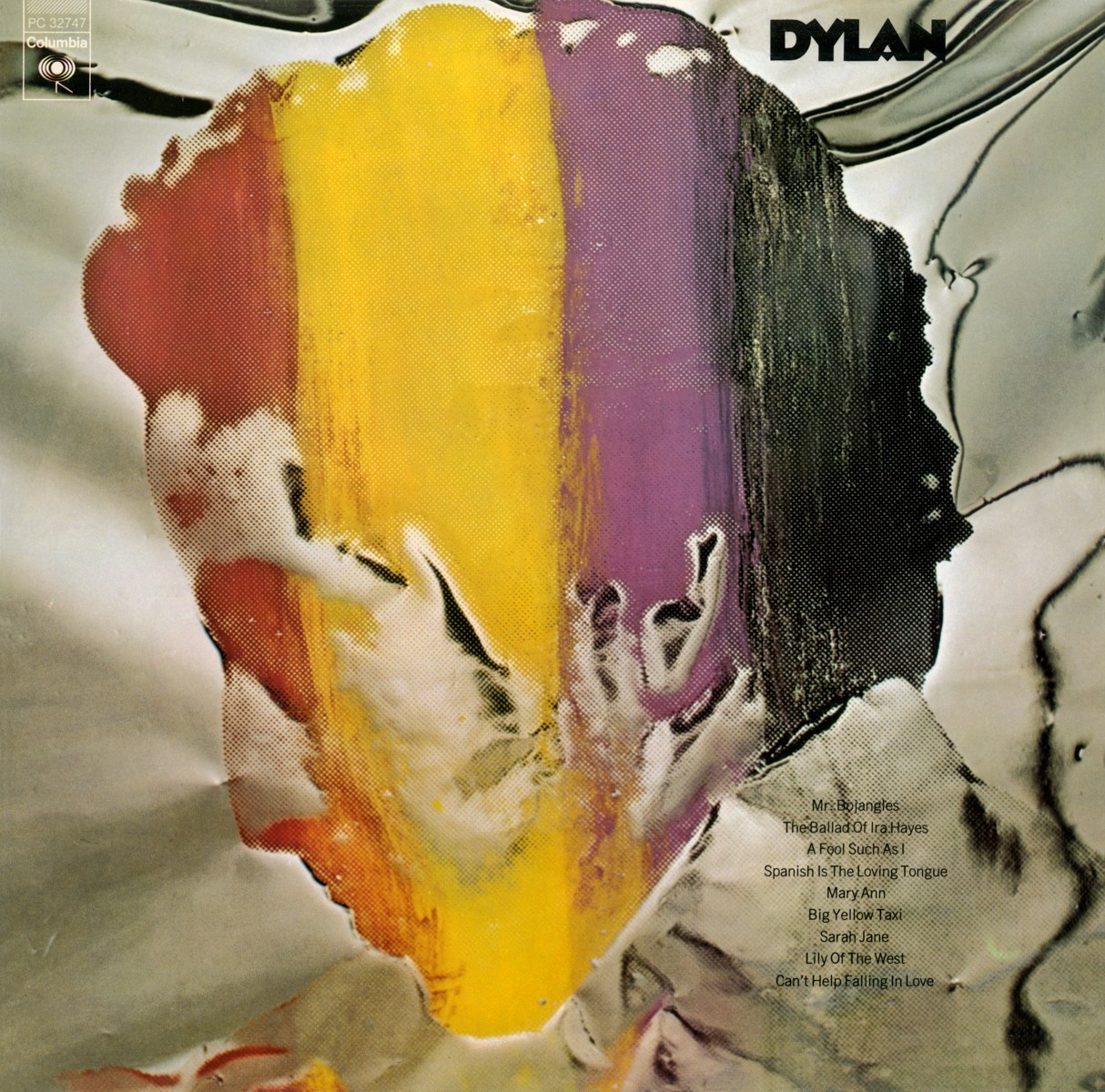
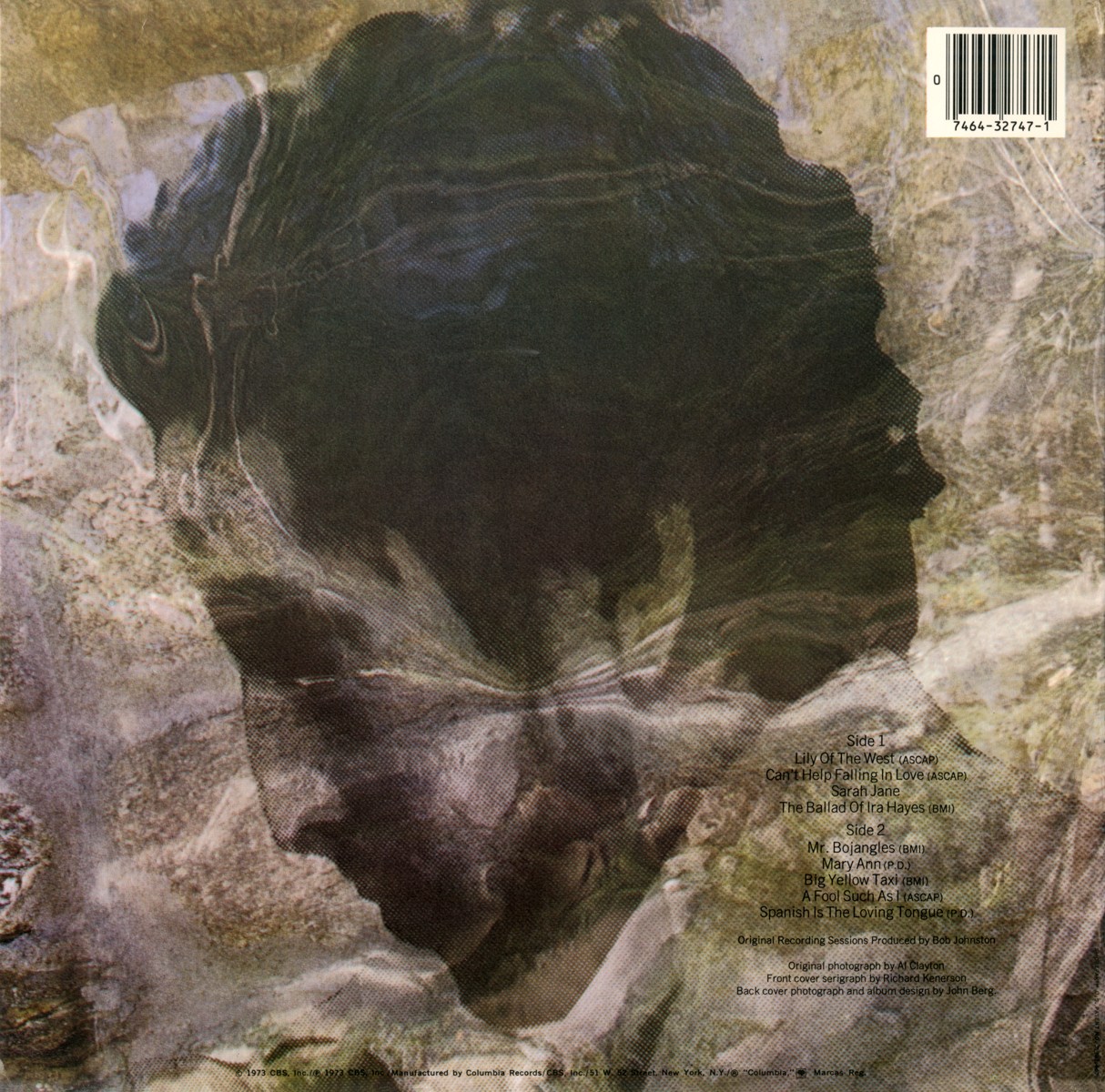
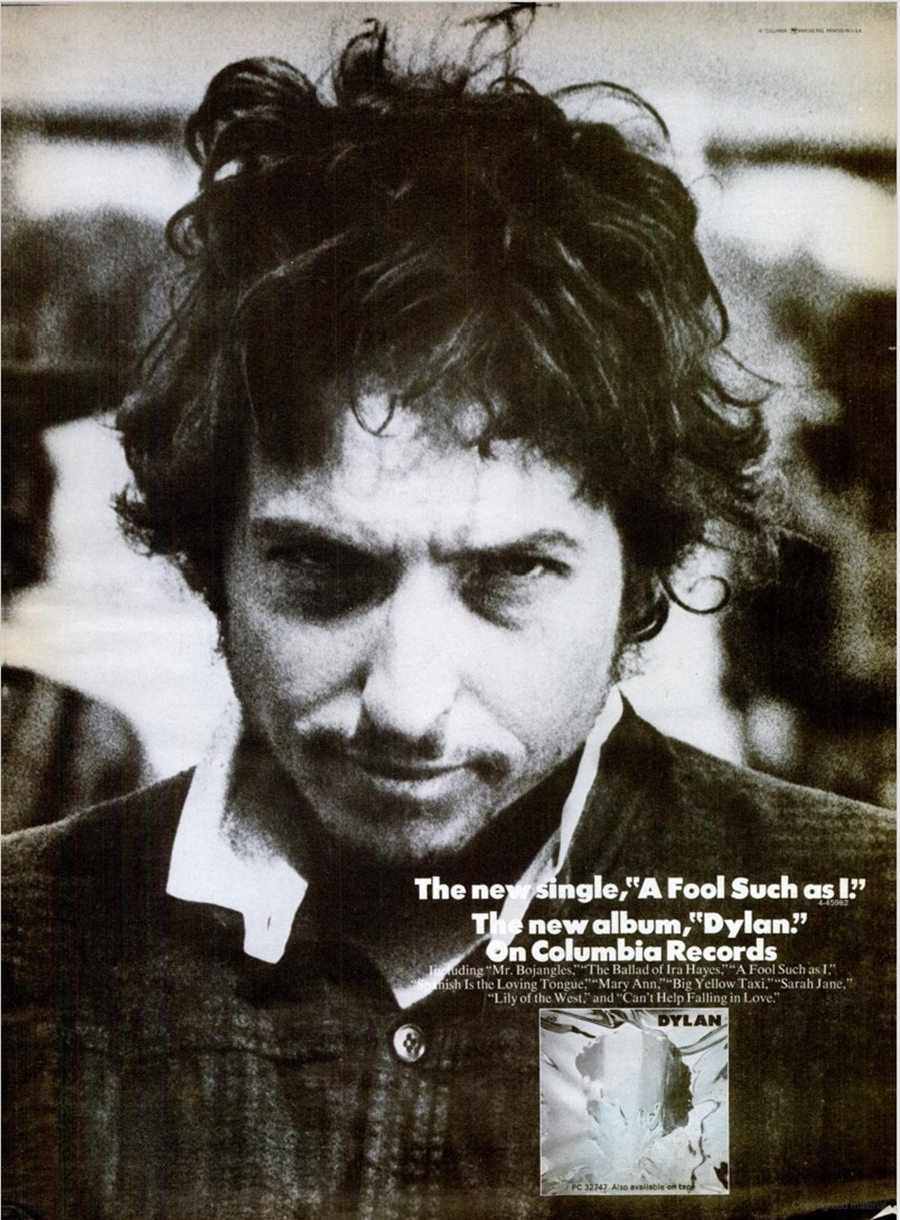

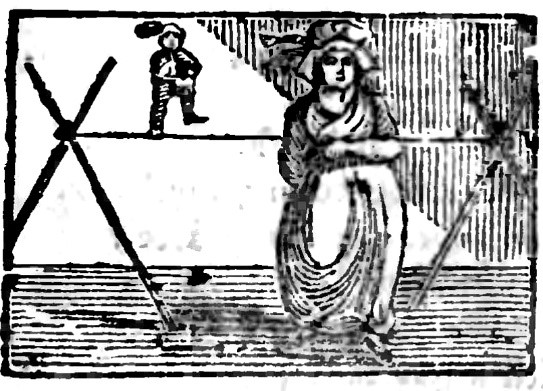
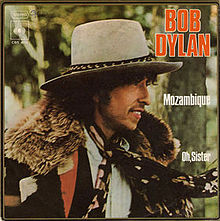


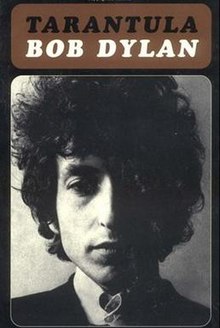

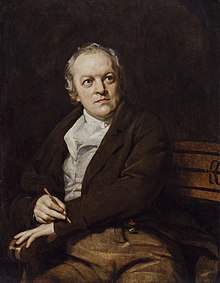
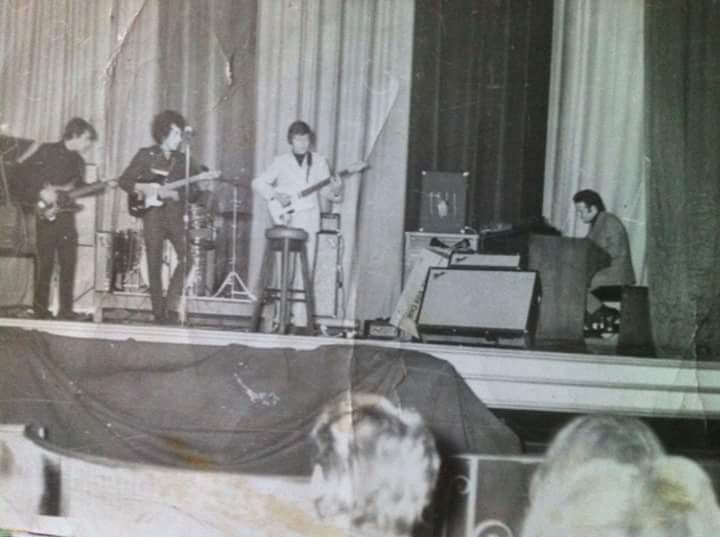
 On this day so long ago, I was a skinny seventeen-year-old schoolboy with a sketchbook under my arm and a singular determination. Instead of taking the train from my small seaside town of Whitehead in County Antrim to go to grammar school in Larne, I travelled 17 miles in the opposite direction to the city of Belfast. I was setting out on a determined and audacious quest to draw Bob Dylan from life that afternoon before he played his second concert in Ireland, the day after his first the night before in Dublin. What could possibly go wrong?

So maybe the Mexican input was Levy’s all the way through these tracks, although another or parallel explanation, given to us through Dale Ward who kindly wrote into this site, is that there exists a Durango in Colorado near to Aztec, New Mexico. What’s more Dale tells us the town of Aztec contains a large set of Anasazi ruins…