The Golden Vanity is one of those folk songs that has multiple names – it is often called “The Sweet Trinity” and also “The Golden Willow Tree”.
The song originated in the 17th century as “Sir Walter Raleigh Sailing in the Lowlands,” and then as is the way of such songs, gradually developed into a set of variations.However the theme throughout has been of a ship called the Sweet Trinity which is captured but survives because of the wit of a cabin boy who in many versions is betrayed by the captain who fails to keep his promise.In simple terms the ship is threatened by a ship of the enemy fleet, and the captain is at a loss as to what to do about it. So the valiant cabin boy offers to swim over to the enemy vessel and drill holes in its side so it gradually sinks. But then himself is left without reward or indeed is killed by the perfidious captain.Here is a contemporary version…
https://youtu.be/_j0EA_YH61I
In the variations the ship can be the Sweet Trinity or Golden Vanity or Golden Willow Tree. Sir Walter Raleigh can be part of the tale too. Where the song is heard in America the enemy is the British, in British versions the enemy is French or Spanish.
Where the cabin boy gets back to his ship he is betrayed by the captain and so the valiant cabin boy drowns – thus revealing the nature of all those in authority – which usually goes down well with the audience of such folk tales, and indeed is something that normally appeals to Bob Dylan.
In some variations the cabin boy is promised to the sister of the captain, or indeed of Sir Walter Raleigh, but as ever, the promise is not kept.
Here’s Bob Dylan’s live version
https://youtu.be/QjmWL1o8AuQ
Dylan’s love of the traditional songs of America is of course well documented, as his support of the musical work of Woodie Gutherie testifies. This version uses the offers of gold and the daughter as a reward for the sinking of the ship. But the whole performance remains surprisingly low key, given the possibilities that the song itself offers.
In a second version by Bob Dylan, the song is played a semitone higher, at a faster speed and with a lot more vigour seems to do the subject matter more justice.
https://youtu.be/f8AO6EbBR_k
What I think particularly attracted Bob Dylan to the song is the variety of people who had also tried the song along with the traditional themes.
The Dylan chords site has the comment that Bob was drunk when he recorded this, given the way he stumbles over the lyrics, but they have done us the service of transcribing the lyrics.
There was a little ship
and it sailed along the sea
and the name of the ship was the golden vanity
and she sailed in the low and lonesome ocean
and she sailed in the lonesome sea.

There was another ship sailing along the sea
and the name of that ship was the Turkish Revelry
and sailing down that low and lonesome ocean
saling in the lonesome sea

There was a cabin boy he said what would you give to me
if I swim alongside of the Turkish Revelr
and sink her in the low and lonesome ocean
if I sink her in the lonesome sea

Well, I will give you gold and I will give you land
and my own lovely daughter she'll be at your command
if you sink her in the low and lonesome ocean
if you sink her in the lonesome sea

He bowed his breath, overboard jumped he
and he swum 'til he came to the Turkish Revelry
sailing in the low and lonesome ocean
sailing in the lonesome sea

He had a little tool, an augur meant to bore
and drilled nine holes in that ship's floor
then he sunk it the low and lonesome ocean
he sunk it in the lonesome sea

And he bowed his breath, back swam he
and he swum 'til he came to the Golden Vanity
sailing in the low and lonesome ocean
sailing in the lonesome sea

O' captain will you be as good as your word
and throw down a line and take me up on board
I'm sinking in that low and lonesome ocean
sinking in that lonesome sea

No, I'll not be as good as my word
I'll not throw down a line or to take you back on board
You'll gonna sink in that low and lonesome ocean
Sink in that lonesome sea

If it wasn't for the love that I have onto your men
I would do onto you like I done onto them
I'd sink you in the low and lonesome ocean
Sink you in that lonesome sea

So he bowed his breath and down went he
He swam til he came to pass down with [...]
and he sunk in that low and lonesome ocean
He sunk in that lonesome sea
To get a feeling of just how many variations there are of this song here is a version by the Carter family.
Pete Seeger really did get to grips with it however, making the lyrics clear and keeping the time
I think we can also understand Bob’s interest in the song in that it is so singable – performing this is just great fun because it offers so many possibilties. And there is always the feeling that one is singing a song that has been sung across over 300 years.
There is an index to many of the other songs included in the “Why does Dylan like” series.
“There was always something about that song, that was so simple, and an audacity to this sort of simplicity to that song. But it was so… so powerful at the same time. For me, at least. I was always ragingly envious of that song.”
So said Nick Cave when asked if there is a song that he wished he had written himself. A fan could have guessed that Cave would pick “I Threw It All Away”. For over twenty years, the story has been going around that he buys a copy of Dylan’s Nashville Skyline in every city he visits, and the source of that story is Cave himself, in an interview with Andy Gill for Q magazine, May ’95:
“I constantly buy the same record over and over again: I’ve bought so many versions of Nashville Skyline – I must be keeping Dylan in… whatever that is he needs keeping in.”
And when the Australian is asked in 1997 to provide the music for the film To Have And To Hold, an Original Soundtrack is recorded with twenty original compositions and one cover: “I Threw It All Away”, sung by the legendary Scott Walker.
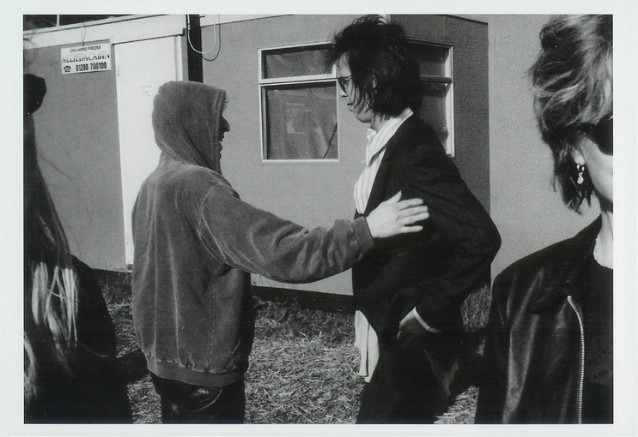
The former singer of the gothic punk band The Birthday Party, who releases high-quality solo albums almost every year from the 1980s, is a seasoned Dylan fan. In his recent compilation “The Sick Bag Song”, a collection of thoughts, poems and sketches that he notes on the puke bags during his many flying hours, we also find the poetic representation of the first and only encounter with his hero (Glastonbury, 1998):
Then slowly, extending from his sleeve,
A cold, white, satin hand took mine.
Hey, I like what you do, he said to me.
I like what you do, too, I replied. I nearly died.
Then his hand retracted up his sleeve,
And Bob Dylan turned and took his leave,
Disappearing back into the rain.
In an interview, he confesses to have been completely star truck, although he retells it, here too, in a somewhat romantic way:
“It was raining heavily and I was standing in the doorway of my trailer in the band enclosure, watching the water rise quicker and quicker, so that now it was running into my trailer. There was a crack of thunder, I looked up and saw a man in a hooded windcheater rowing a tiny boat across the enclosure toward me. The water is now up to my knees. The man pulls the boat in and extends a hand that has a long thumbnail. His hand in mine feels smooth and cold, but giving. The man, who is Bob Dylan, says something like, “I like your stuff,” and before I can reply, he turns the boat around and rows back to his trailer.”
Heart-warming little anecdote, although the decor, as we can see in the photo, is slightly less apocalyptic. But Dylan’s approval of Cave’s work is credible. Probably the bard is very charmed by his album Murder Ballads (1996), which contains idiosyncratic versions of “Stagger Lee” and “Henry Lee”, two age-old folk songs that are also on Dylan’s pedestal, as well as a dark, foreboding interpretation of Dylan’s own “Death Is Not The End”. The other seven songs, including the world hit “Where The Wild Roses Grow”, all tell macabre, sinister murders and massacres.
Obviously, the admired “I Threw It All Away” is far from lurid or bloody, but apart from that “audacious simplicity”, the sombre load will have touched Cave. Yet the seismic shock that Nashville Skyline causes when released is not due to these characteristics, but mainly to Dylan’s voice, a crooning, smooth country tenor, to the country content of the music and to the enormous contrast with his previous albums.
In Dylan’s catalog, those three labels are still intact, but the dismay among the fans has gradually evaporated. The crown jewel of the album, “Lay Lady Lay”, continues to score high in favourites lists and hit charts, album finale “Tonight I’ll Be Staying Here With You” penetrates the canon thanks to adaptations by top artists such as Johnny Cash, Jeff Beck and Ben E. King. “I Threw It All Away” does not have the least advocates; apart from Nick Cave also a Mr. Costello and a George Harrison, MBE, for example.
In itself the song is lyrically little uplifting. It is, within the country tradition, a ten-a-penny jeremiad of a pining narrator, who bitterly blames himself for losing the love of his life through his own misconduct. Theme and choice of words are not essentially different from half the repertoire of Dylan’s old heroes Hank Williams or George Jones.
One scrap of Dylan’s poetic brio flashes in the lines Once I had mountains in the palm of my hand / And rivers that ran through ev’ry day, but the contrast with the lyrics of songs like “Visions Of Johanna” and “All Along The Watchtower” is overwhelming – and that contrast, this Flowers In The Dirt effect, unintentionally adds to the appeal. In addition to that audacious simplicity, the mental change catches the eye, obviously; no poisonous reproaches, no kick after she’s down, but a broken, humble first person who searches his own conscience – it definitely is a new Dylan.
The strongest pillar, however, is the music. The chord scheme plays an attractive game with the listener’s expectations, threatening to drive the melody into a ditch a few times. After the conventional accompaniment under the first two lines, Dylan the Musician suddenly takes a turn to a major chord at But I was cruel (where one would expect minor) and then takes a completely unusual detour back to the starting point, as Tony Attwood clearly demonstrates in Bob Dylan, After The Crash
This weird route is almost a guarantee for false slips in the melody, but Dylan does the job seemingly effortlessly.
In the bridge the master plays a comparable trick, in the deceptive Love is all there is. Deceptive, because the middle-eight would have been intolerably sweet in an obvious blues scheme. This musical setting, though, provides the welcome angularity.
Plenty of covers, of course – after all, it is a beautiful Dylan song. Elvis Costello’s version is a highlight of his cover album Kojak Variety (1995). Madeleine Peyroux produces beautiful, jazzy interpretations of Dylan’s work and her “I Threw It All Away” on Standing On The Rooftop is also a direct hit (2011, which incidentally also contains a chilling “Love In Vain”, from Dylan’s hero Robert Johnson ). And usual suspect Jimmy LaFave has both the blues and the country in his genes, and proves that on Trail (1999).
However, the most beautiful covers are injected with soul. One of the finest in that category comes from The Bo-Keys, a reunion-like band from Memphis that has the laudable ambition to restore the legendary Memphis sound for the 21st century. That works contagiously well, as with the cover of “I Threw It All Away” on Heartaches By The Number (2016).
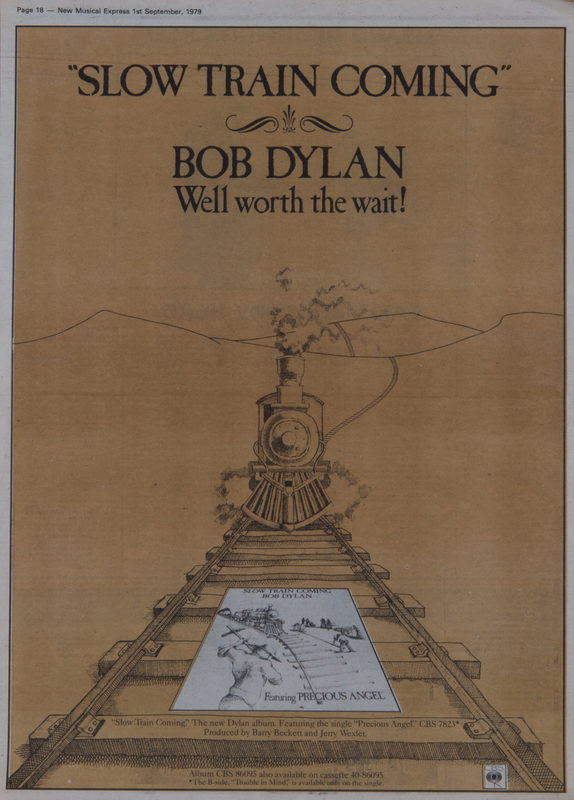
The most irresistible is a lot older. Cher has culpable Dylan fiascos on her conscience, but in 1969 everything is right. The Californian with Armenian roots is indeed one of the most successful artists in pop history – she is the only artist to score a number 1 hit in six (!) consecutive decades – but in the late 1960s her career experienced a first dip. For the restart, she hires the famous producer Jerry Wexler and submits to his regime at the legendary Muscle Shoals Sound Studio in Alabama. The same producer and the same studio (and the same co-producer Barry Beckett on the keys) who will help Dylan ten years later with his best-sounding album Slow Train Coming.
Chers 3614 Jackson Highway is also a minor masterpiece, but unfortunately commercially a flop. Eleven excellent covers, sparkling, soulfully arranged and an outstandingly singing Cher. Wexler is a big Dylan fan and so is Cher, so it’s no surprise that three of the eleven songs are from the Great White Wonder. Surprising still is that all three songs have been picked from the recent Nashville Skyline (also “Lay Lady Lay” and “Tonight I’ll Be Staying Here With You”) and even more astounding is the compelling impulse that the already so melancholic original gets from Beckett’s piano and from the Muscle Shoals Horns, the wind section.
At best a Dusty Springfield had surpassed it, presumably.
What else is on the site
You’ll find an index to our latest posts arranged by themes and subjects on the home page. You can also see details of our main sections on this site at the top of this page under the picture.
The index to the 500+ Dylan compositions reviewed is now on a new page of its own. You will find it here. It contains reviews of every Dylan composition that we can find a recording of – if you know of anything we have missed please do write in.
We also have a discussion group “Untold Dylan” on Facebook. Just type the phrase “Untold Dylan” in, on your Facebook page or follow this link
And please do note The Bob Dylan Project, which lists every Dylan song in alphabetical order, and has links to licensed recordings and performances by Dylan and by other artists, is starting to link back to our reviews.
Let’s look at the following song lyrics as an allegory – characters and events represent qualities or ideas that relate to morals, religion, and politics:
Every step of the way we walk the line
Your days are numbered, so are mine
Time is pilin' up, we struggle and we scrape
We're all boxed in, no where to escape
(Bob Dylan: Mississippi)
A Gnostic-like theme is presented in which most humans are disgruntled because they are exploited in a society controlled by rulers who are bent on material gain even as the black card of death gets dealt to everyone.
A tribute is paid to another singer/songwriter who’s consoled by loving companionship:
I keep a close watch on this heart of mine
I keep my eyes wide open all the time
I keep the end out for the ties that bind
Because you're mine, I walk the line
(Johnny Cash: I Walk The Line)
Below, the Blakean theme of the rural life of childhood put asunder by the alienation of city life:
City's just a jungle, more games to play
Trapped in the heart of it, trying to get away
I was raised in the country, I been workin' in the town
I been in trouble ever since I set my suitcase down
(Bob Dylan: Mississippi)
Tribute paid to a traditional song with a similar theme:
I am a man of constant sorrow
I've seen trouble all my day
I bid farewell to old Kentucky
The place I was born and raised
(Man Of Constant Sorrow~traditional)
It’s come to this – a materialistic society, the main product of which is alienation from the natural world; nihilism, it’s gift, and to escape therefrom is most people’s wish:
Got nothing for you, I had nothing before
Don't even have anything for myself anymore
Sky full of fire, pain pourin' down
Nothing you can sell me, I'll see you around
(Bob Dylan: Mississippi)
The fire-breathing ruler of the Old Testament’s back; that of the New, ignored:
Wilt Thou that we command fire
To come down from heaven
And consume them, even as Elias did?
(Luke 9:54)
It’s dark out there – pornographic magazines, books, and movies sold as a means of escape:
Well the Devil's in the alley, mule's in the stall
Say anything you want to, I have heard it all
I was thinkin' about the things that Rosie said
I was dreaming I was sleeping in Rosie's bed
(Bob Dylan: Mississippi)
Deviant sexual dreams, if not action, the result – Valadimir Nabokov’s novel ‘Lolita’ comes to mind:
The only lover I'm ever gonna need's your soft, sweet, little girl's tongue
And Rosie, you're the one
(Bruce Springsteen: Rosalita)
The narrator imagines himself as Joshua, crosses the Jordon (in this case the Mississippi) River to the Promised Land – however, he becomes corrupted:
Well I got here following the southern star
I crossed that river just to be where you are
Only thing I did wrong
Stayed in Mississippi a day too long
(Bob Dylan: Mississippi)
Tributes made to:
I been in town just one night to long
(Bruce Springsteen: Last Night In Tulsa)
As well as:
I've stayed in Sheridan too long already
(Robert Mitchum: Man With The Gun)
Making fun of himself for having to come up with an ending for the Ulysses-like journey, the author continues on with the story:
My clothes are wet, tight on my skin
Not as tight as the corner that I painted myself in
I know that fortune is waitin' to be kind
So give me your hand, and say you will be mine
(Bob Dylan: Mississippi)
A way out is not to portray himself as the rebel against the establisment that he did in his youth:
I spied the fairest damsel
That ever did walk in chains
I offered her my hand
She took me by the arm
I knew that very instant
She meant to do me harm
(Bob Dylan: As I Went Our One Morning)
The spectre of the Ace of Spades just won’t go away; the lyrics of the song ‘Mississippi” reference the story of Moses:
Well the emptiness is endless, as cold as the clay
You can always come back
But you can't come back all the way
(Bob Dylan: Mississippi)
As told in the Holy Bible, Moses makes it not all the way back to the Promised Land:
Because ye trespassed against me
Among the children of Israel .....
Because ye sanctified me not
In the midst of the children of Israel ....
Yet thou shalt see the land before thee
But thou shalt not go thither unto the land
Which I give the children of Israel
(Deuteronomy 32:51,52)
Tribute is also paid to the song below:
As I walked out in the streets of Laredo
As I walked out in Laredo one day
I spied a young cowboy all wrapped in white linen
Wrapped in white linen as cold as the clay
(Marty Robbins: Streets of Laredo ~ Maynard)
What else is on the site
You’ll find an index to our latest posts arranged by themes and subjects on the home page. You can also see details of our main sections on this site at the top of this page under the picture.
The index to the 500+ Dylan compositions reviewed is now on a new page of its own. You will find it here. It contains reviews of every Dylan composition that we can find a recording of – if you know of anything we have missed please do write in.
We also have a discussion group “Untold Dylan” on Facebook. Just type the phrase “Untold Dylan” in, on your Facebook page or follow this link
And please do note The Bob Dylan Project, which lists every Dylan song in alphabetical order, and has links to licensed recordings and performances by Dylan and by other artists, is starting to link back to our reviews.
In this series we look at live performances by Bob Dylan which have re-imagined songs from his back catalogue.
As ever the recordings have been selected by Paul and the commentary supplied by Tony. We have Shelter from the Storm, Forever Young and Simple Twist of Fate. Details of all the previous articles in the series are at the end.
Shelter from the Storm
For Bob Dylan his past catalogue is a thing to be played with, to be explored, to be messed about with, even to be turned upside down, just to see where each song can go.
When we think of Shelter from the Storm, the lyrics themselves allow an endless set of opportunities, because in saying “come in”, and also most importantly because the “she” of the song could be anything – she can be gentle, she can be on the edge of devouring her visitor, she can be saintly, she can be old, she can be young, she can be… well anything.
And as for the man who comes in and gets that shelter, he himself can be excited, tired, cautious… we really don’t know, because the song is so ambiguous throughout.
And it is this that has made me want to include two versions of the revisiting of the storm. One selected by Paul and (just because I can) one by Tony. Here’s Paul’s selection
https://www.youtube.com/watch?v=nJ83T4MoiXo
And Tony’s from (of course) Rolling Thunder
After hearing these two it is almost an impossible shock to come back to the original and remember how gentle it was…
We don’t normally include the originals in this series, just focussing on the re-imagined versions, but on listening to the two recordings above and then putting on the original it really was such a jump backwards in time. As listeners we really do have the choice as to how we imagine the people in the song. That is the sheer genius of what is in essence an incredibly simple piece of music.
Now we move on to Forever Young.
By its very nature it is a gentle song, but that gentleness can be expressed as the prime emotion of the song or it can become the essence of the voice – as here. And notice the way Bob holds onto the final “Forever” in the chorus.
The accompaniment itself in this version also holds back with the emphasis on acoustic rather than electronic sounds to give an extra feeling of the very essence of the music rather than any musical trickery that electronics might offer.
https://www.youtube.com/watch?v=V8phER8RkAI
Finally in this edition we have Simple Twist Of Fate from the late 1990s.
This is something of a strange arrangement. Bob’s vocals are very laid back, as is the instrumentation… except for the drums which seems strangely out of place. And yet… upon reflection the solid regularity of the percussion, pounding the rhythm without variation, and indeed without cymbals, does portray the relentlessness of life as it move along, taking its own route irrespective of anything we might wish it to do.
https://www.youtube.com/watch?v=O-7TWH-sK7w
A very effective re-imagining of the song. But then from Bob we would expect nothing else.
The series so far
You can find the first article in the series here where we looked at Pretty Peggy O, Ring them Bells and the total reworking of Visions.
The second article took in Like a Rolling Stone, Positively 4th Street and Just like Tom Thumb’s Blues.
Part 3 took in Tears of Rage, Masters of War and Man of Constant Sorrow.
There is an excellent podcast called “Bowie vs Dylan” (www.bowievsdylan.com) where two brothers finally answer one of philosophy’s greatest questions: who’s better, David Bowie or Bob Dylan?
Each episode covers one year of releases, concerts and reissues – a winner is decided for the act who had the best year. Great episodes include “Ep 25: 1987 – Never Let Me Down vs. Hearts of Fire” which asks an interesting question, which would you rather listen to, the worst of Dylan or the worst of Bowie? As a big fan of both, it’s a hard question to answer but for 1987 they decided Dylan had the better year (for me, I’d rather listen to “Never Let Me Down” over “Hearts of Fire”).
Check the website for future episodes and for the tally so far (currently its Bowie 12 – Dylan 10).
It is easy to see that Bowie was a Dylan fan early on in his career, his second album “Space Oddity” contains a number of Dylanesque moments in tracks such as “Unwashed and Somewhat Slightly Dazed”, “Letter To Hermione” and “Wild Eyed Boy From Freecloud”.
Bowie’s fourth album (and possibly his best) “Hunky Dory” came in 1971 and contained the track “Song For Bob Dylan”.
https://www.youtube.com/watch?v=PPxnCNRm_nY
Dylan wrote in “Chronicles”:
“I found myself stuck in Woodstock, vulnerable and with a family to protect. If you looked in the press, though, you saw me being portrayed as anything but that. It was surprising how thick the smoke had become. It seems like the world has always needed a scapegoat—someone to lead the charge against the Roman Empire. But America wasn’t the Roman Empire and someone else would have to step up and volunteer…Now it had blown up in my face and was hanging over me. I wasn’t a preacher performing miracles. It would have driven anybody mad.”
In an interview in Melody Maker in 1976 Bowie said, “It was at that period that I said, ‘Okay, Dylan, if you don’t want to do it, I will.’ I saw that leadership void”. Bowie’s song begins by directly referencing “Song To Woody” and so sets himself up to be Dylan’s heir presumptive:
Ah, here she comes Here she comes, here she comes again The same old painted lady From the brow of the superbrain… Oh, hear this Robert ZimmermanI wrote a song for youAbout a strange young man called DylanWith a voice like sand and glueSome words had truthful vengeanceThat could pin us to the floorBrought a few more people onAnd put the fear in a whole lot more
The pair met a few times throughout the 70s and 80s, although it is alleged that Dylan was rude to Bowie and is known to have said that he hated, “Young Americans”.
But this hasn’t stopped Dylan stealing Bowie’s musicians over the years – Mick Ronson played for both (Ziggy and Rolling Thunder) as did Charlie Sexton (Glass Spider Tour and Never Ending Tour). I’ve also heard a rumour that Dylan wanted Bowie to produce the “Infidels” album before Mark Knoffler was brought on board.
In 1976 Bowie gave an interview to Playboy where he discussed an earlier meeting with Dylan:
PLAYBOY: You’re not noted for cordial relationships with other artists. Yet there was the rumor that you flew to Europe to spend a sabbatical with Bob Dylan. What about it?
BOWIE: That’s a beaut. I haven’t even left this bloody country in years. I saw Dylan in New York seven, eight months ago. We don’t have a lot to talk about. We’re not great friends. Actually, I think he hates me.
PLAYBOY: Under what circumstances did you meet?
BOWIE: Very bad ones. We went back to somebody’s house after some gig at a club. We had all gone to see someone. I can’t remember who, and Dylan was there. I was in a very, sort of…verbose frame of mind. And I just talked at him for hours and hours and hours, and whether I amused him or scared him or repulsed him, I really don’t know. I didn’t wait for any answers. I just went on and on about everything. And then I said goodnight. He never phoned me.
PLAYBOY: Did he impress you?
BOWIE: Not really. I’d just like to know what the young chap thought of me. I was quite convinced that what I had to say was important, which I seem to feel all the time. It’s been quite awhile since someone really impressed me.
I can’t find any examples of Dylan covering Bowie or even of them both covering the same song (although Bob doing “Life On Mars” would be magical!). Over the years Bowie has proven himself to be pretty good at picking covers (if you ignore “God Only Knows”!!) making songs such as “Sorrow” and “Wild Is The Wind” his own. Even in the later part of his career he was pulling out such well picked numbers such as “Try Some Buy Some” (Harrison), “I’ve Been Waiting For You” (Young), “Waterloo Sunset” (Kinks) and “I Know Its Gonna Happen Someday” (Morrissey).
He has also covered Dylan on a number of occasions.
First up is a 1989 standalone single by his band Tin Machine – “Maggie’s Farm”
This was follow in 1994 with a version of “Like A Rolling Stone” appearing on Mick Ronson’s 1994 posthumous “Heaven and Hull” album
Two further Dylan covers have since surfaced, both remain officially unreleased.
First up is “Make You Feel My Love”, I have no information on when this is from or why it was recorded but it is thrilling!
Lastly we have “Tryin’ To Get To Heaven”. This was recorded as a potential bonus track for a live album to be called “Live And Well”. Virgin eventually balked at the idea of a live album as the previous studio album “Earthling” hadn’t sold particularly well and the supporting tour had mainly played clubs and small theatres. There is talk of the “Live and Well” album finally being released this year (as part of the ongoing series of Bowie album box sets). This would be welcome news for this Bowie and Dylan fan!
I have to be honest here, and admit that my whole reason for writing this article was to present these last two tracks to a wider audience. I love them both as much as I love both artists.
For me, it would be the Champions League Final, high scoring draw, with extra time and penalties…and I will not be drawn on who the winner is!
You’ll find an index to our latest posts arranged by themes and subjects on the home page. You can also see details of our main sections on this site at the top of this page under the picture.
The index to the 500+ Dylan compositions reviewed is now on a new page of its own. You will find it here. It contains reviews of every Dylan composition that we can find a recording of – if you know of anything we have missed please do write in.
We also have a discussion group “Untold Dylan” on Facebook. Just type the phrase “Untold Dylan” in, on your Facebook page or follow this link
And please do note The Bob Dylan Project, which lists every Dylan song in alphabetical order, and has links to licensed recordings and performances by Dylan and by other artists, is starting to link back to our reviews.
In his Modernistic Symbolist French novels and short stories that are presented in a rather imagistic surrealistic-like format, devoid of a tight plot (often in diction double-edged and satirical), Marcel Proust searches in vain for meaning, or purpose linked to human existence, except in the creation of art; he considers emotional aspects of life, like love and jealousy, to be fleeting – here today, and gone tomorrow, only to re-appear yet again.
Proust takes an Existentialist position in which the solitary individual is imprisoned within the secret self. Bound by language, the self is entangled in sensual experience, and internal feelings – good and bad – all mixed up with memories from the past, and hopes for the future – with little time left over to appreciate the magical things in life felt in childhood, like the smell of the sea:
To find any happiness, writes he:
It's better not to know, to think as little as possible,
not to feel one's jealousy with the slightest concrete detail
(Marcel Proust: In Search Of Lost Time)
Within a number of Bob Dylan’s, often double-entendred, song lyrics there’s a viewpoint present, albeit sometimes shifted, akin to that of the Romantic-inclined Proust:
She's got everything she needs
She don't look back
She can take the dark out of the night-time
And paint the daytime black ...
You will start out sanding
Proud to steal her anything she sees
But you'll wind up peeking through her keyhole
Down upon your knees
(Bob Dylan: She Belongs To Me)
There be the following formidable song in which thoughts expressed therein are rather similar to those of the nonpracticing Jewish/Catholic writer:
Anger and jealousy is all that he sells us .....
No time to choose when the truth must die
No time to lose or say good-bye
No time to prepare for the victim that's there
No time to suffer or blink
And no time to think
(Bob Dylan: No Time To Think)
Indeed, the following song could be entitled “In Search Of Lost Time”:
It's been such a long, long time
Since we loved each other, and our hearts were true
One time, for one brief day, I was the man for you
Last night I heard you talkin' in your sleep
Saying things you shouldn't say, oh baby
You just might have to go to jail someday
Is there any place we can go?
Is there anybody we can see? Maybe
It's the same for you as it is for me
(Bob Dyan: Long And Wasted Years)
A title that’s referenced in the song lyrics below:
You break your promises all over the place
You promised to love me, but what do I see?
Just you comin' in, and spillin' juice all over me
Odds and ends, odds and ends
Lost time is not found  again
(Bob Dylan: Odds And Ends)
Characteristic of the singer/songwriter, thoughts expressed by Proust he modifies, sometimes completely inverts:
... I caught a glimpse of the sea through the leafy boughs of trees ...
I was no longer near enough to the sea which seemed to me
not a living thing, but fixed; I no longer felt any power beneath it's colours.
(Marcel Proust: In Search Of Lost Time)
Transformed to:
... I caught a glimpse of the sea through the leafy boughs of the pines.
I wasn't near it, but could feel the power beneath it's colours.
(Bob Dylan: Chronicles I)
One of the basic elements and symbols of times past – earth, water, fire, and wind – revisited.
Scott Cohen wrote a piece in Interview Magazine in February 1986 which basically seemed to consist of Dylan giving very short answers to a series of questions, including details of songs he particularly liked.
Included in the list was “Bony Moronie” which is referred to as “some great minor masterpiece.” I am not sure if that was Dylan’s actual comment, but I’m taking it that this was a song he particularly liked.
Bony Moronie was the third single by Larry Williams, released in 1957.
The song was a hit for Williams, and he had other hits in the next couple of years with “Short Fat Fannie”, “Slow Down”, “Dizzy, Miss Lizzy”, “Bad Boy” and “She Said Yeah”.
Wikipedia tells us that Larry Williams’ life “mixed tremendous success with violence and drug addiction,” and that he was a longtime friend of Little Richard – and indeed when Little Richard left rock n roll to become a preacher, it is Williams who was designated by the record company to take over as its lead performer.
This he did as “Short Fat Fannie” and “Bony Moronie” each sold over one million copies. And indeed some of his songs were covered later by The Beatles, the Rolling Stones and John Lennon as a solo artist.
Williams success however faded quickly, and in 1960 he was given a three year jail term for drug dealing. However he did return with Little Richard in the mid 1960s both as a performer, as a manager and musical director, giving Little Richard considerable success once again.
However he seemingly never quit the drugs scene, and Wiki reports that in 1977 Williams threatened to kill Little Richard over a drug debt. Williams died aged 44 on 7 January 1980. It was reported as suicide.
However thereafter Martin Allbritton claimed to be Larry Williams, and toured billing himself as Larry Williams. There was also a 1970s revival of Larry Williams work thanks to a glam rock band, Hush who performed Bony Moroney.
Unfortunately the Hush recording of Bony Moroney is not available in the UK for me to display it here but here is Tom Jones singing it
So why does Bob Dylan like this song?
It is classic 1950s rock n roll, and we know that Bob has always had a fascination with this music from his young days.
And unlike so many fast songs of the era, this song does actually lyrics that run all the way through (compare, for example, “Hound Dog”). Also there are no compromises in terms of the pure 1950s rock music: the sax solo after the first two verses is the real thing – exactly capturing rock n roll before the electric guitar came to dominate everything. Yes there is a guitar in the second instrumental break which fades the song out, but its engagement is minor. This is the real rock n roll as it really did sound in the late 1950s.
Here’s another Larry Williams hit
Actually if you watch that video you can understand why as we got older, those of us who loved to jive moved over to modern jive. It is danced at a somewhat slower speed. Mind you it is still fast enough to be great fun.
There is a list of some of the other songs in this series in our index.
The Bootleg Series Vol. 13: Trouble No More 1979–1981 is in its entirety devoted to the period that Dylan was born again as a Christian. He shared that new belief with the world through the studio albums Slow Train Coming, Saved and Shot of Love. To promote that new box set, a page in the form of a stained glass window appeared on bobdylan.com in November 2017. A click on the images grants acces to ‘never-bfore-seen memorabilia from the period.’

In the right part of the stained glass window there are two images of unused artwork for the cover of Slow Train Coming. The fifth image from the top is a watercolour of a prophet, with a staff / flower in his right hand. At the bottom right it is stated that the concept was designed by William Stetz and drawn by “Canner” [sic]. The other design (the eighth from the top) is solely attributed to William Stetz and represents a similar prophet who follows a train track from right to left. His discipels follow him, neatly in line.
Looking for more info on these drawings, I contacted William Stetz. It appears that he has never seen either of the “unused artworks”. “… although I later made similar illustrations myself, as proposals for Dylan’s album “Saved”, none of the drawings on this webpage belong to me and, as far as I know, neither to Catherine Kanner.”
In a next mail he emphasizes once again: “Typography IS mine, but I don’t think the figurative illustrations have any connection with the work of Catherine or myself. ”
Catherine Kanner responds equally astonished: “I can absolutely assure you that I have made only one piece of art for the cover of Bob Dylan’s Slow Train Coming. No sketches were submitted. There is only the finished pen drawing that has been used for the cover.”
She says she will take steps to see her name removed from those “rejected drafts”.
The illustration above is one of the rejected pictures.
Publishers’ interjection: Subsequent to our publishing this article Catherine Kanner sent a comment (which is published in full below in the comments section) saying the following. We’re grateful to Catherine for taking the time to put the record straight.
“This is Catherine Kanner, the artist of Dylan’s album cover for Slow Train Coming. The artwork you are showing on this screen page – Sleeve art – with the train coming straight on is not my work and should NOT be attributed to me. The small image of the album cover on the tracks appears to be unaltered and is my work. There are many art pieces floating around online that are attributed to me, but are fakes. Several people have contacted me for confirmation in hope that they had an original, only to be disappointed. Here is a link to an interview for Rock Pop Gallery where I tell the story of how the art was made: https://rockpopgallery.typepad.com/rockpop_gallery_news/2008/04/cover-story—b.html”
Art-director: Wm. Stetz
William Stetz (called Bill) is a graphic designer and photographer from Chicago. As a 25-year-old he moved to Los Angeles where he started designing posters for plays and films. He also makes some cover designs for local bands. Although there are no known names among them, one must have caught the attention of Bob Dylan – or someone from his entourage.
Bill Stetz tells his story in an email from 14 May 2019.
“1. I was drawn into a design project for Bob Dylan through Jude Elliott, the
girlfriend of my friend David Stafford. Jude was working as an assistant to Bob
Dylan who had opened a studio in Santa Monica – Venice, CA on Main Street
south of the corner of Pico Blvd.
This was a warehouse-type building on Main Street where Jude worked and Bob
used as a base/studio. Jude knew I was a designer and photographer (I had
been working for a motion picture title designer up to that time) and asked if I
would be interested to pitch an idea to Bob for his new album artwork, his first
Christian-themed album. CBS was the publisher for Dylan at the time and
although I dealt with CBS eventually, Dylan personally initiated the creative
process through me, up to the production phase of the work which was overseen
through CBS.
2. I met Jude at the Main Street space and we went upstairs. It was mid-morning
when I located the studio a couple of blocks from the beach. She led me to the
second floor of the loft, a large room that took up a lot of the second floor, and
then to a smaller unfinished room that faced the street. My first meeting with
Dylan was in that smaller room of the warehouse. Bob entered and appeared
more slight in stature than I had imagined. I was 5’11” and he was much shorter
and slim. Jude introduced us and then left. In a business-like manner I extended
my hand to shake his and immediately sensed that he wasn’t used to shaking
hands with people, but took my hand and we exchanged a timid grasp.
3. Dylan stood with his back to the warehouse window in the bare room, so he
was somewhat in silhouette to me or side-lit as he turned profile to the window.
He was soft spoken and didn’t say too much, but he wanted me to have a listen
to the music of his new album (Slow Train Coming) for me to get a flavor of the
work. He produced a cassette tape (which he wouldn’t allow me to take) of some
of the music on his album. I remember him using a small portable cassette player
to play “Gotta Serve Somebody” and we stood quietly while the music played.
Then he left the room while I listened to more of the music. Dylan never
expressed or described any visuals to me. He was all about the music. He gave
me full reign to come up with something in the way of art and I never felt that I
was in competition with the record company or another artist that might be
coming through the door. I felt some pressure about inventing a design that
would be appropriate for a musical artist that I respected and admired for so
many years. At the same time Dylan’s so completely unpretentious demeanor
allowed me to concentrate on my ideas all to myself. I left that meeting that day
and began my work.
Usually, as is the case, my first ideas come on the strongest. Working from my
original first thoughts often takes precedence to working and re-working an idea.
Slow Train Coming. It conjures the obvious of a train, a progression of forward
movement, forward ideas, people, moving forces. A train is a train — and all that
other stuff, too. But this train is a movement of spirit, conviction and forces of
man and god. This album was Dylan’s vision of religion, Christianity and so
building upon that idea I introduced the cross through the axe and made this
“slow train,” the movement of mankind down a track that was being laid, all
honed by a cross-wielding laborer that would pound a spike to the rails.
Not having the expertise to translate my idea into the illustration myself, I hired an
illustrator, Catherine Kanner, that I had met through another work project to do
the drawing.”
Here we let Catherine have her say. She told her story in March 2008 to Cover Story:
“My first job out of college was one working at a film titles company in Los Angeles (around 1980), after which I moved on to a permanent freelance illustration and design career which included regular work with the Los Angeles Times “Opinion” section. There, my editorial pen and ink illustrations appeared weekly. One morning, I received a phone call from out of the blue from one of my former co-workers at the film titles company (sorry, I don’t recall his name– [that would be Bill Stetz]). who had also moved on and who had seen my editorial work in the Times. “Drop everything,” he said. “I’m coming over with an incredible job!” As it turns out, he was now working as a freelance designer and had a good connection at Columbia Records. He rushed over and let me know that this was a potential cover for a Bob Dylan album, […] and that it had to be done and turned in that night!
The concept was very concrete as he expressed it to me. As he explained it, this album was to be Dylan’s exploration of Christian ideas through his words and music. I recall being amazed to hear this.
The graphic style was meant to have an engraved look – which pen and ink (my specialty) certainly mimics. Dylan’s concepts for the illustration were clear [sic] – he requested locomotive train coming down tracks that were being laid by a crew, and there was to be a man in the foreground holding a pick-axe. The axe was meant to be a symbol of the Cross. In my original sketch, I rendered the axe as it would naturally be, but I recall my friend insisting that I extend the top of the axe so that it more resembled a cross. I thought that was too obvious and argued for a more subtle approach, but in the end the axe was extended.
I did, in fact, finish the rendering that afternoon and after my friend took the piece, I never saw it again. I never met with anyone face to face at the record company, nor did I meet with Dylan.”
Bill Stetz confirms that he has stayed besides Catherine Kanner to give her instructions, while she was working: “I related all my ideas to Catherine and while I stood over her shoulder we worked out the image together. She did no work on the art outside of my presence and we made revisions to the art at her apartment studio.”
“The drawing was a patchwork of separate drawings that were reworked, cut from paper and fit together like a puzzle to create a forming the final work. I still own the original pieces of that work. From the composite, I had a film positive made of the line drawing and overlaid it on brown construction paper in the dimensions of the album cover for presentation. This gave it an old printing effect of having been produced on paper which had discolored or was of less than high quality paper stock. And, it looked like an album.”
“[Stetz] delivered the illustration to Columbia Records,’ Catherine continues. “And I believe it was about a week later that I heard back from him that Dylan had seen it – and he liked it! He wanted to use it as it was, however the record company wanted to give it another go, and I heard they used their own team and presented Dylan with new pieces in a style quite similar to mine (!!)”
In one of the emails Catherine sent me, she suggests that the “rejected drafts” on Dylan’s site are these proposals from the CBS staff, made in the style of Catherine and Bill’s work: “I cannot confirm this, but this could be an explanation. Again, I did not make any drafts, only the final approved and used artwork.”
Stetz adds: “I never heard directly from Bob Dylan what he thought of the work, but it must have made an impression as I did hear from the CBS art director for contractual arrangements to purchase the work. Jude seemed to think that Dylan liked the work a lot, so that pleased me.”
That art director is Tony Lane, former chef layout at Rolling Stone, but recently head of CBS. “When asked by Tony Lane if I wanted a credit as Art Director”, Bill Stetz writes, “I naively asked for the credit “cover design and concept” which is exactly what I did and what Columbia printed.”
“I had no input to Columbia about the photos or the liner. I presented only the cover artwork and typography as a completed layout overlay over a paper background. What I handed in “looked” exactly like the album cover that was published. Later I saw the finished album with back cover photo and liner art/copy when the album went public. I could have designed the whole thing and was not offered to do that.
I sensed some tension in my meeting with Art Director Tony Lane that I was allowed to do the cover art, through the insistence of Bob Dylan, as an outsider to the Columbia organization. That was my sense but I have no information to qualify those feelings.”
In an interview, reprinted in Howard Sounes “Down The Highway: The Life Of Bob Dylan”, Tony Lane confirmed that there was lengthy consultation within the staff of the record company about how clearly the message should be presented.
“There were great worries that they were going to lose their Bob Dylan core audience.” He added that Bob spoke about himslef in the third person, while discussing the artwork. Perhaps because he was referring to Stetz’s ideas?
“I am happy that the artwork was produced”, Bill Stetz concludes. “I am very proud that the idea took flight. I revere Bob Dylan as one of the greatest artists of our time and having played some role is his work makes me very happy.
Catherine Kanner was inducted in the Album Cover Hall of Fame in 2013 for her illustration on Bob Dylan’s Slow Train Coming.
“Since that time, there have been a number of Dylan scholars who have analyzed my illustration,” Kanner tells, “reading all sorts of mystical meanings and messages in the layout and concept. I have had a dialogue with one of these scholars (in Italy) explaining that my composition was simply designed to “tell the story”, and so it was not suffered over, or filled with deeper meaning.”
The back cover photo
The cross is also prominent on the back, in a photo of a man with a sailboat. The photo is the work of Nick Saxton (who later directed video for Michael Jackson). Saxton, like Tony Lane, was “closely involved in a secret Bible study.”
For the book Restless Pilgrim: The Spiritual Journey of Bob Dylan (2002), Scott M. Marshall interviewed the photographer Nick Saxton. Saxton told him that the depicted boat was on or near the Amazon and that the mysterious figure is not Dylan, but Gary Wright. Saxton had made that photo for the cover of his LP Headin’ Home (1979), which shows another photo of Gary on a boat. Somehow Dylan had seen that unused photo and insisted on using it for the Slow Train Coming cover.
The inner sleeve photo
The portrait of Dylan dressed in a leather vest and microphone in hand was made by Morgan Renard, the official photographer during the European and American part of Tour ’78.
A nice anecdote: Rolling Stone had an interview with Bob Dylan and wanted to put it on the cover of edition 278 – Dylan’s tenth cover! But when the photographer presented himself at Dylan’s dressing room before his performance at Madison Square Garden, Dylan refused to pose for him. He retired to the restrooms with Morgan Renard and got photographed there. Hence the urinal on the left of the frame.
And yet another anecdote, by Catherine Kanner: Years later, my parents were sitting on the deck of their house in Malibu, and a man was walking up the beach alone. My father recognized him as Bob Dylan. My mother (who is a character) waved him down. He actually came up to their house and she announced herself as “the mom of the artist who illustrated Slow Train Coming”. She had a copy of the art on the wall, and he came in to see. She said he was “modest and interesting”.
This is the first in what we hope will be a series of articles covering the art work on Dylan’s albums.
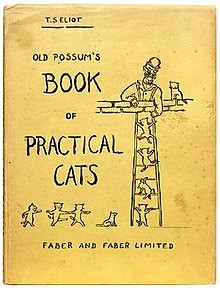
In November 2015, Andrew Lloyd Webber is considering adding yet another cat in a next revised version of Cats, one of the most successful musicals of all time. The musical is based on T.S. Eliot’s playful Old Possum’s Book Of Practical Cats, a collection of poems about a dozen cats and their lives. Originally, Eliot wrote the verses in letters to his godchildren and, as it turns out, sometimes also to friends. The compilation of those poems, in 1939, becomes a success.
The consideration of Andrew Lloyd Webber is due to the discovery of an as yet unknown poem about an as yet unknown cat, in a recovered letter from 1964, a letter of thanks from T.S. to his friend Anthony Laude for a dinner at his home. In it he also expresses his admiration for Anthony’s cat, the “particularly fastidious eater” Cumberley, a “dignified and beautiful cat”, whom he then honours with a nice ode on “Cumberleylaude”, a “gourmet cat” who enjoys life’s little joys:
The gourmet cat was of course Cumberleylaude, Who did very little to earn his dinner and board, Indeed, he was always out and about, Patronising the haunts where he would find, People are generous and nice and kind, Serving good food to this culinary lout!
With care he chooses his place to dine, And dresses accordingly, if he has time, Tasting all that Neville Road offers, With never a thought for anyone’s coffers! The best is only fit for the best he opines, When he wants salmon, or duck, or expensive French wines.
Witty, elegant, and clearly just a scribble; Eliot would undoubtedly have repaired the crippled meter for Old Possum’s Book and probably also added a few stronger rhymes. Remarkable, however, is the antique-looking but fresh rhyme scheme, a rhyme scheme that one will not find anywhere in the world literature: aab-ccb dd-ee-ff.
Not anywhere? Well, one single time, almost perfectly: in “No Time To Think”, Dylan’s verbose masterpiece on Street Legal.
In printed form, in Lyrics and on the site, the text is presented in eighteen four-line verses and thus it is not immediately noticeable:
In death, you face life with a child and a wife Who sleep-walks through your dreams into walls You’re a soldier of mercy, you’re cold and you curse “He who cannot be trusted must fall”
Loneliness, tenderness, high society, notoriety You fight for the throne and you travel alone Unknown as you slowly sink And there’s no time to think
… but it is after rearranging the words like Dylan sings them:
In death, you face life with a child and a wife Who sleep-walks through your dreams into walls
You’re a soldier of mercy, you’re cold and you curse “He who cannot be trusted must fall”
Loneliness, tenderness, high society, notoriety
You fight for the throne and you travel alone Unknown as you slowly sink And there’s no time to think
The first quatrain, with those two internal rhymes, is therefore actually two terzetto’s. Exactly how Thomas Stearn Eliot in anapestic tetrameters “actually” writes tercets in his cat poem Bustopher Jones: The Cat About Town.
In the whole of St. James’s the smartest of names is The name of this Brummell of Cats; And we’re all of us proud to be nodded or bowed to By Bustopher Jones in white spats!
… which, just like the officially four-line couplets of “No Time To Think”, sounds like:
In the whole of St. James’s the smartest of names is The name of this Brummell of Cats; And we’re all of us proud to be nodded or bowed to By Bustopher Jones in white spats!
Same rhyme scheme, identical meter, equivalent inventive enjambements … if Dylan did not use Old Possum as a template, we see at least illustrated: great minds think alike.
Dylan the Poet does go one step further, though. Eliot’s cat poems remain playful and entertaining, not only content-wise, but also with regard to form, the form of children’s songs and folk songs. Dylan, on the other hand, is not only much heavier in content, but after two tercets he takes a turn to an octave, to two quatrains, thus constructing “reverse sonnets”.
And this applies to every pair of couplets: the lyrics actually consist of nine inverted sonnets – first the sestet, then the octave. The layout hides how tightly the word artist and rhyme champion Dylan adheres to that medieval-looking poetry pattern, only the recital reveals the brilliant rhyme finds. Especially those syntax-breaking enjambements of mercy / curse He in the first verse, or like in the last verse, where the reader unsuspectingly reads:
Stripped of all virtue as you crawl through the dirt You can give but you cannot receive
… while the listener gently rocks along with:
Stripped of all virtue as you crawl through the dirt You can give but you cannot receive
Just like, again, T.S. Eliot lavishly infuses his Old Possum’s Book Of Practical Cats with those brilliant rhymes through enjambment:
He is equally cunning with dice; He is always deceiving you into believing That he’s only hunting for mice. He can play any trick with a cork Or a spoon and a bit of fish-paste; If you look for a knife or a fork And you think it is merely misplaced
(Mr. Mistoffelees)
… or:
Gus is the Cat at the Theatre Door. His name, as I ought to have told you before, Is really Asparagus. That’s such a fuss To pronounce, that we usually call him just Gus.
(Gus: The Theatre Cat)
… with which both Dylan and Eliot demonstrate being soulmates of the grandmaster Cole Porter, who constructs even more extreme hyphenations to rhyme weirdly naturally:
When ev’ry night the set that’s smart is in- Truding in nudist parties in Studios. Anything goes.
And
When Rockefeller still can hoard en- Ough money to let Max Gordon Produce his shows, Anything goes.
Wonderful, sparkling and skilled finds. But here too: Dylan’s “No Time To Think” is more ambitious. Reversing the classic Petrarcan sonnet is already an original trick, strangely enough. Although dozens of sonnet variants have been conceived since Petrarch, the reversal of octave and sestet actually never occurs. Rilke sometimes comes close and Dante also does something similar twice (but then writes two sestets, followed by an octave). Both times, incidentally, in the collection La Vita Nuova, the anthology that is a candidate for that famous “book of poems” that is “written in the soul” of the narrator in “Tangled Up In Blue”.
And it doesn’t stop there; the industrious Dylan strings together no fewer than nine sonnets, and in fact produces a complete series of sonnets for one song – quite a unique feat in song art.
Although the work idiomatically is at least as ambitious, it is less revolutionary on that particular front. Bible references, echoes of ancient mythology, unusual word combinations (so-called catachresis) and replicated fragments from old songs … T.S. Eliot’s technique, and one of Dylan’s style characteristics since the mid-60s.
Old song fragments seem to come from Cole Porter too, as the German Dylanologist and folklorist Jürgen Kloss notices in his remarkable article Rhyming With Bob (2007). A bit remodeled, but the spirit of “Let’s Not Talk About Love” (1941) leaves traces, to say the least:
No honey, I suspect you all Of being intellectual And so, instead of gushin’ on Let’s have a big discussion on Timidity, stupidity, solidity, frigidity Avidity, turbidity, Manhattan and viscidity Fatality, morality, legality, finality Neutrality, reality, or Southern hospitality Promposity, verbosity Im losing my velocity But let’s not talk about love
The other two verses are perked up with similar word processions (And write a drunken poem on / Astrology, mythology / Geology, philology / Pathology, psychology / Electro-physiology / Spermology, phrenology).
The impact is of course radically different. In Cole Porter’s song (first performance Danny Kaye, in the musical Let’s Face It!), the lyrics are aiming at laughter, and it succeeds in this area – this barrage of -idity’s, -ality’s and -osity’s does have a comic effect. Dylan can, obviously, not be accused thereof, of humour.
In essence, that is the criticism from many disappointed fans, Dylanologists and critics; Street Legal is “dead air”, Dylan sounds like a bad parody of Dylan, the poet overstretches, he produces empty poetry. And especially “No Time To Think” gets a bashing. One of the stupidest songs of his career, aimless abstractions, long-winded, melodically weak, just one long litany – it’s only a small selection from a garbage bag filled with hate mail and insults.
The criticism can be felt, but also demonstrates superficiality. The lyrics are elaborate, ambitious, intellectually challenging and anything but aimless. Lack of coherence, that could still be a justified reproach – but then again, that is not mentioned anywhere.
Form prevails, that much a somewhat more distant analysis seems to confirm.
In terms of content, it seems that Dylan had a kind of “It’s Alright Ma (I’m Only Bleeding)” 2.0 in mind: a slalom along eternal, universal vices, along temptations that threaten human salvation, doom prophecy wrapped in poetic images and literary beauty. By the poet who once promised “t sketch You a picture of what goes on around here sometimes. tho I don’t understand too well myself what’s really happening.”
This time he casts his artist’s gaze on the Wide World and records materialism, just like in “It’s Alright Ma”, but now with a beautiful, antique metaphor (Mercury rules you) and desperate violence (stripped of all virtue). He heralds destruction (the moon shinin’ bloody and pink is Joel’s weather forecast for Judgment Day: “The sun will be turned to darkness, and the moon to blood, before the coming of the great and dreadful day of the Lord,” Joel 2: 31), and he denounces human failures such as hypocrisy, selfishness and infidelity.
Here, and in that the disappointed do have a point, the poet sometimes opts for perhaps too cryptic wording and too misty symbolism. That fifteenth and sixteenth verse, for example (or rather: the eighth sonnet), with that bloody moon of Joel, seems to condemn human susceptibility to outer appearances and superficial pleasures. We are on our way to the Babylon girl, to the Whore of Babylon, to moral decay, and we cannot resist taking a final look at “Camille”. Camille? La Dame aux Camélias, La Traviata? Or Camille from Kerouacs On The Road? She is, after all, a woman who is repeatedly abandoned (by Dean), and who is sometimes given a final look. The canon does not offer many other Camille’s – this is a dead end.
The Biblical references in this verse (Babylon, starlight in the East, the blood moon) force the associations with the verse You turn around for one real last glimpse towards Lot’s wife, who takes a final look at Sodom, on moral decline, and therefore turns into a salt pillar (Genesis 19:26). But that is one real last glimpse on Sodom. Or does the poet here mean a glance cast by “Camille”? In that case this poet is the only one who knows the name of Lot’s housewife; the Bible reveals neither her name nor the ones of their daughters.
Enigmatic. But: what beautiful, flowing, singing verses –
You turn around for one real last glimpse of Camille ’Neath the moon shinin’ bloody and pink And there’s no time to think
Still, this enigmatic quality is also the major pain for the disappointed. It is too much. Whereas with a masterpiece such as “It’s Alright Ma” impermeability contributes to the beauty (The handmade blade, the child’s balloon / Eclipses both the sun and moon), it stimulates resistance here – perhaps the critics perceive the chosen images as too academic, too artificial, not poetic enough:
Warlords of sorrow and queens of tomorrow / Will offer their heads for a prayer.
Well. Nobility and humility, the poet helpfully explains in the following verse. But that really does not help that much. “Warlords of sorrow”? It does not evoke an image, no. The reversal – the sorrow of warlords – would, but alas: that does not flow as nicely. And that probably demonstrates a decisive artistic argument, illustrates the poet’s art conception:
“It’s the sound and the words. Words don’t interfere with it. They… they… punctuate it. You know, they give it purpose.”
That’s what Dylan says in the Playboy interview with Ron Rosenbaum in November 1977 – around the same time he writes “No Time To Think”. “Words don’t interfere,” more important is how they sound. And well, yes, in that respect the poet succeeds. Warlords of sorrow and queens of tomorrow sounds wonderful and runs like a charm, indeed; a waltz, the dactyl, all those internally rhyming, assonancing o’s, the pleasant rhyme of sorrow – tomorrow … beautiful, but on a semantic level the words really stand in the way; their meaning does not contribute anything.
The words that “don’t interfere” seem, after all, not so much to have come up after a real sense of emotion or a genuine moral outrage, but rather have been picked from various sources which apparently float in the air, these days. Songs by Cole Porter, reading T.S. Eliot, and yet again pinches of Proust, by the look of it.
Dean in Kerouac’s On The Road always carries À La Recherche Du Temps Perdu throughout America as well, and from Dylan we know for sure that he has been browsing the book back and forth for more than half a century. We have seen Dylan’s fascination with lost time since the 1960s (“Don’t Think Twice”, “Mr. Tambourine Man”, “I’ll Keep It With Mine”, “Odds And Ends”), where not only an increasing “sense of Proust” can be registered, but also more and more Proust jargon and idiom is penetrating. Quite clear in late work such as “Summer Days” and “Floater”, irrefutable in Chronicles (in which Dylan hijacks entire sentences from Proust’s masterpiece).
Here, in this seventies song, the resonances are more vague still. The expression no time to think can be found twice in the Temps Perdu, for example, and all thirty-two nouns from those word processions in every second verse (memory, ecstasy, tyranny, hypocrisy, etc.) are also present in Proust’s masterpiece – including rather unusual terms such as epitome and materialism. Only a China doll is not mentioned (though abundantly clothing, porcelain, umbrellas, puzzles, painting and what-not from China). Well, the doll is maybe brought in by Chekhov then.
The only artists who risk a cover are brother and sister Gruska from The Belle Brigade, for the Amnesty International tribute project Chimes of Freedom: The Songs of Bob Dylan (2012) and that is actually a very nice version. The singing of Barbara and Ethan comes close to the magical shine of the Everly Brothers, the guitars have a Ry Cooder-like vibe, and the dry drums and the warm electric piano create a beautiful, autumnal colour – no, there is nothing wrong with the sound and the words, with The Belle Brigade.
However, the cover does not lead to a revaluation. “No Time To Think”, like most songs from the underappreciated masterpiece Street Legal, continues to shine lonely and alone in a rarely visited, forgotten corner in the cellar.
Maybe Andrew Lloyd Webber could be persuaded to turn it into a musical.
——————–
There is an index of the songs reviewed in this series in: Dylan in Depth
Romantic writers, like Blake, react against the views expressed by those in the deistic Age of the Enlightenment (reason and science be the best path to follow in search for a better world) because the ridding of the old aristocrats leads to the triumph of a “new aristocracy” with their dark “Satanic mills”.
Realist writers, under the influence of Marx, focus on the plight of the working class under the capitalist system. Naturalist writers, under the influence of Darwin, on heredity and environment. Surrealists, under the influence of Freud, look to the role played by the subconscious.
Ayn Rand shrugs, and with her Objectivism that’s influenced by Nietzsche’s no-afterlife anti-altruism, reconciles Romanticism and Realism in her vision of ‘laissez-faire’ capitalism as an ideal model for production of goods; even an object of sexual ‘love’ is produced by the self-interest of a strong individualist. Alas, the ideal is despoiled by the ‘statism’ of liberals, feminists, fascists, and socialists.
The movie ‘Cool Hand Luke (based on a novel by Donn Pearce) with its final shot of two roads in an image of a cross, takes Rand, and her predecessors, to task – where does all this put God and Jesus?
Luke gambles, and gets his name by bluffing when the other players throw in their hands while playing a game of five card stud:
"Sometimes nothing can be a real cool hand."
(Lukas Jackson: Cool Hand Luke)
His prisoner number is 37 in a chain gang overseen by the sadistic ‘Captain’, an allusion to:
For with God nothing shall be impossible
(Luke 1:37)
The Captain makes Luke suffer dearly for his masochistic he-man refusal to follow the commandants of established authority; given the odds of winning, rebellious Luke ignores the fact that he’s going to lose, sooner or later.
Looking upward, he complains:
"You ain't dealt me no cards in a long time. It's beginning to look like you got things fixed so I can't never win out."
(Lukas Jackson: Cool Hand Luke)
The film smacks of a deistical, if not an outright Existentialist, allegory – Luke as Jesus Christ:
And at the ninth hour, Jesus cried with a loud voice, saying ....
"My God, my God, why hast thou forsaken me?"
(Mark 15:34)
In the lyrics below, singer/songwriter Bob Dylan puts on the mask of actor Paul Newman who plays the role of the unrelenting anti-establishment, anti-hero Luke:
The same way I'll leave here
Will be the same way that I came
I gotta a restless fever
Burnin' in my brain
(Bob Dylan: If You Ever Go To Houston)
https://youtu.be/vRjtAVYO9LU
An allusion to the description of Luke’s heroic but rebellious stint in the army:
"Then came out the same way you went in."
(The Captain: Cool Hand Luke)
Which, in turn, looks back to the Holy Bible:
This same Jesus, which is taken from you into heaven
Shall so come in like manner as ye have seen Him go into heaven
(Acts 1:11)
Luke’s memory is kept alive after the Captain kills him; the toughest member of the chain gang, played by actor George Kennedy, describes Luke’s spirit of resistence in terms rather sexual in nature:
"Oh, Luke, you wild beautiful thing!
You crazy handful of nothing!"
(Dragline: Cool Hand Luke)
On observing a sexy female temptress who teases the chain gang, Kennedy utters the following words:
"Hey Lord, whatever I done, don't strike me blind for another
couple of minutes."
(Dragline: Cool Hand Luke)
Bob Dylan throws Ayn Rand’s Objectivism out the window, and gambles on the Romantic Jack of Hearts:
Some people will offer you their hand, and some won't
Last night I knew you, tonight I don't
I need something strong to distract my mind
I'm gonna look at you 'til my eyes go blind
(Bob Dylan: Mississippi)
At the same time, the singer/songwriter, unlike beautiful loser Luke, is Realistic enough to know he’ll eventually lose out to the Ace of Spades:
I've been walking down forty miles of bad road
If the Bible's right, the world will explode
I've been trying to get as far away from myself as I can
Some things are too hot to touch
The human mind can only stand so much
You can't win with a losing hand
(Bob Dylan: Things Have Changed)
What else is on the site
You’ll find an index to our latest posts arranged by themes and subjects on the home page. You can also see details of our main sections on this site at the top of this page under the picture.
The index to the 500+ Dylan compositions reviewed is now on a new page of its own. You will find it here. It contains reviews of every Dylan composition that we can find a recording of – if you know of anything we have missed please do write in.
We also have a discussion group “Untold Dylan” on Facebook. Just type the phrase “Untold Dylan” in, on your Facebook page or follow this link
And please do note The Bob Dylan Project, which lists every Dylan song in alphabetical order, and has links to licensed recordings and performances by Dylan and by other artists, is starting to link back to our reviews.
All Along the Watchtower (“so good it actually makes you forget Hendrix while listening”)
To make you feel my love
https://www.youtube.com/watch?v=jJ0p7-MjI-E
“If not for you” comes of course from New Morning – although prior to the version that appeared on the album Dylan had recorded it with George Harrison – a recording that turned up on the first Bootleg collection with another version appearing on Volume 10 of the series. The song was also issued in Europe as a single and of course appeared on the Harrison album “All things must pass”. Olivia Newton-John had a hit with the song.
Dylan performed “If Not for You” with George Harrison during rehearsals for the Concert for Bangladesh in New York in 1971, but did not perform the song at the concert itself. However he has played it 89 times in concert – the last performance being in 2004.
In this live version Dylan has removed the skippy, jaunty feel that is established from the introduction on the album version. On that version there is even a three note glockenspiel part to add to the simple “I love you” feel – with a further tinkling in the middle 8. A very odd bit of orchestration for a Dylan song.
Dylan’s singing develops a feeling of emotion by the second middle 8 – we can hear the emotion in his voice that is expressed in the lyrics from there on. But in the live version the musical accompaniment has not such tinkling with it, and instead Dylan expresses the need for the subject of the song in the way he sings. His voice is much more at the centre – and of course there is no fade out – something which on the LP version just made me think it was a simple pop song nothing more.
It is (for me at least, even if for no one else) really interesting to play the album version and the live version next to each other. The melody has changed, the intensity is much, much greater, and when he sounds laid back it is not because he is disinterested but because the emotion is so overwhelming.
Really – if you have a moment, do play the album track and then the live version one after the other. It really is a change and quite an illustration of what Dylan does. He’s not just looking for another way to play a song, but is completely re-imagining what is going on within the lyrics.
Moving on to our second choice this time…
“All Along the Watchtower” is of course the song that was itself transformed by a cover version. Indeed it can be a shock to go back and hear the Dylan original on the album, if you have not heard it in a while.
Indeed it is easy to forget that this version was issued as a single – and maybe we forget that because it failed to make the charts.
Maybe it is that, as well as the success of the Hendrix re-working on the piece that made Dylan stick with it so much.
Here he really has reinvented the song, and it is nice on this version from the late 1990s to see the guys have a bit of fun together on stage as they seek to out-Hendrix Hendrix.
https://youtu.be/W2RFKxAiH84
On the original album “Watchtower” fits perfectly with the rest of the songs that mostly work in the same format. Now on tour however it has become something else – as it continued to do in the 2268 times the official site tells us it has been played.
The only other song to get into the 2000s in terms of performance is Like a Rolling Stone with 2063. The much adored “Tangled up in Blue” is still only on 1685 (at the time of writing this in June 2019).
And just in case you have forgotten what the Hendrix version sounded like, here it is.
Moving on to the third choice for this collection we have “Make You Feel My Love”. Dylan has played this from November 1997 on to the present day – 289 performances at the time of writing this review.
It was his review of this song that made me convinced that Heylin was a soulless geek who couldn’t tell a burst of real emotion if it came up and hit him round the face and punched him in the nose. He says, “Live performances in the winter of 2000 failed to reveal any hidden depths…” and in this and other reviews seems to me to be totally unable to appreciate that the album beings with a fade in (how rare is that) for “Love Sick” and then drags us slowly from desperation to hope. It was a journey – and a painful one at that – which he seems in his reviews completely unable to grasp.
This live version tells us a lot about what Dylan felt about the song himself – just listen to the way he plays gently with the melody.
https://www.youtube.com/watch?v=q1CwAhcMxiE
This really adds to the emotion of the song by keeping it under control – quite something hard to achieve. It’s a lovely version.
There will be more in this series in a short while.
What else is on the site
You’ll find an index to our latest posts arranged by themes and subjects on the home page. You can also see details of our main sections on this site at the top of this page under the picture.
The index to the 500+ Dylan compositions reviewed is now on a new page of its own. You will find it here. It contains reviews of every Dylan composition that we can find a recording of – if you know of anything we have missed please do write in.
We also have a discussion group “Untold Dylan” on Facebook. Just type the phrase “Untold Dylan” in, on your Facebook page or follow this link
And please do note The Bob Dylan Project, which lists every Dylan song in alphabetical order, and has links to licensed recordings and performances by Dylan and by other artists, is starting to link back to our reviews.
The two icons met for the first time in a smoke filled room in New York in 1964. Whilst it seems that Lennon was initially taken with Dylan, (it was he who passed around copies of “Freewheelin’” to the other Beatles), Lennon’s influence on Dylan’s writing around this time appears to be minimal.
Shortly after this meeting John would begin writing such songs such as “I’m A Loser”, “Nowhere Man” and “Norwegian Wood”. Bear in mind that John had already written “There’s A Place” in 1963 so this might have been the way things were heading in his writing anyway, but it’s easy to see Bob’s influence in lines such as:
"I sat on a rug biding my time
Drinking her wine
We talked until two and then she said
'It's time for bed'"
Dylan’s response to this song appears with “Fourth Time Around” both in the title, melody and lyric, particularly this couplet:
“I never asked for your crutch
Now don’t ask for mine."
It seems Lennon never fully got over that line or the song itself, alternatively interpreting it either as a parody of or as a tribute to Norwegian Wood throughout his entire life.
Nevertheless, after “Blonde On Blonde” was released, the pair met up for the infamous limo ride shown in the clip above, which was intended for the “Eat The Document” film. They are both clearly stoned, anxious and nervous of each other, the conversation is bizarre and free ranging, covering topics such as baseball, Johnny Cash, World War II and The Silkie (who covered both Dylan and The Beatles). I’m not sure much more can be gathered from the meeting, except Lennon gets the best line, “Do you suffer from sore eyes, groovy forehead or curly hair? Take Zimdawn! Come, come, boy, it’s only a film. Pull yourself together”.
Lennon continues to reference Dylan directly in lyrics throughout the next few years:
“I feel so suicidal,
Just Like Dylan’s Mr Jones”
Yer Blues (1968)
“Ev'rybody's talking about
John and Yoko, Timmy Leary, Rosemary
Tommy Smothers, Bobby Dylan, Tommy Cooper”
Give Peace A Chance (1969)
“I don't believe in Zimmerman”
God (1970)
When the Beatles were recording the “Let It Be” album it’s well known that they warmed up with covers of old blues and rock and roll tunes, however they also pulled out several Dylan tunes to get the juices flowing for the day, usually these were led by Harrison, including run-throughs of “I Shall Be Released”, “Blowing In The Wind” and “Positively 4th Street”.
During the sessions Lennon led them through this short version of “Rainy Day Woman #12 & 35”
https://www.youtube.com/watch?v=koqK7KXt-fU
In 1979 Dylan put out “Gotta Serve Somebody”. It would seem Lennon took offense at some of the lyrical content in the track and penned his own response with “Serve Yourself”.
“I must say I was surprised when old Bobby boy did go that way. I was very surprised. But I was also surprised when he went to that Jewish group. That surprised me, too, because all I ever hear whenever I hear about him is – and people can quote me and make me feel silly, too – but all I ever think of is ‘Don’t follow leaders, watch the parking meters.’ It’s the same man, but it isn’t the same man, and I don’t want to say anything about a man who is searching or has found it. It is unfortunate when people say, ‘This is the only way.’ That’s the only thing I’ve got against anybody, if they are saying, ‘This is the only answer.’ I don’t want to hear about that. There isn’t one answer to anything”.
In private he was even more scathing:
“Gotta Serve Somebody… guess he [Dylan] wants to be a waiter now.”
“Serve Yourself” was never released in his lifetime, but subsequently 2 versions have been issued, one on acoustic version and the other with piano.
Here is the best version in my opinion:
https://m.youtube.com/watch?v=oXd25Jqi7G0
Bob wasn’t against the odd Beatle’s cover himself over the years and warmed up for shows with several selections including these 2 Lennon tracks:
Come together from 1985
https://www.youtube.com/watch?v=8cg6NbBcKXY
ttps://www.youtube.com/watch?v=8cg6NbBcKXY
“He got tomatoes
He got Rolling Thunder
He got arthritis”
Then in 1990 Bob added Nowhere Man to the show. Pretty good version here, although the sound quality isn’t great.
This leads us rather nicely to Bob’s “Roll On John” from the “Tempest” album. I was going to write a long piece here on my views on this track, but then I reread Tony’s review of the song and I found I had copied most of his thoughts, sometimes to the letter, so instead and I will take a quote from the review and also add a link to the full article (here).
“Roll On John isn’t a sad song about a friend that died. And it’s not a sonic fist-bump from one icon to another. It’s Dylan acknowledging that Lennon has become legend—another mythic character to populate his songs”.
The End of Innocence written by Bruce Hornsby and Don Henley was performed nine times by Bob Dylan during the autumn 2002 tour. The song was released by the composers as a single as well as appearing on Henley’s third album which took the name of the song for its title. Hornsby played piano on the track.
Hornsby spent two years with the Grateful Dead, and this year (2019) released his 21st album. He is still particularly remembered for his work with Bruce Hornsby and The Range, and his song “The Way It Is”. Although it is the social commentary in this and other songs that many have noted, Hornsby’s work is very notable for the way he uses rhythm and this has attracted many musicians to appreciate his work.
Don Henley (and I know you know all this, but I’m setting it all out, just in case) was a founder of the Eagles and wrote “Hotel California.” He’s been with the Eagles all the way through, including the re-founding of the group after they split up. Don Henley also shares a strong concern for environmental matters with Bruce Hornsby.
https://youtu.be/ucgB8i9JvdY
I’m setting out the lyrics straight away, before going onto the rest of the commentary, as I personally found them hard to follow from Bob’s rendition and he has changed the lyrics very slightly in places. Here’s what I think Bob sings…
Remember when the days were long
And rolled beneath a deep blue sky
Didn’t have a care in the world
Mommy and daddy standing by
When happily ever after fails
And we’ve been poisoned by these fairy tales
Lawyers dwell on small details
Since daddy had to fly
I know a place where we can go
Untouched by man
Watch the clouds rolling by
And the tall grass wave in the wind
Lay your head back on the ground
And let your hair fall all around me
Offer up offer up your best defense
This is the end
This is the end of the innocence
O’ beautiful for spacious skies
Now those skies are threatening
They’re beating plowshares into swords
For that tired old man that we elected king
Armchair warriors often fail
And we’ve been blinded by these fairy tales
The lawyers clean up all details
Since daddy had to lie
I know a place where we can go
To wash away this sin
Watch the clouds roll by
The tall grass wave in the wind
Lay your head back on the ground
Let your long hair spill all around me
Offer up your best defense
This is the end
This is the end of the innocence
Who knows how long this will last
Or how we’ve come so far so fast
But somewhere back there in the dust
That same small town in each of us
I need to remember this
Darling give me just one kiss
And let me take just one last look
Before we say good bye
Just lay your head back on the ground
And let your hair fall all around me
Offer up your best defense
But this is the end
This is the end of the innocence
As others have pointed out, the “Tired old man that we elected king” is Ronald Reagan. And indeed there are a lot of political comments in the song, plus a Biblical reference (“Beating ploughshares into swords”) which relates to Isaiah 2:4 “and they shall beat their swords into plowshares, and their spears into pruninghooks: nation shall not lift up sword against nation, neither shall they learn war any more.”
Here the lyrics reverse the Bible text, and I have also read that Hornsby shares with Dylan the concern about the decline in family farms which Dylan charted from Hollis Brown onwards. And indeed this concern was a strong enough concern to lead to Bob’s Live Aid comment about helping American farmers, and thence on to Farm Aid.
Here’s Bruce Hornsby’s version of the song – this video has a commentary in the middle which I know interrupts the music but I think it is an interesting commentary and a moving video of a beautiful song. And of course you can find the album and the song in full on the internet.
So there are a lot of elements that would draw Bob to this song – and if we step back from the detail of the song for a moment and consider it as a entity, and as I just noted, it is a stunningly beautiful and moving piece of songwriting.
For me it is one of those pieces that I find hard to analyse meaningfully, because it is the totalality of the piece that makes it beautiful, combined with the phrase that makes up the title.
I totally love the piece, and I’m glad Bob found it moving as well. The only regret I have is in the way Bob reimagined the piece, making it harder to hear the lyrics and cutting out some of the refinements of the melody. But on the positive side I am sure that because he chose to sing it many people not familar with the song before would have picked up on it for the first time.
Why does Dylan like –
Here are some of the other songs covered in this series
This series contains reviews of the songs of other writers that Dylan admits he loves… along (where possible) with examples of Dylan performing the songs, in contrast with the originals.
I’ve kept “October Song” on its own at the top of the list, because it is for me perhaps the most fascinating and interesting of all the songs included in this series.
“Here’s a mighty, mighty man, a mammoth talent…He’s the father of 14 daughters and 7 sons…He has 64 grandchildren, and 8 great-grand children. No wonder he’s singing this song!”
Thus deejay Dylan announces “Cry To Me” by Solomon Burke, in episode 39 of his Theme Time Radio Hour. Two weeks later, on Valentine’s Day 2007, he opens his radio show with another song from Burke (“Home In Your Heart”, in episode 41, Heart) and this time the radio presenter also delivers an anecdote about the soul king he so deeply admires:
“Solomon is one of the most colourful musicians in soul music. One of my favorite stories is how he once stopped his tour bus in front of a funeral parlor, because no one in his band believed he used to be a mortician. He took all his musicians in this aisle, where the funeral parlor owner was preparing a corpse. His band couldn’t believe it as Solomon took over. He embalmed the body, applied make-up and slipped a suit on the dead man, before climbing back on the bus, heading after the next gig.”
The story touches Dylan in several ways. He is a self-proclaimed Solomon Burke fan, he can of course identify with a band leader who is traveling by bus with his band, and this band leader is also a funeral director – an archetype who comes by a few times in Dylan’s songs (“I Want You”, “I Wanna Be Your Lover”, “Shelter From The Storm”). Dylan demonstrates his admiration musically, too. In March ’87 he records a fairly unknown and beautiful Solomon song from 1979: “Sidewalks, Fences & Walls”.
The four recordings thereof surface years later, in the same February month of ’07 when the deejay Dylan pays all that attention to the singing caretaker. A Dylan fan and friend of the late producer David Briggs (producer of Neil Young, in particular) apparently has been able to obtain the recordings and is now trying to sell it via eBay for $ 12,500.
https://www.youtube.com/watch?v=uvxFWPtOf48
When that does not work out, he offers $ 50 copies, which is not that smart; the first buyer puts the recordings on the net, shares them among others on expectingrain.com, so the entire Dylan loving community has the song in no time. In March 2008 a copy ends up with the writer of the song, the eccentric soul legend Jerry “Swamp Dogg” Williams and he posts an enthusiastic, proud reaction:
Hello Everybody,
I just found out about this last night….one of the greatest honors of my music career, Bob Dylan singing my song, “Sidewalks Fences and Walls”. David Chance turned me on to it. My educated guess is that Dylan’s keyboard man was Williams “Smitty” Smith, a guy I grew up with and taught to play the piano. Dylan is actually singing from the version I produced on Soloman Burke; using Soloman’s riffs, runs and inflections. I’ve never heard him this soulful nor have I ever heard him take on an r’n’b song this intricate. To be able to add Dylan to my list of who recorded my songs is part of my dreams coming true. Too bad it hasn’t been released commercially.
Love and Happiness to all,
Swamp Dogg
Burke’s respect for Dylan is similar to Swamp Dogg’s awe, just like the perplexity with which Solomon accepts a gift from Dylan in 2002: the throwaway “Stepchild” from 1978, intended for Burke’s come-back album Don’t Give Up On Me.
https://www.youtube.com/watch?v=jy7wAKCwz4M
The song, originally called “Am I Your Stepchild?”, is a surprising choice, not to say: a missed opportunity. Dylan does have soulfuller leftovers in the drawer. “Making A Liar Out Of Me”, for example. Moreover, Solomon Burke is a pastor, and no small fry in that area either: his own church, The House of God for All People, has some forty thousand followers spread over two hundred churches in the US, Canada and Jamaica. That fact could have led Dylan to give up one of his many religious remnants. “Thief On The Cross”, “Stand By Faith” … the list of leftovers with a lot of Solomon Burke potency is long, but the master opts for the rather run-of-the-mill twelve-bar blues Stepchild.
Just as unfathomable is Dylan’s relationship with the song. “Am I Your Stepchild?” appears on the set list in the last months of 1978 and is played remarkably often: fifty-four times. Much more often than comparable blues songs such as “New Pony” (five times) or “Meet Me In The Morning” (once), which are considered good enough for a studio recording and an official release.
The performances are driven, Dylan sings passionately, guitarist Billy Cross is given room to shine with a dirty solo and from the first performance (Augusta, September 15) it is a solid, very pleasantly steaming blues. Three months later, for example in the Charlotte version, the tempo is slightly slower and the guitar solo replaced by smashing harmonica solos. He usually announces the song with “This is a new song I recently wrote” or similar words, and one time the bard says, “This is a new song I wrote about six months ago about a horrible love affair.”
The song does not have fully crystallized lyrics; Dylan sings different words every night – sometimes only four, five words differ from the previous evening, then again complete lines of verse are rewritten. On the last evening of that tour in 1978, it is played too and after that it gets discharged into obscurity. Dylan’s evangelical phase has begun and there is no room anymore for his secular songs. Then, after that Christian phase, Stepchild is definitively waived.
But when he dusts off the song for Solomon Burke in 2002, Dylan first polishes it up again. He radically rewrites all lines (except the chorus) and that is quite remarkable too. The text changes are not spectacular in terms of content. It remains the lamento of a hurt lover who feels wronged by a mean missus and again the chosen words are more or less within the traditional blues idiom. In any case, the lyrics are so insignificant that Solomon feels free to add another verse to it, to improvise in between and to name-check Dylan twice.
It causes a modest revival of “Stepchild”. The come-back from Solomon Burke is very well received, Don’t Give Up On Me receives worldwide acclaim and a Grammy Award (Best Contemporary Blues Album), sells excellently and scores highly in the end-of-year lists of both renowned music magazines and serious newspapers. And every article mentions that even Bob Dylan has contributed. Other big names are top musicians like Elvis Costello, Van Morrison, Nick Lowe and Tom Waits, and the name of Dylan producer Daniel Lanois stands out in the list of studio musicians.
Lanois plays the guitar on “Stepchild” and that leads to a little coda. Twelve years after Don’t Give Up On Me, in 2014, Lanois participates in Rock & Roll Time by the then 79-year-old legend Jerry Lee Lewis and points to the existence of “Stepchild”. Lewis recorded a Dylan song once before, a song writer who was unknown to him. That was “Rita May”, back in 1979, and Jerry Lee approvingly declared: “That boy is good, I´ll do anything by him.”
Thirty-five years later, The Killer returns to this unknown talent. His cover, for which he goes back to a more or less original, early text variant (the Oakland variant, November 13, 1978, comes close), is by far the most exciting version of “Stepchild”, wonderfully easygoing and swampy. In addition to Daniel Lanois, the phenomenon Doyle Bramhall II and co-producer, drummer and Dylan veteran Jim Keltner play along – but the exceptionally spry elderly Killer cannot be outplayed.
Jerry Lee Lewis
What else is on the site
You’ll find an index to our latest posts arranged by themes and subjects on the home page. You can also see details of our main sections on this site at the top of this page under the picture.
The index to the 500+ Dylan compositions reviewed is now on a new page of its own. You will find it here. It contains reviews of every Dylan composition that we can find a recording of – if you know of anything we have missed please do write in.
We also have a discussion group “Untold Dylan” on Facebook. Just type the phrase “Untold Dylan” in, on your Facebook page or follow this link
And please do note The Bob Dylan Project, which lists every Dylan song in alphabetical order, and has links to licensed recordings and performances by Dylan and by other artists, is starting to link back to our reviews.
His poems abounding in objective correlatives, the preRomantic William Blake, depicts social authorities dampening the fiery spirit of childhood – innocence lost; the light of motherly love, overshadowed by the sternness of a cold-and-distant father; the teachings of Jesus left behind by the patriarchs of religion who palm off social problems by invoking the dogma of ‘original sin’.
Blake presents a personal mythology, a vision in which he imagines a re-balance in the established order that drives away the dark clouds created by the Satanic mills of industrialized socirty:
The night was dark, no father was therehe child was wet with dewThe mire was deep, and the child did weepAnd away the vapour flew
(William Blake: Little Boy Lost)
In the song lyrics below, singer/songwriter Bob Dylan mocks the image of the tough guy who rebels too much against ‘feminine’ emotionalism:
Now, little boy lost, he takes himslf so seriouslyHe brags of his misery, he likes to live dangerouslAnd when bringing up her nameHe speaks of a farewell kiss to me
(Visions Of Johanna)
In the sparcely-worded, symbol-filled (translated) poem below, the sad narrator (a woman, not a a child) expresses the alienation that exists between the sexes in modern society, as well as the alienation experienced by workers that’s wrought by a nihilistic, capitalist society in which people are mere robots:
He poured the coffeeIn the cup ....He got upHe put His hat on his headHe put on his raincoat Because it was rainingAnd he leftWithout saying a word to meWithout looking at meAnd I buried My hands in my faceAnd I cried(Jacques Prevert: Breakfast)
Bob Dylan personifies today’s sociey as a sexually seductive woman who’s designed to accumulate material goods:
And your pleasure knows no limitYour voice is like a meadowlarkBut your heart is like an oceanMysterious and dark One more cup of coffee for the roadOne more cup of coffee 'fore I goTo the valley below
(Bob Dylan: One More Cup Of Coffee)
Harking back to the Holy Bible:
And the woman was arrayed in purple and scarlet colourAnd decked with gold,and precious stones, and pearlsHaving a golden cup in her hanFull of abominations, and filthiness of her fornication ....I will tell you the mystery of the womannd of the beast that carrieth her ....
(Revelations 17:4,7)
Dylan paints a Gnostic picture of present-day America as modern Babylon – the American Dream turns into a hedonistic nightmare. A popular band named the Eagles, with a sound bubbly as a meadowlark’s, carries that biblical theme:
Mirrors on the ceilingThe pink champagne on iceAnd she said, 'We are all just prisoners here of our own device'And in the master's chambersThey gathered for the feastThey stab it with their steely knivesBut they just can't kill the beast
( Hotel California ~ Henley/Frey/Felder)
Below, song lyrics inspired by poets William Blake, William Wordsworth, Walt Whitman, and the Holy Bible:
But I know a place where we can goThat's still untouched by manWe'll sit and watch the clouds go byAnd the tall grass wave in the wind ....This is the end of the innocenceO' beautiful, for spacious skiesBut now those skies are threateningThey're beating ploughshares into swords
(Bob Dylan: The End Of The Innocence ~ Henley/Hornsby)
https://youtu.be/In9xgdv-PHA
What else is on the site
You’ll find an index to our latest posts arranged by themes and subjects on the home page. You can also see details of our main sections on this site at the top of this page under the picture.
The index to the 500+ Dylan compositions reviewed is now on a new page of its own. You will find it here. It contains reviews of every Dylan composition that we can find a recording of – if you know of anything we have missed please do write in.
We also have a discussion group “Untold Dylan” on Facebook. Just type the phrase “Untold Dylan” in, on your Facebook page or follow this link
And please do note The Bob Dylan Project, which lists every Dylan song in alphabetical order, and has links to licensed recordings and performances by Dylan and by other artists, is starting to link back to our reviews.
In this series we are looking at live performances by Bob Dylan in which he transforms a song in a most unexpected way. Paul has selected the videos; the commentary is by Tony.
You can find the first article in the series here where we looked at Pretty Peggy O, Ring them Bells and the total reworking of Visions.
The second article took in Like a Rolling Stone, Positively 4th Street and Just like Tom Thumb’s Blues.
This time we are taking in Tears of Rage, Masters of War and Man of Constant Sorrow.
Here is Tears of Rage
https://www.youtube.com/watch?v=j8f4y336ts0
This is such a different interpretation of the song from that on the Basement Tapes that it is hard to express what is going on. Gone are the strange twists of the melody at the end of the lines, gone are the vocal harmonies, this is a stripped down version in which the lyrics rather than the music comes to the fore.
And given the history of the song and its co-writer it is thus much more powerful – if that is possible.
But it is the end of the chorus in this interpretation just tears me apart.
Come to me now, you know we’re so alone And life is brief
If she comes to him, all is ok, but if not all is lost. A whole life changed through one simple decision. And I have the feeling that is so often how it is.
Perhaps that is what moves me so much about the song, and thus about this performance. If you do feel that life is often ruled by chance, those two lines really take on such a powerful meaning. If not, well, I guess the impact is going to be a bit less.
In fact, there can’t be many songs that can make “Masters of War” seem like light relief but in this context it does happen – particularly when this re-imagined version of “Tears of Rage” is followed by this re-imagined version of Masters of War.
And actually I can’t believe anyone who heard this version of Masters of War knew from the introduction what song was about to emerge.
https://www.youtube.com/watch?v=n_bi7PJgyR8
What Dylan is doing here is deliberately singing off tune and bending the verse and line structure so that the neat divisions of the original are completely lost. As a result the horror of what would happen if the masters of war unleashed the powers they have created is made much more real.
An easy listen it certainly isn’t but the task for the listener here is completely different from when we first heard the song.
For when “Masters of War” appeared for the first time, we all needed to hear the lyrics, for this was a completely new and different type of anti-war song; one that got to the very heart of American society and the much lauded “American way”. It took the American dream and revealed it to have been turned into a nightmare by the people who were running the show.
Now the words have become so familiar to so many of us, how can the song be performed any more without it just becoming a set of words so oft heard that the meaning vanishes? The answer is through this extraordinary performance.
It is certainly not a comfortable listen, but then it wasn’t when we first heard it. All that has happened is that the original has become too familiar.
But if that transformation with “Masters of War” was unexpected, then what Dylan did to the early 20th century folk song “Man of Constant Sorrow” was even more unexpected – and indeed even more remarkable.
This song, originally called “Farewell Song” appeared for the first time around 1913 in a book published by Dick Burnett, and it has been part of the American folk song tradition ever since.
https://www.youtube.com/watch?v=HihJq1cgVB0
It is interesting how Dylan plays with the lyrics which interpret the original lyrics in a different way from the version on his first album.
Also the repetition of the last line of each verse give a much more dramatic impact to the whole piece. Here are the first three verses from this version
I am a man of constant sorrow
I’ve seen trouble all my day.
I bid farewell to old Kentucky
The place where I was born and raised.
(The place where he was born and raised)
For six long years I’ve been in trouble
No pleasures here on earth I found
For I’m bound to ride that railroad
Perhaps he’ll die upon this train.
Maybe your friends think I’m just a stranger
My face you’ll never see no more.
But there is one promise that is given
We’ll meet again on the golden shore.
We’ll meet you on the golden shore.
The three beats that pound through the whole piece are extremely powerful, leaving us unable to rest or jog along to the music (which is certainly something that can happen with the normal folk version of the song).
But all of that is actually the background, for there is something else here which gives us a very uncomfortable feeling about the whole song. Normally speaking the phrases of songs last for four or eight bars. Once you have heard a few dozen pop or folk songs you know exactly what is going on. You might not know any musical theory or know about four bar phrases, but you can certainly hear them and appreciate the roundness of the conception.
But here the first two lines of each verse lasts five bars. The next two lines take up another five bars. Then the final line is three bars line.
Dylan achieves this by stretching various parts of the song in unexpected ways. As a result it constantly tricks us, so we don’t know where we are. I have never come across a song doing this before.
The extension primarily happens at the start of each verse; it gives us that immediate sense of being on the edge – and being in constant sorrow. It is a remarkable technique. I hesitate to say it is unique – but I can’t think of anyone else doing it.
So another three re-interpretations. I hope you enjoyed them.
What else is on the site
You’ll find an index to our latest posts arranged by themes and subjects on the home page. You can also see details of our main sections on this site at the top of this page under the picture.
The index to the 500+ Dylan compositions reviewed is now on a new page of its own. You will find it here. It contains reviews of every Dylan composition that we can find a recording of – if you know of anything we have missed please do write in.
We also have a discussion group “Untold Dylan” on Facebook. Just type the phrase “Untold Dylan” in, on your Facebook page or follow this link
And please do note The Bob Dylan Project, which lists every Dylan song in alphabetical order, and has links to licensed recordings and performances by Dylan and by other artists, is starting to link back to our reviews.
“I Wanna Be Your Lover” is officially released only twenty years after the recording date, on the collection box Biograph (1985). Part of the charm of that box is the accompanying booklet with the liner notes from Cameron Crowe, which incorporates an extensive and fascinating interview with Dylan. The fifty-three songs are also commented separately, often with an addition by the master himself, and that is just as fascinating.
The short commentary on “I Wanna Be Your Lover” opens with a somewhat embarrassing error by the Rolling Stone editor. “A tip of the hat to the only song recorded by both The Beatles and the Rolling Stones – Lennon and McCartney’s I Want To Be Your Man.”
Apart from the annoying misspelling (it’s “I Wanna Be Your Man”): three-quarters of the participants of any given pub quiz in any friendly little country town would effortlessly rattle off four, five, six songs that were recorded by both The Beatles and The Stones. “Money”, “Carol”, “Memphis, Tennessee”, “Roll Over Beethoven”, “Little Queenie”, and if the pub quiz compiler likes trick questions, you can continue for a while with songs that the men recorded together “Dandelion”, “We Love You”, “All You Need Is Love”).
After that faux pas follows an intriguing remark from the master himself: “I always thought it was a good song, but it just never made it onto an album.”
Given the recording date (October ’65), the song was passed over for Blonde On Blonde, and that is quite understandable. Musically it would have been an enrichment – for example after Sad-Eyed Lady, to crush the descended, breathless awe with one cruel, disrespectful blow (much like the Beatles do with “Her Majesty” after the monumental “The End” on Abbey Road).
But the lyrics and the structure are both a carbon copy of “I Want You”, and that is probably why Dylan did not even bring the song to Nashville for the recordings of Blonde On Blonde. Which is a real shame, of course – how would “I Wanna Be Your Lover” have sounded with the thin wild mercury sound, what would a Charlie McCoy and a Kenny Buttrey have done to the song?
The similarities with the lyrics of “I Want You” cannot be ignored. Both songs have a – by Dylan’s standards – unusually simplistic chorus, in which the desire for an adored is expressed with little eloquence. And in both songs, that silly chorus is surrounded by a hallucinating Hieronymus Bosch-like multitude of colourful supporting actors, partly performing in both songs. The undertaker has a guest role both times, the midnight suit is patched into a Chinese suit and rhymes with cute both times, the rainman returns in “Stuck Inside Of Mobile”, just like Mona by the way, and yet another judge (after “She’s Your Lover Now” and “Most Likely You’ll Go Your Way”) tends to overkill.
Dylan must have acknowledged, all in all, that he is plagiarizing himself, that the lyrics were written with the Dylan-o-Matic at full capacity.
Blonde On Blonde thus escapes a black frayed edge. Although an ongoing story is not told here, almost all evoked images and actors do have a sinister charge. In these years, a rain man most likely indicates the man who supplies the marijuana, but he also symbolizes Evil or the Devil with the Illuminati, just as rain, in Ezekiel for example, is the punishment of a furious God.
The judge is, as is usually the case with Dylan, harsh, Mona does not get a bail and disappears behind collapsing walls, while the rainman turns into a werewolf. The funeral director dressed in black sees the masked man coming back to life, Jumpin’ Judy is an old acquaintance from many pre-war prison songs, Rasputin, the possessed monk, mysteriously dies and the tragic Phaedra is having a hard time too.
There is really no correlation between all those shreds, which was not the intention, either. The song does indeed originate from that little refrain, meant to be a parody, with which a playful Dylan at a lazy moment in some studio corner mocks that Beatles / Stones song. With a recognizable Dylan touch: the rhyme king manages to rhyme hers with yours (“yerrs”). That again inspires Lennon to a wink back – two years later he writes the ironically titled “Yer Blues” with the famous verse feel so suicidal just like Dylan’s Mr. Jones.
With superior bravado, Dylan cobbles together the surrealistic couplets around it, that same day in October 1965, presumably ignited by an urge to ridicule (“look here, this is how you do it”), rather than by the burning artistic ambition to poetically express an own reality.
The aftermath supports this option; Dylan immediately rejects the song. In the run-up to Blonde On Blonde, he is struggling more seriously with rejected songs like “She’s Your Lover Now” (sixteen takes) and “I’ll Keep It With Mine” (which he also tries to record in Nashville after the unsatisfactory takes in New York, tackling it ten times), but “I Wanna Be Your Lover” never gets any attention again – until 1985, when Dylan curiously declares to really appreciate the song. If so, why does he never play it?
Partly due to that heartless abandonment, the song remains a neglected cuckoo; it is rarely covered. The best-known cover is the one on the I’m Not There soundtrack and is quite beautiful. Yo La Tengo has been a favourite of pop journalists and music critics for twenty-five years, but the band does not really break through although fortunately they continue to make beautiful records.
In between, they have also shown respect for the Minnesota bard since 1989; almost every year a Dylan cover, usually a successful one, is released. The band from Hoboken, New Jersey produces even two covers for the soundtrack to the Dylan film; a beautiful languid, dreamy “Fourth Time Around” and an exciting restoration of “I Wanna Be Your Lover”. A lot of love has been put into it. Yo La Tengo reproduces the sound of the early Rolling Stones (including Brian Jones licks and Mick Jagger’s snarling stabs), copies an Al Kooper organ and has a harmonica honking along; smashing, all of it.
Very different, but just as attractive is the country-rock approach by the hairy quartet Coulson, Dean, McGuinness, Flint on their widely acclaimed but unjustly unsuccessful Dylan tribute album Lo And Behold (1972). More melodic than the original, with contagious monkeying around in the background during the choruses, evoking Rainy Day Women.
An extension of Coulson cum suis is Peter Keane’s country rock (on Milton Street, 2002), with rockabilly accents and here and there even half a yodel – also very nice, actually.
A version by The Beatles will probably not emerge. The Stones is still a possibility, though.
What else is on the site
You’ll find an index to our latest posts arranged by themes and subjects on the home page. You can also see details of our main sections on this site at the top of this page under the picture.
The index to the 500+ Dylan compositions reviewed is now on a new page of its own. You will find it here. It contains reviews of every Dylan composition that we can find a recording of – if you know of anything we have missed please do write in.
We also have a discussion group “Untold Dylan” on Facebook. Just type the phrase “Untold Dylan” in, on your Facebook page or follow this link
And please do note The Bob Dylan Project, which lists every Dylan song in alphabetical order, and has links to licensed recordings and performances by Dylan and by other artists, is starting to link back to our reviews.
UberChristian Kees de Graaf takes control of singer-songwriter Bob Dylan’s
“Things Have Changed”; then he shouts out “God is Great”, and plunges the song into the ground because it’s not ‘Christian’ enough.
According to de Graaf’s interpretation of the song lyrics, Dylan considers the Battle of Armageddon is on its way, and that is that; so he gives up, throws his hands in the air, and doesn’t care:
“Dylan’s observation as to where the world stands, and is moving to is very much to the Christian point from a Biblical point of view, but is at the same time very much ‘out of range’ – as far as his own (and for that matter our) responsibility is concerned.”
But is the song really that simple? The author of the song, or his persona anyway, presents a rather Gnostic-like point of view of the world: it’s a dark place in which humans are trapped. The symbolic Titantic sails at dawn; and the Creator God’s not awake. Alas, the Monad’s love light has travelled to earth from so far away that the sparks hereof ignite only a few of those on board.
Not unlike the view expressed by a blues, jazz, rocknroll singer/songwriter:
My head was in a bad place, and I'm wondering what's it good forI been in the right place, but it must have been the wrong timeMy head was in a bad place, but I'm having such a good time
(Dr. John: Right Place, Wrong Time)
“Things Have Changed” is a postmodern montage that combines lyrics from various sources, many of which de Graaf figuratively burns in the fires of the Inquisition if his ignoring them is taken as a signal:
I've been walking forty miles of bad roadIf the Bible is right, the world will explodeI'm trying to get as far away from myself as I canSome things are too hot to touchThe human mind can only stand so muchYou can't win with a losing hand
(Bob Dylan: Things Have Changed)
https://www.youtube.com/watch?v=wts1nD1t5Zc
A fan of movie star Humphrey Bogart, Bob Dylan messes with one of actor’s lines:
"And the only chance I've got .... is by staying as far awayas possible from you and the police because you'd onlygum up the works."
(Sam Spade: The Maltese Falcon)
The song lyrics suggest that the card decks of all humans contain the Ace of Spades that represents Death. Therein the song be also the alchemic symbols of earth, wind, water, and fire, and a number of Gnostics consider the Creator-God depicted in the Bible to be a Demiurge, a jealous offshoot of the fiery, far away practically unknowable Absolute Monad – who’s supposedly extremely difficult to get in touch with unless one dissolves his or her own ego:
Scatter, as from an unextinguished hearthAshes and sparks, my words among mankind .....If Winter comes, can Spring be far behind?
(Percy Shelley: Ode To The West Wind)
Unlike the Shelleyan imagery above, the song lyrics below only manage to strike a tiny match to light the dimness of modern times:
I'm looking up into the sapphire tinted skiesI'm well dressed, waiting for the last train
(Bob Dylan: Things Have Changed)
Even as the dark side of orthodox Islamic religion treats women unjustly, the Romantic poet of yesteryear is sure another train is on the way:
Column, tower, and dome, and spireShine like obelisks of firePointing with inconstant motionFrom the altar of dark oceanTo the sapphire-tinted skies
(Percy Shelley: Euganean Hills)
A modern dramatist/movie writer peers into this Gothic darkness; watches the kindly engineer as he heads the train out to the madhouse:
Blanche DuBois (Vivien Leigh) –
"Don't get up, I'm only passing through. You arenot the gentleman I was expecting."
(Tennessee Williams: A Streetcar Named Desire)
The words above are from a disturbing scene in the movie that are alluded to in Dylan’s song:
Lot of water under the bridge, lot of other stuff tooDon't get up, gentlemen, I'm only passing through
(Bob Dylan: Things Have Changed)
In short, there be other sources along with the Holy Bible by which to measure the meaning of “Things Have Changed”.
The first thing to note is that the song that Dylan played 30 times in concerts between 1999 and 2002 was one of two songs called “Somebody touched me”. The one Bob got attached to was written by John Reedy, and it is the original version of a song that has turned up in the repetorie of many singers.
The alternative song is also religious piece but is completely different and need not concern us here. I mention it because it can be easier to find the alternative – the one that was written by the Stanley Brothers.
So going back to the original here it is…
John Reedy performed with his sister Frances Reedy, and included the song “Somebody Touched Me” in their performances from the early days. It was often noted as “traditional” by way of composer, but there seems a general agreement that it was actually a Reedy composition. Citations of the song prior to Reedy are uncommon, and I am not sure they are valid – I’m staying with Reedy as the composer.
Once they started to make an impact the Reedy’s formed the Stone Mountain Hillbillys, with Glenn and Julian Ramey and recorded “Somebody Touched Me” in the late 1940s although I am not able to give an exact date.
The band played for many years on Kentucky radio stations before starting to perform alongside Chet Atkins and also with the Stanley Brothers, adding gospel music to their country songs.
And along the way lots of other people recorded the piece. Indeed on one web site I found the comment that the Boxcar Willie version of the song was the worst ever. I expected something truly awful, but really, is this so bad?
Anyway this is the song that Bob Dylan adopted for three years as an opener…
https://www.youtube.com/watch?v=Bc-CYc_S_yw
I can’t imagine you need any help with the lyrics but just in case…
Glory, glory, glory, somebody touched me,
Glory, glory, glory, somebody touched me,
Glory, glory, glory, somebody touched me,
Must have been the hand of the lord.
While I was praying, somebody touched me,
While I was praying, somebody touched me,
While I was praying, somebody touched me,
Must have been the hand of the lord.
Glory, glory, glory, somebody touched me,
Glory, glory, glory, somebody touched me,
Glory, glory, glory, somebody touched me,
Must have been the hand of the lord.
Well, it was on a Sunday, somebody touched me,
It was on a Sunday, somebody touched me,
It was on a Sunday, somebody touched me,
Must have been the hand of the lord.
Glory, glory, glory, somebody touched me,
Glory, glory, glory, somebody touched me,
Glory, glory, glory, somebody touched me,
Must have been the hand of the lord.
But this was not a case of Bob digging into the history of this type of music as the popularity of the song was continued by The Stanley Brothers who continuing playing it until the mid 1960s. This version is from 1961.
And indeed the popularity of the song has continued well on to the present day. Here for example we have the Dillards
https://www.youtube.com/watch?v=hnIP89KR24k
One of the noted performances by Bob came on 17 July 1999 at the Blockbuster -Sony Entertainment Centre, Camden NJ. Unfortunately the recording quality is not the best but I’m including it because it does get mentioned so often on web sites.
Thereafter the song was officially released as the opening track on the Japan only cd Live 1961-2000: Thirty-Nine Years of Great Concert Performances.
So why does Bob like this song so much? Well it’s lively, it’s simple, it’s religious in a celebratory sort of way, and it sort of bounces along in an unpretenious way. Rolling Stone it ain’t but it is fun. And above all else it makes for a good opener.
If you think about it, the guys in the band have to come on stage and without any warming up, have to hit the ground with something that is going to get the audience bouncing, and which for them is dead easy to play. And yes, dead easy to play is important because they are coming in cold. So in that regard it works.
Here is a list of some of the other songs we’ve included in this series of Why does Dylan like…
This is rather a long piece, but its length is necessary in explaining how Bob Dylan songs can be translated into languages other than English. The article is based on a university lecture I gave in Polish to my Polish students and I present it here for anyone who is curious what the Bob Dylan song translation is all about.
The song I analysed was Like a Rolling Stone; an obvious choice. My first intention was to write it down just to justify my approach to myself, and to see if I did anything wrong and if I could verify my translator’s choices.
One of the crucial verifying points for a translated song arises when you play and sing it. And here the song worked; it felt comfortable to be sung and played. But a song of the stature of Like a Rolling Stone is not only to be sung and played comfortably, it also has to have a purpose to be sung and played.
LARS is an emblematic song and so its translation required special attendance and attention. Being one of the most important songs in the whole music industry and within popular culture, it proved a single can have long duration; can be played very loud; can touch complicated matters with difficult words; can be passionate and scathing. And, last but not least, that it can be ABOUT SOMETHING.
As a translator, I always have to either find the true meaning or choose one way of interpreting the original text. The more alternating ambiguities I can impose on my translation the better, of course. But when you’re confronted with a song like Like a Rolling Stone you have to find yourself a thread that will lead you through the labyrinth.
All purely American and historical contexts were out of the question: when I translate a song I want it to be perfectly suited to the Polish mentality. Which does not necessarily mean I simplify things; I only try to excavate the universal meanings so the song will resonate in Polish ears and souls, so it talks to us and gives us space for our own reflections.
Thus, the Edie Sedgwick connection was out of my radar. I preferred the song to be about youths, the young and vigorous élite, who are suddenly confronted with real life in the street. Or/and about the author himself. A warning and an advice.
One of the most important differences between English and Polish is that our verbs have genders. It always matters whether we talk about a girl/woman or a boy/man. So I literally HAD TO choose the gender of the LARS protagonist. I chose a female.
And in December 2013 I started working.
When a song has an instantly recognized lyrical motif – a title phrase, a chorus – I begin with it because otherwise I can’t go on. Here, I paid my attention first to the chorus – which, by the way, is sung four times in the official studio version but is not repeated verbatim. There are slight differences. Apart from the title phrase, what matters really is that the first line, “how does it feel”, always rhymes with the last line of each verse. There’s a long tradition in Polish poetry and song of not using only pure rhymes but also assonances where only the vowels match.
So, “how does it feel” was my first bite. I opted for “i jak to jest, no jak to jest” which means literally “and how is it, well, how is it”. And immediately I put down “kęs”, a word meaning “morsel” to replace the original “meal” from the first verse’s ending.
The next three/four lines are attuned with the “-ome/-one” rhyme. So now I had to find the Polish equivalent for the “like a rolling stone”. This made me ponder a bit. Not only is it the most prominent phrase within the choruses, it’s the song’s title. Who is a “rolling stone”? A vagabond, a wanderer, a restless spirit… But not necessarily here. Not this time, baby. You’re alone, away from home, the times turned bad – so you’re not a free spirit by your own design but rather a spirit expelled into liberty you didn’t know nor want.
You’re on the outside of your previous life, you’re chased away from your comfort zone. An outlaw?
First I thought „to be without a home” would be perfectly matched by „gdy dom daleko masz” (= “when you have your home far away/when your home is far away”). Thus, either I had to find an A-vowelled word for “rolling stone” or start all over again.
Leafing through my synonyms thesaurus I ran into a word “łach”. Its meanings are: a rag (textile); an old nag; a bum. BINGO! So “jak bezdomny łach” (= “homeless bum”) would be fine if it was not for the repeated ‘home-‘ element. I decided upon “błądzący” (= ”stray”). The last thing was the line “like a complete unknown”. I remembered the unknown people are sort of invisible, transparent. Where does one look to recognize other people? At their faces. So I wrote: „i przezroczystą twarz” (close to: „when your face is transparent”). And so I had the first chorus:
And how is it
Well, how is it
When your home is far away
When your face is transparent
And you’re like a stray bum?
All right, I lost the „like a” repetition but you can’t have everything at once.
And now for the verses.
“Dawno, dawno temu” (= “long, long time ago”) is a typical intro to Polish fairy tales so it suited me best for “Once upon a time”. But it required rhymes because in the original we have “time – fine – dime – prime”. (And then: “call – doll – fall – all” and “didn’t you – kiddin’ you”). An AAAAC BBBBC pattern.
First I found the rhyme “fart” (= “luck”) and “żart” (= “joke”) for the C lines. But to obey the content and the rhymes (for “temu” there are few rhymes in Polish that would make sense here). So for “you dressed so fine” I opted for “byłaś jak z wybiegu” (= “you were straight from a catwalk”). Then, for “you threw the bums a dime” I wrote “datek ubogiemu” (= “alms to a poor man”) and for “in your prime” I sailed away a bit and coined “a ty wprost z Edenu” (= “while you, as if from Eden”). Eden is absent in this particular Dylan song but for me it symbolizes here a better world.
The rest of this part of the first verse went smoothly “ostrzegano cię” (= “you were warned”) “to się skończy źle” (= “It’ll turn out bad”), “znajdziesz się na dnie” (= “you’ll find yourself on the bottom”) “ty myślałaś, że” (= “you thought that”).
So the first lines went:
Long long time ago you were straight from a catwalk
Alms to a poor man while you as, if from Eden
You had luck
They warned you, „It’ll turn out bad
You’ll find yourself on the bottom”, and you thought that
it was just a joke
So you can already see one doesn’t need to translate it word for word but rather to capture the spirit of the message and to deliver it convincingly. I might be meandering and straying myself but this is how it went. The way leading to the result is much more interesting than the result itself!
The second part of the first verse also required rhymes „about – out – loud – proud”. And this “kęs” (“morsel”) to end it with.
All I had to do here was to rearrange the word order to have the rhythm but otherwise it turned out rather easy:
Z ludzi , których zdeptał los (= At people trampled by fate)
zawsze dotąd rechotałaś w głos (= until now you used to laugh loudly)
dziś ucichłaś, otóż to (= today you’re silent, that’s a fact)
dziś masz mniej zadarty nos (= today you keep your nose lower)
skoro nagle trzeba żebrać (= now that suddenly you have to beg
o kolejny każdy kęs (= for every morsel).
The second verse is not rhymed so strictly as the first one which is fine for me, especially since one-syllable word carrying meaning are rare in Polish (it’s a real curse to have to end oxytonic – that is with an accent on the last syllable – acute lines with pronouns or particles that do not sound well in the Polish syntax at the final position).
Here we have “lonely – only”, a distant alliteration of „taught – street – get” and a piled-up rhyme „juiced in it – used to it”.
And once again, as before and after, a confrontation of the heroine’s present shabby condition with a luxurious previous life.
The “Miss Lonely” was the first flank I charged at. It points at the gender but I wanted my Polish version to be universal. So, I thought of a noun that is female in gender (our nouns have gender too, as in French or German) but sexless in meaning. Since I already pictured the person who is the subject of the song as something of a ghost of previous times, someone otherworldly, I put down a “Samotna Zjawo” (= “O, Lonely Apparition”) phrase.
Then I dug at the rest of this part of the verse.
My final choices were:
Najlepsze szkoły za sobą masz (= You finished the best schools)
Samotna Zjawo (=  you Lonely Apparition)
ale przecież wiesz (= but you know after all)
że cię prawie (= you were nearly)
wyżymali tam (= wrung out there)
nie uczono cię, jak (= you werer never taught how)
przetrwać na ulicy (= to survive on the street)
a teraz pytasz (= and now you ask)
“Jak ja tu niby (= „How am I supposed)
sobie radę dam?” (= to make it down here?”)
nie chciałaś z tym guru żadnych umów, skąd
  (= you wanted no contracts with this guru, no, not at all)
zgrywałaś twardziela, teraz miękniesz, bo
  (= you played tough girl, now you get softer because)
na alibi z jego strony liczyć nie ma co
  (= you can’t count on any alibi from him)
gdy napotykasz jego pusty wzrok (= as you meet his empty gaze)
i robisz w jego stronę pojednawczy gest
  (= and make a conciliatory gesture to him) –
note the “gest” (= “gesture”) rhyme to “jest” in the chorus.
As you can see, I switched the “mystery tramp” for a “guru” and “make a deal” for a more general “conciliatory gesture”. These are triumphs and failures of a translator. Sometimes you have to sacrifice the literality for a flow, without losing the general idea altogether.
The second chorus contains one more line (talking all the time about the Highway 61 Revisited studio version). For the “to be on your own” I chose “gdy w krąg pusto tak” (= “when there’s desolation around”). And for the emblematic “with no direction home” which gave title for the famous Martin Scorsese movie I gave up trying to force the Polish version of the film’s title (“No Permanent Address”) into the song. It just wouldn’t work.
The third verse was the most difficult – I spent nearly a day on it, and then returned to it several times.
Who are the jugglers and their frowns? Who’s the diplomat on the chrome horse?
To translate a song as such you don’t have to truly understand the deep meaning – you create it, you enter into a kind of trance and you catch phrases blowing in your soul’s wind. It didn’t matter for me if the diplomat was Andy Warhol or Dylan’s aunt. It surely was someone important to the central figure of the song, with a vehicle, his/her ways through the upper world and… a Siamese cat. I just projected a meaning on my mind’s screen. And changed a “diplomat” for an “envoy”.
There are rhymes too, in the pattern of AAAAC BBBxC DDDDZ: “around – frown – clowns – down”, “understood – good – should”, “tricks for you – kicks for you”, “diplomat – cat – that – at – steal” (“steal” being a rhyme to “feel”, you remember).
And so my final choice was:
Za trikiem trik (= Trick after trick)
pokazywali ci (you were shown by)
magicy, ale ty (= the magicians you
w nosie miałaś ich (= didn’t care)
wściekli byli więc (= that’s why they were mad at you)
nie pojęłaś, że (= you didn’t understand that)
tak nie robi się (= it’s not polite)
zamiast ciebie jednak inni (= Yet others instead of you)
bawili się (= had their fun)
na konia ze stali twój poseł nieraz z tobą wsiadł
  (= on the iron horse your envoy got on with you more than once)
z syjamem na ramieniu – podobał ci się tak
  (= with a Siamese cat on his shoulder – you liked him very much)
aż tu nagle odkrywasz nieprzyjemny fakt
  (= and suddenly you discover an unpleasant fact)
że ukradł ci wszystko, co tylko chciał
  (= that he stole from you everything he wanted)
i w sumie oblał najważniejszy test
  (= and so he flunked the most important test)
I give literal re-translations here also to let you have a glimpse into a Polish syntax where we have much more freedom, thus a construction “on the iron horse your envoy got on with you” is perfectly understandable because of the grammatical suffixes determining the words role function and position within the sentence’s structure.
I think I saved the bulwark here although I drifted a bit from the original mainstream. I know I did.
The “test” flunked by the envoy is a distant equivalent of “wasn’t where it’s at”. And it gave me the „jest” rhyme from the chorus beginning.
Now for the fourth verse. It’s really thickly populated, we have a princess (a new star of the élite?), the pretty people (an in-crowd?)… Rhymes are fewer but, still, they protrude.
“The pretty people” can have their Polish equivalent in “młodzi-prężni” which stands for “the young and resilient”. And “prężni” rhymes with the first two syllables of “księżniczka” (“princess”) so I set my camp here. BTW, “na wieży” (= on the steeple”) and “wierzą” (= “believe”) have a very similar pronunciation so…
So the final verse in my interpretation goes on like this:
Bogaci, młodzi, prężni (= The rich, the young, the resilient)
piją zdrowie księżniczki (= drink to the princess)
na wieży, bo wierzą,  (= on the steeple because they believe)
że to piękne i że (= that it’s beautiful and that)
tak ma być (= it should be that way)
wymieniają się darami – (= they exchange gifts)
ty pierścionek z brylantami (= while you your ring with diamonds)
zdejmij lepiej z palca  (= better take off your finger)
i czym prędzej (= and as soon as you can)
do lombardu idź (= pawn it)
Napoleon w łachmanach tak rozbawiał cię
  (=Napoleon in rags used to amuse you)
językiem dziwnym budził twój głośny śmiech
  (= with his strange language, he caused your loud laughter)
słyszysz, woła cię właśnie, już do niego pędź
( (= do you hear, he’s calling you, run up to him now)
skoro nic już nie masz, nic nie stracisz też
  (= since you don’t have anything, you won’t lose anything either)
jesteś niewidzialna, więc to i twych tajemnic kres
  (= you’re invisible so it’s the end of your secrets too).
I worked on it for about two weeks. It turned out to be coherent, convincing (in Polish) though I’m almost sure one can give it another try and do it better. But what I’m aware and proud of, it proved efficient on the record and live.

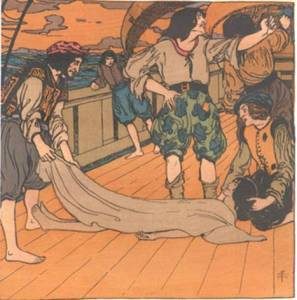 The Golden Vanity is one of those folk songs that has multiple names – it is often called “The Sweet Trinity” and also “The Golden Willow Tree”.