When I Paint My Masterpiece part 11:  I go back to Stephen Foster

When I Paint My Masterpiece (1971) part 11

by Jochen Markhorst

Links to all the previous articles in this series can be found at the foot of this article.

XI         I go back to Stephen Foster

I left Rome and I pulled into Brussels 
On a plane ride so bumpy that it made me ill
Clergymen in uniform, young girls pullin' muscles
Everyone was there to meet me comin' down the hill
Newspapermen eating candy
Had to be held down by big police.
Someday, everything is gonna be beautiful
When I paint my masterpiece.

“Everyone was there to greet me when I stepped inside,” it becomes in the piano demo version of Day Four, replacing the indeed somewhat illogical Everyone was there but nobody tried to hide in the primal version, the Leon Russell version of Day One in 1971. The improved version is sung by Levon Helm on Cahoots as well, and the friendlier “greet-version” is thus also typed by the girls upstairs for Writings & Drawings. On New Year’s Eve 1971, Dylan may then sing “Everyone was there to meet me when I stepped inside,” and in the decades that follow, at most slightly different variants (“Anyone was there to meet me”, for example – Utica 1991), but the thrust remains in place for almost half a century, and it is not until 2018, until the start of the Far East & Down Under Tour in Seoul, that the verse gets its current, Messianic twist:

Everyone was there to meet me comin' down the hill

… a loaded line with semi-official status since the release of Shadow Kingdom in 2023. Loaded, because we usually associate comin’ down the hill with prophets or divine messenger boys who have raised their antennae atop the hill and are now coming down with Commandments or prophecies or admonitions or whatever. Fitting with Dylan’s own wondrous song analysis in the New York Times, “something that is so supreme and first rate that you could never come back down from the mountain”, which without too much neck-breaking acrobatics can also fit in with the song’s theme, the theme that has been continuously developed and refined for 50 years: “receiving divine inspiration”, something like that.

The words themselves don’t have to be made up by Dylan. “I go back to Stephen Foster,” Dylan reveals to Robert Hilburn in 2003, and we see this confirmed often enough. “Hard Times Come Again No More”, “Nelly Bly”, “My Old Kentucky Home”… Dylan has been incorporating or covering songs of “the father of American music” for decades, and an echo from Foster’s all-time greatest hit “Oh! Susanna” from 1848 now invades yet another revision of “When I Paint My Masterpiece”:

I had a dream the other night when everything was still
I thought I saw Susanna a-coming down the hill
The buckwheat cake was in her mouth
The tear was in her eye
Says I, I'm coming from the south
Susanna, don't you cry


… Susanna who is likewise coming down the hill, that is. Slightly too generic to be promoted to “Stephen Foster reference”, but still the most likely source for this particular word combination; Dylan has been explicitly honouring Foster for decades, culminating in a Foster chapter in The Philosophy Of Modern Song in 2022 (chapter 24, “Nelly Was A Lady”), and apart from Stephen Foster’s “Hard Times”, he also plays this “Oh! Susanna” (in 1983, in the studio with Mark Knopfler, or – weirdly – opening the Amsterdam concert 2022 with a few instrumental lines from the song). And Susanna seems to be sung at family parties as well, as we can infer from the amusing anecdote Dylan tells Jeff Slate in the Wall Street Journal interview in 2022:

“Another time, one of the others [granddaughters] asked me if I wrote the song “Oh, Susanna”. I don’t know how she heard the song, or when, or what her relationship to it is, but she knows it and can sing it. She probably heard it on Spotify.”

With a comparable established word combination, conscious or not, Dylan ends his demonstration for Leon Russell. The closing lines, “Newspapermen eating candy / Had to be held down by big police”, are remarkably steadfast – they are among the rare words that have been maintained since Day One. No guarantee for eternity, of course – Dylan’s many lyrics changes, over the course of half a century, follow a more or less gradual pattern from verse 1 (“rubble” is occasionally replaced by “trouble”) to verse 22. So these verse lines 23 and 24 could theoretically be the next candidates for the next lyrics intervention. But it is 2024 now, Dylan has sung these lines more than 400 times… they seem, like the ancient footsteps, ingrained and irremovable. Well, they just might have a chance to survive, anyway.

The snacking reporters are presumably a personal, biographical observation from a press conference or something. At least, the image is too specific – and too inane – to be suspected of depth or metaphorical quality. More history has the authority that keeps the journalistic sweet teeth behind the barricades: the big police.

This peculiar word combination is now more than a hundred years old and no doubt Dylan picked it up from the blues canon. Or from antique bluegrass perhaps, that is possible too – we hear it, for instance, in the “Policeman” version by the phenomenon Kenny Hall, the blind bluegrass musician from California who plays the song most of his life;

Big police sittin’ on a log this mornin’
Big police sittin’ on a log 
Finger on the trigger and eye on the hog this mornin’

… a song already in the repertoire of young Bascom Lamar Lunsford in the 19th century, presumably already hummed by Stephen Foster and, like “Tell Ol’ Bill” and “Sugar Babe”, one of the variations of the songs that evolved from “This Evening So Soon”. And which in turn seeps into songs like “Old Salty Dog Blues” from the Stanley Brothers and Ramblin’ Jack Elliott’s “Talking Blues (Talking New York)”. Songs and artists Dylan admires and songs we find on Dylan records, so it is not too far-fetched. On the contrary, actually; “This Evening So Soon” was recorded by Dylan a year before “When I Paint My Masterpiece” during the Self Portrait sessions and should still be somewhere at the front of his working memory in March ‘71.

Still, big police is more common in the blues. Even in common conversational jargon, as we can glean from interviews in which Muddy Waters talks about his younger days in Clarksdale: “Twelve o’clock, you better be out of there, get off the streets. The great big police come down Sunflower Street with that big cap on, man, waving that stick…” Michael Gray, the author of Song And Dance Man – The Art Of Bob Dylan, finds the phrase in obscure blues songs from 1928 (in Curly Weaver’s “Sweet Petunia” and in Mimmie Wallace’s “Dirty Butter”), but Dylan may have heard it more recently with the greatness for whom he has expressed his admiration often enough, on Big Mama Thornton’s 1969 go-to album Stronger Than Dirt. An album with nothing but beauty and power, with reinterpretations of her own “Hound Dog” and “Ball And Chain”, with superior performances of “Born Under A Bad Sign”, “Lucky Old Sun”, Muddy Waters’ “Rolling Stone” and “Let’s Go Get Stoned”, with a most heartbreaking “Summertime” and the wonderful Dylan surprise “I Shall Be Released” as the bouncer. And in between, Dylan may have pricked up his ears at the odd duck out, at Big Mama’s reconstruction of the soul stomp “Funky Broadway”;

A big police walked in
He said looka hear you people make too much noise
I’ll just have to run you in
So he took us all to jail
Didn’t no one come and pay my bail


Perhaps. Anyway: for some reason, the distich “Newspapermen eating candy / Had to be held down by big police” has survived Dylan’s innovation drive for over fifty years now. On the other hand: a system, a vague pattern of rewriting seems to be discernible. Gradually from the first stanza to the second stanza and then via the bridge to this final couplet, with the last victims being the lines just before the newspapermen and big police. Which would mean that these lines too will perish after all – at this pace sometime before 2035.

To be continued. Next up When I Paint My Masterpiece part 12: A Bob Dylan song, for those of you with Google

Jochen is a regular reviewer of Dylan’s work on Untold. His books, in English, Dutch and German, are available via Amazon both in paperback and on Kindle:

Posted in Uncategorized | Leave a comment

Once or Twice: Restless Farewell. The “lost” recordings and two of Bob’s magical moments

 I don’t know what it means either: an index to the current series appearing on this website.

Once or twice: A review of some of the songs that Bob has performed just once or twice on stage, selecting those of which we have a genuine recording (and “genuine” is important here since I have found a few sites that seem to suggest they are a recording of a live version, but I have my doubts.)  Text and video selection by Tony Attwood.

—————

When I came up with the idea of “Once or Twice” as a possible series for Untold, this was one of the songs I had in mind.  I did a quick check to ensure that this was a song that would qualify in the “Once or Twice” category by looking at the official Dylan site, and that was that.

So it has been on my list to cover – except now coming to write the piece I find a problem.  For although official Dylan site does indeed still have this song performed twice, I am not sure that is quite right.  But the official site being wrong?  Well whoever would have thought that?   (Actually most of us because we’ve found all sorts of errors there, but still, it is a helpful resource even if not always 100% right).

So let’s just see what we have got…   Certainly we have a 1964 version here… which may well be the one recorded on February 1, 1964, at CBC TV Studios in Toronto, Ontario, Canada, for the show “Quest”.  So perhaps we should discount this one as it is not live in the normal sense of being in front of an audience.  And this is not included in the official site’s listing.


But to link in with the official site what we also have is this one which is labelled 17 May 1964 – played in a different key from the one above.  So this would be the first one of the official site’s count of “two”.


What you will notice in these two early recordings is that Dylan is playing a chordal accompaniment which seems to have no direct relationship with the rhythm of the melody.  I have always been puzzled by this, and my only thought is that the chordal accompaniment symbolises the moving on, in contrast to the lyrics and melodic line which symbolise the stability of the past.   Maybe, maybe not, but musically I am not sure it works well.   Which is why I much prefer the versions that came later.

And these are so wonderful I can but despair at the fact that there were only two of them.  But that’s what we have so let us consider…

Thus we are now looking for the 21 May 1998 performance – and yes there is one

So yes we have covered the two from the official site, and have one more which maybe isn’t that “live” in front of an audience.

But still that is not it, and you will probably know already why not.   For below is a beautiful version of this gorgeous song performed in 1995 for the Frank Sinatra concert.

So I think we have three live versions and one that wouldn’t normally be called “live” as it has all the attributes of a studio recording.

Still that is 50% up on the official site.  I wonder if we should let them know?   But no, I’m sure they wouldn’t want to give us credit.  And if they did update their listing from two to three performances, then the song wouldn’t qualify for this series!

Previously in this series we have looked at 

Posted in Uncategorized | Leave a comment

Great Dylan years: 1994 part 2


I don’t know what it means either: an index to the current series appearing on this website.

Great Dylan Years: 1994. Part 1. Performances of “Masters of War” to “Dignity”

by Robert Ford

I believe 1994 was a turning point for Dylan. As with 2014 when he recorded the classic Shadows in the Night album and his voice suddenly transformed, I feel the Great Musical Experience in Nara had a similar dramatic impact on his vocal performance.  It’s another reason the Unplugged concerts exceed the Supper Club concerts in 1993.

I have always believed that Dylan’s voice, (or should that be, voices?) is his most wonderful gift, together with the unique way he uses his voice, as with his phrasing, articulation and subtlety. His vocal performance is as important, if not more important, than his poetic lyrics or his beautiful melodies.

Prior to going to Nara in May, Dylan decided to take his NET band into the Ardent Studios in Memphis where he recorded a great ‘My Blue Eyed Jane’ for his own tribute album to Jimmie Rodgers and a lovely ‘Boogie Woogie Country Girl’ as a tribute to Doc Pomus.

Bob Dylan loves and respects musical history.  He also performed one of his favourite songs ‘ Tomorrow Night’ on the The  Rhythm, Country & Blues Concert in Los Angeles on the 23rd March 1994. He had covered this song on his brilliant Good As I Been To You covers album in 1992 and had been performing the song since 1993 in concert including, of course, his 1994 concerts around the world.

There was another studio session in September when Dylan went into Sony Music studio’s in New York and recorded ‘Anyway You Want Me’, ‘Lawdy Miss Clawdy’ and ‘Money Honey’. There was some speculation that they were for some kind of Elvis tribute album.

It is common knowledge that Bob Dylan is a great admirer of Elvis Presley and was truly devastated when Elvis died in 1977. Dylan has, of course, performed and recorded Elvis songs over a long period, for example, ‘A Fool Such As I’ at the Nashville studio sessions in 1969 and ‘Can’t Help Falling in Love’  at the studio sessions in New York in 1970 ( both songs were included on the rogue Dylan album released in 1973 ) and playing live versions of ‘Money Honey’ in 1999, ‘Heartbreak Hotel’ in 2009 and ‘Blueberry Hill’ in 2014.

It would be wrong not to give credit to Dylan’s band during 1994. This group of musicians had been on the road with him since February 1993 and were now used to Dylan’s idiosyncratic and daring performance methods. He knew he could change 10 songs at a whim or play the song as the mood takes him and this band could rise to the challenge.

I do not know how many different songs he performed in 1994. Maybe 70? 100? However, it is easy to see and hear that this band loved the ride. I believe that special mention must be given to the great guitarist John Jackson who was in the band for several years and was one of the all-time finest musicians to play with Bob Dylan. This NET band were the 9th Never Ending Tour Band and performed 358 concerts ending on the 4th August 1996 at The House Of Blues, Atlanta, Georgia.

This year was also a prime year for lovers of Dylan’s harmonica playing. I feel that his harmonica playing enhances most of the songs he chooses to embellish whether they are acoustic songs performed solo or with his band, or whether they are electric songs.

There were too many great performances to mention them all, luckily for us many are available to listen to on bootlegs,etc. ‘Mama,You’ve Been On MY Mind’ , ‘Disease Of Conceit’ and ‘Lay Lady Lay’ are among the songs graced with the harmonica.

A closer look at the range of songs performed this year suggests to me that Dylan performed songs from virtually all of his, up to that point, 29 studio albums . From Bob Dylan to World Gone Wrong only missing out the rogue Dylan, Self Portrait and Knocked Out Loaded. Typically, he performed one song from the 1992 lost Bromberg album the quite gorgeous ‘Lady Came From Baltimore’.  Who else could or would do this ?

It has been 16 months since the last official Bootleg series and I believe 1994 would make a terrific version of the series. The box set could comprise the Great Musical Experience, Woodstock 2 and the complete Unplugged songs with all the outtakes together with a selection of great live songs such as the Hiroshima ‘Masters of War’ and the songs plus outtakes from the previously mentioned tribute albums (The Supper Club and Bromberg sessions would be a great bonus or make a superb stand alone series ). These performances would be as great a gift as the complete 1976 Fort Collins concert which was the basis for arguably his greatest official live album Hard Rain.

The first published book of Dylan’s drawings ‘Drawn Blank’ appeared in 1994 to acclaim and was the beginning of his ongoing success as a visual artist. However, his major work was undertaken on stages around the world with his performances of a myriad of incomparable songs delivered with remarkable power and passion. There are many other great years (and decades ) prior to and beyond 1994.

But 1994 is one of the most significant years in Dylan’s performing history.

Robert Ford

Posted in Uncategorized | Leave a comment

Covers We Missed 5: All I really want to do.


I don’t know what it means either: an index to the current series appearing on this website.

For more details on this new series on cover versions of Dylan songs that were not previously considered in the last series, please see the intro to the first article in this series.

———

by Jürg Lehmann

All I Really Want to Do

Two covers that I would like to recommend: Sussan Deyhim and Ben Sidran.

Sussan Deyhim’s cover was originally as part of the Amnesty International release Chimes of Freedom, an album in celebration of Bob Dylan’s 70th Birthday with 70 international artists contributing their interpretations of his songs.

Sussan’s version is in collaboration with composer Anton Sanko on Ukulele, Bass synthesist Peter Freeman and produced by Richard Horowitz.  Asked how she arrived at that very particular arrangement of “All I Really Want to Do”, Deyhim said, 

“I’ve been really involved with human rights organizations for the last 15 years. Amnesty International called me and said they had an idea to get dozens of artists to cover songs by Dylan. It was his 70th birthday, so it was also celebrating that. I said I’d do it and it was quite a challenge to choose something that hadn’t been taken by the more well-known artists.

“Then I ran into “All I Really Want to Do” which had a lot of potential. Dylan sings it with passion, but there’s also an element of anger at the same time. I chose to do it in a very feminine way. I was very self-conscious about it initially but my collaborators convinced me it was a really good idea.

“I also thought about doing it in a very punk way, which would have been interesting too. But my friends said let’s do it the other way. I like how it came out, but I wish we had mixed the guitars a little louder and made it more of a literal pop song. But when you’re doing projects like this, you don’t have the luxury of time. You have to deliver quickly and there’s never a budget. It’s labor of love and your choices are influenced by that.”

I’m glad she did it the way it came out

A great, very individual cover, and if you’re wondering what language it is at about 3:40 and 4:28: it’s Farsi.

Sussan Deyhim is an Iranian-American composer, singer, performance artist and activist. She is internationally recognised for her unique language of sound and song, imbued with a sense of ritual and the unknown. She has been a member of the Iranian National Ballet since the age of thirteen and has travelled all over Iran to study with folk musicians and dancers. In 1976, she joined the Béjart Ballet in Europe after receiving a scholarship. In 1980, she moved to New York and began a career spanning music, theatre, dance, media and film.

Ben Sidran is an American jazz and rock keyboardist, producer, label owner and music writer. He is one of those musicians who have done an incredible amount for the reception and promotion of Dylan – in his case, especially in the field of jazz. Sidran has released two albums with Dylan covers, a studio album and a live album. On the occasion of a live concert in Paris, Sidran explains why and how he got involved with Dylan:

Ben Sidran will also be featured later in this series with excellent covers. Here is All I Really Want to Do:


Posted in Uncategorized | Leave a comment

Hard Rain in concert: 1988 to 1999


 I don’t know what it means either: an index to the current series appearing on this website.


The Never Ending Tour Extended: This series primarily uses recordings selected by Mike Johnson in his inestimable masterpiece The Never Ending Tour, and looks at how those performances of individual songs change as time goes by.   The selection of songs from the series, and the commentary below, are by Tony Attwood.   A list of all the songs covered in the series is given at the end.

A Hard Rain’s a gonna Fall, comes of course from Freewheelin, and was performed live 457 times by Dylan according to the official site, starting in 1962 and concluding in 2017.

1988

We first hear it in the Never Ending Tour series in 1988: The Sixties Revisited.  The recording level is low but the quality of Dylan’s singing is excellently picked up.   There is an extra emphasis that he is adding to the first of each set of the three beats that is the fundamental of the song (technically it is in 6/8 time).   The implication is that 26 years after the song was composed, still no one is listening, no matter how often the message is put across.

There is also a strange effect of singing off the key in the “who did you meet” verse – which Dylan does all the way through that verse – along with a similar effect in the following chorus.  There are elements of the same off-key singing in the next verse too; I’m not sure why, as I don’t find it very attractive, but of course that’s just me.

But that is not all.  We get a chorus change around the 6’30” mark which is followed by an instrumental verse which rounds the performance off.

Songs of love, songs of betrayal takes us to 1990, and the performance now is much more strident both in terms of the guitar playing and the singing, and Dylan once more uses his voice to hold our attention through the ceaselessly repeated musical lines, but with the chorus more spaced out.

This time it seems that there is no pleading at all, but a strident announcement of what has been seen and what is to come.  (Just listening to the “starve” and “laughing” lines).  And subsequently, we get some lines where the first note (oft-repeated) is constantly off-pitch.  And now sometimes so is “It’s a hard”.  It is a strong way of reminding the audience that there is a message here, not just a song everyone wants Dylan to perform.

And around the 6 minutes 20-second mark there is that extension of the chorus that announces that we are going to get the instrumental verse

1992 

We are now at the 30th anniversary of the song and we now have a gentle percussion behind Dylan and the guitars.  The melody changes too, and very effectively it seems to me after the two-minute mark.  Indeed this is quite a considerable re-working while keeping the original essence of the song, although I get the feeling that Bob just can’t quite find what he wants to do with a song he’s been performing for far longer than the lifetime of the average rock music band.

The reworking of the melody in the latter part of the song is in my view more successful than previous attempts, and I feel there is a battle going on between the fact that everyone in the audience wants to hear the song while Bob was wondering what more he can do with it.  There is however a very enjoyable if short musical epilogue.

 The epic adventures of Mr Guitar Man

By 1999 Bob had done pretty much everything he could without actually re-writing the whole piece, and of course by now every single member of the audience will know the song forward, backward and inside out.

Bob’s response is interesting, for here he strips the song back as far as he can to its plaintive essence, without actually just standing there with an acoustic guitar and no other accompanying instruments.

And this recognises that really, to keep the meaning of the song, it has to be a much more gentle piece than it had become in recent years.

Here we can hear almost whole verses sung on one note, before the soaring chorus.  Indeed if you listen to the verse starting around 4 minutes 20 seconds, it is hard to think of more delicate performances than this.  Bob is doing nothing in such verses to distract from the power of the lyrics.

The instrumental break too is now stripped back, so that we have no escape from the message, which is what the song is, in essence.  A delicate plaintive message of farewell to all we have known.   For me the instrumental verse at the end is not one of the most successful of moments, but overall this is superb.

And this is one of those performances where yet again I am so grateful to the people who made these recordings and of course to Mike for curating them for us to be able to enjoy and appreciate all these years later.

Acoustic wonderland

Other articles in this series…

Posted in Uncategorized | Leave a comment

The lyrics and the music: Beyond here lies nothing


I don’t know what it means either: an index to the current series appearing on this website.

By Tony Attwood

———

Beyond here lies nothing is a 12-bar blues which is written in such a way that at first we don’t actually realise it is a 12-bar blues.   Indeed the first key element that takes us away from seeing and feeling this as the structure is the fact that the second line is not a repeat of the first.

But at the same time one begins to feel there is something else that is different – and it there is because this is a 12-bar blues in the minor key.  The chords are Am, Dm7, Am, Em, Dm, Am.  It is a blues in the minor key – and yet with very positive lyrics.  A contradiction.

However, the melody is so strong in this song (as opposed to many 12 bar blues where it is added as an afterthought), that this, combined with the minor chords, means we don’t really focus on the 12-bar blues construction.

Nevertheless, the music is strophic – that is it is repeated verse after after verse with no variations except for the instrumental break, which in fact musically continues the same construction.  Indeed the fact that the first line of the music on the album version, is just one note, as is the third line, still doesn’t make us think “12 bar blues”.

What I feel, through this repeated line of music on one note, which comes twice, is the dullness and repetition of life – as portrayed in the original video (which I have put on this site with my original review but I really, really don’t like) – when there is no way out.  Yet the lyrics offer a contradiction suggesting life is repetitive but when we are together it doesn’t matter.

That in short is the meaning I take from this: there is just the two of us and we make each other happy, and that’s good because really the rest of life is just dull and boring.  In essence, outside of the two of us, there is just tedium.

But what is curious is the violence of the official video (which is on this site with my original review, but I really don’t want to put it up again) which seems to have nothing at all to do with the music.

The song opens

Oh, well, I love you, pretty babyYou're the only love I've ever knownJust as long as you stay with meThe whole world is my throne

Beyond here lies nothin'Nothin' we can call our own

Thus “beyond here” actually stands for “beyond you and me together as a loving couple”.  And in that regard the song clearly works.

But I do find it hard to get that original video out of my mind, and I wonder if Dylan actually gave the ok for that, or whether making the video to go with a song is totally in the hands of the company that makes them.

However still trying to get that video out of my head what we have is a song with a regular beat, the simplest of chordal structures, a simple melody, and a lilting feel to it, which basically says the relationship with the woman is everything, it is wonderful and nothing else matters.

That is what the lyrics say, and that is what the music says.  It lilts along, it is gentle and it fits the music.  We also know that it wasn’t always like this, but now everything is calm. It is true that…

Beyond here lies nothin'But the mountains of the past

…is rather enigmatic, suggesting that all we are going to do is replay what has gone before – which could well have been the trigger for the video I mentioned above.  We have climbed mountains, but now all that is gone.

And indeed the music makes its lilting way along suggesting everything is running smoothly and without change.

Indeed the verse leading up to the “mountains of the past” line suggests this very strongly

Down every street there's a windowAnd every window's made of glassWe'll keep on lovin', pretty babyFor as long as love will last

Musically, we have the same.  Verse after verse, with four new lines and a repeated title line and then a final variant line.  Nothing changes.

So, to summarise,  and again leaving aside the violent video, this is a gentle lilting song where the unchanging 12 bar format and melodic line fits exactly with the notion of life just going on and on – this time in a happy way, with no thoughts that anything will change.

It is the promotional video that says exactly the opposite, which is really weird because the music and the lyrics are united in projecting the image of a couple, happy together, going on, not changing.

Thus it’s the video maker who is utterly out of tune with the piece.  The music and the lyrics travel in exactly the same direction.

The songs reviewed from the music plus lyrics viewpoint…

Posted in Uncategorized | Leave a comment

Covers we missed 4: All along the Watchtower


I don’t know what it means either: an index to the current series appearing on this website.

For more details on this new series on cover versions of Dylan songs that were not previously considered in the last series, please see the intro to the first article in this series.

———

by Jürg Lehmann

I would like to point out two covers that are a bit out of the ordinary: One is the interpretation by Lisa Gerrard

The second (which appears below) is a recording of the performance “Teaterkoncert” with Bjørn Fjæstad, Claus Hempler, Ole Thestrup and Ulla Henningsen

Lisa Gerrard is an award-winning singer, composer, and instrumentalist from Australia who rose to fame as a member of Dead Can Dance during the 1980s, and has remained an in-demand collaborator and soundtrack composer throughout. One of the most otherworldly vocalists of her time, she sings in the dramatic contralto and mezzo-soprano ranges, often in a self-created language.

As with Dead Can Dance‘s work, Gerrard’s own music is virtually unclassifiable, incorporating folk melodies, traditional instruments, electronics, and orchestral arrangements. Among other instruments, she is particularly skilled at playing the yangqin, a Chinese hammered dulcimer.

After releasing several albums as part of Dead Can Dance throughout the ’80s and early ’90s, she made her solo debut in 1995 with the full-length The Mirror Pool. By the early 2000s, she’d established herself as a notable film composer; her score for the 2000 film Gladiator, in collaboration with Hans Zimmer, won a Golden Globe and her original score for 2009’s Balibo which received an Aria award.

Gerrard has worked on dozens of film and television scores such as A Thousand Roads (2005), Burning Man (2011), Samsara (2014), and Valley Of Shadows (2018) and released several more solo albums including 2009’s The Black Opal, and 2014’s Twilight Kingdom. She has engaged in numerous recorded and live collaborations with Pieter BourkePatrick CassidyKlaus Schulze, Le Mystère Des Voix Bulgares, among many others.

In 2021, she and composer Jules Maxwell (Dead Can Dance‘s keyboardist) released the collaborative album Burn.  Maxwell is an Australian musician, singer and composer who rose to prominence as part of the music group Dead Can Dance with music partner Brendan Perry. In addition to singing, she is an instrumentalist for much of her work.

Gerrard sings many of her songs in idioglossia [that is to say a private language understood only by one or two people]. With respect to such work she has said, “I sing in the language of the Heart. It’s an invented language that I’ve had for a very long time. I believe I started singing in it when I was about 12; roughly that time. And I believed that I was speaking to God when I sang in that language.”

Lisa Gerrard’s music is not exactly what I usually listen to and I haven’t gone through all her albums, but it seems that All Along the Watchtower is one of the very few songs that she sings not in idioglossia but with conventional, original lyrics. Of course, one would like to know why she chose this song of all songs. Unfortunately, in the numerous interviews with Gerrard, as far as I can see, nobody has asked this question.


Teaterkoncert Bob Dylan was the third and final part of Nikolaj Cederholm and Jens Hellemann’s theatre concert trilogy performed in Aarhus Teater, Denmark, in 2010 (part 1 was The Beatles, part 2 Beach Boys). You can get an impression of the Teaterkoncert show in this video featuring ‘Maggie’s Farm’, ‘Quinn the Eskimo’ and ‘Like a Rolling Stone`:

The cast in the show were Ole Thestup, Ulla Henningsen, Claus Hempler, Bjørb Fjæstad, Liv Lykke, Ashok Peter Pramanik and Jacob Madsen Kvols.

The self-description of Aarhus Teater said back then: Here’s the theatre concert for everyone who loves Bob Dylan – and for everyone who thought they didn’t. We have selected thirty songs out of more than six hundred. We’ve staged and reinterpreted them, we’ve given them new clothes and lifted them into the air. Theatre Concert Bob Dylan is a colourful, poetic, funny and wildly imaginative trip into Dylan’s universe. Each song has been given a brand new arrangement, which at the same time fully proves both the eternal quality that the songs contain.

I’m not sure if I personally would have liked the theatre performance very much, but one result of the show was a double CD with around 30 songs, including some remarkable, sometimes even excellent covers (for example Mighty Quinn….

And also Lay, Lady, Lay https://www.youtube.com/watch?v=WflNq3Am298.

I also like All Along the Watchtower https://www.youtube.com/watch?v=fTtw-2Nxdsk.

Powerful and mysterious, with a biblical quote (around 1:40) from Genesis 6:5 (‘The Lord saw how great the wickedness of the human race had become on the earth’ etc.), which is perhaps very irritating at first, but somehow not absurd and makes perfect sense – if you choose to interpret the song freely.

The covers we missed

Posted in Uncategorized | Leave a comment

When I Paint My Masterpiece 10: The muscled mussels from Brussels


by Jochen Markhorst

The muscled mussels from Brussels

I left Rome and landed in Brussels
On a plane ride so bumpy that I almost cried
Clergymen in uniform and young girls pullin’ muscles
Everyone was there to greet me when I stepped inside
Newspapermen eating candy
Had to be held down by big police
Someday, everything is gonna be diff’rent
When I paint my masterpiece

When Dylan resumes his Rough and Rowdy Ways World Wide Tour 2021-2024 in the spring of 2024 in Fort Lauderdale on 1 March, it soon becomes apparent that he is still tinkering with the song.

In Florida, at that first concert, he keeps the lyrics intact, but the arrangement has been quite radically changed. And by a funny coincidence well-timed. A brusque lady somewhere in the audience heckles loudly after track 4 (“False Prophet”): “Play something that we know!”.

Almost immediately guitarist Bob Britt sets in an over-familiar lick. “Istanbul (Not Constantinople)” from 1990’s They Might Be Giants, hails half the internet the next day. Which might be a bit too wishful thinking. For starters, the song is not a TMBG-song, but only covered by the alternative rock band from Brooklyn. It is actually a 1953 novelty hit from The Four Lads. Though Dylan’s jukebox probably contains Bing Crosby’s 1953 version or Frankie Vaughan’s 1954 hit version.

Apart from that, it is highly questionable whether “Istanbul (Not Constantinople)” is the template; a stronger and more likely candidate is Irving Berlin’s 1930’s “Puttin’ On The Ritz”, of which “Istanbul” is a rip-off. Dylan undoubtedly knows both songs, but may have been inspired by the overnight stay at Fort Lauderdale’s Ritz-Carlton, and surely is more charmed by the exuberant rhyming pleasure and humour in “Puttin’ On The Ritz” anyway;

That's where each and every lulu-belle goes
Every Thursday evening with her swell beaus
Rubbin' elbows
Come with me and we'll attend their jubilee
And see them spend their last two bits
Puttin' on the Ritz

… for example, or even a degree more ferocious and exuberant in the 1946 rewritten version for Fred Astaire:

Dressed up like a million dollar trouper
Trying hard to look like Gary Cooper
Super-duper
Come let's mix where Rockefellers
Walk with sticks or um-ber-ellas
In their mitts
Puttin' on the ritz

Overenthusiastic Dylan fans further mystify the surprising new arrangement by understanding it as a lightning-fast, spontaneous, sharp-witted response to that witch’s shouted complaint. Which it most definitely is not; not Dylan, but Bob Britt starts the lick, it is clearly rehearsed and this new arrangement will be maintained through Austin 6 April, in all 24 concerts of Leg 8 of the Rough and Rowdy Ways World Wide Tour 2021-2024, that is.

Incidentally, Play something that we know is quite a bizarre reproach from the lady. She shouts this after song number 4, when Dylan and the band have already played “Watching The River Flow”, “Most Likely You Go Your Way And I’ll Go Mine” and “I Contain Multitudes” – a music lover who doesn’t know any of these songs must have been living under a rock for the past 60 years.

Dylan – When I Paint My Masterpiece, Fort Lauderdale 1 March 2024:

So a radically different arrangement, but Dylan has left the lyrics alone – the song has exactly the same words as the last concert of the seventh leg, 3 December 2023 in Evansville, Indiana. Well, for the time being, anyway; before the month is over, the ever-scraping and shaving poet has already been rewriting lines again. Especially verse line 3, the old and familiar You can almost think that you’re seein’ double, is suddenly bothering him, evidently. On 14 March, in Athens, Georgia we hear Oh but always I live inside of a bubble, the following week in Louisville You can always get into trouble, and at the last concert (Austin 6 April) it has evolved into You can always find some way to get yourself into trouble1).

Apart from that, a small text change in the second stanza stands out. The smooth rhapsody line that has been replaced since the 1990s by Someday, everything gonna be different is this one time in Austin: Someday, everything gonna be so doggone beautiful – perhaps the relieved sigh of an elderly bluesman playing the last concert of an exhausting series (24 concerts in 37 days) right before a well-earned holiday.

Curiously, the weaker lines from “When I Paint My Masterpiece” still remain untouched; the entire third stanza escapes once again. The questionable 1971 intervention to replace With a picture of a tall oak tree by my side with On a plane ride so bumpy that I almost cried has been since 2018  – hardly impressive – On a plane ride so bumpy that it made me ill, to rhyme with comin’ down the hill. But the line in between,

Clergymen in uniform and young girls pullin’ muscles

… has been unchanged since its first official publication (Writings & Drawings, 1973). It is definitely an intriguing, Dylan-worthy mise-en-scene, but those body-building misses remain alienating. We have just arrived in Brussels. You might encounter enough clergymen in uniform, chaplains there, true. The Archdiocese of Mechelen-Brussels has plenty of barracks, military training institutes, a military hospital and whatnot, not to mention all the chaplains on duty in prisons, schools and the ordinariate – but muscle-flexing young damsels, no. Mussel-eating ladies, yes. Plenty young girls pulling mussels out of the shell. Mussels and chips, moules-frites is pretty much the national dish of both Flanders and Wallonia and you can order it in any eatery, on any terrace in Brussels. Chez Léon for example, in the Royal Saint-Hubert galleries near Grote Markt, Grand-Place, claims to prepare about a tonne of mussels a day (1,000 kilograms, about 2,204.6 pounds – close to a British ton). It is, in short, almost impossible to walk through the Belgian capital on any sunny day without seeing young girls pullin’ mussels.

It is of course quite possible that Dylan in March 1971 succumbed to the pun created by the homophone mussels/muscles, and still found it funny enough to hold on to it when it was booked in 1973, but not very likely. The pun is just too one-dimensional, simple, too thin, the “joke”, if you can call it that, wears off quickly and doesn’t have an indestructible power like, say, the sun’s not yellow, it’s chicken or honky-tonk lagoons.

No, muscles, on second thought, does look like the next miss by the same hard-of-hearing dyslexic transcriber who tried to make us believe, back in 1973, that the opening line of “Tell Me, Momma” is about a cold water dog called Ol’ black Bascom and that a little bird flutters around in “Sign On The Cross” and that the narrator sees the Jacks and the River Queen in “Down Along The Cove” (to name just three of many examples).

It is, admittedly, not an enviable job – to be given the task, sometime in 1972, of typing out all of Dylan’s lyrics from the past decade. We don’t know who the unfortunate one at publishing house Alfred A. Knopf, Inc. was. But this one time we cannot blame him or her. Those muscles must have come from somewhere else.

No editor, cryptographer or transcriber is mentioned in Writings & Drawings, but the work is “especially” dedicated to “the girls upstairs – Cathy, Miriam, Mildred & Naomi who put this heavy volume together”. The choice of words (“the girls upstairs”) and the casual, not to say disrespectful, limitation to first names suggests that transcribing the lyrics is a job outsourced to the girls in the typing pool, to the secretaries. “When I Paint My Masterpiece” is the last song. We have reached the last page. It is Friday afternoon and the ladies have been working on this horrible monster job non-stop for nine weeks. They are pretty much done with it.

“Spanish Stairs?” says Cathy hesitantly, “shouldn’t it be Spanish Steps?”
“Just type it down Cathy. Who cares,” replies Miriam, whose boyfriend is waiting downstairs.
“Poetic licence!” shouts the indestructible Mildred, who has ended discussions with this very same platitude about three hundred times in recent weeks.
Naomi already has her coat on. “Why don’t you grab the sleeve of that last Band album,” she says gruffly, pointing to a pile of records in the corner, “I think all the lyrics are just on there.”
Miriam quickly finds it and flips open the sleeve. Cathy now looks even more unhappy: “Girl from Greece? We did spend an hour and a half trying to decipher Botticelli’s niece!”
“Enough of this,” Naomi decides briskly. “Just copy The Band’s lyrics. I’m off. Have a nice weekend.”

Fiction, of course, but it could just as well be based on historical events. Indeed, the published, official lyrics are a non-existent mix of the Dylan/Leon Russell version on Greatest Hits Vol. 2 (first verse) and The Band’s Cahoots version (the other two verses plus the Coca-Cola bridge). Which means we can blame that alienating muscles on Robbie Robertson, who, after all, tells us himself in his autobiography Testimony: “I wrote down the words and the guys and I recorded the song the next day.”

Not too familiar with mussels perhaps, Robbie Robertson.

1 thanks to Craig Danuloff for unravelling what Dylan is singing there.

 ———-

To be continued. Next up When I Paint My Masterpiece part 11: I go back to Stephen Foster

 ———-

Jochen is a regular reviewer of Dylan’s work on Untold. His books, in English, Dutch and German, are available via Amazon both in paperback and on Kindle:


Posted in Uncategorized | Leave a comment

Great Dylan Years: 1994. Part 1. Performances of “Masters of War” to “Dignity”


I don’t know what it means either: an index to the current series appearing on this website.

——————–

by Robert Ford

Bob Dylan has had some stand out years. 1965 is an obvious one. 1975 is another obvious one. It is hard to think of any other rock performer who has had as many exceptional, stand out years as Bob Dylan.

A truly exceptional year is 1994. This was the year which included the Great Musical Experience in Nara, Japan, the Woodstock performance and the Unplugged concerts. It was also the sixth year of the Never Ending Tour in which he performed 104 concerts divided into 5 concert tours beginning in Japan then a tour back home onto Europe before ending the year in the USA. This was his first concert tour in Japan since the True Confessions tour in 1986 and in addition to Japan, Dylan performed in Malaysia, Singapore and Hong Kong.

The Far East tour which began on the 5th February was magical with the introduction of some great songs which had not been played for a long time such as the opening song ‘Jokerman’, ‘If You See Her, Say Hello’, ‘In The Garden’ and the first live acoustic ‘Masters Of War’ since the Carnegie Hall concert in October 1963. This song was performed in Hiroshima on the 16th February.

The Great Musical Experience had Dylan returning to Japan in May for one of the most unusual performances of his career. Over three nights he performed ‘A Hard Rains A-Gonna Fall’, ‘Ring Them Bells’ and ‘I Shall Be Released’  with the Tokyo New Philharmonic Orchestra led by Michael Kamen ( and a house band which included one of his favourite drummers the great Jim Keltner ). The performances were magnificent, like nothing he had done before and it must have been spine tingling to have been in the audience for one of his greatest ever performances.

The first USA tour began in April and continued the high standard of the Far East tour with Dylan ringing the changes. For example ,in Davenport,Iowa on the 6th April he performed 10 new songs compared to the Springfield concert the night before including ‘Series Of Dreams’ and ‘What Good Am I ?’.

Other great songs came and went such as ‘I Believe In You ‘ , ‘Lenny Bruce’ and ‘When I Paint My Masterpiece’. Most of the concerts were 110 minutes or nearly 2 hours of non-stop music with Dylan hardly pausing for breath. How doe he remember all those words ? Most incredible to me.  In Valparasio on the 16th , during the band introductions Dylan said ” on bass guitar , he’s leaving me pretty soon to play with the Rolling Stones : Tony Garnier ! Tonight is his last gig !”  Tony, of course, is still in the band 30 years later.

The European Summer tour began on the 3rd July in Paris, France and  continued in the same rich vein with such songs as ‘Joey’, ‘Shelter From The Storm’ and a majestic ‘Tears of Rage’ making an occasional appearance. For his first performance at the Montreux Jazz Festival on the 12th July he debuted a lovely ‘Shooting Star’.

Dylan did not waste any time following the European tour beginning his Summer USA tour on the 10th August in Portland, Maine. On the 14th August he gave one of his most enthralling performances despite a huge festival audience used to partying and also TV camera’s which he is known to intensely dislike .Woodstock 2 was 85 minutes of pure magic with 12 songs delivered with enormous precision, passion and commitment which left no doubt that Bob Dylan is the greatest performer of the rock era. This was a typical Dylan performance with no small talk, no audience singalongs and no flashing light shows, just 85 minutes of pure intensity  which was sustained through both the riveting acoustic songs and the powerhouse electric songs.

The USA Fall tour commenced on the 1st October and was the longest of the year with over 30 concerts from New York State to Louisiana. Again, no two concerts were the same and new songs were introduced such as ‘Most Likely You Go Your Way’,’ You’re A Big Girl Now’,’ One Too Many Mornings’ and ‘My Back Pages’. He also honoured his roots with ‘Pretty Peggy-O’ and found time to perform songs from his recent great traditional cover song albums including ‘Two Soldiers’.

The Fall tour ended on the 13th November and on the 15th to 18th he was in Sony Music studios with his NET band rehearsing then performing the two MTV Unplugged Shows. Dylan made a surprise decision to include a keyboard player in the band for these two performances (having not had a keyboard player since 1987 ).

Brendan O’Brien made excellent contributions especially on the Hammond organ on ‘Like A Rolling Stone’ and ‘Desolation Row’. These performances were a great end to an outstanding year and as always some of the best performances such as ‘I Want You’ and ‘Hazel’  did not make the final cut. However,there were superb performances including perhaps his best ever ‘With God On Our Side’, a sublime ‘Tombstone Blues’ and a triumphant ‘Dignity’ (Some Dylan fans prefer the 1993 Supper Club  concerts that went unused but not me, especially given the terrible visuals which from the snippets I have seen are so dark as to be virtually unwatchable, no wonder Dylan passed on them ).

The article continues shortly.

Posted in Uncategorized | Leave a comment

The Most Underrated Bob Dylan’s Love Songs

The Most Underrated Bob Dylan’s Love Songs

Bob Dylan, born Robert Allen Zimmerman on May 24, 1941, in Duluth, Minnesota, is an iconic American singer-songwriter and musician. Widely regarded as one of the most influential figures in popular music, Dylan’s work spans over six decades, marked by a profound impact on music, culture, and politics. Renowned for his poetic lyrics and distinctive voice, Dylan has an extensive discography that includes over 39 studio albums.

Dylan’s music often addresses social issues, political unrest, and personal introspection. Iconic songs like “Blowin’ in the Wind,” “The Times They Are a-Changin’,” and “Like a Rolling Stone” have become anthems for change and self-reflection. While Dylan is celebrated for his socio-political commentary, he also has a rich repertoire of love songs that showcase his romantic side.

Characteristics of Romantic Folk

Bob Dylan’s approach to romantic folk music is distinct and deeply emotive. Here are some key characteristics that make his love songs timeless:

  • Poetic Lyrics: Dylan’s love songs are known for their intricate and poignant lyrics, often exploring themes of love, longing, and heartache with poetic finesse.
  • Expressive Vocals: His unique vocal style conveys deep emotion and raw honesty, enhancing the romantic sentiment of his songs.
  • Acoustic Arrangements: Many of Dylan’s love songs feature simple yet beautiful acoustic arrangements that highlight the intimacy of his lyrics.
  • Storytelling: Dylan’s knack for storytelling shines in his love songs, painting vivid pictures of romantic experiences and emotions.

Bob Dylan’s Top Romantic Songs You May Have Forgotten About

Bob Dylan, while known for his profound social and political commentary, also created several love songs that capture his romantic side. Here are some of his most underrated love songs:

  1. “Sad-Eyed Lady of the Lowlands”

A sprawling, epic love song from the “Blonde on Blonde” album, this track is a heartfelt ode to a mysterious and enchanting woman. The song’s length and intricate lyrics make it a standout in Dylan’s catalog.

  1. “Tomorrow Is a Long Time”

This tender ballad expresses the longing and anticipation of waiting for a loved one. Its simple acoustic arrangement and heartfelt lyrics make it a timeless love song. Songs like “Tomorrow Is a Long Time” are often played during intimate encounters with independent escorts as it adds a sexy allure to any encounter.  If you are considering hiring a high-class escort for a sensual massage, ask for some Bob Dylan music to add some steamy intimacy to your next rendezvous!

  1. “If Not for You”

Featured on the “New Morning” album, this song is a straightforward declaration of love and appreciation. Its catchy melody and sincere lyrics have made it a beloved track among Dylan fans.

  1. “I Want You”

From the “Blonde on Blonde” album, this upbeat and catchy song combines whimsical lyrics with a joyful declaration of love. The song’s playful nature and infectious melody make it a hidden gem.

  1. “To Ramona”

A beautiful acoustic ballad from the “Another Side of Bob Dylan” album, “To Ramona” is a tender and empathetic song about comforting a loved one in times of trouble.

  1. “Lay, Lady, Lay”

This song, with its smooth, country-infused sound, is one of Dylan’s most sensual tracks. The gentle, inviting lyrics and the warm arrangement create a deeply intimate atmosphere.

  1. “Shelter from the Storm”

A poetic and evocative song from the “Blood on the Tracks” album, “Shelter from the Storm” speaks to the solace and refuge found in a loving relationship.

These songs highlight Bob Dylan’s versatility as a songwriter and his ability to capture the essence of love and relationships in his music.

Conclusion

Bob Dylan’s music, while often associated with profound social and political messages, also has a rich tradition of romantic themes. His love songs, characterized by poetic lyrics, expressive vocals, and heartfelt emotion, offer a timeless appeal that resonates with listeners seeking love and connection. While some of Dylan’s romantic tracks are widely celebrated, others remain underrated gems that showcase his depth and talent as a songwriter.


Posted in Uncategorized | Leave a comment

Covers we missed 3: Ain’t Talkin (Le feu Au Coeur)

I don’t know what it means either: an index to the current series appearing on this website.

For more details on this new series on cover versions of Dylan songs that were not previously considered in the last series, please see the intro to the previous article in this series.

———

by Jürg Lehmann

Ain’t talkin’… There is of course Bettye LaVette with her vivid interpretation, but I would like to draw attention to another version (as far as I can see the only one noteworthy apart from LaVette): Bertrand Belin with his Le Feu au Coeur

I’ll go into a little more detail here because the song is in French.

Basically, I have a big problem with translations of Dylan songs, although I can’t judge many creations because I don’t understand the language – the numerous Scandinavian covers for example (Näslund, Wiehe, Forsberg, Larholm, Arve-Gunnar Heloy to name just a few), the Czech (Robert Krestan&Druha trava), Polish (Dylan.pl), Dutch (Ernst Jansz), Catalan (Gerard Quintana, Jordi Batiste) etc.

I am sure that all these people made a great contribution to the reception and popularity of Dylan in their countries and languages. This also applies to the most important Dylan interpreters who have translated into languages that I understand and speak: Wolfgang Niedecken into German, Francesco de Gregori into Italian, Hugues Aufray into French.

But it’s like Robert Frost said: Poetry is what gets lost in translation and if you want to preserve the poetry in Dylan’s songs, you have to be your own poet. I don’t know any singer who can really do that (not even de Gregori). In my opinion they often fail because they stay too close to Dylan’s text and they disregard the poetic melody in their own language (if you translate ghost of electricity as Geist der Elektrizität into German, you are literally killing the song).

The art must be to find a balance between the original text and your own interpretation. I think that’s exactly what Belin has achieved (the title alone announces something distinctive, autonomous: fire in the heart), his text is very beautiful poetry, the musical performance is perfect.

I did a little experiment to illustrate my thoughts, and that was to translate Belin’s text back into English (actually AI did it, not me):

Dylan Belin Back translation from Belin
As I walked out tonight in the mystic garden
The wounded flowers were dangling from the vines
I was passing by yon cool and crystal fountain
Someone hit me from behindAin’t talkin’, just walkin’Through this weary world of woe
Heart burnin’, still yearnin’
No one on earth would ever know
 

Comme la nuit, je m’avance dans ce jardin

Aucune fleur debout, pas de parfum

À la fontaine, au chant glacé de son eau

Je sens l’ennemi dans mon dos


Je me tais, j’avance

Dans ce jardin noir de bleu

Le feu au cœur, j’avance

Tous ignorant tout de ce feu


Like the night, I walk through this garden

No flowers standing, no perfume

At the fountain, at the icy song of its water

I feel the enemy at my back


I keep silent, I move forward

In this blue-black garden

Fire in my heart, I move forward

All unaware of this fire

The poetry is again lost in the re-translation, of course, but the point here is to show how Belin writes his own lyrics and still stays in Dylan’s song.

Unfortunately, I couldn’t find anything from Belin on the subject of translation (maybe we should try to get an interview with him…). I only found something on his facebook account about the creation of Le feu au coeur: J’habitais à Porto lorsque l’album Modern Times de Bob Dylan est sorti. Il est vite devenu une sorte de compagnon qui m’aidait à supporter la solitude dans laquelle je m’étais moi même plongé, venu chercher les conditions nécessaires à l’écriture de mon premier livre ‘ sortie de route ’. La chanson Ain’t Talkin’, en particulier transportait me par sa grâce et la profondeur obscure de son propos. Une épique clameur du monde. Une chanson monde.

It was Syd Matters’ invitation to sing at the Philharmonie de Paris concert on the occasion of the Dylan exhibition that gave me the idea for this adaptation. Since then, I’ve never stopped singing it. C’est chose faite.

(I was living in Porto when Bob Dylan’s Modern Times album came out. It quickly became a sort of companion, helping me to cope with the solitude into which I had plunged myself, in search of the conditions I needed to write my first book, ‘sortie de route’. The song Ain’t Talkin’, in particular, transported me with its grace and the obscure depth of its message. An epic clamour of the world. A world song. It was Syd Matters’ invitation to sing at the Philharmonie de Paris concert to launch the Dylan exhibition that gave me the idea for this adaptation. Since then, I’ve been thinking about recording it. And now it’s done).

If you want to write something about Belin’s (musical) biography, you can find many articles on the internet. Here is a link to a song from his last album: In Heaven feat. Erik Truffaz):

Tony’s note: and in case you want more here is the aforementioned Bettye LaVette

The covers we missed

Posted in Uncategorized | Leave a comment

Once or twice: Roll on John

I don’t know what it means either: an index to the current series appearing on this website.

Once or twice: A review of some of the songs that Bob has performed just once or twice on stage, selecting those of which we have a genuine recording (and “genuine” is important here since I have found a few sites that seem to suggest they are a recording of a live version, but I have my doubts.)

Previously we looked at 

For this article I started out by looking for a recording of “Black Diamond Bay” on the internet, that song being noted by the official Dylan site as being played once live.  And indeed on the internet there is a site that seems to suggest it has the live version, but following on from the note above, certainly to my ears it sounds like nothing more than simply a poor recording of the album version.

Perhaps the reason for a lack of interest by Bob is that maybe he didn’t write the lyrics – the general feeling is that they were written by Jacques Levi.  Certainly there are references on the internet to that as a fact.   But either way – it seems there is no recording of the one live performance that the official site notes.

Similarly the one live performance of Buckets of Rain by Dylan seems not to have been recorded, although I came across a version by John Mayer I hadn’t heard before, so I thought I would share that as I rather like it (and please don’t switch away now, because there are two live Dylan recordings coming up).   And it has always struck me that one of the joys of doing a bit of digging around (or “research” as us pompous writers like to call it) is the finding of the unexpected.

But moving on, I had more luck with Roll on John, which I can be certain was played live in Blackpool in 2013 – it was said Bob played the song there since it was the closest venue on the tour to Liverpool (the town and the city are about 55 miles apart).  I was there courtesy of my dear friends Pat and Jayne who very kindly got the tickets, booked the hotel and drove the car.  (I’m really hoping I paid my share).

The second performance was at the Royal Albert Hall which I wasn’t at.  John Lennon was shot in December 1980 – so the commemoration was 33 years on from his passing.

And since Wikipedia has been kind enough to quote Untold Dylan as an authoratative source on one or two occasions, I can do no better than quote Wiki on the subject of this song….

“It is likely, however, that the specific origins of “Roll On John” came from a public minibus tour that Dylan took of Lennon’s childhood home in Liverpool in 2009. A spokeswoman for the National Trust-owned home said in an interview that Dylan “could have booked a private tour but he was happy to go on the bus with everyone else”. She also noted that Dylan, who apparently went unrecognized by the other 13 tourists on the bus ‘appeared to enjoy himself’.    Dylan himself mentioned the visit and what he had learned about Lennon’s life from it in a 2012 Rolling Stone interview to promote Tempest. In the same interview, Dylan also recalled that he and his band had “started practicing” the song during soundchecks in late 2011.”

That date fits with the 2013 performances, so that probably is right.


Posted in Uncategorized | 1 Comment

The Never Ending Tour Extended: Spanish Boots of Spanish Leather. 1992-9


I don’t know what it means either: an index to the current series appearing on this website.


The Never Ending Tour Extended: This series primarily uses recordings selected by Mike Johnson in his inestimable masterpiece The Never Ending Tour, and looks at how those performances of individual songs change as time goes by.   The selection of songs from the series, and the commentary below, are by Tony Attwood.   A list of all the songs covered in the series is given at the end.

Boots of Spanish Leather

Egoistical thought it may sound I must admit to loving writing this series of articles, for in listening to Bob’s performances of his own songs across a period of years I have been able to come to a much deeper appreciation of many of the songs, and the way in which Bob himself understands his own work.

And never more so is this the case than with this song: “Spanish Boots of Spanish Leather.”

This song was first played on 12 April 1963 and was finally wrapped up on 6 July 2019 after 300 performances.   And this is one of the songs where the very earliest recording we have from the tour is one of utter magic and beauty…. except for the audience.

Now I am not by nature a violent man but I would willingly partake in the forced removal from all society of the people (and in particular one person) who screeched at intervals through this performance, which to me is one of the magical highlights of the Tour.  To make a sound during that performance would have been sacrilege.  To do it repeatedly requires…. well, no I’d better not say.

The changes in the melody add to the plaintive message and Mike’s title for this episode of the tour captures the power, beauty and meaning within this performance.  It is one of the moments that I would place on my imaginary CD of the very best of the entire Never Ending Tour.   Although I would pay anything an engineer demanded to get rid of the idiotic screaming.

1992 part 3 – All the friends I ever had are gone

Bob kept the song on the set list, not surprisingly, but added further variations as he went along.   I don’t think that the utter heights achieved subsequently always reached the majesty achieved in the previous version, but the essence is the same, the instrumental break is certainly interesting, and my wish has been fulfilled and the screamer has been removed to Antarctica for eternity.

If I were to have a criticism, then I do think that some of the variations in the melody for the sake of emphasising certain lines is a mistake: the song is so beautiful and the words so extraordinary in their simplicity, no variations are needed.

And although the two and a half minutes of harmonica work at the end is something to behold, the constant repeat of the same short musical phrase doesn’t really seem to me to fit.   But fortunately for me if no one else, Bob stops that and we do get a magnificent acoustic guitar finale.  Overall it is over seven minutes of joy and fun.  All hail the man or woman with the recording device.

1993:  Mr Guitar Man goes acoustic

So now let us jump forward a couple of years, to 1995.   Bob by now has felt the need to fill out the song a little with the extra emphasis on the guitars, which to some degree dominate over Bob’s plaintive voice.   That is probably just due to the balance in the concert, but there is enough of the vocals for us to understand and feel the way he is nurturing the song, and joyfully stroking the melody with a deep love of a creator.  And the balance is improved slightly as we go along to allow for a more fulsome appreciation of what the master has done with his masterpiece.

The original LP recording lasts 4 minutes 30 seconds.   But these seven minute extended concert performances still feel they could be extended even further.

1995: The Prague Revelation and other astonishments

For my final choice in this selection, I am jumping forward another four years.   Any thought that some of the gentleness was being lost through the way the guitars are left to compete with each other in earlier editions has gone, and the simplicity of the song is once more refound.

And again in listening to this version, I’m so glad the idea emerged of this series in which what happened to individual songs over the years can be heard within one article.   For I think in considering certain songs in this way I, (if perhaps no my readers), have come to a much deeper understanding of Bob’s musicality.  The lyrics remain the same, but he plays with the music as if caressing a long-time girlfriend who has just returned.

What I find so magical is that he can find so many variations, for each of these performances contains within it subtle changes on what went before.   And here, as so often before, I am so grateful to Mike for having worked all those hours, weeks, months and years to curate the collection.  Neither he nor I had any idea that this notion of putting different recordings of individual songs together, would come about or that the series was written.  But in listening to these versions of Spanish Leather from across a seven-year period I really am moved, in a way that doesn’t happen so often when one gets to my age.  I am as ever deeply indebted to you Mike.

1999.  Inside the museum.

Other articles in this series…

Posted in Uncategorized | Leave a comment

The lyrics and the music: Tombstone Blues

The lyrics and the music.   A series looking at how Dylan’s music relates to his lyrics.  A list of the previous articles in this series is given at the foot of this article

By Tony Attwood

The musical opening of this song is nothing if not frantic.   If you’ve not played the track for a few years just listen one more time to the speed of that instrumental introduction.

It was often played more slowly on tour, but here everything is flying along at an amazing pace.   And so it is not surprising that Dylan hardly worries about a melody – it is in fact a recitation depicting an utterly frantic world, which is then emphasised by short guitar solo at the end of the chorus.  Everything goes round and round, and then off we go again.

When we do get around to focusing on the lyrics we can see the reason for this relentlessly frantic approach, for the world painted here is one of utter chaos and indeed meaninglessness.

If there is to be an explanation for all this it comes at the end of the last verse

Now I wish I could write you a melody so plain
That could hold you dear lady from going insane
That could ease you and cool you and cease the pain
Of your useless and pointless knowledge

And that really sums up the earlier verses – we know so much about the world, yet we are laying waste to it.  We know so much about each other, but much of the time we can’t make each other happy.   We know so much about poetry and literature but critics can’t actually agree about what is going on and why.   (Yet even here there is a suggestion from critics that the song is somehow about Tombstone Arizona, rather than being about, nothing, everything, the pace of life, the chaos of life…)

But the changes Bob made to the lyrics as the recordings progress (“John the blacksmith” for example, metamorphising into “John the Baptist”) shows just how little the actual words mean in comparison with the overall driving force of the music.

Certainly there is a total franticness to the opening from the guitars and percussion, and yet against this Dylan sings,

The sweet pretty things are in bed now, of courseThe city fathers, they are trying to endorseThe reincarnation of Paul Revere's horseBut the town has no need to be nervous

This music has nothing to do with the “sweet pretty things”, and having the city council or whoever they are, focussing on reincarnating an animal that was part of an event in the 18th century, is just bizarre.

And that is the point.   Everything is bizarre… but then how does one make music bizarre?  Certainly one could try cacophony, except that few of us would be willing to listen to it.  So Dylan goes the other way and restricts the song to just two chords, hardly any melody at all (it really is more declamation than singing particularly in the verses)

But interestingly this turns out to be the perfect solution.   The music is highly structured and with just two chords behind it, but it goes at a racing pace, Dylan declaims more than he sings, and there is a chorus that is performed four times but has no real relationship with anything else…

Mama’s in the factory
She ain't got no shoes
Daddy’s in the alley
He’s looking for food
I am in the kitchen
With the tombstone blues

The lyrics through which we might find an explanation actually mean nothing.  It is the music that tells us what is going on.  Everything is frantic and rushing forward, where in the end the only relief that could be imagined is thinking about the peace, quiet and ultimate nothingness, beneath the tombstone.

It really is an exceptional combination of music and lyrics, and a perfect example of Bob’s automatic grasp of just what music is needed for the meanings hidden within the lyrics.

The songs reviewed from the music plus lyrics viewpoint…

Posted in Uncategorized | 3 Comments

The Covers We Missed 3: Abandoned Love


I don’t know what it means either: an index to the current series appearing on this website.

For more details on this new series on cover versions of Dylan songs that were not previously considered in the last series, please see the intro to the previous article in this series.

———

by Jürg Lehmann.

After listening again to 30 or 40 cover versions of “Abandoned Love”, I’ll stick with my favourite, Willie Nile.  I think most interpreters fall into the Everly Brothers/George Harrison trap: they sing the song too softly and gently what makes everything so harmless, some even turn it into a ballad.

In contrast, Willie Nile hits the right tone (in my opinion, this doesn’t necessarily apply to the rest of his album Positively Bob).

It’s the tone that Dylan himself needs, especially in the recording at The Bitter End cafe on Bleecker Street in Greenwich Village on July 3, 1975.  I can hear regret, remorse, sadness, but also a kind of defiance and a lot of self-confidence.

Now of course I don’t want to say that you should sound like Dylan when you cover Dylan. But I think it’s important that this song comes across as sober and self-confident. I hear that in Nile’s version. Two other covers that also go in this direction are by Dramarama…

… and David Moore on Paupers, Peasants, Princes & Kings

(Editor’s note there is a pause at the start of this recording – at least me when I play it – but it does come to life.  Give it a moment).

Up next in the series: Ain’t Talkin.

————

For an index of all the Dylan covers that we included in the last series please see You gonna make me lonesome when you go – there is an index to all 176 articles in that series at the end of that piece.

Posted in Uncategorized | Leave a comment

When I Paint My Masterpiece 9: And then along came Man to burn the oak tree down


by Jochen Markhorst

IX         And then along came Man to burn the oak tree down

I left Rome and landed in Brussels
With a picture of a tall oak tree by my side

 Dylan’s profound truth from his MusiCares speech in 2015, “all these songs are connected”, is demonstrated once more when we study the tracklist of Billy Burnette’s fine 2006 rock album Memphis In Manhattan. Dylan’s “Everything Is Broken” is track 3, and the choice of precisely this song seems to have a deeper layer. After all, Billy has more than enough Dylan songs in his backpack. In February 2003, he replaced guitarist Charlie Sexton in Dylan’s band for three weeks, during 11 concerts in Australia and New Zealand. Which he talks about entertainingly and cheerfully in 2015, in the English podcast StageLeft:

“I think I learned a 120 songs in like a month and a half or something. It was like… we’d only get the setlist five minutes before the show started, no, I got it twenty minutes before the show started, and there would be five new songs on it, which I had to learn really quick. So it was challenging. […] It was all different. He may change the key from night to night. Because it sounds better in this key today. It was a wild ride, but I really loved it.”


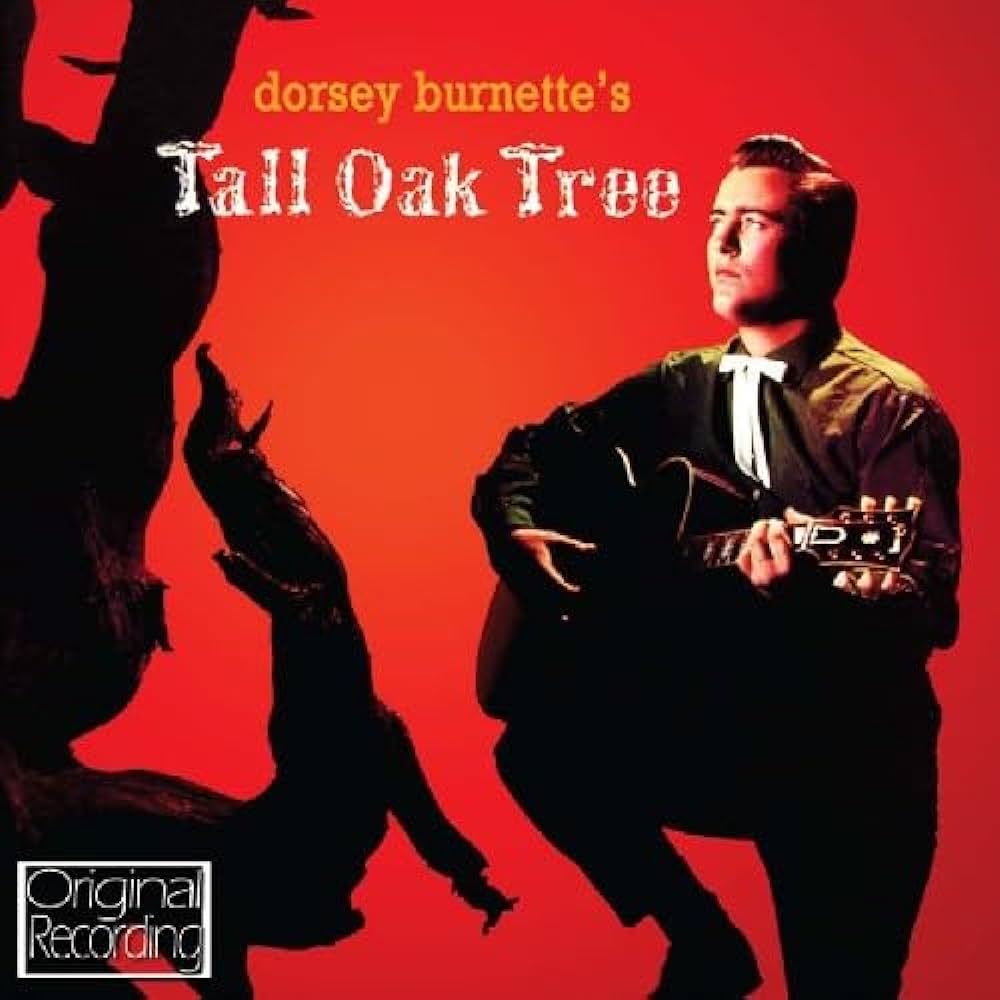
… so even if we think Billy is exaggerating a bit and apply point deductions, he had to learn at least about 150 Dylan songs in those days (not “Everything Is Broken”, though). Hardly a problem, by the way; music is quite literally in his DNA. And indeed, Billy is in the DNA of American music. Billy is the billy in rockabilly, the genre name that gets its name from his father and uncle’s hit song, from brothers Dorsey and Johnny Burnette. The brothers became parents at about the same time: Dorsey became father to Billy on 8 May 1953, Johnny to Rocky on 12 June 1953, both in Memphis, Tennessee. They immortalize this double celebration with a song they write together and then call “Rock Billy Boogie”.

They do not record it until 4 July 1956, and it first appears on one of the pillars under the genre and one of the best rockabilly records ever at all, on The Johnny Burnette Rock ‘n’ Roll Trio (December 1956), the record of which Paul McCartney (according to Billy) says:

“John and I, every morning when we’d get up in our little flat in Liverpool, we’d put on The Johnny Burnette Rock ‘n’ Roll Trio album, and that has really influenced us a lot.”

Live on the BBC, we hear Lennon announce “Lonesome Tears In My Eyes” on 23 July 1963: “This is a Dorsey Burnette number, brother of Johnny Burnette, called Lonesome Tears Of My Eyes. Recorded on my very first LP, in 1822.”

The words “Rock Billy” soon transformed into rockabilly, and Dylan is a fan too. “Believe it or not,” says DJ Dylan at the beginning of episode 45, “Trains”, of his Theme Time Radio Hour in March 2007, “The Johnny Burnette Rock ‘n’ Roll Trio were invited to appear on the Ted Mack Amateur Hour, where they won the competition three times in a row. I want you to listen to this record, and just imagine anything this raw winning three weeks in a row on American Idol.” And then plays track 2 of The Johnny Burnette Rock ‘n’ Roll Trio, the all-time rockabilly monument “Lonesome Train (On A Lonesome Track)”.

In addition, we are fairly certain that Dylan also has Dorsey Burnette’s “Bertha Lou” from November ’57 in his record case. Back in 1975, he seems to have used that rockabilly classic for his throwaway “Rita May”, and in 1989 we hear the lick and drive one-on-one in Oh Mercy’s track 3, in “Everything Is Broken”. Which Billy surely not chose by chance to cover in 2006 – he is indirectly honouring his father who died far too young (in 1979, aged 46, heart attack), and at the same time winking at Dylan as well.

A good-natured wink, no doubt. When the StageLeft Podcast‘s interviewer wants to hear more about Dylan, Burnette doesn’t have a whole lot more to offer, but still one fun, fascinating detail:

“He is a very private person. But we talked a lot about my dad and my uncle. He was a fan of some of their music. He was a big Rick Nelson fan [the Burnette brothers have worked a lot with Nelson and have written some of his hits]. So, he really liked that stuff and… I had actually met him in the seventies, and he told me that my Dad’s song, “Tall Oak Tree”, he said he realised that was the first ecology song ever written. And I called my dad the next morning, and I said ‘Hey Dad, I ran into Bob Dylan’. That’s neat, you know.”

The walking music encyclopaedia Dylan meets Billy Burnette sometime in the 1970s and immediately connects with a song by Billy’s dad from 1960, Dorsey Burnette’s “Tall Oak Tree”. That’s a nice enough song alright. Not too titanic, a bit silky perhaps, but good enough to be covered by greats like Johnny Rivers and Glen Campbell and to get a place somewhere at the front of Dylan’s phenomenal working memory. Dorsey had actually written it for Ricky Nelson, who rejected it. A good call, we might say in hindsight. It really is a Brook Benton song (who then did in fact record the song, in 1967). And true, the ecological admonition at the end of the song is ahead of its time;

And then along came Man to burn the oak tree down
And now the babbling brook is a-solid ground
And the mountain high don't stand so high
And there's a cloud of smoke that covers up the clear blue sky

It is tempting to think that Dylan had Dorsey’s own version on single. The B-side features “Juarez Town”, Dorsey’s attractive rip-off of “La Bamba”. We hear echoes of the chord progression in “Like A Rolling Stone”; the setting returns in “Just Like Tom Thumb’s Blues”. Coincidence, most likely – but still a nice coincidence. And a temporary, fleeting impression “Tall Oak Tree” evidently also leaves in Dylan’s “When I Paint My Masterpiece”. In that rich article “Whose Masterpiece Is It Anyway?” by Peter Doggett for the fanzine Judas! about Dylan’s recording sessions with Leon Russell in March 1971, Russell reveals even more intriguing details regarding the origins of the accompanying music, as well as on the genesis of the lyrics:

“When he first started writing it, he wrote, I left Rome and landed in Brussells/With a picture of a tall oak tree by my side – I think that he thought the changes that I’d played were “A Tall Oak Tree”, though they were actually “Rock Of Ages”, which I think “A Tall Oak Tree” was taken from as well. Anyway, he changed those lines later.”

The picture of a tall oak tree which the protagonist carries only in the primal, Greatest Hits Vol. 2 version invites wide-ranging guesswork from the esteemed ladies and gentlemen Dylanologists. Heylin suspects it refers to “the well-known story of an old man who spent his whole life painting and repainting the same tree” for example, and Tony Attwood sees a reference to the Zen tradition of using one aspect of nature alone to understand everything. But it turns out to be a bit more prosaic in the end – Dylan just thought he heard Dorsette’s “Tall Oak Tree” in the music track Leon Russell presented him with.

Anyway, he changed those lines later. Dylan feels a rather incomprehensible dissatisfaction with the line. Within three days, the Man burns down the big oak tree and replaces it with the inferior On a plane ride so bumpy that I almost cried, a rewrite to which Dylan remains – in slightly different variants – committed to this day, unfortunately.

To be continued. Next up When I Paint My Masterpiece part 10: The muscled mussels from Brussels


Jochen is a regular reviewer of Dylan’s work on Untold. His books, in English, Dutch and German, are available via Amazon both in paperback and on Kindle:

Posted in Uncategorized | Leave a comment

Once or twice: You Angel You


I don’t know what it means either: an index to the current series appearing on this website.

Once or twice: A recently inaugurated review of songs that Bob has performed just once or twice on stage. Previously we looked at 

By Tony Attwood

You Angel You was played on January 14 and 8 February 1990 and was picked up for this site by Mike Johnson in Songs of love, songs of betrayal.

It is interesting to hear the immediate cheer from the crowd.   And as ever I bemused why Bob would play this twice and not work on it further, as he has done with so many other songs.

That is not to say that this is a particularly wonderful version of the song, (there is one such, and I’ve put it at the end, but it is not by Bob) but Bob has worked on far less successful early live versions of his songs and given them a new life on stage.  But with this song, that was not to be.

So why do I like the song so much, and why does Bob not think enough of it to include it in the set list more than a couple of times?

Well, it is a very straightforward love song – and that is of course not the essence of most of Dylan’s most famous compositions.   But the middle 8 is truly exceptional in a musical sense – as indeed the last cover version (below) shows.

However, I suspect Bob feels that the lyrics are just not very Dylan.   There’s nothing at all wrong with them of course…

You angel youYou got me under your wingAnd the way you walk and the way you talkFeel I could almost sing

You angel youYou're as fine as anything's fineThough I just walk and I watch you talkYour memory's on my mind

… it is just that they are the lyrics of a straightforward love song and nothing more.  I mean, if a lady ever wrote such lines to me I’d be floating so high in the sky I don’t think I’d ever come down.

But no, it is not the lyrics that have made me choose to go back to this song today; it is the elegance of the music in the middle 8 that really makes this song so special – the section that begins “Even though I can’t sleep at night for trying”.  That first line of the middle 8 suggests we are going to have more lines in that format, but immediately the song changes into a new pattern.

Never did feel this way before
I get up at night and walk the floor
If this is love then gimme more
And more and more and more and more

Again it is not very Dylan, and that’s probably what Bob thought, I guess, but I love it.

This is of course a very different version from that on the Planet Waves album.

Aaron and I did a piece on the cover versions of this song in the Beautiful Obscurity series, and indeed one of those really did knock me out at the time.

In fact it was that version above that turned me onto this song which in turn led me back to Bob’s version.   But I have to admit, I’ve still never found anything that surpasses this cover version above.

And that is one of the most wonderful things of working on this website.  I keep finding and being reminded of recordings like this.

Posted in Uncategorized | 1 Comment

The Never Ending Tour Extended: Long and Wasted Years


I don’t know what it means either: an index to the current series appearing on this website.


The Never Ending Tour Extended: This series primarily uses recordings selected by Mike Johnson in his inestimable masterpiece The Never Ending Tour, and looks at how those performances of individual songs change as time goes by.   The selection of songs from the series, and the commentary below, are by Tony Attwood.   A list of all the songs covered in the series is given at the end.

Long and wasted years was played 328 times between 2013 and 2019.  We first pick it up in 2014 – The Setlist: The second half 

The musical introduction of course tells us what we are going to get in terms of the song.  And Bob declaims the lyrics with not so much a melody more simply a change of pitch.  This is a performance of anguish, anguish and then more anguish.    Indeed at times he’s almost shouting the rush of words, as the band just plays the same accompaniment over and over again.

It is obvious what the song is about – the opening verse tells us that –

It's been such a long, long timeSince we loved each other and our hearts were trueOne time, for one brief day, I was the man for you

and this could turn into a song of regret and sadness, but with this performance it is a song of utter bitterness.  There are some lyrical changes but that’s not the point.   It is the pure venom that pour out that dominates.

It doesn’t get any better than this

By 2015 we get a somewhat different version.   This is slightly slower version, with more melodic variations in the voice, and when Bob says he ain’t seen his family in 20 years he really is bitter – and there certainly is no recognition in the voice that this could be the singer’s fault.  No, we are clear, everyone else is to blame, not him.

Given this delivery, some of the lines however are hard to believe.  For example

Come back babyIf I hurt your feelings, I apologize
That doesn’t sound at all apologetic to me.   Likewise…
You don't have to go, I just came to you because you're a friend of mine

Is that really meant?  It is hard to believe it when performed in this way.  I wouldn’t believe it, but the audience certainly seemed to love the pain and anguish.

And so on to 2017…

Riding the Setlist Wave

And instantly from the opening notes of the changed accompaniment, we know we are into something else here.   Dylan confirms that within seconds and if it were not confirmed already: the “Oh Baby” does it once more.

The problem is that there is not too much that can be done with the almost non-existent melody and that eternal descending accompaniment line.   Yet there is a tiny element of gentleness that was not there before, and we get some variation from the band between the verses.  Tiny changes but they do make a difference and hint at more to come…

In fact, I get the feeling here that Bob really would like to do something else with the song, and these slight changes are a hint in that direction.  But the song itself is very limited, and the title of “Long and Wasted Years” doesn’t leave too much to the imagination.

And yes there is a journey going on because in 2018 we find…

Hell bent for leather

The move towards a less angry and more sympathetic version has been a step-by-step progression, and yet here we are, along with an extra occasional moment from the band.  Not much but it is there between verses, and it is different.

Bob is still declaiming rather than singing, but he is no longer calling out in anger – and those extra moments from the band between each verse express that well.

The Greatest Band Ever To Hit The Stage

And so we come to the end for the song in the Never Ending Tour, in 2019.   And yes that announcement introduction from the band is there, but consider how Dylan’s declamation of the song has changed from the first edition we had just four years earlier.

Sadness now dominates, and yet again there are slight changes in the accompaniment – an extra chord at the start of each year.   And just consider how Bob declaims, “Twist and Shout” – there is no anger any more, just that sadness of a lost past.

Indeed musically the extra chords between the verses signify this too.   In the end even after hearing the song five times one after the other, I am sad and sorry, not just for the singer but for the lady involved too.

Plus yet again I really do appreciate how the song has developed.   There really is little one can do with this song while keeping it as the original song, because of the constrained nature of the composition and the clarity of the meaning of the lyrics.  But Bob has found all that he can do.   And for me, it was worth the journey.

Other articles in this series…

Posted in Uncategorized | Leave a comment

The lyrics and the music: Everything is broken.


I don’t know what it means either: an index to the current series appearing on this website.


“Everything is broken” is a most unusual song.  It consists of 28 lines of lyrics of which 12 begin with the word “Broken” – which is not really what one might expect from the man often considered to be a great genius of songwriting.

What carries the music through against this repetition howeer is the multiple textures of the music which are introduced one by one at the very start.  We start with the guitar with a repeated riff, then the bongos are added, with the vibrato guitar coming in – and we haven’t even got ten seconds into the song yet.  Then there is a second guitar riff on top and with this whole array of intertwined musical accompaniment Bob starts singing on ten seconds with the opening salvo of repeated “Broken” lines.

What holds all this together is the fact that this is a standard 12 bar blues format, with the three prime chords.   That means we have a feel of where this is going and so can enjoy the ride in terms of lyrics and accompaniment.

After three verses we get an instrumental break led by the harmonica – but this retains the repeated element – it is just one note played in a counter rhythm to the band.

So what holds our interest when the whole essence of the song is, both musically and vocally, so repetitive?   One point to note is that it is a short song in Dylan terms, just three and a quarter minutes on the album.   Another is that the 12-bar blues format of chords is one that everyone will feel at ease with.  Even if you have not musical background at all, the movement between the chords I, IV and V, sounds very familiar and established.

Which in turn puts all the emphasis back onto the lyrics – and here the repetition of the message with the word “Broken” appearing so often we get a very clear feeling.

Yes everything is broken, but we can still live it and enjoy it.   Nothing works, but that’s ok is the message which is conveyed as much by the energy of the music as by the lyrics.

And this really is quite an amazing achievement, because if one were to look at the lyrics alone without any knowledge of the music, one would never imagine this as a jolly bouncy song….

Broken bottles, broken platesBroken switches, broken gatesBroken dishes, broken partsStreets are filled with broken hearts

This is far from being the only way to see the world, but it is one way to perceive the civilisation in which we live.   And yet the music tells us that this is ok – in fact we should celebrate the fact that everything is broken.

Even at the conclusion, there is no release from the brokenness of this civilisation

Broken hands on broken ploughsBroken treaties, broken vowsBroken pipes, broken toolsPeople bending broken rulesHound dog howling, bull frog croakingEverything is broken

The message from the lyrics alone would be: this is an appalling disaster, a civilisation on its knees, or if you prefer, in its final days before it descends into anarchy.  But the music tells us that if that is how it is, go out and embrace it and have fun as society and civilisation collapse.   Collapse doesn’t have to be awful – we can embrace that too.

Bob played the song 284 times on the Tour, and if anything he upped the tempo, demanding that we all join in the celebration of brokenness with extra bounce.   The message throughout is simple: it’s the end of civilisation as we know it.  So let’s dance!

This recording from the Never Ending Tour series compiled by Mike Johnson comes from 1999 Inside the Museum.    The instrumental break that starts at 2’40” and runs through to the end really is worth focussing on, as it shows there is even more to be got from this simple 12 bar blues than we might ever have imagined.   It really is a celebration of brokenness – and one can’t say that of many songs.  I do hope you have a moment to listen.

The songs reviewed from the music plus lyrics viewpoint…

Posted in Uncategorized | Leave a comment

When I paint my masterpiece: 8. “Crimson and Clover still hits me”

by Jochen Markhorst

“Crimson and Clover still hits me”

Sailin’ round the world in a dirty gondola
Oh, to be back in the land of Coca-Cola!

Douglas Brinkley has noticed it too, the renaissance, or rather upgrade of “When I Paint My Masterpiece”. He asks about it in his interview for the New York Times in 2020, and then gets a remarkable answer from Dylan:

“I think this song has something to do with the classical world, something that’s out of reach. Someplace you’d like to be beyond your experience. Something that is so supreme and first rate that you could never come back down from the mountain. That you’ve achieved the unthinkable. That’s what the song tries to say, and you’d have to put it in that context.”

Remarkable for a variety of reasons. Confusing is the position taken by Dylan, after all the creator and restorer of the 50-year-old song; “I think this song has something to do with the classical world” – as if the song is a self-governing entity over which the creator has limited influence, and is as mysterious to himself as it is to the audience. In line, incidentally, with what Dylan says a little earlier in the same Brinkley interview about the creation of the Rough And Rowdy Ways songs: “The songs seem to know themselves and they know that I can sing them, vocally and rhythmically. They kind of write themselves and count on me to sing them.”

And the second noteworthiness is the depth Dylan seems to suspect in “When I Paint My Masterpiece”. And just as confusing. The more often you reread Dylan’s analysis, the more opaque it becomes – it’s almost Kafka’s paradoxical circle, the Kafkaesque quirk we know from ultra-short stories like Die Bäume (The Trees) and Der Aufbruch (The Departure), in which each subsequent sentence further obscures the understanding of the previous one. As it is with these five sentences. At least, “Coca-Cola”, “Brussels”, a plane ride and candy-eating journalists, to name just a few other song ingredients, do not, with the best will in the world, unleash “something with the classical world”. The subordinate clause something that’s out of reach suggests a contiguous connection, that the “something” from the Classical World is out of your reach – though Dylan doesn’t use a conjunction between the two phrases, so it’s a bit of a guess what the connection between the phrases is meant to be.

The following three sentences seem to be intended as an accumulatio, as a listing of equivalents for something like “creating a surprising masterpiece” – “surprising” as the talent apparently is deemed to be insufficient to create something of this exceptional quality. It is successively “beyond your experience”, “supreme and first rate” and an “unthinkable” achievement. The qualifications are a bit intense, and the metaphor you could never come back down from the mountain is perhaps a bit overly dramatic, but the thrust seems clear: the song is about, as we already have thought for about 50 years, creating a once-in-a-lifetime masterpiece.

After which Dylan’s closing words unscrew the newly-created notion again: this now is the “context” in which to put it. Weird. This is not “context”, this is saying-the-same-with-other-words. That “When I Paint My Masterpiece” is “something about the classical world” and features a narrator who dreams aloud of creating an exceptional masterpiece, we have known for 50 years. No, it seems as if Dylan is gradually removing contextually alien elements for the song’s renovation, to make the lyrics more one-dimensional, coherent. Which would at least explain the elimination of Botticelli’s niece and the pretty girl from Greece, as well as the deletion of “wasting my time and dodging lions in the Coliseum”, and it “contextualises” the evolution of the bridge as well.

It’s a jerky evolution. The very first recording, with Leon Russel, the one we know from Greatest Hits Vol. II, does not yet have a bridge. The demo version Dylan recorded on his own at the piano in those same March days in 1971 has an initial bridge:

Sailin’ round the world in a dirty gondola
Sure wish I hadn’t sold my old Victrola
Ain’t nothing like to that good old rock-n-rolla!

… the bridge that will never be sung again and according to Robbie Robertson, thanks to an inspirational Coke bottle from his mini-fridge before the song’s first release, the Band’s version on Cahoots, is changed into

Sailing 'round the world in a dirty gondola
Oh, to be back in the land of Coca-Cola

… the words that also appear in the official publication on the site and in Lyrics. It is the bridge version to which Dylan, apart from minor deviations, remains faithful until deep into the 1990s. I’d be so happy to be back in the land of Coca-Cola, Dylan sometimes sings abroad. Or when in the US: Oh, to be back in the town of Coca-Cola (in 1997 both in Durham and Los Angeles, for instance). And playful variations thereon. Oh, to be back in the land where I could have just one more rum and Coca Cola! he sings 1999 in Oxford, winking at the Andrew Sisters in a brilliant, lingering rendition with prominent steel guitar and impassioned vocals, by the way. And the most frenzied version gets the Brussels audience in 2002, already won over anyway because Dylan serves them with “When I Paint My Masterpiece” and the name-check “Brussels”:

Sailin’ round the world in a dirty gondola
I gotta fill it with root beer, 7-Up and even Coca Cola!

Bob Dylan – When I Paint My Masterpiece, Brussels 2002:

In yet another exceptionally successful performance, acoustic and driven, this time starring Larry Campbell’s mandolin, and stretched to over six minutes – in which Dylan plays the bridge twice (the second without root beer and 7-Up, but with “just another Coca-Cola”), and twice the last verse, so to the delight of the audience also twice “Brussels”, which Dylan milks very untypically and very showmanlike as well:

I left Rome, I pulled into Brussels [audience cheering again]
On a plane ride so bumpy… Brussels! Where they all go… [
                                   audience cheering even louder]

Sometime in the second decade of the 21st century, that drivel about gondolas and Coca-Cola then starts to bother Dylan, and he feels a need to tighten the lyrics further, make them more coherent, put them in context. So that silly bridge has to go. We’ll hear the revised version from 27 July 2018, the start of the Far East & Down Under Tour in Seoul:

Sailin’ round the world full of crimson and clover
Oh, sometimes I feel like my cup is running over!

… plus the musical novelty of playing the last bars of the bridge from “Tonight I’ll Be Staying Here With You” under my cup is running over.

Now, admittedly, the lyrics do indeed fit the “concept”. Sailin’ round the world full of crimson and clover, with the reference to Tommy James & The Shondells’ immortal world hit, does express something like “searching for an original masterpiece”. With as an amusing by-catch the backstory, which could just as easily have been a Dylan story: in a radio interview Tommy James was persuaded to play the rough mix of the song he was working on at the time (November 1968).

Unbeknownst to him, it is recorded and then sold as a single to listeners who ask for it. Demand soars, and Tommy’s record company denies the protesting Tommy James to finish the song, to mix it the way he thinks it should be. Comparable to Dylan’s objections to the release of unrelenting masterpieces like “Blind Willie McTell” or “Red River Shore”, recordings he feels are “not finished”. And comparably incorrect: the phenomenal success of the raw mix proves record company Roulette Records right. “Crimson and Clover still hits me,” as Keith Richards writes forty years later in his autobiography Life.

Also fitting with the “concept”, lastly, is Dylan’s new closing line of the bridge: Oh, sometimes I feel like my cup is running over, which can be understood perfectly as a heartfelt cry of the frustrated artist seeking inspiration for his Masterpiece. Perhaps a nod to another immortal 1968 masterpiece, to James Brown’s “I Guess I’ll Have To Cry Cry Cry”, but my cup is running over is, of course, in itself too generic to be promoted to reference.

It’s a fairly stable replacement since Seoul 2018 – Dylan varies at most on the introductory words. “Oh, lots of time I feel just like,” for example (Waterbury 2018), or even closer to the desperate gospel classic “Motherless Child”: “Oh Lord sometime I feel like…” (New York 2018), but these are only minute deviations from the more-or-less final version that will gain semi-official status with the release of Shadow Kingdom in 2023.

With which Dylan has finally put it into context, accomplished the unthinkable, reached the place beyond his experience, and built his supreme and first-rate bridge to the timeless portrait of the struggling artist. At least: if that’s what the song tries to say.


To be continued. Next up When I Paint My Masterpiece part 9: And then along came Man to burn the oak tree down


Jochen is a regular reviewer of Dylan’s work on Untold. His books, in English, Dutch and German, are available via Amazon both in paperback and on Kindle:


Posted in Uncategorized | Leave a comment