Taking ‘Lily, Rosemary, And The Jack Of Hearts’ as an allegory pertaining to the Holy Bible, Rosemary represents Samaria, and Lily, Judea. Big Jim represents King Solomon, ruler of the Promised Land; punished for his wayward ways by having his United Kingdom divided in half. Pick a card – Jack represents the One Almighty Jehovah, or both God and Jesus.
In the Old Testament, Aholah, akin to Rosemary, represents the northern part of Israel, and Aholibah, akin to Lily, the southern part. Displeased with their whoredom, Jehovah is not at all forgiving; there be no Jesus around in those days:
And the company shall stone them with stones
And dispatch them with their swords
They shall slay their sons, and their daughters
And burn up their houses with fire
(Ezekiel 23: 47)
In the New Testament, analogous to a divided kingdom, Jesus, Son of Jehovah, alias the Lamb, is born in a manger, but He’s said to be destined to re-unite everybody by sacrificing Himself; seems His Father is reluctant to sacrifice Himself:
And there shall be no more curse
But the throne of God, and of the Lamb shall be in it
And His servants shall serve Him
(Revelation 22: 3)
The Christian allegory breaks apart in ‘Lily, Rosemary, And The Jack Of Hearts’ unless one takes the Gnostic view that the spirit of Jesus has no beginning, and and has no end, just like His Father. Both in love with the Jack of Hearts, Lily and Rosemary conspire with him to get rid of diamond-studded
Big Jim:
Backstage the girls were playing five-card stud by the stairs
Lily had two queens, she was hoping for a third to match her pair ....
She called another bet, and drew up the Jack Of Hearts
(Bob Dylan: Lily, Rosemary, And The Jack Of Hearts)
Things happen pretty quick, and we are not sure Jack did it, but Jim ends up dead with a penknife stuck in his back. Jack’s a chip off the old block so to speak, a Jokerman; he has no intention of being sacrificed like a lamb, and like Jesus with Simon of Libya, Rosemary of Samaria takes the fall, double-crossed for the very last time:
And Rosemary on the gallows, she didn't even blink
The hanging judge was sober, he hadn't had a drink
The only person on the scene missing was the Jack Of Hearts
(Bob Dylan: Lily, Rosemary, And The Jack Of Hearts)
As goes the allegory, having seen to it that sinful Samaria has fallen, Jack/Jehovah/Jesus being concerned at the moment with the gilded Lily, with Judea, is determined to rebuild His Temple in its capital Jerusalem:
The cabaret was empty now, a sign said 'Closed For Repair'
Lily had already taken all of the dye out of her hair
She was thinking about her father, who she very rarely saw
Thinking about Rosemary, and thinking about the law
But most of all, she was thinking about the Jack Of Hearts
(Lily, Rosemary, And The Jack Of Hearts)
Meanwhile elsewhere
There are details of some of our more recent articles listed on our home page. You’ll also find, at the top of the page, and index to some of our series established over the years.
If you have an article or an idea for an article which could be published on Untold Dylan, please do write to Tony@schools.co.uk with the details – or indeed the article itself.
We also have a very lively discussion group “Untold Dylan” on Facebook with getting on for 10,000 members. Just type the phrase “Untold Dylan” in, on your Facebook page or follow this link And because we don’t do political debates on our Facebook group there is a separate group for debating Bob Dylan’s politics – Icicles Hanging Down
Are these images genuine? To my way of thinking they are authentic. The chin and the mouth are unquestionably Rimbaud’s. Examine closely the slight asymmetry of the Cupid’s bow, one of Rimbaud’s most famous features (apart from his turquoise eyes).
Looking closely you will notice that the central portion of the upper lip is shifted very slightly to the left side of the poet’s face. Now look at the perfect oval of the chin. The harsh and infinitely sad expression of the mouth is offset by this perfectly rounded chin: feminine, cherubic and utterly recognizable.
The real problem in the first image is the nose. It looks too broad and flat. Yet if you look closely you will see a white square of light beginning on the bridge of the nose, ending at the tip. This square of light seems to spread the nose laterally. If you half-close your eyes the square disappears and the nose becomes Rimbaud’s: thin with a slightly upturned tip. I feel that this square of light is almost certainly an optical effect – caused perhaps by enlargement of the image – but a professional opinion is needed here. What is certain is that when the square is filtered out the problem disappears.
Arthur Rimbaud – the rara avis of all time – appears to have been fabulously captured in collodion-brown. Yet scowling out of the new portrait the world’s most controversial poet may be secretly smiling to himself.
Hardcore Marxists are going to jump on these images as proof that Rimbaud was a full-blooded Communard. And as contemporary poster-boy for Extinction Rebellion the teenage Communard Arthur Rimbaud will empty classrooms faster than Greta Thunberg.
But the truth is that Rimbaud was a magpie-Marxist at best. After the dissolution of the Commune he became rapidly depoliticized. Admittedly at the time – aged sixteen – he was one-hundred percent drunk with utopianism. While the red flag flew over the Hotel de Ville Rimbaud saw himself as a partisan. (Of course in the 1870’s this was still the flag of the French – not the Bolshevist – revolution.) In the Place Vendome he incarnates the Commune. But the image’s significance is much greater than this. It is not just Napoleon that Rimbaud topples with a casual nudge from his left elbow. By implication it’s the whole military industrial complex.
Many people are in for a shock. The Rimbaud damage-limitation exercise is over. With the emergence of these new photographs it is time to conclude that Arthur Rimbaud went through a phase of proto-communism when Paris became an experimental city-state the poet was on the frontline of class-war. (Graham Robb, Rimbaud’s best biographer by far, has taken the view that any role in revolutionary Paris was fairly minimal; while Terry Eagleton and Kristin Ross are now likely to see, however wrongly, radical political convictions reinforced.)
Yet, as the dust settles after the controversial materialization of Rimbaud in the Place Vendome, it must be remembered that after the failure of the Commune the poet continued to evolve a supernaturalist philosophy. Without a massive cosmic frame of reference even Rimbaud could never have written A Season in Hell. The confessional metaphysics of this work far transcend dialectical materialism. And Rimbaud’s primary, non-reductionist faith will always be in the occult praxis of his art. At the height of his powers (in ’72 and ’73) he believes that the world can be magically transformed through his art. His engagement is truly with his holy guardian angel.
I repeat: many are going to read into the new images a narrative affirming Marxist engagement. Yet this would be a selective interpretation. In The Emergence of Social Space: Rimbaud and the Paris Commune I note that Kristin Ross makes no mention at all of the Rue d’Babylone assault – when Rimbaud was almost certainly gang-raped in a Commune barracks. This ordeal takes place only a week before the photo-shoot in the Place Vendome.
All the maladjustment to come pours out of the vortex of what the poet goes through at this time. All Rimbaud’s cruelty to his only real love – Paul Verlaine – is explained by events in the Rue d’Babylone. The harsh and sad expression in Rimbaud’s face as he stands in the Place Vendome has to be related to this recent nightmare experience. Yet Kristin Ross does not – in her rush to recruit Arthur Rimbaud for the revolution – even critique Stolen Heart, the poem which dramatically codifies the poet’s core-trauma, the poem in which the poet’s heart is ‘degraded’ by the ithyphallic soldiery.
In my opinion Rimbaud’s text is excluded on purpose since the poem makes manifest a dystopian aspect of the Commune. (Revolution has changed everything except the human heart.) In a sometimes highly perceptive investigation Ross more or less overthrows her own thesis by this glaring omission. And similar errors of selective analysis need to be avoided when deconstructing the new images.
After the rape in the Rue d’Babylone Rimbaud doesn’t give in. The poet is not defeated. He doesn’t go back to his hometown and collapse in provincial bitterness. Instead he issues his doctrine of the Seer – Suffer everything so as to be in mystic solidarity – and returns to Paris to take a heroic stand. His face tells the full horror of what he has been through. But in the Place Vendome he shows what it means to be a hero.
Ecce homo.
Let’s leave the last word to Rimbaud himself. Let’s have the poet tell us precisely what he thinks about armed risings.
At dawn, armed with burning patience, we shall enter the splendid cities.
Here the impatience of the revolutionary, the understandable hunger for change, has been transformed into something far more impressive. Now the enemy within has been identified. Now the ultimate traitor has been exposed. Instead of burning Paris (as the Communards did when outgunned and outmanoeuvred by the Versaillais) Rimbaud lights the lamp of interior alchemy and says with Mahatma Gandhi:
Be the change you wish to see in this world.
Meanwhile elsewhere
There are details of some of our more recent articles listed on our home page. You’ll also find, at the top of the page, and index to some of our series established over the years.
If you have an article or an idea for an article which could be published on Untold Dylan, please do write to Tony@schools.co.uk with the details – or indeed the article itself.
We also have a very lively discussion group “Untold Dylan” on Facebook with getting on for 10,000 members. Just type the phrase “Untold Dylan” in, on your Facebook page or follow this link And because we don’t do political debates on our Facebook group there is a separate group for debating Bob Dylan’s politics – Icicles Hanging Down
“Keep Your Eye On The Sparrow”, as Baretta’s Theme is actually called, is the title song of the TV series with which Sammy Davis Jr. scores a big hit in 1976, number one even in the Netherlands and in Sweden. It’s not an all-too-common expression, this sparrow monitoring, but it does occur, every now and then. An old gospel hymn is called “His Eye Is On The Sparrow” (1905) which is based – of course – on the Bible, on the sparrows in Matthew 10. Dylan is also browsing through this particular Bible book at the time of Shot Of Love (1981), as evidenced by the falling sparrow reference in “Every Grain Of Sand”, but Dylan is probably experiencing a déjà vu thanks to his old friends Peter, Paul and Mary. Though in their “Single Girl” (1964), it sounds hardly biblical, but rather corny cautionary:
When a fella comes a' courtin' you,
and sits you on his knee,
Keep your eye upon the sparrow
that flits from tree to tree
The Baretta song lacks a religious connotation as well. The little bird is mainly chosen for its playful, but otherwise empty rhyme:
Keep your eye on the sparrow
When the going gets narrow,
and especially because it fits with the self-indulgent rhymes in the verses. Don’t go to bed with no price on your head and don’t roll the dice if you can’t pay the price and ain’t gonna fight with no thief in the night. But the best-known line is of course the one Dylan copies almost literally: don’t do the crime if you can’t do the time.
“Heart Of Mine” is a bit of an oddity in Dylan’s catalogue. Apart from that one one-liner, the bard also adopts the empty rhyming; in fact, Dylan writes five identical couplets under the motto rhyme over reason. The musician Dylan overrules the poet Dylan this time; rhythmically, it is indeed a sparkling, outstanding song text, with a rhythm that varies as often (almost per line) as the melody.
The opening is already special. Dylan starts singing on the second beat, like a percussion guitar plays reggae (on the second and the fourth beat), shifts to assonating triplets in the next lines (don’t let her know that you love her), leaves whole bars almost empty… particularly in combination with the melody changes, it works wonderfully.
Content-wise he limits himself, unfortunately, to five times the same message: look out kid, don’t fall in love. It may be inspired by Dylan’s own diary – biographers look for and do find candidates for the forbidden love sung about here. However, Dylan has produced better poetry to express complex feelings. Idiomatically, it is very monosyllabic (literally; of the 200 words, only thirteen have more than one syllable). In itself, that is hardly a weakness, obviously, but here the monosyllabism is embedded in easy rhymes and empty talk. In terms of word choice, only the archaic so malicious and so full of guile stands out, echoing 1 Peter 2:1 (“Wherefore laying aside all malice, and all guile”) – but still: this one-time outpouring of stately terminology amidst all the simple talk is alienating. It does suggest, in fact, that the poet was inspired not so much by the Bible, but by a colleague: by the brilliant, tragic Paul Laurence Dunbar (1872-1906).
Dunbar’s parents were slaves in Kentucky, but the underprivileged Paul Laurence seems to have overcome his disadvantage at an early age; at sixteen, his talent is recognised and his first poems are published (in his hometown, in the Dayton Herald). Yet despite the recognition and support of big names like Frederick Douglass, of successful schoolmates Wilbur and Orville Wright, and of rich, white admirers, Dunbar has a short life of trouble. After financial misery, racially motivated opposition, alcohol and recklessness, he dies of tuberculosis at 33 in his native Dayton.
His name and his work survive. And especially his poetry – in anthologies, schoolbooks and songs. And as an echo, too, in Dylan’s “Heart Of Mine”, which thematically mirrors Dunbar’s wonderful “The Made To Order Smile” anyway:
When a woman looks up at you with a twist about her eyes,
And her brows are half uplifted in a nicely feigned surprise
As you breathe some pretty sentence, though she hates you all the while,
She is very apt to stun you with a made to order smile.
… the first of four stanzas, in which the narrator, like the narrator of “Heart Of Mine”, warns of the devastating consequences of falling in love with a fatal woman. The choice of words in the third stanza reveals that Dylan does know Dunbar’s poem:
I confess that I'm eccentric and am not a woman's man,
For they seem to be constructed on the bunko fakir plan,
And it somehow sets me thinking that her heart is full of guile
When a woman looks up at me with a made to order smile.
… the maliciousness Dunbar warns about in general and the heart full of guile specifically, seem to inspire the opening line of Dylan’s final couplet, “Heart of mine so malicious and so full of guile”. Dylan’s twist, reversing the perspective, is more attractive, though; in Dunbar’s poem, the first person accuses the women of malice, while Dylan’s narrator searches closer to home, in his own heart, and acknowledges that his own feelings are betraying him.
Awkward, finally, is also the rather disrespectful way in which the master himself presents the song to the world: for the official release, on Shot Of Love, he chooses the sleaziest and most chaotic recording made of it, the half-serious one with Rolling Stone’s Ronnie Wood and Ringo Starr, somewhere listlessly rattling a tambourine. The decision even leads to a rare, vague mea culpa in an interview, 1984: “I chose it because Ringo and Ronnie Wood played on it.” Nevertheless, it quickly becomes clear that the song hides a small masterpiece, and the live version selected for Biograph (1985) does make up for it. On the bootlegs that have surfaced over the years, there are other, wonderful, “ordinary” recordings to be found. The one on Between Saved And Shot (1999), for instance, with a Dr. Hook-like approach, very driven vocals and an unparalleled band that is both tight and frayed at the same time.
Followers enough, too. Veteran Maria Muldaur calls her tribute album Heart Of Mine: Love Songs Of Bob Dylan (2006) and, among the other rather colourless, but okay covers, delivers a nice version (still, the opening “Buckets Of Rain” is the only real highlight of the album). Mountain’s hard rockers imagine themselves in a stadium, with lighters and all, and the Amnesty contribution by Blake Mills and Danielle Haim (Chimes Of Freedom, 2012) at least approaches the dry, garage rumble atmosphere of the original.
Much more appealing is the most famous rendition, the one by Norah Jones (together with the Peter Malick Group on New York City, 2003). Bluesy and sultry, beautiful piano, great musicians and of course she can sing, Ravi Shankar’s daughter. Her textual intervention is defensible; the cheesy If you can’t do the time, don’t do the crime apparently goes a bit too far for her and is changed into the more charming Do the time, don’t do the crime, heart of mine. Still not Nobel Prize-worthy, but what the heck.
Arguably the most beautiful cover. The competitor is the relatively obscure Jason Shannon from Minneapolis. Shannon chooses an original, propulsive percussion cadence (it sounds a bit like the rattling of bare hands on a leather sofa) and superimposes rolling guitars, a tasteful organ and a modest bass. Just as restrained, and just as tasteful, is the female second voice.
Heart of Mine
According to Jason, he submitted the song for the I’m Not There cover competition. Not chosen, only awarded with an honourable mention from Columbia Records: best runner-up.
Which is like making someone happy with a dead sparrow, as the Dutch call it.
———-
Jochen is a regular reviewer of Dylan’s work on Untold. His books are available via Amazon both in paperback and on Kindle:
There are details of some of our more recent articles listed on our home page. You’ll also find, at the top of the page, and index to some of our series established over the years.
If you have an article or an idea for an article which could be published on Untold Dylan, please do write to Tony@schools.co.uk with the details – or indeed the article itself.
We also have a very lively discussion group “Untold Dylan” on Facebook with getting on for 10,000 members. Just type the phrase “Untold Dylan” in, on your Facebook page or follow this link And because we don’t do political debates on our Facebook group there is a separate group for debating Bob Dylan’s politics – Icicles Hanging Down
Not unlike that of Christianity, there’s the Gnostic view that Jesus be a spirit split off from the far off Monad.
Jesus, not of the flesh, is able to inhabit the physical bodies of actual human beings – like He does with that of the Libyan Simon on the way to the crucifixion. Simon’s horribly executed on the cross, but Christ of course feels neither pain nor suffers death; in fact, so the story goes, Jesus laughs to Himself because of the cruel joke He’s played on His followers and on His enemies alike; the oh-so-alive “Son of God” then surprises His disciples by visiting them after He is supposed to be dead.
Another legend has it that Jesus is indeed of the flesh, but He conspires with others to have Simon compelled to take His place on the cross; then sails off to sea somewhere with Mary Magdalene:
And as they led Him away
They laid hold upon one Simon, a Cyrenian
Coming out of the country
And on him they laid the cross
That he might bear it after Jesus
(St. Luke 23: 26)
Such a tale of so miraculous an escape apparently inspires the following song lyrics:
Standing on the waters, casting your bread
While the eyes of the idol with the iron head are glowing
Distant ships sailing into the mist
You were born with a snake in both of your fists
While a hurricane was blowing
Freedom just around the corner for you
But with truth so far off, what good will it do
(Bob Dylan: Jokerman)
The songwriter above takes on the persona of the Jokerman:
Jokerman
Dance to the nightingale tune
Birds fly high by the light of the moon
Ooooohoh, Jokerman
(Bob Dylan: Jokerman)
With lines inspired by:
There's a long, long trail a-winding
Into the land of my dreams
Where the nightingales are singing
And the white moon beams
(There's A Long, Long Trail A-Winding ~ Elliot/King)
In the following song lyrics, it looks like the narrator thereof is going off to see whether or not Jesus is indeed an everlasting Gnostic spirit whom he suspects has encased Himself in the reincarnated body of Simon the Cyrenian; living now in Libya with His spirit-partner Mary Magdalene. One thing is for sure – Mary has lots of oil to rub on His feet:
Well, I'm going off to Libya
There's a guy I gotta see
He's been living there three years now
In an oil refinery
(Bob Dylan: Got My Mind Made Up ~ Dylan/Petty)
Which brings up the possible allegories in ‘Lily, Rosemary, And The Jack Of Hearts’. If two-timing Big Jim is Solomon therein, then he’s confronted by Jehovah, the Jack Of Hearts (JOH) who punishes the wayward King of the diamond mines by breaking up the United Kingdom of Israel – Lily symbolizes southern Judea, and Rosemary, northern Samaria.
Lily and Rosemary end up united only in their unhappiness with Big Jim:
I am the rose of Sharon, and the lily of the valleys ....
I charge you, O daughters of Jerusalem, if you find my beloved,
That ye tell him that I am sick of love
(Song Of Solomon 2:1; 5: 8)
If the Jack Of Hearts is instead considered to be a Christian-like combination of Jehovah/Jesus, He must be a timeless spirit. As it is claimed by the Gnostics, since otherwise the Song of Solomon allegory does not work – it’s written long before Jesus is said to be born in a manger.
In the song lyrics below, it seems that Lily cares little for the prospects of a re-united kingdom, and decides instead that she likes the Son of God’s curls (especially now that they’re sparkling with stolen gold dust) more than she loves her Father who turned against the King of Diamonds:
She  was thinking about her father, who she very rarely saw
Thinking about Rosemary, and thinking about the law
But most of all she was thinking 'bout the Jack Of Hearts
(Bob Dylan: Lily, Rosemary And The Jack Of Hearts)
Turns out lusty Lily is just another manifestation of the Gnostic spirit that also inhabits the physical bodies of Jungian Mary Magdalene archetypes; they are always running off with adventure-seeking, shape-shifting Jokermen, whereupon they always end up in quite a pickle:
Hot chili peppers in the blistering sun
Dust on my face, and my cape
Me and Magdalena on the run
I think this time we shall escape
(Bob Dylan: Romance In Durango )
Meanwhile elsewhere
There are details of some of our more recent articles listed on our home page. You’ll also find, at the top of the page, and index to some of our series established over the years.
If you have an article or an idea for an article which could be published on Untold Dylan, please do write to Tony@schools.co.uk with the details – or indeed the article itself.
We also have a very lively discussion group “Untold Dylan” on Facebook with getting on for 10,000 members. Just type the phrase “Untold Dylan” in, on your Facebook page or follow this link And because we don’t do political debates on our Facebook group there is a separate group for debating Bob Dylan’s politics – Icicles Hanging Down
On the left the possible new face of Rimbaud, on the right the well-known Carjat studio-portrait.
Rimbaud Forever
The burnout of the messianic Arthur Rimbaud makes the mythological fall of Icarus seem more like a minor hang-gliding accident. The world’s most original modern poet autodestructs so mysteriously and so rapidly that biographers are forced to build his image out of stardust. Particles of evidence about this damned poet’s life seem to have been collected from the coma of comet Wild 2. Rimbaud is aerogel, frozen smoke, solid air. His life itself vaporizes on impact. Rimbaud defines the legend of otherness.
There isn’t much work in the Rimbaudian canon. His complete oeuvre can be read in a day and a night. (How to transform your life in twenty-four hours.) Critical texts and biographical studies pour from presses, raise eyebrows, galvanize controversy. (One can spend three lifetimes reading about the poet.) But Rimbaud’s multiform faces defy analysis. Apart from being the modern world’s poet-laureate, Rimbaud becomes in his meteoric life: teenage runaway, Abyssinian explorer, circus manager, angel of deviance, venture capitalist, philosophical freedom-fighter, Gnostic magician, Wandering Jew, pseudonymous mariner, Moslem prophet, African ethnographer, amateur photographer, gun runner, Communard and finally, military deserter. The list seems to never end. (Rimbaud forever!)
Old Plates
Three major problems exist for Rimbaud studies. First, why did he abandon poetry at eighteen when he had almost single-handedly reinvented the art? Second, what was the exact nature of his relationship with his mother, the tight-fisted but highly intelligent woman the poet venomously nicknamed Shadowmouth? And third, what happened to Arthur Rimbaud during the superviolent Paris Commune when, in the spring of 1871, the French capital was in the hands of a revolutionary government for seven weeks?
The first two questions are monolithic difficulties. And the third has also seemed insoluble – until now. Very recently, while researching Rimbaud’s circle of friends in London (all of them political exiles like him) I came across two photographs taken in the Place Vendome at the height of the demographic convulsion which was the Paris Commune. As luck would have it I enlarged one of these old plates and – suddenly – there right in front of me I seemed to see the sacred presence, the most elusive man in belles lettres, Arthur Rimbaud, the man ‘shod with the wind’.
Rimbaud as Paris Irregular during the Commune. In a follow-up article I will be discussing the identity of the giant to the poet’s right.
A Searing Gaze
In these two photographs (by Bruno Braquehais) we see the poet as we have never seen him before. Here we discover explosive and controversial evidence that Rimbaud was radically involved in the Paris Commune. From these old photographic plates we learn that the poet became nothing less than a juvenile figurehead of revolution. We see him dominating a great public space, surrounded by members of the National Guard; or possibly by the Paris Irregulars: or both. With a searing gaze the poet looks straight into the camera. Recovering from the shock of that gaze we register next that almost everyone apart from the young poet is smiling. Only Rimbaud, with his incredibly distinctive lips, downturns his mouth in an iconic scowl. Now for the first time we really see the Rimbaud grimace, echoed by a million rock-stars (from the second Carjat studio-portrait). But here in the new image that grimace is amplified and intensified.
The second point of interest is that the hard-bitten, middle-distance characters – nasty fellows to a man – all give pride of place to Arthur Rimbaud. It’s not just that the poet stands on a pedestal while they stand further off. No, here we see psychological deference. Whoever he is, this young man on the plinth is so charged with charisma and electricity that he commands the respect of men much older than him. And that could be because this wildman in his grimy kilt of serge, this Lord of the Dance with his regulation rifle, this holy monk of androgynous demeanour is actually Arthur Rimbaud, freedom-fighter. (It is my belief that Rimbaud was quite well-known as a poet during the Commune, though this fame mostly resonated at street-level.) In this new portrait we seem to meet the ‘dear, great soul’ – Verlaine’s words – while understanding that Camus was absolutely correct when he famously called Rimbaud ‘the poet of revolt’.
The full image, shot by Bruno Braquehais some time after 16 May 1871.
Rebel Angel of the Place Vendome
How can we contextualize this theophanic surfacing? What is the setting for Rimbaud’s emergence in this image?
In both of these Bruno Braquehais portraits we are in the Place Vendome in May of 1871. At the height of the Commune an exorcism of empire is being – or has recently been – enacted. As the Communards see it the Rue de la Paix (Peace Street) is being polluted by the presence of Napoleon Bonaparte on top of the column he set up to commemorate Austerlitz. And after much discussion, spearheaded by the painter Gustave Courbet, they finally decree its demolition. And precisely where the Rue de la Paix begins – in the Place Vendome – Arthur Rimbaud is presiding over the exorcism. He takes up a military stance – first at the feet and then at the head of Napoleon – who is represented as a laurel-crowned Caesar. (We know the poet was recruited to the Paris Irregulars so his uniform is not problematic.) But clearly Rimbaud is more than soldier here. The whole grouping is highly choreographed and the poet has been given an emblematic role. He is high-priest at this revolutionary mass where verticality stands for hierarchy. What delights is that the poet is so cheekily poking fun at the figure of the prostrate Bonaparte. We can only interpret his body-language to mean that he has just used his left elbow to overthrow the Nightmare of Europe.
Brute force and easy pride have fallen. A symbol of barbarism lies in the dust. Paris has been cleansed of Napoleonic earth-magic. Triumphalist and negative symbolism has been defused. (The workers of Paris are not to be treated like idiots.) The 50,000 dead of Austerlitz are no longer insulted. These are the thoughts in Rimbaud’s mind as he gazes into the future from the Place Vendome.
Two mindblowing portraits of Arthur Rimbaud have been hiding in plain sight for more than a century. If they are genuine they are possibly the most dramatic visual study of any poet in the history of the West. Byron, for all the freedom-fighting in Greece, never assumed such a Byronic pose. If Chatterton in his fatal attic had been captured by camera obscura; if Pushkin had been filmed striding through the snow to his doom; if John Donne had been photographed in the pulpit of St Paul’s in the moment of saying No man is an island; if some prehistoric daguerrotype existed which showed us Dante climbing the staircase of exile: then we would have images to place beside Rimbaud in the Place Vendome.
The second Braquehais image. Here Rimbaud (fifth from the right) adopts exactly the same posture as in the first image.
The series continues…
Meanwhile elsewhere
There are details of some of our more recent articles listed on our home page. You’ll also find, at the top of the page, and index to some of our series established over the years.
If you have an article or an idea for an article which could be published on Untold Dylan, please do write to Tony@schools.co.uk with the details – or indeed the article itself.
We also have a very lively discussion group “Untold Dylan” on Facebook with getting on for 10,000 members. Just type the phrase “Untold Dylan” in, on your Facebook page or follow this link And because we don’t do political debates on our Facebook group there is a separate group for debating Bob Dylan’s politics – Icicles Hanging Down
Of course, Dylan’s revelatory three day residency on Prague was not the end of the 1995 story, just the beginning. He went on from there to performances equal to Prague, but not with the same consistency.
His three day residency in London, from the 29th to the 31st of March at the Brixton Academy, is a good example. It may well be that the recording of the London concerts was not as good. Despite their obvious audience source, there is something about the Prague recordings, how they capture the echo of the venue, and the clarity of the sound, that was not sustained in London. Yet there were some outstanding moments in London, such as this ‘Masters of War’, which equals the best of Prague:
Masters of War
For my ear, we have a ‘best ever’ performance of this song, at least in terms of acoustic versions. In my post for Master Harpist 2, I wrote regarding this performance: ‘Dylan can let rip with this song, and turn it into a howling rocker, but this performance is all restraint, a sense of holding back that emotion, which just breaks through the voice here and there, until we get to the harp, where we get a sharper, more trenchant comment. Listen to the way the guitar and harmonica surge back and forward in a syncopated manner, while Dylan’s vocal and harmonica phrasing drive the song forward. Hard to find a better Dylan performance than this.’
Another London performance we can’t overlook is this ‘Senor’, a song that takes us right to the borderlands of spiritual despair. It’s a wonderful moody song from Street Legal (1978) and never fails to create a spooky atmosphere on stage. There is a pretty good video of this performance, and you see Dylan, once more without guitar, putting on a very Prague-like performance. (I have added the audio link in case the You Tube clip disappears)
Senor
The London concerts are remarkable for a most rare performance of ‘Joey’ off Desire (1975). ‘Joey’ has never been my favourite Dylan song, as it appears to lionise a mafia figure. How different from ‘The Lonesome Death of Hattie Carol’ (1964) which presents us with a harrowing tale of how a poor black woman was randomly killed by a rich crook who might have been Joey, or at least a Joey type figure. As a story, this epic failed to move me, but if any performance of the song was going to move me it would be this one. Whatever you think of the song, the power of this performance turns it into a passionate narrative of betrayal. A remarkable vocal.
Joey
‘Dignity’ was written in 1989 for Oh Mercy, but Dylan was dissatisfied with the versions they tried out. He re-recorded it in 1994, and many of us first became aware of the song from the 1994 MTV Unplugged concert. A derisive humour lies behind this song. Dignity can no longer be found no matter where you search:
‘I went down where the vultures feed
I would've got deeper, but there wasn't any need
Heard the tongues of angels and the tongues of men
Wasn't any difference to me’
You can listen to it as if dignity was a person, and the effect is quite odd. I’ve just added the capital D to dignity.
‘Somebody got murdered on New Year's Eve
Somebody said Dignity was the first to leave
I went into the city, went into the town
Went into the land of the midnight sun’
This 1995 London performance recalls the MTV performance of the year before, but to my mind has the edge on the earlier performance, being a bit sharper and rougher.
Dignity
What I like about Dylan’s 1995 vocals is the understated softness of his voice when he needs it. Yes, he can yell it out, and often the songs build from soft to loud, but in the case of the London performance of ‘She Belongs to Me’ he pretty much keeps it soft and intimate, as if it were a love song instead of a cautionary account of how one can be bewitched and end up ‘peeking through a keyhole down upon your knees.’ The woman in question is a charmer for sure – but what is the cost of getting involved? Serving another’s ego?
She belongs to me.
Feel like kicking back with a bit of rock blues? A song that belts along with a steady rock pace? Something to dance to? Try this London performance of ‘Tombstone Blues’. On the album (Highway 61 Revisited, 1965) the song happens at quite a frantic pace, thirty years later it rollicks along. The lyrics come over nice and clearly too.
Tombstone Blues
Throughout Dylan’s songs there is a resistance to over-educated intellectualism. Dylan loved baiting intellectuals, wanna-be intellectuals and pretenders. In ‘Someone’s Got a Hold of My Heart’ he complains about ‘too much educated rap.’ There is an intellectual force behind his wild whirling words however, but it leans to the anarchic, the chaotic and the revelatory. In ‘Tombstone Blues’ we find this:
‘I wish I could write you a melody so plain
That could hold you, dear lady, from going insane
That could ease you and cool you and cease the pain
Of your useless and pointless knowledge’
And this fucked up world is sure going to make you sick.
‘Well, John the Baptist after torturing a thief
Looks up at his hero, the Commander-in-Chief
Saying, "Tell me great hero, but please, make it brief
Is there a hole for me to get sick in?"’
A regular on Dylan’s set list, ‘If You See Her Say Hello’ wasn’t played at Prague, so it’s a pleasure to pick it up here, in London. These London performances make a nice complement to Prague.
The vocal is restrained, the harmonica sharp-edged and guitarist John Jackson gives the song a country twist. Again we get that easy, mid-tempo, catchy rhythm that makes these songs fun to listen to. It is less wrought than the album version (Blood on the Tracks, 1974), but no less nostalgic for that.
If you see her say hello
Before leaving the London concerts behind, here’s an unusual performance. On the last night, the 31st of March, Dylan is joined onstage by Elvis Costello for a rousing performance of ‘I Shall Be Released.’ Dylan’s distinctive voice and vocal phrasing do not make him an easy partner in any duet. But here they take turns and sing together only on the chorus and it turns out pretty okay. The video of this one is pretty cool too.
I shall be released.
We now move from London to Edinburgh, 7th April, for another rarity, the last ever performance of ‘What Was It You Wanted?’ (Oh Mercy 1989)
I have always admired this song for its portrayal of devastating emotional disconnection. Imagine two people sitting at a table. They are apparently having a conversation but what we hear is what just one of them is saying, or perhaps thinking. Are you listening to me? Are you there at all? It’s the ultimate disconnect.
‘Whatever you wanted
Slipped out of my mind
Would you remind me again
If you'd be so kind
Has the record been breaking
Did the needle just skip
Is there somebody waitin'
Was there a slip of the lip?’
This verse is obsessively repetitive, the same notes repeated eight times before a chord change, making it sound as if the needle really is skipping on the track itself. Very clever. Structurally it’s relentless, as is the alienation it portrays. Do we even know whom we’re talking to or what about?
‘What was it you wanted
I ain't keepin' score
Are you the same person
That was here before?
Is it something important
Maybe not
What was it you wanted?
Tell me again I forgot’
Of course people want something, even if they don’t come out and say it. So what’s their angle?
‘Whatever you wanted
What can it be
Did somebody tell you
That you could get it from me
Is it something that comes natural
Is it easy to say
Why do you want it
Who are you anyway?’
This kind of hidden agenda makes us suspicious. ‘Are you talking to me?’ Do these two people even know each other? Self doubt intervenes.
‘Is the scenery changing
Am I getting it wrong
Is the whole thing going backwards
Are they playing our song?
Where were you when it started
Do you want it for free
What was it you wanted
Are you talking to me?’
I don’t know why he left it behind after 1995, for by the sound of this performance Dylan is fully engaged with the song. It’s a great performance although Dylan’s voice is a bit soft or under-recorded at the beginning.
What was it you wanted?
While on the subject of songs from Oh Mercy, and still in Edinburgh, we find an equally committed performance of ‘Disease of Conceit.’ In 1996 this song too would be dropped from Dylan’s repertoire. It’s a very explicit song. There is nothing elusive in its imagery. It’s almost embarrassingly direct, and so suits Dylan’s understated, 1995 style.
The disease of conceit
That’s it for now. Next time we’ll be looking at some more compelling sounds from 1995. Until then, stay safe and happy listening.
Kia Ora
And elsewhere
There are details of some of our more recent articles listed on our home page. You’ll also find, at the top of the page, and index to some of our series established over the years.
If you have an article or an idea for an article which could be published on Untold Dylan, please do write to Tony@schools.co.uk with the details – or indeed the article itself.
We also have a very lively discussion group “Untold Dylan” on Facebook with getting on for 10,000 members. Just type the phrase “Untold Dylan” in, on your Facebook page or follow this link And because we don’t do political debates on our Facebook group there is a separate group for debating Bob Dylan’s politics – Icicles Hanging Down
She got all the downtown boys, all at her command
But you've got to watch her closely 'cause she ain't no woman
She's a man
“Down Town” is still in the air, when Dylan shakes his verse with the downtown boys out of his sleeve. In the third week of 1965, Petula Clark is number 1 on the Billboard Hot 100, the first in a long line of American hits for Petula. On the day Dylan records “Jet Pilot”, 5 October, “Round Every Corner” has just entered at no. 85, after she has scored a Top 3 hit with “I Know A Place” (and the next no. 1 hit, “My Love”, follows). A good year, then, for Petula, but Dylan cannot complain either; in this same week chart (3-9 October 1965), three Dylan songs are making money: “Like A Rolling Stone” on 33, “Positively 4th Street” on 34 and The Turtles’ Top 10 hit “It Ain’t Me Babe” is also still there, on 29.
But downtown boys is of course not the punchline, or the earcatcher of the rejected miniature “Jet Pilot”.
Transgender protagonists, and themes such as transsexuality and gender confusion, have been bon ton in pop music since the 1990s. Lady Gaga’s “Born This Way”, Blur’s “Boys And Girls”, “A Girl Called Johnny”, Green Day’s “She”… with Christina Aguilera’s “Reflection”, the theme has even entered the mainstream and Disney films in a watered-down form.
The way was paved twenty years earlier by superstars like David Bowie and Lou Reed, who not only thematised gender confusion in world hits (“Walk On The Wild Side” and “Rebel Rebel”, for example), but also made it part of their image. T. Rex’s Marc Bolan is the pioneer in 1971, but the success of Reed and Bowie breaks the dam. Glam rock becomes a new sub-current – the long-haired, eye-shadowed, rouged, lip-sticked and androgynously dressed men of bands like The Sweet, Mott The Hoople and Queen.
As a punchline of a pop song, it is of course a bit older than Marc Bolan. “Lola” has the scoop on that. After all, it is only in the last verse that it becomes clear that Lola is a man;
She said, "Little boy, gonna make you a man"
Well I'm not the world's most masculine man
But I know what I am and I'm glad I'm a man
And so is Lola
Lo-Lo-Lo-Lo-Lola
In the same borderland, Pink Floyd had already done pioneering work three years earlier, when the genius crackpot Syd Barrett still has some sense and is able to write brilliant gems like “See Emily Play” and “Lucifer Sam”. The first single “Arnold Layne” (March ’67) sings about a cross-dresser, with, intentional or not, a small Dylan reference;
Arnold Layne had a strange hobby
Collecting clothes moonshine washing line
They suit him fine
On the wall hung a tall mirror
Distorted view, see through baby blue
He dug it
Incidentally, based on facts, according to Roger Water: “Both my mother and Syd’s mother had students as lodgers because there was a girls’ college up the road so there were constantly great lines of bras and knickers on our washing lines and ‘Arnold’ or whoever he was, had bits off our washing lines.” The Arnold in the song does not end well. They gave him time, doors bang, chain gang he hates it.
But even the unbridled taboo-breaking free-thinker Syd Barrett is not the first to visit these caverns. In that October week in 1965, when Dylan runs his finger through the Billboard Hot 100 to see how his new and his old single are doing, he undoubtedly lingers at number 55.
Radio broadcaster Dylan announces the band with some sympathy, in November 2007 (Theme Time Radio Hour, episode 57 “Head To Toe”):
“There’s a lot of groups that people think are one-hit-wonders. One band that always ends up in that list, is the Barbarians. Their drummer was named Victor Moulton, but everyone knew him as “Moulty”. At age 14, a home-made pipe bomb exploded and he lost his hand. He got a metal hook, much like Captain Hook. He was still a great drummer, and I think, that hook brought a certain punk credibility to the band.”
That’s what Dylan tells us in introduction to a sort of autobiographical song by drummer Victor Moulton, to “Moulty”, a catchy “Hang On Sloopy” rip-off from 1966. But that’s not the hit he refers to when the DJ calls The Barbarians a one-hit-wonder – that would be the modest hit “Are You A Boy Or Are You A Girl”.
The song achieves a certain status because it is often selected for compilation albums, notably on the 1998 re-issue of the legendary Nuggets: Original Artyfacts from the First Psychedelic Era, 1965-1968. Actually, though, like the band itself and the rest of their output, it’s rather trite. Their only, quite forgettable, LP from 1966, is otherwise filled with two songs of their own and poor covers of modern classics like “Susie Q” and “Memphis, Tennessee”. Especially The Barbarians’ adaptations of “House Of The Rising Sun” and “Mr. Tambourine Man” are deplorable, despite their “punk credibility”.
Still, the pop premiere for a song thematising gender confusion is in their name, with that song reaching its top position in Billboard on the same day when Dylan half-improvises: you’ve got to watch her closely ’cause she ain’t no woman, she’s a man.
https://youtu.be/yDpGsFI3WNg
Dylan, however, does give it a “Lola” charge. The Barbarians articulate, ironically, conservative wailing from a disapproving old nag;
Are you a boy, or are you a girl?
With your long blond hair you look like a girl
Yeah, you look like a girl
You may be a boy (Hey) you look like a girl
… and continue with a somewhat obvious, yet charming nod to The Beatles and to Dylan:
You're either a girl or you come from Liverpool
(Yeah, Liverpool)
You can dog like a female monkey, but you swim like a stone
(Yeah, a rolling stone)
You may be a boy (Hey) you look like a girl
The reassurance that it is ironic can be distilled from the appearance of the band; although no wildly waving blonde manes, no freak flags flying, they are indeed – by the standards of 1965 – long-haired themselves.
It’s a pity, though, that Dylan leaves it at this one unfinished sketch, rejecting “Jet Pilot” on the same day again, 5 October. After all, it could have been the blueprint for “Lola”, for “Walk On The Wild Side”, for “Rebel Rebel”, for all those little masterpieces that thematise female he’s and male she’s. Fortunately, they achieved immortality on their own, without “Jet Pilot”, making the world a little more beautiful in doing so. Although never on the astronomical level of the stoning scene in Monty Python’s Life Of Brian, obviously. Where men who play women have to dress up as men to avoid being seen as women. It’s a mixed up, muddled up, shook up world.
Jochen is a regular reviewer of Dylan’s work on Untold. His books are available via Amazon both in paperback and on Kindle:
There are details of some of our more recent articles listed on our home page. You’ll also find, at the top of the page, and index to some of our series established over the years.
If you have an article or an idea for an article which could be published on Untold Dylan, please do write to Tony@schools.co.uk with the details – or indeed the article itself.
We also have a very lively discussion group “Untold Dylan” on Facebook with getting on for 10,000 members. Just type the phrase “Untold Dylan” in, on your Facebook page or follow this link And because we don’t do political debates on our Facebook group there is a separate group for debating Bob Dylan’s politics – Icicles Hanging Down
Dylan Obscuranti is an imaginary album consisting of both lesser known Dylan songs performed either by himself or other people, including re-worked cover versions of songs which take the song into somewhere completely different.
This is not the first Dylan album we have created. Earlier we invented “Bob Dylan 1980” and we have also created “The Lost Album” which could have replaced “Down in the Groove” and (in our view) done a much better job of it!
Now I am at it against with Dylan Obscuranti. You can hear the opening tracks on our You Tube channel or via the articles…
As you can see it is a totally personal collection: the album I would put together for commercial release if anyone was crazy enough to do invite me so to do.
“Ballad for a Friend” is a song I have raved over on this site since I first reviewed it. It has however not been given massive prominence on this site however because in the past I have not been able to find a copy on the internet to illustrate my points. It is here now (below) but if it vanishes by the time you are reading this, go to Spotify or Amazon or buy the album. It is worth it for this one track alone.
The authenticity is there both at the start and the end – the start because the tape is not running at full speed as Bob starts playing, and the end as he jumps in with his nervous explanation about how he didn’t get the words right.
Everything about this song is utterly amazing. 1962, when this was written, was the year Bob exploded on the scene writing 36 songs including “Hard Rain”, “Don’t think twice” etc. So it was a year of genius.
But this was the first song of that year. Prior to this song, Bob had written 14 songs – and to illustrate my point about this being an explosion, here are those 14
There is very little there to prepare us for this masterpiece. “Man on the street” gives the slightest hint, but really it is only “I was young when I left home” that can be seen as a precedent.
That song above is indeed the warm-up to “Ballad for a Friend” and paved the way – and why neither song gained bigger prominence in the world of Dylan I can’t really say. Neither gained a performance in public as far as we know.
But not only was Bob inexperienced as a songwriter when he wrote “Ballad”, he was also just 21. And indeed just how new to the music scene he was can be heard by his chatter at the end. He was incredibly nervous in making this recording.
And we can’t just say it is the guitar work, or the melody or the lyrics that stands out – the whole composition is a masterpiece. Dylan interprets the situation as one that would affect the character in the song so much that he would have no option but to pull back from the world and just tell the story. There’s no false emotionalism there – he just tells the story, as one can imagine the character to whom this happened, doing.
But we have to note that this is not the typical songwriting style that Dylan took up in this and the next year in which he wrote 67 songs (you’ll find the whole list in the order of composition in our article on Dylan compositions in the 60s).
What makes the melody work against the accompaniment is that the melody is based fairly and squarely around the notes of the chord of A major (A C-sharp E). Not exclusively, but mostly. Against this melody the guitar is playing the alternating chords of A major and D major, and then when there is no melody, Dylan throws in the blues notes of C and G. This whole arrangement shows a rare maturity – the sort of ability and insight that one would normally associate with a much older performer. It works because the movement of the two chords is in perfect liaison with the melody and because the blues guitar only clocks in after the singing has stopped. The signing reports the events, it is the blues guitar that gives us the musical commentary on the horror of what has happened.
I find this remarkable, because I would have expected Dylan at this time either to be using a blues template or a Woody Guthrie approach, but this is neither. Also it is interesting that he doesn’t indulge in any emotion. He is numb, he just sings it. Further, by ending each verse at the top we are pushed forward onto the next verse, and on and on. It is like the truck rolling down the hill, it comes on and on, and nothing is going to stop it.
This theme of loss of course became one of Dylan’s favourites over the years, but this is the loss of friendship not the loss of a loved one, as most of Dylan’s “loss” songs are. As such it is the precursor of “Bob Dylan’s Dream” – although there the friends are lost through the passing of time, not through a single dramatic, horrific event as here.
Some commentators have said that something akin to this story actually happened to Dylan’s friend, although the young man was severely injured but didn’t die. I can’t verify that, but either way it doesn’t affect the utter brilliance of this conception.
The guitar is tuned to open A; the territory is the North Country, of course, the language is the desperation of the blues, but with life continuing. This is just what happens. Just watch it unfold.
Sad I’m sittin’ on the railroad track,
Watchin’ that old smokestack.
Train is a-leavin’ but it won’t be back.

Years ago we hung around,
Watchin’ trains roll through the town.
Now that train is a-graveyard bound.

Where we go up in that North Country,
Lakes and streams and mines, so free,
I had no better friend than he.

Something happened to him that day,
I thought I heard a stranger say,
I hung my head and stole away.

A diesel truck was rollin’ slow,
Pullin’ down a heavy load.
It left him on a Utah road.

They carried him back to his home town,
His mother cried, his sister moaned,
Listin’ to them church bells toll.
Why did Dylan never perform the song? Probably because he was so busy writing, and indeed eight songs later he wrote the piece that was to make him a multi-millionaire all on its own: “Blowing in the Wind.” And when placed next to that song, maybe we can understand why it didn’t get onto Freewheelin’. It just isn’t Freewheelin’.
But also maybe because it was a song related to his hometown. “Susan” in commentating on my original review of this song wrote, this comment reproduced below, which I find helpful in fixing the images in the song…
“In Ballad for a Friend, Dylan describes the North Country as “Lakes and streams and mines so free”. Hibbing, Minnesota is a small city that’s part of what we call the “Iron Range”, an area of the state where enormous taconite mines have provided the economic stability, or instability, of everyone who lives there. Taconite pellets were transported from the mines — via trains — to far-away places where they were made into steel.
Dylan was a “Ranger” (lived on the Iron Range), and he grew up as all Ranger kids did… with taconite mines and railroad tracks a part of the landscape, and where long, dirty, and loud trains were part of daily life as they rolled through town.
Although those things are reflected in this song, there is another piece to living on the Iron Range that I think might be referred to in at least one Dylan song, although I’m not familiar with all of his work. That piece is that everyone growing up on the Range internalizes the reality that they are all economically connected to the international marketplace for taconite pellets.
Might this be reflected as a metaphor somewhere?”
There is no other song like this that I know. Nothing. Indeed both when I originally heard the song, and now, having not played it to myself for a while I need nothing else. Not tonight, not tomorrow. Not for a long while.
It utterly deserves a place on my imaginary “Dylan Obscuranti” album.
And elsewhere
There are details of some of our more recent articles listed on our home page. You’ll also find, at the top of the page, and index to some of our series established over the years.
If you have an article or an idea for an article which could be published on Untold Dylan, please do write to Tony@schools.co.uk with the details – or indeed the article itself.
We also have a very lively discussion group “Untold Dylan” on Facebook with getting on for 10,000 members. Just type the phrase “Untold Dylan” in, on your Facebook page or follow this link And because we don’t do political debates on our Facebook group there is a separate group for debating Bob Dylan’s politics – Icicles Hanging Down
History shows that John Calvin’s Puritan theology with its doctrine of ‘original sin’ has a big impact on the development of the “American Dream”:
No mother's son but has misdone
And broken God's command
All have transgressed, even the best
And merited God's wrath
(Michael Wigglesworth: Day Of Doom, stanza LXVI)
Religious thinkers have their parts to play in the mythological visions of singer/songwriter Bob Dylan. According to Calvin, an individual is a member of God’s Elect from the get-go, and any doing of ‘good works’ down on Earth ain’t a-gonna help him or her make it to Heaven after death. The Almighty God plays no favorites with the life and death of his creations – as expressed in the following song lyrics:
When the Reaper's task had ended
Sixteen hundred had gone to rest
The good, the bad, the rich, the poor
The loveliest, and the best
(Bob Dylan: Tempest)
John Wesley’s Methodist theology opens up the possibility of everyone gaining God’s grace, but his keeping of the doctrine of ‘original sin’ lends itself to satire – as the song lyrics below demonstrate:
John Wesley Harding was a friend to the poor
He travelled with a gun in every hand
All along this countryside, he opened many a door
But he was never known to hurt an honest man
(Bob Dylan: John Wesley Harding)
The restrictive Calvinist doctrine ensures that the feeling of guilt is everywhere among its followers since only a relative few of them get a free pass to salvation, and even then those selected to the Elect do not know that they are; outsiders receive no such tickets for sure.
Guilt is everywhere; everyone ought to feel guilty because Eve allowed herself to be seduced by the earth-bound Devil, and God sacrifices His Son to save us:
I dreamed I saw St. Augustine
Alive with fiery breath
And I dreamed I was amongst the ones
That put him out to death
(Bob Dylan: I Dreamed I Saw St. Augustine)
Just like Anthony Quinn says in the pirate movie:
"Zac, you must be guilty of something"
( "A High Wind In Jamaica")
Repeated in the following song lyrics:
Whatever you got to say to me
Won't come as any shock
I must be guilty of something
You just whisper it into my ear
(Bob Dylan: Tight Connection To My Heart)
The lambasting of the ‘original sin’ doctrine makes up a part of Dylan’s personal mythological vision right from its early construction:
My trip has been a pleasant one
And my time, it isn't long
And I still do not know
What it was that I've done wrong
(Bob Dylan: Drifter's Escape)
Fredrich Nietzsche called the waiting for spiritual salvation in the afterlife, instead of seeking to achieve material success it in this one, the ‘morality of slaves”; it is said by sociologist Max Weber that the early Calvinists considered material success a worldly “sign” that they be indeed members of the Almighty’s Elect.
…..And elsewhere
There are details of some of our more recent articles listed on our home page. You’ll also find, at the top of the page, and index to some of our series established over the years.
If you have an article or an idea for an article which could be published on Untold Dylan, please do write to Tony@schools.co.uk with the details – or indeed the article itself.
We also have a very lively discussion group “Untold Dylan” on Facebook with getting on for 10,000 members. Just type the phrase “Untold Dylan” in, on your Facebook page or follow this link And because we don’t do political debates on our Facebook group there is a separate group for debating Bob Dylan’s politics – Icicles Hanging Down
Please do click on the link above for the index to the whole series. This article deals with the final compositions for Street Legal, and the opening work with Helena Springs.
—————
After writing “No time to think” in 1977, a song which I argued in my last piece in this series is an absolute masterpiece, Bob Dylan composed three more songs in the year, all of which were included in Street Legal: “True Love Tends to Forget”, “We better talk this over” and “Where are you tonight?”
And we can imagine that Bob was having some difficulties here. First, “No time to think” an utter monument, which must have been exhausting to write. In any other situation, we might have expected the artist to now have a break, but of course with the demand of an album, and all the inner turmoil of the end of a marriage that was not possible. Dylan had to keep writing to enable all his thoughts to come out, and he knew he also had to complete the album.
But by way of introduction, let’s experience once more the extraordinary piece that Dylan now had to set aside in order to write something fresh…
Not surprisingly the level of extraordinary brilliance seen so far could not be maintained, and “True Love” which came next is in almost every way is a less entrancing song. “Almost every way” because it still has a lyrical and musical highpoint in the very unexpected middle 8:
I was lyin' down in the reeds without any oxygen
I saw you in the wilderness among the men.
Saw you drift into infinity and come back again
All you got to do is wait and I'll tell you when.
And indeed Dylan must have known he’d created something special because very unusually for a middle 8, it is repeated, and repeated, in fact taking the place of a chorus.
This mid-section of the song opens by moving down a tone into the blues-orientated flattened 7th, going back to the tonic, back down to the 4th, then suddenly into the minor… Musically it is extraordinary. Far more powerful than the music in the rest of the song!
And the lyrics – any attempt at a literal meaning is pointless, for there is none beyond the fact that he saw her and was overwhelmed by her, but he isn’t quite ready.
“True love tends to forget” is as the title suggests a song of regret and moving on – and it is a song that outside of the middle 8 contains none of the intricacies of “No time to think” either in its musical construction, its lyrics or its rhyme.
And it is curious that this is followed by “We better talk this over”, since “True Love” suggests there is nothing to talk over. But then, when the mind is in turmoil over the end of a relationship, logic rarely gets in the way.
Given that we have no indication of any songs that were tried out and then not used on the album it really does look as if Bob was writing to order – and as such the quality was extraordinarily high. We can hardly complain if the occasional song slips from the extraordinarily high standards set elsewhere.
Here we have yet another lost love song. The explanation is that it is over, but he wishes (sometimes) it wasn’t or even thinks (sometimes) maybe it isn’t. Or it is, but he knows he can’t accept it.
But most interestingly from a musical point of view is the fact that once more we have a song saved by a middle 8 – Bob has clearly taken note of what he has experiemented with previously. The rhyme is perhaps somewhat forced but the meaning and the music are both so powerful.
You don’t have to be afraid of looking into my face
We’ve done nothing to each other time will not erase
And the other constant through these songs is still there, for Dylan is above all in these masterful works playing with words, seeing where they will take him. Just consider…
Let’s call it a day go our own different way
Before we decay.
Who else would even consider that? It just stops us short.
But the end is something else in terms of the end of the relationship. Has anyone ever described such a moment like this before?
I guess I’ll be leaving tomorrow
If I have to beg, steal or borrow
It’d be great to cross paths in a day and a half
Look at each other and laugh

But I don’t think it’s liable to happen
Like the sound of one hand clappin’
The vows that we kept are now broken and swept
’Neath the bed where we slept
The one-off final performance of the song shows us exactly what this could be, but seemingly Bob just couldn’t quite find the way to express his emotions constantly at the time. And given the high quality of his writing during this period we can hardly blame him for that.
And so we come to the last song in the sequence… Where are you tonight? (Journey through the Dark Heat).
Here, we might feel, as with several other songs in this collection, that each line is a song in its own right, but there is more to it than that because of the length of the verse – no matter how many times one hears it, the fact is that the second four lines catch one out – it feels like we have had the bulk of the verse after four long lines, but then another four come tumbling in, all with the same melody and that same, incredibly simple, endless, I IV chord sequence. The pressure builds and builds, and only then do we finally hit the dominant chord and find a way out.
Then it’s back to that relentless I IV…
There’s a woman I long to touch and I miss her so much
but she’s drifting like a satellite.
There’s a neon light ablaze in this green smoky haze,
laughter down on  Elizabeth Street
This is extraordinary writing and it works because the images are so visual, so varied and hence so powerful, and most of all it works because the music is so fitting.
And a lonesome bell tone in that valley of stone
where she bathed in a stream of pure heat.
It doesn’t matter whether it makes sense or not. It simply is Hard Rain, re-worked years later. This is where the darling young one has been, and in the end the lines tell us where we are, what sort of world we are in… It is the summation of all the songs already written for the album.
For no, he hasn’t gone out and revealed the truth everywhere as he promised with lines such as
I'll walk to the depths of the deepest black forest
Where the people are many and their hands are all empty
Where the pellets of poison are flooding their waters
Where the home in the valley meets the damp dirty prison
Likewise, he has not always spoken out
Where black is the color, where none is the number
And I'll tell it and think it and speak it and breathe it
And reflect it from the mountain so all souls can see it
Then I'll stand on the ocean until I start sinkin'
But I'll know my song well before I start singin'
Because somehow, it seems, the song was never fully learned for …
The truth was obscure, too profound and too pure,
to live it you have to explode.
And it all came down to personal relationships as
She could feel my despair as I climbed up her hair
and discovered her invisible self.
And we hear the conclusion with the last selection of I IV chords ends…
If you don’t believe there’s a price for this sweet paradise,
remind me to show you the scars.
Was Dylan reminded of this, years further on, when he said, “I’ve still got the scars that the sun doesn’t heal?” Quite possibly – it’s hard now not to listen to “Not Dark Yet” and not remember this earlier venture into such thoughts.
And yet despite this failure to deliver on the message of hope that was offered in Hard Rain, he can still rejoice in the fact that he is still here, still alive, still singing…
There’s a new day at dawn and I’ve finally arrived.
If I’m there in the morning, baby, you’ll know I’ve survived.
I can’t believe it, I can’t believe I’m alive,
But without you it just doesn’t seem right.
Oh, where are you tonight?
Has the situation of lost love ever been summarized so perfectly? The man who sang of his love in “Isis” is back, and he’s just had some more amazing experiences. He’s “stayed at a lot of people’s houses which had poetry books and poetry volumes” and he’s read them all.
And yes of course there is a train, there’s always a train. Train’s were there as early as 1962 in the first, stunning, overwhelming masterpiece
Sad I’m sittin’ on the railroad track,
Watchin’ that old smokestack.
Train is a-leavin’ but it won’t be back.
But just as “Ballad for a Friend” is, as far as we know, fiction, so “Where Are You Tonight?” does not have to be the truth. Maybe it is, but that is not the point. It is just an expression of feeling, not reality.
If you want to know more, I thoroughly recommend Jochen’s consideration of the piece. It’s fun, and it really reveals where the notions in the song come from.
But as Jochen notes, ‘In the end, the poet Dylan uses the images from Grimm’s fairy tales only superficially – just as superficially as, for example, the references to Roman mythology in “Changing Of The Guards”, to Charley Patton in “New Pony” or to Jesus in “Señor”.’
Indeed, Dylan had found a way to use the turmoil of emotions and feelings that he felt over the breakup of his marriage and the fight over access to his children, to create a set of what I find some of the most amazing and extraordinary pieces of music he has ever written. And why not bring in some fairy tales? As I said, he was after all, fighting over the issue of access to his children.
The only problem musically was, he didn’t yet have an album’s worth.
1978
The remaining two songs from the album were written the following year – “New Pony”, and “Baby Stop Crying”, while in between Bob’s new-found hobby of writing songs with Helena Springs was being explored for the first time.
Perhaps it was through feeling exhausted from his earlier writing, or perhaps through having simply run out of ideas, or perhaps because he couldn’t write anything more about his marital disharmony, Dylan now went back to his traditional approach: he picked up a Charley Patton song from 1929, “Pony Blues” (1929) and it got his brain going once more. The image of the new pony is sexual – it always has been through the blues; the story is about the end of a relationship (ditto).
Even the name is amended from elsewhere (Jochen has saved me the trouble of looking it up: it is Arthur Crudup’s “Black Pony Blues” recorded in 1941, with bits of Dylan put in between).
It’s a fun reworking of the traditions and there’s nothing wrong with that, but given that all of the songs written so far have a theme, it is strange to have this piece plopped down among the rest of the album. But then, that has often been the way through the history of pop and rock. The music is controlled by the medium – the allotted length of the 45rpm single, the LP and then the CD, not to mention the unwillingness of radio DJs to play anything over three minutes long. Pop and rock have always been art forms controlled by the medium.
And then, after one derivative piece we get another: the joint composition, “If I don’t be there by morning” written with Helena Springs – one of many joint compositions that followed.
There’s again a borrowing here, this time from “Friend of the Devil” written by Robert Hunter and Gerry Garcia and recorded by Grateful Dead.
Blue sky upon the horizon,
Private eye on my trail,
And if I don’t be there by morning
She’ll know that I must’ve spent the night in jail.
The song is not listed on BobDylan.com as a Dylan composition although the Clapton album clearly lists it as Dylan/Springs. (And I wonder in passing if Dylan’s share was sold along with all the rest of his publishing rights. I guess so).
It’s a 12 bar blues, and Clapton doesn’t have much commercial success with it, but unlike Dylan who won’t touch it, Clapton can’t leave it alone. And it is certainly possible to see what attracted him.
First, it is written (or at least it is performed by Clapton) in B. Which is very, very unusual. Indeed I can’t think of any pop or rock song I’ve ever been asked to perform in B (although that could just be my memory failing as I get older).
But then we have the middle section which is, well, even odder than B. It’s not really a middle 8 at all, it is an appendix to the verse. The lyrics are simplicity themselves ( see below) but the chords…. Well! Not only is it in B but it is now going
F#m,B,E, F#m,B, C,C#,F#
OK if you are not a musician that is just a load of gibberish, but believe me it is strange. F sharp minor (F#m) is not a chord one generally finds in the key of B, and yet we go straight from it back to B, and then E (a chord you would expect to find when playing in B).
And then towards the end of the middle 8 we have B, C,C#,F# – no wonder Clapton loved this because the guitar maestro is given opportunities here that he surely had never contemplated before. Believe me you simply don’t write songs that go B, C, C#…
All of which makes me think that either Bob was larking around with his newfound friend, or else Ms Springs was thinking, “I’ll show Bob I can write original stuff too”. Either way when we have
Finding my way back to you girl, Lonely and blue and mistreated too.
Sometimes I think of you girl, Is it true that you think of me too?
Dull words, but musically it works. And yep, in my band playing days if someone had given me a song with that middle 8, I’d have grabbed it. The fun you can have…
I’ve not read a definitively assertive note about who wrote what in this co-composition, but the general view is that Ms Springs always took second place to the maestro in the songwriting department. But no, I don’t hear it like that. Perhaps (although I doubt it) Bob wrote all the lyrics, but to argue he wrote the music means accepting he then decided suddenly to use a musical construction he never ever used before or since in a solo song (and to good effect, within the context). Or at the very, very least we have to allow that Ms Springs wrote the middle 8. And if she wrote that, she probably wrote most of the rest of the music, which, in comparison, would have been much easier to write.
I suspect, contrary to most other commentators, Helena Springs wrote most of this song, Bob added a few bits, but later it was agreed to put it in the Dylan catalogue to maximise sales – and possibly give a few pennies to Ms Springs as and when the entire catalogue was sold.
That’s a guess of course. But it’s less of a guess than simply asserting Bob wrote it, without any evidence or commentary on the construction. I’m sure, Bob just wouldn’t write that chord sequence. Nor, in my view, those words, although that’s a harder one to prove.
Footnote: Sorry these pieces are getting so long. It’s not deliberate, it just seems to take quite a while to unravel the ebb and flow of Bob, his life, and his writing. And here’s a funny thing: there is no Wikipedia article on Helena Springs.
And elsewhere
There are details of some of our more recent articles listed on our home page. You’ll also find, at the top of the page, and index to some of our series established over the years.
If you have an article or an idea for an article which could be published on Untold Dylan, please do write to Tony@schools.co.uk with the details – or indeed the article itself.
We also have a very lively discussion group “Untold Dylan” on Facebook with getting on for 10,000 members. Just type the phrase “Untold Dylan” in, on your Facebook page or follow this link And because we don’t do political debates on our Facebook group there is a separate group for debating Bob Dylan’s politics – Icicles Hanging Down
She's five feet nine and she carries a monkey wrench
She weighs more by the foot than she does by the inch
The forged entrance gates with which Dylan surprises in 2013 are elegant, playful and funny examples of craftsmanship and artistic pleasure. Within a tight framework of iron, the welding artist Dylan fills the void with alienating compositions of scrap metal, motorbike parts, a meat-mincer, a horseshoe, bicycle chains, cogwheels and: tools. One or more tools are incorporated into each gate. Spanners, socket wrenches, combination pliers, pincers… and an occasional monkey wrench. The publicity photos shot for the first exhibition (Halycon Gallery, London) show staged photographs of Dylan in his workshop: a medium-sized room with wooden shelving along the walls, overflowing with scrap metal and iron objects, by the look of it sorted by shape. A collection of monkey wrenches is not to be seen. If there are any, they are obviously too precious to him to incorporate into his fences.
He does seem to have a thing for it, in the first half of the 1960s. Already in “Bob Dylan’s New Orleans Rag” (1963) the singer describes a long-legged man coming down the hall,
He muttered and he uttered
In broken French
And he looked like he’d been through
A monkey wrench
Two years later, on 5 September ’65, a month before he records “Jet Pilot”, the plumber’s tool is apparently still bouncing around in the back of his mind, as Dylan slaloms through the mostly stupid questions of journalists at the press conference in Beverly Hills. Like “what is the most important thing in your life these days?” The correct answer to that would be: “My towel,” as we all know from Chapter 3 of The Hitchhiker’s Guide To The Galaxy. But Dylan is no Ford Prefect nor Arthur Dent, and answers: “Well, I’ve got a monkey wrench collection and I’m very interested in that.”
Susan Edminston and Nora Ephron, who interviewed him a few days later for the New York Post, did also notice, and they check, just to be sure:
BD: I don’t know what the songs I write are. That’s all I do is write songs, right? Write. I collect things too.
E/E: Monkey wrenches?
BD: Where did you read about that? Has that been in print? I told this guy out on the coast that I collected monkey wrenches, all sizes and shapes of monkey wrenches, and he didn’t believe me. I don’t think you believe me either. And I collect the pictures, too. Have you talked to Sonny and Cher?
E/E: No.
BD: They’re a drag. A cat gets kicked out of a restaurant and he went home and wrote a song about it.
The latter is a false sneer at “I Got You Babe”, the world hit about which Cher indeed reveals that Sonny Bono wrote it after they were banned from a restaurant because of their attire. Why Dylan is so condescending about the song is puzzling. It is a song beyond criticism and four weeks earlier it had knocked the Herman’s Hermits’ abominable “I’m Henry VIII, I Am,” off the top of Billboard’s Hot 100. That alone deserves respect and gratitude, but perhaps Dylan is plagued by competitive pressures; these same days, The Beatles (with “Help!”), The Beach Boys (“California Girls”), The Righteous Brothers (“Unchained Melody”) and Dylan’s own “Like A Rolling Stone” are all trying to knock Sonny & Cher from first place (The Beatles win the race; on 4 September, “Help! “, after three weeks of “I Got You Babe”, tops the charts). And the song is in a double sense, both lyrically and musically, the mirror image of “It Ain’t Me, Babe” – perhaps that itches too.
Anyway – monkey wrench collection. According to the respectable and distinguished Guardian journalist Ed Vulliamy, Dylan is still a collector twenty years later. In his 2018 memoir, When Words Fail: A Life with Music, War and Peace (published in America as Louder Than Bombs), Vulliamy recalls the press conference in London to promote the mediocre film Hearts Of Fire, in 1987. The journalists present bombard Dylan with questions as empty, useless and unanswerable as those in 1965 Beverly Hills, and a weary Dylan answers accordingly absurdly;
A pompous journalist from the Sunday Times challenged the bard to come clean about what interested him. “I’ve got a monkey-wrench collection in my garage back home, and I’m mighty interested in that,” came the reply.
Vulliamy’s integrity and professionalism are actually beyond question, but here he seems to be slipping into a constructive memory. Other coverage of the same press conference does mention the annoying questions and conflict seeking remarks by the Sunday Times journalist (it’s Philip Norman), but an answer like the one Vulliamy quotes is nowhere to be found – this monkey wrench answer that also sounds suspiciously literal like Dylan’s answer in Beverly Hills, back in 1965. Vulliamy’s own questions can be found too, and they show that The Guardian’s star reporter chose wisely, not to pursue a career as a master interviewer (first question: “Do you like England?”, second question: “What are your thoughts on this country at the moment?”).
Still, the monkey wrench does reappear, years after those first unserious uses. Over the years, Dylan has developed an irregular habit of introducing his band members to the audience at the end of the concert, just as irregularly provided with nonsensical, humorous biographical details. “Over here on violin is the youngest member of the group, never been away from home before, David Mansfield,” for example. Or “And Tony Garnier’s been with me longer than I been with myself, playing bass guitar.”
The same loyal Tony Garnier is at four concerts in June 1995 introduced with:
“On bass guitar Tony Garnier is playing tonight. I know that he tried to milk a cow with a monkey wrench, I know that.”
Dylan speaks that nonsensical introduction on 2 June in Seattle, and it’s not a slip of the tongue or anything. On 4, 6 and 21 June, he introduces Garnier in much the same words, each time with the nonsensical biographical fact that Tony once tried to milk a cow with a monkey wrench.
Clearly, it is a word combination that keeps on imposing itself on Dylan, that does not lose its attraction even after more than thirty years. The language artist is, presumably, touched by the intrinsic absurdity of the combination monkey + wrench, a combination that indeed has the power of a catachresis, of an incompatible set of words. Comparable to a honky-tonk lagoon (“Stuck Inside Of Mobile”), to seasick sailors (“It’s All Over Now, Baby Blue”) or to curfew gull (“Gates Of Eden”), to unusual combinations of words, in short, which through the combination take on a dry-comic charge. The actual etymology of “monkey wrench” is unclear, by the way. Presumably the adjustable spanner was so named, because adjustable ship parts also had the modifier monkey (monkey foresail, monkey bridge).
So: an overweight lady with the physique of a man (thanks to data collected from the federal Centers for Disease Control, we know that five feet nine has been the exact average height of an American man for over half a century now, compared to five feet four for a woman), evidently blessed with an irresistible sex appeal to all the downtown boys, walking around with a monkey wrench.
Granted, it is an intriguing image.
To be continued. Next up: Jet Pilot part V: The mixed up, muddled up, shook up world
—————
Jochen is a regular reviewer of Dylan’s work on Untold. His books are available via Amazon both in paperback and on Kindle:
There are details of some of our more recent articles listed on our home page. You’ll also find, at the top of the page, and index to some of our series established over the years.
If you have an article or an idea for an article which could be published on Untold Dylan, please do write to Tony@schools.co.uk with the details – or indeed the article itself.
We also have a very lively discussion group “Untold Dylan” on Facebook with getting on for 10,000 members. Just type the phrase “Untold Dylan” in, on your Facebook page or follow this link And because we don’t do political debates on our Facebook group there is a separate group for debating Bob Dylan’s politics – Icicles Hanging Down
According to the mythological visions of Bob Dylan that are transported through his music and lyrics, we observe in the early history of ‘discovered’ America, the mill wheel of life grinding along quite simply, and rather smoothly.
According to the Puritan Calvinist point of view, those of the Elect are destined for Heaven; those not, doomed to Hell for all eternity, never to escape its fiery pits.
Well, perhaps not forever … maybe when Hell freezes over, or:
As goes Dylanesque mythology, nowadays things have changed, have gotten more complicated in the hustle and bustle, ups and downs of modern times. Appears that everything is broken.
Fredrich Nietzsche launches his ships, and looses Hell upon the New Babylon:
Now everything's a little upside down
As a matter of fact the wheels have stopped
What's good is bad, what's bad is good
You'll find out when you reach the top
You're on the bottom
(Bob Dylan: Idiot Wind)
The Romantics and Transcendentalist writers have fled into the hills. In the mythology proffered by the singer/songwriter/musician, childhood is the only chance left to enjoy life before happiness is trampled asunder by the walking dead. One has his/her choice of poison in regards to how this is to be achieved – whether overseen by overly strict, or by uncaring, or by corrupt officialdom:
Wiggle, wiggle, wiggle like a gypsy queen
Wiggle, wiggle, wiggle all dressed in green
Wiggle, wiggle, wiggle 'til the moon is blue
Wiggle 'til the moon sees you
(Bob Dylan: Wiggle Wiggle)
(Please note there is a 17 seconds introduction on the recording below)
The loss of hope, and the possibility of its regeneration be a motif in Dylan’s mythological outlook.
Where have all the heroes gone long time ago, those individuals who took a stand against corrupt authorities? Below, song lyrics that reference the movie ‘On The Waterfront’, starring Marlon Brando, and Karl Malden – “You lost the battle, but you have a chance to win the war”:
Your didn't know it, you didn't think it could be done
In the final end he won the war
After losing every battle
(Bob Dylan: Idiot Wind)
In these modern times, the oft sorrowful loss of love be another theme:
If you travelling in the north country fair
Where the winds hit heavy on the borderline
Remember me to the one who lives there
She once was a true love of mine
(Bob Dylan: Girl From The North Country)
In these modern times, self-sacrifice seems to have flown out the window; religious dogma like ‘original sin’ is scoffed at ~ while the shortness of life reminds the wise to seize the day:
Shake the dust off of your feet, don't look back
Nothing now can hold you down, nothing that you lack
Temptation's not an easy thing, Adam given the Devil reign
Because he sinned, I got no choice, it run in my vein
(Bob Dylan: Pressing On)
Apparently, what the mythology declares most of all is that the walls of platitudes are full of holes:
Never could learn to drink that blood
And call it wine
Never could learn to hold you, love
And call you mine
(Bob Dylan: Tight Connection To My Heart)
There are details of some of our more recent articles listed on our home page. You’ll also find, at the top of the page, and index to some of our series established over the years.
If you have an article or an idea for an article which could be published on Untold Dylan, please do write to Tony@schools.co.uk with the details – or indeed the article itself.
We also have a very lively discussion group “Untold Dylan” on Facebook with getting on for 10,000 members. Just type the phrase “Untold Dylan” in, on your Facebook page or follow this link And because we don’t do political debates on our Facebook group there is a separate group for debating Bob Dylan’s politics – Icicles Hanging Down
This article is part of our on-going series tracing the Never Ending Tour, with commentary and audios of the performances.
A full index of all the articles tracing the tour from 1988 onward, is available here. The two previous articles about the Prague concerts of 1995 are…
In the first and second of these posts on his March, 1995 Prague concerts (see links above), I covered some of the finest performances of the 1990s phase of Dylan’s Never Ending Tour. “So what is left but the leftovers?” you might ask. And it’s a valid question, but with Prague, even the leftovers make a wonderful feast.
Take ‘Just Like a Woman’, for example. Dylan performed this controversial song twice at Prague, on the 11th and 12th of March. It’s controversial because of the sweet savagery of the lyrics and its outright attack on ‘Queen Mary,’ the subject of the song. Is this yet another example of Dylan putting down women?
There is too much contempt in it for us to feel easy with it. And that ‘breaks just like a little girl’ at the end feels like a final kick in the guts. Or is it the line ‘you fake just like a woman’ that does it, as if being fake is particular to women?
Interestingly, Nina Simone, a powerful woman if ever there was one, could take it to heart, identify with it, while avoiding the ‘fake’ line. Here’s her version of the chorus:
‘I take
Just like a woman
Yes I do
And I make love
Just like a woman
And I ache
Just like a woman
But I break
Just like a little girl’
But doesn’t the singer indicate that he too might break like a little boy? Look at this last verse:
‘It was raining from the first
And I was dying there of thirst
So I came in here
And your long-time curse hurts
But what's worse is this pain in here
I can't stay in here

Ain't it clear that I just can't fit
Yes, I believe that it's time for us to quit
But when we meet again, introduced as friends
Please don't let on that you knew me when
I was hungry and it was your world’
Ashamed of his neediness? And vulnerable. Miserable in the rain, compelled to go to her.
Also it strikes me that the real target here is not the woman so much as pretentiousness and falsity. The fakery of masks. The same target we find in a range of songs from ‘Ramona’ to ‘She’s Your Lover Now’.
Listening to these Prague performances, I hear the song as a love song, that desperate edge of a love that just can’t fit. It’s a confession, and we shouldn’t be deceived by the opening line, ‘nobody feels any pain’, as the whole song is reeking with pain, and it might be that which saves it from its contempt. We often turn our vitriol on those who have exposed our weaknesses.
Here’s the first, from the 11th. Hard to find a more anguished performance. Or more wonderful harp work.
Just like a woman (A)
The performance on the 13th is somewhat more muted, perhaps a little more reflective. I like the strength of the first version, but the second is better structured, with the harp break taking us right to the end, rather than letting the band do the last chorus alone.
Just like a woman (B)
Time to kick back with something a bit more relaxed and watch the river flow. The easy beat of ‘Watching the River Flow’ (1971) might disguise the heavy dose of fatalism that runs through the song. A rather tongue in cheek expression of ‘go with the flow’ hippie philosophy. According to the session men, Dylan wrote the lyrics in a few minutes in the studio.
‘Oh, this ol’ river keeps on rollin’, though
No matter what gets in the way and which way the wind does blow
And as long as it does I’ll just sit here
And watch the river flow’
I love the down-home, gutsy sound of the band on this one.
Watching the river flow
Speaking of the blues, and songs penned in 1971, this performance of ‘If Not For You’ is given a bluesy twist here, especially when Dylan pulls out the harp at the end. Those interested in the origins of the song could do no better than check out the version on Another Self Portrait (Bootleg Vol 10).
This one, from the 11th, kicks along nicely.
If not for you
I still think the song ‘God Knows’ reached its performance peak in 1993, with Mr Guitar Man playing a guttural, intricate weave of sound (See, NET, 1993, Part 1). I don’t know if Dylan picked up the guitar for this one on the 11th of March, but it sure sounds like it. Dylan is in great vocal form. The song is a somewhat frantic mix of despair and hope:
‘God knows it's fragile
God knows everything
God knows it could snap apart right now
Just like putting scissors to a string’
God Knows
Since 1992 Dylan had been developing slow, bluesy endings to his performances. Some of these endings last almost as long as a whole pop song. ‘Don’t Think Twice’, especially when sung in a fast, peppy manner, lends itself to a slow, thumping end, which is what we get here. There is an unexpected emotional sophistication in what sounds like a bit of ditty, the title being a throw-away line.
‘I'm a-thinkin' and a-wond'rin' walkin’ way down the road
I once loved a woman, a child I am told
I give her my heart but she wanted my soul’
We might be hard put to explain the difference between heart and soul here, but we can feel the difference. Some people just want to consume you. They don’t want you to be your own person, and Dylan is all about being his own person.
In the last lines I detect a touch of tragedy. There’s nothing worse for the artist than being trapped in a time wasting relationship. There’s a deeper calling for the ‘road’, the dark side. The road would become perhaps the defining motif in Dylan’s songs.
‘I ain't sayin' you treated me unkind
You could have done better but I don't mind
You just kinda wasted my precious time
But don't think twice, it's all right’
This situation is repeated years later in ‘Caribbean Wind’, (1981).
‘Would I have married her? I don't know, I suppose.
She had bells in her braids and they hung to her toes
But I kept hearing my name and I had to be movin' on.’
And again in ‘I And I’ in 1984.
‘Noontime, and I'm still pushin' myself along the road,
    the darkest part
Into the narrow lanes, I can't stumble or stay put
Someone else is speakin' with my mouth,
    but I'm listenin' only to my heart’
In this performance Dylan keeps the bounciness of the original, and delivers another soft, intimate vocal.
Don’t think twice.
‘I Don’t Believe You’ is another song from Dylan’s early acoustic era that has gone through many changes. The original was a wildly sarcastic romp, which turned into a wailing screamer during the 1966 tour, which turned into… this upbeat 1995 version, with that easy, catchy, mid-tempo beat that Dylan had been working on for the last couple of years. It works as a foot-tapper. My complaint about these later versions is that they don’t capture the wry self-irony of the original, the humour inherent in the situation that lifted it above being a mere complaint.
I don’t believe you
Dylan performed ‘All Along the Watchtower’ twice, on the 12th and 13th. There is little to choose between the two performances. I once used the term ecstatic rock to describe this frantic, full on guitar fest. This one is from the 12th.
All along the Watchtower
‘Maggie’s Farm’ may be a rejection of stifling conformity, but it is also a good, beaty, hell for leather rock song. Who can forget the moment during the 1964 Newport Folk Festival when Dylan first belted out his new rock sound. This is the song Dylan chose to finish the shows on the 11th and 12th (with encores to follow). This one is from the 12th, and you can hear Dylan introduce the band which is: Bob Dylan (vocal & guitar),Bucky Baxter (pedal steel guitar & electric slide guitar), John Jackson (guitar), Tony Garnier (bass) and Winston Watson (drums & percussion).
Maggie’s Farm
‘Just Like a Rolling Stone’ may be Dylan’s most iconic hit. It was the way the song caught the public that did it. It is Dylan’s sharpest ‘attack’ song, portraying a rich girl blinded to her own pretensions and having to face the truth about herself. Voted by Rolling Stone magazine as the greatest rock song ever, it was a wonderful way to finish the last evening of his Prague residency. A triumphant finish to three triumphant performances.
Like A Rolling Stone
Of course the year didn’t end with Prague. Rather it started there. In the next post I’ll be looking at 1995, post Prague to see what goodies we can discover. Until then, all the best and happy listening.
Kia Ora
What else?
There are details of some of our more recent articles listed on our home page. You’ll also find, at the top of the page, and index to some of our series established over the years.
If you have an article or an idea for an article which could be published on Untold Dylan, please do write to Tony@schools.co.uk with the details – or indeed the article itself.
We also have a very lively discussion group “Untold Dylan” on Facebook with getting on for 10,000 members. Just type the phrase “Untold Dylan” in, on your Facebook page or follow this link And because we don’t do political debates on our Facebook group there is a separate group for debating Bob Dylan’s politics – Icicles Hanging Down
Well, she's got Jet Pilot eyes from her hips on down
All the bombardiers are trying to force her out of town
From jet pilot to bombardier is indeed a small associative leap, but it still is, of course, a completely unusual word in a rock song, or in song culture at all. Bing Crosby had a hit in 1942 with the propagandistic, martial Lorenz/Hart song “The Bombardier Song”, an unimaginative confection song, which hardly could have made any impression at all on Dylan. It’s an archaic word anyway (bombardiers were the artillerymen who operated the mortars until the nineteenth century). Maybe Dylan has Rudyard Kipling on his bedside table; Kipling uses the word with some regularity (‘Is girl she goes with a bombardier / Before ‘er month is through).
However, the rest of the song fragment, despite the alienating monkey wrench, varies on a much more common theme; on the attraction of a big fat woman.
She's five feet nine and she carries a monkey wrench
She weighs more by the foot than she does by the inch
Once upon a time it was a beauty ideal, the Big Fat Woman. Rubens’ (1577-1640) paintings document in great detail the ideal of voluptuous bosoms, flabby flesh and legs like tree trunks. So much so that Rubenesque has become a term in the dictionary, where it is defined as: plump or rounded usually in a pleasing or attractive way; full and shapely; voluptuous.
From the eighteenth century, the Western ideal of beauty shifts to slim and small-waisted, and slowly “fat woman” in the arts descends into a physical quality characteristic to achieve a comic effect – being fat becomes ridiculous.
Rarely vicious, by the way. In most poems and song lyrics in which fat women are sung, the protagonist is indeed in love, he loves his fat wife in spite of, or precisely because of, her impressive size – the comic note is usually good-natured mockery. As in Leadbelly’s straightforward miniature “Big Fat Woman Blues” from 1944, which is skilfully enriched with two extra verses by Tom Rush in ’63 (on Blues, Songs and Ballads):
She's a fine lookin' woman, got great big legs
Big Fat Woman got great big legs
Ev'ry time she moves, move like a soft boil'd egg
… like Queen’s “Fat Bottomed Girls”, Mika’s “Big Girl (You Are Beautiful)”, Destiny’s Child’s “Bootylicious”, Status Quo’s “Big Fat Mama”; all of them declarations of love. Only Joe Tex’s 1977 comeback hit, “Ain’t Gonna Bump No More (With No Big Fat Woman)”, is questionable – but then again, that one is still funny. A true renaissance takes place with the rise of rap music; obesity is praised so structurally and passionately that the Rubenesque ideal of beauty seems to be back. The heavy ladies are more often described as “chubby” or “curvy” than as “fat”, though, and the fascinated gentlemen call themselves chubby chasers – a term that, obviously, is considered offensive outside rap circles. But shared still; Quentin Tarantino has a good sense of the zeitgeist, of the revaluation of Rubenesque proportions, and in his breakthrough film Pulp Fiction (1994) he lets Fabienne dream of a pot belly;
fabienne

No. Pot bellies make a man look either oafish, or like a gorilla.
But on a woman, a pot belly is very sexy. The rest of you is
normal. Normal face, normal legs, normal hips, normal ass, but
with a big, perfectly round pot belly. If I had one, I'd wear
a tee-shirt two sizes too small to accentuate it.
The standard-bearer of all Fat Woman-odes is written in 1977, and is of course AC/DC’s “Whole Lotta Rosie”. She ain’t exactly pretty, ain’t exactly small (“Fourt’two thirt’ninefiftysix, you could say she’s got it all”) and she’s certainly not a lightweight:
Ain't no skin and bones
But you give it all you got
Weighin' in at nineteen stone
You're a whole lotta woman
A whole lotta woman
Whole lotta Rosie
Based, as a matter of fact, on a real Rosie, a heavyweight lady from Tasmania (nineteen stone is 266 pounds, 120 kilograms), a one-night stand of singer Bon Scott, according to goofy guitarist and composer Angus Young, in an interview with Vox Magazine, 1998:
We’d been in Tasmania and after the show [Bon Scott] said he was going to check out a few clubs. He said he’d got about 100 yards down the street when he heard this yell: ‘Hey! Bon!’ He looked around and saw this leg and thought: ‘Oh well!’ From what he said, there was this Rosie woman and a friend of hers. They were plying him with drinks and Rosie said to him: ‘This month I’ve slept with 28 famous people,’ and Bon went: ‘Oh yeah?!’ Anyway, in the morning he said he woke up pinned against the wall, he said he opened one eye and saw her lean over to her friend and whisper: ’29!’ There’s very few people who’ll go out and write a song about a big fat lady, but Bon said it was worthy.
Which further suggests that as a rock star, you don’t have to be too witty, ad rem or eloquent (“Oh yeah?”) to find a bed partner.
Dylan does sing them too, every now and then. In “California”, the primal version of “Outlaw Blues”, the narrator goes south, and there some fat momma kissed my mouth one time. The john in “Goin’ To Acapulco” looks forward to goin’ down to see fat gut – goin’ to have some fun and in “High Water” he has found shelter with one Fat Nancy.
In the throwaway “Jet Pilot”, the narrator expresses this specific physical quality with the mercurial, surreal elusiveness which characterises the poet’s output these years: She weighs more by the foot than she does by the inch. A semantic hair-splitter might argue, of course, that this does not necessarily indicate that the “she” is obese, but Occam’s razor has a strong argument; any blues text mentioning the weight of a lady, always depicts a heavy woman. It is unlikely, though, that the poet was inspired by a real Rosie. But if so, then she can be proud that her size inspired something infinitely more poetic and wittier than she’s a whole lotta woman.
Peter Paul Rubens, by the way, was married twice. The first time to Isabella Brant, who died of the plague in 1626 at the age of 34, and four years after Isabella’s death to the then 16-year-old Hélène Fourment. Isabella was slim, Hélène at most slightly chubby, according to the portraits. No chubby chaser himself, old Peter Paul.
To be continued. Next up: Jet Pilot part IV: What is the most important thing in your life?
Jochen is a regular reviewer of Dylan’s work on Untold. His books are available via Amazon both in paperback and on Kindle:
There are details of some of our more recent articles listed on our home page. You’ll also find, at the top of the page, and index to some of our series established over the years.
If you have an article or an idea for an article which could be published on Untold Dylan, please do write to Tony@schools.co.uk with the details – or indeed the article itself.
We also have a very lively discussion group “Untold Dylan” on Facebook with getting on for 10,000 members. Just type the phrase “Untold Dylan” in, on your Facebook page or follow this link And because we don’t do political debates on our Facebook group there is a separate group for debating Bob Dylan’s politics – Icicles Hanging Down
Singer/songwriter/musician Bob Dylan often messes around with motifs presented in ‘high’ and ‘low’ Literature and Musichology.
As with the rather joyous song lyrics below:
She'll be coming round the mountain when she comes
She'll be driving six white horses when she comes ....
Oh, we'll all have chicken and dumplings when she comes
(Traditional: She'll Be Coming Round The Mountain)
A similar theme expressed, though quite urgently, in the following song lyrics:
Seven days, seven days, she'll be coming
I'll be waiting at the station for her to arrive
Seven more days, all I gotta do is survive
(Bob Dylan: Seven Days)
Because artists are immersed to one degree or another in the Jungian Sea of culture in which they exist, connections to other texts, composed by poets, prophets, playwrights, songwriters, and novelists, can still be sought notwithstanding that their original work be not overtly alluded to; for example, there are no near or definite quotes to indicate a reference thereto. However, the above well-known traditional song contains the phrase “She’ll be coming”, and so does ‘Seven Days” which indicates there’s a link between the two.
Especially because of the music, in another Dylan song there is surely a link to the following rhythm and blues song about lost love:
'Cause if loving is believing
Tell me why don't you believe in me
I gave you everything that money could buy
I haven't been the best, Heaven knows how hard I tried
(William Emerson: If Loving Is Believing)
The song below messes with the original message presented in the above lyrics; instead, it’s about the trials and tribulations wrought by the fame that comes with being a celebrity:
Another day that don't end
Another ship going out
Another day of anger, bitterness, and doubt
I know how it happened, I saw it begin
I opened my heart to the world, and the world came in
(Bob Dylan: False Prophet)
In the following song lyrics, it can be conjectured, analogous to one story about Jesus, that the narrator in the song, escapes from the consequences of his being a celebrity; that is, at least for a while he gets away from the critics who try to crucify him:
Just then a bolt of lightning
Struck the courthouse out of shape
And while everybody knelt to pray
The drifter did escape
(Bob Dylan: Drifter's Escape)
A legend has it that the Jesus Himself escapes execution when a Libyan is forced to take His place carrying the cross:
And they compel one Simon a Cyrenian
Who passed by, coming from out of the country
The father of Alexander and Rufus, to bear His cross
(St. Mark 15: 21)
So grow legends – the famous outlaw John Wesley Hardin gets shot and killed in real history, but the song lyrics below suggest otherwise:
But no charge against him could they prove
And there was no man around
Who could track ot chain him down
He was never known to make a foolish move
(Bob Dylan: John Wesley Harding)
The allusion in the following variation of the song lyrcs is not that difficult to ascertain:
It was either written by Charles Baudelaire
Or some Italian poem from the the thirteenth century
And every one of them words rang true
And glowed like burning coal
(Bob Dylan: Tangled Up In Blue)
As in:
We often said imperishable things
The evenings lighted by burning coal
(Charles Baudelaire: The Balcony ~ translated)
Nor is the allusion in the lyrics below hard to find:
So brave, so true, so gentle is he
I'll weep for him as he'd weep for me
Little Boy Blue, come blow your horn
In Scarlet Town where I was born
(Bob Dylan: Scarlet Town)
Which, of course, be:
Sleepest or wakest thou, jolly shepherd
Thy sheep be in the corn
And for one blast of thy minikin mouth
Thy sheep shall take no harm
(William Shakespeare: King Lear, Act III, sc. vi)
More seriously, it’s from the nursery rhyme, “Little Boy Blue”!
What else?
There are details of some of our more recent articles listed on our home page. You’ll also find, at the top of the page, and index to some of our series established over the years.
If you have an article or an idea for an article which could be published on Untold Dylan, please do write to Tony@schools.co.uk with the details – or indeed the article itself.
We also have a very lively discussion group “Untold Dylan” on Facebook with getting on for 10,000 members. Just type the phrase “Untold Dylan” in, on your Facebook page or follow this link And because we don’t do political debates on our Facebook group there is a separate group for debating Bob Dylan’s politics – Icicles Hanging Down
This is episode 38 of “All Directions at Once”, a series which considers Bob Dylan’s songwriting in the order in which he wrote the songs, attempting to see Dylan’s creativity as a wave form, endlessly ebbing and flowing, considering how each song affected the next.
In this series we have now reached 1977, and when we look back at how Dylan progressed through the 70s to get here we find an extraordinary journey. It is a journey that I fear many commentators upon the compositions of Bob Dylan have not taken into account as they consider Dylan’s work song by song, looking only at what was happening to him at the time, rather than what he had written in the months or years before.
As such, these commentators don’t see the journey that his songwriting has been travelling. They miss the ebb and flow of a creative person’s world, instead treating each work as an object standing in isolation, rather than seeing it as part of the continuing evolution of the artist’s thoughts, through his evolving creativity, through thoughts influenced by interactions with the world around, by beliefs, friends, ideas…
So, to try and make this a little clearer in terms of how this progression has been working with Dylan in the 1970s, I’d like at this point to take an overview of how that decade has panned out thus far.
My aim in particular is to see how the composition of “No time to think” came out of all that went before. Because this is indeed what I think happened. I feel that over time there was a build up of thoughts and ideas which enabled Dylan to compose what I perceive as the utter, sublime masterpiece that is “No time”.
The start of the decade saw Dylan in retreat, composing what became “New Morning,” starting with the exquisite “Time passes slowly” – a song title which is the exact opposite of “No time to think” at the end of the period. Indeed these two titles alone should give us a clue as to what was happening to Dylan over these years. And that awareness should be leading commentators on Dylan to ponder how he evolved his writing across the years. Yet they have not done this, because generally they do not see Dylan as an artist whose work is itself an ebb and flow; a ceaseless progression of possibilities and ideas. Each creation, each song, is an isolated incident to be dissected without reference to anything beyond the immediate moment.
And yet across these years Bob moved from a comment that he was, “Starin’ out the window to the stars high above; Time passes slowly when you’re searchin’ for love” to one that says, “In death, you face life with a child and a wife, Who sleep-walks through your dreams into walls.” That is quite a journey, and it fascinates me as to how Dylan happened to take it.
After such thoughts of the rural idyll, 1971 was a year of pause and explorations, not least because unless one has a burning imperative in one’s work, and one has plenty of money, there really is no reason to go anywhere. Yet we can feel a contradiction here because this was the moment when Bob Dylan composed “When I paint my masterpiece” a song which expressed a yearning for greater artistic development which in itself suggested that the rural idyll was all right for a while, but not forever. He was ok where he was, but knew there would be a change somewhere down the road. The masterpiece was just slightly visible above the horizon.
As Dylan returned to contemplate the wider world around him he regained a fascination with the everyday reality of life, so it is not too surprising that there was also a venture into writing about a real person. The George Jackson song that followed annoyed many commentators who felt that art should be truthful rather than, well, artistic, but I feel Dylan knew where he was going with this.
Another pause followed until in 1972 we had “Forever Young” – a song which took us back to the family idyll of “no reason to go anywhere”, and then the composition of the film music – another exploration into the unknown.
So we find the emergence of the notion that there is more to art than contentment until the dam burst in 1973 and the songs began to pour forth once again without any form of restriction or desire to push everything into the same constraining idyll of rural life.
At first there is no direction so that as the creative genius flexes his muscles once more (if being a creative genius allows one to flex muscles) and Dylan seeks his new direction, exploring everything from “You Angel You” and “Knocking on Heaven’s Door” through to “Dirge” and “Wedding Song”.
And I do think it is worth pausing for a moment to reiterate the enormous steps taken between the first two and the last two of those songs. “You Angel”still has a lot of rural idyll within it; the notion of perfection, of pleasure, of the sheer joy of his feelings.
Could it actually be the same composer who in the same year also composed “Dirge”? It seems hard to believe but it was, and we can only conclude that something profound had happened to Dylan during that year.
To be able to switch style and genre in this way in the course of a year is remarkable, and most certainly those last two songs (Dirge, and Wedding Song) shout out to anyone willing to listen, that Bob is now travelling in a very new direction. Plus those last two songs of the year must have told Dylan (as if he didn’t know) that he could now go in any direction he wanted, and create the music that he wanted to create, no matter what it was.
So what does he do? He gives us either his greatest ever, or at least one of his greatest ever, works (or at least a sigh of relief that it is not a bad work) in 1974 producing song after song of such utter and sublime genius that someone unfamiliar with Dylan on hearing it for the first time might mistake it for his greatest hits. And he does it through a unique approach to popular song writing: through exploring people with their different views of reality. Blood on the Tracks.
But that in turn leaves a huge problem. For what does one do after producing one’s masterpiece? Sadly for many creative artists throughout all art forms, the answer turns out to be that the artist declines as he or she desperately seeks to create something as good, or even better, but can’t, while the critics say of each new work that it is “not a patch on….”
Yet amazingly, Bob had no such problems for he immediately gave us an extraordinary song in a minor key (unusual for Bob) and a tale of an outsider performed as a duet, in “One more cup of coffee”…
You've never learned to read or write
There's no books upon your shelf
And your pleasure know no limits
Your voice is like a meadow lark
But your heart is like an ocean
Mysterious and dark
followed by a gentle love/lost love song with “Golden Loom”. Indeed if one listens to “One more cup of coffee” and then “Golden Loom” it seems extraordinary that one was written after the other. This is an extraordinary progression both lyrically and musically.
And then if that were not enough Bob is off again, changing directions once more as we have “Oh Sister” continuing his back and forth exchange with Joan Baez, which had started with “Diamonds and Rust.”
So now we are clearly thinking families and close relationships. Thus “Abandoned Love” makes an obvious follow up and the songs are in a pattern; it is making sense as a theme. People, their ways of seeing the world, their thoughts…
This was how Dylan seemed to be considering the world through his compositions when Jacques Levy turned up and added a new level: not just songs that are personal but songs that are much broader. Songs in which real and mythical people are entwined with real and mythical places. People and places that are not just different in themselves but can change overnight.
One after the other they arrived, and if we listen to the songs in the order written it becomes clear: the real and the mythical are deliberately mixed, often as with “Joey”, even in the same song. Sometimes also with cynicism mixed with humour (as “Mozambique” is recast from war-torn poverty to an island paradise and paraded as a jaunty happy advert).
Next we had songs about actual real people. “Rita May,” and “Hurricane” as Bob lept thither and yon, playing with the history of real places (Black Diamond Bay, Mozambique, Durango, Laredo) and these real people. They all turn up in the next sequence of seven songs before we suddenly have another change, announced appropriately enough with the “Changing of the Guards”
To create this many changes of style, direction and message over the space of a few years is an utterly extraordinary creative endeavour, and it is not surprising that as we reach 1977 Dylan clearly felt he had done that and now a new sound and a new approach was required. So he goes a travelling on a “long-distance train rolling through the rain,” knowing that it is time to move on once more…
So, he’s admitted it is a time for change, a time for asking questions, and ultimately, just as the notion of religion is slowly emerging into his mind, he returns to the notion of the old man, the Wandering Jew as Chaucer has it, and (at least in his stories) Dylan meets the old man and writes “Senor”.
But in this new land where truth and fantasy merge (at least given the way that the story of the old man changes each time Bob tells it) it is clearly also an opportunity for Bob to look at creating new poetic and musical forms. And if the musical form is not totally new, at least it is a form that no one had ever used in popular music before. So we had “No Time to Think.” So complex indeed that Bob never once played it on stage, which is very much our loss…
To consider this song we have consider the purpose of the lyrics. Are they there to tell a story, describe feelings and emotions, paint a picture, encourage the listener to dance, express sadness? And the answer is yes of course, all that. But not just that because they can also portray the abstract. We have words and music, but not meanings that can be expressed as words alone. We have emotions and feelings that need more than words.
In such a situation the words may not make sense in the rational way, but they will still express something – and that something is valuable indeed because it is expression through words of an essence that cannot be portrayed through words. Jochen noted this in his review when he picked out, “Bible references, echoes of ancient mythology, unusual word combinations (so-called catachresis) and replicated fragments from old songs.”
But instead of seeing this work as a brilliant opening of the door onto a new dimension of song writing, some critics found it lacking.
Yet for me it is a towering masterpiece, not only as a single song but as a summation of Dylan’s work. It is such a perfect description of a world that doesn’t make sense. A world the human race is rushing to destroy, while praying to its own gods for salvation. A world where Christianity has flourished simultaneously as a power for good and a centre for child abuse. Where every image, thought, idea, complexity and contradiction crashes into each other, so that we really do have no time to think.
But because much of the phraseology doesn’t make sense in the conventional sense it is dismissed. And yet if the world makes no sense, why shouldn’t the song make no sense? Just consider these couplets…
In death, you face life with a child and a wife
Who sleep-walks through your dreams into walls.

Betrayed by a kiss on a cool night of bliss
In the valley of the missing link

….the country priestess will want you
Her worst is better than best.

I'd have paid off the traitor and killed him much later
But that's just the way that I am.

Madmen oppose him, but your kindness throws him
To survive it you play deaf and dumb.

Warlords of sorrow and queens of tomorrow
Will offer their heads for a prayer.

You know you can't keep her and the water gets deeper
That is leading you onto the brink

You've murdered your vanity, buried your sanity
For pleasure you must now resist.
Lovers obey you but they cannot sway you
They're not even sure you exist.

Fools making laws for the breaking of jaws
And the sound of the keys as they clink
But there's no time to think.

You turn around for one real last glimpse of Camille
'Neath the moon shinin' bloody and pink

Bullets can harm you and death can disarm you
But no, you will not be deceived.
Stripped of all virtue as you crawl through the dirt,
You can give but you cannot receive.

No time to prepare for the victim that's there,
No time to suffer or blink
And no time to think.
There has never previously been a song like this. It is an utter monument to a way of portraying the emotions and feelings of uncertainty in a world moving so fast that even trying to decode a fraction of it means you miss the next bit.
Yes Dylan agrees, “I’m only a man, Doin’ the best that I can…” And it turns out that this best is so much better than everyone else, because no one that I can recall has attempted to venture into this territory through the medium of writing a song. It is The Drifter’s Escape in full glorious technicolor detail.
But sadly, many who analyse the songs from this period tend to forget the creations as works of art and instead become fixated by Bob’s life. Few, if any, get near the notion that this might just be Bob following his intellectual and creative direction as he has moved away from there being no reason to do anything at all. After all as Jochen said in his book on the album, “This is 1978, Dylan has been saying je est un autre for over a decade now, but to no avail.”
As Dylan says in interviews, “It’s the sound and the words. Words don’t interfere with it… they give it purpose.” And the self-appointed (one sometimes feels one should actually write “self-anointed”) critics don’t like it. In fact I suspect they would have liked it even less if they had woken up to realise that the source of Dylan’s inspiration is T.S. Eliot’s “Old Possum’s Book of Practical Cats.” If you want the full detail there is no better place to find it than here.
In short, Dylan has taken an established (if not widely known) classic form of writing, and has found words to fit into the form. Indeed the form, not the message, has become the centre, the heart-beat, the essence. Of course it is ok if, as a listener, as a fan, you don’t take the form on board, and instead you listen to the music and enjoy it. But then it is also fine if you don’t like the music and you turn it off. As Dylan said, song long before, there’s no reason to go anywhere. Reason doesn’t have anything to do with it.
But the professional critic, the self-ordained interpreter of Dylan, the writer who invites the world to see his workings out and his opinions as definitive, really needs to understand that when the fans are faced by critics who miss the whole point of the creative endeavour, what is the point of the critics?
What we actually have here is Dylan creating a totally new artistic concept, taking his mood from a movie, and his form from an utter master of 20th century English poetry, while adding to it his own unique literary and musical style. And the result is a totally new direction for, what for want of another phrase, we call “popular music”
As for Bob’s 1977 problem, it was simple. After a masterpiece such as this which breaks every boundary we knew existed and then a few more that the rest of us hadn’t discovered, where next? Where next indeed.
There’s nowhere else because when there is no time to think this is all there is. Just play it again.
What else?
There are details of some of our more recent articles listed on our home page. You’ll also find, at the top of the page, and index to some of our series established over the years.
If you have an article or an idea for an article which could be published on Untold Dylan, please do write to Tony@schools.co.uk with the details – or indeed the article itself.
We also have a very lively discussion group “Untold Dylan” on Facebook with getting on for 10,000 members. Just type the phrase “Untold Dylan” in, on your Facebook page or follow this link And because we don’t do political debates on our Facebook group there is a separate group for debating Bob Dylan’s politics – Icicles Hanging Down
Well, she's got Jet Pilot eyes from her hips on down.
All the bombardiers are trying to force her out of town.
It is a somewhat awkward segment of Dylan’s autobiography, in Chronicles (2004), the part in which in a rather woolly and mystical manner rambles on about a “highly controlled system” working “in a cyclical way”, helping him out of an artistic impasse in the 1980s. The system, the autobiographer reveals, was already explained to him in the 1960s by Lonnie Johnson:
“I didn’t invent this style. It had been shown to me in the early ’60s by Lonnie Johnson. Lonnie was the great jazz and blues artist from the ’30s who was still performing in the ’60s. Robert Johnson had learned a lot from him. Lonnie took me aside one night and showed me a style of playing based on an odd-numbered instead of even-number system. He had me play chords and he demonstrated how to do it. This was just something he knew about, not necessarily something he used because he did so many different kinds of songs. He said, ‘This might help you,’ and I had the idea that he was showing me something secretive, though it didn’t make sense to me at that time because I needed to strum the guitar in order to get my ideas across.”
Dylan then spends more than 600 words on a kind of explanation of this “system”, which, it seems, is based on varying the 2, the 4 and the 7 of the diatonic scale. Solemnly, he declares that it is “for real” and “most advantageous”. Using, in short, the jargon with which a vague acquaintance of yesteryear tries to persuade you to take part in a pyramid scheme. Dylan concludes, confusion-inducing:
“I’m not a numerologist. I don’t know why the number 3 is more metaphysically powerful than the number 2, but it is.”
… just when the reader thinks, well, apparently it’s all about the 2 and the 4 and the 7, the not-a-numerologist serves up the bouncer that the 3 is “more metaphysically powerful”.
Anyway, the admiration for Lonnie Johnson is deep and sincere. Lonnie Johnson (1899-1970) is already a legend when Dylan meets him in Greenwich Village. The young Dylan is invited by Victoria Spicey to sing and play harmonica on “Sitting On Top Of The World” on Three Kings And A Queen (1963), the album on which Spicey is accompanied by Big Joe Williams, Roosevelt Sykes and Lonnie Johnson, and already well before Chronicles, in the Biograph booklet (1985) he expresses his admiration and gratitude:
“I was lucky to meet Lonnie Johnson at the same club I was working and I must say he greatly influenced me. You can hear it in that first record, I mean Corrina, Corrina… that’s pretty much Lonnie Johnson. I used to watch him every chance I got and sometimes he’d let me play with him.”
In 1992, for Good As I Been To You, he records Lonnie’s biggest hit (seven weeks at number 1 on the R&B charts), “Tomorrow Night” from 1947, the song Dylan would perform no less than sixty times in the 1990s – almost always in the same way as his example Lonnie Johnson. In Theme Time Radio Hour he plays two Johnson songs, both times introduced with eulogies (“our next performer is truly one of the greats”) and extensive life sketches.
In 1965, when Dylan records “Jet Pilot”, the reverence is more subtle. For the opening line, she’s got Jet Pilot eyes from her hips on down, Dylan quotes from a fairly unknown Lonnie Johnson song, from “Bow Legged Baby” from 1961:
Yes, my baby 's so fine and mella, bow legged from her hips on down.
Yes, my baby 's so fine and mella, bow legged from her hips on down.
And the way she throws them hips when she walks,
                       she'll make a rabbit hug a hound
Lonnie’s other big hit then provides a shaky bridge to that absurd Jet Pilot eyes. In 1947, Johnson scored not only with “Tomorrow Night” but also with the scabrous “He’s A Jelly-Roll Baker”, the title DJ Dylan also mentions both times when he talks about Lonnie. It’s a catchy blues with exactly the kind of corny ambiguities Dylan has a soft spot for:
I was sentenced for murder in the first degree,
The Judge's wife call up and says, "Let that man go free!
He's a Jelly Roll Baker, he's got the best jelly roll in town.
He's the only man can bake jelly roll, with his damper down."
The words “Jelly-Roll Baker” have an approximate sound and rhythm similar to the words “Jet Pilot eyes”, so who knows – the wordplay part of Dylan’s associative, playful and meandering creativity does make even bolder leaps in these mercurial years, after all. The second part, from her hips on down, popping out of the same Lonnie Johnson drawer, does make sense, in that case. Coincidentally, “He’s A Jelly-Roll Baker” can be found on Blues & Ballads, the album Johnson recorded with Elmer Snowden in 1960 – which also includes the other song radio broadcaster Dylan plays on Theme Time Radio Hour and the performer Dylan has on his repertoire, “Backwater Blues”.
“Jet Pilot” is immediately rejected again, so the alienating expression jet pilot eyes doesn’t get a chance to penetrate the rock vernacular, doesn’t get a shine like jewels and binoculars, or Mr. Jones, or weatherman. It did have the potential, as the charming, understated Dylan reverence “You’re A Big Girl” shows, taken from the most Dylanesque, and most successful album by British band The Charlatans, Tellin’ Stories (2004);
See her through jet pilot eyes
Mysterious and thin
Like a raven breakin' free
From the towers they keep you in
https://youtu.be/5Iyiw2BhUH0
… for one of the many subtle, unobtrusive Dylan references, the Madchesters choose the relatively obscure jet pilot eyes.
Tellin’ Stories is still a great album, by the way – with The Charlatans’ answer song to “Like A Rolling Stone”, the more melancholy “Get On It” (no matter how you’re feeling, you’re never on your own), and with The Charlatans’ upbeat riposte to “Girl Of The North Country”, the bouncing “North Country Boy” (I threw it all away / I don’t know where I put it / But I miss it all the same).
Very nice songs, all of them. Varying on the 2, the 4 and the 7, undoubtedly. Though never as beautiful as their slightly weird, yet irresistible cover of “Tonight I’ll Be Staying Here With You” (2002).
To be continued. Next up: Jet Pilot part III: A whole lotta woman
Jochen is a regular reviewer of Dylan’s work on Untold. His books are available via Amazon both in paperback and on Kindle:
There are details of some of our more recent articles listed on our home page. You’ll also find, at the top of the page, and index to some of our series established over the years.
If you have an article or an idea for an article which could be published on Untold Dylan, please do write to Tony@schools.co.uk with the details – or indeed the article itself.
We also have a very lively discussion group “Untold Dylan” on Facebook with getting on for 10,000 members. Just type the phrase “Untold Dylan” in, on your Facebook page or follow this link And because we don’t do political debates on our Facebook group there is a separate group for debating Bob Dylan’s politics – Icicles Hanging Down
Bob Dylan pays tribute to folk, country, gospel, and blues songs as well as nursery rhymes, fairy tales, and higher forms of literary output:
The party's over, there's less and less to say
I got new eyes, everything looks far away
Well, my heart's in the Highland at the break of day
Over the hills, and far away
(Bob Dylan: Highland)
Above, the singer/songwriter/musician references a nursery rhyme, a Scottish poet, and pays tribute to a satirical musical play from yesteryear; there’s the Dylanesque “rhyme twist” ~ ‘say’/’away’/’day’; ~ ‘play’/’stray’/ ‘away’/’day’:
And I would love you all the day
Every night would kiss and play
If with me you'd fondly stray
Over the hills, and far away
(John Gay: Over The Hills And Far Away/Beggar's Opera)
A long rendition of nursery rhyme ‘Tom The Piper’s Son’ goes thusly:
Tom with his pipe did play
"Over The Hill And Far Away"
Tom with his pipe made such a noise
That he pleased both the girls and boys
(Tom The Piper's Son ~ traditional)
Dylan does a well worn end-rhyme ~ ‘door’/’before’ ~ to express that life, especially as it moves along to its latter days, can feel at times rather monotonous:
Every day it's the same thing out the door
Feel further away than ever before
(Bob Dylan: Highland)
Saved Bobby be by his one true love – popular music accompanied by lyrics that refer, directly or obliquely, to ‘low’ and to ‘high’ works of art – including humourous and satirical ones like Gay’s “Beggar’s Opera” that’s cited above.
There’s another Tom, too; perhaps Freud’s great great grandfather – Tom Thumb’s tiny, but he’s a little rascal; always poking his head into things, and getting himself into all kinds of trouble, like falling into pudding batter, getting cooked, and then saved because of a fart:
Let the wind blow low, let the wind blow high
One day the little boy and girl were baked in a pie
(Bob Dylan: Under Red Sky)
Troubles trouble Tom; Tom’s always getting into trouble:
They got some hungry women there
And they really make a mess outta you
(Bob Dylan: Just Like Tom Thumb's Blues)
John Gay’s work evoles into the “Ten Penny Opera”:
Look out, Miss Lotte Lenya, and old Lucy Brown
Yes, that line forms on the right, babe
Now that's Macky's back in town
(Bobby Darin: Mack The Knife ~ Weill/Brecht/Blitzstein)
And Tom’s still operating too – under a different name:
Now, every boy and girl's gonna get their bang
'Cause Tiny Montgomery's gonna shake that thing
Tell everybody down in old 'Frisco
That Tiny Montgomery's coming down to say hello
(Bob Dylan: Tiny Montgomery)
Getting on for five years ago I wrote a little piece in which I tried to highlight a few of Bob’s great lines which were not the ones that everyone would immediately know.
Most of my choices were lines that every Dylan fan would surely know, but three of them were lines that although the avid connoisseur would identify at once, not everyone would. Furthermore they are lines which, although we might be able to explain them, are still lines that can make us (or perhaps I should just say, “can make me”) stop what I am doing and think.
And then think some more.
Here are the three I found in that earlier article.
My patron saint is a-fighting with a ghost
Everyone is wearing a disguise
There’s a black Mercedes rollin’ through the combat zone
The point is not just that they are a trifle obscure in the sense that there will be many Dylan fans who can’t place these lines at once, but also they have that level of enigma that I really love about a lot of Dylan’s work.
Lines such as “There must be some way out of here said the joker to the thief” have that enigma as well, but we are so used to such lines that the initial impact has long since gone. They have now become part of the vocabulary. But where we can find lines that have slipped through the net of general consciousness, such lines can give us a further pause for thought.
Two suggestions that were given in the earlier article about this very much met my criteria of enigma and not being a line that maybe not every Dylan fan knows were
I’ve been deceived by the clown inside of me
Never could learn to drink that blood and call it wine
Stretching my criteria somewhat (because the song is short and surely everyone knows it off my heart so I thought I might squeeze in)
You are a walking antique
which is not the politest thing ever said. That is perhaps a line in a different category – great, challenging lines, which have become commonplace among the Dylan audience, but which really ought to be taken out of context and considered, just occasionally.
However as my meanderings continued I found that what I really wanted were lines that even some Dylan fans who know the works very well might take a moment to place, and which having placed the lines they would perhaps really think about for some time, out of the context of the song from which they came.
The point being that having the lines divorced from the rest of the song, the sheer enigma of some of Bob’s writings can be felt full-on. (Or at least that is how it seems to me).
To give an example
That hollow place where martyrs weep and angels play with sin.
You might of course immediately say “Dirge” and you’d be right, but what exactly does it mean, and why, does that line does it stay with me? It is, I suppose, the juxtaposition of the martyr crying for the sins of humanity, while the angels – God’s celestial intermediaries – are to be found playing with sin. I don’t fully get it, but the image has been occupying my mind since I first had the idea for this little meander, last weekend.
Of course obscurity isn’t everything, nor is it, I find, essential. I mean I get the meaning of
I’ve paid the price of solitude, but at last I’m out of debt
which gives us a simple image of not owing anyone for the favours of the past, but it is said in a way that seems to give the lines a deeper meaning.
Some of the lines I thought of are descriptions of feelings but done in such an interesting way that although the words are simply everyday language a single line can give me a sense of “otherness”, of being somewhere else, unknown, unknowable. As in…
I’m stranded in this nameless place
A nameless place is impossible, a contradiction, everywhere has a name. It is what humanity does – it gives names out to everything. And yet it is a feeling I have shared on some occasions; a feeling of being utterly lost in terms of my own place within the world. A nameless place is a place without meaning, so being stranded there is to have no meaning in one’s life…
Sometimes in doing this I come across lines which are known by every fan, I’m sure, because the song is so brilliant, but the meaning of which is still obscure, and yet one can absolutely feel it at certain times.
There’s not even room enough to be anywhere
Of course in flipping around through the songs I have come across some whose meaning is not obscure, but where, in so few ordinary everyday words, Dylan manages to capture the depths of a specific emotion. For example,
You trampled on me as you passed
is one of those. One meets a person and really feels drawn to that person, and yet they show no reciprocation, no interest. I can’t recall that emotion expressed so succinctly elsewhere. Maybe I should do a search for that category of “clear emotions expressed, but not as expressed by others, in obscure lines of Dylan” except that is getting a bit complicated.
But from the same song I immediately think of another such line
They’ll drag you down, they’ll run the show
The line is clear in its meaning, but who will? I am not sure “Tell Ol’ Bill” really tells us.
If you have such lines – lines that just really seem to have no meaning at one level, but which in ways that can’t be expressed, do have an untouchable meaning at another level – do write in and tell me.
Do you have a tale to tell via Untold Dylan?
We now have over 2000 articles on this site, and many of them are personal tales about attending a concert, listening to Dylan, cover versions, or the individual writer’s own appreciation of Dylan and his music.
These articles are written for Untold by Dylan fans, and if you have a view of Dylan that you feel could be of interest to others, we’d love to hear from you.
To see the variety of approaches we have included in this site, just go to the top of the page and look at the various headings under the picture – each one contains an index of articles on a Dylan theme. Or look at the latest series listed on our home page. If you write a piece you can add to these, or create your own theme, or simply send in a one-off contribution. As long as it gives a different insight into Dylan and his work, we may be well interested in publishing it.
Sadly, we don’t have the funds to pay, but Untold Dylan does have a very wide readership, so your work will be seen by a huge number of people. If you have an article please email Tony@schools.co.uk If the article is ready, please attach as a word file.
One other thing: we never ask for donations, and we try to survive on the income from our advertisers, so if you enjoy Untold Dylan, and you’ve got an ad blocker, could I beg you to turn it off while here. I’m not asking you to click on ads for the sake of it, but at least allow us to add one more to the number of people who see the full page including the adverts. Thanks.
And one other, other thing: we also have a very lively discussion group “Untold Dylan” on Facebook with around 8500 active members. Just type the phrase “Untold Dylan” in, on your Facebook page or follow this link And because we don’t do political debates on our Facebook group there is a separate group for debating Bob Dylan’s politics – Icicles Hanging Down
Well, she's got Jet Pilot eyes from her hips on down.
All the bombardiers are trying to force her out of town.
She's five feet nine and she carries a monkey wrench.
She weighs more by the foot than she does by the inch.
She got all the downtown boys, all at her command
But you've got to watch her closely 'cause she ain't no woman
She's a man.
The success of Biograph, the 1985 compilation box, sets a trend. The 3-CD set collects 53 released and unreleased tracks and goes platinum – which is mainly thanks to the eighteen unreleased tracks.
Record companies are becoming aware of all the gold uselessly glittering in their archives, and so in the following years the market is flooded with similar basement clearances. Many of these are, alas, utterly superfluous, slightly tweaked Greatest Hits collections and, above all, painfully transparent attempts to extract money from the pockets of fans. Lou Reed tries it with the saltless Between Thought And Expression, Aerosmith pleases the fans with Pandora’s Box, Elton John with To Be Continued, Beckology is Jeff Beck’s half-successful attempt, Eric Clapton’s Crossroads… it’s a long list, and the companies succeed in their objectives: the collector’s boxes generally sell very well.
The accompanying booklets are especially appealing to fans; also following in the footsteps of Dylan’s Biograph, most compilers put love and energy into extensive booklets with background information on the songs, commentaries by the artists themselves, recording details and often an essay-like contribution by a musicologist or talented journalist.
For Biograph, that part is taken care of by Cameron Crowe, the versatile author and film director (Hard Times At Ridgemont High, Jerry Maguire, Vanilla Sky) who has always remained an editor for the music magazine Rolling Stone in between projects.
His work for the Biograph booklet is thorough and entertaining enough, larded with interesting interview fragments, but for the seasoned Dylan fan, the comments from the master himself are of course the most fascinating. Dylan openly apologises for the viciousness of “Ballad In Plain D”, for example (“It was a mistake to record it and I regret it”), suggests curious candour here and there (“I was thinking of living with somebody for all the wrong reasons,” with “Caribbean Wind”), has intriguing opinions about his own songs (“This is not my type of song, I think I just did it to do it,” on “On A Night Like This”).
There is also an amusing by-catch for the know-it-alls. The well-informed authority Cameron Crowe gets it wrong every now and then and grants the everyday rock fan a few moments of petty glory. The short commentary on “I Wanna Be Your Lover”, for instance, opens with a somewhat embarrassing error by the Rolling Stone editor. “A tip of the hat to the only song recorded by both The Beatles and the Rolling Stones – Lennon and McCartney’s I Want To Be Your Man.”
Apart from the misspelling (the title is “I Wanna Be Your Man”): three-quarters of the participants of any given pub quiz in any sleepy little country town would effortlessly rattle off four, five, six songs that were recorded by both The Beatles and The Stones. “Money”, “Carol”, “Memphis, Tennessee”, “Roll Over Beethoven”, “Little Queenie”, and if the pub quiz compiler likes trick questions, you can continue for a while with songs the Fab Four and the Glimmer Twins recorded together: “Dandelion”, “We Love You”, “All You Need Is Love”).
Comparably poorly documented, and equally unimportant, is Dylan’s quoted comment on “I Don’t Believe You”: “I wrote this in Greece, Athens, or maybe Vermillion, a town up to the coast.” The spelling of the village’s name causes more authors problems. With some biographers, the story pops up that Dylan spent a few weeks with German chanteuse Nico, pre-Velvet Underground, travelling from Paris to a town near Athens, to the coastal village of “Vernilya” (according to Clinton Heylin) or “Vermilya” (according to Robert Shelton).
The place does not exist in either of the three spellings. More reliable is the bequeathed testimony of Dylan’s handyman Victor Maimudes, who tells he drove Dylan for a short sunny holiday to Vouliagmeni, a coastal town that is indeed 23 kilometers south of Athens.
A third slip by Cameron Crowe finds more followers and is found in the short commentary to a song, to “Jet Pilot”:
“This un-issued track from 1965 offers a humorous glimpse at the historic sessions for Highway 61. ‘The songs changed all the time,’ recalled Al Kooper. ‘We would try different tempos, he would try other words. Most of the songs had different titles.’ […] This song, complete with a surprise ending, was the original version of Tombstone Blues.”
It is, without a second thought, taken up in articles, on websites and in reviews. “The unfinished songs like Jet Pilot, which later became Tombstone Blues,” writes the Australian Rolling Stone (January ’86). “The original version of the very different Tombstone Blues,” writes Graham Reid on his entertaining website Elsewhere, and comme ça, Crowe’s mistake slowly becomes a music history fact.
It is, however, demonstrably false, both Crowe’s attribution of the song to the Highway 61 sessions, and the claim that it is a primal version of “Tombstone Blues”.
“Jet Pilot” was recorded on 5 October 1965, when Highway 61 Revisited had been in the shops for five weeks, with “Tombstone Blues” also on it, and so, if you want to catalogue it under an album title at all, it should be classified under “The first Blonde On Blonde recording session”. In fact, though, the recordings on that Tuesday in October fall a bit between two stools. The day begins with “Medicine Sunday”, the primal version of “Temporary Like Achilles”, followed by “Jet Pilot” (one take only, of 1’27” – on Biograph the same take is shortened to 49 seconds), two half-takes of “Can You Please Crawl Out Your Window?” and the day ends with very attractive improvisations by The Band (“Instrumental Number One”, a kind of mercurial mash-up of “Can You Please Crawl Out Your Window?” and “She’s Your Lover Now”). The only recording that could have actually been released on Blonde On Blonde is one of the six complete takes of “I Wanna Be Your Lover” – but is ultimately passed over.
In short, none of the 5 October recordings, nor any of the song titles at all, end up on Blonde On Blonde. The next recording session is eight weeks later, on 30 November 1965, the day with the first takes of “Visions Of Johanna” – it is in any case purer, factually more correct, to qualify this November day as “The first Blonde On Blonde session day”. So let’s consider 5 October 1965 as a washed-out island between two mighty continents, as a Medicine Sunday between Desolation Row and the Lowlands.
Crowe’s mistake is, of course, not at all incomprehensible. “Jet Pilot” has the same drive as “Tombstone Blues”, Robbie Robertson plays a copy of Bloomfield’s lick, it’s in the same key (E) and The sweet pretty things are in bed now of course has the same rhythm, the same number of syllables and is recited with the same snarl as She’s got Jet Pilot eyes from her hips on down.
Ain’t got no shoes either, probably.
To be continued. Next up: Jet Pilot part II: I threw it all away
———–
Jochen is a regular reviewer of Dylan’s work on Untold. His books are available via Amazon both in paperback and on Kindle:
We now have over 2000 articles on this site, and many of them are personal tales about attending a concert, listening to Dylan, cover versions, or the individual writer’s own appreciation of Dylan and his music.
These articles are written for Untold by Dylan fans, and if you have a view of Dylan that you feel could be of interest to others, we’d love to hear from you.
To see the variety of approaches we have included in this site, just go to the top of the page and look at the various headings under the picture – each one contains an index of articles on a Dylan theme. Or look at the latest series listed on our home page. If you write a piece you can add to these, or create your own theme, or simply send in a one-off contribution. As long as it gives a different insight into Dylan and his work, we may be well interested in publishing it.
Sadly, we don’t have the funds to pay, but Untold Dylan does have a very wide readership, so your work will be seen by a huge number of people. If you have an article please email Tony@schools.co.uk If the article is ready, please attach as a word file.
One other thing: we never ask for donations, and we try to survive on the income from our advertisers, so if you enjoy Untold Dylan, and you’ve got an ad blocker, could I beg you to turn it off while here. I’m not asking you to click on ads for the sake of it, but at least allow us to add one more to the number of people who see the full page including the adverts. Thanks.
And one other, other thing: we also have a very lively discussion group “Untold Dylan” on Facebook with around 8500 active members. Just type the phrase “Untold Dylan” in, on your Facebook page or follow this link And because we don’t do political debates on our Facebook group there is a separate group for debating Bob Dylan’s politics – Icicles Hanging Down

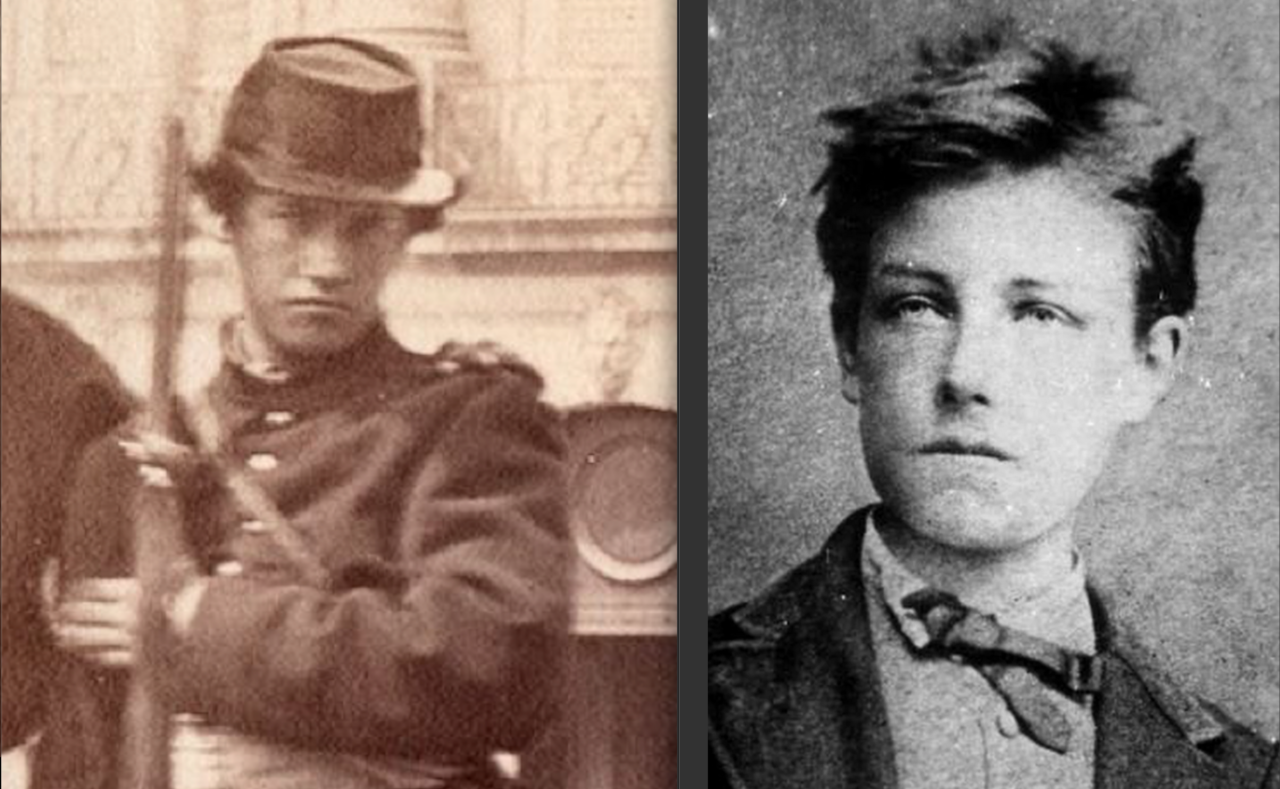
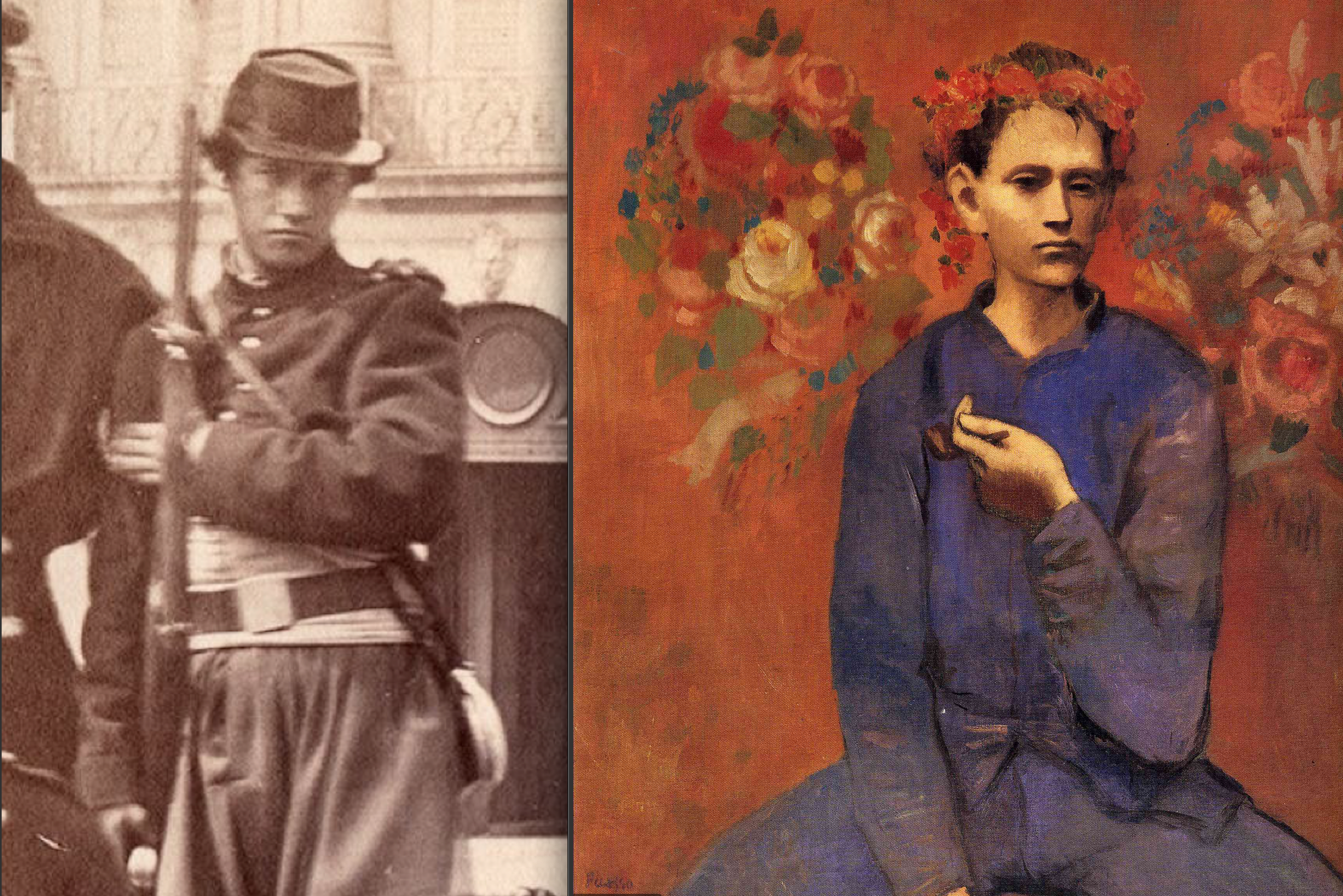

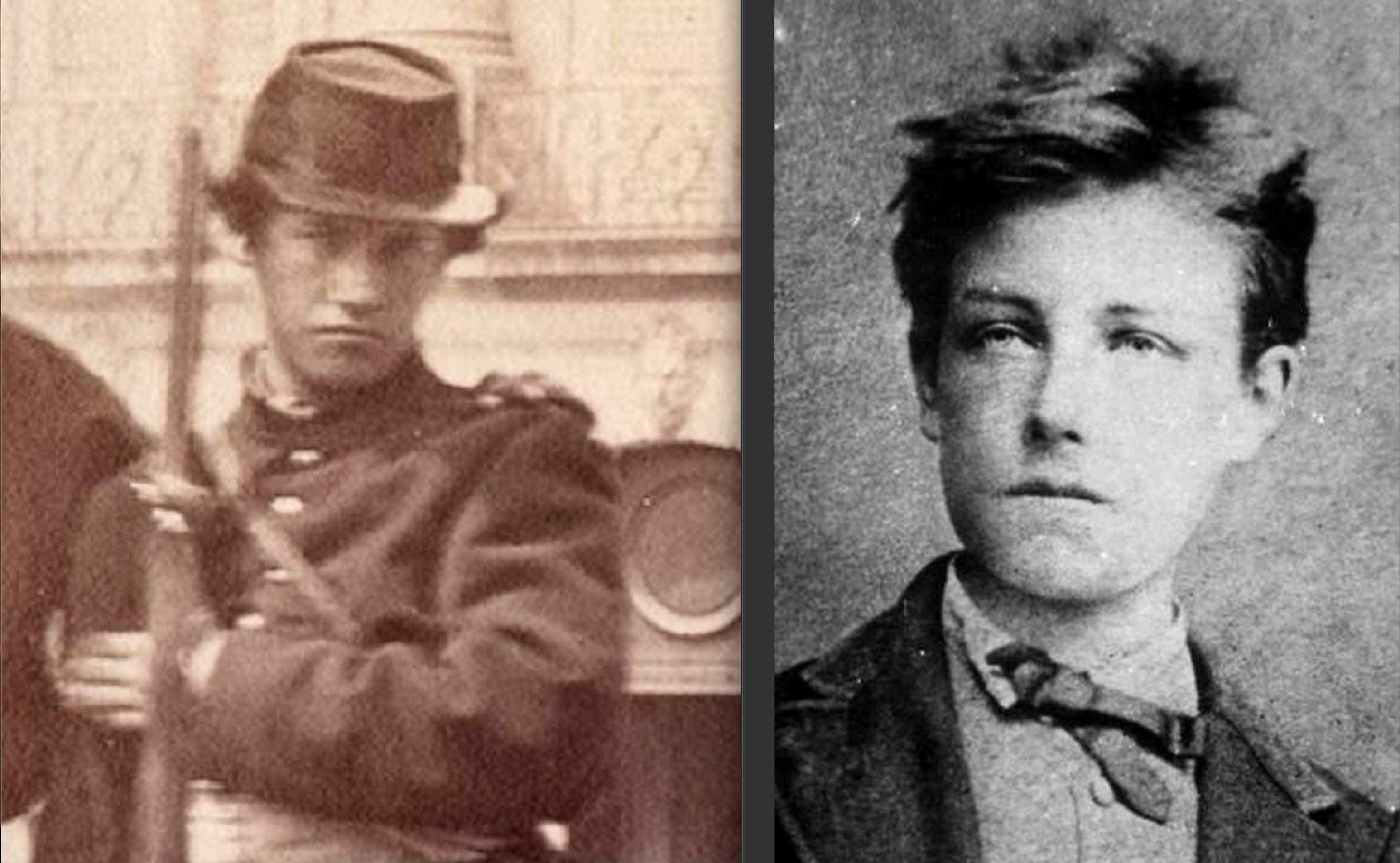
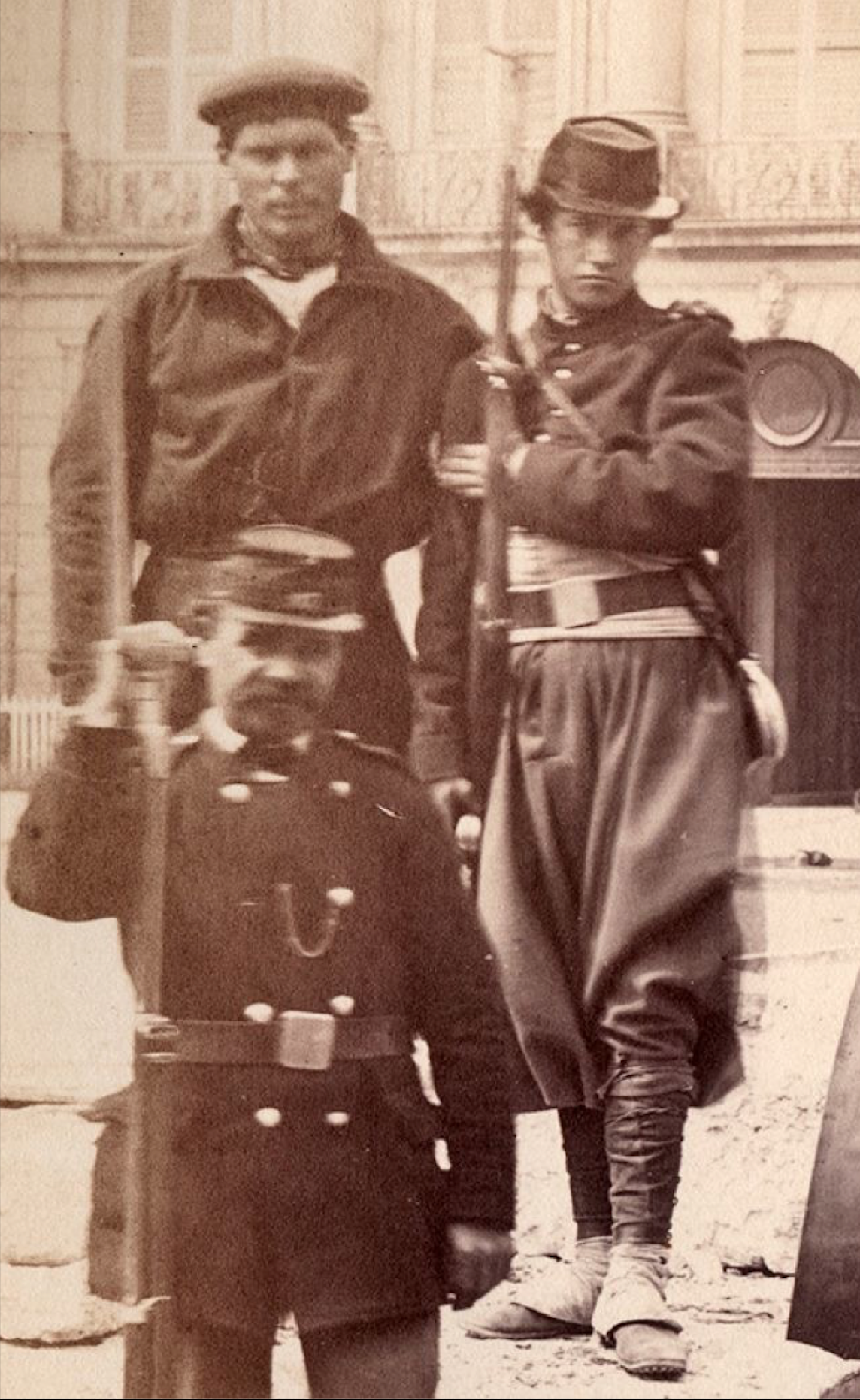
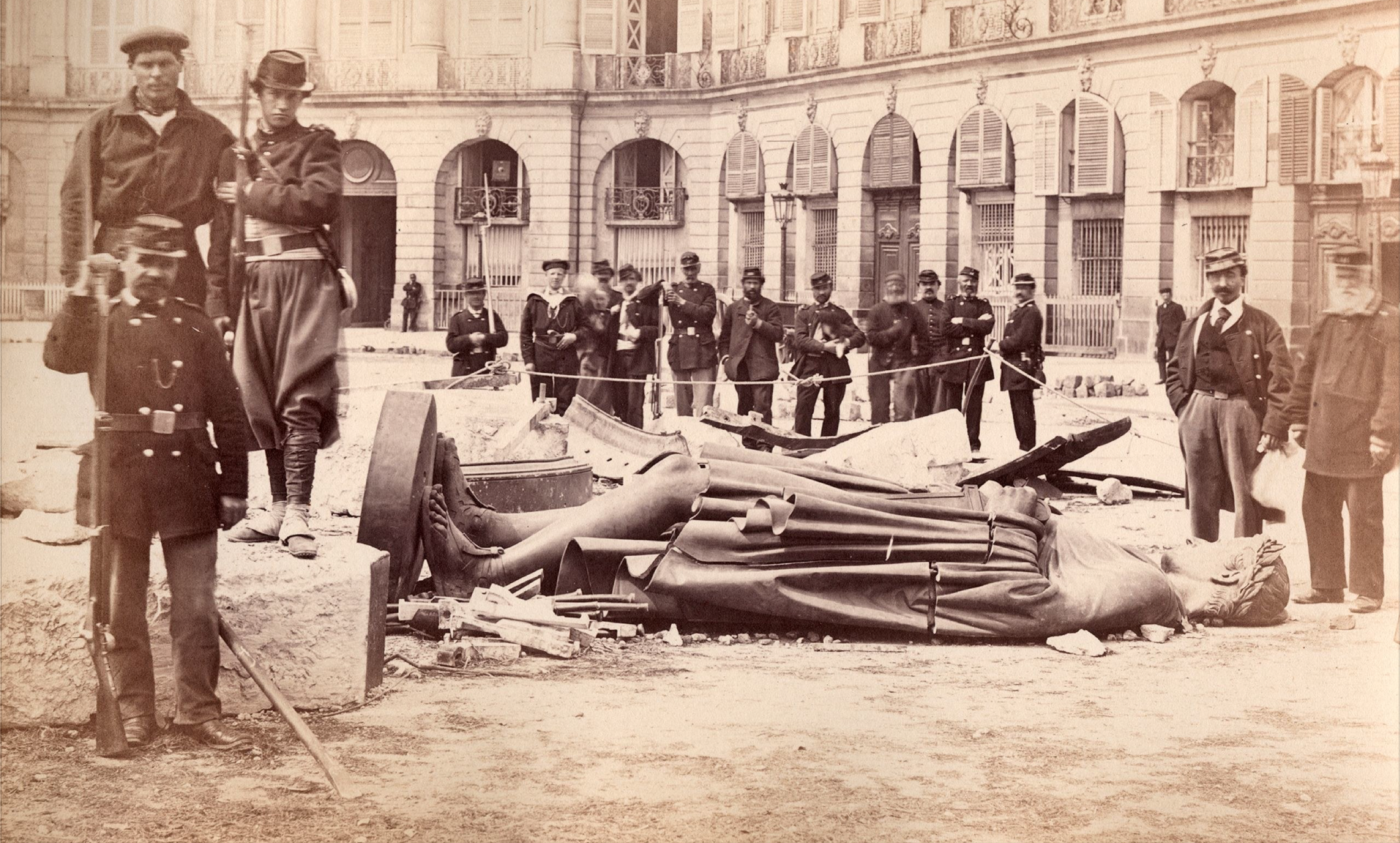
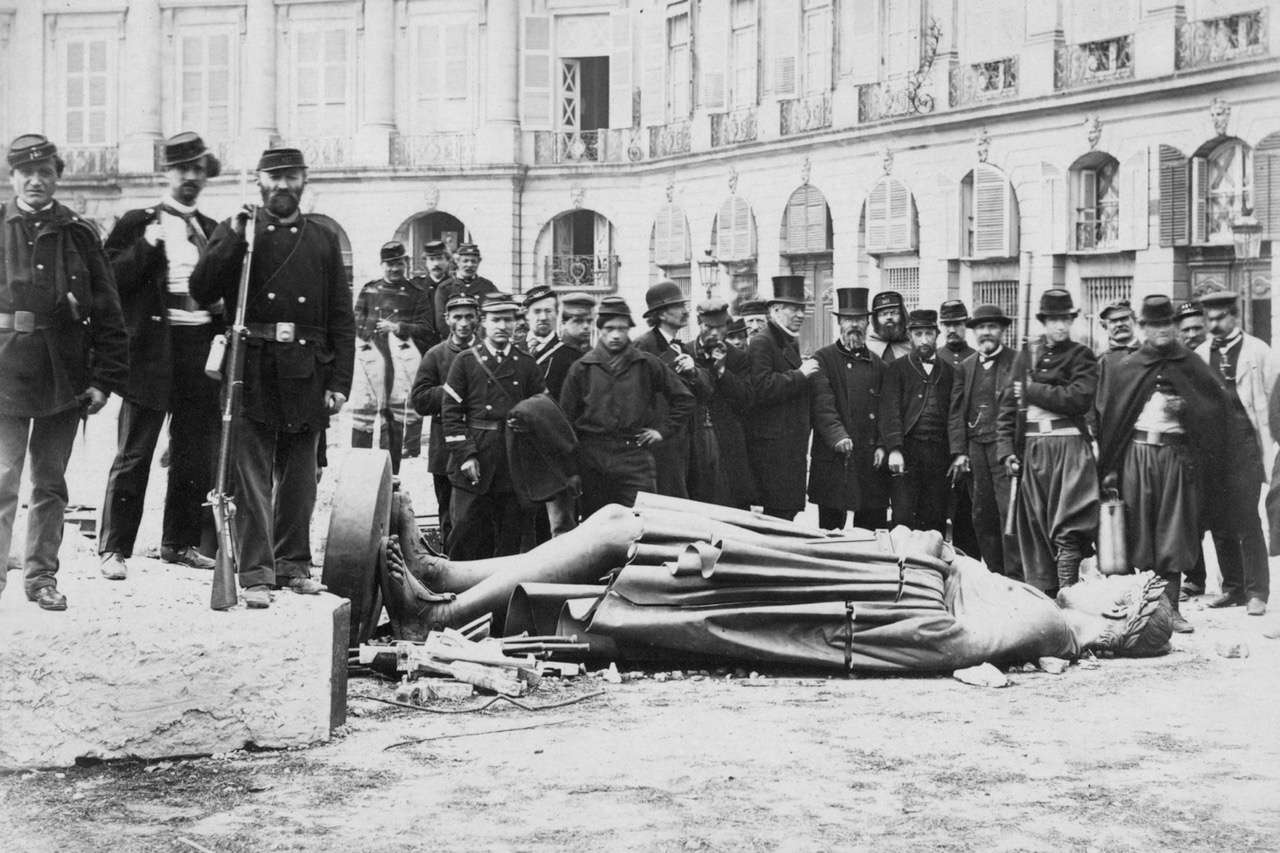

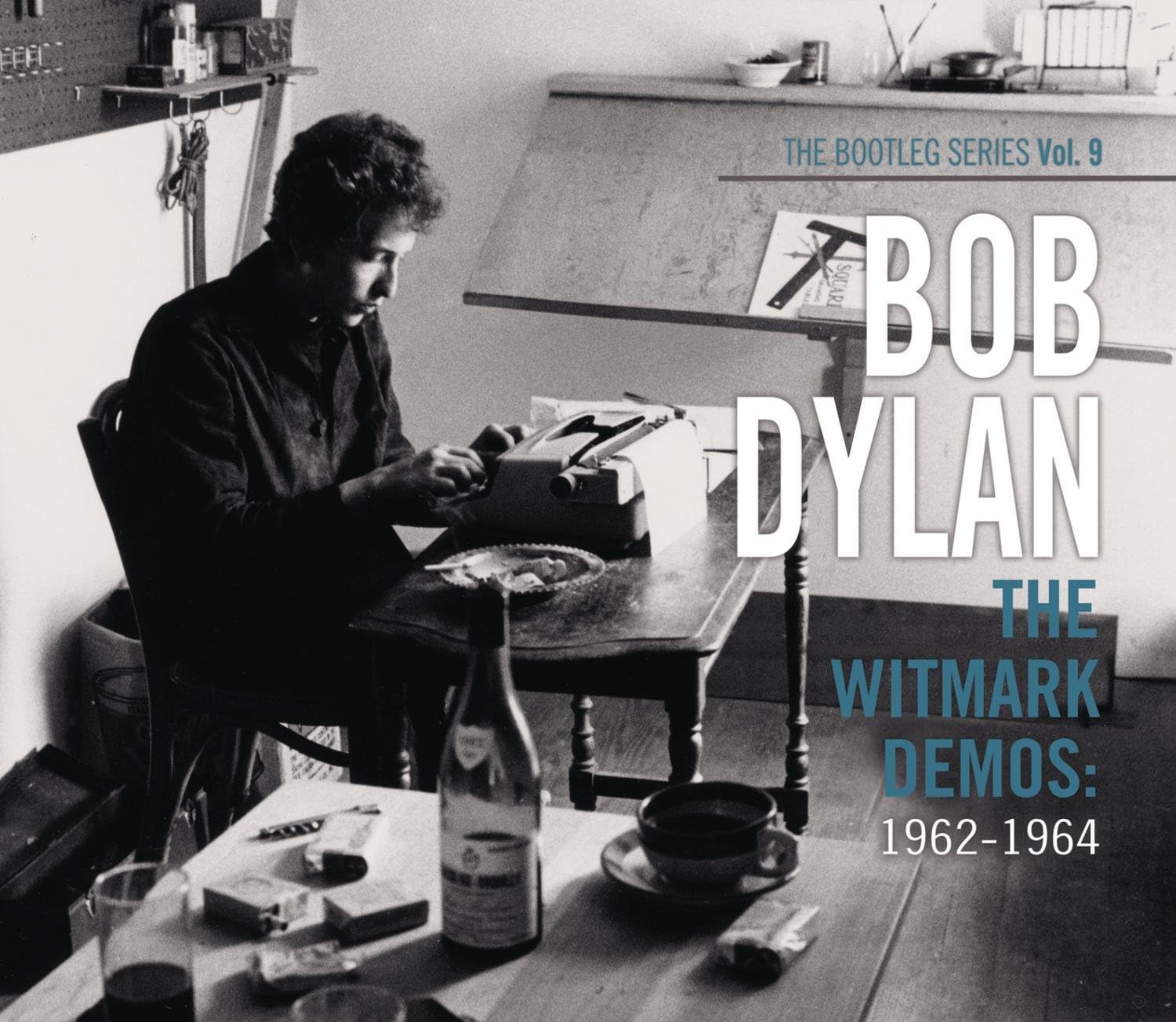

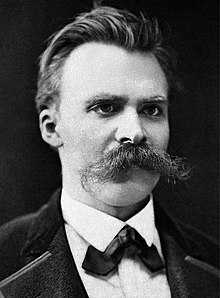
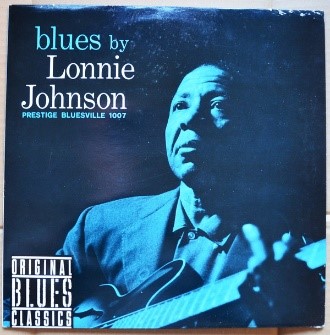

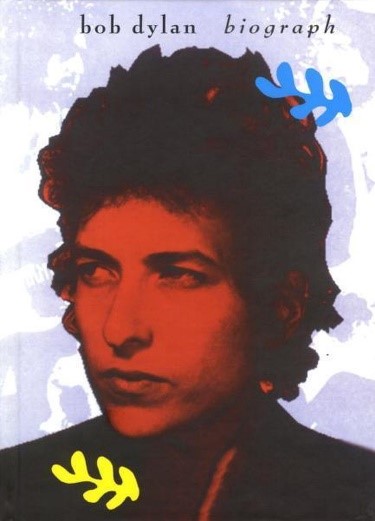
Stretching my criteria somewhat (because the song is short and surely everyone knows it off my heart so I thought I might squeeze in)
which is not the politest thing ever said. That is perhaps a line in a different category – great, challenging lines, which have become commonplace among the Dylan audience, but which really ought to be taken out of context and considered, just occasionally.
However as my meanderings continued I found that what I really wanted were lines that even some Dylan fans who know the works very well might take a moment to place, and which having placed the lines they would perhaps really think about for some time, out of the context of the song from which they came.
The point being that having the lines divorced from the rest of the song, the sheer enigma of some of Bob’s writings can be felt full-on. (Or at least that is how it seems to me).
To give an example
You might of course immediately say “Dirge” and you’d be right, but what exactly does it mean, and why, does that line does it stay with me? It is, I suppose, the juxtaposition of the martyr crying for the sins of humanity, while the angels – God’s celestial intermediaries – are to be found playing with sin. I don’t fully get it, but the image has been occupying my mind since I first had the idea for this little meander, last weekend.
Of course obscurity isn’t everything, nor is it, I find, essential. I mean I get the meaning of
which gives us a simple image of not owing anyone for the favours of the past, but it is said in a way that seems to give the lines a deeper meaning.
Some of the lines I thought of are descriptions of feelings but done in such an interesting way that although the words are simply everyday language a single line can give me a sense of “otherness”, of being somewhere else, unknown, unknowable. As in…
A nameless place is impossible, a contradiction, everywhere has a name. It is what humanity does – it gives names out to everything. And yet it is a feeling I have shared on some occasions; a feeling of being utterly lost in terms of my own place within the world. A nameless place is a place without meaning, so being stranded there is to have no meaning in one’s life…
Sometimes in doing this I come across lines which are known by every fan, I’m sure, because the song is so brilliant, but the meaning of which is still obscure, and yet one can absolutely feel it at certain times.
Of course in flipping around through the songs I have come across some whose meaning is not obscure, but where, in so few ordinary everyday words, Dylan manages to capture the depths of a specific emotion. For example,
is one of those. One meets a person and really feels drawn to that person, and yet they show no reciprocation, no interest. I can’t recall that emotion expressed so succinctly elsewhere. Maybe I should do a search for that category of “clear emotions expressed, but not as expressed by others, in obscure lines of Dylan” except that is getting a bit complicated.
But from the same song I immediately think of another such line
The line is clear in its meaning, but who will? I am not sure “Tell Ol’ Bill” really tells us.
If you have such lines – lines that just really seem to have no meaning at one level, but which in ways that can’t be expressed, do have an untouchable meaning at another level – do write in and tell me.
Do you have a tale to tell via Untold Dylan?
We now have over 2000 articles on this site, and many of them are personal tales about attending a concert, listening to Dylan, cover versions, or the individual writer’s own appreciation of Dylan and his music.
These articles are written for Untold by Dylan fans, and if you have a view of Dylan that you feel could be of interest to others, we’d love to hear from you.
To see the variety of approaches we have included in this site, just go to the top of the page and look at the various headings under the picture – each one contains an index of articles on a Dylan theme. Or look at the latest series listed on our home page. If you write a piece you can add to these, or create your own theme, or simply send in a one-off contribution. As long as it gives a different insight into Dylan and his work, we may be well interested in publishing it.
Sadly, we don’t have the funds to pay, but Untold Dylan does have a very wide readership, so your work will be seen by a huge number of people. If you have an article please email Tony@schools.co.uk If the article is ready, please attach as a word file.
One other thing: we never ask for donations, and we try to survive on the income from our advertisers, so if you enjoy Untold Dylan, and you’ve got an ad blocker, could I beg you to turn it off while here. I’m not asking you to click on ads for the sake of it, but at least allow us to add one more to the number of people who see the full page including the adverts. Thanks.
And one other, other thing: we also have a very lively discussion group “Untold Dylan” on Facebook with around 8500 active members. Just type the phrase “Untold Dylan” in, on your Facebook page or follow this link And because we don’t do political debates on our Facebook group there is a separate group for debating Bob Dylan’s politics – Icicles Hanging Down