An index to the full “Cooking Up More Mythologies” series appears at the end of this article.
By Larry Fyffe
The dogma of ‘original sin’ is rooted in the following biblical verse:
Wherefore, as by one man sin entered the world
And death by sin
And so death passed upon all men
For that all have sinned
(Romans 5:12)
Taken by many non-literalist Christian theologians to mean that Adam with Eve are representatives of humankind; they disobey God, and therefore they are cast out of Eden where they are now mortal.
That everybody thereafter gets stuck with Adam’s ‘orginal’ sin comes from an earlier translation:
“In whom all have sinned”
The Hebrew faith holds that’s Adam and Eve’s problem, and that though members of humankind may be tempted, they be not stamped with original guilt; they are not basically depraved from the get-go.
Satire abounds, it can be construed, in the double-edged song lyrics below:
Shake the dust off of your feet, don't look back
Nothing now can hold you down, nothing that you lack
Temptation's not an easy thing, Adam given the devil reign
Because he sinned I got no choice, it run in my vein
(Bob Dylan: Pressing On)
Mark Twain-like humour pops up again in the song lyrics below. Apparently, Christian authorities have Adam with Eve trapped there in Romans Five – Moses cries in vain:
Preacher was talking, there's a sermon he gave
He said every man's conscience is vile and depraved
You cannot depend on it to be your guide
When it's you who must keep it satisfied
It ain't easy to swallow, it sticks in your throat
She gave her heart to the man in the long black coat
(Bob Dylan: Man In The Long Black Coat)
The writer(s) of the “Gospel of John” really stick it to the Jews.
They’re no different than Christians. Jesus, the ‘Son of God’, is the only one who can save them all.
Accordingly, the Jews are forced to symbolically eat the body and drink blood of Jesus, the ‘Lamb of God’ at the Passover meal. Christ, it’s said, be crucified at the time of the feast.
Traditionally, blood-drained lamb, unleavened bread, and wine are served at the table just before the holiday week. In the other three Gospels, it’s said, Christ and His disciples have already consumed a supper.
As previously mentioned, seems that the the songwriter, in the the lyrics quoted next, notices the changes made to the story of the crucifixion:
Never could learn to drink that blood
And call it wine
Never could learn to hold you, love
And call you mine
(Tight Connection To My Heart)
For the first two posts on this ace year for the NET, 2000, I was interested in Dylan’s vocal performances, the way in which his singing changed, and came to a peak. 1999 and 2000 are peak years for Dylan all around; the band was tight and disciplined, the songs were arranged to give prominence to Dylan’s voice, and Dylan threw himself into his songs, determined to give them his best.
One of his vocal innovations I have called downsinging, a lowering of his voice at the end of the line. To appreciate this, we only have to listen to ‘To Ramona’, a regular on the setlists over the years but never performed this way. The music is sweet and romantic, it is after all a gentle waltz, but his voice…. hell, he sounds downright triumphant, with a sinister, nasty edge. If I were Ramona I’d be running a mile. He rubs her face in her sorrow in no uncertain terms. This way of performing the song brings it into focus in a manner we’ve never heard before. Is this the true feeling that lies behind the song, and always has? (Portsmouth, 24th Sept).
To Ramona
‘Blind Willie McTell’ is a song perfectly suited to downsinging, as the melody tends to drop at the end of the line anyway. However Dylan does not overuse it, in fact resists it to paint an upbeat, loving portrait of the old blues singer. But the song is ultimately a pessimistic one, too much ‘power and greed and corruptible seed’, and he balances a little hopeful upsinging against the inevitable dropping of the voice at the end. It’s hard to find a better performance of the song than this one, although I get disturbed by the jump in the lyrics that has us missing out on the gorgeous ‘sweet magnolia blooming’ verse. (Cardiff, 23rd Sept).
Blind Willie (A)
That was so nice, let’s hear it again, this time from the first London concert, 5th October. Another wonderful version. Dylan’s voice is more upfront and the downsinging more pronounced.
Blind Willie (B)
In Anaheim on 10th March, Dylan produced another rare one out of the hat. ‘We’d Better Talk This Over’, from Street Legal (1978) had not been played since 1978, and here it pops up for a final airing. Tony Attwood gives a good account of the song and describes the 2000 version as one which ‘totally transforms the song’, although he doesn’t say how. Dylan keeps pretty much the same tempo as the album version, but I think the reason for Tony’s comment lies in Dylan’s vocal performance. Dylan brings out the strained weariness of the song in this sustained and powerful performance. Certain words are drawn out. There’s a pleasing rush of rhyme at the end of each verse, interrupted, in the following case, by drawing out the word ‘bed’.
‘The vows that we kept are now broken and swept
’Neath the beeeeed where we slept…’
He does the same thing, at the same moment, with the other verses.
This is a divorce song par excellence. Its rushing movement sweeps us along to those awful conclusions.
‘Oh, babe, time for a new transition
I wish I was a magician
I would wave a wand and tie back the bond
That we’ve both goooone beyond’
We’d better talk this over
‘Watching the River Flow’ is generally seen as Dylan’s ode to indolence, but there’s nothing indolent about the way the song powers along. Christopher Ricks, in his book Dylan’s Visions of Sin, put the matter rather eloquently, ‘….the song is thrillingly disagreeing with itself. Its rhythmic and vocal raucousness is far from flowing. More like shooting a few rapids.’ Indeed, this river doesn’t flow but rocks and roils. It has a density to it. Ricks again, ‘ ‘Watching the River Flow’ is tarred with a realism that qualifies and complicates the lure of the lazy, although never to the point of abolishing what the words express a hope for: some relaxation, please, if at all possible.’ (Ricks, pages 116/117)
Dylan’s energetic and swinging performance here brings that internal contradiction into sharp relief. And a bit of messing with the lyrics. In these cases I often can’t decide whether Dylan has forgotten the lyrics and is bluffing his way through, or has carefully re-written them. (Cardiff, 23rd Sept)
Watching the river flow
While we’re in the rock and roil groove, let’s take a quick listen to ‘Leopard-Skin Pillbox Hat’. It’s a fine piece of sarcasm, given loving treatment here. Yes, fashion can make us all look a bit ridiculous at times, but there seems to be a pinch of that ‘thrillingly disagreeing with itself’ here too, as Dylan evidently loves that damned hat. How wonderfully this clips along. Best performance since the album, I’d say. (London 6th Oct).
Leopard skin pillbox hat
Now I’m in this rocking groove, I can’t escape it, not with a pumping song like ‘Serve Somebody’. Yes indeed! And who does Dylan serve? I don’t think it’s God or the devil; I think it’s us. His audience. Who else is he serving night after night after night? Funny, but as the years pass in the NET, this sounds less and less like a Christian song. More fumbling with the lyrics, but with this song, anything is possible. Another ace performance.
Serve Somebody
Help! I can’t get away from these hard rockers and rollers. I’m still on the dance floor, doing my rhythm and blues. Put together like this, these songs have a cumulative effect, reminding us just what a great rock singer Dylan is, and what better song for us to turn to, and for Dylan to take on, than ‘Cold Irons Bound’. This is a desperate, angry rocker from Time out of Mind, a Grammy Award winner, a hurricane of a song. It has a short, galloping beat and a punky edge. We are pushed right over that edge into existential despair – ‘It feels like, I don’t even exist…’
In this performance (6th Oct, London) there is nothing to soften it. Like the winds of Chicago, the song tears us to shreds. There is no echo to distance the experience. We’re right up against Dylan’s voice.
Cold irons bound
No direction home now, except an uplifting, ‘Just Like a Rolling Stone,’ Dylan’s most famous rock song, an anthem to loneliness and existential angst. This will slow our pace a little, but not the intensity. As always it is the false and the phony that rouse Dylan’s ire. Living someone else’s life, not serving anybody but yourself. It’s a kind of protest song, an attack on social snobbery and classism. That surreal imagery has a social purpose, revealing hollow social identities.
‘Ahh princess on a steeple and all the pretty people
They're all drinking, thinking that they've got it made
Exchanging all precious gifts
But you better take your diamond ring, you better pawn it babe
You used to be so amused
At Napoleon in rags and the language that he used
Go to him he calls you, you can't refuse
When you ain't got nothing, you got nothing to lose
You're invisible now, you've got no secrets to conceal’
There’s no comfort for Miss Lonely out on the street. She feels like she doesn’t exist.
Perhaps no live performance will ever match the 1966 versions, especially the howling performance after the Judas jibe at Manchester’s Free Trade Hall on 17 May 1966. For a rip it up version, I suggest the reader check out 1988 (NET, 1988, part 1).
This performance doesn’t let the song down, but the master vocalist of 2000 can’t hold the notes as long as he could thirty-four years before. However, he hasn’t forgotten how to give the lyrics a good punch. (Cardiff, 23rd Sept)
Like a rolling stone.
Let’s kick the pace up again. ‘Dignity’, and ‘the land of dry bone dreams’ as he sings in this performance. You won’t find Dignity in the streets, or ‘in the shadows that pass’, and it’s no use asking the cops. Many years later Dylan would write, ‘I’ve been through hell, what good did it do?’ (Pay in Blood, 2012) Here we find an earlier version, written in 1989, of that journey to the netherworld, the ‘land of the midnight sun’.
‘I went down where the vultures feed
I would've got deeper, but there wasn't any need
Heard the tongues of angels and the tongues of men
Wasn't any difference to me’
This song had been hanging around in the background since the 1994, MTV Unplugged concert, where it came to prominence. It’s a great mid-tempo rocker. (Anaheim, 10th March) Take it away, Bob.
Dignity
We can slow down for ‘This Wheel’s on Fire’ but we can’t sit it out. Rather than the echoey, woozy versions of the 1960s by The Band and Julie Driscoll, which play on the song’s trippy mysteriousness, Dylan has been developing a much more abrasive, sharper interpretation. I love Julie Driscoll’s performance , which soars into the stratosphere of psychedelic madness, but there is a much grittier, more sordid aspect to the song, a harsh reminder of ‘favours done’ where the promise that ‘we shall meet again’ becomes a threat. Harsh and uncompromising as they are, I have come to prefer these later Dylan performances to the druggy, insubstantial interpretations of the sixties. (5th October, London).
Wheel’s on fire
Still in the rock and roil department, we suddenly discover a new one, ‘10,000 Men’ from Under the Red Sky, never before performed. The song has a blues structure, and is a nonsense rhyme. Dylan’s use of childhood rhymes and themes in that album has not been well understood. Even the droll masterpiece ‘Under the Red Sky’ hasn’t been that well received. This starts promisingly enough, but turns a bit clunky after a while. The humour is welcome, however. (12th Nov)
‘Ten thousand women all sweepin' my room,
Ten thousand women all sweepin' my room,
Spilling my buttermilk, sweeping it up with a broom.’
10,000 Men
I want to finish with two performances of the magnificent ‘Lovesick’ off Time Out of Mind. A stately, 3 a.m. end to our rock and roil party. I’ve discussed this song in previous posts, and coming to it again I still find it one of the finest expressions of alienation in modern literature. The ghost walks, and leaves us ‘hanging on to the shadow’. It’s the ultimate outsider’s song, best indulged in when you’re feeling sorry for yourself and your lost loves. Both these performances are superlative. Restrained, yet full of tension. The first is from early in the tour, the first American leg (Billings, MT 25th March), and is a little harder and sharper than the second, from later in the year, the European and British leg (Dublin, 14th Sept).
Lovesick (A)
Lovesick (B)
That’s all for now. Stay safe, stay sane and keep rocking.
I went into a restaurant lookin' for the cook
I told them I was the editor of a famous etiquette book
The waitress, he was handsome, he wore a powder-blue cape
I ordered some suzette, I said, "Could you please make that crepe"
Just then the whole kitchen exploded from boilin' fat
Food was flyin' everywhere, I left without my hat
On April 1, 2019, TheaterMania serves up the ridiculously transparent April Fool’s joke that the very tough, very macho Captain America Chris Evans has been won over to headline a gender-bending lead role in a musical: “BREAKING: Chris Evans to Become First Male Jenna in Waitress on Broadway”. Clickbait, of course, and the article is accompanied by a – not too professionally – photoshopped Evans-as-waitress. Waitress in itself is well chosen, by the way. The successful musical version of the 2007 indie film is an all-female production, with a female director (Diane Paulus), a female music writer and lyricist, a female choreographer and a female scriptwriter. To have the female lead played by an ultimate he-man would be amusing self-mockery bordering on irony.
And the colour of Chris Evans’ clothes on the photoshopped poster is just as well chosen: powder-blue.
The cape of Dylan’s male waitress is powder-blue too, which is a fitting colour anyway: powder-blue is as difficult to define as the timeline along which the protagonist moves. Throughout the centuries it has been used for different shades of blue, but since the 20th century we all agree on a dusty, pale shade of blue. In 2021, it happens to be trendy again; both fashion collections and car manufacturers (Toyota, for example), concentrate on colours like pink, lilac and blush – and powder-blue, too. Still, the colour indication is as rare in the twenty-first century as it was in 1965.
In Dylan’s bookcase it can probably only be found once or twice. Once in the work that is on Dylan’s bedside table in these months, judging by the many references in the songs he writes in these mercurial 500 days: William S. Burroughs’s The Soft Machine from 1961. In one of the many homoerotic scenes:
“He was lying on a lumpy studio bed in a strange Room – familiar too – in shoes and overcoat – someone else’s overcoat – such a coat he would never have owned himself – a tweedy loose-fitting powder-blue coat.”
That, LBGTQ or effeminacy, seems to be the connotation anyway. In Funny Girl, the mega-hit that already has been running at The Majestic for several months as Dylan records “115th Dream” half a mile away, the colour comes along once (A rootin’, shootin’, ever-tootin’ Dapper Dan who carries in his satchel a powder-blue Norfolk suit, “Cornet Man”) and Dylan uses the bluer shade of pale himself once more, twenty years later, in “Tight Connection To My Heart (Has Anyone Seen My Love?)”:
There’s just a hot-blooded singer
Singing “Memphis in June”
While they’re beatin’ the devil out of a guy
Who’s wearing a powder-blue wig
Later he’ll be shot
For resisting arrest
… again suggesting effeminacy, indeed.
In “115th Dream”, the suggestion is not too subtle. The handsome man wearing the powder-blue cape is introduced with the female job title waitress, which is not elaborated on. It’s 1965, a comic effect has already been achieved by giving a man feminine traits, and this cheap way to score a laugh is being milked long after 1965 in TV comedies, musicals (La Cage Aux Folles is probably the ultimate example) and films like Tootsie, Mrs. Doubtfire and White Chicks. Dylan, too, feels that the joke already has been made with the mere job title “waitress”, and can immediately move on to the next dramatic development: the kitchen explodes and the protagonist flees.
VI A little plumbing on the side
By the mid-sixties, the interviews are getting sillier and sillier, and certainly in press conferences, Dylan’s words are barely worth taking seriously. A fitting finale is the fabricated interview that Dylan concocts over the phone after both he and interviewer Nat Hentoff have seen the proof of an “edited” interview that Playboy intends to print. Hentoff tells: “I got a call and he was furious. I said, ‘Look, tell them to go to hell. Tell them you don’t want it to run.’ And he said, ‘No, I got a better idea. I’m gonna make one up.’”
He has no tape recorder, so at the cost of a colossal writer’s cramp, Hentoff tries as hard as he can to keep up with the unleashed Dylan on the phone. Playboy accepts the “interview” and prints it (March ’66); “It was run as there was absolutely no indication it was a put-on.” Hentoff can’t use his hand for a day, but it’s all worth it and Dylan is content with the prank too. “He thought it was a very funny caper, which it was.”
Actually, it’s a wonderful “interview”, comparable to one of the best “interviews” with Dylan, the “one-act play, as it really happened one afternoon in California” that Sam Shepard wrote for Esquire in 1986 with the title True Dylan, and later actually included as a one-act play in the collection Fifteen One-Act Plays (2012). Not comparable in content (absolutely not, in fact), but in value; both interviews have the paradoxical quality that fiction tells more about the artist Dylan than faithful reportage does. Here, thanks to the wild story Dylan shakes out of his sleeve when asked what made you decide to go the rock n’ roll route. The warmed-up singer gleefully rattles off a 286-word answer with a high 115th dream quality, in which “I” squeezes out a disastrous jack-of-all-trades biography that takes him from Philadelphia to Phoenix to Dallas to Omaha, culminating in:
“I move in with a high-school teacher who also does a little plumbing on the side, who ain’t much to look at,-but who’s built a special kind of refrigerator that can turn newspaper into lettuce.-Everything’s going good until that delivery boy shows up and tries to knife me. Needless-to say, he burned the house down, and hit the road.”
Both in terms of content and style, unmistakably the author of “Bob Dylan’s 115th Dream”. In terms of content, we see a similar stumbling path of a protagonist staggering from conflict to conflict, within an unreal frame. In the interview, Dylan builds that unreal frame by placing geographically absurd distances between the conflicts (over 4,000 miles, roughly from the East Coast to the Far West to the Deep South to the High North), in the song, the time jumps through the centuries provide the surreal frame.
And stylistically we see an identical acceleration; at first the frenzies pass by every two, three lines, then in every following line and it culminates in accumulations of two, three absurdities within one sentence – both the interlocutor Dylan and the songwriter Dylan run on a diesel:
Now, I didn't mean to be nosy, but I went into a bank
To get some bail for Arab and all the boys back in the tank
They asked me for some collateral and I pulled down my pants
They threw me in the alley, when up comes this girl from France
Who invited me to her house, I went, but she had a friend
Who knocked me out and robbed my boots and I was on the street again
… with which Dylan en passant lays a first building block for intertextuality; a year later, in “Stuck Inside of Mobile with the Memphis Blues Again”, we have a next encounter with the French girl in the alley, and we get some more clarity about the identity of her aggressive, boots-robbing boyfriend:
Well, Shakespeare, he’s in the alley
With his pointed shoes and his bells
Speaking to some French girl
Who says she knows me well
… taking us back to the seventeenth century again.
Bob Dylan – 115th Dream (19.10.1988 New York):
To be continued. Next up: Bob Dylan’s 115th Dream part 4: I knew Thomas Jefferson
Jochen is a regular reviewer of Dylan’s work on Untold. His books, in English, Dutch and German, are available via Amazon both in paperback and on Kindle:
An index to the full “Cooking Up More Mythologies” series appears at the end of this article.
by Larry Fyffe
Throw a Passover feast at the time that Jesus Christ is nailed to the cross by the Romans, and the narratives presented in the Holy Bible get rather tangled up.
The following song lyrics, at one level of meaning, apparently take a cheeky look at attempts to untangle the confusion as to the timeline of the crucifixion:
Tomorrow's Friday
We'll see what it brings
Everybody's talking
'Bout the early Roman kings
(Bob Dylan: Early Roman Kings)
The Jewish Sabbath, a day of rest, begins Friday evening; ends Saturday evening.
The standard Christian interpretation be that Jesus gives up the ghost on Friday afternoon before the Jewish Sabbath begins.
Saith the biblical verses below:
In the end of the Sabbath
As it began to dawn toward the first day of the week
Came Mary Magdalene, and the other Mary
To see the sepulchre ....
"He is not here for he is risen, as He said
Come, see the place where the Lord lay"
(Matthew 28:1,6)
So far so good, but the Jewish Passover (the holiday celebrating the passing over of households by the Angel of Death on which lamb’s blood marks the door) is happening at this time.
In the biblical verses beneath, Jesus is said to partake of the Passover feast:
Then came the day of the unleavened bread
When the Passover must be killed ....
And when the hour was come, He sat down
And the twelve apostles with Him
(Luke 22: 7,14)
Then along comes the gnostic-like Gospel of John wherein the timeline of the crucifixion is messed with – Jesus, symbolized as the the Passover Lamb, sacrificed on the day of the feast:
Christ’s eaten a last supper, but apparently not a Passover feast, with his disciples:
Now before the feast of the Passover
When Jesus knew that His hour was come
That He should depart of this world ...
And the supper ended, the devil now put into the heart
Of Judas Iscariot, Simon's son, to betray Him
(John 13: 1,2)
According to the Gospel of John, Christ becomes the Passover Lamb, sacrificed on the cross; consumed at the feast of the unleavened bread.
The narrative confirmed earlier by John the Baptist:
The next day John seeth Jesus coming unto  him
And saith, "Behold the Lamb of God
Which taketh away the sin of the world"
(John 1:29)
The chief priests had determined things wouldn’t happen this way:
And consulted that they might take
Jesus by subtilty, and kill Him
But they said, "Not on the feast day
Lest there be an uproar among the people"
(Matthew 26: 4,5)
It’s supposedly a non-Passover supper that Jesus attends with His disciples:
And as they did eat, Jesus took the bread
And blessed it, and break it, and gave it to them
And said, "Take, eat it: this is my body"
And He took the cup, and when he had given thanks
He gave it to them, and they drank it, and He said unto them, "This is my blood of the new testament which is shed for many"
(Mark 14: 22, 23, 24)
The narrator in the following song lyrics takes exception to the shift in the tmeline of the crucifixion story as told by the Gospel of John:
Never could learn to drink that blood
And call it wine
Never could learn to hold you, love
And call you mine
(Bob Dylan: Tight Connection To My Heart)
The five songs Dylan composed in 1997 take us on a strange journey as he worked to complete the recordings for Time Out of Mind. An index to the full series is here
This article concludes the writing of “Time out of Mind”
“Cold Irons Bound” clearly describes a journey, but notes that he is in chains (probably metaphorical chains, but chains nonetheless,) which of course reflects the title of the album. Time is passing, as it does on a journey, but his mind is not in the same place as his body. It’s a theme that seems to be there through much of the album.
Then in the next piece, that journey sees a possible end point as the central character in the tale is “Trying to get to heaven”. If he succeeds then time really will be out of mind, for as Talking Heads so clearly reminded us, “heaven is a place where nothing ever happens”.
https://youtu.be/sZpZuIWu1tw
Yet we soon see that the heaven he wants to reach is not the actual Christian heaven but a symbolic heaven in which he can make the woman he loves understand that he loves her. The mental emphasis is there once more; it has nothing to do with religion.
So we come to the final three compositions of the year “Make you feel my love,” “Til I fell in love with you,” and “Love Sick”. After that all that is left is the putting of the songs in the right order for the album.
Make you feel my love
To see how life has changed we only have to look at the opening
When the rain is blowing in your face
And the whole world is on your case
I could offer you a warm embrace
To make you feel my love
The man who last year was thinking it was not dark yet but getting there, is now wanting the woman he loves to feel his love. Having given up, having been in chains, he’s now trying once more.
This is not just a long way from
I’m walking through streets that are dead
Walking, walking with you in my head
My feet are so tired, my brain is so wired
And the clouds are weeping.
this is so far removed from those thoughts, we are now at the other end of the spectrum.
Now I am not with those who think that “Feel my love” is a mistake for this album or in any way an inferior song. If I had written it, and never written anything else, I’d still spend every day walking around saying to people “I wrote that”. Of course I’d probably get carried off to an institution at the same time, but even so… to me it is a magnificent work of art.
Dylan is offering us both sides of love – the total and utter despair on the one hand, and the overwhelming yearning, desire and need to express the love he feels, on the other hand. And that is perfectly reasonable at this point, because this is what the whole album is about. He loves her, but it has no impact on her.
And that is emphasised because he knows that he was ok until he met her and fell for her. So he changes track again and writes…
Till I fell in love with you
https://youtu.be/iQtYvx4Y4lM
It is a strange conundrum: Dylan puts at least one 12 bar blues song onto every album, which acknowledges that this is the key to his roots, this is the music he loves. And yet it is these 12 bar blues that are so often ignored by reviewers looking for the very essence of Dylan’s music.
So when we come to Time Out of Mind we think of Love Sick and Not Dark Yet maybe, but not of Til I fell in love with you, a classic 12 bar blues. And it is the same through all the albums.
This is more than a song of disengagement, this is a song of falling apart; and the cause this time is not the reminiscence of things past but rather the total lack of self. He loves her so much, he is losing himself.
He has, in the previous composition, expressed his utter love for the lady and the need to make her feel his love, and now he finds that expressing that love does not lead to paradise at all but to torment. In fact this is the old blues of perfidious womanhood betraying honest hardworking men, underlined by the fact that love itself cannot be trusted.
But there is also the old blues concept of life going on, you just have to suffer it, that is how it is. Just keep on keeping on. And the piece moves the “keep on keeping on” thought to the notion that…
If I’m still among the living, then I’ll be Dixie bound.
Down the Road to the Southern States, the home of the blues, Highway 61, New Orleans. At least there people will understand. And anyway, I’ll have the music. Although having spent so much time professing he stayed in Mississippi a day too long, he’ll probably not planning to hang around in any one particular place.
The jagged chord at the very start on the album, played over and over punches at our nerves from the first second. During the first verse, it overpowers us as the first sound we hear and then slowly fades into the background – but always there. Our nerves are on edge.
And as if that were not enough, as an opening
Well, my nerves are exploding and my body’s tense
is about as hard as a blues song, or come to that any song, can get. You want a punch in the face? Here it comes.
I’ve been hit too hard, I’ve seen too much
Incidentally, that line and the following line (Nothing can heal me now, but your touch) both turn up on “Marchin’ To The City” which was recorded in the same sessions but dropped from the album.
So, we kick off with desperation, and then we find the resolution is no resolution at all.
Nothing can heal me now, but your touch
I don’t know what I’m gonna do
She’s got the power, he’s sucked in, (or perhaps I should say, “All boxed in”) and has no idea how to escape. Oh this really is the blues.
This song, with its continuing images of the world falling apart (it won’t even rain, damn it, when he needs it to), is part of the descent from desperation to utter total despair and then a complete sense of giving up, that marks out the first seven songs on Time Out of Mind.
Yes it is the world gone utterly, totally wrong.
Well, my house is on fire, burning to the sky
I thought it would rain but the clouds passed by
Now I feel like I’m coming to the end of my way
But I know God is my shield and he won’t lead me astray
Still I don’t know what I’m gonna do
I was all right ’til I fell in love with you
That’s a lovely contradiction of the religious message. God won’t lead me astray, but even so, I still don’t know what to do.
This being the blues, there is no relief for the middle 8, no change of key, no variation in the chord sequence, it is just verse after verse pounding after verse of desperation.
When I’m gone you will remember my name
I’m gonna win my way to wealth and fame
I don’t know what I’m gonna do
That old terrifying fear that no one will come to the funeral, no one will miss me or even remember me when I’m gone, so little is the mark we have left on this world, so tiny is the care other people have for us. And so he does the only thing a Dylan character can do; he keeps on keeping on, moving on, always moving on, because that way he’ll never know if people remembered him or not.
And yet, I spy something odd – although this might be my complete misunderstanding of American phraseology, so do put me right if I am mistaken. He’s Dixie bound. Now I have always (as a non-American) understood Dixie to be the south, and I thought Mississippi was part of the south. I guess if that’s right his solution is just to tour in the home of the blues.
So, by my understanding, Bob now had everything he needed for his album except for a song that would introduce the collection: a song that would show us the landscape we were inhabiting once we ventured into Time out of Mind. A total and absolutely unmistakable scene-setter.
I would guess that also by this point Dylan had the title for the album, because the songs are so very much about his mental state and the way that plays around with the notion of time that he really couldn’t help but use the words “time” and “mind” in the album.
But in other ways we can understand why “Love Sick” was written at the end of the 18 months or so of composing this work. It is, to my mind, the most amazing opening to an album – and one that very few composers would ever have contemplated. At the time of writing Dylan has performed the song 914 times live in a 22 year period, making it the 12th most performed song ever by Dylan and his band, and the most performed song from this album. (Cold Irons Bound is second, in relation to the album’s songs, with 423 live performances – but that song only lasted 14 years).
And to divert for just a moment, in case it is of interest, here is the list of the 14 most performed songs as of August 2021.
All Along the Watchtower
Like a Rolling Stone
Highway 61 Revisited
Tangled Up In Blue
Blowin’ in the Wind
Ballad of a Thin Man
Don’t Think Twice, It’s All Right
It Ain’t Me, Babe
Maggie’s Farm
Things Have Changed
Rainy Day Women #12 & 35
Love Sick
I find that interesting. I’d classify all the 11 songs before “Love Sick” in the list to be utter classics from the Dylan genre. Not my own personal favourites, but songs that symbolise the very essence of Dylan in different ways. But “Love Sick” feels to me like a different sort of song.
If one can just stand aside from the music for a moment and consider the lyrics, the sheer power of this song emerges as once.
I’m walking through streets that are dead
Walking, walking with you in my head
My feet are so tired, my brain is so wired
And the clouds are weeping.
Also of note, I feel, is the fact that the final three compositions required for the album all have the word “love” in the title, and love is clearly the curse. As he says in “Til I fell in love with you”
I don’t know what I’m gonna do
I was all right ’til I fell in love with you
And what of “Make you feel my love?” How does Dylan write “Love Sick” and “Make you feel my love” one after the other? Indeed what made Bob write three consecutive songs with “love” in the title, ending with, as we note above, “Love Sick”?
The only answers I have are a) Bob writes as the ideas that plop into his head rather than in a thoroughly planned way, and b) that as the songs emerged he began to understand what the album was about. In this second explanation the album wasn’t fully planned as he started writing, although he had a general idea. But as he got near the end the order of songs began to emerge and he realised what he needed to make the whole concept work.
In the classic approach of popular music, albums start with something fairly upbeat, and then have a slow number as the second track, but this album begins
I’m walking through streets that are dead
Walking, walking with you in my head
My feet are so tired, my brain is so wired
And the clouds are weeping
So he sets out travelling and experiences total disintegration – yesterday was too fast, today is too slow. He moves on and on, until in the end he acknowledges that the moving on and moving on has begun to deflect the pain just a little as “Every day your memory grows dimmer… It doesn’t haunt me like it did before, I’ve been walking through the middle of nowhere, Trying to get to heaven before they close the door.”
And as the songs move on he knows full well what the cause of all this is, as he says, “I was all right ’til I fell in love with you.” And so we reach the point where it’s not dark yet but getting there – the lowest possible point that there can be.
From there on we get the sense of movement forwards. He’s still trapped in one sense in “Cold Irons Bound” but he is moving on, and the lightness slowly returns until he gets to the even suggesting that he still feels the love that started off this whole disaster of a life.
But he knows that there is no point hanging about, no point in waiting for the woman to change her mind, he manages at last to move his thoughts away from this utter disaster of a relationship which was announced in “Love Sick”. He knows he can do it, and that “There’s a way to get there and I’ll figure it out somehow; But I’m already there in my mind; And that’s good enough for now.”
Now I fully admit, virtually everyone to whom I have presented this view of “Time out of Mind” has scoffed and suggested I am fitting the songs to a notion that I already have – and yes many theories emerge in that way. All I can say is, it works for me.
I don’t think Bob had this vague story of how a break up of a love affair led to decline and despair, and how eventually the character in the story managed to pull himself back together by imagining a place where he could feel ok once more, at the time he started. I think it evolved as time went by.
I enjoy the story I hear in this album, but then I also enjoy the individual songs. And I enjoy some of the cover versions too.
There are indexes to some of the series developed on this site under the picture at the top of the page, as well as on our home page.
Research by Aaron Galbraith, commentary by Tony Attwood
This is a review of part of the Gene Simmons’ $2000 10 disc “Vault“ box set in which Simmons and Bob Dylan talk and work a little on evolving a song together.
In fact the two musicians created two songs together: at 23.00 on the recording below you’ll find “Na Na Na Na” and at 41:30 for “Everybody Needs Somebody” neither of which have we ever listed in the full index of Dylan songs which has always been the bedrock of this site. So I guess we ought to have them listed.
Also on the recording is a long chat between Simmons and Bob Dylan in which Simmons seems to be trying to get help from Bob in the creation of a song. I can’t make out everything that is said, but my impression is that Bob isn’t too impressed by what is going on.
The irony of the appearance of this material on the internet (and of course all we are doing is providing links to the material, not actually hosting it) is that around 2007 Simmons made quite a thing of his opposition to music piracy, and demanded legal action against pirates. He threatened (but I don’t think initiated) legal action and threatened to withhold any new recordings.
However three years after that the group “Anonymous” who specialise in cyber attacks on people they don’t like, launched a distributed denial-of-service attack on all of Simmons websites. Simmons responded in anger and so Anonymous took his sites down again.
But now we seem to have at least part of the Vault box set on line. This contains two songs apparently by Gene Simmons with input from Bob Dylan. But let me warn you, these are not clear studio recordings – these are songs in evolution.
https://m.youtube.com/watch?v=gtJDBy1wM8U
If you play the video above and jump to 23:00 you can hear “Na Na Na Na” and then at 41:30 you can hear “Everybody Needs Somebody”, followed immediately after by 15 minutes of audio from the Bob & Gene writing session.
I’ve listened to the audio chat but really I am none the wiser – it seems mostly to be the two guys trying a bit of this and a bit of that, but if you can gain any insights from this, please do write in and share your thoughts.
Anyway, a little more about Gene Simmons in case you are not familiar with him. He was also known as The Demon, and was bassist and joint lead singer of Kiss – a band in the tradition of Alice Cooper.
Simmons is known as an advocate for the work ChildFund International’s work. According to Wiki, “He traveled to Zambia during his Gene Simmons Family Jewels show to visit several of his sponsored children, of whom he has more than 140,” and is involved in a project to “revitalize music education in disadvantaged U.S. public schools.”
He stated in an interview that “Writing with Bob Dylan around 1989 would have to be up there, too, which resulted in Waiting For The Morning Light and two other songs – Na Na Na Na Na and Everybody Knew Somebody. Those all came from my time sitting down with Bob.
“We’ve also included a long track of Bob and I actually writing the parts – you can hear us talking and figuring it out; that’s all in there. He’d strum ideas on guitar and I would strum back, we’d talk about lyrics, I’d start humming things and we’d figure out what we liked…. Bob came up with some chords that I liked a lot and I started humming the melody….”
The chords of “Everybody wants somebody” are indeed unusual for popular music in the “middle 8” but to me they sound very forced – and not of the style that I would say is normal for Dylan. That’s not to say in any way I’m denying this was a song writing session, but rather I am not too sure we can learn that much from the recording.
But there seems to me to be deep vagueness in what is going on which, for me, fits in with my image of Bob’s writing – that it is not deeply researched but rather simply comes into his head, in the way that conversation comes to everyone.
Some of the earlier comments are interesting though, including the bit early on where Bob is talking about it “happening quickly” and if if it doesn’t then one gives up. It’s all there in the recording above, if you want to work through it.
As the gnostic-like mythology of Lilith develops, the screech owl night-demon, after fleeing to Babylon from the Garden of Eden, teams up with the archangel of death and destruction.
‘Samael’, Lily calls him; she and he with Satan engineer the fall of the earhly paradise, and they don’t stop there.
Of course, such goings-on all part of the Almighty’s plan
– from the Old Testament:
And  God sent an angel unto Jerusalem to destroy it
And as he was destroying, the Lord beheld
And he repented him of the evil
And said to the angel that destroyed
"It is enough, stay now thine hand" ...
And David lifted up his eyes
And he saw the angel of the Lord stand between the earth and the heaven
Having a drawn sword in his hand stretched out over Jerusalem
(I Chronicles 21: 15,16)
In the New Testament, the story continues:
And I looked, and behold a pale horse
And his name that sat on him was Death
And Hell followed with him
And the power was given unto them
Over the fourth part of the earth
To kill with sword, and with death
And with the beasts of the earth
(Revelation 6: 8)
The bible-rooted mythology echoes in the song lyrics below:
I can see the unknown rider
I can see the pale white horse
In God's truth, tell me what you want
And you'll have it of course
Just step into the arena
(Bob Dylan: Angelina)
Some of the extra-biblical stories smack of satire as do the following song lyrics that can be so construed in reference to the dogma of ‘original sin’ (in another song, said it might that the Jack of Hearts runs off with Lily after he’s been saved by Rosemary, a figurative lamb who sacrifices herself on the gallows):
I was blinded by the devil
Born already ruined
Stone-cold dead
As I stepped out of the womb ...
I've been saved
By the blood of the lamb
Saved saved
And I'm so glad
(Bob Dylan: Saved)
In the following song, Jack Robert Frost makes his stand midway between heaven and earth:
Key West is the place to be
If you're looking for immortality
Key West is paradise divine
Key West is fine and fair
If you've lost your mind, you'll find it there
Key West is on the horizon line
On the dark material earth, things ain’t so good:
Had a man in Black Mountain, the sweetest man in town
He met a city girl, and throwed me down
(Besse Smith: Black Mountain Blues ~ J. Johnson)
As the song lyrics beneath tell you:
I was up on Black Mountain
The day Detroit fell
They killed'em all off
And they sent them to Hell
(Bob Dylan: Early Roman Kings)
I was riding on the Mayflower when I thought I spied some land
I yelled for Captain Arab, I have you understand
Who came running to the deck, said, "Boys, forget the whale
Look on over yonder, cut the engines, change the sails"
"Haul on the bowline", we sang that melody
Like all tough sailors do when they are far away at sea
We are not even two verses in and already mischief has been made: no sense of time, indeed. The Mayflower sailed in 1620, Moby Dick is set in the 1840s. And then we ignore the semantic oddity to ride on a ship and the seemingly pointless pun to rename Captain Ahab Captain Arab – presumably no more than a nod to Ray Stevens’s Top 10 novelty hit “Ahab The Arab” (1962), the song with the most impressive camel impersonation ever.
Isolated they are not, those two ferocious opening lines – they introduce an accumulation of anachronisms, factual inaccuracies and implausible plot twists. Line three, for example, tells us that Captain Arab/Ahab can run with his artificial leg, in line four he commands – again semantically peculiar – “cut the engines” (the Pequod was a sailing ship, she had no engines) and only line five offers a kind of historically possible respite; “Haul The Bowline” really is an existing, antique sea shanty. So old, in fact, that some music historians claim it was already sung in the time of Henry VIII (1491-1547). There is no way to prove this, but in any case it could have been sung on both the Mayflower and the Pequod. An educated guess is that Dylan learned the song during one of his sleepovers with Joan Baez in Carmel. While rummaging through her record collection, he must have got stuck on the folk giant A.L. Lloyd. His “Farewell To Tarwhatie” became a template for “Farewell Angelina”, and “Haul The Bowline” can also be found on Blow Boys Blow (1957, with Ewan MacColl).
III No respect
“I think I’ll call it America” must have been spoken somewhere around 1507, probably in Basel, Switzerland, by the German cartographer Martin Waldseemüller or his partner Matthias Ringmann, who attributed the real discovery of the New World to Amerigo Vespucci. Waldseemüller’s maps are popular and serve as examples at universities and for the next generation of cartographers – who thus also contribute to the establishment of the name “America”. Ringmann explains the choice in the preface to the Cosmographiae introductio, a kind of atlas:
„Now in truth these parts of the new world were specially explored and another part discovered by Americus Vesputius […] and it is not to be seen why anyone should forbid the new land to be called Amerige, land of Americus, after its discoverer Americus, a particularly astute man, or America, since both Europe and Asia have their names from women […].“
But Dylan, who defies facts as well as time, is not at all interested in this kind of historical reliability and accuracy:
"I think I'll call it America", I said as we hit land
I took a deep breath, I fell down, I could not stand
Captain Arab, he started writing up some deeds
He said, "Let's set up a fort,
             then start buyin' the place with beads"
Just then this cop comes down the street, crazy as a loon
He throws us all in jail for carryin' harpoons
… Dylan steals the credit for the name and moves the fact from Central Europe to the East Coast of North America. “Cultural appropriation” is what it is called in the twenty-first century, but luckily, in Europe that is hardly a sensitive issue. The protagonist does pay a price though, it seems; “we hit land”, but it appears that the land hits back – I took a deep breath, I fell down, I could not stand does sound like a boxer looking back at his knock-out.
Arab, meanwhile, seems eager to legally nail down the land grab – at least, writing up deeds is the jargon of the notary who assigns ownership of real estate. Slightly overzealous perhaps, as his next words suggest that we are at the Hudson estuary at the beginning of the sixteenth century, when the Europeans start to realise that wampun, beads, is a great currency to trade with the indigenous tribes. No business partners, in any case, who have any regard for written deeds. But Arab doesn’t get the time to carry out his ambitious plans; probably something like a time portal transports the whole party a century or so further, to an era when Manhattan already has streets, cops and a prison. The somewhat archaic phrase “crazy as a loon” insinuates that we are now somewhere in the mid-nineteenth century, anyway – although “carryin’ harpoons” can hardly have been a criminal offence in those days.
Anyway, while the action is fairly straightforward and chronological – we see land, we go ashore, we get into a conflict with a local – the timeline is a drunken yo-yo. In two stanzas, we’ve gone from 1620 to 1840 to 1492 to about 1700 to about 1850. “There’s no sense of time. There’s no respect for it,” as Dylan would say in 1978.
IV Time passes quickly
The meandering path also passes through the twentieth century, if we exclude anachronisms for the sake of convenience. The storyline still follows an ordinary, chronological cause-and-effect pattern. In stanza two, the conflict with the local cop leads to jail time; stanza three opens with “I busted out”. How he managed to do this is apparently too absurd to recount (don’t even ask me how), but it must have been yet another wormhole, yet another time portal: Guernsey cows have only been exported to the US since the beginning of the 20th century. The location determination in the third line narrows it down even more;
Ah, me I busted out, don't even ask me how
I went to get some help, I walked by a Guernsey cow
Who directed me down to the Bowery slums
Where people carried signs around, sayin', "Ban the bums"
I jumped right into line, sayin', "I hope that I'm not late"
When I realized I hadn't eaten for five days straight
The Bowery fell into disrepair from the end of the nineteenth century, from the 1930s it was truly an impoverished area, and the expression “Bowery bums” has only existed since then – still at the time of the song’s conception, in Dylan’s “now” 1965, it is a collective term for the many homeless, alcoholics and other unfortunates trying to survive on the streets of Manhattan. But since the protagonist is helped on his way by a cow, the time warp must have flung him to the 1930s; the years of the last farm with livestock on Manhattan, the Benedetto Farm, near Broadway and 214th Street in Inwood.
The apology of the protagonist (“I hope that I’m not late”), who has bounced back and forth through some five centuries in these first three stanzas then has a mindfuck quality that can rival any Christopher Nolan film.
Time may be a jetplane, but it sure is a highly manoeuvrable, erratically flying jetplane.
To be continued. Next up: Bob Dylan’s 115th Dream part 3: Your waitress: Captain America
Jochen is a regular reviewer of Dylan’s work on Untold. His books, in English, Dutch and German, are available via Amazon both in paperback and on Kindle:
The people we are looking at in this series are going to be artists who have a direct connection to Dylan and his work or life. So they could be from his backing bands, friends from back in the day or even family members. The research and introductory commentary is by Aaron Galbraith in the USA with further comments added while listening to the recordings, by Tony Attwood in the UK.
Aaron:Thought I’d get back into the Dylan Adjacent series being inspired by watching the Echo In The Canyon movie on Netflix and listening back to the accompanying soundtrack this last week.
The film is hosted by Jakob Dylan as he explores the mid-60s Laurel Canyon music scene through candid interviews with those who were there at the time, including David Crosby, Stephen Stills, Graham Nash, Ringo Starr, Eric Clapton, Roger McGuinn, Michelle Phillips, Jackson Browne and Tom Petty. The film is an absolute must see for anyone with even a passing interest in the music made by the bands and musicians who lived in the Canyon during that time.
A soundtrack album was produced, again led by Jakob (with help from contemporaries such as Beck, Cat Power, Norah Jones and Fiona Apple). Jakob and band cover songs from bands such as The Beach Boys, The Byrds, Buffalo Springfield and The Mamas And The Papas.
Here are a selection of tracks for Tony to ponder over:
Questions (originally by the Buffalo Springfield) – Jakob is joined here by guests Eric Clapton and Stephen Stills.
Tony:Ahhhhh – mention of Buffallo Springfield immediately brings back memories – and good ones too, particularly “For What It’s Worth”, one of my all time favourite songs, and I haven’t thought back to it for so many years. So simple and so incredibly effective and important. I owe you for just bringing back that memory Aaron. It is so central to the time it was written (1967 I seem to remember; I was just a youngster).
I must admit that “Questions” isn’t a song of theirs that I at first I remembered (but it was a long time ago!) but gradually it came back to me. Springfield took is more slowly and their sound was always more spacious. I am not saying that the song needs that spaciousness but that is what I got used. So maybe this recording and indeed this whole venture is for people who are quite a bit younger than me and don’t remember (one or the other, or maybe both!)
But as the song continued I warmed to it, although the composition does feel so strongly of the late 1960s that might be a disadvantage. Maybe those who weren’t there (even in their formative years) just simply don’t know the music of the age. But, the sound does get rather crowded near the fade out.
Aaron: I Just Wasn’t Made For These Times (originally by The Beach Boys) – Jakob is joined by special guest Neil Young.
Tony:Wow, what a change of sound. I wonder, did many of the people who bought the album listen to it track by track, with such variation of sound and approach. This isn’t a song I recall at all – but then I was never deeply into the Beach Boys but it sounds like one of their melodies.
The string quartet (I can’t tell if it is enhanced or just a pure quartet) combined with the electric instruments is interesting given the insistence of the “not being made for these times” repeated line. But no, not really my cup of whatnot.
Expecting To Fly(originally by the Buffalo Springfield) – Jakob with Regina Spektor.
Tony: Well, if nothing else this is really re-awakening my interest in Springfield, and next thing to be done after the morning’s correspondence will be to play an album or two. Oh goodness, how many songs have I forgotten over the decades!
This, I think, was actually not a Springfield song, but something Neil Young did with other musicians while he was still in the Springfield band so it came out under their name. Something like that.
Now I am going to go a trifle further here Aaron, and offer anyone interested the Neil Young (under the Springfield name) original.
OK, so why do I so much prefer the Springfield version? I think it is because the song has time and key changes (unusual for pop and rock) and Neil Young has the ability to pull that off perfectly, but I am sorry to say I don’t think young Mr Jakob does.
Indeed I guess this is part of my “never underestimate the astonishing musical insight and ability of Neil Young” campaign. Dylan and co have the same original and the sheer beauty of this astounding song comes through, but the final 10% somehow isn’t there. The changes sometimes feel a little forced – maybe that’s it. The production is sometimes slightly overdone. I would, Aaron, also refer readers back to your superb Neil Young plays Dylan piece. Along of course with his Neil’s astounding “Foot of Pride” rendition.
But back to the theme: this song is an astonishing master work of the rock genre, and this somehow doesn’t quite take me to the summit. Compare the last few seconds of each version, and maybe my stumbling words might make sense.
What’s Happening ?!?! (originally by The Byrds) – Jakob is joined by special guest Neil Young.
Tony: The interesting thing is that these are songs that by and large have unusual chord changes and which to work as music need to be behind a melody that fits perfectly, so that the chord changes are like a little additional seasoning on the overall meal.
Let me try this another way: although the Byrds do their musical asides with lots of overloaded guitar sounds in between the vocals, it somehow feels ok. Not my favourite way of doing things and not a track I’d choose to play over and over but somehow it flows effectively, and after a verse of two we get used to the way it works: a pattern of delicacy alternating with pain. But somehow in the new arrangement this is lost.
It is almost as if young Mr Dylan is paying so much attention to detail (which of course he is quite rightly doing) he forgets at the end of pay attention to the totality of the piece. It is like a meal where every ingredient is there. But added together they just don’t make a perfect meal.
Tony:Thanks Aaron. I’ve really puzzled over my responses and why I find some of the originals preferable. I am not sure I’ve expressed myself at all clearly, and it is not something I have thought of before, but that’s about as close as I can get.
Thanks for the challenge. I leave the article, still pondering and very much aware that I need a coffee to try and clear my thoughts.
From the dusty vaults of Untold headquarters, below, dear reader, you’ll find the lost verses that got left off the song “Lily, Rosemary, And The Jack Of Hearts” by Bob Dylan.
Perhaps, you’ll find that these final verses take a sad song, and makes it better:
Lily iced Big Jim down in the casino
Rosemary she got noosed, instead of her amigo
It's past midnight, and it's time to go
Lily, come quickly, sit on my big palomino
No one could ride faster than the Jack of Hearts
Well they rode all night, and they they rode all day
Southward they went on the broad highway
The palomino was tired, juice all spent
The High Sheriff was on their tail, and onward they went
Lily sliced up Jim 'cause she loved the Jack of Hearts
Suddenly, Jack turned around, and she was sitting there
With Jim's ring on her finger, and flowers in her hair
She smelled like the flora of the valley, and the rose of Sharon
They heard the thunder of horses' feet as they rode along
Fire breathing down the backs of Lily and the Jack of Hearts
Jack cursed the heat, and he clutched his head
He wished he had sold his guitar for a loaf of bread
He pondered their future, and he pondered their fate
Lily, take my gun, aim it well, babe, and shoot it straight
Could be that I am slain, moaned the Jack of Hearts
There are no mistakes in life some people say
It is true, sometimes you can see things that way
Lily mused that people don't live or die, they just float
And she ran off with the man in the long black coat
That was the last time they ever saw the Jack of Hearts
We also have a video that accompanies this version of the song, but decided not to show it because it’ll just make you cry.
In this series Aaron in the USA selects the cover versions and sends them to Tony in the UK with only the occasional note or two, leaving Tony to try and write a commentary as the track is playing, without pausing for thought or repeats (as undoubtedly becomes apparent).
Aaron: Let’s listen to some interesting covers of Subterranean Homesick Blues. First up it’s Tim O’Brien. It’s from 1996 and I loved this one!
Tony: I really don’t like pretend conversation introductions – sort of 1930s but without the style – but the musical intro on the banjo really excites me – this is certainly going to be different. The only feeling I had was that it would be even more interesting to have some accompaniment playing in some of the verses.
But the vocalist handles the lyrics brilliantly, and the whole track is fun. I loved the instrumental verses too – wow to be able to play like that. I was really sorry when it faded out at the end.
What a fantastic piece of musical imagination to re-think a song that we all know so well, in this way. And my criticism above about no accompaniment at any time to the singing, well, that was just a reaction on first hearing.
Aaron: Next up it’s Harry Nilsson – from the Pussy Cats album, produced by John Lennon with Ringo on drums!!
Tony: I actually have this album as an LP, and was a Harry Nilsson fan for a number of years although I absolutely don’t remember it sounding like this. I do have memories of Harry Nilsson going off the rails, of him having a brilliant, amazing voice but then spending his time shouting rather than singing. However by the rules of this series, I don’t have time to look it all up.
I don’t recall hearing this track at all – but I must have done, having got the album, and maybe I just played it once and thought this really isn’t for me. Because that is what I feel now. While the first track today really gives me some new insights and actually sounds like it is worth listening to, this just does nothing for me. I don’t get any insight, any pleasure, nothing.
The guys sound like they are having fun, and of course Lennon in particular could get away with anything he wanted. I just wonder why he wanted to do this.
Aaron: Now it’s Terrace Boylan – from his debut 1969 album “Alias Boona”. The link below is actually the whole album but the Dylan cover is track one, so no need to skip ahead. Rumour has it Boylan disliked the album so much he tried to have it withdrawn and even tried to buy back every copy!
Tony: Now you are really trying to mess with me! This must be Terence Boylan – I’ll let you off this time Aaron!
Again, I’m not that inspired, although it is an interesting idea to put a whole series of chord changes, in essence keeping the lyrics but changing all the music. But I am not sure it really adds too much to my enjoyment of the song. And the repeating of the “Look out kid” line just seems rather false. Worse, the following instrumental section is uninspired.
I think the key thing I am hearing here is that people who have tackled this song have started from the premise that aside from the lyrics everything must be changed. And with a song this well known that is quite a challenge. I did let the video run on to the second track, which certainly has interesting lyrics. I don’t have time to look it up, but I wonder who wrote that. But moving on…
Aaron: Tom Watts – Yes, this is the actor who played Lofty in Eastenders in the mid-80s, backed by members of New Order and The Fall on a minor hit single from 1986. The video is a riot, although it’s no surprise he’s never been invited on to Strictly Come Dancing!
Tony: This makes much more sense to me within the context of the lyrics. It’s fun, as you say the video is a scream (although come on, it’s hard enough for me to write a commentary while the music is playing, let alone watch the video at the same time. It is fortunate that during my early years of writing I learned how to touch type – so I’ll let you off Aaron).
And I do love “cos the vandals took the andles” just as the dancing commences.
By far the most enjoyable of the versions so far, and also the only one I’d suggest to people they ought to listen to. Maybe they could have done more with the long epilogue instead of just having “pump don’t work” over and over, but yes, I’d recommend this as a great bit of fun.
Aaron: Sizzla – from the most excellent “Is It Rolling, Bob? – A Reggae tribute to Bob Dylan” album
Tony: More fun – I’d never have thought of using this reggae type rhythm (sorry don’t know the correct term for this rhythm) on this song – while copying what I remember of Bob’s original video.
So as I say, this is fun – just as the Tom Watts version is. Each of them has enough novelty in the video while retaining the essence of the song to give that balance of entertainment and novelty along with a sense of “yes I know this”. The song is meant to be a laugh, or at least that is how I see it, and this version like the previous one, keeps that element.
Aaron: Several other big names have attempted this one, Mountain, Red Hot Chili Peppers, Stereophonics and Dave Stewart to name just a few but I thought I’d finish up with one from Bob’s old Greenwich Village friend.
Dave Van Ronk – from his 1994 album “To All My Friends In Far Flung Places”
Tony: The boogie woogie accompaniment on the piano is a terrific idea – it works perfectly – except I am not sure the balance of the lead guitar and the piano is right. The piano is so beautifully played in the boogie style it sometimes feels as if the lead guitar is fighting the piano to be heard. I know van Ronk was a pianist as well as a guitarist – is that him on the piano too. If so, he’s brilliant.
Indeed, I wonder what it would sound like without the lead guitar at all, because that pianist really knows this style and you have the harmonica doing yet more interesting things. I think maybe the producer just felt it needed a whole collection of instrumentalists fighting each other to realise the meaning of the lyrics.
But oh… I love the last two seconds, as the piano concludes the piece and changes key. That is so funny. Worth hearing again just for that.
There are indexes to some of our series both at the top of the back under the Dylan picture and on our home page.
I There’s very little that you can’t imagine not happening
In April 2020, Robert Eggington, director at Dumbartung Aboriginal Corporation in Perth, posts an enchanting story on Facebook about his two encounters with Dylan, in 1992 and in 1997. Amongst other things he tells us, actually as an aside, that his friend Anne Lambadgee managed to delight Dylan with a painting she had made herself. Dylan is apparently so moved, that he wants to return the favour;
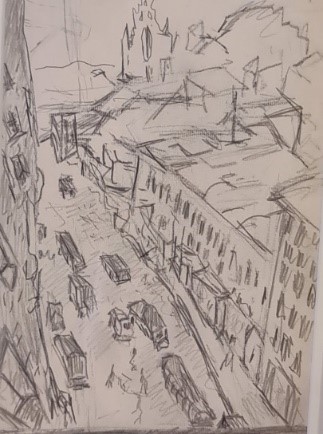
“Following the meeting Bob Dylan asked me to accompany him to his vehicle. Inside the van he pulled out this pencilled sketch of looking south down St Georges Terrace from the window of the Parmelia Hilton Hotel. He asked me what the young woman’s name was that gave him the painting so he could put a special acknowledgement to her on the drawing, he then went on to ask me the date and year that we were in (a true statement), then he handed the drawing to Anne, see attached image.”
He asked me the year we were in… granted, not knowing the exact date is hardly remarkable, especially when you travel the world practically non-stop. But the year? Dylan was in Perth on 18 March 1992, so 1992 is already 78 days old, and somehow the year has eluded him until now. It demonstrates a peculiar kind of detachment, and it places Dylan’s many statements about and his fascination with The Passing Of Time in a different light.
In expressing this fascination, Dylan does not always seem to be too sharp. Take his review of “Tangled Up In Blue”, for instance, in the 1985 interview with Bill Flanagan. The comparison he chooses to make his point is actually quite poor:
“I wanted to defy time, so that the story took place in the present and past at the same time. When you look at a painting, you can see any part of it or see all of it together. I wanted that song to be like a painting.”
The analogy with looking at a painting really makes no sense. “When you look at Michelangelo’s David, you can look at a toe or at the whole statue.” “When you read a poem, you can read one line or the whole poem.” “When you listen to a string quartet, you can listen to just the cello or the whole string quartet.” Yes, all equally true and all equally empty – and it does not contribute anything to what Dylan is trying to explain: to defy time.
Perhaps Dylan is thinking of those medieval paintings that depict various life events from the life of Jesus or some saint. Or something like the Bayeux Tapestry, although that is in fact just one long horizontal comic strip. Or painters like Breughel or Bosch, who stuff their paintings with allegories, proverbs and anecdotes. But that still does not illustrate something like “a story taking place in the present and the past at the same time”. The brilliant scenario of the film Memento (Christopher Nolan, 2000) might come closer to that ideal.
In that film, insurance agent Leonard Shelby (Guy Pearce) suffers from anterograde amnesia after a blow to the head – he can no longer make new memories and has forgotten everything he is experiencing after a few minutes. The film has two chronologies. One in colour that tells the now, in reverse order – so the viewer, like Leonard, does not know what has just happened; the past comes to us in the present. The colour sequences are alternated with black-and-white scenes, which are told chronologically. In the end the two storylines come together, the colour scenes and the black-and-white scenes, the reverse chronological and the chronological, and there is a brief moment of Dylan’s ideal: the past and the present at the same time.
The failed comparison is all the more remarkable, given Dylan’s years of preparation for this structural analysis of “Tangled Up In Blue”. Seven years earlier, in the interview with Jonathan Cott published in Rolling Stone in November ’78, he tries to explain the same thing in similar terms:
“What’s different about it is that there’s a code in the lyrics and also there’s no sense of time. There’s no respect for it: you’ve got yesterday, today and tomorrow all in the same room, and there’s very little that you can’t imagine not happening.”
So in addition to the past and the present, there is also the future, but it remains somewhat awkward. Mixing timelines is not all that revolutionary – time travel stories have been around since the nineteenth century, since H.G. Wells, and most of them have key scenes in which past, present and future come together. We see a well-nigh poetic version of this in another brain-teaser by Christopher Nolan, in Interstellar (2014), when protagonist Cooper can manipulate his own past from inside the “tesseract” in another galaxy so that his then-future, i.e. the present, will actually happen. Yesterday, today and tomorrow all in the same room – a concept that might be slightly overstretched in Nolan’s ultimate mindfuck film Tenet (2020), by the way.
The sense of time and the imagination of the three Nolan films, however, are of a sophistication that the story line of “Tangled Up In Blue” does not come close to. Dylan messes around with the chronology, seemingly at random and not too spectacularly, and changes personal pronouns just as randomly. Neither of these literary interventions has a directing influence on the plot, insofar as a plot can be distilled from the song at all. But it pleases nonetheless, apparently. In his more ambitious songs, Dylan remains fascinated by the effect of interwoven timelines, up to and including his most recent album. More than ever, actually; in 2020, Rough And Rowdy Ways opens with the words “Today and tomorrow and yesterday too” and the album goes on to offer a dizzying carousel of interwoven historical figures, events and works of art from ancient times to the present.
“No sense of time” may still be a reasonably accurate characteristic, but a synchronicity does not arise – not simultaneity in the physical sense, not synchronicity in the psychological sense, the coincidence of events that are not themselves causally connected. Funnily enough, Dylan comes closest to that ideal long before he gives it any thought at all, long before “I Contain Multitudes” from 2020 and even long before “Tangled Up In Blue” from 1974: in the witty odd duck out on Bringing It All Back Home, in “Bob Dylan’s 115th Dream” from 1965.
Asobi Seksu – Bob Dylan’s 115th Dream
To be continued. Next up: Bob Dylan’s 115th Dream part 2: Blow Boys Blow
Jochen is a regular reviewer of Dylan’s work on Untold. His books, in English, Dutch and German, are available via Amazon both in paperback and on Kindle:
At the end of the last post (NET, 2000, part 1), we saw Dylan stretching his vocal chords in a way we’d never heard before with the songs, ‘Tryin to Get to Heaven’ and ‘Standing in the Doorway’, both songs from Time out of Mind.
He slows the tempo down to the point where the songs are hardly moving, and sings them in a style that belongs more to the world of the standards and the Great American Songbook, than to the rock or folk Dylan. These are songs from the golden age of American popular songs, an era that runs from about 1915 to 1960, and includes such great composers as Jerome Kern, Irving Berlin, George Gershwin, Harold Arlen, Hoagy Carmichael, Cole Porter, Richard Rodgers, Harry Warren, Fats Waller, and Duke Ellington, songs that were sung by singers like Frank Sinatra and Ella Fitzgerald, Tony Bennet, Bing Crosby and all.
It’s not hard to see that Dylan wanted to join the ranks of these famous composers and singers. It would be fourteen years on from 2000 before Dylan would treat us to his ‘uncovers’ of Frank Sinatra’s corpus, but the seeds are here in the way Dylan is approaching his own newer songs. They are evidence of just how good a singer Dylan is, and how well he can master these vocal forms.
We can hear the same intention in this performance of ‘Not Dark Yet’, from Frankfurt (29th Sept). Vocally it’s reminiscent of Bobby Darin’s version of ‘Black Coffee’, written in 1948 by Burke and Webster. (Those interested in this history can check out Darin’s ‘Black Coffee’
They are both 3 am, end of the road songs. However, Darin’s voice is a little too beautiful for the sentiment; Dylan’s is not.
Scholar Christopher Ricks, in his playful book Dylan’s Visions of Sin, finds quite another comparison for the song – Keats’ ‘Ode to the Nightingale’. He finds correspondences that go beyond the coincidental, that is similarities of sentiment, to a closer mirroring. What caught my eye was Ricks’ quote from Keats: ‘… sharpening one’s vision of the heart and nature of Man, of convincing one’s nerves that the World is full of Misery and Heartbreak, Pain, Sickness and Oppression – whereby this Chamber of Maiden Thought becomes gradually darken’d, and at the same time on all sides of it many doors are set open – but all dark – all leading to dark passages…’
Not Dark Yet
Ricks calls ‘Not Dark Yet’ one of Dylan’s ‘only a matter of time’ songs – how much longer? You could say the same about ‘Can’t Wait’, another strongly despairing song from Time out of Mind, another 3 am song – ‘Well it’s way past midnight…’ Once more Dylan slows the pace to enable him to draw out the vocals, which are full of snarling power. It’s not as hectic as the album version, but has a smoky, prowling intensity. A wonderfully sharp recording. This one’s from the first Portsmouth show. (24th Sept).
Can’t Wait
On 1st October, in Münster, Dylan sprang ‘If Dogs Run Free’ on an unsuspecting but delighted audience. This satirical song from New Morning had never been performed live before, and another side of Dylan’s vocal genius was revealed – the smoothed-voiced jazz singer, beat poet. The album version sounds very much like a piss-take, Dylan having fun at the expense of his beat poet friends, mocking the zen-cosmic philosophy of Allen Ginsberg, but this live performance does something more. It succeeds in being both satire and a fair evocation of the beat era. We are reminded of Jack Kerouac’s public readings from his On The Road, with a moody saxophone background. Suddenly the same lyrics sound, well… very hip.
‘If dogs run free, why not me
Across the swamp of time?
My mind weaves a symphony
And tapestry of rhyme
Oh, winds which rush my tale to thee
So it may flow and be
To each his own, it's all unknown
If dogs run free’
But what’s it doing here, appearing all of a sudden out of nowhere after thirty years? I think it’s because of the era it evokes. The era of smoky clubs, fedoras and red-wine jazz. Think of the scene portrayed in Shadow Kingdom and you’ve got the era. It’s retro. It’s antique music. In that respect it fits in perfectly with the mood of Time out of Mind, and incidentally, Love and Theft, now only a year away.
It’s hard to listen to this without admiring the bass skills of Tony Garnier, and it’s always too easy to forget the way Garnier grounds the band, anchors it with his versatile bass.
Watch for lyrical variations. Instead of singing ‘To each his own/it’s all unknown’ he sings, ‘to each his own/throw me a bone’ (if my ears are not deceiving me). And it seems he makes up the last verse as he goes along. Here’s the official last verse:
‘If dogs run free, then what must be
Must be, and that is all
True love can make a blade of grass
Stand up straight and tall
In harmony with the cosmic sea
True love needs no company
It can cure the soul, it can make it whole
If dogs run free’
See if you can figure out what he’s actually singing. I suspect he’s bullshitting his way through that last verse, cobbling it together, but you never know with Dylan.
If Dogs run Free
Another song, coming totally from left field, is ‘The Ballad of Frankie Lee and Judas Priest’, a talking song from John Wesley Harding (1967). It’s a morality tale, a very ancient genre, but in this case, it seems, the story is a puzzle and ‘nothing is revealed’. It is a tale of temptation, and has a Kafkaesque feel to it. After the main character, Frankie Lee, dies we get this:
‘No one tried to say a thing
When they carried him out in jest
Except, of course, the little neighbor boy
Who carried him to rest
And he just walked along, alone
With his guilt so well concealed
And muttered underneath his breath
"Nothing is revealed"’
But again, we have to wonder why Dylan chose to revive this song at this time, and give it such prominence. I can only speculate that the song’s moral obscurity fits well with the compromised faith evident on Time out of Mind. From our present perspective, this 2000 version offers yet another side of Dylan’s vocal dexterity. It has a talky, preachy tone, but is sung as the album version is not. Half talking, half singing, bending words where he wants to, it’s a remarkable performance.
The ballad of Frankie Lee and Judas Priest
This song is not the only song from John Wesley Harding to come to prominence in 2000. Five songs from that album are brought forward in 2000: ‘Wicked Messenger’, ‘Ballad of Frankie Lee and Judas Priest’, ‘Drifter’s Escape’ and ‘Dear Landlord’, not to mention ‘All along the Watchtower’, six in all, more than from any other album, even Time out of Mind. Perhaps the attraction here for Dylan is that the Harding album is shot through with Biblical references but is not Christian, and many of the songs are ambiguous. There is mysteriousness to the album only matched by the Time out of Mind songs.
No song from Harding is more mysterious and ambiguous than ‘Wicked Messenger’.
Dylan had been performing ‘Wicked Messenger’ from 1987, and in all it has been performed 125 times, but it is in 2000 that the song reaches its peak as a hard rock anthem.
On this site, Jochen Markhurst comments, ‘But in the twenty-first century he rediscovers the song again and he plays “The Wicked Messenger” more than a hundred times. In viciously rocking, sharp versions, destroying much of the deceptive domesticity of the original from 1967, but no less attractive.’
Jochen is right about those viciously rocking, sharp versions, a transformation of the song from the acoustic album version described by Tony Attwood as ‘a very bouncy jolly piece of music.’ In 2000 it still bounces but is no longer jolly. It’s downright threatening. It’s that descending bass that does it, turns it into a great rock song. I see it as a sister song to ‘Watchtower’, similarly brief and tinged with the Apocalypse, but it lacks the lyrical clarity of ‘Watchtower’, being, perhaps, a little too immersed in its own ambiguity.
There were variations of approach during the year however. The most thunderous and heavy performance would have to be this one, from the first Portsmouth concert (24th Sept). Turn up your volume and hold onto your hat. Enjoy the blistering harp break, and of course Dylan’s rich, rough, tearing vocal.
Wicked Messenger
I, however, prefer this somewhat lighter version from Glasgow (17th Sept). This performance is a little faster and more agile, not quite so thunderous, but no less viciously rocking and sharp. With the faster pace, the harp break sounds frenetic. Wonderful, irresistible. Think I’ll listen to it again….
Wicked Messenger
‘Drifter’s Escape’ is another song from Harding that Dylan developed during 2000. It first emerged from obscurity in 1996 (See NET, 1996, part 3), where it was played with a steady rock beat and a fine rock blues harp break. It’s a song of the madcap adventure type. Remember ‘Bob Dylan’s 115th Dream’, and the wonderful ‘Black Diamond Bay’. They are full of crazy adventures and people doing absurd things. People are always crazy and times are always strange. ‘Drifter’s Escape’ has a bloodthirsty jury, an emotional judge and a lucky escape for the drifter, who is the lonesome hobo of that song from the same album, and might even be the wicked messenger.
In this first version, from London, 6th October, the arrangement is the same as the 1996 performance, minus the harp break. It powers along just fine.
Drifter’s Escape
But at Portsmouth (24th Sept) we get quite a different arrangement, a more jagged and peppy opening riff. The band, except for the drum, goes quiet during the singing, creating great drama. It tears along and Dylan rips it out of his throat like there’s no tomorrow.
Drifter’s Escape
Even more anarchic is this pumped version from Glasgow (17th Sept). If you like your rock rough, this one’s for you. It’s fast and furious. The frantic harp break is monumental. This one’s my favourite.
Drifter’s Escape
Dylan hadn’t played ‘Dear Landlord’ since 1992, but it was another Harding song revived in 2000. I think we’ve all dealt with authority figures who have wanted to put a price on our soul. The words feel improvised around a central feeling, that of being leaned on by a higher power. It’s a plea for mercy.
Dear Landlord
I don’t think this performance is especially wonderful, not like the others in this post, but it rounds off our account of Dylan’s excursions into Harding in 2000 very nicely, and sets us up for some solid sounds in the next post.
In mythologies, ancient or personalized, and in folk legends that may be reworked as well, lots of sex there be, often more suggested than explicit:
The author, whoever that might be, of the following biblical verse needs no lessons in double entendres in his day, and when read in modern times there are found Freudian displacement double-entendres sticking out all over:
We will remember thy love more than wine
The upright love thee
(Song Of Solomon 1:4)
The singer/songwriter/musician deliberately dabbles in double-edged song lyrics:
Show me your wisdom, tell me my fate
Put me upright, make me walk straight
(Bob Dylan: Mother Of Muses)
As the ghost of Sigmond Freud might point out, Dylan finds the harder it is, the better the work of art produced.
In the western move “Montana Belle”, Jane Russell plays Belle Starr, bar singer, and business partner with Tom, the saloon owner, and Tom’s love interest to boot; Bob, a member of the Dalton Gang is also interested in Belle.
At the beginning of the film, Belle sings the following lyrics in a sultry voice:
She's got a man on either arm for
She claims there's always room for one more
And if you can't hold a racy filly
Then don't come near the gilded lily
(Jane Russell: The Gilded Lily)
The sharp-shooting Lilith-like Lily is referenced in the song quoted beneath:
When I met you, baby
You didn't show any visible scars
You could ride like Anne Oakley
And shoot like Belle Starr
(Bob Dylan: Seeing The Real You At Last)
The money-hungry female archetype also shows up in the song lyrics below:
It was known all around that Lily had Jim's ring
And nothing  would ever come between Lily and the king
No, nothing ever would except maybe the Jack of Hearts

(Bob Dylan: Lily, Rosemary, And The Jack Of Hearts)
Mythologies and folk lore, often depict explicit violence, as in the lyrics quoted beneath:
Well the chances are against him, and the odds are slim
That he'll live by the rules the world makes for him
'Cause there's a noose at his neck, and a gun at his back
And a licence to kill him is given to every maniac
He's the neighbourhood bully
(Bob Dylan: Neighbourhood Bully)
Harking back to a song of yore:
When I got through with bully, a doctor and a nurse
Wasn't no good to dat ni---- so they put him in a hearse
A cyclone couldn't have torn him up much worse
You don't hear 'bout dat ni---- who treated folks so free
Go down upon the levee, and his face you'll never see
Dere's only one boss bully, and dat one is me
(May Irwin: The Bully Song ~ Trevathan,  et.al.)
Publisher’s note: this historic recording includes language that is today considered highly offensive. For the historic context please see here.
‘Beyond Here Lies Nothing’, a recorded song by Bob Dylan is accompanied by a choreographed ‘violent’ video which flashes a split-second picture of Bob’s actual face on the TV therein – it’s hard to see.
Review of Graley Herren’s Dreams and dialogues in Dylan’s “Time out of mind” by Tony Attwood
All books about musicians are built on assumptions. All books about Bob Dylan doubly so. But here’s the thing, few books about Bob Dylan make their assumptions clear, so it is perhaps the duty of the critic to do the job.
So, to start: the assumptions.
First that one can fully grasp the implications, hidden agendas, references and the rest of the stuff within Dylan songs by considering only the lyrics not the music. That one is wrong for me; the music in Dylan’s work is not an appendage which contributes nothing to and takes nothing away from the meaning of the lyrics. The music is not the coat hook, making no artistic contribution in terms of meaning and deserving to be ignored.
Second that the songs themselves and the phrases that make the up, mean something. That might seem obvious, but actually no it’s not. It is possible to argue that some lyrical phrases are written as they simply because the sound good. That, for example, the line, “Shadows are falling and I’ve been here all day” is the sound equivalent of a stunning, amazing, beautiful abstract painting; a set of words that do have a meaning, but one that is secondary to the emotion they express which cannot be fully expressed in words.
As I have oft mentioned in my ramblings on this site, I have a number of abstract paintings in the my house, and I don’t seek to express what they are in any words. If a friend wants to know what I see in Jackson Pollock, I invite him or her in to have a look. If nothing, ok, so be it.
And third, that the meanings perceived within the lyrics, reflect upon Dylan’s own outlook on the world. Early on in Dreams and Dialogues Michael Gray is quoted as saying, “What made me deeply uneasy was that only here and there did Dylan seem authentic about this woe-is-me stuff.”
That’s really interesting, because yes artists can most certainly portray their emotional, philosophical, spiritual and every other position in a work. One glimpse at Guernica shows that. But it doesn’t have to be the case, and isn’t always the case.
Of course sometimes there might nothing to grasp. But sometimes there might be and sometimes the artist might even change her or his mind. Sometimes there might be no meaning; something there is. Sometimes Dylan says what he thinks, but sometimes he’s a writer of fiction. And why not?
Really there is quite a mix. Meanings, no meanings, understandable meanings, abstractions, and floating in from elsewhere occasionally: straightforward downright fiction, and it shows us the problems that many have when writing about Dylan.
This problem is highlighted very early on where Dylan quotes a Biblical line and says “I don’t recall where I heard it,” to which the author responds, “This is signature Dylan subterfuge. He knows full well…”
So now as a basis for the book we have various notions:
the songs have meanings (sometimes hidden) which can be understood,
that they throughout reflect Dylan’s view of the world and of himself,
that one can understand this without reference to the music,
that Bob sometimes misleads us, but nevertheless we can divine when this is happening and what his real thoughts and beliefs are.
These, from my perspective, are the pillars on which this book is based. And I suspect the vast majority of Dylan critics will agree with this and go along with these feelings. After all this is the basis of their world. It just doesn’t happen to be mine.
Of course such an approach can make the read feel good: Bob is writing terrific pieces of music, but I don’t know the language to write about music properly, so let’s pretend the music isn’t there, because on the only lyrics matter. Now we can do this: Bob is trying to mislead us, but we are bright enough to see our way through the deception.
As for the approach which says the composer of songs actually needs to tell it like it is, has been around for a while, although I can’t seem to work out when it first started.
Certainly Graley Herren in ‘Dreams and Dialogues in Dylan’s “Time out of Mind”,’ is approving of Michael Gray’s statement that Dylan is “striking a pose”. Gray is quoted a saying, “What made me deeply uneasy was that only here and there did Dylan seem authentic about this woe-is-me stuff.”
Now that, for me (even if for no one else) is rather interesting, because if you’ve been following my meanders around the entire Dylan catalogue on this site (and obviously there is no reason why you should unless you lack for other entertainment), you will have noted the repeated raving by myself over “Ballad for a Friend”
This was, as far as I can tell, the 16th song Dylan wrote, and it leaps out ahead of everything else he had tried up to this point. Not in the sense that “I think that’s the best so far,” but rather, “how come the guy who wrote those previous 15 songs suddenly manages this utter work of genius?”
Now there is no question of authenticity here, or at least no one has suggested this is a true story, any more than “I was young when I left home” written a little earlier was said to be a true song.
But I don’t see “Ballad” as striking a pose, any more than any other song. It’s fiction. We know it, and it works. Maybe I’m odd. Maybe I don’t mind the fiction because in my early days when I thought I could make it as a folk singer I was travelling the folk clubs singing a song called “On the streets again” – when I was actually studying at university. I’m not sure that made me such an awful person (although clearly the music was never as good as I thought it was).
Maybe there is a little more to be cross about if the artist deliberately misleads (“signature Dylan subterfuge” the book calls it) but then what is art if it is not giving us a new perspective on reality? Really, are we saying, art must not mislead. If so, I’m in the wrong universe.
Take all these cover versions that Untold Dylan now republishes on a regular basis. They rework the music, just as Dylan has often re-worked the lyrics. None of that worries me.
In fact, everything is re-worked in the post-modern world. (That sounds like a song title to me; maybe I’ll have a go at that one).
But less you feel I am doing nothing but put this “Dreams and Dialogues” down (figuratively not literally) I would assure you I am not, not one bit. For example when the opening of “Series of Dreams” is noted as the point where, “Dylan lays bare his compositional process, with false starts, dead ends and paradoxes intact.” I have no idea if that is right, but my goodness it has given me a long pause for thought, and I’m really grateful to the author. “Paradoxes intact.” I don’t know what that means in relation to the song, but I love the phrase.
I do lose track of the author’s thinking with the notion of Dylan performing “Make you feel my love through the voice of a sleeping creeper.” Maybe he is, although I can’t hear it at all. But then he covers himself by saying, “The threats are subtle enough in “Make you feel my love” to have gone largely unnoticed, so it wasn’t just me that thought the song was excellent.
And that’s really the point. If you enjoy these games you’ll love this book. If the line “One senses that the addressee of ‘Can’t Wait’ is not the singer’s first victim nor will she be his last”… makes you throw the book across the floor (fortunately for me nothing broke at the end of its trajectory) you’ll still go back and pick it up just to see what he has said next.
Maybe you see, “I can’t even remember what it was I came here to get away from” as a “pathetic admission from a condemned killer.” If so you’ll be nodding away in agreement. But if you see it as a piece of word play that just rings in one’s mind and expresses, in a way that is hard to explain, the decisions one made this morning, as much as that dramatic job change ten years back, the divorce, the giving up on one’s best friend…” then the book might go flying across the room again. But you’ll still pick it up, one more time, I guarantee.
Indeed even if you don’t make it through all the book I urge you as much as I can to read the last two pages before the multiple notes and extensive bibliography. The part that starts “Obama’s epiphany was spiritual…” Because if you read that, you’ll either go back and read the bits you skipped on the way (which I must confess is what I did, and thus had to do) or you’ll be nodding to yourself, knowing this was a book worth reading.
1996 included the composition of a whole collection of brilliant songs including “Mississippi” and “Not Dark Yet,” and 1997 turned out to be no let down, as Bob worked to finish what became the “Time out of mind” collection.
I’ve already noted the negative approach to life and relationships in this burst of writing that began in 1996, and which came after the long pause between 1991 and 1995. And given the intensity of these feelings it is not surprising that this continued into 1997.
There was also a break from the end of November 1996 until February 1997 in terms of the concerts, when the tour started again in Japan.
This was the period when Bob finished off writing and recording all the songs that could be included in the album – this 1997 set being…
Cold Irons Bound
Trying to get to heaven
Make you feel my love
Til I fell in love with you
Love Sick
It is clear that by the time of the recording sessions in January 1997 Bob knew what the album as a whole was sounding like, but in my estimation (although this of course is a guess) he was constantly reworking the order he wanted the tracks to appear in. To me it is almost as if he is regularly thinking, “OK that’s a great song to have in the album, but I need something else before it” (or less commonly, “after it”). Which is how “Love Sick”, the song that opens the album, came to be the last song in the series to be written.
It certainly is a mixed collection of songs, when looked at overall, and as ever I’m taking them here in the order these songs were written, to see what can be gleaned from this.
Cold Irons Bound
This is an extraordinary song written on one single chord and rhythm – there is no musical variation in that regard. Everything comes from the melody and obviously from that rhythm that keeps running through the whole piece.
And it works because the message is so utterly simple and painful. He’s lost her, he’s desperate, and he’s walking away. It’s an absolute lost love song.
Well the winds in Chicago have turned me to shreds
Reality has always had too many heads
Some things last longer than you think they will
Some kind of things you can never kill
It's you and you only I'm thinking about
But you can't see in, and it's hard looking out

I'm 20 miles out of town, Cold Irons bound
We are told that the song came out of a rhythm David Kemper set up which Dylan heard and then wrote the song around – which explains why there are no chord changes – the rhythm is everything. One could say the rhythm won a Grammy.
Interestingly the song is placed after “Not Dark Yet” on the album – a song that seems to have the singer at his lowest point, just sitting and waiting for the end to come. In so doing the emphasis of the song becomes one in which having lost everything, at last the new era of getting up and going can begin. Up to that point everything has been getting darker and darker, now everything is cut down to one rhythm and one chord, drifting away is over, time to move on. Just one foot in front of the other.
But that avoids the key question, “What does ‘Cold Irons Bound’ actually mean?” The Dylan Song Analysis website uses, as ever, a literal approach:
“The expression ‘cold irons bound’ is ambiguous. It could refer to his intended destination, a place called Cold Irons. Or it could be telling us he’s in chains – bound in irons – and so incapable of moving anywhere. The fact that he’s already moved twenty miles suggests that the former describes his situation better.”
As a variation, I had a go at analysing the song using the mathematical approach that Dylan himself has cited, which takes us a bit of the way, but not all the way, and in the end I am left with a different thought (a thought which authors of long and learned books on Dylan’s use of language really dislike).
Either the phrase “Cold Irons Bound” means nothing in particular (it’s just a fun sounding enigmatic phrase) or else it means he is being transported to a chain gang for an unspecified crime, or it is that he loved her and she rejected him, and he’s forever more in emotional chains. Or …
The first (it’s just a phrase and there’s no deep meaning in the song) is the explanation most Dylan critics hate because it lays to waste their entire body of literature – all those learned books about the meaning of his songs torn to shreds because actually many of them have no meaning. The second has the disadvantage of being nothing to do with the rest of the album, and the third, well yes it sort of fits because he is sick of love. But I’m really rather uncomfortable with that – it feels like one is pushing to lyrics to fit a pre-ordained meaning. I really do think Bob heard the rhythm, thought of a great phrase to go with it, and wrote some lyrics. They fit with the rest of the album, because, well, that’s what he had been writing about these last few months.
Such an explanation doesn’t make it any less of a song; it’s a brilliant piece. It just says, “sometimes the lyrics just paint a feeling, nothing more. In short, the song is an abstract. We get hints of the meaning (for example that I’m going to be chained up within these negative emotions for a long time) but that’s it.
Next came Trying to get to heaven.
Just imagine it. “Trying to get to heaven” ends with this
Gonna sleep down in the parlor
And relive my dreams
I’ll close my eyes and I wonder
If everything is as hollow as it seems
Some trains don’t pull no gamblers
No midnight ramblers like they did before
I been to Sugar Town, I shook the sugar down
Now I’m trying to get to heaven before they close the door
“everything is as hollow as it seems” could easily have come from “Cold Irons Bound”. We may also note that “Not Dark Yet” begins
Shadows are falling and I’ve been here all day
It’s too hot to sleep, time is running away
Feel like my soul has turned into steel
I’ve still got the scars that the sun didn’t heal
There’s not even room enough to be anywhere
It’s not dark yet, but it’s getting there
My point simply is that “Trying to get to heaven” is just one step before “Not Dark Yet.” In the former he really is trying to walk away from all the sadness and sorrow to something better. But by the time he gets to “Not Dark Yet”, he knows he’s not going to make it. He’s giving up, he’s fading away. There’s no heaven, no hell. There is Nothing.
Of course how we interpret contemporary songs is always in part an expression of our own experiences. One can never fully escape. And as it happens, and as I’ve confessed before on this site, I don’t believe in the afterlife, but I have been to the funerals of my father, my mother and my best friend, all of whom did most certainly believe at the time of their passing – and if I am wrong and there is a heaven, they certainly made it. But for me, heaven or no, when I am no longer here, there is only the darkness. Not because I’ve lived an awful life (at least that’s my view), but because believing seems to be a pre-requisite of being able to have a chat with the Almighty.
The music of “Trying to get to heaven” is perfect for the song – a simple melody for the first four lines and then in line five Dylan takes his voice to the highest point of the melody while suddenly introducing a most unusual chord for Dylan (Am6) which adds a perfect spot of flavour.
So finally, he knows it is over, and he’s closing his eyes. The gambler can’t ride this final train into the eternal night, but he’s trying to make up for the bad moments in his life.
The metaphors are truly wonderful. “I’ve been wading through the high muddy water” – you can just feel him trying to make his way through life, trying to be a good guy, but like all of us, getting it so wrong, so often.
Now you can seal up the book and not write anymore
You might say, “it’s all done and dusted” but Dylan’s line above says it with such elegance.
So it goes throughout the song. Yes of course some of the lines come from old blues numbers, but every word that can be said, every notion that can be thought, all of it has been done before. What Bob does is package it all up in a way that just gets straight to my emotions.
It is said in some places that “Trying to Get to Heaven” is a prelude to “Knockin’ on Heaven’s Door”, but I think that’s too convoluted because we have to remember that just two songs later he says,
Don’t even hear a murmur of a prayer
It’s not dark yet, but it’s getting there
Either the songs are connected in story-telling continuum, or they are connected through the exploration of descending and rising emotions, or they are not connected at all. For me, all the story-telling connections stretch the connectivity too far – if Bob wanted to write a story, he’d write a story.
The “not connected” theory doesn’t work for me either – there is a feel all the way through these songs which is quite different from the conventional concept of an album – the view that says “track 1 is upbeat and bouncy, track two is slow…” No, there are connections here, but in the order the songs are placed on the album this starts with the tide a long way out, and they it goes out further still, and only later, towards the end does it start to come back in.
Dylan does not only get under the skin of David Gilmour and Syd Barrett. Drummer Nick Mason counts Dylan, just like Gilmour does in Desert Island Discs, among his all-time favourites, when Jools Holland asks him in 2020 to compile a Top 5 for a radio broadcast of Later… With Jools Holland. Mason calls Dylan “still the greatest songwriter in rock music history” and chooses The Freewheelin’ as number 1 in his Classic Albums Top 5. “There’s an abstraction to some of them,” Nick explains, “that means that you can interpret them in the way it means the most to you. I think that’s one of the great skills of great songwriting.” But equally remarkable he considers the fact that Dylan often gets behind the wheel of the tour bus himself.
Mason: He does like touring and actually driving the bus. Holland: So why does he do that, then? Mason: Well, I never actually had the opportunity to ask him, but it’s not something that ever appealed to me. Holland: Has he got a passenger service vehicle license? Mason: I haven’t checked his credentials, I’m afraid. But it’s obviously something we should do, straight after the show.
More explicit and, as always, unambiguous about Dylan’s influence is Roger Waters. When he is the castaway in Desert Island Discs in May 2011, he still pays his respects in the well-known clichés (“Leonard Cohen and Bob Dylan were the two men who allowed us to believe that there was an open door between poetry and song lyrics”), but eight months later, in January 2012 in the radio studio of Howard Stern, he does not shy away from the Big Words, bordering on melodrama:
“Sad-Eyed Lady Of The Lowlands sort of changed my life. When I heard that, I thought, if Bob can do it, I can do it. It’s twenty minutes long. It’s a whole album. And in no way gets dull or boring, or anything. You just get more and more engrossed, it just gets more and more hypnotic, the longer it goes on.”
With which Waters quite specifically defines Dylan’s influence on Pink Floyd: the courage to deviate from three-minute songs, to let songs expand into whole album sides (okay, Sad-Eyed lasts a little over 11 minutes, not “twenty minutes”, but still a whole album side), and the encouragement to allow poetry into song lyrics.
Opinions differ as to the poetic qualities of Waters’ lyrics, but we can at least agree that the Pink Floyd catalogue contains a considerable number of exceptionally successful one-liners. There’s someone in my head but it’s not me (“Brain Damage”), “Careful with That Axe, Eugene”, “Set the Controls for the Heart of the Sun”, sometimes even with a Dylanesque quality: “So you think you can tell Heaven from Hell?” for instance (“Wish You Were Here”) or
You pick the place and I'll choose the time
And I'll climb
That hill in my own way.
Just wait a while for the right day.
And as I rise above the tree lines and the clouds
I look down, hearing the sound of the things you've said today
(“Fearless”, 1971)
Although the most Dylanesque verse was not written by Roger Waters, but by Rick Wright, for that heart-breakingly beautiful opening to “Summer of ’68”:
Would you like to say something before you leave
Perhaps you'd care to state exactly how you feel
We said goodbye before we said hello
I hardly even like you, I shouldn't care at all
We met just six hours ago, the music was too loud
From your bed I gained a day and lost a bloody year
The one time we hear Pink Floyd in a Dylan song, it is – of course – not due to some Floydian poetry in the song lyrics. “Can’t Wait” is a beautiful song, and the lyrics are larded with shiny, Dylan-worthy one-liners, but in essence the lyrics are not that spectacular; a classic blues lament of a rather desperate man tangled up in a one-way love – the lady apparently finds him much less desirable than he does her. Large parts of the text are interchangeable. Literally; in the three officially released versions (on Time Out Of Mind and on Tell Tale Signs) and in the live versions, it’s a coming and going of verse lines, some moving to other songs (Well, my back is to the sun because the light is too intense moves eventually to “Sugar Baby”, for instance) and really only the opening (I can’t wait / Wait for you to change your mind) is fixed in all versions.
The tone does shift, though; in the final album version it is desperate and sombre, as illustrated by the closing words:
Well I'm strollin' through the lonely graveyard of my mind
I left my life with you somewhere back there along the line
I thought somehow that I would be spared this fate
I don't know how much longer I can wait
…in other versions the tone is reproachful, such as:
Loneliness around me diggin’ at me like a ray
What a piece of work she is to cause my heart to pray
I thought somehow that I'd be spared this fate
And I don't know how much longer I can wait.
That’s what Dylan sings in “Alternate version #2”, the second version that can be found on Tell Tale Signs. Which is also the version that for the sake of convenience is called the “psychedelic version”, but would even more deserve the nickname “the Pink Floyd version” – on account of the arrangement, obviously. And there we have it – the one time Pink Floyd shines through in a Dylan song.
From the first bar, it is unmistakable: “Us And Them”. Same organ sound, half a tone higher, identical, mesmerizing larghissimo tempo. Drums and hypnotic bass as subdued and tasteful as in “Shine On You Crazy Diamond” and “Breathe”. And the guitar parts adapt almost automatically to the Floyd mode; sharp, guiding accents like in “Echoes” and “Money”, and as a bonus a slide guitar with the unsurpassed elegance as Gilmour plays in classics like “Breathe”, “Us And Them” and especially “The Great Gig In The Sky”. Incomparable, at any rate, with the mosaic parts Lanois puzzles together on the album version and the Dr. John/New Orleans voodoo vibe he puts underneath. Or with the Chicago/Albert King’s “Stormy Monday” colouring of “Alternate version #1” on Tell Tale Signs.
The same goes for the many, many arrangements Dylan chooses in the many, many live performances of “Can’t Wait”. I’m looking for anything that will bring a happy glow, as Dylan sings. Colours and sounds from every corner of the canon, but never again does Dylan switch back to the engrossing, hypnotic (in Roger Waters’ words) cadence and colouring of that one time Pink Floyd penetrated a Dylan song.
Jochen is a regular reviewer of Dylan’s work on Untold. His books, in English, Dutch and German, are available via Amazon both in paperback and on Kindle:
Bob Dylan has a black sense of humour from which the Holy Bible does not escape:
And Adam said, "This is the bone of my bones
And flesh of my flesh
She shall be called 'Woman'
Because she was taken out of Man
(Genesis 2: 23)
More often than not the persona in the double-edged lyrics of Bob Dylan addresses a modern day obedient Eve-like woman, telling her to keep him out of economic and/or sexual frustrating situations rather than making an address to a modern-day independent Lilith-like woman by whom he does not want to be led down to money, and/or carnal woes:
Come to me mama
Ease my money crisis now
Yes, come to me
Ease my money crises now
I need something to support me
And only you know how
(Chronicles: Money Blues ~ Dylan/Levy)
Often Eve’s to serve as a Muse for artistic inspiration in whatever way she can:
Mother of Muses, unleash your wrath
Things I can't see are blocking my path
Show me your wisdom, tell me my fate
Put Mr upright, make me walk straight
Forget get my identity from the inside out
You know what I'mean talking about
(Bob Dylan: Mother Of Muses)
Lilith, Adam’s “screech owl” first wife, flies off, but Eve knows her place in Eden:
Oh, well I love you, pretty baby
You're the only one I've ever known
Just as long as you stay with me
The whole world is my own
(Bob Dylan: Beyond Here Lies Nothing)
Seems all is well until every thing is broken. That old Devil, hiding in the trees, shows Eve his snake-like appendage, and she apparently becomes as bad as Lilith:
The window open, African trees
Bent over backwards like a hurricane breeze
Not a word of a goodbye, not even a note
She gone with the man in the long black coat
(Bob Dylan: Man In The Long Black Coat)
For sure history is repeating itself:
And when the woman saw that the tree was good for food
And that it was pleasant to the eye
And a tree to be desired to make one wise
She took of the fruit thereof, and did eat
And gave also to her husband with her
And he did eat
(Genesis 3: 6)
There’s those damned Egyptains with penises the size if donkey’s:
Yet she multiplied her whoredoms
In calling to remembrance the days of her youth
Wherein she had played the harlot in the land of Egypt
For she doted upon their paramours
Whose flesh is as the flesh of asses
And whose issue is like the issue of horses
(Ezekiel 23: 19, 20)
Little wonder the narrator in the following song says that the size of the Devil’s appendage, who ever he may be, doesn’t matter:
Black Rider,  Black Rider, hold it right there
The size of your cock will get you nowhere
I'll suffer in silence, I'll not make a sound
Maybe I'll take the high moral ground
Some enchanted evening, I'll sing you are song
Black Rider, Black Rider, you'very been on the job too long
(Bob Dylan: Black Rider)
On this website we look at cover versions of Dylan songs in two ways. One is simply by listing covers that we enjoy, song by song as in: Covers of Dylan songs
The other is via Beautiful Obscurity in which we consider the covers in more depth. In this series Aaron picks the cover versions and Tony, on the other side of the Atlantic, writes a commentary as the music plays (to stop him getting too pretentious and looking stuff up, and going on and on and on…). The rule is the writing must finish by the time the performance stops.
Today, it’s Just Like a Woman. Aaron’s provided the list as ever, but this time left no clues for me (Tony) so the rest of this article is just my ramble…
Jeff Buckley
I have to admit “Just like” has never been one of my favourite Dylan songs. I think it’s the chorus that I can’t link to, and the opening line doesn’t endear me to the song. It’s the notion of just pointing at a desperate broken young lady and not offering to help that I can’t take.
But this this… I’ve never heard it before, and the guitar introduction leaves me quite unsure where it is going, but I certainly want to know… and the opening of the vocal just bemuses me. Listening, I am a struck by the incredible creativity that pours out for Jeff Buckley. What a stunning musical talent – and all that talent lost at the age of 30. What could he have given the world if only he could have survived.
I don’t only mean the performance here, but the conception of the musical approach in the first place. It is quite utterly overwhelming. When we get to the middle 8 (“…from the first”) I really didn’t know what to expect.
The only downside is that knowing what happened to Mr Buckley adds to the pain expressed in the song, and there’s only so much pain I can take each morning before my second cup of coffee.
Richie Havens
Now that is a contrast – just listen to the introductory bars of music and you know it is going be a completely different interpretation. And not for the first time I am struck by how amazing it must be to be a composer such as Dylan having musicians of such merit turning up all the time, re-working your music. I wonder what he thinks of it all – if he listens to that much, that is.
For me the rhythm from the guitar is a little too bouncy – it works at times – but the lyrics are so dark – I mean this is a song which has as its opening line “Nobody feels any pain” and somewhat later “With her fog, her amphetamine, and her pearls” and then again
And your long-time curse hurts
But what's worse is this pain in here
I can't stay in here
No, in the end I find the instruments clashing, not in the notes but the rhythm. Nearly, but not really for me.
Hugh Montenegro
https://m.youtube.com/watch?v=Zbu0F15C8Ek
OK so I have started each time writing about the opening instrumental work, and here for a second or two I think, yes this is going to be the one that wakens my desire to hear this song, but ohhhhhhhh by the time we get to that bouncy chorus…. No!!!! Are we supposed to be bopping along with the ladies singing in the background????
The lyrics don’t reflect this sort of emotion at all. “Yes she takes…” bouncy bouncy bouncy. No I can’t imagine what the arranger was thinking about – unless really he or she had no idea about what the lyrics mean.
And then when the middle 8 happens I was utterly, totally, flabbergasted. Surely this must be a joke in the most appalling of all tastes. Sorry I had to stop the track playing. It is too awful. Not because the music is bad or out of time, or anything like that, but it has no feeling at all in any direction in relation to the lyrics.
Joe Cocker
That’s one hell of a picture on the cover! And the music… it starts ok and Joe’s voice is well suited to this and it sounds like he has understood what is in the lyrics here. This is a woman in a state of turmoil and collapse we are hearing about here, and I don’t think this is the time to be showing off what one’s voice can do or how clever the arranger is.
And to my relief Joe, who can in my view occasionally go a step too far, keeps himself well under control.
I suppose my problem with some versions is that the pain and collapse of the woman in the song is used as an excuse for a quick bout of “look at me listen to me, aren’t I wonderful?” and for me that won’t do. Of course that is just my view, but it seems rather strongly fixed inside my mind.
Bill Medley
But now at last I am immediately drawn to this by the simple but brilliantly performed accompaniment, and the vocal kept under control. Yes Bill Medley has actually listened to the lyrics and understands what they are saying.
He seems to me to be singing as the outsider looking in, without being able to do anything and without any blame. Just neutral observation from without.
I love the simplicity and quality combined here, and I find myself listening in the desperate hope that Bill doesn’t get carried away into showing off his stunning qualities as a musician. But no, he knows far too much about music to get taken down that false road. He shows us what he can do, but not too much, not too far. That’s the version for me – unless Rod Stewart can go further (which I doubt, but of course I will listen).
Rod Stewart
I take it he is miming for a pop video as they used to do, so I stopped worrying about the video which I felt was pretty awful with Mr Stewart’s moving about for no reason whatsoever.
Musically I felt he, and the producers, were only interested in him, not in the music.
“Anyone got a song we can do?”
“How about ‘Just like a woman’?”
“Yeah ok, try it in G shall we?”
First run through over. Director says, “Hey Rod can you move around more?”
———————-
But Bill Medley and Jeff Buckley: brilliant. Still not a song I want to be drawn to, but if I am going to listen, it will be those two.
In the connection between Bob Dylan and Pink Floyd, there seems to be a well working diode; the current only goes in one direction. From Dylan to Pink Floyd, that is. And the current already flows even before Pink Floyd exists: somewhere at the end of ’64, beginning of ’65 the founder of the band, crazy diamond Syd Barrett, writes his “Bob Dylan Blues”. We know the background to this almost lost song thanks to then girlfriend Libby Gausden. On the fansite sydbarrett.com, Libby is kind enough to release parts of Syd’s letters:
“I have written a song about Bob Dylan. Yeh! Yeh! Soul, God, etc. It starts off I got the Bob Dylan blues and the Bob Dylan shoes and my hair an’ my clothes in a mess but you know I just couldn’t care less. In fact a bit satirical and humorous. Ho! Ha! Hee! Tee! for Syd.”
And Libby also tells about the background; how Syd took her to a Dylan concert in London in May ’64; how fond they both were of The Freewheelin’, The Times and Another Side; how Syd’s eyes began to sparkle when she had her hair bubbled (“done in that image of Dylan on the cover of ‘Blonde on Blonde’, which we had endlessly listened to, and identified with”) and how glad she was that David Gilmour still had the song on tape somewhere.
The song was recorded in 1970, on the second day of recording for Barrett, Syd’s second and last solo album. After that, the song was lost for years, and was eventually found in the garage of producer and guitarist Gilmour. “I probably took it away to have a listen and simply forgot to take it back. It wasn’t intended to be a final mix. Syd knocked it off, I took a tape home.” When he finds it back, some thirty years later, it is a welcome enhancement to the 2001 compilation The Best of Syd Barrett: Wouldn’t You Miss Me? With Gilmour’s comment: “Bob Dylan Blues is a bit of fun. He was quite a Dylan fan, though there was a bit of jealousy there, too.”
“A bit of fun” is a good description, indeed. Loosely based on the melody and chords of “Chimes Of Freedom”, references to “Blowin’ In The Wind”, “Masters Of War”, “I Shall Be Free #10”, and in the title, obviously, and the song is mainly what the title promises: a tribute.
Gilmour was also hooked on Dylan at the time of Syd’s song conception. Way before Syd even, if we should choose to believe him in the BBC documentary Wider Horizons, March 2016 (and we may, up to a certain point). His parents have moved to New York for work, he tells us, to Greenwich Village (“They could see the end of Bleecker Street out of their window”) and also support their son’s musical dreams from a distance: “I got Bob Dylan’s first record for my sixteenth birthday, which they sent me from Greenwich Village.” Which can’t be entirely true… Gilmour turned sixteen on 6 March 1962, thirteen days before Dylan’s first album was released. He must mean a seventeenth or an eighteenth birthday then.
The Dylan love, however, is real and lasting. When he is the castaway in BBC 4’s Desert Island Discs in 2003, Gilmour calls Dylan “fabulous” and “wonderful”, and his second Desert Island choice is a Dylan song, though a surprising one: “Ballad In Plain D”. “I’ve lived through a lot of his heavy protest stuff. This was another side I’m very keen on, this sort of love song approach.”
In the trailer for the unreleased Italian documentary Who’s Ever Met Bob (2012), people like Bernardo Bertolucci, Pretty Thing Phil May and Joe Boyd talk about their encounters with Bob Dylan. Dream Academy frontman Nick Laird-Clowes tells how he and David Gilmour were admitted to the dressing room just before a gig in London, presumably sometime in the 1990s.
“There’s Bob. Seeing David – he doesn’t know who I am – seeing David coming towards him, he’s trying to get his silver lame trousers over his motorcycle boots, and you could see it’s a thankless task, they are much too… ah! And then he sees us and he launches himself towards us, trips as he comes and it’s like my God he’s gonna break his arm! […] And then we stand, and he suddenly says: Hey Dave, I love that dog song. And David says: Dog song, Bob? What dog song? I say: Dogs Of War, your song! And he goes: Ah, thanks Bob. And Bob says: We should really write together sometime. “Yeah”. And then Bob goes: I better get ready for the show but it’s great you guys stopped by. And we say: Sure! We shake him by the hand. He squints up at us, and we leave.”
David Gilmour also speaks in the same documentary, and the interviewer comes back to that story of Nick Laird-Clowes. Gilmour remembers, and remains, as usual, modest:
And he liked Dogs Of War very much? So he said, yeah. So it’s like mutual fans. You’re fan of his, and he’s fan of yours Well, I don’t know if he is. But he certainly… he seems remarkably well-informed.
It’s a bit hard to imagine. “Dogs Of War” (1988) is a fairly archetypal Pink Floyd song, not particularly loved by fans, and in many ways a kind of “Money” rip-off. But then again, content-wise the lyrics are a clone of Dylan’s “Masters Of War”, and the basis of the music is a pretty successful variation on the structure of a twelve-bar blues in minor (Gilmour goes from C minor to E flat minor rather than F minor) – both pillars could appeal to Dylan indeed. In addition, Dylan often expresses dissenting, highly unorthodox preferences, such as in the 2020 New York Times interview, in which he qualifies The Eagles’ “Pretty Maids All In A Row” as “that could be one of the best songs ever”.
Still, other candidates do seem more obvious. Dylan compliments “that dog song” and Laird-Clowes hastily fills in for Gilmour: “He means Dogs Of War!” That is quite questionable. For one, it’s pretty unlikely that the “remarkably well-informed” Dylan, with his uncanny memory for songs, would recall the striking title of a recent song like “Dogs Of War” as that dog song. A better candidate is already “Dogs” (from Animals, 1977), but Pink Floyd’s only real dog song is the most obvious: “Seamus”, the funny little throwaway that closes side 1 of Meddle (1971).
Just as reviled by the fans, but for the non-Pink Floyd fan a charming country blues, and for the dog lover (as Dylan is) a witty leading role for the howling of Steve Marriott’s border collie Seamus – by all standards a ditty that Dylan would remember a quarter of a century later, and which he would quite possibly remember as that dog song.
Too generic, though, to be qualifiable for an upgrade to influential song. That, Pink Floyd influence on a Dylan song, is really only indisputable one single time: on the rejected “Can’t Wait”, alternate version No. 2, which can be found on CD3 of the DeLuxe Edition of The Bootleg Series Vol. 8: Tell Tale Signs: Rare and Unreleased 1989-2006, illustrating the one single time when the diode falters and the current flows in the other direction:
By the way, the Live at Pompeii version of “Seamus” is re-titled “Mademoiselle Nobs” because the howling is now done by the beautiful, white Russian wolfhound Nobs. In a drastically changed arrangement, with David Gilmour on harmonica. “He’d introduced the harmonica,” says Gilmour in that same trailer, “not, obviously, as a new instrument, but a new way of using the harmonica.” In this particular song, Gilmour’s approach is quite traditional, though.
To be continued. Next up: Can’t Wait part 2: Has he got a passenger service vehicle license?
——————-
Jochen is a regular reviewer of Bob Dylan’s work on Untold. His books, in English, Dutch and German, are available via Amazon both in paperback and on Kindle:


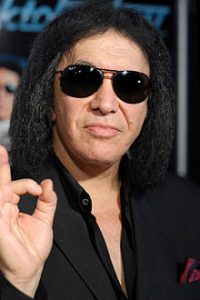 Research by Aaron Galbraith, commentary by Tony Attwood