Bob Dylan And The Eye Of Horus (Part II)

Bob Dylan And The Eye Of Horus (Part I)

by Larry Fyffe

Bob Dylan messes around with mythologies – it could be interpreted that in the song lyrics below, that the narrator thereof takes on the persona of a modernized Ra, the Egyptian male Sun-God-in-Chief, who, with the help of Set (he cuts up Osiris, sending him to the Underworld), restores the cosmic and social order when Horus, sired by Osiris, is given birth by the Moon Goddess Isis.

Set, the brother of married twins Osiris and Isis, is associated with a snake; Horus, the son of Osiris and Isis, with a falcon:

Show me your ribs, I'll stick in the knife
Gonna jumpstart my creation to life
I wanna bring someone to life, turn back the years
Do it with laughter, do it with tears
(Bob Dylan: My Own Version Of You)

In the rather double-edged lyrics that follow, the narrator portrays his own version of the undertaker from Egyptian mythology. Anubis is a deity who guides the dead to the Underworld; he has the head of a jackal, and oversees the embalming of the dead:

With a face any painter would paint
As he walked through the crowd
Worshipping a god with the body of a woman
Well-endowed
And the head of a hyena
(Bob Dylan: Angelina)

Ra, reincarnated in Horus, it could be claimed in the lyrics beneath, brings order back to the stage with the aid of departed female characters in a couple of songs from the recent past (by Jimmy Wages, and Ricky Nelson):

Hello Mary Lou
Hello Miss Pearl
My fleet-footed guides from the Underworld
No stars in the sky shine brighter than you
You girls mean business, and I do too
(Bob Dylan: False Prophet)

Below, the narrator, like a modernized Osiris, who’s separated from the ocean-pulling Moon Goddess, measures his life out in coffee spoons as the “eternal footman” Anubis awaits:

And her pleasure knows no limits
Her voice is like a meadowlark
But her heart is like an ocean
Mysterious and dark
One more cup of coffee for the road
One more cup of coffee before I go
To the valley below
(Bob Dylan: One More Cup Of Coffee)

Bringing to mind a poem by an artist whose mother be a follower of the gnostic-like Emanuel Swedenborg:

The woods are lovely, dark and deep
But I have promises to keep
And miles to go before I sleep
(Robert Frost: Stopping By Woods On A Snowy Evening)

Then, it’s back home again:

The evening sun is sinking low
The woods are dark, the town is too
They'll drag you down, they'll run the show
Ain't no telling what they'll do
(Bob Dylan: Tell Old Bill)

https://youtu.be/8hx3GEJ84es

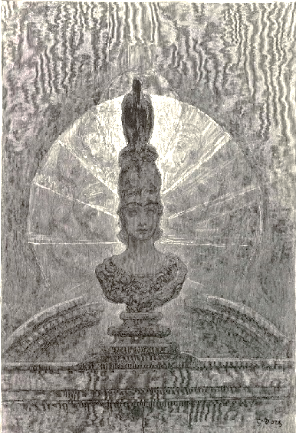
Oft at performances put on by Bob Dylan and his band, a backdrop hangs upon which is emblazoned an image of the ‘Eye Of Horus”.


Posted in Uncategorized | 4 Comments

All directions at once part 56: Most of the time Bob’s a genius

By Tony Attwood

Earlier episodes of All Directions are listed here

The previous episode was “After the loss the rebuild”

A while back I fantasized on the notion that Bob Dylan would one day knock on my door and in my living room, sitting over a coffee or a beer, would suggest that in the light of my work on this site, would I perhaps like to put together a compilation album.

Leaving aside the social interactions that would follow I set out what I would put on the album, and the fact that it was to be called “1980” gives you a pretty good clue as to what it is all about.

With the songs from the end of the decade I don’t have to indulge in such whimsy, because we have Oh Mercy, but if I was given the task of re-working that fine album I would put forward the idea of running the songs in the order they were written – although I think I would continue Dylan’s own decision making by dropping TV Talking Song.  “Series of Dreams” however would most certainly be in there.

I called the last episode of this series “After the loss, the rebuild” and rebuilding was most certainly what was going on in 1989 after the Wilbury’s adventure.  For 1989 gave us as good an outpouring of compositions one after the other, since 1974.   My imaginary album of 1989 would run…

  1. Born in Time
  2. God Knows
  3. Disease of Conceit
  4. What was it you wanted
  5. Everything is Broken
  6. Ring them Bells
  7. Series of Dreams
  8. Most of the Time
  9. Where teardrops fall
  10. Shooting Star and see Shooting Star and Hendrix
  11. Man in a Long Black Coat

In the last article I got as far as “Everything is Broken” after which Bob wrote Ring them Bells, a song which is a mixture of many different approaches and with a unique cascading piano part which defines the music from the start.

The only problem is that so many re-interpreters are tempted into using the piano as a way of reminding us that it is all about bells (as if we were so stupid we’d forget).   But when this is overcome, the depth of possibilities of the song are revealed.

Indeed that persistent desire to make the music represent bells is a tragedy because as a piece of music it works beautifully – the melody just gives us the chords, the chords give us the melody – one of those beautiful songs where everything seems to fit so naturally together, rather than have any feeling that the composer was searching to find a way, any way, to end a line or make a rhyme.

Stephen Inglis gets it right too…

There’s no hint of blues anywhere, and indeed where unusual chords are thrown in, as in the middle 8, they have nothing to do with the blues genre.  Rather they are stretching the song to see just how far it can go, and the answer is always… a very very long way.

I am a believer in following Dylan’s own suggestions that it is the sound of the lyrics, and the possibilities of meanings that fascinate him rather than there being deep literal meanings within each song, and here we can consider for a moment St Catherine, St Peter and Sweet Martha.  If we are looking for literal meanings the issue must be “why those three?”   We can all find explanations for each, but all three in one song?   True, we also have a reference to The Chosen Few  – which could take us to the Saints who will judge the world at the end of time (I could show off and say Revelations 20:4, but that would just be showing off), but then again why those three people, in this context?

The problem is as fast as we try and track down one reason for a reference the others fall out of sync with it.   Which leads me to see these references as reflections placed throughout the song as much for the sound of the words as any symbolism or direct pointing in any direction.

Indeed when it comes to how religious the piece is, I keep coming back to the 1997 interview for The New York Times, just four years after the Supper Club recordings, where Dylan said, “This is the flat-out truth: I find the religiosity and philosophy in the music. I don’t find it anywhere else. Songs like “Let Me Rest on a Peaceful Mountain” or “I Saw the Light”—that’s my religion. I don’t adhere to rabbis, preachers, evangelists, all of that. I’ve learned more from the songs than I’ve learned from any of this kind of entity. The songs are my lexicon. I believe the songs.”

Bells ringing are emotional; the calling of us all together and of course it can be argued that Dylan has Joel 3:11 at the back of his mind

Assemble yourselves, and come, all ye heathen, and gather yourselves together round about.

But quite why the bride is running backwards is beyond me.  But I still love the line.

Poetry at this time for Dylan (as so often in other eras of his writing) is as much about playing with words as it is about telling us to do this, not do that.  It expresses what non-poetic forms can’t express.   It is not always meant to be taken literally.

It can be deadly serious and insightful, it can be fun, it can make us sit up and take notice (Hollis Brown is a perfect example) and it can give us deeper insights into the human condition (Subterranean Homesick Blues does that I think).  But as often as not, it is not intended to be taken literally.

“Ring them bells” for me is an update on Times they are a changing and Chimes of Freedom.  My thought is that if Bob wanted to preach, he would preach, loud and clear.   Here’s he’s just giving us an update, and it is no worse a song for all that.

So by now in this year of 1989 Bob has composed

  • Born in Time
  • God Knows
  • Disease of Conceit
  • What was it you wanted
  • Broken Days / Everything is Broken
  • Ring them Bells

… which by any measure is a staggering collection of works to come one after the other.  But he absolutely wasn’t finished yet – not by a long chalk because we were only half way through this year in terms of writing, and there were five more brilliant works to come.

  • Series of Dreams
  • Most of the Time
  • TV Talking Song
  • Where teardrops fall
  • Shooting Star
  • Man in a Long Black Coat

As I’ve intimated before I can do without TV Talking Song, but just look at the rest of the compositions.  Many of us had not heard “Series of Dreams” before it was released on the first set of outtakes and we got Bob’s explanation for it not being on “Oh Mercy”, in Chronicles…

Although Lanois liked the song, he liked the bridge better, wanted the whole song to be like that. I knew what he meant, but it just couldn’t be done. Though I thought about it for a second, thinking that I could probably start with the bridge as the main part and use the main part as the bridge…the idea didn’t amount to much and thinking about the song this way wasn’t healthy. I felt like it was fine the way it was – didn’t want to lose myself in thinking too much about changing it.

And he was right, in my view, not just to reject Lanois’ view but only to think about it for a second.  The “bridge”

Dreams where the umbrella is folded
Into the path you are hurled
And the cards are no good that you’re holding
Unless they’re from another world

for me is a perfect bridge (or middle 8 as I’d call it), and I can’t imagine a reason to change this.

But it clearly wasn’t a real favourite of Bob’s as it just got ten outings in 1993/4, and was then set aside.  I guess it was just one of those that somehow he felt wasn’t quite right.

After that wonderful piece, Bob wrote another lost love song: “Most of the time” a song that takes me back to that earlier masterpiece “Visions of Johanna”.  Now the fog is of the singer’s making, while in Visions the fog covers the whole world; but in both songs the issue of self-delusion is at the forefront.    As Visions says,

“We sit here stranded, though we’re all doin’ our best to deny it”

Now the emotions are totally ruling the body so that one can’t see the truth, the reality, the real world.  In Visions the mists come from without, here they come from within, but in both songs the feeling is out-of-body, uncertain, unreal.  However in “Most of the Time” the assertion is that the singer can handle it.  That is never the case with Johanna – which of course unlike “Most of the time” is not personal, but is third person.

The music too is unexpected – there’s an E major chord which throws the music out of kilter, and that pause at the end of the line after “or if I was ever with her” adds to the unreality.   He knows utterly that he was with her, but his denial is so overwhelming he doesn’t know it at all.  He’s muttering small talk at the wall.

And so we build up to the climax of denial by taking the assertions to ludicrous proportions.

I don’t cheat on myself, I don’t run and hide
Hide from the feelings that are buried inside
I don’t compromise and I don’t pretend
I don’t even care if I ever see her again
Most of the time

The music and the lyrics show that the singer is so deeply in denial we know that he is fooling himself from that open ethereal chord to the fade out.

And it’s not just a fantastic piece of writing; it is a piece of writing that came straight after the masterpiece that is “Series of Dreams”.

Not too many performers choose to tackle “Most of the time”, but for me this is the ultimate stand-out version, which captures every single moment of the lyrics and music.  I do hope, after reading my ramblings you’ll have a moment spare to listen to this – and indeed listen to it all the way through.

Publisher’s note…

You can read more about all our regular writers here

If you would like to read more commentaries, Untold Dylan also has a very active Facebook group: Untold Dylan.

If you would like to see some of our series they are listed under the picture at the top of the page, and the most recent entries can be found on the home page.

If you would like to contribute an article please drop a line to Tony@schools.co.uk

Posted in Uncategorized | 16 Comments

Tonight I’ll be staying here with you: the cover story

Beautiful Obscurity and the Covers Index

In this series Aaron selects a Dylan song and then a collection of cover versions which he sends over to Tony on the other side of the Atlantic, for his comments.  The game we play is that Tony has to write his comments during his hearing of each recording (almost always hearing this version for the first time).

Gillian Welch & Dave Rawlings

Tony: Immediately I am with this, because it is notably different from Bob’s versions, and that is what I am after.  I mean, what is the point of singing and performing it as Bob does?

I was enjoying the first verse, but then my enjoyment escalated upwards when the harmonies came in – this does what I want a cover version to do – it gives me new insights and feelings in relation to the original.

Personally I am not sure they have got the arrangement of the two guitars together, but that may simply be the positioning of the microphones – and it doesn’t distract from a really beautiful re-interpretation.  It makes it all so much more gentle and so much more believable.

Orange Bicycle

Hmmmm… a quasi church organ effect?  Really?  OK, it works in a way of surprise because the voice was not what I was expecting, and so yes it works.   But the chord change over “with you”?   Hmmm (again) … this time methinks now he is trying too hard.

And that is the feeling that continues with the unusual lead guitar sound, the bass guitarist going through every virtuoso line he knows – in the end it is all too much for me… and that tremolo on the vocal part before the instrumental break… no sorry not for me.

It really is one of those tracks where things are tried but there doesn’t seem to be a musical director who is able to say, “ok guys but this isn’t working, let’s go back to basics for a moment.”  And that guitar solo just before the fade where the guitarist hits a particular high note several times… actually I found that rather painful.   Goodness me I am getting old.

Ben E King

From that introduction I’d never have guessed what the song was going to be, and although it goes on much longer than I needed, the transition into the song proper, itself worked for me.   Of course it is helped by the fact that Ben E King has a faultless delivery, but behind him there seems to be a race going on to see who can get out of the studio and into the bar first.

But oh, please, no effects like the descending guitar part or the pause around the 2 minutes 35 mark.   The guitar solo that follows is perfectly good, it doesn’t need that.

And I think that is the idea that is really taking hold with me.  I don’t need all these effects and games, and treating this like just another soul song.   OK, it is perfectly reasonable for arrangers and musicians to find new meanings is songs, but Ben E King is not really doing that with the long postscript complete with “come on come on come on come on come on” etc and lots of “baby” calls.  What is the point?

If it were not for writing this piece I wouldn’t have got to the end.

The Charlatans

Aaron: The Charlatans – wasn’t sure about this one to start with but it grew on me. If you don’t dig the falsetto, just wait til the 2 minute mark when he drops down.

Tony: I really found the video wretched – what on earth is the point of putting one of the most famous Dylan vids with this song?

But the music – yes I’ll go with this.  I don’t know why it is sung as a falsetto, but that doesn’t matter.  It works because it intrigues and interests me, and engages me in and gives me different thoughts about the music and its meanings.  (And I am writing “me me me” because that is the point – the song has to appeal to the audience of one, if it is going to appeal to the many.)

Not that these meanings can be transcribed into words – if they could there would be no point in having the music, but they are there if you want to take them.  And this piece works somehow because the falsetto does reflect the possibility that the lyrics are all bravado and the singer doesn’t have the certainty that the line “Tonight I’ll be staying here with you” suggests.  When I think of it, the singer is pretty damn sure that the lady listening is not going to say, “Oh no you’re not!”

Aaron:  Several other “big name” acts have tried this one out (Jeff Beck, Tina Turner, Cher and Albert Lee) but I want to finish up with two new acts (to me, anyway). I’d never heard these before and I loved them so I wanted to share them with everyone

Michelle Moonshine

Tony: Now this video I like.  It is totally honest; it is what can happen in recordings – and if you’ve not been through the studio experience you have to remember that quite often the recording we get to know can be take 20, by which time a several members of the band may well have (metaphorically) died.

But this is beautiful and gentle and when I’ve finished the comments I am going to play it again and quite probably again.   They really do get this song right, and also give us a moment or two of insight into what such sessions are all about.

Absolutely love it.

Liam Bailey

Not sure about the opening second of vocalisation, but once it starts I’m fascinated by the way the vocalist has utterly changed the chords.   Fascinating, but I am not sure it adds to my understanding of the song.  These unexpected and complex chords contrast so much with what Dylan wrote – he used everyday chords to reflect an everyday expression of desire – that I can’t quite feel the link.  If you are going to change this much, why not write a new song?

The lyrics are not magical, they are in fact simple.  The emotion is powerful, it doesn’t need such complexity in the music.   Although to be fair a lot of my reaction here could be because I know the song so well, and this changes it so much.

But clearly, if this were a competition, Michelle Moonshine would win for me, utterly, totally, 100%.  With a very honourable mention to Gillian Welch & Dave Rawlings.  Both are stunning re-workings.

Thanks guys.

Publisher’s note…

You can read more about all our regular writers here

If you would like to read more commentaries, Untold Dylan also has a very active Facebook group: Untold Dylan.

If you would like to see some of our series they are listed under the picture at the top of the page, and the most recent entries can be found on the home page.

If you would like to contribute an article please drop a line to Tony@schools.co.uk

Posted in Uncategorized | 1 Comment

Bob Dylan And The Eye Of Horus

By Larry Fyffe

As mentioned before – according to ancient Egyptian mythology, Horus is the son of Isis, the Goddess of the Moon and her twin brother Osiris; Set (or Seth), another brother of Isis, causes Osiris to descend to the Underworld; son Horus represents the restoration of order after jealous Set disrupts the country by killing Osiris (in later revisions of the myth, puts him in a coffin, and throws it into the Nile). In any event, Isis manages to put Osiris back together enough to get pregnant.

The bigger eye of Horus, who’s depicted as a falcon, represents the sun king, and the other eye, the moon queen which influences the waters on Earth.

Using the befit of hindsight, some Christian writers, though  with difficulty, reformulate Isis as Mary, Horus as Jesus, and Set as Satan.

With Judaism, however,  there is a direct biblical link to the ancient mythology through the story of Moses, and an Egyptian  princess – in what is then the Land of Isis:

And the child grew

And she brought him to the Pharaoh's daughter
And he became her son
And she called his name 'Moses'
And she said, "Because I drew him out of the water"
(Exodus 2:16)

As rendered in the song lyrics beneath:

And the Pharaoh's little daughter stepped down into the water
To bathe in the cool of the day
And before it was dark, she opened the ark
And found the sweet child was there
(Bob Dylan: Little Moses ~ traditional/et.al.)

Singer/songwriter/musician Bob Dylan often has the symbolic image known as the ‘Eye Of Horus’ at the back of the stage on which he performs; also, the image appears in the film “Renardo And Clara”.

Since Dylan’s often mixes-up the mythological medicine, the following song lyrics might be interpreted as the narrator thereof being the persona of Set, the Egyptian God Of Chaos, who wants Osiris out of the way so he can have Isis for himself:

I picked up his body, and I dragged him inside
Threw him down in the hole, and put back the cover
I said a quick prayer, and felt satisfied
Then I rode back to find Isis just to tell her I love her
(Bob Dylan: Isis ~ Dylan/Levy)

https://youtu.be/uk3JsRieJeI

Members of the Autobiographical School of Dylanology might even claim that motherly Joan Baez, to whom Dylan gives an Egyptian ring, is represented as Isis, the saviour of Moses, in the lines beneath:

She wears an Egyptian ring that sparkles before she speaks
She's a hypnotist collector, you are a walking antique
(Bob Dylan: She Belongs To Me)

Apparently, the Isis princess keeps Moses chained down in the Land of the Folkie Pharaohs too long where he forgets his duty to the God of the Hebrews – in the song lyrics below, the State of Mississippi on the Nile of America could be said to represent the Egypt of old:

All my powers of expression, and thoughts so sublime
Could never do you justice in reason or rhyme
Only one thing I did wrong
Stayed in Mississippi a day too long
(Bob Dylan: Mississippi)

Publisher’s note…

You can read more about all our regular writers here

If you would like to read more commentaries, Untold Dylan also has a very active Facebook group: Untold Dylan.

If you would like to see some of our series they are listed under the picture at the top of the page, and the most recent entries can be found on the home page.

If you would like to contribute an article please drop a line to Tony@schools.co.uk

Posted in Uncategorized | 8 Comments

Dylan and the counter melodies: what is he up to?

By Tony Attwood

In the article Never Ending Tour, 1999, part 2 – Is everything as hollow as it seems? Mike posed a really interesting question:

“The oddest aspect of these 1999 performances of ‘Can’t Wait’, which Dylan regularly performed, is the disconcerting  ‘off key’ playing of Mr Guitar Man. Again, I have to ask, what does Dylan intend here, what does he think he’s doing? I ask the question because it’s clearly deliberate. It throws the song off-centre with guttural sounds. It makes its own weird sense but its relationship to the melody is problematic to say the least.”

Of course I don’t have any unique insight into Bob’s intention – oh to be able to call him up and ask him!   But I do have a thought that might be able to push us maybe part-way to a resolution of the question.   To see what I am going to try and argue, it is perhaps helpful to listen to the recording of “Not Dark Yet” from the album.  The one we all know.

Now this recording takes us in the standard approach through the four sung verses, plus an instrumental introduction, and instrumental verse, and an instrumental conclusion.

In all three of the instrumental sections, the band plays on, in virtually the same way as it does in the rest of the piece when Bob is singing.  There is no extra instrumental input, for example with a lead guitar extemporising on the vocalist’s approach.

Now compare that with the classic way in which pop and rock music evolved, with a couple of verses and then an instrumental verse.  In “That’s Alright Mama” (Elvis Presley’s first record, I think) you get two verses sung and then a verse in which the chord sequence is exactly the same as in the sung verses,  which is followed by an instrumental verse in which the lead guitar does something that is related to the melody verses: a variation in fact.

https://youtu.be/NmopYuF4BzY

Also developed was an alternative approach in which instead of the song going through a sequence of Verse – Verse – Verse etc for as long as wanted (a form known in musical terms as “strophic”) there also evolved a structure in which pop and rock borrowed from the classical song structure in which the music ran

  • Verse
  • Verse
  • Middle 8
  • Verse

The “Middle 8” is a section of the song which has words and music, but in which both music and lyrics are different from the verse.  In classical form analysis of music it is known as “ternary form” and written in musical shorthand as A B A (with the understanding that the music of A is repeated at the start of the piece).

Dylan doesn’t use this form very often but he has to done.  Consider “We’d better talk this over”.   Here the B section comes after the first two verses in the classic form, and is just two lines (as compared to the “A” verse which is four lines long).

You don't have to be afraid of looking into my face,
We've done nothing to each other time will not erase.

https://youtu.be/o9EtT2WVdaE

(Incidentally it is worth leaving the above video running – there’s a couple of very different Bob versions after the example I’ve cited).

So Bob does use ternary form occasionally, and indeed does have an instrumental break occasionally in which the lead guitar or other instrument plays and extemporisation over the melody.

But from the earliest days his chosen form was strophic – think of “Times they are a changing” or “Blowing in the Wind” etc etc – they are verse verse verse.   And even when we get into the longer songs like “Gates of Eden” we still have verse verse verse.

When it came to the live performances Bob had the choice of just singing the song straight through, or instead putting in an instrumental break – which if nothing else gives his voice a break.   And when he does put in an instrumental break he takes the radical path of just having the music continue, without an improvised guitar or keyboard solo.

Now we also have to remember that in the early days Bob primarily played rhythm guitar, holding the band’s beat together – effectively taking on the role of the conductor in an orchestra or the 1st violin in a string quartet.

But over time I think he got a bit bored with that.  He didn’t want to change the structure of the music, because his way of performing suggested that the music and the vocal line were of equal importance.  But he wanted to experiment a bit.

By this stage the rhythm guitar was unnecessary – he knew the musicians and they knew him, so instead of playing the rhythm guitar (which is in essence just playing the chords) he started to play bits of the chords – odd notes taken from the chord, rather than the chords as chords.

This evolved into him playing individual notes during the instrumental verses, which then in turn evolved into him playing those notes while he was singing.

So what did he think he was doing?  Well, I think he was just following an evolution of the music.  I also think no one in the band would dare tell him it didn’t sound very good.  I mean, would you dare?  If it were me I’d just think “well, he’s Bob” and leave it at that.

But Bob is not alone among musical giants in regard of doing the odd thing that we might occasionally consider to be a bit naff.  For example, I wonder if anyone dropped Beethoven a note to the effect that Gratulations-Menuet” in Eb for Orchestra is actually not very good.

And no matter how tedious a piece might appear at first, it might still be rescue-able.  Personally, I never have been been able to listen to “Ballad in Plain D” which is plain indeed with its structure of verse-verse-verse etc ad infinitum, until I found this…

It just goes to show: no matter how naff it sounds to you, there might be something in there…

Publisher’s note…

You can read more about all our regular writers here

If you would like to read more commentaries, Untold Dylan also has a very active Facebook group: Untold Dylan.

If you would like to see some of our series they are listed under the picture at the top of the page, and the most recent entries can be found on the home page.

If you would like to contribute an article please drop a line to Tony@schools.co.uk

Posted in Uncategorized | 1 Comment

Never Ending Tour, 1999, part 2 – Is everything as hollow as it seems?

An index to all the articles in the series appears here.

The last article in this series appeared, and then had a technical fault. It has been republished here.

By Mike Johnson (kiwipoet)

‘Windows were shaking all night in my dreams
Everything was exactly the way that it seems’

Time Out of Mind is all about the hollowness of life, how empty and meaningless it can all be. This theme or emotion is not new to Dylan. The struggles for faith and meaning are deeply intertwined and go way back to ‘It’s All Right Ma’ and even earlier. We could go even further and say that that struggle has driven Dylan’s artistic development right from the start.

It’s just that in Time Out of Mind, it reaches a certain pitch and intensity, and is linked specifically with ageing. No song deals more  explicitly with the ageing process than ‘Highlands’, that long, ungainly song that finishes the album.

‘I see people in the park, forgettin' their troubles and woes
They're drinkin' and dancin', wearin' bright colored clothes
All the young men with the young women lookin' so good
Well, I'd trade places with any of 'em, in a minute if I could
I'm crossin' the street to get away from a mangy dog
Talkin' to myself in a monologue’

Anyone with a few years under their belt knows what it’s like to see young people partying and having fun, oblivious of their youth and the passing years, oblivious of some old person slipping by in the shadows.  It’s a kind of jealousy or envy. Trade places with ‘em? Sure thing. It’s a feeling that alienates us, for we are forever separated from what we once were and would like to be again.

The whole song is one big monologue in which despair and meaninglessness are pitted against a paradisaical vision of ‘the highlands’. This how it begins:

‘Well my heart's in The Highlands, gentle and fair
Honeysuckle blooming in the wildwood air
Bluebells blazing where the Aberdeen waters flow’

By the end of the song the separation from the world is complete. A new, parallel world has come into existence, but it’s ‘over the hills and far away’. He remains ‘a prisoner in a world of mystery’.

‘The sun is beginnin' to shine on me
But it's not like the sun that used to be
The party's over and there's less and less to say
I got new eyes, everything looks far away
Well my heart's in The Highlands at the break of day
Over the hills and far away’

The central event of the song is a confrontation between the Dylan persona and a waitress. This encounter has been likened to the central encounter in ‘Tangled Up in Blue’, but that encounter is both sharper and more mysterious than the rather lumbering narrative in ‘Highlands’. The waitress asks Dylan to draw her, he does a drawing which she rejects as it doesn’t look like her:

‘I said "Oh kind miss, it most certainly does"
She say "You must be joking", I said "I wish I was"
She says "You don't read women authors do ya?"
At least that's what I think I hear her say
Well I say "How would you know, and what would it matter anyway?"
Well she says "Ya just don't seem like ya do"
I said "You're way wrong"
She says "Which ones have you read then?", I say "Read Erica Jong"’

Dylan is probably referring to Jong’s Fear of Flying, (1973) which was still popular. But despite some Dylanesque dry humour here, and his ability to weave conversations into his songs is evident, this prosy story fits rather uneasily into the overall structure of the song, and it’s not quite clear what the story is intended to demonstrate.

Dylan rarely performed the song, which he débuted in 1999. I’m glad he sang all the verses and was not tempted to drop any out. It has a simple blues riff, but is not an easy song to carry in live performance. (18th Nov)

Highlands

Dylan didn’t overwhelm his setlists with songs from Time Out of Mind. He  slips them in here and there, augmenting his setlists rather than dominating them with new material. Along with ‘Highlands’, another new song that appeared in 1999 was ‘Trying to Get to Heaven’.

I have to put this latter song in my top ten (at least for the moment). It has a pleasing melodic line and musical structure, and is a further exploration of the hollowness of life. In his account of the song, Tony Attwood has suggested that it could be placed before ‘It’s Not Dark Yet’ as a stepping stone to that final despair, and that’s a helpful way to see it.

‘When you think that you've lost everything
You find out you can always lose a little more
I'm just going down the road feeling bad
Trying to get to Heaven before they close the door’

There is an elusive feeling here of a bygone era, both in the nostalgia of the lyrics and the overall musical effect, which takes us back to those 1930s and 40s which so haunt  this album, and which Dylan consciously evokes.

‘I'm going down the river
Down to New Orleans
They tell me everything is gonna be all right
But I don't know what all right even means’

Note the archaism of: ‘I was riding the buggy with miss Mary Jane…’ Mary Jane is a street name for cannabis, but putting that aside the scene could be from the civil war. The Dylan persona here has a ‘lone cowboy’ feel to it, also from a previous era:

‘Some trains don't pull no gamblers
No midnight ramblers like they did before
I've been to Sugar Town, I shook the sugar down
Now I'm trying to get to Heaven before they close the door’

Despite a contemporary drug reference to LSD in Sugar Town, shaking the sugar down has a somewhat archaic feel of having pulled off a successful scam or deal. It is perhaps a rather unflattering reference to Dylan’s financial success.

I have two performances worth tuning into. This first is from 7th April, and is perhaps the sharpest and clearest recording. An example of how good an audience recording can be.

Tryin to get to heaven (A)

This next recording is from 30th April, and is a little more lush in its sound. Another powerful vocal performance from  Dylan.

Tryin to get to heaven (B)

Besides these two new songs that Dylan débuted in 1999, he continued to develop Time out of Mind songs he’d introduced in the two previous years. ‘Lovesick’ is never going to change too much over the years. It has a strict form that doesn’t allow for too much improvisation. This one sticks pretty much to the album version, but notice how Dylan drops his voice at the end of the lines (the opposite of upsinging), creating a sinister effect.

Lovesick

We get the same effect from ‘Cold Irons Bound.’ Listen to how he drops his voice art the end of these lines.

‘One look at you, and I’m out of controool
Like the universe has swallowed me whooole’

Dylan would use this ‘downsinging’ to great effect in the next couple of years, giving familiar lyrics an ominous edge. We are prisoners of our love, the song seems to be saying. This is a very hard-edged performance. Maybe the recording is a little on the sharp side, but so is the song. There is no way to sugar-coat this pill: ‘Up over my head nothing but clouds of blood’.

Despair and anger do make a good couple, don’t they?

Cold irons bound

Musically, ‘Till I Fell in Love with You’ has an archaic feel too. I keep hearing Jimmy Rushing or one of the old urban blues singers. It is driven by an unvarying bluesy riff, and with no bridge or other musical breaks, it relies totally on its lyrics and swing to keep it going. This is not so much rock music but pre-rock music, the more ancient blues and big-band era music. Replace the guitars with saxes and trumpets, and you’d almost be slap-bang in the dance-hall music of the late 1940s.

Dylan was consciously after that sound when he made the album. He apparently told producer Lanois that he was after the kind of sound of the early music studios, of what were known as ‘race records’ which brought forward many black performers. Lanois told him it could be done, but in the end the sound on the album was too sophisticated, too nuanced, to capture the raw sound Dylan was after.

On stage, however, he could do it, and does it brilliantly in this performance of ‘Till I Fell in Love with You’. Again I avoid the word definitive, but this one ranks as my number one version of the song. Dylan’s voice is up front, the lyrics crackle out, and the band swings along, a touch of bluesy swagger.

Till I fell in love

‘To Make You Feel My Love’ evokes the same era, but the sentimental ballad tradition, rather than blues. I can imagine Vera Lynn singing it (almost), it has that tearful ‘We’ll Meet Again’, feel to it.

These lyrics could have been written for Billie Holiday:

‘I'd go hungry, I'd go black and blue
I'd go crawling down the avenue
No, there's nothing that I wouldn't do
To make you feel my love’

Such lyrics are quite formalised, quite generic. Going ‘black and blue’ was not an uncommon phrase, and ‘crawling down the avenue’ has a similar well used feel to it. The lyrics are not intended to sound original, rather to signal the sentiment through familiar references.

‘The storms are raging on the rolling sea
And on the highway of regret’

The effect of this is to evoke a sense of familiarity, as if we’ve heard the song before somewhere, maybe in a speakeasy in the small hours of the morning. Hasn’t every singer who’s ever pulled on your heart strings sung from ‘the highway of regret’? There’s a lot of traffic on that highway.

In this performance Dylan introduces it as ‘a song to my ex-wife, who’s a tennis player…’ Make of that what you will. And again, a performance that tops those of the two previous years.

To make you feel my love

The oddest aspect of these 1999 performances of ‘Can’t Wait’, which Dylan regularly performed, is the disconcerting  ‘off key’ playing of Mr Guitar Man. Again, I have to ask, what does Dylan intend here, what does he think he’s doing? I ask the question because it’s clearly deliberate. It throws the song off-centre with guttural sounds. It makes its own weird sense but its relationship to the melody is problematic to say the least.

 Can’t Wait

Perhaps, to return to Tony Attwood’s comments on ‘Trying to Get to Heaven’, it was not just that song, but the others as well, ‘Can’t Wait’, ‘Till I fell in Love’, ‘Cold Irons Bound’, that lead, somehow inevitably, to the total loss and despair of ‘It’s Not Dark Yet’. Seen that way, ‘It’s Not Dark Yet’ could be seen as the quintessential song on the album, the song which pushes the darkness and alienation of the collection to the very extreme. An epic performance from a beautifully scarred voice.

It’s not dark yet

That’s it for now. I’ll be back soon with more goodies from 1999

Kia Ora


Posted in Uncategorized | 2 Comments

Symbolism Of The Cypress Tree Part II

Symbolism Of The Cypress Tree Part I

By Larry Fyffe

In the song lyrics below,  the narrator thereof depicts himself as Paris, a Trojan of Troy, who’s under attack by Achilles (and other Greeks) – sourced from ancient Greek/Roman mythology:

Achilles is in your alleyway
He don't want me here
(Bob Dylan: Temporarily Like Achilles)

Old Crowe Medicine Show, Temporary Like Achilles

In the mythology, the cypress tree is a symbol of sadness. The tree is sacred to Diana, the Goddess of the Moon, sister of Apollo, the Sun God.

The Trojans fleeing the Greeks are told to meet under a cypress tree dedicated to Ceres, the Goddess of Corn, her daughter Proserpine kidnapped by the God of the Underworld:

Without the walls a ruined temple stands
To Ceres hallowed once; a cypress nigh
Shoots up her venerable head on high
By long religion kept: there bend your feet
And in divided parties let us meet
(Virgil: Aeneid, Part II ~ translated)

Noted before, singer/songwriter/musician Bob Dylan models his song “Key West” after the mythological Underworld, and in the lines below, he refers to Virgil’s “Aeneid”, casting America  as the modern Babylon from the Holy Bible:

Stand over there by the cypress tree
Where the Trojan women and children  were sold into slavery
Long before the first Crusade
Way back before England and America were made
(Bob Dylan: My Own Version Of You)

In the lyrics beneath, the songster takes on the persona of  Aeneas fleeing Troy, and waiting for his lost wife:

The boulevards of cypress trees
The masquerades of birds and bees
The petals, pink and white, the wind has blown
Won't you meet me in the moonlight all alone
(Bob Dylan: Moonlight)
The waiting all in vain, and very sad:
I waited for you on the running boards
Near the cypress trees, while the springtime
Turned slowly into autumn
(Bob Dylan: Idiot Wind)

Rather ambiguous are the following lyrics that might be construed as an attempt to transform the Confederate States into the Troy of old (but note – Virgil, the Roman poet’s name, is combined with Cain(e), a farmer of biblical infamy, who kills his brother):

Back with my wife in Tennesee
When one day she said to me
Virgil, quick come see
There's goes the Robert E. Lee
(The Band: The Night They Drove Old Dixie Down

~ Robbie Robertson)

In Virgil’s version of the ancient legend, Aeneas, defeated in Troy, escapes and founds Rome, helped along by Venus, his mother – her birth depicted in a famous painting by Italian artist Sandro Botticelli.

As apparently rehashed by a much older, a very much older, and now happier, Aeneas – in the following song lyrics:

Got to hurry on back to my hotel room
Where I've got me a date with Botticelli's niece
She promised that she'd be right there with me
When I paint my master piece
(Bob Dylan: When I Paint My Master Piece)

Posted in Uncategorized | 1 Comment

NET, 1999, Part 1: Every night in a combustible way.

Publisher’s note: we seem to have had a technical fault on the site which I am currently trying to sort out.  For the moment the 1999 part 1 edition of the Never Ending Tour series appears to be unavailable so I’m republishing it, before I publish 1999 part 2.  Apologies for the inconvenience.

An index to all the articles in the series appears here.

By Mike Johnson (Kiwipoet)

‘Touring is something you either love or hate doing. I’ve experienced both. I try to keep an open mind about it. Right now, I’m enjoying it. The crowds make the show. Going onstage, seeing different people every night in a combustible way, that’s a thrill. There’s nothing in ordinary life that even comes close to that.’
– Bob Dylan (Edna Gundersen interview for USA Today – April 1999)

At this point in our headlong dash through the NET, it is time to pause and take stock. The NET has completed its first decade, we are entering its eleventh year, we are on the brink of a new millennium, and it is fair to say that Dylan and his band have never sounded better.

When I began this series I observed that some commentators are tempted to see the NET as a work of art in itself. That would imply, however, some intentionality or deliberate structuring, and I certainly don’t see that. That doesn’t mean that the NET doesn’t have some kind of shape or movement, but having said that, no two commentators see the same thing. Everybody who looks at the NET creates their own narrative, and I’m no exception.

One commentator claims that the NET’s finest hour was the performance of ‘Ring Them Bells’ at the Supper Club in 1993. Another claims that 1997 was the strongest year of the NET. The same claim is made for 1998, suggesting that the San Jose concert of that year was the best NET concert ever. Another claims that 1994 was the peak year for the NET, with a distinct falling off in 1995. Still others (me included) see the Prague concerts of 1995 as a high point of the NET. And so it goes on.

Rather than a work of art, it seems, the NET is more like a Rorschach test with everybody reading their own narrative into it, creating their own version of Bob Dylan as they go. With over a thousand concerts for the decade and about fourteen songs per concert we have an incredible 14,000 plus performances, enough raw material for all sorts of constructions.

I have spoken of a ‘rising curve’, (from the song ‘Born in Time’) which I see moving from 1991, a low point generally, to 1995 and the outstanding Prague concerts. 1996 saw something of a falling off (but a fine concert in Berlin that year), with a strong comeback in 1997, and a new rising curve that takes us through 1999 to 2000.

‘One of the peaks of the Never-Ending Tour, 1999 may be one of Dylan’s finest years on-stage. After years of building credibility throughout the 1990s, the performances exploded at the turn of the century.’ (CS at A Thousand Highways)

Egil, at AllDylan, comments: ‘Every N.E.T. junkie seems to agree that 1999 was a wonderful Dylan year. Strong performances in all 5 legs.’

I have to agree with these assessments. Dylan finishes the decade, and the century, with a bang. Other than the galvanising effect of the success of Time Out of Mind, we have other factors to consider. First, there was another shake up in the band’s line up. Bucky Baxter, who joined Dylan is 1992 playing steel guitar and dobro, leaves the band. But rather than simply replacing him, Dylan brings in Charlie Sexton, a guitar all-rounder, who will often play dual lead with Larry Campbell. Sexton would leave Dylan’s band in 2002 and rejoin it in 2009.

Both Sexton and Campbell are superior guitarists, weave a wonderful web of sound around Dylan’s voice, and at the same time provide an expanded context for Dylan’s own lead guitar playing. Mr Guitar Man’s insistent hammering at one or two notes during a guitar break sounds a lot better with these two ace guitarists backing him. To my mind, and I have to say I’m no expert, Sexton is easily a match for Eric Clapton. Clapton has a commanding grasp of the blues, and a rapid, fluid style.  But Sexton is more adventurous, sharper and more passionate.

But it’s not only the backing, it’s Dylan’s voice, his major instrument, which puts the icing on the cake for 1999. Dylan makes his voice as rough as any roadhouse blues singer, but can also sing softly and smoothly when the song calls for it. And power. There’s little that is thin and reedy here, unless he wants it to be. His voice is full of power and expression. I have to go back to 1995 to catch him singing like this. Now, however, his voice is richer and fuller than it was in the mid nineties. The origins of Dylan’s later crooning voice might be found here, although we could push that right back to Nashville Skyline(1969) and the Johnny Cash sessions.

My problem as your tour guide is that there is just such a surfeit of high quality material. Looking at the past three years, I have been able to hone in on two or three ‘best’ concerts, but that’s not so obvious for 1999. The concert at Tramps, New York, is highly regarded, but most of the 117 concerts he did that year are good. I can’t organise a post around three or four concerts. Furthermore, I suspect that technology took a jump around the end of the century, as the quality of the audience recordings is very high, better than we’ve ever heard, I think. There is a cornucopia of material.

While in 1997 and 1998 the setlists were pretty consistent, with essentially the same concert being delivered night after night with variations and wild cards thrown in, in 1999, particularly in the latter part of the year, Dylan throws the setlists wide open, singing a wide variety of his songs and cover songs.

So where do I start and, more urgently, what do I leave out? For 1996 and 1997, I began with new songs being drip fed from Time out of Mind, and we will certainly cover those songs, but I’m sorely tempted to begin with a kick, that old familiar warhorse ‘Maggie’s Farm’.  This song may be so familiar that we can easily slip over it. Dylan might not have helped by, on occasion, ripping through it as if he just wanted to get to the end. It can too easily become a messy guitar fest. Not here. Listening to this, I’m taken back to 1964, the Newport Folk Festival, when Dylan rounded up some musicians from the Paul Butterfield Blues Band and blew everybody’s ears out with ‘Maggie’s Farm’,  a hard-edged attack on those folkie sensibilities.

It’s too easy to miss the bitter irony of his lampooning of the American family, and the claustrophobia inherent in that desperate desire to escape. Maggie’s Farm just ain’t no place to be, especially if you happen to be a restless young genius: ‘They say sing while you slave and I just get bored.’ This performance restores the song to its original power and vigour. Dylan is in wonderful voice and the band is working as sweetly as any freight train.

It’s a good song to start with because it’s all about busting loose, busting out of constrictions which is just what Dylan does in 1999, busting out of his setlists, busting into new vocal power, busting open the sound of the band. (I don’t have the date)

Maggie’s Farm

If that doesn’t get you up and rocking, I don’t know what will. I think there’s a bit of a fudge with the lyrics, well disguised, but it doesn’t matter. And that nifty little riff Sexton puts in behind it gives it style.  This has quickly become my favourite performance of the song, keeping well clear of the word definitive.

I could say the same about this masterful performance of ‘Senor’, in which there is also a glitch in the lyrics. If I was tortured into choosing just one superlative performance from 1999, it would be this one (I think…). ‘Senor’ is a wonderful song,  easily my favourite from Street Legal (1978) and apparently Dylan’s favourite too, as it’s the only song from that album that has stayed the course in terms of live performance. The song has a sinister edge. To my mind it’s about having your whole universe, your world view, shaken up, tipped upside-down. Unwelcome reality comes crashing in. You’d better watch out for that ‘gypsy with a broken flag and a flashing ring’. He’s (she’s?) the harbinger of the most unbearable truth.

When writing about this song for the Master Harpist series, I commented that it reminded me of that famous quote from Thoreau, ‘The mass of men lead lives of quiet desperation. What is called resignation is confirmed desperation. From the desperate city you go into the desperate country…’ What are we waiting for, Senor? There’s nothing left for us here. It’s a song from the dark side.

I certainly get that sense from this performance. And, for fans of Dylan’s harmonica playing (like me), the harp work here is a rare pleasure, for, as with 1997/98, Dylan mostly left his harp at home in 1999. The searing, cutting edge of Dylan’s harp works well with the end of the line feeling that comes through the song. Unfortunately I have not been able to track down who is playing violin here, perhaps some helpful reader knows. But it’s compelling, and transports us back to the Rolling Thunder Tour.

I wouldn’t be tempted to equate the mysterious Senor of the song with Jesus or any particular figure. We may well all have our ‘senors’ who we hope will have the answers to our most desperate questions.

Senor

After completing the European summer tour Dylan returned to the United States to perform a thirty-eight date tour with Paul Simon. I believe that this ‘Sounds of Silence’ comes from Portland Oregon, 12th June. In my last post I commented that Dylan seldom does his best work when duetting with others, but I’m eating my words now. While avoiding hyperbole as much as possible, I now have to say this duet is exquisite. There’s no other word for it. Maybe ‘The Sounds of Silence’ is a song Dylan wished he’d written. It’s all about our moral silence, the creeping deadness of our outrage, the quiet apocalypse.

Paul Simon takes the lead with Dylan doing back up vocals. It’s gentle and totally moving. And the harmonica. Talk about rare moments of harp magic in 1999, we certainly have one here, chilling and melodic. I can’t imagine the song sounding any better. And doesn’t the crowd love it!

Sounds of Silence

They look good together on stage too, a sense of close communion. They are both living the song. This video is not the same performance as the sound clip above, and is of poor visual quality, but gives us the idea of how these two work together. Another brilliant, but quite different, harp solo.

So I’ve run out of space, just when I was getting started. I’ll be back soon to continue this exploration of this peak NET year.

Kia Ora

Posted in Uncategorized | 3 Comments

On The Road Again (1965) part 3: A handsome Malacca sword-cane

On The Road Again (1965) part 3

by Jochen Markhorst


 A handsome Malacca sword-cane

Your grandpa’s cane
It turns into a sword
Your grandma prays to pictures
That are pasted on a board
Everything inside my pockets
Your uncle steals
Then you ask why I don’t live here
Honey, I can’t believe that you’re for real

It is one of the many mysterious details surrounding Edgar Allan Poe’s enigmatic death in 1849; his days-long disappearance begins when he leaves his friend Dr John Carter’s office in Richmond, leaving his own walking stick behind but taking his friend’s with him: “a handsome Malacca sword-cane,” according to Dr Carter’s own account of this evening. Poe is found five days later, semi-conscious, dressed in unfamiliar, ill-fitting, cheap clothes and unable to tell what has happened to him. The cane-sword is still in his possession. He is admitted to Washington Medical College, where he dies four days later.

A cane-sword, or swordstick, is a nineteenth-century accessory and is mostly known to us from films and comic strips. In the days when Dylan writes his song, for example, the Paramount Theatre in New York City shows the playful horror The Curse Of The Living Corpse (Del Tenney, 1964); an old-fashioned body-count horror, in which the sinister killer perforates victims with his cane-sword, among other killing methods. An assassin from, of course, the Upper Class.

The weapon does have an appealing double whammy; it signals both civilisation and taste on the part of the carrier, as well as a life-threatening danger – and as a bonus the director gets the Vicorian, gothic connotation for free. Ideal, then, for Dr Jekyll (The Strange Case of Dr Jekyll and Mr Hyde, with Jack Palance, 1968), for Sherlock Holmes (Guy Ritchie, 2009) and for Sean Connery in The Great Train Robbery (1976), to name but three examples of Victorian heroes who – usually to the relief of the audience – suddenly conjure up a sword from their walking sticks.

The grandfather in “On The Road Again” is of the same antique, aggressive ilk, but here he uses it not so much to ward off a bad guy or to commit a sneak attack, an assassination, but to further intimidate our poor protagonist. Presumably to cut off whining about the pickpocketing “your uncle”, i.e. the son of the sword-wielding grandfather.

In the midst of that aggressive, bullying, thieving, intimidating mob, of that particularly nasty in-laws, the image of Grandma seems to fall out of tune. After all, Grandma is sitting, perfectly harmlessly as it seems, praying to pictures pasted on a board. Yet something must be wrong. The narrator provides a dispiriting list of unpleasantly acting housemates and visitors. He does so rather matter-of-factly, without qualifying adjectives, but it is nonetheless a list of harassment and unpleasantness that, when added up, must explain why he doesn’t want to live here – and somewhere in the middle of that procession of pranksters, thieving uncles, aggressive grandpas and strange visitors, he points to the praying grandma. Apparently, she too is one of the factors that make it so unbearable, here in this house.

We are not given any further information, but in any case the suggestion is that grandmother is not praying to our Saviour or to sweet Saint Brigid, but to something disturbing. Baron Samedi or maybe even Baal, something like that. Or, at least as likely: the musician Dylan briefly takes over from Dylan the Narrator in this verse fragment.

This is a highly rhythmic, sound-oriented interlude, after all – it really is a line from a poetic musician. Your grandma prays to pictures that are pasted on a board is a perfect fourteener, a line of 14 syllables, made of seven iambic feet; an iambic heptameter, as the literature professor would say. The rhythm is dictated by the triple alliterating p (prays-pictures-pasted), and that the poet takes sound into account is demonstrated in the first version, where Dylan is still singing:

Your grandma prays to pictures
That are posted on a board

Posted, not pasted. The sonorousness of the word, as Edgar Allan Poe calls it, is apparently the decisive factor; posted does not assonate very well with board, but pasted echoes perfectly in prays. To whom she prays is still not clear, of course. Probably to St. Paul, the patron saint of swordsmen, come to think of it. Anyway, our narrator will behold Bill Withers’ grandmotherly joy and happiness with some envy;

Grandma's hands
Clapped in church on Sunday morning
Grandma's hands
Played a tambourine so well

If I get to Heaven I'll look for
Grandma's hands


To be continued. Next up: On The Road Again part 4

Jochen is a regular reviewer of Dylan’s work on Untold. His books, in English, Dutch and German, are available via Amazon both in paperback and on Kindle:


Posted in Uncategorized | 1 Comment

Bob Dylan and Joni Mitchell part II

The Ballad of Frankly and Joni

by Larry Fyffe

Charles Darwin dumps a bucket of water, his “Theory of Evolution”, onto the fire of the Romantic Transcendentalist writers’ attempts to save God. What’s worse, Darwin’s Theory is transformed into an explanation of the human condition.

Even  within the micro-world of the creative arts, there are those artists, with wings spread like an eagle, who survive, and those, not so talented, who vanish forever into oblivion:

He watches from his mountain walls
And like a thunderbolt he falls
(Lord Tennyson: The Eagle)

It’s a world in where female artists struggle to survive under the talons of a patriarchal social system.

But what’s good for the goose is good for the gander.

In the lines below, a female Canadian singer/songwriter turns the tables, depicts herself as a female eagle, albeit with claws withdrawn, and criticizes singer/songwriter Bob Dylan for apparently criticizing her for having just stepped down off the turnip truck – for being too much of a romantic idealist:

But now it's cloak and dagger
Walk on eggshells and analyse
Every particle of difference
Ah, gets like mountains in your eyes
(Joni Mitchell: Good Friends)


Referring to the following lyrics:
The cloak and dagger dangles
Madame light the candles
In the ceremonies of the horsemen
Even the pawn must hold a grudge
(Bob Dylan: Love Minus Zero)

Missing the chance to note that the American songster twists a line from a poem-play by a famous Welsh poet:

The meadows still as Sunday
The shut-eye tasselled bulls
The goat, and daisy dingles
Nap happy and lazy
(Dylan Thomas: Under The Milk Wood)

The Canadian songster seems not beyond lifting conceits herself from an alliterative American Baroque poet of yore:

Turn inside out, and turn your eyes within
Your sins like motes in the sun do swim: nay, see
Your mites are molehills, molehills mountains be
(Edward Taylor: The Accusation Of The Inward Man)

Anyway, someone’s sneaking around the corner, and could that someone be Darin – or rather Darwin rife with tooth and claw:

You've got a lotta nerve to say you are my friend
When I was down and out, you just stood there grinning
You've gotta a lotta nerve to say you got a helping hand to lend
You just want to be on the side that's winning
(Bob Dylan: Positively Fourth Street)

Of the ‘you’ in the lyrics, says a Dylanologist ~ to wit, the folk fan above:

“…. metonymically represents the entire group of people who denigrate the celebratity status that Bob Dylan has gained from indulging in the pop-electronic medium.”

(Louis A. Renza: Dylan’s Autobiography Of A Vocation)

Jungianly bringing it all back home to:

And genius, clear and countless as the dies
Upon a peacock's plumage, taste refined
Wisdom and wit, were his - perhaps much more
'Twas strange they had not found it out before
(Fitz-Greene Halleck: Fanny)

Publisher’s note…

You can read more about all our regular writers here

If you would like to read more commentaries, Untold Dylan also has a very active Facebook group: Untold Dylan.

If you would like to see some of our series they are listed under the picture at the top of the page, and the most recent entries can be found on the home page.

If you would like to contribute an article please drop a line to Tony@schools.co.uk

Posted in Uncategorized | Leave a comment

220 selected cover versions of Dylan songs

Compiled by Tony Attwood from suggestions by readers of Untold Dylan, and cover versions used within articles.  Plus this time something extra.  I decided to look at all the Dylan songs with titles starting with A and try and find covers, and I was amazed how many songs in Dylan’s alphabetical list there are that either do not have a cover, or only have a cover by an amateur performing, which was not really at the standard I was looking for.

I just did the A’s and found a few however that I felt should be included and they are in the list below.   Next time the B’s – but it is a note to bands who want to be the first to cover a Dylan song – there are still, to my surprise plenty to choose from.

Also I’ve found quite a few covers added from within this site which haven’t been put up before.

This is the fifth edition of the list of covers of Bob Dylan songs includes cover versions suggested by readers and cover versions that have been included within articles on this site.  All suggestions welcome.  Just make a comment below or email me Tony@schools.co.uk


A Hard Rain’s A-Gonna Fall by Jason Mraz .  Suggested by Jim

A Hard Rain’s a gonna fall from the TV series Peaky Blinders.  By Laura Marling, included by Jochen

Abandoned Love – Chuck Prophet.  Reviewed by Tony in All Directions “the build up to religion”

Abandoned Love – unknown solo artist.  Reviewed in All Directions by Tony

Absolutely Sweet Marie by Jason and the Scorchers, suggested by Dave Miatt.

Absolutely Sweet Marie by George Harrison, suggested by Imam Alfa Abdulkareem.

Absolutely Sweet Marie by Stephen Inglis in The Bob Dylan Twist by Larry

Acquaraggia plays Dylan: Drifters Escape, Chimes, Blowing in the Wind

Ain’t Talkin: Bettye LaVette (from Dylan and Thomas Hardy)

All along the watchtower – Brian Ferry.  Suggested by Diego D’Agostino

All Around the Watchtower: Yul Anderson.  Suggested by Fred Muller.

All along the watchtower by Dave Matthews Band

NEW Angelina by Ashley Hutchings, raved about by Tony

NEW : Are you ready by Fairfield Four, found in the search of songs starting with A

As I went out one morning;  Thea Gilmore.  Suggested by Ralph

NEW: As I went out one morning: Sfuzzi

Baby, I’m in the Mood for You – Odetta.  Suggested by Fred Muller.

NEW: Ballad of a Thin Man by Karina Denike in “From Hard Times…”

Blind Willie McTell.  (Rick Danko) Six Cover versions selected in “Beautiful Obscurity”

Blind Willie McTell (in Polish).  Following a concert promoted by Untold Dylan.

Blind Willie McTell – Garth and Maud Hudson.  Selected by Tony in All Directions

Blood on the Tracks by Mary Lee’s Corvette.  Suggested by Jerry Strauss.   The whole album is not on the internet at large but “You’re a big girl now” is  on line.  As is “Idiot wind” from the Blood on the Tracks Concert.

Blowin’ in the wind by McCrary Sisters.   Suggested by Johannes.

Blowin’ in the Wind.  Peter Paul and Mary.  Suggested Mike

Bob Dylan’s Dream.  Peter Paul and Mary (selected by Tony for article by Larry)

Boots of Spanish Leather by Patti Smith, suggested by Matt Rude

Boots of Spanish Leather on Dylan på svenska suggested by Jesper Fynbo [Spotify] (This link will start the whole album – you have to move down to the track suggested to play it)

Boots of Spanish Leather: Mandolin Orange and four other versions.  Commentary here.

NEW Born in Time.  Meg Hutchinson  Selected by Tony for All Directions

Caribbean Wind  Svante Karlsson.  Suggested by Tony

Changing of the Guard by Chris Whitley and Jeff Lang, suggested by Matt Rude

Changing of the Guards by Patti Smith in “Bob Dylan and his mythology” by Larry

Clothes Line Saga by Suzzie and Maggie Roche suggested by Donald Tine

Country Pie by The Nice, suggested by Ken Willis.

Crash on the Levee by Tedeschi Trucks, suggested by Tony

De swalkers flecht (The Drifter’s Escape in Frisian).   Ernst Langhout & Johan Keus.  Suggested by Tony. The recording is on Spotify.

Desolation Row by Stan Denski.  Suggested by Stan Denski.

Desolation Row by Craig Cardiff.  All Directions

NEW:  Desolation Row by Songdog, from “From Hard Times in New York…”

NEW: Desolation Row by Robyn Hitchcock from “From Hard Times in New York”

NEW: Dignity by Robyn Hitchcock from “The Dignity Covers”

NEW: Dignity by The Low Anthem, from “The Dignity Covers”

NEW: Dignity by Denny Freeman from “The Dignity Covers”

NEW: “Dignity” by Francis Cabrel from the Dignity Covers

Dirge by Michael Moravek, suggested by Paul.  [On Spotify]

Dirge by Erik Truffaz.  Suggested by Ralph.

“Don’t Think Twice” by Eric Clapton, suggested by Rabbi Don Cashman.

“Don’t Think Twice it’s All Right”  Ramblin’ Jack Eliot suggested by Tom Felicetti.

Don’t think twice by Girl Blue in Dylan’s Way to Leave his Lovers

: Don’t think twice by Ralph McTell.  Suggested by Aaron

De kweade boadskipper (The wicked messenger in Frisian) by Ernst Langhout & Johan Keus.     Suggested by Johannes

Emotionally Yours by The O-Jays suggested by Imam Alfa Abdulkareem

Every Grain of Sand: Emmylou Harris.  Suggested by Fred Muller.

Every grain of Sand: 10 different versions.  Reviewed by Tony

Every grain of Sand by Lizz Wright

Farewell (Leaving of Liverpool) by Marcus Mumford.  Reviewed by Jochen

Father of Night Trigger Finger.  Suggested in All Directions

Foot of Pride.  Lou Reed.  Suggested by Laura Leivick

Forever Young by Joan Baez.  Suggested by Mike

Gates of Eden by Totta from Bob Dylan and Thomas Hardy

Gates of Eden by Julie Felix selected by Jochen

Gates of Eden by Arlo Gutherie selected by Jochen

Gates of Eden by the Etonians.  Selected by Aaron.

Gates of Eden by Marc Carroll. Selected by Jochen

NEW Gates of Eden by Jewels and Binoculars in In Search of Eden Part II

Girl from the North Country by Johnny Cash and Joni Mitchell.  Suggested by anonymous contributor.

Girl from the North Country by Walter Trout. Suggested by Darrin Ehil.

Girl from the North Country by Paul Jost from Bob Dylan and Thomas Hardy

Going, Going, Gone – Richard Hell & The Voidoids.  Suggested by Fred Muller.

Groom’s still waiting at the alter – Elkie Brooks.  Suggested by Jochen

: Hard Rain’s a gonna fall by Brian Ferry.  Suggested by Aaron


Heart of Mine by Norah Jones and the Peter Malick Group.  (All Directions at once)

: Heart of Mine by Blake Mills and Danielle Haim

High Water by Big Brass Bed from Bob Dylan and Thomas Hardy

Highway 61 Revisited – Johnny Winter.  Suggested by Laura Leivick

I’ll Be Your Baby Tonight by Judy Rodman  suggested by Steve Perry.

I’ll Remember You by Thea Gilmore suggested by Donald Tine

I Believe in You by Sinead O’Conner,  suggested by Matt Rude.

I Believe in you by Alison Krauss

I contain multitudes by Emma Swift, suggested by Tony


I dreamed I saw St Augustine by Thea Gilmore

I Threw It All Away – Yo La Tengo.  Suggested by Fred Muller.

I want you by Bruce Springsteen

Idiot Wind By Luke Elliot, suggested by Matt Rude.

Idiot Wind by Jeff Lee Johnson  Featured in All Directions

If not for you by George Harrison suggested by Larry Fyffe

If you gotta go, go now by Manfred Mann

I believe in you by Sinead O’Conner suggested in All Directions by Tony

I’m not there by Sonic Youth in Dylan and his mythology

I threw it all away.  Suggested by Peter

Isis by Pat Guadagno & Tired Horses featuring Yuri Turchyn in Bob Dylan and Osiris

It ain’t me babe by Joan Baez suggested by anonymous contributor

It Ain’t Me, Babe by Jesse Cook.  Suggested by Fred Muller.

It’s alright Ma (I’m only bleeding) by Bettina Jonic [Spotify], suggested by David Alexander-Watts.

It’s All Over Now, Baby Blue by Graham Bonnet, suggested by Matt Rude

It’s all over now Baby Blue by Bonnie Raitt

It takes a lot to laugh by Chris Smither selected by Tony for Larry article

I Threw It All Away – Peter Viskinde Band: Peterfsa

John Brown – Eric Anderson.  In Beautiful Obscurity.

NEW John Brown – Maria Muldaur.  In Bob Dylan and Thomas Hardy.

Jokerman (sung in Polish) by Arlekin, suggested by Tony

John Wesley Harding by Jackson’s Gardem (in Dylan and Hardy part XX)

Jokerman Caetano Veloso in All Directions

Just Like Tom Thumb’s Blues – The Handsome Family.  Suggested by Fred Muller.

Just like Tom Thumb’s Blues by Nina Simone suggested by Paul and separately by David Alexander-Watts.

Just like Tom Thumb’s Blues by The Tallest Man on Earth, suggested by Curtis Lovejoy.

: Just like Tom Thumb’s Blues by Muffit Davies

: Just like Tom Thumbs Blues by Judy Collins.  Selected by Jochen

Just like Tom Thumb’s Blues by Gordon Lightfoot.  Selected by Jochen

: Just like Tom Thumb’s Blues by Nina Simone.  Selected by Jochen.

Lay Down Your Weary Tune – Sune Wagner (Ravonettes) Suggested by Peter

Lay Down Your Weary Tune – Tim O’Brien.  Suggested by Fred Muller.

Le ciel est noir (A hard rain’s a-gonna fall) by Nana Mouskouri.  Suggested by Johannes

Let’s keep it between us by  Bonnie Raitt.  Suggested by Johannes

License to kill by Tom Petty (30th anniversary concert)

Like a Rolling Stone – Articolo 31.  Suggested by Fred Muller.

Like a Rolling Stone by Spirit suggested by Davy Allan.

Lily Rosemary and the Jack of Hearts by Tom Russell (and friends) selected by Tony in All Directions

Lily Rosemary and the Jack of Hearts by Rolling Ramshackle Review, selected by Tony


Lo and Behold by Coulson, Dean, McGuiness, Flint suggested by Mike Mooney

Lord Protect my Child  Suggested by Donald Tine

Love Is Just a Four-Letter Word – Joan Baez.  Suggested by Tom Haber.  The link is to the Untold Dylan review, which includes within it a recording of the song.

Love is Just a Four Letter Word – Joy of Cooking.  Reviewed by Jochen

Love minus zero – The Walker Brothers.  Suggested by John Wyburn.

Love minus zero Chrissie Hynde.  In “Beautiful Obscurity” with several others.

Love minus zero Judy Collins. In “Beautiful Obscurity” with several others.

Maggie’s Farm by Solomon Burke, suggested by Ingemar Almeros Almeros.

Mama, You’ve Been On My Mind by Idiot Wind, suggested by Matt Rude

Mama You Been On My Mind.   Bettye Lavette.  Suggested by Laura Leivick

Man in Me by Matumbi.  Suggested by Ray Ellis after Edition 1

Man in Me by Bobby Vee (in Dylan and Thomas Hardy)

NEW: Man in Me by Emma Swift selected by Aaron in Beautiful Obscurity

Man in the Long Black Coat – Mark Lanegan.   Suggested by Fred Muller.

Masters of War – Denny Freeman

Mississippi recorded live by Dixie Chicks, suggested by Tony

Mississippi by Chris and Kellie While in Bob Dylan and Thomas Hardy

Moonshiner by Charlie Parr, suggested by Edward Thomas.

Mr Tambourine Man – Melanie Safka.  Suggested Ken Fletcher.

Mr Tambourine Man by The Helio Sequence suggested by Imam Alfa Abdulkareem

Mr Tambourine Man by the Byrds.  Suggested by Mike.

Moonshiner Cat Power

My Back Pages by Magokoro Brothers suggested by Donald Tine

No Time to Think: suggested by Jochen, and ever since repeatedly by Tony

Not Dark Yet: Lucinda Williams

Not Dark Yet: Eric Clapton.  Selected by Jochen

NEW: Oh Sister by Lisa Wahlandt.  Selected for Bob Dylan and Osiris

NEW: On the road again: Julie Doiron Selected by Jochen

 One more cup of coffee by Frazey Ford.

One more cup of coffee by Nutz (Beautiful Obscurity)

 One more cup of coffee by White Stripes (Beautiful Obscurity)

One more cup of coffee by Robert Plan (Beautiful Obscurity)

One more cup of coffee by Big Runga (Beautiful Obscurity)

One more cup of coffee by Chris Durante in Bob Dylan and Thomas Hardy

One more cup of coffee by Calexico (Beautiful Obscurity)

Positively Fourth Street by Simply Red, (review by Tony)

Property of Jesus by Chrissie Hynde (All directions)

Queen Jane Approximately by The Daily Flash suggested by Bill Shute.

She Belongs To Me by Nice, suggested by Ken Willis

She’s your lover now by Luxuria.  Suggested by Olaf

Shelter from the storm: The Sachal Ensemble, on Bob Dylan and Thomas Hardy

Shot of Love by Devilish Double Dylans suggested in All Directions

Tangled up in Blue by Indigo Girls.  Reviewed in All Directions.

To Ramona by Sinéad Lohan, suggested by Kurt-Åke Hammarstedt [Spotify – select track 9]

 Pony – The Dead Weather.  Suggested by Diego D’Agostino

One more cup of coffee – The White Stripes.  Suggested by Diego D’Agostino.

Please Mrs Henry – Manfred Mann

Political World – Keith Richards and Betty LaVette

Positively 4th Street by Johnny Rivers suggested by Tom Haber.

Precious Angel by Sinead O’Connor, suggested by Matt Rude

Pressing On – Chicago Mass Choir with Regina McCrary.  Suggested by Johannes

Property of Jesus – Chrissie Hind. Reviewed in All Directions 47 by Tony

Rainy Day Women #12 & 35 by Old Crow Medicine Show.  Suggested by Vadim Slowoda.

Red River Shore by unknown duo, in Larry’s “The Bob Dylan Twist (continued).

Restless Farewell by Mark Knopfler, suggested by anonymous contributor

: Sad Eyed Lady Of The Lowlands – Juliana Daily.  Suggested by Ian Patterson

Senor by Anna Kaye in Bob Dylan and Thomas Hardy

Seven Curses by June Tabor.  Suggested by Tony within a Larry article.

Seven days by Joe Cocker.  Suggested by Johannes.

She Belongs to me by Jerry, Phil and Bob, suggested by Edward Thomas.

Shot of Love: the Devilish Double Dylans

Simple Twist of Fate by Sarah Jarosz, suggested by Matt Rude

Slow Train by Glasyngstrom.  Reviewed in All Directions. One of the very few covers.

NEW Soon after midnight: Aoife O’Donovan in “Bob Dylan and Joseph Drake”

 Spanish Harlem Incident by Chris Whitley, suggested by Matt Rude

Stepchild by Jerry Lee Lewis in “The Bob Dylan Twist” by Larry.

Stuck inside of Memphis.  Old Crow Medicine Show

NEW: Subterranean Homesick Blues (in Polish) Dylan.pl.  in “Reading Bob Dylan”

: Summer Days by Brothers Lazaroff in Bob Dylan and Thomas Hardy

: Talking World War Three Blues by Krodokil.  Suggested by Jochen


: Tangled up in Blue by Indigo Girls, suggested by Tony

Tangled up in Blue by Bob Dylan.  Not a cover, obviously, but the major re-write

Tears of Rage by The Band in “Bob Dylan Approximately” by Larry

Tempest: Luke Vassella in Bob Dylan and Thomas Hardyf

Tight Connection to My Heart by Sheila Atim (from Girl from the North Country) . Suggested by Tony Allen.

Things have Changed by Curtis Stigers

Time Passes Slowly: Judy Collins.  Repeatedly selected by Tony!

Times they are a changing.  Herbie Hancock.  Dylan before the basement

Tomorrow is a Long Time – Elvis Presley, suggested by Tom Haber

Tomorrow is a long time – Rod Stewart.  Suggested by Diego D’Agostino

Tomorrow Is a Long Time – Sandy Denny.  Suggested by Peterf

Too Much of Nothing.  Peter Paul and Mary.  Suggested by Tony.

Up to me by Roger McGuinn.  In All Directions

Visions of Johanna recorded live by Old Crow Medicine Show, suggested by Tony [Spotify]

Visions of Johanna by Marianne Faithfull

NEW: Visions of Johanna by Gerard Quintana from Bob Dylan And Fitz-Greene Halleck (Part II)

Wallflower – Buddy & Julie Miller. [Spotify] Suggested by Fred Muller.

Walls of Red Wing. Joan Baez.  Suggesfted by Laura Leivick

Wandering Kind by Paul Butterfield reviewed by Jochen.

Wanted Man by Nick Cave and the Bad Seeds.  Suggested by Matt Rude

Watching the River Flow by Leon Russell.  The Beautiful Obscurity article has multiple cover versions detailed.

What Good am I? – Solomon Burke. [Spotify] Suggested by Fred Muller.

What Good Am I by Tom Jones, suggested by Pat Sludden

NEW:  What was it you wanted by Chris Smither.  Selected for “All Directions”

With God on our side: Buddy Miller.  Suggested by Fred Muller

When He Returns by Jimmy Scott.  Suggest by Donald Tine

When I Paint My Masterpiece by Chris Whitley and Jeff Lang, suggested by Matt Rude

When you gonna wake up by Lee Williams, in Bob Dylan Approximately by Larry

You changed by Life by Iva & Alyosha in Bob Dylan and Thomas Hardy


Posted in Uncategorized | 1 Comment

On The Road Again (1965) part 2: The shitting Pope


by Jochen Markhorst

On The Road Again (1965) part I: I don’t know why everyone is so rude

The shitting Pope

Well, I asked for something to eat
I’m hungry as a hog
So I get brown rice, seaweed
And a dirty hot dog
I’ve got a hole
Where my stomach disappeared
Then you ask why I don’t live here
Honey, I gotta think you’re really weird

The sleazebag Jackie Treehorne asks if Jeffrey Lebowski wants another White Russian, and The Dude replies with one of the most beloved malaphors since: “Does the Pope shit in the woods?”

It is not a Dude original. The origin of the witty mixture (of the sarcastic retorts is the Pope a Catholic and do bears shit in the woods) is unknown, but in any case arguably older than The Big Lebowski (1998). Jeff Bridges’ stellar starring role while quoting this particular malaphor undoubtedly contributed greatly to its popularity, however.

The popularity of mangled expressions is, of course, centuries old. In the 19th century, the British called it Dundrearyisms, after the side character Lord Dundreary in Tom Taylor’s Our American Cousin (1858), the play Lincoln was watching when he was assassinated. History does not mention it, but presumably Lincoln also chuckled at Lord Dundreary’s wisecracks like birds of a feather gather no moss and a stitch in time never boils. Even more amusing are the accidental malaphors. Mr. Trump tweeting, “It’s finally sinking through” or Mr. Obama’s wonderfully nerdy “I should somehow do a Jedi mind-meld with these folks,” mixing up Star Wars‘ Jedi mind trick and Star Trek‘s mind-meld, Mr. Spock’s telepathic communication trick.

Artists love to use it. For the comic effect, especially, or to wake up the listener. Like Jimmy Buffett’s we’ll burn that bridge when we come to it (“Burn That Bridge”, 1984), Charlie Rich’s “Rolling With The Flow” or Shania Twain’s “Party For Two” – which already comes close to corny, wordy malapropisms and spoonerisms like Kirsty MacColl’s Electric Landlady or Elton John’s Rock Of The Westies.

Irresistible for a playful language artist like Dylan, who now, at the beginning of his mercurial years, after four linguistically more “clean-cut” records, is letting go of the reins altogether. Bringing It All Back Home is littered with inversions, puns, spoonerisms and “incorrect” metaphors, including the two malaphors in this stanza; “hungry as a hog” (instead of hungry as a horse and eating like a hog) and the bizarre “I’ve got a hole where my stomach disappeared” (disappear in a hole and empty stomach).

Content-wise, the misery piles up for our poor protagonist. The boy has just got up, has had to endure all the tiresome practical jokes of his in-laws and humiliating encounters with shady fellows from his girlfriend’s secret life, and now he wants his breakfast. And then, to add insult to injury, he is served brown rice with seaweed, a macrobiotic nightmare for which recipes are indeed enthusiastically advertised as a super-healthy organic meal on dozens of sites in the twenty-first century, up to and including New York Times Cooking (“I somehow believe that eating it makes me a better person,” as the enchanting Nigella Lawson says).

And for dessert, a dirty hot dog. Disgusting, but above all a wordy paraphrase of and a nod to the signature song of one of Dylan’s greatest heroes, to “Blue Yodel No. 1 (T For Texas)”, the third track on Side B of Jimmie Rodgers’ My Rough & Rowdy Ways;

I'd rather drink your muddy water, sleep down in a hollow log
Than to be in Atlanta, Georgia, treat me like a dirty dog
(I don't have to go for that)

Oh Give me a T for Texas, give me a T for Tennessee 
Give me a T for Thelma, woman made a fool out of me

… Jimmie also suffers from a woman who makes a fool out of him.

To be continued. Next up: On The Road Again part 3: A handsome Malacca sword-cane

Jochen is a regular reviewer of Dylan’s work on Untold. His books, in English, Dutch and German, are available via Amazon both in paperback and on Kindle:


Publisher’s note…

You can read more about all our regular writers here

If you would like to read more commentaries, Untold Dylan also has a very active Facebook group: Untold Dylan.

If you would like to see some of our series they are listed under the picture at the top of the page, and the most recent entries can be found on the home page.

If you would like to contribute an article please drop a line to Tony@schools.co.uk


Posted in Uncategorized | 1 Comment

Bob Dylan And Osiris

by Larry Fyffe

While the moon sometimes appears in the daytime sky, oddly enough the sun never appears in the sky at night.

According to the Old Testament, hidden baby Moses is found, and looked after by an Egyptian princess.

She’s a follower of Isis, the motherly Goddess of the Moon who restores Osiris, cut up by their jealous brother Set, and he puts Osiris in a coffin ; before Osiris goes off to the Underworld, Isis is able to restore him long enough to get pregnant with a son; names him Horus.

Thus, order is restored to the Cosmos – a story, told in the “Book Of The Dead”  (reminds a bit of the Roman/Greek mythology concerning Apollo, the Sun God, and his sister Artemis, the Moon Goddess):

And when she saw the ark among the flags, 
              she sent her maid to fetch it
And when she had opened it, she saw the child
And, behold, the babe wept
And she had compassion on him, and said
"This is one of the Hebrews' children"
(Exodus 2: 5,6)

Moses eventually  leads the Hebrews out of Egypt into the desert in search of the Promised Land as commanded to do so by their vengeful and jealous God who punishes Moses for taking credit for their survival; Moses dies in view of the Jordan River.

As he often does, singer/songwriter/musician Bob Dylan mixes mythological matters up; in the song lyrics beneath, it could be said the narrator takes on the persona of Osiris, the partially mummified God of the Dead. Take note that Osiris is also a symbol of renewal:

Hello, Mary Lou
Hello, Miss Pearl
My fleet-footed guides from the Underworld
No stars in the sky shine brighter than you
You girls mean business, and I do too
(Bob Dylan: False Prophet)

Bob Dylan’s works as whole tend to be interconnected. In the song lyrics below, it might even be construed that the narrator, in a very re-arranged mythology, takes on the persona of Set, who does away with Osiris; Set wants the beautiful Isis for himself:

I picked up his body, and dragged him inside
Threw him down in the hole, and put back the cover
I said a quick prayer, and I felt satisfied
Then I rode back to find Isis to tell her that I love her
(Bob Dylan: Isis ~ Dylan/Levy)

https://youtu.be/uk3JsRieJeI

In the following song lyrics it seems that the narrator is once again either Set or Osiris, perhaps a mix of both:

Oh, sister, when I come to knock on your door
Don't turn away, you'll create sorrow
Time is an ocean, but it ends at the shore
You may not see me tomorrow
(Bob Dylan: Oh Sister ~ Dylan/Levy)


One thing’s for sure, all these verses are about the renewal of art forms – good artists are all versions of the mythological Osiris:

Music bid thy minstrels play
No tunes of grief or sorrow
Let them cheer the living brave today
They may wail the dead tomorrow

(Fitz-Greene Hallack: Young America)


Publisher’s note…

You can read more about all our regular writers here

If you would like to read more commentaries, Untold Dylan also has a very active Facebook group: Untold Dylan.

If you would like to see some of our series they are listed under the picture at the top of the page, and the most recent entries can be found on the home page.

If you would like to contribute an article please drop a line to Tony@schools.co.uk

Posted in Uncategorized | 3 Comments

Beautiful Obscurity: The man in me

By Aaron Galbraith and Tony Attwood

Beautiful Obscurity is a series in which Aaron in the USA selects a Dylan song and a series of cover versions, and which Tony (in the UK) then listens to and writes his instant reactions, as the music plays.

There is an index to other articles in this series here.

Aaron: At the end of the John Brown piece Tony requested a happy song next time. I thought for awhile about what Dylan’s happiest song might be, and I came up with this one: The Man In Me – probably due to the scene in the Big Lewbowski and the line “but ooh what a wonderful feeling!”

Anyhoo, here’s my selections.

Lonnie Mack from 1971

Tony: I find this rather plodding, which is a shame because the lyrics are far from plodding.  But that instrumental opening just goes plonk plonk plonk so when we get to that most uplifting of Dylan lines “Oh what a wonderful feeling” is just going bomp bomp bomp bomp.

The introduction of the brass also seems inappropriate in the instrumental section.  I just don’t get this arrangement at all.  Sorry Aaron, not this one.  So moving on…

The Persuasions

Tony: I do listen to these tracks and write my ramblings as we go, so in listening to the Lonnie Mack version I had no idea what was coming up next.

But this turns out to be a perfect example of a contrast.  There’s a real lightness in the step here.  It is not the speed that is the issue, it is the liveliness of the approach so that I actually believe the singers are feeling what the song is about.  It has a bounce about it throughout.  Quite uplifting really.

McKendree Spring

https://m.youtube.com/watch?v=r3Ek2xv-xVs

This version shows that it is not the tempo that’s the issue but, as I have already insisted, the lightness of touch, and I feel that is ok here, but nothing more.  I wonder, do tracks like this have an arranger who thinks about the song before hand and then works with the performers to achieve that?  Or do they do a Dylan and play it to see what comes out, and then play around with ideas?

The counter melody from the violin is great, but there is simply too much percussion.  Actually I’d love to hear what this sounds like with no percussion at all.  And I’m sure that in the final middle 8 the percussionist is coming in a fraction of a second late.   Maybe that’s deliberate, or maybe it’s just me not hearing straight any more, but it doesn’t feel right to me.

Joe Cocker from 1976

Ah, now this is more like it.  Putting that reggae beat in works… I’m not sure if it is just me (and a white guy commenting on the mechanics of the reggae beat is always dubious at best, downright foolhardy at worst) but that rhythm always feels light and positive.

Apart from where Joe feels he has to do a Joe Cocker voice, it’s great.  Although I could have done without the lady’s couple of lines of scat singing.

I wonder if I could have made it as an arranger / producer?

Aaron: There are plenty other versions of this one out there in many styles, including country, reggae, punk (The Clash & Say Anything). Al Kooper had a go, and Bobby Vee and Emma Swift. There is even a Hebrew version (which as we’ve not had any on these pages before, let’s have a listen)

האחים אריאל – האיש שבי

Tony: the music has the lightness I’m looking for, but less so the singer, but hearing it in a language of which I know nothing, makes it hard to separate the singer from the sounds.  But the bounce is good.

Aaron: But I really wanted to finish with this one, which for me is a wonderful find. Let’s see what Tony thinks!

From 1976 – Matumbi (Aaron’s note: Wow, wow, wow!!)

Tony:  OK another reggae beat to give a gentle relaxed feel, and the vocalist gives us what we need – with the choral effect used sparingly.  Aaron, it doesn’t take me to the wow wow wow level, but it is certainly the most enjoyable of all the versions here.  It’s the one I could come back to listen to again.

But perhaps I may be permitted to enter a version of my own – a version that you actually mentioned in passing but for reasons that are quite beyond me, didn’t put in.  I wish you lived next door mate, so I could pop round, offer my apologies for breaking up the family’s morning, and say, “just listen to this”

If I am being hyper critical, which I probably am, I still think that there is too much emphasis on the beat but her voice … my goodness if a lady ever said or sang those words to me in that voice I’d be on my knees within seconds.  Of course at my age I’d then need helping up off the floor, so that would rather spoil the occasion, but still, old men can dream too.


Publisher’s note…

You can read more about all our regular writers here

If you would like to read more commentaries, Untold Dylan also has a very active Facebook group: Untold Dylan.

If you would like to see some of our series they are listed under the picture at the top of the page, and the most recent entries can be found on the home page.

If you would like to contribute an article please drop a line to Tony@schools.co.uk


Posted in Uncategorized | 1 Comment

On The Road Again (1965) part I: I don’t know why everyone is so rude

by Jochen Markhorst

Well, I woke up in the morning
There’s frogs inside my socks
Your mama, she’s a-hidin’
Inside the icebox
Your daddy walks in wearin’
A Napoleon Bonaparte mask
Then you ask why I don’t live here
Honey, do you have to ask?

In The Joker (Tod Phillips, 2019), contrary to what the film title suggests, it is definitely not a prank. It is – quite literally – a chilling scene, the scene where Arthur hides in the fridge. Arthur Fleck, after a long, despondent succession of rejections and humiliations, has just had to endure the ultimate, final rejection. In the luxurious washroom of a fancy establishment, he confronts the man he thinks is his father, Thomas Wayne (indeed, the father of Bruce, the later Batman). Wayne denies – quite believably – that he ever impregnated his former maid, Arthur’s mother, punches the slightly hysterical Arthur in the face with his fist, and the painful scene ends with Arthur alone, bent over the sink.

The opening of the next scene mirrors the closing of the previous one: Arthur is standing in his kitchen bent over the sink. Then, as the phone rings, he suddenly rips open the fridge door, pulls out all the shelves and drawers and hides in the fridge. It is, especially after his previous tirade against Thomas Wayne, an action dripping with symbolism;

Arthur: “I don’t know why everyone is so rude, and I don’t know why you are. I don’t want anything from you. Maybe a little bit of warmth, maybe a hug, DAD! How about just a little bit of fucking decency! What is it with you people!?”

But after the violent rejection, the Joker has no hope for decency, or a little bit of warmth. He opens the fridge door and retreats into darkness and cold. His final, irreversible descent into madness starts here.

For the time being, the protagonist of Dylan’s “On The Road Again” is spared that fate. But his in-laws seem intent on at least trying to drive him to insanity. It starts as soon as he gets up, with a corny, rustic Tom Sawyer-like prank, with frogs in his socks. Then his mother-in-law jumps out of the fridge and, as an encore, his father-in-law, who has apparently just seen the classic Napoleon Bunny-Part (Friz Freleng, 1956) with Bugs Bunny on morning TV (“Hey Pierre, here’s another Napoleon”), makes his entrance as a patient with the stereotypical Napoleon Delusion.

II          Benny Hill?

Well, I go to pet your monkey
I get a face full of claws
I ask who’s in the fireplace
And you tell me Santa Claus
The milkman comes in
He’s wearing a derby hat
Then you ask why I don’t live here
Honey, how come you have to ask me that?

In this household, an unfriendly pet monkey doesn’t really surprise, but it remains awkward. And it opens a side door to a gradual derailment of the already bizarre morning scene. It becomes grotesque. The protagonist is unpleasantly surprised by the presence of a man “in the fireplace”. With a different run-up, say one like in “Gates Of Eden” or “Just Like Tom Thumb’s Blues”, a metaphorical interpretation would be obvious – and not too enigmatic either. In the hearth there are usually ashes, burnt remains, so figuratively, the narrator asks about the past of his interlocutor, something like that. A question like Arthur Fleck’s question to his alleged father.

But the answer (“Santa Claus”) and the immediately following scene, the entrance of the milkman with a derby hat, push the colour and atmosphere of the song in another direction; towards a 1950s screwball comedy. A milkman in a derby hat? Benny Hill? Dylan has just been in England, was even in the BBC studios in early May ’64, so who knows. Maybe he did indeed have a look and an involuntary chuckle at the saucy postcard humour, the adolescent puns and sexist double-entendres of the British phenomenon.

The song thus takes a turn for the spicy, corny regions. In the 50s and 60s, the role of the archetypal “milkman” is carved in stone: the secret lover of the adulterous woman, the man who turns every husband into a cuckold. This is not only true for The Benny Hill Show, but equally in the Playboy cartoons, on the funny papers of every newspaper and in every sketch show. It’s a twist to the farcical that Dylan only decides to do during the recording, by the way. In the very first take, there is no milkman to be seen, and the bard sings at that spot in the song:

The room is so cold
I got to wear my hat

… with which the gateway to a more “serious”, metaphorical interpretation of his words is much more open; after those remains in the fireplace, a “cold room” also has a similar symbolic meaning, similar again to the Joker scene in the toilet room – the cold room where Arthur complains about the lack of human warmth.

The clichéd metaphor does not survive first take, the only take of this song on that packed first session day for Bringing It All Back Home (Wednesday 13 January 1965 – Dylan and band record first attempts of twelve songs). The next day, the singing poet scraps that “heavier” cold room image, in favour of the much more light-hearted milkman-with-bulb hat.

It is an intervention that also affects the charge of “Santa Claus”. In the same Playboy cartoons and funny pages of the fifties and sixties, Santa Claus is often assigned the less than honourable side-line function of love competitor. More often in the ultimately innocent oh-la-la variant in which Santa Claus turns out to be the legal spouse (the “I Saw Mommy Kissing Santa Claus” variant), but oh-la-la it remains.

All in all, the poet now suggests that his girlfriend has joined his in-laws in the pursuit of making a fool out of the I-person. Actually, only the stereotypes “postman” and “butler” are missing to complete the picture of a classic 1950s TV comedy.


To be continued. Next up: On The Road Again part II: The shitting Pope

Jochen is a regular reviewer of Dylan’s work on Untold. His books, in English, Dutch and German, are available via Amazon both in paperback and on Kindle:


Publisher’s note…

You can read more about all our regular writers here

If you would like to read more commentaries, Untold Dylan also has a very active Facebook group: Untold Dylan.

If you would like to see some of our series they are listed under the picture at the top of the page, and the most recent entries can be found on the home page.

If you would like to contribute an article please drop a line to Tony@schools.co.uk


Posted in Uncategorized | Leave a comment

Bob Dylan Throws A Curve

by Larry Fyffe

Treading in the footsteps of Friedrich Nietzsche and William Yeats, singing that eventually dead men we all shall be, songwriter/musician Bob Dylan nevertheless presents a recurrent vision of micro-, and macro-change in a number of his songs –  often symbolized by a ‘curve’ in the road.

It’s a wistful sign of a better world in the lyrics beneath:

But hope's just a word
That maybe you said, or maybe you heard
On some windy corner 'round a wide-angled curve
(Bob Dylan: Last Thoughts On Woody Guthrie)

As proffered in the following song lyrics, a sign of fate in an uncaring universe; however, a destiny that can be altered to some degree:

On the rising curve
Where the ways of nature will test every nerve
You won't get anything that you don't deserve
(Bob Dylan: Born In Time)

A sign of possible reconciliation wrought up by empathy as depicted in the lines below:

I've had the Mexico City Blues since the last hairpin curve
I don't want to see you bleed, I know what you need
And it ain't what you deserve
(Bob Dylan: Something's Burning Baby)

In the lines beneath, a sign of sudden sadness due to could-have-been dire consequences:

Tuned to a station
I've never heard
While the moon glimmers
On Dead Man's Curve
(Jeff Kosoff: Tioga Pass ~ Dylan/Hunter/Kosoff)

Sourced from the following ‘teenage tragedy’ song:

Let's come off the line now, at Sunset and Vine
But I'll throw you one better if you've got the nerve
Let's race all the way to Dead Man's Curve
(Jan And Dean: Dead Man's Curve ~ Wilson et. al.)

https://youtu.be/S1Cuekbklkg

The song lyrics of Bob Dylan are never as simple as they first appear; they are not written just to fit in a rhyme, or an assonant off-rhyme.

And, of course, the manner in which the music is played along with the way the lyrics are emoted by the singer makes all the difference how a listener is affected by the whole performance thereof.


Publisher’s note…

You can read more about all our regular writers here

If you would like to read more commentaries, Untold Dylan also has a very active Facebook group: Untold Dylan.

If you would like to see some of our series they are listed under the picture at the top of the page, and the most recent entries can be found on the home page.

If you would like to contribute an article please drop a line to Tony@schools.co.uk

Posted in Uncategorized | 1 Comment

All directions 55: “After the loss, the rebuild”

By Tony Attwood

Earlier episodes of All Directions are listed here

The last episode in this series, which looks at Bob’s songwriting as a continuum rather than at individual songs in isolation, or albums as a collection, ended with the surprisingly upbeat and bouncy, “God knows.” It is a good, fun song, and suggested maybe Bob was feeling upbeat or at least explorative once more.

And anyone thinking that would not have been disappointed, for the first composition of 1989, turned out to be one of Bob’s absolute sublime masterpieces, “Born in Time.”  And over time we discovered with great joy, this wasn’t a one off.  That break with the Wilbury’s had served a purpose.Bob was back as a unique, original and entertaining composer, big time.

Suddenly Bob is here, offering himself in totality – the ending is surely one of the greatest of any Dylan songs.

In the hills of mystery,
In the foggy web of destiny,
You can have what's left of me,
Where we were born in time.

The images are sublime and we have the sense that even the ground starts moving and the picture vibrates as the woman of the song walks along.  In the end he can’t take it, because he can’t focus enough to make it real.  So she appears like an image in a movie, she isn’t real, she is more than real, and as such can’t ever be held onto…

You were snow, you were rain
You were striped, you were plain

He can’t take it, he can’t let go of it, it is all just too much, too overwhelming, too, too absolute… until in the end, “You can have what’s left of me.”

And here we see Dylan exploring the musical world as well as the poetic, as he really, truly gets to grip with the “middle 8” –  that variant section that appears usually (when it is used) after a couple of verses.

Dylan first played the song in concert in February 1993 and gave it 56 outings before bringing down the curtain ten years later – so it wasn’t one of his all time concert favourites.  But what makes this not only such a beautiful song, but such an unusual song for Dylan, is the way the melody is woven above such an unusual chord sequence.  And that means unusual not just for Dylan, but in any folk, pop or blues music.  It’s not a unique sequence, but it is made to sound as if it is, because of what the melody does.

Also somewhat unusually for Dylan (in my personal opinion) what we have here is a song that is remembered for its melody – a melody built over a simple and (apart from the C minor) oft-used chord sequence:

G, Em, Am7, C, Cm, G

That sequence remains intact, as melody and rhythm change to accommodate the lyrics – the effect is loving and beautiful, as he announces that “You can have what’s left of me” – a phrase which again seems to tell us what he thinks of himself.

Indeed if we are listening to Dylan’s work chronologically we know what he means.  By this time he’s been seemingly everywhere possible with his lyrics, and with his music, and he’s just there saying, “I’ve done it all, if you can find anything still worth having here, it’s yours.”

But now he is facing the traditional problem of course; the problem of what next?   What could Bob write that would be up to the standard set in “Born in Time”?

The answer was that he continued to emphasise the uncertainty of the future or at least of his future in “God knows” – a remarkable rocker which starts with lyrics that suggest anything but certainly.   Indeed quite what those lyrics mean beyond the simple statement that the lady in question isn’t the prettiest girl in the club, is anyone’s guess…

God knows you ain’t pretty
God knows it’s true
God knows there ain’t anybody
Ever gonna take the place of you

And it is followed a little later by

God knows that when you see it
God knows you’ve got to weep
God knows the secrets of your heart
He’ll tell them to you when you’re asleep

It certainly reads as if Bob had written that exquisite first verse, and then wondered what he could do to keep it going, so just kept on writing.  Coherence?  Who needs it!  But it turns into one hell of a rocker as the live performances showed.

https://youtu.be/PH03B2yazgw

And maybe Bob was already thinking about Jimmy Swaggart, who is often remembered with his claim that he had a direct line from God (who conveniently told Swaggart that his activities with prostitutes didn’t matter) which led Bob naturally from “God knows” to “Disease of Conceit”.

Once more, as is the hallmark of this remarkable year, Dylan is musically adventurous, while retaining his new spirit of reflection upon human nature and the way it bounces up against issues of religion.  Thus Dylan has entered the arena of the tricky nature of people who say one thing, mean another and do something else.   It’s a very difficult subject to write about, especially within the confines of a popular song, but now long gone are the original blues concepts such as “my baby done me wrong,” and we are now going much deeper than that.

Indeed issues of the uncertainty of what people really mean and really want, come to the fore – this has now become Bob’s project in understanding the strange nature of people and their behaviour.   “What was it you wanted?” indeed focuses on the curious nature of people – not just those around the composer, but of himself too.   He is realising that he is drawn along the time lines just like anyone else; the era of great moral certitude is well and truly over.

So we enter the realms of mystery with, “What was it you wanted?”  Perhaps one of Bob’s most spooky and mysterious songs, at least in its original form, and it is a song that is absolutely packed full of possibilities….

Thus Dylan had composed two excellent songs, exploring new ground (“Born in Time” and “Disease of Conceit”) and he really was on a roll, as each song from here on seemed to be exploring a new and different arena, just as happened in, for example, in 1976.  Every song takes us somewhere new.  Dylan had his songwriting genius back.  Those chordal experiments in “God knows” have really paid dividends.

Bettye LaVette in her reworking of the song certainly emphasises the disconnect that the song stresses, but for once musically seemed to go too far for me.  The lyrics cover a very difficult subject but I am not sure we need to go that far to bring it across.   Roli Frei, however, seems to get it exactly right…

And thus, having got this far, and found himself in such a rich vein of form it is hardly surprising that Bob stayed with the theme that the world is falling apart.  For next came “Everything is Broken” (originally called Broken Days).  And thus the theme continues the feeling of Political World: this world don’t work no more.

The list of what is broken (that opens the song) is overwhelming , or at least would be if it were not sung to such a lively beat.  Whereas on all the personal tracks (ie those which appear to be about an individual, or a unique situation) Dylan sounds like he desperately cares, here he is facing the listener head on saying “this is the world you live in, and this is all you have got – and its your fault for not doing anything about it.”

Ok Bob doesn’t say that last bit, but that is the impression I get.  We are bouncing along in a post-modernist wreck of the world, walking over the ruins of a society that we once had, while those who are left scrabble around in the remains looking for anything to help salvage their lives.  Law and order has all gone and we’re just left jiving toward the world ends.

That feeling which is combined with one of, “well what did you expect?” is amplified by the fact that “Everything is Broken” is a twelve bar blues in construction: pure I, IV, V chords with no exception.  Even the middle eight is reduced to ultimate simplicity as the whole song rocks along.  Only the short intro with the nifty guitar solo and unexpected bongos gives a thought that here there might be something else, but then we are there, as the list of breakages continues as Dylan bounces along telling us there “ain’t no use jiving ain’t no use joking everything is broken.”

This feeling of a need to bounce finally reached its culmination with the live performances (of which there were 284).   And it is a wonderful contrast, for “everything is broken” should lead to a sense of loss, but we are still bouncing along.   This is the world gone wrong and we are having fun at the same time!   Everything is broken because everything is broken, because… well, get used to it and jive along, except there ain’t no use in jiving because everything is broken.

Even with the two different versions that we have: the original version which turned up on Bootleg 8 and the re-working of the song that was released on Oh Mercy we still seem to have the same breach between the brokenness of the world as described and the bounce of the song.

But the live versions have gone on a totally different route…

Everything within the house and within city, and within the society is smashed.  Bottles, plates, switches, gates, dishes, idols, heads, beds, words.  And it gets worse and worse for it seems like every time you stop and turn around something else just hits the ground…

And in the live versions it is so total there is no escape.  The instrumental verse which originally has quite a lively jolly harmonica solo, now becomes more aggressive, and lest we think there is a way out we always go straight back to broken hearts, broken ploughs, broken treaties, broken vows.    There really is nothing left.

Society has gone, and all we have now is the world of the individual, and even here we are running into trouble for as individuals we break the vows we make.  In fact we’re pretty useless at running things.  We need something else.  What could it be?  Oh hang on… but it seems Bob didn’t want to go back to religion here, he just wanted to tell us, it is all finished, and why don’t we  just leave it at that?

As the song says, “Who are you, anyway?”


Publisher’s note…

You can read more about all our regular writers here

If you would like to read more commentaries, Untold Dylan also has a very active Facebook group: Untold Dylan.

If you would like to see some of our series they are listed under the picture at the top of the page, and the most recent entries can be found on the home page.

If you would like to contribute an article please drop a line to Tony@schools.co.uk

Posted in Uncategorized | Leave a comment

Beautiful Obscurity: John Brown (but not beautiful)

By Aaron Galbraith and Tony Attwood

Beautiful Obscurity is a series in which Aaron in the USA selects a Dylan song and a series of cover versions, and which Tony (in the UK) then listens to and writes his instant reactions, as the music plays.

There is an index to other articles in this series here.

Aaron: I was listening to the version of John Brown by Heron today, which we wrote about a while ago.   Here’s the track in question:

Suitably inspired I went on a search for more interesting versions.

The Staple Singers from 1967 album Pray On gave a very different version…

Tony: I think that with this song, because by now we all know what happens in the story, everything about the piece becomes spooky, and the repeating guitar part adds to that feeling of horror that certainly I feel every time I hear the piece.  But sitting here, having never been in the military, and having never experienced war in my home country, I wonder how I am going to take four more versions…

James Luther Dickinson from 1972

The feeling of the music reflects what happens in the story, and of course they have a lot to work on.   The lines at the end are so extremely simple yet utterly compelling

As he turned away to walk, his Ma was still in shock
At seein’ the metal brace that helped him stand
But as he turned to go, he called his mother close
And he dropped his medals down into her hand

So it’s an interesting re-working of the song, and I admire the work, but I don’t think I’ll add it to my spotify collection.

Eric Anderson from 2005

It is really interesting just how different each of these interpretations are.   And I particularly like this one because it allows the ensemble to make much more of

But the thing that scared me most was when my enemy came close
And I saw that his face looked just like mine

Of course it is not an original thought by Dylan, but it is powerfully put, and it is to express this that the arrangement needs to be carefully considered, in my opinion.  It is not just the fact that the woman’s vision was so self-centred and ignorant of the issues of war but the realisation of what he has found himself doing.  “Just a puppet in a play” indeed.

Aaron: Anderson was part of the early Greenwich Village Folk scene and wrote songs that were subsequently recorded by the likes of Johnny Cash, Judy Collins, John Denver, Linda Ronstadt and the Grateful Dead. We at Untold Dylan know him as the writer of Thirsty Boots (Bob’s version was included on Another Self Portrait). He also opened for Dylan during the Rolling Thunder Revue.

Maria Muldaur from her 2008 album Yes We Can

Tony: This works by maintaining the same music approach throughout – which is quite a brave thing to do with a song like this which has no chord changes at all.   I’m not sure this version adds that much – but then I have just listened to each version one after the other.  Maybe if I came across this on its own having not heard the piece for a while I might have a more positive feel for it.

Lastly, State Radio from the much mined Chimes Of Freedom album

“Much mined” indeed Aaron, I have found so much to enjoy in this collection – but…. I am not sure this is a track I have played more than once since finding the album.

It does indeed work, so I think the problem is mine having just listened to all the versions of this horror story.  If I say that I never watch horror movies nor indeed war movies, you can see this isn’t something I’d be attracted to.   But, it really does bring home the meaning of the lyrics in a way that I don’t think anyone else has done.

And in a sense this is the definitive track, because it is musically so inventive while retaining the essence of the song and bringing out the horror at the same time.

So, yes, brilliant.  It is just that having written this little commentary I wouldn’t be able to listen to it again.

Can we do a happy song next time?


Publisher’s note…

You can read more about all our regular writers here

If you would like to read more commentaries, Untold Dylan also has a very active Facebook group: Untold Dylan.

If you would like to see some of our series they are listed under the picture at the top of the page, and the most recent entries can be found on the home page.

If you would like to contribute an article please drop a line to Tony@schools.co.uk

Posted in Uncategorized | 1 Comment

Love Minus Zero/No Limit (1965) part X (conclusion)

by Jochen Markhorst


X          The pallid bust of Pallas

My love she’s like some raven
At my window with a broken wing

The nineteenth-century German poet Heinrich Heine is one of its godfathers, of the finale that turns all the previous upside down – die ironische Pointe, the ironic punchline. Humorous poems, say Robert W. Service’s “The Cremation Of Sam McGee”, have the surprising twist almost by definition, of course – a punchline is simply a strong weapon – and murder ballads too often only reveal their bloody intent, let the blood spurt, not until the last line.

In his mercurial years, Dylan develops a soft spot for a variant of the punchline and the plot twist. In longer songs such as “Desolation Row”, “Tombstone Blues” and “Just Like Tom Thumb’s Blues”, the songwriter creates seemingly unrelated tableaux which are offered a red thread in the last stanza – usually tilting the gist. Sometimes by suddenly, out of nowhere, introducing a “you”, sometimes by unexpectedly providing a framework that might all of a sudden connect the preceding, seemingly unrelated images, tableaux and scenes. A letter in “Desolation Row”, for example, and alcohol and harder stuff in “Just Like Tom Thumb’s Blues”.

“Love Minus Zero” offers a different kind of twist. My love she’s like some raven at my window with a broken wing surprises mainly by its unmistakable negative connotation. The my love as we have come to know her in the previous verses is a soft speaking, flowery laughing, emotionally stable, perhaps detached but still desirable creature. Granted, maybe a tad weird, but predominant is: the first person seems to like her very much.

Up to this final line, that is. When enamoured protagonists compare a loved one to fowl, it usually is a dove, a nightingale, sometimes a bluebird or even a chick, but never a raven. Hair colour, yes: “Her raven hair shining,” Jim Reeves sings about a Mexican beauty (“Drinking Tequila”), the adorable Wildwood Flower has pale cheeks but raven black hair (The Carter Family) and Van Morrison is literally a little creepy in “Spanish Rose”:

In slumber you did sleep,
The window I did creep
And touch your raven hair and sang that song
Again to you

Well alright, there is one song in which a raven actually gets a loving mention: “Rockin’ Robin”, Bobby Day’s greatest hit from 1958;

Well, the pretty little raven at the bird bandstand
Taught him how to do the bop and it was grand
They started going steady and bless my soul
He out-bopped the buzzard and the oriole

… without too much meaningful depth, of course. The song is above all a declaration of love to the irresistible singing of a rockin’ robin, and how the whole aviary, from the buzzard and the crow to the oriole and the owl, and indeed the raven too, is delighted with this remarkable robin.

But comparing a lady to a raven is hardly a compliment. Ravens, through all ages and in every art form, are dark and sinister, symbolising death and the fleeting of life, are hellish, or at least devilish birds. Dylan knows that too. Dylan has, for example, undoubtedly put Judy Collins #3 (1963) on his turntable more than once. That’s the record that opens with “Anathea”, which Dylan will transform into “Seven Curses”, with “Deportee”, “The Bells Of Rhymney”, “Turn! Turn! Turn!” and “Come Away Melinda”, with songs that Dylan will add to his own repertoire or that echo paraphrased in his own songs. And above all, the record which the young Dylan will have heard with glowing ears because of Collins’ covers of his own “Farewell” and “Masters Of War”, with which Judy Blue Eyes propels Dylan to the top of Great Songwriters.

Amongst all that beauty, Collins also sings Ewan MacColl’s “The Dove”, in which the dove depicts a desirable young lass keen on marrying, contrasting sharply with the raven:

Come all you young fellows take warning by me
Don't go for a soldier, don't join no army
For the dove she will leave you, the raven will come
And death will come marching at the beat of a drum

Of course, Dylan is familiar with the ominous symbolism of the black-feathered creep way before he hears “The Dove”. Poe’s unrelenting masterpiece “The Raven” has been in the Top 10 of the canon for over a century, and has prefigured any artist’s association with death since. In fact, Poe’s “The Raven” is so inescapable that many analysts classify the mere mention of a raven in “Love Minus Zero” as a “Poe reference”. Or at least: many analysts parrot each other and point to Edgar Allan.

This is not elaborated on anywhere. Hardly surprising; in terms of content, there is no common ground with Dylan’s song anyway. It makes the label “Poe reference” rather thin – with equal force one could argue that the mere mention of “silence” in line 1 is a reference to Simon & Garfunkel, or to John Cage’s 4’33”-, and catalogue roses as wink to Shakespeare, or Rilke, or Blake. Which is nonsense, obviously.

Stylistically, at most, there are some superficial similarities. Poe’s breath-taking masterpiece demonstrates a similar mastery of rhyme and rhythm as Dylan’s best works, and Dylan shares with Poe a love of internal rhyme, assonance and alliteration – the stylistic devices that Poe applies in extremis in “The Raven”. Leading to irresistible, meandering gems like

Eagerly I wished the morrow;—vainly I had sought to borrow
From my books surcease of sorrow—sorrow for the lost Lenore—
For the rare and radiant maiden whom the angels name Lenore—
Nameless here for evermore.

… wordy arabesques like those we know from songs like “To Ramona” and “Where Are You Tonight?” and, to some extent, also from “Love Minus Zero”. What the Poe fans still miss is the presumably coincidental, but nevertheless funny similarity: this one line with the supposed Poe reference, My love she’s like some raven at my window with a broken wing, is the only song line from “Love Minus Zero” that is, like The Raven‘s poem lines, an octameter; eight feet, each foot having one stressed and one unstressed syllable (Poe trochaic, Dylan iambic).

However, the stylistic and technical similarities, coincidental or not, do not compensate for the major difference with Poe; Poe’s metaphorical use of the raven is classic. With Poe, the raven visits a narrator who is mourning the death of his beloved, suggesting wisdom by sitting on the pallid bust of Pallas just above my chamber, driving the narrator to despair and insanity with his repeated nevermore.

The symbolism of the raven in Dylan’s song is completely unclear, and the description and meaning of the bird clash with the gist of the previous lines. “My love” is suddenly compared to a hellbird sitting outside the window, in the cold and rainy night, with a broken wing too. The same my love who just a moment ago spoke softly, winked and laughed floridly… no, the analysts will just have to accept that the poet is probably incorporating an irreducible insider wink here, less reducible than Middlemarch and gephyrophobia, anyway. Or that, even more likely, Dylan turns out to be a kindred spirit of Edgar Allan Poe in a third respect as well:

“The bust of Pallas being chosen, first, as most in keeping with the scholarship of the lover, and, secondly, for the sonorousness of the word, Pallas, itself.”
(Poe, The Philosophy of Composition, 1846)

“The sonorousness of the word”… exactly the same motivation that Dylan brings forward in 1978, when Ron Rosenbaum has him elaborate on the importance of the right sound: “It’s the sound and the words. Words don’t interfere with it. They – they – punctuate it.”

Years later, Dylan himself (or his entourage) stokes up the fire again, teasingly winking at the code crackers’ “Poe conclusion”. In 2012, fans can pre-order tickets for the Summer Tour via bobdylan.com. To do so, you need to enter a password. Someone in the Dylan firm has chosen as passwords: dirges, Gilead quaint, lattice, Leonore, methought, morrow, nepenthe, obeisance, Pallas, radiant and seraphim… yes, every word is taken from The Raven.

“The pallid busted phallus just above my chamber door,” as Oxford don William Archibald Spooner probably would say to that.

———-

Jochen is a regular reviewer of Dylan’s work on Untold. His books, in English, Dutch and German, are available via Amazon both in paperback and on Kindle:


Posted in Uncategorized | 10 Comments

What can we expect from Bob’s Shadow Kingdom?

by ram-tam-bam

(Article written on June 23-24, when there was very little specific information regarding this event. More specific and trustworthy updates might come along the way (not from me though, read the article to understand what I mean).

This article will hopefully help you tell a difference between reliable and unreliable sources, and hopefully the article gets some prediction right so it wouldn’t be a total waste. I wouldn’t mind being completely wrong if we get something really good and unexpected, of course. Also, please don’t consider me as a trustworthy source! I’m just a fan like many of you, and when I was writing this, I just tried to use logic, or in the sense of Dylan, illogic, knowing him and how unpredictable he can be. Although he is unpredictable, I have had a track record of getting some of my predictions right in the past. That’s the only reason I have confidence to do this now. Hopefully, you enjoy reading it.)

On July 18, 2021, the world will be introduced to Dylan’s first ever virtual concert or stream.

Even though one of the greatest tours of all time, The Never-Ending Tour, got cancelled (at least temporarily) because of the global pandemic, the time away might not have been so bad after all, either for Bob or his fans.

Veeps.com, which is broadcasting this event, has only revealed that Dylan will go over his wide repertoire of songs in a very intimate setting and in arrangements that were just created for this very event.

As always, there’s a lot of mystique surrounding this, which is not new for any new release that’s associated with Bob Dylan.

Now, the question is: what can we expect from this?

So many rumours have surfaced around, without any evidence backing it up, that Bob fans seem to swallow as facts immediately without even thinking it through, and also, a lot of guesses from fans, based on previous Bob history, and most of all – wishlists or bucket lists or whatever you want to call them…

Tons of stuff. Tons of dust in the wind, a wind that we don’t even know if it blows. Even if it does, it carries the dust to all kinds of places. If it’s not dust, then we have mist. And that’s all we have. Nothing more than that.

So let’s stop for a moment and just start from scratch. I, as a writer of this, will help you in that process, if you’re willing to help me by giving me a chance to go through everything that we can go through at this very moment.

What I will do is I will go through all kinds of rumours I have heard so far, and all kinds of different opinions I’ve heard so far and try to find a middle ground. I will also at some point give my take on what I think could happen.

I’ll try to be as objective as possible while writing this.

So, let’s begin.

First of all, we have to get back to the only information given so far regarding this. And we need to stick to it.

“Songs from his entire career or body of work in an intimate setting”. I’m obviously paraphrasing but this is basically what Veeps has told us so far.

That’s the only source we should trust so far.

The only other source(s) worth trusting other than Veeps with a lot of certainty is anything that’s “official Bob Dylan”. Official is the key word.

Anything that could come from THE REAL Bob Dylan camp.

I’m tired of people falling for stories from all kinds of people who are not part of the official Bob Dylan… something. Whether if it’s his YouTube channel, his Twitter or Facebook Page… As long as it’s official and as long as we know it’s coming from people that are close to the real Bob Dylan, that should be trustworthy.

So what do we know so far?

The name Shadow Kingdom and the intimate setting. That’s all, for now.

The first question that came to mind to many is: Is it pre-recorded or is it going to be live on July 18?

It’s hard to tell. Let me first ask this: does it matter if it’s live or pre-recorded? What difference would it make? Obviously, there could be differences, for sure, but.. both situations would have their advantages and disadvantages.

At the end of the day, it won’t matter.

What we do know is that, the show can be streamed for a few days. Which means you can watch it over and over, right? That might mean it’s pre-recorded.

What probably scares some people with pre-recorded is the fact that probably the whole thing is scripted. People probably want Bob to be live, in the moment, spontaneous…

Just because it’s pre-recorded, which probably means it’s scripted, doesn’t mean it can take any spontaneous spirit of it away.

It’s not “scripted” that I’m personally afraid of with Bob, ever… Never have been. The only thing I ever feared about Bob for the time I have listened to him is the possibility of something being over-rehearsed.

This has happened to him in his career and it’s one of the biggest flaws of his live shows in general.

That shouldn’t be a problem now.

We have heard some rumours that this was recorded in May, at a still unknown venue or even city.

If that is true, then it’s certainly scripted and worked out into perfection.

Will it fall into the trouble of being over-rehearsed? Highly unlikely in that case.

My assumption, based on all of this I’ve mentioned (if true) is:

Bob was seen in public in Los Angeles about a week before his birthday. It was reported that he was seen in public (and photographed) for the first time in 10 years in that very city.

I knew something was fishy about that since Bob doesn’t just go to LA for nothing.

Especially since you know Bob’s recorded his latest studio album “Rough And Rowdy Ways” right there in January and February of 2020.

Knowing Bob is usually at home for his birthday, which I assume was at Malibu this year, being also in California just like LA is (distance-wise), I can’t see Bob being in Los Angeles after May 23.

I knew Bob had to be recording something in LA that one week before his B-day.

I wasn’t expecting something like Shadow Kingdom, though. But, I sure take it!

So , with all that in mind, Bob for all we know was in Los Angeles for a week or less. That is the most logical explanation so far. Which means, there’s no chance the arrangements and the songs could be over-rehearsed. You can’t over-rehearse anything in a week or less even if you tried. Especially if you’re Bob Dylan

The only way this could be even possible is if Bob already practised these songs and arrangements before, ever since the pandemic started, which might be possible, but I highly doubt that.

We don’t know too much about what Bob was up to ever since the pandemic began. We knew he did the Theme Time Radio Hour for the first time after 11 years last year and that’s the last we’ve heard of him.

Having sold his entire catalogue at the end of last year as I recall, Bob has secured himself financially for a long time, which was a very smart move looking at how modern touring is affected by the pandemic. It gave him an opportunity not to rush through anything.

So I believe Bob was doing stuff in the last several months, but he was trying to enjoy it. And to enjoy something, you have to be patient with it and not rush it.

Bob probably was planning this event for several months.

I wouldn’t be surprised if he was reading over his old lyrics.

Who’s to say he wasn’t using Untold Dylan for assistance here as well? (This is more a joke, but if it really was the case, then that makes it “epic”…)

The bottom line is: I think it’s pre-recorded, but I’m not worried about it being “too scripted” or “overrehearsed”.

The only similar thing I can compare this to is MTV Unplugged, recorded in late 1994 and officially released in 1995. We know the collection of MTV Unplugged that Bob ended up recording was great.

That whole thing was done in four days. Two days of rehearsals and two days of live concert in front of an audience. Then, they selected what they felt were the highlights of the two days of live concert and that ended up being released.

I don’t know about Shadow Kingdom, but I expect a similar concept. Maybe even a few more days of recording. 5-6 maybe…

Anyway, even though this will be only streamed on Veeps, I don’t expect it to end there.

First of all, someone is certainly going to rip it and put it up for download on numerous download sites. I don’t doubt that. But that’s a separate story.

We might get an official release later of Shadow Kingdom as a live album.

We might also later get a bootleg with possible rehearsals and even outtakes.

Let me shortly get back to more stories I’ve heard: he’ll only do old songs in new arrangements and with new band members.

I do not trust this one bit. Doesn’t mean it won’t be the case.

Some people were also worried he might do covers. Even though Veeps said that Bob will do HIS songs. But okay…

Band members? Young band members? I read this as a possibility that, along with his usual band, which is the only band I see him playing with and the only band he’s comfortable with, unless he is solo on something, either guitar or piano, there could be additions of Blake Mills and Fiona Apple, who are certainly younger than his regular band members. Oh, but no… Someone’s now gonna tell me that if that’s the case, then they’re gonna do Rough And Rowdy Ways songs since these two musicians had their parts on that album. But that doesn’t fit with the “old songs, new arrangements” description… Oh no… (That was sarcasm, for people who have a hard time understanding it).

Ultimately, the question is:

What can we expect from Shadow Kingdom?

The answer is simply: nothing.

The less we overthink, the less we analyze or wish for, the better. Especially if it’s pre-recorded. Then there’s no hope to give a request to Bob.

But I will tell you this…

The Shadow Kingdom name is very interesting. No Dylan song features that lyric.

That might mean it could be a new song under that name?

That new song might also be one of many new songs that might be released if the reception of this concert skyrockets?

Let’s also consider that, this might just be the last Dylan concert we ever get to see.

Well…

Certainly in this kind of setting. Where it’s broadcasted and all that…

I don’t think we’ll get another luxury like that.

If Bob wants this to be his last concert, he wouldn’t tell us about it.

But it might be his last.

He can be in good health and spirit, that doesn’t guarantee that one day out of the blue he cannot get sick and not recover.

And he has earned enough money that he doesn’t have to tour anymore, especially after the catalogue sale. Especially when we consider how dangerous it is to tour now.

Of course, I’m not saying this to make things even more shadowy than the event itself might be, but just to give all the more reasons to watch it and be a part of it.

I think this is a prequel to something. Whether it’s an album or a Fall Tour, something is on the way.

Either that, or we get a concious last live performance of Bob Dylan in his illustrious career.

Make of it what you wish…

“The Setlist Dilemma”

I do not believe in the “old songs, new arrangements” description, given by some people considered to be close to the Dylan camp and usually very trustworthy although they weren’t a part of the project at all.

“Shadow Kingdom” might suggest a new song under that name or a new song that contains that lyric, that will be included in the setlist.

It might even be an old song with a lyric change that contains the lyric “Shadow Kingdom”.

Just like in 1975 the song “Tonight I’ll Be Staying Here With You” had the lyric “Rolling Thunder” (“you came down on me like rolling thunder”, or something like that, which was one of many lyric changes to that song specifically that year) that was also the name of the entire tour, in both 1975 and 1976, even though that song did not contain that lyric in its original form on Nashville Skyline.

Either that, or it might just be a random name that doesn’t get mentioned in any of the songs played that night, but just a name to suggest the general atmosphere of the performance.

Even if the rumour “old songs, new arrangements” is true, that means it’s gonna be an entire career coverage. Even the most recent album “Rough And Rowdy Ways” feels like it’s been recorded a lifetime ago. A year ago in Bob terms is a long time. He’s moved away from it far and beyond, from “Rough And Rowdy Ways” already.

He already did that in his Theme Time Radio Hour episode of last year where he didn’t even mention the album.

This is a new chapter, and as always, we don’t know what it’s gonna be until we hear it.

We won’t even probably know what it is after we hear it. We might discuss it 50 years from now, depending on the quality of it.

I do expect some Rough And Rowdy Ways songs included but not too many. Even if there aren’t any included I certainly wouldn’t be disappointed, despite having strong feelings for the album.

I do not expect anything.

But…

If I must say something, I’m gonna give logical guesses. Logic doesn’t have to mean something will happen for sure.

My guess is a 90 minute performance, maybe longer. Maybe 100 minutes.

I wouldn’t be surprised if Bob was half-inspired by fellow songwriter Nick Cave, who did a stream performance last year in 2020 all by himself.

I can see Bob being solo on acoustic guitar for one or two songs, I can see Bob also being solo on the piano for a song or two.

I wouldn’t even be surprised if Bob did a recitation of one of his songs. I haven’t seen anybody mention this as a possibility yet, but I can definitely see it happening. It would be very relaxing I’m sure listening to Bob reading one of his songs.

I also wouldn’t be surprised if Bob explained the story behind some of the songs he plays that night.

Just because he’s never done that, doesn’t mean he won’t do it now for the very first time.

I think Bob has been more open in the last year or so since the pandemic: the announcement of Murder Most Foul and the message to his fans, the letter to Little Richard after his death, the “Rough And Rowdy Ways” interview, The Time Radio episode etc.

He seems like he’s opening up more than he usually does, probably aware that his life could end soon and taking every chance he gets to reveal some pieces that could be important for his legacy and never quite getting rid of the mystique that surrounds him.

I also can see Bob being all over the place. Somewhere on piano, somewhere on electric guitar, somewhere on acoustic.

I would love that because I think younger generations need to see that, what music is really about.

So I expect a very intimate but electrifying presence of Bob that will continue to influence new musicians or artists in general to keep contributing to the world.

Possible setlist:


  1. Intro or reading of one of his songs, some song from his catalogue that can be easily read, with no instruments, complete darkness on the stage with maybe lyrics on screen, or at least a tiny glow so that we could at least see something
  2. Bob solo on acoustic guitar in complete darkness
  3. Bob on acoustic guitar with a backing band
  4. Bob solo on piano with the spotlight on him
  5. Bob on piano with a backing band
  6. Bob on piano with a backing band
  7. Bob on electric guitar with a backing band
  8. Bob on electric guitar with a backing band
  9. Bob center stage with a backing band
  10. Bob center stage with a backing band
  11. Bob reading the lyrics to one of his songs with a backing band providing background music while he reads
  12. Bob introducing one of his songs and playing it on piano alone
  13. Bob introducing one of his songs and playing it on piano with a backing band
  14. Bob introducing one of his songs and plays it on his acoustic guitar solo
  15. Bob introducing one of his songs and plays it on acoustic guitar with the band
  16. Bob introduces one of his songs and plays it on electric guitar and then introduces his band
  17. Bob introduces one of his songs in final speech of the night, starts center stage, then plays harp, then plays acoustic, then plays electric guitar and then plays piano all in one performance and ends it right there.

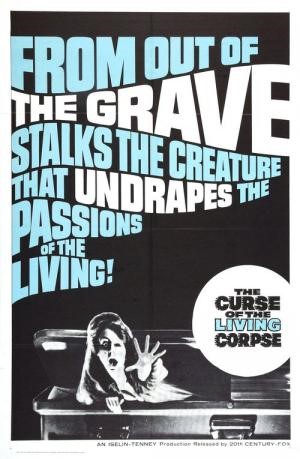


Posted in Uncategorized | 17 Comments