Dylan’s Ways to Leave His Lovers


Dylan’s Ways to Leave His Lovers

by John Henry

There must be 50 ways to leave your lover, sings Paul Simon, with the implicit suggestion that he means at least 50. But he sums them up as putting distance between you and your lover (slip out the back, hop on the bus), and being bold and decisive (make a new plan, don’t need to be coy, don’t need to discuss, drop off the key). Underlying this jokiness, however, is a more serious, maybe a more grown-up message. The singer is in dialogue throughout the song with another woman, who is seeking to help him leave his current lover. She starts off by simply offering advice, but before the end of the song she takes more pragmatic steps to separate him from his lover:

She said it grieves me so to see you in such pain,
I wish there was something I could do to make you smile again.
I said I appreciate that and would you please explain
About the fifty ways…
She said, why don't we both just sleep on it tonight?
And I believe in the morning you'll begin to see the light.
And then she kissed me and I realized she probably was right:
There must be fifty ways to leave your lover.

Paul Simon’s witty song, “50 Ways to Leave your Lover” is distinctively quirky but also presents an unusual theme in popular music; how to walk out on someone that you no longer care for. Most break-up songs are written from the point of view of the jilted lover, lamenting with a broken heart that they’ve been dumped, or are about to be (because their lover already has been seen with somebody else, as in “I’d Rather Go Blind”, or Dylan’s “Tell Me That It Isn’t True”). There are a few more triumphalist break-up songs, though, where the singer is glad to be free of the abusive lover, as in Dylan’s “Cry a While”. Or, think, for example, of the Rolling Stones’ “It’s All Over Now”:

Well, she used to run around with every man in town;
She spent all my money, playing her high-class game.
She put me out, it was a pity how I cried.
Tables turning now it’s her turn to cry,
Because I used to love her, but it's all over now!

Or, their “You’re Out of Time”:

The girl who wants to run away
Discovers that she's had her day.
It's no good your thinking that you are still mine.
You're out of touch, my baby,
My poor unfaithful baby.
I said, baby, baby, baby, you're out of time.

As with the broken-hearted jilted lover’s songs, the blame here remains with the other half of the relationship, not with the singer. In some cases there is no blame because the songs detail a mutual break-up, where both partners agree that separating is best. Dylan has written a number of these, including “One Too Many Mornings”, “Most Likely You Go Your Way (And I’ll Go Mine)”, and “Seeing the Real You at Last”. There are other break-up songs, though, where the singer admits to being at fault in losing the love of their former lover, and regretting it—think of Dylan’s “I Threw It All Away”, or Kris Kristofferson’s “Me and Bobbi McGee”:

One day up near Salinas, Lord, I let her slip away;
She's lookin' for that home I hope she’ll find. 
Well, I'd trade all my tomorrows for one single yesterday,
To be holdin' Bobbi's body next to mine.

But. it’s one thing to take the blame for failing, foolishly, to hang on to a worthy and wonderful lover; and it’s quite another thing to admit to callously dumping your lover, simply because you want to move on. Presumably, this is why Simon chose to make “50 Ways” a wryly comic song: representing the singer as trying to hide their callousness behind a facetious whimsicality.

Dylan, however, is different. He’s a songwriter who has made something of a speciality of writing songs—very wonderful songs—in which the singer is walking out on a current lover. Furthermore, the singer of these dumping songs never shows any feelings of guilt or remorse. There simply is an underlying callousness underneath the songs. You might say, therefore, that they are related to (perhaps special cases of) Dylan’s cruel put-down songs (songs such as “Like a Rolling Stone”, “Positively 4th Street”, “What Was It You Wanted”, and numerous others). The clear difference between the straightforward put-down songs and these dumping songs, though, is that the dumping songs are cunningly disguised, and can even come across as broken-hearted laments by a jilted lover.

Consider, for example, perhaps one of Dylan’s most famous moving-on songs, indeed one of his most famous songs of any stripe: “Don’t Think Twice, It’s Alright”. This is more often than not regarded as a break-up song where the singer is being jilted. Part of the song’s brilliance is that it is meant to give the unwary listener that impression. As we listen, we are meant to be suckered into feeling sorry for the “jilted” narrator. But we are listening to an unreliable narrator—a narrator who is presenting things to put himself in the best light. There are in fact ample clues in the lyrics that the narrator is the one who is leaving his lover, and leaving without discussing it (as is recommended in “50 ways”), and without even saying goodbye. In fact, he’s sneaking out of her house in the middle of the night, while she’s fast asleep:

When your rooster crows at the break a dawn,
Look out your window and I'll be gone.
You're the reason I'm trav'lin' on;
Don't think twice, it's all right.

He even tells us he’s deliberately walking on the dark side of the road so she won’t see him if she turns on the light. Our unreliable narrator tries to make out that this is her fault, but he gives himself away by inadvertently suggesting that, even if he doesn’t love her, she really loves him. He starts off by presenting her as someone who would not call after him, to ask him back, but immediately slips into admitting that he’s not listening.

No it ain't no use in callin' out my name, gal,
Like you never done before.
And it ain't no use in callin' out my name, gal,
I can't hear ya any more.

That “any more” suggests she has been calling out his name, but he’s now choosing to ignore it. Similarly, he tries to claim he loved her, but she was too young to appreciate what it meant:

“I'm a-thinkin' and a-wond'rin', walkin' down the road,
I once loved a woman, a child I am told.

But the next line is the most telling: “I gave her my heart but she wanted my soul.” He gave her his body, represented here in the clichéd claim about giving his heart, but the girl loved him enough to want his soul. But the singer makes it all too clear in the final verse that whatever his lover did for him would not satisfy him, as he so cuttingly summed it up: “You just kinda wasted my precious time.”

“Don’t Think Twice” is a love-gone-wrong song, but if anyone is to blame for the love going wrong, it is the singer himself, who tells us in no uncertain terms that he’s had enough and he’s moving on to take his chances elsewhere. Unlike Simon’s narrator in “50 Ways”, there is no suggestion that Dylan’s narrator has fallen in love with someone else. Dylan’s narrator is just fed up and wants to be on the road again.

Another brilliant song in a very similar mould is “You’re Gonna Make Me Lonesome When You Go.” Well, at least, it is similar in its moral stance, but very different in its light-hearted and even jokey tone. Here is the narrator (we can justifiably say the narrator here is Dylan himself, since this was definitely written as a way of sending Ellen Bernstein on her way after Dylan had completed Blood on the Tracks), as in “50 Ways”, trying to hide his callousness behind a breezy carelessness.

Again, on first hearing, it sounds as though the lover is about to leave the soon-to-be broken-hearted narrator. But who is leaving whom here? Whose idea is it to split up? In fact, for all the wonderful expressions of the narrator’s love for the leaver, this song is equivalent to the old Music-Hall gag: “Here’s Your Hat, What’s Your Hurry?” The joke is that the bored host tries to encourage his visitor to go by giving them their hat, but then, realising this is a bit rude, the host tries to pretend it is the visitor who is eager to leave—why are you in such a hurry?

A more familiar move, you might encounter in everyday life is when you are having a conversation with someone and they suddenly say to you: “Well, I mustn’t keep you.” The speaker is the one who feels detained, but they pretend that you are the one who has to be moving on. “You’re gonna have to leave me now, I know”, sings Dylan as he presses Ellen Bernstein’s hat into her hand. He might as easily have written a song called “Missing You, Already”. In Clinton Heylin’s Behind the Shades, Bernstein said of her relationship with Dylan during the making of Blood on the Tracks: “It felt sorta like ‘Don’t ask, don’t tell.’ I was a very young 24… This was brand-new stuff to me, so I never thought to ask, ‘So, what’s going on with your wife?’… I didn’t want to get married, and I wasn’t being asked to leave.” At least, she wasn’t being asked to leave until Dylan presented his variation on “I mustn’t keep you”. “You’re Gonna Make Me Lonesome When You Go”, but go now.

One more superb song that shows that Dylan’s need to keep on moving on with relationships brings out the best in his song-writing is “Abandoned Love”. With an emotional delivery precisely in between the faux regretfulness of “Don’t Think Twice”, and the jauntiness of “When You Go”, the narrator in this wonderful song has also made up his mind to leave his lover and move on. Like the other two, there is no suggestion that he has found someone else; he simply wants to be rid of his current lover. Nor is there any sense of guilt or wrong-doing—to abandon your lover is presented as just something you sometimes have to do.

There are clear signs here that our unreliable narrator at least thinks he is still in love with his lover: “But my heart is a-tellin’ me I love ya still”; “But my heart is telling me, I love ya but you’re strange.” He is conscious, though, that he has lost, not his precious time, but his precious freedom: “Oh, something’s a-telling me I wear the ball and chain”; “But as long as I love you I’m not free.” This last comment leads him to lay the blame for the break-up on the lover: “How long must I suffer such abuse?” Indications are, however, that the lover still loves our narrator, who is still on her list: “I asked ya please to cross me off your list.” This seems to be confirmed when the narrator sings “Let me feel your love one more time before I abandon it.” So, it is the narrator who wants to end things. Essentially, it is just the narrator’s own need to move on that leads him to walk out of this relationship: “My head tells me it’s time to make a change.”

These are the songs of a serial monogamist, and as such they constitute a sub-genre of break-up songs of a very unusual kind. There aren’t many break-up songs written from the point of view of the partner who is actively breaking things up—mostly, they are presented from the other side, from the point of view of the passive jilted lover. The fact that three of Dylan’s richest and most complex songs are written from this unusual point of view confirms his genius as a song-writer, and reveals the power of his mind and art.

What else?

You can read about the writers who kindly contribute to Untold Dylan in our About the Authors page.   And you can keep an eye on our current series by checking the listings on the home page

You’ll also find, at the top of this page, and index to some of our series established over the years.  Series we are currently running include

  • The art work of Bob Dylan’s albums
  • The Never Ending Tour year by year with recordings
  • Bob Dylan and Stephen Crane
  • Beautiful Obscurity – the unexpected covers
  • All Directions at Once

You’ll find links to all of them on the home page of this site

If you have an article or an idea for an article which could be published on Untold Dylan, please do write to Tony@schools.co.uk with the details – or indeed the article itself.

We also have a very lively discussion group “Untold Dylan” on Facebook with getting on for 10,000 members. Just type the phrase “Untold Dylan” in, on your Facebook page or follow this link    And because we don’t do political debates on our Facebook group there is a separate group for debating Bob Dylan’s politics – Icicles Hanging Down
 

Posted in Uncategorized | 3 Comments

The Wandering Kind: good groove, strong hook.


by Jochen Markhorst

 “The Wandering Kind” is an oddity in the rather disordered catalogue of Dylan/Springs songs; it is the only epic song, the only song that tells a story – with an (almost) linear narrative structure, too. Admittedly, not too complex or layered, but still: a song that may, with some tolerance, be inserted in the line of “Lily, Rosemary And The Jack Of Hearts”, “Isis” and, well alright, “Tin Angel”.

The story may not be very complex, but it does rely on an amusing, quite Dylanesque inversion: this time, the licentious, restless antagonist is not the man, who is sung about in blues format by a desperate lady, but the other way round: the woman plays the role of the criminally abusive man, the male protagonist is the complainer who tries in vain to bind his beloved to house and home. With, as a bonus, funny intertextual echoes from that long cowboy ballad from 1974, from “Lily, Rosemary And The Jack Of Hearts” on Blood On The Tracks. Unintentional coincidence perhaps, or intellectual laziness or perhaps even playful, literary intent, but Dylan and/or Springs seem to have Rosemary and Jack in mind, and even Big Jim plays a – fatal – supporting role again.

On Blood On The Tracks Jack of Hearts is the elusive, roaming actor of a wandering kind, the décor is also nineteenth century, somewhere in the border region of Mexico and Texas, and especially the dramatic climax, the murder of the local big shot, seems to be a copy. In “The Wandering Kind”, in the second verse, she is approached by some big shot who, in the third verse, apparently visits her in her hotel room:

A strange bedfellow wandered in her room
She was more unfaithful than I ever could assume
She took his money and slayed him from behind
‘Cause she knew she was restless in her mind
She’s the wandering kind.

And in “Lily, Rosemary And The Jack Of Hearts”, Big Jim is killed by the woman he trusts, who also only shares his bed for his money: Big Jim lay covered up, killed by a penknife in the back. Rosemary is hanged, and that will probably also be the fate of the lady with the restless mind too, a Queen of Spades, presumably:

I wrote this letter before leaving the hotel
To where she’s staying in that dark adobe cell

As for the choice of words, the songwriters once again smoothly browse through the gigantic inventory of the human jukebox Dylan. Refrain line and character description of the femme fatale seem to be borrowed from an oldie by B.J. Thomas, from “Sandman” from 1968;

No ties to bind
The wandering kind
I was a rolling stone
My only prayer
The restless wind
My only debt my own

From the LP On My Way, which also features the world hit “Hooked On A Feeling”, and written by Wayne Carson, who also writes the world hits “The Letter” and “Always On My Mind” in these years – no small fry, in short. The song “Sandman” isn’t too mind-blowing, but it’s conceivable that Dylan would prick up his ears at “I was a rolling stone”, and then in passing picks up “wandering kind” and “restless”.

Stylistically, the opening couplet is still on the “usual”, unimpressive Dylan/Springs level:

She’s like sweet water that runs down my face,
I keep her posted in diamonds and lace.
I give her freedom and what else I can find,
But I know she’s restless in her mind
And the wandering kind.

… or rather something above the “usual” level; the opening line is in any case a nice inversion of a poetic cliché. “Running down my face” has since centuries been reserved for tears, and tears are salt water. Here, its usual signalling function, sorrow, is reversed and the image is used in a – not entirely successful – attempt to describe the blissful impact of her beauty on the narrator.

The subsequent line is a somewhat clumsy attempt to represent the narrator’s efforts to hold on to the restless wanderer. The only cover worth mentioning, Paul Butterfield’s, also has trouble with this line and changes it to She keeps me posted with diamonds and lace – not really an improvement and a miss in terms of content; the implication that now she uses “diamonds and lace” as relationship glue is, of course, completely out of character.

The choice of words is again striking. In Dylan’s record collection, there is only one song with the word combination diamonds and lace:

She loves the free fresh wind in her face
Diamonds and lace
No God, so what
For Rod Steiger she whistles and stamps
That's why the lady is a tramp

… just as “The Lady Is A Tramp” is the only song with the word bleachers, which Dylan then chooses as backdrop for a “Highway 65 Revisited” couplet in 1965.

The echoing diamonds and lace illustrates that the creative part of Dylan’s mind, in 1978, is not with the old blues masters alone. Traces of heroes like Muddy Waters, Sonny Boy Williamson and Charley Patton abound in the Dylan/Springs songs, but in the Street-Legal songs we see, as in this text fragment, the love for the poets of the American Songbook, for Irving Berlin, Johnny Mercer and Lorenz Hart. First and foremost, of course, in the exuberant pleasure of rhyme, in the fun of integrating frenzied rhyme finds. The brilliant opening of “The Lady Is A Tramp”, which Sinatra and Bing Crosby unfortunately skip, but which Ella Fitzgerald does sing, already makes Dylan the Rhymer jump up:

I've wined and dined on Mulligan stew and never wished for turkey
As I hitched and hiked and grifted too, from Maine to Albuquerque
Alas I missed the Beaux Arts Ball and what is twice as sad
I was never at a party where they honored Noel Ca-ad
But social circles spin too fast for me
My “hobohemian” is the place to be

… in which a rhyme like wished for Turkey / Albuquerque is colourful enough, but the rhyme twice as sad / Noel Coward is really infectiously frenzied. It animates Dylan in 1978 to similar language acrobatics in songs like “No Time To Think” and “Changing Of The Guards”, but for a throwaway like this “The Wandering Kind” he limits himself to charming, but otherwise hardly stunning borrowings – to reuse of word combinations and remarkable jargon, that is. The pun hobohemian, which summarises Dylan’s first five years as a recording artist in five syllables, is too distinctive to reuse, unfortunately.  

Re-usage characterises the lyrics anyway. Clichés and hackneyed verse fragments like I can’t keep from crying, down at the border, ease my heavy load or don’t need no woman are known from countless blues, country and folk classics, and the lines that deviate from them are mostly weak; I tried to help her but she knows I’m not blind, for instance, or She was more unfaithful than I ever could assume… clumsy, awkward lines. Not to say: lousy poetry.  

There is nothing wrong with the music, though. Not too ambitious and not too original either, but oh well – good groove, strong hook, as band guitarist Billy Cross probably would say. Paul Butterfield still manages to make something of it.

Jochen is a regular reviewer of Dylan’s work on Untold. His books, in English, Dutch and German, are available via Amazon both in paperback and on Kindle:


What else?

You can read about the writers who kindly contribute to Untold Dylan in our About the Authors page.   And you can keep an eye on our current series by checking the listings on the home page

You’ll also find, at the top of this page, and index to some of our series established over the years.  Series we are currently running include

  • The art work of Bob Dylan’s albums
  • The Never Ending Tour year by year with recordings
  • Bob Dylan and Stephen Crane
  • Beautiful Obscurity – the unexpected covers
  • All Directions at Once

You’ll find links to all of them on the home page of this site

If you have an article or an idea for an article which could be published on Untold Dylan, please do write to Tony@schools.co.uk with the details – or indeed the article itself.

We also have a very lively discussion group “Untold Dylan” on Facebook with getting on for 10,000 members. Just type the phrase “Untold Dylan” in, on your Facebook page or follow this link    And because we don’t do political debates on our Facebook group there is a separate group for debating Bob Dylan’s politics – Icicles Hanging Down
 

Posted in Uncategorized | 4 Comments

Never Ending Tour, 1996, part 1. Busy being born. With Al Kooper in Liverpool

There is an index to this series of articles on the Never Ending Tour here. This is episode 31.

‘It might look like I’m moving
but I’m standing still’

By Mike Johnson (Kiwipoet)

‘It is not a year remembered with great fondness by most long-term fans. In contrast to the innovation and stellar performing levels of most of 1995, it was all too predictable; same band, same set structure, and not many song debuts. Overall the shows were solid enough, but, as in late ’93 and periods of ’94, just not particularly special. More alarmingly, some of the overlong, uninspired, unproductive guitar instrumentals were reappearing too.’
-Andrew Muir, One More Night: Bob Dylan’s Never Ending Tour

Doesn’t sound too hopeful, does it? From Muir’s point of view, having reached a peak in 1995, Dylan had nowhere left to go but down. With dogged inspiration Dylan had led the band on its rising curve from 1991 to 1995, but without some new input or change, he could at best mark time. And of course he is talking about our Mr Guitar Man, Bob himself, when he identifies ‘overlong, uninspired, unproductive guitar instrumentals,’ although he doesn’t say so.

There tends to be more guitar work in 1996, as Dylan uses the harmonica less. For the next couple of years the harp would fall out of favour.

CS, the anonymous compiler at A Thousand Highways, has a gentler perspective:

‘1996 was not an especially noteworthy year of performances for Bob Dylan, though it would be the last full year of touring before Dylan shifted towards performing new and traditional material with his 1997 release of Time Out Of Mind​. In the interim, he and his band stuck to the sound they had established over the past two years.’

In other words, Dylan was on the edge of another great leap forward. Tony Attwood, Editor of Untold Dylan, puts it this way in “Bob Dylan in 1966”

‘Bob Dylan toured consistently in 1996 from April through to August, before finally taking a break.  And at this point, for the first time in over five years, he started writing and recording new songs again, and from this we have the first set of songs that became Time out of Mind.

The re-writing of the songs, plus the addition of new compositions, continued through to 1997, but 1996 clearly marks not just the end of Dylan’s longest period without writing songs at all but the emergence of a new way of writing songs about moving on – and despair.’

Time Out of Mind, starting to incubate in Dylan’s mind in 1996, would not be just another Dylan album, but arguably the darkest, most despairing album Dylan ever cut, although Blonde on Blonde (1966) and Street Legal (1978) are rivals for that distinction. I bear that in mind when watching some of Dylan’s stony-faced performances of 1996 (The Hyde Park performances, for example, twenty minutes of which you can find on You Tube). We can only assume that Dylan was performing in that face of that despair during 1996.

However, as with other lesser years of the NET, we find a number of treasures and standout performances.  There are also some concerts well worth tuning into. A standout in my mind are the Liverpool concerts of the 26th and 27th of June, when he was joined by his organist from the 1960s, Al Kooper, who came up with that famous organ opening to the album version of ‘Just Like a Rolling Stone’.

These performances may not have the aura of magic of the Prague concerts of 1995, but if this is another day at the office for Dylan, these Liverpool performances are pretty damn good. New cracks are beginning to appear in his voice. The voice we hear on Time Out of Mind is far from the clear, high tones of 1995, but this is not the scratchiness of the early nineties, rather the beginning of a new stage or new maturity in his voice. There is no loss of power and conviction.

I see 1996 as a year of consolidation and preparation. There was, however, some innovation and experiment. Remember that bouncy ‘Positively 4th Street’ from the 1965/66 era. It is a song of complaint about the betrayal of a friendship. I liked the studio version as its message is at odds with the happy sounding music, creating a pleasing disjunction. Here, however, Dylan has slowed down the tempo and drawn it out, and it sounds less happily vicious. Great to hear Al Kooper doing the opening chords. (June 26th)

Positively 4th Street

Some of the songs get a bit of a country twist. That works brilliantly for ‘Watching the River Flow’ which up to this point has been given the full rock treatment. This may well be the most successful adaptation of this wonderful paean to indolence. Impossible not to enjoy this fast paced performance. Great work from the steel guitar. (Also from June 26th)

Watching the River Flow

A bit of country twang works well too for ‘She Belongs to Me’. Almost sounds like a love song with that lazy beat and a vocal performance that reeks of regret.

She belongs to Me.

Staying with the June 26th concert, and Al Kooper’s backing, we come to that magnificent tale of temptation and loss, ‘Man in the Long Black Coat’. This version doesn’t have the soaring harmonica of the unforgettable 1995 Prague performances, but Dylan’s vocal compares favourably to any previous performances. Beautifully atmospheric.

Man in the long black coat.

‘Silvio’, co-written with the Grateful Dead’s Robert Hunter, makes for a great rock song. To my mind, these early performances of the song are the best. In later years it was to become a bit of beaty filler, but here (June 26th) we hear it fresh and full of life. I read that Hunter wrote the lyrics and Dylan wrote the music, but find that kind of hard to believe given how Dylan-like the lyrics are:

‘I give what I got until I got no more
I take what I get until I even the score
You know I love you and further more
When it is time to go you got an open door

I can tell you fancy I can tell you plain
You give something up for everything you gain
Since every pleasure's got an edge of pain
Pay for your ticket and don't complain’

I’m not complaining, but can you see anything there that doesn’t sound like Dylan? Hunter channelling Dylan? He was to do it again with Dylan in 2009 with the album Together Through Life.

Silvio

‘Seven Days’ was written back in 1976, and first performed in that year, but rarely played during the NET. This is one of Dylan’s orphan songs, never recorded in a studio, and only known through the few performances of it. And yet it is a powerful expression of desire for an absent lover, and would have fitted the Desire album perfectly. It captures that impatience we feel anticipating the arrival of a lover. Joe Cocker did a great live performance of the song in 1982.

This 1996 performance is as good as any with its descending guitar line. (June 27th)

 Seven Days

‘Drifter’s Escape’ was first played live in 1992, but rarely performed until 1996. It’s another madcap tale from 1967. The website Songfacts makes this comment: ‘The surreal absurdity of the song has been compared to the writing of Franz Kafka. Its ambiguous nature has provoked all manner of analyses. Some critics have noted that the song mirrored Dylan’s own experience with the media and his fans and critics (which seemed to overlap more frequently than one might expect).’

From 1996, over the next few years, Dylan was to develop the song into a hard-hitting and powerful rocker. This particular arrangement was only to last for a couple years, and features some full-on rock harp. (26th July).

Drifter’s Escape

‘Ramona’, a 1960s favourite, has been performed some 380 times. This 1996 performance is certainly no better than the 1995 version, but it’s a solid performance. Again, don’t be deceived into thinking that this is a love song. It may arise out of love, but is a song of admonition, and a warning not to be deceived by the appearances of life. (27th June)

Ramona

The arrangement of ‘Masters of War’ that Dylan came up with in 1995 for his stunning London performance of that year was pretty much the same as this 1996 version, minus the harp. Its surging, menacing beat is perfect for this song, one of Dylan’s most explicit protest, anti war songs . As long as we have war, and companies manufacturing weapons for profit, this song will be playing in the background. As eternally true as warmongering itself. (26th June)

Masters of War

Andrew Muir, in the front quote to this article, says that there were not many debut songs in 1996. Well, one of those ‘not many’ is ‘Alabama Getaway’, another Grateful Dead, Robert Hunter song. It’s a zany little number with Dylan-like, absurdist lyrics. It’s a good spot to pause in this look at Dylan’s Liverpool performances of 1996.

Alabama Getaway

I’ll be back shortly to look further at the performances from that concert.

Kia Ora

What else?

You can read about the writers who kindly contribute to Untold Dylan in our About the Authors page.   And you can keep an eye on our current series by checking the listings on the home page

You’ll also find, at the top of this page, and index to some of our series established over the years.  Series we are currently running include

  • The art work of Bob Dylan’s albums
  • The Never Ending Tour year by year with recordings
  • Bob Dylan and Stephen Crane
  • Beautiful Obscurity – the unexpected covers
  • All Directions at Once

You’ll find links to all of them on the home page of this site

If you have an article or an idea for an article which could be published on Untold Dylan, please do write to Tony@schools.co.uk with the details – or indeed the article itself.

We also have a very lively discussion group “Untold Dylan” on Facebook with getting on for 10,000 members. Just type the phrase “Untold Dylan” in, on your Facebook page or follow this link    And because we don’t do political debates on our Facebook group there is a separate group for debating Bob Dylan’s politics – Icicles Hanging Down
 

Posted in Uncategorized | Leave a comment

All Directions: did Dylan really change in the Basement?

By Tony Attwood

This is part of the series “All directions at once” which seeks to explore how Dylan’s writing evolved and developed over time.

Recent episodes are

The whole series is indexed at All Directions at Once

Leaving aside the New Basement Tapes notebooks (the abandoned lyrics from the period around 1967, which were later turned into songs by other artists, Dylan wrote 63 songs in the Basement.  Many are of little importance musically, and are nothing more than the guys playing around.  That’s not to knock the process of musicians improvising together, but it is not the same as writing and completing a song to make it ready for recording or performance on stage.

What is interesting in terms of the “All Directions” series is whether Dylan radically changed the themes he was writing about during his time in the Basement, perhaps doing so as a result of the regular work with the musicians day after day.  Or was the Basement merely an extension of his regular approach in which he had sketches of songs that could then be turned into performances?

Going through the 63 basement songs what I find interesting in terms of subject matter is that it is not in any way a reflection of where Dylan had been before.  Indeed it seems to me to be a significant change in the landscape of his songs.  And in fact when he left the Basement and created his next album, the same happens again.  He goes off in another direction.

As ever with my attempts to classify each song in one or two words, opinions are bound to vary, but I suspect the overall list of themes that others would come up with, if doing this exercise, are going to be similar to mine – even if the terminology is different.  A “lost love” song is a “lost love” song, a “blues” number stays exactly that.

This table takes all the songs Dylan wrote from 1959 to 1969 and ascribes a simple subject title to each.   The series from 1959 to 1966 already has its own table

1959-63: The first five directions

Before the Basement

So now taking that data and the years up to the end of the 60s this is what I have…

Theme 1959-66 B’ment 1967 JWH 1967 1968/9 Total
Art 2 2
Blues (world weary) 9 9
Change 4 4
City 1 1
Civil rights / social commentary 6 6
Dada 12 12
Death 4 4
Disaster 1 1
Disdain 6 6
Do the right thing 2 2
Escape 1 1
Future /eternity 1 1 2
Gambling 1 1
History 1 1
Homage 1 1
How we see the world 1 1
Humour 18 4 22
Protest / hurting / despair 3 3
Individualism 6 1 7
Justice 2 2
Kafka 5 5
Leaving 1 1
Life is a mess 11 11
Lost Love 20 10 4 34
Love, desire, lust 13 13 2 26
Modern Life (tragedy of) 4 4
Moving on 27 16 43
Nothing changes 4 4
On the run 1 1
Party freaks 3 3
Patriotism 3 3
Protest/rebellion 17 17
Randomness/surrealism/ stream of consciousness 4 1 5
Relationships 1 1
Religion 2 2
Self interest 1 1
Sex 1 1
Surrealism 3 3
Woman is in control 6 6
World weary 1 1

What stands out to me here is that apart from three of his regular favourite themes of love, lost love, and moving on, plus the occasional spot of humour, Dylan moved onto writing on completely new themes.  The Basement really was an occasion for seeing what new themes he could discover.   Protest and rebellion, the blues, disdain, dada – there is no sign of any of these any more.  There is an awfully large amount of “moving on.”

At the same time some new themes were explored in numerous songs, with the theme of s “life is a mess” (11 songs), standing out.

But then Dylan did not take any of what he had explored in the Basement into his new writing.  It is as if this were a set of ideas he tried, and then threw away.  Only three songs from JWH actually touched on themes that Dylan had written about in the Basement.  eight of the compositions were on themes he had never used before, covering history, homage and (most of all) Kafka.

So Dylan had drawn a line and was clearly not going to give us on his favoured themes of love, lost love, and moving on.  Instead he certainly used the Basement to think around different corners, and find directions he had never considered before.

With John Wesley Harding, the story is that Bob had a contract to create a new album, so he simply did that.  His own tale is that he sat on a train writing to lyrics – and even if we accept this, it surely seems most likely that he wrote the two country songs that have no connection with the rest of the album after the recording of the rest of the album had concluded (and presumably they had discovered that they didn’t have enough to make a full album).

Here are the topics

  • Kafka 5
  • History 1
  • Eternity 1
  • Poetic homage 1
  • Do your own thing / individualism 1
  • Stream of consciousness 1
  • Love 2

Whether the story of writing to complete the contract is true or not, it is interesting that Bob didn’t feel like using the new compositions from the time in the basement.  It is possible that they were all considered part of the contract of writing songs for other performers, but it seems to me also likely that having moved out of  the basement he figuratively turned a new page in his writing, as he turned a new page in terms of where he lived.

Interestingly also, there was no sign of Kafka in the basement – I wonder if he read Metamorphosis and The Castle in the break between the Basement and the commencement of the writing of JWH…

What Dylan did say in his interviews was that he had written some homespun folk songs which didn’t have repeated lines – and that second point of course is true, at least in terms of the lack of repeated lines such as is found in a chorus.

But what Dylan has done is taken the music he has been playing, to a completely new place.  If there was an antecedent to “Drifter’s Escape” in the canon of popular or folk music, I’ve missed it.  Who else has used Kafa as a source of themes for two and a half minute songs?

It was indeed a revolutionary moment, and JWH is a revolutionary album because of its song content.  As revolutionary as “Johanna” or “Desolation Row” and the other masterpieces were themselves each revolutionary in their own ways.

And then, what did Dylan do next having delivered on his contract?  Well, actually nothing.  He had a year out, during which time he wrote one song – “Lay Lady Lay” and even that he delivered late for the movie it was supposed to headline.  Which brings us to 1969, and a resumption of songwriting.

Interestingly the process of writing in 1969 began with a co-composition with George Harrison (Nowhere to go).  I’m not clear who wrote what in this song, but it sounds to me like Dylan lyrics but certainly not Dylan’s music.

And maybe the song had a value in Dylan’s life, because after that he started writing again, and ended the year with 15 songs.  There is of course some dispute about the provenance of some of these songs:  “Minstrel Boy” for example is counted as a Basement song, but it seems it was never written down at the time, and when it was set in stone, it had changed somewhat.

Indeed the year is a curious mixture with songs that we might well immediately recognise as Dylan (“I threw it all away”), songs that are clearly part of his country music period (“Country Pie”) and real oddities like “Champaign Illinois”.

All in all the impression I get is of a man trying to find his way back into composing.  Indeed to return to the first song of the year (“Nowhere to go”) I find myself asking how could two songwriters of such brilliance create a song that is so hard to listen to, let alone perform?

As a result of this strange hinterland that Dylan had slipped into, there was no real direction beyond the notion that there is no direction because there is nowhere to go.

And inevitably finding themes in such a year is tough.  But I’ve had a go…

  • Celebration of a city: 1
  • Escape: 1
  • Lost love: 2
  • Love 4
  • On the run: 1
  • Self-interest: 1
  • Sex: 1

From my point of view of trying to see Dylan’s compositions as moving through time like a wave, sliding up and down, I think we’ve got to a moment where the wave crashes on the shore.  It really doesn’t have anywhere else to go.  As the subject matter shows…

Of the 16 songs written in 1968/9 what would we remember thereafter? A fairly good guide comes from seeing how often Bob performed the songs….  totals are taken from the official Dylan site.

  1. Lay Lady Lay: 407
  2. Tonight I’ll be Staying Here With You: 144
  3. Country Pie (sex? country life?): 136
  4. To be alone with you (love): 126
  5. Tell me it isn’t true (love): 76
  6. I threw it all away (lost love; love is all there is): 48
  7. One more night (lost love): 2
  8. Living the blues: 1

That is the list of the eight out of the 16 songs that were played, and indeed if we discount the songs played just once or twice that is six out of 16.  Excluding “Lay Lady Lay”, written the year before all the other songs here, these top performance rankings of between 126 and 144 put them, in terms of performance alongside, “Man gave name to all the animals” and “Duncan and Brady.”

Of course Dylan has always been eccentric in his choice of songs to perform, but the lack of any stand out performance favourite from the album perhaps gives some indication that Bob himself was not sure where he was going next.

So what are we to make of this period?  First, Bob had his first year off from writing, and then when he did come back, the excitement and the new directions seemed to be lacking from the album.  Which is curious, since we often think that after having a break artists will come back refreshed.  It seemed not, in this case.

Bob in fact was the other way around.  Having played, improvised and composed seemingly all night and half the day through the Basement Tape months, Bob ended up with a range of masterpieces.  And each written straight one after the other!

  • This Wheel’s on Fire
  • I shall be released
  • Too Much of Nothing
  • Tears of rage
  • Quinn the Eskimo – The Mighty Quinn

And then although Bob didn’t seem too worried about performing the John Wesley Harding songs I think many fans would see a lot of them as being of high merit – including of course his most performed song of all “All Along the Watchtower”.

So in the end perhaps we should best see 1968/9 as an extended recovery period.  Beyond “Lay Lady Lady” would any of these songs make the top 50 list of Dylan songs for anyone who was minded to create such a list?  Yes, undoubtedly one or two, because we all have different tastes, but still, not exactly Bob’s most prolific and successful two years.

Obviously for mere mortals toiling away in the world of songwriting, such a two year period would be a huge success, but for Bob, perhaps not.

What else?

You can read about the writers who kindly contribute to Untold Dylan in our About the Authors page.   And you can keep an eye on our current series by checking the listings on the home page

You’ll also find, at the top of this page, and index to some of our series established over the years.  Series we are currently running include

  • The art work of Bob Dylan’s albums
  • The Never Ending Tour year by year with recordings
  • Bob Dylan and Stephen Crane
  • Beautiful Obscurity – the unexpected covers
  • All Directions at Once

You’ll find links to all of them on the home page of this site

If you have an article or an idea for an article which could be published on Untold Dylan, please do write to Tony@schools.co.uk with the details – or indeed the article itself.

We also have a very lively discussion group “Untold Dylan” on Facebook with getting on for 10,000 members. Just type the phrase “Untold Dylan” in, on your Facebook page or follow this link    And because we don’t do political debates on our Facebook group there is a separate group for debating Bob Dylan’s politics – Icicles Hanging Down
 

Posted in Uncategorized | 1 Comment

Bob Dylan And His Mythology (Part III): Emily Dickinson And The Door 

Previously in this series:


by Larry Fyffe

The Puritan creed predestines individuals to be members of God’s Elect; Saint Peter holds the keys to the pearly gates of Heaven, and they are closed to everyone else:

But the two-handed engine at the door
Stands ready to smite once, and smite no more
(John Milton: Lycidas)

Richard Thomas notes that “In  ‘Bob Dylan: Aeneas Visits Key West’ …., Larry Fyffe suggests the song is figuratively transformed into the Underworld of Greek/Roman mythology … the regions to the left … punished the wicked for their misdeeds. But the road to the right led to the Elysian Field”

(An Open Access Journal).

In one story of the Greek/Roman mythology, pursued Philomela turns into a nightingale in order to escape  – as if to say that a talented artist is able to live on forever through her works of art.

Patty below (perhaps a reference to American punk poet Patti Smith) manages not to cry:

Patty's gone to Laredo
But she'll be back soon ....
The doorway, the door is locked
But the key's inside
(Bob Dylan: Patty's Gone To Laredo)

The key being in one’s own head  – the ability to keep on trucking whilst suffering through the trials, the tribulations, the despair, and the chaos of human existence. In other words, it’s up to each individual to stoically find the strength to carry on –  so expresses the following anaphoric poem by a female artist from a dark Puritan background; the poem concerns the trouble females face becoming accepted outside their assigned sex roles:

As if my life were shaven
And fitted to a frame
And could not breathe without a key
And 'twas like midnight some
(Emily Dickinson: It Was Not Death For I Stood Up)

The following song could be taken as addressed specifically to Emily Dickinson herself:

They shaved her head
She was torn between Jupiter and Apollo
A messenger arrived with a black nightingale
I seen her on the stairs, and I couldn't help but follow
(Bob Dylan: Changing Of The Guards)

In the poem below, there’s a vision of a female writer transformed into a nightingale who has flown to the other side of death’s door:

But differed in returning
Since Yorkshire hills are green
Yet not in all the nests I meet
Can Nightingale be seen
(Emily Dickinson: Nightingale)

Note the Dylanesque ‘rhyme twist’ in the song lyrics below ~ ‘before’/’door’:

Now I'll cry tonight
Like I cried the night before
And 'leased on the highway
But I dream about the door
(Bob Dylan: I'm Not There)

Coincidental with ~ ‘door’/’before’ in the following poem:

I laughed a crumbling laugh
That I could fear a door
Who consternation compassed
And never winced before
(Emily Dickinson:“I Years had been from Home”)

What else?

You can read about the writers who kindly contribute to Untold Dylan in our About the Authors page.   And you can keep an eye on our current series by checking the listings on the home page

You’ll also find, at the top of this page, and index to some of our series established over the years.  Series we are currently running include

  • The art work of Bob Dylan’s albums
  • The Never Ending Tour year by year with recordings
  • Bob Dylan and Stephen Crane
  • Beautiful Obscurity – the unexpected covers
  • All Directions at Once

You’ll find links to all of them on the home page of this site

If you have an article or an idea for an article which could be published on Untold Dylan, please do write to Tony@schools.co.uk with the details – or indeed the article itself.

We also have a very lively discussion group “Untold Dylan” on Facebook with getting on for 10,000 members. Just type the phrase “Untold Dylan” in, on your Facebook page or follow this link    And because we don’t do political debates on our Facebook group there is a separate group for debating Bob Dylan’s politics – Icicles Hanging Down

Posted in Uncategorized | Leave a comment

Tonight’s Bob Dylan online concert from our friends in Poland

Tonight is the night (or day if you are in parts of the world with different time zones) when our friend on Untold Dylan, Filip Łobodziński, and his fellow musicians are performing a live Dylan concert on line.   The starting time is 1800 Central European Time (1700 British Summer Time).

The band consists of:

  • Krzysztof Poliński – drums, percussion
  • Marek Wojtczak – bass guitar, double bass
  • Jacek Wąsowski – acoustic guitar, mandolin, banjo, hca (he’s also the producer of our album)
  • Filip Łobodziński – 12-string acoustic guitar, nylon guitar, ukulele, voice, percussion, translations
  • and sitting in with the band is Jerzy Runowski  who was responsible for the mastering of the album).

The setlist contains 12 songs, no fixed order yet but we are told it will be:

  • Masters of War
  • The Times They Are a-Changin’
  • Mr. Tambourine Man
  • Love Minus Zero/No Limit
  • Subterranean Homesick Blues
  • Like a Rolling Stone
  • Señor (Tales of Yankee Power)
  • Gotta Serve Somebody
  • Man Gave Names to All the Animals
  • Blind Willie McTell
  • Love Sick
  • Soon after Midnight

And to clarify the time – since we have had the clocks change in Europe this weekend as we move into summer time, the definitive statement is that the concert starts at 1800 CEST.   That is one hour ahead of time in the UK, so for the UK it is 1700 BST.  For everywhere else just go onto a search engine and type “What is 1800 CEST in…” (insert your country or time zone).

You can find the concert at the website addresses below.

In case you missed the details before, here they are again.

The band called dylan.pl and the concert will last just 50 minutes, containing 12 songs – which of course will be in Polish, as that is where the band comes from.

As we mentioned before, it is the first concert in 13 months so they tell me they might be a bit rusty, but Filip writes for Untold Dylan so we forgive him anything and everything.

Below please find are the links to the event,  via these links which will be active just before the gig and then for the next 24 hrs.

https://fb.me/e/5bXDNLCYQ

https://youtu.be/asUtOGeojYE

https://mokjozefow.pl/dylan-pl-czyli-bob-dylan-po-polsku/

I do hope you can make it.

Tony.

Posted in Uncategorized | 1 Comment

Beautiful Obscurity: Every Grain of Sand, worked, re-worked, and worked again 

Beautiful Obscurity 

This series, compiled by Tony Attwood, takes a new look at the best ever – or at least some of the more unusual – cover versions of Bob Dylan’s music.  Previously we have had…

Today, it is Every Grain of Sand.

We all know the song, and most commentators have had their bash at describing it, and nigh on everyone calls it a masterpiece. I think Jochen on this site described it perfectly, being “imbued with the Lutheran vision that suffering in this earthly valley of tears is our destiny, until death comes to redeem us.”

Nana Mouskouri has claimed that after a concert of hers she and Bob went out for a meal and “he wrote Every Grain Of Sand‘ for me” and thus Ms Mouskouri puts it on her next album.  Jochen’s view is that “The versions by Emmylou Harris, especially the studio version of Wrecking Ball (1995, produced by Dylan expert Daniel Lanois), can hardly be improved and overshadow all the other covers.”  I’m hoping I’ve picked up the right version here – Jochen do tell me if not.

The issue for everyone singing the song is whether to go with the snare drum double beat or not.  Ms Harris does, and she gets away with it completely because the accompaniment is so perfectly balanced, that the snare is never overpowering, and it changes as the melody changes for two lines.  Plus she puts in her harmonies there, and only there, to add  to perfection (if that is possibly, which technically it isn’t).

Jochen taunts us in his piece with a reference to the Blind Boys of Alabama version.  They feel the need for some sort of percussion, but not that normally used – but I don’t really understand the point here.  What is the drum part saying to us in this otherwise beautiful version?  It is, for me, as the lyrics have it at one moment, an indulgence – to such a degree I can hardly listen.

Luka Bloom vary the melodic line and add a new accompaniment but for me this feels as if everyone (musicians and vocalist) is simultaneously holding back but still wanting to be noticed.   I think the problem is exacerbated by a chunky rhythm with a clink counter melody that seems to be there because someone thought let’s have a secondary instrumental melody at the same time but no one asked why.

Above all I think this is one of those arrangements where everyone had an idea and they just let them all happen, without having an arranger in chief or producer or director there who is going to say, “Hang on guys, there is just too much here”.  Or maybe they were told but no one wanted to lose their little bit.

It is worth heading back from that experience to Bob, to see where he went.  He uses harmonies but they are restrained and the instrumentation knows it is background, and that is where it stays.  Yes there is a lot here, but every player knows his place just as grain of sand knows its place.  Except… my only concern is the harmonica… I don’t think we needed anything more.  There were enough instruments out there – but I guess no one could tell Bob.


There is a real temptation with this song to perform it as four solid beats in each bar, but that is not what the song really is, as we can tell with this edition from Madison Cunningham.  She has a gorgeous voice and can deliver a simple, straight performance without variation, but when stripped down to the minimum, there is a feeling that we need more.  It is just that double beat of a drum is not the “more” that I need.

Luka Bloom takes the accompaniment to a mid-point and in the opening seconds I feel this really is just what I need from this song, but then the change of the melody turns me away, because a fundamental part of the glory of the song is the melody.  There are many Dylan songs that can be given an extra life by changing the melody (Dylan has done it himself many times of course) but for me this is not one of them.  Or if it does need a new melodic interpretation, then it needs something on a par with the glorious original, and we don’t get that.

So let us pause for a moment and remind ourselves where Bob took this piece when he was playing it without the pulsing drum double beat.

It is a relief to get back to the original melody – what a gorgeous creation it is.  But is that a glockenspeil I hear behind; oh no!  Actually no I don’t think it is, I think it is an electronic keyboard with the “glock” tone clicked down.  So once again I find myself hearing something not needed.  Imagine this delicious rendition without the tinny twinkly pinging of metal on metal.  Fortunately the instrument is not always there so it can be done.

Twinkly twinkly goes the introduction of the Peter Viskinde Band- the influence of the glockenspiel is still here.  If you can listen to the version below and get to the “glory of the moment” when the glock sound has gone, I think you may see what I mean.  Sadly, the wretched twinkly sound comes back, and the organist even feels like adding a twinkle too.  I feel I just want simplicity.


And so thank you thank you Amanda Ghost (or possibly Gohst – as I have found it written on one site).  Yes you can have percussion, yes you can have a repeating bass (although if I’d do anything here I’d take it out), but I do like this.  And this version makes me think, maybe the song is so beautiful no human can actually fully realise its beauty.  In my head I know where it could be, but I certainly couldn’t arrange that in reality, even given the greatest performers on the planet.

Of course there are more and more recordings, and if you have not had enough, you might want to try these…

Each one goes somewhere new…

And yes, even Bob has a go…

While occasionally some to a planet I can’t actually recognise or relate to

And – blimey – you are still here are you?  Wow, that is resilience.  So yes, of course you need a reward.  Now of course I don’t know if you share any of my feelings for this wonderful musical creation, and quite possibly you have consigned my views to a dustbin marked irrelevance.

But this one is the closest to what is in my mind.

I got there in the end.

What else?

You can read about the writers who kindly contribute to Untold Dylan in our About the Authors page.   And you can keep an eye on our current series by checking the listings on the home page

You’ll also find, at the top of this page, and index to some of our series established over the years.  Series we are currently running include

  • The art work of Bob Dylan’s albums
  • The Never Ending Tour year by year with recordings
  • Bob Dylan and Stephen Crane
  • Beautiful Obscurity – the unexpected covers
  • All Directions at Once

You’ll find links to all of them on the home page of this site

If you have an article or an idea for an article which could be published on Untold Dylan, please do write to Tony@schools.co.uk with the details – or indeed the article itself.

We also have a very lively discussion group “Untold Dylan” on Facebook with getting on for 10,000 members. Just type the phrase “Untold Dylan” in, on your Facebook page or follow this link    And because we don’t do political debates on our Facebook group there is a separate group for debating Bob Dylan’s politics – Icicles Hanging Down

Posted in Uncategorized | 1 Comment

Watch Untold Dylan’s Polish correspondent & his band play live on Sunday

By Tony Attwood

Dylan.pl the band of Untold Dylan contributor and chief Polish correspondent Filip Łobodziński, is playing live on the internet on Sunday (or Monday very early in the morning if you are in Australia).

The concert lasts 50 minutes and runs through 12 Dylan songs.  The songs will be performed in Polish but the music is in the international language of music – and besides you’ll know the language because you know the songs – and if you are a regular reader you will know Filip as well.

Here are the the starting times (I hope I have them right).

  • 1800 Western Europe
  • 1700 UK and Ireland (GMT)
  • 1300 Eastern Time
  • 1000 Pacific Time
  • 0900 Alaska Time
  • 0400 Sydney, Australia.

Because of the lock downs everywhere this is the first concert of the band in 13 months so Filip suggests there might be some errors, but I am sure he is being modest.

Anyway, it’s probably your only chance for a while to listen to familiar tunes played live and explored in a strange language that you are not used to.

Below please find are the links to the event, which will be active tomorrow just before the gig and then for the next 24 hrs.

https://fb.me/e/5bXDNLCYQ

https://youtu.be/asUtOGeojYE

https://mokjozefow.pl/dylan-pl-czyli-bob-dylan-po-polsku/

Filip’s comment is typically modest, saying, “Of course, don’t feel obliged to watch it but I thought perhaps you’d just be curious.  And, above all, stay healthy, safe and observant (I hope you are in a good shape and state of mind).”

While you are waiting you might like to read Filip’s article on the top Polish rock band T Love

But better still you can listen to Filip’s band

There will be more about Filip on line tomorrow before the concert.  If you want to read about Filip we’ll be publishing that tomorrow.

What else?

You can read about the writers who kindly contribute to Untold Dylan in our About the Authors page.   And you can keep an eye on our current series by checking the listings on the home page

You’ll also find, at the top of this page, and index to some of our series established over the years.  Series we are currently running include

  • The art work of Bob Dylan’s albums
  • The Never Ending Tour year by year with recordings
  • Bob Dylan and Stephen Crane
  • Beautiful Obscurity – the unexpected covers
  • All Directions at Once

You’ll find links to all of them on the home page of this site

If you have an article or an idea for an article which could be published on Untold Dylan, please do write to Tony@schools.co.uk with the details – or indeed the article itself.

We also have a very lively discussion group “Untold Dylan” on Facebook with getting on for 10,000 members. Just type the phrase “Untold Dylan” in, on your Facebook page or follow this link    And because we don’t do political debates on our Facebook group there is a separate group for debating Bob Dylan’s politics – Icicles Hanging Down

Posted in Uncategorized | Leave a comment

More Than Flesh And Blood (1978) part IX – final Good groove, strong hook

More Than Flesh And Blood (1978) part IX – final

by Jochen Markhorst

IX         Good groove, strong hook

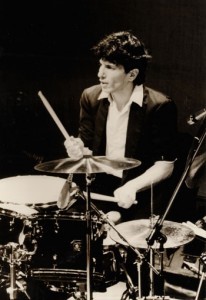
A few months after his death (7 September 1978), Keith Moon’s unbridled, restless ghost seems to have found a new haven: The Knack. Especially on stage, singer Doug Fieger has an appearance and facial gesticulation uncanny similar to the young Moon, but the real spirit of the legendary Toilet Terminator is where it should be: behind the drum kit. There is the irresistible Bruce Gary, who should have gotten a Grammy for his distinct opening claps on “My Sharona” alone, and who has elevated himself to the status of the one and only True Heir of Moon the Loon, not least thanks to his staggering contribution to “Your Number Or Your Name”.


The story of The Knack is the story of a comet: fierce, bright and short. The debut single is a world hit in the summer of ’79, at the end of ’81, after three albums and six singles in less than 30 months, the band falls apart. Drummer Gary, who before The Knack had already built up a reputation as an accompanist to such big guns as Albert Collins, Jack Bruce, Mick Taylor and Dr John, does not fall into a black hole. In the 80s, he keeps on drumming, for George Harrison, Rod Stewart and John Lee Hooker – to name just a few – and starts a career as a producer. For The Ventures, for example, and especially for the famous Jimi Hendrix Blues compilation (1994).

His paths do cross with Dylan a few times. In January 1978, Bruce checks in at the Rundown Studios for the Far East Tour Rehearsals, which can be heard on the bootleg The Rundown Rehearsal Tapes (2002); Gary plays on three songs on CD 1 (“Going, Going Gone”, “Simple Twist Of Fate” and on that remarkably arranged “You’re Gonna Make Me Lonesome When You Go”). Incidentally, that’s also the session where actress Katey Sagal (Peggy Bundy from Married With Children) can be heard in the backing chorus, which she has – understandably – been telling in every interview for the past thirty years;

“I was like 19 or 20 years old. I shouldn’t have been in the band in the first place. I’d already been in a band with one of these girls that was a friend of Bob’s. She said Bob’s looking for singers, come with me to the rehearsal. So I went. He just hired us, he didn’t even listen to us. So before I knew it, I was in the band. I worked with him for like two months in rehearsal, then he fired all of us girls a week before the tour. But I still always consider it like I sang with Bob Dylan. I don’t care if it was a week, you know what I mean?”

In other interviews, she is eighteen years old and starstruck, and the tenure lasts sometimes three months and sometimes four months. In January 1978, Sagal turned 24, and it can’t have been very much more than four weeks (the first rehearsal is 30 December ’77, the last before her dismissal 1 February), but who cares. As Katey says: “I always put it on my resume, ’cause it is so impressive. I was so impressed by it.”

Katey will never work with Dylan again, but Bruce Gary stays in the picture. In ’79, Dylan’s drummer and mutual acquaintance Jim Keltner invites him backstage a couple of times at the gospel shows, which make quite an impression on Gary. He is even invited to play along a few times, when Dylan wants to try out performing with two drummers, just like the Grateful Dead:

“I’d just left the Knack. Keltner and Kooper, on the same phone, called me up from New Orleans and said, ‘Listen, we know you’re depressed, we spoke to Bob and we asked him if it would be okay for you to come and play,’ because there’s two drum sets anyway. The drummer roadie was playing on the second drum set because Bob liked the idea of two drums at the time. So Kooper says, ‘All you gotta do is get on a plane and get to New Orleans, and we’ll take care of everything from there.’ So I jumped on a plane and the following night I played at the Saenger Center two nights in a row […] The best thing that happened to me was the confirmation from Bob, he came up to me, wanted to thank me, [saying] that I’d breathed some new life into the shows.”

… which must be the performances of 10 and 11 November 1981. A final collaboration with Dylan is most mysterious and takes place in June ’82. Bruce is called again. Whether he could drop by the Rundown Studios.

“He had a little makeshift studio setup, like an eight-track machine … He sat down at the piano and started playing, and then he moved over to the bass. This went on for about three and a half hours, just jamming along. He played guitar, keyboards, bass. It was all being recorded and the afternoon was climaxed by Clydie King showing up, and Bob sat at the piano and played a couple of songs … They ended up leaving together in a white Cadillac.”

(Clinton Heylin, Behind The Shades Revisited, 2001)

Also with Heylin, in Still On The Road, is the otherwise unsubstantiated claim that Bruce Gary produced “More Than Flesh And Blood”:

“Dylan and/or Springs decided it was far too good a song to discard, cutting a version for a Helena Springs single, backed by the tour band, produced by Knack drummer Bruce Gary.”

Heylin dates the studio recording September ’78, which seems like a mistake; September 15 is when the American leg of Dylan’s World Tour begins on the East Coast, in Maine, and Dylan and the band stay there, on the East Coast, for the rest of September. The song is played twice during a rehearsal (17 September in New Haven, Connecticut), and it seems rather unlikely that Dylan, prior to the tour, i.e. in the first half of September, had Bruce Gary make studio recordings in Los Angeles of an insignificant throwaway song.

On the other hand, the guitar playing, the sax and the bass do sound like they could be Billy Cross, Steve Douglas and Jerry Scheff. This is also Billy Cross’s guess, with reservations though:

“I remember the song and actually I liked it a lot. Good groove and a strong hook. Is this from the Street-Legal sessions or just a rehearsal recording? It was all done in the same room so sometimes it’s difficult to tell. […] I’m not 100% certain it’s me but since I heard the saxophone in there, I simply assumed that it was Steve Douglas and that would definitely make it the Street Legal Band and me. It also sounds like me but… we’ll never know. As to the sound, they re-mixed Street-Legal in the 90’s or thereabouts and the sound of the remixed CD is very close to the sound of that recording so assuming that they remixed this along with the album if they came from the same sessions… well that would explain it. I also think it sounds like Jerry on bass.”

The sound, Mr Cross means, is much clearer than the Street-Legal sound. The clarity of the remastered 1999 recordings is indeed closer, but it’s still unlikely that during that restoration time and energy would have been spent on a throwaway, sung by a backing vocalist. Anyway, the “More Than Flesh And Blood” studio recording is excellently mixed – so well, in fact, that it comes awfully close to the sterile 80s sauce. Not quite, thankfully; the synthesizers and bathroom reverb that make many of the 80s records sound so dated are not used here.

But a short paragraph on page 92, the show news page of the Ottawa Citizen of Friday, March 27, 1981 throws open the gate to Heylin’s “Bruce Gary hypothesis” again. Between the announcement that Dolly Parton is excitedly looking forward to working with Burt Reynolds on the film adaptation of The Best Little Whorehouse in Texas and the tidbit that Eagles’ guitarist Don Felder will be featured on Jefferson Starship singer Mickey Thomas’ second solo LP Alive Alone, the name “Bob Dylan” stands out:

“Knack drummer Bruce Gary is producing an album by former Bob Dylan backup singer Helena Springs in L.A. Among the songs is a Dylan-Springs collaboration, Flesh and Blood. Players include Gary and fellow Knackers Berton Averre and Prescott Niles, with the Doors’ Robbie Krieger on guitar.”

Indeed, the drummer on the recording is exceptionally good, occasionally throwing in small, unobtrusive but definitely unusual, Keith Moon-like fills and at the same time seems to be holding back enormously – it could just be Gary Bruce. The introductory guitar solo, on the other hand, does not sound at all like Robby Krieger, The Doors guitarist who, for all his virtuosity and musicality, always remains a bit messy. It could be The Knack’s Berton Averre, though.

We can no longer ask Bruce Gary, unfortunately – August 2005 he dies at the age of 55 of Non-Hodgkin’s lymphoma, the disease that is quite literally worse than flesh and blood can bear. At the Tarzana Regional Medical Center in Tarzana, where Bob Dylan some 36 years before in the Vineyard Christian Fellowship had seen the Light. The Light that made him turn away from all worldly songs – like from the worldly song with the good groove and the strong hook that he had just written with Helena Springs, from “More Than Flesh And Blood”.


Jochen is a regular reviewer of Dylan’s work on Untold. His books, in English, Dutch and German, are available via Amazon both in paperback and on Kindle:


What else?

You can read about the writers who kindly contribute to Untold Dylan in our About the Authors page.   And you can keep an eye on our current series by checking the listings on the home page

You’ll also find, at the top of this page, and index to some of our series established over the years.  Series we are currently running include

  • The art work of Bob Dylan’s albums
  • The Never Ending Tour year by year with recordings
  • Bob Dylan and Stephen Crane
  • Beautiful Obscurity – the unexpected covers
  • All Directions at Once

You’ll find links to all of them on the home page of this site

If you have an article or an idea for an article which could be published on Untold Dylan, please do write to Tony@schools.co.uk with the details – or indeed the article itself.

We also have a very lively discussion group “Untold Dylan” on Facebook with getting on for 10,000 members. Just type the phrase “Untold Dylan” in, on your Facebook page or follow this link    And because we don’t do political debates on our Facebook group there is a separate group for debating Bob Dylan’s politics – Icicles Hanging Down


Posted in Uncategorized | Leave a comment

All Directions: Dylan before the basement

By Tony Attwood

This article follows on from All Directions at once: the first five directions which showed us that Bob exploded into the world of composition by writing not just many different songs, but songs for which the lyrics encompassed many different themes.  Indeed already by 1962/3, as Dylan established himself as the prime songwriter of the day, he was doing so not just by writing songs that became classics but also by moving seamlessly from subject to subject.

Indeed I would argue that it is his ability to write lyrics that take in so many different visions and subjects, that is a central part of his appeal and the reason he is so fully recognised.

For the fact is that there are so many superb, magnificent masterpieces in 1963 the question must have arisen at the time (at least among those who were aware of just how prodigious his output was), could he keep this up?   From “Masters of War” to “Times they are a changing” from “Girl from the North Country” to “One too many mornings” anyone appreciating this outpouring of genius could have been excused from thinking he was suddenly going either to explode or implode.

And I do want to emphasise both points that I am making here: that he wrote so many of his classic works very quickly, after only a few years experience as a song writer, and that then as throughout most of his life he kept changing his subject matter.

But of course such an amazing outpouring of great works meant that Bob became central to people’s awareness of new ways of writing, which meant that the pressure on him to carry on doing more of the same must have been enormous.  And yet he was able to resist and continue the “all directions at once” approach with songs focusing on social protest, surrealism, humour, love and lost love, blues, individualism and saying goodbye.

I do believe this is a point that is sometimes missed.  Dylan was not just a brilliant songwriter who was highly prolific, although that would have been enough to keep him in the public eye and to give him recognition at the highest level.  He was, from the off, finding new themes and styles.

The change in musical styles across the years from 1959 to 1966 are obvious – everyone is aware that he moved from traditional folk and blues to contemporary rock.  But there was far more to his musical shifts than that, although I am going to leave my commentary on the changes in musical style for another article.

But let us take just one year: 1964.  For me it is the sheer variety of Dylan’s output in 1964 that is the marker of that year.  From “Chimes of Freedom” to “Motorpsycho Nighmare” from “It ain’t me babe” to “To Ramona”.  From “My back pages” to the “Gates of Eden”.  What an amazing tour de force.  And that was just one year!

And then having had the relatively light year of “just” 20 songs in 1964, Bob came back with an absolute bang in 1965 with 29 compositions.  If we note that the first composition of the year was Farewell Angelina and the last was Visions of Johanna, we can see at once what an incredible year this was.

Then, as if that were not enough, 1965 seems to have been the year of everything, from the delicacy of “Love minus zero” to the insanity of “115th dream”,  from the disdain of “4th Street” to the sad farewell of “Baby Blue”.  But looking at the full list it really does look as if this was the year when Bob fell out of love with being in love.  (If you have not found it before, we have a list of all of Dylan’s compositions of the 1960s in chronological order of composition on this site).

To take a detail from within this extraordinary period in which, at the very opening of his career, he wrote 170 songs, there is a sequence of compositions part way through the period which really shows a troubled mind, a mind centred on discord and disdain.

These are songs of moving on, confronting society, being tired, feeling nothing makes sense, feeling disdain, seeing life as a jumble, and there being no escape. He’s moved on, but still the world now makes no sense.  We cannot look at that list of songs written in a very short space of time, exactly in the order above, without recognising that this outpouring must have both reflected on Dylan’s inner turmoil, and also expressed his genius ability to move from subject to subject.

But we can also see the changes that happen.  For example, 1966 saw the interest in dada fade and be replaced by surrealism, with the songs of “lost love” still proclaiming themselves as Dylan’s dominant feeling.

I have several times set out to try and put all the songs into a classification of content and each time the answer comes out differently, and I would never claim that my classification is absolute, but I think the general trend does nevertheless become clear through each year.  Thus the table below is my latest attempt to classify Dylan’s songs by subject matter, year by year from the start to the Basement Tapes.  There is a more detailed review of 1959 to 1963 in the previous article in this series.

Theme 1959/63 1964 1965 1966 Total
Art 2 2
Blues 7 2 9
Civil rights / social commentary 6 6
Dada 12 12
Death 4 4
Disdain 4 2 6
Do the right thing 2 2
Future will be fine 1 1
Gambling 1 1
How we see the world 1 1
Humour 15 3 18
Leaving 1 1
Protest / hurting / despair 2 1 3
Individualism 6 6
Justice 2 2
Lost Love 12 3 5 20
Love & desire 4 2 1 6 13
Modern Life (tragedy of) 4 4
Moving on 17 7 2 27
Nothing changes 4 4
Patriotism 3 3
Protest/rebellion 16 1 1 17
Randomness/surrealism 4 4
Religion 2 2
Surrealism 3 3

25 different subject categories, the most prolific of which were

  • Moving on 27
  • Lost love 20
  • Humour 18
  • Protest / rebellion 17
  • Love and desire 13
  • Dada 12

Of course some of these subject areas can be contested – no sooner do I put one song in a particular category than I am told that a) it is obvious that it should be in another category, b) I know nothing of Dylan’s work and c) categorising Dylan’s work is pointless because he is uncategorisable.

And of course everyone can decide if they would prefer to have no chart which explores Dylan’s evolving styles and approaches, or a different set of subject titles.  But if I may, perhaps I can point out that having a consistent set of themes is not as easy as it looks.  The one example of “Times they are a changin'” as a protest song is a perfect example.  The general listener has learned to hear it as a protest song, but in reality the lyrics say nothing of the kind.  They say, times change, and there is nothing you can do about.

Now from that point you can argue that this whole process of categorising Dylan is a farce; he’s a one off, he’s unique, he can’t be categorised.  And I’d even go along with that.  But, I find that by going through this exercise of trying to understand and list what Bob was writing about, helps me understand Dylan as not just a writer of individual songs that so many people admire and even love, but also as a man who has evolved and developed over the years.  Indeed my hope is that by sharing my thoughts on this, you too might see the value of exploring the subject matter of Bob’s writing, not in terms of each individual song, but in terms of an on-going process.

And the key point I take from these first eight years is that the title “All Directions at Once” is valid.  Bob does move around from topic to topic.   He has a range of topics within each year and he jumps between those, but then within a year or two he has moved on to other topics.

Plus what this little chart above shows is that there is no gentle ebb and flow in the normal sense.  Subjects appear and then vanish.  For every topic such as “Love and desire” which continues year after year there are several that appear and then just stop dead.

The question is, would he, beyond the period covered by the chart above, continue to travel in all these different directions, or would he find new themes that would suit him and which he could focus on.  I’m looking for the creative flow of his work at this point.

Certainly he slowed down, coming down to 20 songs in 1964, instead of 35 or more in the previous year.  So would he slow down again?

No, of course not.  This is Dylan, he never does what we expect.  Next came the Basement Tapes.

The series continues.  There is an index to the whole series here.

https://youtu.be/rfZpaaldLFM

What else?

You can read about the writers who kindly contribute to Untold Dylan in our About the Authors page.   And you can keep an eye on our current series by checking the listings on the home page

You’ll also find, at the top of this page, and index to some of our series established over the years.  Series we are currently running include

  • The art work of Bob Dylan’s albums
  • The Never Ending Tour year by year with recordings
  • Bob Dylan and Stephen Crane
  • Beautiful Obscurity – the unexpected covers
  • All Directions at Once

You’ll find links to all of them on the home page of this site

If you have an article or an idea for an article which could be published on Untold Dylan, please do write to Tony@schools.co.uk with the details – or indeed the article itself.

We also have a very lively discussion group “Untold Dylan” on Facebook with getting on for 10,000 members. Just type the phrase “Untold Dylan” in, on your Facebook page or follow this link    And because we don’t do political debates on our Facebook group there is a separate group for debating Bob Dylan’s politics – Icicles Hanging Down

Posted in Uncategorized | 1 Comment

Bob Dylan And Subtle Irony

Bob Dylan And Subtle Irony

by Larry Fyffe

Contend a number of Christian theologians – The religion of Christianity holds that the bodies of the dead in the ‘afterlife’ get resurrected back to life, but without carnal desires; it’s a commune of brotherly love – just like Adam and Eve, supposedly, in the Garden of Eden before they get kicked out.

In songs concerning Christianity, singer/songwriter/musician Bob Dylan sometimes follows in the footsteps of author Mark Twain:

Well, I spied me a girl, and before she could leave
I said, “Let’s go play Adam and Eve”
I took her by the hand, and my heart was thumping
When she said, “Hey man, you crazy or something
You seen what happened last time they started
(Bob Dylan: Talking World Three Blues)

More often Dylan offers lyrics that contain seeds of skepticism; treads he softly. In the following song lyrics, the narrator thereof references the Lord Jesus while mixing in a bit of subtle irony – he’s not at all sure that he’ll be assigned to Paradise, but hopes that the Lord will forgive him:

The death of life, then comes the resurrection
Wherever I am welcome is where I'll be
I'll put all my confidence in Him, my sole protection
Is the saving grace over me
(Bob Dylan: Saving Grace)

In the biblical verse below, not all the disciples believe that Jesus survives the crucifixon:

And when they saw Him, they worshipped Him
But some doubted 
And Jesus came, and spake unto them, saying
"All power is given unto me in heaven and in earth"
(Matthew 28: 17,18)

A doubt echoed by the narrator in the following song lyrics – easily construed as an ironic comment, a subtle one for sure:

When He rose from the dead did they believe
He said, "All power is given to Me in heaven and earth"
Did they know right then and there what that power was worth
(Bob Dylan: In The Garden)

The narrator in the song lyrics beneath clings onto the solid rock known as Earth; an undoubting, unambiguous speaker on religious matters, the narrator thereof is not; he ain’t no dyed-in-the-wool true believer that the Christian Messiah will triumph in the end:

It's the ways of the flesh to war against the spirit
Twenty-four hours a day you can feel it, you can hear it
Using every angle under the sun
He never give up, until the battles lost or won
(Bob Dylan: Solid Rock)

If Christ is coming back again to save all humankind, He’s sure taking His good time about it –  if He’s travelling by train, it’s a slow, slow one:

They talk about a life of brotherly love
Show me someone who knows how to live  it
There's a slow, slow train coming up around the bend
(Bob Dylan: Slow Train Coming)

It’s religious dogma that irks the singer/songer, or at least the narrator, in the lyrics below – in this case, the doctrine of ‘original sin’:

Shake the dust off of your feet, don't look back
Nothing can hold you down, nothing that you lack
Temptation's not an easy thing, Adam given the devil reign
Because he sinned, I got no choice, it run in my vein
(Bob Dylan: Pressing On)


And there’s the ritual of sipping of wine that supposedly represents the drinking of Christ’s blood:

Never could learn to drink that blood
And call it wine
Never could learn to hold you love
And call you mine
(Bob Dylan: Close Connection To My Heart)

A ‘selfie rhyme’ above~ ‘wine’/ ‘mine’;  with that below ~ ‘line’/’wine’:

Mona tried to tell me
To stay away from the train line
She said that all the railroad men
Just drink up your blood like wine
(Bob Dylan: Stuck Inside Of Mobile With The Memphis Blues Again)

What else?

You can read about the writers who kindly contribute to Untold Dylan in our About the Authors page.   And you can keep an eye on our current series by checking the listings on the home page

You’ll also find, at the top of this page, and index to some of our series established over the years.  Series we are currently running include

  • The art work of Bob Dylan’s albums
  • The Never Ending Tour year by year with recordings
  • Bob Dylan and Stephen Crane
  • Beautiful Obscurity – the unexpected covers
  • All Directions at Once

You’ll find links to all of them on the home page of this site

If you have an article or an idea for an article which could be published on Untold Dylan, please do write to Tony@schools.co.uk with the details – or indeed the article itself.

We also have a very lively discussion group “Untold Dylan” on Facebook with getting on for 10,000 members. Just type the phrase “Untold Dylan” in, on your Facebook page or follow this link    And because we don’t do political debates on our Facebook group there is a separate group for debating Bob Dylan’s politics – Icicles Hanging Down


Posted in Uncategorized | 1 Comment

More Than Flesh And Blood part VIII, Unsaddle, Charley

by Jochen Markhorst

It's more than flesh and blood can bear
More than flesh and blood can bear
Take the saddle off your horse and give yourself a chair
More than flesh and blood can bear.


Musician and graphic artist Robert Crumb is likely to remain controversial well into the twenty-second century. Not for his musical outbursts, of course. His music is respectful, tradition-steeped and quite safe. With his R. Crumb and his Cheap Suit Serenaders, for instance, he produces catchy retro music in the twenties style, with Crumb singing, and playing banjo and mandolin. They make nice records, but the main attraction is the cover art; Robert Crumb makes the beautiful covers himself, obviously, entirely in his unique, very recognisable style.

Crumb And His Cheap Suit Serenaders – Alabama Jubilee:


No, Crumb is and remains controversial for his underground comics, for legendary notorious comics such as Fritz the Cat, the Big Ass Comics and Keep On Truckin’, which are full of sexist, pornographic and racist satire. As recently as 2011, Crumb had to cancel an appearance at a Graphic Festival in Sydney after local tabloids unleashed an outcry with headlines like “Cult Genius or Filthy Weirdo?” and activists’ quotes like “perverted images emanating from what is clearly a sick mind”.

Less disputed is Crumb’s more serious graphic work. The attraction of the record sleeves for Grateful Dead (The Music Never Stopped, 1995) and for Janis Joplin’s Big Brother And The Holding Company (Cheap Thrills, 1968) is universally agreed upon. And his graphic novel adaptation of The Book Of Genesis (2009) even reached number one on the New York Times graphic novel bestseller list and number one on Amazon’s Christian Books List. Introducing Kafka (1993) is a masterly portrayal of Kafka’s life and work, his illustrations for R. Crumb’s Heroes of Blues, Jazz & Country (2006) are a loving, music-historically correct tribute to heroes like Dock Boggs, Blind Lemon Jefferson and Sleepy John Estes.

Crumb’s fascination for Kafka, Genesis and the old blues and country heroes connects him to Dylan, but the most remarkable, most evident common denominator is Charley Patton. Outspoken by Crumb in his brief (12 pages), brilliant graphic biography in R. Crumb Draws The Blues (1995), by Dylan most reverently in “High Water Everywhere (For Charley Patton)” and, just as unapologetically, in numerous interviews. “It is not an album I’ve recorded to please myself. If I really wanted to do that, I would record some Charley Patton songs,” he says 2001, commenting on his album containing that reverence, “Love And Theft”. “Charlie Patton, I always liked to listen to him,” he reveals to Bono, in the entertaining interview the U2 frontman conducted with him in 1984, and in 1978, the year he co-wrote “More Than Flesh And Blood” with Helena Springs, journalist Robert Hilburn notes:

“My music comes from two places: white hillbilly music – Roscoe Holcomb, stuff like that – and black blues; people like Son House, Charley Patton, Robert Johnson. These are the two elements I’ve always related to best, even now.”

The love for Charley Patton (Dylan himself writes his first name alternately as Charlie and Charley) seems even deeper than for Howlin’ Wolf and Muddy Waters. On Highway 61 Revisited we already hear a quote from Patton’s “Poor Me”, Don’t the moon look pretty shinin’ down through the tree (in “It Takes A Lot To Laugh, It Takes A Train To Cry”) Patton’s brown-skinned woman Dylan greets just under a year earlier, in “Outlaw Blues” on Bringing It All Back Home. That brown-skinned woman comes from the same song that is one of the foundations under Dylan’s “New Pony”, from Charley Patton’s “Stone Pony Blues” (1934):

Got a brand new Shetland, man, already trained
Just get in the saddle, tighten up on your reins 

And a brown-skinned woman like somethin' fit to eat 
But a jet black woman, don't put your hands on me

https://youtu.be/JmJmYMuHSdo

… Patton’s own reworking of his greatest hit “Pony Blues” from 1929, which via arrangements by Son House and Arthur Crudup is enriched with the line Dylan will also copy in “New Pony”, with he can fox-trot, he can lope and pace.

In all those Pony songs, the saddle is used as the metaphor for what saddle is used for in almost the entire music catalogue of the twentieth century: get in the saddle usually means something like sexual intercourse, and if it doesn’t symbolise that, then it signals something like I’m leaving, or I’m on my way. At least in all those songs that are also in Dylan’s personal jukebox. In Marty Robbins’ “El Paso”, in John Lee Hooker’s “Pea Vine Special” (I’m gonna catch my pony, boys, saddle up my black mare), in “Black Jack Davey”, Aerosmith’s “Back In The Saddle”, in “Out Of Control” by The Eagles, “Streets Of Laredo”… in old folksongs, in blues, in rock and in country every use of “saddle” signals: action. Just like, for that matter, in Dylan’s own songs (“Country Pie”, “Tin Angel”).

But in “More Than Flesh And Blood” the songwriter demonstrates, not for the first time in his catalogue and not for the first time in this song, his fondness for inverting the cliché. The conclusion that the antagonist with the feeble mind is intellectually superior is probably an unintended result of the clumsy cadavre exquis technique Dylan and Springs seem to have chosen, but the remarkable sidestep in Time regards a pretty face like time regards a fool and the playing with the blues cliché mule kickin’ in your stall are nice, well-chosen language finds from a songwriter who is picking up steam. Just as Take the saddle off your horse and give yourself a chair in this last refrain is a fine, Dylan-worthy aphorism.

The introduction of the catchphrase as a metaphor for something like “settle down” or “stop living this hectic life” is successful in itself and, although obvious, strangely enough completely unusual. Poetic shine is given to the line by its correlation with the nearby association, with settle down, by the semantic mirroring saddle – chair, and by its technical perfection: another heptameter, a fourteener, exactly fourteen syllables, in a mercilessly tight metre.

Not iambic, but trochaic this time. Which will not stop C.S. Lewis from giving his blessing to this verse line too. The line dances a jig, after all.

To be continued. Next up: More Than Flesh And Blood part IX (final): Good groove, strong hook

——————————-

Jochen is a regular reviewer of Dylan’s work on Untold. His books, in English, Dutch and German, are available via Amazon both in paperback and on Kindle:

——————————-

What else?

You can read about the writers who kindly contribute to Untold Dylan in our About the Authors page.   And you can keep an eye on our current series by checking the listings on the home page

You’ll also find, at the top of this page, and index to some of our series established over the years.  Series we are currently running include

  • The art work of Bob Dylan’s albums
  • The Never Ending Tour year by year with recordings
  • Bob Dylan and Stephen Crane
  • Beautiful Obscurity – the unexpected covers
  • All Directions at Once

You’ll find links to all of them on the home page of this site

If you have an article or an idea for an article which could be published on Untold Dylan, please do write to Tony@schools.co.uk with the details – or indeed the article itself.

We also have a very lively discussion group “Untold Dylan” on Facebook with getting on for 10,000 members. Just type the phrase “Untold Dylan” in, on your Facebook page or follow this link    And because we don’t do political debates on our Facebook group there is a separate group for debating Bob Dylan’s politics – Icicles Hanging Down


Posted in Uncategorized | Leave a comment

Beautiful Obscurity: Acquaraggia play Dylan: a new experience

By Tony Attwood

The Beautiful Obscuriti series aims to find little known or even unknown reworkings of Bob Dylan’s music, and with this in mind I have been sent a copy of the album Pontifex by Acquaraggia from which I’m going to offer a few recordings below.

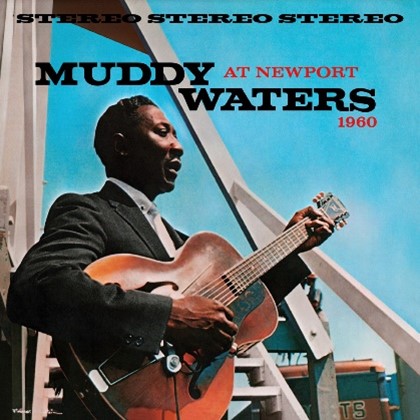
I must admit from the start I don’t feel that qualified to be able to comment on an enterprise as broad as this but it is utterly fascinating as it seeks to use Bob’s music as a method of bringing together two totally disparate musical traditions – something I have not come across before.

My own view is that the music on this album (and there are three tracks set out below for you to judge) incredibly intriguing it is not like anything I have heard before.  But of course that’s a dangerous thing to say; you may well have experience of this type of fusion.

Of course not having experienced this approach before leaves me at a disadvantage in that I don’t have a base line from which to build my comparisons or comments.  So I am going to offer these three tracks along with my own thoughts on what I find here – but I am keeping them much shorter than usual.

So in what follows please do remember this is just me exploring something that is quite new to me, and I am doing it on my own.  You might reach a totally different conclusion.

The essence of the music, as far as I understand it, builds from within the phrase, “A wall that unites instead of dividing.”  In short it is using the music of Dylan to combine the very different worlds of western and eastern music symbolised by the Great Wall of China, in a way that enriches both sides.

The first track from the album I have selected is my eternal favourite…

Drifters’ Escape

This is a project that has been realized thanks to the encounter between the celestial sounds of the guzheng (21-string musical instrument, of the family of zithers) of the virtuoso performer Chinese Nie Xin (called Silvia) and the band known as Acquaraggia.

The notion (as I understand it) is that the wall has become a connecting, peaceful, brotherly bridge between cultures and civilisations, between thoughts and moods.

I think one can see how this can be extended particularly here with…

Chimes of Freedom

Each song is thus seen as an exploration of backgrounds and sensitivity, to see where it goes which in a sense takes us back to Marco Polo’s exploration of the far east.

Giuseppe, who has been my guide to the album, gave me a particular insight when he explained that there is a sizeable Chinese community in Florence but there is very limited communication between Chinese and Italian parts of the city, despite the recognition of this reality through dual language signs in the city.

Thus the bringing together the music of two disparate cultures is an understandable response especially as there were musicians from both cultures willing to work together.   It was out of this that the idea of Dylan on the Great Wall emerged.

Blowing in the Wind

Band members are…

  • Giuseppe Oliverio, writer, singer , rhythm guitarist
  • Domenico Arcuri, playing bass guitar and ideas
  • Alessandro Abba, electric guitar and ideas

Visiting musicians who usually play alongside the band are…

You can get more information from giuseppe@acquaraggia.it

The Beautiful Obscurity series

What else?

You can read about the writers who kindly contribute to Untold Dylan in our About the Authors page.   And you can keep an eye on our current series by checking the listings on the home page

You’ll also find, at the top of this page, and index to some of our series established over the years.  Series we are currently running include

  • The art work of Bob Dylan’s albums
  • The Never Ending Tour year by year with recordings
  • Bob Dylan and Stephen Crane
  • Beautiful Obscurity – the unexpected covers
  • All Directions at Once

You’ll find links to all of them on the home page of this site

If you have an article or an idea for an article which could be published on Untold Dylan, please do write to Tony@schools.co.uk with the details – or indeed the article itself.

We also have a very lively discussion group “Untold Dylan” on Facebook with getting on for 10,000 members. Just type the phrase “Untold Dylan” in, on your Facebook page or follow this link    And because we don’t do political debates on our Facebook group there is a separate group for debating Bob Dylan’s politics – Icicles Hanging Down

Posted in Uncategorized | Leave a comment

Bob Dylan And Stephen Crane (Part IV)


by Larry Fyffe

The Red Badge Of Courage” is an Existentialist/Naturalist  novel, the story of which takes place during the American Civil War. The indifference of the Universe to the plight of humankind is depicted as a cowardly soldier becomes a brave one after he’s assisted in his recovery – he being injured by a fellow soldier who’s fleeing from a battle.

The song lyrics below are about the Civil War – The historical General Jackson dies after being shot accidentally by his own men in the haze and fog of war:

Close the eyes of our captain, peace may he know

His long night is done, the great leader is laid low
He was ready to fall, he was quick to defend
Killed outright by his own men
(Bob Dylan: 'Cross The Green Mountain)


The singer/songwriter/musician below pays tribute to an American neoRomantic-Transcendental poet:

A letter to mother came today
Gunshot wound to the breast is what it did say
But he'll be better soon, he's in a hospital bed
But he'll never be better, he's already dead
(Bob Dylan: 'Cross The Green Mountain)

Drawn from the lyrics of the following poem:

Sentences broken, "gunshot wound to the breast, cavalry

skirmish, taken to hospital

At present low, but soon will be better"

(Walt Whitman: Come Up From The Fields Father)

Tributes Stephen Crane too whose God is much farther away than Whitman’s:

Black Riders came from the sea
There was clang and clang of spear
and shield
(Stephen Crane: Black Riders Came From The Sea)

Paid to the poet in the lines beneath:

Something came up out of the sea
Swept through the land of
The rich and the free
(Bob Dylan: 'Cross The Green Mountain)

In the “The Red Badge Of Courage”, the soldier no longer sees war as Romantic as he once did, but he becomes heroic to help himself and his unit survive.

A motif expressed in the song lyrics beneath:
Let them say that I walked in fair nature's light
And that I was loyal to truth and to right
Serve God and be cheerful, look upward beyond
Beyond the darkness  of man, and  the surprises of dawn
In the deep green grasses, and the  blood-stained world
They never dreamed of surrendering
 They fell where they stood
(Bob Dylan: 'Cross The Green Mountain)

And in the poem beneath:

"Tell brave deeds of war"
Then they recounted tales
"There were stern stands
And bitter runs for glory"
(Stephen Crane: Tell Brave Deeds Of War)

The poem below shows the influence of Whitman:

In Heaven, some little blades of grass
Stood before God
"What did you do?" ....
The little blade of grass answered, "Oh, my Lord
Memory is bitter to me
For if I did good deeds
I know not of them"
(Stephen Crane: Little Blades Of Grass)

Overall, far more Romantic and contented be Walt:

I loafe, and invite my soul
I lean and loafe at my ease
Observing a spear of summer grass
(Walt Whitman: Song Of Myself)

What else?

You can read about the writers who kindly contribute to Untold Dylan in our About the Authors page.   And you can keep an eye on our current series by checking the listings on the home page

You’ll also find, at the top of this page, and index to some of our series established over the years.  Series we are currently running include

  • The art work of Bob Dylan’s albums
  • The Never Ending Tour year by year with recordings
  • Bob Dylan and Stephen Crane
  • Beautiful Obscurity – the unexpected covers
  • All Directions at Once

You’ll find links to all of them on the home page of this site

If you have an article or an idea for an article which could be published on Untold Dylan, please do write to Tony@schools.co.uk with the details – or indeed the article itself.

We also have a very lively discussion group “Untold Dylan” on Facebook with getting on for 10,000 members. Just type the phrase “Untold Dylan” in, on your Facebook page or follow this link    And because we don’t do political debates on our Facebook group there is a separate group for debating Bob Dylan’s politics – Icicles Hanging Down

Posted in Uncategorized | 1 Comment

Beautiful Obscurity: such different renditions of Spanish Leather


By Tony Attwood

A new look at the best ever cover versions of Bob Dylan’s songs.  In the series this far…

When I start these series on Untold I really have no idea where they are going to go.  Am I going to find something in them that makes me think the notion is worth following; are the readers going to enjoy it?  Ideally both of those get a yes, but I’ll go along with one out of two.

So far I’m not sure about the readers, because I’ve had very few comments, which rather makes me think I’m doing this for myself.  But as I just said, one out of two keeps me going, so I will do, even if (not for the first time) I am simply talking to myself.

This time we have Boots of Spanish Leather, wherein two versions were suggested when we did the original “Best covers” series a few years back.

Patti Smith, suggested by Mike Rude

This appears to be recorded in a near empty concert hall and yet the acoustics really do something – the echo just sends shivers through me, as if the two distant lovers are not just apart from each other, but somehow trapped in this empty environment.  It’s weird – I am not drawn back to playing it over and again, but oh, it will stay in my thoughts.

Dylan på svenska

The second contribution last time came from Jesper Fynbo.  Boots of Spanish Leather on Dylan på svenska which is on Spotify.  First please don’t turn away just because it is not in English, don’t turn away because you’ve got to get your Spotify account sorted out and don’t turn away because it sounds just like another straight singing of the song.  No, this is not that… please do play it; you know the lyrics so you can just enjoy a completely different way of performing the piece.

Now the one’s I’ve found…

Mandolin Orange. 

From the off we know this is a standard rendition of the music, and yes of course the guitar is spot on, as is the lady’s voice.  But then it is clear that we are getting the two characters singing to each other, and this is what makes it so worth listening to.  Because they are not going through motions – they really are singing to each other.

OK you might say so they should be, but believe me this is so much harder than it might seem just by looking and listening.  Yes they really are communicating.  What’s more they resist the temptation to bring the strings in too early.  But when it comes in, it is perfect, as is the final harmony.

What could have been a simplistic idea of two instruments and two singers becomes a rendition that makes me learn the song afresh.  I am so indebted to these two performers.

Trevor Willmott & Juliana Richer Daily

Here the harmonies are utilised at once and the impact is immediate, because the harmonies at the end of the verse are not those expected.  This is goose pimple land, heightened by the glorious range of the man’s voice.

One of the points about this type of performance is that the artists need to be able to be restrained – exactly the opposite of the rock band with cheering fans.  This is gentility to the nth degree; “how can how can you ask me again?” needs this completely, and they deliver.

I smiled all the way thought.  I like to think this was / is / would be Bob’s reaction to hearing this setting of his song as well.

Tyler Hilton

Strumming the guitar from the start is an interesting choice, because it gives a different feel.  They take up the emotion straight away because of that and the effect is a real conversation between the two.  The lady’s voice really is perfect; she gets every nuance from the performance; I feel they really are talking to each other.  How different from the version before.

Kiersten Holine

The idea of holding back the harmonies and then using them sparingly is an excellent idea – the song is so open to the harmonies makes it harder to show restraint, but there is a real power in the idea.

She is so sad when she looks at the camera it is almost unbearable.  Even though I have known the words by heart for so many years that I don’t want to remember how long this moves me as if I had never heard it before.

Dan McCafferty

This is another choice from Jochen made during his in-depth review of the song.  It is fascinating to hear the song wherein at certain times all we have is the percussion and a bass guitar as accompaniment.   I can just see the production meeting where Mr McCafferty announces that for this song, he’s going to sing part of it with such a limited accompaniment.   “I think not Mac,” says the producer.

But he makes it work, and the introduction of instrumentation and build up of his voice never goes too far.   It’s not my favourite, probably by this time all my goose bumps have been used up before I got here – but it is certainly worth exploring.


I had great fun doing this little piece.  If you would like to create a collection of versions of a Dylan song and then add your own commentary, or if you prefer, just send them to me, allowing me to comment, let’s try it.   Any Dylan song except the one’s we’ve already tried in this little series.

Thanks for listening.

What else?

You can read about the writers who kindly contribute to Untold Dylan in our About the Authors page.   And you can keep an eye on our current series by checking the listings on the home page

You’ll also find, at the top of this page, and index to some of our series established over the years.  Series we are currently running include

  • The art work of Bob Dylan’s albums
  • The Never Ending Tour year by year with recordings
  • Bob Dylan and Stephen Crane
  • Beautiful Obscurity – the unexpected covers
  • All Directions at Once

You’ll find links to all of them on the home page of this site

If you have an article or an idea for an article which could be published on Untold Dylan, please do write to Tony@schools.co.uk with the details – or indeed the article itself.

We also have a very lively discussion group “Untold Dylan” on Facebook with getting on for 10,000 members. Just type the phrase “Untold Dylan” in, on your Facebook page or follow this link    And because we don’t do political debates on our Facebook group there is a separate group for debating Bob Dylan’s politics – Icicles Hanging Down


Posted in Uncategorized | 1 Comment

More Than Flesh And Blood part VII: The line dances a jig

by Jochen Markhorst

VII        The line dances a jig

I'm going down to find a church that I can understand
I need new inspiration and you're only just a man.
And with the blackjack table I can't play another hand,
The meat you cook for me is bloody rare 
It's more than flesh and blood can bear

Sinéad O’Connor is a certified Dylan fan. “Slow Train Coming is my favourite album of all time,” she says in 2009, and Street-Legal‘s “Baby Stop Crying” is in her Top 10 favourite songs. Sinead’s congratulatory cum love letter to birthday boy Bob Dylan in 2011, in the Huffington Post, is above all awkward, but the love is real (“I only meant to tell you you’re gorgeous. So have seventy kisses for yourself on Tuesday”).

Her Dylan covers are almost all successful, and her “I Believe In You” even belongs in the very select club of the most beautiful Dylan covers ever. O’Connor is able to balance on the edge of hysteria, on a good day she has an angelic appearance, she is steeped in Catholicism and her breath-taking voice is ethereal – all of which happen to be excellent qualities for the ultimate performance of “I Believe In You”.

There are – of course – plenty of Dylan traces in her own work, but with some goodwill, you might even assume something like cross-pollination on 2020’s Rough And Rowdy Ways. Dylan’s song “Goodbye Jimmy Reed”, which seems to have Sinéad’s birthplace and homeland Ireland as a backdrop anyway, opens with

I live on a street named after a saint
Women in the churches wear powder and paint

It is safe to assume that at least O’Connor’s heart has made a leap; the unconditionally infatuated long-distance admirer may lose herself in the belief that Dylan is making an allusion to her little hit “4th And Vine” from 2012;

Gonna put my pink dress on
And do my hair up tight
I'm gonna put some eyeshadow on
It's gonna look real nice
I'm going down to the church
On 4th & Vine


It’s a charming song in which the protagonist sings of her happiness: she’s going down to the church today to marry the sweetest man you could find, so gentle and so kind, and beautiful brown eyes he has too – he’s a brown-eyed handsome man. The address of the church, 4th and Vine, is nowhere to be found in Ireland, but seems especially Dylan-inspired (“Positively 4th Street” and Twelfth Street and Vine from “High Water”). And in the last verse her future husband takes her on a buggy ride – just like the protagonist in Dylan’s “Tryin’ To Get To Heaven” does (I was riding in a buggy with Miss Mary-Jane). Of course, the phrase “down to the church” only coincidentally mirrors the opening line of the last verse of “More Than Flesh And Blood”, but still, it’s a nice coincidence.

This last verse is poetically without doubt the strongest verse of the song. Only one weak line, the rest is all right – Dylan the Poet is clearly coming into his own, and has taken the helm from Springs, or so it seems.

The first three lines, the opening tercet, is good old craftsmanship. Three times fourteen syllables, tightly metrical: iambic heptameters – it is the first time in this unsteady, wobbly song text that a unity of three form-retaining, classical lines of poetry is presented. In an archaic, indestructible form, too. The first English translations of Homer’s Illiad and Odyssey were written by George Chapman in these so-called fourteeners (1616), C.S. Lewis disliked the six-foot alexandrines, and argued with infectious enthusiasm for the beauty of the seven-foot heptameter (“The fourteener has a much pleasanter movement, but a totally different one: the line dances a jig”) and Lewis’ friend Tolkien regularly chooses them for the poems in The Lord Of The Rings. As in Treebeard’s “The Ent And The Entwife” (The Two Towers, 1954):

When Spring unfolds the beechen leaf, and sap is in the bough;
When light is on the wild-wood stream, and wind is on the brow;
When stride is long, and breath is deep, and keen the mountain-air,
Come back to me! Come back to me, and say my land is fair!

At least as relieving as the consistent, tight form with “the pleasant movement” is the epic quality of Dylan’s tercet:

I'm going down to find a church that I can understand
I need new inspiration and you're only just a man.
And with the blackjack table I can't play another hand

… fascinating in content, beautiful, loaded words. Extra charged, of course, because of Dylan’s impending, much-discussed conversion, because of the biographical fact that shortly afterwards he will indeed find a church that he understands and that will give him new inspiration, the Vineyard Christian Fellowship in Tarzana, Los Angeles (unfortunately not on the 4th and Vine).

Nice, this biographical line, but also coincidental, supposedly. The “search for a church” is not elaborated in this song, is not a theme. The associative poetic genius Dylan is probably triggered by previously used, religiously charged jargon like “flesh and blood”, “spirit”, “pure”, “lily and garment” – all Biblical, all leading the stream of consciousness towards church. Perhaps the evergreen “Down To The River To Pray” has popped up, the nineteenth-century classic that survives into the twenty-first century thanks to Alison Krauss’ phenomenal performance on the soundtrack of O Brother, Where Art Thou (Coen Brothers, 2000) and the huge sales success of that soundtrack;

As I went down in the river to pray
Studying about that good ol' way
And who shall wear the starry crown
Good Lord, show me the way


… from the album that tempts Dylan to an unequivocal declaration of love: “I was delighted with this album and even watched the movie” (press conference Rome, 2001). Understandable; the album features almost exclusively beautiful performances of songs that are in Dylan’s heart, songs like “Man Of Constant Sorrow”, “Po’ Lazarus” and “Hard Time Killing Floor”, songs performed by artists who are on a pedestal with Dylan anyway, such as The Stanley Brothers and Emmylou Harris – and Ralph Stanley’s “O Death”, of course.

But in 1978, at a time when he is intensely preoccupied with old blues, it is more likely that the creative part of Dylan’s poetic brain gets hooked on John Lee Hooker, on “Burning Hell” (1959):

I'm going down to the church house
Get down on a bended knee
Deacon Jones pray for me
Deacon Jones please pray for me

Irresistible in the blazing performance by old-timer Tom Jones, on his remarkable old-school masterpiece Praise & Blame (2010). The album opens with a brilliant performance of Dylan’s “What Good Am I?”, so brilliant that it earns him the ultimate compliment from the master himself: Jones is one of twelve artists who are selected by Dylan to come over and sing a Dylan song at the MusiCares event in 2015.


In his autobiography Over The Top And Back (2015) Tom Jones remembers that honour with still bewildered gratitude, in the chapter that he also names What Good Am I. When, after the performances, he sits at a table and listens to that overwhelming speech by Dylan (“the most remarkable piece of oratory I’ve ever heard from a musician”), he sits there “enthralled – enthralled and also amazed to have played a humble part in that evening.”

The rediscovered poetic vein, Dylan’s superior linguistic gifts, John Lee Hooker… it all leads to the most successful tercet of “More Than Flesh And Blood”. For the sake of convenience, let’s ignore the following miss, the lousy poetry of The meat you cook for me is bloody rare. After all, there soon will be a next, last, flash of poetic brilliance.

To be continued. Next up: More Than Flesh And Blood part VIII: Unsaddle, Charley


Jochen is a regular reviewer of Dylan’s work on Untold. His books, in English, Dutch and German, are available via Amazon both in paperback and on Kindle:

What else?

You can read about the writers who kindly contribute to Untold Dylan in our About the Authors page.   And you can keep an eye on our current series by checking the listings on the home page

You’ll also find, at the top of this page, and index to some of our series established over the years.  Series we are currently running include

  • The art work of Bob Dylan’s albums
  • The Never Ending Tour year by year with recordings
  • Bob Dylan and Stephen Crane
  • Beautiful Obscurity – the unexpected covers
  • All Directions at Once

You’ll find links to all of them on the home page of this site

If you have an article or an idea for an article which could be published on Untold Dylan, please do write to Tony@schools.co.uk with the details – or indeed the article itself.

We also have a very lively discussion group “Untold Dylan” on Facebook with getting on for 10,000 members. Just type the phrase “Untold Dylan” in, on your Facebook page or follow this link    And because we don’t do political debates on our Facebook group there is a separate group for debating Bob Dylan’s politics – Icicles Hanging Down


Posted in Uncategorized | 1 Comment

Bob Dylan And Stephen Crane (Part III)

By Larry Fyffe
There was a man
Who lived a life of fire
Even upon the fabric of time
Where purple became orange
And orange purple

(Stephen Crane: There Was A Man)

Dualistic Gnostic-Naturalist poet Stephen Crane at his side, singer/songwriter Bob Dylan rides beyond the  rainbow.

 Looking down, the cowboy angel is gripped by existentialist angst:

State gone broke, the country's dry
Don't be looking at me with that evil eye
Keep on walking, don't be hanging around
I'm telling you again that Hell's my wife's home town

(Bob Dylan: My Wife's Home Town ~ Dylan/Hunter)

https://youtu.be/4NTJG-EGCeQ


From the Gnostic point of view, the material world is wrapped in darkness, quite separated from the lighted spiritual world of goodness: 

Though she resisted, I drew away the veil
And gazed at the features of vanity
She, shamefaced, went on
And after I had mused for a time
I said of myself, "fool"

 That Untranscendental-Romantic view echoes in the song lyrics below where better thought it is that the dark natural plane remain covered up:

A messenger arrived with a black nightingale
I seen her on the stairs , and couldn't help but follow
Follow her down past the fountain where they lifted her veil

(Bob Dylan: Changing Of The Guards)

 Better indeed that the sorrowful plight of the human condition be comforted by religion and tradition – even after spiritual sparks set afire the rebellious hearts of men:

Tradition, thou art for suckling children
Thou art the enlivening milk for babes
But no meat for men is in thee
Then -
But, alas, we all are babes

(Stephen Crane: Tradition)

A sentiment expressed more cynically in the song lyrics beneath: 

I'd forever talk to you
But soon my words would turn into a meaningless ring
For deep in my heart, I know there is no help I can bring
Everything passes, everything changes
Just do what you think you should do
And someday maybe
Who knows, baby
I'll come and make crying to you

(Bob Dylan: To Ramona)


William Blake-like and John Keats-like be the poem below: 

Love walked alone
The rocks cut her hands and her feet
And the brambles tore her fair limbs
There came a companion to her
But, alas, there was no help
For his name was Heart's Pain

(Stephen Crane: Love Walked Alone)

 Beneath, not by the noncaring environment, but by the human narrator is the injurious conceit inflicted:

Let me through, open the door
My soul is distressed, my mind is at war
Don't hug me, don't flatter me, don't turn on the charm
I'll take a sword, and hack off your arm

(Bob Dylan: Black Rider)

The singer inspired by the poem below:

Then a cunning pupil
Changed the positions
Turned the sage again
"Now this one is the devil
And this one is me"
The pupils sat, all grinning
And rejoiced in the game

(Stephen Crane: The Sage Lectured)

 Rhyming ‘game’ with ‘flame’, the black-horse-riding narrator puts his feet back on the ground:

Black rider, black rider, you've seen it all
You've seen the great world, and you've seen the small
You fell into the fire, and you're eating the flame
Better seal up your lips if you wanna stay in the game

(Bob Dylan: Black Rider)

What else?

You can read about the writers who kindly contribute to Untold Dylan in our About the Authors page.   And you can keep an eye on our current series by checking the listings on the home page

You’ll also find, at the top of this page, and index to some of our series established over the years.  Series we are currently running include

  • The art work of Bob Dylan’s albums
  • The Never Ending Tour year by year with recordings
  • Bob Dylan and Stephen Crane
  • Beautiful Obscurity – the unexpected covers
  • All Directions at Once

You’ll find links to all of them on the home page of this site

If you have an article or an idea for an article which could be published on Untold Dylan, please do write to Tony@schools.co.uk with the details – or indeed the article itself.

We also have a very lively discussion group “Untold Dylan” on Facebook with getting on for 10,000 members. Just type the phrase “Untold Dylan” in, on your Facebook page or follow this link    And because we don’t do political debates on our Facebook group there is a separate group for debating Bob Dylan’s politics – Icicles Hanging Down

Posted in Uncategorized | 1 Comment

Dylan Obscuranti: Track 10: What kind of friend is this?

By Tony Attwood

A new Dylan Album

This is an album made up of tracks either by Dylan himself or other artists covering his work, which I think might be unknown to many fans.   The songs are drawn from all sections of his work, with the hope that at least some of the tracks introduce you to an element of Bob’s work you may have missed in the past.

While most of the Dylan catalogue has been highlighted over and over again, there are odd moments that haven’t had too much attention, so that’s what this collection brings together.

This time it is one of the hotel songs – and it is one that I think has not had the same kind of publicity as many of the others.  The guitar playing and certainty of the singing is something to behold.

The idea for this song’s title could have come from, “What kind of man is this” by Koko Taylor.  Although the feel of the songs is different in each case, they are both 12 bar blues, and it is quite possible Dylan either deliberately or through a half-buried memory, returned to the title for this highly enjoyable improvised piece.

What Dylan does is give the 12 bar format a real bounce and some real light energy – and it is once of those songs I really wish he had been able to finish off and deliver in a recording studio, while keeping the wonderful lighthearted bounce.   It is the sort of song most songwriters would have been proud of, cherished and most certainly put on an album – and played at the gigs.

We have the one recording from the hotel room, of which the first 30 seconds (after whatever advert is served up to you) is a false start.

The lyrics which follow are based as ever on the work of Eyolf Østrem – I have added a couple of elements of my own, but those are probably going to be the ones that are totally wrong in everyone else’s opinion!

But the point about the words here, as in other rough drafts of song, is that they are an approximation.  Bob seems to have some idea of the song’s lyrics in his head, but the others are made up as they go along.

It was around this time that Dylan did an interview saying that the songs he didn’t get to record were just forgotten since he didn’t keep notes.  It is such a shame that he didn’t keep notes of this one because it could not only have become not just a great album song, as I have suggested, but a wonderful song to sing part way through a concert before he got back to the songs we all know.

Starting at 30 seconds into the recording.

Tell me What kind of friend is this?
What kind of friend is this?
Who loves me behind my back
What kind of friend is this
Shows up every place I've been
She act kind of 'lone
but she don't
She making a loan
But you know she won't
She so languid in the morning
And she's making it on my bed
Aw, what kind of friend is this?

What kind of friend is this?
makin' [...]
What kind of friend is this?
Losing up anything
Back off, boy
When she goes down
[Lay down laid]
She's walking around
Well, she ain't got nothin'
but she's teedle toodle tummin' on a
pack of beans
Tell me what kind of friend is this?

Well she [don't lean if she don't man]
You know she's gonna be her dog.
She [done gone], She no whore
Heart stopped a-beating and she [...]

Well, what kind of friend is this
make me holler to and fro
who wants to go everywhere I wanna go
Back off, she
don't care for me
[...] own lady
if she could only see
I'd give her everything
If she comes back along to this 
Tell me what kind of friend is this?

What else?

You can read about the writers who kindly contribute to Untold Dylan in our About the Authors page.   And you can keep an eye on our current series by checking the listings on the home page

You’ll also find, at the top of this page, and index to some of our series established over the years.  Series we are currently running include

  • The art work of Bob Dylan’s albums
  • The Never Ending Tour year by year with recordings
  • Bob Dylan and Stephen Crane
  • Beautiful Obscurity – the unexpected covers
  • All Directions at Once

You’ll find links to all of them on the home page of this site

If you have an article or an idea for an article which could be published on Untold Dylan, please do write to Tony@schools.co.uk with the details – or indeed the article itself.

We also have a very lively discussion group “Untold Dylan” on Facebook with getting on for 10,000 members. Just type the phrase “Untold Dylan” in, on your Facebook page or follow this link    And because we don’t do political debates on our Facebook group there is a separate group for debating Bob Dylan’s politics – Icicles Hanging Down

Posted in Uncategorized | Leave a comment

More Than Flesh And Blood: VI – Muddy kickin’ in your stall

by Jochen Markhorst

Previously in this series…

VI         Muddy kickin’ in your stall

Time regards a pretty face like time regards a fool
You drive off in your Cadillac and leave me with the mule
In order to keep up with you I must go back to school
I see right through the wicked way you stare
And that's more than flesh and blood can bear

 Muddy Waters hovers like a spirit on the water over Dylan’s entire oeuvre. Both in the liner notes to Bob Dylan and to The Freewheelin’, Muddy’s influence is acknowledged in so many words, an influence that Dylan keeps stressing in interviews in every decade of his career; he consistently lists him among Woody Guthrie, Robert Johnson, Hank Williams and Bill Monroe. In Theme Time Radio Hour, the old blues hero is one of the radio broadcaster’s absolute favourites with eight spins, and the Muddy-rip off “Rollin’ And Tumblin’” on Modern Times (2006) is perhaps not the first, but certainly the most overt reverence in Dylan’s catalogue.

In later years, or rather from 1978 on, not only Waters’ music, but also his work ethic is a reference point; Dylan invariably mentions Muddy as an example, when asked why he still performs so much. In 1978 even twice, in quick succession, both times in Australia. The first time in the interview with Craig McGregor, 12 March in Brisbane:

CM: Tell me why you’re getting back on the road again; do you really like it?
BD: It’s not that I like it or dislike it; it’s what I’m destined to do. Muddy Waters is still doing it, and he’s 65.

… and again three weeks later, when Karen Hughes in Sydney asks something similar: “I’ll just be doing this until the fire’s burnt out. Muddy Waters is still playing, he’s 65-66 […] It’s not uncommon to be 65 to 70. Muddy Waters, I keep coming back to Muddy Waters.”

The maximum age seems to move with Dylan’s own age, by the way. In 1986, when he himself starts approaching the Big 5, he says: “People like T-Bone Walker, John Lee Hooker, Muddy Waters — these people who played into their sixties. If I’m here at eighty, I’ll be doing the same thing.”

In 1978, when Dylan says he keeps coming back to Muddy Waters, he does demonstrate this on stage. Back in the States, Muddy Waters’ “I’m Ready” suddenly appears on the set list. In September, October and November, Dylan performs the song more than twenty times, always as the first or second number of the evening. Actually, it is a Willie Dixon song, but it is one of the few songs Dixon wrote explicitly for Muddy, as biographer Inaba reconstructs (in Preacher Of The Blues, 2011):

The inspiration for “I’m Ready” occurred when Willie Foster, harmonica player for Muddy’s tour band, visited Muddy’s house to leave for a concert tour together. As the story goes, when Foster knocked on the door, Dixon, who was visiting Muddy, answered it because Muddy was busy shaving. From the bathroom, he asked Foster, “Are You Ready?” and then Foster said, “Ready as anybody can be.” Muddy remembers, “[I said,] ‘Willie, are you thinking about what I’m thinking about? Let’s make a song out of it.’… It took [Dixon] three days, I think, to finish it out.”

The first verse immediately demonstrates that the song has been under Dylan’s skin since at least 1965, since Highway 61 Revisited:

I gotta ax handle pistol, on a graveyard frame
That shoots tombstone bullets, wearing balls and chain
I'm drinkin' TNT, smokin' dynamite
I hope some screwball start a fight

… the steps from a graveyard frame to I got this graveyard woman, from smokin’ dynamite to lookin’ for the fuse and from tombstone bullets to tombstone blues are not that big, anyway. And it’s played by one of Dylan’s all-time favourite bands; when Spin Magazine asks him in 1985 to fill out the “Five bands I wish I had been in” list, Dylan puts “Muddy Waters’ Chicago band (with Otis Spann and Little Walter)” in third place.

Helena Springs recalls that she started writing songs with Dylan in Australia at the time. It is then an educated guess that “More Than Flesh And Blood” is being produced in or around these days – in the days when Muddy Waters is apparently haunting Dylan’s mind more prominently again. In this song, that suspicion is raised by this one line:

 You drive off in your Cadillac and leave me with the mule

In the entire blues canon, there is probably only one song in which both a Cadillac and a mule are part of the scenery, and that is Muddy Waters’ “Long Distance Call”;

One of these days I'm going to show you just 
     how nice a man can be
I'm going to buy you a brand new Cadillac
If you only speak some good words about me
Hear my phone ringing, sound like a long distance call
When I picked up my receiver, the party said another mule 
     kicking in your stall


Dylan is undoubtedly familiar with the song. It was a big hit in 1951 and is still considered one of Waters’ Greatest Hits – DJ Dylan also plays this song, in 2006.

The use of mule in “More Than Flesh And Blood”, however, leads to a confusing plot twist. In the blues, “another mule” is the metaphor for the bastard who’s doing your girl. We owe that attribution to that same Willie Dixon; apart from in “Long Distance Call”, he also uses it three years later for “Evil (Is Goin’ On)”, which is recorded by Howlin’ Wolf in ’54. Wolf’s re-recording in 1969 even gives him his last hit (and Dylan copies the stomp and the sound in songs like “Lonesome Day Blues” and “Cry A While”). Muddy himself uses the phrase for the song he gives to his legendary pianist Otis Spann, who records it just before his death in 1970 and releases it on Cryin’ Time as the closing track: “Mule Kickin’ In My Stall”. There, too, the meaning of the metaphor is hardly puzzling:

I let a mule kicking in my stall
Let a mule kicking in my stall
I gonna kill that mule
Have no trouble at all

Woman I'm loving girl she out of sight
Woman I'm loving she out of sight
The mule let me see the light
Another mule kicking in my stall
If I found that mule won't be no mule at all

And through Old Crow Medicine Show, the phrase survives into the twenty-first century. On their definite breakthrough, in the four minutes allotted on their debut at The Grand Ole Opry, January 2001, they opt for a high-speed rendition of “Tear It Down”:

Every time I'd hit her she'd holler "Police" 
Cook them biscuits, cook 'em brown 
Done talkin' I'll tear it around 
If you catch another mule kickin' in your stall 
Then tear it down

The mention of a mule by Dylan and Springs in “More Than Flesh And Blood” would then suddenly insinuate that the female protagonist is adulterous and has just been caught by the antagonist. He takes off in his Cadillac, and she stays behind, with the mule – with her now-not-so-secret-anymore lover.

In itself, a nice, Dylan-worthy inversion of the blues cliché. Instead of bloody fantasies of revenge about what the protagonist will do to his slut wife and that mule (as with Muddy, Howlin’ Wolf, Otis Spann and Old Crow Medicine Show), this cuckold says: OK, bye. And, merrily honking goodbye in his Cadillac, just leaves the cheating trollop behind with the mule, with his love rival.

Attractive, but unlikely. This plot twist, or this scenario at all, finds no confirmation in the rest of the text. Just as this one line, like many verse lines in this song, is difficult to fit into the line before and the lines after it. “In order to keep up with you I must go back to school” suggests, alienatingly enough, an otherwise unspecified intellectual superiority of the antagonist, who a stanza ago still had a “feeble mind”. “I see right through the wicked way you stare” is just as empty; didn’t the intellectually superior ex-lover with the feeble mind just drive off in his Cadillac?

Perhaps he is still wickedly staring in his rear-view mirror at her, sultry regarding her pretty face, the fool.

To be continued. Next up: More Than Flesh And Blood part VII: The line dances a jig

——————-

Jochen is a regular reviewer of Dylan’s work on Untold. His books, in English, Dutch and German, are available via Amazon both in paperback and on Kindle:

———————

What else?

You can read about the writers who kindly contribute to Untold Dylan in our About the Authors page.   And you can keep an eye on our current series by checking the listings on the home page

You’ll also find, at the top of this page, and index to some of our series established over the years.  Series we are currently running include

  • The art work of Bob Dylan’s albums
  • The Never Ending Tour year by year with recordings
  • Bob Dylan and Stephen Crane
  • Beautiful Obscurity – the unexpected covers
  • All Directions at Once

You’ll find links to all of them on the home page of this site

If you have an article or an idea for an article which could be published on Untold Dylan, please do write to Tony@schools.co.uk with the details – or indeed the article itself.

We also have a very lively discussion group “Untold Dylan” on Facebook with getting on for 10,000 members. Just type the phrase “Untold Dylan” in, on your Facebook page or follow this link    And because we don’t do political debates on our Facebook group there is a separate group for debating Bob Dylan’s politics – Icicles Hanging Down


Posted in Uncategorized | 1 Comment

All Directions at once: the first five directions

By Tony Attwood

The most recent editions of the “All Directions at once” series are…

In the on-going series, “All directions at once,” I’ve been looking at Dylan’s compositions as a connected series of artistic creations, seeing how Dylan moved across various themes through his writing, and in particular noting how although certain themes could grip him for a while, he could also suddenly move in a new direction.  At other times he’d just jump from one theme to another.

I’ve now reached 1979, the year in which Dylan changed from being a man who wrote on multiple subjects, to the man who wrote exclusively about one subject.   That was a dramatic change and a pivotal moment.

So this seems like a good time to go back over the 41 episodes and try and make sense of the review so far, seeing if it is possible to gain an overview and check that there really has been a connected ebb and flow within Dylan’s writing, rather than his work being a series of jumps from one creation to another.

To begin, what are the key factors that seem to stand out.

1.  A song is like a painting, or a novel – it doesn’t have to be real.

First, although some songs have a meaning, some are just observations, and some appear as an abstract a set of images, which may or may not be centred around a theme – a theme which may or may not be little more than hinted at.

In short I don’t think each Dylan song is about something concrete.  Likewise if the song is about something, it doesn’t have to be definitive in its position.  Furthermore a song about a person doesn’t have to portray that person exactly, any more than a portrait or a cartoon has to be like the individual.  Additionally, there is nothing in the guidebook to song writing to say that the writer’s view have to be consistent nor that they have to be coherent.

Thus if Dylan writes about John Wesley Hardin, Tom Paine, Blind Willie McTell, Casanova, TS Eliot, Rubin Hurricane Carter, Joey Gallo, Lenny Bruce, Rita Mae, Rubin Hurricane Carter… he often feels free to play with reality, just as an artist might do in painting a picture.  If you want to explore the characters further there is an interesting website that will help.  

2.  Dylan the plagiarist – so what?

Shakespeare was a pretty good writer.  But he was also one hell of a plagiarist.  I’ve often written that “All the world’s a stage” is the one of the greatest metaphors of our language, but it’s most certainly not a Shakespeare original.

Some might declare that plagiarism diminishes Dylan’s work, but I can’t recall writers claiming that knowing the he nicked some ideas and phrases diminishes Shakespeare’s work.  The point here is that the song is far more than the lyrics alone, and the lyrics are far more than the individual phrases.

And using other people’s phrases and music has happened in writing across the centuries, although I’d complain like mad if he nicked one of mine.

3.  Songs about people and situations don’t have to be true, real, or realistic

If Dylan writes a song that says “I love you” or “Why did you leave me?” it doesn’t have to be about an individual or his feelings.  Blind Willie McTell isn’t about the singer, it is not true that no one could sing the blues as he could, and Dylan’s music isn’t anything like a McTell song.

From which we can conclude that Dylan doesn’t have to believe in something in order to write about it, no more than just because a science fiction writer writes about a group of aliens abducting children he/she actually believes that is happening.

Sometimes yes, his personal feelings will come through, but that doesn’t mean that everything he writes is what he feels, anymore than a playwright believes that her or his characters on the stage are actually true people.

I think these notions are perfectly obvious, and yet think of the headline asking if Dylan actually cares about the people he writes about, and all the pieces saying “this guy wasn’t a hero he was a murderer” or whatever.  Now consider the caricaturist – and ponder why we don’t ask if he or she cares about the people who are drawn.

My point is simple: in all media, the artist has every right to stand aside and reflect on what she or he sees through the art created, no matter what form it is in.

4.  Bob has themes and images 

They don’t have to be particularly exciting themes but he makes something of them.  Railroad tracks, moving on, love, lost love….   They are simply his themes and images and if we choose to believe that they mean something beyond themselves, then we need to have lots of evidence – not the evidence of just one song.

Bob never told us to rise up and overthrow the tyrant.  He doesn’t (any more) say “Worship the Almighty,” or “get up and move on”.   Rather he says, “here’s an image which you might find interesting…”

Indeed as he actually said, “A lot of times you’ll just hear things and you’ll know that these are the things that you want to put in your song. Whether you say them or not. They don’t have to be your particular thoughts. They just sound good,” (talking to Bill Flanagan in 1986).  I think this is one of Bob’s most important statements concerning songwriting.  He went on…

“I didn’t originate those kinds of thoughts. I’ve felt them, but I didn’t originate them. They’re out there, so I just use them.”  In short what is in the songs is not necessarily what Bob Dylan feels or believes.  It can be, but isn’t always, and it is not always self-evident what is from real life and what is not.

As a result of his interest in many different themes, from urban poverty to Kafka, from moving on to the rural poor, Dylan is able to create works that can within them have multiple possible meanings.

And maybe that’s what many of us find so wonderful about Dylan: he gives us the power to interpret his work.  He doesn’t tell me how it is.  He hints, rather like a Turner painting.  And while he’s at it, he empowers those who wish to be empowered, by showing us the options and the possibilities.

The early songs

From 1959 to 1961 Dylan was learning his craft and the recordings of some of the songs he wrote have survived; I suspect there were many, many more which were jotted down and not retained.  Indeed had such notes been retained they would only be of interest because of what came later, but what we do know is that Bob was constantly experimenting.

As a way of considering these songs I have previously created a summary of the subject matter of all the songs from Bob’s first five years of songwriting.  If you want to find where a particular song has been placed that is recorded here – but I would like to emphasise that this is meant to be a guide – a suggestion of the themes, not a definitive account.

1959/61 1962 1963
Art 2
Blues 2 5
Civil rights / social commentary 4 2
Death 3 1
Do the right thing 2
Future will be fine 1
Gambling 1
How we see the world 1
Humour 6 7 2
Justice 2
Lost Love 7 5
Love & desire 1 3
Modern Life (tragedy of) 1 3
Moving on 4 8 5
Nothing changes 3 1
Patriotism 1 2
Protest 6 10
Religion 1 1

So what we can see is that from the start Bob really was exploring all directions at once.  And what the table tells us is that having had his early years of experimentation and quite probably jettisoning songs he tried and didn’t like, Bob’s songwriting exploded – and it really did go in all directions at once.  For we have to remember that in 1962 all he had by way of experience was the 16 songs written over the previous few years (and, possibly, some more that he didn’t bother to keep).  And then he found his directions.

Take, as one example, the six protest songs of 1962.

I doubt there are many people who would not see these as excellent works of art, and yet they were created by an inexperienced write and they came out of nowhere.  It is extraordinary to think of it, but before “Hard Rain”, Dylan had only written one protest song – and that a talking blues.  “Hollis Brown” was the first ever song he wrote about rural poverty; the only song close to it was his urban poor composition, “Man on the Street,” written the year before.

So we have a multiplicity of themes, an explosion of writing, an array of masterpieces tucked among some lesser, but nonetheless interesting works… and the emergence of Dylan as a storyteller.

Ballad for a friend” is a perfect example of this side of Dylan’s art.  He throws away all the conventions of the blues, apart from the fact it deals with sadness.  The song itself doesn’t actually sound sad, but that works because Dylan is not raging against the world; he is just desolate, reporting what has happened, removed from the reality.  No dressing up of the reality, no repeats, no chorus.  It just was.  It just is.  The start of Dylan the storyteller.

I have the feeling that these songs proved to Dylan the value and merit of his art.  He didn’t have to write another blues, or another song protesting about the current state of America.  He could do something totally different.  Or not, as the case might be.

And so he wrote “Blowing in the Wind” before moving in and out of a multiplicity of other themes.

We also have to remember that the first arguments about copyright start around this time, although I don’t see this as central to our understanding of Dylan.  He was immersed in music and drawing ideas from everywhere.  If he found some exquisite words to someone else’s tune, that was no reason not to play the tune.

And I argue this point because of the speed at which he was writing.  There are ideas, melodies and chord sequences coming at him from every direction, and he was writing and completing a new song on average every nine days throughout the year.

I can’t imagine that with all the talent he had he would bother himself with trying to take a line from someone else’s lyrics or melody.  It would have happened, and in the speed of writing I doubt that he realised, rather as in the George Harrison case and I’ve discussed this at length elsewhere.   When you listen to the two songs, one after the other, it is obviously Dylan and Harrison both copied.  But the copying came out of the song in the memory, without realising it.  My own compositions are of course are irrelevant, but I’ve not only had it happen to me, I’ve even copied one of my own songs written five years earlier, not realising it until a friend pointed it out to me.

From my perspective there is nothing I have found in Dylan’s writing that gives me the slightest hint that he has deliberately lifted someone else’s work.   The fact is that he is creating song after song.  And if no one approaches him and says, “Hey Bob that sounds awfully close to…” then he probably won’t know.

What we can also see in this opening burst of songwriting is that Bob developed themes that interested him.  For example, following “Blowing in the Wind”, five of his next eight compositions were on the theme of lost love.   But then, seemingly out of nowhere (other than the fact that Bob was writing, writing, and writing some more) he writes two masterpieces one after the other, both with political connotations and both deadly serious: “Hard Rain’s a gonna fall” concerning the worries about a possible nuclear war (made all the more relevant by the revelations of the USSR using Cuba as a nuclear arms base one month later), and “Ballad of Hollis Brown” which is probably the most hard hitting attack on the plight of farmers in the USA ever written.

After these recordings Bob then wrote on more protest song, John Brown – an anti-war song, before he brought in another new composition, “Don’t Think Twice, It’s All Right“.  That of course made the cut for Freewheelin, but Hollis Brown was omitted. 

The Freewheelin version of “Don’t Think Twice” was recorded on 14 November and has widely been noted as an autobiographical response to Bob’s girlfriend prolonging her stay in Italy.  And here is the material he utilised.

This is Paul Clayton’s re-working of the folk song “Who’s gonna buy you chickens” into “Who’s Gonna Buy You Ribbons When I’m Gone?”   Dylan and Clayton knew each other and were on friendly terms, and Clayton recorded his reworking of the traditional “chickens” song two years before Dylan’s “Don’t Think Twice.”

How much was the original folk song, how much Clayton’s reworking, how much was Dylan?   And if that is not confusing enough we have the fact that when first performing the song Bob Dylan changed some of the Clayton lyrics, but Clayton’s original lyrics did gradually drift back into Dylan’s performances as time when by.

Clayton performed in Greenwich Village and was friends with Dylan in his early years, but the use of the song by Dylan did result in a legal case between each artists’ respective publishers, fronted by the duo’s respective recording companies.  Inevitably the case was settled out of court, almost certainly (although obviously I don’t have access to the legal documents so I can’t prove this) because of the difficulty of considering the copyright ownership of a traditional song which had already mutated over time, and already been re-written for contemporary use.  In other words, how much copyright did Clayton actually own in terms of his recording, given that he had himself borrowed it from a traditional folk song?  I suspect both sides realised that the case could cost a fortune, with neither side being certain to win, and an out of court settlement would be the best way forwards.  It appears that some of Dylan’s earning from the song would go to Clayton, and it is reported that Dylan and Clayton remained friends.  Sadly however Clayton suffered from severe bouts of mental illness and ultimately committed suicide in 1967.

“Don’t think twice” is itself a summation of Bob’s numerous lost love songs and songs of leaving of this period.  In the months prior to writing “Don’t think twice” Dylan wrote Corrina Corrina,  Honey just allow me one more chance,  Rocks and Gravel, Down the Highway, and Tomorrow is a long time all of which dwell on the theme of the end of the affair, leaving and walking away.   This song summed it all up, although with that underlying feeling of putting on a brave face by walking away first, while there is the suggestion that at least some of the anguish and hurt is still there, underneath.

The series continues…

What else?

You can read about the writers who kindly contribute to Untold Dylan in our About the Authors page.   And you can keep an eye on our current series by checking the listings on the home page

You’ll also find, at the top of this page, and index to some of our series established over the years.

If you have an article or an idea for an article which could be published on Untold Dylan, please do write to Tony@schools.co.uk with the details – or indeed the article itself.

We also have a very lively discussion group “Untold Dylan” on Facebook with getting on for 10,000 members. Just type the phrase “Untold Dylan” in, on your Facebook page or follow this link    And because we don’t do political debates on our Facebook group there is a separate group for debating Bob Dylan’s politics – Icicles Hanging Down

Posted in Uncategorized | 2 Comments