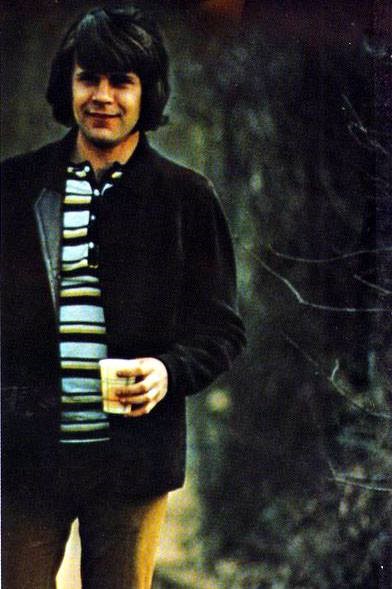
The Untold Corporation has decided to release some more of its vast collection of Bob Dylan archived material to the public. Below are the lyrics of a song by Bob Dylan that he sang at a special meeting of the National Audubon Society held to honour member and poet John Geenleaf Whittier. The American singer/songwriter later revises the words to the song, and changes the title to “Man Gave Names To All The Animals”:
Man Gave Names To All The Birds
Man gave names to all the birds
In the beginning, in the beginning
Man gave names to all the birds
In the beginning, long time ago

He saw a bird that liked to hoot
Had very sharp claws, and liked pursuit
Great round eyes that were always on the prowl
"Ah, think I'll call it an owl"

Man gave names to all the birds
In the beginning, in the beginning
Man gave names to all the birds
In the beginning, long time ago

He saw a bird peckin' at some roadkill
Chewin' up the carrion until she was filled
'Twas a squashed porcupine if you wanna know
"Ah, think I'll call it a crow"

Man gave names to all the birds
In the beginning, in the beginning
Man gave names to all the birds
In the beginning, long time ago

He saw a bird carryin' a baby to you
Looked like there was nothin' that he wouldn't do
His legs  were long, and his neck wasn't short
"Ah, think I'll call it a stork"

Man gave names to all the birds
In the beginning, in the beginning
Man gave names to all the birds
In the beginning, long time ago

He saw birds covering Moses' camp
There was dew on the ground, and it was damp
Brown and white with a short little tails
"Ah, think I'll call it a quail"

Man gave names to all the birds
In the beginning, in the beginning
Man gave names to all the birds
In the beginning, long time ago

Next bird that he did meet
Had a very long tail, and long claws on its feet
Eating berries and bananas that tasted so sweet
"Ah, think I'll call it a parakeet"

Man gave names to all the birds
In the beginning, in the beginning
Man gave names to all the birds
In the beginning, long time ago

He saw a bird with feathers smooth as glass
Waddling his way through the grass
Saw him disappear by a tree near a lake
"Ah, think I'll call it a drake"

---------
What else is on the site
You’ll find some notes about our latest posts arranged by themes and subjects on the home page. You can also see details of our main sections on this site at the top of this page under the picture.
The index to all the 590 Dylan compositions and co-compositions that we have found on the A to Z page.
We also have a very lively discussion group “Untold Dylan” on Facebook with over 2000 active members. (Try imagining a place where it is always safe and warm). Just type the phrase “Untold Dylan” in, on your Facebook page or follow this link
If you are interested in Dylan’s work from a particular year or era, your best place to start is Bob Dylan year by year.
On the other hand if you would like to write for this website, please do drop me a line with details of your idea, or if you prefer, a whole article. Email Tony@schools.co.uk
And please do note The Bob Dylan Project, which lists every Dylan song in alphabetical order, and has links to licensed recordings and performances by Dylan and by other artists, is starting to link back to our reviews
This is part of a series about Dylan’s early compositions based around the type of music he was exploring in his early years. If you missed the other parts you might like to revisit
The first stand out love or lost-love song that Bob Dylan recorded was not one of his own compositions but was an arrangement of the classic Corrina Corrina which dates back to 1928.
https://youtu.be/WbHs1EgFN5c
It had been re-worked many times before Bob recorded it for Freewheelin. To my mind the outtake is better than the version we got on the LP.
https://youtu.be/eZokHtbfnig
But it is interesting that in this particular genre Dylan was not yet ready to write and record his own love or lost-love song.
And indeed when he did venture into the genre shortly after he was once again using a phrase from a song in the 1920s Honey just allow me one more chance
https://youtu.be/1BYhFKFRt7E
So two songs, both with origins in the 1920s and both about lost love, rather that protestations of love.
And so the theme continued with Rocks and Gravel – a song which combines the blues and lost love.
And then the world changed because Bob wrote Quit your Lowdown Ways. Quite probably he just saw it as another 12 bar blues although if you can dig out your copy of Bootleg 1-3 you’ll hear Bob having a great time singing the blues for all its worth.
But then Peter Paul and Mary recorded the song, and Bob had his first lost love hit:
And so Bob and the song about love (or lost love) came together, and now he was off. Baby I’m in the mood for you (a song of absolute desire) came next and once again he was using inspiration from earlier days: in this case Jesse Fuller. The outtakes from Freewheelin are no longer on the internet but we do have other versions…
https://youtu.be/ysK2oltJNUA
So as we can see, in the space of a few months Dylan had got himself not only going into a new type of song, but also was finding all sorts of ways of expressing it.
Down the Highway then comes along – one that is said to be about his own situation with his girlfriend – although with many of the traditional blues themes of travelling, gambling and so on.
But that is a mere introduction to the moment when Bob Dylan showed us all that of course he can do love songs… or at least lost love songs
This recording leads on to the live version, which I care less for but that’s just my opinion. My point is that the preliminaries were now over and done. Bob Dylan could write beautiful lost love songs.
There’s beauty in the silver, singin’ river
There’s beauty in the sunrise in the sky
But none of these and nothing else can touch the beauty
That I remember in my true love’s eyes
Yes, and only if my own true love was waitin’
Yes, and if I could hear her heart a-softly poundin’
Only if she was lyin’ by me
Then I’d lie in my bed once again
There is a stunning beauty in both the music and the lyrics of that song which in this genre takes Dylan’s work to a new high, in my opinion.
It was not until six or seven compositions later (we can never be sure of the exact order in which these works were written) that Dylan touched on lost love again in one of the most famous of his songs, “Don’t think twice”, but this time it was the singer who was moving on.
And what we have with “Don’t Think Twice” is not just lost love, but lost love combined with another favourite Dylan theme of moving on, and a certain amount of nastiness as well in that now oh so famous ending…
I ain’t sayin’ you treated me unkind
You could have done better but I don’t mind
You just kinda wasted my precious time
But don’t think twice, it’s all right
And with those lines, if we are trying to see a set of connections within Bob Dylan’s work (which is what I am trying to do by working through the themes within Dylan’s early writing) it is lost love, moving from the “give me one more chance” approach of “Honey just allow me…” early in the year through to this real rejection of “you just kinda wasted my precious time.”
It’s hard to get much nastier than that. It’s MY precious time that was wasted. It is all about the singer.
And although “Long Time Gone” which was written a little earlier is not a lost love song, it does have the same self-centred anger within it as Don’t Think Twice…
I once loved a fair young maid
An’ I ain’t too big to tell
If she broke my heart a single time
She broke it ten or twelve
I walked and talked all by myself
I did not tell no one
I’m a long time a-comin’, babe
An’ I’ll be a long time gone
and later…
So you can have your beauty
It’s skin deep and it only lies
And you can have your youth
It’ll rot before your eyes
Just give to me my gravestone
With it clearly carved upon:
“I’s a long time a-comin’
An’ I’ll be a long time gone”
As 1962 rolled on so Bob Dylan continued to roll on with the lost love theme, with Kingsport Town giving us
The winter wind is a blowing strong
My hands have got no gloves
I wish to my soul I could see
The girl I'm a-thinking of.
But he wasn’t always that kind. Hero Blues tells us
Yes, the gal I got
 I swear she’s the screaming end
 She wants me to be a hero
 So she can tell all her friends
And this turned out to be a prelude to “The Ballad of the Gliding Swan” although to be fair there is a little doubt as to whether it was Bob who wrote the lyrics. But given the way the songs were going in the latter part of 1962 I’d say yes…
Tenderly William kissed his wife
Then he opened her head with a butcher knife
And so 1962, the first great year of Dylan the composer, ended, with the love songs hardly getting much of a look in, and lost love dominating.
To me, the next time Dylan wrote a love song was with Spanish Harlem Incident in 1964, up to then, and indeed beyond then, it was lost love all the way.
What else is on the site
You’ll find some notes about our latest posts arranged by themes and subjects on the home page. You can also see details of our main sections on this site at the top of this page under the picture.
The index to all the 590 Dylan compositions and co-compositions that we have found on the A to Z page.
We also have a very lively discussion group “Untold Dylan” on Facebook with over 2000 active members. (Try imagining a place where it is always safe and warm). Just type the phrase “Untold Dylan” in, on your Facebook page or follow this link
If you are interested in Dylan’s work from a particular year or era, your best place to start is Bob Dylan year by year.
On the other hand if you would like to write for this website, please do drop me a line with details of your idea, or if you prefer, a whole article. Email Tony@schools.co.uk
And please do note The Bob Dylan Project, which lists every Dylan song in alphabetical order, and has links to licensed recordings and performances by Dylan and by other artists, is starting to link back to our reviews
John Wesley Harding was a friend to the poor…wait, let me start again, I meant to say that John Wesley Harding is a British pop and folk singer and novelist.
He took his stage name from the Dylan song of course and has released many albums since the late 80s including 3 volumes called “Dynablob”, an anagram for Bob Dylan obviously!
Today we will look at 3 of his tracks. First up it’s “Making Love To Bob Dylan”.
In this very amusing video and song he explains that he can make love to just about any other bands music except for Dylan. As he states in the lyrics “it’s partly his voice, it gives me no choice but to focus on what he is saying”. It’s hugely entertaining and a very well done track. I love it.
Next up it’s “Phil Ochs, Bob Dylan, Steve Goodman, David Blue & Me”
Another fine track, it recounts a dream where he has at a party playing guitars with the aforementioned persons. It’s a melancholy piece, much different to the previous track, with a hint of Neil Young in the arrangement and accompaniment. Some cracking lines in the track. My favorites are:
“Teaches Bob 'A Minor' with a glint in his eye
Bob used it on Hollis Brown but that was some time ago”
“Last Thursday they were in the room where he sits
The three making jokes about the meager obits”
Last up it’s “Bastard Son”, in which he claims Dylan as his father, Joan Baez as his mother and Leonard Cohen is his uncle.
Others such as Bruce Springsteen, James Taylor, Warren Zevon, Neil Young and Lou Reed drop in to this family reunion and it’s a whole lot of fun!
The studio version is similar in style to “Making Love To Bob Dylan” however, an acoustic version popped up on a subsequent live album which I think I prefer.
What else is here?
You’ll find some notes about our latest posts arranged by themes and subjects on the home page. You can also see details of our main sections on this site at the top of this page under the picture.
The index to all the 590 Dylan compositions and co-compositions that we have found on the A to Z page.
We also have a very lively discussion group “Untold Dylan” on Facebook with over 2000 active members. (Try imagining a place where it is always safe and warm). Just type the phrase “Untold Dylan” in, on your Facebook page or follow this link
If you are interested in Dylan’s work from a particular year or era, your best place to start is Bob Dylan year by year.
On the other hand if you would like to write for this website, please do drop me a line with details of your idea, or if you prefer, a whole article. Email Tony@schools.co.uk
And please do note The Bob Dylan Project, which lists every Dylan song in alphabetical order, and has links to licensed recordings and performances by Dylan and by other artists, is starting to link back to our reviews
Emanuel Swedenborg claims that he visits other planets in our solar system as well as the World of the Spirits, but the religious writer gives no supporting evidence that he actually does so.
However, there is plenty of evidence that singer/songwriter Bob Dylan travels back and forth in time and space. There are writers who claim that alien space ships visit Earth a long time ago, but again they provide no convincing evidence that this actually happened. On the other hand, it can be demonstrated that a number of authors of the Holy Bible were inspired by Dylan’s lyrics, and this shows that the singer/songwriter must have been in contact with them before the Bible’s written.
Old Testament Ezekiel supposedly foresees the destruction of Jerusalem by the Babylonians; God is angry at their corrupt ways; the ‘prophet’ warns the Hebrews to prepare an escape route for themselves and their stuff:
Dig thou through the wall in their sight
And carry out thereby
In their sight shalt thou bear it up upon thy shoulders
And carry if forth in the twilight
(Ezekiel 12:5,6)
It’s quite clear that Ezekiel’s gets his prophecy from listening to the following song lyrics:
The festival was over, the boys were all plannin' for a fall
The cabaret was quiet, except for the drillin' in the wall
The curfew had been lifted, and the gamblin' wheel shut down
Anyone with any sense had already left town
He was standin' in the doorway, lookin' like the Jack Of Hearts
(Bob Dylan: Lily, Rosemary, And The Jack Of Hearts)
“J.O. H.” be a code word for JehOvaH.
How else to explain the ‘prophet’ Jeremiah being aware of the modern steam locomotive when he writes the story about the Queen of Sheba visiting King Solomon:
And she came to Jerusalem with a very great train
With camels that bare spices, and very much gold, and precious stones
And when she come to Solomon, she communed with him in her heart
(I Kings 10: 2)
Without a shadow of a doubt Jeremiah incorporates Dylan lyrics in the telling the story of moral corruption (the King accepts the camels, spices, gold, and gems carried by the train from Ethiopia), and how it will eventually lead to the splitting up of Northern and Southern Israel.
It’s evident that Jeremiah is only considered a prophet because he’s informed by the lyrics below as to what is going to happen in the future:
Sometimes I feel so low-down and disgusted
Can't help but wonder what's happenin' to my companions
Are they lost or are they found?
Have they counted the cost it'll take to bring down
All their earthly principles they're gonna have to abandon?
There's a slow, a slow train comin' up around the bend
(Bob Dylan: Slow Train)
The reference to the train by Jeremiah is a sure giveaway that he pinched his so-called prophecy from the singer/songwriter who, because he comes from the future, already knows what’s gonna happen.
The “Song Of Solomon” too ‘borrows’ from the lyrics above:
Tell me, O thou whom my soul loveth, where thou feedest
Where thou makest thy flock to rest at noon
For why should I be as one that turneth aside
By the flocks of thy companions?
(Song Of Solomon 1:7)
Likewise, the prophet Hosea supposedly speaks of Hebrews being forced to flee their homeland in order to escape the onslaught of the Assyrians sent by God to punish them for their wayward behaviour:
For, lo, they are gone because of destruction
Egypt shall gather them up, Memphis shall bury them
The pleasant places for their silver, nettles shall possess them
Thorns shall be in their tabernacles
(Hosea 9:6)
This Hosea story, the ‘prophet’ actually makes up from song lyrics that have been whispered in his ear:
Now the  preacher looked so baffled
When I asked him why he dressed
With twenty pounds of headlines stapled to his chest
But he cursed me when I proved to him
Then I whispered, said, "Not even you can hide
You see you're just like me, I hope you're satisfied"
Oh, Mama, can this really be the end
To be stuck inside of Mobile with the Memphis blues again
(Bob Dylan: Stuck Inside Of Mobile With The Memphis Blues Again)
The giveaway clue: this is the only time that the name “Memphis” is mentioned in the holy book.
What else is here?
You’ll find some notes about our latest posts arranged by themes and subjects on the home page. You can also see details of our main sections on this site at the top of this page under the picture.
The index to all the 590 Dylan compositions and co-compositions that we have found on the A to Z page.
We also have a very lively discussion group “Untold Dylan” on Facebook with over 2000 active members. (Try imagining a place where it is always safe and warm). Just type the phrase “Untold Dylan” in, on your Facebook page or follow this link
If you are interested in Dylan’s work from a particular year or era, your best place to start is Bob Dylan year by year.
On the other hand if you would like to write for this website, please do drop me a line with details of your idea, or if you prefer, a whole article. Email Tony@schools.co.uk
And please do note The Bob Dylan Project, which lists every Dylan song in alphabetical order, and has links to licensed recordings and performances by Dylan and by other artists, is starting to link back to our reviews
Go back to the early part of his career and Bob Dylan was known, in the UK at least, as a protest singer. Which raises the question, “what is a protest song?” And the follow-up question, “Was Dylan really writing protest songs?”
Of course “protest song” was just a simple identification phrase that gave the guys who wrote for music magazines a short cut label. Sometimes called “political anthems” protest songs dealt with racial hatred, war and the need to stop it, the demands for justice and equality and indeed all that was wrong with society.
Where the protest song is about individuals it is about leaders and the powerful who are leading society down the wrong route, and misusing the power that they have either been given or have taken because they feel they are the right people to show everyone else the way.
But although no one ever prescribed what a good protest song should be, there was a general feeling that it should not only describe what was wrong, it should also speak of how these wrongs can be put right. If it didn’t fulfil this second function, then it was social commentary, rather than protest. If it was just complaining about how life is for the poor, the downtrodden and the disenfranchised, then it was the blues.
Protest songs and political anthems were not new to the 1960s – some trace their origins back to song like “Strange Fruit” in the 1930s, through “This land is your land” by Woodie Guthrie and so on. By the time Bob Dylan arrived, the concept was pretty well understood.
As a result of this maturity of the form Dylan was able to recognise it and do as he wished with it. Thus from the start he didn’t follow the route of the standard protest song at all. Indeed his earliest real protest song in fact was comic…
But Dylan did quickly move to a commentary on the serious issues of the day as with Emmett Till…
https://www.youtube.com/watch?v=RVKTx9YlKls
and yes here Dylan is a protest singer in the classic mould.
But at the same time he was working on songs like the Ballad of Donald White which are about life as it is – the working man being put down by the system. We might call them ballads rather than protest songs.
And now, around half a century later, as I go back through our list of early Dylan compositions in chronological order, I increasingly get the view that what Dylan was interested in at this time was not changing the world, but of rather noting it from a variety of different perspectives. Occasionally he lets his feelings stray into the song, but even then he is just reflecting his personal position.
And I hope that you die
And your death’ll come soon
I will follow your casket
In the pale afternoon
And I’ll watch while you’re lowered
Down to your deathbed
And I’ll stand o’er your grave
’Til I’m sure that you’re dead
No one is rising up, there is no call to arms, there is just the celebration of the death of an evil person.
In fact shortly after giving us Donald White, Dylan came right out and said that there was no answer (or at least no answer that he could give) because, “the answer is blowing in the wind,” which is the absolute antithesis of any thought of rising up and rebelling – the antithesis of the protest song.
If we take a sequence of songs that Dylan wrote in 1962…
we can see that Dylan was not dominated by protesting about the evil in the world, let alone with thoughts of changing the world. Rather he was fascinated by the painting musical pictures that tell us how it is. “Hard Rain” tells us the next war is going to kill us all, “Hollis Brown” speaks of the desolation and despair of honest, hard working traditional farmers, and “Don’t think twice” says that the singer is getting up and going on his way because there is nothing here to hold him. And John Brown reflects on the tragedy of the mother, so proud of her son going off to war.
Yes, in a sense Dylan is protesting against the state of American society in which there could be nuclear fallout, in which farmers are not paid a living wage and so on, but he is not saying “rise up and stop all this” – he is just telling us, this is how it is.
Of course sometimes Dylan does suggest a better life might be round the corner, as with Paths of Victory
Trails of troubles Roads of battles Paths of victory I shall walk
The trail is dusty And my road it might be rough But the better roads are waiting And boys it ain’t far off
https://youtu.be/Cy0qibJ27EE
And for a very short while Dylan continued the theme of the singer being part of the battle as with Train A Travellin’ where he was very much at the centre of the protest
And yes it is true sometimes Dylan just stands up and says “no, no more” as with Ye Playboys and Playgirls
But then when we get back to Oxford Town wherein the message is simply: this is how it is. It is not a case of rising up and overthrowing the status quo, but rather just noting this is how it is. Here’s verses four and five…
Me, my girl, my girl’s son
We got met with a tear gas bomb
I don’t even know why we come
Going back where we come from

Oxford Town in the afternoon
Everybody singing a sorrowful tune
Two men died beneath the Mississippi moon
Somebody better investigate soon
Yes, somebody better investigate soon. Not rise up my fellow citizens and reclaim this land from the racists. Just “somebody…” And even if that is seen as a satirical quip against the government, that is still a long way from raising the banner and protesting.
In short my argument is that most of the time when Dylan has moved into the lyrics that are thought to be the preserve of the protest movement, he is just pointing at the situation as an observer, a painter or photographer, not as a person who is aiming to change the political or social environment.
And to be clear I am not saying that there is anything wrong with that, simply that this is how it is.
When this theme is combined with so many songs about moving on, the effect is reinforced as being that of the observer rather than the revolutionary.
In the former Dylan tells us that change is going to happen – it simply is, because “The time will come up”. It is, if not written in the Bible, then somehow predestined. And this is repeated in “Times they are a changing” in which the old road is rapidly fading not because we are redrawing the map, but because, well, that is how it is.
Indeed the point is more clearly made in “Times” than in any other song. The wheel is turning, and there is nothing any of us can do about it. It is, perhaps, the natural course of events, the social equivalent of spring following winter.
Thus it appears Dylan can point out the horrors of the armaments but not a route to the population rising up and stopping masters of war. For justice to come, it will God’s vengeance.
Let me ask you one question
Is your money that good
Will it buy you forgiveness
Do you think that it could
I think you will find
When your death takes its toll
All the money you made
Will never buy back your soul
And so Bob ends by standing over the grave making sure the evil bastards are dead.
In many ways this approach to reality reflects back to the days of the early folk singers with their message that life will all be fine on the other side. The meek will indeed inherit the earth – which is not normally thought of the approach of the protest singer.
As for poor Hattie Carrol, all we can do is cry, for there is no way to put the world right. And if that message were not clear enough, while Bob ended 1963 heralded as a protest singer, as a composer he ended up by turning his back on the world some commentators thought he was protesting about.
Oh a false clock tries to tick out my time
To disgrace, distract, and bother me
And the dirt of gossip blows into my face
And the dust of rumors covers me
But if the arrow is straight
And the point is slick
It can pierce through dust no matter how thick
So I’ll make my stand
And remain as I am
And bid farewell and not give a damn
I really do think it is worth paying as much attention to those last three lines as to “The times they are a-changing”. The difference is not between Bob the revolutionary and Bob the wanderer, but simply in “Restless Farewell” there is an arrow that can point out to others what is wrong.
Dylan is saying, “There are words that can be said or sung to reveal what is going on, and I will continue to say or sing these words, and I really don’t care what you think about that, because I am just me.”
And we are left with this feeling that maybe it will all be ok in the end, but the guy who pointed out the great ills of our society and the horrors of the behaviour of individuals, may well not be there to see it change. He has said his piece and moved on.
And by 1964 Bob had moved on so far that not only was he able to tell us that it wasn’t him that we were looking for, but no matter what it looks like when we open our curtains, no matter how dark the skies appear, “it’s life and life only”.
As the man had already said
But it’s not to stand naked under unknowin’ eyes
It’s for myself and my friends my stories are sung
You’ll find some notes about our latest posts arranged by themes and subjects on the home page. You can also see details of our main sections on this site at the top of this page under the picture.
The index to all the 590 Dylan compositions and co-compositions that we have found on the A to Z page.
We also have a very lively discussion group “Untold Dylan” on Facebook with over 2000 active members. (Try imagining a place where it is always safe and warm). Just type the phrase “Untold Dylan” in, on your Facebook page or follow this link
If you are interested in Dylan’s work from a particular year or era, your best place to start is Bob Dylan year by year.
On the other hand if you would like to write for this website, please do drop me a line with details of your idea, or if you prefer, a whole article. Email Tony@schools.co.uk
And please do note The Bob Dylan Project, which lists every Dylan song in alphabetical order, and has links to licensed recordings and performances by Dylan and by other artists, is starting to link back to our reviews
In the September 2019 Aquarium Drunkard interview, Rob Stoner does have a few things to say about Martin Scorsese’s The Rolling Thunder Revue: A Bob Dylan Story, which is released on Netflix shortly before. With all the artistic freedom he grants Scorcese and Dylan, and with all the appreciation he has for the fiction content of the “documentary” (“the fantasy scenario is more fun than the actual deal’), it still bothers him that an important engine like Jacques Levy is being ignored. Levy, Stoner explains, was responsible for the success of the tour, “more than any other individual.” And he modestly doesn’t say it, but Rob is most likely a bit disappointed as well about the very meager spotlight on himself – although he is, according to log writer Sam Shepard, indeed “the brains behind the operation in Dylan’s band”.
Rob Stoner has a right to speak, and not just because he is the brains, a musical leader during the Rolling Thunder Revue. He performs for years with Dylan, plays bass on Desire, is the unofficial band leader of the world tour of ’78, and is one of the few who may overthrow a Dylan song (the rock approach of “A Hard Rain’s A-Gonna Fall” on Hard Rain is his, in all likelihood).
The time spent with Dylan is just one of the many highlights of his rich career. Stoner sings and plays guitar, bass or piano with Link Wray, Bruce Springsteen, Don McLean (he plays the bass on “American Pie” – the credits use his real name, Bob Rothstein), Carl Perkins, Joni Mitchell, Eric Clapton, with all former Band members, and who not.
And with Chuck Berry.
The phenomenon Chuck Berry, the grandfather of rock ‘n’ roll and rap, the “Shakespeare of rock and roll” (Dylan) and the architect of every lick Keith Richards has ever played, is a constant throughout Dylan’s career. From his first school band, via his first electric single “Mixed-Up Confusion” (1962) to songs such as “Thunder On The Mountain” (Modern Times, 2006), “Shake Shake Mama” and “Forgetful Heart” (Together Through Life, 2009): Chuck Berry has been resonating through Dylan’s repertoire for some sixty years.
The only human who has played in the band with both Berry and Dylan is Rob Stoner, so he cannot be denied any authority. Yet he seems to be completely wrong in the same Aquarium interview as he states:
“Chuck Berry’s lyrics were super hip. In fact, Subterranean Homesick Blues is just basically a rewrite of Maybelline [sic]. The same beats, the same idea, the same nonstop verbiage. I mean, people did get a little wordier as the form evolved, but I think basically the same principles that worked at the beginning were the ones that people still stick to today.”
“Maybellene”? Sure, the importance of “Maybellene” cannot be overestimated. It is Berry’s first single and first hit, according to Rolling Stone the starting point of rock ‘n’ roll at all, and it is perhaps also the first single with the complete package: a sharp, mean guitar at the wheel, small band, exciting sound and a text about cars, girls and infidelity. Incidentally basically a rewrite of the Western swing hit of one of Dylan’s other great idols, Bob Wills and his Texas Playboys, of his “Ida Red”.
But linking “Maybelle” to “Subterranean Homesick Blues” becomes difficult. A better candidate would be “Nadine (Is It You?)”, although according to the man himself that song is actually a kind of continuation of “Maybellene”.
Chuck Berry writes “Nadine” in prison, and it is the first song he records when he is a free man again, in November ’63 (the same session that also produces “You Never Can Tell”, by the way). In the British Melody Maker of November 14, 1964, in response to his recent songs, he is a bit disparaging about his own song writing talents:
“I took the top hits of my past and re-shaped them. I took Maybellene and from it got Nadine. From Schooldays I wrote No Particular Place To Go. I did this rather than repeat the same numbers with a more modern beat.”
Today it is hard to imagine, but as early as 1964 Chuck Berry thinks that his timeless classics “Maybellene” and “Schooldays” are dated and actually need a more modern look. Well, time is a jet plane, as we know.
Berry sells himself short, though. “Nadine” has at most a same theme (boy chases hopelessly after a beautiful girl), but otherwise it is certainly not a “rewritten Maybellene”. Literary it is even stronger, with that Shakespearean quality of brilliant metaphors (“I was campaign shouting like a Southern diplomat”) and the Dylanesque, language loving, visual power (“I saw her from the corner when she turned and doubled back / And started walkin’ toward a coffee colored Cadillac”).
https://youtu.be/5b2w_nJLuvw
Anyway – neither “Maybellene” nor “Nadine” provide the blueprint for “Subterranean Homesick Blues”; apart from a few sprinkles “You Can’t Catch Me” (from which Lennon will later distil “Come Together”), it is of course mainly “Too Much Monkey Business” from 1956, Berry’s fifth single. Friend and foe do agree on this, and the Bard himself also acknowledges the indebtedness. In the booklet with Biograph (1985) Cameron Crowe notes Dylan’s fleeting analysis probably “Too Much Monkey Business” is in there somewhere and in 2003, in the interview with Robert Hilburn in Amsterdam, the poet adds another detail:
“It’s from Chuck Berry, a bit of Too Much Monkey Business and some of the scat songs of the 40s.”
The beat, the licks and the rapping (avant la lettre) all seem to have come from Berry, but music historian Dylan rightly distinguishes that the rap component is a bit older; both Chuck Berry and Dylan borrow that distinctive approach from the “scat songs of the 40s”.
Academically, the poet does not express it entirely correctly. At least, it is unlikely that Dylan really means the scats of Louis Armstrong, Cab Calloway or Ella Fitzgerald – after all, those are meaningless, sung imitations of solo instruments, loops and coloratures. “Be-bop-be-doo-be-doo-be-doo” and “shoo-be-doo-be-woo” … let’s be glad Dylan does not go there.
The bard is probably referring to the overdrive to which, in the 40s and 50s in particular, some jump blues novelty songs switch, the barrage of words that are used to cast couplets over the heads of the listeners. In terms of rhythm, for example, Cab Calloway’s “Jumpin ‘Jive”, but especially Louis Jordan’s “I Want You To Be My Baby” in the version of Louis Prima and Gia Maione come pretty close (although the Georgia Gibbs’ hit version and / or the one by Lillian Briggs from 1955 is perhaps deeper under Dylan’s skin).
From David Hajdu, the writer of the slightly melodramatic Positively 4th Street – The Lives and Times of Joan Baez, Bob Dylan, Mimi Baez Fariña and Richard Fariña (2001), is the find that Dylan has drawn content from a song by The Weavers, from “Taking It Easy”, written by Woody Guthrie and Pete Seeger, and especially the third verse:
Mom is in the kitchen, preparing to eat
Sis is in the pantry looking for some yeast
Pop is in the cellar mixing up the hops
And Brother’s at the window, he’s watching for the cops
… which resonates in “Tombstone Blues” as well, obviously.
“Subterranean Homesick Blues” marks the First Big Turn in Dylan’s career on more fronts. Thematically, the change may be less dramatic than the conversion to electrically amplified music and to nasty rock ‘n’ roll, but when the first major shock waves have passed, the recovered listener may also notice: this is big city balladry, urban poetry. No pastoral desires for a sweet girl in the North Country, no provincial oboes roaming down the highway, rural lyrical impressions of flickering freedom bells and no motorpsychic nightmares in the countryside – this is a bare, expressionist eruption on the cadence of a shaking subway train. This is not the poet of “To Ramona” and “One Too Many Mornings”.
New are, for example, the accumulations of short imperatives. Look out, get sick, get well, ring bell, write braille, get born… in total the poet issues thirty-nine short commands, in an increasing frequency: two in the first verse, six in the second, fourteen in the third and seventeen in the last verse.
Dylan has learned its power from his devoted fan Allen Ginsberg, with whom he finds collaborative poems such as “Pull My Daisy” (poems that he wrote together with Jack Kerouac and Neal Cassady in the late 1940s):
Rob my locker
lick my rocks
leap my cock in school
Rack my lacks
lark my looks
jump right up my hole
Whore my door
beat my boor
eat my snake of fool
Craze my hair
bare my poor
asshole shorn of wool
… is the fourth verse. The poem, whose three poets take turns in writing a line, consists of five comparable couplets: accumulations of short imperatives, content-wise absurd.
Dylan likes the style – he will fall back on it more often (“Yea! Heavy And A Bottle Of Bread”, “I’ll Be Your Baby Tonight”, “Baby Won’t You Be My Baby”). The reverence to Kerouac’s The Subterraneans is possibly related to Dylan’s gratitude for this trick.
He may also owe Ginsberg a second source of inspiration. With a footnote, in the last six verses, he reveals that source quite explicitly:
Don’t wear sandals
Try to avoid the scandals
Don’t wanna be a bum
You better chew gum
The pump don’t work
’Cause the vandals took the handles
… winking at the finale of Robert Browning’s “Up At A Villa – Down In The City” (from the collection Men And Women, 1855):
Look, two and two go the priests, then the monks with cowls and sandals,
And the penitents dressed in white shirts a-holding the yellow candles;
One, he carries a flag up straight, and another a cross with handles.
And the Duke’s guard brings up the rear, for the better prevention of scandals
… Brownings ode to the big city, to the joys of living in the urban jungle. Even more than those rhymes, Dylan is probably touched by the form – the dramatic monologue, the style form which lets the entire poem consist of a single person’s monologue. Any conversation partners or addressees can only be deduced indirectly from the content of the monologue. Perfect for a poet with a preference for keeping things vague.
Browning, Ginsberg, Kerouac, Woody Guthrie, Pete Seeger, Louis Jordan and Chuck Berry… if the Dylan of 1965 fits in a frame, then postmodern comes the closest. And, quite fittingly, later artists use “Subterranean Homesick Blues” in a very postmodern, intertextual and paraphrasing way, in their work: Elvis Costello (“Pump It Up”), U2 (“Get On Your Boots”), R.E.M. (“It’s The End Of The World As We Know It”), Radiohead (“Subterranean Homesick Alien”) …
Enough meaningful conclusions can be drawn from this, but never as comprehensive as the observation of Jakob Dylan, indirectly quoted in the New York Times interview with Anthony DeCurtis, May 2005:
“When I am listening to “Subterranean Homesick Blues”, I am grooving along, just like you.”
As for the real covers: Dylan himself is kind on the attempt by Alanis Morissette:
“I’d even seen Alanis Morissette sing “Subterranean Homesick Blues” somewhere and I couldn’t believe she got that so right, something I’d never been able to do”
… and it is a nice version indeed – one of the few with a harmonica, too. Like most covers, Alanis maintains the neurotic, urban groove of the song, and there are plenty of attractive, comparable ones. Red Hot Chili Peppers (1987), Stereophonics (2013), the spare, bluegrassy approach of Tim O’Brien (funny, but not as fun as for example “Tombstone Blues”, on his Dylan tribute Red On Blonde, 2006), the jazzy approach of High Treason (1971), or even more jazzier Bill LaBounty (Into Something Blue, 2014) or a rather irresistible Rickie Lee Jones (on the tribute album The Village, 2009).
All beautiful, but more entertaining are the covers that radically differentiate the song. Not necessarily better, but so alienating that it gets a special charm. First and foremost Greg Kihn’s pop jewel (Mutiny, 1994)
The grooviest of them all, though, is the most famous cover, the collaboration of John Lennon and Harry Nilsson in 1974 (for Harry’s album Pussy Cats) – bringing the song onto the crossroads of Bob Dylan, The Beatles and Chuck Berry.
What else is on the site
You’ll find some notes about our latest posts arranged by themes and subjects on the home page. You can also see details of our main sections on this site at the top of this page under the picture.
The index to all the 590 Dylan compositions and co-compositions that we have found on the A to Z page.
We also have a very lively discussion group “Untold Dylan” on Facebook with over 2000 active members. (Try imagining a place where it is always safe and warm). Just type the phrase “Untold Dylan” in, on your Facebook page or follow this link
If you are interested in Dylan’s work from a particular year or era, your best place to start is Bob Dylan year by year.
On the other hand if you would like to write for this website, please do drop me a line with details of your idea, or if you prefer, a whole article. Email Tony@schools.co.uk
And please do note The Bob Dylan Project, which lists every Dylan song in alphabetical order, and has links to licensed recordings and performances by Dylan and by other artists, is starting to link back to our reviews
Through their mothers’ beliefs, Emanuel Swedenborg’s religious concept of the actual existence of a spiritual plain influences the poetry of Robert Frost and Hart Crane; the former poet takes a middle-of the-road approach. William Blake takes on Swedenborg and places the spiritual and physical aspects of humankind together in the real world of sensations, linking them together by the Imagination of the myth-making human mind.
Singer/songwriter Bob Dylan, with his Jewish background, is down-to-earth. Akin to poet Blake, he mixes up mythologies; seeks a Promised Land inhabited by human ‘angels’, mostly in the form of the female sex. Though the journey has its ups and downs, it’s a general theme that pervades many of his song lyrics.
Metaphorically depicted as an angel, the woman in the lyrics below flies betwixt heaven and earth:
You angel you
You got me under your wing
The way you walk, and the way you talk
I swear it makes me sing
(Bob Dylan: You Angel You)
She’s likened to the Midian woman -Zipporah- who marries and cares for Moses (who’s fled Egypt) because he helped her and her sisters draw water at the well.
In the manner of Samuel Coleridge -“A damsel with a dulcimer/In a vision once I saw” -, and in a voice filled with double-edged irony that shows there’s more to Dylan’s gospel songs than what first meets the ear:
Sister, let me tell ya 'bout a vision that I saw
You're drawin' water for your husband, sufferin' under the law
Tellin' anyone 'bout Buddha, and were hummin' in the same breath
Never mentioned one time the Man who came, and died a criminal's death ....
Shine your light, shine your light on me
Ya know, I just couldn't make it by myself
I'm a little to blind to see
(Bob Dylan: Precious Angel)
https://youtu.be/2L-3vygXj_A
In reference to:
And the shepherds came
And drove them away
But Moses stood up, and helped them
And watered their flock
(Exodus 2:17)
Women are likened to Isis, the Egyptian Goddess of the Sun:
Isis, oh Isis, you're a mystical child
What drives me to you is what drives me insane
I  still can remember the way that you smiled
On the fifth day of May in the drizzling rain
(Bob Dylan: Isis ~ Dylan/Levy)
Likened to the Egyptian princess who protects Egyptian-born Moses:
She wears an Egyptian ring
It sparkles before she speaks
She's a hypnotist collector
You are a walking antique
(Bob Dylan: She Belongs To Me)
In reference to:
And the child grew
And she brought him unto Pharaoh's daughter
And he became her son
And she called his name 'Moses'
And she said, 'Because I drew him out of the water'
(Exodus 2:10)
Women are also likened to Mary, the Mother of Jesus:
And Madonna, she still has not showed
We see this empty cage now corrode
Where her cape of the stage once had flowed ....
The harmonicas play the skeleton keys in the rain
And these visions of Johanna are now all that remain
(Bob Dylan: Visions Of Johanna)
Water be a symbol associated with women from time out of mind.
What else is here?
You’ll find some notes about our latest posts arranged by themes and subjects on the home page. You can also see details of our main sections on this site at the top of this page under the picture.
The index to all the 590 Dylan compositions and co-compositions that we have found on the A to Z page.
We also have a very lively discussion group “Untold Dylan” on Facebook with over 2000 active members. (Try imagining a place where it is always safe and warm). Just type the phrase “Untold Dylan” in, on your Facebook page or follow this link
If you are interested in Dylan’s work from a particular year or era, your best place to start is Bob Dylan year by year.
On the other hand if you would like to write for this website, please do drop me a line with details of your idea, or if you prefer, a whole article. Email Tony@schools.co.uk
And please do note The Bob Dylan Project, which lists every Dylan song in alphabetical order, and has links to licensed recordings and performances by Dylan and by other artists, is starting to link back to our reviews
The earliest recording that we have listed on this site of Dylan performing one of his own compositions, is “When I got troubles.” It was recorded in 1959, and appeared on “No Direction Home” – Bootleg 7. The song’s title is related to a Lightning Hopkins classic, Hopkins himself being one of the all time great blues creators and performers. Dylan’s opening composition is not the same song, but the feeling is close. If you don’t know it, it is available on Spotify. Here’s the Hopkins original.
Which leads to the simple conclusion: from the very start, Bob Dylan was a blues man.
But of course, being Dylan he was never just that. “When I got Troubles” certainly is a 12 bar blues in the classic style, but as a composer Dylan, unlike Hopkins, then meandered in a different direction.
“Song for Woodie” was written not long after “When I got Troubles”, is certainly not a blues song, and within months of creating “When I got troubles” Dylan was experimenting with a third form of music – the talking blues, which is hardly related to the classic Hopkins type blues at all.
So right at the start we have Dylan singing straight blues, Woodie Guthrie type rural folk and then the urban humorous talking blues. He was in short, from the start, experimenting like mad.
And it would be, in my view, a mistake to consider any of these three separate forms of music as closely linked. The talking blues is a major variant in its own right, mostly these pieces are humorous and without the repeated opening line so common within the classic blues. In the classic blues the singer has got more troubles than we can imagine and that repeated line emphasises just how all encompassing these problems are. In the talking blues it is all, mostly, a joke.
But that was not all, for even when Bob was working with the blues that is clearly the blues, he was also experimenting with the form. “Man on the Street” for example takes us away from the classic three chord 12 bar blues into and leaves us hanging half way between the blues (the subject matter of the song is pure blues, the unknown guy who just died in poverty) and folk.
At this very early moment in his writing career Dylan was clearly looking for a way to combine the various forms that attracted him. Was he to be a folk singer with a social conscience, a classic blues man, or even a comedian? Certainly in that first full year of composing Bob was all three.
And if there is a song that combines the folk and blues elements it is “I was young when I left home”.
The lyrics are packed with blues elements
Said your mother’s dead and gone
 Baby sister’s all gone wrong
 And your daddy needs you home right away
… its not a classic blues, but surely it would never be turned away in any blues club that allowed acoustic performers through the door.
But then, suddenly at the start of 1962 it was the blues that occupied Bob.
Poor Boy Blues is a blues sung on one chord (although Bob does build an accompaniment into what he is doing, but the song itself is resolutely just on a single chord). And yes the blues can be like that. But what is so noticeable is that for a man who has clearly been influenced by the blues, he is still not singing the classic 12 bar blues. He is very clearly taking the blues elsewhere.
And indeed even when Bob does explode with his first utterly, totally amazing composition in the blues style, he is still not using the 12 bar format.
Ballad for a friend is most certainly using blues themes, the “railroad track” and death, and it is sung utterly as the blues – it is just not a 12 bar blues. Nothing wrong with that of course, but interesting because most artists start with the 12 bar and either stay there, or work out from there. Dylan did neither – he worked backwards into the 12 bar format!
The recording appears on Bootleg 9, and if you don’t know the song, I would urge you to play it now (it is on Spotify and available without a subscription), and listen to that little comment from Dylan at the end. How amazingly secure his performance is, but in the comment he makes in the recording he sounds like an insecure little kid.
Poor Boy Blues written next and appearing on the same Bootleg album again takes the same journey – it’s the blues, it’s about trains (always a good bluesman’s theme), and it is not a 12 bar blues. Dylan seemed utterly determined to go anywhere but the 12 bar format.
Standing on the highway could be a 12 bar given the format of the lyrics, but here Dylan just sticks to one chord – which allows him to show off his remarkable blues guitar technique.
In fact as far as I can see the first real 12 bar blues we have from Dylan is Hero Blues – a song that didn’t make it onto Times They Arse a Changin.
And this really is my point about Dylan and the blues. The blues in its classic form is a totally constricting type of song, and even at the very start of his musical career Dylan had moved beyond it.
Bob did perform some 12 bar blues format songs, but even in his first full year of performing and recording he had bent the style into something that would have the old blues men turning over in their graves either in horror at what he has done to the form or utter admiration (at what he has done to the form).
And in exploring these songs at the start of Dylan’s writing career we can see the enormity of his talent – so vast that no traditional forms could hold him in place.
My point in this little piece about Dylan and the blues is that all this happened at the very start of his writing career: 1961/2. This is where we see the real, raw, original talent, with the songs just pouring out of him at hyperspeed (the listing of songs written in 1962 contains 36 titles – just under one a week!)
The blues is in there, making its mark, but these blues songs are mixed up amidst all the other forms that Dylan was exploring, from Let me die in my footsteps to Blowing in the wind – songs which were written one after the other.
In short, if we ever go looking for the origins of Dylan’s genius, I don’t think it is to be found in the blues at the start of his career. From the off, Dylan was travelling in all directions at once.
And that is for me the real key to grasping the music of Bob Dylan – to go back to the start and see just how many directions he was going in from the very start. It meant that from here on, he had all these genres, all these styles, to choose from. He knew from the very start that he could take any form and make a success out of it.
Which is basically what he did from here on in.
What else is here?
You’ll find some notes about our latest posts arranged by themes and subjects on the home page. You can also see details of our main sections on this site at the top of this page under the picture.
The index to all the 590 Dylan compositions and co-compositions that we have found on the A to Z page.
We also have a very lively discussion group “Untold Dylan” on Facebook with over 2000 active members. (Try imagining a place where it is always safe and warm). Just type the phrase “Untold Dylan” in, on your Facebook page or follow this link
If you are interested in Dylan’s work from a particular year or era, your best place to start is Bob Dylan year by year.
On the other hand if you would like to write for this website, please do drop me a line with details of your idea, or if you prefer, a whole article. Email Tony@schools.co.uk
And please do note The Bob Dylan Project, which lists every Dylan song in alphabetical order, and has links to licensed recordings and performances by Dylan and by other artists, is starting to link back to our reviews
“In order to survive, I recommend: be kind to each other and put on something warm.”
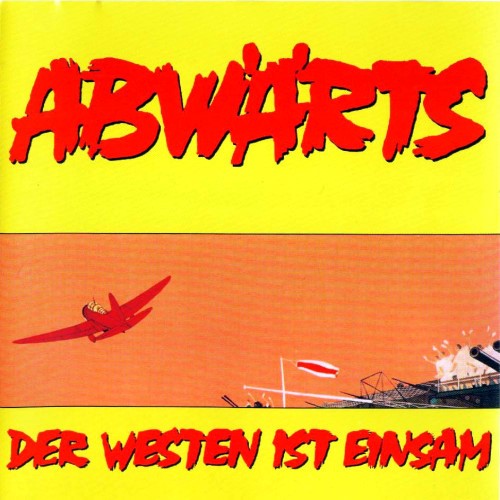
Frank Ziegert of the Hamburg punk band Abwärts has just sketched an apocalyptic world view, human civilization has been eradicated by napalm and epidemics, Europe is a desolate crisis area (“Affentanz” on the punk classic Der Westen Ist Einsam, 1982). And then that absurd survival advice follows, so absurd that it almost has the power of a comic relief – were it not for the fact that the scenery and circumstances are too bitter and horrible.
It is a proven, age-old stylistic device to break tension or to wake up the audience, the comic relief. Usually delivered by a not too clever secondary character, such as the porter in Macbeth, Thompson and Thompson in Tintin or Olaf the Snowman in Frozen.
In poetry the space for the introduction and elaboration of a bumbling funny man is limited and the poet usually falls back on a punch line that can stand on its own, requiring only the preceding verse to gain a comical alleviation.
The German Heinrich Heine, who destroys expectations by concluding lofty, sentimental or melancholic lines with an inappropriate platitude, a dry-comic footnote or a vulgarity (the “ironic pointe”) is a grandmaster in that area. Like in “Neben mir wohnt Don Henriquez” (1824). For three couplets, the poet praises the beauty and elegance of his neighbour Don Henriquez. The women of Salamanca blush when he walks by, dogs submit. Alone at home, the silence of the summer evening inspires Henriquez’s poetic mood and dreamy he reaches for his guitar…
Quivering he touches the strings,Starting his improvising.Argh, like squalling cats his scrapings,
His squeeking agonizing!
Dylan does appreciate the comic relief as well. In the early years on a transcending level, by alternating his heavier, poetic or ominous songs (“Gates Of Eden”, “A Hard Rain’s A-Gonna Fall”) with airy and light-bringing follies like “I Shall Be Free No. 10” and all those talkin’ blues songs. Later it becomes more subtle, hiding the Cheerful Note text internally. Don’t follow leaders / Watch the parking meters from “Subterranean Homesick Blues” has achieved the status of a proverb, and demonstrates, just like Abraham’s reply in “Highway 61 Revisited” (God said to Abraham, “Kill me a son” / Abe said, “Man, you must be putting me on”) Dylan’s favoured trick, the trick of his nineteenth-century colleague Heine: contrasting stately, heavy, loaded reports with banal, rude punch lines.
Similarly in “Nothing Was Delivered”. The antagonist is apparently in default, has delivered nothing, and the narrator now blames him, threatening with the unpleasant consequences that await the doubtful debtor. The three couplets are interchangeable – all three express the dismay of the I-person and all three threaten the debtor with hostage.
But then the couplet:
Nothing is better, nothing is best
Take care of your health and get plenty rest
… annihilating almost elegantly all shady gangster talk of the preceding verse. First by pretending to be a philosophical change; philosophers, scientists and artists have been fiddling around with the complex notion Nothing since the Fall of Man, and they usually entangle themselves – and the reader – in the paradox that the Nothing must be referred to as Something to be able to share something meaningful about it at all.
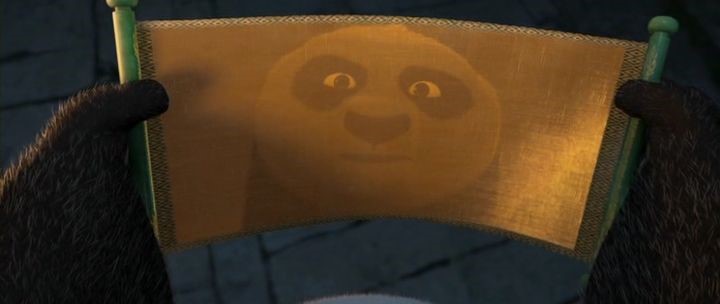
Nothing is better, nothing is best then is a mild, user-friendly aphorism with the wordplay of a My Name Is Nobody or a Who’s on First, but with this recital, in this song in this place, it at least suggests some depth. Agreed, it is of the same manageable complexity as Nothing in, for example, Kung Fu Panda, when the frightening villain Tai Lung has finally acquired the Dragon Scroll and opens it to learn the Great Secret that will make him the unbeatable Dragon Warrior:
“Finally! Oh, yes. The power of the Dragon Scroll is mine!
(unrolls the paper and finds astonished that it is an empty page)
It’s nothing!”
The hero, Panda Po, gets it – because shortly before this, his father told him what the cherished Secret Ingredient of his famous noodle soup is: also Nothing.
Po: It’s OK. I didn’t get it the first time, either.
Tai Lung: What?
Po: There is no secret ingredient. It’s just you.
It is a widely used, ancient plot, based on G.E. Lessings “Ring Parable” from Nathan der Weise (1779) and the Decamerone (around 1350) and probably the plot is even older. The punch line is always the same, just like here at Dylan. The revelation that “Nothing” is the answer first leads to an anti-climax, but then the moral gets through: it is actually a good thing, this “Nothing”; the true power comes from yourself – take care of your health and get plenty of rest. The words in the official Lyrics are from the second take, take heed of this and get plenty of rest. The most famous version, the one by The Byrds, however, follows the text of the first take, which is on that famous promotional acetate with fourteen Basement songs.
Dylan’s “Nothing Was Delivered” does not go much deeper than Kung Fu Panda, but some Dylanologists won’t have that. Authorities Oliver Trager and Robert Shelton, for example, link the song to songs like “I’m Not There”, “You Ain’t Goin’ Nowhere”,”Too Much Of Nothing”, noting how a remarkable number of Basement Songs deny, use “nothing” as an image, and try to distil thereof a kind of transcending, overarching theme. The poet Dylan thematizing “emptiness” (Trager), again expressing his need to “escape” (Marqusee), how all those denying songs are even echoes of “artists dilemmas” (Shelton).
It seems a bit thin, and the cold statistics do not really support it either. In the extremely productive year of 1967, the song maker Dylan produces an estimated hundred songs (including the lyrics of the rediscovered New Basement Tapes), and perhaps ten of them, with some good will maybe fifteen, are about denials, are praising an absence, a “Nothing” or a “Nowhere”. That comes close to a percentage that every oeuvre from every artist scores. The Beatles write in a similar span of time “Nowhere Man”, “Tomorrow Never Knows”, “For No One”, “You Won’t See Me”. Around 1913/1914 De Chirico paints dozens of masterpieces making Emptiness and Absence visible, just as Camus does in his novels, physicists, philosophers, composers, poets … everyone is at some point fascinated by Nothing. Apparently it is a universal theme, even beyond art. And just as run-of-the-mill as “Love” or “Time” or “Good and Evil”, too common anyway to see something extraordinary in it, as those respected Dylanologists would like.
Fats Domino’s influence is less debatable; all analysts agree hereon. This is not so much due to the song itself, but mainly to Richard Manuel’s piano playing in the first take (although Rolling Stone‘s Jann Wenner thinks Dylan plays the piano, but it really is a bit too good). The next two takes, and especially the last, the third (of which only 33 seconds have been preserved) put Fats’ influence in perspective; all Domino echoes have disappeared here. Most likely Dylan thought that first, superior, version being too similar to “Blueberry Hill” – after all, recording a song three times is quite exceptional in the Basement; only “Tears Of Rage” and “Open The Door, Homer” match that record.
Fortunately, Garth Hudson still had enough tape and he did not have to erase that first version. Despite the missing drums, this is by far the most attractive recording, not only thanks to Manuel’s piano playing but also due to Garth Hudson’s heart-wrenching organ playing.
“Nothing Was Delivered” is one of the fourteen songs offered to the outside world, and The Byrds are the lucky ones. They turn it into a beautiful country shuffle, from which the last bits of Fats Domino have been polished away and promote the song to album finale for their groundbreaking, but at the time somewhat undervalued, record Sweetheart Of The Rodeo (1968). By now, the album is considered as a founder of country rock, or at least as a benchmark. The opening song is also a scoop from the Basement, “You Ain’t Goin’ Nowhere”, so Dylan may be counted as at least one of the Founding Fathers of country rock.
On the occasion of the 50th anniversary of Sweetheart Of The Rodeo, in 2018, Chris Hillman and Roger McGuinn, supported by Marty Stuart & His Fabulous Superlatives, undertake an anniversary tour in which they perform the album in its entirety. For C-Notes (September 25, 2018), Hillman reflects on each song and, as usual, shows refreshingly little historical knowledge:
“I’m not sure what it’s about. I like the way Roger sings it. It has many subtexts to it. I think Bob wrote this song and You Ain’t Going Nowhere when he was laid up with a broken leg from his motorcycle accident. That’s how he came up with the songs.”
“Nothing Was Delivered” is moderately popular with colleagues, but still does invite quite a variety of versions. Howard Fishman, from the admirable Basement project Live At Joe’s Pub (2007), turns it into a cool, languid strolling, half-spoken jazz song with a beautiful, surprising cornet solo.
The Swedish blues veterans Totta & Hot’n’Tots opt for a lingering, Solomon Burke-like soul approach, but unfortunately forget the horns. The organ makes up for a lot (Featuring Spencer Bohren, 1989) and Robyn Hitchcock adheres nicely to the Byrds format, including steel guitar.
The most beautiful cover comes from Australia and is the pop gem that singer / songwriter Suzy Connolly manages to polish from it. Extremely tastefully and lovingly arranged, more Byrds-like than The Byrds have ever sounded and enriched with a captivating ebb and flow dynamics. On the tribute album Timeless Flyte – The Byrds Dylan Connection (2007).
Suzy Connolly:
What else is on the site
You’ll find an index to our latest posts arranged by themes and subjects on the home page. You can also see details of our main sections on this site at the top of this page under the picture.
The index to the 500+ Dylan compositions reviewed is now on a new page of its own. You will find it here. It contains reviews of every Dylan composition that we can find a recording of – if you know of anything we have missed please do write in.
We also have a discussion group “Untold Dylan” on Facebook. Just type the phrase “Untold Dylan” in, on your Facebook page or follow this link
And please do note The Bob Dylan Project, which lists every Dylan song in alphabetical order, and has links to licensed recordings and performances by Dylan and by other artists, is starting to link back to our reviews
Likely unknown to William Blake is the Colonial Baroque poetics of Edward Taylor, but Modernist poet Hart Crane, and singer/songwriter Bob Dylan are well aware of the earthy, watery, fiery, and airy images of the preRomantic Blake.
In the following love poem (“Permit me voyage, love, into your hands”), Hart Crane tangles up a Romantic image of an everlasting river; an Alchemic image of the regenerative fire-bird; and a Baroque image of a man-made barque:
Nothing so flagless as this piracy ....
O river mingling toward the sky
And harbour of the phoenix' breast
My eyes are pressed black against the prow
The derelict and blinded guest
(Hart Crane: Voyages)
Ezra Pound promotes the use of concise imagery in poetry, and Hart Crane ploughs the literary technic into the ground. He tangles up a number of objective correlatives, and almost turns them completely meaninglessness.
Singer/songwriter Bob Dylan picks up on Crane’s poetics even as he pokes Freudian fun at it:
Well my ship is in the harbour
And the sails are spread
Listen to me, pretty baby
Lay your hand on my head
Beyond here lies nothin'
Nothin' done and nothin' said
(Bob Dylan: Beyond Here Lies Nothing)
The construction and structure of the Brooklyn Bridge serves Crane (who’s influenced by Emanuel Swedenborg) as a symbolic link between the physical and spiritual energies of mankind.
Poet William Blake (also influenced by Swedenborg) imagines the link to be a chariot of fire:
Bring me my Spear; O clouds unfold
Bring me my Chariot of Fire!
(William Blake: Jerusalem)
Hart Crane writes:
So to thine everpresence, beyond time
Like spears ensanguined of one tolling star
That bleeds infinity - the orphic strings
Sidereal phalanxes, leap and converge
One Song, one Bridge of Fire!
(Hart Crane: Atlantis)
Alchemic fires a-burning, Bob Dylan laments the death of singer/songwriter John Lennon:
Shine your light
Movin' on
You burned so bright
Roll on, John
I heard the news today, oh boy
They put a wreath upon your door
Now the city gone dark, there ain't no more joy
They hauled your ship up on the shore
(Bob Dylan: Roll On, John)
Hart Crane takes inspiration from the Gothic Romantic poet Keats:
The ancient names, return to home to our own
Hearths, there to eat an apple and recall
The songs that gypsies dealt us at Marseille
Or how the priests walked, slowly through Bombay
Or to read you, Walt, knowing us in thrall
To that deep wonderment, our native clay
(Hart Crane: Cape Hatteras)
As indicated by the poem below:
I see a lily on thy brow
With anguish moist, and fever-dew ....
I saw pale kings and princess too
Pale warriors,  death-pale were they all
They cried, "La Belle Dame Sans Merci
Hath thee in thrall"
(John Keats: La Belle Dame Sans Merci)
Below, lyrics from Transcendentalist Romantic poet Wordsworth who influences Walt Whitman:
Five years have past; five summers, with the length
Of five long winters! And again I hear
These waters rolling from these mountain-streams
With a soft inland murmur
(William Wordsworth: Tintern Abbey)
Both Keats and Wordsworth are paid a tribute in the song below:
You trampled on me as you passed
You left the coldest kiss upon my brow
All my doubts and fears have gone at last
I've nothin' more to tell you now
I walk by tranquil lakes and streams
As each new season's dawn awaits
(Bob Dylan: Tell Ol' Bill)
Of course it had to happen. There I was on the Untold Dylan Facebook site (see below if you are not already a member of our group) boasting away that we had, on this site, reviewed every single Dylan composition that there was.
And maybe we had, or maybe we hadn’t. You can decide, but for what it is worth I am sticking to my guns.
Because there are a couple of bits of information I need to clear up, vis a vis the songs “Over the Road”, “Sally Gal” and “Bound to Lose, Bound to Win”. None of these was included in the list of all the songs that we reckon Dylan wrote.
Let’s start with the scrap of a song running to 1 minute 17 seconds including explanations and excuses, and known as “Bound to Lose, Bound to Win”.
“Bound to Lose” is a song that Dylan sings a scrap of on the Whitmark recordings, and it is just a scrap because much of the recording is taken up with Bob explaining that he had left the lyric sheet at home and so could only give a quick run through of a part of the song. The lyrics, he explained on the 1963 recording, would be sent over later.
Heylin makes the comment that the song was never copyrighted, which given the propensity for Bob and his chums to claim anything that might be a Dylan original, suggests that either Dylan forgot to send the copy over to the publisher, or he did and the publisher lost it. (Publisher loses artist’s material? Surely not! Err yes, quite often in fact.) Or maybe there never was a composition by Dylan – he was just singing a reworking of an old folk song.
For what is a little strange however is that Dylan has a complete grasp of the part of the song that he does sing, and he generally seems to have a great memory for lyrics all through this career, so downright forgetting the whole set of lyrics, does sound a little unlikely.
And, as has often been pointed out, the piece does have a certain resemblance to Sally Gal.
Indeed the verse Dylan supposedly “remembers”—“Well, I’m just one of those rambling men…”—is from “Sally Gal” which he recorded a year before but which again was not copyrighted.
I'm just one of those ramblin' menRamblin' since I don't know whenHere I come and I'ma gone againYou might think I've got no endBound to lose, bound to winBound to walkin' this road again
And that is not the start of those lines because according to Heylin the lyrics come from a notebook left at the home of Even and Mac McKenzie in Summer 1961 – the song which became Sally Gal as appearing on Bootleg volume 7 (No direction home).
Probably because of this reason although both Sally Gal and Bound to Lose are listed on the official Dylan site there is nothing about the authorship of either song. And Dylan (or at least his publishers) are, as we know, quite keen to claim anything that might be a Dylan original, as a Dylan original.
All of which leads me to believe the best we can say is that he never fleshed this one out beyond the chorus. The worst we can say is that he was probably just checking to see if he could make something out of a song he had picked up elsewhere, and if so would change the lyrics later.
So all that is novel in this song is
Well, I’m bound to lose, bound to win Bound to walk this road again Bound to lose, bound to win Bound to walkin’ this road again
and that too may well have come from somewhere else.
Thus, for what it is worth, my thought is that neither of these songs is a Dylan original.
But I thought I would include them just in case you wanted to know why I hadn’t included them. If you see what I mean.
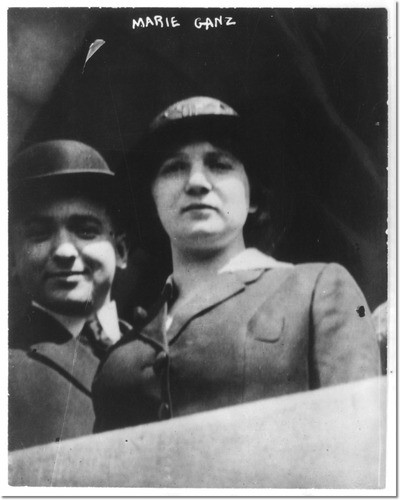
During the Food Riots in New York, February 1917, Miss Ganz stands out because, according to the New York Times, she “harrangued the crowd with bitter language and soon everything was confusion.”
Inspector Dwyer arrests her after hearing Marie Ganz addressing a group of women in Yiddish, “and her words seemed to be exciting them.” The arrest does not go down well. “Hundred or more women” go to the police station and chant that Sweet Marie should be released, but the matter is in the hands of the court now.
The Judge is remarkably lenient; Marie gets away with a suspended sentence, although she is no stranger to justice. The anarchist activist, an advocate for trade unions and women’s rights, has already been in prison before. At the age of 23, in 1914, Marie enters Standard Oil’s headquarters on Broadway and threatens, with a loaded revolver in her hand, to shoot John D. Rockefeller “down like a dog” unless he agrees to arbitrate the bloody Colorado miner’s strike. She is honest but outside the law. It costs her sixty days.
Later in life she renounces anarchism, as can be read in her strikingly well-written, highly entertaining autobiography Rebels: Into Anarchy – And Out Again (1920), in which she also tells how she is suddenly applauded as Sweet Marie during one of her many inflammatory speeches. “Whenever I appeared in public afterward it was sure to be heard shouted at me sooner or later.” She cannot explain either why the flattering prefix was attributed to her name.
It has been in the air for years, the combination Sweet and Marie. The very first female recording in history is made in 1893, under the supervision of Edison himself for his North American Phonograph Co., sung by Ada Jones and is called “Sweet Marie”.
It is the first in an endless row of Sweet Marie’s to be sung in the decades that follow. In 1907, Egbert Van Alstyne scores a hit with “’Neeth The Old Cherry Tree Sweet Marie”. A Sweet Marie awaits on the B-side of the original “Are You Lonesome Tonight?” (Charles Hart, 1927). Billy Preston, Thin Lizzy, folk, hard-rock, vaudeville and punk: Sweet Marie’s are sung in all genres throughout the century. Dylan is familiar with the Van Brothers, who sang one of them in 1960. And otherwise he undoubtedly knows the ode to a sweet Marie by his great hero Hank Snow (1954), who can be heard three times in Theme Time Radio Hour (including the song Dylan already covers in 1967, “A Fool Such As I”) and who is honoured by Dylan as “one of the biggest voices in country music”.
But given the sexual allusions in “Absolutely Sweet Marie”, the direct source of inspiration is perhaps the antique, scabrous drinking song “There’s A Peter On My Skeeter, Sweet Marie.”
However, the lewd metaphors like beating my trumpet, it gets so hard and fever in my pockets, do not – fortunately – turn the song into a bawdy pub ditty. “Absolutely Sweet Marie” is a high point in Dylan’s surreal poetry thanks to the multi-coloured richness of ambiguous symbolism, literary references and the absence of, as the poet calls it, contrived images, artificially conceived impressions. In the Song Talk interview (April 1991) Dylan is successfully encouraged to comment on some text fragments from his oeuvre. The yellow railroad, he reveals, is such an example of a scene that once hit him somewhere: “A blinding day when the sun was so bright on a railroad someplace and it stayed on my mind.”
Other images are at least as traceable. The six white horses walked John F. Kennedy’s bier not too long ago, white horses take the protagonist in “See That My Grave Is Kept Clean” to the cold tomb and the second verse of another classic in Dylan’s repertoire, “She” ll Be Coming “Round The Mountain” reads: She’ll be driving six white horses when she comes – a year later he will sing this again in the Big Pink, as we can hear on The Complete Basement Tapes.
The most famous one-liner in the song is of course To live outside the law, you must be honest. Jonathan Lethem makes a link to the quote “When you live outside the law, you have to eliminate dishonesty” from the film The Lineup (1958). A more likely candidate, though, is Woody Guthrie’s gangster song “The Ballad Of Pretty Boy Floyd”: “I love a good man outside the law.”
And, not for the first time, Kafka is a contender. Perhaps an even better one. His best known parable is called Vor dem Gesetz, “Before The Law”. It tells how an honest, modest Man from the country is not admitted to the “Law” and then has to wait outside the law for the rest of his life. Traces of Kafka reading can also be found just before Sweet Marie – in “Desolation Row”, for example – and shortly after (“Drifter’s Escape” and “All Along The Watchtower”); apparently the images evoked by Kafka belong to the “images which are just in there and have got to come out,” as Dylan says immediately after that previous interview quote.
In line with the fanning richness of images of a masterpiece such as “Desolation Row” is also the manifestation of the Persian drunkard. Dylan winks at Omar Khayýam (1048-1123), the brilliant mathematician, astronomer, philosopher and especially the poet of a thousand quatrains, the Rubáiyát, which, thanks to Edward FitzGerald’s translation, has penetrated the English linguistic area. In those quatrains, Khaýyam often praises the joys of excessive wine use (“The scent of wine rising from my grave will be so strong that it will intoxicate passers-by”), and a quatrain like
I have heard people say
that those who love wine are damned.
That can’t be true, that clearly is a lie.
For if lovers of wine and love are bound for hell,
heaven would be quite empty!
… earns him the not entirely misplaced, but somewhat irreverent nickname: The Persian Drunkard.
The poetic power is equalled by the music. Which has been fine-tuned pretty quickly, as we can learn from The Bootleg Series 12 – The Cutting Edge (2015). The rehearsal already has everything; the driving bass, the piano and organ part and most of all: the phenomenal drumming by Kenny Buttrey (1945-2004), one of the Great Unsung Heroes from Blonde On Blonde. In the final, slightly faster take, he surpasses his previous contributions. Especially from the “Persian” verse and the subsequent instrumental interlude – with an unleashed Dylan on harmonica – in which Buttrey degrades The Who’s Keith Moon to a toddler with a frying pan.
Pretty much every cover honours him, and rightly so – the drive and passion can be heard in the hardly differing but very infectious copies by The Flamin’ Groovies (1979)…
… the cheerful punks Jason And The Scorchers (1984), veteran Rab Noakes (2011) and the sympathetic Dylan tributers Klaassen & Van Dijk (2015). Even with the more civilized Al “Year Of The Cat” Stewart, echoes of the Nashville Cat still resonate.
Nor are tempo, rhythm and drive that adventurous with the two prettiest covers: the inevitable Old Crow Medicine Show on their unsurpassed 50 Years Of Blonde On Blonde (2016), and the one by C.J. Chenier on the catchy collector Blues On Blonde On Blonde (2003), scoring bonus points for the distinctive instrumentation. The zydeco star, son of King Of Zydeco Clifton Chenier, lays down the merry tune on his very swinging, jumping accordion. Absolutely sweet.
Considering the remarkable covers of songs like “Love Minus Zero” and especially “Here Comes The Sun”, the long overdue release of Cockney Rebel’s performance is something to pray for. In a particularly entertaining, blatantly subjective fan contribution to The Gonzo Daily of April 6, 2013, England’s national treasure Steve Harley is quoted:
“We often talked about our own tastes in music – particularly Smokey Robinson and Bob Dylan, and [he] told me how – in the days before Cockney Rebel had got their first record contract – they had recorded some demos, mostly of their own songs but also Bob Dylan’s glorious Absolutely Sweet Marie.”
It is a song “that could have been made for Harley’s nasal, estuarine drawl, and all tour I had been badgering him to try his hand at singing it again.” But to the frustration of editor Jon Downes, who as a devoted fan follows his idol throughout England, Harley refuses for years to play the song on stage.
Until that one Friday night in Aberdeen, where the amiable Harley allows a few loyal fans, including Jon, to attend the sound check. “Then Steve started to sing…
Well, your railroad gate, you know I just can't jump itSometimes it gets so hard, you seeI'm just sitting here beating on my trumpet,with all these promises you left for me"
…Steve Harley was singing Absolutely Sweet Marie just for us.”
Downes expresses his memories of that magical moment in delightful, eloquent one-liners (To paraphrase PG Wodehouse, the sight of me dancing is enough to make one re-evaluate the concept of man as the pinnacle of God’s creation, but dance I did) and finishes off with an overwhelming, William Blakean finale:
“As the band thundered to a climax and I spun around and around like a gyroscope on methedrine, I could see the dark waters before me parting and the great head and neck of an antediluvian creature looming up before me with its eyes ablaze and its mouth open.”
Sweet Marie’s words really “seemed to be exciting them”.
Footnote: Jochen working in the Netherlands found a recording of this song by C.J. Chenier on the internet at
but Tony in the UK couldn’t locate that song at that point. Jochen reckons its a Brexit thing. Either way it might be worth trying it to see if you can find the recording
Old World poet Thomas Eliot’s angst-ridden existentialist vision of humankind, objective correlatives in tow, shakes the New World hopes of poet Hart Crane to the core:
His thoughts delivered to me
From the white coverlet and pillow
I see now, were inheritances
Delicate riders of the storm
(Hart Crane: Praise For An Urn)
A broken Hart there be in the following song lyrics:
Riders on the storm
Into this house we're born
Into this world we're thrown
Like a dog without a bone
An actor out on loan
(The Doors: Riders On The Storm ~ Jim Morrison)
And in the following western cowboy song:
As the riders loped on by him, he heard one call his name
If you want to save your soul from ridin' on our range
Then cowboy change your ways today, or with us you will ride
Tryin' to catch the devil's herd across these endless skies
(Death Valley Rangers: Ghost Riders In The Sky ~ Stan Jones)
https://youtu.be/LinTHp5wpHg
Little wonder singer/songwriters look for some way outta such a god-forsaken place:
I was burnt out from exhaustion, buried in the hail
Poisoned in the bushes, and blown out on the trail
Hunted by a crocodile, ravaged in the corn
"Come in", she said, "I'll give you shelter from the storm"
(Bob Dylan: Shelter From The Storm)
The poetry of Hart Crane be rather dark and mournful akin to that of John Keats:
As though the waters breathed that you might know
'Memphis Johnny', 'Steamboat Bill', 'Missouri Joe'
Oh, lean from the window if the train slows down
As though you touched  hands with some  ancient clown
A little while gaze absently below
And hum 'Deep River' with them while they go
(Hart Crane: The River)
Referencing the song below concerning a steamboat wreck:
Steamboat Bill, steamin' down the Mississippi
Steamboat Bill, a mighty man was he
Steamboat Bill, he was going to beat the record
of the Robert E. Lee
(Irving Kaufman: Steamboat Bill ~ Shields, et al)
Both the song and poem above influence the following song lyrics updated with the possibility of a sex-wreck:
Well, I ride on a mail train, babe, can't buy a thrill
Well, I been up all night, leanin' on the windowsill
Well, if I die on the top of the hill
And, if I don't make it, you know my baby will
(Bob Dylan: It Takes A Lot To Laugh, It Takes A Train To Cry)
To understate matters, Crane’s broken view of Walt Whitman’s optimism is more epic in scale than that of Bob Dylan:
Or to read you Walt, - knowing us in thrall
To the deep wonderment, our native clay
Whose depth of red, eternal flesh of Pocahontas
Those continental folded eons, surcharges
With sweetness below derrick, chimneys, tunnels
(Hart Crane: Cape Hatteras)
No Romantic Transcendentalist poet of yesteryear is Hart Crane:
Young wife, how beautiful the months swept by
Within the bower methinks I view thee still
The meek observance of thy lifted eye
Bent on thy lord, and prompt to do his will ....
Forgotten race, farewell! Your haunts we tread
Our mighty rivers speak your words of yore
Our mountains wear them on their misty head
Our sounding cataracts hurl them to the shore
(Lydia Sigourney: Pocahontas)
Hart personifies America as Mother Earth. She’s forced to carry the weight of the industrial capitalist’s dream of technological splendour:
The fog leans one last moment on the sill
Under the mistletoe of dreams, a star
As though to join us at some distant hill
Turns in the waking west, and goes to sleep
(Hart Crane: The Harbour Dawn)
Bob Dylan is rather sardonic about it all:
Summer days and summer nights are gone
I know a place where there's still
Somethin' goin' on
I got a house on a hill
I got hogs out in the mud ....
Got a long-haired woman
She got royal Indian blood
(Bob Dylan: Summer Days)
What else is here?
An index to our latest posts arranged by themes and subjects on the home page. You can also see details of our main sections on this site at the top of this page under the picture.
There is an alphabetic index to the 550+ Dylan compositions reviewed on the site which you will find it here. There are also 500+ other articles on different issues relating to Dylan. The other subject areas are also shown at the top under the picture.
We also have a discussion group “Untold Dylan” on Facebook which mostly relates to Bob Dylan today. Just type the phrase “Untold Dylan” in, on your Facebook page or follow this link
And please do note The Bob Dylan Project, which lists every Dylan song in alphabetical order, and has links to licensed recordings and performances by Dylan and by other artists, is starting to link back to our reviews.
George Harrison has been far from the quiet Beatle in terms of his collaborations with Bob Dylan over the years. Starting off with his first real solo album, “All Things Must Pass,” we find included a Harrison/Dylan co-write “I’d Have You Anytime” as well as another rejected track “Nowhere To Go”. It also included a cover of “If Not For You”.
Here is a rehearsal for the song from The Concert For Bangladesh.
https://www.youtube.com/watch?v=tctzUNMp5po
George also recorded a demo of “Mama, You’ve Been On My Mind” around this time. It was subsequently released on “Early Takes – Volume 1.”
Another demo, this time for “I Don’t Want To Do It” was also recorded around this time and then he subsequently re-visited the track in the mid 80’s for a soundtrack and one off single. I think it’s wonderful!
They have performed together several times in concerts. Most notably at George’s “The Concert For Bangladesh”. Bob joined the proceedings towards the end and, backed by George and Ringo, contributed a fine setlist of the old hits including “Blowin In The Wind”, “Mr Tambourine Man” and “Just Like A Woman”. The album also gained Dylan his first Grammy award for “Album Of The Year”.
Later George joined the rest of the guys at Bob’s 30th Anniversary Concert celebration. He contributed a fine “Absolutely Sweet Marie”.
As we all know, Bob and George teamed up with Tom Petty, Jeff Lynne and Roy Orbison in 1988 for a couple of albums as The Traveling Wilburys. You can read about the various tracks on these pages*. From these years I’m going to include the one off single “Nobody’s Child” just because I don’t think it’s been mentioned here before! All the guys trade off on the verses (George would have known this one from the pre-fame Beatles days as they also recorded this with Tony Sheridan on vocals).
The year before the Wilburys got together Bob and George stepped up on stage at the Palomino Club for an informal jam session. Several songs were performed including these two fun numbers:
First up it’s “Peggy Sue”
Next an extremely fun version of “Watching The River Flow”. George clearly doesn’t know all the words and Bob is being of no help!
Just search for The Silver Wilburys on YouTube and you can listen to all the tracks they performed that night. It must have been fun for those on stage and in attendance.
Bob Dylan has covered George Harrison original’s in concert on two occasions.
Harrison’s “Something” was performed twice in November 2002 and May 2009
Next “Here Comes The Sun” was performed just once in 1981.
https://www.youtube.com/watch?v=UBgCJkMySBY
Ringo Starr has had more than a couple of acquaintances with the music of Bob Dylan.
The played together at The Band’s Last Waltz and at the Concert For Bangladesh mentioned above, as well as at the 1988 Rock N Roll Hall Of Fame concert.
Back in the mid 70’s several members of Dylan’s Rolling Thunder Revue band, namely T-Bone Burnett, Steven Soles and David Mansfield combined forces after the tour finished and formed The Alpha Band. They recorded 3 tremendous albums and if you are a fan of the sound they created during the Rolling Thunder Revue you should check them out. Anyway, Ringo joined up with the band for the second album “Spark In The Dark” and drummed on a couple of tracks including this fine take of Dylan’s “You Angel You”.
Then in 1981 Ringo joined Bob in the studio during the “Shot Of Love” sessions and played tom-toms on the “Heart Of Mine” single.
In 1987 Ringo held several recording sessions in Memphis for a potential new album and Dylan participated in one. He plays harmonica and duets with Ringo on “Wish I Knew Now (What I Knew Then)”.
https://www.youtube.com/watch?v=uw8-evt2a_Y
The album and song remains unreleased after Ringo sued producer Chips Moman who attempted to release the album. Ringo felt he was too much “under the influence” of alcohol at the time. Bob testified on his behalf during the court proceedings.
Whilst, we still await Bob’s version of “Back Off Boogaloo”, Bob and Ringo have both covered the same songs on a number of occasions, “Sentimental Journey”, “Stardust”, “Stormy Weather”, “Winter Wonderland”, “The Little Drummer Boy” and “She’s About A Mover”.
To finish up let’s look back at this iconic performance from Bob, George and Ringo at The Concert For Bangladesh with “A Hard Rain’s A Gonna Fall”.
*Footnote from Tony.
We have reviewed all the Wilbury songs that Dylan appears to have been involved in, and you will find them collected in our listings for 1989 (on the 1980s page) and 1990 (rather logically on the 1990s page)
But there is one I’d single out above all the rest – although I know most people don’t share my enthusiasm: Where were you last night. Largely ignored as a Dylan composition, it remains for me the shining masterpiece of that project.
Every single Dylan composition reviewed and more
An index to our latest posts arranged by themes and subjects on the home page. You can also see details of our main sections on this site at the top of this page under the picture.
There is an alphabetic index to the reviews of every one of the 590 songs Dylan has written or co-written which you will find it here. There are also 700+ other articles on different issues relating to Dylan. The other subject areas are also shown at the top of this page under the picture
We also have a discussion group “Untold Dylan” on Facebook which mostly relates to Bob Dylan today. Just type the phrase “Untold Dylan” in, on your Facebook page or follow this link
And please do note The Bob Dylan Project, which lists every Dylan song in alphabetical order, and has links to licensed recordings and performances by Dylan and by other artists, is starting to link back to our reviews.
Now this article has got a twist in the tail. Or rather a twist in the start. Or maybe a twist in the tale. Anyway, it’s got one of those.
Because this is a book review of a book I have not read.
Now although confessing to not having read a book one is reviewing might be a little unusual, this approach to reviewing in itself may not be that unknown in the annals of reviewing. Indeed I am pretty sure that 95% of the reviews of books I’ve written were written by people who had read the press release, and the back cover, and then cut and pasted what they found. And one can understand this. I mean, who’s got time to read books these days?
But, I must add, I have an excuse in not reading Jochen’s book. Because Jochen Markhorst, who has contributed so many brilliant reviews of Dylan songs on this site, has written his book in Dutch. Largely because he is Dutch. Which I guess is an excuse of some sort.
The volume, “The Basement Tapes” contains 32 in depth reviews, analyses and reflections on songs selected from the full collection, along with eight essays on the background to the songs and the impact of the recordings.
The reviews include the songs you might expect to see reviewed, such as “Quinn The Eskimo”, “I Shall be Released”, “I’m Not There” and “Sign On The Cross” and so forth. But then there are also reviews of some of the lesser known and lesser reported works such as, “Baby Won’t You Be My Baby”, “Dress It Up, Better Have It All” and “All You Have To Do Is Dream”.
Now if you are a regular here you will know the fresh, unconventional light that Jochen sheds on all the reviews he undertakes, and the fact is that most of the essays included in The Basement Tapes. Dylans zomer van 1967 have not been published in Dutch before, nor in English on Untold Dylan, for that matter.
So if you do have the language – or if you have an uncle or second cousin who can do the translation for you, this will be worth reading.
Jochen Markhorst – The Basement Tapes, Dylans zomer van 1967
Publisher: Brave New Books
isbn: 9789402199444
Price € 20.00
Pages: 215
But if for some reason (and I can’t imagine what it is) your Dutch is perhaps not quite up to the mark, and you are waiting for that refresher course in the language to begin next week, then in the meanwhile here is a bit of Jochen on the Basement Tapes. In English.
And here’s a final point. Being English, I don’t speak foreign languages. It is not something that an English gentleman does. Except that for reasons that will not become clear at this point, I do know a spot of French and do on occasion use it along with a lot of arm-waving and the use of occasional English words thrown in, in the vague hope that the French word I seek at that particular moment might be similar.
But by and large, most of the time I do speak English, and I have to say I have been knocked out to have the chance to publish some of Jochen’s work in English on this site. If you can’t read Dutch do go and have a look at a few of those reviews in English linked above, if you have not read them before. It really will be time extraordinarily well spent.
Art culture can be metaphorically depicted as one that spreads out its roots; roots that criss-cross one another in contrast to being envisioned as a tree that steadily sprouts upward:
Cinderella, she seems so easy
'It takes one to know one', she smiles
And puts her hands in her back pockets Bette Davis style
( Bob Dylan: Desolation Row)
In the movie “All About Eve”, Bette Davis plays an aging, leading female actor in a world where men are men, and women are women – she faces a challenge from an ambitious young understudy who calls herself Eve; she’s looking for fame, and the money that comes with it. Bette’s in love with Bill, the theatre director in the movie, and he with her. Eve tries but fails to seduce him.
About Eve, Witty Davis is not amused:
“There goes Eve. Eve evil, Little Miss Evil. ‘But the evil that men do ….’
How does it go, groom? Something about the good they leave behind”
(Bette Davis: All About Eve)
She is aware that the orator in Shakespeare’s play actually intends to speak highly of Caesar:
"I come to bury Caesar, not to praise him
The evil that men do lives after them
The good is oft interred with their bones"
(William Shakespeare: Julius Caesar, Act III, sc.ii)
Singer/songwriter Bob Dylan refers to the Shakespeare quote in another song – he means just what it says, especially when it comes to self-serving critics:
This is how I spend my days
I come to bury, not to praise
I'll drink my fill, and sleep alone
I pay in blood, but not my own
(Bob Dylan: Pay In Blood)
The theatre critic in the movie is aware of Eve’s sordid background; career-wise, both know that he can make or break her:
"And you realize - you agree how completely  you
belong to me?"
(George Sanders: All About Eve)
It’s not a traditional love call between the sexes, that’s for sure:
Then I will know
Our love will become true
You'll belong to me
I'll belong to you
(Eddy and MacDonald: Indian Love Call ~ Hammerstein,  et al)
Bob Dylan, from the get-go, makes use of dark wit and irony, Bette Davis-style:
And in comes Romeo, he's moaning
'You belong to me, I believe'
And someone says, 'You're in the wrong place, my friend
You better leave'
(Bob Dylan: Desolation Row)
Not all that happy with the way things are going, Eve leaves the Promised Land of theatres on Broadway and heads off to movie-oriented Hollywood. She’s in search of greater fame and fortune there, accompanied by a fawning, youthful Cinderella of her own.
In ‘All About Eve’, the roots of the modern world of artistic expression (filled with the sap of cynicism) spread outward, not upward – so say the song lyrics below:
This place ain't doin' me any good
I'm in the wrong town, I should be in Hollywood
Just for a second there, I thought I saw something move
Gonna take dancin' lessons, do the jitterbug rag
Ain't no shortcuts, gonna dress in drag
Only a fool in here would think that he's got anything to prove
(Bob Dylan: Things Have Changed)
With sex roles a-changing, and Dylan’s age creeping on up, old romantic love themes don’t fit the agenda of the times that well anymore; however, wit never dies – cynical humour comes in handy:
Well I'm drivin' in the flats in a Cadillac car
The girls all say, 'You're a worn out star'
My pockets are loaded, and I'm spendin' every dime
How can you say you love someone else when you know
it's me all the time
(Bob Dylan: Summer Days)
What else is here?
An index to our latest posts arranged by themes and subjects on the home page. You can also see details of our main sections on this site at the top of this page under the picture.
There is an alphabetic index to the 550+ Dylan compositions reviewed on the site which you will find it here. There are also 500+ other articles on different issues relating to Dylan. The other subject areas are also shown at the top under the picture.
We also have a discussion group “Untold Dylan” on Facebook which mostly relates to Bob Dylan today. Just type the phrase “Untold Dylan” in, on your Facebook page or follow this link
And please do note The Bob Dylan Project, which lists every Dylan song in alphabetical order, and has links to licensed recordings and performances by Dylan and by other artists, is starting to link back to our reviews.
As I’m heading home to Scotland for a visit next week I thought this was the perfect time to commemorate my visit with a quick article looking at some songs written about Dylan by a couple of Scottish artists. We’ve already covered Eric Bogle and his “Do You Know Any Dylan” so let’s look at two more.
First up it’s Norman Lamont and “The Ballad Of Bob Dylan”.
To be clear this is not the former UK Chancellor of The Exchequer, who is also Scottish, but a singer/songwriter based In Edinburgh.
This track appeared on his 2004 album “The Wolf Who Snared The Moon”.
Writing on his own website he describes the genesis of the track: “A song came on the radio, and I realised it was Dylan, I hadn’t heard it before, and it sounded great. The presenter said it was from the Traveling Wilburys first album, which was about to be released, and was called Tweeter and the Monkey Man.
Later on, at home, I got out my guitar and tried to remember it but couldn’t. I was enjoying the effort, though, and started making stuff up. ‘He flew in from Miami with a bagful of bones’ started it off and the rest just suggested itself from rhymes.
I didn’t know where it was going until the line ‘He said his name was Bob Dylan’ came. Could I write a whole song about Bob Dylan? I wondered if I could and took the idea for a walk. The rest of it came fairly easy. I knew I wanted to use the Tangled Up in Blue approach of different narrators, all unreliable, but they seemed to emerge as different Dylans, or maybe Dylans from different periods. It’s interesting to note the approach the film I’m Not There took.”
Here is an excellent live version followed by the lyrics.
Well he flew in from Miami with a bagful of bones
I was singing in the airport bar, just to pay off some loans
Two sleepless eyes in an unmade face
He saw me at the bar, he said “This must be the place!”
Said he was looking for a room for the night
He said his name was Bob Dylan, I said “Ha ha, right!”
He spent the night at my place on a couple of chairs
In the morning he was up and off and down the stairs
I found him in the marketplace, busking for cash
Playing my guitar in a rough and ready kind of fashion
A voice like a hangover looking for a cure
I said you sound like Bob Dylan, he said “Why sure.”
Twenty miles away, high security hospital
They were looking for a guy who’d jumped the wall
They were looking in the streets they were looking in the zoo
No way of knowing what this kind of man might do
They only thing they’d got on him while he was away
Was he was into Bob Dylan in a big big way.
My friend with his busking made a couple of pounds
And with a couple of mine that got a couple of rounds
We sat there reminiscing back down the line
To the sixties, how we hadn’t recognized them at the time
When this guy burst in, grabbed my friend by the sleeve And says he’s Bob Dylan – I thought Man, time to leave
They got stuck into each other, I never saw the stranger’s face
Barman’s yelling at me Get these guys outta the place
Spitting out language, they were spitting out blood
It was like watching Cain and Abel, before the flood.
Got out to the street and the stranger was gone
My friend Bob Dylan just picked up his bag of bones
(This is what he told me …)
‘That guy there used to be a country western star
Who put down his roots and never wandered far
With his Jewish mama and five kids on the farm
It had been too damn long since he’d done any harm.
His wife cut his throat, he had to get born again
I got his job, he’s been after me since then.’
What about the bones? He said ‘I carry them with me
They remind me of a guy I knew in 63
He could have been a big shot, I told him back then
But he turned into a junkie – well I ain’t no judge of men.’
That was his tale, as the evening wore on
When I woke up in the night Bob Dylan had gone.
He’d taken my guitar and my cowboy boots
My country singing tie and my country singing suit
Left me his bones, and some kinda book
It might have been a Bible, I never got time to look
‘Cause they kicked down the door, they walked in real slow
They said ‘We’re looking for Bob Dylan’ I said ‘Whaddya know?’
These days I don’t work much, guess I’m past my prime
I’m growing me a beard, that passes the time
I’m living in the country but I’ll get across the wall
When I get a better grip of my short-term recall
Some days I feel bitter, some days I feel worse
I just write another song and play it to the nurse.
Our second song today is Belle & Sebastian with “Like Dylan In The Movies”.
This is from their album “If You’re Feeling Sinister”. Rolling Stone listed the album as the 75th best album of the nineties (Time Out Of Mind was at 31).
Lisa’s kissing men like a long walk home
When the music stops
Take a tip from me, don’t go through the park
When you’re on your own, it’s a long walk home
If they follow you
Don’t look back
Like Dylan in the movies
On your own
If they follow you
It’s not your money that they’re after boy it’s you
Pure easy listening, settle down
On the pillow soft when they’ve all gone home
You can concentrate on the ones you love
You can concentrate, hey, now they’ve gone
If they follow you
Don’t look back
Like Dylan in the movies
On your own
If they follow you
It’s not your money that they’re after boy it’s you
Yeah you’re worth the trouble and you’re worth the pain
And you’re worth the worry, I would do the same
If we all went back to another time
I will love you over
I will love you over
I will love you
If they follow you
Don’t look back
Like Dylan in the movies
On your own
If they follow you
Tenderly you turn the light on in your room
If they follow you
Don’t look back
Like Dylan in the movies
On your own
If they follow you
D.A. Pennebaker has said that the title for the movie came from a quote by Satchel Paige, “don’t look back. Something might be gaining on you”.
Songwriter Stuart Murdoch wrote this after feeling paranoid that he was being followed while walking through a Glasgow park at night. Take it from me, as someone who has done exactly that on many an occasion, this is more than understandable!
Line’s such as “It’s not your money that they’re after boy it’s you” really reminds me of some of those scenes from Don’t Look Back of Dylan being mobbed outside of concert venues as well as the sort of interview questions Dylan would be asked then and after.
To finish up, let’s take a look at the sort of stuff Dylan could do himself when visiting Scotland. This one was recorded in a hotel room in Glasgow.
You’ll find an index to our latest posts arranged by themes and subjects on the home page. You can also see details of our main sections on this site at the top of this page under the picture.
The index to the 500+ Dylan compositions reviewed is now on a new page of its own. You will find it here. It contains reviews of every Dylan composition that we can find a recording of – if you know of anything we have missed please do write in.
We also have a discussion group “Untold Dylan” on Facebook. Just type the phrase “Untold Dylan” in, on your Facebook page or follow this link
And please do note The Bob Dylan Project, which lists every Dylan song in alphabetical order, and has links to licensed recordings and performances by Dylan and by other artists, is starting to link back to our reviews
Gotta Serve Somebody: The Gospel Songs of Bob Dylan from 2003 is a beautiful tribute album on which black gospel artists play eleven, mostly outstanding, versions of Dylan’s religious songs, from songs from the Devout Duo Slow Train Coming and Saved. Producer of both Dylan albums is the seasoned veteran Jerry Wexler, who also contributes to the compelling accompanying DVD with the tribute album, a documentary in which intimates like drummer Jim Keltner and guitarist Fred Tackett talk about their experiences with Dylan.
The interview with the quiet, mild and wise Wexler is a highlight. He remembers the first confrontation with Dylan’s new repertoire and his surprise:
“Looks like we got wall-to-wall Jesus coming. Which didn’t faze me at all. I didn’t care. Because it’s Bob. If he’d wanted to do the Yellow Pages: “Yes Sir. Where you wanna start, with A’s or with Z’s?”
And still, more than twenty years after the recordings, he glows with pride, the man who was at the helm with legends such as Aretha Franklin, Dusty Springfield and Ray Charles, the man who coined the term rhythm and blues to brush away the derogatory name race music.
“To be known as Bob Dylan’s producer … that burnishes the image. So – since I have a normal sense of self-gratification – it has made me very happy from that aspect of it: I went to work with Bob Dylan, and I didn’t fail. (…) Did you see this piece by Sinead O’Connor, saying that this record was the major influence on her life?”
The first song that Dylan writes for his first religious album is not a religious song. “Slow Train” does have that status, partly because Dylan apparently attaches special importance to it and even names the entire album after it. But lyrically the song is definitely an outsider, Dylan chooses a flag which does not convey the cargo. “Slow Train” should be classified in the column that also includes “Mississippi”, “Chimes Of Freedom” and “Changing Of The Guards”; wide-ranging confetti-rains of impressions by an American citizen who connects the private with the universal, who slaloms between satire, reporting, surrealism, aphoristic oneliners and poetry.
Of course, the song is written, at least in a primordial form, well before Dylan’s radical transition to religious music, before the Bible study sessions in Reseda. The poet visits those sessions, allegedly, almost every morning in the first months of 1979, the first introduction to “Slow Train” takes place in December 1978, during a soundcheck in Nashville. An unsuspecting witness from that first hour would place the song appreciably as a bonus track to Street Legal, probably. The opening line, for instance, sounds like an echo of the sigh on “We Better Talk This Over”:
We’d better talk this over: I feel displaced, I got a low-down feeling
Slow Train: Sometimes I feel so low-down and disgusted
And from the same Street Legal song we also recognize the outspoken aversion to hypocrisy and underhandedness: here the poet fulminates against the companions who renounce their principles, the enemy hiding under a “cloak of decency”, bluff champions and “masters of the proposition”, in We Better, he despises the opponent who is two-faced and double-dealing, who is lying and treacherous.
It does not stop there, in terms of atmosphere, tone and content similarity. In “Changing Of The Guards” the protagonist regretfully watches the power-hungry thieves and merchants, in “No Time To Think” he judges, as in “Slow Train”, that profit and commerce control and dehumanize us (“Mercury rules you,” for example) and anyway, the train slowly coming up around the bend reminds us of the leaving train in Street Legal’s album closer: “There’s a long-distance train, pulling through the rain.”
Now, trains are not a new phenomenon in Dylan’s oeuvre, obviously. This is the twenty-ninth officially released song in which a train is passing by, and already from the cover text of Highway 61 Revisited, fifteen years earlier, Dylan’s fascination for the image of the slow train is apparent. That text opens with “On the slow train time does not interfere”, Autumn points a few lines further to the passing slow train and the poet ends the wildly fanning prose text with the concealing revelation that the subjects of the lyrics on this album are somehow about beautiful strangers, Vivaldi’s green jacket and the holy slow train.
True, it is a beautiful, strong cast-iron image, the image of the train slowly appearing around the bend. In this song text more threatening, darker, more apocalyptic than we know from Dylan. Initially, in the early 60s, the train was a “normal” symbol for romantic Wanderlust, the romantic motivator of the storyteller who hopes to find happiness beyond the next mountain. “Poor Boy Blues”, “Gypsy Lou”, “Paths Of Victory”, to name just a few. Gradually the image of the train becomes a stage piece, to illustrate the detachment of the protagonist, for example. Like in “It Takes A Lot To Laugh” and “Visions Of Johanna”.
Ominous the trains become not until the 70s. Nightly heat hits him with the devastating power of a freight train in “Simple Twist Of Fate”. In “Señor” the last thing the undressed, kneeling narrator sees (incidentally a copy of the execution scene on the last page of Kafka’s The Trial) is “a trainload of fools” and in the stage talk with which Dylan always announces this song in 1978, the singer recounts about a train journey where an old Mexican with devilish features is in his coupé:
“He was just wearing a blanket, and he must have been 150 years old. I took another look at him an I could see that both his eyes were burning out. They was on fire. And there was smoke coming out of his nostrils.”
Now there’s a fellow passenger who raises questions about the travel destination. Certainly not a mousy commuter on his way to his work in the Bookkeeping & Accounting Department, at any rate – rather a demon on his way to Armageddon.
This slightly bewildering speech Dylan delivers around the same time as he writes “Slow Train”, and the mood sets the tone. The seven verses end with the recurring verse in which the slow train is comin’ up around the bend, always preceded by dark observations. But then again, if this song is to be the standard-bearer of Dylan’s first religious album, one could, with some good will, tick off those dark observations as manifestations of Biblical Deadly Sins – such as pride, greed, and gluttony. Still – analysis from an author like Howard Sounes (Down The Highway, 2001), experiencing “a resurgence of faith in God” does seem rather exaggerated.
The first verse and most other verses exude the preachiness of New Testament Bible books, especially the Book of James, although Dylan refrains from quoting literally. Earthly principles is such a concept that, although it sounds mighty Biblical, is nowhere to be found in the Book of Books. The tone of lines like Have they counted the cost it’ll take to bring down / All their earthly principles they’re gonna have to abandon? on the other hand, most certainly is. It does sound quite like the many exhortations that earthly wealth, treasure and riches are fleeting, a chorus with the Apostles and New Testament letter authors.
The same edifying tone colours the fourth, fifth and sixth verse. Evangelically normative, or at least clear and unambiguous the content is not. Such as why Founding Father Thomas Jefferson turns over in his grave. In his time, the author of the Declaration of Independence made quite a point of the principle that all people are equal, so he will indeed be bothered by fools, glorifying themselves. But still… would that result in restlessly tossing around in his last resting place? Jefferson has had his fair bit of experience with those kinds of people, the occurrence of self-elevating idiots two hundred years later can hardly be grave-shakingly shocking.
More focused is the venom that is poured out over the sinners in the fifth and sixth couplet: capitalist big shots, false healers, hypocrites and big-earning television evangelists should prepare for what’s coming, because the holy, slow train is already peeking around the corner.
The vastness and the exaltedness of those couplets is diminished in the two couplets in which the poet gives way to private concerns with ladies from Alabama and Illinois. Both images suggest something anecdotal, but the precise nature of it remains (naturally) Dylanesque foggy.
Yet, even added up these six verses raise fewer questions than that weird third verse. The tone thereof is remarkably different. A xenophobic, agitprop-spreading populist provocateur speaks up, here the poet assumes the role of a redneck uncomfortably close to unhealthy nationalism. “Facts” are stated with a Trump-like aplomb and inaccuracy. That control by foreign oil is really not that big a deal, for example. The United States has been producing more than half of its oil requirements itself for many years and there is still lots of stretch in that need. The image of sheikhs walking around waving chic jewels and wearing nose rings (?), determining America’s future, is downright nasty and malicious, and does awkwardly resemble some demagogue’s fit, rather than a poet laureate’s well-considered reflections. Odd.
The song can stand it, this weird glitch. “Slow Train” is a grandiose song, a magnificent conclusion of that wonderful side A. Guitarist Mark Knopfler may claim a part of the success. He opens with a short solo that is both venomous and lyrical, gets all the space to place accents, exclamation marks and commentaries with every line of verse, and has the talent and skill to enrich the already so rich song. Crackling production by Wexler, great arrangement with modest keyboards and subdued horns … the song crowns one of the most beautiful album sides from Dylan’s rich discography.
The guildsmen, however, stay away from this highlight, oddly enough. There are hardly any covers of “Slow Train”, and certainly not any worth mentioning. The song seems to fall between two stools. Artists who are attracted by the Biblical power of an “I Believe In You” or a “Gotta Serve Somebody” miss the confession here, while others may be deterred by the religious connotation. Anyway: in that original version alone – and also in the live version with Grateful Dead on the wrongly denounced album Dylan & The Dead (1989), by the way – the song will be with us, yes, to the End of Time.
Rotterdam, 1987 (with Tom Petty & The Heartbreakers):
https://www.youtube.com/watch?v=dog4tPL3UZQ
What else is on the site
You’ll find an index to our latest posts arranged by themes and subjects on the home page. You can also see details of our main sections on this site at the top of this page under the picture.
The index to the 500+ Dylan compositions reviewed is now on a new page of its own. You will find it here. It contains reviews of every Dylan composition that we can find a recording of – if you know of anything we have missed please do write in.
We also have a discussion group “Untold Dylan” on Facebook. Just type the phrase “Untold Dylan” in, on your Facebook page or follow this link
And please do note The Bob Dylan Project, which lists every Dylan song in alphabetical order, and has links to licensed recordings and performances by Dylan and by other artists, is starting to link back to our reviews
John Keats be a neo-RemanticTranscendentalist poet in that he’s melancholic rather than optimistic when it comes to an intuitive sensing of a vitalistic force pervading the natural environment.
Rather, images he draws from Nature, as well as from mythology, serve as ‘objective correlatives’ to give concreteness to sad and happy emotions as well as feelings such as pain that are all recorded in the human body and brain. The sounds of words chosen, and, if used, of accompanying music be part of this artistic technique.
Not Nature herself, but the poetic images wrought by the artist’s imagination, and communicated to the reader or listener through figurative language, supplies the association that appears to exist between the external world and humankind – as far as Keats is concerned.
Art be a thing of beauty because it never dies; it can be renewed forever..
The use of hyperbolic metaphor by Keats may even be mocking the contention, of writers such as William Wordsworth, that mankind, using his reasoning ability, can find permanent solace. That is, he could learn to work happily together with others by observing the regenerative and seasonal processes of Nature. (Note however, it can be argued that Wordsworth, using less elaborate diction than Keats, is likewise manifesting emotion).
Keats below uses personification to depict the season that follows summer:
Season of mists and mellow fruitfulness
Close bosom-friend of the maturing sun
Conspiring with him how to load and bless
With fruit the vines that round the thatch-eaves run ....
Who has not seen thee oft amid thy store?
Sometimes whoever seeks abroad may find
Thee sitting careless on a granary floor
Thy hair soft-lifted by the winnowing wind

(John Keats: To Autumn)
Below, singer/songwriter and musician Bob Dylan makes use of the hyperbolic conceit like Keats does, but the reference is to a supposedly real person. The symbolic robin be also an objective correlative therein:
If not for you
Babe, I couldn't find the door
Couldn't even see the floor
I'd be sad and blue ....
If not for you
The winter would have no spring
Couldn't hear a robin sing
I just wouldn't have a clue
If not for you

(Bob Dylan: If Not For You)
Seems the narrator in the above song is able to a Romantic Transcendentalist some of the time, not all the time. It depends – he’s not melancholic when the immediate surrounding circumstances are correct.
Keatian-like is the following song – Autumn’s personified:
Bringing in the harvest
We are gathering the grain
Weathered by the sun
And gently swollen by the rain ....
Bringing in the harvest
All the gifts of nature's grace
Hand me down my brushes
I'll paint her smiling face
(The Strawbs: Bringing In The Harvest ~ Cousins)
With a reference to mythology, there be scary as well as comforting forces out there in the natural world:
Twisting currents test the stranger
Gathering storms bring hidden danger
A shift of wind can snap the teeth
Of any mermaid's comb

(The Strawbs: Bringing In The Harvest ~ Cousins)
So says the Canadian folksong of the real world outside -a personification of Death there be:
There's danger on the ocean where the waves roll mountains high
And there's danger on the battlefield when the angry bullets fly
There's danger in the old north wood for death lurks silent there
And it's I have fallen victim unto its monstrous snare
(Bonnie Dobson: My Name Is Peter Amberley ~ Calhoun/traditional)
An allusion is an objective correlative. Indeed, Bob Dylan references melancholic John Keats:
Well, my sense of humanity has gone down the drain
Behind every beautiful thing there's been some kind of pain
She wrote me a letter, and she wrote it so kind
She put down in writing what was in her mind
(Bob Dylan: Not Dark Yet)
The objective correlatives in the song below paint a dark Christian picture of fallen Nature, and humans who have nothing left inside of them; they be the metaphorically walking dead:
We are hollow men
We are the stuffed men
Leaning together
Headpiece filled with straw. Alas!
Our dried voices when
We whisper together
Are quiet and meaningless
As wind in dry grass
Or rats' feet over broken glass

(TS Eliot: The Hollow Men)
Nevertheless, the poem itself is a thing of beauty.
What else is here?
An index to our latest posts arranged by themes and subjects on the home page. You can also see details of our main sections on this site at the top of this page under the picture.
There is an alphabetic index to the 550+ Dylan compositions reviewed on the site which you will find it here. There are also 500+ other articles on different issues relating to Dylan. The other subject areas are also shown at the top under the picture.
We also have a discussion group “Untold Dylan” on Facebook which mostly relates to Bob Dylan today. Just type the phrase “Untold Dylan” in, on your Facebook page or follow this link
And please do note The Bob Dylan Project, which lists every Dylan song in alphabetical order, and has links to licensed recordings and performances by Dylan and by other artists, is starting to link back to our reviews.
Let’s look at a couple of tracks that John Lennon wrote or produced about Bob Dylan, and also at Dylan’s take on a John Lennon song.
First up is David Peel & The Lower East Sides’s “The Ballad Of Bob Dylan”.
Peel style sounds, to me, like early punk but performed acoustically. His lyrics and album titles show his main influences were marijuana and The Beatles, “Have A Marijuana”, “Bring Back The Beatles”, “John Lennon For President”, “Legalize Marijuana” and “Give Hemp A Chance”, to name just a few.
This track appeared on the album “The Pope Smokes Dope”. It was released on Apple Records in 1972 and was produced by John and Yoko, who also do some backing vocals throughout the album. I’m not sure if they sing on this one but it sounds like it to me.
Bob Dylan
Robert Zimmerman
Bob Dylan
Robert Zimmerman
Bob Dylan
Robert Zimmerman
Bob Dylan
Robert Zimmerman
Who was not afraid to sing and write about the poor? Bob Dylan
Who was not afraid to sing and write against the war? Bob Dylan
Who’s not afraid to sing the problems that we have?
Who’s not afraid to sing about the king of ads?
Who’s not afraid to sing for us to understand?
Who’s not afraid of being just another man?
Who is not afraid? Who’s not afraid?
Not afraid, not afraid, not afraid
Bob Dylan
Robert Zimmerman
Bob Dylan
Robert Zimmerman
Bob Dylan
Robert Zimmerman
Bob Dylan
Robert Zimmerman
Who gave folk and rock music its sacrificial men? Bob Dylan
Who did Woody Guthrie help influence other friends? Bob Dylan
Who is coming back again, better through his songs?
Who is Robert Zimmerman, where does he belong?
Who is not afraid to sing of people politics?
Who is not afraid to write and sing of people’s trips?
Who is not afraid? Who’s not afraid?
Not afraid, not afraid, not afraid
Bob Dylan
Robert Zimmerman
Bob Dylan
Robert Zimmerman
Bob Dylan
Robert Zimmerman
Bob Dylan
Robert Zimmerman
Who is not afraid to write and sing the way he likes? Bob Dylan
Who was not afraid to write when people were uptight? Bob Dylan
Who is folk and rock people’s greatest music star?
Who is all for changing music scene for all of us?
Who would help us with the United States when he sings his songs?
Who is controversial when he sings against the wrong?
Peel also has a track called “The Ballad Of A.J. Webberman” which recounts the Dylanologist’s famous incident of racking through Bob’s trashcan (they were friends and formed the Rock Liberation Front and targeted Dylan, McCartney and Led Zeppelin amongst others). The least said about the track the better, but I will just leave this here in case you are inclined to give it a listen. John Lennon did not have anything to do with this one!
Next up is Lennon’s own “Serve Yourself”. It was unreleased during his lifetime but two versions have cropped up on various archival released.
Here is the piano version which showed up on the Signature Box set “Home Recordings” bonus disc.
https://m.youtube.com/watch?v=Gzy1sh4L7Wk
A much more vitriolic and expletive-laden acoustic version appeared on his Anthology box set. I love this, it’s a typical Scouser’s response to Dylan’s “Gotta Serve Somebody”.
https://m.youtube.com/watch?v=oXd25Jqi7G0
I love the last lines:
And it’s your goddamn mother you dirty little git, now.
Get in there and wash yer ears!
All that leaves us with a perfect opportunity to use, once again, Dylan’s own take of a Beatles’ track Lennon wrote about himself!
What else is here?
An index to our latest posts arranged by themes and subjects on the home page. You can also see details of our main sections on this site at the top of this page under the picture.
There is an alphabetic index to the 550+ Dylan compositions reviewed on the site which you will find it here. There are also 500+ other articles on different issues relating to Dylan. The other subject areas are also shown at the top under the picture.
We also have a discussion group “Untold Dylan” on Facebook which mostly relates to Bob Dylan today. Just type the phrase “Untold Dylan” in, on your Facebook page or follow this link
And please do note The Bob Dylan Project, which lists every Dylan song in alphabetical order, and has links to licensed recordings and performances by Dylan and by other artists, is starting to link back to our reviews.