If You Gotta Go, Go Now (1965) part 1: Real groovy

by Jochen Markhorst


I           Real groovy
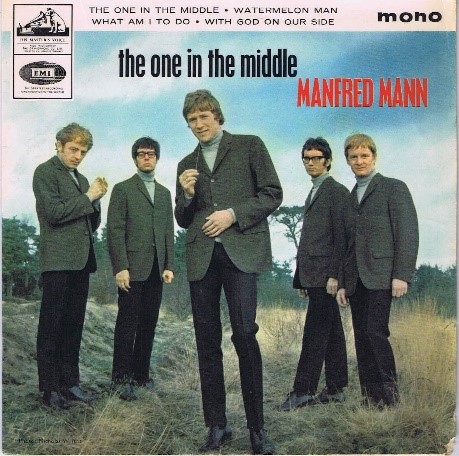
“In May, 1964, Bob Dylan dropped in at London’s Marquee Club to listen to The Manfreds, declaring them to be ‘real groovy’. They return the compliment with their performance of Dylan’s controversial With God On Our Side.

The closing words of the liner notes to one of Manfred Mann’s biggest hits, on the EP The One In The Middle (nine weeks no. 1 in the summer of ’65), marking the first in a long, long line of mostly very successful Dylan covers. The master can appreciate the covers too, according to his roaring recommendation at the press conference in San Francisco, December ’65:

Of all the people who record your compositions, who do you feel does most justice to what you’re trying to say?

“I think Manfred Mann. Manfred Mann. They’ve done the songs, they’ve done about three or four. Each one of them has been right in context with what the song was all about.”

Dylan has a foresight, apparently. At that time, Manfred Mann had recorded not three or four, but only two Dylan covers, though a third and a fourth would soon follow (“Just Like A Woman”, 1966, and the world success “The Mighty Quinn”, 1968).

Apart from the outspoken artistic appreciation, Dylan will also appreciate the financial merits that his British disciples bring him; with the second Dylan cover, Manfred Mann, and thus indirectly Dylan as well, has another huge hit. “If You Gotta Go, Go Now” scores the No. 2 position in the UK and reaches the Top 10 in Ireland, Sweden and Australia. The single is also released in the US, but doesn’t get any further than a one-week listing at no. 100 on the Cashbox charts. In the week of 16 October, when “Yesterday” is at 1, when Dylan’s “Like A Rolling Stone” and “Positively 4th Street” are still in the charts (at 50 and 17, respectively), and when The Turtles’ cover of “It Ain’t Me, Babe” is at 27 – Dylan himself will hardly have noticed it, the basement rating of yet another one of his songs.

In Greg Russo’s admirable, painstaking Sisyphean work Mannerisms – The Five Phases Of Manfred Mann (1995) Manfred tells how he came to his inspired move:

“Dylan did it in a concert. And what staggered me was the whole of Britain was interested in Bob Dylan; he was a great songwriter everybody knew. He did this song and nobody followed it up! I think it was Tom [McGuinness] and I who discussed it and we then contacted the publishers and said ‘Can we have a copy?’ and then we did. And you would have thought with all these people looking for songs to record, there it is on television and nobody is paying attention! So we did it. Lovely, lovely song.”

Good story, but not quite correct. Manfred records “If You Gotta Go, Go Now” 19 July 1965, and is thus the second to record the song. He is just beaten by The Liverpool Five, who released an equally beautiful version as a single in July 1965 without any success.

Manfred Mann seems to have his marketing in order; although the single is only released in September, two months later, it is a huge success – it becomes Manfred’s biggest hit in the UK since “Do Wah Diddy Diddy”. The Liverpool Five can console themselves with the fact that Dylan himself didn’t manage to score with it either. As far as we can tell, at least. For reasons that are unclear, the mono single “If You Gotta Go, Go Now b/w To Ramona” was only released in the Netherlands on 18 August 1967 (two years after Manfred Mann). Which did not make waves either.

Zeitgeist, presumably. Half a century later, the flop is less understandable. Strong song, sung by a very popular artist, and well produced. The Dutch single is a so-called composite. Producer Wilson added overdub recordings with “unidentified musicians” to the original recordings of 15 January 1965 four months later (Friday afternoon 21 May, Dylan is still in England), with extra backup vocals by the same lady who sings with Dylan in the same microphone on 15 January, with Angelina Butler – which makes it look like there is more than one lady singing along (it is not, as some sources still say, the ladies group The Poppies). That afternoon in May, Wilson even made two composites, and eventually pasted the intro of the second one to the first one – that’s the final master for the single.


Despite the strength of the song and the producer’s loving craftsmanship, it will not be released for the time being. When Dylan returns from England, he has “Like A Rolling Stone” up his sleeve, and so, obviously, any argument for releasing “If You Gotta Go” evaporates. When Dylan’s record company Columbia decides, for whatever reason, to release the single two years later in a small country by the North Sea, the train has already left. The Summer Of Love has broken out, and when that May 1965 recording finally hits the Dutch stores on 18 August 1967, the Billboard Top 10 looks like this:

  1. All You Need Is Love – The Beatles
  2. Light My Fire – The Doors
  3. Pleasant Valley Sunday – The Monkees
  4. I Was Made To Love Her – Stevie Wonder
  5. Baby I Love You – Aretha Franklin
  6. Mercy, Mercy, Mercy – The Buckinghams
  7. Ode To Billie Joe – Bobbie Gentry
  8. Cold Sweat – Part 1 – James Brown And The Famous Flames
  9. A Whiter Shade Of Pale – Procol Harum
  10. A Girl Like You – The Young Rascals

In most European countries, the Top 10 looks similar, only Scott McKenzie’s “San Francisco (Be Sure To Wear Flowers In Your Hair)” is still in the Top 3 everywhere (in the UK on 1, in the Netherlands on 3). In any case, apart from a few local heroes, the menu is equally limited everywhere: psych-pop or soul, that’s all we have to offer. Only a outer category song, such as “Ode To Billie Joe”, still manages to squeeze in, but a hopelessly outdated Merseybeat rocker like “If You Gotta Go, Go Now” stands little chance.

Thematically it does fit, of course. The lyrics have a high if you can’t be with the one you love, love the one you’re with content, and maybe that’s why Columbia is trying it first in Holland, which has a certain reputation for loose morals and free love. Manfred Mann had some trouble with the lyrics in England, two years ago at any rate. The BBC producers thought it “too suggestive” and on September 27, 1965, after being invited to the very last episode of Gadzooks! on BBC2, the Manfreds were told that the song was “unsuitable” for the viewers. Two days later, Crackerjack banned the song as well.

That it nevertheless became a big hit, may have encouraged Columbia’s marketing strategists to release the Dylan version as a single two years later, but may also have inspired them to try it out on the other side of the North Sea first. Fruitless – but not because of the alleged licentiousness of the lyrics or because of boycotts by prudish opinion makers. Neither the one nor the other is a factor in that small country on the European mainland. The reception is even downright positive. The leading pop magazine Hitweek writes:

“A forgotten song, which we only knew from the Manfreds until now. It’s an excellent song, with very good lyrics (…). A very relaxed Dylan, assisted in the choruses by some extra vocals (…). We’re so happy to hear something relatively new from Dylan, that we’ll give this a nine and a half.”

Which doesn’t help either. The first, small run sells quite well, so a second pressing is made, it is on sale for months in Holland, Belgium and Luxembourg, but does not make the charts and eventually ends up in the sell-out bins. Yeah well. The Merseybeat rocker just sounds outdated in the Summer Of Love. Zeitgeist, that polluting phenomenon on which already Goethe’s Faust (1808) commented:

“What you the Spirit of the Ages call / Is nothing but the spirit of you all / Wherein the Ages are reflected.”

Frustrating, still; nowadays the Dutch single is one of the most sought-after collector’s items in the Dylan community.

To be continued. Next up: If You Gotta Go part II: Lovely, lovely song

——-

Jochen is a regular reviewer of Dylan’s work on Untold. His books, in English, Dutch and German, are available via Amazon both in paperback and on Kindle:


Posted in Uncategorized | Leave a comment

Ashley Hutchings, Bob Dylan, bass playing and the English folk music tradition

By Aaron Galbraith and Tony Attwood

Aaron: Back in 2019 Ashley Hutchings of Fairport Convention put together the Million Dollar Bash festival to celebrate 50 years since Dylan’s performance at the Isle Of Wight.   And for the event Hutchings put together a band specially for the event called Dylancentric.

In 2015 Dylan said the following about Hutchings: “Ashley Hutchings is the single most important figure in English folk rock. Before that his group Fairport Convention recorded some of the best versions of my unreleased songs. Listen to the bass playing on Percy’s Song to hear how great he is.”

Tony: It is a really interesting choice of an example of bass playing for Bob to pick.  At first it seems there is nothing special on the bass, but listening to it afresh I can see what Bob was doing here.

The essence of the arrangement is the addition of new elements into the song without it ever becoming over the top – the last verse is as moving as the first despite the extra instrumentation.   But what the bass does it keep developing over the theme that was introduced at the start, yet without ever going over the top.   The bass in fact becomes not a bass at all but an equal instrument in the whole arrangement with endless small variations on the themes he has set out at the start.

Aaron: Perhaps thinking of this, upon hearing of the event Dylan did something unexpected and sent Hutchings an unreleased poem to read at the event. Here is a video of the performance- you can jump to 11:30 to hear the poem (or watch all the way through for covers of Lay Down Your Weary Tune & Masters Of War – further videos are on YouTube for the remainder of their set – and an album was released of the event called “Official Bootleg”)

Tony: I was not aware of this video until now, so a million thanks Aaron.  Although of course this piece does give me yet another opportunity to put forward what I think is the greatest cover version of a Dylan song ever, in the entire history of history.  And thus of course the greatest piece of work by Ashley Hutchings.

Tony: I am sure Bob is also fully aware of the work Ashley Hutchings has done in preserving and arranging traditional English folk songs.  Indeed it is hard to imagine that as late as the early 1960s there was a feeling that the English had no folk music history – that traditional folk was the preserve of the Irish and the Scots.  Of course others were involved in the preservation of traditional English songs, but Ashley Hutchings has a special place in that movement.

Of course much is owed to Cecil Sharpe for preserving English folk song, but Ashley Hutchings is the only musician I can think of from the folk-pop-rock tradition who has worked so hard to expand knowledge of the English folk tradition.

If you have found this interesting you might also enjoy some of the selections in the Beautiful Obscurity series.

Posted in Uncategorized | Leave a comment

Bob Dylan: Cooking Up More Mythologies (Part VIII)

by Larry Fyffe

The mythologies of Lambia and of Lilith have roots that go way back in time.

The female followers of Dionysus, the God of the Vine and of Wine from Roman/Greek mythology, can be thought of as screech-owl Liliths.

Seeking union with the spirit of the corn-and-apple-growing demigod Dionysus (fathered by Zeus, who impregnates princess Semele), these forest ‘Bacchanals’ drink and dance and sing themselves into a frenzy in an effort to escape their earthly bodies that are clothed in animal skins:

"They sing,
O Bacchanals come
Oh, come
Sing Dionysus
Sing to the timbrel
The deep-voiced timbrel
Joyfully praise him
Him who brings joy
Holy, all holy
Music is calling
To the hills, to the hills
Fly, O Bacchanal
Swift of foot
On, O joyful, be fleet"
(Edith Hamilton: Mythology, Timeless Tales Of Gods And Heroes)

Like the Dionysus regenerative myth is akin to the Osirus/Horus myth, the imagery above is retained in the following song lyrics though the mythology be humorously somewhat re-arranged; it’s a bit corny:

Fly away, little bird
Fly away, flap your wings
Fly by night
Like the early Roman kings
All the early Roman kings
In the early, early morn
Coming down the mountain
Distributing the corn
Speeding through the forest
(Bob Dylan: Early Roman Kings)

Oh, but what fun it is to go riding in an open sleigh – through the satirical snow – with a domesticated Bacchanal:

Winterlude, Winterlude, my little apple
Winterlude by the corn in the field
Winterlude, let's go down to the chapel
Then come home, and cook up a meal
(Bob Dylan: Winterlude)

According to mythology, Dionysus is disrespected by Pantheus who does not believe that the grainman has godly powers. Not a good idea on the part of the King of Thebes (who is the son of Semele’s sister).

Dionysus shows him who is really the king; he drunks up the Bacchanals; see the earthly king they do as a mountain lion, and they tear him into bloody pieces, limb from limb.

There’s no fooling with the Dionysus of today, according to the double-edged song lyrics quoted beneath – best not be one of those who  puts him or herself on the wrong side of the real god of music:

Ding dong daddy
You're coming up short
Going to put you on trial
In a Sicilian court
I've had my fun
I've had my flings
Gonna shake'em all down
Like the early Roman kings
(Bob Dylan: Early Roman Kings)

Posted in Uncategorized | 1 Comment

Beautiful Obscurity: The Hour that the Ship Comes In.

By Aaron Galbraith and Tony Attwood

On this site we look at cover versions of Dylan songs in two ways.  One is simply by listing covers that we enjoy, song by song as in: Covers of Dylan songs

The other is via  Beautiful Obscurity in which we consider the covers in more depth.  In this series Aaron picks the cover versions and Tony, on the other side of the Atlantic, writes a commentary as the music plays (to stop him getting too pretentious and looking stuff up).

Aaron: As promised in an earlier piece here are a few interesting covers for this Dylan classic.

I choose this track principally to include these first two, and I then went searching for a few more to make up enough for this article.

So first up it’s The Pogues. This is from an album they made after Shane MacGowan quit the band, so Spider Stacy took over as lead singer. I love it!

Technical: we’ve got that regional variation again – hopefully one of these two links will work for you.  If not, try Spotify or a Google search.

Tony: What a scream!  Having never heard this before I was shocked, as if I was looking at an sombre old friend never known for outlandish ways, coming to my village, and walking up to my house dressed in a clown’s outfit and then doing a jig on my doorstep.

But why not, this is fun, and that variation between the first and second part of each verse never becomes obvious – it caught me each time.  Loved the false ending too.  There’s real imagination in creating this reading of the song in this way, and delivering it.

The second of the videos above (which is the only one I can play in the UK) is followed by the Peter Paul and Mary version, which is always worth hearing again.  But I’ve listened to that just the once this time, before going back to the Pogues, just to make sure I really did hear what I thought I heard.

Aaron: Now Arlo Guthrie, who always seemed to find space for a Dylan cover in most of his albums. 1972’s Hobo’s Lullaby was no exception.


Tony: Having just listened to the Pogues (and Peter Paul and Mary) I really had no idea what I was going to hear next – and this is really good.  It takes the music in a new direction by varying both the chord sequence and the melody.  We still know it is “When the ship” of course because we’ve all heard it so often, but now this is gives us variations and re-emphasises the meanings.

There is a change to the chord structure that he does in the penultimate line of each verse that changes the song – and prepares us for the change in the last line.  And all that is all before we think of what he has done to the rhythm.  Dylan does it as a straight four beats in a bar.  Here it something different – more like 12/8 time.  OK that’s just me getting carried away, but the timing has changed, and its that which gives us a totally different feel.  I love it.

Aaron: Next, it’s Chris Hillman’s pre Byrds group The Hillmen.  (Another regional variation here, so once more hopefully one of these works for you – if not go a searching).

Tony: OK they have well considered harmonies and its neatly arranged, but for me that’s it.  It just continues as it starts and there is nothing unusual or unexpected enough to get me excited.

The problem for me is not just that the banjo and the vocal harmonies continue the same throughout, but they sing the first and second halves of the song in the same way rather than varying them, which the recordings before do.  So, since I know the song off by heart, it just gets a bit ordinary.

That of course is the trouble with strophic songs – there is nothing in the form that allows variation.  Good for a sing along, but not so good when the song has been a part of your life for 50+ years.

Aaron: Barbara Dickson made a Dylan covers album? Who knew!? Don’t Think Twice, it’s Alright came out in 1992 and this is a surprisingly great version of Ship…stick with it, it picks up when the drums kick in.

Tony:  I’m glad you said stick with it Aaron, as I wasn’t sure it had started.  So, bagpipes – not heard that done before with this song, and the great thing is Barbara Dickson has the voice to carry this off.

Actually, this one stopped my typing up my comments for several moments until I remembered the rules we had agreed (that I have to finish my review by the time the recording finishes, largely set up to stop me pontificating eternally).

I loved the idea, not least because this notion of building verse by verse requires a really good orchestrater / arranger to hold it together, but oh……no……    What happens before the instrumental break is that for no reason that makes any sense the piece is moved up a semitone or a tone (I was so shocked I didn’t fully take it in).  Anyway what I mean is that suddenly the piece is performed in a new utterly unrelated key.

That jerk from one key to the next really is a dodgy thing to do, and generally shows that  the arranger has run out of ideas.  Its a solution that does nothing to the music except make it sound as if it has changed when it hasn’t.  What a letdown.

Aaron: Now I wanted one more version to end this with, and couldn’t decide between the Hollies, the Chieftains or Peter, Paul & Mary. Then I came across this version by Billy Bragg and couldn’t not include it. I believe every single word he sings here. Spine tingling.

Tony: Well, with an intro like that, Aaron, I was holding my breath.  And at first I didn’t quite see what was exciting you so much.

But you are right: he holds the stage and transfixes the audience by delivering the song straight.  Very tiny changes to the melody, but nothing artificial.  It just is.  Even the instrumental half-verse simply is strummed.

It is quite extraordinary how he does that.  He holds the song, plays it straight, and yet delivers a punch.  Amazing.


If you have an article for Untold Dylan or an idea for a series, do write in to Tony@schools.co.uk


Posted in Uncategorized | 3 Comments

Early Roman Kings part 8: I got the John the Conqueror root

by Jochen Markhorst

VIII       I got the John the Conqueror root

The Tooth Of Crime from 1972 (revised 1996 with a new score, rewritten by T-Bone Burnett) is a fascinating though somewhat depressing, successful musical play by Dylan’s writing partner Sam Shepard about the price of fame. The plot revolves around the decline of celebrated ageing rock star Hoss and the rise of his young rival Crow. The dialogues are – of course – larded with rock quotes, song clichés and winks (“Live outside the Code”, “Good morning little schoolgirl”, “Take out the papers and the trash”), as during the first confrontation between Hoss and Crow:

HOSS: Old habits break hard.
CROW: You don’t break ’em, you chop ’em off.
HOSS: I didn’t invite you in here to get schooled, bug boy!
CROW: You didn’t invite me, period. I’m yer Backdoor Man.
HOSS: Oh—So, Mr. Willie Dixon still remains on your list? You’re not so far removed as I thought.

… with which Hoss, or rather Sam Shepard, demonstrates a most heartening, accurate, knowledge of music history by attributing “Back Door Man” not to Muddy Waters or The Doors, but to the person who actually wrote it, the legendary Willie Dixon.

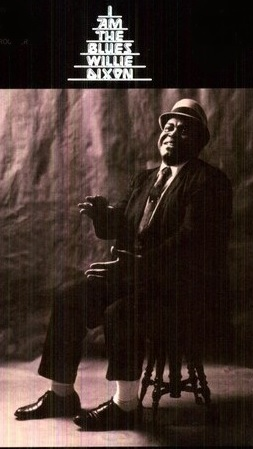
The golden collaboration of Willie Dixon and Muddy Waters starts with the mother of all stop-time blues songs, the grandmother of Dylan’s “Early Roman Kings”: the monument “Hoochie Coochie Man” from 1954. The importance and greatness of the song are undisputed and officially confirmed by now – in 2005 the song is selected for preservation by the US Library of Congress’ National Recording Registry. Like most of Dixon’s classics (“Spoonful”, “I Just Want To Make Love To You”, “Help Me”, “Little Red Rooster” and many more), “Hoochie Coochie Man” demonstrates Dixon’s inordinate talent for achieving an Olympic-size maximum of musical power with a minimum of musical resources. Technically it is simple enough. So simple, in fact, that Dixon could sell it to Muddy Waters during a break behind the scenes in the bathroom of Club Zanzibar in Chicago, as he recounts in his autobiography I Am The Blues (1990):

“We fooled around with “Hoochie Coochie Man” there in the washroom for 15 or 20 minutes. Muddy said, “I’m going to do this song first so I don’t forget it.” He went right up on stage that first night and taught the band the little riff I showed him. He did it first shot and, sure enough, the people went wild over it. He was doing that song until the day he died.”

https://youtu.be/U5QKpsVzndc

And he is also good at explaining why he insists that Muddy Waters take the song. He had written the song some time before, before that meeting, but when he saw Waters perform, he knew enough. Good-looking man, dresses well, attracting the audience in this boastful, manly kind of manner – exactly the kind of black badman Dixon has in mind. The bragging Hoochie Coochie Man is an “epitome of virility”, aided by hoodoo power, women want to submit to him, men want to be him;

“The average person wants to brag about themselves because it makes that individual feel big. These songs make people want to feel like that because they feel like that at heart, anyway. They just haven’t said it so you say it for them.”

Not only did the people go wild over it, as Dixon says, but the song also strikes a chord with colleagues. A few months later Bo Diddley scores a no. 1 hit on the Billboard R&B Chart with the two-sided single “Bo Diddley/I’m A Man” (April ’55). “I’m A Man” is one of the few Diddley songs without the Diddley beat, but Bo’s “betrayal” of his own beat is forgotten after just one bar: he uses the stop-time riff from “Hoochie Coochie Man” as a template, and that’s just as catchy and powerful. Muddy Waters hears it too, and writes his answer song “Mannish Boy”, the title of which is already a jab at Diddley (Bo is fifteen years younger than Muddy). Halfway through, Waters acknowledges his indebtedness to Dixon’s song, elegantly incorporating it into the lyrics:

I'm a man (yeah)
I spell M
A, child
N
That represent man
No B
O, child
Y
That spell mannish boy
I'm a man
I'm a full-grown man
I'm a man
I'm a rollin' stone
I'm a man
I'm a hoochie-coochie man


It’s a big hit in The States, and remarkably enough Waters’ only UK hit – albeit only thirty-three years later, in 1988, after being used in a Levi’s commercial. But still in its original version, the first recording, played by one of Dylan’s all-time favourite bands. Spin Magazine had Dylan fill out a favourites list in 1988, with sections like “Some Movies I Wish I Was In” and “Three Authors I’d Read Anything By”. Under the heading “Five Bands I Wish I Had Been In” are:

King Oliver Band 
The Memphis Jug Band 
Muddy Waters Chicago Band (with Little Walter and Otis Spann) 
The Country Gentlemen 
Crosby, Stills & Nash

Okay, “Mannish Boy” is the only recording from the golden Muddy Waters Chicago Band period that doesn’t feature Little Walter (who happened to have other commitments on the day of the recording, May 24, 1955, Bobby Zimmerman’s fourteenth birthday), but the song’s impact on Dylan is crushing nevertheless; “Cold Irons Bound”, on Time Out Of Mind (1997) imitates the atmosphere, colour and menace of the song, “Early Roman Kings” is also musically an unveiled, reverent copy of “Mannish Boy”. Just as “My Wife’s Home Town” (Together Through Life, 2009) is a reprint of Willie Dixon’s “I Just Want To Make Love To You”, by the way – but unlike “Early Roman Kings”, Dixon does get the credit for that one.

More indirectly, but still fairly obvious, also seems to be the influence of “Hoochie Coochie Man”, “I’m A Man” and “Mannish Boy” on the attitude and presence of the protagonist of “Early Roman Kings”. Dixon established it in the early 50s, this monument to the powerful bragger:

I got a black cat bone,
I got a mojo too,
I got the John the Conqueror root,
I’m gonna mess with you,
I’m gonna make you girls,
Lead me by my hand,
Then the world’ll know,
I’m the Hoochie Coochie Man.

He is big and powerful, he is aggressive and he steals your girl… he truly is an Early Roman King.

Jochen is a regular reviewer of Dylan’s work on Untold. His books, in English, Dutch and German, are available via Amazon both in paperback and on Kindle:


Posted in Uncategorized | 5 Comments

Bob Dylan and Dave Van Ronk

By Aaron Galbraith and Tony Attwood

This article is part of the Bob Dylan and Friends series.   You can find an index to other articles in this series here.

Tony: Bob and Van Ronk knew each other from back in the Greenwich Village days. Such was Van Ronk’s influence on the musical scene at the time that he was given the nickname “The Major Of MacDougal Street”.

His repertoire focused mainly on old traditional blues, folk and jazz tunes and he gave considerable encouragement to the up and coming artists of the day: Tom Paxton, Phil Ochs and Bob Dylan.   Plus (and the reports at this point generally say, “especially” Joni Mitchell.  I’ll return to this at the end.

Aaron: He didn’t write many of his own songs (we might cover the one album he did write himself in a later piece), so this will concentrate purely on covers he performed throughout his career.

We’ve all heard the story of Bob stealing his arrangement for House Of The Rising Sun for his debut album. So here is Van Ronk’s own version:

Aaron: He recorded a handful of Dylan tracks throughout the years. Two important ones appeared in the early 60s. He was the first to record and release “If I Had To Do It All Over Again, I’d Do It All Over You” from 1963s “In The Tradition” album.

Tony: We’ve got a regional problem on the video here, so if the video below doesn’t work, I think the best approach is going to be either to do a Google search hoping it turns up in your country, or to turn to Spotify.   That’s certainly working in the UK.

Tony: I love this, it is just such a silly song, and so lively and bouncy.  That doesn’t mean I’d play it over and over, and now as I move into my later years it is too fast to dance to any more (although I could at one time) but it’s nice to remember.  Curiously Spotify then chose to play me “Who knows where the time goes” by Fairport Convention.  Totally different and knocking me into another world.

But enough, let’s move on.

The Old Man (AKA Man On The Street) from 1966 “No Dirty Names” album

Tony: This is an Almanac Singers song originally, I think, which Bob Dylan shifted around.  The original version had the line about the only clue to how the old man died being the bayonet sticking from his side, but that anti-war element was changed over time to turn the piece into a commentary on the plight of the urban poor.

I’ve found songs about the urban poor affect me more and more as I have got older – this one is so simple but it still eats me up.   “There but for the grace…” except I’m an atheist.

Aaron: I’ll finish off with 3 of my favorites and let Tony provide his thoughts on all of this!

From 1959s debut album – “Dave Van Ronk Sings Ballads, Blues and a Spiritual” – Duncan And Brady

Tony: It is all a reminder of just how important Dave Van Ronk was (he passed away on 10 February 2002).     There’s a note about him on the Wiki site that says, “Van Ronk refused for many years to fly and never learned to drive (he took trains or buses or, when possible, recruited a girlfriend or young musician as his driver), and he declined to ever move from Greenwich Village for any extended period of time (having stayed in California for a short time in the 1960s)”.

I am not sure why I find that fascinating but somehow I do.

Mack The Knife from 1964 “Dave Van Ronk and the Ragtime Jug Stompers”

I wonder if when Kurt Weill and Bertolt Brecht wrote Mack the Knife nearly 100 years ago they had any idea how it would survive.  To me it seems to occupy a unique and isolated place in musical traditions, aside from the rest of the music, just sitting there, on its own – although I am sure that feeling primarily comes from a lack of knowledge of the era in music on my part.

I also wonder if all those people who endlessly go on and on about Dylan supposedly stealing other people’s work rage on in the same way about Bertolt Brecht.  Do they notice that the Threepenny Opera included, “Les Contredits de Franc Gontier”, “La Ballade de la Grosse Margot”, and “L’Epitaphe Villon” all written by François Villon, with translations by K. L. Ammer? 

OK Villon passed on hundreds of years before, so there’s an excuse (although I think citing origins is always a good thing to do even when from the Middle Ages) but Klammer should have been credited but wasn’t.  Brecht replied to the allegations that that he had “a fundamental laxity in questions of literary property.”  Maybe Bob should have tried that line.

Of course the funny thing in all this is that although text, melodies and musical arrangements are all subject to the Copyright Act in the UK, and something very similar in most of the rest of the world, ideas are never subject to copyright and evil journalists can go around just nicking ideas and passing them off as their own.  But I digress…

Clouds (AKA Both Sides Now)

Tony: According to reports (as they say) Bob Dylan and Joni Mitchell – the latter of whom of course wrote the song – performed it together in Austin Texas in 1976, but I simply can’t find a recording of the performance.  If you know of a recording, please please please write in with the URL.

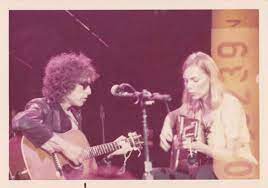
Certainly the picture seems to prove that yes the two played together (not that it needs proving) but music can I find none.  The video below therefore is obviously not the one of the show, but still, I can never hear the song enough.  It is one of those that has been with me through such much of my life – indeed I think it was this song that made me feel I could never be a professional songwriter, since I couldn’t even imagine how to begin creating something this beautiful.

But I’m here to write about Dick van Ronk so having diverted Aaron’s work (a privilege gained from being the second party in this writing arrangement) back to the original

And this is a beautiful arrangement.  I’d not heard it before (part of  the joy of writing these pieces with Aaron, with us each on our own continent).

Something’s lost and something’s gained in living every day, indeed.   The extra pauses after some of the lines is a shock simply because I know the song so utterly and perfectly.  And despite that this arrangement gives me new insights – which is all one can ask for.

There is a song I wrote (“She walks through midnight”) which people who have heard it say is the best piece of music I’ve ever done, and maybe they are right.  But it is not even in the same universe as “Both Sides Now” which pretty much puts me in my place.

But it’s not a bad place (most of the time).


We have an Untold Dylan Facebook group (just go to Facebook and type in Untold Dylan) and we also welcome contributions to this site (just email Tony@schools.co.uk)

Posted in Uncategorized | 6 Comments

NET, 1999, part 6. Honky Tonk Dylan: Despair and sentimentality.

The Never Ending Tour

This series charts the NET from its origins in 1987 to the present day, with multiple examples of Dylan’s performances through the period in question.  The full index is here.


By Mike Johnson (Kiwipoet)

This post, the last for 1999, is dedicated to the non-Dylan songs Dylan performed in that year.  We have already seen some of these songs in previous posts; ‘Sounds of Silence’, (NET, 1999, part 1, don’t miss it!), ‘Not Fade Away’, ‘Alabama Getaway’, ‘Money Honey’ (NET, 1999, part 3), ‘Roving Gambler’ and ‘You Gonna Quit Me’ (part 4). But that doesn’t cover the range of songs Dylan does in 1999, which is particularly rich in cover songs, as Dylan keeps returning us to an earlier era of music, mostly country and cowboy songs, thus establishing a context and background for his own songs.

Some of these songs, like ‘Friend of the Devil’ have cropped up in Dylan’s setlists for a couple of years. That song is from the Grateful Dead, with the lyrics written by Robert Hunter. Released in 1970, it has been widely covered by a number of artists, and has been described as progressive bluegrass. It has that classic feel to it. The themes of insomnia and relationship woes put the song firmly in Time out of Mind territory. (18th Nov)

 Friend of the Devil

Remember when you first put Dylan’s 1980 Saved on the turntable? The first song is ‘Satisfied Mind’, a slow, bluesy intro to the album. The song was written by Jo Hayes and Jack Rhodes and was number 1 on the billboard Hot Country Song list in 1955. It was the kind of song the child Dylan would have been listening to on his radio during those lonely Hibbing nights. Dylan’s first known performance of the song was in 1967, during the Basement Tapes era. Those who know it from Saved are hardly going to recognise it performed in this antique fashion. It turns out to be a rollicking cowboy song with suitably melancholy lyrics about the illusory nature of money. (9th Nov)

Satisfied Mind

As far as I know, ‘Pass Me Not, Oh Gentle Saviour,’ written by the blind Fanny Crosby in 1868, was not performed by Dylan prior to 1999, and would only be performed five times over 1999 and 2000. It’s a country music hymn, an interesting fusion that produced many such songs. Fanny Crosby herself wrote dozens of them. Still a cowboy song, it’s about salvation rather than whisky or love woes. Dylan’s arrangement here is similar to The Stanley Brothers version released in 1960.

It’s something of a curiosity in this context, a dark period for Dylan in which his faith is deeply called into question by the Time out of Mind songs. ‘Don’t even hear the murmur of a prayer’, he sings on ‘It’s Not Dark Yet’. Perhaps this expression of a simple, old fashioned faith appealed to Dylan during such a time, a crisis of faith if we can call it that. There’s a strong flavour of nostalgia in all of this. (23rd Feb)

Pass me not, oh gentle saviour

Not quite so maudlin, and more upbeat, ‘Honky Tonk Blues’ by Hank Williams turns out to be a crowd pleaser. Not to be confused with ‘Honky Tonk Woman’ by The Rolling Stones, Williams’ song was released in 1952, and was made famous by Charlie Pride in 1980. The song is about a farm boy who goes to the city and becomes disillusioned. There may be an echo here of Dylan’s experience – a kid from the northern provinces goes to New York to suffer his own rude awakening. But of course, you can never go back again… (23rd Feb)

Honky Tonk Blues

‘You’re Too Late,’ by Lefty Frizzell, recorded in 1954, was only performed once by Dylan at Daytona Beach, FL, Jan 29, 1999. (See Tony Atwood’s post: https://bob-dylan.org.uk/archives/16040). Again, we’re in country, cowboy music territory, sob songs I like to call them. They are sentimental in the way that ‘To Make You Feel My Love’ from Time out of Mind is. Despair and sentimentality are a matched pair. This is a wonderful, robust performance of the song. Highly recommended. Perhaps this sentimentality is an antidote to despair, or maybe a traditionally safe way to channel it. (29th Jan)

 You’re too late

‘Oh Babe It Aint No Lie’, by the incomparable Elizabeth Cotton, was released in 1958 and has been covered by many artists including Gillian Welsh and Anita Carter. There is a wonderful You Tube video of Cotton performing the song (looks like the early 60s to me, but there is no date on the performance). In her lengthy intro she tells how the song came about. Captivating:

https://www.youtube.com/watch?v=FhQLxGmU4QA

Dylan did the the song on 27th July and gives it a brisk treatment, changing the lyrics around a bit, making it more of a love/regret song. Still it’s a lot of fun. This is from the Tramps concert in New York.

Oh Babe it aint no lie

Dylan’s admiration for Johnny Cash is well known, and around 1969/70 Dylan sought to emulate the iconic country singer, wearing white suits and adopting a ‘country singer’ voice. Dylan mimicked Cash as he did Guthrie years before. That admiration never faded, perhaps because they both went to the same musical well to draw their inspiration. Apart from ‘Walk the Line’, ‘Folsom Prison Blues’ is Cash’s most famous song, not without controversy, as Cash was never a prisoner there, nor anywhere else. Dylan doesn’t have Cash’s deep, majestic voice, but he gives the song a vigorous airing with his own nasal twist. You’d almost think Dylan had been a prisoner there too, you know – cold irons bound. (10th Nov)

Folsom Prison Blues

Dylan also sang ‘Big River’, another Johnny Cash song released by Sun Records in 1958. Perhaps it was from Cash that Dylan learned the power of place names, and how to use them in a song. Here’s a verse from ‘Big River.’

‘I met her accidentally in St. Paul, Minnesota,
And it tore me up every time I heard her drawl, Southern drawl,
Then I heard my dream was back Downstream cavortin' in Davenport,
And I followed you, Big River, when you called.’

Listening to the opening bars, you might think you are about to hear a Dylan song, ‘Tombstone Blues’ maybe, or ‘Watching the River Flow’(8th Nov). The crowd loves it.

Big River

In NET Part 3, we heard Dylan do a Dion song, ‘The Wanderer’, in duet with Paul Simon, I think. Here he does it on his own, and it sounds, to my ear, uncannily like Dion. Clearly Dylan has listened carefully to Dion. This homage to the rogue male, released in 1961, has dated more than Dylan songs have – men are no longer encouraged to boast about their ‘two fists of iron’ or their rampant womanising, but it’s a rocking foot tapper and Dylan has fun with it here.

The wanderer

We’re no strangers to ‘Stone Walls and Steel Bars’, by the Stanley Brothers. Dylan began including the song in 1997, and in an earlier post I suggested that it was, in spirit at least, an ally of ‘Cold Irons Bound’. (Tony Attwood gives a good account of the song here: https://bob-dylan.org.uk/archives/11475)

Dylan’s performances of the song are remarkable for their power and intensity. This one from the early show at Atlantic City, New Jersey, is no exception. Some gentle acoustic guitar from Mr Guitar Man. It works better for me as a prison song than ‘Folsom Prison Blues’, but I don’t know if the Stanley Brothers ever went to prison either.

 Stone Walls and Steel Bars

Robert Johnson’s ‘Crossroads’(1936), is more than just a song. It is a seed that would help inspire and spark the rhythm and blues revolution that underpinned the rock music era. It was covered by Cream in 1966, with Eric Clapton demonstrating his mastery of the blues. The lyrics don’t support the myth that the song is about how Johnson met the devil at the crossroads and sold his soul in return for musical genius, but there is the mysterious fact that Johnson suddenly learned how to play the guitar, and play it brilliantly, from being a bad player.

Here is Robert Johnson’s 1936 original.

The song stands at the crossroads where the folk Dylan and the rock Dylan meet. While Johnson performed alone on an acoustic slide guitar in Delta blues style (the earliest known blues style, featuring slide guitar and harmonica), the song easily lent itself to electric treatment, as the Cream version shows. Dylan learned to convert many of his songs from solo acoustic to electric full band treatment, and it is ‘Crossroads’ that shows the way.

Here, Dylan is duetting with Clapton, but I’m not sure it was a good idea to put Mr Guitar Man with Eric Clapton. Dylan’s obsessive hammering at two or three notes doesn’t stand up well against the fleet-fingered, melodic Clapton. (Note: this was not a regular NET performance, but a televised benefit concert with a different backing band.)

Crossroads

That’s it for my survey of 1999. I think it was not just the band working sweetly together, but Dylan’s voice that made this an outstanding year. It is his greatest instrument. He can make it soft, luminous and intimate, or rough and throat torn as he choses. We haven’t heard him do that so effectively since 1995, and by 1999 his voice is richer and more full bodied. He hits the high notes when he wants and there’s a ton of power.

The performances were more disciplined than previous years, with not so many wandering epics, while two superb lead guitar men seemed to be able to successfully underpin Dylan’s own stubbornly unique and problematic guitar style.

Yes, Dylan had reached a peak in his rising curve, but it was not to finish there. While 1999 is lauded as being one of the greatest years of the NET, and I wouldn’t argue with that, the following year, 2000, was a triumphant continuation of the 1999 peak with, in my opinion Dylan’s best performances ever of certain songs.

That’s coming up in the next post. See you then!

Kia Ora


We also have a vibrant Facebook group: if you’d like to join please visit https://www.facebook.com/groups/UntoldDylan or alternatively just type in Untold Dylan into the Facebook search bar.

Posted in Uncategorized | 2 Comments

Bob Dylan: Cooking Up More Mythologies (Part VII)

by Larry Fyffe

As woman’s role in society changes, so changes the depiction of the Lilith archetype by writers and artists.

Christian and Jewish writers tend to hold on to the view that Lilith’s an evil ‘screech owl’ who seeks revenge on humankind by disrupting Adam’s rightful place as the boss in the relationship that he has with Eve – even before the submissive rib-created Eve upsets the apple cart herself in the paradise of Eden.

In a Gothic Romantic poem, the shape-shifting Lilith, under the guise of beautiful Geraldine, deceives, and then seduces Christabel who’s saving herself for her boyfriend.

In that poem quoted below, Lady Geraldine casts a witch’s  spell on the innocent girl so she’s unable to remember what happened:

And the lady's eyes, they shrunk in her head
Each shrunk up to serpent's eyes
And with somewhat malice, and more of dread
At Christabel she looked askance
(Samuel Taylor Coleridge: Christabel)

In the following song, the narrator sure ain’t a-looking for a screech-type of woman nor one with serpent’s eyes:

Covenant woman got a contract with the Lord
Way up yonder, great will be her reward
Covenant woman, shining like a morning star
I know I can trust you stay the way you are
(Bob Dylan: Covenant Woman)

In the song above, there’s a cynical caveat –  no sure promise is made to the woman that she’ll be delivered to a paradise on earth, but rather it will be one up yonder in the heavens above after she’s gone.

The narrator tells the female ‘stranger’, that he’s got a covenant of his own, and because of it, he’s still waiting to be delivered to the Promised Land:

I just got to thank you once again
For making your prayers
Unto heaven for me
And to you, always, grateful
I will forever be
(Bob Dylan: Covenant Woman)

And so it could be said in the song lyrics beneath – figuratively the Hebrew God be the groom:

West of the Jordan, east of the Rock of Gibraltar
I see the burning of the stage
Curtain rising on a new age
See the groom still waiting at the altar
(Bob Dylan: The Groom's Still Waiting At The Altar)

Could be this time the shape-shifting Lilith shows up in the figure of Claudette:

What can I say about Claudette
Ain't seen her since January
She could be respectively married
Or running a whorehouse in Buenos Aires
(Bob Dylan: The Groom's Still Waiting At The Altar)

Perhaps this Lilith’s run off with the man in the long black coat:

Tell me tall man
Where would you like to be overthrown
In Jerusalem or Argentina
(Bob Dylan: Angelina)

The singer/songwriter is difficult to nail down in one place.


Posted in Uncategorized | 1 Comment

Me and Bob: personal memories part 2: Me and Eric

This continues from part one which can be found here.

Me and Eric

by Roger Gibbons

It was a struggle to get to meet Eric Clapton.   His address was well documented and his driveway gate was generally open.  Of course, he was not at home that much.   So I first met Patti Boyd at their house and asked if she would give him a message to ring me.   Patti was very nice but I was not optimistic, so returned several times.   I did see Eric one day and we agreed a date to get an interview done.   My really good tape recorder broke down just before the appointed time (who remembers tape recorders?) so I took an older machine hoping that Eric might volunteer the use of one.   No such luck, the recording is pretty shitty; however, my son is cleaning the CD and it will be available soon.   Eric’s den was full of vinyl and books and those new-fangled videotapes. Oh – and guitars…  I contemplated borrowing some of the vinyl records but did not think I could hide them too well.

During the taping Eric took a phone call which perturbed him a bit and shortly after he curtailed things but agreed to continue sometime.    I went to his house as agreed but Eric had been fishing all day at Roger Daltrey’s lake and wanted to continue.      He was very much into his fishing at this time, mainly as a stress reliever (Pattie had just left him).  So off we went to a different lake, where I wrote down Eric’s answers.   Eric also explained fly-fishing to me but he caught absolutely nothing all day.  On the way back to the car Eric chatted about fishing with an older chap.  We went for a drink afterwards, someone played Cocaine on the pub jukebox and Eric immediately drummed along with the tune. I was so jealous because I simply cannot keep a beat   I gave up trying to clap in time at concerts because of the embarrassment of missing the beat. When we parted Eric took back the jumper he had let me wear. To be fair, it was a bit tight.

Eric’s childhood is well documented and caused him great anguish.   Like Eric, I was brought up by my grandparents.   After being so traumatised by my parents my brain simply erased all memory of my first five years.   They call it PTSD nowadays or traumatic amnesia or dissociative amnesia or a really good idea.  Of course, childhood trauma is a great inspiration for authors, actors, musicians, perverts and serial killers.  I believe your childhood dictates the way you live but it is the scars that drive you to success or failure.

A colleague of mine took me for a quick home visit and there was clearly friction between him and his wife.   His young son looked petrified and about thirty years later he murdered his partner in a gruesome way.  Strangely the parents divorced and remarried and stayed together. I visited another workmate to find his parents would not speak to each other, but communicated through him.   Twenty years later I tried to employ him again but found he could not cope with work and was a sad lonely person.  I have often wondered where Bob’s driving ambition originated.   There is little written about Bob’s childhood and nothing to indicate he was going to be such an inspiration.  I am sure something was a spark and maybe we will find out one day.   Chronicles 2 perhaps.

Eric produced a tame autobiography that did not really shed light on his young life.  (My wife originates from Ripley, like Eric, and was best of friends with Eric’s sister Heather.  She was the last person to talk seriously to his mother Pat before she left to live in Canada.   Pat obviously talked about Eric and showed her Eric’s school reports with their alarming collapse in results.  Pat commented that this was where things went wrong, which was the time Eric found out the truth about his parentage.)

Eric was really nice to me.   At the time we were both losing our marriages.   I pointed out that my wife (the first one) could not leave me because we had no money, a stupid theory, soon disproved.   He also told me that crying was good for you, but I still find emotional turmoil very alarming.  I am 70 now so should get over this soon, or not.  Eric’s garden is pretty spectacular and I would love to have been able to walk around.     My wife, before we met, was invited to go swimming at Eric’s pool but turned down the offer.

As a thank-you to Eric I gave him a one-sided 78rpm vinyl of Enrico Caruso because I knew he loved Pavarotti.

The Interview

The one regret about my questioning is that I did not pursue Eric’s comment about him and Bob being kindred souls.   He says that it was way deeper than being musicians.   I wanted to ask if a terrible sadness was their bond, but that seemed a bit pushy.   One day we will find out, maybe.   “He’s not your everyday person,” sounds now like an understatement about somebody who welds gates, is an artist, whisky producer, actor, film maker, author and a radio presenter on top of his day job.  Eric’s comments about “Knockin’ on Heaven’s Door” also seemed doom-laden and he also speaks of songs written about personal pain.  Yes, I wish I had pursued things, but I did privately encourage Eric to write an autobiography.   My own two-page autobiography had been very therapeutic but Eric said he could write his in one page.   Thirty years later Eric produced his book but it did not say too much and I guess it was not very therapeutic.

Bob’s charisma gets mentioned and I tried to think of other performers who can walk on stage and grip an audience.  Bob is in a league with few others.

Eric recommended I get a voice-activated recorder and I did.  It was never used but my wife and I were waiting for a Chinese takeaway one evening when Paul Weller walked in and asked for his order.  The young Chinese lady asked “what is your name”.   I would like to ask Paul why he did an anaemic version of “All along the Watchtower”.  Still anybody who wrote “A Town Called Malice” is alright with me.

On one of my many visits to Eric’s house I saw Rob Fraboni, but Eric was on holiday.  Carl Wayne, lead singer of the Move, bought a lot of building materials from me.  He was a great character who would come into our office and tell us Jim Davidson’s latest jokes.  Carl showed me around his house which had been owned by Steve O’Rourke, the original manager of Pink Floyd, who practised in the large garage.  Carl rated Luther Vandross the best singer ever, but considered Bob could stay in tune at least like Liam Gallagher.  He became lead singer of the Hollies when I knew him, replacing Allan Clarke whose voice was raddled by alcohol and was lip-synching the encore of shows.  I saw the Hollies with Allan Clarke in their prime, he had a fantastic voice and stage presence.  Somebody called out for him to sing “Gasoline Alley Bred”.   He did sing a bit a capella but was most ungracious and curmudgeonly at the same time.

With the Hollies Carl had to sing “Blowing in the Wind”.  They had recorded an overwrought, overblown version on their Hollies sing Dylan album.   Carl gave me tickets to see the Hollies at Norwich Theatre Royal and he duly concluded the first half with the song.  He loved the song but not their version but it went down very well anyway.   When they did “He Ain’t Heavy” Carl appeared to play immaculate harmonica, but in fact could not play a note.   I call this harmonica synching – maybe Bob should try.   Carl once played a show with Larry Adler, the legendary harmonica player.   After singing “My Funny Valentine” Carl was told by Larry he did not sing it like Sinatra.   Carl told him to fuck off.   He should have written a book – he was full of anecdotes.  I was deeply shocked when Carl died such an untimely death.   I still have golf balls which Carl collected from his garden (between two golf courses) and gave me.

In the last few years I have sold building materials to Roy Harper and Mike D’Abo, both have Dylan connections.  Roy is a nice man and gets a good review on Wikipedia after recording thirty-two albums.  The only song of his I recall is “When An Old Cricketer Leaves The Crease” but he did cover “Girl From The North Country”.   Mike D’Abo recorded three hit songs as singer with Manfred Mann.  The Mighty Quinn was his biggest hit and he called his band the Mighty Quintett, later in his career.  Manfred Mann in their various guises recorded twenty Dylan songs.

The transcript of the interview was sent to John Bauldie to publish in the Dylan Fanzine ‘The Telegraph’.   John cut a part of Eric’s answer about songwriting and I remember being very upset because the same issue contained an incredibly long, boring and pretentious piece about the song “Belle Isle”.  I complained to John and he duly corrected the article for the book “Wanted Man” and inscribed my copy.  Of course, John also died far too young.

I thank Eric for the time he gave me but I doubt if he even remembers me now. His life is pretty full.

Addendum

Let us hope that Bob tours next year (with the Shadow Kingdom band).   My wife and I have followed the career of Guy Davis.  He appeared on “A Nod to Bob” – the 2001 tribute album, and tours small venues in Britain playing old-time blues really well. He finishes shows with ‘Sweetheart like you’. which was a highlight of the ‘Nod to Bob’ compilation.   Go and see him if you can.


There is an index to some of the recent work on this site on the home page.

Posted in Uncategorized | 6 Comments

All Directions 60: After the interregnum, the compositions of 1996 

By Tony Attwood

The last episode in this series was All Directions at Once: Dylan at the end of 1990

The index to the series, with yet another attempt at getting the numbering to make sense, can be found here.

 ————–

Bob Dylan had had times in his writing career prior to the 1990s when he had stopped composing – or at least stopped composing and releasing anything he had written (for of course, we can never be quite sure what he was up to in his spare time).

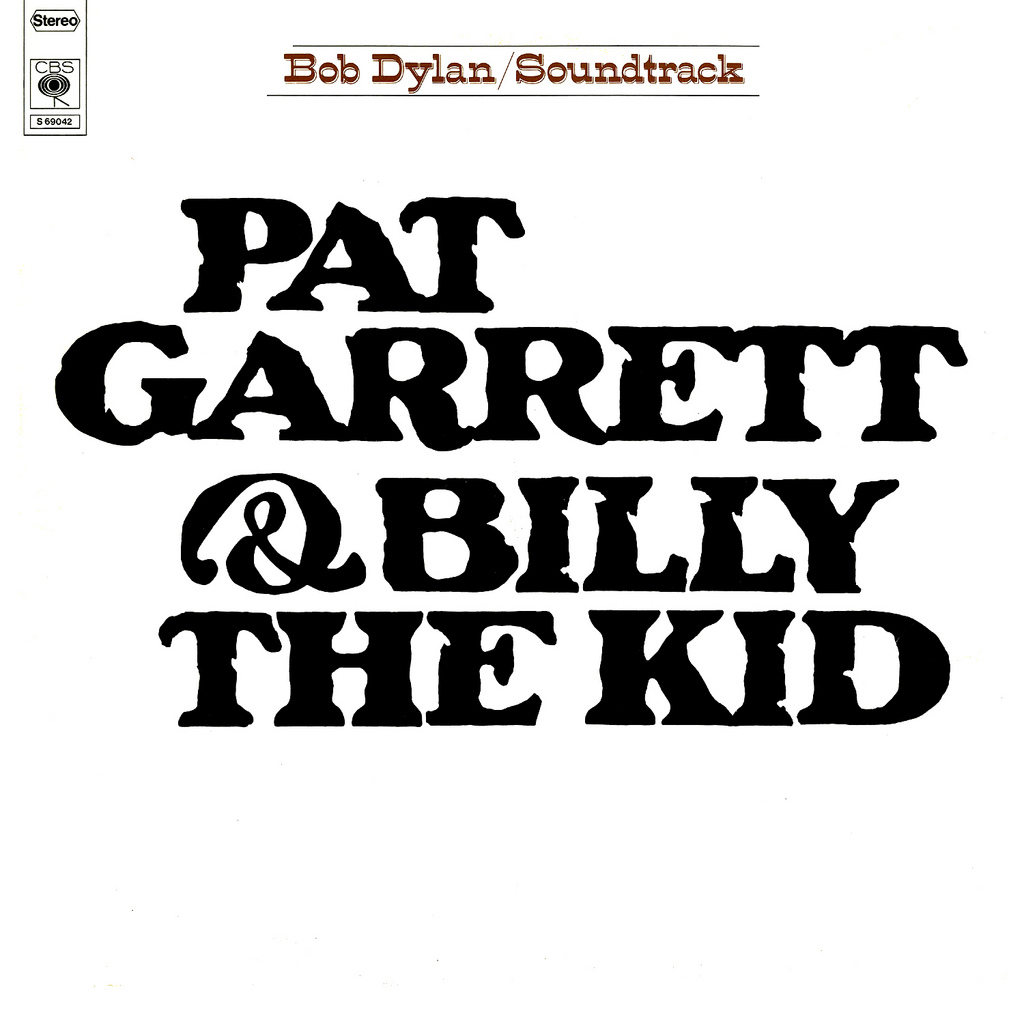
The first pause was 1968 when he wrote “Lay Lady Lay” and nothing else.  1971/2 was a different sort of pause, for in 1971 a couple of songs still highly regarded (When I paint my masterpiece and Watching the river flow) and in 1972 the music to Billy the Kid, and “Forever Young” but again nothing on the industrial scale of production we had seen earlier.

1976 saw another one song year (Seven Days) before the work on the next album began the following year with “Changing of the Guards” (which made 1977 the year not of a large number of songs but certainly a number of very significant and memorable songs).

1978 was a different type of year again – a lot of compositions, but most of them hardly remembered.   “Slow Train and “New Pony” are the main exceptions.

Then suddenly in 1979, Bob was running on full speed, writing songs which all seemed to have (and indeed in the latter stages all overtly had) a Christian theme.

1980 gave us 13 new compositions, and a gradual movement away from the Christian theme, while 1981 gave us another variation: 23 songs (including the last ever gospel song, at the end of the year, but only maybe half a dozen of these would most people remember).

Across 1982/3 the number of songs written (17 in all) was less high, but included within its number various songs the average fan might particularly recall.  Songs such as  “Jokerman”, “I and I”, Blind Willie McTell,” “Don’t fall apart on me tonight,” “License to Kill”, “Neighbourhood Bully”, and “Foot of Pride” (although I probably exaggerate with that last one – many not might immediately recall it, it seems to be just me that rates it so incredibly highly).  Quite a repertoire nonetheless.

But then once again, Bob stopped.  For the period from 1991 to 1995 either had just four compositions, or none at all – depending on your point of view.  The evidence is unclear, and of those four songs, only one Well well well has been noted as being of particular merit.  And even then, Bob only wrote the lyrics, not the music.

And yet, the last two songs of this period “Tragedy of the trade” and “Time to end this masquerade” were co-written with none other than Gerry Goffin, who wrote the lyrics of  “Will you love me tomorrow?” “Take good care of my baby,” and “It might as well rain until September” – to name but three out of his enormous catalogue.

But somehow the two geniuses together simply didn’t make it happen…

Although quite possibly Bob was telling it how he saw it, in the middle 8.

I forgot to milk the cow, but I don’t wanna do it now
Like to sleep for a hundred years, till’ this old world 
   just disappears

So what did we expect in 1996?  Probably by then some of us were a bit downbeat about the chances of any more masterpieces, but of course Bob fooled those of us thinking that way for we got a whole set of masterpieces, and then some.   Which ones you pick from the ten compositions of that year is obviously a highly personal choice, but I suspect “Mississippi” is going to be up there for everyone, along with “Not Dark Yet”.  And many of the others are, I am sure, personal favourites among Dylan’s legions of fans.

But let’s not get ahead of ourselves, because Bob’s return the world of writing started here…

Dirt Road Blues, is a 12 bar country blues: and for a composer like Bob returning to serious composition after such a long break, the old 12 bar is a good place to start.  Indeed how incredibly appropriate it was that the whole process re-started with “Goin’ walk down that dirt road, ’til someone lets me ride” – a reflection on the endless “moving on” theme that had been part of Dylan’s writing and his life on the road, all these years until he seemingly called it a day.

So now, coming back to that favourite old theme, he tells us quite clearly that he is back to the old music, back to his roots.  And, back to all that this implies: the hobo keeping on keeping on, walking down the highway ALONE.

Of course there is an eternal contradiction in singing this song to mass audiences of adoring fans and being anything but alone, but then whenever was Bob not a bundle of contradictions?

And more than anything let us not forget how this song ends: “Gon’ walk on down until I’m right beside the sun, I’m gonna have to put up a barrier to keep myself away from everyone.”  And there are certainly moments in this collection of songs that tell us that is absolutely what he is doing.  In a strange contradictory way he is writing again because he’s had enough.  Of everything.

If this were just another Dylan song I’d perhaps not even think of these lines in this context, but this is the first Dylan song in years and years.

Although you might well be more familiar with

Gonna walk down that dirt road 'til everything becomes the same
I keep on walking 'til I hear her holler out my name

And just in case we were thinking that Bob had used that first composition in so many years to get that out of his system, and get the old creative juices running via a familiar theme, his next piece suggested otherwise

I can't wait
Wait for you to change your mind
It's late
I'm trying to walk the line

Well, it's way past midnight and there's people all around
Some on their way up, some on their way down
The air burns and I'm trying to think straight
And I don't know how much longer I can wait

and it ends,

I thought somehow that I would be spared this fate
But I don't know how much longer I can wait

No this is not Bob bouncing along with the joys of being out on the road, for here we are right in the depths of lost love.

OK, so that was getting dark and gloomy, but at least after those two amazing if somewhat dark songs, Bob then produced one of the all time masterpieces, with that by now seemingly regular Bob Dylan reaction to a masterpiece – he dropped it from the album.

After which he moved onto writing Highlands.  And when we think of these songs in the order they were written this truly is an extraordinary set of jumps both lyrically and musically – although the theme of the influence of the environment on how you feel is a dominant theme throughout.

So Dylan is still fascinated by writing about travelling and wishing to be elsewhere.  Mississippi, the Aberdeen waters…we are moving on and on… “I crossed that river just to be where you are” onto “I’m going there when I’m good enough to go”; Dylan still feels like a prisoner.  Just as he did as he did as he sang “I don’t know how much longer I can wait.”  He’s trapped, and travelling is the only way out.

But there is a clarity in Bob’s singing on that outtake version which really does take us somewhere else.  And that’s before we even contemplate the fact that he played it on the outtake version in D-flat.  Now I appreciate that might not mean too much to you, but believe me, no one performs in D flat.  I mean, you just don’t.

So then came Mississippi, in which Bob is still the prisoner – “all boxed in nowhere to escape”.   I mean, how clear do we want Bob to be – writing about feeling like a prisoner in one song and then talking about nowhere to escape: I think we are seeing a theme here.

But in the midst of the singular message he can still write lines that have been part of the lives of so many of us ever since, while at the heart of this we still have the whole issue of moving on – the very essence of Dylan’s early songs.  I’m immediately taken back to I was young when I left home  in 1961, Rambling Gambling Willie  in 1962, followed a little later with “Rocks and Gravel” and Down the HighwayLong Time Gone , Walking Down the Line and  Kingsport Town  – all songs of moving on, all written in 1962.

He stayed with the theme for many years but then “moving on” seemed to get a bit lost.   “Ride this train” in 1986 was probably the last moving on song (although the words are impossible to make out), and maybe before this “Drifting too far from shore” (although again lyrics are obscure).

But now we are back with the moving on theme, as Mississippi has the new thought at as one travels on “Some people will offer you their hands and some won’t”.  Indeed the mere fact that “I been in trouble ever since I set my suitcase down” shows how important moving on is.  It is as if Bob is saying, I’ve not been writing anything because I lost the drive to keep on moving on.

So important is “Mississippi” in understanding the music of Bob Dylan you will perhaps forgive me putting up a third version – this being the first ever live performance of the masterpiece.

The pain expressed through some of the singing is hard to take; in fact the expression of the pain of not moving on overwhelms the desire to make the song something that we want to listen to.

Everybody movin’ if they ain’t already there
Everybody got to move somewhere
Stick with me baby, stick with me anyhow
Things should start to get interesting right about now
My clothes are wet, tight on my skin
Not as tight as the corner that I painted myself in

But now he is out of that corner, he’s off and most certainly is moving again.

As for Highlands – I guess I appreciate and understand it, but I’ve still find that mid-piece interlude in the restaurant where Dylan expresses the fact of being so fed up with everyone wanting him to do what they want, not what he wants, just, well, odd.

I say "All right, I know but I don't have my drawin' book"
She gives me a napkin, she say "You can do it on that"
I say "Yes I could but I don't know where my pencil is at"
She pulls one out from behind her ear
She says "Alright now go ahead draw me I'm stayin' right here"
I make a few lines and I show it for her to see
Well she takes the napkin and throws it back and says
"That don't look a thing like me"

But of course even here, in this restaurant, he is moving on, because nothing in the Dylan universe is ever fixed.

Dreaming of You didn’t make the album, perhaps because of its lines which are derivative from Standing in the Doorway, but it is a truly remarkable piece of music and really deserved to be given a place.  After all, couldn’t he have just re-written those lines if they popped up by mistake?

Means so much, the softest touch
By the grave of some child, who neither wept or smiled
I pondered my faith in the rain
I’ve been dreamin’ of you, that’s all I do
And it’s driving me insane

But the tale is the same: for all that travelling, he still can’t escape.

The series continues.

Posted in Uncategorized | 1 Comment

Early Roman Kings (2012) part VII: Ding Dong Daddy

by Jochen Markhorst

VII        Ding Dong Daddy

I was up on black mountain the day Detroit fell
They killed them all off and they sent them to hell
Ding Dong Daddy, you’re coming up short
Gonna put you on trial in a Sicilian court
I’ve had my fun, I’ve had my flings
Gonna shake ’em all down like the early Roman Kings


The most successful animation series of all time is the Despicable Me series plus spin-offs (the top hit Minions); the franchise is now approaching a box office turnover of 4 billion dollars. The protagonist is the supervillain-gone-soft Gru, indispensable and frequent comic relief is provided by his army of little yellow helpers, the Minions. Artwork, humour, pace and acting are all stunning, and the success is more than justified. But for all the jubilation, the source of inspiration remains somewhat underexposed.

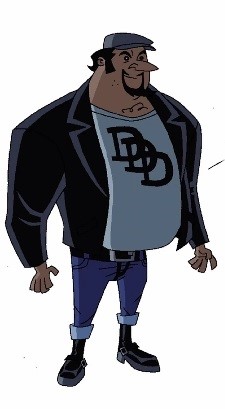
In January 1966, the Teen Titans first encounter a supervillain who also has a troop of gremlins as helpers, and who has a similar build, nose and motor skills to Gru: Ding Dong Daddy, the villain who talks like a Dylan song: “Chill out, cool cat! The Ding Dong Daddy ain’t cruisin’ for a bruisin’!” Teen Titans screenwriter Bob Haney did not make up the name Ding Dong Daddy himself, of course. His inspiration is the same source from which Dylan draws: “I’m A Ding Dong Daddy (From Dumas)”.

“I’m A Ding Dong Daddy (From Dumas)” is written in the 1920s by a then still unknown Phil Baxter, the bandleader of the Jack Benny Radio Show. The song becomes popular, and remains popular in the 1940s when a radio station from Dumas, Texas, names itself after the song (KDDD-FM) and uses it as a theme tune. But in Dylan’s case, the song undoubtedly came to him through his great hero Bob Wills.

Radio broadcaster Dylan professes his love for Bob Wills and his Texas Playboys again and again in Theme Time Radio Hour. Eight times he finds a reason to play one of his songs, and almost always he introduces the record with words of admiration. “Here on Theme Time Radio Hour we believe you can never play too much Bob Wills,” for example, and:

“Every year in April, on the last Saturday, they celebrate Bob Wills Day, in Turkey, Texas. I guess you know where you can find me, next April.”

Bob Wills records “Ding Dong Daddy” in 1937 and it is not difficult to understand what attracts Dylan to the song: it is a particularly catchy song with an overwhelming cascade of alliterations, inner rhymes and absurdities, fierce secondary characters, naughtiness and frenzied scenes;

Got a whiz bang momma
She's a Bear Creek baby and a wampus kitty
I'm a ding dong daddy from Dumas
You ought to see me do my stuff
I'm a ding dong daddy from Dumas
You ought to see me do my stuff
I'm a popcorn popper and a big apple knocker
You ought to see me strut
I'm a mamma makin' man
And I just made Mary
She's a big blonde baby from Peanut Prairie
I'm a ding dong daddy from Dumas
You ought to see me do my stuff


More jolly and more innocent than Dylan’s “Early Roman Kings”, certainly, but the frenzied joy of language is one-to-one comparable – as with this last verse. The engine seems to be, as in the highlights of the mercurial years ’65-’66, a wildly splashing stream-of-consciousness. The scenery from the opening line sets the tone: Black Mountain undoubtedly triggers the classic “Black Mountain Blues” in the walking jukebox Dylan. He knows the song from Janis Joplin, from Dave Van Ronk and from Nick Drake, and especially from Bessie Smith, the original version from 1930.

But closest to his heart is Dr. Ralph Stanley, who often played it with his brother Carter, and continued to play it after Carter’s death in 1966 – with The Clinch Mountain Boys on Live In Seattle (1969), for example. Paula Cole keeps the song alive well into the twenty-first century, on American Quilt (2021). Intended as a tribute to Bessie Smith and Janis Joplin, she explains:

“Both women sang this song. It is strong like good coffee and brings out something different in me as I honor the legacy of two great artists who identify with the lyrics of ‘Black Mountain,’ where appetite and violence rule – and softness must yield to steeliness. Bessie and Janis related to these lyrics. And I do too.”

[Note: we have two sources for this video – there seems to be a regional issue with it.  Hopefully one will work for you].


“Black Mountain Blues” is another fierce, frenzied song with outrageous imagery (“Those people in Black Mountain are mean as they can be / Now they uses gun powder just to sweeten up their tea”), and the verse that will lead Dylan associatively to that “Sicilian court”:

Well, out in Black Mountain you can't keep a good man in jail.
Yeah, out in Black Mountain you can't keep a good man in jail
'Cause if the jury convicts him, the judge will pay his bail

Dylan’s verse Gonna put you on trial in a Sicilian court is another example that demonstrates why we shouldn’t look for too many historical references behind name-droppings like “Roman Kings”, or the Fall of Detroit in this stanza’s first line. After all, a Sicilian court has nothing to do with justice – by “Sicilian court” we mean the group of Italian poets centred in the courts of Emperor Frederick II (1194-1250), the Sicilian court of the Italian-born Holy Roman emperor Frederick II Hohenstaufen, who ruled the Sicilian kingdom from 1208 to 1250. An early Roman king, if you will. Not an insignificant group, by the way; one of those poets was Jacopo de Lentini, the inventor of the sonnet form.

But Dylan paints a portrait of a Mafia-like clan, the stream-of-consciousness has already led him to The Godfather III (Francis Ford Coppola, 1990), to that paraphrase of Michael Corleone’s “Just when I thought I was out, they pull me back in” in the second stanza (you try to get away, they drag you back). Furthermore, the stream has already been led to that bizarre courtroom scene in “Black Mountain Blues”, the denouement of The Godfather III is set in Sicily… the leap to trial in a Sicilian court is not too far-fetched.

The chosen date seems just as historically unfounded and in itself insignificant as that court on a southern Italian island: the day Detroit fell. There are plenty of analysts who take this seriously, and then try to build a bridge to The Siege Of Detroit (15-16 August, in the British – U.S. War of 1812), but “Detroit” also seems to be the choice of a walking jukebox who puts poetry far above historical accuracy or significance. After all, in rock ‘n’ roll and blues classics, “Detroit” is a synonym for “big American city” or “exciting place where it all happens”, something like that. “The Motor City where the girls are so pretty,” as Steve Miller knows (“Rock’n Me”, 1976).

No, if you do want to take The Day Detroit Fell seriously, then a metaphorical connotation like The Day The Music Died, “the end of real music” would be more obvious. “Things were beginning to get corporatized,” Dylan says in the Rolling Stone interview in September 2012, around the days Tempest is released, trying to explain why the 50s define him, and not the 60s – “those days were cruel.” And then he specifies:

“I truly loved the music. I saw the death of what I love and a certain way of life that I’d come to take for granted.”

The Fall of Detroit, then, seems more like the poetic, melancholic sigh of an elderly icon (Dylan wrote the song when he was 71) noting the demise of his favourite, outdated music, the death of what I love. Which is more than just Motown, obviously. “Back In The U.S.A.” by Chuck Berry, Lee Dorsey’s “Ride Your Pony”, Chubby Checker’s “Twistin’ USA”, “Mary Lou” (she left Detroit to go to Kalamazoo), Bobby Bare’s first Top 10 hit “Detroit City” (better known as “I Wanna Go Home”), Skip James, Fats Domino, The Beach Boys, Tampa Red’s “Detroit Blues”… they are not the least names and not the least songs in Dylan’s backpack, choosing Detroit as their backdrop.


“Here’s something we couldn’t fit in to our Musical Map-show,” the DJ says halfway through the Theme Time episode “Spring Cleaning”, when he announces “one of Bobby’s biggest hits, from 1963”. It has absolutely nothing to do with spring cleaning, but Dylan really, really wants to play “Detroit City”. Just as in the closing line, the nod to one of the forefathers of the Blues, to the early Roman king Bukka White and his legendary “Shake ‘Em On Down” (1937), comes out of the blue.

Dylan, well, he has his fun, and he has his flings.

 ———–

To be continued. Next up: Early Roman Kings part VIII: I got the John the Conqueror root

Jochen is a regular reviewer of Dylan’s work on Untold. His books, in English, Dutch and German, are available via Amazon both in paperback and on Kindle:


Posted in Uncategorized | 6 Comments

Bob Dylan: Cooking Up More  Mythologies (Part VI)

by Larry Fyffe

The archetype of the shape-shifting serpentine female Lilith figure resurfaces again and again in the Jungian Sea of English literature; therein, men become obsessed with her image.

In  the poetry of Britisher John Keats:
Love, jealous grown of so complete a pair
Hovered and buzzed his wings, with fearful roar
Above the lintel of their chamber door
And down the passage cast a glow upon the floor
(John Keats : Lamia)

Followed up in the  poetry of American Edgar Allan Poe (wise Athena, whose sacred bird is the owl, accidentally spears Pallas, daughter of a sea-god):

And the raven, never flitting, still is sitting, still is sitting
On the pallid bust of Pallas just above my chamber door
And his eyes have all the seeming of a demon's that is dreaming
And the lamp-light over him streaming throws a shadow on the floor
(Edgar Poe: The Raven)

And in the song lyrics of Bob Dylan:

Listen to that Duquesne whistle blowing
Blowing like she never blowed before
Blue light blinking, red light glowing
Blowing like she's at my chamber door ....
I wake up with that woman in my bed
Everybody telling me she's gone to my head
(Bob Dylan: Desquesne Whistle ~ Dylan/Hunter)

Of such poetry, Bob Dylan is well aware:

Gotta tell-tale heart, like Mr. Poe
Got skeletons in the walls of people you know
(Bob Dylan: I Contain Multitudes)

“Desquesne Whistle” borrows from the following song:

I thought I heard the steamboat whistle blowing
And she blowed like she never blowed before
I'm afraid my little lover's on that boat
(Shirkey and Harper: Steamboat Man)

In the song lyrics quoted beneath, Dylan presents Poe’s demonic Lithith-like figure as a  raven, but this time she’s cast in a sympathetic light; the country doctors rambles – perhaps she’s pregnant:

The wind howls like a hamner
The night blows cold and rainy
My love she's like some raven
 At my window with a broken wing
(Bob Dylan: Love Minus Zero)

The times they are changing, and Lady Lilith gets a do-over. In the song following she’s sad-eyed, not blamed for fleeing from working in Adam’s garden at all; it’s his fault that Eden is burning, nor hers.

He expects Lilith to scrub the kitchen floor – he’s the hoodlum in this tale. Before God of Order, of ‘the great chain of being’, has a chance to throw Lilith out the farm’s gate, she’s off to Babylon:

They wished you'd accepted the blame for the farm
But with the sea at your feet, and the phony false alarm
And with the child of the hoodlum wrapped up in your arms
How could they ever have persuaded you
(Bob Dylan: Sad-Eyed Lady Of The Lowlands)

Posted in Uncategorized | Leave a comment

Dylan adjacent artists part 2: Bob and Larry Campbell

By Aaron Galbraith and Tony Attwood

The people we are looking at in this series are going to be artists who have a direct connection to Dylan and his work or life. So they could be from his backing bands, friends from back in the day or even family members.

In the last episode we looked at Charlie Sexton.   In this second instalment let’s look at the work of possibly the greatest all round musician to play in Dylan’s band, since at least Garth Hudson. It’s Larry Campbell

Tony: That is utterly, utterly amazing.  Stunning – and he just stands there and does it without any fuss or antics.  It is an incredible talent.  I am so glad to have this pointed out to me.  I never knew he could do this!

Aaron: Larry played in Dylan’s band from 1997 to 2004. The list of other artists he has played with is mightily impressive – including Paul Simon, Sheryl Crow, Levon Helm and BB King.

His first solo album Rooftops appeared in 2005. This was a collection of mainly fiddle tunes transposed to acoustic guitar. The tour de force of the album is this version of the House Carpenter.

Tony: OK after the first track I was ready for pure sheer unadulterated talent, and wow, this comes through.  Dear Reader, please play this all the way through, you will not be disappointed.   How does anyone get to be that nimble?  Oh yes, and do keep listening to the end – don’t be too anxious to move on to the next example.

Aaron: Following this he went on produce Levon Helm’s Grammy award-winning Albums Dirt Farmer and electric Dirt.

Later he started working with his wife Teresa Williams, so far they have made a pair of really fine albums, the self titled debut in 2015 was followed by Contraband Love in 2017.

Let’s finish off with some tracks from both and see what Tony makes of these (If the studio version don’t work you should be able to find live versions on YouTube)

Attics Of My Life

Tony: That was unexpected.  I often wonder why people leave the band with Bob, but with this ability playing the same songs night after night must be a bit limiting, even with Bob’s notorious habit of suddenly changing the script.  But with this beautiful voice lurking at home, what ever made him go on tour in the first place?

Keep Your Lamp Trimmed and Burning

Tony: And just when I thought I was getting the hang of what they were going to deliver, we have this.  My guess is whatever these two touch, is going to be really worth listening to.  If I may add one thought, the lady has far too fine a voice ever to shout, but then, what do I know?

When I Stop Loving You

What more can I say?   They can do it all.  Stay with this – the harmonies are beautiful.

They have their own website of course.   And it has lots of other examples of their music too.   Lucky Bob to have had such a musician who would tour with him.


Posted in Uncategorized | 1 Comment

Me and Bob: Personal memoires

by Roger Gibbons

I went to school with Sir Kazuo Ishiguro.   Well I vaguely remember a Japanese boy who was in his first year at Woking Boys grammar school when I was in my last year.   I had been a lackadaisical scholar and left with only three O Levels but Kazuo went on to University, fame and fortune.   As far as I know we are the only pupils of that school to be published.   Kazuo has been quite successful (KBE, OBE and Nobel Prize) while I remain unknown (of course, we are both overshadowed by Woking girl, the great Delia Smith) but Kazuo and I both love Bob Dylan.

Kazuo has expressed his admiration for Bob in interviews.   I am thankful he has not written about Bob for two reasons – I tried to read ‘Never let me go’ and I gave up. The boredom was too great and it is one of very few books I have abandoned.  (Most writing about Bob is pretentious; hello, Clinton Heylin and Michael Gray).  Yet sadly, I still feel obliged to buy all books on Bob.   But writers still feel compelled to be obtuse and grandiose.

Let us therefore be thankful Kazuo has not offered a dull pretentious work about Bob.    I am not capable of complex writing skills so this is my memoir of an interview with Eric Clapton and it is very straightforward.

Introduction

In 1986 I rang Ian Woodward of the fanzine, ‘The Wicked Messenger’.   I thought it was obvious that Eric Clapton should be interviewed about Bob Dylan.   But the fanzine and its contributors were not that organised, so I took it upon myself.   I had seen Eric in concert five times (if I include Blind Faith).   Once I turned up at Guilford Civic Hall without a ticket but hoping to get in for the encore.  On arriving in the car park, I was surrounded by four policemen which I thought was overkill security.   Nevertheless, they let me through and indeed I got into the back of the theatre, with probably thirty other hopefuls.  The reason for the security became clear when Eric came back onstage with Mark Knopfler, Elton John, Phil Collins and his band.   They did one song, ‘Further On Up The Road’ but with so many solos that it lasted twenty minutes.

I also saw Eric with Carl Perkins at the Civic.  Very annoyingly Eric played at Woking Leisure centre for many New Year’s Eve gigs.   I lived about two minutes away and my wife and I walked around a couple of times.  You could hear the music very well from outside and once Andy Fairweather-Low said Happy New Year to us. He was not wide-eyed or legless.  To get in to the gig you needed to be in Alcoholics Anonymous.

I did not research the interview too much and I had no set questions, just topics.   If you watched television in those days you could see questions being asked and the same old set replies coming out, often word for word.  A few years later I went to see The Sue Lawley Show being recorded at the BBC .   She had a blackboard with a list of questions on and ignored any interesting reply.   Famously Sarah Ferguson did not announce her pregnancy until two days later.   Roald Dahl was lovely, fascinating and could have done a much longer interview.

At the time of the interview Eric and I both had failing marriages but Eric’s life included two children with other women and a busy lovelife.   He was clearly, though, not a happy person.   Thankfully we both went on to long and successful new partnerships.   I visited Eric Clapton’s house on many occasions, often to find he was out or busy.   I went to Elton John’s house in Windsor but he was in America and never came back so my career as an interviewer came to an end.   I also moved to Gloucestershire so I have not seen Eric since although my grandson goes to school just down the road from his house.  Sadly my wife’s father has an ashes grave headstone in Ripley church. When we visit to clean the stone we always see the best kept grave – Conor Clapton.

Me and Bob

I was first aware of Bob Dylan when I heard “Times They Are A-Changing” on the radio, not particularly liking the scratchy folk sound but loving the sentiment of the lyrics. At this time, I was young and penniless and I could not afford those expensive LPs so I purchased a couple of EPs.  “One too many mornings” was a particular favourite, but friends of mine were into blues music, the Beatles, Stones and Bo Diddley so I listened to all sorts.    By now (1965) I had a part-time job so could afford albums and concerts.  Chuck Berry, then B.B.King were my first concerts, both memorable. Chuck did “My ding-a-ling” much ruder than the chart version.  B.B. did “Lucille” including breaking a string and mending it while still playing (I did not realise he did that in every show).   My first albums were the Beatles, Chuck Berry and the Hollies.  Highway 61 was so different that after playing it once I ignored it for a few months but tried it again and have loved it ever since.

My main interest was football and as I lived in Woking, Surrey I could get on the train and get to any London venue quite easily.  My trips to football were combined with record shop scouring so I found bootlegs and old blues and folk albums in strange places like New Cross and Seven Sisters. Those were the days before Google.  The BBC did their “Bob Dylan in Concert” show in 1965 and that was a breathtaking change for youngsters like me, growing up with musical candyfloss.

The first time I saw Bob was at the Isle of Wight in 1969.  My mate let me down at the last minute so I went alone, staying in a bed and breakfast in Portsmouth on Saturday night then coming back on the ferry after midnight; what a wonderful experience.  The show, though, was not what the crowd expected – it was subdued rather than rocking.  The festival DJ played the Stones Honky Tonk Women on numerous occasions and that aggressive rock was missing from Bob.  Nevertheless, there were some standouts:  Wild Mountain Thyme, Mighty Quinn and Minstrel Boy. They were all new and exciting but overall I felt slightly disappointed.  Mind you the support acts were abysmal – Blodwyn Pig anybody?

The next visit was at Blackbushe in 1978 and Bob was really on top of his game.   I had tried to get tickets for the Earls Court shows but even spending all day queuing in London was fruitless.  At this time Bob was massively successful – nobody else could fill six shows at Earls Court and follow that with a massive show like Blackbushe (well alright, maybe the Stones or Springsteen later).

I drove past Blackbushe recently.  What a site for concerts it could have been, instead of a car auction area and a market (for a long time, but not anymore.)  The show was fantastic; even my first wife enjoyed the day.  Afterwards we got in a taxi and the driver wondered why there were so many people about.

I have seen Bob about forty times since then. The 1984 shows at Newcastle and Wembley were incredible. I had stayed overnight in Newcastle and caught a train to go directly to Wembley thinking I could leave my suitcase in storage at Waterloo station. They do not do that at weekends so I rolled up at Wembley with a big suitcase and they waved me in.  I could have had a gun, a bomb or a pile of drugs in that suitcase. Instead it was useful to sit on.  At the end of the Wembley show Bob was on stage with Eric Clapton, Van Morrison, Carlos Santana and Chrissie Hynde. Nobody else can match Bob’s appeal.

One thing that is disappointing is that even being an octogenarian will not diminish Bob’s appeal.   I am sure many fans would love to see him in a more intimate setting.    I have been up close at Shepherds Bush Empire and once I was in the sixth row at Wembley Arena but generally those big venues are pretty soulless.    Brixton empire was an exception but I would not go to any concerts in London now – it is too much like hard work, especially when I live in Gloucestershire.

Mavis Staples has just booked a show at Stroud Subscription Rooms.   450 seats – perfect. Come on Bob, you can do it.   Let me walk into Stroud along the canal.   Take in a meal and drinks and watch the great man.   The perfect entertainment.

In 1981 I broke my leg and missed the gospel shows but I have seen Bob during most tours.   The variety in the shows is staggering, so unlike others who regurgitate the same formula over and over, note for note.   The most disappointing non-Bob show I ever saw was Ray Charles who did a carbon-copy of his ‘60s routine.   Even a great performer can be dull!

For me the shows with Tom Petty and Roger McGuinn were as good as it gets.   I love it when Bob does a rarity, like Bottle of Bread at Shepherds Bush, or Congratulations at Birmingham.   He is so unique.

I thought I was a solid, sensible fan of Bob but in 1986 I got a job as an extra in the dire film “Hearts of Fire” filming at the Colston Hall in Bristol.  I was supposed to be backstage as an extra but ended up in the main hall.   We were all given lyric sheets for “Had A Dream About You, Baby”.   What a waste of paper!   It was fascinating to see the filming.

Bob seemed in a good mood, happily signing autographs, some left-handed and some right-handed.   On Saturday morning I got in again but beforehand I had a little walk outside.   I chatted for a while with a guy who collected autographs and found he had already got Bob’s but was trying to get Richard Marquand’s.   Anyway, I strolled past a trailer with its door open and there sat Bob.   I was so awestruck that I could not speak, but rushed off to buy a pen and calm down.  I have met a lot of celebrities but none of them made me so inspired.    I realised then that Bob meant an awful lot to me; something inexplicable but wonderful.

Other fans are just as enthusiastic, like the chap at Wembley Arena who rushed past me to get to Bob and bearhugged him, like the chap in Cardiff on his 149th show, like the Scottish family who stayed in Wales for a week to see Bob in Cardiff and like the two couples singing ‘Sara’ in the NEC carpark at midnight.  Anyway, I went back to the trailer and asked Bob to sign the back of my lyric-sheet and daringly asked if he would be singing.  Bob said that he was not singing that day, that was not the deal.   I grovelled away and still feel guilty about ignoring the other occupant – Ian Dury who had said ‘wotcher, mate’ to me.   They were listening to classic ‘50s country music.

Inside the Colston Hall there was a little bit of filming, mainly Ron Wood flicking a cigarette into his mouth but a jam developed onstage.   I think the band was really great but the tune went on for twenty minutes, Nevertheless, Bob got a standing ovation without singing.   I bumped into Ronnie Wood outside and got his autograph for a friend.  He signed himself as ‘Ronnie Wood – the Rolling Stones’.

I have to mention some shows, in particular Wembley Arena 1987. John Peel gave it a dreadful review but it was a brilliant show.   Roger McGuinn was brilliant, particularly Chestnut Mare, Tom Petty and the Heartbreakers were tremendous.   When Bob performed with just Mike Campbell and Benmont Tench I thought that was perfection. Driving back from Wembley was quite strange as the great storm had started.   I thought my car’s steering was a problem until I got out and was blown sideways.

I loved John Peel but to be fair John’s opinions were very odd at times.  I thought John’s playing of Liverpool football chants and songs was phoney but I saw him at a Norwich/Liverpool game with the longest Liverpool scarf ever.    Another show was Hammersmith 1991 when my 16-year-old son became hooked on Bob.   He is still an avid fan.   I also took him to an Arsenal game at Highbury. He has no interest in football whatsoever.    A year later I took a gorgeous lady to Hammersmith and we are still together, even though she does not like Bob’s voice.   Who can understand such things!  She complains even now because the audience stood up for the whole concert and she saw nothing, being only just over five feet tall.

Some oddities I have seen are Bob singing Congratulations at the NEC Birmingham, one show at Hammersmith where the audience only heard one line, the rest being mouthed but soundless, another show at Hammersmith with an untouched piano, another show where Bob started Knockin’ on Heavens’ Door acoustically but the band gradually joined in -wonderful – and Bottle of Bread at Shepherds Bush, and Rumble/London’s Calling and Blue Monday.  I have never been let down by Bob but always surprised.  At one Hammersmith show, I saw Renee Shapiro who named herself Sara Dylan (Wikipedia calls her a Dylan groupie).  She was murdered in 1992 but her remains were not found until twenty years later.  Her killer, Joseph Naso, as never charged with her murder but is now 87 years old and in prison for other crimes.

The article continues….


If you would like to contribute to Untold Dylan with an article on anything Dylan related please write to Tony@schools.co.uk


Posted in Uncategorized | 2 Comments

Never Ending Tour, 1999, part 5 – Inside the museum.

By Mike Johnson (Kiwipoet)

My problem with reviewing Dylan’s 1999 performances is that there is just too much good stuff. I have settled into doing about four posts per year, with about 10 audio files per post, and here I am at post five in 1999 with about thirty songs clamouring to get onto my setlist, and one more post to go of the covers Dylan did of other songs, some of which he’d never done before, at least on the NET.

So I’ve cut the thirty songs down to nineteen and will have to rip through them pretty fast. All these songs I have introduced before in previous posts, so those following these posts won’t need any reminders. If you’re a new reader, I suggest you look at some of the previous posts.  (There is an index to the series here).

Without further ado, let’s pick up from where we left the last post, looking at Dylan’s folk roots, the acoustic Folk Bob, and we can’t do better than start at Tramps, New York, with this vigorous, upbeat performance of ‘The Times They Are A-changing’. The times might change but the song doesn’t. The crowd loves this one. Wonderful vocal, and, glory be, a blaring harp solo, as jazzy and discordant as it ever was.

Times they are a-changing

‘Boots of Spanish Leather’ is one of Dylan’s great conversation songs. The sadness of parting, the sadness of gifts. This is a quiet, reflective performance. No tricks, just the unadorned song. (18th November)

Boots of Spanish Leather

Staying in the same bandwidth, ‘Don’t Think Twice’ also gets the simple, unadorned treatment. After the age of the epic versions of these short songs, it’s a pleasure to be able to appreciate the brevity of the song once more. There is some guitar work but it is not excessive, and the instrumental break at the end gives it a country twist along with that pattering beat. It’s so easy to listen to you can almost forget the sting in the lyrics.

Don’t think twice

What’s a protest song? ‘It’s All Right Ma’ is a comprehensive blast at all things false and phoney, and a declaration of resilience in the face of all that crap. Originally, Dylan would rap it out fast, the words almost too quick to catch (try the 1990 performance, NET, 1990, part 1) but by 1999 he was searching for new ways to present the song. Here he slows it down a bit and puts that pattering beat I mentioned behind it. I think I prefer the earlier hard-driving approach, but I can hardly fault Dylan’s vocal on this one. Instead of flattening his voice, as he did in the 60s, he raises and softens it.

It’s all right Ma

Moving forward in Dylan’s chronology a little, we come to his great blues composition ‘It Takes a Lot to Laugh, It Takes a Train to Cry’. This performance has a country edge (courtesy of the steel guitar) rather than a hard urban edge. Nice lazy beat. A masterly performance. (date unknown)

It takes a lot to laugh

One of the songs Dylan experimented with the most has been ‘She Belongs to Me’ and he would go on evolving new versions right through to 2013. All through the 90s Dylan developed a quiet, laid-back version of the song, quite different to the more upbeat, peppy album version. It would be some years before he developed the hard-driving, bluesy versions of the last years of the NET. But don’t let that foot-tapping, laid back performance beguile you into thinking that it’s a nice song.

She belongs to me

Time to hop back to Tramps for a gutsy performance of ‘Ballad of a Thin Man’. The song is addressed to someone who is way out of their depth at some seriously bizarre party. Dylan’s low, snarly voice is as effective as the high, keening voice of the original. More effective maybe, as there is no escaping the nastiness of the tone here, augmented by the equally nasty tones of Dylan’s Stratocaster. If ever Dylan’s off centre, ‘off key’ guitar playing is appropriate, it is here.

Ballad of a Thin Man

Before leaving the world of Highway 61 Revisited, we have to drop in and hear ‘Desolation Row’, one of Dylan’s greatest masterpieces. I couldn’t overlook this one even though there is nothing particularly notable or outstanding about the performance. There is a beauty in the melodic structure of the song that belies the dark visions that impel it, and Dylan’s rough, late 90s voice suits the subject matter just fine.

Desolation Row

Coming to Blonde on Blonde, we find a gentle performance of ‘I Want You’. Not as transcendent as the 1994 MTV Unplugged performance (not included in the official release, see my NET, 1994), or as desperate as some live performances, this one finds the softer, more romantic, less driven side of the song.

 I want you

The greatest song on Blonde on Blonde has to be ‘Visions of Johanna’, maybe Dylan’s greatest ever song. A subterranean masterpiece, a moody, early hours of the morning kind of song. As I’ve said before, none of the subsequent performances have the spooky power of the album version, or the 1966 live versions, but this one holds the mood. At least it doesn’t have the pattering beat Dylan often uses during this period. This performance carries the weirdness and darkness of the song, probably due to Dylan’s dark-edged vocal.

Visions of Johanna

What Dylan show would be complete without ‘Forever Young’? This brings us into the 70s, and the most popular song from Planet Waves, a sad anthem to the passing of time and the inevitability of old age. But it’s not really about physical age, is it? It’s about staying young in spirit. It was amazing to hear the 80 year old Dylan give the song a good airing on Shadow Kingdom. As long as you can draw breath, the song holds. There’s a bit of a fumble with the lyrics, and a ragged chorus, but that’s all right if you’re young at heart.

Forever young


‘Shelter from the Storm’ brings us into the 70s and Blood on the Tracks. Arguably, the song benefits from a slower, more thoughtful version than on the album. Both a wonderful love song and a tribute to the loved one, it reminds us that we are nothing, just a ‘creature void of form,’ if we are not loved. It is a song about the redeeming power of love. Again the steel guitar gives the song a country flavour, gentle and twangy, without sentimentalising the song at all, although there is more of a nostalgic flavour than the brisk album version.

Shelter from the Storm

We’ll pause briefly at Dylan’s gospel period for the provocative ‘Serve Somebody’, a song Dylan often used as an opener in 1999. It has a good strong rock beat. Here he delivers it to an ecstatic audience at Grand Rapids, 15th Feb. While you are up and dancing, listen for lyrical variations and verse mix ups. It really doesn’t matter with this song.

Serve Somebody

We can’t pass over Shot of Love without listening to ‘Every Grain of Sand’. It’s a song hanging in the balance between profundity and sentimentality, and works best with an unsentimental performance. If the album version is just a tad too smooth for your taste, this rougher more down-home late 90s style might be more fitting. Again there’s the steel guitar to give it that country feel, but that doesn’t push it towards sentimentality, not with that ragged, doubt-filled voice.

Every Grain of Sand

Lets move forward to 1989, Oh Mercy and the forever atmospheric ‘Man in the Long Black Coat’. Best served soft and menacing. I still hark back to the 1995, Prague performance with its soaring harp, but this rougher, gutsier version does the job just fine. Ever taken your love to a dance or rave only to have her leave with another, and a dodgy character at that? If you want to indulge that feeling, now’s your opportunity. Innocence falls into the thrall of evil. It’s a cosmic drama.

Man in Long Black Coat

Oh Mercy and Under the Red Sky also saw something of a revival of the old, radical, protest Dylan. What’s a protest song? Well, ‘Everything is Broken’ can’t be anything else. This performance bustles along, just as it should, a recitation of modern evils, but I’m afraid it can’t match ‘It’s All Right Ma’ for the denunciation of everything. It lacks a melodic line, and is too mono-tonal for my taste. I guess it leans towards punk. It’s not designed for aesthetic pleasure, and he rips through it with vigour and alarm.

Everything is broken

I could have dropped ‘I and I’ as this is not the best performance of the song, but we have been following it from the early 90s, watching it grow and develop, and this will be the final year Dylan will perform it. It’s full of the lyrical force of someone listening to their heart, whatever they might be saying. It has sadness, nostalgia, defiance and threat. One of Dylan’s great performance songs. Goodbye is too good a word.

I and I

Before finishing, Shadow Kingdom arrived, just I was finishing the previous post. I was intrigued to see that the ambience, the scene portrayed, was of the 1930 or 40s clubs, dives and speakeasies, and he made his early songs sound like they came from that era. This movement towards the roots of modern music really gets serious with Time out of Mind, its consciously antique feel. There was no Folk Bob in Shadow Kingdom; all the music was brought home to that between the wars milieu. In 1999 you can feel Dylan positioning his songs in that way, a path that would lead to Shadow Kingdom.

Pity he didn’t play his great stadium rock epic, ‘Tangled Up in Blue’. With the right arrangement, it would have fitted Shadow Kingdom just fine. But the song was very much alive in 1999, with two very solid performances I could not choose between – so here they both are. The first is a little shorter and faster (date unknown), while the second feels a bit more adventurous. Funny how that guitar backing can bring a Celtic or Irish flavour to the melody. ‘Tangled’ has deep roots in old music, that’s why it sounds so compelling.

Tangled up in blue (A)

This next one is from New Orleans, 3rd Feb. We welcome back the epic, and Dylan’s harp improvisations.

Tangled up in blue  (B)

Next post will be the last for 1999. We’ll hear Dylan covering the songs of others, his ‘uncovers’. Until then, stay well and stay tuned.


Kia Ora


Posted in Uncategorized | Leave a comment

Early Roman Kings (2012) part VI: The beauty of the flames


by Jochen Markhorst

VI         The beauty of the flames

I’ll strip you of life, strip you of breath
Ship you down to the house of death
One day you will ask for me
There’ll be no one else that you’ll want to see
Bring down my fiddle, tune up my strings
Gonna break it wide open like the early Roman Kings

Apart from “Desolation Row”, there is probably only one song in the entire Western canon that features both the sinking of the Titanic and Emperor Nero: Harry Chapin’s “Dance Band On The Titanic” from 1977. Just like Dylan’s masterpiece, without too much dramatic depth, by the way. The ninth verse of “Desolation Row” opens with the enigmatic words Praise be to Nero’s Neptune / The Titanic sails at dawn, where, as often, euphony seems to have been a decisive argument for the choice of words. As we all know, the Titanic did not sail at dawn, but at noon, and indeed: the soundscape of be to – Nero – Neptune is a supple, very musical triplet.

In Chapin’s case, Nero is given some more substance, as a famous mythical lie about Nero is used as a comparison for the protagonist’s actions:

Jesus Christ can walk on the water
But a music man will drown
They say that Nero fiddled while Rome burned up
Well, I was strummin' as the ship go down

History really has not been too kind to Nero, and we owe the most persistent and popular story about him to the Roman historian Suetonius, who does like to spice up his De Vita Caesarum (The Lives Of The Twelve Caesars, AD 121) with juicy, rancid and exaggerated details anyway;

“He set fire to the city so openly that several ex-consuls did not venture to lay hands on his chamberlains although they caught them on their estates with tow and fire-brands […]. For six days and seven nights destruction raged, while the people were driven for shelter to monuments and tombs. […]Viewing the conflagration from the tower of Maecenas and exulting, as he said, in ‘the beauty of the flames,’ he sang the whole of the Sack of Ilium, in his regular stage costume.”
(The Life Of Nero, Ch. 38)

More serious historians think that Nero was not even in the city at the time of the Great Fire (AD 64), and they also justifiably question all the stories about Nero’s orgies, atrocities and murders, but the image is ineradicable. In fact, the image only becomes more theatrical as the centuries go by. Whereas Suetonius only mentions that Nero sings (“The Sack of Illium” is lost, and presumably one of his own compositions), later generations soon thrust a lute into his hand, and still later generations find a fiddle an even better detail to illustrate Nero’s cruel insanity. Cartoonesque, of course (fiddles are not invented until 1000 years later), but admittedly, visually strong.

So strong, in fact, that a verse such as Bring down my fiddle, tune up my strings, spoken by such a bloodthirsty narrator as in “Early Roman Kings”, irrevocably evokes associations with Nero. Especially with a narrator who already is compared to a city-destroying Roman king. Which works both ways, presumably; a poet like Dylan, who can shake songtexts out of his sleeve while associating, will probably end up with Nero via Roman king -destroyed your city, and thus with that cartoonish image of a fiddle-playing maniac. The by-catch is that this leads the lyrics somewhat back on track.

The opening of this fifth verse, after all, keeps building on that Dracula trail for a while. After the blood and the handkerchief from the previous verse, the sinister narrator speaks ominous texts, which all sound perfectly coming from the mouth of the bloodthirsty count; apart from the death threats I’ll strip you of life and I’ll strip you of breath also the substantively correct relocation announcement: the UnDead truly do live in a crypt, in a house of death, during the day. And then there’s the prediction One day you will ask for me / There’ll be no one else that you’ll want to see – Dracula’s female victims do indeed become zombie-like groupies, completely under the spell of their killer.

The turn, then, to an evil genius playing the fiddle abruptly derails that train of thought. The noble vampire has many qualities and skills, but musically adept he is neither in Bram Stoker’s original nor in any adaptation of the material (though in Van Helsing, 2004, he is quite a dancer). That one fiddle, in short, moves the setting from Transylvania back to Rome.

It is tempting to think that this intuitive intervention leads the poet via the Nero associations with his own “Desolation Row” then two songs further to the album’s key song, the monumental title song “Tempest” – Dylan’s own “When That Great Ship Went Down”, Dylan’s own contribution to the long line of folk songs recounting the sinking of the Titanic. The legendary shipwreck has preoccupied him throughout his career as it is. In his autobiography Chronicles, Dylan himself acknowledges this:

“The madly complicated modern world was something I took little interest in. It had no relevancy, no weight. I wasn’t seduced by it. What was swinging, topical and up to date for me was stuff like the Titanic sinking.”

Sometimes sideways, as in “Desolation Row”, sometimes aphoristic, as in Tarantula (“live before you board your Titanic”), sometimes straightforward, as in “Tempest”, and sometimes cryptic. Or so it seems to be the case, anyway, in 2020 on Rough & Rowdy Ways. The opening of the powerful song “Crossing The Rubicon” does raise questions and points more to the Titanic than to the early Roman king Julius Caesar;

I crossed the Rubicon on the 14th day
Of the most dangerous month of the year

Caesar crossed the Rubicon on the 10th day of January, so he can hardly be the “I”. The Titanic, on the other hand, did in fact sink on the 14th day – the fourteenth of the month of April. Which, according to T.S. Eliot, also present on the Titanic (in the captain’s tower, as Dylan reveals in “Desolation Row”), is the most dangerous month. Or rather: April is cruellest month (“The Waste Land”, opening line).

But that’s another sad, sad story.

To be continued. Next up: Early Roman Kings part VII: Ding Dong Daddy

—————

Jochen is a regular reviewer of Dylan’s work on Untold. His books, in English, Dutch and German, are available via Amazon both in paperback and on Kindle:

There are indexes to some of our series on the home page and under the picture above.


Posted in Uncategorized | 3 Comments

Bob Dylan: Cooking Up More Mythologies (Part V)

By Larry Fyffe

Lilith is represented in a number of mythological sources as the sexually wanton first wife of Adam in the Garden of Eden; she’s not drawn from Adam’s rib, but from the dust just like he is; demands equality.

The black-skinned Queen Sheba of Ethiopia is portrayed that way some of the time but not all the time.

King Solomon’s son Rehoboam becomes the ruler of Judah, the southern part of the once united Kingdom of Israel; Jehovah’s not happy with big daddy Solomon bedding so many foreign  (‘strange’) women; consequently, the Almighty causes the Northern Kingdom to separate in order to punish the wayward King.

Disregarding that the son is actually helping along His plans to  punish Solomon, the Hebrew God’s somewhat upset with Rehoboam for letting all the gold be stolen from Jerusalem by the leader of an invading Egyptian army (the leader in league with the ruler of the Northern Kingdom where erected are idols of the Golden Calf for people to worship):

And he took away the treasures of the house of the Lord
And the treasures of the King's house; he even took away all
And he took away all the shields of gold which Solomon
had made
(1Kings 14: 26)

Could well that there’s an allegorical reference to the Bible story in the song lyrics below:

Two doors down the boys finally made it through the wall
And cleaned out the bank safe; it's said they got off with
quite a haul
(Bob Dylan: Lily, Rosemary, And The Jack Of Hearts)

According to Rastafarians – another son of Solomon, he  born of the Queen of Sheba, becomes the ruler of Ethiopia.

Sheba, she's alluded to perhaps in the song lyrics beneath:
Been along time since a strange woman has slept in my bed
Look how sweet she sleeps, how free must be her dreams
In another lifetime, she must have owned the world, or been faithfully wed
To some righteous king who wrote psalms beside moonlight streams
(Bob Dylan: I And I)


Bringing it all back home to:

Draw me, we will run after thee
The king hath brought me into his chambers
We will be glad and rejoice in thee
We will remember thy love more than wine
The upright love thee
(Song Of Solomon 1:4)

For sure, the singer/songwriter/musician Bob Dylan likes to mix-up mythologies – does it with laughter, and he does it with tears.

In the following song lyrics, the songwriter parodies the waitress as a modern Queen Sheba, and the narrator likewise as King Solomon:

Then she says, "I know you're an artist, draw
a picture of me"
I said, "I would if I could, but I don't do sketches
from memory"
"Well", she says, "I'm right here in front of you, or haven't
you looked?"
(Bob Dylan: Highland)

https://youtu.be/LtlMiKz57kA


If you would like to contribute an original article to Untold Dylan please do send a copy (ideally as a Word file) to Tony@schools.co.uk with a note confirming that it is your original work.


Posted in Uncategorized | Leave a comment

Only a Pawn in their Game: the unique cover versions

By Tony Attwood

“Only a pawn in their game” is one of those famous Dylan songs that very few professional musicians have attempted to cover.

And that number gets even lower when one searches not just for professional cover versions but for cover versions that are widely and freely available on the internet.  In fact I just found two.

The Lenny Nelson Project is a band of which I know very little indeed – I’d not come across them before finding this track, and then when I went a-hunting on the internet all I found were references to this track.

This was released in 1988 with vocals by Lisa Lowell, known for her work with Bruce Springsteen and Southside Johnny, and released her own album “Beautiful Behavior”.

And that’s all I know, so mystery upon mystery.

But this is a remarkable reinvention of the song which Dylan of course sings with a very liberal interpretation of the beat and rhythm in order to maximise the emphasis on the lyrics.

However the fact is we all know the lyrics which makes this song ripe for re-interpretation, but still artists have not been forthcoming.

In fact the only other version I have found which I can share with you is Morrissey’s approach…

Wiki’s article on Morrisey states that his music contains “recurring themes of emotional isolation, sexual longing, self-deprecating and dark humour, and anti-establishment stances,” which gives us a wide enough range to make this a song that is perfect for him.

Now what has stopped people taking on this song, I think, is the singular approach of Dylan’s recording, and thus an alternative singularity is needed by anyone brave enough to take this on.

And this is what Morrisey gives us – not least by changing the accompaniment as the piece development.   The rhythm continues but somehow the power of the voice means that I want to listen to this and thus hear the lyrics afresh.

Even the ending in the Morrisey version is a surprise – there is no sense in the vocal or accompaniment that makes one feel that this is the end – it just is.  Which makes it all the more powerful.

I must admit, knowing the song and Dylan’s original version off by heart I don’t think I have played Bob’s version for years.  If I want it, I can play it in my head.   And given that he only played it live eight times (and all those renditions between July 1963 and October 1964) there was little chance of a reworking of the song.  So Bob has obviously not felt there is potential for a re-consideration.

And thus we just have two covers (or rather just two covers of which I can find publicly available copies).  Yet both really are worth hearing in my view.

I’m rather glad I went a-looking.


Posted in Uncategorized | 1 Comment

Pat Garrett & Billy the Kid: the art work

This article is part of a series in which we explore the creation of the covers of Bob Dylan’s albums.  An index of previous articles can be found here.

by Patrick Roefflaer

  • Released:        July 23, 1973
  • Photographer Manuel Palomino
  • Art-director:     John Van Hamersveld

Bob Dylan’s soundtrack for Sam Peckinpah’s western is packaged in a very sober cover: on the front there are only letters and on the back there’s one photo plus the credits.

Curiously enough, in the liner notes it says: ‘Photography: Manuel Palomino, Bob Jenkins & Sarah (sic) Dylan’. Three photographers for one photo? Strange.

The explanation can be found in an article in the American music magazine Rolling Stone of August 2, 1973: “A hodgepodge of film footage by staff photographer Bob Jenkins – and photos by Sarah (sic) Dylan – have been incorporated into a poster, which will be included with the LP.”

The unnamed author provides even more interesting info: “The cover design was intended to consist of a collage of paintings by Bob Dylan, which he had made on the film set [in Mexico].”

Charles Lippincott, head of the promotions department at the MGM film studios, explains why that didn’t go through: “The paintings were accidentally destroyed while packing in Mexico, to be sent to Los Angeles.”

After the film shooting in New Mexico, Dylan didn’t returned to New York, but moved with his family to L.A., where he has bought a house. For the first time, therefore, he does not call on anyone from the New York staff of CBS. After all, many graphic designers can be found in L.A. John Van Hamersveld was responsible for the album covers of Capitol Records from 1965 to 1968. He made Wild Honey by The Beach Boys and the American version of The Beatles’ Magical Mystery Tour. After that he focused on concert posters by Jimi Hendrix and Cream, and also continued to make covers such as Exile on Main Street by The Rolling Stones.


For the soundtrack album of Pat Garrett Van Hamersfeld comes with an extremely sober design: the title of the film in black Western type letters on a white background. Above the title, in sepia: ‘Bod Dylan Soundtrack’. For the first American pressing, the letters are embossed.

On the back cover we see a black and white photo by Manuel Palomino. It’s a scene from the movie, where Billy the Kid (Kris Kristofferson) is on his knees, while Deputy Sheriff Bob Olinger (played by R. G. Armstrong) threatens him with a gun.

The (first) Japanese pressing has an alternate  sleeve, with more stills from the film.


If you have an idea for an article or a series of articles that you would like to write for Untold Dylan we would love to hear from you.  Please write to Tony@schools.co.uk with the details.

You can find information of some of our series of articles both at the top of the page, and also on our home page.

Posted in Uncategorized | 2 Comments

Early Roman Kings (2012) part V: I will massacre you

by Jochen Markhorst

V          I will massacre you

I’ll strip you of life, strip you of breath
Ship you down to the house of death
One day you will ask for me
There’ll be no one else that you’ll want to see
Bring down my fiddle, tune up my strings
Gonna break it wide open like the early Roman Kings

A sensational side-step in Tom Cruise’s steep career is the role he plays in the freaky 2005 film Tropical Thunder, a film that has since achieved some cult status. This cult status is largely due to Cruise; his scenes are, to put it mildly, memorable. The film is driven by overacting anyway, and action hero Cruise stretches that freedom to the limit. He plays the role he created for himself after reading the script and concluding that the story needed another villain: the greedy studio exec Les Grossman, “who represents the gross part of Hollywood”. The name is probably a play on words (“gross man”), the character is modelled on Harvey Weinstein, rather than being inspired by Dylan’s manager Albert Grossman, but Cruise’s Grossman is also fat, has remarkably large hands – thanks to prosthetics – and is an absurd extrapolation of the harsh, ruthless image that, rightly or wrongly, has been attributed to Albert Grossman.

A highlight is the raunchy, weirdly inappropriate dance that Les Grossman performs in the closing minutes of the film, between the credits, over Ludacris’ vulgar rap hit “Get Back”.


And the other pillar of the cult status are the rants, the tasteless stream of insults, threats and obscenities that Grossman pours out on his opponents. A whole generation of Tropic Thunder fans knows by heart Grossman’s rant at a baffled Asian crimelord who has kidnapped one of Grossman’s actors and is demanding a ransom:

“First, take a big step back… And literally, FUCK YOUR OWN FACE! I don’t know what kind of pan-pacific bullshit power play you’re trying to pull here, but Asia Jack is my territory. So whatever you’re thinking, you’d better think again! Otherwise I’m gonna have to head down there and I will rain down in a Godly fucking firestorm upon you! You’re gonna have to call the fucking United Nations and get a fucking binding resolution to keep me from fucking destroying you. I’m talking about a scorched earth, motherfucker! I will massacre you! I WILL FUCK YOU UP!”

The look on the criminal’s face on the other side of the line, on the other side of the world, is priceless.

Fortunately, Dylan does not resort to similar x-rated banalities, but since the twenty-first century he has shown a noticeable preference for – somewhat more eloquent – Les Grossmans as protagonists. It is a change. From Oh Mercy (1989) and on Time Out Of Mind (1997) and on «Love And Theft» (2001), the weary, beaten protagonists, Io-personas like the jaded protagonists in “Most Of The Time”, “Love Sick”, “Floater”, “Not Dark Yet” and “Mississippi”, for example, predominate. All “lowdown, sorry old men,” as Tweedle-dee Dee is characterised.

But from «Love And Theft», from that same “Tweedle Dee & Tweedle Dum”, we see the shift from passive, despondent protagonists to assertive, intimidating characters. The other will stab you where you stand, “I’ve had too much of your company,” says Tweedle-dee Dum. “Gonna break into the roof, set fire to the place as a parting gift,” says the protagonist in “Summer Days”. “I always said you’d be sorry and today could be the day,” says another, after revealing that he feels like a fighting rooster (“Cry A While”). “I’m gonna ring your neck,” “Gonna raise me an army,” “I’ll just slaughter my opponents”… on Modern Times (2006) Dylan continues the line and the tone gets grimmer. And the – hopefully interim – culmination offers Rough & Rowdy Ways (2020); “I’m just here to bring vengeance on somebody’s head,” “I’ll make your wife a widow,” “I’ll cut you up with a crooked knife” – it is just a selection of the powertalk on Dylan’s most recent album.

In between, on this Tempest from 2012, the blood is sloshing around as well. Nash Edgerton, the director of the music video for “Duquesne Whistle,” has a good feel for the atmosphere. The clip, released before the album’s release, is “bloody, Tarantino-ish” (according to Spin Magazine) and “brutally violent” (Music Feeds, August 2012). With Dylan’s full agreement, apparently; Edgerton had already directed the clip for “Beyond Here Lies Nothin’”, for which the label “extremely violent” is not out of place. Edgerton made that first clip in complete freedom, without any interference from Dylan. Which was rather surprising to him as well, as he tells Pitchfork (4 June 2009):

Pitchfork: Did you have any contact with Dylan for this video?
Nash Edgerton: Not that I know of. It’s kind of strange. Normally, I sit down with the artist and suss things out. Dylan is in the video though – no one has spotted him yet. I’ll let you try and find it.

And what Dylan ultimately thinks of it, Edgerton still does not know (“I know his manager and his record company are really into it. But I don’t know whether the man himself has seen it or not”). In the meantime, however, he can be assured of Dylan’s satisfaction with it: Edgerton is asked for three more clips (apart  from “Duquesne Whistle”, “Must Be Santa”, and “The Night We Called It A Day” too).

For the time being, Dylan’s inflamed obsession with violence is not as graphic as in the video clips and as on Rough & Rowdy Ways. Sinister and fatal, certainly, but for now packaged in veiled, poetic imagery. I’ll strip you of life even has a somewhat stately, nineteenth-century sound – something that Poe or Baudelaire could have written (quite literally even: your muscles stripped of skin, “Skeleton with a Spade”, Baudelaire).

In fact the phrase is, paradoxically, both ancient and modern. Dylan borrowed the first two lines of this stanza from a 1996 Homer translation; from Professor Robert Fagles’ translation of the Odyssey. At the end of Book IX, Odysseus threatens the Cyclops, and over the centuries most translators have translated that into something like I were as sure to rob thee of soul and life, and send thee within the house of Hades (Lang, 1883) or dislodge thy bloody mind, and send thee howling to the realms of night (Pope, 1715), but at the end of the twentieth century the academic poet Fagles turns it into:

Would to god I could strip you of life and breath and ship you down to the House of Death as surely as no one will ever heal your eye, not even your earthquake god himself!

And it does seem to make some waves; a month after Tempest is released, the American painter Tim Biskup is interviewed by Wall Street International Magazine, on the occasion of his exhibition “Excavation” in Milan. By his own admission, Biskup has long been “obsessed with the image of the human skull,” but this is the first time he has put it in such words:

“Perhaps it is the complex and elegant geometry and pure aesthetic balance of the object. More likely our attraction comes from our guts and not our eyes. The skull is ourselves stripped of life. It is a clear reminder of our mortality. It can be a brutal and unnerving signpost that stares us down and fills us with dread, but at best it brings us into the present and reminds us to appreciate our lives.”

Beautifully phrased, and Biskup paints and draws beautiful, colourful skulls, stripped of life. But maybe the unusual expression is just hanging in the air, there on the Californian coast in late summer 2012 – Tim Biskup is from Santa Monica, just around the corner from Dylan’s home in Malibu (20 minutes, just follow the Pacific Coast Highway).

To be continued. Next up: Early Roman Kings part VI: The beauty of the flames

———

Jochen is a regular reviewer of Dylan’s work on Untold. His books, in English, Dutch and German, are available via Amazon both in paperback and on Kindle:


Posted in Uncategorized | 5 Comments