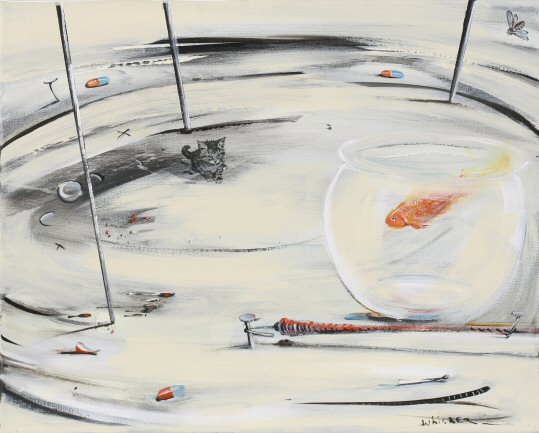
Woody Guthrie, Bob Dylan, and Myth, Truth, and Anger

This article by Christopher John Stephens first appeared on the website popmatters.

How we begin to understand the way Dylan, Guthrie, and the senseless Christmas Eve death of 73 men, women, and children at an Italian Hall in Calumet, Michigan are connected will probably depend on what we want to believe. The disaster, memorialized 28 years later by folk legend Woody Guthrie in the song “1913 Massacre”, followed the topical ballad tradition of both passively reporting on a news event and definitively taking sides. Which side are you on? The whole wide world is watching.

Such lines are mantras in a topical folk ballad. We bear witness in order to be those who remain standing to tell the story, 28 years later or a century after the fact. Guthrie’s song, recorded and released in 1941 for Mose Asch’s Folkways label, was a cornerstone in the enormous burst of activity from the singer. He would spend the ’40s building his legacy. By the end of the decade, facing diagnoses as varied as alcoholism, schizophrenia, and eventually (by 1952) the degenerative Huntington’s disease, Guthrie would fade from the spotlight and live the rest of his life in a series of psychiatric hospitals.

It’s within the context of what is commonly known — the rise and fall of Guthrie as a rambling tramp folk singer who brought “This Land Is Your Land” into the public consciousness and ushered in the folk revival of the late ’50s and early ’60s — that Daniel Wolff’s remarkable story unfolds. From its start, Grown-Up Anger: The Connected Mysteries of Bob Dylan, Woody Guthrie, and the Calumet Massacre of 1913 is about searching for direction, about starting to understand where to start. Wolff lays it out with his first five words: “I was thirteen and angry.”


That’s a possible starting point, but he doesn’t stay there. Like the best folk singers hopping off and on railroad cars destination anywhere, he knows there are options. We can start by talking about the geology of the copper mines in Michigan’s Upper Peninsula. We can start with anthropology and understand that Native Americans were mining the area 7,000 years ago. We can also start with economics, corporate malfeasance, the greed barons of Boston’s elite coming into Michigan and pushing capitalism at the expense of humanity.

Wolff understands that there are many options, but he knows anger is the most effective means to contextualize not only the factual connective tissue of young Dylan’s 19 January 1961 visit with Woody Guthrie at New Jersey’s Greystone Park Psychiatric Hospital, but the righteous anger that fuelled the greatest folk songs. At 13, in 1965, a young Daniel Wolff found history boring. It was the angry sound of Dylan’s voice that floored him.

“Like A Rolling Stone” was anything but a folk song; loud, a melodious buzzsaw organ riff at its backbone, pistol-shot drum beats, and that voice which just three years earlier had been the standard-bearer of the earnest folk persona. Dylan had the look (unwashed face, tousled hair, plain and unassuming work shirt, dirty fingernails), the topical themes (about the assassination of civil rights leader Medgar Evers, about a pending apocalypse, about warmongers), and both the knowledge of and respect for tradition. With that as the foundation, for Wolff and so many others, “Like A Rolling Stone” was overwhelming: “The song amounted to a long, rich, unstoppable rant that kept rising in its intensity, as if whatever had pissed him off… wouldn’t quite die, needed another cut of the blade-and another.”

For a 13-year-old Wolff, and anybody else who heard that song in 1965, the anger was righteous and a perfect headlight for the proverbial ship, if you will, that so many adolescents have navigated through the dark waters of childhood. What’s on the other side? “I remember being told it was kind of cute how much I cared about rock and roll,” Wolff continues, and he embraces it. Obsessions are meant to be parsed through and exhaustively analyzed, and a music obsessive personalizes everything. Wolff notes that while it was easy to trace the roots of Guthrie in the way Dylan packaged himself, there were also major differences. Dylan coveted Guthrie’s earnestness, his ability to self-mythologize, his tendency to hide in what might now be termed “alternative facts”, but that’s where the connection ended. Guthrie had no repressed rock ‘n’ roll anger. Dylan may have been a folk acolyte who expertly absorbed (and perhaps shamelessly took) influences as his won, but he was as much a brother of the flamboyant Little Richard as he was a son of Guthrie.

Grown-Up Anger carefully unfolds like the layers of an onion. Jump to the end of the book, and Wolff goes back to Michigan and provides an image inside the earth: “…we plant our crops, bury our dead. This crust floats on… the earth’s mantle: a huge rocky shell… and inside the world’s shell is a molten core, a kind of rage.” It’s as simple as that. Anger is what begins and ends this book, but after it’s introduced Wolff gives us a picture of the author on the ’70s, searching for folk music clues through Guthrie’s son Arlo and his 1972 album Hobo’s Lullaby. It featured some originals, a popular cover of Steve Goodman’s “City of New Orleans”, and a cover of Guthrie’s “1913 Massacre”.

“The tune had this deep, understated sadness, but I didn’t understand why this massacre happened. Were the kids killed on purpose? And if it was murder-a mass murder, then — to what end? It had something to do, apparently, with greed and money.”

That has to be the point to great topical ballads, their primary mission statement. They’re journalistic in nature. They’re long, detailed accounts answering every identifiable question, but the singer aims towards something higher, a more profound truth. Dylan’s first original song “Song to Woody” took its melody from “1913 Massacre”, another strain of connective tissue between the young upstart and the folk legend. What constitutes originality is not so much absolute ownership of words and music so much as how ideas are adapted. How do themes mutate and transform from one generation to another?

In the driving direction of his narrative, like a train that makes no stops and understands exactly where it’s going, Wolff implicitly makes it clear that a necessary component of understanding folk music is a willingness to investigate the roots of song topics. As a social historian and critic whose mission is to bring disparate strands together in order to help us all make sense of what might seem chaotic, Wolff also understands that these songs aren’t primary source material. Were the 73 people killed in the Christmas Eve 1913 Italian Hall fire victims of corporate capitalist malfeasance, or could it simply be that the exits malfunctioned? Was the function hall poorly constructed?

Grown-Up Anger succeeds on many levels; as an examination of the self-mythologizing Guthrie, as yet another spotlight on how Hibbing, Minnesota’s Bobby Zimmerman escaped his past to reinvent himself as a lonesome hobo drifter only to maintain strong elements of the folk ethos throughout his career, and as a primer on the labor activists from pre-WWI America through the ’50s. The connections are hardly difficult to find. Ella Reeve “Mother” Bloor, the legendary American Activist and grandmother to actor Will Geer’s wife (Geer later best known as the grandfather in the 1970’s TV show The Waltons) was introduced to Guthrie in 1937. She tells the singer about Calumet, which (as Wolff puts it) “…will help Woody Guthrie understand who he is and what he wants.” For Daniel Wolff, the difficult and complex task of identifying these multiple strands of events and people is part of the job. That he does it so flawlessly and in such a compelling manner is what makes Grown-Up Anger so impressive.

At 57, Guthrie slipped through to the other side. By the time of his death, it can be argued that the last wave of mainstream popularity his brand of topical and sing along folk music conclusively died in July 1965 as well. That’s when his primary acolyte, Dylan, plugged in his electric guitar and fully embraced a rock ‘n’ roll persona. Most observers will take that as fact and just move on, but the truth is a little more complex. Dylan would perform with The Band at special memorial concerts for Guthrie in February 1968, singing rock versions of “I Ain’t Got No Home” and “Dear Mrs. Roosevelt”. He would appear in a 1988 PBS special tribute to Guthrie and Leadbelly, “Folkways: A Vision Shared”, singing “Pretty Boy Floyd”, Guthrie’s romanticized tribute to a bank robber as Robin Hood.

There are other tender, traditional Guthrie covers Dylan has performed on TV, including a 2009 performance of “Do Re Mi” featuring Van Dyke Parks on piano and Dylan on guitar used in the Howard Zinn A People’s History documentary. Like A Rolling Stone (1965) might seem to have been the death knell to the earnest folk music tradition, but that sensibility has never been far from Dylan’s mission.

The Labor Movement, so volatile and potentially revolutionary in pre-WWI America and forced underground during WWII, cut into strands of Communism, Socialism, and general anarchy. There are no more Mother Bloor or Mother Jones characters. We can’t help thinking that such events like Calumet could happen again. The misplaced anger of the managers and bosses towards workers whose spirit they’ll use to the last drop has manifested itself in outsourcing jobs, union-busting corporations like Wal-Mart, and the dead-end service industry. For Mother Bloor, “…the deaths were a deliberate act, a mass murder. Opponents of the strike… had been threatening to shut down the party. That’s who shouted ‘Fire!’ and that’s who held the exit doors shot from the outside.”

The only vestiges that remain after the deaths of the singers, labor leaders, and martyrs are the songs. Wolff knows that. He also knows that misdirected anger can be deadly. Grown-Up Anger, on the other hand, can create a masterpiece. Guthrie knew that with “1913 Massacre”, and Dylan’s sole live performance of it on 4 November 1961 at Carnegie Chapter Hall, was a faithful recreation of the original. The angry topical songs remain to tell the story. The masterful way Wolff approaches “Like a Rolling Stone” again reminds us that the labels “folk” or “protest” are not constrained by the framework of just one acoustic guitar, voice, and harmonica:

“This isn’t about labor history; the song has nothing to do with labor history. But the piano’s quick boogie-woogie shake is pissed at one class of people doing and the other just riding along, observing… this golden age, this prosperous status quo-has taken everything from you it could…”

Wolff’s Grown-Up Anger: The Connected Mysteries of Bob Dylan, Woody Guthrie, and the Calumet Massacre of 1913 is an essential addition to our ongoing and necessary fascination with American folk heroes, justice, and the many ways of telling and understanding the truth.

12 years of Untold Dylan

Although no one gets paid for writing, publishing or editing Untold Dylan, it does cost us money to keep the site afloat, safe from hackers, n’er-do-wells etc.  We never ask for donations, and we try to survive on the income from our advertisers, so if you enjoy Untold Dylan, and you’ve got an ad blocker, could I beg you to turn it off while here. I’m not asking you to click on ads for the sake of it, but at least allow us to add one more to the number of people who see the full page including the adverts.   Thanks.

As for the writing, Untold Dylan is written by people who want to write for Untold Dylan.  We welcome articles, contributions and ideas from all our readers.  Although no one gets paid, if you are published here, your work will be read by a fairly large number of people across the world, ranging from fans to academics.  If you have an idea, or a finished piece send it as a Word file to Tony@schools.co.uk with a note saying that it is for publication on Untold Dylan.

We also have a very lively discussion group “Untold Dylan” on Facebook with around 8500 active members. Just type the phrase “Untold Dylan” in, on your Facebook page or follow this link    And because we don’t do political debates on our Facebook group there is a separate group for debating Bob Dylan’s politics – Icicles Hanging Down
Posted in Uncategorized | Leave a comment

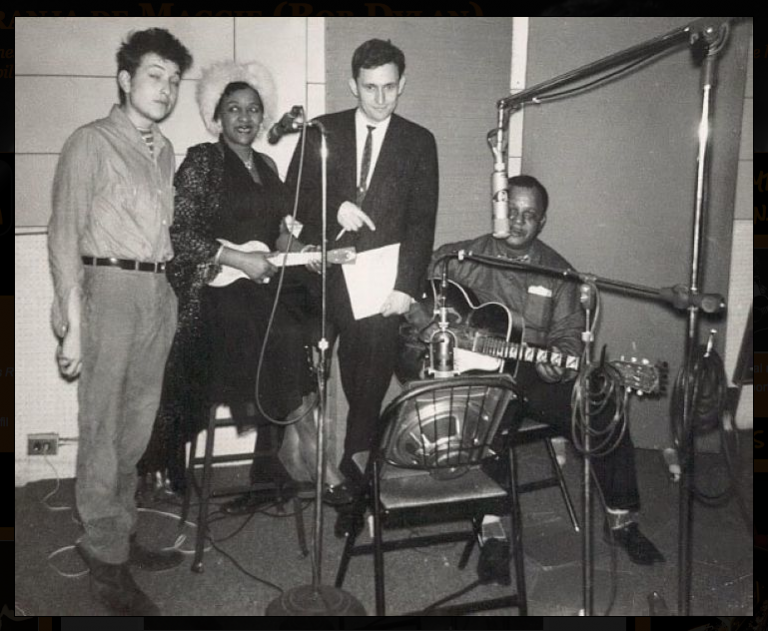
Bob Dylan Passes On The Bet (Part Il)

by Larry Fyffe

This article continues from Bob Dylan Passes On The Bet

Having read the Holy Bible, singer/songwriter Bob Dylan learns the creative trick of leaving gaps in a narrative, and/or changing a previous source story around somewhat:

According to the Gospel of Luke, Jesus eats a passover meal of lamb before He’s betrayed and then supposedly crucified:

Then came the day of unleavened bread
When the passover must be killed .....
And when the hour was come, He sat down
And the twelve apostles with Him
(Luke 22: 7,14)

Things ain’t looking so good, but hold on to your horses – in the song lyrics following, the narrator Jesus has a trick up his sleeve:

"There must be some way out of here", said the joker to the thief
"There's too much confusion, I can't get no relief
Businessmen, they drink my wine, ploughmen dig my earth
None of them along the line know what any of it is worth"
(Bob Dylan: All Along The Watchtower)

Holy Smoke, Batman – according to legend, Jesus gets His chance to escape – a Libyan takes His place on the cross:

And as they lead Him away
They laid hold upon one Simon, a Cyrenian
Coming out of the country
And on him they laid the cross
That he might bear it after Jesus
(Luke 23: 26)

Filling in the gaps, it’s pretty clear that the narrator in the song lyrics below travels to Libya to check out if the Jesus is living there (according to Christian Gnostics, Christ’s an immortal, and can only appear to die); Simon the Cyrenian, of course, would be long dead and gone regardless of how the Libyan comes to die:

Don't try to change me
I been in this thing too long
There's nothing you can say or do
To make me think I'm wrong
Well, I'm going off to Libya
There's a guy I gotta see
He's been living there three years now
In an oil refinery
(Bob Dylan: I Got My Mind Made Up)

However, a Gnostic-influenced biblical writer springs a surprise. According to the Gospel of John, Jesus has a ‘last supper’, but it’s not the passover feast because that meal is yet to come. Christ symbolically hangs around as the human sacrificial Lamb of God (the Libyan guy is not mentioned):

Now before the feast of the passover when Jesus knew
That His hour was come that He should depart
Out of this world unto the Father, having loved His own which were in the world
He loved them to the end
And supper being ended, the devil put into the heart
Of Judas Iscariot, Simon's son, to betray Him
(John 13: 1, 2)

There’s nothing the supposed writer of the Gospel of John can do that the narrator in the following song can’t do – he’s second to no one when it comes to revising stories:

I'm gonna make you play the piano like Leon Russell
Like Liberace, like St. John the Apostle
I'll play every number that I can play
I'll see you maybe on Judgment Day
(Bob Dylan: My Own Version Of You)

In yet another revision of the vision, a light bulb flashes above the head of the narrator in the song lyrics below – Jesus, the drifter, gets away – perhaps with the help of Zeus, the Thunder God – before He’s to be crucified:

"Oh, stop that cursed jury"
Said the attendant to the nurse
"The trial was bad enough
But this is ten times worse"
Just then a bolt of lightning
Struck the courthouse out of shape
And while everybody knelt to pray
The drifter did escape
(Bob Dylan: Drifter's Escape)

Pick a card!

12 years of Untold Dylan

Although no one gets paid for writing, publishing or editing Untold Dylan, it does cost us money to keep the site afloat, safe from hackers, n’er-do-wells etc.  We never ask for donations, and we try to survive on the income from our advertisers, so if you enjoy Untold Dylan, and you’ve got an ad blocker, could I beg you to turn it off while here. I’m not asking you to click on ads for the sake of it, but at least allow us to add one more to the number of people who see the full page including the adverts.   Thanks.

As for the writing, Untold Dylan is written by people who want to write for Untold Dylan.  We welcome articles, contributions and ideas from all our readers.  Although no one gets paid, if you are published here, your work will be read by a fairly large number of people across the world, ranging from fans to academics.  If you have an idea, or a finished piece send it as a Word file to Tony@schools.co.uk with a note saying that it is for publication on Untold Dylan.

We also have a very lively discussion group “Untold Dylan” on Facebook with around 8500 active members. Just type the phrase “Untold Dylan” in, on your Facebook page or follow this link    And because we don’t do political debates on our Facebook group there is a separate group for debating Bob Dylan’s politics – Icicles Hanging Down
Posted in Uncategorized | Leave a comment

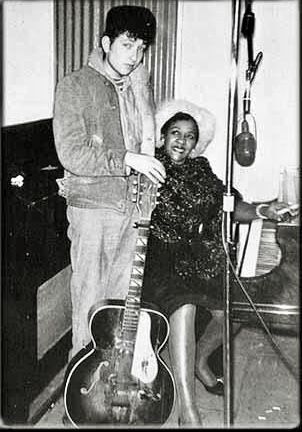
All Directions at once: all the world’s a stage

By Tony Attwood

This is episode 16 of All Directions at Once.   An index of the articles so far in this series appears here.

Jochen has already provided us with the clue to “All along the watchtower” in an earlier article on this site, and yes, once more we are with Kafka.  This time  Der Aufbruch (“The Departure”).  Another work unpublished in his lifetime; another work which undermines our normal sense of reality.  I’ll go with this as the thinking behind the song, because it follows on so naturally from the two songs already recorded for the JWH album and because this extrapolation, needs no convoluted reasoning.

Indeed it is the fact that we can use the same explanation for the origin of Dylan’s lyrics in several songs here, that in my view adds credence to this explanation. Instead of having to say “in this song x refers to Bob’s manager and y to his wife,” we have a constant.  He had been reading Kafka and he liked what he read.

Here is Kafka…

I ordered my horse to be brought from the stables. The servant did not understand me. So I went to the stables myself, saddled my horse, and mounted. In the distance I heard the sound of a trumpet, and I asked the servant what it meant. He knew nothing and had heard nothing. At the gate he stopped me and asked: “Where is the master going?” “I don’t know,” I said, “just away from here, just away from here. Away from here, nothing else, it’s the only way I can reach my destination.” “So you know your destination?” he asked. “Yes,” I replied, “I’ve just told you. Away-from-here — that’s my destination.”

And here is… well, you know who this is….

As I have written at some length about the opening two songs in the John Wesley Harding recording sessions about the Kafka link, and as this fits again here, I won’t labour the point.

I am instead left pondering one question: “Why do so many writers on the subject of Dylan think Dylan writes in code.  When he converted to Christianity in 1979 he didn’t write in code.  When he wrote “Masters of War” he wasn’t writing in code.  Why did he suddenly adopt a code, in an album he said he wasn’t really wanting to make.

And why do songs have to be about real people anyway?   Of course they might be, but it is not obligatory.  Lots of love songs aren’t.  “Like a Rolling Stone” is no more of a song if it is about one real person, nor any less of a song if it is about a fictitious person.  So why should we believe Dylan was writing in code at this point?  What did he want to hide?  If he had a message why not come out and say it?  Was he playing games with fans, was he trying to be enigmatic?  Or was he, as so many other times across the years, finding a source which he enjoyed, and using it as the basis of his inspiration?

I can of course accept that sometimes he clearly writes what he feels, sometimes in colourful and engaging, even frightening language.  Sometimes he is simply abstract – the equivalent of the abstract painter but using words.  And maybe there are a few songs in code, just for the hell of it.  But not nearly so many as some “Dylanologists” like to think. Not even 10% of the songs.   Dylanology, in short, is not a science, because most Dylanologists don’t consider all the evidence – just the bit that suits them.

But back to the album.  So far on 6 November in the recording session Dylan has initially given us two Kafkaesque songs, and now in song three we find the influence of Kafka once more seems to be the main and most obvious explanation rather than any other hidden meaning…

“There must be some way out of here,” said the joker to the thief
“There’s too much confusion, I can’t get no relief
Businessmen, they drink my wine, plowmen dig my earth
None of them along the line know what any of it is worth”

OK, we have a joker and a thief.  The joker is talking, and the opening line suggests the two of them are trapped.  The joker is suggesting he’s the only one who knows what his world is all about.

The thief replies…

“No reason to get excited,” the thief, he kindly spoke
“There are many here among us who feel that life is but a joke
But you and I, we’ve been through that, and this is not our fate
So let us not talk falsely now, the hour is getting late”

… and he tells the joker that life is a joke.  Which is a bit odd, coming out of the blue like that.  But, he suggests, we’re pretty much in this together.  We don’t have to work out the meanings – especially if life really is a joke.

I am always reminded here of, “All the world’s a stage and all the men and women merely players”.  Not just because of its power and elegance, nor because Shakespeare, like Dylan, loved to borrow texts from earlier writers – that most famous of Shakespearian lines coming from Juvenal, the 1st/2nd century poet from the early days of the Roman Empire who in Satire 3 wrote “All of Greece is a stage, and every Greek’s an actor.”   Incidentally I’d say that was still true, which is why I do love Greece.

But then… to show it is a joke, it is as if none of the previous verses happened because in verse three we leap into somewhere else with absolutely no connection with the earlier verses.  It reads a bit like an epilogue – life goes on, no matter what.  It’s just life and life only.

All the world’s a stage…  Life is but a joke … they are not that far removed from each other.

All along the watchtower, princes kept the view
While all the women came and went, barefoot servants, too
Outside in the distance a wildcat did growl
Two riders were approaching, the wind began to how

This third verse really does have nothing to do with the first two verses – unless we perceive it as “All the world’s a stage”  to say that life goes on, this is what we see .  There is a world in which the thief and joker exist, and there is a world in which the watchtower exists.  There is no particular connection between them which is revealed yet they are part of the same song.  It doesn’t bother me that you can’t go “all along” a watchtower.  You can go along the ramparts, but the tower sits there as the place from which to look out.  Does it matter in the overall scope of the song?  Not to me.

And once more there is an awful lot of Kafka here.  Being trapped, a joker and a thief, confusion, being told to not get excited when no one is getting excited, and meanwhile in another reality there is the watchtower which one can go all along….

But maybe Dylan had just seen Ascending and Descending by M. C. Escher first printed in March 1960, and maybe he enjoyed it.  It is hard to get the full impact of what is going on in the small reproduction below – but if you do want to consider this further try this video

“What I’m trying to do now is not use too many words,” Dylan says, according to Wikipedia, in an interview in 1968, “There’s no line that you can stick your finger through, there’s no hole in any of the stanzas. There’s no blank filler. Each line has something.”

And there we are, “Each line has something”.  It doesn’t have to be connected to another line.  It just has to be something.   And quite honestly I think he does that “something” rather well.

Equally Dylan could have said, there is no source and no point of reference.  There’s the book of Isaiah, and in the book of Isaiah (20 and 21) there are a few images to be found (the barefoot servant, a few horsemen, a lion and a watchtower).  Maybe Bob had been at the Old Testament again. But if so, it was probably just to think of using a barefoot servant, a few horsemen, a lion and a watchtower.  And if we note the Bible should we not also note as a source Kafka once more.  Jochen got there before me, and I’ll follow him on this one…  Take for example Der Aufbruch (“The Departure”)…

I ordered my horse to be brought from the stables. The servant did not understand me. So I went to the stables myself, saddled my horse, and mounted. In the distance I heard the sound of a trumpet, and I asked the servant what it meant. He knew nothing and had heard nothing. At the gate he stopped me and asked: “Where is the master going?” “I don’t know,” I said, “just away from here, just away from here. Away from here, nothing else, it’s the only way I can reach my destination.” “So you know your destination?” he asked. “Yes,” I replied, “I’ve just told you. Away-from-here — that’s my destination.”

As ever with Kafka, no one quite understands.  The master orders his servant to saddle his horse, but the servant fails to understand. The master hears a trumpet sound, which his servant does not hear.  But “there must be some way out of here.”

So Dylan, Isiah and Kafka all chatting with each other.  Now that really would be a party to attend.

What is the more likely: that Dylan is trying to get away from his record company deal and so wrote this song in a way that no one could ever be quite sure as to its meaning, or Dylan is again using Kafka to create a piece of music that sounds great and is incredibly enigmatic?  I’d say that the former reduces the work to nothingness but is an approach beloved by conspiracy theorists.  You make a record which attacks your record company?   Why bother?  Why not go and shout at them for a while?  Why not record silence?  Or a single note?

Dave Van Ronk, argued that,  “After a while, Dylan discovered that he could get away with anything – he was Bob Dylan and people would take whatever he wrote on faith. So he could do something like All Along the Watchtower” which is simply a mistake from the title on down: a watchtower is not a road or a wall, and you can’t go along it.”

And I suppose Mr Van Ronk would also consider Kafkas work “a mistake”.

Or it is perhaps an abstract painting…  Whatever it is, it is one of Dylan’s most enduring songs, even though reinterpretation, once Hendrix designed a version that Dylan thought better than his own, is now quite tough.  Although, as I hope the first video in this article, might suggest otherwise.

And now, moving on, we had John Wesley Harding himself – which apparently Dylan once described as a “silly little song”.

Not the right spelling to be the actual JWH of history – who seemingly claimed to have killed many more people than he actually did.  Dylan has stated that he chose John Wesley Hardin for his protagonist over other badmen because his name “[fits] in the tempo” of the song.  Pure chance, nothing to see here.  That sounds likely.

Those who know such things assert that two takes were made of the song, both were considered to be ok, and then one was chosen.  That was that and we had another song of three verses each of four lines.  But unlike the Watchtower, few people ever quote anything from this song.   The song goes nowhere, and has no enigma.  It just is.  Dylan’s seemingly never played it in a gig, which perhaps says something.  Besides, “He was never known to make a foolish move,” sounds a bit like the Lone Ranger of radio, books and TV fame.

 As I Went out one Morning again has a link to voices from the past – in my original review I singled out WH Auden as well as Tom Paine the revolutionary.   Certainly the layout of the poem and its structure means that while not changing a single word, WH Auden’s “As I walked out one evening” can be sung to Dylan’s melody and accompaniment.  My money is on Dylan knowing Auden, and using the same structure and almost the same opening line…

As I walked out one evening, 
Walking down Bristol Street,
The crowds upon the pavement, 
Were fields of harvest wheat.
And down by the brimming river, 
I heard a lover sing
Under an arch of the railway: 
‘Love has no ending.

In Dylan’s version we don’t know who the lady is, who this Tom Paine is, or indeed what’s going on.  It is like a snapshot you found at the back of a photo album with no information about who these people are, where the picture was taken, what was going on or when it was.  There it is, make of it what you will.

Simple songs, each with a clear source, and mostly beguiling and sometime intriguing words.  What is this album about? Just that.

The series continues…

12 years of Untold Dylan

Although no one gets paid for writing, publishing or editing Untold Dylan, it does cost us money to keep the site afloat, safe from hackers, n’er-do-wells etc.  We never ask for donations, and we try to survive on the income from our advertisers, so if you enjoy Untold Dylan, and you’ve got an ad blocker, could I beg you to turn it off while here. I’m not asking you to click on ads for the sake of it, but at least allow us to add one more to the number of people who see the full page including the adverts.   Thanks.

As for the writing, Untold Dylan is written by people who want to write for Untold Dylan.  We welcome articles, contributions and ideas from all our readers.  Although no one gets paid, if you are published here, your work will be read by a fairly large number of people across the world, ranging from fans to academics.  If you have an idea, or a finished piece send it as a Word file to Tony@schools.co.uk with a note saying that it is for publication on Untold Dylan.

We also have a very lively discussion group “Untold Dylan” on Facebook with around 8500 active members. Just type the phrase “Untold Dylan” in, on your Facebook page or follow this link    And because we don’t do political debates on our Facebook group there is a separate group for debating Bob Dylan’s politics – Icicles Hanging Down
Posted in Uncategorized | 1 Comment

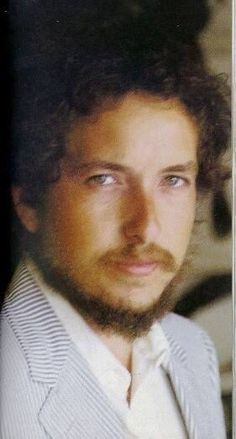
Most Of The Time Part 1: Except sometimes

by Jochen Markhorst

Part I: Except Sometimes

Ian Fleming thinks he’s a beautiful man, in any case. Already in his first Bond story, Casino Royale (1953), he compares his famous hero with Hoagy Carmichael through the fatal double agent Vesper Lynd;

“He is very good-looking. He reminds me rather of Hoagy Carmichael, but there is something cold and ruthless in his . . .”

The sentence was never finished. Suddenly a few feet away the entire plate-glass window shivered into confetti.

 And two years later, in the third James Bond novel Moonraker, Fleming still finds it an appropriate way to describe the physical attraction of MI5’s most famous employee:

“But he was certainly good-looking. (Gala Brand automatically reached into her bag for her vanity case. She examined herself in the little mirror and dabbed at her nose with a powder puff.) Rather like Hoagy Carmichael in a way. That black hair falling down over the right eyebrow. Much the same bones. But there was something a bit cruel in the mouth, and the eyes were cold.”

Hoagland Howard Carmichael must have been flattered, but also had to swallow that repeated observation cold, ruthless and cruel. Glamour photos of Carmichael, however, do confirm it; one would indeed be inclined to give him a license to kill. But in the 14 films in which he plays, he usually has insignificant supporting roles (the best known as pianist Cricket in To Have And Have Not, with Bogart and Bacall, 1944, and as nightclub owner in The Best Years Of Our Lives, 1946).

Still, glamour photos and film roles are just the outside part and sideshows, smoke and mirrors. Above all, Hoagy Carmichael is an exceptionally gifted song composer, has created immortal masterpieces (“Lazy River”, “Georgia On My Mind”, “Skylark”) and is also admired by radio broadcaster Dylan:

“He was also one of our greatest songwriters. He wrote “Stardust” in 1927, which some people say is the most recorded American song ever written.”  (Episode 28, Sleep, announcing “Two Sleepy People”)

In episode 52 (Young and Old) Dylan goes even further. He plays Hot Lips Pages’ version of Carmichael’s “Small Fry” from 1938, and then muses on Hoagy:

“In 1936, Hoagy went to Hollywood, where, he said, the rainbow hits the ground for composers. One of the most famous songs Hoagy ever wrote, was “Stardust”. And like many songwriters, he wasn’t sure where it really came from. This is what he had to say, the first time he ever heard a recording of “Stardust”: “And then it happened, this queer sensation that this melody was bigger than me. Maybe I hadn’t written it at all. The recollection of how, when and where it all happened became vague as the lingering strains hung in the rafters of the studio. I wanted to shout back at it, Maybe I didn’t write you, but I found you.” Hoagy Carmichael on “Stardust”. I know just what he meant.

Dylan’s recognition of Carmichael’s words is sincere. Through the years Dylan expresses in similar terms the almost mystical creation of songs, especially of the Very Great Songs. Such as about “It’s Alright, Ma (I’m Only Bleeding)” in the 2004 Rolling Stone interview:

“All those early songs were almost magically written. Ah… ‘Darkness at the break of noon, shadows even the silver spoon, a handmade blade, the child’s balloon…’ Well, try to sit down and write something like that. There’s a magic to that, and it’s not Siegfried and Roy kind of magic, you know? It’s a different kind of a penetrating magic.

And in 2020, he is still amazed, in the New York Times interview, about “I Contain Multitudes” (“It’s one of those where you write it on instinct. Kind of in a trance state”).

Thanks to the Basement Tapes Complete, the listener occasionally witnesses such a magical event – in “I’m Not There” and “Sign On The Cross”, for example, astonishing songs that Dylan indeed seems to pluck from the air, while recording them. Music and Dylan connoisseur Garth Hudson, who, as a band member and recording director down there in the Basement, has an unrivalled view of this process, confirms that impression.

In the moving Rolling Stone documentary (November 2014), in which he visits the Big Pink again for the first time in almost fifty years, the old Hudson slowly shuffles around, sits musing at the piano and shares his memories, including about “Sign On The Cross”:

“Bob didn’t like to sing the same song over and over again. Sounds to me like he did make up songs on the spot. (…). I think “Sign On The Cross” was done in real time. Both the composition and the execution thereof.”

But that’s not how it goes with one of Dylan’s most beautiful songs from the 80’s, one of the highlights on his umpteenth come-back album Oh Mercy: “Most Of The Time”.

The lyrics are written well before the music, and they certainly do not twirl down to the earthly receiver from some sort of transcendental, poetic seventh heaven. The line to one of Hoagy Carmichael’s most beautiful songs, and one of the most beautiful love songs of the twentieth century at all, is easily drawn: “I Get Along Without You Very Well” from 1938.

“I Get Along Without You Very Well” is an exceptional song with an equally unusual genesis. Carmichael wrote the song as early as 1938, but it will be some time before the public will hear it on the radio. This has everything to do with Hoagy’s ethics; it does take some time before he has tracked down the author of the original lyrics, one Jane Brown Thompson. And he does not want to release the song without her consent. In the end he engages an old friend, popular radio commentator Walter Winchell, who is willing to help him. On Sunday 27 November 1938 Winchell makes his first appeal:

Attention, poets and songwriters!
Hoagy Carmichael, whose songs you love, has a new positive hit — but he cannot have it published. Not until the person who inspired the words communicates with him and agrees to become his collaborator… I hope that person is a listener now.

Winchell then mentions a few hits by Hoagy Carmichael, quotes from the poem in question, “Except Sometimes”, and concludes by issuing a call: “If you wrote those lines in a poem, tell your Uncle Walter, who will tell his Uncle Hoagy, and you may become famous.”

About a month later, after repeated calls, it is successful: two former employees of the now disbanded magazine Life (another, not the long-established journal of the same name, the world-renowned Life) trace the now 71-year-old widow in a nursing home. She signs a contract (promising her “3¢ a copy on the ditty”) but she will not experience the success of the song; Mrs. Brown-Thompson dies a month later.

Jane Brown (not yet married) writes the beautiful poem “Except Sometimes” in 1924. It is published in this magazine Life, but without her name; the poem is attributed to “JB”.

I get along without you very well,
Of course I do.
Except sometimes when soft rain falls,
And dripping off the trees recalls
How you and I stood deep in mist
One day far in the woods, and kissed.
But now I get along without you – well,
Of course I do.

… is the first verse (of the two). An acquaintance of Carmichael does see music in it and passes it on to Hoagy. It ends up in a drawer, but somewhere at the end of the thirties the songwriter happens to see it again. This time it inspires him, and the poem text ends up almost word-for-word in the final song:

I get along without you very well,
Of course I do,
Except when soft rains fall
And drip from leaves, then I recall
The thrill of being sheltered in your arms.
Of course, I do.
But I get along without you very well.

Both equally heartbreaking, elegant and melancholic. Not because of the theme heartbreak itself, obviously, but because of its elaboration – the transparent, despondent denial of heartbreak.

It is an irresistible approach and it is gratefully copied in variants. Jay Lerner writes “I’ve Grown Accustomed To Her Face” for My Fair Lady (1956), “but I shall never take her back”, “I’m Not In Love”, the world hit for 10cc in 1975, House Of Love’s “I Don’t Know Why I Love You” (1989, with the put-down that even Dylan might envy: “I don’t know why I love you / your face is a foreign fruit”)… songs in which the protagonist against his better judgement tries to tell himself that he does not miss her, does not love her, never does think about her… most of the time, anyway.


To be continued. Next up: Most Of The Time part II – “I don’t even think about him”


Jochen is a regular reviewer of Dylan’s work on Untold. His books are available via Amazon both in paperback and on Kindle:

12 years of Untold Dylan

Although no one gets paid for writing, publishing or editing Untold Dylan, it does cost us money to keep the site afloat, safe from hackers, n’er-do-wells etc.  We never ask for donations, and we try to survive on the income from our advertisers, so if you enjoy Untold Dylan, and you’ve got an ad blocker, could I beg you to turn it off while here. I’m not asking you to click on ads for the sake of it, but at least allow us to add one more to the number of people who see the full page including the adverts.   Thanks.

As for the writing, Untold Dylan is written by people who want to write for Untold Dylan.  We welcome articles, contributions and ideas from all our readers.  Although no one gets paid, if you are published here, your work will be read by a fairly large number of people across the world, ranging from fans to academics.  If you have an idea, or a finished piece send it as a Word file to Tony@schools.co.uk with a note saying that it is for publication on Untold Dylan.

We also have a very lively discussion group “Untold Dylan” on Facebook with around 8500 active members. Just type the phrase “Untold Dylan” in, on your Facebook page or follow this link    And because we don’t do political debates on our Facebook group there is a separate group for debating Bob Dylan’s politics – Icicles Hanging Down


Posted in Uncategorized | Leave a comment

Hey little Richard: the earliest Dylan song of which we have a copy.

Text by Tony Attwood; research by Aaron Galbraith.

The song “Hey Little Richard” is listed in Heylin’s “Revolution in the Air” but it has only just popped up on You Tube – and my thanks as ever to Aaron for spotting it.

The song is listed by Heylin as the third Dylan composition of all time.  The first is “Song to Brigit,” which is included on the basis that Dylan mentioned it in 1961 as the “first song I ever wrote” (although he might have been stringing the interviewer along). The second was “Big Black Train” which had one verse published in Isis, and was put down by Heylin in his book as 1957/8.  That was apparently co-written with Monte Edwardson who was at school with Dylan.

Both of these are lost, if they actually did exist, so this is the first song of Dylan’s of which a recording exists.  According to Leroy Hoikkala, Dylan would “hear a song and make up his own version of it.  He did a lot of copying, but he also did a lot of writing of his own.  He would sit down and make up a song and play it a couple of times and then forget it.  I don’t know if he ever put any of them down on paper.”

However it appears that this recording was played on a BBC documentary about Dylan and “Highway 61 Revisited” in 1995, which gives it some credence of it being Dylan.

By way of review I am not sure much can be added – it is, as they say, what it is.   But it probably is Bob, playing around and having a bit of fun.   After that came “When I got troubles” which until now has been the first Dylan song on our chronological list.

Of course we have no evidence to suggest anything other than this is Dylan doing his stuff, and it is good enough for the BBC to accept it, it is good enough for us.  One more Dylan song for the chronology.

12 years of Untold Dylan

Although no one gets paid for writing, publishing or editing Untold Dylan, it does cost us money to keep the site afloat, safe from hackers, n’er-do-wells etc.  We never ask for donations, and we try to survive on the income from our advertisers, so if you enjoy Untold Dylan, and you’ve got an ad blocker, could I beg you to turn it off while here. I’m not asking you to click on ads for the sake of it, but at least allow us to add one more to the number of people who see the full page including the adverts.   Thanks.

As for the writing, Untold Dylan is written by people who want to write for Untold Dylan.  We welcome articles, contributions and ideas from all our readers.  Although no one gets paid, if you are published here, your work will be read by a fairly large number of people across the world, ranging from fans to academics.  If you have an idea, or a finished piece send it as a Word file to Tony@schools.co.uk with a note saying that it is for publication on Untold Dylan.

We also have a very lively discussion group “Untold Dylan” on Facebook with around 8500 active members. Just type the phrase “Untold Dylan” in, on your Facebook page or follow this link    And because we don’t do political debates on our Facebook group there is a separate group for debating Bob Dylan’s politics – Icicles Hanging Down
 

Posted in Uncategorized | 2 Comments

Four more Bob Dylan official videos: Blood, Not Dark, Wonder Boys, Gods and Generals

By Aaron Galbraith

Dylan’s promotional videos – the story so far

It’s been a while but I didn’t forget about the next batch of official music videos! So here we go, let’s start this selection off with the Dave Stewart directed Blood In My Eyes video.

I think this is a beautiful video and one of the best from Dylan. I remember in the late 90s shortly before a trip to London to visit friends I did a bit of research and found the cafe, streets and bridges used in the clip (FYI, it’s in Camden Town). On a quiet day on my own I went out there and walked the same route he did. I sat in the cafe in the chair I was sure he used, I don’t think the painting was there, I think it had been sold by then but that’s a nice memory which makes this little video mean quite a bit to me, personally.

(There is a lot more about this video and Dylan’s activities in relation to the cover of the album in The art work for Dylan’s “World Gone Wrong”)

Next up, from the Time Out Of Mind album it’s Not Dark Yet.

(Note from Tony in the UK – at the moment the video that Aaron has provided is not showing on my screen, so I’ve found a link that is working.  Aaron – please shout if I have got the wrong video!!!)

A fairly straightforward performance video switching effectively between black and white and full colour shots. Some really great lighting used in the video and some very unconventional angles. I’m not sure it adds a whole lot to the song but I like it nonetheless.

Last up this time is two videos for songs used in movie soundtracks.

Things Have Changed from Wonder Boys


And lastly, ‘Cross The Green Mountain from Gods & Generals.


Both videos are really great in my opinion. One thing it’s clear for movie songs is that Bob likes to insert himself (and band) into the action and make it look like he is in the movie. Some fantastic work on both of these and it really does look like they are in the movie.

The costumes for the Cross The Green Mountain clip are exceptional. I remember going to an early screening of that movie and the director was there for a question and answer session after the movie finished and they showed this video. Another great memory for me. I wish I’d asked him about the Dylan video!

I vaguely remember seeing the Band Of The Hand video back in the day and have a memory (which admittedly could be flawed) of Dylan inserting himself into that movie also. I’m sure it did used to be on YouTube but it is no longer available to view. If any reader out there can point us to a viewable copy of the video online , I’d love to hear from you so I can find out if my memory serves we well.

12 years of Untold Dylan

Although no one gets paid for writing, publishing or editing Untold Dylan, it does cost us money to keep the site afloat, safe from hackers, n’er-do-wells etc.  We never ask for donations, and we try to survive on the income from our advertisers, so if you enjoy Untold Dylan, and you’ve got an ad blocker, could I beg you to turn it off while here. I’m not asking you to click on ads for the sake of it, but at least allow us to add one more to the number of people who see the full page including the adverts.   Thanks.

As for the writing, Untold Dylan is written by people who want to write for Untold Dylan.  We welcome articles, contributions and ideas from all our readers.  Although no one gets paid, if you are published here, your work will be read by a fairly large number of people across the world, ranging from fans to academics.  If you have an idea, or a finished piece send it as a Word file to Tony@schools.co.uk with a note saying that it is for publication on Untold Dylan.

We also have a very lively discussion group “Untold Dylan” on Facebook with around 8500 active members. Just type the phrase “Untold Dylan” in, on your Facebook page or follow this link    And because we don’t do political debates on our Facebook group there is a separate group for debating Bob Dylan’s politics – Icicles Hanging Down
 

Posted in Uncategorized | Leave a comment

Bob Dylan Passes On The Bet 

by Larry Fyffe

As previously noted, the New Testament has Christ and his disciples celebrate  the ”Passover’ meal before He’s crucified:

Now the feast of the unleavened bread drew nigh
Which is called the Passover ....
Now when the hour was come
He sat down, and the twelve apostles with Him

(Luke 22: 1,14)

The story changes in the Gospel of St. John; Jesus has an ordinary supper; then waits a while to be served up as the metaphorical “Lamb of God” at the Passover meal after He’s crucified:

Now before the feast of the Passover
When Jesus knew that his hour has come
That He should depart out of the world unto the Father
Having loved His own which were in the world
He loved them unto the end
(John 13:1)

As well, it might be construed that in Luke’s version there’s still a chance for Jesus to escape after the week-long “Festival of Unleavened Bread” is over:

The festival was over, and the boys were all planning for a fall
The cabaret was quiet except for the drilling in the wall ....
Then he walked up to a stranger, and asked him with a grin
"Could you tell me, friend, what time the show begins?"
Then he moved into the corner, face down like the Jack Of Hearts
(Bob Dylan: Lily, Rosemary, And The Jack Of Hearts)

It’s really mixed-up confusion – akin to the shooting to death of Jack Kennedy who has an affair with “Lilli” Marlene Dietrich; his mother’s named Rose:

They killed him once, and they killed him twice
Killed him like a human sacrifice
The day they killed him, someone said to me, "Son
The day of the AntiChrist has just begun"
(Bob Dylan: Murder Most Foul)

The New Testament assures doubters that, unlike the later fate of President Kennedy, Jesus literally comes back to life, and what’s more, the Passover meal is transformed from being a celebration of the Hebrew’s escape from Egypt into a rather Gothic ritual:

Then Jesus said unto them
"Verily, Verily,  I say unto you
Except ye eat the flesh of the Son of Man
And drink His blood
Ye shall have no life in you"

(John 6:53)

Taking on a Christian viewpoint to a degree is one thing, but contemplating such an ugly thought is quite another if you’re from a firm Jewish background:

Never could learn to drink that blood
And call it wine
Never could learn to hold you, love
And call you mine
(Bob Dylan: Tight Connection To My Heart)

Likewise, as also mentioned before, the Christian dogma of ‘original sin’ is a hard card to play:

Temptation's not an easy thing, Adam given the devil reig
Because he sinned I got no choice, it run in my vein
Well, I'm pressing on; yes, I'm pressing on; well, I'm pressing on 
To the higher calling of my Lord
 (Bob Dylan: Pressing On)

In any event – at least in the spiritual sense – be he Jack or be he Jesus, the drifter escapes death.

12 years of Untold Dylan

Although no one gets paid for writing, publishing or editing Untold Dylan, it does cost us money to keep the site afloat, safe from hackers, n’er-do-wells etc.  We never ask for donations, and we try to survive on the income from our advertisers, so if you enjoy Untold Dylan, and you’ve got an ad blocker, could I beg you to turn it off while here. I’m not asking you to click on ads for the sake of it, but at least allow us to add one more to the number of people who see the full page including the adverts.   Thanks.

As for the writing, Untold Dylan is written by people who want to write for Untold Dylan.  We welcome articles, contributions and ideas from all our readers.  Although no one gets paid, if you are published here, your work will be read by a fairly large number of people across the world, ranging from fans to academics.  If you have an idea, or a finished piece send it as a Word file to Tony@schools.co.uk with a note saying that it is for publication on Untold Dylan.

We also have a very lively discussion group “Untold Dylan” on Facebook with around 8500 active members. Just type the phrase “Untold Dylan” in, on your Facebook page or follow this link    And because we don’t do political debates on our Facebook group there is a separate group for debating Bob Dylan’s politics – Icicles Hanging Down



Posted in Uncategorized | Leave a comment

All Directions at once: Kafka says hello; everyone looks the other way.

This is episode 15 of All Directions at Once.   An index of the articles so far in this series appears here.

By Tony Attwood

Drifter’s Escape

In my overlong discussion of the opening track of JWH (Being where you don’t belong) I made the point repeatedly that songs don’t have to mean anything.  Indeed Dylan himself has commented upon this a number of times.  But those who comment upon Dylan’s writing have tended to ignore this edict, I guess because they feel that if there is no meaning, there is nothing for them to comment upon.  So they create a meaning in order to give themselves something to write about.

I disagree, and I hope in  this review of Drifter’s Escape to show exactly why the “no meaning” approach to some (by no means all, of course, but some) of Dylan’s work is as perfectly valid an analysis as any of the “he was obviously writing about…” approaches that abound in the world of Dylan analysis.

The second song recorded for JWH was Drifter’s Escape – the ultimate Kafka nightmare where all logic vanishes.  Andy Gill suggested that the drifter does not understand the charges against him, just as Dylan did not understand the criticism he received for moving from folk music to rock music, but I really don’t get that at all.  People who love one type of music always protest when someone comes along and modernizes it or changes it, or where the composer himself then goes off and does something else.  We become comfortable with what we know; change is not welcome.

Thus fans and critics generally move much more slowly than the artists whom they adore.  The fans see the album as a finished work of art, play it and play it and get to know it well.  All the while the artist, who may have spent months writing the songs, recording the album and playing the songs at gigs, now really wants to do something quite different.  But the fans are still playing the last album, still loving it, still knowing that’s what they want.  That’s the tension, that’s what happens; that’s how it goes.  Musicians and fans totally out of sync with each other.

On JWH, having given us a look at just how weird the new world could be with Judas Priest, Bob now decided to make the world even weirder, via The Drifters’ Escape.  And here he did something completely revolutionary both in terms of his songs and in terms of popular music generally.

Normally the smallest number of chords you can have accompanying a melody is three.  Bob takes us down to two – and one of those is merely a passing chord on two beats every second line.

Of course he wasn’t the first.  Bo Diddley wrote a whole series of songs on one chord (with the odd flattened 7th thrown in between the verses).  That must have been so boring to play, but it sure was popular for a while.

But Bob now goes further.  For in Drifter’s Escape, even more oddly, every melody line is the same.  12 lines of utterly identical melody and accompaniment.  I don’t think I’ve ever heard anything else quite like this, except maybe “I need your loving every day” by Don Gardner and Dee Dee Ford.  I know that with these examples I’m moving away from Dylan, but these are the antecedents, and if you think Bob didn’t know these, then we are approaching this who matter from very different points of view.  (Incidentally if you leave the Diddley video running, you get a vid of Diddley and Chuck Berry playing a 12 bar blues together – apparently their first ever time on stage together.  Nothing to do with Dylan, but you can be sure Bob would know all about that and in terms of the evolution of R&B it was pretty important).

The other antecedent to this song, as I have mentioned, is “I need your loving”.  This of course does not sound like Dylan in any way, but if you are still following me down this route regarding songs that don’t change, do play it and listen to it all the way through; this set the scene for what could be done with just one chord (and in their case just one line).  All the way through is important, because later they bring in a variation which has much more power because so much is identical, just as Dylan does with that one chord change for the Drifter.

Back to Bob: the drifter’s world is non-understandable at every single level – it cannot be made to make any sense either for him or for us, the outsiders looking in.  In that regard Hendrix’ variant approach is a perfectly reasonable musical re-interpretation, painful though I find it.  (Drifter’s Escape starts at 3’30” – drag the blue line at the bottom of the rectangle to the right…)

Musically Hendrix treats this as a nightmare, and yes it is, but I feel Hendrix’ interpretation lacks the unidirectional element of Bob’s version in order to emphasise the  nightmare qualities.  For Dylan gives us music that is deceptively quiet while what the song describes is the nightmare.  It is a clever twist.

Despite the hurricane of insanity blowing around the courtroom, the music is remorselessly the same; the appearance at first hearing is of normality; it is only after a few moments we realise that this is the same music over and over and over, line after line after line.  It is really spooky when considered in that way.  It is as if the neo-fascists have taken over the government and hoisted the brown flag while on the lawn a pianist patiently works his way through perfect performances of the 32 Beethoven piano sonatas.  It is madness.

Now I tend to argue that when things are uncertain, taking the simplest explanation of what is going on around you us generally the best.  It is the scientific approach: if we start from the simple explanations and find none of them work, then we have every right to explore more complicated explanations.

And so in this song I start from the basic points: none of the lyrics make any sense at all in terms of the real world, and every line of music is the same.  Those factors to me are the key elements here.

Robert Shelton on the other hand is one of those commentators who goes down a different route.  He calls Drifter’s Escape “a transparent parable about a person, trapped by a role, who awaits a sentence of doom before a hostile crowd, when he is almost magically delivered from the courtroom…  the bolt of lightning could be Dylan’s [motorcycle] accident.”   Shelton also notes the song “recalls Hank Williams, the drifter being a victim of the music life nicknamed Luke the Drifter [an alias Williams used for certain songs, generally with a religious theme], whose lonesome chants have a similarly beseeching tone.”

But to me this looks very much like commentators going head over heels to make  the lyrics fit their preconceived ideas.  For if one starts instead with an open mind, there is only one conclusion: this world makes no sense.  Let me try and illustrate this to make this absolutely clear, since other writers seem to have got a bit confused.  (There’s nothing like pure arrogance in a reviewer to get the audience interested). Here is the opening…

“Oh, help me in my weakness”
I heard the drifter say
As they carried him from the courtroom
And were taking him away

OK here is problem one.  For actually no one does take the drifter away.  Not at all.  The last we hear of the drifter is that

While ev’rybody knelt to pray
The drifter did escape

And besides what is all this about “carrying”.  Thus the very opening premise of the song is contradicted by the last two lines.

Then there is the judge.  Faced with a man whom he says, fails to understand the charges against him, he asks, it seems rhetorically, why the drifter even bothers to try to understand.  OK I don’t know what US courtrooms are like, but I have attended several British court rooms and have never seen a defendant be told there is no point in trying to understand.  That seems a pretty important point.

We now learn that the judge stands down, but the jury start to tell the judge the trial is not over.  Really?????  I mean really????  How crazy is this getting…

Inside, the judge was stepping down
While the jury cried for more

There is at least a protest here…

“Oh, stop that cursed jury”
Cried the attendant and the nurse

But hang on, where did the nurse come from?  She or he has not been mentioned before.  Was the defendant in need of a nurse?  We haven’t been told.  Was he ill?  Or was there a feeling he couldn’t understand the trial?  If so what was the Drifter doing being on trial when he did not have the mental capacity to grasp what is going on?

And then the bolt of lighting.  We haven’t been told there was a thunder storm going on, so maybe this was a bolt from the blue, as it were.  God delivering a blow on behalf of the downtrodden.  That is pretty … miraculous.  Or downright weird.  But either way it is treated as just another passing event – which forces everyone to pray and the drifter seemingly to stroll out the door.

Let me put this another way.  This is insanity.  It is madness.  It makes no sense.  And above all that it is all contradicted within itself and by Bob’s simplistic musical approach.  The simple accompaniment and (and as I have said, but feel I must repeat, for this is the fact that every commentator seems to ignore) EVERY LINE OF MUSIC IS IDENTICAL.

A song of 12 lines in which each line repeats the music of the last line.

So what are the origins of this?

Well, as you may well know Kafka wrote a novel called “The Trial”.  It was not published during his life, and he left orders that it should be destroyed on his death, but then his executor disobeyed the will (which itself is a pretty Kafkaesque thing to do) and did publish the work.

Here’s the essence: Josif, a bank cashier is arrested by mysterious agents from an unknown agency.  He’s left free, no crime is announced… and an unspecified agency investigates his alleged but still unspecified crime.  Then he is told to go to court but not told when to attend or told what room to go to.   Thus he arrives late and is told off for this, but still doesn’t know what he is on trial for.  Later still he tries to find the judge, but finds instead the attendant’s wife.  Meanwhile we find Josef’s lawyer has a nurse, who immediately falls in love with Josif….

Court room, the unspecified crime, the attendant, the nurse, the judge, does this sound familiar?  Of course: it is both Kafka’s “The Trial” and Dylan’s “Drifter’s Escape”.  With Kafka and with Dylan we are in the same country, experiencing the same insanity, the same lack of coherence – and to a very large degree the same characters.  (There is more on this in Jochen’s review of the song).

Actually it seems blindingly obvious to me, but even sites such as the Bob Dylan Commentaries, which note Kafka in passing, still go on to see links and explanations which are remote from Kafka – when really there is no need.  Heylin in “Revolution in the Air” spends a whole page on “Drifters Escape” but finds no space for a single word about Kafka or The Trial as the source.  Yet the links are so clear I wonder what these authors were doing when writing their commentaries.

The repetition of the melody, the repetition of the chord sequence – it all paints an open and empty, black and white, pen and ink landscape.   This is Dylan working with Kafka; there really is no other explanation that fits here.

Interestingly, and not for the first time, I do however find that it is not Dylan’s version that is for me the definitive arrangement, but that of a re-interpreter: Thea Gilmore’s reworking of the song is perfection. The vocal harmonies are beautiful and then having the guitar line added to make a three part harmony while the beat is relentless, is perfection, until the time comes when she stops the jury.  Such a simple device, so cleverly executed.

Please play this and please listen to it all the way through if you have time.  OK if you don’t see what I mean about this interpretation fine, let it go.  But at least give it a chance.

————

12 years of Untold Dylan

Although no one gets paid for writing, publishing or editing Untold Dylan, it does cost us money to keep the site afloat, safe from hackers, n’er-do-wells etc.  We never ask for donations, and we try to survive on the income from our advertisers, so if you enjoy Untold Dylan, and you’ve got an ad blocker, could I beg you to turn it off while here. I’m not asking you to click on ads for the sake of it, but at least allow us to add one more to the number of people who see the full page including the adverts.   Thanks.

As for the writing, Untold Dylan is written by people who want to write for Untold Dylan.  We welcome articles, contributions and ideas from all our readers.  Although no one gets paid, if you are published here, your work will be read by a fairly large number of people across the world, ranging from fans to academics.  If you have an idea, or a finished piece send it as a Word file to Tony@schools.co.uk with a note saying that it is for publication on Untold Dylan.

We also have a very lively discussion group “Untold Dylan” on Facebook with around 8500 active members. Just type the phrase “Untold Dylan” in, on your Facebook page or follow this link    And because we don’t do political debates on our Facebook group there is a separate group for debating Bob Dylan’s politics – Icicles Hanging Down

Posted in Uncategorized | 4 Comments

Sugar Baby on the Lonesome Road

by Jochen Markhorst

It’s the only album title he puts between inverted commas, “Love and Theft”, which seems to send a message. Double quotes – why does Dylan use them here? We know by now that he has stuffed this album with “lovingly stolen” melodies, text fragments and licks. Lyrics are partly copied, song titles borrowed, melodies ripped, arrangements replicated. For every song on the album there is a source on at least one of these four fronts, most of them have more than one.  Even the album title already exists; in 1993 Eric Lott published Love & Theft: Blackface Minstrelsy and the American Working Class, the subject of which is close to Dylan’s heart and it’s quite likely he knows the book. It tells, as the subtitle reveals, the history of white artists with blacked faces singing black musicians’ songs – the line to the white Dylan, who draws quite a lot from the repertoire of black artists such as Charley Patton, Blind Willie McTell and Robert Johnson on this record, is easily laid.

But is the album title therefore also a direct reference to the book title? In his autobiography Chronicles: Volume One, Dylan mentions dozens of book titles – never putting them in quotes, but always italicising them. Inverted commas he reserves for song titles and direct speech. The album title does not fall into either of these categories. So? Does Dylan place the album title in quotation marks to indicate irony?

Maybe he is already covering himself, not unwittily, after the plagiarism accusations following Time Out Of Mind. Not inconceivable. “Okay. This time I’ve written in big bold letters that it’s all been lovingly stolen, right?” Or he honours, somewhat cryptic, Charley Patton also indirectly (more directly with the song “High Water”). Two years before this reference, the fine sampler «Pony Blues» has been published, that is undoubtedly also in Dylan’s cabinet. Which has all those superfluous quotation marks on both sides of the title, too. The lovingly stolen classics “High Water Everywhere” and “Down The Dirt Road Blues” are on this sampler, as well as “Pony Blues” of course, whose blues scheme and ambiguous metaphors can be found on Street-Legal, in “New Pony”.

The beautiful finale to Dylan’s record, “Sugar Baby”, is a love theft, too. Musically it hardly differs from Gene Austin’s 1927 “The Lonesome Road”. Dylan adds a very nice descending melody line to the chorus, and that is about the only difference. Tempo, arrangement and melody are all replicated one-on-one and despite a different instrumentation the sound is also the same. Dylan has put a lot of love and energy into the search for precisely this sound, which he was able to find in the end thanks in part to a newly gained confidence in digital recording technology (the studio log mentions no less than 28 DAT IDs and eleven multitrack recordings).

https://youtu.be/uYz9q3VwRrQ

“The Lonesome Road” is deep in Dylan’s DNA. The song is on the repertoire of dozens of artists until well into the 1950s and there are more than 200 recordings of the song. The bard probably gets to know the monument through the Sinatra version – Ol’ Blue Eyes opens his popular TV show with the song in 1957. That version, like the recording, is cool, jazzy and almost cheerful.

But Dylan is apparently really touched by Austin’s original. Austin inspires him more than once, by the way: Gene Austin’s records also include titles such as “Ramona”, “Tonight You Belong To Me” and “Someday Sweetheart”. Dylan, however, borrows this particular title from another great name at the beginning of the 20th century: the first recording of Dock Boggs with his banjo (1898-1971) is called “Sugar Baby”. Incidentally, that same day in 1927 Boggs records “Danville Girl”, to which Dylan will refer with the title “New Danville Girl” (eventually changing it into “Brownsville Girl”, 1985).

From the lyrics the master mainly borrows the line that will become his closing line. “Look up, look up and greet your maker / For Gabriel blows his horn,” Austin wrote, and that apocalyptic line remains virtually unchanged, with which Dylan ends his album ominously. The other lines of text are partly copy/paste – the opening lines for example were originally intended for “Can’t Wait”, as we know from the alternative version on Tell Tale Signs (2008) – and partly inspired by other sources.

The second verse exudes Mark Twain influence. “I’m staying with Aunt Sally, but you know, she’s not really my aunt” recalls Huckleberry Finn finding shelter with the motherly Aunt Sally, whom he has told that he is her nephew. But you know, she’s not really his aunt. And though the ambiguous bootleggers reference is written shortly after the release of part 4 of the successful The Bootleg Series (and shortly before Vol. 5: Bob Dylan Live 1975, The Rolling Thunder Revue is to be released), the expression, given the bard’s documented aversion against illegal recordings, probably refers to alcohol smugglers. Although the recently surfaced anecdote about music bootleggers, recorded by Tony Glover, is amusing.

The date is 4 October 1971 and Dylan and his then wife Sara just attended a David Crosby and Graham Nash concert, which bored him quite a bit.

After the concert, Bob and Sara wandered out of Carnegie Hall and suffered the indignity of street-side vendors selling bootleg versions of his unreleased songs and live concerts. “Last night we were walking down Seventh Avenue, and on the corner was this cat hawking bootleg records, just “Bootleg records, bootleg records, get ’em here.” Just hawking ’em right on the street,” Dylan fumed. “I saw one. There was one he had of mine called Zimmerman. And I caught it just out of the corner of my eye going by, and uhhh … I was with my wife, and we went back and said, ‘Gimme that record.’ She grabbed the record from him and said, ‘Punk!’ — and we just took it, man, and split, just walked away with it.”

Funny, but underneath, Dylan’s opinion of bootlegs shines through clearly enough; he finds it a terrible phenomenon. No, with this one reference in “Sugar Baby” (“Some of these bootleggers, they make pretty good stuff’) at least the poet himself will think mainly of the illegal distillers and rumrunners. Fits better with the archaic tone of the song at all and of this verse in particular – the obvious association with “bootlegger” in a stanza that already contains a Huckleberry Finn wink is the nearby other Great American Novel, The Great Gatsby;

“Who is this Gatsby anyhow?” demanded Tom suddenly.
“Some big bootlegger?”
“Where'd you hear that?” I inquired.
“I didn't hear it. I imagined it. A lot of these newly rich 
people are just big bootleggers, you know.”

Not too far-fetched. Much of the nouveau riche in 1927, the year in which Gene Austin recorded “The Lonesome Road” and the decade in which The Great Gatsby is set, has indeed become rich thanks to the illegal liquor trade.

The Darktown Strut, from the third verse, Dylan knows from an old Hoagy Carmichael hit (“The Darktown Strutters’ Ball”, 1950) and seems to be a reflection on bittersweet experiences with coloured women (Darktown refers to the black neighbourhoods in the big cities), after which stanza three and stanza four push “Sugar Baby” further down the lonesome road. The memento mori of the last lines, in conclusion, puts the song down as a lament once and for all.

Out of all of this, the template, the references, his own leftovers and some fresh ingredients, Dylan brews a magnificent rework of Austin’s song. Despite its timeless power, the original had already been forgotten, but thanks to the resuscitation by the thief of thoughts, the song is revived. So that it, perhaps, in about a hundred years’ time, may be rediscovered and again be resuscitated by a Dylan of the 22nd century.

——

Jochen is a regular reviewer of Dylan’s work on Untold. His books are available via Amazon both in paperback and on Kindle:

12 years of Untold Dylan

Although no one gets paid for writing, publishing or editing Untold Dylan, it does cost us money to keep the site afloat, safe from hackers, n’er-do-wells etc.  We never ask for donations, and we try to survive on the income from our advertisers, so if you enjoy Untold Dylan, and you’ve got an ad blocker, could I beg you to turn it off while here. I’m not asking you to click on ads for the sake of it, but at least allow us to add one more to the number of people who see the full page including the adverts.   Thanks.

As for the writing, Untold Dylan is written by people who want to write for Untold Dylan.  We welcome articles, contributions and ideas from all our readers.  Although no one gets paid, if you are published here, your work will be read by a fairly large number of people across the world, ranging from fans to academics.  If you have an idea, or a finished piece send it as a Word file to Tony@schools.co.uk with a note saying that it is for publication on Untold Dylan.

We also have a very lively discussion group “Untold Dylan” on Facebook with around 8500 active members. Just type the phrase “Untold Dylan” in, on your Facebook page or follow this link    And because we don’t do political debates on our Facebook group there is a separate group for debating Bob Dylan’s politics – Icicles Hanging Down


Posted in Uncategorized | 3 Comments

Decoding Dylan, a Servant of the Text

A Hard Rain’s A-gonna Fall: Dylan Stumbles Into the Void

Nothing is immaculately born.

Bob Dylan was the guest of honor as NECLC (National Emergency Civil Liberties Union) bestowed upon him its Tom Paine Award, recognizing what NECLC saw as his distinguished service in the fight for civil liberty. Already, even without the comfortable hindsight of over 50 years later, it should have been a recipe for disaster. Dylan was still a scruffy wunderkind not yet three years into his career, the beatnik sponge who could uncannily absorb influences from Woody Guthrie, Dave Van Ronk, and scores of other unsung folk stars of the age. The extent to which he absorbed and re-appropriated the works of others for his own purposes was not yet fully understood by the mass market music media, but Dylan had yet to become a marketable commodity.

What he obviously proved to be that night, a mere three weeks after the murder of President John F. Kennedy, was a scared and fragile young 22-year-old man brilliant with his understanding of the folk tradition but painfully awkward and often woefully ignorant when it came to common sense and social propriety. Imagine the thoughts that must have been swirling through Dylan’s mind as he sat at the head of the table that night in the Grand Ballroom of New York City’s Americana Hotel. This was many years before the comfortable packaging of TED talks and dynamic presentations. This was a time of carbon-copied typed notes, stained with coffee cup rings, smudged with tobacco ashes, and damp with frustration’s tears. James Baldwin, 39 at the time, was by Dylan’s side.

Since 1953, ten years before that evening, Baldwin had built up a career of absolute, uncompromised, fierce and focused works as Go Tell It on the Mountain and Notes of a Native Son. Compare that with Dylan’s two albums in a span of 18 months, only the second of which was filled with original material, and the explosion of attention Dylan was receiving must have been overwhelming. Baldwin’s 1963 book of essays might have been called The Fire Next Time, but Dylan was living a creative conflagration of his own, and the nature of his comments that night (much apparently fueled by a mixture of nervousness and inebriation) proved he would have a difficult time effectively getting his message across in a speech. Music would always be his medium.

“I haven’t got a guitar,” Dylan begins, and soon enough he starts sliding down towards a dark well filled with strange defensiveness and naiveté. There are some lines that would be adapted in later songs: “…it’s took [sic] me a long time to get young and now I consider myself young” would become “I was so much older then / I’m younger than that now” from 1964’s “My Back Pages”. This is a man who would never become comfortable with any mantle as spokesperson of his generation. “…There’s no black and white… there’s only up and down and down is very close to the ground…” he adds, dismissing the triviality of politics and trying to connect himself with the disenfranchised.

It’s when he tries to make a half-hearted, woefully misguided personal connection with a topical reference that he loses himself and the crowd. Here was this carefully packaged folkie superstar, clearly uncomfortable outside the context of his music and dramatically failing as a public speaker. Again, a mere three weeks after the assassination of John F. Kennedy, Dylan takes Oswald as a character (not a reality) and tries on his shoes: “I don’t know… what he thought he was doing… but I got to admit honestly that… I saw some of myself in him.” Here, obviously, he loses the audience and never has the temerity to follow through on this connection. Was he alienated? Did he have a sense that Oswald was, as he’d write about Medgar Evers’s killer “Only a Pawn in the Game”? The speech dissolved under a flurry of boos, hisses, and a splattering of patronizing applause. The evening had been meant to celebrate the Bill of Rights (then 172-years-old) but it deteriorated through Dylan’s apparent inability (or unwillingness) to follow through on a train of thought.

In the immediate response, particularly an impassioned defense of Dylan from ECLC Chairman Corliss Lamont, there are particular lines that resonate even through the tough transom of time that brought is to the Nobel Prize Banquet Ceremonies nearly 53 years later. “Walt Whitman and Woody Guthrie, the cultural antecedents of Bob Dylan, were not appreciated by their society until they were very old.” Later, he notes “…our history is too full of disregard for important messages which were unrespectable at the time.” In a response/apology from Dylan after the negative reaction to his speech from those in attendance, he offered some lines that were more Beat Poetics than a clear-headed elaboration of ideas he failed to define that night: “my life runs in a series of moods… I can not speak. I can not talk. I can only write and I can only sing.” He rambles and drifts through ideas both brilliant and mundane in his response, not clearly comfortable in the skin of his chosen form.

Had this happened in 2016, he might have tweeted a trite and cleverly phrased 142 character response that served as a defense and something to solidify his reputation as a folk singer, but Dylan doesn’t tweet. For those willing to read it, Dylan’s response regarding the reaction to his speech that night set the table for a career of second-guessing and hand-wringing that will probably never be resolved.

Ceremonies of the Horsemen: Dylan and the Nobel Prize Academy

December 2016

The protest that followed the 13 October 2016 announcement from the Prize-bestowing Swedish Committee that singer/songwriter Bob Dylan had been awarded this year’s Nobel Prize in Literature was followed by 15 days of radio silence from Dylan’s camp. Those inclined to protest, including an unnamed member of the selection committee, quickly concluded that Dylan was “impolite and arrogant”. The arguments about poetry as literature, and Dylan as an original artist or facilitator of the folk tradition — merely the means through which these ancient songs are transmitted — were revived. Leonard Cohen, perhaps the only other reasonable choice for the honor, noted that giving Dylan the Nobel Prize “was like pinning a medal on Mount Rushmore.” Cohen would be dead less than a month after making that statement, but it remained the most compelling way to put this honor into perspective.

Was Dylan worthy of this honor? How (or would) he absorb this ultimate indication of embrace from history into the work he was doing that night? For Dylan, the ultimate traveling troubadour, the day of the announcement was just a prelude to another of his nights on the road, heading for another joint. Was his initial silence simply in keeping with his strange temperament, or was he just grasping for ways to properly and effectively respond?

The speech Dylan prepared but did not deliver was, at least by his standards, remarkably humble in its concise ability to put his career and legacy into proper historical and cultural context. Delivered by United States Ambassador to Sweden Azita Raji, Dylan’s words evoke the feelings of a curious person who was familiar with the works of Kipling, Shaw, Camus, Hemingway and others. A cursory look at Dylan’s work proves not only that he’s an autodidact, but also that he understands the equal importance of structure, form, and tradition in both literature and music. Nothing is immaculately born. All the work Dylan has ever produced can be traced to inspirations and concrete origins. What he has done with the work that so inspired him over these many years is what makes Dylan such a singular figure.

“These giants of literature whose works are taught in the schoolroom, housed in libraries around the world and spoken of in reverent tones have always made a deep impression. That I now join the names on such a list is truly beyond words.”

Dylan’s speech, less than a thousand words, humorously reflects upon the practical concerns William Shakespeare might have had while trying to launch a production of Hamlet.

His words were written for the stage. Meant to be spoken not read… I’m sure he was thinking ‘Who’re the right actors for these roles?’ ‘How should this be staged?’ … ‘Is the financing in place?’ ‘Are there enough good seats for my patrons?’ ‘Where am I going to get a human skull?’ I would bet that the farthest thing from Shakespeare’s mind was the question ‘Is this literature?

It’s that last question, the status of what is or isn’t literature, that has dogged Dylan for as long as the plagiarism accusations. Is it? Or is this only after the Nobel Prize? Have any other songwriters won the Nobel Prize for literature? A quick Google search mentions a 1913 poet. The fact that his work is now safely and permanently ensconced in that highest of Academic prestige institutions probably won’t change many opinions about the man. For as long as Dylan the figure has been and will continue to be active, so too will be those who want him simply to play the old songs exactly as first recorded. For those gatekeepers, the immortal power of the work is always subordinate to the idea that Dylan has long surpassed his expiration date. The problem with those who have long ago relegated him to the role of the clever plagiarist is that they cannot accept the idea that he’s maintained for so many years, in one form or another.

It was within such a context that on 10 December 2016, singer/songwriter Patti Smith, standing in for Dylan at the Nobel Prize Awards Ceremonies and Banquet performed an impassioned version of “A Hard Rain’s A-Gonna Fall,” one of the remarkable songs that was in the atmosphere during heady the heady times of 1963, when Dylan received his Tom Paine Award from the NECLC. Visibly nervous, Smith fumbled one of the lines early in the long, complex song and asked to start again.

This song, an adaptation of traditional Child ballads such as Byron’s “Lord Randall”, is a question and answer look at the coming Dark Age, which was on the minds of many during the song’s December 1962 recording, less than two months after the Cuban Missile crisis. The Child Ballads, named after Harvard Professor and folklorist James Child, were a series of folk songs adapted and re-purposed over hundreds of years. They were sweet celebrations of innocence and absolute recognitions of mortality. Byron’s “Lord Randall”, based on Child Ballad No. 12, itself a long and cumbersome series of questions and answers, took from the first two sections: “Where have you been / my blue-eyed son” is followed by a testament of what has been seen: hunger, devastation, a black branch dripping with blood, “Ten thousand talkers whose tongues were all broken”.

What’s most remarkable about Patti Smith’s performance before that stuffy, reserved crowd of fossilized academics was its fragile vulnerability. She was backed by a supportive and tasteful orchestral arrangement, but she still managed to let the punk anger glow around her vocals. This was a singer who would not go quietly into the blanket of dread that was starting to cover the world in those weeks after Donald Trump’s election. In these quiet weeks before the storm, before the hard rain that would come with the arrival of the Trump administration, this was a perfect match of song and interpreter. Dylan had adamantly walked away from political posturing by 1964, justifiably leaving the songs to serve whatever purpose anybody wanted from them. Though her vocals were interrupted by nervous fumbling within the first few minutes, she recovered enough to reflect clearly, several days later, on the perfect connection between content and context:

“It was not lost on me that the narrative of the song begins with the words ‘I stumbled alongside twelve misty mountains,’ and ends with the line ‘And I’ll know my song well before I start singing.’ As I took my seat, I felt the humiliating sting of failure, but also the strange realization that I had somehow entered and truly lived the world of the lyrics.”

Surveying the American Songbook

February 2017

Dylan’s latest album, Triplicate, scheduled for 31 March, will be his third release of American songbook covers since 2015. Like most moves Dylan has made throughout his career, reactions were clearly divided. That Triplicate will be his first three-record release in his 55-year career only made for more frustration from loyalists who for years had been waiting for the man to release an equal amount of new, original material. These cover songs, ostensibly a Frank Sinatra tribute project, feature the clearest, sweetest vocals of Dylan’s career. What does it say that the first post-Nobel release from Dylan is a collection of stylized interpretations rather than a continuation of folk ballads, murder ballads, 12 bar blues numbers and patchwork quilt interpolations of lines from other songs, other texts, other people? To some, it’s only a continuation of the betrayal that started in Newport, July 1965, when he went electric. To others, though, this latest incarnation of Dylan is purely logical. He has always been the transmitter, the conduit, a servant of the text. That he’s still with us and still finding material to record, original or not, is most important. Bob Dylan, the songwriter, might not be finished, but he’s done his job.

Sources:
Tom Paine Award dinner speech.
Bob Dylan’s Nobel Prize Acceptance Speech“, The New York Times, 10 December 2016
Leonard Cohen: giving Nobel to Bob Dylan like ‘pinning medal on Everest’, The Guardian, 14 October 2016
Hundreds of Years Old, These Songs Tour Like New“, NPR Music, 20 April 2013
12A: Lord Rendal“, Sacred Texts.com
How Does It Feel“, Patti Smith, The New Yorker, 14 December 2016

12 years of Untold Dylan

Although no one gets paid for writing, publishing or editing Untold Dylan, it does cost us money to keep the site afloat, safe from hackers, n’er-do-wells etc.  We never ask for donations, and we try to survive on the income from our advertisers, so if you enjoy Untold Dylan, and you’ve got an ad blocker, could I beg you to turn it off while here. I’m not asking you to click on ads for the sake of it, but at least allow us to add one more to the number of people who see the full page including the adverts.   Thanks.

As for the writing, Untold Dylan is written by people who want to write for Untold Dylan.  We welcome articles, contributions and ideas from all our readers.  Although no one gets paid, if you are published here, your work will be read by a fairly large number of people across the world, ranging from fans to academics.  If you have an idea, or a finished piece send it as a Word file to Tony@schools.co.uk with a note saying that it is for publication on Untold Dylan.

We also have a very lively discussion group “Untold Dylan” on Facebook with around 8500 active members. Just type the phrase “Untold Dylan” in, on your Facebook page or follow this link    And because we don’t do political debates on our Facebook group there is a separate group for debating Bob Dylan’s politics – Icicles Hanging Down

Posted in Uncategorized | 1 Comment

Robert Zimmerman And Bob Dylan 


by Larry Fyffe

Some forms of Gnosticism depict the material world as evil product of a flawed Demiurge – it’s even claimed by some religious leaders that along with His prophet Abraham, the Demiurge is made manifest in the Hebrew Lord:

It’s said that thus spake rabbi Jesus:

Ye are of your father the devil
And the lusts of your father ye will do
He was a murderer from the beginning
And abode not in the truth
Because there is no truth in him
When he speaketh a lie, he speaketh of his own
For he is a liar, and the father of it
And because I tell you the truth, ye believe me not
(Gospel Of St. John 8: 44, 45)

With their duality of light and darkness, some of the song lyrics of Bob Dylan are easy to interpret as at least having some elements of Gnostic thought within them, but certainly not those expressed, or at least attributed to, the Apostle John above; claimed it is even by some Christian teachers that the same John penned the Gnostic-influenced Revelation which only adds to the confusion.

In any event, be it of little surprise that those with a Jewish background, like Bob Dylan, have trouble reconciling Judaism and Christianity – try as they or he might.

About the influence of folksinger Woody Guthrie, Robert Zimmerman writes:

My eyes are cracked, I think I have been framed
I can't seem to remember the sound of my own name
What did he teach you, I heard someone shout
Did he teach you to wheel and wear yourself out
Did he teach to reveal, respect, and repent the blues
No Jack, he taught me how to sleep in my shoes
(Bob Dylan)

Interpreted the following song lyrics can be that the Gospel of St. John is written with the intent to clearly separate Christianity from the Jewish religion:

I just wish for one time
You could stand inside my shoes
And just for that one moment
I could be you
(Bob Dylan: Positively Fourth Street)

Likewise the following lyrics can be viewed as a concern over the AntiSemitism that’s fermented in the Gospel:

Down here next to me in this lonely crowd
There's a man who swears he's not to blame
All day long I hear him cry so loud
Calling out that he's been framed
(Bob Dylan: I Shall Be Released)

Because of the prevalence of AntiSemitism In America, many Jews change their names:

I can't see my reflection in the water
I can't speak the sounds to show no pain
I can't hear the echo of my footsteps
Or remember the sounds of my own name
(Bob Dylan: Tomorrow Is A Long Time)

Robert Zimmerman has a bit of political fun with the anti-Jewish prejudice he’s aware of:

Now I'm liberal, but to a degree
I want everybody to be free
But if you think that I'll let Barry Goldwater
Move in next door, and marry my daughter
You must think I'm crazy
(Bob Dylan: I Shall Be Free No.10)

He humorously points out that the Jewish God does not forsake Abraham’s son:

Oh, God said to Abraham, "Kill me a son"
Abe said, "Man, you must be putting me on"
God said, "No"; Abe say, "What?"
God say, "You can do what you want, Abe, but
The next time you see me coming, you better run"
(Bob Dylan: Highway Sixty-One Revisited)

Even in his ‘Christian phase”, Bob Zimmerman takes a humourous shot at the unbiblical Christian dogma of ‘original sin’:

Nothing can hold you down, nothing that you lack
Temptation's not an easy thing, Adam given the devil reign
Because he sinned I got no choice, it run in my vein ....
I'm pressing on
To the higher calling of my Lord
(Bob Dylan: Pressing On)

Zimmy learns to how to sleep in his own ‘Gnostic’ shoes:

You may call me Terry, you may call me Jimmy
You may call me Bobby, you may call me Zimmy
You may call me R.J., you may call me Ray
You may call me anything, no matter what you say ....
Well it may be the devil, and it may be the Lord
But you're gonna have to serve somebody
(Bob Dylan: Gotta Serve Somebody)

Bobby’s a hard man to pin down.

12 years of Untold Dylan

Although no one gets paid for writing, publishing or editing Untold Dylan, it does cost us money to keep the site afloat, safe from hackers, n’er-do-wells etc.  We never ask for donations, and we try to survive on the income from our advertisers, so if you enjoy Untold Dylan, and you’ve got an ad blocker, could I beg you to turn it off while here. I’m not asking you to click on ads for the sake of it, but at least allow us to add one more to the number of people who see the full page including the adverts.   Thanks.

As for the writing, Untold Dylan is written by people who want to write for Untold Dylan.  We welcome articles, contributions and ideas from all our readers.  Although no one gets paid, if you are published here, your work will be read by a fairly large number of people across the world, ranging from fans to academics.  If you have an idea, or a finished piece send it as a Word file to Tony@schools.co.uk with a note saying that it is for publication on Untold Dylan.

We also have a very lively discussion group “Untold Dylan” on Facebook with around 8500 active members. Just type the phrase “Untold Dylan” in, on your Facebook page or follow this link    And because we don’t do political debates on our Facebook group there is a separate group for debating Bob Dylan’s politics – Icicles Hanging Down

Posted in Uncategorized | Leave a comment

The covers Bob has not played (or at least not played for a while)

by mr tambourine

This list will be about covers Bob either never did or hasn’t done for at least 10 years from now (studio or live).

  1. Neil Young – Old Man (Again)

Bob Dylan covered this song more than 30 times live in 2002, but with a much clearer voice nowadays compared to 2002, I’m pretty sure he would crush this one.

  1. Frank Sinatra – My Way

Dylan has never covered this song, and he has covered all possible Sinatra songs. Although not written by Sinatra, this song was made popular by old blue-eyed Frankie boy.

This song might be vocally challenging for Bob but who’s to say that he wouldn’t find just the right arrangement for it? And if someone should be considered a true original and would perfectly describe the lyrics of this song with his singing and phrasing, and if there’s someone who truly did it and keeps doing it HIS WAY, it’s absolutely Bob Dylan. Thus, I have no doubt he would own it.

  1. John Lennon – Imagine

It’s rumoured that Bob covered this song in 1986, but a good audio tape of it doesn’t seem to exist. With his grand piano phase still a part of his live shows last year and him mastering tender arrangements of songs for his age, I could see him doing this song justice. Especially since it has a universal message, which Bob always knows how to deliver and phrase.

  1. Neil Young – Heart Of Gold

Bob still hasn’t covered this song to my knowledge, which is very weird, as it sounds exactly like a song he would write.

  1. People Get Ready

This song, written Curtis Mayfield, has been covered by Bob on multiple occasions, at least 4. The Basement Tapes, The Rolling Thunder rehearsals (or Desire sessions, not sure), the movie Flashback from 1989 and a 1991 live performance in Argentina.

Still, I think Bob would absolutely top each of those performances right now if he only did it.

  1. Leonard Cohen – In My Secret Life

Bob has shown the last few years that he can deliver some RnB type beats. If he gave this one the same approach to the Not Dark Yet performance of last year, it would’ve been very interesting.

  1. Billy Joel – Piano Man

To my knowledge, Dylan never covered this song even though it absolutely sounds like something he would write. I also think he would deliver it if he played it now.

  1. The Beatles – Let It Be

Wouldn’t it be great to hear Bob cover this?

  1. Chuck Berry – Johnny B Goode
  2. Ray Charles – Hit The Road Jack
  3. George Harrison – My Sweet Lord

I’m surprised Dylan never covered this during his gospel phase.

  1. Clash – London Calling

Dylan played this twice in 2005, both times in London, as a fragment, and he sang it too. Still, with a much clearer voice now, he could own it now.

https://youtu.be/z8eslL5zKCo

  1. Beatles – Something

Bob covered this song twice, in 2002 and 2009. Third time would be the charm.

  1. Tom Waits – Ol’ 55

A song also covered by the Eagles, making it a very likely candidate for Dylan to cover it too.

  1. Eagles – Pretty Maids All In A Row

Speaking of Eagles, Bob said recently that this could be one of the best songs of all time. Why not cover it then Bob and try to top it?

  1. Elvis Presley – Always On My Mind

Bob covered this song in 1984 during the rehearsals but it doesn’t come close to how he might have done it if he performed it now.

  1. Willie Nelson – Angel Flying Too Close To The Ground

Bob covered this on the 1983 Infidels sessions. Still, I think he would’ve topped it with his current band backing him.

https://youtu.be/fNxzlp-79xM

  1. Eagles – Hotel California

If Bob can advertise Key West, why not Hotel California too?

  1. Frank Sinatra – This Was My Love

Bob covered this song twice, during the Infidels sessions 1983 and also Tom Petty 1985 Tour rehearsals. Still, he probably would’ve outdone it now with his current band.

  1. Spanish is The Loving Tongue

This one would’ve been the best one out of the ones mentioned. Bob always delivered this song soulfully. Yet, we’ve never witnessed a Never-Ending Tour performance of it. Now would be the best time to do it.

12 years of Untold Dylan

Although no one gets paid for writing, publishing or editing Untold Dylan, it does cost us money to keep the site afloat, safe from hackers, n’er-do-wells etc.  We never ask for donations, and we try to survive on the income from our advertisers, so if you enjoy Untold Dylan, and you’ve got an ad blocker, could I beg you to turn it off while here. I’m not asking you to click on ads for the sake of it, but at least allow us to add one more to the number of people who see the full page including the adverts.   Thanks.

As for the writing, Untold Dylan is written by people who want to write for Untold Dylan.  We welcome articles, contributions and ideas from all our readers.  Although no one gets paid, if you are published here, your work will be read by a fairly large number of people across the world, ranging from fans to academics.  If you have an idea, or a finished piece send it as a Word file to Tony@schools.co.uk with a note saying that it is for publication on Untold Dylan.

We also have a very lively discussion group “Untold Dylan” on Facebook with around 8500 active members. Just type the phrase “Untold Dylan” in, on your Facebook page or follow this link    And because we don’t do political debates on our Facebook group there is a separate group for debating Bob Dylan’s politics – Icicles Hanging Down

Posted in Uncategorized | Leave a comment

All directions at once 14: Being where you don’t belong

An index of the articles so far in this series appears here.

By Tony Attwood

At this point in our story we have reached the writing, recording and release of “John Wesley Harding” in 1967.

I have made the point already that the title of this series, “All Directions at Once,” is to me an appropriate phrase that represents Dylan’s ability to write songs that cover a multitude of topics one after the other.  While occasionally he does seem to write three or four songs around the same theme or topic, invariably thereafter he flies in a different direction – or indeed in several directions at once.

But now, as he launched into John Wesley Harding it could be argued that he experimented with travelling in multiple directions within the boundaries of individual songs.

For on this album he wrote a series of songs many of which had the most simple of song formats: the “strophic form” which means, verse – verse – verse and so on for as long required.  No chorus, no “middle 8” (that variation so common in pop songs after two verses) just verse – verse – verse.  And not just that but in most cases (although not with the very first song recorded for  the album) simply three verses of four lines.  There also seems to be a general agreement as to the order in which the songs were written, which is to a large degree confirmed by the recording sessions, and is very helpful in our quest for understanding what was going on.

Thus from a compositional point of view JWH is a dramatic change from both Blonde and the Basement, as Dylan moved from rock band to a trio – (percussion, bass and acoustic guitar with harmonica played by Dylan), and arrived at each recording session with lyrics and music all written out and ready to go.

So given that all this changed from previous albums, what about the lyrics and the music?

Seemingly Bob decided to write the lyrics first and set the music to those lyrics.  And much of the time he used exactly the same format for each song of three verses – although not in the very first song “The Ballad of Frankie Lee and Judas Priest”

Also, although many people have endeavoured to find specific meanings within the songs, arguing that a mean x and b means y, on the surface some of the songs are illogical, if not downright incomprehensible.  Of course one can argue that any phrase represents anything, and the characters in the songs represent anyone from Dylan’s manager to Jesus Christ, but it takes quite a few leaps of faith and imagination to do this. And there is little evidence to support the view.

What the people who do suggest that “a” represents “x” don’t often do is explain why – why not write the song reflecting what Dylan wanted to say?  After all, he did that with sons as diverse as “Masters of War” and “Farewell Angelina”.   If he wanted  to write about Jesus, why not write about Jesus, if it was that important?

What I think Dylan was doing on this album (and this is by no means an original thought on my part) is using the style and approach of Franz Kafka, adapted for songs.  And he did this both with the music and with the lyrics.  In short, my position is that if Dylan wanted to praise Jesus he would do it clearly, as he did later in his career.  If he wanted to attack he would attack (as he did with “Plain D”).  Here he wanted to meander and explore.

So, Kafka…  Franz Kafka was a late 19th early 20th century Bohemian novelist who is recognised as one of the leading figures in European literature.  His work is often surreal and bizarre, and the situations his characters find themselves in are often absurd and incomprehensible.  His most famous works are “The Metamorphosis” and “The Trial”, but these works had very little impact during his life.  However subsequently he has become seen as a major force in European literature.

And now, on with the show…

17 October recording session

The Allmusic site says, “Clearly Dylan was attempting to write a parable of some description, with a narrative followed by a “moral” at the end of the story.”   The writer adds, “The story, most argue, is a simple parable alluding to Jesus’ temptation by the Devil.”

I simply don’t agree.  Not even with the first word, “Clearly”.   If anything is “clear” it is that the composer wanted to tell a meandering story.  It wanders, it is perverse, it is strange.  Events happen but without any explanation, precedent or (quite often) logical consequence.   There is no moral or spiritual lesson except “one should never be where one does not belong.”  And what sort of moral is that?  Does that teach me how to be a better person?  How am I supposed to know where I don’t belong?  How I am supposed to find where I do belong?

So how on earth did the Allmusic writer get to say “Clearly Dylan was attempting…?”  Why CLEARLY?????

Pop and rock music has had meaningless lyrics for forever – just think of “Tutti Frutti” by Little Richard, or “I am the walrus” by the Beatles; go back to the 1920s and 1930s you’ll find hundreds if not thousands.  What Bob has done is made these songs sound as if they ought to make sense, but then somehow they don’t.

It is a perfectly valid technique and as I say, akin to Kafka in many ways, but for some reason commentators really don’t like this notion of Bob playing with words.  Somehow they desperately want Bob Dylan to have a message, not for Bob Dylan to be entertaining, and (perish the thought) amusing.

If I really had to take a punt on this I’d suggest Bob was utterly fed up with people reading meanings into his songs, an approach which he has persistently denied has any validity, and so set out to write a number of incomprehensible songs, as if to say, “go on, try and make something out of that.”  And lo and behold they did!

But of course these are not random words in the lyrics.  There are themes within, including one of Bob’s favourite themes, “moving on.”  And in case you don’t believe me, and because this is appearing as a blog and not using up paper, so I’m not worried about space, I’ve gathered together some of the Dylan songs of moving on, up to the moment of writing “Frankie Lee and Judas Priest”.

  1. Rambling Gambling Willie
  2. Rocks and Gravel
  3. Down the Highway
  4. Long Time Gone
  5. Walking Down the Line
  6. Only a Hobo
  7. Ramblin Down Thru the World
  8. As I rode out one morning
  9. Dusty Old Fairgrounds
  10. Kingsport Town
  11. Restless Farewell
  12. Black Crow Blues
  13. Outlaw Blues 
  14. California
  15. On the Road Again
  16. Maggie’s Farm
  17. It takes a lot to laugh it takes a train to cry
  18. Sitting on a barbed wire fence
  19. Medicine Sunday
  20. Tell Me Momma
  21. Fourth Time Around
  22. Duncan and Jimmy
  23. The Whistle is Blowing 
  24. Six Months in Kansas City 
  25. Santa Cruz: 
  26. Roll on Train
  27. Going to Acapulco
  28. Pretty Mary
  29. Next time on the Highway
  30. Northern Claim 
  31. Love is only mine
  32. Bring it on home

Thus Dylan was a past master at the songs of moving on, by the time he came to compose Frankie Lee.  And if we want to find some antecedent or prelude to the work, the best I can offer is the comment in “Sing Out!” in which Dylan said he wanted to create songs of despair, and faith in the supernatural.   That certainly sounds to me like what he has done, except he did it with his tongue firmly in his cheek.

So I acknowledge that every line and every phrase can be interpreted as having a religious meaning (or probably any other meaning you want – the arrival of flying saucers, the poisoning of the planet – anything you like), and if you find that is right for you, who am I to counter that?  Rather I am just saying, I think there is a much simpler explanation which also happens to be in tune with what Dylan himself said: that is he playing with words.

And since in my academic days I was taught all about Occam’s razor (also known as the  ‘law of parsimony’) – the problem-solving principle which says, “Among competing hypotheses, the one with the fewest assumptions should be selected,” that’s what I am taking here.  I choose the simplest answer: there is no hidden meaning.

Thus the “big house” as “bright as any sun” could be a house of ill repute, and it could be bright because “Satan can appear as an Angel of Light” and it could relate to “ancient Sun worship”.  Or it could just be a big house with the lights on.  If Dylan wanted it to mean something else, he could have made it clear, but he didn’t.   So, I would argue, if you want the big house to be something other than a big house, please explain why Dylan sought to confuse us.

In the sort of approach expounded by Anthony Scaduto, John Wesley Harding is no longer a gunslinger at all but a symbol of Christ.  From song to song, he says, the symbolism grows until “All Along the Watchtower” takes us to the Book of Revelations and the Second Coming.  And again I ask, why not tell us that?  Why keep us guessing and allowing us to follow false leads?  As I understand Christianity the Lord told his followers to go forth and spread the message.  He didn’t say, “spread the message but don’t make it too clear ‘cos I don’t want all these people understanding it.  I want them to argue, debate and above all disagree.  In fact we could even have a few religious wars along the way if you like.”  At least I don’t think He did.

The fact is, it is simpler to say these are just excursions into Kafka style story-land, which are created to bring pleasure, to open the imagination and provide us with endless enjoyment.   The construction of the songs gives us a set of impressions and ideas, which we can glimpse through the mists from time to time, and give us ceaseless pleasure.  What’s wrong with that?  Why make it something else?

By way of  supporting evidence consider the fact that from such data as we have, we know that Dylan wrote these lyrics very quickly, added the music in a matter of moments after, and spoke often about not being ready to record this album.

And then ask…

Could Dylan have constructed such a complex world as Scaduto outlines, in a matter of days, with so many carefully interwoven images, subtexts and messages?   Or did he just have a number of great turns of phrase at his command and then use them as an abstract painter uses his or her paint brush?  We can ask, “On the painting do the two crossed lines in the far right corner symbolise Jesus on the cross?” Or “are they just two crossed lines in the far right corner that happen to look good there?”  If the latter is our conclusion, that does not make the work of art less valuable.

Of course this can go on and on.  Barney Hoskyns in “Across the Great Divide” tells us that,  “At least two songs on John Wesley Harding, ‘Dear Landlord’ & ‘The Ballad of Frankie Lee & Judas Priest’, were veiled attacks on Grossman…”

Albert Grossman: the manager with the reputation for aggressiveness in his business affairs based, as others have put it, in his “faith in his own aesthetic judgements,” (which I once heard misquoted in a recording studio in the 70s as “faith in his own aesthetic juggernauts”).  Maybe but why would Bob do it in a song?  If he wanted to tell Grossman what he thought, he seems perfectly capable of doing that.  What’s the point of being obscure?

To support my case that these are just images, not representations and meanings, I cite the MusiCares speech, and Dylan’s general decision not to comment too deeply on meanings, as evidence for my view.  Because if he had a strong message he’d come out and tell us, as indeed he did with, for example, “Gotta Serve Somebody” and the other religious songs he wrote during an 18 month period of handing out the Christian message.

Maybe I’m too stupid to understand, or maybe it doesn’t translate readily from American into English but the whole ending about, “So when you see your neighbour carryin’ something/Help him with his load/And don’t go mistaking Paradise/For that home across the road,” contains no powerful message for me.   Yes, it is good to help others if you can.  Yes, the world that someone else has might look wonderful, but usually it’s got its own issues, just like yours.   Yes, be careful what you wish for.

But actually I think I knew that already.

And that I think is what Bob is saying: here’s a weird convoluted tale, but actually when it all comes down it, don’t get fooled by the jewels jangling in the distance. And oh yes, being nice to other people is always a good thing.

I don’t find meaning in Jackson Pollock – I love the paintings for what they are.  I don’t find meaning in Bach’s 48 Preludes and Fugues.  I know why he wrote them, and I know all about the fact that they are in every key twice,  but I don’t find meaning there – or at least not a meaning I can put in words.  I find the jagged edges of “The Rite of Spring” stimulating, difficult, and well, edgy, but I don’t say it means something.  I love these works for what they are, for their direct expression into my brain, and the same is true for me with Dylan.  Whereas Jackson Pollock tells me stories that can’t be expressed in words, Dylan tells me stories that can only be expressed in music and words – but not the words that spell out a story.

So when one commentator says, “By calling his destination “Eternity”, Judas Priest is suggesting that he plans on staying there forever,” my answer is “no he isn’t.  He’s calling his destination “Eternity”.”

Here’s another theory: “The story is a parable for Dylan’s own experiences in making the switch from folk to rock.  Bob Dylan himself is Judas Priest, the righteous betrayer of the folk movement.  The folk movement whom JP betrays is Frankie Lee.  The destination that JP pursues is the glory of rock-and-roll, which terrifies FL.  The passing neighbour boy that tells FL about JP’s endeavours and paints them in a negative light could be the media.  FL’s father who’s deceased could represent Woodie Guthrie, the father of the folk movement who at passed away just several years before this song was written.  The similarities to Dylan’s own situation are endless.”

At least the author of the theory, which appears on the Blogging in the Wind site does say, unlike many others who have pontificated on the song, “Of course, the theory that is imposed on the structure of the tale is just that – a theory.  It is just a guess for what this strange story of friends, betrayal, and glory could represent.  The reason why this theory is so good, in my humble opinion, is simply that it exists.  It exists for a song that I was ready to give up on.”

So that’s the complex, work it all out in advance, approach.  The blog with the title, “Every Bob Dylan song” (a bit of a misnomer, but it is good value, and does review a log of songs) goes the other way as the author says he gets, “the creeping sense that Dylan may just have been making this up as he was going along.”

And yes that could well be so – and there is nothing wrong with that.  A lot of writers use that technique.  Plus there is a big clue here: for such a technique to work, you need to have music that goes round and round and round over the same chords over and over again.  Here it is G, B minor and A minor, over and over and over again.  In fact as we shall see in the next piece, Dylan goes even further in the second track – there is one line of melody which uses two chords, repeated 12 times.  That’s it.

I’ve made my point, this is a long article about just one song, and I will stop.  But as you are still here, let me finish with a very personal memory.

Before settling on a career as a writer I worked as a musician in a theatre in London for four years, and as musicians we often had a less than wholesome regard for those who wrote our music and the lines our comrades on stage had to say.  It was an unjust and unkind view, but it helped pass the time.

One of our eternal jokes was that when one particular author found his plot was stagnating, he’d introduce a mysterious stranger onto the set to beef things up a bit.  When I first heard this song with its line, “just then a passing stranger, Burst upon the scene,” I really did burst out laughing, thinking “oh Bob, you’ve watched those same second rate plays too.”

For me that is the key line – it’s a story of random events without a meaning.  But if you find a meaning in this song, that’s fine too.  We can both be right, most of the time.  And that is the only difference between me and the writers with a theology to push.  In my universe we can all be right, most of the time.

The fact is the song makes no sense – in the normal meaning of the word “sense”.  The Christian interpreters of the song do get there in the end, but my goodness they have to work hard to do that, and at the end they still don’t have an explanation as to why, if Bob wanted to write a religious piece he didn’t come out and say it, and why he didn’t make it easier to understand.

Well, the moral of the story
The moral of this song
Is simply that one should never be
Where one does not belong
So when you see your neighbor carryin’ somethin’
Help him with his load
And don’t go mistaking Paradise
For that home across the road

The series continues… and I promise not to spend nearly so long on each individual song in the future.  Honest.

12 years of Untold Dylan

Although no one gets paid for writing, publishing or editing Untold Dylan, it does cost us money to keep the site afloat, safe from hackers, n’er-do-wells etc.  We never ask for donations, and we try to survive on the income from our advertisers, so if you enjoy Untold Dylan, and you’ve got an ad blocker, could I beg you to turn it off while here. I’m not asking you to click on ads for the sake of it, but at least allow us to add one more to the number of people who see the full page including the adverts.   Thanks.

As for the writing, Untold Dylan is written by people who want to write for Untold Dylan.  We welcome articles, contributions and ideas from all our readers.  Although no one gets paid, if you are published here, your work will be read by a fairly large number of people across the world, ranging from fans to academics.  If you have an idea, or a finished piece send it as a Word file to Tony@schools.co.uk with a note saying that it is for publication on Untold Dylan.

We also have a very lively discussion group “Untold Dylan” on Facebook with around 8500 active members. Just type the phrase “Untold Dylan” in, on your Facebook page or follow this link    And because we don’t do political debates on our Facebook group there is a separate group for debating Bob Dylan’s politics – Icicles Hanging Down


Posted in Uncategorized | 4 Comments

I Contain Multitudes: Je est un autre


by Jochen Markhorst

The Martian is a blood-curdling 2015 film by director Ridley Scott, and science fiction in the true sense of the word. The manned journey to Mars and subsequent catastrophe that leaves Mark Watney (Matt Damon) alone to survive on the inhospitable planet, is set in 2035 and is – of course – fiction. But this survival and the rescue operation from Earth are scientifically well-founded; a team of NASA scientists have checked the facts, cooperated and put forward ideas. Apart from a few details (sound in space, a violent storm on Mars), in which the need for suspense outweighed the truthfulness, the film is not only fiction but also real science.

This is due to the successful novel that underlies it: the 2011 novel by the American Andy Weir, The Martian, in which Weir does his best to get the facts scientifically correct. Not necessarily his modus operandi.

In circles of science fiction aficionados, Weir has been a big name since he published the short story “The Egg” on his own website Galactanet in 2009. That is a brilliant story, more fiction than science, which is raging all over the world in a short space of time; enthusiastic readers have already produced 32 translations, from Finnish to Hebrew to Korean to Bulgarian to Chinese, all of which are published on Weir’s website. In the short story (a thousand words), which largely consists of dialogue, a God-like creature (“I”) tells a recently deceased earthling (“you”) about the meaning of his existence, just before he sends him back to his next life: a Chinese peasant girl in 540 AD.  “You”’s bewilderment about this becomes even greater when “the God” reveals that he is every life, in all times until the end of mankind. “There’s no one else.”

All needed, explains “I”, to grow, to become a “God’ in the end – “you’re my child”. And you only become an adult when you have lived all the lives, experienced all emotions, gathered all knowledge and performed all actions. You only become a God, in short, when you contain multitudes.

It is a beautiful, thoroughly poetic, re-readable story, which is marvellously animated by the Munich artists’ collective kurzgesagt at the tale’s tenth anniversary in 2019. Within a year the animation has already been viewed 17 million times.

 Weir’s story is an attractive extrapolation of Walt Whitman’s “Song Of Myself”, the source of inspiration for Dylan’s song too. Commentators and analysts all rightly point to the middle stanza of section 51;

Do I contradict myself?
Very well then I contradict myself,
(I am large, I contain multitudes.)

… but those same analysts then stick to the rather lazy explanation that Dylan expresses here his own complex personality, or produce superficial interpretations in the same vein. “I Contain Multitudes lays out a wry but proud assessment of his own songwriting and personality,” says The Guardian (Ben Beaumont Thomas, April 17, ’20). “Dylan has always contained multitudes,” writes Paste. Professor Scott Peeples analyses for Salon that Dylan “almost wistfully explains all he contains,” and even Dr. Christopher Rollason, who is usually wise enough to eschew biographical interpretation, takes the short-cut: “I Contain Multitudes can be approached from multiple perspectives: Bob Dylan has always contained multitudes” (on his Bilingual Culture Blog, April 18, ’20).

There are exceptions, such as the sympathetic English Dylan blogger David Weir (“As with many Dylan songs, however, it’s not always clear how many narrators there are”). But most commentators are so superficial to miss, or ignore, what Dylan has been saying for almost sixty years now: “Je est un autre, I am not the “I” in my songs”. And then stubbornly, sometimes with misplaced pride, present the “find” that Dylan is actually talking about himself here – ignoring again Dylan’s most recent, umpteenth statement that I ≠ I, in that wonderful New York Times interview with Douglas Brinkley (12 June 2020):

“I Contain Multitudes” has a powerful line: “I sleep with life and death in the same bed.” I suppose we all feel that way when we hit a certain age. Do you think about mortality often?

“I think about the death of the human race. The long strange trip of the naked ape. Not to be light on it, but everybody’s life is so transient. Every human being, no matter how strong or mighty, is frail when it comes to death. I think about it in general terms, not in a personal way.”

This one time, however, paradoxically, they might end up, at a higher level, being a little bit right, those unimaginative interpreters who think with every “I”: I = Dylan. After all, this one time the equation is: I = everyman = (also) Dylan.

The source, Whitman’s poem “Song For Myself” already plays with the notion, with the slightly hippie-like notion “we were, we are and we shall be all one”, on which Weir elaborates so eminently. Already Whitman’s opening is quite explicit, as far as that is concerned:

I celebrate myself, and sing myself,
And what I assume you shall assume,
For every atom belonging to me as good belongs to you.

…and like this, Whitman makes a point of it in almost every one of the 52 sections, that I is not I, Walt Whitman, but something like “every man”, or perhaps “the human race”. “I believe in you my soul, the other I am must not abase itself to you,” (section 5) for example, and “I am the mate and companion of people, all just as immortal and fathomless as myself,” (section 7) and

In all people I see myself, none more and not one a barley-corn less,

And the good or bad I say of myself I say of them.

… which returns quite literally in Weir’s “The Egg”, and somewhat less literally in Dylan’s “I Contain Multitudes”.

In this sense, the unimaginative commentators, who conveniently deduce that every “I” in Dylan’s songs is “I, Bob Dylan”, are somewhat right: the I in “I Contain Multitudes” is also Dylan.

In the song we see more Whitman echoes. Not too surprising, if we follow Dylan’s own statement about the process of becoming:

“I didn’t really have to grapple much. It’s the kind of thing where you pile up stream-of-consciousness verses and then leave it alone and come pull things out. In that particular song, the last few verses came first. So that’s where the song was going all along. Obviously, the catalyst for the song is the title line. It’s one of those where you write it on instinct. Kind of in a trance state.”

With the Whitman line as a “catalyst”, it is understandable that this stream-of-consciousness first flows past this very poem. The beautiful, archaic verse line Everything’s flowing all at the same time is a same denial of linear time progression as Whitman’s Here or henceforward it is all the same to me, I accept Time absolutely as well as Whitman’s I know I have the best of time and space, and was never measured and never will be measured, like Whitman’s No doubt I have died myself ten thousand times before resonates in “The Egg”’s plot and in Dylan’s all my past lives.

The same applies to fascinating lines such as I sleep with life and death in the same bed. In “The Egg”, “You” realises, to his dismay, that he is also Hitler – and the millions he killed. In Whitman it is almost a chorus: The living sleep for their time, the dead sleep for their time, and then later,  the living and dead lay together, and And as to you Life I reckon you are the leavings of many deaths – in this poem of more than fifteen thousand words, there are more examples in which the poet expresses how life and death are not contradicting conditions.

But the fact that Whitman’s words are the catalyst for Dylan’s stream-of-consciousness is particularly evident in Dylan’s – wonderful – opening words Today and tomorrow and yesterday too; a paraphrase of the opening words of the same section 51 that provided the refrain line and title:

The past and present wilt—I have fill’d them, emptied them,
And proceed to fill my next fold of the future.

The stream then swirls in all directions, much to the delight of the many diligent Dylanologists who work hard to catalogue all references. With amusing by-catches, such as the excitement around the name-check of the Irish village of Bally-Na-Lee, the amazement about the triplet Anne Frank – Indiana Jones – Rolling Stones, and the rapture induced by the eloquent put-down

You greedy old wolf, I’ll show you my heart
But not all of it, only the hateful part.

“It’s the way I actually feel about things,” Dylan says about the song – again opening the gateway wide for the lazy exegetes to interpret biographically.

It is a beautiful song and it’s picked up surprisingly quickly by Emma Swift, who records a wonderful cover for her lovely tribute album Blonde On The Tracks (2020). On her YouTube channel she releases the recording, with a simple, tasteful clip, as early as 27 May 2020. And words her love for the song:

“When Bob Dylan released “I Contain Multitudes” this year, I quickly became possessed. It’s magnificent and heartbreaking, a love letter to words and art and music, to all that has been lost and all that might be redeemed. To me this song has become an obsession, a mantra, a prayer. I can’t hope to eclipse it, all I hope to do is allow more people to hear it, to feel comforted by it, and to love it the way I do.”

The charming Australian knows how to express her admiration very elegantly. And has a great, goosebumps-inducing voice. And an impeccable taste. And is the partner of Robyn Hitchcock.

The devil always shits on the big pile, as our German friends say.

Jochen is a regular reviewer of Dylan’s work on Untold. His books are available via Amazon both in paperback and on Kindle:

12 years of Untold Dylan

Although no one gets paid for writing, publishing or editing Untold Dylan, it does cost us money to keep the site afloat, safe from hackers, n’er-do-wells etc.  We never ask for donations, and we try to survive on the income from our advertisers, so if you enjoy Untold Dylan, and you’ve got an ad blocker, could I beg you to turn it off while here. I’m not asking you to click on ads for the sake of it, but at least allow us to add one more to the number of people who see the full page.   Thanks.

As for the writing, Untold Dylan is written by people who want to write for Untold Dylan.  We welcome articles, contributions and ideas from all our readers.  Although no one gets paid, if you are published here, your work will be read by a fairly large number of people across the world, ranging from fans to academics.  If you have an idea, or a finished piece send it as a Word file to Tony@schools.co.uk with a note saying that it is for publication on Untold Dylan.

We also have a very lively discussion group “Untold Dylan” on Facebook with around 8500 active members. Just type the phrase “Untold Dylan” in, on your Facebook page or follow this link    And because we don’t do political debates on our Facebook group there is a separate group for debating Bob Dylan’s politics – Icicles Hanging Down


Posted in Uncategorized | 2 Comments

The Traditional American Motifs in Bob Dylan’s ‘Highway 61 Revisited’

This article was originally published in Pop Matters, and is republished here by permission of the author.

By Christopher John Stephens

Think of the opening chord to the Beatles’ “A Hard Day’s Night”, also released in 1965 (in America, anyway). It, too, starts with a blast, and Dylan might have been motivated by the direction being shown by the Beatles. Both were moving towards a more personal, introspective direction. Specifically, Dylan was moving from topical folk songs and ballads to a more impressionistic recording style—soon to be known as the Thin Wild Mercury Sound)—heavily influenced by Beat poetry, abstract impressions, and the proximity (or likelihood) of hallucinogens. With “Like a Rolling Stone” and its fable-like opening lyrics (“Once upon a time”), the question isn’t where “Miss Lonely” is going to end up so much as what is our reaction to our current condition. “How does it feel / To be without a home? / With no direction home? / Like a complete unknown? / Just like a rolling stone.”

It’s a controlled rage, complimented by Al Kooper’s swirling organ, Michael Bloomfield’s guitar, and Bobby Gregg’s drums’ pounding force. Most of these same players accompanied Dylan in his legendary performance of this song at the 1965 Newport Folk Festival five days after its July release. Compare the relative tame sound of that performance with the way it sounded approximately 14 months later, at the Royal Albert Hall (The Bootleg Series, Vol. 4) and backed by the Band, with Garth Hudson’s swirling organ and the drawling rage of Dylan’s delivery.

He might have been a Judas to a crowd of sensitive folkies who felt he’d betrayed their cause with his electric guitar. He might have responded, “I don’t believe you, you’re a liar!” from the stage before imploring his band to play loud (listen closely and you might hear the “f” word as a qualifier to that loudness). Yet, something was definitely happening here, Mr. Jones. Everything Dylan was to be in the opening track of the middle album of his masterful mid-1960s trilogy (in-between Bringing It All Back Home and Blonde on Blonde) could be heard in the tight control of “Like a Rolling Stone. But there’s still much more to consider about Highway 61 Revisited.

Great albums are dependent on many different conditions, not the least of which is the socio-political climate surrounding their release. Highway 61 Revisited doesn’t speak too loudly about the climate of the day. But, dig deep into “Desolation Row”, the majestic final track that closes the album, and the imagery of a world on fire is explicit. It isn’t just that the song is nearly twice the length of “Like a Rolling Stone”, where Dylan brought his skills to contain a narrative the ability to wash over running times. In his hands, a dozen minutes went by in a moment, and our job was to dig beneath and between and under the lines. What did he mean? He opens with gruesome images (“They’re Selling Postcards of the Hanging“) and closes with a strange sort of humor that would be his mainstay for the next five-plus decades:

“Yes I received your letter yesterday / About the time the doorknob broke / When you asked me how I was doing / Well was that some kind of joke / Right now I can’t read too good / Don’t send me no more letters, no / Not unless you send them from desolation row.”


In-between the postcards of the hanging and the plea for correspondence only from Desolation Row, the cast of characters who appear are in keeping with the name-dropping approach in his latest album, 2020’s stark and at times beautiful Rough and Rowdy Ways. Everybody from Cinderella, Ophelia, and Einstein disguised as Robin Hood, to Ezra Pound and T.S. Eliot, Casanova, and The Phantom of the Opera wander through alleyways and backrooms of Desolation Row. It’s all to the sonic structure of a classical/Spanish guitar atmosphere, nothing electric, nothing too overwhelming. It is by far a coincidence that the album’s opening number begins with “Once upon a time”, and the final song ends in solitude. That said, it’s an isolation that’s not unwanted. It’s an earned independence, something to covet after years of trying to fit in.

“They watch the horrors taking place in the building across the street, where the Phantom of the Opera is about to serve a meal of human flesh, but it’s nothing they haven’t seen before”. (Marcus).

It’s a new world Dylan promises at the start of Highway 61 Revisited, a singer boldly asking us how it feels to be stranded in a world, not of our making, and we are still left in the final verse of the final track. That said, Dylan doesn’t make us feel alone. We’re with him, deep in the middle of the 1960s. More assassinations will follow, as will more deaths in Vietnam and civil unrest in the streets. Dylan won’t be leading the way as a spokesman for his generation because that was never a role he was willing to accept. Instead, he used songs like this album’s title track to continue his habit of mixing Old Testament imagery with a Beat Poet’s sensibility:

“Oh God said to Abraham, ‘Kill me a son’ / Abe says, ‘Man, you must be puttin’ me on.’ / God says, ‘No.’ / Abe says, ‘What?’ / God says, ‘You can do what you want Abe / But the next time you see me comin’, you better run.’ / Well, Abe says, ‘Where do you want this killin’ done?” / God says, “Out on Highway 61′.”

Everything we know about Highway 61 can be traced back to the roots of its 1,400 miles, from Minnesota down to Louisiana. It cuts through the middle of the United States. Where it ran through Clarksdale, Mississippi is the focal point of blues legend Robert Johnson’s legendary deal with the devil. Dylan knew the touchstones of American culture and mixed them with Biblical imagery to create something uniquely his own. By the end of “Highway 61 Revisited”, all the characters who’d assembled for out consideration (Georgia Sam, Mack the Finger, Louie the King, the fifth daughter on the 12th night, and more) all seemed to understand that everything had to take place somewhere on that mythic power, the focal point of American archetypes, whose only musical equal is Route 66.

Blues have always been an important element in Dylan’s music, and they’re on display with “It Takes a Lot to Laugh, It Takes a Train to Cry”, “From a Buick 6”, and “Just Like Tom Thumb’s Blues”. In contrast, “Queen Jane Approximately” is as close to a love song as we’ll hear anywhere in Highway 61 Revisited, and even there it’s difficult to contain. When everything and everybody has abandoned you, he tells her, “come see me”. I’ll be there. In “Tombstone Blues”, a rollicking number with recognizable characters weaving in and out, one verse, in particular, might bring to mind a certain current US President promoting an unproven cure to a virus that could kill us all if we’re not careful:

“Now the medicine man comes, and he shuffles inside / He walks with a swagger, and he says to the bride / ‘Stop all this weeping, swallow your pride / You will not die. It’s not poison.'”

That leaves us with “Ballad of a Thin Man”, in which Mr. Jones sees things he can’t understand. What is happening? He doesn’t know, and he never will. “You’ve been with the professors / They all like your looks / With great lawyers you have / Discussed lepers and crooks / You’ve been through all of F. Scott Fitzgerald’s books / You’re very well read / It’s well known.” It’s one of the songs from this album that would be even more menacing when played with the Band in 1966. “Oh my God / Am I here all alone?” he sings; it’s a question that needs to be asked and one that we might not want to be answered.

The legacy of Highway 61 Revisited is untarnished, perhaps even stronger after 55 years floating through the ether of Dylan’s history and ours. It’s an album of big ideas, swirling organs, Dylan playing a police car on the title track, and a sense of doom that is more welcoming than apocalyptic. The idea that the sounds and sentiments in this album—second in a trilogy of wild (for Dylan) rock sounds—would mark the death knell (in some eyes) of his role as noble and pure folk star spokesman is quaint in retrospect. He had said goodbye to that mission in 1964, after the first two years of his recording career. His fans were just a little too late (and a little too self-righteous) to understand that something was indeed happening. It was wild, untamed, and dangerous.

Jimi Hendrix knew two years later at Monterey, and Richie Havens kept the torch burning in the 1960’s as he did in this clip, decades later. Everything Dylan’s doing now contains the DNA of what he has always done, especially in Highway 61 Revisited. It’s just taken us a while to catch up with these sounds, these lyrics, and these characters weaving in and out of our lives. We shouldn’t be longing for a return of 1965 Bob Dylan since he’s never really gone away.

12 years of Untold Dylan

Although no one gets paid for writing, publishing or editing Untold Dylan, it does cost us money to keep the site afloat, safe from hackers, n’er-do-wells etc.  We never ask for donations, and we try to survive on the income from our advertisers, so if you enjoy Untold Dylan, and you’ve got an ad blocker, could I beg you to turn it off while here. I’m not asking you to click on ads for the sake of it, but at least allow us to add one more to the number of people who see the full page.   Thanks.

As for the writing, Untold Dylan is written by people who want to write for Untold Dylan.  We welcome articles, contributions and ideas from all our readers.  Although no one gets paid, if you are published here, your work will be read by a fairly large number of people across the world, ranging from fans to academics.  If you have an idea, or a finished piece send it as a Word file to Tony@schools.co.uk with a note saying that it is for publication on Untold Dylan.

We also have a very lively discussion group “Untold Dylan” on Facebook with around 8500 active members. Just type the phrase “Untold Dylan” in, on your Facebook page or follow this link    And because we don’t do political debates on our Facebook group there is a separate group for debating Bob Dylan’s politics – Icicles Hanging Down

Posted in Uncategorized | Leave a comment

Did Bob Dylan really write “Maureen”?

By Aaron Galbraith

I stumbled across this potential unreleased Dylan track called “Maureen”…and here it’s performed by the Beatles! At the start George says, “here’s one Dylan wrote for Ringo”.


The story goes that is was written in 1968 when George visited Bob and they wrote “I’d have you anytime” and “Nowhere To Go” together.  This one is potentially a third offering from those writing sessions. Either Bob wrote it himself, or Bob and George co-wrote it together.

Or a third possibility is that George wrote it himself and was embarrassed to present the song, named after Ringo’s wife, as his own. Of course George did have an affair with Maureen in 1973 (professing his love in front of his own wife and Ringo!), an incident which effectively ended his marriage to Patti and Ringo’s marriage to Maureen.

Ringo did forgive both George and Maureen and remained close friends with them both for the rest of their lives, performing on many of George’s solo albums even after the event. He was also at Maureen’s bedside when she passed away and was with George shortly before he passed also.

The track was performed during the Let It Be album sessions in 1969 with George singing and playing guitar, Paul attempts to sing along at one point and John tries out some guitar. It’s difficult to make out a lot of the lyrics but I can hear

Maureen, oh Maureen
Eyes of green
Everybody’s finger picking
Beer sniffing (??)...

Maybe someone else can decipher some more.

Around the 0.54 seconds mark George says he was showing Bob “Thingymybob” and it turned into this song. Thingymybob was an instrumental that Paul McCartney wrote for a single by The Black Dyke Mill’s Band, released on Apple Records in 1968.

George did introduce a lot of Dylan songs to the others during the “Let It Be” sessions including such rarities like “Please Mrs Henry”, “Get Your Rocks Off” and others as they were warming up to play their own songs. Here’s a video rounding up all the pieces the Beatles attempted.

These are mostly just snippets but some go on a bit longer. It’s really interesting to hear the biggest band in the world warming up for their own sessions playing some Dylan pieces. Pretty cool I thought!

Here’s the timings of the tracks for the video:

January 2 0:00 – I Shall Be Released #1 2:02 – I’ve Got A Feeling / The Mighty Quinn

January 3 3:08 – Please Mrs. Henry 4:43 – Three Cool Cats (ending) / Blowin’ In The Wind 5:32 – All Along The Watchtower

January 6 6:19 – I Want You 10:16 – Maureen 12:40 – Frere Jacques (traditional song) / It Ain’t Me Babe

January 7 13:45 – My Back Pages (part of dialogue) 13:58 – Stuck Inside of Mobile with the Memphis Blues Again 14:51 – I Shall Be Released #2

January 8 16:20 – Get Your Rocks Off

January 9 17:01 – I Threw It All Away / Mama, You’ve Been on My Mind

January 22 21:20 – Dialogue / I Shall Be Released #3 24:22 – I Shall Be Released #4

January 26 28:19 – Like A Rolling Stone / Twist and Shout (eventually turns into Dig It after the fade out) Note: It isn’t Yoko on this song, it’s Linda McCartney’s daughter, Heather

January 28 31:58 – I’ve Got A Feeling / Rainy Day Women #12 & 35 34:10 – Positively 4th Street

12 years of Untold Dylan

Although no one gets paid for writing, publishing or editing Untold Dylan, it does cost us money to keep the site afloat, safe from hackers, n’er-do-wells etc.  We never ask for donations, and we try to survive on the income from our advertisers, so if you enjoy Untold Dylan, and you’ve got an ad blocker, could I beg you to turn it off while here. I’m not asking you to click on ads for the sake of it, but at least allow us to add one more to the number of people who see the full page.   Thanks.

As for the writing, Untold Dylan is written by people who want to write for Untold Dylan.  We welcome articles, contributions and ideas from all our readers.  Although no one gets paid, if you are published here, your work will be read by a fairly large number of people across the world, ranging from fans to academics.  If you have an idea, or a finished piece send it as a Word file to Tony@schools.co.uk with a note saying that it is for publication on Untold Dylan.

We also have a very lively discussion group “Untold Dylan” on Facebook with around 8500 active members. Just type the phrase “Untold Dylan” in, on your Facebook page or follow this link    And because we don’t do political debates on our Facebook group there is a separate group for debating Bob Dylan’s politics – Icicles Hanging Down


Posted in Uncategorized | 2 Comments

Bob Dylan And The Guitar-Picking Carl Perkins

by Larry Fyffe

Though I no longer have any cents, here’s my two pennies’ worth for the river that whispers and complains, “I’ve hardly a penny to my name” (Tell Old Bill).

Singer/songwriter/musician Bob Dylan has always had a sense of humour – often black and bleak – that pokes fun at the optimism of the Romantic Transcendentalist poets of yore, like the semi-realist Walt Whitman.

Seems you can take the country boy out of the country, but not the country out of the country boy.

Or maybe you can – as expressed in the rockabilly song lyrics below:

You can take the boy out of the country
But you'll never take the country from me
I keep my feet in the sand
And give me wide open land
That's where I need to be
(Carl Perkins: You Can Take The Boy Out Of The Country)

Getting the little doggie along to the fast-moving city just might not be such a bad idea:

Oh baby, I'm sitting here wondering
Will a matchbox hold my clothes
I ain't got no matches
I got a long way to go
(Carl Perkins: Matchbox)

Below a Dylan version thereof (he also does a rendition with Johnny Cash):

Well I'm sitting here wondering
Will a matchbox hold my clothes
I ain't got so many matches
But I got so far to go
(Bob Dylan: Matchbox)

With similar hyperbolic imagery popping up in the following lyrics about a lady supposedly from the rural lowlands:

With your silhouette when the sunlight dims
Into your eyes where the moonlight swims
And your match-book songs, and your gypsy hymns
Who among them would try to impress you
(Bob Dylan: Sad-Eyed Lady Of The Lowlands)

Along with the following Baroque poetic imagery:

You want spectacles: your eyes are dim
Turn inside out, and turn your eyes within
Your sins like motes in the sun do swim ....
(Edward Taylor: The Accusation Of The Inward Man)

In the lyrics below, Dylan does not throw Romantic Transcendental sentiment from the mix altogether:

If not for you
Baby, I'd lay awake all night
Wait for the morning light
To shine in through
But it would not be new
If not for you
(Bob Dylan: If Not For You)

Just maybe – or not – the country boy should have stayed down on the farm:

Well, I've been to  London, and I been to gay Paree
I followed the river, and got to the sea
I've been to the bottom of a world full of lies
I ain't looking for nothing in anyone's eyes
(Bob Dylan: Not Dark Yet)

The humour of it all is that both Perkins and Dylan borrow bits and pieces from the song lyrics quoted below:

How far to the river, walk down by the sea
I got those tadpoles and minnows all in over me ....
I sitting here wondering will a matchbox hold my clothes
I ain't got so many matches, but I got so far to go
(Blind Lemon Jefferson: Matchbox Blue)

https://youtu.be/i3GEDqkJeVs

12 years of Untold Dylan

Although no one gets paid for writing, publishing or editing Untold Dylan, it does cost us money to keep the site afloat, safe from hackers, n’er-do-wells etc.  We never ask for donations, and we try to survive on the income from our advertisers, so if you enjoy Untold Dylan, and you’ve got an ad blocker, could I beg you to turn it off while here. I’m not asking you to click on ads for the sake of it, but at least allow us to add one more to the number of people who see the full page.   Thanks.

As for the writing, Untold Dylan is written by people who want to write for Untold Dylan.  We welcome articles, contributions and ideas from all our readers.  Although no one gets paid, if you are published here, your work will be read by a fairly large number of people across the world, ranging from fans to academics.  If you have an idea, or a finished piece send it as a Word file to Tony@schools.co.uk with a note saying that it is for publication on Untold Dylan.

We also have a very lively discussion group “Untold Dylan” on Facebook with around 8500 active members. Just type the phrase “Untold Dylan” in, on your Facebook page or follow this link    And because we don’t do political debates on our Facebook group there is a separate group for debating Bob Dylan’s politics – Icicles Hanging Down

Posted in Uncategorized | 3 Comments

All directions at once: Bob in the basement. Episode 13.

by Tony Attwood

Just by way of reminder, this is how episode 12 ended…

“And then on July 29, 1966, Dylan crashed his motorcycle.  The reason for the crash, the details of the accident and the level of injuries are matters of dispute, but it is clear that Dylan did not go to hospital and no ambulance was called to the scene.  What is also clear is that he did not return to full-on touring for eight years.  Instead, life changed…”

Of course we all know what happened: The Basement Tapes.  But work did not begin on these compositions and recordings, or indeed on the notebook now known as the source of the lyrics for the “New Basement Tapes”, until the following year.   Bob crashed the bike (or at least he says he did) and then stopped completely.

And then when he did get going again via the work in the Basement, the new work came out in a rush.

In all there are around 70 musical works long enough for us to call them “songs” on the Basement Tapes complete set, excluding the notebook lyrics which I will turn to later.  Some are incomplete, and some are incoherent in terms of the subject matter of the lyrics, some are trivial in the extreme, and one is not even listed on the list of songs on the album itself.  But we can still get a sense of the what the majority of songs are about, and thus gain some insight into Dylan’s feelings at this time, as he emerged from this most difficult period of his life.

As far as we can make out, at their first sessions together the band and Dylan started out by playing old songs that they all knew.  There’s no surprise here; it’s a common activity for musicians getting back together – you play the old favourites just to get the feel of each other’s input, to “warm up” in the same way that athletes or footballers will jog around the park, getting the muscles going, kicking the occasional ball, pausing to talk to each other…

The creation of new compositions on the spot, and indeed the writing of songs that were offered to other artists, emerged from that short introductory exercise and among the highlights from these days of music-making we find such absolute gems as “I Shall Be Released”, “This Wheel’s on Fire”, “Quinn the Eskimo (The Mighty Quinn)”, “Tears of Rage” and “You Ain’t Goin’ Nowhere”.  We also find, rather interestingly, examples of songs where Bob wrote the lyrics but for which members of the Band wrote the music: “This Wheel’s on Fire” is perhaps the most famous example.

Maybe those earlier struggles with “She’s your lover now” where the tapes reveal that both the music and the lyrics are an insoluble problem, were now a thing of the past.  Or maybe Bob was once more just letting his mind range free.  Either way the difficulties he had experienced were being shunted aside, and like so many artists before and since, he really seems to have needed a break.

And anyway maybe the lyrics of Julie Driscoll’s hit didn’t have anything to do with the bike crash…

Wheel's on fire
Rolling down the road
Just notify my next of kin
This wheel shall explode

As for the subject matter of the Basement Tapes – I am not sure if anyone else has tried to classify those recordings, so here’s my attempt of some of the main themes…

  • Love: 13
  • Being trapped: 10
  • Life is a mess: 9
  • Change: 6
  • Moving on: 6
  • Lost love: 4
  • Slang: 4
  • Party freaks: 3
  • Nothing means anything: 2
  • Humour: 2
  • Surrealism: 2

I do think that given that the Basement songs could have been about anything, having subjects such as being trapped, life is a mess, change and moving on, making up between them 31 of the tracks, we can get quite an idea of how Bob was feeling.  It seems clear to me that even if at many other times in his life Dylan would encompass topics that were not directly related to him, while often writing songs around phrases that of themselves had no specific meaning, Dylan here was writing about the issues that he felt at this at this moment.

Indeed one doesn’t need to rummage through the dustbins – the reality is there staring us in the face.  When in a short period of time a man writes (to take just one combination) 19 songs about “being trapped” and “life being a mess” we have a pretty good idea how he is feeling.  Especially when he also wrote one saying

Just notify my next of kin
This wheel shall explode

This notion that the songs did indeed relate to Bob’s inner feelings at the time, does not mean that I am supporting the theory that every Dylan song is a personal message (either overtly or in code).  Some songs reflect how he feels and thinks, but (to reiterate the old message) one does not have to be a gunslinger to write a story about the wild west.

And yet, I would also argue that the way that Dylan worked on the same theme across several songs, one after another, does give us some insight into how he was feeling.  Not all the time, not every song, not every topic, but sometimes.

For example we first get four songs all about change; Edge of the Ocean suggests change is coming, innocence will be lost, One for the road tells us change is coming, let’s have a drink for lost times, Roll on Train  tells us to keep moving on, for there there is no choice and nothing else to do, while Under control stresses that she may stay, she may go, it is not decided yet.  Yes, a composer who specialised in writing about change throughout his/her career might focus on the topic without actually feeling an empathy for it (although one might consider this a little strange), but when the songwriter dips into this theme for the creation of consecutive songs, and then dips out again, it is a fair bit it was something on his mind, at least for a moment, and he used the songwriting as a way of getting rid of those thoughts.

Then Bob takes off on a new track.   Of the next ten songs, one has a meaning that cannot be deciphered as it is too short, one is about lust, one about relationships, one about party freaks, and six are about love.

Taking the next group, having had just one about party freaks and now we get two more, followed by a disaster song and three saying that everything is a mess.

One song that I spent quite a bit of time trying to disentangle is “Too much of nothing” which exists in two utterly different versions, one highly melodic, one a very strange mix indeed.  Here’s the former version

It was a song that allegedly caused a break between PP&M and Dylan, because of a change of the lyrics when they recorded  the piece.  I won’t repeat the whole saga which takes us back into TS Eliot land but you can follow it here if you wish.

My point is that the song can be heard as a piece that evolves out of a simple phrase, “Too much of nothing” or it can have a much, much deeper meaning concerning the poet Dylan was clearly already interested in.  Which of the two approaches you choose to believe will affect your vision of these songs.  Was “Wheels” a reflection on the motorcycle crash?  What “Too much” an attack on Eliot for the hypercritical way he dealt with his first wife?  Was Dylan writing quite interesting songs about nothing in particular or really drawing on his life and his interests?  We can each decide.

I won’t take us through the songs one at a time, but I do find it informative that suddenly we find a sequence of songs about being trapped:

A little later starting with Apple Suckling Tree we have four consecutive songs that use slang in a song.  The meaning in each song might not be as clear as it could, but sometimes the meaning is clear, sometimes less so, sometimes maybe there is no meaning.

But what is clear is that Bob was working in patterns.  For example eight of the songs following the group above include one that says life is a mess, and then starting with Wild Wolf we have four in a row in which the notion of life being a mess is at at the heart of the lyrics.  He gets an idea and explores it, and having explored, he moves on.

Then, as we approach the final run of 13 (excluding the hidden song which appears on the album but isn’t listed, and “The Spanish Song” which I find incomprehensible) there is a mixture of themes and we end with four songs of “moving on”.   Four songs about moving on, just as Bob was getting ready to quit the basement… a coincidence perhaps but maybe not…

Which leaves us with the notebook of songs written most likely in 1967, as a prelude to the John Wesley Harding songs.

If I have to select just one song from the notebook it has to be Kansas City, a song which says, “I am doing my own thing.”

And I love you dear, but just how long
Can I keep singing the same old song
And I love you dear, but just how long
Can I keep singing the same old song
I’m going back to Kansas City

Again if we are looking for deeper insights into Dylan we might well consider

My sweetheart left me for another one
And now I wait for the next rising sun
I got lost on the river, but I got found
I got lost on the river, but I didn’t drown
I got lost on the river, but I didn’t go down
I got lost on the river, but I got found

The topics of the lyrics in the notebook break down as

  • Lost love: 4
  • Moving on: 3
  • Randomness: 3
  • Leadership: 2
  • Doing my own thing: 2
  • Love: 2
  • Blues: 1
  • Betrayal: 1
  • Friendship: 1
  • Gambling: 1

20 songs and ten topics – a very varied approach.  And interesting that the three most popular topics, which constitute half of all the songs, cover the related topics of lost love, moving on, and randomness, which is to say, they are all primarily about change.  And that would most certainly fit in with Bob’s reality at this point.  He had created “Blonde on Blonde”, he had stopped touring and dropped out to create songs with his friends, and presumably he was now considering the future, sketching out ideas.

Almost certainly these sketches were written while others were having hits with his songs, so when he writes “Lost on the River” he is not talking about the failure of his career.  Of course the fact that Albert Grossman managed not just Bob Dylan but other artists (such as Peter Paul and Mary, the Band, Odetta, and Ian & Sylvia), helped Dylan have a series of hits via other people’s recordings.  But even allowing for Grossman’s double interest, the success of the Basement songs for other artists is extraordinary.  Just consider…

  • “I Shall Be Released”: The Band
  • “The Mighty Quinn”: Manfred Mann, Ian & Sylvia
  • “Million Dollar Bash”: Fairport Convention
  • “Nothing Was Delivered”: The Byrds
  • “Tears of Rage”: Ian & Sylvia; The Band
  • “This Wheel’s on Fire”: Ian & Sylvia; Julie Driscoll, Brian Auger and the Trinity; The Band
  • “Too Much of Nothing”: Peter, Paul and Mary
  • “You Ain’t Goin’ Nowhere”: The Byrds

We are so used to Bob Dylan writing great songs one after another that sometimes this run of hits may be forgotten.  But when we do consider it, the only conclusion we can reach is that the desperation Dylan felt in trying to finish “Blonde on Blonde” was one where life events were simply piling on top of each other and stopping the creativity.  Removing the hassle of dealing with the outside world, and suddenly all the creative juices return.

So he poses the question “what to do next?”

The answer: something quite different.  He tries out a whole range of different ideas in the notebook.  And then decides to something he has never done before.  To write a series of songs all with exactly the same simple structure.

And that’s what we’ll look at next time.

12 years of Untold Dylan

Although no one gets paid for writing, publishing or editing Untold Dylan, it does cost us money to keep the site afloat, safe from hackers, n’er-do-wells etc.  We never ask for donations, and we try to survive on the income from our advertisers, so if you enjoy Untold Dylan, and you’ve got an ad blocker, could I beg you to turn it off while here. I’m not asking you to click on ads for the sake of it, but at least allow us to add one more to the number of people who see the full page.   Thanks.

As for the writing, Untold Dylan is written by people who want to write for Untold Dylan.  We welcome articles, contributions and ideas from all our readers.  Although no one gets paid, if you are published here, your work will be read by a fairly large number of people across the world, ranging from fans to academics.  If you have an idea, or a finished piece send it as a Word file to Tony@schools.co.uk with a note saying that it is for publication on Untold Dylan.

We also have a very lively discussion group “Untold Dylan” on Facebook with around 8500 active members. Just type the phrase “Untold Dylan” in, on your Facebook page or follow this link    And because we don’t do political debates on our Facebook group there is a separate group for debating Bob Dylan’s politics – Icicles Hanging Down

Posted in Uncategorized | Leave a comment

Dignity (1989) part VI – The gay scientist

by Jochen Markhorst

 VI         The gay scientist

In broad lines, the poet Dylan follows the structure in the last quartet as well: two verses around an archetype (here the sick man and the Englishman), the bridge with a biblical allusion (here to the Valley of Dry Bones from Ezekiel) and a literary, concluding “chorus”.

In terms of content, however, the first stanza, stanza 13, suggests a break with the previous lyrics;

Sick man lookin’ for the doctor’s cure
Lookin’ at his hands for the lines that were
And into every masterpiece of literature
For dignity

 Stylistically still neatly in line. The repeated lookin’ mirrors the duplicated lookin’ from stanzas 1 and 2, the introduction of an archetype (sick man) is consistent with earlier archetypes as blind man, fat man and drinkin’ man and a powerful, mysterious second verse. Lookin’ at his hands for the lines that were is enigmatic, but, remarkably enough, reminds one of the comic, or rather: graphic novel series Corto Maltese by the Italian artist Hugo Pratt (1927-1995). Ugo Eugenio Prat was a great graphic artist who brought literature into the world of comics; his beautiful works are imbued with references to and borrowings from greats such as Rimbaud, Jack London, Melville, Joseph Conrad and more.

That was, in fact, the only correspondence with Dylan’s oeuvre. Up until this one line; Pratt’s protagonist Corto Maltese, a complex character who tries to stay down-to-earth in the midst of magical events and supernatural occurrences, is not entirely insensitive to the mystical: in his early years he recut the “life lines” in the palm of his hand with a knife because they predicted an early death. In one of the albums, a voodoo lady sees right through him, lookin’ at his hands, at the lines that were.

So far not significantly different from previous verses. The raising of the eyebrows is triggered by the third line, the verse line stating that dignity cannot be found in every masterpiece or literature either. This is weird. Either the narrator has a very peculiar definition of “literary masterpiece” or he has been browsing back and forth through those masterpieces very superficially. Homer, Ovid, Kipling, Poe, Goethe, Melville, Kerouac, Blake, Dante, Kafka… it’s actually very difficult to find a writer who does not demonstrate what dignity is, who does not thematise finding or maintaining dignity in one of his stories. In Proust’s À La Recherche Du Temps Perdu the virtue is in the Top 5 of most mentioned qualities, at Chekhov in the Top 3. In Primo Levi’s If This Is A Man it is a red thread. In Auschwitz Levi is hungry for dignity and he knows how to express in which details he, to his relief, still manages to find dignity. “There are few men who know how to go to their deaths with dignity, and often they are not those whom one would expect,” he states in the beginning, and in the continuation he describes vividly, clearly and unambiguously, for the searching storyteller in Dylan’s song, wherein he still manages to see dignity – even in this gruesome, inhumane environment.

So now, towards the end of the song, the listener suddenly has to ask himself: “not to be found in the masterpieces of literature?” It is not to be missed in the masterpieces of literature. Is this really about dignity?

The suspicion that the narrator uses the word “dignity” as a kind of code word, is in fact looking for something other than dignity, tilts – obviously – the whole text. Apparently, the narrator does not mean something like “grandeur, grace, morality”, but some other desirable greatness. A first, and obvious “real” desire of all those archetypes and the I-person would, of course, be Love. Not only because that is the Great, Eternal, Universal Desire (in the end, we are all looking for Love), but also because of that allusion, halfway through Dylan’s lyrics, the allusion to 1 Corinthians 13.

Paul’s First Epistle to the Corinthians consists of sixteen chapters, and the thirteenth chapter, the shortest chapter (only thirteen verses), is the most popular. Obama quotes from it at his inauguration in 2009, Franklin D. Roosevelt takes the oath with his hand on this chapter in 1933, the Stones use for the title of a Greatest Hits album a Corinthians 13 paraphrase (Through The Past, Darkly, 1969), Joni Mitchell writes a whole song around it (“Love”, 1982), Prime Minister Tony Blair reads from it at Lady Di’s funeral, James Baldwin quotes from it in Giovanni’s Room (1956)… the list of paraphrases and quotes in films, books, songs and speeches could be endless.

Joni’s song, and the Bible chapter open with the words Dylan appropriates:

 If I speak with the tongues of men and of angels, but have not love, I am become sounding brass, or a clanging cymbal.

…which immediately sets the tone. The chapter, titled “The Excellence Of Love” in most Bible translations, is a hymn to love, is singing love as Supreme Gift. As in the explicit, unequivocal closing verse 13:

But now abideth faith, hope, love, these three; and the greatest of these is love.

By the way, the most quoted verse does not sing love (verse 11; When I was a child, I spake as a child, I felt as a child, I thought as a child), but the over-all tenor of the short chapter is indeed:

Love is all there is, it makes the world go ’round
Love and only love, it can’t be denied
No matter what you think about it
You just won’t be able to do without it

… as the poet Dylan put it in 1969 (“I Threw It All Away”).

Reading “dignity” instead of “love” in Dylan’s lyrics works, of course, fine. It remains a coherent text, more understandable even, only a little more boring – everybody’s looking for love is not exactly so earth-shattering that it justifies an eloquent 64-line lyric. And true, renaming love to dignity does turn such a hackneyed theme into something much more original and above all: into something much more elegant.

But then again – in that case the stumbling point, verse 51, “every masterpiece of literature”, remains a stumbling point. One cannot claim with a straight face that love is untraceable in these masterpieces, either. If there is one thing that all the greatest poets have been able to express throughout all centuries and cultures…

The same goes for usual suspects such as Happiness, Wisdom, Knowledge or Truth – all quite fitting, until that wretched line 51.

No, then a near-by, semantic association might be more conclusive. Dignity – divinity – deity…. could it be that the protagonist, as well as all those archetypes he encounters along the way, is looking for God?

Possibly. Strangely enough, however, style, theme and choice of words then do lead to the Great Denier of God, to Friedrich Nietzsche – and specifically to one of his greatest works, Die fröhliche Wissenschaft (The Gay Science, or The Joyful Wisdom, 1882):

Haven’t you heard of that madman who in the bright morning lit a lantern and ran around the marketplace crying incessantly, “I’m looking for God! I’m looking for God!” Since many of those who did not believe in God were standing around together just then, he caused great laughter. Has he been lost, then? asked one. Did he lose his way like a child? asked another. Or is he hiding? Is he afraid of us? Has he gone to sea? Emigrated? – Thus they shouted and laughed, one interrupting the other.

From paragraph 125, “The Madman”, which is followed by the famous death announcement.

Die fröhliche Wissenschaft is a treasure chest full of parable-like pieces of prose, hundreds of aphorisms, beautiful poems and some witty paradoxes, such as section 255:

Imitators. – A: “What? You want no imitators?’ B: “I don’t want people to imitate me; I want everyone to set his own example, which is what I do.” A: “So -?”

The work, which he would later call “my most personal work”, is divided into five books, in which Nietzsche deals with such diverse themes as the limitations of science, nihilism, the essence of art and the value of religion.

In the poems and in the parables, we encounter quite a lot of “Dignity”-like archetypes: The wise man (section 49), the poor (185), a sick man (168) and so on. The poet Dylan could have found inspiration for his obfuscation in section 6: “Loss of dignity”. And for the plot in the quatrain “The Sceptic Speaks” (section 61);

Long roaming forth it went
and searched but nothing found - and wavers here?

 Comfort and fatherly advice the stranded storyteller from Dylan’s “Dignity” can also find at Nietzsche, already on page 1, in section 2, “My Happiness”:

Since I grew weary of the search
I taught myself to find instead.

And Dylan himself may identify with what Nietzsche writes about The Gay Science in his autobiography Ecce Homo. After elaborating on the Provençal origins of the concept of gaya scienza, the philosopher recalls the grandeur of the first, medieval troubadours, which we also owe to Provence, “jene Einheit von Sänger, Ritter und Freigeist, that unity of singer, knight and free spirit…” that list could be endless too.

 About the author

Jochen is a regular reviewer of Dylan’s work on Untold. His books are available via Amazon both in paperback and on Kindle:

12 years of Untold Dylan

Although no one gets paid for writing, publishing or editing Untold Dylan, it does cost us money to keep the site afloat, safe from hackers, n’er-do-wells etc.  We never ask for donations, and we try to survive on the income from our advertisers, so if you enjoy Untold Dylan, and you’ve got an ad blocker, could I beg you to turn it off while here. I’m not asking you to click on ads for the sake of it, but at least allow us to add one more to the number of people who see the full page.   Thanks.

As for the writing, Untold Dylan is written by people who want to write for Untold Dylan.  We welcome articles, contributions and ideas from all our readers.  Although no one gets paid, if you are published here, your work will be read by a fairly large number of people across the world, ranging from fans to academics.  If you have an idea, or a finished piece send it as a Word file to Tony@schools.co.uk with a note saying that it is for publication on Untold Dylan.

We also have a very lively discussion group “Untold Dylan” on Facebook with around 8500 active members. Just type the phrase “Untold Dylan” in, on your Facebook page or follow this link    And because we don’t do political debates on our Facebook group there is a separate group for debating Bob Dylan’s politics – Icicles Hanging Down


Posted in Uncategorized | 2 Comments

NET 1993 Part 5 – A series of dreams

By Mike Johnson (Kiwipoet)

In November 1992 Dylan released an album of traditional songs and covers. These were recorded in his own garage with only his producer and sound engineer present. Apparently he undertook the album because of a contract, not because he wanted to do it. Once he got started, however, the project developed a life of its own as Dylan returned to his folk roots.

The resulting album, Good as I Been to You, was well received and it was natural that Dylan would air these songs in the following year – 1993. On the album Dylan plays solo acoustic, and on stage he keeps the acoustic feel while bringing in some subtle backing.

One of my favourite songs from the album is ‘Blackjack Davy’, a song of love and betrayal, right up Dylan’s alley. I loved the energy and rocking tempo of the song, and there’s no lack of that here (12/09/93).

Blackjack Davy

That sounds very close to the album version. Not so with Stephen Foster’s ‘Hard Times’, a song from the depression era, reminding us that ‘protest songs’ were not invented in the 1960s. By slowing the tempo down, Dylan is able to wring every word for its effect, creating a powerful epic. Dylan has done gentler performances of the song, but none as moving as this one, at least for my ear.

Hard Times

He does something similar with ‘Jim Jones’, a song about the transporting of criminals from Britain to Australia in the late 19th Century, and the horror that awaited them when they got to Botany Bay. Again, by taking a bit more time, Dylan can build the song up in a way that didn’t happen on the album.

Jim Jones (Botany Bay)

Let’s slip back to the Supper Club for a moment (see previous post) and catch Dylan opening his second evening’s concert with ‘Ragged and Dirty’. With the band, he gives it a bounce, a kind of ragged ‘Subterranean Homesick Blues’ bounce.

Ragged and Dirty

Anyone in for a bit of weepy nostalgia? That background beat sounds just like the Inkspots, a 1950s black group. A lovely maudlin plodder with suitably agonised vocal delivery:

Tomorrow night

Before finishing this rich and varied year, there are some performances that didn’t quite fit anywhere else but were too good to leave behind.

One is this rare performance of the percussion driven ‘Series of Dreams.’ According to rumour, Lanois, the producer of Oh Mercy, wanted to include the song while Dylan did not. In the end Dylan prevailed, but when the song finally surfaced in 1991 (the Bootleg Series 1-3) it was much admired. Driven by hammering drums, Dylan takes us through an underworld of dreams and visions.

The lyrics for the song’s bridge are as good as anything he’s written.

‘Dreams where
the umbrella is folded
Into the path you are hurled
And the cards are
no good that you're holding
Unless they're
from another world’

(This line arrangement is my own, attempting to mimic where Dylan breaks the lines)

Live, the song struggles a bit, deprived of Lanois’ spooky arrangement and all the echoey stuff studios can do, but the performance builds up nicely, and Dylan is fully committed to his vocal. (08/09/93)

Series of Dreams

Followers of lyrical variations in Dylan will be fascinated by the changes here. I can’t pick up all the new lyrics but I do hear ‘In one, doors were opening and closing…’. Someone with a better ear than mine would need to piece this together.

Another rarity in terms of live performances is ‘Emotionally Yours’ from the 1985 Empire Burlesque album. This has never been my favourite Dylan song. The lyrics don’t go anywhere much. Dylan is a man of many masks, a protean artist capable of expressing a wide range of emotions, even sentimentalises such as this. But in performance terms, you won’t find anything better:

Emotionally Yours.

Another comparative rarity in performance is ‘License to Kill’, off Infidels (1984). The song was much praised, and taken as an indication that Dylan hadn’t lost his anti-war heart. However, having it next to the much reviled ‘Neighborhood Bully’ on the album creates a paradoxical effect, as that song could be described as Dylan’s one and only pro-war song. What remains is a powerful picture of a bereaved mother, and a killer who thinks he has a license to kill.

The portrait of the killer seems very contemporary. It makes me think of the young Kyle Rittenhouse who shot two Black Lives Matter protesters in Kenosha recently. Dylan can do that sometimes – seem way ahead of his time.

‘Now, he's hell-bent for destruction
he's afraid and confused
And his brain has been mismanaged with great skill
All he believes are his eyes
And his eyes, they just tell him lies’

Dylan was asked about this song in an interview he gave to USA Today in 1995. He was talking about the nature of creativity.

Dylan: ‘As you get older, you get smarter and that can hinder because you try to gain control over the creative impulse. Creativity is not like a freight train going down the tracks. It’s something that has to be caressed and treated with great respect. If your mind is intellectually in the way, it can stop you. You’ve got to program your brain not to think too much.’

Interviewer:’ In ‘License to Kill’ you said, ‘Man has invented his doom/first step was touching the moon.’ Do you believe that?’

Dylan: ‘Yeah, I do. I have no idea why I wrote that line, but at some level it’s just like a door into the unknown.’

License to Kill

‘The Lonesome Death of Hattie Carroll’ is the favourite Dylan song of poetry professor Christopher Ricks, famous for his study of Tennyson and Keats. One of the few Dylan books I do have on my shelf is Ricks’ Dylans Visions of Sin (Harper Collins, 2004). For Ricks, Dylan never did Hattie Carroll better than the album version (The Times they are A-changing, 1964). ‘If he sings it more gently, he sentimentalises it. If he sings it more urgently, he allies himself with Zanzinger’ (p16).

Ricks has the same issue that I have with Visions of Johanna, and Tony Attwood has with Wicked Messenger – the originals are the best, so we think. This may be a very personal thing – the version we first bonded with. The New Yorker replied to Ricks, affirming the musician’s ‘license to expand his songs in performance’(Ricks, p 17).

Often in this account of the NET, I have questioned what purpose this ‘license to expand’ might serve in terms of what any particular song says or does. Some of Mr Guitar Man’s long breaks are problematic in this regard, potentially turning a neat, crisp song into a quagmire. Dylan is a risk taker, he never plays safe, and risk takers are bound to fall at some point.

One of Dylan’s best known protest songs, ‘Hattie Carroll’ covers the wanton murder of a black kitchen hand by a rich, self-entitled bar patron, Zanzinger. It is a song that carefully harbours and balances its rage. Ricks probably doesn’t like this performance (the start is a bit ragged), but I find the semi-talking style, emphasising the reporting aspect of the song, effective. Arguably, Baxter’s haunting steel guitar sounds sweeten the music a little too much for the message. Your call!

Hattie Carroll

Ricks makes a very interesting comment on the artfulness of the song’s lyrics.

‘Hattie Carroll was a maid in the kitchen
She was fifty-one years old and gave birth to ten children
Who carried the dishes and took out the garbage
And never sat once at the head of the table
And didn't even talk to the people at the table
Who just cleaned up all the food from the table
And emptied the ashtrays on a whole other level
Got killed by a blow, lay slain by a cane
That sailed through the air and came down through the room
Doomed and determined to destroy all the gentle’

Of the discomforting repetition of the word ‘table’, Ricks observes, ‘Hattie Carroll has her enslaved rhyming – or rather non-rhyming, since a rhyme would offer some change, some relief from monotony of ‘the table…the table…the table as the grim ending of three consecutive lines.’ (Ricks, p 225)

‘It Takes a Lot to Laugh, It Takes a Train to Cry’, a blues song from Highway 61 Revisited (1965),  became a regular visitor to Dylan’s setlists, and remained so right through to 2018. It works well as a late night, yearning for love, blues. When I first heard the album I was struck by the concision and beauty of the last verse.

‘Now, the wintertime is comin', the windows are filled with frost
I went to tell everybody but I could not get across
Well, I want to be your lover, baby, I don't want to be your boss
Don't say I never warned you when your train gets lost’

Years later I learned about a Japanese four-line verse form, loosely called a tanka. The first line states the major idea or image; the second line extends that idea or image; the third line introduces a new idea or image, and the last line is the wild card line that somehow encapsulates all of it. The verse just quoted is a perfect tanka.

I speculate that Dylan hit on the form naturally, its neat progression being aesthetically pleasing.   This is far from his best performance of the song (wait until next year, 1994) but it’s of interest as Baxter uses the chords off ‘Rainy Day Woman’ to background the vocals.

 It takes a lot to laugh

I’m up against my word limit here, but want to slip in three more performances. We are familiar with ‘Cat’s in the Well’ from Under the Red Sky (1991). It often became a rather raucous concluding song. I like the stripped down minimalism of this performance.

Cat’s in the Well

We can’t leave the year without ‘Ballad of a Thin Man’, a song we have followed through the years of the NET. Dylan does a great vocal. The verses are sung by 5.30 mins and over the next four minutes Mr Guitar Man takes his Stratocaster for a walk, and we are treated to his punky, angular ‘off key’ style.

Ballad of a thin man

Last but not least, ‘All Along the Watchtower’, a suitably apocalyptic way to end a concert – and our brief survey of 1993.

Watchtower


We can see 1993 as a year of emergence. Dylan, still pretty ragged but starting to reclaim his vocal range, the band coming together and starting to work their sounds in interesting ways. There are some outstanding performances (see Part 1), but above all, the emergence of Dylan as a lead guitar player with a distinctive, unsettling style. Mr Guitar Man has arrived.

I’m very excited about 1994, as everything that is good about the 1993 performances  just gets better.

Be Well

Kia Ora

The index to all the articles in the Never Ending Tour series is here.

12 years of Untold Dylan

Although no one gets paid for writing, publishing or editing Untold Dylan, it does cost us money to keep the site afloat, safe from hackers, n’er-do-wells etc.  We never ask for donations, and we try to survive on the income from our advertisers, so if you enjoy Untold Dylan, and you’ve got an ad blocker, could I beg you to turn it off while here. I’m not asking you to click on ads for the sake of it, but at least allow us to add one more to the number of people who see the full page.   Thanks.

As for the writing, Untold Dylan is written by people who want to write for Untold Dylan.  We welcome articles, contributions and ideas from all our readers.  Although no one gets paid, if you are published here, your work will be read by a fairly large number of people across the world, ranging from fans to academics.  If you have an idea, or a finished piece send it as a Word file to Tony@schools.co.uk with a note saying that it is for publication on Untold Dylan.

We also have a very lively discussion group “Untold Dylan” on Facebook with around 8500 active members. Just type the phrase “Untold Dylan” in, on your Facebook page or follow this link    And because we don’t do political debates on our Facebook group there is a separate group for debating Bob Dylan’s politics – Icicles Hanging Down


‘I’m not the songs. It’s like somebody expecting Shakespeare to be Hamlet, or Goethe to be Faust…’[Bob Dylan]


https://www.youtube.com/watch?v=22zEbS4YVXs


Posted in Uncategorized | 2 Comments