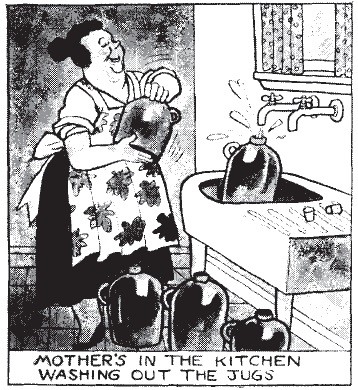
“There have long been rumors that Mr. Dylan had stashed away an extensive archive. It is now revealed that he did keep a private trove of his work, dating back to his earliest days as an artist, including lyrics, correspondence, recordings, films and photographs.”
Just recently, the discovery of a very early recording of Dylan at age 13 was met with disbelief in some quarters. Well, as it turns out, this was not the only example of recently discovered materials from Bob’s childhood….
Busy being born: Bob Dylan’s The Childhood Tapes Released!
1: The First Cry
Happened right after the umbilical cord was snipped.
Here we hear Bob Dylan cry for the first time.
The cry after the cutting of the umbilical cord is thought to have been revisited later with “Ohhhhhhhhhhhhh, Mama, can this really be the end?”
Dad Abe Zimmerman caught it all on film, including Mom Beatty begging little Bobby not to cry.
Thought to be the inspiration for “Baby, Stop Crying”
2: The Bris Tape
This is the second known recording, taped at 8 days of age. The scream upon the circumcision blade incising is also thought to have been revisited later in “Ohhhhhhhhhhhhh, Mama, can this really be the end?”
3: The Potty Trained Photo
This is a rare photo of actual Dylan feces, in celebration of his first successful defecation into the potty. Later Dylan converted the photo into the cover of Self Portrait, which caused Greil Marcus of Rolling Stone to begin his review of the album by asking “What is this shit?” After that review, Dylan reportedly said: ““Ohhhhhhhhhhhhh, Mama, can this really be the end?”, but apparently in a cynical and sarcastic tone.
4: T he Bicycle Crash
Abe Zimmerman caught Bob on a primitive camera here. Bob, while trying to learn how to ride, crashes the new bicycle he got for Chanukah.
After the bike crash he wanted to go to this Big Pink house in Woodstock New York and chill out, but his parents wouldn’t let him because he was like 9 years old. After the bike crash he wrote a letter (with a Sharpie) to his Mom and said “Ohhhhhhhhhhhhh, Mama, can this really be the end?”
And then he added: “To be stuck inside of Hibbing with the Woodstock Blues again”. So this is a HUGE finding for Dylan scholars.
And then he ran away and joined the circus, if you ask him.
5: The Bar Mitzvah Tapes
This is the jewel in the crown of the Bob Dylan Childhood Tapes.
Here the just turned thirteen Bob Dylan slips in, before his weekly parsha reading – the chutzpa of it! – imagine – shocking as The Rites of Spring – he slips in “God said to Abraham kill me a son/ Abe says, “Where do you want this killin’ done?”/God says, “Out on Highway 61””. The congregation was stunned. The folk were electrified, so to speak.
Then in the sermon the Rabbi said mockingly: “of course, there’s no Highway 61 in the Bible” and Bobby stands up and yells “There’s something happening here, but you don’t know what it is? Do you Rabbi Cohen?”
Untold Dylan
As we approach 2000 articles on this site, indexing is important, but sadly chaotic. You can find indexes to series linked under the image of Dylan at the top of the page and some relating to recent series on the home page.
Although no one gets paid for writing, publishing or editing Untold Dylan, it does cost us money to keep the site afloat, safe from hackers, n’er-do-wells etc. We never ask for donations, and we try to survive on the income from our advertisers, so if you enjoy Untold Dylan, and you’ve got an ad blocker, could I beg you to turn it off while here. I’m not asking you to click on ads for the sake of it, but at least allow us to add one more to the number of people who see the full page including the adverts. Thanks.
As for the writing, Untold Dylan is written by people who want to write for Untold Dylan. We welcome articles, contributions and ideas from all our readers. Although no one gets paid, if you are published here, your work will be read by a fairly large number of people across the world, ranging from fans to academics. If you have an idea, or a finished piece send it as a Word file to Tony@schools.co.uk with a note saying that it is for publication on Untold Dylan.
We also have a very lively discussion group “Untold Dylan” on Facebook with around 8500 active members. Just type the phrase “Untold Dylan” in, on your Facebook page or follow this link And because we don’t do political debates on our Facebook group there is a separate group for debating Bob Dylan’s politics – Icicles Hanging Down
This article originally appeared in Pop Matters and is reprinted by permission of the author
By Christopher John Stephens
Here’s a pitch for a documentary about Bob Dylan to be released only after his eventual death. It’s a hybrid cousin of Martin Scorsese’s documentaries No Direction Home (2005),Rolling Thunder Revue (2019), and Todd Haynes’ strange 2007 beauty I’m Not There. Somebody willing to risk entering the dark waters of an artist who is consistently sabotaging his career and reputation, first studies the debacle that was director Richard Marquand’s 1987 swan song Hearts of Fire. In this film, Dylan stumbles his way into the role of Billy Parker, an ageing reclusive rock star in a love triangle with Rupert Everett over the affections of a younger star.
Dylan’s presence as a leading man in Hearts of Fire didn’t go deeper than his halo of curly hair and heavy-lidded blue eyes — eyes that burned into their targets but betrayed nothing about the man inside. What were they thinking, that Dylan could carry the lead in a dramatic movie?
Sixteen years after the release and crushing commercial failure of Hearts of Fire, Dylan and writer/director Larry Charles collaborated to write, produce, and release Masked and Anonymous, a film so reviled at the time by torchbearers of artistic credibility that any chance at career rehabilitation seemed impossible. At this point, the future documentarian will have to ask: Did Dylan care about anything? Consider these thoughts from legendary film critic Roger Ebert:
“‘Masked and Anonymous’ is a vanity project beyond all reason… I don’t have any idea what to think of him. He has so long since disappeared into his persona that there is little received sense of the person there.”
Ebert’s review is careful, detailed, and as much about the crowd reaction at Sundance as it is about the film itself. The viewer today (and the future documentarian covering this era of Dylan’s life) will empathize with Ebert’s predicament as he considers how to assess this movie.
As plots go, the premise is deceptively simple. We open in a ravaged country. Is it our own? What has happened? Dylan plays Jack Fate, an imprisoned legendary folk singer who finds himself a pawn in the game of his boisterous manager Uncle Sweetheart (John Goodman) and Nina Veronica (Jessica Lange.) The former is playing a variation of all his hucksters from the Coen Brothers movies, and the latter is performing a doomed mixture of malevolent vulnerability seen best in a Tennessee Williams heroine.
Uncle Sweetheart and Nina release Fate from prison to headline a benefit concert. Who will it benefit? We don’t know, and Jack Fate doesn’t care. Here’s what Fate tells us in the final scene:
“…I was always a singer and no more than that. Sometimes it’s not enough to know the meaning of things. Sometimes we have to know what things don’t mean as well…I stopped trying to figure things out a long time ago.”
Other actors stumble through this film. Penelope Cruz plays a beautiful Fate follower named Pagan Lace, girlfriend of troubled reporter Tom Friend (Jeff Bridges.) Angela Bassett plays a mistress, Luke Wilson plays an antagonist named Bobby Cupid. Of course, none of these performers and characters are in a movie here so much as manifesting visual presence of a feature-length song. Mickey Rourke shows up as a dictator, and viewers today will be alarmed at this different face, this earlier version of the Rourke we know today.
That seemed to be the point in 2003 and it remains the point today. Masked and Anonymous is a movie about the dispossessed and disoriented. Dylan only takes the lead on four of the 14 soundtrack cuts. Several more are performed in the film by Dylan (as Fate) and his touring band. Familiar Dylan songs like “My Back Pages”, “Like a Rolling Stone”, and “If You See Her, Say Hello” are heard in Japanese and Italian. Where is this world? Have all barriers been torn down, or all ethnicities and cultures firmly entrenched in their worlds forcing those who only speak English to listen to songs they’ll never understand?
In true Dylan fashion, one of the best music moments in Masked and Anonymous does not appear on the soundtrack. It’s a brief, subtle yet powerful performance of “The Times They Are a-Changin'” performed by Tinashe, years before her breakout as an R&B star. In Masked and Anonymous she’s a little girl who’s gotten backstage and manages to charm Jack Fate (Dylan) with an a capella rendition of a song from his past.
It’s an especially striking moment for 2003 America, still reeling from the effects of 9/11 and looking for hope wherever they could find it. For a brief moment, whatever mask Dylan wants to pretend he’s wearing melts off and he’s entranced by the beauty of this performance.
In the world of this movie, there is no hope, no future, and no possibility of progress or difference. In the world of Bob Dylan that we know, and the man playing Jack Fate knows, what this song meant to the world in 1963 still had the power to move us 40 years later, whether or not we were willing to admit it.
There is certainly a strange, cheap feeling that pervades most of Masked and Anonymous, and even the most fervent diehard Dylan apologist (this writer included) will have to admit a queasy feeling trying to detect any sort of emotional reaction on Dylan’s face. Is he, like Buster Keaton of many years earlier, supposed to have a stone face?
The world view, as espoused by the journalist Tom Friend (Jeff Bridges) regularly badgering Fate as he prepares for the concert, is suitably dark. He wants Fate to surrender to nostalgia, to do his old songs and give the people what they want, but it’s not going to happen. Instead, like Bob Dylan the performer, Jack Fate finds purpose in the standards, even something as problematic as “Dixie”,
What we needed before seeing this movie in 2003 is no different than what we need now. We needed to understand this was the story of a man who had spent his adult life scrutinized and analyzed and second-guessed to explain the meaning of his songs beyond and beneath what the stories expressed. “He wants to think of his work as a self-sufficient universe, but his is constantly — sometimes threateningly — required to interpret it, and to justify or explain its connection to surrounding events.”
Delmore Schwartz’s most famous story, 1937’s “In Dreams Begin Responsibilities” resonated for readers because it spoke to the potential for change in the life of a young man on the eve of his 21st birthday. For a soldier on the bus spilling his heart out to Jack Fate as they both embark on a journey to nowhere, dreams were something different altogether.
Masked and Anonymous was written by Dylan and Larry Charles under the pseudonyms of Sergei Petrov and Rene Fontaine. Charles went on to direct Borat: Cultural Learnings of America for Make Benefit Glorious Nation of Kazakhstan (2006), among other films. The list of cast members who had won or would win Academy Awards is impressive. (Lange in 1995, Dylan in 2001, Cruz in 2009, and Bridges in 2010.) With that sort of pedigree, and the expectations in 2003 as to what it was going to mean, the angry reaction is understandable.
What should resonate stronger for the modern viewer is to understand what the 2003 viewer was missing. Masked and Anonymous came out in a world before Facebook, Instagram, Twitter, and all manner of instant smartphone social broadcasting (and communication). It can be seen in 2019 as a prescient story of a nation broken by troubled street battles, divisive political leadership, and a traveling singer interested only in the next gig. There was no “United States of America” in the world Dylan gave us in 2003, and the nation in which we find ourselves today is unrecognizable, as well.
Masked and Anonymous certainly didn’t work in 2003 as a cohesive, coherent film. It’s star-studded cast and poorly realized plot development didn’t pay off as expected, and Dylan’s wooden simulation of a human inhabiting a character is impossible to penetrate. Still, somehow, he makes it work.
In 2019, with a nation ready to impeach its “elected” leader, Masked and Anonymous is making surprising, chilling sense. The future documentarian choosing to assess this part of Dylan’s career and artistic choices will more likely than not conclude that the strangeness of Masked and Anonymous and the wooden quality of Dylan’s performance was everything it needed to be.
As we approach 2000 articles on this site, indexing is important, but sadly chaotic. You can find indexes to series linked under the image of Dylan at the top of the page and some relating to recent series on the home page.
Although no one gets paid for writing, publishing or editing Untold Dylan, it does cost us money to keep the site afloat, safe from hackers, n’er-do-wells etc. We never ask for donations, and we try to survive on the income from our advertisers, so if you enjoy Untold Dylan, and you’ve got an ad blocker, could I beg you to turn it off while here. I’m not asking you to click on ads for the sake of it, but at least allow us to add one more to the number of people who see the full page including the adverts. Thanks.
As for the writing, Untold Dylan is written by people who want to write for Untold Dylan. We welcome articles, contributions and ideas from all our readers. Although no one gets paid, if you are published here, your work will be read by a fairly large number of people across the world, ranging from fans to academics. If you have an idea, or a finished piece send it as a Word file to Tony@schools.co.uk with a note saying that it is for publication on Untold Dylan.
We also have a very lively discussion group “Untold Dylan” on Facebook with around 8500 active members. Just type the phrase “Untold Dylan” in, on your Facebook page or follow this link And because we don’t do political debates on our Facebook group there is a separate group for debating Bob Dylan’s politics – Icicles Hanging Down
By Tony Attwood with very many thanks to Tim Johnson
On our listing of Dylan songs we have a piece called “Ride this train”. That is a 1986 song, and I’ve dropped the recording in at the end of this piece, which came at the same time as the wonderful “To fall in love with you”.
That song was noted by Untold a while back, but when I wrote that little piece I missed another song, “Riding on the train.” However Tim Johnson has picked me up on this, and sent me a recording of “Riding on the train” – and persevered with me even when I then didn’t reply, and kept on until finally I did wake up and get my house in order. As a result thanks to his endevours, we do have another song, which is not “Ride this train” (and which is also not Riding on Train 45 which is not a Dylan song at all) but which turns out to be a different song.
The two gigs at which the song was played were both in Sydney on concurrent days, 12 February and 13 February 1986, by Tom Petty and Bob Dylan. BobDylan.com agrees on the dates but carries no detail.
But Tim Johnson has gone even further by having a bash at the lyrics
Riding on the train
......   I'll tell ya
I swear I can be there
and yeah I can be there
I'll tell ya   on the beat
all night mama till you reach the top
one more mama (I'll take care of you}
on the train   of pain
on the train   of pain
(oh so)   I saw her
I see high (her)   I see riding
ahaa...I see ...
on the feeling
one more time baby keep on riding
one more time baby cause
you're riding on the train
the train of pain
riding on the train  the train of pain
riding on the train   the train of pain
aaah riding on the train
on the train of pain
riding on the train
riding the track (train)
one last… mama can you come on back
......tell you all the time
on the train riding on the train of pain
aaah
Very many thanks to Tim for not only noticing this song but also persevering with me after I lost the first email!
https://youtu.be/UYtdD2Tdl1Y
Untold Dylan
As we approach 2000 articles on this site, indexing is important, but sadly chaotic. You can find indexes to series linked under the image of Dylan at the top of the page and some relating to recent series on the home page.
Although no one gets paid for writing, publishing or editing Untold Dylan, it does cost us money to keep the site afloat, safe from hackers, n’er-do-wells etc. We never ask for donations, and we try to survive on the income from our advertisers, so if you enjoy Untold Dylan, and you’ve got an ad blocker, could I beg you to turn it off while here. I’m not asking you to click on ads for the sake of it, but at least allow us to add one more to the number of people who see the full page including the adverts. Thanks.
As for the writing, Untold Dylan is written by people who want to write for Untold Dylan. We welcome articles, contributions and ideas from all our readers. Although no one gets paid, if you are published here, your work will be read by a fairly large number of people across the world, ranging from fans to academics. If you have an idea, or a finished piece send it as a Word file to Tony@schools.co.uk with a note saying that it is for publication on Untold Dylan.
We also have a very lively discussion group “Untold Dylan” on Facebook with around 8500 active members. Just type the phrase “Untold Dylan” in, on your Facebook page or follow this link And because we don’t do political debates on our Facebook group there is a separate group for debating Bob Dylan’s politics – Icicles Hanging Down
The hysterical bride in the penny arcade
Screaming she moans, “I’ve just been made”
Then sends out for the doctor who pulls down the shade
Says, “My advice is to not let the boys in”
Now the medicine man comes and he shuffles inside He walks with a swagger and he says to the bride “Stop all this weeping, swallow your pride You will not die, it’s not poison”
Cocaine, heroin, morphine, alcohol … the popularity of many “medicines” in the eighteenth and nineteenth centuries is partly due to ingredients that have lost much of their beneficial image today.
Mrs Winslow’s Soothing Syrup is “perfectly harmless and innocent” and fully accepted to give to “fussy children” to grant them a “natural quiet sleep, relieving the child from pain”. It is, in fact, a mixture of morphine and alcohol.
Cocaine is in everything from cough syrup to tooth powder, menstrual pains are fought with every conceivable opiate, and even Thomas Jefferson, despite being a critical and educated man, fights his chronic diarrhea with laudanum. With addicting outcome; on his estate in Monticello he grows his own opium poppy. He does like it; “with care and laudanum I may consider myself in what is to be my habitual state,” he writes to a friend (in which of course the word habitual stands out). Recruiting words apparently; later, Lincoln’s wife Mary Todd also develops quite a laudanum addiction.
The “women’s disease” hysteria is no less spectacularly treated, from the Middle Ages until Freud. Initially it is suspected that the uterus is searching for a child, which then causes the hysterical attacks, later it is generally agreed that a lack of sexual contact must be the cause. Until well into the nineteenth century, there was medical consensus on the treatment as well: vaginal massage by a midwife or doctor. Liberating orgasms should cure the patient from her suffering.
Unfortunately, there are no reliable statistics on the success of treatment.
Freud, as he usually does, puts an end to the fun. Although the Viennese doctor’s diagnoses usually target pubic areas, and although he is not at all averse to cocaine, he tries to treat precisely female hysteria with “normal” therapy. Well, with what we call “normal therapy” these days, anyway. His Studien über Hysterie (1895) describes five case studies and is in fact the beginning of classical psychoanalysis.
However, Dylan’s hysterical bride seems to fall into the hands of an old-fashioned therapist. At any rate, her psyche is not being analysed.
The hysterical bride part is the most compact octave of the song, suggesting, more than the other five octaves do, a rounded tableau with the promise of a real narrative and thus seems more like a preliminary study for a “Desolation Row”-couplet.
The archetype hysterical bride is here, by Dylan standards that is, surprisingly true to character. Her whereabouts, the penny arcade, may be alienating, but apart from that she meets the norm: she screams, moans and is weeping. Granted, “screaming she moans” is an unusual word combination, but both verbs do fit hysteria.
Her opponent, the doctor, is introduced with a rather lame but still effective pun; the doctor who pulls down the shade – in other words: a shady type, a dubious subject who wants to escape the daylight. He is further characterised by his walk; swagger and shuffle suggest a philanderer type and an unprofessional, groping continuation. A suggestion reinforced by his choice of words: “Swallow your pride, you will not die, it’s not poison” at least insinuates an (oral) rape scene.
It is not unambiguous. The change of job title (from doctor to medicine man) and the word poison do point to nineteenth-century medicine as well; to opiates, in other words. Not too far-fetched. Dylan has used the word medicine only three times in his entire career. All three times in these five hundred mercury days, and all three times in an ambiguous, drug-inducing context:
Johnny’s in the basement
Mixing up the medicine
("Subterranean Homesick Blues", January ’65)
Now the rainman gave me two cures
Then he said, “Jump right in”
The one was Texas medicine
The other was just railroad gin
("Stuck Inside Of Mobile With The Memphis Blues Again", February ’66)
In these same days, spring 1965, Dylan sits with Brother Bill, with William Burroughs, in a pub in Greenwich Village. Dylan is a fan and does not hide his admiration. In March ’65, just before the songwriter produces “Tombstone Blues”, he is interviewed by Paul J. Robbins, and he says:
“I’ve written some songs which are kind of far out, a long continuation of verses, stuff like that – but I haven’t really gotten into writing a completely free song. Hey, you dig something like cut-ups? I mean, like William Burroughs?”
The similarities between Burroughs’ work and Dylan’s experimental novel Tarantula are unmistakable anyway, but cut-up also leaves its mark on the songs from this period. Perhaps the songwriter – mentally at least – even did cut and paste from Burroughs’ work; not “completely free”, but still. A word like medicine Brother Bill uses in every book, usually as a euphemism for mind-expanding drugs. As in Junky:
The guard says to me, “Drug addict! Why you sonofabitch, you mean you’re a dope fiend! Well, you’ll get no medicine in here!”
And in Nova Express (1964) we find enough words in a single paragraph to cut and paste a Dylan couplet:
“We hit the local croakers with “the fish poison con” – “I got these poison fish, Doc, in the tank transported back from South America I’m a Ichthyologist and after being stung by the dreaded Candirú – Like fire through the blood is it not? Doctor, and coming on now” – And The Sailor goes into his White Hot Agony Act chasing the doctor around his office like a blowtorch He never missed – But he burned down the croakers – So like Bob and me when we “had a catch” as the old cunts call it and arrested some sulky clerk with his hand deep in the company pocket, we take turns playing the tough cop and the con cop – So I walk in on this Pleasantville croaker and tell him I have contracted this Venusian virus and subject to dissolve myself in poison juices and assimilate the passers-by unless I get my medicine and get it regular.”
Poison, medicine, doctor, and the opponent is called – what’s in a name – “Bob”, on the pages before and after there is striking idiom such as screaming, hysterical and penny arcade to be found… reading Brother Bill’s work has given a great thrill, that much seems obvious.
To be continued. Next up: Tombstone Blues part V
———–
Jochen is a regular reviewer of Dylan’s work on Untold. His books are available via Amazon both in paperback and on Kindle:
As we approach 2000 articles on this site, indexing is important, but sadly chaotic. You can find indexes to series linked under the image of Dylan at the top of the page and some relating to recent series on the home page.
Although no one gets paid for writing, publishing or editing Untold Dylan, it does cost us money to keep the site afloat, safe from hackers, n’er-do-wells etc. We never ask for donations, and we try to survive on the income from our advertisers, so if you enjoy Untold Dylan, and you’ve got an ad blocker, could I beg you to turn it off while here. I’m not asking you to click on ads for the sake of it, but at least allow us to add one more to the number of people who see the full page including the adverts. Thanks.
As for the writing, Untold Dylan is written by people who want to write for Untold Dylan. We welcome articles, contributions and ideas from all our readers. Although no one gets paid, if you are published here, your work will be read by a fairly large number of people across the world, ranging from fans to academics. If you have an idea, or a finished piece send it as a Word file to Tony@schools.co.uk with a note saying that it is for publication on Untold Dylan.
We also have a very lively discussion group “Untold Dylan” on Facebook with around 8500 active members. Just type the phrase “Untold Dylan” in, on your Facebook page or follow this link And because we don’t do political debates on our Facebook group there is a separate group for debating Bob Dylan’s politics – Icicles Hanging Down
Physical barriers create a garrison to provide protection against the environment, but they can also isolate individuals, sexes, ‘races’, classes, and cultures from one another
How the chimney-sweepers cry
Every blackening Church appalls
And the hapless soldiers sigh
Runs in blood down palace walls
(William Blake: London)
As Harold Bloom asserts, a Gnostic-like vision can be detected in the art of William Blake – and in the poetry of Robert Frost. In their vision, a symbolic ‘wall’ separates the blackened material world from the warm light that’s emanates from an ideal spiritual plane.
So expressed in the song lyrics below:
There's a wall between you, and what you want
And you got to leap it
Tonight you got the power to take it
Tomorrow you won't have the power to keep it
(Bob Dylan: The Groom Is Still Waiting At The Altar)
Gnostic-like, in mytonymical diction below, the horse and drum be associated with the horrors of war.
Kill the beast, and feed the swine
Scale the wall, and smoke the vine
Feed the horse, and saddle up the drum
It's unbelievable, the day would finally come
(Bob Dylan: Unbelievable)
A spiritual plane there be though sorrowfully only a few human beings are capable of getting in touch with it:
Far way in the stormy night
Far away and over the wall
You are there in the flickering light
Where the teardrops fall
(Bob Dylan: Where Teardrops Fall)
Indeed, getting in touch, and keeping in touch, with the far away absolute Spirit of Love, the so-called Monad, is not an easy thing to do:
They say that every man must need protection
They say that every man must fall
Yet I swear I see my reflection
Some place so high above the wall
(Bob Dylan: I Shall Be Released)
Claimed it can be that it’s a vision of both darkness and light that the singer/songwriter above, or at least his persona, has consistently held – even during his “Christian” phase.
In the song lyrics below, the metronomical watchtower stands for the whole wall, and, as the poet Frost suggests, there’s something running beneath it that “makes gaps even two can pass abreast”:
All along the watchtower
Princes kept the view
Outside in the distance
A wildcat did grow
Two riders were approaching
The wind began to howl
(Bob Dylan: All Along The Watchtower)
Rather ambiguous all the lyrics above be, but maybe in the last song lyrics quoted the two riders approaching are William Blake and Robert Frost, or perhaps Bob Dylan and Allen Ginsberg.
Untold Dylan
As we approach 2000 articles on this site, indexing is important, but sadly chaotic. You can find indexes to series linked under the image of Dylan at the top of the page and some relating to recent series on the home page.
Although no one gets paid for writing, publishing or editing Untold Dylan, it does cost us money to keep the site afloat, safe from hackers, n’er-do-wells etc. We never ask for donations, and we try to survive on the income from our advertisers, so if you enjoy Untold Dylan, and you’ve got an ad blocker, could I beg you to turn it off while here. I’m not asking you to click on ads for the sake of it, but at least allow us to add one more to the number of people who see the full page including the adverts. Thanks.
As for the writing, Untold Dylan is written by people who want to write for Untold Dylan. We welcome articles, contributions and ideas from all our readers. Although no one gets paid, if you are published here, your work will be read by a fairly large number of people across the world, ranging from fans to academics. If you have an idea, or a finished piece send it as a Word file to Tony@schools.co.uk with a note saying that it is for publication on Untold Dylan.
We also have a very lively discussion group “Untold Dylan” on Facebook with around 8500 active members. Just type the phrase “Untold Dylan” in, on your Facebook page or follow this link And because we don’t do political debates on our Facebook group there is a separate group for debating Bob Dylan’s politics – Icicles Hanging Down
Pastor Wendell Helgason of the Wesley United Methodist Church, in Hibbing, Minnesota discovered a rare artifact in the basement of the Church last Easter Sunday. It was an audio tape recording from the days before the Church moved in and took over the mortgage from the former owners, the Agudath Achim Synagogue which closed its doors in 1964 due to a dwindling local Jewish population.
When Pastor Helgason dusted off and activated the old Sony reel to reel he was intrigued at first by the melodic chanting which he assumed to be the young men’s Hebrew choir. It turned out to be the Synagogue Cantor’s own recording of each boy’s Bar Mitzvah rehearsal. He was about to turn off the tape when he heard a distinct voice that he immediately recognized. “I would know that nasal sound anywhere,”Pastor Wendell said, bursting with hometown pride. “No mistaking that voice belonged to the prodigal son of Hibbing.”
What Pastor Helgason had uncovered in the basement of the old Synagogue turned Church was none other than the original audio tape from the Bar Mitzvah rehearsal of one Robert Alan Zimmerman.
The date inscribed in faded ink on the inside of the old Sony reel, May 22,1954, indeed coincides with the actual date of the Bar Mitzvah ceremony that was held at the Agudath Achim Synagogue on 2nd Avenue. Nearly the entire Jewish community that inhabited Hibbing and surrounding Iron Range, (consisting of some several dozen members at its peak), had gathered to mark the auspicious occasion. Abe and Beatty Zimmerman ‘s son had reached his thirteenth birthday, which according to the tenets of the faith marks the day that a Jewish boy becomes a man. Little did anyone present know that this would also mark the first public performance ever to be given by the future world famous singer and Nobel Prize laureate for literature.
“It’s been a challenge to authenticate the tape since most of the Jewish community of Hibbing has migrated to the twin cities (Minneapolis and St.Paul) and places beyond,” says the Pastor, himself a third generation native of Hibbing of Scandinavian heritage. But at least one old time resident, Isadore Goldfine, of Goldfine & Sons Fine Furniture on Main Street, swears by the tape. “That’s him alright”, says the seventy-seven year old Goldfine after the Pastor plays a sample from the tape, the warbling shrill resembling more the high notes of the famous singer’s harmonica than his gravely voice today.
“I was at Bobby’s bar mitzvah and let me tell you he was no Pavarotti and no Sinatra either,” recounts Goldfine who still bides his days puttering around the furniture shop now run by his son, Stan. “He was just like the rest of us Jewish kids who took lessons after school from an old, itinerant Rabbi with a white beard and black hat who lived above the juke box joint. Abe and Beatty – Bobby’s parents – had promised Bobby a transistor radio and a guitar for his Bar Mitzvah. I guess they had some kind of an idea where he was headed, though Bobby never kept in touch with anyone after he left, at least not as far as I know. They say he’s been back once or twice but never let anyone know.”
“Well, he sure put Hibbing on the map, wouldn’t you say, Izzy?”
“Him and Roger Maris of the Yankees,” said Goldfine, pointing to a framed black and white photograph of the baseball star hanging on the wall above the Living Room sofa display. “See, I’m more of baseball fan, myself. Roger was only a few years older than us and born just around the corner from here. He went on to beat Babe Ruth’s home run record for a single season.” Not missing a beat, the elderly gentlemen gave a thumb’s up to the picture, beamed and announced proudly, “Sixty-One in Sixty-One.”
“Quite an accomplishment, alright,” said the Pastor, nodding his chin in agreement. “But you know, Izzy, that record has been broken years ago whereas the songs that Dylan has written I suspect will be around for a lot longer than even the iron ore in the mines. Why your old friend is just about as close to a national treasure as you can find anywhere in this country,” the Pastor said with a flourish.
“I suppose,” said Goldfine, polishing a wood cabinet, “nice family, too”.
And so what is the Pastor planning to do with the lost Bar Mitzvah tapes of Robert Alan Zimmerman, circa 1954? “I’ve already had a surprising number of lucrative offers from private individuals, from top executives in the music industry and I’ve just been contacted by the new Bob Dylan Archive in Tulsa, Oklahoma,” he says with obvious pride. “But I’m going to do my best to see that these blessed Bar Mitzvah tapes stay put right here in Hibbing, Minnesota where they belong. ”
“We may have found a home for them,” he continues after a pause, “in Bob’s alma mater, the old Hibbing High School where he graduated from in 1959. Only problem is, we need to store them in a secure vault or the insurance won’t cover it,” he laments.
“The Governor has promised to get involved,” says the Pastor while continuing to ruminate aloud. “After all,” he says in earnestness, almost pleading, “We may have ten thousand lakes in Minnesota, but this is the only tape of its kind in existence. Lord only knows if we will ever see another Bar Mitzvah like this one again.”
Untold Dylan
As we approach 2000 articles on this site, indexing is important, but sadly chaotic. You can find indexes to series linked under the image of Dylan at the top of the page and some relating to recent series on the home page.
Although no one gets paid for writing, publishing or editing Untold Dylan, it does cost us money to keep the site afloat, safe from hackers, n’er-do-wells etc. We never ask for donations, and we try to survive on the income from our advertisers, so if you enjoy Untold Dylan, and you’ve got an ad blocker, could I beg you to turn it off while here. I’m not asking you to click on ads for the sake of it, but at least allow us to add one more to the number of people who see the full page including the adverts. Thanks.
As for the writing, Untold Dylan is written by people who want to write for Untold Dylan. We welcome articles, contributions and ideas from all our readers. Although no one gets paid, if you are published here, your work will be read by a fairly large number of people across the world, ranging from fans to academics. If you have an idea, or a finished piece send it as a Word file to Tony@schools.co.uk with a note saying that it is for publication on Untold Dylan.
We also have a very lively discussion group “Untold Dylan” on Facebook with around 8500 active members. Just type the phrase “Untold Dylan” in, on your Facebook page or follow this link And because we don’t do political debates on our Facebook group there is a separate group for debating Bob Dylan’s politics – Icicles Hanging Down
I came across this interview with Bob today and thought this question and answer was worth investigating!
In an interview published in bobdylan.com Bob was asked to pick a favorite song by another artist that mentions his name in the lyrics. His pick: “Garden Party” by Ricky Nelson.
So I thought it might be interesting to take a look/listen.
The Wikipedia page has some real good facts about the song telling us the song relates the story of Nelson being booed at a concert at Madison Square Garden on October 15, 1971 and billed as “Richard Nader’s Rock ‘n Roll Revival.”
Also on the bill were Chuck Berry, Bo Diddley, and Bobby Rydell.
Wiki reports that “Nelson came on stage dressed in the then-current fashion, wearing bell-bottoms and a purple velvet shirt, with his hair hanging down to his shoulders. He started playing his older songs like “Hello Mary Lou”, but then he played the Rolling Stones’ “Country Honk” (a country version of their hit song “Honky Tonk Women”) and the crowd began to boo. While some reports say that the booing was caused by police action in the back of the audience, Nelson thought it was directed at him. Nevertheless, he sang another song but then left the building and did not appear onstage for the finale.”
Wiki also tells us that “One more reference in the lyrics pertains to a particularly mysterious and legendary audience member: “Mr. Hughes hid in Dylan’s shoes, wearing his disguise”. The Mr. Hughes in question was apparently George Harrison, who was a next-door neighbor and good friend of Nelson’s. Harrison used “Hughes” as his traveling alias.”
They suggest that “hid in Dylan’s shoes” may refer to an album of Bob Dylan covers that Harrison was planning but never recorded.
Ricky Nelson however did cover lots of Dylan songs over the years, I shall Be Released, If You Gotta Go, Mama You’ve Been On My Mind, Love Minus Zero, walking Down the line and perhaps best of all She Belongs To Me.
And indeed the compliment was returned as you may recall we have also previously reviewed Bob covering Ricky’s Lonesome Town
He also covered Legend In My Time (I’d Be) in concert which he only performed 3 times in 1989 and never again.
This is one that we didn’t include in the series about songs Dylan played only once or twice, as it didn’t quite qualify but we can get it in now.
https://youtu.be/Zh-QXhL1Rzw
Ricky was a classic ballad singer; this gives a good insight into his style
Ricky Nelson (later Rick Nelson) was one of those stars who found fame in his youth, but whose style and music gradually became to be seen as old fashioned. Also he was engaged in years of legal argument with his ex-wife which made the lawyers rich, but no one else.
He did put together a 1985 “Comeback tour” with Fats Domino, touring once more as Ricky (rather than Rick) and he released a greatest hits album but he tragically died in a plane crash on New Years Eve 1985, while flying to Texas for a concert. It is said that the plane had a history of mechanical failures.
Untold Dylan
As we approach 2000 articles on this site, indexing is important, but sadly chaotic. You can find indexes to series linked under the image of Dylan at the top of the page and some relating to recent series on the home page.
Although no one gets paid for writing, publishing or editing Untold Dylan, it does cost us money to keep the site afloat, safe from hackers, n’er-do-wells etc. We never ask for donations, and we try to survive on the income from our advertisers, so if you enjoy Untold Dylan, and you’ve got an ad blocker, could I beg you to turn it off while here. I’m not asking you to click on ads for the sake of it, but at least allow us to add one more to the number of people who see the full page including the adverts. Thanks.
As for the writing, Untold Dylan is written by people who want to write for Untold Dylan. We welcome articles, contributions and ideas from all our readers. Although no one gets paid, if you are published here, your work will be read by a fairly large number of people across the world, ranging from fans to academics. If you have an idea, or a finished piece send it as a Word file to Tony@schools.co.uk with a note saying that it is for publication on Untold Dylan.
We also have a very lively discussion group “Untold Dylan” on Facebook with around 8500 active members. Just type the phrase “Untold Dylan” in, on your Facebook page or follow this link And because we don’t do political debates on our Facebook group there is a separate group for debating Bob Dylan’s politics – Icicles Hanging Down
Let a deck of cards be my tombstone

I got the dyin' crapshooter's blues
Blues, country, R&B, folk… the tombstone is a popular piece of scenery in every genre and in every period. In 1965, the young Dylan undoubtedly can sing along with Bo Diddley’s “Who Do You Love”, Merle Haggard’s “Nine Pound Hammer”, Johnny Cash’s “The Ballad Of Boot Hill” and the Kingston Trio’s “Jug Of Punch” (“Tura lura lu, tura lura lu”). And with a hundred other songs, presumably. But closest under his skin is Blind Willie McTell’s “Dyin’ Crapshooter’s Blues”. Dylan’s later masterpiece “Blind Willie McTell” not only sings this blues hero, but also uses the same template as McTell’s “Dyin’ Crapshooter’s Blues”: the evergreen “St. James’ Infirmary”. Or maybe Dylan uses McTell’s song as a template, who knows.
In any case, the protagonist who sings:
Mama’s in the fact’ry
She ain’t got no shoes
Daddy’s in the alley
He’s lookin’ for the fuse
I’m in the streets
With the tombstone blues
…seems like an archetypal lamenting blues protagonist. Plus, the octaves all refer directly or indirectly to dying or death;
– a reincarnation in the first octave;
– the shady doctor who says you will not die;
– death to all in the third octave;
– tombstones and graves in the king of the Philistines couplet;
– and Cecil B. DeMille could die happily after
… so the listener who chooses to deny the images a metaphorical charge can indeed agree with the title: this is truly a tombstone blues.
However, this is the young beat poet in his mercury period. “Maggie’s Farm” is not about an agricultural production company owned by one Margaret, “From A Buick 6” has nothing to do with a dated automobile and in “Rainy Day Women” no rained ladies are sung. As for the latter song: the jumpy mind of the young poet might have made a similar associative leap as for this “Tombstone Blues”.
The authority Robert Shelton, in his No Direction Home (2011), presents an attractive genesis regarding “Rainy Day Women #12 & #35”:
“Phil Spector was with Dylan in a Los Angeles hang-out, the Fred C Dobbs Coffee Shop, when they heard the Ray Charles Stoned on a jukebox. Both of them, Spector told me later, “were surprised to hear a song that free, that explicit.” A few months later, Dylan recorded Rainy Day Women.”
He is referring to Ray Charles’ hit “Let’s Go Get Stoned”, so that can’t be right; this single was not released until April ’66, a month after Dylan had recorded his song. But in essence it may be true; although the version of The Coasters hasn’t been a hit, it was the B-side of “Money Honey” and that one was released in May 1965 – two months before Dylan recorded “Tombstone Blues”, ten months before everybody must get stoned, before Rainy Day Women.
The Coasters’ repertoire leaves traces in Dylan’s oeuvre as it is. As a radio broadcaster Dylan plays four songs by the legendary Leiber/Stoller-vehicle (“There’s a whole lot of songs in their repertoire that are worth listening to”, announcing “Three Cool Cats”, 28 January 2009) and in the Basement Dylan quotes “Along Came Jones” (in “Million Dollar Bash”)… the thin Mr. Jones who in hindsight also seems to be the protagonist for “Ballad Of A Thin Man”, as novelty songs seem to inspire anyway, in these years. And still in 2020 – with some tolerance – both the protagonist’s character and the cover image of “False Prophet” seem to wink at The Coasters’ “The Shadow Knows” (1959).
So that remarkable “Let’s Go Get Stoned”, presumably admired by Dylan together with Phil Spector, probably also is The Coasters version. Remarkable the song, especially in 1965, certainly is:
Let's go get stoned, let's go get stoned
When you work so hard all the day long
And every thing you do seems to go wrong
Just drop by my place on your way home
Let's go get stoned
Curious, mainly because of the drug connotation, obviously. However, it is not at all intended that way, as writer Valerie Simpson (yes, of Ashford & Simpson) one more time explains in an interview with the Chicago Tribune (17 November 2011):
“It was a bit embarrassing, because some folks thought it meant doing drugs. It was originally about drinking. It was a hard song to totally defend. It was a hit, but you couldn’t take a full bow (laughs).”
The first verse indeed is quite clear thereon:
Let's go get stoned, let's go get stoned
When your baby won't let you in
Got a few pennies, a bottle of gin
Just call your buddy on the telephone
Let's go get stoned
Thus: getting stoned of gin, not drugs – as “stoned”, as a matter of fact, indeed is a synonym for “drunk” until the mid-1960s (Cole Porters “Well, Did You Evah”, for example, and John Lee Hooker’s “One Bourbon, One Scotch, One Beer”).
Still, Dylan’s alleged excitement at that jukebox in a Los Angeles café is of course due to its association with drugs, similar to the entertaining story telling how Dylan is so utterly enthusiastic about The Beatles’ “I Want To Hold Your Hand” because he misunderstands I can’t hide (instead impressed singing along I get high).
Meanwhile, Dylan solemnly states that he does not write about drugs, as in a press conference in May 1966: “I have and never will write a drug song” – a similar choice of words and tone to President Clinton’s solemn lie, “I never had sexual relations with that woman,” by the way. But in the Rolling Stone interview in 2012, he acknowledges: “It doesn’t surprise me that some people would see it that way”. One of those “some people” is, of course, Dylan himself; in ’65 Dylan is an intelligent young man from the big city, both feet on the ground, who reads beat poetry, admires the junkie king William Burroughs and who, as is now well known, introduces The Beatles to marijuana.
So he is not naive when he sings Everybody must get stoned. He also knows that “rain” is a euphemism for pot as he gives Louise a handful of rain (“Visions Of Johanna”), of course he already knows how lost in the rain in Juarez will be understood (“Just Like Tom Thumb’s Blues”) or what is meant by the “cures” handed out by the “rainman” (“Stuck Inside Of Mobile”). The abundant use of ambiguous carriers of meaning such as stoned, rain, medicine and fog makes the idea that having the tombstone blues is a poetic, concealing metaphor for being stoned, suddenly not so far-fetched anymore.
Which does not turn “Tombstone Blues” into something as banal as a drug song, of course. The kaleidoscopic lyrics seem to bubble out of a stream of consciousness, are mainly playful and associative. Somewhere in the electric mind of the poetic song composer The Coasters – for example – bounce around. In this hour, while conceiving this song, apparently their oeuvre provides rhyming words, décor and idiom. “Riot In Cell Block Number Nine” is one of the very rare songs with the word “fuse” (next to Elvis’ “G.I. Blues”, Chuck Berry’s “Roll Over Beethoven”, Jerry Lee Lewis’ “High School Confidential” and… The Coasters’ “Along Came Jones”);
Scarface Jones said, "It's too late to quit
And pass the dynamite, 'cause the fuse is lit"
There's a riot goin' on
There's a riot goin' on
There's a riot goin' on
Up in cell block number nine
… which gives Dylan a second rhyme for blues. The first rhyme, shoes, is not too remarkable, but The Coasters also happen to use it in the song in which, just like in Dylan’s song, a father and a mother appear one after the other, in “(When She Wants Good Lovin’) My Baby Comes To Me”:
She go to see her father when she wants some new shoes
She go to see her mother when she down and got the blues
But when she wants good loving my baby she comes to me
The Shadow’s victim in “The Shadow Knows” is in the alley, and “Let’s Go Get Stoned” is definitely one of those songs in their repertoire that are worth listening to and perhaps makes the playful, associative and jumpy mind bounce to tombstone.
Possible. But just as possible we owe “Tombstone Blues” to the fertile influence of Brother Bill, to William Burroughs.
To be continued. Next up: Tombstone Blues part IV
———
Jochen is a regular reviewer of Dylan’s work on Untold. His books are available via Amazon both in paperback and on Kindle:
As we approach 2000 articles on this site, indexing is important, but sadly chaotic. You can find indexes to series linked under the image of Dylan at the top of the page and some relating to recent series on the home page.
Although no one gets paid for writing, publishing or editing Untold Dylan, it does cost us money to keep the site afloat, safe from hackers, n’er-do-wells etc. We never ask for donations, and we try to survive on the income from our advertisers, so if you enjoy Untold Dylan, and you’ve got an ad blocker, could I beg you to turn it off while here. I’m not asking you to click on ads for the sake of it, but at least allow us to add one more to the number of people who see the full page including the adverts. Thanks.
As for the writing, Untold Dylan is written by people who want to write for Untold Dylan. We welcome articles, contributions and ideas from all our readers. Although no one gets paid, if you are published here, your work will be read by a fairly large number of people across the world, ranging from fans to academics. If you have an idea, or a finished piece send it as a Word file to Tony@schools.co.uk with a note saying that it is for publication on Untold Dylan.
We also have a very lively discussion group “Untold Dylan” on Facebook with around 8500 active members. Just type the phrase “Untold Dylan” in, on your Facebook page or follow this link And because we don’t do political debates on our Facebook group there is a separate group for debating Bob Dylan’s politics – Icicles Hanging Down
Initially poet William Blake envisions America with its wide open frontier as a Promised Land that breaks away from Mother England and its Established Religion – a religion that dulls the energy of the human Imagination that bids Man go beyond where man has gone before:
A man's worst enemies are those
Of his own house and family
And he who makes his law a curse
By his own law shall surely die
(William Blake: Jerusalem)
As previously noted, the Calvinist Puritan settlers in America with their seemingly anti-Establishment fervour, but that’s filled with strict rules, cause an imaginative poet, a Puritan leader, to hide away his own decorative writings.
Rather Blakean are the questioning (though assuring) lines below … seemingly by mere coincidence:
Who blew the bellows of his furnace vast
Or held the mold wherein the world was cast ...
Who in this bowling alley bowled the sun
Who made it always when it rises set
(Edward Taylor:The Preface)
Sounding like (though somewhat skeptical as to the answer) the following lines:
What the hammer, what the chain
In what furnace was thy brain
What the anvil, what dread grasp
Dare its deadly terrors clasp
(William Blake: The Tiger)
Akin to Blake and Taylor, singer/writer Bob Dylan envisions materialistic America as a modern Babylon that has strangled the potential energy of the human Imagination to create a better world on Earth. For the most part, he settles instead for the development of Art with the hope that it will shine some light on the right direction to take.
Not without humour:
"I think I'll call it America", I said as we hit land ....
When a bowling ball came down the road, and knocked me off my feet
A pay phone was ringing, and it just about blew my mind
When I picked it up, and said "hello", this foot came through the line
(Bob Dylan: One Hundred And Fifteenth Dream)
Perhaps the foregoing examples of lyrics be evidence as to what is meant by the following lines:
The Old and New Testaments are the Great Code of Art
Science is the Tree of Death
Art is the Tree of Life
God is Jesus
(William Blake: Laocoon)
Northrop Frye asserts that individuals and cultures erect walls between themselves, and against the natural environment as well; considers them a threat; calls it the ‘garrison mentality’.
While other writers with a Romantic slant, who ponder Mother Nature, are more ambiguous about the matter:
Something there is that doesn't love a wall
That sends the frozen ground swell under it
And spills the upper boulders in the sun
And makes gaps even two can pass abreast
(Robert Frost: Mending Wall)
Quite like the sentiment expressed in the song lyrics below:
Now there's a wall between us, something has been lost
I took too much for granted, I got my signals crossed
Just to think that it all began on an uneventful morn
"Come in", she said, "I'll give you shelter from the storm"
(Bob Dylan: Shelter From The Storm)
Untold Dylan
As we approach 2000 articles on this site, indexing is important, but sadly chaotic. You can find indexes to series linked under the image of Dylan at the top of the page and some relating to recent series on the home page.
Although no one gets paid for writing, publishing or editing Untold Dylan, it does cost us money to keep the site afloat, safe from hackers, n’er-do-wells etc. We never ask for donations, and we try to survive on the income from our advertisers, so if you enjoy Untold Dylan, and you’ve got an ad blocker, could I beg you to turn it off while here. I’m not asking you to click on ads for the sake of it, but at least allow us to add one more to the number of people who see the full page including the adverts. Thanks.
As for the writing, Untold Dylan is written by people who want to write for Untold Dylan. We welcome articles, contributions and ideas from all our readers. Although no one gets paid, if you are published here, your work will be read by a fairly large number of people across the world, ranging from fans to academics. If you have an idea, or a finished piece send it as a Word file to Tony@schools.co.uk with a note saying that it is for publication on Untold Dylan.
We also have a very lively discussion group “Untold Dylan” on Facebook with around 8500 active members. Just type the phrase “Untold Dylan” in, on your Facebook page or follow this link And because we don’t do political debates on our Facebook group there is a separate group for debating Bob Dylan’s politics – Icicles Hanging Down
This is episode 21 of the series “All Directions at Once” which reviews Dylan’s work across time as a continuing stream of creativity, rather than a set of isolated individual songs. An index to the series appears here.
——–
In the life of most creative people there are many changes – ups, downs, stagnation, withdrawal, ceaseless momentum, certainty, uncertainty, desperation, lack of motivation, lack of inspiration, too much alcohol, too much inspiration, too many diversions and sudden moments of genius…
And although I have never seen a serious detailed study of the condition, I often wonder if the most common problem that highly creative people can have is that of knowing that in the past one has created something or indeed some things that are truly way, way, way above the norm, and now… it just won’t happen. Genius, inspiration, dedication, drive – these are things that are apparently quite easy to let slip, but rather hard to regain.
What’s more, tracing the work and life of a genius is always tough because we can distracted by weird facts that may, or may not be relevant. Einstein was thought to be rather slow while at school; Mozart from the age of five was seen as a prodigy. JS Bach in his day was considered to be a mid-ranking composer of no importance, and besides, it turns out Alexander Graham Bell didn’t invent the telephone after all. Antonio Meucci did. Yes being a genius can’t be easy – but nor is tracing what genius is all about.
Of course no two genius artists are the same, and although a few just seem to go on and on and on without faltering once, most geniuses have their ups and downs both of self-confidence and actual originality of thought. Picasso, for example, famously had one of the longest tail end fading away from a career of genius of all. Others die young, like Wilfred Owen. Some just ceased to work: Shakespeare suddenly stopped writing and went back to live quietly in Stratford – although some suggest (without too much evidence) this was because he was going blind.
In short there is no pattern for genius. With each we need to see what his or her life looks like, rather than try and fit the individual into a set pattern of what we expect of a genius.
And in my view what most certainly does not work is to look at each creation of the artist and compare it to his or her highest achievement, and then bemoan that it’s not quite as good as… Such an approach might serve to aggrandise the writer, but tells us nothing about the creative genius.
The more I look at Dylan’s life and work, the more I feel it helps to track his genius via his ups and downs as a composer. Within 18 months of his earliest attempts at songwriting he had written the astounding “Ballad for a Friend” launching an extraordinary explosion of genius, giving us those amazing early songs, which just kept on pouring out until 1967, the last year of the mass production of music of stunning brilliance.
Then those of us who marvelled at this outpouring were forced to sit and wait and wait and ultimately hope, wondering if by and large that was it. Maybe we had had all there was. 186 songs, some forgettable, a lot really good, and many which were works of sublime genius, plus another 120 or so from the Basement tapes which needed to be considered like a set of notebooks. Was that it?
Certainly in the years that followed, that was how it seemed…
1968 was a year of retreat with a single song for a film, delivered late (1 song).
1969brought a wider range of songs but by and large most commentators consider them not up to Dylan’s previous level, and nothing really stood out as a masterpiece. (15 songs).
1970 brought us what I have called a “stuttering return” – a phrase based on the fact that for many people New Morning is an uneven album with few moments of classic Dylan brilliance as a composer and quite a few others which are not. It is noticeable that Dylan used virtually everything he wrote in the album (just as he had done with JWH) – there was no luxury of picking the best songs from a list of 25 compositions some of which were inexplicably abandoned. This is all that he had; that is what we got. But whereas for JWH every song (with the possible exception of the two out-of-context country songs added to the end to make up the numbers) was of interest, it may be said that New Morning didn’t really reach that level. And it most certainly wasn’t as intriguing and engaging as JWH.
1971 gave us two Dylan songs of magic and quality, one reflecting on the nature of art, (When I paint my masterpiece), plus one on the issue of waiting for the muse to return (Watching the river flow). There was also one legal-political protest piece George Jackson which has the hallmarks of being written in a rush, plus three we might classify as “others”. A total of six songs. In earlier years of high productivity, the “others” would not be noticed. Among such a small outpouring, they look decidedly average.
So 1968 to 1972 inclusive, five years, in which the ten best songs were still superb but there were just ten. In my view they were…
And to be fair, for most other songwriters that would be a pretty decent haul. But for Dylan, after those earlier years of productivity, no… a bit of a disappointment. And that’s the point. Compared to the earlier achievements of the greatest songwriter since Irving Berlin, they weren’t at the top of the list. But compared to almost anyone else, yes that was a pretty damn good collection.
And so now we move on to 1973. And here we see real signs of returning sparks of genius poking their ways through in a number of songs…
The first two songs of the year are songs that although I enjoy them enormously, I’m going to leave because of the arguments that inevitably surround their composition: Wagon Wheel (Rock me mama) and Sweet Amerillo. Just as with the politics of George Jackson make it almost impossible to debate that song, so it’s not feasible to discuss these works without someone shouting about copyright infringement. Which is a shame because I really enjoy both of them, but to avoid argument let’s pretend they are not there. Of course you can count them as Dylan if you wish (they are reviewed on this site with links to recordings), or not if you wish (it really won’t affect anyone else). But let us move on to a masterpiece… Knocking on heaven’s door.
It has one of the great Dylan opening lines (“Mama, take this badge off of me”) and from that moment on you just know it is going to be good. But what we didn’t know at the time was if this was one-off like “Lay lady Lady” in 1968 and “Forever Young” in 1973 or was it the prelude to getting back on track big time.
Then we come to “Never say goodbye” for which we have on this site, two wildly differing views one from yours truly and one from Jochen. It was the first time that we ever totally disagreed about a song, although we stopped short of coming to blows over the issue – not least because we live 450 miles apart and have never met. But we were also honoured by a few words in a comment from Eyolf Østrem whose Dylanchords website is an utter masterpiece of analysis. If he thinks it’s worth posting a comment, we must be onto something!
My perspective of the geographic nature of the song was enhanced by Larry’s discovery of a lake that had its name changed – but beyond that we are not going to know much more for certain about the meaning of the song, I suspect. However it is an incredibly unusual piece for Dylan with its modulations, and musical structure, plus what Eyolf called its descent into chaos.
Ultimately its value overall is not in whether one likes it as a piece of music, but rather that it shows Dylan was once more pushing back on the boundaries, trying to find ways forward within the world of pop, blues, rock etc, that had not been explored before. That was the encouraging sign. Bob was, once more, going where no man had gone before…
Within the context of Dylan at this moment it is an extraordinary piece. The songs I have highlighted that Dylan had written leading up to this point are in form very straightforward but this is anything but. It is undoubtedly the most complex piece of music Dylan had written up to this point.
And the fact that he wrote it at this moment when he was on the edge of coming back into the world of full-time songwriting tells us something else. For if he was coming back, we were not going to get some more of the same. He was experimenting like mad, just as he had when bringing us “Visions” and the rest. Pop, rock and blues as we had never heard before.
No, Dylan was not going to give us a series simple pieces or songs reminiscent of his past. Nor was he going to do another album like JWH where most of the songs all followed the same simple format. This recording shows us he was determined to return with another step towards the unknown, yet again taking us in a new direction, no matter whether we liked it or not.
https://youtu.be/W2b7qwGhtC8
What more do you want from songwriting?
Then we had “Going going gone” which hasn’t really been covered much, nor performed much by Dylan – maybe it is that opening, or maybe it was thought not to be saying anything very new. Except that it has Dylan singing unaccompanied? Ever heard that before? He really was trying out every option.
It is a tough piece to deliver because of its construction although I think Every Dylan Song website was way off track when they say, “Dylan spends the middle eight groping around for the proper vocal key”. No I don’t think he does – I think he knows exactly what he is doing. It’s unusual, it’s experimental, it’s different. If you have time I would urge you to play both versions above in full even if you don’t like song. That level of variation in the deliverance of one song is utterly extraordinary, and the real sign of a master craftsman back to his best.
Plus it has one of the most remarkable “middle 8” sections in the whole of Dylan. Not only does the music change in a way we can’t possibly expect, releasing all the tension built up before, but the lyrics do that change justice.
Grandma said, “Boy, go and follow your heart
And you’ll be fine at the end of the line
All that’s gold isn’t meant to shine
Don’t you and your one true love ever part”
Grandma telling Bob how to run his love life? Have you ever heard that before? And here’s another thing. Bob reading the lyrics….
Moving on we have Hazel, again is a simple song, but it is way beyond most of what Bob had been doing in recent years. Thus it is that here, in these songs we are seeing the opening steps, the initial thoughts, the first considerations, that finally led us to Tangled up in Blue the following year. We had to wait while he made these notes and worked on these ideas, but oh wasn’t it worthwhile?
(And to pause for a moment and put the boot in once more, don’t people who write about pop and rock compositions realise that songs do not exist in isolation? They evolve from what has gone before, and an awful lot of new thinking. Nothing comes out of the blue.)
But equally in my view, we should not dismiss these songs as sketches on the road to a masterpiece, for they are certainly more than just worth a listen, and they are more than simply the build up to “Early one morning the sun was shining,” that ultimate, ultimate opening line riposte to Robert Johnson’s “Well I work up this morning, blues falling down like hail.” It took 36 years to get from Johnson’s bleak opener, to Dylan’s warm answer, but it sure was worth waiting for – and these songs are both the prelims and really good works in themselves with a beauty and elegance in their own right.
Few of these songs became key parts of Dylan shows in subsequent years. Never say goodbye is shown as never being sung by Dylan on stage (my figures coming from BobDylan.com), Hazel seven times, Nobody cept you eight times, Something there is about you 26 and Going, going, gone, 79, but this latter total was, I am sure, down to the multiple re-writes of both music and lyric.
Something there is about you, lasted as a tour song between Jan 74 and Feb 78, but even so, got relatively few outings, and yet it does have one most interesting musical feature, in which the bassist plays around with the notion of the complete descending bass.
Step by step bass lines are something Dylan particularly likes, starting on the key note and slowly rising up (as in Rolling Stone) or declining (as in Is your love in vain). But there are two things that really make this stand out – the bassist keeps varying what he does, and only on occasion does he deliver the whole eight note run. That shows a real dedication to the songs, to exploring them, to taking them musically as well as lyrically somewhere else. True, most members of the audience wouldn’t even hear this, but the fact that Bob and the band were doing this shows that the notion of taking the form and seeing where it could go is back with us. And that was very much at the heart of a lot of Dylan’s earlier works. After all, what was “Subterranean Homesick Blues” if not the ultimate subversion of the rock n roll form?
So when Bob sings “Something there is about you that brings back a long-forgotten truth” the descent of the bass is finally there, down to the recovery of the long-forgotten truth.
And that long-forgotten truth is….?
Well, we don’t quite know, although we might note in passing these were not easy times for Bob, for in 1994 Ruth Tyrangiel served Bob Dylan him with a $5m law suit, claiming they had lived as husband and wife for 17 years. The case apparently was ultimately settled out of court. Or so I am told.
But what Bob most certainly did have was the return of the ability to switch styles and keep trying out very different ideas – something that was very much at the heart of his music before he took his long sabbatical.
For those with ears to hear, this was one of the most exciting of moments in following Bob’s music. What on earth would he come up with next?
Untold Dylan
As we approach 2000 articles on this site, indexing is important, but sadly chaotic. You can find indexes to series linked under the image of Dylan at the top of the page and some relating to recent series on the home page.
Although no one gets paid for writing, publishing or editing Untold Dylan, it does cost us money to keep the site afloat, safe from hackers, n’er-do-wells etc. We never ask for donations, and we try to survive on the income from our advertisers, so if you enjoy Untold Dylan, and you’ve got an ad blocker, could I beg you to turn it off while here. I’m not asking you to click on ads for the sake of it, but at least allow us to add one more to the number of people who see the full page including the adverts. Thanks.
As for the writing, Untold Dylan is written by people who want to write for Untold Dylan. We welcome articles, contributions and ideas from all our readers. Although no one gets paid, if you are published here, your work will be read by a fairly large number of people across the world, ranging from fans to academics. If you have an idea, or a finished piece send it as a Word file to Tony@schools.co.uk with a note saying that it is for publication on Untold Dylan.
We also have a very lively discussion group “Untold Dylan” on Facebook with around 8500 active members. Just type the phrase “Untold Dylan” in, on your Facebook page or follow this link And because we don’t do political debates on our Facebook group there is a separate group for debating Bob Dylan’s politics – Icicles Hanging Down
This article by Christopher John Stephens first appeared in Pop Matters.
It’s unlikely that Bob Dylan will retire anytime soon and take up a career as a Professor of Literature, and that’s one of the more refreshing conclusions we can make about his 2016 Nobel Prize in Literature Lecture. As delivered on 5 June 2017 in accordance to conditions for the Prize, the audio of Dylan’s speech is a strange, rambling, beautifully coherent reflection on the books that have moved him, the role of the folk song oral tradition, from Homer through Leadbelly, and the difference between songs and literature. “They’re meant to be sung, not read,” Dylan notes in the final moments of his 30-minute lecture. Whether or not Dylan read the flurry of pearl-clutching indignant commentary from literati who immediately took offense that the Prize was going to this song and dance man is unknown. That he weighed in with his verdict is what matters here.
In the days following Dylan’s Lecture, those prone to dissecting texts (especially his) in order to discern motivations dismissed his examinations of Moby Dick, All Quiet on the Western Front and The Odyssey as junior-level Cliff notes. In fact, more than a few complained that large portions of this text were generously lifted from other sources. Could he have written this speech by himself? Where did he get these ideas? These questions have followed Dylan since shortly after he arrived in New York City in 1961, the grungy and doughy Woody Guthrie replicant looking for a posse he can call his own.
Now, more than a year after receiving the Nobel Prize and over four months after delivering this typically idiosyncratic lecture (just as his deadline approached), Simon and Schuster has released The Nobel Lectures in a collectible edition, suitable for quick reference and essential for Dylan completists. It’s standard operating procedure for the Nobel Prize Lectures. The price for accepting the prize money and prestige is demonstrating a willingness to firmly enter the establishment, to have your speech printed on thick paper and published in a pocket-sized hardcover that can easily find space in any earnest undergrad’s bookshelf. The Dylan fan remembers lines from his 1965 classic “Ballad of a Thin Man”, where he sings in his typical disdain of the time:
“You’ve been with the professors, and they’ve all liked your looks… You’re very well-read, it’s well-known.”
Are Dylan’s thoughts the dismissible ramblings of an insecure autodidact still trying to impress the professors? Certainly, his reflection that “’Moby Dick’ is a… book that’s filled with scenes of high drama and dramatic monologue” doesn’t break any new ground. Later, when Dylan adds “[T]his book tells how different men react in different ways to the same experience” we stay with him because we know he understands the text. Herman Melville was writing about the American experience, how all our myths are intertwined to push the story forward. “We see only the surface of things,” Dylan notes. “We can interpret what lies below any way we see fit.” The fact that Ishmael survives from the opening line of the book through the end to float on a coffin in the middle of the sea is the alpha and omega of this story, and the fundamental truth of this is all that matters to him. We are tested, we suffer, and we endure.
Dylan doesn’t shy away from the classics, and it’s refreshing how he finds comfort in their orthodoxy. Some have argued that he’s drowned in them and at 76, in the wake of a music recording cycle that’s had him record scores of classics from the Great American Songbook, his days of giving birth to the greatest new songs are over. The problem with these noble guardians of the Academic Ivory tower dismissing Dylan’s right to pontificate about American literature is that they can’t come up with lines like this about All Quiet on the Western Front:
“This is a book where you lose your childhood, your faith in a meaningful world, and your concern for individuals.”
Dylan’s summary of the Erich Maria Remarque novel goes on for a while, addressing us directly. “You don’t fit anywhere,” he says. “You killed a man yesterday, and you spoke to his corpse.” Not only does Dylan draw us into this vortex of pain and brutality that’s the exclusive domain of any warfare, he doesn’t let us go. “You’re on the real iron cross,” he notes, making a painful allusion to Jesus, “and a Roman soldier’s putting a sponge of vinegar to your lips.” Dylan keeps us in World War I, in those trenches with the enlisted grunts from the novel. He reflects on the philosophy of Plato, Aristotle and Socrates, and makes this definitive conclusion: “…I put this book down… I never wanted to read another war novel and I never did.”
As for The Odyssey Dylan starts his summary in a minor way and the reader gets worried: “’The Odyssey’ is a strange, adventurous tale of a grown man trying to get home after fighting in a war.” Don’t we already know this? Didn’t we all read it in high school? What makes Dylan’s observations particularly vivid is that we have no reason to doubt his bona fides as a traveling man, heading endlessly from one gig to another, never staying long enough to plant roots, never knowing if he’ll reach his destination because he has forgotten what home really means. He draws in the songs “Homeward Bound”, “Green, Green Grass of Home”, and “Home on the Range” as he reminds us that they’ve all been swirling together in our collective cultural DNA.
“In a lot of ways, some of these things have happened to you,” Dylan notes. “You too have had drugs dropped into your wine.”
The Dylan fan will remember lines from his “Stuck Inside of Mobile (with the Memphis Blues Again)” and chuckle knowingly about images where railroad men drink up your blood like wine. It’s all there. Everything about the evolution of Dylan as a writer and torch bearer of the oral tradition was there from the beginning, and we see it when he reflects in this lecture about North Carolina blues legend Charlie Poole, whose song “You Ain’t talkin’ to me” pointedly noted to the Generals and Majors in charge: “Killin’ with a gun don’t sound like fun/ You ain’t talkin’ to me.” From Phil Och’s “I ain’t marchin’ anymore” to Dylan’s own “Masters of War”, the horror of following the tempting clarion call of dying on the battlefield for a futile cause has always been with us.
The most touching reflections in Dylan’s lecture come early, before discussing the books, before concluding that song lyrics are in fact not literature. In his 1998 Album of the Year Grammy Award acceptance Speech for Time out of Mind, Dylan spoke emotionally about seeing Buddy Holly at the Duluth Armory, shortly before the latter’s death.
Nearly 20 years later, Dylan’s picture of Holly is even more vivid:
“He was powerful and electrifying… I watched his face, his hands, the way he stood, his neat suit… He looked me straight dead in the eye, and he transmitted something…”
The picture Dylan creates here seems more like the huge, lumbering Gary Busey version of Buddy Holly from the 1978 film than the real one, but there’s no need to quibble about the legitimacy of this recollection. This lecture seems to be more about honoring tradition, identifying direct influences, and then getting down to the business of analyzing literature. It’s about understanding the consequences of language as it travels through its endless forms. In her 1993 Nobel Prize in Literature Lecture, fellow American Toni Morrison noted that “Oppressive language does more than represent violence; it is violence; does more than represent the limits of knowledge; it limits knowledge.” In a variation of what Dylan would say later in his lecture, Morrison declares quite conclusively:
“We die. That may be the meaning of life. But we do language. That may be the measure of our lives.”
For Dylan, dangerous language is not about specific singular words but rather how they work in different contexts. Furthermore, the measure of our lives is also about how we adapt the language of our ancestors. How and when and in what form will we receive the message and pass it to somebody else? If that doesn’t happen, the message dies. Buddy Holly shined for such a brief time, from 1956-1959, during the years Dylan was flirting with life as a teenaged rock star. It was the ancient ballads and country blues that came naturally for Dylan, but the rest had to be learned from nothing.
“I had all the vernacular down,” he notes. “I knew the rhetoric. None of it went over my head… But I had something else as well. I had principals and sensibilities and an informed sense of the world.”
How we absorb this lecture will probably depend entirely on our tolerance for sentimentality. Robert Zimmerman, from Hibbing Minnesota, created the myth of Bob Dylan the moment he landed in New York City in January 1961, playing his songs for an ailing Woody Guthrie and following a distinctly American path. This beautifully realized lecture, with piano background accompaniment by Alan Pasqua (who last worked with Dylan nearly 40 years ago) is recorded in the style of the old Jack Kerouac beat poetry performances of the ’50s, where Tonight Show host Steve Allen added non-intrusive keyboards. To argue that everything Dylan’s done (especially in the past 20 years) is simply a cut and paste collection of original ideas from other sources is to miss the point.
Whether it was Woody Guthrie, Buddy Holly, or everyone and thing in between, the truth of Bob Dylan rests in the foundation of his childhood; it’s a way to understand human nature, and a standard by which to live life. The legacy of Bob Dylan is firmly secured in this text. The market of Bob Dylan material coming out in the final quarter of 2017, including the boxed set Trouble No More: The Bootleg Series Vol. 13/1979-1981, continues adding chapters to his storied life and times. With his memoir Chronicles Volume One and scores of other prose ephemera he’s published over the years, he’s on his way to building an impressive paper trail that will entertain analysts for years to come. More important, The Nobel Lectures conclusively proves that Bob Dylan’s body of work warranted this prize.
Untold Dylan
As we approach 2000 articles on this site, indexing is important, but sadly chaotic. You can find indexes to series linked under the image of Dylan at the top of the page and some relating to recent series on the home page.
Although no one gets paid for writing, publishing or editing Untold Dylan, it does cost us money to keep the site afloat, safe from hackers, n’er-do-wells etc. We never ask for donations, and we try to survive on the income from our advertisers, so if you enjoy Untold Dylan, and you’ve got an ad blocker, could I beg you to turn it off while here. I’m not asking you to click on ads for the sake of it, but at least allow us to add one more to the number of people who see the full page including the adverts. Thanks.
As for the writing, Untold Dylan is written by people who want to write for Untold Dylan. We welcome articles, contributions and ideas from all our readers. Although no one gets paid, if you are published here, your work will be read by a fairly large number of people across the world, ranging from fans to academics. If you have an idea, or a finished piece send it as a Word file to Tony@schools.co.uk with a note saying that it is for publication on Untold Dylan.
We also have a very lively discussion group “Untold Dylan” on Facebook with around 8500 active members. Just type the phrase “Untold Dylan” in, on your Facebook page or follow this link And because we don’t do political debates on our Facebook group there is a separate group for debating Bob Dylan’s politics – Icicles Hanging Down
We probably owe the oh-la-la-connotation of The Alley to Little Richard. And he, again, owes it to a spindly adolescent girl with braids and a white starched collar from Opelousas, Mississippi. That is what an unlikely but still verified story tells, anyway. Producer Bumps Blackwell (who will produce Dylan’s song “Shot Of Love” in 1981) tells it to writer Charles White for his biography The Life And Times Of Little Richard (1984), and it is authorised for publication by both Blackwell and Richard Penniman, Little Richard himself – so it might just be true.
Blackwell tells that in November 1955 he receives a phone call from the popular radio DJ Honey Chile, who thinks he should come on over. She introduces him to a young girl. Her name is Enortis Johnson, she is about sixteen, seventeen years old, looks like a chorus girl at a Baptist meeting, and she has a heartbreaking story:
“So Honey Chile said to me, “Bumps, you got to do something about this girl. She’s walked all the way from Opelousas, Mississippi, to sell this song to Richard, ’cos her auntie’s sick and she needs money to put her in the hospital.” I said okay, let’s hear the song, and this little clean-cut kid, all bows and things, says, “Well, I don’t have a melody yet. I thought maybe you or Richard could do that.” So I said okay, what have you got, and she pulls out this piece of paper. It looked like toilet paper with a few words written on it:
Saw Uncle John with Long Tall Sally
They saw Aunt Mary comin’
So they ducked back in the alley
And she said, “Aunt Mary is sick. And I’m going to tell her about Uncle John. ’cos he was out there with Long Tall Sally, and I saw ’em. They saw Aunt Mary comin’ and they ducked back in the alley.”
I said, “They did, huh? And this is a song? You walked all the way from Opelousas, Mississippi, with this piece of paper?” (I’d give my right arm if I could find it now. I kept it for years. It was a classic. Just a few words on a used doily!)”
Beautiful, old-fashioned melodramatic story. And well alright, Opelousas is not in Mississippi but in Louisiana – but that’s still about 180 miles to New Orleans, still a four days walk for such a young girl like this mythical Enortis Johnson. And well alright, it doesn’t quite explain why the copyright for “Jenny, Jenny” and for “Miss Ann” is also attributed to “Penniman/Johnson”, but let’s not spoil a great story with too much fact checking. Little Richard goes to work with those few paltry words, according to this story, and they indeed do inspire – it leads to “Long Tall Sally”, one of the greatest rock’n’roll songs ever:
I saw Uncle John with Long Tall Sally
He saw Aunt Mary comin' and he ducked back in the alley
Oh, baby, yeah now baby
Woo baby, some fun tonight
… a song from the Pantheon, recorded by Elvis, The Beatles, Jimi Hendrix, The Kinks, Jerry Lee Lewis and, well, by everyone else, actually.
Since then, the alley has seen a coming and going of piquanteries, shady types and French girls, and the word combination ducked back in the alley echoes in pop music for decades to come. Paul Simon scores his world hit in 1986 with “You Can Call Me Al”, in which the protagonist, who clearly is in a mid-life crisis, seeks his adulterous salvation with some bimbo in the alley;
He ducked back down the alley
With some roly-poly little bat-faced girl
All along, along
There were incidents and accidents
There were hints and allegations.
And what Dylan’s kid from “Subterranean Homesick Blues” is doing there is unclear, but this choice of words at least insinuates promiscuity;
Look out kid
It’s somethin’ you did
God knows when
But you’re doin’ it again
You better duck down the alley way
Lookin’ for a new friend
… a new friend for whom the man in the coon-skin cap wants to be paid with eleven dollar bills. A somewhat awkward amount, by the way, but then again: nothing or nobody escapes inflation – sooner or later it reaches the dingy back alleys too.
It’s not the first and not the last time the alley is a set in a Dylan song. In Hard Rain we find a clown crying there, in 115th Dream the narrator meets a French girl in the alley, who a little later, in Stuck Inside Of Mobile, still seems to be hanging out there, this time with one Shakespeare. It’s getting crowded over there; on this same album Blonde On Blonde it turns out that besides Shakespeare also Achilles is in the alleyway (“Temporary Like Achilles”) and in the following years thievin’ is going on there (“Seven Days”), the alley is frequented by the devil (“Mississippi”), Don Pasqualli (“Cry A While”) and, to complete the circle, by back alley Sally (“Cat’s In The Well”) – it’s but a small selection; there are quite a few songs with this decor.
The latter, back alley Sally, is a sympathetic reference to the one and only King of the Alley, to Little Richard. Just like Wilson Pickett takes off his hat (in “Land Of 1000 Dances”; Twist in the alley / With Long Tall Sally), Elvis in “Down In The Alley” and Paul Simon’s choice of words is no coincidence either, of course (Simon is quoted in White’s biography: “When I was in high school I wanted to be like Little Richard”).
And so are Daddy’s whereabouts in “Tombstone Blues” probably at least an indirect greeting to Uncle John from “Long Tall Sally”. After all, for the rhyme Dylan doesn’t need that alley;
Mama’s in the fact’ry
She ain’t got no shoes
Daddy’s in the alley
He’s lookin’ for the fuse
I’m in the streets
With the tombstone blues
… Daddy could just as well be in the kitchen, on the front porch or at the races. At most the pleasant assonance daddy/alley is a nice by-catch, but that assonance is not necessarily sought-after – the other lines of the verse demonstrate that the poet is mainly guided by rhythm rather than sound.
Daddy’s activities in the alley are somewhat mysterious – the search for the fuse there is actually just as absurd as the revelation that Mama is working barefoot in the factory. It suggests that the poet Dylan, as in more lyrics from this mercurial period, confines himself to rhyme, and leaves the reason just for what it is. The chorus lines have to work towards the final line, towards the words tombstone blues – hence Mama has no shoes, and Daddy is looking for the fuse.
As for why the I person is out in the street with this enigmatic tombstone blues, or what the hell that actually is supposed to be, this lamentation over a headstone… well, that is an entirely different question.
Maybe Blind Willie McTell has something to say about that.
To be continued. Next up: Tombstone Blues part III
——
Jochen is a regular reviewer of Dylan’s work on Untold. His books are available via Amazon both in paperback and on Kindle:
As we approach 2000 articles on this site, indexing is important, but sadly chaotic. You can find indexes to series linked under the image of Dylan at the top of the page and some relating to recent series on the home page.
Although no one gets paid for writing, publishing or editing Untold Dylan, it does cost us money to keep the site afloat, safe from hackers, n’er-do-wells etc. We never ask for donations, and we try to survive on the income from our advertisers, so if you enjoy Untold Dylan, and you’ve got an ad blocker, could I beg you to turn it off while here. I’m not asking you to click on ads for the sake of it, but at least allow us to add one more to the number of people who see the full page including the adverts. Thanks.
As for the writing, Untold Dylan is written by people who want to write for Untold Dylan. We welcome articles, contributions and ideas from all our readers. Although no one gets paid, if you are published here, your work will be read by a fairly large number of people across the world, ranging from fans to academics. If you have an idea, or a finished piece send it as a Word file to Tony@schools.co.uk with a note saying that it is for publication on Untold Dylan.
We also have a very lively discussion group “Untold Dylan” on Facebook with around 8500 active members. Just type the phrase “Untold Dylan” in, on your Facebook page or follow this link And because we don’t do political debates on our Facebook group there is a separate group for debating Bob Dylan’s politics – Icicles Hanging Down
Dylan’s roots in the traditions of folk music have ensured that murder ballads feature regularly in his repertoire. Ballads are songs that tell a story and murder ballads are songs where the story is about a murder. Early examples are “The Ballad of Donald White”, “The Ballad of Hollis Brown”, “Who Killed Davey Moore?” “The Death of Emmett Till”, “Only a Pawn in Their Game”, and “The Lonesome Death of Hattie Carroll”.
The obvious thing about these examples, however, is that they are all songs of social conscience, written by Dylan when he was seen as a “protest singer”. Each is concerned with the plights of “the countless confused, accused, misused, strung-out ones an’ worse”. The aim of the songs is not simply to tell the story of a murder (or multiple murders in “Hollis Brown”), but to point to the exploitation and unjust treatment of the subjects of the songs (whether they are murderers like Donald White and Hollis Brown, or victims like Davey Moore, Emmett Till, and Hattie Carroll).
So, these are definitely not the kind of “murder ballads” celebrated, for example, by Nick Cave on his album of that title. They are not at all like the traditional murder ballads that Dylan was also singing at this time—songs like “Omie Wise”, “The Two Sisters”, and “Railroad Bill”. These are songs where, typically, the victim is murdered by his or her former lover, or by a rival for love. There is no social conscience in these songs, sometimes the murderer shows remorse, but for the most part, murder is considered to be just another aspect of life… and love.
If we leave out Dylan’s murder ballads written as protests against injustice—which also means leaving out “Hurricane” and “Joey” (which presents Joey as another victim of injustice, and anyway was written by Jacques Levy, Dylan has claimed)—we might suppose that there are only two traditional-style murder ballads written by Dylan: “Lily, Rosemary, and the Jack of Hearts” on Blood on the Tracks, and “Tin Angel” from Tempest. After all, there is no murder mentioned in the song of “John Wesley Harding” (even though John Wesley Hardin was a prolific killer).
Although the official Dylan website lists “Little Sadie” (and “In Search of Little Sadie”), from Self Portrait, as being written by Dylan, the song actually dates from 1922 or earlier. Even “Tin Angel” is highly derivative, heavily borrowing material from two traditional songs, “Gypsy Davey” and “Matty Groves”.
Given that Dylan has tried his hand at writing songs in just about every other traditional form, it seems strange that he never turned his hand to trying out an old-school murder ballad before Blood on the Tracks. It is evident that he has always been impressed by their power, because Good As I Been To You and World Gone Wrong include a number of traditional murder ballads (“Frankie and Albert”, “Love Henry”, “Delia”, and “Stack A Lee”). We might expect, therefore, more than just “Lily, Rosemary, and the Jack of Hearts”, and the derivative “Tin Angel”. Significantly, Nick Cave chose a Dylan song to round off his album of Murder Ballads (1996), but it is the only song on the album that isn’t a murder ballad (“Death is Not the End”). If Nick Cave had wanted to include a Dylan-penned traditional-style murder ballad, he might have believed that the only one he could choose (in 1996) was “Lily, Rosemary, and the Jack of Hearts.”
As a matter of fact, though, there was another one he could have chosen. If Nick Cave overlooked it, he is by no means the only person to have failed to recognise that Dylan had presented us with a traditional-style murder ballad, although one that is wonderfully inventive, long before Blood on the Tracks. Part of the reason for its being overlooked is that it is one of those highly subtle murder ballads, where the murder is hardly acknowledged in the song. It is easy to miss, for example, that the traditional “In the Pines”, or “Where Did You Sleep Last Night?”, is a murder ballad. Among the repeated verses asking his girl where she slept last night, and her repeated claims that she slept in the pine wood, is a single verse:
Another wonderfully subtle murder ballad is the achingly beautiful “She Moves Through the Fair”. In the first of three verses, we learn that the girl’s family disapprove of her intention to marry the narrator of the song. In the second verse the singer tells us how beautiful his girl is. Then, in the third verse, we learn that his love is dead, and comes to him as a ghost. We have to piece together for ourselves the fact that his girl was the victim of a so-called “honour killing”, killed by her family to avoid bringing dishonour on them for marrying the wrong class of man. Evidently, for such parents, there is no dishonour in killing one’s daughter. Although “She Moves Through the Fair” is originally Irish and well over a century old, these kinds of “honour killings” continue to take place in many parts of the world.
Interestingly, there is a possible link between this song and an early murder ballad sung by Dylan. In the now lost BBC television drama, “Madhouse on Castle Street” (1963), a young Dylan performed a few songs including one written by the playwright, the poet Evan Jones (1927–2012), called “The Ballad of the Gliding Swan”. The opening lines make it a murder ballad:
Tenderly William kissed his wife,
Then he opened her head with a butcher knife.
And the swan on the river goes gliding by,
The swan on the river goes gliding by.
It’s possible that Jones (or Dylan, if, as rumoured, he changed some of the lyrics—see Tony Attwood’s “‘The Ballad of the Gliding Swan’: Bob Dylan’s lost song, found”) was thinking of the infinitely more subtle, “She Moves through the Fair”:
Then she made her way homeward
With one star awake,
As the swan in the evening
Moves over the lake.
Another superb example of the understated murder ballad is Bobby Gentry’s “Ode to Billy Joe”, where it is only through hints that we can surmise that the singer had an illegitimate child by Billy Joe MacAllister, and together they disposed of their baby, before Billy Joe went on to commit suicide (by throwing himself off the bridge too).
That nice young preacher, Brother Taylor, dropped by today.
Said he'd be pleased to have dinner on Sunday, oh, by the way,
He said he saw a girl that looked a lot like you up on Choctaw Ridge,
And she and Billy Joe was throwing somethin' off the Tallahatchie Bridge.
Nick Cave recognised the power of subtlety in his “Where the Wild Roses Grow”. In this duet between the lovers, the murderer tells us simply that:
On the last day I took her where the wild roses grow,
And she lay on the bank, the wind light as a thief.
And I kissed her goodbye, said, "All beauty must die",
And I lent down and planted a rose 'tween her teeth.
We have to assume that he has in fact murdered her at this point, because in the previous verse, his lover has already told us:
On the third day he took me to the river.
He showed me the roses and we kissed;
And the last thing I heard was a muttered word,
As he knelt above me with a rock in his fist.
For her it was their third day together, but he knew it was their last.
Dylan’s unnoticed murder ballad is equally subtle, and its subtlety is one of the reasons why it has not been recognised as a murder ballad. I say “one of the reasons” because another reason is surely the fact that whenever the song is discussed the discussion always focuses upon the song’s relation to John Lennon’s “Norwegian Wood”. Yes, Dylan’s long overlooked murder ballad is Blonde on Blonde’s “Fourth Time Around.”
The song opens straight away with the singer and his woman in a vicious recriminating argument—so vicious in fact that she “breaks” his eyes. While they are exchanging words, she seems to be the one in control: “What else you got left?” she asks sarcastically. She chides him for merely taking from their relationship, and not giving anything back (“But she said, ‘Don’t forget/Everybody must give something back/For something they get.’”), and when he tries to act innocent, or uncomprehending, of this charge, she scornfully says, “Don’t get cute!” Eventually, she throws him out (“She threw me outside”). It’s at this point the jilted lover turns the tables. He gets back in to her place on a pretext, and after another exchange of words where she shows she will no longer comply with his wishes (“No dear”), he kills her. Of course, our narrator doesn’t admit this to us, rather he tells us, without any explanation, of her sudden change:
She screamed till her face got so red.
Then she fell on the floor.
And I covered her up and then
Thought I'd go look through her drawer.
I told you it was subtle. The singer avoids saying that he has murdered her, but it is clear that he is covering her dead body here. Even the selfish lover portrayed in the song wouldn’t cover up a merely ill woman and immediately go off to see what he could take from her flat. But here we learn that he takes some time (“When I was through” does not suggest that he just had a quick look), and takes all he can (“I filled up my shoe”), before leaving with her still on the floor. So, it is clear that he has either strangled, or possibly beaten to death, the woman who has tried to get rid of him.
In case we are in any doubt of that, Dylan continues to portray the narrator of the song as an example of inconsiderate toxic masculinity—a man with an unexamined sense of entitlement. Immediately taking his ill-gotten gains to another lover, the only positive thing he has to say about her is “You didn’t waste time”. Clearly, the narrator means, you didn’t waste my time, as he believes the murdered lover did.
But, in case she wants to come on strong, he immediately pushes her back. “I never asked for your crutch”, he callously says, “Now don’t ask for mine”. This is a highly complex image, resonating in a number of ways, especially as it is the song’s closing point. We learned earlier in this song that this accommodating lover needs a wheelchair, but maybe she can sometimes walk with a crutch. So, a straightforward way of reading this is that the singer is saying don’t expect me to help support you—you’ve got your crutch and I’ve got mine (and I’m not sharing mine with you). But, given the sexual tension in the song, it is easy to imagine that the singer is actually rejecting intimacy: “I never asked for your crotch, Now don’t ask for mine.” Either way, we are listening to the words of a mean-minded specimen of humanity.
So much for the internal logic of the song’s lyrics. But another way of reading these closing lines, of course, is as a dig at John Lennon. “Norwegian Wood”, on the Beatles’ Rubber Soul album, is generally regarded as one of those songs written by Lennon when he was trying to emulate Dylan. It is well known that “Fourth time Around” was Dylan’s way of showing Lennon that he had a long long way to go. I believe this clinches the interpretation presented here—that “Fourth Time Around” is a murder ballad.
“Norwegian Wood” tells of a misogynistic “joke” against a woman who wasted the time of the song’s male narrator—clearly, another man with a strong sense of personal entitlement. As in Dylan’s song, the woman seems at first to be in control. The narrator tells us he was “biding my time”, but when the woman says “It’s time for bed”, she immediately scotches any ideas the narrator might have about sex: “She told me she worked/In the morning and started to laugh.” The singer is left with no choice but “to sleep in the bath”. Lennon deftly shows us that the woman is in control: the singer does not gallantly choose to sleep in the bath, but “crawled off to sleep in the bath.”
As in Dylan’s song, the narrator soon gets the opportunity to turn the tables. When he wakes in the morning, the woman, as she said the night before, has had to go to work, leaving him alone in the flat. So, as revenge for wasting his time, and not inviting him into her bed, he sets fire to her room, which is lined with Norwegian wood panelling (but otherwise seems trendily minimalist in its furnishing—“there wasn’t a chair”).
Lennon’s narrator is almost as nasty a piece of work as Dylan’s. Maybe not quite almost; Dylan’s outdoes Lennon’s by murdering the woman who wastes his time. Dylan’s song does not just outdo Lennon’s by being richer and more complex, but it also outdoes it in portraying an even more extreme misogynistic response to a woman who tries to control her own life.
There’s one more important point to note about the comparison between “Norwegian Wood” and “Fourth Time Around”. Given that “Norwegian Wood” was talked about at the time of its release as an attempt by Lennon to imitate Dylan’s style, it is easy to see why Dylan might have been offended so much that he felt obliged to write his riposte. It is not just that “Norwegian Wood” is such a trivial pop song—let’s face it, it is much closer to earlier (and, for that matter, later) Beatles’ songs than it is to anything in Dylan’s output. “Norwegian Wood” conforms to the pop song format, after all, running at 2:05 minutes.
Certainly, it is a wonderful, and rightly, much loved song, but it is a Beatles’ song and doesn’t really seem much like a Dylan song. If this had been the only problem with Lennon’s song, Dylan might simply have concluded that this wasn’t very much like his work, and might have moved on without bothering to respond. But the real problem with Lennon’s song is that it is quietly, but nonetheless maliciously, immoral.
There is no hint in “Norwegian Wood” that the narrator has done anything wrong. On the contrary, as he sets fire to the girl’s room, the singer declares “Isn’t it good, Norwegian wood?” It burns well, and in the context of the song, that’s what makes it good; but the phrase “Isn’t it good” inevitably conveys the narrator’s sense of smug satisfaction at setting fire to the woman’s home.
Of course, back in 1965, Lennon was able to deliver this as a jokey piece—albeit a misogynistic joke. Nobody at the time would have considered it as a song with a moral message, or rather a song without a moral message—nobody, except perhaps an affronted Dylan. As a song-writer, Dylan has never failed to take a moral stance in his songs, even in his humorous songs. “Fourth Time Around” does not share the same uncaring immorality as “Norwegian Wood”. Certainly, it is true that Dylan does not explicitly moralise in the course of the song—although the woman’s “Everybody must give something back/For something they get” hints at retribution.
There are no comments in the song about the rights or wrongs of what is happening. There is no authorial voice here, as there is, for example, in “The Lonesome Death of Hattie Carroll” (“But you who philosophize disgrace and criticize all fears/Take the rag away from your face/Now ain’t the time for your tears”), or in “Hurricane” (“How can the life of such a man/Be in the palm of some fool’s hand?”), commenting from “outside” the action of the song on the morality of the events described.
In “Fourth Time Around” Dylan paints a picture of a brutal and deeply unpleasant man, a casual murderer who is obviously selfish and self-justifying, but he does not overtly say his actions are bad or wrong. But Dylan does not need to moralise in any explicit way, because he has set “Fourth Time Around” firmly in the tradition of murder ballads. As a murder ballad, “Fourth Time Around” carries the implicit moralizing of the whole tradition with it.
Murder ballads were never written to glorify, much less promote, murder. Indeed, many of them include explicit moralising in the course of the song. But even those that do not explicitly moralise owe their popularity and longevity in folk traditions to their ability to remind us that murder is always wrong, especially when performed by those who pretend to be, or want to be, our lovers. By escalating the crime of his narrator from setting fire to a would-be lover’s room, to murdering that lover, Dylan automatically introduces a moral stance into his song that is completely lacking in Lennon’s “Norwegian Wood”—it is the unspoken moral stance of the tradition of murder ballads.
Dylan has always had an unparalleled knowledge of all the forms of popular song, and how to use those traditions in innovative ways in his own song-writing. Seeking to out-do Lennon’s “Norwegian Wood”, Dylan effectively turned the villain in Lennon’s song from an arsonist into a murderer, and in so doing made a brilliant contribution to the tradition of murder ballads.
12 years of Untold Dylan
Although no one gets paid for writing, publishing or editing Untold Dylan, it does cost us money to keep the site afloat, safe from hackers, n’er-do-wells etc. We never ask for donations, and we try to survive on the income from our advertisers, so if you enjoy Untold Dylan, and you’ve got an ad blocker, could I beg you to turn it off while here. I’m not asking you to click on ads for the sake of it, but at least allow us to add one more to the number of people who see the full page including the adverts. Thanks.
As for the writing, Untold Dylan is written by people who want to write for Untold Dylan. We welcome articles, contributions and ideas from all our readers. Although no one gets paid, if you are published here, your work will be read by a fairly large number of people across the world, ranging from fans to academics. If you have an idea, or a finished piece send it as a Word file to Tony@schools.co.uk with a note saying that it is for publication on Untold Dylan.
We also have a very lively discussion group “Untold Dylan” on Facebook with around 8500 active members. Just type the phrase “Untold Dylan” in, on your Facebook page or follow this link And because we don’t do political debates on our Facebook group there is a separate group for debating Bob Dylan’s politics – Icicles Hanging Down
A mythology is a narrative, usually from yesteryear, of imagined characters on a quest who are depicted as heroes, villains, and fools – a narrative that may have some basis in actual historical happenings.
As with ‘Dylanologist’ Kees de Graaf, Northrop Frye’s Christian viewpoint that holds the myths of the Holy Bible to be a “Great Code” of unity is problematic – everybody’s heading off in the same direction.
At least contends the literary critic Harold Bloom. Says he: William Blake’s poetry can be considered mythological as well as based on the Holy Bible, but essentially Blake’s mythology is a personal one. According to the American literary critic, who like Frye is wary of Deconstructionists, Blake looks at the Holy Bible from a Gnostic-like point of view – Blake’s methodology is fragmented rather than unified, caught as it is in a particular space and time; it’s associative, metonymic, and demonic. The ‘New’ rebels against the ‘Old’, says Bloom; and the ‘Old’ can come back as though ‘New’ again.
A view expressed in the following song lyrics, laden with metonymies:
Come writers and critics
Who prophesize with your pen
And keep you eyes wide
The chance won't come again
And don't speak too soon
For the wheel's still in spin
And there's no telling who it's naming
But the loser now will be later to win
(Bob Dylan: The Times They Are A-Changing)
Consequently the courageous Tiger-like God of the slave-escaped Hebrews ought not be likened to the sacrificial Lamb of God ~ the Jesus worshipped by Christians, Fryed up together, so to speak.
As expressed below, with plenty of associative diction again:
I don't need your organizations, I've shined your shoes
I've moved your mountains, and marked your cards
But Eden is burning, either get ready for elimination
Or else your hearts must have the courage for the changing of the guards
Frye compares Ecclesiastics of the Old Testament to the Sermon on the Mount in the Gospel of Matthew, and finds unity in their meaning:
Thy kingdom come
Thy will be done in earth
As it is in heaven
(Matthew 6: 10)
William Blake and/or his motifs show up in the mythological aspects of a number of Bob Dylan song lyrics; there may indeed be nothing new under the sun, but there be things that are lost and forgotten – like an old black-humoured vaudeville tune concerning Afro-American poverty in America; and, of course, there’s Little Richard who’s mentioned previously:
Open the door, Richard
I've heard it said before
Open the door, Richard
I've heard it said before
But I ain't gonna hear it said no more
(Bob Dylan: Open The Door Homer)
Then again what’s forgotten can be re-discovered, revived, and revised:
I go right to the edge, I go right to the end
I go right where all things lost are made good again
I sing of experience like William Blake
I have no apologies to make
(Bob Dylan: I Contain Multitudes)
In at least one “misreading”, the mythological tragic story-song below can be construed as the above mentioned poet, accompanied by a Puritan, and a Beach Boy, heading out West to America:
Calvin, Blake, Wilson
Gambled in the dark
Not one of them would ever live to
Tell the tale of disembark
(Bob Dylan: Tempest)
Dead men, dead men.
12 years of Untold Dylan
Although no one gets paid for writing, publishing or editing Untold Dylan, it does cost us money to keep the site afloat, safe from hackers, n’er-do-wells etc. We never ask for donations, and we try to survive on the income from our advertisers, so if you enjoy Untold Dylan, and you’ve got an ad blocker, could I beg you to turn it off while here. I’m not asking you to click on ads for the sake of it, but at least allow us to add one more to the number of people who see the full page including the adverts. Thanks.
As for the writing, Untold Dylan is written by people who want to write for Untold Dylan. We welcome articles, contributions and ideas from all our readers. Although no one gets paid, if you are published here, your work will be read by a fairly large number of people across the world, ranging from fans to academics. If you have an idea, or a finished piece send it as a Word file to Tony@schools.co.uk with a note saying that it is for publication on Untold Dylan.
We also have a very lively discussion group “Untold Dylan” on Facebook with around 8500 active members. Just type the phrase “Untold Dylan” in, on your Facebook page or follow this link And because we don’t do political debates on our Facebook group there is a separate group for debating Bob Dylan’s politics – Icicles Hanging Down
Chris McHallem, a regular reader of Untold Dylan recently recorded a piece for RTE 1, which is the main Radio station in Ireland.
It is a speech station, which Chris suggests is the equivalent to BBC Radio 4 in the UK.
And he kindly sent Untold a copy of his broadcast saying that “I thought that you might like to listen to it.”
I found it riveting so I’ve gained permission from Chris to publish it here. It is just over seven minutes long and I hope you’ll enjoy it as much as I did.
I’m sorry that the volume is a little low but I’m told nothing can be done about this so I’m hoping this doesn’t spoil your enjoyment.
And perhaps I could make this a suitable reminder that Untold exists as it does, because people who enjoy Dylan’s music from all over the world, send in articles. Without all these contributors we would be as nought.
12 years of Untold Dylan
Although no one gets paid for writing, publishing or editing Untold Dylan, it does cost us money to keep the site afloat, safe from hackers, n’er-do-wells etc. We never ask for donations, and we try to survive on the income from our advertisers, so if you enjoy Untold Dylan, and you’ve got an ad blocker, could I beg you to turn it off while here. I’m not asking you to click on ads for the sake of it, but at least allow us to add one more to the number of people who see the full page including the adverts. Thanks.
As for the writing, Untold Dylan is written by people who want to write for Untold Dylan. We welcome articles, contributions and ideas from all our readers. Although no one gets paid, if you are published here, your work will be read by a fairly large number of people across the world, ranging from fans to academics. If you have an idea, or a finished piece send it as a Word file to Tony@schools.co.uk with a note saying that it is for publication on Untold Dylan.
We also have a very lively discussion group “Untold Dylan” on Facebook with around 8500 active members. Just type the phrase “Untold Dylan” in, on your Facebook page or follow this link And because we don’t do political debates on our Facebook group there is a separate group for debating Bob Dylan’s politics – Icicles Hanging Down
I Daddy’s looking for the fragmentation bomb’s fuse
In the Collier’s Weekly of 1 September 1928, at the height of the Prohibition, star journalist John T. Flynn devotes an extensive article to the enormous success of the homebrewing phenomenon: “Home, Sweet Home-Brew”. The four best-selling grocery items at the moment are, according to Flynn, malt, grapes, bottles and caps. When added to the turnover generated by the sale of the necessary equipment, Flynn calculates dizzying sums of money moving around: about $600 million, which today amounts to around $10,000,000,000 – ten billion dollars, that is. That may seem a bit exaggerated, but his point is clear: since the Prohibition, self-distilling and brewing of alcoholic beverages has grown extremely popular, and there is an insane amount of money involved in that business.
Flynn introduces the article with a verse from “Prohibition Song”, which he picked up somewhere:
“A Rotary Club poet in Cooperstown, N. Y., thus translates this great American household industry, built on the cookstove and the kitchen sink, into song:
Mother's in the kitchen
Washing out the jugs;
Sister's in the pantry
Bottling the suds;
Father's in the cellar
Mixing tip the hops;
Johnny's on the front porch
Watching for the cops”
The source of that Rotary Club poet from Cooperstown is clear. Two years earlier, 4 November 1926, the South Carolinian Chris Bouchillon in Atlanta, Georgia, recorded the first talking blues, with the verses
Mama's in the kitchen, preparin' to eat
Sister's in the pantry, lookin' for the yeast
Papa's in the cellar, mixin' up the hops
Brother's at the window, lookin' for the cops!
Makin' home brew!
Makes ya happee!
Hic! Hic!
The inspiration leading to the invention of the talking blues is prosaic. Bouchillon cannot sing very well, it’s pretty horrible actually, but his “recording producer” (the somewhat grandiose function title for the man pressing the record button and then pressing it again after three minutes) always collapses into uncontrollable laughter because of Bouchillon’s manner of speaking, and suggests simply reciting the lyrics. It’s a wonderful idea.
Bouchillon’s lyrics are amusing at best, but his very dry recitation and his witty, half-mumbled commentary in between increases the funniness exponentially. Woody Guthrie not only copies large fragments of Bouchillon’s lyrics, but also his way of reciting and the interjections, which Dylan, in turn, copies one-on-one by for his talking-songs. The copies are quite faithful; the similarities between Bouchillon’s approach and Dylan’s recital style on songs such as “Talking Bear Mountain Picnic Massacre Blues” and “Talking New York” are unmistakable, despite the detour via intermediate station Guthrie.
For “Tombstone Blues” Dylan borrows – obviously – not the talking form, but some content; the chorus paraphrases Bouchillon’s “New Talking Blues” and Woody Guthrie’s adaptation thereof, “Talking Blues”;
Mamma's in the kitchen fixin' the yeast.
Poppa's in the bedroom greasin' his feet.
Sister's in the cellar squeezin' up the hops.
Brother's in the window just a-watchin' for the cops
Johnny, basement and mixing were used a few months ago for the opening of “Subterranean Homesick Blues” (“Johnny’s in the basement, mixing up the medicine”), but there is still plenty left:
Mama’s in the fact’ry
She ain’t got no shoes
Daddy’s in the alley
He’s lookin’ for the fuse
I’m in the streets
With the tombstone blues
… which, remarkably enough, vaguely echoes some content of Bouchillon’s original; the constellation that Mama is at work while Daddy is dallying outside, can be found at Bouchillon several times, in slightly different variants:
Ain't no use me workin' so hard.
I got a gal in the white folks' yard.
When she kills a chicken, she sends me the feet.
She thinks I'm workin'. But I'm loafin' the street.
Havin' a good time. Talkin’ about her. To two other women.
By the way, contrary to what the lyrics suggest, Bouchillon is white.
However, Dylan’s primary source is probably Guthrie. The opening couplets already do indicate so;
The sweet pretty things are in bed now of course
The city fathers they’re trying to endorse
The reincarnation of Paul Revere’s horse
But the town has no need to be nervous

The ghost of Belle Starr she hands down her wits
To Jezebel the nun she violently knits
A bald wig for Jack the Ripper who sits
At the head of the chamber of commerce
… admittedly a wild, seemingly completely unrelated huddle of archetypes and historical figures from all corners of cultural history, but mentioning Paul Revere and Belle Starr in the same breath actually does point to Woody Guthrie; his autobiography Bound For Glory (1943) is probably the only book in Dylan’s bookcase, if not one of the very few books at all, in which both names are within shooting distance of each other. True, separated by a few pages, but Dylan is, according to his own words, imbued with Woody’s book:
I went through it from cover to cover like a hurricane, totally focused on every word, and the book sang out to me like the radio. Guthrie writes like the whirlwind and you get tripped out on the sound of the words alone. […] Bound for Glory is a hell of a book. It’s huge. Almost too big.
(Chronicles Chapter 5, “River Of Ice”)
So, maybe one traceable association. Which does not alter the fact that “Tombstone Blues” has one of the most unleashed lyrics from Dylan’s mercury period, of course.
Six octaves separated by a recurring chorus. The octaves being divided into two quatrains, which are hardly connected content-wise, but still technically connected: by the rhyme aaab-cccb. And in content a fragmentation bomb of disrupting word combinations, off-course actors, alienating side-paths and exuberant rhyming pleasure.
From the first verse on, the delight for language game and linguistic pleasure are leading. The lieder poet rhymes of course with endorse and horse, without worrying about something as futile as a storyline or lyrical expressiveness – so we’ll have a town council trying to endorse the reincarnation of Paul Revere’s horse. Because why not.
The unusual word combination handing down wits is followed by a kind of antithesis: Jezebel the nun. Antithesis, as Jezebel is not exactly a paragon of virtue in the Bible. The Old Testament Jezebel is a power-hungry queen who dies an ugly death (she is thrown out the window and trampled to a pulp by the horses of Jehu’s chariot), the New Testament Jezebel is a false prophet (Revelations 2:20). And in blackface minstrel shows of the nineteenth century, “Jezebel” is quite the opposite of a nun; there she is the stereotype of the adulterous, sexually-voracious black woman, the opposite of the sober, virtuous Victorian lady.
At this point, the poet gets truly unleashed. “Violently knitting” is a beautiful, funny catachresis, a non-existent word connection. The “bald wig” is a contradictio in terminis with a word-playful follow-up to head of the chamber of commerce. Jack the Ripper, the archetypal English killer who turns up in between, completely out of place, probably owes his supporting role to the preparatory work of Belle Starr, to the association with an archetypal American outlaw. And to the poet’s love of sound, perhaps – “rip” does sound nice, after all, among wits, knits, wig and sits.
Outrageous, surrealistic and irresistible. And it shall get even worse.
To be continued. Next up: Tombstone Blues part II
—————–
Jochen is a regular reviewer of Dylan’s work on Untold. His books are available via Amazon both in paperback and on Kindle:
Although no one gets paid for writing, publishing or editing Untold Dylan, it does cost us money to keep the site afloat, safe from hackers, n’er-do-wells etc. We never ask for donations, and we try to survive on the income from our advertisers, so if you enjoy Untold Dylan, and you’ve got an ad blocker, could I beg you to turn it off while here. I’m not asking you to click on ads for the sake of it, but at least allow us to add one more to the number of people who see the full page including the adverts. Thanks.
As for the writing, Untold Dylan is written by people who want to write for Untold Dylan. We welcome articles, contributions and ideas from all our readers. Although no one gets paid, if you are published here, your work will be read by a fairly large number of people across the world, ranging from fans to academics. If you have an idea, or a finished piece send it as a Word file to Tony@schools.co.uk with a note saying that it is for publication on Untold Dylan.
We also have a very lively discussion group “Untold Dylan” on Facebook with around 8500 active members. Just type the phrase “Untold Dylan” in, on your Facebook page or follow this link And because we don’t do political debates on our Facebook group there is a separate group for debating Bob Dylan’s politics – Icicles Hanging Down
If art is politically incorrect, does that make it bad art?
Do I worry if some traditional blues songs often have overtly misogynistic lyrics? Or do I excuse that because “that’s what those guys thought at the time”? Do I worry about Little Richard’s sudden change of view, or Chuck Berry’s thoughts on particularly young ladies? Do I worry that Bob Dylan seems to have suggested he feels mankind’s exploration of space is not a good idea? Does it change my appreciation of Bob’s music knowing that for 18 months he wrote a whole stream of seemingly overtly Christian songs; a challenge for me as I am overtly atheist.
In short, when considering songs, does background matter, do lyrics matter? Is it the message, the clever word conjunctions, the melody, the chords, the accompaniment, or that oh so difficult thing to define – the “feel” of the music, that is the essence of it all? Is it that just because it is Bob, it is good? Is it that because it is Bob, he can get away with anything he likes?
What makes me say that “Visions” is a masterpiece, and that the various versions by Old Crow Medicine Show surpasses every other version I have heard? Certainly the lyrics, and the hard-to-define message, and the way the music is interpreted gives me that feel of something worth contemplating. And what makes me adore one live recording which got tucked away in a review I wrote?
And I know it is just me, because when with ludicrous excitement I introduce friends to the Old Crow versions of “Visions” mostly they just don’t get it.
All these questions tumbled forth as I considered Dylan’s 1971 compositions, because of “George Jackson” and the work this year with Allen Ginsberg, and the rest.
With “George Jackson” I can’t recall any review that separates the music from the meaning of the lyrics, and indeed from the lyrics itself. Which is a shame because when you consider the lines
Sent him off to prison
For a seventy-dollar robbery
Closed the door behind him
And they threw away the key
I think, “what? Bob wrote that? Oh come on!” and more or less stop there. I am not at all sure there is any need to consider what sort of man Jackson was, the songwriting is pretty naff. “Lock him up and threw away the key” is so passée surely Bob could do better than that. So I wonder if he was even bothered. Especially in the year when Bob opened a song with
Oh, the streets of Rome are filled with rubble
Ancient footprints are everywhere
You can almost think that you’re seein’ double
On a cold, dark night on the Spanish Stairs
Thus, for me, the debate about who George Jackson was and what he did, isn’t really very important, because actually, it’s not (in my personal opinion of course) a very exciting work in terms of its literary input, nor indeed its music. I don’t even get to the worries about whether George Jackson was a good guy wronged or a bad guy being wrongly excused with such ordinary lyrics as this. Did the same brain come up with “my love she speaks like silence”?
And that’s not the only piece of Dylan’s that I happily live without. Before “Masterpiece” we had “Vomit Express” – there’s a copy on this site within the review of the song with the complete lyrics – but I only put it in because I was working towards this site being comprehensive, What exactly is the point of this joint composition? I certainly didn’t know first time I heard it, not after I reviewed it. I don’t get it, I live without it.
I’m not going to try and take the debates on Jackson or Ginsberg any further – but it raises a major point to which I wish to divert: if a composer has views that I find utterly unacceptable would that reduce the quality of the piece of music in which they are expressed, or in all his music, or not at all.
Supposing a great visual artist is a wife-beater, does that reduce the esteem in which we might hold his art? If not, would it, if the artist painted abstracts which learned professors see as representations of his violence? If the greatest songwriter of the era spends his time trying to convert his fans to a particular religion does that make those who don’t follow his urgings unable to appreciate the music? Does it reduce the quality of the music?
It’s an issue I will explore in depth when we get to 1979 and in particular with “I believe in you”. If you, by any strange chance, recall my review of Sinead O’Connor’s performance of this song, and the reasons behind it, you’ll know what I mean. But the key point is that the lyrics and feel within a brilliant, flexible song can be manipulated into multiple meanings.
But for now, faced with George Jackson the question is – what are we basing our opinions on? The melody, the accompaniment, the lyrics, the meaning, the chord sequence, the history, how memorable it is, the morality and lifestyle of the performer, how many times we can listen to it… And I guess the answer is “all of that,” but that each of us places different emphases on each of these.
So I am wondering what made Bob write “George Jackson” and “Vomit Express”? What made him write “Ballad in Plain D”? Could it be that sometimes he is just “writing without thinking”. Or was it just that he was angry?
Let’s step back a little and try answering this in relation to the years recently covered in the series and think of the reasons for writing each song or in some cases a whole album:
1967: JWH album: contractual reasons, wanting to get away from complex songs that couldn’t be made to work in the studio, running out of songs at the end so adding a couple of simple country numbers…
1968: Lay lady layand nothing else: just being tired of the writing process, finding no ideas would come…
1969: Love, lost love and country music: thinking about his love life, getting further away from his earlier music.
1970: New Morning: trying to express the essence of his life
1971: When I paint my masterpiece, George Jackson, Watching the river flow….
Seen with this sort of “why is he writing like this?” question in mind, I think I can now finally tackle what I sat down to write about several days ago and then got stuck: “Watching the river flow.”
“Watching the River Flow” is a rhythm and blues song: a song of beautiful simplicity for which the lyrics work perfectly. A song that says, “I’m just watching and waiting and seeing what happens next.”
But this ol’ river keeps on rollin’, though
No matter what gets in the way and which way the wind does blow
And as long as it does I’ll just sit here
And watch the river flow
Versions of the song range from around three minutes to more than twice that length – it just depends how contemplative of the river Bob wants to be.
And yet it is a song that critics and analysts have laboured over, instead of taking the easy route which says, he is just sitting, waiting, observing life, wondering what is going to come along next.
In one sense we can see it as Dylan’s own commentary of the rural idyll of New Morning, where he worships the countryside and the whole concept of doing not very much at all. But here he has a real old time rock bounce which is utterly unlike anything in the albums of the era. Different producers, different musicians, different sound, different style. Back to R&B. He’s not sitting back doing nothing. Not with that music. He is playing and enjoying it.
Just the opening lines tell us where we are
What’s the matter with me?
I don’t have much to say
He feels this isn’t all there is, but he isn’t ready to take a step in the new direction yet
If I had wings and I could fly
I know where I would go
But right now I’ll just sit here so contentedly
And watch the river flow
The artist has to be an observer or an activist or both, just as the activist has to be an observer at times, and the observer comes an activist through the interpretation of the world around him that he uses in his work.
But Dylan’s multiple viewpoints – the value of life, the need to express the validity of basic human rights no matter who you are, the abhorrence of war, the delight in old folk songs, the love of blues, the invention of a beat generation form of music (with Subterranean Homesick Blues), the creation of rock style songs where time does not run true and extra bars and beats pop up, these all need reflection to be drawn into the debate.
And for me this is the essence of the failure of most reviews and critiques of Dylan. They take a song, and analyse that, without taking overall context of Dylan’s progression, of Dylan the artist who is questing and questioning, who is sometimes reflective, sometimes offering opinions. It’s not that unusual in the world of the arts at large – it is just unusual in popular music.
People disagreeing on all just about everything, yeah
Makes you stop and all wonder why
Yet it is not so difficult. The artist is the observer and the interpreter, for how else does the artist work? What was Dylan doing when he created “Desolation Row” but observing the events around him, and then drawing out the key points and commenting upon them? Where did Visions of Johanna come from, apart from watching people sitting in isolation, failing to make proper contact with each, lacking within themselves the glue that holds society together.
But this ol’ river keeps on rollin’, though
No matter what gets in the way and which way the wind does blow
And as long as it does I’ll just sit here
And watch the river flow
The movement from passive observer to active artist comes at the moment of artistic creation. The moment the band begins to play the rhythm and blues and Dylan scribbles on his notepad
What’s the matter with me
I don’t have much to say
And yet at the same time he is once more active, interpreting his role, re-analysing the world, recognising that you don’t write “Like a Rolling Stone” every day of the week, and fortunately you don’t have to.
A few years before watching the river flow would have been a case of doing nothing other than sitting back in the gentleness that is painted in New Morning, and watching the river flow. But in reality few can ever do nothing; eventually most of us become engaged with the world once more.
And what is that whole first verse but a verse expressing this restlessness, saying that just watching the river flow is not enough…
Daylight sneakin’ through the window
And I’m still in this all-night café
Walkin’ to and fro beneath the moon
Out to where the trucks are rollin’ slow
To sit down on this bank of sand
And watch the river flow
So now finally we can understand “George Jackson” and “Vomit Express”. He’s watching the world go by, but also launching out on the first few experiments, thoughts, ideas, options…
Most artists (I’d say maybe all artists save those who tragically die very young) need periods of disengagement from public life and from their art in order to think and re-think. These down times are not what make the artist famous – but most artists have such days.
Besides, when you listen to the song, it is nothing like the sitting in the log cabin and going out to catch a fish for the evening meal as we hear in New Morning. This is the river of life that is so incredibly energetic that you certainly do need to sit back sometimes, just to draw breath from everything moving past you at ten thousand miles an hour.
Indeed it is quite possible to argue that Dylan is having a bit of fun here. “Hey,” he is saying, “so you liked the rural charm of New Morning? Ok, I’m going to just sit back in my little log cabin up in the mountains and watch the world go by…. Like hell I am. I might be sitting in looking at the river, by inside me that old rock n roll is still playing.
Besides, he is in the all-night cafe, he’s not going to bed as the sun goes down and getting up in the morning at sun rise. He is in the country in the style of New Morning, but unlike New Morning he very much does not want just the peaceful idyll and nothing else. He wants to be in the city. Maybe today he doesn’t want to be in the middle of the action, but I suspect even Che Guevara had the occasional day off.
The clue is in that phrase “I don’t have too much to say.” For it has multiple meanings.
One is, I ain’t anyone special, rather like “Don’t follow leaders” – as in “do your own thing, not what I say”. I’m just this guy, you know.
Another is that I am a quiet man, a man in retreat.
Another is that, just at this moment I am contemplative, considering, building up information. I have no idea where my next masterpiece is coming from, but it’s in there, or out there, somewhere. Just give it time, and before you know it “Tangled up in blue” will emerge. Don’t know when, don’t know quite how, but there are these stirrings…
Another is that the answer to the question is so simple I can say it in a few lines. As in, “It’s not that complicated. Just be kind, forgiving, loving and giving. What else do I need to say?”
So my point is that “I’m fresh out of ideas” is just one of the many interpretations of the song. It is the one most people have jumped on, but it is by no means the only one and personally I think there’s a lot of evidence to suggest it isn’t the right one. Dylan is always far more complex than that.
So let’s go right, right back to the start. Remember this
Sad I’m sittin’ on the railroad track,
Watchin’ that old smokestack.
Train is a-leavin’ but it won’t be back.
No one who has heard Ballad for a Friend has ever said that at this point he was losing it because he just sitting, without too much to say. He’s contemplative because his friend was in an accident. That is a reasonable state of mind to be in, to cope with the sudden catastrophe.
“Watching the river” is a song of restlessness. “I’ve got somewhere, I want to go on.” The exact opposite of the run down artist fresh out of ideas.
Wish I was back in the city
Instead of this old bank of sand
With the sun beating down over the chimney tops
And the one I love so close at hand
If anything those are lines from a love song, not a “oh woe, I have lost my muse” song.
He is in fact just as content as he was in his house up in the hills in “New Morning.” The only difference is now he is content because he know it is nearly time to move on. This is nice and peaceful here. Give me another minute.
There is a pattern to life that goes way beyond our individual time on this earth – the fundamental Taoist philosophy…
Oh, this ol’ river keeps on rollin’, though
No matter what gets in the way and which way the wind does blow
And as long as it does I’ll just sit here
And watch the river flow
In fact I wouldn’t be surprised if Dylan hadn’t been reading Lao Tzu’s 81 poem masterpiece Tao Te Ching with its images of the river of life against which you cannot fight. And why not – it is a volume that has brought inspiration and comfort to millions.
But this ol’ river keeps on rollin’, though
No matter what gets in the way and which way the wind does blow
And as long as it does I’ll just sit here
And watch the river flow
Bob wrote two more songs in this year: “Wallflower”, a simple country song and “For you baby,” another piece of experimentation along the lines of “Vomit Express”. He was still sitting, watching the river flow, not especially hurried about doing anything else.
Wallflower is a country song not saying anything new. A jotting.
Here’s another look…
And it is a perfectly decent piece of country music which has been recorded by many other artists who have generally maintained its simple visions
Wallflower, wallflower
Won’t you dance with me?
I’m sad and lonely too
Wallflower, wallflower
Won’t you dance with me?
I’m fallin’ in love with you
Just like you I’m wondrin’ what I’m doin’ here
Just like you I’m wondrin’ what’s goin’ on
It continues in this approach and then ends
I have seen you standing in the smoky haze
And I know that you’re gonna be mine one of these days
Mine alone
Wallflower, wallflower
Take a chance on me
Please let me ride you home
Now just because Dylan wrote “It’s all right Ma” and “Desolation Row” and the rest doesn’t mean that simple songs are no good. Many of us can still, after over 50 years, listen to “That’s Alright” by Elvis Presley and get a lot out of the song. It’s just that somehow the simplicity doesn’t seem to have anything else with it to make it worth hearing more than once. But I think it is just my lack of connection with country music – because clearly so many other people feel quite differently about it.
When Diana Krall included the song on her 2015 album she was asked by Billboard why she used the song and said, “I love Dylan and always have. I got stuck on ‘Wallflower,’ listening over and over again.
Sometimes that is all it takes. But that doesn’t mean that somewhere out in the distance, that river is flowing, and maybe even a wild cat is growling.
12 years of Untold Dylan
Although no one gets paid for writing, publishing or editing Untold Dylan, it does cost us money to keep the site afloat, safe from hackers, n’er-do-wells etc. We never ask for donations, and we try to survive on the income from our advertisers, so if you enjoy Untold Dylan, and you’ve got an ad blocker, could I beg you to turn it off while here. I’m not asking you to click on ads for the sake of it, but at least allow us to add one more to the number of people who see the full page including the adverts. Thanks.
As for the writing, Untold Dylan is written by people who want to write for Untold Dylan. We welcome articles, contributions and ideas from all our readers. Although no one gets paid, if you are published here, your work will be read by a fairly large number of people across the world, ranging from fans to academics. If you have an idea, or a finished piece send it as a Word file to Tony@schools.co.uk with a note saying that it is for publication on Untold Dylan.
We also have a very lively discussion group “Untold Dylan” on Facebook with around 8500 active members. Just type the phrase “Untold Dylan” in, on your Facebook page or follow this link And because we don’t do political debates on our Facebook group there is a separate group for debating Bob Dylan’s politics – Icicles Hanging Down
This is episode 21 of the Never Ending Tour series by Mike Johnson (Kiwipoet)
A full index of all the articles in the Never Ending Tour series is given here.
This and the previous post are dedicated to the songs of the 1960s, and how Dylan was bringing them back to life in 1994. Without any recent albums introducing new material into the shows, Dylan was thrown back on his old favourites and that core of songs that made him famous in the first place.
Prominent in this core group is ‘A Hard Rain’s Gonna Fall’(1963), one of Dylan’s earliest and perhaps greatest protest songs. In musical form it is based on the 19th century ballad ‘Lord Randal’, but oh, what a makeover it gets when Dylan performs it in front of a full orchestra. If you haven’t already found this on You Tube you’re in for a treat. Dylan went to Japan for The Great Musical Experience, which is just what it was.
Dylan has learned with this song, and other long, repetitive songs like ‘Desolation Row’, to start quietly and build the vocal to a climax. Guitar and harmonica breaks are also staged to gather to a climax. These climaxes are not built into the musical form but created by Dylan to introduce an element of musical drama the originals lack. This ‘Hard Rain’ is a beautiful illustration of Dylan’s developing vocal mastery.
With the full orchestra, these climaxes are accompanied by the swirl of strings and the wail of horns. It shouldn’t work but it does.
Readers of these posts know that I don’t use You Tube links, partly because many of the songs I look at are not on You Tube, but also because those links may vanish as fast as they appear, and all too often we’re confronted with a ‘This video is not available’ notice. But there is special fascination I think in seeing Dylan out of his usual habitat, with solemn Japanese playing their violins as if Dylan were Beethoven, and Dylan himself turning that ballad into a wonderful musical epic. It is lavish and extravagant. Enjoy. I have put the audio link in as usual in case some day the vid falls foul of the Web sheriff.
Hard Rain
The rumourmongers have been hard at work explaining how come Dylan’s voice improved so much. Dylan got singing lessons before going to Japan. Dylan gave up drinking in 1994. Take your pick or make up your own, but don’t forget to enjoy the results. Not Caruso exactly but getting there…!
I have described ‘Just Like Tom Thumb’s Blues’ as a junky’s lament. It’s a bleak song. Take this encounter with a prostitute:
‘Sweet Melinda, the peasants call her the goddess of gloom
She speaks good English and she invites you up into her room
And you're so kind and careful not to go to her too soon
And she takes your voice and leaves you howling at the moon’
The third line refers to the practice of allowing time before going to the woman’s room in order not to alert the police to her activities. And we are in a place where ‘the cops don’t need you/and man they expect the same’.
In performance, Dylan has found a tempo that kicks it along, and while it may not achieve the bone-grating desperation of the 1966 performances, it carries us along just fine.
Tom Thumb Blues
According to my often unreliable sources this is the only time Dylan played the song in 1994 (August 26).
While we’re hanging around Highway 61 Revisited (1964), what better than to go to the next track on the album, ‘Highway 61 Revisited’ itself. In previous posts I have suggested that this song is more serious than it sounds. On the album, it has a manic energy and a bouncy upbeat melody, as if this were some cheerful, throwaway exercise. It is, however, anything but cheerful and throwaway, being about God and Death and Mercy and World War III – and a girl whose complexion is much too white.
Not quite as energetic as the studio version, it also clips along at a fair, crowd-pleasing pace and Dylan’s vocals are spot on. If it’s energy and madness you want, wait until the guitars come in blazing…
Highway 61 revisited.
‘Positively 4th Street’, from the Highway 61 Revisited era, but not included on the album, is one of Dylan’s most famous attack songs. Most decidedly not a love song, and maybe best delivered in a jeering voice. Look at how Dylan twists the popular saying that to have empathy for a person you need to able to ‘stand in their shoes’.
I wish that for just one time you could stand inside my shoes
And just for that one moment I could be you
Yes, I wish that for just one time you could stand inside my shoes
You'd know what a drag it is to see you
Positively 4th Street (A)
The You Tube clip of this performance is replete with hyperbole: ‘Fantastic!!! Exceptional…’ It’s a wonderful performance but shouldn’t be oversold. Because then we have no adjectives left, or run out of exclamation marks, when we come upon a truly moving performance like this understated one, so much more deadly for not being too accusative. Touches of gentleness and hurt are allowed to show, and the song’s greatness is revealed. Not a single moment of the nine minutes feels wasted. It becomes more contemplative and dreamy, more in the vein of ‘Queen Jane Approximately’.
Positively 4th Street (B)
My problem is that I can’t confidently date this performance. It turned up in my lists, an orphan. I can’t even be sure that it’s from 1994, and would be happy if a knowledgeable reader could identify it. There was nowhere else to put it, and it’s so good I couldn’t leave it out.
‘It’s All Over Now Baby Blue’ comes at the cusp of Dylan’s changeover from folk singer to rock singer and has often been seen as a farewell to his old life. Significantly, the last track on Bringing It all Back Home (1965). This may well be true, just as it may well be a farewell song to Joan Baez, but as I suggested in my Master Harpist series, it may be one of Dylan’s greatest love songs – love’s last song. The final gut wrenching moment of separation. Admirers of Dylan’s 1995 Prague performance of the song will find earlier versions of that arrangement here, in 1994.
It’s driven by an insistent, compelling beat we don’t find in the original. Against that beat Dylan can pit his voice and his harp, using both to push and explore the emotional reaches of the song. Images of sadness and separation are all the more effective by being surreal and indirect:
‘Yonder stands your orphan with his gun
Crying like a fire in the sun’
The throes of love are expressed in an equally elusive and suggestive way:
‘The empty handed painter from your street
Is drawing crazy patterns on your sheet’
It’s the wonder of poetry that in two lines you can express something it would take a couple of paragraphs of prose to explain, and you still wouldn’t have it. The great thing about poetry is that it can’t be reduced to prose explanations without loss of essence.
I’ve chosen two performances of this great song, partly just to enjoy a good thing, but also to show how hard Dylan was working on it. Each performance is just different enough for us to hear the search for the most perfect expression of the song. That would have to wait until next year. In the meantime this performance (Germany, don’t have exact date) sees Dylan reaching for that balance between restraint and passion in a performance tremulous and heartbroken.
It’s all over now (A)
Dylan was trying out this new arrangement all through the year, giving rise to a number of brilliant performances, each one approaching the song with a slightly different emphasis and vocal intonation. This next one (date unknown) is slower and more empathic. A different kind of balance, Dylan’s voice soaring in counterpoint to Garnier’s long, low drawn out notes on the double bass.
It’s all over now (B)
This is a good place to pause. There is more but you can have too much of a good thing – Dylan’s core songs given such rich and imaginative treatment. I’ll be back soon with the final in this Absolutely Vintage Dylan season – Encore.
Although no one gets paid for writing, publishing or editing Untold Dylan, it does cost us money to keep the site afloat, safe from hackers, n’er-do-wells etc. We never ask for donations, and we try to survive on the income from our advertisers, so if you enjoy Untold Dylan, and you’ve got an ad blocker, could I beg you to turn it off while here. I’m not asking you to click on ads for the sake of it, but at least allow us to add one more to the number of people who see the full page including the adverts. Thanks.
As for the writing, Untold Dylan is written by people who want to write for Untold Dylan. We welcome articles, contributions and ideas from all our readers. Although no one gets paid, if you are published here, your work will be read by a fairly large number of people across the world, ranging from fans to academics. If you have an idea, or a finished piece send it as a Word file to Tony@schools.co.uk with a note saying that it is for publication on Untold Dylan.
We also have a very lively discussion group “Untold Dylan” on Facebook with around 8500 active members. Just type the phrase “Untold Dylan” in, on your Facebook page or follow this link And because we don’t do political debates on our Facebook group there is a separate group for debating Bob Dylan’s politics – Icicles Hanging Down
According to the analyses put forth by Post-Structuralist(Deconstruction) linguists, the words ‘Heaven’ and ‘Hell’ are defined relative to one another, and so to value one conceptualized place above the other as better is a strange cultural practice indeed.
So expressed in the song lyrics below.
Preacher was a-talking about a sermon he gave
He said every man's conscience is vile and depraved
You cannot depend on it to be your guide
When it is you who must keep it satisfied
It ain't easy to swallow, it sticks in the throat
She gave her heart to the man in the long black coat
(Bob Dylan: Man In The Long Black Coat)
The song’s narrator finds a way out of the conundrum for the anti-heroine. He follows Northrop Frye’s phases of language, fuzzy though these be. In the song lyrics above the metonymical/associative style abounds – ‘heart’ is part of the woman, and ‘the long black coat’ part of the man, perhaps even of Dylan himself; they ‘float’ in between figurative Heaven and Hell; not enclosed be they in one or the other.
The Christian dogma of ‘original sin’ is busted in William Blake’s poem below; the poet associates it with graves and tombstones, with death rather than with life (Frederich Nietzsche does much the same thing in his writings):
So I turned to the Garden of Love
That so many sweet flowers bore
And I saw it was filled with graves
And tombstones where flowers should be
And priests in black gowns were walking their rounds
And binding with briars my joys and desires
(William Blake: The Garden Of Love)
In the rather Gnostic-like verse below the words used are chosen carefully – not as some ‘Dylanologists’ might say because they simply happen to rhyme:
There are no mistakes in life some people say
It's true sometimes you can see it that way
But people don't live or die, people just float
She went with the man in the long black coat
(Bob Dylan: The Man In The Long Black Coat)
[An aside]
{At this point, the audience needs to be aware that Northrop Frye has been pulled up on the carpet by Mr. Jones who’s a spokesman for the ‘Big Guy’ upstairs …..The Executive orders Jones to inform Norrie that his script sucks. ‘How?”, you might ask. Well, it sucks because the two main characters get killed off – “God” by Nietzsche, and “Christ” by Blake; ratings are going down fast. So a singer/songwriter/musician has been brought in to all but straighten things out. Bob Dylan’s
a-gonna rewrite the script …what’s a poor boy to do? ….no use kicking a dead horse …. he casts Clint Eastwood as a black-humoured Christ in “The Man InThe Long Black Coat”. It’s a big hit, and Dylan is awarded the Nobel Prize in Literature. The befitting ominous music ain’t bad either.}
Dylan’s already honed his writing skills by employing the poetic metaphorical/comparative style of the Old Testament, and the New Testaments (the Holy Bible):
In the ironic song lyrics below, the groom has apparently been stood up:
West of the Jordan, east of the Rock of Gibraltar
See the turning of the page
Curtain rising on a new age
See the groom still waiting at the altar
(Bob Dylan: The Groom Is Still Waiting At The Altar)
Though assuredly not in the biblical verse below:
Let us be glad and rejoice, and give honour to Him
For the marriage of the Lamb is come
And His wife hath made herself ready

(Revelation 19:7)
Bob Dylan’s lyrics are far more clever than many analysts give credit for being; the Old and New Testaments are not depicted as congruous by a long shot – there are still three distinct Abrahamic religions.
Although no one gets paid for writing, publishing or editing Untold Dylan, it does cost us money to keep the site afloat, safe from hackers, n’er-do-wells etc. We never ask for donations, and we try to survive on the income from our advertisers, so if you enjoy Untold Dylan, and you’ve got an ad blocker, could I beg you to turn it off while here. I’m not asking you to click on ads for the sake of it, but at least allow us to add one more to the number of people who see the full page including the adverts. Thanks.
As for the writing, Untold Dylan is written by people who want to write for Untold Dylan. We welcome articles, contributions and ideas from all our readers. Although no one gets paid, if you are published here, your work will be read by a fairly large number of people across the world, ranging from fans to academics. If you have an idea, or a finished piece send it as a Word file to Tony@schools.co.uk with a note saying that it is for publication on Untold Dylan.
We also have a very lively discussion group “Untold Dylan” on Facebook with around 8500 active members. Just type the phrase “Untold Dylan” in, on your Facebook page or follow this link And because we don’t do political debates on our Facebook group there is a separate group for debating Bob Dylan’s politics – Icicles Hanging Down
This article by Christopher John Stephens was first published in PopMatters and is republished with the author’s permission.
———-
The risk for any completist is that even the possibility that we have collected everything available from an artist is not enough to quench the urge for more. From the days of the 1969 Bob Dylan bootleg double vinyl LP, The Great White Wonder, (by most accounts the first drop in the deluge that has become the pirated audio industry) through to today, the very idea that we can collect all the product from an artist has led many consumers to take extraordinary measures.
In the pre-internet days we sifted through record stores in search of that rare disc, an audio proof of that one performance we saw that changed our lives. Most of those stores are gone, and storage space for vinyl has shifted from our crowded living quarters to infinite space in virtual clouds. We willingly sacrifice pristine audio quality in favor of collecting the most versions of our favorite artists. Is that trip worth taking?
Twenty-two years after the bootleg release of The Great White Wonder, Dylan’s longtime label Columbia Records (under the Columbia Legacy division) began officially releasing (in perfect audio) these recordings with “The Bootleg Series Volumes 1-3 (Rare and Unreleased) 1961-1991.” This series peaked with 2018’s 14th volume, More Blood, More Tracks, full recordings from the landmark 1974 album Blood on the Tracks. Now, in connection with the Netflix release Rolling Thunder Revue: A Bob Dylan Story, Columbia Legacy has released The Rolling Thunder Revue: The 1975 Live Recordings, a 14-disc boxed set containing five complete Bob Dylan sets from The Rolling Thunder Revue, rehearsal performances, rarities, and more.
That qualification of “Bob Dylan sets” is important to consider for the completist who wants full recordings of any given three-hour concert from this first leg (approximately six weeks between mid-October through early December 1975). There are no recordings of Joni Mitchell, Joan Baez, Roger McGuinn (among many others) sets. It’s Dylan as bandleader, carnival theatrical performer, and instigator. With over 100 tracks and a handful of sometimes radically different versions of each of the approximately two dozen songs, there are no stones here left unturned.
Many of the tracks included here (“It’s All Over Now, Baby Blue”, “A Hard Rain’s A-Gonna Fall”, Tonight I’ll Be Staying Here With You”, “Just Like a Woman”, “Tangled up in Blue”, “Hurricane”, “It Ain’t Me Babe”, “Romance In Durango”) were first released on 2002’s The Bootleg Series Volume Five: Bob Dylan Live 1975: The Rolling Thunder Revue. While that release offered a small sense of how these shows in Boston, Cambridge, and Montreal effected the audiences, the discerning listener understood there was still something missing. An average setlist for Dylan at these shows started with a duet (either “When I Paint My Masterpiece”, with Bobby Neuwirth” or “Blowin’ in the Wind”, with Joan Baez), with ferociously hard-edged versions of “The Lonesome Death of Hattie Carroll”, “It Ain’t Me Babe”, and “A Hard Rain’s a-Gonna Fall”.
It was an upside-down world Dylan was giving us in these songs where nothing we knew could ever be the same again, and this collection of musicians he’d assembled could not have been better connected with this determination to steamroll into town on these performances and leave nobody in doubt as to where things stood. T-Bone Burnett, starting his career as a musician’s musician, stands back to let Mick Ronson explode on guitar. David Mansfield adds tasty pedal steel guitar embellishments. Rob Stoner plays bass, Howie Wyeth is on piano and drums, and Scarlet Rivera is weaving her violin lines through Dylan’s soon to be released “Desire” tracks (“Hurricane” and “Isis” among them) like a mad seamstress determined to find space of her own on the crowded tapestry of a miraculously synchronized arrangement.
Dylan’s power has always been matched equally with solo guitar/voice/harmonica as well as a full band. “Mr. Tambourine Man”, still a young song in 1975, earns a hopeful and earnest nostalgia in these sets. Still fresh and vital and less than a year old, “Tangled up in Blue” transforms into a frightening acoustic performance. Joan Baez proves a welcome addition, perhaps Dylan’s most sympathetic singing sparring partner, with “Mama, You Been on My Mind”, “The Water is Wide”, “Blowin’ in the Wind”, and more. In his comprehensive 2013 two-volume Dylan biography Time Out of Mind: The Lives of Bob Dylan, author Ian Bell put it this way:
“The degree of calculation was self-evident, though few in the audiences cared. He might have been averse to nostalgia, but he was not afraid to risk the disease for the sake of the show.” (Bell, 118.)
This is the essence that comes through in each of the shows represented in this boxed set. Dylan and company were balancing a forceful deconstruction of the old songs into strangely addictive rocking versions, but the core consistent strengths come from the acoustic numbers. In addition, the first three discs of rehearsals ( S.I.R. Studios in New York and the Seacrest Hotel in Falmouth, Massachusetts) are a compelling look at the creative process. They’re tentative, many incomplete, some folk standards and some riffs that will never amount to anything.
The intricacies of “Lily, Rosemary, and the Jack of Hearts” in tempo and lyricism prove a one-shot that was never again attempted, and the informed student of Dylan will be grateful “Ballad of a Thin Man” didn’t make it into regular rotation during these shows. If anything, the spirit of the Rolling Thunder Revue didn’t seem to have much room for the cynicism and coarseness of that biting song from an era that, in 1975, seemed a lifetime ago.
The logistics of this boxed set might be staggering, but they quickly make sense. After the first three discs of rehearsals, the full Dylan sets comprise two discs each. There’s Memorial Auditorium in Worcester, Massachusetts (discs four and five), followed in succession by a Harvard Square Theater show (Cambridge, Massachusetts), and four discs of an afternoon and evening show (same day, 21 November 1975) from Boston Music Hall. Disc Thirteen, a 4 December 1975 set from Montreal, Canada, is a strong set from near the end of the tour that represents the band in full alignment with their leader. Compare it with the loose arrangements in the rehearsals and the confidence is impressive.
Is this boxed set too much of a good thing? That’s possible. Disc 14’s highlight must be the strangely infectious and rocking live dance arrangement (piano and drums) of “Simple Twist of Fate”, recorded at a Falmouth Massachusetts Mahjong Parlor for an eagerly elderly Jewish women audience who seemed up for anything. Listen closely and you can hear the infectious smile in Dylan’s delivery that can be seen on his face late in Scorsese’s film. Was this the first instance of Dylan completely disassembling the purity of his ballads? It’s hard to tell, but it’s definitely fun.
As with most Dylan retrospective releases under the Bootleg Series umbrella or otherwise, this set includes a comprehensive essay from Wesley Stace that effectively puts the entire project in a clear perspective:
“The Revue was an umbrella under which many could shelter from the storm, its format allowing for lots of moving parts and last-minute additions, though the structure was always precisely the same and Dylan’s song choices were unusually consistent.”
Again, the difficulty in naming a boxed set The Rolling Thunder Revue: The 1975 Live Recordings is that it comes with the assumption that we would get everything — an entire show. After all, that is the ultimate objective of the true collector. This boxed set, along with the Scorsese film, covered only the first leg of the Rolling Thunder Revue tour. The officially released single disc Hard Rain (1976) covered the second leg, from earlier that year, which by most accounts, including author Ian Bell‘s was “…an unholy mess.”
Listen to these performances and watch the Scorsese film to see the magic materialize. Completists may want everything and not be satisfied until that happens, but in the meantime The Rolling Thunder Revue: The 1975 Live Recordings is a remarkably healthy — and even at its mammoth length (ten-plus hours) still not exhaustive account — of a time when the magic of a traveling carnival show, under the aegis of Dylan and theatrical director and co-conspirator/writing partner Jacques Levy, could accomplish anything.
12 years of Untold Dylan
Although no one gets paid for writing, publishing or editing Untold Dylan, it does cost us money to keep the site afloat, safe from hackers, n’er-do-wells etc. We never ask for donations, and we try to survive on the income from our advertisers, so if you enjoy Untold Dylan, and you’ve got an ad blocker, could I beg you to turn it off while here. I’m not asking you to click on ads for the sake of it, but at least allow us to add one more to the number of people who see the full page including the adverts. Thanks.
As for the writing, Untold Dylan is written by people who want to write for Untold Dylan. We welcome articles, contributions and ideas from all our readers. Although no one gets paid, if you are published here, your work will be read by a fairly large number of people across the world, ranging from fans to academics. If you have an idea, or a finished piece send it as a Word file to Tony@schools.co.uk with a note saying that it is for publication on Untold Dylan.
We also have a very lively discussion group “Untold Dylan” on Facebook with around 8500 active members. Just type the phrase “Untold Dylan” in, on your Facebook page or follow this link And because we don’t do political debates on our Facebook group there is a separate group for debating Bob Dylan’s politics – Icicles Hanging Down