Sufism is an offshoot of Islam that’s characterized by asceticism and mysticism. A Sufi looks inwardly to his/her mind and soul for the meaning of human existence rather than outwardly to the doctrines of orthodox religion that exclude ‘strangers’ and ‘nonbelievers’. Within every individual human, it’s believed, there exists a spiritual light that can be ignited in spite of sordid conditions on earth that an individual may endure.
The writings of Sufi poet Rumi influence the song lyrics of Bob Dylan and The Grateful Dead. Likewise, the Sufi poetry of Omar Khayaam, but, in contrast to Rumi, Omar looks inwardly with the assistance of a ‘jug of wine’. Kahlil Gibran, a Lebanese-American writer, is a Sufist who’s influenced by Christianity as well as by preRomantic poet William Blake, and members of the Romantic Transcendentalist literary movement. Perhaps because he leads a lifestyle that’s inconsistent with his espoused asceticism, Gibran, ‘the prophet’, would become overly influenced by alcohol.
‘The Prophet’ is a short book in prose poetry by Kahlil Gibran, a boiled soup of biblical-like aphorisms often expressed in paradoxical terms. Advice on how to live one’s life is given through the persona of a prophet who’s waiting for a symbolic ship that’s going to take him home. Rather open to subjective interpretations by readers the book’s aphorisms be.
The book is all the rage in America during the time of the people’s rebellion against the war in Vietnam:
And he beheld his ship coming with the mist
Then the gates of his heart were flung open
And his joy flew far over the sea
And he closed his eyes, and prayed in the silences of his soul
(Kahlil Gibran: The Prophet)
its poetic words echo in the song lyrics below:
A song will lift
As the mainsail shifts
And the boat drifts on to the shore line
And the sun will respect
Every face on the deck
The hour that the ship comes in
(Bob Dylan: When The Ship Comes In)
According to the aphorism below, seeking out material things and physical pleasures be not the high road to spiritual joy:
There are those who give little of the much they have ....
And there are those who have little and give it all
They are the believers in life, and the bounty of life
(Kahlil Gibran: The Prophet)
However, the aphorism below by the singer/songwriter turns things around, and leaves room for Omar’s hedonistic thoughts of ‘a jug of wine and thou”:
Some people will offer you their hand, and some won't
Last night I knew you, tonight I don't
(Bob Dylan: Mississippi)
For Gibran’s prophet, love is unselfish whether it’s parental or otherwise:
Your children are not your children
They are the sons and daughters of Life's yearning for itself ....
You may give them your love, but not your thoughts
For they have their own thoughts
You may house their bodies, but not their souls
(Kahili Gibran: The Prophet)
An ascetic sentiment expressed in the following song lyrics:
Come mothers and fathers throughout the land
And don't criticize what you don't understand
Your sons and your daughters are beyond your command
(Bob Dylan: The Times They Are A-Changing)
Expressed again in the aphorism below, albeit not so adamantly that grown-ups ought not be possessive:
I once knew a woman, a child I'm told
I give her my heart, but she wanted my soul
But don't think twice, it's all right
(Bob Dylan: Don't Think Twice)
What else is on the site
You’ll find some notes about our latest posts arranged by themes and subjects on the home page. You can also see details of our main sections on this site at the top of this page under the picture.
The index to all the 594 Dylan compositions and co-compositions that we have found on the A to Z page.
We also have a very lively discussion group “Untold Dylan” on Facebook with over 2000 active members. (Try imagining a place where it is always safe and warm). Just type the phrase “Untold Dylan” in, on your Facebook page or follow this link
If you are interested in Dylan’s work from a particular year or era, your best place to start is Bob Dylan year by year.
On the other hand if you would like to write for this website, please do drop me a line with details of your idea, or if you prefer, a whole article. Email Tony@schools.co.uk
And please do note The Bob Dylan Project, which lists every Dylan song in alphabetical order, and has links to licensed recordings and performances by Dylan and by other artists, links back to our reviews
What else is on the site
You’ll find some notes about our latest posts arranged by themes and subjects on the home page. You can also see details of our main sections on this site at the top of this page under the picture.
The index to all the 594 Dylan compositions and co-compositions that we have found on the A to Z page.
We also have a very lively discussion group “Untold Dylan” on Facebook with over 2000 active members. (Try imagining a place where it is always safe and warm). Just type the phrase “Untold Dylan” in, on your Facebook page or follow this link
If you are interested in Dylan’s work from a particular year or era, your best place to start is Bob Dylan year by year.
On the other hand if you would like to write for this website, please do drop me a line with details of your idea, or if you prefer, a whole article. Email Tony@schools.co.uk
And please do note The Bob Dylan Project, which lists every Dylan song in alphabetical order, and has links to licensed recordings and performances by Dylan and by other artists, links back to our reviews
Because of a copyright issue the recordings from earlier concerts have been removed.
April 2, Tokyo, 2020
Cold Irons Bound (first since 2011) (Bob on guitar) (new arrangement)
It Ain’t Me, Babe (Bob on piano)
Highway 61 Revisited (Bob on piano) (2020 tour debut)
Simple Twist Of Fate (Bob on piano)
Can’t Wait (Bob center stage)
When I Paint My Masterpiece (Bob on piano)
Maggie’s Farm (new arrangement already, similar to Honest With Me 2019) (Bob on piano)
Tryin’ To Get To Heaven (Bob on piano)
Mama, You Been On My Mind (Bob on piano, even more tender arrangement and even softer Bob vocals, a new style added to his live shows)
Pay In Blood (Bob on piano, first time in 2020 on piano for this song)
Lenny Bruce (Bob on piano)
Not Dark Yet (Bob on piano then center stage, first time on piano in 2020 for this song and first time on piano since adding the song to the set in 2019 again)
Girl From The North Country (Bob on piano)
Everything Is Broken (Bob on piano) (new arrangement, similar to Thunder On The Mountain 2019)
Soon After Midnight (Bob on piano)
Gotta Serve Somebody (Bob on piano) (followed by encore)
It Takes A Lot To Laugh, It Takes A Train To Cry (Bob on guitar) (followed by band introduction)
Long And Wasted Years (Bob on guitar, probably the first time ever for this song)
Last Cold Irons Bound ever so far can be seen here…
April 4, Tokyo, 2020
Maggie’s Farm (Bob on guitar)
It Ain’t Me, Babe (Bob on guitar)
Highway 61 Revisited (Bob on piano)
Simple Twist Of Fate (Bob on piano)
Can’t Wait (Bob on piano, then center stage, first time on piano for this song for this tour)
When I Paint My Masterpiece (Bob on center stage, first time for this song in 2020)
Cold Irons Bound (Bob center stage)
Tryin’ To Get To Heaven (Bob on piano)
Mama, You Been On My Mind (Bob on piano)
Pay In Blood (Bob center stage)
Every Grain Of Sand (first time since 2013) (Bob on piano) (new arrangement)
Not Dark Yet (Bob center stage)
Girl From The North Country (Bob on piano)
Everything Is Broken (Bob on piano)
Soon After Midnight (Bob on piano)
Gotta Serve Somebody (Bob on piano)
When The Deal Goes Down (first since 2013) (Bob on piano) (new haunting arrangement, as tender as can be, Bob singing his heart out and soul, similar to Mama You Been On My Mind, it’s becoming a trend for certain songs in the set) (followed by encore)
Long And Wasted Years (Bob on guitar) (followed by band introductions)
All Along The Watchtower (Bob on guitar)
Last Every Grain Of Sand
Last When The Deal Goes Down
April 5, Tokyo, 2020
(a new sound is emerging in the live shows for Bob, carefully.. It was evident but occasionally on the first couple of shows… Now, after experimenting, it’s becoming a reality.. carefully..)
Maggie’s Farm (new arrangement again) (Bob on guitar)
Born In Time (an experimental version, but the new sound is evident, maybe the new album is emerging) (first since 2003) (Bob on guitar, then piano) (started out as if the band was gonna play It Ain’t Me, Babe, then, the band completely, with Bob, turned it 180 degrees, and suddenly you hear a new song) (not an everyday type of performance, not ordinary at all) (some parts resemble the Oh Mercy outtake version of this, but it’s not even close to that either, it takes you to space)
Things Have Changed (2020 Tour debut, new arrangement, Things Have Changed lyrics with Highway 61 Revisited arrangement, very unusual but great) (Bob on piano)
It Ain’t Me Babe (same arrangement, Bob on piano)
Can’t Wait (same arrangement, Bob on piano)
Simple Twist Of Fate (same arrangement, Bob on piano)
Cold Irons Bound (same arrangement, Bob on guitar)
Tryin’ To Get To Heaven (same arrangement, Bob on guitar, then on piano, first time on guitar for this song in 2020)
Mama, You Been On My Mind (same arrangement, keeps improving with time, Bob on piano)
Beyond Here Lies Nothin’ (new arrangement, swing version, Tour debut) (Bob center stage on harmonica and later piano)
Every Grain Of Sand (Bob on piano then center stage on harp)
Not Dark Yet (Bob center stage)
Girl From The North Country (Bob on piano)
Everything Is Broken (Bob on piano)
Soon After Midnight (Bob on piano)
God Knows (first since 2006) (feels like some Oh Mercy or Under The Red Sky bootleg series is on the way) (new arrangement, amazing, definitely a new sound emerging, half of the times it feels like God Knows came from the Christian era 1979-1981, half of the time like it’s from Oh Mercy, and half of the time like the new version of Not Dark Yet 2019, very strange mix but works) (Bob on piano and then on guitar to finish)
When The Deal Goes Down (Bob on piano) (followed by encore)
Long And Wasted Years (Bob on piano!) (followed by band introductions)
One More Cup Of Coffee (first since 2009) (amazing new arrangement to close the show, RnB version) (Bob on guitar)
It’s like Bob is leaning towards five types of sound: RnB, Swing, ballads with violin, unusual pop/psychedelic stuff and a little bit of gospel. This will become more evident as songs the tour unwinds.
April 6, 2020, Tokyo
Maggie’s Farm (Bob on guitar)
It Ain’t Me, Babe (Bob on piano)
Beyond Here Lies Nothin’ (swing version, Bob on piano)
Born In Time (same arrangement, Bob on guitar then piano)
Simple Twist Of Fate (Bob on piano)
Series Of Dreams (first since 1994!) (Bob on guitar, pop/psychedelic arrangement, similar to Born In Time)
Mama, You Been On My Mind (Bob on piano)
Cold Irons Bound (Bob on piano)
The Man In Me (first since 2011) (new arrangement, swing version, Bob on piano)
Most Of The Time (first since 1992!) (new arrangement, similar to Not Dark Yet, best version yet) (Bob on guitar then piano)
Every Grain Of Sand (Bob on piano)
Tryin’ To Get To Heaven (Bob on piano)
All Along The Watchtower (Bob on piano)
Not Dark Yet (Bob center stage)
Everything Is Broken (Bob on piano)
Soon After Midnight (first up-tempo version ever, Bob on piano, seems like a swing version sort of, again)
God Knows (all the styles from the entire show appear and mix in this song) (Bob on piano, then guitar)
When The Deal Goes Down (Bob on piano) (followed by encore)
Long And Wasted Years (Bob center stage) (followed by band introduction)
Forgetful Heart (first since 2015) (new arrangement, similar to Mama You Been On My Mind and When The Deal Goes Down) (Bob on piano)
One More Cup Of Coffee (Bob on guitar)
April 8, Osaka, 2020
(A definitive set figured out by Bob, finally, after much experimentation in the first couple of shows. Same set remains until the end of the tour)
Maggie’s Farm (Bob on guitar)
Senor (Tales Of Yankee Power) (first since 2011) (new arrangement, Bob on guitar)
It Ain’t Me, Babe (Bob on guitar, then piano) (no breaks between songs, everything goes fast)
Beyond Here Lies Nothin’ (Bob on piano, swing+RnB version)
Born In Time (Bob on guitar, then piano)
Simple Twist Of Fate (Bob on piano)
Series Of Dreams (Bob on guitar, then piano, then harp)
Mama, You Been On My Mind (Bob on piano, then harp)
Cold Irons Bound (Bob on piano)
The Man In Me (Bob on piano, then center stage, swing+RnB version)
Most Of The Time (Bob on piano, then guitar)
Every Grain Of Sand (Bob on piano)
I Feel A Change Comin’ On (first since 2010) (RnB+swing version) (Bob on piano)
Tryin’ To Get To Heaven (Bob on piano)
All Along The Watchtower (Bob on piano)
Not Dark Yet (Bob center stage)
When I Paint My Masterpiece (Bob on piano)
Everything Is Broken (Bob on piano)
Soon After Midnight (Bob on piano, still up-tempo and will stay that way ‘til the end)
God Knows (Bob on piano, then guitar)
When The Deal Goes Down (Bob on piano) (followed by encore, encore is the first break of the entire show every time, things go very fast and spontaneous, no long songs)
Long And Wasted Years (Bob center stage) (followed by band introductions)
Forgetful Heart (Bob on piano)
One More Cup Of Coffee (Bob on guitar)
There you go, those are my current predictions. We’ll see will they come true.
I am gonna take a chance to tell you to, if you want, subscribe to my channel in order to be up-to-date with as many last ever performances of Dylan’s songs as possible.
The idea is to post them all one day, if they all circulate one day.
Also, subscribing to my channel, you will have the privilege to be present while the 2020 tour shows (hopefully) start circulating. From April 1, my main focus will be to upload full 2020 shows as soon as they start circulating and posting with my own sound upgrade. If you haven’t watched any of my 2020 uploads so far, check them out and see about that sound upgrade I just mentioned.
So I ask as many of you to join, because we’re gonna have some fun. I’ll upload 2020 shows as live video premieres, where you’ll have an opportunity to talk to my other subscribers and me in the live chat. It’s getting more fun as more people are joining.
The biggest reason I decided to make this transition is to replace the recently passed (a couple months ago) YouTuber Keith Gubitz, who was a master at his craft.
Although, Keith wasn’t as dynamic as another channel, Sad Eyed Lady Of The Lowlands, that is now gone. For reasons I don’t wish to reveal yet.
But, what I will reveal is that I’ll take that responsibility and somewhat try to replace them, or in other words ‘’become’’ them.
So, as this will be something new for me, I hope you will be able to recognize my hard work and dedication and support me as much as possible on this. I hope I can make it work. It will be hard, but I’m ready for now. The biggest challenge for me yet.
Thank you, that will be all. Hope you agree somewhat with my setlist predictions.
What else is on the site
You’ll find some notes about our latest posts arranged by themes and subjects on the home page. You can also see details of our main sections on this site at the top of this page under the picture.
The index to all the 594 Dylan compositions and co-compositions that we have found on the A to Z page.
We also have a very lively discussion group “Untold Dylan” on Facebook with over 2000 active members. (Try imagining a place where it is always safe and warm). Just type the phrase “Untold Dylan” in, on your Facebook page or follow this link
If you are interested in Dylan’s work from a particular year or era, your best place to start is Bob Dylan year by year.
On the other hand if you would like to write for this website, please do drop me a line with details of your idea, or if you prefer, a whole article. Email Tony@schools.co.uk
And please do note The Bob Dylan Project, which lists every Dylan song in alphabetical order, and has links to licensed recordings and performances by Dylan and by other artists, links back to our reviews
Taking all of Dylan’s compositions up to the disappearance of the gang into the basement we have these as the major themes…
Lost love, moving on: 24
Protest (war, poverty, society): 20
Love, desire: 17
Travelling on, songs of leaving etc: 16
Surrealism, Dada: 14
Humour, satire, talking blues: 13
So now we can add in the subject matter of the New Basement Tapes notebook
Down and out blues: 1
Happy relationship: 1
Doing my own thing (Individualism): 1
Random events: 3
Betrayal: 1
Love: 1
Lost love: 5
Moving on: 5
Gambling: 1
Leadership: 2
Dylan’s writing up to 1967, but including just the NBT notebooks, not the BT recordings. The first number concerns songs up to 1966 and the number after the plus sign (if there is one) is the NBT number, followed obviously by the grand total.
Art: 3
Blues: 7 +1 = 8
Betrayal: 1 (new category)
Death: 3
Depression: 1
Disdain: 6
Future will be fine: 2
Gambling: 1 + 1 = 2
Happy relationships: 1 (new category)
How we see the world: 3
Humour, satire, talking blues: 13
Individualism: 6 + 1 = 7
Leadership: 2
Lost love / moving on: 24 + 1 = 25
Love, desire: 17 + 1 = 18
Moving on: 5 + 1 = 6
Nothing changes: 4
Patriotism: 1
Personal commentary: 2
Protest (war, poverty, society): 20
Randomness: 1 +3 = 4
Rebellion: 1
Religion, second coming: 2
Social commentary / civil rights: 6
Surrealism, Dada: 14
Travelling on, songs of leaving, songs of farewell, moving on: 16
Bourbon Street (Living in misery and regret, being trapped).
The meanings of the second 20 songs on the Basement Tapes
Lost love 1
Nothing has meaning 2
Disdain 1
Being trapped, and escaping from being trapped 9
Surrealism 1
Slang in a song 4
Moving on 1
Adding the Basement Tapes songs thus far together…
Change: 4
Love: 6
Party freaks: 3
Lust: 1
Relationships: 1
It’s all a mess: 3
Disasters: 1
Lost love: 1
Nothing has meaning 2
Disdain: 1
Being trapped, and escaping from being trapped: 9
Surrealism: 1
Slang in a song: 4
Moving on 1
What we have here is one outstanding category – Dylan was writing about being trapped in the Basement (maybe consciously, maybe subconsciously, but through these first 40 songs that is what comes across.)
Which gives us this analysis of Dylan’s subject matter as below. Where there is just one number it means we have not found any new examples of Dylan working in this lyrical theme for the songs considered here for the first time. Where there are such examples these have been added after the plus sign, and then (obviously) the two numbers are added to give a new total. Equally obviously (I hope) is that an entry starting with 0 means that Dylan had not tackled this topic before.
Art: 3
Being trapped / escaping from being trapped: 0 + 9 = 9
Blues: 8
Betrayal: 1
Change: 0 + 4 = 4
Death: 3
Depression: 1
Disasters: 0 + 1 = 1
Disdain: 6 + 1 = 7
Future will be fine: 2
Gambling: 2
Happy relationships: 1
How we see the world: 3
Humour, satire, talking blues: 13
Individualism: 7
It’s a mess: 0 +3 = 3
Leadership: 2
Lost love / moving on: 25 + 1 = 26
Love, desire: 18 + 6 = 24
Lust 0 + 1 = 1
Moving on: 6 + 1 = 7
Nothing changes: 4
Nothing has meaning: 0 + 2 = 2
Party freaks: 0 = 3 = 3
Patriotism: 1
Personal commentary: 2
Protest 20
Randomness: 4
Rebellion: 1
Relationships 0 + 1 = 1
Religion, second coming: 2
Social commentary / civil rights: 6
Slang in a song: 0 + 4 = 4
Surrealism, Dada: 14 + 1 = 15
Travelling on, songs of leaving, songs of farewell, moving on: 16
Tragedy of modern life: 3
And finally, as ever, taking the list and putting the most used topics in order.
Humour, satire: 13
Surrealism, dada: 15
Moving on, songs of leaving and farewell: 16
Protest: 20
Love, desire: 24
Lost love, moving on: 26
Conclusions:
The most obvious conclusion is that the Basement makes it clear to us how Dylan’s environment influences what he writes about. Never before has Bob written about being trapped, but suddenly he has written nine pieces about being trapped – and he’s staying in the basement. Never before has he used slang as a central piece of a song’s lyrics, but here he is doing it four times.
There are several other new categories here, and if I may, let me assure you that I am working hard to avoid creating more and more categories. But I’ve felt the need to put in slang, party freaks, relationships, nothing has meaning, “it’s a mess” (which in retrospect as a topic could be merged with “nothing has meaning”, disasters and being trapped.
Indeed if we do link, nothing has meaning, it’s a mess, change, disasters and being trapped together we have a new category of 19 songs, which would be the third most popular topic for Dylan.
Of course just how we assign songs to categories is a moot point, and it affects the analysis. I am tending to go for more, rather than fewer categories, for it is then going to be easy to close these down into fewer groupings at the end, while still retaining a record of the thinking as we went along.
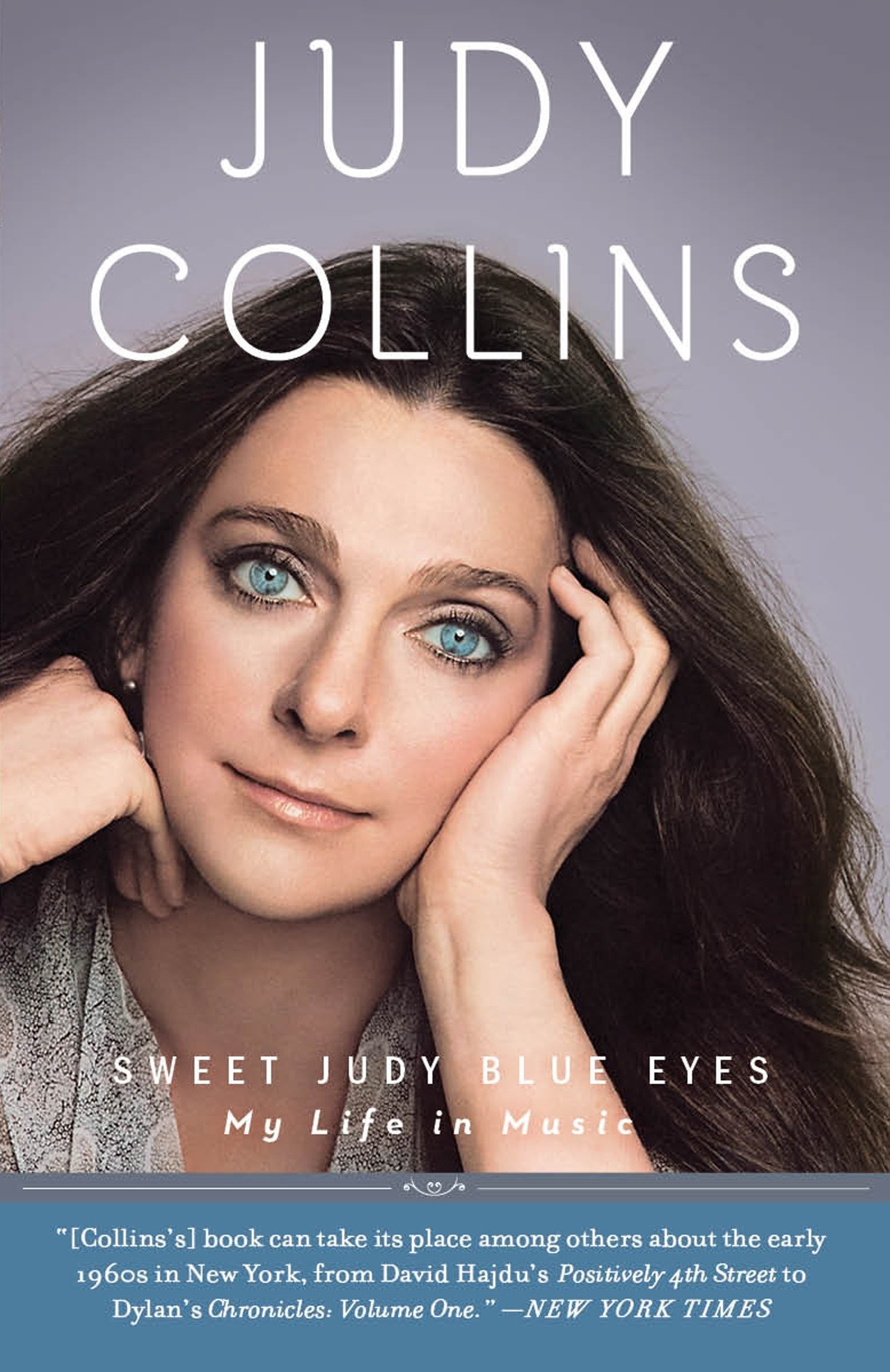
In her rather complacent autobiography Sweet Judy Blue Eyes (2012), Judy Collins remembers an imminent cat-fight with Joan Baez which is lulled by lawyers. Baez has heard that Collins wants to record “I’ll Keep It With Mine” for her Fifth Album, but claims that Bob has written that song for her. Generously, Collins writes:
“I think Bob had just forgotten whom he wrote it for, or perhaps he wanted to make Joanie mad. They had been an on-again, off-again thing for a while. I won, if you want to call it that, but I always wondered if, in fact, he had told me the truth.”
Bob had simply forgotten who he had written it for. But a paragraph later she triumphs nonetheless:
“Years later, when I was recording an all-Dylan album, I found that Bob had written extensive liner notes, in which he clearly acknowledged writing “I’ll Keep It with Mine” for me. I was, of course, honoured. Who wouldn’t be?”
Well. Never trust blue eyes.
The liner notes in question were not written by Dylan, but by Cameron Crowe. And it is certainly not “clearly acknowledged” that he wrote it for her, but that this rare tape was recorded for Judy Collins … and recording a song for a pretty girl is of course not the same as writing a song for her.
Anyhow: the first real release of “I’ll Keep It With Mine” is indeed in her name – a fairly attractive single from 1965, on which she is assisted by, among others, Al Kooper on organ and Mike Bloomfield on guitar. Critic Robert Shelton is not the only one who is impressed (“one of the best folk-rock performances yet recorded,” as he writes in The New York Times), but nevertheless the single flops and Judy discards the recording for her Fifth Album.
In 2001, the flop still bothers her a bit, apparently. Journalist Richie Unterberger writes the Liner Notes For Elektra Non-LP Rarities and quotes from an interview with Judy Collins:
“There’s a very good reason that it never made it onto an album,” Collins told me in 2001. “It’s not a very good song, particularly. Certainly not a Dylan song that lives up to its name. It doesn’t really go anywhere, the lyric’s kind of flat, and the singing is very flat.”
With which she, not very elegantly, blames Dylan for the flop. And just to be sure, she claims her right once again, misquoting Biograph once again:
“All the same, I love the idea that he said, at least said to me, that he wrote the song for me. Then he told Joanie Baez that he wrote it for her. There was some talk about that, as to who did what. Of course, he says in his retrospective album [Biograph] that he wrote the song for me.”
In addition to Mrs. Collins and Joan Baez, there is a third party, a third lady who is also claiming: the originally German Christa Päffchen (1938-1988), better known as Nico. The nature of her relationship with Dylan is somewhat diffuse. With some biographers, the story pops up that she spent a few weeks with Dylan, travelling from Paris to a town near Athens, the coastal village of “Vernilya” (according to Clinton Heylin) or “Vermilya” (according to Robert Shelton). That place does not exist in either of the two spellings.
More reliable is the bequeathed testimony of Dylan’s handyman Victor Maimudes, who tells he drove Dylan for a short sunny holiday to Vouliagmeni, a coastal town that is indeed 23 kilometres below Athens. After his death, Victor Maymudes left a whole stack of recorded cassettes, which his son Jacob processed into the book Another Side Of Bob Dylan (2014).
The trip to Greece is described fairly extensively, two pages (685 words), but Nico is not mentioned. “Two elderly ladies” are. They run a little hotel, take lovingly care of Bob “day and night” and do not speak a single word of English, which makes the stay a “charming experience”.
The source of the story that Miss Päffchen accompanies Dylan there is Nico herself, who famously has a strong tendency to mythologize and most certainly did not choke on her first lie. It is recorded by Richard Witts in his biography Nico: Life And Lies Of An Icon (1993), in which Nico greatly enhances the romantic interlude in Paris with witty observations and highly questionable statements:
“Nico didn’t understand a word of his music. “Twing, twang, twing, twang, baybee: that’s how it went.
(…)
As I was from Berlin, he asked me if I knew the playwright Brecht. I told him that Brecht had a theatre in Berlin, but we were forbidden to go there because it was in the Soviet sector. He said: “You see? That would never happen in America. At least we are free to see things.” I said, “But it’s the Americans who are stopping us walking through.” For a man who was preaching about politics, he did not know his history too well.
(…)
So, then we went together to Greece for a short time, a little place near Athens, and he wrote me a song about me and my little baby. (…) The song is titled “I’ll Keep It With Mine”.”
So, casually, she reveals that “I’ll Keep It With Mine” is about her and her son, and was given to her on the spot.
She then records the song for her debut Chelsea Girl (1967), after trying to get it on the Velvet Underground setlist earlier. On a curious bootleg, All Tomorrow’s Parties, a raw version from February 1966 can be heard – only accompanied by Lou Reed, who in fact puts the slashy, aggressive part of “I’m Waiting For The Man” under the song.
Dylan himself has trouble with the song. After the Witmark demo in June ’64, he makes two attempts at the Bringing It All Back Home sessions and eleven attempts at the Blonde On Blonde sessions in Nashville, but he can’t get it done (as Dylan seems to think; the instrumental takes, recorded without Dylan, are truly thin wild mercury beauties). The true conviction also seems to be lacking, considering his implicit rejection in the Biograph booklet:
“A lot of stuff I’ve left off of my records I just haven’t felt as been good enough. Or maybe it didn’t sound like a record to me. I never even recorded I’ll Keep It With Mine, you know… but if people like it, they like it.”
And he never performs it live either. On the other hand: those many, many studio attempts suggest that Dylan does at least suspect the song’s strength – and gets frustrated because he is unable to unleash this suspected power.
The fact that Dylan keeps returning to this song for more almost two years is probably due to the lyrics’ appeal. Crystal clear, but impenetrable. No extravagancies like guilty funeral directors, bloodthirsty train staff or Persian drunks, no wideranging excesses, but short sentences, simple words with few syllables and a sober cast: a “you” and a “me”. The two lines of verse that stand out (how long can you search for what’s not lost and I’m not loving you for what you are, but for what you’re not) are clear too.
And yet it is completely mysterious; the title alone cannot be clearly understood – what does he keep with him? “Time”? He seems unintentionally concealing, the narrator, who is a remarkably sensitive, probably older and at least a fatherly wise narrator, and who allows himself to be vulnerable – a rare appearance among the often sneering, hurting and condescending protagonists in Dylan’s love lyricism in these years. But we don’t get more than a vague representation of the things around it. The first two verses outline a comforting, loving and understanding lover, and by introducing the scenery, a platform, in the last verse, we might be tempted to think: a dramatic farewell scene – but no, he will be back tomorrow. Or will he? A weary conductor suddenly appears, trapped in the back and forth of the railway line, he will take the narrator with him. Like a ferryman of Death.
Enigmatic. And beautiful.
Like many of Dylan’s lost classics, this song is not orphaned. After Collins and Nico, dozens of artists eagerly take a shot a “I’ll Keep It With Mine”.
Fairport Convention is the first to recognize, in 1969, the slightly lurid undertone of the work and plays a brilliant version on the album What We Did On Our Holidays. The band of Richard Thompson and Sandy Denny remains committed to the song well into the 21st century.
In 2010, Dean and Britta deliver the music for thirteen Andy Warhol movies from the 1960s, and then choose the Dylan song for Nico’s screen test – and improve the light-hearted version of Nico from 1967.
And then there are the compelling version by Marianne Faithfull (on the wonderful Strange Weather, 1987), a quirky and supercooled rendition by Oh Susanna (2003), the violins of Bangle Susanna Hoffs (with Rainy Day, 1984) and the atmospheric, hollow lecture by the emo trio from Wisconsin, Rainer Maria (on Catastrophe Keeps Us Together, 2006); again it’s the ladies who score the most moving and respectful Dylan covers.
And it is also a lady to whom we can thank the perhaps most beautiful “I’ll Keep It With Mine” of the past 50 years: frontwoman Carol van Dijk from the Dutch band Bettie Serveert. Their contribution to the soundtrack I Shot Andy Warhol (1996) is both Horn of Plenty and Pandora’s Box at the same time – initially an intimately produced up-tempo pop ballad, energetically suppressed, with surprising, short contributions from the village fanfare in the first two couplets and later derailing with a wild, detonating Velvet Underground-like eruption after the last verse.
Dylan did write the song for Carol van Dijk. Case closed.
What else is on the site
You’ll find some notes about our latest posts arranged by themes and subjects on the home page. You can also see details of our main sections on this site at the top of this page under the picture.
The index to all the 594 Dylan compositions and co-compositions that we have found on the A to Z page.
We also have a very lively discussion group “Untold Dylan” on Facebook with over 2000 active members. (Try imagining a place where it is always safe and warm). Just type the phrase “Untold Dylan” in, on your Facebook page or follow this link
If you are interested in Dylan’s work from a particular year or era, your best place to start is Bob Dylan year by year.
On the other hand if you would like to write for this website, please do drop me a line with details of your idea, or if you prefer, a whole article. Email Tony@schools.co.uk
And please do note The Bob Dylan Project, which lists every Dylan song in alphabetical order, and has links to licensed recordings and performances by Dylan and by other artists, links back to our reviews
In the allegorical tale of love below, singer/songwriter Bob Dylan switches sides with regards to the drawn-out Trojan War of ancient Greek mythology. Therein, Zeus and his son Apollo decide to stand back somewhat and allow fate to take its course. On the other hand, Hera, the wife of Zeus, being angry at Paris, goes out of her way to help the Greeks attack the city where the beautiful Helen has been taken. She’s just a pawn in the game.
Dylan takes on the persona of the swift-footed Greek hero Achilles who battles Hector, the great warrior of the Trojans. According to the tale, or at least one variation thereof, Achilles’ favourite slave is seized by the Greek’s commander-in-chief just to show who’s the boss; regardless, Achilles gets invigorated in the effort to get Helen back. He slays Hector, and then drags his body behind a chariot around the walls of Troy:
I'm in no hurry
I'm not afraid of your fury
I've faced stronger walls than yours ....
They're lying and dying in their blood
Two-timing Slim
Who's ever heard of him?
I'm dragging his corpse through the mud
(Bob Dylan: Soon After Midnight)
https://youtu.be/PBYzv0bLl6g
Seems that there are at least two sides to every story involving love and war; Achilles and Hera are right from their side, Paris and Hector from theirs. In the song lyrics below, it’s Achilles, not Hector, who gets insulted. In a variation thereof, Achilles in the Greek myth dresses up as a girl:
Achilles is in your alleyway
He don't want me here, he does brag
He's pointing to the sky
And he's  hungry like a man in drag
How come you get someone like him to be your guard?
(Bob Dylan: Temporary Like Achilles)
The ancient story continues, stays alive into modern times – Achilles’ heel is not protected from mortality. Play the card game of life to the fullest since the Ace of Spades always wins in the end, no matter what. And brag all you want while you’re alive, but the foot of pride sooner or later comes down. The Eternal Footman is at your service, and you are destined to sleep alone in the ground; there’s no escape be you Caesar, be you Achilles, or be you Two-timing Slim:
This is how I spend my days
I come to bury, not to praise
I'll drink my fill, and sleep alone
I pay in blood, but not my own
(Bob Dylan: Pay In Blood)
In the words of poet Robert Frost:
The woods are lovely, dark and deep
But I have promises to keep
And miles to go before I sleep
(Robert Frost: Stopping By The Woods On A Snowy Evening)
Mother Earth awaits you, notwithstanding that there are those who believe, if you be good little boys and girls, you are literally going to live happily forever; variations of the Greek mythology multiply, and gloomy and black-humoured most be. Troilus be a young Trojan who’s slain in Apollo’s temple by the Greek Achilles. Taken aback by the sacrilege, Apollo guides the arrow shot by Paris to Archille’s heel. Troilus loves Cressida, but she’s sent to the Greek camp to be with her traitorous father; there she ignites the attention of a Greek prince, and is unfaithful to Troilus.
Geoffrey Chaucer, William Shakespeare, and Thomas Hardy (in his ‘Far From The Madding Crowd’) draw water from the wailing-well of the tale, and Bob Dylan messes with the mythology too, creates it anew:
Well, they burned my barn, they stole my horse
I can't save a dime
I got to be careful, I don't want to be forced
Into a life of continual crime
I can see for myself that the sun is sinking
How I wish you were here to see
Tell me now, am I wrong in thinking
That you have forgotten me?
(Bob Dylan: Workingman's Blues, no.2)
Yes, death awaits everybody, but that’s all the more reason to make the best of life though it has its ups and downs. An artist who writes about the bad side, by doing so, shines light on the good side – a work of art is a thing of beauty that lasts forever:
The evening sun's sinking low
The woods are dark, the town is too
They'll bring you down, they'll run the show
Ain't no telling what they'll do
Tell ol' Bill when he comes home
Anything is worth a try
Tell him that I'm not alone
That the hour has come to do or die
(Bob Dylan: Tell Ol' Bill)
It’s claimed by many that Bob Dylan is an artist of doom and gloom – tell’em it ain’t so.
What else is on the site
You’ll find some notes about our latest posts arranged by themes and subjects on the home page. You can also see details of our main sections on this site at the top of this page under the picture.
The index to all the 594 Dylan compositions and co-compositions that we have found on the A to Z page.
We also have a very lively discussion group “Untold Dylan” on Facebook with over 2000 active members. (Try imagining a place where it is always safe and warm). Just type the phrase “Untold Dylan” in, on your Facebook page or follow this link
If you are interested in Dylan’s work from a particular year or era, your best place to start is Bob Dylan year by year.
On the other hand if you would like to write for this website, please do drop me a line with details of your idea, or if you prefer, a whole article. Email Tony@schools.co.uk
And please do note The Bob Dylan Project, which lists every Dylan song in alphabetical order, and has links to licensed recordings and performances by Dylan and by other artists, links back to our reviews
(Please note that the video links originally contained herein have had to be removed. Apologies)
For now, we only have info that Bob’s playing from April 1 to April 21 (a total of 14 concerts if I’m not mistaken; as of February 4th 2020 when I’m writing this article.
This would not be the first time that Bob does such a short tour leg during the Never-Ending Tour. In fact, I think he did some shorter tours, with less than 14 concerts. But that’s just if my memory serves me well.
Anyway, this could be a very interesting tour and I’m really excited.
So, what I will do now in this and the next article is give you a potential setlist for the Japan Tour (the 14 concerts that are currently known). If more concerts get added later, we can write another article about it.
First of all, it’s nice to see Bob still touring in 2020. It’s been a long time indeed.
One of the main news that occurred is that George Receli could be back with the band after not being there for the Fall Tour 2019. Which means, Matt Chamberlain, who I felt was really good, had an unfortunately short run.
I found this only on Expecting Rain somewhere, but other than that, it’s not been mentioned. However George Receli is, of course, a much bigger name than Matt Chamberlain (at least to me, no offence) so I’m certainly excited.
But, let’s get to the main point – the setlists.
Just a little intro before I start – this article will be a mix of wishful thinking and let’s say ‘’logical’’ guesses. I don’t think I’m Olof Bjorner or something, that I think I have some kind of an authority to have ‘’logical’’ guesses, but since I’ve been studying Bob’s sets in a detailed way for years now, I must say I like my chances of writing about this.
I want to say that I would love if I could be way wrong as well. It’s really not important.
The only thing I don’t hope for is the same 2019 Fall Tour setlist. Yes, I loved the Fall Tour, but I’m not sure I would like the same set. Hopefully, not for all 14 nights in Japan. I deeply hope that won’t be the case. Even if Bob plays the same sets, I don’t care.
But in my honest opinion, based on research over the years, I think that won’t be the case.
Now, the main point – the setlist predictions, and I will do one show at a time. But before that, let’s take a look at Bob’s last setlist.
Washington,DC December 8, 2019 (via BobLinks)
Things Have Changed (Bob on guitar, Donnie on pedal steel)
It Ain’t Me, Babe (Bob on piano, Donnie on lap steel)
Highway 61 Revisited (Bob on piano, Donnie on lap steel)
Simple Twist Of Fate (Bob on piano then center stage on harp, Donnie on violin)
Can’t Wait (Bob center stage, Donnie on lap steel)
When I Paint My Masterpiece (Bob on piano then center stage with harp,Donnie on pedal steel)
Honest With Me (Bob on piano, Donnie on pedal steel)
Tryin’ To Get To Heaven (Bob on piano, Donnie on violin, Tony on standup bass)
Make You Feel My Love (Bob center stage, Donnie on pedal steel)
Pay In Blood (Bob center stage, Donnie on pedal steel)
Lenny Bruce (Bob on piano, Donnie on violin)
Early Roman Kings (Bob center stage, Donnie on lap steel, Tony on standup bass)
Girl From the North Country (Bob on piano, Donnie on violin, Tony on standup bass)
Not Dark Yet (Bob center stage, Donnie on pedal steel)
Thunder On The Mountain (Bob on piano, Donnie on lap steel)
Soon After Midnight (Bob on piano, Donnie on lap steel)
Band introduction
Gotta Serve Somebody (Bob on piano, Donnie on lap steel)
(encore)
Ballad of a Thin Man (Bob center stage on guitar, Donnie on lap steel)
It Takes A Lot To Laugh, It Takes A Train To Cry (Bob on piano, Donnie on pedal steel)
So right now, I have a core of songs. Now, I can go doing shows one by one.
Tokyo, April 1, 2020
Ah, Tokyo… A special place for Bob. So many memorable shows with amazing quality. The most recent being the 2014 and 2016 shows. Those are keepers indeed.
I don’t expect anything different here. However, the setlist I expect to change.
Also, April 1 is always interesting with Bob. He pretty much always plays something special on that date. It feels like an April Fool’s Day joke always, but it’s not. Some of the most recent ones would be: for example My Back Pages in 2009 (only performance of the song in ‘09).
Or the very recent Standing In The Doorway from 2017 in Stockholm (first performance since 2005, only performance of 2017 and the last ever performance total so far)
On the last show in 2019, Things Have Changed was played as an opener. Indeed “Things Have Changed” is pretty interesting; I think it’s now at 1000 times played total since 2000.
It’s definitely one of those Bob’s late career masterpieces, although not included on a single album.
I get it. This song fits Bob well. It’s not a surprise he plays it so much. But, on this first show of 2020, I honestly don’t expect it to be played. Instead, I expect All Along The Watchtower. Bob on guitar.
For some reason, I’m getting vibes of Seoul 2018, the first show of the Asia/Oceania Tour. Here’s the performance I’m talking about:
In this 2018 performance of Watchtower, Bob played guitar. On that song, and then on Don’t Think Twice It’s Alright right after that
That was the only time Bob played guitar in 2018.
In 2019, on the Fall Tour, he played guitar on all 39 of those shows. I expect him to continue playing it.
This would also be the first Watchtower since 2018, since it wasn’t played at all in 2019. And also, the first time as an opener since the 2018 Seoul performance.
I have just posted the last ever performance of Watchtower so far.
I expect this Watchtower to be different though than the 2018 one. A new arrangement certainly. I think we’re gonna get Beyond Here Lies Nothin’ vibes in that version… Something like that.
Anyway, yes, I think that’s the opener.
Second song, I think it’ll still be ‘’It Ain’t Me, Babe’’, but Bob on guitar, not piano. Bob hadn’t played guitar on ‘’It Ain’t Me, Babe’’ since 2017 in Wallingford. The 2017 Wallingford version with guitar resembles the 2007-2012 arrangement a lot.
It Ain’t Me, Babe was added to the set in 2017, for the first time since 2013 (Rome). Since then, it was pretty much a regular in the set, always as the second song of the night of course.
I expect the same arrangement, just Bob on guitar. I feel it would work since It’s All Over Now, Baby Blue was used with the same arrangement 4 times on The Fall Tour 2019. I think it can work.
The third, Highway 61 Revisited, I hope, is finally gonna be replaced. And for some reason, I’ve been getting signs of Maggie’s Farm returning to the set. That would be the first time Maggie Farm was played since 2009, if we only consider the Never-Ending Tour.
But, technically, Maggie’s Farm was last played at the 2011 Grammys. I honestly, don’t like that arrangement one bit, so I hope Bob plays it again, just so that last ever arrangement wouldn’t be so bad…
I expect a similar arrangement to the current Highway 61 Revisited arrangement, as the third song of the night for years now. I think it would work.
Maggie’s Farm is far from one of my favourite songs, but Bob can always change my mind with some new arrangements. Of course, Bob on piano here.
The next song should be Simple Twist Of Fate, when we’re looking at the last 2019 show setlist. And for now, I think it will stay. For this show at least. Bob on piano, same arrangement. I expect the lovely violin sounds of Donnie Herron stay as well.
The next song should be Can’t Wait. Well, yes, I expect this one to stay. Same arrangement like on the Fall Tour 2019. And after that it should be When I Paint My Masterpiece. I expect that to stay on this show as well. Same arrangement like on the Fall Tour.
The next song should be Honest With Me. This one, I don’t think will stay. And I hope it won’t. For some reason, I don’t have too much sympathy for this song.
So instead, I think I can see Bob taking Everything Is Broken from the shelf for the first since 2003.
Probably a similar arrangement to Honest With Me, which means for the first time a new arrangement for Everything Is Broken. I expect Bob to have fun and fool around with it since the lyrics are like that.
Tryin’ To Get To Heaven is next, and I honestly expect it to stay for this one. Same arrangement of course.
Now, I think before I get to Make You Feel My Love and whether it should be played or not, I think Bob will add one song in between. It’s not that interesting to have two soft songs (especially from the same album Time Out Of Mind) go one after the other. I think we need one upbeat song in between.
And what song could that be?
I expect Long And Wasted Years for this one. Yes, I know, it’s usually either an encore or the last song of the main set, but now I think it will be the 9th song of the set. I expect the same arrangement as always.
Now, Make You Feel My Love… I don’t think this one will stay for this show.
I instead expect a return of one of the old ones.. With a very warm and tender and touching arrangement: Mama, You Been On My Mind.
Yes, that one. Not played since 2009 (only 2009 performance, first since 2003).
This one could be the highlight of the night, and maybe of the entire tour. Bob on piano of course.
Okay, now we get to Pay In Blood. I expect that to stay. I used to hate it for being played so much, but it’s grown on me and deeply enjoy it now. I hope it stays. Maybe a new arrangement? Bob on piano, maybe Donnie on violin?
Now, Lenny Bruce. Yes, this one will stay for sure for this first show. Japanese fans need to hear that. And as for, Early Roman Kings.. that one I think will get taken out.
What will be the replacement? My Wife’s Hometown I think.
This is the last performance so far
It’s very similar to play, so no harm there. Finally a chance to give Early Roman Kings a rest.
Girl From The North Country should stay this time. And I think Not Dark Yet will most definitely stay as well.
Spot number 16 (since we added one song compared to the Washington 2019 show) will be a shocker in my opinion: Tell Ol’ Bill instead of Thunder On The Mountain. Similar, but different arrangement. I expect it to work.
This reminds of those Huck’s Tune performances of 2014, or the many 2013-2015 performances of Waiting For You.
Some of the songs from Bob’s soundtracks were played and played well in Japan. Tell Ol’ Bill was missed out so far on too many occasions. It’s a chance to finally play it.
That’s all the changes that’ll happen I think.
Now let’s have a better look at the set.
Tokyo, April 1, 2020
All Along The Watchtower (first since 2018) (Bob on guitar)
It Ain’t Me, Babe (Bob on guitar, for the first time on this song since 2012)
Maggie’s Farm (first since 2009 (Never Ending Tour) or 2011 (Grammys) in public in general) (Bob on piano)
Simple Twist Of Fate (Bob on piano then center stage)
Can’t Wait (Bob center stage)
When I Paint My Masterpiece (Bob on piano then center stage)
Everything Is Broken (first since 2003) (Bob on piano)
Tryin’ To Get To Heaven (Bob on piano)
Long And Wasted Years (Bob center stage)
Mama, You Been On My Mind (first since 2009) (Bob on piano then center stage on harp)
Pay In Blood (Bob center stage)
Lenny Bruce (Bob on piano)
My Wife’s Hometown (first since 2011) (Bob center stage)
Girl From The North Country (Bob on piano)
Not Dark Yet (Bob center stage)
Tell Ol’ Bill (live debut) (Bob on piano)
Soon After Midnight (Bob on piano)
Gotta Serve Somebody (Bob on piano) (followed by encore)
Ballad Of A Thin Man (Bob on guitar) (followed by band introductions)
It Takes A Lot To Laugh, It Takes A Train To Cry (Bob on guitar, first time for this song, at least since this song was added to the set in 2018)
Now we come to the huge issue of what was Dylan writing about in the Basement Tapes.
In what follows a few songs which I’ve relegated to the category of “larking about” are not listed as they seem to have no subject beyond the fun element. See you later Allen Ginsberg (1 and 2).
For the most part I have expressed the meaning of the essence of each song twice – once in a few words in brackets, and then summarised that summary in one word, which I have put in bold.
Now of course for you to accept my analysis of the songs as a whole, you will have to go along with the meaning of each song – or at least the meaning of the majority. So if you do agree with my interpretations, this is what we get in terms of the subject matter of the first 20 Dylan compositions from the complete Basement Tapes recordings.
Change – 4
Love and lust – 7
Party freaks – 3
Relationships – 1
Life is a mess – 3
Disaster – 1
Now that surprised me – to be able to take the first 19 songs that Dylan composed and which were simply played out on the Basement Tapes, and be able to put them in categories at all was not something I was expecting to happen.
I’m now going to carry on with the next set of 20 or so Dylan originals from the Complete Tapes and see if the same sort of simple analysis of meanings can be given to the song. The ultimate aim, of course, is to see how Dylan was thinking at this time – that is to say, what subjects were interesting him at the time. Since I am publishing these pieces as I write them, at the moment I have no idea what the answer is, but I am intending at the end of the series to try and pull the pieces together.
Producer Bob Johnston’s work ethic is absurd as it is, but the production he runs in 1969 exceeds the absurd.
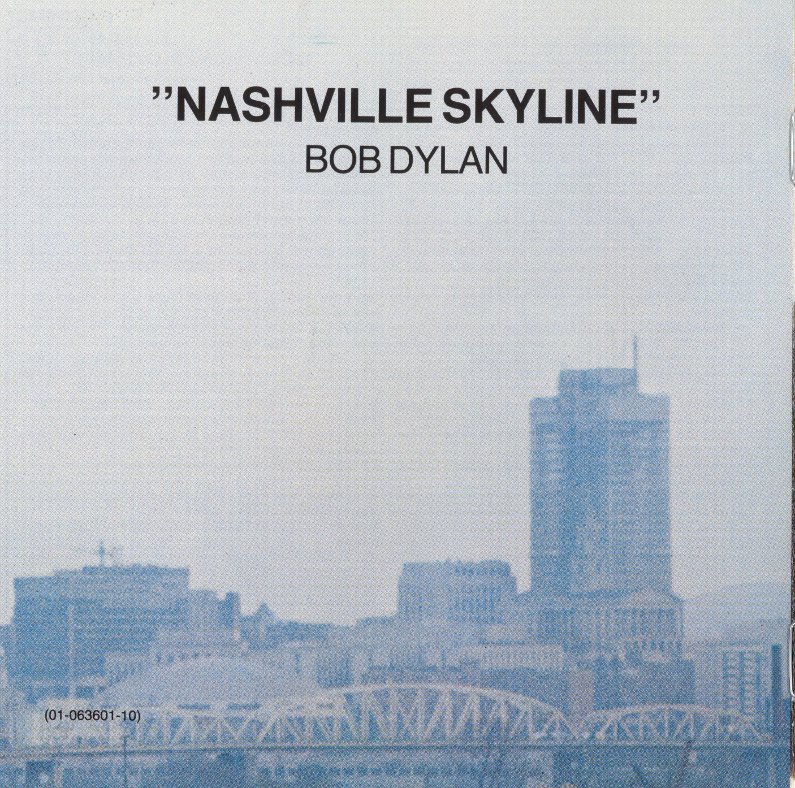
Dylan’s Nashville Skyline, Leonard Cohen’s Songs From A Room, The Byrds (Dr. Byrds & Mr. Hyde), Dan Hicks, two Johnny Cash records (The Holy Land and At San Quentin), Marty Robbins, Flat & Scruggs, Moby Grape … and this is still an incomplete list.
He brings it on himself. He deliberately plans recording sessions for Dylan and Cash on the same day, hoping that the two giants will meet each other and perhaps then, in a cheerful mood, record some songs together. It does mean that Johnston works twenty-hour days, but it pays off (officially we won’t hear the result until 2019, on The Bootleg Series Vol. 15: Travelin ‘Thru, 1967–1969).
And when Moby Grape calls, the band is told that he has exactly three days (27, 28 and 29 May) to record an entire album with them – take it or leave it and find another producer (the result, Truly Fine Citizen, is clearly a rush job, but still truly fine).
Busy, busy. Yet, when Ches Millican of Epic Records in London calls Johnston in March ’69 to ask if he can do the new single for Georgie Fame, Johnston says: “Sure.” He gets on the plane and even makes time in London for an interview with Melody Maker (March 15, 1969):
“I told CBS I’d give him a Top 10 record, and then give him one in the States. They said would I like to put that on paper, and I said I would. I’ve got a couple of Dylan’s songs for him and we’ll make the final choice from three I have in mind.”
Johnston is still employed by CBS in those days, which may explain this atypical big talk about that guaranteed “Top 10 hit”. He probably feels like a few days of working holiday on the other side of the ocean, and this is how he sells the “working holiday” to his boss.
The Wessex Studios at Highbury New Park is within hearing distance of Arsenal, so no recordings are made during matches. A super trio is waiting for Johnston, ready to record the basic tracks. Apart from Georgie Fame we have Jack Bruce’s armoured concrete bass (Jack now having some spare time in between the breakup of Cream, November ’68 and his first solo album Songs For A Tailor, September 1969), and England’s best session guitarist, legendary Chris Spedding (who will also assist Jack Bruce on his solo albums).
Johnston records two Dylan songs with the men. The third song, the song he says he “has in mind”, is unknown, but a year later Chris Spedding records his own solo album Backwood Progression, with a surprising version of the then rather obscure Basement song “Please Mrs. Henry “.
Recorded will be the B-side of the upcoming single, “I’ll Be Your Baby Tonight”. That is, after the original with Bob Dylan and the somewhat dubious cover by Burl Ives for his peculiar LP The Times They Are A-Changin’ (1968), already Johnston’s third professional studio recording of the same song within a year and a half. Georgie Fame gives it a completely misplaced, but still infectious, very Londonesque Swinging Sixties twist.
And the A-side of the “guaranteed Top-10 hit” will be that other maverick from John Wesley Harding: “Down Along The Cove”.
It is a brave choice. Of the two odd ducks out, “Down Along The Cove” is the ugly duckling. The hit potential and charm of “I’ll Be Your Baby Tonight” are recognized from day one and since then confirmed almost continuously, but “Down Along The Cove” is not only skipped by almost the entire music world, but is also ignored by the master himself – it takes no less than twenty-two years, until 1999, before he finally performs the song. Successfully and satisfactorily, by the way: until 2006 it is on the set list more than seventy times.
With a remarkable twist, though. Already at the premiere, in 1999, almost all words are different. In 2003 Dylan introduces a completely revised, twice as long text. Lyrics changes as such are not that special, but the poet’s official stamp is quite exceptional; apparently he finds the text revision so important that he has the new text included in the next edition of Lyrics, in Lyrics 1962-2001 (2004). Only one other example of such a manoeuvre is known – “Gonna Change My Way Of Thinking”, the Slow Train Coming song from 1979. Of both songs, the revised second version, is from 2004 officially printed after the original lyrics as “alternate version” and also published on the site. The copyright of the rewritten “Down Along The Cove” was established in 2002.
Mysterious. The lyrics of a cathedral like “Tangled Up In Blue” change continuously and much more drastically, Dylan himself declares the Real Live version (1984) “more like it should have been, the imagery is better” but even that doesn’t move him to also officially changing the lyrics.
The revised text is more than twice as long (from three to six verses, but also from 106 to 230 words), and only the “Down along the cove I spied my little bundle of joy” line is maintained.
The original lyrics are not very inspired and not surprising, that is true. In the first verse he sees his true love walking along the water, in the second verse this bundle of joy, his sweet son apparently, and in the third verse the beloved and he walk, in love and all, hand in hand “down along the cove”, along that creek. No outlaws, no saints, jokers, thieves or vagrants, no mysterious, loaded dialogues or ominous set pieces … not only musically “Down Along The Cove” marks a radical break with the previous ten songs on John Wesley Harding, but also lyrically, all in all.
This may be an explanation for Dylan’s remarkable intervention; refine it a little to make it fit a little better. That “bit of refinement” then gets a bit out of hand (it is a complete renovation plus annexe) and anyway: renovation would be a pointless motivation (the album is the album, after all), but the spirit of the lyrics changes seems to indicate so.
The second verse introduces “a bunch of people” with evil intentions – similar to the nameless, intimidating groups of people in “Drifter’s Escape”, “I Am A Lonesome Hobo” and “The Wicked Messenger”.
The exclamation “Lord have mercy” is promoted to recurring refrain line and is now at the end of each verse (like he was never known in the song “John Wesley Harding”).
Couplets are now enriched with enigmatic, moralistic rhetoric such as
They’re gonna knock you when you’re up
They’re gonna kick you when you’re down
… and above all: the poet Dylan pushes the whole song back a century, to the nineteenth century, to the time of the Wild West.
He does so by using a decor piece that we still know from his old song “Rambling, Gambling Willie” from 1962:
Sailin’ down the Mississippi to a town called New Orleans,
They’re still talkin’ about their card game on that Jackson River Queen.
“I’ve come to win some money,” Gamblin’ Willie says,
When the game finally ended up, the whole damn boat was his.
And it’s ride, Willie, ride,
Roll, Willie, roll,
Wherever you are a-gamblin’ now, nobody really knows.
… so the Jackson River Queen casino boat, the famous steamboat that sails up and down the Missississippi and is apparently gambled away by the captain to that darn Willie. The boat never existed, by the way. Dylan ties together the names of two famous nineteenth-century river boats (the River Queen and the General Jackson).
His intention to insert that mood-determining boat almost fails, partly due to his own negligence. Incomprehensibly Dylan leaves the transcription of the new text to the same hard-of-hearing dyslexic who also hears “Cold black water dog” in “Tell me, Momma” and “because the bird is here and you might want to enter it” in “Sign On The Cross” (and dozens of other horrors).
Here the transcriptor on duty makes a slightly less colourful mess: The Jacks and the River Queen. But it remains odd that Dylan, who apparently makes it a point that this revised text is included in the new edition of the official Lyrics, allows such a hare-brained transcription to pass again. And again. The corruption has still not been corrected in the next edition of Lyrics (2016) nor on the site. On the stage he sings in any case:
Down along the cove I seen the Jackson River Queen
Down along the cove I seen the Jackson River Queen
I said, “Lord have mercy, baby
Ain’t that the biggest boat you ever seen?”
The boat has no further substantive function, so is apparently only used as a set piece, is only mentioned to move the entire song back to the second half of the nineteenth century, to the time of John Wesley Harding.
The other, less drastic style break in “Down Along The Cove” is rightly praised: the use of steel guitarist Pete Drake. The music of the ten songs before this one is provided by the trio Dylan (guitar and harmonica), drummer Kenny Buttrey and Charlie McCoy on bass.
For this song Dylan takes place at the piano (for the second time, after “Dear Landlord” and for the first time a fourth musician, Pete Drake, is admitted. In the first verse, Drake limits himself to short, beat-like, percussive accents, causing the listener to hear a normal electric guitar in the first instance, but then he draws his long, dramatic lines and short, melodic licks over the strings – pushing the record for the first time towards more traditional country. Kenny Buttrey wakes up, racing over the toms as in his best “Absolutely Sweet Marie” moments.
Ignored, but not completely ignored, this “Down Along The Cove”.
Guitar legend Davey Graham (back then still “Davy”) uses the song as a framework for his virtuosity on the album Hat (1969), and as an unlikely bridge between his guitar arrangement of Purcell’s baroque “Hornpipe for Harpsichord” and Willie Dixon’s blues classic “Hoochie Coochie Man”.
Closer to the source is Duane Allman’s approach in 1970, on the album Ton-Ton Macoute! Originally intended as a solo album, but turned into a Johnny Jenkins record – solid Southern Blues Rock, as can be expected from the Allman just before the founding of the Allman Brothers.
An elegant echo of that exercise sounds forty-one years later, forty years after Duane’s death, as Steely Dan frontman and loyal Dylan fan Donald Fagen surprisingly enters the stage at a concert of the Allman Brothers Band in New York (March 17, 2011). He sings and plays “Down Along The Cove”, Duane’s brilliant play on the slide guitar is masterfully provided by his true heir, Derek Trucks.
A little earlier in the twenty-first century, in 2006, one of Dylan’s session musicians records the best cover: the tireless, ever-running guitarist Duke Robillard, on his Groove-A-Rama album – an irresistible, smoothly swinging rockabilly arrangement of “Down Along The Cove”.
The smooth swing also has the legendary Bob Johnston production of Georgie Fame’s cover, plus the very Londonesque Swinging Sixties charm of heavy horns and groovy background singers.
It won’t be a Top 10 hit though. Neither Top 20. Georgie Fame’s “Down Along The Cove” never even scratched the hit parade at all.
But he did make an impression still. When a few months later, in August 1969, Dylan is in England for the performance at Wight, a reporter asks if he would like to meet anyone here in England.
“I’m hoping to meet anybody who’s around. I’d like to meet The Who and maybe Georgie Fame.”
What else is on the site
You’ll find some notes about our latest posts arranged by themes and subjects on the home page. You can also see details of our main sections on this site at the top of this page under the picture.
The index to all the 594 Dylan compositions and co-compositions that we have found on the A to Z page.
We also have a very lively discussion group “Untold Dylan” on Facebook with over 2000 active members. (Try imagining a place where it is always safe and warm). Just type the phrase “Untold Dylan” in, on your Facebook page or follow this link
If you are interested in Dylan’s work from a particular year or era, your best place to start is Bob Dylan year by year.
On the other hand if you would like to write for this website, please do drop me a line with details of your idea, or if you prefer, a whole article. Email Tony@schools.co.uk
And please do note The Bob Dylan Project, which lists every Dylan song in alphabetical order, and has links to licensed recordings and performances by Dylan and by other artists, links back to our reviews
The prophet Jeremiah, with metaphors abounding, warns that the God of the Hebrews is sending the Babylonian army from the north to destroy Jerusalem (Zion) because so many inhabitants of Judah practise idolatry.
Best it seems if you’re going to bring bad news, it’s best not to bring any:
And they let down Jeremiah with cords
And in the dungeon there was no water, but mire
So Jeremiah sunk in the mire
(Jeremiah 38:6)
Singer/songwriter Bob Dylan presents a secularized version of the cistern story; he turns it into a nursery rhyme:
The cat's in the well, and grief is showing its face
The world's being slaughtered, and it's such a bloody disgrace
(Bob Dylan: Cat's In The Well)
https://youtu.be/bboaKIQgw-0
Jeremiah of the Holy Bible broadcasts God’s warning, but few listen:
A voice was heard in Ramah
Lamentation, and bitter weeping
Rachel weeping for her children
(Jeremiah 31:15)
A message that’s repeated in the New Testament – Matthew 2:18.
Below, Bob Dylan takes on the persona of prophet Jeremiah, and envisions an America that’s full of idol-worshippers:
Jeremiah preached repentance
To those who would turn from hell
But the critics all gave him such bad reviews
Put him down at the bottom of the well
He kept on talking anyway
(Bob Dylan: Yonder Comes Sin)
Akin to Judah of yore, America is depicted as the Whore of Babylon, she who’s described in The Revelation of the New Testament:
How hath the Lord covered the daughter of Zion with a
cloud of His anger
And cast down from heaven unto the earth the beauty of Israel
And remembered not his footstool in the day of His anger
(Jeremiah 2:1)
Nevertheless, Jeremiah preaches that God promises a new covenant, renewed hope and a strengthened heart for all Hebrews in the future; the figurative female whore Judah will become faithful to the male Hebrew God. The Christianity of the New Testament simply revises the tale with Jesus as groom.
A story that’s repeated in the song lyrics below albeit ironically, and double-edged – with a nod to Frederick Nietzsche:
Covenant woman got a contract with the Lord
Way up yonder, great will be her reward
Covenant woman, shining like a morning star
I know that I can trust you to stay where you are
(Bob Dylan: Covenant Woman)
Even on a gospel-like record album, Dylan can’t resist messing around with biblical themes.
Below, the singer/songwriter shoots his mouth off like Jeremiah, but transforms Judah into Claudette:
The world's coming to an end
The wiseman standing around like furniture
What can I say about Claudette? ...
She could be in the mountains or the prairies
Or running a whorehouse in Buenos Aires
(Bob Dylan: The Groom's Still Waiting At The Altar)
A disguised reference the lyrics above be to an unfaithful wife:
Claudette, pretty little pet Claudette
Never make me fret
The greatest little girl that I've ever met
(Roy Orbison: Claudette)
Indeed, the prophet Jeremiah concludes by depicting the Almighty Himself as rather unfair:
Because of the mountain of Zion
Which is desolate
The foxes walk upon it
Thou, O Lord, remainest for ever
Thy throne from generation to generation
Wherefore dost Thou forget us for ever
And forsake us so long time?
Turn us unto Thee, O Lord
And we shall be turned
Renew our days as of old
But Thou hast utterly rejected us
Thou art very wroth against us
(The Lamentations Of Jeremiah 5:18-22)
What else is on the site
You’ll find some notes about our latest posts arranged by themes and subjects on the home page. You can also see details of our main sections on this site at the top of this page under the picture.
The index to all the 594 Dylan compositions and co-compositions that we have found on the A to Z page.
We also have a very lively discussion group “Untold Dylan” on Facebook with over 2000 active members. (Try imagining a place where it is always safe and warm). Just type the phrase “Untold Dylan” in, on your Facebook page or follow this link
If you are interested in Dylan’s work from a particular year or era, your best place to start is Bob Dylan year by year.
On the other hand if you would like to write for this website, please do drop me a line with details of your idea, or if you prefer, a whole article. Email Tony@schools.co.uk
And please do note The Bob Dylan Project, which lists every Dylan song in alphabetical order, and has links to licensed recordings and performances by Dylan and by other artists, links back to our reviews
Let’s start with David Crosby here. Crosby and Dylan have been friendly since the mid-60s since Bob dropped into an early Byrd’s session. But Crosby says he heard him before he ever even made a record:
“I first heard him in New York City and he was the hot new thing right then. My first thought was…’I can sing better than that!’ Then I started listening to the words…I had to think really hard if I wanted to try and stay in the music business! His songs took you on voyages and I was completely impressed by the time I walked out of there.”
Further adventures with Dylan followed as outlined by Tony in his review for “Day Of The Locusts”.
Here is a nice video of Dylan sharing a mic with Crosby during a version of “Mr Tambourine Man” with McGuinn and Hillman in the 1990 Roy Orbison Tribute Concert.
In the same year, Crosby was also asked to sing backing vocals on some of the tracks on “Under The Red Sky” – including “Born In Time” and “2×2”.
“…He’s got his own style! He tends to want to catch some kind of magic in the moment that isn’t too rehearsed. He said, “Well let’s do this song”, and I said, “Sure, why don’t you show it to me so we can work out a harmony? He said ”urrgghh…okay” and sings me the song. I asked if he could do it again and he said, “Let’s just go in the studio.”
We go in and I try my level best to sing something that makes with the song but, of course, when he goes in the studio he sings it different than the time before. That’s his nature. He’s anything but a harmony singer. He’s fun to hang with, certainly fun to talk to, and writes fantastic lyrics, but he doesn’t make it easy on somebody to sing harmony with”.
Moving onto Stephen Stills now. His first performance of a Dylan song came on the “Super Sessions” album with Bloomfield/Kooper/Stills…although Bloomfield and Stills never actually played together. Bloomfield appears on side 1 and Stills on side 2. And it is on side 2 we find this excellent version of “It Takes A lot To Laugh, It Takes A Train To Cry.”
One further Dylan cover came on the 1991 acoustic album “Stills Alone”. Here is a wonderful take of “Ballad Of Hollis Brown”.
A track from Crosby, Stills, Nash & Young 1999 reunion album “Looking Forward” called “Seen Enough” uses the verbal meter and rhythm from “Subterranean Homesick Blues” – so much so that Stills even calls it out on the sleeve notes. It is one of Stills finest lyric in my opinion. Here is a live version with the full CSNY band, see what you think.
https://m.youtube.com/watch?v=3ufA8Xvnqh0
Last, but not least its Graham Nash. Going back to his time with The Hollies, Dylan is the very reason why he left the group. They wanted to record an all Dylan covers album called “The Hollies Sing Dylan”. Nash was against the idea from the start for 2 reasons, firstly, he had enough great songs of his own he wanted to record and secondly, he did not like the schmaltzy showbizzy arrangements they had come up with. He stuck around for one song “Blowing In The Wind” (Blow-o-o-o-in in the wind) and then split to hang with Crosby and Stills. He wasn’t wrong!
In 1969 Nash took part in a song swap session at Johnny Cash’s house with Dylan, Cash, Joni Mitchell and Roy Orbison amongst others. Each participant told stories and sang songs they had recently written, but not yet recorded. Mitchell sang “Both Sides Now”, Shel Silverstein sang, “A Boy Named Sue”, Kristofferson sang “Me & Bobby McGee”. Dylan stopped everyone in their tracks when he sang “Lay Lady Lay”. And Nash sang “Marrakesh Express”. His was the only song that Dylan asked to be sung again. I’m sure he has dined out on the story many a time over the years. Years later Johnny Cash wrote a song about the night for the 2nd Highwaymen album – “Songs That Make A Difference”.
Here is “Marrakesh Express” – the song that impressed Dylan so much.
In 1979 Graham Nash was involved in the MUSE – No Nukes concert and joined John Hall, James Taylor and Carly Simon in a version of “The Times They Are A-Changin’”. The version was released on the accompanying album.
Now that the three members appear to have had a permanent falling out, it seems unlikely that we will see any further music from the group. So let’s close with a video of all three in happier times, from the live album “CSN 2012” here is a version of “Girl From The North Country.”
You’ll find some notes about our latest posts arranged by themes and subjects on the home page. You can also see details of our main sections on this site at the top of this page under the picture.
The index to all the 594 Dylan compositions and co-compositions that we have found on the A to Z page.
We also have a very lively discussion group “Untold Dylan” on Facebook with over 2000 active members. (Try imagining a place where it is always safe and warm). Just type the phrase “Untold Dylan” in, on your Facebook page or follow this link
If you are interested in Dylan’s work from a particular year or era, your best place to start is Bob Dylan year by year.
On the other hand if you would like to write for this website, please do drop me a line with details of your idea, or if you prefer, a whole article. Email Tony@schools.co.uk
And please do note The Bob Dylan Project, which lists every Dylan song in alphabetical order, and has links to licensed recordings and performances by Dylan and by other artists, links back to our reviews
The scanty instrumentation and the old-fashioned, simple song structures of The Basement Tapes Dylan brings along to Nashville, where in October 1967, after a year and a half absence, he finally returns to a real studio to work on a real album. That will be John Wesley Harding, Dylan’s eighth LP.
The big difference with those Basement Tapes is in the lyrics. The songs in the basement are mostly made up on the spot, done in real time, are nonsense, funny, ceremonial (“I Shall Be Released”), cheerful and even childish. But for the lyrics of John Wesley Harding Dylan takes his time – they have been worked on, they were written well before the recordings – incidentally, an unusual modus operandi for the bard.
Just like on Blonde On Blonde, the lyrics are still suggestive and elusive, but also much more precise, more resolute and seemingly more understandable. “What I’m trying to do now is not use too many words,” Dylan says, according to Wikipedia, in an interview in 1968, “There’s no line that you can stick your finger through, there’s no hole in any of the stanzas. There’s no blank filler. Each line has something.”
The alleged interview itself is untraceable, but the quote does fit. Dylan now avoids the wordy decorations colouring songs like “Visions Of Johanna” and “Desolation Row” – according to this quote, every metaphor, all images, are functional. But even though the poetry is now precise, concise, clear – ambiguous it remains.
It is Kafka all over again. The Kafka who already in 1898, aged 15, had an idea of the literature he wanted to write:
“To describe reality in a realistic way, but at the same time as a “floating nothing”, as a clear, lucid dream, so as a realistically perceived irreality.”
(the so-called Laurenziberg-Erlebnis, in his Aufzeichnungen aus dem Jahre 1920)
And, like Kafka, Dylan does not shun references to and use of the Old Testament language.
Mother Beatty Zimmerman confirms that her Bob scrolls through the Bible a lot at that time. It is always open, on a standard in the living room, and Bob “is continuously getting up and going over to refer to something.” However, clear, demonstrable Bible references are not really here. In the book of Isaiah (20 and 21) there are a few images to be found (the barefoot servant, a few horsemen, a lion and a watchtower), but without further relationship with the lyrics. It is an inspiring chapter, apparently; the “sequel” of Harper Lee’s masterpiece To Kill A Mockingbird, found in 2015, is called Go Set A Watchman – a quote from Isaiah 21.
The connection between the Bible book and Harper Lee’s youth work (it is actually Lee’s first work, the work from which Mockingbird was ultimately distilled) is fairly easy to identify. That cannot be done with “All Along The Watchtower”. A click with Kafka, with a story like Der Aufbruch (“The Departure”), is easier and clearer:
I ordered my horse to be brought from the stables. The servant did not understand me. So I went to the stables myself, saddled my horse, and mounted. In the distance I heard the sound of a trumpet, and I asked the servant what it meant. He knew nothing and had heard nothing. At the gate he stopped me and asked: “Where is the master going?” “I don’t know,” I said, “just away from here, just away from here. Away from here, nothing else, it’s the only way I can reach my destination.” “So you know your destination?” he asked. “Yes,” I replied, “I’ve just told you. Away-from-here — that’s my destination.”
The miniature illustrates on a microlevel the magical power of Kafka’s longer stories and novels. Clear, simple sentences, transparent, accessible language, masking the contents’ impenetrability at first. The discomfort gradually creeps in – something is off, here. It is only on re-reading one notices: in terms of content, no sentence connects logically with the previous one. The servant doesn’t understand him? He doesn’t understand “Get my horse”? Strange. Just as strange as mylord’s reaction thereon: he goes to the stable himself. And like this, it goes on. One absurdity, or rather: illogicality follows the other. The servant stops his master and interrogates him, the master allows himself to be stopped and also answers the questions – and those answers, too, are not in line with his own next answer.
Here, Kafka makes fairly explicit what the premise is of his great works: the omission of context. We will never know how and why Gregor Samsa turns into a beetle (The Metamorphosis), just as it is not revealed why Josef K. is arrested or what he is accused of (The Trial).
Dylan the Poet proceeds in a similar way, in this creative phase. Clear language, short, uncomplicated sentences, but the lack of context makes the narrative inaccessible, unrealistic; like a dream, like a realistically described irreality.
Apparently, the joker perceives the situation in which he and the thief are as threatening or at least uncomfortable, but the context remains out of the picture for the reader/listener – we only get confusion increasing, presumably metaphorical hints about the circumstances. His wine is drunk by businessmen, farmworkers dig his soil.
Even the comforting words of the thief are undoubtedly relevant in his reality, but extra stressing for the reader: this is not our fate. “This”? What is this? We won’t know. The camera swings, two riders arrive in the distance – or are they the joker and the thief, and does the flashback start here?
Others do find Biblical references (Revelation is popular) or can interpret biographically. The businessmen who drink his wine then are the record company big shots running off with Dylan’s earnings, for example, the ploughers who “dig my earth” are the artists who try to imitate Dylan. And the inevitable diary diggers, who manage to wriggle out something with Sara, Joan Baez or fumbling with other women (the wildcats). Verse lines are shuffled around at the instigation of Dylan himself, who in the interview with John Cohen (1968) says about this song: “Here we have the cycle of events working in a rather reverse order” – the third verse “in fact” being the first.
And a film fan points to the very coincidental similarities with the opening scene of the monumental The Good, The Bad and The Ugly (Sergio Leone, 1966); two horsemen are approaching from afar, and lo, the wind is howling and behold, an animal (wildcat?) is snarling aggressively. (But alas: while the film was made in 1966, it was only released in the United States on December 29, 1967 – more than seven weeks after Dylan recorded his song).
Dave Van Ronk, who knows Dylan well, since his first steps in the New York folk scene, has fewer illusions:
“After a while, Dylan discovered that he could get away with anything – he was Bob Dylan and people would take whatever he wrote on faith. So he could do something like All Along the Watchtower” which is simply a mistake from the title on down: a watchtower is not a road or a wall, and you can’t go along it.”
Which also makes curious about Dave’s opinion on Kafka’s most famous parable Vor dem Gesetz (“Before The Law”), from the novel The Trial (1925). A persistent countryman waits for years and years “before the Law”, because an adamant gatekeeper “cannot grant admittance at the moment”.
Probably wrong from the title on down, in Mr. Van Ronk’s eyes; “You can’t stand before the Law.”
Dylan’s tone and instrumentation are perfect. Three chords (in the uncomplicated scheme Am-G-F), drums, bass and a guitar, and an ominous, lugubrious harmonica part. Just like the lyrics, the music promises a climax, an all-encompassing apotheosis which, like the lyrics, never comes.
Most covers, and there are many, many of them, collapse under the tension and end up in a climax, artificially apply suspense (per subsequent verse step-by-step addition of instruments and melody lines is very popular), turning it into a narrative symphony.
Nothing wrong with that by the way – “All Along The Watchtower” is indestructible, every cover has an appeal. If not on an emotional, dramatic level, then at least on a physical level: it is a beloved feet stamper and head banger.
Multi-purpose too, apparently. The song is used in dozens of films, quoted in literature, newspapers and graphic novels, pops up in video games (in Ghost Recon, Just Cause 3 and in Mafia III, for example), Hendrix’ version is, along with Creedence’s “Fortunate Son” more or less compulsory in Vietnam documentaries, the song and the lyrics play an atmospheric or even dialogue-directing role in television series such as Lucifer, The Young Pope (see below) and especially Battlestar Galactica (a brilliant, Indian adaptation).
https://www.youtube.com/watch?v=J1__dINxiXU
And across half a century it is a classic that has been covered hundreds, no thousands of times; from the Olympus (U2, Clapton, Neil Young) via the Tower of Babel (the song has been translated into every conceivable language) down to the school bands in the bicycle cellar: everyone who can hold a guitar succumbs.
The ultimate cover is, obviously, Jimi Hendrix’ masterpiece. Even Dylan himself acknowledges that Hendrix’ version is more powerful than the original. He not only expresses this recognition in writing (in the liner notes at Biograph) and orally, in the MusiCares speech;
“After he became famous, he took some small songs of mine that nobody paid any attention to and pumped them up into the outer limits of the stratosphere and turned them all into classics. I have to thank Jimi, too”
… but he demonstrates his admiration too, to this day – Dylan performs “All Along The Watchtower” usually á la Hendrix. And he often does so: he has closed hundreds and hundreds of concerts with it, it is his most performed live song (more than two thousand times).
Never changing the lyrics, by the way.
The Young Pope:
What else is on the site
You’ll find some notes about our latest posts arranged by themes and subjects on the home page. You can also see details of our main sections on this site at the top of this page under the picture.
The index to all the 594 Dylan compositions and co-compositions that we have found on the A to Z page.
We also have a very lively discussion group “Untold Dylan” on Facebook with over 2000 active members. (Try imagining a place where it is always safe and warm). Just type the phrase “Untold Dylan” in, on your Facebook page or follow this link
If you are interested in Dylan’s work from a particular year or era, your best place to start is Bob Dylan year by year.
On the other hand if you would like to write for this website, please do drop me a line with details of your idea, or if you prefer, a whole article. Email Tony@schools.co.uk
And please do note The Bob Dylan Project, which lists every Dylan song in alphabetical order, and has links to licensed recordings and performances by Dylan and by other artists, links back to our reviews
In ancient Roman/Greek mythology the cypress tree becomes a symbol of permanent mourning.
Apollo, the sun-god, the twin of the moon goddess Artemis (Diana), gives a beloved boy a gift of a stag. The lad accidentally kills the deer, and the grief-stricken youth is turned into a cypress tree by Apollo.
The cypress tree be an objective correlative that represents persons who are unable to rise above their sorrows. The oak tree, on the other hand, symbolizes the strength of Apollo’s father Zeus, the God of Thunder:
And the oak tree, and the cypress
Grow not in each other's shadow
(Kahlil Gibran: The Prophet)
In the following song lyrics, the figurative oak tree suffers, but heals itself, and carries on coping with life’s ups and downs:
The sharp hills are rising from
The yellow fields with twisted oaks that grow
Won't you meet me out in the moonlight all alone?
(Bob Dylan: Moonlight)
https://youtu.be/U6bEiBcFcLs
Fast forward ahead in time, and John Greenleaf Whittier, an associate of the American Transcendentalist Movement, seeks to follow the Spirit of the loving God that pervades all of Nature by supporting the abolitionist movement, but he’s against the violence of war, and so attempts to do so by non-violent means.
Whittier chastises those who just sit around and do nothing when they’re aware of wrong-doing:
They sat in silent watchfulness
The sacred cypress tree about
And, from beneath old wrinkled brows
Their failing eyes looked out
(John Whittier: The Cypress Tree Of Ceylon)
Modifying Alfred, Lord Tennyson’s aphorism ‘do or die’, Whittier declares, “Our hearts can do and dare.” The horrors wrought by the American Civil War give the American poet pause for thought.
On the microlevel of personal struggles with a love relationship, the following mournful message is transmitted:
I waited for you on the running boards
Near the cypress trees, while the springtime turned
Slowly into autumn
(Bob Dylan: Idiot Wind)
Even in the summertime, things can be said or done that be too late to do any good:
Scarlet Town, in the hot noon hours
There's palm-leaf shadows, and scattered flowers
Beggars crouching by the gate
Help comes, but it comes too late
(Scarlet Town: Bob Dylan)
In mythology, to Apollo’s twin sister Artemis (Diana/Selene), the cypress is a sacred tree.
In the poem below by a sad-eyed poet, Artemis weeps for the melancholic poet John Keats who yearns for everlasting beauty:
At midnight when the moonlit cypress trees
Have woven round his grave a magic shade ....
Selene weeps while all the tides are stayed
And the swaying seas are darkened into peace
(Sara Teasdale: For The Anniversary Of John Keats' Death)
In the song lyrics below, the narrator, Apollo-like, proffers that it’s better to say or do something before the desolation of winter, oft envisioned by writers as a correlative for death, sets in.
The boulevards of cypress trees
The masquerades of birds and bees
The petals, pink and white, the winds have blown
Won't you meet me in the moonlight all alone?
(Bob Dylan: Moonlight)
What else is on the site
You’ll find some notes about our latest posts arranged by themes and subjects on the home page. You can also see details of our main sections on this site at the top of this page under the picture.
The index to all the 594 Dylan compositions and co-compositions that we have found on the A to Z page.
We also have a very lively discussion group “Untold Dylan” on Facebook with over 2000 active members. (Try imagining a place where it is always safe and warm). Just type the phrase “Untold Dylan” in, on your Facebook page or follow this link
If you are interested in Dylan’s work from a particular year or era, your best place to start is Bob Dylan year by year.
On the other hand if you would like to write for this website, please do drop me a line with details of your idea, or if you prefer, a whole article. Email Tony@schools.co.uk
And please do note The Bob Dylan Project, which lists every Dylan song in alphabetical order, and has links to licensed recordings and performances by Dylan and by other artists, links back to our reviews
In 1956, Al Clayton was a third-year medical student in the Navy. When he was handed a camera to capture an operation, he appeared to have talent for it and continued his education at the US Navy Medical Photography School to become a medical photographer. After his release from the army, he continued his studies at the Los Angeles art school and then settled in 1963 as a photographer in Nashville.
In the mid-sixties he travelled through the Mississippi Delta, eastern Kentucky, Georgia and Alabama, where he documented poverty.
His photos were used in July 67 to encourage senators to start an anti-poverty program.
Two years later the photos appeared in a book: Still Hungry In America.
Johnny Cash got impressed by the book and befriended the photographer. In mid-February 1969, he was invited to a party, Cash gave at his house on Cumberland River in Nashville. Among the guests: Kris Kristofferson, Mickey Newbury and Bob Dylan, who was in town to record the songs for his next album. “Bob and Sara and the kids stayed at my house while he was recording that record,” Cash explained.
Approaching Dylan wasn’t obvious, the photographer experienced. In an interview published in The Sunday Times (August 2013), Clayton recounted: “Dylan was unusual. My first impression was of an extremely shy person; he seemed on the edge of paranoia, really frightened. We didn’t get into what he was frightened of — it would be very deep, I think, psychologically. I tried to talk to him, but whenever I would bring up a topic, he would say: “I don’t know anything about that.” He was completely withdrawn, and very unto himself.”
However, Clayton saw an opportunity and send Dylan some of his photos.
Among them was one of the city skyline, which impressed the singer so much that he chose it for the cover of his album.
The photo even provided him with the title: Nashville Skyline.
Sometimes life can be easy.
Elliott Landy
Johnny Cash provided a poem to be printed on the back cover.
Because the skyline picture on the front is very anonymous, the art-director of the record company asks for a portrait of the singer, to appear next to Cash’s poem.
334 Bob Dylan, at his Byrdcliffe home, Nashville Skyline photo sessions, Woodstock, NY, 1969.
As it happens, there’s a photographer who recently moved to Woodstock, where Dylan and his family are living. Elliot Landy caught Dylan’s attention with the photos he made for The Band’s debut album.
In his book Woodstock Vision (1994), Elliott Landy explains how the photo came about. “In early 1969 he called and asked me to take a picture for the back of his new album, Nashville Skyline. He had the front cover already picked out—a picture of the skyline of Nashville, where he had recorded the album.
We didn’t know what to do; we had no concepts when we started. We met, and he suggested that we take a picture in front of the bakery in Woodstock with his son, Jesse, and two local Woodstock people. The brown leather jacket he was wearing was the same one he had worn for the covers of John Wesley Harding and Blonde on Blonde.
329 Bob Dylan with friends, Woodstock town square, Woodstock, NY, 1969.
He was still uncomfortable being photographed, and therefore I was uncomfortable photographing him, but we stayed with it. We took some pictures at the bakery and then went to my house and hung out.”
But then Dylan has second thoughts. He doesn’t want to draw attention to his son.
A new appointment is arranged. This time the photographer can visit Dylan at home, in Byrdcliff. (Did you know that Dylan’s house, Hi Lo Ha, is now owned by Donald Fagen of Steely Dan?)
That morning it has snowed, but in the afternoon the sun broke through. That is why the photographer proposes to go outside. Because it is wet, Dylan puts on boots. He takes a guitar he has received from George Harrison as a gift and… “As we left the house, he grabbed a hat, and asked, “Do you think we could use this?” I had no idea if it would be good or not, so I told him “take it, and we’ll see.”
They head for the woods behind his house in search of a nice location.
“He paused for a moment, apparently inspired, and said, “What about taking one from down there?“ pointing to the ground.
As I started kneeling, I saw that it was muddy but kept going. ”Do you think I should wear this?“ he asked, starting to put on his hat, smiling because it was kind of a goof, and he was having fun visualizing himself in this silly-looking traditional hat.
”I don’t know,“ I said as I snapped the shutter. It all happened so fast. If I had had any resistance in me, I would have missed the photograph that became the cover of Nashville Skyline. It is best to be open to life.”
When Dylan sees the photographs, he decides that this will be the cover photo.
He explicitly asks that nothing be added – no name, no title, nothing.
“This was Bob’s way of saying that his music was not created as a commercial pursuit,” Landy offers.
Nevertheless, CBS puts the logo in the upper left-hand corner.
Landy is quite disappointed: “Although small and seemingly insignificant, this ruins the three-dimensionality of the image.
While looking at the record, cover the logo, then uncover and cover it again.
It will appear to go from two to three dimensions and back.”
Eric von Schmidt
Soon people noticed the similarity of Dylan’s pose on the photo with that of Eric von Schmidt on The Folk Blues or Eric von Schmidt.
The fact that the 1963 album can be seen as one of the objects on the cover of Bringing It All Back Home indicates that Dylan was familiar with the image.
The choice for just this photo can therefore not be a coincidence.
Hence perhaps Dylan’s smile when he suggested taking that picture. Dylan’s admiration for the singer was already apparent from the name check he gave at the spoken intro of “Baby Let Me Follow You Down” on his debut keynote.
Moreover, later in 1969 Dylan writes the cover text for von Schmidt’s album Who Knocked the Brains Out of The Sky?.
He calls him: “… a man who can sing the bird off the wire and the rubber off the tire.” To conclude with “he is also a hell of a guy.” – a clear reference to Cash’s poem on his Nashville’s own Skyline in which the Man in Black praises Dylan as “a hell of a poet.”
You’ll find some notes about our latest posts arranged by themes and subjects on the home page. You can also see details of our main sections on this site at the top of this page under the picture.
The index to all the 594 Dylan compositions and co-compositions that we have found on the A to Z page.
We also have a very lively discussion group “Untold Dylan” on Facebook with over 2000 active members. (Try imagining a place where it is always safe and warm). Just type the phrase “Untold Dylan” in, on your Facebook page or follow this link
If you are interested in Dylan’s work from a particular year or era, your best place to start is Bob Dylan year by year.
On the other hand if you would like to write for this website, please do drop me a line with details of your idea, or if you prefer, a whole article. Email Tony@schools.co.uk
And please do note The Bob Dylan Project, which lists every Dylan song in alphabetical order, and has links to licensed recordings and performances by Dylan and by other artists, links back to our reviews
If you have been following this series you’ll have got the idea by now – I’m taking each year and trying to find the key themes that were on Dylan’s mind that year.
You can find the articles which analyses Bob’s writing year by year for the 1960s in the Dylan in the 60s index page.
And now we come to 1967 – which I didn’t really think about when I started this series. For 1967 was the year of the Basement Tapes and the year in which Bob made his notebook jottings of what are now known as the New Basement Tapes. Maybe if I had thought about ’67 I’d never have started the series.
Trying to find themes within the 1967 songs looks nigh on impossible, but I’m having a go, and in this article I am looking again at the New Basement Tapes lyrics. All the songs as realised by Jim James, Elvis Costello, Marcus Mumford, Taylor Goldsmith, and Rhiannon Giddens have already been reviewed on this site, (go to this page and scroll down to “1967“). Here I am looking at them again from the perspective of themes in the lyrics. I’ll start to tackle the Basement Tapes proper in a subsequent article.
So first off we have the New Basement Tapes with links to the review article and then written after each song, a very short indication of the subject matter.
And before you shout at the screen that I have no idea what I am talking about, remember I am trying to put each song in as short a description as possible, and yes, I admit it is more than likely that quite a few of these are not right at all.
Matthew Met Mary Please look after my child – moving on variation
So when you have stopped laughing at some of my guesses what we have are
Down and out blues: 1 (classified below simply as “the blues”)
Happy relationship: 1
Doing my own thing (Individualism): 1
Random events: 3 (1 in 1966)
Betrayal: 1
Love: 1 (6 in 1966)
Lost love: 5 (5 in 1966)
Moving on: 5 (1 in 1966)
Gambling: 1
Leadership: 2
By way of comparison I have put the 1966 totals in brackets, where they overlap. The 1966 subjects I identified which do not turn up in the New Basement Tapes songs are
Surrealism: 3
Art (Farewell to folk music): 1
Disdain: 2
Rebellion: 1
Depression: 1
Dylan’s writing up to 1967, but including just the NBT note books, not the full NBT sets of songs performed by Dylan, is below. The first number concerns songs up to 1966 and the number after the plus sign (if there is one) is the NBT number, followed obviously by the grand total.
Art: 3
Blues: 7 +1 = 8
Betrayal: 1 (new category)
Death: 3
Depression: 1
Disdain: 6
Future will be fine: 2
Gambling: 1 + 1 = 2
Happy relationships: 1 (new category)
How we see the world: 3
Humour, satire, talking blues: 13
Individualism: 6 + 1 = 7
Leadership: 2
Lost love / moving on: 24 + 1 = 25
Love, desire: 17 + 1 = 18
Moving on: 5 + 1 = 6
Nothing changes: 4
Patriotism: 1
Personal commentary: 2
Protest (war, poverty, society): 20
Randomness: 1 +3 = 4
Rebellion: 1
Religion, second coming: 2
Social commentary / civil rights: 6
Surrealism, Dada: 14
Travelling on, songs of leaving, songs of farewell, moving on: 16
Tragedy of modern life: 3
Selecting the most popular categories of all the songs Dylan had written up to this point we get…
Lost love / moving on: 25
Protest (war, poverty, society): 20
Love, desire: 18
Travelling on, songs of leaving, songs of farewell, moving on: 16
Surrealism, Dada: 14
Humour, satire, talking blues: 13
Of course, there are many other classifications that can be used in looking at Dylan’s songs, and one can argue with the classifications I have used for certain songs. Indeed even I argue with some of them. But I am not trying to do this as a definitive exercise but to give us all an idea of the themes that interested Bob year on year.
You’ll find some notes about our latest posts arranged by themes and subjects on the home page. You can also see details of our main sections on this site at the top of this page under the picture.
The index to all the 594 Dylan compositions and co-compositions that we have found on the A to Z page.
We also have a very lively discussion group “Untold Dylan” on Facebook with over 2000 active members. (Try imagining a place where it is always safe and warm). Just type the phrase “Untold Dylan” in, on your Facebook page or follow this link
If you are interested in Dylan’s work from a particular year or era, your best place to start is Bob Dylan year by year.
On the other hand if you would like to write for this website, please do drop me a line with details of your idea, or if you prefer, a whole article. Email Tony@schools.co.uk
And please do note The Bob Dylan Project, which lists every Dylan song in alphabetical order, and has links to licensed recordings and performances by Dylan and by other artists, links back to our reviews
Apollo’s father, Zeus (the Thunder God in Greek mythology), favours the Trojans in their war against the Greeks states, but to placate his wife Hera, Zeus looks the other way as she helps the Greek hero Odysseus triumph over the Trojan hero Aeneas, sending the latter fleeing off to Italy. Paris has judged the goddess Aphrodite over Hera as the more beautiful, Aphrodite having promised Paris (he’s a Trojan) the wife of the King of Sparta as a gift. Paris takes off with Helen, and war erupts between Greece and the city of Troy.
As the legend goes, Aeneas founds Rome, and in Roman mythology, Zeus (quite understandably since the God of Thunder forsakes Aeneas) gets a do-over, and is transformed into Jupiter, a god who interferes less in human affairs than his Greek counterpart. Anyway, what happens to the souls of the inhabitants of the Roman Empire in the Afterlife becomes more important than their physical actions on earth. In fact, Christianity eventually becomes its religion.
In the meantime, floating around in timeless Gnostic space between Earth and Heaven is the shape-shifting spirit of singer/songwriter Bob Dylan:
Some of us turn off the lights at night
In the moonlight shooting by
Some of us scare ourselves to death in the dark
To be where the angels fly
(Bob Dylan: Red River Shore)
The persona in the song above just doesn’t know which way to turn – support those with ideals akin to the Romans, or those with ideals more Greek-like? He’s advised to go back home by the woman he adores.
It’s a concern noticed in other song lyrics:
Well, you know that I'm lying
But don't' look at me with scorn
I'm going back to Rome
That's where I was born
(Bob Dylan: Going Back To Rome)
The narrator in the song lyrics above takes on the persona of general Mark Anthony who, though he’s born in Rome, gets smitten by Cleopatra who belongs to the dynasty set up in Egypt by the Greeks; nevertheless, there she presents herself as a descendant of the Egyptian goddess Isis. Anthony decides not to return to Rome; instead, he tries to prevent the Roman Empire taking over the country ruled by Queen Cleopatra.
In the lyrics below, the narrator returns to motherly Isis; according to the Holy Bible, a follower of Isis saves the Egyptian-born Hebrew Moses:
She said, "Where ya been?"; I said, "No place special"
She said, "You look different"; I said, "Well, I guess"
She said, "You've been gone"; I said, "That's only natural"
She said, "Ya gonna stay?"; I said, " If you want me too, yeah"
(Bob Dylan: Isis ~ Dylan/Levy)
In the following song lyrics, our time-traveller goes back, but he doesn’t go back all the way to the ancient Greeks; he gets in touch with the goddess Venus through a relative of the artist who paints ‘The Birth of Venus’. The painting depicts the Roman goddess as the daughter of the seafoam; she’s watery, and passive unlike the love goddess of the Greeks – Aphrodite is a daughter of Zeus, and she intervenes to protect her son Aeneus during the Trojan War:
Got to hurry back to my hotel room
Where I've got a date with Botticelli's niece
She promised that she'd be right there with me
When I paint my masterpiece
(When I Paint My Masterpiece)
Achilles is a brave warrior on the side of the Greeks in the Trojan War; he dies after Paris shoots him with an arrow guided by Apollo, an expert archer. Zeus is Apollo’s father, but Hera’s not his mother. Zeus favours the Trojans; Hera, the Greeks.
In the song lyrics below, time-traveller Bob Dylan takes on the persona of Paris who has to contend with the loyal but anger-prone Achilles who’s on the mission to get Helen back:
Achilles is in your alleyway
He don't want me here, he does brag
He's pointing to the sky
And he's hungry, like a man in drag
How come you get someone like him to be your guard?
You know I want your loving
Honey, but you're so hard
(Bob Dylan: Temporary Like  Archilles)
In the lyrics following, the shape-shifter transforms himself into Apollo – the archer, the musician, the poet, the sun god. Wouldn’t you know it, after Paris is killed by a friend of Hercules, Apollo ends up with the beautiful Helen on Mount Olympus:
She wakes him up
Forty-eight hours later, the sun is breaking
Near broken chains, mountain laurel, and rolling rocks
She's begging to know what measures he will now be taking
He's pulling her down, and she's clutching on to his long golden locks
(Bob Dylan: Changing Of The Guards)
On January 19, 2017, the first episode of the beautiful Urban Myths TV series was broadcast on Sky Arts Channel: “Knockin ‘On Dave’s Door”, a moving, witty and layered staging of a “true-ish”, of a somewhat accurate story. In this case the story of Bob Dylan’s visit to Eurythmic Dave Stewart in London.
Dylan rings at the wrong house, a lady who doesn’t recognize him opens the door and can report that “Dave” had to go away, but will be back in a minute. It is, of course, another Dave, who on his return home, to his astonishment, sees Bob Dylan sitting on the couch in the front room with a cup of tea.
Screenwriter Neil Webster runs off with this entertaining, apocryphal story and constructs a comical one-act full of funny references, winks and allusions. Textually, of course, but also in trifles such as Dylan’s body position in the taxi: exactly as we know it from Dont Look Back.
One of those well-documented, witty winks is Billy Lee Riley. Dylan is waiting, cannot find the remote control and then plays a record. “Red Hot”, the rockabilly hit by Riley from 1957, is blazing through the narrow townhouse on 145 Crouch Hill (and not 145 Crouch End Hill, where in fact Dave Stewart’s Church Studio is actually located). With closed eyes, the enchanted Dylan shouts out his admiration to Dave’s wife, Ange:
“This record tears out your backbone and kinda makes you feel grateful that it did all at the same time!”
An enthusiastic paraphrase of the words that Dylan speaks in that wonderful, masterful MusiCares Speech, February 2015:
“And Billy’s hit song was called “Red Hot,” and it was red hot. It could blast you out of your skull and make you feel happy about it.”
… the speech we owe – indirectly – to Billy Lee Riley; the organization has scored its plus points at the bard for the help it has given the sick, elderly youth hero of Dylan.
Ange agrees with Bob’s enthusiasm. “It’s a great album, yes, but I prefer No Name Girl.” Bob looks at Ange for a moment, then turns off “Red Hot”, closes his eyes again and sings “The girl I got ain’t got no name.” Amused, Ange sings along and Dylan sighs in conclusion: “Oh man, he was a real deal.”
Rockabilly is Dylan’s first great love, even before Woody Guthrie and before the old blues heroes. Much earlier than in that MusiCares speech, he already publicly demonstrates his admiration for Billy Lee Riley, when he invites him on stage in 1992, in Little Rock, standing behind him with a broad, beaming smile while Riley sings “Red Hot”. And he also has him support the show a few times.
https://youtu.be/Vv3lVqPDRps
In ’78 Dylan plays “Repossession Blues”, in ’86 “Rock With Me Baby”, as we also see in his own repertoire throughout the decades the love for rockabilly flashing from time to time. In ’75 for example, with “Rita May” and in the Big Pink, with the hidden gem “Dress It Up, Better Have It All”.
The song is one of the surprises on The Basement Tapes Complete (2014). It does not leak out on the first bootlegs Great White Wonder and Great White Wonder II (’69 and ’70), is not selected for the first official edition The Basement Tapes in 1975 and is not even featured on the comprehensive five-part bootleg Genuine Basement Tapes (1990). The best-informed Dylanologists are ignorant. Clinton Heylin only knows the title, but not the song itself, Sid Griffin only discusses the song in the second edition of his beautiful book Million Dollar Bash (2014) and both Oliver Trager and Greil Marcus have never heard of it.
Why “Dress It Up” has slipped through the cracks is not clear. True, it is an unfinished sketch, largely filled with placeholder lyrics, with empty text, but then again: that applies to more Basement songs. Maybe it was on a tape that turned up late from one of Garth Hudson’s boxes. On the other hand: Tim Dunn’s The Bob Dylan Copyright Files 1962-2007 does mention the song (with the addition: no recording is known to exist), the copyrights are secured in 1988 – so somewhere someone has been on top of the song for some thirty years.
It is a pleasant surprise. On the album the song is a swinging break in between the highlights “Tears Of Rage” and “I’m Not There”, but just before the release, record company Columbia is already so wise to unveil this song – releasing it not only from obscurity but also allowing it, for a brief moment, to shine completely alone in the spotlight.
Rockabilly, Wanda Jackson teaches, that’s what we called rock ‘n roll first, before that whirlwind from Memphis rolled over it;
We took a little country music
Put some pop in and dressed it up in soul
That’s all we did…
And they called us rockabillies
Long before they called it rock ‘n’ roll
From “Rockabilly Fever”, written by Carl Perkins. The same song from which the words dressed it up echo in the rudderless, hardly intelligible lyrics of “Dress It Up, Better Have It All”.
After the release, a handful of brave attempts were made to transcribe the words, but some sense cannot be detected. From the few intelligible fragments it can be deduced that the I-person has something to complain about the behaviour of his beloved – it could be the male answer to Wanda Jackson’s vicious “Hot Dog That Made Him Mad”.
But it is more likely that Dylan here, just like in other Basement songs and just like later in for example “To Fall In Love With You”, invents the words on the spot, shouting away, following his own guideline from the Playboy interview (March ’78) with Ron Rosenbaum:
“It’s the sound and the words. Words don’t interfere with it. They… they… punctuate it. You know, they give it purpose.”
And probably in this song some fragments, bits and pieces, odds and ends and half-lines from the rockabilly canon echo through. Mainly unconsciously chosen, although the walking music encyclopedia Dylan will be able to place them.
The unusual holler, for example, Dylan might have picked from Guy Mitchell’s “Rock-A-Billy”:
Since rock-a-billy swang the do-si-do
And the gee-tar man chased the old banjo
Leave the hoe for the crow, holler “Go, oh man, go” Wiggle like a trout
… from which more text fragments and stylistic remarkabilities (such as that wiggle like a trout) descend into the Basement. But Robert Johnson’s “Milk Cow’s Calf Blues” (which Dylan recorded during the Freewheelin’ sessions) is a candidate too. A better one even:
I ain’t had no milk an butter since my cow been gone
Holler please, please don’t do me wrong, don’t do me wrong
At Carl Perkins, that holler also appears more often, like in “Pink Pedal Pushers”, the song whose lyrics also seem to provide the inspiration for “Leopard-Skin Pill-Box Hat”:
She don’t cause commotion till she steps outside
The cats get hip and holler, ooh-ooh man alive
She’s wearin’ pink pedal pushers, pink pedal pushers
Pink pedal pushers has made her the queen of them all
It’s just one word, of course, but the spirit of Carl Perkins floats around. The exhortations that Dylan calls out to Robertson when he starts his solos (let’s shake it up and one time for Bozo and his dog or something) are copies of Perkin’s spontaneous battle cries at such moments. Like in “Blue Suede Shoes” (oh let’s go cat) and in “Honey Don” (when The Beatles play the Perkins song, Ringo shouts rock on George there, one time for me).
The instrumentation is that of the early Sun recordings, with upright bass and piano (Perkins’ piano player is Jerry Lee Lewis, by the way). After the “All Shook Up” opening, the stop-and-go arrangement copies “Blue Suede Shoes”, Dylans jump to falsetto in please please please is the yodel that Perkins sometimes tries (in “Pink Pedal Pushers” and “Matchbox”, for example, and in “Honey Don’t”), though nobody can match Elvis on this particular front, obviously.
And 24-carat rockabilly is every one of those three spectacular guitar solos from the unleashed Robbie Robertson, in which all the licks, runs and lashings of Scotty Moore and Carl Perkins are combined. And, last but not least, those of Billy Lee Riley.
You’ll find some notes about our latest posts arranged by themes and subjects on the home page. You can also see details of our main sections on this site at the top of this page under the picture.
The index to all the 594 Dylan compositions and co-compositions that we have found on the A to Z page.
We also have a very lively discussion group “Untold Dylan” on Facebook with over 2000 active members. (Try imagining a place where it is always safe and warm). Just type the phrase “Untold Dylan” in, on your Facebook page or follow this link
If you are interested in Dylan’s work from a particular year or era, your best place to start is Bob Dylan year by year.
On the other hand if you would like to write for this website, please do drop me a line with details of your idea, or if you prefer, a whole article. Email Tony@schools.co.uk
And please do note The Bob Dylan Project, which lists every Dylan song in alphabetical order, and has links to licensed recordings and performances by Dylan and by other artists, links back to our reviews
Before I begin, I would like to take a chance to thank Tony Attwood for this amazing opportunity for me to become the first Dylan YouTube channel that is also one of the writers for Untold Dylan. The same way, it’s an honor to be the first anonymous writer of the page, since the ‘’mr tambourine’’ character was created as a mysterious kind, and for that matter, I wish to keep it that way here. I would also like to thank all my subscribers for the amazing support over the years.
After thinking about my channel’s history and potential legacy in the first paragraph, it makes me think of a connection to such a song like ‘’When I Paint My Masterpiece’’. Probably any artist, not just a painter, can feel the glory of this song. There’s nothing better than when you feel you created your masterpiece.
One of my hobbies is songwriting although when I created my channel, I felt more like a sculptor than a songwriter. Ironically, a sculptor is mentioned in the famous ‘’Your Song’’. ‘’If I was a sculptor, but then again no…’’
And I can definitely see parallels between ‘’Your Song’’ and ‘’When I Paint My Masterpiece’’. Both songs talk about a certain craftsman. In the two songs, the craftsman sees things differently but expresses them the same way. ‘’Your Song’’ has a line ‘’my gift is my song and this one’s for you’,” while Dylan says ‘’everything is gonna be different, when I paint that masterpiece’’. You can definitely see a connection.
But what ‘’Your Song’’ doesn’t have is a geography to it. And I don’t think any other song of Dylan has this kind of geography.
Yes, we’ve seen Dylan over the years expressing his travelling through the world like no one else. This song is no exception. But the irony in the lyrics is very provoking.
The places he has mentioned are Rome, Brussels and ‘’the land of Coca Cola’’.
So I’ll first analyze those places, and then I will analyze where the song was actually performed live the most.
Let’s start with Rome.
I don’t think Bob tries to glorify Rome here although many others would disagree. As we know, Bob once talked in one of his concerts (1997 if I’m not mistaken) about Italy being ‘’the most beautiful country in the world’’. Those are some strong words coming from an often sceptical person like Bobby.
Well, in this song, he shows his true colours with his scepticism, saying how the streets are filled with rubble, how you can think you’re seeing double, as he points out one of the main flaws of being a gladiator in the Coliseum, where you have to waste your time with dodging lions. Typical Bob stuff – you don’t want him to change his approach.
But still, he finds something comforting and quite inspirational in all that ‘’rubble’’ and mess. He sees it as an artistic type of mess. He can probably relate to it because maybe he sees his work like that, and we know Bob was always humble, (perhaps sometimes too humble), when talking about himself or his work.
But, Bob, being the great lyricist and artist, knows how to capture certain emotions. Here, it’s no different. Every great artist has an obsession of creating a masterpiece, a masterpiece in his own eyes, not in the eyes of others, and as a result, he can claim some kind of fulfilment, at least temporarily. And I think Bob is definitely chasing that here.
I don’t think he ever felt he created that masterpiece. I think that’s why the Never-Ending Tour keeps on going for so long now.
The song feels like it’s written in the 60s, and I honestly originally thought that the song was a Basement Tapes outtake, but actually it was a Self Portrait outtake it seems (based on the Bootleg Series vol. 10 Another Self Portrait, where it appears).
The song was first released in 1971, on the Greatest Hits Volume 2.
And throughout all the years prior to 1971, Bob had never been to Rome. Or at least he hadn’t performed there up to that point.
So it’s pretty fascinating that he could capture the Spirit Of Rome. But I guess, whenever an artist gets born, certain senses of his body have a natural connection to Rome. It’s impossible not to have at least a little bit of a connection. The pictures that we have of Rome are simply that of an Artistic Land, and no one can deny that.
But Dylan captured the flaws of Rome, and very few artists would actually focus on the flaws of Rome. Rome is never seen as a subject of scepticism. But Bob can find a flaw even somewhere where others can’t see it at all, and he can so easily get away with it and make it work.
Another example can be seen nearly forty years later, in 2012 in the album ‘’Tempest’’ and the song ‘’Early Roman Kings’’. Bob is probably talking about the Italian mafia that emigrated into America in the early 20th century, but with Bob, you never know. I think he was just making a parallel with the Italian mafia and the ancient Romans, trying to compare them to some degree.
Again, he mentions the ancient Rome and its flaws.
So this confirms to me that Bob really wants to take his scepticism to an all-time level. Which I’m fine with, because nothing is perfect and no one can give us flaws of life in such a polite but brutal way like Mr. Dylan can.
Now, since I’ve pretty much explained the probably-actual side of this, maybe I can confirm it with showing you the facts of how much Bob has actually played the song live in Rome.
The answer is – just once (as of January 20, 2020). That one performance happened in 1991. It was just the 36th live performance of the song, the first since 1987, making it the first ever Never-Ending Tour performance.
I uploaded this some time ago so you can check it in this link here
https://www.youtube.com/watch?v=iS_Ca2lZYfY
The very next performance happened on the infamous Stuttgart 1991 show (considered to be Bob’s worst concert ever) and would be played a pretty solid amount of times in 1991, but more often on the American leg of the tour.
Bob has had many chances of playing this song in Rome, but he just didn’t want to do it. I think Bob pretty much respects Rome and denied playing this song there on purpose – just because the song shows the flaws of the ancient Rome in the lyrics.
I’m not saying Bob was afraid to play it there. That’s not something to worry about in the slightest bit. But what I think did occur is his pride. I don’t think he wanted to play it until he really ‘’painted his masterpiece’’. As I said, I’m pretty certain Bob doesn’t feel like he still painted that masterpiece, and that could be another reason why he refuses to play it. It’s the kind of approach like ‘’I’m not gonna play this here until I paint my masterpiece’’.
But why did he play it in 1991 then?
Well, there’s so much irony about 1991. We know that it’s considered Bob’s weakest year (some agree with this and some don’t). In my opinion, it can only be two things: Bob was so low on confidence in 1991 that he needed some kind of encouragement, and probably the positive side of the lyrics of this song gave him some well-needed energy back then. Maybe he wanted the song to become a main part of the set in 1991, but it definitely didn’t work.
Another option could be that Dylan was thinking of retiring in 1991. We know that he was willing to retire in 1989 even, but since it was a successful year with Oh Mercy bringing him back on the map, he kept going. But after the disaster with Under The Red Sky (which I like, but the results were poor, unfortunately) it really seemed bad.
The success of Oh Mercy was supposed to cement Bob forever as an important artist, but with Under The Red Sky he once again ruined his legacy. Then the ’91 Tour, then the Grammys Performance in ’91 where he received the Lifetime Achievement award from Jack Nicholson at just 50 years of age, while performing a horrific version of ‘’Masters Of War’’ (which we can also interpret differently, depending on if he purposely wanted to suck in front of ‘’the idiots in suits’’ in the Grammys crowd which he didn’t respect very much?).
So it’s hard to say what the 1991 Rome performance really represented.
The closest Bob ever came to ‘’playing the song’’ in Rome again was in the 2001 Rome press conference. Somewhere in the beginning of the conference, the newspapermen (who might’ve been eating candy, but certainly weren’t held back by big police) asked him in the beginning ‘’you even wrote a song about Rome’’ to which Dylan responded ‘’quite a few’’.
That odd response leaves me thinking what other songs did he write about Rome? Maybe he sees ‘’When I Paint My Masterpiece’’ as more than one song. And that could be true, since it’s had many lyrical revisions along the way.
But we’ll get back to that later.
Here’s the link to the beginning of that Press Conference, which by the way you can watch in full, because it’s all you want from a Dylan ‘’interview’’.
So, to conclude:
Bob performed in Rome in the years (in chronological order, as of January 20, 2020): 1984 (three times), 1987, 1989, 1991, 1998, 2003, 2006, 2009, 2011, 2013 (twice), 2015 and 2018 (three times), making it a total of 17 times.
So the percentage of Masterpiece being played there is 1/17 = 5.88 %
That is such a low number.
Now, let’s take a look at Brussels, capital of Belgium.
I am currently not going to look at the differences between Rome and Brussels, as there are not many similarities but the fact that we’re looking at two famous European cities.
One is a historical juggernaut, while the other is more of a modern-day significant city, since it’s the centre of the European Union. All the decisions are based on the opinions of EU, and they control everything. And Brussels is the main city.
So, Bob probably tried to do that when he compared the cities in 1970 when writing the song – to make a parallel between the ancient city and the modern-day metropolis. I’m not here trying to dismiss anything about Brussels, and Bob is not doing that either I’m sure – but in historical significance – there’s no comparison between the two metropolises.
The lyrics go, ‘’I left Rome, I pulled into Brussels, on a plain ride so bumpy that I almost cried’’.
So Bob does the same for Brussels as he did for Rome – shows its flaws.
Bob has played this song in Brussels – you guessed – only once as well. In 2002.
In 2002, the song was performed only there and in Las Vegas.
It was ‘’a lot’’, because in 1999, 2000 and 2001, the song was performed only once each of those three years (skipped completely in 1998).
But the two 2002 performances were the last in five years, until Bob brought it back in 2007.
The Brussels version is certainly one of the best arrangements of the song.
Here’s your chance to hear it on my channel again (ironically, with pictures of Rome in the video)
https://www.youtube.com/watch?v=-S9DD6qhTMk
Bob has performed in Brussels in his career so far in the years (in chronological order, as of January 20, 2020):
1984, 1987, 1989, 1991, 1995, 1996, 1998, 2000, 2002, 2003, 2005, 2007, 2009, 2013, 2015. A total of 15 times. The percentage of Masterpiece played here is 1/15 = 6.667% – a little better than Rome.
What’s also fascinating, is that Bob performed in both of these two cities many times in the same years. So definitely a connection exists between the two metropolises.
So, in these two cities combined, the percentage of Masterpiece being played is 2/32 = 6.25%. So there’s not even a 10% chance that Bob can play this song in these two cities.
Thus, as I said, Bob doesn’t want to show the flaws of these two cities in front of their crowds.
So, now, it’s time to analyze ‘’the land of Coca Cola’’. As you know, Coca Cola was founded in Atlanta, Georgia. So let’s take a look at that.
Masterpiece was played in Atlanta only twice. In back to back years 1996 and 1997.
The percentage of it being played in Atlanta is also miserable. Bob only performed once in Atlanta before Masterpiece was even written. That was in 1965.
After that he performed there from 1974 to 2015 a dozen times.
So, maybe it’s not Atlanta as the this song’s ‘’capital’’.
What is the ‘’Land Of Coca Cola’’ anyway?
As a non-American and with English not being my mother language, I never heard of any slang ‘’Land Of Coca Cola.’’ It probably doesn’t even exist. Dylan made it up probably, although it could be a joke about the World of Coca Cola museum in Atlanta run by the Coca Cola Company.
But, I would like to close with the lyrical revisions over the years, which are quite interesting indeed.
The original version had ‘’a date with Botticelli’s niece’’ in it. Later, that became ‘’a date with a pretty little girl from Greece’’ and was used throughout the Never-Ending Tour.
So, now we get another geographical location.
Why Greece?
Maybe he’s trying to say that along with being fascinated by the ancient Rome, he is fascinated with the ancient Greeks?
And the original lines that stayed (even after Botticelli’s niece came out of the way) ‘’she promised she’d be right there with me’’ are quite interesting as well. I think Dylan here is trying to say that when you take a look at history, there’s no way you can miss out on both the ancient Rome and the ancient Greece and also I think he’s trying to say here that the two can’t exist without each other. There’s constant comparison going on between Rome and Greece in ancient times. Those two simply go hand in hand. And that’s what Dylan is trying to say. No matter how times change, the two will always be linked to each other. And as Dylan has proven many times, some things never change.
‘’Masterpiece’’ was never played in Greece. So, it has nothing to do with that either. We still search for the ‘’song’s capital’’.
It was confirmed in the new 2018 and 2019 arrangements of the song, when ‘’Masterpiece’’ was brought to another level and the lyrics changed to ‘’gonna wash off my clothes, scrape off all of the grease’’.
So what I think he’s trying to do is finally stop comparing Rome to Greece. And ‘’Greece’’ just became ‘’grease’’ he’s trying to ‘’scrape off’’ or get rid off. Or, it can be another reference. If the ‘’pretty little girl from Greece’’ was indeed a ‘’date’’, then Bob simply wants to show here that he’s not focused on that anymore and has moved on (from thinking or caring about his ‘’love life’’).
Also, in the new 2018 and 2019 versions, the ‘’Land Of Coca Cola’’ disappeared.
From the original lyrics ‘’Sailing ‘round the world in a dirty gondola, oh to be back in the land of Coca Cola!’’ came the new ‘’Sailing ‘round the world full of crimson and clover, oh sometimes I feel that my copy’s running over’’.
So I think I have just come to a conclusion here, sort of..
Bob never wanted to play this song in the places he mentioned in the song’s lyrics. He played it pretty much always in the US (except Atlanta) and very few times in Europe in general (especially before 2018).
I think what Bob referred to as the ‘’land of Coca Cola’’ was indeed the United States.
He loves Rome and its history, he loves Brussels despite the bad plane ride – he loves travelling around the world, even with a dirty gondola – Bob was always a travelling soul and he loves to travel and play his songs to the world – but he loves the States (probably more than anything). Oh, to be back in the land of Coca Cola (he loves his home I guess, whatever he sees as his home).
Oh, to be back in the States; I think that’s the message.
But right now, it turned into ‘’I feel like my copy’s running over’’.
Ever since Bob played Masterpiece in Seoul 2018, for the first time since 2011, I don’t think there was a show throughout 2018 and 2019 after that where he didn’t play the song.
So what I feel the message is – Bob is finally ready to play the song absolutely anywhere now, without hesitation. The only thing he cares about now is that his copy doesn’t run over. He’s willing to travel even on ‘’a plane ride so bumpy that it makes him ill’’ (another new 2018/19 lyrical revision compared to the original ‘’so bumpy that I almost cried’’).
Another interesting lyrical revision in the 2018/19 period: the “dodging lions and wasting time, those mighty kings of the jungle, I can hardly stand to see ‘em, it sure has been a long hard climb’’ became the ‘”dodging lions with that mean and hungry look, those mighty kings of the jungle, I can hardly stand to see ‘em, I can see them comin’, I can read their faces like a book’’.
The lyrics that are also added are ‘’gonna lock the doors and turn my back on the world for a while, gonna stay right there when I paint my masterpiece’’ and ‘’someday everything is gonna be beautiful, when I paint…’’.
This, I think, along with saying that he might play it in both Rome and Brussels and even Atlanta the very next time he visits, he tries to say that he is in the process of recording a new album. Chasing that ‘’masterpiece’’ so he can get some kind of fulfilment.
That’s my view.
What else is on the site
You’ll find some notes about our latest posts arranged by themes and subjects on the home page. You can also see details of our main sections on this site at the top of this page under the picture.
The index to all the 594 Dylan compositions and co-compositions that we have found on the A to Z page.
We also have a very lively discussion group “Untold Dylan” on Facebook with over 2000 active members. (Try imagining a place where it is always safe and warm). Just type the phrase “Untold Dylan” in, on your Facebook page or follow this link
If you are interested in Dylan’s work from a particular year or era, your best place to start is Bob Dylan year by year.
On the other hand if you would like to write for this website, please do drop me a line with details of your idea, or if you prefer, a whole article. Email Tony@schools.co.uk
And please do note The Bob Dylan Project, which lists every Dylan song in alphabetical order, and has links to licensed recordings and performances by Dylan and by other artists, links back to our reviews
The Lilith of Hebrew lore serves Bob Dylan as an archetype. In this case, an independent female spirit who serves as a muse to inspire an artist to create art anew. But she can be dangerous for should you stay with her too long, she’ll drain your artistic blood. However, Dylan greatly modifies Lilith’s traditionally dark side – more Artemis than Hecate, she be:
As we lay around on a worn-out rug
The room it was cold
And we talked for hours by the inside fire
'Bout the outside world so old
(Bob Dylan: Liverpool Gal)
In the above song lyrics, Dylan looks back to works of the Pre-Raphaelite nineteenth-century poet and painter Dante Rossetti – who in turn draws upon the medieval romance and classical mythology for inspiration.
In the following poem, Rossetti’s persona speaks particularly of Lilith, the silver-tongued lady with a golden loom; she’s narcissistic rather than ‘evil’:
Of Adam's first wife, Lilith, it is told
(The witch he loved before the gift of Eve)
That, ere the snake's, her sweet tongue could deceive
And her enchanted hair was the first gold
And still she sits, young while the earth is old
And subtly of herself contemplative
Draws men to watch the bright web she can weave
Till heart and body and life are in its hold
(Dante Rossetti: The Lady Lilith)
Note the Dylanesque “rhyme twist”: ~ ‘cold’/’old’; ~’told’/’gold’/’old’/’hold’.
And there’s the muse with the metaphorically ‘poisonous’ lips in the song lyrics below:
With your mercury mouth in the missionary times
And your eyes like smoke and your prayers like rhymes
And your silver cross, and your voice like chimes
Oh, who among them do they think could bury you?
(Bob Dylan: Sad-Eyed Lady Of The Lowlands)
Lyrics that show the influence of the decadent alliterative poet Charles Swinburne of the nineteenth century:
Cold eyes that hide like a jewel
Hard eyes that grow soft for an hour
The heavy white limbs and the cruel
Red mouth like a venomous flower
(Charles Swinburne: Delores)
And then there be this muse from the cold country:
If you're travelling in the north country fair
Where the winds hit heavy on the border line
Remember me to the one who lives there
She once was a true love of mine ....
Please see for me if her hair hangs long
For that's the way I remember her best
(Bob Dylan: Girl From The North Country)
Inspired by a folk song from the nineteenth century:
O, where are you going? To Scarborough fair
Savoury, Sage, Rosemary, And Thyme
Remember me to a lass who lives there
For once she was a true love of mine
(Scarborough Fair ~ traditional)
The Dylanesque “rhyme twist” being rather obvious: ~ ‘fair’/’there; ~ ‘fair’/’there’.
In the song below, it could be said that the story of an independent-minded Lilith as Adam’s first wife is updated – turned upside down:
Well, I sat by her side, and for a while I tried
To make that girl my wife
She gave me her best advice, and she said
'Go home and lead a quiet life'
Well, I've been to the east, and I've been to the west
And I've been out where the black winds roar
Somehow, I never did get that far
With the girl from the Red River Shore
(Bob Dylan: Red River Shore)
Sourced it be from another folk song from the nineteenth century, a version of which goes:
Come sit by my side if you love me
Do not hasten to bid me 'adieu'
But remember the Red River Valley
And the girl that has loved you so true
For this long, long time I have waited
For the words that you never would say
But now my last hope has vanished
When you tell me you're going away
(Red River Valley ~ traditional)
Research by Aaron Galbraith, commentary by Tony Attwood
This is another Bob Dylan that we have not covered so far: “Running” from 1969. It is said that this was only released on the very rare 50th Anniversary Copyright Extension set in 1969 which itself was limited to a 1000 copy pressing. It is the 595th Dylan song we have found.
One thing to note is that this is not the same as “Two Trains Running” which turned up on the 1962 Copyright Extension album.
So let’s start with copyright extensions.
Recently the copyright act changed in the European Union extending the protection of sound recording copyright to 70 years from the previous 50 years. As a result a collection of Dylan recordings would under the new law enter the public domain if they were not released by a commercial company and distributed – so they were released and 1000 copies were printed in various formats and released in Europe.
So now we come to this song “Running” apparently recorded in 1969.
The song has no mention in Heylin’s compilation of Dylan recordings (Revolution in the air), and nothing is coming up that I can see on a google search, and thus we can conclude it was very seriously buried in the vaults until the cleaning up process of registering all Dylan’s compositions was started.
https://m.youtube.com/watch?v=87XZ6-zMlzU
And just to be clear, here is the Two Trains Running recording
https://youtu.be/WxP1rMicK1Q
There is reputedly another song that we have not yet heard taken from this time – probably “Western Road” from the Travellin Thru Bootleg series.
But back to “Running” This is a simple 12 bar blues with the chorus, the lyrics of which are interpreted by Aaron as
Love fine living
Down high and low
She’s dreaming
That we must grow

You got me running
I just can’t stay
Sorry little girl
But this poor boy’s going away

Well standing on the levy
And looking at the ship
I can’t stay
I believe I’ll make a trip

I’m running
I just can’t stay
Well I’m sorry little girl
But this poor boy’s going away

Well, let’s go away now!
Well on the corner
Looking down on my watch
Poor feet, and just can’t touch

I’m running
I just can’t stay
Well I’m sorry little girl
But this poor boy’s running away

Oh lets go out!
What else is on the site
You’ll find some notes about our latest posts arranged by themes and subjects on the home page. You can also see details of our main sections on this site at the top of this page under the picture.
The index to all the 608 Dylan compositions and co-compositions that we have found on the A to Z page.
We also have a very lively discussion group “Untold Dylan” on Facebook with over 2000 active members. (Try imagining a place where it is always safe and warm). Just type the phrase “Untold Dylan” in, on your Facebook page or follow this link
If you are interested in Dylan’s work from a particular year or era, your best place to start is Bob Dylan year by year.
On the other hand if you would like to write for this website, please do drop me a line with details of your idea, or if you prefer, a whole article. Email Tony@schools.co.uk
And please do note The Bob Dylan Project, which lists every Dylan song in alphabetical order, and has links to licensed recordings and performances by Dylan and by other artists, links back to our reviews
A professionally made, quite moving road movie, My Own Love Song from 2010, with excellent acting by mainstream stars such as Renee Zellweger and Forest Whitaker, but still unsuccessful. Most reviewers are very reluctant in awarding stars, points or thumbs and accuse the film of a too high dose of imposed sentimentality. The visitor numbers are disappointing.
The French director Oliver Dahan, who has just won another Oscar (for the Edith Piaf film La Vie En Rose, 2007) has surprisingly been able to attract Dylan for the soundtrack. Dahan is shameless and does not, as Dylan is used to, ask for one single song to be played over the credits, no, he wants a whole thread of new Dylan songs throughout the film and therefore asks, in a letter, sans gêne, for “ten to twelve songs”.
In the 2014 Rolling Stone interview with writer Douglas Brinkley, Dylan tells, still amused, about that episode:
“At first this was unthinkable,” Dylan recounts. “I mean, I didn’t know what [Dahan] was actually saying. [In faux French accent] ‘Could you write uh, 10, 12 songs?’ Ya know? I said, ‘Yeah, really? Is this guy serious?’ But he was so audacious! Usually you get asked to do, like, one song, and it’s at the end of the movie. But 10 songs?” Dylan continues, “Dahan wanted to put these songs throughout the movie and find different reasons for them. I just kind of gave the guy the benefit of the doubt that he knew what he was doing.”
But it doesn’t save the movie. A real hit á la “Knockin’ On Heaven’s Door” is not included, unfortunately. For the apotheosis, Dylan delivers “Life Is Hard”, which ends up at Together Through Life (2009), just like the other songs he apparently can dash off for Dahan, but are not very memorable either. Fortunately he also allows the use of a few oldies: “What Good Am I?”, “I Believe In You” and “Precious Angel”, sung by Zellweger.
It is one of the most problematic songs on Slow Train Coming, “Precious Angel”. The music is beyond criticism; heavenly melodies, catchy chorus with a Dylanesque reuse of an antique song (in this case “The Midnight Special”), guitarist Mark Knopfler at its very best, fantastic wind players, crackling, glowing production by the old master Jerry Wexler and a virtuoso singing Dylan, who is in full swing on this first gospel album. No problems so far. On the contrary.
But then the lyrics. At another highlight of the record, “I Believe In You”, the listener can still avoid the gospel; with a little blink of an eye that particular song can be heard as a “generic” love song. With “Precious Angel” that works for at most half a couplet. It starts in any case as a declaration of love to a woman of flesh and blood. And not even a fictional lady. This is the record on which Dylan abandons an earlier creed and suddenly writes confessional lyrics, writes songs in which the narrator and the writer coincide, in which Je is suddenly no longer un autre. And it is quite easy to deduce from Dylan’s biography that Mary Alice Artes is being sung, which he also almost literally reveals on stage (Seattle, January 14, ‘80).
It is a frame story; Dylan tells what a lady told him about a conversation she supposedly had with a taxi driver. The taxi driver had started talking about Dylan’s conversion:
She was riding in a cab once and, … it was in a big city. Cab driver turned around in the cab and said, “Did you hear Bob Dylan’s a Christian now?” And this girl said. “Oh, I think I have heard that. How does that relate to you? Are you a Christian?” And the driver said, “No, but I been following Bob now for a long time.” And the lady said, “Well, what you think of his new thing?” And he said, “Well, I think they’re real good, but I tell you I think that if I could meet that person who brought Bob Dylan to the Lord I think I might become a Christian too.” And this here song, this is all about that certain person.
We still remember Mary Alice Artes from the credits on Street Legal (1978), to which she apparently contributed as “Queen Bee”. What Dylan means by that is enigmatic. As a rule, Queen Bee is an unflattering indication of the most popular girl in school, who holds onto her position as queen bee in the hive with untouchable self-assurance, psychic terror and a platoon of lackeys. Queen Bitch is a synonym, so swishy in satin and tat, according to a sardonic Bowie (on Hunky Dory, 1971).
Dylan, however, is very fond of Artes. According to the Ottowa Journal of September 1, 1978, she is with Dylan in Minnesota, after the European tour, he follows her to the Vineyard Christian Fellowship and one source claims to know that he proposed, with ring and all. The song “The Groom’s Still Waiting At The Altar” (1981) then is the poetic representation of the rejection. In any case, it cannot be reconciled with the condescending function assignment Supreme Bitch. A few people therefore guess that the somewhat horny, enamoured and playful Dylan, who has just recorded the slightly scabrous “New Pony”, makes an insider joke for Mary Alice; the “B” would stand for “boobies” and Dylan is therefore allowing himself to an allusion to a physical quality of his adored one.
We probably won’t find out any more. Mary Alice Artes is an unspectacular supporting actress in rightfully forgotten B movies (some excerpts of the toe-curling She Came To The Valley can still be found on YouTube). Her claim to fame is limited to her time with Dylan, after which she again disappears from the scene.
But here in “Precious Angel” she is still radiantly present. She is the one who leads the blinded singer to the light, and deep in the Bible Dylan finds a kindred spirit, a congeniality even: their ancestors, long ago, were fellow slaves. In the service of the pharaoh, in Moses’ time, the slaves are both Ethiopian ancestors of the African-American Mary Alice and Hebrew ancestors of the Jewish Bobby Zimmerman. “We are covered in blood, girl, you know that our ancestors were slaves.”
And the fact that the Jew Moses married a black woman (Numbers 12:1 “for he had married an Ethiopian woman”) makes us more than soul mates – you are even my flesh.
If only the poet had left it at that, at this declaration of love and the John Wesley Hardin-like biblical references – the song could still have been on the playlist after 1980. But it goes wrong early in the text. The “spiritual war” in line 5 already predicts a frying pan and in the following line we jump into the fire: either you believe or you are an unbeliever, there ain’t no neutral ground.
A bit unsettling. This is the final step before fundamentalism, intolerance and fanaticism. It is not a one-time slip of the pen either; also in “Gonna Change My Way Of Thinking” Dylan expresses similar dogmatic certainties. Fortunately, the poet does not persist in this. In the next two evangelical records, the sharpest edges are gone, and in the interview with Paul Zollo, April 1991, Dylan looks back with little pride on “Precious Angel”: It’s just too much and not enough. The memory even provokes an indirect, half-hearted regret: “Somebody told me that Tennyson often wanted to rewrite his poems once he saw them in print.”
The irreconcilability in that first verse and the flaming hate rhetoric in the second verse (borrowed from Revelation 9:6, “And in those days shall men seek death, and shall not find it; and shall desire to die, and death shall flee from them”) are responsible for the unpopularity of the otherwise brilliant song. Dylan himself never performs it again, it is rarely covered, even in gospel circles.
The popular Christian dance band World Wide Message Tribe deserves purgatory for their rape of the song (1998). There is an inconceivably unsuccessful living room recording by the Irish phenomenon Sinéad O’Connor, which, remarkably enough, she herself posts on YouTube and actually only the Renee Zellweger version from the film approaches the beauty of the original.
For cinematographic reasons, that version is limited to one verse and one chorus and that really is a shame; beautifully, intimately arranged and surprisingly well sung by the actress, who seems to sing the second voice too. The fragment adorns a silent film scene, in which Zellweger in her wheelchair is illuminated by the light of fireworks, you torch up the night.
Her eyes slowly fill with tears.
Renee Zellweger:
https://www.youtube.com/watch?v=343mqZxRc5A
What else is on the site
You’ll find some notes about our latest posts arranged by themes and subjects on the home page. You can also see details of our main sections on this site at the top of this page under the picture.
The index to all the 590 Dylan compositions and co-compositions that we have found on the A to Z page.
We also have a very lively discussion group “Untold Dylan” on Facebook with over 2000 active members. (Try imagining a place where it is always safe and warm). Just type the phrase “Untold Dylan” in, on your Facebook page or follow this link
If you are interested in Dylan’s work from a particular year or era, your best place to start is Bob Dylan year by year.
On the other hand if you would like to write for this website, please do drop me a line with details of your idea, or if you prefer, a whole article. Email Tony@schools.co.uk
And please do note The Bob Dylan Project, which lists every Dylan song in alphabetical order, and has links to licensed recordings and performances by Dylan and by other artists, is starting to link back to our reviews