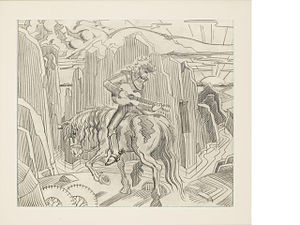
The music to Well, well, well was originally sketched and recorded by Bob Dylan in 1985 – which is why the song is listed in 1985 in the 1980s section of the Chronology. But it wasn’t completed until 12 years later when Danny O’Keefe put the words to it.
It was then recorded by Ben Harper and the Blind Boys of Alabama – and I must admit I have had the Ben Harper album with it on for years and years without ever reading the sleeve notes closely enough to realise I was listening to a Dylan composition!
O’Keefe has performed it too and it appears on Steve Howe’s album “Portraits of Bob Dylan”. (Steve Howe was the guitarist with Yes, if you remember things back that far).
Danny O’Keffe started playing in Minnesota coffee houses (so you can see the link with Bob). In an interview he said, “Dylan provided me with a music track, and I wrote the lyrics. I really wanted to do it, because I thought I might never again have a chance to write a song with him. The chances of being in the same room with him are really extreme, you know? Somewhere on the tape that Dylan sent me are the words “Well, well,” which gave me the idea for the title of the song.”
As a recording artist O’Keefe had a hit single (and it was a million selling hit single, so not just any hit single) with “Good Time Charlie’s Got the Blues” in 1972. O’Keefe then became deeply involved with the environmental movement, which explains how the lyrics to Well, Well, Well turned out.
Danny O’Keefe released his own version of Well, Well, Well in February 2000, on his album “Running From The Devil”.
Here are the lyrics…
the man who stole the water will swim forevermore
but he’ll never reach the land on that golden shore
that faint white light will haunt his heart
till he’s only a memory lost in the dark
take care of your body like you care for your soul
don’t dig yourself into a hole
until you’ve paid the price you can’t know what it’s worth
the air water fire and earth
dig a hole in the ground straight down to hell
till there ain’t no more water in the well, well, well
when you’re down on your knees with nothing left to sell
try diggin a little deeper in the well, well, well
well, well, well
And the recordings…
In this version by O’Keefe, there is 90 seconds of talk first about how he came to write the song with Bob Dylan, which is ok, but could put you off… so I would beg you to stay with it, or reset the counter to 1’30” and listen. This is so worth hearing…
And then go to Ben Harper
And if you enjoy the Ben Harper version do get some of his albums. You will not be disappointed.
Musically everything comes from the melody – which is not something we can always say about Bob’s music. Just three chords exist beneath the melody – which would be just another song if it were not for what the melody does – and indeed those lyrics on top of it.
Certainly one of the great things about the song is the way these two arrangements can be put together – so different and yet the same song.
I do hope you enjoy this even 5% as much as I do. If so, listening to these two versions will surely have been worth it.
By 1985 Dylan was really into a new world of writing, exploring types of music that were far, far away from the gospel / religious songs that had dominated his writing for several years around the turn of the decade.
He was of course still exploring different formats, but the notion of the drifter who had been sung of so often in the past, now being attached to a lady, was really something that he seemed to find interesting.
“Emotionally Yours” was not a song that got too many outings on stage – it was played 19 times, and most of these were soon after its on-stage launch in February 1986, but it fitted very much with evolving thoughts about relationships, travelling and looking back, songs such as those written in the earlier part of the year…
In Trust Yourself, Dylan had firmly expressed his new vision. He was telling us not to be a slave to what somebody else believes, but to be true to our own emotions.
Now he says the same – he is not God’s messenger or God’s servant, but he is giving all his love and feeling to a woman. And he most certainly is not living for Jesus…
I could be dreaming but I keep believing you’re the one I’m livin’ for And I will always be emotionally yours
And does he remember what he was going through with all the religious music of five years before? Well, maybe not…
It’s like my whole life never happened When I see you, it’s as if I never had a thought I know this dream, it might be crazy But it’s the only one I’ve got
So he’s met her and she’s turned his head, his heart and his soul. He knows that he can change in so many ways as he goes on his never ending tour, but…
I could be unravelling wherever I’m travelling, even to foreign shores But I will always be emotionally yours
Dylan was now working in a format with which he felt comfortable. The three verses and the middle 8. And there’s nothing wrong with having a format for an album – after all JWH contains a bountiful collection of songs all written in exactly the same format – in that case the three verses without the middle 8.
Musically however Dylan goes a little further than he has of late, with his old friend the descending bass set below the melody. For the opening line it runs
C, (b), Am, F, C, (b), F
where the (b) is just a passing note each time.
We also get a nice move into the F major 9 chord for the opening of the middle 8, and a modulation, as he jumps through E, Am, D7, G11 in the last two lines of that section.
This is not dramatically radical stuff, but it is Dylan gently exploring the musical possibilities once again, now he has got his subject matter sorted.
I am not trying to say here that Dylan is breaking new ground. Rather he is firmly re-establishing himself on old ground. He tried the new ground in 1984 as part of his breakaway from the Christian songs. Now he is saying, “some of these simply love ballads are ok to sing – and look I can still find a little bit extra to throw in here and there.”
And I think this is where I disagree mostly with other critics of Dylan’s work who tend to dismiss these songs as being below par. Even the greatest of all artists needs to do some working out of ideas and possibilities in order to find which road to take in the future, and that is what Dylan is doing here.
I agree with others that it is not a great song, but it is a pleasant piece of music that can be enjoyed in its own right. But more than that it is part of an on-going journey. A journey that had started again the previous year with all sorts of strange explorations, and now was settling down into a familiar territory (the man moving on) but with some genuine looking back to those he had met along the way.
If Property of Jesus represented in 1980 fair and square Bob Dylan’s view of “life, the universe and everything” to quote Douglas Adams, then “Trust Yourself” represents Dylan’s version of the same thing, five years on.
Five years, and this is not just a transformation of a world view across that time but a total and absolute reversal from a complete handing over of one’s self to the Lord, to a complete vision of and belief in man’s ability to work out his own destiny. This is self-sufficiency in a box.
If you have seen any of my reviews of the songs that were written in the period leading up to “Trust Yourself” you’ll know that my view is that Dylan was experimenting like me, working hard to discover a new form, a new vision and a new approach to music through songs as varied as Brownsville Girl, Something’s Burning Baby, Maybe Someday, Seeing the year you at last, and I’ll remember you.
If we just listen to Dylan’s albums this transformation makes less sense, because these songs didn’t get released in the sequence they were written, but seeing them in chronological order in 1984 and 1985 really does show how the experimentation gradually came to an end and Dylan eventually had a new certainty about what he could do musically and what his lyrics were going to say.
And it was a certainty combined with an absolute setting aside of his Christian message which had so much to do with obedience to the Lord, and giving up all one’s own personal whims, feelings and wishes. “Trust yourself” could hardly be a clearer message.
This is why the song has such a clear and simple musical and lyrical structure, allowing it to be played as a great rock and roll blast with Tom Petty and his pals. Indeed it was the old friends getting back together one more time to announce that the New Way was now dead, long live the next New Way.
As a live performance the song just got 25 outings between its composition in 1985 and October 1987 when it was played for the last time – but that was enough to let everyone know exactly what had happened. Dylan had asked himself, answered himself, and now trusted himself – and from our viewpoint seeking to see the evolution of his genius across the years, he had rediscovered his trust in his music.
To make this journey in a very real sense Dylan had taken himself back to his original love – the blues – starting 1984 with “I once knew a man.” Then he went experimenting hither and yon, before he seems to have thought himself back to 1967 with the lonesome hobo…
Kind ladies and kind gentlemen Soon I will be gone But let me just warn you all Before I do pass on: Stay free from petty jealousies Live by no man’s code And hold your judgement for yourself Lest you wind up on his road.
Live by no man’s code and hold your judgement for yourself. The antithesis to being a servant of the Lord and telling the world of the message you have discovered.
OK we might argue that Dylan hadn’t lived by another man’s code – but he had most certainly told us we all ought to live by God’s code. But the next line of Lonesome Hobo had indeed been a warning (which Dylan had most certainly set aside when he started telling the world about God from his position on stage) and which he had now returned to.
Hold you judgement for yourself.
Or, to put it another way, trust yourself.
Dylan had explored this theme metaphorically in Drifter’s Escape, with his final thought that when all else fails, chance can come along and help you.
Just then a bolt of lightning Struck the courthouse out of shape And while everybody knelt to pray The drifter did escape
Dylan had then moved from chance to the belief in the Christian message and then by the 1980s had come back to self belief. It had been quite a journey but he had got there.
And by the time of Trust yourself there was no messing with the message.
Trust yourself Trust yourself to do the things that only you know best Trust yourself Trust yourself to do what’s right and not be second-guessed Don’t trust me to show you beauty When beauty may only turn to rust If you need somebody you can trust, trust yourself
If ever we had a song renouncing his literal Christian belief in the Bible we have it here – don’t trust in the Lord, trust yourself. As the drifter found years before you might need a bit of luck (the old bolt of lightning for example) but you can be sure you’ll get there.
And just in case the message “Trust yourself” is a bit too complicated the middle eight spells it out.
Well, you’re on your own, you always were In a land of wolves and thieves Don’t put your hope in ungodly man Or be a slave to what somebody else believes
And this is not just a case of not being misled by the wrong answer, for now we hear there are no answers.
Trust yourself And look not for answers where no answers can be found
As for the music, it is as simple as the message. A long simple melody on the A chord, a quick spot of E and then back to the A. The middle 8 gives us a bit of D, but really that’s it. This is good old fashioned rock and roll. No messing with the music, no messing with the message. Just go out there and trust yourself.
It can be said that Bob Dylan spent 1984 trying to find his new muse experimenting all the way through the year up to Drifting too far from shore which, as I have said in the review of that song, really doesn’t work for me at all.
Then we get New Danville Girl / Brownsville Girl which to me doesn’t work fully but is a much more successful experiment (although I recognise that some people see it as a masterpiece) than some of the pieces composed earlier in the year.
This was followed by Something’s Burning Baby in which I really do think Dylan had found the new way forward. That Dylan wasn’t perhaps certain that he really had found his way through is seen by the fact that some of the songs from the era appeared on Knocked out loaded, and others on Empire Burlesque (and of course others not at all), but all the hard work of trying to find the new way forwards through 1984 had finally paid off.
In 1985 we then got Maybe Someday (Knocked out loaded) which I think is a brilliant song, but with a musical flaw in the vocal accompaniment, and Seeing the real you at last (Empire Burlesque). Dylan, for me, was back on track. He might not have realised it himself, (and that is not me trying to be pompous, many artists find it hard to see the breakthrough they have just made) but all that experimentation had been worthwhile.
Next up Dylan composed “I’ll remember you”, and now we had a song that he really felt comfortable with, playing it from 22 September 1985 right through until 30 July 2005 – a 20 year spell in which he played it 226 times on stage.
There’s a version recorded with Tom Petty which is really worth a listen if you can find it on the internet – the copy we were recommending seems to have gone.
It was also featured, in an acoustic version, in the Masked & Anonymous movie, although for some reason not put on the soundtrack release.
It is a plaintive ballad as the opening lines show
I’ll remember you When I’ve forgotten all the rest You to me were true You to me were the best
Musically Dylan gets the approach just right, setting out the basics in those four simple lines before stressing just how deep this memory is
When there is no more You cut to the core Quicker than anyone I knew When I’m all alone In the great unknown I’ll remember you
Here’s another version if you prefer – the contrast shows just how much there is in this song. I prefer the version with Tom Petty above – but each to his own.
What makes the song work so well is that it is what every lover looking back with the deepest affection to a past affair – no matter how short or long – will want to say
I’ll remember you At the end of the trail I had so much left to do I had so little time to fail There’s some people that You don’t forget Even though you’ve only seen ’m one time or two When the roses fade And I’m in the shade I’ll remember you
Then to surprise us Dylan takes us up a few notches with the middle 8. It is self-justifying of course, but after the two verses that have gone before, we can take that.
Didn’t I, didn’t I try to love you? Didn’t I, didn’t I try to care? Didn’t I sleep, didn’t I weep beside you With the rain blowing in your hair?
Yes he is justifying himself, and maybe in the end it is a little too much – or perhaps a lot too much – but then that is what Dylan does sometimes. But still he gets the ending right.
I’ll remember you When the wind blows through the piney wood It was you who came right through It was you who understood Though I’d never say That I done it the way That you’d have liked me to In the end My dear sweet friend I’ll remember you
Musically it is Dylan at his simple best. Two rotating chords and an easy to learn melody, before he suddenly surprises us with “Quicker than anyone I knew” which throws in the minor chord we were not expecting. And then its back to the rocking chords again.
The song is in C major, and the surprise of the middle 8 (Didn’t I, Didn’t I try to love you?) is that suddenly we are jerked into B flat, F, C, the very familiar blues/rock sequence. It provides a perfect contrast and fits completely with the change of mood in the lyrics.
Above all, what we feel, or at least what I feel, is that Dylan is now very much on secure territory. Yes he could have written this earlier in his career, but he needed all that experimenting and all that trying out of new ideas to get back here.
He was there and so secure with I once knew a man but then he felt the need to travel the by-ways of exploration throughout the rest of 1984 before he could get back on track.
There is a list of all the songs of the period in chronological order, with links to all the reviews so far, in the 1980s section of the Chronology Files.
The simple fact that “Are you ready?” opens with, and regularly repeats, the same three word question, over and over and over again, tells us most clearly that this is pure preaching in the gospel music style. The simple fact that “Are you ready?” opens with, and constantly repeats, the same three chord routine, over and over again, tells us that Bob Dylan was not at his most creative in this song.
“Are you ready?” takes the description of the end of all things from the various Biblical sources (Revelations of course but also Isiah, Luke, Matthew, and quite probably several other sources), and puts it to us. We are either ready or not.
Of course for people like me the question
Have you decided whether you want to be In heaven or in hell?
is the troublesome one. Of course I want to be in heaven – unless heaven turns out to be the heaven of David Byrne’s description with Talking Heads…
The band in Heaven plays my favorite song. They play it once again, they play it all night long.
Heaven is a place where nothing ever happens.
then I really don’t want to be there at all. Although the opposite doesn’t actually sound very attractive either. Perhaps I would sooner be bored still rather than tortured.
The real problem is that I want to be seen as one of the good guys because I’ve behaved in a fairly decent way most of the time, rather than because I have acknowledged Jesus as my Lord and Master. But then that’s my problem.
Dave Bell wrote that Byrne’s “Heaven” (from Fear of Music) epitomises “pop as Samuel Beckett might write it: tedious, beautiful and desperate”. Clinton Heylin called “Are you ready?” the “born again equivalent of Positively Fourth Street”. There’s a live version complete with introduction of the entire band and the justification that “someone’s gotta tell you about Jesus” which takes up the first three and bit minutes. Quite honestly to me it sounds like a bit of a mess at times… which maybe explains why Bob looks around at the start to make sure everyone is there
But Positively 4th Street? Well, that comment really made me think quite a lot, and yes Bob is telling us that if we are not with Him we’re against Him with the same decisiveness that he told the recipient of his ire on 4th Street “You just want to be on the side that’s winning.”
And that made me think that curiously, doesn’t a profound belief in the Lord that Dylan held at this time, the belief in a world in which “you’ve either got faith or you’ve got unbelief and there ain’t no neutral ground” is equal a desire to be on the side that’s winning just like 4th Street.
The problem is that the phenomenally powerful opening of 4th Street…
You got a lotta nerve To say you are my friend When I was down You just stood there, grinning
You got a lotta nerve To say you gota helping hand to lend You just want to be on The side that’s winning
is exactly how Dylan’s Christianity comes across to me. You have to be on the right side in order to get salvation and eternal life, and to gain eternal life you really do have to be on the religious equivalent “the side that’s winning”. People like me, who just want to be good and decent human beings, are not just left out in the cold, but (in Bob’s version of the Christian message at this point) get kicked out into the furnace (if that is not too much of a contradiction).
Now I have to admit that most of the churchgoers that I have known in my life are not like this – and this is really my point. Dylan’s black and white philosophy in “Are you ready?” isn’t the Christianity I have seen. Those Christians that I have known could fully understand where I was and what I was, and they had no issue with my lack of faith.
But no, Bob at this time was completely unforgiving.
Are you ready to meet Jesus? Are you where you ought to be? Will He know you when He sees you Or will He say, “Depart from Me”?
And then we have my real problem, when he asks
Am I ready to lay down my life for the brethren And to take up my cross? Have I surrendered to the will of God Or am I still acting like the boss?
Well, actually, neither Bob.
The real 4th Street moment then appears
Have you got some unfinished business? Is there something holding you back? Are you thinking for yourself Or are you following the pack?
And so by that moment we really know where we’ve been put.
Musically it is a very simple blues rap – G, C, Bb, G – it just don’t get simpler than that. Yes, the message is as simple as the music; the music is as simple as the message.
Dylan first played the song in public on 8 February 1980, and he finally had done with it 18 months later, having played in 30 times in concerts.
I doubt that many people were converted by the question, “Are you ready to meet Jesus?” but rather sadly I suspect a few thought that Bob had lost it – just at the moment Bob thought he had found it. Problem was, “it” was different in each case.
As he said at the end, “I hope you’re ready.” I guess I just disappointed him.
Updated 29 Jan 2017 with a video added 20 Sep 2017
Three songs are nominated by various commentators as being Bob Dylan’s first masterpiece: Ballad for a Friend, Let me die in my footsteps, and Blowing in the Wind.
I’ve come down squarely on the first of these, a blues so comprehensive and complete that I cannot imagine how anything could go beyond it. “Blowing the wind” is the song everyone knows – and between these two is “Let me die in my footsteps.”
The first release of Let me Die was in September 1963 on The Broadside Ballads, Vol. 1, and was recorded on January 24, 1963, with Dylan performing as “Blind Boy Grunt” backed by Happy Traum.Broadside had already published the lyrics under the title, “I Will Not Go Down Under the Ground”, in April 1962.
It was apparently scheduled to be part of Freewheelin’ but was replaced by “A Hard Rain’s a Gonna Fall”. So we had to wait for the first set of official bootlegs (volumes 1-3) before we got a copy with the later version coming out on volume 9, the Witmark Demos.
In the booklet that comes with Volumes 1–3, it is suggested that this is the first original Dylan melody but Dylan in Chronicles says that it comes from a Ray Acuff ballad. The song relates to the construction and sale of fallout shelters during the 1950s Cold War.
Broadside Ballads commentary included the thought that Dylan “shines a light into the murky darkness of our age and shows us in one bright instant what it might have taken a less impatient philosopher a lifetime to discover: namely that instead of learning to live, we are learning to die. What he says was never more evident than in the recent crisis over Cuba, when millions of Americans sought desperately to think of some dignified way to meet death in an obscene atomic holocaust.”
Which is not a bad commentary for a young man in his first complete year of writing.
Musically what we note is the extra unexpected pause at the end of each line which actually gives us a song in a very unexpected 6/4 time (six beats in a bar not four) but then at the end for the chorus lines we have a sudden return to 4/4 which is what gives the unexpectedness. Dylan went on to play with time in his songs in a subtle way throughout his writing career.
For the most part we have just the two chords, with a simple third chord added at the end – and yet despite this it is a stunningly effective piece not just because of the words but also because of the additional two beats at the end of the first four lines.
And of course the phrase “Let me die in my footsteps” is incredibly evocative.
But by the time of the Whitmark version Dylan felt he had played the song far too many times already, and that it had lost all its point. Quite possibly it had for him, but for everyone else, it had not.
I mention this because I see this as a recurring problem for Dylan. He gets fed up with songs because he only hears them through his own ears, and doesn’t listen to those around him who tell him that this or that song is worth releasing. We see it here at the start of his career, and it was ever thus.
And yet in one way, on this occasion maybe he was right. Ballad for a Friend is today as powerful as ever. Blowing in the Wind has that single evocative phrase of the last line which can still have a deep resonance all these years later. But for me, somehow, “Let me die in my footsteps” although an incredibly clever line, is stuck in that earlier time in a way in which the other two very early masterpieces were not. He’s got the unexpected turn of phrase such as “seep down deep” at the end, and some beautiful couplets such as
There’s been rumours of war and wars that have been The meaning of life has been lost in the wind
but overall, for me at least, it doesn’t quite reach the majesty of those other two songs written around the same time.
Here’s the complete lyrics, in case you’ve not seen them before
I will not go down under the ground
’Cause somebody tells me that death’s comin’ ’round
An’ I will not carry myself down to die
When I go to my grave my head will be high
Let me die in my footsteps
Before I go down under the ground
There’s been rumours of war and wars that have been
The meaning of life has been lost in the wind
And some people thinkin’ that the end is close by
’Stead of learnin’ to live they are learnin’ to die
Let me die in my footsteps
Before I go down under the ground
I don’t know if I’m smart but I think I can see
When someone is pullin’ the wool over me
And if this war comes and death’s all around
Let me die on this land ’fore I die underground
Let me die in my footsteps
Before I go down under the ground
There’s always been people that have to cause fear
They’ve been talking of the war now for many long years
I have read all their statements and I’ve not said a word
But now Lawd God, let my poor voice be heard
Let me die in my footsteps
Before I go down under the ground
If I had rubies and riches and crowns
I’d buy the whole world and change things around
I’d throw all the guns and the tanks in the sea
For they are mistakes of a past history
Let me die in my footsteps
Before I go down under the ground
Let me drink from the waters where the mountain streams flood
Let the smell of wildflowers flow free through my blood
Let me sleep in your meadows with the green grassy leaves
Let me walk down the highway with my brother in peace
Let me die in my footsteps
Before I go down under the ground
Go out in your country where the land meets the sun
See the craters and the canyons where the waterfalls run
Nevada, New Mexico, Arizona, Idaho
Let every state in this union seep down deep in your souls
And you’ll die in your footsteps
Before you go down under the ground
We only have one note of Dylan having played this in a concert: 2 July 1962. One outing, that was that.
“What can I do for you?” is a Dylan song that to me always seems to me to derive from the parts of the Bible that emphasise obedience and subservience, on the subject of which Ephesians 6 is particularly clear:
“Children, obey your parents in the Lord, for this is right.Honour your father and mother” …
“Slaves, obey your earthly masters with respect and fear, and with sincerity of heart, just as you would obey Christ….
“And masters, treat your slaves in the same way. Do not threaten them, since you know that he who is both their Master and yours is in heaven, and there is no favouritism with him.”
And yet, within this I (as a heathen non-believer) have always found a contradiction, as when the text says,
“For our struggle is not against flesh and blood, but against the rulers, against the authorities, against the powers of this dark world and against the spiritual forces of evil in the heavenly realms.
“In addition to all this, take up the shield of faith, with which you can extinguish all the flaming arrows of the evil one.”
It is a differentiation that has always fascinated me. The acceptance of being what you are born as (slave, free man, member of the aristocracy) and accepting that fate, as well as the entire structure of society as we find it, is not one I have ever been willing to accept. Indeed for me, coming back to Dylan’s songs of this era, it is a shock to hear him as part of the movement for accepting the social structure rather than struggling to remove it.
But then as I have oft said on this site, the “Times they are a changing” album is most certainly ill-named (other than using the title of the most famous song on the album as a hook to get sales), since the songs are primarily about the fact that nothing is changing at all. Hollis Brown is stuck in an uncaring, unchanging world, the traveller in “One too many mornings” just keeps on moving on, we’re only a pawn in their game, Hattie Carroll dies…
But then as Dylan said at that time
And you never ask questions When God’s on your side
That sarcasm explained the essence of the album, but now … the world has changed and true to his earlier comment, Dylan doesn’t ask questions – he asks only one, “What can I do for You?”
Obviously because I am sceptical about the Afterlife (although my mother, father and aunt all believed in it most fervently, and were most decent and honourable people, so I hope beyond hope that they were right and now live on, even though if that’s the case I am condemned to eternal damnation), I find the message of accepting one’s lot, while worshipping the Lord, something I can’t take.
And so I am (and this is just personal, I am not trying to convince you) deeply concerned with
Pulled me out of bondage and You made me renewed inside Filled up a hunger that had always been denied Opened up a door no man can shut and You opened it up so wide And You’ve chosen me to be among the few What can I do for You?
The notion that the Almighty chooses people (like Bob) to be among the few, rather than the followers making a clear choice to follow (or in my case not) is not how I was taught Christianity. It was up to me to choose the way of the Lord; He didn’t choose for me, I rejected the notion of organised religion all by myself.
So for a truer rendition of Christianity as I understand it (and of course I can be and usually am very wrong on such matters) Dylan’s line should be “I found the way, now what can I do for You”.
So I am very much turned off by the acceptance of the world as it is, rather than the struggle to make the world (or at least the tiny part of the world I touch) a better place. A few times in my life I have been in a position where by chance I have been able to make a real difference to a person’s life. Not for any gain, but because I can and because it seems the right thing to do. And I have done it. And that makes me feel quite good. I did it for those individuals, and because I could, not because of an instruction from the Lord, and not because it was all pre-ordained.
Which puts me very much in the position of verse two…
Soon as a man is born, you know the sparks begin to fly He gets wise in his own eyes and he’s made to believe a lie
Or as TS Eliot so clearly and profoundly put it
The last temptation is the greatest treason: To do the right deed for the wrong reason
So we move on to the long wailing harmonica solo that made up the epilogue to the song on stage. “Dylan’s most glorious moment as a harpist,” wrote Eyolf Østrem, and yes, on that I can agree.
Musically the song is fairly straightforward. The first part of the verse takes us through C, A minor, F and G, while the second (“Pulled me out of bondage”) uses the same chords in a different order, and throws in a D minor at the end of the second line (“been denied”) to keep us hanging on.
But there was one particularly interesting twist in the song – according to Heylin. In the early days on stage Dylan sang
Well, I don’t deserve it but I’m sure to make it through
but then later changed it to
Well, I don’t deserve it but I sure did make it through What can I do for You?
Bob first played the song live on 1 November 1979, and performed it 93 times before letting it slip out of his hands on 23 July 1981, and ultimately moved away from being saved, to not quite so saved.
For many admirers of his work, Bob Dylan ended the 1980s on a high with a series of compositions written in 1989 and which continue to resonate deeply. Songs such as
As so often in Dylan’s career we might say that if that was the peak of another writer’s output, he would be much admired for that alone. For Dylan it was just another year.
And yet there was clearly lurking within him at the time, a temptation to try other arenas, as with, for example, “TV Talking Song” – a song composed between the two very much more sombre “Where teardrops falls” and “Most of the Time”.
So perhaps we should not be too surprised that when Bob took up his pen again in 1990, he was off again in another direction, as the opening songs of the decade (Handy Dandy, and Cat’s in the Well) show. This was the start of a new exploration – of taking old phrases and nursery rhymes and turning them into something else.
For me, much of the time it didn’t work – but as I have point out before, if Dylan had been a visual artist he would have had a sketch book for such ideas – and we’d now appreciate them as sketches not the real deal. But with Dylan every time it doesn’t reach his highest levels he is criticised. But then as Dylan himself said in October 2016, “Everything worth doing takes time. You have to write a hundred bad songs before you write one good one. And you have to sacrifice a lot of things that you might not be prepared for. Like it or not, you are in this alone and have to follow your own star.”
https://youtu.be/FwW6PtowHQM
Certainly at the start of this new decade Dylan was following his own star, and in “Cat’s in the Well” he clearly found some significance, playing the song just one short of 300 times in concert between February 1992 and October 2010.
It is a song that showed us just how far Dylan had moved on from telling us all that we can be saved from eternal damnation by recognising the Lord, to a much more desperate vision of reality.
For as we hear the lines pile up with
The drinks are ready and the dogs are going to war
and
Goodnight, my love, may the Lord have mercy on us all
we know this is the end, but without any sign of redemption and salvation. This time, we’ve all had it. The Masters of War are sitting in the captain’s tower, the Hard Rain is falling, and Hollis Brown has shot his family.
As such there is not much of the nursery rhyme left – and yet those ancient nursery rhymes are themselves so often full of horrors and nightmares – and elements of these horrors are kept. Indeed the mere fact that they have survived (at least in English culture – I can’t speak for the rest of the world) tells us how deeply they resonate with our psychology.
And now with Dylan the cat is mingled up with the wolf while the world’s being slaughtered, there’s a horse, a bull, the dogs…
There are also Biblical references here, and it is easy to translate each animal into some significant coherent religious message, but I am not at all sure that’s the right translation. Maybe the “dogs” are the unholy people who have not heard God’s message, as some suggest, but I simply don’t hear that.
https://youtu.be/bboaKIQgw-0
Instead, I get the feeling that this is the other side of Man Gave Names to all the Animals. It’s not the snake one should be afraid of, it is the whole bloody man-made mess.
So maybe it is a reference back to Revelations 20:8, And shall go out to deceive the nations which are in the four quarters of the earth, Gog, and Magog, to gather them together to battle: the number of whom is as the sand of the sea.
Or maybe it is just despair at the utter stupidity of mankind (and, according to other comments from Bob at the time, the whole stupid music industry.)
But let’s consider the cat, and the well.
The image of the cat in the well goes way back in English literature and so resonates very deeply within many who have a passing knowledge of earlier songs and stories. In one of the earliest references John Lant, the organist of Winchester Cathedral in 1580, wrote “Jacke boy, ho boy newes, the cat is in the well, let us ring now for her Knell, ding dong ding dong Bell.” So we are getting on for 500 years of cats in wells. It’s an image that really seems to strike a chord.
Within 20 years the lyrics were in print as a four part canon (a song for four voices in which all four voices sing the same melody, but each starts a set number of beats after the one before, somewhat like a round).
The phrase ‘Ding, dong, bell’ was thus clearly established as a recognised catch phrase and by the 17th century, everyone in England would have known it. It turns up several times in Shakespeare, in particular (given Dylan’s seeming fascination with the play) in “The Tempest” (Act 1 Scene II), “Sea nymphs hourly ring his knell: Hark! Now I hear them – Ding, dong, bell,” and Merchant of Venice, Act III Scene II, “Let us all ring fancy’s knell; I’ll begin it – Ding, dong, bell.”
By the 18th century we had a name for the boy who threw the cat in the well – the nasty Johnny Green also sometimes called Johnny Fin, and the morality was added with “What a bad boy was that, To kill a pussy cat, Who never did any harm, But played with the mice in his father’s barn.” So cats can kill mice, but boys can’t kill cats. That’s how it goes.
Dylan however wants none of this reasoning and rescuing business. It’s all over for the cat – he’s down the well, and the wolf is looking down wondering how to get down there and eat the creature. Meanwhile the lady’s sleeping and
The world’s being slaughtered and it’s such a bloody disgrace
In short, we’re screwed.
Musically this is a 12 bar blues in B flat with a middle 8 based on a much more unusual chord sequence of G minor, E flat, B flat, which helps keep the song buzzing along – because those two line middle 8 are so unexpected.
So the nursery rhyme comes to an end, we’ve messed up, and as he told us at the end of the previous year, everything is broken.
Goodnight, my love, may the Lord have mercy on us all.
Untold Dylan: who we are what we do Untold Dylan is written by people who want to write for Untold Dylan. It is simply a forum for those interested in the work of the most famous, influential and recognised popular musician and poet of our era, to read about, listen to and express their thoughts on, his lyrics and music.We welcome articles, contributions and ideas from all our readers. Sadly no one gets paid, but if you are published here, your work will be read by a fairly large number of people across the world, ranging from fans to academics. If you have an idea, or a finished piece send it as a Word file to Tony@schools.co.uk with a note saying that it is for publication on Untold Dylan.
We also have a very lively discussion group “Untold Dylan” on Facebook with around 7000 active members. Just type the phrase “Untold Dylan” in, on your Facebook page or follow this link
You’ll find some notes about our latest posts arranged by themes and subjects on the home page of this site. You can also see details of our main sections on this site at the top of this page under the picture. Not every index is complete but I do my best. Tony Attwood
I am always worried when I write a review which is based around the meaning of words and phrases, simply because a word or phrase that I, as a person born and brought up in England, understand as meaning one thing, might mean something quite different to a man brought up in Minnesota.
But I continue to write such reviews, secure in the knowledge that if there is a separate Minnesotan meaning for the word or phrase in question, I will soon be told about it.
And thus we come to Handy Dandy.
In Shakespeare “handy dandy” takes on what I believe is the classic meaning, of choices or opposites with each in the end being fairly similar to the other. Thus for example in King Lear the King himself says to Gloucester, “What! art mad? A man may see how this world goes with no eyes. Look with thine ears: see how yond justice rails upon yon simple thief. Hark, in thine ear: change places; and, handy-dandy, which is the justice, which is the thief?”
The notion “which is the justice, which is the thief?” seems very Dylanesque to me, and is, I believe, the starting point in this song for lines such as “He’s got that fortress on the mountain With no doors, no windows, no thieves can break in.”
In British culture handy dandy is also a children’s game in which an object is passed from one player to another and then suddenly the passing stops and one player is required to guess which hand the object is being held in.
So we are in the world of being frivolous and secretive – rather like the characters in Lewis Carroll’s Through the Looking-Glass, Tweedle Dum and Tweedle Dee – whom Dylan also sang about. This is particularly so since the dictionary definition of Handy Dandy includes exchanging one position for another, in a rapid or continuous manner. Tweedle Dum and Tweedle Dee were identical (if contrary) twins.
There is also a sense here of Subterranean Homesick Blues
Look out kid It’s somethin’ you did God knows when But you’re doin’ it again.
Confusion is everywhere in these songs and is the essence of Handy Dandy – we really can’t be sure what’s going on, when, and how. Like Tweedle Dum and Tweedle Dee in the original poem agreeing to have a battle, but then not because they get frightened by a crow.
Part of this confusion, light-heartedness and the fact that nothing is as it seems, is given to us as we listen to the piece for the first time by the way the organ is played at the very start. The style and approach is in a manner that makes one think of “Like a Rolling Stone.” But what we get is something quite different. Such misleading confusion is the essence of Handy Dandy at all times.
Originally it seems the song was over half an hour long with the notion that the band would just keep recording and then it would all be edited down. I’m not sure if that is so (some reports contradict this) but either way, we end up with a piece that goes much more towards the oddity end of the scale. As with
Handy Dandy, if every bone in his body was broken he would never admit it He got an all-girl orchestra and when he says “Strike up the band,” they hit it Handy Dandy, Handy Dandy
But the Tweedle Dee Tweedle Dum element continues to be there…
You say, “What are ya made of?” He says, “Can you repeat what you said?” You’ll say, “What are you afraid of?” He’ll say, “Nothin’! Neither ’live nor dead.”
But the contradiction does come back as we travel along
He’s got that clear crystal fountain He’s got that soft silky skin He’s got that fortress on the mountain With no doors, no windows, no thieves can break in
And in the end we get nowhere – we just go round and round.
Handy Dandy, he got a basket of flowers and a bag full of sorrow He finishes his drink, he gets up from the table, he says “Okay, boys, I’ll see you tomorrow” Handy Dandy, Handy Dandy, just like sugar and candy Handy Dandy, just like sugar and candy
Musically the piece is simplicity itself – just three chords going around over and over – there’s no real development, and in the end the conclusion seems to me to be that this was an experiment – and in the end one that doesn’t actually seem to take us anywhere or offer any real insights into the state of the world.
But then as I have said elsewhere, all artists do such experiments and we find them in their note books and on sketchpads. Dylan’s however are often kept for posterity, and if put on an album, as this song was, take on a position that seems far more important than perhaps Dylan ever thought they ought to be.
Here’s the out-take from the album…
The song was played live just the once – on 27 June 2008 – some 18 years after it was written.
At Verona in 1984 Bob was working on three new songs during the rehearsals and sound checks, undoubtedly trying to find his way into a new arena for his muse.
The whole journey of composition through that year was quite strange, and we can see it heading off in all sorts of different directions. Not for the first time the direction Dylan chose was one that, perhaps for many of us, was not quite the right direction – but he’s always his own man.
Here’s the list of compositions for the start of 1984
So two blues, and one incomplete gentle ballad with a beautiful tune. And then we got Dirty Lie, referred to in some places as Dirty Lies.
If you have never heard it I suggest you try it now – assuming the link below still works by the time you get there. It is a song that at first listen surely seems worthy of inclusion on any Dylan album. But, as we’ll see later, he felt it was not finished. And I’m going to suggest that there was another reason for abandonment.
The problem with the song was “Stray Cat Strut” by “Stray Cats” released in 1981 in the UK – later in the US, but still two years before Dylan’s venture into the genre.
Dylan’s lyrics are more interesting, but the musical links between “Dirty Lie” and “Stray Cuts” are just too close to allow the song to be released.
Here is Dylan’s version….
And here’s a version of Stray Cat Strut.
Bob’s lyrics run…
Sometime she said I’m slow She said it about me but it’s too soon to know Don’t mind leaving, wondering why Whosoever told it, told a dirty lie Well, I’ll tell you one more, to Take what is you with you when you go Now I’ll tumble, tumble and die Whosoever told it, told a dirty lie [Middle 8…] Already seen your dirty mate Sure find it harder to concentrate I’ll be beloved, times too slow But make sure you take her with you when you go I’ll love it and leave it, the sun go down Pray for the rain for miles around I’ll never leave it to wonder why Whosoever told you, told a dirty lie Oh, they time you and I’m telling you I’d be watching, baby no matter what you do And I’ll leave alone, you’re far too slow Just make sure you take her with you when you go I want to leave, my feet’s soaking wet I long to leave but I ain’t found you yet And I know baby, telling you why Whosoever told me, told a dirty lie
And that is where the story stopped until 2014 when the band Secret Sisters were working on their second album “Put your needle down”.
Apparently during the recording session their producer T Bone Burnett came in and announced that ‘Bob sent over some songs for you guys to listen to and choose one to finish,’
The Sisters said, “It was the weirdest thing ever to even be considered to finish it in a way that even remotely measures up to what he is known for. So we looked at four or five demos he’d sent, and ‘Dirty Lie’ really spoke to us.”
Now this sounds a little strange for two reasons. One is because the recording we have of Dylan performing the song sounds quite finished, and the other is that one might have expected that the Sisters would know enough about popular music to know the song was a pastiche on Stray Cat Strut.
I have had it put to me that Stray Cat Strut was itself taken from a standard format (in the same sense that a 12 bar blues is a standard format) and so Bob’s reusing of the format was perfectly acceptable – maybe that’s the case, but I’m not wholly convinced.
Anyway, whatever the ladies did, they claim they finished off the song in about two hours.
Here is a link to their version, and the new lyrics that appeared…
Time’ll tell the seeds I sow Got into trouble but you just don’t know You thought you had me You’re wondering why Whosoever told you Told a dirty lie Now I’m leaving, what can you do? Who made you think I wanna be with you I never settle, I never cry And whosoever told you Told a dirty lie Already I’m winning the game Your heart’s gonna break And it’s a crying shame A lesson learned a long time ago I make sure I take it with me when I go You’ll be alone when the sun goes down Toss your name in the list and found I never loved you baby My oh my And whosoever told you Told a dirty lie
There is a narrative that runs along the lines that Bob Dylan doesn’t like to speak about his work or explore the meaning of his songs. I don’t think that is true. Bob has given a number of interviews in which he has explored and considered the meanings of what he does. Furthermore during his period of writing openly Christian songs he would often address his audience at some length about the need for them to repent their sins, and the deep meaning of his message.
But if you doubt my words, consider this. In 2015 Bob gave us the biggest insights ever with his speech to the Musicares Gala – a speech which is set out and analysed in some detail (with a couple of rather nice pictures too) on this site.
What I think Bob doesn’t do is talk to idiot journalists with dumb questions. When the journalist is intelligent and knowledgeable about Bob’s work he will engage in a conversation. But really, most of what he has to say was said in the Musicares Gala speech. If you haven’t read the article above I would recommend it. Not because it is by me, but because my source material is Bob Dylan himself. Or if you really want to explore the whole notion of the writing of songs, you might try the whole series. Not because I am right, but because I think in these articles I get closer to the issue than I have anywhere else.
Which brings me to the Nobel Award, and I think it might be helpful here to set out a couple of the base points.
First, obviously, Bob Dylan didn’t apply for the award. It was given to him.
Second, he’s not generally been overwhelmed with awards. The honorary degree commemorated in the Day of the Locusts was clearly not something he enjoyed and he nearly didn’t turn up there.
But he does turn up sometimes. On June 23, 2004 Dylan accepted another honorary Doctorate, this for “outstanding contribution to musical and literary culture,” from the University of St. Andrews. This was when Neil Corcoran says, “It seems appropriate, that his second such degree should come from Scotland’s oldest university, since Scottish border ballads and folk songs have been the inspiration for some of his melodies, and his great song ‘Highlands’ is an elaborate riff, or descant, on Robert Burns.”
Moving on, President Obama invited Dylan to play for him at the White House. This is how the President reported the event:
“Here’s what I love about Dylan: He was exactly as you’d expect he would be.
“He wouldn’t come to the rehearsal; usually, all these guys are practicing before the set in the evening. He didn’t want to take a picture with me; usually all the talent is dying to take a picture with me and Michelle before the show, but he didn’t show up to that. He came in and played ‘The Times They Are A-Changin’.’ A beautiful rendition.
“The guy is so steeped in this stuff that he can just come up with some new arrangement, and the song sounds completely different. Finishes the song, steps off the stage — I’m sitting right in the front row — comes up, shakes my hand, sort of tips his head, gives me just a little grin, and then leaves.
“And that was it — then he left. That was our only interaction with him. And I thought: That’s how you want Bob Dylan, right? You don’t want him to be all cheesin’ and grinnin’ with you. You want him to be a little skeptical about the whole enterprise. So that was a real treat.”
Dylan has also been award a Medal of Freedom, and a Pulitzer Prize Special Citation. Also he won an Academy Award for “Things have Changed” and a Golden Globe Award for the same song. Interestingly Dylan has since then had the Oscar on stage with him when performing.
Bob gives the President a tap on the shoulder on getting the Medal of Freedom.
So now we come to the Nobel Prize, and let’s be clear about this one. Bob didn’t apply; he was given it, and once given it can’t be taken away. Bob can’t reject the prize, because there is no procedure for that. He can say he doesn’t want it, if he wishes, but he will stay listed as this year’s winner of the Prize for Literature, so long as there is civilisation on the planet.
It’s up to Bob if he wants to go through with the rest of the deal. For under Nobel rules, the winner must give one lecture on literature – or of course it could be a concert – within six months. If he does, he gets $900,000 prize money. He had until June 10 next year to comply.
The lecture or concert does need not be delivered in Stockholm, although normally it is.
So that’s it. Bob does accept some awards. Bob can make speeches if he wants. Bob will respond to invitations if he wants. Bob is not dismissive of the highest office in the US – just remember his relationship with Jimmy Carter.
Maybe he will give a speech or play a concert, maybe not. But whatever he does, even if he says “I don’t want the Nobel Prize” he will still be a Nobel Laureate. Like having a hit record, once you’ve had it, you can’t renounce it. That’s not up to the songwriter. It’s up to the people who choose to buy the record. Same with the Nobels.
Almost Done is one of the most tantalising of Dylan half-written songs, first because it has two titles (one of which seems irrelevant) and second because the normally 1000 per cent reliable Dylan Chords website has lyrics which don’t seem to relate to the copy of the song that I have found online.
But never fear – I’ve got it worked out, and of course it was me that was going around in circles, no one else.
Just to add a little to the confusion Heylin reports that before the May 1984 tour gigs, journalists were given a set list for the tour which included “Angel of Rain”.
That song did not make it into the concerts, and indeed nor did it make it into the sound checks and rehearsals. But the rehearsal and sound check tapes do have a song with the line “Almost Done” in it, and this seems to be what I have been listening to. There was no Angel of Rain.
Also it appears that there are multiple versions of this song sung at this part of the tour, and the lyrics changed day to day, and between events at the Beverly Theatre, Los Angeles, on 23 May 1984, and in the Arena di Verona, on 27 May 1984. But it never made the shows and was never recorded in the studio.
Now I am including, in this part of my attempt at a chronological review of Dylan, songs like this, because (particularly at this time) they all seem to me to be part of Dylan trying to find his new muse in 1984, and even snatches like this give us a valuable insight into how Dylan faced the era. He wanted a new “voice” – a new style, a new approach, and he wasn’t finding it.
So he kept looking and looking, trying things that were half done, just waiting for something to hit him full on with the message, “this is it.”
It is a soft gentle ballad with a delicate slide between the minor chords (C#m, G#m, C#m, F#m, E.) Indeed it is that chord sequence that tells me that the version Eyolf Østrem transcribed was the same as I have been listening to.
Indeed Eyolf Østrem writes, “It seemed meaningless to try and transcribe the mumbling on the Beverly Theatre version (May 23). Verona was a little less meaningless…” Here are the opening lines from his Verona transcription.
I stood by
I stood by you
Stood by her
Oh don't be untrue
It's already there
for to see the one
oh now she rode
She's almost done
In the second version Dylan seems to have got a clue as to where this is going with the notion of trust as the centre of the song…
All the night
fortune don't last
Gonna be lucky,
more than in the past
It's already there,
Already new
Oh, trust in me,
I'll trust in you
Heylin suggests that the reason for the song not being completed is that Dylan was thinking about songs for the tour, not something (like Dark Eyes perhaps) for the end of an album – which this song most certainly could be. And since the tours have always had loud audiences who want to make their own noise, an unknown gentle lilting ballad wasn’t going to fit.
It is a tragedy not to have a song like this, but at least this recording gives us a bit of an idea even though the lyrics here seem to be quite different. (And this time I am not going to attempt to transcribe them – although if you would like to, please be my guest.)
If you have been reading any of the other reviews of the 1984 songs of Dylan you will know that I am presenting them as part of an attempt by Dylan to find himself a new muse, a new direction, a new source of inspiration in his post-Christian era – or at least in his post Overtly-Christian era.
But what happened in between the wonderful “I once knew a man” and “Something’s Burning” is very interesting, for it was an eccentric and strange journey.
Straight after “I once knew a man” we have (at least in terms of songs that we can find recordings of) “Who Loves You More” – which is the song under investigation here.
https://youtu.be/cypXZYR65d4
It is a blues with an extra minor chord section added in a couple of places in each verse, as a way of extending the verses in order to accommodate the desire for change and extension, and as such there is no experimentation in the music: it is all in the lyrics.
“I once knew a man” tries the same sort of thing, but in a different way. That song sticks to the 12 bar format (although greatly elongated) and makes its experimental difference through all the additional lyrics in the first section of each verse. Here the extension is in the structure, to take us away from 12 bars and make each verse longer.
Although the song is described in many accounts as being “a virtually finished take” I am not at all sure of this, because the lyrics (to me, and as it turns out, also to Heylin) appear to be all over the place. Now it is possible that this is what Dylan was trying to do – after all that is where he ended up with Brownsville Girl, with perspectives and timings changing throughout the song. Here it is something different however, because Dylan is seemingly just pouring out random lines in relation to his love for the woman. Indeed it is almost as if he had a collection of phrases written on cards, and he then mixed them all up, pulled them out in random order, and then made a few adjustments to ensure that there were some rhymes – or at least part rhymes.
Listening to the piece now, I am reminded again of the Dylan Thomas line to “I love you so much I’ll never be able to tell you” which I believe was the source for the Dylan song “I must love you too much“.
In my review of that song I quoted from Dylan Thomas’ letters to his wife-to-be and I think here we have Dylan once again turning back to that source. Here is a brief review of the situation.
In 1936 Dylan Thomas wrote to his new lover, “Tell me everything; when you’ll be out again, where you’ll be at Christmas and that you think of me and love me. I don’t want you for a day (though I’d sell my toes to see you now my dear, only for a minute, to kiss you once and make a funny face at you): a day is the length of a gnat’s life: I want you for the lifetime of a big, mad animal, like an elephant.
“You’ll never, I’ll never let you, grow wise, and I’ll never, you shall never let me, grow wise and we’ll always be young and unwise together . . . I love you so much, I’ll never be able to tell you; I’m frightened to tell you.”
And later he wrote, “I don’t want to write words, words, words to you; I must see you and hear you; it’s hell writing to you now . . . you are really my flesh and blood Caitlin whom I love more than anyone has loved anyone else. It’s nonsense me living without you, you without me: the world is very unbalanced unless in the very centre of it we stand together all the time in a hairy, golden, more-or-less unintelligible haze of daftness.”
This is still my source code for what is going on with Who Loves You More. Dylan is experimenting with using words in all shapes and forms as an attempt to describe events in a non-chronological, indeed non-logical way, and I am not at all sure that we have anything approaching a final version of a song here – rather a collection of lines waiting to be refined and put into a new (not necessarily logical) order.
Here are the lyrics…
Oh, happy I, I mean you for me ‘Cause I’m true But I know in the end When the clock’s worked through and through
Because I know loving means Nearly everything that I need Who loves you more, who loves you true? Oh, baby I do.
Middle 8 :-
Don’t you know that I’m beside But I need to know if dark and wide ‘Cos a door is ajar and it leads to the rock I know Baby before you go
Say that I all over you And you know it, you know it too So honey me, offer me, I’ve been through and through Oh yeah, but if you, because
I wish to know, and I didn’t care You’re the answer to my every prayer Who loves you more, who loves you true? Oh baby you know I do.
[Instrumental break – middle 8]
Yes if you do well, up and out the door I’m said she’s there just like before Who loves you well, who’ll take you there? Who’ll watch you through, I will watch you through
And I shall fulfill my soul, if you’re the one Face the day, and the brightening sun Who loves you more, who loves you true? Oh baby I do.
[Instrumental break – middle 8]
Well, you’re perfect to me, ah can’t you see And I’ll bring you there, for you to be All being well, holding up and I thought you should know Oh baby before you go.
Talk to me, say it well ‘Cause you’re the answer to my every prayer Who loves you more, who loves you true? Oh baby I do.
[Instrumental break – middle 8]
Stick by me, stick by my bones Till you get aged, until you get old Stick by my closer, tell me one I put, I know it’s true And I’ll take you through, oh yes…
But, swear by me, fortune and bold Climb in your head deep in your heart and soul Who loves you more, who loves you true?
Oh Baby I do
On the recording of the song that has survived it is reported we have Bob Dylan on piano/synth, Ronnie Wood on guitar, John Davis on bass, and Anton Fig on drums
It is a curious construction, in that the middle 8 turns up repeated times but only with lyrics on the first time around.
I can’t see any justification for the claim that this song is finished, not least because I don’t think it works as a set of thoughts pouring out in all directions at once.
Meanwhile elsewhere the www.ourwalrus.com website suggests that “Who Loves you More” is based directly on the song “Straight As in Love” which itself was based on the Johnny Cash 1956 song of the same name, but I can’t see this at all. Sorry, but I can’t even see the starting point of that idea, so I don’t take it on board.
I’m left with an extended blues, and a composer’s desire to find a new way of writing the blues. It is a sketchbook song at this stage. It could have become more, but even in the form that we have it, it provided information and ideas that led Dylan onwards in his quest to find a new muse.
Untold Dylan: who we are what we do
Untold Dylan is written by people who want to write for Untold Dylan. It is simply a forum for those interested in the work of the most famous, influential and recognised popular musician and poet of our era, to read about, listen to and express their thoughts on, his lyrics and music.
We welcome articles, contributions and ideas from all our readers. Sadly no one gets paid, but if you are published here, your work will be read by a fairly large number of people across the world, ranging from fans to academics who teach English literature. If you have an idea, or a finished piece send it as a Word file to Tony@schools.co.uk with a subject line saying that it is for publication on Untold Dylan.
We also have a very lively discussion group “Untold Dylan” on Facebook with approaching 6000 active members. Just type the phrase “Untold Dylan” in, on your Facebook page or follow this link
You’ll find some notes about our latest posts arranged by themes and subjects on the home page of this site. You can also see details of our main sections on this site at the top of this page under the picture. Not every index is complete but I do my best.
But what is complete is our index to all the 604 Dylan compositions and co-compositions that we have found, on the A to Z page. I’m proud of that; no one else has found that many songs with that much information. Elsewhere the songs are indexed by theme and by the date of composition. See for example Bob Dylan year by year.
One of the many, many enjoyable things I find in writing this blog is the places the research takes me, finding links and information I never knew before, while reminding me of pieces of music I once knew and have if not forgotten then certainly not played for a fair number of years. By and large it has become a journey taking me on strange rummages through the backwaters of pop and rock’s extraordinary heritage and my own past.
Consider for example this set of links which occurred to me while I was contemplating the virtually unknown Dylan song “Go ‘Way Little Boy”.
Bryan MacLean, who played in Love (the band that released the extraordinary “Forever Changes” album – one of my all time favourites) wrote “Old Man” – one of my all time favourite songs – which I linked to Dylan’s “Señor, Tales of Yankee Power”.
MacLean’s connection with Bob Dylan was that he joined the same Christian ministry (the Vineyard) that subsequently converted Dylan. I guess MacLean and Bob must have known each other musically before the event, and certainly knew each other personally once Bob converted to Christianity.
Now Bryan MacLean (who sadly died in 1998) had a half-sister Maria McKee who is known for her work as the lead singer with Lone Justice, another singer and band that I have enjoyed over the years, and whose albums I have.
But what I didn’t know (because the song in question turned up as a B side on a single which I never bought, and wasn’t also on either of the albums) Lone Justice with Maria McKee recorded the Dylan song Go ‘Way Little Boy. And in case you don’t know it, here it is…
I am not sure how it all came together but it seems that Bob taught Maria McKee the song, and it is suggested Bob played rhythm guitar on the recording. Heylin suggests the harmonica on the track might also be Bob and the lead guitar was Ron Wood. If so I don’t know what the rest of the band were up to…. Presumably feeling rather displace and maybe a bit fed up.
So the song was released as the B-side of the single, “Sweet, Sweet Baby (I’m Falling).” For the recording of the song Marvin Etzioni was reported as saying that Dylan “doesn’t tell you what the chords are – no discussion about anything. As soon as you set up and you’re plugged in, you’re pushing record, and you’re on. And that’s what we did. It was great.”
The song isn’t by any means a song of significance in the Dylan collection, nor even in Lone Justice collection – if you want to find them at their best try “I found love” or “Belfry” or “The Gift” from the CD “Shelter”.
But Maria McKee who sings the song certainly should be better known to rock fans than is often the case. She wrote “A Good Heart” and “Show Me Heaven”, both of which were number 1 hits in the UK and has ventured into other musical forms too.
There is also on the CD Shelter the incredibly haunting “Dixie Storms” – one of those songs that somehow entered my life during a period when I was incredibly low and has cut into my conscious and sub-conscious at such a level that I can’t explain it. I have dim recollections of just sitting at home alone playing it over and over… not really the best way to cope with feeling down and alone – but then if you don’t get the downs, it is hard to appreciate the ups.
Anyway, after two albums with Lone Justice, McKee went solo and her solo work is really worth hearing. A remarkable talent, who brushed past Bob Dylan for one moment and whose half brother seemingly passed him and helped him go in another direction.
As for this song… well, to be fair all round it is hardly one of Bob’s great moments. But I am here to record all the songs that made it onto the wider stage not just the ones I deem to be significant.
Dylan seems to have got very lost, creatively, building up to this moment. The year had started with the superb run through of “I once knew a man” the provenance of which is unknown (but just listen to the recording linked into that review – it is Dylan-Blues at its peak), and eventually found its way down to this little number.
Dylan wanted and needed to experiment to find his new muse, and he just had a few false starts (what visual artists would call sketches) to make before he made it onto the new direction. After “Go Way” Dylan wrote the highly experimental Drifting too far from shore which is seen by most people as pretty awful, Then we got New Danville Girl / Brownsville Girl which is certainly interesting and memorable, and some think it a masterpiece, and then Something’s Burning Baby (which made it onto Empire Burlesque) which shows us that the old mainstream creative spirit was certainly back, and that the new direction was taking hold.
So I think we should see Go Way Little Boy, as one of those sketches along the road. A song with the purpose of helping Dylan move along as he did indeed eventually find his new muse.
In this song the lyrics are simple – and indeed perfect for Maria McKee to sing. The experienced woman is telling the younger man to go off and find a woman more suitable to his personality and needs.
What we can hear in the song are the unexpected chord changes – it feels as if Dylan had the words (which are to be fair nothing very special) and knew the song needed a surprise, so we get it in the chords, which forces the melody to do unexpected things.
It starts out very clearly in D with lots of D, A, D chords and a B minor, all of which secure exactly where we are. Then we suddenly find that instead of lines ending on the D chord, they end on G – it makes the whole piece feel as if it is a bit wobbly and uncertain at “back to her” and “secure”.
And then really oddly the last line of the verse takes us through D, C, B minor. This really does make the whole thing feel as if it is about to topple over (like the relationship that the woman is ending) until suddenly the next verse begins, firmly back in D and bouncing through D A D.
The same sort of idea is tried out in the middle 8 (“Don’t you hear your mama calling”). We are all nice and secure with the descending bass under B minor and then a solid G A D. Yep we know exactly where we are musically. We’re in D, on solid ground.
This is repeated until we get to “While you still have a choice” which instead of ending on A, reading to lead us back to the verse (like the middle 8 should always do) it ends on E minor… the choice is uncomfortable, uncertain, unsecured…
My guess is that Dylan was deliberately experimenting, trying to reflect in the music the brashness of the woman in saying “go away little boy” and the bemusement of the young man who now finds himself out of his depth. That is what ending the verse on B minor and the middle 8 on E minor are there to suggest.
For me it doesn’t quite work, but then experiments often don’t. As I say, if Dylan had been a visual artist this little sketch would exist in the basement of some gallery, only brought out once every five years for a “The sketches behind the masterpieces” exhibition.
But I’m glad Lone Justice took it – because it has taken me back to one of the less often played parts of my record collection, and reminded me of the rare talent of Maria McKee. If you ever read this Maria, thank you for all the music.
Go ‘way little boy I’m not for you Go back to her Where you’ll be more secure She knows you better than I do Go ‘way little boy I’m not for you
Go ‘way little boy You’re making me sad I don’t wanna to see you bleed She’s the one that you need You’ll never miss what you ain’t never had Go ‘way little boy You’re making me sad
Go ‘way little boy It’s much too late Walk back out the door Don’t wanna see you here no more You’re making it hard for me to concentrate Go ‘way little boy It’s much too late
Can’t you hear your mama callin’ Don’t you recognize her voice I think you’d better heed her warning While you still have the choice
Go ‘way little boy You’re much too late Your future’s lookin’ bright Don’t throw it away tonight It’s getting hard for me to look you in the eye Go ‘way little boy Can’t you see that you’re makin’ me cry
I’ve commented in the review of Drifting too far from shore that in 1984 Bob Dylan was by his own admission struggling for inspiration, and so was turning to lines from films and song titles already used by others – not always with success.
Indeed this seems to have been an issue through the year – and may well be the origins of the wonderful I once knew a man – no one can work that one out and Dylan isn’t saying. But if Dylan felt a) it was a great song (as I do) and b) he didn’t write it (although no one can agree exactly who did) then that would explain why he spent the rest of the year searching for his muse.
So in such circumstances we shouldn’t be surprised that this song has a title from Woodie Gutherie, and has Dylan reminiscing about the movies. Also, Dylan here moves half way between declamation and singing a melody. He does keep some melodic verses for us, but was clearly exploring the road way which led to the much less satisfying “Drifting”.
So let’s start with the song title and Woodie Gutherie – I’ve included a link to the song below in case you are interested.
The original start in familiar territory
I went down to the railroad yard, Watch the train come by Knew that train would roll that day but I did not know what time.
The singer just needs to travel, but has no plans – he’s not the sort of guy who keeps a railway timetable in his pocket.
Eventually he finds the train and rides the “old freight train that carries an empty car” to Danville town where he gets “stuck on a Danville girl, Bet your life she was a pearl, she wore that Danville curl.”
But of course this is the world of always getting up and moving on – the world that Dylan has sung about since Restless Farewell (and there is also a link to the earlier songs like Ballad for a friend – the earliest song of Dylan’s reviewed on this site, and an absolute masterpiece – do listen to it if you have missed out on this treasure. Dylan starts that by sitting at the railroad track).
So Woodie Gutherie moves on
She wore her hat on the back of her head like high tone people all do, Very next train come down that track, I bid that gal adieu.
I bid that gal adieu, poor boys, I bid that gal adieu, The very next train come down that track, I bid that gal adieu.
And that’s that.
So there’s the title that Dylan started with. He wrote the full Dansville song and then re-wrote it as Brownsville Girl.
As Robert Christgau said in an oft quoted comment, the final version as released on the LP was “one of the greatest and most ridiculous of Dylan’s great ridiculous epics. Doesn’t matter who came up with such lines as ‘She said even the swap meets around here are getting pretty corrupt’ and ‘I didn’t know whether to duck or to run, so I ran’ — they’re classic Dylan.”
The first version “New Danville Girl”, was recorded for Empire Burlesque but dropped – perhaps because there just wasn’t room, perhaps because Dylan just wasn’t sure about it.
It was co-written with the highly regarded American playwright Sam Shepard who among other things gained the Pulitzer Prize for Drama in 1979 for his play Buried Child and was nominated for an Academy Award for Best Supporting Actor for his role in The Right Stuff. New York described him as “the greatest American playwright of his generation.” I’m no expert, but perhaps that was going a little far, but the guy was certainly innovative and important in the history of American theatre.
So what did Shepard bring to this venture? His plays are bleak, surreal, dark, with meandering characters on the edge of society. Immediately I think it is possible to see a connection with the vagueness expressed via the half remembered film. Shepard’s work is also experimental, and certainly this song is nothing if not experimental.
Shepherd started working with Dylan on the 1975 Rolling Thunder review and was screenwriter for Renaldo and Clara. His diary of the tour (Rolling Thunder Logbook) was published ten years before the two got back together for this song.
This is how he describes Dylan in the diary…
“One thing that gets me about Dylan’s songs is how they conjure up images, whole scenes that are being played out in full colour as you listen. He’s an instant film maker. Probably not the same scenes occur in the same way to everyone listening to the same song, but I’d like to know if anyone sees the same small, rainy, green park and the same bench and the same yellow light and the same pair of people as I do all coming from “A Simple Twist of Fate”. Or the same beach in “Sara” or the same bar in “Hurricane” or the same cabin in “Hollis Brown” or same window in “It Ain’t Me” or the same table and the same ashtray in “Hattie Carroll” or same valley in “One More Cup of Coffee”. How do pictures become words? Or how do words become pictures? And how do they cause you to feel something? That’s a miracle.”
So we get to New Danville Girl
https://www.youtube.com/watch?v=4O9ggxGQ5Ac
There is a disconnect between the singer and his lover from the past, just as there is with the movie which he watched twice.
The movie itself has been identified as The Gunfighter although the confusion is constant as Dylan says of a movie… “you know, it’s not the one that I had in mind.” Disconnection is everywhere. Dylan most certainly here is trying to find a new voice, a new format, a new approach to his music. A sense of being lost – a sense which is touched upon in the original Woody Guthrie song. And a sense of always moving that was the inspiration found in the Parting Glass and which travelled through “One too many mornings” and all the other songs of restlessly searching for things that are not there via images that shift and dance away before we can get hold of them.
The ultimate expression of what is going on comes in the original version with
I’ve always been an emotional person but this time it was asking too much. If there’s an original thought out there, Oh, I could use it right now! Yeah, I feel pretty good, but you know I could feel a whole lot better, oh yes I could, If you were just here by my side to show me how.
and in the final version with
Now I’ve always been the kind of person that doesn’t like to trespass but sometimes you just find yourself over the line. Oh if there’s an original thought out there, I could use it right now. You know, I feel pretty good, but that ain’t sayin’ much. I could feel a whole lot better, If you were just here by my side to show me how.
This is Dylan reflecting on the hardest thing for a creative artist to reflect upon – the loss of ideas. And this gives us the insight, I believe, into the whole essence of the song.
Thousands of images and ideas spin round in his head. The old movie, the old song, everything he himself has done before. But new coherent inspiration can’t break through. He has become a character in his co-writers plays. What does he do now?
And the answer is that at this moment he invents a new type of song – a song that expresses that vision of the creative block. So definitively all the writing about the certainty of the Second Coming has gone. Now there is no certainty, and, he finds, no creativity. He is left with half remembered scenes.
It is in the expression of this idea of confusion, mystery and lost inspiration that we see the prime change, and I think the prime improvement in the lyrics between the two editions of the song. First time around we get
Oh, you got to talk to me now baby, tell me about the man that you used to love, And tell me about your dreams, just before the time you passed out. Oh, yeah! Tell me about the time that our engine broke down and it was the worst of times, Tell me about all the things that I couldn’t do nothin’ about.
In the updated version it becomes
Strange how people who suffer together have stronger connections than people who are most content. I don’t have any regrets, they can talk about me plenty when I’m gone. You always said people don’t do what they believe in, they just do what’s most convenient, then they repent. And I always said, “Hang on to me, baby, and let’s hope that the roof stays on”
and this gives us the key to the song. That line “Hang on to me, baby, and let’s hope that the roof stays on” which comes out of the confusion of all that has gone before, and expresses the simple “Stick with me baby stick with me anyhow, things should start to get interesting right about now” idea.
And they will, if only he can find his muse. He knows he can one day, but it’s not quite there yet and the road is very unclear.
So the disconnect, the disjointedness is always there. From the first version
We drove that car all night into San Antone And we slept near the Alamo, fell out under the stars. Way down in Mexico you went out to see a doctor and you never came back. I stayed there a while, till the whole place it started feelin’ like mars.
And the second…
Well, we drove that car all night into San Anton’ And we slept near the Alamo, your skin was so tender and soft. Way down in Mexico you went out to find a doctor and you never came back. I would have gone on after you but I didn’t feel like letting my head get blown off.
Dylan did this mixture of events connected but disconneected perfectly in 1974 with Tangled up in Blue – even using the car motif (“drove that car as far as we could, abandoned it out west”) and I think he feels this is the sort of mishmash of time, space and events that he wants to represent again. But he has already written that masterpiece – that’s the problem.
In the song humans are stripped of their purposefulness, for no matter what we intend, “Nothing happens on purpose, it’s an accident if it happens at all.” With that simple line all of civilisation, all human progress, the whole Christian message, everything that makes us human rather than just animals, is blown away, as we are blown by the winds.
But this is not the casual use of words; the authors know exactly what they are writing about here – for they are taken back to Dylan’s favourite source (other than Guthrie), in TS Eliot’s “Waste Land”
Only
There is shadow under this red rock,
(Come in under the shadow of this red rock),
And I will show you something different from either
Your shadow at morning striding behind you
Or your shadow at evening rising to meet you;
I will show you fear in a handful of dust.
Which now becomes “But we’re busy talking back and forth to our shadows on an old stone wall.”
Before the final version finally ends “Seems like a long time ago, long before the stars were torn down.” The handful of dust is all around us.
Disconnect with the world around us is incredibly difficult for even the most experienced writers to write about; it is so much easier for the painter whose journey into abstraction mixed with realism is so much simpler. Dylan, I believe, felt this disconnect deeply at this time, and these two versions of this song show a serious attempt to write about something that is almost impossible to write about.
Almost but not totally, for in “Tangled up” Dylan did get it right. Here the whole story is so complicated and reality dissolves so quickly, the technique, for me, doesn’t quite work. With Tangled I feel the mixtures of time and the phasing in and out of the relationship between the couple, here I end up feeling that the stars have been torn down and I too am desolate and lost.
And I can take that sometimes, but not all the time. I can always be Tangled up and feel good about it, but the journey from New Danville Girl to Brownsville Girl leaves me straining against the bonds that tangle me, and in the end I crave for the disconnect to go, and for me to be allowed to escape back to the days when the stars were still in their heavens.
That Bob Dylan was struggling artistically in the mid-1980s is not a matter of much dispute, although there are some who consider Knocked Out Loaded to be a seriously misunderstood album.
In one sense I am in this camp – although only in one sense. Dylan was struggling to find a new direction at this time not least because in recent years his direction had been so clear. Now he was lost. He was telling the world about salvation and redemption, and every bit of inspiration was there for him. Now he needed to find a new voice – and that is not as easy as it might sound.
Indeed he had done so much and visited so many musical places, what else could he do? Where was the next journey to go? He’d gone from folk to rock. He’d entered surrealism and impressionism, and then gone to country music. He’d worked the blues and celebrated the 50s rock n roll. He’d done a collection of often obscure three verse short stories on John Wesley Harding, and played about with old time favourites like Alberta.
But now what?
https://youtu.be/VuXUeGrPSHE
When that question hits any artist (and there are probably only a handful of artists in any art form that have not faced some serious downtime – Shakespeare for example simply packed it all in and went back to Stratford never to write again) it is so difficult to find a resolution – and indeed either it comes or it (in many, many cases) doesn’t. So Dylan had another period without inspiration, but he didn’t take the opportunity simply to move away and sit with Zen monks, travel the world with his children, learn to play the saxophone or journey to the antarctic or do anything else that would take him away from it all, that we know about. He wanted to tour and as a result, he released an album.
And on that album, aside from releasing other people’s songs, he tried experimenting to find a new sound or a new approach. And we got “Driftin too far from shore”.
It is, I think most agree, quite simply an experiment that didn’t work – but as we know, Dylan has never been that able to decide what works and what doesn’t. He spent forever thinking Blind Willie McTell didn’t work (presumably because the song isn’t actually about Blind Willie), when in fact most of us think it does. There are many other such examples among his abandoned pieces.
What he couldn’t quite see is that this sort of declamation of lines, some of which are taken from movies, with a curious backing arrangement, just doesn’t come off, unless those lines are truly inspiring of themselves. Even the title of the song was taken from Hank Williams, and some of the lines came from movies – but without any real connection or grand leap of the light which in other compositions would leave us all gasping.
Nevertheless Dylan did in fact stay with the song playing it on stage 14 times in the year from June 1988 onwards, but then even he gave up.
And certainly when we look at the lyrics on their own they are, basically, just odd.
I ain’t gonna get lost in this current I don’t like playing cat and mouse No gentleman likes making love to a servant Especially when he’s in his father’s house
I never could guess your weight, baby Never needed to call you my whore I always thought you were straight, baby But you’re driftin’ too far from shore
But also there are moments where the message really does give us a sense of what Dylan was wanting to say, and where he manages to put that across in a poetic way…
You and me we had completeness I give you all of what I could provide We weren’t on the wrong side, sweetness We were the wrong side
That’s quite good, but it’s hardly original. And where Dylan was original (for example by taking the cover of Spicy Adventure Stories and putting that on the album) it is all very hard to understand the implication. It looks like he just saw it and said, “stick that on the cover”.
Rolling Stone went along a similar line of thinking (although somewhat more acerbically) when they suggested in a retrospective that “Bob Dylan’s career hit a lot of low points in the 1980s, but the lowest was probably the release of 1986’s Knocked Out Loaded. The title basically says to the world, “Here’s some shit I slapped together while drunk.”
In Chronicles Dylan said of this period in his work, “I had no connection to any kind of inspiration… My own songs had become strangers to me. It wasn’t my moment of history anymore. Try as I might, the engines wouldn’t start.” Which is a much more succinct way of saying it all.
Part of the problem is that although sampling lines from movies can work, but it tends only to work when there is inspiration and creativity around to take the sample and mould it into something new and exciting.
For example there is a western called “Bend of the River” in which Arthur Kennedy says, “I figure we’re even. Maybe I’m one up on ya.” So Dylan says
I didn’t know that you’d be leavin’
Or who you thought you were talkin’ to
I figure maybe we’re even
Or maybe I’m one up on you
It could be insightful, but mostly it just seems to be a line Dylan remembered and threw in. Again randomness can work – but somehow, somewhere there needs to be more. And more is what there doesn’t seem to be.
In fact even the title “Drifting Too Far from Shore” comes from a gospel album, which Dylan has said that he was very familiar with.
Only the chord sequence offers the hope of something fresh; it runs Ab9, Bb (ie A flat 9th to B flat major) which is interesting but then repeated four times before we get a row of Eb to Bb. It’s not inspiring stuff.
Untold Dylan: who we are what we do Untold Dylan is written by people who want to write for Untold Dylan. It is simply a forum for those interested in the work of the most famous, influential and recognised popular musician and poet of our era, to read about, listen to and express their thoughts on, his lyrics and music.
We welcome articles, contributions and ideas from all our readers. Sadly no one gets paid, but if you are published here, your work will be read by a fairly large number of people across the world, ranging from fans to academics who teach English literature. If you have an idea, or a finished piece send it as a Word file to Tony@schools.co.uk with a subject line saying that it is for publication on Untold Dylan.
We also have a very lively discussion group “Untold Dylan” on Facebook with approaching 6000 active members. Just type the phrase “Untold Dylan” in, on your Facebook page or follow this link
You’ll find some notes about our latest posts arranged by themes and subjects on the home page of this site. You can also see details of our main sections on this site at the top of this page under the picture. Not every index is complete but I do my best.
But what is complete is our index to all the 604 Dylan compositions and co-compositions that we have found, on the A to Z page. I’m proud of that; no one else has found that many songs with that much information. Elsewhere the songs are indexed by theme and by the date of composition. See for example Bob Dylan year by year.
Solid Rock is a song that hardly needs an explaining – but nevertheless Bob has explained it at some length (see the links below). Which always strikes me as interesting. If not downright odd.
What I mean is that we all know that Bob’s religious songs are about the need to follow the ways of the Lord, repent and get ready for the Second Coming. The lyrics are among the most obvious that Dylan has ever produced.
And yet these are the lyrics that he would explain. Whereas the songs that have caused quite a lot of debate and require a fair bit of work to disentangle (songs like Too much of Nothing, for example – there are many, many more, right up to his most recent compositions) are never explained. I call that perverse.
So here we get a bit more of Revelations – this time the bottomless pit of Saved is avoided by hanging onto the Solid Rock of Jesus Christ. Which is fair enough as a Christian message – I think I learned that in secondary school. By which I don’t mean to denigrate the message but rather to emphasise my point that if Dylan were to be in the mood for explaining a song, there are plenty of others that I’d love to hear him talk about.
There is some evidence (from the way the song evolved on stage) that Dylan didn’t quite like the fact that his fan base would enjoy the music as music (rather than hearing the music as a route to salvation). So the song changed over time to try and make the message more meaningful to disbelievers, but as that happened so the song lost its impact.
But what really makes the song so good is the treatment of the “made before the foundation of the world” line – I can’t think of where else Dylan does this. It contrasts so perfectly with the utter, boiling energy of the song and yet fits in exactly. Each word called out independently. Clever stuff.
Between November 1979 and October 2002 it was played 162 times – making it one of the longer lasting redemption and salvation songs – and musically it deserves that longevity, although to my ears only when it kept the incredible vigour of the early live versions.
Well, I’m hangin’ on to a solid rock Made before the foundation of the world And I won’t let go, and I can’t let go, won’t let go And I can’t let go, won’t let go and I can’t let go no more
To add a little more about that second line, the impact of calling out the individual words is heightened by the unexpected chord changes that surround it. Not only are we getting the words called out one by by one, but each is proceeded by three chords: D, E, F#m. I really don’t know the origins for that notion – it seems like a real Dylan original.
And then, following on, just listen to the vigour and energy we get with
For me He was chastised, for me He was hated For me He was rejected by a world that He created Nations are angry, cursed are some People are expecting a false peace to come
There was an interesting commentary in one of the Rolling Stone retrospectives on Dylan which said,
“The release of Bob Dylan’s 1979 born-again LP Slow Train Coming was a major event, and the album hit Number Three on the Billboard Hot 100. Less than a year later he released Saved, which was greeted like the second moon landing. It was a million times less interesting the second time around, and his label was even reluctant about putting it out. But the album has never really gotten a fair hearing. “Solid Rock” is one of the highlights, and it firmly explains Dylan’s dedication to his new beliefs. “I won’t let go, and I can’t let go,” he sings. “And I can’t let go, won’t get go and I can’t let go no more.” A few years later, he let go and re-embraced his Jewish heritage.”
On 13 October 2016 it was announced that Bob Dylan had won the 2016 Nobel Prize for Literature “for having created new poetic expressions within the great American song tradition”.
Sara Danils, permanent Secretary of the Swedish Academy, added that he was “a great sampler … and for 54 years he has been at it, reinventing himself.”
Dylan has of course previously won 11 Grammy Awards, as well as an Oscar for Things Have Changed. Salman Rushdie said after the award, “From Orpheus to Faiz, song & poetry have been closely linked. Dylan is the brilliant inheritor of the bardic tradition. Great choice.”
There are six Nobel Prizes awarded each year, they are for physics, chemistry, medicine, literature, peace, and economics.
These prizes are international awards administered by the Nobel Foundation in Stockholm, Sweden, and based on the fortune of Alfred Nobel, Swedish inventor and entrepreneur. In 1968, Sveriges Riksbank established The Sveriges Riksbank Prize in Economic Sciences in Memory of Alfred Nobel, founder of the Nobel Prize. Each Prize consists of a medal, a personal diploma, and a cash award.
A person or organization awarded the Nobel Prize is called Nobel Laureate. The word “laureate” refers to being signified by the laurel wreath. In ancient Greece, laurel wreaths were awarded to victors as a sign of honour.
To give a context to this award here are the winners of the award this century of the Nobel Prize for Literature…
2016 Bob Dylan, United States
2015 Svetlana Alexievich, Belarus
2014 Patrick Modiano, France
2013 Alice Munro, Canada
2012 Mo Yan, China
2011 Tomas Tranströmer, Sweden
2010 Mario Vargas Llosa, Peru
2009 Herta Müller, Germany
2008 Jean-Marie Gustave Le Clézio, France
2007 Doris Lessing, Britain
2006 Orhan Pamuk, Turkey
2005 Harold Pinter, Britain
2004 Elfriede Jelinek, Austria
2003 JM Coetzee, South Africa
2002 Imre Kertesz, Hungary
2001 VS Naipaul, Trinidad-born British
2000 Gao Xingjian, Chinese-born French
Bob is the first singer songwriter ever to win the Nobel Prize for Literature. He has been tipped (in terms of betting odds) for some years but the traditional literary elite have tended to laugh off the suggestion, probably because they think all he ever wrote was Blowing in the Wind.
In the run up to the prize award (which is kept utterly secret until the announcement) he was not listed in the top tips by those who gamble on such things.
Bob Dylan is the 259th American to have won a Nobel, across all disciplines, and the first to win the literature prize since Toni Morrison in 1993. He is the ninth American to gain the literary laurels since the medals were founded in 1901.
Among the most famous people to be awarded the prizes are Martin Luther King Jr (Peace Prize 1964), Albert Einstein (Physics Prize 1921) and Marie Curie (Physics Prize 1903). Perhaps the most famous writer was Rudyard Kipling in 1907.
The average age of all Literature Laureates between 1901 and 2015 is 65 years. Bob was thus considerably over the age average. But not as old as Doris Lessing, who was 88 years old when she was awarded the Prize in 2007.
Other poets to have won the prize include
Rabindranath Tagore won in 1913 “because of his profoundly sensitive, fresh and beautiful verse, by which, with consummate skill, he has made his poetic thought, expressed in his own English words, a part of the literature of the West”.
Eugenio Montale won in “for his distinctive poetry which, with great artistic sensitivity, has interpreted human values under the sign of an outlook on life with no illusions”
Vicente Aleixandre won in 1977 “for a creative poetic writing which illuminates man’s condition in the cosmos and in present-day society, at the same time representing the great renewal of the traditions of Spanish poetry between the wars”
Odysseus Elytis won in 1979 “for his poetry, which, against the background of Greek tradition, depicts with sensuous strength and intellectual clear-sightedness modern man’s struggle for freedom and creativeness”.
Jaroslav Seifert won in 1984 “for his poetry which endowed with freshness, sensuality and rich inventiveness provides a liberating image of the indomitable spirit and versatility of man”.
Seamus Heaney won in 1995 “for works of lyrical beauty and ethical depth, which exalt everyday miracles and the living past”.
Wislawa Szymborska won in 1996 “for poetry that with ironic precision allows the historical and biological context to come to light in fragments of human reality”
Tomas Tranströmer won in 2011 “because, through his condensed, translucent images, he gives us fresh access to reality”
At the start of 1984 Dylan had already written much of Empire Burlesque, but was clearly (as this song shows) trying to find other avenues for his work.
And out of the blue on the David Letterman show rehearsals up came “I once knew a man”. Dylan apparently did not copyright this song, which given his office’s propensity to copyrighting all sorts of things that he didn’t completely write from scratch suggests either the one performance of the song we know about by-passed the legal team, or Dylan never clarified if it was his or not.
Certainly there is no old blues tune called “I once knew a man” and the suggestion that the song is a re-write of a Sonny Boy Williamson blues “Don’t Start Me Talkin'” is one to be handled with care, in my opinion.
Indeed when I first read that others were citing “Don’t start me talkin” it took me by surprise, as I didn’t remember it like this. And having gone back to listen to the song, I still don’t see the connection. OK they are both 12 bar blues but there are thousands upon thousands of 12 bar blues, and we don’t attribute each to the other.
And it is certainly not the Charles Mansom song with the same name which has totally different lyrics and structure. No connection there.
I have read that the songs in the rehearsal might have been improvised, but I certainly can’t see that – the rhythmic structure at the start is too unexpected for anyone to be able to follow it straight off and if you watch the film you can see that Dylan just jumps into the piece while the drummer is talking to one of the production crew.
However it is true that the backing band (Plugz) was clearly recruited to allow Dylan to explore a new sound and was a new, younger group of largely unknown musicians. As for the lyrics, we eventually got them thanks to the dedication of readers of this site. See below.
First, here’s the video… And you might want to stay with it – the video runs on through the rehearsal of the whole show but with breaks which take you from one song to another and from one video recording to another.
You’ll read a long discussion in the comments section as we struggled to get the lyrics – here is the best version we got – they came from Mick Gold to whom I am eternally grateful.
I once knew a man
With a needle in his arm
Well he taught me to make
Love ain’t even bad
But you never need a nod
Oh I once knew a man
Yeah I once knew a man
Seems like only yesterday
He done pass this way
Well I once knew a man
I once knew a man opening a door
In by another
Opening a cupboard (Old Mother Hubbard?)
Never to be here no more
Yeah I once knew a man
Well I once knew a man
Seems like only yesterday
He done pass this way
Oh I once knew a man
01.21 guitar
Well I once knew a man
Creeping in the side
Opening a door
Falling thru the floor
Setting someone for a ride
Yeah I once knew a man
Oh yeah I once knew a man
Well it seems like only yesterday
He done pass this way
Well I once knew a man
All in all “I once knew a man” is a jolly bouncy blues song with the catch phrase “seems like only yesterday he done pass this way, oh I once knew a man” and if it had ever appeared on an album it would have been a popular favourite, I am absolutely sure. It could also have been a great opener for concerts – a better started that “Tweedle Dum” which was used so often at one time in the Never Ending Tour.
The blues format is elongated to accommodate the extra phrases in the opening of each verse:
E – 8 bars (first five lines in the lyrics above)
A – 4 bars (“I once knew a man”)
E – 4 bars (“Yeah I once knew a man”)
B7 – 2 bars (“Seems like only yesterday”)
A – 2 bars (“He done pass this way”)
E – 4 bars (“Oh I once knew a man”)
That’s it. The one and only performance. Oh if only a member of Dylan’s entourage would just nudge him and remind him of that song, and he could get up on stage and say, “I don’t remember ever writing this piece, but these guys in England think there’s something in it, so here it is….”
Untold Dylan: who we are what we do
Untold Dylan is written by people who want to write for Untold Dylan. It is simply a forum for those interested in the work of the most famous, influential and recognised popular musician and poet of our era, to read about, listen to and express their thoughts on, his lyrics and music.
We welcome articles, contributions and ideas from all our readers. Sadly no one gets paid, but if you are published here, your work will be read by a fairly large number of people across the world, ranging from fans to academics who teach English literature. If you have an idea, or a finished piece send it as a Word file to Tony@schools.co.uk with a subject line saying that it is for publication on Untold Dylan.
We also have a very lively discussion group “Untold Dylan” on Facebook with approaching 6000 active members. Just type the phrase “Untold Dylan” in, on your Facebook page or follow this link
You’ll find some notes about our latest posts arranged by themes and subjects on the home page of this site. You can also see details of our main sections on this site at the top of this page under the picture. Not every index is complete but I do my best.
But what is complete is our index to all the 604 Dylan compositions and co-compositions that we have found, on the A to Z page. I’m proud of that; no one else has found that many songs with that much information. Elsewhere the songs are indexed by theme and by the date of composition. See for example Bob Dylan year by year.
According to Heylin, this is one of the songs on Volume 3 of the Wilbury’s two albums, that Dylan had very little to do with, despite the claim that he makes that the rest of the gang were “almost bereft of ideas.” And he seems to accept the notion that Dylan had been more willing to be engaged in this album than the first one.
But the simple fact is that Dylan’s songwriting credit is included throughout – although he has not performed any of the songs from the album in the Never Ending Tour. But then it is more written for Tom Petty’s voice, and this is what we get.
And because of the songwriting credit that is there I think we should consider this song, and the rest of the album, as part of Dylan’s output. And indeed this piece does have within it something of particular note, and something that sounds very much like a Dylanesque input, if one considers it (as others have suggested) as a piece written about the member of the band now no longer present: Roy Orbison.
There is no need to take the lines
You took this song of mine, And changed the middle bit It used to sound all right But now the words don’t fit.
as literal. Rather, if seen as being a reference to Orbison’s appearance in the midst of the lives of all the band members, for Volume 1, it is a fitting commentary on the way in which Orbison’s unique approach to song writing and his utterly magnificent singing voice, could affect them all.
Being together again must have enhanced the impact of fact that Volume 1 had been Orbison’s last creative work, and must have affected all members of the ensemble in making Volume 3. Indeed it would have been strange not to have had a reference to the great man somewhere in the album.
And this is a singularly appropriate commentary…
It’s getting hard to rhyme Impossible to play I’ve tried it many times You took my breath away.
One day when the sun is shining There will be that silver lining
As I suggest above, no one specifically thinks of this as a Dylan song, and yet I can hear his influence in there, and I do think Heylin’s negativity towards the whole album should not make us discount it nor disown it as a venture Dylan was engaged in.
Whoever did write the ending lyrics, if he was thinking of the moment at which he heard about Orbison’s passing, he got it completely right.
I don’t know how to feel This hasn’t been my day Seems like I’ve lost a wheel You took my breath away.