Bobviously Dylan


By Larry Fyffe

It is one thing to say that persons may well be remembered long after they die, or that they live on forever by becoming part of the earth in which they are buried, or that individuals can be ‘reborn’ by having a change of heart during their lifetime, but it is quite yet another to believe that after human beings die they will be  literally revived elsewhere in the flesh as though they had never died.

Under the Christian doctrine of ‘resurrection’ that is what supposedly happened to Jesus of Nazareth. What’s more, that is what will apparently happen to you and I – we may end up in ‘Heaven’, or we may end down in ‘Hell’, but we won’t end stone dead.

The Book of St. John in the canonized New Testament distinguishes Christianity from the uncertainity expressed in the Old Testament over the matter; living forever, especially in a Paradise, and apparently well- restored, certainly has its appeal.

Apostle Thomas has his doubts that such a transformation can happen, but the supposedly crucified Jesus, not yet lifted into Heaven, seemingly sets the record straight though it is not  all that clear whether He was bluffing Thomas or not:

The other disciples therefore said unto him, “We have seen the Lord”
But he said unto them, “Except I shall see in His hands the print of the nails
And put my fingers into the print of the nails, and thrust my hand into his side
I will not believe ….
Then saith He to Thomas, “Reach hither thy finger, and behold my hands
And reach hither thy hand, and thrust it into my side
And be not faithless, but believing
And Thomas answered, and said unto Him
“My Lord and my God”
(St. John 20: 25, 27, 28)

Bob Dylan performs a song about the incident that is described in the Book of St. John:

I am the man, Thomas, I am the man
Look at these nail scars here in my hand
They drove me up the hill, Thomas, I am the man
They made me carry the cross, Thomas, I am the man
I am the man, Thomas, I am the man
Look at these nail scars here in my hand
(Bob Dylan: I Am The Man, Thomas ~ Stanley/Sparks/Dylan)

Strangely, the Book of St. John adds the story about Thomas, but omits the one about Simon, the Libyan, a tale that at least suggests Jesus might have escaped being executed:

And they compelled one Simon, a Cyrenian
Who passed by by, coming out of the country
The father of Alexander and Rufus, to bear the cross
(St, Mark 15, 21)

Singer/songwriter/musician Bob Dyan is influenced by the poet John Keats, and his concept of ‘negative capability’ – that is, being able to hold seemingly contrary viewpionts at the same time without getting overly concerned about it.

Life for Dylan, as far as his song lyrics indicate, carries with it an entanglement of predetermined destiny, and of pure chance as if living were akin to a card game of poker:

I've been walking forty miles of bad road
If the Bible is right, the world will explode
I've been trying to get as far away from myself as I can
Some things are too hot to touch
The human mind can only stand so much
You can't win with a losing hand
(Bob Dylan: Things Have Changed)

There’s this:

Backstage the girls were playing five-cars stud by the stairs
Lily had two queens, she was hoping for a third to match her pair ...
Lily called another bet, and drew up the Jack Of Hearts
(Bob Dylan: Lily, Rosemary, And The Jack Of Hearts)

Then Bob brings it all back home:

Shadows are falling, and I've been here all day
It's been too hot to sleep, and time is running away
Feel like my soul has turned into steel
I've still got the scars that the sun didn't heal
(Bob Dylan: Not Dark Yet)

https://youtu.be/iebQXiwirfE

Untold Dylan: who we are what we do

Untold Dylan is written by people who want to write for Untold Dylan.  It is simply a forum for those interested in the work of the most famous, influential and recognised popular musician and poet of our era, to read about, listen to and express their thoughts on, his lyrics and music.

We welcome articles, contributions and ideas from all our readers.  Sadly no one gets paid, but if you are published here, your work will be read by a fairly large number of people across the world, ranging from fans to academics who teach English literature.  If you have an idea, or a finished piece send it as a Word file to Tony@schools.co.uk with a subject line saying that it is for publication on Untold Dylan.

We also have a very lively discussion group “Untold Dylan” on Facebook with approaching 6000 active members. Just type the phrase “Untold Dylan” in, on your Facebook page or follow this link 

You’ll find some notes about our latest posts arranged by themes and subjects on the home page of this site.  You can also see details of our main sections on this site at the top of this page under the picture.  Not every index is complete but I do my best.

But what is complete is our index to all the 604 Dylan compositions and co-compositions that we have found, on the A to Z page.  I’m proud of that; no one else has found that many songs with that much information.  Elsewhere the songs are indexed by theme and by the date of composition. See for example Bob Dylan year by year.

Posted in Uncategorized | 2 Comments

Why does Dylan like “Hallelujah, I’m Ready To Go”?

By Tony Attwood and Aaron Galbraith
And here it is at the next gig the following night – there are some subtle changes.  The rhythm by the second night is much tighter.

https://www.dailymotion.com/video/x2fsgr9

Being a traditional song the lyrics do vary according to who is performing the piece, and indeed when.  These lyrics are the ones that are often performed…
Hallelujah, I'm ready
I can hear the voices singing soft and low
Hallelujah, I'm ready, hallelujah I'm ready to go.

In the darkness of night, not a star was in sight
on the highway that leads down below
But Jesus came in and saved us all from sin
Hallelujah, I'm ready to go.

Hallelujah, I'm ready
I can hear the voices singing soft and low
Hallelujah, I'm ready, hallelujah I'm ready to go.

Sinners don't wait until it's too late
He's a wonderful saviour you know
Well, I fell on my knees when he answered my plea's
Hallelujah, I'm ready to go.

Hallelujah, I'm ready
I can hear the voices singing soft and low
Hallelujah, I'm ready, hallelujah I'm ready to go.

Hallelujah, I'm ready
I can hear the voices singing soft and low
Hallelujah, I'm ready, hallelujah I'm ready to go.

Hallelujah, I'm ready to go.
Hallelujah, I'm ready to go...

And here is a version from the Stanley Brothers

If you want to hear a totally alternative approach a completely different version appears here

So what attracts Bob to the song – and what attracts him to the song as an opener?

Certainly there is a constant desire by Bob Dylan to change his concerts and to do something different, and opening with a song like this, which as we may note, came long after his year of writing just faith songs, is certainly different.

It also helps the audience settle down, while at the same time giving an uptempo buzz to the whole evening from the kick off.  There is also, very obviously the double meaning of “I’m ready to go” – in this case saying “Let’s get the show on the road.”

And it has the impact of being unexpected, and I guess it would certainly have taken the audience in Vancouver, Canada, by surprise when the routine that had been established earlier in the tour was broken.  In the previous show two days before Bob opened with Friend of the Devil (the Grateful Dead song), so my thinking is that having had a day’s break between that event and the Canadian show he remembered this song, maybe played it at the sound check, liked it, and then said “Let’s do it”.   It then evolved over time.

By the very last performance there were further subtle differences (28 April 2002, Belgium).  Do listen to this all the way through – the differences really are there, and suggest maybe they have now had enough of this song.  It was becoming too familiar.

https://youtu.be/85dcprpTEiw

Untold Dylan: who we are what we do

Untold Dylan is written by people who want to write for Untold Dylan.  It is simply a forum for those interested in the work of the most famous, influential and recognised popular musician and poet of our era, to read about, listen to and express their thoughts on, his lyrics and music.

We welcome articles, contributions and ideas from all our readers.  Sadly no one gets paid, but if you are published here, your work will be read by a fairly large number of people across the world, ranging from fans to academics who teach English literature.  If you have an idea, or a finished piece send it as a Word file to Tony@schools.co.uk with a subject line saying that it is for publication on Untold Dylan.

We also have a very lively discussion group “Untold Dylan” on Facebook with approaching 6000 active members. Just type the phrase “Untold Dylan” in, on your Facebook page or follow this link 

You’ll find some notes about our latest posts arranged by themes and subjects on the home page of this site.  You can also see details of our main sections on this site at the top of this page under the picture.  Not every index is complete but I do my best.

But what is complete is our index to all the 604 Dylan compositions and co-compositions that we have found, on the A to Z page.  I’m proud of that; no one else has found that many songs with that much information.  Elsewhere the songs are indexed by theme and by the date of composition. See for example Bob Dylan year by year.
Posted in Uncategorized | Leave a comment

The NET 1990, Part 2 – Songs of love, songs of betrayal.

The Never Ending Tour… 1990

1990 Part 1: Vomiting Fire can be seen and heard here.  Details of all the earlier episodes are at the foot of this article


By Mike Johnson (Kiwipoet)

We can already sense that Dylan’s setlist is shifting towards new material, and he likes to throw in a wild card here and there, but we also find him cultivating his classics. The songs he sings and will go on singing night after night, year after year. The fascination for us will be to hear them growing and changing, staying alive or falling flat.

So this post will mostly be dedicated to some of those old favourites, the songs that won’t go away, songs that in themselves never seem to tire even if the singer sometimes might. It is after all through the songs that he lives, and what better song to kick off with than one of his very greatest, ‘Desolation Row’, and I’m very glad he kept it in his stable. We mustn’t let it grow so familiar to us that we lose our sense of wonder at the huge canvas he’s created with this song.

Like its great sister song, ‘Visions of Johanna’, ‘Desolation Row’ is a mood song, yet not as murky and dark as ‘Visions’. The experience of an intense and melancholy alienation lies at the heart of both songs, but ‘Desolation Row’ is lit by the garish lights of the circus. Seems like everybody’s in drag, and nobody is who they quite seem to be:

Einstein disguised as Robin Hood
With his memories in a trunk
Passed this way an hour ago
With his friend, some jealous monk

The darkness of the mood is ameliorated by the gentle beauty of the melodic line. This 1990 performance is exciting and fast paced. Worth noting is how well Dylan and GE Smith work together when playing acoustically. After all it’s a long song and not that easy to carry, but to keep it brisk, Dylan sacrifices two verses, with the loss of incomparable lines. I always loved the line ‘The Titanic sails at dawn’ and always miss it when it’s not there.

1 Desolation Row


Same goes for ‘Tangled up in Blue’. The loss of verses compromises the epic sweep of the song. The problem for Dylan with these long, complex songs is adapting them to a performance environment increasingly dominated by big stadium rock. Many of Dylan’s songs seem made for small, intimate performance venues, so they have to be cut to fit the stadium rock experience. Still, you can’t kill a good song like ‘Tangled’ and Dylan gives a spirited acoustic performance. Note the loose, jazzy feel that enters the music during Dylan’s final harp break – this is a harbinger of things to come.

2 Tangled up in Blue


We come once more to ‘She Belongs to Me’, that warning to all who might put their love on a pedestal. Later Dylan was to slow the pace of this song, but here he gives it the brisk 1990 treatment, pushing it along acoustically, with a harp solo that recalls the sixties rather than the squealing edge we got in 1989. Unadorned and vibrant, another acoustic gem from this year.

3 She Belongs to Me


‘One too many mornings’ is one of Dylan’s earliest songs. During Dylan’s 1966 tour and Rolling Thunder Tour this edgy little ballad got the full band treatment but here it is restored to its acoustic setting – but what a wild and passionate vocal treatment! The faded world weariness of the album version has been replaced by an anguished desperation. Once more Dylan and GE Smith duet excitingly on their guitars and Dylan’s harp work is rich and full of expression.

4 One to many mornings


Perhaps there will never be a performance of ‘Knocking on Heaven’s door’ as sublime as the ecstatic 1987 version (See NET 1987), and anyone comparing the two performances can see how Dylan’s vocal range has become constricted and his voice scratchy in the three years of touring and singing with the Travelling Wilburys. We’ll face this again, even more so, when we come to 1991.

But it builds up well from a lonely acoustic beginning to a thundering end. It is spirited rather than inspiring.

5 Knocking on heavens door


On another old favourite, the protest song ‘The Ballad of Hollis Brown’ Dylan drops to a lower register to accommodate his compromised voice, and  so delivers a dark, threatening performance, using vibrato at the end of the lines, as with a lot of 1990 performances. That bit of vibrato makes it sound like he’s really singing!

The problem with this performance is that he misses out the second to last verse, and so ruins a wonderful piece of storytelling, as we don’t get those shots ringing out ‘like the ocean’s pounding roar.’

People have rightly commented on what an incredible memory Dylan must have to recall all of those songs with their complex lyrics, and that’s true – but he does mess up quite often. We’ll come across this again later with that other great piece of story telling, ‘John Brown.’

6  The Ballad of Hollis Brown


In Part 1 of this review of 1990 we saw several new songs from Oh Mercy enter the setlists, but he picked up on two he’d introduced in 1989, The Man in the Long Black Coat and The Disease of Conceit, for further development. (See NET 1989 Part 1)

‘Man with the long Black Coat’ is a spooky song, which would not fully come into its own until 1995, and in Part 1 of my 1989 study I mentioned a possible urban legend link to the story behind the song. In the 1990 version the gentle, strumming intro is augmented by a heavy, dark, fuzzy guitar from GE Smith, capturing something of the song’s spookiness. The brief harmonica solo at the end is a brilliant return to 1989 form, high-pitched and, in the lyrical context, screeching with fear.

7.  Man in the Long Black Coat


As in 1989, Dylan is back on the piano again for his Oh Mercy song ‘Disease of Conceit.’ ‘Man in the long black Coat’ shows Dylan working to create a mysterious subtext through a subtle build up of imagery. In Disease he apparently gives up that artfulness and ability to be elusive to speak directly and plainly about conceit. I say ‘apparently’ because once more, as with ‘one too many mornings’ Dylan can hide his art behind his artlessness. The long, clumsy, prosey lines take us into a sermon. However, each verse begins with two long lines, followed by three or four narrowing lines with intensifying imagery. Consider the last verse:

There's a whole lot of people in trouble tonight 
                  from the disease of conceit
Whole lot of people seeing trouble tonight 
                  from the disease of conceit
Give you delusions of grandeur and an evil eye
Give you the idea that you're too good to die
Then bury you from your head to your feet
From the disease of conceit

There’s nothing too discreet about the song, or how Dylan flaunts his sometimes clumsy sounding rhymes, and I wonder if behind all this overt preaching he may be hinting that he too is suffering from that same disease.

‘Ain't nothing too discreet
about the disease of conceit.’

This 1990 performance is a little smoother than the year before, and GE Smith surpasses himself in bringing the song to a rousing conclusion, even if we don’t really need one.

8.  Disease of Conceit


It would be a shame to finish our survey of this year without including ‘You Angel you’ from Planet Waves, 1974. In a setlist of darker, more serious songs, it’s refreshing to come across this happy, rather goofy love song, and to catch a smile:

The way you walk and the way you talk
I feel I could almost sing

It’s refreshing too, to hear a song that captures those first, carefree, intoxicated moments of love rather than the endless farewells that haunt Dylan’s songs. It’s too easy to see it as a throw-away song, but only because it captures those heady moments so exactly. Dylan hasn’t performed this song very often, to our loss.

9.  You Angel You


Nothing can ameliorate the pain in ‘You’re a Big Girl now’ however. The pain of loss and betrayal. There seem to be two tendencies at work in Dylan’s writing, the extravagant, surreal lyrical density we find on songs like ‘Visions of Johanna’ and ‘Where are you Tonight’ – ‘Journey through dark heat’, and the sharp, pared down simplicity of some Blood on the Tracks songs.

Look at these lyrics:

‘Oh, I know where I can find you, oh
In somebody's room
It's a price I have to pay
You're a big girl all the way’

Nothing too elusive or symbolist here, at least until we get to the ‘corkscrew to the heart’, and that hurts.

10. You’re a big girl now

Interesting how this version is bracketed by the harmonica, in addition to a harp break before the last verse, and how jazzy the harp sounds. That jazzy whimsicality lifts the performance out of the heartbreak of the lyrics into some more resilient place.

I thought I’d finish this post, and our tour of the year with a lovely vocal performance – ‘Tonight I’ll be Staying here with you.’ The last song on Nashville Skyline, 1969, it happily anticipates a night to be spent with a lover, happy to let the rest of the world go by. After all that love and betrayal. Looks like that ol’ hell bound train will be leaving town without Bob tonight.

11. Tonight I’ll be staying here with you


That finishes this post, and this brief trip through 1990. Mostly, it is a continuation of 1989, with a good sprinkling of acoustic songs and the mostly rapid performances we have seen since 1988. There are a couple of outstanding performances, ‘It’s all right Ma’ (see Part 1) and ‘The Man in the Long Black Coat’. And while Dylan’s voice got scratchier, his vocal performances are still full of power. A ‘broken voice’ suits some of these songs.

The overall sound is still metallic, and somehow without body, despite the hard work done by GE Smith to make all the backing sounds except drums and bass. Much of the harshness of the sounds from 1989 to 1990 are due to Smith’s sharp and edgy guitar.

My next post will shift to 1991, the most difficult and perhaps most disastrous year of the whole NET.

Glad to have had you along for the ride. Take care!

Kia Ora

Untold Dylan: who we are what we do

Untold Dylan is written by people who want to write for Untold Dylan.  It is simply a forum for those interested in the work of the most famous, influential and recognised popular musician and poet of our era, to read about, listen to and express their thoughts on, his lyrics and music.

We welcome articles, contributions and ideas from all our readers.  Sadly no one gets paid, but if you are published here, your work will be read by a fairly large number of people across the world, ranging from fans to academics who teach English literature.  If you have an idea, or a finished piece send it as a Word file to Tony@schools.co.uk with a subject line saying that it is for publication on Untold Dylan.

We also have a very lively discussion group “Untold Dylan” on Facebook with approaching 6000 active members. Just type the phrase “Untold Dylan” in, on your Facebook page or follow this link 

You’ll find some notes about our latest posts arranged by themes and subjects on the home page of this site.  You can also see details of our main sections on this site at the top of this page under the picture.  Not every index is complete but I do my best.

But what is complete is our index to all the 604 Dylan compositions and co-compositions that we have found, on the A to Z page.  I’m proud of that; no one else has found that many songs with that much information.  Elsewhere the songs are indexed by theme and by the date of composition. See for example Bob Dylan year by year.
Posted in Uncategorized | 2 Comments

Every grain of sand part 3

by Paul Robert Thomas

This article continues from

New Life?

Blessed is anyone who endures temptation. Such a one has stood the test and will receive the crown of life that God has promised to those who love him.

Dylan’s conversion had the immediate effect of charging his music with a new power on Slow Train Coming yet the words, though sung with as much intensity as anything he had ever sung before, (never more so than in the final song When He Returns which I place alongside the unreleased recordings of She’s Your Lover Now and Born In Time), were anathema to his ‘fans’. A friend, and a collaborator in a previous article, (Dignity #5) has described the effect Dylan’s conversion had on him.

“I had been baptized by immersion about 2years before, a powerful experience, and I had been reading The Bible a lot, and studying it formally, and had picked up that something new was going on in the last track of Street Legal. It seemed to leave a void. The album was over yet there was no ending just a cry of naked pain. No other Dylan album that I can remember has had that effect; there is no sense of an ending just the desperate shout of a man burning up with conflict and loneliness with no resolution. Before that I had picked up the references to St. John on Abandoned Love and had been struck by the apocalyptic images of priests and destruction and ‘the lone soldier’ in Idiot Wind, and so when I heard that Dylan had become a Christian I should have been pleased. A lot of people in my church were very excited but I kept thinking ‘Oh no! Not you too!’ I had found what I was looking for but I thought Dylan was beyond all that. Perhaps I should say ‘Bob Dylan was my last idol’. I know that most non-Christians hated the songs in a way they would never had admitted to hating verses from The Bible or Jesus but the odd thing was that hardly any of the songs on Slow Train Coming or Saved can be said to be written by Bob Dylan. They are nearly all made up from stringing pieces of the Old and New Testaments together; whole verses have been lifted from the letters of Paul or from the Gospels or the Prophets. Bob Dylan no more wrote Pressing On or Saving Grace than Roger McGuinn wrote Turn Turn Turn. McGuinn ripped off Ecclesiastes just as Dylan got most of his stuff from St Paul. Dylan was just passing on what he had been soaking up in California for four months. It’s a wonder that someone didn’t claim St Paul’s Royalties”.

In Every Grain Of Sand Dylan uses The Bible but much less consciously. Aware that becoming a Christian didn’t exempt him from temptations he echoes the letter of James in the following verse.

I gaze into the doorway of temptations angry flame
And every time I pass that way I always hear my name
Then onward in my journey l come to understand
That every hair is numbered like every grain of sand.

Dylan is still tempted, still falls, but now he hears the voice of his Lord calling out his name like the father of the prodigal son. Temptation is part of the Christian ‘journey’ towards salvation but one who has surrendered his life to Christ can never lose it according to Christian doctrine. The first two verses are those that bring the letter of James to mind:

“My brothers count it all joy whenever you fall into temptations of any kind, knowing this that the testing of your faith produces patience and endurance Let endurance have its full effect, so that you may be mature and complete, lacking in nothing. If any of you are lacking in wisdom ask God who gives generously and ungrudgingly, and it will be given to you.” (James l.2-6)

The latter two verses display an explicit faith that he still believes he’s ‘gonna make it’ but the triumphalism has gone that was so disturbing to some of those who objected to Saving Grace and Gotta Serve Somebody. The last line is a direct reminder of God’s love for his creation with references which hark back to the Gospels, particularly Jesus’ words to his disciples concerning their worth in God’s eyes:-

“Are not two sparrows sold far a penny? Yet not one of them will fall to the ground apart from your Father. And even the hairs on your head are numbered. So do not be afraid; you are of more value than many sparrows.” (Mathew 10:29-30)

In Psalms (40:12 & 69:4) the references to the ‘hairs on my head’ are analogies with sin or the psalmist’s enemies (they are more than the hairs on my head). Yet the psalm always ends with a trust in God, sins are forgiven, enemies vanquished.

The penultimate verse has Dylan using a kaleidoscope of biblical references, or more accurately, images strong with biblical associations. Like Job he looks back on a life in which fame and fortune are fickle. The first half of the line is undermined by the second:

I have gone from rags to riches,/ in the sorrow of the night

Rather than Dylan charting his rise to material wealth and fame, could he be talking about his journey from spiritual rags to the riches of The Kingdom of God. Verse four concentrated on temptation – testing. Job was tested by Satan with God’s approval. His trust in God and his insistence on knowing the meaning of his suffering caused him to become rejected by his friends (the epitome of hypocritical and smug religion – but ultimately vindicated by God), whom God addressed, suggesting that the point of Job’s suffering was to teach them of their own shortcomings and lack of charity. God restored Job to a place amongst the righteous – the story has similarities to the Suffering Servant Songs in Isaiah. In Phillipians, Paul writes:-

“I have learnt to be content with whatever I have. I know what it is to have little, and I know what it is to have plenty. In any and all circumstances I have learned the secret of being well-fed and of going ….. I can do all things through him who strengthens me.” (Phillipians 4:12-1 3)

Earlier he had written:-

For his (Christ’s) sake I have suffered the loss of all things, and I regard them as rubbish, in order that I may gain Christ (Phill3:8)

When Dylan places this first line in context is “In the violence of a summer’s dream, in the chill of a wintry light”, images of a fevered, disordered spiritual condition as well as cold bleak half-light. And the broken mirror of innocence must be a slanted reference to the reflection of lost innocence that Adam and Eve saw in each other after tasting the forbidden fruit of self-consciousness (over God Consciousness).

This hymn, so simple in structure and so rich in associations and possible allusions, ends with an indirect reference to Eden and an evocation of Dylan’s Jewish ancestral line going back to Abraham whose footsteps followed God’s path, which led to his change of name (from Abram) and his becoming Father of the Jewish Nation. Whilst Dylan has embraced Christ he has not denied his race not its religious obligations – he has had his son Bar-Mitzvah’d and has never denied his Jewish roots since his conversion. At the same time I am put in mind of Paradise when God walked in the garden and held man in the balance of his love and justice, in harmony with the Creation of which man was the crown. Man’s reality today is separation, confusion, but Dylan reminds us that God still holds us, still cares for us:-

“Like every sparrow falling, like every grain of sand”

“For now we see as in a mirror, dimly, but then we will see face to face. Now I know only in part; then I will know fully, even as I have been fully known”.

These words of Paul in his 1st Letter to the Corinthians are the goal that unite Jew and Christian in their journey for in the Christians faith and in the Jewish Torah the aim is

Faith, hope and love, these three; and the greatest of these is love. (l.Cor. 13:8-13)

I have tried to show how Dylan has fused his experiences of Christianity and Judaism in this song and hope to have produced an argument supporting my assertion that this is unequivocally a religious song in the purest meaning of ‘religious’. It is a song of praise and faith and it draws not on a private interpretation of The Bible but on Orthodox Jewish and Christian interpretations of God’s revelation to man in The Jewish TANAKH and the Christian Bible – by which I mean The New Testament and the particular reading of the TANAKH that assigns certain prophetic passages to Jesus. I cannot hazard a guess why Dylan should have converted to Christianity but I dare to suggest that, as a Jew, he is aware more fully than some Jews and some Christians that Jesus is never to be prayed to as a God. Jesus mediates between God and His people and Christian doctrine, whilst having developed the doctrine of the Holy Trinity, is nevertheless a monotheistic religion just as Judaism is. Dylan had a Paul-like conversion experience. He felt a presence in the room and heard Jesus ask him why he was resisting him. Like Abraham he responded to this voice although it must have seemed in direct opposition to everything he felt as a Jew. But Abraham could never have expected God to demand the sacrifice of his only son and Job was amazed to find his righteousness apparently brought him only misfortune and grief. The Ten Commandments are followed and held sacred by Jews and Christians alike. Of the first “Thou shalt have no other Gods before me” Fr. Gregory has drawn my attention to the exegesis of this commandment in the Catechism of the Catholic Church:

“The one and true God reveals his Glory to Israel. (I am the Lord your God who brought you out of the land of Egypt, out of the house of bondage. You shall have no other Gods before me.) When we say “God” we confess a constant, unchangeable being always the same, faithful and just, without any evil.” 12

Every Grain of Sand begins with an almost direct quote from Psalms (Ps. 77) and journeys through the Old and New Testaments to finish with an almost direct quotation from the New Testament tracing the long spiritual journey which brought him to the acceptance of Jesus Christ. In the 1965 Playboy interview Dylan was asked what he had to look forward to, Dylan answered ‘Salvation, just plain Salvation… and praying’. May we hope that he has found it? Both Judaism and Christianity affirm that God is Spirit. Perhaps what Dylan found in Christ was a person who personified that spirit as many others have done. Every Grain of Sand opens with an almost direct quote from Psalms and ends with a direct allusion to the Old Testament fused with the new, a glimpse of Eden and a final line directly paraphrasing Jesus. As a convert to Judaism I cannot help but be perplexed by Dylan’s conversion yet God is bigger than we can ever realise and ‘His ways are not our ways’.

IV: NUMBERS

In researching this article I came upon (was led to) an apparent numerical significance in the song Every Grain Of Sand which may yet produce further readings and insights into this work (for there are as many interpretations of Dylan’s songs as there are grains of sand?) The only flaw I can see in what follows is that as The Bible is translated into all languages and translators often add or subtract words to aid understanding by the different cultures they translate for there cannot be said to be a definitive text of The Bible. 13 Even scholars involved in the constant study of the original scrolls make fresh discoveries. But the significance struck me so forcefully that I could not ignore it. I was using a translation of the TANAKH closer in language to the King James Version of The Bible but I am told that my findings ‘work’, but for a page number, with a modern translation approved by the Catholic Church.14 The translations I have used for the following have been the JPS edition of TANAKH and The New Jerusalem Bible which are considered by Jewish Rabbinical Scholars and Orthodox Roman Catholic Scholars, as well as many Professors of English to be the most faithful translation in English at present. The key word and only name in this song is Cain who appears in Chapter 4 of Genesis. Every Grain Of Sand contains 263 words.

In the book of Genesis Ch 4. verses 2, 6, 3, each refer to Cain. Cain is the 56th word in Dylan’s song. The 55th- & 56th words in Genesis 4 are ‘Cain brought’ and the 55th & 56th words in Every Grain Of Sand are ‘like Cain’. The 3rd word of Every Grain Of Sand is ‘Time’ and the third line of Genesis 4 reads “And in the process of time”. The 25th word in verse I of Every Grain Of Sand is ‘seed’ and the 25th verse of Genesis 4 contains ‘Seed’ and the story of the birth of Seth to Adam and Eve “For God, said she, hath appointed me another seed instead of Abel who Cain slew”. Seth is the name of Dylan’s son born in 1969. The 18th word in verse I of Every Grain Of Sand is ‘tears’ and the 18th verse of Genesis 4 refers to Lamech who slew Cain. The 22nd word in verse I of Every Grain Of Sand isflood’ and the 22nd verse in Genesis 4 refers to Zillah, the wife of Lamech who gave birth to Noah, who alone with his family survived the Flood which was God’s retribution on the sins of mankind. The 21st word in verse I of Every Grain Of Sand is ‘Name’ and the 21st line in Genesis 4 mentions name – “and his brother’s name was Jubal – father of all that handle the harp and organ”.

In Genesis 4 the name Cain appears as the 12th, 38th, 55th, 97th, 107th, and 120th words. The corresponding 12th, 38th, 55th, 97th, 107th, and 120th words from Every Grain Of Sand spell out the following hidden message!

Deepest Danger Like Weeds Of Time

The 17th word, 2nd verse of Every Grain Of Sand is ‘Cain’ and the 17th verse of Genesis 4 refers to Cain’s generation ‘chain’. The 34th word, 2nd verse of Every Grain Of Sand is ‘Master’s’ and the 34th word of Genesis 4 is ‘Keeper’. The 3rd word of verse 3 of Every Grain of Sand is ‘Flowers’ and the corresponding 3rd verse of Genesis 4 refers to fruit. The 7th word of verse 4 of Every Grain Of Sand is (doorway of) ‘Temptation’ while the 7th verse of Genesis 4 states “sin lieth at the door”.

I invite you to pick up your Bible, turn to chapter 4 of the Book of Genesis and verify or try to disprove the above numerical connections between Every Grain Of Sand and Genesis. It is hard to believe that Dylan has made these numerical connections unconsciously and by accident.


Author’s notes

I am indebted to Father Gregory CSJ whose patience, generosity and teaching concerning Christian Doctrine and The New Testament have been enlightening as well as invaluable. Thanks too to K.H for introducing us.

The Author of this article is a convert to Orthodox Judaism from Christianity who now resides in Israel and is currently undertaking research into Dylan’s use of notation in his works, known as Kabbalah. He invites input from any Dylan follower on this subject, particularly from musicians, concerning Dylan’s use of musical notations – contact paul@paullyrics.com

Notes

*  Seven Days. Time and space did not allow me to treat this song in the depth I feel it deserves but I refer the reader to the bridge after the third and final verse and to Jeremiah 4.6, Genesis 7.4, 1 Samuel 10.8.

  1. Bob Dylan quoted in notes to Biograph. See also Bob Dylan A Man Named Alias p.156, Richard Williams. Pub. Omnibus 1991.
  2. Robert Shelton footnote to p.156 No Direction Home, Pub. Beech Tree Books. William Morrow N.Y. 1986.
  3. Chris Williams p.93 Bob Dylan In His Own Words, pub. Omnibus 1993.
  4. Quoted from the lyrics of Up To Me, Rams Horn Music 1974, 1976, from Lyrics 1962-1985, Paladin Grafton 1987.
  5. Chris Williams, Bob Dylan In His Own Words, pp. 87-93
  6. Paul Williams, Performing Artist Vol 2 – The Middle Years, pub. Underwood Miller 1992.
  7. The Psalms: Grail Edition, Translated from the Hebrew with translators Introduction and a commentary preceeding each Psalm, pub. Collins 1962, 1991.
  8. The Catechism Of The Catholic Church ‘The Ten Commandments’ p.455 ref 2091, pub. G. Chapman, Cassell, London 1994.
  9. For an account of Dylan’s emotional and spiritual condition at the time of the divorce see Farida McFree’s comments in Clinton Heylin’s Behind The Shades, pp 296-300.
  10. Bob Dylan to Jules Siegal. Saturday Evening Post, 30/7/76.
  11. Extract from a letter from Kim Hatton 6/6/96, used with permission.
  12. The Catechism Of The Catholic Church ‘The Ten Commandments’ pl53454 ref 2084-2086, pub. G. Chapman, Cassell, London 1994.
  13. For an example of how translations differ, the recently published TANAKH has the following line in the Psalms:- (102.6-7)

I am like a great owl in the wilderness an owl among the ruins (14 words)

The New English Bible has

I am like a desert owl in the wilderness an owl among the ruins (14 words)

The King James Version has

I am like a pelican of the wilderness an owl among the ruins (13 words)

The appearance of the pelican is an anomaly but perhaps it may be explained as a Christian redaction for the pelican was an early symbol for Christ on account of the legend that it plucked the flesh from its breast to feed its young.

Finally the Grail Psalms numbers this psalm as Ps 101 and renders the line thus:

I have become as a pelican in the wilderness, like an owl in desolate places (15 words)

Other versions have translations which contain 12 and 16 words and at least one which renders the line in three parts. It should be noted that a school of thought within Judaism and Christianity dates the source of some of the earliest Psalms back to the Ugaritic texts some three or four hundred years before they were used by Hebrew poets, who did not hesitate to borrow from Syro-Palestinian pagan sources just as the Christian Church borrowed from Judaism. See Essay by Jonas C. Greenfield. The Biblical collection is composed of poems most certainly collected over a period of at least five centuries. This accounts for translators disagreeing over their numerical sequence. Ref. Robert Alter & Frank Kermode, The Literary Guide To The Bible, pub. Collins 1987.

BIBLIOGRAPHY

For Bible, New Testament and TANAKH references I have used the following:

  1. The Jewish Bible TANAKH The Holy Scriptures, pub. 1985, New Jewish Publication Society, Philadelphia,

Jerusalem. Modern English Translation from the Original Hebrew. Also earlier translations where the meaning has seemed clearer or more familiar and The New Jerusalem Bible, pub: Darton, Longman and Todd. The King James Bible and The New Revised Standard Bible.

  1. The Jewish Daily Prayer Book, Soncino Press.
  2. Jacob-Neusner, Torah Through The Ages, pub: SCM press 1990.
  3. Talks & Tales Monthly, No 464, Merkos L’Myonel Church Inc. N.Y. USA
  4. Robert Shelton, No Direction Home, W. Morrow. 1986.
  5. Clinton Heylin, Behind The Shades, Penguin 1991.
  6. Matin Esselin, Bob Dylan The Psalms and The Bible, Malachi Books 1991.
  7. Bert Cartwright, The Bible In The Lyrics Of Bob Dylan, Wanted Man 1985.
  8. John Herdman, A Voice Without Restraint: Bob Dylan’s Lyrics and Their Background, Pub 1981. A little known but extremely well written and lucid exploration of the sources influencing Dylan’s writing through his career from 1961 to 1980.
  9. Morning and Evening Prayer with Night Prayer, from the Divine Office of The Roman Catholic Church, Geofrey Chapman.
  10. Forms of Prayer, Daily Prayer Book of The Reformed Synagogue.
  11. John Dinnage, The Fox Warfield Experience: Dylan Busy Being Born 1979-1981, pub Black Mountain Press Calif., U.S.A 1983 (limited edn. H/B).


Untold Dylan: who we are what we do

Untold Dylan is written by people who want to write for Untold Dylan.  It is simply a forum for those interested in the work of the most famous, influential and recognised popular musician and poet of our era, to read about, listen to and express their thoughts on, his lyrics and music.

We welcome articles, contributions and ideas from all our readers.  Sadly no one gets paid, but if you are published here, your work will be read by a fairly large number of people across the world, ranging from fans to academics who teach English literature.  If you have an idea, or a finished piece send it as a Word file to Tony@schools.co.uk with a subject line saying that it is for publication on Untold Dylan.

We also have a very lively discussion group “Untold Dylan” on Facebook with approaching 6000 active members. Just type the phrase “Untold Dylan” in, on your Facebook page or follow this link 

You’ll find some notes about our latest posts arranged by themes and subjects on the home page of this site.  You can also see details of our main sections on this site at the top of this page under the picture.  Not every index is complete but I do my best.

But what is complete is our index to all the 604 Dylan compositions and co-compositions that we have found, on the A to Z page.  I’m proud of that; no one else has found that many songs with that much information.  Elsewhere the songs are indexed by theme and by the date of composition. See for example Bob Dylan year by year.
Posted in Uncategorized | 8 Comments

Series Of Dreams: blood on the ground

by Jochen Markhorst

He’s quite the dreamer, our hero. Browsing through the collected Lyrics, dreams and dream descriptions turn out to be among the constants in the catalogue.

After sad, happy and dark dreams like in “Bob Dylan’s Dream”, “Talkin’ World War III Blues” and “To Ramona” we are already at “Bob Dylan’s 115th Dream” on Bringing It All Back Home (1965). And it doesn’t stop there. Although the poet coquettishly sighs in the last groove, in It’s Alright, Ma: “And if my thought-dreams could be seen, they’d probably put my head in a guillotine”, it doesn’t stop him, the fifty years hereafter.

Saint Augustine appears before the nocturnal mind’s eye, in “Time Passes Slowly” (1970) the narrator not only experiences time delayed “here in the mountains”, but also “when you’re lost in a dream”, Durango (1975) is a bloody nightmare, Jokerman is a dream twister, in “Born In Time” the love couple is not made of stardust, but of dreams and so on and so forth. Still on Tempest (2012) the watchman dreams the downfall of the Titanic and on the borrowed songs of Shadows In The Night (2015) it’s bingo again (in “Some Enchanted Evening” and “Full Moon And Empty Arms”, among others).

In the collected works of the master we find, in short, Series Of Dreams.

It is one of the more substantive links to the work of Arthur Rimbaud (1854-1891), in whose rather surveyable oeuvre one rêverie follows another. Both poets even share their dreams, every now and then. Rimbaud dreams of war (in Illuminations XXXIX: Guerre – “C’est aussi simple qu’une phrase musicale – It’s as simple as a musical phrase”), as Dylan does in Talkin’ World War. And the Frenchman’s Tom Thumb is a dreamer too (in Ma Bohème – “Petit-Poucet rêveur, j’égrenais dans ma course des rimes; as I walked, a dreamy Tom Thumb, I would count out lines of verse).

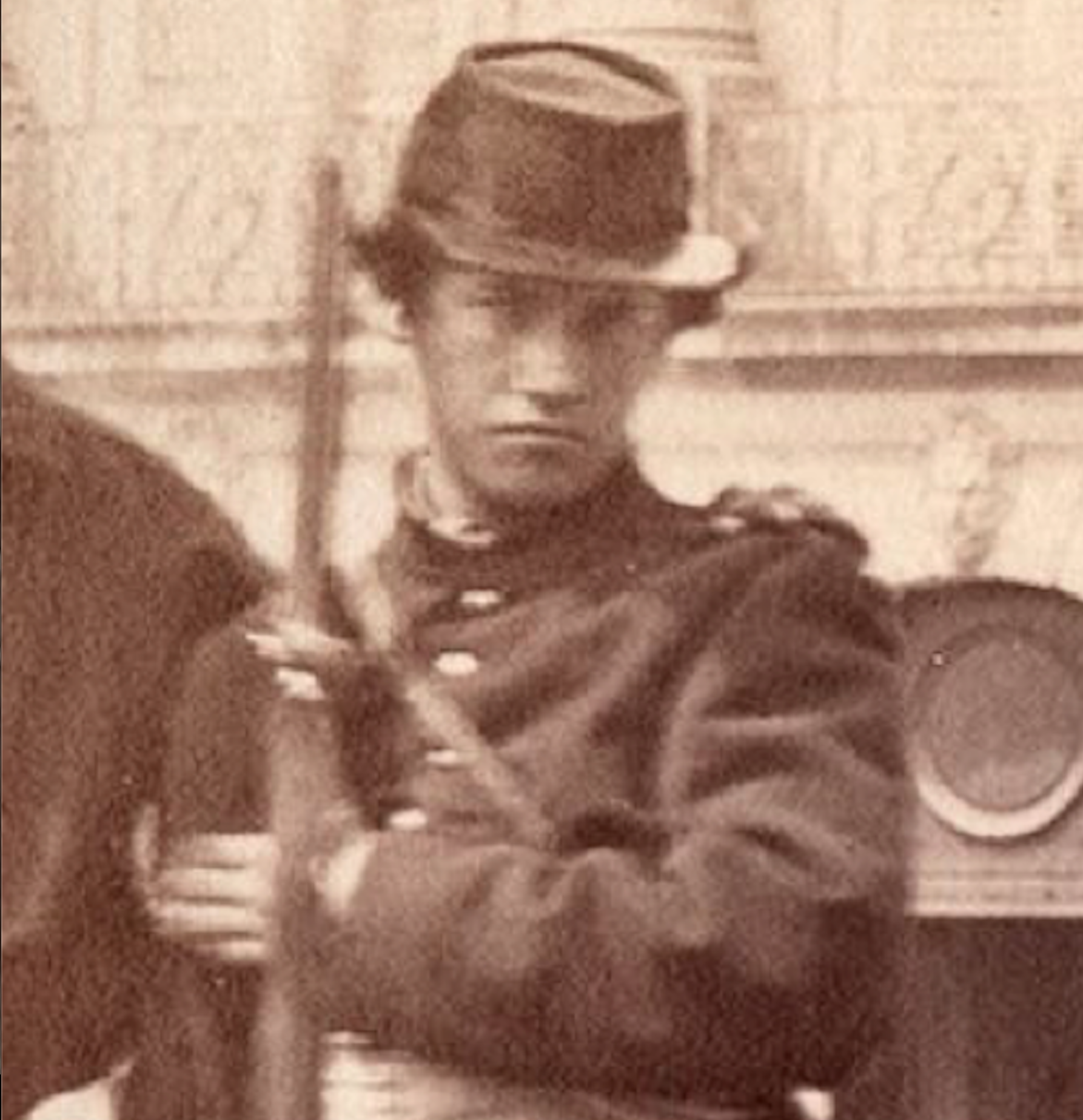
The director of the fascinating music video for “Series Of Dreams” feels the connection; in the final seconds of the clip, Meiert Avis edits the famous youth portrait of Rimbaud in front of a musing Dylan, fleetingly letters flash up and fade away: black a, white e, red i, green u and blue o; the Alchimie du verbe, the second délire from Un Saison En Enfer (1873). The only 19-year-old genius here defines poetry as if he were talking about Dylan’s best work:

J’inventai la couleur des voyelles ! – A noir, E blanc, I rouge, O bleu, U vert. – Je réglai la forme et le mouvement de chaque consonne, et, avec des rythmes instinctifs, je me flattai d’inventer un verbe poétique accessible, un jour ou l’autre, à tous les sens. Je réservais la traduction.
Ce fut d’abord une étude. J’écrivais des silences, des nuits, je notais l’inexprimable.
Je fixais des vertiges.

I invented the colour of vowels! A black, E white, I red, O blue, U green. – I regulated the form and motion of every consonant, and, with instinctive rhythms, I flattered myself I’d created a poetic language, accessible some day to all the senses. I reserved the translation rights.
It was academic at first. I wrote of silences, nights, I expressed the inexpressible.
I defined vertigos.

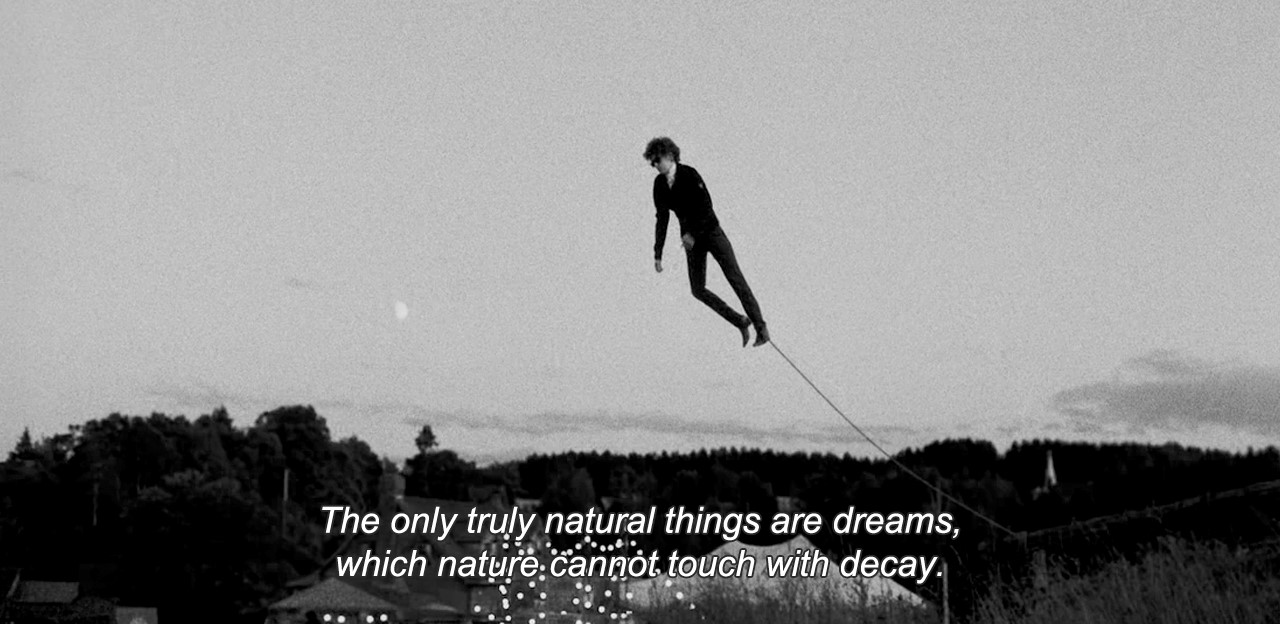
The soul kinship is recognised in the Dylan film I’m Not There (2007). One of Dylan’s incarnations from that intriguing cartoon is an 19-year-old “Arthur Rimbaud”, masterfully portrayed by Ben Whishaw, haughty and vulnerable in one. Admittedly, he does get the most rewarding texts, the most beautiful one-liners and aphorisms from the albums’ liner notes, interviews and press conferences. Among them is the Dylan quote from Shelton’s No Direction Home, which perfectly expresses the Rimbaud-Dylan connection:

Yet “Series Of Dreams” is an atypical lyric in the bard’s series of dream songs. No extravagancies like in the 60s, nor the mystical, tranquil dream references from the 70s and 80s – here the poet almost clinically administers the broad outlines of four dreams, some couleur is given by details like a folded umbrella and the directing instructions like the accelerated time (in another version, by the way, delayed time) and, moreover, as the narrator clinically declares: it’s not too special and not at all too scientific, any of it.

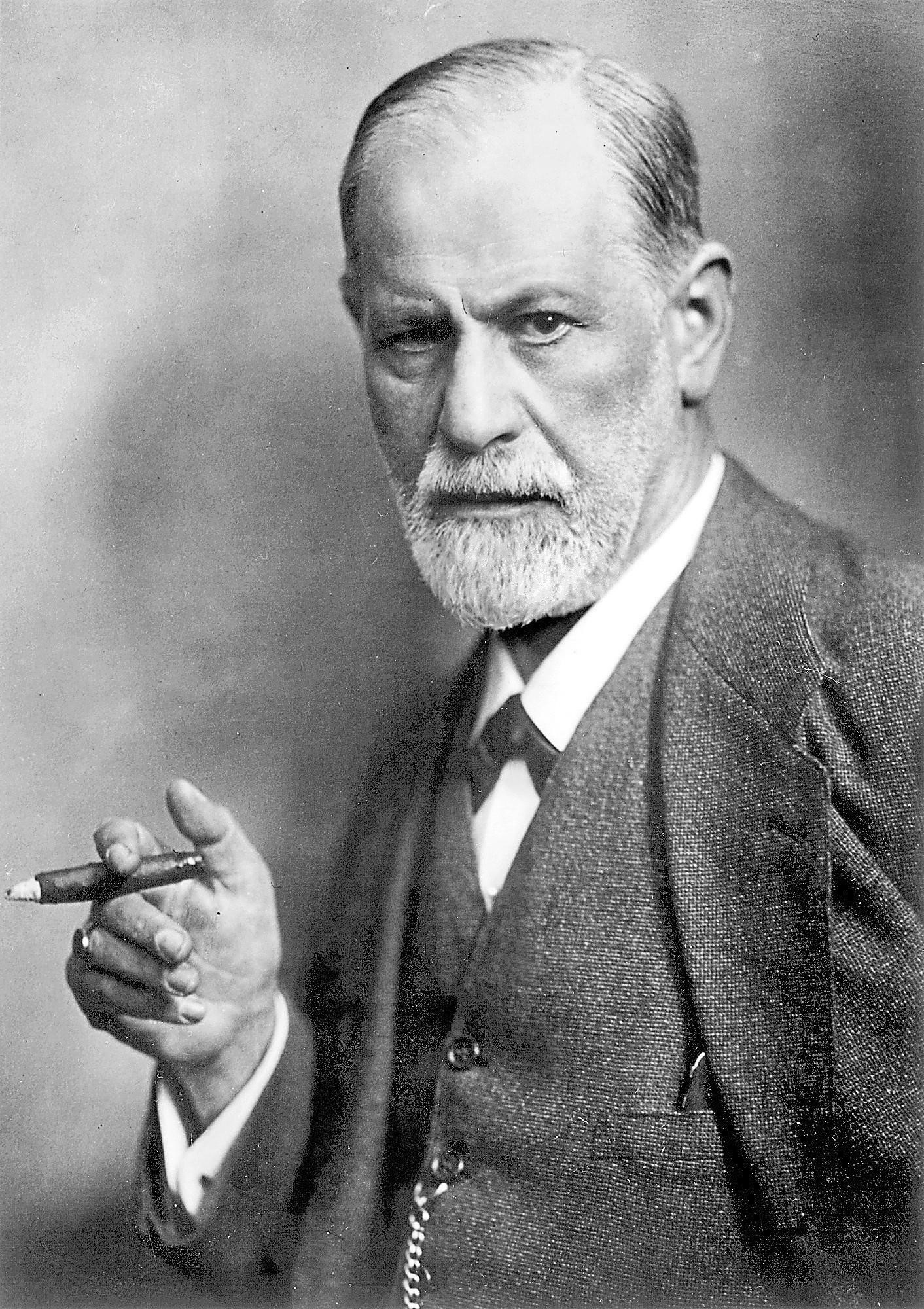
That remains to be seen. The founder of the scientific dream interpretation, Sigmund Freud, certainly would know what to do with it. Anyhow, every series of dreams is related, he teaches on page 171 of his Traumdeutung (The Interpretation Of Dreams, 1899), and despite the lack of details, it can be predicted in which direction Freud’s analysis would point. The umbrella, of course, symbolizes the manly pride (“des der Erektion vergleichbaren Aufspannens wegen – on account of the opening, which might be likened to an erection”), “climbing” indicates intercourse and “running” means fear – fear of dying, usually, but here Herr Doktor would probably rather steer towards fear of commitment. After all, the umbrella remains folded, the burning numbers symbolise the fleeting of the years, to witness indicates culpable passivity.

However, a coherent, specific interpretation cannot be constructed, Dylan is right about that. Which is a good thing; after all, the poet here does not describe one dream, nor a series of dreams, but, after all those bizarre, melancholic, visionary and romantic dreams in his oeuvre, now themes the dreaming itself.

The fate of the song is a bit tragic. Recorded during the Oh Mercy sessions, but to the dismay of those involved and despair of producer Lanois, Dylan refuses to put it on the record. His motives, as expressed in the autobiography Chronicles, are once again mysterious. After the recording Lanois suggests something like starting with the bridge and using the main part as the bridge. Dylan considers it, understands what his producer means, but rejects the idea: “I felt like it was fine the way it was.” And then suddenly the song is exit. Confusing.

His criticism of Lanois’ approach to that other rejected masterpiece, “Mississippi” from 1997, then seems to fit much better his expressed discomfort with “Series Of Dreams”:

Lanois didn’t see it. Thought it was pedestrian. Took it down the Afro-polyrhythm route — multirhythm drumming, that sort of thing. (…) he had his own way of looking at things, and in the end I had to reject this because I thought too highly of the expressive meaning behind the lyrics to bury them in some steamy cauldron of drum theory.

A “Mississippi” recording with “multirhythm drumming” is not known, but the official releases of “Series Of Dreams” (on The Bootleg Series 1-3 and on Tell-Tale Signs) do fit that description perfectly. And precisely that remarkable drumming is what makes the song so distinctive. The whole arrangement, but especially the percussion, gives the song the majestic grandeur which is denied by the sober, nuanced lyrics. Oh Mercy with “Series Of Dreams” would indeed have been an even more beautiful album, Lanois is right.

It’s an enchanting song. All the more remarkable is that it has relatively few covers. Hard to improve or match, that’s probably it. Most covers remain anxiously close to the source, especially regarding the rolling drum avalanche and the driving bass. The occasional follower who dares to deviate, the Antwerp collective Zita Swoon for instance (on Big City, 2007), is very attractive, granted, but the grandeur of the original is dearly missed.

No, then the faithful copy of the Italian grandmaster Francesco De Gregori wins. Although translations rarely work for Dylan songs, De Gregori’s version of “If You See Her, Say Hello” (“Non Dirle Che Non E’ Cosi”, on Masked And Anonymous, 2003) already demonstrated that the Italian translations of the Roman “Principe dei cantautori” are the exception.

Apart from the beauty of the Italian words, his “Una Serie Di Sogni” actually adds little, but it is enough to become fascinated again. From the magnificent tribute album De Gregori Canta Bob Dylan – Amore E Furto (2015), on which also rather faithful but excellent covers such as “Dignità”, “Tweedle Dum & Tweedle Dee” and “Via Della Povertà” shine. And, just like in his “Via Della Povertà”, in his “Desolation Row”, Francesco does not shy away from deepening the melancholy and romanising the poetry. He doesn’t like flying time and tempo, and would rather have at least one escape option: “Senza metrica, senza velocità, nella stanza c’è un’unica uscita; No metrics, no speed, in the room there is only one exit” is pretty much the opposite of what Dylan sings, and

In un sogno c’era sangue per terra,
In un altro nevicava in città.

In one dream there was blood on the ground,
In another it was snowing in the city.

… De Gregori is making up all by himself. And so what – he is the Prince of Songwriters. He is allowed to dream, too.

Untold Dylan: who we are what we do

Untold Dylan is written by people who want to write for Untold Dylan.  It is simply a forum for those interested in the work of the most famous, influential and recognised popular musician and poet of our era, to read about, listen to and express their thoughts on, his lyrics and music.

We welcome articles, contributions and ideas from all our readers.  Sadly no one gets paid, but if you are published here, your work will be read by a fairly large number of people across the world, ranging from fans to academics who teach English literature.  If you have an idea, or a finished piece send it as a Word file to Tony@schools.co.uk with a subject line saying that it is for publication on Untold Dylan.

We also have a very lively discussion group “Untold Dylan” on Facebook with approaching 6000 active members. Just type the phrase “Untold Dylan” in, on your Facebook page or follow this link 

You’ll find some notes about our latest posts arranged by themes and subjects on the home page of this site.  You can also see details of our main sections on this site at the top of this page under the picture.  Not every index is complete but I do my best.

But what is complete is our index to all the 604 Dylan compositions and co-compositions that we have found, on the A to Z page.  I’m proud of that; no one else has found that many songs with that much information.  Elsewhere the songs are indexed by theme and by the date of composition. See for example Bob Dylan year by year.


Posted in Uncategorized | 14 Comments

Bob Dylan And Queen Mary

By Larry Fyffe

As noted, time-travelling has it’s ups and downs.

Singer/songwriter/musician Bob Dylan travels back in time to visit the prophet Moses who hands him a pen, and asks him to write a biblical verse for the children of Israel after Bob’s been given a bite to eat.

Pleased he is to do so:

The Lord bless thee, and keep thee
The Lord make His face shine upon thee
And be gracious unto thee
The Lord lift up His countenance upon thee
And give thee peace
(Numbers 6: 24, 25, 26)

Dylan simply revises lyrics that he’s written in the future:

May God bless you, and keep you always
May your wishes all come true
May you do for others
And let others do for you
May you build a ladder to the stars
And climb on every rung
(Bob Dylan: Forever Young)

https://youtu.be/NuYqL-uzMes

No harm done at all – he eats pens and leaves.

On a another time-travel adventure, matters get somewhat tricky when Dylan witnesses Jesus escaping from being  crucified. A cover story that Christ survives a few days thereafter all but straightens things out. Time continues to march on in the way God plans it to.

However, the guitar-playing singer gets a bit too smug, and gets himself into a quite a mess when he goes back in history to say hello to Queen Mary of England: he’s been told you can’t repeat the past, but replies ‘who says I can’t’:

Queen Mary, she's my friend
Yes, I believe I'll go see her again
Nobody has to guess that Baby can't be blessed
Till she finally sees that she's like all the rest
With her fog and her aphetamine, and her pearls
(Bod Dylan: Just Like A Woman)

History tells us that Queen Mary rules for five years, but she doesn’t produce any male heirs, nor female ones for that matter, though she does endure a ‘false pregnancy’. These be times that are amiss; the ‘Great Chain Of Being’ is broken yet again.

To make matters worse, the Catholic Queen runs off to the Scottish Highlands with the Jewish time-travelling drifter, and it’s a couple of years before she’s scheduled to be succeeded by her half-sister Elizabeth. Dylan has screwed up history in a big way, and this time he does not know how to fix it.

True to character, Dylan switches blame, and places it all on the shoulders of ‘Bloody’ Mary:

People see me all the time
And they just don't remember how to act
Their minds are filled with big ideas
Images and distorted fact
Even you, yesterday
You had to ask me where it was at
I couldn't believe after all these years
You didn't know me any better than that
Sweet Lady
(Bob Dylan: Idiot Wind)

Luckily, God knows Bob well, and redeems the wanderer; allows him to escape from the biggest mix-up that he’s ever been in. All he has to do is get circumcised, and given the circumstances, why not? He tells God that he’s already been circumcised, and there is no need for him to be circumcised again.

God then orders the time-travelling minstrel boy to go back just a tiny bit more, and have an affair with Queen Jane Grey. God knows Jane is going to be a monarch only for a few days, that she and her consort haven’t had time to have children, and both will soon have their heads chopped off on orders from ‘Bloody’ Mary. God figures that nobody’ll take much notice, and, anyway, the timeline will approximately be put back on its historical track.

It’s an offer the time-drifter can’t refuse. Although he doesn’t know that she has no children, the singer/songwriter knows the artistically-inclined Queen Jane is trapped unwillingly in a royal power struggle – she’s only a pawn in the game; she’s young, and she’s vulnerable:

When your mother sends back all of your invitations
And your father to your sister he explains
That you're tired of yourself, and all of your creations
Won't you come see me Queen Jane
Won't you come see me Queen Jane?
When all of the flower ladies want back
What they have lent you
And the smell of their roses does not remain
And all of your children start to resent you
Won't you come see me Queen Jane?
(Bob Dylan: Queen Jane Approximately)

All’s well that ends well; nothing comes out of the messy situation except that some modern-day rumour-mongering tabloids claim that Bob Dylan once had a shoddy affair with a lady named Grey.

https://youtu.be/s88jlLM0J5E


Untold Dylan: who we are what we do

Untold Dylan is written by people who want to write for Untold Dylan.  It is simply a forum for those interested in the work of the most famous, influential and recognised popular musician and poet of our era, to read about, listen to and express their thoughts on, his lyrics and music.

We welcome articles, contributions and ideas from all our readers.  Sadly no one gets paid, but if you are published here, your work will be read by a fairly large number of people across the world, ranging from fans to academics who teach English literature.  If you have an idea, or a finished piece send it as a Word file to Tony@schools.co.uk with a subject line saying that it is for publication on Untold Dylan.

We also have a very lively discussion group “Untold Dylan” on Facebook with approaching 6000 active members. Just type the phrase “Untold Dylan” in, on your Facebook page or follow this link 

You’ll find some notes about our latest posts arranged by themes and subjects on the home page of this site.  You can also see details of our main sections on this site at the top of this page under the picture.  Not every index is complete but I do my best.

But what is complete is our index to all the 604 Dylan compositions and co-compositions that we have found, on the A to Z page.  I’m proud of that; no one else has found that many songs with that much information.  Elsewhere the songs are indexed by theme and by the date of composition. See for example Bob Dylan year by year.
Posted in Uncategorized | 2 Comments

Play lady play: I believe in you.

Musical selection by Aaron Galbraith, commentary by Tony Attwood

We’ve decided to have a little look at some of the performances by women of Dylan’s songs, and there’s surely no better place to start than “I Believe In You.”

https://m.youtube.com/watch?v=UDUqS0Y7Zas

Cat Power included the song in her album Jukebox following it immediately with her Dylan tribute song “Song To Bobby” on the album.

In the entry concerning Charlyn Marshall (Cat Power) Wiki states that her recordings  “have frequently been noted by critics for their somber, blues-influenced instrumentation and melancholy lyrics, leading LA Weekly to dub her the “queen of sadcore.”  She has rebutted this saying that far from being sad, her songs are triumphant.  And certainly, her repertoire is varied enough to incorporate many different formats ranging from blues to soul, rock ‘n’ roll to hymns.

What she does with this song is singularly interesting in that she performs it in a minor key – an approach most commonly associated with sadness, while Dylan’s original is in a major key which has the opposite impact on most listeners.  There is a jagged feel to Cat Power’s recording which is emphasized by this key change and which causes anyone who knows the piece to take several metaphorical steps in reverse trying to adjust to the new sound and the meanings it implies.

Phoebe Snow included the song on her 1981 album Rock Away – an album with an extraordinarily worrying cover for anyone with even the slightest concern about heights.

There’s an assertiveness in the opening which then utterly explodes in the second half of the verse.  However there is so much made of the melody and lyrics so quickly, it seems hard to find anywhere else to go.   It raises the issue of where the real significance of the song is – where the build up should be, and how far it should go.  And that is the question that clearly concerns every performer here.

Every performer will surely be inclined to take the opening verses gently

They ask me how I feel
And if my love is real
And how I know I’ll make it through
And they, they look at me and frown
They’d like to drive me from this town
They don’t want me around
’Cause I believe in you

They show me to the door
They say don’t come back no more
’Cause I don’t be like they’d like me to
And I walk out on my own
A thousand miles from home
But I don’t feel alone
’Cause I believe in you

But the question is, does the song then build at “I believe in you even through the tears and the laughter” or should the performance wait until “Oh, when the dawn is nearing”

Or indeed the reverse.

Or (as can be seen if you care to stay with us through this piece) neither.

The brilliance in terms of the composition, of course, is that every performer has these choices to make, and will make them in different way.  And this brilliance stems bother from the lyrics and music.

However Dottie Peoples from the excellent Gotta Serve Somebody album raises the second question of just how much the lead guitar needs to do – and how far the vocal gymnastics need to go.  Indeed the key issue is that with lyrics this powerful and a melodic line this exquisite just how much does need to be added?

And as we can now see, not everyone agrees that the song needs to explode in an orgy of overwhelming deliverance.

Judy Collins, of course, is the past master of knowing how to hold back – largely because her voice is so exquisite that she can demand attention through a whisper, if she so wished.  But here she does not just hold back but also something quite unexpected: she changes the melody of the chorus, while resisting all attempt to push the emotion ever further.  Ms Collins is also taking into account that we all know the song, and therefore she can lead us around it by a different route, without ever losing the sense of where it is and what it is.  And she can do that not least because of the harmonies she can conjure out of the melody.

Alison Krauss is also in the restrained school of signing – her version was included on the Aly McBain and Jerry Douglas album the Transatlantic Sessions – Series 5, Vol. Three.  The contrast here with some of the renditions above could not be starker, for here the vision is that the song is easily beautiful and powerful enough to carry the listener through to the end through its simple gentility.   With such songs less can most certainly be far, far more.

Which brings us to Sinead O’Connor.

As you may recall, if you are a regular Untold reader, I (Tony) wrote a piece concerning Sinead O’Connor and this song and expressing my own views concerning Ms O’Connor’s response to the piece, in relation to her own experiences in the Magdalene Laundry.

It is appropriate to finish with this version, because while some of the earlier examples we have above are strident in their rendition of the title through the song, and others go the opposite, much more gentle route, here a third approach is used, an approach which takes us into a wholly different dimension.

For here the song is treated as a delicate, fragile, trembling almost broken affair … one feels that Ms O’Connor is so torn apart by her experiences of the Catholic Church she can hardly make it to the end.  And yet she can still say she believes.  The point is however we no longer know what there is left to believe in.

This is an extraordinary rendition of an extraordinary song and reveals just how the meaning of a piece can be changed by its performance.  Which in turn raises the question, which meaning is the right meaning?  Or is there ever such a thing as the “right meaning?”

Untold Dylan: who we are what we do

Untold Dylan is written by people who want to write for Untold Dylan.  It is simply a forum for those interested in the work of the most famous, influential and recognised popular musician and poet of our era, to read about, listen to and express their thoughts on, his lyrics and music.

We welcome articles, contributions and ideas from all our readers.  Sadly no one gets paid, but if you are published here, your work will be read by a fairly large number of people across the world, ranging from fans to academics who teach English literature.  If you have an idea, or a finished piece send it as a Word file to Tony@schools.co.uk with a subject line saying that it is for publication on Untold Dylan.

We also have a very lively discussion group “Untold Dylan” on Facebook with approaching 6000 active members. Just type the phrase “Untold Dylan” in, on your Facebook page or follow this link 

You’ll find some notes about our latest posts arranged by themes and subjects on the home page of this site.  You can also see details of our main sections on this site at the top of this page under the picture.  Not every index is complete but I do my best.

But what is complete is our index to all the 604 Dylan compositions and co-compositions that we have found, on the A to Z page.  I’m proud of that; no one else has found that many songs with that much information.  Elsewhere the songs are indexed by theme and by the date of composition. See for example Bob Dylan year by year.


Posted in Uncategorized | 3 Comments

Every Grain of Sand part 2

This article continues from Every Grain Of Sand, A Perfect Finished Plan. Part 1.

By Paul Robert Thomas

III

“Then onward in my journey I come to understand”

EVERY GRAIN OF SAND:  Verse one, line one.

“In the time of my’ confession in the hour of my deepest need”

The words which open Dylan’s song echo the words of Psalm 77, a psalm which has been described as ‘the prayer of a perplexed man’. The psalm begins

“I will cry unto God with my voice / I cry to God that he might give voice. In the day of trouble I sought the Lord

In some translations ‘day of trouble’ is rendered ‘In my time of my distress’. The psalm begins with a resolution to turn to God and continues with signs of repentance as the psalmist confesses the turmoil he has suffered. In Judaism to ‘confess’ is to declare ones sins orally to a priest. Was Dylan’s confession a condition of his being born again, out of the ‘old Adam’ into the apron of Christ before baptism? Almost certainly, but the sign of ritual cleansing is not confined to Christianity. In Isaiah 1:16 God addresses Israel “Wash you, make you clean; put away the evil of your doings from mine; cease to do evil; learn to do well; seek judgement, relieve the oppressed,… V.18 “Come let us reason together, saith the LORD, / Though your sins be as scarlet they shall be as white as snow”. The convert to Christianity undergoes baptism. There are echoes here of the Jewish precept of casting your sins upon the waters (the waters must be in motion), a religious observance carried out by Jews on Yom Kippur, The Day of Atonement, when each Jew is to confess his sins and failings to those he has hurt in any way and ask forgiveness, making reparation.

Line Two

When the pool of tears beneath my feet flood every new born seed”

“They who sow in tears shall reap with songs of joy (Ps 126)

“My eyes shed streams of water because men do not obey your teaching” (“because they keep not thy Law”)

(Ps. 119)

To Christians, Jesus has been referred to as ‘the seed’ planted by God and watered by his people’s tears so that they might reap salvation on the day of his nativity as on the day of his return. Fr Gregory. has referred me to The Parable of the Sower (Luke 8:5) which I explore later and which has associations here but more specifically in the later verse concerning the ‘Flowers of indulgence’. In this parable Christ explains to his disciples that the seed is God’s word. In John’s Gospel, Jesus is referred to as The Word’ “and The Word became flesh and dwelt among us full of truth and light but his people knew him not”. As a biographical note it is worth mentioning that between the recording of Desire and Street Legal, whilst the acrimonious divorce proceedings were under way and Dylan and his wife fought for custody of their children, Dylan produced no creative output and must have cried many tears of remorse and loss. At this point in his life the ground beneath his feet lay fallow. The above psalm might be compared with Ps 130

From the depths do I invoke thee, 0 Eternal, our Lord Hearken to my cry.

A psalm of deep distress which ends on a note of hope:- “0 Israel wait for the Lord / for with the Lord is steadfast love and great power to redeem”. Psalm 87 is also relevant here in respect of the desolation suggested by ‘The Pool of tears’.

The dyin' voice' suggests several possibilities and images.
There’s a dyin’ voice within me reaching out somewhere.

It might be the dyin’ voice of one rendered silent with grief or again it might suggest a loss of hope and a great weariness; yet again could this ‘dyin’ voice be the dying voice of the ego, the self which, in Christian theology must surrender (die) to be reborn in Christ. The voice seems to be carried on the wind, ‘reaching out somewhere’ as though Dylan has lost all direction. As a Jew he would direct his words to God, likewise to Christians but through Christ, the mediator who Christian doctrine holds must plead on the sinners behalf as God, being Holy, cannot be approached by sin (nor may the sinner survive a direct confrontation with God). This line possibly records the exact moment when Dylan surrendered his Self into the unknown, shed his ego and threw himself upon the mercy of God, albeit indirectly. Both Jews and Christians believe that God answers the desperate and despairing. Dylan makes explicit reference to despair in line 4

“Toiling in the danger and the morals of despair”

A suggestion from Fr. Gregory, which makes sense of this passage is that, to Christians, despair is a state of extreme danger as it suggests a loss of hope in God. The Catechism of The Catholic Church defines it as a sin against the first commandment and states “By despair, man ceases to hope for his personal salvation from God, for help in attaining it or for the forgiveness of his sins. Despair is contrary to God’s goodness, to his justice – for the Lord is faithful to his promises

– and to his mercy.” 8

The ‘morals of despair’ suggests a complete lack of hope or of any ability to find a way to escape from evil or the misery it causes. The figure most associated with despair in The New Testament is Judas, who through his despair at betraying Jesus, lost all hope in God’s forgiveness and committed suicide, negating God’s unconditional promise of salvation. There are no other examples. In Luke Ch 5.v5 the disciples are close to despairing (if this passage is read as a parable) but entrust themselves to Jesus’ words, and so to God their Father. In John 21.15 Peter, who had denied Christ three times is forgiven when he affirms his love for Jesus three times. Dylan’s despair might well be a memory of his feeling prior to his conversion but the dyin’ voice was heard by God who responded.

Verse two has Judaic and Christian overtones with its opening line “Don’t have the inclination to look back on any mistake”, containing echoes of Genesis and the teaching of Christ and his disciples. The injunction ‘not to look back’ recalls the story of Sodom and Gommorah to mind where the angels of God urge Lot, ‘Flee for your life! Do not look back, do not stop anywhere on the plain; flee to the hills lest you be swept away” (Gen 19:15-26). Lot’s wife looked back and was turned into a pillar of salt – petrified). Lot’s escape to the hills puts us in mind of Psalm 120 “1 lift up my eyes to the mountains/From where shall come my help/My help shall come from the Lord who made heaven and earth”. In Isaiah 52.7 the messenger of the Lord comes from hills (mountains) to bring good news. The injunction not to look back is also implicit in The New Testament. Paul tells those who have placed their faith in Christ, “There is therefore now no condemnation for those who are in Christ”, and Jesus, in sending out his disciples to preach the gospel tells them that where they are rejected they are to ‘shake the dust from their feet and move on; “Truly I tell you it will be more tolerable for the land of Sodom and Gommorah on the day of Judgement than for that town” (Math 10:12-15). The Christian is ‘a new creation’ after reception into the church. Cf Luke 9.5. But the line of Dylan’s song also has echoes of Ecclesiastes 5.5 – “Suffer not thy mouth to cause thy flesh to sin, neither say thou before the angel that it was a mistake”. Incidentally the root meaning of ‘Sin’ is ‘mistake’ a falling short through error or spiritual laziness. In the second line Dylan likens himself specifically to Cain whose failure to confess his crime of parricide to God resulted in his exile – but not his death. Cain’s exile might be likened to Dylan’s exile from his followers and from the religion of his forefathers upon his conversion to Christianity. Also it might be argued that Dylan is identifying himself with Cain ‘see the Masters hand’ in the fury of Cain’s slaying of his brother. Cain was to found the first City as a result of his exile and named it after his son Enoch (Gen 4:17-22) and from generations of Enoch was born Jubal the ancestor of all who play the harp and the lyre – of poets and musicians. The New Jerome Biblical Commentary remarks that Cain’s crime ~ used by God to further civilization – to break the nomadic chain of Cain’s ancestors and have them ‘put down roots’. But Dylan’s sentiment is one shared by many who find God, whether Jew or Christian. In reassessing their life they see Cod at work even when they felt most distant from Him. The last line of this verse, “In every leaf that trembles, in every grain of sand” should be compared with Lev 26:36 and Ps 114:7. Ezek 26:16. Dylan sees God’s hand in all of Nature, from a trembling leaf to a grain of sand just as the psalmist does in Ps 24, “The earth is the Lord’s and the fullness thereof”. At the same time the pastoral imagery puts us in mind of Dylan’s retreat, in 1977, to his ranch in Laredo, Minnesota, whilst the divorce was going on, and where he was to begin writing the songs of Street Legal. (See the reference 9 to Farida McFree above).

"Oh the flowers of indulgence and the weeds of yesteryear
Like criminals they have choked the breath of conscience and good cheer"

These words are some of the most evocative of the New Testament in this song. They bring to mind Christ’s ‘The Parable Of The Sower’ Mark Ch.4 vs.3 – 10

“Listen! A sower went out to sow. And as he sowed, some seed fell on the path, and the birds came and ate it up. Other seed fell on rocky ground, where it did not have much soil, and it sprang up quickly, since it had no depth of soil. And when the sun rose, it was scorched; and since it had no root, it withered away. Other seed fell among thorns, and the thorns grew up and choked it and it yielded no grain. Other seed fell into good soil and brought forth grain, growing up and increasing and yielding thirty and sixty and a hundredfold. And (Jesus) said “Let anyone who has ears to hear listen”

Jesus explains the hidden meaning of this parable to his disciples.

Vs 14-26 ‘~The sower sows the word. These are the ones on the path where the word is sown; when they hear, Satan immediately comes and takes away the word that is sown in them. And these are the ones sown on rocky ground; when they hear the word, they immediately receive it with joy. But they have no root, and endure only for a while; then when trouble or persecution arises on account of the word, immediately they fall away (or ‘stumble’ as a variant text has it). And others are those that are sown among the thorns: these are the ones who hear the word: but the care of this world, and the lure of wealth, and the desire for other things come in and choke the word and it yields nothing. And these are the ones sown on good soil they hear the word and accept it and bear fruit, thirty and sixty and an hundredfold. For to those who have more shall be given; and for those who have nothing, even what they have will be taken away. The Kingdom of Cod is as if someone would scatter seed on the ground

Dylan, raised a Jew, Bar- Mitzvah’d, had strayed a long way from his religious upbringing by 1966 and again at the time of his divorce. His profligate ways with women are legendary and perhaps the flowers of indulgence refer to his affairs, as well as his abuse of drugs and alcohol ‘Weeds’ are a vernacular term for a woman’s mourning clothes. Is there a reference here to Sara’s mourning the loss of her husband or to mourning in general’? On a personal level this verse might refer to the way life on the road has ‘choked the breath of conscience’; rendered Dylan unfit to discriminate between right and wrong. Breath is a biblical term for the spirit of God, some translators of Genesis render the sentence in the creation myth, “God breathed upon the waters”. As ever there is a psalm which seems to parallel this verse, “When the wicked spring as the grass/And all the workers of iniquity do flourish’ Ps 92:7.

The sun beat down upon the steps of time to light the way
To ease the pain of idleness and the memory of decay

The reference to the ‘sun’ (Son?) uses one of the oldest religious symbols which man worshipped before God revealed Himself through the Prophets and through Torah. It has also been used among many other titles to refer to Christ, the Word of God according to John’s Gospel. Psalm 119:105 uses the images of word and light together and has become a hymn in Christian churches and is chanted in synagogues.

“Thy word is a lamp unto my feet and a light unto my path.”

In Dylan’s stricken and artistically idle state is it possible that Dylan recalled these words or the following from Isaiah 60:19

“The sun shall be no more thy light by day, neither for brightness shall the moon give light unto thee: but the Lord shall be unto thee an everlasting light, and the days of thy mourning shall be ended.”

Christianity reinterprets key prophetical texts and scriptural allusions to show how Jesus fulfills prophecy concerning the coming of The Christ, the Anointed One, The Messiah (the Greek meaning of Christ is ‘anointed one’). He is referred to as The Way, God’s Word, The Logos (mind or reason of God), The Light of The World, The Morning Star and The Dayspring from On High. He is also seen as ‘The Sun of righteousness (risen) with healing in his wings’ (Malachi 4:2-3), “The suffering servant” of Isaiah 52:13 – 53:12 and “The Way of Holiness” Isaiah 35:S, and is reported by John as telling his disciples “I am the way, the Truth and the Life, no man cometh to the father but by me…if you know me then you know the father who sent me”(John 14.6) Images from The New Testament run through the music of poor white and black Americans. The blues developed from a fusion of Holiness music, Gospel and African American spirituals. Dylan could no more escape the stories of Christ as savior, liberator and messiah as well as a friend to the poor, as well as an outcast ‘despised and rejected’. I believe that Dylan moved from knowing about Jesus to a point where he identified strongly with him. From there it was a small step to move into a personal relationship with the risen Jesus who alone could, “ease the pain of idleness and the memory of decay”.

“Decay turns me off. Ill die before I decay” (Bob Dylan 1966) 10

“For the living know that they shall die but the dead know not anything, neither have they any more a reward, for the memory of them is forgotten” (Ecclesiastes 9:5)

The memory of the just is blessed but the name of the wicked shall rot (decay) Proverbs 10:7)

The series continues…

Untold Dylan: who we are what we do

Untold Dylan is written by people who want to write for Untold Dylan.  It is simply a forum for those interested in the work of the most famous, influential and recognised popular musician and poet of our era, to read about, listen to and express their thoughts on, his lyrics and music.

We welcome articles, contributions and ideas from all our readers.  Sadly no one gets paid, but if you are published here, your work will be read by a fairly large number of people across the world, ranging from fans to academics who teach English literature.  If you have an idea, or a finished piece send it as a Word file to Tony@schools.co.uk with a subject line saying that it is for publication on Untold Dylan.

We also have a very lively discussion group “Untold Dylan” on Facebook with approaching 6000 active members. Just type the phrase “Untold Dylan” in, on your Facebook page or follow this link 

You’ll find some notes about our latest posts arranged by themes and subjects on the home page of this site.  You can also see details of our main sections on this site at the top of this page under the picture.  Not every index is complete but I do my best.

But what is complete is our index to all the 604 Dylan compositions and co-compositions that we have found, on the A to Z page.  I’m proud of that; no one else has found that many songs with that much information.  Elsewhere the songs are indexed by theme and by the date of composition. See for example Bob Dylan year by year.
 

Posted in Uncategorized | 4 Comments

Why does Bob Dylan like “I am the man Thomas”?

By Tony Attwood

Between 4 September 1999 and 30 August 2002 Bob and his band played the song “I am the man Thomas” 59 times as a concert opener.  The song comes from Ralph Stanley and the Clinch Mountain Boys and was written by Ralph Stanley and Larry Sparks.

It is difficult to place the exact date of the composition of the song, but it appears to have been around 1971/2, although it could have been written earlier but not used.

It hardly needs pointing out that the song represents Jesus talking to his disciple “Doubting Thomas”, who  refused to acknowledge the resurrection until he had seen it for himself.  Hence the parable of faith not requiring tangible evidence: the centre piece of the difference between faith (without evidence) and science (based on evidence).

Here’s one of the 59 Dylan performances.

I am the Man, Thomas, I am the Man
Look at these nail scars here in my hands

They drove me up the hill, Thomas, I am the Man
They made me carry the cross, Thomas, I am the Man

I am the Man, Thomas, I am the Man
Look at these nail scars here in my hands

They crown my head with thorns, Thomas, I am the Man
They nailed me to the cross, Thomas, I am the Man

They pierced me in the side, Thomas, I am the Man
I died on the cross, Thomas, I am the Man

They buried me in the tomb, Thomas, I am the Man
In three days I rose, Thomas, I am the Man

This is not an exact reproduction of the original lyrics, Dylan having combined verses two and three from the original score.  And indeed the lines were varied from performance to performance as is Dylan’s wont.

Roy Lee Centers, Keith Whitley, and Ricky Skaggs are the performers in the original, which comes from a highly prolific time for Clinch Mountain Boys who seemingly released no less than eight LPs in a two year spell starting in February 1971.

Here is the Ralph Stanley version

This is certainly not the only Ralph Stanley song that Bob Dylan has performed – others include “I’ll not be a stranger“, “Stone Walls and Steel Bars” and “White Dove

Indeed in 1997 Bob Dylan recorded the song “Lonesome River” with Ralph Stanley for an album of songs written by and/or recorded with Ralph Stanley.  On the press release of the 2CD set Bob is quoted as saying, “This is the highlight of my career.”

Of the recording of Lonesome River Ralph Stanley said, “That’s the first time it has ever been done as a duet.” It had always been performed by the Clinch Mountain Boys as a trio.

That recording in November 1997 was the first time Dylan had recorded in Nashville since his 1969 album “Nashville Skyline”. Ralph Stanley was quoted as saying, “My wife, Jimmie, thinks its the best thing on the whole project. I think Bob does an excellent job.”  It appeared on Tell Tale Signs, Rare and Unreleased.

An index to the other songs and songwriters that we have included in the Why Does Dylan Like series is given here.

Untold Dylan: who we are what we do

Untold Dylan is written by people who want to write for Untold Dylan.  It is simply a forum for those interested in the work of the most famous, influential and recognised popular musician and poet of our era, to read about, listen to and express their thoughts on, his lyrics and music.

We welcome articles, contributions and ideas from all our readers.  Sadly no one gets paid, but if you are published here, your work will be read by a fairly large number of people across the world, ranging from fans to academics who teach English literature.  If you have an idea, or a finished piece send it as a Word file to Tony@schools.co.uk with a note saying that it is for publication on Untold Dylan.

We also have a very lively discussion group “Untold Dylan” on Facebook with approaching 5000 active members. Just type the phrase “Untold Dylan” in, on your Facebook page or follow this link 

You’ll find some notes about our latest posts arranged by themes and subjects on the home page of this site.  You can also see details of our main sections on this site at the top of this page under the picture.  Not every index is complete but I do my best.

But what is complete is our index to all the 604 Dylan compositions and co-compositions that we have found, on the A to Z page.  I’m proud of that; no one else has found that many songs with that much information.  Elsewhere the songs are indexed by theme and by the date of composition. See for example Bob Dylan year by year.
 

Posted in Uncategorized | 4 Comments

Outlaw Blues (1965). A deeper anchor

by Jochen Markhorst

“He is one of the most compelling white blues singers ever recorded. He is a songwriter of exceptional facility and cleverness,” rouse the liner notes on Bob Dylan (1962), and “he’s an uncommonly skillful guitar player.”

Well all right, the vocal qualities may still fall into the category beauty is in the ear of the beholder, but “uncommonly skillful guitar player”? Even Dylan must have read that back with some embarrassment, and rightly so.


“Bob’s musical ability is limited, in terms of being able to play a guitar or a piano,” as Mark Knopfler says. Quickly adding how unimportant that is:

“It’s rudimentary, but it doesn’t affect his variety, his sense of melody, his singing. It’s all there. In fact, some of the things he plays on piano while he’s singing are lovely, even though they’re rudimentary. That all demonstrates the fact that you don’t have to be a great technician. It’s the same old story: If something is played with soul, that’s what’s important.”

The blues music, however, has turned out to be a great, constant and lasting love – we can at least agree on that after sixty years. The liner notes on the successor The Freewheelin’, a year later, analyse confidently that Dylan has already gone through a big change since the last album, has moved to the top of the folk movement, and predict – bull’s eye – that “there will surely be many further dimensions of Dylan to come” in the future. Writer Nat Hentoff, though, acknowledges that the blues has been able to hold its ground, alongside all those folk songs, with traditional sounding songs like “Down The Highway” and “Honey, Just Allow Me One More Chance”. On the following albums and throughout the decades, up until Rough And Rowdy Ways in 2020, this shall remain so. The blues content varies, true, sometimes evaporating completely, but always returns – the blues is intrinsic to Dylan, deeper anchored than, for example, folk music.

On record number three, The Times They Are-A Changin’ (1964), there is not too much room for the blues between all those finger-pointing songs, on successor Another Side Of it slowly crawls back, and on Bringing It All Back Home Dylan’s beloved style of music shines and is born again: the minstrel embraces the electricity, and in doing so the Chicago blues. The band’s playing is bursting with joy – and not just with the blues. Dylan is playing electric and with a band for the first time since high school, and is audibly having a lot of fun.

“Outlaw Blues” is a highlight in that respect. Raw, carefree and unpolished, with the rattling exuberance of schoolboys in a garage band and the energy of the rhythm and blues over the simple blues scheme of Robert Johnson’s “When You Got A Good Friend”.

Ain’t it hard to stumble
And land in some funny lagoon?
Ain’t it hard to stumble
And land in some muddy lagoon?
Especially when it’s nine below zero
And three o’clock in the afternoon

The lyrics are food for music historians and Dylanologists, which is part of the special charm of this song. Actually, the song marks the blossoming of the kaleidoscopic lyricist Dylan, announcing the string of superb highlights on Side 2, like Tambourine Man and It’s Alright Ma. “Outlaw Blues” is a first step on that stellar path.

For starters, the thief of thoughts lovingly raids the blues catalogue. The opening Dylan borrows from “Stranger Here”, which he probably knows through the version by Odetta:

Ain't it hard to stumble
When you got no place to fall
Ain't it hard to stumble
When you got no place to fall
Stranger here
Stranger everywhere
I would go home
But honey I'm a stranger

…and the associative leap from stranger to outlaw is not that big. Equally associative are the half and whole references to blues heroes in the remainder of the first verse. To “Nine Below Zero” by Sonny Boy Williamson II, “Three O’Clock Blues” by B.B. King and, well all right, half a wink to Muddy Waters.

It opens the gate to the rest of the lyrics, to the nonsensical outbursts, semibiographical veils and Americana;

Ain’t gonna hang no picture frame
Well, I might look like Robert Ford
But I feel just like a Jesse James

As in this second verse, Jesse James’s death scene, who was shot in the back by the coward Robert Ford while hanging a painting over the sofa – crucial enough to become to song’s name-giver, apparently.

The cheerful nonsense of the third verse,

Oh, I wish I was on some
Australian mountain range
I got no reason to be there, but I
Imagine it would be some kind of change,

is witty and has the merit of inspiring Arlo Guthrie:

We ought to send Officer Joe Strange
To some Australian mountain range
So we all can do the ring-around-a-rosy rag.
(Ring-Around-a-Rosy Rag, 1967)

And in the fourth verse the poet once again places a real Dylan classic: don’t ask me nothing about nothing, I just might tell you the truth – the one-liner that, together with the sunglasses and the black tooth has been siphoned off from the song’s “primeval version”, from “California”.

And furthermore some loose snippets from the blues canon. The woman in Jackson is most likely from “Blue Bird Blues” by Sonny Boy Williamson (1937), the brown-skin girl from the song’s template, from Robert Johnson’s “When You Got A Good Friend” (She’s a brown skin woman, just as sweet as a girlfriend can be) and I love her just the same Dylan probably steals from Louis Jordan’s mega hit “Caldonia” from 1945:

Walkin' with my baby she's got great big feet
She's long, lean, and lanky and ain't had nothing to eat
She's my baby and I love her just the same
Crazy 'bout that woman 'cause Caldonia is her name.

By the way, “Caldonia” is the first song in history for which the term rock ‘n’ roll is used in writing (in Billboard Magazine). James Brown releases his version of “Caldonia” on single a few months before Dylan records “Outlaw Blues” – one way or another it must have penetrated Dylan’s vocabulary.

In the verse one could find, with some good will, a few lines to biographical facts. Just as in the finale one may wonder whether that might be Joan Baez, the dark-skin woman whose name he won’t mention. After all, in previous years he did quite regularly visit her in California.

Thin, but in line with the misty, opaque nebulous poetry in which Dylan will become even more proficient, hereafter. And in line with the promise made by the master in the liner notes: I am about t sketch You a picture of what goes on around here sometimes. A vague drawing of unrelated fragments from a restless, multicoloured life… yes, that does sound very much like Dylan’s poetry these years.

Infectious it is anyway. Ain’t it hard when you stumble is a great opening line and the thrust of the simple blues riff remains irresistible throughout the decades – the song is on many setlists. Grace Slick picks it up back in ’66 (before Jefferson Airplane, with The Great Society), Dave Edmunds in the ’70s (with Rockpile), Dream Syndicate in the ’80s, with both Thin White Rope and The Radiators the song was on the playlist in 1992 and Dylan friend Jack White takes “Outlaw Blues” with his White Stripes into the 21st century.

None of the covers are presumptuous, nor display any ambition apart from having fun. The rugged garage sound is a Great Common Denominator and, although always enjoyable, no one refreshes the original.

The one exception is the studio recording by The Morning Benders (on the brilliant tribute project Subterranean Homesick Blues, 2010). They pull the song tight in a slow, dressed-down and dramatic arrangement, add ethereal backing vocals and produce a macabre, ominous version, very different, and very successful.

Uncommonly skillful guitar player, by the way.


Untold Dylan: who we are what we do

Untold Dylan is written by people who want to write for Untold Dylan.  It is simply a forum for those interested in the work of the most famous, influential and recognised popular musician and poet of our era, to read about, listen to and express their thoughts on, his lyrics and music.

We welcome articles, contributions and ideas from all our readers.  Sadly no one gets paid, but if you are published here, your work will be read by a fairly large number of people across the world, ranging from fans to academics who teach English literature.  If you have an idea, or a finished piece send it as a Word file to Tony@schools.co.uk with a note saying that it is for publication on Untold Dylan.

We also have a very lively discussion group “Untold Dylan” on Facebook with approaching 5000 active members. Just type the phrase “Untold Dylan” in, on your Facebook page or follow this link 

You’ll find some notes about our latest posts arranged by themes and subjects on the home page of this site.  You can also see details of our main sections on this site at the top of this page under the picture.  Not every index is complete but I do my best.

But what is complete is our index to all the 604 Dylan compositions and co-compositions that we have found, on the A to Z page.  I’m proud of that; no one else has found that many songs with that much information.  Elsewhere the songs are indexed by theme and by the date of composition. See for example Bob Dylan year by year.


Posted in Uncategorized | 1 Comment

Bob Dylan: the tortuous journey to 1984

by Tony Attwood

So, if you have been following the series you will know by now what’s going on.  Bob had converted to Christianity, but then within 18 months although still writing religious pieces was also writing songs which (I would argue) did not have religion as the central theme and ended that year with the utterly magnificent “Making a liar out of me”.

1981 was the last religious year but also included some rather un-religious songs like Watered down love  and Lenny Bruce.

In 1982/3 then was the real problem – at least for myself in trying to assign a simple subject to each song, because most of the songs don’t have a simple subject.   Instead of love, lost love, moving on and the blues we got…

Like the lion tears the flesh off of a man
So can a woman who passes herself off as a male
They sang “Danny Boy” at his funeral and the Lord’s Prayer
Preacher talking ’bout Christ betrayed
It’s like the earth just opened and swallowed him up
He reached too high, was thrown back to the ground
You know what they say about bein’ nice 
                to the right people on the way up
Sooner or later you gonna meet them comin’ down
Well, there ain’t no goin’ back
When your foot of pride come down
Ain’t no goin’ back

So after a year which includes lyrics like this, where on earth would Bob go next?

Dylan started 1984 with a song he performed just once, and with lyrics that were never published.  I’m rubbish at decoding lyrics, but fortunately Untold reader Mick Gold worked hard to give us what was certainly then, and may still be, the only copy of the lyrics of “I once knew a man”

I once knew a man
With a needle in his arm
Well he taught me to make
Love ain’t even bad
But you never need a nod
Oh I once knew a man

Yeah I once knew a man
Seems like only yesterday
He done pass this way
Well I once knew a man

I once knew a man opening a door
In by another
Opening a cupboard 
Never to be here no more
Yeah I once knew a man

Well I once knew a man
Seems like only yesterday
He done pass this way
Oh I once knew a man

Well I once knew a man
Creeping in the side
Opening a door
Falling thru the floor
Setting someone for a ride
Yeah I once knew a man

Oh yeah I once knew a man
Well it seems like only yesterday
He done pass this way
Well I once knew a man

We have no commentary or background to the song.  Was “The Man” that Dylan “knew” Jesus?  Was this his final goodbye, done in private for the sound check of a TV show, or was it just a jam?

So that set the year going.  And this is what we got

  1. I once knew a man (Blues, moving on)
  2. Who loves you more (Love)
  3. Almost done (Love)
  4. I see you around and around (Love)
  5. Dirty lie (Lost love?)
  6. Enough is enough (Fast blues)
  7. Go way little boy (Lost love, rejection)
  8. Drifting too far from shore (Lost love, strangeness)
  9. New Danville Girl / Brownsville Girl (Moving on)
  10. Something’s Burning Baby  (Lost love)
  11. Night after Night (Tedium, a bad life)
  12. I’m ready for love (Love)

Which overall gives us

  • Blues/moving on: 2
  • Love: 4
  • Lost love: 4
  • Moving on: 1
  • Tedium, the bad life: 1

Now what is instantly noticeable is that we are back to the sort of subject selection of the pre-Christian era.  (For simplicity I have included the “Moving on” songs with songs also noted as “It’s falling apart”

Year Love Lost Love Blues, the end Moving on Faith No going back
1978 3 3 3 4
1979 19
1980 2 2 7
1981 1 3 6
1982/3 4 4
1984 4 4 2 1

Now I have said throughout that these titles are approximate.  They overlap, the boundaries change, but they do give us a general indication of where Dylan was heading, and to my mind they certainly give an indication here.

And just to emphasise the point, these totals in the little table above do not represent all the songs that Dylan wrote in this time .  They summarise the main subject areas.

1978 was a fairly regular year – these are the sorts of totals we have been seeing in these main areas of Dylan’s composition year on year.

1979 saw  the faith songs emerged and Dylan wrote nothing else all year

1980 saw the faith songs remain dominant but they were now sharing centre stage  with Bob’s favourite themes.

1981 saw faith songs still there, but this was their last year.

But it was 1982/3 that, when analysed this way, gives us a shock.  1982/3 contains no faith songs at all, but the two leading categories were very much of the old school: moving on and no going back.  Indeed one could argue that these two could be linked together to give us eight songs in one category.

And by 1984 we were back to the old days in other ways.  Love and lost love, the themes that had dominated Dylan’s work all the way through from the earliest days, were back in dominance.  It was as if the faith period had never been there.

Now if you have read my tortuous piece on 1981 you will know that I made a huge fuss about Making a liar out of me and saw it as a pivotal moment in Dylan’s writing.

1982/3 took this further with the emphasis on the fact that there ain’t no going back, and he really meant it.  Dylan was by no means at his peak as a song writer at this time and indeed I have previously argued that the highlight of the year was Tangled Up in Blue:  “Real Live” version – the revival of which perhaps symbolised that he had now firmly cast aside those Christian songs.

He’d embraced Christianity totally and written nothing but faith songs for a year, then had a mix of songs before declaring, “There ain’t no going back”

For me from this strange period in which Dylan ran headlong into Christianity, and then took a couple  of years to find his way out of the maze he entered, the highlights are the songs I have mentioned over and over:

and the one I have not touched on since it was a re-write, the Real Live version of Tangled up in Blue.

So, as you have made it to this point, I hope you will forgive me if one more time I return to what for me is the pivotal moment in this extraordinary period of Bob Dylan’s musical career, where he suddenly suggested (to me if no one else) that he was being manipulated.

Curiously “Making a liar” is not listed on the official Bob Dylan site.  If the guys there do make another of their occasional visits to Untold Dylan (something that really makes me feel rather proud), I wonder if I might respectfully suggest that this utter, amazing and absolute work of genius, and statement of a man saying, yep, I went down the wrong track, is actually included in the lists.

I mean it is not as if anyone else could have written it.

I tell people you’re just going through changes
And that you’re acquainted both with night and day
That your money’s good and you’re just being courageous
On them burning bridges knowing your feet are made of clay
Well I say you won’t be destroyed by your inventions
That you brought it all under captivity
And that you really do have all the best intentions
But you’re making’ a liar out of me

Well I say that you’re just young and self-tormented
But that deep down you understand
The hopes and fears and dreams of the discontented
Who threaten now to overtake your promised land
Well I say you’d not sow discord among brothers
Nor drain a man of his integrity
But you’ll remember the cries of orphans and their mothers
But you’re making a liar out of me

Well I say that, that ain’t flesh and blood you’re drinking
In the wounded empire of your fool’s paradise
With a light above your head forever blinking
Turning virgins into merchandise
That you must have been beautiful when you were living
You remind me of some old-time used-to-be
I say you can be trusted with the power you been given
But you’re making a liar out of me

So many things so hard to say as you stumble
To take refuge in your offices of shame
As the earth beneath my feet begins to rumble
And your young men die for nothing not even fame
I say that someday you’ll begin to trust us
And that your conscience not been slain by conformity
That you’ll stand up unafraid to believe in justice
But you’re making a liar out of me
You’re making a liar out of me

Well I can hear the sound of distant thunder
From an open window at the end of every hall
Now that you’re gone I got to wonder
If you ever were here at all
I say you never sacrificed my children
To some false god of infidelity
And that it’s not the Tower of Babel that you’re building
But you’re making’ a liar out of me
You’re making a liar out of me
Now you’re making a liar out of me

(Let me not be trampled underfoot by proud oppressors, or driven from my home by wicked violence).

Untold Dylan: who we are what we do

Untold Dylan is written by people who want to write for Untold Dylan.  It is simply a forum for those interested in the work of the most famous, influential and recognised popular musician and poet of our era, to read about, listen to and express their thoughts on, his lyrics and music.

We welcome articles, contributions and ideas from all our readers.  Sadly no one gets paid, but if you are published here, your work will be read by a fairly large number of people across the world, ranging from fans to academics who teach English literature.  If you have an idea, or a finished piece send it as a Word file to Tony@schools.co.uk with a note saying that it is for publication on Untold Dylan.

We also have a very lively discussion group “Untold Dylan” on Facebook with approaching 5000 active members. Just type the phrase “Untold Dylan” in, on your Facebook page or follow this link 

You’ll find some notes about our latest posts arranged by themes and subjects on the home page of this site.  You can also see details of our main sections on this site at the top of this page under the picture.  Not every index is complete but I do my best.

But what is complete is our index to all the 604 Dylan compositions and co-compositions that we have found, on the A to Z page.  I’m proud of that; no one else has found that many songs with that much information.  Elsewhere the songs are indexed by theme and by the date of composition. See for example Bob Dylan year by year.

Posted in Uncategorized | 3 Comments

Every Grain Of Sand, A Perfect Finished Plan. Part 1.

By Paul Robert Thomas

I: “Alternatives To College”

I don’t usually respond to other contributors’ articles but John Stokes’ well researched and scholarly essay Dylan And The Sick Rose (Dignity #3) on Dylan’s Every Grain Of Sand prompted me to write on this song. From the beginning I could accept the research that John Stokes had put in and appreciate the connections he was making but I could not accept his assertion that Every Grain Of Sand is not a religious song (in the sense of being biblically inspired or rooted in an orthodox religious tradition).

Rather based on, or inspired by, the work of William Blake, an antinomian ‘Christian’ poet who believed that the Gospels emancipated him from the obligations of the moral law and who effectively created his own mythology and religious belief out of an idiosyncratic reading of The Bible. Where I hope that John Stokes and I would agree is in placing Dylan’s song among his finest artistic achievements. It is a song so beautifully poignant that it can move one to tears, especially in concert performance, and is so perfectly crafted that every line is essential to convey the meaning 1 believe Dylan meant us to share. He has said of this song,

“That was an inspired song that came to me, it wasn’t really too difficult. I felt like I was just putting words down from somewhere else and I just stuck it out”.

Explaining something of what the song meant to him, and at the same time making it clear where he stood in relation to religious beliefs, Dylan said,

“I like to keep my values scripturally straight……… Everything is crooked now and the signs all point you the wrong way – it’s like we’re living at the time of the Tower Of Babel, all our tongues are confused. We’re building a tower to Venus. Where the hell is that? What are we going to find there? God? The Bible says ‘Even a fool when he keeps his mouth shut is counted wise’, but it comes from the Bible, so it can be cast off as being too, quote, “religious”…. To the aspiring songwriter and singer I say disregard all the current stuff forget it, you’re better off; read John Keats, Melville, listen to Robert Johnson and Woody Guthrie.”

Dylan affirms his religious belief and his dependence on The Bible and Blake is not alluded to amongst the ten names of stars, writers and singers he mentions.

Every Grain Of Sand recorded on May 12th, 1981 has been seen by some to mark the end of Dylan’s so called ‘Born Again Christian’ period which is said to have commenced, publicly, with the studio recording of Gotta Serve Somebody on May 1st 1979. But Dylan apparently tried out the song as early as September 23rd, 1980 in his mobile studio (the famous ‘dog accompaniment’ demo tape from this session is in circulation). This places the song seven months after the Saved studio sessions and seven months before the Shot Of Love sessions and, although the song appears in Dylan’s ‘Christian’ period and may be seen as closing the final ‘Christian’ album, ( Shot Of Love ) released August 12th 1981, was the song written as late as it appears?

The Greek-born singer Nana Maskouri told my associate Liz Thompson, in London in 1984: “Bob Dylan wrote Every Grain Of Sand for me, and I recorded it before he did. I met him in Los Angeles in 1975 or 1976 through mutual friends. He didn’t know that I did a lot of his songs in French and German

From this footnote in Robert Shelton’s biography of Dylan it is not clear whether Nana Maskouri is suggesting that Dylan wrote the song at the time of their first meeting, placing it in 75 or 76, or wrote it for her later but it may place the song’s composition even earlier than the dates we have above. It would depend on whether Dylan made his demo before giving the song to Maskouri or after: – MMMM – Has anyone got Nana Maskouri’s recording of Every Grain Of Sand to confirm her recording date?

Every Grain Of Sand closes the album which Dylan has consistently stated is his favourite album – although he always mentions his 1965 album Highway 61 Revisited in the same breath. Is there any connecting thread between Highway 61 and the trilogy of ‘Christian’ albums? I think so; the connection is trains. I’m no train spotter but the liner notes to Highway 61 Revisited begin, “On the slow train time does not interfere…”; trains and Rabbis feature in the films Eat The Document and Renaldo & Clara (although the Rabbi’s isn’t riding the train in the latter, check it out) and right on down the tracks to Slow Train Coming. (Getting sidetracked for a moment, the opening lines to Changing Of The Guards “Sixteen years”, on the album directly preceding Slow Train, remind me that the time between the release of Highway 61 Revisited, ‘with its reference to ‘the slow train’ and the last stop of the train from Slow Train Coming on Shot Of Love is coincidentally, sixteen years!) But to return to my major point, Every Grain Of Sand is neither a dirge nor “the derailment of Dylan’s single track express train of religion” (sic) but a simple song with a simple melody and, as such, akin to the hymn from New Morning – Father Of Night (recorded in August 1970). However, by the time of Every Grain Of Sand Dylan is more willing to ‘stand naked’ before us and unequivocally express his faith in God. Not Blake’s God, nor the God of The Vineyard Fellowship but The One God prayed to twice daily, once during daylight and once at night, (hence “Father of night, Father of day” from the hymn which closes New Morning)’with a declaration of faith in the unity of God which echoes the great central prayer of Judaism called The Shema, found in Deuteronomy 6:4-9. 1 can see the hymn, Every Grain Of Sand, as having very little to do ‘with the thought, faith or poetry of William Blake although, by virtue of John Stokes’ article I understand that the song might provoke associations to Blake’s work such as Auguries Of Innocence and parts of Jerusalem through Dylan’s choice of words. This seems to have misled Shelton and others in to calling Dylan’s song ‘Blakean’ but many of Blake’s most powerful symbols rely on The Bible for their language, however eccentrically Blake used it. To summarize: Every Grain Of Sand is imbued ‘with reverence before God and Faith in God. I believe it is a hymn (not ‘without Christian influences from Dylan’s study of The New Testament) which, primarily, affirms Dylan’s faith in the one God of his ancestors, the God and Father whom Jesus did not claim parity ‘with but rather said “pray to your father in heaven”. In this hymn Dylan refers to the Master’s hand, and takes care to use a capital letter in spelling Master as in ‘Ruler and Master of the Universe’. In the third verse,

"0h the flowers of indulgence and the weeds of yesteryear,
Like criminals they have choked the breath of conscience and good cheer

I believe Dylan could be referring his audience back to the period before July 1966, the time of his ‘crash’, (watch Eat The Document for a preview of what was to come when Dylan says to the camera – to us and to God – “I’m sorry for all I’ve done and I hope to remedy it soon!”) the period when he was undoubtedly out of control and on a collision course ‘with death. The third and fourth lines of this verse,

"The sun beat down upon the steps of time to light the way
To ease the pain of idleness and the memory of decay"

are, I believe, a reference to his post 1966 new found faith in God born from the period of reflection and Bible reading during and after his convalescence at Woodstock (his Born Again Judaism period?). An Anglican priest and Abbott Fr. Gregory has pointed to a similarity in sentiment and structure in the poem His Litany To The Holy Spirit by the metaphysical poet Robert Herrick. I quote from it for those who like to collect possible literary connections and because I appreciate the similarity. The first verse puts us in mind of Dylan’s opening lines.

In the hour of my distress
When temptations me oppress
And' when I my sins confess
Sweet spirit comfort me!

Herrick’s 10th verse has similar sentiments to parts of Dylan’s third and fourth verses. It is reproduced below.

When the tempter me pursu'eth
With the sins of my youth
And half damns me with untruth
Sweet spirit comfort me!

But Dylan’s sources, I believe can more easily be traced to the Wisdom Literature of the TANAKH, the books of Torah and The Prophets, notably Isaiah, whose influence was so strongly present in John Wesley Hardin’ (The initials J W H form an abbreviation of the Tetragammaton, Y a H W e H, the four sacred letters which symbolize the unutterable name of God and which Jews are prohibited from ‘writing or pronouncing in full. I hold that the “ancient footsteps” refer explicitly to Dylan’s Jewish ancestors from Abraham, the father of the Jewish Nation, Moses, the human author of Torah and liberator of his people and so on to Dylan himself who walks in the faith of his forefathers. The penultimate line of Every Grain 0f Sand originally read, “I am hanging in the balance of a perfect finished plan” by which I believe Dylan meant to be understood as hanging in the balance of God’s plan at a time when Dylan was either suffering the pain of separation and divorce from Sara or remembering that time. It depends, of course, on the date of composition. Out of this “deepest need” Dylan breaks through to a re-affirmation of his belief in God and in the faith of his forefathers in much the same way that the author of The Book Of Job does. Dylan’s work, from the beginning to the present is infused with a love and belief in God. Every Grain Of Sand is far from being an exception in any way. What I will explore in the following pages is the depth of Dylan’s biblical knowledge and how he has used it in his compositions in general, the apparent deepening of his awareness and faith in God at specific moments in his life and his exploration of Christianity at a time of crisis before presenting a reading of Every Grain Of Sand. I hope to uncover or suggest that The Book Of Psalms and Dylan’s Judaism have consciously or unconsciously inspired Dylan in this composition. At the same time I will be acknowledging other sources which the song suggests from the Christian New Testament, which have been suggested in correspondence and phone conversations with Fr Gregory, wherever they seem particularly apposite. Of one thing there is no doubt in my mind:-that Bob Dylan remains a sign of contradiction – an apparent non-conformist who demonstrates an unwavering faith in God. A good companion to The Prophets and, Fr Gregory has said, to a certain Jew born in Bethlehem, the son of David, the son of Abraham.

II: “In The Beginning”

“I follow God, so if my followers are following me, indirectly they’re gonna be following God too because I don’t sing any song which hasn’t been given to me by the Lord to sing”. Bob Dylan. New York l979. 3

John Herdman, in his book A Voice Without Restraint (Pub: Paul Harris 1982) sees Dylan as being “in the most general sense a religious artist” and notes how from “(his) childhood onwards Dylan immersed himself in American popular culture and music”. He adds “The music of rural and urban America, both poor white and black, is, in its turn steeped in Christian mythology of a fundamentalist cast and this could scarcely have failed to impress itself deeply on his consciousness” (p84). Earlier, on the same page he notes how Jews were very much in a minority in his home town, (a fact that Dylan has attested in saying that the town didn’t even have a Rabbi) so much so that when Dylan’s father died in 1968, he was buried in Duluth, the nearest Jewish cemetery to Hibbing. Nevertheless Dylan received formal instruction from a Rabbi (who just appeared) prior to his Bar Mitzvah. At other times he has been linked with the Lubavitchers, a Jewish group dedicated to bringing errant Jews back to their religion and who run a drug re-hab program, considered staying on a Kibbutz, prayed at the wailing wall and had at least one of his sons make Bar Mitzvah. Yet he has also declared that he has had a personal experience with Jesus Christ, made three explicitly Christian albums and declared that Jesus is Lord.

I believe that Every Grain Of Sand is the result of a fusion, by Dylan, of his knowledge and belief in both the Jewish T A NA K H and the Christian BibleThe New Testament and its reading of Jewish scripture, designated The Old Testament. In particular this song demonstrates his familiarity with the books Genesis and Psalms, and, from The New Testament, the four gospels and the doctrines the apostles Paul, John, and the author of The Book Of Revelation. If Nana Mouskouri’s comments place Every Grain Of Sand in as early a period as 1975 or 76 then it dates the song around the time of Blood On The Tracks and Desire. Furthermore, a bridge between the albums Desire and Street Legal might be the song Seven Days*, copyrighted in 1976, which is full of apocalyptic images probably inspired by The Book Of Revelation. What I am suggesting is that Dylan went through a much longer period of reflection and self-examination before the public revelation of his newly held beliefs. Four years is a reasonable time to consider conversion to another religion, I myself took three years of questioning before ‘taking the plunge’ into new waters of belief- but no, I didn’t become a Baptist. If an earlier date than 1980 can be proved for the composition of Every Grain Of Sand it suggests a much earlier date for Dylan’s religious maturity; (for if the song marks anything it marks that). To me it feels more like a song which might have been composed around the time of Street Legal circa 1978. But I’m only guessing.

Dylan’s first intimations of a definite turn towards Christianity (he had always used its imagery and shown a fascination with the person Jesus) might be discerned in the lyrics of Abandoned Love recorded in July 1975 but left off Desire. A more emphatic reference occurs in Idiot Wind (1974) – the “lone soldier on the cross” who “won the war after losing every battle” is a neat summary of the ministry, crucifixion and resurrection of Jesus. On Street Legal the intensity of a spiritual battle is captured in Journey Through Dark Heat (Where Are You Tonight?) which can be heard as a song addressed to Sara and God and which indicates that Dylan felt that he had arrived at some point of revelation reached by that ‘long-distance train pulling through the rain” (all the way from ‘Highway 61’). But even as Dylan sings “There’s a new day at dawn and I’ve finally arrived” and conjurs up images of 1966 with his amazement at being alive, he mourns the cost, “But without you it doesn’t seem right”. (Is there some indication here of a spiritual difference between Dylan and Sara which resurfaces in the bitter recriminations on Precious Angel? – “You were telling him about Buddha, you were telling him about Mohammed in one breath/You never once mentioned the man who came and died a criminal’s death.” Returning to Journey Through Dark Heat the image evoked by the verse “I fought with my twin the enemy within” might be likened to Jacob wrestling with the angel (some translators render the word angel ‘man’) and Jesus ‘wrestling’ with temptation (or Satan as Christian doctrine personifies it) in the wilderness. Both Jacob and Jesus emerge from their trial with God’s blessing and a conviction of their vocation. Is this the ‘message’ of Journey Through Dark Heat? If so then I would suggest that Dylan’s ‘vocation’ is fully realized in Every Grain Of Sand and affirmed to his audience – “Love the Lord your God with all your heart, and all your soul, and all your might”. (from The Shema).

Bob Dylan has never renounced his belief in Christ but he has questioned and deepened his understanding of it and, in the process, has become disillusioned with Establishment Religion – “God isn’t in a synagogue with six pointed Egyptian stars shining down from every window” (Minneapolis 1983) and “Religion is another form of bondage which man invents to get himself to God. But that’s why Christ came. Christ didn’t preach religion. He preached the Truth, the Way and the Life”. (Santa Monica 1979). He has, as always, shrugged off any attempt to define or label him or his faith “Whatever label is put on you, the purpose is to limit your accessibility to people. There had been so many labels laid on me in the past it didn’t matter any more at that point. (‘his Christian period’) What more could they say?” (New York I 985). “I’ve never been Fundamentalist. I’ve never been born-again. Those are labels that people hang on you ….. they don’t mean anything at all. 5 (Budapest 1991). As Jesus asked, “Who do people say I am?” so Dylan constantly provokes us to define him only for us to discover that we are defining some part of ourselves. Yet it remains clear from his work that he is deeply concerned with the spiritual health of a ‘World Gone Wrong’ languishing in a “New Dark Age”, where power and greed and corruptible seed seem to be all that there is”. Greil Marcus writing of Blind Willie McTell suggests that Dylan echoes more than a phrase or two from the book Ecclesiastes with its constant refrain “Vanity of Vanities all is Vanity”. To ask of Dylan’s ‘faith’ “Is this where it is” without paying attention to his work is to be met with silence or denial. As a Jew he re-presents the story of his people which is the story of God’s relationship with his creation. As a believer in Christ he points to an end to formal religion and goes as far as to suggest that Christ came to put truth into the hands of ordinary people rather than an elite of priests and pastors. Never forgiven by some for embracing what was seen as a conservative and reactionary belief system, Dylan nevertheless remains an outsider who, as Allen Ginsberg has said, has only sold out to God. It doesn’t surprise or bother me that Dylan should have found fresh inspiration in the Christian New Testament; a friend of mine who has studied both Judaism and Protestant and Catholic Christianity has said that he could see the New Testament as a ‘ midrash’ (an exposition or commentary breathing new life into the books of the Old Testament) and suggests that Dylan could not have lived as a Christian for long without experiencing the Faith he was born into more deeply. As for the Gospels, the writings of Paul and the Revelation of St. John could not exist without constant reference and affirmation of the books of Torah and The Prophets and The Book Of Psalms. I can accept this. It is to the Psalms that I will turn shortly to attempt my own midrash of Dylan’s Every Grain Of Sand and I hope that I may first of all give a brief history of these great ‘Hymns Of Praise’.

King David, whom tradition holds as author of all or most of the Psalms, (some are attributed to Adam, Shem, Abraham and Moses although it is generally accepted that King David collected them together adding many of his own to make up the book we now have in The Bible) continued the tradition of Torah which had been held by his predecessor, the prophet Samuel. He surrounded himself with a group of scholars and was attentive to the teachings of the prophets, and together they would discuss the practical and mystical aspects of Torah. Unlike other Kings he would rise with the sun to pray and chant hymns of praise to the One God, King of the Universe, King of Kings. Many of these inspired hymns became written down and are preserved in The Psalms. They are a remarkable collection of ‘songs’ which cover every aspect of human experience from profound melancholy (“I am a worm and no man” [Ps.22]) to spiritual desolation, “You have laid me in the depths of the tomb/in places that are dark, in the depths”, and unbridled praise and adoration (Ps 94, 99, 66, and 150). But the thread that runs through them is one of unwavering faith in a merciful and loving God. “Let the sons of Israel say His Love endures for ever” (Ps 117). The Book of Psalms is divided into 5 parts parallel to the 5 books of Moses. They are further sub-divided into 7 parts, one for each day of the week, and further divisions provide a portion for reading for the thirty days of the month (Jewish Calendar). The Psalms have provided comfort, wisdom and inspiration to Jews throughout their long and troubled history and inspire confidence and courage in the face of adversity, as the Jew fervently trusts God to hear and respond to his prayers. Paul Williams writes:

“The love in Every Grain Of Sand, though firmly rooted in Dylan’s conversion experience and his Woodstock and his Bible Studies, immediately and obviously reaches beyond its context to communicate a deeply felt devotional spirit based on universal experiences; pain of self-awareness, and sense of wonder or awe at the beauty of the natural world. The key to the performance is its motion; it moves like the sea, forth and back, forth and back, filled with a quality of restfulness but never resting. The song is about the moment(s) in which we accept our pain and vulnerability and bow down before (and are lifted up by) the will of God. Bert Cartwright says, “In Every Grain Of Sand Dylan expresses the solace of God’s caring presence in the face of life’s treacheries and sorrows….”. The song is intensely personal, for listener and singer both; the intimacy of confession, the honest sharing of a sense of sinfulness and despair, creates a possibility of genuine reassurance. Every Grain Of Sand cuts through doctrine and proselytizing and speaks directly to the listeners need”. 6

I believe that all that Paul Williams finds in the song could also be attributed to Dylan’s reaching back, through his upbringing and heritage and forward, through his spiritual maturity, dependent not on his conversion alone but through his Bible reading during his convalescence at Woodstock in ’66 and through his familiarity with the Psalms which is God’s gift to every believer. I hope to show this gift bearing fruit as I now turn to a line by line interpretation of Dylan’s song through the biblical sources it suggests to me.

The article continues…

Untold Dylan: who we are what we do

Untold Dylan is written by people who want to write for Untold Dylan.  It is simply a forum for those interested in the work of the most famous, influential and recognised popular musician and poet of our era, to read about, listen to and express their thoughts on, his lyrics and music.

We welcome articles, contributions and ideas from all our readers.  Sadly no one gets paid, but if you are published here, your work will be read by a fairly large number of people across the world, ranging from fans to academics who teach English literature.  If you have an idea, or a finished piece send it as a Word file to Tony@schools.co.uk with a subject line saying that it is for publication on Untold Dylan.

We also have a very lively discussion group “Untold Dylan” on Facebook with approaching 6000 active members. Just type the phrase “Untold Dylan” in, on your Facebook page or follow this link 

You’ll find some notes about our latest posts arranged by themes and subjects on the home page of this site.  You can also see details of our main sections on this site at the top of this page under the picture.  Not every index is complete but I do my best.

But what is complete is our index to all the 604 Dylan compositions and co-compositions that we have found, on the A to Z page.  I’m proud of that; no one else has found that many songs with that much information.  Elsewhere the songs are indexed by theme and by the date of composition. See for example Bob Dylan year by year.


Posted in Uncategorized | 12 Comments

1982/3: The year of no going back.

by Tony Attwood

Starting with Dylan’s writings in the late 1950s I’ve tried to allocate a simple description title to each song Bob wrote during the year.  About 50 descriptions have been used ranging from those which encompass one or two songs such as patriotism, or the rejection of labelling, and some which turn up over and over again.  Love and lost love turn out to be Dylan’s favourite topics – at least this far.

After each year analysed I have totalled them all up and produced a list of the subject matter that Bob Dylan has used most, from the start to the year in question.  By 1981 the top 10, showing the total number of songs across his career for each subject after.

  • Humour, satire, talking blues: 14
  • Blues: 15
  • Surrealism, Dada, Kafka: 15
  • Travelling on, songs of leaving, songs of farewell: 16
  • Environment: 18
  • Faith: 19
  • Protest: 21
  • Moving on: 25
  • Lost love / moving on: 49
  • Love, desire: 73

But then with 1981/2 I hit a problem. A huge problem in fact.  In 1979 every single song Bob composed was clearly about his faith.  But by 1981 Bob had been through his Christian period and had come out the other side with a mix of extraordinarily interesting songs which nevertheless, despite their intricacies, could still each be classified in a word or two.

At the same time, the more I have worked on this series of reviews of Dylan’s songs, the more I have reached the conclusion that while Dylan does often write about ideas and issues that concern him, and while he does sometimes write about real live people, he also often writes about fictional characters, without their story having some moral or deeper meaning.  There they are; he brings them to life.

It is curious that while with novelists we don’t generally assume that they are always writing with a message (rather we expect them to be telling a tale for enjoyment) with song writers – or maybe it is just with Dylan – many people expect there always to be a deeper reference.  A meaning that we have to tease out.  Yet I am increasingly coming to believe this is not the case.

I’ve been puzzling over this in relation to 1982/3 for quite a time and every time I go through this year I come to one conclusion.

It centres around “Blind Willie McTell” which was written in this period.   For the song has nothing whatsoever to do with Blind Willie McTell or his music.  In fact musically it doesn’t relate to Blind Willie at all.

Here is one of Blind Willie’s his most famous pieces

It’s a fairly typical piece.  As I am sure you can hear, Dylan’s song and Dylan’s music has no connection at all with Blind Willie.

The most obvious conclusion to reach is that “Blind Willie McTell” is another song for which Bob has got a title or a first line (or in this case both) and he uses it.  And indeed why not. “No one can sing the blues like Blind Willie McTell” is a fantastic line and Bob writes a brilliant piece out of it, but musically there is no connection with the supposed subject of the song.

So what do we make of this?  Or indeed if we are to consider the whole year (which is after all the purpose of this article, and each article in the series) what are we to make of the fact that Bob started the year with “Jokerman” and then moved on to “I and I,” a term that relates to the link between God and each individual person, but which also could be taken in a different context to mean that there are many different people inside my head?  God is part of all of us but we are all separate and different.  Or I can be all sorts of people and write all sorts of songs.

Looked at one way Bob is taking interesting phrases and making songs out of them – something he has often done.  But at this point I got stuck, until I started to listen again and again to one particular song: “Foot of Pride”, and I got stuck on the phrase “There ain’t no going back”.

Bob had just come out of a period in which he totally publicly announced that he had accepted the complete message of the Christian religion and spent 18 months writing Christian songs.  And now, it seems, he didn’t feel that way any more.

What’s more, in that year he had done something rather odd.  In all the years when he was writing songs that did not have a particular or clear meaning, he told us nothing about them in his concerts.  He just played.  Now with songs that were quite clear in terms of their meaning he told us exactly what they were all about!

That is ok for most people who just tell and few friends to go to church, and then on changing their mind, stop going to church and don’t talk about such things any more.

But Bob Dylan is the ultimate public figure, despite his desire to stay silent.  In fact when he does stay silent more and more people talk about him.  And he had to cope with having declared himself a servant of the Lord and now not believing in the Christian message any more.

Here’s a list of the songs across this period that I sketched out, as I came to realise that virtually none of the categories I had set out before could be used to fit into these songs.

  1. Jokerman (There’s a jokerman out there)
  2. I and I (The Lord is out there, but so are we)
  3. Clean Cut Kid (We’re all affected by our environment)
  4. Union Sundown (Look after what’s out there)
  5. Blind Willie McTell (The blues describe what’s out there)
  6. Don’t fall apart on me tonight (Stay with me)
  7. License to Kill (Progress can hurt what’s out there)
  8. Man of Peace (Nothing out there is what it seems)
  9. Sweetheart like you (A fictional place, nothing real out there)
  10. Someone’s got a hold of my heart Tight connection to my heart (It’s random out there)
  11. Neighbourhood Bully   (Israel, distrust, there’s no going back)
  12. Tell Me (Lost love; no going back)
  13. Foot of Pride (Life is chaos; there’s no going back)
  14. Julius and Ethel (The innocent are prosecuted but that can’t be undone there is no going back)
  15. Lord Protect my Child (A father’s wish that his child will have a good life)
  16. Death is not the end (There is an afterlife but there still ain’t no going back)

Of course there is nothing to say that there should be a connection between the songs in each year at all.    But still, for me, I find there is a connection.  For Dylan is saying we are not the sum of what Jesus and God makes us, we are the sum of what we make ourselves, and we can’t go back and change what we have done because that is the life we have lived.  There really ain’t no going back.

We live in a world where the innocent are prosecuted, but there is nothing we can do and thus “There ain’t no going back” really is the phrase for the whole year.  We are what we are.  The world is out there.  It is what it is.  We are what we make ourselves.

There really, really, really ain’t no going back.

Untold Dylan: who we are what we do

Untold Dylan is written by people who want to write for Untold Dylan.  It is simply a forum for those interested in the work of the most famous, influential and recognised popular musician and poet of our era, to read about, listen to and express their thoughts on, his lyrics and music.

We welcome articles, contributions and ideas from all our readers.  Sadly no one gets paid, but if you are published here, your work will be read by a fairly large number of people across the world, ranging from fans to academics who teach English literature.  If you have an idea, or a finished piece send it as a Word file to Tony@schools.co.uk with a subject line saying that it is for publication on Untold Dylan.

We also have a very lively discussion group “Untold Dylan” on Facebook with approaching 6000 active members. Just type the phrase “Untold Dylan” in, on your Facebook page or follow this link 

You’ll find some notes about our latest posts arranged by themes and subjects on the home page of this site.  You can also see details of our main sections on this site at the top of this page under the picture.  Not every index is complete but I do my best.

But what is complete is our index to all the 604 Dylan compositions and co-compositions that we have found, on the A to Z page.  I’m proud of that; no one else has found that many songs with that much information.  Elsewhere the songs are indexed by theme and by the date of composition. See for example Bob Dylan year by year.

Posted in Uncategorized | 6 Comments

Bob Dylan And The Cowboy Jesus (Part VI): Joshua

If you’ve not seen them before you might like to look at

by Larry Fyffe

In his personalized mythology, singer/songwriter Bob Dylan dons the mask of a Jewish rabbi; he time-travels travels back to the days of Joshua who replaces Moses who’s not made it across the Jordon River to the Promised Land. Robert ‘Joshua’ Dylan sings the praises of God’s faithful servant, the Jesus of the Jews who is instructed by God:

Moses my servant is dead; now therefore arise, 
     go over this Jordon, thou
And all this people, unto the land which I do give to them, 
     even to the children of Israel
(Book Of Joshua 1:2)

By way of analogy, we find that Moses stays in Mississippi (Egypt) a little too long.

Apparently equating today’s Americans with the Amorites of Babylon is a temptation too sweet for Bob Dylan to resist:

And if it seem evil unto you to serve the Lord
Choose you this day whom you will serve
Whether the gods which your father served
That were on the other side of the flood
Or the gods of the Amorites in whose land ye dwell
But as for me, and my house, we will serve the Lord
(Book Of Joshua 24:15)

Thus singeth the the Masked Rabbi as he rides into the dark forest on his faithful horse ‘Silva’, looking for trees.

Cowboy Joshua is not without a sense of humour:

You may call me Terry, you may call me Timmy
You may call me Bobby, you may call me Zimmy
You may call me R.J., you may call me Ray
You're gonna have to serve somebody
Yes, you're gonna have to serve somebody
Well, it may be the devil, and it may be the Lord
But you're gonna have to serve somebody
(Bob Dylan: Gotta Serve Somebody)

In Greek and Roman mythology, chief god Zeus is said to communicate through the rustling leaves of the oak tree, a myth similar thereto that’s found  the Old Testament verse below:

And Joshua wrote these words in the book of the law of God
And took a great stone, and set it up there under an oak
That was by the sanctuary of the Lord
And Joshua said unto all the people
"Behold, this stone shall be a witness unto us
For it hath heard all the words of the Lord which He spake unto us
It shall be therefore be a witness unto you, lest you deny your God"
(Book of Joshua 24: 26,27)

In the coded mythology of the masked man, there be doubts that the people pay attention to Joshua anymore; instead they worship the Golden Calf in land of the Americans – modern day Amorites who befoul the Promised Land:

The lights on my native land are glowing
I wonder if they'll know me next time 'round
I wonder if that old oak tree's still standing
That old oak tree, the one we used to climb
(Bob Dylan: Dusquesne Whistle ~ Dylan/ Hunter)

It’s a theme that that the Apollonian singer/songwriter/singer sticks with:

You know darling the kind of life that I live
When my smile meets your smile, something's got to give
I ain't no false prophet, nah, I'm nobody's bride
Can't remember when I was born, and I forgot when I died
(Bob Dylan:False Prophet)

Untold Dylan: who we are what we do

Untold Dylan is written by people who want to write for Untold Dylan.  It is simply a forum for those interested in the work of the most famous, influential and recognised popular musician and poet of our era, to read about, listen to and express their thoughts on, his lyrics and music.

We welcome articles, contributions and ideas from all our readers.  Sadly no one gets paid, but if you are published here, your work will be read by a fairly large number of people across the world, ranging from fans to academics who teach English literature.  If you have an idea, or a finished piece send it as a Word file to Tony@schools.co.uk with a subject line saying that it is for publication on Untold Dylan.

We also have a very lively discussion group “Untold Dylan” on Facebook with approaching 6000 active members. Just type the phrase “Untold Dylan” in, on your Facebook page or follow this link 

You’ll find some notes about our latest posts arranged by themes and subjects on the home page of this site.  You can also see details of our main sections on this site at the top of this page under the picture.  Not every index is complete but I do my best.

But what is complete is our index to all the 604 Dylan compositions and co-compositions that we have found, on the A to Z page.  I’m proud of that; no one else has found that many songs with that much information.  Elsewhere the songs are indexed by theme and by the date of composition. See for example Bob Dylan year by year.

Posted in Uncategorized | 1 Comment

What’s a Sweetheart Like You doing in a story like this?

by Jochen Markhorst

British guitarist Steve Howe (London, 1947) has, in addition to his impressive musical skills, an enviable talent for being in the right place at the right time.

With his first band, he’s already taken to the studio of famous producer Joe Meek (for an inelegant, cutesy recording of Chuck Berry’s “Maybelline”, 1964). When Swingin’ London gets into the grip of psychedelics, Howe is at the forefront with the legendary one-hit-fly Tomorrow (from the underground hit “My White Bicycle”, 1968) and on the eve of their world fame, he accepts the invitation to join Yes. The Yes Album, his first album as a member of Yes, is the commercial breakthrough, successor Fragile (1971) the artistic highlight.

In the ’80s he still fills stadiums with the “super group” Asia, after which Howe allows himself to go as him pleases. Solo projects here, reunions there and the occasional remarkable guest appearance – he’s the only guitarist ever (except Brian May, obviously) to play on a Queen record; that flamenco solo on “Innuendo” is Steve Howe.

An impressive career, in short, but apparently no overlap with the Dylan universe. Surprising therefore is Howe’s declaration of love from 1999: Portraits Of Bob Dylan, a respectful fan collection of twelve Dylan covers. Recorded with a star cast of guest musicians, of which especially the violation of Allan Clarke’s restraining order catches the eye. After the disastrous Hollies Sing Dylan (1968), the universal, tacit agreement was in fact that Clarke could never come near a Dylan song again. Here he sings Don’t Think Twice, and he doesn’t revenge himself – his rendition is just as saltless as the rest of the record.

This one particular skill then, the ability to interpret a Dylan song in a catchy, enriching way, Howe does not have, unfortunately. However, his love is real and deep, Dylan is under his skin. He calls his first child Dylan, for example, and in interviews he likes to sprinkle with Dylan quotes. Like at the eternal question as to when Yes will finally be accepted in The Rock and Roll Hall Of Fame:

“I don’t lose any sleep over that. I’ve got a mess of gold albums, lots of awards. I’ve been top guitarist. I can be proud if I wanted to be but I’m very pleased with what we’ve done. As Bob Dylan says: I wouldn’t crawl across cut glass to make a deal.”

The quote is from “Sweetheart Like You”, one of the most beautiful Dylan songs from the lean 80s. Lyrically, the grand master is back on top here; after the poetically less successful lyrics on the trio preceding evangelical records, Dylan brings hope back into the hearts of the fans with Infidels (1983). The opener “Jokerman” already is very satisfying, number two Sweetheart equals that.

The text marks both a break in style and a return to old values. Just like for example in “Visions Of Johanna”, the words suggest that a story is being told here, but the content is so fragmentary that a plot cannot be discovered. The image of a café scene looms up vaguely, in which the slightly inebriated narrator, hanging at the bar, has reached a rosy state of candour. His attempts to flirt, lines like what’s a sweetheart like you doin’ in a dump like this, are clumsy and worn down. However, the verses have an epic, evocative power, in which the choice of words heralds a familiar characteristic in Dylan’s oeuvre: paraphrase is the stylistic tool.

A first test of this can already be seen in “Heart Of Mine” (1981) and it suits well, apparently. In album opener “Jokerman” the poet continues with classical quotes like fools rush in where angels fear to tread (originally by Alexander Pope, 1709), in Sweetheart the paraphrases really start flowing. So far, we have come to know the poet Dylan as a sponge, fruitfully influenced by admired artists. From the 1980s onwards, he allows the influences to be traced back, almost unedited, directly to his lyrics – to an extent that will eventually lead to awkward plagiarism or inspiration discussions. This is less sensitive for the master himself. After all, he publicly declares himself to be a thief of thoughts as early as the early 1960s.

And he’s good at it. Under Dylan’s hands, other people’s side-lines blossom into aphorisms, giving them the power of a proverb or truism. Steal a little and they throw you in jail / Steal a lot and they make you a king is one. The American Nobel Prize winner Eugene O’Neill wrote his sensational, taboo-breaking play “The Emperor Jones” in 1920: For the little stealin’ dey gits you in jail soon or late. For the big stealin’ dey makes you Emperor and puts you in the Hall o’ Fame when you croaks. O’Neill often hits a Dylan string, by the way. From the same drama the bard also snatches fragments for “Trouble” and for “Spirit On The Water”.

At least as quotable is the marble verse before this one, They say that patriotism is the last refuge / To which a scoundrel clings, and that too is a paraphrase, or rather a pimped up version of Samuel Johnson’s one-liner patriotism is the last refuge of a scoundrel (1775). The context of Dr. Johnson’s statement is unknown, but the impact is huge; it inspires centuries later films like The Dirty Dozen.

A similar proverbial quality has vanity got the best of him. It seems inspired by an old article in Life (May 27, ’66: “The Guru Comes To Kansas” by Barry Farrell). The article is a beautiful, thorough, almost poetic portrait of Dylan’s friend Allen Ginsberg, and Ginsberg is portrayed like this:

Allen Ginsberg is eating breakfast: sterile, plastic coated Danish pushed crumbling into great Hasidic beard, sips of tea pale as tears, molecules mating in gastric Oneness, sleepy visionary poet munching morning food of Kansas students in afternoon of campus cafe.

An excerpt that seems to be the inspiration for Pink Floyd’s “Alan’s Psychedelic Breakfast”, the closing song of 1970’s Atom Heart Mother. Which it isn’t, by the way – the title is derived from the background noise: band roadie Alan Styles preparing breakfast.

But another excerpt is undeniably influential:

Whenever his vanity got the best of him, nudging the poet out of control, Kerouac, his friend and advisor, would warn him of the danger and denounce him as “a hairy loss.” So, in 1961 he resolved to disappear into the Orient – for awhile, at least.

Ginsberg, Kerouac, Dylan is mentioned too, plus the exact same expression and the subsequent “leaving in style” or “leaving after sundown” … certainly not watertight, but much too distinctive to be coincidental.

Apart from these and other reformulations, the connoisseurs get their money’s worth with Dylan originals as well. The witty heaven/hell reversal at the end is one of them, especially in the light of the rather rigid, humourless lyrics that the minstrel produced on the previous records. Different from the competition up in Heaven, one gets upon entering in hell, as we now learn, not a harp to pluck, but one you play until your lips bleed – a mouth harp that is. Dylan does not suddenly turn away completely, though; in your father’s house there’s many mansions is a Bible paraphrase (“In my Father’s house are many mansions,” John 14:2).

The studio version is beautiful. The outtakes, including a slower, yet livelier version, are also very enjoyable, but the combination of the two guitar heroes Mark Knopfler and Mick Taylor on the chosen recording is phenomenal – especially the ex-Rolling Stone’s guitar solo lifts the already exceptional song even higher. Taylor is undoubtedly inspired by his introduction to the undisputed masterpiece “Blind Willie McTell”, a week earlier. That particular song has gotten under his skin – his cover is beautiful (on A Stone’s Throw, 1999) and live it’s been in his Top 5 of most played songs for three decades now (the Stones classic “Can’t You Hear Me Knocking” is number one).

Beautiful covers of Sweetheart most certainly exist, but there is not much to improve. Dylan’s vocals are exceptionally good, the accompanying band, with the unsurpassed Sly Dunbar and Robbie Shakespeare as rhythm section can hardly be matched. The extremely talented Dylan disciple Jimmy LaFave comes very close, both live and in the studio (on Buffalo Return To The Plains, 1995).

Rod Stewart’s singing is theatrical and overdone, but he has a breathtaking band behind him. And the live version by The Blessing is a soulful, exciting exercise. Few ladies venture into it, perhaps because of the dubious, rather sexist third verse, but still: Judy Collins overstretches.

The only one who really knows how to step out of Dylan’s shadow is Guy Davis. Splendid arrangement (with double bass and accordion) and, above all, sweltering performance art – Davis is that slightly inebriated barfly. On the record of the same name from 2009.
That guitar, by the way, Steve Howe hadn’t improved either.


Jochen is a regular reviewer of Dylan’s work on Untold.  His books are available via Amazon both in paperback and on Kindle:

Untold Dylan: who we are what we do

Untold Dylan is written by people who want to write for Untold Dylan.  It is simply a forum for those interested in the work of the most famous, influential and recognised popular musician and poet of our era, to read about, listen to and express their thoughts on, his lyrics and music.

We welcome articles, contributions and ideas from all our readers.  Sadly no one gets paid, but if you are published here, your work will be read by a fairly large number of people across the world, ranging from fans to academics who teach English literature.  If you have an idea, or a finished piece send it as a Word file to Tony@schools.co.uk with a subject line saying that it is for publication on Untold Dylan.

We also have a very lively discussion group “Untold Dylan” on Facebook with approaching 6000 active members. Just type the phrase “Untold Dylan” in, on your Facebook page or follow this link 

You’ll find some notes about our latest posts arranged by themes and subjects on the home page of this site.  You can also see details of our main sections on this site at the top of this page under the picture.  Not every index is complete but I do my best.

But what is complete is our index to all the 604 Dylan compositions and co-compositions that we have found, on the A to Z page.  I’m proud of that; no one else has found that many songs with that much information.  Elsewhere the songs are indexed by theme and by the date of composition. See for example Bob Dylan year by year.


Posted in Uncategorized | 4 Comments

The forgotten Bob Dylan: Dark Eyes with Patti Smith

By Aaron Galbraith and Tony Attwood

For some songwriters of renown, one could imagine “Dark Eyes” being the pinnacle of their writing careers.   Bob Dylan has played it eight times – those performances spread out between 1986 and 1995.  Here is one of those performances, with Patti Smith

https://m.youtube.com/watch?v=Wpb2ISYWenk

Aaron’s comment, having chosen the song for this series of articles…

I think the video really adds something to the performance, rather than just the audio, which is amazing itself. But watching the video really takes it to another level. Look at how she looks up into his eyes during the choruses, there is so much emotion in the eyes, like she can’t believe she is singing this song, at this moment with this man, there is respect certainly but, dare I say it, desire (and maybe even lust) also.

It must be a tough song to sing at the best of times, but this is just amazing, neither sets a foot wrong with the lyrics and Bob is on point with his guitar. It’s a simply sublime performance.

Moving on, or rather moving backwards, we do in fact have a video of the very first performance which is an extraordinary event in itself…

https://youtu.be/YOe3FlOBzGo

And another strange experience

https://youtu.be/38P5oXvQo6w

For the actual version from the album you’ll need to go to Spotify and I hope you might have a moment to do that (or play your own album version if you have it to hand) because after those recordings it is helpful to refresh one’s memories

Here are the lyrics

Oh, the gentlemen are talking and the midnight moon is on the riverside
They’re drinking up and walking and it is time for me to slide
I live in another world where life and death are memorized
Where the earth is strung with lovers’ pearls and all I see are dark eyes

A cock is crowing far away and another soldier’s deep in prayer
Some mother’s child has gone astray, she can’t find him anywhere
But I can hear another drum beating for the dead that rise
Whom nature’s beast fears as they come and all I see are dark eyes

They tell me to be discreet for all intended purposes
They tell me revenge is sweet and from where they stand, I’m sure it is
But I feel nothing for their game where beauty goes unrecognized
All I feel is heat and flame and all I see are dark eyes

Oh, the French girl, she’s in paradise and a drunken man is at the wheel
Hunger pays a heavy price to the falling gods of speed and steel
Oh, time is short and the days are sweet and 
         passion rules the arrow that flies
A million faces at my feet but all I see are dark eyes

Tony’s commentary

Summarised: the world is burning, and no one is doing anything.  The lines do not connect, but that is surely the point.  We are drifting into oblivion, not recognising what we have, letting it all slip

away.

But just notice that little twist in the guitar part right at the end, after the conclusion of the final verse.  There’s a skip in the step there, a walking away from the world of sadness and chaos.  It’s chaos.  So what?

And yet although there is direct meaning in the song we also have the lines that are, I feel, are deliberately disconnected from the rest of  the song.  Lines that are part of Bob’s inner thoughts, such as “They tell me to be discreet for all intended purposes.”   If we took that literally it would presumably be seen as saying that there are people out there telling Bob to keep his songs obscure.  I doubt that is true.  I doubt anyone would ever dare tell Bob anything about what to do in his writings.

These are, I feel, disconnected lines, a drift of consciousness and subconsciousness, random thoughts, half formed ideas as he observes the world around him.  It is another song we should not try to take too much meaning from, but instead just take the lyrics not as giving us a fulsome meaning, but instead as part of the sound of the song.

As ever, when contemplating what I might add to this little article I took a look at what others have said about the song, and Heylin provides something that although to my mind is inaccurate it is interesting.  He speaks of a “nagging sense phrases have been strung together to create an effect, some of which are highly effective … some of which stop short.”

Yes he’s right, the phrases have been strung together, but I still think he’s missed the point: that is the point.  The phrases are strung together without connection and that is just as the world is.  Events strung together.  The song has images that collide and coalesce in order to give an overall impression.  In fact I am back to my comparison with modern art.  Pointing out that the pink doesn’t really fit with the red or the blue is to miss the entire point.   It is the overall effect that we should be looking at or listening to.  Not the individual lines.

But still, it was rather nice to find that on doing this bit of research into the song 12 years after I wrote my first review of “Dark Eyes” on this website, I discover that review of mine turned up on Google as the second text entry, just behind the lyrics from the official Bob Dylan site.  Of course that might not be the case for you, in your part of the world, but it suggests that at least in England somebody’s reading my ramblings – which is rather nice.

Dark Eyes: The meaning behind the Bob Dylan song

Forgotten Gems, Lost songs

Forgotten Masterpieces: Eight more works of brilliance

Untold Dylan: who we are what we do

Untold Dylan is written by people who want to write for Untold Dylan.  It is simply a forum for those interested in the work of the most famous, influential and recognised popular musician and poet of our era, to read about, listen to and express their thoughts on, his lyrics and music.

We welcome articles, contributions and ideas from all our readers.  Sadly no one gets paid, but if you are published here, your work will be read by a fairly large number of people across the world, ranging from fans to academics who teach English literature.  If you have an idea, or a finished piece send it as a Word file to Tony@schools.co.uk with a subject line saying that it is for publication on Untold Dylan.

We also have a very lively discussion group “Untold Dylan” on Facebook with approaching 6000 active members. Just type the phrase “Untold Dylan” in, on your Facebook page or follow this link 

You’ll find some notes about our latest posts arranged by themes and subjects on the home page of this site.  You can also see details of our main sections on this site at the top of this page under the picture.  Not every index is complete but I do my best.

But what is complete is our index to all the 604 Dylan compositions and co-compositions that we have found, on the A to Z page.  I’m proud of that; no one else has found that many songs with that much information.  Elsewhere the songs are indexed by theme and by the date of composition. See for example Bob Dylan year by year.


Posted in Uncategorized | 2 Comments

Works of Untold Genius: Foot of Pride. The school of abstract songwriting.

by Tony Attwood

Let not the foot of pride come against me, and let not the hand of the wicked remove me.  Psalm 36:11

(Let me not be trampled underfoot by proud oppressors, or driven from my home by wicked violence).

In 1978 Bob’s songs reflect a troubled mind as he took on themes that we had never heard him explore before.  Songs like Stepchild and Legionnaires Disease really seemed to have little link with the Dylan that we had come to know, varied though the themes of his earlier songs had been.

He finished the year with “Slow Train Coming”, which at least confirmed what we could have derived from these songs – that he perceived that a slow change was afoot.  In retrospect it can sound like a religious song, but there is nothing religious in it… it is simply a song about change naturally happening.  As such it is closely linked to “Times they are a-changing” which also did not speak about people rising up and creating change, but rather change naturally occurring and overtaking us all, whether we like it or not.

And then in 1979, for the first time ever Bob gave us the certainty – for here, for the first time ever, every song in one year was on the same subject: religious belief.  It was a bit of a shock.

1980 started in the same way, and yet as I listen to the songs, already Bob’s mind seems to be wanting to go further.  And as the overtly Christian message was left behind Bob gave us a collection as rich and diverse as he had ever offered.  And remember this list of not a selection from that year but the songs listed in the order he wrote them…

You may disagree with my short commentary on the meaning of each of these songs but I am hoping you can see my meaning about their diversity.  This was a set of quality songs equal in artistic merit to anything in those early years where one classic simply followed another – but the meaning of the lyrics was so much more complex.

And what then?  What after this staggering year which ended with this extraordinary collection.   Well, 1981 was a right mixture.  I won’t set them all out again, but just look at songs 20 to 23 of 1981:

A love song, a celebration of a disreputable rebel who had just died, a purely Christian song, and then the ambiguous thief on the cross, which could be a Biblical tale or something symbolic, and quite, quite different.

Now at this moment we were still only one year on from what I have found to be one of the absolute high points of Dylan’s writing with the sequence from “Every Grain” to “Making a liar”.  (You might recall my little conceit in which I imagine that Bob says he likes Untold, and asks me to create an album of his songs that has some unified concept.  I give him “Bob Dylan 1980.”)

So what would he do next?  Could he see the absolute genius within those songs?  Could he recover it?  Would he stay with religion?  Would he go somewhere else?  If so where on earth could he go?

In fact what happened was, in my view (and of course this is all just my view), that Bob Dylan pulled off one of his most remarkable moves in his career.  And it was all the more remarkable because it came so soon after the 1980 collection.

Looking at his commentary on “Lenny Bruce” (in which he says he didn’t know why he wrote the song – but then went on to perform it regularly on stage and with enormous passion and emotion) and taking it at face value, I feel that he created that song (and almost certainly many others) by taking a promising musical phrase and a lyrical phrase and putting them together without worrying at all about the meaning.  Indeed having listened to “Lenny Bruce is Dead” many more times than I care to recall, I’m certain that Bob read that phrase or heard it or just thought it up, and then put that highly memorable musical phrase with it and thought “That works.”  The meaning of the words was irrelevant, it was just a great phrase.  The music then naturally followed on and other lyrics were found to fit – not because Bob had a message to give, but because the overall feel of the piece SOUNDED right.  Forget the meaning of the lyrics that so bothers Heylin and others.  It just sounded right.

Of course the lyrics do have a meaning, they are not random words; but that is not the essence of the song.  It is the SOUND of the lyrics and the music TOGETHER that creates the brilliance of the piece.

I think to a large degree the same is true with the songs at the end of 1980 – but if you are not 100% familiar with it and you missed my wild ravings over the piece, do listen to Making a liar out of me    What makes this song work is the sound of the words and the rise and fall of the music, not any meaning that there might be in the lyrics.

Of course, I have no proof that Bob Dylan thought along such lines, or indeed if he thought at all about the songs he was writing – I get the feeling that a lot of the time an idea emerges and he writes the piece, and that’s that.

But I can say that in 1983, the idea which I have pursued in these articles, of giving each song a one or two-word explanation for its content, (love, lost love, surrealism, protest, faith etc) breaks down.  In 1983 it doesn’t work any more.  I just can’t do it.

Having run this series year by year since the late 1950s when Bob started writing, and laboriously totaled each subject area as we go, I’m stuck.   But rather than give up I want to try and explain Bob’s new approach through looking for a moment at “Foot of Pride”.  Dylan has never played it in public, and it did not make it onto any album except the first Bootleg collection.  (Mind you, if he did play it now wouldn’t that be something for this little blog!!!)

But as a result of this non-performance, no copy of Dylan singing the song is available for me to offer on the blog, although Spotify has it, and you can register for free and play it that way if you don’t have Bootleg 1-3.

But we do have a recording of Lou Reed’s performance.  Here it is and the lyrics are below along with some further discussion…


Like the lion tears the flesh off of a man
So can a woman who passes herself off as a male
They sang “Danny Boy” at his funeral and the Lord’s Prayer
Preacher talking ’bout Christ betrayed
It’s like the earth just opened and swallowed him up
He reached too high, was thrown back to the ground
You know what they say about bein’ nice to the right people on the way up
Sooner or later you gonna meet them comin’ down

Well, there ain’t no goin’ back
When your foot of pride come down
Ain’t no goin’ back

Now of course you can turn this into a religious piece if you hear it that way, and I am sure you can find references in the Bible to explain some of the lines.  But I would argue you are going to be stretching the bounds of possibility here to make all  those lines connect together – and then to link it all to the Psalm or the oft accepted conversion into modern English to mean

“Let me not be trampled underfoot by proud oppressors, or driven from my home by wicked violence.”

And if so, we are still left with the question, what is Bob doing writing about being trampled underfoot by proud oppressors?

I am further swayed towards my explanation that what Bob is doing is something he has oft done before, but is now taking it to a higher level (that is finding musical and poetic phrases that just sound good and putting them together as a painter puts together colours and shapes in an abstract painting).  And I am emboldened to argue this by the fact that this is what pop and rock has so often done.  After all what does

Whop bop b-luma b-lop bam bom
Tutti frutti, oh Rudy
Tutti frutti, woo
Tutti frutti, oh Rudy
A wop bop b-luma b-lop bam bom

actually mean?

When I started writing this series of articles about the literary themes of Dylan’s work each year it was because a quick review had led me to conclude that although the protest side of his work was limited, and far smaller than two of the three central themes of popular music (love and lost love), many people still saw him as a protest singer.     And it was only as we approached the religious period, and more specifically its end, and I started to look ahead that I realised that there was another theme that arose, in the post-Christian period: the abstract which I am describing here.  Or if you wish, the meaningless.  (I prefer abstract so I’ll stick with that).

But what’s more, now I have got to this point, I rather suspect that Bob has touched on this form of writing before, and when I get to the end of this series (which at this rate will probably be somewhere around 2030) I will endeavour to go back and unravel this.  He did after all have a Kafkaesque period around the time of the essentially meaningless “Drifter’s Escape”  But for the moment I offer “Ain’t no going back” as an example of an abstract composition.

Hear ya got a brother named James, don’t forget faces or names
Sunken cheeks and his blood is mixed
He looked straight into the sun and said revenge is mine
But he drinks, and drinks can be fixed
Sing me one more song, about ya love me to the moon and the stranger
And your fall-by-the sword love affair with Errol Flynn
In these times of compassion when conformity’s in fashion
Say one more stupid thing to me before the final nail is driven in.

There are so many lines here that I can only describe as “utterly gorgeous.”  I don’t know any other phrase.  How else do you describe, “Say one more stupid thing to me before the final nail is driven in” which comes after “conformity’s in fashion”?

I shall leave you with the rest of the song, to contemplate what I am trying to describe.   The School of Abstract Songwriting.

But before I do, may I suggest one thing.  This is not about interpreting each line – it absolutely doesn’t work that way because the lines often don’t connect.  Just as with a Jackson Pollock painting there is no point is looking for the meaning of a red splodge of paint here, or a green line there, so there is no point trying to say the retired businessman named Red clearly refers to… [insert an example].  It is not about meanings it is about the sound of the words.

That is the genius of what Dylan created at this point.  The sound of the music and the sound of words creating an abstraction of meaning.  I am starting to think we should indeed approach some of Dylan’s work in the same way that we approach a Dylan Thomas poem or a Beethoven string quartet.

There’s a retired businessman named Red
Cast down from heaven and he’s out of his head
He feeds off of everyone that he can touch
He said he only deals in cash or sells tickets to a plane crash
He’s not somebody that you play around with much
Miss Delilah is his, a Phillistine is what she is
She’ll do wondrous works with your fate, feed you coconut bread,
spice buns in your bed
If you don’t mind sleepin’ with your head face down in a grave

Well, there ain’t no goin’ back
When your foot of pride come down
Ain’t no goin’ back

Well, they’ll choose a man for you to meet tonight
You’ll play the fool and learn how to walk through doors
How to enter into the gates of paradise
No, how to carry a burden too heavy to be yours
Yeah, from the stage they’ll be tryin’ to get water outa rocks
A whore will pass the hat, collect a hundred grand and say thanks
They like to take all this money from sin, 
    build big universities to study in
Sing “Amazing Grace” all the way to the Swiss banks

Well, there ain’t no goin’ back
When your foot of pride come down
Ain’t no goin’ back

They got some beautiful people out there, man
They can be a terror to your mind and 
     show you how to hold your tongue
They got mystery written all over their forehead
They kill babies in the crib and say only the good die young
They don’t believe in mercy
Judgement on them is something that you’ll never see
They can exalt you up or bring you down main route
Turn you into anything that they want you to be

Well, there ain’t no goin’ back
When your foot of pride come down
Ain’t no goin’ back

Yes, I guess I loved him too
I can still see him in my mind climbin’ that hill
Did he make it to the top, well he probably did and dropped
Struck down by the strength of the will
Ain’t nothin’ left here partner, just the dust of a plague
that has left this whole town afraid
From now on, this’ll be where you’re from
Let the dead bury the dead. Your time will come
Let hot iron blow as he raised the shade

Well, there ain’t no goin’ back
When your foot of pride come down
Ain’t no goin’ back

If you have got to the end of this, thank you.  If you found it a quarter as interesting to read as I found it to right, you’ll have had quite a good time.

Untold Dylan: who we are what we do

Untold Dylan is written by people who want to write for Untold Dylan.  It is simply a forum for those interested in the work of the most famous, influential and recognised popular musician and poet of our era, to read about, listen to and express their thoughts on, his lyrics and music.

We welcome articles, contributions and ideas from all our readers.  Sadly no one gets paid, but if you are published here, your work will be read by a fairly large number of people across the world, ranging from fans to academics who teach English literature.  If you have an idea, or a finished piece send it as a Word file to Tony@schools.co.uk with a subject line saying that it is for publication on Untold Dylan.

We also have a very lively discussion group “Untold Dylan” on Facebook with approaching 6000 active members. Just type the phrase “Untold Dylan” in, on your Facebook page or follow this link 

You’ll find some notes about our latest posts arranged by themes and subjects on the home page of this site.  You can also see details of our main sections on this site at the top of this page under the picture.  Not every index is complete but I do my best.

But what is complete is our index to all the 604 Dylan compositions and co-compositions that we have found, on the A to Z page.  I’m proud of that; no one else has found that many songs with that much information.  Elsewhere the songs are indexed by theme and by the date of composition. See for example Bob Dylan year by year.

Posted in Uncategorized | 7 Comments

The Never Ending Tour 1990 part 1 – vomiting fire


By Mike Johnson (Kiwipoet)

‘I am the enemy of the unlived meaningless life.’
(Dylan: False Prophet)

Part One: The Man in the Moon

The transition from 1989 to 1990 was a smooth one in that his line up didn’t change and there was no significant change of musical direction and orientation.

Just as towards the end of 1989 Dylan released a new album Oh Mercy, so towards the end of 1989 another new album appeared Under a Red Sky. So I had all my tracks lined up, according to the pattern I established for the 1989 study, and was about to spin the first public performance of the title track of that album, when I remembered my father who, when teaching us how to play cards, would always say, ‘lead with your longest and strongest’ or ‘lead ‘em like you got ‘em,’ and my plan went out the window. I had an ace; I was dying to play it.

The performance I keep coming back to is that protest song to end all protest songs ‘It’s all right Ma.’ Not only the best of 1990, but maybe the best performance of this song since the flat, hard-driving 1964 performances. We have the swirling performances from the Rolling Thunder Tour, and the fast and furious versions from the Tom Petty years. Dylan stayed with this fast and furious version through the early years of the NET, and you won’t find a better performance of it than this one (02-07):

It’s all right Ma

‘I am the enemy of the unlived meaningless life.’

I have described this song as a wholesale attack on all things false and phony, which is why it sounds so up to date. The false and the phony still rule. If we want to know what he means when, in his new song ‘False Prophet,’ he sings that he is the ‘enemy of the unlived meaningless life,’ we just have to listen to ‘It’s all right Ma.’

The root of this ‘unlived meaningless life’ is the rank and godless materialism lambasted in ‘It’s all right Ma.’ And while we are assaulted by lies, deceptions, false judgments and tyranny, we ‘can make it’, we have the insight and the courage to survive because it’s ‘life and life only’. This grim vision of a spiritually empty life turns out to be an inspirational song at heart.

‘It’s all right Ma’ is not the only song that brings a true and horrifying report of the  state of the world from a young person back to the mother. ‘It’s A Hard Rain gonna Fall’ is built around the same motif. And it’s the 1990 performance of that song which is the second ace in the hole.

While I love the smooth gospel, 1981 version, and the hard, clanging Rolling Thunder version, this performance takes us back to the acoustic, 1960s Dylan, but not so plodding. And, I have to say Dylan’s vocal expression is richer and more varied than his sixties performances. The emphatic vocal style of these early NET years, with broken up lines, suits this song particularly well as it emphasizes the fragmentary nature of the visions.

Hard Rain

(I can’t be the only one to notice the importance of the mother, ‘Ma’ or ‘Mama’, in Dylan’s early songs. And because ‘mama’ can also refer to a girlfriend (‘mama you’ve been on my mind’), there is larger female presence at work here.)

As I’ve suggested before, in my view Dylan didn’t stop writing protest songs, he simply extended the range of his attack on the false and the phony to his personal life, himself and those around him. In that respect ‘Ramona’ is just as much a protest song as ‘Hard Rain’ in its portrayal of someone who has fallen into the false and phony, distorted by propaganda.

‘I see that your head
has been twisted and fed
with meaningless foam from the mouth’

Here is the ‘unlived meaningless life’ right in front of us.

‘And it grieves my heart love
to see you trying to be part of
a world that just don’t exist.

False worlds full of false prophets.

I have to say, when I look at my selection, I do favour the acoustic Dylan. A passionate, vibrant rendition of Ramona coming up.

Ramona


Before leaving the sixties behind, at least for the moment, this seems like a good place to slip in a rare and very well received ‘Oxford Town’, with its scene of racial violence. This is from The Freewheelin’ Bob Dylan, 1962, and only occasionally performed. One thing to note, however, a certain scratchiness is evident in Dylan’s voice, a lack of timbre noticeable here,  which will become more accentuated in the following year, 1991. Dylan’s voice is starting to go.

Oxford Town.

So now I deal myself a new hand and pick up the story with some songs from Under a Red Sky (1990). This album lies very much in the shadow of the successful Oh Mercy (1989), and its hard, abrasive tones contrast sharply to the lush, swampy sounds of the earlier album. Nobody much liked Under the Red Sky. And yet, when we look at these two albums from the point of view of the NET, we can see that Red Sky is much more closely aligned to the sounds Dylan was producing onstage than Oh Mercy. Dylan didn’t attempt to produce that swampy sound onstage.

There are, however, a couple of very strong songs on the album. ‘Unbelievable’ is a lyrical masterpiece hidden beneath the frenetic beat. It will be a couple of years before Dylan will try this song onstage. The title track, ‘Under the Red Sky’, with its obvious pathos and appeal to the world of fairy tales, is more immediately palatable.

I’m not sure why critics reacted so negatively to Dylan’s use of childhood themes and motifs on this album. ‘Man gave name to all  the animals’ from 1980 is a little theology in the guise of a children’s song. ‘Under the Red Sky’ uses the same guise to explore adult themes. Perhaps listeners were a bit shocked at the casual way he sings, ‘One day the little girl and the little boy were both baked in a pie.’ Cooking and eating children? Where’s Mr Tambourine Man when you need him? There was the feeling that the whole song was a bit off.

Under the red sky

The last lines of the song, however, gave me a chill when I first heard them, because it seemed to me that the song was a lament for the loss of the creative flow – fatal for any artist. It was as if he was telling us it was all over.

‘Let the bird sing, let the bird fly
One day the man in the moon went home
and the river ran dry’

That magical, creative time of our childhood doesn’t last. The ‘little boy and the little girl’, the divine twins (the eternal syzygy), source of the universal creative drive, are destroyed. As it turned out, my premonition was a true one, and it would be a long seven years before the next album.

But it was the first track of the album, ‘Wiggle Wiggle’, that caused the most consternation. After the sweeping grandeur of ‘Most of the Time’ and ‘Man in the Long Black Coat’, we get… ‘Wiggle Wiggle’? Surely Dylan’s most despised song. At the time it was held up as the ultimate proof that the master had lost his mojo – oh how the mighty have fallen, they cried.

Perhaps this negative reaction is because the song is so good in its vicious, uncompromising attack on the sexual act. The mindless simplicity of the song mimics the mindless simplicity of sex.

‘Wiggle till you’re high
Wiggle till you’re higher
Wiggle till you vomit fire’

Vomit fire? A powerful and disturbing image for orgasm. According to Collins dictionary, ‘if it wiggles , it moves up and down or from side to side’, unlike wriggling which contains a greater range of movements.

‘Wiggle till it whispers, wiggle till it hums
Wiggle till it answers, wiggle till it comes’

The only other Dylan song that expresses such a powerful revulsion to the sexual act that springs to mind is ‘Yonder comes sin.’ (1981)

‘Look at your feet, see where they've been to.
Look at your hands, see what they've been into…’

I think we don’t like the song because Dylan is taking the piss out of our precious sexuality. The simple, childlike language, as if it were a children’s rhyme, makes us even more uncomfortable.

‘Wiggle, wiggle, wiggle, rattle and shake
Wiggle like a big fat snake.’

Oh Lordy – well, here it is, rough as hell, with pretty much a completely new set of lyrics! The whole performance sounds pretty improvised to me, including the lyrics. Those incomparable lyrics and he doesn’t sing them! Sounds like he’s making it up as he goes along, and in some cases, just making Dylan-like noises that are not actually words…? (see what you can make of it)

Wiggle Wiggle

‘TV Talking Song’ might be described as a forgotten song on a forgotten album, but it recalls the madcap, fast-paced, early Dylan talking songs like ‘Talking World War 3 Blues’ or ‘John Birch Society Blues.’ Rambling comic monologues with a satirical edge. Lovely twist in the last line. I think this qualifies as a rare performance.

TV Talking song

Dylan doesn’t delve deep into Under the Red Sky. In later years ‘Cat’s in the Well’ gets a good airing, and only much later in the nineties does he try to perform the powerful ‘Born in time.’

He does, however, continue to explore material from the previous album, Oh Mercy. ‘Where teardrops fall’ is a wistful, sad song about a love that might be re-kindled, and this is one case where GE Smith’s hard-edged guitar sound can’t do justice to the, quieter, soft edges of the song. Dylan’s voice sounds good but there’s too much jingle-jangle from the guitar.

Where Teardrops fall

The official narrative has Dylan deserting ‘protest’ songs in the sixties. And yet we have two hard-out protest songs on Oh Mercy, ‘Political World’ and ‘Everything is broken.’ In this fallen world of ours we can’t escape politics.

‘We live in a political world
Under the microscope
You can travel anywhere
And hang yourself there
You always got more than enough rope’

‘Everything is broken’ extends the attack from politics to our more common, unlived and meaningless lives.

‘Broken hands on broken ploughs,
Broken treaties, broken vows,
Broken pipes, broken tools,
People bending broken rules…’

It’s a 1990s update on Subterranean Homesick Blues. It’s a political world, and it’s a broken world, and looking around us now, who could argue? As always Dylan’s vision stays true.

Political world.

Everything is broken

Stay centered and keep safe, and we’ll be back soon for the next installment.

Kia Ora

Untold Dylan: who we are what we do

Untold Dylan is written by people who want to write for Untold Dylan.  It is simply a forum for those interested in the work of the most famous, influential and recognised popular musician and poet of our era, to read about, listen to and express their thoughts on, his lyrics and music.

We welcome articles, contributions and ideas from all our readers.  Sadly no one gets paid, but if you are published here, your work will be read by a fairly large number of people across the world, ranging from fans to academics who teach English literature.  If you have an idea, or a finished piece send it as a Word file to Tony@schools.co.uk with a subject line saying that it is for publication on Untold Dylan.

We also have a very lively discussion group “Untold Dylan” on Facebook with approaching 6000 active members. Just type the phrase “Untold Dylan” in, on your Facebook page or follow this link 

You’ll find some notes about our latest posts arranged by themes and subjects on the home page of this site.  You can also see details of our main sections on this site at the top of this page under the picture.  Not every index is complete but I do my best.

But what is complete is our index to all the 604 Dylan compositions and co-compositions that we have found, on the A to Z page.  I’m proud of that; no one else has found that many songs with that much information.  Elsewhere the songs are indexed by theme and by the date of composition. See for example Bob Dylan year by year.


Posted in Uncategorized | 6 Comments

Bob Dylan And Cowboy Jesus (Part V)

If you’ve not seen them before you might like to look at

By Larry Fyffe

According to the thinkings of Gnostics, the physical world be a dark place that’s quite isolated from the many-levelled, and variously-lit planes of spirituality – at least for most of the inhabitants on Earth these levels are out-of-bounds.

In the mythological universe created in the imaginative mind of singer/songwriter Bob Dylan, time-travel through space is one way out of the material world for those who have the unique gift.

But even then there is a terrible price to pay if a mistake is made. The Masked Rabbi in Dylan’s mythology sings an allegorical song to illustrate the problem. Witnesses the Rabbi a dreadful event when time-travelling with Cowboy Jesus (emanates Jesus has from a spiritual plateau into the physical body of outlaw Charles Bolton, aka ‘Black Bart’) who holdups stagecoaches.

It seems that while robbing a Wells Fargo stagecoach, Bart accidentally shoots and kills Zane Grey, the guy who’s riding shotgun, and then, lo and behold, a woman passenger runs off with the thief, herself a bright emanation sent forth to Earth from the mysterious, but basically good Monad. That  young woman is no other than Mary, the would-be Mother of Jesus!

The  Masked Rabbi sings about the incident from Mary’s point of view:

Well, I'll forsake my house and home
And I'll forsake my baby
I'll forsake my husband too
For the love of Black Jack Davey
Ride off with Black Jack Davey
(Bob Dylan: Black Jack Davey ~ Dylan/traditional)

Needless to say Cowboy Jesus gets a little upset. God’s Divine Plan for redeeming the whole human race gets derailed, so to speak. For how now can Mary give birth to the Christ child in a manger if she’s run off with Black Bart (or “Black Jack Davey”) in Dylan’s coded mythology?

Therein, Cowboy Jesus tells the Masked Rabbi to take a message to Mary Magdalene, who’s up there in one of the lowest spiritual planes, but not to tell her the truth about the real mess he’s in; Jesus is trapped in the physical sphere, and no one is willing to help him out because he’s shot a man named Grey:

Take a message to Mary, but don't tell her what I've  done
Please don't mention the stagecoach, and the shot from a careless gun
You can tell her I had to change my plans, and cancel out the wedding day
But please don't mention my lonely cell where I'm gonna pine away
(Bob Dylan: Take A Message To Mary ~ B&F Bryant)

https://youtu.be/bbE03UeZOQw

In his gnostic Kabbalah-like visions, Bob Dylan begins his mythology with a Masked Rabbi emanating from the clouds:

Upon four-legged legged forest clouds
The cowboy angel rides
With his candle lit into the sun
Though it's glow is waxed in black
All except when 'neath the trees of Eden
(Bob Dylan: Gates Of Eden)

https://youtu.be/hVSnu4zRrfY

Left up to the reader or listener of these song lyrics is the interpretation of the meaning hidden in these Dylanesque visions; it’s there for uncovering in the manner of the Hebrew ‘Old Testament’ filled with symbolism that’s left there to be unravelled as to what it all means:

Yea, whiles I was speaking in prayer, even the man Gabriel
Whom I'd seen in a vision at the beginning, being caused to fly swiftly ...
And he informed me, and talked with me, and said
"O Daniel, I am now come forth to give thee skill and understanding"
(Daniel 9; 21, 22)

One interpretation is that  the mythology concludes with ‘organized’ Christian evangelism receiving a blast from the angel Gabriel’s horn:

How I made it back home, nobody knows
Or how I survived so many blows
I've been through Hell, what good did it do
My conscience is clear, what about you?
(Bob Dylan: Pay In Blood)

https://youtu.be/LYMgDRANE2s

Apparently, the Masked Rabbi makes it back to the ranch on his faithful horse ‘Sylva’.

That’s just one holistic interpretation of Bob Dylan’s songs that contain such biblical visions.

Untold Dylan: who we are what we do

Untold Dylan is written by people who want to write for Untold Dylan.  It is simply a forum for those interested in the work of the most famous, influential and recognised popular musician and poet of our era, to read about, listen to and express their thoughts on, his lyrics and music.

We welcome articles, contributions and ideas from all our readers.  Sadly no one gets paid, but if you are published here, your work will be read by a fairly large number of people across the world, ranging from fans to academics who teach English literature.  If you have an idea, or a finished piece send it as a Word file to Tony@schools.co.uk with a subject line saying that it is for publication on Untold Dylan.

We also have a very lively discussion group “Untold Dylan” on Facebook with approaching 6000 active members. Just type the phrase “Untold Dylan” in, on your Facebook page or follow this link 

You’ll find some notes about our latest posts arranged by themes and subjects on the home page of this site.  You can also see details of our main sections on this site at the top of this page under the picture.  Not every index is complete but I do my best.

But what is complete is our index to all the 604 Dylan compositions and co-compositions that we have found, on the A to Z page.  I’m proud of that; no one else has found that many songs with that much information.  Elsewhere the songs are indexed by theme and by the date of composition. See for example Bob Dylan year by year.

Posted in Uncategorized | 1 Comment

The Bob Dylan Showcase: Listen Robert Moses: Chris Sheriden

By Aaron Galbraith and Tony Attwood

Last year, we were fascinated when a lyric sheet for “Listen, Robert Moses,” credited to Bob Dylan, popped up on the internet.

And yes it seems “Listen Robert Moses” is another Bob Dylan song – in this case it seems it was originally sung to the tune of Listen Mr Bilbo.

So we typed out the words to make them easier to follow and asked for anyone who felt like it to put some music to the song.  And we’ve had one, so it is provided below.

First, the lyrics…

Listen Robert Moses, listen if you can,
It's all about our neighbourhood that you're trying to condemn
We aren't going to sit back and see our homes torn down
So take your superhighway and keep it out of town.

We won't be moved Buddy we won't be moved
We're fighting for our rights and we won't be moved
We're fighting for our rights from our heads to our shoes
We're fighting for our homes and we aren't going to lose

For twenty long years there's been a shadow hanging round
That anyday the bulldozers will throw our houses down
We're going to lift the shadow once and all for good
We don't want a superhighway we want a neighbourhood

Some of us are young and some of us are old
But none of us like to be thrown out in the cold
Are we squatters in the city that we are living in?
Will we stand up for our rights or be scattering the wind?

Up and down Mulberry, Delancy Street and Spring
Chrystie and Canal Streets, you hear our voices ring
From Elizabeth to Thompson, to Varrick Street and Broome
We're trying to save our streets from that superhighway doom

Too many other people have been driven from their doors
To make room for some highway or else some fancy stores
They've been forced to leave their homes and all their roots behind
And dwell in housing projects, the reservation kind

It's time to make a stand, it's time to try and save
This ere neighbourhood of 'curs for it lands down in the grave
So hold up your banners and raise tem to the wind
We'll stand here and fight, and fight until we win.

And now the music…

Now in case you missed our original background notes, we’re presenting them again below (“The background”)

And I would stress there is no limit to the number of different sets of music that we’ll put up in relation to any of these unknown Dylan lyrics.  With some of the other songs we have had three of four different versions.

Below is the information about the song that we have and then after that there are details of other songs from this series in which readers of Untold add music to Bob Dylan’s lyrics.

The background

In this case it seems it was originally sung to the tune of Listen Mr Bilbo.

Robert Moses was an impresario who resisted the changes that were happening in America during the early days of Dylan’s career, and many websites contain suggestions that there was a certain racism behind his bookings policy, as well as a dislike of modern trends in music, with him famously refusing to book The Beatles.

In an article in gothamist.com there is confirmation that Dylan may have written these lyrics in protest against his activities.   They admit The New York Public Library has no record of any recording of the song but it’s entirely possible Dylan wrote the lyrics and never actually sang it—he was writing a hell of a lot of songs during that time period, many of which were getting sent around to other songwriters.

But the website Mental Floss suggests that Bob wrote the song with activist Jane Jacobs, so it is a possibility and that is good enough for us to say, if you fancy writing some music to this piece, we will count it as a possible Dylan song, and add it to our files.

Bob Dylan Showcase: previous rounds

Untold Dylan: who we are what we do

Untold Dylan is written by people who want to write for Untold Dylan.  It is simply a forum for those interested in the work of the most famous, influential and recognised popular musician and poet of our era, to read about, listen to and express their thoughts on, his lyrics and music.

We welcome articles, contributions and ideas from all our readers.  Sadly no one gets paid, but if you are published here, your work will be read by a fairly large number of people across the world, ranging from fans to academics who teach English literature.  If you have an idea, or a finished piece send it as a Word file to Tony@schools.co.uk with a subject line saying that it is for publication on Untold Dylan.

We also have a very lively discussion group “Untold Dylan” on Facebook with approaching 6000 active members. Just type the phrase “Untold Dylan” in, on your Facebook page or follow this link 

You’ll find some notes about our latest posts arranged by themes and subjects on the home page of this site.  You can also see details of our main sections on this site at the top of this page under the picture.  Not every index is complete but I do my best.

But what is complete is our index to all the 604 Dylan compositions and co-compositions that we have found, on the A to Z page.  I’m proud of that; no one else has found that many songs with that much information.  Elsewhere the songs are indexed by theme and by the date of composition. See for example Bob Dylan year by year.


Posted in Uncategorized | 2 Comments