Seven days, An Examination of Faith Crisis And Apocalypse, part 3.

 by Paul Robert Thomas

Previously published in this series…

Seven Days: An Examination of Faith Crisis And Apocalypse

Seven Days: an examination of faith, crisis and apocalypse part 2

Few people have taken Dylan’s conversion account without a pinch of scepticism. After seeming to take Dylan’s account of the experience at face value, in the opening page of chapter 27 of Behind The Shades Clinton Heylin joins company with Paul Williamsin seeing Dylan’s surrender to Christ as a response to ‘woman trouble’ and goes on to say “If Dylan was on the run from the Triple Goddess, he would need the protection of a strong, patriarchal religion”.

Likewise Dylan’s conversion is referred to by Williams in the early pages of his essay ‘What Happened’? (lately republished in Watching the River Flow) as a flight from suffering and frustration, divorce and the conflicts of his pronouncedly dual nature: “When he finally lost faith in the ability of woman to save him…. His need for an alternative grew very great indeed, and he found what people in our culture most often find in the same circumstances: the uncritical hospitality of Jesus Christ”.

I can’t help hearing a note of mild contempt, or perhaps it’s bitterness, in Williams’ voice when I read that -directed both at Dylan, who I suspect Williams felt deeply let down by, and Christ, and Williams makes Christ seem to be pretty undiscerning in his choice of disciples and betrays a poor grasp of the challenge and truth to be found in Christianity”. However, as Williams’ essay proceeds it shows a willingness to, at least, grapple with the problem (to him) of Dylan’s faith and it still stands as the best essay I’ve read to date on Dylan’s relationship with his Lord. However, if anyone should come under scrutiny for the flavour of Dylan’s early days as a Christian it is Hal Lindsey, whose hysterical and wholly inaccurate reading of ‘Revelation’ and The Old Testament influenced Dylan enormously as is shown in his ‘gospel raps.

I believe that both Slow Train Coming and Saved are best understood by the new sense of peace and an unbridled, unreflecting, digestion of The New Testament, and the early excitement and awe it produced in Dylan spiritually and creatively. It’s also important to take into consideration the ‘literalism’ which is a hallmark of branches of the Christian church such as The Vineyard Fellowship, and the way it Imbues contemporary events with biblical significance either by scriptural ignorance or deliberate misreading. I suggest that Dylan’s fierce attacks on unbelievers and his obvious disgust with his past relationships, which he now saw as ‘ungodly’ but didn’t seem ready to take personal responsibility for, are a product of the erroneous teaching he may have received at The Vineyard ‘Bible School’ . To return to Clinton Heylin – “Before he embraced the uniquely Californian brand of Christianity advocated by the Vineyard Fellowship, Dylan could not be described as a fundamentalist. Indeed he does not seem to have immediately considered his vision in Tucson to be a ‘born again’ experience. Only when the born again’ creed was outlined for him did he recognize the nature of his vision…..”

The ‘born again’ creed of this particular fellowship would have been very specific about who was and who wasn’t saved and would have put great emphasis upon Dylan to renounce his past life and loves as being fully corrupt, evil and now dead, buried with Christ in the waters of Baptism. Doubtless he would have been warned about being ‘yoked with unbelievers” Turning from his sins Dylan seemed to be dumping them upon all those which ‘threatened’ the W.A.S.P. Way from China and Russia to Sheikhs with “fancy nose rings” and perhaps most damning and cruel, his former wife.

I had a pony her name was Lucifer

Dylan’s comment on Sara? (Miss Ex?) (The refrain ‘how much longer’ echoes psalm 13 and The Prophets addressing God (YWH) on behalf of Israel.)

In Kabbalah, Satan has been referred to as an Ass. I have wondered if Dylan also saw evil personified in the ‘pony’ as ‘Whore of Babylon’ and might be using this image of evil (pony/whore) as 1 believe he uses ‘she’ in Seven Days. Maybe, maybe not. I think that, again, in New Pony and Seven Days the images are being used in two ways. There are the manifest meanings and the hidden, religious, meanings. With reference to Seven Days I have already mentioned that ‘She’ might refer to Sara but I believe that ‘She’ might also refer to the coming baffle between the forces of darkness and light, and I can believe that Sara may have been viewed, with a lot of other women, as a symbol of temptation and false religious values. But the inner, hidden meaning of this ‘She’, I believe, has Dylan identifying ‘the ungodly’ in a much wider sense taking in all ‘unbelievers and man-stealers’ within Christianity, ‘talkin’ in the name of religion’ and beyond, in other religions and with the prime enemies of America, identified by Hal Lindsey as Russia and China. The biblical ‘evidence’ for Russia was probably suggested by Daniel 7.5 and Revelation 13.2 which both refer to the enemy appearing as a bear or having characteristics of a bear (in Revelation the beast was ‘like a leopard, with paws like a bear’). Likewise the identification of China is based on a misunderstanding or ‘wild guess’ which places an interpretation of a passage in Revelation 20.7-8 out of context. Dylan’s gospel raps are wholly misleading biblically, suggesting that he had been led to conflate the two passages and even add a nation called ‘Rus…..’ which I have searched in vain to find in my Bible and Concordance. Yet in Seven Days Dylan believes Lindsey’s interpretation of these symbols and tells the story of his faith against the backdrop of an imminent apocalypse.

Verse one has him waiting, in ‘the fullness of time’, as the title might suggest, for deliverance. The insertion of the word more suggests he had already waited for Renewal and ‘The Day of The Lord’, The Messiah, and had begun to look elsewhere than in the faith of his fathers. Verse two suggests either an increased impatience for the coming of the Messiah, or perhaps a preparation for the Church, (of which The Virgin Mary is typo-logical) and The Return of Christ. With reference to The Virgin Mary, Dylan featured a statue symbolising her which is visited after the moment beside Kerouac’s grave in the film Renaldo & Clara. Dylan appears to pray before this statue and lay flowers on it.

In the third line of verse two of Seven Days Dylan refers to the ‘positive’ ‘She’ who ‘had a face that could outshine the sun.’ Is this an allusion to the Messianic Nation, God’s Bride Israel, restored to her full glory as promised by his native religion since childhood, a theme constantly alluded to in The Psalms and Prophets. But the line also suggests a possible source in Revelation 10.1 which refers to an angel whose ‘face was like the sun’ and in The Transfiguration of Jesus (Mat 17.2) when Jesus’ face shone like the sun. Sun means presence in Leviticus 19.32. 1 am reminded of The Shekinah here, the divine light, God’s Glory, a manifestation of God’s presence.

In verses one to three Dylan has already made his way to the ‘station’, has prepared himself

I been good, I been good while I been waitin’

Maybe guilty of hesitatin’, I just been holding on (to a solid rock?)

The approach of redemption is near, he’ll get on board that slow train just as he hinted that he would when he recorded the 1965 gospel hit by The Impressions, People Get Ready which Dylan recorded in the Autumn of 1975, (the composition time of Seven Days?). This song, featured in Renaldo & Clara was also released on a promotional E.P. (and I implore you to read the three-plus pages devoted to Dylan’s rendition of this song by Paul Williams in Bob Dylan Performing Artist 1974-1985). Since settling in Israel, the word ‘station’ evokes in me the ‘stations of the cross’ along the Via Dolorosa in Jerusalem which marks the possible route which Jesus trod on the way to Golgotha, (and I can’t help adding, that David Zimmerman had married a Catholic in 1966 – ‘walking the stations ‘is a catholic practice at times of penitence – Advent and Lent.). From the top of his hill, at the time McFree has talked about, Dylan might well have wondered if he was gonna make it, “all I gotta do is survive”. By the time of Saving Grace he had found his answer. But returning to verse two another interpretation of ‘child’ suggests itself, that of spiritual childhood such as is found in Isa 10:19 and l.Cor 13:11. Thus “She would come only when Dylan had gained enough maturity or knowledge to make an intellectual as well as emotional response. However in the letters of John from The New Testament, the apostle addresses his congregation as ‘children’ – children of God. Finally if ‘She’ is Israel/Judaism, the daughter of Zion, this line might refer to Judaism’s departure as the primary influence on Dylan since his baptism.

“I ain’t forgotten her eyes”

The ‘eye’ may be used figuratively as reflecting the soul, as an image of discernment and Judgement according to Biblical Concordances, Commentaries and Jewish symbolism. In The Gospels it is the lamp of the whole body. And Revelation refers to the Lamb having 7 eyes, Christ is the Lamb and the eyes are the seven churches.

The chorus of the song mixes apocalyptic conceit with Dylan’s personal circumstances prior to redemption (personal and universal)

There's kissin' in the Valley
Thieving in the alley
Fighting every inch of the way
Trying to be tender with somebody I remember
In a night that's always brighter than the day

The kissing could symbolize joy and celebration in the valley of Jehoshaphat which Joel prophesied would be the place of the final judgement. The next two verses might refer, in contrast, to the desperate behaviour of the unrighteous or might just refer to Christ who will come like a thief in the night (Revelation 4.5) and I wonder if the ‘fightin’ every inch of the way’ might refer to the hardships of The Way (following Christ) or to the desperate struggle in trying to resist a mounting revelation to Dylan that the Messiah might have already come – and would return –

The Iron hand it ain't no match for the iron rod
The strongest wall will crumble and fall
To a mighty God
How long can I listen to the lies of prejudice?
How long can I stay drunk on fear out in the wilderness?

Is this the Iron hand of a Godless nation or of a proud and stubborn Dylan, and could the ‘mighty wall’ be the ‘images’ (protest singer, seer, mystic, prophet , messiah) Dylan had become imprisoned by? To return to the final verse of the chorus, ‘Night’ might be interpreted as a time of ignorance and unbelief (Rom 13.12). A ‘night brighter than the day’ might be Dylan reviewing his previous public persona and notorious arrogance as Luciferian. For Lucifer was the greatest of angels, ‘Lucifer’ means light) but fell by refusing to accept his subordination to God. His opposite is not Christ but the Archangel Michael.

Verse 4 is the verse which I have already identified as dealing with the second ‘She’, Christ’s (and Israel’s adversary). The reality of the final baffle for Dylan has been dealt with above and according to the Dylan of 1979 ‘The End’ was imminent:

         “The world as we know it now is being destroyed, sorry, but it’s the truth. In a short time – I don’t know, in 3 years, maybe 5 years, could be 10 years, I don’t know there’s gonna be a war. It’s gonna be called the war of Arrnageddon. It’s gonna be in the Middle East. Russia’s gonna come down first. Anyway we’re not worried about that. We know there’s gonna be a new kingdom set up in Jerusalem for a thousand years. That’s where Christ will set up his kingdom, as sure as you’re standing there it’s gonna happen.” (Dylan on stage in San Francisco 25/11/79 immediately prior to performing Solid Rock).

And in Toronto 20/4/80

“Anyways, in The Bible it tells a specific thing in the Book of Revelation that just apply to these times, and it says that soon at that time it mentions a country to the furthermost North which has as its symbol the bear… Russia’s gonna come down and attack the Middle East.”

Hence Dylan’s phrase “my beautiful comrade (friend) from the north”, friend because it’s action will usher in the Last Judgement and The New Jerusalem. I feel compelled to point out that this interpretation of Dylan’s is again pure Hal Lindsey whose book The Late Great Planet Earth seemed to have been required reading in the Vineyard Fellowship’s bible induction (I almost wrote indoctrination) programme.

It seems obvious to me that Dylan was to radically develop a more sophisticated understanding of Christianity on a personal and a political level with the release of Infidels and a deepening of his understanding of New Testament theology, and I have no proof but I wouldn’t be at all surprised if he has found a more profound peace in his life and coupled his study of the New Testament with a study of Kabbalah. I glean this from his involvement with CHABAD and the Lubavitchers. However some have seen in his album Under the Red Sky a restatement of apocalyptic views. Maybe.

The last time that I saw Dylan perform Seven Days was on the second night of his Liverpool concert 27/6/96 after he had introduced the band and, diving into the intro, he was laughing and made a comment which no one seemed to understand but which amused him. Smiling he nodded towards the direction of where Clinton Heylin and Larry ‘Lambchops’ Eden were standing and then proceeded to turn in a performance which was totally lacking in conviction or timing and, more significantly, perhaps to show ‘where he is at’ spiritually these days, he omitted verse 4 concerning my beautiful comrade from the North” – the coming of Armageddon, apart from this and a repetition of verse one he kept faithfully to the words as printed in Lyrics and didn’t repeat the lyrical changes he had made back in Tampa Florida (21/4/76), as preserved on The Bootleg Series.


What a performance that is! Full of menace, mystery and power with delivery and timing fantastic – just listen to the way Dylan draws out the word “Days”, it seems to represent eternity and he ends it with a sort of cry and this song, this performance, is introduced with masterful, Dylanesque understatement “Uh this is a somewhat new song called Seven Days”. The word ‘somewhat’ occurs just once in the Bible in 2 Cor 10:8. St Paul writes “For even though I should boast somewhat more of our authority, which the Lord has given us for edification, and not for your destruction, I should not be ashamed: that l would not seem as if l would terrify you… (KJV). In Tampa the song ended with a loud bang of drums. At Liverpool it simply fizzled out. “(Which) is the way the world ends?” – T.S. Eliot nearly said that.

Footnote: Interestingly the number 7 appears in Seven Days 7 times!

SOURCES

  • Behind The Shades. Clinton Heylin, Penguin Books
  • In Search of Bob Dylan. John Bauldie, Wanted Man
  • Cruden’s Concordance To The Bible (KJV), Lutterworth
  • The New Jerusalem Bible, Darton Longrnan and Todd
  • The Holy Bible (Authorised Version), Oxford
  • The TANAKH, Jewish Publication Society
  • The Soncino Chumash. Socino Press
  • Saved! The Gospel Speeches. Clinton Heylin. Human Press
  • The Holy Kabbalah AE. Waite, Oracle Publishing
  • Watching The River Flow. Paul Williams (Onimbus Press)
  • Bob Dylan in His Own Words. Christian Williams, Ommibus Press
  • A Life In Stolen Moments Day By Day 1941-1995 Clinton Heylin, St Martin’s Press.

Untold Dylan: who we are what we do

Untold Dylan is written by people who want to write for Untold Dylan.  It is simply a forum for those interested in the work of the most famous, influential and recognised popular musician and poet of our era, to read about, listen to and express their thoughts on, his lyrics and music.

We welcome articles, contributions and ideas from all our readers.  Sadly no one gets paid, but if you are published here, your work will be read by a fairly large number of people across the world, ranging from fans to academics who teach English literature.  If you have an idea, or a finished piece send it as a Word file to Tony@schools.co.uk with a subject line saying that it is for publication on Untold Dylan.

We also have a very lively discussion group “Untold Dylan” on Facebook with approaching 6000 active members. Just type the phrase “Untold Dylan” in, on your Facebook page or follow this link 

You’ll find some notes about our latest posts arranged by themes and subjects on the home page of this site.  You can also see details of our main sections on this site at the top of this page under the picture.  Not every index is complete but I do my best.

But what is complete is our index to all the 604 Dylan compositions and co-compositions that we have found, on the A to Z page.  I’m proud of that; no one else has found that many songs with that much information.  Elsewhere the songs are indexed by theme and by the date of composition. See for example Bob Dylan year by year.
 

Posted in Uncategorized | 7 Comments

God Knows where the Lost Chord can be found

by Jochen Markhorst

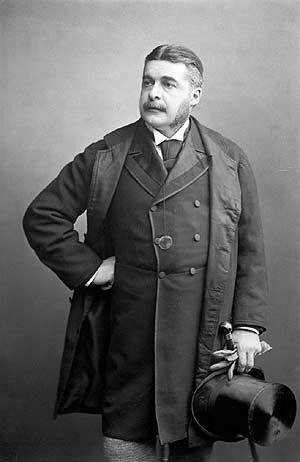
The name of the composer Sir Arthur Sullivan will forever be linked to the librettist of his most successful operas: Gilbert, Sir William Schwenck Gilbert.

In the twenty-first century both names live on in the stage name Gilbert O’Sullivan, whose songs still make it to the radio, the retrospects and The Sounds Of The Seventies compilations, but that is of course not the greatest merit of those artists from the nineteenth century.

In the English-speaking world, their fourteen comic operas, the so-called Savoy Operas, are indestructible. The most popular ones are still being performed (The Pirates Of Penzance, for example, and H.M.S. Pinafore), one-liners and quotes from the operas have entered the vernacular (“hardly ever”, for instance) and the best-known pieces are part of the British collective awareness.

However, Sullivan produced the greatest hit of the nineteenth century without Gilbert: the song “The Lost Chord”, which he composed in 1877 at his brother’s deathbed on a poem by Procter.

The song is an instant success, the great artists of those years put it immediately on the repertoire and the sheet music flies like hot cakes cross the counter. The American Antoinette Sterling spreads it around the world, the popular Fanny Ronalds, also Sullivan’s secret lover, identifies herself so much with “The Lost Chord” that a copy of the song manuscript goes into her grave at her request in 1916, in 1888 Edison plays a recording of the song at the introduction of his phonograph and in 1912 Caruso sings it at the commemoration ceremony of the Titanic disaster.

The persiflage “I’m The Guy That Found The Lost Chord” by American comedian Jimmy Durante (in the film This Time For Keeps, 1947) doesn’t really stand the test of time, but it does inspire a classic in the 60s: In Search Of The Lost Chord, the acclaimed third album of The Moody Blues from ’68.

The lost chord, both Sullivan and Durante find, is a chord with a small dissonant – one like that remarkable G+ that Dylan plays in “God Knows”. Apparently, it opens heavenly vistas: in “The Lost Chord” it is divine, and according to the lyrics it sounds like “a great Amen”. With Durante it leads to an almost religious ecstasy and Dylan has not found that G+ under a pagan stone either.

Basically, it’s a triad, a common major chord, but with augmented fifth, a chord produced by widening the perfect fifth by a semitone – a slight dissonant to Western ears. The first time Dylan plays such a chord is in his religious phase, when he plays “Rise Again” by Dallas Holm, a beautiful song from 1977 that CCM Magazine considers to be one of the 100 Greatest Songs In Christian Music.

Dylan performs it a dozen times, Clydie King sings along, and those performances are all beautiful (Portland, December 3, 1980 is a very successful one). For The Bootleg Series 13 – Trouble No More 1979-1981 (2017) unfortunately only a rehearsal is selected. That is a wonderful, sober version, with excellent vocals of King and Dylan, only accompanied by Dylan’s acoustic guitar – illuminating that heavenly, “lost” chord all the better (it is the second chord, on “drive the nails”, for instance, and on “say it isn’t me”).

https://www.youtube.com/watch?v=0NITuVaGZbU


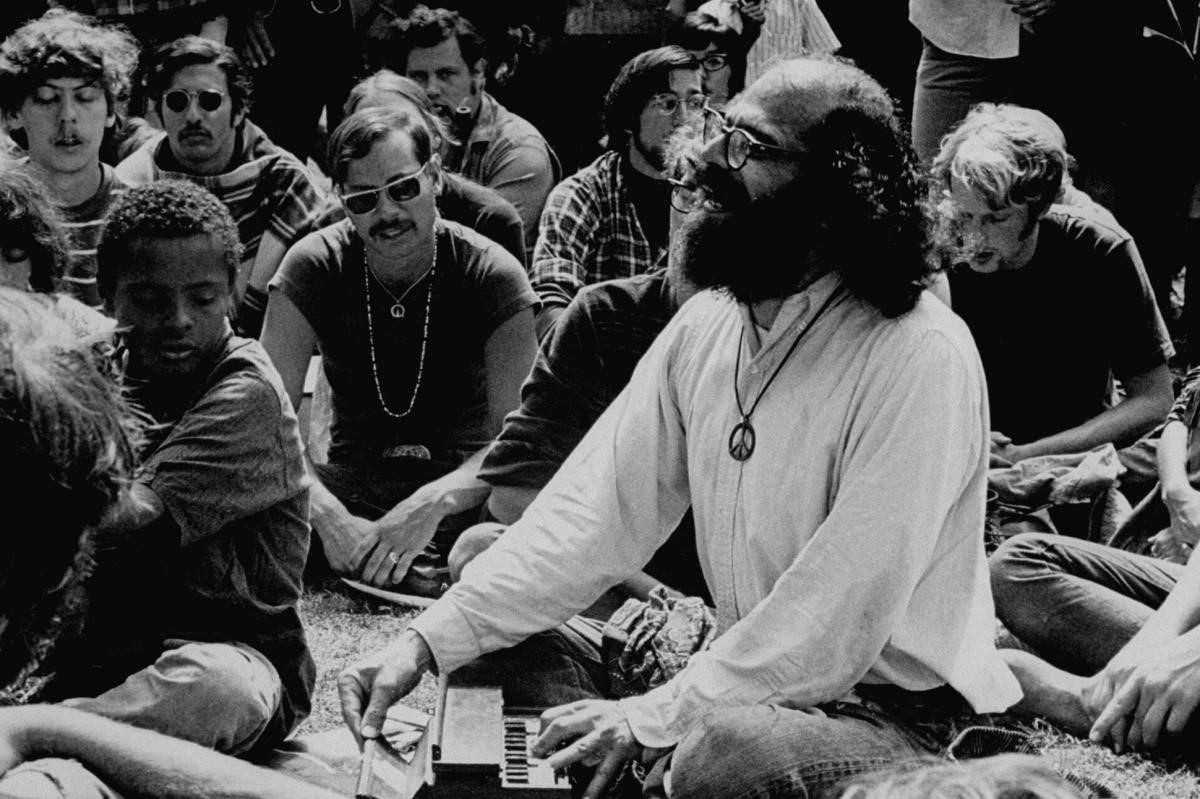
For the sake of completeness it should be noted that around the same evangelical time, a few months earlier, Dylan also plays the G+ – in the ascending tonal order of “In The Garden” the organ climbs via that elevated fifth from G#m to Cm. More of a step in a slowed down loop than a well thought out compositional find, less distinctive than in “Rise Again” and in “God Knows”, but still. By the way, poet and friend Allen Ginsberg takes the credits, in a 1989 interview in Goldmine, for those gradually rising chords:

“I think I invented the chord-change in In The Garden. We went around trick-or-treating in Zuma Beach in masks, and I had my harmonium, and I was playing a funny ascending chord thing, where you just move one finger at a time.”

In the original, rejected version, the version that Dylan recorded with Lanois in the spring of 1989 during the sessions for Oh Mercy, the lost chord has not yet been found, according to the recording that is released on Tell Tale Signs, the eighth part of The Bootleg Series. That’s not the only difference; almost every line of text is different. In the months up to January 1990, when Dylan records the version for under the red sky, he rewrites the entire lyrics. Or at least selected other verses, which is at least as likely.

Dylan the poet has, according to his own words, a tendency to overwrite, to write more than necessary and has already sung several versions with Lanois, in March and April ’89. Not unusual with great songwriters; Leonard Cohen, for instance, writes more than eighty verses for his magnum opus “Hallelujah” and has never been able to choose a definitive version. Coincidentally also the song that sings a “secret chord”, by the way (Now I’ve heard there was a secret chord / That David played, and it pleased the Lord – only to reveal in the next line how that chord goes, so not that secret).

Presumably Dylan also has, just like Cohen has and just like Dylan has for a song like “Dignity”, about twenty verses for “God Knows” and lets the whimsy of the day decide, when he’s in the studio. This is apparent as well in the live versions after January 1990; there Dylan the singer browses left and right in the various versions, seemingly adding and deleting verse fragments at random.

The word combination God knows is a strong trigger, apparently, and Dylan’s inspiration may have been lit by Chekhov, whose short stories he admires so much. Бог знает (“Bog znaet”), God knows, is Chekhov’s favourite stopgap; in the Collected Short Stories alone it appears hundreds of times.

The alternative versions usually have a somewhat friendlier opening than the official one, the version on the site and in The Lyrics 1961-2012. Those versions open with God knows I need you or God knows I love you or God knows I believe you, all friendlier anyway than God knows you ain’t pretty.

That, and the fact that the verses are apparently interchangeable, suggests that Dylan is not dealing here with a lady, fictional or otherwise, but that the you is a personification, that the author poetically expresses his concerns about the vulnerability of an unnamed subject. Earth, perhaps. In this phase of his creation, Dylan does show some environmental awareness every now and then, hinting at ecological pain points.

On The Traveling Wilbury’s “Inside Out” (the grass ain’t green, it’s kinda yellow), in “Everything Is Broken” (Take a deep breath, feel like you’re chokin’), on this album in “2X2” (How much poison did they inhale?) and in the title song (the river went dry) and here in this song there is a river that no longer flows. The producer, the sympathetic Don Was, gets a vague suspicion when they record “Under The Red Sky” and decides to ask the man directly: “Is this song about ecology?” Dylan answers, without missing a beat: “No. But it won’t pollute the environment.”

Dylan likes to play “God Knows” on stage. Almost two hundred times, until 2006. It often is a nice boost of the set, usually they are driving, rocking versions of a song that stands out on under the red sky as well. However, neither that stage exposure, nor the inclusion of the Oh Mercy version on Tell Tale Signs leads to much recognition. There are hardly any covers – in fact only the tribute bands, dutifully, put a generally bloodless version on the repertoire.

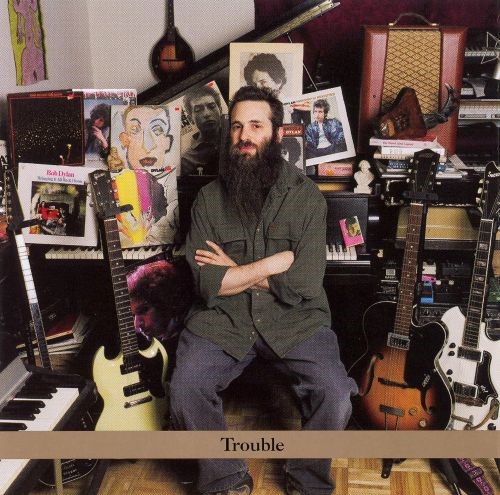
The exception comes from the jazz world. In 2006, the Jamie Saft Trio record a wonderful, special tribute to the master with the album Trouble.

The liner notes are alarming, promising a crippling respect for the bard. “Every man has his rabbi – let me introduce you to mine,” the Jewish Jamie Saft writes, and he explains in detail why he allows himself little freedom with the songs: they are, in Jamie’s opinion, already radical enough of themselves.

Luckily, he is not that respectful in deed. Although the trio plays very recognizable interpretations of the songs, the men most certainly do not feel limited by the original versions. The brilliant, sixties lecture of “Dignity” starts off with the intro of “Rainy Day Women # 12 & 35”, “Living The Blues” gets a Roaring Twenties arrangement and is sung beautifully by guest vocalist Antony, and the track selection deserves compliments too.

Of the eight songs, only “Ballad Of A Thin Man” is one of the more predictable choices on a tribute album, the other seven are songs that are skipped by everyone else: “Trouble”, “Disease Of Conceit” and “Dirge” (Michael Moore’s cover, with Jewels & Binoculars, of “I Pity The Poor Immigrant” is arguably the most beautiful jazz rendition of a Dylan song, but this “Dirge” comes close).

https://www.youtube.com/watch?v=Ik1AToDgveg

And “God Knows”, of course, the song that no seasoned jazz fan could ignore, if only because of that dissonant G+ – the penetrating, harmony-disturbing d# is gratefully milked out by the gifted pianist Saft.

Jamie Saft Trio – God Knows: https://www.youtube.com/watch?v=ZcemrVDTYtE


Untold Dylan: who we are what we do

Untold Dylan is written by people who want to write for Untold Dylan.  It is simply a forum for those interested in the work of the most famous, influential and recognised popular musician and poet of our era, to read about, listen to and express their thoughts on, his lyrics and music.

We welcome articles, contributions and ideas from all our readers.  Sadly no one gets paid, but if you are published here, your work will be read by a fairly large number of people across the world, ranging from fans to academics who teach English literature.  If you have an idea, or a finished piece send it as a Word file to Tony@schools.co.uk with a subject line saying that it is for publication on Untold Dylan.

We also have a very lively discussion group “Untold Dylan” on Facebook with approaching 6000 active members. Just type the phrase “Untold Dylan” in, on your Facebook page or follow this link 

You’ll find some notes about our latest posts arranged by themes and subjects on the home page of this site.  You can also see details of our main sections on this site at the top of this page under the picture.  Not every index is complete but I do my best.

But what is complete is our index to all the 604 Dylan compositions and co-compositions that we have found, on the A to Z page.  I’m proud of that; no one else has found that many songs with that much information.  Elsewhere the songs are indexed by theme and by the date of composition. See for example Bob Dylan year by year.


Jochen is a regular reviewer of Dylan’s work on Untold.  His books are available via Amazon both in paperback and on Kindle:


Posted in Uncategorized | 1 Comment

Bob Dylan: Works of Untold Genius. Sing it properly and it will make you cry.

By Tony Attwood

Part of the Untold Dylan idea, as you may have noticed, is to explore what happens when we set up a series of articles.  Series allow us to explore in depth and if readers then get interested we keep the series running.  If not the idea is quietly put out for a quiet snooze and I pretend they were nothing to do with me.

I particularly like series because they give us a chance to get our teeth (or if you prefer any other part of your anatomy) into more than just one song and more than just one aspect of Dylan’s work.   The long list that is to be found at the top of the screen by the picture gives links to some (although by no means all) of the series that have been created over the years on this website.  Sometimes with success, sometimes not, but always with the intention of delving much deeper into Dylan and his music that can be achieved in a single short piece.

Much of the desire to explore a topic from every possible angle arises from the original idea of this blog… it is called Untold Dylan because I wanted to go where other blogs were not going, and indeed where the official Dylan site had never gone.  As Captain Kirk said with great grammatical inaccuracy, “To boldly go where no man has gone before…”

That wish has now been fulfilled many times over particularly thanks to my fellow writers who have each contributed their own themes, grasping without my saying that the “untold” part of the title was as important as the fact it is about Bob.

And now I want to explore another idea for a series of song, a series that focuses on Dylan songs which are sometimes relatively unknown but which to the reviewer (that is me, and anyone else who wants to jump in and contribute a piece) are relatively ignored, but may nevertheless can be considered brilliant works of art.  So not a series to consider “Johanna” yet again, as everyone else has already done a million times, but to pick out songs that are less considered yet equally deep, equally meaningful.

My thinking at the start is that I’ve already done some of that with my attempts to highlight such pieces as “Tell Ol Bill,” “Drifter’s Escape” and just recently “Making a liar out of me”.  Each is a song that many of Dylan’s fan may know, but not songs that they may have considered in any depth.  Yet they are, in my opinion, works that really do deserve to be more established.

And now here, by way of example, I might add Lenny Bruce is Dead.  Yet if you follow Heylin’s lead you might instantly turn away from the song with a thought such as, “that’s a load of rubbish.”  If you have, I would beg you to re-consider the piece through these two live versions, and maybe, just maybe, then go on and consider the point below.

Surely we all of us know that there are times in his extraordinary career that Bob has been able to deliver works of such power in the lyrics, melody and accompaniment that the song can send shivers right down your spine.  And for me, that recording is one of those times.

Now part of the argument against the song is that Dylan is reported as saying that he didn’t know why he wrote it, and he had no particular affection for or interest in Lenny Bruce or his message (which was overtly critical of organised religion).   And yet Bob was able to get such power and energy out of the song – something he surely recognised, as he played it 117 times over an 18 year period.

Part of the mystery is that it was composed just before “Jesus is the One” – which makes an interesting additional element in the issue.  Celebrating a man who laughed at organised religion, while being so interested in organised religion oneself.

https://youtu.be/RryGtlcPOYc

My starting point is simply listening to the song as a piece of music – which self-evidently it is.  And I say the downright obvious, “It is a piece of music,” because this is something that Heylin seems to find very hard to grasp, since he so rarely writes about the music and instead tends to treat many songs as if they are neither poems nor treaties.  But it is a piece of music as much as a Beethoven string quartet or Mozart piano sonata is a piece of music.  Just because it has words doesn’t remove its musical importance.)

The fundamental thing about pieces of music is that the music doesn’t have to mean anything.  Just as a work of art doesn’t have to represent something or mean something.  It can simply be.

Now in the classic argument the whole point of language is so that the speaker can convey her or his thoughts to the listener.  But we should also remember that one perfectly reasonable way to use language is to put across complex emotion.  We may describe emotions by giving them names, but in essence they are emotions – and they can be represented and examined to some degree via images, by words, by sounds and by music.

This doesn’t work very well if one says or writes, “He felt horrified” because there is no relationship between yourself as the listener or reader and the horror felt by “he”.  But a song that opens with a line that the subject of the song “is dead” and ends “Lenny Bruce was bad, he was the brother that you never had” is powerful and unrelenting.  Doubly so when the music within the song is itself such a perfect transmitter of the same emotion that is found in the lyrics.

In short, the chord sequence and melody lend themselves perfectly as a way of expressing the emotions that are to be found in that song.  If you just heard the music without the lyrics you would not get as exact a notion of the emotions within the piece as you can from the full song, but you would still feel the angst, the pressure, and the pull.  Each is embedded in the music of the first line.

However this is just the start because we feel the emotion even more so as Dylan is not often known for utilising melody in as powerful way as happens here.   So knowing it is Dylan we pay double attention to the opening phrase of five notes.  Then as we realise that the lyrics open with an announcement of death (something very unusual in a piece of pop or rock music) we pay even more attention.  We give that opening as much notice as we give the opening notes of Beethoven’s Fifth Symphony.  You don’t talk over the opening bars of this song – at least not if you have any emotional sensitivity.  You are there.  You are held.  You are inside.

But if Bob didn’t know anything about Lenny Bruce, except what he read in the obituary, why did he write the song?  I could of course say “It was almost certainly because…” but that would be untrue.  I have to say, “My guess is… that he saw the headline ‘Lenny Bruce is dead’ and the melody of that bar and a half of music popped into his head.  And Dylan being a consummate composer, recognised a powerful phrase of music and a powerful linguistic phrase when the two came along hand in hand and hit him in the face, so he played it on the piano and then saw where it went.

I find it a supreme piece of music and I find Heylin’s dismissal of it as utterly second rate, a supreme piece of illiterate reviewing.  Yes, if we had just been given the opening line

“Lenny Bruce is dead”

that really would not have meant too much.  But we didn’t get just that.  We got,

“Lenny Bruce moved on and the ones that killed him are gone.”

It is so simple it hurts.  Sing it properly and it will make you cry.

Untold Dylan: who we are what we do

Untold Dylan is written by people who want to write for Untold Dylan.  It is simply a forum for those interested in the work of the most famous, influential and recognised popular musician and poet of our era, to read about, listen to and express their thoughts on, his lyrics and music.

We welcome articles, contributions and ideas from all our readers.  Sadly no one gets paid, but if you are published here, your work will be read by a fairly large number of people across the world, ranging from fans to academics who teach English literature.  If you have an idea, or a finished piece send it as a Word file to Tony@schools.co.uk with a subject line saying that it is for publication on Untold Dylan.

We also have a very lively discussion group “Untold Dylan” on Facebook with approaching 6000 active members. Just type the phrase “Untold Dylan” in, on your Facebook page or follow this link 

You’ll find some notes about our latest posts arranged by themes and subjects on the home page of this site.  You can also see details of our main sections on this site at the top of this page under the picture.  Not every index is complete but I do my best.

But what is complete is our index to all the 604 Dylan compositions and co-compositions that we have found, on the A to Z page.  I’m proud of that; no one else has found that many songs with that much information.  Elsewhere the songs are indexed by theme and by the date of composition. See for example Bob Dylan year by year.
 

Posted in Uncategorized | 7 Comments

Bob Dylan Showcase: Don’t Let anyone write your story (fourth edition)


By Tony Attwood

A while back we had the idea of asking readers who also wrote songs if they fancied taking any of Dylan’s unfinished works and completing them by adding the music.  We called the series “Bob Dylan Showcase” and among the songs we came up with was “Don’t let anyone write your story”

We had a version sent in, and then yours truly had a bash at making up a version, which was recorded on my phone without studio whatnot – all pretty basic as the Untold office doesn’t actually have its own recording studio.  Those versions are here 

After that Rob Berretta showed us what could be done with the piece.  So that made it three versions.

Now we have a fourth from Paul Robert Thomas.   Here it is, with the lyrics underneath.

We’ve all got a story to tell
But only you can write it well
For you’ve lived through it for real
Only you could know how you feel

You’ve lived through the pain and the glory
Don’t let anyone write your story
You’ve lived through the pain and the glory
Don’t let anyone write your story

When I come home from work when the day is done
I wanna spend the night with my loved one
For it’s lovin’ that makes the world go ‘round
You’re my Angel with both feet on the ground

You might live in a palace or in a dormitory
But don’t let anyone write your story

They try to tempt me with gold and jewels
But I won’t talk to these slithering fools
When I’m ready I’ll start to recall
And I’ll write about this man’s rise and fall

They might talk in rhymes or in allegories
But don’t let anyone write your story

They’ll appear so sincere but it’s just a front
They will twist your words and write what they want
No-one will listen when you try to deny
They will look blindly at truths fading eye

They chased and pursued her till she died
It wasn’t enough their paper chains of lies
It’s a crying shame no less
That she was killed by an overdose of press

You’ve lived through the pain and the glory
Don’t let anyone write your story

Trust yourself to tell what’s true
The only one that knows what’s true is you
So write your story before it’s too late
Before you arrive outside those pearly gates

Bob Dylan/Gerry Goffin/Carole King/Paul Robert Thomas

It turns out these Untold readers are a rather talented bunch!

Bob Dylan Showcase

Untold Dylan: who we are what we do

Untold Dylan is written by people who want to write for Untold Dylan.  It is simply a forum for those interested in the work of the most famous, influential and recognised popular musician and poet of our era, to read about, listen to and express their thoughts on, his lyrics and music.

We welcome articles, contributions and ideas from all our readers.  Sadly no one gets paid, but if you are published here, your work will be read by a fairly large number of people across the world, ranging from fans to academics who teach English literature.  If you have an idea, or a finished piece send it as a Word file to Tony@schools.co.uk with a subject line saying that it is for publication on Untold Dylan.

We also have a very lively discussion group “Untold Dylan” on Facebook with approaching 6000 active members. Just type the phrase “Untold Dylan” in, on your Facebook page or follow this link 

You’ll find some notes about our latest posts arranged by themes and subjects on the home page of this site.  You can also see details of our main sections on this site at the top of this page under the picture.  Not every index is complete but I do my best.

But what is complete is our index to all the 604 Dylan compositions and co-compositions that we have found, on the A to Z page.  I’m proud of that; no one else has found that many songs with that much information.  Elsewhere the songs are indexed by theme and by the date of composition. See for example Bob Dylan year by year.
 

Posted in Uncategorized | 2 Comments

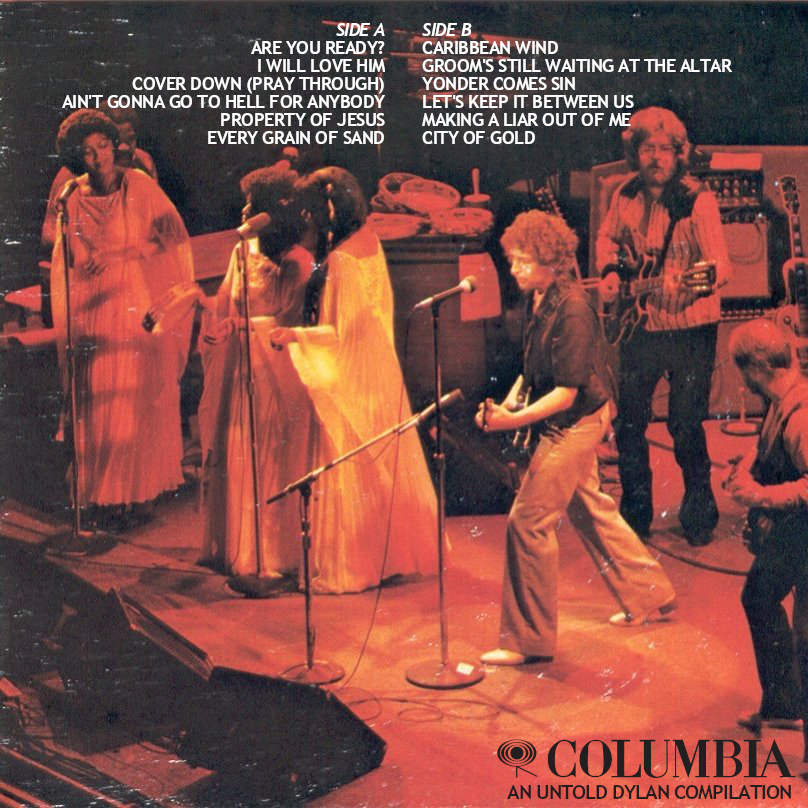
Bob Dylan And Cowboy Jesus (Part IV)

By Larry Fyffe

If you’ve not seen them before you might like to look at

In his ‘gnostic’-begotten mythology, Bob Dylan as the Masked Rabbi travels back in time in an attempt to reconcile conflicting stories in the Old and New Testament; his travelling companion, the Cowboy Jesus who is trying to do the same thing.

Joseph is considered to be the the husband of Mary who gives birth to Jesus in the New Testament, but the unanswered question is: Who is actually the paternal grandfather of Jesus?

In the Holy Bible, it is written:

And Jacob begat Joseph, the husband of Mary
Of whom was born Jesus, who is called 'the Christ'
(St. Matthew 1; 16)

So far so good, but then there is:

And Jesus Himself began to be about thirty years of age
Being (as was supposed) the son of Joseph which was the son of Heli
(Luke 3: 23)

Witnessed by the singing rabbi, eternal Jesus transforms Himself into the prophet Moses back in Ancient Egypt with its red-coloured Nile River in search of the answer to the troubling question.

Jesus speaks through the mouth of the Masked Rabbi:

Well, I went back to see about it once
Went back to straighten it out
Everybody that I talked to had seen us there
Said they didn't know what I was talking about
(Bob Dylan: Red River Shore)

Moses ain’t talking either; he’s got troubles of his own. Hidden by his mother from the Pharaoh, Moses is adopted by the Pharaoh’s daughter. Motherly Isis is worshipped in Egypt, and that Egyptian goddess has had her own problems as well – her husband-and-twin brother Osiris cut up by their jealous brother, the goddess Isis is able to put him back together enough to provide her with a son.

According to the following song, Moses himself has sexual relations with his Egyptian princess, Isis incarnated:

I married Isis on the fifth day of May
But I could not hold on to her very long
So I cut off my hair, and I rode straight away
For the wild unknown country where I could not go wrong
(Bob Dylan: Isis ~ Dylan/Levy)

Moses flees to the country of Midian to escape the wrath of the Pharoah where he marries Zipporah. But God is angry at Moses for not delivering the Hebrews out of the slavery before he runs away, and God threatens to kill him. Zipporah, thinking fast, saves Moses’ life by cutting off his foreskin.

However, in his personalized mythology, it’s not Zipporah nor the Cowboy Jesus, but the motherly girl with the Madonna smile, wearing an Egyptian ring, that the romantic rabbi thinks mostly about:

Well, I've heard of a guy who lived a long time ago
A man full of sorrow and strife
That if someone around him died, and was dead
He knew how to to bring him on back to life
Well, I don't know what kind of language he used
Or if they do that kind of thing anymore
Sometimes I think nobody ever saw me here at all
'Cept the girl from the Red River Shore
(Bob Dylan: Red River Shore)

Needless to say, concerning the name of Jesus’ grandfather, nothing gets delivered:

Well, the Lone Ranger and Tonto
They are riding down the line
Fixing everybody's troubles
Everybody's 'cept mine
Someone musta told'em
That I was doing fine
(Bob Dylan: Bob Dylan's Blues)

https://youtu.be/hvF9jPvDCRU

As expressed through Bob Dylan’s gnostic mythology, Moses stays too long with Isis, the Pharaoh’s daughter, in Ancient Egypt – represented in the song below by the State of Mississippi through which runs the American ‘Nile’.

Because he waits too long, Moses earns the wrath of God, and never makes it back to the Promised Land:

Well, the emptiness is endless, cold as the clay
You can always come back, but you can't come back all the way
The only thing I did wrong
Stayed in Mississippi a day too long
(Bob Dylan: Mississippi)

In the song lyrics below, Isis gives Moses some good advice, but it comes too late:

Well, I sat by her side, and for a while I tried
To make that girl my wife
She gave me her best advice, and she said
‘Go home and lead a quiet life’
(Bob Dylan: Red River Shore)

Untold Dylan: who we are what we do

Untold Dylan is written by people who want to write for Untold Dylan.  It is simply a forum for those interested in the work of the most famous, influential and recognised popular musician and poet of our era, to read about, listen to and express their thoughts on, his lyrics and music.

We welcome articles, contributions and ideas from all our readers.  Sadly no one gets paid, but if you are published here, your work will be read by a fairly large number of people across the world, ranging from fans to academics who teach English literature.  If you have an idea, or a finished piece send it as a Word file to Tony@schools.co.uk with a subject line saying that it is for publication on Untold Dylan.

We also have a very lively discussion group “Untold Dylan” on Facebook with approaching 6000 active members. Just type the phrase “Untold Dylan” in, on your Facebook page or follow this link 

You’ll find some notes about our latest posts arranged by themes and subjects on the home page of this site.  You can also see details of our main sections on this site at the top of this page under the picture.  Not every index is complete but I do my best.

But what is complete is our index to all the 604 Dylan compositions and co-compositions that we have found, on the A to Z page.  I’m proud of that; no one else has found that many songs with that much information.  Elsewhere the songs are indexed by theme and by the date of composition. See for example Bob Dylan year by year.
Posted in Uncategorized | Leave a comment

Dylan 1980: The Album Cover & the utter, amazing masterpiece (one more time)

By Tony Attwood

I say you can be trusted with the power you been given
But you’re making a liar out of me

You can now hear the whole album on Youtube

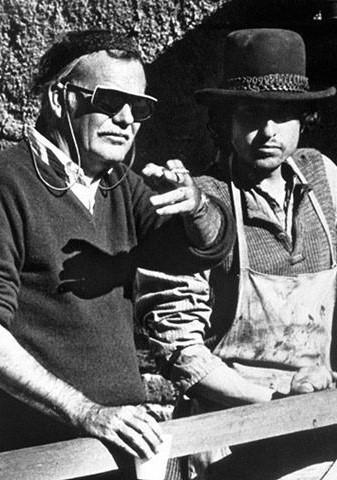
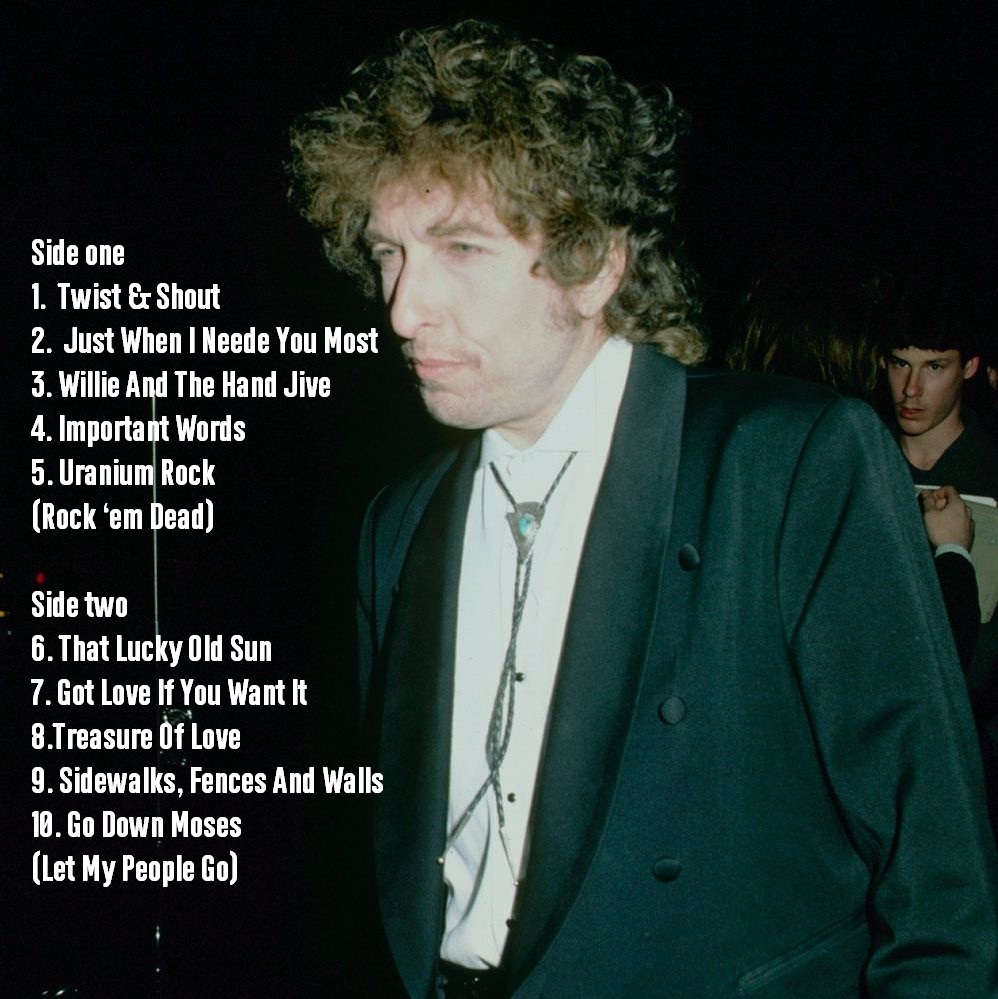
When we tagged the notion of designing an album cover for “Sheep in Wolves’ Clothing.” (the album that Aaron invented  to replace “Down in the Groove”) onto his excellent choice of tracks, I wasn’t sure that we would get anyone to take up the invitation.

But we have been overwhelmed.   Here are the replies we had

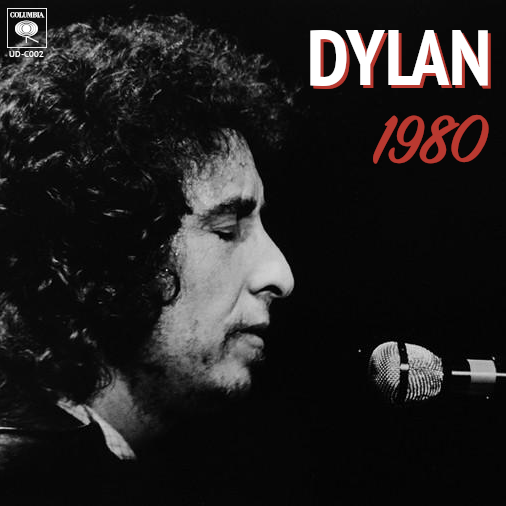
That was all so good that I decided to take my own personal bizarre pet project a stage further.  Having created the mythical album “Bob Dylan: 1980” which takes us through that most magical of years in terms of Dylan’s compositions, I thought “why not lets look for a cover?”

This is the year when (in my interpretation at least) Bob meandered away from Christianity.  True, it was a meandering that continued through the following year, but the amazing meandering of 1980 is, in my judgement, enough to occupy most Dylan fans for several months without a break.

And  the first submission we have had is an absolute corker.   (S0rry that might be an English expression unknown in the rest of the universe, but it means that it is jolly good.  Excellent.  Brilliant. I love it.)

It comes from Nathan Alcock (ceilingfan_broken)

First, so you have the background, the three articles relating to this album are here

The album consists of all the songs of 1980 taken in order except for the first and last tracks for which the date is uncertain.

  1. Street Rock (date uncertain)
  2. Are you ready?
  3. I will love him
  4. Cover Down 
  5. Ain’t gonna go to hell for anybody
  6. Property of Jesus
  7. Every grain of sand
  8. Caribbean Wind
  9. Groom’s still waiting at the alter
  10. Yonder comes sin
  11. Let’s keep it between us
  12. Making a liar out of me
  13. City of Gold (date uncertain)

Now here is the front cover we have been offered….

and the reverse

OK, you are probably getting fed up with my totally over the top articles about “Dylan: 1980.”  And I can assure you that in the end I will shut up.  But, perhaps you can remember back to moments when you first heard a new Dylan album, or one of the classic songs.  And maybe you can recall how utterly you were knocked out by what you now had in your hands, and you played it over and over again.

Well, that’s how Dylan:1980 strikes me.   And everything, yes utterly everything builds up to “Making a Liar Out of Me.

The one thing to remember if you don’t share my utter enthusiasm for this, is that we are still publishing other writer’s materials, so this site is not just me.  You can argue against me, or put your own views forward.   But for now I have the floor, and so I present the album, and its newly created cover, and its most brilliant masterpiece…

I tell people you’re just going through changes
And that you’re acquainted both with night and day
That your money’s good and you’re just being courageous
On them burning bridges knowing your feet are made of clay
Well I say you won’t be destroyed by your inventions
That you brought it all under captivity
And that you really do have all the best intentions
But you’re making’ a liar out of me

Well I say that you’re just young and self-tormented
But that deep down you understand
The hopes and fears and dreams of the discontented
Who threaten now to overtake your promised land
Well I say you’d not sow discord among brothers
Nor drain a man of his integrity
But you’ll remember the cries of orphans and their mothers
But you’re making a liar out of me

Well I say that, that ain’t flesh and blood you’re drinking
In the wounded empire of your fool’s paradise
With a light above your head forever blinking
Turning virgins into merchandise
That you must have been beautiful when you were living
You remind me of some old-time used-to-be
I say you can be trusted with the power you been given
But you’re making a liar out of me

So many things so hard to say as you stumble
To take refuge in your offices of shame
As the earth beneath my feet begins to rumble
And your young men die for nothing not even fame
I say that someday you’ll begin to trust us
And that your conscience not been slain by conformity
That you’ll stand up unafraid to believe in justice
But you’re making a liar out of me
You’re making a liar out of me

Well I can hear the sound of distant thunder
From an open window at the end of every hall
Now that you’re gone I got to wonder
If you ever were here at all
I say you never sacrificed my children
To some false god of infidelity
And that it’s not the Tower of Babel that you’re building
But you’re making’ a liar out of me
You’re making a liar out of me
Now you’re making a liar out of me

Untold Dylan: who we are what we do

Untold Dylan is written by people who want to write for Untold Dylan.  It is simply a forum for those interested in the work of the most famous, influential and recognised popular musician and poet of our era, to read about, listen to and express their thoughts on, his lyrics and music.

We welcome articles, contributions and ideas from all our readers.  Sadly no one gets paid, but if you are published here, your work will be read by a fairly large number of people across the world, ranging from fans to academics who teach English literature.  If you have an idea, or a finished piece send it as a Word file to Tony@schools.co.uk with a subject line saying that it is for publication on Untold Dylan.

We also have a very lively discussion group “Untold Dylan” on Facebook with approaching 6000 active members. Just type the phrase “Untold Dylan” in, on your Facebook page or follow this link 

You’ll find some notes about our latest posts arranged by themes and subjects on the home page of this site.  You can also see details of our main sections on this site at the top of this page under the picture.  Not every index is complete but I do my best.

But what is complete is our index to all the 604 Dylan compositions and co-compositions that we have found, on the A to Z page.  I’m proud of that; no one else has found that many songs with that much information.  Elsewhere the songs are indexed by theme and by the date of composition. See for example Bob Dylan year by year.
 

Posted in Uncategorized | 2 Comments

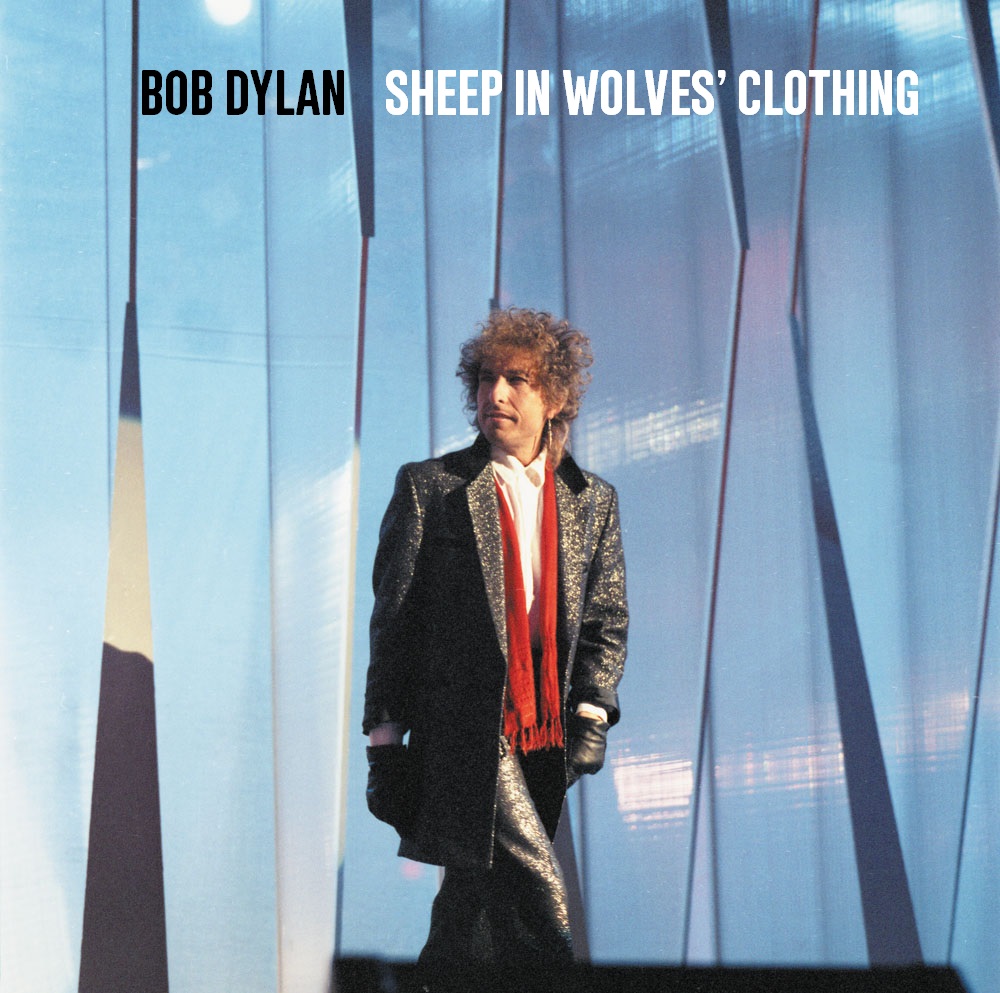
Seven Days: an examination of faith, crisis and apocalypse part 2

This article continues from Seven Days: An Examination of Faith Crisis And Apocalypse

 by Paul Robert Thomas

Suggesting that there is more ‘pathology’ in the obsessive need for commentators to ascribe Dylan’s ‘rebirth’ to anything but the action of God,” he asks why we cannot accept that Dylan’s conversion was an actual encounter between God and Dylan?

To those who would be willing to accept this if Jesus wasn’t involved they should examine what it is that enrages them for Dylan’s conversion marked the final dissolution of the Hippy fantasy of universal love and humanist libertarianism.

Suddenly Dylan was telling us there was a God who had given us all a moral code and that man was free to follow it or lose his soul; not good news for the intellectually and morally stunted remnant of ‘the age of Aquarius’.

I ask as a Jew, why Dylan could not find the assurance he so needed in the Torah, Prophets and Wisdom Literature of his own faith? My own feelings about Christianity are that it shares more than we often recognize; The Old Testament Bible, many aspects of eschatology, a belief in Divine and moral law and faith in God’s ultimate promise of redemption. All of these are common ground between Jew and Christian. What Judaism doesn’t have, indeed is prohibited from having, is a concrete image or representation of God (YWL). It is my belief that in the person of Christ Bob Dylan found, at the center of his suffering and sense of alienation, the law and prophets made manifest in man, in Jesus of Nazareth.

One commentator who wishes to remain anonymous, suggests that it is not impossible to find in Jesus’ life, ministry, death and resurrection a model of God’s servant, Israel. But I believe another reason Dylan responded as he did to Christ was the role he plays in The Revelation of John, the last and perhaps the most difficult book of The New Testament. It is purely a subjective opinion but I feel that, through his lyrics, Dylan is shown to have a temperamental bias towards an eschatology which purges the world of all evil in a final confrontation with God before establishing “a new heaven and a new …. And I saw the holy city, the new Jerusalem, coming down out of heaven from God…. And I heard a loud voice from the throne saying “See the home of God is among mortals, He will dwell with them as their God, they will be his people, and God himself will be with them, he will wipe every tear from their eyes. Death will be no more; mourning and crying and pain will be no more, for the first things have passed away” (Rev.2 1ff)

Dylan’s lifelong sense of justice and his hunger for peace coupled with an increasing disgust with a world of relative values and ‘situation ethics’ must have responded to this powerful vision to be realized with the return of Christ. But what of his loyalty to the faith of his fathers and forefathers?

I believe Dylan saw no anomaly in holding fast to his heritage whilst responding to Jesus as an embodiment of Torah and The Prophets. As a Jew, I find it difficult to answer the question which I am most concerned with. Has Dylan committed apostasy and denied God? I cannot say, God, alone knows. And everything works to His Glory.

For My plans are not your plans,
Nor are My ways your ways - declares the LORD
But as the heavens are high above the earth,
So My ways are high above your ways
And My plans above your plans.  (Isaiah 55.8-9)

I like to fancy that Dylan might have this text come to mind as he faced the conflicting and confusing feelings when they reached flood level in 1978/9. Meanwhile others use a certain delicacy in attempting to deal with the ‘problem’ of Dylan’s ‘conversion. To Rabbi Kostel, speaking in 1982, Dylan was a confused Jew…. “He’s been going in and out of a lot of things, trying to find himself. As far as we’re concerned he was a confused Jew.”

In the same year Paul Esmond of the Vineyard Christian Fellowship said diplomatically, “I don’t think he ever left his Jewish roots, I think he is one of those fortunate ones who realised that Judaism and Christianity can work very well together because Jesus is just (Jesus the Messiah). And so he doesn’t have any problems about putting on a yarmulke and going to a bar mitzvah because he can respect that.”

“l try my best to be just like l am
But everybody wants you to be just like them (?)"

Dylan has never publicly renounced Jesus but none of us can know how he sees him, responds to him. And Dylan has never renounced his roots in Judaism or his reliance on Torah on the TANAKH (the Jewish Bible) or the rich religious tradition of his people. If we want to explore the possibilities of Dylan’s religious ‘worldview’ then I suggest that the most rewarding and accessible way to do so is to explore his work.

SEVEN DAYS

“And God blessed the seventh day, and sanctified it” (Gen 13)

It is now that I will attempt to explore what I believe Dylan was writing about, and referring to, when he wrote Seven Days with reference to his life, race and religion; and to other songs which forced themselves upon me as I wrote.

The (sacred) number seven is of great significance among religious Jews and within the mystical tradition, Kabbalah, which is a complex system of interpretation which makes use of the correspondence between the Hebrew alphabet and its numerical equivalent. In Judaism The menorah, based on the seven branched candlestick which YWH ordered Moses to make, can be found in every observant Jew’s home and, in Kabbalah, also stands for the mystical ‘tree of life’.

The occurrence and symbolism of seven and of its Kabbalistic importance is so profuse that it cannot be explored here – though it seems worth mentioning that the number 7 occurs no more, nor less than 700 times in The Old and New Testaments and 55 of those times it makes up the composite ‘Seven days’. Jewish and Christian mystical tradition has placed God in the highest part of the seventh heaven, and, universally, the number has come to symbolize perfection and completeness as well as complexity.

Its occurrence in Christian imagery can be found in Jesus’ injunction to forgive your enemies not 7 times but seventy times 7 e.g. completely. But it is in the Revelation To St John that the number 7 is used to such dramatic effect, symbolizing the final battle between Christ and Satan, the Church and the enemies of God. In this instance 7 comes to symbolize evil as much as good – perfect, complete evil perhaps?

Kabbalah warns us that “The number 7, which plays a prominent part in Biblical institutions is enveloped in deep mystery which only a few can only understand”. However, beyond Judaism and Christianity the number 7 has religious or occult significance in Islam, Tao, Sufism, Astronomy, and psychology and, finally, Freud gave each of the 6 analysts, who made up the Inner Circle of his disciples, identical rings, keeping the seventh for himself, the ‘ringmaster’. (1 thought I’d share that with you).

However, the reason for citing the above is to provide a concise backdrop to how I believe Dylan uses images and symbols from The Bible in the composition of his songs. For, while I believe that Dylan may pick up a lot of influences unconsciously, often skimming books or retaining a phrase or cliche until he can use it, I believe that he has read and continues to read The Bible with great attention and, given his nature, has been drawn to and influenced by Kabbalah. Seven Days is pregnant with biblical meaning but like the number 7 it conceals this deeper meaning in its apparent mundanity. The song is written on an apparently simple musical framework and the language of frustrated love. However, as a love song its imagery is trite:

She been gone ever since I was a child
Ever since I made her smile, I ain't forgotten her eyes.
She had a face that could outshine the sun in the skies

The rhyme is embarrassing, the imagery of the first line confusing and, with the second line, suggests the narrator is childishly dependent. The song seems to be trying to put cliche to good use but ‘fighting every inch of the way’ and losing.

Yet, in performance it’s powerful and intriguing, a crowd pleaser, when performed at its best. This has made me ask whether Dylan wants us to look deeper and beyond the apparent sense of the lyric and a literal interpretation to something much richer. The source which provides this understanding of the song is The Revelation to John from The New Testament, (New Jerusalem Translation) and through the Jewish apocalyptic literature which the author was steeped in, e.g. the books Jeremiah, Daniel, Joel, and Late Isaiah. At the center of the song is the anonymous figure ‘She’. I believe this is a reference to two figures from Revelation. The first is reported in Revelation 12.1.

“Now a great sign appeared in heaven: a woman, robed with the sun, standing on the moon, and on her head a crown of twelve stars. She was pregnant, and in labour, crying aloud in the pangs of childbirth.”

This figure, probably inspired or adapted from Osiris/Isis mythology, might be seen as Israel awaiting its Messiah, or the early church awaiting the return of Christ or, to the author of Revelation, a combination of the two with Christ’s return being read as synonymous, with the ‘New Jerusalem’. it may also have come to refer to Mary, the mother of Christ who quickly became seen by the ordinary people of the early church as The Mother of God. Taking into account the way ‘train’ has become a figure for faith and renewal in interpreters of Dylan’s songs I believe that Dylan may have one or more of these possibilities in mind in verses one and two of the song.

Seven days, seven more days she'll be comin'
I'll be waiting at the station for her to arrive Seven more days, 
all I Seven more days, all I gotta do is survive.

This might be an allusion to ‘The New Jerusalem’ or to the ‘Bride of Christ’, that is The Church, Christ’s mystical body on Earth. Chapters 12 to 19 of Revelation deal with the great final battle between The Church and its enemies, probably the Romans and all the unrighteous. The woman’s adversary is depicted as a dragon, Satan’s emissary in chapter 12 but in chapter 17 as Babylon, the great prostitute, a woman riding a scarlet beast which had seven heads and – had blasphemous titles written all over it. Did Dylan associate this with the woman who was “telling him about Buddha, you were telling him about Mohamed in one breath

You never once mentioned the man who came and died
a criminal's death. (?)

Many of us, I suspect, would, in the grip of a crisis, bring the sacred and profane into the turmoil within. Sara, to whom it seems likely the above verse is aimed, has been spoken of as having a deep spirituality which explored the way of Tao, of oriental harmony between opposites and had played a crucial role in Dylan’s spiritual recovery after the ‘accident’ in ’66. And if she is the inspiration for Visions of Johanna or Sad Eyed Lady of The Lowlands  we have two penetrating studies of a deep spirituality and –

This is a song about marriage

Sara, Sara, Sweet virgin angel sweet love of my life.
 Sara, 0 Sara, Radiant Jewel, Mystical Wife

Sleepin' in the woods by a fire in the night
 where you fought for my soul and went up against the odds
I was too young to know You were doing it right
 And you did it with strength
 That belonged to the Gods

(Dylan’s emphasis in performance)

This version of Sara performed and, thank God, recorded on Dec 1 1975 at Maple Leaf Gardens, Toronto is, surely truer inspirit, performance and lyric than the ‘official’ version cut for Desire? And it confirms the enormous influence of Sara, as wife, lover, muse. How do you cut such love out of your life but to put a new found faith up against its inevitable flaws. How do you get to be so ruthless and vindictive? You speak from a position of fearing for your soul.

Part 3 follows shortly

Untold Dylan: who we are what we do

Untold Dylan is written by people who want to write for Untold Dylan.  It is simply a forum for those interested in the work of the most famous, influential and recognised popular musician and poet of our era, to read about, listen to and express their thoughts on, his lyrics and music.

We welcome articles, contributions and ideas from all our readers.  Sadly no one gets paid, but if you are published here, your work will be read by a fairly large number of people across the world, ranging from fans to academics who teach English literature.  If you have an idea, or a finished piece send it as a Word file to Tony@schools.co.uk with a subject line saying that it is for publication on Untold Dylan.

We also have a very lively discussion group “Untold Dylan” on Facebook with approaching 6000 active members. Just type the phrase “Untold Dylan” in, on your Facebook page or follow this link 

You’ll find some notes about our latest posts arranged by themes and subjects on the home page of this site.  You can also see details of our main sections on this site at the top of this page under the picture.  Not every index is complete but I do my best.

But what is complete is our index to all the 604 Dylan compositions and co-compositions that we have found, on the A to Z page.  I’m proud of that; no one else has found that many songs with that much information.  Elsewhere the songs are indexed by theme and by the date of composition. See for example Bob Dylan year by year.


Posted in Uncategorized | Leave a comment

Open the door Homer: there’s a Thunderclap outside.

by Jochen Markhorst

Director Sam Peckinpah is said to have had never heard of Bob Dylan and that he actually had Roger Miller (“King Of The Road”) in mind for the soundtrack of Pat Garrett & Billy The Kid.

Lead actor Kris Kristofferson, who at the time of the Blonde On Blonde recordings is still a caretaker at Columbia’s Nashville Studio, tries to plug Dylan with Peckinpah. The director is moved by Dylan’s audition with “Billy”, hires him and even grants Dylan his first real film role.

It seems quite inconceivable that an educated man like “Bloody Sam” Peckinpah has never heard of Dylan in 1973, but every now and then similar testimonies pop up. The composer John Corigliano, Oscar and Pulitzer Prize winner, also claims something like this, on the occasion of his Grammy-winning cycle Mr. Tambourine Man: Seven Poems of Bob Dylan (2000) and we’re not quite sure if Muhammed Ali is joking when he says he’d never heard of Bob Dylan during the benefit evening Night Of The Hurricane (December 1975). After the Nobel Prize awarding in 2016, the stories about ignorant contemporaries may tumble over each other, but there the unfamiliarity with Dylan seems to be mainly due to the generation gap.

Those ignorant could by chance be touched by Dylan’s radio show Theme Time Radio Hour (2006-2009), could listen to over a hundred episodes and still be in the dark. Radio maker Dylan never plays anything of his own oeuvre and very rarely hints that he is a musician himself.

The broadcast of 30 January 2008 contains such a rare revelation, for the attentive and understanding person, that is. The theme of the broadcast is Lock & Key. Halfway through, right after “Somebody Changed The Lock On My Door” by Wynonie Harris is played, the studio is called by a listener. One Tim Ziegler from Champaign-Urbana, Illinois points out to the radio host an error regarding the assignment to a record label; Wynonie Harris doesn’t appear on King Records, as Dylan said, but on Apollo Records. Dylan stutters a bit, but gradually loses himself in a witty, quasi-grumpy tirade against the caller.

It’s important to remember: this isn’t a classroom here. This is music we’re playing, This is music of the field, of the pool-hall, the back-alley crap game, the bar room and the bed room. We’re not gonna make it dusty and academic. It’s full of sweat and blood, it’s like life itself. If every once in a while we get a name wrong, or we tell you it’s on the wrong label, it’s not gonna kill anybody, Tim. Just listen to the music.”

And with one last sneer at Tim, Dylan proceeds to order. “Open The Door, Richard” is waiting. The disk-jockey does seem to have a thing for this particular song; he plays (parts of) three versions of this humorous song from 1946. It is a comical monologue by a homecoming night owl who has lost his house key. Richard is inside, but is asleep, or doesn’t feel like letting the muttering boozer in. In any case he doesn’t open the door. Accompanied by a simple riff, the farcical drumming, shouting and grumbling is interrupted by an equally simple, contagious chorus: Open the door, Richard, and let me in.

The song gets incredibly popular. In the primeval version of Jack McVea it already reaches sixth place in the charts, the version of Count Basie takes the place of McVea’s in February ’47 and reaches first place, after which bizarrely three other versions (by Louis Jordan, the Three Flames and Dusty Fletcher), still in February and March ’47, will reach the top 10 of Billboard. Theme Time plays McVea’s and Dusty Fletcher’s, and reveals that at least 22 covers of the song have been recorded.

Not only were there country, polka, pop and jiddish versions, almost twenty years later it was inspiring ska musicians. Listen to a tiny bit of this, by Clive and Naomi from 1965.

You see, that song can be done any kind of way. About time for it to come back again. Maybe I’ll even do it.”

And there we have it: one of those very rare vistas revealing to an ignorant, attentive listener that Dylan himself is a musician. The connoisseur probably smiles, though: Dylan already has an “Open The Door” to his name – the song on The Basement Tapes is called “Open The Door, Homer”, but he does sing “Open The Door, Richard” there. Well, every once in a while a name wrong… it won’t kill you, Tim.

This one line is the only similarity with the 1946 novelty song. In the second take, which can be found on The Bootleg Series Vol. 11: The Basement Tapes Complete (2014), Dylan does give the primal form a shot (half-spoken verse, sung chorus), but he drops that within a minute.

The name change to Homer in the title could be an associative nod to the deadly crashed Richard Fariña. Fariña forms a quartet of friends with Dylan, Mimi and Joan Baez, and shortly after the publication of his novel Been Down So Long It Looks Like Up To Me was killed in a motorcycle accident, April ’66. The protagonist of that picaresque novel is a modern Ulysses, plot lines are loosely based on Homer’s oeuvre, so there you have it: Homer.

Or alternatively to Homer Simpson, one of the protagonists of Nathanael West’s The Day Of The Locust (1939), a book from which impressions do twirl down in Dylan’s oeuvre. In this case perhaps a piece of dialogue from the beginning of the work:

“She doesn’t answer,” Homer said hurriedly.
“Did you knock hard enough? That slut is in there.” Before Homer could reply, she pounded on the door. “Open up!” she shouted.

…which also echoes the word combination Homer the slut from Dylan’s Tarantula.

The song itself has nothing to do with that. It has music historical value for the Dylanologists, because “Open The Door. Homer” is a bit of an intermediate, a bastard son of The Basement Tapes and John Wesley Harding. Just like almost all the John Wesley Harding songs, the song has the three-couplet structure, but unlike almost all the songs on that record, it does have a chorus. The same goes for the content; it’s a crossbreed of the carefree, nonsensical language pleasure of Basement songs like “Quinn The Eskimo” and “Lo And Behold!” on the one hand, and the symbol-loaded, biblical parable quality of JWH on the other.

“To live off the fat of the land”, for example, comes from the Bible (and I will give you the good of the land of Egypt, and ye shall eat the fat of the land, Gen. 45:18), but the connection with the limiting condition, that you must “swim in a certain way,” if you want to eat the fat of this land, draws that stately Bible paraphrase back to the nonsense. Even more nonsensical is the rhyming pleasure of the second verse, which the poet dashes off to make blushes rhyme with flushes.

The third verse, on the other hand, does suggest depth. “Take care of all your memories, for you cannot relive them” has an aphoristic quality which is perfectly at home on John Wesley Harding. The subsequent Bible paraphrase remains completely devoid of a profane or alienating clause, repeating pure and unstained what Jesus does in Matthew 9: first, the sins of the crippled are forgiven (Matthew 9:2), only then he is healed (Matthew 9:6) – just as in almost every song on JWH Bible quotations are processed.

Cover versions are sparsely sown. Even among the renowned, loyal Dylan fans, such as Jimmy LaFave, Joan Baez, Barb Jungr, this is a song that is left on the pile. Only the devout disciple Robyn Hitchcock has Homer on his repertoire – an unusually well-groomed, dressed up version, with band, violin, second voice and all. And a funny, fitting she loves you, yeah yeah yeah coda. Fairport Convention picks up the song early, but rejects it for the masterpiece Liege & Lief (1969). Live recordings from the BBC at the time show that Richard Thompson and his band know how to turn it into a beautiful country folk miniature. A second run-up, on Red & Gold (1996), is overproduced and lacks the charm of a quarter of a century earlier.

Equally charming and about the same age are the other covers that are worth listening to. Jake & The Family Jewels, an obscure band from New York, record a very nice, cheerful jumpy version with dominant country-fiddle on their beautiful debut album from 1970.

https://youtu.be/L7q6U7pSmEk

Even more obscure is the British progrock group Titus Groan, 1970 again, whose only LP nowadays is a high priced (around € 750,-) collector’s item. Their version of “Open The Door, Homer” is on a separate single and has an attractive, propulsive drive, Roxy Music-like saxophone honking and an antiquarian charm at all.

The best Basement covers are usually on the underestimated jewel Lo And Behold! by Coulson, Dean, McGuinness, Flint (1972), and indeed: this song the frizzy gentlemen perform perfectly as well. But in the end that version is still flat, compared to the most famous interpretation, the one by the one-hit wonder Thunderclap Newman on their only, classic album Hollywood Dream from 1970. The band, under the wings of their compassionate patron Pete Townshend, achieves immortality with the world hit “Something In The Air”, but deserves just as much appreciation for that one LP. Their “Open The Door, Homer” has a wonderful, melancholic colouring – just like that rough, beautiful original from the Big Pink.

Could have moved Bloody Sam.

—————-

Jochen is a regular reviewer of Dylan’s work on Untold.  His books are available via Amazon both in paperback and on Kindle:

Untold Dylan: who we are what we do

Untold Dylan is written by people who want to write for Untold Dylan.  It is simply a forum for those interested in the work of the most famous, influential and recognised popular musician and poet of our era, to read about, listen to and express their thoughts on, his lyrics and music.

We welcome articles, contributions and ideas from all our readers.  Sadly no one gets paid, but if you are published here, your work will be read by a fairly large number of people across the world, ranging from fans to academics who teach English literature.  If you have an idea, or a finished piece send it as a Word file to Tony@schools.co.uk with a subject line saying that it is for publication on Untold Dylan.

We also have a very lively discussion group “Untold Dylan” on Facebook with approaching 6000 active members. Just type the phrase “Untold Dylan” in, on your Facebook page or follow this link 

You’ll find some notes about our latest posts arranged by themes and subjects on the home page of this site.  You can also see details of our main sections on this site at the top of this page under the picture.  Not every index is complete but I do my best.

But what is complete is our index to all the 604 Dylan compositions and co-compositions that we have found, on the A to Z page.  I’m proud of that; no one else has found that many songs with that much information.  Elsewhere the songs are indexed by theme and by the date of composition. See for example Bob Dylan year by year.
Posted in Uncategorized | 1 Comment

The themes in Bob Dylan’s songs in 1981

By Tony Attwood

In this series of articles, I am looking at each year in order to get a clearer idea of what Dylan wrote about, and how his themes evolved and developed over time.

The last article was such a monumental year, in my estimation, that I chose to approach it from the idea that there was a CD called Dylan 1980, and I traced this through three articles:

What we ended up with in terms of the simple description of each song, which I use in this series was

  1. Are you ready? fundamental Christianity, second coming
  2. I will love him fundamental Christianity, second coming
  3. Cover Down Christianity, the grave won’t set you free
  4. Ain’t gonna go to hell for anybody Christianity, I’m following Jesus
  5. Property of Jesus Christianity, salvation is assured
  6. Every grain of sand God made this world
  7. Caribbean Wind  End of relationships, the end of time, the end of all things
  8. Groom’s still waiting at the alter It’s all falling apart
  9. Yonder comes sin It’s all falling apart
  10. Let’s keep it between us (Love – all we need is honesty)
  11. Making a liar out of me (This is me, this is where I have got to)
  12. City of Gold (Revelations / gospel / Christianity)
  • Christianity (7)
  • Endings, falling apart (3)
  • Love (1)
  • Being myself (1)

In 1981 the drift away from Christianity which we saw in the three “Endings” songs (Caribbean, Grooms, Yonder) was amplified, although as I have admitted in the re-written review of the last song in 1981 Dylan was ambiguous to the end.

And 1981 was an end because at that point he stopped writing for a while.

In that year Bob wrote 23 songs most of which have long since been forgotten and it is hard to find themes that persist through this year – which clearly suggest a troubled mind, not a mind filled with the certainty of either Christianity or Judaism.  Which is interesting, considering that just two years before we had the first-ever year where Bob wrote only about one theme: Christianity.

Here is what I make of 1981

  1. Shot of Love (Love)
  2. You changed my life (Religion)
  3. Angelina (Uncertainty, I am torn in two, is this religion the right way?)
  4. Heart of Mine (Love) new revised article with videos]
  5. Is it worth it?  (Love, turning my life upside down)
  6. In the summertime (Lost love)
  7. Need a woman  (Religious doubts, desire)
  8. Almost Persuaded (I nearly got there, then I lost it, doubts)
  9. Borrowed Time (Things are changing)
  10. On a Rocking Boat  (I’ve got a boat, leisure)
  11. Fur Slippers (Blues)
  12. Give him my all. (Love – Dylan co-wrote the words, not the whole song)
  13. Hallelujah (Love???)
  14. High Away (Ah ah ah) (Leaving???)
  15. Wind Blows on the Water (Natural environment)
  16. Magic  (Love)
  17. Dead Man Dead Man (in support of faith, Christianity)
  18. Trouble (Everything is wrong, doubts)
  19. Don’t ever take yourself away (Love)
  20. Watered down love (Love)
  21. Lenny Bruce (Don’t believe the wise men)
  22. Jesus is the one (Christianity)
  23. Thief on the Cross – the last gospel song, or a warning that Christianity has been stolen?  Changing (See the review for more details).

And so, the themes:

  • Love: 9
  • Religion / Christianity: 3
  • Uncertainty / doubts / don’t believe: 5
  • Lost love: 1
  • Changing: 1
  • Leisure: 1
  • Blues: 1
  • Nature: 1
  • Leaving: 1

Just looking at that list suddenly the year makes a lot more sense.  Love has always been Bob’s main musical theme, but now in this year his feelings for Christianity vie with his doubts, and they share a similar number of songs, but the doubts are clearly winning.

All Dylan compositions by subject up to 1981. 

Where more than one number is given, the first number relates to the total number written up to 1980, the number after the + sign shows the number written in 1981, and (rather obviously) the number after the = sign adds them together to give the current total.

  • Art: 3
  • Be yourself: 5
  • Being trapped/escaping from being trapped (being world-weary): 12
  • Blues: 14 + 1 = 15
  • Betrayal: 1
  • Celebrating a city 1
  • Change: 6 + 1 = 7
  • Dance: 2
  • Death: 6
  • Depression: 1
  • Disasters: 1
  • Disdain: 9
  • Environment: 17 + 1 = 18
  • Eternity: 1
  • Faith: 19
  • Fate: 7
  • Future will be fine: 2
  • Gambling: 3
  • Happy relationships: 1
  • How we see the world: 3
  • Humour, satire, talking blues: 13
  • Individualism: 8
  • It’s a mess: 5
  • Jewish prayer: 1
  • Leadership: 2
  • Leisure: 0 + 1
  • Look after yourself: 1
  • Lost love / moving on: 48 + 1 = 49
  • Love, desire: 64 + 9 = 73
  • Lust: 1
  • Moving on: 24 + 1
  • Nothing changes: 4
  • Nothing has meaning: 2
  • Party freaks: 3
  • Patriotism: 1
  • People (including fictional people): 8
  • Personal commentary: 3
  • Postmodernism: 2
  • Protest: 22
  • Randomness (including Kafkaesque randomness): 11
  • Rebellion: 1
  • Rejection of labeling: 2
  • Relationships 3
  • Religion, second coming: 9 + 3 = 12
  • Sex (country life): 1
  • Social commentary / civil rights: 6
  • Slang in a song: 4
  • Surrealism, Dada: 15
  • Traveling on, songs of leaving, songs of farewell, moving on: 16
  • The tragedy of modern life: 3
  • Uncertainty, doubts, disbelief: 5
  • Visiting: 2
  • WH Auden tribute: 1

And as usual here is the list of the top categories, this time by the end of 1981…

  • Randomness (including Kafkaesque randomness): 11
  • Being trapped: 12
  • Religion / second coming: 12
  • Humour, satire, talking blues: 14
  • Blues: 15
  • Surrealism, Dada, Kafka: 15
  • Travelling on, songs of leaving, songs of farewell: 16
  • Environment: 18
  • Faith: 19
  • Protest: 21
  • Moving on: 25
  • Lost love / moving on: 49
  • Love, desire: 73

So we have been through the Christian era and come out the other side, and although Faith has entered our list of top subjects, it has not had a major impact on what has truly occupied Dylan for most of his life: love, desire, lost love, moving on.

It can of course be argued that faith and religion should be added together to make 31 songs which would make it the third largest category, but still a long way behind love.

Now Bob stopped writing – it was not the first time for he had done this before, as with 1968.  But as we of course know, he was soon to come back.

There is an index of all the articles in this series here.

Untold Dylan: who we are what we do

Untold Dylan is written by people who want to write for Untold Dylan.  It is simply a forum for those interested in the work of the most famous, influential and recognised popular musician and poet of our era, to read about, listen to and express their thoughts on, his lyrics and music.

We welcome articles, contributions and ideas from all our readers.  Sadly no one gets paid, but if you are published here, your work will be read by a fairly large number of people across the world, ranging from fans to academics who teach English literature.  If you have an idea, or a finished piece send it as a Word file to Tony@schools.co.uk with a note saying that it is for publication on Untold Dylan.

We also have a very lively discussion group “Untold Dylan” on Facebook with approaching 5000 active members. Just type the phrase “Untold Dylan” in, on your Facebook page or follow this link 

You’ll find some notes about our latest posts arranged by themes and subjects on the home page of this site.  You can also see details of our main sections on this site at the top of this page under the picture.  Not every index is complete but I do my best.

But what is complete is our index to all the 604 Dylan compositions and co-compositions that we have found, on the A to Z page.  I’m proud of that; no one else has found that many songs with that much information.  Elsewhere the songs are indexed by theme and by the date of composition. See for example Bob Dylan year by year.
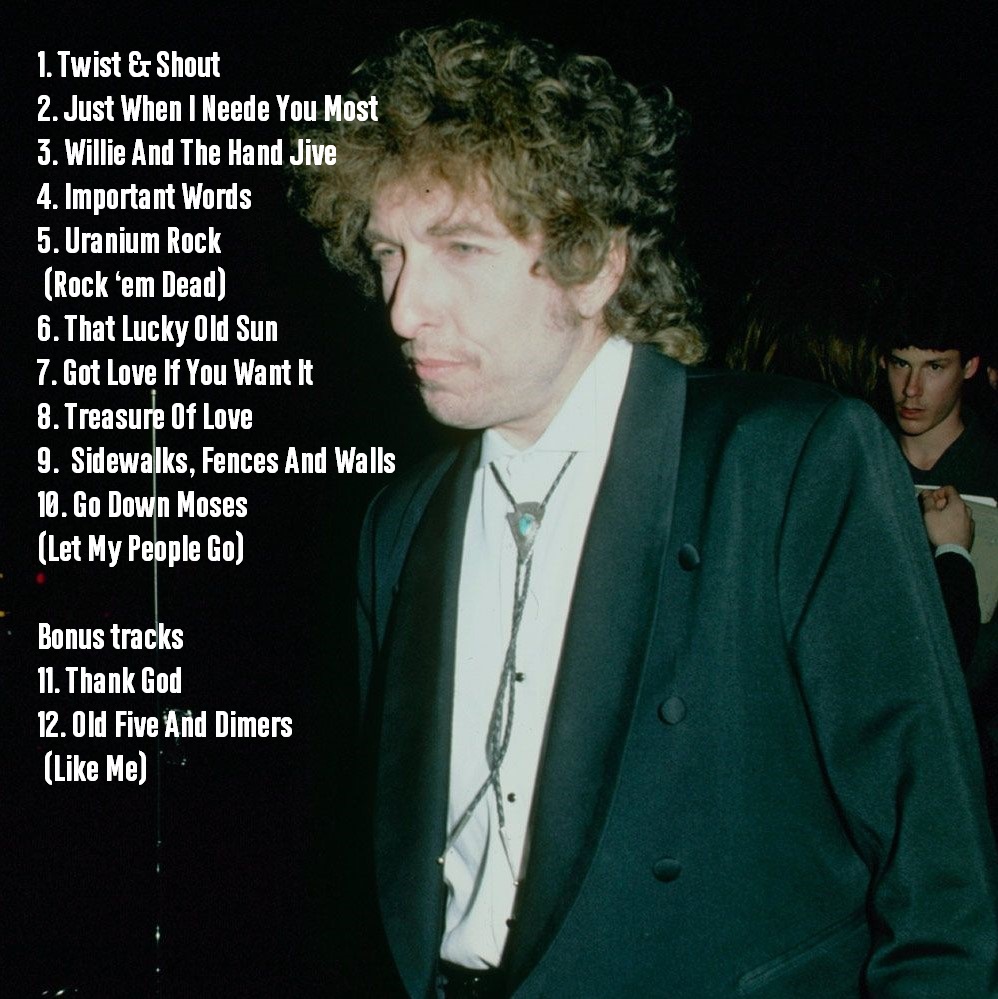
Posted in Uncategorized | Leave a comment

Bob Dylan And Cowboy Jesus Part III

by Larry Fyffe

Influenced by William Blake, and Emanuel Swedenborg, Bob Dylan manufactures his own mythologies – one in which the singer/songwriter reveals his unique ability to
time-travel to the ‘Old West’ of America with a dusty-cloaked fellow named Jesus, an outlaw from another time who escaped from being crucified.

Intrepid investigators at ‘Untold Dylan’ have been able to decode this secret mythology and provide it to our readers. In the mythology, masked Dylan is a singing rabbi who rides around in space and time with guitar and harp in hand; sitting in a saddle that’s strapped to his faithful horse named ‘Forest’, a white stallion he also calls ‘Sylva’ – it’s a strange upside-down world where nothing is at it seems.

Following be more bits and pieces, put together by ‘Untold’ detectives, of that previously unknown Blakean/Swedenborgian puzzle – one example, the Bible tells us of a woman who hangs around with Jesus:

And certain women which had been healed
Of evil spirits and infirmities
Mary called Magdalene
Out of whom went seven devils
(St, Luke 8:2)

In the alternate universe found in Bob Dylan’s artistic creations, the singer/songwriter transfers this biblical story into a ‘gnostic’ one; Jesus emanates into ‘Billy the Kid’, an outlaw of the Old West. In the song below, the Masked Rabbi notes that Cowboy Jesus carries on his old habits:

Hang on to your woman if you got one
Remember in El Paso, once, you shot one
Up in Santa Fe you brought one
Billy, you been running for so long
(Bob Dylan: Billy 4)

Back in His bible days, before getting arrested, we are told that Jesus shares the companionship of woman other than Mary Magdalene:

And Joanna, the wife of Chuza, Herold’s steward, and Susanna
And many others, which ministered unto Him their substance
(St,Luke 8:3)

In more recent times, according to the decoded mythology, Christ (speaking in the first person), tells of fond memories He has of Joanna way back then:

Louise, she's all right, she's just near
She's delicate, and seems like a mirror
But she just makes it all too concise, and too clear
That Johanna's not here
(Bob Dylan: Visions Of Johanna)

Apparently, the closest Cowboy Jesus ever comes to using His own name is when He calls Himself ‘Jessie’. Having emanated into another American outlaw, this time Southern sympathizer Jessie James, Christ’s afraid of getting shot in the back by one of his fellow gang members; his name is Robert Ford. The Lord’s paranoid. And with good reason, a long time ago, Christ escapes from being crucified after his friend Judas turns Him over to the authorities:

Ain't gonna hang no picture frame
Well, I might look like Robert Ford
But I feel like a Jessie James .....
I got a woman in Jackson
I ain't gonna say her name
She's a brown-skin woman
But I love her just the same
(Bob Dylan: Outlaw Blues)

A scan of the Holy Bible tells us who that woman in the above song be:

Look not upon me, because I am black
Because the sun hath looked upon me
My mother's children were angry with me
They made me the keeper of the vineyards
But my own vineyard have I not keep ....
I am the Rose of Sharon, and the Lily of the Valleys
(The Song Of Solomon I:6; 2:I )

In the unraveled Dylanesque mythology, Rosie appears at other times as well; in the first person (speaking as though he were the Cowboy), the Masked Rabbi tattle-tales on the antics of the time-drifting Jesus:

And every time, you know when the well breaks down
I just go pump on it some
Rose Marie, she likes to go to big places
And just set there waiting for me to come
(Jim James: Going To Acapulco ~ Bob Dylan)

In an analogical song penned by the Masked Rabbi is told the story of his traveling back in time with the Cowboy Jesus to the shores of the Nile River in ancient Egypt. Jesus, who of course is not yet born, speaks in the first person again, and it’s all about His emanation into the physical body of Moses.

But the finish of that story will have to wait for another day. As Mr. Spock of ‘Star Trek’ would say, “It’s fascinating”:

Though nothing looks familiar to me
I know I've stayed here before
Once, a thousand nights ago
With the girl from the Red River Shore
(Bob Dylan: Red River Shore)

Untold Dylan: who we are what we do

Untold Dylan is written by people who want to write for Untold Dylan.  It is simply a forum for those interested in the work of the most famous, influential and recognised popular musician and poet of our era, to read about, listen to and express their thoughts on, his lyrics and music.

We welcome articles, contributions and ideas from all our readers.  Sadly no one gets paid, but if you are published here, your work will be read by a fairly large number of people across the world, ranging from fans to academics who teach English literature.  If you have an idea, or a finished piece send it as a Word file to Tony@schools.co.uk with a note saying that it is for publication on Untold Dylan.

We also have a very lively discussion group “Untold Dylan” on Facebook with around 5500 active members. Just type the phrase “Untold Dylan” in, on your Facebook page or follow this link 

You’ll find some notes about our latest posts arranged by themes and subjects on the home page of this site.  You can also see details of our main sections on this site at the top of this page under the picture.  Not every index is complete but I do my best.

But what is complete is our index to all the 604 Dylan compositions and co-compositions that we have found, on the A to Z page.  I’m proud of that; no one else has found that many songs with that much information.  Elsewhere the songs are indexed by theme and by the date of composition. See for example Bob Dylan year by year.

Posted in Uncategorized | 13 Comments

Seven Days: An Examination of Faith Crisis And Apocalypse

 by Paul Robert Thomas

I hope here to show how this song draws heavily upon an interpretation of the New Testament Book Of the Revelation and the Old Testament apocalyptic literature.

Working on an early draft of this article, however, I soon found that I could not stop making connections which I had never expected. I hope that they are of interest to the reader.

It’s my belief that Seven Days is in Dylan’s ‘apocalyptic tradition’ a world view which seems to go deep into him and through which, I believe, he interprets events in his own life as well as world events. But both Christian and Jewish apocalyptic is ultimately the story, or promise, of salvation:- in Judaism through the coming of the Messiah and in Christianity through the second coming of The Lord Jesus Christ.

I believe that Seven Days demonstrates a particularly Christian eschatology suggesting that Dylan was ready and willing for that ‘slow train’ to pull into his station and may have accepted the Christian gospel, with a particularly ‘fundamentalist’ (sic) view of ‘the end times’, some three years before the date given for his baptism and public acceptance of Jesus as his saviour.

If Christ hadn’t already put his hand on Dylan then, I propose that Seven Days suggests that Dylan was already troubled in mind enough to be ready and responsive when that time came. However, I believe that Dylan also blends Kabbalistic ideas with the primarily Christian symbolism. If my feelings about this song, its inspiration and subject matter, along with my speculations concerning Dylan’s spiritual health and emotional well-being are right, then I find it surprising at how little attention has been paid to the song by commentators and ‘Dylanologists’, for even those few who have made an effort to address Dylan’s conversion to Christianity seem to have overlooked the significance of this song as evidence of Dylan’s spiritual preoccupations.

To begin with I want to explore the background to this song before looking at events in Dylan’s life around the time of its composition and then, finally, to explore the song with special attention to the identity of ‘she’, the central character of this song. In fact I believe that ‘She’ stands for two opposing forces.

To allow for the validity of more than one interpretation I want to state that while Seven Days can be taken as a simple song about frustrated love, concerning perhaps Dylan ‘waiting for his true love to return’, as Clinton Heylin has suggested in Behind The Shades, it might be more profitably enjoyed by revealing it’s ‘anagogical’, (hidden, mystical) meaning which, I believe, is present beneath the song’s apparent meaning.

For although the song can be appreciated by taking it at face value it suggests more if we consider the apparent hyperbole and obscurity in Dylan’s lyric and ask why it’s there. The only way I can give Mr Heylin the benefit of a doubt is if he is willing to concede that Dylan’s ‘true love’ need not be Sara or any other woman or, that if it is, the song deals simultaneously, with both secular and sacred love.

In Precious Angel (and, perhaps, in Saving Grace) Dylan appears to address the woman he loves and, simultaneously, his Lord, a characteristic his work shares with some of the poems of John Donne, e.g. The Extasie or Self Love from Songs And Sonnets. To understand what I am moving towards in my own reading of this song, pause for a while and listen to the live version of Seven Days on The Bootleg Series Volumes 1-3. Something is happening here but before I present my own views as to what I think it is I want to present a brief history of this song.

Background and Context

Seven Days was copyrighted with Rams Horn Music in 1976, which doesn’t help us too much with the date of composition, but, according to Ron Wood, Dylan tried this song out in the studio some 5 months after the end of the Desire sessions, (during the Eric Clapton sessions, which produced Sign Language, at the Shangri La Studios, Malibu, in late March1976.) As Ron Wood tells it, Dylan tried out a version of Seven Days: “he played it for me and Eric in the studio and we recorded it. There’s a copy of that somewhere around” and “That’s where I got Seven Days from. Bob said to Eric, though I was there too – he said “You can have this song if you want it”. And I took him up on it and Eric didn’t”. (Clinton Heylin confirms these dates in Day By Day 1941-1995). Ron Wood goes into detail to explain how, after these sessions, Dylan retired to a tent with a girl in a plaster-cast and, if the story isn’t apocryphal, it suggests that although Desire appears to have been Dylan’s attempt at a reconciliation with Sara, it was unlikely to work!

In Lyrics 1962-1985, Seven Days is the last song of particular note shown before the material which made up the sessions for Street Legal. (Coincidentally, perhaps, it is also placed on The Bootleg Series CD immediately before a trilogy of specifically religious songs – making up a quaternity?) which began in April 1978, apparently a full two years of no musical output or known lyrics, and the finished album from those sessions I believe, heralds the emergence of a man who seems to be totally lost, alone and definitely in need of a ‘shot of love’ – but a love more enduring and powerful than the physical world could offer.

“He started to write Street Legal when we were together. He would show me some of the songs that he was writing, (it was) practically the entire album… it started when we were on the farm… He was very down. Don’t forget he was suffering when I met him. He was in a bad way. I brought him back to life. He was practically dead, this guy was shot emotionally and he had to get away from all the pressures in Malibu and the farm was really where he got back on his feet again. But then that custody case was so vile and so treacherous”

The above words by Farida McFree, who had known Dylan since 1975 and who became his woman during and after his battles with Sara are quoted by Clinton Heylin in Behind The Shades and, allowing for McFree’s lack of modesty in portraying herself as Dylan’s salvation, they have the ‘ring of truth’ to them if we consider such songs from Street Legal as the brooding desperation of Senor, the frightening loss of peace and control in the hymn of No Time To Think and the long cry of despair, surely called out to God as much as Sara, which ends the album with Where Are You Tonight (Journey Through Dark Heat).

FAITH & ROOTS

“I don’t really consider myself Jewish or non Jewish …I’m not a patriot to any creed. I believe in all of them and none of them. A devout Christian or Moslem can be just as effective as a devout Jew.”

Dylan 1978.

“I follow God, so if my followers are following me, indirectly they’re gonna be following God too, because I don’t sing any song which hasn’t been given to me by the Lord to sing,”

Ibid 1979.

“Jesus put his hand on me. It was a physical thing. I felt it. I felt it all over me. I felt my whole body tremble. The glory of the Lord knocked me down and picked me up”, Ibid 1980.

“… the resurrected Christ. You’re not talking about some dead man who had a bunch of good ideas and was nailed to a tree.”

Ibid 1980

“Walking with Jesus is no easy trip, but it’s the only trip.” Ibid 1980.

“My so called Jewish roots are in Egypt. They went down there with Joseph, and they came back out with Moses… we’re talking about Jewish roots, you want to know more? Check up on Elijah the prophet. He could make it rain. Isaiah the prophet, even Jeremiah – see if their brethren didn’t want to bust their brains for telling it right like it is, yeah – these are my roots, I suppose … Am I looking for them? Well, I don’t know. I ain’t looking for them in synagogues with six pointed stars shining ‘down from every window, I can tell you that much.” Ibid 1981.

“I want to sing about my hero,” Dylan’s introduction to In the Garden from his Hard to Handle video 1986.

Dylan, born a Jew, was initiated into Torah and the writings of the prophets in preparation for his Bar Mitzvah, which took place on May 22 1954 in accordance with orthodox religious practice.

In 1953 he had spent the first of five summer holidays at Camp Herzl, Wisconsin. And whilst there is no proof that his family was rigorously orthodox they made up part of the small tightly knit Jewish community and so resisted assimilation and, perhaps, went to the trouble of calling in a Rabbi from outside Hibbing to instruct Dylan in Torah – something which Dylan was later to speak of as a mysterious act of providence. Dylan showed an early fascination and preoccupation with New Testament themes and imagery – and particularly with the stories concerning Christ.

It is Christ’s crucifixion which marks the climax and end of an early song, Long Ago Far Away and the figure of Christ as Judge appears in Masters of War not, as someone has suggested, ‘blasphemously’ (through Dylan’s assertion that the warmongers are beyond forgiveness) but in accordance with Christian justice and eschatology which does not teach unconditional and universal salvation – something which makes Paul Williams, for one, uneasy. (Personally I feel uneasy at the thought of the warmongers of these days, and of two world wars, surviving their deeds, in this life or the next).

“Vengeance is mine” saith the Lord. On the other hand, some of the psalms encourage us to hate the wicked and Dylan can, at times, hate with a fierce sense of righteousness. But I digress. Perhaps the most telling of Dylan’s pre-1979 songs to deal with Jesus is Sign On The Cross. Appearing to contain elements of confession, autobiography, doubt and conflict this extraordinary song seems to place Dylan before his future saviour with a mixture of fearfulness, identification and hope.

Written around 1966/7 the song is disarming to the listener.  The way the song is performed on the circulating tape makes it come over like a young Blind Willie Johnson song, intense and bluesy, the message gaining in force with each chorus.

But in the ‘break’, when Dylan sing-talks a sermon to his ‘congregation’, the listener might wonder if Dylan is fondly parodying some old black preacher or group like Brother Potter or, more accessibly, Rev Clarence ‘Gatemouth’ Brown. The break seems spontaneous, Dylan making up the words as he goes along, but could the parodic element be an attempt to hide the truth about his feelings towards Jesus, the Christ, the Saviour? The ‘sign on the cross’ is not, in spiritual/blues tradition, the sign put up on Pilate’s orders to mock Jesus and the Jews by proclaiming Jesus King of The Jews’ but the suffering body of Christ crucified calling out in anguish, to ‘Abba God’, “Eli Eli lema sabacthani?” which is most often translated as “My God, my God, why have you forsaken me?” from Psalm 22.

However the literal sign, referred to above, may well have added poignancy for Dylan, for in his identification with Christ, which by this time, was conferred as much from without as from any empathy Dylan felt with the crucified ‘son of God’, had he not seemed a king, a prophet and leader? I invite speculation. What of the lines “Yes I know in my head / That we’re all so misled,” in the context of the whole song? Misled in the sense of wanting to accept Jesus as Messiah and God Incarnate or misled in the sense that some Jewish scholars have described Jesus and, subsequently his followers? St Paul wrote of Jesus that he was a “stumbling block to the Jews and folly to the gentiles.” (1 Cor 1.23-25)

Jesus as Messiah is completely contrary to Judaic belief which teaches that the Messiah is still to come and will be God’s chosen one but will be mortal. There is simply no way to accommodate a Trinitarian concept of God which allows equal divinity between a man however righteous, and YWH. But it seems as though Dylan was unable to wait for ‘The day of The Lord’ and in desperate need for spiritual direction, renewal and fulfillment. Exactly what the events were which led to Dylan’s surrender to Christ, when the final act of capitulation to the message of the gospels took place, and how, must be open to speculation or taken from Dylan’s own words, some of which head this section of my discussion.

The account of the physical effects of his encounter with Christ are unexceptional in the literature concerning religious conversion, from St. Paul to many of the studies presented by William James in his seminal study of the psychology of conversion The Varietiess Of Religious Experience. Paul Williams’ attempt to find a purely psychological reason for what he seems to infer was an emotionally charged choice of ‘Sara substitute’ reads even more implausibly now than when he first wrote it, what he might have made of it if Abraham had died 11 years later than he did’. … … … ”

Dylan’s conversion cannot be looked upon as the act of a man ignorant of his religion. In preparing for Abraham Zimmerman’s funeral David, Dylan’s brother was astonished at how much Dylan knew about Jewish religious ceremonial, ritual and practice. Likewise, he was impressed by his elder brother’s presence and demeanour which is suggested as having something of the quality of the patriarchs about it. Remember, this was in l968 and David Zimmerman describes Dylan as having the dignity and bearing of a man of fifty.

The picture which suggests itself is of a man who is certain on his own level, of a place within his own religious tradition. Psychology might talk about repression, denial and an unconscious search for a father who wouldn’t, couldn’t, desert him, but such security was available to him through the reassurance of Judaism and the promises given to the patriarchs that God would never break his covenant.

The article continues tomorrow…

Untold Dylan: who we are what we do

Untold Dylan is written by people who want to write for Untold Dylan.  It is simply a forum for those interested in the work of the most famous, influential and recognised popular musician and poet of our era, to read about, listen to and express their thoughts on, his lyrics and music.

We welcome articles, contributions and ideas from all our readers.  Sadly no one gets paid, but if you are published here, your work will be read by a fairly large number of people across the world, ranging from fans to academics who teach English literature.  If you have an idea, or a finished piece send it as a Word file to Tony@schools.co.uk with a note saying that it is for publication on Untold Dylan.

We also have a very lively discussion group “Untold Dylan” on Facebook with around 5500 active members. Just type the phrase “Untold Dylan” in, on your Facebook page or follow this link 

You’ll find some notes about our latest posts arranged by themes and subjects on the home page of this site.  You can also see details of our main sections on this site at the top of this page under the picture.  Not every index is complete but I do my best.

But what is complete is our index to all the 604 Dylan compositions and co-compositions that we have found, on the A to Z page.  I’m proud of that; no one else has found that many songs with that much information.  Elsewhere the songs are indexed by theme and by the date of composition. See for example Bob Dylan year by year.
Posted in Uncategorized | Leave a comment

Bob Dylan’s outtake jams part 1

By Aaron Galbraith and Tony Attwood

One selection of music of Bob Dylan that we have not yet looked at are the instrumental outtakes from various sessions, particularly from the 1980s.

These are not completed works, and they don’t deserve to be added to the list of 600+ Bob Dylan compositions (although we might reconsider this at some stage in the future), but they are interesting in terms of the context of the sessions in which they were recorded,  who the band are, what the guys are doing under Dylan’s direction, what songs were recorded or worked on before and after the jam session broke out and how they might have influenced the main work of the day in question.

Which when you come to think of it, is quite a few unresolved issues.  And since no one else seems to have tackled the topic and this is, after all “Untold Dylan” it seems like a good area to consider.

Regarding the titles of the outtakes that they were probably just assigned a title by whoever put the first bootleg copy together, or maybe they had something written on the tape or something, who knows! All that means is that sometimes there is confusion about which outtake was recorded at which session, but we’ll do our best to work it all correctly…  (which actually means Aaron will.  Keeping things in the right order is not one of Tony’s skills).

So let us start with:

Delta Recording Studio, New York, July 26th 1984

The order of the Tracks worked on :

  1. Driftin Too Far From Shore
  2. Outtake 1…known here as “Firebird”.

This is a typical instrumental piece from this era – it is a chord sequence – a variant extended 12 bar blues in fact, which the band get used to playing before they try a few variations.  In most cases what happens is the band leader (here, obviously Dylan) starts to play the sequence, and the musicians, being talented folk, follow his lead and pick up the thread.  The percussionist as you can tell is having great fun, and gets more and more engaged with the effects as the song builds.

What they don’t know is whether Bob has got some lyrics ready, or if he is going to improvise some lyrics, or if, as on this occasion, he is going to stay quiet.

Pieces like this can sound annoyingly familiar because most of us, musicians or no, have a feeling for the chord sequence that exists as the bedrock of the song.

As it is here, none of the musicians decides to make a go of improvising a lead line over the top of the chord sequence, until about 2 minutes 55 seconds.  It is not that exciting, but it does give us a few variations.    There’s a bit of pulling back to give some variation, but that is it.

  1. Who Loves You More

We didn’t include the audio of this track when doing the original review, so here it is

https://youtu.be/cypXZYR65d4

4. Outtake 2…known here as Groovin’ At Delta (but it might also be known as Wolf).

This is easier to classify – it is a 12 bar blues with a distinctive riff – a song that is just made to have a singer like Dylan provide lyrics and melody over the top.

What makes life much easier here is the fact that everyone who has played in a rock band for more than five minutes knows the 12 bar blues – whereas the chord sequence in the first song is, as far as we know, unique.

Hence when the lead guitar takes off this time, everything stays together.  The guys have done this a million times before.  They even know how to finish the piece together.

https://youtu.be/VncmyvtPybk

  1. Clean Cut Kid

1 & 5 are actually the released versions, minus some later overdubs at future sessions. So with the inclusion of these two outtakes and Who Loves You More we get a real picture of how the session unfolded that day.

The band at the session was

Musicians: Ron Wood (guitar), Brian ? (guitar), John Paris (Bass), Anton Fig (drums), Bob Dylan (guitar, piano, vocal & synthesizer) and Carolyn Dennis (back-up vocal).

https://youtu.be/KU0zyvwLhY8

Untold Dylan: who we are what we do

Untold Dylan is written by people who want to write for Untold Dylan.  It is simply a forum for those interested in the work of the most famous, influential and recognised popular musician and poet of our era, to read about, listen to and express their thoughts on, his lyrics and music.

We welcome articles, contributions and ideas from all our readers.  Sadly no one gets paid, but if you are published here, your work will be read by a fairly large number of people across the world, ranging from fans to academics who teach English literature.  If you have an idea, or a finished piece send it as a Word file to Tony@schools.co.uk with a note saying that it is for publication on Untold Dylan.

We also have a very lively discussion group “Untold Dylan” on Facebook with around 5500 active members. Just type the phrase “Untold Dylan” in, on your Facebook page or follow this link 

You’ll find some notes about our latest posts arranged by themes and subjects on the home page of this site.  You can also see details of our main sections on this site at the top of this page under the picture.  Not every index is complete but I do my best.

But what is complete is our index to all the 604 Dylan compositions and co-compositions that we have found, on the A to Z page.  I’m proud of that; no one else has found that many songs with that much information.  Elsewhere the songs are indexed by theme and by the date of composition. See for example Bob Dylan year by year.
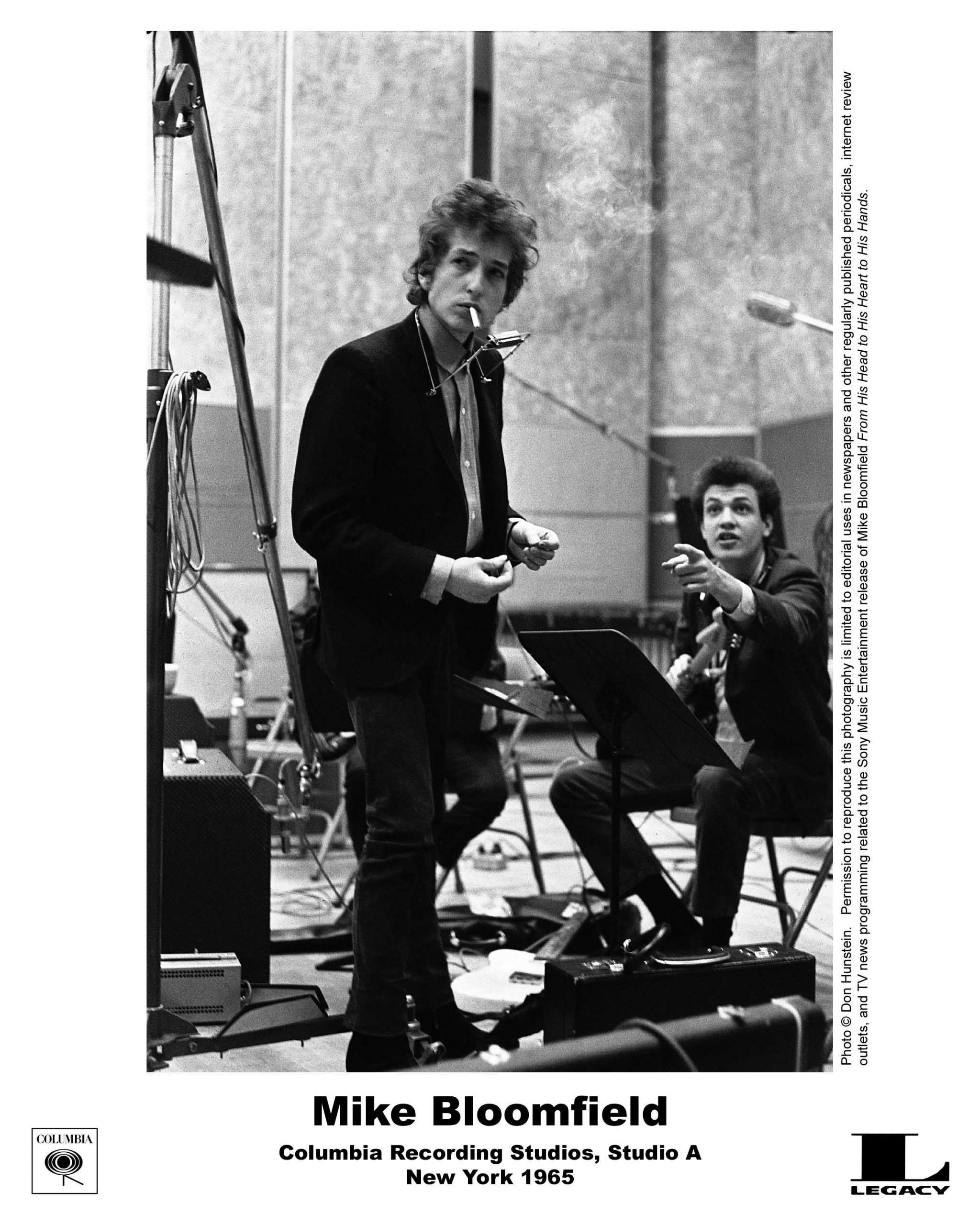
Posted in Uncategorized | Leave a comment

Sheep in Wolves’ Clothing, another album cover & a new album to consider

By Tony Attwood

When an idea emerges between the guys who write this site, we honestly never know whether it is going to be something that will be of interest to our fellow Dylan fans or not.  The notions that get no interest are quietly shelved or put to one side for a reconsideration.  The successful ones keep going – you can read below what we are doing next in terms of “submit an album sleeve”.

And Aaron’s idea of remaking “Down in the Groove” as “Sheep in Wolves’ Clothing” using outtakes and concert performances from the era has certainly proved one that is of interest, right from our choice of songs, through to designing to the album sleeve.  Thanks to everyone for reading.

We’ve had several album sleeves submitted so far (the links to these are given below), and now here is one more, complete with a separate cover for the CD edition with the bonus tracks.

This comes from Tomás Gunn.  This is very apposite to the period that the recordings are taken from as Bob Dylan presented Gordon Lightfoot with the Canadian Music Hall of Fame honours in 1986. Credit: Plum Communications Inc.


And the reverse side – on the left the LP version and on the right the CD


The list of tracks is below, but before that I’d like to invite anyone who is keen to undertake the same task for my own mythical album: Bob Dylan – 1980.

But first to conclude this album, here is the list of tracks for “Wolf in Sheep’s clothing”

A new album sleeve wanted

Meanwhile if you are interested in artwork I am sure you will enjoy our series on the art work on Bob’s album covers.  Indeed if you have never seen it plesae do spend a few moments with the article on your favourite album…  In virtually every case you will find pictures you have never seen before.

The full index of all the articles we have published on album artwork is given here.

So now, the next challenge is a cover for our invented album:  Bob Dylan 1980

You’ll find the full list of songs at the start of the first article, “Bob says to Tony”.   So as with here all you have to do is design a front and back cover for the album and save it (ideally as jpg or similar) and email it with the name you want to be known by to Tony@schools.co.uk

Please don’t use anything that is copyright Getty Images or we will be required to pay, nor anything else that is clearly protected copyright.

I look forward to receiving submissions.

Untold Dylan: who we are what we do

Untold Dylan is written by people who want to write for Untold Dylan.  It is simply a forum for those interested in the work of the most famous, influential and recognised popular musician and poet of our era, to read about, listen to and express their thoughts on, his lyrics and music.

We welcome articles, contributions and ideas from all our readers.  Sadly no one gets paid, but if you are published here, your work will be read by a fairly large number of people across the world, ranging from fans to academics who teach English literature.  If you have an idea, or a finished piece send it as a Word file to Tony@schools.co.uk with a note saying that it is for publication on Untold Dylan.

We also have a very lively discussion group “Untold Dylan” on Facebook with around 5500 active members. Just type the phrase “Untold Dylan” in, on your Facebook page or follow this link 

You’ll find some notes about our latest posts arranged by themes and subjects on the home page of this site.  You can also see details of our main sections on this site at the top of this page under the picture.  Not every index is complete but I do my best.

But what is complete is our index to all the 604 Dylan compositions and co-compositions that we have found, on the A to Z page.  I’m proud of that; no one else has found that many songs with that much information.  Elsewhere the songs are indexed by theme and by the date of composition. See for example Bob Dylan year by year.
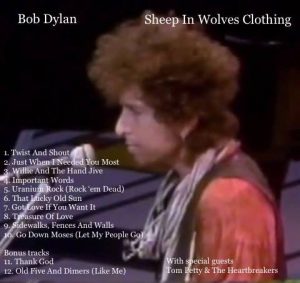
Posted in Uncategorized | 1 Comment

Caribbean Wind concluding notes & the greatest ever version

Already published…

“We left it off the album (as it was) quite different to anything I wrote….The way the story line changes from 3rd person to 1st person and that person becomes you, then these people are there and they’re not there. And then the time goes way back and then it’s brought up to the present. I thought it was really effective”.  Bob Dylan

Caribbean Wind – 12/11/80 Fox Warfield Live version


‘The shock of recognition that greeted this song when Dylan fans got to hear the audience tape of this November 12 1980 show is hard now to convey. After two years of browbeating, Caribbean Wind seemed a lot like the old Dylan, disaffected with love and on the run from the End Times – hence his Leadbelly rap that prefaced the song; “Some people liked the old songs, some people liked the new songs, but he didn’t change, he was the same man.” (Hint).

Though Dylan seemed unhappy with the live performance, refraining from performing the song again at the remaining 1980 shows, Dylan knew that Caribbean Wind was an important song, opening up a new approach much as Mr. Tambourine Man, Visions of Johanna or Tangled up in Blue had in earlier times’(21). ‘He made a subtle point about the way the media had portrayed him in the past year, during his two minute introduction to the one and only live version of Caribbean Wind’(5). ‘The tour was known as the Musical Retrospective Tour because of the advertisements Bill Graham (the San Francisco Promoter) ran to try and assure fans that the ‘old Dylan’ was back in action’(7).

Alright, this is a 12-string guitar, the first time I heard a 12-string guitar it was played by Leadbelly, don’t know if you heard of him? Anyway, he was a, uh, a prisoner in, uh, I guess it was Texas State Prison. I forget what his real name was but, uh, people’d just call him Leadbelly, and he was recorded by a man named Alan Lomax. I don’t know if you’d heard of him, great man who done a lot of good for music, anyway, uh, he got Leadbelly out and brought him up to New York and made a lot of records there. At first he was just doing prison songs and stuff like that, the same man that’s recorded him also recorded Muddy Waters before Muddy Waters changed his name, anyway Leadbelly did most of those kind of songs until he’d been out of prison for some time and he decided to do children’s songs. Some people say ‘Oh, what, Leadbelly changed’? Some people liked the older one and some people liked the newer one, but he didn’t change, he was the same man. Anyway, this is a song called, er, this is another song I wrote a while back, I’ll try and do it as good as I can, somebody important here tonight that wants to hear it, so I want to do it the best….” 

The important person at that show that Dylan was referring to would appear to be the author Paul Williams; “I had some fascinating conversations with Dylan backstage during the Warfield shows. At one point he read the lyrics of a new song to me, which turned out to be Every Grain of Sand. Another time he talked about how he’d gotten in touch consciously with some of the songwriting techniques he’d used unconsciously (and so successfully) in the mid-sixties. He spoke of one song he was particularly proud of, that he’d written “a while back,” that successfully functioned on the level of complexity of his mid-sixties material, taking the listener outside of time (I don’t know that he actually used these phrases; I’m just recalling my impression of what he told me). He said the song was called Caribbean Wind, and that he’d try to play it if I’d phone his assistant some afternoon before a show and remind him of my request’(7). ‘Dylan allowed me to spend several hours with him backstage after four of the 11/80 shows. He even read me the lyrics of a new song, Every Grain of Sand, told me about another he was proud of, Caribbean Wind, and performed it at one of the shows at my request’(25). 

verse 1

 She was from Haiti, fair brown and intense, 
.........................woman................................., 
I was playing a show in Miami, in the Theatre of Divine Comedy. 
Told about Jesus, told about the rain, 
She told me about the vision, told me about the pain, 
That had risen from the ashes and divided in her memory. 

verse 2 

Was she a child or a woman ? I really can’t say, 
Something about her said ‘Trust me anyway’, 
As the days turned to minutes, and the minutes turned back into hours. 
Could I have been used and played as a pawn? 
It certainly was possible as the gay night wore on, 
But victory was mine, and I held it with the help of God’s power. 

chorus 

And the Caribbean winds still blow, from Trinidad to Mexico, 
The circle of light, the furnace of desire. 
And them distant ships of liberty, on them iron waves so bold and free, 
Bringing everything that’s near to me, nearer to the fire. 

verse 3 

Shadows grew closer as we touched on the floor, 
Prodigal Son sitting next to the door, 
Preaching resistance, waiting for the night to arrive. 
He was well connected, but her heart was a snare, 
And she had left him to die in there, 
But I knew he could get out while he was still alive. 

verse 4 

Stars on my balcony, buzzing my head, 
.......................................heat in my bed, 
Street band playing ‘Nearer My God to Thee’. 
He had a secret, where the mission bells ring, 
She said ‘I know what you’re thinking, but there ain’t a thing, 
You can do about it, so you might as well agree to agree’. 

chorus 

And them Caribbean Winds blows hard, 
From the Iv’ry Coast into my back yard, 
Down below, to the furnace of desire. 
And the distant ships of liberty, on them iron waves so bold and free, 
Bringing everything that’s near to me, nearer to the fire. 

verse 5 

Atlantic City, by the cold sea, 
I hear a voice crying ‘daddy’, I always think it’s for me, 
But it’s only the silence in the buttermilk hills that call. 
Every new messenger bringing evil report, 
About rioting armies and time that is short, 
And earthquakes and train wrecks and the heat words printed on walls. 

verse 6 

Would I have married her, I don’t know, I suppose, 
She had bells in her braids, and they hung to her toes, 
The curtain was rising, and like they say ‘The ship would sail at dawn’. 
Then I felt it come over me, some kind of gloom, 
And I thought say, ‘come home with me girl, I got plenty of room’, 
But I knew I’d be lyin’, and besides she had already gone. 
Chorus And them Caribbean Winds still howl, from the Tokyo to the British Isle, 
............................................................the furnace of desire. 
And them distant ships of liberty, on them iron waves so bold and free, 
Bringing everything that’s near to me, nearer to the fire. 

‘Caribbean Wind is the high point of the fall 1980 shows, a sublime performance of a Dylan masterpiece that never quite came together in the studio (the Biograph performance, recorded in April 1981, is inferior both lyrically and musically). Dylan was dissatisfied with the band’s playing on the song November 12, but that may be because he was on stage, not in the audience. Tim Drummond (de facto bandleader) and the other musicians provide superb support and hard-rock embellishment as Dylan delivers a blistering vocal performance; the net result, even though you can’t hear all of the words, is filled with an excitement comparable to the best of Dylan’s spontaneous studio sessions. The song, through this performance, burns itself into the consciousness of every person who ever hears it. It becomes flesh; it breathes; even the mere memory of hearing it roars in the listeners blood(7)’. 

Caribbean Wind Recorded 31/3/81, Studio 55, Los Angeles, California). 


Musicians: Bob Dylan, Vocals and Piano; Jim Keltner, Drums; Fred Tackett, Guitar, Steve Ripley, Guitar, Tim Drummond, Bass; Carl Pickhardt, Keyboards; Clydie King, 2nd Vocals; Carolyn Dennis, Madelyn Quebec, Regina McCrery, Backing Vocals. Producer, Arthur Rosato. 

This is the version that really gets through to my soul and the intro. always knocks me out, the way the opening acoustic guitar chords gradually build up and the piano, and then the drums, come crashing in to dramatically kick the song into gear. The drums continue to pound out the heart beat rhythm and the perfect music is complemented by Dylan’s controlled vocals, for he definitely is in control here and everything is in the right place and it seems to happen naturally and doesn’t seem at all contrived (unlike the later 7/4/81 Biograph version), and on this recording we find a man who is sure of himself and of his work and it shows. All of his subsequent tinkering with this song’s lyrics would fail to yield a performance to equal this one, this is in spite of what was said by those who were involved in the studio recording process; “When it came time to begin work on what became Shot of Love, Caribbean Wind was as much as a starting point as Visions of Johanna had been for Blonde on Blonde. After booking a session at Studio 55 in L.A. Dylan called in Jimmy Lovine (he was probably already looking for a potential co-producer for the album to come).

The March 31 session, though, did not make either Dylan or Lovine very happy. Arthur Rosato: “We did Caribbean Wind at Studio 55. It was hell recording that particular song. I had told Bob, ‘You gotta give me that song to record. Let’s do a really good job with that.’ And he said, ‘Let’s get Jimmy Lovine.’ He would call everybody he knows to come down so we would have a band of like fifteen people. When we did Caribbean Wind I had the original recording that I did back at (Rundown). I played that for all the musicians. That’s a much better version because that’s the first time, live. When we got over to Studio 55 all the musicians loved the song. It had that Rolling Stone feel to it. So Bob finally shows up about three hours late, which was pretty much on time for him.

At Santa Monica studio he was there every day – pretty much same time – he was real comfortable (there) but this was a different gig. As soon as the musicians ran through it once he goes, ‘Nah, nah, nah, that’s all wrong.’ They could see it coming because they had all worked with him before, ‘Oh, here we go.’ And instead of that version he turned it into this country and western thing, like boom – chicka kinda stuff. That went on for a few hours. Meanwhile Jimmy had heard this other version and is going, ‘What are we gonna do? Okay, we will go with this guy, because he always wanted to work with him’. Then they had these backing vocalists singing this like train whoosh and that was really bad. I don’t even know how he ended up keeping it.

Toward the end of the session I think Bob himself even realized it wasn’t working and (said) let’s go back and try the original version. At the end of the session he was asking Jimmy Lovine to go out and get the lyrics for White Christmas! Jimmy didn’t want anything to do with this session anymore. Bob didn’t really know how to work with a producer’.

‘If the Caribbean Wind recorded at Studio 55 was still recognizably Caribbean Wind, Dylan had clearly begun to disguise its stronger religious elements (the narrator no longer talks of Jesus and the rain) and, in a confused attempt to blur the menage a trois element that is implicit in the song (which links it to Visions of Johanna and Tangled Up in Blue), cut some highly evocative lines. Although a particularly dumb stop-start arrangement repeatedly applies the brakes to the song’s cumulative power, Dylan still conjured up a vocal of some resilience, while some of the rewrites transcend the merely cute (the Dantesque circle of ice contrasts nicely with the furnace of desire). However, Dylan determined he would work on the song again, pushing it even further from its original form’(21). 

verse 1 

She was well rehearsed, fair brown and blonde, 
She had friends who were bus boys and friends in the Pentagon, 
Playing a show in Miami, in the Theatre of Divine Comedy. 
Talking to shadows where the stop in the rain, 
I could tell she was still feeling the pain, 
Pain of rejection, pain of infidelity. 

verse 2 

Was she a child or a woman, I can’t say which, 
One to another she could easily switch, 
Couples were dancing and I lost track of the hours. 
He was well prepared, I knew he was, 
Paying attention like a rattlesnake does, 
When he’s hearing footsteps trampling over his flowers. 

chorus 

And the Caribbean winds still blow, from Nassau to Mexico, 
From the circle of ice to the furnace of desire. 
And them distant ships of liberty, on them iron waves so bold and free, 
Bringing everything that’s near to me, nearer to the fire. 

verse 3 

She looked into my soul through the clothes that I wore, 
She said ‘we got a mutual friend standing at the door, 
And you know he’s got our best interests in mind’. 
He was well connected, but her heart was a snare, 
And she had left him to die in there, 
He had two payments due, and he was a little behind. 

verse 4 

Well I slept in a hotel, where flies buzz my head, 
Ceiling fan was broken, there was heat in my bed, 
Street band playing ‘Nearer My God to Thee’. 
We met in secret, where we drank from a spring, 
She said ‘I know what you’re thinking, but there ain’t a thing, 
We can do about it, so we might as well let it be’. 

repeat chorus 

verse 5 

Atlantic City, two years to the day, 
I hear her voice crying ‘daddy’, and I look that way, 
But it’s only the silence in the buttermilk hills that call. 
Every new messenger bringing evil report, 
‘bout rioting armies and time that is short, 
And earthquakes and train wrecks and heat words scribbled on wall. 

verse 6 

Would I have married her? I don’t know I suppose, 
She had bells in her braids, and they hung to her toes, 
But I heard my name and destiny say to be moving on. 
Then I felt it come over me, some kind of gloom, 
But I say, ‘Come home with me girl, I got plenty of room’, 
But I knew I’d be lying and besides she had already gone. 

chorus 

And them mirror being winds still blow, from Nassau to Mexico, 
Circle of ice to the furnace of desire. 
And them building ships of liberty, on them iron waves so bold and free, 
Bringing everything that’s near to me, nearer to the fire. 

Out of interest, I have listed here-under those words, and in a few instances, whole lines, which are duplicated in all three versions of Caribbean Wind and appear to form the base of the song. The only verse which remains virtually untouched, apart from the chorus, is verse 5: – 

verse 1: 

  • Line 1: (I was) playing a show in Miami in the Theatre of Divine Comedy. 

chorus 1: 

  • Line 1: And them (the) Caribbean Winds still blow……………………………. 
  • Line 2: …………………………………………………………….the furnace of desire. 
  • Line 3: And them distant ships of liberty on them iron waves so bold and free 
  • Line 4: Bringing everything that’s near to me, nearer to the fire. 

verse 3: 

  • Line 4: He was well connected, but her heart was a snare, 
  • Line 5: And she had left him to die in there. 

verse 4: 

  • Line 1: ………………………………..buzzing (buzz) my head, 
  • Line 2: …………………………………………….heat in my bed. 
  • Line 3: Street band playing ‘Nearer My God To Thee’. 
  • Line 5: She said ‘I know what you’re thinking, but there ain’t a thing, 
  • Line 6: You can do about it..……………………………………………………..’. 

chorus 2 

  • Line 1: And them (the) Caribbean Winds…………………………………….. 
  • Line 2: ……………………………………………………....the furnace of desire 
  • Line 3: And them distant ships of liberty on them iron waves so bold and free, 
  • Line 4: Bringing everything that’s near to me, nearer to the fire, 

verse 5: 

  • Line 1: Atlantic City…………………………………………………………………. 
  • Line 2: I hear a (her) voice crying ‘daddy’, I always think it’s for me
  • Line 3: But it’s only the silence in the buttermilk hills that call. 
  • Line 4: Every new messenger bringing evil report, 
  • Line 5: About ………. (army/armies) and time that is short, 
  • Line 6: ……….and earthquakes and train wrecks……………………….wall. 

chorus 3: 

  • Line 1: And them…………..Winds still ………………………………………. 
  • Line 2: …………………………………………………….the furnace of desire. 
  • Line 3: …………...ships of liberty on them iron waves so bold and free, 
  • Line 4: Bringing everything that’s near to me, nearer to the fire. 

Asked as to why he left Caribbean Wind off the album Shot of Love, Dylan replied; “We left it off the album (as it was) quite different to anything I wrote….The way the story line changes from 3rd person to 1st person and that person becomes you, then these people are there and they’re not there. And then the time goes way back and then it’s brought up to the present. I thought it was really effective”. He also said; “That one (Caribbean Wind) I couldn’t quite grasp what it was about after I finished it. Sometimes you’ll write something to be very inspired, and you won’t quite finish it for one reason or another. Then you’ll go back and try and pick it up, and the inspiration is just gone….Then it’s a struggle. Frustration sets in. I think there’s four different sets of lyrics to this, maybe I got it right, I don’t know, I had to leave it(5)”. 

Whenever I hear Caribbean Wind played it always brings to mind the following passage with its references to the Gulf of Mexico, particularly also, in relation to Dylan’s Judaic beliefs:- ‘There is a river in the ocean. In the severest droughts it never fails, in the mightiest floods it never overflows. The Gulf of Mexico is its fountain and its mouth is in the Arctic Seas. It is the Gulf Stream. There is in the world no other such majestic flow of waters. Its current is more rapid than the Mississippi or the Amazon, and its volume more than a thousand times greater. Its waters as far out from the Gulf of Carolina Coasts, are of an indigo blue, they are so distinctly marked that their line of junction with the common sea-water may be traced by the eye.

Often one-half of a vessel may be perceived floating in the Gulf Stream water, while the other half is in the common water of the sea – so sharp is the line and such the want of affinity between those waters, and such the reluctance, so to speak, on the part of those of the Gulf Stream to mingle the common waters of the sea.

This curious phenomenon in the physical world has its counterpart in the moral. The mightiest floods of human cruelty, though seven times heated in the furnace of religious bigotry, have never caused it to dry up, although its waves for 2,000 years have rolled crimson with the blood of its martyrs. Its foundation is in the gray dawn of worlds history, and its mouth is somewhere in the shadows of eternity. It too refuses to mingle with the surrounding waves, and the lines which divide its restless billows from the common waters of humanity are also plainly visible to the eye. It is the Jewish people’(26). 

I have in this article tried to faithfully interpret the fourth known version of this song, recorded on 7/4/81 and preserved on Biograph. I have not gained access to the October 1980 studio performance and I have included lyrics from the 12/11/80 San Francisco Fox Warfield Theatre concert, including Dylan’s preceding ‘Leadbelly’ rap. There are at least four different versions of this song and they certainly all seem to chart Dylan’s changing spiritual journey.

I believe that Caribbean Wind chronicles Dylan’s passage from his introduction to, and acceptance of, Jesus Christ in 1978 by a close female friend who also introduced him to the Christian Vineyard Fellowship, through to his self-realization that he was being used by the Christian Vineyard Fellowship for their own self-interests. He describes his experiences of performing in gay San Francisco and the hostile reception that he received from the audience at Tempe because of his Christian born-again gospel shows. He also chronicles the pain he suffered at losing custody of his children through the divorce with Sara and to his eventual sailing back to the waters of Judaism, although the mark of Jesus was indelibly etched upon his soul! The softness of the language of Caribbean Wind would soon yield to the bitterness of disaffection, not with Jesus Christ, but with organized religion; “Religion is another form of bondage which man invents to get himself to God. But that’s why Christ came. Christ didn’t preach religion. He preached the Truth, the Way and the Life”(27). In 1997 he said; “I don’t adhere to Rabbi’s, Preachers, Evangelists…”(28). 

Caribbean Wind was written during a period when Dylan was still presumed to be a fervent born-again Christian and it is obviously not what one could describe as a religious song. With his part introduction of a non-religious song (Lay Lady Lay) during a concert on 16/5/80 (he didn’t repeat this during the remaining three shows of that tour), and the eventual introduction of Like a Rolling Stone during a concert at the beginning of his next tour, on 9/11/80, there is no doubt that this was a period of self revaluation, perhaps also of apostasy for Dylan, and during 1982 he would almost totally disappear from public gaze, spending some of his time with another backing singer, Clydie King, with whom it was rumoured he recorded an album of duets(5), to re-emerge, apparently no longer a born-again-Christian, with the album, Infidels (recorded during 1983), which no longer used relatively simple to understand images and Biblical lines and passages, but was embroiled and entwined in the language of apologues, parables, and also mythical and mystical characters. 

                                                                                       Paul Robert Thomas 

Notes and Sources

  • (1) USA Today Interview, Bob Dylan, 14/9/90. 
  • (2) Cruden’s Concordance to the Bible (KJV), Lutterwoth Press. 
  • (3) The Holy Bible, King James Version, Ivy Press. New York. 
  • (4) Rolling Stone Magazine Interview, Curt Loder, 26/6/84. 
  • (5) Behind the Shades, Clinton Heylin, Penguin Books. 
  • (6) Bob Dylan Lyrics 1962-1985, Harper Collins. 
  • (7) Performing Artist 1974-1986, Paul Williams, Omnibus Press. 
  • (8) Dylan, A Biography, Bob Spitz, W.W. Norton & Co. 
  • (9) The Gospel Speeches, Hanuman Books, New York 1990. 
  • (10) The Oxford Study Dictionary, Oxford University Press, 1991. 
  • (11) Soncino Chumash Commentary, Soncino Press Ltd. 
  • (12) No Direction Home, Robert Shelton, (Gabrielle Goodchild quote), New English Library, 1986. 
  • (13) When the Ship comes in, Bob Dylan, 1963/4 Warner Bros. inc. 
  • (14) Four Quartets, Little Gidding, T.S. Eliot, Faber and Faber. 
  • (15) The Gospel According To Thomas, Harper & Row, 1959. 
  • (16) The Jerusalem Post, Divine Fire article, 16/1/98. 
  • (17) The Apocalypse in the Teachings of Ancient Christianity. Archbishop Aversky Taushev, St. Herman of Alaska Brotherhood. 
  • (18) Love You Too Much, Dylan/Springs/Lake composition, Special Rider Music, 1981. 
  • (19) Bob Dylan Approximately, Stephen Pickering, David Mckay Co. New York. 
  • (20) The Zohar, 11, 76b-8a (Kabbalah). 
  • (21) The Recording Sessions, Clinton Heylin, St. Martins Press, NY. 
  • (22) Seven Days, Dave Thomas article, Isis Magazine Issue 70, Dignity Magazine Issue 8. 
  • (23) The Jerusalem Post Postscript, Israel, January 1997. 
  • (24) The Times they are a-changin’, In search of the latest Bob Dylan, Interview, Martin Keller. 
  • (25) Watching the River Flow, Paul Williams, Omnibus Press. 
  • (26) To be a Jew, Rabbi Hayim Halevy Donin, Basic Books, New York, 1972. 
  • (27) Dylan in his Own Words, Chris Williams, Omnibus Press, 1993. 
  • (28) Newsweek Interview, David Gates, 13/10/97.


Posted in Uncategorized | 9 Comments

Grooms still waiting at the altar, probably for Claudette

by Jochen Markhorst

Roy Orbison is madly in love with the teenager Claudette Frady and writes the song “Claudette” for her. Sam Phillips from Sun Records likes it a lot and has it recorded by the Everly Brothers, who eventually use it as a B-side for one of their many #1 hits: “All I Have To Do Is Dream” (1957).

With the royalties Orbison can make a down payment for his first, real Cadillac and marry his Claudette. The marriage is not long and happy. Moments later The Big O is a star, a lonely Claudette starts an affair and they divorce in November ’64, when “Oh, Pretty Woman” is high in the charts on both sides of the ocean.

But still, she really is the greatest girl that I’ve ever been with and when she visits him in hospital a few months later, after a small motorbike accident in England, they reconcile and in August ’65 they are married again.

This time the regained happiness lasts even less long. During a joint motorcycle trip, June 6, 1966, Claudette crashes on a pick-up truck and she dies on the spot.   Dylan recalls this tragedy in 2007, after he plays the original demo recording of Orbison’s “Claudette” in his Theme Time Radio Hour (episode 35: “Women’s Names”).

Claudette is, in short, not a name to be used lightly. A self-proclaimed, seasoned Orbison fan like Dylan (“There wasn’t anything else on the radio like him. I’d listen and wait for another song, but next to Roy the playlist was strictly dullsville…gutless and flabby” – Chronicles) certainly has associations with the name – evoking sooner fate and disaster than roses and moonshine.

Disaster and fate abound, subsequently, in the lyrics of that miraculous, fascinating and abundant “The Groom’s Still Waiting At The Altar”.

Apocalyptic visions borrowed directly from Revelations, one of Dylan’s favourite Bible books: the slaughter of innocents, burning cities and murdered nuns… and to complete the horror, he cannot find the light switch and has not seen Claudette since January. In itself, this is a run-of-the-mill grass may wither and flowers may fall scenario, contrasting world-shattering catastrophes with intimate suffering, but Dylan elevates the cliché.

The expressive power of the opening line Prayed in the ghetto with my face in the cement sets the tone for the dark, enigmatic content of the verses that will follow. A Hard Rain part 2, one may be tempted to think, after the second line (“Heard the last moan of a boxer, seen the massacre of the innocent”) – but stylistically, this song is more multiform. The love and talent for aphoristic points, as we will encounter more often in the highlights of the upcoming 80’s-songs, blossom here. Three of these pearls the poet places here, with an elegant choice of words (are there songs with words like “aloofness” or “snobbery” in the lyrics?) demonstrating the author’s eloquence.

The biblical tone suggests that Dylan is still in the middle of his evangelical phase, although earthly, ironic points are already being served. “Try to be pure at heart…” paraphrases Jesus’ Sermon on the Mount (“Blessed are the pure in heart; for they shall see God” – Mat. 5:8), but is banalised wittily: “…they arrest you for robbery”. The satirical Jewish poet Heinrich Heine (1797-1856), Dylans spiritual ancestor, may be proud of his successor.

The Bible is often quoted, by the interpreters of this song. The bridegroom-metaphor can be found on the last page, at the end of Revelation, though just a touch more metaphorically; the new Jerusalem is the bride, the Lamb’s fiancée, who is dressed up and awaiting the arrival of her groom, Jesus. And yes indeed, west of the Jordan, that can’t be misinterpreted, obviously. Remarkable, however, is that precisely this topographical hint has only been added in the later text version, the studio version from April ’81. The chorus of the primeval version, the version we know from the inspired live performances at the Warfield Theater in San Francisco, November 1980, has no Jordanian reference, sounds a lot more activist, missionary even, and suggests that a religious schism led to the love break:

Oh, set my affections on things above,
Let nothing stand in the way of that love,
Not even the Rock of Gibraltar! 
Wel, if you see her on Fannin’ Street, 
Tell her I still think she’s neat, 
And that the groom’s still waiting at the altar

Of course, those Warfield performances have historical value not only because of Dylan’s passion, and certainly not because of the primeval version of Groom, but most of all because of the swan song of the unforgettable Mike Bloomfield. Gifted and influential guitarist Bloomfield is a mid 60’s comrade in arms, to whom a large part of the impact of Highway 61 can be attributed.

His guest appearance on the sixth evening, November 15th, is dazzling. Bloomfield shines in “Like A Rolling Stone” and is called back on stage to join Groom an hour later by a clearly enraptured, remarkably talkative Dylan. An unprepared Bloomfield stumbles onto the stage when the band is already well underway, and once again conjures up the stars of heaven. Like more great artists, however, he is also troubled and immoderate. This evening he plays his last public notes – three months later Michael Bernard Bloomfield, 37 years old, is found dead in his car after an overdose of heroin.

A few weeks later Dylan picks up “The Groom’s Still Waiting At The Altar” in the studio. The Jordan addition is not the only change, then. Claudette originally hangs out on Fannin Street, a notorious street near the Bayou River in the red-light district of Shreveport, Louisiana, where, according to Lead Belly’s mother, a decent man doesn’t go:

My mama told me
"Women in Shreveport, son
Gonna be the death of you"

Lead Belly goes anyway, though, I go down on Fannin Street and I goes into the bellhouse.

In the final version, Dylan takes away the sharper edges – maybe she manages a brothel in Argentina, but Claudette might as well be a respectable housewife by now.

Further textual changes are less substantial, or an improvement. Locked into a time-zone, with a high-degree temperature is rewritten into Put your hand on my head, baby, do I have a temperature?, for example. Still, Dylan is not entirely satisfied, apparently. He rejects the song for Shot Of Love and relegates it to being a B-side (for the “Heart Of Mine” single). “It sounded okay,” says the master in the Biograph booklet, “but it wasn’t really the way I wanted to play it.” Much to his surprise, most DJs then mainly play that B-side. Subsequently, Groom is reinstated on the re-release of the CD – a unique manoeuvre in Dylan’s discography.

There are only a few tolerable covers, but none of them are invigorating; Tim Drummond’s iron, compelling bass stomp Dylan already did bring to the studio, and the colleagues follow. The one by Rod Stewart, who has been producing distinctive Dylan covers since the 1960s, is beautiful, but Stewart also initially leaves the recording behind. Following the song’s traditional fate, it is only used as a B-side for an unsuccessful single (“This”, 1995). In 2009 an alternative recording is released on the 4CD set Sessions 1971-1998.

Veteran Elkie Brooks’ version on the pleasantly entertaining, flopped album Electric Lady from 2005 is more attractive: a subterranean driving bass, ripping sax, and the whole echoes, oddly enough, Dylan’s “Thunder On The Mountain”. The Doors’ “Roadhouse Blues” on the same album is equally driven and equally satisfying, by the way. Brooks’ English accent providing the je-ne-sais-quoi and taking both songs far, far away from Fannin Street down to, say, Portobello Road or Savile Row – but who cares.

Untold Dylan: who we are what we do

Untold Dylan is written by people who want to write for Untold Dylan.  It is simply a forum for those interested in the work of the most famous, influential and recognised popular musician and poet of our era, to read about, listen to and express their thoughts on, his lyrics and music.

We welcome articles, contributions and ideas from all our readers.  Sadly no one gets paid, but if you are published here, your work will be read by a fairly large number of people across the world, ranging from fans to academics who teach English literature.  If you have an idea, or a finished piece send it as a Word file to Tony@schools.co.uk with a note saying that it is for publication on Untold Dylan.

We also have a very lively discussion group “Untold Dylan” on Facebook with around 5500 active members. Just type the phrase “Untold Dylan” in, on your Facebook page or follow this link 

You’ll find some notes about our latest posts arranged by themes and subjects on the home page of this site.  You can also see details of our main sections on this site at the top of this page under the picture.  Not every index is complete but I do my best.

But what is complete is our index to all the 604 Dylan compositions and co-compositions that we have found, on the A to Z page.  I’m proud of that; no one else has found that many songs with that much information.  Elsewhere the songs are indexed by theme and by the date of composition. See for example Bob Dylan year by year.
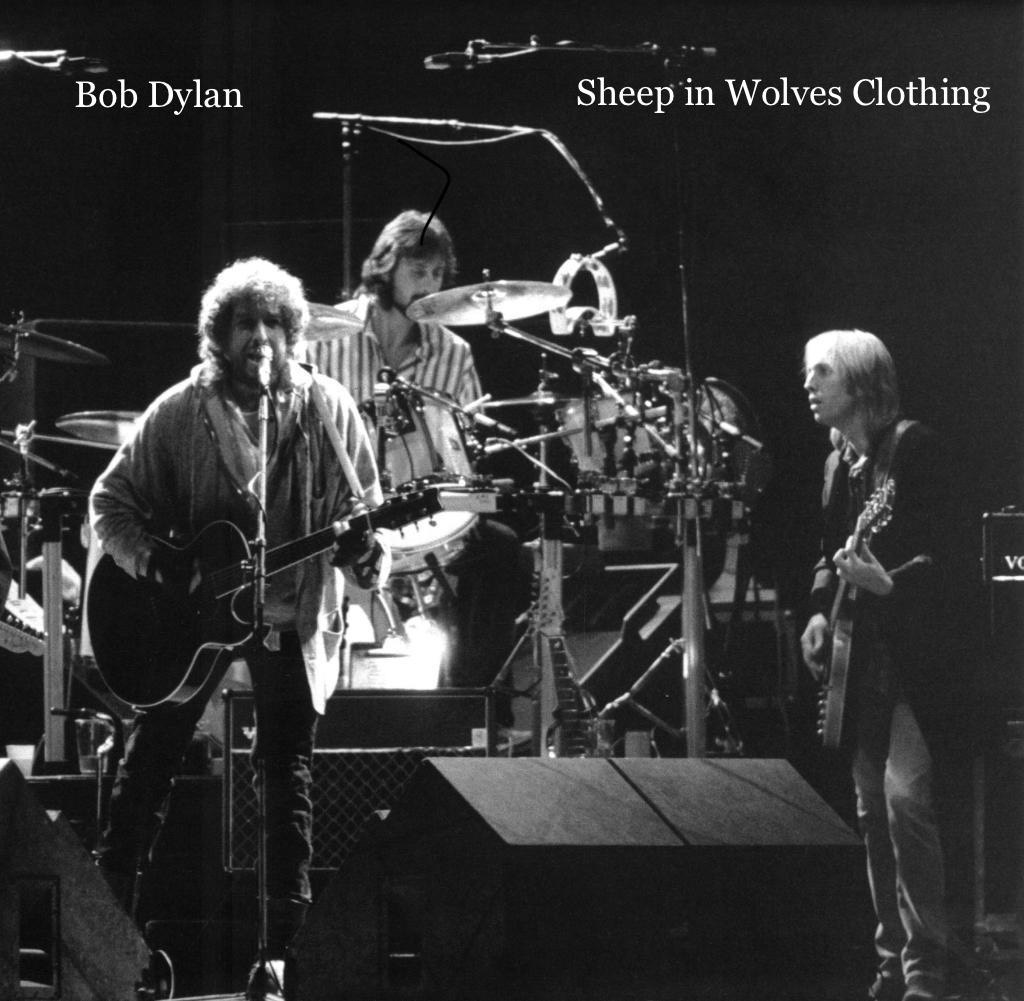
 

Posted in Uncategorized | 2 Comments

Bob Dylan And Cowboy Jesus (Part ll): The Riddler

Part 1 of this series: Bob Dylan And The Cowboy Jesus

by Larry Fyffe

Like poet William Blake, singer/songwriter Bob Dylan sets up a personal mythology.

Featured in that mythology, which is based on legends of the Old American West, is a Jewish drifter who rides around the countryside on horseback, throwing apple seeds, playing a guitar, and singing songs about the degradation of the Promised Land, the end of idyllic Eden, and the death of the American Dream.

The mythology tells us that, in the beginning, the drifter, who goes by the alias ‘Jesus’, looks down from the heavens, and is disappointed at the darknees that he sees below – the name of his pony is ‘Forest’ because you cannot see him for the trees:

Upon four-legged forest clouds
The cowboy angel rides
With his candle lit into the sun
Though it's glow is waxed in black
All except when 'neath the trees of Eden
(Bob Dylan: Gates Of Eden)

https://youtu.be/hVSnu4zRrfY

In any event, ‘Cowboy Jesus’ as he’s called, descends to earth, and sings lots of songs that are expressed in parables and riddles – they are not that easy to understand.

Already mentioned is the following song:

The next day was hanging day, the sky was overcast and black
Big Jim lay covered up with a penknife in the back
And Rosemary on the gallows, she didn't even blink
The hanging judge was sober, he hadn't had a drink
The only person on the scene missing was the Jack Of Hearts
(Bob Dylan: Lily, Rosemary, And The Jack Of Hearts)

Rosemary sacrifices herself for the benefit of both Lily and the Jack Of Hearts – the Devil Jim gets what’s coming to him, and Lily has Cowboy Jesus, the ‘Jack Of Hearts’, all to herself when and if he returns to the Cabaret; apparently, it’s just tough luck for everybody else.

Another song already mentioned:

Hot chilli peppers in the blistering sun
Dust on my face and my cape
Me and Magdalena on the run
I think this time we shall escape
Sold my guitar to the baker's son
For a few crumbs, and a place to hide
But I can get another one
And I'll play for Magdalena as we ride
(Bob Dylan: Romance In Durango ~ Dylan/Levy)

In the above song another woman, Magdalena, is on the Cowboy’s side – he’s in trouble, but she’s there ready and willing to help the drifter escape.

In the song below, Cowboy Jesus, this time going by the name of ‘John Wesley Harding’, is said to be, as in the previous narratives, a really a nice guy who’s been falsely accused of wrongdoing:

It was down in Chaynee County
A time they talk about
With his lady by his side
He took a stand
And soon the situation there
Was all but straightened out
For he was never known
To hurt an honest man
(Bob Dylan: John Wesley Harding)

A modern day gun-carrying Cowboy “Joey” gets the same goody-good treatment by the singer/songwriter in the song lyrics below:

The hostages were trembling when they heard a man exclaim
"Let's blow this place to kingdom come, let Con Edison take the blame"
But Joey stepped up, and he raised his hand, and said, 
      "We're not those kind of men
It's peace and quiet we need to go back to work again"
(Bob Dylan: Joey ~ Dylan/Levy)

https://youtu.be/8yL832s0hJ0

The hyperbolic narratives depict an Old Wild West so decadent and lost that, at least relatively speaking, it is the outlaw who is the good guy, and the lawman, the bad guy!

Saith the Cowboy Jesus to Sheriff Nicodemis:

The wind bloweth where it listeth
And thou hearest the sound thereof
But canst not tell whence it cometh, and whither it goeth
So is every one that is born of the Spirit
(Book Of St. John 3:8)

“HI, ho, ‘Forest’, Away!”

Untold Dylan: who we are what we do

Untold Dylan is written by people who want to write for Untold Dylan.  It is simply a forum for those interested in the work of the most famous, influential and recognised popular musician and poet of our era, to read about, listen to and express their thoughts on, his lyrics and music.

We welcome articles, contributions and ideas from all our readers.  Sadly no one gets paid, but if you are published here, your work will be read by a fairly large number of people across the world, ranging from fans to academics who teach English literature.  If you have an idea, or a finished piece send it as a Word file to Tony@schools.co.uk with a note saying that it is for publication on Untold Dylan.

We also have a very lively discussion group “Untold Dylan” on Facebook with around 5500 active members. Just type the phrase “Untold Dylan” in, on your Facebook page or follow this link 

You’ll find some notes about our latest posts arranged by themes and subjects on the home page of this site.  You can also see details of our main sections on this site at the top of this page under the picture.  Not every index is complete but I do my best.

But what is complete is our index to all the 604 Dylan compositions and co-compositions that we have found, on the A to Z page.  I’m proud of that; no one else has found that many songs with that much information.  Elsewhere the songs are indexed by theme and by the date of composition. See for example Bob Dylan year by year.

Posted in Uncategorized | 6 Comments

For Bob’s birthday we offer “Sheep in Wolf’s clothing” the album cover!

By Tony Attwood

When we come up with a new idea none of us has any idea whether we will get lots of replies and lots of interest or none at all.   This is especially so with notions like the Bob Dylan Showcase, and the concept of our creating an album of outtakes, and then asking our readers to design a cover.

But I think it is fair to say that all of us who write Untold Dylan are just knocked out by the enthusiasm and interest of everyone who reads this site.

Yet even though I am getting used to the fact that Untold Dylan readers are a really lively and creative group, I was unsure if we would get anyone to devise a front and back cover for “Sheep in Wolves Clothing”.

So Aaron agreed to put together his own covers.  But we’ve already had two other submissions.  There is no prize, no award, and unless Bob’s record company wants to give me a call to discuss the actual real-live release of “Sheep in Wolves’ Clothing” no actual album.  But certainly for Aaron and I, and from our readers who are taking part in this, it is fun.

So there is no competition, and there are no prizes, but if you want to design a cover for this invented album (which I have to say in my opinion is quite an improvement on “Down in the Groove”) please do create it, and send it to Tony@schools.co.uk

Aaron’s front and back covers


Babette’s front and back cover

Rick Hager’s covers were published earlier – they are here.

Here’s the track listing with links to each song…

Meanwhile if you are interested in artwork I am sure you will enjoy our series on the art work on Bob’s album covers.  Indeed if you have never seen it plesae do spend a few moments with the article on your favourite album…  In virtually every case you will find pictures you have never seen before.

Untold Dylan: who we are what we do

Untold Dylan is written by people who want to write for Untold Dylan.  It is simply a forum for those interested in the work of the most famous, influential and recognised popular musician and poet of our era, to read about, listen to and express their thoughts on, his lyrics and music.

We welcome articles, contributions and ideas from all our readers.  Sadly no one gets paid, but if you are published here, your work will be read by a fairly large number of people across the world, ranging from fans to academics who teach English literature.  If you have an idea, or a finished piece send it as a Word file to Tony@schools.co.uk with a note saying that it is for publication on Untold Dylan.

We also have a very lively discussion group “Untold Dylan” on Facebook with around 5500 active members. Just type the phrase “Untold Dylan” in, on your Facebook page or follow this link 

You’ll find some notes about our latest posts arranged by themes and subjects on the home page of this site.  You can also see details of our main sections on this site at the top of this page under the picture.  Not every index is complete but I do my best.

But what is complete is our index to all the 604 Dylan compositions and co-compositions that we have found, on the A to Z page.  I’m proud of that; no one else has found that many songs with that much information.  Elsewhere the songs are indexed by theme and by the date of composition. See for example Bob Dylan year by year.
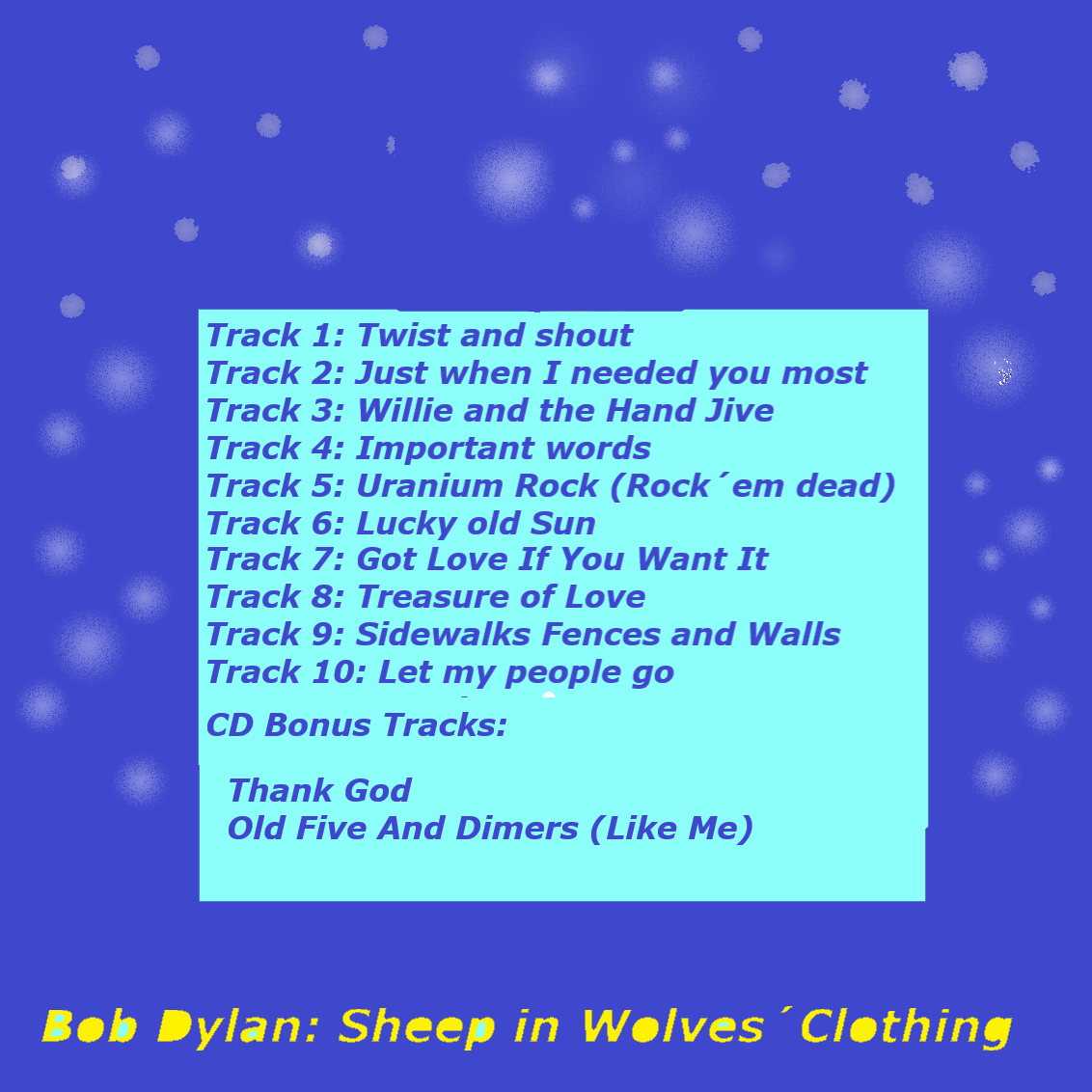
Posted in Uncategorized | 2 Comments

Caribbean Wind part 3 Verses 5 and 6

by Paul Robert Thomas

Caribbean Wind part 1 – verses 1 and 2

Caribbean Wind: part 2. Verses 3 and 4

  • Verse 5 

Line 1; Atlantic City by the cold gray sea. Dylan qualifies the location as by the cold grey sea, which is the Atlantic Ocean. Hence he identifies the location as being Atlantic City, New Jersey, the home of the bankrupt souls of the casino’s bright lights and busted dreams (bearing in mind Dylan’s religious standpoint at that time). In fact, on 6/10/78, Dylan had been playing concerts just up the freeway from Atlantic City in Philadelphia, and it is possible that he drove the few hundred miles to Atlantic City around 6/10/78, which would roughly correlate to the date of 16/12/78 identified by Paul Williams as being when he played the show at the Theatre of Divine Comedy in Hollywood, Florida. (A recent newspaper article here states that Atlantic City has recently been voted as ‘The world’s most hostile city’(23)). 

Line 2; Hear a voice crying ‘daddy’, I always think it’s for me. This is the line that pulls on everyone’s heartstrings and it is presumed to refer to Dylan missing his estranged children. In the original 31/3/81 version the line reads, I hear her voice crying ‘daddy’ and look that way. Who is she? His only daughter is Anna from Sara’s previous marriage, so is this she, the she who is the Rose of Sharon, or the dark skinned and brown one? She used to call me sweet daddy when I was only a child (Sweetheart Like You from Infidels). 

Line 3; But it’s only the silence in the buttermilk hills that call. I think that he is referring to the hills of Hollywood, that other place of corrupt souls, of false living; You’re going to Sodom and Gomorrah (Jokerman, Infidels), where the promise of fortune and fame calls (as in Just Like Tom Thumbs Blues), to many. Silence in Scripture is defined as; ‘An entire ruin or destruction’ (Isaiah 15:1 & Jerimiah 8:1(2)), and as; ‘Death and the grave’ (Psalms 94:17 & 115:17(2)), but the promise of fortune and fame is a magnet to many, as it was for Dylan, who now recognizes it to be an ‘empty wind’. 

Line 4; Every new messenger bringing evil report. The evil report that they bring is that the world is going to be destroyed, as prophesied in the Book of Revelation, in the great final battle between good and evil at Armageddon, and is the same message that Dylan himself has been preaching for some time – that our days are numbered unless we repent and return to God for otherwise we will surely die, not in the flood, but by fire next time. ‘Even horsemen that did bring up the evil report upon the land, died by the plague before the Lord’ (Numbers 14:37). 

Line 5; ‘bout armies on the march and time that is short. The armies of good and evil marching towards Armageddon for that great final battle when the devil shall be finally defeated and Christ will set up His Kingdom for 1,000 years. For many, their time is indeed short! ‘And the armies which were in heaven followed Him’; ‘I saw the beast, and the kings of the earth, and their armies, gathered together to make war against Him’ (Revelation 19:14&19); ‘For the devil is come down to you, he knoweth that he hath but a short time’ (Revelation 12:12); ‘The battle of that great day of God Almighty’ (Revelation 16:14). ‘Armageddon’ (Revelation 16:16). 

Line 6; And famines and earthquakes and train wrecks and the tearin’ down of the wall. Does Dylan view these almost everyday occurrences, as signs that Armageddon is near? ‘For nation shall rise against nation and kingdom against kingdom, and there shall be famines, and pestilence’s, and earthquakes’ (Matthew 24:7). Are you ready for Armageddon, are you ready for the day of the Lord? (Are You Ready from Saved). Was Dylan’s wall, his deep unquestionable faith in Christianity, torn down? Was his slow train derailed? ‘A very memorable earthquake was that at the time of the crucifixion of Jesus Christ’ (Matthew 27:51); ‘An extraordinary and unexpected alteration in the state of affairs, civil or ecclesiastical, is represented by a great earthquake’ (Revelation 6:12(2)). Revelation 21:12-27 describes the wall, viz. Christianity, thus; ‘And the wall of the city had 12 foundations, and in them the names of the 12 apostles of the Lamb (Jesus)’ (Revelation 21:14). Drought and starvation, packaging of the soul, persecution, execution, governments out of control, you can see the writing on the wall, inviting trouble (Trouble, Shot of Love). 

  • Verse 6 

Line 1; Did you ever have a dream that you couldn’t explain? Dylan told us that he wrote Caribbean Wind after waking up from a strange dream in the hot sun. ‘I have dreamed a dream and my spirit was troubled to know the dream’ (Daniel 2:3). ‘In Scripture God frequently revealed His will in dreams’(2). Caribbean Wind would thus appear to be a song about a dream of Dylan’s that he has tried to put into song, but a song which nevertheless underwent four rewrites and still, according to Dylan, he wasn’t sure if he’d got it right! 

Line 2; Did you ever meet your accusers face to face in the rain? Who are Dylan’s accusers? His critics or/and those who were violently opposed to his conversion to Christianity? Perhaps a clue can be found in the audience’s open hostility to his gospel shows which appear to have had a lasting effect upon Dylan. Dylan spoke of this hostility in his 1985 Biograph interview; “We’d play the so-called colleges, where my so-called fans were. And all hell would break loose. ‘Take off that dress’, and ‘we want rock and roll’, lots of other things I don’t even want to repeat, just really filthy mouth stuff”. Dylan was referring to the two shows he had played at Tempe, Arizona, on 25 & 26/11/79 to primary students of the local university who were not at all tolerant to his new stance. ‘The first night the audience refused to sit still, shouting between songs….and as the second half progressed, the heckling started up again….if the first night in Tempe had been an unhappy experience for Dylan, matters only grew worse with the second show, when he met the most hostile audience of this entire tour. Indeed the barracking 1966 fans pale in comparison to the uniform hostility he met in Tempe….The first night in Tempe, he had not played a second encore, the second night, for the only time on the tour, he refused to play any encore at all(5)’. In fact, he would talk at length about this hostile reaction that he received at Tempe during his filmed 1980 Massey Hall, Toronto concert. 

‘Before that he which is accused have the accusers face to face’ (Acts 25:16);…‘The power of his Christ, for the accuser of our brethren is cast down, which accused them before our God day and night. And they overcame him by the blood of the Lamb’ (Revelation 12: 10 & 11). 

Line 3; She had chrome brown eyes that I won’t forget as long as she’s gone (The Lyrics 1962-1985 book(6) wrongly transcribes chrome as lone). This reminds me somewhat of Sad Eyed Lady of the Lowlands from Blonde on Blonde; with her sheet metal memory and mercury mouth, which is presumed to be a song about Sara, who incidentally does have large brown eyes. If her chrome brown eyes are all that he remembers of her, is he recalling a statue? In an earlier song, Seven Days(22), her eyes he also couldn’t forget; I ain’t forgotten her eyes. In the later Jokerman on Infidels; While the eyes of the idol with the iron head are glowing – This seemingly does refer to a statue. 

Line 4; I see the screws breaking loose, see the devil pounding on tin. He appears to see the structure in which he believes, perhaps either The Church, or the Christian Vineyard Fellowship, falling apart and the devil is on the roof trying to break in, or equally, his faith or resolve is weakening and he knows that the devil, that is in the form of sin, will invade his being. Yonder Comes Sin! 

Line 5; I see a house in the country being torn apart from within. Jesus said; ‘Every house divided against itself shall not stand’ (Matthew 12:25). If the country is the USA, then the house could be Christianity. If the country is Israel, then he could be referring to The House of Israel/The House of Judah, Judaism. In Scripture, House is defined as; ‘The House of God, also as; ‘The body, as the dwelling place of the soul of man’(2). 

Line 6; I can hear my ancestors calling from the land far beyond. This is the last and most revealing line as it depicts Dylan turning back to the religion of his forefathers, Judaism. Is The land far beyond, Israel or Heaven? In Every Grain of Sand Dylan hears his religious ancestors as; I hear the ancient footsteps like the motion of the sea. In Caribbean Wind he states; My ancestors, that is, his Jewish/Hebrew ancestors, and in fact Abraham, the first Jew, was from the land far beyond, from Ur (now in present day Iraq). In this last line Dylan reveals his need to return to Judaism. In 1982 he was reported to be staying and studying with a Jewish religious sect called the Lubavitcher’s, and later he appeared on Chabad TV (in 1986, 1989 & 1990) drumming up charitable donations for the Lubavitcher’s wearing a kippur or yarmulke. In September 1982 he was photographed at the bar-mitzvah of one of his sons in Jerusalem wearing a yarmulke. There are no other reports of further contact between Dylan and the Christian Church, although, unquestionably, Dylan’s meeting with Jesus Christ indelibly left His mark upon him. ‘Dylan started to remove his Christian Born Again mask beginning at the Stanley Theatre in Pittsburgh on 16/5/80. After playing 13 religious songs, he started to play the first eight bars of Lay Lady Lay and then stopped and told the audience, “Umh-umb-umh, not tonight” and then played In The Garden!’ (Note that this was before his first performance of Caribbean Wind in October 1980). ‘It wasn’t till 9/11/80 at San Francisco Fox Warfield he played nonreligious songs and then burst into Like a Rolling Stone and from there on his ‘born again’ songs faded more and more into the background’(5). 

Paul Esmond of The Christian Vineyard Fellowship had this to say about their recent defector to Judaism; “I don’t think he ever left his Jewish roots. I think he is one of those fortunate ones who realize that Judaism and Christianity can work very well together, because Christ is just. And so he doesn’t have any problems about putting on a yarmulke and going to a bar-mitzvah because he can respect that”(5). 

The following 1983 interview, given during his recording of the album, Infidels, reveals the extent of Dylan’s knowledge of his Judaic roots and the calling of his ancestors:- “My so-called roots are in Egypt. They went down there with Joseph, and they came back out with Moses, you know, the guy that killed the Egyptian, married an Ethiopian girl and brought the law down from the mountain. The same Moses whose staff turned into a serpent. The same person who killed 30,000 Hebrews for getting down, stripping off their clothes and dancing around a golden calf. These are my roots.

“Jacob had four wives and 13 children, who fathered 13 children, who fathered an entire nation. Those are my roots too. Gideon, with a small army, defeating an army of thousands. Deborah, the prophetess. Ester the queen and many Canaanite women. Reuben slipping into his father’s bed when his father wasn’t there. These are my roots. Delilah tempting Samson, killing him softly with her song. The mighty King David was an outlaw before he was a king, you know. He had to hide in caves and get his meals at back doors. The wonderful King Saul had a warrant out on him – a “no-knock” search warrant. They wanted to cut his head off. John the Baptist could tell you more about it.

“Roots man – we’re talking about Jewish roots, you want to know more? Check up on Elijah the prophet. He could make rain. Isaiah the prophet, even Jeremiah, see if their brethren didn’t want to bust their brains for telling it right like it is, yeah – these are my roots I suppose”(24).

Rabbi Kasriel Kastel, a member and organizer of the Brooklyn Lubavitch Centre, where Dylan apparently ‘studied’ in 1983, had this to say about their returnee; “He’s been going in and out of a lot of things, trying to find himself. And we have been just making ourselves available. As far as we are concerned, he was a confused Jew. We feel he’s coming back”(5). 

Other reviews of Caribbean Wind on this site

Untold Dylan: who we are what we do

Untold Dylan is written by people who want to write for Untold Dylan.  It is simply a forum for those interested in the work of the most famous, influential and recognised popular musician and poet of our era, to read about, listen to and express their thoughts on, his lyrics and music.

We welcome articles, contributions and ideas from all our readers.  Sadly no one gets paid, but if you are published here, your work will be read by a fairly large number of people across the world, ranging from fans to academics who teach English literature.  If you have an idea, or a finished piece send it as a Word file to Tony@schools.co.uk with a note saying that it is for publication on Untold Dylan.

We also have a very lively discussion group “Untold Dylan” on Facebook with around 5500 active members. Just type the phrase “Untold Dylan” in, on your Facebook page or follow this link 

You’ll find some notes about our latest posts arranged by themes and subjects on the home page of this site.  You can also see details of our main sections on this site at the top of this page under the picture.  Not every index is complete but I do my best.

But what is complete is our index to all the 604 Dylan compositions and co-compositions that we have found, on the A to Z page.  I’m proud of that; no one else has found that many songs with that much information.  Elsewhere the songs are indexed by theme and by the date of composition. See for example Bob Dylan year by year.
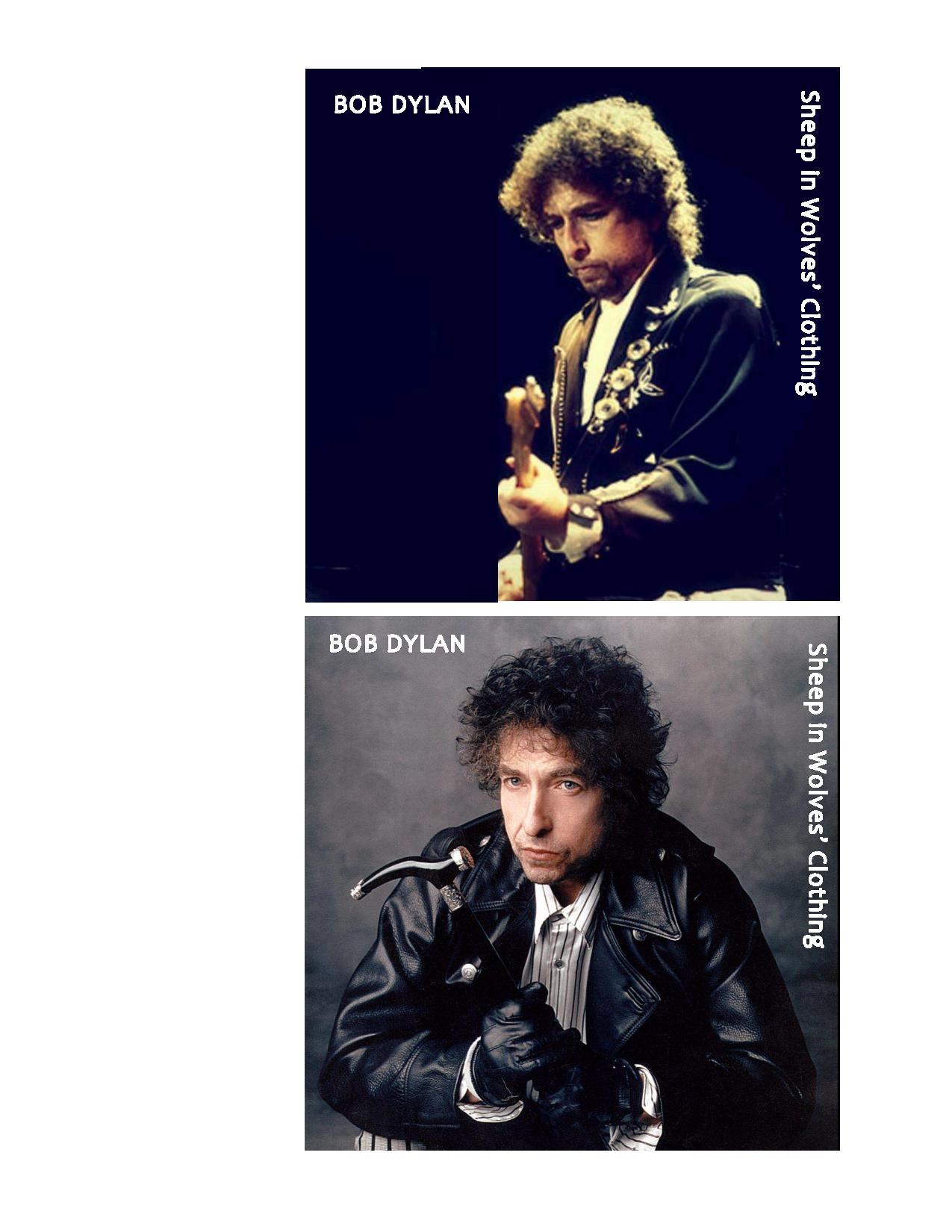


Posted in Uncategorized | 4 Comments

Sheep in Wolves’ Clothing album cover – and reviews of other album artwork

By Tony Attwood

Following our completion of the invented “Sheep in Wolves’ Clothing” album which could have been issued instead of Down in the Groove, we invited anyone interested to come up with a new cover for the album invented by Aaron.

And we have had our first submission from Rick Hager…

Rick Hager is a Dylan fan (and co-founder of the old “Look Back” magazine in 1984, now residing in Manasquan, NJ

Here’s the track listing with links to each song…

We’re still open to anyone reader who would like to contribute a cover for the album.  Unfortunately no one gets paid for doing anything on this site, but we do know that just occasionally quite senior people in the world of Dylan do take a peek at what we get up to.

Meanwhile if you are interested in artwork I am sure you will enjoy our series on the art work on Bob’s album covers.  Indeed if you have never seen it plesae do spend a few moments with the article on your favourite album…

Untold Dylan: who we are what we do

Untold Dylan is written by people who want to write for Untold Dylan.  It is simply a forum for those interested in the work of the most famous, influential and recognised popular musician and poet of our era, to read about, listen to and express their thoughts on, his lyrics and music.

We welcome articles, contributions and ideas from all our readers.  Sadly no one gets paid, but if you are published here, your work will be read by a fairly large number of people across the world, ranging from fans to academics who teach English literature.  If you have an idea, or a finished piece send it as a Word file to Tony@schools.co.uk with a note saying that it is for publication on Untold Dylan.

We also have a very lively discussion group “Untold Dylan” on Facebook with around 5500 active members. Just type the phrase “Untold Dylan” in, on your Facebook page or follow this link 

You’ll find some notes about our latest posts arranged by themes and subjects on the home page of this site.  You can also see details of our main sections on this site at the top of this page under the picture.  Not every index is complete but I do my best.

But what is complete is our index to all the 604 Dylan compositions and co-compositions that we have found, on the A to Z page.  I’m proud of that; no one else has found that many songs with that much information.  Elsewhere the songs are indexed by theme and by the date of composition. See for example Bob Dylan year by year.

Posted in Uncategorized | Leave a comment

Bob Dylan And The Cowboy Jesus

by Larry Fyffe

A theme expressed in the song lyrics of Bob Dylan, given no one can escape from the certainty of death, at least an individual, or even a group of people, as in the movie ‘The Magnificient Seven’, can escape from a life of slavery.

It’s a theme drawn from songs of old as in the lyrics below:

Oppressed so hard they could not stand
Let my people go
Go down, Moses
Way down in Egypt's land
Tell old Pharoah
To let my people go
(Paul Robeson: Go Down Moses ~ traditional)

The theme which in turn is taken from the Holy Bible:

And afterward Moses and Aaron went in
And told the Pharaoh
Thus saith the Lord God of Israel
"Let my people go
That they may hold a feast unto in the wilderness"
(Exodus 5:I)

A theme repeated in pre-American Civil War America in a spiritual sung by black slaves who escape to Canada:

No more auction block for me
No more, no more
No more auction block for me
Many thousands gone
(No More Auction Block~traditional)

The theme, along with the tune adapted somewhat from the song above, repeated in the Civil Rights era of America; there be the ‘rhyme twist’ ~ ‘me’/’me’; ~’sea’/’free’/’see’:

How many years can a mountain exist
Before it is washed to the sea?
How many years must some people exist
Before they're allowed to be free?
And how many times can a man turn his head
And pretend that he just doesn't see?
(Peter, Paul, and Mary: Blowing In The Wind ~ Bob Dylan)

The claimed ‘murder most foul’ of Christ on the cross is twisted too by some biblical interpreters – Jesus escapes.

Says He:

Greater love hath no man than this
That a man lay down his life for a friend
(Book Of St. John 15:13)

Apparently a Libyan takes the place of Jesus, and unbeknownst to Roman guards, does just that – he gives up his life for a friend:

And they compel one Simon a Cyrenian
Who passed by, coming out of the country
The father of Alexander and Rufus, to bear His cross
(Book Of St. Mark 15: 21)

What supposedly happens is that Jesus and the Cyrenian change identities, a conspiracy theory that’s hard to resist by any writer of ‘noir’ tales:

There is nothing you can do or say To make me think I’m wrong Well I’m going off to Libya There’s a guy I gotta see He’s been living there three years now In an oill refinery (Bob Dylan: Got My Mind Made Up)

(Editor’s note, the video below is the only one I can find for this song, but it doesn’t appear to work in all countries – if you can find an alternative please write in below and I’ll add it)

The idea has been floated before – below, Jesus, ‘the drifter’, gets away!:

"Oh, stop that cursed jury"
Cried the attendant to the nurse
"The trial was bad enough
But this is ten times worse"
Just then a bolt of lightning
Struck the courthouse out of shape
And while everybody knelt to pray
The drifter did escape
(Bob Dylan:The Drifter's Escape)

Indeed, it’s all there in the Holy Bible – Christ is not dead after He’s supposedly crucified; He appears to Mary Magdalene as alive as you or me:

Jesus saith unto her, "Why weepest thou; whom seekest thou?"
She supposing him to be the gardener, saith unto him
"Sir, if thou have borne Him hence, tell me where thou hast laid Him
And I will take Him away"
Jesus saith unto her, "Mary"; she turned herself, and saith unto Him
"Rabboni", which is to say, "Master"
(Book of St. John 20: 15, 16)

A conspiracy theory that is kept alive in the following song lyrics:

As I walked out in the mystic garden
On a hot summer day, on a hot summer lawn
"Excuse me, ma'am, I beg your pardon
There's no one here, the gardener's gone"
(Bob Dylan: Ain't Talking)

https://youtu.be/Hx6fHd99SxA

It’s a story that won’t die, and is repeated somewhat differently – given a cowboy western flavour – in the song lyrics below:

Hot chili peppers in the blistering sun
Dust on my face and my cape
Me and Magdalena on the run
I think this time we shall escape
(Bob Dylan: Romance In Durango)

https://youtu.be/-NBWMK0CV0Y

Twisted around is another tale of a cowboy’s escape:

The next day was hanging day, the sky was overcast and black
Big Jim lay covered up, killed by a penknife in the back
And Rosemary on the gallows, she didn't even blink
The hanging judge was sober, he hadn't had a drink
The only person on the scene missing was the Jack Of Hearts
(Bob Dylan: Lily, Rosemary, And The Jack Of Hearts)

Untold Dylan: who we are what we do

Untold Dylan is written by people who want to write for Untold Dylan.  It is simply a forum for those interested in the work of the most famous, influential and recognised popular musician and poet of our era, to read about, listen to and express their thoughts on, his lyrics and music.

We welcome articles, contributions and ideas from all our readers.  Sadly no one gets paid, but if you are published here, your work will be read by a fairly large number of people across the world, ranging from fans to academics who teach English literature.  If you have an idea, or a finished piece send it as a Word file to Tony@schools.co.uk with a note saying that it is for publication on Untold Dylan.

We also have a very lively discussion group “Untold Dylan” on Facebook with around 5500 active members. Just type the phrase “Untold Dylan” in, on your Facebook page or follow this link 

You’ll find some notes about our latest posts arranged by themes and subjects on the home page of this site.  You can also see details of our main sections on this site at the top of this page under the picture.  Not every index is complete but I do my best.

But what is complete is our index to all the 604 Dylan compositions and co-compositions that we have found, on the A to Z page.  I’m proud of that; no one else has found that many songs with that much information.  Elsewhere the songs are indexed by theme and by the date of composition. See for example Bob Dylan year by year.

Posted in Uncategorized | 6 Comments