One of the great things about Untold is that there are no rules – or at least not many. We create series, we publish one-offs, some of us write lots of articles, some people write one or two, lots of people say nice things about the site, some people tell us we are idiots for not understanding a song in a particular way – or indeed not understanding Dylan in a particular way.
That’s how it goes, and as long as the negative posts are not abusive, we don’t mind. True, with some of the caustic comments we do send the lads round occasionally, but really, it’s just a gesture – something to show that we do read everything that is sent in.
Anyway our brief is that we are allowed to do pretty much anything Dylan-ish so today here’s some fun, just in case you haven’t seen and heard it before. If you have, well, watch it and listen to it again. It’s wonderful.
The Rolling Ramshackle Revue is a one-off project featuring Naomi Bedford, Nancy Kerr, Ben Walker, Alasdair Roberts, Robert Vincent, Justin Currie from Del Amitri, Paul and Swill from The Men They Couldn’t Hang along with other folk and roots artists.
Together and less together they’ve recorded a version of ‘Lily, Rosemary And The Jack Of Hearts’ to raise money for the homeless, food banks, people in need and causes that the campaigning organisation We Shall Overcome supports.
Twelve singers, six players, one laptop and a small dog, all recording from within their own homes during lockdown. What could possibly go wrong?
English roots singer Naomi Bedford commented,
‘I’d often talked about covering this song with my partner, musician Paul Simmonds (TMTCH). Then, in lockdown, we were stuck at home alongside my son Noah who had just finished his Music Technology course at college. It seemed like the perfect time to do it and bring people together in a good cause. I’ve always got by on chancing it and cheek to an extent and fortunately all these amazing artists said yes. And it is a lot of people’s favourite Bob Dylan song!’
All this and a unique cover by celebrated cartoonist and illustrator Chris Riddell !
The Rolling Ramshackle Revue: they deserve an article all unto themselves.
The Cast
Singers:
Naomi Bedford
Justin Currie (Del Amitri) Phil Odgers
Jess Silk
Joe Solo
Carol Hodge
Boss Caine ( Daniel Lucas)
Ben Webb (Bird in the Belly)
Robert Vincent
Aladsdair Roberts
Cathy Jordan (Dervish)
Players
Paul Simmonds: Gtr/Mandolin/BV
Ben Walker: Gtr/Mandolin
Phil Jones: Bass/Tambourine
Scott Smith: Harmonica/Banjo/Pedal Steel
Nancy Kerr: Violin
Joe Lancaster: Horns
Noah Bramley: Kick Drum/Production
With a time-rusted compass blade, Alladin and his lamp
Sits with Utopian hermit monks side saddle on the Golden Calf
An on their promises of paradice, you will not hear a laugh
excpt inside the gates of Eden ____
“One of the greatest torch songs ever written,” says none other than Sinatra about Jimmy Webb’s “By The Time I Get To Phoenix” – and Ol’ Blue Eyes should know, of course. It’s no fluke; Jimmy Webb writes a lot of great songs. The classic “Wichita Lineman” for Glen Cambell, Dylan sings “Let’s Begin” with Clydie King in 1981 and the country supergroup The Highwaymen (Cash, Kristofferson, Waylon Jennings and Willie Nelson) name themselves after Webbs “The Highwayman”.
Towering above them all is one of Jimmy Webb’s most ambitious songs: “MacArthur Park” – a titanic song, indeed. Still, the lyrics are sometimes laughed at. Especially the verse
MacArthur's Park is melting in the dark
All the sweet green icing flowing down
Someone left the cake out in the rain
I don't think that I can take it
'Cause it took so long to bake it
And I'll never have that recipe again
Webb has always maintained that it’s all non-fiction, that the text merely words observations from his surroundings (“The old men playing checkers by the tree, there’s the yellow cotton dress… I’d seen birthday cakes left out in the park. I didn’t have to make anything up”), and, as if to make a point, then stresses that implausible background story by naming both a compilation album, And Someone Left The Cake Out In The Rain… (1998) and his autobiography: The Cake and the Rain: A Memoir (2017) after this soaked pie.
It is dubious. The image is just a bit too absurd to be categorised under “everyday observations”, and moreover: it is a bit all too coincidental. Jimmy Webb wrote his song in 1967 in Los Angeles, the same months when W.H. Auden was living in the same city with Christopher Isherwood for a while. And a few weeks before Webb makes that alleged cake observation in the park, W.H. Auden’s brilliant, self-deprecating description of his own appearance is circulating, made at a party in honour of Auden’s sixtieth birthday (21 February 1967) at Isherwood’s home. One of the topics of discussion is Auden’s face.
“His face”, said Isherwood, “really belongs in the British Museum.” Auden’s friends were indeed beginning to compete with each other for ways of describing his face’s extraordinary creases and deep wrinkles. The poet James Merrill called it tunnelled and seamed; the philosopher Hannah Arendt, a New York friend of Auden’s, said it was as though “life itself had delineated a kind of face-scape to make manifest the heart’s invisible tunes’’. But the most graphic description came from Auden himself. “Your cameraman might enjoy himself,” he remarked to a reporter, “because my face looks like a wedding-cake left out in the rain.”
(Humphrey Carpenter – W.H.Auden A Biography, 1981, p. 463)
The witty one-liner makes the papers, and it is quite likely that the well-read, educated Webb does find the wet cake there. Incidentally, Wystan Hugh Auden’s wit is perhaps equalled by his compatriot, the painter David Hockney, who rivals him in visual power: “If that’s his face, what must his scrotum look like?”
Of course, Webb has absolutely no need to be embarrassed when caught quoting or paraphrasing Auden. Even the greatest succumb to it, as quite a lot places in Dylan’s oeuvre show. Songs on John Wesley Harding (1967) like “As I Went Out One Morning” and “The Wicked Messenger” and poetic weaving on Street-Legal (1978) like “True Love Tends To Forget” at the very least reveal an artistic blood brotherhood, but above all suggest that Dylan regularly uses an Auden poem as a template.
With “Gates Of Eden”, this suspicion arises no later than this fourth verse. And not so much by copying one of Auden’s unique experiments with form (as “The Wicked Messenger” copies Auden’s “In Schrafft’s”), but mainly thematically and in terms of content – and remarkable idioms like “Aladdin”, “Eden” and “Utopian” are the trigger.
Auden himself was ashamed of his famous “September 1, 1939”, with its touching, much quoted oneliner We must love one another or die and its scathing analysis of the 1930s, “a low dishonest decade”, and soon distanced himself from it. With almost the same words – I loathe that poem – as those with which Paul Simon distances himself from his “59th Street Bridge Song”, by the way. He prevents its inclusion in anthologies and in his own Collected Poetry (1945), and in later life only permits it on rare occasions. Penguin Books, for instance, may eventually include the poem, and four other early works, in an anthology, but must include the commentary: “Mr. W. H. Auden considers these five poems to be trash which he is ashamed to have written.”
When compiling his Collected Poetry, Auden has instead placed his much less admired but similar “New Year Letter (January 1, 1940)”. This is a long (1707 lines), three-part work, which attempts to articulate the human condition of Europe in the first months of the Second World War. Auden registers the failure of civilisation, slaloms past all the great poets from Dante to Rilke and from Catullus to Baudelaire, and deduces that, “No words men write / can stop the war”. The long slalom takes him both past personal, “small” observations and past timeless pillars of culture such as Greek mythology, Kipling, Voltaire and Darwin, is full of paraphrases and inimitable associations, presents both archetypes and historical figures with alienating additions (“Blake shouted insults, Rousseau wept”) and lacks anything like an inner logic, a recognisable structure or even the suggestion of composition.
It is, in short, a dizzying kaleidoscopic mosaic like Dylan’s “It’s Alright, Ma” or like “No Time To Think” – or, indeed, like “Gates Of Eden”.
Especially the idiom in “Gates Of Eden”, however, suggests that Dylan not only has just leafed through Burroughs’’ The Soft Machine, but through Auden’s Collected Poetry as well, and that “New Year Letter” struck a chord. A trigger, of course, is the choice of “Eden”, which Auden uses a couple of times (Shut out of Eden by the bar), after the Dylan bells have already gone off a couple of times before, due to Auden’s preoccupation with “war”, “peace”, “Time” and especially “Truth”. Those Dylan bells are consolidated by dozens of smaller, in itself meaningless parallels (like “the cold serpent on the poisonous tree was l’esprit de géométrie” involuntarily reminds of Dylan’s claim to write “mathematical music”), but it is the many similarities in unusual vocabulary and metaphors that confirm that Auden’s Letter is a source.
“Utopian”, for example, comes up twice, “ownership”, “cowboy”, “angel”, “dwarf”, “experience”, “soldier”, “Madonna”… with Burroughs’ cut-up technique, a patient, precise word clipper could cut three quarters of Dylan’s song from Auden’s poem. Already Dylan’s opening line with the twisting truth is to be found. In Auden’s excursion to Kafka:
The path that twists away from the
Near-distant Castle they can see,
The Truth where they will be denied
Permission ever to reside
… as images from this fourth verse of Dylan’s song come along as well. The image of the jammed compass, for example (Though compasses and stars cannot / Direct to that magnetic spot), and that striking guest role for Aladdin and his lamp:
So, hidden in his hocus-pocus
There lies the gift of double focus,
That magic lamp which looks so dull
And utterly impractical
Yet, if Aladdin use it right
Can be a sesame to light.
Dylan’s spelling error (in the manuscript Alladin) demonstrates that the bard does not have Auden’s work opened on his desk, but that he apparently incorporates echoes from an earlier reading session into his own lyrics. And that the echoes continue into “It’s Alright, Ma”, by the way:
The ruined showering with honors
The blind Christs and the mad Madonnas,
The Gnostics in the brothels treating
The flesh as secular and fleeting
… one of many examples demonstrating why one is called “the W.H. Auden of the 1960s” and the other “the Dylan of the 1930s”. Never “the Jimmy Webb of the 1930s” though, oddly enough.
To be continued. Next up: Gates Of Eden part VI: The cowpuncher and the Golden Calf
Jochen is a regular reviewer of Dylan’s work on Untold. His books, in English, Dutch and German, are available via Amazon both in paperback and on Kindle:
Thomas Hardy sprinkles his novels with quotes from songs and poems; Bob Dylan sprinkles his musical song lyrics with quotes from songs and poems.
Whether from his direct reading thereof, or it’s through the cultural milieu surrounding him (Carl Jung would say through the ‘collective unconscious’), the singer/songwriter reveals, in his song lyrics beneath, the influence of the “Late Victorian” writer Thomas Hardy:
Your daddy walks in wearing
A Napoleon Bonaparte mask
Then you ask me why I don't live here
Honey, do you have to ask
(Bob Dylan: On The Road Again)
Thomas Hardy’s writings often have a ‘social’ Darwinist twist to them. In the poem below, depicted be that the development of mankind’s socio-economic environment becomes more and more industrialized; there’s some hope – symbolized by the singing of the thrush – that the urbanized environment will not destroy the human ‘soul’:
An aged thrush, frail, gaunt, and small
ln blast-beruffled plume
Had chosen thus to fling his soul
Upon the growing gloom
(Thomas Hardy: The Darkling Thrush)
“Darkling” too be Tom’s blues below:
Sweet Melinda
The peasants call her the goddess of gloom
She speaks good English
And she invites you up into her room
(Bob Dylan: Just Like Tom Thumb's Blues)
Pessimism strikes deep into Hardy’s heart:
Yet is it that, though whiling
The time somehow
In walking, talking, smiling
I live not now
(Tom Hardy: The Dead Man Walking)
Very much like the dark sentiment expressed in the following song lyrics:
Ain't talking, just a-walking
Though this weary world of woe
Heart burning, still yearning
No one on earth will ever know
(Bob Dylan: Ain't Talking)
Poet WH Auden be very much under the influence of Thomas Hardy’s referencing ballads of yore, and of the Victorian’s social ‘Darwinist’ slant in his novels and poems. Hallmarks revealed in the works of both writers.
Taken it can be that wife-killer Victor, a religious bank clerk (in the poem below) is unable to adapt to the values of the bourgeois social environment; thinks Anna, his flirty wife, is cheating on him:
It wasn't the Jack of Diamonds
Nor the Joker she drew first
It wasn't the King or Queen of Hearts
But the Ace of Spades reversed
Victor stood in the doorway
He didn't utter a word
She said "What's the matter, darling?"
He behaved as if he hadn't heard
(WH Auden: Victor)
In the song lyrics beneath, it’s the two-timing, aristocratic-acting ‘nouveau riche’ Big Jim who doesn’t survive the repainting of the times:
She fluttered her false eyelashes, and whispered in his ear
"Sorry, darling, that I'm late", but he didn't seem to hear
He was staring into space over at the Jack of Hearts
(Bob Dylan: Lily, Rosemary, And The Jack Of Hearts)
Footnotes:
In case you missed it: The Bob Dylan album artwork. The art work that has appeared on around 35 Dylan albums – how it was created, where it came from. A unique series.
If you’d like to write for Untold Dylan, please email Tony@schools.co.uk
“All directions at once” is a series which looks at Bob Dylan’s writing as it evolves over time, rather than focusing entirely on individual songs or albums. The index of all articles is here. The index has been updated and has section headings added which may make this mega series easier to follow. I think it’s worth a look, but then I would. I wrote it.
Anyway… moving on…
We have reached the early 1980s…. The last article in the series was “Dylan post Angelina” and took us as far as the writing of “Dead man, dead man”. The Christian era is over, and the extraordinarily brilliant transition era from “Every Grain of Sand” through to “Angelina”, has delivered a stunning array of works of genius, and now once more Bob seemed somewhat unsure where to go next.
But the period of 1982/3 in terms of Dylan’s writing is weird. Not weird in the sense that each of the 17 songs composed is individually weird, but weird in that they seem to be coming from and heading out in all sorts of different directions. It is in fact, the absolute “all direction at once” era.
And yet I do recognise it is possible to argue otherwise because there is a certain cohesion about the meanings within the songs.
In the build up we had the purely Christian songs of 1979, then the move into songs that do not always seem religious in nature, but which can be interpreted that way (from “Every Grain” onto “Making a Liar” etc) in 1980, and then in 1981 works of genius such as “Angelina”, songs which divide opinion such as “Lenny Bruce,” (which are clearly not religious), and then after that a song such as “Jesus is the one” – one of a number of songs that are not particularly well remembered.
And now we have a variety of offerings. Jokerman, the first composition of this period, has the feel in part of Caribbean Wind – and indeed Dylan has said it was indeed written in the Caribbean. Although we might well feel that this is another song about the end of all things, the message is more about the futility of mankind’s ways than it is about the utter certainty of how it will all pan out.
Yes there is some Biblical input in the songs but it is combined with a style of writing that leads to an uncertainty of meaning. And when one thinks about it, these two notions are poles apart. With a religion such as Christianity, the fundamentals are certain. We know what happened in the past with Jesus Christ, and we know what will happen in the future with Armageddon and the Second Coming.
But the “Caribbean Wind” style of writing removes the certainty of meaning and seems to take us to the opposite end of the spectrum. Which is why I and I (again written in the Caribbean period) is interesting: it appears at one level to be trying to balance the two – the religious feel and the uncertainty. But then, maybe, uncertainty wins and Dylan travels in other directions indeed.
However Clean Cut Kid (written at this time, but held back in terms of an album release) and Union Sundown (again from this period) take on other directions – the latter returning to Dylan’s earlier concerns about America’s poor; a theme expressed so often across the years.
But still he doesn’t settle for next out of this mixed mixed bag of compositions we get the universally acclaimed Blind Willie McTell. This is indeed a hard song to decipher because the music of Dylan’s song has no relationship with McTell’s own work. I don’t mean the song should sound like a McTell piece, but it just seems to have no link to his work at all.
What’s more it doesn’t have any relationship with the next song (Don’t fall apart on me tonight) either – nor indeed with very much else around this time. It just stands out alone, an absolute monument looking down on (almost) everything else that Dylan composed across these two years. And the simple fact that we have at the very least 35 cover versions of it suggests its universal appeal.
As we know McTell came out in two versions – the acoustic and the electric – and each tells a different tale of a blues singer who reached far greater fame through this song than he ever achieved as a composer and singer. We get no sense of McTell as the great 12 string slide guitarist, of the man with so many different names it is hard to keep track of them. What we get is the man whose music was rediscovered many years after his passing (he died in 1959 aged 61).
The arrival of this song with no clear build up that we can hear in Dylan’s music, and no references back to it after, is one of the great mysteries for anyone who wants to understand Dylan’s method of writing at this time. Although maybe it is just possible to see Jokerman as the opposite of Willie McTell – the Jokerman telling us what isn’t true, Willie McTell telling it really as it is. But…
https://youtu.be/ds1xVHsXm7Y
But… I fear I am stretching the point here for if I am going down this route then Man of Peace like Jokerman is a “false prophet” song since Blind Willie is the only one who tells it true, the other’s don’t. But I’m not sure if that adds much to our understanding or indeed if that isn’t stretching everything in this curious year, one step too far.
My own view, for what it is worth, is that Dylan was once more finding he could write in all sorts of different ways and he was most certainly enjoying the experience. Especially as he realised that he could write about more or less anything he wanted and both record company and fans would accept it. Sweetheart like you goes one way Someone’s got a hold of my heart goes another, then there is Neighbourhood Bully off doing its own thing again, and then Tell Me is utterly different again – an experiment in writing a song of (possibly) unrequited love. You want “all directions” this is it.
Here is the sequence of songs in the order they were written….
… and I simply can’t see connections between many of these songs. They really are exploring here, there and everywhere – and there is nothing wrong with that. But to have so many directions in such a short space of time is very, very unusual in an artist. It is as if he Bob really did want to throw aside the shackles of the year or two of Christian songs, and just go anywhere and everywhere else.
And I do think it is worth listening to “Tell Me” and considering that “Neighbourhood Bully” was the song written before it, and then noting that the song that Bob composed after was “Foot of Pride”. Which is really where this whole meandering episode is going.
The multiple recordings of “Foot of Pride” that we are told were made at this time (it was probably the Dylan song that was recorded more times by the composer than any other) have not been made available. In fact we only have two versions: the one from the 1983 recordings (which isn’t available for reproduction here, but if you have Spotify you can play it and it is on the Bootleg series 1-3), and the Lou Reed version.
Here’s Lou Reed…
As to what are we to make of it, consider…
Hear ya got a brother named James, don’t forget faces or names
Sunken cheeks and his blood is mixed
He looked straight into the sun and said revenge is mine
But he drinks, and drinks can be fixed
Sing me one more song, about ya love me to the moon and the stranger
And your fall-by-the sword love affair with Errol Flynn
In these times of compassion when conformity’s in fashion
Say one more stupid thing to me before the final nail is driven in
I’m not ready to try and explain that. But the theme of the corruption of the Christian church is there for all to hear
Yeah, from the stage they’ll be tryin’ to get water outa rocks
A whore will pass the hat, collect a hundred grand and say thanks
They like to take all this money from sin,
    build big universities to study in
Sing “Amazing Grace” all the way to the Swiss banks
And it does seem like this is the end of times…
Ain’t nothin’ left here partner, just the dust of a plague
    that has left this whole town afraid
In the end, as I have listened to this extraordinary piece of music over and over across the years, I always come back to the same point: if you create something of merit – no matter how spectacular or how simple – you have done it, and there really is nothing wrong with being proud of that. But that is no cause to stop. You can’t undo the past, and you can’t live in the past. There ain’t no going back; take pleasure in what you have achieved, move on.
Or put another way, “Don’t let them bring you down,” – ‘them’ of course being the critics.
And that was the way I came to grasp an understanding of this year and this almighty, staggering, brilliant, overwhelming song. Bob had been brought under the influence of Christianity, but ultimately had found the preaching and teaching and rule-making too much for him. And now in Foot of Pride, this amazing and yet mostly forgotten masterpiece, he was simply saying “no”. The world we live in has nothing to do with the image that he had in his mind during his Christian period. Bob had had that Christian period, but we move on.
Psalm 36:11 proclaims “Let not the foot of pride come against me, and let not the hand of the wicked remove me”. The general interpretation is “Let me not be trampled under foot by proud oppressors, nor driven from my home by wicked violence.” It is a plea that one should stay safe, and not suffer unjustly, but it is not (as is sometimes suggested) that one should not be guilty of the sin of pride. It is a simple desire to stay safe.
And what makes “Foot of Pride” such a fascinating composition is not just that it is such a stunning and challenging musical work, but that it was written just after “Neighbourhood Bully”, which may be about Israel, and “Julius and Ethel” which is about the Rosenburgs who were alleged to have given US atomic secrets to the Soviet Union.
In short: the past is done; move forward; there ain’t no going back.
And there is also one little footnote to Foot of Pride that I must throw in. Heylin notes that Dylan said that he had difficulty keeping the time in this song, and that it always speeds up, which is a major reason why Bob recorded it so many times. Heylin, always wanting to point out Bob’s mistakes, confusions and deliberate misleads, suggests that this is completely untrue on the recording we have.
Now I’ve always known that Heylin knows nothing of music, and if you want proof just listen. The one recording we have been allowed to listen to speeds up and up. And I don’t say that as a special criticism of Bob and the gang – it is a problem with many songs, but most particularly this one because of the very nature of the music. He would have needed a conductor in the studio directing him to overcome the problem. And that is almost certainly why it was never released.
Nothing at all, not a single thing, prepares us for “Foot of Pride”. And nothing in Foot of Pride prepares us for those subsequent songs, the unique “Julius and Ethel” and two final returns to religious thoughts – “Lord Protect my child” and Death is not the end”
This really is a year of Bob going in all directions as he searches for themes and ideas. And what gifts he gave us along the way!
If I ever met Bob and had five seconds to say something, I’d say, “Thank you for Foot of Pride”.
What’s on Untold Dylan
If you take a moment to look at our home page you’ll find indexes to some of our current and recent series.
Alternatively if you scroll to the top of this page you’ll see a set of links and indexes to getting on for 50 of the series we have run, or are running, as well as a link to an article giving details of the writers who kindly give up their time to make Untold Dylan happen.
If you’d like to write for us, or have an idea for a series we’ve never tried, please do email Tony@schools.co.uk
We’re also on Facebook. Just search for Untold Dylan or click here
Prompted by Tony Attwood’s post Bob – it’s not quite your birthday but…, specifically by his encouraging words near the end: “if you’d like to offer your good wishes to Bob on his 80th through an article of your own, please do so” – here I am.
I’d considered several ways to celebrate the 24th day of May (in a drizzlin’ rain or otherwise). I thought of videotaping my own Polish versions of some of your more obscure songs – just to get away from the obvious. I thought of writing a letter to you, of videotaping myself reading it and then upload it on my YT channel.
But it would be all too self-indulgent and focused on myself rather than on you, Mr. Dylan or Bob, however you’d like me to call you. So, Tony’s words were a minor revelation: how could I find a better place to bow down and do hats-off than this self-proclaimed and yet so relevant scholar space.
My puff piece is likely to be short and unrevealing, if we take into consideration the supreme master-levelled writers contributing to the Untold Dylan free University.
But I need to say this:
Mr. Dylan, Bob –
There are plenty of reasons I admire and love your work. It’s your voice. It’s your overall presence throughout your career spanning 60 years now. It’s your ability to change skin before everyone expects you to, and yet to remain consistent. It’s your seriousness. It’s your sense of humour.
It’s your constant creative fervour when each and every artist with a body of creative output equalling perhaps a quarter of what you’ve done – and being still in the business! – would be willing to take a rest and just reap the benefits counting the royalties dripping.
But of course, it’s your songs. Without them, there wouldn’t be Untold Dylan, there wouldn’t be the world as we know it. And there wouldn’t be me the way as I am, studying, translating and singing your songs for over four decades now.
Once, just after that day in October 2016, some journalist asked me, as a local Polish Bob Dylan expert, why did I think Bob Dylan were so important. I pondered a little and then said: “Just try and imagine a world where Bob Dylan didn’t exist. A world where only Robert Allen Zimmerman lived, having some more or less interesting job up there in a little Minnesota town or anywhere else. It would be highly probable that there would not be these songs that provoke us to think. There would not be this whole part of the popular culture that gave us Joni Mitchell, Lou Reed, David Byrne, Patti Smith, Joe Strummer, Suzanne Vega, PJ Harvey, Nick Cave and Tom Waits. Who knows – there would not be rap music as a global cultural and business phenomenon – because the industry wouldn’t be sensitive to music that speaks”.
What I’d like to thank you especially deeply, Bob, is your way of treating a song as a vehicle not only for emotions and rhythms but for reflections and worries too. I wish we could experience your coming in Poland back in the early Sixties the way you affected the Western society.
And I thank you also for the way you refer to the tradition. In a world where so many groundbreaking artists (and peculiarly those less talented too) try to convince their audience they epitomize a revolution and that the whole music has changed radically with their coming – you started a conservative revolution of sorts. You were never ashamed of maintaining a close watch on what had preceded you in music and poetry. You’ve always known your place within this chain of artistic events. It requires a sublime consciousness and a sublime humility. Being who you are, it’s absolutely amazing. You’re a teacher who hasn’t stopped to be a disciple.
Thank you for that. And for these 600+ songs and all that Tony has already mentioned in his admirable piece. We’re blessed with being able to listen to your songs and allowed to wait for more to come.
                                                                                    it’s                iron claws
The lamppost stands with folded arms / pretends to be ^ attached
t the curbs neath wailing babies - tho it’s shadow’s metal badge /
All in all, can only fall, with a crashing but meaningless blow
No sound comes from the depths of Eden
The deletions and rewrites of the opening line are not too spectacular; the poet evidently feels that the chilly, heartless aura of the lamppost gains undercurrent aggression by replacing “pretends to be attached” with “its iron claws attached”. And so it does, of course. It’s still fourteen syllables, the rhyme word stays and the iambic metre is maintained, so technically it doesn’t matter. Much the same goes for the next line, “t the curbs neath wailing babies”, which four months later, at the time of recording, has been changed to “to curbs ‘neath holes where babies wail”; it seems mainly an action to save the iambic. At the expense of semantics, admittedly (“curbs beneath holes”? or “the lamppost beneath holes”?), but who cares. Deconstruction, and all.
All of it less interesting, in any case, than the last words: “from the depths of Eden”.
It illustrates that, for the time being, the poet still relies on the course of his stream of consciousness – and that the strong, evocative metaphor gates of Eden has not been the trigger of his poetic flash. In this first draft (we are now two stanzas including two François Villon-like refrain lines into the journey), the word gates has still not bubbled up from the stream. Maybe it’s even a shame that those gates will pop up a little later and displace the depths. “Depths of Eden” is more threatening anyway, but actually also more fascinating than “Gates of Eden”. The gates represent the lost paradise, the price we have paid for disobedience, barring access to the Tree of Life – it is, in any case, a fairly unambiguous image.
“Depths of Eden”, on the other hand, is an unfamiliar, even alienating image. In general, Biblical depths are the opposite of paradise. They depict despair (Out of the depths have I cried unto thee, O Lord, Psalm 130), or something like “far, lonely and lost” (usually depths of the sea and depths of the waters), or the literal opposite of paradisiacal Eden, hell (the depths of hell, Proverbs 9; the depths of Satan, Revelation 2:24). “Depths of Eden” is thus a catachrese, a contradiction almost, inviting associations like the serpent lurking in the depths of Eden, or perhaps the Tree of the Knowledge of Good and Evil, its roots reaching deep into the depths of Eden – something like that, or a multitude of other possibilities of association, of course.
You may be a deconstruction worker
But the poet’s wildly swirling stream of consciousness has now carved out a riverbed and the waves are calming down; the third couplet is the first couplet without deletion or addition, and on a technical level perfect:
the savage soldier sticks his head in sand and then complains
unto the shoeless hunter / who’s gone deaf but still remains
upon the beach where hound dogs bay at ships with tattoed sails
heading for the gates of Eden  ________
… three perfect fourteeners, suddenly a rhyme scheme AAAB, tightly iambic – the poet’s instinct apparently pushes him towards an antique, tried and tested, though extinct form, a form like the walking music encyclopaedia Dylan knows from the primal versions of folk classics like “John Henry” and “Stagolee”. Just as effortlessly, so it seems, larded with unobtrusive wordplay such as deaf but still, alliterations (savage-soldier-sticks-sand) and mirroring (beach-bay and head in – heading), about which he doesn’t even seem to think twice – as if he was just taking dictation.
In terms of content, a kind of unity also emerges. Not a unity that covers the whole song, but a stanza-internal unity. The second verse already hinted vaguely at a leitmotif, at “metal” as a silver thread (iron – metal – crash), which might have been registered by the associative writing poet, but is not elaborated on further. Presumably just as instinctively, the fast poet builds this third stanza around the leitmotif “predator” (soldier – hunter – hound dog), with the sub-theme “failing communication”; the soldier complains while being inaudible, the hunter is deaf and the hounds bark from the beach helplessly and uselessly at passing ships – where the hounds are undoubtedly just as inaudible as the fierce soldier with his head in the sand.
With that, the bard seems to slowly let go of his original approach, an apocalyptic mosaic à la “A Hard Rain’s A-Gonna Fall” around a nuclear Holocaust scenario. With some pacing, the images of the second stanza can still be fitted therein, in such a dystopian overview tableau, but that becomes more difficult in this third stanza. We‘re starting to get more on the track of “It’s Alright, Ma (I’m Only Bleeding)”; a confetti rain of human shortcomings, the condition humaine and the Signs of Time.
On a level below, the real find for the poet himself – or so it appears – is the third variation with “Eden”. After the trees of Eden in the opening couplet and the depths of Eden in the second couplet, now “gates of Eden” bubbles up, which will prove to be a joy. Chosen for playfulness’s sake only, presumably. The novice Beat Poet seeks cut-up-like word combinations, like shoeless hunter and tattooed sails, he seeks a catachresis. So, the ships won’t be heading for New York’s City harbor, or their eternal home, the scrapyard, the rocks, Panama or disaster, nor will they be heading for the Mediterranean, dock, the East Coast, the City of Gold or, for that matter, the Port of Eden. No, thinks the deconstructing poet: they’ll be heading for, let’s see… gates. “The Gates of Eden”…. yes, sounds good.
To be continued. Next up: Gates Of Eden part V: A wedding-cake left out in the rain
——————————
Jochen is a regular reviewer of Dylan’s work on Untold. His books, in English, Dutch and German, are available via Amazon both in paperback and on Kindle:
Take what you have gathered from coincidence. Seems Bob Dylan is aware at least somewhat of the works of the “Late Victorian” writer Thomas Hardy – keep in mind that most of Hardy’s novels are first published in a weekly or monthly serialized format.
In “Two On A Tower” by Thomas Hardy, the following passage is befitting of the emotional Lady Constantine’s love/lust for astronomer Swithin rather than for her Lord’s showy false love:
Weren't aught to me I bore the canopy
With my extern the outward honouring
Or I laid great bases for eternity
Which prove more short than waste or ruin
(William Shakespeare: Sonnet CXXV)
In the song lyrics below, William Shakespeare and Charles Darwin are fighting in the Captain’s Tower – William in his pointed shoes and bells from the days when “love” and “move” rhyme:
She' everything I need and love
But I can't be swayed by that
It frightens me, the awful truth
Of how sweet life can be
But she ain't a-gonna make a move
I guess it must be up to me

(Bob Dylan: Up To Me)
In Hardy’s story, Lady Constantine, who married into her title, is left alone by her husband who’s off hunting lions. She becomes sexually attracted to a handsome young man who aspires to become a professional astronomer; he observes the stars from a tower on the Lord’s estate.
The Lady buys Swithin a new telescope, and thinking her husband dead in Africa, puts the moves on the young astronomer who’s interested more in science than in sex. They secretly wed, and after a while the Lady becomes pregnant.
Swithin inherits some money on condition that he remain single until he becomes a professional; he abandons Lady Constantine. Her Lord husband, two-timing in Africa, commits suicide; to save face, the Lady marries the local Bishop. Alas, the Bishop soon passes away.
Swithin returns, and out of duty asks the the Lady for her hand in marriage; she, prematurely ‘aging’, drops dead on the spot.
Things end up okay, however – Swithin has got another gal lined up, and she’s younger than he is.
In “Two On A Tower”, when the Bishop, the Lady, and Swithin are together, the author describes the scene as follows:
(F)rom the repose of his stable figure it was like an evangelized
King of Spades come to have it out with the Knave of Hearts.
Reminds of the song lyrics beneath:
It was known all around that Lily had Big Jim's ring
And nothing would ever come between Lily and the King
No nothing ever would except maybe the Jack of Hearts
(Bob Dylan: Lily, Rosemary, And The Jack Of Hearts).
I guess quite a few people will be wanting to say something to you this year about how much they admire your work, and how it has influenced their lives. “Thank you Bob for all the songs, they have changed my life, they have rescued me when times have been dark,” that sort of thing. And yes I can utterly relate to that.
And what a wonderful thing it must be to have that – to know that you have touched the lives of I guess, hundreds of millions (I’ve no way of working out the number but it must be a lot). More than that, you’ve helped shape western culture as a whole. And that’s pretty damn amazing, when you come to think about it.
But no, I’m going to leave that for others, because my thanks to you, for all you have done for me through my life, is this little website.
When I started the website in November 2008 of course I wasn’t the first guy with such an idea, but I think we have managed to take things a little further than most – listing all your songs in the order they were written (as far as we can) and then seeking to explore what they mean to us all, in ways that maybe other people have not.
So here’s this website: your life in 626 songs. Not reviews created by some self-appointed scribbler who thinks that he or she knows exactly what’s what, and doesn’t actually understand the notion of art. But by people who just love what you’ve done, and want to share their love of your work, and the impact it has had on them, with each other. You’ve touched us all.
It’s still growing of course, this Untold Dylan website, and hopefully it will for a few more years yet. And maybe we’ll find some way of preserving it for the future when I’m not around to curate it any more. Perhaps some university might want to take it over, or maybe one of our regular contributors, or my mate Pat who endlessly badgered me to get on with it in the early days…. Maybe someone…
But insofar as what it is, I think it has worked because it now is a record of your lifetime’s achievement as seen not by record producers and self-appointed experts, but by us. The people who listen to your music, because we enjoy it. Because it moves us.
So Bob, what I am trying to say in my usual rambling way is that this is a sharing thing. You created the songs to share with us, and we created this website to expand that sharing, and to keep a record of all those wonderful concerts, and to look again at all those album sleeves, to dig out all those recordings that you made and then left, to listen to all the recordings of your work made by other performers, and from there to go on and record thoughts and memories of the people who have listened to your work, and been inspired and touched by what you have done.
You’ve given us the songs, and through this website, we’ve been trying to give something to each other as we consider what you have done, so that we can enjoy your creativity even more.
I suspect if I had had the money, the influence and the land I’d have put up an 80th birthday Bob Dylan monument this year, but I don’t so I haven’t. But I have this website, and I think that in a way that’s worth a little bit more, because it is built by people who care about you, and care about your work. It’s personal Bob. You and me. You and everyone who ever writes for or reads this site.
So from myself, and all the people listed before and all those whose names I have missed out (and whose names I will add if they remind me) thank you Bob. Thank you for every single song. Thank you for every concert. Thank you for every interview (no matter how silly the interviewer turned out to be). Thank you for every film.
Thank you Bob. We owe you. Happy birthday.
Tony Attwood, Pat Sludden, Larry Fyffe, Jochen Markhorst, Aaron Galbraith, Mike Johnson, Patrick Roefflaer, Filip Łobodziński, Denise Konkal, mr tambourine, Joost Nillissen and the hundreds and hundreds of people who have kindly written an article or three for us before going on their way to other pastures. All those people I’ve missed, please accept my apologies. And if you want me to add your name, of course I will.
Tony Attwood, publisher, Untold Dylan
And to our readers around the world, and others who have offered articles here, if you’d like to offer your good wishes to Bob on his 80th through an article of your own, please do so. You can either send it to Tony@schools.co.uk for consideration for inclusion on this site, or to the Untold Dylan Facebook page, whichever you think is best.
Gather what you can from coincidence – from Thomas Hardy’s interest in British history, and from Bob Dylan’s interest in American history.
Below, the song lyrics mock General Napoleon Bonaparte’s chances of sacking London:
When lawyers strive to heal a breach
And parsons practice what they preach
Then little Boney he'll pounch down
And march his men on London town
(Thomas Hardy: The Sergeant’s Song ~ “The Trumpet-Major”)
Beneath, the song lyrics mock a gal who wants a ‘tough-guy’ lover:
You need a different kind of man, babe
One that can grab, and hold your heart
Yuo need a different kind of man
You need Napoleon Bony-Part
 (Bob Dylan: Hero Blues)
The following song lyrics lament the sacking of Washington by General Robert Ross in the War of 1812:
Ever since the British burned the White House down
There's been a bleeding wound in the heart of town
I saw you drinking from an empty cup
I saw you buried, and I saw you dug up
(Bob Dylan: Narrow Way)
Hardy’s history-romance novel “The Trumpet-Major” is set in England at the time there’s anxiety about an invasion by Napoleon; George III still rules, but replaced a bit later by the Regent Prince.
She’s lives near a bivouac camp, and country-girl Anne gains the interest of three men – gallant John who trains trumpeters; his brother Bob, a womanizing sailor; and boastful officer Festus.
After John’s younger brother returns home from Admiral Nelson’s Trafalgar sea battle, Anne and Bob are left to get married; the loyal trumpet-major heads off to fight along side General Wellington against Napoleon’s armies – “to blow his trumpet till silenced forever upon one of the bloody battlefields of Spain”.
A tragic ending akin to the one depicted in the song lyrics below:
John Brown went off to was to fight on a foreign shore
His mother was sure proud of him
He stood so straight and tall in his uniform and all ....
Oh, his face was all shot up, and his hand blown off
And he wore a metal brace around his waist
(Bob Dylan: John Brown)
Thomas Hardy in the novel quotes from a sailor’s ode that takes note of mentally-afflicted George III’s happy days after he no longer bore the duties of Head of State:
Portland road, the King aboard, the King aboard
Portland road, the King aboard
We weighed and sailed from Portland road
The King he sat with a smile on his face, a smile on his face
To see the after-guard splice the main brace
(Portland Road).
Said it could be that historical accuracy is thrown overboard in the lyrics beneath:
Wellington he was sleeping
His bed began to slide
His valiant heart was beating
He pushed the tables aside
(Bob Dylan: Tempest)
it’siron claws
The lamppost stands with folded arms / pretends to be ^ attached
t the curbs neath wailing babies – tho it’s shadow’s metal badge /
All in all, can only fall, with a crashing but meaningless blow
No sound comes from the depths of Eden
“The Cool, Cool River” is a nice song from Paul Simon’s The Rhythm Of The Saints (1990), the successful follow-up to the mega-success Graceland. The song opens with a rhythm-driven, Graceland-like stanza and the beautiful opening line Moves like a fist through the traffic / Anger and no one can heal it, then switches back to slow and melodic, à la “Still Crazy After All These Years”, and then back to the African frenzy of the beginning. It’s defensible that the song was selected for the cash cow The Essential Paul Simon (2007), and Simon’s satisfaction with the song is once more evident when he selects it for the tracklist of his Farewell Tour (2018).
But that’s where it goes wrong. Simon plays in Portland on Saturday, May 19, and “The Cool, Cool River” is the fifteenth song in the set. The first two verses come out well. The first lines of the third verse (Anger and no one can heal it / Slides through the metal detector) are already not quite right and seem to be scraped together, and then Simon loses it completely. For twenty-four seconds, the band keeps hanging on the same chord and Rhymin’ Simon is frozen. Then he turns to the band and asks, clearly audible: “Anybody know the words?” Bandleader Mark Stewart laughs sheepishly, as does the rest of the band, we hang on to that one chord for another twenty seconds, and then Simon just skips the rest of the verse – the last two verses come out right.
Simon is 76 and on his last, very successful tour. He is self-assured enough to fully admit at the end of the song that he fucked up the lyrics and offers to make up for it:
“Ok. Because I made a mistake and forgot the lyrics to that song, I’m going to penalize myself… I need my acoustic guitar. I’m going to sing one of my songs that I loathe. Bring me a six string. Ok. This’ll teach me because I just… I hate this song.”
To the delight of the audience, Simon then starts “59th Street Bridge Song (Feelin’ Groovy)”. After the first wave of enthusiastic cheering and applause, everyone soon starts singing along:
Slow down, you move too fast
You got to make the morning last
Just kicking down the cobblestones
Looking for fun and feeling groovy
Ba da-da da-da da-da, feeling groovy
Simon makes no mistakes in the lyrics, stares into the audience sultry, quasi-fatigued and playfully grumpy, and reveals his greatest annoyance while singing the second verse:
Hello lamppost, what'cha knowing
I've come to watch your flowers growin'
Ain't you got no rhymes for me? – aarraghh I HATE this song
Feeling grooooovy
… the lamppost stanza. Indeed, not a literary highlight in Simon’s oeuvre. The aversion is certainly not feigned; despite the song’s eternal popularity, Paul Simon has not played it for twenty-five years, and in 2017, as a guest on Stephen Colbert’s Late Show, he expresses his dislike in much the same words (“I loathe that song”). Colbert is shocked and persuades Simon to play it anyway, but then he will provide different lyrics, less “naïve”, because that is what bothers Simon so much. The first verse is the same, but the lamppost couplet is changed:
Hello lamppost, nice to see ya
We might get bombed by North Korea
We’re getting close to World War III
So run for the shelters, feeling grooooovy
… and then two more verses with current affairs (climate change, Trump). The men sing beautifully together, close harmoniously, Simon bows reconciled to Colbert and says: “I hate it.”
The transvaluation of values
It is the middle of 1964, and the Beat Poet Dylan is awakening. “Gates Of Eden” is the first song he writes after Another Side Of and, it seems, the first song in which he tries to imitate Burroughs’ cut-up and deconstruction. For which, very appropriately, he apparently leafs through Burroughs’ Nova Trilogy, or more specifically: The Soft Machine (1961). At least, that is what the later inserted “iron claws” indicates.
After this addition, we see, throughout the song, word combinations and images that are suspiciously common in The Soft Machine. “Phantom rider”, for example, “grey flannel” appears nine times, “silver” dozens of times, in dozens of combinations, plus word combinations too unusual to be due to coincidence. “Foreign sun” is one such, and “iron claws” is another typical Burroughs word combination, appearing three times in The Soft Machine alone (six times in Nova Express). “The all-powerful board that had controlled thought feeling and movement of a planet from birth to death with iron claws of pain and pleasure,” for example (chapter 15, Gongs Of Violence).
But apart from those rather blatant, not too subtle Burroughs borrowings, the fresh Beat Poet Dylan also seems receptive to a transcendent goal of the Junky poet: alienation and deconstruction. This, at least, is what the alienating opening line of this verse, The lamppost stands with folded arms, seems to indicate.
In the art of song, a lamppost is not a very popular decorative item, but if it is, then it usually signals loneliness, romantic longing and despair. Simon’s embarrassment at the silly supporting role he gives the lamppost is palpable – it really is too naive. Sinatra stands leaning against a lamppost, languishing during the wee small hours, as it should be. Herman’s Hermits are “Leaning On A Lamp Post” in case a certain lady comes by (1966), the most famous soldier girl in music history, Lili Marlene, stands underneath the lamp post by the barrack’s gate, and also Janis Ian (“Miracle Row”), Barbra Streisand (“Memory”), Randy Newman (“Naked Man”) and Tom Waits (“Jitterbug Boy”) find support in their loneliness and despair in a lamppost. It is an object, in short, with an emotional value that demands to be revalued – or rather: transvalued.
Burroughs picked up the dictum from Nietzsche: die Umwertung aller Werte, the transvaluation of values. Misunderstood (Nietzsche did not mean a renewal of our values, but rather a return to pre-Christian norms and values), for anarchistic, free-thinking artists such as Burroughs, Ginsberg and Kerouac it is an attractive, catchy motto for their dreamed-of writing. Burroughs, in particular, sees language as an instrument of power and can disrupt that power by Umwertung, by cutting random words, sentences, paragraphs out of their original context and pasting them back into a new one, determined by chance.
Literally cutting and pasting, as Brother Bill does… Dylan does not go that far. But imitating it is not too complicated, and Dylan already has some experience with the related figure of speech catachrese (combining incompatible words, such as worthless foam, breathlike flowers and flaming feet). There, it is mainly alienating. The novice Beat Poet now goes a step further: umwerten, transvaluate. So, a lamp post is no longer a comfort and supportive piece of scenery, no: closed, with folded arms, he does not move an inch, gives no falter, clinging to the curb with his iron claws while in his light the babies lie wailing.
Quite a different value. Paul Simon’s flowery hippy lamppost clasps her hands in shock.
To be continued. Next up: Gates Of Eden part IV: Out of the depths have I cried
————————
Jochen is a regular reviewer of Dylan’s work on Untold. His books, in English, Dutch and German, are available via Amazon both in paperback and on Kindle:
Tracks selected by Aaron Galbraith; introduction and comments by Tony Attwood
Introduction
If you are a regular reader of Untold Dylan, you’ll know that our articles are written by a group of people from around the world; people who’ve never met but share an interest in developing this site.
One such is Jochen in the Netherlands who is currently (May 2021) writing a series of articles tracking “Gates of Eden”. The first two have been published here:
That second episode contains a link to a version of Gates of Eden by DM Stith, whose work I was not aware of, and which I find utterly remarkable and challenging and unsettling. Which made me think, “what have others done with this song?” So I asked Aaron if he could come up with some other covers for another edition of “Beautiful Obscurity” – the series in which we take a look at the same song from different sources.
There is a link to the earlier episodes of “Beautiful Obscurity” at the end of the article, but off we go with Aaron’s selection. The third episode of Jochen’s series will follow shortly.
Here is the first ever Gates Of Eden cover from 1965 – The Myddle Class (produced by Goffin & King)
https://m.youtube.com/watch?v=qYqnteKAKDc
Tony: the problem for me is that the arrangement emphasises the solid 4/4 beat (meaning four beats in a bar) at the expense of the musical subtlety that exists within the song. In fact the rhythm of the song is more properly expressed as what musicians would call 12/8. This means there are 12 beats arranged in groups of three, with a slight extra emphasis at the start of each set of three. So
The savage soldier sticks his head in sand and then complains
gives us seven groups of 1-2-3, with the 8th group of three being the pause at the end of the line. This construction has allowed Dylan to play with the song in many ways in performances. For example this from Cologne shows up the 12/8 very well. Make it too rigid as the Myddle Class do, and the nuances of rhythm are lost.
Recording the song in 1967, the Etonians however, removed the subtleties totally and give us a straight four beats in a bar…
This is not as bad an idea as might be felt at first, because the percussionist is really up to dealing with this – although I really could do without the pipes all the way through, or the forced harmony from the singers just before the end… nor the odd extra end in a new key for no logical or musical reason I can find.
Aaron: I’m always a big fan of Arlo Guthrie’s Dylan covers, and this one is no exception, from The Last Of The Brooklyn Cowboys album
Tony: A very refreshing couple of bars of introduction from the band that shows us that someone is thinking about the music rather than just “doing that Dylan song”.
The problem with this song is that opening two lines of each verse have a very memorable melody which is repeated exactly in each verse – just think of
Of war and peace the truth just twists
Its curfew gull just glides
Upon four-legged forest clouds
The cowboy angel rides
So once we know the lyrics, as we all do, it becomes repetitive, and that means the only variation we can get is through the music – which is what Stith does to extreme. By half way through Arlo’s valiant attempt, I’m finding it hard to keep my focus. I want to focus because it is Mr Guthrie Junior and he deserves attention and respect, but I struggle…
I didn’t like the fade either.
Aaron: Ralph McTell also does some pretty great Dylan covers
Tony: And yes indeed Ralph McTell is always worth considering. And, writing these commentaries as I listen to each song, it is as if Aaron knew what I was going to say, because here the singer, knowing he has nothing to prove, changes the melody.
Yes it fits perfectly, and holds my attention 150%. What is so good is that with each verse I am listening to what he has done to the melody. Of course we all know the words by heart, and yet each time he keeps our attention. And that accompaniment varies as we go. Just listen to what happens with
With a time-rusted compass blade
Aladdin and his lamp
Sits with Utopian hermit monks
Side saddle on the Golden Calf
And even now he hasn’t stopped making us sit up and focus – because then he changes the harmonies. OK the birds of prey is a bit obvious from the guitar but if I’d been producing I wouldn’t have had the nerve to point this out either.
Aaron: Last up, it’s Bryan Ferry from his Dylan covers album Dylanesque
Tony: Now I love Bryan Ferry’s music – and I loved his answer to the question, “What would you say if you ever met Bob Dylan?” He replied suggesting that he would say, “I hope you don’t mind.” And mind some people might, because he changes the time signature into 8/4 (eight beats in a bar) although I suspect anyone transcribing would make it 4/4). But you can hear the difference.
So by now we have dived into atmosphere, which is what we get big time. And amazingly even after listening to all the verses of all the versions above, I’m still entranced and enveloped by his. Including the instrumental break. It is so utterly…. haunting. What other words is there for it?
Given that I am a resolute atheist, they could play this at my funeral, but I won’t demand that of my daughters. It’s too long for that moment, and anyone who does turn up will, I’m sure, be anxious to get to the drinks.
Aaron: Ferry did one of the greatest Dylan covers of all time (in my opinion) so an entire album was an exciting prospect, but it turned out to be fairly bland for my taste. Let’s remind ourselves of what he can do with a Dylan song – A Hard Rains A-Gonna Fall
Tony: Agreed, it is a classic. The video is fun too.
We are also trying to catalogue the cover versions that we have mentioned across articles in Untold Dylan. The latest edition of that listing is Dylan covers, 2nd edition: 50+ new covers added, now over 150 in total – undertaken in early May. If you are reading this somewhat later in time, it might be worth searching in the Search box for “Dylan covers”
What’s on Untold Dylan
If you take a moment to look at our home page you’ll find indexes to some of our current and recent series.
Alternatively if you scroll to the top of this page you’ll see a set of links and indexes to getting on for 50 of the series we have run, or are running, as well as a link to an article giving details of the writers who kindly give up their time to make Untold Dylan happen.
If you’d like to write for us, or have an idea for a series we’ve never tried, please do email Tony@schools.co.uk
We’re also on Facebook. Just search for Untold Dylan or click here.
Both novelist Thomas Hardy and singer/songwriter/musician Bob Dylan go a-roving on the deep Jungian Sea.
Saint Jude is the patron saint of the hopeless and despaired.
“Jude The Obscure” by Thomas Hardy tells a tragic ‘gothic’ tale concerning a stone mason who wants to go to university but can’t afford it. Jude’s his name, and he weds the local flirt Arabella; she gives birth to Jude, Jr. after their unhappy marriage breaks up.
Jude meets Sue; they fall in love, but she’s against the institution of marriage. She opts for a sexless marriage with Richard, a schoolmaster who’s older than she is; they too break up.
Sue and Jude live together, unmarried, and after a while Sue decides to have sex – two children, and an expected third is the result.
Things go from bad to worse for the now shunned couple. Jude’s troubled son by Arabella kills his two half-siblings, and then hangs himself; Sue miscarriages. Believing that she’s being punished for her ‘sins’ by the Almighty Christian God, Sue becomes religious. Sue remarries her former husband Richard; Jude, plied by alcohol, remarries his former wife Arabella.
Alas, Jude dies after travelling to talk one more time with his beloved Sue – in a freezing storm.
Below, Thomas Hardy cites a ‘decadent’ poet who pens a lament regretting the displacement of pagan mythology by the Christian religion:
O ghastly glories of saints, dead limbs of gibbeted Gods
Though all men abase them before you in spirit, and all knees bend...
For there is no God found stronger than death; and death is a sleep
(Charles Swinburne: Hymn To Proserpine)
In Greek/Roman mythology, Proserpine, wife of Pluto/Hades, represents the cycle of life and death; in a deck of playing cards, the Ace of Diamonds represents life; the Ace of Spades, death – the strongest card:
I got two cards looking
Lord, they seem to be handmade
One looks like the Ace of Diamonds
The other looks like it's the Ace of Spades
(Bob Dylan: Standing On The Highway)
In “Jude The Obscure”, Hardy quotes the following lines:
Ghastly grim, and ancient raven
Wandering from the nightly shore
Tell me what thy lordly name is
On the night's Plutonian shore
(Edgar Allan Poe: The Raven)
Sorrowfully sings the songwriter the lyrics beneath:
The wind howls like a hammer
The night blows cold and rainy
My love she's like some raven
At my window with a broken wing
(Bob Dylan: Love Minus Zero)
In the novel, Thomas Hardy quotes from a Christian hymn:
Teach me to live, that I may dread
The grave as little as my bed
Teach me to die, that so I may
Rise glorious at the judgement day
(All Praise To Thee My God This Night - Ken/Tallis)
In the song lyrics below, the singer/songwriter regrets that organized religion won’t even let a person die in peace:
The foreign sun, it squints upon
A bed that is never mine
As friends and other strangers
From their fates try to resign
Leaving them wholly, totally free
To do anything they wish to do but die
(Bob Dylan: Gates Of Eden)
What’s on Untold Dylan
If you take a moment to look at our home page you’ll find indexes to some of our current and recent series.
Alternatively if you scroll to the top of this page you’ll see a set of links and indexes to getting on for 50 of the series we have run, or are running, as well as a link to an article giving details of the writers who kindly give up their time to make Untold Dylan happen.
If you’d like to write for us, or have an idea for a series we’ve never tried, please do email Tony@schools.co.uk
We’re also on Facebook. Just search for Untold Dylan or click here.
Below is part 35 of the Never Ending Tour series of articles. A full index of the series can be found here. The most recent articles (including those mentioned within the article below) are…
Time Out of Mind came out in September 1997, and as far as I can tell, Dylan performed only four songs from the album in the last months of that year, ‘Lovesick’, ‘Till I Fell in Love with You’, ‘Can’t Wait’ and ‘Cold Irons Bound’. However he also brought forward some older songs he had never or rarely performed, such as ‘Blind Willie Mc Tell’ (See NET, 1997, part 1) and ‘This Wheel’s on Fire’.
He also covered quite a few songs by other artists. We get the feeling that in 1997 Dylan was attempting to widen his field and push his boundaries.
Let’s begin with some of the Dylan songs that were new to performance. ‘Wheels on Fire’ was first performed in 1996 (see NET, 1996, part 3) and I commented on that gutsy performance. The 1997 performance is somewhat more lush due to some wonderful steel guitar work by Bucky Baxter. The song was associated with The Band, who recorded it on their first album and, up until 1996, it had remained that way, the only Dylan performances being on the Basement Tapes. At the beginning of this performance Dylan introduces Rick Danko, his old drummer from The Band. It sounds as though Danko takes the drums for this one. (Sorry don’t have the date)
Wheel’s on Fire
This captures all the allusiveness of the song. I miss the harmonica Dylan used to kick the song off in 1996, but Dylan does a great vocal here. In 1997 generally, Dylan didn’t bring out the harp much. There are whole concerts played without it. Seems like Dylan had almost forgotten his trusty little instrument.
‘Tough Mama’ has always been my favourite song off Planet Waves (1974), and I regret that Dylan only rarely performed it. For me, the song belongs to a small group of ‘goddess songs’, a particular kind of love song which celebrates the divine female. Others I would put in that group include ‘Golden Loom’, ‘Isis’ and ‘Shelter from the Storm’. It sounds a bit like a throw-away rocker, but the lyrics are a stand out:
‘Ashes in the furnace, dust on the rise,
You came through it all the way, flyin' through the skies
Dark beauty
With that long night's journey in your eyes
Sweet goddess
Born of a blinding light and a changing wind,
Now, don't be modest, you know who you are and where you've been.
Jack the cowboy went up north
He's buried in your past.
The lone wolf went out drinking
That was over pretty fast.’
This performance is very close in tempo and spirit to the album version, and sounds suitably rough and road-worn.
Tough Mama
Another rarity is ‘The Wicked Messenger’ from John Wesley Harding (1967). The song seems to come out of the same box as ‘All along the Watchtower’ but has been overshadowed by that more famous song. Perhaps it’s not quite as focused as ‘Watchtower’ and one can’t help but wonder if the ‘wicked messenger’ is not Dylan himself in disguise as some Old Testament prophet.
‘Oh, the leaves began to fallin'
And the seas began to part
And the people that confronted him were many
And he was told but these few words
Which opened up his heart
If you can't bring good news, then don't bring any’
This song would become a staple over the next few years, with constant changes in the arrangement. The vocal is done well, but Dylan was to move away from the kind of thump-bash arrangement we find here. This arrangement flattens out the drama of the lyrics, but it’s a good place to start for this long neglected song.
Wicked Messenger
Dylan began performing ‘Born in Time’ in 1996 (See NET, 1996, part 3). I suggested that the song fits very well with the weary of love theme in Time out of Mind. The line ‘You can take what’s left of me…’ is not exactly a seductive invitation. To be born in time is to be born into the death of love. The ‘rising curve/where the ways of nature will test every nerve’ doesn’t leave much but the rag ends. The 1996 performance may be a little gentler than this one, but once more the tone is suitably weary and road worn. The steel guitar gives it a little touch of country music which does it no harm.
Born in Time
‘One of Us Must Know (Sooner or Later)’ was performed over fifty times in 1978, and not again until 1997, when it was performed twice. The song is an apology, and maybe one of the least interesting songs from Blonde on Blonde (1966). It’s hard to know what might have drawn Dylan back to this song after nearly twenty years. The weary, laid back treatment suits it well, however. (13th August)
One of Us Must Know (Sooner or Later)
Easier to see what drew Dylan back to another Blonde on Blonde performance rarity, ‘Pledging my Time’, a wonderful urban blues which neatly encapsulates the suffocating feeling of being trapped somewhere, at a party maybe, where you’d rather not be.
‘Well, early in the morning
To late at night
I got a poison headache
But I feel alright’
I don’t know how you feel alright with a poison headache, but I guess if you’re stoned enough it doesn’t really matter. As so often with Dylan, he’s not telling a story but only alluding to it:
‘Well, they sent for the ambulance

Then  one was sent
Somebody got lucky
But it was an accident’
What exactly was going on in this stuffy room we can’t know, but we can guess. You don’t get that kind of headache from drinking mineral water and breathing fresh air. The murkiness in all this is a perfect way of leading up to the next song on the album, ‘Visions of Johanna’.
This is a great version with Dylan in fine voice. There’s nothing better to listen to on a pale afternoon than Dylan singing the blues. The band nails it too. (22nd of April)
Pledging my Time
Dylan revived ‘The Ballad of Hollis Brown’ in 1996 (See NET, 1996, Part 3). This performance is not as cleanly recorded as the Berlin concert version of 1996, and feels a bit unrecorded, but it is still a magical piece of storytelling. It’s in this song that Dylan’s roots in the blues of the 1930s show. We could be back there in the dust bowl of the south listening to some blues singer telling us his story.
Ballad of Hollis Brown
Now we turn to some of the songs not written by Dylan which he covered in 1997, and after ‘Hollis Brown’, ‘Stone Wall and Steel Bars’ by Ray Pennington and Roy Marcum, released in 1963, seems to fit nicely. Dylan first performs this song in 1997, doing it twelve times. Tony Atwood has an interesting discussion and background to the song
As with ‘Blind Willy Mc Tell’ and ‘Born in Time’, I see this song as fitting in very well with the Time out of Mind ethos, and the musical tradition that album evokes. It’s not a big jump from ‘Stone Walls and Steel Bars’ to ‘Cold Irons Bound.’
Stone Walls and Steel Bars
Another take on love, murder and betrayal can be found in Lefty Frizzell’s ‘Long Black Veil’ from 1959. The song has a very Dylanish opening verse:
‘Ten years ago, on a cold dark night
Someone was killed, 'neath the town hall light
There were few at the scene, but they all agreed
That the slayer who ran, looked a lot like me’
It’s a great ghost story of a woman who haunts her lover’s grave, a lover who died to save her from dishonour. It has a melancholy beauty. Like ‘Stone Walls’, it takes us back to the music of a bye-gone era, the 1930s and 40s.
Long black Veil
‘Shake Sugaree’ was written by Elizabeth Cotton, and is squarely in the country tradition. It’s a song about pawning everything and having nothing. The feel of country music starts to come through Dylan’s performances in 1996, and in 1997 that tendency continues. It’s there on Time out Of Mind in ‘Dirt Road Blues’, which has never been performed.
Shake Sugaree
‘Viola Lee Blues’ written by Noah Lewis pushes us even further back into musical history, into the 1920s, the era of the jug band and country blues, an era that could have produced a song like ‘Dirt Road Blues’.
Exploring his musical past is nothing new to Dylan. He did it in the early sixties, when he began writing songs, and again in 1971 while working on Self Portrait, and again in 1993/4 with his two albums of traditional songs, and he would do it again in 2014/15 with his exploration of what’s called ‘The Great American Songbook.’
However no album of Dylan songs has quite the retro feel of Time Out of Mind. It wasn’t just producer Lanois with his swampy southern sound, but Dylan who wanted an album that sounded like the old Sun Records of the forties and fifties. These songs we’re looking at here are from that era. Here’s ‘Viola Lee Blues.’ Incidentally, Lewis was known as a great harmonica player, and I’m a touch disappointed that Dylan didn’t take him on.
Viola Lee Blues
Another song which provides a backdrop to Time Out of Mind is ‘I’ll Not Be a Stranger’ by the Stanley Brothers who began performing their bluegrass back in the late 1940s. The song is both sentimental and yearning and Dylan does a fine job with the vocal.
I’ll not be a stranger
Buddy Holly needs no introduction. He was right at the cusp, as pop music was turning into rock and roll. His ‘Not Fade Away’ (1957) still sounds good, and hasn’t faded away.
Dylan tells of how, as a teenager, while attending one of Holly’s concerts, a ‘transmission’ took place between him and Holly. A look in which the musical baton was passed on. It’s a mysterious feeling, but I think I know what it’s like. I felt something akin to that when I first heard ‘Visions of Johanna’. For Dylan, it must have been a bit spooky too, for Holly was to die shortly afterwards.
Dylan’s ‘Not Fade Away’ is a great tribute to Holly, and to that musical history which, if Dylan can help it, will never fade away. (19th March)
Not Fade Away
I’ll be back soon with more sounds from 1997.
Kia Ora
What’s on Untold Dylan
If you take a moment to look at our home page you’ll find indexes to some of our current and recent series.
Alternatively if you scroll to the top of this page you’ll see a set of links and indexes to getting on for 50 of the series we have run, or are running, as well as a link to an article giving details of the writers who kindly give up their time to make Untold Dylan happen.
If you’d like to write for us, or have an idea for a series we’ve never tried, please do email Tony@schools.co.uk
We’re also on Facebook. Just search for Untold Dylan or click here.
Salieri is not dismissive. Constanze may leave the manuscripts here, he will study them and then judge whether the work of her husband, Wolfgang Amadeus Mozart, is good enough for a job as court composer. But alas, that is not really an option. Contanze cannot possibly leave the manuscripts here. She has taken them away secretly; she has approached Salieri behind Mozart’s back. Should Wolfgang discover they are missing, all hell would break loose. “You see, they’re all originals.” Confused, Salieri opens the folder and leafs through the sheet music. Are these originals? “Yes, sir. He doesn’t make copies.” Salieri gasps. The flashback is broken off; we are back in the present, in the Vienna of 1823, where an elderly, embittered Salieri is telling his story to a shaken, non-understanding young priest, to Father Vogler.
OLD SALIERI
Astounding! It was actually beyond belief. These were first and only drafts of music yet they showed no corrections of any kind. Not one. Do you realize what that meant?
Vogler stares at him.
OLD SALIERI
He’d simply put down music already finished in his head. Page after page of it, as if he was just taking dictation. And music finished as no music is ever finished.
(Amadeus, 1984)
It is not even too romanticised, this scene. Although Mozart’s widow committed the atrocity of throwing away sketches and cutting up manuscripts in order to earn money by selling strips of “original Mozart”, enough manuscripts have been preserved to confirm the essence of Salieri’s bewilderment: Mozart wrote down his masterpieces almost without errors, corrections or erasures. The difference with, for instance, the battlefields that Beethoven or Mahler put down on paper, is huge. And it is also in line with Mozart’s own statements about his working methods, such as in this letter to his father from 1780:
“Nun muß ich schliessen, denn ich muß hals über kopf schreiben – komponirt ist schon alles – aber geschrieben noch nicht (Now I have to close, because I have to write head over heels – everything is already composed – but not yet written).”
In the miraculous Horn of Plenty The Bob Dylan Scrapbook 1956-1966 (2005), there is a reproduction of Dylan’s original draft for “Gates Of Eden” folded between pages 40 and 41, which evokes a sensation similar to Salieri’s. It seems to have been written down in one go, has hardly any corrections and is almost finished. As if he was just taking dictation. Only the last verse lacks the middle part; with no attempts to shovel the glimpse / Into the ditch of what each one means is the sole thing that was thought up later.
Remarkable, but not very surprising; we know the testimonies of studio technicians, producers, session musicians and colleagues, who tell how Dylan, between takes, comes up with complete, perfect song texts. No, the true richness of such a manuscript lies on another level: it provides some insight into the creative process, into the workings of Dylan’s poetic vein.
Now I am become death, the destroyer of worlds
Apparently, the poet initially had something different mind. In terms of form, at least, it is striking: four-line stanzas, i.e. quatrains, and from the third stanza onwards, he decides on an AAAB rhyme scheme. Here, also graphically, on paper, all opening lines are fourteeners – the dividing forward slashes are clearly inserted later. There are a few deviations in terms of content, Dylan makes punctuation errors (it’s instead of its, for example) and the few deletions are all readable. In content, the first verse is slightly different from the final version:
Of war and peace / the truth does twist / it’s curfew gull just glides /
Upon the fungus forest cloud, the cowboy angel rides
An tho he lights his candle in the sun, it’s glow is waxed in black
All ecpt when neath the trees of Eden  ______
Twice the error it’s (instead of its), the third line first read An tho his candle burns the day, is crossed out during this drafting phase and changed to he lights his candle in the sun and after the writing and correcting of this manuscript is finally rewritten to with his candle lit into the sun, and the most striking, the most interesting: on the place of the incomprehensible four-legged forest clouds was initially the relatively normal, reducible fungus forest cloud.
It’s quite a giveaway. Any doubts regarding Dylan’s initial angle to this lyric evaporate now. The atomic bomb, obviously. How we definitively forfeited our right to reaccess Eden by dropping the bomb, something like that. The insight into the creative process is almost voyeuristic. The poet evidently wants to avoid mushroom cloud. Although “mushroom cloud” is a powerful, highly visual metaphor, it has long since been chewed out and has become so commonplace that its poetic brilliance has faded away. So, the poet chooses the closest association: fungus.
At this point in the creative process, the poet still seems to want to work towards the trees of Eden, and to write in fourteeners, and the mushroom cloud resembles a tree as much as a member of the kingdom Fungi, and an alliteration is always welcome, so: fungus forest cloud it shall be. Dylan probably writes this shortly after the last song he writes for Another Side Of, after “My Back Pages”, so around mid-June 1964. The first live performance is the one on 31 October in New York, the concert that hits shops as The Bootleg Series Vol. 6: Bob Dylan Live 1964, Concert at Philharmonic Hall in 2004.
Thus, sometime between mid-June and late October, Dylan changed that fungus to four-legged, and the obvious explanation is a desire for mystification or, to put it more kindly, a penchant for poeticisation. In those months, the young poet has walked past Lombardi’s on Spring Street and John’s Of Bleecker Street dozens of times, seen pizza al funghi on the menu dozens of times – and at some point he probably thinks: fungus, no, too obvious, too forced, too in-your-face. But he does want to keep the forest, and the alliteration too. The bomber already is a “forbidden bird, a curfew gull”, the pilot is a cowboy angel, a winged weapon carrier… an associative mind just might arrive via world destruction, cowboy angel, the Apocalypse and the Four Horsemen at four-legged.
The all-too-obvious atomic bomb reference of the original verse His candle burns the day, the other no-brainer, has already been blurred by Dylan in the conception phase and will thus be blurred even further. However, the paraphrase of Oppenheimer’s famous quote from the Bhagavad Gita (“Brighter than a thousand suns”) is still recognisable. Especially because of the continuation, which concludes that this sky-burning candle has a black afterglow, that it will bring Death. Or, as Oppenheimer said in response to that first atomic test: “Now I am become death, the destroyer of worlds.”
The closing line, all ecpt when neath the trees of Eden, confirms that the young poet Dylan is initially in this rather one-dimensional, almost topical corner. After all, we only know of two trees in Eden: the Tree of Life and the Tree of the Knowledge of Good and Evil – two concepts steeped in symbolism, effortlessly fitting into an apocalyptic theme.
Well, perhaps anyway. The truth, as we all know, just twists.
To be continued. Next up: Gates Of Eden part III: Hello lamppost, nice to see ya
—————–
Jochen is a regular reviewer of Dylan’s work on Untold. His books, in English, Dutch and German, are available via Amazon both in paperback and on Kindle:
Publisher’s Footnote: we are currently evolving a page which provides links to some of the most interesting cover versions of Bob Dylan songs – you can find the latest edition at
In his novel ‘The Well-Beloved’, Thomas Hardy relates the story a self-serving sculptor from London who justifies his lusting after three generations of girls from an island family by explaining he’s chasing after the ideal ‘feminine spirit’.
Only when old does the sculptor feel it’s time to settle down with a good woman, but his last hope runs off with a guy her own age; he ends up having sex with none of his ‘beloveds’; marries a female friend instead.
Hardy backs up his emotional-driven novel with quotes from relevant poems.
From a poet of sonnets and odes (Allen Ginsberg mentions that he dropped of books to Bob Dylan, one that contained Sir Wyatt’s poems):
Since love will needs that I shall love
Of very force I must agree
And since no chance  may it remove
In wealth and in adversity
I shall always myself apply
To serve and suffer patiently
(Sir Thomas Wyatt: The Lover Determineth To Serve Faithfully)
Hardy quotes from a poet of oxymorons and conceits:
Now, if time knows
That her whose radiant brows
Weave them a garland of my vows ...
Her that does be
What these lines wish to see
I seek no further, it is she
(Richard Crashaw: Wishes To His Supposed Mistress)
In Greek/Roman mythology, Cyprian sculptor Pygmalion falls in love with an ivory statue of a female that he’s carves, and Aphrodite/Venus brings the piece of art alive that he craves.
Quck come see, from the poetic lines below, Hardy quotes:
One on his youth and pliant limbs relies
One on his sinews and giant size
The last is stiff with age, his motion slow
(Virgil: The Aeneid, book v ~ translated)
The darkling Hardy theme expressed in the double-edged song lyrics beneath:
The girls all say, "You're a worn-out star
My pockets are loaded, and I'm spending every dime
How can you say you love someone else
When you know it's me all the time
(Bob Dylan: Summer Days)
In “The Well-Beloved” be cited the following lines:
And, like a captain who beleaguers round
Some stong-built castle on a rising ground
Views all the approaches with observing eyes
This and that other part in vain he tries
And more on industry than force relies
(Virgil: The Aenead,  book v ~ translated)
Then there’s this:
All along the watchtower
Princes kept the view
While all the women came and went
Barefoot servants too
Outside in the distance
A wildcat did growl
Two riders were approaching
The wind began to howl
(Bob Dylan: All Along The Watchtower)
As well, the motif of the trials and tribulations that an artist goes through as s/he endeavours to create a piece of art that will last threads through all the works mentioned above.
What’s on Untold Dylan
If you take a moment to look at our home page you’ll find indexes to some of our current and recent series.
Alternatively if you scroll to the top of this page you’ll see a set of links and indexes to getting on for 50 of the series we have run, or are running, as well as a link to an article giving details of the writers who kindly give up their time to make Untold Dylan happen.
If you’d like to write for us, or have an idea for a series we’ve never tried, please do email Tony@schools.co.uk
We’re also on Facebook. Just search for Untold Dylan or click here.
“All directions at once” is a series which looks at Bob Dylan’s writing as it evolves over time, rather than focusing entirely on individual songs or albums. The index of all articles is here.
We have reached the early 1980s…. The last article in the series was “Farewell to the Almighty, welcome back Bob” and took us as far as the writing of “Dead man dead man”. The Christian era is over, the extraordinarily brilliant transition era from “Every Grain of Sand” through “Angelina”, has delivered a stunning array of works of genius, and now once more Bob seemed somewhat unsure where to go next.
What we got were some 16 or so songs including a fair number that only the most ardent fans will immediately remember, and indeed many followers of Dylan simply will not know at all.
But I think many would agree “Heart of Mine,” at the start of this next period of writing, is a really good song – not up there with the greatest works, but most certainly one that is worth listening to in its various cover versions….
But after that, we come to a run of songs that for most people are much harder to recall. Indeed, some like “Is it worth it?” don’t even get a mention on BobDylan.com. Obviously we’ve reviewed them all on this site, because that was the original task we set ourselves, and you can see the full list of compositions of the era here.
But Dylan returned to form with the last few songs in the sequence: “Dead Man,” “Trouble”, and a song for the Hawaii 5-0 TV series, and “Watered down love,” are memorable pieces, but are dwarfed by the next composition: “Lenny Bruce”.
What strikes me strongly in listening to these songs in the order they were written is that they are mostly negative – the positive message of Christianity has not been replaced by any other positivity; things are certainly not right. And I think this is a thought worth holding as we move on through Bob’s list of compositions from here on. It’s not all dark yet, but it’s not that hopeful.
Indeed I feel it is possible to argue that Bob had reached a view that things in the world in general were falling apart, and the bits which had not fallen apart yet were in the process of tumbling down.
“Lenny Bruce” is a song from this period which Heylin describes as trite and simplistic, yet is one that Dylan clearly had an affection for, and it is one that highlights the contradictions that were entering Bob’s new world-view. Lenny Bruce, the man who loved to make fun of organised religion, the man who when alive found it hard to get work because of the nature of his approach to comedy, and yet who was revered after his death.
Certainly for me (although clearly not for Heylin), “Lenny Bruce” is the highlight of Dylan’s compositions of 1981; the melody, the lyrics, the simplicity of the arrangement – all redoubled when one listens to it as part of a review of Bob’s writing at this time. Hearing those compositions in sequence makes one feel, this is Bob with reaching into his new direction.
And yet, as if to disprove my point, after that Bob wrote two more religious songs (“Jesus is the one” and “Thief on the cross”). The last two openly religious songs, although with a spot of uncertainty creeping in as well.
Of course with “Lenny Bruce”, Dylan was no stranger to writing about individuals – and no stranger to getting hammered by the critics for such works… From Catfish to St Augustine, from Rubin Carter to Rimbaud and Verlaine from Jessie James to F Scott Fitzgerald, from Joey Gallo to … well the list goes on. But I do find Lenny Bruce turning up next to “Jesus is the one” somewhat arresting. Was it by chance or by design?
“Thief on the Cross” got one live play on 10 November 1981, and that was that. Either the urge to create new Christian songs had run its course, or that was a deliberate epilogue. Interestingly (for me at least, if no one else) the song has a riff that runs throughout which is basically the same as in “Cover Down Break Through”, which suggests either that Dylan had lost his creative drive in this form of writing, or he is deliberately wrapping the era up.
Here is the one and only recording of the song that exists, recorded in New Orleans. The band is Bob Dylan (vocal & guitar), Fred Tackett (guitar), Steve Ripley (guitar), Al Kooper (keyboards), Tim Drummond (bass), Jim Keltner (drums), Arthur Rosato (drums), Clydie King, Regina Havis, Madelyn Quebec (background vocals)
There were two thieves on crosses. In Luke 23 one of them declares that there is no divine presence, everything is hopeless. The good thief attempts to convert the bad thief while the Son of God is crucified.
Well everybody’s been diverted
Everybody’s looking the other way
Everybody’s attention is divided
Well they may not afford to wait
There’s a thief on the cross his chances are slim
There’s a thief on the cross I wanna talk to him
And that was it – the end of the gospel era, and the last song of the 23 pieces written and recorded in 1981. Now Dylan took another long break. When he did return it was in a completely different mode, with Jokerman – which maybe tells us something.
Jokerman has (for me, if no one else) the feel in part of “Caribbean Wind” – and indeed Dylan has said it was again written in the Caribbean. Although we might well feel that this is another song about the end of all things, the message is more about the futility of mankind’s ways than it is about the utter certainty of how it will all pan out in the end.
So Biblical input was still there in his songs but it is combined with a style of writing that leads to an uncertainty of meaning. And when one thinks about it, these two notions are poles apart. With a religion such as Christianity, everything is certain. We know what happened in the past with Jesus Christ, and we know what will happen in the future with Armageddon and the Second Coming.
But the Caribbean Wind style of writing removes the certainty of meaning and seems to take us to the opposite end of the spectrum. Which is why I and I (again seemingly written in the Caribbean period) is interesting: it appears at one level to be trying to balance the two – the religious feel and the uncertainty. But then maybe uncertainty won and Dylan travelled in other directions indeed.
I think that these opening two songs of 1982 show that Dylan really had found a new direction in his writing, for there was a new thought emerging from within – and that was that Bob’s country – the United States – was in real trouble, not just because of its politicians but because of the way that its people were thinking.
The songs from hereon in 1982 and moving into 1983 really do take us in a new direction, and contain some absolute masterpieces dealing with this new feeling that Bob was exploring.
Of course if you know the sequence of Dylan’s writing you’ll know that “Blind Willie” was about to be created, among others, but there is something else in this sequence that I think is an greater indicator of where his thinking was heading, as well as being an absolute monument of Bob’s writing – although as has happens so often with Bob, it took a recording by another performer to realise it.
In fact I see it as one of the all time most masterful and insightful realisations of a Dylan song ever.
And although it comes from later in the year, so important is this song in understanding how Bob’s thinking was evolving, I’ll finish this little piece with it, just so that if you are interested, you can see where I am heading. Then in the next episode I will endeavour to take up the story of this build up to Bob at his most nihilistic. If you are following my meandering through Bob’s writing career, you might care to listen to this now, because how Bob moved from Christianity to Foot of Pride really is something to contemplate.
(It is also reassuring that Lou couldn’t remember all the lyrics and so is reading them from a monitor to his right. Some years back I really struggled trying to perform this song and put my inability to get the lyrics down to early onset dementia. Maybe it wasn’t; maybe they just are impossible).
There’s a retired businessman named Red
Cast down from heaven and he’s out of his head
He feeds off of everyone that he can touch
He said he only deals in cash or sells tickets to a plane crash
He’s not somebody that you play around with much
Miss Delilah is his, a Philistine is what she is
She’ll do wondrous works with your fate, feed you coconut bread,
spice buns in your bed
If you don’t mind sleepin’ with your head face down in a grave
What’s on Untold Dylan
If you take a moment to look at our home page you’ll find indexes to some of our current and recent series.
Alternatively if you scroll to the top of this page you’ll see a set of links and indexes to getting on for 50 of the series we have run, or are running, as well as a link to an article giving details of the writers who kindly give up their time to make Untold Dylan happen.
If you’d like to write for us, or have an idea for a series we’ve never tried, please do email Tony@schools.co.uk
We’re also on Facebook. Just search for Untold Dylan or click here.
Thomas Hardy’s novel “Desperate Remedies” takes it inspiration from an English Baroque opera that’s based on Virgil’s story about the Trojan Aeneas and Queen Dido’s love for him; she’s fled in fear of Pygmalion (see ~ Untold: The Hart Of The Matter):
Pursue thy conquest, love
Her eyes confess the flame her tongue denies
(Henry Purcell/Nathum Tate: Dido And Aeneas)
Without revealing who wrote that which he quotes, Thomas Hardy accompanies his prose with poetic lines from various sources.
He quotes from a hymn:
Like some fair tree which, fed by streams
With timely fruit doth bend
He still shall flourish, and success
All his designs attend
(Nicholas Brady/Nahum Tate: How Blessed Is He Who Does Not Consent)
The hymn in turn is based on the following lines from the Holy Bible:
Blessed is the man that walkest not in the counsel of the ungodly ...
And he shall be like a tree planted by the rivers of water
That bringeth forth his fruit in his season; his leaf also shall not wither
And whatsoever he doeth shall prosper
(Psalm I: 1,3)
In the novel, Hardy quotes from a poet who influences William Shakespeare:
Love Is a sour delight, a sugared grief
A living death; an ever-dying life
A breach of reason's law; a secret thief
A sea of tears; an everlasting strife

(Thomas Watson: The Passionate)
He quotes from an opera, a musical that’s inspired by the Tate and Purcell composition mentioned above:
Yet, were he now before me
In spite of injured pride
I fear my eyes would pardon
Before my tongue could chide
(Thomas Lingley Sr.& Jr.: The Duenna)
From a poem penned in the Age of Romanticism, Hardy quotes:
Its passions will rock thee
As the storm rock the ravens on high
Bight reason will mock thee
Like the sun from a wintry sky
(Percy Shelley: When The Lamp Has Shattered)
In the novel, Hardy shares with his readers the title of an Early Victorian poem; he quotes from it:
He looked at her as a lover can
She looked at him, as one who is awake
The past was a sleep, and their life began
(Robert Browning: The Statue And The Bust)
“Desperate Remedies” tells the story of Cytherea who’s poor; she works as a maid for a lady; Cytherea loves architect Edward, but he’s engaged. She weds Aeneas, son of her employer; the son brings in someone to pose as his former wife when he comes under suspicion that he killed her; Edward comes to the rescue of Cytherea; they get married.
From “Mythology” by Edith Hamilton in regards to Aphrodite
(Venus), the mother of Aeneas:
This sea-birth took place near Cythera, from where she was wafted to Cyprus. Both islands were ever after sacred to her, and she was called Cytherea or the Cyprian as often as by her proper name … ‘Wonder seized them all as they saw/Violet-crowned Cytherea’.
Singer/songwriter/musician Bob Dylan likewise borrows from works of literature and musicals to support themes, like love found and love lost, that are presented in his song lyrics:
But, oh, what a wonderful feeling
Just to know that you are near
Sets my heart a-reeling
From my toes to my ears
(Bob Dylan: The Man In Me)
What’s on Untold Dylan
If you take a moment to look at our home page you’ll find indexes to some of our current and recent series.
Alternatively if you scroll to the top of this page you’ll see a set of links and indexes to getting on for 50 of the series we have run, or are running, as well as a link to an article giving details of the writers who kindly give up their time to make Untold Dylan happen.
If you’d like to write for us, or have an idea for a series we’ve never tried, please do email Tony@schools.co.uk
We’re also on Facebook. Just search for Untold Dylan or click here.
In 2004, sports journalist Michael Bamberger meets director M. Night Shyamalan at a party. Shyamalan intrigues him. Bamberger talks, wins the director’s trust and is allowed to carry out his spontaneous plan: over the next two years, the senior writer for Sports Illustrated shall be a fly on the wall, he will follow the director on his way to his next film, in order to write a kind of Making Of about it. Shyamalan’s only condition is that Bamberger must be as brutally honest as in his recently published book Wonderland: A Year in the Life of an American High School.
Whether he has succeeded therein, in being ruthlessly honest, in presenting an untwisted truth, is open to debate. Bamberger seems to be primarily a sports journalist, a chronicler who thinks mainly in terms of winning or losing, who first and foremost admires his protagonist’s unbridled work ethic and burning ambitions; his The Man Who Heard Voices: Or, How M. Night Shyamalan Risked His Career on a Fairy Tale (2006) is not quite a hagiography, but it comes close.
Dylan is a kind of mystical reference point for Shyamalan, or so it seems to be, a couple of times. “Night knew there was something telepathic going on between him and Michael Jordan, him and Bob Dylan, him and Walt Disney,” we read on page 12. And in the same vein, a little further on:
“If it came together, it would be like Dylan and Clapton and Springsteen and Eminem and Kanye West and Miles Davis and Bonnie Raitt and Joan Armatrading and Jerry Garcia and every musician you’ve ever loved joining George Harrison and belting out the opening chord of ‘A Hard Day’s Night’ at the same time.”
“It” being the film Shylaman is working on in the two years Bamberger has been following him, the flopped The Lady In The Water.
The film is yet another artistic disappointment after the world success of the staggering The Sixth Sense (1999), and even a low point within this line of letdowns. It is a dark fairy tale with a stumbling plot about a water nymph-like creature, “Story”, who has left her “Blue World” to save humanity, or something like that. And meanwhile, she is besieged by hellhounds with a coat of grass. The entire film takes place in and around a rather shabby apartment complex. Main character Cleveland Heep (Paul Giamatti) is the caretaker of that apartment complex, and this setting offers a multitude of colourful side characters, to whom one can ascribe all kinds of metaphorical qualities. “The Healer”, for example, and “The Guardian”.
Director Shyalaman rather subtly weaves his telepathic soulmate Dylan through the film. Inevitably, after the happy end, when a cover of “The Times They Are A-Changin'” underlines the rolling credits, and equally evident on the CD edition of the soundtrack with James Newton Howard’s brilliant film music, which for obscure reasons is concluded with three more covers (“It Ain’t Me Babe”, “Every Grain Of Sand” and “Maggie’s Farm”). And much less obtrusive, almost like background noise, in a couple of film scenes. One of the flats, for example, is inhabited by a group of musty young adults who spend their days blowing weed and idly chatting. In the first scene, Dylan’s “Tangled Up In Blue” plays in the background.
The second time we hear Dylan is after about eight minutes, when superintendent Heep leaves the U-shaped complex late at night. He walks past the pool, crickets chirp and Dylan’s “Gates Of Eden” echoes vaguely across the courtyard.
A connection with the film is not very obvious. A multitude of colourful side characters, a fairytale, the search for the lost paradise… with a bit of wriggling, even a less creative analyst might be able to construct a shaky bridge – but one can just as easily do that with, say, “Child In Time”, “Blinded By The Light” or “Strawberry Fields Forever”. Perhaps Shyalaman was taken by the first line and a half;
Of war and peace the truth just twists
Its curfew gull just glides
… the plot of The Lady In The Water does indeed revolve around finding a truth during a war, and salvation is ultimately provided by a bird that only flies at night, after curfew. Okay, not a gull but close enough: a large eagle, as big as the eagles from Lord Of The Rings, flies Story back home.
The Fool On The Hill
The opening lines of “Gates Of Eden” are of extraordinary beauty. Not only because of its wondrous, symbolic and allegory-suggesting content, but also because of an artifice that characterises more of Dylan’s most successful poetry: the clash of surreal, unconventional content on the one hand and the austere, classical form, larded with conventional figures of speech, on the other. And, again as often, the formatting of the texts in all publications (Writings & Drawings, bobdylan.com, Lyrics) obscures the actual form.
In the official publications, the lyrics of “Gates Of Eden” consist of nine seven-line stanzas, each ending with a refrain-like line referring to Eden. Dylan’s reading, the melody and the chord progression then reveal the “real” form:
Of war and peace the truth just twists Its curfew gull just glides
Upon four-legged forest clouds The cowboy angel rides
With his candle lit into the sun
Though its glow is waxed in black
All except when ’neath the trees of Eden
This restructuring can be applied to each of the nine stanzas, with the rhyme scheme remaining AABCD, and the opening lines always being fourteeners, or seven-footed, iambic heptameters, as the professor would call it. Classic, or perhaps even archaic. The first English translations of Homer’s Illiad and Odyssey were written by George Chapman in these so-called fourteeners (1616), C.S. Lewis disliked the six-foot alexandrines, and passionately advocated the use of iambic heptameter (“The fourteener has a much pleasanter movement, but a totally different one: the line dances a jig”) and Lewis’ friend Tolkien regularly uses it for the poems in The Lord Of The Rings.
But actually, the form is already extinct, except among conservatives like Tolkien and Lewis. And with singing poets who are blessed with an exceptionally fine sense of rhythm, rhyme and reason, it still pops up every now and then – more or less spontaneously, we may assume. Paul McCartney’s “The Fool On The Hill” is one such rare exception:
Day after day, alone on a hill
The man with the foolish grin is keeping perfectly still
But nobody wants to know him
They can see that he's just a fool
And he never gives an answer
… the same, rather unique rhyme scheme AABCD, and again a heptameter, though Macca, instinctively presumably, chooses to make the second verse a fourteener. No coincidence. It’s the same with the second verse;
Well on the way, head in a cloud
The man of a thousand voices talking perfectly loud
But nobody ever hears him
Or the sound he appears to make
And he never seems to notice
In terms of content, it cannot be compared with Dylan’s “Gates Of Eden”, obviously. McCartney has neither the ambition nor the extraordinary literary instinct of Dylan, but it is certainly not lousy poetry. And the Beatle is also the man who wrote “Eleanor Rigby picks up the rice in the church where a wedding has been”, and “Lovely Rita”, and “Wearing a face that she keeps in a jar by the door”, and “Blackbird” – lyrics that would not shame a Nobel Prize winner.
Anyway, the poetic Beatle’s superior sense of melody and rhythm unmistakably mirrors the poetry of Beat Poet Dylan – even if mainly in terms of form. Two lonesome sparrows whose songs harmonize, so to speak.
To be continued. Next up: Gates Of Eden part II: As if he was just taking dictation
—————-
Jochen is a regular reviewer of Dylan’s work on Untold. His books, in English, Dutch and German, are available via Amazon both in paperback and on Kindle:
If you take a moment to look at our home page you’ll find indexes to some of our current and recent series.
Alternatively if you scroll to the top of this page you’ll see a set of links and indexes to getting on for 50 of the series we have run, or are running, as well as a link to an article giving details of the writers who kindly give up their time to make Untold Dylan happen.
If you’d like to write for us, or have an idea for a series we’ve never tried, please do email Tony@schools.co.uk
We’re also on Facebook. Just search for Untold Dylan or click here.
This list of covers of Bob Dylan songs includes cover versions suggested by readers and cover versions that have been included within articles on this site. Of course the list is not going to be anything like comprehensive, but the idea is to help introduce one or two cover versions of songs you might like, which perhaps you haven’t heard before.
This is an update on the version published a week or so ago with around 60 new recordings added (most of them marked NEW). If you would like to see a favourite of yours which is not on this list added please do add a comment at the end. Ultimately we might have a cover version of every song… you never know.
NEW Blind Willie McTell (in Polish). Following a concert promoted by Untold Dylan.
Blood on the Tracks by Mary Lee’s Corvette. Suggested by Jerry Strauss. The whole album is not on the internet at large but “You’re a big girl now” is on line. As is “Idiot wind” from the Blood on the Tracks Concert.
Boots of Spanish Leather on Dylan på svenska suggested by Jesper Fynbo [Spotify] (This link will start the whole album – you have to move down to the track suggested to play it)
Love Is Just a Four-Letter Word – Joan Baez. Suggested by Tom Haber. The link is to the Untold Dylan review, which includes within it a recording of the song.
We are constantly looking for authors who can offer a new perspective on Dylan’s work. If you have an article ready, or just an idea for an article, I’d love to hear from you – just email Tony@schools.co.uk You can send me the full article (as a word file ideally) or just the idea, as you wish.
The bad news is we don’t pay. The good news is your article will be widely read across the English speaking world, and if you are young enough to care about your CV, it can look good there.
You can read about the writers who kindly contribute to Untold Dylan in our About the Authors page. And you can keep an eye on our current series by checking the listings on the home page
We also have a very lively discussion group “Untold Dylan” on Facebook with getting on for 10,000 members. Just type the phrase “Untold Dylan” in, on your Facebook page or follow this link And because we don’t do political debates on our Facebook group there is a separate group for debating Bob Dylan’s politics – Icicles Hanging Dow
“All directions at once” is a series which looks at Bob Dylan’s writing as it evolves over time, rather than focusing entirely on individual songs or albums. The index of all articles is here.
My thesis relating to this stage of Dylan’s career is twofold. One part is that that Bob Dylan stopped writing overtly Christian songs in 1980 after “Property of Jesus” and then moved on to other topics, some obscure, some overt, some spiritual, some with Christian overtones, some not. So it wasn’t an absolute and complete break with Christianity that occurred, but a move away, sometimes with annoyance (as with “You’re making a liar out of me”) sometimes anguish, sometimes searching for what the world really was about if it wasn’t primarily about being the “Property of Jesus”.
The other element of my approach is that Dylan’s writing has from the very start gone through three phases. One involves writing brilliant song after brilliant song as for example in 1974, when seemingly every song is an absolute winner. There are other times when he almost totally stops writing (as in 1968, 1972 and 1976), and there are yet other periods where he writes a lot, but few of the resultant songs are those which most people would rank highly (such as 1969 and 1978).
It’s a simple theory that has served well up to this point, but 1981 is more difficult to fit into this vision. We might have different feelings about the opening songs of the year Shot of Love, You changed my life, Angelina and Heart of Mine, but I simply cannot be moved from the viewpoint that Angelina is an utter, stunning masterpiece in terms of lyrics and musical composition. And although it is pompous of me to say this, I suspect Bob knew that, and also felt he had not done it justice on the recording considered for the album.
And perhaps he was frustrated with himself for the fact that, he then wrote a collection of songs that I suspect most fans will rarely if ever have heard. Finally he did get back on track with “Watered down love” and the masterpiece that is “Lenny Bruce”. But it took quite a bit of writing to get there.
Yet even after reaching those heights, Bob wrote two final Christian songs to round off his songwriting in 1981, songs which I doubt that most people don’t remember today (“Jesus is the one” and “Thief on the cross”).
The problem in discussing this ebb and flow of creative genius of course is that the era is dominated with commentaries of Christianity and debates about how long the Christian era continued for, rather than the musical and literary merits of the songs that were written. However when one looks at this list from 1980/1 I think many would agree on the merits of this set of songs which poured out one after the other:
And I stress, that is not a list of selected highlights – that, as far as I can ascertain, is a list of songs from within this period in the order of composition.
But at that point, in my judgement, the brilliance stopped. In fact I would suspect only a small number of the most ardent of fans would be able to tell us what came next. Which is not to say that Bob has lost his ability to compose, because we have come across other periods where the writing is not up to his highest standards, from which he bounced back.
As a single example take the very next song:
https://youtu.be/4IJoPZe37YM
There were 16 songs (at least) between “Heart of Mine” and “Lenny Bruce”, but few if any are remembered by most fans and commentators.
Meanwhile Bob himself was not that helpful for anyone trying to work out what he was up to, for in 1981 Dylan was telling us that “Shot of Love” was all about where he was at the moment while seemingly delivering a song that didn’t seem to tell us that much that we didn’t already know.
The full comment from Bob is indeed worth considering. “To those who care now where Bob Dylan is at, they should listen to “Shot Of Love” off the Shot Of Love album. It’s my most perfect song. It defines where I am at spiritually, musically, romantically and whatever else. It shows where my sympathies lie. No need to wonder if I’m this or that. I’m not hiding anything. It’s all there in that one song.”
In terms of the lyrics of the song, and of course just in my opinion, it doesn’t really stand up to Bob’s proclamation, but I guess it means that man cannot live through Jesus alone – he’s needs human love too. Fair enough but for me nowhere near as interesting as what he created with “Angelina”.
So we are moving into a world in which Dylan is going exploring – just to see where it all might lead. And where it leads in particular is to another stunning, overwhelming masterpiece which in true Bob Dylan fashion is left off “Shot of Love”.
We get a song packed with imagery and biblical allusions (the ‘four faces’, for example, of the final stanza appear to allude to Ezekiel 10. 14 and 10.21 and the reference to ‘trying to take heaven by force’ to Matthew 11:12). In fact we get more than a classic – an utter masterpiece. in which obscure yet seemingly meaningful poetry and what appears to be an all-encompassing vision take on humanity’s most pressing problems is balanced by a beautiful melody and simple chord sequence.
But it is a really tough song to sing while holding the audience throughout, and I suspect that is why Bob pulled it from the album – and why Masked & Anonymous only has a short instrumental version. Fortunately we have Ashley Hutchings utterly magnificent rendition now available free for all of us. I do hope you can spare six minutes to listen. This is a beautiful, beautiful performance of a staggeringly brilliant composition.
As Joost said in his review of the song on this site, “Dylan, sitting on a bench, looking back, talkin’ to himself.”
Well, it’s always been my nature to take chances
My right hand drawing back while my left hand advances
Where the current is strong and the monkey dances
To the tune of a concertina
The point about Angelina that always strikes me are the references to self doubt…
When you cease to exist, then who will you blame
I’ve tried my best to love you but I cannot play this game
Your best friend and my worst enemy is one and the same
Angelina

Beat a path of retreat up them spiral staircases
Pass the tree of smoke, pass the angel with four faces
Begging God for mercy and weepin’ in unholy places
Angelina
Looking at Bob’s writing through the era that seems very autobiographical to me.
After “Angelina” came another song of enormous merit – Heart of Mine
However it was only on Biograph that we found out what “Heart of Mine” really could do, as Bob tried to explain to himself (if not to us) his move away from Christianity, and my view remains that at this stage he really did not know where he was going although he knew perfectly well where he had been.
And so by the time we get to Dead Man Dead Man we have a song which fades out with the repeated line, “Ooh I can’t stand it I can’t stand it” and although I think that statement is an over exaggeration of where Bob was, I think I can nevertheless understand where Bob had got to.


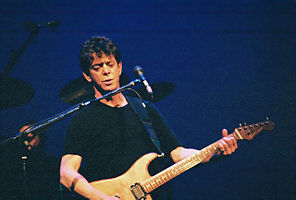
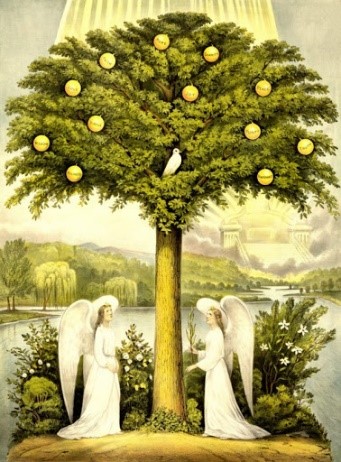
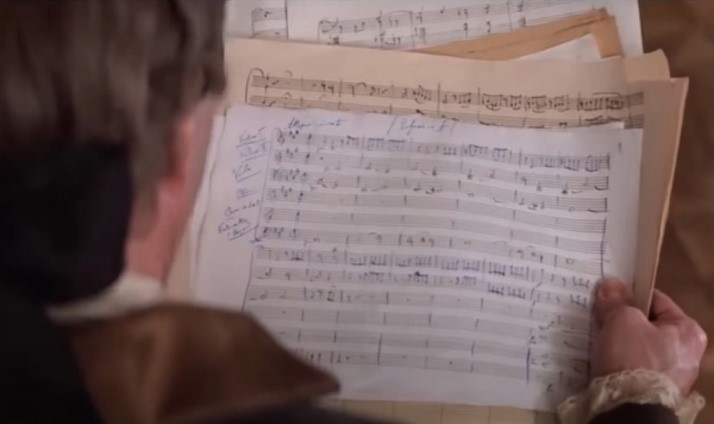

Compiled by Tony Attwood
This list of covers of Bob Dylan songs includes cover versions suggested by readers and cover versions that have been included within articles on this site. Of course the list is not going to be anything like comprehensive, but the idea is to help introduce one or two cover versions of songs you might like, which perhaps you haven’t heard before.
This is an update on the version published a week or so ago with around 60 new recordings added (most of them marked NEW). If you would like to see a favourite of yours which is not on this list added please do add a comment at the end. Ultimately we might have a cover version of every song… you never know.
—————————-
A Hard Rain’s A-Gonna Fall by Jason Mraz . Suggested by Jim
A Hard Rain’s a gonna fall from the TV series Peaky Blinders. By Laura Marling, included by Jochen
Abandoned Love – Chuck Profit. Reviewed by Tony in All Directions “the build up to religion”
Abandoned Love – unknown solo artist. Reviewed in All Directions by Tony
Absolutely Sweet Marie by Jason and the Scorchers, suggested by Dave Miatt.
Absolutely Sweet Marie by George Harrison, suggested by Imam Alfa Abdulkareem.
Absolutely Sweet Marie by Stephen Inglis in The Bob Dylan Twist by Larry
Acquaraggia plays Dylan: Drifters Escape, Chimes of Freedom, Blowing in the Wind.
All along the watchtower – Brian Ferry. Suggested by Diego D’Agostino
All Around the Watchtower: Yul Anderson. Suggested by Fred Muller.
As I went out one morning; Thea Gilmore. Suggested by Ralph
Baby, I’m in the Mood for You – Odetta. Suggested by Fred Muller.
Blind Willie McTell. (Rick Danko) Six Cover versions selected in “Beautiful Obscurity”
NEW Blind Willie McTell (in Polish). Following a concert promoted by Untold Dylan.
Blood on the Tracks by Mary Lee’s Corvette. Suggested by Jerry Strauss. The whole album is not on the internet at large but “You’re a big girl now” is on line. As is “Idiot wind” from the Blood on the Tracks Concert.
Blowin’ in the wind by McCrary Sisters. Suggested by Johannes.
Blowin’ in the Wind. Peter Paul and Mary. Suggested Mike
Bob Dylan’s Dream. Peter Paul and Mary (selected by Tony for article by Larry)
Boots of Spanish Leather by Patti Smith, suggested by Matt Rude
Boots of Spanish Leather on Dylan på svenska suggested by Jesper Fynbo [Spotify] (This link will start the whole album – you have to move down to the track suggested to play it)
NEW Boots of Spanish Leather: Mandolin Orange and four other versions. Commentary here.
Caribbean Wind Svante Karlsson. Suggested by Tony
Changing of the Guard by Chris Whitley and Jeff Lang, suggested by Matt Rude
NEW Changing of the Guards by Patti Smith in “Bob Dylan and his mythology” by Larry
NEW: Clothes Line Saga by Suzzie and Maggie Roche suggested by Donald Tine
Country Pie by The Nice, suggested by Ken Willis.
Crash on the Levee by Tedeschi Trucks, suggested by Tony
De swalkers flecht (The Drifter’s Escape in Frisian). Ernst Langhout & Johan Keus. Suggested by Tony. The recording is on Spotify.
Desolation Row by Stan Denski. Suggested by Stan Denski.
NEW: Desolation Row by Craig Cardiff. All Directions
Dirge by Michael Moravek, suggested by Paul. [On Spotify]
Dirge by Erik Truffaz. Suggested by Ralph.
“Don’t Think Twice” by Eric Clapton, suggested by Rabbi Don Cashman.
“Don’t Think Twice it’s All Right” Ramblin’ Jack Eliot suggested by Tom Felicetti.
NEW Don’t think twice by Girl Blue in Dylan’s Way to Leave his Lovers
De kweade boadskipper (The wicked messenger in Frisian) by Ernst Langhout & Johan Keus. Suggested by Johannes
Emotionally Yours by The O-Jays suggested by Imam Alfa Abdulkareem
Every Grain of Sand: Emmylou Harris. Suggested by Fred Muller.
NEW Every grain of Sand: 10 different versions. Reviewed by Tony
NEW Every grain of Sand by Lizz Wright
Farewell (Leaving of Liverpool) by Marcus Mumford. Reviewed by Jochen
Father of Night Trigger Finger. Suggested in All Directions
Foot of Pride. Lou Reed. Suggested by Laura Leivick
Forever Young by Joan Baez. Suggested by Mike
Gates of Eden by Totta from Bob Dylan and Thomas Hardy
Girl from the North Country by Johnny Cash and Joni Mitchell. Suggested by anonymous contributor.
Girl from the North Country by Walter Trout. Suggested by Darrin Ehil.
NEW: Girl from the North Country by Paul Jost from Bob Dylan and Thomas Hardy
Going, Going, Gone – Richard Hell & The Voidoids. Suggested by Fred Muller.
NEW: Groom’s still waiting at the alter – Elkie Brooks. Suggested by Jochen
NEW: Heart of Mine by Norah Jones and the Peter Malick Group. (All Directions at once)
NEW: High Water by Big Brass Bed from Bob Dylan and Thomas Hardy
Highway 61 Revisited – Johnny Winter. Suggested by Laura Leivick
I’ll Be Your Baby Tonight by Judy Rodman suggested by Steve Perry.
NEW I’ll Remember You by Thea Gilmore suggested by Donald Tine
I Believe in You by Sinead O’Conner, suggested by Matt Rude.
I Believe in you by Alison Krauss
I dreamed I saw St Augustine by Thea Gilmore
I Threw It All Away – Yo La Tengo. Suggested by Fred Muller.
I want you by Bruce Springsteen
Idiot Wind By Luke Elliot, suggested by Matt Rude.
Idiot Wind by Jeff Lee Johnson Featured in All Directions
If not for you by George Harrison suggested by Larry Fyffe
I believe in you by Sinead O’Conner suggested in All Directions by Tony
NEW I’m not there by Sonic Youth in Dylan and his mythology
It ain’t me babe by Joan Baez suggested by anonymous contributor
It Ain’t Me, Babe by Jesse Cook. Suggested by Fred Muller.
It’s alright Ma (I’m only bleeding) by Bettina Jonic [Spotify], suggested by David Alexander-Watts.
It’s All Over Now, Baby Blue by Graham Bonnet, suggested by Matt Rude
It’s all over now Baby Blue by Bonnie Raitt
It takes a lot to laugh by Chris Smither selected by Tony for Larry article
NEW: Jokerman (sung in Polish)
Just Like Tom Thumb’s Blues – The Handsome Family. Suggested by Fred Muller.
Just like Tom Thumb’s Blues by Nina Simone suggested by Paul and separately by David Alexander-Watts.Just like Tom Thumb’s Blues by The Tallest Man on Earth, suggested by Curtis Lovejoy.
Jokerman – Dylan.pl Suggested by Anon. Polish (“Arlekin”). Available on Spotify.
Lay Down Your Weary Tune – Tim O’Brien. Suggested by Fred Muller.
Le ciel est noir (A hard rain’s a-gonna fall) by Nana Mouskouri. Suggested by Johannes
Let’s keep it between us by Bonnie Raitt. Suggested by Johannes
License to kill by Tom Petty (30th anniversary concert)
Like a Rolling Stone – Articolo 31. Suggested by Fred Muller.
Like a Rolling Stone by Spirit suggested by Davy Allan.
Lily Rosemary and the Jack of Hearts by Tom Russell (and friends) selected by Tony in All Directions
Lo and Behold by Coulson, Dean, McGuiness, Flint suggested by Mike Mooney
NEW: Lord Protect my Child Suggested by Donald Tine
Love Is Just a Four-Letter Word – Joan Baez. Suggested by Tom Haber. The link is to the Untold Dylan review, which includes within it a recording of the song.
Love is Just a Four Letter Word – Joy of Cooking. Reviewed by Jochen
Love minus zero – The Walker Brothers. Suggested by John Wyburn.
NEW Love minus zero Chrissie Hynde. In “Beautiful Obscurity” with several others.
NEW Love minus zero Judy Collins. In “Beautiful Obscurity” with several others.
Maggie’s Farm by Solomon Burke, suggested by Ingemar Almeros Almeros.
Mama, You’ve Been On My Mind by Idiot Wind, suggested by Matt Rude
Mama You Been On My Mind. Bettye Lavette. Suggested by Laura Leivick
Man in Me by Matumbi. Suggested by Ray Ellis after Edition 1
Man in the Long Black Coat – Mark Lanegan. Suggested by Fred Muller.
Mississippi recorded live by Dixie Chicks, suggested by Tony
Mississippi by Chris and Kellie While in Bob Dylan and Thomas Hardy
Moonshiner by Charlie Parr, suggested by Edward Thomas.
Mr Tambourine Man – Melanie Safka. Suggested Ken Fletcher.
Mr Tambourine Man by The Helio Sequence suggested by Imam Alfa Abdulkareem
Mr Tambourine Man by the Byrds. Suggested by Mike.
Moonshiner Cat Power
NEW: My Back Pages by Magokoro Brothers suggested by Donald Tine
No Time to Think: suggested by Jochen, and ever since repeatedly by Tony
Not Dark Yet: Lucinda Williams
One more cup of coffee by Frazey Ford.
NEW: One more cup of coffee by Nutz (Beautiful Obscurity)
NEW: One more cup of coffee by White Stripes (Beautiful Obscurity)
NEW: One more cup of coffee by Robert Plan (Beautiful Obscurity)
NEW: One more cup of coffee by Big Runga (Beautiful Obscurity)
NEW: One more cup of coffee by Chris Durante in Bob Dylan and Thomas Hardy
New: One more cup of coffee by Calexico (Beautiful Obscurity)
NEW: Property of Jesus by Chrissie Hynde (All directions)
Queen Jane Approximately by The Daily Flash suggested by Bill Shute.
She Belongs To Me by Nice, suggested by Ken Willis
NEW: She’s your lover now by Luxuria. Suggested by Olaf
NEW: Shelter from the storm: The Sachal Ensemble, on Bob Dylan and Thomas Hardy
Tangled up in Blue by Indigo Girls. Reviewed in All Directions.
To Ramona by Sinéad Lohan, suggested by Kurt-Åke Hammarstedt [Spotify – select track 9]
New Pony – The Dead Weather. Suggested by Diego D’Agostino
One more cup of coffee – The White Stripes. Suggested by Diego D’Agostino.
Please Mrs Henry – Manfred Mann
Positively 4th Street by Johnny Rivers suggested by Tom Haber.
Precious Angel by Sinead O’Connor, suggested by Matt Rude
Pressing On – Chicago Mass Choir with Regina McCrary. Suggested by Johannes
Property of Jesus – Chrissie Hind. Reviewed in All Directions 47 by Tony
Rainy Day Women #12 & 35 by Old Crow Medicine Show. Suggested by Vadim Slowoda.
Red River Shore by unknown duo, in Larry’s “The Bob Dylan Twist (continued).
Restless Farewell by Mark Knopfler, suggested by anonymous contributor
NEW Senor by Anna Kaye in Bob Dylan and Thomas Hardy
NEW Seven Curses by June Tabor. Suggested by Tony within a Larry article.
Seven days by Joe Cocker. Suggested by Johannes.
She Belongs to me by Jerry, Phil and Bob, suggested by Edward Thomas.
NEW: Shot of Love: the Devilish Double Dylans
Simple Twist of Fate by Sarah Jarosz, suggested by Matt Rude
Slow Train by Glasyngstrom. Reviewed in All Directions. One of the very few covers.
Spanish Harlem Incident by Chris Whitley, suggested by Matt Rude
Stepchild by Jerry Lee Lewis in “The Bob Dylan Twist” by Larry.
NEW: Stuck inside of Memphis. Old Crow Medicine Show
Tears of Rage by The Band in “Bob Dylan Approximately” by Larry
Tight Connection to My Heart by Sheila Atim (from Girl from the North Country) . Suggested by Tony Allen.
NEW: Things have Changed by Curtis Stigers
Time Passes Slowly: Judy Collins. Repeatedly selected by Tony!
NEW Times they are a changing. Herbie Hancock. Dylan before the basement
Tomorrow is a Long Time – Elvis Presley, suggested by Tom Haber
Tomorrow is a long time – Rod Stewart. Suggested by Diego D’Agostino
Too Much of Nothing. Peter Paul and Mary. Suggested by Tony.
Up to me by Roger McGuinn. In All Directions
Visions of Johanna recorded live by Old Crow Medicine Show, suggested by Tony [Spotify]
Wallflower – Buddy & Julie Miller. [Spotify] Suggested by Fred Muller.
Walls of Red Wing. Joan Baez. Suggesfted by Laura Leivick
NEW Wandering Kind by Paul Butterfield reviewed by Jochen.
Wanted Man by Nick Cave and the Bad Seeds. Suggested by Matt Rude
Watching the River Flow by Leon Russell. The Beautiful Obscurity article has multiple cover versions detailed.
What Good am I? – Solomon Burke. [Spotify] Suggested by Fred Muller.
What Good Am I by Tom Jones, suggested by Pat Sludden
With God on our side: Buddy Miller. Suggested by Fred Muller
NEW: When He Returns by Jimmy Scott. Suggest by Donald Tine
When I Paint My Masterpiece by Chris Whitley and Jeff Lang, suggested by Matt Rude
When you gonna wake up by Lee Williams, in Bob Dylan Approximately by Larry
NEW You changed by Life by Iva & Alyosha in Bob Dylan and Thomas Hardy