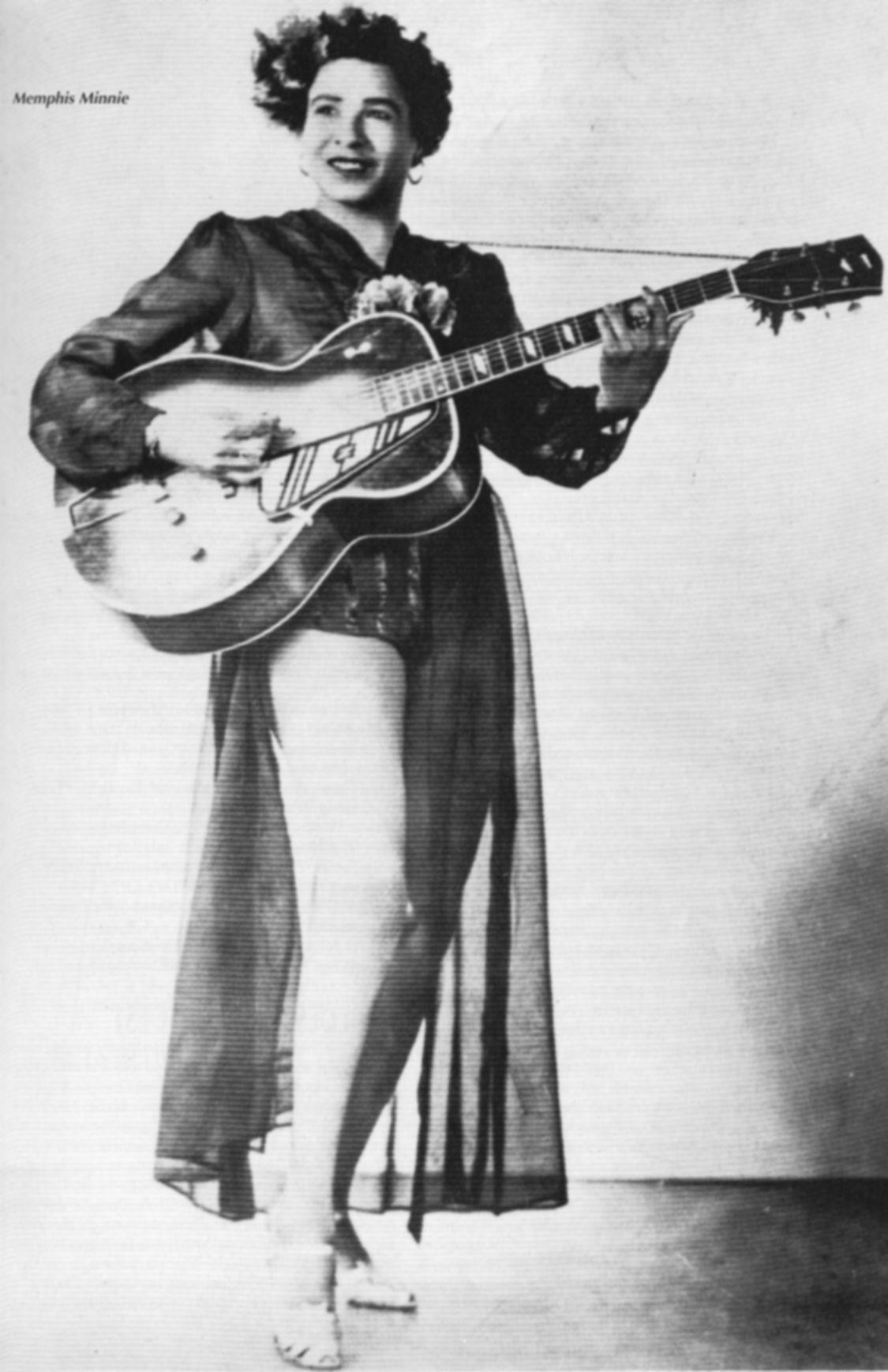
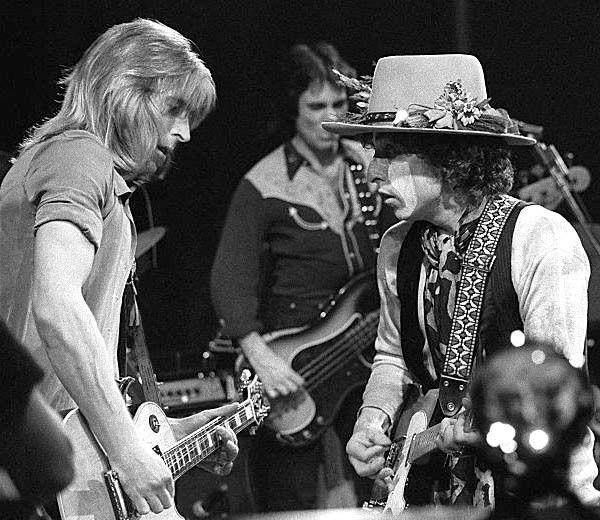
In folksongs, up-and-coming technology is often depicted as a threat to the traditional family living off the land. The alienation wrought by the separation of a husband from his wife by that technology conjures up a number of songs that transform the steam locomotive into a surrogate snake-like female lover:
Oh, roll on, John, and make your time
For I’m broke down and I can’t make mine
I asked that girl to be my wife
Right down she set and begin to cry ….
I wish to the Lord the horn would blow
‘Cause I’m so tired of that old railroad
(Palmer Crisp: Roll On, John – traditional – see also here)
Singer/songwriter Bob Dylan stokes the analogy with the hot coals of Freudian surrealism:
Well, I ride a mailtrain, baby, can’t buy a thrill Well, I’ve been up all night, baby, leaning on the windowsill Well, if I die on top of the hill And if I don’t make it, you know my baby will
(Bob Dylan: It Takes A Lot To Laugh, It Takes A Train To Cry)
The mechanical ‘iron horse’ overtakes the four-legged one as a euphemism for the female human body, but the organic metaphor remains in the race:
I got a coal-black mare
But, Lord, how that horse can run
Yes, she win every race
Man, you don’t see how it’s done …..
Say, she fox-trot and pace
And I ride that horse today
(Big Daddy Crudup: Black Pony Blues)
Bob Dylan jumps in the songwriter’s saddle, and grabs the reins of the tamed trope:
I got a new pony, she knows how to fox-trot, lope, and pace
Well, I got a new pony, she knows how to fox-trot, lope, and pace
She got big hind legs
And big long shaggy hair above her face (Bob Dylan: New Pony)
The gasoline-driven automobile roars onto the scene making way for a new sexist analogy:
I got a brand new car
And I like to drive real hard
I got a brand new car
And I’m feeling good so far
(Rolling Stones: Brand New Car)
Personified as a used car, she can even talk:
We drove that car as far as we could
Abandoning it out West
Split up on a dark sad night
Both agreeing it was best
She turned around to look at me
As I was walkin’ away
I heard her say over my shoulder
‘We’ll meet again someday on the avenue’ (Bob Dylan: Tangled Up In Blue)
Man-powered boats, sometimes assisted by the wind, be an early means of travel, and they too become ‘shes’, inside and outside of song lyrics:
I got a rockin’ boat
She got a rock on the stern
Five feet seven, don’t know how it’ll work
Oh, oh, on a rockin’ boat
Can’t you even learn by the way she drive? (Bob Dylan: On A Rocking Boat)
Often in song lyrics, the human male, at least when he’s up for it, is depicted as the one in control of the situation:
I am the little red rooster, babe
To lazy to crow today
I am the little red rooster, babe
To lazy to crow today
I keep everything in the barnyard upset in every way
(Rolling Stones: Little Red Rooster)
The female, on the other hand, is more likely to get compared to a machine that’s ready to be ridden:
Little red wagon, little red bike
I ain’t no monkey, but I know what I like
I like the way you love me strong and slow
I’m takin’ you with me, honey baby, when I go (Bob Dylan: Buckets Of Rain)
What else is on the site
You’ll find an index to our latest posts arranged by themes and subjects on the home page. You can also see details of our main sections on this site at the top of this page under the picture.
The index to the 500+ Dylan compositions reviewed is now on a new page of its own. You will find it here. It contains reviews of every Dylan composition that we can find a recording of – if you know of anything we have missed please do write in.
We also have a discussion group “Untold Dylan” on Facebook. Just type the phrase “Untold Dylan” in, on your Facebook page or follow this link
And please do note The Bob Dylan Project, which lists every Dylan song in alphabetical order, and has links to licensed recordings and performances by Dylan and by other artists, is starting to link back to our reviews
When Bob Dylan entered the recording studio for the first time, it was 1961 the whole technological revolution was still ahead. The Columbia Studio A was a good facility by the standards of the time but there were hardly any multi-tracking, special effects and so on.
Yet in spite of this, those first recordings don’t seem outdated by any means.
Nor do his next forays into the recording studio, Freewheelin’, Times and Another Side. They’re as plain as can be, just a young guy, his harmonica and acoustic guitar (and an occasional piano) – and yet fresh as early Spring. The songs are captured live, and that is exactly how they sound.
No tricks, just kicks.
And the same goes for almost every studio recording Dylan has done throughout his career. The “go-electric” phase, the Basement Tapes, the Biblical JWH, the 1969-1971 country and soul, the mid-seventies masterpieces, the evangelical period…
It seems throughout like there’s nothing that could be improved, corrected, modified, at least to my ears. While so much of the contemporaneous music sounds, if not obsolete, then certainly belonging to its time. Dylan’s recordings sound timeless. Even Street-Legal with its rich textures and orchestrations.
Perhaps the only period when Dylan sounds firmly anchored to the recording epoch are his post-Shot of Love albums up till Down in the Groove and then the Under the Red Sky collection. We might like them or like them less, return to them less frequently or quite the opposite, but one thing is for me certain: they couldn’t have been recorded in the sixties, seventies or late nineties. They are as eighties-y as possible.
Why?
I think there is one clear explanation. It was the only period when Dylan wanted to sound modern – or his producers wanted him to, and he, reluctantly or not, consented.
We all know perfectly well that Dylan, more often than not, opts for live recordings. Even if there’s some multitracking and editing we don’t hear them as clear as for example in the Beatles’ recordings or on some even more sophisticated, “produced” albums.
Does Dylan double-track his voice? No. Does he like delay and reverb? No. Does he lay several guitar tracks, does he multiply instruments? No. Does he use outside natural sounds? No. Does he like special FX? No.
No studio gimmickry. No bull. No flashiness. No calculated wow-effect.
His latest recordings sound impeccable, as pure as his earliest albums. And still – no gimmickry. Just a live sound.
Of course, technology has a lot to do with it. One can’t obtain the same soundscape as on the Fallen Angels album in just their home studio because Capitol Studios are one of the most state-of-the-art huge recording studios where you can breathe and release a nice album of just your breathing.
But, again, no overdubbing, no multitracking, no special devices and tricks.
Perhaps this is why Bob Dylan sounds so out of time, ahead of time and beyond time. Because he means to convey an essence to us, instead of dancing before us, making advances, impressing us with the superficial and brown-nosing.
Perhaps this is why he is so sophisticated and pure at the same time.
What else is on the site
You’ll find an index to our latest posts arranged by themes and subjects on the home page. You can also see details of our main sections on this site at the top of this page under the picture.
The index to the 500+ Dylan compositions reviewed is now on a new page of its own. You will find it here. It contains reviews of every Dylan composition that we can find a recording of – if you know of anything we have missed please do write in.
We also have a discussion group “Untold Dylan” on Facebook. Just type the phrase “Untold Dylan” in, on your Facebook page or follow this link
And please do note The Bob Dylan Project, which lists every Dylan song in alphabetical order, and has links to licensed recordings and performances by Dylan and by other artists, is starting to link back to our reviews
Now we all know that Bob Dylan and his mega corporation or copyright lawyers are pretty strong about claiming and protecting Bob’s rights. So when we find a song that is mentioned as a Dylan composition in commentaries but is NOT listed on BobDylan.com then I begin to wonder.
Also the song is not listed in Heylin’s two volume review, and he has some pretty weird stuff listed there as Dylan songs, including many for which recordings are not available. Heylin is not perfect by any means, and he refuses to recognise a song in which Dylan wrote the music but not the lyrics as a Dylan composition (!) so that might be the issue. Or maybe he just missed it.
Anyway the song we are considering here was recorded by the McCrary Sisters for the Our Journey album
The suggestion is that it was written by Regina McCrary (known as Regina Havis at the time) with a Bob Dylan extra bit, in the 1980s.
“On The Tracks” magazine issue number 23, published in the summer of 2002 had an interview with Regina McCrary by the editor in which she states that she recorded this song with Dylan around 1981, and that she has a tape of it.
In the interview she says.
“I wrote it — actually Bob helped me write it… (We) were on the bus headed to another city… and I got stuck and I couldn’t go any further with the song. I just couldn’t, it was like the song needed something else and I didn’t know where to take it.
“So I went up front on the bus and Bob was sitting there and I asked him would he listen to it, and he said ‘Yeah!'” So I started singing the words… and then I said, ‘But right here, I mean, I’m stuck, I don’t know where to go with it!’
“So Bob took the pencil and pad and he wrote the bridge to the song, and it was awesome. As I was singing Spooner Oldham sat with an acoustic guitar and kind of played chords to match what I was singing and Bob Dylan came up with the chords to the bridge, how he thought it should go, and he put the lyrics to it….”
Thus it seems, Dylan contributed lyrics, chords and melody.
If you listen to the recording above then the passage that is being referred to would be at 2 mins 13 secs to 2 mins 33 secs. It certainly is a distinctive part of the music. What happens then however is a sudden jump up a semi-tone to a new key for the repeat of the original music, which to me sounds horrible. Indeed I think most classically trained musicians find that tactic an awful wrench. A sort of “what to do when you have absolutely run out of anything to do”.
I can’t think of any occasion where Dylan does a semitone rise, so if the story is true and Bob did write the bridge I think we can safely say the wrench up to the new key is not part of his input. It is just the bridge.
I can’t find a copy of the lyrics on line, and as ever I hesitate to get involved in lyric decoding since the results are usually laughable. I’ll leave that to anyone with a few minutes to spare.
Anyway the story continues…
“Later Bob Dylan, Tim Drummond, Jim Keltner, Spooner Oldham, Smitty… went in the studio that Bob used to have in Santa Monica… and we did a rough demo of it.”
It was also reported in 2007 that Bob Dylan and Regina McCrary would be recording a duet of this song for her solo album “I Made A Vow” but that has not appeared.
The article on Dylan’s suggested input in the song concludes, “Now officially released in a version by the McCrary Sisters including Regina on their album “Our Journey”, released in the USA on their own McCrary Sisters label in Oct 2010. The song was copyrighted with BMI in 2010 by Bob Dylan and Regina Avonette McCrary, Gina Mac Publishing Co.” That album opens with “Blowing in the Wind”.
So there it is. Dylan, it is said, wrote the “bridge” (the middle section that is not the same as the verse and which is called the “Middle 8” sometimes). I can’t verify any of this, and we only have one source. So I am including it, at least until some other evidence arises to suggest this tale isn’t true.
Footnote: the song is referred to as both “Got to give him my all” and “Give him my all”. I’m going with the latter for the indexes on this site, again until someone comes up with a reason why not.
What else is on the site
You’ll find an index to our latest posts arranged by themes and subjects on the home page. You can also see details of our main sections on this site at the top of this page under the picture.
The index to the 500+ Dylan compositions reviewed is now on a new page of its own. You will find it here. It contains reviews of every Dylan composition that we can find a recording of – if you know of anything we have missed please do write in.
We also have a discussion group “Untold Dylan” on Facebook. Just type the phrase “Untold Dylan” in, on your Facebook page or follow this link
And please do note The Bob Dylan Project, which lists every Dylan song in alphabetical order, and has links to licensed recordings and performances by Dylan and by other artists, is starting to link back to our reviews
Emeritus professor Ira Martin Gessel (1951) is a respected mathematician, specialized in combinatorics and computer sciences and one of the founders of the pioneering and incomprehensible quasi-symmetrical functions.
However, the first time Gessel makes the newspapers has nothing to do with mathematics. In 1970, the then nineteen-year-old Ira starts ceptia, the Committee to End Pay Toilets In America. He does not shy away from the big words: “When a man’s or woman’s natural body functions are restricted because he or she doesn’t have a piece of change, there is no true freedom.“
It is a particularly successful grassroots movement, in those years a flourishing form of activist citizens’ initiatives. Often these initiatives are playful and short-lived, but ceptia strikes a chord. The committee collects 1800 paying members (membership costs 25 cents), regularly releases the Free Toilet Paper newsletter and sponsors the Thomas Crapper Memorial Award which is presented to ‘the person who has made a special contribution to the ceptia case and free toilets’.
Three years after the founding, the first big bastion is conquered when the Chicago city council promulgates a ban on pay-toilets. New York, California and Ohio follow, and in June 1976, when twelve states have instituted a ban, the Committee finds that its goal has been achieved and that it has made itself redundant. Definitely: by the end of the decade the more than fifty thousand pay toilets have virtually disappeared from the United States.
But when you are outdoors in 1967, nature’s call can still only be answered in a decent way if you’re lucky enough to have a dime in your pocket, which brings us to the distress of the narrator in “Please Mrs. Henry”:
Now, I’m startin’ to drain
My stool’s gonna squeak
If I walk too much farther
My crane’s gonna leak
Look, Missus Henry
There’s only so much I can do
Why don’t you look my way
An’ pump me a few?
Please, Missus Henry, Missus Henry, please!
Please, Missus Henry, Missus Henry, please!
I’m down on my knees
An’ I ain’t got a dime
Yes, toilet humour. Honourable scientists and decent researchers would catalogue it under: scatological or, even more distinguished: coprological, and even the biggest artists are unable to withstand the temptation.
Mozart is notorious. Some of his letters are so full of uncontrolled vulgarities and burly obscenities, that embarrassed and dignified fans despairingly diagnosed the Austrian wunderkind posthumously with the Gilles de la Tourette syndrome. Intolerable is the notion that an admired genius might knowingly reduce himself to such foulness.
Margaret Thatcher, for example, cannot stand being confronted with this infantile side of Mozart, when she attends Peter Shaffers Amadeus. Director Peter Hall is severely reprimanded after the play by the Iron Lady, who is not amused at all and briefly rules that Mozart did not say that.
It leads to an Amadeus-worthy scene. Hall tries to say that everything is historically correct, based among other things on quotations from Mozart’s letters, to which Thatcher does have a resourceful reply: “I don’t think you heard what I said. He could not have been like that.”
The director has a copy of Mozart’s Collected Letters delivered to 10 Downing Street the next day, and is graciously thanked by the private secretary, “but it was useless; the Prime Minister said I was wrong, so wrong I was.”
It is conceivable that at that point Peter Hall did feel the strong urge to have Mozart KV 231 performed on the sidewalk of 10 Downing Street:
Leck mich im Arsch g’schwindi, g’schwindi! Leck im Arsch mich g’schwindi. Leck mich, leck mich, g’schwindi
(lick me in the ass, quickly, quickly)
Thatcher’s discomfort is similar to that of some Dylanologists and the more prudent exegetes.
Blogger Tony Ling thinks it’s a hilarious drinking song of a drunk who wants ‘God knows what’ from his landlady, our disgruntled Tony Attwood hears ‘quite a bit we don’t need to know’ and dismisses the song with some disdain.
Even Greil Marcus, in his beatification of the Basement Tapes, in Invisible Republic (1997), prefers not to pay attention to the song and refers to the title only indirectly, as an example of the ‘random, often obscene humor’ which Dylan and The Band also committed, down there in that basement. Rolling Stone’s Jann Wenner makes himself ridiculous once again by assuming autobiographical depth (‘It is indicative of where Dylan was headed because it is about a man who has hit some hard times and needs a little help‘).
Sid Griffin does not know where to start with the lyrics, as evidenced by the miserable 125 words he puts into an ‘interpretation’, in which he uses the word ‘perhaps’ three times and ‘might’ once, and intelligent publicists like Oliver Trager (Keys To The Rain, 2004), Nigel Williamson (The Rough Guide, 2004) and Andy Gill (Don’t Think Twice, 1998) do not go much further than the observation that it is a rather nonsensical drinking song, and that Mrs. Henry probably is the barmaid.
‘Nonsensical’ is true. Whole passages are nothing more than exuberant linguistic pleasure, such as these similes:
I can drink like a fish
I can crawl like a snake
I can bite like a turkey
I can slam like a drake
Not to mention the psychedelic humbug of text fragments like ‘I’m a generous bomb’ and ‘I’ve been sniffin’ too many eggs’. An echo of those sniffed eggs seems to descend into Lennon’s classic “I Am The Walrus”. The lines between Dylan and The Beatles no longer are that short, this summer of ’67 (the first version of “I Am The Walrus” was recorded in September), but we do know that The Beatles possess copies of the Basement Tapes at an early stage and we hear George Harrison play, “Please Mrs. Henry” during the Let It Be sessions. In the 1980 Playboy interview, Lennon looks back on “I Am The Walrus” quite extensively and Dylan’s influence is mentioned:
“I’d seen Allen Ginsberg and some other people who liked Dylan and Jesus going on about Hare Krishna. It was Ginsberg, in particular, I was referring to. The words “Element’ry penguin” meant that it’s naïve to just go around chanting Hare Krishna or putting all your faith in one idol. In those days I was writing obscurely, a la Dylan.”
And in his last interview (with Jonathan Cott for Rolling Stone), three days before his death, Lennon brings up ‘Walrus’ again, again in combination with Ginsberg.
Equally unimportant, but evidently intriguing, is the question: who is Mrs. Henry? The landlady or a bardame, are the most popular explanations. Well, okay, but in that case the starting point would be that Dylan has a real plot in mind, that the lyrics have an epic, telling quality.
This possibility does not seem too likely; the nonsensical, Lewis Carrollesque component is too dominant. More likely is that the name Mrs. Henry pops up in Dylan’s playful, associative mind because he is married to a Mrs. Henry; when Dylan meets Sara she is still married to Hans Lownds, whose official name is Henry Louis Lownds. At the Civil Registry she is therefore registered as Mrs. Henry Louis Lownds. A malicious spirit like Dylan would not miss the chance to needle his beloved Sara at inappropriate moments with that name. “Mrs. Henry! Where are my socks!”
Underexposed in all interpretations is the music to the song, but its power does not escape the colleagues. In 1970 the first serious studio recording is made in England by Chris Spedding, one of the most demanded session guitarists of the 70s. His solo albums, like this Backwood Progression, have never been very successful, but his “Please Mrs. Henry” is a swaying pub rocker, pleasantly chaotic and slightly anarchistic – as it should be. (However it does not appear to be on line, not even on Spotify).
About the same time, Trials & Tribulations, a somewhat obscure The Band rip-off, plays a tighter but certainly attractive cover for their debut album, which also features another Basement Tape, a very nice “Open The Door, Homer”.
At the end of the 70s, the song is a regular on the setlist of Cheap Trick, whose dorky, masterful lead guitarist Rick Nielsen turns it into a ten-minute rock ‘n’ roll smasher in which he can go off like a rolling thunder. That version is the template for the savage Crust Brothers, the hobby band of Pavement leader Stephen Malkmus. Their trashy “Please Mrs. Henry” is one of the seven Basementcovers on the band’s only album, the 1997 Marquee Mark live album.
But in the end it is good old Manfred Mann again, who manages to make the two most attractive covers of the song. In the founding phase of his Earth Band, Mann is already struggling with the song. A dazzling, languid, nonchalant swinging approach can be heard on their official historical document, the 2005 Odds & Sods (Mis-Takes & Out-Takes).
The version that ultimately ends up on Manfred Mann’s Earth Band’s first album is sharper and more aroused, and at least equally attractive – one of the highlights of that undervalued record Manfred Mann’s Earth Band (1972) and a taste of the granite monument that Manfred manages to construct from that other Basementsong, his own sixties-hit “The Mighty Quinn”. Alcohol-obscured corniness has completely evaporated out of this version, and the I-person does not seem to suffer from lethargy, nor from any natural pressure, but the energetic, compelling tone suits this narrator perfectly.
What else is on the site
You’ll find an index to our latest posts arranged by themes and subjects on the home page. You can also see details of our main sections on this site at the top of this page under the picture.
The index to the 500+ Dylan compositions reviewed is now on a new page of its own. You will find it here. It contains reviews of every Dylan composition that we can find a recording of – if you know of anything we have missed please do write in.
We also have a discussion group “Untold Dylan” on Facebook. Just type the phrase “Untold Dylan” in, on your Facebook page or follow this link
And please do note The Bob Dylan Project, which lists every Dylan song in alphabetical order, and has links to licensed recordings and performances by Dylan and by other artists, is starting to link back to our reviews
The dark Gnostic outlook of humankind trapped in a physical world finds expression in many of the song lyrics by Bob Dylan, but all is not doom and gloom because of the outlook expressed there of the Romantic poets who intuit a spiritual side to mankind that transcends physical bondage. The tension created between these two seemingly contradictory conditions of human existence – one symbolized by darkness, the other by light – is the starry dust of which art is made.
That Dylan song lyrics have roots in the cosmological view of the Romantic poets, and the Modernist offshoots thereof, is collaborated by his direct references in the following song lyrics.
Ah, and we said imperishable things
Those eaves illumined by burning coal
(Charles Baudelaire: The Balcony)
My heart aches and a drowsy numbness pains
My sense, as though of hemlock I had drunk
Or empied some dull opiate to the drains
(John Keats: Ode To A Nightingale)
My sense of humanity has gone down the drain
Behind every beautiful thing there’s been some kind of pain (Bob Dylan: Not Dark Yet)
But the fact is I was napping, and so gently you came rapping
And so faintly you came tapping, tapping at my chamber door
(Edgar Allan Poe: The Raven)
The palm-leaf shadow for the hot noon hours
And on its branches dry
Calls out the acacia’s flowers
(John Whittier: To Avis Keene)
Scarlet Town in the hot noon hours
There’s palm-leaf shadows and scattered flowers (Bob Dylan: Scarlet Town)
For Bob Dylan, a way out of the dismal enclosure erected by the Gnostics is through the lighted doorway that leads to the musings of the Romantic poets.
What else is on the site
You’ll find an index to our latest posts arranged by themes and subjects on the home page. You can also see details of our main sections on this site at the top of this page under the picture.
The index to the 500+ Dylan compositions reviewed is now on a new page of its own. You will find it here. It contains reviews of every Dylan composition that we can find a recording of – if you know of anything we have missed please do write in.
We also have a discussion group “Untold Dylan” on Facebook. Just type the phrase “Untold Dylan” in, on your Facebook page or follow this link
And please do note The Bob Dylan Project, which lists every Dylan song in alphabetical order, and has links to licensed recordings and performances by Dylan and by other artists, is starting to link back to our reviews
Aaron Galbraith has been doing an amazing amount of work uncovering Dylan songs that we have not covered already on this site. So that will teach me to claim we’ve reviewed every Dylan song of which there is a recording available! We haven’t. I think there must be about half a dozen more.
“Fur Slippers” is mentioned in Heylin’s “Still on the Road” although very dismissively, calling it “an incongruous attempt at a 50s R’n’B single” and he places it as being composed in April 1981.
What I missed (and which Heylin does mention) is that BB King recorded the song in 1999, at which time Tim Drummond, the bass guitarist, was added as co-composer. That is certainly quite likely as Drummond is often found as the co-composer of songs with artists he worked with, including Dylan’s “Saved”, “Who’s Talking” with J J Cale, “Saddle Up The Palomino” with Neil Young and “Down In Hollywood” with Ry Cooder.
Which part of it Drummond wrote, and which Bob wrote is anyone’s guess, but my take would be that Drummond laid down the basic blues and Bob made up the lyrics as he went along.
There are other versions of the lyrics around, but these are the lyrics I hear from the recording – except one line that I can’t quite hear and as usual I don’t want to make an idiot of myself by guessing. Larry are you there to help me out?
Ain’t got no radio ain’t got no telephone Ain’t got not girlfriend ain’t got nowhere to go She was here yesterday but she’s gone today And when she left she took my fur slippers away.
Where did she go, where can she be Maybe at a movie show, maybe she’s watching TV She was here yesterday, what more can I say All that I know she took my fur slippers away.
They were so soft they look so fine They felt so good they were all mine
Can’t go outside the ground is too hard Where can I go, can’t even go in my backyard ?? This is what I’ll say You can keep my girlfriend bring back my fur slippers today
It is very much a one idea song: I don’t care about the person, I care about my property. A complete denigration of the woman, placing an possession above the life of the individual.
In this regard it is typical of the blues, self-centred, disregarding of the feelings of others, and I guess it is intended to be amusing. Which maybe it is for about 30 seconds, but even then not that amusing.
In essence I see this is a sketch, an idea that is played with, which is never meant to be taken seriously, the sort of thing which any writer in any mode (novels, plays, poems, songs, odes, advertisements…) will either have destroyed, or will have kept in a box in his/her house, amidst hundreds of such sketches that have just popped into one’s mind and not gone anywhere.
Indeed perhaps Bob never wrote those lyrics down, but simply made them up in the studio and forgot about them thereafter. In fact if this had turned up on the Basement Tapes, it would have been just another case of the guys larking about and no one thinking any more about it.
What we should also remember I guess is that this song was recorded at the end of BB King’s career (a career that began with 3 O’Clock Blues way way back in 1951). I am sure others can correct me on this, if I am very wide of the mark, but I just wonder if an association with a Bob Dylan song – any Bob Dylan song, no matter how odd – might have helped him out at this time.
So let’s remember a great performer in a better light. This is the original recording of the very first BB record. And if nothing else reviewing Fur Slippers gives me a chance to put up this record. If you don’t know it, please do spend a moment with it.
What else is on the site
You’ll find an index to our latest posts arranged by themes and subjects on the home page. You can also see details of our main sections on this site at the top of this page under the picture.
The index to the 500+ Dylan compositions reviewed is now on a new page of its own. You will find it here. It contains reviews of every Dylan composition that we can find a recording of – if you know of anything we have missed please do write in.
We also have a discussion group “Untold Dylan” on Facebook. Just type the phrase “Untold Dylan” in, on your Facebook page or follow this link
And please do note The Bob Dylan Project, which lists every Dylan song in alphabetical order, and has links to licensed recordings and performances by Dylan and by other artists, is starting to link back to our reviews
On 17 March 2014, L’Wren Scott baffles her loved ones. The fashion designer of Hollywood stars and the Very Rich, but best known as the life partner of Mick Jagger, commits suicide. The funeral ceremony will take place a week later in Los Angeles, and eight weeks later a memorial service will follow in St. Bartholomew’s Church in Manhattan.
The speakers keep it understated, stylish and conventional; Jaggers grandchildren read a psalm (Psalm 23 of course, “The Lord Is My Shepherd”), the regular backing vocalist of The Stones, Lisa Fischer, sings “Amazing Grace”, a niece of the deceased contributes a little, slightly evangelically tinted verse (“Eternal Voyage” by Susan Noyes Anderson, who afterwards, not very stylishly, sells her fifteen minutes of fame via Twitter and Facebook).
Jagger’s son James chooses the indestructible “She Walks In Beauty” by Lord Byron, Dave Stewart accompanies the singing Bernard Fowler on guitar with the classic “Will The Circle Be Unbroken” and also Shakespeare’s biggest hit “Sonnet 18” (Shall I compare thee to a summer’s day?) passes by.
Safe, appropriate choices, with little room for improvement. But L’Wren’s most loved one, the shocked Mick Jagger himself, surprises. Granted, a proper Stones song might be hard to find, but the Glimmer Twin does choose very unconventionally: through the church echoes a sober performance of Dylan’s “Just Like A Woman”.
Surprising, as it is not a very kind song. The meeting was closed to members of the public and journalists, so whether Jagger may have adapted the text here and there, we do not know, but even then it seems an unfortunate choice. Although…
The opening line may have already provided Mick with an aha moment. The words get a completely new charge, but yes, indeed: nobody feels any pain offers in this context roughly the same consolation as the famous tune of M*A*S*H, the controversial “Suicide Is Painless” (lyrics written by the 15-year-old Mike Altman, whose father, director Robert Altman, told him to write the ‘stupidest song ever’).
Baby’s got new clothes is a line to L’Wren’s passion and profession, the subsequent observation suddenly gets an autumnal symbolism. And the exclamations I just can’t stay in here, I just don’t fit and when we meet again … well, sung at the memorial service for a suicide victim they of course take on a radically different and much heavier meaning, but still, they are striking and touching .
Queen Mary is, we now understand in this Catholic Church at this gathering, the Heavenly Queen Mary, who for centuries has extended her arms mercifully and full of grace to dying heroines. The Gretchen of Faust rises dying to the Mother of God, in her last seconds Schillers Jeanne d’Arc sees how the Blessed Virgin is already winking at her, and now Jagger finds a similar reconciliation for his heroine; “Queen Mary, she’s my friend. Yes, I think I’ll go see her again. “
The middle-eight, the bridge, also fits perfectly with the life story of the awkward adoptive child Laura Bambrough from a Mormon family in Utah who transforms into the fashion queen L’Wren Scott in the center of the world, but does not feel at home . Only the chorus – there Jagger probably fits in a few other words. And the amphetamine will also have been deleted.
Remarkable, all in all, and on closer consideration not all that much misplaced. But originally, in “Just Like A Woman”, both scholars and amateur researchers agree, some lady gets demoted quite heartlessly. Without thanks for services rendered and with another kick after she’s down.
Those same exegetes have been bombarding each other for more than half a century with mostly very plausible, but always superfluous, theories about the identity of the woman who is oh so feminine, but turns out to be a little girl after a break.
The unfortunate debutante Edie Sedgwick is the most popular candidate, thanks to the drug references and especially her appearance; the woman Sedgwick has indeed a somewhat childlike personality. But yes, with the line “I was hungry and it was your world” the Joan Baez faction has a strong argument – Baez actually has introduced Dylan into her (folk) world and it is also true that she, in love and all, rather chilly gets pushed aside a few months before Dylan writes this song.
On a side note: nobody seems to notice that Dylan writes Baby with a capital letter both times, so not baby as a caress, but Baby, like a nickname. Not too important, but it is a remarkable minor issue; Dylan sings the praise of dozens and dozens of babies over the years but only four of them get a capital B (also Baby Blue, the Angel Baby from “Tough Mama” and Sugar Baby). It could be a second jab at “Baby” Jane Holzer, the filthy rich socialite from the Andy Warhol entourage, whom he also in “Queen Jane Approximately” seems to target.
All of it true and not true, as usual with Dylan. The poet Dylan is not a reporter. He connects fiction with memories, is a poetic realist who, from his everyday impressions and personal musings, knows how to grasp universal values, how to transcend the individual experience, how to paint a condition humaine. Driven by little more than the desire to write a song. Paul McCartney expresses this drive in a pleasantly sober manner in his Conversations with Paul du Noyer (2015): “When I write, I’m just writing a song, but I think themes do come up. You can’t help it. Whatever’s important to you finds its way in.”
And that is in accordance with what Dylan reports about it in the AARP interview in 2015: “An idea comes from out of nowhere, and it’s usually the key to the whole song. It’s the idea that matters. The idea is floating around long before me. It’s like electricity was around long before Edisonharnessed it.”
In “Just Like A Woman” we then see the poetic representation of the palette of emotions a person is assailed by, when scratching the wound of a freshly broken relationship. Here too, the poet attaches nagging memories to observations and fantasies to settle his bills, with a few sharp edges. Some couleur locale is created by the choice of words and imagery that characterizes Dylan’s lyricism during this period. He did not use a word like amphetamine before and he will not use it later – perhaps because he hears that the great Otis Redding is trying to cover “Just Like A Woman”, but can not overcome that word. Just like the use of rain as a metaphor for marijuana use is also very trendy with potheads and hipsters like The Beatles, Donovan and The Stones. Dylan’s veil might be a bit more blurry, but anyway: after the rain in Tom Thumb and “Desolation Row”, in Visions and in MemphisBlues, after the Rainy Day Women who call out everyone to be stoned and the rainman with his wand in “I Wanna Be Your Lover” Dylan apparently thinks: it’s time to quit. On later records, in later songs the rain is just wet and cold again.
Apart from the famous thin wild mercury sound, the extremely magnetic melody lifts the song into the highest regions of Dylan’s catalog. “Just Like A Woman” is just as distinctive in that respect as “Mr. Tambourine Man”; the music comes from Dylan himself, is not a derivative of an older folksong or something.
The attraction is enormous. Musicians and artists from all corners of the musical universe record countless covers, and the many instrumental covers are a testimony to the strength of the melody. Except for a single jazz version (a lyrical sax like the one from David ‘Fathead’ Newman still has some power of expression), they do not work. Without the lyrics, “Just Like A Woman” is amputated.
But with the sung versions there is an exceptional amount of suffering also. Other masterpieces from Dylan’s oeuvre often have enough power to stay upright in the performance of less gifted colleagues, but sometimes, as with “Like A Rolling Stone” and as with this diamond, there is more to it.
Even big names overstretch themselves: The Byrds can not do any better than a stale and matt version, which they rightly reject (the outtake can be found on part four of the 1990 Box Set, Final Approach). For Grandmaster Jimmy LaFave, this is one of the rare occasions that his distinctive, usually so enriching phrasing continues to rub, although he keeps on trying for ten long minutes (various live attempts, among others at the Woody Fest 2009). Nina Simone rarely does anything wrong, but this time her singing art is artificial (arrangement and production are sublime, though). Rod Stewart loses himself in mannerisms and overproduction, and, incredibly, that is also the case with Richie Havens.
The late Rory Gallagher still has some entertainment value because he is drunk on the stage again, makes a mess of the lyrics and of the chord scheme, shouts semi-embarrassed “Sorry Bob”, only to forget the lyrics again, but: the guitar playing of the Irish prodigy can not be ruined with ten bottles of whiskey (live in Bonn, 1992).
Not many sufficient grades. Joe Cocker deepens both the melancholy and the drama in the song, stands firm on the other fronts and has great musicians on his debut album from 1969. The live version with The Grease Band, Seattle ’69, is also stunning. Much more subdued, but just as melancholic and nicely dry produced is the contribution of outsider Eric Bibb to the tribute album Blues On Blonde On Blonde (2003).
Blood-curdling intense are the three well-known recordings of “Just Like A Woman” by Jeff Buckley, that pop up in the years after his early death. The bootleg Live At Sin-é from 2001 is chilling, and the outtakes of his only official album Grace are at least as beautiful (among others on the posthumous release You And I, 2016).
All covers are exceeded by the veteran who is at least allowed to stand in the shadow of Dylan, by Van Morrison. The correctness of his interpretation can be disputed – to Morrison, the narrator is the suffering object, the pained soul – but there is no question about the intensity of his presentation and the power of the ebb-and-flow arrangement; Van The Man comes and goes like the tidal wave over that water planet in Interstellar. Dylan apostle and Morrison fan Greil Marcus disagrees radically with the Belfast Cowboy. In When That Rough God Goes Riding, his reasonably nuanced declaration of love to Van Morrison, Marcus makes mince meat from Van’s version: “It’s an affront”, “perverse”, “phony”, “melodramatic” … cultural pope Greil I, also the authority that stated that Street Legal is ‘dead air’, gallops in the wrong direction once again.
Of the hundreds of cover versions, this live recording from 1971 (The Inner Mystic: Recorded Live At Pacific High Studios, Califonia) is one of the very few that at least comes close to Dylan’s majestic masterpiece.
What else is on the site
You’ll find an index to our latest posts arranged by themes and subjects on the home page. You can also see details of our main sections on this site at the top of this page under the picture.
The index to the 500+ Dylan compositions reviewed is now on a new page of its own. You will find it here. It contains reviews of every Dylan composition that we can find a recording of – if you know of anything we have missed please do write in.
We also have a discussion group “Untold Dylan” on Facebook. Just type the phrase “Untold Dylan” in, on your Facebook page or follow this link
And please do note The Bob Dylan Project, which lists every Dylan song in alphabetical order, and has links to licensed recordings and performances by Dylan and by other artists, is starting to link back to our reviews
Bob Dylan uses traditional lyrics sung by ‘dead angels’ as a foundation upon which to build his own songs; he leaves no doubt that he’s encouraged in that endeavour by the folk songs of ‘farmers’, and by ‘businessmen’ in the music industry, and especially by female muses of the genre:
Oh, the farmers and the businessmen, they all did decide To show you the dead angels that they use to hide But why did they pick you to sympathize with their side? (Bob Dylan: Sad-Eyed Lady Of The Lowlands)
Alluded to is an old country ballad:
If you be a lass from the low country
Don’t love of no lord of high degree
They hain’t got a heart for sympathy
Oh, sorrow, sing sorrow
(John Niles: The Lass From The Low Country~traditional)
Dylan throws in a pinch of a more recent song:
Like the moon grows dim, on the rim of the hill
In the still, chill, of the night
(Cole Porter: In The Still of The Night)
Thusly:
With your silhouette when the sunlight dims Into your eyes where the moonlight swims
(Bob Sad-Eyed Lady Of The Lowlands)
Dylan mixes in the ‘high art’ of the Bard – the singer/songwrite wonders if he should leave his drums and sunglasses as a tribute to Olivia, his ‘sad-eyed’ muse:
My warehouse eyes, my Arabian drums Should I leave them by your gate Or sad-eyed lady, should I wait?
(Bob Dylan: Sad-Eyed Lady Of The Lowlands)
The reference is to Viola’s advice:
Make me a willow cabin at your gate
And call upon my soul within the house
Write loyal cantons of contemned love
And sing them loud even in the dead of night
(William Shakespeare: Twelfth Night, Act I, sc.v)
In the following song lyrics, it’s not much of a stretch to assert that Dylan references another masked marauder:
As I went out one morning To breathe the air around Tom Paine’s I spied the fairest damsel That ever did walk in chains (Bob Dylan: As I Went Out One Morning)
https://www.youtube.com/watch?v=zOONByynt7Q
The muse is Kathleen bound in chains of rhyme, and her American conjuror, Thomas Payne Westendorf:
I’ll take you home, oh Kathleen dear
Across the ocean wild and wide ….
Where laugh the little silver stream
Beside your mother’s humble cot
And brighter rays of sunshine gleam
There all your grief will be forgot
(T.P. Westendorf: I’ll Take You Home Again Kathleen)
Change of rhyme resonates in a poem by Irishman William Butler Yeats, plus there’s a sight rhyme – ‘gone’/’done’:
I dropped the berry in a stream
And caught a little silver trout ….
I will find out where she has gone
And kiss her lips and take her hands
And walk among long dappled grass
And pluck till time and times are done
The silver apples of the moon
And the golden apples of the sun
(W. B. Yeats: The Song Of The Wandering Aengus)
Also using a sight-rhyme – ‘now’/’know’, Bob Dylan brings it all back home again:
I’ll look for you in old Honolul-a San Francisco, Ashtabula You’re gonna have to leave me now, I know But I’ll see you in the sky above In the tall grass, in the ones I love You’re gonna make me lonesome when you go (Bob Dylan: You’re Gonna Make Me Lonesome When You Go)
What else is on the site
You’ll find an index to our latest posts arranged by themes and subjects on the home page. You can also see details of our main sections on this site at the top of this page under the picture.
The index to the 500+ Dylan compositions reviewed is now on a new page of its own. You will find it here. It contains reviews of every Dylan composition that we can find a recording of – if you know of anything we have missed please do write in.
We also have a discussion group “Untold Dylan” on Facebook. Just type the phrase “Untold Dylan” in, on your Facebook page or follow this link
And please do note The Bob Dylan Project, which lists every Dylan song in alphabetical order, and has links to licensed recordings and performances by Dylan and by other artists, is starting to link back to our reviews
Dylan re-writes Dylan: the start, perhaps, of a new series
By Tony Attwood
Of course having an idea for a new series of articles, and then actually making it happen are two different things. But I have contemplated doing a series of how Dylan has changed his songs on stage, several times, although with the caveat we obviously can only talk about performances for which we have a video or audio.
If you are a regular reader here you may recall my wild ravings over the live version of “When He Returns” which to my mind utterly transforms the album version into something so far superior that the live version has had about 500 plays in my house, while the LP version got one play when I bought it and maybe half a dozen when I was writing the review.
There are also several remarkable reworkings of Visions of Johanna which take us to a new level which one might consider – and I am sure many more when one starts looking.
But this is not to say that every rewrite is an improvement. To my mind, the live version of The Drifter’s Escape, to me, totally removes every ounce of meaning and depth that can be found in the original LP version. It was down to other artists to uncover the route to the perfect recording of that song.
So, I have opinions as to where Bob improves and where he doesn’t; as indeed does everyone who talks about or writes commentaries on Bob Dylan. But just expressing the view itself is neither entertaining nor helpful, so I thought what I would do is start with “We’d better talk it over” which Jochen reviewed recently and which I had a (very unsatisfactory) bash at way back in 2008 to see if I could express why I so adore the ultimate (but not the earlier) live version of the song.
And this one fascinates me because like “When He Returns” I really had no liking for the album version. Indeed I wrote at the start of the 2008 piece, “We better talk this over is hardly a great song, but it does have a way with words that is unusual even for Dylan.”
Now I think, (in my usual arrogant manner of believing I can interpret what Bob is up to), that having listened to the live version, Bob realised this too. He had a very unusual set of lyrics, but wasn’t doing them justice in the music.
“We better talk this over” is in the file that Heylin marks “recriminations and regrets” and the early drafts that Heylin has found certainly have an awful lot of recriminations and often go light on the regrets. Indeed the detailed analysis of how the song changes over time does make interesting reading, if the evolution of the song interests you. (pages 133 to 136 of “Still on the Road”).
In the album version, which is available on Spotify (no subscription is needed to play individual tracks like this) Dylan has some interesting extemporisation by the piano but what comes across is the solidity of the beat – there is nothing disrupting that solid 1 2 1 2 throughout the song.
In the 1978 tour Bob played with the song in different ways and fortunately we have two recordings of these experiments.
I think this version came first
https://youtu.be/PsdzT30VXRA
And then was followed up by
He’s still got the ladies singing in the background, which keeps a strict control on the rhythm, although you can hear that on occasion he’s giving them a freer reign than to the original.
Finally Bob returned to the song in 2000 and transformed it. You don’t have to get very far to realise what he has done here. Just listen to how he stretches the words I’ve highlighted and see how the words have changed from the album
I think we better talk this over
Maybe when we both get sober
You’ll understand I’m only a man
Doin’ the best that I can
This situation can only get rougher Why should we needlessly suffer?
Let’s call it a day, go our own different ways Before we decay
You don’t have to be afraid to go looking into my face
We’ve done nothing to each other time will not erase
I feel displaced, I got a low-down feeling
You been two-faced, you been double-dealing
The vows that we kept are now broken and swept
’Neath the bed where we slept
Instrumental
Babe, why you wanna hurt me?
I’m exiled, and you’ll never convert me
I’m alone in the…. new lyrics
You don’t have to yearn for love, you don’t have to be alone
Somewheres in this universe there’s a place that you can call home
Pause
Oh babes I’ll be leaving tomorrow
If I have to beg, steal or borrow New lyrics
That goes on beyond
Instrumental
I think we better talk this over
The last three verses are dropped and the song ends. You’ll see that I’ve opted out of trying to guess what Bob’s new lyrics are. All suggestions welcome as always.
So why does this stretching of words and rhythms make such a huge difference? To me it works because it truly reflects the meaning of the song – the expansion and contraction of time during a painful breakup. When one is desperately trying to understand, trying to make it all ok again, and then accepting it is over. And here we have the point of the song which is that it is called “We better talk this over”.
In the context of that title the extended words and paying with the rhythm, plus the stretching of the sound makes much more sense than having the female singers emphasising the word at the end of each line.
Thus Dylan has retained the notion of the word emphasis – which is absolutely at the heart of such break ups. (In this regard all I can say is that if you have never had a lover’s argument in which one side says, “But you said…” throwing back a chance remark out of context, then you’re much luckier than I am. Stretching words is a perfect symbolism of that sort of row. In short the whole song now becomes not only a tale of a break up, but a symbolic representation in music of the break up).
Thus the women singing the last word of each line are at last seen to be irrelevant to the overall composition. They might sound ok, but they don’t take the feel of the song anywhere. In fact they just send it off track. Getting rid of them is a significant step towards unifying the meaning of the music and the song.
In my original review ten years ago (at which time I’d had far less practice at writing Dylan reviews – it was somewhere around the 20th review, and I’ve now written well over 500 – so I have had a chance to refine the technique a little) I opened like this
The start does not auger well with the opening lines still jarring after all these years
I think we better talk this over
Maybe when we both get sober
I can still hear myself shouting, “Oh no,” as I heard that for the first time. It is just so naff. And worse the opening is followed by two throw away lines which make one think that the great lyricist has lost it
You’ll understand I’m only a man
Doing the best that I can.
But then in the next verse we suddenly get a surprise…
Let’s call it a day go our own different way Before we decay.
Decay? Now that is odd. Love songs – lost love songs indeed – normally speak about “getting older” not decay. This is indeed something new.
In short I had a feeling this wasn’t working, but I couldn’t quite understand or express why. But being infinitely better as this sort of work than I am, upon revisiting the song Bob did indeed discover what was wrong, which to me makes this whole archive of his live recordings so incredibly valuable.
Yes, of course it is interesting to hear the various versions of a song that the band played in the studio before Bob chose which one was his favourite and suitable for the album, but this return to a song 22 years after it was first recorded to give the lyrics a new meaning, is indeed something particular and special.
If you can decode the new lyrics I’d be grateful and I’ll then slot them into this little commentary. With full acknowledgements to you of course.
And at some stage I also might have a go at trying to describe exactly why the live version of “When He Returns” is so much better than the album original.
You’ll find an index to our latest posts arranged by themes and subjects on the home page. You can also see details of our main sections on this site at the top of this page under the picture.
The index to the 500+ Dylan compositions reviewed is now on a new page of its own. You will find it here. It contains reviews of every Dylan composition that we can find a recording of – if you know of anything we have missed please do write in.
We also have a discussion group “Untold Dylan” on Facebook. Just type the phrase “Untold Dylan” in, on your Facebook page or follow this link
And please do note The Bob Dylan Project, which lists every Dylan song in alphabetical order, and has links to licensed recordings and performances by Dylan and by other artists, is starting to link back to our reviews
The Dylanesque ‘rhyme twist’ is simply the use by Bob Dylan of the same rhymed words, or variations thereon, in his own song lyrics that are present in the song or poem to which he refers.
For example in the following sourced song – ‘door’/’more’:
Go ‘way from my window
Go ‘way from my door
Go ‘way, way, way from my bedside
And bother me no more
(John Niles: Go ‘Way From My Window)
Below, Dylan employs the same rhyme – ‘door’/’more’:
Go away from my window Leave at you own chosen speed …. You say you’re looking for someone Who’s never weak but always strong Someone to open each and every door …. Someone to close his heart for you Someone who will die for you and more (Bob Dylan: It Ain’t Me Babe)
It’s always a mistake to dwell too much on the autobiographical aspects of Dylan’s song lyrics; better it be to follow his pursuit of art for art’s sake.
In ‘Tell Ol’ Bill’, Bob borrows his ‘brow/’now’ rhyme from Edgar Poe’s ‘Dream Within A Dream’; Poe’s already taken a bite out of John Keats’ ‘La Belle Dame Sans Merci’.
Bob Dylan treats himself to some Keats in the following song lyrics -near’/’clear’:
Louise, she’s all right, she’s just near She delicate and seems like the mirror But she just makes it all too concise and and too clear That Johanna’s not here (Bob Dylan: Visions Of Johanna)
The singer/songwriter messes with the rhyme words that appear in the sourced poem that follows – ‘ear’/’endeared’:
Heard melodies are sweet, but those unheard
Are sweeter; therefore, ye soft pipes, play on
Not to the sensual ear, but, more endeared
Pipe to the spirit ditties of no tone
(John Keats: Ode On A Grecian Urn)
June Carter sources an Elizabethan book owned by her uncle A.P. Carter of the renowned Carter Family. She co-writes ‘Ring Of Fire’, made famous by husband Johnny Cash.
Bob Dylan covers the song; varies the words a bit:
Love Is a burnin’ thing
And it makes a fiery ring
Born through wild desire
I fell into a ring of fire
I fell into a burnin’ ring Of fire
(Bob Dylan: Ring Of Fire ~ June Carter and Merle Kilgore)
Poet William Blake refers to Elizabethan poetry as well:
My love is like to ice, and I to fire
How comes it then that this her cold so great
Is not dissolved through my so hot desire
But harder grows the more her I entreat?
(Edmund Spenser: My Love Is Like Ice)
And comes up with this:
Bring me my bow of burning gold
Bring me my arrows of desire
Bring me my spear; O clouds unfold
Bring me my chariot of fire!
(William Blake: Jerusalem)
And then there’s this famous poem by Blake:
Tiger, tiger, burning bright
In the forests of the night
What immortal hand or eye
Dare frame thy fearful symmetry?
(William Blake: The Tiger)
Bob Dylan joins the party – bakes a simple twist of rhyme – has his Blake, and eats it too:
They walked along by the old canal A little confused, I remember well And stopped into a strange hotel With a neon burnin’ bright He felt the heat of the night (Bob Dylan: Simple Twist Of Fate)
The immortal ‘I’ (eye) that dares to frame the lyrics is of course the writer himself.
What else is on the site
You’ll find an index to our latest posts arranged by themes and subjects on the home page. You can also see details of our main sections on this site at the top of this page under the picture.
The index to the 500+ Dylan compositions reviewed is now on a new page of its own. You will find it here. It contains reviews of every Dylan composition that we can find a recording of – if you know of anything we have missed please do write in.
We also have a discussion group “Untold Dylan” on Facebook. Just type the phrase “Untold Dylan” in, on your Facebook page or follow this link
And please do note The Bob Dylan Project, which lists every Dylan song in alphabetical order, and has links to licensed recordings and performances by Dylan and by other artists, is starting to link back to our reviews
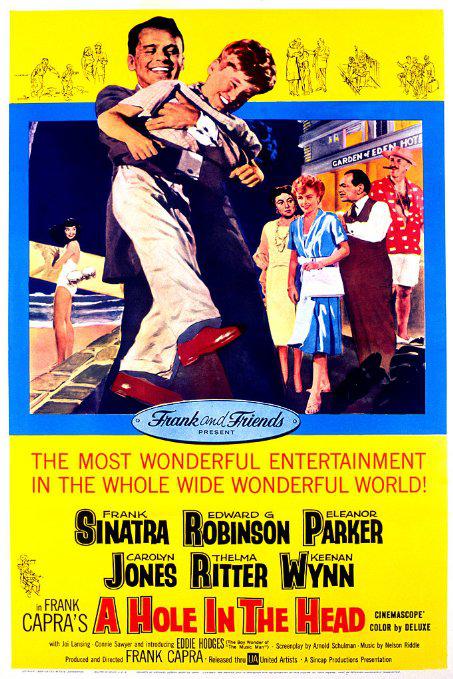
A Hole In The Head (1959) is a rather melodramatic movie by legend Frank Capra in which co-producer Sinatra plays the leading role, Tony Manetta.
Tony is a widower, owner of a small hotel in Miami, an irresponsible spendthrift and father of a twelve-year-old son, Ally. He has to tell his son that he has lost all his money and that they are going to be homeless. A difficult conversation, which he then opens with the words Come here son. I think we better talk this over.
That phrase is not the only thing that resonates with Dylan. Of course Frank Sinatra also sings: the song “High Hopes” is not only one of his biggest hits, but also wins the Oscar for Best Original Song and in 2008 it is on the play list of Dylans Theme Time Radio Hour. The song is recorded at Capitol Studios in Hollywood, where Dylan records his Sinatra album Shadows In The Night in 2014, and in 2016 and 2017 its successors (Fallen Angels and Triplicate).
Lyricist Sammy Cahn, one of Sinatra’s regular song suppliers and to whom Ol ‘Blue Eyes also owes the Oscar winners “Three Coins In The Fountain” (1954) and “All The Way” (1957), explores in “High Hopes” the power of the middle rhyme, the rhyme variant with rhyming words in the same verse, in combination with end rhyme. A clever move; it elevates the somewhat foolish song (music: Jimmy Van Heusen, another purveyor to Sinatra), though it is still not Shakespeare:
Anyone knows an ant, can’t
Move a rubber tree plant,
And as another example of the same…
No one could make that ram, scram
He kept buttin’ that dam.
In terms of content, it is corny talk with a high Dr Seuss-quality, obviously. But the form appeals to a rhyme maestro with a weakness for Spielerei. In “We Better Talk This Over” every couplet ends with a middle rhyme. Dylan wants to express a larger emotion than Sinatra and therefore does not resort to nonsense, but nevertheless lets form prevail, occasionally:
Let’s call it a day, go our own different ways
Before we decay,
does not exactly fit the song theme perfectly. Decay fits in with the dark gloominess that is the setting in “Every Grain Of Sand”, or in the fall of life of “Cold Irons Bound”, but in a lover’s swan song it sounds too exaggerated.
And of course, the end of a love affair is the theme. With some knowledge of Dylan’s private problems, it is not too astute to deduce that his divorce at the very least contributed to the inspiration. Biographer Clinton Heylin drew up sketches of the song in which a few even more intimate details of that divorce are revealed: the attempt of the singer to shut the door on lawyers.
We don’t need any back seat drivers
Hypocrites, meddlers or cheap connivers
Both of us are survivors
Don’t be confused, you’ll only be used
We can work this out, there is no doubt,
Without having to shout
Notify yr new adviser
That yr not greedy & I’m not a miser
It does not quite fit yet, the meter is still a bit abrasive, but the drift is clear. Too clear, perhaps – Dylan apparently does not want the whole thing to be an Open Letter to Sara, and deletes the all-too-clear references to any juridical tug-of-war. What remains, is universal enough to be timeless, inspired enough to seem private.
This end result is a glamourous, beautiful song, with flashes of poetic genius especially in the category Rhyme, Rhythm and Reason. Just like in “True Love Tends To Forget”, the predecessor on Street Legal, the inspired poet finds synergy, the added beauty when those three forces coincide. I took a chance, got caught in a trance of a downhill dance is such a verse where everything is right: metrically it runs like a charm, the rhyme is enchanting and with regard to content the words express the feelings of the confused, uncertain lover.
The word choice stands out. Dylan never uses words like ‘liable’, ‘erase’, the deleted ‘connivers’ or ‘transition’, and phrases like ‘low-down’, ‘two-faced’ or ‘double-dealing’ rarely if ever. In his Dylan’s Visions Of Sin (2004), Professor Christopher Ricks makes a point of the equally exceptional ‘somewheres’ (as opposed to somewhere), once again drawing his usual excessive conclusions. What escapes him is the influence of Woody Guthrie’s Bound For Glory (1943), the autobiography that in Dylan´s library is on the same pedestal as the Bible and Kerouacs On The Road:
“I went through it from cover to cover like a hurricane, totally focused on every word, and the book sang out to me like the radio. Guthrie writes like the whirlwind and you get tripped out on the sound of the words alone. Pick up the book anywhere, turn to any page and he hits the ground running. (…) Bound for Glory is a hell of a book. It’s huge. Almost too big.”
(Chronicles chapter 5, River Of Ice)
… and wherever you open the book, you can see the influence on Dylan. Like the word choice; ‘Low-down’, for example. And it also explains where that folksy ‘somewheres’ comes from, as at the end of chapter IX, A Fast-Running TrainWhistles Down:
“Shut you mouth!” Roy doubled up both fists and raved back at me, and his eyes blazed wildfire. “You little rat!” I set down close to the stove against the wall and heard Grandma say, “Where—how is Nora!” Warren was listening, swallowing hard. “She’s on the westbound passenger train.” Roy slid down on the floor beside me and fumbled with a burner on the wreck of a stove. “On her way to the insane asylum.” Nobody said very much. Away off somewheres we heard a long gone howl of a fast-running train whistling down.
The Dylan fan recognizes four, five fragments of text in such a short piece. Nobody said very much Dylan repeats literally in “Clothes Line Saga”, the burner on the stove comes along in “Tangled Up In Blue”, the passenger train in “Honey, Allow Me Just One More Chance”, and idiom like insane asylum,wildfire, howl, fumble or raved can also be found in Dylan’s catalog. And that weird ‘somewheres’.
The music turns out just as well. The intro is pleasantly hesitant and searching, the arrangement finds a wonderful middle ground between tight and casual and Dylan, after “True Love Tends To Forget”, once again succumbs to the beauty of a successful middle-eight, of a bridge. It is even played four times and thus actually gets the status of a chorus. Under the skin, the song has a vague country atmosphere, with special thanks to guitarist Billy Cross, who is inspired by the Bakersfield sound of – above all – Buck Owens, one of Dylan’s old heroes.
Beautiful lyrical finds, beautiful music, but nevertheless “We Better Talk This Over” shares the fate of almost all Street Legal songs (“Señor” is the exception): after 1978 it disappears into the ghetto, Dylan does not perform it anymore. Yes, one more time: to the surprise of everything and everyone the bard pulls the song out at the late performance in Anaheim, March 10, 2000.
The master just keeps on giving, that particular day; in the early performance, he delighted the audience with two scoops, “Things Have Changed” and the forgotten gem “Tell Me That It Isn’t True”, which had to wait thirty-one years for the live debut. This also applies to another Nashville Skyline shelf warmer, for “Country Pie”, which debuts at the late performance.
The one-off execution of “We Better Talk This Over” is beautiful. Guitarist Charlie Sexton also is familiar with the twangy Bakersfield sound, Dylan is not entirely true to the original lyrics, sings passionately though, the audience is enthusiastic, but that is apparently not enough to convince the master – he contents himself with this one single revival of Street Legal Revisited.
What else is on the site
You’ll find an index to our latest posts arranged by themes and subjects on the home page. You can also see details of our main sections on this site at the top of this page under the picture.
The index to the 500+ Dylan compositions reviewed is now on a new page of its own. You will find it here. It contains reviews of every Dylan composition that we can find a recording of – if you know of anything we have missed please do write in.
We also have a discussion group “Untold Dylan” on Facebook. Just type the phrase “Untold Dylan” in, on your Facebook page or follow this link
And please do note The Bob Dylan Project, which lists every Dylan song in alphabetical order, and has links to licensed recordings and performances by Dylan and by other artists, is starting to link back to our reviews
Bob Dylan likes nothing better than to mess with proper rhyming as illustrated in the following alliterative verses that involve the Dylanesque ‘rhyme twist’.
He sometimes messes with the end-rhyme he carries over from the song that he pays tribute to – ‘dry’/’cry’:
Way up on the mountains, I wonder alone
I’m drunk as the devil, let me alone
It’s beef steak when I’m hungry, rye whiskey when I’m dry
And when I get thirsty, I lay down and cry
(Wilf Carter: Rye Whiskey ~ traditional)
In the lyrics below, Dylan introduce a syllabic end-rhyme: – ‘dry’/’cryin’:
Bob Dylan messes with the following song lyrics -‘man’/’x’:
John Hardy was a desperate little man
He carried two guns every day
He shot a man on the West Virginia line
And you oughta seen John Hardy getting away
(The Carter Family: John Hardy ~ traditional)
To go with the end-word in the first line of the traditional song above, Dylan, in the verse below, conjures up an off-rhyme to resonate with it – ‘man’/’hand:
You’ll find an index to our latest posts arranged by themes and subjects on the home page. You can also see details of our main sections on this site at the top of this page under the picture.
The index to the 500+ Dylan compositions reviewed is now on a new page of its own. You will find it here. It contains reviews of every Dylan composition that we can find a recording of – if you know of anything we have missed please do write in.
We also have a discussion group “Untold Dylan” on Facebook. Just type the phrase “Untold Dylan” in, on your Facebook page or follow this link
And please do note The Bob Dylan Project, which lists every Dylan song in alphabetical order, and has links to licensed recordings and performances by Dylan and by other artists, is starting to link back to our reviews
In my last article (above) I suggested that Dylan moved through different themes in his writing, and although certain themes came around time and time again (most commonly the notion of the eternal traveller always moving on without any place to call his own) he did on occasion move into other themes.
Such themes are often seen to be directly related to what was happening in his life – and of course in this regard Dylan is no different from many other – perhaps most other – creative artists. It is the world around him plus his general outlook on life that gives him his themes.
Of course when he had a life-changing experience, such as his conversion to Christianity, that had a major effect on what was in the lyrics of his songs, but it is interesting to see how quickly the underlying themes pushed their way back into his song-writing consciousness.
As to the technique of writing, recordings from the 1960s – the hotel room songs for example – and the notebooks in which he wrote the lyrics down – show us exactly what Bob could do and how he could do it. He could strum the guitar and evolve a song with outline lyrics, and then polish the lyrics while manipulating the melody and chordal accompaniment as he went until he got the result as he wanted it.
We also found that sometimes, because he had not got the song just as he wanted it, he would abandon the song rather than put it on an album – even though the general consensus was that here was a brilliant piece of work that should not left on the sidelines. But Bob was always his own man.
Indeed although I would suggest the Basement Tapes Complete is near impossible to listen to all the way through without a nourishing drink along the way, it is of itself a most valuable document – showing us how Bob takes ideas, explores them, and then (most of the time) ditches them. But gradually that process leads to something very much worth keeping. Just think how fantastic it would be to have such sketches from other composers of merit.
Thus although many of the songs could well have been written very quickly, they were never considered to be absolutely set in stone. While some rarely if ever have the lyrics changed (one thinks of the classics like Visions of Johanna, All Along the Watchtower and Like a Rolling Stone) many songs have been transformed musically in their subsequent performances.
This ties in very much with Bob’s obvious love of touring; he loves to be on the road, he loves to have the opportunity to re-write his songs. And yet as we pass through this most obvious point, a certain irony appears. The magnificent rearrangement of many of Bob’s songs have been kept for posterity only by the recordings made by fans. Now however it seems to be the case that at the concerts the security has been stepped up. No recordings, no pictures. You’re thrown out if you are caught.
Now given that this upturn in security has happened during the longest spell without a new album of his own work that we have seen in Bob’s career I wonder, are we now going to get some more live albums released? It would certainly explain what’s going on, and offer the fans what they really enjoy.
And what fascinates me is how Bob has managed to keep going, not only by composing more and more songs, but constantly producing songs of utter genius. Unlike most popular music artists, his greatest creations did come just at the start of his career.
But of course he had difficult times artistically. Coming out of the religious phase (which is where I ended the last article) he really did not seem to have a clue where to go next. Of course you might not agree with the themes that I hear in Dylan’s work in the 1980s, but once the impetus to write religious songs had left him, there was, for me at least, a sense of desperation in some of Bob’s writing. The old certainty that simply wandering off down the road like the blues singers of old would solve it, that was all gone.
Now there was moving on, but without any real hope that it would lead to somewhere interesting. Here are the 1980s in the same tabular format that I used in the last article…
Year
No of songs
Themes
Albums
1980
13
Moving on, religion
Saved
1981
20
Moving on, love, religion
Shot of love
1982/3
17
Love, where now?
Infidels
1984
10
Drifting on, moving on
1985
18
Being trapped
Empire Burlesque
1986
10
Experimentation
Knocked out loaded
1987/8
14
Self-doubt
Down in the Groove
1989
12
The darkness
Oh Mercy
My point here is not so much that Bob as a creative artist is influenced by the world around him – virtually all creative artists in all media are influenced in this way. But rather that during the 1980s Bob found himself forced to respond – because he did not want the alternative which would have been giving up – but he really didn’t quite know how to.
Many artists in the pop and rock music business over the last half century have given up after ten or twenty years, and if they have carried on performing thereafter have done so by performing their old hits over and over. And there is nothing wrong with that of course – it is what their audiences expected. If you went to hear Chuck Berry you went to hear “Roll over Beethoven” and that’s what you got.
But Dylan was not like that. He would always do his own thing – the problem (and of course this is just my take on the matter) was that in the 1980s he didn’t have too much idea any more what his own thing was.
One thing most creative artists will agree on, (if happy to talk on the subject of their own creativity), is that their creativity is not under their control. It comes, it goes, and when it has gone, it cannot be brought back by working ever harder.
What Dylan in his genius did however was to use these darker times as a theme to get his creativity working again. What was it you wanted is a sublime example of using the uncertainty of an artist who has to some degree lost his way, as a theme in his writing. That uncertainty was expressed further, later in the year with Most of the Time – a song of holding on to the last few strands of reality that are left as the world falls apart.
The year indeed ended with Man in a Long Black Coat as the mask of death walks by his door. But it was “What was it you wanted” that truly marked out Dylan’s genius. His ability here was to use even this situation of being lost, of knowing that the music he had been releasing in recent years was nowhere up to his previous standard, as a theme for a song. And that was something very very few artists have been able to do.
What was it you wanted I ain’t keeping score Are you the same person That was here before? Is it something important? Maybe not What was it you wanted? Tell me again I forgot
Really just how lost can someone be?
What Dylan had discovered by the time he wrote “What was it you wanted?” was that he could indeed still write powerful, demanding songs, and that the questions he so cleverly asked in What good am I were now being answered. Bob may well have felt that he didn’t have the answers by then, but he was at last now really able to ask the question.
It took five years to notch up 22 performances of “What was it you wanted?” and to my mind those live performances never matched to absolute lostness (if I can create a new word for the experience) of the original recording. But here’s an interesting alternative mix.
What else is on the site
You’ll find an index to our latest posts arranged by themes and subjects on the home page. You can also see details of our main sections on this site at the top of this page under the picture.
The index to the 500+ Dylan compositions reviewed is now on a new page of its own. You will find it here. It contains reviews of every Dylan composition that we can find a recording of – if you know of anything we have missed please do write in.
We also have a discussion group “Untold Dylan” on Facebook. Just type the phrase “Untold Dylan” in, on your Facebook page or follow this link
And please do note The Bob Dylan Project, which lists every Dylan song in alphabetical order, and has links to licensed recordings and performances by Dylan and by other artists, is starting to link back to our reviews
Who is that lady is on the back cover of Shadows In The Night? Eventually that question is satisfactorily resolved by Dutch Dylanologist Tom Willems, in his February 2015 blog
It is Meg White, the ex-wife and musical ex-partner of Jack White, of The White Stripes. Jack White runs multiple bands and is an indefatigable initiator of music projects in between, shares with Dylan a profound respect for roots, especially for blues dinosaurs like Son House and Charley Patton, and honours Dylan in every incarnation with one or more covers.
We can see this, in the minimalist White Stripes with “Isis”, for example, with “One More Cup Of Coffee” and with “Outlaw Blues” and “Love Sick”. Dylan influence can also be detected outside the covers; their “As Ugly As I Seem” (from the album Get Behind Me Satan, 2005) is a carbon copy of Dylan’s “I Believe In You”.
When Meg has left him, Jack goes on with unshaken determination. Particularly striking is the collaboration with Wanda Jackson, with whom he records a steamy “Thunder On The Mountain”.
Before that he has already drawn the attention of the master himself. In 2004 Dylan plays in White’s home town Detroit and there he invites him on stage to play along with one of Jack’s most memorable songs, “Ball And Biscuit”. Undoubtedly Dylan has succumbed to the old-fashioned mix of blues with folkloric myths, and he recognizes a kindred spirit with a special talent. White is invited again and even manages to entice the old master to a scoop: in Nashville 2007 Dylan plays with him for the first time live on stage “Meet Me In The Morning” from Blood On The Tracks (’75).
A few months before that our host of Theme Time Radio Hour plays the monumental “Seven Nation Army” (episode 33, Countdown).
The irresistible riff of the song has been shaking the football stadiums for over a decade now and Dylan too appreciates the “two-person rhythm dynamo, Jack and Meg White,” the message coming out of their eyes, the sweat dripping out of every pore, and inspired he counts down a series of “seven things with white stripes” (a skunk, a highway, the hair of Memphis Slim …)
By then, Jack already plays in yet another band, in The Raconteurs, the support act for eight Dylan concerts in November 2006.
Without Dylan, but with a next hobby band, The Dead Weather, White tackles another blues highlight from the 70s: “New Pony”.
The attraction of that little masterpiece to White is obvious: “New Pony” is firmly rooted in the blues tradition and has on top of that the “Dylantouch”. The pony (or the horse, or the mare) as a metaphor for the female sexual partner is classic, the man usually being the rider. Dylan chooses this image as a reference to the first song of his hero Charley Patton, “Pony Blues” (1929). Recorded during the first Patton session, that also included “Down The Dirt Road”, which Dylan will place on a pedestal later, on Time Out Of Mind.
Patton’s “Pony Blues” is part of the canon by now, and the much older sexual connotation also effortlessly penetrates the blues idiom. Memphis Minnie, another idol of Dylan, milks the imagery in her “Jockey Man Blues”, the See See Rider rides his lady in the American Civil War and Big Joe Williams leaves no doubt about what he means by “My Gray Pony” (1935).
Around that time, society replaces the horse by the automobile. As does the blues: “Scarey Day Blues” from 1931 by Blind Willie McTell is probably the first. And the metaphor still holds (“Little Red Corvette” by Prince from ’82 is the best-known example), of course because the ambiguous riding can be transposed one on one. The drafty four-legged friend is now a sharp car and Memphis Minnie is not inviting a jockey, but a driver for a ride (“Me And My Driver Blues”, 1941).
There is no discussion about the sexually intended allusions in Dylan’s “New Pony”. But in fan circles the question is who the poet means by Miss X, by pony Lucifer and by the new pony. To the strength of the work it does not make any difference, of course, and remorselessly pursuing encrypted, private outpourings from the man’s personal love life is not only irrelevant but also embarrassing, but the author himself does invite rooting around. In the somewhat rudderless Rolling Stone interview with Jonathan Cott from ’78, the song is referred to fleetingly when the journalist talks about those witchy women in Dylan’s songs:
“That voodoo girl in New Pony,” Cott says, “was giving you some trouble.”
“That’s right.” Dylan replies. “By the way, the Miss X in that song is Miss X, not ‘ex’…”
It is a response to a charge that Cott does not undertake at all, so Dylan either responds to an observation made outside of this interview, or he himself is not comfortable with that translucent reference. The latter seems more likely. The singer is embroiled in a difficult separation with a lot of legal sabre-rattling and chooses in that verse for the rather bland disposition, which in addition to ‘temperament, character’ also may refer to the completion of a legal process, to a judicial decision.
The first and the second verse both sing the end of a relationship anyway. The ex-partner gets the name of the fallen angel, the end ‘hurts me more than it could ever have hurted her’ and in the second verse the protagonist is also surprised by the unpredictable behavior of the abandoned woman. It is only a small step to the separation problems with Sara, all in all.
In addition, it is rather unlikely that the world’s best songwriter does not factor in the sound similarity of ‘X’ and ‘ex’.
For the description of the new pony, Dylan draws from Arthur Crudup’s “Black Pony Blues” of (1941). “She foxtrot and pace,” sings Elvis’ musical idol of her, and “she’s got long curly hair”, and the other images and imagery (the great hind legs, the shadow on the door, the climb up on you) all come from lesser and more famous blues classics as well.
Only the mysterious voodoo verse still looks like a real Dylan original. Not so much the phenomenon of a Black Magic Woman or a Witch Queen, of course, but the enigmatic verse “I seen your feet walk by themselves”. In the world literature that expression can only be found in a novel from Machado de Assis (1839-1908), the founder of modern Brazilian literature and one of the godfathers of twentieth century South American literature. ‘Lá os meus pés andam por si,’ he writes in one of his most beautiful novels, Esau and Jacob (1904), in the English translation translated as my feet walk by themselves. Esau and Jacob visit Street Legal, the album from which “New Pony” originates, one more time (in “Where Are You Tonight?”). So who knows – maybe Joaquim Maria Machado de Assis is to be found on Dylan’s bookshelves.
However, the rhythm of the syllables will have been more decisive. “New Pony” is one of the many songs from Dylan’s catalog that bubble up from a riff and that fits seamlessly with what the master explains to Bill Flanagan in 1985: “A lot of times I’ll wake up with a certain riff, or it’ll come to me during the day. I’ll try to get that down, and then the lines will come from that.“
Within the limits of riff-based, traditional blues, the Street Legal recording of “New Pony” is exceptionally rich, ingenious and colourful. Guitarist Billy Cross’ snarling guitar solo (a rare phenomenon on a Dylan album as it is) has the garage quality and filthiness from one of the better Rolling Stones records, bassist Jerry Scheff, who has played in Elvis’ band, chooses a funky accompaniment, including matching plucking accents (under Miss X, for example), the congas go as they please and the ladies’ choir does not follow the lyrics, nor the melody of the singer, but is orchestrated as a background horn section – a beautiful trouvaille.
It is a fascinating, inspired recording, and the song is still one of the highlights from the old master’s blues catalog.
Almost all covers strip the original and turn it back into a raw, ripping blues. In that category, the aforementioned approach of Jack White with The Dead Weather is the most energetic, disruptive and compelling rendition. Distinctive, however, is a lady: Maria McKee, who has enjoyed the rare privilege of Dylan giving her a song as a gift (he wrote “Go ‘Way Little Boy” for her, through the intercession of Carole Childs, 1987). She plays “New Pony” live in 2008. It opens slightly brooding, derails gradually, then silences again and thus inserts an attractive tension into the song.
However, Dylan’s original continues to tower above all covers, but he does not play it live himself – except for “Señor” and a very few exceptions, the songs from Street Legal are taboo on stage, after the year of birth 1978.
What else is on the site
You’ll find an index to our latest posts arranged by themes and subjects on the home page. You can also see details of our main sections on this site at the top of this page under the picture.
The index to the 500+ Dylan compositions reviewed is now on a new page of its own. You will find it here. It contains reviews of every Dylan composition that we can find a recording of – if you know of anything we have missed please do write in.
We also have a discussion group “Untold Dylan” on Facebook. Just type the phrase “Untold Dylan” in, on your Facebook page or follow this link
And please do note The Bob Dylan Project, which lists every Dylan song in alphabetical order, and has links to licensed recordings and performances by Dylan and by other artists, is starting to link back to our reviews
In the the song lyrics of ‘Tell Me Momma’, Bob Dylan pays tribute to Bascom Lunsford who records Appalachian folksongs – the surrealistic images in the lyrics below reflect the darkness wrought by love lost:
Ol’ black Bascom don’t break no mirrors Cold black water dog make no tears You say you love me with what may be love Don’t you remember makin’ baby love?
(Bob Dylan: Tell Me Momma)
The innocence of youth gets chased away by the black dog of depression:
Little boy, little boy, where have you been?
Where did you stay last night?
I stayed in the pines where the sun never shines
And I shivered while the cold winds blow ….
The prettiest girl I ever did see
Was killed one mile from here
Her head is in the driving wheel
Her body was never found
(Bascom Lunsford: To The Pines, To The Pines ~ traditional)
https://www.youtube.com/watch?v=hqppkemf4WY
The images below as black as Appalachian coal:
Oh, what did you meet, my darling young one? I met a young child beside a dead pony I met a white man who walked a black dog I met a young woman whose body was burning (Bob Dylan: A Hard Rain’s A-Gonna Fall)
Bob Dylan highlights Lunsfordian references with Dylanesque “rhyme twists” – ‘poor’/’x’:
Jesse James was a man
And a friend to the poor
Little did he suffer men’s pain
With his brother Frank
He robbed the Chicago Bank
He stopped the Glendale train
(Bascom Lunsford: Poor Jesse James ~ traditional)
As he does in the lines following -‘poor’/’door’
John Wesley Harding
Was a friend to the poor
He travelled with a gun in every hand
All along the countryside
He opened many a door
But he was never known to hurt an honest man (Bob Dylan: John Wesley Harding)
There’s the Appalachian romantic theme of the human spirit rebelling against a disconnect between it and Mother Nature, akin to the writings of William Blake and Leo Tolstoy – capitalist technology, the steel-driving hammer and the iron-horse locomotive, be the tools of the ‘devil’:
Ain’t no hammer in this mountain
Out rings mine, baby, out rings mine
Well, this old hammer it killed John Henry
It didn’t kill me, baby, couldn’t kill me
(Bascom Lunsford: Swannanoa Tunnel ~ traditional)
Bob Dylan’s train of thought tends to be loaded with the dark images taken from the traditional songs that are recorded by Lunsford:
The wind howls like a hammer
The night wind blows cold and rainy
My love, she’s like some raven
At my window with a broken wing (Bob Dylan: Love Minus Zero)
Images that reflect the loss of red-hot love and, with it, peaceful mountains of green.
What else is on the site
You’ll find an index to our latest posts arranged by themes and subjects on the home page. You can also see details of our main sections on this site at the top of this page under the picture.
The index to the 500+ Dylan compositions reviewed is now on a new page of its own. You will find it here. It contains reviews of every Dylan composition that we can find a recording of – if you know of anything we have missed please do write in.
We also have a discussion group “Untold Dylan” on Facebook. Just type the phrase “Untold Dylan” in, on your Facebook page or follow this link
And please do note The Bob Dylan Project, which lists every Dylan song in alphabetical order, and has links to licensed recordings and performances by Dylan and by other artists, is starting to link back to our reviews
Many writers are very secretive about how they write, but a few have given us clues across time. Dylan Thomas, for example, admitted that he could spend all day fretting over which of two words to use at one point in a poem – suggesting two words that many of us might feel could each equally be perfectly good in that specific position.
On the other hand some writers seem just to hit the keyboard or write in the notebook and they are off. Of course we have seen from the notebooks that lines with Dylan do change during the composition stage and we have multiple examples of him changing the song subsequently as we go.
Indeed some songs such as “Tangled up” have totally transformed themselves over time in a deliberate process of re-working.
But where do those first ideas come from?
We know that Bob Dylan likes to take other people’s work and modify it. From the earliest days he has reworked old folk songs, and in later life had much fun re-working songs from the 1920s and 1930s. So that is an obvious source.
And as Larry has pointed out in his articles on the influences of Bob Dylan, we have seen time and again how he has not only taken phrases from songs, but also from the movies, books, poems – any source he can find and he has then welded them together.
Yet we must also hold in mind the fact that Bob Dylan is not a consistent writer. Because of the level of research done in recording not just the songs that Bob chooses to release on record but also songs that he started and then abandoned – or at least never released formally – we can track his writing year on year. Indeed if you want to see exactly which songs appear in each year you can use our charts which have pretty much stood the test of time
But to save you working through each long article, I’m going to look at how the numbers have gone while also noting the mainstream albums of new songs that have followed.
In what follows the number of songs and the themes of those songs relate to the songs being written in that year. Quite often an album contained songs written the year before.
And also of course this is a summary – most years Dylan explored many themes; the theme summaries relate to main theme or themes s that seemed to occupy Dylan significantly that year.
In these charts the number of songs is of course the total of new songs which have been attributed to Bob Dylan.
Year
No of songs
Themes
Albums
1961
6
Talking blues, poverty
1962
36
Moving on, civil rights,
Bob Dylan
1963
29
It’s gone wrong, protest, leaving
Freewheelin
1964
20
Sadness, protest, moving on
Times they are a changin
1965
29
Disdain, love farewell, observations of people
Bringing it all back home; Highway 61
1966
22
The metaphors
Blonde on Blonde
1967
77
Experimentation
Basement Tapes; John Wesley Harding
1968
1
Lay Lady Lay
1969
14
Country
Nashville Skyline
1967 was a bit of an oddity – many of the songs listed come from the Basement Tapes, and of course many of these are one-offs, played through once and never touched again. In other years such songs would have been played and forgotten, and we’d never have them. Obviously 1968 was a reaction to that – there was a song (Lay Lady Lay) but it was delivered late and so never made it onto the movie. The implication is, after all that work in the Basement Bob Dylan found it hard to get back to songwriting again.
Year
No of songs
Themes
Albums
1970
15
Looking out at the world outside
Self Portrait; New Morning
1971
4
Myself, the artist
1972
2
Love of a child, film music
1973
14
Love, farewell, moving on
Pat Garrett
1974
12
Anger and the randomness of life
Planet Waves
1975
17
Observing life and moving on
Blood on the Tracks
1976
1
Lost love
Desire
1977
7
I’ve moved on and keep on moving
1978
17
The randomness of it all
Street Legal
1979
18
Love of Jesus
Slow Train
Dylan was exploring the moving on concept at the heart of his music throughout his life thus far, and yet having completed Street Legal he suddenly found himself unsure if this was enough.
What I think we can take from these two decades is that Bob clearly has underlying themes in his writing – the desire to keep on moving on is the most obvious example, but he can be interrupted by lost love (one of the three prime themes of popular music, the other two being dance and love).
Moving on is fine, and so is the randomness of life as an explanation of the world, but when that randomness is combined with something quite different such as the absolute pain of the loss, rather than the moving on being a matter of choice, then that is bound to challenge one’s who perception of the world.
We can see from the level of song writing, Dylan is not a writer who is feels he is compelled to keep writing no matter what. He is not a man who is always bursting with ideas that have to be set down and recorded. He is in fact a bound by visions and thoughts of what life is and how the world works, and towards the end of the 1970s, these visions combined with thoughts about the randomness of life.
So my thought is that the stimulus for Bob’s writing is often what he is thinking about and what is happening in his own life, rather than a drive from outside events.
I hope in the near future to continue this and see if this view can be applied to Bob in later decades.
What else is on the site
You’ll find an index to our latest posts arranged by themes and subjects on the home page. You can also see details of our main sections on this site at the top of this page under the picture.
The index to the 500+ Dylan compositions reviewed is now on a new page of its own. You will find it here. It contains reviews of every Dylan composition that we can find a recording of – if you know of anything we have missed please do write in.
We also have a discussion group “Untold Dylan” on Facebook. Just type the phrase “Untold Dylan” in, on your Facebook page or follow this link
And please do note The Bob Dylan Project, which lists every Dylan song in alphabetical order, and has links to licensed recordings and performances by Dylan and by other artists, is starting to link back to our reviews
It is still standing there, the auction block on which the slaves had to stand to be sold by auction, on the corner of Charles and William Street in Fredericksburg, Virginia. Controversial enough, to many Fredericksburgers, but on September 26, 2017 the city council, after heated discussions, decides that the historical interest outweighs the weight of the shame. The block and memorial plate remain in place, the Olde Town Butcher has to swallow that bitter symbol of inhumanity right in front of his shop door.
The practice of slave auctions has been immortalized in the song “No More Auction Block”, a song that surfaced somewhere in the middle of the nineteenth century. Its origin is unknown, but we know that it was sung as a marching song by the so-called Black Regiments during the American Civil War (1861-65). A decade later the legendary Fisk Jubilee Singers travelled around with that song on the repertoire and a century later it is still on the setlist of black artists – Odetta, in particular, keeps it alive. Dylan sang it one time, in 1962, and then knocks up the melody for “Blowin ‘In The Wind”, which he will perform a bit more often.
Dylan will never again sing about slave auctions, but a derivative inspires one more time: going, going, gone is the formula with which the auctioneer closes the deal. It is a gripping, charged and rhythmically strong catchphrase. Dylan also has found a beautiful melody, but lyrically it does not really work. His approach becomes clearer only later, after the many text revisions: it is meant as a resigned lament of a faded love, of a lover who recognizes that he has to put an end to it.
But then, we are in those dry and barren years 1969-73, the years in which the poet Dylan is watching the river flow, waiting for the inspiration for a masterpiece to bubble up again. After that successful find for the chorus, it will stagnate again; text rhymes with next, edge with ledge, a couplet is helplessly closed with an empty line like it’s the top of the end… no, this is not the poet of majestic masterpieces like “Visions Of Johanna” and we are still waiting for the genius of “Up To Me” and “Tangled Up In Blue”. And ambiguity usually does not concern Dylan, but this time he is apparently annoyed by the consensus among reviewers and fans that this song is so poignant, so bleak, the conviction that the narrator is going to end his life here.
This view is indeed obvious. The images from all four couplets one associates with an end of life rather than with a love ending: ‘the willow does not bend’, ‘the book is closed’, ‘I hang on a thread’ and ‘I am standing on a ledge’ … and then there is the chorus with that ambiguous gone, which of course can also mean ‘passed away, deceased’.
That is not the idea. At the first live performances (Rolling Thunder Revue II, from April 18, 1976), Dylan has already done a lot of reworking. A you is introduced, that scary ledge has been deleted and the whole rewritten last verse makes the whole song leaning much more on heartbreak:
I’m in love with you baby
but you got to understand
that you got to be free
so let go of my hand
In the ten 1976 performances Dylan will stick to this variant. With small deviations, though; Joan Baez comes along on this tour and sings four times her beautiful, melancholy ode about her past relationship with Dylan, “Diamonds And Rust”. It entices the sung person to a teasing wink back. At the end of May, in Texas, Dylan shuffles words, phrases and couplets in “Going, Going, Gone” and adds:
I’ve been sleeping on the road with my head in the dust Now I just got to go before it’s all diamonds and rust
These lyrical adaptations, and the fact that Dylan usually presents flaming, aggressive performances of the bitter “Idiot Wind” after the song, feed the thought that the man Bob Dylan vents personal concerns, that the lyrics are an autobiographical expression of love or marital problems. This conviction gets an extra boost after the next text revision, the one for the performances during the Far East Tour, February and March 1978. Now there is no doubt whatsoever about the source of man’s misery – love issues, not life issues. The opening verse immediately puts things in order:
Well, I’ve just reached a place where I can’t stay awake I got to leave you baby before my heart will break I’m going, I’m going, I’m gone
Fix me one more drink baby and hold me one more time But don’t get too close To make me change my mind
Finally, Dylan underlines that he does not use going going gone in a metaphorical, morbid sense, but literally: this man takes up his suitcase and leaves. We now even know where:
Now from Boston to Birmingham
is a two day ride
But I got to be going now ’cause I’m so dissatisfied
Some twelve hundred miles, a two day ride, indeed. Why the poet chooses these two cities is probably not very relevant. Boston stands for Northern, intellectual, worldly, cultural and Birmingham, Alabama is associated with the South, and then with the negative cliché images of it; rednecks, provincial narrow-mindedness, racism and backwardness. She lives in Boston and he is from Birmingham – it illustrates incompatibility, an impossible relationship, something like that.
But maybe the poet only looked at his tour schedule. At the end of September ’78 Dylan plays in Boston, a two months ride later, early December in Birmingham.
In the last version, from the Europe summer tour ’78, Boston and Birmingham have already been eliminated and old fashioned blues idiom finds its way in:
I’ve been hanging round your house so long You been treating me like a clown You haven’t done nothing but tear a good man’s reputation down
Pretty literal from Robert Johnson’s “From Four Until Late” (From four ’till late, she get with a no-good bunch and clown / Now, she won’t do nothin’, but tear a good man’ reputation down).
https://www.youtube.com/watch?v=0kcJyjhcsQI
Improvements, all of them, but they do not last. After 1978, Dylan never plays the song again, covers always follow the original lyrics on Planet Waves and in the liner notes of Trouble No More (2017) the celebrated music journalist Amanda Petrusisch is unaffected, insisting persistently that Dylan likes to write about death, sometimes “in obvious ways, in songs like Going, Going, Gone and Knockin ‘On Heaven’s Door“. Back to square one.
The real heart of the song, the music, grows along with the lyrical improvements. It’s already one of the highlights on Planet Waves. An intro is never better than here and Robbie Robertson’s guitar with those pinched notes generates goose bumps, but the Rolling Thunder version still exceeds that. The influence of the brilliant music producer and rock guitarist Mick Ronson is audible. He is the man whose arrangements elevate Bowie’s songs on Hunky Dory and Ziggy Stardust and Lou Reed’s songs on Transformer to timeless classics. The magisterial strings arrangement of “Life On Mars?” is his, for example, “Satellite Of Love” and “Perfect Day” are beautiful songs, but become pop monuments only when Ronson shapes them.
Apparently he has shed his light on “Going, Going, Gone” and turns it into an incredibly exciting, dramatic rocker. The “You Really Got Me”-like hook behind the lines is a brilliant addition and contrasts beautifully with the whirling, lyrical accompaniment under the verse lines before and after, repeating the bridge, before the last verse, indeed gives the song extra body and the alternation of the slightly chaotic instrumental intermezzos with the tighter, barren arrangement between the sung parts provides an irresistible added depth.
Self-interest, presumably. From Mick Ronson is also the illustrious quote “Actually, I never liked Dylan’s kind of music before; I always thought he sounded just like Yogi Bear“- so he turns the songs a bit more into his own taste.
More colleagues follow that example. Veteran Bettye LaVette is seventy-two years old when she surprises with the very successful tribute album Things Have Changed (2018). Her twelve interpretations of Dylansongs, and especially of neglected songs like “Seeing The Real You At Last” and “Political World”, lead to praising and jubilant reviews worldwide. The album closes, after a steamy, driving “Do Right To Me Baby”, with a dreamy, intimate “Going, Going, Gone”.
Flashing, but not as overwhelming as the most beautiful cover of the song. Gregg Allman records a full album shortly before his death (May 2017), Southern Cross, for which he once again did everything with producer Don Was. Initially, Allman wants to say goodbye with an album filled with original, own songs. The preliminary title even was All Compositions By Gregg Allman. This does not work out, mainly because of his health problems (liver cancer) and he then decides to cover songs that mean a lot to him. Apparently Gregg sees “Going, Going, Gone” also as a gripping farewell to life.
Allman’s version is heartbreaking, swampy and soulful – the South of the slave trade and the auction blocks emerges again.
You might also enjoy…
Going Going Gone: turning an ok song into one of the greatest moments in rock music
What else is on the site
You’ll find an index to our latest posts arranged by themes and subjects on the home page. You can also see details of our main sections on this site at the top of this page under the picture.
The index to the 500+ Dylan compositions reviewed is now on a new page of its own. You will find it here. It contains reviews of every Dylan composition that we can find a recording of – if you know of anything we have missed please do write in.
We also have a discussion group “Untold Dylan” on Facebook. Just type the phrase “Untold Dylan” in, on your Facebook page or follow this link
And please do note The Bob Dylan Project, which lists every Dylan song in alphabetical order, and has links to licensed recordings and performances by Dylan and by other artists, is starting to link back to our reviews
In the lyrics of his songs, Bob Dylan often leaves (consciously or subconsciously) a sign in rhyme that directs his listeners to the singer (or poet) he sources.
There be a ‘Dylanesque rhyme twist’ taken from the song below: round’/’ground’:
I’ve been to the east, and I’ve been to the west
I’ve been this whole wide world round
I’ve been to the East River, and I’ve been baptized
Take me to the hanging ground … Lord, Lord
Take me to the hanging ground
(Lead Belly: John Hardy ~ traditional)
Dylan varies the end-rhyme some – ‘around’/’resound’:
All across the telegraph His name it did resound But no charge held against him Could they prove And there was no man around Who could track or chain him down (Bob Dylan: John Wesley Harding)
The historical Hardy and Hardin are both killers:
John Hardy he was a desperate little man
He carried two guns every day
He shot a man on a West Virginia line
Oughta seen John Hardy gettin’ away
(Lead Belly: John Hardy)
See Bobby come and go, mixing up the musical medicine show; turning the lyrics of traditional folksongs inside out, and upside down:
John Wesley Harding was a friend to the poor He travelled with a gun in every hand All along the countryside He opened many a door (Bob Dylan: John Wesley Harding)
A tribute to the singer of the blues pops up in another Dylan song:
Well, I been to the east, and I been to the west And I been out where the black winds roar Somehow, though, I never did get that far With the girl from the Red River Shore (Bob Dylan: Red River Shore)
In the song lyrics presented below, Dylan provides a proper end-rhyme for one that’s been widowed in a blues song – ‘dawn’/’gone’:
They say the darkest hour is right before the dawn But every day’s the darkness since you’ve been gone Little rooster crowin’, there must be somethin’ on his mind (Bob Dylan: Meet Me In The Morning)
A similar rhyme, Dylan previously employs – ‘dawn’/’on’:
Praise be to Nero’s Neptune, the Titanic sails at dawn
Everybody’s shouting, ‘Which side are you on?”
The blues song – ‘x’/’gone’:
Now, if you’ve seen my little red rooster
Somebody, please run ‘im home
There’s been no peace in the barnyard
Since my little red rooster’s been gone
(Willie Dixon: The Little Red Rooster)
In the following song lyrics, Dylan, ‘twists’ a rhyme from a gospel blue grass song – ‘fall’/’wall’:
They say every man needs protection
They say every man must fall
Yet I see my reflection
Some place so high above this wall
I see my light come shining (Bob Dylan: I Shall Be Released)
The internal rhyme is in the lyrics of the song below – ‘all’/’walls’:
I saw the light come shining
Come shinin’ all around
When Paul prayed in prison, them prison walls fell down
The prison keeper shouted
‘Redeeming love I found’
(Dry Bones: Bascom Lunsford ~ traditional)
Written in the Holy Bible:
And at midnight, Paul and Simon prayed ….
And suddenly there was a great earthquake
So that the foundations of the prison were shaken
(Acts 16: 25, 26)
Here’s another example of a revitalized ‘rhyme twist’ in a Dylan song – ‘block’/’talk’:
Dry bones in that valley they got up, and took a little walk
The deaf could hear, and the dumb could talk
I saw, I saw the light from heaven
Shinin’ all around
(Dry Bones: Bascom Lunsford)
Listening to the recordings of Lead Belly, Willie Dixon, and Bascom Lunsford has a strong influence on the music and lyrics of Bob Dylan.
What else is on the site
You’ll find an index to our latest posts arranged by themes and subjects on the home page. You can also see details of our main sections on this site at the top of this page under the picture.
The index to the 500+ Dylan compositions reviewed is now on a new page of its own. You will find it here. It contains reviews of every Dylan composition that we can find a recording of – if you know of anything we have missed please do write in.
We also have a discussion group “Untold Dylan” on Facebook. Just type the phrase “Untold Dylan” in, on your Facebook page or follow this link
And please do note The Bob Dylan Project, which lists every Dylan song in alphabetical order, and has links to licensed recordings and performances by Dylan and by other artists, is starting to link back to our reviews.
One of my mottos as a translator is “Literature in a given language may only profit from being translated into a foreign language.” One of the fundamental works in the Polish poetry is a translation of the Book of Psalms by Jan Kochanowski, possibly the greatest Polish poet ever. The translated pieces enrich the style, the language, the vocabulary, the spiritual perimeter of our literary world. No doubt about it.
Another motto says: “There is no perfect, ultimate translation.” Which means that every new translation is welcome. One of my friends argues that we in Poland are in a far better situation in terms of Shakespeare than native English speakers – they have just one Hamlet whereas we have seven or eight. Quite a luxury, n’est-ce pas?
Around 1996 I started to sense my own philosophy of translating, especially of songs translation. “Especially”, because I translate prose and non-fiction books, from Spanish and (occasionally) French. I cut my teeth on the Disney songs where you not only have to preserve the original content and rhythm and rhymes but also be in time with the ever-changing frames, mouths opening and shutting and so on. It’s been a hard but good schooling.
But with Bob Dylan it’s a bit different. With singers-songwriters in general.
The first question is:
If I translate this song would it be relevant for the Polish listeners? Is there any reason for it to be put into Polish language?
The second question is:
Is it possible to find an equivalent for the content within the Polish phrases and sounds? Polish is a much less pleasant language for a singer than English or Italian. We have many consonants, few one-syllable words – but we have an advantage of a variable syntax – we can order words differently and the sentence still may have the same meaning (it’s a bit like the regular vs. the Yoda syntax).
The third, and most fundamental question is:
Will I be able to find the right mood/style to convey what I find important in the original song?
For the English speakers who don’t give a damn about the whole thing it may be a bit hard to understand. Why translate something if it sounds perfect in English?
Translation is a win/lose game. You compromise. Searching for a gem, you fail in conveying certain things but you gain otherwhere. Technically, it’s like designing a crosswords or a sudoku puzzle.
My philosophy, if I may call it that, is that I must find an adequate version. Not a faithful one in words but a faithful one in meanings, in profound structures.
To find the right language is the first task. I have found it somewhere between the beatniks’ translations and Polish contemporary poetry. Sometimes in old Bible translations. The richness of Bob Dylan language requires many directions. But one thing has been sure to me: I mustn’t refer to the 19th century poetry and to anything majestic. The Dylan language is complex yet pure. It is not “over-poeticised”. And many translators fall into the trap of “over-poetry”. They try to tame fire with gasoline.
I think I’ve found my way through. Of course, it is and always be the Łobodziński’s Dylan because he “speaks” with the words I “heard” inside of me, chose and put on paper.
And he sings.
Finally in 2014 I finally decided I had to do something with this ever-growing ringbinder containing my Dylan translations. My first idea was to start a band that would consist of typically Polish folk instruments so that it could have an extra Polish touch also on the musical level. If I sing all these sh’s, ch’s, zh’s and hsh’s why not season them with strange instrumental sounds?
But then I changed my mind because such a vision stood in contrast to my way of working with the translations. I saw his lyrics as something that communicates with everyone, that is ecumenical, universal. How could I spoil it with something so local and niche? It would be exotic, funny, but still a novelty. And I wanted to be serious about it.
That’s why I got in touch with Jacek Wąsowski, one of the top Polish guitar players who knows his way around on mandolin, banjo, dobro, harmonica, Gypsy guitar – and is a producer with his own studio. Jacek was enthralled because, he told me, he’d grown up on Dylan and the whole folk movement and there were times he wouldn’t listen to a song if it had drums.
So we formed an acoustic band where he plays all the instruments at his command, I play classical and 12-string guitars and ukulele, then we have a bass guitar/double bass player, a drummer who opts for just snare, bass and floor tom plus some shakers and nearly no cymbals – and a guy who plays accordion, trombone and keyboards. When we saw we could do an album I invented a name for us – dylan.pl.
Our aim was not to become a regular cover band. No curly haired singer in shades, no imitations, no Dylan-wannabes. We wanted to find our own way, staying true to the spirit. That’s why some of our songs do resemble the originals and some not. E.g., for Jokerman we opt for some voodoo-immersed, jungle, drone playing. For Blind Willie McTell we aim at some Swordfishtrombones sound/feeling. With The Times They Are a-Changin’ I wanted to get away from the omnipresent 6/8 time signature and searched for an inspiration in the Crime in the City, a song by Neil Young. Here’s the result:
Guest appearance of Muniek Staszczyk, one of top Polish rock singers and a huge Dylan fan (he’s the one left-screen).
When I started to select songs for the album I already knew it would have to be a double one. Nobody knew if we would ever repeat the assault so the more we’d do at the start the better.
My idea was to escape the obvious and to present Bob Dylan as an artist who still creates (thus one song from Modern Times and two songs from Tempest) and whose oeuvre is a whole Universe. So we did songs as long as Tempest and Highlands and as short as Father of Night. We did great hits and relatively obscure (at least in Poland) songs as Time Passes Slowly or To Ramona.
I divided the album into a “public Dylan” (titled Oj tam, stara = It’s Alright, Ma) and an “intimate Dylan” (titled A mimo to był sam = All the while he was alone). All in all, 29 songs and an essay by one of the top Polish prose writers Andrzej Stasiuk.
The title, a long one, is an exerpt from the Subterranean Homesick Blues lyrics “you don’t need a weatherman to know which way the wind blows” in Polish.
The album was recorded and mixed by September 2016. Then there were troubles with the graphics, one artist finally turned down our request, we had to find another one. Meanwhile, Stockholm Accademia locuta, causa elevata. The album came out finally in March 2017, exactly on my 58th birthday.
We have plenty of new songs ready. Perhaps we’ll record and release them next year. Who knows? The adventure is on.
What else is on the site
You’ll find an index to our latest posts arranged by themes and subjects on the home page. You can also see details of our main sections on this site at the top of this page under the picture.
The index to the 500+ Dylan compositions reviewed is now on a new page of its own. You will find it here. It contains reviews of every Dylan composition that we can find a recording of – if you know of anything we have missed please do write in.
We also have a discussion group “Untold Dylan” on Facebook. Just type the phrase “Untold Dylan” in, on your Facebook page or follow this link
And please do note The Bob Dylan Project, which lists every Dylan song in alphabetical order, and has links to licensed recordings and performances by Dylan and by other artists, is starting to link back to our reviews.
In 1974 Bob Dylan wrote Tangled up in blue which I think most agree is one of his absolute classics, in which the very nature of time itself gets tangled up with the notion of moving on. Something I attempted to explore in “the eternal wanderer” article.
And certainly the notion of eternally moving on was still part of his very essence with songs such as Dylan himself moved on and we get to songs like One More Cup of Coffee and in a different way the tale of the lost in Black Diamond Bay. Everyone seems to be in transit. The world itself seems to be moving on.
Bob’s feeling for these type of songs reached a peak, in my view with Romance in Durango…
Me and Magdalena on the run I think this time we shall escape
but then suddenly he changed direction writing a song which seemed to be a classic love song, speaking not of moving on, but of eternity. If ever there was a song out of the sequence and out of time it was Sara. And who knows, maybe that is what she thought too.
Yet this was followed the absolute disconnect of Patty’s gone to Laredo the disconnect within this strange song emphasized by the song only being heard through the disconnected conversations.
https://youtu.be/jYJ-wtaNZM0
My point is this same theme comes back over and over – the theme of always moving on, always changing, always breaking free, and yet with an element of looking over one’s shoulder. Where are you tonight? expresses this to perfection.
There’s a long-distance train rolling through the rain Tears on the letter I write There’s a woman I long to touch and I miss her so much But she’s drifting like a satellite
You don’t get much more moving on that drifting like a satellite.
For although indeed there might be a deeper truth out there you are simply not going to get it because it is too obscure, too profound, too pure and so to live it you’d have to explode.
That is indeed why one moves on and on because there is never an end – it just keeps on keeping on.
However Dylan stepped back from confronting such issues (and who can blame him, for there is only so much of this anyone can take without falling over the edge) in his time with Helena Springs in 1978, and then at the end of that year, everything changed again with Slow Train Coming. And it changed because although there was a slow train coming, Dylan most certainly was not on it.
And now there were not just issues that were there, and that was that, and they were issues that would always be there whether you engaged in them or not, there was an issue, one issue, and it was getting close to exploding in your face.
Through all these moving on songs nothing much had bothered Bob, but now suddenly
it sure do bother me to see my loved ones turning into puppets
That for me was the crunch moment in Bob’s writing – the moment where the Slow Train suddenly popped up and where everything changed, and didn’t we know it! Because almost the very next song written, the first song of 1979 was Gotta Serve Somebody.
Wow. Not move on. Not find somewhere new. Not music in the air. But absolute dead certainty with no doubt was in the air. Except…
Except that he was still moving a bit because within a few moments Bob had written Every grain of sand with those magical lines
And every time I pass that way I always hear my name Then onward in my journey I come to understand That every hair is numbered like every grain of sand
OK, maybe the journey is the journey to the Lord that he now worships, but there is still a journey in those lyrics and you know what came after it was that absolute masterpiece of travelling on Caribbean Wind
Would I have married her? I don’t know, I suppose She had bells in her braids and they hung to her toes But I kept hearing my name and had to be movin’ on
And yes of course it could be argued that this refers to moving on to the Lord, but for me the feeling, that time of worship, had gone. It was the wind and the water and the ship that was calling again. For me it is the Caribbean Wind that blows Dylan back to his old ways.
True, in the coming years Dylan was expressing all sorts of concerns – concerns about his country as in Union Sundown but then as Dylan lost, or perhaps just moved away from, his intense interest in Christianity, (which of course has a journey of its own either into heaven or to hell), the whole notion of travelling was lost. But when we get to 1987/8 and we get lines that say
Searchin’ high, searchin’ low Searchin’ everywhere I know Askin’ the cops wherever I go Have you seen dignity?
I think we have a clue that the travelling is back on again. Indeed it is
So many roads, so much at stake So many dead ends, I’m at the edge of the lake Sometimes I wonder what it’s gonna take To find dignity
Dignity is indeed a complex song and it is easy to forget that it is about both physical and mental searching – or the fact that to Bob Dylan both have always been the same. He’s moving again, but there was something now getting in the way.
For in 1989 found Bob not so much moving on as telling us that Everything is Broken and hereafter the writing stopped. Absolutely stopped. There is nothing to find. Not even Heylin can find a scrap!
https://www.youtube.com/watch?v=Ev-Ru1QpTqU
Until suddenly after five or so years of nothing much at all, Bob the composer reappears and he has got one topic on his mind: he’s moving on. Song after song with moving on in its heart of soul. Indeed one of the great masterpieces of the year Mississippi opens with “Every step of the way”.
There is indeed more movement and moving on than ever in these songs. And even the ultimate sublime masterpiece of sitting in the old rocking chair just waiting for the end with Not Dark Yet still opens with movement of a kind – for the shadows are falling, and as we see “time is running away.” Even if the old man can’t move on, time can now pass him by.
And if that weren’t enough the following year he was polishing off the songs for the album with Cold Irons Bound
Of course within all this moving on there is dislocation and nowhere is there more dislocation than in Things have Changed
This place ain’t doing me any good I’m in the wrong town, I should be in Hollywood Just for a second there I thought I saw something move Gonna take dancing lessons, do the jitterbug rag Ain’t no shortcuts, gonna dress in drag Only a fool in here would think he’s got anything to prove
Lot of water under the bridge, lot of other stuff too Don’t get up gentlemen, I’m only passing through
And that is the message reborn – I’m only passing through. It took Bob quite a few years after the Christian period to find his musical (rather than spiritual) soul, but in those lines and all the songs of that led up to it, he made it back. He was on the road again, well and truly.
He kept on travelling and yes by 2008/9 he was telling us he’d got there with Beyond here lies nothing
And right at the last he is still keeping on keeping on…
Can’t you hear that Duquesne whistle blowin’ Blowin’ through another no-good town The lights of my native land are glowin’ I wonder if they’ll know me next time around
Moving on – not the sort of tourism travel – the moving on of the gypsy, the traveller, the man who moves on because he just has to keep on keeping on – that is the constant message from Bob, all the way through the songs.
Of course I don’t know if he meant it that way, but that most certainly is what I hear. It’s there – it is always there.
I walk by tranquil lakes and streams As each new season’s dawn awaits I lay awake at night with troubled dreams The enemy is at the gate
And I love it. Even in despair I absolutely love it. Every step of the way.
What else is on the site
You’ll find an index to our latest posts arranged by themes and subjects on the home page. You can also see details of our main sections on this site at the top of this page under the picture.
The index to the 500+ Dylan compositions reviewed is now on a new page of its own. You will find it here. It contains reviews of every Dylan composition that we can find a recording of – if you know of anything we have missed please do write in.
We also have a discussion group “Untold Dylan” on Facebook. Just type the phrase “Untold Dylan” in, on your Facebook page or follow this link
And please do note The Bob Dylan Project, which lists every Dylan song in alphabetical order, and has links to licensed recordings and performances by Dylan and by other artists, is starting to link back to our reviews.

 By Jochen Markhorst