Bob Dylan and US History 14: A hard rain’s gonna fall


by Larry Fyffe

Post-Modernism leaves lots of room in a work of art for a reader/listener/obsever to interpret the meaning therein on his or her own. Of course, the interpretation has to be plausible:

(C)ould you tell me what happened to 
 julius larossa?" a picture of abraham lincoln
falls from the ceiling "that guy looks like a girl"
(Bob Dylan: Tarantula)

Julius Larossa appears on television and radio, sings traditional sentimental love songs; he’s mocked above by both the narrator and by Civil War President Abraham Lincoln

Sometimes the world is a valley of heartaches and tears
And in the hustle and bustle, no sunshine appears
But you and I have our love always there to remind us
There is a way we can leave all the shadows behind us
Volara oh, oh

The following song takes a more middle-of-the-road approach than “Volara”; the meaning is rather clear which one seldom finds in “Tarantula”.

That is ~ Love doesn’t always leave dark shadows behind :

Bird on the horizon, sitting on the fence
He's singing his song for me
At his own expense
And I'm just like that bird
Oh, singing just for you
I hope that you can hear me
Hear me singing through these tears

(Bob Dylan: You're A Big Girl Now)

Presto! there’s a a unity that can be uncovered between Bob Dylan songs and his booklet “Tarantula”:

(B)ut I asked him anyway
"What ever happened to gregory corso?"
(Bob Dylan: Tarantula)

Below, a “strange-love” satirical poem from one of the Beat Boys:

O Bomb I love you
I want to kiss your clank eat your boom
You are a paean an acme of scream
A lyric hat of Mister Thunder
(Gregory Corso: Bomb)

Now, a serious end-of-the-world song:

I heard the sound of thunder
It roared out a warning
Heard the roar of a wave
That could drown the whole world
(Bob Dylan: A Hard's A-Gonna Fall)

(Recording from the Never Ending Tour series, 2017)

And a rather humorous bit about the possibility of the end of individualism:

(M)y mind is running down the river
- i'd sell my soul to the elephant
- i'd cheat the sphinx
- i'd lie to the conqueror
(Bob Dylan: Tarantula)

The elephant is the icon of the American Republican Party; the riddle of the Sphinx solved correctly stops Oedipus from getting eaten by the female monster: “What has four feet in the morning, two at noon, and three in the evening?”; ‘William The Conqueror’ invaded England.

Posted in Uncategorized | Leave a comment

From A Buick 6 part 5: You Can’t Judge A Book By The Cover


by Jochen Markhorst


V          You Can’t Judge A Book By The Cover

Well, she don't make me nervous, she don't talk too much
She walks like Bo Diddley and she don't need no crutch
She keeps this four-ten all loaded with lead
Well, if I go down dyin', you know she's bound to put a blanket on my bed, c'mon

“Longevity and quality. Most people in pop music are like moths around a bug light; they circle for a while and then there’s a bright flash and they’re gone. Not Dylan” (Stephen King in Rolling Stone, 7 December 2016). We all know by now that Stephen King is a huge Dylan fan. His books are littered with references and quotes, “Desolation Row” is his Desert Island Discs pick (“The one disc I would save”), and in 2016 he was one of the first to applaud Dylan’s Nobel Prize award. In, as usual, highly quotable, affectionate terms. As in his childhood memory of the first time he heard Dylan:

“I must have been 14 the first time I heard Bob Dylan. I was sitting in the back of a car going home from a movie. This is in rural Maine back when AM radio was big. There was a guy on WBZ radio out of Boston and he had a show called The Night Express and played a lot of off-the-wall stuff. He played “Subterranean Homesick Blues”. Hearing it was like being electrified. It was like this pressurised dump of lyrics and images.”

There are more than twenty King books and essays in which a Dylan song appears, some with more relevance than others. And in the twenty-first century, we seem to see the next step in King’s Dylan admiration: their work seems to intertwine. In April 2020, King’s collection If It Bleeds, a collection of four unpublished novellas, is published. The second is the little masterpiece “The Life Of Chuck”, which will be beautifully adapted for film in 2024 by Mike Flanagan (with Tom Hiddleston as Chuck and Mark Hamill as the young Chuck’s grandfather). The leitmotif of the film and the novella is Walt Whitman’s “Song of Myself”, and more specifically the “I contain multitudes” passage (also the title of Act One, the last chapter of the reverse chronologically told story). And at the very end of the film, and on the last page of the novella, we understand that I contain multitudes is even more than just a leitmotif – it provides the plot.

The collection of short stories hits shops on 21 April 2020. Four days earlier, on 17 April, Dylan’s “I Contain Multitudes” is released, the second single in the run-up to the release of Rough And Rowdy Ways. The confluence of King’s novella and Dylan’s single suggests that both masters during the same period were inspired by the same poem fragment to create a masterpiece– if it is not a mere coincidence, then it is at least serendipity. Demonstrating, as well, that great minds think alike.

Partly thanks to a shared cultural background, of course. Dylan and King are contemporaries (King was born in 1947, Dylan in 1941), both hail from the far north of the United States (Dylan from Minnesota, King from Maine), both are cinephiles, and both are blessed with a healthy music obsession. Sharing similar musical tastes, as is often evident from King’s atmospheric descriptions and metaphors.

“There she sat with her rust-flecked sides and her new hood and her tailfins that seemed a thousand miles long. A dinosaur from the dark ditty-bop days of the 50s when all the oil millionaires were from Texas and the Yankee dollar was kicking the shit out of the Japanese yen instead of the other way around. Back in the days when Carl Perkins was singing about pink pedal pushers and Johnny Horton was singing about dancing all night on a honky-tonk hardwood floor.”

… from the horror novel Christine (1983), which received rather mixed reviews. However, critics did admire the authenticity of the 1950s atmosphere it evoked. As Christopher Lehmann-Haupt wrote in the New York Times:

“In short, the very atmosphere of the book evokes memories of chopped hot-rods roaring into the parking lots of late-night pizza joints, their radios blasting Chuck Berry, Bo Diddley and the Big Bopper. From here it is not such a leap to Christine, with ‘her grille shaking like an open mouth full of chrome teeth, her headlights glaring’.”

The reviewer’s radar is finely tuned; Bo Diddley is just as deeply ingrained in King’s work as he is in Dylan’s, and, as with Dylan, he sometimes pops up explicitly. In the blood-curdling, semi-autobiographical thriller Misery (1987), we read in the beginning, in chapter 6:

“The goddam tunnel made him nervous. He had been playing an old Bo Diddley tape on the cassette machine under the dash and never turned on the radio until the Camaro started to seriously slip and slide and he began to realize that this wasn’t just a passing upcountry flurry but the real thing.”

And even more explicitly when King is asked in 1998 to contribute to the amusing, surprisingly entertaining compilation album Stranger than Fiction. The double album is an offshoot of the illustrious Rock Bottom Remainders, the charity band consisting of various writers, critics and a few real musicians (such as Al Kooper and Roger McGuinn, and even Bruce Springsteen joins in once). Amateur guitarist King belongs to the hard core of the cheerful, not very serious supergroup, which performed between 1992 and 2012. We “continue to play now and then, sometimes as The Remainders, sometimes as Raymond Burr’s Legs,” as King says in his sort-of-autobiography On Writing (2000).


The 1998 double album sails under the one-off pseudonym The Wrockers (a contraction of writers and rockers) and is a hodgepodge of more or less dusty blues songs such as T-Bone Walker’s “Alimony Blues” (performed by Norman Mailer) and Muddy Waters’ “I’m Your Hoochie Coochie Man”, evergreens like “Man Smart, Woman Smarter”, “Wild Thing” and “Hit the Road Jack”, and novelty songs such as “Act Naturally”, “Right Said Fred” and “Rainy Day Bookstores” (Ben Fong-Torres’ parody of “Rainy Day Women No. 12 & 35”). Thirty-two songs. Stephen King is alpha and omega. Together with Warren Zevon, he closes Disc 1 with “Stand By Me”, but moreover: he opens the party with Bo Diddley’s “Bo Diddley”, and he closes the ball with Bo Diddley’s “You Can’t Judge A Book By The Cover”, the song that Dylan himself also tries out during the Down In The Groove sessions in 1987.

A Dylan song, King does not perform. But then again, he pays sufficient homage to Dylan’s songs in his essays, interviews and books. In From A Buick 8, for example, his second horror novel about a car, set once again in Western Pennsylvania, following Christine:

“Sandy flipped on the light switches by the door and in the glare of the naked bulbs the Buick stood like one prop left on a bare stage, or the single piece of art in a gallery that had been dressed like a garage for the showing. What would you call such a thing? Sandy wondered. From a Buick 8 was what occurred to him, probably because there was a Bob Dylan song with a similar title. The chorus was in his head as they stood there, seeming to illuminate that feeling of dread: Well, if I go down dyin’, you know she bound to put a blanket on my bed.”


To be continued. Next up From A Buick 6 part 6: Boy, this is love


Jochen is a regular reviewer of Dylan’s work on Untold. His books, in English, Dutch and German, are available via Amazon both in paperback and on Kindle:

Posted in Uncategorized | Leave a comment

No Nobel Prize for Music 42: One more weekend and New Morning. Musical pathways new.


By Tony Attwood

This series looks at the way in which Bob Dylan’s compositions have evolved musically  over time.   An index to previous articles is given at the end.

The changes that came over Bob Dylan the composer, can be seen through such recent  articles as

One musical line sung 12 times to 130 worlds
Bob invents a totally new musical form
There is a change we can see and a change we can't see

I am not sure if Bob constantly returns to writing 12 bar blues after writing more complex pieces just to show he can, even when he has just composed one of his most highly adventurous songs, which strays a long way from the standard format.  But that is what he has often done.   And One more weekend sounds at first listen to be just that – a 12 bar blues which comes along after a period of experimentation with the writing.

But then something unexpected happens.

We get two verses of standard 12 bar blues format in terms of “Slippin and slidin” and “Come on down to my ship honey” and then suddenly, completely unexpectedly, we get a “middle 8” section.   That is conventional enough, but here the middle eight is not only completely different musically but also, contrary to the norms of pop songs which themselves so often include the “middle 8,” as a break from verse after verse after verse, it only comes once.  And that is unusual.   Bob has done this before – but very few other composers in the genre do this.

The song is performed in A major, and the middle 8 starts in D major, which is conventional enough, (the aim is to be musially different at this point so the listener doesn’t feel he/she is getting the same music over and over) but Dylan immediately moves on to unrelated chords, first of C major and then B major, and from there he modulates the music to the key of E.   The process is then repeated over the second group of three lines.  As ever Dylanchords sets out the whole set of lyrics for the song; here is the unexpected and once only used middle 8.

D
We'll fly the night away,
C
Hang out the whole next day,
B                                 E7
Things will be okay, You wait and see.
D
We'll go someplace unknown,
C
Leave all the children home,
B                                    E7
Honey, why not go alone Just you and me.

It is obviously not a great innovation to have a middle 8 that is only heard once – although it is very unusual – but to have a verse section that is so clearly in the blues tradition of chords (just A, D and E major chords throughout) and then to have such a varient approach with the once-only middle 8, including a modulation to the key of E (which allows a smooth return to the original key of A for the last verses) – that certainly is unusual in popular music.

So again, we have Bob following the pattern of musical convention, plus a few unique extra chordal variations in the music.   But what makes this song particularly noteworthy when we come to consider the music and the lyrics is that while the music does take on an unexpected turn in the middle eight with its chords used, along with the final modulation, while the lyrics stay pretty much at ground level much of the time.

Of course, lyrically, the image of the “weasel on the run” is not what you would normally hear in a rock song, although I think images of animals on the run do turn up occasionally in the blues, but the second line about “looking good” and “have some fun” are absolutely standard rock n roll.   And indeed, if you didn’t know the composer and heard someone else sing the last two lines of each verse, the last person you would think of as the composer is surely Bob Dylan.

But here’s one other thought: it is a song with extra complexity, and it was never performed on stage.  I wonder if there is a pattern in that.

However just to show that this was no one-off, in the next song Dylan wrote (“New Morning”) he takes us on a different musical journey.   The verse of New Morning uses the chords of A (the key chord), B minor, C# minor,  D,  and F#minor – all of which are standard chords for any popular song of the traditional type written in the key of A major.

Now the point about pop and rock is that generally, where it uses more than the standard three chords available in every key, it uses some of the blues chords (which in the key of A major would be C major and G major).   But Dylan ignores those and instead uses the more “classical” chords (as opposed to “blues chords” of B minor, C# minor and F# minor.

Of course, Bob is not the first person to do this, but my point is that this is an unusual change for him, and it comes alongside these other variations in his songwriting that we have already noted at this time.  It is as if he is deliberately seeking something different musically in his songwriting, and if I have to make a guess, I would say with songs like this Bob wrote the chord sequence first, deliberately using sequences he has not used before, and then added the melody and lyrics on top.    And this I would further suggest is exactly the opposite way around from the way in which he wrote songs such as “Blowing in the Wind” and “The Times They Are a-Changing”.

This variant approach, which changes the order in which the constituent elements of the song are written, continues with the next song he composed: New Morning.   Here again, we are getting the more unusual chords, as we can see in this transcription, again taken from the excellent Dylan chords site

A                  D        A         D
Can't you hear that rooster crowin'?
A                    C#m/g#
Rabbit runnin' down across the road
A7/g                            F#m          D
Underneath the bridge where the water flowed through
Bm               C#m
So happy just to see you smile
     D                E(11)
Underneath the sky of blue
        A   D        A   D
On this new morning, new morning
        A   D            A
On this new morning with you.

Only the two chorus lines at the end give us a hint of popular music with pop / rock music chords.   And as one final additional point, Eyolf Østrem whose site I am quoting the chord sequence from, adds in his commentary that there is, “Very little Bob-guitar on this one. He just plays the A’s and D’s, and when the going get rough i.e. the second line, where there are some more chords, the rough gets going: Dylan stops playing.”

I wonder what the implication of that is.   Surely as a guitarist, these chords are in no way  beyond Dylan’s ability to play.   But if not, why would he stop playing?  Unless just maybe, Bob said to one of the musicians, “give me a couple of unusual chords to add in here,” and the musician obliged.  OK I know that is fanciful but well, there is something strange here.

Whatever the cause, what we have here is an album in which Bob deliberately moves away from the standard chordal accompaniment of the past and ventures onto musical pathways new.  Not avant-garde garde of course, but new (or at the very least unusual) for him.

Previously in this series….

1: We might have noted the musical innovations more
2: From Hattie Carroll to the incoming ship
3: From Times to Percy’s song
4: Combining musical traditions in unique ways
5: Using music to take us to a world of hope
6: Chimes of Freedom and Tambourine Man
7: Bending the form to its very limits
8: From Denise to Mama
9: Balled in Plain 
10:Black Crow to All I really want to do
11: I’ll keep it with mine
12:Dylan does gothic and the world ends
13: The Gates of Eden
14: After the Revolution – another revolution
15: Returning to the roots (but with new chords)
16: From “It’s all right” to “Angelina”. What appened?
17: How strophic became something new: Love is just a four letter word
18: Bob reaches the subterranean
19: The conundrum of the song that gets worse
20: Add one chord, keep it simple, sing of love
21: It’s over. Start anew. It’s the end
22:Desolation Row: perhaps the most amazing piece of popular music ever written
23:  Can you please crawl out your window
24: Positively Fourth Street
25: Where the lyrics find new lands, keep the music simple
26:  Tom Thumb’s journey. It wasn’t that bad was it?
27: From Queen Jane to the Thin Man
28: The song that revolutionised what popular music could do
29: Taking the music to completely new territory
30: Sooner or Later the committee will realise its error
31: The best ever version of “Where are you tonight sweet Marie?”
32: Just like a woman
33: Most likely you go your way
34: Everybody must get stoned
35: Obviously 5 Believers
36: I Want You Creativity dries up
37: Creativity dries up - the descent towards the basement.
38: One musical line sung 12 times to 130 worlds
39: Bob invents a totally new musical form
40: There is a change we can see and a change we can't see
41: A sign on the window tells us that change is here
Posted in Uncategorized | Leave a comment

Dylan’s Philosophy of Modern Song: The Pretender


By Tony Attwood

This series of articles takes the songs that Bob Dylan discussed in his post-Nobel Prize book “The Philosophy of Modern Song” and looks at those songs individually, rather than reviewing Bob’s comments upon them.  And, just in case you have not had a chance to listen to the songs in question, at least one recording of each song is included in the article.

What is interesting for me, as the author (even if it is of interest for no one else) is that in a number of cases, the songs are new to me, and so I am starting from the outside when trying to understand why Bob chose each particular song.

In this case, although I knew this song before starting this article, what I did not know was that it was released after the suicide of Jackson Browne’s first wife.  It changes everything in my listening to the song,  especially as the suggestion is that the suicide was due to what is called the “emotional turmoil of her marriage”.

Obviously, I have no idea about the history behind the song as until this moment, all I knew was the song, and I found the lyrics poignant.  Now, with the knowledge of the background to the song the word “poignant” is hopelessly inadequate and inappropriate.

Interestingly, Bob sees the character portrayed in the song as a menace to the world – someone who shared the ideals of the 60s but then instead bought into an aspect of the American dream.  For Bob, it seems the song is, at least in part, about the failure of the 1960s idealism.  Now, sixty years later, I hear it as the failure of the composer who was married to the woman who took her own life, although of course that is utterly and totally unfair.  I have never had to face the horrors of a friend or lover who takes her own life.  What on earth do I know?

But for me, there is the notion within the song that we all have to stand up to what is around us and cope with it for our own sake, and for the sake of those around us.  I’ve never been very good at that, and I guess that influences my take on the song.

And there is here a very deeply rooted question: do we accept the world around us and just carry on, or do we try to make things better, and if the latter is that to be done on a personal level, or are we attempting to work on a wider landscape?  I leave such dilemmas to you.

Musically this is probably the most complex song that Dylan has included in the Philosophy – although it is conventionally described as regular verse – verse – middle 8 – type of song.  It is in fact much more varied than that, as indeed befits the lyrics and the story that is told.   I hear it as a “through composed” song – a total rarity in the pop and rock genre, and that makes the message of the lyrics even more emotionally powerful than they already are as lyrics.   And of course the lines

Say a prayer for the Pretender
Who started out so young and strong
Only to surrender

do indeed sum it all up.

This is an extraordinary piece of music, and, I would suggest not one to be listened to when one is feeling lost or under intense pressure.  Nor indeed when one is doing anything else – it deserves your absolute attention.  It is also many, many miles from anything that Bob would ever write, and yet here he is including it in his “Philosophy” book.   It shows, if we didn’t already know, just how widespread his knowledge of the music is, and how deep his understanding of where the songs can take us in the hands of the most skilful of songwriters.

Previously in this series

Posted in Uncategorized | Leave a comment

Bob Dylan the concert series: 1982

By Tony Attwood

The idea of this series is to offer one full concert recording for each year when Bob was performing concerts – ideally with the recording being of reasonable quality.   And picking out one or two places that really do need mentioning

But there are of course yeas when Bob has not appeared in concert at all, in contrast to the yeas where he seems to have done nothing but tour.  And of course there are times when Bob has made just one appearance – and occasionally that one appearance seems to have been a bit of a rush.

1982 is one such year for as far as I can tell, Bob made just one appearance, that being on 6 June 1982 when he turned up on stage with Joan Baez for a short session at the Peace Sunday Rally, organised by the anti-nuclear movement.

There is just one recording of this session that I have – and that is below.

But as ever if you know of other concerts, or have access to a better quality recording which you can share, please do email me at Tony@schools.co.uk

Meanwhile here is the full series so far… and of course ewe are getting close to the end


Posted in Uncategorized | Leave a comment

From A Buick 6 part 4: The Three Princes of Serendip


by Jochen Markhorst 

IV         The Three Princes of Serendip

Well, when the pipeline gets broken and I'm lost on the river bridge
I'm all cracked up on the highway and in the water's edge
And then she comes down a thruway, ready to sew me up with a thread
Well, if I go down dyin', you know she's bound to put a blanket on my bed

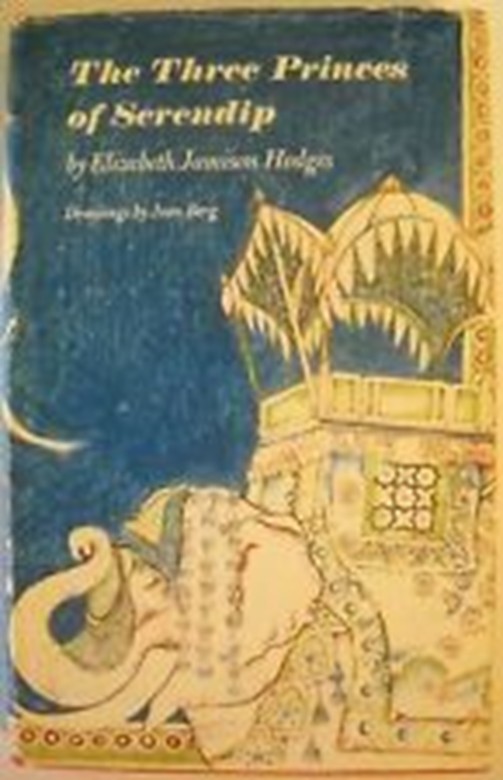
 The unreal intelligence and deductive powers of the most popular 21st-century Sherlock Holmes, Benedict Cumberbatch in the BBC series, cannot hold a candle to the acumen of a trio of princes. The Three Princes of Serendip is a 14th-century fairy tale that arrived in the Western world via an Italian translation in 1577. After their education, the king of Serendip (the old name for Sri Lanka) sends his sons out into the wide world, where the trio soon distinguish themselves through their exceptional wisdom, powers of observation and Sherlockian deductive abilities. Gnawed grass, tracks in the sand and the smell of a damp spot on the ground are enough: the brothers now know that the missing camel is lame, blind in one eye and missing a tooth, and has been led away by a pregnant woman. At lunch with the astonished Emperor, they deduce the type of soil in which the grapes for this wine were harvested, how the lamb from this leg of lamb was fed and, above all, thanks to a cunning ruse, they unmask a cowardly assassin who had targeted the Emperor.

In 1754, the name of the princes of Serendip inspired the English aristocrat Horace Walpole, who had apparently only read the story superficially (or in a poor translation), to coin the term serendipity: discovering something you did not know and therefore were not looking for, through chance, unintended circumstances. Just like in “that silly fairy tale of the three princes”, Walpole writes – incorrectly suggesting that the princes made their discoveries not through ingenuity, but through dumb luck. Thus, the origin of the wonderful concept of serendipity is itself a kind of serendipity.

Since then, it has become an elegant, melodious way of saying “lucky coincidence” or “happy accident”. The discovery of penicillin, the invention of Post-it notes, the microwave oven, Teflon, cornflakes and Viagra… serendipity.

We are familiar with the concept in poetry and songwriting as well: the unintended finds. Phil Collins doesn’t have any lyrics yet when he varies on Prince’s “1999” with his drum machine and his Roland TR-909 and just keeps ad-libbing the nonsensical “su-su-sudio” into the microphone – which turns out to be catchy enough to score a huge global hit (1985; “Sussudio” is number 1 on the Billboard Hot 100, scores Top 10 in fifteen countries and Top 20 in seven others). McCartney only has nonsensical filler lyrics for his “Hey Jude”. “It’s crazy, it doesn’t make any sense at all,” he says apologetically to Lennon as he sings the movement you need is on your shoulder. “Sure it does, it’s great,” says Lennon, who immediately recognises that Paul has accidentally come up with a completely original, thoroughly poetic way of expressing resignation, of shrugging your shoulders.

Phil Collins – Sussudio

Something similar seems to be happening in this second verse of “From A Buick 6”. The verse seems to be structured as an accumulatio, a list of equivalents that all try to communicate something like “burnt out, broken, desperate”. Without too much semantic density, once again: broken pipeline, all cracked up, in the water’s edge… not very eloquent, but at least it is clear that our narrator is at a mental low point. The images seem to have been selected primarily for their sound, euphony and rhyme. “Cracked”, for example, is a word that Dylan likes to use in these months (apart from here also in “Chimes Of Freedom”, “I Want You” and “To Ramona”). Pete Sinfield, the lyricist for King Crimson and a big Dylan fan, explains its power well when he traces why In The Court Of The Crimson King is such an appealing combination of words:

“What you have are the noises, the sounds of the words, like crowds, queue, jokers… ‘k’, ‘k’, ‘k’, do you see? You get this sharp cracking sound, and then it softens again…what is very important, even if you don’t pick up on it, is the feel of these hard sounds, even if you don’t understand the words, that there is something going on here – it was quite intentional to cause this effect – Bob Dylan admits to doing the same – it’s like playing games, but the games you play with the noises, the sounds and the syllables, and especially the consonants in this example, should keep the listener right there, suspended – it’s all in the way these are constructed.”
(2007 interview by Paul Henderson for Louder)

“The feel of these hard sounds” and “this sharp cracking sound, and then it softens again” is probably precisely what drove Dylan to choose word combinations such as the pipeline is broken and all cracked up on the highway. But then, between the “game playing with noises”, poetic brilliance suddenly shines through: lost on the river’s bridge.

Even in 1965, “bridge” was, of course, already a well-worn prop for clichéd metaphors. Crossing the bridge, burning your bridges, a bridge too far, building bridges… the age-old symbolic meaning of “bridge” is so obvious and so deeply ingrained in everyday language that we often no longer even recognise it as metaphorical. Except…  except when a poet gives it such an unusual twist as “I’m lost on the river’s bridge”.

On its own, this unusual expression evokes uncomfortable, suicidal connotations. After all, it is impossible to get lost on a bridge, so we really have to think of being lost, despair – and a desperate person on a bridge… yes, then suicide is the most obvious scenario. Certainly, since 1967, since Billie Joe McAllister jumped off the Tallahatchie Bridge (“Ode To Billy Joe”, Bobbie Gentry), we have all been conditioned to think this way – but already before poor Billy Joe it was just as inevitable a line of thought.

However, here in “From A Buick 6” we have context. The wandering narrator oscillates between love and lust, between duty and pleasure, between the right bank with his graveyard woman, the mother of his children, and the left bank with the soulful mama – and is now apparently tormented by choice stress. Worse still: he has lost his mind. He stands on the bridge between one bank and the other and is lost. But luckily, one of the two ladies comes down a thruway and fixes him. Which lady is not made explicit, but she does it with needle and thread – which sounds domestic, which sounds like the graveyard woman. At least, that’s the most likely candidate. Given that in the songs in Dylan’s own jukebox a sewing lady usually stands for domesticity (Nina Simone’s “Be My Husband”, “Do-Re-Mi”, “Sleepy Time Gal”). And he himself will use it again thirteen years later (can you cook and sew, make flowers grow, “Is Your Love In Vain?”).

The only thing that is somewhat alienating is the embedding: she is ready to sew me up is still appropriate, we know that as “healing from emotional wounds”, but sew me up with a thread is usually said by guys like Jason Bourne or John Wick or Ethan Hunt, when they drag a shady doctor out of bed in the middle of the night to stitch up yet another bullet or stab wound – without anaesthetic, of course. On the other hand, our hero is, of course, cracked up, and he does have a broken pipeline. What a happy coincidence that his graveyard woman here on the bridge has a needle and thread with her. Well, serendipity, almost.

To be continued. Next up From A Buick part 5: You Can’t Judge A Book By The Cover


Jochen is a regular reviewer of Dylan’s work on Untold. His books, in English, Dutch and German, are available via Amazon both in paperback and on Kindle:


Posted in Uncategorized | Leave a comment

Bob Dylan and US History part 13

by Larry Fyffe
Post-Modernism leaves lots of room in a work of art for a reader/listener/observer to interpret the meaning therein on his or her own. Of course, the interpretation has to be plausible:
(C)ould you tell me what happened to  
 julius larossa?" a picture of abraham lincoln 
falls from the ceiling "that guy looks like a girl"

(Bob Dylan: Tarantula)
Julius Larossa appears on television and radio, sings traditional sentimental love songs; he’s mocked above by both the narrator and by Civil War President Abraham Lincoln:
Sometimes the world is a valley of heartaches and tears
And in the hustle and bustle, no sunshine appears
But you and I have our love always there to remind us
There is a way we can leave all the shadows behind us
Volara oh, oh

(Julius Larossa: Volara ~  Modugno/Migliacci/Parish)

 "Volara" means "fly away".
The following song takes a more middle-of-the-road approach than “Volara”; the meaning is rather clear, which one seldom finds in “Tarantula”.
That is ~ Love doesn’t always leave dark shadows behind :
Bird on the horizon, sitting on the fence
He's singing his song for me
At his own expense
And I'm just like that bird
Oh, singing just for you
I hope that you can hear me
Hear me singing through these tears

Presto! there’s a unity that can be uncovered between Bob Dylan songs and his booklet “Tarantula”:

(B)ut I asked him anyway
"What ever happened to gregory corso?"
(Bob Dylan: Tarantula)
Below, a “strange-love” satirical poem from one of the Beat Boys:
I heard the sound of thunder
It roared out a warning
Heard the roar of a wave
That could drown the whole world
(Bob Dylan: A Hard's A-Gonna Fall)
And a rather humorous bit about the possibility of the end-of-individualism:
(M)y mind is running down the river
- i'd sell my soul to the elephant
- i'd cheat the sphinx
- i'd lie to the conqueror
(Bob Dylan: Tarantula)
The elephant is the icon of the American Republican Party; the riddle of the Sphinx solved correctly stops Oedipus from getting eaten by the female monster: “What has four feet in the morning, two at noon, and three in the evening?”; ‘William the Conqueror invaded England.
Posted in Uncategorized | 1 Comment

Bob Dylan and US History part 12

by Larry Fyffe

& who has a feeling for the lost pieces of frost    

(Bob Dylan: Tarantula)

An obvious reference to Bob Dylan himself who regrets that Robert Frost and his poems are no longer celebrated nearly as much as they once were.

Dylan criticises the Romantic Transcendentalists for being too optimistic. So does Frost.

In his poetry, Robert Frost laments the fact that the beauty and solace of nature gets almost forgotten, lost even more so in the hustle and bustle of modern-day, fast-paced industrial assembly lines:

To stop without a farm house near
Between the woods and frozen lake
(Robert Frost: Stopping By The Woods On A Snowy Evening)

Beneath, a tribute’s paid to Frost:

Twilight on the frozen lake
North wind about to break
On footprints in the snow
Silence down below
(Bob Dylan:  Never Say Goodye)

Another: 

The evening sun is sinking low
The woods are dark, the town is too
They'll drag you down, they'll run the show
Ain't no telling what they'll do
(Bob Dylan: Tell Old Bill)

In the face of today’s work demands, an individual feels like a fox on the run, pursued by men on horseback, blowing horns, with dogs that are out to tear him or she into little pieces, like Osiris was!

Then there’s:

(T)he sight of george raft - richard nixon - liberace - d.h. lawrence 
& pablo casals
(Bob Dylan: Tarantula) 

Pablo Casals, a cellist, flees Franco fascism, opting for the ‘freedom’ of the US where the American Dream’ is still alive, at least for individuals willing to work hard enough to turn the dream into a reality.  

In comparison to the Spain that he left, the choice was not a difficult one to make.

Pablo’s signature music piece – “The Carol Of The Birds” which celebrates the birth of Jesus:

When rose the eastern star
The birds came from afar
In that full might of glory
With one melodious voice
They sweetly did rejoice
And sang the wonderous story
(Joan Baez: The Carol Of The Birds ~ traditional/translated)      

David Herbert Lawrence be English; his writings show the influence of Charles Darwin’s theory of evolution which focuses on the “survival of the fittest” animals and plants.

Lawrence isn’t a scientist like Darwin who examines the effects that the surrounding environment has on animals and plants living there. Lawrence’s writings include poems that require the use of creative imagination found within his own mind.

He examines the negative effects that modern industrialisation has on the inner ‘spirit’ of human beings.

Especially in America, asserts D.H., they become ‘the walking dead’:

They say the fit survive
But I invoke the spirits of the lost

Those that have not survived, the darkly lost      
(D. H. Lawrence: Cypresses)  

In the song below, it’s Darwin who gets grouped in with “the darkly lost”:

They got Charles Darwin trapped
out on Highway Five
Judge says to te High Sheriff
"I want him dead or alive
Either one, I don't care"
High water everywhere

(Bob Dylan: High Water)

The lines beneath show the influence of D.H. Lawrence’s version of evolution:

& secretly wishes he was bing crosby
but would settle for being a close relative
of edgar bergen
(Bob Dylan: Tarantula)

Bing Crosby be a crooner; he acted in a number of comedy movies with Bob Hope; Edgar Bergen, a ventriloquist, his dummy named Charlie McCarthy.

Crooner Bing’s signature song:

Moonlight and roses
Bring wonderful memories of you
In beautiful thoughts so true
(Bing Crosby: Where The Blue Of The Night 
Meets The Gold Of The Day ~ B. Crosby/J. Young/F. Ahlert)

Bob Dylan croons the following song:

Well the moon gives light and shines at night
And l scarcely feel the glow ............
Well I picked up a rose
And pokqqed it in my clothes
(Bob Dylan: When The Deal Goes Down)     
Posted in Uncategorized | 1 Comment

No Nobel Prize for Music: A sign on the window tells us change is now here.

By Tony Attwood

This series looks at the way in which Bob Dylan’s compositions have evolved both musically and lyrically over time.   An index to previous articles is given at the end.

In the last article, I suggested that, suddenly in 1970, seemingly having got all of his past compositions and current ideas out of his head during the Basement Tapes days, Bob Dylan wrote one of his most musically innovative songs to date: Time Passes Slowly.  A song that makes it quite clear that as a composer he really wanted to go along new pathways, but do it without alienating those who had so loyally followed his every move through the 1960s.

If you are not convinced by this argument, and don’t have the time or inclination to plough through all of my previous articles as I get to this key moment in Dylan’s life as a composer (and of course I can well understand it if that is the case) you could take a sahort cut and look at the subject matter of the 15 songs writtein in 1969.  The details are set out at the end of the article on that year – just scroll down the page – but here is a quick summary in case you don’t fancy that.

There were 15 Dylan compositions that year of which we have recordings, and by far the most popular in terms of subject matter are love and lost love.   But three of the last four compositions of the year take another turn:  Wanted Man in on the theme of being on the run, Champaign Illinois celebrates the city, and Ballad of Easy Rider concerns being world-weary.

And as has been noted in this series, when Bob changes subject matter, he changes his musical style too.  Which leads us into the 1970s and the question of whether this change in 1969 into songs that deviated from the obsessions with love and lost love, continued, and where it did, what effect did it have on the music?  Certainly, as we have seen, when Bob moves away from love and lost love, his musical approach becomes much more adventurous.

In my last piece in this series I wrote about the way Dylan started using chord sequences quite differently from what he had before.  So the question here is, given the adventurousness of the lyrics, did he also change his musical style.   And the answer surely is yes for as I have noted in previous articles, “Father of Night” represents one of Dylan’s most adventurous pieces musically, in that it is written in two separate keys, flowing neatly from one to the other but without the conventional simple techniques of modulation being employed.

So my conclusion is clear.   The time spent recording the Basement Tapes helped clear many of the standard approachese to songwriting from Bob’s mind.  1968 then became Bob’s year off as a songwriter, but on his return to this work in 1969 he found himself writing about virtually nothing other than love, and probably as a result, his music followed the standard lines for love songs.

But then in 1970 it all changed: which is to say the subject matter of the songs changed and so did the music.   Of course it could be argued that the change in musical style and the change in lyrical themes at the same time was a coincidence, but I think that is pushing matters too far.   Bob was already a very experienced songwriter by 1970, and he knew as well as any songwriter, that the music and the lyrics need to be united in their style and approach.#

I have also previously mentioned the discussions between Archibald  MacLeish and Dylan around the idea that Dylan should contribute to MacLeish’s latest dramatic project.   And it is certainly possible that in relation to this the notion came about the Dylan should explore moving away from the lyrical and musical approach that had become central to his work in the previous decade.    After all MacLeish had been  associated with F. Scott Fitzgerald, Jean Cocteau, Pablo Picasso, Cole Porter, Dorothy Parker…   Not the sort of people that musically we would associate with the 12 bar blues.

Dylan mentions his meeting with MacLeish in Chronicles, but we don’t know much about what the two thought of each other.  But as I have suggested before I feel Dylan was no influenced in the sense of seeing these artists are having useful thoughts on the way forward for art.   Indeed as I have mentioned in the past I’ve always felt “Too much of nothing” written in 1967 was a criticism of Eliot.

But at the time Bob was looking to the possibility of co-operating with other artists such as MacLeish on “The Devil and Daniel Webster” came to nothing, althoguh some suggest that “New Morning”, “Father of Night” and “Time Passes Slowly” were sketches for the collaboration.

But even though the collaboration idea came to nothing, the notion of Bob taking his music in a new direction both musically and lyrically was clearly part of his thinking, after a considerable spell writing songs about love and music based around 12 bar blues.

At the same time Bob spoke about his desire to be with his family, and his frustration with all the ludicrous stories that were being publsihed about him and his life each day.   And he really did want people to focus on his songs.

Indeed in one interview I have previously quoted on this site Bob said, “I wanna do something they can’t possibly like, they can’t relate to. They’ll see it, and they’ll listen, and they’ll say, ‘Well, let’s get on to the next person. He ain’t sayin’ it no more. ”

And so we have the recordings made for New Morning were made between June and August 1970 which in many take us down a completely new musical road.

If I may, for example quote from the Dylan Chords site once more for the start of “Sign on the window” we can see the difference

E           C#m          D   E
Sign on the window says "Lonely,"
E           C#m           D         A      Asus2
Sign on the door said "No Company Allowed,"
E           C#m                   D   Asus2
Sign on the street says "Y' Don't Own Me,"
E    *)     C#m   E/b   E/a     /g# F#m7         *) 2nd verse G#m
Sign on the porch says "Three's A   Crowd,"
E    G#m    C#m   E/b   F#9     A E
Sign on the porch says "Three's A Crowd."

But beyond that if you now listen to the song, you can surely hear that this is Dylan going down a completely different route in his songwriting.

This is not only a song using completely different chords in the accompaniment, it has a melody unlike anything Dylan had produced.  Indeed have we ever heard Dylan do a suddden jerk of a change of keys as he does between “Brighton girls are like the moon” and “Looks like nothing but rain”.   The chord sequence is something like

A, E, A, E, A, E, A, E, F, G, C, Bm, A

Songs such as this show Dylan as being an experimenter – keeping within the genre of music that he has been associated with, but seeing exactly how far the music can be taken, while still using his vast experience of song writing to hold the song together but determined musically to travel in completely new directions.

And we do have to realise just how difficult that is going to be.  Bob wants and I would say needs to keep his multitude of existing fans happy.  But he also wants to travel new pathways musically and this undoubtedly is what he is doing at this point.

But… Dylan was also as ever, very critical.  He liked the song enough to put it on the album, in order to say, “look, my songs are more than just a few chords and some lyrics.”   But he also realised that performing something as radically different as “Sign on the window” live with his band was going to be problematic.  “Sign on the window” remains one of the songs never ever performed live.

Of course it is in good company.  Nine of the 12 songs recorded in the summer of 1970 and released on “New Morning” were never performed publically in all the years of touring.   It seems Bob felt that these were songs that would need listening to several times in order to be understood and appreciated.

Previously in this series….

1: We might have noted the musical innovations more
2: From Hattie Carroll to the incoming ship
3: From Times to Percy’s song
4: Combining musical traditions in unique ways
5: Using music to take us to a world of hope
6: Chimes of Freedom and Tambourine Man
7: Bending the form to its very limits
8: From Denise to Mama
9: Balled in Plain 
10:Black Crow to All I really want to do
11: I’ll keep it with mine
12:Dylan does gothic and the world ends
13: The Gates of Eden
14: After the Revolution – another revolution
15: Returning to the roots (but with new chords)
16: From “It’s all right” to “Angelina”. What appened?
17: How strophic became something new: Love is just a four letter word
18: Bob reaches the subterranean
19: The conundrum of the song that gets worse
20: Add one chord, keep it simple, sing of love
21: It’s over. Start anew. It’s the end
22:Desolation Row: perhaps the most amazing piece of popular music ever written
23:  Can you please crawl out your window
24: Positively Fourth Street
25: Where the lyrics find new lands, keep the music simple
26:  Tom Thumb’s journey. It wasn’t that bad was it?
27: From Queen Jane to the Thin Man
28: The song that revolutionised what popular music could do
29: Taking the music to completely new territory
30: Sooner or Later the committee will realise its error
31: The best ever version of “Where are you tonight sweet Marie?”
32: Just like a woman
33: Most likely you go your way
34: Everybody must get stoned
35: Obviously 5 Believers
36: I Want You Creativity dries up
37: Creativity dries up - the descent towards the basement.
38: One musical line sung 12 times to 130 worlds
39: Bob invents a totally new musical form
40: There is a change we can see and a change we can't see
Posted in Uncategorized | 1 Comment

The Philosophy of Modern Song: Pancho and Lefty – Bob live with Willie Nelson

by Tony Attwood

This series of articles takes the songs that Bob Dylan discussed in his post-Nobel Prize book “The Philosophy of Modern Song” and looks at those songs individually, rather than reviewing Bob’s comments upon them.  And, just in case you have not had a chance to listen to the songs in question, at least one recording of each song is included in the article.

What is interesting for me, as the author (even if for no one else) is that in a number of cases, the songs are new to me, and so I am starting from the outside when trying to understand why Bob chose each particular song.

But here, with “Pancho and Lefty”, I felt it immediately I heard the song, and I really would say, even if you don’t listen to the other songs in this series, I do hope you have a moment to listen to this song as performed by the composer, and then by the composer with Bob.

In fact, in one sense, this song is almost Dylanesque in its composition, a connection amplified by the fact that it is nine verses long with just one of those verses repeated.  And yet it only lasts a little over three and a half minutes.

Indeed, even though I am not a country music fan, I do love this song.  I love it for the music, which uses all the usual chords but in a new way.  I love it for the harmonies.  I love it for the accompaniment.  I love it for the vocals.  I love it because with all its originality and novelty, it stays in the genre throughout and still has me close to tears. And I love it because Bob persuaded the composer to perform it with him in concert.  How big an accolade does a songwriter want or need?

I have to say though, that the very first time I heard the song, it was the chord sequence that drew me to the song first off.   The point is that in pop music, there is a limited number of chords that are normally used, and an even more limited number of sequences, and one would have thought that everything that could be tried and made to work has been tried to death.  But this song takes us another step on.

Indeed so clever and effective and yet effortless is this song that even though I have for much of my life been the guy that some people kindly turn to when there is a question as to “what exactly did the songwriter do here,” I had to go back and listen again to hear exactly how the composer did get that extraordinary effect at the end of the verse with “She began to cry when you said goodbye and sank into your dreams.”  And when I realised I just thought, “Oh that is so clever – and so moving,” and played it over and over on the piano.

OK maybe you are not as easily moved to emotional outbursts as I am, but even if that is the case, I do hope you can hear just how unusual that moment is.

And so good is it, that I have double-checked what my ears tell me with the website Ultimate Guitar.  Now the point is that the song starts of with a very bouncy positive C major and the lyrics start in a positive way matching that, but by the fourth line we are getting some negatives, yet thye chords are still major, and thus positive, until suddenly the chords go to A minor with its negative feel and the lyrics take that negative turn – which is doubly negative as it is held….  It is very cleverly and beautifully done…

C
Living on the road my friend
G
Is gonna keep you free and clean
F
Now you wear your skin like iron
C                      G
Your breath as hard as kerosene
F
Weren't your mama's only boy
         C               F
But her favorite one it seems
    Am                    / F    C /    G
She began to cry when you said good  - bye
    F                Am
And sank into your dreams

And if you look at my little description and the lyrics and chords above and think “so what?” I can’t blame you because yes, “so what?” is what I would have thought on seeing the above text and chord sequence published by someone else.   But here, with this melody, this works magnificently.   Goodness knows how many pop / popular / rock songs I have heard in my life (and although not as old as Bob I am getting on a bit) but I’ve not heard these chords used so superbly in this way with this type of melody.  The song deserves its place on Bob’s list just for that.

“Pancho and Lefty”, was written by Townes Van Zandt of whom I know nothing because I really know very little of country music, but I am told it was his most famous composition.  Indeed apparently Willie Nelson and Merle Haggard also recorded it.

Indeed 2021, Van Zandt’s version was placed just in the Rolling Stone 500 Greatest Songs of All Time list.

But also in this, there are lyrics of a type I am not sure I have seen or heard before, such as, “All the Federales say they could’ve had him any day/ They only let him slip away out of kindness, I suppose.”

And what makes all this even more surprising is that really nothing is new here.  The character at the heart of the story goes off to find his fortune and becomes an outlaw – it is not the most common of themes, but it has been used, just as the contemporary version has been used in terms of mamma’s boy coming to the big city to make his fortune.

There is also an interesting twist from the composer who is reported as saying, “I realise that I wrote it, but it’s hard to take credit for the writing, because it came from out of the blue. It came through me, and it’s a real nice song, and I think I’ve finally found out what it’s about. I’ve always wondered what it’s about.”

And yes, those of us who write and write do get that feeling very occasionally, writing a song that just somehow takes on a life of its own and becomes more than one ever imagined it could become.

But of course, originality does not guarantee any sort of success.  Reports say the song (and here I quote the Wiki )”went largely unnoticed at the time of its release on the album The Late Great Townes Van Zandt in 1972. Neither it, nor its parent album made any music charts. In 1973, Lonnie Knight played with Van Zandt for a week at the Rubaiyat in Dallas, Texas. He brought this song back to Minneapolis with him and recorded it on his first album, Family In The Wind, in 1974.”

And then it began, as Emmylou Harris recorded it, and Willie Nelson heard that and recorded it with Merle Haggard, and well, you get the idea.  It took off.

As a single, it went to the top of the country charts.   And indeed Bob Dylan played the song on TV with Willie Nelson at his 60th birthday concert in 1993,   And perhaps this is the bit you have been looking for….

https://youtu.be/Fd41cVwl9FY

Sorry I can’t get it to load automatically, but click on it – it is there.

Emmylou Harris performed it too…

 The song got to the top of the Billboard country chart in 193.   The Willie Nelson version has sold two-thirds of a million copies in the USA alone.     The Western Writers of America chose it as the 17th-greatest Western song of all time.  Rolling Stone had it as 41st in the greatest country songs of all time.

I have not been able to understand exactly why Bob has included each song that he has in his “Philosophy” book, but on this occasion, I have no doubt.

And just to end, while we are mentioning Willie Nelson, here’s something else you might not have heard for a while.   (There is a link, honest).

Previously in this series

Posted in Uncategorized | Leave a comment

Bob Dylan in China: 6 April 2011. The Concert Series


By Tony Attwood

The idea of this series is to offer one full concert recording for each year when Bob was performing concerts – ideally with the recording being of reasonable quality.   And picking out one or two places that really do need mentioning – like Bob in Beijing in 2011.

A full list of the concerts in this series is given below.  But first the songs performed in China…

  1. Gonna Change My Way of Thinking
  2. It’s All Over Now, Baby Blue
  3. Beyond Here Lies Nothin’
  4. Tangled Up in Blue
  5. Honest With Me
  6. Simple Twist of Fate
  7. Tweedle Dee & Tweedle Dum
  8. Love Sick
  9. Roll and Tumble Blues
  10. A Hard Rain’s A-Gonna Fall
  11. Highway 61 Revisited
  12. Spirit on the Water
  13. Thunder on the Mountain
  14. Ballad of a Thin Man
  15. Like a Rolling Stone
  16. All Along the Watchtower
  17. Forever YounAnd previously in this series

Posted in Uncategorized | Leave a comment

From Jokerman to Jack of Spades: The Game of Chance in Dylan’s Lyrics


Bob Dylan remains one of the most influential songwriters of modern times. He is known for weaving complex ideas into everyday language, exploring love, loss, power, and freedom in ways that continue to make listeners think. His voice and guitar shaped generations, carrying more than just music; they carried something raw and truthful.

His songs often explore themes of uncertainty and risk, much like a card game where the next draw could alter everything. From figures such as the “Jokerman” to the “Jack of Hearts” (and by extension the Jack of Spades), Dylan invites listeners into a world where chance matters and identity shifts.

Dylan’s Use of Characters and Symbols

Many of Dylan’s most memorable songs centre on figures that seem pulled from a deck of cards or a dream. Characters like the Jokerman and the Jack of Hearts aren’t just names; they represent ideas, moods, and choices. The Jokerman is slippery and mysterious, while the Jack of Hearts appears in a tale full of twists and hidden motives.

There is a clear use of game and gambling imagery throughout his work. The Jack of Hearts, for instance, moves through scenes with the same uncertainty found in a high-stakes hand. His presence is deliberate, like a card played at the perfect moment to change the outcome of the game.

It is also worth examining how Dylan builds tension through this imagery. A classic casino game such as poker relies on bluffing, timing, and reading the room. Dylan uses similar elements in his storytelling. He does not simply describe what happens; he sets up characters who can change the outcome at any moment. That is part of what makes his stories feel alive. The stakes are never defined, yet they always feel high.

Listeners can see how Dylan places them in these scenarios. He offers a view of life where control is limited and every decision carries weight. The Jokerman smiles, drifts, and dodges questions. The Jack of Hearts arrives in secret and leaves behind a mess. They are not heroes or villains. They are players, just like the rest of us.

The Theme of Chance and Fate

Chance appears in Dylan’s lyrics as a constant presence. Life is not laid out in a straight line; it changes quickly and not always in ways we expect. In “Jokerman,” the title character is hard to pin down. He slips through systems and expectations, smiling as others try to make sense of him.

Some of Dylan’s lyrics feel like they were pulled straight from a card table. In “Lily, Rosemary and the Jack of Hearts,” the characters play five-card stud while major events unfold upstairs. These are not throwaway details. The games reflect what is happening around them; people are taking risks, hiding truths, and hoping their next move pays off.

Other songs, like “Rambling, Gambling Willie,” are even more direct. This character lives by the game. His luck shifts, and sometimes it costs him everything. Yet there is a deeper point behind the story. Dylan is not celebrating gambling; he uses it to show how life works for many people. You make choices, hope they land well, and accept the consequences.

Even in songs with less obvious gambling imagery, the pattern remains. Dylan often leaves room for things to go wrong or shift direction. That is the heart of chance: uncertainty. His characters do not always win, but they play regardless. The message he leaves behind is that participation matters just as much as the result.

Social and Political Undertones

Dylan’s use of chance and gaming metaphors goes beyond personal stories. It also extends into social and political spaces. In “Jokerman,” lines about preachers, war, and lost truth sit beside floating images of power and belief. These are not just background details; they reflect the chaos of the world he describes.

Sometimes, the games are not fair. The “Jack of Hearts” moves through a world of judges, money, and backroom decisions. The listener senses that while some characters are playing for pleasure, others are playing to survive. That is a crucial difference, and Dylan shows both sides clearly.

This theme also runs through his protest-era work. While he did not always use card or gambling imagery, the same ideas persist. People face systems that constantly shift the rules, making it impossible for some to win. Dylan points this out not with long speeches but through short, sharp images. That is why his lyrics endure. They express much with very little.

Evolution of the Theme in Dylan’s Career

Dylan’s early songs drew heavily on storytelling rooted in folk and protest traditions. The risks were social, involving speaking up and revealing truths that others wanted to keep hidden. Over time, his songwriting evolved. He began to explore risks that were more personal and layered.

When “Jokerman” appeared in the 1980s, it marked a new direction. The lyrics blended modern anxieties with ancient myths. Cards, chance, and fate combined into a larger picture of survival in a changing world. It was no longer only about what people did but also about what they believed and how easily those beliefs could shift.

In his later work, Dylan leaned more on imagery that invited interpretation. He was not offering simple messages; he was laying out pieces of a puzzle. The Jack of Spades is not mentioned by name, but the idea persists: a risky figure caught between worlds, observing events and choosing the moment to act.

As Dylan aged, his treatment of chance matured as well. He stopped presenting it as a simple gamble and instead portrayed it as an inevitable part of life. Nothing is promised, and that understanding gives his later work a deeper honesty. His lyrics feel more grounded, even when wrapped in symbolism.

Final Thoughts

When you listen to Dylan, you join a player at the table where human lives meet chance, symbolised by figures such as the Jokerman or the Jack of Hearts. His lyrics remind us that we are all in the game, even when we do not know the stakes or the cards we hold. And the thrill is not only in winning or losing; it lies in picking the card, making the move, and seeing where it takes you.

Posted in Uncategorized | Leave a comment

From A Buick 6 part 3: I will die in thy lap

by Jochen Markhorst


III         I will die in thy lap

I got this graveyard woman, you know she keeps my kids
But my soulful mama, you know she keeps me hid
She's a junkyard angel and she always gives me bread
Well, if I go down dyin', you know she's 
                       bound to put a blanket on my bed

 Torn between two lovers is a thing alright in Dylan’s mercurial songs. Saint Annie and Sweet Melinda in “Just Like Tom Thumb’s Blues”; the narrator in “Visions Of Johanna” oscillates between a sensual, present Louise and an idealised, absent Johanna; in “I Want You”, an equally available chambermaid keeps him away from the Queen of Spades; Ruthie in “Stuck Inside Of Mobile” wriggles herself between him and the debutante; Baby and Queen Mary in “Just Like A Woman”… and there are quite a few more explicit and less explicit love triangles in Dylan’s Five Hundred Quicksilver Days. And “From A Buick 6” is somewhere at the beginning of it all.

On the previous album, it’s all a lot more monogamous. Every narrator on Bringing It All Back Home chastely focuses on one single woman, but from here on Highway 61 Revisited to the last song on Blonde On Blonde, “Sad-Eyed Lady Of The Lowlands”, the song in which the wandering narrator finally finds peace and quiet in the arms of the One, it is one long amorous labyrinth. Biographical interpreters like to see this, of course, as a poetic expression of Dylan’s own vacillation between Joan Baez and Sara Lownds, which is indeed a biographical fact in Dylan’s life at that time (Dylan married Sara on 22 November 1965, between “I Wanna Be Your Lover” and “Visions Of Johanna”). And then they often reveal painfully banal “discoveries” that Johanna is “actually” Baez, and Sad-Eyed Lady is “obviously” Lownds, and variations and offshoots thereof. And in that tunnel, the graveyard woman would be Sara, sitting at home with her child (and soon with Dylan’s children) and the soulful mama, the mistress, the vibrant lover – Baez, or any other random side step.

Superficial and banal. In general, biographical interpretations tend to be disillusioning, robbing works of their poetic lustre, and in the case of Dylan’s sparkling beat poetry during his Mercury Period, it is even rather insulting; it reduces the lyrics to laboriously encrypted diary entries and ignores their multidimensionality.

In this case: it is much more obvious that the adultery motif in “From A Buick 6” is triggered by the model for the song, Sleepy John Estes’ “Milk Cow Blues”. Dylan not only borrows the musical structure and part of the opening lines;

Now, asked sweet mama, let me be her kid, 
She says I might get buggish, like to keep it hid
Well she looked at me, she begin to smile, 
Says, “I thought I would use you for my man a while
That's, just don't let my huzzman catch you there
Now, if you just don't let my huzzman catch you there.”

… but also the adultery – albeit in this case it is the woman who wants to use a man as long as her “huzzman” doesn’t catch them. Dylan does borrow some of the idiom (such as Estes’ “killing you by degrees”, which will return thirteen years later in “Where Are You Tonight?”), but Dylan’s palette has – of course – much more hallucinatory images and more colourful metaphors than Estes’.

As right away demonstrated by the opening words. Estes’ sweet mama becomes a graveyard woman in Dylan’s version – the same grim, slightly morbid imagery as in the mercurial song that Dylan will never record, as the cemetery hips and graveyard lips from “Tell Me, Momma”, the same unsettling quality as the genocide fools from “Can You Please Crawl Out Your Window?” or the guilty undertaker from “I Want You”. Of course, a morbid fascination is already evident in Dylan’s earliest work (and still in 2020), but there it is usually “real”; the songs are about real graves, cemeteries, deaths (“Ballad For A Friend”, “Let Me Die In My Footsteps”, “Only A Hobo”).

In this phase of his artistic career, his penchant for the macabre evolves into a Baudelaire-esque stylistic characteristic; graves and graveyards are no longer mere scenery, but metaphors. Dylan’s receptiveness to this is undoubtedly influenced by the Beat Poets, through Ginsberg, Corso and especially Kerouac. Dylan sometimes borrows literally from Kerouac’s Desolation Angels (her sin is her lifelessness and the perfect image of a priest for “Desolation Row”, for example), and more often paraphrases. To name just one of many examples: the automobile graveyard from Dylan’s long “prose poem” Tarantula echoes Kerouac’s automobile cemeteries. And that discernible influence extends to a penchant for sinister imagery. The suburbs of New York full of commuters, are called cemetery cities by Kerouac (On The Road), and the stew full of bones he is given in a Mexican prison cell is graveyard stew (“Orizaba 210 Blues”, 41st Chorus).

The graveyard woman in “From A Buick 6” seems to be such a resident of Cemetery City, such a housewife in Yonkers, Claremont or Glenview, or to stay closer to Sleepy John and Memphis, Collierville, at least a housewife who does the housework and looks after the kids back home in the suburbs, while her husband is “working overtime” in the city with his soulful mama.

The qualifications are cruel and unambiguous; the lawful wife at home is dead, lifeless, the mistress in the city is soulful, full of life – well, in the opinion of the adulterous husband anyway. The description “junkyard angel” gives her a little more depth; urban, cheap, a wildly attractive, disposable slut, something like that. She “gives him bread”, which doesn’t seem to have much of a metaphorical meaning, but mainly chosen for the rhyme (with “bed”). Well, “she gives me life, I survive thanks to her,” something like that perhaps – though that would be somewhat contrived, cumbersome imagery. The specific combination of words probably bounces around in Dylan’s working memory thanks to Kerouac again, from whose oeuvre so many other combinations of words trickle into Dylan’s 1965 songs. In this particular case, from the masterpiece On The Road: “I didn’t have a dime but I went down and talked to the girl. She gave me bread” (chapter 4).

The refrain that concludes each quatrain, Well, if I go down dyin’, you know she’s bound to put a blanket on my bed, shifts the focus from beat poetry to Shakespearean imagery and folk and blues lingo. At least, the context (soulful mama, bed) forces the associations with go down dyin’ towards the petite mort, the erotic climax as suggested since Shakespeare (Much Ado About Nothing Act V, sc. 2: “I will live in thy heart, die in thy lap, and be buried in thy eyes”). The suggestion that Dylan already adopted in the previous song too, in “It Takes A Lot To Laugh, It Takes A Train To Cry” (Well, if I die on top of the hill), and in the song before that, “Tombstone Blues”, in which “Brother Bill on top of the hill could die happily ever after”… the age-old ambiguity repeatedly and persistently imposes itself on the creating Dylan these days.

The blanket that is rolled out, finally, we have known since the nineteenth-century evergreen “Make Me A Pallet On The Floor”, the song from which W.C. Handy distilled “Atlanta Blues”, the first song Charley Patton’s brother Sam Chatmon learned to play, the song that branched out into the jazz-, country- and blues-canon at the beginning of the twentieth century. Dylan undoubtedly prefers the Mississippi John Hurt version, the version he witnessed Mississippi John playing live 1965 in Greenwich Village’s Gaslight Café;

Mississippi John Hurt, Make me a pallet on your floor

Well make me down, make me down
Right over here in the corner would be fine baby, hm
Yeah, this roll-out blanket right there in
Yeah, come on over baby

Again, to complete the circle, an adultery song about a man who is having an affair, tangled up in the sneaky trials and tribulations of a turbulent love triangle, hoping his lawful wife will not find out:

Don't you let my good gal catch you here
She, might shoot you, might cut and scar you too
No tellin' what that gal might do

… does sound like a real graveyard woman, this betrayed wife.


To be continued. Next up From A Buick 6 part 4: The Three Princes of Serendip

Jochen is a regular reviewer of Dylan’s work on Untold. His books, in English, Dutch and German, are available via Amazon both in paperback and on Kindle:


Posted in Uncategorized | Leave a comment

There is change we can see, and there is change we don’t see

By Tony Attwood

This series looks at the way in which Bob Dylan’s compositions have evolved both musically and lyrically over time.   An index to previous articles is given at the end.

—————-

In the 1960s, Bob Dylan wrote over 240 songs, and that excludes anything that appeared on the Basement Tapes where the origin of many songs is unclear.  The subject matter was incredibly varied, ranging from the obscure visions of one person, to being a drifter, from love to lost love, from party freaks to natural and man-made disasters.

But by the end of the decade, the subject matter had pretty much come down to love and lost love, and at the same time, the musical structure and form of the songs had retreated into popular simplicity.  Except that in 1969, there were signs that Bob’s musical compositions might just be taking a new direction – even if the lyrics were staying in the same place.

Listening to the recording of Minstrel Boy we can hear at once that this is a song that travels in a different direction.  It is clearly not finished, and what we have is the band joining in behind Bob on a rough first edition.  But the melody is much more wide-ranging than for most Bob songs, and the notion of the harmonies also takes us into new directions.

Indeed, if you go looking for the chord sequence of the song on internet sites, there are several different versions.   As ever, the one that seems to my ear to get closest is Dylanchords

C                      F6       G11   C
Who's gonna throw that minstrel boy a coin?
            F      C
Who's gonna let it roll?
C           Em         F6       G11   C
Who's gonna throw that minstrel boy a coin?
            F           C       G7       C
Who's gonna let it down easy to save his soul?

Of course, we can all draw our own conclusions from what Bob was doing, suddenly introducing a much more varied melody line and a chord sequence that as far as I know, he has never previously gone anywhere near, but I think for most people the effect is not one that draws them into the song.  It is indeed an experiment – an attempt to take the music somewhere completely different.  As I said in my last piece, Bob seems to have lost his way.

And what I mean by that is that in song composition, one can do the unusual, but because popular songs are normally designed to have an immediate impact and make the listener want to hear the song again, this sort of sudden variation into the new, on this scale, doesn’t normally work.   Yes of course, songwriters can be different, but being that different tends to dissuade the listener from going back for a second listen.

If we then jump to the last song written that year, this once again is not the Dylan we know, but at least the song is approachable by an audience hearing it for the first time.  It is a tuneful song, that most people can happily sing along to.   But that’s not really what we normally turn to Bob Dylan for.

Had Dylan been told to go mainstream?  Had he really been told that some of his recent experiments had just gone too far away from what his fans really wanted?

Now these songs are so utterly different in every regard that at the time, if one was aware of both pieces, one would have been utterly bemused as to where Bob was going to go next.

My guess was that Bob put this song together because he couldn’t come up with something completely new of his own.  As I have noted before, the origin of this song was undoubtedly “Singing the blues” written in 1954 by the wheelchair bound Melvin Endsley and recorded by just about everyone from Johnny Cash, Marty Robbins, Guy Mitchell (also covered by Tommy Steele in the UK) and on to Andy Williams, Paul McCartney, Stonewall Jackson, and Ricky Skaggs.

The song is much more melodic than most Dylan songs and is a simple lost-love piece.  Just what a popular TV song would have wanted, and something that might suggest to long-term fans that Bob had turned yet another corner in his writing.  In short, what we have here is a deliberate attempt by Bob to turn that next corner – wherever it happened to lead.

Except that it is not a corner into a straight composition.  For Bob, in this song, modulates from C major to G major, in the conventional way via D major, but then very takes us back to C major.   Don’t worry about following that if you are not a musician – my point is that in what appears to be a very straightforward classic popular folky song, Bob is playing games with the chord sequence.   And it doesn’t stop there because in the final line he runs through the chords of G, F, Dm, Em Am F.

It is as if he is saying, “Look, I can play around with the standard format of the music and it doesn’t have to freak you out.   There are more places to go.”   And with the next song he wrote Bob really did show us all that he had now got this musical adventurousness both in his mind and under his control.  In “Time Passes Slowly” the beat is very unusual for Dylan (it’s in 3/4 time with variations), and the melody suddenly shoots off in a most unexpected direction at the end of the verse.

Another most extraordinary thing about this song is that the chord sequence changes from verse to verse.   Another point is that the song is in the structure of a classic pop song of the era – three verses and a “middle 8”.  So the form is classic, but the music is not.

Verse one begins, “Time passes slowly”.  Verse two is “Once I had a sweetheart”.   Then we get the middle 8 starting, “Ain’t no reason to go”, and then finally we get the fourth verse (up here in the daylight), which again has some new chord changes introduced.   It would be stretching the point to call this a “through composed” song in the classic tradition, but it is not what we normally get in pop and rock music.

Taking the data from DylanChrods what we have for the last two lines are

Asus4                  G           Asus4         G
  Like the red rose of summer that blooms in the day,
Asus4       G          F#m    Em . . . . Asus4
Time passes slowly and fades away.

Whereas in verse one we had as the chords

F#m        Em/g             F#m/a             Em/g

D            C                  G         F#m    /a G

What Dylan has done is move about as far away from the music of Tambourine Man (a song of major chords and a couple of suspended fourths in passing) as possible without travelling into the avant-garde.

And what strikes me as being so clever and so effective in this song is the fact that this musical revolution is not only played out in a way that everyone who likes Dylan’s music will happily accept, but it is also played out against lyrics which deliberately take us back to the “old days” which the song portrays.

Once I had a sweetheart, she was fine and good-lookin'We sat in her kitchen while her mama was cookin'Starin' out the window to the stars high aboveTime passes slowly when you're searchin' for love

Now in this regard, it would be incredibly easy for the song to become something that Dylan fans who like a conventional approach to music could reject.  It is, after all, a love song celebrating the old ways in the old days.  But those chord changes and the sudden leap of the melody at the end of each verse do give us something new to contemplate, whether we understand what Bob is doing musically or not.

Lyrically, this song is the antithesis of “Times” which comes with its threat that “you better start swimmin’ Or you’ll sink like a stone For the times they are a-changin’.”  Here there is no threat.

And indeed musically the two songs are at opposite ends of the spectrum.  “Times” is based on musical simplicity just one step away from the 12-bar blues (G, Em, C, G repeated regularly).   The message as we all know, is that Times are changing, and if you don’t recognise that, you’re sunk.

But now nothing is changing at all, except when it happens within the natural order of things, as “Like the red rose of summer that blooms in the day, Time passes slowly and fades away.

Now it is easy to argue that Bob has moved from being the messenger of the revolution in the former song, into the old man living the comfortable rural life in the latter song, but that would miss part of the issue.   The music of “Times” is straightforward and simple; music any folk performer of the day could hear once and then strum along to.

But now the music is much more complex, just as the lyrics tell us everything is naturally following its own course in its own simple way.

In short, in each case, the music is exactly what we would not expect for the lyrics.

So why does it work in each case?   Because the message of the former song is “change is here – just look at it” which is actually a very simple message.   But in the latter song the message is that “change is happening every day, and is mysterious and continuous” and that is a much more complex message.   Put another way it is the message of “Get up and join the change” turning into, “change is happening all around you, you don’t have to do anything.”

Thus message and music have changed, and affecting that change in songs is part of Dylan’s brilliance.

Previously in this series….

1: We might have noted the musical innovations more
2: From Hattie Carroll to the incoming ship
3: From Times to Percy’s song
4: Combining musical traditions in unique ways
5: Using music to take us to a world of hope
6: Chimes of Freedom and Tambourine Man
7: Bending the form to its very limits
8: From Denise to Mama
9: Balled in Plain 
10:Black Crow to All I really want to do
11: I’ll keep it with mine
12:Dylan does gothic and the world ends
13: The Gates of Eden
14: After the Revolution – another revolution
15: Returning to the roots (but with new chords)
16: From “It’s all right” to “Angelina”. What appened?
17: How strophic became something new: Love is just a four letter word
18: Bob reaches the subterranean
19: The conundrum of the song that gets worse
20: Add one chord, keep it simple, sing of love
21: It’s over. Start anew. It’s the end
22:Desolation Row: perhaps the most amazing piece of popular music ever written
23:  Can you please crawl out your window
24: Positively Fourth Street
25: Where the lyrics find new lands, keep the music simple
26:  Tom Thumb’s journey. It wasn’t that bad was it?
27: From Queen Jane to the Thin Man
28: The song that revolutionised what popular music could do
29: Taking the music to completely new territory
30: Sooner or Later the committee will realise its error
31: The best ever version of “Where are you tonight sweet Marie?”
32: Just like a woman
33: Most likely you go your way
34: Everybody must get stoned
35: Obviously 5 Believers
36: I Want You Creativity dries up
37: Creativity dries up - the descent towards the basement.
38: One musical line sung 12 times to 130 worlds
39: Bob invents a totally new musical form


Posted in Uncategorized | Leave a comment

Bob Dylan And US History part 11

by Larry Fyffe

& tolstoy - alright then
- what my work is
- is merely picking up where they left off
- nothing more
(Bob Dylan: Tarantula)
‘War And Peace” by Leo Tolstoy, a follower of the Enlightenment’s Jean-Jacques Rousseau, is a long fictional narrative that critiques the contention that it’s great individuals, like Napoleon and Caesar, rather than the collective actions of the general population, that result in the rules that govern society, which are backed by violence.
Leo was excommunicated by the Russian Orothodox Church for not believing in the “divinity” of Jesus. However, he accepted Christ’s teaching that practising universal love is the proper path to follow.
The persona of Bob Dylan, in the dream-like song beneath, apparently agrees with the stand taken by Tolstoy, known as “Christian Anarchism “:
Of war and peace the truth just twists
Its curfew gull just glides
Upon four-legged clouds 
The cowboy angel rides
(Bob Dylan: Gates Of Eden)
That is, akin to Hegel’s philosophy, historical reality flies off into the darkness, and only then can it be ascertained what previously occurred.
For example, according to Tolstoy, Napoleon, from a noble family, though not  one
 of high wealth, maintains that he’s fighting for a people’s democracy, but in the end crowns himself Emperor. The imagined “cowboy angel”, like Hegel’s “owl of Minerva”, observes from on high what’s collectively going on down below.
In another Tolstoy novel,  Anna Karenina suffers much, and, out of desperation, at the end of the story, throws herself under a train, leaving “blood on the tracks”, a translated phrase borrowed by Dylan for an album.
Fyodor Dostoyevsky distances himself from Leo Tolstoy though he struggles with the pious aspects of his family’s Orthodox Church; he disapproves of serfdom and oppressive rulers like Caesar and Napoleon.
Influenced by Gothic writers, he examines the darkness that exists in the human heart. Fyodor writes short stories, novelettes, and essays that appear, at first sight anyway, to support the idea that there is no such thing as absolute truth; however, on closer examination, it’s a personal journey that he takes to find the truth, regardless of where it leads to on earth, to heaven, or hell, or both.
Fyodor has a neurological disorder and is depressed much of the time in his actual life. He becomes a compulsive gambler in spite of the fact that he has a noble background. Owes money that he keeps on borrowing.
Still believing that God is on his side, Dostoyevsky rages against the scepticism expounded by so-called “intellectuals” of the day, who have money and property; 
he shows sympathy, perhaps even empathy, for the often-humiliated underprivileged who are considered “little people” by the wealthy; some become deranged while others become so deranged that they commit murder, and/or take their own lives. 
Dostoyevsky is sentenced to prison for taking such beliefs seriously; there he witnesses a mock execution.
 Pens psychological pieces, such as the semi-autobiographical “The Gambler” and  “The Idiot”. 
Writes Dylan’s persona, mockingly since the gambler, in fact, owes money to those from whom he has borrowed:
(L)ater i left the Casino with one hundred
& seventy gulden in my pocket
- its the absolute truth
- Fyodor Dostoyevsky
(Bob Dylan: Tarantula)
Dostoyevsky was never well off, but because of his writings, he becomes famous.
Below, a word-painting with Tolstoy and Dostoyevsky overtones:
It's many a guard
That stands around smiling
Holding his club
Like he was a king
(Bob Dylan: The Walls of Red Wing)    
Posted in Uncategorized | Leave a comment

What did you hear? Conclusions on having read the whole book


By Tony Attwood

Previously

What did you hear: the music of Bob Dylan

“I heard Dylan tell me I was right”

I have now finished reading “What Did You Hear? The Music of Bob Dylan” by Steven Rings, and I have some grave concerns.  Of course, they are just my concerns, and you might well feel that it’s a fine book that gives you a lot of information and helps you understand Bob’s work better.   I don’t feel that, and I am going to try and explain why.

Right at the end, Rings, says that Bob’s music is “A fidelity to a flawed life, both personal and social – in constant flux…. If there is a perfection in this, perhaps it is an aspirational perfection, reaching for ideals that remain always just out of reach.”

And then he adds, “So many Dylan’s lyrics in fact work in this way, turning on questions that open toward uncertainty…”

Put another way, Dylan, he suggests, is singing about his country, and how it has failed in reaching its ideals and the aspirations of those who founded the country.  Which is a perfectly reasonable position to take for an enquiry.

But he says, “there is always utopian potential in a music that refuses to sit still…”   And this is a way of explaining why Bob constantly changes both his own approach to songwriting and his personal interpretation of his own songs.

And yes, I can go along with that, but I am not sure it is a complete explanation, and the fact that I am quoting from page 315 of the book suggests that maybe a lot of other stuff has been shuffled out of the way first.

In fact, what the author seems to want to do is to find within the music, and the way the songs change so regularly, views of the world that might inspire us, and show us a way forward.  And I stress the author seems to be finding these views in the music as such, as well as the lyrics.  It is the way the songs are constructed and performed, even down to details of such things as the rhythm of three notes being changed, that takes up a lot of the book.

And yet, although the author constantly comes back to “Blowin’ in the Wind” as one of his reference points, he doesn’t seem to want to take up the most obvious issue that “the answer is blowing in the wind.”  Which is to say that there are answers to all the questions in life, and they are out there (blowing in the wind) but we can’t always grab them or understand them.   But at the same time he seems to find clues in the musical re-arrangements Bob creates, which he feels tell us what position or thought Bob is striving toward.

Hence he finds Bob travelling in mutliple directions, sometimes tirelesly reworking his approach to a single song (“Tambourine Man” is a favourite example, although the author doesn’t really explain why this should be the example, given that there are a dozen Dylan songs that the composer has performed more often), seeking new meanings, new inspirations, or maybe new something else, from the song as he re-arranges it each tour, or even each night of each tour.

Dylan is, of course, an exceptional composer, both in terms of the number of songs he has composed and released and the way he has rewritten these songs over the years, sometimes day by day on a tour.  Quite how many songs are involved is something that is argued over, because of this propensity for rewriting songs, which may or may not then be classified as new.   But 600 seems a number a lot of people go for.   Which of course is a huge number, but even so, still just a third of the total that Irving Berlin wrote, including “White Christmas”, “God Bless America,” “Alexander’s Ragtime Band,” “Blue Skies,” etc etc.  So yes, of course, I think Bob is a fantastic creative force in contemporary music, but I would also say, let us not get carried away.  There are other songwriters, and they have worked in other ways.

But for Rings this is not enough.  He wants to find more within the songs, and ways of understanding why, having written a song, “Dylan is restlessly inventive in his phrasing, approaching the song with freedom…”   And of course this is why we continue to go to the concerts where (at least until of late) everything can change every night.

And of course we must agree, there is a huge amount in Dylan’s performances to love – as when the author highlight’s Bob’s “ability to sound not only comfort, or outrage, or determination, or fear, but all of them at once.”  Well, maybe not all of them at once, but I get the point.

All this I can go with, and if that were what this book was about, I’d recommend it as a read to every Dylan fan.   But no, the author has another point to make, which seems to overtake that earlier point, and is that Bob is following specific ideas as ways of using sound to express ideas.   Now that is an interesting concept, but it is something that is unprovable, unless one could sit down with Bob and get him to talk about such matters, which I don’t think he has ever done.

My thought is different.  I hear Bob as a person who has the ability to create lyrics, melodies and chordal accompaniments, often with ease, and to make the result songs that appeal to many of us.  Sometimes the live performances and re-arrangements work, and sometimes they don’t.   Sometimes Bob perseveres and improves the arrangements, sometimes he doesn’t, sometimes he just stops singing the song.

And indeed (and this is an issue that I don’t think Steven Rings touches on at all), having written and recorded a song, Bob then might never perform it on tour.   Now I think the issue of why some songs suffer this fate is particularly interesting, but unless I missed it (and I do think I read the book rather carefully), Rings doesn’t delve into this.

Which is where I think we have a problem.  He seems to see Dylan undertaking various experiments to explore tiny details and find ways of making the music express an idea that he has.    My experience with other songwriters and with my own amateur writing is that ideas appear and evolve in ways wholly different from the way in which Rings describes Bob’s songs developing.   My feeling is that Bob sometimes sits with the guitar or at the keyboard and begins to play, and from here some music emerges.  At other times, he scribbles down words, and the music is added later.   The ceaseless manipulation of songs to incorporate more and more extra nuances that express the lyrics is not how it goes.

Now of course, when Bob wrote “Ain’t it just like the night to play tricks when you’re trying to be so quiet?” he did not set that to the melody of a gig or a jaunty musical hall melody.   The lyrics, of course, give us an indication of what the music has to sound like.  But the detail of the music, the melody, the chord changes, and the subsequent lyrics all flow from that opening line.  And even if that single line of lyrics changes later, the flow of the song is now maintained.

Of course, there are melodic changes to be added in subsequent lines, and here again these are influenced by the lyrics and also by the melody and rhythm that has gone before, but the ebb and flow of the song is already settled from that first line.

So the opening line does influence what comes later – but that does not mean there is no room for Dylan’s genius to jump in.   The drop in the melody at the end of lines such as”Like flicker from the opposite loft” gives us the feeling of the light fading, and the world slipping away from the singer, preparing us for the country music station playing softly.

Which then in turn takes us back up to “Louise and her lover”, and then down again to the fact that the ultimate dark sadness of, “these visions of Johanna that conquer my mind.”

In short, I think Rings is so entranced by the technicalities and the minor modifications of the songs as Dylan performs them night after night, he gets lost in the intricacies that Dylan never contemplated.

So in essence, we have two contrasting views here.   I think Dylan creates the songs as an ebb and flow of melody, chords and lyrics, and then adds twists and turns in performance as he feels them, not as he plans them.   I get the view that Rings sees Dylan as plotting and planning subtle nuances all the time, with clear ends in mind.  But for me, I think he sometimes just starts playing a song differently, lets the band join in, and then either says, “yes that is how we’ll do it” or just stops the run-through and tries something else.

Of course, I can’t prove my vision of how Bob works on a song, and I doubt that Rings can either.  It is just that all the attention to tiny musical detail that Rings portrays just doesn’t feel right to me as I listen to the music.

Obviously, nothing I am writing is going to persuade to read or not read the book.  It is just that if you do, maybe you might find it beneficial at the end to think, does Bob really think his way through the impact of all these minor musical nuances?

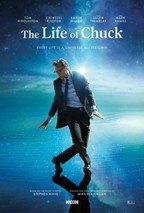
Posted in Uncategorized | 1 Comment

Bob Dylan The Concert Series: 2014

By Tony Attwood

The idea of this series is to offer one full concert recording for each year when Bob was performing concerts – ideally with the recording being of reasonable quality.   We are now nearing the end of the series, and just filling in the years which for different reasons we have missed.  As, for example, finally putting the rather obvious note about 2020, which for some reason I have not included before.   It doesn’t tell you anything you don’t know, but it helps make the list a little more complete.

A full list of the concerts in this series is given below.

Today’s concert is a really excellent quality recording from Toronto Sony Centre, on 17 November 2014.  A list of the songs performed is given below.

Part One

  1. Things Have Changed
  2. She Belongs to Me
  3. Beyond Here Lies Nothin’
  4. Workingman’s Blues #2
  5. Waiting for You
  6. Duquesne Whistle
  7. Pay in Blood
  8. Tangled Up in Blue
  9. Love Sick

Part two

  1. High Water (For Charley Patton)
  2. Simple Twist of Fate
  3. Early Roman Kings
  4. Forgetful Heart
  5. Spirit on the Water
  6. Scarlet Town
  7. Soon After Midnight
  8. Long and Wasted Years

Encore

  1. Blowin’ in the Wind
  2. Stay With Me

And previously in this series

Posted in Uncategorized | Leave a comment

From A Buick 6 part 2: Torn Between Two Lovers

by Jochen Markhorst

II          Torn Between Two Lovers

I got this graveyard woman, you know she keeps my kids
But my soulful mama, you know she keeps me hid
She's a junkyard angel and she always gives me bread
Well, if I go down dyin', you know she's bound 
                              to put a blanket on my bed

 In the Wind, the third album by Peter, Paul and Mary, is the record that effectively marks Dylan’s breakthrough as a songwriter. It features three songs by the then unknown Bob Dylan (“Don’t Think Twice, It’s All Right”, “Quit Your Low Down Ways” and “Blowin’ in the Wind”).

Blowin’ is the lead-off single, released three months before the release of the LP in October 1963, and becomes a huge hit. More than a million copies sold – Dylan’s name is established, his wallet filled. The next single, Don’t Think Twice, fares nearly as well and reinforces Dylan’s name and credit score.

The trio also wrote their own songs, the most successful of which was Peter Yarrow’s “Puff, the Magic Dragon” (with lyrics by Lenny Lipton), but their success remained mainly dependent on others. Bob Dylan, old folk songs, Pete Seeger, Gordon Lightfoot… and John Denver’s “Leaving On A Jet Plane” is their last and biggest hit (1969, their only number one hit in Billboard’s Hot 100, after five Top 10 hits in previous years).

Ironically, Peter Yarrow’s greatest success as a songwriter, like Dylan’s, came when someone else scored a number one hit with one of his songs: in February 1977, Mary MacGregor reached the top spot with Yarrow’s “Torn Between Two Lovers”. She then reached the Top 100 twice more with Peter Yarrow songs, “This Girl (Has Turned into a Woman)” and “For a While”, all of which inspired music critic Robert Christgau to make the witty, somewhat vicious observation: “I consider it significant that Peter Yarrow’s first commercial success of the decade is an Olivia Newton-John substitute, albeit one who’s willing to admit she fucks around” (Christgau’s Record Guide: Rock Albums of the Seventies, 1979).

Witty, and not entirely untrue, but still disparaging: the songs are not that vulgar. “Torn Between Two Lovers” is an adultery song that is archetypal for the female half of the genre. At least, until the Third Feminist Wave, until the Girl Power generation, something regretful, something apologetic, something vulnerable usually prevails among the ladies. “Torn between two lovers, feeling like a fool,” Mary sings in the chorus, “Loving both of you is breaking all the rules.” And in the verses, she tries to ease the pain of her lawful husband with heartbreaking regret. She still loves him very much, but she just has this empty place inside of me that only he can fill. And truly, no one else can have the part of me I gave to you – and more of those soothing, comforting, loving incantations. Or like Marlene Dietrich’s evergreen “Ich weiß nicht, zu wem ich gehöre” (I don’t know to whom I belong, 1947);

Ich weiß nicht zu wem ich gehöre
Ich bin doch zu schade für einen allein.
Wenn ich jetzt grad hier Treue schwöre
Wird wieder ein anderer ganz unglücklich sein.

I don't know to whom I belong
I'm too good for just one person.
If I swear my loyalty right now
Someone else will be very unhappy.

… a bit more assertive, but still with that apologetic undertone.

Among the male colleagues, the tone is generally radically different. Men who sing about their own adultery usually do so unashamedly, rarely tormented, and usually boastful, as Willie Dixon said about Muddy Waters. Macho, cocky pride dominates, in any case. “Back Door Man”, “Me And Mrs. Jones”, “Travelling Riverside Blues”. “Breaking Up Somebody’s Home”… men like Howlin’ Wolf and Robert Johnson are neither vulnerable nor apologetic. Or like the narrator in the song on which “From A Buick 6” is loosely based, on Sleepy John Estes’ “Milk Cow Blues” from 1930.

Sleepy John Estes is a giant who appears in Dylan’s life and work as regularly as the mile markers along Highway 61. Dylan mentions him in the opening line of the liner notes on Bringing It All Back Home (1965; I’m standing there watching the parade/ feeling combination of Sleepy John Estes. Jayne Mansfield. Humphrey Bogart), attends his performances in Greenwich Village in the early 1960s, continues to refer to Estes in interviews, plays and copies his songs (most flagrantly in 2006, in “Someday Baby”, Dylan’s adaptation of Sleepy John’s “Someday Baby Blues” from 1935). Around his 1990s return to his roots, World Gone Wrong (1993), the album on which he greets Sleepy John Estes with “Ragged & Dirty”, Dylan poetically expresses his admiration and indebtedness:

“People like Son House, Reverend Gary Davis or Sleepy John Estes. Just to sit there and be up close and watch them play, you could study what they were doing, plus a bit of their lives rubbed off on you. Those vibes will carry into you forever, really, so it’s like those people, they’re still here to me. They’re not ghosts of the past or anything, they’re continually here.”
(Gary Hill interview, Oct. 1993)

Despite all his love and poetic admiration, DJ Dylan never plays a record by Sleepy John Estes on his radio show Theme Time Radio Hour (2006-09), not even in episode 28, “Sleep”. Indirectly, however, he does sometimes sneak him in. In the afterword to “Lucy Mae Blues”, for example:

“That was Frankie Lee Sims. He was Lightnin’ Hopkins’ cousin, born in New Orleans, died in Dallas. And recorded that song, which is kind of a mash-up between a couple of blues standards. You hear a little bit of “Ain’t No Tellin’”, which Mississippi John Hurt made famous, and a little tast of “My Sunday Woman”, or as some people call it: “Every Day In The Week”. I like the version by Sleepy John Estes.”
(Theme Time Radio Hour Ep. 53: Days of the Week, 3 Oct. 2007)

… there are no Sleepy John Estes recordings of any of the songs mentioned.

Back to 1965. Six weeks after 16 June, the day on which the final version of the landmark “Like A Rolling Stone” was recorded, Dylan is back in the studio to record the rest of Highway 61 Revisited. On 29 July, he transforms the sharp, fierce rocker “Phantom Engineer” into the melancholic masterpiece “It Takes A Lot To Laugh, It Takes A Train To Cry”, records the hallucinatory “Tombstone Blues” in between, and ends the day with the stunning “Positively 4th Street”. Dylan and his mates, led by Kooper and Bloomfield, are in stratospheric, mercurial top form.

The following day, Friday 30 July 1965, begins with a warm-up that proves to have lasting power: “From A Buick 6” (at the time still called “Lunatic Princess No. 3”). First, two short, interrupted takes. The first breaks off after 23 seconds, when Dylan uses a plural: “I’ve got these graveyard women, you know they…”. On the second, we only hear producer Bob Johnston’s announcement and Dylan saying, “I’ll start off with the harmonica.” Then there are only two complete takes, and that’s it. Take 3 does not seem to exist, and Take 4 and Take 5 are interchangeable (quite literally: Take 4 is used on the first American pressings and all Japanese pressings, Take 5 on all others).

And in all takes, we hear that today Sleepy John Estes’ “Milk Cow Blues” is haunting Dylan’s creativity, and a man who is torn between two lovers, “one who’s willing to admit he fucks around”…

————

To be continued. Next up From A Buick 6 part 3: I will die in thy lap


Jochen is a regular reviewer of Dylan’s work on Untold. His books, in English, Dutch and German, are available via Amazon both in paperback and on Kindle:


Posted in Uncategorized | Leave a comment

The Philosophy of Modern Song: Poor Little Fool

by Tony Attwood

This series of articles takes the songs that Bob Dylan discussed in his post-Nobel Prize book “The Philosophy of Modern Song” and looks at those songs individually, rather than reviewing Bob’s comments upon them.  And, just in case you have not had a chance to listen to the songs in question, at least one recording of each song is included in the article.

What is interesting for myself as author (even if for no one else) is that in a number of cases, the songs are new to me, and so I am starting from the outside when trying to understand why Bob chose each particular song.

Today however, it is the turn of “Poor Little Fool” performed by Ricky Nelson and written by Sharon Shealey; a song I do remember from years ago – although to be fair, it is so generic in its style, I may be thinking of something else.

Taking information from the LA Times I discover that Sharon Sheeley wrote the song while still a school student.  Sadly, I also read that she died aged 62 of complications after a cerebral haemorrhage.   Following the recording by Rick Nelson, it became a million-selling record.

The composer also featured in the 1960s TV rock ‘n’ roll series “Shindig!”   Although she wrote no more hits, it is said that “she remained an influential figure in rock circles in England and the United States in the 1960s.”  Although quite how or why, I don’t know.

It is reported that Sheeley wrote the song when she was 15 years old and was encouraged to continue her activity as a composer after she met Elvis Presley and had a short relationship with Don Everly.  She then asked Ricky Nelson to record the song, having, according to some reports, approached him after pretending her car had broken down.  The things these youngsters would get up to!

Interestingly (again, for me, if no one else) the backing vocals are by the Jordanaires, who of course worked on Elvis Presley records) and it went to number 1 on the Billboard Hot 100, which had just been launched.   Cashbox magazine reviewed the song, calling it a “beautiful rock-a-ballad that should jump into the winners’ circle in short order”.

Listening to the song today, it sounds like a typical 1950s bubblegum song, except for one thing, in that it actually has five verses, with the chorus coming after each verse. and it has a moral – the singer says that he “played around” with the affections of girls and then one day the woman in the story played the trick back on him, and he is now hurt.

I am not suggesting that this is the first song that tells that simple story, but I do think this approach was more unusual than the “I love you,” type songs.

And in fact, to follow this line of thought, I found the Billboard list of top 50 singles for 1958, which of course, includes this song.   Reading through the list it is (again for me at least, if no one else) quite extraordinary how varied the songs are for that year.

The top three songs of that year, according to the chart, were  “Volare” by Domenico Modugno, “All I Have to Do Is Dream” by the Everly Brothers, and “Don’t” by Elvis Presley.  The only song that I happen to know and which appears to be in the same sort of zone as is “When” by the Kalin Twins, although there are a number of songs in the list that are no longer available for recall in my head.   (The intro below is in French but the recording is the English version).  It represents (at least to me) an utterly different world from the one we know today – and I think that was Bob’s point with the Philosophy book – there is a philosophy within modern song, but it is not one that we would be particularly inclined to embrace today.

Previously in this series

Posted in Uncategorized | Leave a comment

No Nobel Prize for Music: Bob the MinstrelBoy, loses his way


By Tony Attwood

Dylan in 1967 was the Dylan of the Basement Tapes, a period which was followed by the total transformation of his work and style with the composition of the John Wesley Harding songs.  These recordings seemed to include a fair amount of Kafkaesque influence until the last three compositions of the year.

These three songs were indeed different, however: “Dear Landlord,” “I’ll be your baby tonight,” and “Down along the cove” – the first of these being a song based on a stream of thoughts and the last two being love songs, which were not at all typical of Dylan’s recent work.  Indeed, I would surmise that if you didn’t know these were Dylan songs, you would never guess.  Although I am primarily concerned with the music in this series, it is hard to imagine any music other than the 12-bar blues format that Dylan used for Down Along the Cove, being introduced here.   Still, at least Bob’s friend and eternal bass player has a great time.  Maybe it was just written so that he could have some fun.

And I do mean that comment seriously; I would really like to know how that bass part came to be.  Did Tony Garnier pick up on a Bob improvisation, start to create his bass accompaniment, and then have Bob say, “We’ve got to put that on the album?”

Certainly, Tony Garnier deserves some recognition.   He joined Bob’s band on June 10, 1989, and has subsequently been called “bass player and musical director” (by Duke Robillard). He is undoubtedly the musician who has played the most shows with Dylan.

And although he is not as old as Bob, he is, by my calculations, approaching 70 years of age as I write this in 2025, so maybe the two older guys get on well together.

One interesting thing that Garnier might well bring into his work with Bob is that he has had extensive experience working with other excellent musicians, ranging from Loudon Wainwright III to Paul Simon.  He was even in the Saturday Night Live house band for a while and indeed also appeared in “Masked and Anonymous.” 

But to take ourselves back to Down along the Cove, it is hard to see anything Dylanesque here, other than the need to fill up the album.  The lyrics alone surely tell us that.  Just three verses of which the first is…

Down along the coveI spied my true love comin' my wayDown along the cove,I spied my true love comin' my wayI say, "Lord, have mercy, mamaIt sure is good to see you comin' today

1968 was, of course, a year that remains famous in American history, and indeed, one could go on and on forever writing about 1968.   And yet with America turning itself inside out, what was Bob’s response?

Of course, I was not there, what with being a student in England at the time, but looking back at Bob’s work from the era, I see no references to the issues of the assassinations, the war, civil rights, going to the moon, Chicago…

As far as I can tell, the issues that so occupied Dylan’s mind in earlier years were now all coming to the boil, and yet Dylan wrote Lay Lady Lay,  a love song.  And of course, there is no reason why he should not write that or any other song.  It is just that after all the songs that touch on social issues, he now co-wrote “Nowhere to go” with George Harrison, a song that basically seems to say that we need to look after ourselves, as if we don’t, no one else will.  (I only know of one recording of Nowhere to go and you can find it through that link, but if you don’t know it, be warned, the quality is very rough both technically and musically).

What happened to the man who wrote “Masters of War”, and “Times they are a changin'” and so on?   Well, seemingly, he vanished.

Of course, I might be totally wrong about Dylan the composer in 1969, and indeed, maybe there is a book out there which explains why Dylan wrote what he did in 1969, but if so, I’ve missed it, and for now, I am baffled.    The man who wrote “Desolation Row” found the image of the world around him that he had reported poetically in his songs, becoming true.  And his reaction was to write “Minstrel Boy” – a song which basically says we should look after ourselves (the implication being that if times really are changing, they are most certainly not changing for the better).

In fact, of the 15 songs that I can trace to being written in 1969 by Bob, the key themes seem to be that we need to look after ourselves because no one else will do it, and beware of love, because it can lead to lost love.

In fact, I can’t pick a song from the list of Dylan compositions for that year because nothing written at this time matches what had gone before.  There is nothing that I find that is politically telling, or musically original, or indeed insightful or beautiful.  But what Bob clearly found was country music, and it was his experimentation in that area that brought Dylan back to songwriting.  Indeed, without that twist, he might never have written again.

But there is a caveat to all this: the dating of Minstrel Boy is uncertain.  Musically, I feel it fits in 1969, but it is impossible to prove.   However, we can be quite sure about what Bob did write at this time, even if the order of writing is not always clear.   This was Dylan’s era of writing about love and lost love.  Song after song is on the two sides of the same theme.

In terms of lost love, we have “I threw it all away”, “I don’t want to do it”, “One more night” and “Living the Blues”.

In terms of the lost songs we have “I’d have you anytime”, “To be alone with you”, “Peggy Day,”  “Country Pie” (although that song could be seen as being about something else), “Tell me it isn’t true”, “Tonight I’ll be staying here with you”

Only then, at the end of the compositions for the year, do we get a change of theme, with songs like “Wanted Man”, “Champagne Illinois”, “Ballad of Easy Rider and “Living the blues.”

What we actually have during the period, however, is a real level of experimentation for Bob in terms of the music he was writing.

Indeed, as I have pointed out before, if we go back to Minstrel Boy it feels incredibly laboured, and incorporates a chord sequence of E minor, F6 and G11 which feels to me as if it is introduced simply because it is different, and not because it works with the lyrics or within the musical concept.

In short, one is simply left thinking, “What on earth is going on?”   And that is before we even ask what happened to Dylan the great creator of lyrics: Minstrel Boy consists of two verses and a chorus heard three times.

Who's gonna throw that minstrel boy a coin?
Who's gonna let it roll?
Who's gonna throw that minstrel boy a coin?
Who's gonna let it down easy to save his soul?

Is that Bob talking of himself, or a kid he saw playing a banjo with a hat in front of him or …. well what?

What I think we can see at this time is that Bob felt he needed to change – perhaps because he felt that his songs of protest were no longer relevant, given that half the world seemed to be protesting around him.

But the problem was that he looked at country music for inspiration in guiding that change, and yet country music is by and large a musical form that is fixed within certain musical concepts, while in fact (in my view) what Bob needed was to change musically, by finding a completely different type of music to work with.

In short, going from the complexities of “Visions of Johanna” to “Country Pie” was a musical route that went backwards, backwards and then backwards some more, and there was sadly nothing that was influencing him in another direction.

Previously in this series….

1: We might have noted the musical innovations more
2: From Hattie Carroll to the incoming ship
3: From Times to Percy’s song
4: Combining musical traditions in unique ways
5: Using music to take us to a world of hope
6: Chimes of Freedom and Tambourine Man
7: Bending the form to its very limits
8: From Denise to Mama
9: Balled in Plain 
10:Black Crow to All I really want to do
11: I’ll keep it with mine
12:Dylan does gothic and the world ends
13: The Gates of Eden
14: After the Revolution – another revolution
15: Returning to the roots (but with new chords)
16: From “It’s all right” to “Angelina”. What appened?
17: How strophic became something new: Love is just a four letter word
18: Bob reaches the subterranean
19: The conundrum of the song that gets worse
20: Add one chord, keep it simple, sing of love
21: It’s over. Start anew. It’s the end
22:Desolation Row: perhaps the most amazing piece of popular music ever written
23:  Can you please crawl out your window
24: Positively Fourth Street
25: Where the lyrics find new lands, keep the music simple
26:  Tom Thumb’s journey. It wasn’t that bad was it?
27: From Queen Jane to the Thin Man
28: The song that revolutionised what popular music could do
29: Taking the music to completely new territory
30: Sooner or Later the committee will realise its error
31: The best ever version of “Where are you tonight sweet Marie?”
32: Just like a woman
33: Most likely you go your way
34: Everybody must get stoned
35: Obviously 5 Believers
36: I Want You Creativity dries up
37: Creativity dries up - the descent towards the basement.
38: One musical line sung 12 times to 130 worlds
39: Bob invents a totally new musical form
Posted in Uncategorized | Leave a comment