From A Buick 6 part 1: Cars are cars


by Jochen Markhorst

I           Cars are cars
“One of my deficiencies is my voice sounds sincere,” says Paul Simon in an interview with Rolling Stone (May 2011). “I’ve tried to sound ironic. It doesn’t work; I don’t. I can’t. Dylan, everything he sings has two meanings. He’s telling you the truth and making fun of you at the same time. I sound sincere every time.”

Simon is a little too modest about the limited range of his singing voice, but this much is true: the irony, snark and sarcasm that Dylan manages to convey in his singing, especially in the mercurial years of 1965-1966, are beyond Simon’s reach. On the other hand, he is a grandmaster, comparable to Randy Newman, in the field of quiet understatements, dry humour and feigned silliness. “50 Ways To Leave Your Lover”, “Paranoia Blues”, “Have A Good Time”… Paul Simon’s palette certainly has more colours than just sincerity.

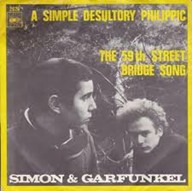
He does not reveal where he has “tried to sound ironic”, but Simon refers to Dylan in the same breath, so the link with “A Simple Desultory Philippic” (1965 and 1966) is quickly made. Whether he sounds ironic there is debatable, but he surely does try very hard to sound like Dylan. In any case, it is a Dylan pastiche time has been kind to. At the time, it was considered somewhat bland, it was misunderstood (ironically as a despicable attempt to piggyback on Dylan’s success) and occasionally appreciated with some goodwill, but in the twenty-first century, fans and biographers look back on the song with considerably more affection. At times, perhaps a little too enthusiastic (biographer Marc Elliot calls it a vicious burlesque, a malicious caricature), while on fan sites, fans (with apparently no sense of perspective) declare that it is “great and hilarious” and even “one of the best political songs ever”. Yeah well. Anyway, enjoyable the song certainly is.

There are two versions. The first dates from Simon’s London period, is acoustic and clearly inspired by Bringing It All Back Home. Simon copies “It’s Alright Ma (I’m Only Bleeding)” on his guitar and rattles off verses such as:

I was Union Jacked, Kerouac'd
John Birched, stopped and searched
Rolling Stoned and Beatled till I'm blind
I've been Ayn Randed, nearly branded
Communist 'cos I'm lefthanded:
That's the hand I use, well, never mind!

The recording ends up on the curious solo album The Paul Simon Songbook (1965), a record without Art Garfunkel recorded in London that had to satisfy the sudden demand for a folky Paul Simon. It is a ramshackle, shabby mishmash of songs from the flop Wednesday Morning 3.A.M. (“The Sounds Of Silence”, for example), new songs and songs that would be re-recorded a year later for Simon & Garfunkel’s breakthrough album Parsley, Sage, Rosemary And Thyme.

The latter album includes another “A Simple Desultory Philippic”. For this second version, Simon first changed the lyrics; many names were altered. The first verse now begins with:

I been Norman Mailered, Maxwell Taylored
I been John O'Hara'd, McNamara'd

But that is not the most radical change. The more striking difference is the changed musical background. Dylan had released Highway 61 and Blonde On Blonde meanwhile, which led Paul Simon to take the original step of updating the music; he copies the mercurial sound, discards “It’s Alright Ma” and now chooses “From A Buick 6” as the model for the music. A challenge, of course, as Simon’s sheer neurotic drive for perfection in production is notorious . But it must be said: this one time it does sound – by Paul Simon standards that is – quite gritty. Well, sort of unpolished anyway.

Incidentally, Dylan’s success inspires producer Tom Wilson, without Paul Simon’s knowledge, to create a “folk rock” remix of the flop “The Sounds Of Silence”. We all know how that ends: The revised, updated version becomes a huge global hit, even being distinguished, somewhat debatably, as “the quintessential folk rock release” (Frank Hoffmann, Encyclopedia of Recorded Sound, 2005). The astronomical sales figures lead to a hasty reunion of Simon and Garfunkel and ultimately to the duo’s elevation to pop legend status.
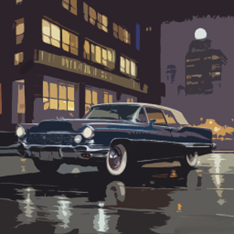
“From A Buick 6”, on the other hand, is sometimes dismissed as filler, as an unremarkable interlude on an album full of timeless classics. And alright, between songs like Rolling Stone, It Takes A Lot and Thin Man, the Buick shines a little less brightly than it would on its own, somewhere on a deserted parking deck in the moonlight. Separated from that overwhelming side A though, “From A Buick 6” comes into its own: one of those mercurial gems from the heyday of a genius artist, a bittersweet, unrestrained blues rock full of half-familiar references and eccentric metaphors.

Like half of the songs on Highway 61, the title has no direct connection to the lyrics. The Buick 6 series was produced from 1914 to 1930, so at most the title has a kind of emotional link to the roots of the music in the song, much like “Highway 61” has a link to the forefathers of the blues. And then there may be, as a bonus, a more personal touch: the Zimmermans used to have a Buick at home. In Chronicles, the bard recalls family trips to Duluth in the “old Buick Roadmaster”, the car in which Dylan learned to drive, the brand to which he remained loyal in later years. The poet probably associates a Buick 6 with something like old and familiar or of lasting value.

At least more so than Paul Simon does:

Cars are cars 
All over the world
Similarly made
Similarly sold
In a motorcade
Abandoned when they’re old
Cars are cars
All over the world
                         ("Cars Are Cars", Hearts And Bones, 1983)


To be continued. Next up: From A Buick 6 part 2: Torn Between Two Lovers


Jochen is a regular reviewer of Dylan’s work on Untold. His books, in English, Dutch and German, are available via Amazon both in paperback and on Kindle:
 

Posted in Uncategorized | 1 Comment

Bob Dylan the concert series (number 51): 14 October 2016

This is concert number 51 in our series in which we are trying to find a decent recording of a Dylan concert for each year from 1961 onwards in which Dylan performed and put them all together in one index, so if you suddenly want to know what Bob sounded like in one particular year, hopefully it will be here.   But of course, as we go on and on it gets not just to find a recording we can link to, but also, one for each year.

Obviously some years Bob didn’t tour, but if you take a look at our list below, and have found on the internet a concert for one of the years missing, please take pity on an old man (me not Bob) and email the URL of that video, with your name, and whether you are giving me permission to quote you as the gracious finder.   I’m at tony@schools.co.uk

So here we are in 2016

  1. Rainy Day Women #12 & 35
  2. Don’t Think Twice, It’s All Right
  3. Highway 61 Revisited
  4. It’s All Over Now, Baby Blue
  5. High Water (For Charley Patton)
  6. Simple Twist of Fate
  7. Early Roman Kings
  8. Love Sick
  9. Tangled Up in Blue
  10. Lonesome Day Blues
  11. Make You Feel My Love
  12. Pay in Blood
  13. Desolation Row
  14. Soon After Midnight
  15. Ballad of a Thin Man
  16. Like a Rolling Stone
  17. Why Try to Change Me Now

And previously in this series

Posted in Uncategorized | Leave a comment

The Philosophy of Modern Song: I got a woman (and Just like a woman)

A personal reflection on the songs Bob selected for his publication, upon being given the Nobel Prize for Literature….

By Tony Attwood

Music, as I have indeed said before, can trigger memories, and that is certainly the case here, for this recording that Bob chose in his Philosophy selection was released in 1958.  And indeed that is when I most likely must have first heard the song (at the age of 11).  Of course, at that age, the notion, “I got a woman” would have been quite alien to me, not least when one has just moved from hubbub of inner London to the open landscapes of Dorset, and indeed when one has left all of one’s friends behind in so doing.

I don’t recall ever having a copy of the record, but I am sure it got played on Radio Luxembourg a lot, and probably popped up on Radio Caroline, which began broadcasting six years later (these being the stations that we could hear popular music on – the UK being a very long way behind the USA and other countries in terms of having popular music on radio stations).

The song itself is a variation on the 12-bar blues, using just the three chords that we associate with that format.  But it is also a variant on an earlier song “It must be Jesus” – which has almost identical music to “I got a woman”.

Now the problem here is that “I got a woman” is about as secular and explicit as was allowable when the record was released in 1956, two years after “It must be Jesus,” but the message of the songs is still utterly different in each case.   The original (“It must be Jesus”) has an utterly clear religious message, whereas Ray Charles’ reworked version is as secular as you can get.

What is interesting in terms of the copying of one song by the writer of another, is just how quickly it happened in this case.  It is difficult to pin down exact dates as sources vary in their reporting, but everyone agrees that Ray Charles heard “It must be Jesus” (which would probably have been in October 1954) and then recorded “I got a woman” the following month.

Now I can’t find any details of subsequent lawsuits or payments in compensation, so maybe Ray Charles got away with it.  And he is reported as having said that he had been singing the song for about a year before he recorded it.  So it is just possible that the copying went the other way around, and Charles decided to record his version, having realised that the religious community was using it with new lyrics.

All I can say is that having read my way around the topic, I can’t be sure – people writing about these things just seem to assert, without giving much in the way of evidence.

But what we do know is that Ray Charles recorded it in November 1954, and it was his first hit – (with Ray Charles saying that he had been playing it in clubs for about a year before making that recording,) and indeed it did make the Billboard 100 Greatest chart for a while.

The song’s structure and lyrics are simple, as was in part demanded by the fact that 78rpm records struggled to deal with recordings of more than two minutes 30 seconds.  The full lyrics are…

I got a woman, way over town, that's good to me, oh yeah
Say, I got a woman, way over town, good to me, oh yeah

She give me money when I'm in need,  she's a kind of friend indeed
I got a woman, way over town that's good to me, oh yeah

She's there to love me, Both day and night
Never grumbles or fusses, Always treats me right
Never runnin' in the streets, And leavin' me alone
She knows a woman's place, Is right there now in her home

She saves her lovin', early in the morning just for me, oh yeah

She saves her lovin', just for me ah, she love me so tenderly
I got a woman, way over town That's good to me, oh yeah

I got a woman, way over town, that's good to me, oh yeah
Say, I got a woman, way over town, that's good to me, oh yeah

Oh, she's my baby, Oh, don't you understand?
Yeah, and I'm her lover man
I got a woman, way over town, that's good to me, oh yeah

Oh, don't you know she's alright, Oh, don't you know she's alright.

Never people to let a good song be missed, Elvis Presley’s management persuaded him to record the song very soon after Ray Charles version was released.  Very interestingly, although Presley regularly performed the song, the recording didn’t make the top 40 charts, presumably because those attracted by the music had by then alreadly got the Ray Charles version.  In France, Johnny Hallyday issued a version in 1962 in English with “Be Bop a Lula” on the B side.

But if I may, let me divert slightly to note the sexism in the lyrics.   The possession implied by the title, and the concept that it is the woman’s duty to be “good to” the man really does seem (to me at least) pretty appalling.  And yet somehow it all seemed to be fine at the time, for the philosophy of modern song reflects the dominant views of society at the time.  Or perhaps someone spotted the irony of having “Come back baby” as the B side of the Ray Charles single, suggesting the guy doesn’t always have it his own way.

And yet, as I listen to the recordings of this song, my mind is somehow drawn to “Just like a Woman”.  It is utterly different of course, and written 12 years later.  It has been suggested in several sources that Dylan improvised the lyrics to his song in the studio, while making the record, and generally, we find such improvisations do draw heavily on previously heard songs.

I suppose what leads me down that possible path is that both “Just Like a Woman” and “I got a Woman” have been criticised for the misogyny in the lyrics.  I’ve no evidence, and it is just a rumination, nothing more.  But I do know this young street performer in Lodon (who I have featured before) has an incredible voice, and perfect sense of timing…

Previously in this series

Posted in Uncategorized | 1 Comment

No Nobel Prize for Music: Bob invents a totally new musical form

Details of the previous articles in this series, which focus on Dylan’s music, rather than his lyrics, are given at the end of the article.

By Tony Attwood

My last article in the series “No Nobel Prize for Music” ( One musical line sung 12 times to 130 words) took us to the period after the Basement Tapes, when Bob utterly changed lyrical and musical direction for one album.   Was he trying to prove that he could issue anything and it would be a hit, or was he deliberately seeking a new arena in which to work?    Whatever the answer, what we got was an album unlike any offered to us before, and a song (The Watchtower, of course) which ended up being played on the Never Ending Tour, more than any other song Dylan has written or recorded.

And indeed, we might pause at this moment to reflect on which songs Bob has performed the most, for at this moment (October 2025) we can find ten songs that Bob has performed on stage over 1000 times each.   Here’s the list as of today:

  1. All Along the Watchtower: 2338 performances
  2. Like a Rolling Stone: 2075 performances
  3. Highway 61 Revisited: 2029 performances
  4. Tangled Up In Blue: 1685 performances
  5. Blowin’ in the Wind: 1585 performances
  6. Ballad of a Thin Man: 1278 performances
  7. It Ain’t Me, Babe: 1123 performances
  8. Don’t Think Twice: It’s All Right: 1118 performances
  9. Maggie’s Farm: 1051 performances
  10. Things Have Changed: 1004 performances

I have often pondered what links these songs together, although maybe there is nothing except the fact Bob likes them.  Personally, I’d drop “Thin Man” and “Maggie’s Farm” from the list, and only keep “Highway 61” because it is known as the Blues Highway.  But of course it isn’t me, it’s Bob.

“Watchtower” has its special place because of Hendrix’ rearrangement, and that having heard that rearrangement, Dylan settled on the song for the end of the show.  But Bob is the boss, and I’m just the observer, so he knows.  And it really did give a good rousing end to the evening.

But to return to our main theme – Bob Dylan the musician…  In the last episode, I noted that Bob had moved from the complexity of songs like “Sad Eyed Lady” to the utter simplicity of “the JWH songs in general, and “Watchtower” in particular.  Where could he turn next as a songwriter?

In fact, the answer is nowhere.  Or virtually nowhere until  one starts to look at what Bob produced, in depth.   The data suggests that yes, he did write one song in 1968, and a real masterpiece it truly is: the love song “Lay Lady Lay”.  Although according to Wikipedia, “Lay Lady Lay” was originally written for the soundtrack of the film Midnight Cowboy, but wasn’t submitted in time to be included in the finished film.”

And then again, according to NBC, “In long-lost interviews, Bob Dylan…reveals he wrote the hit song,”Lay Lady Lay” for Barbra Streisand to sing.

Either way, it was a song that stood alone in the list of Dylan compositions in 1968 – although most commentators who have noted the song have no idea what made it so very special.   Indeed, I am not sure many of the people who have recorded the song since, quite realise what they are dealing with.

And in fact, when we come to look at the construction of this song, who can blame Bob for not composing anything else in that year?   For what he did with this composition was create a popular song unlike anything that had gone before.

First, of course, we must admit it is a gorgeous song in its own right, a song which surely any songwriter would be proud of.  And second, during the previous year, Bob seems to have done nothing but write, or at least rearrange songs for the Basement Tapes and the JWH album.   If you want to see the list of the songs that emerged at that time, they are all noted in the first part of the list of Dylan compositions in chronological order.   The total number of songs is around 100, and even if some were not actually Dylan compositions, it is an extraordinary number of tracks to lay down, not least when prior to this we were, most of us at least, already amazed at Dylan producing around 20 songs a year.

But now with “Lay Lady Lay” the first thing we notice musically is that Bob opens with a chord sequence that not only has he never used before, I can’t really recall anyone using it before:  A, C#minor,  G,  B minor.  I’ll try and explain what is going on and why it is so revolutionary.

Playing the chord of A major to begin announces the song is most likely in the key of A, and indeed the second chord of C# minor reinforces this thought as it is a perfectly normal chord to have as the second chord in a song in A.   Especially a plaintive song – written in A.   I can’t remember at this moment Bob doing that before, but he probably has, and really, it wouldn’t be noted as anything special.   It’s a very reasonable way to start this sort of song.

But the next chord of G major is utterly unexpected.   Yes, in the blues, you will often hear A followed by G, but not with a C# minor in between.  And as if to show what an intruder that chord of G is in this sequence, we then have B minor – another chord perfectly acceptable within a song written in A major, but not in relation to the changes that have come just seconds before.

In fact, what we have are two pairs of chords that themselves are fine as pairs of chords, but in which the two pairs are not related to each other in any way.  In other words, A major and C# minor work together perfectly.  And G and B minor work together perfectly.   But the two pairs are really from different keys.  I’m almost tempted to write, “from different universes.”

And yet, and yet, the song works brilliantly.  Maybe Bob did hear another song that has used this four-chord combination, or maybe he was playing the guitar or piano and happened upon it – but either way, it is most interesting.  But to make this chord structure work you still need a melody that fits.

I took some time a while ago to review some of the performances of this song by Bob in the Never Ending Tour series, and if you have time you might pop into this link    In that article are four recordings of Bob performing the song on the Tour, and what is so noticeable is that no matter what Bob does to the melody (especially in the fourth example in that article) the chord sequence is utterly unchangeable.   In short, this unique chord sequence is the song.   Bob can play around with the melody as much as he likes, but the song is only the song because of that unique sequence.

So here we have a year in which Bob wrote one song which is founded upon, and gains all its originality and momentum from, a simple, but very unusual four-chord sequence.

But we should notice that Bob the songwriter goes further.  Because while verse one has four easily understood lines.

Lay, lady, lay, lay across my big brass bed
Whatever colors you have in your mind
I'll show them to you and you'll see them shine.
The second verse adds an extra line (“Until the break of day”)
Lay, lady, lay, lay across my big brass bed
Stay, lady, stay, stay with your man awhile
Until the break of day, let me see you make him smile
His clothes are dirty but his hands are clean
And you're the best thing that he's ever seen.
Then we have what might be heard at first as another verse with the opening line “Stay, lady, stay, stay with your man a-while” but which then movees into a new section of music completely – which we would normally call a “middle 8”
Why wait any longer for the world to begin
You can have your cake and eat it too?
Why wait any longer for the one you love
When he's standing in front of you?
And after all that chopping and changing, we have a final verse in the form of a mixture of the first two lines of the first verse and the first verse and lines four and five of the second verse.
Lay, lady, lay, lay across my big brass bed
Stay, lady, stay, stay while the night is still ahead
I long to see you in the morning light
I long to reach for you in the night
Stay, lady, stay, stay while the night is still ahead.

Now, what we have to remember here is that Bob had just had a long period without writing new songs, which itself had followed a period of recording every song he could possibly think of (ie the Basement Tapes era).   And suddenly he comes out not just with a beautiful new composition, but one which takes song-writing into totally new territory.  Songs, we had always learned before this point, had verses in which the lyrics changed but the music stayed the same, and choruses that return regularly, to repeat their same music and lyrics.  And tradition demands, in these two structures, the music stays the same while the lyrics evolve.  Musically, the song is in a particular key and stays there except possibly for an occasional modulation to the dominant in the chorus.

But suddenly, Bob said no, it doesn’t have to be like that.   Suddenly, the number of lines in a verse can change, and the chord sequence doesn’t have to relate to a particular key.  Suddenly, in one song, and seemingly without anyone noticing, Bob has evolved a totally new structure for a popular song.  And of course, typical of Bob, he never talked about what he had done.  He just did it.  And what an utter masterpiece of four and five-line verses we have.

The great wonder of this song is not that Bob decided to have four lines in some sections and five lines in others, but rather that he does it, and basically no one notices, except to feel that slight “something”, that slight uncertainty in the singer’s lines as he is begging her to stay and not go.

Previously in this series….

1: We might have noted the musical innovations more
2: From Hattie Carroll to the incoming ship
3: From Times to Percy’s song
4: Combining musical traditions in unique ways
5: Using music to take us to a world of hope
6: Chimes of Freedom and Tambourine Man
7: Bending the form to its very limits
8: From Denise to Mama
9: Balled in Plain 
10:Black Crow to All I really want to do
11: I’ll keep it with mine
12:Dylan does gothic and the world ends
13: The Gates of Eden
14: After the Revolution – another revolution
15: Returning to the roots (but with new chords)
16: From “It’s all right” to “Angelina”. What appened?
17: How strophic became something new: Love is just a four letter word
18: Bob reaches the subterranean
19: The conundrum of the song that gets worse
20: Add one chord, keep it simple, sing of love
21: It’s over. Start anew. It’s the end
22:Desolation Row: perhaps the most amazing piece of popular music ever written
23:  Can you please crawl out your window
24: Positively Fourth Street
25: Where the lyrics find new lands, keep the music simple
26:  Tom Thumb’s journey. It wasn’t that bad was it?
27: From Queen Jane to the Thin Man
28: The song that revolutionised what popular music could do
29: Taking the music to completely new territory
30: Sooner or Later the committee will realise its error
31: The best ever version of “Where are you tonight sweet Marie?”
32: Just like a woman
33: Most likely you go your way
34: Everybody must get stoned
35: Obviously 5 Believers
36: I Want You Creativity dries up
37: Creativity dries up - the descent towards the basement.
38: One musical line sung 12 times to 130 worlds
Posted in Uncategorized | Leave a comment

Sitting On A Barbed-Wire Fence part 2 (final)


Sitting on a Barbed Wire Fence Part 1

by Jochen Markhorst

 II          Kansas City, here I come

See my hound dog bite a rabbit
And my football’s sittin’ on a barbed-wire fence

On this first recording day for Highway 61 Revisited, 15 June 1965, producer Tom Wilson and Dylan have three hours, from half past two to half past five, at their disposal in Studio A. Roughly the first hour is spent on “It Takes A Lot To Laugh, It Takes A Train To Cry” (back then still called “Phantom Engineer Cloudy”), the last hour to the first attempts to unlock the cosmic power of “Like A Rolling Stone” (then still played at waltz tempo), and the hour in between is for “Sitting On A Barbed-Wire Fence”.
Today, the song is registered on the recording sheet as “Over The Cliffs pt 1” and “Over The Cliff” respectively, which is a bit intriguing. It seems well thought out, in any case. “Over the cliff” does not have the nonsensical overtones of other working titles that Dylan casually comes up with these days; it is not “A Long-Haired Mule And A Porcupine” or “Alcatraz To The Ninth Power”. It sounds more serious. And it inevitably leads to:

“Thousands of little kids, and nobody’s around–nobody big, I mean–except me. And I’m standing on the edge of some crazy cliff. What I have to do, I have to catch everybody if they start to go over the cliff–I mean if they’re running and they don’t look where they’re going, I have to come out from somewhere and catch them. That’s all I’d do all day. I’d just be the catcher in the rye and all.”

… to a key scene from Salinger’s masterpiece Catcher In The Rye, then. However, there is no further connection with the song sketches that Dylan entrusts to the microphone today; if Dylan did want to sing about Holden Caulfield, he abandoned that intention after the first line of the first take.

Equally inexplicable is the relevance of the final title, “Sitting On A Barbed-Wire Fence”. It bears a vague, mainly intuitive resemblance to “Bending Down On My Stomach Lookin’ West”, the working title of “You Don’t Have To Do That”, a discarded 51-second trifle from the first Bringing It All Back Home session, 13 January 1965, and “barbed-wire” will almost certainly have trickled in from Bo Diddley’s 1956 classic “Who Do You Love?” (from the opening line I walked forty-seven miles of barbed wire). At least, we hear echoes of that song in the Highway 61 songs “Tombstone Blues” and “From A Buick 6”; Diddley’s monument surely is floating somewhere on the surface of Dylan’s stream of consciousness, these mercurial days.

Anyway, conceived and recorded between Rolling Stone and It Takes A Lot… hardly the worst neighbours. Nevertheless, or perhaps precisely because of this, “Barbed-Wire Fence” never really transcends the label “warm-up exercise”, or “disposable”, or “unserious”. Dylan himself seems to see it that way too; there doesn’t seem to be any written lyrics, the four complete takes all have different words, even different verses, which seem to be largely improvised during recording at that. The only lines that remain unchanged in all four versions are the closing lines of the opening verse, in which the narrator reveals what he is paying all those hundreds, or thousands, or millions of dollars for:

To see my bulldog bite a rabbit
And my hound dog is sitting on a barbed wire fence

… but even this unique consistency failed to convince Writings & Drawings’ transcriber on duty for the first official publication of the lyrics. He follows his own inimitable path, so officially, on paper, the bulldog is a hound dog, and the hound dog is a football (a word that – of course – is not sung in any version or in any verse).

The “rising temperature” verse is a further hint that Dylan has no serious intentions with the song. It is the second verse in Lyrics and in the Bootleg Series version, the third verse of Takes 2 and 3, and the fourth verse of the last take, Take 6, and all versions are variations of:

Well, my temperature rises and my feet you know they get so hot
Well, I went to the doctor, he gave me a shot
But he wouldn’t tell me what it is that I got.
                              (published version)

Telling, as Dylan is paraphrasing himself here. From the song he recorded a year ago for Another Side Of, “Spanish Harlem Incident” (Your temperature’s too hot for taming / Your flaming feet burn up the street) – and Dylan never ever repeats himself in a serious song. A month and a half later, he would transfer the other two lines to “Just Like Tom Thumb’s Blues”;

I don’t have the strength
To get up and take another shot
And my best friend, my doctor
Won’t even say what it is I’ve got

At that moment, 2 August 1965, Dylan has apparently already discarded “Sitting On A Barbed-Wire Fence” and is picking out the still usable bits from the remains.

This may diminish the song’s status, but it does not make it any less fascinating; the fragments and sketches that we have been presented with over the course of the fifty years since 1965 offer a voyeuristic glimpse into the creativity of a genius at the height of his powers. More specifically: how the electric Dylan now taps into and processes other sources. The fourth verse of Take 2 and Take 3, for example:

Well, if you go down to Houston, 
          watch this girl with hair pearly blue
Yes, if you go down to Houston, 
          watch this girl with hair pearly blue
She’s a hungry woman and 
She really make a mess outta you

“If you go down to Houston” from “Midnight Special”, “pearly blue” is borrowed by the young rocker from his unfashionable heroes Flatt & Scruggs, from the bluegrass classic “Down The Road” (1949):

Now down the road just a mile or two
Lives a little girl named Pearly Blue
About so high and her hair is brown
The prettiest thing boys in this town

Lester Flatt and Earl Scruggs – Down The Road: 

… and finally, the lines that will also be transferred to “Just Like Tom Thumb’s Blues” (They got some hungry women there / And they really make a mess outta you), lines that Dylan himself, in his surprising MusiCaresspeech in 2015, identifies as coming from the blues classic “Deep Elem Blues”:

“They were the only kinds of songs that made sense. When you go down to Deep Ellum keep your money in your socks / Women on Deep Ellum put you on the rocks. Sing that song for a while and you just might come up with When you’re lost in the rain in Juarez and it’s Easter time too / And your gravity’s down and negativity don’t pull you through / Don’t put on any airs / When you’re down on Rue Morgue Avenue / They got some hungry women there / And they really make a mess outta you. All these songs are connected.”

… although the traces of another song seem more obvious;

Goin' to Kansas City
Kansas City, here I come
They got some crazy little women there
And I'm gonna get me one

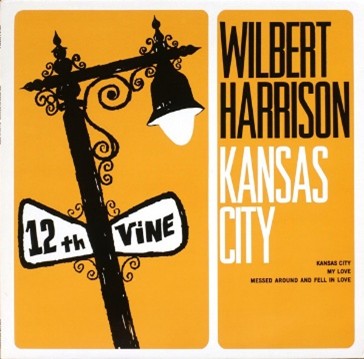
… Wilbert Harrison’s “Kansas City”, the song that keeps recurring in Dylan’s oeuvre. Once again, indirectly, here in “Barbed-Wire”, when Dylan sings This woman I’ve got, I swear she’s killing me alive, which seems to be paraphrasing Wilbert’s If I stay with that woman I know I’m gonna die; then a few days later in “Tom Thumb’s”; and even more literally twenty-five years later in “High Water”, when Dylan quotes the address in Kansas verbatim: He made it to Kansas City / Twelfth Street and Vine. A few years later, DJ Dylan pays tribute to the song in his radio show:

“Here’s a chart-topping smash by Mr. Wilbert Harrison, recorded for Bobby Robinson in 1959, and features the barbed-wire guitar of Wild Jimmy Spruill. Y’all know this song, and it always sounds good. Wilbert Harrison. Kansas City.”
(Theme Time Radio Hour episode 20, “Musical Map”).

… and the final reverence: when Dylan appears to become a crowd pleaser in 2023 and opens the seventh leg of the Rough And Rowdy Ways World Wide Tour in Kansas City with Wilbert Harrison’s classic, to the predictable delight of the audience. It’s the second time, by the way – after the premiere with Tom Petty’s band in 1986… also in Kansas City, of course. “Well. That’s the first time I’ve ever played that. Well anyway, we know where we are,” he says contentedly after the final chord.

Yes, we are in Kansas City – the city where Bo Diddley heard a group of children trying to outdo each other in a very particular rhythm. “It was like an African chant, and I wanted words that would suit it,” The Originator later said about the creation “Who Do You Love?”… a working method with which Dylan can identify, around half past three on a Tuesday afternoon in June 1965 in Columbia Studio A.

———–

Jochen is a regular reviewer of Dylan’s work on Untold. His books, in English, Dutch and German, are available via Amazon both in paperback and on Kindle:


Posted in Uncategorized | 3 Comments

What did you hear: The music of Bob Dylan. A review, part one


Recently

By Tony Attwood

When I first heard about “What did you hear?” by Steven Rings, I had to admit I was excited, for I have often felt that I was one of a very small crowd in writing about Bob Dylan the composer rather than Bob the lyricist.

And therein was my mistake, for on seeing the word “musician” I immediately made the assumption that the book would be about Bob Dylan the composer, since Bob is self-evidently primarily a composer, although most commentators write about him as if her were a lyricist alone.

But of course, “musician” primarily means a person who performs music professionally, and that is what this book is all about – or at least as far as I have read it.   It is a telling of the tale of Bob Dylan, the musical performer.   Now, of course, that does mean for the most part the performer of his own works, but the emphasis within the book is that of understanding how Bob performs.

So for me, not the book I thought I might be getting, for if you have been kind enough to glance at any of my reviews in the series “No Nobel Prize for Music”, you will, I hope, have realised that I have an interest in Bob, the “composer” of music, rather than Bob the lyricist or Bob the on-stage performer.

Which is not to say that these alternative Bob attributes (performer, lyricist) are not part of what makes Bob Dylan – of course they are.  But my feeling is that we already have a million books on Dylan’s lyrics, and Bob’s ability as a musician is not the reason we listen to his music.  It is Bob the composer that draws us to the albums, and Bob the re-arranger and Bob the performer that draws us to the shows.  But – and this is central to my thinking – “Bob the composer” (and subsequently “Bob the recording artist” is the most important to most of us, since most of us only have the chance of seeing Bob once or twice a year.  Life, relationships, earning money and all that stuff get in the way.

But not only is Rings book not what I thought it might be (which is obviously a matter totally of my fault in believing that others might be thinking the same way as me and wanting to explore Bob’s music), but the book also reveals a difference in the way Rings hears Dylan’s work and I do.

And I come to this point with a certain amount of expertise as I was the author of the “Absolute Highlights” series, which looked for, and gathered together some of the very best performances Bob gave of his own songs during those years of the Never Ending Tour.

Now, to go a bit deeper in relation to Rings’ book I should also explain that my background is in classical music, wherein I studied not just how one might play a Bach Prelude and Fugue or a Beethoven piano sonata, but also the form of the music.   Indeed, if you have studied such music, or even taken an interest in it, you will know that a substantial part of the basic understanding of the works of the classical-romantic composers is the form and how they use it.  At its simplest, the form of music might be the song, with its structure of verse – verse – verse etc or maybe verse / chorus / verse chorus etc.   And then the next variation, adding the “middle 8” (an alternative section) after a couple of verses, to break up the song.  At its most complex one might care to listen to and study a few Bach Fugues, or maybe the later Beethoven piano sonatas.

These matters are seemingly not of concern to Steven Rings, and that’s fair enough.  But he does comment upon the structure of the songs occasionally, particularly noting the Dylan compositions that are extensively on one note (he calls them “reciting-tone chants” and gives “Maggie’s Farm”, “On the Road Again”, “Bob Dylan’s Dream” etc as examples. contrasting this with songs with two reciting notes, such as “Outlaw Blues”, “Gates of Eden”, “Highway 61 Revisited” etc.

Now I have no argument with an author examining any specific aspect of a musician’s work, of course.  I have chosen the form of the music, while here Rings is choosing the melody, or rather lack of it.   Fair enough.  But I do think that this review does Dylan, the composer, a disservice.

Consider “Bob Dylan’s Dream” for example.

Just listening to the first verse, we have two facts that, from a musical point of view really stand out.  First and most obviously, the melody ranges across five notes.  Second the chord structure.

But even then, there is more: for example, the rhythmic effect and the issue of the chords.  A folk song in G would normally have within its accompaniment the three major chords of that key (G, C and D) and one or two of the minor chords (Am, Bm, Em).

In the “Dream” (above) Dylan uses just four of those chords (G, Am, C and D), so this is a conventional folk-music approach.  But what makes this song stand out is the way Dylan uses the chords.   The first line finishes on A minor, which is not particularly eccentric or forbidden, but is somewhat unusual.  And then, breaking a little more with classic folk tradition at the “I” in “I dreamed” Dylan plays the chord of C, which effectively clashes with the note “D” which is sung.  A similar passing “clash” comes with “me” in the phrase “made me sad”.  The words “made me” are sung against the chord of C, but the word “me” is sung against the chord of G, which provides that moment of uncertainty (one might say “clash” but that is I feel, too strong a word) before Dylan takes us back to the key chord of G major, for the word “sad”.   The annotation below is taken from the Dylan chords website – invariably the site to go to for such information.

      G           Am
While riding on a train goin' west,
              C/g    D/f#
I fell asleep for to take my rest.
C /b G                    C/g     G
I    dreamed a dream that made me sad,
             D            C         /b        G
Concerning myself and the first few friends I had.

So what we have is not in any way a reciting tone chant, but a really fine melody, made all the more interesting by the way chord changes and melody, each anticipate or drop behind each other.

Now, to my mind, this is not a composer or folk singer showing off a bit of technique, but rather a composer with an intuitive feeling for the way in which the melody and chordal accompaniment can play one off against the other.  It is in fact something utterly appropriate here because this is a song of “one against the other”.

But this is only the start, for what Bob has done here is create a beautiful, simple song, which can then be explored and developed in a way that many songs of more complex creation cannot.  Consider, for a moment, this utterly gorgeous version by Judy Collins.

The essence of the song is retained, but the rhythmic effects with the melody are extended and developed – something that can only happen because the original song contains all the elements that allow this to happen.    The result is once more a song of sadness within a simple strophic construction, and at the same time, a song which allows multiple musical reinterpretations while the lyrics remain the same.

The changes are indeed subtle, but that is all they need to be, because of the elegance of the original construction.

Now the comment by Rings is about the 115th Dream, not the original Bob Dylan Dream, and I think the first point here is that taking a few single examples to make a point, while those examples can be contradicted by others, does not make for a firm argument.

Yet there is more, because in his review of the 115th Dream Jochen made the point that the song is in “no sense of time”.   For the Mayflower sailed in 1620, Moby Dick is set in the 1840s. And then we ignore the semantic oddity to ride on a ship and the seemingly pointless pun to rename Captain Ahab Captain Arab – presumably no more than a nod to Ray Stevens’s Top 10 novelty hit “Ahab The Arab” (1962), the song with the most impressive camel impersonation ever.”

Besides which we once again have five notes used (although you can get away with just singing four since one is little more than a passing note).

Now also included in this put-down list of songs with only a few notes of melody, we also have “Like a Rolling Stone”, and yes indeed, this is true, there is no attractive melody as there is with “Bob Dylan’s Dream”, but that is because of the accompaniment used and the chorus.   Listen to the song afresh by hearing just the instrumental accompaniment with its slow rising bass line – something of an innovation since previously most songs that used the technique had a descending bass line.

What we find is that there is still a song there for multiple reasons.   One is the organ, playing its now so well-known part, in the chorus.   Another is the clear break line between verse and chorus.  Another is the upward progression of chords in the verse, answered by two downward progressions near the end of each verse.

My point here is that to focus just on the melody, which is admittedly highly restricted at the start of each verse, and to count the number of different notes used, is to misunderstand the song completely.  “Like a Rolling Stone” self-evidently is about a person who once had it all, and now has nothing.   Or put another way, it is about losing everything you once had.  As such, my experience is that the music reflects the meaning completely, and thus the interesting thing is to see exactly how Bob achieved this.   And there is one more issue – that is the driving force at the end of each verse as it leads into the chorus.

Now you don't talk so loudNow you don't seem so proudAbout having to be scrounging your next meal...

So yes, I have to confess to a disappointment with “What did you hear”.  Which is not to say that the book is wrong in any way or should not be published.  I just think that the key issue that is worthy of focus (what with the lyrics having been analysed to death) is the musical arrangement, and indeed the way Bob has subsequently re-written so many of his songs.

——-

What did you hear by Steven Rings is published by the University of Chicago Press.

Posted in Uncategorized | 1 Comment

Bob Dylan The Concert Series Santa Monica 1979

by Tony Attwood

In this series I am trying to find a recording of a concert in each year, which represents in some way what Bob was doing and sounding like in that particular year.

A list of all the concerts in this series is given at the foot of the article.

Of course, the idea of having a concert that signifies the whole year is ludicrous, I know that, but it’s never stopped me before.

A list of our other current and recent series can be found on the home page.

The concert….

  1. Gotta Serve Somebody
  2. I Believe in You
  3. When You Gonna Wake Up?
  4. When He Returns
  5. Man Gave Names to All the Animals
  6. Precious Angel
  7. Slow Train
  8. Covenant Woman
  9. Gonna Change My Way of Thinking
  10. Do Right to Me Baby
  11. Solid Rock
  12. Saving Grace
  13. Saved
  14. What Can I Do for You?
  15. In the Garden
  16. Blessed Be the Name
  17. Pressing On

Previously in this series

Posted in Uncategorized | Leave a comment

Bob Dylan in the UK – what can we expect

By Robert Ford,

On the eve of Bob Dylan’s forthcoming tour of the United Kingdom it seems appropriate to have a quick look back at his performing history in this part of the world.

He first came to the UK in December 1962 after his first album had been released, and his second album was being recorded, and performed in the folk clubs in the London area. He appeared in the BBC play Madhouse On Castle Street. He also spent time with British singers, including Martin Carthy (and it was lovely to see the recent Dylan video tribute to Martin ).

During the next few years, the UK was to play a huge role in Dylan’s musical journey. Following a celebrated concert at the Royal Festival Hall in May 1964, Dylan made two historic tours of the UK in 1965 and 1966. The 1965 tour was extensively featured in the brilliant ‘Don’t Look Back ‘ film and captured his last solo tour.

The 1966 tour culminated in the infamous Judas incident at the Free Trade Hall concert in Manchester. It is worth repeating how exhilarating and chaotic this 1966 tour was and how the Judas shout was a perfect moment. On the other hand, it is also ludicrous because Dylan had ‘ gone electric’ almost a year earlier, had released ‘Like A Rolling Stone ‘ and the ‘Highway 61 Revisited’ album months before his 1966 UK tour.

Following the 1966 UK tour Dylan did not tour again for 8 years despite releasing some of his finest albums, such as ‘John Wesley Harding’, ‘Nashville Skyline’ and ‘Bob Dylan’s Greatest Hits Vol 2’, which featured newly recorded versions of a few great songs from the Basement Tapes. Some of the original versions of the Basement Tapes songs did find their way on the famous ‘Great White Wonder’ bootleg released a year earlier.

However, Dylan did perform one more historic concert in the UK in 1969 at the Isle of Wight Festival. It is interesting to note that it was his only major performance during his retirement from performing for 8 years. The performance with the Band was almost as controversial as the 1966 concerts because Dylan had ‘gone Country’ and people do not like change. It was a brilliant performance and again like nothing else he had done before. It would be 9 years before he came back to perform in the UK.

The 1978 world tour was remarkable. Dylan could have performed a solo acoustic tour if his primary purpose was money. However, he performed with an eleven-piece band and did not perform any solo acoustic songs at the London concerts. The Earls Court performances were for many people a life-changing event…I know many people whose Dylan journey began here.  The Blackbush event, with an audience estimated at over 200,000 was another magical musical triumph.

Dylan performed in the UK on four tours in the 1980’s. The 1981 tour was again controversial, being the tail end of the religious period. The actual performances were magnificent. Has he ever sung better? Probably not. The 1984 tour had only 3 concerts in the UK, being in huge stadiums, etc. The Wembley Stadium concert was majestic and included some of his finest solo acoustic performances with a remarkable rewritten ‘Tangled Up in Blue’. The 1987 tour again divided people. Has he ever had a better band?

The last London concert was one of his greatest ever, with a terrific, spontaneous ‘Go Down Moses’ as the final song. The 1989 concerts had the NET arrive in the UK. The small combo Dylan formed for this period was probably invigorating for his live performance art and the concerts were very well received. ( Dylan had a peculiar impact on one fan at Wembley Arena as the fervent fan decided to play the harmonica during one song!)

The 1990’s continued the NET and had some landmark Dylan concerts, such as his wonderful London concerts in 1990, the Manchester concerts in 1995 and the 1998 concerts. The first two tours were an opportunity to see and hear Dylan up close in smaller venues with a standout ‘Crash On The Levee’ opening the 1995 concerts. He performed an intense, intimate concert at a Birmingham Leisure Centre in 1995. Surely, only Bob Dylan would do this.

Into the 2000’s, Dylan released the game-changing ‘Love & Theft’ album in 2001 and the sublime ‘Modern Times’ album in 2006, which led to some of his greatest concerts in the UK . Concerts in Stirling, Scotland in 2001, London in 2003 (he performed 4 concerts in 4 different venues in London and surprised even the most ardent Dylan admirer’s with his song choices…’Yea Heavy and A Bottle of Bread!) and Liverpool in 2009 with a heartfelt ‘Something’ which brought the house down, are for many fans must have concerts.

The 2010s saw Dylan embrace the Great American Songbook, which had a rather incredible impact on his work. The heavy workload of the NET had taken a toll on his voice, especially by the beginning of this decade. However, the recording of the first Songbook album in 2014 resulted in a surprising and dramatic improvement to his voice which continues to this day. Many people, including the great Tony Garnier feel that his 2019 USA concerts were some of the most remarkable of his performing history.  There are many outstanding UK concerts since 2013 and , again, Bob Dylan chooses to play concerts in many places other so-called superstars would never dream of playing. So Blackpool in 2013 with a superb, harmonica-driven ‘Forgetful Heart’ and a rather splendid ‘Waiting For You’ was very special. For a concert post-2014, with impeccable performances of the Sinatra-inspired cover songs, then Nottingham in 2017 is hard to beat (despite an audience lost in time ).

Into the present decade and the Rough and Rowdy Ways tour has resulted in many priceless concerts, including several at one of his favourite venues the Royal Albert Hall. The London Palladium concerts in 2022 at which Jimmy Page was ecstatic were wonderful, made all the better because of the minimal backing and the respectful audience.  The concerts last year in Wolverhampton, in the lovely Civic Hall , were a joy to see and hear, with the bonus of arguably his greatest ever drummer, Jim Keltner in the band.

It is astonishing that Dylan has been performing in the UK for over 60 years. It is also fair to say that other than the USA, he has performed more concerts in the UK than any other country (and therefore more concerts than any other performer). Since the beginning of the Never Ending Tour in 1988, he has only missed performing in the UK in 88,92,94,99,2008,2014 was Ireland only ,2016,2018,2023 and the two lockdown years.  Some of his most celebrated tours have been performed in the UK. Dylan has also debuted songs in the UK and also performed many one-off songs in the UK such as the Travellin’ Wilbury’s song ‘Congratulations’, ‘ City of Gold’ and ‘Love Sick’.

So what can we expect this time round? The simple answer is music. I would never ever dream of wanting anything other than the songs Bob Dylan wants and needs to play. As Jerry Wexler said during the 1979 recording sessions ‘there are 3 geniuses in music Aretha, Ray Charles and Bob Dylan… he could sing the phone book for me and he would still be great’. Dylan has probably over 700 original songs to choose from plus the cover songs he makes his own. Expectations are high because he arrives in Europe on the back of a glorious Outlaw tour of the USA.

I prefer to hibernate when the European tour starts and avoid all the news, videos, setlists, reviews, etc,etc. It is hard to do in this digital age but I still prefer an element of surprise as I believe it enhances my concert experience.

My concern is if he is confronted with an audience stuck in time and wanting only studio-like renditions of ‘Like A Rolling Stone’ or other older songs. The other worry is if most of the audience are the type of audience common these days who enjoy the music (sport, etc ) but prefer not to clap, cheer, etc. Come on, he will not do encores if these fans cannot be bothered to clap or cheer for one… ” he does not do encores” was the response from one fan who passed by me last year. Crazy. Bob Dylan has been performing encores for over 70 years. I would also respectfully suggest that concert goers listen to the Rough and Rowdy Ways album, the Shadow Kingdom album and the beautiful ‘ Don’t Fence Me In’ soundtrack song. His most recent work, which he performs because he feels compelled to do so and, most importantly, delivered in his most recent voice.

Finally, does Bob Dylan deserve a standing ovation as he comes on stage?

Robert Ford

Cheshire,UK


Posted in Uncategorized | Leave a comment

The Philosophy of Modern Song: On the road again (save a horse)

By Tony Attwood

Preface: I should have written this at the start of the very first article in this series but I didn’t, so here it is now.  What fascinates me most in looking at the songs Bob selected for “The Philosophy” is the links to music that emerge in the articles.   It is not so much the songs that Bob chose to review in this “Philosophy,” nor is it what Bob wrote (which you may recall if you read the early articles, I find very confusing), but the songs that Bob’s selection then makes me remember.  Songs which often seem to link to other songs and then to other songs, and on and on….   Of course, I still listen to my own favourite albums, but with a lifetime of listening to, performing and writing music, some of the most wonderful pieces I have found across the years can easily be forgotten and lost.  And then suddenly I hear something or read something, and I am sent on another journey of rediscovery.

My view thus far has been that as these trigger moments regularly happen as I work through the songs Bob chose in his “Philosophy” and I often feel I shouldn’t really be writing too much about them – after all, my designated topic is the collection of songs Bob chose for his volume, not the songs his choices bring to my mind.

But the point about music – or rather one of the points about music – is that it can trigger memories and thoughts from the past that can take us into other places, and to memories of other people, and that I really value.  Plus, for me, it can take us to images that are never to be found in paintings, drawings or photographs.   Some of the songs I love as songs.   Almost all of them, I value as the starting point for a vast array of memories.

So it is here with “On the road again,” which has through a curious route taken me back to a song that I first heard about 20 years ago, and probably last played maybe ten years ago.

I shall try and set out a decent review of what Bob wrote about, and the song that his article made me remember, and hope that even if you don’t enjoy that digression, I might still appreciate my point.    Which is this… If we hold memories of songs, those memories can be triggered in utterly unexpected ways and can help us gain insights into feelings that cannot be expressed in words.

OK, so this is getting to be weirdly philosophical, but with the point that this triggering of memories is one of the many things music can do for us.   And it comes up here because in trying to write this article about “On the road again” I have just found another song I have not listened to for maybe ten years, and I am uplifted beyond measure by hearing it again.  It is not the song I started out writing about, but that doesn’t matter.

So, back to the start.  “On the road again,” written and recorded by Willie Nelson

And of course here, perhaps more than anywhere else, we can understand just from the title why Bob Dylan might want to include this song – it is a quite straightforward celebration of touring – and of course Bob himself wrote a song with the same title.   Musically and lyrically, this version above could never be imagined as a Bob Dylan song – the opening chord change is one that I have never heard in any Dylan song, and the use of repetition is something that I would never associate with any song Bob has written.

Many of the lines are repeated – some several times – but within the essence of the song, that doesn’t seem to matter because it is just a celebration.   Here’s a collection of the key lines from across what is in essence a straight two and a half minute bouncy pop tune…

I just can't wait to get on the road againThe life I love is making music with my friendsGoin' places that I've never beenSeein' things that I may never see againLike a band o' gypsies, we go down the highwayWe're the best of friendsInsisting that the world keep turning our way

Bob clearly loves touring – he has no need to go on doing it, but he does, and maybe he does feel that he is a part of a band of gypsies – but that is not how he would express it.   But obviously he knows the song well; after all he chose it for “The Philosophy”.   For Bob, touring and popular music go together.   Folk music spread throughout Britain from the mid-13th century onwards – possibly earlier – and for most of its existence it has simply been learned and sung, as travellers moved from one settlement to another.

Now obviously all is different and this song that Bob has chosen was written for the film “Honeysuckle Rose”.   Willie Nelson starred in the movie in 1980, and the song reached the national charts and the C&W charts.   It won a Grammy award for “Best Country Song”.

But its fame went further as Rolling Stone magazine selected it as number 471 on the list of greatest songs of all time.  It has turned up in films and TV series from “South Park” to “Ghostbusters Afterlife.”    So it is incredibly well known, it speaks of a lifestyle that Bob has lived for many years, and it symbolises a turning away from the working lives of so many, where one “settles down” has a family, and goes to work every day.

Indeed, although perhaps less true now, for many decades this song symbolised a world to which many would aspire – a life in which one could travel onwards, enjoying life, not stuck in a “9 to 5” reality and a home and life that was unfulfilling.

I can’t fully appreciate the song lyrically, however, because I actually like where I live and like being settled here.  An English village with the river running through, tall trees, open fields, woodland…   But I know that for many people I’ve met, the idea of travelling on, is still there.

Perhaps because of this, or perhaps because of the very regular and well-established structure of the song, it is for me just a piece of music.  Not a lifestyle to aspire to.  And perhaps it is interesting also that although Bob tours so much, he has never once played “On the Road Again” on tour.   I wonder why.

So here we have a song that symbolises an ideal – travelling on without worry or concern.  No thoughts of where one is going to stay, no concerns about money… it is idealised.  And for band members who love touring, it is the ideal.  And for those who have never done it, the idea of touring with the band could be seen through this song as an ideal, for the song elevates touring into being a very special form of existence.   And as so often in human experience, we find that while some people can utterly adore a particular experience, others find it means nothing to them.

Indeed, the lyrics have it all from the start…

On the road againI just can't wait to get on the road againThe life I love is making music with my friendsAnd I can't wait to get on the road again On the road againGoin' places that I've never beenSeein' things that I may never see againAnd I can't wait to get on the road againEverybody sing

For Bob, and for Willie Nelson, this is a statement of perfection.  But for me, in the midst of all this, my mind wandered, and I found in my head an utterly different set of lyrics

'Cause I saddle up my horseAnd I ride into the cityI make a lot of noise'Cause the girls they are so prettyRiding up and down BroadwayOn my old stud LeroyAnd the girls saySave a horse, ride a cowboy

Obviously both have travel themes, but the feeling is utterly different, and that sudden flashback made me quite aware that it was not only the music of “On the road again” that didn’t do anything for me, but also the whole concept of venerating travel.   I have travelled quite a lot – not least because I live in England and have a daughter in Australia, and I lived in Africa for a year as well.   So maybe I’m done with travel, which perhaps is why suddenly out of the blue “Save a Horse Ride a Cowboy” came to mind

Since I first heard that song about 20 years ago I have loved it – and today I embrace it again as being the antithesis of “On the road again”.

“On the road again” was written for the film “Honeysuckle Rose”  which Willie Nelson starred in and it was an immediate hit as well as getting lots of awards.   Which shows that my taste and ability to review songs is in fact very personally based.  In 2011, “On the Road Again” was inducted to the Grammy Hall of Fame.

For Bob Dylan, I think, being on the road, even in his 80s, is still his ideal way of life.  Somehow, it seems to give him everything he wants, and he keeps on keeping on.  And indeed I think it is fascinating to see how his shows and his singing, and ultimately his recitation of lyrics, have evolved over time – which I hope has become apparent to some degree in “The Concert Series” – the index to how far we have got with that appears in the most recent episode.

So we can see just why Bob chose this song – it encapsulates his way of life and what he wants to do.   As a lifestyle I don’t understand it at all – I like being at home and on the walks in and around my village, and driving to local dances but then each to his own…

Previously in this series

Posted in Uncategorized | Leave a comment

Bob Dylan and US History: part 10


by Larry Fyffe

Bob Dylan has a lot the gall to make fun of Aretha Franklin in “Tarantula”.  He claims that she is naive (words, spellings, and punctuation may vary a bit in different editions and bootlegs  thereof).

Below, one of many references:

(A)retha with no goals, eternally single
& one step soft of heaven
(Bob Dylan: Tarantula)

He does not use her last name:

(A)retha in the blue dunes
- Plato with the high crack laugh
&  rambling aretha 
(Bob Dylan: Tarantula)

He needn’t:

& so sing aretha ....sing mainstream into orbit! sing the 
cowbells home!  sing misty
(Bob Dylan: Tarantula)

Dylan gives the game completely away:

Oh, look, just look at me
I'm as helpless as a kitten up a tree
I feel like I'm clinging to a cloud
I can't understand
Why I get misty, holding your hand
(Aretha Franklin: Misty ~ Garner/Burke)

Even as the synecdochic cows come home from the pasture to listen to Aretha, there are still those who complain and moo that she’s “too gloomy”, doesn’t know any “happy songs” – according to Dylan’s persona in “Tarantula”:

(A)retha, pegged by chior boys & other pearls of mamas
 as too gloomy .....
& dont you know no happy songs
(Bob Dylan: Tarantula)

One gloomy example:

I'm only one step ahead of heart break
One step ahead of misery
One step is all I have to take backwards
 To be the same old fool for you I used to be
(Aretha Franklin: One Step Ahead ~ Singleton/Snyder)

Hop the next train in the hope of hoppy her, but don’t forget that Aretha’s quite religious:

& ride the blinds 
& into aretha's religious thighs
(Bob Dylan: Tarantula)

Remember also:

(A)retha - known in gallup
as number 69
(Bob Dylan: Tarantula)

Dylan acknowledges that Franklin supports civil rights, but he questions the  strength of her commitment to the cause:

Aretha - lady godiva of the migrants
she sings too
(Bob Dylan: Tarantula)

Titles her:

Aretha crystal juke box queen of hymn
(Bob Dylan: Tarantula)

Filled with irony, Dylan remarks on how ‘freedom” is really gained:

(T)he fact is  this: "we must be ready to die for freedom" (
end of fact)
so what I wanna know about the fact is this:
 "could hitler have said it? degualle? pinnocchio? 
                                lincoln? agnes moorehouse?"
(Bob Dylan: Tarantula)

In the movie “How The West Was Won”, Agnes Moorehouse plays Rebecca, wife of Zebulon Prescott. They leave the comforts of their eastern farm to go out west with their daughters Eve (Caroll Baker) and Lilith (Debbie Reynolds). On the way, the parents drown.

A comforting song from that movie:

Away, away, come away with me
Where the grass grows wild
Where the winds blow free
Away, away, come away with me
And I'll build you a home in the meadow
(Debbie Reynolds: Home In The Meadow ~ traditional/Cahn et al)

Obvious it is that Dylan’s well aware that Aretha, the “Queen of Soul”, is the real star of the “Tarantula” show.

She binds its fragments together:

(I)n new york city she's known as just plain
Aretha - i shall play her as my trump card

(Bob Dylan: Tarantula)


Posted in Uncategorized | 1 Comment

Sitting On A Barbed-Wire Fence part 1: We haven’t got any words for it man


Please note: Jochen’s latest book “Rough and Rowdy Ways” is now available on Amazon

———–

by Jochen Markhorst 

I           We haven’t got any words for it man

I paid fifteen million dollars, twelve hundred and seventy-two cents
I paid one thousand two hundred twenty-seven dollars 
   and fifty-five cents

On the first day of the Five Hundred Mercury Days, 13 January 1965, Dylan steps up to the microphone at 7 p.m. in Columbia Recording Studio A at 799 Seventh Avenue to lay the foundation for Part 1 of the Mercury Trio Bringing It All Back Home, Highway 61 Revisited and Blonde On Blonde.

This first evening is mainly acoustic. And almost solo; occasionally John Sebastian plucks a bass, and on some takes Bruce Langhorne’s electric guitar flutters around Dylan’s words. We begin with an aborted and then a complete take of “Love Minus Zero/No Limit”, which is still called “Dime Store” at this point. Producer Tom Wilson then announces “Alcatraz To The Ninth Power” (the working title of “Farewell Angelina”), but is corrected by Dylan:

Dylan: “No! That's not the name of it!”
Wilson: “That’s what you told me when you left.”
Dylan: “I switched songs. This  song is… eh… eh… eh… 
       "Bank Account Blues"!
Wilson: “He he he. Correct cue Bank Account Blues. Take one rolling.”

… and Dylan, now at the piano, plays the song we know as “I’ll Keep It With Mine” – the version that will be released on Biograph in 1985, and which some fans still consider the most beautiful.

Then, Dylan’s cornucopia conjures up “It’s All Over Now, Baby Blue”, throws out “Bob Dylan’s 115th Dream”, followed by a breathtaking “She Belongs To Me” and a magical, acoustic solo version of “Subterranean Homesick Blues” (the take that will appear on The Bootleg Series 1-3 in 1991).

And now, still in the first hour of the first day of recording for the first part of the Mercury Trio, we get “Sitting On A Barbed-Wire Fence” for the first time. At least, the recording sheet labels the song as “Barbwire”, which on the tape box has been corrected to “Sitting On A Barbed Wire Fence”.


A funny, unintentional, musical historical red herring, as we now know. The treasure trove that is The Bootleg Series 12 – The Cutting Edge 1965-66 (2015), the 18-CD box set containing pretty much everything Dylan got up to in the studio (and elsewhere) during those mercurial 500 days, puts an end to the Barbwire myth: track 9 on CD1 is clearly labelled “Outlaw Blues [Take 1 Complete]”. Which is what it is – for the most part.

This “Barbwire” also has five verses, four of which are largely the same as the final “Outlaw Blues”. The opening Ain’t it hard to stumble / And land in some funny lagoon? is still Ain’t it hard to stumble / On the black side of the lagoon? in this embryonic phase; the second verse, the Jesse James verse, is identical; the third verse is originally slightly less frenzied – here, the narrator still wishes to be on an Austrian mountain range, which at the end of the evening, in the “Bo Diddley version”, has been changed to Australian. By the way, this second take has an extra verse, of which we will hear a distant echo ten years later:

Now, if you’re ever in Augusta,
Please say hello to Lucy Mae
If you’re ever in Augusta,
Please look up Lucy Mae
I don’t know her too good, but
Say hello to her anyway

… which we will hear vaguely in “If You See Her, Say Hello” (Blood On The Tracks, 1975). And as a bonus, in this clearly improvised, one-off verse, Dylan seems to give a nod to one of the many stepfathers of the newly born Electric Dylan: “Lucy Mae” undoubtedly enters Dylan’s freely creating mind thanks to Frankie Lee Sims’ “Lucy Mae Blues”. More than forty years later, the DJ Dylan will dwell on the song in more detail in his radio programme:

“That was Frankie Lee Sims. He was Lightnin’ Hopkins’ cousin, born in New Orleans, died in Dallas. And recorded that song, which is kind of a mash-up between a couple of blues standards. You hear a little bit of “Ain’t No Tellin’”, which Mississippi John Hurt made famous, and a little taste of “My Sunday Woman”, or as some people call it: “Every Day In The Week”. I like the version by Sleepy John Estes.”
(Theme Time Radio Hour, Ep. 53 “Days of the Week”, Oct. 3 2007)

The fifth and final verse of the embryonic “Barbwire”, the I got a woman in Jackson-verse, remains unchanged in the final record version of “Outlaw Blues”, and only the verse before it, the fourth verse, is radically different and will reappear five months later, heavily revised and with inflation adjustments, in the next attempt to record a song titled “Sitting On A Barbed-Wire Fence”:

Well I paid fifteen cents,
I did not care if I was right or wrong
I paid fifteen cents,
I didn’t care if I was right or wrong
Then I saddled up a nightmare
and rode her all night long

… which at first listen seems just as improvised and fleeting as the Lucy Mae verse, but turns out to have some lasting power after all. Five months later, during the first session for Highway 61, both the song title “Sitting On A Barbed-Wire Fence” and the paying protagonist return:

Okay let’s go.
Hey, you play with me. Daowww. And then you do…

Well I paid one million and thousand dollars, 
                              and also twenty-seven cents
Yes I paid two million five hundred and twenty-five dollars 
                              and thirteen cents
To see my hound dog bite a rabbit

… ahh, do it again man

                         (Take 1 Rehearsal, Breakdown, June 15, 1965)

The setup is clearly the same as that first exercise five months ago, but the amount has since been significantly indexed. And continues to vary today:

Take 2:
I paid one thousand twenty-seven hundred dollars, and nineteen cents
I paid one million nineteen hundred and twenty-two dollars and fifteen cents

Take 3:
I paid fifteen million dollars, twelve hundred and seventy-two cents
I paid one thousand two hundred twenty-seven dollars and fifty-five cents

Take 6:
Well I paid one million seven hundred thousand dollars and fifteen cents
Yes I paid twelve thousand one hundred and nineteen dollars and twenty-two cents

… including imaginary numbers like “one thousand twenty-seven hundred”, illustrating how seriously we should take the digits. Or the rest of the text, for that matter.

We know of four complete takes: the takes that can be found on The Cutting Edge (Takes 2, 3 and 6) and the take on The Bootleg Series 1-3 – which, on closer inspection, seems to be a kind of composite; in any case, it is not included in this form on the “complete” Cutting Edge. And, as if to further emphasise the irrelevance of the song, the words as published in Writings & Drawings and later in Lyrics and on the site – the official version, after all – cannot be heard on any release. Which, as with so many lyrics in the official publications, seems at first glance to be due to the hard-of-hearing and dyslexia of the transcribers on duty, but on second thought may have been an intervention by a mischievous Dylan. The renovation of the third verse is suspicious, for example:

Well, this woman I’ve got, she’s filling me with her drive
Yes, this woman I’ve got, she’s thrillin’ me with her hive
She’s calling me Stan
Or else she calls me Mister Clive

Dylan does sing this verse in every version, but each time as:

Well, this woman I’ve got, she’s killing me alive
Yes, this woman I’ve got, she’s killin’ me alive
She’s makin’ me into an old man
And I mean I’m not even twenty-five

(version Bootleg Series 1-3; in the three Cutting Edge-versions the “woman” is a “girl”)

In short, the official Lyrics version is just as imaginary as the amounts paid by the narrator in the opening lines. Which Dylan acknowledges in so many words in the studio chatter after Take 3:

Wilson: Wanna playback Bob?
Dylan: We recorded that song and we haven’t got any words for it man

——————–

To be continued. Next up Sitting On A Barbed-Wire Fence part 2: Kansas City, here I come (final)


Jochen is a regular reviewer of Dylan’s work on Untold. His books, in English, Dutch and German, are available via Amazon both in paperback and on Kindle:


Posted in Uncategorized | Leave a comment

How will Bob Dylan’s music be remembered, as the world continues to change?

By Tony Attwood

As you may have noticed, Untold Dylan doesn’t advertise anywhere – we just sit here publishing between five and seven articles a week, with almost 4000 articles published and still online.

So occasionally, as we have approached the 4000 milestone, I have taken to looking back at what we have done – not least because this website represents quite a bit of my life as I endeavour to keep the blog running and somehow relevant – irrespective of what Bob himself is up to.

And as I have mentioned before we’ve meandered into all sorts of by-ways – some of which are still commemorated on the home page.  Just scroll down and down past the list of current series and you’ll find older series, some of which are obviously still relevant, and many of which I, at least, still find contain interesting insights.

And it was in fact in doing this that today I came across a listing called “Bob Dylan’s Themes,” which I obviously set up and contributed to, but I have to admit, don’t remember.

In taking such a meander I stumbled across a series – Bob Dylan’s Creativity which did ring a bell as I’ve recently been trying to explain what happened to Bob’s songwriting powers when he recorded the Basement Tapes, which resulted in a series of recordings that, for the most part seem to me (and as always I stress this is a personal reflection) not to match up to his compositions of earlier years.

And in looking at the other articles on this topic I returned to a piece on the origins of Bob’s approach and style.

Now I don’t want to re-write an article I published years back – obviously it is still on the site and you can read it if you like, but I would like to add a point.

I really do think that at the time of the Basement Tapes, Bob got stuck, didn’t quite know which way to go, and found that his “muse” had slipped away from him and he couldn’t create another “Desolation Row” or indeed anything with that level of significance.   And indeed, for his next album, he returned to the notion of much simpler, much shorter songs.

But more than that.  For by the time he came back, at the end of the decade he was focussed on much shorter songs of a very different nature.  He wasn’t trying to be the “Bob Dylan” of the past, but was writing what he wanted to write, and it was very different.

Now I intend to keep my series on “No Nobel Prize for Music” running for a few more episodes yet, but at this point when the Basement Tapes were recorded and Bob effectively stopped trying to write the songs for his next album, I think the Basement Tapes played an important part in his musical evolution, for they allowed him to clear his mind, by simply letting go of the notion “could this go on the next album?”   He was not trying to write another “Visions” or any other masterpiece, or even a filler track, come to that.   He was just playing music.

Which brings me to the whole question of “creativity”.  Bob is, or at the very least, most certainly has been, just about the most creative writer of songs of the modern age.

But of course, there have been great songwriters prior to Bob Dylan.  And certainly in terms of writing multiple songs that appeal to mass audiences, he is not unique.  One only has to think of Irving Berlin, for example, who wrote getting on for three times as many songs as Dylan, and who, according to Walter Cronkite, stated he “helped write the story of this country, capturing the best of who we are and the dreams that shape our lives.”

Whether that is true or not, this is not to say that Dylan should be compared with any other songwriter – clearly he has travelled his own direction – but I do think we can contemplate his body of work in the same way that other great songwriters have been considered.   Irving Berlin, for example, cannot be reduced to a handful of words in summary, any more than Dylan can.   But I do think we can see each one as a symbol of his age.

For example, Berlin songs such as “Putting on the Ritz” symbolised the feelings of millions when it was used in the film of the same name in 1929.

And in case you want to hear a more modern version, it has indeed survived….

My point is that just as the songs of 100 years ago such as “What’ll I do,” “Always,” “Blue Skies” and “Putting on the Ritz” symbolise their era, so I suspect Dylan’s songs will symbolise this age that we are in now, to listeners (if there are such people) in 100 years time.

And just as we don’t have an absolutely clear vision of what life was like 100 years ago, but can still enjoy the music (or at least some of us can), so in 100 years’ time Dylan’s songs could well be used as a backdrop to understanding the final quarter of the 20th century and the first quarter of the 21st.

That doesn’t mean that the songs give a clear impression of what all life was actually like at the time, but it will give an impression – a view through one person’s eyes, which many, many people found to be a suitable symbolic representation of the era.

Of course, we can go back to pictures of appalling poverty and deprivation in Europe and America 100 years back, just as if one wishes to, one can view the most awful scenes from today.   But the music of each era adds something else to each image, and I suspect that, assuming civilisation somehow survives (which I am not always sure it will) in 100 years, people will be using Dylan’s songs (as well of course as those of others) as a symbol of life in the early 21st century.

Just which songs will survive and be used in this regard of course, I don’t know, but if I were to be pushed to nominate not just one song but one particular performance of one song to represent our age to future generations it would be this

Oh, a false clock tries to tick out my timeTo disgrace, distract, and bother meAnd the dirt of gossip blows into my faceAnd the dust of rumors covers meBut if the arrow is straightAnd the point is slickIt can pierce through dust no matter how thickSo I'll make my standAnd remain as I amAnd bid farewell and not give a damn
Posted in Uncategorized | 4 Comments

No Nobel Prize for music: One musical line sung 12 times to 130 words.

Details of the previous articles in this series which focusses on Dylan’s music, rather than his lyrics, is given at the end of the article.

By Tony Attwood

My last article in the series “No Nobel Prize for Music” took us to the period of the Basement Tapes and if I may be allowed to quote myself, I concluded that…

“The fact is that having written “I Want You,” which is a pop song (and nothing wrong with that) Bob clearly wanted a change of direction, but whereas such musical changes of direction had come to him naturally and easily in the past, this time it didn’t happen.  He was writing songs, and these songs that we now see as a prelude to the Basement Tapes were songs that many singer-songwriters would have happily added to their repertoire.  Yet they were not satisfying Dylan.”

There are a couple of facts that come out of this.   One is that, as we have long since realised, Bob Dylan has, from the moment he started writing songs, by and large found it incredibly easy to write songs.

I have not tried to catalogue all the songs written by all the other famous composers in their chosen genre year by year, but the few I have looked at, have not been producing the number of songs Bob Dylan was doing in the era 1962 to 1967.   By my reckoning, totalling up the number of songs that appear on our review on this site, Bob’s total number of compositions was

  • 1962: 36 songs
  • 1963: 31 songs
  • 1964: 20 songs
  • 1965: 29 songs
  • 1966: 22 songs
  • 1967: 21 songs
  • The Basement tapes: 63 songs

So that is 159 songs across six years before the Basement Tapes – maybe a bit more than six years if Bob had a few of those 36 songs from 1962 already in his mind, but even if it is a total accumulated over seven or eight years, that is still an amazing output.  And it averages around 26 songs a year.

Now it is generally agreed that George Gershwin (who composed Rhapsody in Blue, Stairway to Paradise etc) wrote about 500 songs across 20 years – so, averaging that out it is about 25 a year, and during the period noted above, Bob Dylan was exceeding even that number, which for a songwriter of universally recognised genius was utterly extraordinary.   Then came the Basement Tapes: recordings of just over 100 songs.

Of course, we each have our own opinion of the Basement Tapes and the quality of the songs, and mine is that many of them are not of the standard either most of us, or indeed Bob himself, would consider to be good enough to release onto the wider world, in normal circumstances.

But these were not normal circumstances, in my view (and from now on I won’t keep writing “in my view” etc because you’ll appreciate by now, this is just my view) Bob realised that the songs he was producing from the time of “Rainy Day Women” were not up to his normal standard.   They were often good songs, but the standard he had set was so high he couldn’t now always reach that standard.

1966 did indeed include some great works, such as “Sad Eyed Lady”, “One of us must know”, and “Just like a woman” but some others, while better than most songwriters could do, were not at Dylan’s own high standard, and after the jollly but plaintive “I want you,” there are few songs even the most ardent Dylan appreciation band will want to perform.  Indeed, “I want you” itself could be criticised.   It has some interesting images in the lyrics, not least opening with a guilty undertaker and a lonesome organ grinder (leaving us wondering what sort of area he was walking through) but the chorus is a repetition of the most simple of ideas with three words repeated three times.  Not very Dylan at all!

Yet, I would suggest, he desperately wanted to show that he could indeed keep on writing songs that were of significance and importance exactly as the greatest song writers of the past had done.

And here I think that we should remember it was only in the previous year or two that he had composed a dozen utter masterpieces such as…

Now of course, I can’t read Bob’s mind, and worse, I am one of those people who feels that even when he does write or say things by way of explanation, he does not always tell us exactly what he thinks or how things have gone.  So this piece of mine is indeed just an interpretation, but it is one that says, Bob went to the Basement and recorded everything he could think of to try and find his way through a period of what we often call “writer’s block”.  Not the form of writer’s block in which he couldn’t write anything – clearly the opposite was true.   But a form of block in which he was dissatisfied with what he was writing.   Where was the next song of the quality of those dozen amazing songs listed above?   Worse, these were not all – I am sure you could add another dozen songs from the early days that are above, at, or at least approaching, the quality of those masterpieces.

Thus, my interpretation of that Bob was clearing his head of all the songs swirling around in it, and particularly trying to think how to write interesting music as well as lyrics. Just as I have occasionally met an author who speaks of writing out all the plots he has thought of but never used simply to get them down on paper, so he can dismiss them and start again, so I think in the basement Bob was clearing his mind.

For indeed “start again” was exactly what Bob did, for in 11 of the 12 songs on John Wesley Harding, Dylan was on a new track.   If you are kind enough to be interested in what I think Bob did musically, then the best I can do is refer you to my article JWH: the meaning of the music and the lyrics.   I wrote that ten years ago, and on re-reading it today for the first time since publishing it, I’m still pretty much of the same opinion.

Bob had delivered masterpiece upon masterpiece, extending the musical and lyrical form of pop and rock music as far as it could go, until he was left at the end of 1966 writing a series of love and lost love songs which are fine, and indeed above the average, but which do not have that unique quality which made Dylan one of the greatest songwriters of all time.

And then he wrote the dozen JWH songs which, when I reviewed them before, and listening again now, I find to be very Auden-esque in the lyrics.  But what of the music?

The first song he wrote for the album “Frankie Lee and Judas Priest” uses a repeated chord sequence that I don’t think Bob had ever used before (G, B minor, A minor, G).   But more than that it goes on for 11 verses. across five and a half minutes.

So to be clear, we have about five and a half minutes of song made up of four rhyming couplets sung against the same chord sequence.   To be clear….

1: Frankie Lee and Judas PriestThey were the best of friends2: So when Frankie Lee needed money one dayJudas quickly pulled out a roll of tens3: placed them on a footstoolJust above the plotted plain4: Sayin', "Take your pick, Frankie BoyMy loss will be your gain"

So we get in each verse that chord sequence of G, B minor, A minor, G, four times without any variation.   And there are 11 verses, so we have the same chord sequence of chords a total of 44 times.

And if this all sounds rather sweet and plaintive and friend helping friend, etc, don’t forget that it all comes with exactly the same music, and the same accompaniment.  Thus we have a verse that says

Well, up the stairs ran Frankie LeeWith a soulful, bounding leapAnd foaming at the mouthHe began to make his midnight creepFor sixteen nights and days he ravedBut on the seventeenth he burstInto the arms of Judas PriestWhich is where he died of thirst

And all the while we have the gentle four-chord sequence being repeated over and over again – 44 times indeed.

I have to admit, when I first heard this, I really was puzzled as to what Bob was saying here, except maybe that he wanted to prove that you can tell a story with the most violent images in it, but without expressing any musical emotion.   If that was his intention, he certainly got it right.

Bob played the song 20 times in public between 10 July 1987 and 17 November the same year, and then it was put to bed forevermore.  And I for one, can’t imagine what else one could do with those lyrics except throw them away and start again – for music and lyrics here seem to have absolutely no connection.  For one is bouncy and jolly and the other about insanity.

In fact, Bob doesn’t seem to have been that impressed by his own work as being translatable onto a live performance as with the exception of Watchtower, most of the songs got little or no exposure.  “As I went out one morning” was performed once, “Dear Landlord” six times, “Down along the cove”, which really is a total outlier on the album and seems to have no connection with anything else, was played 83 times.  The Hobo remains unplayed, St Augustine had 39 performances, the poor immigrant 17, Frankie Lee 20

In contrast, “I’ll be your baby tonight” which seems to have nothing to do with the rest of the album, has been played 684 times – an interesting contrast indeed with the title track, which has never been played in concert.

So what are we to gather from this?  Most obviously that Bob quickly realised that writing a song with the same line repeated over and over and over doesn’t actually help one when it comes to a performance.

In essence, although this set of songs produced “All Along the Watchtower” which was performed 2338 times on stage up to September 2025, the set also included I’ll Be Your Baby Tonight with 684 plays, and Drifters Escape with 252 outings.   Half of the tracks on the album were performed 20 or fewer times in concert.

These numbers are interesting since Bob has also suggested that he had wanted to make an album that was a distinct break from his past.   If we take that to be so, we might also consider that musically, he was somewhat dissatisfied with the dominant musical approach as now many of the songs are stripped down to one or two lines of music.   We may all enjoy “Watchtower” in its electronic version, but musically it is just one line (two if you are being generous) – as is the “Drifters’ Escape”.   It can work, but for the former of these two songs, had not been the source of Hendrix’s re-write, I wonder if we would remember it at all.  Or would it just be another song with the same musical line repeated four times?

As it is “All Along the Watchtower” is the song Dylan has played 2338 times on stage (as of 20 October 2025).  – more than any other song.  Although, as he would admit, he wrote the song, not the arrangement.

One musical line, performed 12 times to 130 words.  And performed 2338 times on stage, always to tumultuous applause.  And yet we all value Bob as a lyricist.  But surely this needs a rethink, for surely there must be something in the music that keeps us keeping on.

Mind you, the Elvis Presley hit “Hound Dog” contains just 40 words (75 if you count the repeated lines) and that sold over 10 million copies.   So maybe simplicity sells.

But what was Bob, the man who wrote “Sad Eyed Lady” and “Like a Rolling Stone” doing with these very simple songs?   Maybe the answer comes with the following year, in which he only wrote a single song.   Maybe he really was thinking about the music….

Previously in this series….

1: We might have noted the musical innovations more
2: From Hattie Carroll to the incoming ship
3: From Times to Percy’s song
4: Combining musical traditions in unique ways
5: Using music to take us to a world of hope
6: Chimes of Freedom and Tambourine Man
7: Bending the form to its very limits
8: From Denise to Mama
9: Balled in Plain 
10:Black Crow to All I really want to do
11: I’ll keep it with mine
12:Dylan does gothic and the world ends
13: The Gates of Eden
14: After the Revolution – another revolution
15: Returning to the roots (but with new chords)
16: From “It’s all right” to “Angelina”. What appened?
17: How strophic became something new: Love is just a four letter word
18: Bob reaches the subterranean
19: The conundrum of the song that gets worse
20: Add one chord, keep it simple, sing of love
21: It’s over. Start anew. It’s the end
22:Desolation Row: perhaps the most amazing piece of popular music ever written
23:  Can you please crawl out your window
24: Positively Fourth Street
25: Where the lyrics find new lands, keep the music simple
26:  Tom Thumb’s journey. It wasn’t that bad was it?
27: From Queen Jane to the Thin Man
28: The song that revolutionised what popular music could do
29: Taking the music to completely new territory
30: Sooner or Later the committee will realise its error
31: The best ever version of “Where are you tonight sweet Marie?”
32: Just like a woman
33: Most likely you go your way
34: Everybody must get stoned
35: Obviously 5 Believers
36: I Want You Creativity dries up
37: Creativity dries up - the descent towards the basement.
Posted in Uncategorized | Leave a comment

A great song makes quantum leaps

A great song makes quantum leaps

“A great song mutates, makes quantum leaps, turns up again like the prodigal son. It crosses genres. Could be punk rock, ragtime, folk-rock, or zydeco, and can be played in a lot of different styles, multiple styles. Bobby Bland could do it, Gene and Eunice, so could Rod Stewart, even Gene Autry. Coltrane could do it wordless,” says Dylan in the Wall Street Journal interview, December 2022.

Dylan’s reverence for songs is proverbial and well-documented. Not least by the master himself; the 2022 essay collection The Philosophy Of Modern Song is Dylan’s wondrous, respectful tribute to the art of songwriting. Wondrous, as it is sometimes surprising to see Dylan placing songs on a pedestal that the average reader would consider to be substandard, standing way below even lesser Dylan songs, songs like “CIA Man” or Johnnie Ray’s “The Little White Cloud That Cried”. Still, we know that about Dylan too – his humble admiration and respect for songs and artists that in our eyes and ears really could not stand comparison with Dylan’s own artistry and oeuvre.

On 19 June 2020, Rough And Rowdy Ways, the 39th studio album by the then 79-year-old Nobel Prize winner, is released, and in the three songs on Side A, Dylan seems to want to address this artistically, the art of songwriting. And not only in words, in the lyrics, but also by demonstrating it in the musical accompaniment of “I Contain Multitudes”, “False Prophet” and “My Own Version Of You”: quantum leaping, genre-crossing songs.

In Bob Dylan’s Rough And Rowdy Ways – Side A, Dylan scholar Jochen Markhorst delves into the overwhelming lyrics, irresistible musical accompaniment, rich music-historical roots and literary brilliance of the three great songs on this record side – and shows why the album belongs in the outer category of albums like Highway 61 Revisited, Blood On The Tracks and Time Out Of Mind.

The book is available on Amazon. The German and Dutch translations are in preparation and will be published in the coming weeks.

——————

Jochen is a regular reviewer of Dylan’s work on Untold. His books, in English, Dutch and German, are available via Amazon both in paperback and on Kindle:

Posted in Uncategorized | Leave a comment

A History in Performance: Bringing It All Back Home, Side B. Afterthoughts and favourites.


Links to the articles that appeared in this series are published at the foot of this article

By Mike Johnson

It may be a little too easy to say that Bringing It All Back Home is a transitional album. You could say the same of the previous album, Another Side of Bob Dylan, or the following album, Highway 61 Revisited, which seems to prepare the ground for Blonde On Blonde. Arguably, Dylan is always in transition. However, with his new electric sound on Side A, and the acoustic sound on Side B, Bringing It All Back Home does feel like a deliberately transitional album. It ushers in the new and ushers out the old.

But there is a finality about the four songs on Side B, whose history in performance I have traced in this series. They are the end of the line for Dylan the folk singer. It’s all over now for that Dylan. I have argued that these four songs represent the pinnacle of Dylan’s acoustic achievement. Not an afterthought but a summation, not a continuation but a conclusion. We have reached the pinnacle – ‘what else can you show me?’

The answer to that lies in the next album.

The desire to escape the constrictions of the past, the ‘ancient empty streets’ and move onto a new freedom is encapsulated in the first track, ‘Mr Tambourine Man.’ The bright, expansive melody of the song heralds new possibilities for the ‘ragged clown’ who can take us past the ‘foggy ruins of time’ and into a new world where we can ‘dance beneath the diamond sky’ and ‘forget about today until tomorrow.’ In doing so we seem to be following the instruction of the great LSD guru Timothy Leary to ‘turn on, tune in and drop out.’

The song could be read as a renunciation of the world, preparing us for the third song, ‘It’s Alright, Ma’ which takes us from renunciation to denunciation.

For my money, the 1960’s performances of the song remain the best, particularly the 1966 tour versions.  The freshness and innocence of the 1964/65 performances have given way to a mood darker and more world weary. I trace the subsequent performances of the song until it lumbers to the rather stilted final performances of 2010.

Since I bade the song farewell however, Dylan revived it for a single performance (so far) in Phoenix, May 13th, 2025, fifteen years after abandoning it.

For the Phoenix performance, he uses the same strategy he successfully used to revive ‘Baby Blue’ in 2005, slowing the tempo right down, filling the musical line up with clusters of piano notes and half singing, half reciting in his distinctive late style. To me this revival doesn’t feel as successful as ‘Baby Blue’ perhaps without the same emotional investment – and no harp break – but I’ll leave my reader to be the judge of that.

2025 Mr.Tambourine Man – Phoenix

The second song on Side B, ‘Gates of Eden,’ is one of Dylan’s most mysterious and evocative songs as he attempts to evoke the mysteriousness of the ‘gates’, what might lie behind them. The song contains some of his most extraordinary and surreal lines. It was a favourite of the beat poet Allen Ginsberg. This is what he has to say when questioned in The Rolling Stone Book of the Beats.

Do you think that your poetry helped to make the work of songwriters like Dylan possible?

‘Among others. I think that, between Kerouac and myself and Burroughs, there was quite an impact. Dylan told me that – I know Kerouac was a major inspiration for him as a poet. I think it’s those chains of flashing images: the motorcycle black Madonna two-wheeled gypsy queen and her silver-studded phantom love” come out of Kerouac’s rhetoric … that was a genre drawn from Whitman, from Surrealism, from European poetry of the Twentieth Century, from the Dadaist poets, from the Russian poets, from Lorca … When I heard Dylan’s records, I heard that instantly, and I was knocked out. I thought, Well, at least were not a dead end.

Of the four songs, ‘Gates of Eden’ was played the least number of times and abandoned much earlier than the others in 2001. Unlike ‘Baby Blue’ and ‘Mr T Man’ it did not splutter to an uninspired end (before the 2025 revivals), and the performances in 2000 were among the most successful of all (see the Köln performance, May 11th). That recording is a must. I would also recommend the only rock version of the song in 1988, what I call the angry version. (See: https://bob-dylan.org.uk/archives/29447)

Which brings us to the centrepiece of Side B and the longest song on the album, ‘It’s Alright, Ma (I’m Only Bleeding)’, a first among equals, perhaps. A dazzling array of images. Dylan bids farewell to protest by writing his greatest protest song which combines a wholesale condemnation of modern materialism with a message of resilience and resistance. There is something spookily miraculous about the song.

Dylan thought so too. This is from Wikipedia (I have left their references intact): ‘Dylan has cited “It’s Alright, Ma (I’m Only Bleeding)” as one of his songs that means the most to him.[3] In 1980 he said, “I don’t think I could sit down now and write ‘It’s Alright, Ma’ again. I wouldn’t even know where to begin, but I can still sing it.”[3] In 1997, Dylan told The New York Times, “I’ve written some songs that I look at, and they just give me a sense of awe. Stuff like, ‘It’s Alright, Ma,’ just the alliteration in that blows me away.”[20]

And again: ‘“I used to. I don’t do that anymore. I don’t know how I got to write those songs. Those early songs were almost magically written’. Then Dylan goes on to quote the first lines of ‘It’s Alright, Ma (I’m Only Bleeding)’, and goes on to say: Try to sit down and write something like that. There’s a magic to that, and it’s not Siegfried and Roy kind of magic, you know? It’s a different kind of a penetrating magic. And, you know, I did it. I did it at one time’’.

And again: “You can’t do something forever and I did it once. I can do other things now but I can’t do that.”

Sometimes the artist can be just as stunned by their creation as anyone else. Poet William Blake claimed an angel dictated his poems to him. Perhaps it was Blake’s angel who visited Dylan. Sometimes work can emerge from so deep in the psyche, our conscious minds hardly know what to make of it. Behind the idea that ‘not much is really sacred,’ the sentiment that drives the song – there lurks the idea that everything is sacred, if we weren’t too blind to see. And that’s our tragedy.

Dylan revisits this theme in ‘Crossing the Rubicon’ written an astonishing fifty-five years later:

What are these dark days I see?
In this world so badly bent
I cannot redeem the time
The time so idly spent

To be contrasted with this, later in the song:
I feel the holy spirit inside
See the light that freedom gives
I believe it's in the reach of
Every man who lives

I came upon this comment recently on an article about which Dylan songs are favourites for Generation Z: ‘Most songs don’t come with a philosophical workout, but if a song has almost 16 million streams, there’s definitely something special about it. This one’s like a crash course in Dylan’s worldview—bleak, sprawling, and invigorating. Despite its density, it’s pulled in millions of streams, suggesting that, yes, Gen Z is here for the existential dread if it comes with killer lyrics and a steady acoustic groove.’

Long live ‘It’s Alright, Ma’!

‘It’s Alright, Ma’ has a long and complex history of performance I have traced in this series. Dylan finally left the song behind in 2013, the song that is one of his greatest gifts to us. I notice that the wonderful video of a 1965 Liverpool performance I included in part 1 is no longer active, which a puzzle because it is easily found on YouTube. Here it is again:

My favourite more recent performance is from 2007  , which, for simplicity’s sake, I’m re-inserting here:

And so to the final song on the album, the song that bids farewell to the album and an era, a song that springs directly from the heartbreak of separation. You still love, but know you have to go your separate ways. ‘It’s All Over Now, Baby Blue.’

The following is a quote from Wikipedia: ‘The song was described by Q magazine as, “The most toxic of strummed kiss-offs, with not a snowball’s chance in hell of reconciliation.” Dylan, later describing the song, said that “I had carried that song around in my head for a long time and I remember that when I was writing it, I’d remembered a Gene Vincent song. It had always been one of my favourites, Baby Blue… ‘When first I met my baby/she said how do you do/she looked into my eyes and said/my name is Baby Blue.’ It was one of the songs I used to sing back in high school. Of course, I was singing about a different Baby Blue.”[7]

If you are interested in hearing Gene Vincent’s bluesy ‘Baby Blue’ can find it here:

Commentary on this emotionally complex song has been blighted by speculation as to who Baby Blue might be. I came across this comment recently in a piece written about the metal band Sleep Token: ‘Whatever you make of all this, it’s at least an intriguing corrective to the idea that 21st-century music fans want artists to be relatable – as like themselves as possible – and that they essentially view music itself as a gossipy extension of artists’ lives, always scanning lyrics for clues to feuds with fellow stars or coded vitriol aimed at former partners. Instead, Sleep Token’s success seems to key into a supposedly old-fashioned, rather Bowie-esque idea that pop stars should be distant, remote, fantastical figures, their music a portal into a world very different from your own.’   (The Guardian).

To view Dylan’s ‘Baby Blue’ as a ‘gossipy extension’ of Dylan’s life is to do the song a disservice. Throughout this series, I have argued that the song is much, much more than this, and if we replace ‘Bowie-esque’ in the above quote with ‘Dylan-esque’ we may come close to Dylan’s own strategy with regard to how he both reveals and hides himself in his songs.

My own favourite is the 1995 Prague performance but his emotionally wrenching 1980’s Portland performance comes a seriously close second.

So, it’s all over now for this History in Performance series. I hope you have enjoyed it, and the performances I’ve highlighted.

I hope to be back soon with a new series. Until then, don’t let this crazy, topsy-turvy world get you down. Remember, it’s just ‘life and life only.’

Until then

Kia ora

Mr Tambourine Man

Gates of Eden

It’s alright ma I’m only bleeding

It’s all over now Baby Blue


Posted in Uncategorized | 2 Comments

Bob Dylan: the concert series (number 49): Niagra Falls 15 November 1975

Selection (but not the recordings) by Tony Attwood

In this series, I am trying to find one recording of a concert in each year, which represents in some way what Bob was doing and sounding like in that particular year.  But I am also looking for recordings of the best quality I can find, so that we can actually enjoy the music rather than listening to poor reproductions amidst audience chit chat and shouting.

And I must admit I have not been making notes as I go along but there are some really wonderful reworkings of songs.   A list of all the concerts in this series is given at the foot of the article.

Of course, the whole concept of “the best” in this regard is ludicrous, but I do hope you might enjoy one or two of these recordings and perhaps come back to them when you just want a different perspective.

A list of our other current and recent series can be found on the home page.

  1. When I Paint My Masterpiece
  2. It Ain’t Me, Babe
  3. The Lonesome Death of Hattie Carroll
  4. It  Takes a Lot to Laugh, It Takes a Train to Cry
  5. Isis
  6. Blowin’ in the Wind
  7. I Dreamed I Saw St. Augustine
  8. Never Let Me Go
    (Johnny Ace)
  9. Mama, You Been on My Mind
  10. I Shall Be Released
  11. Joe Hill
  12. Love Song to a stranger
  13. Help me take it through the night
  14. Chestnut mare
  15. Love minus zero
  16. Tangled Up in Blue
  17. Oh, Sister
  18. Hurricane
  19. One More Cup of Coffee (Valley Below)
  20. Sara
  21. Just Like a Woman
  22. Knockin’ on Heaven’s Door
  23. This Land Is Your Land

And previously in this series

2025:  April 2025, Iowa

2024: Erfurt 8th October 2024

2024:  The Mountain View, California concert in full on 3 August 2024.

2024:  What Dylan played on 7 July 2024, and how it sounded.

2023: New York Beacon Theater

2022: London

2021: The Beacon Theatre NYC, 21 November 2o21

2019: 14 October Palo Alto.

2018: Macron, Georgia, 27 October

2017: 17 November New York 

2015:Regensburg  11 November

2013: Blackpool (UK) 24 November

2012: Wisconsin: 5 November

2010: Kansas City

2009:  Paris, 8 April 2009

2007: St Louis

2006: Atlanta 5 May

2004: Glasgow.

2002: 9 February 2002: Atlanta. Sublime

2000: Portsmouth.   25 September 2000.

1999: April 7 1999   Lisbon

1997: August 7.  Molson Amphitheatre, Toronto

1995: Brighton (“The Brighton Centre”)

1993: Mansfield MA – the soundboard recording.

1992: Bob Dylan, Little Moses and the complete March 1992 concert

1991: Stuttgart.   The worst show ever?

1990:  Oxford, Mississippi. 25th October

1989: Vaughan, Ontario

1988: 30 June.  New York.

1986: 3 August 2024. Mountain View, California; 3 August 2024

1985: July 13: Live Aid.

1984: Newcastle:  St James Park, 5th July 1984.

1981: Earls Court, London 28 June

1980: 15 January Seattle

1978: Earls Court, London 1978

1976: Fort Collins 23 May 1976

1976: January 1976: the rehearsals

1975: Rolling Thunder at the Falls

1974:  Largo, Maryland; 15 January 1974

1973: We have no concert for this year but you might care to read Bob Dylan in 1973

1972:  New Years Eve 1971

1971: Maddison Square Gardens.  1 August

1969: The Isle of Wight (four songs).

1968: Concert for Woodie Guthrie

1967: I regret we have no concerts for this year

1966: Manchester 1966, the full concert.

1965:  The Hollywood Bowl 3 September

1964: The Festival Hall, London –

1961:  The Carnegie Chapter Hall concert in full: 4 November 1961

Posted in Uncategorized | Leave a comment

The Philosphy of Modern Song from “Jesse James” to Po Boy

By Tony Attwood

In this series, rather than review what Bob said about each song in his “Philosophy” book, written after he got the Nobel Prize for literature, I am offering recordings of the song/s in question, and my own thoughts on the song and its origins.  And as I have noted before, this is not least because I did try to review Bob’s comments, but felt my efforts were really of no use to anyone – you are better off reading the book.   Thus, these articles in “The Philosophy” series are provided in case you want a bit more background on the songs that Bob chose.  At list of the songs already reviewed is given at the end.

Today it is “Jesse James”, a song whose authorship is generally put as “traditional.”   The version Bob chose was by Harry McClintock.

This is exactly how I think traditional songs celebrating the “wild west” era of the United States’ evolution should sound.   There are multiple different versions, but most include something like eight verses and the chorus…

Well Jesse had a wife to mourn for his life,
Three children, they were brave,
Well that dirty little coward that shot Mr Howard,
He laid poor Jesse in his grave.

So we have an outlaw, a bank robber, a train robber and (as I have found in some accounts) a guerrilla, who is reported positively in the song and remembered as one standing up for the ordinary people against the rich and powerful.   I am reminded, as a person born and brought up in the UK, of the adventures of Robin Hood, of whom there are tales dating back to the 13th and 14th centuries.  In England, he is remembered through the phrase “he steals from the rich and gives to the poor”.

And indeed it seems to me that in many respects the truth of such tales matters less and less as time passes; the individuals therein become folk legends representing how the poor were unfairly treated in olden times and how individual outlaws were found who would somehow manage to stand up against them.

The first recording of the Jesse James song comes from the 1920s, and of course, many famous folk singers have picked up on it since, including Woody Guthrie, Pete Seeger, the Kingston Trio and so on.

And in many ways, songs such as this one are synonymous with folk music – the music of the people – for they are stories and songs that give us hope that out there, somewhere, is someone who will look after the interests of the poor, and the powerless, against the money-grabbing criminal activities of those who have taken power.

But the key point here is, I think, that we still remember Jesse James and Robin Hood, and I am sure other outlaw heroes in other countries.  I recall reading about Ames Mackenzie in New Zealand, Ishikawa Goemon in Japan, and then coming back to my own country, Dick Turpin.    From what I understand, he was a violent highwayman, but somehow myths and legends evolved around him.

So maybe the point is not that we are recalling violent criminals or perhaps myths, but imagining a time when there was someone out there to look after and protect the well-being of the poor and disenfranchised.

Something in this draws me back to Po Boy too, which I know I once described as “”a walk through the heritage of American culture” (I remember that phrase because Wiki reminded me of it in the review of the song), and maybe that is what is going on here with Dylan’s flashback to Jesse James.

Maybe each culture has it own classic and possibly mythical rebel who helped the downtrodden, against the aristocrats.  And of course the names of these heroes (real and imagined) live on not just in stories but also in songs

And I guess all cultures at all times need their heroes from past eras, with the suggestion that we too need these heroes to come along and rescue us from the situation we are in.

Hold me tight like a sidearm keep grippin' till I lose my breathLoad me up Jesse James, use that dead-eye and aim for the headI hope they stay dead

Bob has only played the song 41 times between 2006 and 2010 – not very many compared to some songs, but there seemed to me to be a real feeling for the song by Bob, and I have often wondered why he didn’t take it on stage more often.  But then with Bob, I guess we never quite know.

And in relation to this rather bizarre journey, which started with Jesse James, I do feel inclined to end with Po Boy.

My mother was a daughter of a wealthy farmer
My father was a traveling salesman, I never met him
When my mother died, my uncle took me in—he ran a funeral parlor
He did a lot of nice things for me and I won’t forget him

All I know is that I’m thrilled by your kiss
I don’t know any more than this
Poor boy, pickin’ up sticks
Build ya a house out of mortar and bricks

Knockin’ on the door, I say, “Who is it and where are you from?”
Man says, “Freddy!” I say, “Freddy who?” He says, “Freddy or not here I come”
Poor boy ’neath the stars that shine
Washin’ them dishes, feedin’ them swine

Previously in this series

Posted in Uncategorized | Leave a comment

No Nobel Prize for Music: creativity dries up…the descent towards the basement

Links to all the previous articles in the “No Nobel prize for music” series are given at the end of this article.

By Tony Attwood

In recent articles, I have been arguing that as Bob continued to write songs at a pace through the 1960s (36 in 1962, 31 in 1963, 20 in 1964, 29 in 1965, and 22 in 1966), he not only changed the subject matter of his lyrics, he also made changes to the way he wrote the music.   These two sets of changes ensured that his originality was never in doubt.  He could, it seemed, just go on and on writing songs.  Not every one would be a masterpiece, but many were highly enjoyable, and some most certainly were worth considering at least as masterpieces of the genre, if not as works of genius (which indeed some would claim they are, and it is most certainly an accolade I would give to at least a dozen songs Dylan had written up to this point).

Of course, coming from a folk and blues background, and without a formal musical education, Bob was clearly influenced by the strophic approach (that is, verse, verse, verse etc), which dominated folk music, but he did also seek to vary this in both conventional and unconventional ways.   For example, early on, he saw the power of having a repeated chorus (as in “Sooner or Later One of Us Must Know”), but then again, he also discovered the idea of simply adding an extra line to a verse (as in Visions of Johanna).  On other occasions, he would adopt the popular music approach of having a second musical section which could appear after two or three verses (as in Absolutely Sweet Marie).

Some of these variations (such as the “B” section) have been part of songwriting for centuries, but others (such as the sudden addition of one extra line) appear to have been invented by Dylan himself.

But what is really interesting is that throughout his writing, these modifications are there and can be felt by the listener, but they don’t jolt or surprise us – they fit in with the music.  Indeed, they generally fit in so well that most listeners don’t know they are there.

At the same time Bob takes us into worlds that are rarely explored in popular music, such as surrealism (in “Stuck inside of Mobile”), the feeling of randomness (“Leopard Skin Pillbox Hat”), disdain (“She’s your lover now”), the artist moving against the norms of life (“Rainy Day Women”), and sadness (“Obviously Five Believers”).  And all such changes come before we contemplate the way that Bob has extended the length a song can be – in popular music, before he came along, 2.5 minutes was the general rule.

Of course, Bob has not been the absolute first person to venture into these topics, and the exact meaning of some of his songs can be disputed.  But even if it were to be argued that Bob has done little to move the subject matter of popular song along (at which point I would simply direct the listener to “Desolation Row” to illustrate just how far along that road Bob had taken us) the fact is that Bob has constantly been making subtle changes to the way folk / pop / rock music (as opposed to lyrics) can work.

Of course, sometimes the changes he made to popular music are obvious, as in the length of Desolation Row, or sometimes subtle (as in the aforementioned extra line in Visions), but they are there.   Bob was neither writing music in the same form and style, song after song, nor was he simply taking the approach of popular, pop, rock and folk music as his style.  He was making changes to the form of music, to the style of the music, and to the lyrical content, which was venturing into areas that no one had touched before.  Love, lost love and dance as the three classic subject matters allowable in the two-and-a-half-minute pop song were now a thing of the past.

The last song I considered in this series, “I Want You,” showed that this approach of exploring musical variations that others had never considered within popular music could take the subtlest of forms.  It is a verse and chorus song, but with a middle 8 (not common for Bob although well used in popular music generally), but with one little twist at the end.   For the final verse ends

But I did it, because he lied andBecause he took you for a rideAnd because time was on his side andBecause I...

We know by this time that of course, the “I” leads on to “I want you”.   But in every previous version of the chorus, “I want you” is the first line.   Yet the “I” has already been sung as the last word of the final verse.   So it can be dropped from the first line of the chorus.

It is the tiniest of all tiny changes, and yet for the listener who plays the song over and over again on the album, it is there, another subtlety.  Maybe not fully recognised, but nevertheless there, and adding to our enjoyment of the song.

And I find that interesting, because after “I Want You” Bob wrote a series of songs that you may perhaps be less familiar with.   Songs that didn’t appear on an album or in concerts. Some don’t even appear on the definitive list of songs on the official Dylan songs on the official website, such as Definitively Van Gogh.    It is a song which is built around the regular chords and melody of a popular song, but with a rhythmic structure never heard before.  Yet it is lost by officialdom.

Musically, the next song, “Don’t Tell Him” seems to go back to the norm; in fact, some might say, too much back to the norm for a Bob Dylan song.    And that to me seems interesting; first there is a song with a rhythmic structure that is so full of surprises it doesn’t seem to hold the song together, and now a song that is as straight down the middle with chords, melody and lyrics as possible: there are no surprises at all.

The next song Bob wrote was “What kind of Friend is this?” which we analysed with a complete recording in 2018.  It is a variant 12-bar blues but is extended into a 16-bar verse, which works perfectly.  It is one of those songs that, if you go back and listen to it, you are liable to ask, “why did he just abandon it?”   It is not a hugely original piece, but it is great fun, and those extra bars really give it an additional twist.

So what we have had here are three songs in a row in which Bob was experimenting, particularly with the music, not with the lyrics.   And I do feel that the recordings that we have of these unfinished and unreleased songs, which were written one after another at the end of 1966 we can certainly hear Bob looking for those musical variations that do have a most significant place in his work, if we only spend time looking for them.

The musical changes away from the standard norm of blues music are not great, but they are there.  In “If you want my love”, the next song Bob wrote, sounds like a 12-bar blues, that is what it is, but the subtleties are in there – as for the “middle 8” which, as far as we can tell from the recording, has both a minor chord and chord II as a major.  Another unusual twist for Bob.

The fact with this song is that the lyrics were fully written, but it was clearly the musical variation that was giving Bob the problem and which caused the song to be abandoned.  In short, the conclusion seems (reasonably to me) to be, he wanted to put in the musical variations, but those he tried out did not satisfy him.  Put another way, he felt the song needed a variation but he didn’t know what.

I’m not going to try and dig any further into Dylan’s next song, “If I were a king” than I have done before, for to me what we have of that song simply confirms my point: Bob was experimenting, as all artists do, but not reaching a conclusion as a result of the experiments.

The chord sequence is certainly interesting, as several times it sounds as if we know exactly where it is going, but then it changes.   Bob seems to be trying to balance the desire for an unusual change in the music away from what we expect to something that is different enough to be interesting, but also which keeps us within the confines of the song.  Many song composers face that dilemma, and it is a tough one to crack.

What is interesting here is that we have the lyrics fully formed and an interesting melody, but I suspect the conclusion that Bob reached is that this somehow simply isn’t enough.  The result overall sounds somewhat like a number of other songs.    In short, neither the melody, nor the chord sequence, nor the lyrics are enough to make this a song worth keeping.   There is nothing wrong with the song, save that it does not have one utterly outstanding feature that makes us want to go back to hear it again, and again, and again.  Instead, the strophic nature of the song (verse, verse, verse etc) just keeps us going on, and on.

In short, I think this song could have shown Bob that he was quite right to look for something different and unusual in each song he was taking forward to publication.   In essence, in this case, that extra spark of originality had gone.

As I listen again to Bob’s next song, “I can’t leave her behind” I think I hear him battling with this realisation.  This song does contain a melody that is very unusual and much more varied for Bob.  And as a result, possibly,  I feel he was almost there with “I can’t leave her behind” but Bob abandoned that too, and went on to one more song.  He did however, compose one more piece at this time, as he searched for another composition.

As we can hear through all these compositions, Bob is searching for something new, something that he feels is not quite there.

And indeed he kept on searching for the next set of songs he wrote, or part wrote, were those that we know from the Basement Tapes.  What we have been exploring above is indeed the prelude to that collection.

I may well have missed it, but I have not seen this collection of songs described as that prelude, yet to me, in listening to them, what we have is a set of songs Bob wrote but wasn’t happy with – for reasons that I think we can hear.

But I think the point that may be missed here is that Bob wrote and experimented with this run of songs after “I want you” and other “Blonde on Blonde” songs.   Those songs seemed to come pouring out of him with no difficulty, but then… it is as if a door closed.  Not so that Bob couldn’t write songs any more, but because he couldn’t write songs that he really valued and wanted to work on any more.

In fact, what we can see is that the songs above were the prelude to the Basement Tapes.  The man who had previously been able to sit down and write a song that we would all want to hear (and possibly sing) over and over was now writing songs that no longer grabbed many of us in the same way.

The fact is that having written “I Want You,” which is a pop song (and nothing wrong with that) Bob clearly wanted a change of direction, but whereas such musical changes of direction had come to him naturally and easily in the past, this time it didn’t happen.  He was writing songs, and these songs that we now see as a prelude to the Basement Tapes were songs that many singer-songwriters would have happily added to their repertoire.  Yet they were not satisfying Dylan.  And that gave him the creative person’s biggest problem of them all.   He was creating, but simply either didn’t like what he was creating or didn’t feel it was quite good enough.  And that is where the real problem starts.

A person in a non-creative job can go to work, and on a bad day might actually work somewhat more slowly, and even make a few slips, but the work carries on.  The car is serviced, the bricks are laid, the customers are served, and the broken pipe is mended.   Maybe the jobs take a bit longer than normal, maybe the worker is not very communicative, maybe there is the odd slip, maybe the worker is not as neat and tidy as normal, although probably there is nothing that cannot be put right.

But for the creative genius, there is no such acceptable drop in the output.   If the latest painting, novel, design or album is not as good as the last one, critics (who by and large couldn’t do anything half as good) will let the artist know in no uncertain terms.  And unfortunately, when that happens, no one knows how to turn the tap marked “creativity” up a notch…

Previously in this series….

1: We might have noted the musical innovations more
2: From Hattie Carroll to the incoming ship
3: From Times to Percy’s song
4: Combining musical traditions in unique ways
5: Using music to take us to a world of hope
6: Chimes of Freedom and Tambourine Man
7: Bending the form to its very limits
8: From Denise to Mama
9: Balled in Plain 
10:Black Crow to All I really want to do
11: I’ll keep it with mine
12:Dylan does gothic and the world ends
13: The Gates of Eden
14: After the Revolution – another revolution
15: Returning to the roots (but with new chords)
16: From “It’s all right” to “Angelina”. What appened?
17: How strophic became something new: Love is just a four letter word
18: Bob reaches the subterranean
19: The conundrum of the song that gets worse
20: Add one chord, keep it simple, sing of love
21: It’s over. Start anew. It’s the end
22:Desolation Row: perhaps the most amazing piece of popular music ever written
23:  Can you please crawl out your window
24: Positively Fourth Street
25: Where the lyrics find new lands, keep the music simple
26:  Tom Thumb’s journey. It wasn’t that bad was it?
27: From Queen Jane to the Thin Man
28: The song that revolutionised what popular music could do
29: Taking the music to completely new territory
30: Sooner or Later the committee will realise its error
31: The best ever version of “Where are you tonight sweet Marie?”
32: Just like a woman
33: Most likely you go your way
34: Everybody must get stoned
35: Obviously 5 Believers
36: I Want You

							
Posted in Uncategorized | Leave a comment

Desolation Row – the 5th stanza

By Jochen Markhorst

More than five years ago, on March 8, 2020, Tony posted here on Untold “Desolation Row – The Origins of the Title”, being Chapter 1 of my attempt to write an article about “Desolation Row”, which got a bit out of control. It led to a 17-chapter book (available on Amazon). We then promised to post some chapters here, though. A promise that somehow floated away over the Waters of Oblivion after one publication (about the Ophelia stanza, 18 March 2020). And today, more than five years later, it washed ashore again.

Desolation Row’s 5th: Greenwich Village Blues

Einstein, disguised as Robin Hood
With his memories in a trunk
Passed this way an hour ago
With his friend, a jealous monk
He looked so immaculately frightful
As he bummed a cigarette
Then he went off sniffing drainpipes
And reciting the alphabet
Now you would not think to look at him
But he was famous long ago
For playing the electric violin
On Desolation Row

I           Einstein plays the MacDougal Street Blues

Kerouac, too, has something with Einstein. In Desolation Angels, the Great Physicist gets a single, somewhat malicious, name check (“Don’t disturb the sleeping Einstein in his bliss”), insinuating that he is blissfully ignorant. In the letters to Allen Ginsberg he comes along a few times (to compare his supposed ignorance with Buddha’s omniscience, for example). And in the Mexico City Blues (1959) so admired by Dylan also twice. One time Einstein is again placed opposite Siddharta (“132nd Chorus”) and one later, in the “133rd Chorus”, that other Jewish greatness, Spinoza, is brought in and, while he is at it, Spinoza’s pantheism from Ethica, 1678:

“Einstein probably put a lot
of people in the bughouse by
saying that
All those pseudo intellectuals
went home & read Spinoza
then they dig in
to the subtleties
of Pantheism –

Kerouac has been under the spell of Buddhism since the mid-1950s, but he also reads other difficult books, that much is clear. He writes poems anytime, anywhere, including in the years before Mexico City Blues, and the observation of biographer Robert Creeley, in the introduction to Book Of Blues (posthumous, 1995) does ring Dylan bells again:

He wrote incessantly, carrying usually a small spiral notebook in his back pocket so as to “sketch” what occurred on the spot. He was in that old way “serious.” He really believed in words.

… so almost a paraphrase of Dylan’s t sketch You a picture manifest.

That Book Of Blues, which partly bundles unpublished poems from the years 1954-61, offers one after another aha-Erlebnis for Dylanologists. Like a few Einsteins again, but this time in a much more Dylanesque setting:

the swish of the snow
and Einstein in his yard
and All's Well with
the Emily Dickinson World

… from “Orizaba 210 Blues”, 50th Chorus.  While browsing, attention is drawn to the title of “Desolation Blues”, but especially to the content of “MacDougal Street Blues.”

Dylan’s first performance in New York takes place at the Café Wha? on MacDougal Street, and in Chronicles, he recalls the warm memories thereof. Literally warm memories, by the way:

Fred Neill couldn’t have been nicer. He asked me what I did and I told him I sang, played guitar and harmonica. He asked me to play something. After about a minute, he said I could play harmonica with him during his sets. I was ecstatic. At least it was a place to stay out of the cold. This was good.

Not much later, Dylan starts hanging out at the Folkore Center of Izzy Young, also on MacDougal, where he dwells for hours, days, weeks in a back room with stacks of old gramophone records and a phonograph. At Izzy he meets Dave Van Ronk, and through Dave Dylan gets access to a podium opportunity and a bedroom in the Gaslight Café. Again, on, as Dylan says, the carnivalesque MacDougal Street, where Kerouac’s spirit still wanders – the owner of The Gaslight, John Mitchell, has an “exotic-looking girlfriend who Jack Kerouac had based a novel on.”

This is 1961. Four years later, when Dylan reaches a next peak in his creative development, writing “Desolation Row”, his receptiveness and admiration for beat poet Kerouac has long been apparent. The poet Dylan has already borrowed style figures, entire quotes and archetypes from Desolation Angels and On The Road, from the poems of Mexico City Blues and collaborative poems such as “Pull My Daisy”. But a work like “MacDougal Street Blues” adds an extra dimension.

The work originally consists of just under a thousand words, spread over three Cantos (the sound recording provided by Joe Strummer in 1997 is an adaptation in which Kerouac reduces the poem to 282 words), and for Dylan it is a trip down Memory Lane. The opening of Canto Uno seems to be thematically inspiring too:

The goofy foolish
human parade
Passing on Sunday
art streets
Of Greenwich Village

.. promising a streetscape of what goes on around here, and in the next lines the camera zooms in further on Greenwich Village:

I mean sincerely
naive sailors buying prints
Women with red banjos
On their handbags
And arts handicrafty
Slow shuffling
art-ers of Washington Sq
Passing in what they think
Is a happy June afternoon
Good God the Sorrow
They dont even listen to me when
I try to tell them they will die

Sailors” who are on shore leave is apparently such a defining decor piece that Dylan also likes to borrow to paint an impressionistic cityscape, women with red banjos becomes an electric violin, but the man Dylan will mainly jump up at the location choice: Washington Square – that is his corner, he often hangs around there, there is the crummy hotel where Joan Baez was waiting for him. And Kerouac’s camera zooms in even further:

And on the corner at the
Pony Stables
Of Sixth Ave & 4th
Sits Bodhisattva Meditating
In Hobo Rags

The corner of 6th Avenue and the street where Dylan lives! West 4th Street, Positively 4th Street, where Kerouac places a supporting actor who would fit effortlessly in a Dylan song from this period: a meditating Buddhist saint dressed in hobo rags – Dylan turns him into a Napoleon in rags.

The “second song”, Canto Dos, offers even stronger similarities:

W Somerset Maugham
is on my bed

An ignorant storyteller
millionaire queer
But Ezra Pound
he crazy—
As the perfect sky
beginninglessly pure
Thinglessly perfect
waits already
They pass in multiplicity

… Dylan passes William Somerset Maugham and replaces him with another half Brit, T.S. Eliot, but Ezra Pound may come along to Desolation Row. At least as striking, apart from the thematic similarity, is not that substantive parallel, but a stylistic one: the catachresis.

II          Derrida’s catachresis

In these years Dylan’s art of writing moves at the intersection of Kafka and Rimbaud: clear and supple, but impenetrable poetry. This self-contradictory quality the poet reaches with a stylistic flaw that Jacques Derrida, the grandmaster of deconstruction, upgrades to a stylistic figure: the catachresis. The catachesis (literally: “wrong-use”, also abusio) connects words that are not actually connected, but are emotionally close to one another – by sound similarity, for example, or by near-by association.

“It’s All Over Now, Baby Blue” is an earlier high point. Crying like a fire in the sun seems like a weekday metaphor, but is in fact an unknown combination of words, and just as deceptively familiar sounds a word combination like seasick sailors. Expressions such as the saints are coming through or gathered from coincidence only seem to be familiar expressions, and Dylan is undoubtedly the first writer in literary history to put the words empty-handed and painter side by side – and yet the compound does sound familiar.

Kerouac also recognizes its charm. This one “MacDougal Street Blues” alone is teeming with catachreses. Often to give a melodic, rhythmic added value to a verse (Kerouac’s ambition is “jazz music in words”), such as

Pestiferating at moon squid
Salt flat tip fly toe
tat sand traps
With cigar smoking interesteds
puffing at the
stroll

… but just as often to achieve an alienating, disruptive effect. The ignorant storyteller, for example, and the seemingly clear, but irrational, beginninglessly pure, and when the camera catches a flash of chess players in Washington Square, it inspires the abusios that have sprung out of Free Association, “wrong-used” word combinations:

The Chessplayers Wont End
Still they sit
Millions of hats
  In underwater foliage
Over marble games
The Greeks of Chess
Plot the Pop
of Mate
King Queen

… partly traceable. From chess to marble games to Greeks has an associative logic. An abusio like “underwater foliage” is recognizable (the chess players are indeed, submerged in their game, seated under a canopy).

But Kerouac does not shy away from a derailing abusio either. In Dadaesque sound sequences such as “salt – flat – tip – fly – toe – tat – sand – traps”, the word meaning breaks itself completely away from the content and the conjured images of the relevant verse. .

Nothing wrong with that, but the poet Dylan will not go that far.


III         Washington Square Blues

“These aren’t contrived images. These are images which are just in there and have got to come out. You know, if it’s in there it’s got to come out.”
                                                           (Dylan in the SongTalk-interview with Paul Zollo, 1991)

“They are not false, artificial images,” says the poet, and he illustrates what he means by the catachresis yellow railroad from “Absolutely Sweet Marie”. I have undoubtedly seen that somewhere, he explains, on a blinding day the sunlight reflecting dazzlingly on a railroad someplace. “These are images which are just in there and have got to come out. You know, if it’s in there it’s got to come out.”

Even such an absurd-looking combination like Einstein dressed as Robin Hood would not be contrived, but did force itself somewhere on the poet, who explains in the same interview:

“You must make yourself observe whatever. But most of the time it hits you. You don’t have to observe. It hits you.”

On a bench on Washington Square is an old bum with a fierce head of hair and a green cap, perhaps. All his belongings in a skewed cardboard box. Einstein dressed as Robin Hood, “his memories in a trunk”. Guesswork of course, but still: an educated guess.

Similar deconstruction can be performed on the other notable catachreses in this verse. The resentful friar, impeccably fearful and, most notably, sniffing drainpipes. Fifty meters away, still on 6th Avenue, at the Washington Place intersection, is St. Joseph’s Church, and ten minutes further into Greenwich Village, on West 14th Street, is the Carmelite Monastery of the nuns of Nuestra Señora de Guadalupe … an observing poet being touched by the appearance of a man of God and the imposition of a loaded word as immaculate is conceivable. Again: guesswork, and from where qualifications like “jealous” and “frightful” do come, would be a totally unfounded wild guess altogether – but even these images are undoubtedly not contrived.

It is tempting to retrace the alienating word combination “drain pipes” and “sniffing” to drug use. It is 1965, after all. And later, Dylan does tell us that thanks to drugs he manages to keep himself going in these furious, insane days. “Sniffing” is hardly a metaphor, and drainpipes would then be the sound-related “word error” that an associating poet comes up with when he connects the cover name for marijuana, rain, with the means of transport, the hash pipe.

Far-fetched, and not too likely, in an impressionistic tableau describing a reality. After all, it is that fuzzy haired wanderer with his green cap, who here mumbling to himself (reciting the alphabet) walks through the poet’s view.

He has a chronic cold and probably snorts the mucus back rather noisily, the dirty pig – he sniffs his drainpipe.

——————

Jochen is a regular reviewer of Dylan’s work on Untold. His books, in English, Dutch and German, are available via Amazon both in paperback and on Kindle. The above is, obviously, a chapter from Desolation Row: Bob Dylan’s poetic letter from 1965.


Posted in Uncategorized | 1 Comment

Bob Dylan and US History 9

by Larry Fyffe

(T)he little old man is planning revenge
just as the same old time train shakes his picture
of whistler's mother painting off the wall
(Bob Dylan: Tarantula)

American James Whistler, who settled down in Britain, was a leader of the  Aesthetic Movement, its motto “art for art’s sake.” That is, the search for beauty is more important than moralising about human behaviour.

He paints a portrait of his mother in shades of grey and black; the painting comes to be known as “Whistler’s Mother”.   Sitting there in the picture by herself, she looks like she believes in strict interpretations of the Holy Bible

The old man mentioned above obviously has little money. He lives in a small apartment very close to the railroad tracks; he jumps every time the train roars by.  And the painting that keeps falling off the wall may remind him of his own mother and how sternly she treated him when he was young.

Poor and lonesome now, the old guy has mental problems ~ he seems to blame the economic, social, and political forces of modern America, symbolised by the train, for his loneliness.

The revenge plan could be that he intended to burn the place down, but it seems he couldn’t get the fire started, perhaps because of dampness.

(T)he next day the rent collector
comes to get the rent
- finds that the old man he disappeared
& the room's full of garbage

(Bob Dylan: Tarantula)

The word-images in the following song illustrate that one doesn’t have to be poor in order to go crazy.

Sung humorously:


Grandpa died last week

And now he's buried in the rocks
But everybody still talks about
How badly they were  shocked
But me, I expected it to happen
I knew he'd lost control
When he built a fire on Main Street
And shot it full of holes

(Bob Dylan: Stuck Inside Of Mobile With The Memphis Blues Again)

On his TV show, Wladziu Liberace plays piano and, often thanks his mother for taking good care of him.

Wladziu gets thanked himself in the song below:

I'm gonna make you play the piano
Like Leon Russell, like Liberace 
(Bob Dylan: My Own Version Of You)

The piano-player’s sexual orientation gets a lot of fun-puns thrown at him:

(B)road save the clean, the minorities
- liberace's country side
(Bob Dylan: Tarantula)

Bob Dylan finds inspiration from a variety of sources.

For example, from serious Christian writers.

Alone in his room like "the little old man":

(I) just got done spending five days reading Kierkegaard
alone in a room - just me & Kierkegaard, yeah

(Bob Dylan: Tarantula)

As well as from Walt Kelly’s satirical cartoon “Pogo” that makes fun of President  L.B. Johnson (previously pointed out by me):

(L)yndon johnson yes
& so anyway on the seventh day
he created pogo
(Bob Dylan: Tarantula)

Many of Dylan’s references aren’t as clear:

Marcellus, wearing khaki
when madness struck him
(Bob Dylan: Tarantula)

History informs us that Marcellus was a loyal senator and military commander in the Roman Republic; he does not trust Julius Caesar.

The senator gets killed in an ambush while chasing after Hannibal.

Marcellus is dead, but he’s right ~ Caesar subsequently crosses the Rubicon into Italy.

And wouldn’t you know ~ movie director John Huston’s middle name is “Marcellus”:

(E)verything wouldve been overlooked
but John Huston & I do mean John Huston
-  he made a Bible movie out of it

(Bob Dylan: Tarantula)

A reference to the epic film “The Bible: In The Beginning”. John writes it, directs it, and plays Noah in it.

The two Hustons are everywhere:

(W)e get stoned on joan crawford
& form teeming colonies
& die of masculine conversation

(Bob Dylan: Tarantula)

In the movie “Rain”, Joan Crawford plays a prostitute “Sadie”; Walter Huston, John’s father, plays a fire-and-brimestone missionary who’s out to convert her. Sadie protests but the persistent preacher appears to succeed. Then, overcome with sinful lust, he rapes her.

The Christian missionary is found dead the next morning, his throat slashed with a knife.

Sadie returns to her former ‘immoral’ self, a bejewelled frapper who likes to listen to the jazzy tune “Wabash Blues”(Meinken/Ringle):

Oh, those Wasbash Blues
I know I got my dues
A lonesome soul am I
I feel that I could die

Her story has a happy ending, though ~ she runs off with her soldier boyfriend who loves her.

Retold and changed, in the song below:

Well, you defiled the most lovely flower
in all her womanhood
Others can be tolerant, others can be good
I'll cut you up with a crooked knife
Lord, and I'll miss you when you're gone
I stood between Heaven and Earth
And I crossed the Rubicon

(Bob Dylan: Crossing The Rubicon)


Posted in Uncategorized | Leave a comment