Over the years we have put on this site one or two recordings created by readers who have been performing Dylan songs. Often these have been songs that Dylan himself hasn’t performed, or indeed their own arrangement of a Dylan song.
This is now being formalised a little through the Untold Dylan Showcase series which features amateur performers, and so with these submissions, I would ask those listening and looking to keep in mind that there is no connection between an amateur performing on his or her own in a home recording environment, with a piece performed by a professional musician in a professional studio.
If you would like to submit either an original song of your own, or a Dylan cover, or indeed anything else, just send it to Tony@schools.co.uk
Today’s piece is from Rev. Kevin Waters who simply said, “I saw the invite to submit covers. And I loved Houston’s FY. I’m not in his league, but I felt like I should submit an a cappella version of TIALT.
“I serve as a pastor. Everything’s on line vs. in-person d/t Virus Crisis. So our digital worship includes me singing hymns a capella….
“I’ve been practicing. And liking it. I hope you find it acceptable. Thanks for what you do. I love your site.”
Here’s the recording.
Peace,
Rev. Kevin Waters
Kevin adds, I’m on Facebook as Kevin Waters, Pleasant Plain Presbyterian church is where I serve. Our website is: pleasantplainchurch.org It’s occasionally under construction to make it more modern. Lol.
We have a very lively discussion group “Untold Dylan” on Facebook with over 3600 active members. (Try imagining a place where it is always safe and warm). Just type the phrase “Untold Dylan” in, on your Facebook page or follow this link
You’ll find some notes about our latest posts arranged by themes and subjects on the home page of this site. You can also see details of our main sections on this site at the top of this page under the picture.
The index to all the 602 Dylan compositions and co-compositions that we have found on the A to Z page.
If you are interested in Dylan’s work from a particular year or era, your best place to start is Bob Dylan year by year.
On the other hand if you would like to write for this website, or indeed have an idea for a series of articles that the regular writers might want to have a go at, please do drop a line with details of your idea, or if you prefer, a whole article to Tony@schools.co.uk
And please do note our friends at The Bob Dylan Project, which lists every Dylan song in alphabetical order, and has links to licensed recordings and performances by Dylan and by other artists, plus links back to our reviews (which we do appreciate).
Editor’s Error of the Day:After the last episode of this series (appropriately named part VII) I announced that the series was complete. This was in fact not true. The truth was I had lost three episodes. These have now been found and will be published in the coming days. A list of the previous articles in the series is published below. Tony.
By Larry Fyffe
Lethe is the Goddess of Forgetfulness and Oblivion; she’s associated with the River Lethe that flows through the Underworld where Hades rules: he’s the brother of Zeus, the God of Thunder, and Neptune, the God of the Sea.
Referenced Lethe is in the following lyrics by a Gothic Romantic poet:
The rosemary nods upon the grave
The lily lolls upon the waves
Wrapping the fog about its breast
The ruin moulders in to rest
Looking like Lethe, see! the lake
A conscious slumber seems to take
And would not, for the world, awake
(Edgar Allen Poe: The Sleeper)
That singer/songwriter/musician Bob Dylan draws upon the same ancient mythology is evident in the song lyrics below (referenced are the wives of TS Eliot):
Say hello to Valerie
Say hello to Vivian
Send her all my salary
On the waters of oblivion
(Bob Dylan: Too Much Of Nothing)
Bob Dylan is influenced by another Gothic Romantic poet’s allusions to the earthy gods of ancient Greece and Rome:
My heart aches, and a drowsy numbness pains
My sense, as though of hemlock I had drunk
Or emptied some dull opiate to the drains
One minute past, and Lethe-wards had sunk
(John Keats: Ode To A Nightingale)
The song below thusly demonstrates:
There's not room enough to be anywhere
It's not dark yet, but it's getting there
Well, my sense of humanity has gone down the drain
Behind every beautiful thing, there's some kind of pain
(Bob Dylan: Not Dark Yet)
https://youtu.be/VShIUphW4rM
Pointed out by poet Cliff Fell – a Roman poet of yore is hoping he’s not been forgotten on the River of Oblivion:
I'd accuse you more strongly, except it's possible
A letter's been sent that's not reached me yet
The gods grant that my complaint's baseless
And I'm wrong in thinking you've forgotten me
(Ovid: Tristia, Book V, xiii ~ translated)
Ovid is paid tribute in the song lyrics below:
I can see for myself that the sun is sinking
How I wish you were here to see
Tell me now, am I wrong in thinking
That you have forgotten me?
(Bob Dylan: Workingman's Blues # 2)
The singer even takes on the persona of Ovid-in-exile:
Yes, I received your letter yesterday
About the time the doorknob broke
When you asked me how I was doing
Was that some kind of joke?
(Bob Dylan: Desolation Row)
And again in the song already mentioned:
She wrote me a letter, and she wrote it so kind
She put it down in writing what was in her mind
I just don't see why I should even care
It's not dark yet, but it'still getting there
(Bob Dylan: Not Dark Yet)
We have a very lively discussion group “Untold Dylan” on Facebook with over 3600 active members. (Try imagining a place where it is always safe and warm). Just type the phrase “Untold Dylan” in, on your Facebook page or follow this link
You’ll find some notes about our latest posts arranged by themes and subjects on the home page of this site. You can also see details of our main sections on this site at the top of this page under the picture.
The index to all the 602 Dylan compositions and co-compositions that we have found on the A to Z page.
If you are interested in Dylan’s work from a particular year or era, your best place to start is Bob Dylan year by year.
On the other hand if you would like to write for this website, or indeed have an idea for a series of articles that the regular writers might want to have a go at, please do drop a line with details of your idea, or if you prefer, a whole article to Tony@schools.co.uk
And please do note our friends at The Bob Dylan Project, which lists every Dylan song in alphabetical order, and has links to licensed recordings and performances by Dylan and by other artists, plus links back to our reviews (which we do appreciate).
In 2009, Bob Dylan told The Huffington Post that John Prine was one of his favourite writers, stating, “Prine’s stuff is pure Proustian existentialism. Midwestern mindtrips to the nth degree. And he writes beautiful songs. I remember when Kris Kristofferson first brought him on the scene. ‘Sam Stone’ featuring the wonderfully evocative line: ‘There’s a hole in daddy’s arm where all the money goes, and Jesus Christ died for nothing I suppose.’ All that stuff about ‘Sam Stone’, the soldier junkie daddy, and ‘Donald and Lydia’, where people make love from ten miles away. Nobody but Prine could write like that.”
John Prine comes to mind at this moment (16 April 2020) because he died just a few days ago on April 7 aged 73 having been an active and influential musician for 50 years.
He started out playing in open mic folk clubs, before in 1970 the Chicago Sun Times gave him his first fulsome praise in the mainstream media saying, “He appears on stage with such modesty he almost seems to be backing into the spotlight. He sings rather quietly, and his guitar work is good, but he doesn’t show off. He starts slow. But after a song or two, even the drunks in the room begin to listen to his lyrics. And then he has you.”
But one of the things you notice in reading about Prine’s life is that he was not swept away by any of the attention he got. For example, he turned down his first record deal, feeling it wasn’t right for him. Not many people can do that; not with the first deal.
He was then noticed by Kris Kristofferson who having been invited to hear Prine by a friend, said, “By the end of the first line we knew we were hearing something else. It must’ve been like stumbling onto Dylan when he first busted onto the Village scene.”
Kristofferson then asked Prine and Steve Goodman (who later wrote “City of New Orleans”) to open for him at gigs in New York and Prine then signed for Atlantic Records. The album included “Sam Stone” as well as “Hello in There”…
The album also featured “Far From Me” which he often said was his favourite among the songs he wrote.
Bob Dylan then appeared unannounced at one of Prine’s first New York City shows, anonymously backing him on harmonica.
Prine, like Dylan, loved to do the unexpected, as with the second album “Diamonds in the Rough” that moved away from the feel of the first LP and was more bluegrass and Hank Williams than his earlier work.
He also had commercial success as when “Come Back to Us Barbara Lewis Hare Krishna Beauregard” reached the charts as did the album which contained the song.
Other artists began to cover his music, as with David Allen Coe’s version of “You Never Even Called Me by My Name”, co-written by Prine and Goodman which has a bit of a laugh at standard country song lyrics.
But his ability to change musical styles and the themes within his music was prodigious, and this is, I think, one of the major factors that Dylan has seen in his work. Take this for example and compare with the songs above…
Unhappy with the way the music industry worked Prine then set up his own record company, partly with funds provided by his fans, and he continued writing original songs which were picked up by many other artists.
He won a Grammy Award for “The Missing Years” released in 1991, which tells the story of what Jesus got up to between his childhood and the start of his preaching. And like Dylan he was not averse to experimentation as with “Lake Marie”, which Dylan said was his favourite Prine song.
Also like Dylan, Prine would on occasion sometimes travel in unexpected directions, as in 1999 with his album “In Spite of Ourselves” which is made up of cover versions of classic country songs, in which Prine sings duets with Lucinda Williams, Emmylou Harris, Patty Loveless etc etc. The song was used at the end of the movie “Daddy and Them”. Prine also appeared in the movie.
The 2005 album Fair & Square was his first of original material for ten years, won the 2005 Grammy Award for Best Contemporary Folk Album. The next album of original material was not for another 13 years, (The Tree of Forgiveness), and it became his highest-charting album.
On 26 March 2020, John Prine was hospitalized with Covid 19 symptoms and he died on April 7, 2020, of complications caused by the virus.
Aside from Dylan citing Prine as a major influence, composers as diverse as Johnny Cash, and Roger Waters have particularly mentioned how much Prine’s music has influenced them.
Donald and Lydia
What else is on the site?
We have a very lively discussion group “Untold Dylan” on Facebook with over 3600 active members. (Try imagining a place where it is always safe and warm). Just type the phrase “Untold Dylan” in, on your Facebook page or follow this link
You’ll find some notes about our latest posts arranged by themes and subjects on the home page of this site. You can also see details of our main sections on this site at the top of this page under the picture.
The index to all the 602 Dylan compositions and co-compositions that we have found on the A to Z page.
If you are interested in Dylan’s work from a particular year or era, your best place to start is Bob Dylan year by year.
On the other hand if you would like to write for this website, or indeed have an idea for a series of articles that the regular writers might want to have a go at, please do drop a line with details of your idea, or if you prefer, a whole article to Tony@schools.co.uk
And please do note our friends at The Bob Dylan Project, which lists every Dylan song in alphabetical order, and has links to licensed recordings and performances by Dylan and by other artists, plus links back to our reviews (which we do appreciate).
Due to a set of alien antelopes entering the computer network of Untold Dylan (otherwise known as Tony’s laptop) we (ie Tony) published section 3 of this series before section 2. Here are the articles in the right order…
Profound apologies all round especially to Jochen. His work deserves a publisher with a greater sense of chronology.
I We’ll always have Paris
There’s a long-distance train
rolling through the rain
Tears on the letter I write
There’s a woman I long to touch
and I miss her so much
But she’s drifting like a satellite
Disappointingly many Dylanologists make a connection with the following album, with the seismic shock Slow Train Coming, and see in a mirroring of the long-distance train and the slow train a pre-announcement of conversion (Michael Gray, Robert Shelton, Jonathan D. Lauer) or diligently puzzle together “proof” that this song is autobiographical, and therefore must be about Dylan’s divorce from his wife Sara.
Lazy and superficial, one approach as well as the other. Trains are a constant in Dylan’s entire oeuvre and always have been. This is the twenty-eighth album song in which a train comes by, and including the trains and train references in the unreleased songs (“I’ll Keep It With Mine”, “Silent Weekend”, “Ballad For A Friend”), there are about forty songs. In short: the chance that Dylan will not sing about a train on a next record is negligible. “That’s just my hang up, you know, trains,” as Dylan says in the 1991 radio interview with Eliot Mintz.
Even more superficial is the burrowing in the man’s private life. This is 1978, Dylan has been saying je est un autre for over a decade now, but to no avail. Heylin thinks the song deals with “recent traumas”, Sounes hears “Bob” accepting the demise of his marriage, he hears regrets and “his wish to return to a time when he and Sara were happy”. Actually, only Christopher Rollason emphasizes that he does not wish to interpret biographically, “on the grounds that we may reasonably assume that the narrator is not Bob Dylan as such, but a fictional character who may nonetheless bear some traits of his creator.”
Rollason has a pleasantly down-to-earth and academic approach. He avoids the pitfall of the slightly hysterical “code crackers” and self-proclaimed cryptographers, the amateurish juggling of life facts on the one hand and images from the lyrics on the other, that would then “actually” express such a life fact. Of course, the impressions and experiences of the man Dylan trickle down into his poetry – just as one can use the physical image of a train with effect only if one has seen a train, one can express (for example) jealousy poetically only if one has experienced the emotion.
However, Dylan is – fortunately – not a diarist with a pathological need to make laboriously encrypted private worries public; instead, he employs a more or less clinical integration of his own experiences to create a work of art.
Such a personal experience seems to inspire the opening lines of “Where Are You Tonight”. It is not even a very private personal experience: seeing Casablanca. It’s the scene in the movie that reveals how Rick (Humprey Bogart) has become so cynical and resentful.
June 1940, Rick is waiting for Ilsa (Ingrid Bergman) on a busy platform in Paris. The Nazis will occupy Paris. The enamoured Rick will flee to Casablanca on the long-distance train, together with his Ilsa. It is raining heavily. Rick restlessly scans the platform. Where is she? There comes his best friend Sam (Dooley Wilson). With a letter. And as the raindrops leave tracks of tears over the letter, Rick reads:
Richard
I cannot
go with you or ever
see you again. You
must not ask why.
Just believe that I
love you Go, my darling,
and God bless you.
Ilsa.
Departing train, rain, a farewell letter… the sentimentality may be accentuated quite heavily, but the image is etched in our collective memory. In 1977, when Dylan writes his song, Casablanca is the most-shown film on American television. Had Dylan not been a certified cinephile, he’s still likely to have seen Rick and Ilsa, we’ll always have Paris and play it Sam, play As Time Goes By, that letter and the long-distance train pulling through the rain.
The second half of this first sextet seems borrowed from the same scene. The train is about to leave, Sam pushes the crushed Rick into the train. Rick on the running board desperately looks around one more time.
There’s a woman I long to touch
and I miss her so much
But she’s drifting like a satellite
Casablanca snippets seem to trickle down into other parts of Dylan’s oeuvre as well, by the way. Especially quotes from Captain Renault (Claude Rains). “I have no conviction, if that’s what you mean. I blow with the wind.” And Renault’s line “This is the end of the chase”, almost literally, in “When The Night Comes Falling From The Sky” (1985): “It’s the end of the chase, and the moon is high.”
Likewise, Casablanca‘s soundtrack impresses Dylan. Seven songs, almost all of which leave traces. “As Time Goes By” and “It Had To Be You” Dylan sings on Triplicate (2017) and Fallen Angels (2016) respectively, “Shine” is on the playlist of his radio show Theme Time Radio Hour (episode 42, February 2007 ), the title of “The Very Thought Of You” Dylan borrows for an unreleased 1985 song and from “Knock On Wood” (the Casablanca song, not the Eddie Floyd hit), the bard steals the line “Too much nothing” for a Basement song in 1967.
https://www.youtube.com/watch?v=ChzPjyzD-3k
II Skimbleshanks
There’s a neon light ablaze
in this green smoky haze
Laughter down on Elizabeth Street
And a lonesome bell tone
in that valley of stone
Where she bathed in a stream of pure heat
One of the most revealing, informative interviews from Dylan’s long career is the interview Ron Rosenbaum conducted in November 1977, which is published in Playboy, March 1978. Rosenbaum is an intelligent, alert interviewer; he can write and gets plenty of time. Dylan’s reflections on his own art are particularly worthy of a read and yield some highly quotable analyses.
The best known of course is Dylan’s description of the sound of the mid-60s albums, the sound he hears in his head and that is approached on parts of Blonde On Blonde, in “I Want You”, on Highway 61 Revisited and on Bringing It All Back Home: “the thin wild mercury sound”.
The continuation of the quote, and the entire interview, is particularly relevant to the Street Legal interpreters; After all, Dylan expresses his art conception and ideals here in the same days that he writes and records the songs for that album
“It’s that thin, that wild mercury sound. It’s metallic and bright gold, with whatever that conjures up. That’s my particular sound. I haven’t been able to succeed in getting it all the time. Mostly, I’ve been driving at a combination of guitar, harmonica and organ, but now I find myself going into territory that has more percussion in it and [pause] rhythms of the soul.”
On Street Legal the harmonica has – for the first time – disappeared and the horns are taking its place. And, indeed, percussion gets a spotlight.
At least as startling are Dylan’s reflections on his lyrics, is the utter importance Dylan attaches to catching the right sound. Not so much to finding a melody or the right words (!):
“I’m not just up there re-creating old blues tunes or trying to invent some surrealistic rhapsody. It’s the sound and the words. Words don’t interfere with it. They… they… punctuate it. You know, they give it purpose. [Pause] And all the ideas for my songs, all the influences, all come out of that. All the influences, all the feelings, all the ideas come from that. I’m not doing it to see how good I can sound, or how perfect the melody can be, or how intricate the details can be woven or how perfectly written something can be. I don’t care about those things.”
And thereby Dylan downplays the endless exegesis of his lyrics. First and foremost comes the sound of the words, not so much the content.
The first studio recording of “Where Are You Tonight?” is in December ’77. This interview takes place in November – Rosenbaum’s conversation report is particularly relevant for an analysis of this song.
The opening of the second sextet demonstrates Dylan’s preoccupation with the sound of the words. The meaning of “There’s a neon light ablaze in this green smoky haze” is too vague to be crucial (“the words don’t interfere,” as the poet says), but the sound, however, is thin, wild and mercurial.
Rhythmically, the poet here chooses the four-feet anapest (da da dum, da da dum, da da dum, da da dum). A rather unusual meter in song art. Eminem uses it in “The Way I Am” (2000), but we know it mainly from the literature. Lord Byron, Robert Browning, Plautus, Dr. Seuss, Goethe. That Dylan starts the lines of verse with “There’s a” here, and the influence of T.S. Eliot’s Old Possum’s Book of Practical Cats on other Street Legal songs (“No Time To Think”, in particular) justifies the suspicion of yet another cat poem as a template for this part of the song.
The first poem in Eliot’s small masterpiece (the second song from the most successful adaptation of the collection, Andrew Lloyd Webber’s musical Cats) is the brilliant “The Naming Of Cats”, which opens with such a four-foot anapaest, too:
The Naming of Cats is a difficult matter,
It isn’t just one of your holiday games;
You may think at first I’m as mad as a hatter
When I tell you, a cat must have three different names.
Dylan’s template is to be found a bit further, though. The thirteenth poem is called “Skimbleshanks: The Railway Cat” and provides more than one aha moment:
There’s a whisper down the line at 11.39
When the Night Mail’s ready to depart,
Saying ‘Skimble where is Skimble has he gone to hunt the thimble?
We must find him or the train can’t start.’
Not only the same meter, but now we see why Dylan “hides” his sextets in four-line quatrains. He thereby copies the layout of T.S. Eliot’s Skimbleshanks, which like “Where Are You Tonight” can be restructured into identical Spanish sestets with the same rhyme scheme aabccb:
There’s a whisper down the line
At eleven thirty-nine
When the Night Mail’s ready to depart,
Saying ‘Skimble where is Skimble
Has he gone to hunt the thimble?
We must find him or the train can’t start.’
And there’s the same decor, a train platform, as the opening of Dylan’s song.
The pleasantly driving rhythm of that four-legged anapaest the poet fills with equally attractive sounds. Framed in five sibilants (There’s / ablaze / this / smoky / haze), with a pleasant rhyme (blaze / haze) and the melodious ne-on / green-smo assonance… “it’s the sound”, indeed.
Content seems of minor importance. In any case, the poet creates an antithesis; after the soft grey of the beginning, now the shrill light of neon lamps and the poisonous, acute danger of green fumes. The melancholy of the Casablanca opening sextet changes to coldness, to the latent aggression of a dystopian science fiction film. Blade Runner (1982) has not been released yet, but the street scenes have exactly this neon-lit, steamy couleur. Logan’s Run (1976), where humanity inhabits a covered, neon-lit inner world, comes close. And that is the film in which T.S Eliot turns up again; once in the outside world, the main characters Logan and Jessica meet The Old Man with his dozens of cats.
The Old Man quotes from “The Naming Of Cats” and “Macavity: the Mystery Cat”, introducing his guests to one of his cats: “Gus, short for Asparagus”… from Old Possum’s eleventh poem, “Gus: The Theatre Cat”.
For the third line of this sextet, “Laughter down on Elizabeth Street”, most biographical commentators miss an opportunity. Elizabeth Street is located in the familiar Greenwich Village, a 15-minute walk from positively West 4th Street, via Broadway and Bleecker Street.
To Dylanologist John Bauldie, to his article “A Meeting With A.J. Weberman” (Across The Telegraph, 1978) we thank the knowledge that this is the street where Dylan jumps the pushy A.J. Weberman, the confused trash-digger, slapping him after this stalking “Dylanologist” harassed Dylan’s wife Sara. Hence the laughter of an afterglowing Dylan, perhaps.
“We walked down Elizabeth Street. A.J. suddenly turned. “This is where Dylan jumped me!” A strange light glowed in his eyes. “Laughter down on Elizabeth Street”! Can’t you see these buildings, how they close in? This is the valley of stone. There was certainly a stream of pure heat. “It felt out of place, my foot in his face”! Just here, man, near this trashcan. “The book that nobody can write”. That’s my book!”
The second half again evokes film images. This time an archetypal Western decor: a lonesome bell tone / in that valley of stone. A barren valley and the striking of a lonely church bell – Once Upon A Time In The West, for example. In any case, an emptiness depicting, depressing set description.
This does not intuitively tie in with the closing line, with “where she bathed in a stream of pure heat.” Therein the nearby association is hate, and that is what the verse seems to express – this lady is quite angry with the protagonist, she is burning with rage.
Lyrically, we already reached the fourth Great Emotion; after the Melancholy of the opening, the chilly Fury of the neon, and the Loneliness of the barren valley, now Hate. The protagonist has apparently gone too far, alienated his lover, and both are now going through the infamous Emotional Roller Coaster.
What else is on the site?
We have a very lively discussion group “Untold Dylan” on Facebook with over 3600 active members. (Try imagining a place where it is always safe and warm). Just type the phrase “Untold Dylan” in, on your Facebook page or follow this link
You’ll find some notes about our latest posts arranged by themes and subjects on the home page of this site. You can also see details of our main sections on this site at the top of this page under the picture.
The index to all the 599 Dylan compositions and co-compositions that we have found on the A to Z page.
If you are interested in Dylan’s work from a particular year or era, your best place to start is Bob Dylan year by year.
On the other hand if you would like to write for this website, or indeed have an idea for a series of articles that the regular writers might want to have a go at, please do drop a line with details of your idea, or if you prefer, a whole article to Tony@schools.co.uk
And please do note our friends at The Bob Dylan Project, which lists every Dylan song in alphabetical order, and has links to licensed recordings and performances by Dylan and by other artists, plus links back to our reviews (which we do appreciate).
For the remainder of Jochen’s take on Dylan’s “Where Are You Tonight?”, interested readers are referred to the book Jochen wrote: Where Are You Tonight? (Journey Through Dark Heat) – Bob Dylan’s hushed-up classic, available on Amazon.
Rapunzel
He took dead-center aim
but he missed just the same
She was waiting, putting flowers on the shelf
She could feel my despair
as I climbed up her hair
And discovered her invisible self
One of the most successful books in world literature is published in 1812 under the title Kinder- und Hausmärchen but is nowadays mainly known as The Fairy Tales of the Brothers Grimm.
Somewhat misleading; Jakob and Wilhelm Grimm were not writers, but scientists who (among other things) collected fairy tales out of scientific (linguistic and folklore) interest – not so much out of literary ambition. They initially collect the fairy tales in the circle of acquaintances; they ask friends and acquaintances of friends to tell them the fairy tales of their childhood.
Wilhelm in particular, however, appears to have a special talent for transforming the notes into catchy, stylistically perfect stories.
Quite a few traces can be found in Dylan’s oeuvre; he often reaches for fairy tales. Less often than for the Bible, but still. Cinderella has a fairly prominent role in “Desolation Row”, “Fairy, fie, fo fum,” the cheerful introduction of the sinister giant from Jiminy and the Beanstalk, we hear in “I Shall Be Free No. 10”, a fairy queen swirls along in “Soon After Midnight”, Aladdin sits in front of the “Gates Of Eden”, Rapunzel has previously inspired on Street Legal (“He’s pulling her down and she’s clutching on to his long golden locks” in “Changing Of The Guards”), the I-person in “Sara” likes to read Snow White with the kids, and the title Blood On The Tracks itself is a quote from – again – Cinderella (“Prithee, look back, prithee, look back; there’s blood on the track”).
Highway 61 Revisited even opens with the standard of every fairy tale (“Once upon a time”) and in the same “Like A Rolling Stone” the princess on the steeple, the princess in the tower, is a secondary character – again a reference to Rapunzel. In the next song, “Tombstone Blues”, the pied pipers (The Pied Piper of Hamelin), go to prison and before the last groove of Highway 61, fairy-tale characters like lumberjacks, Tom Thumbs, bandits and Louie the King come along. And the very Biblical sounding “Lo and behold” is actually nowhere to be found in the Bible, but in a fairy tale – in the song Rumpelstiltskin sings when he spins gold from straw:
Round about, round about,
Lo and behold!
Reel away, reel away,
Straw into gold!
Rapunzel, though, is Dylan’s favourite; “Where Are You Tonight?” is already the third time a reference to the blonde long-haired beauty pops up.
Quite remarkable, still; Rapunzel is certainly not an archetype like Sleeping Beauty or an icon like Snow White – her story is too specific for that, not as easy to generalize as the aforementioned ladies or, for example, a Little Red Riding Hood.
Rapunzel has a special, layered structure, strange plot holes, and a rather extraordinary plot twist, which might fascinate. She is locked up in that tower with no entrance and no stairs, but actually has a conflict-free relationship with the sorceress who locked her up. Rapunzel calls her Frau Gothel (godmother), does chat nicely and peacefully with her and also lets her hair down every day, so that the sorceress can visit her and bring her food. When the king’s son has discovered her and love has ignited, he comes every night and they live “lustig und in Freuden eine geraume Zeit und hatten sich herzlich lieb – cheerfully and joyfully for a long time and they loved each other dearly.”
Rapunzel accepts his marriage proposal, because “der wird mich lieber haben als die alte Frau Gothel – this one will love me more than that old woman.” A fairly thin motivation, but alright. The escape plan is bizarre. The king’s son now has to bring a strand of silk with him every evening, so that Rapunzel can weave a rope ladder from it. Why she doesn’t just let him bring a rope ladder right away is completely puzzling.
“Someday” the girl’s slip of the tongue reveals the secret visits (“Why is it, Frau Gothel, that it is so much harder to pull you up – the king’s son is always upstairs in no time”). This scene is extremely clumsy, but probably written in by Wilhelm Grimm to avoid awkward children’s questions about sex. In the original version, the witch sees that Rapunzel is pregnant. However, from the second edition, the Grimms have removed any reference to pregnancy – perhaps in response to reader complaints – and replaced it with that implausible slip of the tongue.
The wicked witch cuts Rapunzel’s hair and takes the unfortunate girl to a “Wüstenei, wilderness”, where she has to live “in großem Jammer und Elend – in great misery and hardship”. Frau Gothel returns to the tower and awaits the prince (how they both managed to leave the tower and how the old woman has climbed back into the tower remains unclear). When the king’s son reappears that evening and calls the usual Rapunzel Rapunzel, laß dein Haar herunter – let down your hair, she lets Rapunzel’s cut hair hang down, the prince climbs up and experiences his evil surprise.
Then the next remarkable plot twist follows: the witch is not killed, but the prince in desperation jumps down. Precisely into the thorn bushes, the thorns “zerstachen ihm die Augen – puncture his eyes.” Blinded, he wanders through the forests for years, living on berries and roots, doing nothing but whimpering and whining over the loss of his beloved. Until he comes to the Wüstenei where Rapunzel lives “with the twins she gave birth to, a boy and a girl”. Her tears fall on his eyes, he can see again, the four of them go to his realm and they live happily ever after.
Both these twins and the metaphorical potential of “being able to see again” seem like tempting preys for the poet Dylan, but all three references (“Like A Rolling Stone”, “Changing Of The Guards” and “Where Are You Tonight?”) refer only to the tower and hair climbing.
The Uses Of Enchantment (1976) is the brilliant standard work of the controversial child psychologist Bruno Bettelheim on the meaning and usefulness of fairy tales. He commits quite a few words to Rapunzel, but especially to the other story elements (that the parents sell Rapunzel to the sorceress, the meaning of the mysterious twins, the actions of the king’s son) and less to the confinement:
“Thus, hers is likewise the story of a pubertal girl, and of a jealous mother who tries to prevent her from gaining independence—a typical adolescent problem.”
However, thanks to a young reader, Bettelheim is made aware of a deeper symbolism of the hair climbing: “Rapunzel found the means to escape her predicament in her own body – the tresses on which the prince climbed up to her room in the tower.” And once again:
“The happy ending in Rapunzel is again brought about by Rapunzel’s body: her tears heal her lover’s eyes, and with this they regain their kingdom.”
Interesting, all of it, but no interfaces with “Where Are You Tonight?”. Dylan seems to use hair climbing as a metaphor for the effort you make to reach your loved one psychologically – to really understand her, to get to know her “invisible self”.
Successful as a picture, but a little lame as a reference; after all, the story tells that the prince climbs up so remarkably effortlessly. The king’s son only feels despair when he is tricked. But the resulting conclusion that, according to the poet, the sorceress is the invisible self of that dear Rapunzel, in other words: that the true nature of his beloved is an ugly witch, goes too far. In the end, the poet Dylan uses the images from Grimm’s fairy tales only superficially – just as superficially as, for example, the references to Roman mythology in “Changing Of The Guards”, to Charley Patton in “New Pony” or to Jesus in “Señor”.
The Battle of Passchendaele
There’s a lion in the road, there’s a demon escaped
There’s a million dreams gone, there’s a landscape being raped
As her beauty fades and I watch her undrape
I won’t but then again, maybe I might
Oh, if I could just find you tonight
The Third Battle of Ypres, better known as the Battle of Passchendaele (July 31 – November 10, 1917) is one of the most horrific and senseless massacres of the First World War, and that is saying a lot. It starts to rain on the first day and continues for six weeks. At the end of September, it is dry for a few days, but that is not enough – when the fighting around Tyne Kot (October 4-9) begins, the battlefield is half an impassable mud terrain and half an enormous pool in which the rotting corpses of thousands of soldiers are floating around. It is, according to generals on both sides, hell on earth. Until the (senseless) taking of Passchendaele in November by Canadian troops, nearly half a million men die – more than five thousand a day at peak times.
Poetic soldiers on both sides (Siegfried Sassoon, Ernst Jünger, Herbert Read, Remarque) have put the hell into words, often using the idiom Dylan chooses here. “Demons”, “lost dreams”, “destroyed landscape”. As veteran Philip Child puts it in God’s Sparrows (1937):
“A raped landscape, naked, raw, and expiring … a morass utterly devoid of any homely landmarks.”
It is not the first time the poet Dylan chooses the visual language and idiom of the War Poets, that is true. “A Hard Rain’s A-Gonna Fall” of course, and especially “Shelter From The Storm”:
’Twas in another lifetime, one of toil and blood
When blackness was a virtue and the road was full of mud
I came in from the wilderness, a creature void of form
“Come in,” she said, “I’ll give you shelter from the storm”
And further down trench jargon like steel-eyed death and men fighting to be warm and buried in the hail, and ending with an image that we also have in this “Where Are You Tonight?”: If I could only turn back the clock. An ode to the comforting, warmth-giving qualities of a worshipped lady apparently triggers poet Dylan’s inclination to contrast with the most horrifying things people can do to one another.
The first image in this chorus may not be entirely conclusive. The next three (the released demon, the faded dreams and the ravaged landscape) fit so well into a poetic processing of a Flemish trauma, but there’s a lion in the road actually less so. Out of context, it could mean something like “insurmountable problems await us”. “There is a great big wild animal standing in the way.” In that case, you really can’t go on, no. But the phrase itself is the first phrase on this entire album coming almost literally from the Bible: Proverbs 26:13: “There is a lion in the way”, and there it does mean “an insurmountable problem,” but then as an example of an unreliable excuse, the excuse of “a slothful man”, the sluggard, of “people who are not worthy of honour”.
That underlying layer is completely misplaced in “Where Are You Tonight?” – it seems that the poet did remember the powerful expression lion in the road, but not the sobering context.
We have a very lively discussion group “Untold Dylan” on Facebook with over 3400 active members. (Try imagining a place where it is always safe and warm). Just type the phrase “Untold Dylan” in, on your Facebook page or follow this link
You’ll find some notes about our latest posts arranged by themes and subjects on the home page of this site. You can also see details of our main sections on this site at the top of this page under the picture.
The index to all the 602 Dylan compositions and co-compositions that we have found on the A to Z page.
If you are interested in Dylan’s work from a particular year or era, your best place to start is Bob Dylan year by year.
On the other hand if you would like to write for this website, or indeed have an idea for a series of articles that the regular writers might want to have a go at, please do drop a line with details of your idea, or if you prefer, a whole article to Tony@schools.co.uk
And please do note our friends at The Bob Dylan Project, which lists every Dylan song in alphabetical order, and has links to licensed recordings and performances by Dylan and by other artists, plus links back to our reviews (which we do appreciate).
“Artists are being objectified, taken over and thus, ridiculed by their audience who don’t understand their work anymore or does so only in a twisted, limited manner. The only way to escape this slavery and regain one’s freedom is to become a wave, something intangible and elusive.”
Prompted by Aaron Galbraith and Tony Attwood, I promised to explain the meaning behind the song written by Polish singer-songwriter Jacek Kaczmarski in “The Dylan Nobody Knows”. If you who have already listened to the song, sometimes titled Epitafium dla Dylana or Epitafium dla Boba Dylana [Epitaph to (Bob) Dylan], you have perhaps some ideas as to what it is all about, yet you won’t know the story behind without yours truly, your Polish connection.
First things first – who is Jacek Kaczmarski? I say “who is” in spite of him having sadly passed away sixteen years ago, aged only 47 – because he remains one of the most inspiring and important artists, having written around 600 extraordinarily crafted and very intelligent and deep songs or poems.
He’s been called “bard”, a word which is nowadays used to denominate songwriters who perform their own poetic and meaningful songs, mainly solo. Thus, the main bards in modern history are the likes of Vladimir Vyssotsky, Bulat Okudzhava, Alexandr Galich, Jacques Brel, Georges Brassens, Léo Ferré, Georges Moustaki, Bob Dylan, Leonard Cohen, Karel Kryl (of Czechia) and quite a few more. Probably each community has its own lesser-scale bards too.
Kaczmarski’s main sources of inspiration were Russian bards and French poets of “chanson”. His first adaptations and/or translations were songs by Georges Brassens and Vladimir Vyssotsky. And though he translated songs from English too (namely, It Ain’t Me, Babe and A Hard Rain’s a-Gonna Fall by Dylan, What Did You Learn in School Today? by Tom Paxton, Hank and Joe and Me by Johnny Cash or Dennis O’Reilly from Australian folk tradition), he remained faithful to the Russian school of high-register expression and to the French verse craft. His songs are perfectly organized, have inventive rhymes, and, true to the folk tradition, they more often than not have no choruses.
What is much more important, his songs are always deep and thought-provoking. As you may see on his Wiki entry, “His deep knowledge of not only his nation’s history but also of classical literature gave his songs a particularly deep and multi-layered resonance”.
What does that mean? He based his songs on historic events and figures, on literary contexts and on great paintings, introducing the listeners to the content of the work/event that gave him inspiration and then leading to sometimes obvious, sometimes surprising, and always very clever conclusions and punchlines that could be taken for morals or mementoes. His audience always waited for the concluding stanzas because they always brought some instructive message. Sometimes hilarious but generally bitter.
On the Wikipedia page you’ll learn Jacek Kaczmarski was the voice of Solidarity union. Well, not quite. I met Jacek when I started my University studies (Spanish literature and language) in Warsaw in 1978, I was 19 and he 21. He was already a legend because of his songs that were very anti-Communist or anti-regime while being very poetic and strong (their often allegoric nature saved him from being openly arrested or persecuted). And he sang them with conviction and power.
On our first meeting we, my friends and I, introduced Jacek to the songs of another great singing poet, Lluís Llach of Catalonia. We played him a live album by Llach Barcelona Gener de 1976, recorded in Barcelona three months after Franco’s death, when Llach for the first time could sing his songs to Catalan audience without being censored or totally forbidden.
The crowd’s reactions are what makes the album very special. Jacek was especially struck by one song, L’estaca. We translated this song literally for him so that he could know what it was about. Three weeks later, in January 1979, Jacek came out with his own song written to the Llach’s tune, it was called Ballada o pieśni (Ballad of a Song). It is important because it was probably the first example of Jacek’s deep obsession about the position of an artist versus her/his followers. The song Bob Dylan is another example of this motif.
The Ballad of a Song soon became known as Mury (Walls) and turned into an informal anthem of people protesting against the regime.
When the Solidarity movement emerged it soon adopted the song as their own – in spite of the true meaning of the song. Mury tell the story of a singer adored by crowds, singing about the necessity to put down the walls of the prison the society is confined in. The crowd then takes the song to the street and instead of building a new order people only destroy, chanting “They’re with us! They’re against us! Those that are alone are our worst enemies!” while the singer remains alone too, seeing the walls rise back. (An echo perhaps of William Golding’s Lord of the Flies). This punchline was completely overlooked by the Solidarity members. You can read more on Kaczmarski here
Now, in November 1981 Jacek went to France to organize a tour for himself and his two musical partners – and was surprised there by the martial law imposed on December 13. He became an émigré for the next eight years, living in Paris and Munich and touring Polish communities all over Western Europe as well as North America and Australia.
He wrote many songs, recorded them partly as thoroughly sequenced song cycles, partly as just free-standing items. Some of these recordings were made during private home parties, they were of course much looser, and then Jacek would introduce some lighter or funnier songs. He drank a lot so he too was sometimes very loosened while performing them – but never to the extent of not being able to sing and play them properly.
And sometime in 1987 he began including a song called Bob Dylan in those private performances. He always used to emcee his songs with stories behind. And this particular song was then preceded by the following story.
It was just after the infamous Live Aid Philadelphia concert where Bob Dylan couldn’t hear himself nor his Rolling Stone mates. The performance was largely criticised for being either done by a booze/drug infused artist or an epitaph to a legend who’d forgotten about his former relevance. Jacek Kaczmarski told his audience he couldn’t believe his idol could have fallen so low. “He sang wise words but he didn’t know or understand their wisdom anymore”.
And then Jacek reported that he met Bob Dylan in person. It was in Australia they both toured at the time. Jacek said he’d been thrilled to meet one of his idols – and then Bob Dylan appeared “completely stoned or drunk or both”, saying only “hi” and not much more.
And so Jacek decided to write a song, an epitaph (he initially called it Epitafium dla Dylana, Epitaph for Dylan) to his own hero who had succumbed to addictions and lost all his power and wit. And, he added, “His guitar in Philadelphia was out of tune so I put my guitar out of tune too”.
Both previously and afterwards, Jacek wrote several songs with Epitafium dla (epitaph to) in their titles, dedicating them mainly to great deceased figures such as Vladimir Vyssotsky, Polish poet Bruno Jasieński, priest Jerzy Popiełuszko assassinated by the Communists, or Til Eulenspiegel. So it was natural that his Dylan song got the Epitafium title. Yet, now its proper title is just Bob Dylan. On a cassette recording from 1988 it’s called Dylan pastisz (Dylan, a pastiche). Officially, he registered it as Bob Dylan, possibly he prefered not to suggest he’d wanted Dylan to die.
Following are the original lyrics and then its verbatim translation appears below.
Ocean w nas śpi
I horyzont z nas drwi
Płytka fala fałszywie się mieni
A prawdziwy jest rejs
Do nieznanych ci miejsc
Kiedy płyniesz na przekór przestrzeni
I na tej z wielu dróg
Po co ci para nóg
I tak dotrzesz na pewno do końca
Niepotrzebny ci wzrok
Żeby wyczuć swój krok
I nie musisz wciąż radzić się słońca
Wielbicieli i sług
Tłum ci zawisł u nóg
To wolności twej chciwi strażnicy
Zaprowadzisz ich tam
Gdzie powinieneś być sam
Z nimi żadnej nie przejdziesz granicy
Zlekceważą twój głos
Którym wróżysz im los
Od jakiego ich nic nie wyzwoli
Bo zabije ich las
Rąk co klaszczą na czas
W marsza rytm co śmierć niosąc nie boli
Patrz jak piją i żrą
Twoją żywią się krwią
I żonglują słowami twych pieśni
Lecz nic nie śni im się
A najlepiej wiesz że
Nie istnieje wszak to co się nie śni.
By przy śmierci twej być
Płakać śmiać się i drwić
To jedyny cel twojej eskorty
Oddaj komuś rząd dusz
I na własny szlak rusz
Tam gdzie żadne nie zdarzą się porty
Mówić będą żeś zbiegł
Ale wyjdą na brzeg
I zdradzieckie ci lampy zapalą
Ale ty patrząc w dal
Płynąć będziesz wśród fal
Aż sam wreszcie staniesz się falą…
And this is a rough translation which, in spite of all its roughness, captures the song’s inner sense:
The ocean sleeps within us
and the horizon makes fools of us
a shallow wave shimmers falsely
while a real cruise is
when you go to unknown places
sailing despite space
On this way, one among many
you won’t need your pair of legs
you’ll get to the end anyway
sight is not indispensable
to sense your own pace
and you don’t have to seek the sun’s permanent guidance
The admirers and servants
hang at your feet in vast numbers
greedy guardians of your freedom they are
you’ll lead them
where you should be alone
with them, there’s no frontier you shall pass
They’ll leave unheeded your voice
with which you bode them their fate
they won’t be able to free themselves of
because the’ll be killed by a forest
of hands clapping in time
to a march which brings death yet is painless
See them drink and raven
they feed on your blood
and juggle with the lyrics of your songs
but they dream no dreams at all
and you know better than anyone
that what can’t be dreamt of doesn’t exist
To witness your death
to weep, laugh and sneer –
that’s the only aim of your escort
let others rule the souls and minds
and take your own route
where no ports would happen
They’ll say you’ve escaped
but they’ll stand on the shore
and light treacherous lamps for you
yet you, looking far and away
will sail among the waves
until you become a wave yourself
As you may see now, the introduction Jacek Kaczmarski used to precede the song in the eighties suggested a much more acerbic tone. It’s as if Jacek wanted to write a diatribe, an epitaph to his own illusion – but wrote a bitter reflexion on an artist’s doom and on her/his followers’ dumb possessiveness. In fact, being a huge Bob Dylan fan who even likes his Live Aid performance for some reason, I expected something much more hostile.
Jacek wrote another piece on the artist’s solitude and isolation from her/his fans. The fans, the crowd, the multitude – they hear their idols’ words, they even repeat them and learn by heart, but they don’t listen to them nor understand them. Jacek Kaczmarski was never a crowd-appealing singer – and the same goes for Bob Dylan, John Coltrane, Björk, Nick Cave, you name it. He wrote a song about himself, actually, only giving it a title that suggested another protagonist. And when he reintroduced Bob Dylan into his repertoire in the late 1990s, it sounded different. He was no longer a hero who used to sing protest songs, he had matured and saw things from a much more personal perspective, a perspective of a so-called sage. He told the same anecdotes about Dylan before performing the song but he didn’t mean it as a diatribe anymore. Thus, I think it is a kind of paean, only in frigid disguise.
The tune echoes When the Ship Comes In, of course, but it’s Jacek Kaczmarski’s tune, only inspired by Dylan’s song. The structure is also close to the Ship pattern or, should I say, to many English poems with an ‘aacbbc’ rhyming pattern. But the landscape/inner world of the song is pure Kaczmarski. For Jacek, ocean, wave, horizon and space are key words denoting an artist’s life. And the main idea is that artists are being objectified, taken over and thus, ridiculed by their audience who don’t understand their work anymore or does so only in a twisted, limited manner. The only way to escape this slavery and regain one’s freedom is to become a wave, something intangible and elusive.
One more thing which somehow makes me not like the song as much as it probably deserves. The way Jacek sings it robs it of its meaning and power. He starts with a Dylan impersonation, he tries to prolong some vowels the way Dylan often does, he alters the melody and does some melodic declamation at times. If it was meant as a parody it missed the point. Listeners were pleased to recognize the “Dylan” voice and would laugh because for Polish ears Dylan’s singing is generally hard to like (a matter of cultural DNA), we Poles prefer Cohen or Springsteen (not me, I’m totally on Dylan’s side). Now, this irreverence makes people lose the real message. If Kaczmarski sang it without trying to mimic Dylan’s voice the effect would be much stronger.
It’s a bit as if Jacek Kaczmarski sang wise words but no longer understood their wisdom. Which is not true but the appearances suggest otherwise. Jacek’s own version makes me think its author did not fully believe the song.
You might also enjoy, by the same author
Like a Polish Stone: the issues of translating Bob Dylan into a foreign language.
We have a very lively discussion group “Untold Dylan” on Facebook with over 3400 active members. (Try imagining a place where it is always safe and warm). Just type the phrase “Untold Dylan” in, on your Facebook page or follow this link
You’ll find some notes about our latest posts arranged by themes and subjects on the home page of this site. You can also see details of our main sections on this site at the top of this page under the picture.
The index to all the 602 Dylan compositions and co-compositions that we have found on the A to Z page.
If you are interested in Dylan’s work from a particular year or era, your best place to start is Bob Dylan year by year.
On the other hand if you would like to write for this website, or indeed have an idea for a series of articles that the regular writers might want to have a go at, please do drop a line with details of your idea, or if you prefer, a whole article to Tony@schools.co.uk
And please do note our friends at The Bob Dylan Project, which lists every Dylan song in alphabetical order, and has links to licensed recordings and performances by Dylan and by other artists, plus links back to our reviews (which we do appreciate).
Not noticed by other analyzers of Bob Dylan’s songs, the lyrics just below contain a snippet from ancient Roman mythology:
Well the future
For me is already a thing of the past
You were my first love
And you will be my last
(Bob Dylan: Bye And Bye)
According to Ovid, Vertumnus, God of Seasonal Change, cannot get close to Pomona, Hamadryad of Gardens and Orchards. So the god transforms himself into an old woman who advises the nymph that she ought not ignore an ardent admirer. She yields to him when the god turns himself back into his youthful male self.
Below is what the old woman says to the nymph:
"You are his first love, and will be his last
And he too cares for the orchard and the garden
He would work by your side"
(Edith Hamilton: Mythology)
In a somewhat reversed mythological tale to the one above, Aurora, the Goddess of the Dawn, asks Zeus to fulfil her dream that her human husband be immortal; she forgets to mention that the God of Thunder keeps him forever young, and her spouse just gets older and older and older though he wishes to die.
Whether gathered from Jungian coincidence or not, that mythology is apparently alluded to in the following double-edged song lyrics:
The foreign sun, it squints upon
A bed that is never mine
As friends and other strangers
From their fates try to resign
Leaving men wholly, totally free
To do anything they wish to do but die ...
At dawn my lover comes to me
And tells me of her dreams
With no attempts to shovel the glimpse
Into the ditch of what each one means
(Bob Dylan: Gates Of Eden)
https://youtu.be/Fdm6Db9pElg
In one version of a mythological story, the same fate as that of Aurora’s husband happens to the daughter of a fisherman; Glaucus, her father, becomes immortal after eating a magic herb although he takes on fish-like features. His daughter, however, reneges on her promise to give herself to Apollo (son of Zeus, and twin brother to Artemis, the Goddess of the Moon) if he grants her a long life. Alas, she’s forgotten to ask Apollo to not let her age, and the golden god of the sun has his revenge on Deiphobe for not keeping her side of the bargain.
Around the double-entendre song lyrics below swirl these mythological characters, the writer thereof seldom reluctant to compare his persona to the Sun God:
And then I turn my head, for you're approaching me
Moonlight on the water, fisherman's daughter floating into my room
With a golden loom ....
And then I kiss your lips as I lift your veil
But you're gone, and then all I seem to recall is the smell of perfume
And your golden loom
(Bob Dylan: Golden Loom)
The mortal Arachne challenges Minerva, the Goddess of Crafts, at the loom, but that’s another mythological tale that has a cosmological motif rather than one merely for entertainment.
Homer tells the tale of Odysseus, the Greek hero of the Trojan War:
As it came out, I struck it in the spine, the middle of its back
My bronze-tipped spear sliced right through
With a groan, the stag collapsed
(Homer: Odessey, Book X)
That myth referred to in the song lyrics below:
I'll be back home in a month or two
When the frost is on the vine
I'll punch my spear right straight through
Half-ways down your spine
(Bob Dylan:  Workingman's Blues #2)
What else is on the site?
We have a very lively discussion group “Untold Dylan” on Facebook with around 4000 active members. (Try imagining a place where it is always safe and warm). Just type the phrase “Untold Dylan” in, on your Facebook page or follow this link
You’ll find some notes about our latest posts arranged by themes and subjects on the home page of this site. You can also see details of our main sections on this site at the top of this page under the picture.
The index to all the 602 Dylan compositions and co-compositions that we have found on the A to Z page.
If you are interested in Dylan’s work from a particular year or era, your best place to start is Bob Dylan year by year.
On the other hand if you would like to write for this website, or indeed have an idea for a series of articles that the regular writers might want to have a go at, please do drop a line with details of your idea, or if you prefer, a whole article to Tony@schools.co.uk
And please do note our friends at The Bob Dylan Project, which lists every Dylan song in alphabetical order, and has links to licensed recordings and performances by Dylan and by other artists, plus links back to our reviews (which we do appreciate).
“The Dylan Nobody Knows” is a new series we are launching – and as ever it is an experiment. If we find it impossible to write, or if nobody bothers to read it, we’ll stop after one or two episodes. If on the other hand we are nominated for the Nobel Prize for Literature (or maybe get a few comments) we will endeavour to keep it going.
“Nobody Knows” of course is an exaggeration, but the title sounds bit better than “The Dylan only a few people know and maybe you don’t” so we are sticking with it for now, and the essence of the series will be the finding of really obscure songs or recordings and taking a look at them, or if we have already taken a look, taking another look, just to make sure the first look was ok.
At least that is what our original discussion agreed, except that we’re totally breaking that guideline for the first article, because if we have got the right man, a huge number of people know Jacek Kaczmarski, if our memories serve. We shall see.
But as a starting point we have this new version of It Takes A Lot To Laugh. Bob Dylan recorded this with Wynton Marsalis and it came out on Wynton’s “United We Swing” album in 2018.
The feeling here is that this slipped most people by…it’s a great version. It’s certainly obscure and really worth listening to.
Obviously the swing and the slow tempo are what hit the listener first, but it is as the vocals come in that we realise exactly how far this is going to swing. By the end of the first verse as the band ups the relaxed cool swing element we really can feel the difference.
By the end of the second verse we hear the changes to the chord sequence which accompany, “Don’t the sun look good” and can feel just how the whole emphasis of the song is different from the Dylan original.
What is so clever is that the instrumental break takes us back down a step – there is nothing from the musicians that suggests they are trying to outdo each other and all that they have done before. They are just being ultra cool.
There is then one more great surprise – it is subtle but it is glorious. One of the great, great lines of “Train” is “I want to be your lover baby I don’t want to be your boss” which turns up here on the three-minute mark.
It’s one of those things that slaps a musician around the face while for non-musicians, there is that sense of slight unease that something is not right. What in fact happens is that the vocalist starts singing the line, but instead of the musicians playing the chord change in keeping with the melody – as they have done in the first two verses, and indeed as Dylan does, they hold back so they are always half a bar behind. It is doubleplus weird.
Now of course non-musicians won’t know what is happening, but it does generate a sense of unease, a sense of edge, a sense of all not being right. And that is perfect for that line, for the line itself is expressing an element of love mixed with discontent. It is a line we all know so well, and if delivered in the normal way with the chords and lyrics moving together we hear nothing new. By now we have got used to the song and the arrangement, we’ll just swing along with it. But no, for here we are knocked out of our comfort zone – not least because it comes at the end of the performance.
A brilliant rendition.
For our second piece by Jacek Kaczmarski, a Polish artist who wanted to record a piece which “sounded like Dylan at Live Aid” so there are elements of “When The Ship Comes In” and “Blowin In The Wind”.
It’s called Epitafium Dla Boba Dylana (epitaph for Bob Dylan).
Now what we could have done here is sent a note to Filip Łobodziński (whose work on Untold Dylan you will of course know, if you are a regular here) and asked him to help us out with the meanings and background etc, and as soon as this is published that is what we are going to do.
But there is a reason for not asking Filip before publishing because we wanted to record our thoughts on hearing this and not understanding the lyrics at all.
The point is that for those of us who are native English speakers, our sole challenge with a new Dylan song is simply deciphering some of the less intelligible parts of Bob’s diction. Now that can be difficult to do first time around (you should see some of the abuse [which we did not publish] Tony got for his attempt to set out the lyrics of “Murder” within half an hour of hearing the song for the first time).
Yet we are only having to do this in English. Working from a position where English is not one’s first language must be a totally different affair.
So we are trying to feel what that is like vis a vis a Dylan-esque song – hearing it and appreciating it, without a clue as to what the lyrics are saying. It is for us a totally different experience. We hear the guitar, the Dylanesque style, the emphasis and movement of the lyrics and melody line, we hear the melodies, we feel the hour that the ship comes in, but what are the lyrics? What is making the highly respectful audience applaud at various points?
Tony had one thought – the name was familiar. Not so familiar that he could say who Jacek Kaczmarski is or was for sure, but a hint – a hint that he was associated with Solidarity. Now I’ll confess, rather than make a total idiot of myself, I have now checked that this is right, and yes it seems so. And I see that sadly Jacek Kaczmarski passed away in 2004. Such matters pass us by as we get on with our own lives, unseeing, unaware.
But now, the email goes off to Filip, and I hope he will reply and give us more insight into what is happening in this song, and how Jacek Kaczmarski is remembered today.
Details of the major series that we have run or are running are given at the top of the page under the picture, and on the right side of the page under “Indexes and reference pages”. If we manage to write half a dozen or more articles in this series we’ll create an index to make them easier to find.
What else is on the site?
We have a very lively discussion group “Untold Dylan” on Facebook with over 3400 active members. (Try imagining a place where it is always safe and warm). Just type the phrase “Untold Dylan” in, on your Facebook page or follow this link
You’ll find some notes about our latest posts arranged by themes and subjects on the home page of this site. You can also see details of our main sections on this site at the top of this page under the picture.
The index to all the 602 Dylan compositions and co-compositions that we have found on the A to Z page.
If you are interested in Dylan’s work from a particular year or era, your best place to start is Bob Dylan year by year.
On the other hand if you would like to write for this website, or indeed have an idea for a series of articles that the regular writers might want to have a go at, please do drop a line with details of your idea, or if you prefer, a whole article to Tony@schools.co.uk
And please do note our friends at The Bob Dylan Project, which lists every Dylan song in alphabetical order, and has links to licensed recordings and performances by Dylan and by other artists, plus links back to our reviews (which we do appreciate).
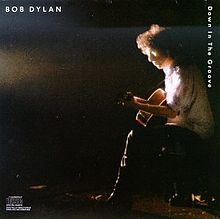
Just recently we’ve been engaged in a project listening back to some of the outtakes from the 1986 and 1987 sessions that produced the majority of Bob Dylan’s “Down In The Groove” album, as well as some of the live shows from the era.
And between us we reached the conclusion that, as many people said at the time, the album is, to be fair, not very good. Robert Christgau called the album “horrendous product”.
So we decided to see if we could compile a better album ourselves from the outtakes and live shows from the period. Just in case the guys upstairs fancy issuing a new version when they run out of materials for the Bootleg series.
In doing this we decided to focus on just the cover versions from these sources, and with the exception of just one track, all the items we have found are previously unreleased and as far as we can remember, none have been mentioned on the site before.
This series of articles will therefore look at the proposed track listing with a look at each track in question.
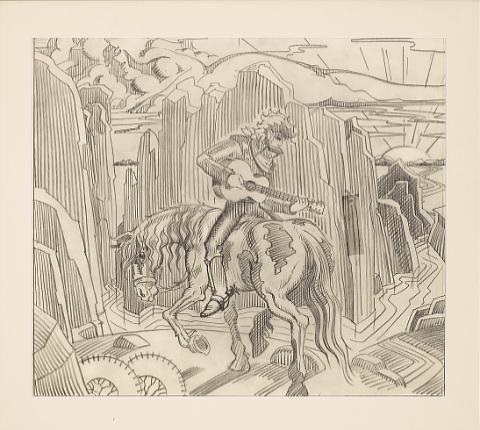
We decided to call the album “Sheep In Wolves’ Clothing” as that was the original proposed title for “Down In The Groove”. On the left is the original artwork by Rick Griffin.
The album we have complied will have 10 tracks on the vinyl with two bonus tracks on the CD.
So first up side 1, track 1 is Dylan’s version of “Twist and Shout.”
Listening to the way this version fades in it made us think that Dylan could turn the Beatles template on its head and instead of closing the album this track would make for a suitably rocking opener, and would replace the awful “Let’s Stick Together” from the original album nicely.
Of course, everyone already knows the song, so just a little background this time. It was written by Phil Medley and Bert Berns in 1961. It was originally released as a single by The Top Notes, with Phil Spector producing, then the year later in 1962 The Isley Brothers had a hit with it. The following year The Beatles version closed their debut album Please, Please Me with the most famous version.
Here’s the very first, (and these days rarely heard) original version, complete with its unexpected key change:
Whilst the version we have from Dylan is a bit rough and ready it does have a lot of energy and really builds as it progresses. With a little bit of work and a clearer vocal Bob could have turned the Beatles template on its head and thus as we suggest, opened the album with this rather than closed it. This would be a much better opener than “Let’s Stick Together.”
Now of course it might be argued that sort of song with its minimal lyrics and celebration of a simplistic dance movement is somehow below Bob Dylan, but the fact is that virtually any song can be developed to suit a performer, and it may be there is an outtake that we can use to replace this version. If the guys with access to the hidden recordings from the sessions have one, we look forward to bringing that onto the album.
And just to prove our point that any song can be manipulated to suit any artist, you might like to listen to this: Twist and Shout by the Boss.
What else is on the site?
We have a very lively discussion group “Untold Dylan” on Facebook with over 3400 active members. (Try imagining a place where it is always safe and warm). Just type the phrase “Untold Dylan” in, on your Facebook page or follow this link
You’ll find some notes about our latest posts arranged by themes and subjects on the home page of this site. You can also see details of our main sections on this site at the top of this page under the picture.
The index to all the 602 Dylan compositions and co-compositions that we have found on the A to Z page.
If you are interested in Dylan’s work from a particular year or era, your best place to start is Bob Dylan year by year.
On the other hand if you would like to write for this website, or indeed have an idea for a series of articles that the regular writers might want to have a go at, please do drop a line with details of your idea, or if you prefer, a whole article to Tony@schools.co.uk
And please do note our friends at The Bob Dylan Project, which lists every Dylan song in alphabetical order, and has links to licensed recordings and performances by Dylan and by other artists, plus links back to our reviews (which we do appreciate).
Melanie, Sandie Shaw, Cassandra Wilson, Deana Carter … ladies who do not mind at all singing a woman in “Lay Lady Lay”, a woman who they would like to lay on a large copper bed. But at least as many singers seem to be plagued by some homophobia. Maria Muldaur, for example, and Cher – they’d rather change the text to the safe Lay Baby Lay. And stay with your man awhile then undergoes an undeniable sex change: stay with your woman or stay with your gal.
It is not unusual, the gender change of lead and supporting actors in Dylan’s songs. Joan Baez does not sing Mama but “Daddy You Been On My Mind”, initially as a joke, later in the studio version without any irony. The radical gender intervention is adopted by Judy Collins and, somewhat more neutral, by a young Linda Ronstadt, who turns it into “Baby You’ve Been On My Mind” (with a beautiful French horn, reminiscent of “For No One”, by the way).
“Desecration” is perhaps a bit exaggerated, but it still tends towards disrespect. Apparently, the ladies consider avoiding homo-erotic interpretation possibilities more important than respecting the literary stylistic features the poet has chosen (in this case the alliteration of Mama – my mind and Lay lady lay).
It sometimes goes a step further. Sophie Zelmani has one of the most beautiful covers of “Most Of The Time” to her name, but she does commit the atrocity to change
I can survive, I can endure And I don’t even think about her
into
I can survive, I can endure And I don’t even think about him
… thus destroying the rhyme – which indeed does come very close to desecration.
Despite the high nonsense content of the lyrics, “You Ain’t Goin ‘Nowhere” also threatens the chastity of the more prudish ladies. In the chorus, the narrator is looking forward to the upcoming arrival of my bride, of his fiancée. Joan Baez, who recorded an otherwise very attractive version of the song in 1968, turns it into “Tomorrow’s the day my man‘s gonna come”, just like Marsha ‘Brown Sugar’ Hunt does in ’71, and even in the even gay-friendly twenty-first century Maria Muldaur, on her tribute album Heart Of Mine (2006), still follows Baez’s intervention.
Now, lyrical interventions in this specific song can be defended, at least: the source text is certainly not too sacred. Dylan himself recorded the song three times between 1967 and 1971, each time with radically different verses (the chorus is largely maintained). Like the first verse:
Basement take 1 Now look here dear Sue You best feed the cat The cats needs feedin’ You’re the one to do it Get your hat, feed the cats You ain’t goin’ nowhere
Basement take 2 Clouds so swift Rain won’t lift Gate won’t close Railings froze Get your mind off wintertime You ain’t goin’ nowhere
Greatest Hits version Clouds so swift An’ rain fallin’ in Gonna see a movie called “Gunga Din” Pack up your money Pull up your tent McGuinn You ain’t goin’ nowhere.
And the differences between the other stanzas are no less divergent. Completely different words, another rhyme scheme, varying meter, one stanza has ten syllables more than the other… the poet Dylan demonstrates the sincerity of his words in the interview with Ron Rosenbaum, 1977:
“It’s the sound and the words. Words don’t interfere with it. They… they… punctuate it. You know, they give it purpose.”
It has no general validity, of course – with songs like “The Lonesome Death Of Hattie Carroll” or “Hurricane” or “Simple Twist Of Fate” the words do have an epic, added value, a heavier function than just punctuate it, than just placing of accents on the sound. But certainly in these Basement Days, when an unleashed Dylan rattles songs like “Quinn The Eskimo” and “Apple Suckling Tree” out of his typewriter, words have secondary importance – words don’t interfere.
That fact influences text analysis. In any case, in these texts the poet is not consciously busy expressing impressions, telling stories or interpreting emotions. The words fill empty space with sounds, in fact. A poet with Dylan’s superior sense of language can then choose nonce words, random words – usually nonexistent words, neologisms. As Lewis Carroll does in the brilliant Jabberwocky, for example:
Twas bryllyg, and ye slythy toves
Did gyre and gymble in ye wabe:
All mimsy were ye borogoves;
And ye mome raths outgrabe.
… where the sound alone is enough to make perfectly clear what is sketched here.
However, Dylan doesn’t have to go that far; he chooses words that have meaning, but that meaning “does not get in the way”. After all, a song poet has the advantage that the music already communicates the desired sensation.
Of minor importance, but nevertheless intriguing is the comparison of the so divergent three versions; it offers a glimpse into the meandering working method of a poetic genius.
The appearance of the movie title Gunga Din, for example, in the first verse of the third version. The poet seeks a rhyming word for McGuinn. Roger McGuinn has scored a big hit with his Byrds with a beautiful adaptation of this Basement pearl. Scrambling, though, two lines of verse a bit (Pack up your money, pick up your tent instead of Pick up your money, pack up your tent), which inspires some good-natured ridicule in the version Dylan records for Greatest Hits Vol. II.
Content-wise, there is no relationship between the film and the song. But the poet could have chosen hundreds of other rhyming words, so why does he choose this alienating, interfering “Gunga Din”? The most likely explanation can be found a little further down: “Genghis Khan” has replaced “Michael” and “Sue” since the second version, and the name has the same rhythm, exotic value, and similar sound as “Gunga Din”. It reveals an associative, language-sensitive creativity which blesses more literary greats. Kafka decides to name his main character Samsa (Die Verwandlung, “The Metamorphosis”, 1915), Kerouac encrypts the name of his friend Neal into Dean (On The Road, 1957), and Allen Ginsberg’s name and appearance brings John Lennon to Element’ry penguin.
Gunga and Genghis may be strange choices, but disturbing they are not. The song soon becomes a country rock classic and remains one of Dylan’s most covered songs to this day.
The ungrammatical double denial in title and refrain line ain’t going nowhere exudes a Southern, friendly homeliness, choice of words such as I don’t care, buy me a flute and especially the aphoristic strap yourself to the tree with roots supports this mood, and the music even elevates this contentment to a grateful, cheerful disposition, to a cheerful superlative of Dusty Springfield’s “Breakfast In Bed”, of Graham Nash’s “Our House”, of Sinatra’s “Ever Homeward”.
Maria Muldaur’s further restoration work is therefore tolerable. Besides this modest gender change in the chorus and a very fitting “we’re going to slide down into that easy chair” (instead of the dadaesque “we’re going to fly”), she also rebuilds the third verse:
Buy me a flute And a gun that shoots Tailgates and substitutes
… which Muldaur changes into:
Buy me a ring And a bird that sings Pretty boots and a flute that tunes
Words that don’t interfere, indeed: a lot more homely and jovial than shooting guns and tailgates. Incidentally, the Genghis Khan intervention is less transparent. Dylan blames Genghis Khan for not giving his kings enough sleep (“He could not keep / All his kings / Supplied with sleep”), Muldaur says:
Genghis Khan He could not keep All his men Supplied with sheep
Sheep? A slip of Maria, presumably – the bridge from sleep to sheep may be easy to build, but it does interfere. Not seriously, but still.
The song is practically inviolable anyway. It has the same indestructibility as “Not Dark Yet” or “Mama, You Been On My Mind”; every cover is actually fun, beautiful, or at least tolerable. The Byrds have more or less appropriated the song and with Roger McGuinn it is still in the Top 10 of most played songs (number 1 is “Mr. Tambourine Man”). The version of The Byrds is shiny, but the longer McGuinn plays the song, the more rootsy, antique he instruments it. Only when he brings along old bandmate Chris Hillmann, as in 2018, he returns to The Byrds. Equally beautiful, of course.
However, the strength seems to be the weak spot too; the (hundreds) cover versions are fairly identical. Almost all of them are bursting with carefree zest for life, tempo and instrumentation hardly differ. Old Crow Medicine Show, Counting Crows, Muldaur, Nitty Gritty Band (with guest McGuinn), Glen Hansard on the I’m Not There soundtrack (one of the few who chooses the Greatest Hits version, by the way), Shania Twain, Loudon Wainwright (with guest Kate McGarrigle, on Years In The Making, 2018), Rosanna Cash… all of them beautiful and similarly bluegrassy, cheerfully coloured.
Joan Baez then withdraws somewhat from the average modus operandi by adding a slightly melancholic veil (Any Day Now, 1968). She is surpassed fifty years later by The Dandy Warhols, who at home in Portland, with only the two of them and only accompanied by acoustic guitars, produce a wonderful, somewhat woeful and almost sad reading of “You Ain’t Going Nowhere”. (The song starts at 1’55’’)
We have a very lively discussion group “Untold Dylan” on Facebook with over 3400 active members. (Try imagining a place where it is always safe and warm). Just type the phrase “Untold Dylan” in, on your Facebook page or follow this link
You’ll find some notes about our latest posts arranged by themes and subjects on the home page of this site. You can also see details of our main sections on this site at the top of this page under the picture.
The index to all the 602 Dylan compositions and co-compositions that we have found on the A to Z page.
If you are interested in Dylan’s work from a particular year or era, your best place to start is Bob Dylan year by year.
On the other hand if you would like to write for this website, or indeed have an idea for a series of articles that the regular writers might want to have a go at, please do drop a line with details of your idea, or if you prefer, a whole article to Tony@schools.co.uk
And please do note our friends at The Bob Dylan Project, which lists every Dylan song in alphabetical order, and has links to licensed recordings and performances by Dylan and by other artists, plus links back to our reviews (which we do appreciate).
Over the years we have put on this site one or two recordings created by readers who have been performing Dylan songs. Often these have been songs that Dylan himself hasn’t performed, or indeed their own arrangement of a Dylan song.
This is now being formalised a little through the Untold Dylan Showcase series which features amateur performers, and so with these submissions I would ask those listening and looking to keep in mind that there is no connection between an amateur performing on his or her own in a home recording environment, with a piece performed by a professional musician in a professional studio.
I’m doing this because I’ve worked in the creative arts all my life, and I know how hard it is to get any exposure for one’s art. I’m not saying that record company producers will be queuing up to look and see what we’ve got, but I just have the feeling we might come across something interesting.
Ron Sexsmith: Property of Jesus
If you have a suggestion for a performance of a Dylan song, or a Dylan related song, or a song in the style of Dylan, by a comparatively unknown singer or band, please email Tony@schools.co.uk with a link to the performance on line and any background information you have.
We have a very lively discussion group “Untold Dylan” on Facebook with over 3400 active members. (Try imagining a place where it is always safe and warm). Just type the phrase “Untold Dylan” in, on your Facebook page or follow this link
You’ll find some notes about our latest posts arranged by themes and subjects on the home page of this site. You can also see details of our main sections on this site at the top of this page under the picture.
The index to all the 602 Dylan compositions and co-compositions that we have found on the A to Z page.
If you are interested in Dylan’s work from a particular year or era, your best place to start is Bob Dylan year by year.
On the other hand if you would like to write for this website, or indeed have an idea for a series of articles that the regular writers might want to have a go at, please do drop a line with details of your idea, or if you prefer, a whole article to Tony@schools.co.uk
And please do note our friends at The Bob Dylan Project, which lists every Dylan song in alphabetical order, and has links to licensed recordings and performances by Dylan and by other artists, plus links back to our reviews (which we do appreciate).
As times change, renewed mythologies emerge, and collide with the old.
Christianity unites the Roman Empire, but clashes with Greek and Roman mythology. For example, it is claimed that Philomela turns into a nightingale to escape from Tereus who raped her:
Over Philomela's pity-pleading strains
My friend, and thou, our sister! We have learnt
A different lore. We may not thus profane
Nature's sweet voices, always full of love
And joyance! 'Tis the merry nightingale
(Samuel Coleridge: The Nightingale)
The Romantic Transcendental literary movement arises to save the tenets of Christianity from the Deism of the Enlightenment, but clashes with religious orthodoxy:
'Tis Easter eve; the day is fading
O Thou, with whom there is no death
While twilight every path is shading
Breathe through us they sweet Spirit's breath!
(Lucy Larcom: Sunrise And Sunset)
Poet Samuel Coleridge appears to violate his own dictum in order not to stray too far from away from established religion – death is supposed to be a punishment inflicted on humans for listening to the Devil:
The substance, that still casts the shadow, Death
The dragon foul and fell!
The unrevealable
And hidden one, whose breath
Gives wind and fuel to the fires of Hell
(Samuel Coleridge: Ne Plus Ultra)
In the following lyrics, a Gothic poet mocks how poetic language imposes figurative order on the mysterious external world of Nature:
For, alas! alas! with me
The light of life is over!
No more - no more - no more ....
Shall bloom the thunder-blasted tree
Or the stricken eagle soar!
(Edgar Allan Poe: To One In Paradise)
In the song lyrics below, a singer/songwriter joins the choir:
Beneath the thunder-blasted trees
The words are ringing off your tongue
The ground is hard at times like these
Stars are cold, the night is young
(Bob Dylan: Tell Ol' Bill)
The more time passes, the more messed with are these mythologies. Below, Romantic Transcendentalism gets a harsh Gnostic make-over:
The force that through the green fuse drives the flower
Drives my green age; that blasts the roots of trees
Is my destroyer
(Dylan Thomas: The Force That Through The Green
            Fuse Drives The Flower)
Saved the Romantic aspect is in the following song lyrics – Nature not profaned with the help of a female Muse:
If not for you
Winter would have no spring
Couldn't hear the robin sing
I just wouldn't have a clue
If not go for you
(Bob Dylan: If Not For You)
https://youtu.be/tctzUNMp5po
Nevertheless, the statue of a benevolent Absolute God shows signs that it’s wearing away:
I ponder over the sacred word
I read the record of our Lord
And, weak and troubled, envy them
Who touched His seamless garment's hem
(John Whittier: Chapel Of The Hermits)
In the following song lyrics, the mythological/religious story above gets ripped apart, becomes Postmodern:
By the marbled slabs, and fields of stone
You make your humble wishes known
I touched the garment, but the hem was torn
In Scarlet Town where I was born
(Bob Dylan: Scarlet Town)
What else is on the site?
We have a very lively discussion group “Untold Dylan” on Facebook with around 4000 active members. (Try imagining a place where it is always safe and warm). Just type the phrase “Untold Dylan” in, on your Facebook page or follow this link
You’ll find some notes about our latest posts arranged by themes and subjects on the home page of this site. You can also see details of our main sections on this site at the top of this page under the picture.
The index to all the 602 Dylan compositions and co-compositions that we have found on the A to Z page.
If you are interested in Dylan’s work from a particular year or era, your best place to start is Bob Dylan year by year.
On the other hand if you would like to write for this website, or indeed have an idea for a series of articles that the regular writers might want to have a go at, please do drop a line with details of your idea, or if you prefer, a whole article to Tony@schools.co.uk
And please do note our friends at The Bob Dylan Project, which lists every Dylan song in alphabetical order, and has links to licensed recordings and performances by Dylan and by other artists, plus links back to our reviews (which we do appreciate).
In this series of articles, I have been trying to give very simple one-word definitions of the subject matter of Bob Dylan compositions year by year, in the hope of seeing exactly how the themes within the music ebbed and flowed. As well of course of noting what the key subject matter of the songs was, year by year.
The whole of the 1960s (Bob’s most prolific decade as a songwriter) has been analysed through a series of articles which are indexed here.
Three articles have been published so far on the 1970s…
Now here is the list of 1975 songs, each assigned to a category…As with the earlier articles, there is a huge problem because a lot of the songs are about multiple subjects and I am trying to fit each song into one simple title, but it was rather hard. This is the first list I made…
To give a comparison with what Dylan had been writing about here are the subjects for the earlier part of the 1970s with the 12 songs above added at the end.
Subject
1970/4
Previously
1975
Total
Environment, places, locations
8
9
17
Jewish prayer
1
1
Visiting
1
1
2
Love, desire
13
42
1
55
Lost love
5
31
3
39
Blues
1
9
1
11
Be yourself
1
1
2
Post-modernism
1
1
2
Protest
1
21
22
Dance
1
1
2
Being trapped
1
11
12
Death
1
4
5
Moving on
3
12
15
Rejection of labelling
1
1
2
Disdain
1
8
9
Gambling
1
2
3
Fate
7
7
Change
4
2
6
People
8
8
Religion
2
1
3
What leaps out is a new category – Dylan focussing on individuals, without invoking love or lost love, and writing about them.
All Dylan compositions by subject up to 1975.
In this listing, the previous total up to 1974 is given first. Where there are songs from 1975 the plus sign (+) is added after the number for up to 1974, with the grand total to date including 1975, after the equals sign (=).
Art: 3
Be yourself: 2
Being trapped/escaping from being trapped (being world-weary): 12
Blues: 10 + 1 = 11
Betrayal: 1
Celebrating a city 1
Change: 4 + 2 = 6
Dance: 2
Death: 5
Depression: 1
Disasters: 1
Disdain: 9
Environment: 17
Eternity: 1
Fate: 7
Future will be fine: 2
Gambling: 3
Happy relationships: 1
How we see the world: 3
Humour, satire, talking blues: 13
Individualism: 8
It’s a mess: 3
Jewish prayer: 1
Leadership: 2
Look after yourself: 1
Lost love / moving on: 36 + 3 = 39
Love, desire: 54 + 1 = 55
Lust: 1
Moving on: 15
Nothing changes: 4
Nothing has meaning: 2
Party freaks: 3
Patriotism: 1
People (including fictional people): 0 + 8 = 8
Personal commentary: 2
Postmodernism: 2
Protest: 22
Randomness (including Kafkaesque randomness): 11
Rebellion: 1
Rejection of labelling: 2
Relationships 1
Religion, second coming: 2 + 1 = 3
Sex (country life): 1
Social commentary / civil rights: 6
Slang in a song: 4
Surrealism, Dada: 15
Travelling on, songs of leaving, songs of farewell, moving on: 16
The tragedy of modern life: 3
Visiting: 1 + 1 = 2
WH Auden tribute: 1
And as usual here is the list of the top categories by the end of 1975…
Randomness (including Kafkaesque randomness): 11
Being trapped: 12
Humour, satire, talking blues: 13
Moving on: 15
Surrealism, Dada: 15
Travelling on, songs of leaving, songs of farewell: 16
Environment: 17
Protest: 21
Lost love / moving on: 39
Love, desire: 55
If we combined being trapped, moving on and travelling on, we get 43 songs, a category second only to love and desire. And since the lost love / moving on category also contains elements of the same type of concept, we can see more clearly than ever that the issue of change is as central to Dylan’s work as is the issue of love and desire.
What also comes across is that although these themes are central to Dylan’s writing, he retained the ability to write in new genres – this time I have had to create the new genre of “people” – although this is perhaps not very surprising since the lyrics will have been written by Levy. And of course having created that to accommodate the Levy lyrics we can think of the many songs in the past that Dylan has written which could now to moved into this category.
But despite the obviously different ways of writing this list, what comes out is that contrary to the popular image Dylan writes about love and lost love (two of the three classic subjects of popular music) far more than anything else.
We have a very lively discussion group “Untold Dylan” on Facebook with over 3330 active members. (Try imagining a place where it is always safe and warm). Just type the phrase “Untold Dylan” in, on your Facebook page or follow this link
You’ll find some notes about our latest posts arranged by themes and subjects on the home page of this site. You can also see details of our main sections on this site at the top of this page under the picture.
The index to all the 602 Dylan compositions and co-compositions that we have found on the A to Z page.
If you are interested in Dylan’s work from a particular year or era, your best place to start is Bob Dylan year by year.
On the other hand if you would like to write for this website, or indeed have an idea for a series of articles that the regular writers might want to have a go at, please do drop a line with details of your idea, or if you prefer, a whole article to Tony@schools.co.uk
And please do note our friends at The Bob Dylan Project, which lists every Dylan song in alphabetical order, and has links to licensed recordings and performances by Dylan and by other artists, plus links back to our reviews (which we do appreciate).
Even the German national anthem, Das Lied der Deutschen, is set up as a drinking song. The original text contained also a toast (“Stoßet an und ruft einstimmig: Hoch das deutsche Vaterland! – clink glasses and call with one voice: Long live the German fatherland!”), in the final version only the hymn on German wine is maintained, in the second verse:
Deutsche Frauen, deutsche Treue,
Deutscher Wein und deutscher Sang
Sollen in der Welt behalten
Ihren alten schönen Klang
(German women, German loyalty,
German wine and German song
Should keep in the world
Their old beautiful sound)
The Deutschlandlied was written in 1841, but drinking songs are of all times, of course. Hundreds of alcohol odes from the Middle Ages have survived, the Carmina Burana contains four, and the Bible does not say it in so many words, but undoubtedly a suitable song was struck up at the Wedding in Cana, following Jesus’ alcoholic first of signs, turning water into wine.
Dylan is not averse to it either, not to booze, nor to a song about it. “Moonshiner”, “Bourbon Street”, “Copper Kettle” … before launching his own whiskey brand Heaven’s Door in 2018, he has sung beer, whiskey and wine, consumption and production, dozens of times. Rarely as one-dimensional as in the majority of traditional drinking songs (even “Please Mrs. Henry” is still somewhat layered), which is equally laudable as understandable – no matter how corny his mood, song poet Dylan usually does maintain some poetic ambition.
More attractive, because more poetic and more melancholic, is a subcategory of the jolly pub song: the “one-last-drink” songs, the songs in which the protagonist goes back home again, in which the narrator looks back on yet another lost evening in a lost life, or with mild sadness indulges in sentimental reflections.
On the European mainland, the German song “Gute Nacht Freunde” (Reinhard Mey, 1972) is the benchmark in that department.
In the Netherlands, Radio 1 closes every day at midnight with this song since 1976, it is translated into French (“Bonsoir mes amis”), it wins prizes in France, Poland and Germany and half of Europe can sing along the chorus:
Gute Nacht, Freunde
Es wird Zeit für mich zu geh’n
Was ich noch zu sagen hätte
Dauert eine Zigarette
Und ein letztes Glas im Steh’n
(Goodnight friends
It’s time for me to go
What I still would like to say
Takes one cigarette
And one last glass while standing)
In the Anglo-Saxon world, Tom Waits has become the king of elegant drinking songs at all, but most of all: he writes the perhaps most beautiful “one-last-drink” song of the twentieth century: “I Hope That I Don’t Fall In Love With You”:
Now it’s closing time, the music’s fading out
Last call for drinks, I’ll have another stout
Well I turn around to look at you
You’re nowhere to be found
I search the place for your lost face
Guess I’ll have another round
And I think that I just fell in love with you
With this Waits displaces the Sinatra monument “One For My Baby (And One More For The Road)”, the song that suddenly pops up, among all those other melodies, tunes, masterpieces and sketches the bard just plucks from the air, that exceptional summer of ’67 in Woodstock.
It is actually a Fred Astaire song* (from The Sky’s The Limit movie, 1943) but Sinatra has confiscated the song – the legend has recorded it six times over six decades. Dylan has undoubtedly Ol ’Blue Eyes’ third recording under the skin, the recording for the classic album Sings For Only The Lonely (1958). On that record is one of Dylan’s all-time favorites, “Ebb Tide”, the song he distinguishes in Chronicles:
“At Ray’s, where there weren’t many folk records, I used to play the phenomenal “Ebb Tide” by Frank Sinatra a lot and it had never failed to fill me with awe. The lyrics were so mystifying and stupendous. When Frank sang that song, I could hear everything in his voice — death, God and the universe, everything.”
The song is halfway Side 2. “One For My Baby” closes the same side. This song, written by the legendary duo Arlen and Mercer, is of course incomparable with Dylan’s cellar frippery. To begin with, Harold Arlen’s music is infinitely richer and more original. “Another typical Arlen tapeworm,” as the composer himself says about it (meaning it is longer than the usual 32 bar length). After which he gives, very gallantly, all credits to copywriter Johnny Mercer: “Johnny took it and wrote it exactly the way it fell. Not only is it long – forty-eight bars – but it also changes key. Johnny made it work.”
The song indeed has, in the words of writer John O’Hara, that “metropolitan melancholic beauty.”
Mercer truly has an exceptional gift for writing song lyrics, which is also recognized by a man who does have an insight into this particular skill, by Dylan. On the same page in Chronicles on which he honours “Ebb Tide”, he also raves about “Moon River”: “My favorite of all the new ones was Moon River. I could sing that in my sleep”- again lyrics by Johnny Mercer.
On his “Sinatra albums” in the twenty-first century, Dylan sings seven Mercer songs, his own songs are coloured with Mercer fragments from songs such as “On the Atchison, Topeka and the Santa Fe” (in “Santa Fe”) and “Fools Rush In” (in “Jokerman”) and here the bard improvises around that one patch from “One For My Baby”: and one more for the road.
Of all Mercer songs, this specific song seems to resonate most often with Dylan. He literally quotes set ’em up Joe in “Scarlet Town”, the code of the road from “Where Are You Tonight?” seems like an echo of the fourth verse (“But you gotta be true to your code / So make it one for my baby / And one more for the road”) and alone the opening lines
It’s quarter to three
There’s no one in the place ‘cept you and me
… provide both the title for “Nobody ‘Cept You” and the exact time and scenery for “Sign Language” (“In a small cafe / At a quarter to three”), the song in which the protagonist also throws a quarter in the jukebox, just like the narrator in “One For My Baby”.
So, including this Basement trifle, there are as many as five Dylan songs that pick cherries from this Mercer text – and with some tolerance there are still more resonances to be traced.
And a trifle it is. In any case compared to the impact of Sinatra song; used in dozens of films and television series, the title now has proverb status and it has been covered throughout the entire Premier League – from Billie Holiday and Marlene Dietrich to Belafonte and Perry Como, from Ella Fitzgerald and Etta James to Chuck Berry, Marvin Gaye and Lou Reed, from Bette Midler and Iggy Pop to Robbie Williams, Willie Nelson and Nana Mouskouri. Actually, only from Dylan himself no recording or performance is known – but then again, we do have this homage.
The music is great. Simple and, especially thanks to Robbie Robertson’s accompaniment and the Band’s discipline, even rather elegant. Rick Danko’s plaintive second voice is brilliant, Garth Hudson’s organ playing heightens the detached wee small hour atmosphere – one would almost be inclined to believe it was actually recorded at a quarter to three in the morning.
Less successful are the lyrics. The four-line couplets mainly consist of filler lyrics, not overly coherent country clichés of a lonely, lovesick boozer. I cry alone at night, for example, and This bottle is dried up too. The highly esteemed Dylanologist Eyolf Østrem hears one original, Dylan worthy flash, in the third verse: I can’t see no God on the moon. His ears deceive him, unfortunately – wishful hearing, presumably – but more obvious and actually understandable is: I can’t see no God anymore.
Instinctively, Dylan seems to be searching for an aaab rhyme scheme while singing. That apparently hinders creativity, leading to verses like
I cry alone at night
Please tell me it’s only night
And she’s calling me back at night
And she’s already home
… whereof the master himself, too, will admit that it cannot stand in the shadow of the poetic power of any verse from Mercer’s pièce de résistance, like:
You’d never know it
But buddy I’m a kind of poet
And I’ve got a lot of things I want to say
And if I’m gloomy, please listen to me
‘Til it’s all, all talked away
“Know it – poet!” And with that, the counter reaches 6: Yippee! I’m a poet, and I know it from “I Shall Be Free 10″… “One For My Baby” is really, really deep in Dylan’s system.
What else is on the site?
We have a very lively discussion group “Untold Dylan” on Facebook with over 3600 active members. (Try imagining a place where it is always safe and warm). Just type the phrase “Untold Dylan” in, on your Facebook page or follow this link
You’ll find some notes about our latest posts arranged by themes and subjects on the home page of this site. You can also see details of our main sections on this site at the top of this page under the picture.
The index to all 602 Dylan compositions and co-compositions that we have found on the A to Z page.
If you are interested in Dylan’s work from a particular year or era, your best place to start is Bob Dylan year by year.
On the other hand if you would like to write for this website, or indeed have an idea for a series of articles that the regular writers might want to have a go at, please do drop a line with details of your idea, or if you prefer, a whole article to Tony@schools.co.uk
And please do note our friends at The Bob Dylan Project, which lists every Dylan song in alphabetical order, and has links to licensed recordings and performances by Dylan and by other artists, plus links back to our reviews (which we do appreciate).
Thanks to Robert Ford for pointing out that in our excitement of reviewing 600 Bob Dylan songs, we completely missed this one.
“Western Road” appears on Travelin’ Thru Bootleg Series Vol.15 and sounds like an improvised extended 12 bar blues with lyrics invented by Bob Dylan as he goes along. But as no one has said that a composition has to be written down for it to be a composition, so this counts as one, and takes us up to 602 Bob Dylan songs covered on this site.
If the song ever were to have been used it would have been on “Nashville Skyline” but I rather doubt anyone would have thought of taking this song for the LP, unless they were completely desperate. It is the sort of thing that any competent blues band could knock out at a drop of a hat.
It is a variation on Count Basie’s “Going to Chicago Blues” seemingly improvised on the spot. Here is the Basie track, which actually I think has a lot more going for it than Dylan’s offering. A sacrilegious thing to say, I know, but well, after 601 reviews, I’m allowed to say what I think.
There is no copy of Dylan’s recording that I can find on the internet and no one has transcribed the lyrics as far as I can find, so we now move onto the dangerous ground of a lyrics transcription by me. Which means any similarity between what Dylan sings and what I write is purely coincidental.
With luck however Aaron or Larry or someone will correct my errors and we will eventually have a more accurate version. I’ll replace this in due course.
Well I'm going to Chicago, going on the Western Road
Yes I'm going to Chicago, going on the Western Road
There are good times in Baltimore
   but I've packed this heavy load

Might take a train I might take a plane
But if I have to walk
    I'll be going to Chicago just the same
I'm going to Chicago on the Western Road
There's bad times in Baltimore I can't take this load.

Instrumental break (extended 12 bar blues x 2)

Have you seen, have you seen, have you seen Miss Mary Anne?
Have you seen, have you seen, have you seen Miss Mary Anne?
Well I want to tell you that's one kind of woman,
    who is missing her man.

Look down the street on Friday and found out she was gone
I looked for her on Thursday but she has moved along
Miss Maggie Anne, has anybody seen Miss Maggie Anne?
Well let me tell you that's one woman,
    One woman who's sure missing her man.
From my own limited and highly unsuccessful musical career I would say this was just the band having a bit of fun while waiting for the next proper song to come along. Playing these 12 bar blues is enjoyable and does help the band to get together and keep together, and yes, just sometimes, something rather good comes out of such sessions.
In short, this is what recording and rehearsal sessions often sound like between the serious work of trying to get a new song right.
What else is on the site?
We have a very lively discussion group “Untold Dylan” on Facebook with over 3600 active members. (Try imagining a place where it is always safe and warm). Just type the phrase “Untold Dylan” in, on your Facebook page or follow this link
You’ll find some notes about our latest posts arranged by themes and subjects on the home page of this site. You can also see details of our main sections on this site at the top of this page under the picture.
The index to all 602 Dylan compositions and co-compositions that we have found on the A to Z page.
If you are interested in Dylan’s work from a particular year or era, your best place to start is Bob Dylan year by year.
On the other hand if you would like to write for this website, or indeed have an idea for a series of articles that the regular writers might want to have a go at, please do drop a line with details of your idea, or if you prefer, a whole article to Tony@schools.co.uk
And please do note our friends at The Bob Dylan Project, which lists every Dylan song in alphabetical order, and has links to licensed recordings and performances by Dylan and by other artists, plus links back to our reviews (which we do appreciate).
Allen Toussaint, who wrote Freedom for the Stallion, was born in 1938 and died in 2015. He was a songwriter, musician, arranger and record producer, and a major figure in New Orleans rhythm and blues music. He was also recognised for his contribution to music through the award of the National Medal of Arts.
Bob Dylan was far from the only major musician to record one of Toussaint’s songs – and depending on your age, background and tastes, you will surely have heard at least one of his compositions such as “Working in a coal mine”, “Mother-in-law”, “I like it like that,” “Whipped Cream”, “Java”, “Fortune Teller”, “Ride Your Pony”, “Get Out of My Life, Woman”, “Everything I Do Gonna Be Funky”, “Southern Nights”…. there are many more.
And he was a producer of a vast number of records, including “Right Place, Wrong Time”.
If that were not enough for one life, Toussaint was also an arranger including arranging the horns for Paul McCartney and Wings’ “Venus and Mars” album, as well as for The Band’s “Cahoots” album…
Going on further still he also worked on the Rock Of Ages tour and resultant live album and also The Last Waltz… all of which suggests that Bob Dylan would have had every chance to get to know him and his work well.
Bob Dylan recorded his version of Freedom for the Stallion in June 1985 during the Empire Burlesque sessions, although there is nothing to say it was ever seriously considered for inclusion.
Toussaint in Stockholm, 2009
Allen Toussaint’s home, recording studio and his possessions were lost during Hurricane Katrina in 2005 after which he moved to New York and some years later played at Joe’s Pub in New York, before returning to New Orleans.
In 2006 he made The River in Reverse, an album with Elvis Costello, the recording being the first major work recorded in New Orleans after the hurricane. The following year he performed “I want to walk you home” as a duet with Paul McCartney for the Tribute to Fats Domino album. From there on he performed alongside many top musicians although as he said, “I never thought of myself as a performer…. My comfort zone is behind the scenes.”
Here are the lyrics…
Freedom for the stallion
Freedom for the mare and her colt
Freedom for the baby child
Who has not grown old enough to vote
Lord, have mercy, what you gonna do about the people who are praying to you?
They got men making laws that destroy other men
They’ve made money God
It’s a doggone sin
Oh, Lord, you got to help us find the way
Big ship’s a-sailing, slaves all chained and bound
Heading for a brand new land that some cat said he upped and found
Lord, have mercy, what you gonna do about the people who are praying to you?
They got men making laws that destroy other men
They’ve made money God
It’s a doggone sin
Oh, Lord, you got to help us find the way
In 2012 Allen Toussaint was given the National Medal of Arts during a ceremony in the East Room of the White House.
And so to answer our opening question, in recording the song Bob was looking to recognise and honour one of the great men of American music, and perhaps looking for one of Toussaint’s slightly lesser known songs.
And as to why this song, we might suggest the lines
Lord, have mercy, what you gonna do about the people who are praying to you?
They got men making laws that destroy other men
They’ve made money God
It’s a doggone sin
Oh, Lord, you got to help us find the way
probably contain the reason. It is, after all, powerful stuff.
But musically it is not typical Dylan, and it may be that after the recording he simply felt he was not doing the song justice. But it does contain the sort of message that Bob liked.
In 1985 when Dylan’s recording was made he himself wrote
These are very different songs from Freedom for the Stallion, and clearly Bob was looking for other routes to take. Indeed our complete index of songs written in that year shows no less than 27 songs, but nothing that seems to be looking in the same direction as this song. It clearly appealed to Bob, and clearly Allen Toussaint is a man Bob would know and like, but I suspect in the end taking on this song was a step too far.
A third verse of the song is reported in some quarters, and we have not worked through each and every recording of the song to see who used it. Dylan did not, but here it is
Some sing a sad song
Some got to moan the blues
Trying to make the best of a home
That the man didn’t even get to choose
Lord, have mercy, how you gonna be with people like John and me
They’ve got men building fences to keep other men out
Ignore him if he whispers and kill him if he shouts
Oh, Lord, you got to help us find the way
Oh, Lord, you got to help them find the way
Oh, Lord, you got to help us find the way
What else is on the site?
We have a very lively discussion group “Untold Dylan” on Facebook with over 3600 active members. (Try imagining a place where it is always safe and warm). Just type the phrase “Untold Dylan” in, on your Facebook page or follow this link
You’ll find some notes about our latest posts arranged by themes and subjects on the home page of this site. You can also see details of our main sections on this site at the top of this page under the picture.
The index to all 601 Dylan compositions and co-compositions that we have found on the A to Z page.
If you are interested in Dylan’s work from a particular year or era, your best place to start is Bob Dylan year by year.
On the other hand if you would like to write for this website, or indeed have an idea for a series of articles that the regular writers might want to have a go at, please do drop a line with details of your idea, or if you prefer, a whole article to Tony@schools.co.uk
And please do note our friends at The Bob Dylan Project, which lists every Dylan song in alphabetical order, and has links to licensed recordings and performances by Dylan and by other artists, plus links back to our reviews (which we do appreciate).
To the Gnostics, the physical world is a dark place created by a Demiurge from which very few humans escape:
Live self for self
And drown the gods in me
Or crush their viperheads beneath my feet
(Dylan Thomas: Let Me Escape)
A sentiment that singer/songwriter Bob Dylan expresses in some of his song lyrics:
You know the streets are filled with vipers
Who've lost all ray of hope
(Bob Dylan: Don't Fall Apart On Me Tonight)
https://youtu.be/xALs54SgIik
In Greek and Roman mythology, the heroes thereof, like Ulysses from the Sirens, often find a way to escape their tormenters:
Well, I sailed through the storm
Strapped to the mast
Oh, but our time has come
And I'm seeing the real you at last
(Bob Dylan: Seeing The Real You At Last)
There be Christian writers who, because the physical world is part of God’s creation, are quite willing to endure its trials and tribulations. In their search for a better world on Earth, Heaven can wait:
Canst Thou look from Thy pure height and love us
May our earth-clogged feet to Thee arise? ....
Shine into our sin's dark hiding places
Fill us, flood us with Thy cleansing light!
(Lucy Larcom: Be Ye Therefore Perfect)
Rather more cynical are the lyrics below:
When a man he serves the Lord
It makes his life worthwhile
It don't matter 'bout his position
It don't matter 'bout his lifestyle
Talk about perfection, I ain't never seen none
And there ain't no man righteous, no not one
(Bob Dylan: No Man Righteous)
Unlike Larcom, the singer/songwriter does not give God, or Jesus, a free pass; nevertheless, he brings Lucy’s long forgotten poetry back to life:
Tell me straight if you will
Why must you torture me within
Why must you come down off your high hill
Throw my fate to the clouds and wind?
(Bob Dylan: Tell Ol' Bill)
Like Zeus, who is the mythological God of Thunder, the Judeo-Christian God can be mean; the writer’s black humour abounding, a modern technological invention provides a means to escape God’s wrath by throwing one’s fate to the clouds and wind:
Thunder on the mountain, heavy as can be
Mean old twister bearing down on me
All the ladies in Washington scrambling to get out of town
Look like something bad gonna happen, better roll your airplane down
(Bob Dylan: Thunder On The Mountain)
https://youtu.be/q0ew9Ls4UjU
As already noted, the God of Thunder be more inclined to intervene in the lives of mere mortals, for better or for worse:
The trial was bad enough
But this is ten times worse
Just then a bolt of lightning
Struck the courthouse out of shape
And while everybody knelt to pray
The drifter did escape
(Bob Dylan: Drifter's Escape)
https://youtu.be/SUfsWKexrwo
What else is on the site?
We have a very lively discussion group “Untold Dylan” on Facebook with over 3600 active members. (Try imagining a place where it is always safe and warm). Just type the phrase “Untold Dylan” in, on your Facebook page or follow this link
You’ll find some notes about our latest posts arranged by themes and subjects on the home page of this site. You can also see details of our main sections on this site at the top of this page under the picture.
The index to all 601 Dylan compositions and co-compositions that we have found on the A to Z page.
If you are interested in Dylan’s work from a particular year or era, your best place to start is Bob Dylan year by year.
On the other hand if you would like to write for this website, or indeed have an idea for a series of articles that the regular writers might want to have a go at, please do drop a line with details of your idea, or if you prefer, a whole article to Tony@schools.co.uk
And please do note our friends at The Bob Dylan Project, which lists every Dylan song in alphabetical order, and has links to licensed recordings and performances by Dylan and by other artists, plus links back to our reviews (which we do appreciate).
We have mentioned in each of these articles tin this series that neither of us is well versed in this type of music, so we have been exploring them as we have written the pieces, hoping that maybe someone would write in to offer to take over and be able to write articles from an experienced and knowledge-based position.
But no… it is still the two of us. So what we are doing is enjoying the variety of a form of music that we have not explored before and trying to learn as we go.
And although we have by this time begun to get used to what this form does, we are still being constantly surprised. Take this version of Hard Rain for example
Now I (Tony) have to admit that in all my work in moving samples and comments around I’ve lost a note of who this is. Hopefully I’ll be able to add that shortly! Or Aaron will quickly supply the answer…
With the second example I do know, this is Kingdom Kome – Something Is Happening. But for you to listen to it, you’ll have to jump the kingdomkome’s website.
Juelz Santana – Mixin Up The Medicine which is below is a mix from Subterranean which was enjoyed by both of us (it is Tony who’s being slow in appreciating some of these songs, not Aaron).
Perhaps it is the base and the clever use of language within the rhythm that works here, but this one certainly can be enjoyed by both of us.
Roce – Du Fil De Fer Au Fil De Soie
Again the signature is there at the start with the accompaniment.
But now with this one Larry gave me (Tony) no clue, so I am not giving you a clue either. Do you know what is going on?
Please do let us know what you think. And of course if you can write a more knowledge based interpretation of this music than we can, we’ll be happy to publish your comments, or a whole article of explanation, appreciation and interpretation.
We have a very lively discussion group “Untold Dylan” on Facebook with over 3600 active members. (Try imagining a place where it is always safe and warm). Just type the phrase “Untold Dylan” in, on your Facebook page or follow this link
You’ll find some notes about our latest posts arranged by themes and subjects on the home page of this site. You can also see details of our main sections on this site at the top of this page under the picture.
The index to all 601 Dylan compositions and co-compositions that we have found on the A to Z page.
If you are interested in Dylan’s work from a particular year or era, your best place to start is Bob Dylan year by year.
On the other hand if you would like to write for this website, or indeed have an idea for a series of articles that the regular writers might want to have a go at, please do drop a line with details of your idea, or if you prefer, a whole article to Tony@schools.co.uk
And please do note our friends at The Bob Dylan Project, which lists every Dylan song in alphabetical order, and has links to licensed recordings and performances by Dylan and by other artists, plus links back to our reviews (which we do appreciate).
Improvisation exists as a well-established, well-recognised part of the creative arts, particularly the performing arts such as theatre and music. But definitions of what makes up “improvised art”, “performance art” etc can go on for pages and pages, and if I tried establishing strict definitions here I know I’d lose half my readership and annoy the other half.
But improvisation does have a major input both in music and theatre which continues from mediaeval times into the present day. Play the standard chord sequence of the blues on a guitar and other musicians can (and usually will) join in, improvising around that chords sequence on any instruments to hand.
In improvised theatre there is no chord sequence but there are topics. A session I took part in earlier this year before the virus outbreak, had one of the actors holding a birthday party, and receiving a group of guests each of whom had a secret. The guests had to act in a way that was informed by their secret without overtly giving it away, while the hostess had to guess what the secret was. (The audience of course are in on the secret – only the actor playing the hostess is outside the loop).
In this case I was a “guest” at the party and as I approached the stage I was told my secret was that I was carrying two canisters of oxygen. I had two seconds to think and then I was on. So I mimed carrying something heavy in each hand while telling the hostess how thirsty I was. As she offered me a variety of drinks, I refused them, asking her if she had any hydrogen – preferably four cans of the stuff.
OK not that profound, but not too bad for two seconds thinking, and people laughed [it just loses a lot in the telling!]
So improvised music and improvised drama are fun if you are there, seeing the artists creating on the spot. And it is great fun to do, if you don’t mind regularly looking like a total idiot. But are such sessions worth keeping for posterity?
In my case most certainly not, but what if the improviser was Bob Dylan? Then yes, because it is Dylan. And possibly it might give us an insight into his methods of composing.
So we have “Stoned on the mountain” which was improvised with Eric Von Schmidt in November 1964 and the event was captured on tape.
My improvisational sketches are done because I enjoy the experience of performing, and my fellow actors on stage are quite happy for me to be part of the gang when we work through the sketches. I find them enlivening, I like the people I meet, and it’s a lot better than watching TV night after night, or indeed going to a bar.
Bob’s session with RvS can be seen in the same way. The guys were having fun, mucking around, and quite sensibly leaving the tape recorder running because, well, every now and then you do one of these improv sessions and think, “hey there really is a song in there; what did I just do?” Likewise improvising with a theatre group you occasionally think, “Oh, I like that character, let’s try and develop him…”
As for us, the outside audience, I can’t imagine many people want to listen to this piece very often, but we have the recording on line, and it was released on the “50th Anniversary Collection 1964” copyright extension collection.
The Haiku61 collection has also incorporated it, just as it has all the weird and strange pieces from the Basement Tapes. We get…
On the mountain, in
The valley, or wherever,
You might end up stoned.
The writer of the haikus apologises for not being to get all the lyrics, but really no apology is needed. He’s done a thousand times better than I ever could. I hope he doesn’t mind me copying his work, and that the link above might compensate a little. If you can fill in any of the missing lines please write in. xxxxxxxxx Must have been a junkie Xxxxxx Must have been a junkie xxxxxx Must have been a junkie All his followers They was stoned, stoned on the mountain Smashed in the valley Stoned on the mountain Smashed in the valley Stoned on the mountain Smashed in the valley Smashed, oh brother Stoned, take a little sniff Take a little sniff And you draw it down deep When you take a little sniff Draw it down deep Well you take a little sniff And you draw it down deep Well you take too much, Oh brother, you go to sleep Stoned on the mountain Walkin’ in the valley Stoned on the mountain Sleepin’ in the valley Stoned on the mountain Wanderin’ through the valley You’re going to smash old… xxxxxxx When you’re stoned What is this stoned business? Well, there’s a whole lot of stones all layin’ around In the valley? Yes, they roll ’em down. Yes, I know they roll them. In Colombia. My God, vacation land. Well you better watch out That stone get stoned That you don’t get stoned Better watch out That you don’t get stoned You better watch out That you don’t get stoned You might find you might you might lose your home. Don’t do drugs you better watch out For the sign of falling rocks You better watch out For the sign of falling rocks You better watch out For the sign of falling rocks Oh wow. I couldn’t say what I was thinking.
There is quite a musical connection between this improvised piece and “Walkin down the line” which Dylan recorded in November 1962 for Broadside magazine, and then again in March the following year for Whitmark. That turned up on Bootleg 1-3 and relates to a hobo walking along the railway lines. Arlo Guthrie performed it at Woodstock.
So “Stoned on the mountain” is certainly not a fully-fledged song, as such, but it is being treated as a song by some, so song number 601 on the Untold collection it becomes, and I shall list it in the index. Maybe if, at the very start, I had separated songs out from “recordings of historic interest” or “improvised pieces” I would have put this piece in the latter group. But I didn’t so, “song” is what it becomes. (Not that my definition matters at all, but I just thought I’d justify myself).
What else is on the site?
We have a very lively discussion group “Untold Dylan” on Facebook with over 3600 active members. (Try imagining a place where it is always safe and warm). Just type the phrase “Untold Dylan” in, on your Facebook page or follow this link
You’ll find some notes about our latest posts arranged by themes and subjects on the home page of this site. You can also see details of our main sections on this site at the top of this page under the picture.
The index to all 601 Dylan compositions and co-compositions that we have found on the A to Z page.
If you are interested in Dylan’s work from a particular year or era, your best place to start is Bob Dylan year by year.
On the other hand if you would like to write for this website, or indeed have an idea for a series of articles that the regular writers might want to have a go at, please do drop a line with details of your idea, or if you prefer, a whole article to Tony@schools.co.uk
And please do note our friends at The Bob Dylan Project, which lists every Dylan song in alphabetical order, and has links to licensed recordings and performances by Dylan and by other artists, plus links back to our reviews (which we do appreciate).
At the end of 2016, around the time that Dylan was awarded his Nobel Prize, I published in the Netherlands the book Blonde On Blonde. Bob Dylans kwikzilveren meesterwerk.
Translations of individual chapters have already been published here on Untold in recent years. But now, the entire book has been revised, expanded and translated into English. There are details of the book in English here, and of the book in German here.
Here, by way of introduction is a “transitional chapter”, on producer Johnston, on Nashville Cat Charlie McCoy and on Dylan’s musical confidant Al Kooper.
Col. Jubilation B. Johnston & His Mystic Knight Band
Influential is the qualification one encounters in every discussion on Blonde On Blonde. One of the merriest, corniest and most tangible influences is the obscure long-playing album Moldy Goldies from the one-off occasional band Col. Jubilation B. Johnston & His Mystic Knight Band and Street Singers.
It’s an unserious, alcohol-soaked party album on which producer Bob Johnston, after the Blonde On Blonde sessions, holds the musicians and the atmosphere of “Rainy Day Women # 12 & 35” for a few more nighttime hours to replay current hits – but à la Rainy Day Women.
For example, Cher’s “Bang Bang”, “Monday, Monday” (The Mamas & The Papas), “Daydream” from The Lovin’ Spoonful, plus seven other hits all receiving a hilarious, pleasantly disrespectful treatment with hopping bar pianos, lots of carnival honking, sound effects, cough fits, laughter and cheers from the Nashville Cats.
In 2012, Nashville Cream asks for Johnston’s memories:
NC: […] you made an interesting record with the musicians from the Blonde on Blonde sessions, Moldy Goldies. It’s all cover versions of songs that were popular around 1966. How did that come about?
BJ: I got a bunch of those guys in there, and got ’em all stoned, and we played all night, and it was good. That was a funny record, wasn’t it?
NC: Yeah, and the versions of “Secret Agent Man” and “Rainy Day Women #13 & 35” are hilarious, as if you’re sending up the whole idea of pop music. It’s ahead of its time.
BJ: I had just done Dylan, and “Rainy Day Women” and all that shit, and I thought, what a great thing, we’ll use that band and get them all fucked up and take it sideways, and that’s what we did. And yeah [sings], “Secret Agent Man.” That was the guy with [Elvis] Presley, who was screaming on that. I can’t even think of his name, he was a — Lamar Fike, that’s it.
NC: Who else was singing on Moldy Goldies?
BJ: I don’t have any idea. I got these office girls to sing ’em, and a janitor, Lamar, and somebody. I just picked ’em random.
The album does not score artistically nor commercially, but it does achieve a certain cult status. And well, it certainly has a certain music-historical value. As if Rembrandt drew some caricatures from Frans Banning Cocq and Willem van Ruytenburgh after completing the Night Watch.
1 Bob Johnston
He is a master in downplaying his contribution to music history, the Texan Bob Johnston (1932-2015), who is in control of dozens of masterpieces. Johnny Cash’ At San Quentin and At Folsom Prison, Sounds Of Silence by Simon & Garfunkel, Leonard Cohen’s Songs From A Room and Dylan’s Highway 61 Revisited and John Wesley Harding… and Blonde On Blonde, of course. It is just a small selection of Johnston’s extensive discography. Nevertheless, in all interviews the producer maintains modestly that he does not do much more than facilitate, ensure that there are session musicians and that the tape recorder is running. It is only towards the end of his life that he publishes an autobiography online, Is It Rolling, Bob?, in which he reveals what is involved in producing an album such as Blonde On Blonde in a more realistic, detailed and proud manner.
In the years before, experience experts such as Leonard Cohen and Dylan (in Chronicles) have already tried to word what is so great about this producer: all praise his passion, his boundless drive and his ability to create the right atmosphere for delivering top artistic performance. From Is It Rolling, Bob? it can be concluded that this also involves the necessary know-how and creativity. The technical knowledge does not come out of the blue: Johnston comes from a musical family and says he has been around in recording studios since he was four years old.
Inversely proportional to his modesty is his fanatic enthusiasm for his artists. “I love Dylan. He is a visionary, and everything he does must be recorded because of its historical value.” Dylan is a genius, he says, you don’t think that I am going to tell him how to do his job. Who am I? My job is just to start the tape.
Sympathetic and modest, and a colossal downplaying of his importance.
2 Charlie McCoy
The Supreme Cat of the Nashville Cats is a multi-instrumentalist who has been in the studio with all the greats. Playing the drums, harmonica, guitar, bass, keys, marimba, vibraphone, sax (on Roy Orbison’s “Oh, Pretty Woman”) and trumpet on records by Jerry Lee Lewis, Johnny Cash, Joan Baez, Elvis Presley, Simon & Garfunkel (the bass harmonica on “The Boxer”, for example) Perry Como, Ringo Starr … it’s a long, dizzying list. In 2015, at the age of seventy-four, McCoy himself counts about 13,000 recording sessions. In addition, Charlie McCoy has also scored hits, a Grammy Award and gold records under his own name.
Dylan gets to know him in New York, while shooting for Highway 61 Revisited. Producer Bob Johnston has lured McCoy and his wife to New York with tickets for a Broadway show. Well, if you’re here anyway, Johnston says, drop by the studio. We will be recording “Desolation Row” this afternoon.
McCoy gets a guitar pushed into his hands and plays the Spanish decorations off the cuff. Dylan is impressed. McCoy later understands that he was only a pawn in the cunning game of the producer:
“Bob Johnston said, ‘You know, I was using you as bait. I wanted Dylan to come to Nashville and he didn’t want to.’ So I was bait and it worked.”
In the same interview (with The Independent, June 2015) McCoy talks about the culture shock Dylan caused in Nashville.
“We sat there from 2pm till 4am the next morning and we never played a note. This was unheard of, everybody was on the clock. We couldn’t believe it. You’re figuring out ways to stay awake because he might decide at any minute that he wanted to record and we wanted to be ready for him.
I don’t know how many games of ping pong we must have played. Then at 4am he came up with “Sad-Eyed Lady of the Lowlands”, an 11-minute ballad. And everybody’s sitting there saying, “Please don’t let me make a mistake.” He just started playing it and kind of left it up to us to decide what to do. Every recording, there was no conversation.”
But along the way, McCoy, as the undisputed leader of the Nashville Cats, is developing a kind of communication form with that trio of crazy guys from New York, Al Kooper, Robbie Robertson and especially Bob Dylan.
“I’d say, “Bob, what would you think if we did this or that?” And his answer would always be, “I don’t know, man, what do you think?”
So I finally went over to the producer and I said, “You know what, I’ve got to quit asking because he’s not answering. If we do something he don’t like, maybe he’ll say something.” And the producer said, “That works for me, so go ahead.” So that’s the way that it went.”
And Nashville does thrive on the culture shock. Until Dylan’s arrival, the studio, and the town anyway, has a peasant image, is considered backward area. Only ready-made treadmill work, corny country songs, and old-fashioned folklore come out of the studio. After Blonde On Blonde, Nashville is suddenly the place to be, the city and studio are flooded with the hippest birds from both the East and West coasts.
3 Al Kooper
When Dylan has made the radical decision to abort the frustrating recording sessions in New York to try it further in Nashville, he doesn’t want to be totally lost and lonely and alone among strangers; he brings along the confidants guitarist Robbie Robertson and organist Al Kooper.
Kooper has acquired his position in a legendary way during the recordings for “Like A Rolling Stone” in June ’65. He is not on the payroll, those June days. Indirectly, as a friend of producer Tom Wilson, he is able to penetrate into the recording room and he just hangs around there, hoping silently to get a chance. He is a gifted guitarist, but has already seen that brilliant Mike Bloomfield has been hired, and with that the hope of participating in a real Dylan recording session has actually disappeared: “Just hearing Bloomfield warm up ended my career as a guitarist…Until then, I’d never heard a white man play guitar like that.”
From the control room, he then watches Dylan, producer Tom Wilson and the musicians struggle with the song. Producer Wilson moves organist Paul Griffin to the piano for yet another take.
Kooper sees his chance. Before Wilson can stop him, he is called away for a phone call, Kooper slips into the recording room and sits down behind the organ. Wilson sees him on his return, we hear him saying on the tape “What are you doing there?”, but he lets him go. “He was a very gracious man,” Kooper grins in 2007. “I’m always an eighth note behind everyone else, making sure of the chord before touching the keys.”
Dylan listens back to the recording and tells the engineer:
“Turn the organ up louder.”
Tom Wilson quickly replied, “Bob, that guy is NOT an organ player.”
Bob said, “I don’t care, turn the organ up!” Thus cementing my career as an organ player.
Dylan is right. That slight delay creates the energetic, hectic urgency that makes the song all the more exciting and Al Kooper has his entrance ticket to Dylan’s inner circle. A month later, he sits behind the organ at the legendary Newport Folk Festival performance, in which Dylan plays electric to the audible horror of part of the audience. Afterwards, Kooper participates in the recordings of the other songs for Highway 61 Revisited and subsequently again for Blonde On Blonde.
Kooper describes his special position in his beautiful autobiography Backstage Passes and Backstabbing Bastards:
“Bob had a piano put in his hotel room, and during the day I would sit and play the chords to a song he was working on, like a human cassette machine, while he tried different sets of lyrics to them. (Incredibly, cassettes hadn’t been invented yet!) It was good ’cause I got the jump on learning the tunes and was able to teach them to the band that night without Dylan being bothered with that task. My favorite of the lot was “I Want You”, and each night I would suggest recording it to Bob, who saved it as the last song recorded, just to bug me.”
What else is on the site?
We have a very lively discussion group “Untold Dylan” on Facebook with over 3600 active members. (Try imagining a place where it is always safe and warm). Just type the phrase “Untold Dylan” in, on your Facebook page or follow this link
You’ll find some notes about our latest posts arranged by themes and subjects on the home page of this site. You can also see details of our main sections on this site at the top of this page under the picture.
The index to all 600 Dylan compositions and co-compositions that we have found on the A to Z page.
If you are interested in Dylan’s work from a particular year or era, your best place to start is Bob Dylan year by year.
On the other hand if you would like to write for this website, or indeed have an idea for a series of articles that the regular writers might want to have a go at, please do drop a line with details of your idea, or if you prefer, a whole article to Tony@schools.co.uk
And please do note our friends at The Bob Dylan Project, which lists every Dylan song in alphabetical order, and has links to licensed recordings and performances by Dylan and by other artists, plus links back to our reviews (which we do appreciate).

.jpg)
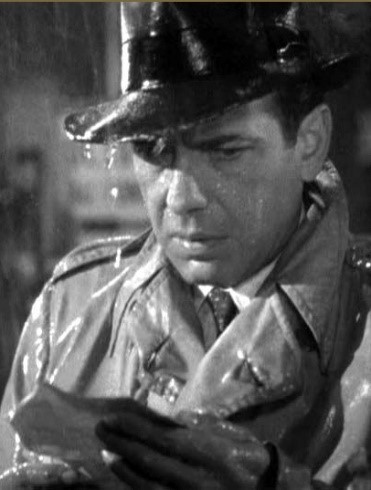
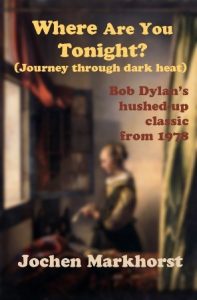 On April 5, we published here on Untold a first chapter of our attempt to elevate