If you want an overall review of Bob’s book, “The Philosophy of Modern Song” there is one here. And of course, there is the option of reading Bob’s book, or one of the multitude of fulsome reviews of the book, across the internet.
But I am trying to do something different here, which is to provide a copy of each song, so if you are not familiar with the piece, you can listen to it. And then, because it is what I tend to do, I am also providing a few thoughts of my own as to why Bob picked this particular song, although of course, you don’t have to read them. You can just listen to the music. A list of the songs in the book with links to our reviews is at the end.
And what can I say about “Ruby are you mad”, except this is fun, it is crazy, and I don’t know how anyone can play like that. And in this regard, in terms of how one can do a performance, I include the bass player. Indeed just listen to the bass…. for all the way through the two and a half minutes of the song, the bass player is just playing two notes, as a balance to the banjo part. At least until the song stops for a few seconds, after which the bass player is allowed to put in a few runs, just to make his life a bit more bearable, I guess.
It does show that one can have enormous fun with a simple idea, such as “how fast can you play the banjo?” and still make a piece of music that we might want to listen to.
Just to check that I had got the whole song, I also downloaded the lyrics from another site….
Ruby, Ruby
Honey, are you mad at your man?

I'm sittin' in the shade
Where I shovel with a spade
I'm diggin' in the ground's cold mine

Oh Ruby, Ruby
Honey, are you mad at your man?

If you don't believe I'm right
Just follow me tonight
I'll take you to your shanty so cold

Oh Ruby, Ruby
Honey, are you mad at
Your man?

Ruby, Oh Ruby, Ruby
And looking at those lyrics and listening to the song (which I must admit I had not heard until Bob selected it) I wondered is it really a “cold” mine and not a “gold mine”? But then I am not sure that it really matters. And “cold” does turn up again a couple of lines later. So it is probably me being English and not getting some American allusion.
But I did find another version of the song, which is rather fascinating too…
If ever there were a song that should NOT work, “Lily, Rosemary” etc. is it. Around 800 words, some 15 verses all musically identical, each ending with the lyrics “the Jack of Hearts,” with the whole thing lasting eight or nine minutes, depending on who is performing. And if that were not enough, it is a song that consists of just three lines of music. Line 2 is musically identical to line one, line four copies line three, and line five rounds it all off with the title of the song coming at its end each time.
And this is interesting in that musically, themeatically and lyrically, Bob Dylan jumped around in his songwriting toward the end of 1973. If we look at the last group of songs he wrote, we find songs of leaving, such as “Going, going, gone” and songs of utter adoration, such as “You angel you”. We have songs of disdain, such as “Dirge”, and songs of love like “On a Night Like This”. And the whole year wrapped up with the composition of “Wedding Song,” which is primarily about setting oneself free.
Looked at on their own, we might be inclined to say that while many of the songs of that year are indeed interesting and most certainly worth preserving and still worthy of a listen, they couldn’t in any way prepare us for what happened in 1974. All I can say is that 1974 was a year of explosion. It was, in fact, a year in which it seems the Almighty touched Bob and said, “Now go forth and compose.”
Or perhaps, if we leave the Almighty out of it, we might say that 1973 had served as a year of Bob getting all the old stuff out of his system, allowing him to sit down and write amazing new songs in completely new ways in 1974. It was the year of Bob the composer.
There were 12 new Dylan compositions in that year, which we know about, but really, one only has to list the first four of those 12 to say, “Yes, this was the songwriting year to end all songwriting years”. Bob only wrote a third of the number of songs he wrote in each of those magical years in the 1960s, where works of genius just seemed to pour out of him, but within those 12, we have what many other songwriters would have considered the highpoints of their whole career.
Not only is it highly enjoyable as a piece of music, it is also unique in its ambition. 15 verses, of five lines each, just under 900 words (probably the longest he has written, and don’t let anyone tell you otherwise unless they actually give you a count – there are loads of internet articles claiming other songs are longer in terms of lyrics).
And what is it all about? Well, mostly about the person whom we don’t really see or get to know – the Jack of Hearts in the background. But in reality, it doesn’t matter because what Bob has given us is a song of images, of scenes, of little bits of the background of people who somehow come together at one moment in one bar. And how one of those people who doesn’t actually show up, as far as we can see, is the subject of the song.
It is unique and masterful. And according to the official Bob Dylan site it was only ever performed once, on 25 May 1976 – although as we have come to find in working through this set of articles, the data from the official site is not always correct. But Joan took it on, which is a good cover, given the way she reconsiders the song
Maybe Bob has said somewhere why he took on such a big song, and if so, I must have missed it. But despite its length it does give bands a chance to have a bit of fun… don’t give up on this version because of the opening verse….
But although I love this song and have searched out every cover version I can find, just to see what other people think of the song, and how they re-work it, I can still be surprised and delighted. As with this Ryan Adams version.
Obviously, one of the attractions is that he takes the song at a different speed, and this is particularly relevant here, because we never quite know exactly what happens in the story. And this approach does allow the singer to reflect the feeling of the last verse
The cabaret was empty now, a sign said, "Closed for repair,"
Lily had already taken all of the dye out of her hair
She was thinkin' 'bout her father, who she very rarely saw
Thinkin' 'bout Rosemary and thinkin' about the law
But, most of all she was thinkin' 'bout the Jack of Hearts
I tried out AI on this song, thinking it would probably get the issue of the meaning of the song quite wrong, but in fact it actually gave me something moderately sensible….
 The song serves as a testament to Dylan's storytelling prowess,
inviting listeners to explore its layers of meaning.
I’ll go with that until something else comes along.
But what really intrigues me is that Dylan could come up with a song whose meaning is not quite utterly clear as to the purpose of the Jack of Hearts (and several other elements come to that), despite the extreme length of the song. And indeed, why Bob didn’t seek to vary the song at all, musically. It really is nothing but A A B B A in terms of musical form, all the way through.
Now that immediately looks like a rejection of the theme of this series of articles – that Bob is a writer of music as much as a writer of words. But I would respond to that – even after all these years, and even with all this length, it is a very enjoyable piece of music.
So even now, all these decades after we first heard Bob perform the song, I am still intrigued – as I am sure I am meant to be. After all, the song ends with “The only person on the scene missin’ was the Jack of Hearts.”
So, how to finish? Well, I have featured this final cover version before, but I still like it. If you play it just to see what it is like, do give it a few minutes. There is something more here than I have picked up elsewhere, which, given the minimalism of the music, is quite something.
But why should this song feature in the “No Nobel Prize” series? Well, simply because it has more lyrics than most, it has 15 verses which are all the same, and yet somehow we are still held within the song, even though we don’t quite know what happens. And for that, I just love it.
I think that what Bob is saying is, “I can write an eight-minute piece with just two musical lines in it. Obviously, Bob doesn’t read my ramblings about his talents as a composer, for he has always known how good he is, but here he really is saying, “All I need is a couple of lines”. And how right he is.
It is only after three episodes of this series that I have realised what an enormous task I have set myself in terms of reviewing Bob’s “Theme Time” radio series in any way other than by touching briefly upon what he did. Indeed, as I finished Episode 3 (linked above), I called it Episode 3 part one, realising how much more there was to the “Drinking” episode than I had covered.
But now I’ve thought maybe I should just scoot through the episodes with a few recordings and thoughts that strike me, and then maybe in years to come I can go back and add some more, if I have any brain power left by that time. We have been running this site since 2008, so maybe there’s hope that we can keep going for a bit longer.
So I am going to leave “Drinking” and move on to episode four – although this gives me a few more problems since I am English, and have lived most of my life in the UK, and although I have visited the USA quite a few times I have never been to a baseball game.
However, I am going to do my best – but also use a bit of flexibility. Baseball is not a major sport in the United Kingdom, although I have watched one match on the island of Guernsey, where part of my mother’s family comes from, and where baseball is or was a popular sport.
And faced with uncertainty, I thought I would cheat, and introduce the song that all supporters of my football (soccer) club sing at the start of each game. It is “North London Forever” and if you want to hear it you can click on the link which takes you to my other blog “Untold Arsenal” where you will find a recording of some 50,000 or so fans, including me, singing at the start of each game. It’s there at the top of the page. The full title is “The Angel (North London Forever)” and was written by the English singer-songwriter Louis Dunford.
But now back to Bob. I don’t feel competent at the moment to review episode 4, Baseball, but if you would like to do it, complete with links from the internet for the songs, well, you know the style of the site, so please do write it up, add the links, and send it to me at Tony@schools.co.uk If you are not sure about your writing style, just write a bit with a couple of songs included and email me as above, and I’ll give you my thoughts. Please put in the subject line UNTOLD DYLAN THEME TIME.
So now I am skipping on to Episode 5, Coffee, a subject on which I have a greater amount of contemporary knowledge. And immediately I saw that one of the songs was “40 Cups of Coffee” which I knew as a youngster through the recording by Bill Haley, who I did actually go and see a couple of times.
Bill Haley performed fairly basic rock n roll, and was famous in England, at any rate, for recording the first rock n roll song most of us heard, “Rock Around the Clock”.
However, Bob Dylan in fact chose the Ella Mae Morse 1953 version as his preferred version…
One of the many great things about Bob’s show is the sheer variety of songs on each theme. The next track was released in the year I was born, which of course explains why cigarettes could be openly mentioned. (I don’t know about the situation in the US, but you couldn’t get away with this in the UK these days.)
Of course, most of the songs come from the 1950s and 1960s and that includes a Lightnin’ Hopkins song that I must admit I had not heard before. It’s a 12 bar blues with a real bounce and an extraordinary amount of power and energy. It is Coffee Blues recorded in 1951.
And then jumping forward, the most recent of the songs on Bob’s coffee list came from Blur…
… but I was particularly taken by “Let’s Have Another Cup Of Coffee” which comes from the American TV show “Face The Music” but not the UK TV show of the same name. As ever, this is a song celebrating coffee as virtually the elixir of life. Which of course, it actually isn’t. (I wonder, did the Coffee Marketing Board promote these songs, or were there so many songs about coffee because they couldn’t sing about drugs?)
I’m going to finish with Black Coffee in Bed. I don’t know why Bob chose it, and I find it quite an ordinary song, but with one of the silliest videos of the era. Ah well, just my feelings and me being old. Although not as old as Bob.
Key West III Familiar sounding, but something’s off
I’m searchin’ for love and inspiration
On that pirate radio station
It’s comin’ out of Luxembourg and Budapest
Radio signal clear as can be
I’m so deep in love I can hardly see
Down in the flatlands - way down in Key West
“Lubbock is so flat, that on a really clear day, you look in any direction, and if you look hard enough, you can see the back of your own head.” The true prophet of the flatlands is the versatile artist Terry Allen, the greatest artist to come out of Lubbock, Texas, since Buddy Holly. Dylan did once express his admiration, though that was for Allen’s visual art, when interviewer Elderfield asked Dylan if he followed contemporary art (“I don’t follow it that much. Owen Smith, Terry Allen, I like their work,” Asia Series interview, 2011). Still, Terry Allen’s songs are no less impressive and should delight Dylan equally. “New Delhi Freight Train”, the song that was taken to the stratosphere by Little Feat; “Amarillo Highway”; “The Beautiful Waitress” (the song Dylanologist Scott Bun hears echoing in “Highlands”); the entire Lubbock (On Everything) anyway, a beautiful sort of concept album from 1979 about which David Byrne wrote such a loving essay in 2016:
“Well, I’m here in NYC, chopping onions, and “Amarillo Highway” is playing—so I’m dancing and singing and crying all at the same time. It doesn’t get much better.”
(David Byrne, A Sleeping Bag in the West Texas Scrub, 2016)
In the essay, Byrne also points out – implicitly and unintentionally – an artistic kinship with Dylan in the field of songwriting:
“These songs are not as easy to play as I, for one, might have assumed. Sometimes there is an “extra” bar, and sometimes there’s an “extra extra” bar, as the music often follows the lyrics and the peculiar phrasing of the singer. Terry is a storyteller, after all, and the cadence and timing of the words cue the punchlines. Though the music might be vernacular—a mix of country, Latin, and Texas rock—he blends those genres to fit his own ends. It’s familiar sounding, but at the same time something’s off, and that something is what intrigues; it’s what keeps you paying attention.”
… “extra bars” as in “My Own Version Of You” and “extra extra bars” as in “Not Dark Yet”, music that follows the lyrics and “the peculiar phrasing of the singer”… David Byrne’s analysis fits perfectly with the exceptional nature of Dylan’s songwriting.
As an aside, Terry Allen’s career trajectory in the twenty-first century increasingly mirrors Dylan’s. In 2020, after a long hiatus (following Bottom of the World, 2013), the then 76-year-old songwriter releases another album of original material: Just Like Moby Dick – just as Dylan does in 2020 after an eight-year hiatus (following Tempest, 2012). Apart from the Dylanesque title, other notable features include: Dylan guitarist and protégé Charlie Sexton producing the album; the colourful tracklist; songs with a prominent accordion; the craftsmanship and crackling sound (thanks to Sexton, presumably); and Terry’s own take on Dylan’s all-time favourite “Pirate Jenny”;
The pirate Jenny
In her black ship she sails
Around, around the world
She'll take your money
Just to take your last penny
Ah, Jenny's a pirate girl
… with music strongly reminiscent of the highly atmospheric accompaniment to Dylan songs such as “Black Rider” and “Mother Of Muses”. Terry’s lyrics, however, are much more in the spirit of storytellers like Randy Newman or John Prine than Dylan’s poetic explosions, despite perfect, literary hits such as
On the battle for booty on the bloody Spanish main
And like the hiss of a soft kiss
And the twist of your air
In the midst of the smoke in the mist
She just disappeared
Never to be heard from again.
The flatlands for which Terry Allen displays his – semi-ironic – chauvinistic pride in songs like the irresistible “Flatland Farmer” and the equally witty “Flatland Boogie”, in which he also expresses a Dylanesque nostalgia for DJ Wolfman Jack are, however, different flatlands from those Dylan uses in “Key West”. Terry’s setting is the actual flat land of Texas, the endless plains around Lubbock. In Dylan’s song, the flatlands are fictional, symbolic – merely an anonymous place name in an accumulation of environments that are all used as a kind of antithesis to the paradisiacal Key West: the boondocks, the flatlands, the wrong side of the railroad track, the bottom… and in fact just as fictional and metaphorical as that pirate radio stationcomin’ out of Luxembourg and Budapest.
Radio Luxembourg was a popular radio station alright, especially in the 1950s and 1960s, thanks to pre-recorded, sponsored music programmes presented by DJs such as Alan Freedman and Pete Murray, the first DJ to play Bill Haley’s “Rock Around The Clock” on European radio (and playing it four times in a row) – but it was certainly not a “pirate station”, nor was it receivable in America, or hardly anyway. Even more metaphorical is Radio Budapest –not a pirate station either, nor one that broadcast “love and inspiration” and/or rock ‘n’ roll. Censored news reports, corny folk songs and Soviet propaganda were pretty much all that the radio signal coming out of Budapest had to offer.
It seems obvious that Dylan picked up the names from that Van Morrison song, “In The Days Before Rock ‘N’ Roll” (And I’m searching for Luxembourg, Athlone, Budapest, AFN, Hilversum, Helvetia), in which Van (or rather, co-author Paul Durcan) mainly evokes nostalgia for his old Telefunken, one of those old tube radios with the green eye, rather than the programmes recorded in Budapest – every Baby Boomer recognises the magic of those mythical names on the dial. Beromünster. Athlone. Lahti. And Luxembourg and Budapest, indeed. Familiar sounding, but something’s off.
Imagery, all in all. After the first verse, in which we are confronted with the drama of a deathbed, we now seem to enter a phase of resignation, a phase in which a dying man is at peace with his fate and looks ahead, seeking the path that will lead him to paradise – the guide from the mythical horizons Radio Luxembourg and Budapest, which will bring him the love and inspiration to take him to the mythical horizon Key West…
Jochen is a regular reviewer of Dylan’s work on Untold. His books, in English, Dutch and German, are available via Amazon both in paperback and on Kindle:
Today we have Truckin’. The first paragraph below is my general introduction, but if you’ve been here before please skip the first paragraph and go straight onto what is, in my view, one of the most brilliant pieces of song writing in the rock genre of all times.
But first, if you want an overall review of Bob’s book, “The Philosophy of Modern Song” there is one here. And of course, there is the option of reading Bob’s book, or one of the multitude of fulsome reviews of the book, yourself. But I am trying to do something different here, which is to provide a copy of each song, so if you are not familiar with the piece, you can listen to it. And then also provide a few thoughts of my own as to why Bob picked this particular song, although of course, you don’t have to read them. You can just listen to the music.
A list of the songs in the book with links to our reviews is at the end.
As may have become clear if you have read my reviews so far, I am not always sure why Bob has chosen certain songs for inclusion in the Philosophy, but with Truckin’ there really can be no misunderstanding at all. Musically and lyrically, it is both unique and a masterpiece (and the two accolades don’t always work together).
First, the structure. In essence, the song is a call and response song, which is an approach I think Bob has never used in his songwriting, and is indeed quite rare in pop and rock music. But I should clarify here because it can be said that “My Generation” by The Who is a “call and response” song, in which the opening line is “People try to put us down” and the response is “Talking ’bout my generation.”
Yes, that is a simple type of “call and response,” and indeed one could say it is call and response reduced to its absolute simplest possible level.
In essence, in this song, the “call” is a section of the song is four lines, which is sung as a solo, and the “response” is another four lines (normally sung, as is the case in this performance, by the chorus), the response having different words and different music. Since each call and response is different, there is no sense of repetition, but there is a sense of unity about the whole song.
Now on the Genius website, the Call is (for reasons that I really don’t understand) called the “Chorus” (which it certainly isn’t), and the Response is called the “Verse” (ditto), although I have to admit, maybe that is the correct terminology in America. (Although if it is, that is stunningly confusing. Anyway, I only know the terminology of the UK, and so I think this is not only wrong but also confusing in that the essence of a chorus is that it is the same each time, which clearly is not the case here. But then we are only talking terminology.
However, we should also note that in “Truckin” the band goes further because the “call” is just based on one chord, while the “response” sounds like more conventional rock music as it takes in the three major chords of the key the song is in.
And then just to make things even more complicated, Truckin’ goes even further since it also has a middle 8 (which the Genius website calls the “bridge”) as well; it is a section with different music which also modulates to a new key, and indeed comes twice in the song.
This is one of those songs that has lots and lots of cover versions (as ever, Second Hand Songs gives a good starting point as any), and I certainly haven’t listened to them all, but of all those I have taken in, I can’t find any that matches the absolute five-star quality of the Grateful Dead’s version.
For me, the Dead have not only used what is a virtually unknown song format in pop and rock music, but they have also done it in a way that makes absolute musical and lyrical sense. Indeed, I am not at all sure anything more could be done with the song than the Dead have put into their recording, which I guess is why so many of the cover versions sound exactly the same.
So three cheers and then three more for Bob for including this song in his Philosophy. Writing a song which not only uses a virtually unknown structure (at least within rock music) and making it so listenable really is a rare talent. I can only hope that if you have not had a chance to listen to the song before, you’ll enjoy it now, and thank Bob for including it.
But if I may, let me leave you with one more point. Bob clearly recognised the brilliance of this song and its structure, and yet he has never, as far as I know, used this structure of call and response in his songwriting. Or maybe he has, and I haven’t recognised it. If that is the case, please do tell me.
You only have to listen to a handful of songs, or even just read a few of our articles, to find the message: music has always been a terrific method to tell stories. Sound has been affecting emotions, stress, and memory for a long time, long before talking or pictures that look real. Not only does music in video games go with the action, but it also alters, reacts, and guides the player’s emotional journey. Great music changes depending on who is listening to it, and now game music does too, which is why Dylan’s work can have very different impacts on different people.
This makes the encounters feel incredibly real and intimate. Rhythm games and casino platforms in a list of licensed pragmatic play casinos are examples of interactive entertainment places that employ music a lot to build the mood, keep people interested, and modify the speed of the game.
From background noise to a source of feelings
In the early games, music usually played in the background and didn’t alter. These days, soundtracks are getting more and more versatile. They change dependent on what the player does, the setting, and the story’s beats. This transformation is like how movie scores and even live performances alter with time, when timing and emotional signals are particularly essential.
A good example of this is The Legend of Zelda: Breath of the Wild. The game doesn’t play a lot of songs at once. Instead, it uses brief piano phrases and background sounds that shift a little when danger gets close or you explore deeper. Music that sounds more like a living entity that lives with the world than a recording.
What is music that changes?
Adaptive music can alter depending on how you play it. Composers don’t just compose one song; they make multiple levels or modules of music that can be modified or added to based on what the player is doing. When there was a fight, drums and rising strings may play. When there was peace, the music might be cut down to merely ambient sounds.
Monkey Island 2: LeChuck’s Revenge was one of the earliest and most essential games to use the iMUSE system. This made it easy for the music to move from one scene to the next without interrupting, which kept the emotional flow going. It was the first evidence that music might be more than simply background noise in games; it could also be used to tell stories.
People Who Build Worlds as Composers
These days, composers make soundscapes instead of songs, like architects do. People like Lena Raine have talked about producing music that doesn’t follow a straight line. Instead, they make themes that can loop, break up, or gain stronger without losing their unity. This way, the music changes depending on what the player does, which supports the premise that no two plays are ever the same.
In darker, more psychological games, adaptive sound can even influence how you view things. Binaural sound in Hellblade: Senua’s Sacrifice puts voices and words in the player’s head, making it hard to determine who is talking and who is listening. Sound is not only a mood in this game, but it is also an important part of how it works.
There is a flow, feedback, and rhythm
Music is another key part of how you play games. DOOM and other games with fast-paced soundtracks link up aggressive music with player movement and battle, making it feel like you can’t stop pushing ahead. The music makes every shot, step, and combat with an enemy feel more powerful.
Even the quietest times can be better with careful sound design. Sounds like footsteps, wind, and echoes from far away make players feel like they are in real places. This is like how modest instrumentation can make a folk or blues recording stand out without taking over.
Next time, it will be much more intimate
As tools get better, game music is becoming more and more unique. Adaptive systems can already modify the pace, volume, and instruments on the go. In the near future, songs may be able to respond to biological data, the player’s level of stress, or even how they usually play. This would make sure that the music changes with the person.
This transformation reveals a profound reality about our culture: we don’t merely listen to music; we embody it. In games, such sentiments are real, interesting, and very human.
Why music is still vital
Adaptive game music reveals what artists have always known: sound can change how we feel, remember things, and interact with other people. Music can turn pictures into places and mechanics into meaning, whether it’s a quiet piano note on a digital plain or a thunderous beat driving a war to its end.
As video games become more and more like art, music will be one of the most powerful sounds, pulling players both forward and backward.
A full index to the previous articles in this series is given at the foot of this piece.
By Tony Attwood
This is episode 51 of “No Nobel Prize for Music” reflecting on the music Bob Dylan has composed, rather than focusing totally on the lyrics as some writers who consider the work of Dylan have tended to do. And in this series, I have been looking particularly at the way Bob Dylan changed his style of writing music as he progressed through the 1970s, as well as changing the subject matter of his lyrics.
In the last episode, we reached “Tough Mama” written in 1973, which leaves us with just two more songs from that year to consider: “Dirge” and “Wedding Song” – which, when one sees those two titles next to each other, really makes one wonder what Bob was thinking as he composed them.
If we listen to the lyrics of “Dirge” it can on occasion be quite hard to get through the song. Just the opening two words (“I hate”) tell us where we are going. The piano accompaniment of the right hand does nothing but play chords on the four beats of each bar without any rhythmic variation, and that really tests our desire to keep going with the song. Thankfully, the lead guitar gives us a bit of relief.
But what really does rescue this song musically is the melody – and the improvised lead guitar part.
However there is more to this song, because although it is strophic in construction (that is to say verse, verse, verse etc), both the melody and the chords pounded out by the piano (I am guessng it was Bob playing), give us a chord sequence that is quite unlike anything Bob has ever produced elsewhere (at least as far as I can remember – do tell me if I have forgotten something!)
The song is written in the key of D minor, and as you may know, minor chords tend to generate a feeling of negativity and sadness for most listeners brought up on Western musical culture.
So we can understand why Bob ventured into a minor key in writing a song that opens,
I hate myself for loving you and the weakness that it showed
Indeed, just reading that first line shows exactly why that song has never been played by Bob in public – although there have been cover versions.
But what Bob does is take us through a chord sequence of D minor, G minor and onto A minor, which is all very confusing not just because there is no key that has those three chords in it, but also because it turns out that in as much as the song is in a key, that key is G minor – not the D minor that it starts in.
The effect is either haunting or depressing, depending on where you are coming from, and perhaps because of this, and the fact Bob has never performed it, the song has been largely ignored – although as noted above, there have been covers.
But let us come back to the key for a moment. If we were to say it is in G minor, which is the concluding chord of the piece (and it certainly has the feel of being the key chord), then we have a real oddity, of the second line ending with the cadence of D minor to A minor (or in musical shorthand V – II) which is so far from normal, I am tempted to say it is unique for a composition in the popular style).
Dm                Gm               Dm               Gm
I hate myself for loving you and the weakness that it showed
Dm              Gm                Dm                   Am
You were just a painted face on a trip down to suicide road
    Bb                 Dm                Gm
The stage was set, the lights went out all around the old hotel
  Bb               Eb                 Gm       Cm      Gm
I hate myself for loving you and I'm glad the curtain fell.
Indeed, in the classical descriptions of cadances which 99% of pop, rock and blues music follows, there is no such thing as a cadence (that is the ending of a line in terms of chords) which goes from chord V (D minor in this case) to chord II (A minor).
The effect is incredibly disconcerting and leaves one feeling that one is on the very edge of everything, about to be pushed over into something else. Indeed, that is the feeling of the entire song, making it incredibly difficult to listen to without becoming utterly depressed or upset in some other way.
In short, this is not a song that is going to get the composer more fans, nor is it a piece of music that one is likely to put on when friends come round for a meal.
In fact, it raises the question, when would anyone put this piece of music on and sit listening to it? Apart from when wondering how on Earth Bob managed to get these effects and what chords he is actually using, I am not at all sure.
Elvis Costello had a bash at the song – I am not convinced, but I include it below in case you find it helpful in understanding the song.
But to compensate for that, I will include once more this version, which to me really does bring the song to life.
So what was Bob up to, writing a song of this nature? The general feeling is that Bob is addressing an ex-lover, but then this song came not long after “You Angel You” – which makes it all rather confusing, or perhaps unnecessary.
But consider this for a moment. The key issue I have been trying to suggest in this series is that at this time Bob was deliberately trying to break away from the type of music he had become known for in his earlier years of composition. He was, in short, in an experimental stage of his work. And surely that is shown with the sheer range of compositions in this year.
This was Bob’s 13th composition of the year. And this song begins, as we have seen,
"I hate myself for loving you and the weakness that it showed"
And yet Bob wrote one more song in 1973. It has the opening line
"I love you more than ever, more than time and more than love,"
Apart from the time we might spend contemplating that contradiction (presumably the songs were written about two different ladies) we might also contemplate the extraordinary musical genius that allowed Bob to create the music for two such contradictory pieces in such a short space of time. Indeed, I would argue that this truly was the time when Bob was exploring exactly what he could do with music. Three chords, one musical line repeated and over over…. musically and lyrically the utter contrast to Dirge.
So we move on to Bob’s programme on Drinking (episode 3) which was first broadcast on 17 May 2006, and the next song we come to is “Ain’t Got no Money to Pay for this Drink”. It is noted as being recorded by George Zimmerman and the Thrills in 1956. Except a photograph of the record has a different spelling…. and the name of the composer/singer seems to vary through Zimmeran, Zimmerman, Zimeran…
Which in the end can be thought of as somewhat close to Robert Allen Zimmerman who of course these days we know as Bob. One also finds references to Frank Armstrong as the composer, but he, like Zimeran, is impossible to find in the various histories of music that one tends to trust.
So was Bob having some fun with us – did he write it, did he play on this track, was this an early demo Bob made? All we have is the lack of evidence of anything else, and the similarity of names, nothing more. So maybe it is all just my imagination. But it still is rather curious that a song Bob should choose is one that leads us to such a brick wall via a name so similar to his original name.
And if I may add a personal note here, when I do find myself without an answer, I do get some readers kindly writing to me saying “That was definitely by xxxx” but not citing any evidence or at least a website with more background information. That, in fact, is what we have with this song, but no one anywhere cites any helpful source material.
Mr. D.’s’ friend misquotes Freewheelin’ Franklin of the Fabulous Furry Freak Brothers who famously said, “Dope will get you through times with no money better than money will get you through times with no dope.” Variations on the phrase use “weed,” “beer,” and Jack Sparrow’s noting that “Rum will get you through times with no money better than money will get you through times with no rum,” in Pirates of the Caribbean.
I am left pondering, so I move on. Next up is a song that came by the Electric Flag which came out in 1967 – it is a straight rocking 12 bar blues….
This song is an adaptation of an adaptation of Sticks McGhee‘s “Drinkin’ Wine, Spo-Dee-O-Dee” titled “Wine”, although I don’t think Bob mentioned this.
As a person who has earned much of his living from writing, I do find issues like this interesting, and I would say (and of course I am not a lawyer) there is a lot of similarity between the two songs, which suggests a possible breach of copyright. But of course, I don’t have a full set of data – if the original was a song that is classified as traditional, then no one owns the copyright of the song – only the arrangement.
But I meander of course, and to return to the song, I have to say with some pleasure that finally we get to a song that isn’t a 12 bar blues – “Don’t Come Home A Drinkin” is still based on the three major chords of popular music, but not in that absolutely fixed routine of the 12 bar blues. But in addition, this song has a simple modulation which really gives it a completely different feel.
I find this quite fascinating, as this song sounds a long way away from the harsh drinking songs with their three chords. The fourth chord, which causes a modulation to a second key, gives a different feel, away from that harshness, into the sympathetic and hard-done-by view of the lady singing the song.
I find this strange – why do we associate this particular chord sequence as more sympathetic and understanding, and the solid 12-bar blues as much harsher?
In terms of emotional pull, Dylan then took us down to a lower level – by which I simply mean I really can’t stand this next song. We’re still on the three chords, but the emotional pull turns me off totally. Not, I would hasten to add, through anything within my own experience (my parents would have the occasional sip of sherry if the occasion demanded it, but nothing more, and in my earlier days my pals would have a laugh at the moderate way I took alcohol – which is still the case in terms of consumption but not in terms of laughing).
But I can be a bit more positive about the singer. He had a TV show, reasonably enough known as The Peter Wagoner Show, which introduced Dolly Parton to audiences in the late 1960s, and for some years the two singers performed together.
Quite amazingly, Wagoner is reported to have had over 80 hit singles across the 1950s and the next three decades, and was of course, with that level of record success, elected to the Country Music Hall of Fame
And I suppose I am just biased – I do like wine, but just don’t see the point of drinking to excess or celebrating a particular drink (mine’s a merlot if you are interested.) But I am working my way through the songs Bob chose for his show, and I’ll finish today with one more on the same theme – which is called “I Drink”. Bob gave us two songs – one by Mary Gauthier and one by Charles Aznavour.
He'd get home at 5-30, fix his drink
Sit down in his chair
Pick a fight with mama
Complain about us kids getting in his hair

At night he'd sit alone and smoke
I'd see his frown behind his lighter's flame
Now that same frown's in my mirror
I got my daddy's blood inside my veins
I drink to drive away all the years I have hated
The ambitions frustrated that no longer survive
I drink day after day to the chaos behind me
Yes, I drink to remind me that still I'm alive

So I give you a toast to the endless confusions
To the lies and delusions that have swallowed my life
Yes, I give you a toast to the wine and the roses
To the deadly cirrhosis that can cut like a knife
And here I do think Bob has done something very clever – I do hope you can listen to these songs and, as they used to say in English literature exams (and probably other places too), “Compare And Contrast”.
But quite where Bob was taking us in this episode, I am really not yet sure.
So with this recording of a concert in Montreal, on 2 July 1962 we come to the end of the series, searching for a concert, or something akin to that, each year from 1961 to 2025. If I remember, later this year I will add a concert from 2026, and of course if anyone does come up with a recording from any of the missing years, I’ll be delighted to add it, although believe me I have searched.
But for now, here is 1962 – although a word of warning – the harmonica playing isn’t always of the quality we have later come to expect. And the tuning and re-tuning can be a bit of a pain.
However, I would also add that Bob seems to be suffering from a fair amount of nerves at the start. Go to the end of the recording, and you will find him in full control, really delivering the songs with the sort of gusto that we have got to know across the years.
The set list has, as ever, been noted by www.setlist.fm to whom I have turned throughout this series whenever there has been a song (for example, a cover of someone else’s work) whose title I have no recognised.
Of this concert, clearly played in front of just a very small audience, the one thing we can say is, “polished it isn’t” – although do stay with it, because it really does get more together as it goes along.
The intro to Blowin in the Wind is particularly interesting – it really does seem as if Bob doesn’t realise he has written one of the all-time great songs of the century. At this moment of performance, it is just another song.
And even if the lower quality of the first three songs isn’t to your taste, I would urge you to skip forward to 16 minutes 20 seconds and enjoy what must be one of the earliest extant recordings of the aforementioned “Blowin in the Wind”.
And indeed from there on the concert really does have some wonderful moments from that point on as Bob seems to have warmed up. Why Bob has such tuning problems, I don’t know, but it is still a great archive recording to have.
The Death of Emmett Till
Stealin’, Stealin’
Hiram Hubbard
Blowin’ in the Wind
Rocks and Gravel
Quit Your Low Down Ways
He Was a Friend of Mine
Let Me Die in My Footsteps
Two Trains Running
Ramblin’ on My Mind
Blue Yodel No. 8 (Mule Skinner’s Blues)
I do hope you have enjoyed any parts of this series you have listened to, just a fraction as much as I have enjoyed putting it together.
McKinley hollered - McKinley squalled
Doctor said McKinley - death is on the wall
Say it to me if you got something to confess
I heard all about it - he was going down slow
Heard it on the wireless radio
From down in the boondocks - way down in Key West
In ‘Markin’ Up the Score’, chapter 1 of his fictionalised autobiography Chronicles (2004), Dylan emphasises the positive influence that Israel “Izzy” Goodman Young had on both his well-being and his creativity. The owner of the Folklore Centre in Greenwich Village allows the young Dylan to use the back room to warm up, read and listen to music, and also mentors him:
“He’d pull out records for me. He’d given me a Country Gentlemen record and said I should listen to “Girl Behind the Bar”. He played me “White House Blues” by Charlie Poole and said that this would be perfect for me and pointed out that this was the exact version that The Ramblers did. He played me the Big Bill Broonzy song “Somebody’s Got to Go”, and that was right up my alley, too. I liked hanging around at Izzy’s. The fire was always crackling.”
Izzy is right. This must be set around 1960, and sixty years later, the echoes of “White House Blues” are still loud and clear.
McKinley hollered, McKinley squalled
Doc said to McKinley, "I can't find that ball"
From Buffalo to Washington
Charlie Poole – White House Blues:
… the first verse of Charlie Poole’s bluegrass classic from 1926, the opening lines of which Dylan reuses for the opening of his own classic from 2020, “Key West”. Demonstrating – intentionally or not – the truthfulness of his own words from twelve years earlier:
“That was “White House Blues” by Charlie Poole, all about McKinley’s assassination.
You know, a lot of early folk and blues songs have lyrics that are passed around from performer to performer. Each one putting their own spin on it, but the lyrics kinda float from person to person. You hear Charlie Poole singing: McKinley in the graveyard, he never wakes up. You know, that’s not too different from the way Blind Willie McTell sang about Delia: Delia is in the graveyard, she won’t ever get back up.”
… the words spoken by DJ Dylan on 13 February 2008 in his radio show Theme Time Radio Hour, episode 68 “President’s Day”, after playing the opening song – lyrics that are passed around from performer to performer. Perhaps at that moment, the DJ is only thinking back to something as inconspicuous as Poole’s bound to die, which he reused in 1962 in “Down The Highway”, but in any case, it is a remarkable foreshadowing of what he will do with Poole’s song in 2020.
“Putting their own spin on it” is, of course, something Dylan has been doing for decades. Here on Rough And Rowdy Ways even more so, and it also seems to be the modus operandi on this ‘Key West”. In this opening verse alone, we recognise three or four familiar word combinations, word combinations that float from person to person;
– The most original, least reused seems to be Death is on the wall, which appears to be a Dylanesque “own spin” on writing on the wall. In any case, it is congruent with the origin of that expression, with the Old Testament’s Daniel 5, the scene in which Daniel deciphers the writings on the wall and then has to tell King Belshazzar that his days are numbered. Dylan has already used writing on the wall twice in his oeuvre (in “Trouble” and in “Thunder On The Mountain”), and your days are numbered three times (in “When The Ship Comes In”, “Sign On The Cross” and “Mississippi”), so it was indeed about time to give it its own spin.
– The phrase going down slow in line 4 is in itself too generic to dwell on, but on an album brimming with references, nods and tributes to the classics, it surely is a nod to St. Louis Jimmy’s standard “Goin’ Down Slow” from 1941 – the song that is part of the repertoire of every blues great from Howlin’ Wolf to B.B. King and from Memphis Slim to Ray Charles, and which is one more time singled out by Dylan here on Side D, in “Murder Most Foul” (fifth verse; “Guitar Slim going down slow”).
– Heard it on the wireless radio are not words that are passed around from performer to performer, but seem to have crept in here thanks to
I am down on my knees
At those wireless knobs
Telefunken, Telefunken
And I'm searching for
Luxembourg, Luxembourg,
Athlone, Budapest, AFN,
Hilversum, Helvetia
In the days before rock 'n' roll
… thanks to the peculiar, mesmerising marathon song “In The Days Before Rock ‘N’ Roll” (Enlightenment, 1990), Van Morrison’s precursor to the “Wolfman Jack enumeration” in “Murder Most Foul”, the words spoken by Van’s collaborator, Irish poet Paul Durcan. The mere word “wireless” itself is of course, too thin to be labelled as “reuse”, but when we hear Dylan sing “Coming out of Luxembourg and Budapest / Radio signal’s clear as can be” in the next verse, the connection seems obvious.
– The closing line down in the boondocks is just as unmistakably passed around as the opening line. It undoubtedly got under Dylan’s skin thanks to Joe South’s 1965 country rock song “Down In The Boondocks”, which was Billie Joe Royal’s biggest hit:
Down in the boondocks, down in the boondocks
People put me down 'cause that's the side of town I was born in
Well I love her and she loves me
But I don't fit her society
Lord have mercy on a boy from down in the boondocks
Musically a rather shameless rip-off of Gene Pitney’s “Twenty Four Hours from Tulsa”, but what the heck – better well stolen than poorly invented, as Dylan himself knows only too well. Del Reeves also scores a minor hit with the song, as does Penny DeHaven, and over the years the tearjerker is recorded by A-list artists such as Ry Cooder, The Three Degrees, Kenny Loggins and more. And in 2020 the song achieves definitive immortality when it gets a name-check in a Dylan song. Twice even, as Dylan is winking at this song as well in the closing/bonus song “Murder Most Foul”: “Play “Down in the Boondocks” for Terry Malloy” (greeting Marlon Brando’s film character Terry Malloy from On The Waterfront in the same breath).
So much for the hardware, the chosen words, the lyrics that are passed around from performer to performer. As to why Dylan chooses these particular words: now, that is different question…
Jochen is a regular reviewer of Dylan’s work on Untold. His books, in English, Dutch and German, are available via Amazon both in paperback and on Kindle:
If you want an overall review of Bob’s book, “The Philosophy of Modern Song” there is one here. And of course, there is the option of reading Bob’s book, or one of the multitude of fulsome reviews of the book, yourself. What I am seeking to do here is to provide a copy of each song, so if you are not familiar with the piece, you can listen to it. And then also provide a few thoughts of my own as to why Bob picked this particular song, although of course you don’t have to read them.
A list of the songs in the book with links to our reviews is at the end.
Today we have “On the street where you live”
This song comes from the musical “My Fair Lady”. It was sung by Freddy Eynsford-Hill in the show and written by Alan Jay Lerner (lyrics) and Frederick Loewe (music). Its popularity comes from taking the notion of feeling an extra something special simply by walking past the home of a lover or a person whom one admires. As such, the song ignores contemporary reality in which hanging around, or walking up and down the street past. the home of a lover or person one admires could be considered creepy at best and an intrusion into privacy at worst.
But the 1956 Broadway hit and the 1964 film didn’t go to such realities, and the fantasy has always been maintained. The fact that the B side of the record was “We all need love” maintains the viewpoint – love is the supreme emotion.
However, we may note that this has not always been Bob’s view, even though he included this song in his “Philosophy”. Some of his classic works step completely aside from the world of love, and indeed can take us to the opposite end of the spectrum – as with “Desolation Row,” for example.
However, the song we have here was released at the time of the first Broadway production and was an immediate hit in the USA, not least through its dramatic opening, which precedes the first verse.
This is a real theatrical show stopper where indeed the action stops for the character in the musical to express nothing other than pure emotions. There is, in fact, no world beyond these emotions: they encompass everything.
Such is the power of the music that it covers the simplicity of this thought expressed in the lyrics and indeed the simplicity of the song’s construction. Forwhat we have are two verses of four lines, a middle 8 (“And oh the towering feeling…”) and a third verse which is repeated.
I have often walked down this street before
But the pavement always stayed beneath my feet before
All at once am I several stories high
Knowing I'm on the street where you live

Are there lilac trees in the heart of town?
Can you hear a lark in any other part of town?
Does enchantment pour out of every door?
No, it's just on the street where you live

[Middle 8] And oh, the towering feeling
Just to know somehow you are near
Thе overpowering feeling
That any second you may suddеnly appear

People stop and stare, they don't bother me
For there's nowhere else on earth that I would rather be
Let the time go by, I won't care if I
Can be here on the street where you live
But it is of course, the melody that most people remember, although it is noticeable that the chord sequence is very adventurous, and not something that Bob himself would venture into until around 1973 and 1974, by which time he’d already written many of his most famous songs.
In particular, we might note the middle 8 – the additional section added to many strophic songs in which the melody, chord sequence and indeed whole direction of the song changes.
But what most people remember is the verse and its quick chord changes. For all that Bob may have admired in the lyrics, I think it was the extraordinary dexterity of the chord progression that drew him in and made him wonder how much further he could take a chord sequence with his style of writing.
C6G7C
I have often walked down this street before;
CM7EbdimD9G7
But the pavement always stayed beneath my feet before.
Dm9Dm7/ C Am
All at once am I Several stories high.
DG9C6
Knowing I'm on the street where you live.
Last year felt like a big one for consumer rights against the surge of ticket prices. Several headline events saw customers suffer at the hands of re-sellers and, more notably, the ticket-selling platforms themselves.
While re-sellers putting tickets up for big mark-ups isn’t anything new, the hybrid pricing model primed to gouge any and all fans who’re foolish enough to try to get tickets when they go on sale really riled up the masses.
So, with Bob Dylan on tour in 2026, fans are naturally wondering what will happen with tickets. Luckily, new rules and a general increased awareness for some of the less customer-friendly practices are generally being addressed.
Rough and Rowdy Ways Coming to You Soon
Source: Unsplash
From 21 March to 1 May, Bob Dylan will be on his “Rough and Rowdy Ways” World Wide Tour. His route takes the legendary singer-songwriter to the states of Nebraska, South Dakota, Minnesota, Iowa, Wisconsin, Illinois, and Indiana in March.
After that, it’s on to Michigan, Kentucky, Ohio, Tennessee, North Carolina, South Carolina, Georgia, Alabama, Mississippi, Louisiana, and Texas for the colossal April leg and final evening in May.
Luckily for Bob Dylan fans, you can get the majority of the tickets for his upcoming shows through the official websites of the venues. Many of the theatres, halls, arenas, and auditoriums are selling tickets at set prices.
Beyond the venues handling their own sales, fans can turn to online resale hubs like Ticket Swap, SeatGeek, Twickets, and Tixel.
Of course, while riskier due to the lack of oversight, social media chats within community pages can be a good place to find and buy tickets.
Given that the tour was first announced as concluding in 2024, it’d be fair to say that competition for tickets has been rather high. For this final 2026 leg of the run that began in 2021, tickets are still available at the source.
A Need to Win Back the Favour of Fans
Source: Pexels
The ticket selling and buying market has certainly seen its reputation tarnished of late. Once simply a facilitator of getting to live events, ticket platforms now need to find a way to win back fans.
This is especially because authorities are beginning to clamp down on unfavourable practices. In the US, the FTC has created new guidelines to disclose and include junk fees in ticket price presentation, , and in the UK, there’s a proposal to stop the resale of tickets above face value.
Even so, as performers and their marketing groups hear the discourse around ticket prices, they’ll start to move away. Increasing your appeal can be tricky, but when it comes to online customers, nothing beats a freebie.
For example, the ever-growing collection of bingo offers found online includes free games, free spins, and free tickets. It’s the ongoing run of promotions and the regular new additions that have certainly helped to grow the platform’s player base.
Right now, it’d be a distinct selling point if a ticket-selling platform – for both resale and as the original seller – offered customers discount vouchers and good loyalty rewards. Put in user-friendly stances like a ban on hybrid pricing and resale limits, and it could be a huge hit.Bob Dylan fans are in an advantageous position as his hefty tour comes to a close. For many venues, the tickets are still available and not on sites that leverage demand for pricing. So, hopefully, all fans who want to go will get to.
In the last episode in which I pondered the music of “You Angel You”, I edged to the conclusion that Bob was both musically and lyrically deliberately seeking to break away from his musical past, while still using the musical forms and approaches of pop and rock music.
The next song in his sequence of compositions in 1973 was “On a Night Like This” and as I noted before “we can say Bob Dylan was at this point in his compositional career, deliberately seeking to use the compositional techniques of pop music, rather than the traditions of folk music and his own musical inventiveness.”
Now, because we rarely consider Bob’s music in the order in which it was composed, but instead consider it either via his albums or his concerts, the way in which he dived into certain themes and styles can remain somewhat obscure. But when we recognise that the next song he composed was On a Night Like This then we can see the pattern appear more readily.
Clinton Heylin calls On a night like this “anodyne”, but he’s never been a songwriter. If he had he would know it is as hard to write a memorable bouncy love song as it is to write “Like a Rolling Stone”. Although it is true that Bob has seemingly never performed “On a night like this” it on stage
It is true that the lyrics are not among Dylan’s most important contributions to literature, but that is not the point – just listen to the melody, that is where all the emphasis has been directed, and it is unfortunate that Heylin has the influence he has had, while having no grasp of such issues as melody.
Or come to that, chords, for here the accompanying chords do their part in pushing the song along. The chords are fairly standard (E, A and B) with an A minor against the word “reminisce” in the first verse, “bliss” in the second, and “hiss” in the third. But no other variation arises musically until the middle eight, which comes after three (rather than the normal two) verses.
The middle 8 (which begins with “Put your body next to mine”) has the modulation to B major (at “Please don’t elbow me”) which I find one of Bob’s more amusing lines – and it appears to be the only way he could find a rhyme of “company.” The modulation itself is standard – it adds the chord of F sharp major (which is not a standard chord in the key of A major) but which is handy as it leads us naturally to B major.
My point is that this is all standard (or fairly close to standard) pop music writing. It is nothing like Bob’s work from the days of “Desolation Row”, it is pop, exactly as the previous composition “You Angel You” was. If you played either of these 1973 compositions and then one of the songs from the previous decade, or even the opening songs of 1970, and had no idea of the composer, it would be unlikely for you to put the chosen songs as by the same composer. Both had indeed ventured into a new world – a world of bouncy pop love songs.
And although the lyrics are not quite so radically different from those of a decade before, they are still novel
Let the four winds blow
Around this old cabin door
If I’m not too far off
I think we did this once before
There’s more frost on the window glass
With each new tender kiss
But it sure feels right
On a night like this
There is no story or social message in the lyrics, nor are we taken into a strange new world that we are still trying to understand after the fifth playing of the song. Nor indeed are we being warned about the collapse or civilisation or even the direction our society is taking. No this is a song about being happy, which isn’t how more casual observers see most of Bob’s compositions. The music is bouncy and fun and above all lively.
And then we get Tough Mama, which got 44 plays across 35 years.
And really, we can see how Bob was trying to push the music further and further by the time we got here. In fact, it is pushed so far that it is quite possible to be somewhat unsure as to which key the song is actually in. The opening chords suggest D major – but if so we also have a modulation to the key of G major and then A major for the line, “Can I blow a little smoke over you”.
So yet again we have another Bob Dylan composition which is in itself a real experiment musically, taking the songwriter into new grounds; taking him in fact as far away from the 12 bar blues and the classical folk chords of “Times they are a changing” as we can imagine. Indeed, although it is possible that before this song, someone else had written the sequence…
D     Bm      A
  Tough Mama meat shakin' on your bones
…I can’t recall it lyrically, chordally or melodically. And indeed, if we remember the four songs Bob wrote immediately before this track (Hazel, Something there is about you, You Angel You, and On a night like this) the only connection seems to be that they are about ladies. It is as if Bob is thinking through the list of all the women he has known, and sifting out their different personalities and writing a very different song for each.
Which makes Bob not the campaigner or the observer of the world at large, but perhaps simply someone sitting alone writing about the women he has known – good and bad. There is nothing wrong with this, but we should note there is no social commentary, although there is a mixture of fun, and perhaps cynicism. But, (and this is my key point here) the music most certainly changes song by song.
The problem for the songwriter is that you have maybe 500 words at most to play with, and you have to have a melody that the listener is going to hear maybe four times during the course of the song, and you still have to make it listenable and memorable rather than irritating or instantly forgettable. But equally, it needs to be catchy, so that the phrases of music and lyrical phrases can be remembered readily by the audience.
So Bob turns his hand to a different type of song, and being the supreme songwriter he is, he makes it work.
Additionally, the concept of the lyrics is fairly unusual – the lady comes round, seemingly by surprise, in the depths of winter, the singer is delighted, they go to bed, as they have done once before. Everyone’s happy. Hardly War and Peace, but still not the usual love or lost love concepts that dominate pop music. As a positive take on casual sex it seems to me to work fine.
What also makes it fun is the fact that although it is a pop song, Dylan sneaks in the unexpected. For example, “burn, burn, burn” comes from Kerouac’s masterpiece, “On the Road” – a regular influence on Dylan of course.
And there’s the sudden end of romance in the “middle 8” when, having got the woman into bed, he stops all the elegance of his seduction and moves to the prosaic…
There is plenty a room for all
So please don’t elbow me
Of course, I’ve never played this song over and over as I have done with Desolation Row, Johanna, Not Dark Yet etc etc, but just because it isn’t in the style of the greatest of Dylan’s masterpieces, we should not, in my view, reject it. It might just be a sketch or a bit of fun, but that doesn’t make it any less worth a listen.
Part of Dylan’s supremacy as a songwriter is that he has regularly reached out to every corner of contemporary music, from the nursery rhyme to the epic, and here he was doing that again, playing with the music, and giving us something to think about along the way.
In the first article in this series, we took a glimpse at the very first episode of Bob’s radio programme, which was on the theme of Weather. So logically moving on to Episode 2 we come to “Mother” which was first aired on 10 May 2006.
And the most notable thing for the little group of us discussing this before I sat down to try and write up some thoughts, was that the most obvious mother song known by our little group was the traditional bluegrass song “Mama Don’t Allow”. And yet on that score of course, this being a Bob Dylan show, we were wrong. Because the song we know by that title is correctly noted by Bob as “Mama Don’t Allow It” and he played the 1947 Julia Lee version
And obviously, I don’t know about you, but we were instantly knocked out by the opening. We were expecting a slower piece, but Bob gave us a version of this song that none of us knew (our fault entirely), and we really loved this. What a fantastic version – and I beg you to listen unless you already know THIS exact version – it is simply such great fun with each verse doing exactly what mama don’t allow.
What’s also interesting is that they manage to get each instrumental solo in, in such a way that we were all anticipating how it would be played – and were really surprised by what we actually heard. These are superb musicians having great fun. And this is a piece that is also totally rehearsed – none of your Bob Dylan-style improvisations. Given that the technology of the day meant that the recording would have been made in a single take, this is stunning. Can you imagine the annoyance of the rest of the band if the pianist had played a couple of bum notes right at the end of his solo, and the producer shouted “cut” and ordered yet another retake?
And the next point we noticed was that there were 17 songs played by Bob in this episode, and our little group actually knew less than half of them. Which was what made the show so much fun.
I’m obviously not going to go through each and every track Bob chose, but rather try to give a few examples which make some sort of point. In this next one we have a pure pop song…
But I was drawn to “Mama Didn’t Lie” by Jan Bradley from 1963 not because I particularly like the tune (the bubblegum style never really did it for me) but because of the extraordinary chord sequence which seems to run through it….
E,F#m, G#m, C#m,F#m,B,C#m
My point here is that a musician with Bob’s ability will instantly be able to hear what these chords are, but this sequence is a million miles from Bob’s own writing. However, as we have noticed in several episodes of the “No Nobel Prize” series, Bob did reach a time in the 1970s when he was exploring some of these alternative chord sequences. I am not sure if he ever used anything like the sequence in “Mama Didn’t Lie” but even if not, he clearly knew about it.
Of course not all of Bob’s choices were recorded by obscure artists (or better said, obscure to me, living and working in the UK) but even when he picked an artist I am perfectly familiar with, Bob managed to find an arrangement that was totally unexpected.
Even if you are tempted by now to skip some of these tracks, I would urge you to listen to this – Randy Newman’s piano accompaniment in this 1970 recording is just on another planet. And again, that is interesting because Bob was at the time of this selection, writing accompaniments that were nothing remotely as unexpected as this.
Of course not every recording Bob chose was as unexpected as that. “Mama Get the Hammer” is a 12 bar blues with the normal chord sequence modified in the vocal verses, although not in the instrumental breaks, which is weird. Just listen to the very last chord that the band ends on. There is nothing remotely similar in Dhylan’s own compositions.
So what I am finding in listening to these tracks is that Bob is not playing us the music that influenced his writing, but music which has gone out on a totally different route and which he admires.
But of course Bob went further. The final track in this little introductory collection really is a straight 12 bar blues, with the basic chords that we would expect. The second line of each verse is a repeat of the first, and the third line completes the rhyme. There is even a verse at the end which uses the song title over and over.
And then, just when I thought I had summed this song up, we have the weirdest instrumental break I have ever heard in a a 12 bar blues. It comes in at around 1’44”, and it is just plain spooky. What is it saying in relation to the song – that if you do talk to your daughter, you will just get confrontation? Or if you don’t, she’ll just go off and do something else?
Lenoir was a musician who mixed his music with showmanship and one who was known for commenting on social situations, which took him into all sorts of new musical settings, such as with this curious approach in “Talk to your daughter” from 1954. As such, he did produce blues and rock songs that really were different from everyone else’s compositions, even when he was just playing the 12-bar blues.
This song was by far his most successful release, both in terms of sales and of enhancing his reputation and it has been recorded by many other musicians.
Type into Wiki asking a question about Dylan in 1963 and it is quite likely you will find a note saying something to the effect that the 1963 concerts are “crucial historical documents, showing Dylan as a rapidly evolving artist….”
Unfortunately, for the casual observer, or indeed anyone not willing or able to pay for a recording, most of the recordings that are around are only available commercially, which is something of a shame, as they are such vital historical documents. But there are a few really good, recordings available without payment, particularly including the first one below. This really is an amazing historical document (just listen to the announcement halfway through!)
The performance:
Hoeny just allow me one more chance
Hollis Brown
Masters of War
Talkin World War III Blues
Bob Dylan’s Dream
Talking Bear Mountain Picnic Massacre Blues
We also do have two recordings of Bob performing at the Newport Festival in that year
So here is the last one for that year: North Country Blues from the Newport Folk Festival
If you know of a quality recording from any of the years listed below which is freely available on the internet, and would like to share it, please do email the link to me (along with any comments you want to make – although these are not essential). As ever the email address is Tony@schools.co.uk
“Andorra – this does not, of course, refer to the actual microstate of that name, nor to the people in the Pyrenees whom I do not know, nor to any other small real country that I do know,’ writes Nobel Prize winner Max Frisch in the notes preceding the book version of his successful play Andorra (1961), with, as usual, a slight dig at his home country of Switzerland. And to be on the safe side, he explains it even more clearly: “Andorra is the name of a model.”
The explanation is not superfluous. It is an alienating choice of name, alright. We have, of course, been familiar with model or fantasy lands for centuries, including in songwriting. Xanadu, Atlantis, the Land of Make Believe, Tir na nÓg, Wonderland, Eldorado… usually idealised, idyllic, mystical lands in which bubblegum songs let their main characters frolic around in high spirits, or in which symphonic-inspired dinosaurs such as Yes, Rush and Caravan let their often somewhat medievalish heroes meet their doom. The difference with “Andorra” is obvious: when encountering a geolocation such as “Twas in the darkest depths of Mordor” (Led Zeppelin’s “Ramble On”) or “Everyone is so kind on the road to Shambala” (Three Dog Night), the reader and listener do not reach for the atlas, but understand that it is a fictional name for a fictional country.
Existing countries are, of course, often enough sung about – and are just the real countries, not “models” as in Frisch’s case. Usually embellished or simplified, as a song is, after all, a song. So something like “Just got back from Paris France / All they do is sing and dance” (Dean Martin’s “The Poor People Of Paris”) or “I can remember standing by the Wall” (Bowie’s Berlin in “Heroes”); simplifications, but real still. Even Andorra is sung about once, by the way, and remains more or less realistic – in one of the many breathtaking songs on the first two solo albums from ex-Zombie Colin Blunstone:
The nearer we got to Andorra
The sun set on the left
The rounded mountains pointed
To the black clouds in the West
… is how Colin opens “Andorra” (Ennismore, 1972), stating topographically logically that he is travelling from London to Barcelona, drinking Spanish wine and musing on the rains that linger in the Pyrenees (although the sun does not “set on the left” when travelling from London to Barcelona, unless you are driving backwards – let’s just classify that one as poetic licence).
Dylan’s “Key West” hovers somewhere between both setting options. Key West really exists. Topographical details such as “Down by the Gulf of Mexico” and “Amelia Street” and “Truman had his White House there” underline that, unlike Frisch’s Andorra, the setting really refers to the actual Key West, the southernmost island in the Florida Straits. But poetic descriptions such as “Key West is the enchanted land,” “Key West is paradise divine,” “Mystery Street,” and the magical natural phenomena Dylan sings about pull Dylan’s Key West away from reality, pushing the setting towards utopian distant places such as Shangri-La or Xanadu. Since the nineteenth century, we have called this “poetic realism”, the beautification of the bleak truth, “poeticization” if you will. A somewhat simplistic, but nevertheless reasonably accurate characterisation of Dylan’s song indeed, as for his entire oeuvre, for that matter.
The choice of Key West, then, seems to be motivated by the theme that runs throughout the album Rough And Rowdy Ways: the glorification of songwriting. In this case, through Dylan’s admiration for:
BF: Who are some of your favorite songwriters? BD: Buffett I guess. Lightfoot. Warren Zevon. Randy. John Prine. Guy Clark. Those kinds of writers. BF: What songs do you like of Buffett’s? BD: “Death of an Unpopular Poet”. There’s another one called “He Went to Paris”.
… for Jimmy Buffett, the colleague Dylan mentions first when interviewed by Bill Flanagan in 2009 (in the interview published on bobdylan.com and in the Huffington Post).
At least, it seems obvious. Though, admittedly, in Liverpool, on 3 November 2024, Dylan says after performing the song, halfway through the concert: “I wrote that song at Hemingway’s house. I think there’s a lot of him in it. I don’t know for sure. I suspect it.” Still, that too seems like poeticisation of reality. True, we know that Dylan has been to Key West, and it is also likely that he visited the so-called Hemingway House at 907 Whitehead Street, where, incidentally, six-toed descendants of Hemingway’s polydactyl cat Snow White still roam. Plus, in Key West it is almost impossible not to be confronted with Hemingway’s ode:
“It’s the best place I’ve ever been anytime, anywhere, flowers, tamarind trees, guava trees, coconut palms…Got tight last night on absinthe and did knife tricks.”
… from a 1928 letter to a friend, which does indeed seem to echo vaguely in Dylan’s song (Hibiscus flowers grow everywhere here, Bougainvillea bloomin’ in the summer and spring), but still: Dylan never mentions the name “Hemingway”, not even indirectly, which is very unusual… whenever Dylan refers to a writer, we hear an explicit quote or simply the name (Rimbaud, Verlaine, Ezra Pound, Mr. Poe, F. Scott Fitzgerald, Erica Jong, TS Eliot, James Joyce, and more). Which doesn’t take away from the fact that it’s possible indeed to find “a lot of him in it” – though that, as Dylan himself seems to be doing in 2024, is hineininterpretieren, as our German friends describe it with a beautiful, very German verb (“to interpret into”).
No, Jimmy Buffett really seems more obvious, the “Pirate Laureate of Key West”, the award-winning author in both fiction and non-fiction, one of the most successful musicians of the past fifty years and spiritual father of Margaritaville, Jimmy’s own realistic poeticisation of Key West;
“There was no such place as Margaritaville. It was a made-up place in my mind, basically made up about my experiences in Key West and having to leave Key West and go on the road to work and then come back and spend time by the beach.”
(interview Arizona Republic, 13 September 2021)
All in all, the standard-bearer of the Gulf & Western sound is a more plausible trigger for Dylan’s receptiveness to the setting than the home or the oeuvre of fellow Nobel Prize winner Ernest Hemingway. As the song’s subtitle, “Philosopher Pirate”, makes a much more explicit reference to the man who was semi-officially awarded the honorary title of “pirate laureate” and who spent the last fifty years of his life propagating and living his philosophy of “island escapism”:
“I think it’s really a part of the human condition that you’ve got to have some fun. You’ve got to get away from whatever you do to make a living or other parts of life that stress you out. I try to make it at least 50/50 fun to work and so far it’s worked out.”
But perhaps, in hindsight, it would have been smarter to simply call that enchanted land, that paradise divine “Eldorado” or, if necessary, something like “Key Arcadia”. In any case, Max Frisch regretted giving a fictional country the name of an existing country:
„”Andorra ist kein guter Titel. Der bessere fiel mir nicht ein. Schade! Was den Kleinstaat Andorra betrifft, tröste ich mich mit dem Gedanken, daß er kein Heer hat, um die Länder, die das Stück spielen, aus Mißverständnis überfallen zu können.“
“Andorra is not a good title. I couldn’t think of a better one. Shame! As far as the tiny state of Andorra is concerned, I console myself with the thought that it has no army to invade out of misunderstanding the countries where the play is performed.”
Horst Bienek: Werkstattgespräche mit Schriftstellern, 1962
… which, incidentally, is a thought Dylan can take comfort in as well.
Jochen is a regular reviewer of Dylan’s work on Untold. His books, in English, Dutch and German, are available via Amazon both in paperback and on Kindle:
This is song number 39 from Bob Dylan’s book “The Philosophy of Modern Song” published in 2022. There are 66 songs in the book, so we’re just over halfway through. And what I would say is that even if you don’t care for my commentaries on the songs, at least in this way, with the publication of this series, you can find a copy of each song that Bob describes – or you will be able to by the time we get to the end.
“El Paso” written and recorded by Marty Robbins. It is not to be confused with other songs of the same name, of which there are several, and this song came from the album “Gunfighter Ballads and Trail Songs.” That album was released in October 1959, having been recorded six months earlier. I’m not sure why there was this delay – if you know, please do write in. I’m wondering if the record company executives didn’t fancy a song about death, or maybe there was a thought that the radio stations would not play a piece this long. Little did they realise.
The song was originally thought of as a country ballad, but it became a major hit in the pop charts as well as the country charts, reaching number 1 in both. It subsequently won awards and was recognised for the fact that it actually has a narrative with a desperately sad ending. Sad endings were of course, long known in the theatre and some movies, but the notion of putting one into a popular song was, I think, quite unusual. There had been lost love songs for many years, but not one that I can immediately think of in which the hero is killed. Yet here it is – and here are the lyrics of the end of the song.
Something is dreadfully wrong, for I feel
A deep burning pain in my side
Though I am trying to stay in the saddle
I'm getting weary, unable to ride

But my love for Felina is strong and I rise where I've fallen
Though I am weary, I can't stop to rest
I see the white puff of smoke from the rifle
I feel the bullet go deep in my chest

From out of nowhere Felina has found me
Kissing my cheek as she kneels by my side
Cradled by two loving arms that I'll die for
One little kiss and Felina, goodbye
That radical (for the time) approach made it a hit in pop and country charts and it won the Grammy award for the best C&W song of the year. It is still highly regarded today, both for the quality of the composition and for its breakthrough in terms of what could be incorporated in a song.
And indeed I would imagine it is for this that Dylan awards it a place in his post-Nobel Prize book (you may recall as I have noted earlier, it is pretty much required that Nobel Prize winners write a book after getting the Prize). Not least because in 1998, the 1959 recording of “El Paso” on Columbia Records by Marty Robbins was inducted into the Grammy Hall of Fame.
As for the song itself, it takes the form of a story – which may not seem that radical an idea but one has to remember the particular nature of songs. One only has about four minutes maximum in which to tell the story, the conventions of the popular song have to be kept (ie verses all set to the same music and the same style of accompaniment) and yet there must be enough within the song so that listeners will stay with the music the first time they hear it, but then want to hear it over and over again. Such a combination of needs makes the writing of songs somewhat harder than one might expect.
Indeed, these requirements are made all the more difficult to meet with a sad story, because by and large, although people will spend money to see a sad movie, they don’t necessarily want to hear of the same sad events over and over again – which of course is the intention of the record makers.
But somehow, perhaps because this is a “first-person narrative” and it relates to the Wild West – something that at the time of the song’s creation was regularly in the thoughts of many because of the Westerns regularly seen on black and white TV, this song worked – somehow this works.
Because of the restrictions of the media (the strophic form with the unvarying music etc) the story has to be told simply, and so, there is a jump in the lyrics from the telling of the story of the past, to the present day with its tragic ending. It is simple, but somehow (at least for the era in which it was written) it demands to be played over and over again.
The slowdown of the final line (with the last word “goodbye”) does, of course, work, but even so, I personally feel ill at ease with the bouncy nature of the music continuing with “Something is dreadfully wrong, for I feel a deep burning pain in my side.” But that is just me writing from a 21st-century point of view.
Most certainly, the final verse surely must have had a profound emotional effect on many, many listeners when the song was first released, and for many years thereafter.
From out of nowhere Felina has found me
Kissing my cheek as she kneels by my side
Cradled by two loving arms that I'll die for
One little kiss and Felina, goodbye
And finally, just in case you would like to hear and see Marty Robbins with another song, here is one…
This series of articles (No Nobel Prize for Music) looks at Dylan’s compositions from the point of view of the music he wrote and the way he changed his musical style. A list of previous articles in the series is at the end.
At this point in the series, we are looking at Dylan’s compositions of 1973 – a period in which his lyrics turned away from social issues or the surreal representations of the world arond him, to being songs of love and lost love. Thus we have been looking at songs such as “Never Say Goodbye”, “Nobody ‘cept you”, and “Going going gone”. And as I noted in the title of the last piece in this series, this was a time when Bob expanded his musical approach (“Bob discovers sequences he’s never used before”) to accommodate this venture into the composition of different types of lyrics.
However, this variation of musical approach didn’t always continue as Bob got further and further into the conventional pop themes of love and lost love. (There is incidentally a third conventional theme in popular music – dance – but I don’t think Bob has ever shown much interest in that so we’ll stay with love and lost love as the themes of popular music – themes that Bob had previously largely, although not totally, eschewed in this songwriting.)
Indeed the very titles of the songs that Dylan wrote (and I am continuing to stick to the process of reviewing the songs in the order they were written, not in the order of performance or record release) we now find songs such as Something there is about you,You Angel You and On a night like this, each of which through their titles alone stress that they are about romance and relationships.
But as noted, my issue here as throughout this series is, how did Bob change his musical approach, now that he was writing almost exclusively about relationships?
“Something there is about you” was played live by Bob 26 times between 1974 and 1978, suggesting that Bob was initially keen to project his change of musical style, but eventually had had enough.
And we can hear that Bob has continued his movement away from the simple three or four chord songs of earlier times. Indeed, hearing the song performed, we can even take a guess on how he wrote the music – by sitting at the keyboard and playing the descending bass that stands out at the start and end of each verse.
We also get from time to time an interesting counter melody from the organ – again something that is rarely if ever heard in most of the earlier works.
The song itself is in simple strophic form – four musically identical verses of four lines each, with an instrumental break before the last verse. But to accommodate the descending bass line the chord sequence is unusual, and as a result, the music is also a long way away from the three-chord construction of earlier times.
This is not to argue that the chord sequence of G, Em C, Am, G is unique or difficult to play – it is not. It is just unusual for Dylan. And what is interesting is that Dylan is NOT attempting to make the song sound very different from his earlier pieces by having a sequence of chords that no one has used before. What he has done is moved further toward pop music, for this is a fairly standard pop music sequence, using the chords most commonly associated with the key of G major.
There is however, variation in the music in the third line (the sequence can be seen in more detail here)
Bm                     Em      C                   Am      G
Or is it because you remind me   of something that used to be?
but this variation goes no further and we are still firmly in the key of G major, and again all the chords fit with this key.
If we want an extreme comparison with Dylan travelling in a different direction, we may compare this with “Can you please crawl out your window” which Jochen has been examining of late on this site. At that point Dylan was travelling in seemingly every possible new musical direction at once, and not necessarily with success. Here he is venturing into new musical pathways (for him) as with the descending bass dominating the song, but still with recognisably conventional chord sequences beneath it.
In short, consciously or sub-consciously, Bob has realised that yes, there are other musical pathways to be explored, but they need to be taken one at a time, and not all at once. Hence, the standard strophic (i.e., verse-verse-verse) approach with no extra lines or sudden variations is adopted.
However perhaps because Bob did not feel he had experimented enough with “You Angel You” it hardly got an outing, just one performance in each of January and February 1990 according to the official website (although there are at least three recordings on the internet citing different locations). We might take it from this that he certainly did play the song a few times, and he wanted to continue writing love songs, but he wasn’t totally happy with each one.
What is also interesting is that Bob has returned to the three-chord accompaniment for this song – and it is none the worse for that (Desolation Row is, after all, a three-chord song). But it has alongside it a simplicity in the lyrics which seems to result in a rather un-Dylan song. The quality of this first recording is poor, but it does show how Bob was trying to see where this song could go.
Here is a very different performance with an improved quality. And do note the cheer that goes up when the audience recognises what the song is.
But there are some oddities here that we don’t normally associate with the Dylan composition. For example, the second verse opens with the same lyrical line as the first verse, while the middle 8 has the line
And more and more and more (and more)
which is fine for a pop song but doesn’t really feel like Bob. But then verse three has lyrics which are almost identical to verse two
Verse 2:
You angel you
You're as fine as anything's fine.
I just want to watch you talk with your
memory on my mind
Verse 3
You angel you
You're as fine as can be
The way you walk and the way you talk
it's the way it ought to be
And then just to rub in the fact that repetition of lyrics is the order of the day the middle 8 is repeated exactly, and then finally so is verse one.
Now, of course, pop and rock music is based on repetition – just listen to early rock n roll songs like “Don’t Knock the Rock” and you’ll hear this. Elvis’ major early hit “Hound Dog” has one verse of two lines and a chorus of two lines, and nothing more. It is a tradition that has repeated itself.
But Bob had become well known for his variety of lyrics, both in terms of themes and the actual words themselves. Repeating whole sections of songs was really never his style. Yet here he is writing a simplistic love song (“You Angel You” really is not that incredibly inventive) with a simple melody and a collection of repeats. And seemingly many people quite liked it.
Thus, we might conclude that Bob was both musically and lyrically trying to break away from his past reputation, using the lyrical themes of so much pop music (love) and the musical style of three chords and repeated lines. And if you feel I am overplaying this part somewhat, and that Bob’s compositional techniques had not done a u-turn after all, please do play “Like a Rolling Stone” or “Visions of Johanna” and focus on both the lyrics and the music. “Angel” is a composition seemingly from a different mind.
And this was not a momentary oddity in Bob’s series of compositions; the next song he composed was “On a night like this, which I will look at next time. But in short, we can say Bob Dylan was at this point in his compositional career, deliberately seeking to use the compositional techniques of pop music, rather than the traditions of folk music and his own musical inventiveness at this point in his career
The very first Theme Time Radio Hour was broadcast on 3 May , 2006 on XM Satellite Radio. And seeing as that is almost twenty years ago I thought I would go back and have a listen, and indeed see what the recordings and Bob’s selection for that programme means to me now. And where it seems appropriate, offer a few of the recordings that Bob selected in that first show.
As usual, I got distracted along the way, but here’s a few thoughts…
The first thing to say in case you didn’t know, is that the shows are available on the internet, but many of the links that Google and others suggest don’t actually work any more which can be frustrating. However, I did find the first episode here and there are seemingly many other places where the editions can be found, so nothing is lost.
However, just in case you didn’t want to listen to the whole show but instead just fancied a few tracks I thought I’d listen, pick a few recordings that I found interesting, and see where it took me.
The very first edition, as far as I know, centred on the theme of “Weather” and was first broadcast on 3 May 2006 (so not exactly 20 years ago, but if there is a spot of interest, I will keep the series running with occasional articles at least til then).
The very first song of the very first edition was “Blow Wind Blow by Muddy Waters. It is an utterly classic upbeat 12-bar blues with all the lyrics that you would expect….
Well, when the sun rose this mornin' I didn't have my baby by my side Oh, when the sun rose this mornin' I didn't have my baby by my sideWell know where she was Well, she's out with another guy
I mean, what else do you want the blues to say? But even if this sort of upbeat blues is not your thing, please do let it play so you can hear the harmonica solo. And remember, this was the first track of the first episode, so I think Bob gave a bit of extra thought to what he was playing.
You might also care to note the piano part, and I can tell you, playing like that all night can make the wrist of your right hand ache – at least for the first year or two.
The song was recorded in 1953. It doesn’t actually start with the classic, “Well I woke up this morning,” but gets close with, “Well, when the sun rose this mornin’ I didn’t have my baby by my side…”
“Blow Wind Blow” – Muddy Waters (1953)
Of course, that was just the start, and it is noticeable that in episode one Bob didn’t just get fixed into the blues and the rain. The second track was “You Are My Sunshine” – the 1940 edition by Jimmie Davis, followed by “California Sun,” “I don’t care if the sun don’t shine,” “Just Walking in the Rain,” and so on.
These songs, if not these individual recordings, will all be known to everyone who grew up at the same time or shortly after Bob Dylan, but there were some that turned up which I’d not heard before. An example of that comes from The Consolers, although in saying that maybe I am just showing my ignorance, or my Englishness, but I hand’t come across them before. This is “After the Clouds Roll Away”.
It was songs and bands like the above that really drew me to this series, but of course, many of the recordings were ones that all of us would know, as for example “The Wind Cries Mary” by Jimi Henrix from 1967.
And indeed, what really made the series fascinating was the way in which Bob would jump across musical boundaries so one never had any idea of what was coming up next. I mean, has any DJ before or since actually played The Consolers followed by Jimi Hendrix?
You can of course, find all the tracks on the internet, and I am just picking out a few that really struck me in going back to that first episode. Songs such as “Let the Four Winds Blow” by Fats Domino. And one of the things that strikes me in listening to these old recordings is how simply the music and lyrics are. Bob as we know, expanded both the lyrics and the musical range of popular songs – so it is interesting how much he values these earlier, fairly simple compositions.
“Let the Four Winds Blow” for example, is a variation on the 12 bar bluese concept, based entirely around the three basic major chords of whichever key you want to play it in. If you listen to “Four Winds” without paying detailed attention to the lyrics it sounds like a fulsome song, but in fact there are only three sets of lyrics that just get repeated over and over
I like the way you walk I like the way you talk Let me hold your hand Try to understandI want a girl like you Tell my troubles to you Don't be afraid You've heard what I saidLet the four wind blow Let 'em blow, let 'em blow From the East to the West I love you the best
Now, maybe no one else considers this much, but it does seem interesting to me that Bob, the man known for extending what can be said in the lyrics of popular music far beyond every boundary that ever existed before, is selecting songs like this, which have incredibly limited, simple lyrics.
This is not to say that “Let the four winds blow” isn’t a great rock n roll song of the 1950s – of course it is, but it does make the point for me, if no one else, that Bob’s heros from yesteryear were creating music that in every regard was utterly different from the compositions of his that we value today.
I’m also struck by the fact that no matter how the musical style changes among Bob’s choice of songs in this very first edition, this notion of sticking to the three basic major chords is there almost all the way through. And yes, I have to say “almost” because “Uncloudy Day” does slip in a couple of variations, but the basics are still much the same.
Obviously, Bob had to include the Carter Family in his first programme, and this is an interesting recording since it is now almost 100 years old. We all know how much Bob valued and values the Carter Family’s work, but it is once again hard to see the link between their work and Bob’s own recordings…
IV “I’m sure that Bob Dylan would dig this version!”
So there are no successful covers, and really hardly any that are too impressive either. The garage quality can be approximated, but a decisive quality factor of the song is indeed that crisp, clear organ sound Nick Hornby appreciates so much. And the viciousness, of course – for that, you at least have to be able to get close to Dylan. A second, and perhaps more compelling explanation for the reluctance of colleagues is provided by musicologist Tony Attwood: the musical structure is quite simply weird, weird and weird, which “makes it hard to perform”:
————
It is in conventional 4/4 time (four beats to a bar) but actually consists of 14 bars – I don’t know any other song that does this. 16 is normal. 8 is acceptable. But 14? No.
Then we find that the start of each bar, where we have the extra emphasis, is often not an important word at all – which it normally is in songs. The bold word (below) is the start of each bar and the number at the end of each bar of music for that line.
Plus we have the odd rhyme scheme – lines two and four rhyme but line six ends with the same words as line four -, and it is generally accepted that a word does not rhyme with itself.
Then, on top of all that, there is the curious chord scheme. Lines in pop music end with cadences – made of two chords. The most popular is V – I (so in the key of C major that is G, C. The second most popular is IV – I (F C). There are others, though they are unusual. But Dylan uses:
IV – V (line one)
II – I (line two)
II – V (line three)
II – IV (line four)
No chord change in line five – it is all on V
II – IV (line six – which is not a chord change for an end of a line let alone the end of a verse that I know in any other song. It sounds weird and leaves us hanging….
Out of this collection, only II – V and IV – V are considered acceptable in songs.
It is quite simply weird, weird and weird – and indeed I think Dylan felt it didn’t work because he never tries anything like this again. That weirdness is, I feel, why it took so long to record. The musicians would endlessly be trying to regularise it, rather than actually perform as it is. For example, the urge at the end of line one is to play an extra bar to make it four bars to the opening line.
He sits in your room, his tomb, with a fist full of tacks (3 bars) Preoccupied with his vengeance (2 bars) Cursing the dead that can’t answer him back (3 bars)
You know that he has no intentions (2 bars)
Of looking your way, unless it’s to say (2 bars)
That he needs you to test his inventions. (2 bars)
It is a great experiment, but very uncomfortable – which is why I think he never tries again.”
—————-
Remarkable, considering there are some Big Guns who dare to take on a rendition. A few live recordings of Jimi Hendrix circulate, unfortunately of inferior sound quality, but even there Hendrix is nowhere near the level of the original or, for example, his unrivalled “All Along The Watchtower”. The tempo is usually too fast (and fluctuates annoyingly), which seems to compromise the vocals – messy and chaotic, all in all. Much better is the version recorded with more steadiness during a BBC session on 17 October 1967, enthusiastically introduced by Alexis Korner (“I’m sure that Bob Dylan would dig this version!”), but now Jimi suddenly sings dull and uninspired – and in fact plays some of the exact same licks and fills that he also delivers on his version of “Like A Rolling Stone”.
The Jimi Hendrix Experience – Can You Please Crawl out Your Window?:
Jimi is early on it, but he is not the first. The New York band The Vacels were much earlier – remarkably even earlier than Dylan himself. Their single “Can You Please Crawl Out Your Window” b/w “I’m Just A Poor Boy” was released in September 1965 – three months before Dylan’s single came out in December.
The Long Island band had just scored a minor hit with “You’re My Baby” in the Hot 100 (which entered alongside “Like A Rolling Stone” on 24 July; Dylan at 91, The Vacels at 90), and apparently had one of the misprints of “Positively 4th Street” on the turntable, the misprint on which the original version of Can You Please Crawl is accidentally included. It is an all right cover, somewhat overproduced by none other than Richard Perry, with rather intrusive brass but attractive, enthusiastic and energetic vocals.
Record label Kama Sutra believes in it and throws quite a few dollars at marketing. And apparently also pull some strings at Billboard; on 2 October, the single is one of the twenty “Spotlight Singles”. But the Billboard editorial team does not expect it to be a big hit; “Predicted to reach the top 60 of the HOT 100 Chart.” In the same list, Gordon Lightfoot’s “Just Like Tom Thumb’s Blues” is expected to reach the Top 20, while “Mr. Jones (Ballad Of A Thin Man)” by the Grass Roots and Peter Antell’s “The Times They Are-A Changin’” are also estimated not to go higher than the Top 60 (despite the resounding analysis, “The Dylan classic is given a powerhouse treatment by Antell that should hit the charts with solid impact in short order. Strong production work”).
None of the expectations come true, by the way. Still, October 1965 is not a bad month for Dylan, obviously.
Can You Please Crawl drifts away over the Waters of Oblivion, hereafter. Patricia Paay’s resuscitation attempt in 1975 goes unnoticed, and even more unfair is the lukewarm reception Wilko Johnson’s cover on his solo LP Ice On The Motorway in 1980 receives. Wilko is mean and energetic, sounding like Pete Townshend with The Jam as the backing band, but even that is still not enough. Thirty-four years later, he tries again. In 2013, Wilko receives a death sentence from his oncologist.
Despite his impending death, the influential guitarist, a national treasure, the mute Royal Executioner Ser Ilyn Payne in Game of Thrones, and driving force of the 70s Dr. Feelgood, uses eight days of his remaining time for his farewell album Going Back Home (released 2014). He invites The Who’s Roger Daltrey to sing and gives “Can You Please Crawl Out Your Window” a second chance. The men craft a professional, but somewhat too ordinary rock song. To his surprise, Johnson then witnesses the release of the album; only after the recordings does it become clear that the oncologist was mistaken and that Wilko has an operable form of glandular cancer. He survives the major operation in which a three-kilogram tumor is removed, is surprised to see his farewell album becoming his greatest commercial success, and declares in October 2014 that he is free of cancer. He picks up his guitar again, tours and plays and lives, and only passes away eight years later, at the age of 75, at home in Essex.
Wilko Johnson – Can You Please (1980 version):
The song then finally experiences a sort-of-revival after 1985, once Dylan’s five-star, platinum-selling compilation box Biograph has conquered the record shelves. It is, however, not a spectacular resurrection. Most covers mainly lack spark, like that of the hype band Transvision Vamp in 1991 (peroxide showstopper Wendy James still has the song on her setlist to this day) and like the old, weird Americana band Colorblind James Experience (the band that in the 90s annually plays an all-Dylan setlist of over 30 songs around Dylan’s birthday).
The first resuscitation attempt of the twenty-first century has at least a fascinating line-up. And some sort of official license; Carla Olson stepped onto Planet Dylan as a stand-in for Mick Taylor in that first official music video Dylan ever made, the promo video for “Sweetheart Like You” in 1983. Which is a rather unremarkable clip showing Dylan and a band miming the song on a small stage in a bar after closing time. The only audience consists of a cleaning lady who pauses her work and seems to feel addressed.
The band is quite interesting. Clydie King mimics a keyboard part, Robbie Shakespeare imitates his own bass part, the role of drummer Sly Dunbar is played by Charlie Quintana, the drummer of The Plugz whom we know from that remarkable Dylan performance on Late Night with David Letterman in March 1984 and as a member of Dylan’s tour band in 1992 – so he was already moving in Dylan circles in 1983. But we all only think “what’s a sweetheart like you doing in a place like this” at 3’28”, when the camera zooms in on Carla Olson, who accurately and with the correct fingerings syncs Mick Taylor’s solo.
Dylan is apparently content: he gifts Carla a song he still had lying around, an outtake from Infidels, the Chuck Berry-esque rocker “Clean Cut Kid” (of which Carla gratefully makes a beautiful version with her band The Textones for the album Midnight Mission, accompanied by Ry Cooder on slide guitar).
In 2002, Carla then surprises with a fine rocking solo album, The Ring Of Truth, where we find her take on “Can You Please Crawl Out Your Window?” at number 7. The credits are promising: veteran and Dylan confidant John Sebastian on harmonica, veteran and Dylan confidant Mick Taylor on guitar. The contributions of both masters are beautiful enough, the sound is crisp – but despite all the superpower, Carla’s version still does not escape the shadow of the original. Her singing, while leaning towards Chrissie Hynde, simply lacks the bite, the nastiness.
In the end, the most charming cover is provided by a band from Brooklyn, The Hold Steady, with a contribution for the soundtrack of the Dylan film I’m Not There (2007). From start to finish a skilled Springsteen imitation, but what the heck; better well stolen than poorly invented – as the master himself has been demonstrating for more than sixty years now.
The Hold Steady – Can You Please Crawl:
—————–
Jochen is a regular reviewer of Dylan’s work on Untold. His books, in English, Dutch and German, are available via Amazon both in paperback and on Kindle:

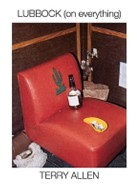
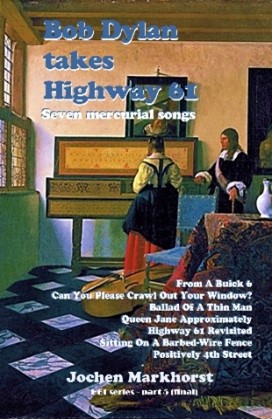

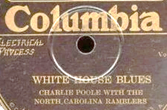


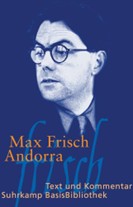 “Andorra – this does not, of course, refer to the actual microstate of that name, nor to the people in the Pyrenees whom I do not know, nor to any other small real country that I do know,’ writes Nobel Prize winner Max Frisch in the notes preceding the book version of his successful play Andorra (1961), with, as usual, a slight dig at his home country of Switzerland. And to be on the safe side, he explains it even more clearly: “Andorra is the name of a model.”