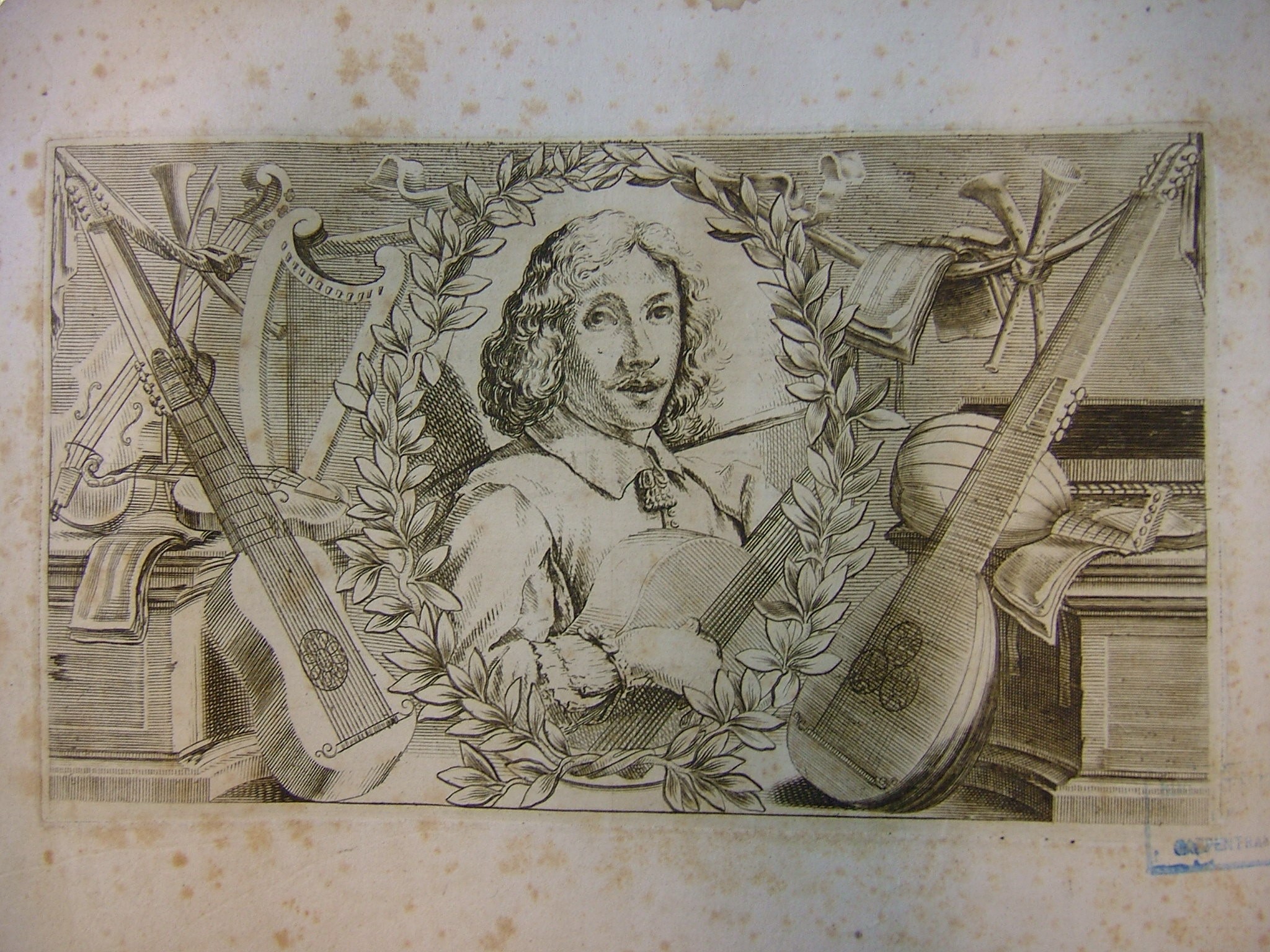
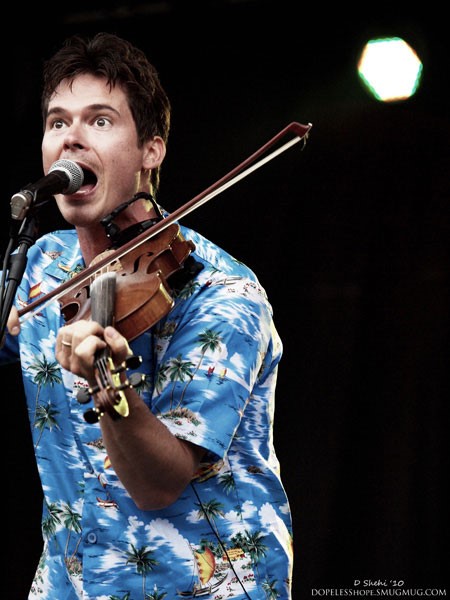
I think we last met Black Jack Davey in Bob Dylan and Cowboy Jesus (part V) and it’s no surprise that we’ve come across this song before because it is a fundamental of the English and Scottish folk song tradition upon which Bob has lavished so much interest over the years.
Bob first played the song in September 1993, before its 18th and final outing the following month. It was released on “Good as I been to you.”
The song has been through many mutations and has multiple names from Gypsy Davy through to the “Raggle Taggle Gypsies O” throughout reflecting the notion that the gypsies were somehow different and separate from the rest of society, not just by their style of living and dress, but through some deeper power that they could exert.
Perhaps because it tapped into a mystery and to a degree a fear, the song was incredibly popular across the English speaking world, along with “Barbara Allen”. Throughout all versions, the gypsies’ power enables them to entrap the lady against all her normal judgement and rationality.
Robert Burns quoted the song in his “critical observations on Scottish songs” at the start of the 19th century, and Cecil Sharp who was the prime collector of music of the English folk song tradition also noted and recorded it. The sanitised version of “Wraggle Taggle Gypsies O” became part of the singing lessons in English schools through the first half of the 20th century.
Woody Gutherie, the Carter Family and many many others all recorded the song – and throughout the lady (sometimes identified as the wife of a nobleman) is charmed away from her life of luxury to be with the gypsies. When she is found she is asked, “Would you forsake your husband and child?” and the answer is yes – often with her saying, “What care I for your fine feather sheets?”
Nick Tosches suggests the song is based on the story of John Faa, the outlaw, and Lady Jane Hamilton, wife of The Earl of Cassilis. In that telling pretty much everyone (the wife and the gypsies) are caught and either die or are imprisoned.
https://youtu.be/SUL-VcSoERo
Here are the lyrics – although of course they vary from version to version
Black Jack Davey come a-riden’ on back,
A-whistlin’ loud and merry.
Made the woods around him ring,
And he charmed the heart of a lady,
Charmed the heart of a lady.
“How old are you, my pretty little miss,
How old are you, my honey”
She answered to him with a lovin’ smile
“I’ll be sixteen come Sunday,
Be sixteen come Sunday.”
“Come and go with me, my pretty little miss,
Come and go with me, my honey,
Take you where the grass grows green,
You never will want for money
“Pull off, pull off them high-heeled shoes
All made of Spanish leather.
Get behind me on my horse
And we’ll ride off together,
We’ll both go off together.”
Well, she pulled off them high-heeled shoes
Made of Spanish leather.
Got behind him on his horse
And they rode off together.
They rode off together.
At night the boss came home
Inquiring about this lady.
The servant spoke before she thought,
“She’s been with Black Jack Dave,
Rode off with Black Jack Davey.”
“Well, saddle for me my coal black stud,
He’s speedier than the gray.
I rode all day and I’ll ride all night,
And I’ll overtake my lady.
I’ll bring back my lady.”
Well, he rode all night till the broad daylight,
Till he came to a river ragin’,
And there he spied his darlin’ bride
In the arms of Black Jack Davey.
Wrapped up with Black Jack Davey.
“Pull off, pull off them long blue gloves
All made of the finest leather.
Give to me your lily-white hand
And we’ll both go home together.
We’ll both go home together.”
Well, she pulled off them long blue gloves
All made of the finest leather.
Gave to him her lily-white hand
And said good-bye forever.
Bid farewell forever.
“Would you forsake your house and home,
Would you forsake your baby?
Would you forsake your husband, too,
To go with Black Jack Davey.
Rode off with Black Jack Davey?”
“Well, I’ll forsake my house and home,
And I’ll forsake my baby.
I’ll forsake my husband, too,
For the love of Black Jack Davey.
Ride off with Black Jack Davey.”
“Last night I slept in a feather bed
Between my husband and baby.
Tonight I lay on the river banks
In the arms of Black Jack Davey,
Love my Black Jack Davey.”
Thus it is an incredibly popular Scottish / English folk song which has travelled across to America, and it taps at the centre of the fear of the unknown, the power of the outsider to override rationality, of love, desire, lust…. It is all there.
And it can be re-worked as often as anyone wishes in every way imaginable. Here are my two personal favourites of all time. First, the slow version
And now all hell breaks loose..
https://youtu.be/dSyaYxxQl3U
Why does Dylan like it? It is a fundamental song within our folk tradition, with a vibrant story and really engaging melody. What else would you need?
Untold Dylan is written by people who want to write for Untold Dylan. It is simply a forum for those interested in the work of the most famous, influential and recognised popular musician and poet of our era, to read about, listen to and express their thoughts on, his lyrics and music.
We welcome articles, contributions and ideas from all our readers. Sadly no one gets paid, but if you are published here, your work will be read by a fairly large number of people across the world, ranging from fans to academics. If you have an idea, or a finished piece send it as a Word file to Tony@schools.co.uk with a note saying that it is for publication on Untold Dylan.
We also have a very lively discussion group “Untold Dylan” on Facebook with around 7000 active members. Just type the phrase “Untold Dylan” in, on your Facebook page or follow this link
You’ll find some notes about our latest posts arranged by themes and subjects on the home page of this site. You can also see details of our main sections on this site at the top of this page under the picture. Not every index is complete but I do my best. Tony Attwood

You might have noticed that usually for this series I’ve tried to maintain a theme for each episode…a particular song, artist, genre or some other theme linking the selections together. Well, for this one, I thought I’d throw all that out the window and just give you a fairly random selection of tracks which I like (or at least found interesting) but I was unable to fit into another episode for one reason or another.
First up, a couple of Knockin On Heaven’s Door covers. Proving that the song is a boon for soundtrack compilers, both of these were used on the soundtrack for TV shows…so along with the original from Pat Garrett, the Angela Aki cover (which was actually commissioned for a Japanese movie called Heaven’s Door) we now have two more to add to that list.
Raign – from the series finale of The 100.
Tony: This is certainly atmospheric, although I am not sure it is the sort of atmosphere I associate with the song.
And having established the bass drum effect from the start for the knocking, I felt I wanted the arrangement to move on. Not least because if I came to play this again I would know exactly what it was all about – it was about the bass drum.
The sudden stop of the drum was unexpected and from there on bringing it in and out, I was somewhat lost. Just how many times do you have to knock on that door in order to get in?
In all I got the feeling that the arranger had lost contact with the music and the lyrics.
Anthony & The Johnson’s from Sense8
Now this was a relief to get out of the drum knocks – but it also shows it certainly is worth hearing these versions next to each other. But somehow, that couple of sections of the introduction is never lived up to by the rest of the performance, entrancing though it is.
The harmonies however are magnificent, as is the accompaniment. Maybe it is the voice that simply isn’t right for me. Somehow, because I know the song so well, I wonder if I am going to be taken anywhere else, or shown anything else.
I appreciate that when knocking on heaven’s door nothing more is going to happen, but musically it still feels like there is a need for more to be there. Maybe if I was listening late at night in a darkened room it would help. The end is simple and gorgeous, but that’s still not enough.
Aaron: Next up, and to help you recover your emotions a bit from the previous selections…it’s The Dead Weather with New Pony
Tony: OK, I love Jack White, and loved the Dead Weather. And this record shows why.
It is a simple 12 bar but they manage to squeeze every single element out of it, plus then some more. There is Jack doing his amazing stuff, a drummer who sounds like he has two assistants working with him, and a superbly simple idea (calling “How much?” over and over) which just works as simplicity does when handled correctly. Over and over and over, and we are thinking, where is that next word, how much…. longer???
Best of all the band never rest – the arrangement changes throughout so even though it is a 12 bar song it isn’t anything like that. If I ever have guests at a dinner party who just won’t go home at 3am, I’m putting this on. Twice.
I wonder what Bob thought.
The Sisterhood Of The Traveling Wilburys
Aaron: Now The Sisterhood Of The Traveling Wilburys (Love the name!) with their cover of Handle With Care. Seems like this is a one off collaboration between five of LAs female singer songwriters…very interesting to hear this done by woman, as I always thought this was very much a “guys” song and it’s a fairly straight cover but it works, at least for me!
Tony: Strangely, I was writing about the original just the other day as part of my series going through Bob’s writing year by year in terms of the subject matter of each song, and this was one of the songs I lingered over. (It really is a hell of an experience working through Dylan’s composition in the order they were written, rather than any other order. I can recommend it).
Anyway, yes I love this, but not the instrumental breaks – the lead guitar is far too thin for my taste given the warmth and depth of the vocals. But that doesn’t make it a poor recording, the actual singing and the accompaniment is superb and very much worth a listen.
Madeleine Peyroux – You’re Going To Make Me Lonesome When You Go
Tony: Jochen’s piece on this song is something to read – he does the insights far better than I can, which is a bit worrying given he’s not writing in his mother tongue while I am. But leaving that aside, he chose this version as one of his selection of covers, and I recall listening to it over and over when I first got hold of the article ready for publication.
It’s memorable, and stands the test of time. A beautiful rendition of lightness and elegance.
Bonnie Raitt – It’s All Over Now, Baby Blue..
It is a real shame that I can’t get the cover to copy here as a way of playing the song, but that happens sometimes. Here is the link – take a click and then look at the cover and listen.
Everything here is perfect – even the way the bass guitar enters the affair in the second verse. And that’s without mentioning the lady’s voice, plus the exquisite arrangement. It just shows you don’t to go overboard with an all encompassing array of instruments – this is simple and exquisite because the arranger and/or band knows where they are going, and they go there. And stay there.
In short: songs don’t have to grow and explode. By the time we got to “your lover who just walked out the door” I was moved beyond words and had to stop typing.
Even the next verse which is spoken not sung in the first two lines (which I normally hate) is a piece of perfection.
Anthony and The Johnson’s: Pressing On
Aaron: Last up I thought I’d include another Anthony and The Johnson’s cover, this time of Pressing On, I know you didn’t like the Alicia Keys Version, so see how you get on with this one!
Tony: Oh, I am so sorry, but no. And I promise I really closed out the lyrics and listened to the sounds, but no, I can make no sense of this at all.
Dear Reader, if you would like to write a proper review of this version of this song, please send it to me at Tony@schools.co.uk and I will publish it here. Or if it is a substantial review, I’ll publish it as a piece in its own right.
Aaron: PS on a side note, if you do like the Antony tracks might I recommend her album I Am A Bird Now, whenever someone asks me for a recommendation for an album that’s my go-to answer (besides Dylan, Beatles etc obviously!)
Untold Dylan is written by people who want to write for Untold Dylan. It is simply a forum for those interested in the work of the most famous, influential and recognised popular musician and poet of our era, to read about, listen to and express their thoughts on, his lyrics and music.
We welcome articles, contributions and ideas from all our readers. Sadly no one gets paid, but if you are published here, your work will be read by a fairly large number of people across the world, ranging from fans to academics. If you have an idea, or a finished piece send it as a Word file to Tony@schools.co.uk with a note saying that it is for publication on Untold Dylan.
We also have a very lively discussion group “Untold Dylan” on Facebook with around 7000 active members. Just type the phrase “Untold Dylan” in, on your Facebook page or follow this link
You’ll find some notes about our latest posts arranged by themes and subjects on the home page of this site. You can also see details of our main sections on this site at the top of this page under the picture. Not every index is complete but I do my best. Tony Attwood
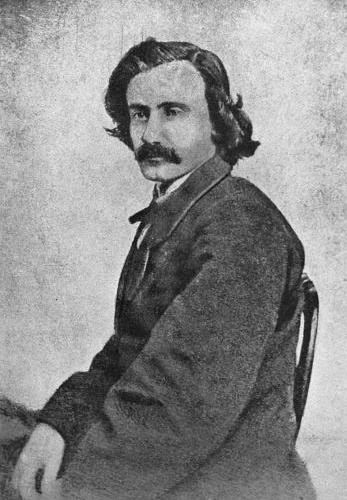
Like earlier “Desolation Row” and “Where Are You Tonight?”, “Mississippi” can’t really be dealt with in one article. Too grand, too majestic, too monumental. And, of course, such an extraordinary masterpiece deserves more than one paltry article. As the master says (not about “Mississippi”, but about bluegrass, in the New York Times interview of June 2020): Its’s mysterious and deep rooted and you almost have to be born playing it. […] It’s harmonic and meditative, but it’s out for blood.
X Eyesight To The Blind
Some people will offer you their hand and some won’t
Last night I knew you, tonight I don’t
I need somethin’ strong to distract my mind
I’m gonna look at you ’til my eyes go blind
More than halfway the song and it gets harder and harder to follow Dylan’s claim from that Rolling Stone interview, about the song touching on the Declaration of Independence, the Constitution and the Bill of Rights. And it’s increasingly understandable that producer Lanois argues for “sexy and more sexy”.
The narrator is emotional and at the very least suggests that his current feelings of regret and loss are due to a recent break-up. In the blues jargon of Howlin’ Wolf and Willie Dixon, the mule in the stall is a love rival, the man with whom your wife has just deceived you. The narrator worries about the things “Rosie” said and dreams of lying in “Rosie’s” bed again. And now he’s wandering around like a stranger, dazed and confused, regretting the things that can’t be undone, and presuming that “you” have regrets too… no, it’s quite easy to follow how Lanois hears a sultry love drama between the lines.
That doesn’t get any less in this verse.
Genesis 38 is a somewhat lust-filled, ruthless, and farcical intermezzo in the Bible’s first book. The book tries to bring some order to the chaotic family history of Judah, the fourth Founding Father of the Tribes. Judah’s first son Er is “wicked”, so God has to kill him, unfortunately. Brother Onan then has to fulfill his obligations and impregnate Er’s widow, but he prefers to spill his seed on the rocks. Beep beep, Jack, you’re dead (“And the thing which he did displeased the Lord: wherefore he slew him also”). Which means, subsequently: another widow to take care of. All right, says Judah to this fresh widow, his daughter-in-law Tamar, when my third son will be old enough, you shall be his wife.
But Judah forgets, or changes his mind. Thamar works all these years in his household but does not get a husband – not even that third son, who is old enough by now. Then comes the farcical element: Tamar “covered her with a vail” and, masked and anonymous, stands whorishly “by the way to Timnath”, where her father-in-law passes by a little later. He thinks he sees an attractive harlot and wants to “come in unto her”. He can’t pay now, but gives his signet ring, cord and staff as pledge. When Judah returns to pay, Tamar and his pledge are gone.
A few months later his daughter-in-law Tamar turns out to be pregnant. So obviously, she has to die, because that’s how it’s supposed to be. But then Tamar shows the things of the man who has impregnated her: signet ring, cord and staff. This puts Judah in his place. “She hath been more righteous than I.” And he knew her again no more.
It is the fourth time in Genesis that knew is used in the sense of having intercourse. That’s how Daniel Lanois hears Dylan using it in “Mississippi”: “Last night I knew you, tonight I don’t” – and in that case it may indeed sound sexy and more sexy.
Hardly “Constitutional” or “Bill Of Rights”, but equally erotic, or at least amorous, is the desperate follow-up. Word choice now seems to be inspired by the blues canon again, although the well-versed may also think of Samson – who remained in love with Delilah, after all, until his eyes were gouged out. More obvious, however, is Aleck “Rice” Miller, better known as Sonny Boy Williamson II.
Sonny Boy Williamson comes from Mississippi, which may be a trigger, but the harmonica virtuoso is a constant in Dylan’s oeuvre anyway. The bard quotes Williamson in songs like “Outlaw Blues”, copies “Don’t Start Me Talkin” for the throwaway “Stop Now” (of which he then literally takes the chorus from Williamson’s “Stop Now Baby”), and Dylan plays the same “Don’t Start Me Talkin’” with The Plugz in the David Letterman Show, 1984.
In Chronicles, the autobiographer dreams up the story how Sonny Boy gave him a harmonica lesson once (“Boy, you play too fast”); in Theme Time Radio Hour, radio maker Dylan plays no less than eight of his songs and his later songs are stuffed with references too; “Your Funeral And My Trial” in “Cry A While”, for example, and in “Spirit On The Water” the Nobel Prize winner quotes both from “Black Gal Blues” and “Sugar Mama Blues”.
Here, in “Mississippi”, Dylan chooses a reversal of Sonny Boy’s immortal classic “Eyesight To The Blind”:
You're talking about your woman,
I wish to God, man, that you could see mine
You're talking about your woman,
I wish to God that you could see mine
Every time the little girl start to loving,
She bring eyesight to the blind
It seems to be some sort of a personal matter for Williamson, by the way. “Born Blind”, “Don’t Lose Your Eye”, “Unseeing Eye”… quite a few songs from his catalogue lack the light in the eyes.
His most famous in that category, “Eyesight To The Blind”, he does record a few times himself (among others, with Willie Dixon and with Elmore James), and appears on the records and setlists of big guns like B.B. King, Eric Clapton, Mose Allison, Gary Moore and Aerosmith. Officially promoted to rock history, the song is in 1969, by Pete Townshend for Tommy, of course. Though the biggest hit with it was scored by The Larks in 1951 (Top 10 in the R&B charts), which is perhaps one of the best arrangements indeed.
But Dylan’s reversal is the most clever variant; Sonny Boy’s blind can see again when she “starts to loving”, with Dylan the seeing “therefore” become blind when she stops loving again, when the love is over.
To be continued. Next up: Mississippi part XI: Bonnie Blue
Jochen is a regular reviewer of Dylan’s work on Untold. His books are available via Amazon both in paperback and on Kindle:
Untold Dylan is written by people who want to write for Untold Dylan. It is simply a forum for those interested in the work of the most famous, influential and recognised popular musician and poet of our era, to read about, listen to and express their thoughts on, his lyrics and music.
We welcome articles, contributions and ideas from all our readers. Sadly no one gets paid, but if you are published here, your work will be read by a fairly large number of people across the world, ranging from fans to academics who teach English literature. If you have an idea, or a finished piece send it as a Word file to Tony@schools.co.uk with a subject line saying that it is for publication on Untold Dylan.
We also have a very lively discussion group “Untold Dylan” on Facebook with around 7000 active members. Just type the phrase “Untold Dylan” in, on your Facebook page or follow this link
You’ll find some notes about our latest posts arranged by themes and subjects on the home page of this site. You can also see details of our main sections on this site at the top of this page under the picture. Not every index is complete but I do my best.
Bob Dylan, singer/songwriter/musician, as previously noted, draws inspiration from the poetry of John Keats, Edgar Allan Poe, and Robert Frost for his song “Key West”; he also mixes in the poetry of Geoffrey Chaucer with lyrics from a a blues singer:
"Love you daddy, real good daddy
Soothe me baby, move me baby"
Yes, I heard it all
Another mule is kicking in my stall
(Dave Bartholomew: Another Mule)
In the song verse below, there’s the ‘Dylanesque rhyme twist” ~ ‘all’/’stall’; ~’wall’/’all’:
McKinley hollered, McKinley squalled
Doctor said, "McKinley, death is on the wall
Say it to me, if you got something to confess"
I heard it all - the wireless radio
(Bob Dylan: Key West)
And from the famous ‘Canterbury Tales’:
But show me your complete confession
"No", said the sick man, "By St. Simon
I have been shivered today by my curate
I have told him of my condition
There is no further need to confess again"
(Geoffrey Chaucer: The Summoner's Tale ~ modernized)
But most noticeably, mixed in is the tale of the Aeneas heading off to found Rome, a story told by the Roman poet Virgil. Therein, the Trojan hero descends into the Underworld with his buddy, and a Sibyl prophetess as their guide, to visit Aeneas’ father to ask him for advice; Aphrodite sends doves to guide her son to the ‘golden bough’ that he breaks off to serve as a pass to Hades:
At last they reached the spot where the road divided. From the left came horrid sounds and the clanking of chains. Aeneas halted in terror. The Sibyl, however, bade him to have no fear, but fasten boldly the golden bough on the wall that faced the crossroads. The regions to the left … punished the wicked for their misdeeds. But the the road to the right led to the Elysian Fields where Aeneas would find his father (Edith Hamilton: Mythology:Timeless Tales Of Gods And Heroes).
In the song lyrics below, the island of Key West, at the bottom of Florida, is figuratively transformed into the Underworld of Greek/Roman mythology, and the singer/songwriter takes on the persona of Virgil’s Aeneas:
Key West is under the sun, under the radar, under the gun
You stay to the left, and then you lean to the right
Feel the sun on your skin, and the healing virtues of the wind
Key West, Key West, is the land of light
(Bob Dylan: Key West)
So interpreted, the road to the Elysian Fields lies there in Key West:
There when they arrived everything was delightful, soft green meadows, lovely groves, a delicious life-giving air, sunlight that glowed softly purple, an abode of peace and blessedness. Here dwelt the great and the good dead, heroes, poets, priests, and all who had made men remember them by helping others (Edith Hamilton: Mythology).
In the following lyrics, the Elysian Fields of the Floridian island are depicted as real, as supposed to be by the Ancients; it’s no imaginary Land of Oz:
People tell me that I'm truly blessed
Bougainvillea blooming everywhere in the spring, in the summer
Winter here is an unknown thing
Down in the flat lands, way down in Key West
(Bob Dylan: Key West)
As goes Virgil’s mythological tale, in order to leave Hades to re-enter the Upper World, Aeneas and his companions must drink the Waters Of Oblivion from the River of Forgetfulness.
So apparently it be in the underworld of Key West:
Fly away, my pretty little Miss
I don't love nobody, give me a kiss
Down in the bottom, way down in Key West
(Bob Dylan: Key West)
Dylan reworks another song of his:
Well, I went back to see about her once
Went back to straighten it out
Everybody that I talked to had seen us there
Said they didn't know who I was talking about
Well, the sun went down on me a long time ago
I've had to pull back from the door
I wish I could have spent every hour of my life
With the girl from the Red River Shore
(Bob Dylan: Red River Shore)
Untold Dylan: who we are what we do
Untold Dylan is written by people who want to write for Untold Dylan. It is simply a forum for those interested in the work of the most famous, influential and recognised popular musician and poet of our era, to read about, listen to and express their thoughts on, his lyrics and music.
We welcome articles, contributions and ideas from all our readers. Sadly no one gets paid, but if you are published here, your work will be read by a fairly large number of people across the world, ranging from fans to academics who teach English literature. If you have an idea, or a finished piece send it as a Word file to Tony@schools.co.uk with a subject line saying that it is for publication on Untold Dylan.
We also have a very lively discussion group “Untold Dylan” on Facebook with around 6500 active members. Just type the phrase “Untold Dylan” in, on your Facebook page or follow this link
You’ll find some notes about our latest posts arranged by themes and subjects on the home page of this site. You can also see details of our main sections on this site at the top of this page under the picture. Not every index is complete but I do my best.
From our 2015 review of “If you ever go to Houston”
David Hildago, who played accordion on the album, is quoted in Uncut magazine as saying of this song that, “It started out like a Jimmy Reed tune and it ended up… Bob was playing organ, he started this riff, and it went from this completely other thing, to what it is now. It was fun to be in the room when it happened.”
From Jimmy Reed to “Houston” is really quite a journey. Here’s Jimmy in 1961…
https://youtu.be/l9xXchxodYg
It is a classic “lost love” song – and as we’ve seen on this site, “lost love” is Bob Dylan’s second favourite topic for lyrics (beaten only by love itself).
Bright lights big city, gone to my baby’s head
I’d tried to tell the woman, but she don’t believe a word I said …
So this is a 12 bar blues, which not only got into the R&B charts but the pop charts too. Every band that ever played R&B through the 60s and 70s played this song. It is included in the Rock and Roll Hall of Fame list of “500 Songs That Shaped Rock and Roll”.
OK so far so good – we know Jimmy Reed. But Jimmy Reed died on 29 August 1976, so isn’t it a bit late to say goodbye?
And isn’t it a bit odd to write a song called “Goodbye Jimmy Reed” which has musical constructions that would never ever come from a Jimmy Reed song? I don’t mean that if Bob wants to do this he can’t – of course he can – but it’s just unexpected, not least because Bob himself has written so many classic 12 bar blues.
Take the opening guitar solo which then has a couple of drum beats behind it before the song proper begins – and it sounds like it is going to be a 12 bar blues of the type Jimmy Reed wrote. BUT that opening guitar solo is three beats long – something you will never find in R&B.
And we do find the three beat bar happening again before each verse – it really trips us up and would make it impossible to jive to, unless one knew it was coming and with one’s partner worked out how to jive a three beat bar. Of course Dylan has played with unexpected length bars before – Jochen and I had great fun disentangling a similar trick in Not Dark Yet (although with a different number of beats) so Dylan knows what he is up to and has form here. But in a song called Goodbye Jimmy Reed????
And then there is the opening verse.
I live on a street named after a Saint
Women in the churches wear powder and paint
Where the Jews and the Catholics and the Muslims all pray
I can tell a Proddy from a mile away
Goodbye Jimmy Reed - Jimmy Reed indeed
Give me that old time religion, it’s just what I need
So we are getting a lot of religion here – but I am sure that’s not connected with the Jimmy Reed whose music I know (and in my own limited way, played in R&B bands in my youth). Jimmy and religion? No, not a thing. The man was a drinker not a Christian.
For thine is the kingdom, the power and the glory
Go tell it on the Mountain, go tell the real story
Tell it in that straight forward puritanical tone
In the mystic hours when a person’s alone
Goodbye Jimmy Reed - Godspeed
Thump on the bible - proclaim the creed
And so it goes on – and now I am getting really worried because I simply don’t get the connection between Jimmy Reed and religion. Unless, rhythm and blues is the bible, (Matthew 6:31, I got that) and come to that the creed.
You won’t amount to much the people all said
‘Cause I didn’t play guitar behind my head
Never pandered never acted proud
Never took off my shoes and threw them into the crowd
Goodbye Jimmy Reed - goodbye and goodnight
I’ll put a jewel in your crown - I’ll put out the light
OK I am sinking fast here, because Bob has never played the guitar behind his head and nor did Jimmy Reed, at least not in the films I have seen. Charley Patton did, and we’ve had a song about him, but not Jimmy Reed. The Jimmy Reed guitar did have a jewel in the crown illustration on it though. Confusing isn’t it?
Now the lyrics I am quoting here come directly from the official Bob Dylan site (I’m hoping they don’t mind) and what is interesting is that the final verse is written…
G-d be with you, brother dear
If you don’t mind me asking, what brings you here?
Oh, nothing much, I’m just looking for the man
I came to see where he’s lying in this lost land
Goodbye Jimmy Reed and with everything within ya
Can’t you hear me calling from down in Virginia
Now that “G-d” is a bit odd isn’t it? Jimmy Reed died aged 50, in 1976, and is interred in the Lincoln Cemetery, in Worth, Illinois. And I say again with all the certainty I can muster, he was not a religious man.
Jimmy Reed was an alcoholic, and an epileptic. His co-writer was his wife, Martha. And he shared with Bob Dylan the pleasure of having one of his songs recorded by Elvis Presley (Big Boss Man).
So what on earth do we make of this song which is about Jimmy Reed, but isn’t about Jimmy Reed at all?
To the frustration of at least one of my co-writers on this site, I have evolved the notion that sometimes Bob Dylan finds a phrase he likes (for example such as “Goodbye Jimmy Reed”) and simply uses it with other phrases that he likes, but with which it does not have a set of connections.
But we do know from a fair number of recordings that have surfaced, that Bob is perfectly able to make up lyrics and a melody to fit about a chord sequence, on the spur of the moment. So why not imagine Bob playing a 12 bar blues and then fitting the lyrics “Goodbye Jimmy Reed” to the chords, and then other lines that take his fancy, adding the rhythmic changes later.
It becomes an abstract song, a song in which the lines don’t have to have direct connections with each other – they are just lines that come into his head. That does not make it any worse a song – after all we have abstract paintings why not abstract songs?
And I like abstract.
None of this means that the connections that Larry and Jochen discover between the songs and works of literature are not valid – of course they are. It is just that the connections might, just on occasion, be random.
Untold Dylan is written by people who want to write for Untold Dylan. It is simply a forum for those interested in the work of the most famous, influential and recognised popular musician and poet of our era, to read about, listen to and express their thoughts on, his lyrics and music.
We welcome articles, contributions and ideas from all our readers. Sadly no one gets paid, but if you are published here, your work will be read by a fairly large number of people across the world, ranging from fans to academics who teach English literature. If you have an idea, or a finished piece send it as a Word file to Tony@schools.co.uk with a subject line saying that it is for publication on Untold Dylan.
We also have a very lively discussion group “Untold Dylan” on Facebook with around 6500 active members. Just type the phrase “Untold Dylan” in, on your Facebook page or follow this link
You’ll find some notes about our latest posts arranged by themes and subjects on the home page of this site. You can also see details of our main sections on this site at the top of this page under the picture. Not every index is complete but I do my best.
If we look at the lyrics of Dylan’s songs in the second half of the 1980s we see a very troubled writer, as the titles of the recent articles in this series suggest…
And what’s more the trilogy of compositions that I rate so highly in 1987 consisted of three songs that reflected Bob’s clearly troubled mind: Political world, What good am I, Dignity.
I have also contributed to this site an earlier article on 1989: Bob Dylan stalked by the darkness in which I try to express my feeling that while the writing that year was, to my mind, brilliant, Bob was looking into very dark places to find his muse.
There had to be a response to this – a lighter touch perhaps – for his own psychological well-being. And indeed that is what Bob moved into in 1990, with a totally different sort of song.
Within this search for a different mode of expression Bob was at least partially helped by the diversion of creating another Willbury’s album – an album which included Where were you last night which I would class as the best straight pop song Dylan has ever written.
Meanwhile the protest songs of the classic variety found a new outlet on the Never Ending Tour which had begun in 1987 and which is being cover in Mike Johnson’s brilliant series on this site. In addition Bob found a new type of protest song to write for his new recordings.
Now this thought keeps hammering at me not just because that’s how it sounded to me as I first started sketching out this series, but also because of what Mike Johnson wrote on this site as he started his three part review of the Never Ending Tour in 1990. He writes
“The performance I keep coming back to is that protest song to end all protest songs ‘It’s all right Ma.’ Not only the best of 1990, but maybe the best performance of this song since the flat, hard-driving 1964 performances. We have the swirling performances from the Rolling Thunder Tour, and the fast and furious versions from the Tom Petty years. Dylan stayed with this fast and furious version through the early years of the NET, and you won’t find a better performance of it than this one (02-07)…”
Now I must stress at this point that Mike and I don’t collaborate on these Never Ending Tour articles – they are all his work, not least because we live (literally) on opposite sides of the globe, and also because I don’t have any words to offer that could improve what Mike does one iota. So to set the scene, here, once again, is the performance from 1990 that Mike selected. As the saying goes, ‘I am the enemy of the unlived meaningless life.’
It’s all right Ma
By 1990, Bob’s classic protest songs had long since been written, and of course could be varied and re-presented on tour. But Dylan clearly also wanted to present the message again, and he needed a new way to do this. And what he did was utterly revolutionary. For Bob Dylan approached his theme not by returning to the style and approach of “Hollis Brown” and “It’s alright Ma” but by going in the opposite direction, taking childhood themes to point out the destruction of the past. Where there is a look back to Hollis Brown, it is via an expansion of the cause embedded in that song.
Also notable is that fact that many songs around this time had changing lyrics – as did Wiggle Wiggle from whence come the lines…
‘Wiggle till you’re high
Wiggle till you’re higher
Wiggle till you vomit fire’
This all seems fairly clear to me. In the aftermath of his Christian period Bob had slipped into a vision of doom, something which (as I have oft hinted up to this point) took as its starting point Making a liar out of me
I have noted at the start of this piece the articles that trace this period of darkness in Bob’s writing. Now, he had one more bash at trying to find a new way to express his horror of the world around him and amplify the message he expressed in “Making a liar”. Here is the list of songs from 1990 including the songs from the second Wilburys set which appear to contain a strong level of input from Bob. The songs near the end with the asterisks are Wilburys pieces which credit Dylan as co-composer, but which in my view are not songs to which he actively contributed much.
I am no longer trying to fit the songs into the subject titles that I have used before, since Bob had now moved on. Everything had changed.
In the earlier part of this series I contented myself by giving one or two word descriptions of the songs’ subject matter but by this period of Dylan’s life this had changed. Thus taking all the songs written up to 1977 the lead subjects were love and desire (56 songs), and lost love (43 songs). There were 17 songs about the environment and specific places and 11 blues songs. Now we were travelling in a very different direction.
If you have read my comments elsewhere you will know that to my mind the masterpiece in the Wilburys collection is “Where were you last night?” Yes it is a straight lost love pop song, a bit of male angst over a woman breaking a date. Hardly revolutionary stuff for Bob to get his teeth into, but compared with Disease of Conceit this is positively a lighthearted romp and I suspect exactly what he wanted, and what the Wilburys band wanted at this time. (Other members of the band have been reported as saying that they were all pretty much out of ideas at this time).
In short it was exactly the release Bob needed before shooting off with the 1990 round of the touring dates. Except that this time the tour didn’t end. It just kept going, perhaps in part because Bob, after his burst of creativity with the Wilburys, had stopped writing. Perhaps the darkness of the Black Coats was too dark, the notion of an alternative type of protest through the Red Sky was not welcomed by critics, and now he felt he had had enough.
Bob is quoted as saying around this time that he had “had it” with songwriting, and hence, the tour. He didn’t want to sit around doing not much as the rest of the Wilburys, he couldn’t produce new songs to record which would be highly regarded.
And this shows us the problem with people like Patrick Humphries, who wrote The Complete Guide to the Music of Bob Dylan in which he spoke of “sloppily written songs, lazily performed and unimaginatively produced.” Or as I might say of his work “sloppily written reviews, lazily produced reviews and unimaginatively considered background.”
It’s easy to criticise. It’s quite a lot harder to create.
If we put together this period of Bob’s life from 1985 to the end of the decade it is not that hard to see that Bob had gone through hard times creatively, but had emerged from that to make an album of songs that in many ways looked back to childhood, and then enjoyed himself with some excellent pop work only to find his mate George Harrison not only easing out his vocals on many tracks, but also still refusing to include “Like a Ship” on the Wilburys album, while putting in silly nonsense like New blue moon and Wilbury Twist.
It was enough to make any self-respecting artist weep.
But Bob Dylan didn’t weep (as far as I know)– for he had the perfect alternative, the Never Ending, and so it carried on carrying on. Yes there were a couple of new albums, but they were not of his compositions, they were very much his choice of music throughout.
So the Wilburys got some of the darkness of the previous year out of Bob’s soul, but he felt no ownership of the album, never mentioned it, never played any of the songs – and that is a real shame, because “Where were you last night” would be a great song to use on stage.
And thus began the gap years, in which writing was occasional but performance was regular.
The series continues.
Untold Dylan: who we are what we do
Untold Dylan is written by people who want to write for Untold Dylan. It is simply a forum for those interested in the work of the most famous, influential and recognised popular musician and poet of our era, to read about, listen to and express their thoughts on, his lyrics and music.
We welcome articles, contributions and ideas from all our readers. Sadly no one gets paid, but if you are published here, your work will be read by a fairly large number of people across the world, ranging from fans to academics who teach English literature. If you have an idea, or a finished piece send it as a Word file to Tony@schools.co.uk with a subject line saying that it is for publication on Untold Dylan.
We also have a very lively discussion group “Untold Dylan” on Facebook with approaching 6000 active members. Just type the phrase “Untold Dylan” in, on your Facebook page or follow this link
You’ll find some notes about our latest posts arranged by themes and subjects on the home page of this site. You can also see details of our main sections on this site at the top of this page under the picture. Not every index is complete but I do my best.
But what is complete is our index to all the 604 Dylan compositions and co-compositions that we have found, on the A to Z page. I’m proud of that; no one else has found that many songs with that much information. Elsewhere the songs are indexed by theme and by the date of composition. See for example Bob Dylan year by year.
In the song “Key West (Philosopher Pirate)”, Bob Dylan pirates the ‘negative capability’ philosophy of John Keats, written on the wall. In the poem ‘Ode On A Grecian Urn’, Keats looks upon a painting of a desirable women frozen in time; she’s on an urn that carries the ashes of the dead; on sensuous earth, however, like summer turns to winter, the warmth of youthful beauty fades away:
Bold lover, never, never canst thou kiss
Though winning near the goal yet, do not grieve
She cannot fade, though thou has not thy bliss
Forever wilt thou love, and she be fair
(John Keats: Ode On A Grecian Urn)
In the song lyrics below, Key West, in the southern climes seemingly betwixt heaven and earth, is a place of permanent sunshine where aging people go to live out their lives:
Key West is the place to be
If you are looking for immortality
Key West is paradise divine
Key West is fine and fair
Key West is on the horizon line
(Bob Dylan: Key West)
Key West always remains the same like the flat painting on Keats’ urn:
Ah, happy, happy boughs! that cannot shed
Your leaves, nor ever bid spring adieu
And, happy melodies, wearied
Forever piping forever anew
More happy love! more happy, happy love!
For ever panting, and for ever young
(John Keats: Ode To A Grecian Urn)
Quite happy in security retirees be; of the Grecian urn, the poet writes;
When old age this generation waste
Thou shalt remain, in midst of other woe
(John Keats: Ode On A Grecian Urn)
When growing up there’s something that doth not love the thought of a retaining wall that encloses the permanent:
I'm searching for love, for inspiration
On that private radio station
Coming out of Luxembourg and Budapest
Radio signal clear as can be
I'm so in love that I can hardly see
Down on the flatlands, way down in Key West
(Bob Dylan: Key West)
Struggling with forces both ‘dark’ and ‘light’ is what growing up is all about; wandering Odysseus and Aeneas we all be before we settle down. So says another of Bob Dylan’s favorite poets, much influenced by the philosophy of John Keats:
On desperate seas long wont to roam
The hyacinth hair, thy classic face have brought me home
To the glory that was Greece
And the grandeur that was Rome
(Edgar Allan Poe: To Helen)
So says Bob:
Such is life, such is happiness
Hibiscus flowers grow everywhere here
If you wear one, put it behind your ear
Down on the bottom, way down in Key West
((Bob Dylan: Key West)
The smaller western bougainvillea flower looks similar to the hibiscus flower that symbolizes the Hindu Mother Goddess who has a bloody, raging side to her that’s tamed by her husband, the God of Time and Change; at him, she sticks out her tongue:
I know all the Hindu rituals
People tell me I'm truly blessed
Bougainvillea blooming in the summer, in the spring
Winter here is an unknown thing
Down in the flatlands, way down in Key West
(Bob Dylan: Key West)
Apparently, all is not quite as bright as it’s made out to be, hidden in the darkness there:
Key West is under the sun, under the radar, under the gun
You stay to the left, and then you lean to the right
Feel the sunlight on your skin, and the healing virtues of the wind
Key West, Key West is the land of light
(Bob Dylan: Key West)
Untold Dylan: who we are what we do
Untold Dylan is written by people who want to write for Untold Dylan. It is simply a forum for those interested in the work of the most famous, influential and recognised popular musician and poet of our era, to read about, listen to and express their thoughts on, his lyrics and music.
We welcome articles, contributions and ideas from all our readers. Sadly no one gets paid, but if you are published here, your work will be read by a fairly large number of people across the world, ranging from fans to academics. If you have an idea, or a finished piece send it as a Word file to Tony@schools.co.uk with a note saying that it is for publication on Untold Dylan.
We also have a very lively discussion group “Untold Dylan” on Facebook with around 7000 active members. Just type the phrase “Untold Dylan” in, on your Facebook page or follow this link
You’ll find some notes about our latest posts arranged by themes and subjects on the home page of this site. You can also see details of our main sections on this site at the top of this page under the picture. Not every index is complete but I do my best. Tony Attwood
Like the earlier compositions such as “Desolation Row” and “Where Are You Tonight?”, “Mississippi” can’t really be dealt with in one article. Too grand, too majestic, too monumental. And, of course, such an extraordinary masterpiece deserves more than one paltry article. As the master says (not about “Mississippi”, but about bluegrass, in the New York Times interview of June 2020): Its’s mysterious and deep rooted and you almost have to be born playing it. […] It’s harmonic and meditative, but it’s out for blood.
IX Abandon all hope
Walkin’ through the leaves, falling from the trees
Feelin’ like a stranger nobody sees
So many things that we never will undo
I know you’re sorry, I’m sorry too
The opening line of this quatrain is deceptive. At first sight, the setting looks like a clichéd film scene. A melancholy protagonist, strolling in an autumnal forest over the rustling leaf. It is only at second glance one is struck by this atypical falling.
The narrator does not walk through fallen leaves, fallen from the trees, but through leaves, falling from the trees. Participium praesens, a present participle: the leaves are falling, while the protagonist walks through them – the protagonist who does feel like an invisible stranger here… suddenly this is very reminiscent of Dante.
“Canto III” from Dante’s Inferno is probably one of the best known. It is the song that tells how Dante and Virgil arrive at the Gates of Hell, at the cheerful welcome sign Lasciate ogni speranza, voi ch’intrate – “Abandon all hope, ye who enter here” – the closing words which will be re-used by Dylan in 2020 for “Crossing The Rubicon” (I painted my wagon, abandoned all hope and I crossed the Rubicon), just as further verses seem inspired by that same excerpt from the Divina Commedia:
You won’t find any happiness here
No happiness or joy
Hell’s vestibule already is an ordeal to Dante. And here are still only the souls of those who have been neither good nor bad – but their screams, the “languages divers, orribili favelle, horrible words” and the “words of agony” frighten Dante. They have to make their way through though, to the “the dismal shore of the Acheron”, the muddy, black, bitter River of Suffering, where ferryman Charon will sail them to the other side, to the underworld.
Dante’s description of Charon, especially Charon’s eyes, suggests that Dylan has browsed the Inferno more than once and more than fleetingly. The first time the ferryman is described is in this song, in verse 82-99. The introduction ends with the remarks that the skipper has “wheels of fire around the eyes”, the title of one of Dylan’s Basement songs from 1967.
The second time is ten lines down:
The dæmon, with eyes like burning coal,
- Charon – enrols them, for the passage bound
And with his oar goads on each lingering soul
“Eyes like burning coal”, as Wordsworth translates con occhi di bragia seems to echo in “Tangled Up In Blue”:
Then she opened up a book of poems
And handed it to me
Written by an Italian poet
From the thirteenth century
And every one of them words rang true
And glowed like burnin’ coal
Probably one of the most discussed verses in Dylan’s oeuvre, but on which a kind of consensus has gradually emerged. The obvious candidates for this “Italian poet from the thirteenth century” are the fourteenth-century poets Petrarch, Boccaccio and Dante, and the scales tip towards to Dante (although in ’78 Dylan clouded the waters by answering when asked: “Plutarch. Was that his name?”). However, the ease with which Dylan, in live performances, changes the reference in question to Baudelaire or to Jeremiah does give ground to the theory that the bard has no particular poet in mind at all, but in this verse line, as is often the case, chooses the sound.
Inferno, the first part of the Divine Comedy, then seems to provide decor, imagery and colour for this quatrain in “Mississippi”. In Chronicles, Dylan in any case parades his memory that he had the book in his hands:
“Sometimes I’d open up a book and see a handwritten note scribbled in the front, like in Machiavelli’s The Prince, there was written, “The spirit of the hustler.” “The cosmopolitan man” was written on the title page in Dante’s Inferno.”
This plays in one of his lodgings, with “Ray and Chloe”, in the time before Dylan recorded his first LP, so around 1960. It seems rather unlikely that the autobiographer Dylan remembers handwritten scribbles in other people’s books more than forty years later, but well alright. In this passage Dylan sums up a whole zip of antique and less antique writers, refers to works that do not exist and remembers fantasised titles – apparently Dylan is not so much striving for academic correctness, but still does feel a need to demonstrate that he is not entirely uneducated.
Anyway – Inferno. After that depressing vestibule Dante and Virgil approach the bank of the Acheron. Charon sees that Dante is still alive and therefore doesn’t want to take him with him, but is overruled by Virgil, who seems to have some authority, down here. Meanwhile, it gets busier and busier on the bank: the souls of the damned, who have to be taken to the other side.
As in the autumn-time the leaves fall off,
First one and then another, till the branch
Unto the earth surrenders all its spoils;
In similar wise the evil seed of Adam
Throw themselves from that margin one by one,
At signals, as a bird unto its lure.
And thus, Dante is walking through the leaves, falling from the trees, through the wandering souls who can’t see him, to Charon’s ferry. He’s a stranger here, being the only one with a good soul, according to Virgil, among all those souls who never will undo their failed lives. Dante’s sorry. And they are sorry too.
Untold Dylan is written by people who want to write for Untold Dylan. It is simply a forum for those interested in the work of the most famous, influential and recognised popular musician and poet of our era, to read about, listen to and express their thoughts on, his lyrics and music.
We welcome articles, contributions and ideas from all our readers. Sadly no one gets paid, but if you are published here, your work will be read by a fairly large number of people across the world, ranging from fans to academics. If you have an idea, or a finished piece send it as a Word file to Tony@schools.co.uk with a note saying that it is for publication on Untold Dylan.
We also have a very lively discussion group “Untold Dylan” on Facebook with around 7000 active members. Just type the phrase “Untold Dylan” in, on your Facebook page or follow this link
You’ll find some notes about our latest posts arranged by themes and subjects on the home page of this site. You can also see details of our main sections on this site at the top of this page under the picture. Not every index is complete but I do my best. Tony Attwood
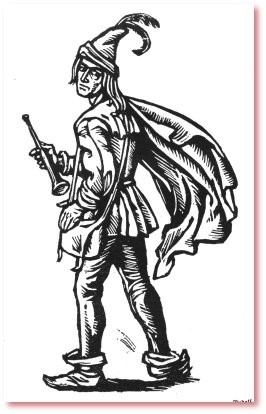
Tioga Pass is a song that was seemingly recorded at Sunset Sound Studios in Hollywood, on 16 June 1987 and according to the only note we have concerning the song, it was written by Robert Hunter and Bob Dylan.
The recording list for the session reads…
1. You Can't Judge A Book By Looking At The Cover
2. Tioga Pass
3. Ugliest Girl In The World
4. Making Believe
5. Rank Strangers To Me
6. Silvio
The musicians involved in the session were Mike Baird (drums), Nathan East (bass), Bob Dylan, with Madelyn Quebec and Carol Dennis (backup vocals). Jerry Garcia, Bob Weir & Brent Mydland also provided additional vocals.
Tracks 3, 5 and 6 were subsequently released on “Down in the Groove” but we have nothing online to show that Tioga Pass was actually recorded – or at least not actually recorded and kept. It may well have been recorded and deleted, or lost, or simply not finished, although such events have not normally resulted in a song just disappearing.
So, unless someone comes up with a copy of the recording from that day, we’ll take it that there is no version available of the music, and therefore this song needs new music to go with Bob’s lyrics.
And that gives us a chance to add another song to the Bob Dylan Showcase, our collection of songs re-worked by readers of Untold Dylan, or (as in this case) songs where we have Dylan’s lyrics but no music. There is a list of such songs at the end of this piece, but first, for anyone who wants to have a go, here are the lyrics you will be working with.
And do remember you will be credited as having written the music to a Dylan song, if you do send in a piece. The only requirement is that you have to write and then record original music.
Needle's on emptyand here I'm stuckFour in the morningand just my luckListen to the radiowaiting for the sunCan't flag a rideuntil daylight comesFour in the morning
and out of gas
Mile and a half
from Tioga PassTuned to a stationI've never heardwhile moonlight glimmerson Dead Man's CurveGlory in the morningand God bless youfor playing that songwhen another would doFour in the morning
and out of gas
Mile and a half
from Tioga PassAin't quite rockalthough it movesIt sure ain't countryand it's not the bluesThey don't say nothingwhen it gets to the endJust keep playing itover againFour in the morning
and out of gas
Mile and a half
from Tioga PassIt isn't popand it isn't soulNothing like fiftiesrock and rollIt isn't folkNot especially jazzGot something specialnothing else hasFour in the morning
and out of gas
Mile and a half
from Tioga PassThe sun comes upabout six o'clockThe station driftsto some pre-fab rockAlthough they played itall night longI never did learnthe name of that song
Now to help you, if you don’t know that part of the United States, Tioga Pass sits almost 10,000 feet (3000 m.) above sea level in the Sierra Nevada, and State Route 120 goes through it leading to Yosemite National Park.
It is the highest highway pass in California and in the Sierra Nevada. Wiki tells us that “This pass, like many other passes in the Sierra Nevada, has a gradual approach from the west and drops off to the east dramatically, losing more than 3,000 feet (910 m) by the time the road reaches Route 395.”
They also tell us that The Pass is named after the Tioga River, and “tioga” is an Iroquois and Mohawk term meaning “where it forks”.
It appears that in the winter (October to May) the road is often closed due to snow, occasionally remaining closed until July when the snow has been particularly heavy. So a pretty silly place to run out of gas (petrol).
That then is the challenge – to write the music and send in a recording. You will then be entered onto our list of 600+ Dylan compositions recorded on this site. And judging by the way things have been going, you might find other websites then quoting the song as a Dylan composition, with you as the composer. People do seem to accept that our list is not only accurate but also comprehensive. So fame at last!
And just to show you what has happened before, here are some of the recordings that we have completed between us.
Untold Dylan is written by people who want to write for Untold Dylan. It is simply a forum for those interested in the work of the most famous, influential and recognised popular musician and poet of our era, to read about, listen to and express their thoughts on, his lyrics and music.
We welcome articles, contributions and ideas from all our readers. Sadly no one gets paid, but if you are published here, your work will be read by a fairly large number of people across the world, ranging from fans to academics. If you have an idea, or a finished piece send it as a Word file to Tony@schools.co.uk with a note saying that it is for publication on Untold Dylan.
We also have a very lively discussion group “Untold Dylan” on Facebook with around 7000 active members. Just type the phrase “Untold Dylan” in, on your Facebook page or follow this link
You’ll find some notes about our latest posts arranged by themes and subjects on the home page of this site. You can also see details of our main sections on this site at the top of this page under the picture. Not every index is complete but I do my best. Tony Attwood
It is often stated that The Roving Gambler, a song which Bob has sung many times in concert, is a American folksong that originates in the first decade of the 20th century. It has a wide of number of names beside “Roaming Gambler” – but all closely related, such as “The Gambler”, “Gambling Man.”
However there is a 19th English folk song “The Journeyman” or “The Roving Journeyman”, which exists in the Bodleian Library and which dates from sometime between 1818 and 1838.
The similarities are too great to be dismissed in my opinion. Here’s one of Bob’s versions of the American approach.
https://youtu.be/tqKxq3oBf4k
Bob is noted as having played it for the first time on 1 May 1960 at the home of Karen Wallace in St Paul, with the last performance being at Newport RI on 3 August 2002.
Here are the classic lyrics – although obviously they do vary from place to place and over time.
I am a rovin' gambler, I've gambled all around
Wherever I meet with a deck of cards
I lay my money down
(I Lay my money down, lay my money down.)
I gambled up in Washington, gambled over in Spain
I'm on my way to Frisco town
To knock down my last game
(knock down my last game; knock down my last game)
I had not been in 'Frisco, many more days than three
I fell in love with a pretty little girl
And she fell in love with me
(Fell in love with me, fell in love with me.)
She took me in her parlor, she cooled me with a fan
She whispered low in her mama's ear
"I love this gamblin' man."
("Love this gamelin' man." "Love this gamblin' man.")
"Daughter, Oh! dear daughter, how could you treat me so?
And leave your dear old mother
And with a gambler go?"
(With a gambler go? with a gambler go?)
"Mother, Oh dear mother, I'll tell you if I can
If you ever see my face again
I'll be with the gamblin' man"
(be with the gamblin' man" be with the gamblin' man)
https://youtu.be/SD82d33GOA0
The earliest trace of it in America came with “The Gamboling Man” in “Delaney’s Song Book No. 23” around 1900 and was republished, although without the repetitions, in Carl Sandburg’s “American Song Bag” in New York in 1927.
Sandburg suggests this is a song performed by the minstrel shows and says, rather inaccurately “while gamblers may gambol and gambolers may gamble, the English version carries no deck of cards.”
By the second world war the song had become one of the roving soldier
I am a roving soldier,
I rove from town to town,
And when I see a table
So willingly I sit down.
There is even a Guerrilla version
I am a roving guerrilla,
I rove from town to town,
And whenever I spy a pretty little girl
So willingly I get down
So willingly I get down.
So we have one answer to why Bob Dylan likes it – it is a long lived song that has turned up in many places. And it is unusual with the drawn out final line and the harmony opportunities that offers the performers. The change of tempo is not unique to this song, but it is unusual, and seems to date back to some of the early performances.
And whatever else Bob does to the tune, that essential pause in the final line of each has to stay there.
https://youtu.be/Jq93pGzBsr4
Why does Dylan like –
This series contains reviews of the songs of other writers that Dylan admits he loves… along (where possible) with examples of Dylan performing the songs, in contrast with the originals.
Untold Dylan is written by people who want to write for Untold Dylan. It is simply a forum for those interested in the work of the most famous, influential and recognised popular musician and poet of our era, to read about, listen to and express their thoughts on, his lyrics and music.
We welcome articles, contributions and ideas from all our readers. Sadly no one gets paid, but if you are published here, your work will be read by a fairly large number of people across the world, ranging from fans to academics. If you have an idea, or a finished piece send it as a Word file to Tony@schools.co.uk with a note saying that it is for publication on Untold Dylan.
We also have a very lively discussion group “Untold Dylan” on Facebook with around 7000 active members. Just type the phrase “Untold Dylan” in, on your Facebook page or follow this link
You’ll find some notes about our latest posts arranged by themes and subjects on the home page of this site. You can also see details of our main sections on this site at the top of this page under the picture. Not every index is complete but I do my best. Tony Attwood
Much like the writings of the GrecoRoman mythologists, and of the Abrahamics, Zoroastra says the Almighty is a good force that some individuals choose to ignore. Mani instead says black and dark forces struggle for dominance over individuals. Swedenborg says the white forces have won, but most individuals on earth haven’t received the news yet. In his poetry, William Blake says at this particular time the black forces of society dominate most individual’s earthly existence. In his, Percy Shelley says it’s time that individuals side with the good forces. In his poems, John Keats says all of this makes him a sad individual. In his, Robert Frost says, as an individualist, he’s rather hesitant as to which path to take.
Into the song pot below, Bob Dylan throws pieces of the aforementioned writers to see what comes out after it’s all boiled up.
From the Holy Bible, Bob tosses in a balance-carrier who rides the back of a black horse:
And when he had opened the third seal ....
And I beheld, and lo a black horse
And he that sat on him had a pair of balances in his hand
(Revelations 7:5)
Black forces, at least for the time being, carry more weight:
Black Rider, black rider, you've been living too hard
Been up all night, have to be on your guard
(Bob Dylan: Black Rider)
Doth taste a lot like Blake:
And priests in black gowns, were making their rounds
And binding with briars, my joys and desires
(William Blake: The Garden Of Love)
The cook puts a bit more Bible into the broth:
Because strait is the gate
And narrow is the way
Which leadeth unto life
And few there be that find it
(St. Matthew 7:14)
Seasons the soup:
The path that you're taking, too narrow to walk
Every step of the way, another stumbling block
(Bob Dylan: Black Rider)
Dylan drops in a cube of poetry to cool things down:
The road that you're on, same road that you know
Just not the same as it was a minute ago
(Bob Dylan: Black Rider)
Plops in Frost:
I shall be telling this with a sigh
Somewhere ages and ages hence
Two roads diverged in the woods, and I
I took the one less travelled by
And that has made all the difference
(Robert Frost: The Road Not Taken)
Adds in Priapus who’s pinched from a bag of black-humoured Greco-Roman mythology.
Aphrodite’s son Priapus is cursed by Hera, the wife of Zeus, to bear a big permanent erection except when needed; like the time that he loses hardness because of the braying of a donkey. Hera is angry at the foamy sex goddess because Paris judged her more beautiful than she:
The size of your cock will get you know where
I'll suffer in silence, hold it right there
At such times, it’s convenient to claim that one’s high moral principles be the cause of the deflation:
Maybe I'll take the high moral ground
Some enchanted evening, I'll sing you a song
Black Rider, black rider, you've been on the job too long
(Bob Dylan: Black Rider)
Like this song for instance:
Some enchanted evening, someone may be laughing
You may here her laughing across a crowded room
And night after night, as strange as it seems
The sound of her laughter will sing in your dreams
(Frank Sinatra: Some Enchanted Evening ~ Rogers/Hammerstein)
In the Bible, Alohlah and Aholibah are depicted as whores who ‘sleep’ with Assyrians and Babylonians – or at least the guys there who have penises as large as those on donkeys:
For she doted upon their paramours whose flesh is the flesh of asses...
(Ezekiel 23: 20)
So it is said of Sinatra’s appendage. Likewise, Christian lore has it that Satan (who charms Eve) has a large snake-like phallus.
Music selected by Aaron Galbraith, commentary by Tony Attwood
Having written over half a dozen of these Play Lady Play articles I am getting to understand my own preferences for interpretations of Dylan’s music. And what it comes down to is simply this: that the performers recognise that they are handling a work of art by the greatest songwriter of the era, and either the greatest or second greatest popular songwriter of all time (the debate there being between Irving Berlin and Bob Dylan).
In doing this I want the artist to be give us her or his own interpretation, but also show respect to the original and the genius who composed it.
To use a Dylan song to show off one’s own virtuoso abilities is not a crime – providing that the performance also enhances our understanding of the song. If the song is used for self-aggrandisement, well it does nothing for me for it fails to recognise the integrity of the work itself, and its composer.
Embellishments are fine, but for me they have to add to the music not be a platform for the performer to shout LOOK AT ME LOOK AT ME. Thus by way of example, no one can ever accuse Jack White of not embellishing the songs he works on, but he always manages to do it in keeping with the work and enhances it. And he does this by having an innate understanding of the music he is handling.
The ever dependable Judy Collins can do it too, by going in the opposite direction, stripping the song down to the basics, and then letting us hear and feel what the “Simple Twist of Fate” that is the heart of the song, actually does to the individual. The pain and the joy of random events, so perfectly portrayed. This is a perfect way to start our quest which is going to go to one or two rather strange places. (I hope you are prepared.)
Moving on, if anyone has an automatic understanding of Dylan it ought to be Joan Baez, with that extraordinary voice, and her long association with Bob.
Here she uses the harmonies that she offers us, very cautiously, and so they have a much greater impact. But also the orchestration is exquisite – kept perfectly under control but adding so much to the rock band.
I only have two complaints, both related to repetition. First the lead guitarist; having found that opening riff, delivers it about 20 times in the course of the piece, and really, we get the hang of it after a couple of renditions. Two at the start and two in the middle would have done me. The repeat we want, need and expect, is of the title phrase. No other repetition is required.
The other is that verse that Joan speaks in a mock Dylan voice. Maybe slightly amusing the first you hear it, but like the guitar riff, it is just boring if one plays the song several times. And really that’s the point. Dylan songs are meant to be played and played as we extract an ever deeper meaning from within. That’s why the greatest of recordings can be listened to across the years. And I’d happily listen to this again, if it weren’t for that twiddly guitar riff and knowing the silly spoken verse is about to come my way.
With Diana Krall, our next lady with the simple twist, we have another one of those frustrating situations where different videos seem to work on different continents. And really this is a general point; if any video doesn’t play where you are, do a Google search, and you might well find one that does work in your country. Aaron and I are (self-evidently) only checking these out for the USA and UK.
This is an emotion-tugging beauty – if you listen to it and feel nothing, well, ok, maybe this isn’t the the song for you.
Dylan can deliver political messages, simple observations of life, religious treaties, humour, insights into the very depths of the human condition and emotional messages… and that’s hardly started the list of what he can do, and many of his songs can be treated in so many different ways because of the depth of the writing – as becomes evident here.
This performance pulls at my emotions more than I expected. I know what the song is, and in writing this I am listening to the songs in the order Aaron presented them, not in an order of my choice, but at this moment I am wondering if I don’t need a break in order to come back to this later.
But no, I’ve given myself a deadline, and I must push on. But really, after Diana Krall’s performance I am thinking I might need a break. Not yet time for the coffee however, so I move on.
And the point then of course is, in choosing to go on, am I going to be able to appreciate further manipulations of my emotions. And in this regard Kristin Lomholt’s performance takes me aback by its totally unexpected opening.
It is certainly a way of getting attention, but then so is the way she deals with the melody. And this is not me complaining about divas showing off their range – there is none of that. The lady plays with the melody, but in a way that is totally acceptable.
Personally I don’t feel the wordless sung interludes give me anything new – somehow I feel the continuity of the lyrics through the song are part of what makes the song work. Fate keeps coming along and taking over, no matter much you try and keep it at bay, it is inexorable.
And at that moment with the chorus singing its wordless part once more the lady loses me – but that’s not her fault. And if I now write “Wyrd bið ful āræd,” it is unlikely that you will have the slightest notion what I am saying. It is Norse for “Fate is inexorable.”
Now you may well be seeing if there is a psychiatrist handy in my part of England given that I have meandered into an ancient tongue, but there is a point here. These songs, at their most powerful, should trigger not just emotions, but also associations so that one’s mind is invited to drift, to explore, to consider… That is what good music should always do. It doesn’t matter that I travel to “Wyrd bið ful āræd,” and no one else has a clue what I mean. The point is that great music opens the door to journeys like this, and great performers realise that and make further journeys possible. Time to move on…
Concrete Blonde certainly offer us a different set of journeys with their guitar opening and the lady’s deeper voice, and Concrete Blond do take us somewhere completely new, but that is only half the point.
The personal issue is whether or not I want to go there, and here the answer for me is “in part” The point is that the verses that are half sung and half shouted really don’t do it for me. I get the feeling from the song that the singer is in despair in terms of what fate does. But I have never had the feeling that there is anger in the phrase “blame it on a simple twist of fate,” so it doesn’t work for me.
What I don’t know, and Aaron, maybe you’d like to tell all of us, whether the order that you provide the songs in is carefully selected by your good self, or whether it is random. After that concrete pain, I’d like to think you are giving me a chance to come back down to earth in a relatively gentle way.
But actually what happens to me here is that I rather wish I’d not listened to Sarah Jarosz’ version with that wonderful double bass accompaniment straight after Concrete.
If you don’t know the work of Sarah Jarosz you really should go exploring. The New York Times said of her that she is “widely regarded as one of acoustic music’s most promising young talents: a singer-songwriter and mandolin and banjo prodigy with the taste and poise to strike that rare balance of commercial and critical success.”
So now, clear your head of all other thoughts, reset the recording above and listen again, and just think, could anyone else have created that?
Maybe the best thing is to continue through this little set of reviews, and then make a diary note to come back to this track tomorrow. This lady really is something else.
What I can say is that if you just jump forward into the track of Barb Jungr, then it is best not to do it while undertaking heavy lifting.
For we are now somewhere very different, not least because this version totally removes the rhythm and takes us towards a modern jazz that was delivered by Dave Brubeck in the 1960s.
But that comment is in reality a reflection on my ignorance – I had a bit of background knowledge on this but it was lost deep in my past memories. If you would like to know more about what is going on in the next example, then after the video of “Twist of Fate” I have added a second video (sorry Aaron I know it is your department) in which Barb Jungr explains a little of what she is up to, and then performs “Blind Willie McTell” – which I think is a much more approachable performance. In fact I would go so far as particularly to recommend you do listen to Blind Willie, although maybe not to interrupt Aaron’s selection here.
Here’s the second vid with the explanations and Blind Willie
So, enough of my diversions, back to Aaron’s selection, with Dave’s True Story, a much more relaxing approach; the sort of version that reminds me of what I thought of the song when I first heard it 45 years ago. (Oh my it really was 45 years ago. What happened?)
This is a beautiful relaxing version that really does make me think of the past, remembering if I can when I first heard the song, where I was, what I was doing, what I hoped for in my life, and what actually happened. Somehow I find myself thinking, did I get it right? Did I do the right things? Have I lived a good life? Have I behaved like a decent person should? As one approaches later life such questions seem important although impossible to answer, and rather painful to ask. But perhaps not so pointless as they might seem.
And so we come to the end of the journey with Stacy Sullivan
It is as if Aaron knew I was going to be sinking into some sort of morbid reverie and wanted to jerk me back to today.
And I think we are not doing Stacy Sullivan justice by having her at the end of the review. This isn’t a shockingly different piece but the lady and her band do more than justice to this wonderful song. If you are ever minded to return to this little adventure, maybe it would be an idea to work backwards next time, in order to appreciate the new meanings she put into this song.
I think I’ll make a note in the diary to play it again tomorrow, rather than rush straight back to the earlier songs.
I must say I am drained having listened to each song and written each little review. My emotions have been pulled thither and yon as they used to say (at least in England they used to say that), I am stretched and exhausted, battered and needing a strong coffee.
Thankfully it is now after 10am, and by my acupuncturist’s rules I am now allowed my second (of three) cups of the day.
And I am also grateful Aaron left it at this point, for in his final note he added,
“As you can see it’s a very popular song to cover, there were many many other versions I could have chosen… KT Tunstall does a great live version, Aimee Mann covered it during the lockdown Dylanfest last week (maybe we can do a look at lockdown covers…I’ve seen many of them), a Dutch singer Stevie Ann sang it on a Dutch TV show amongst many others, but the ones I selected above seem to be trying something different with the track, unlike , say KT Tunstall’s version, which whilst fantastic is more of a “straight” cover.”
Aaron, my dear chap, I’m so glad you stopped where you did. There is only so much emotional heart wrenching a poor reviewer can take.
Untold Dylan is written by people who want to write for Untold Dylan. It is simply a forum for those interested in the work of the most famous, influential and recognised popular musician and poet of our era, to read about, listen to and express their thoughts on, his lyrics and music.
We welcome articles, contributions and ideas from all our readers. Sadly no one gets paid, but if you are published here, your work will be read by a fairly large number of people across the world, ranging from fans to academics. If you have an idea, or a finished piece send it as a Word file to Tony@schools.co.uk with a note saying that it is for publication on Untold Dylan.
We also have a very lively discussion group “Untold Dylan” on Facebook with around 7000 active members. Just type the phrase “Untold Dylan” in, on your Facebook page or follow this link
You’ll find some notes about our latest posts arranged by themes and subjects on the home page of this site. You can also see details of our main sections on this site at the top of this page under the picture. Not every index is complete but I do my best. Tony Attwood
Like earlier “Desolation Row” and “Where Are You Tonight?”, “Mississippi” can’t really be dealt with in one article. Too grand, too majestic, too monumental. And, of course, such an extraordinary masterpiece deserves more than one paltry article. As the master says (not about “Mississippi”, but about bluegrass, in the New York Times interview of June 2020): Its’s mysterious and deep rooted and you almost have to be born playing it. […] It’s harmonic and meditative, but it’s out for blood.
VIII Pretty Maids All In A Row
Well, the devil’s in the alley, mule’s in the stall
Say anything you wanna, I have heard it all
I was thinkin’ ’bout the things that Rosie said
I was dreaming I was sleepin’ in Rosie’s bed
“I didn’t really have to grapple much. It’s the kind of thing where you pile up stream-of-consciousness verses and then leave it alone and come pull things out.” That’s what Dylan says in response to “I Contain Multitudes” in the 12 June 2020 New York Times interview.
It is a pleasant, worth reading interview with a grand old man reflecting on his own work with attractive modesty and a strange mix of wonder plus resignation. We were already familiar with the tenor of his self-analysis; in earlier interviews Dylan often tells us that he has no idea where those songs come from. But by now he is almost eighty and chooses his words more soberly than ever – and at the same time with a kind of self-evident acceptance of the magic behind them. He calls his creative phase “trance writing”, he doesn’t plan his songs, songs come “out of the blue, out of thin air”, and:
“The songs seem to know themselves and they know that I can sing them, vocally and rhythmically. They kind of write themselves and count on me to sing them.”
Beautifully phrased, with a charming touch of mysticism – but meanwhile the old bard really could add the proviso that the songs do not come entirely “out of the blue” or “out of thin air”. That the “songs seem to know themselves” has a rather earthy explanation: large parts of his songs already exist. For decades, usually.
So, in this verse “devil in the alley” comes from Dorsey Dixon, and most other words don’t come falling from the sky either, but from other people’s songs.
“Mule’s in the stall” Dylan borrows – consciously or unconsciously – from an old acquaintance, from Howlin’ Wolf, from “Evil (Is Goin’ On)”:
Well, long way from home and
Can't sleep at all
You know another mule
Is kickin' in your stall
Written by Willie Dixon and recorded by Howlin’ Wolf as early as 1954, but in ’69 he scored his last hit with a re-recording of the song. It’s a cool swinging Chicago blues from which Dylan will also lend the sound and stomp, for songs like “Lonesome Day Blues” and “Cry A While”, for example.
The “blue” out of which I was thinkin’ ’bout the things that Rosie said seems to fall is somewhat more unlikely, at least until 2020, when Dylan lists his long list of request numbers in part 4 of “Murder Most Foul”. Apart from usual suspects like “The Long, Lonesome Road”, John Lee Hooker, “Mystery Train” and “I’d Rather Go Blind”, the narrator requests DJ Wolfman Jack to play surprising, undylanesque songs like Queen’s “Another One Bites The Dust” and Beethoven, and in between, among those surprising requests is equally striking: “Play Don Henley – play Glen Frey”.
Interviewer Douglas Brinkley did notice it too, and in that New York Times article he enquires:
Your mention of Don Henley and Glenn Frey on “Murder Most Foul“ came off as a bit of a surprise to me. What Eagles songs do you enjoy the most? “New Kid in Town,” “Life in the Fast Lane,” “Pretty Maids All in a Row.” That could be one of the best songs ever.
Every artist in the world will be particularly flattered when one of his songs is awarded by Bob Dylan as “one of the best songs ever”, but it’s a bit sad for Joe Walsh that Dylan seems to think it’s a Henley and Frey song – this is the only song from Hotel California that was written by Walsh (although he also gets a co-credit for the guitar lick of “Life In The Fast Lane”). As a consolation: the list of songs that the Nobel Prize winner calls “one of the best songs ever” is already a few pages long.
Still, a bit mysterious Dylan’s praise is; the bard undoubtedly belongs to a very small minority of music lovers who will regard “Pretty Maids All In A Row” so highly – indeed, few people will find it even the album’s best song. Objectively, if that is possible at all, songs like “Hotel California” or, say, “The Last Resort” are just better songs.
Anyway, it seems to have animated Dylan to follow the men’s solo careers as well, and the otherwise rather insignificant “I Got Love” of Glen Frey’s solo album The Allnighter (1984) apparently kept wavering in the thin air:
Jumped on the freeway with this song in my head
I started thinkin' 'bout the things we said
I said I'm sorry; She said I'm sorry too;
You know I can't be happy 'less I'm happy with you.
…from which both that thinkin’ about the things we said and I said I’m sorry; she said I’m sorry too seem to descend into “Mississippi”. Surprising, yet in line with other unlikely sources for Dylan’s production – such as a Japanese gangster epic, obscure nineteenth-century poets and a 1961 Time magazine.
The closing lines of this quatrain, in which a certain “Rosie” is sung, more or less bring the song “home”- after all, the refrain line of the poem originates from the song recorded by Lomax, from “Rosie”.
In the same 2020 New York Times interview, Dylan reveals how he writes “most of my recent songs”, yet again in response to “I Contain Multitudes”. Not only the qualification trance writing stands out, but also Dylan’s own analysis of the trigger for those stream-of-consciousness verses:
“In that particular song, the last few verses came first. So that’s where the song was going all along. Obviously, the catalyst for the song is the title line. It’s one of those where you write it on instinct. Kind of in a trance state.”
This is about a song he (presumably) writes in 2020. But it seems to apply one-on-one to a song he wrote a quarter of a century earlier, to “Mississippi”. Just like Dylan uses the lines with the Walt Whitman quote as a starting point for “I Contain Multitudes”, the obvious starting point here is Lomax’ Only one thing I did wrong / Stayed in Mississippi a day too long – and then the stream-of-consciousness starts to flow.
“Rosie” bubbling up halfway is, all in all, not that surprising anymore.
To be continued. Next up: Mississippi part IX: Abandon all hope
==============
Jochen is a regular reviewer of Dylan’s work on Untold. His books are available via Amazon both in paperback and on Kindle:
Untold Dylan is written by people who want to write for Untold Dylan. It is simply a forum for those interested in the work of the most famous, influential and recognised popular musician and poet of our era, to read about, listen to and express their thoughts on, his lyrics and music.
We welcome articles, contributions and ideas from all our readers. Sadly no one gets paid, but if you are published here, your work will be read by a fairly large number of people across the world, ranging from fans to academics. If you have an idea, or a finished piece send it as a Word file to Tony@schools.co.uk with a note saying that it is for publication on Untold Dylan.
We also have a very lively discussion group “Untold Dylan” on Facebook with around 7000 active members. Just type the phrase “Untold Dylan” in, on your Facebook page or follow this link
You’ll find some notes about our latest posts arranged by themes and subjects on the home page of this site. You can also see details of our main sections on this site at the top of this page under the picture. Not every index is complete but I do my best. Tony Attwood
The “old ways” of 1984 were love and lost love, but as the titles above suggest, the return to the song themes that have occupied Dylan more than any others did not give him a long term satisfaction, for in 1985 the negativity was there with songs primarily of lost love (and no love song counterbalance) sadness, chaos, and ultimately the statement that life is a mess. I don’t know if there is a more negative year in Dylan’s recordings but I can’t immediately think of one.
1986 started out with negative themes such as being unfaithful, lost love and saying goodbye, but then along came Robert Hunter and we got two love songs and a song about turning one’s life around. It looked a lot more positive.
From there on we got a mixed series of songs as Dylan found himself seemingly unable to hold onto the intensity of those three titles, and drifted into themes of life being tough, sex, strange events and lost love. But to be fair he was distracted by the agreement to work with the Wilburys.
So where could Dylan turn next?
In his Christian years Dylan saw the Devil as the menace, threatening to overthrow the world of Jesus, threatening your soul and your civilisation. As least that menace is known. Here it is just out there. There is darkness and menace, which has no form.
Looked at in this way it is not surprising that Dylan sought to find a way out of his difficulties by touring, although I introduce this theme with some trepidation. For at the opening of his unique and brilliant series on the Never Ending Tour, which I feel honoured to be publishing on this site, Mike Johnson quotes Jalāl ad-Dīn Muhammad Rūmī, a Persian poet from the Thirteenth Century who wrote, “Study me as much as you like, you will never know me. For I differ a hundred ways from what you see me to be … I have chosen to dwell in a place you can’t see.”
Now in that first article Mike wrote “The misleading popular press would have it that Dylan was ‘in a sad place’ in 1987, in the months leading up to the tour. We are led to believe that he was ‘lost’ and ‘in search of directions.’ Maybe so, but this is not reflected the performances of that year, which are full of power and vigour.”
Far be it from me to agree with the popular press – indeed the other blog that I oversee (Untold Arsenal) spends much of its time exposing the perfidious nature of the popular press, but this time, I think they got it right. And it is interesting (for me at least) that I got to this conclusion completely independently of anyone else’s historical comments, simply by following the thematic content of Dylan’s songs, in this series of articles, giving each song a simple category in relation to the lyrics.
In short, without thinking about where this was taking me, I found that the topics Dylan covered song by song, reflected what the media of the time were saying.
And indeed my first article on the subject of 1989, written in 2017, when I began the preliminaries for this whole project of analysing the subject matter of each song in a way that allowed the movement of Dylan’s thinking to be considered in a more straightforward manner, was called 1989: Bob Dylan stalked by the darkness
But now I am wanting to add another point: that in coming to this year, Dylan had set out his manifesto in that magnificent trilogy:
If you have been with me through this long series of articles on the subject matter of Dylan’s songs year by year, you will have noticed that I have introduced some new subject summaries. I have tried really hard not to do this, because I have been trying to compare one year with another.
If there is a central theme here it is that the world is falling apart and we are fooling ourselves. In 1979 there was no doubt as Dylan wrote 19 songs all about his new faith; the only year of multiple compositions in which every single one was on the same subject.
The following year he wrote Making a liar out of me which if you are a regular reader you will know (because I hammer the point over and over and over again) I regard both as a work of genius and as an utterly pivotal moment in the way Bob Dylan’s thinking was developing.
Now ten years on Dylan is lost. He starts out with a standard theme of lost love (Born in Time, before telling us God Knows but then says we are fooling ourselves (Disease of Conceit
Then we have three songs which tell us that everything is changing, a meander through his dreams, a reflection on sadness itself and the appalling of television (and we may recall that Bob’s hero Elvis Presley was reportedly notorious for smashing up televisions, a couple of diversions into the old favourite theme of lost love, and then concluding with Man in a Long Black Coat which I can only summarise as “the menace emerges”.
This is not just the world gone wrong, this is something much deeper. This song owes a lot to the Scottish song “The Daemon Lover” in which a devil-like lover appears and convinces a woman to leave her husband and child – a typical devilish activity.
The menace can of course be the devil, it can be one’s own inner dark nature, it can be anything nasty. But whatever it is, it is frightening.
And yes I know Dylan related “Man in a long black coat” to “I walk the line” in Chronicles, and maybe he was indeed thinking of “I walk the line” in writing the black coat, but really the songs have nothing in common at all. “I walk the line” is a promise to be faithful. The Coat is all about evil.
These last two songs are highly disturbing songs of moving on and the world and the singer’s psyche are both falling apart. This was not a positive way to end the year.
There's smoke on the water it's been there since June
Tree trunks uprooted beneath the high crescent moon
Feel the pulse and vibration and the rumbling force
Somebody is out there beating on a dead horse
How dark would you like it to get?
Untold Dylan: who we are what we do
Untold Dylan is written by people who want to write for Untold Dylan. It is simply a forum for those interested in the work of the most famous, influential and recognised popular musician and poet of our era, to read about, listen to and express their thoughts on, his lyrics and music.
We welcome articles, contributions and ideas from all our readers. Sadly no one gets paid, but if you are published here, your work will be read by a fairly large number of people across the world, ranging from fans to academics who teach English literature. If you have an idea, or a finished piece send it as a Word file to Tony@schools.co.uk with a subject line saying that it is for publication on Untold Dylan.
We also have a very lively discussion group “Untold Dylan” on Facebook with around 7000 active members. Just type the phrase “Untold Dylan” in, on your Facebook page or follow this link
You’ll find some notes about our latest posts arranged by themes and subjects on the home page of this site. You can also see details of our main sections on this site at the top of this page under the picture. Not every index is complete but I do my best.
Watch out, Lester
Take it, Lou
Join the monks
The C.I.O
Tell 'em all that Tiny Montgomery says hello
Part 1 – The Promised Land in sight.
Going from 1991 to 1992 is a bit like going from the desert to the Promised Land. We find a cornucopia of riches. At least at first sight. We have a lot to look forward to in the next few posts.
Dylan expanded the band by adding multi-guitarist Bucky Baxter and having two drummers, Charlie Quintana and Winton Watson. That duo lasted from April until September when Quintana left the band. With the slide guitar and dobro (Hawaiian guitar), Baxter would soften the sound of the band, but also add a richer, ‘orchestral’ effect which won’t come fully into play until 1994/5.
Dylan’s voice hasn’t improved much, if at all, but the band is on fire. I could hardly credit that the jazz guitarist that comes racing out in some of these tracks is the same John Jackson who blundered along with Dylan in 1991. This jazzy turn sees the band kicking along in a way we’ve never heard before. It certainly gives a boost to the great apocalyptic ‘All along the Watchtower’.
Within that jazzy framework, Dylan’s harmonica too becomes more adventurous, more open and free. No other year quite captures that emergent spirit, the sense of joyful innovation. (Readers of my Master Harpist Series will recognise this track from Part 1 of that series)
Watchtower
Same goes for Dylan’s great seventies epic ‘Tangled up in Blue’.This broken, fragmentary narrative, as the singer faces his painful, confused and confusing past, gets full epic treatment here. At nearly eleven minutes, with a medium tempo beat, this is the first in a long line of epic performances of this song. But Dylan’s interest here is not so much in story telling, as he drops out the third verse anyway, but in musical exploration – Dylan taking long guitar and harp breaks.
Tangled up in Blue
At this stage the guitar breaks are quite tentative (they will fully come into their own in 1993) compared to the confident, high flying harmonica. Baroque musical extensions work okay with songs like ‘Watchtower’ and ‘Tangled,’ which have an inherently Baroque reach, but what about the more minimalist songs?
‘I and I’ started life as a sweet/bitter little ballad on Infidels (1984) and became a loud, thumping crowd pleaser during the Tom Petty years. It resurfaces here as an eight minute epic with its own apocalyptic subtext to the fore. Dylan scratches away at the lyric as best he can with that sandpaper voice, showing his voice no mercy ‘in creation where one’s nature neither honours nor forgives’. It turns into a powerful vocal performance, scratch and all.
The bulk of the performance, however, is taken up with Dylan and John Jackson working with, and sometimes against, the textures Bucky Baxter is creating with those long, drawn out notes. This collaboration won’t fully pay off until the following year for this song. But it’s Dylan’s musical development, in particular developing his own unique approach to the guitar, that is his main focus here. More Baroque developments to come.
I and I
Dylan might have stopped writing topical protest songs in the mid sixties, but I have argued that he extended the range of his social critique with so-called attack songs like ‘Just like a Rolling Stone’, ‘Ramona’, and ‘Just Like a Woman’ to include living blindly and in bad faith – those ‘unlived meaningless lives’ (False Prophet).
But he also continued to write politically, and one of his most political songs is ‘Union Sundown’, also from Infidels, a song attacking the loss of US productive capacity. An early insight into the pitfalls of globalisation
When it costs too much to build it at home
You just build it cheaper someplace else
But it aroused the antagonism of Dylan’s more left wing audience, as it seems to blame the greedy unions and government regulations for America’s decline.
I can see a time coming when even your home garden
is gonna be against the law
However, these sentiments are balanced with a deeper dig into what’s going on politically. The last verse is as succinct and sharp as anything Dylan’s written in terms of direct social commentary. The rhythms wouldn’t fit, but the sentiment could have come from ‘It’s All Right Ma’ back in 1964.
Democracy don't rule the world
You better get that in your head
This world is ruled by violence
But I guess that's better left unsaid
From Broadway to the Milky Way
That's a lot of territory indeed
And a man's gonna do what he has to do
When he's got a hungry mouth to feed
The song has only rarely been performed. This is the only recording of it that I have, although others may exist. But is this ‘Union Sundown’ at all? I can’t match any of the words except the chorus, at least those words I can make out. Is this another off the cuff performance, or has Dylan rewritten the song? I’d love to see a transcript of this, although I don’t have the ear or the patience to do it. The song rocks along and the band is pretty tight, but Dylan’s vocal delivery gets messy. I feel like I’m back in 1991, with a shambles just around the corner.
Union Sundown
‘Cat’s in the Well’ from Under the Red Sky (1991) is another very political song, but the politics of Under the Red Sky are very different from Infidels. ‘Unbelievable’, off the latter album, delivers swift judgment on what might have happened to the Promised Land.
Once it was a land of milk and honey
now they say it’s a land of money
who’d ever thought, they could make that stick
it’s unbelievable, you can get this rich this quick.
‘Cat’s in the Well’ puts the critique on a different level by using animals from fables. A menacing air is created at the beginning of the song.
Cat’s in the well and the wolf is looking down
he got his big bushy tail dragging all over the ground
A cat in a well of course is a desperate creature. That same desperation lies behind our polite facades.
The cat's in the well
and the servant is at the door.
The drinks are ready
and the dogs are going to war.
Dylan’s outrage at the state of the world is no less than it was, back in the early sixties, in his protest day.
The cat's in the well and grief is showing its face
The world's being slaughtered and it's such a bloody disgrace.
Dylan was often to use this song as a rocker to close gigs, and it was often rushed through or turned into a guitar fest, but this is a pretty clean performance.
Cat’s in the Well
While on the subject of Under the Red Sky and Dylan’s ongoing political commentary, we find a little song called ‘2 by 2’. In their eagerness to dismiss the album, and write off ‘2 by 2’ as song writing by numbers, the commentators miss once more the engagement with social issues of these songs.
How many paths did they try and fail?
How many of their brothers and sisters lingered in jail?
How much poison did they inhale?
How many black cats crossed their trail?
It has a catchy melody and beat, but the song never quite came over, and Dylan rarely performed it. In this performance he misses out the chorus I’ve quoted in favour of repeating the last chorus twice, which is somewhat more generalised in terms of social critique.
How many tomorrows have they given away?
How many compared to yesterday?
How many more without any reward?
How many more can they afford?
Listen out for Bucky Baxter’s nice slide guitar work, and an arresting ending to the song. No spoilers!
2 by 2
We can’t leave Under the Red Sky without that much despised song ‘Wiggle Wiggle.’ I offered some defence for that song when looking at 1991 (See NET 1991 Part One), suggesting that it was a deliberate and provocative attack on human sexuality, and as such a powerful song. So powerful it got everybody offended and up in arms. They came to see ‘Blowing in the Wind’ and got ‘Wiggle Wiggle’. Quite an effective way to destroy your legend.
Here it is, with the lyrics restored. There’s some pretty fancy guitar work here by John Jackson. This jazzy extension seems to be what interests the musicians. The audience seem to get it, and have a good time. ‘Wiggle you can raise the dead!’ Oh Lordy.
Wiggle Wiggle
Well, I’m going to wiggle right out of here and prepare the next post, which will check in on how the Oh Mercy songs are developing, plus some other goodies.
Be well
Kia Ora
The index to all the articles covering the Never Ending Tour from 1987 onwards can be found here.
Untold Dylan: who we are what we do
Untold Dylan is written by people who want to write for Untold Dylan. It is simply a forum for those interested in the work of the most famous, influential and recognised popular musician and poet of our era, to read about, listen to and express their thoughts on, his lyrics and music.
We welcome articles, contributions and ideas from all our readers. Sadly no one gets paid, but if you are published here, your work will be read by a fairly large number of people across the world, ranging from fans to academics who teach English literature. If you have an idea, or a finished piece send it as a Word file to Tony@schools.co.uk with a subject line saying that it is for publication on Untold Dylan.
We also have a very lively discussion group “Untold Dylan” on Facebook with around 7000 active members. Just type the phrase “Untold Dylan” in, on your Facebook page or follow this link
You’ll find some notes about our latest posts arranged by themes and subjects on the home page of this site. You can also see details of our main sections on this site at the top of this page under the picture. Not every index is complete but I do my best.
The idea of the Bob Dylan Showcase is twofold. One part of it allows anyone who has recorded a Dylan song and who is a reader of our site to submit the recording and we’ll put it up.
The other surrounds the issue of a number of Dylan songs for which we have the lyrics and not any music.
Now I don’t know whether when we first stumbled on this project of writing the music to Dylan’s songs it attracted several talented writers along, and this put everyone else off, or whether people just got bored. But one way or another, the entries have declined. As a result we really have had to wait for the music to “Song to Bonny” to emerge, but now we have it.
And thus it is formally classified as “Song to Bonny” by Bob Dylan/Paul Robert Thomas.
Here is the music
Song To Bonny
And the lyrics
My Mother raised me tenderly
I was her pride and joy
She never meant for me to be
No wanderin’ homeless boy
I’m writing a song to a girl I once knew
It wasn’t so long but it seems so long ago
This ain’t no love song, none of its kind
It’s a song of remembrance of a girl in my mind
Hey Bonny I’m singing to you now
This song I’m singing is the best I know how
The songbirds are singing their voices do ring
And I’ll think of you as long as they sing
Hey Bonny Beecher I think that you know
What I am doing and where I must go
Can’t give you no ring of diamond or gold
But I’ll think about you wherever I go
Springtime’s a comin’ and the grass will turn green
The flowers’ll bloom and the leaves on the trees
Will all turn in color and all seem to shade
The wild Mississippi where you sit and wait
Where you sit and wait
Hey hey Bonny I wrote you a song
Cause I don’t know if I’ll see you again
I want you to know whatever I do
I’ll always remember that I once was with you
Remember me baby I’s good to you one time
I’m a wandering boy and you’re in my wandering mind
Spring Time's a comin’ and the grass’ll turn green
The flowers will bloom and the leaves on the trees
Will all turn in colors and all seems to shade
The wild Mississippi where you sit and wait
Where you sit and wait
Singer/songwriter Bob Dylan is rather consistent in the themes that he expresses though his often dark-humoured song lyrics – consistent yes, yet very innovative at the same. For instance, Dylan turns two central stories from the Holy Bible into a Gothic Romantic musical masterpiece – the Almighty creates a perfect, beautiful Satan who then rebels against his authoritarian Creator:
For thou hast said in thine heart
"I will ascend into Heaven,
I will exalt the throne above the stars of God
I will sit on the mount....
I will ascend above the heights of the clouds
I will be like the Most High"
(Isaiah 14:13,14)
The Almighty then creates Mankind in His own image, and, sure enough, look what happens:
And the Serpent said unto the woman
"Ye shall not surely die
For God doth know that in the day ye eat thereof
Then your eyes shall be opened
And ye shall be as gods, knowing good and evil" ......
And a tree to be desired to make one wise
She took of the fruit thereof, and did eat
And gave also unto to her husband with her, and he did eat
(Genesis 3: 4,5,6)
God’s not happy with his authority being challenged by these upstarts, and, to show who’s the boss, He throws Satan, Eve, and Adam out in the streets, so to speak.
Satan, he’s his own boss, and he ain’t gonna stand for it, ain’t gonna take it anymore:
"So farewell hope, and, with hope, farewell fear
Farewell remorse! All good to me is lost
Evil be thou my good"
(John Milton: Paradise Lost, Book IV)
A creator of a novel revises the story a bit, makes it darker – therein, God-like Dr. Frankenstein rejects his own creation:
"I, the miserable and the abandoned ....kicked, and trampled on
Even now my blood boils at the recollection of the injustice
Evil thenceforth became my good"
(Mary Shelley: Frankenstein Or The Modern Prometheus)
The singer/singer takes on the persona of Mary’s creature in the lyrics below:
You trampled on me as you passed
Left the coldest kiss upon my brow
All my doubts and fears have gone at last
I've nothing more to tell you now
(Bob Dylan: Tell Old Bill)
Victor Frankenstein’s side of the story is later related by Bob Dylan to his listeners/readers; Doctor Victor wants everyone to stay forever young:
All through the summer, into January
I've been visiting morgues, and monasteries
Looking for the necessary body parts
Limbs and livers, and brains and hearts
I'll bring someone to life, is what I wanna do
I wanna create my own version of you .....
One strike of lightning is all that I need
And a blast of electricity that runs at top speed
Shimmy your ribs, I'll stick in the knife
Gonna jump-start my creation to life
I wanna bring someone to life, turn back the years
Do it with laughter, and do it with tears
The melancholy ghost of John Keats haunts the song – a young boy, beloved by Apollo, accidently spears his pet deer; the son of Zeus, the God of Thunder, turns the boy into a cypress tree so that the boy can weep forever:
Is there light at the end of the tunnel, can you tell me please?
Stand over here by the cypress tree
(Bob Dylan: My Version Of You)
Untold Dylan is written by people who want to write for Untold Dylan. It is simply a forum for those interested in the work of the most famous, influential and recognised popular musician and poet of our era, to read about, listen to and express their thoughts on, his lyrics and music.
We welcome articles, contributions and ideas from all our readers. Sadly no one gets paid, but if you are published here, your work will be read by a fairly large number of people across the world, ranging from fans to academics who teach English literature. If you have an idea, or a finished piece send it as a Word file to Tony@schools.co.uk with a subject line saying that it is for publication on Untold Dylan.
We also have a very lively discussion group “Untold Dylan” on Facebook with around 7000 active members. Just type the phrase “Untold Dylan” in, on your Facebook page or follow this link
You’ll find some notes about our latest posts arranged by themes and subjects on the home page of this site. You can also see details of our main sections on this site at the top of this page under the picture. Not every index is complete but I do my best.
In this series of articles, Aaron casts his net across the range of lady signers who perform Dylan songs, and offers Tony a number of video links with the instruction, “review these”.
This time Aaron wrote,
“The first four are pretty “out there” in terms of arrangements and the last four are edging towards the far reaches of Dylan’s discography… the last, in particular I hesitated to include but then I though what the hey…this is Untold Dylan after all and I’m pretty certain not many will know that this is a Dylan co-write and even less who would know that someone actually covered it!
“I’m sure some of these you are going to hate! But maybe some you will love, who knows! Looking forward to seeing what you come up with for these! Enjoy!”
And now, if you don’t want to read Tony’s chit chat comments you can just listen to the music on the Untold Dylan: The YouTube channel
—————–
And Tony answers…
What is the point of singing Dylan like Dylan? Or indeed of having the same accompaniment as Dylan has chosen? After all, it has already been done. By Dylan.
So I fully applaud each and every attempt to take Dylan song into another dimension. The one thing I wish I was party to is the discussions by each band and vocalist into exactly what they are going to do.
Take Diva De Lei with “Senor” – where did they start in working on this arrangement? The vocal, the accompaniment, or the introduction of the backing chorus? What is so amazing is that the song starts at such a pitch of intensity it is hard to imagine it can get much higher.
But oh my, it most certainly does. I love it.
And so moving on, is there any way of following that?
This is Patti LaBelle with “Forever Young” at Live Aid.
Now if you have been following this series, you may recall my criticisms concerning the way some lady singers use the songs to show off their vocal ranges in a way that seems to have little relationship with the song itself.
This is just my problem, and I find it again here as the meaning of the song vanishes in a sea of vocal acrobatics. By the three minute mark we could be listening to any song; the meaning has gone, the lights have gone out, the door has been shut, the audience has gone home, the planet has left its orbit, the sun has dimmed…
Obviously not for the audience here. It’s my failing that I just don’t get it. And I do love the song.
Angela Aki – Knockin On Heavens Door
Now I don’t have such problems with foreign languages – I don’t need to hear the lyrics in English, and indeed the sound of the lyrics in a foreign tongue that I can’t speak raise all sorts of possibilities.
Here we get the occasional line in English, but that’s neither here nor there. What is utterly exquisite is the piano playing, the change in emphasis, and the later introduction behind the piano of the band, who know exactly where they should be – behind this magnificent lead musician.
I even love the extension of the title line in the grand fortissimo section around the three minute marker.
And what a beautiful combination is her voice and piano performance; my goodness this lady really does have it all, and she uses it all to fulfil the meaning of the song. Now she is a performer I would travel to see.
MB14 & Tamara – Knockin’ On Heaven’s Door
Where do we go next?
To a totally different arrangement and a different understanding of the song. And it is good indeed to hear this street band who are phenomenally resourceful in their use of resources.
I never once get tired of the singer’s voice, nor the way the band use their resources. I found myself wondering if the lady singer could actually perform in any voice other than this. But just as I was wondering, we get to the harmonies that conclude the piece. Oh that is clever. That is really good.
Are they really a street band, or was that just an act for the video? Probably, but hey, it was a good act.
The Omagh Community Youth Choir – Love Rescue Me
This is one of those videos which seems to have a copyright problem in different countries, so here are two approaches – hopefully one will work where you are.
School and community choirs are not what we are normally about but this should be an exception because of where the choir is based and what the community had been through. The point was, they clearly got everything out of making this recording, and surely that is what a community choir is all about.
And the sound is beautiful.
Lily Kershaw – Wagon Wheel
One of the problems with trying to write a review of each of these songs is that there are going to be occasional Dylan songs performed that I don’t care for, and others I really do hold in my heart. Not to mention performers I like, and others that are not my first choice.
Here we have personal choices in both zones – one of my favourite Dylan pieces, and Lily Kershaw does it for me.
Now of course one of the absolute must-not-dos is to quote oneself in reviews, but well, Untold is about breaking rules, so this is what I said in my original review
“He knocks out a few lines and makes up a few more plus the accompaniment and melody on the spot, he does a very hard to understand rough recording, and then they don’t use the song in the film. Except it gets picked up years later and becomes a monumental hit.”
And yes I still think that but somehow this version never takes off in the way that Old Crowe makes it work. Why is that? The harmonies in the Old Crowe version for one thing. The combination of violin and banjo for another. And then the harmonies again which change here and there as the piece continue. And it is one of my favourite videos too, but let’s not dwell on that.
There’s nothing wrong with Lily’s version, it is just that one either has to do something very different or a lot more with a Dylan song to make a big mark, or outshine earlier versions, and I don’t think she does either here.
Maria Muldaur & Mavis Staples – Well, Well, Well
https://www.youtube.com/watch?v=Orr03NB0iVA
Well, well, well, is another song I gave a rave review to and again I’m struggling to keep my interest. This is a clever and well thought through treatment of the song, but this doesn’t do anything for me, other than leaving me thinking it is clever. Come the end I don’t want to play it again (which when I do is surely is the mark of a great rendition).
If you haven’t heard the original click on the review link, skip forward through the co-composer’s chit chat and give yourself a treat.
Silvia Braga – Vomit Express
Aaron’s note to me says, “Apologies for presenting that last one and for making you listen to it..maybe it will make you appreciate the original a little bit more now!” The original is available on Untold’s earlier review (which in case you need them, contains the lyrics).
These two versions are completely different from each other, but my reaction is, “why bother?” It wasn’t so much that I didn’t like the original, as I didn’t and still don’t see the point of the song. If it were not for the fact it was written by Bob and Alan, would anyone remember this? Nice tenor sax though.
But I really didn’t want to end of this little piece on a negative. So instead I went back to what I, in my strange little world, in a village listed in the Domesday book, tucked away in the Northamptonshire countryside in middle England, find to be a really moving performance of a beautiful song…
Angela Aki – Knockin On Heavens Door
Aaron, thank you, I really enjoyed this selection.
And to you, dear reader and listener, having got this far, thank you. I hope you enjoyed it too.
tony
You can find the selections from all the previous editions of Play Lady Play on the Untold Dylan: The YouTube channel what you’ll find there
Untold Dylan is written by people who want to write for Untold Dylan. It is simply a forum for those interested in the work of the most famous, influential and recognised popular musician and poet of our era, to read about, listen to and express their thoughts on, his lyrics and music.
We welcome articles, contributions and ideas from all our readers. Sadly no one gets paid, but if you are published here, your work will be read by a fairly large number of people across the world, ranging from fans to academics who teach English literature. If you have an idea, or a finished piece send it as a Word file to Tony@schools.co.uk with a subject line saying that it is for publication on Untold Dylan.
We also have a very lively discussion group “Untold Dylan” on Facebook with around 7000 active members. Just type the phrase “Untold Dylan” in, on your Facebook page or follow this link
You’ll find some notes about our latest posts arranged by themes and subjects on the home page of this site. You can also see details of our main sections on this site at the top of this page under the picture. Not every index is complete but I do my best.
Like earlier “Desolation Row” and “Where Are You Tonight?”, “Mississippi” can’t really be dealt with in one article. Too grand, too majestic, too monumental. And, of course, such an extraordinary masterpiece deserves more than one paltry article. As the master says (not about “Mississippi”, but about bluegrass, in the New York Times interview of June 2020): Its’s mysterious and deep rooted and you almost have to be born playing it. […] It’s harmonic and meditative, but it’s out for blood.
VII Dorsey Dixon
Well, the devil’s in the alley, mule’s in the stall
Say anything you wanna, I have heard it all
I was thinkin’ ’bout the things that Rosie said
I was dreaming I was sleepin’ in Rosie’s bed
Rowland Sherman is the photographer who will later take the famous picture of Dylan used for Greatest Hits. “With that blue light, with the white halo,” as Sherman says, adding:
“And it won a Grammy Award! I didn’t think much of it, but now it turns out that that shot is one of the icons of the ’60s. Quite proud of it, but at the time I didn’t think it was that big of a deal.”
That picture was taken in Washington in 1965, but Sherman has known Dylan for a long time. He’s there, 28 July 1963 at the Newport Folk Festival, when the scruffy vagabond is catapulted by Joan Baez and becomes the new king of folk music. That’s how the photographer sees it, anyway:
“There was a crowd of maybe 60 or 100 people. And then Joan Baez sat in with him, and all of a sudden the crowd was two or three hundred people. It was all his stuff, and she was singing the harmonies to them. Fabulous stuff. The crowd got bigger and bigger, and everyone was enthralled. It was because if Baez is singing with this guy, he must have something.”
And at the end of the weekend, when Pete Seeger, Peter, Paul & Mary, The Freedom Singers and Joan Baez form his background choir on “Blowin’ In The Wind”, it is evident: Dylan is the star, “he was untouchable”.
Dylan’s presence is also fairly prominent in the 32-page program booklet. One and a half pages with an ode-like contribution he wrote about folk artist, harmonica player and music critic Tony “Little Sun” Glover (“- for Dave Glover”), the lyrics of “Blowin’ In The Wind”, and so on. Yet Dylan is not on the record that will be released six months later, Old Time Music At Newport (Recorded Live At The Newport Folk Festival 1963) – a strange blunder from record label Vanguard, which still does have complete, officially unreleased, recordings of all the Dylan appearances that weekend.
An interesting record it is nevertheless – if only because it reveals a few sources of Dylan’s later repertoire. The young Dylan (he’s 22 by then) kept his ears and eyes open for three days, visited the workshops and attended the performances, and that record was probably on his turntable too.
The LP opens with four songs by Doc Watson, the man from whom Dylan learned “Naomi Wise”, and “Lonesome Road Blues”, “Freight Train Blues” and “Lone Pilgrim”, “Handsome Molly” and “Little Maggie”, the songs, in short, which lay the foundation of his oeuvre and which he still has on a pedestal today.
The same goes for the artist and the repertoire of the next artist on that Newport record: Clarence Ashley. Another admired musician who Dylan meets and hears playing in the Village, and here Ashley performs his version of “Little Sadie”, the version that a few years later, on Self Portrait (1970), seems to be the template for Dylan’s recording.
Similar aha-moments delivers Side 2, with the legend Dock Boggs. Boggs, whose “Danville Girl” in the 80s via the detour “New Danville Girl” will lead to “Brownsville Girl”, here plays his classic “Sugar Baby”, the namesake of the brilliant finale of “Love And Theft” (2001).
And in between, between Dock Boggs and Clarence ‘Tom’ Ashley, opening Side 2, the misunderstood Dorsey Dixon shines.
The invitation to perform at Newport is a late, meagre recognition of the forgotten Dorsey Dixon’s music historical importance. Born in 1897 in Darlington, South Carolina, Dorsey has worked in the local textile factory since he was twelve, as do his father and his six siblings. Sister Nancy has been a spinster since she was eight, and brother Howard has been on the loom since his tenth birthday.
Dorsey and Howard are musical, they perform and make their own songs about their lives in the factory, the miserable living conditions and the exploitation by the manufacturers. Locally known, popular at demonstrations and trade union activities, but they don’t make money with it. At the age of forty, Dorsey still works in a textile factory, now fifty miles away, in East Rockingham.
In 1936 a gruesome car accident happens near the factory, in which two fellow locals are killed. Dorsey sees the car wreck, the blood and the shrapnel. He writes a song about it, “Wreck On The Highway” (though he originally calls the song “I Didn’t Hear Nobody Pray”). The song penetrates the canon quite smoothly:
Who did you say it was brother?
Who was it fell by the way?
When whiskey and blood run together
Did you hear anyone pray?
I didn't hear nobody pray, dear brother
I didn't hear nobody pray
I heard the crash on the highway
But, I didn't hear nobody pray
But it won’t make the Dixons rich either. Howard and Dorsey are allowed to record sixty songs for record company Victor, but they don’t have a clue, of course. A&R guy Eli Oberstein sells the copyrights of all of them. Country hero Roy Acuff hits the jackpot with “Wreck On The Highway” and scores a big hit (the ungrammatical double denial in the original title is considered too rustic). Unscrupulously and speciously, Acuff puts his name under the song, and only years later, when Dixon finds out he did miss out on quite a lot of money, he sends in a lawyer. In 1946 he gets the copyrights back, an unknown percentage of “future royalties” plus $1,700 – a pittance, of course.
It takes until the end of the fifties – Dorsey is already in his sixties – when some recognition comes up. His songs are discovered by folkies, in 1961 he is given the opportunity to record an album (Babies In The Mill – the title song is, obviously, about the disgraceful practices of child labour in American textile factories, in the first half of the twentieth century) and Pete Seeger introduces him at his first major performance, at the Newport Folk Festival in 1963.
Dylan’s in the audience and pays close attention. Dorsey (brother Howard died in 1961) opens with his bitterly comical “Intoxicated Rat”, which is on the repertoire of Doc Watson, Cisco Houston and The New Lost City Ramblers, and – unlikely enough – even on Brook Benton’s.
Then Dixon plays his big hit, which he now calls “Wreck On The Highway” too, and finally he plays his “first blues” (as he says himself), “Weave Room Blues” which he wrote more than thirty years ago, in 1931. In the thirties that song was on the repertoire of every trade union activity around the textile factories, as well as in the variant “Cotton Mill Blues”, but no one knows it was written by Dorsey Dixon. Pete Seeger sings it, The New Lost City Ramblers record it in 1961 for their hit album Vol. 3, but even in the standard work American Folk Songs Of Protest by the highly educated John Greenway (1953), in which the song is extensively discussed, Dorsey’s name is not mentioned.
But his work will stand the test of time. Dylan does his bit and takes that beautiful image devil’s in your alley to the twenty-first century, to “Mississippi”:
I've got the blues, I've got the blues,
I've got them awful weave-room blues;
I got the blues, the weave-room blues.Harness eyes are breaking with the doubles coming through,
Devil's in your alley and he's coming after you,
Our hearts are aching, well, let's take a little booze;
For we're simply dying with them weave-room blues.
Newport, and the recognition by greats like Seeger, Cisco Houston and The New Lost City Ramblers, comes too late for Dixon. He’s half-blind, old, has a few heart attacks in ’64, has to move in with his son in Florida and dies in 1968.
Thus, he again misses out on a shipload of money four years later, when Roy Acuff’s version of “Wreck On The Highway” is released on The Nitty Gritty Dirt Band’s platinum hit record Will The Circle Be Unbroken. On which – finally – the song is not attributed to Roy Acuff anymore. But erroneously, to add insult to injury, to a “Dorothy” Dixon.
The devil was in the alley again, probably.
To be continued. Next up: Mississippi part VIII: Pretty Maids All In A Row
=====
Jochen is a regular reviewer of Dylan’s work on Untold. His books are available via Amazon both in paperback and on Kindle:
Untold Dylan is written by people who want to write for Untold Dylan. It is simply a forum for those interested in the work of the most famous, influential and recognised popular musician and poet of our era, to read about, listen to and express their thoughts on, his lyrics and music.
We welcome articles, contributions and ideas from all our readers. Sadly no one gets paid, but if you are published here, your work will be read by a fairly large number of people across the world, ranging from fans to academics. If you have an idea, or a finished piece send it as a Word file to Tony@schools.co.uk with a note saying that it is for publication on Untold Dylan.
We also have a very lively discussion group “Untold Dylan” on Facebook with around 7000 active members. Just type the phrase “Untold Dylan” in, on your Facebook page or follow this link
You’ll find some notes about our latest posts arranged by themes and subjects on the home page of this site. You can also see details of our main sections on this site at the top of this page under the picture. Not every index is complete but I do my best. Tony Attwood
In the Deluxe edition of the Cutting Edge box set, the book states that Dylan could have put out another album after Blonde On Blonde using the remaining tracks from the 1965-1966 sessions, if he had been so inclined. So, spurred on by the success of Tony’s “Dylan 1980” album, I thought I’d have a go at compiling it!
Now this does not mean that we are going to put out endless invented albums – the main point about these “invented” albums is that they have a logic – “1980” took all the songs of that year because the songs mark a transformation in Dylan’s thinking, while “Sheep In Wolves Clothing” is the album Dylan could have created that year, instead of the one we actually got.
You can hear both albums plus the tracks from the Play Lady Play series on our new YouTube site. If you want to create your own Dylan album for us to publish, the best bet is to sketch out the idea first and send it to Tony@schools.co.uk, before you start putting all the videos together and writing about each song.
But now, back to the Cutting Edge. My first port of call was the “Dylan songs of the 1950s and 60s” section of this site, this gave me the links to listen back to all the songs from those years, which helped to reacquaint myself with the tracks when compiling my album.
My criteria for inclusion was twofold.
1) There has to be a version by Dylan available (so no “Love Is A Four Letter Word”, unfortunately)
2) There has to be a complete (or almost complete) take available (so no “Jet Pilot”).
So, here is the track list I came up with for the mythical lost Dylan album from 1966.
If you squint hard at all of this it could be telling the story of a lost love, the sorrow, the anger and then acceptance of the situation on side 1. Then the moving on with your life and finding someone new on side 2. If you squint real hard!
Now what to call this collection? Dylan is not against using a song title as an album title, although he has only done it 8 times in his career, plus 3 times he has used a partial song title, Nashville Skyline, Slow Train Coming and Hard Rain. Only one time, I think, he has used a line in a song to name the album (Knocked Out Loaded). So that means that less than a third of the time a song has named the album.
As I don’t have access to Dylan’s brain at this time for an original title, I thought I would use a line from a song, just this once. I tried to encapsulate the journey of a love affair using a line or two from the available songs.
Here are my suggestions for a title:
A Fistful Of Tacks
The Bells Of The Crown
Bulldog Bite
The Felony Room
Long Distance
So now what I would like you to do is design a sleeve for this album using one of the titles I came up or, indeed use one of your own. Send it in to Tony and he will publish it on this here site.
Untold Dylan: who we are what we do
Untold Dylan is written by people who want to write for Untold Dylan. It is simply a forum for those interested in the work of the most famous, influential and recognised popular musician and poet of our era, to read about, listen to and express their thoughts on, his lyrics and music.
We welcome articles, contributions and ideas from all our readers. Sadly no one gets paid, but if you are published here, your work will be read by a fairly large number of people across the world, ranging from fans to academics who teach English literature. If you have an idea, or a finished piece send it as a Word file to Tony@schools.co.uk with a note saying that it is for publication on Untold Dylan.
We also have a very lively discussion group “Untold Dylan” on Facebook with around 7000 active members. Just type the phrase “Untold Dylan” in, on your Facebook page or follow this link
You’ll find some notes about our latest posts arranged by themes and subjects on the home page of this site. You can also see details of our main sections on this site at the top of this page under the picture. Not every index is complete but I do my best.