Bob Dylan, taking a gamble on life.


By Tony Attwood

I was writing recently about Bob’s fascination with gambling in his early songs, and took time to have another listen – my first in quite a while – to Rambling Gambling Willie.  Which in turn reminded of “The Gambler” by Kenny Rogers, which deserves a return to the site, I think.  It’s not Dylan,  but that’s what one gets from exploring Dylan – the songs lead elsewhere.

But this in turn led me on to something quite different – a recollection of an article from Rolling Stone titled “The 25 Best Bob Dylan Songs of the 21st Century”

Now of course, everyone and his/her dog has a bash at listing Dylan’s best songs of this or that era, and then we find someone else’s list of the best, and maybe we change our minds or maybe think that the writer doesn’t have a clue what he/she is talking about.

And yes, that’s me too.  Although at least I have this thing about finding Dylan songs that other people are not likely to include.   And it was because I was thinking about an article I did a little while ago about Dylan’s gambling songs that I came to this song below.

I know it is not a gambling song about money, but it is about taking a gamble in life.   And the point about this song is that a number of my friends who are Dylan fans like myself have somehow missed this song, which to my ear is an utterly perfect piece of music and encompasses the whole point of using life as a way of exploring, taking chances, taking risks, and indeed not simply sitting at home and being comfortable.  And that’s not just me, it turned up as number 11 in Rolling Stone’s best Dylan songs of the 21st century.   I think I might be inclined to put even higher if I were building such a list.

They, incidentally, had “Things Have Changed” as their top song, which I guess I would have included in my top 20 for the century, but not at number one.  But of course, everyone has his or her own opinion.

And I thought of this song because, although it is not an outright gambling song as some of Bob’s earlier pieces were, it is about taking a gamble in life – a gamble on one person being the right one for now and forever.   If you would like to know more about the gambling side of things, there is this website sportsbooks in NJ  which can take you further.

Now, I find Huck’s Tune utterly enchanting.  As far as I can tell, and you can correct me of course, it was written by the 2007 movie “Lucky You” which was a movie that had (I believe) very limited success.

But that doesn’t seem to matter at all with this song because, again, to me at least, it stands alone and is one of those Dylan songs that just occasionally comes back to me and demands to be played, either by running the recording or, in my case, through me playing it on the piano (as an instrumental I hasten to add, my singing voice went years ago).

And that is what is so wonderful about this piece of music – one can play it on the piano as a solo piece, and it is the sort of song people on hearing it can be inclined to ask, “What’s that?”    It is simply one of Bob’s most sublime pieces of music – and that is before we even start to consider the lyrics.  And indeed, thinking of gamblin,g that is what Bob did here – he ventured out and created a song quite unlike anything else he had written.

Musically, it is based around the three major chords that can be found in any key – Bob is in C major so the chords are C, F, and G – and I do think it is important to pause when listening to this song and remember that.  Bob gets such elegance and feeling out of playing just the three major chords.

Of course, what he does is have fascinating lyrics (obviously – it’s Dylan) but also more unusually for Bob, a melody that reaches notes that we would not normally associate with the chords.   So, for example, the phrase “Future Wife” is not G and C major as we might expect through casual listening, but G11 to C.   And thanks yet again to Dylanchords for resolving that for me.

But there are also these lyrics – it begins,

Well I wandered alone, through a desert of stone
And I dreamt of my future wife
My sword’s in my hand, and I’m next in command
In this version of death called life

My plate and my cup, are right straight up
I took a rose from the hand of a child
When I kiss your lips, the honey drips
But I’m gonna have to put you down for a while

Now those of us who care about Bob’s lyrics are not helped by the way they are written out on the official site, where the first line, as I have it above, is broken into two lines.  And of course they should know, since presumably they get the manuscript straight from Bob, but this is not how it works as we hear it.   What we hear is an internal rhyme, not two separate lines – and I think that makes a difference.

And there is an extraordinary enigma in this song.   What are we to make of

Here come the nurse, With money in her purse
Here come the ladies and men
You push it all in, And you’ve no chance to win
You play ’em on down to the end

It is, of course, possible to be dismissive of the lyrics, but that is often the case with Bob, and one really does need to listen to the song and take the whole thing in.   And maybe if you, like me, are of what I might politely call the “older generation” who have grown up and lived life with Bob, then maybe you’ll be moved by these final lines.

The game’s gotten old
The deck’s gone cold
I’m gonna have to put you down for a while

And if not, well, at least be moved by the music.  It’s beautiful.
Posted in Uncategorized | Leave a comment

Bob Dylan the concert series number 59. November 19, 2001. New York

This is part of a series of articles offering one Dylan concert for each year he has been touring.  Concerts selected by Tony Attwood.

A list of the other articles in this series is given below the song list for this concert

  1. Wait for the Light to Shine
  2. It Ain’t Me, Babe
  3. A Hard Rain’s A-Gonna Fall
  4. Searching for a Soldier’s Grave
  5. Tweedle Dee & Tweedle Dum
  6. Just Like a Woman
  7. Just Like Tom Thumb’s Blues
  8. Lonesome Day Blues
  9. High Water (For Charley Patton)
  10. Don’t Think Twice, It’s All Right
  11. Tangled Up in Blue
  12. John Brown
  13. Summer Days
  14. Sugar Baby
  15. Drifter’s Escape
  16. Rainy Day Women #12 & 35
  17. Things Have Changed
  18. Like a Rolling Stone
  19. Forever Young
  20. Honest With Me
  21. Blowin’ in the Wind
  22. All Along the Watchtower

Meanwhile, here is the full series so far…

Meanwhile, here is the full series so far…

Posted in Uncategorized | Leave a comment

From A Buick 6 part 9 (final): The Mississippi Delta was shining like a National guitar


The Mississippi Delta was shining like a National guitar

by Jochen Markhorst

 The song leads a rather obscure existence. Dylan himself hardly ever plays it (twice, both times in ’65), there aren’t too many covers, and the film world ignores the song as well. With one exception, that is: the captivating, charming social drama Kisses, an Irish film from 2008. Two young adolescents in love run away and experience a wild, frightening and enchanting night in Dublin. The boy is called Dylan and Bob Dylan is (therefore) a recurring theme in the film. “From A Buick 6” is chosen as the soundtrack for the scene in which the two, after sharing half a bottle of beer, run rowdily and riotously across the city– the choice for Dylan’s wild, rattling song is a successful one.

Fortunately, among the few covers there are a couple of particularly successful ones.

The remastered version of Johnny Winter’s Still Alive And Well (1973) includes the song as a bonus track, performed in a manner one would expect from the albino guitar god: vicious, raw, and without any nonsense. Comparable to the macho, dirty performances of veteran Mitch Ryder, who has had the song on his set list for decades, and comparable to most of the covers; garage rock with screeching bottlenecks, pumping basses and driving drums.

Renovations are more fun, though. The talented Chuck Prophet writes beautiful songs (for Solomon Burke, Heart and Kim Carnes, among others), enjoyed success in the 1980s with his band Green On Red, and is not afraid to experiment as a solo artist. “From A Buick 6” has been on his set list for years, always highly enjoyable, but most remarkable when he performs it almost entirely on his own; carried by a particularly attractive guitar lick, accompanied by a rhythm box and more reciting than singing through a voice distorter. In the background, his wife Stephanie Finch searches the keys of her wonder organ – which could have been pushed a little further into the background, to be perfectly honest.

One of the best covers is credited to veteran Gary U.S. Bonds, thanks to Bruce Springsteen, who, together with Steven Van Zandt, orchestrated Gary’s resurrection. The duo wrote songs, selected covers, played along and produced Bonds’ comeback album Dedication (1981), one of the most successful comeback albums in pop history. Bonds, Little Steven and The Boss approach “From A Buick 6” as a venerable, monumental pop classic, which works well; Dylan’s interlude suddenly has the allure of “Susie Q” or “Twist And Shout”. The cover can also be found on the very nice tribute album How Many Roads; Black America Sings Bob Dylan (2010).

The most respectful is also the most idiosyncratic one: the cover by Canadian master guitarist Ken Hamm. Respectful, not so much because of the performance (which is beautiful and unconventional), but because of the setting. In 1998, his remarkable “solo blues” album Galvanized! was released, and it is a gem. Hamm manifests himself as the missing link between Ry Cooder and Leo Kottke, playing solo with only his 1930s metal National Duolian Resonator Guitar, filling the record with twenty great renditions of blues classics: the record opens with the Bo Diddley medley “Can’t Judge A Book / Who Do You Love”, honours Robert Johnson with spot-on versions of “From Four Until Late”, “Come On In My Kitchen” and “32-20 Blues”, Muddy Waters with “She Moves Me” and “I Can’t Be Satisfied”, Willie Dixon, Lead Belly, Mississippi John Hurt and Charley Patton’s “Shake It And Break It”… Ken Hamm’s Galvanized! truly ís Highway 61 revisited.

And among all those blues gods, Ken’s rendition of Dylan’s “From A Buick 6” shines with casual self-evidence, nestled between Skip James’s “Crow Jane” and “Duncan And Brady” and all those other monuments, implicitly acknowledging that for Ken, the song ranks alongside “Bourgeois Blues”, “Come in My Kitchen” and “Who Do You Love”, implicitly stating that Dylan has his place in a line-up with Bo Diddley, Charley Patton and Robert Johnson – that Dylan is one of the milestones along Highway 61.

——————–

Jochen is a regular reviewer of Dylan’s work on Untold. His books, in English, Dutch and German, are available via Amazon both in paperback and on Kindle:


Posted in Uncategorized | 1 Comment

Bob Dylan and US History: 15 & he’s eating a picture of jean paul belmondo

by Larry Fyffe

& he’s eating a picture of jean paul belmondo

(Bob Dylan: Tarantula)

Jean-Paul Belmondo, a major French movie star acting in films like “Breathless” in which he plays a small-time, good-looking hood who shoots a policeman; his girlfriend is naive at first but when she discovers what he has done, she turns him over to police.

Jean-Paul’s movie is a ‘noir’ pastiche, based it is on Humphrey Bogart films; “Breathless”, subtitled, is familiar to avid US movie-watchers.

Dylan’s writings, songs, and paintings reference, directly or indirectly, real persons from the entertainment industry who are Americans ~ such as Walter and John Houston; Roy Rogers and Dale Evans; Tab Hunter; Pearl Bailey; Woody Guthrie; James Cagney; William Boyd; Allan Ladd; Robert Mitchum; Tex Ritter; Richard Boone; Gregory Peck; Aretha Franklin regarding Gallup, New Mexico; and perhaps Canadian Wilf Carter (“Montana Slim”).

Example, a song:

Roaring out of Harlan, revving up his mill
He shot the Gap at Cumberland, and screamed by Maynardville
With G men on his tail light, road block up ahead
The mountain boy took roads that even angels fear to tread
(Robert Mitchum: The Ballad Of Thunder Road ~ R. Mitchum /J. Marshall)

Mitchum stars in a western movie called “Blood On The Moon”.

Bob shows that he’s been influenced  by Mitchum:

Thunder on the mountain, fires on the moon
There's a ruckus in the alley, and the sun will be here soo
(Bob Dylan: Thunder On The Mountain)

Mitchum stars in “The Lusty Men”, a rodeo movie about the “American Dream”.

Says therein: “Broken, broken bottles, broken bones, broken everything”

Writes Dylan:

Broken cutters, broken saws
Broken buckles, broken laws
Broken bodies, broken bones ....
Everything is broken
(Bob Dylan: Everything Is Broken)

Dylan would certainly be aware of the song below:

Dead Man's Curve, it's no place to play
Dead Man's Curve, you best keep away
Dead Man's Curve, I can hear'em say
Won't come back from Dead Man's Curve

(Jan and Dean: Dead Man’s Curve ~ Berry/Christian, Kornfeld, Wilson)

Bob co-composes the song beneath:

Turned to a station
I've never heard
While the moon glimmers
On Dead Man's Curve

(Jeff Kosoff: Tioga Pass ~ Robert Hunter and Bob Dylan)

And on he goes:

There's no liquor in the land
that can stop your brain from bleeding

(Bob Dylan: Tarantula)

It’s all-important to Dylan’s persona that a feeling of hope remains amid the rubble:

A question in your nerves is lit
Yet you know there is no answer fit
To satisfy, to ensure you not to quit
To keep it in your mind and not forget
That it is not he, or she, or them, or it
That you belong to

(Dylan: It's Alright, Ma {I'm Only Bleeding})


Posted in Uncategorized | Leave a comment

No Nobel Prize for Music: Dylan in the 1970s moving out of the darkness


By Tony Attwood

In the last article in this series I commented on the most curious year of 1971 in which Bob wrote six songs, only two of which are remembered.  The original articles on this site reviewing them are here…

So here was a man who as recently as 1970 had written 16 songs, over half of which most serious Dylan fans will immediately remember, now just one year later writing six songs, half of which I suspect most of us would not be able to name, let along recite the lyrics of or sing along with.    Bob had come to a stop – but a curious stop because the two songs we really do remember were absolute winners; songs that I am sure many of us would still happily listen to.   One of which has been played 456 times and the other 772 times on Bob’s constant touring.

I looked again at When I paint in the last article and as this series looks at Bob the musician rather than the lyricist, I can’t move on without giving some time to Watching the River Flow.

The fact that it is a great piece of music is revealed by this version.   Yes it based around the traditional threee chords that dominate so much popular music.    It also has a “middle 8” that that follows the traditional pattern of adding the sharpened super-tonic.   But Bob was able to write and re-write it over and over again.

And indeed it even survived into the Rough and Rowdy Ways Tour with a revised musical version.

So Bob most certainly could still write interesting and varied songs in his year of not writing much.  He was still using rock music as his basis, but musically showed us that he could take the form into all sorts of spaces even if he only wrote two songs that we remember in one year.

But if 1971 was a slowing down of Bob Dylan the composer, 1972 came as close as possible to being a dead stop – without actually stopping.

For in 1972 Bob wrote just two songs: Forever Young and the theme music for Billy the Kid.  And just to hammer home the point this is the man who just two years before wrote 15 songs,

Of course numbers are not everything – 15 songs that we don’t ever remember after the first hearing are not to be compared with one song such as “Forever Young” that I suspect most of us could still hear in our heads over 50 years later.   But this really was a curious slowing down for Bob, coming as it did just a few years after the incredible outpouring of the Basement Tapes.

The single version really does give us a clue as to his feelings however.

Interestingly there is as much emphasis on speaking the words as there is on singing them, but it still comes across as a piece of music.

The song uses Bob’s favourite alternative to the strophic (verse, verse, verse) approach by having a “middle 8” that modulates to another key – the dominant again as usual and then quickly returning to the original key.

Musically the verse is slightly unusual in that it modulates to the dominant at the end of the fourth line, by adding the chord of G which takes us to C major.  The song then, in typical style of popular songs that have done this, then instantly goes back to F, and sounds like a regular rock song.

But interestingly, and I think this might actually be the first time Bob did this in a song, there is a second modulation in the middle 8.  In the third line we get the chord of G major which is not part of the key of F major in which the song is written, and this then takes us to C major – a chord which exists both the keys of F major and C major – into which the song has modulated.

C
People disagreeing on just about everything
F
Makes you stop and all wonder why,
Dm                                       G
Why only yesterday I saw somebody on the street
                           C
Who just couldn't help but cry.

This is not great innovative musical form, but it is a little different, and it is (at least in a small way) suggestive that Bob was still looking for ways to vary his songwriting.

So what are we to make of these two years of 1971 and 1972 – the years immediately following Bob’s receipt of his honorary degree?

From 1971, we remember “When I Paint my Masterpiece” and “Watching the River Flow”.   With 1972 we have “Forever Young” and the music for “Billy the Kid”.

Yes, maybe for any other singer-songwriter that would be three great songs written in two years, as I find it hard to count “Billy” as a great song.  Of course it is difficult to link the level of Bob’s live performances of a song with its quality, at least for me, as there are so many songs I would rate as “brilliant” that Bob has rejected along the way, but try as I might I don’t find much in Billy, and so across these two years I feel there are just three songs of merit: “Masterpiece,” “River Flow” and “Forever Young”.

And as I have noted before, for almost any other songwriter this could be seen as a high point in the composer’s career: three eternally magical songs in two years.   But this is Dylan, and we have grown to expect more.    The very best we might say is that he was giving us hints of what might come subsequently, and more to the point he was experimenting with the music.  Not dramatically, but from time to time, primarily with modulations and middle 8s.

Thus fortunately for all of us, Bob had not given up.   The following year, 1973, Bob did write more songs that were not only songs that most of us who have followed his career will still instantly remember, but he moved away from the one or two songs a year into a more regular rhythm of writing at the very least seven songs in a year, and for the most part, in the years to come, around 14 or more songs in a year, many of which most of us will instantly remember.

Bob had tried to find a way forward musically, and this had proven to be singularly difficult for him – but listening to the songs of these last few years, and those that were to follow in the years to come, it seems clear to me he was seriously trying to find new ways forward.   There was to be one more stop in the decade – the year in which Bob wrote “Seven Days” and nothing else, but by and large, just as the river flowed, so the song writing now flowed again.  Not every song was a winner, but enough were to make us all quite sure that Bob had not lost his ability to compose music we wanted to hear.

And although it is true that these years had given us a range of experiments with the music that really hadn’t worked, there was now a greater variety in Bob’s music, as well as in his lyrics, which certainly made for good listening.

Thus what Bob did show us here is that he was still experimenting musically.  Admittedly, he was staying within the constraints of the genre, but even so…. the opening chord sequence of D, F#m, Em, G, D for the first four lines allows a beautiful melody to evolve above the chords.

But then of course the temptation is to repeat the sequence, and here Bob almost does what we expect but not quite, offering, for “May you build a ladder to the stars….” the sequence

D, F#m, Em, A, D, A, Bm, Dm, A, D

This is not revolutionary, but is a significant step forward for Bob,  and gives the song the great feeling that makes us remember it.  As a composer of music, he was indeed still evolving.

Previously in this series….

1: We might have noted the musical innovations more
2: From Hattie Carroll to the incoming ship
3: From Times to Percy’s song
4: Combining musical traditions in unique ways
5: Using music to take us to a world of hope
6: Chimes of Freedom and Tambourine Man
7: Bending the form to its very limits
8: From Denise to Mama
9: Balled in Plain 
10:Black Crow to All I really want to do
11: I’ll keep it with mine
12:Dylan does gothic and the world ends
13: The Gates of Eden
14: After the Revolution – another revolution
15: Returning to the roots (but with new chords)
16: From “It’s all right” to “Angelina”. What appened?
17: How strophic became something new: Love is just a four letter word
18: Bob reaches the subterranean
19: The conundrum of the song that gets worse
20: Add one chord, keep it simple, sing of love
21: It’s over. Start anew. It’s the end
22:Desolation Row: perhaps the most amazing piece of popular music ever written
23:  Can you please crawl out your window
24: Positively Fourth Street
25: Where the lyrics find new lands, keep the music simple
26:  Tom Thumb’s journey. It wasn’t that bad was it?
27: From Queen Jane to the Thin Man
28: The song that revolutionised what popular music could do
29: Taking the music to completely new territory
30: Sooner or Later the committee will realise its error
31: The best ever version of “Where are you tonight sweet Marie?”
32: Just like a woman
33: Most likely you go your way
34: Everybody must get stoned
35: Obviously 5 Believers
36: I Want You Creativity dries up
37: Creativity dries up - the descent towards the basement.
38: One musical line sung 12 times to 130 worlds
39: Bob invents a totally new musical form
40: There is a change we can see and a change we can't see
41: A sign on the window tells us that change is here
42: One more weekend and New Morning: pastures new
43: Three Angels, an experiment that leads nowhere
44: An honorary degree nevertheless. But why was Bob not pleased?
45: When Bob said I will show you I am more than three chords
Posted in Uncategorized | 2 Comments

The Philosophy of Modern Song: Ball of Confusion

There is an index to all our current series and some of our recent series of articles on the home page.    We also have a very active Facebook page:.

By Tony Attwood

This is part of a series of articles (links to previous articles at the end) in which I take a look at the songs Bob selected for his post-doctorate volume “The Philosophy of Modern Song”.  I did start the series by trying to comment on Bob’s comments, but I found I couldn’t really add anything meaningful or useful, so I changed the series to one that offers a recording of each song, so if you wish to hear the song Bob was talking about, eventually they will all be available in one place – on this site listed in the final episode.  And because I can never resist it, I have added my own comments too.

If my counting is correct, this is number 36 in the series, or something like that.  Today’s song is Ball of Confusion by  the Temptations. with the sub-title (That’s What the World Is Today).  And there’s a Tina Turner version too.

The style of the music was known at the time as psychedelic soul, and the song rails against everything that is perceived to be wrong with the world in the early 1970s.  There’s nothing here that is especially new beyond the fact that the lyricist seems to have a bash at everything that everyone else has mentioned in any other song.   So we have racism, the Vietnam war, drug abuse and by and large general social breakdown.   The only problem is perhaps that the song fails to acknowledge that just singing about the problem doesn’t help.   Songs generally preach to the converted; few people ever have their eyes opened by a song.

Still, enough people were sympathetic to the lyrics for it to be a hit in 1970 for the Temptations – it also turned up on one of their greatest hits LPs.  In the UK, the single made the top ten, and it also neared the top of the USA R&B chart.

The original song was, I think, an instrumental which ran for about 11 minutes, but the Temptations version cut this down to four minutes.   The Temptations version was often called “electrifying” as a musical performance, and it probably was, but it is difficult to imagine that as a piece of persuasive propaganda it actually changed anyone’s mind or indeed behaviour.   And indeed, I think this is a comment that has been often made about this song, and others of its type.  It gives believers ar a sense of being part of the group that feels this way, but probably doesn’t change many people’s minds.

The song was also a key part of launching the career of Tina Turner, but unfortunately, the recording of her performance is not available on the internet in the UK (where I am) so if you wish to hear it you’ll need to go searching the internet.

The song itself picks up on numerous issues of the time, particularly race issues, governmental policy and the Vietnam War, which together symbolise a society and a state running out of control, with the government seeming to look one way, and many of the population seeing the world from a quite different point of view.   And thus inevitably in such a situation, society breaks down.  Perhaps the only thing that stops it from being eternally relevant is the solid soul style, from which many have now moved on, and which can sound dated to contemporary audiences.

There is also the problem that change is demanded through the voice and music of the side of the argument that demands change – there is no reaching out for discourse.

But then again, it is a piece of music, not a political exercise.  Here are some extracts from the lyrics…

People moving out, people moving inWhy? Because of the colour of their skinRun, run, runBut you sure can't hideAn eye for an eye, a tooth for a toothVote for me and I'll set you freeRap on, brotherRap on

Well, the only person talking 'bout love thy brothers is the preacherAnd it seems nobody's interested in learning but the teacherSegregation, determination, demonstration, integrationAggravation, humiliation, obligation to our nation

Ball of confusion, ohThat's what the world is today

Perhaps the problem with the song in the end is that it becomes itself, a list of problems rather than any suggestion of a solution, which is what makes it so noticeably different from a song like, “Times they are a changin” in which Dylan sets out how those in power can react to change in a way that will enable society to survive.   As Bob says at the start, all those in power have to do is to admit that the world has changed and is changing.   Here however, we primarily have a list of all that is wrong.

Eve of destruction, tax deduction, city inspectors, bill collectorsMod clothes in demand, population out of handSuicide, too many bills, hippies moving to the hillsPeople all over the world are shouting "End the war", yeahAnd the band played on

So the conclusion is that we are in a world of confusion, but at least it seems to me, there is no real solution offered, apart perhaps from the implied, why don’t we listen to each other?


Previously in this series

Posted in Uncategorized | Leave a comment

The concert series: Louisville, Kentucky. 30th April, 2003. Full show,

By Tony Attwood

Prelude: if you don’t know this recording, do give it a listen.  The quality is really something.

We are nearing the end of this series which aims to provide one concert recording from each year from 1961 onward.  This is another one wherein the quality is often superb and worth a listen as a sample of 2003 sounded like

Indeed, in this series (which as you will see from the list below, is nearly complete – and I must add a word of thanks to whoever has been giving us mentions on Wiki.   Mostt grateful.)

I have often been more concerned with the quality of the sound, rather than having any pictures, and indeed in this case it is another audio recording only.  A list of all the recordings that have featured in this series so far is given after the song list.

I have added all the years to the sequence so it is easier to see which are missing.   We’re not going to get one for each year of course but if you have a secret recording stashed away from a year not yet covered and would like it published here, do email me Tony@schools.co.uk.

And indeed if you have an idea for new series – either one you could write or one someone else might try – please do let me know.  We live on suggestions from those people kind enjough to lend a few moments of their time.

  1. Tweedle Dee & Tweedle Dum
  2. Tell Me That It Isn’t True
  3. Highway61 Revisited
  4. Lay Lady Lay
  5. Things Have Changed
  6. Cold Irons Bound
  7. Watching the River Flow
  8. Blind Willie McTell
  9. If Not for You
  10. High Water (For Charley Patton)
  11. Saving Grace
  12. Honest With Me
  13. Bye and Bye
  14. Summer Days
  15. Like a Rolling Stone
  16. All Along the Watchtower
  17. Rainy Day Women #12 & 35
  18. Forever Young

Meanwhile, here is the full series so far…

Posted in Uncategorized | Leave a comment

The story of Ramblin Gamblin Willie and PA Online Gambling


By Tony Attwood

There has long been a fascination with the way in which Bob Dyloan treated gambling in his early songs – and indeed the excitement and fascination Bob appeared to have in relation to gambling songs (of which more in a moment).

And it is not surprising that Bob has taken himself into this theme, because gambling was of course such a regular theme in early blues and folk music which was Bob’s prime influence and reference source in his early days of writing.   And this was quite simply because the places in which the early blues and folk songs evolved in the United States, were indeed the same places where gambling took place.

For as we know, one of the main early influences in Bob’s songwriting was traditional American folk songs as sung in the South.  He was, and indeed still is, incredibly well-versed in the traditions of American folk music, and so it is natural that he wrote at vaious points songs in which gambling played a part.

Now I have of course mentioned these songs before but I thought it might be interesting to try and pull togeher a coulple of the key songs that Dylan recorded – particularly those that he recorded in the early 1960s but which (perhaps because of the sensitivities of the record company over the work of recently signed artist) the record company was not particularly in favour of releasing.   Thankfully, an understanding of Bob’s work as (among many other things) a chronicler of how the United States was in earlier times, has led to a revisiting of these early songs he wrote, and emphasises as ever that Bob has been a chronicler of theways of the United States as much as a songwriter who reflects upon his own feelings.

One particular song that has always attracted me involves Dylan’s character who was based on Wild Bill Hickock (known as “Willie O’Conley” in the song), and Bob’s song that was intended to be part of his second album.  Interestingly, that album that we have always known as Freewheelin was originally called Bob Dylan’s Blues, at least until late July 1962, when Dylan recorded “Rambling, Gambling Willie”.

The version in this video is really worth comparing with the version on Bootleg 1-3 and the Whitmark Version.  I guess it is an early version and came before either of the two recordings that are in the Bootleg series.  Perhaps someone can put me right on which version is which!

In fact, in 2010 another version of this song by Bob arrived on the album known as the Witmark Demons 1962-4, and there’s evidence of even earlier takes, possibly recorded in concert or as different studio attempts, with some debate (which we of course have joined in) as to which version came first 

One of the interesting points here is that the gambler who is described in the song (Will O’Conley who was the subject ofthe song “Rambling Gambling Willie) with his vast number of children but no wife, is a total myth – Bob’s character being based on a mythical retelling which is itself based on the real-life Old West figure Wild Bill Hickok. 

As our colleague Larry Fyffe pointed out some years ago Will O’Conley was the ultimate gambler but also a man of contradictions, having a “heart of gold” who supports his 27 children (although as everyone notes, Willy never had a wife).  Willie was also known for NOT being ostentatious in his dress.  Neverthess Willy’s life ends when a rival player who has just lost to Willie shoots the famous gambler, before he can reveal his hand, which turns out to be the famous “dead man’s hand” (aces and eights).

The origin of the fictional “Willie” is generally agreed to be Wild Bill Hickok, who again was said to have been shot dead during a card game, in the appropriately named (or perhaps later renamed) Deadwood saloon in 1876. 

What makes Dylan’s song particularly attractive is the way he manages to blend rhythmically perfect lines into the melody of the song while offering the listener real entertainment as with for example, “Make your money while you can before you have to stop. For, when you pull that dead man’s hand, your gambling days are up”. 

There’s also no doubt that while Bob’s fame was still emerging the record company, which of course at this time didn’t realise just how enormous a talent they had on their books, were somewhat concerned about too manygambling songs emerging, and so Bob’s recordings of ttraditional songs such as Delia with its tale of a gambling girl, and “Broke Down Engine” were recorded by Bob buty never released by the record company.

Of course, Bob was singing about, and indeed creating songs about, historic times and matters have moved on, and in this regard we might think of the fact the  PA Online Gambling Guide is rather helpful as the online gambling industry in that state is, I’m told, the largest in the country

And while you are contemplating that, let me also offer you one other bit of history in relation to gambling in music.   The spoken introduction gives us a further insight into this early song of Bob.

Part two of this series follows shortly.


Posted in Uncategorized | Leave a comment

From A Buick 6 part 8: Carmen got a little six Buick


by Jochen Markhorst


VIII       Carmen got a little six Buick

Carmen got a little six Buick, big six Chevrolet car
Carmen got a little six Buick, little six Chevrolet car
(spoken: My God, what solid power!)
And it don't do nothin' but, follow behind Holloway's farmer's plough
                                   (Charley Patton - "34 Blues")

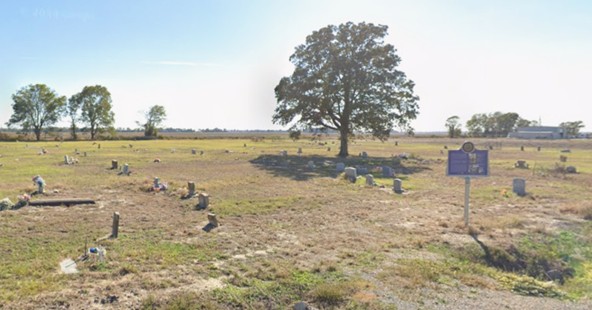
The Charley Patton Memorial is one of the stops on the Mississippi Blues Trail and is located at the Holly Ridge Cemetery. Which is about 30 miles from Patton’s home base of Dockery Farms, but Patton died in Indianola, within walking distance of that desolate field. A barren patch of grass, about fifty gravestones and a tree, that’s about it. And that blue sign, of course, at the “entrance”. Charley’s cousin Bessie Turner was there, both on the day of Patton’s death, Saturday 28 April 1934, and at the funeral the following day:
“[He had] said, ‘Carry me right away from this house to the church and from the church to the cemetery.’ He died that Saturday, and we buried him that Sunday, ’cause he didn’t want to go to an undertaker. That Saturday night they had a big wake for him. A lot of his boys who sang with him were right there too.  I’ll never forget the last song they sang, ‘I’ll Meet You in the Sweet Bye and Bye.’ They sang it so beautifully and played the music, you know.”

Bessie also remembers that a marker, some memorial, was placed on his grave. However, an expansion of the nearby cotton mill a few years later extended over that part of the graveyard, and the grave marker disappeared. Much to the frustration of John Fogerty, who in 1990 undertook a number of pilgrimages to Mississippi, looking for the roots of the blues. The cotton mill is long gone, the field is bare and empty. Fortunately, he meets the elderly caretaker Coochie Howard, who remembers where he was shown the grave as a child:

“Coochie took me to a large field, and we walked right up to a place on the edge. Very assuredly, he pointed to a spot in front of us and told me, ‘Charley Patton is buried right there.’ Coochie told me that his mum had pointed out the spot to him when he was four or five years old, and I can only imagine that he’d been looking at that spot for many a decade, because on that day he looked to be in his mid-sixties. I think he said there had been some kind of temporary marker, like a flag or small piece of wood, but that it disappeared long ago.”
(John Fogerty – Fortunate Son, 2015)

Fogerty feels a historical responsibility, opens his wallet and finances the project of blues aficionados Skip Henderson and Jim O’Neal to give Patton the honour he deserves: a memorial service and a shiny gravestone with the inscription

CHARLEY PATTON

APRIL 1891 – APRIL 28, 1934
“THE VOICE OF THE DELTA”

THE FOREMOST PERFORMER OF
EARLY MISSISSIPPI BLUES
WHOSE SONGS BECAME
CORNERSTONES OF AMERICAN
MUSIC

His year of birth may also have been 1885 or 1887. Or even earlier. Blues historian Robert Palmer states in his standard work Deep Blues: “his most likely birthdate is around 1881”, and also investigates the possibility that Charley was not fathered by Bill Patton, but by Henderson Chatmon, the father of Sam, Lonnie and Armenter “Bo Carter” Chatmon, of The Mississippi Sheiks that is. It would explain Charley’s remarkably lighter physique and skin colour; “He looked like a Mexican,” says Hayes McMullen, who often saw Patton play the blues around the Will Dockery plantation in the 1920s. “He wasn’t what you’d call a real coloured fellow,” and he also regularly plays with the Chatmons – who, incidentally, repeatedly claim that Charley is “a relative”.

Anyway, the ceremony took place on 20 July 1991. John Fogerty was there, respectful and stupid in a black suit:

“It was hotter than blazes that day. I sat next to Pops Staples, who was wearing a breezy, all-white linen suit. Me, I had on a dark blazer and tie. Guess who didn’t grow up in Mississippi? The intense heat from days like that was one of the inspirations for my song A Hundred and Ten in the Shade.”

John Fogerty – A Hundred and Ten in the Shade

There is no uncertainty about Patton’s date of death, 28 April 1934. Three months before his death, Patton was still in New York, recording his last songs for Vocation. Ten recordings. Three songs on 30 January, three on 31 January and the last four on 1 February. Not insignificant songs. “Hang It On the Wall”, the re-recording of “Shake It And Break It”, the song Dylan quotes in his 2001 tribute to Patton, “High Water” (Bertha Mason shook it—broke it / Then she hung it on a wall is Dylan’s paraphrase of Charley’s opening line Just shake it, you can break it, you can hang it on the wall); “Oh Death”, not the chilling song DJ Dylan plays in his Theme Time Radio Hour, but just as ominous in context (Patton’s last recording session):

It was soon one morning when Death comes in the room
Soon one morning when Death comes in the room
Lord I know Lord I know my time ain't long

… “High Sheriff Blues”, “Stone Pony Blues”… a century later, Patton’s last songs still echo not only through Dylan’s oeuvre, but are indeed, as his gravestone correctly states, “cornerstones of American Music”. As is the song that Charley recorded on Wednesday, 31 January 1934, halfway through those last three days in New York: “34 Blues”. Patton snarls and growls, painting a picture of life in the American South in 1934, at the height of the Great Depression, and peppering it, as in so many of his songs, with autobiographical details – suggesting that he is lyrically processing his own experiences. They run me from Will Dockery’s, Willie Brown, I want your job, he sings in the second verse, for example – Charley did indeed work for Will Dockery’s company, living and working on the Dockery Plantation. Willie Brown, the man to whom we owe, among other things, “Make Me A Pallet On The Floor” (the song that seems to have inspired the chorus line of “From A Buick 6”) was Charley’s colleague, friend and musical partner, and Patton was, in a sense, just as he was to Robert Johnson, Howlin’ Wolf and Muddy Waters, a kind of mentor to Willie Brown.

The same mix of general zeitgeist and biographical details also seems to apply to the fourth verse, the verse that provides the title for Dylan’s song:

Carmen got a little six Buick, big six Chevrolet car
Carmen got a little six Buick, little six Chevrolet car
(spoken: My God, what solid power!)
And it don't do nothin' but, follow behind Holloway's farmer's plough

Holloway or Halloway also appeared in “Tom Rushen Blues” (1929) and was probably a bootlegger and a friend of Patton’s. It is unknown to whom “Carmen” refers to – most transcribers probably chose the name for lack of a better option (perhaps Charley just pronounces “Chatmon” that way, though it is more likely he says “car men”), but “six Buick” is perfectly understandable. Even for a young Dylan, who, if he did indeed know the relatively unknown song thanks to the Heritage Records release The country blues: volume one (Mississippi), an EP from 1964, would have read the liner notes with interest:

“Patton once lived in Hollandale, a small town south of Clarksdale on U.S. Highway 61, but was born in a place Short recalls as “Murphy Bow”. He died in Memphis in 1934 or 1935 of tetanus resulting from wounds received in a knife fight. Another report claims that Patton also worked as a muleskinner at one stage of his career.”

Only 1934 is correct. Patton never lived in Hollandale (Charley’s half-or-not brother Sam Chatmon did – his Blues Trail Marker is there), “Murphy Bow” does not exist, Charley did not die in Memphis, and certainly not from “tetanus resulting from wounds received in a knife fight”. No serious biographer mentions a career as a muleskinner.

Misinformation, nonsense and slander. It is, in short, a biography after Dylan’s own heart.


To be continued. Next up From A Buick 6 part 9: The Mississippi Delta was shining like a National guitar


Jochen is a regular reviewer of Dylan’s work on Untold. His books, in English, Dutch and German, are available via Amazon both in paperback and on Kindle:


Posted in Uncategorized | Leave a comment

1971: When Bob said, “I’ll show you I’m more than 3 chords”: When I paint my masterpiece

This is part of a series of articles, each of which summarises Bob’s compositional work year by year, focusing on the music.  A list of the articles so far in this series is given at the end of the article.   To see all the songs Dylan wrote, in the order he wrote them, with links to the reviews on this site, follow one of these lines

By Tony Attwood

It is possible to see 1970 as a year when Bob tried hard to find a new way to express himself musically (as opposed to primarily finding new ways to express himself lyrically), but really found it hard going.  Of the 15 songs written that year, several seem to have a very limited musical input, such as “All the tired horses”, “Three Angels,” and “If dogs run free,” while it may be argued that some of the other songs also reveal a composer struggling to find anything new musically.  One might consider “One more weekend” – a classic 12-bar blues – as an example of this.

Of course, we can all have our own personal opinions of each song, but I would suggest that it is particularly hard to find very much in this year’s output that one would wish to include as a fine example of Bob Dylan, songwriter.

And indeed from a musical point of view we can see this view amplified in the following year for in 1971 Bob only wrote six songs – or at least I should say “six songs that have survived”.   And of those six, I would suggest only two are remembered by all but the most devoted fans and collectors of everything Bob wrote.

But these are two wonderful songs.  Songs, indeed, that would mark the high point of any songwriter’s work across the years.   But we are thinking of Dylan here, and these are two songs that most of us would opt to play as a demonstration of the multiple skills of Bob the songwriter.  And what makes them particularly interesting is that they came in the midst of a a fairly meek output for the man who had been used to writing 30 or more songs a year, with over half of them still being played.

The full list of 1971 songs and indeed my earlier musings on Bob’s decline at this time are given here, but I would like to focus on the two great songs of the year When I Paint My Masterpiece (performed 456 times up to December 2025) and Watching the river flow (performed 772 times again up to the time of writing this article).   Nothing else from the rest of this year’s output has ever been performed by Bob.

Quite what it was that allowed Bob to create two such masterpieces in a year of nothing else of significance, I can’t say, but I would add that the most likely reason is that for Bob, like many songwriters, songs simply come to him while playing the keyboards or guitar.  Of course, I have no direct insight here into what he did for these songs at this time, but many songwriters I have spoken with say they just start playing the instrument, putting a few chords together, and some lyrics or a melody appear in the mind.

On other occasions, the key phrase from the lyrics comes first, and it is so powerful that the melody and then everything else just falls into place. But we must note that so strongly does Bob appreciate his own work that he can devote weeks to re-writing songs as he goes – even if he is using the opening of the song “Istanbul not Constantinople”.

Here’s the inspiration from some 30 years earlier…

And here is Bob rewriting that opening and putting it in his own song

Of course, the debate can be on whether Bob and/or his musicians simply remembered the opening of the earlier song, without actually realising they had pinched it, but given Bob’s extraordinary knowledge and memory of music, I doubt that.   I think he was just having some fun, quite possibly after a member of the band played the start of “Constantinople” during a pause in rehearsals.

But it is worth hearing Bob’s original version because it really does have all the elements we look for in a Bob Dylan masterpiece.

And I really do think it is worth pausing and listening to how Bob conceived of this song in his original demo version.  The lyrics are pure Bob, but then so is the music – although with some interesting twists which I think really are the key to understanding Bob at this time.

The song is played in various keys, but as ever, I take my lead from Dylan Chords, which has it in A major.   And at once we feel something odd, because the song doesn’t start with the chord of A but the related chord of D only coming to A major on the word “Rome”.

But then we do have a real Dylan-esque shift, which I have copied here from the aforementioned Dylan Chords.

Dm                                            A
"Sailin' 'round the world full of crimson and clover
        C#               D            
oh Lord sometimes I feel just like my 
B              E /d  C#m  Bm7   
cup is runnin' o -  ver

Now this is the equivalent of the oft-mentioned “middle 8” – a variation on the verse which helps give the song some extra diversity, and indeed if we look at the official Dylan site we can see exactly how this works with two eight-line verses, and then the middle 8 separated out.   But what is so weird is not just the shortness of the middle eight compared with each verse (most middle 8s are the same length as a verse but just using a different melody and chord sequence) but it is in A minor, at least for a moment before modulating to, well, we can all have an opinion….

The chord sequence shown above is … the best word I can come up with is “weird” or perhaps I should say in writing about a genius, “unprecedented”.  Even the final chord of B minor 7, although being a chord that is to be found in the key of D major, is not an obvious or by any means common way of leading back to the key chord.  It is weird, it is (to me at least unprecedented), and it works perfectly.

So the question is, how and why did Bob do this?   I don’t think he had ever done anything like this before, so why here and now?   Did a member of the band show him?

What we can say is that it is incredibly effective in relation to the lyrics.

Dylan Chords also gives us an alternative version from Shadow Kingdom which runs

                    Cm                        G
"Sailin' 'round the world full of crimson and clover
            Bm  .            C            
sometimes I feel just like my cup is 
D    . . .  /c . . . /b . . . D   
Runnin' o     -    ver

which is just as effective and just as powerful.

So how did this come to Bob – using this complex set of modulations in what is an enjoyable, but musically a fairly mainstream song?    I have no idea, but it does show us that in this period of not writing songs in the way he used to, Bob must have been using his time to find ways in which he could come out with something as extraordinary as this in terms of the music.

Previously in this series….

1: We might have noted the musical innovations more
2: From Hattie Carroll to the incoming ship
3: From Times to Percy’s song
4: Combining musical traditions in unique ways
5: Using music to take us to a world of hope
6: Chimes of Freedom and Tambourine Man
7: Bending the form to its very limits
8: From Denise to Mama
9: Balled in Plain 
10:Black Crow to All I really want to do
11: I’ll keep it with mine
12:Dylan does gothic and the world ends
13: The Gates of Eden
14: After the Revolution – another revolution
15: Returning to the roots (but with new chords)
16: From “It’s all right” to “Angelina”. What appened?
17: How strophic became something new: Love is just a four letter word
18: Bob reaches the subterranean
19: The conundrum of the song that gets worse
20: Add one chord, keep it simple, sing of love
21: It’s over. Start anew. It’s the end
22:Desolation Row: perhaps the most amazing piece of popular music ever written
23:  Can you please crawl out your window
24: Positively Fourth Street
25: Where the lyrics find new lands, keep the music simple
26:  Tom Thumb’s journey. It wasn’t that bad was it?
27: From Queen Jane to the Thin Man
28: The song that revolutionised what popular music could do
29: Taking the music to completely new territory
30: Sooner or Later the committee will realise its error
31: The best ever version of “Where are you tonight sweet Marie?”
32: Just like a woman
33: Most likely you go your way
34: Everybody must get stoned
35: Obviously 5 Believers
36: I Want You Creativity dries up
37: Creativity dries up - the descent towards the basement.
38: One musical line sung 12 times to 130 worlds
39: Bob invents a totally new musical form
40: There is a change we can see and a change we can't see
41: A sign on the window tells us that change is here
42: One more weekend and New Morning: pastures new
43: Three Angels, an experiment that leads nowhere
44: An honorary degree nevertheless. But why was Bob not pleased?
Posted in Uncategorized | Leave a comment

The Philosophy of Modern Song: You don’t know me


There is an index to all our current series and some of our recent series of articles on the home page.

By Tony Attwood

This is part of a series of articles (links to previous articles at the end) in which I take a look at the songs Bob selected for his post-doctorate volume “The Philosophy of Modern Song”.  I did start the series by trying to comment on Bob’s comments, but I found I couldn’t really add anything meaningful or useful, so I changed the series in one that offers a recording of each song, so if you wish to hear the song Bob was talkingabout, eventually they will all be available in one place – on this site listed in the final episode.  And because I can never resist it, I have added my own comments too.

If my counting is correct, this is number 35 in the series, or something like that.

In many ways, this song seems to symbolise Bob Dylan, as he has so often suggested that this title is exactly what his relationship with us, his fans and admirers, is all about.

The heart of the problem with this, of course, is the multiplicity of commentators who insist on seeing the lyrics within Dylan’s compositions as being representative of himself, his views, his thoughts, his political opinions, his love life, his… well anything you like.

Bob rejects this, as do most songwriters and lyricists.  But the view continues.   It doesn’t affect novelists because by and large they depict more complicated scenarios, although I have heard it suggested that the hero in a long-running series is really the author, but no, I don’t believe it.  Having had a few novels published myself, I can say that in my case the central characters are certainly not me.  A big part of the fun is in being a god and creating new people, not writing about oneself!

Of course, Dylan’s views are reflected to a degree in his songs: I certainly think his views of the world at the time of writing are reflected in “Masters of War” and “Times They Are a-Changin” but to generalise out from there to think that the majority of his songs reflect his views seems to be missing the point.   There are traditions in popular and folk music which Bob has to some degree kept to in his compositions,  but listen to the lyrics of most of his songs across time and you will find changing perspectives – in the end giving us a world-views that cannot be exactly analysed.

To see this point, and if you have a moment, come with me back to my all-time favourite Dylan song, “Tell Ol’ Bill” of which I have raved many times on this site.   This of course cannot be about him for the second line says, “I’ve hardly a penny to my name,” but in the argument that Bob is telling us his personal thoughts, such details are quickly passed by.

Now Bob has never sung this on stage, and so the line “And to myself alone I sing,” could be a reflection of reality, except that at the time of writing the line, Bob surely didn’t know if he was going to sing the song or not.

The fact is, in Tell Ol Bill we never know who the “you” is who is torturing him.   Is it one ex-lover, is it all his fans wanting to know what each song means, or is it those of us who spend time writing Untold Dylan?   Is Bob really “stranded in this nameless placeLying restless in a heavy bed”?  I am not sure that was ever the case.

But if you believe that, then you believe we (or some of us) commentators and writers, trampled on him as we passed, and maybe that can be explained by the meanings we read into his words…  And OK I am biased because I don’t want to believe that Bob meant “Anything is worth a try,” as a message to us all, because I very much do not believe that.   I do believe in right and wrong, in being kind to people, in putting my children and grandchildren first etc.  No for me, anything is very much NOT worth a try.

More to the point is the fact that Bob sings about misunderstandings and misrepresentations, and I suspect he feels that a lot of his work has been misrepresented, because a) people do insist that he is what he sings and b) they will insist on quoting extracts that fit their visions, rather than each work of art as a whole.  And, it often strikes me, that this is what “Tangled up in Blue” is about.   Tangled up in emotions – my emotions, your emotions, everyone else’s emotions….
Although we shouldn’t forget the “You don’t know me” album by the Band which really makes much the same point across something like 59 songs.

So, while not a signature song title, the phrase “You don’t know me” perfectly captures the complex, often contradictory relationship between the public and the Bob Dylan who at least in his songs, seems to be ever changing in his point of view.   Unlike Elvis for example, who never really seemed to have a point of view. 

“You Don’t Know Me,” the song Bob chose for inclusion in his “Philosophy” book was written by Eddy Arnold and Cindy Walker in 1955. It was first released the following year.   Everyone but everyone has had a go at the song.   Here is Bob…

You can find other versions by Elvis, Willie Nelson, and… well everyone.  It also turns up in lots and lots of movies.

The lyrics come from a man who has never known the art of making love, but he does secretly love a friend.   However, he’s afraid of her saying no to him, so he says nothing and she goes off with someone else.   So she, in turn, never knows what she has lost, or quite possibly what a narrow escape she just had.

Ray Charles had a hit with the song

We also took a look at the song in NET, 1998, part 2, Friends and other strangers, in case you want to go further…

Previously in this series

Posted in Uncategorized | Leave a comment

Bob Dylan: the Concert Series. 18 November 2005

Compiled by Tony Attwood

This is article number 58 in the series which aims to provide one concert recording from each year from 1961 onward.  AndI do recommend this one – the quality is often superb.  Just try “Tom Thumb” for example…

Indeed, in this series (which as you will see from the list below, is nearly complete) I have often been more concerned with the quality of the sound, rather than having any pictures – and indeed in this case it is an audio recording only.  A list of all the recordings that have featured in this series so far is given after the song list.

I have added all the years to the sequence so it is easier to see which are missing.   I think there are ten, and I know several of them are not going to be possible to fill, but when I get to the end of my resources, I’ll be asking for any suggestions for the missing years.

  1. Maggie’s Farm
  2. Tell Me That It Isn’t True
  3. Watching the River Flo
  4. Just Like Tom Thumb’s Blues
  5. Ballad of a Thin Man
  6. Highway 61 Revisited
  7. Mr. Tambourine Man
  8. Stuck Inside of Mobile With the Memphis Blues Again
  9. Chimes of Freedom acoustic version
  10. ‘Til I Fell in Love With You
  11. Visions of Johanna acoustic version
  12. Honest With Me
  13. The Lonesome Death of Hattie Carroll acoustic version
  14. Summer Days
  15. Encore: Like a Rolling Stone
  16. All Along the Watchtower

Meanwhile, here is the full series so far…

Posted in Uncategorized | Leave a comment

From A Buick 6 part 7: The steam shovel and the dump truck

From A Buick 6 part 7

by Jochen Markhorst


VII        The steam shovel and the dump truck

Well, you know I need a steam shovel, mama, to keep away the dead
I need a dump truck, baby, to unload my head
She brings me everything and more, and just like I said
Well, if I go down dyin', you know she's 
                bound to put a blanket on my bed

“ I was just extending the line,” says Dylan in that 2015 MusiCares speech, “the most remarkable piece of oratory I’ve ever heard from a musician,” in the words of Tom Jones. In the middle section of that breathtaking speech, Dylan dwells at length on the roots of his songs: “It all came out of traditional music,” and then names ten songs that were templates for songs such as “Blowin’ In The Wind”, “A Hard Rain’s A-Gonna Fall”, “Boots Of Spanish Leather”, “The Times They Are A-Changin’”, “Maggie’s Farm”, “Highway 61 Revisited” and “Just Like Tom Thumb’s Blues”, so hardly the minor ditties, all in all. The ten songs are:

  •  “John Henry”
  •  “Key to the Highway”
  •  “Sail Away Ladies”
  •  “Roll the Cotton Down”
  •  “Come On in My Kitchen”
  •  “Chisholm Trail”
  •  “Death Of Floyd Collins”
  •  “Come All You Fair and Tender Ladies”
  •  “Pretty Boy Floyd”
  •  “Deep Ellum Blues”

All those “Come all ye” songs led to The Times, Dylan explains, and the link between, say, “Roll the Cotton Down” and “Maggie’s Farm” is apparent as well. Less clear is why he points to “John Henry” as the inspiration for “Blowin’ In The Wind” (the echoes of “John Henry” in “Tell Me Momma” are much clearer: Yes, you got your steam drill, now you’re lookin’ for some kid / To get it to work for you like your nine-pound hammer did), but the gist of Dylan’s argument is clear: those traditional songs give him the song structures, the flow and the lingo, the idiom.

Woody Guthrie’s influence is emphasised twice in that list (“Chisholm Trail” and “Pretty Boy Floyd”), and Dylan is still holding back; he could easily have mentioned ten more Guthrie titles. “Dust Bowl Blues”, for example:

I had a gal, and she was young and sweet,
But a dust storm buried her sixteen hundred feet.

She was a good gal, long, tall and stout,
Yes, she was a good gal, long, tall and stout,
I had to get a steam shovel just to dig my darlin' out

… the song that, together with “Pretty Boy Floyd”, was added to the 1964 RCA Victor Records reissue of Woody’s most successful album, Dust Bowl Ballads from 1940. By 1965, when Dylan recorded “From A Buick 6”, the archaic steam shovel had long since been discarded and replaced by petrol or diesel excavators. But it was still relevant enough for Dylan. “There was a precedent,” he says in that 2015 speech, “I just opened up a different door in a different kind of way. It’s just different, saying the same thing.” I’m just continuing the line, says Dylan.

And so the steam shovel survives – with the same grim connotation as in Woody’s song, incidentally: Guthrie uses the steam shovel to dig up the corpse of his beloved, which inspires Dylan to write “I need a steam shovel, mama, to keep away the dead.”

Appropriately enough, Dylan establishes himself in the next line, with the unusual dump truck, as the next link in the chain: the link to Guthrie, Diddley and Dylan disciple Joe Strummer.

Sometime in the summer of 1975, John Mellor chose the name by which we have all known him ever since: “Joe Strummer”. In the years before that, the immortal combat rocker, frontman of The Clash, didn’t introduce himself as “John” either, but as “Woody”, which is said to be meant as a tribute to Woody Guthrie. A bit of historical revisionism that was alright with Strummer, but not with biographer Chris Salewicz:

“In the mythology of Joe Strummer, his “Woody” nickname has always been said to be a tribute to folksinger Woody Guthrie, which Joe was happy to go along with—but there seems to have been a much simpler, rather less romantic explanation. It’s easy to see how Woolly could mutate to the more direct Woody.”
(Chris Salewicz – Redemption Song: The Ballad of Joe Strummer, 2006)

… because during his brief art school career in Wales, he formed a band whose members gave themselves absurd names, à la Captain Beefheart’s Magic Band. John Mellor called himself “Woolly Census”, later changing it to “Woody”, according to fellow band member Paul ‘Pablo Labritain’ Buck: “Next time I saw him after he’d left school, he said ‘No, no: I’m Woody now.’ It was just kids’ stuff.” His idol at the time was still Dylan (“He’d sit there with a guitar, playing things like “Blowin’ in the Wind” during the morning break. He was a huge fan of Bob Dylan. Sometimes it would be hard to get him back to work after that”), but that more or less accidental name change ultimately ignited Strummer’s deep, lived-through love of Woody Guthrie, according to fellow student Richard Frame:

“Frame remembered scouring specialist record shops in Cardiff with Woody. “He was looking for Woody Guthrie records,” he said, as though John Mellor were now trying to source the origins of his nickname.”

Strummer recognises the socio-political engagement, morality, struggle for justice and focus on community, admires Guthrie’s songwriting instinct of course, and has since liked to see himself as a successor – he perpetuates the myth that he named himself after Woody Guthrie at the time and copies signature touches such as writing slogans on his guitar – he remains a true heir in word and deed until the end.

Dylan, however, remains a poetic muse. Whether it is a Dylanesque homage to an actor from the Golden Age of Cinema (to Montgomery Clift in “The Right Profile”, 1979) or a Dylanesque verse as in “Go Down Moses”;

Once I got to the mountain top, everywhere I could see
Prairie full of lost souls running from the priests of iniquity
Where the hell was Elijah?
Well, what do you do when the prophecy came was true?

… which sounds like a forgotten outtake from Dylan’s Infidels, or the less subtle name checks such as in “Coma Girl” (As the nineteenth hour was falling upon Desolation Row / Some outlaw band had the last drop on the go) and in the title of “Leopardskin Limousines”: from The Clash days in the 1970s to his last album Streetcore (released posthumously in 2003), we continue to hear more Dylan than Guthrie echoes. As in “Passport To Detroit” (1989), a song title that seems just as unrelated as “From A Buick 6” (neither “passport” nor “Detroit” appear in the lyrics):

In old Genoa
Behind some dump truck drivers door
There was a lady who was dressed up
Like Marlene before the war


… in which Grandmaster Dylan will undoubtedly nod approvingly at the rhyme find old Genoa – before the war and at the supporting role for Marlene Dietrich, but just as striking is “dump truck”; Joe is an English lad – and an Englishman would sooner call a dump truck a tip lorry. Except, of course, if you like Joe “Woody” Strummer have been playing Dylan songs since you first learned to hold a guitar. And if Dylan’s lyrics are your guiding light:

“When Fisherman’s Blues by the Waterboys came out, I thought it was a great song. I played it to him. He said, “The problem is he’s saying what he feels. Bob Dylan doesn’t say, “I walked through a door.” He says, “There was smoke in the air.” He doesn’t say the obvious. This guy’s hitting it on the head. It’s just not interesting.”
(manager Gerry Harrington in Salewicz’ Strummer biography Redemption Song)

Still, there are limits to Strummer’s docility. Hidden at the end of that thorough biography from 2006, on page 440, bassist Zander Schloss reveals a remarkable fun fact from 1989, which takes place around the recording of the album on which “Passport To Detroit” can be found, Earthquake Weather:

Bob Dylan dropped by, once leaving a tape of a song he thought Joe might like to try out. For his usual complex set of reasons, Joe never listened to it. “I think it was Joe not wanting to deal with it,” said Zander. “It stayed in the drawer.”

For Joe Strummer may well be the next link in the chain, the next guy extending the line – but he was also his own man. Joe goes through a different door in a different kind of way. It is intriguing though: somewhere in a drawer lies a Dylan song that Dylan thought would be good for the legendary frontman of The Clash. Joe has been dead for more than twenty years now. Where is that drawer?


To be continued. Next up From A Buick 6 part 8: Carmen got a little six Buick


Jochen is a regular reviewer of Dylan’s work on Untold. His books, in English, Dutch and German, are available via Amazon both in paperback and on Kindle:

Posted in Uncategorized | Leave a comment

No Nobel Prize for Music, but an honorary degree nevertheless. But why was Bob not pleased?

A list of previous articles in this serises about Bob Dylan’s music (as opposed to his lyrics) appears at the foot of the article.

By Tony Attwood

After “Three Angels” Bob was not finished with the idea of the spoken lyrics against a musical background, as he did it again with “If Dogs Run Free” but here he had Al Kooper on piano and Maeretha Stewart singing scat style.

In one sense, there is an interesting experimentation since the basics of the piece are the chords of the 12 bar blues, but taken further than I can recall anyone else doing.  But Bob did explore the song a little further in 55 live performances.  Here’s one…

But although an interesting experiment, it seems to me to be one of those experiments that leads to a cul-de-sac, for the next song Bob wrote was, “The Man in Me” which got 155 outings over a 35 year period.   In a sense, there is a link between these songs, in as much as there are thoughts here about the rural life, and just letting yourself go.

The opening line of “The man in me will do nearly anything” seems rather apt, having heard those previous two songs (“Three Angels” and “Dogs”), which simply abandoned melody completely.   I guess Bob had realised that after two such recitation pieces, he really was better off with what he did best: writing songs with interesting lyrics, a melody and chords – plus an accompaniment beyond the guitar, although that wasn’t always needed.  But the issue of melody stayed with him through the year, as we can see with the “locusts” song a little later.

There is, for me at least, something rather beautiful about “The Man in Me” howeve, which doesn’t actually need as much accompaniment as it gets from the lady vocalists – but they were there on tour, so I guess they had to have something to do.

Mind you, we also have a couple of warning lines in this song, which do seem like warnings when we consider the two songs Bob wrote before this, neither of which had any melody…

Storm clouds are raging all around my door
I think to myself I might not take it anymore

Did he really feel like giving up the songwriting business?   Mind you, Bob also brought in the couple of “husband” lines in this version.   Was that related to the situation at that time?

Whatever was going on, Bob had gone on his wild ways of songs without melodies and come back with a beautiful if tragic, song about a woman he couldn’t have, but who had very clearly “got through” to him.

And musically, which of course is our main concern in this series, Bob was right back in the mainstream as the song consists of verse 1, verse 2, middle 8, verse 3; and one cannot get more standard than that.  This is a binary form as used in hundreds of thousands of pop songs.   (And perhaps I should add that this is “binary” because there are two separate parts – the verse and the middle 8.   The fact that the verse is repeated musically is ignored when considering the form, because it is, well, a repeat.

So we go through the chord sequence of G, C, Am D, C, G, which can be heard in hundreds of thousands, or perhaps millions of songs.   What distinguishes

G                     C      C    Am
The man in me will do nearly any task,
    D             C                              G
And as for compensation, there's little he would ask.
       G
Take a woman like you
       C                     G
To get through to the man in me.


And for the middle 8....
Am                     G
Oh, what a wonderful feeling
Am                        G
Just to know that you are near
Am                 G
Sets my a heart a-reeling
Am                      D
From my toes up to my ears.

So the wild experimentation of spoken songs is gone, and we are absolutely back to standard pop music.   Even the lyrics, although elegant and memorable, it tells the standard story of the man saying how much he needs this woman, along with a strong element of the love of rural life in this song.

And so, perhaps thinking of such matters, it is not surprising that rather than go back either to folk music or to rock music, Bob then wrote, of all things, a waltz and I really do think it is worth pondering for a moment just what road Bob was travelling at this time, in terms of the music.

The songs in this sequence of compositions in 1970 were New Morning (exploring the opportunities of love and moving on in a new world using the standard approach of pop music), the two talking songs, and then a song about being true to yourself.   Throughout, Bob was trying different patterns of music but still kept finding himself coming back to the pop and rock standard approach as with The Man in Me.

Next came “Winterlude” which is musically unusual for Bob in that it is a waltz – and perhaps that is why it never got played in public – which is also exactly the case of “Day of the Locusts”  which has the same musical sequence repeated line after line.   However what does distinguish this song is the melody that Bob sings.   But the band have quite a job keeping the music interesting.   Which is perhaps why once again, the song was never performed in public.

Thus in terms of compositions, Bob has managed to create 15 songs, in a sequence in which he states he is glad to “get out of there alive.”   That presumably means the degree ceremony, and that I find sad and strange.  Bob was honoured, as of course he has been since, and what he did was create a song in a fairly standard musical format that spoke of how he was glad to get out.

But maybe I am, as ever, unable to gauge what Bob does in any sort of abstract way, since my own life experiences include moments that coincide with Bob’s but which give me utterly different feelings.   Although it was many years ago now, I was awarded my research degree and attended the ceremony with my wife-to-be and my parents, at the University of London, and walked across the stage to receive it, and felt immensely proud and happy.   And I wonder not particularly why Bob didn’t feel proud and happy, and so I wonder why he agreed to go?    Bob has spent so much of his life being Bob, doing his own thing, why at that moment, did he give in and attend the event if he didn’t want to?

It was, after all an honorary degree – he didn’t do any extra work for it.

But that is all part of the contradictions of the time.   He seems to be writing softer and sweeter songs, and getting angrier at the same time.

Previously in this series….

1: We might have noted the musical innovations more
2: From Hattie Carroll to the incoming ship
3: From Times to Percy’s song
4: Combining musical traditions in unique ways
5: Using music to take us to a world of hope
6: Chimes of Freedom and Tambourine Man
7: Bending the form to its very limits
8: From Denise to Mama
9: Balled in Plain 
10:Black Crow to All I really want to do
11: I’ll keep it with mine
12:Dylan does gothic and the world ends
13: The Gates of Eden
14: After the Revolution – another revolution
15: Returning to the roots (but with new chords)
16: From “It’s all right” to “Angelina”. What appened?
17: How strophic became something new: Love is just a four letter word
18: Bob reaches the subterranean
19: The conundrum of the song that gets worse
20: Add one chord, keep it simple, sing of love
21: It’s over. Start anew. It’s the end
22:Desolation Row: perhaps the most amazing piece of popular music ever written
23:  Can you please crawl out your window
24: Positively Fourth Street
25: Where the lyrics find new lands, keep the music simple
26:  Tom Thumb’s journey. It wasn’t that bad was it?
27: From Queen Jane to the Thin Man
28: The song that revolutionised what popular music could do
29: Taking the music to completely new territory
30: Sooner or Later the committee will realise its error
31: The best ever version of “Where are you tonight sweet Marie?”
32: Just like a woman
33: Most likely you go your way
34: Everybody must get stoned
35: Obviously 5 Believers
36: I Want You Creativity dries up
37: Creativity dries up - the descent towards the basement.
38: One musical line sung 12 times to 130 worlds
39: Bob invents a totally new musical form
40: There is a change we can see and a change we can't see
41: A sign on the window tells us that change is here
42: One more weekend and New Morning: pastures new
43: Three Angels, an experiment that leads nowhere
Posted in Uncategorized | Leave a comment

When Bob clearly said, “Songs don’t have to mean anything:” The Whiffenpoof Song.

There are details of all our current and recent series on the home page.

This article is part of the series reviewing “The Philosophy of Modern Song”.  In this case considering “The Whiffenpoof Song.”

by Tony Attwood

This series of articles takes the songs that Bob Dylan discussed in his post-Nobel Prize book, “The Philosophy of Modern Song” and looks at the songs he selected, rather than attempting to review Bob’s own comments on the songs.  And, just in case you have not had a chance to listen to the songs in question, at least one recording of each song is included in each article.

I have found this interesting, not just because these are the songs that have influenced Bob in some way,  but because the range of songs he chose for his book really is extraordinary.  Additionally, and specifically in relation to this song, the point is made that song lyrics do not have to mean anything.   They might do, but they don’t have to, and I do feel that in adding this song to his “Philosophy” book Bob is making that point.  Which in turn, I feel, should influence the way in which we hear and attempt to comprehend the lyrics of Bob’s own songs.

Plus, I would add here if I may, one other observation.   If you have not taken a look at the last piece in this series (Mack the Knife. Prepare for a shock) then I do hope you might have a moment to do so, not in any way because I wrote it, but because it really is a remarkable story, and the recordings are really eye catching (or is that “ear opening”?  One or the other).

But also, I would suggest that such a review might prepare you for the “The Whiffenpoof Song” written by Tod B. Galloway, Meade Minnigerode and George S. Pomeroy and performed here by Bing Crosby.

“The Whiffenpoof Song” itself dates back to the turn of the 19th/20th century, and although not the oldest song Bob selected, it is one of the older songs Bob chose for this post-honourary doctorate book being over 100 years old.

The song was originally designed to be sung unaccompanied by three or four male voices in harmony, and is based on Rudyard Kipling’s poem “Gentlemen Rankers”.   It quickly became the ensemble’s best-known song, which at one time included none other than Cole Porter in its membership.   Students would compete for the right to be in the group, and being a member was a source of both notoriety and honour.

The song ends

We're poor little lambs who've lost our way,
Baa! Baa! Baa!
We're little black sheep who've gone astray,
Baa—aa—aa!
Gentlemen-rankers out on the spree,
Damned from here to Eternity,
God ha' mercy on such as we,
Baa! Yah! Bah!

a set of lines that became famous in their own right, and would be sung by mothers putting their children to bed, both in the United States and the UK.

The original song contained more lyrics than that of course, although, save for with music historians, they are now forgotten.   Here is the full set

To the tables down at Mory's,
To the place where Louis dwells,
To the dear old Temple Bar
We love so well,

Sing the Whiffenpoofs assembled
With their glasses raised on high,
And the magic of their singing casts its spell.

Yes, the magic of their singing
Of the songs we love so well:
"Shall I Wasting" and "Mavourneen" and the rest.

We will serenade our Louis
While life and voice shall last
Then we'll pass and be forgotten with the rest.

We are poor little lambs
Who have lost our way.
Baa! Baa! Baa!
We are little black sheep
Who have gone astray.
Baa! Baa! Baa!

Gentlemen songsters off on a spree
Damned from here to eternity
God have mercy on such as we.
Baa! Baa! Baa!
Dylan’s emphasis in many of his song selections is, I think, the question of what the song makes one feel, and of course for anyone who had even a tiny part of this song sung to them as a child, it does immediately counjour up feelings of childhood, even though one may not have any connection whatsoever with those who originated the song, or performed it.

According to Whiffenpoof historian James M. Howard, quoted in Wikipedia, the comedian Joseph Cawthorn (1868 – 1949) would tell the tale, in a piece of nonsense poetry, of how he caught a whiffenpoof fish saying, “A drivaling grilyal yandled its flail, One day by a Whiffenpoof’s grave.”

By the time the song reached me as a child, it was reduced to the six lines starting “We are poor little lambs….” and of course, multiple decades later, I still remember it, as indeed many people can recall the songs they were sung as a child.

But the issue that is raised here goes far deeper, for it brings to us the question of whether the lyrics of songs have to mean anything at all.   Indeed, as we have noted before (and as I was just reminded by my computer, which insists on giving me an AI feed when I do a Google search, “Dylan himself suggested some lyrics felt ‘ghost’ written, while others are pointedly clear, showcasing his range from protest to poetic ambiguity.

It then goes on to quote me, which I am not sure if I should be honoured by or horrified by, but I guess it does mean that AI has caught up with this website, a fact of which I am rather pleased.

Anyway, more to the point, the article also stated that Dylan’s work often “features dreamlike verses, bizarre characters (like the “jelly-faced women”), and abstract narratives that defy simple interpretation, serving more as evocative experiences than literal stories.”   Which, I guess we know, and which we can now link back to “The Whiffenpoof Song” as this is indeed reminding us that his choice of phrases and songs without clear and direct meanings is continuing a tradition that goes back many centuries.

Here is an example: Louis Armstrong’s “Heebie Jeebies

Say, I've got the Heebie
I mean the Jeebies
Talking about
The dance, the Heebie Jeebies
Do, because they're boys
Because it pleases me to be joy
Say, don't you know it?
You don't know 'bout; don't be blue
Someone will teach you
Come on and do that dance
They call the Heebie Jeebies dance
Yes, ma'am
Papa's got the Heebie Jeebies dance

So we take the message that I guess most of us who love the work of Dylan have realised for some time: songs don’t have to make sense.

Thus, I would take it that Bob, though selecting “The Whiffenpoof Song” is indeed reminding us that his choice of phrases and songs without clear and direct meanings, is simply continuing a tradition that goes back many centuries.  And there is nothing wrong with that.  Indeed, quite the reverse.

Previously in this series


Posted in Uncategorized | 2 Comments

Bob Dylan the concert series: 13 November 2008

13 November 2008

Please note the concert starts just after the 2-minute mark, and the numbering system below ignores the record introduction.    And just in case you are interested, I really do rate this version of “It’s alright ma”.  But that’s probably just me.

1. Watching The River Flow
2. Mr. Tambourine Man
3. Rollin’ And Tumblin’
4. Positively 4th Street
5. High Water (For Charley Patton)
6. A Hard Rain’s A-Gonna Fall
7. ‘Til I Fell In Love With You
8. Girl From The North Country
9. It’s Alright, Ma (I’m Only Bleeding)
10. Workingman’s Blues #2
11. Most Likely You Go Your Way (And I’ll Go Mine)
12. Love Sick
13. Highway 61 Revisited
14. Ain’t Talkin’
15. Thunder On The Mountain
16. Like A Rolling Stone (encore)
17. All Along The Watchtower (encore)


Meanwhile here is the full series so far… and of course we are getting close to the end

Posted in Uncategorized | Leave a comment

From A Buick 6 part 6: Boy, this is love

by Jochen Markhorst


VI         Boy, this is love

Well, she don't make me nervous, she don't talk too much
She walks like Bo Diddley and she don't need no crutch
She keeps this four-ten all loaded with lead
Well, if I go down dyin', 
        you know she's bound to put a blanket on my bed, c'mon

 It is an intriguing portrait that the narrator paints of “she” in this third verse. Should we want to see something like a continuous storyline in the song – debatable – then at first glance the graveyard woman would be the subject of the portrait. At least, the opening line describes a quiet lady who radiates tranquillity, certainly not the qualities of a soulful mama or a junkyard angel, in any case. Qualities, incidentally, that are usually attributed to Sara Lownds, much to the delight of the inevitable biographical interpreters. “Sara was kind of a quiet type, with a mystical side,” says Robbie Robertson, for example, about his very first encounter with Sara in 1965 (Testimony, 2016). Or, also thinking back to her first meeting with Sara in 1965, Marianne Faithfull: “Sara was as solid as marble. Sara didn’t say much; she didn’t need to.”

All completely in sync with she doesn’t make me nervous, she doesn’t talk too much, and she doesn’t need no crutch. But more difficult to reconcile with the other qualifications: She walks like Bo Diddley and She keeps this four-ten all loaded with lead.

She walks “like Bo Diddley”? We all know Chuck Berry’s duck walk, we can evoke Elvis’ swagger, and when Christina Aguilera sings “Moves Like Jagger” (2011), the images enter the mind. But Bo Diddley’s walk is not part of our collective memory; it is not cultural heritage – if there are any moving images of Diddley with iconic status, then at most it is from his performance on the Ed Sullivan Show in 1955, in which he does little more than take a few admittedly swinging, but only minimal sideways steps. Or else from his performance on The Big TNT Show (1965), Phil Spector’s concert film with antiquarian value and a remarkably incoherent line-up, including The Byrds. The Ronettes, Roger Miller, Ray Charles, Donovan, Ike & Tina Turner, Joan Baez and more. In it, we also see Diddley doing a few steps (swinging shuffling, with exuberantly bobbing knees), but the show is mainly stolen by the Bo-ettes and the enchanting Duchess on guitar. And anyway: that concert is at the end of November 1965, so Diddley’s dance moves there are unrelated to the images Dylan tries to evoke when he sings walks like Bo Diddley in July 1965.

No, at most, the mere mention of the name Bo Diddley brings to mind associations with the Bo Diddley beat, with that characteristic syncopated 3-2 rhythm. So the lady might take three normal steps, and then two short, quick steps to keep up with the pace of her husband with his longer legs, or something like that. She walks the Bo Diddley beat.

The other weird character description, the possession of the loaded .410, is strange as well, but still easier to trace:

“Let’s get another shotgun off the rack and hear what Tennessee Ernie Ford has to say about it. Tennessee Ernie was known as “The Ol’ Pea-Picker” ‘cause he always used to say “Bless your pea-pickin’ heart!” He recorded fifty singles during the early Fifties, a lot of them making the pop charts. Some of them were straight country. Like this one he wrote, about a hunter going out after rabbits. Here’s Tennessee Ernie with “The Shotgun Boogie”…

… says DJ Dylan in his Theme Time Radio Hour, episode 25 “Guns” (18 October 2006). “The Shotgun Boogie” is one of those “fifty singles” and also one of the singles “making the pop charts”; it is Tennessee Ernie’s biggest hit, even bigger than “Sixteen Tons” (a stunning fourteen weeks at No. 1 in the Rockabilly & Western Swing Charts, “Sixteen Tons” spent “only” ten weeks at No. 1 in the Country Charts and seven weeks in the Pop Charts). Not entirely justified; the indestructible “Sixteen Tons” has an eternal value. The somewhat corny, cabaretesque “Shotgun Boogie” really does not, but that’s how it goes. Anyway, in 2006, DJ Dylan hears again what he heard hundreds of times in the early 1950s and echoes in 1965 in “From A Buick 6”:

Well, I met a pretty gal, she was tall and thin
I asked her what she had, she said, “a Fox four-ten”
I looked her up and down, said, “Boy, this is love”
So we headed for the brush to shoot a big fat dove

Tennessee Ernie Ford – Shotgun Boogie: 

… the “four-ten”, referring to the Fox .410 shotgun, the “working man’s gun”, a light and inexpensive hunting rifle for hunting birds and small game. Far less impressive than the firearms brandished by macho blues musicians; the 32-20 with which Robert Johnson shoots his mistress in half; Howlin’ Wolf who wreaks havoc with his forty-four; Skip James losing himself in bloody fantasies about what his 22-20 and his .44 and his 32-20 will do to his adulterous wife (his buddy’s 44-40 would do the job just as well, but the .38 Special, buddy, hits most too light); Big Joe Williams’ .38 and .45; Sunnyland Slim’s Johnson Machine Gun; Dupree shooting two officers with a .30… all heavier calibres and tougher firearms than the somewhat childish Fox .410 in any case. There is actually only one song in which a .410 appears: Tennessee Ernie Ford’s “The Shotgun Boogie”. Used by – enforcing the stereotype – the woman. Which, in all likelihood, triggered Dylan to arm his graveyard woman with that very same gun.

All right, so maybe not all that impressive, that four-ten, but for ordinary mortals, it should still be enough to make me nervous. Our narrator, however, remains cool: Well, if I go down dyin’, you know she’s bound to put a blanket on my bed.


To be continued. Next up From A Buick 6 part 7: The steam shovel and the dump truck

——————

Jochen is a regular reviewer of Dylan’s work on Untold. His books, in English, Dutch and German, are available via Amazon both in paperback and on Kindle:


Posted in Uncategorized | Leave a comment

No Nobel Prize for Music: Three Angels, an experiment that leads nowhere


Previously in this series

By  Tony Attwood

In that article noted above, I was continuing my argument that in 1970 Bob was deliberately exploring new ways of approaching songs.   We all know that he has declared himself not to be any sort of rival to Paul Simon, saying, “My songs come out of folk music and early rock ‘n’ roll, and that’s it. I’m not a classical lyricist, I’m not a meticulous lyricist. I don’t write melodies that are clever or catchy. It’s all very traditionally documented.”

In 1999 he added about Paul Simon, “I consider him one of the preeminent songwriters of our time. Every song he does has got a vitality you don’t find everywhere.”

And something in that comment hit me as I played “Three Angels” for the first time in maybe ten years – since the time I wrote a review of the song for this site, when I was trying to make sure that every Dylan composition we knew about was reviewed here. And in fact, I am not sure that I have ever listened to the song again.   Certainly, Bob hasn’t ever played it live.

As Far Out magazine quoted Randy Newman saying, “Dylan knows he doesn’t write like he did on those first two records. The tremendous praise that the last two have gotten, I’m not so sure [that would have happened] if they didn’t have his name on it.”

There’s an old saying that folk is ‘four chords and the truth but Bob had long ago eclipsed that notion.   If we can summarise his songwriting in the years before this period, it was one of continuing exploration.   But now it seems, he wasn’t quite sure where and what to explore next.

However if we take Three Angels simply as part of the sequence of songs written in 1970 it is far more than just the next song, for it is quite clearly part of a highly experimental era for Bob.   He was not trying to write songs that everyone would remember; he was trying to do something quite different.  If there was a problem (and actually I do believe there was) it was that he could not find the next something.

If there is a lyrical theme that emerges in that year, it appears with references to the environment – not in terms of a call to protect the environment, but with a greater recognition of the world out there.   This I feel is what we can take from songs such as All the Tired Horses,  Sign on the Window,  One More Weekend, and New Morning.  None of those songs are specifically about the environment per se, for they each encompass other issues, but the question of the environment is there, touching each song.  In short I feel Bob was looking at the same old world, but recognising a new day dawns so there are new things to be done.

And then Bob wrote “Three angels,” and I suspect when most of us heard it for the first time, we simply said, “What?”

So the three angels announce the end of the world, and tell us that anyone who has not followed God will be tormented forever.  It is a message which I think is at the heart of the Seventh-day Adventist movement, which I have written a little about before and won’t repeat.  But the point is that Bob didn’t continue with their message (which is a very specific version of Christianity), and (thankfully in my perception of such matters) quickly shuffled on elsewhere.

Musically, the song is hardly something to remember – the four chords F major, C major, D minor, G major over and over, and I have speculated in the past that he was wondering how much he could get away with on an album track.  But to be fair it is a most unusual chord sequence – and I am not sure who had used it before, if anyone.

And so maybe the message was that the music of the angels is largely unnoticed by the people who pass them by.   People pass by doing their everyday things. – nothing is really connected.   God’s message and God’s music is out there, but some people just get on with life and ignore it.

If there is a broader message, maybe it is that we should appreciate what is around us, and the diversity of life, which is always beautiful.   As Dylan himself once said, “These songs are not allegorical. I have given that up… Philosophical dogma doesn’t interest me.”

Maybe he was trying to prove the point he made in a “USA Today” interview in which he said, “I don’t consider myself a songwriter in the sense of Townes Van Zandt or Randy Newman.  I’m not Paul Simon. I can’t do that. My songs come out of folk music and early rock ‘n’ roll, and that’s it. I’m not a classical lyricist, I’m not a meticulous lyricist. I don’t write melodies that are clever or catchy. It’s all very traditionally documented.”

Paul Simon once said, “Dylan: everything he sings has two meanings. He’s telling you the truth and making fun of you at the same time,” and that comment in relation to Three Angels now suddenly rings very true for me as I think I was edging toward in Bob Dylan’s Three angels: its a slog to find it, but there is curious message here

But in this most curious piece of music, there is one quatrain that I remember even though I haven’t played the recording for years….

The angels play on their horns all day
The whole earth in progression seems to pass by
But does anyone hear the music they play
Does anyone even try?

Supposing the whole world turns away and no one takes any notice of the Angels.  What then?  Does the world end with no one being saved?  What happens to the Angels?

That is quite a thought, and it is one that crops up in a number of science fiction stories in which the Deity is dependent on the worship of the lesser beings, and withers away when the worship stops.

I am sure that was not Dylan’s message here, but it raises a point.  If the message is not utterly clear, all sorts of interpretations can be found.  Was that Bob’s point?

I don’t know the answer, so I am still left with one big question.   Why put it on the album?

In my 2017 article Dylan in 1970: a stuttering return to song writing, that title was an attempt to give an answer: unlike many earlier albums where Bob could pick an choose from a multiplicity of his own compiositions which ones to put on the next album, now (it seems to me) he was just writing enougth to fill the album – virtually everything from 1970 was used, whereas in previuos years he might ignore at least half of the songs he he written.

And in fact, if we look forward, we can see that in 1971 he wrote six songs (of which you might recall three) and in 1973 he wrote two.   I suspect the answer was, Bob included “Three Angels” because he had a contract to fulfil, but didn’t have any other songs to put on the album.  Which is not the Bob Dylan we were used to in previous years.

In a review on Songtell we are told, “Ultimately, Three Angels serves as a poignant reminder to pause and appreciate the music of life, even amidst the chaos. It encourages a deeper awareness of the world around us, urging listeners to seek out the divine in the ordinary and to recognise the beauty that often goes unnoticed.”

But also, as I said at the start of the piece, Bob was at this time exploring new ways of creating songs.   I think that is quite right, and the problem is that he simply hadn’t found what he was looking for.   And in this regard, we might pause to remember the difficulties that can beset a person whose area of work is, in effect, creativity.

Most people can go to work and do the work they are paid to do, and then come home again.   The creative artist may often be able to do this, but there is a difference, for if he or she slips below the level of work previously offered to the audience, the work is not only rejected, but so can be the artist’s reputation.   Audiences and fans are demanding, not just of new works, but new works of artistic merit.  The problem is, very, very few artists can turn on the tap and produce another work of genius just because the audience (and in this case the record company) ask for it.

In short, if Bob were not in a creative frame of mind, but the record contract demanded a new album, there’s a problem, and the people who suffer most are the fans.

Posted in Uncategorized | 1 Comment

The Philosophy of Modern Song: Mack the Knife. Prepare for a shock.


By Tony Attwood

This series of articles takes the songs that Bob Dylan discussed in his post-Nobel Prize book, “The Philosophy of Modern Song” and looks at those songs individually as songs, rather than reviewing Bob’s comments upon them.  And, just in case you have not had a chance to listen to the songs in question, at least one recording of each song is included in the article.

I have found this interesting, as although many of the songs I do know well, as is the case here, many others are new to me, and I am hoping that the inclusion of a recording in each case can be helpful if you are considering what Bob found interesting in each song he chose.

As for this one, if you have never heard the original version of Mack the Knife, you are going to be in for a shock.  Indeed, such a shock that you might want to stop the recording below after a while.  But let me give you a bit of help.

This extract is from the original movie that featured the song, and includes the 40 seconds build-up before the song starts – so if you only want the music, skim forward to that point.  Although I do hope you don’t because you’ll miss what I think is some rather important atmospheric background.

Second, this is the actual original from the movie Die Dreigroschenoper “The Threepenny Opera”.   The music is by Kurt Weill, lyrics by Bertolt Brecht, composed in 1928.  It is in German, but if that is not your language, do follow the subtitles.  And it is, indeed, a song about a criminal with a knife.

However, the song was picked up by Louis Armstrong using translated lyrics in 1955 by which time all thought of the original storyline seems to have been long since forgotten.

But to go back to its origins, as sometimes can happen with works of art – in all forms of art – the song was added at the last moment to the Threepenny Opera, apparently because the actor playing Macheath felt his character wasn’t introduced properly and needed a song.  So a song, not sung by Macheath but instead introducing Macheath, was created to be sung by way of introduction.

It was, in fact, sung by the character Police Chief Brown, and accompanied by a barrel organ.   But apparently, on the first night of the show, the barrel organ failed, and the pit orchestra (actually a jazz band, and thus used to improvising) provided their own accompaniment for the vocalist.

Later, having written the song very quickly for the show, Brecht then reconsidered the music on learning that there was to be a film made of the show, and so in 1931 expanded the piece with additional lyrics.   

American audiences first heard the expanded song in 1933 with newly translated lyrics by Gifford Cochran and Jerrold Krimsky.   Sadly, the production was not a success and closed after two weeks.   However, the show was later revived with a new English translation in 1954, and after that, The Threepenny Opera was performed off Broadway for six years, with the opening lyrics becoming increasingly famous in their own right:

Oh, the shark has pretty teeth, dear,
And he shows them pearly white
Just a jack-knife has Macheath, dear
And he keeps it out of sight

There are some who are in darkness
And the others are in light
And you see the ones in brightness
Those in darkness drop from sight.

But it was Bobby Darin who brought it to wider fame in 1959, and this version was a number one hit on both sides of the Atlantic and won numerous awards.

Of course, there have been very many new versions of the song ever since, with many seeking to match the music to the lyrics.   I won’t overload you with a number of these, but here is one that rather struck me.  I think here the music and lyrics and now, at last, matched.

Previously in this series

Posted in Uncategorized | 1 Comment

Bob Dylan The Concert Series. Wembley Arena, London. October 1987

Bob Dylan | Wembley Arena, London, 1987. | Videos from The 15th, 16th, and 17th October

Featuring Tom Petty and the Heartbreakers. This was the last time that Dylan has toured with Tom Petty and the last tour before beginning the Never Ending Tour.  Taken from concerts on 15, 16 and 17 October 1987

  1. High Water
  2. Serve Somebody
  3. I remember you
  4. Shelter from the Storm
  5. Dead Man
  6. I remember you
  7. Tomorrow is a long time
  8. Don’t think twice, it’s alright
  9. Lonesome Death of Hattie Carole
  10. When the night comes falling from the sky
  11. Like a Rolling Stone
  12. Maggies Farm
  13. John Brown
  14. Man of Peace
  15. I shall be released
  16. To Ramona
  17. Forever young
  18. I dreamed I saw St Augustine
  19. Ballad of a Think Man
  20. Chimes of Freedom
  21. Emotionally yours
  22. Rainy Day Women
  23. Knocking on heaven’s door

Meanwhile here is the full series so far… and of course we are getting close to the end

Posted in Uncategorized | 1 Comment