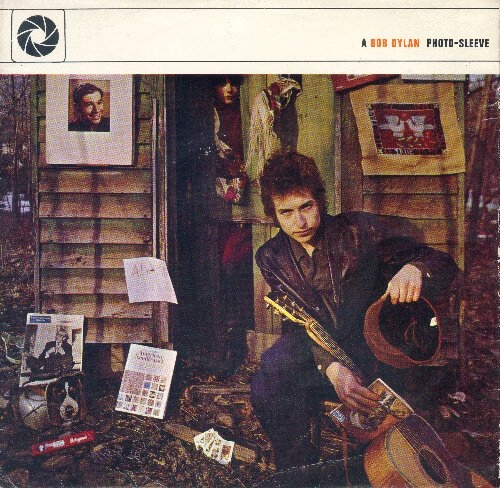
Bob Dylan And Pygmalion (Part II)

By Larry Fyffe

Bob Dylan and Pygamalion part 1 is published here.

In the song lyrics following be a ‘gnostic-like’ vision, a twisted version of a song from ‘My Fair Lady,’ a musical that harks back to the ancient Greek mythology of Pygmalion:

Hold on, I've been led in to some kind of trap
Where we ask no quarter, no quarter we give
We're right down the street from the street where you live
(Bob Dylan: Murder Most Foul)

The gloomy dark world in the song above contrasts with the the world of enchanted light in the song below:

Are there lilac trees in the heart of town
Can you hear the lark in any other part of town
Does enchantment pour out of every door?
No, it's just on the street where you live
(Vic Damone: On The Street Where You Live ~ Lerner/Loewe)

The reference to “murder most foul”:

Ghost: Murder most foul, as in the best it is
But this most foul, strange and unnatural
(William Shakespeare: Hamlet, Act I, sc, v)

In another tale of Greek mythology, the goddess Venus (Aphrodite), marries Vulcan, the god of Fire and Metalworking; he’s not good looking; makes himself machine-like handmaidens out of gold. Venus has an affair with Mars (Ares), the god of War, and sees to it that both her husband Vulcan, and her lover Mars side with the Trojans against the Greeks.

Trojan Paris, you see, judged Venus the winner in a beauty contest; needless to say, Vulcan is not content with being Venus’ obedient servant anymore; she’s an unfaithful wife.

So Vulcan plays a dirty trick. Venus and Mars have a daughter Harmonia. Cadmus, King of Thebes, marries Harmonia. Blacksmith Vulcan gives Cadmus a beautiful necklace to present to Harmonia as a wedding gift.

But it’s cursed so as to bring bad luck to the offspring of Cadmus and Harmonia, among them their daughter Semele, the mother of Dionysus, god of the Vine (The bluish-white metal “Cadmium” takes its name from the King Cadmus).

The song lyrics below mixes up mythologies:

I was thinking about turquoise, I was thinking about gold
I was thinking about diamonds, and the world's biggest necklace
(Bob Dylan: Isis ~ Levy/Dylan)

https://youtu.be/yL0xLUP8P_o

In Greek mythology, Pygmalion creates a statue of his vision of a perfect woman; Venus grants his wish that the statue come to life.

In the following song lyrics, that mythology is messed with. A Venus-like woman grants a man his wish not to become a non-communicative Pygmalion statue, nor a Vulcan machine:

The man in me will hide sometimes to keep from being seen
But that's because he doesn't want to turn into some machine
Took a woman like you to get through to the man in me
(Bob Dylan: The Man In Me)

Athena, the goddess of the City, is a wise protector who has dignity; her sacred bird is the owl; Mars, the god of War, and lover of Venus (despised by Vulcan he be) is rash, even cowardly; his sacred bird is the vulture.

In the lines below, the persona therein has dark-humoured fun at the expense of such mythological and religious tales:

I went down where the vultures feed
I would've gone deeper, but there wasn't any need
Heard the tongues of angels, and the tongues of men
Wasn't any difference to me
(Bob Dylan: Dignity)

No difference to the persona in the song just mentioned, but to the supposed Olympian gods, who were not devoid of compassion, there is. Athena is a favorite of Zeus, the god of Thunder. Gods and goddesses are immortal, but that doesn’t stop Athena from wounding Mars with a spear.

Below, a story is told in song that’s similar in kind to the mythological tale above (Dionysus, it’s noted, be not around in winter):

I'll be back in a month or two
When the frost is on the vine
I'll punch my sword right straight through
Half-ways down your spine
(Bob Dylan: Workingman's Blues, #2)

What else is on the site?

We have a very lively discussion group “Untold Dylan” on Facebook with over 4200 active members.  (Try imagining a place where it is always safe and warm).  Just type the phrase “Untold Dylan” in, on your Facebook page or follow this link 

You’ll find some notes about our latest posts arranged by themes and subjects on the home page of this site.  You can also see details of our main sections on this site at the top of this page under the picture.

The index to all the 603 Dylan compositions and co-compositions that we have found on the A to Z page.

If you are interested in Dylan’s work from a particular year or era, your best place to start is Bob Dylan year by year.

On the other hand if you would like to write for this website, or indeed have an idea for a series of articles that the regular writers might want to have a go at, please do drop a line with details of your idea, or if you prefer, a whole article to Tony@schools.co.uk

And please do note our friends at  The Bob Dylan Project, which lists every Dylan song in alphabetical order, and has links to licensed recordings and performances by Dylan and by other artists, plus links back to our reviews (which we do appreciate).

Posted in Uncategorized | Leave a comment

Bob Dylan Showcase: Dylan PL – Arlekin and Blind Willie

By Tony Attwood

One of the great things about running a blog like this is that one never quite knows what happens next.

Of course you might say that since I am the publisher I damn well ought to know what happens next, but there is a real joy in allowing the readership to determine where we go.  Ideas emerge, possibilities are put forward and we try them and see what happens.

The people whose names you see at the top of articles were not in any way our friends when Pat and I started this venture, but they have found us, and have turned the vague idea of what Untold Dylan might become, into a reality.

And what is so wonderful (from my perspective at least) is that many of our writers are not from the UK.  OK Dylan is American, so we might expect some American writers as well, especially since we speak something akin to the same language, but we have writers from all over the world, including those for whom English is not the first language.

Thus we have learned, among many other things, something of what it is like to be coming to terms with Dylan in a foreign tongue (foreign for us that is), and the issue of translating Dylan into another language.

Which is the case with Filip Łobodziński who has contributed a series of articles for us relating to Bob Dylan and Poland.

And of course it is right that Filip’s band should have a place in the Bob Dylan Showcase.

In case you have not been here before, let me explain: this is a place where any reader can submit a recording made by themselves which is either a Dylan song, or is in some way influenced by the music of Dylan.

A list of some of the music we’ve had submitted is at the end – and you’ll see (or rather hear) at once how incredibly varied the submissions are.

Now we go even further as we have Dylan.pl with Arlekin (Jokerman) described by Filip as “voodoo tinged”.

And second what Filip has described to me as a “New Orleans meets Tom Waits” version of Blind Willie McTell.

If you are interested in Filip Łobodziński’s work you might also enjoy

Previously in the Showcase…

What else is on the site?

We have a very lively discussion group “Untold Dylan” on Facebook with over 4200 active members.  (Try imagining a place where it is always safe and warm).  Just type the phrase “Untold Dylan” in, on your Facebook page or follow this link 

You’ll find some notes about our latest posts arranged by themes and subjects on the home page of this site.  You can also see details of our main sections on this site at the top of this page under the picture.

The index to all the 603 Dylan compositions and co-compositions that we have found on the A to Z page.

If you are interested in Dylan’s work from a particular year or era, your best place to start is Bob Dylan year by year.

On the other hand if you would like to write for this website, or indeed have an idea for a series of articles that the regular writers might want to have a go at, please do drop a line with details of your idea, or if you prefer, a whole article to Tony@schools.co.uk

And please do note our friends at  The Bob Dylan Project, which lists every Dylan song in alphabetical order, and has links to licensed recordings and performances by Dylan and by other artists, plus links back to our reviews (which we do appreciate).


Posted in Uncategorized | Leave a comment

Why does Dylan like Leon Redbone?

By Tony Attwood

Leon Redbone, the famously mysterious musician whose Ragtime way of strumming a guitar and singing, and who very much numbered Bob Dylan among his fans, has passed away at the age 69.

He was notorious as a joker, and indeed when journalists and interviewers asked him for a picture to go along with the story they were creating he would often hand over a photo of Bob Dylan.

It is also widely reported that Bob Dylan went to Mariposa Folk Festival in 1972 particularly to find him, and in an interview Dylan said, “I’ve heard he’s anywhere from 25 to 60… I can’t tell. But you gotta see him.”

Bob added that the music was “so authentic you can hear the surface noise [of an old 78 rpm record]” adding that he ever started a label, he would sign Redbone.  Redbone’s first album was released by Warner Bros three years later.

He was a prolific live performer and also released more than 15 albums over a four-decade career.

But one thing that really linked the men together was that Redbone would often rearrange the classic songs he sung, changing the chord sequences, and most interestingly not rehearsing with the band.   He was also notorious for not following the agreed setlist but simply playing what he felt at that moment, requiring the band to follow him.  That sounds somewhat familiar!

He also became a regular on Johnny Carson’s “Tonight Show.” More recently, he served as the voice of “Leon the Snowman” in Will Ferrell’s 2003 holiday hit “Elf.”

His introductions to his songs were also something to behold – he was the opposite of Dylan on stage, chatting away to his heart’s content.  At the same time he could be funny, contradictory, vague, rambling, and always knowing exactly what he was doing and where he was going but making it seem he did not.

If you enjoy this music, you might just want to leave the video running after the first song – it is a real treat.

Redbone was known for eternally making up stories about his life.  According to several reports, when asked for a biography for a music festival program, he handed over copy which said, “I was born in Shreveport, La., in 1910 and my real name is James Hokum” — which of course is fantasy.

In fact what he did share with Dylan was his sense of privacy – and both men dealt with media intrusion by making things up.  In a Canadian magazine 19 years ago he said, “Some people seem to believe that as soon as you perform on stage you lose your rights as a private citizen.   They want to find out who I am, what I am, where I was born, how old I am—all this complete nonsense that belongs in a passport office.”

What we do know (or at least think we know) he was born in 1949, in Cyprus. He announced his retirement in 2015, citing health concerns.

Announcing his passing his website said, in true reference to the man himself, said, “To his fans, friends, and loving family who have already been missing him so in this realm, he says, ‘Oh behave yourselves. Thank you… and good evening everybody.’ “

So why did Bob Dylan admire this musician so?  First, most obviously, he was a one-off, and he was original, exactly as Bob Dylan himself is.   Leon Redbone was also a sublime musician, not just as a performer but also in terms of holding an audience and carrying off a show.

Plus he had a magnificent voice which he knew exactly how to use, understanding exactly how the accompaniment could compliment the vocals.   Also he brought a style of music to my generation that had been brought up on rock n roll.  He reminded us all of another style, another place, another way of seeing the world.  When he told the audience to behave, you knew that is exactly what he would not be doing – but in his own inimitable way.

In addition to his many other achievements Redbone appeared on children’s programmes such as Sesame Street, several times singing over films songs such as “Blueberry Mouth”, “Have You Ever”, and “What Do They Do When They Go Wherever They Go?”

He appeared as Leon in the 1988 film Candy Mountain, and narrated the 2011 Emmy Award-winning documentary Remembering the Scranton Sirens, celebrating the musical legacy of one of the most significant “territory” dance bands in American musical history.

He performed also in a Budweiser beer commercial in which he lay on a surfboard singing “This Bud’s for You”, and in a British Rail advert in which he sang the song “Relax”.

We have his recordings… and with those he will always be remembered.

What else is on the site?

We have a very lively discussion group “Untold Dylan” on Facebook with over 4200 active members.  (Try imagining a place where it is always safe and warm).  Just type the phrase “Untold Dylan” in, on your Facebook page or follow this link 

You’ll find some notes about our latest posts arranged by themes and subjects on the home page of this site.  You can also see details of our main sections on this site at the top of this page under the picture.

The index to all the 602 Dylan compositions and co-compositions that we have found on the A to Z page.

If you are interested in Dylan’s work from a particular year or era, your best place to start is Bob Dylan year by year.

On the other hand if you would like to write for this website, or indeed have an idea for a series of articles that the regular writers might want to have a go at, please do drop a line with details of your idea, or if you prefer, a whole article to Tony@schools.co.uk

Posted in Uncategorized | 1 Comment

Santa-Fe (1967); a monumental, atmospheric lecture

by Jochen Markhorst

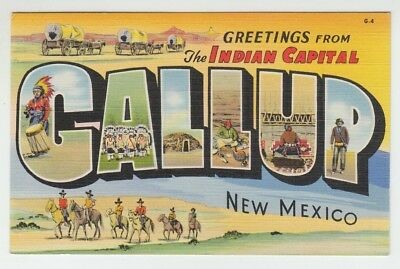
Gallup in New Mexico is a small town, about twenty thousand inhabitants, with a remarkably high crime rate (five times the national average) and for a large part of the twentieth century popular with filmmakers. Films such as Billy The Kid (1930) and Superman (1980) were shot there, and the local El Rancho Hotel has hosted guests such as John Wayne, Ronald Reagan, Humphrey Bogart, Gregory Peck and Burt Lancaster. But the real claim to fame comes from a song: Gallup is one of the ten places listed in “(Get Your Kicks On) Route 66”:

Get your kicks on Route 66
It goes through St. Louis
A-Joplin, Missouri
A-Oklahoma City looks oh-so pretty
You’ll see Amarillo, a-Gallup, New Mexico
Flagstaff, Arizona, don’t forget Winona
Kingman, Barstow, San Bernardino
Would you get hip to this kindly tip
Take that California trip?

Not sung, but still mentioned, the town is on the first two Dylan albums, in the liner notes; in both texts the biographical “fact” is recalled that young Dylan has already seen so much of America, for he has lived in Gallup NM, Sioux Falls and Cheyenne (South Dakota), Phillipsburg KS, and in Hibbing and Minneapolis in Minnesota. An alert reader could have placed a first question mark at the time – there is a Cheyenne in Oklahoma and the capital of Wyoming is called Cheyenne, but a Cheyenne in South Dakota does not exist at all (although the Cheyenne River flows through it).

The source of this nonsense is Dylan himself, who, in the early years of his career, revived and mystified his own biography in newspaper and radio interviews. With many more details, too: he is said to have run away from home, several times, living and travelling with an itinerant fairground company.

After the release of The Freewheelin’, Newsweek magazine, in a disclosing, much-discussed article, punctures the balloon (“I Am My Words”, November 4, 1963) and reveals to the world that Dylan’s real name is Zimmerman, comes from a very ordinary middle-class family and has lived at home in Minnesota all his youth.

According to biographer Shelton, the publication infuriates the young bard, and he withdraws from public life for weeks, sulking (Björner’s unsurpassed website Still On The Road indeed does not record a single performance in November ’63).

Despite that early rebuttal in Newsweek, the story lingers. So persistent, in fact, that the Albuquerque Journal devotes an article to it still in 2012 with the beautifully alliterating title “Did Dylan Roots Really Reach Gallup?”

We now know that Dylan’s story was baloney, but the question still intrigues: why Gallup, of all places? Lawyer and former mayor of Gallup Bob Rosebrough thinks he knows. The starting point is that young Dylan once, with his parents, took a holiday trip through the Midwest and Southwest. Rosebrough recalls that at the time there was a Western-wear store in Gallup along Route 66, which happened to be called “Zimmerman’s”, written on a large, eye-catching sign.

“Well, what did he see as he drove through town? A huge sign stuck smack-dab in the middle of a town filled with Indians and cowboys that said ‘Zimmerman’s.’ And when it came time to invent a persona to match the freewheelin’ Bob Dylan he thought back to that sign and the town where he saw it.”

It is a creative story. But more likely Nat King Cole’s “(Get Your Kicks On) Route 66” has left a deeper impression on young Dylan than the supposed memory of an unproven family trip. In episode 83 (“Street Map”) of Theme Time Radio Hour, radio maker Dylan calls the song the definition of grooviness, the grooviest song I know, all about America’s main street – it’s a pity that neither Nat King Cole nor songwriter Bobby Troup have lived to hear this compliment from the world’s best songwriter. In Tarantula, Dylan’s inimitable literary debut, we see the impact demonstrated once again, in the last chapter “Al Araaf & the Forcing Committee”:

aretha – known in gallup as number 69 – in
wheeling as the eat’s in heat – in pittsburgh
as number 5 – in brownsville as the left
road, the lonesome sound – in atlanta as
dont dance, listen – in bowling green as
oh no, no, not again – she’s known as horse
chick up in cheyenne – in new york city she’s
known as just plain aretha . . . i shall play
her as my trump card

Gallup, Pittsburgh, Bowling Green, Atlanta… all of them place names lifted from songs in Dylan’s record collection (“Route 66”, “Sweet Little Sixteen”, “Long Gone”, “Mary Don’t You Weep”) and place names that will pop up in his songs (Brownsville, Cheyenne, New York City).

Dylan did live in that southwest corner of the United States for a while, when he and his family were fleeing from intrusive fans and other idiots in the early 1970s. In a 1985 interview with Scott Cohen, Dylan talks about the terror that drove him out of Woodstock and casually drops: “… when I was living in Phoenix, Arizona, in about ’72.”

This – in itself irrelevant – biographical fact is completely watered down in the very worth reading article “When Bob Dylan Practiced Downstairs” by Lucian K. Truscott IV in The Village Voice of November 2, 2016, in which the lucky dog Truscott recalls memories of 1974, when Dylan was his downstairs neighbour in Greenwich Village and he could secretly listen in while Dylan wrote his songs for Blood On The Tracks:

You read about how Dylan had decamped from New York in those years — first for Woodstock, then Santa Fe, then Malibu — but he was so much a part of the fabric of the city that there was never a sense he’d left.

“Woodstock, Santa Fe and Malibu.” And Albuquerque is mentioned too, with some regularity – apparently, there is a vague, but universal agreement that Dylan spent part of his life at least somewhere in New Mexico.

Truscott writes his article in 2016, a quarter of a century after the world officially met one of the more unfamiliar Basement gems, with “Santa-Fe” (on The Bootleg Series it is written with a hyphen, in Lyrics and on the site without). Presumably the song title causes Truscott’s confusion, but oh well; Gallup, Santa Fe, Albuquerque… all in New Mexico, all along Route 66.

In the popular music of the twentieth century, Santa Fe usually refers to a train, to the Atchison, Topeka and Santa Fe Railway (ATSF), one of the largest and best-known train companies in the United States. In 1944 Bing Crosby scores a big hit with “On The Atchison, Topeka And Santa Fe”, a year later it’s an even bigger hit for Johnny Mercer (number one, in the charts for sixteen weeks) and Judy Garland’s version wins an Oscar (crazy enough for “best original song”, in the movie The Harvey Girls) in 1946.

Before that, in 1942, Arthur Crudup already recorded “Mean Frisco Blues”, the song that, thanks to big guns like B.B. King, Jimmy Witherspoon, Eric Clapton and Muddy Waters, now belongs to the canon, and that song opens and closes with

Well that mean old dirty Frisco and that low down Santa Fe
Mean old Frisco and that low down Santa Fe
Well take my girl away, Lord and blow back out on me

…as in Lightnin’ Hopkins’ “Santa Fe Blues” and Skip James’ “Cherry Ball Blues” the Santa Fe is is the Big Mean Train that runs off with the narrator’s sweetheart.

But here, in Woodstock 1967, Dylan’s jumpy mind is perhaps most triggered by the recent version of “Midnight Special” by the Spencer Davis Group (on Autumn ’66). Dylan hears the band on their English tour in ’66 and is quite impressed, especially by the then eighteen-year-old foreman Steve Winwood. In Eat The Document you see him talking to Spencer Davis, as he asks, in awe: “How’d he learn to sing like that?”

Dylan jumping up on “Midnight Special” is hardly surprising: the song was his debut in the music industry (in ’61, when he is invited to play the harmonica on Harry Belafonte’s cover of that classic). And in England he undoubtedly notices the changed lyrics:

Get your ticket at the station, get your dinner on board
Well you know I have to leave you but I don’t wanna go
Let the Midnight Special shine its light on me
The Midnight Special to Santa Fe

…with Spencer Davis the opening verse, but merely the third line is the same as the other and the traditional versions.

Further down, the lyric line from which Dylan will make a whole song is maintained: “if you ever go to Houston” (on Together Through Life, 2009).

In the Basement Dylan then has a catchy tune, he has Santa Fe, and apparently he thinks that is enough. Robertson remembers in his autobiography that Dylan, after a cigarette break, pulls the lyrics for “Santa Fe” out of his typewriter, but that does not seem too likely; the verses are filled with empty words, with placeholder lyrics, pleasantly sounding harmonies without coherence. She’s rolling up a knot to pray till God’s away – or something like that. Strange, though, is the “remedial action”, a few years later, while securing copyrights. Dylan changes words and complete lines of verse rather arbitrarily and by adding eccentric idioms he only increases the incomprehensibility of the text: I’ll build a geodesic dome and sail away. That doesn’t even sound remotely like what Dylan sings there. Still, it does fascinate the Dylanologists, so there ís some gain, if you will.

Another uncertainty, equally unimportant, dividing the experts concerns the moment of creation. At the official release, on The Bootleg Series 1-3 (1991), Dylan expert John Bauldie writes that Levon Helm plays the drums.

But two of the top experts, Clinton Heylin and Sid Griffin (Greil Marcus skips the song), date the song before the return of drummer Levon Helm. Heylin isn’t particularly charmed by the song anyway (“just another discarded ditty”) and places it in the summer. Griffin isn’t very touched either (“this slight if charming little ditty”) and analyses that the drumming cannot be Helm’s and that Bauldie must be mistaken.

In his autobiography Testimony (2016), however, eyewitness Robbie Robertson remembers:

“We played through it with Levon on drums. He was a bit rusty and tentative from just getting back, and still a little unfamiliar with the clubhouse groove. We had recorded a ton of songs with Bob already, and by the time Levon joined us we were winding down a little.”

Robertson even places it after Halloween, so after October 31st, somewhere in early November. Also remarkable is the observation with which he introduces this anecdote: “Bob did some of his vibing vocables on words” with which he qualifies the lyrics of “Santa-Fe” as (something like) “intuitive wording of sounds” – not as real, meaningful words, anyway.

Levon Helm does not mention the song at all, in his memoirs (This Wheel’s On Fire, 1993).

The undervaluation is strange. “Santa-Fe” is certainly more than an “insignificant disposable tune”. It’s a particularly catchy, skilful piece of work, richly decorated with accessible melodies, comparable to a pretty nursery rhyme and has at least as much potential as “The Mighty Quinn” or “You Ain’t Goin’ Nowhere”.

Heylin and Griffin, however, are not the only ones to discard it, shrugging their shoulders; the song is hardly covered. But a few nice ones are still out there.

Funny is the fierce rockabilly adaptation by the obscure Bavarian punk band Lee and the Liars, and charming is Howard Fishman’s cover for his unsurpassed Basement Project (Live at Joe’s Pub, 2007); sunny, with a dazzling trumpet.

Still, even the most beautiful cover cannot break through that granite wall of lukewarm indifference; the version of the otherwise unknown Nick Mencia from Miami, who, together with one Erik Gundel and one David Stern, produces a monumental, atmospheric lecture of “Santa-Fe”, of the same level as, and very similar to, the piece of art that Jim James delivers with “Goin’ To Acapulco” for the I’m Not There soundtrack.

Mencia’s cover, which almost entirely follows the published lyrics on the site (only geodesic dome really goes too far; that becomes big ol’ dome), doesn’t make it to a soundtrack, unfortunately. Isolated and alone, it collects dust in a quiet corner of YouTube.

Perhaps Mencia first should have broadcasted that he used to live in Gallup.

Jochen’s books are available via Amazon both in paperback and on Kindle:

Copies of the volumes are also available in Dutch from the same source.

What else is on the site?

We have a very lively discussion group “Untold Dylan” on Facebook with over 4200 active members.  (Try imagining a place where it is always safe and warm).  Just type the phrase “Untold Dylan” in, on your Facebook page or follow this link 

You’ll find some notes about our latest posts arranged by themes and subjects on the home page of this site.  You can also see details of our main sections on this site at the top of this page under the picture.

The index to all the 602 Dylan compositions and co-compositions that we have found on the A to Z page.

If you are interested in Dylan’s work from a particular year or era, your best place to start is Bob Dylan year by year.

On the other hand if you would like to write for this website, or indeed have an idea for a series of articles that the regular writers might want to have a go at, please do drop a line with details of your idea, or if you prefer, a whole article to Tony@schools.co.uk

Posted in Uncategorized | 1 Comment

Your chance to write the music to Dylan’s unfinished song

By Aaron Galbraith and Tony Attwood

If you have never tried to come up with a completely new arrangement of a Dylan song, perhaps we might be permitted to reveal that it can be incredibly hard, not least because it is so difficult to get Dylan’s distinctive original version of the song out of one’s head.

But now, if you an aspiring composer, you have a chance not to be an arranger of a cover version, but rather Dylan’s co-writer!  And to be fully recognised as such!

Because we’ve got a set of lyrics by Dylan for which no music has been composed.  All you have to do is to write the music, record a performance and then we’ll put it up on the site.  And you will be Dylan’s co-writer.

The song is called Dope Fiend Robber.  It was written in 1961 and was found in a notebook left at the McKenzies. It’s interesting because Woody Guthrie also had an unreleased song called Dopefiend Robber, apparently written in 1953, and then discovered in 2012, with music subsequently added by The New Multitudes.  There is a copy of that newly created music here – but please don’t take this as a suggested model – if you are going to write the music for these lyrics, you can do what you like.

Of course it is possible that Dylan was somehow aware of the Guthrie work, although no recording was ever made nor music known to have been written by Guthrie for his lyrics … it is all very intriguing.

But back to Dylan’s lyrics, the point about this is that the music does not in any way have to sound like Dylan sounded in the late 1950s and early 1960s.  It most certainly doesn’t have to be along the lines of Bonnie Why’d You Cut My Hair or Talking Hugh Brown

Nor indeed does it have to be in the style of any of the VD songs that Dylan recorded, which we covered recently.  It really can be in any style and with any approach that you want to use.

In the lyrics below you’ll see that the “verses” (maybe “sections” is a better word) are of varying lengths, which suggests that this is a very early draft, and that the song would have been modified as the music was added, to make the verses more regular.  So if you are taking on the challenge please do feel free to do what you wish.  You don’t have to use every line, you can modify lines, you can even add extra lines if you need them to make the scansion work.

After all, when Bob Dylan allowed all the famous songwriters to compose the music for the New Basement Tapes Notebook songs, he made it clear that the composers could do anything they liked with the lyrics.  Indeed it is instructive to go back and look at those songs to see just how varied the composers were able to be in handling the notes that Dylan left.

So, if you wish to take up the challenge and send a recording in, we’ll be delighted to publish it here.  And of course it will be noted as composed by Bob Dylan and YOU.

We’ll also be listing this as Dylan’s song number 604 and putting it in the alphabetical list of Dylan compositions – exactly as the New Basement Tapes songs are.  And so you’ll be up there in the hall of fame, because that list of 603 (soon to be 604) songs is the industry definitive list.  There are other shorter lists around, but we can tell you that some pretty important people take our list as the one that is complete (which is really a fantastic reward for everyone who has helped compile that list).

So, compose the music, record the song, send it to Tony, we’ll publish it on this site, and then fame and riches will undoubtedly follow*.

Here are the lyrics…

I got shot from gattling gun,
Defending your land,
I was doing nothing else but fighting for Uncle Sam.

They took me to the commissary room,
They had to give me something to ease the pain.
It was morphine, morphine
I was doing nothing else but fighting for Uncle Sam.

I left the Hospital in ’45
Quite lucky to be alive.
I’m a going home…

Now you fixed my wounds and I am glad,
But you didn’t fix the habit I had.
White gold — morphine.

It caused me ruin, it caused me shame.
My wife don’t even want my name.
I was buying high day by day
All I do is pay and pay.

Now I don’t mean to harm no man,
I just hope that you all understand,
That I’m a dope fiend robber

Now you need food to get along,
But I need dust inside my bones,
Cause I’m a dope fiend robber.

I had to rob the jewellery store,
But the cops they grabbed me at the door.

They soon found out I took morphine,
The papers said I was a dope fiend.
Now there’s a gang t’ me.

Nobody would go my bail,
I had to break out of the jail.

I didn’t mean to kill your man,
But he held the keys in his hand.

When you picked me up on the street that day,
You beat me up an’ I was in a daze.

I saw the headlines on the Morning Star,
Mad dope fiend killer behind the bars.

I was found guilty at the trail [sic],
Judge said I’m condemned to die.

Now I’m not asking for sympathy,
From anybody in your society,
Cause.

There’s a man that keeps on pushing me,
You’ll take my life and he goes free.


*The note above about “riches” might be a slight exaggeration.

Please send your recording as an audio file, or as a YouTube video to Tony@schools.co.uk and PLEASE PLEASE PLEASE mark the subject line “Dope Fiend Robber music.”   Tony does get a fair number of emails as a result of running Untold Dylan – which is fine, and no complaints about that, but it is helpful to be able to identify what each is about from the subject line.

What else is on the site?

We have a very lively discussion group “Untold Dylan” on Facebook with over 4200 active members.  (Try imagining a place where it is always safe and warm).  Just type the phrase “Untold Dylan” in, on your Facebook page or follow this link 

You’ll find some notes about our latest posts arranged by themes and subjects on the home page of this site.  You can also see details of our main sections on this site at the top of this page under the picture.

The index to all the 602 Dylan compositions and co-compositions that we have found on the A to Z page.

If you are interested in Dylan’s work from a particular year or era, your best place to start is Bob Dylan year by year.

On the other hand if you would like to write for this website, or indeed have an idea for a series of articles that the regular writers might want to have a go at, please do drop a line with details of your idea, or if you prefer, a whole article to Tony@schools.co.uk

And please do note our friends at  The Bob Dylan Project, which lists every Dylan song in alphabetical order, and has links to licensed recordings and performances by Dylan and by other artists, plus links back to our reviews (which we do appreciate).


Posted in Uncategorized | 1 Comment

Dylan nobody knows: “Remember Me” and “Black Cross”

By Aaron Galbraith

Here are two songs I know only a little about except Dylan’s versions are spellbinding, and they are both takes from 1961…possibly my two favourites from all those early party Tapes.

First, “Remember Me (When The Candle Lights Are Gleaming)”

This is from the East Orange Tapes.

The sweetest songs are sung by lovers in the moonlight,
The sweetest days are the days that used to be.
The saddest words I ever heard were words of parting
When you said “Sweetheart, remember me.”

CHORUS:
Remember me when the candle lights are gleamin’,
Remember me at the close of a long, long day.
Just be so sweet when all alone you’re dreamin’
Just to know you still remember me.

A brighter face may take my place when we’re apart, dear,
A brighter smile an’ a love more bold and free.
But in the end, fair weather friends may break your heart, dear.
An’ if they do, sweetheart, remember me.

CHORUS:
Remember me when the candle lights are gleamin’,
Remember me at the close of a long, long day.
Just to be so sweet when all alone you’re dreamin’
Just to know you still remember me.

You told me once you were mine alone forever,
You were mine till the end of eternity.
But now it’s over, dear, and we can never
Be the same except in memory.

CHORUS:
Remember me when the candle lights are gleamin’,
Remember me at the close of a long, long day.
Just be so sweet when all alone you’re dreamin’
Just to know you still remember me.

The song is credited to Scott Wiseman who in a letter to Dorothy Horstman in 1973 wrote:

“This song was written in 1939 when LuLu Belle and I spent a year at radio station WLW, Cincinnati. In our guest room at home when I was a child there was a fancy old cup and saucer which sat on the dresser. The phrase “Remember Me” was on the cup in fancy gold lettering. We children were not allowed to touch this momento of the sentimental Gay Nineties, somehow connected with the courtship of Mother and Dad. Feeling a bit homesick and sentimental during the bustle of radio shows and road trips, I “made up” the song while riding in the car to personal appearance jobs. The lyric was not intended to apply to any particular person.”

“Girl from the North Country,” including the line from the refrain “Remember me to one who lives there, she once was a true love of mine”.

Our second recording here is Black Cross.

https://m.youtube.com/watch?v=Q0QPPYs2cS0

This is from the Minnesota Party Tapes.  It always makes me step back a little (well a lot) when the n word crops up in a song, and this time is no different.

Hezekiah was a poor black farmer, who committed the unpardonable crime of reading books and thinking for himself.  The white people thought him harmless enough, but also had the attitude that “reading ain’t no good for an ignorant nigger”.

As a result the Reverend Green, of the local church, asked Hezekiah if he believed in the Lord, the church, and Heaven. Hezekiah replied, that he’d never seen the Lord; that the church was divided; and that he tried to be as good as he could without expecting anything from Heaven or the Lord.

“You don’t believe nothin’,” said the white man’s preacher.
“Oh yes I do,” said Hezekiah,
“I believe that a man should be beholding to his neighbor
Without the reward of Heaven or the fear of hell fire.”

“Well, there’s a lot of good ways for a man to be wicked!”
And they hung Hezekiah as high as a pigeon,
And the nice folks around said, “Well, he had it comin’
‘Cause the son-of-a-bitch didn’t have no religion!”[2]

The poem was a signature piece of the American stage performer Lord Buckley who (if you have been paying attention) you may recall we have mentioned before. A live performance, in which he speaks the words over a solo female voice singing and humming the and a sparse instrumental accompaniment, is included on his 1959 album Way Out Humor.

What else is on the site?

We have a very lively discussion group “Untold Dylan” on Facebook with over 4200 active members.  (Try imagining a place where it is always safe and warm).  Just type the phrase “Untold Dylan” in, on your Facebook page or follow this link 

You’ll find some notes about our latest posts arranged by themes and subjects on the home page of this site.  You can also see details of our main sections on this site at the top of this page under the picture.

The index to all the 602 Dylan compositions and co-compositions that we have found on the A to Z page.

If you are interested in Dylan’s work from a particular year or era, your best place to start is Bob Dylan year by year.

On the other hand if you would like to write for this website, or indeed have an idea for a series of articles that the regular writers might want to have a go at, please do drop a line with details of your idea, or if you prefer, a whole article to Tony@schools.co.uk

And please do note our friends at  The Bob Dylan Project, which lists every Dylan song in alphabetical order, and has links to licensed recordings and performances by Dylan and


Posted in Uncategorized | 4 Comments

Untold Dylan Showcase: the publisher’s turn

By Tony Attwood

Over the years, we have put on this site one or two recordings created by readers who have been performing Dylan songs. Often these have been songs that Dylan himself hasn’t performed, or indeed their own arrangement of a Dylan song.

Then the idea for the “Showcase” came along a couple of months ago, allowing anyone else who wanted to offer a recording to do so.   The rule gives is that the items, which can either be audio files or audio+video, can be any of the following:

a) A cover of a Dylan song, which adds something to Dylan’s original

b) A recording of a Dylan song, which Dylan has not recorded.

c) A recording of a song that the performer has composed which emerges in some way from an interaction with Dylan’s music.

The response has been fantastic, and there is a list of the recordings we have published so far at the end of this article.  Performances range from amateur performers who are readers of this site, to semi-professionals with all the benefits of a proper set of recording equipment.

It was not my intention that I was going to join in with this, because that makes it look like it was a set-up for me, which really it wasn’t.  But I have been persuaded; “One night without you” is below.

This song has relevance here, for when I started the series that traced the themes in Dylan’s writing I did not expect to find that the subjects he had written about most of all were “love” and “lost love”.  However (at least up to 1976 which is where the latest article takes us) these subjects have dominated throughout.

My song is not Dylan-esque but the fact that I write songs is entirely because I heard Freewheelin’.

Here is the song, the lyrics are below.   It was written in my head while driving back from a dance in Coventry (in England) in the early hours, with a bright half-moon shining down on a deserted M6 motorway while thinking of my partner who was elsewhere.

One night without you, start writing about you
First words in a month and of course I sing of you
I dance with another keep my thoughts under cover
Sing songs as I dance, I imagine my lover

Are you dancing are you thinking are you thinking of me?
Are you dancing are you watching are you still loving me?
Hold me in your thoughts you know I need you here by me
Hold me in your eyes as you’ve always held me
Are you dancing are you watching are you still loving me?

And the landscape is endless, why did I stop singing?
Singing of you and the love that you bring me
The world is enhanced by you in the sunlight
A thousand colours; you drive the music inside me

Are you dancing are you thinking are you thinking of me?
Are you dancing are you watching are you still loving me?
Hold me in your thoughts because I need you here by me
Hold me in your eyes as you’ve always held me
Are you dancing are you watching are you still loving me?

And there’s no wasting time every moment is precious
I’ll build a shrine so everyone sees you
The moon was half full as I drove home thinking
"Always," that one word, captured for ever...

Are you dancing are you thinking are you thinking of me?
Are you dancing are you watching are you still loving me?
Hold me in your thoughts you know I need you here by me
Hold me in your eyes as you’ve always held me
Are you dancing are you watching are you still loving me?

One night without you, start writing about you
First words in a month and of course I sing of you
I dance with another keep my thoughts under cover
Sing songs as I dance I imagine my lover

Are you dancing are you thinking are you thinking of me? 
Are you dancing are you watching are you still loving me? 
Hold me in your thoughts because I need you here by me 
Hold me in your eyes as you’ve always held me 
Are you dancing are you watching are you still loving me?

Rather sadly, six months later the lady to whom the song is directed, ended the relationship.  I get the impression, living with a writer can seem quite a novelty for a while, but then ultimately the endless emotional highs and lows becomes a bit much.

Previously in this series…

What else is on the site?

We have a very lively discussion group “Untold Dylan” on Facebook with over 4200 active members.  (Try imagining a place where it is always safe and warm).  Just type the phrase “Untold Dylan” in, on your Facebook page or follow this link 

You’ll find some notes about our latest posts arranged by themes and subjects on the home page of this site.  You can also see details of our main sections on this site at the top of this page under the picture.

The index to all the 602 Dylan compositions and co-compositions that we have found on the A to Z page.

If you are interested in Dylan’s work from a particular year or era, your best place to start is Bob Dylan year by year.

On the other hand if you would like to write for this website, or indeed have an idea for a series of articles that the regular writers might want to have a go at, please do drop a line with details of your idea, or if you prefer, a whole article to Tony@schools.co.uk

And please do note our friends at  The Bob Dylan Project, which lists every Dylan song in alphabetical order, and has links to licensed recordings and performances by Dylan and by other artists, plus links back to our reviews (which we do appreciate).

Posted in Uncategorized | 9 Comments

Bob Dylan And Adonis


by Larry Fyffe

As noted before, over time ancient Greek/Roman, and other mythologies, get all mixed together. For example, Adonis is considered to be a half-god/half-mortal, akin to Dionysus.

Zeus allows Adonis to return from the Underworld in springtime. Venus entrusts the handsome infant Adonis to Persephone to look after. She’s the Queen of the Underworld.

When Venus demands him back for her own love interest, Persephone decides to keep him for herself. Zeus makes his decision – they both can have him to share.

Adonis gets wounded by a bull in the Upperworld; his blood turns into anemone flowers which blow open with the winds of spring.

Mythology akin thereto finds its way into the Holy Bible.

As punishment by God for their disobedience, not only does Jehovah (referred to as ‘Adonai’ in Hebrew) send the Assyrians against the Northern Israelites but causes their planted crops to fail in the autumn:

Because thou hath forgotten me, God of thy salvation
And hast not been mindful of the rock of thy strength
Therfore shalt thou plant pleasant plants
And shalt set it with strange slips
In the day shalt thou make thy plant to grow
And in the morning shalt make thy seed to flourish
But the harvest shall be a heap in the day of grief
And of desperate sorrow
(Isaiah 17: 10,11)

The mythology of Adonis springs up in the song lyrics below:

How many times must a man look up
Before he really sees the sky
How many ears must one person have
Before he can hear people cry
And how many deaths will it take till he knows
That too many people have died?
The answer my friend is blowing in the wind
(Bob Dylan: Blowing In The Wind)

Adonis falls in the poem below:

To-night can bring no healing now
The calm of yesterday is gone
Surely the wind is but the wind
And I a broken waif thereon
(Bliss Carman: The Wind Flower)

Flowers and leaves, objective correlatives of regeneration, rise and fall in the following poem:

Anemones sprang when she pressed
And cresses
Stood green in the slender source
And new books of poetry
Will be written, leather-coloured oakleaves
Many and many a time
(William Carlos Williams: A Coronal)

A circular view of human history is found in many songs by Bob Dylan, albeit double-edged is the last line in the song lyrics below. Christians can take the line as a reference to Jesus.

Theologians struggle because the birth of Jesus by a human being takes place at a particular time in history.

However, Christ can be considered a symbol of eternal regeneration. The singer/songwriter’s difficult to pin down:

Father of grain, Father of wheat
Father of cold, and Father of heat
Father of air, and Father of trees
Who dwells in our hearts and memories
Father of minutes, Father of days
Father of whom we most solemnly praise
(Bob Dylan: Father Of Night)

What else is on the site?

We have a very lively discussion group “Untold Dylan” on Facebook with over 4200 active members.  (Try imagining a place where it is always safe and warm).  Just type the phrase “Untold Dylan” in, on your Facebook page or follow this link 

You’ll find some notes about our latest posts arranged by themes and subjects on the home page of this site.  You can also see details of our main sections on this site at the top of this page under the picture.

The index to all the 602 Dylan compositions and co-compositions that we have found on the A to Z page.

If you are interested in Dylan’s work from a particular year or era, your best place to start is Bob Dylan year by year.

On the other hand if you would like to write for this website, or indeed have an idea for a series of articles that the regular writers might want to have a go at, please do drop a line with details of your idea, or if you prefer, a whole article to Tony@schools.co.uk


Posted in Uncategorized | 5 Comments

Positively 4th Street; “Black Dally Rue” and poisonous green

by Jochen Markhorst

Johnston: What’s the name of this Bobby?

Dylan: Ah… the name of this is ah…the name of this is… Black Dallyroo! Hehehe.

Johnston: (laughing) “Black Dally Rue!

Dylan: Dallyroo is D – A – double L – Y – R – O – O.  No no! R – U – E! (pause). Right. Or Crimson Dally Rue, take your pick.

Johnston: “Pink Dally Rue.” Pink Bird.

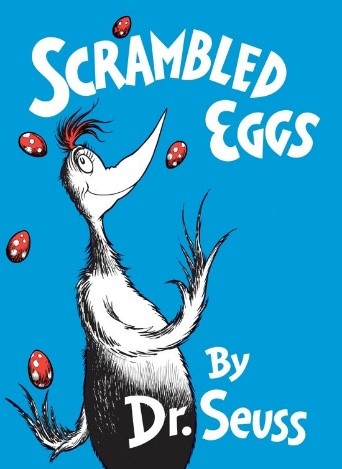
The most famous working title is probably “Scrambled Eggs”, the title McCartney uses as long as he hasn’t written the lyrics for “Yesterday”. “Eleanor Rigby” is first called “Miss Daisy Hawkins” and “It’s Only Love” is actually more promising when it is still named “That’s A Nice Hat”.

Of the Stones are quite a few working titles known as well. “Sympathy For The Devil” is initially called “Fallen Angels”, for example, and “2000 Light Years From Home” is “Toffee Apples”, for lack of better. “Angie” was just a working title, Keith Richards reveals, no more than a noun that got stuck by accident. “It was just a working title, like, who’s gonna call a song “Angie”, how boring, another chick’s name, ya know”, and the same goes for “(I Can’t Get No) Satisfaction”.

One of the many delights of The Bootleg Series Vol. 12: The Cutting Edge, the 18-CD set of studio outtakes from the mercury years ’65-’66, is the studio talk, the conversations between Dylan and the producer and musicians. More than once we hear the producer on duty (first Tom Wilson, later Bob Johnston) ask for the title of the next song. And more than once it turns out that Dylan hasn’t chosen a title yet, only to dash something off on the spot.

https://youtu.be/UmIHQ-90muY

Corniness is the strongest motivator, as in “Alcatraz to the 5th Power”, “Just A Little Glass Of Water”, “What You Can Do For Your Wigwam” and especially in “A Long-Haired Mule and a Porcupine” (respectively “Farewell Angelina”, “She’s Your Lover Now”, “Pledging My Time” and “Rainy Day Women #12 & 35”).

A few times the working title seems to be a serious option, later rejected for whatever reason. “I’ll Keep It With Mine” is first called “Bank Account Blues”, “Obviously 5 Believers” has the less remarkable but more fitting title “Black Dog Blues”, and “It Takes A Lot To Laugh, It Take A Train To Cry” sounds just as poetic and if possible even more mysterious under the name “Phantom Engineer”.

Real, but unfortunately rejected beauty only have a small handful of working titles. “Temporary Like Achilles” initially has the beautiful, dreamy and suggestive title “Medicine Sunday”, but the most beautiful of all is the original name of “Visions Of Johanna”: “(Seems Like A) Freeze Out”.

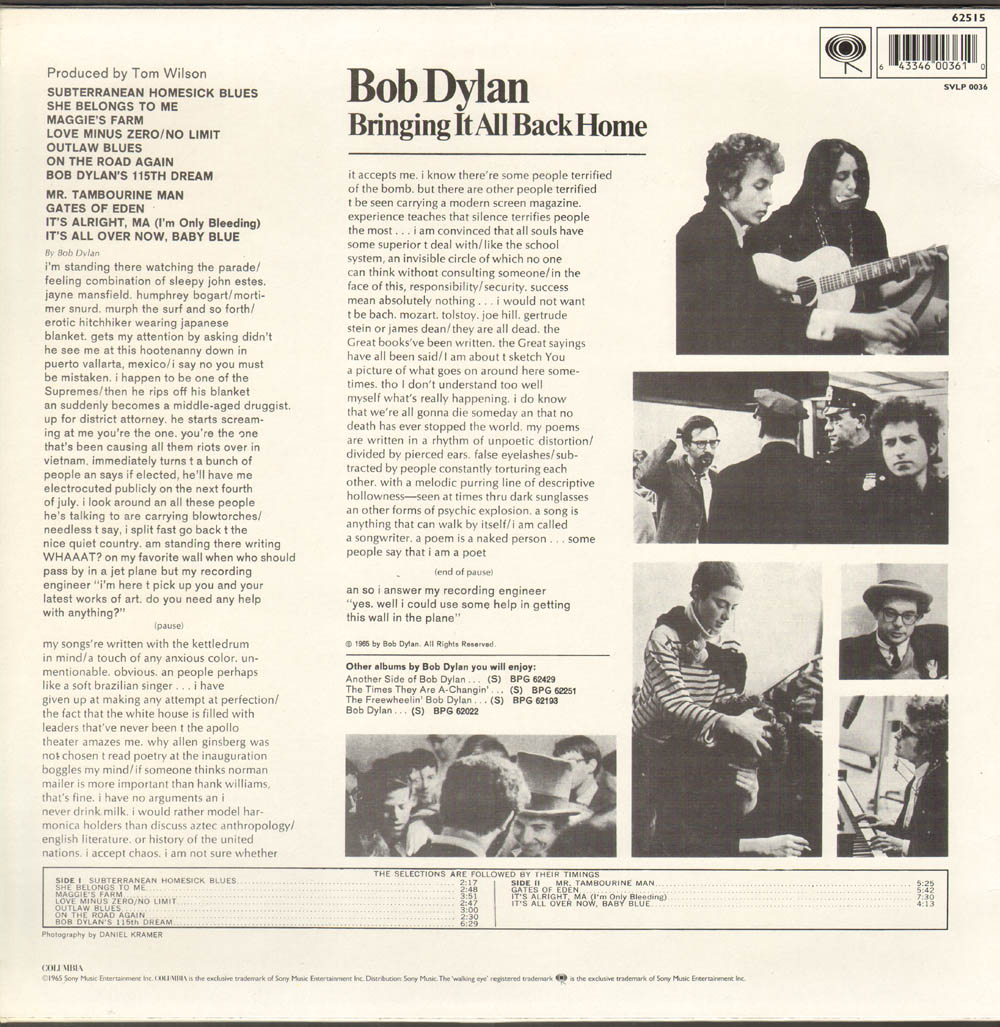
That title combines Dylan’s profession of art from Bringing It All Back Home’s liner notes (“I am about t sketch You a picture of what goes on around here sometimes. tho I don’t understand too well myself what’s really happening”) with the perfect articulation of the impact a Renoir, or any other impressionist masterpiece, has on the viewer: it really does seem like a solidified moment from a hectic life. It would be a perfect title for the mercurial splendour of “Visions Of Johanna”, indeed. But perhaps too interpretive, as Dylan decides on reflection – and therefore rejecting it in favour of the conservative, not very adventurous final title, which only refers to the refrain line.

Somewhere in between is the enigmatic “Black Dally Rue”, the title Dylan, clearly à l’improviste, quickly comes up with. The song doesn’t have a chorus or recurring refrain line, so a “self-evident” title doesn’t impose itself – the song poet has to look for a painting-like title, as in songs like “Spanish Harlem Incident” or “Motorpsycho Nitemare”.

Despite the closing laugh and Bob Johnston’s hilarity, corniness does not really appear to be the primary inspiration this time. On The Cutting Edge we can hear how Dylan thinks about a title for eleven seconds. Eleven seconds in which he apparently oversees the lyrics at lightning speed, and then calls out a title that, unlike Alcatraz or that Long-haired Mule, does indeed have a connection with the song. In the first instance “Black Dallyroo”, in the second instance “Black Dally Rue” – and Johnston is allowed to turn that into “Crimson Dally Rue”, if he wishes so.

The colours are not that far out. The song poet knows that when the recording starts, he will have to crawl into the skin of a vile, black, bloody red protagonist. Even for those who, like Dylan, are not blessed with a perception tending towards synaesthesia, it is conceivable to qualify the forthcoming lyrics as “black” or “crimson” – poisonous green or shrill yellow would fit as well.

“Dallyroo” is a more difficult association to trace. It echoes Virginia Woolf’s Mrs. Dalloway, which would make an associative jump from way to rue traceable too – but it is unlikely that Woolf’s magnum opus is part of cultural baggage at all. Anyway, “dally” is a word that does not seem to be in his vocabulary. He never uses the – indeed somewhat matronly – word, not in any lyrics, not in any poem, neither in Tarantula nor in Chronicles. It usually means something like “loafing, fooling around”, by the way. “It is time that Prime Minister Johnson stopped dallying with other concepts.”

Also on this same recording day, late in the evening, after the final recording of “Positively 4th Street”, Dylan will have a first go at recording “Desolation Row”. In this monument, it is easy to point out that Dylan has Kerouac under his skin in these mercury days. Fragments like her sin is her lifelessness and a perfect image of a priest literally come from the novel Desolation Angels, and from Kerouac’s “blues-poems” (later collected in Book Of Blues) Dylan borrows images, archetypes and decor pieces.

One of those “blues-poems” seems to come to the surface at Dylan’s spontaneous Black Dally Rue eruption:

Rhetorical Third Street
Grasping at racket
Groans 8c stinky
I’ve no time
To dally hassel
In your heart’s house,
It’s too gray
  

…from the 17th Chorus of “San Francisco Blues”. The step from “Rhetorical Third Street” to “Positively Fourth Street” isn’t that big either. Remarkable idiom from neighbouring poems like “Mexico City Blues”, “Orizaba 210 Blues”, “MacDougal Street Blues” and from Kerouac’s prose at all, can be found outside of “Desolation Row” in more Dylan songs from these days (especially in “Just Like Tom Thumb’s Blues” and in “From A Buick 6”), so it is quite likely that a Kerouac-echo sounds here as well. More likely in any case than Virginia Woolf.

The final choice for “Positively 4th Street” is all the more remarkable, as it opens the door to biographical interpretation – something Dylan always resists so much. Je est un autre, after all. Still, “4th Street”… the man Dylan, and not some autre singing this song and naming it, has lived on West 4th Street for years, together with the young girl on the front of Freewheelin’, with Suze Rotolo.

Twenty years later, in an interview with Scott Cohen, Dylan confirms the exceptional position of precisely this song:

“Outside of a song like Positively 4th Street, which is extremely one-dimensional, which I like, I don’t usually purge myself by writing anything about any type of quote, so-called, relationships. I don’t have the kinds of relationships that are built on any kind of false pretence, not to say that I haven’t. I’ve had just as many as anybody else, but I haven’t had them in a long time. Usually, everything with me and anybody is upfront. My-life-is-an-open book sort of thing. And I choose to be involved with the people I’m involved with. They don’t choose me.”

…with which the bard also confirms that he – only this one time – lets off steam in this song, “purge myself,” as he calls it, taking out his aggression on hypocritical friendship-pretending acquaintances, on “relationships built on false pretences”. It is in line with what Suze Rotolo remarks about the song, in her autobiography A Freewheelin’ Time (2008):

“He could be cruel. Though I was never on the receiving end of one of his tirades, I did witness a few. The power he was given and the changes it entailed made him lash out unreasonably, but I believe he was trying to find a balance within himself when everything was off-kilter. Some of the songs from that period, such as “Positively 4th Street,” give a sense of the backbiting that thrived in a hermetic environment.”

Mild, understanding words, and in the following paragraph she further condones Dylan’s sharp-toned bitching by pointing out his exceptional talent and stating a general truth: “Artists we admire aren’t necessarily exemplary human beings just because they are exceptional in their chosen fields.”

Dylan, Rotolo means, is only human.

The qualification chosen by Dylan is remarkably to the point as well: “extremely one-dimensional”. Both stylistic and substantive, by the way. In Lyrics and on the site the verse lines are all cut in half and the lyrics are represented in twelve four-line verses, but the recitation is not; in the recitation, they are six four-line, iambic verses in a very ordinary abab rhyme scheme:

You got a lotta nerve / To say you are my friend
When I was down / You just stood there grinning
You got a lotta nerve / To say you got a helping hand to lend
You just want to be on / The side that’s winning

Like this, every eight cut lines of verse can be glued back into abab quatrains. More appropriate too, because much tighter, with the “extremely one-dimensional” content of the lyrics.

In terms of content, the song is indeed atypically unambiguous and direct. Six quatrains (or, according to the layout editor, twelve) in which six times the same thing is said in other words: boy, what a hypocritical jerk you are. No building-up, plot twist or climax, and the music complies with this track – chord scheme, arrangement and interpretation thereof does not vary either. Not really a recipe for a smash hit, all in all. Still: the single scores fine, being in the aftermath of “Like A Rolling Stone”. Top 10 in England and the US, no. 1 in Canada.

Despite the distinctly personal touch, the song does farewell with the colleagues too. The version by Johnny Rivers is distinguished by the master himself in Chronicles. Pulsating and vibrantly, even. “Of all the versions of my recorded songs, the Johnny Rivers one was my favorite.” And, after Dylan poetically expresses his soul kinship with Rivers:

“When I listened to Johnny’s version of “Positively 4th Street,” I liked his version better than mine. I listened to it over and over again. Most of the cover versions of my songs seemed to take them out into left field somewhere, but Rivers’s version had the mandate down — the attitude and melodic sense to complete and surpass even the feeling that I had put into it.”

Like most covers, though, Rivers does not rely on the dramatic power of his recitation and calls in an arranger; per verse more instruments drip in, and towards the end he doesn’t shy away from violins – the whole last minute is even reserved for an instrumental coda.

Comparable to the more obscure cover by John ‘Speedy’ Keen, who on a beautiful, but unfortunately forgotten solo album lends his thin, plaintive voice to “Positively 4th Street” (Previous Convictions, 1973, with again his old Thunderclap comrade, the exceptional Jimmy McCullogh on guitar). Thunderclap Newman, the one-off project under the wings of Pete Townshend is already four years ago, has made one LP (the brilliant Hollywood Dream, 1969), which included the successful Basement cover “Open The Door, Homer”, but especially the unforgettable monster hit “Something In The Air”.


Jochen’s books are available via Amazon both in paperback and on Kindle:

Copies of the volumes are also available in Dutch from the same source.

What else is on the site?

We have a very lively discussion group “Untold Dylan” on Facebook with over 4200 active members.  (Try imagining a place where it is always safe and warm).  Just type the phrase “Untold Dylan” in, on your Facebook page or follow this link 

You’ll find some notes about our latest posts arranged by themes and subjects on the home page of this site.  You can also see details of our main sections on this site at the top of this page under the picture.

The index to all the 602 Dylan compositions and co-compositions that we have found on the A to Z page.

If you are interested in Dylan’s work from a particular year or era, your best place to start is Bob Dylan year by year.

On the other hand if you would like to write for this website, or indeed have an idea for a series of articles that the regular writers might want to have a go at, please do drop a line with details of your idea, or if you prefer, a whole article to Tony@schools.co.uk

And please do note our friends at  The Bob Dylan Project, which lists every Dylan song in alphabetical order, and has links to licensed recordings and performances by Dylan and by other artists, plus links back to our reviews (which we do appreciate).


Posted in Uncategorized | 5 Comments

Dylan’s lost album, track 4: “Important Words”

By Aaron Galbraith and Tony Attwood

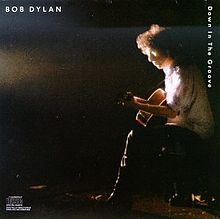
Just recently we’ve been engaged in a project listening back to some of the outtakes from the 1986 and 1987 sessions that produced the majority of Bob Dylan’s “Down In The Groove” album, as well as some of the live shows from the era.

And between us we reached the conclusion that, as many people said at the time, the album is, to be fair, not very good. Robert Christgau called the album “horrendous product”.

So we decided to see if we could compile a better album ourselves from the outtakes and live shows from the period. Just in case the guys upstairs fancy issuing a new version when they run out of materials for the Bootleg series.  (Full acknowledgement to Untold Dylan would be nice too – how about “Musical consultants”?  That would do it).

Thus we are re-creating Bob Dylan’s Lost Album and it is called “Sheep in Wolves’ Clothing”.   So far we have got

The song we’ve chosen for track 4 of “Sheep In Wolves’ Clothing” is Dylan’s cover of Gene Vincent’s “Important Words”.

Gene Vincent And The Blue Caps originally released the track in 1956 as the b-side to the “Crazy Legs” single.

In fact Crazy Legs was a song that lived on for a long time, as the title was ultimately used as the name of a studio album by Jeff Beck in 1993 – an album of Gene Vincent songs.

Gene Vincent was born in 1935 and died in 1971 and is remembered as one of the pioneers of rock n roll and particularly of what became known as rockabilly.  His 1956 worldwide hit Be Bop a Lula is often cited as the start of the popularity of rockabilly.

And indeed we really can’t let an opportunity like this pass by (just in case you have no idea what we are talking about).  Here it is…

Now here is Dylan’s take on “Important Words” which we are making the fourth track of the lost album…

https://m.youtube.com/watch?v=8hLG5sn7Uj4

The track was actually originally included on early promo copies of the album, when it was still known as “Sheep In Wolves Clothing”. It was eventually replaced with “Had A Dream About You, Baby”.

It’s easy to see why the track was dropped from the finalized album, the album already had its fair share of crooner ballads such as “When Did You Leave Heaven” and “Shenandoah”. Therefore, excellent tracks like “Important Words” and “Just When I Needed You Most” were dropped to make way for more rock n roll numbers. Which was unfortunate as they are fine performances and deserve to be heard.

At the time Dylan had mentioned in interviews his desire to make an album of romantic ballads, and repeatedly mentioned artists like Frank Sinatra and Bing Crosby. He also performed songs such as “All My Tomorrows” and “We Three” in concert during these years. Maybe he should have followed through with this idea after all.

https://m.youtube.com/watch?v=WrGaR_7icBs

Here are the lyrics

Important words
That mean a lot
They say, say
I love you

Important words
That’s all I’ve got
They say, say
I love you

The days, the nights, the hours
We spent makin’ plans
Have made both of us feel the same
Since we first held hands…

Important words
They say I love you
They say, say
I do

(Important words)
That say I love you
They say, say
I do

This really is a fine performance by Bob Dylan, and it is desperately sad that it was lost as the album was recreated and the original concept was chopped away.  Bob’s voice is in particularly fine form, and this recording deserves to be better known than it now is.

What else is on the site?

We have a very lively discussion group “Untold Dylan” on Facebook with over 4200 active members.  (Try imagining a place where it is always safe and warm).  Just type the phrase “Untold Dylan” in, on your Facebook page or follow this link 

You’ll find some notes about our latest posts arranged by themes and subjects on the home page of this site.  You can also see details of our main sections on this site at the top of this page under the picture.

The index to all the 602 Dylan compositions and co-compositions that we have found on the A to Z page.

If you are interested in Dylan’s work from a particular year or era, your best place to start is Bob Dylan year by year.

On the other hand if you would like to write for this website, or indeed have an idea for a series of articles that the regular writers might want to have a go at, please do drop a line with details of your idea, or if you prefer, a whole article to Tony@schools.co.uk

And please do note our friends at  The Bob Dylan Project, which lists every Dylan song in alphabetical order, and has links to licensed recordings and performances by Dylan and by other artists, plus links back to our reviews (which we do appreciate).


Posted in Uncategorized | 3 Comments

The Dylan nobody knows: Bob’s LGBT song, and Christmas recitation

By Tony Attwood and Aaron Galbraith

We launched “The Dylan Nobody Knows” series with the article on Wynton Marsalis and Jacek Kaczmarski – details of this and other articles in the series are at the foot of this piece.

So now we in the series are deliberately travelling in a different direction with Dylan’s cover of “He’s Funny That Way,” which he recorded for a LGBT themed compilation EP, plus Dylan’s Christmas recitation.

“He’s funny that way” is not on YouTube yet but it is on Spotify and avaialble without payment.  If you don’t have an account you just have to sign up – no credit card details or anything are required.

The song on Spotify is here.

The album is called “Universal Love,” and Dylan’s voice really does sound good.  It also very much sounds like a one-take recording – there is a slight uncertainty at the start, but once Bob settles down it is a quite remarkable rendition.

And there is a benefit of hearing it on Spotify – the six tracks just run one after the other, and it really is a joy to behold – brilliant versions of songs you’ll already know, performed in a way that, before you hear them, are unimaginable.

Other artists on the album Kesha, St. Vincent, Ben Gibbard, Valerie June and Bloc Party’s Kele Okereke, and it was recorded in 2018.

Of course it is not an original idea to change the pronoun in a song – or indeed in this song, many others have done it along the way since the song was released as part of the 1931 film “Gems of MGM”.  (Incidentally, this is not one of the movies that we’re going to include a clip from – it is really pretty dire).

But what is interesting is that Variety revealed that the album was funded by MGM Resorts International as a way of promoting the pieces as wedding anthems for same-sex couples. Apparently around a quarter of the wedding ceremonies that take place in the company’s 15 hotels in Las Vegas, are for same-sex couples.

Also, according to the same source, Bob Dylan did not just agree to take part in the project but also said immediately “Hey, I have an idea for a song.”

And while we are here, we could perhaps also venture into the Dylan recitation Of ‘Twas The Night Before Christmas

This was released as the b side of this rather cool looking red vinyl 7” single for Must Be Santa…it brings to mind the two tracks released in the last few weeks!

This idea for this series of articles (“The Dylan Nobody Knows”) really had both us very excited when it came up, but it turns out to be not quite as easy as we thought.   If you have any ideas for articles that could feature under that heading please do get in touch.  You won’t get any money, but you will get a full acknowledgement.

You could, if you wish, write the article as well.  Just email Tony@schools.co.uk

What else is on the site?

We have a very lively discussion group “Untold Dylan” on Facebook with over 4200 active members.  (Try imagining a place where it is always safe and warm).  Just type the phrase “Untold Dylan” in, on your Facebook page or follow this link 

You’ll find some notes about our latest posts arranged by themes and subjects on the home page of this site.  You can also see details of our main sections on this site at the top of this page under the picture.

The index to all the 602 Dylan compositions and co-compositions that we have found on the A to Z page.

If you are interested in Dylan’s work from a particular year or era, your best place to start is Bob Dylan year by year.

On the other hand if you would like to write for this website, or indeed have an idea for a series of articles that the regular writers might want to have a go at, please do drop a line with details of your idea, or if you prefer, a whole article to Tony@schools.co.uk

And please do note our friends at  The Bob Dylan Project, which lists every Dylan song in alphabetical order, and has links to licensed recordings and performances by Dylan and by other artists, plus links back to our reviews (which we do appreciate).

.
Posted in Uncategorized | Leave a comment

The subject matter of Bob Dylan’s songs 1976/7

By Tony Attwood

This article continues the reviews of the meanings of Bob Dylan’s songs of the 1970s.  Previous articles in this series have been…

When I started this series of articles I had no idea if I was going to learn anything from trying to come up with a very simple classification of the essence or subject matter of each of Bob Dylan’s songs year by year.

And yes for me, if no one else, it has worked, not least for when I went back and had another look at “You Ain’t Going Nowhere”.  Heard on its own, it can have a certain meaning, but heard within the context of Dylan’s interest in Kafka and consider his songs from the Basement era and onto JWH, it offers a different set of insights.

So I continue with the series, with the hope that by the time I get to the end of the 1970s I will be in a position to chart the ebbs and flows of Dylan’s interests as expressed in his music.

We have only seven songs from 1976/7, here they are with the meanings I have assigned to each…

  1. Changing of the Guards: personal: the sound of words, the possibility of rhymes, the music
  2. Is your love in vain?: personal: the dilemma of the person in the public eye.
  3. Senor (Tales of Yankee Power): moving on, but is it our choice, or are we moved?
  4. No Time to Think: rejection, lost love
  5. True Love Tends to Forget: love
  6. We better Talk this Over: lost love, moving on
  7. Where are you tonight? lost love

Boiling this down to simplicity (which is what we need to get some sort of feel of 600 songs) we have four lost love songs, one of moving on, and two highly personal songs (a new category)

To give a comparison with what Dylan had been writing about here are the subjects for the earlier part of the 1970s with the songs above added at the end. The final figure gives the total number of songs written by Dylan in each category since he started writing in the 1950s

Subject 1970/4 1975 1976/7 Total since 1950s
Environment, places, locations 8 17
Jewish prayer 1 1
Visiting 1 2
Love, desire 13 1 1 56
Lost love 5 3 4 43
Blues 1 1 11
Be yourself 1 2
Post-modernism 1 2
Protest 1 22
Dance 1 2
Being trapped 1 12
Death 1 5
Moving on 3 1 16
Rejection of labelling 1 2
Disdain 1 9
Gambling 1 3
Fate 7 7
Change 2 6
People 8 8
Religion 1 3
Personal commentary 1 3

So the theme of the year is clear – moving on, lost love and a personal reflection upon that.

All Dylan compositions by subject up to 1977. 

In this listing, the previous total up to 1975 is given first.  Where there are songs from 1976 the plus sign (+) is added after the number for up to 1975, with the grand total to date including 1976, after the equals sign (=).

  • Art: 3
  • Be yourself: 2
  • Being trapped/escaping from being trapped (being world-weary): 12
  • Blues: 11
  • Betrayal: 1
  • Celebrating a city 1
  • Change: 6
  • Dance: 2
  • Death: 5
  • Depression: 1
  • Disasters: 1
  • Disdain: 9
  • Environment: 17
  • Eternity: 1
  • Fate: 7
  • Future will be fine: 2
  • Gambling: 3
  • Happy relationships: 1
  • How we see the world: 3
  • Humour, satire, talking blues: 13
  • Individualism: 8
  • It’s a mess: 3
  • Jewish prayer: 1
  • Leadership: 2
  • Look after yourself: 1
  • Lost love / moving on: 39 + 4 = 43
  • Love, desire: 55 + 1 = 56
  • Lust: 1
  • Moving on: 15 + 1 =16
  • Nothing changes: 4
  • Nothing has meaning: 2
  • Party freaks: 3
  • Patriotism: 1
  • People (including fictional people): 8
  • Personal commentary: 2 + 1 = 3
  • Postmodernism: 2
  • Protest: 22
  • Randomness (including Kafkaesque randomness): 11
  • Rebellion: 1
  • Rejection of labelling: 2
  • Relationships 1
  • Religion, second coming: 3
  • Sex (country life): 1
  • Social commentary / civil rights: 6
  • Slang in a song: 4
  • Surrealism, Dada: 15
  • Travelling on, songs of leaving, songs of farewell, moving on: 16
  • The tragedy of modern life: 3
  • Visiting: 2
  • WH Auden tribute: 1

And as usual here is the list of the top categories by the end of 1976…

  • Randomness (including Kafkaesque randomness): 11
  • Being trapped: 12
  • Humour, satire, talking blues: 13
  • Moving on: 16
  • Surrealism, Dada, Kafka: 15
  • Travelling on, songs of leaving, songs of farewell: 16
  • Environment: 17
  • Protest: 21
  • Lost love / moving on: 43
  • Love, desire: 56

In each episode it comes as a shock to recognise that the two largest categories of Dylan songs that we have are love and lost love.  Roughly five times as many Dylan songs to this date are about love and lost love as are protest songs.  Once again these two topics were the only two topics that Dylan turned to each year thus far in this decade.

The whole of the 1960s (Bob’s most prolific decade as a songwriter) has been analysed through a series of articles which are indexed here.

What else is on the site?

We have a very lively discussion group “Untold Dylan” on Facebook with over 4200 active members.  (Try imagining a place where it is always safe and warm).  Just type the phrase “Untold Dylan” in, on your Facebook page or follow this link 

You’ll find some notes about our latest posts arranged by themes and subjects on the home page of this site.  You can also see details of our main sections on this site at the top of this page under the picture.

The index to all the 602 Dylan compositions and co-compositions that we have found on the A to Z page.

If you are interested in Dylan’s work from a particular year or era, your best place to start is Bob Dylan year by year.

On the other hand if you would like to write for this website, or indeed have an idea for a series of articles that the regular writers might want to have a go at, please do drop a line with details of your idea, or if you prefer, a whole article to Tony@schools.co.uk

And please do note our friends at  The Bob Dylan Project, which lists every Dylan song in alphabetical order, and has links to licensed recordings and performances by Dylan and by other artists, plus links back to our reviews (which we do appreciate).

Posted in Uncategorized | Leave a comment

Untold Dylan Showcase “Make you feel my love”: Denise Konkal

By Tony Attwood

Over the years we have put on this site one or two recordings created by readers who have been performing Dylan songs. Often these have been songs that Dylan himself hasn’t performed, or indeed their own arrangement of a Dylan song.

In this series I am pulling together a few such offerings by having a section of this site which is dedicated to such performances. The items, which can either be audio files or audio+video, and can be any of the following:

a) A cover of a Dylan song, which adds something to Dylan’s original

b) A recording of a Dylan song, which Dylan has not recorded.

c) A recording of a song that you have composed which emerges in some way from your interaction with Dylan’s music. So not necessarily a cover – it could be a completely new song but one which has in a way been influenced by Dylan. You don’t have to explain how or why, as long as you feel that there is something “Dylan” within the song, that’s fine.

Now I must admit I have no idea where this notion is going to take us. If I end up with some items which very few members of our audience listen to, then I’ll abandon the idea, but if people listen, and some people like what they hear, then fine.

To you, the audience, I would say, these recordings are a mix of those provided by a mix of semi-professional artists and amateur performers who have no thought of making money from their recordings, and so I would ask those listening and looking to keep in mind that there is no connection between an amateur performing on his or her own in a home recording environment, with a piece performed by a professional or semi-professional musician in a professional studio.

Thus I would like to see respect from the viewing / listening audience for the fact that these amateur performers have put themselves on the line by offering their work for a wider audience. To help this, I am ensuring that the phrase “Dylan Showcase” is used along with a note stating that this is not a professional recording.

I’m doing this because I’ve worked in the creative arts all my life, and I know how hard it is to get any exposure for one’s art. I’m not saying that record company producers will be queuing up to look and see what we’ve got, but I just have the feeling we might come across something interesting.

So if you would like to send me a recording with the right for me to put it up on this site, please email it to Tony@schools.co.uk. It can be a link to a youtube site, or a recording as an mp3 or mp4 file.

Tony Attwood

Publisher, Untold Dylan

Today: Denise Konkal

Denise is a very active member of Untold Dylan, both on our Facebook site and on this web site.

Previously in this series…

What else is on the site?

We have a very lively discussion group “Untold Dylan” on Facebook with over 4200 active members.  (Try imagining a place where it is always safe and warm).  Just type the phrase “Untold Dylan” in, on your Facebook page or follow this link 

You’ll find some notes about our latest posts arranged by themes and subjects on the home page of this site.  You can also see details of our main sections on this site at the top of this page under the picture.

The index to all the 602 Dylan compositions and co-compositions that we have found on the A to Z page.

If you are interested in Dylan’s work from a particular year or era, your best place to start is Bob Dylan year by year.

On the other hand if you would like to write for this website, or indeed have an idea for a series of articles that the regular writers might want to have a go at, please do drop a line with details of your idea, or if you prefer, a whole article to Tony@schools.co.uk

And please do note our friends at  The Bob Dylan Project, which lists every Dylan song in alphabetical order, and has links to licensed recordings and performances by Dylan and by other artists, plus links back to our reviews (which we do appreciate).

Posted in Uncategorized | 11 Comments

Bob Dylan And Mythology (Part X) “Vulcan, the God of Fire”

by Larry Fyffe

The Beat writer quoted below walks in the footsteps of Villiers who writes the black-humoured, neoRomantic tale about “Tomorrow’s Eve”:

Nobody has to care anymore, 
    we can even leave the whole scene to itself
with Japanese fornicating machines 
    fornicating chemical dolls on and on
with Robot Hospitals and Calculator Machine Crematories, 
    and just go off,
and be free in the universe!

(Jack Kerouac: Desolation Angels, part I)

Singer/songwriter/musician Bob Dylan follows Kerouac’s footprints. In “Desolation Angels” appear such lines as “Cabinets with memories in them”, “Completely in a trance”, “The perfect image of a priest”:

Then they bring them to the factory
Where the heart-attack machine
Is strapped across their shoulders
And then the kerosene
Is bought down from the castle
By insurance men who go
Check to see that nobody is escaping
To Desolation Row

(Bob Dylan: Desolation Row)

https://youtu.be/ccRUMe4no-w

In ancient Greek/Roman mythology, Vulcan is credited with creating the first robotic slave: from gold, the God of Fire forges handmaidens to assist him around the blacksmith shop. The female android in “Tomorrow’s Eve” is named “Hadaly”, rearranged letter play on “yaldah” which means “maiden” in Hebrew.

In the following postmodern allegorical song (akin to “Desolation Angels”), the whole scene is left to itself for the listener to interpret. Apparently, the Jack Of Hearts (JOH ~JehOvaH) sends an android with no eyelids down to earth to rid the Temple in Jerusalem (the cabaret) of the diamond-studded Devil (Big Jim); the android is programmed to disguise ‘himself’ as Mother Mary (Rosemary), and be sacrificed on the cross (gallows); now no longer responsible for caring about what happens to humanity, JOH is free to wander around heaven all day:

The next day was hanging day, the sky was overcast and black
Big Jim lay covered up, killed by a penknife in the back
And Rosemary on the gallows, she didn't even blink
The hanging judge was sober, he hadn't had a drink
The only person on the scene missing was the Jack Of Hearts

(Bob Dylan: Lily, Rosemary, And The Jack Of Hearts)

https://youtu.be/cs4uRJnslLg

Futurism be an artistic movement that develops in the early twentieth century; technological inventions are gloried for their power and speed. Science reigns; the dynamo that transforms mechanical into electrical energy becomes an important literary symbol. Vorticism, an offshoot of Futurism, focuses on the image of the circular motion of fluids; violence is essential for change.

Below a vortex poem. Lethe is the Goddess of Oblivion; Actaon gets transformed into a deer by Apollo’s sister Diana, and torn to pieces  by his own dogs:

The image of Lethe
And the fields
Full of faint light
Both golden
Gray cliffs
And  beneath them
A sea
Harsher than granite
Unstill, never ceasing

(Ezra Pound: The Coming of War: Actaon

Orthodox Romantics, influenced by the writings of William Blake, depict the negative side of mass production technology; the environment becomes polluted, a wasteland; workers, slaves to their machines, become more and more like them, and machines more like thinking human beings; alienation and violence abound; the God of Love is missing from the scene:

Well, I'm moving after midnight
Down boulevards of broken cars
Don't know what I'd do without it
Without this love we call ours
Beyond here lies nothing
Nothing but the moon and stars

(Bob Dylan: Beyond Here Lies Nothing ~ Dylan/Hunter)

What else is on the site?

We have a very lively discussion group “Untold Dylan” on Facebook with over 4200 active members.  (Try imagining a place where it is always safe and warm).  Just type the phrase “Untold Dylan” in, on your Facebook page or follow this link 

You’ll find some notes about our latest posts arranged by themes and subjects on the home page of this site.  You can also see details of our main sections on this site at the top of this page under the picture.

The index to all the 602 Dylan compositions and co-compositions that we have found on the A to Z page.

If you are interested in Dylan’s work from a particular year or era, your best place to start is Bob Dylan year by year.

On the other hand if you would like to write for this website, or indeed have an idea for a series of articles that the regular writers might want to have a go at, please do drop a line with details of your idea, or if you prefer, a whole article to Tony@schools.co.uk

And please do note our friends at  The Bob Dylan Project, which lists every Dylan song in alphabetical order, and has links to licensed recordings and performances by Dylan and by other artists, plus links back to our reviews (which we do appreciate).


Posted in Uncategorized | 1 Comment

Dylan’s Never Ending Tour, 1989 part 1 – the sharper edge

By Mike Johnson (kiwipoet)

Part One: Most of the time.

‘and I’m just like that bird
singing just for you’

Coming from the tightly controlled performances of 1988, we find lots that’s new and different in 1989, despite the same line up: lead guitar, second guitar, bass guitar and drums. There is a looser, more expansive feel; it’s not all so locked down. And Dylan rediscovers his harmonica as a lead instrument, taking the pressure off his voice as being the main focus.

And there are other changes too. On June 10, Dylan was joined by a new, young bass play, Tony Garnier, who is to stay with Dylan for the next thirty years, becoming the backbone of Dylan’s sound. Always there, steady as a rock. Together Garnier and GE Smith, who’s had a year now to settle in with Dylan, provide a sensitive and sometimes imaginative backing for Dylan’s songs. For my money, 1989 is GE Smith’s best year with Dylan.

At the same time, the recordings from that year all have a metallic quality not evident in 1988. At first I thought it might be the recordings themselves, but now I think that the sharp, piercing sound is what Dylan wanted.

On 18th September, 1989 Dylan released the album, Oh Mercy. It was Dylan’s 26th studio album, and hailed by the critics as being his best since Blood on the Tracks fifteen years earlier. Dylan didn’t swamp his set list with Oh Mercy songs, however, as he was equally interested in dusting off some songs seldom performed. The 1989 performance of ‘Queen Jane Approximately’ in this post is probably the best he ever did of that song.

One of the highlights of Oh Mercy, is ‘Most of the Time’. It’s brilliant the way the refrain ‘most of the time’ undercuts all the bold posturing in the song. All the bravado and protestations are shown up, at the end of every verse, to be hollow.

‘I can smile in the face
of mankind
don’t even remember
what her lips felt like on mine
…. most of the time’

The almost whispered performance on the album, with its swampy background, is fully expressive, almost revelling in the emotional paradoxes of the song. The sarcastic edge is softened by the whispered voice and Laniot’s spooky musical backdrop.

In the following performance (10-29-89) we get a very different sense of the song. These quiet and hollow self-reassurances become shouted defiances. The undercutting ‘most of the time’ come slashing in with rage and confusion. It starts quietly enough, but the vocals soon begin to build. Building a song to a vocal climax is something Dylan is just starting to feel out. Of special note is the way the ending is staged, moving from restraint to pogoing its way to a shrieking conclusion.

Most of the time

‘What good am I’ must be one of Dylan’s quietest and most reflective songs. It captures those self-doubting moments we all have when we wonder if we’ve done enough for others and the world. Moments when we’re forced to face our uselessness. A song with a different sentiment, but which matches its humble mood might be ‘What Can I do for You’ (1981). Gentle as it is, it holds the soul to task.

In the age of the Covid 19 plague in which I’m writing, and as the daily death count gets higher, I can’t help noticing these lines.

‘If I just turn my back
while you silently die
what good
am I?’

(I’ve broken the lines here to try to match how Dylan sings them)

In this 1989 performance (11-02), it remains slow and thoughtful but there is a sharp edge to the music, and the vocal build up veers towards self-accusation rather than self-reflection.

What good am I?

My personal favourite from Oh Mercy would have to be ‘Man in the Long Black Coat.’ There is an urban legend that the Devil will hang around dance halls looking for easy prey – innocent young females. After one dance the Devil would spirit the innocent girl to hell; having danced with the devil she was no longer innocent. This story was probably told to said innocent girls to scare them off dances and keep them at home at night doing their homework and other innocent things.

In Dylan’s hands it becomes a tale of temptation and fate, sinister and ghostly. Dylan was to come back to this song many times in the 1990s, but here’s how it sounds given his 1989 whiplash treatment.

Man in the Long Black Coat

Like ‘What Good am I?’ ‘The disease of Conceit’, is a quiet, reflective song from Oh Mercy.

The sentiment seems obvious until you reflect on the huge damage done by egotism. Like many of the human failings and crimes Dylan writes about, conceit is blind, and such blindness will lead to delusion and death.

‘Give you delusions of grandeur
and an evil eye
Give you the idea that you're too good to die
Then they bury you from head
to your feet
From the disease of conceit’

As with ‘What Good am I?’ the performed version is harder and sharper than the album version. Dylan takes to the piano for this one. Dylan playing keyboard on stage  is still a rarity at this point in the NET.

The disease of conceit.

There is a continuity of message from Dylan’s early protest songs, a warning about the false nature of modern materialism;

‘Advertising signs they con you
into thinking you’re the one
that can do what’s never been done
that can win what’s never been won’
‘It’s all right Ma (I’m only bleeding)’

Other songs from Oh Mercy would have to wait their turn. Dylan had begun to get interested in how he could not only adapt his early songs for the rock stadium stage but reinterpret those songs, give them something new in performance. In the case of ‘Queen Jane Approximately’ the 1989 live performance here (date not known), with its thoughtful, gentle harmonica opening, reaches for an emotional range that the album version doesn’t quite achieve.

The tiredness of the album version is attractive, but this vibrant performance seems to touch the core of hurt that lies at the heart of the song. The song is an appeal. When all the false appearances and expectations of this world have fallen away, then come and see me. Again, Dylan experiments with an extended ending, using the harmonica to wring the last ounces of feeling from the situation. It all sounds a bit unrehearsed but all the better for that spontaneous feel. And GE Smith has moments of inspiration.

 Queen Jane Approximately

After the end of the gospel tour in 1981, Dylan seldom revisited his Christain songs. ‘Serve Somebody’ appears now and again, and Dylan has had an ongoing interest in ‘When you Gonna Wake Up,’ from Slow Train Coming, 1979. In the 21st Century, this song would reappear with a whole new set of lyrics. Here, in 1989 (10-20), he has fun with the song, experimenting with his ‘primitive’ 1930s, staccato piano style.

 When you Gonna Wake Up

‘Ballad of a Thin Man’ gets a nice quiet intro with harmonica. Dylan’s vocal is clear and powerful. Dylan returns to the harp for a final solo with some whimsical work by GE Smith. This song, an encounter with the stranger regions of our psyche, sounds good spooky, as it is on the album, and it makes for a good crashing rocker, but I like this version for its cutting feel, and edgy sharpness.

Ballad of a thin man.

We have been following Dylan’s magnificent protest song, John Brown, now since 1987, all wonderful performances. I have written about this song in those previous posts, and how the song is driven by the dramatic encounter between mother and son on the train station after John Brown got ‘home from the war.’

It now occurs to me that this songs puts its finger on the generational divide that became so evident in the sixties. The young anti-war boomers turned on their parents who could still talk in terms of ‘a good old fashioned war.’ There is no such thing. The dropping of his medals into his mother’s hand at the end is a gesture of contempt, and a rejection of the values of the ‘older generation.’ It is for songs like this that Dylan is known as a ‘spokesman for his generation,’ a label Dylan has always rejected.

John Brown

In 1989 Tangled up in Blue begins to emerge as the crowd-pleasing, foot-stomper it will become in the 1990s. At this stage, however, it is still pretty tightly controlled, and Dylan bustles though it at a fair pace. We could almost be back in 1988, except for extended harp break at the end. This harmonica break is pretty tentative compared to the glories to come in the nineties (see the Master Harpist series), but the pattern is laid down here, a willingness to use the catchy, precipitous rhythm of the song for extended instrumental breaks. A strong vocal performance.

Tangled up in Blue

We can look forward to some exciting stuff in the next post, which will feature some of Dylan’s quieter, more acoustic moments in 1989.

Stay safe

Kia Ora

What else is on the site?

We have a very lively discussion group “Untold Dylan” on Facebook with over 3400 active members.  (Try imagining a place where it is always safe and warm).  Just type the phrase “Untold Dylan” in, on your Facebook page or follow this link 

You’ll find some notes about our latest posts arranged by themes and subjects on the home page of this site.  You can also see details of our main sections on this site at the top of this page under the picture.

The index to all the 602 Dylan compositions and co-compositions that we have found on the A to Z page.

If you are interested in Dylan’s work from a particular year or era, your best place to start is Bob Dylan year by year.

On the other hand if you would like to write for this website, or indeed have an idea for a series of articles that the regular writers might want to have a go at, please do drop a line with details of your idea, or if you prefer, a whole article to Tony@schools.co.uk

And please do note our friends at  The Bob Dylan Project, which lists every Dylan song in alphabetical order, and has links to licensed recordings and performances by Dylan and by other artists, plus links back to our reviews (which we do appreciate).


Posted in Uncategorized | 6 Comments

How Bob Dylan’s Quotes can help Mould your Venture


Bob Dylan is an influential artist, musician, and songwriter who won the 2016 Nobel Prize for literature. He showed great support for new ideas, risks explorations, independence, and the need to follow the inner voice as an entrepreneur. Many people have sought inspiration from his words, resilience, and creative output. Business owners can learn too much from Bob to adjust their operations for the best to achieve success. Here are various inspirations that you can apply to your ventures.

Using Bob Dylan’s Lyrics to Inspire your Business

Bob’s song ‘The Times They Are A-Changin’ stresses the need to get ahead of the changing times. Just like the rapid digitalization and high competition today in our business you need a solid plan to navigate through. The song lyrics are an essential inspiration to most companies who need to adopt great transformations in the foreseen market trends. You may want to embrace better marketing techniques by developing excellent product description Shopify to inform and persuade your customers. He continues to state that ‘the first one will later be the last’ which applies to those companies that might delay in making transformations according to the evolving market trends and change in customers’ needs and preferences. You should, therefore, find the urge to develop new ideas, manage change, develop a business plan and manage risks that may arise from the new transformations. When it comes to songwriting, Bob had great assurance that whatever he was doing, he would do it right. Subsequently, business involves a lot of risks, and you must get ready to take chances, dedicate your life to your passion and remain optimistic that things will work out.

What Businesses can Learn from Bob Dylan

Dylan’s pieces are an inspiration to many entrepreneurs in their day to day operations. Many companies face a lot of challenges due to economic factors, just like Bob, you need to remain focused on your goals. Young entrepreneurs expect growth in a year or less and are quick to share it with colleagues, but when this does not happen, they quickly forget the passion that leads them into the venture. According to Bob, you should keep your goals to yourself and only accept positive criticism from a chosen few. Most entrepreneurs may feel uncomfortable to start new ventures, fearing that they may fail. Dylan emphasized on resilience, and always believed that you could control your fate by gathering enough confidence to try out things. He also challenges businesses to reinvent themselves to grow their customer base if what they are doing isn’t working. Dylan was very concerned with his musical collaborators and always picked the right musicians with perfect contributions. Subsequently, working with the right team improves the quality of your products and services.

Conclusion

The business world requires constant motivation, and you can draw inspiration from various successful people. Bob Dylan’s songs will assure you in all your dealings and are driving forces to help you accomplish everything to stay ahead of your competitors.


Posted in Uncategorized | 2 Comments

Queen Jane Approximately beautiful at last, and worth waiting for

by Jochen Markhorst

The Andy Warhol Diaries are not really diaries.

The work is published posthumously (1987) and is a collection of transcribed (telephone) conversations. Warhol does not feel like keeping a diary but does feel a cultural-historical responsibility. Friend and esteemed writer Pat Hackett is given the honour: from November 1976 to February 1987, so until just before Warhol’s death, she telephones with the artist almost daily and then works out the conversation in writing.

The transcriptions confirm the image of the moneygrubbing, meek and, above all, strangely unworldly artist. The anecdotes concerning Dylan, with whom Andrew Warhola has an uncomfortable, awkward relationship, also bear witness to the latter. In October ’77 Warhol visits a football (soccer) match of the New York Cosmos (Pelé’s farewell match) in New York and meets not only Robert Redford and Muhammed Ali but also Dylan’s old manager Albert Grossman. “He told me again that he has my silver Elvis, but I don’t understand that, because I gave it to Dylan, so how would Grossman get it?”

It does bother Warhol a bit. In May 1978, Robbie Robertson, Dylan’s old companion of The Band, talks to him at a party. When Warhol learns the Dylan connection, he immediately asks if Robertson knows anything about the Silver Elvis. Robbie knows: “Dylan traded it to Grossman for a couch! (laughs). He felt he needed a little sofa and he gave him the Elvis for it. It must have been in his drug days. So that was an expensive couch.”

A month later, Warhol meets Dylan himself again, in London, after his sixth and final concert at Earl’s Court.

“Nona told him he should buy a painting of mine and he came right out and said he’d already had one – the Silver Elvis I gave him – and that he’d traded it for a sofa. So what Robbie Robertson told me a few weeks ago was true. And then Dylan said that if I ever gave him another one, he’d never do it again.”

Dylan’s regret probably is financial remorse rather than artistic repentance; Warhol’s screen prints have now reached the million-dollar milestone.

The first acquaintance with Warhol takes place in the mid-60s, during the heyday of The Factory, and the love is not really mutual. The eccentric pop art artist is quite charmed, as evidenced by his fascinating Popism (1980) and he does his best to win over the “slightly flashy”, cool poet-rock star. “I gave him one of my Silver Elvis paintings when he first came by.”

Later, Warhol hears rumours that Dylan is using the painting as a dartboard and how he dislikes Andy, blaming him for Edie Sedgwick’s downfall. The flamboyant Edie Sedgwick (1943-71) belongs to the Warhol clique, is said to have had a brief affair with Dylan, introduces Dylan to Warhol and takes the Road To Nowhere, resulting in an early death in 1971. The entourage also tells Warhol that Dylan does mean him by “the diplomat on the chrome horse” in “Like A Rolling Stone”.

Resentment is not unlike Dylan, that much is true. But his aversion to Warhol’s Factory is probably not related to Edie’s fate. The angry young man Dylan from 1965 stumbles over intimate, private annoyances, but even more so over herd behaviour, posturing, simulants and bullshitters. And thereof he finds more than enough in Warhol’s Factory, where it is teeming with parasites, poseurs and windbags. Revolting perhaps, but inspiring as well – after all, Dylan has just promised, in the liner notes of Bringing It All Back Home: “I am about t sketch you a picture of what goes on around here sometimes, tho I don’t understand too well myself what’s really happening”.

In “Queen Jane Approximately” then, fragments of this world around the naive, cunning, wondrous Andy Warhol seem to be used. Dylan undoubtedly registered with some amazement the “artworkers”, the clowns employed by Warhol to reproduce art in the name of the master – a sickening repetition, indeed, of an oeuvre that in itself already has repetition as a stylistic feature. Flower ladies hang around in clusters, the pop art artist starts his “Exploding Plastic Inevitable” show, he lives with his protective, invitation-screening mother, and like this, there are more whole and half references to this bohemian gang, here on 33 Union Street West. However, as in most of his Really Great Works these mercury days, Dylan guards against overly unequivocal finger-pointing; the timeless power of his best lyrics is due to his ability to give the private a universal twist, to leave the mystery intact while expressing clear, tactile impressions.

A put-down it most certainly is. Queen Jane is a sister of Miss Lonely and Mr. Jones, the archetypes who have been following the superficiality of a trend by pretending. The storyteller sees through the acting, the fake ways and the meaningless rituals, although he words it less sharply here than in a “She’s Your Lover Now” and a “Leopard-Skin Pill-Box Hat” for example. Milder he is, this time – from the chorus speaks something like compassion, the last verses even offer a warm shoulder: if you want somebody you don’t have to speak to, feel free to come along.

There’s been quite some speculation about the name, about Dylan’s target. The inevitable Joan Baez, of course, and after Dylan’s confession “Queen Jane is a man” (in the very unserious interview with Nora Ephron, 1966), Andy Warhol is a favourite candidate.

Strangely enough, the obvious Jane Holzer, the Warhol superstar of the moment, is never mentioned. Surely lines can be laid; “Baby” Jane Holzer is the prototype of the bored, superficial socialite, the born prom queen.

Thanks to her very attractive appearance, exuberant party character and enormous assets (she’s a daughter of real estate magnate Carl Bruckenfeld, who owns half of Manhattan, and she marries another real estate magnate), Jane is a popular guest in and generous hostess to the New York in-crowd.

Dylan is regularly invited, knows her through The Factory and indirectly has something to do with Holzer’s not-so-relevant musical career: her debut single “Rapunzel” is arranged by Dylan’s keyboardist Barry Goldberg, who also plays along.

But more likely is that Dylan picks up a name which just happens to be in the air. “The Death Of Queen Jane” is an ancient Child Ballad (#170) that’s on the repertoire of every folky in Greenwich Village, and has just become topical again because Baez has it on her bestseller Joan Baez 5. Right after Dylan’s “It Ain’t Me, Babe”, by the way.

The addition Approximately has no further relationship with the song. In these years Dylan experiments like a Dadaist with song titles, and this fits in the list of arbitrarily added adverbs, the random modifiers in song titles like “Absolutely Sweet Marie”, “Definitely Van Gogh”, “Temporary Like Achilles”, “Most Likely You Go Your Way”, “Obviously 5 Believers” and “Positively 4th Street”.

Opaque remains Dylan’s own appreciation of Queen Jane. After the beautiful, but rather nonchalant studio recording (the guitars are not very well tuned) the song disappears in a drawer. Dylan does not perform it. It’s not forgotten, as witnessed for instance by the incomprehensible name-check in an interview with Robert Hilburn (Los Angeles Times, November 23rd, 1980), in which Hilburn is curious to what extent Dylan’s conversion influences the setlist:

RH: Any of your songs that you couldn’t sing today? Any song that you couldn’t relate to?
BD: I don’t think so. I could probably sing them all, even Queen Jane Approximately.

“Even”? Weird. But he really says so. “Even Queen Jane”. He still doesn’t perform it, though. It takes the persuasion of Jerry Garcia and Bob Weir, the foremen of Grateful Dead, who admire the song immensely.

July 1987 sees the live debut of “Queen Jane Approximately”, twenty-two years after the recording, and a few months after the death of Andy Warhol. It’s one of the rare highlights of the not very successful, rather musty live album Dylan & The Dead (1989) and the spell seems to have broken. In the following years the maestro plays the song quite regularly, in very beautiful performances often (November ’93, Supper Club, is a hit), but after one more time, in 2013, Queen Jane seems a thing of the past definitely.

In the AARP interview, March 2015, the song doesn’t stand comparison with a classic like “I’m A Fool To Want You” on Shadows In The Night, at least, according to Dylan,

“It’s easier for me to sing that song than it is to sing Won’t you come see me, Queen Jane. At one time that wouldn’t have been so. But now it is. Because “Queen Jane” might be a little bit outdated. It can’t be outrun.”

Yeah, well, Bob Dylan and his take on his own songs…

Elsewhere, the small masterpiece is more appreciated. The aforementioned Grateful Dead has it more than a hundred times on the setlist – Queen Jane belongs, along with “It’s All Over Now, Baby Blue” and “When I Paint My Masterpiece”, to The Dead’s three most frequently played Dylan covers. The interpretations are mostly very enjoyable; not too spun out (usually under eight minutes), strolling, driving beat provided by the two drummers and Garcia’s thin, second voice in the refrain work brilliantly.

Somewhat hilarious is the approach by Frankie Valli and The Four Seasons. For obscure reasons, Valli suddenly starts screaming, larding the screams with a presumably sneeringly meant laugh and ending parlando (terrible again). They’re quick, though: it’s on side 2, the Dylan side of The 4 Seasons Sing Big Hits By Burt Bacharach… Hal David… Bob Dylan, which is released in November 1965.

More charming are the contemporaries of The Daily Flash, who produce a nice, rattling garage version in ’66.

Most beauty, however, can be found in country rock circles, where the song remains popular to this day. Mojave 3, Montana Wildaxe, Dave Rawlings, Gillian Welch… the list is long, the interpretations are always appealing.

The one cover standing out above all others comes in 2015 from seasoned Dylan fan Jimmy LaFave, who rarely misses out. The spirit of Gene Clark did live on in the regrettably passed away Texan, as the rest of the enchanting album The Night Tribe shows as well. In 2015 he is accompanied live by the exceptional guitar talent Anthony da Costa, truly turning the song into a Silver Elvis.

What else is on the site?

We have a very lively discussion group “Untold Dylan” on Facebook with over 3600 active members.  (Try imagining a place where it is always safe and warm).  Just type the phrase “Untold Dylan” in, on your Facebook page or follow this link 

You’ll find some notes about our latest posts arranged by themes and subjects on the home page of this site.  You can also see details of our main sections on this site at the top of this page under the picture.

The index to all the 603 Dylan compositions and co-compositions that we have found on the A to Z page.

If you are interested in Dylan’s work from a particular year or era, your best place to start is Bob Dylan year by year.

On the other hand if you would like to write for this website, or indeed have an idea for a series of articles that the regular writers might want to have a go at, please do drop a line with details of your idea, or if you prefer, a whole article to Tony@schools.co.uk

And please do note our friends at  The Bob Dylan Project, which lists every Dylan song in alphabetical order, and has links to licensed recordings and performances by Dylan and by other artists, plus links back to our reviews (which we do appreciate).


Posted in Uncategorized | 3 Comments

Dylans lost album Track 3: “Willie and the hand jive”

by Aaron Galbraith and Tony Attwood 

Just recently we’ve been engaged in a project listening back to some of the outtakes from the 1986 and 1987 sessions that produced the majority of Bob Dylan’s “Down In The Groove” album, as well as some of the live shows from the era.

And between us we reached the conclusion that, as many people said at the time, the album is, to be fair, not very good. Robert Christgau called the album a “horrendous product”.

So we decided to see if we could compile a better album ourselves from the outtakes and live shows from the period. Just in case the guys upstairs fancy issuing a new version when they run out of materials for the Bootleg series.  (An acknowledgement to our efforts would be welcome, if they do, but if not, well, that’s ok).

The song we have chosen for track 3 of “Sheep In Wolves’ Clothing” is Bob’s take of “Willie And The Hand Jive”.

One of the big complaints about “Down In The Groove” is the absence of a theme, the songs just don’t sound like they go together.  The other complaint about “Down In The Groove” is the lack of consistency with musicians between one track and the next one.  As a result it just sounds like a load of tracks thrown together without much care.  Which maybe it was.

But with the addition of “Willie…” to our album we try to correct both these criticisms.

First, Willie continues the dance theme laid down with the album opener “Twist & Shout”. Also, the first three songs we selected for the album, “Twist and Shout”, “Just When I Needed You Most” and this one, were all recorded on the same day, April 3rd 1987, one after the other with the same musicians.  So that gives another feeling of consistency.

So here we go…:

https://m.youtube.com/watch?v=UtXjm76sDyY

The song was written by Johnny Otis who had a big hit with it in 1958.  And the fact that it was Johnny Otis who wrote the song, gives us another reason for including it, because Bob Dylan would most certainly recognise the huge contribution to popular music of Johnny Otis.

Johnny Otis (actually born Ioannis Alexandres Veliotes) was one of the key founders of, and forces behind, the music revolution of the 20th century.  In fact he was a one-man revolution in his own right, rather as Bob Dylan has been, although through different means.

He was a singer, instrumentalist, composer, arranger, bandleader, talent scout, DJ, producer, TV show host, visual artist, author, journalist, minister of religion, and impresario. Indeed he was at the very heart of both the rhythm and blues and rock and roll revolutions.

And it is quite possible that the idea of Bob Dylan doing a series of radio programmes to play the music he discovered (Theme Time Radio Hour) could well have come from Johnny Otis’ work.  Without him there would have been no “Reet Petite” or  “Yaketee Yak.”

But beyond all that, it is the list of musicians that Otis introduced to the American public that is central to his fame during his life, and the reason that we remember him so vividly today.  Jackie Wilson, The Coasters, Hank Ballard, Etta James… and many many more, all came to fame via Johnny Otis.  So if nothing else, Bob Dylan probably recorded this song as a tribute to a man whose work had so much influence on the course of 20th century popular music.

As for Willie and the Hand Jive itself, probably the most famous subsequent version was that by Eric Clapton who included it on his 461 Ocean Boulevard album as well as a single…

More recently Levon Helm included it on his self-titled 1982 album.

So, clearly it’s a song Dylan would know well, both from the hit versions and those  performed by friends such as Clapton, Helm and the Grateful Dead, who had the song in their setlist in 1986-1987.

Dylan’s version sticks closely to the original template (only Clapton really takes it somewhere else by slowing down the tempo), and that’s probably for the best with a song like this, where the principal purpose is to reflect the power of the music to encourage movement.

As for those lyrics, they reflect the issue of the time, that when rock n roll movies were shown in cinemas, the audience wanted to get up and dance, thus causing major confrontations between the paying public and the cinema owners.

In response to the crowded conditions in cinemas, coffee bars and elsewhere, various groups of teenagers started to dance just with their hands.  Ken Russel is said to have filmed recorded a group of teenagers hand jiving in the basement of “The Cat’s Whisker” – a small coffee bar in London, and then set about popularising the idea.  Subsequently, TV audiences at recordings of shows featuring rock musicians miming to their records were encouraged to hand jive, thus adding to its popularity.

Here are the lyrics…

I know a cat named Way-Out Willie
Had a cool little chick named Rockin’ Billie
Made a heart of stone Susie-Q, doin’ that crazy hand jive too
Papa said “You will ruin my house.
You and that hand jive have got to go”
Willie said “Papa, don’t you put me down,
Been doin’ that hand jive all over town.”
Hand jive, hand jive, hand jive, doin’ that crazy hand jive

I don’t want you to get on the floor
Gettin’ low, getting down with sister go
Come on, get baby, little sister’ll die
Said doin’ that hand jive one more time
Hand jive, hand jive, hand jive, doin’ that crazy hand jive

Doctor getting low and he getting check
Now they’re all digging that crazy beat
Way-Out Willie gave ’em all a treat
Been doin’ that hand jive with his feet
Hand jive, hand jive, hand jive, doin’ that crazy hand jive

Willi and Billie got married last fall
Had to live with his sisters and that ain’t all
Daddy got famous it’s plain to see
Been doin’ that hand jive on his knees
Hand jive, hand jive, hand jive, doin’ that crazy hand jive

Of course we can’t be 100% sure of what Dylan’s thinking was in trying out this song, and it does seem an unlikely song for him to take, but it does make sense that he was looking originally to pay tribute to the artists who have come before him, as he has done ever since.

What else is on the site?

We have a very lively discussion group “Untold Dylan” on Facebook with over 3600 active members.  (Try imagining a place where it is always safe and warm).  Just type the phrase “Untold Dylan” in, on your Facebook page or follow this link 

You’ll find some notes about our latest posts arranged by themes and subjects on the home page of this site.  You can also see details of our main sections on this site at the top of this page under the picture.

The index to all the 603 Dylan compositions and co-compositions that we have found on the A to Z page.

If you are interested in Dylan’s work from a particular year or era, your best place to start is Bob Dylan year by year.

On the other hand if you would like to write for this website, or indeed have an idea for a series of articles that the regular writers might want to have a go at, please do drop a line with details of your idea, or if you prefer, a whole article to Tony@schools.co.uk

And please do note our friends at  The Bob Dylan Project, which lists every Dylan song in alphabetical order, and has links to licensed recordings and performances by Dylan and by other artists, plus links back to our reviews (which we do appreciate).


Posted in Uncategorized | 1 Comment

The story of the art work on Bringing it All Back Home

This article is part of a series that tells the story of the artwork on each of Bob Dylan’s albums.   A list of all the previous articles in the series is given at the end of this piece, and is stored permanently on the Album Artwork page shoudl you lose track of this article.


The story of the art work on Bringing it All Back Home

by Patrick Roefflaer

  • Released:                    March 22, 1965
  • Photographer:            Daniel Kramer
  • Liner Notes:                Bob Dylan
  • Art-director:               John Berg

Daniel Kramer

In early 1964, Daniel Kramer was a photographer from Brooklyn trying to launch a freelance career. He had come to photography early, aged 14, and later fell into a job working as an assistant at the studio of the fashion photographer Allan Arbus.

“His wife, Diane Arbus, also did her darkroom work there,” he explained. “It turned out to be more than just a job. From Allan I learned to manage a studio, work with models, and run the business – and from Diane, I learned to open my eyes a bit wider, to think about my pictures in new ways.”

Now turning 33, he had recently opened his own studio in New York City. As a freelance photographer, he was on the lookout for “interesting material”, when Bob Dylan performing on television caught his attention. It was February 25th, just two weeks after The Beatles had made their first American television appearance on The Ed Sullivan Show.
That evening on the Steve Allen Show, there were no girls screaming for mop-topped guys in Edwardian suits, there was just a thin folk singer with a guitar, talking uneasily with the host. But his attitude changed completely when he started singing.

“I couldn’t believe what I was hearing,” Kramer vividly remembered (in May 2016).

“He was singing a song called ‘The Lonesome Death of Hattie Carroll’ – a long piece about a wanton murder, and about the pitiful way the justice system handled it.

So here was this young guy with just his guitar, and he was saying these powerful things that you have to be brave to say.“

“People didn’t sing about those things easily on TV,” Kramer explained on another occasion. “People just didn’t do it. It was too scary and too dangerous. It was an era in which a President was shot. A great religious leader was shot. Other important movers and shakers in our society were shot.

We were a shooting gallery here in the ’60s, and here was this guy who looked like he was in his early 20s, singing about something very critical and very touchy. Well, that got my attention.”

Kramer is hoping he could add this fascinating singer to his portfolio. So he reaches out to Bob Dylan’s agency. “I began sending notes, and making calls, to the office of Dylan’s manager, Albert Grossman, asking for a one-hour session,” Kramer recalled. “The office always said no.”
For six months, he got nowhere. But he kept trying, and a breakthrough happened one day after business hours, when a call was picked up by Grossman himself instead of a secretary. “He just said, ‘OK, come up to Woodstock next Thursday’,” Kramer remembers.

It was on August 27, 1964, that the photographer made the long drive to the sleepy town of Woodstock, two hours north from New York City. But when he got to the house, Dylan wasn’t even there. The 23-year-old musician showed up about an hour and a half later on his motorcycle and greeted Kramer with a gentle, “almost nonexistent” handshake.

To Dylan’s question what kind of photos he wanted to take, Kramer replied, “Oh, do what you want to do”, whereupon Dylan took him to a movie room to view recently recorded film footage. In the dark, the photographer, of course, couldn’t do anything at all.

Fortunately, he saw the humour in it. “Woodstock was like the testing day for him and me. He gave me a hard time. It was like a courtship. I guess I passed the test.”

Once Dylan let down his guard, he made it clear that he wouldn’t be sitting for a portrait. “He said, ‘You can do anything you want, you can shoot anything you want the whole day, whatever you want — as long as I don’t have to sit still in the chair,’ ” Kramer said. “He’s always in motion, even when he’s sitting.”

So Kramer snapped away while Bob read the paper, climbed a tree, played chess with his road manager Victor Maymudes, hung out with Sally Grossman (Albert’s wife) and his own wife-to-be, Sara Lownds. At the end of the day, the one-hour photo session appeared to be stretched to five hours. When it was time for Kramer to eventually leave, he got a much warmer handshake from Dylan. “Like I suspected, he just was cautious,” Kramer said. “And I guess you have to be in this business.”
About a month later, Kramer met Dylan again at Grossman’s office, where he showed off his photos from the shoot. Dylan must have liked what he saw, because he said “I’m going to play in Philadelphia next week. Would you like to go?”

If you want to be a good photographer, you need three things: you need a camera, a phone and you need to say “yes”. I had never heard Dylan play live.

So I drove with [Bob Dylan and Victor Maymudes] in their station wagon to Philadelphia and we got to know each other a little more. He wanted to know about the work I had done with Salvador Dalí. I was an assistant to a photographer who worked with Dalí a lot. Dylan and I were discussing Dalí’s ability to be a showman. He’s the opposite of Dylan. Dalí made a whole business out of “here I am.”

That trip was when he really got to know Dylan.
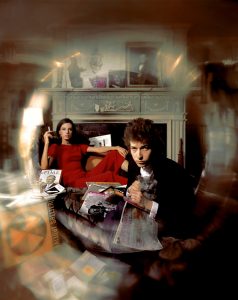
In January 1965, Kramer is a privileged witness in Columbia’s Recording Studio to see Bob plug in and “go electric”, recording the songs for his next album, Bringing it All Back Home. So, he seems a natural choice to shoot the photo for that album cover.

“I had never done an album cover”, explained a then 88 year old Daniel Kramer in November 2019, at a show in the New York photo lab Duggal Visual Solutions, “because I was just starting with professional photography, at the same time of shooting Bob.  I was excited to do the album cover, so I went to the art-director at Columbia Records and I said, “Bob would like me to do the album cover. How would you like me to handle it?”

And he said, ‘You can’t do it. […] Bob’s a superstar. I need a superstar photographer to do it.’

“That made sense, as I was just starting.”

Later that day, he has an appointment with Bob and his manager to have lunch. When Grossman informs about the cover, Kramer explains the situation. “So Albert stands up – he was an impressive person. He took me by the wrist. With his other hand he grabbed Bob’s wrist, pulled us both up and on our feet and he went to the elevator, pulling the two of us.  We got up to the art-director’s office… It was ugly. It was very, very ugly. But when we left I was going to shoot the album cover.”

Kramer wanted to present Bob Dylan at the centre of the universe, the chaos surrounding him, but he knows what’s going on. “Bob Dylan not only sees the world around him changing but also understands it, while it is blurry for everyone else.”
To accomplish this he thought of something he had developed for a fashion shoot. In 2019 Kramer explained the technique: “I remembered a picture that Richard Avedon made – that was a star photographer (laughs). What he did was a picture of Brigitte Bardot. He photographed her with her hair loose and then put his hand over the middle of the picture while the thing was closed, so that she wouldn’t get blurred. And he then moved the easel like this (makes a movement with his hand from side to side, without moving his wrist) and he made blurriness in her hair, like waves in the ocean.”

“So, I build a construction for my view camera – the one where you put a black cloth over your head – and then I put the glass in front of the lens on a 45 degree angle, so it won’t make any reflection back. I got black paper and scissors. I focused my picture […], I would take one picture with speed light and get everything. Then I would go to Tungsten light, so I could make a one-second exposure, while I turned the back of the camera. But I had to put a piece of black paper on the glass on the 45-degree angle.”

When the record company agreed to let Daniel Kramer do the shoot, they had one requirement: like on the cover of  The Freewheelin’ Bob Dylan, there has to be a girl in the photo. However, Bob wanted to keep his girlfriend out of the picture – especially since he is also seeing Joan Baez a lot. Sally Grossman happened to be in the office when this is being discussed and Dylan suggested she’d do it.

An arrangement is made to shoot at the home of Sally and Albert in Bearsville, near Woodstock. The choice for the setting is made for the former kitchen of the house: in front of the fireplace, around a chaise longue (a wedding gift from Mary Travers, of Peter, Paul and Mary).

Before the singer arrives, Kramer makes a polaroid, to explain the idea to Bob. “He immediately understood,” says the photographer. They need things ‘to move’, so Daniel suggests Bob get some favourite objects. “He chose some things, so did I and perhaps Sally brought some too. It became a bit busy – too made up – so we got rid of some.”

Besides books and magazines, there are a lot of albums in the picture: The Impressions, Robert Johnson, Lotte Lenya, Ravi Shankar and Eric Von Schmidt. What’s remarkable is that Dylan’s last album, Another Side of Bob Dylan, is way at the back: in the fireplace, as if he says: this is far behind me.

At the front, there’s an EP by the French singer Françoise Hardy: ‘Tous les garçons et les filles’. This is the second time Dylan honours Française: one of the poems at the back of Another Side was dedicated to her. The Extended Play is only visible in outtakes of the shoot.

You can find more details about the objects here: https://nobodysingsdylanlikedylan.com/bringing-it-all-back-home-uncovered

“I made 10 exposures,” Kramer explained. “That [cover shot] was the only time all three subjects were looking at the lens.” That was Bob, Sally and a cat. The cat looks scared, Sally looks bored and Dylan looks like he’s discovered that scowl. According to biographer Robert Shelton, the cat is called Rolling Stone (No Direction Home: The Life and Music of Bob Dylan – Beech Tree Books, 1986), but other sources think his name was Lord Growing.

“It was a very important cover for Bob,” Kramer knows. “And the reason is the first four albums he did, he’s a folk singer. He’s in folk singer clothes, he looks, you know, ‘Oh, woe is me.’
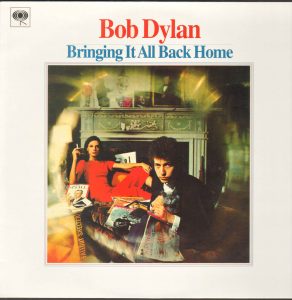
On Bringing It All Back Home, he’s a prince in his blazer and his beautiful cufflinks, sitting with this beautiful cat and a ravishingly beautiful woman behind him in a red dress. It was a change. Everything was changing.”

The message is as good as a middle finger presented to the people nagging about authenticity: bye-bye folkies, here’s a rock star!

John Berg

The pictures Daniel Kramer made were rectangular, but the art-director John Berg cut it at the bottom of the sofa because he felt it worked better as a square. He added a white border, the name of the performer in red and the title in blue. Contrary to the habits of the record company, the titles of the songs were not mentioned on the front – the first time Columbia allowed this.

On the back of the album’s sleeve are liner notes, written by Bob Dylan, plus a selection of six black and white photographs from Kramer’s portfolio.
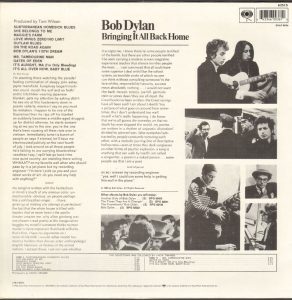
Clockwise from upper right:

  • Bob with Joan Baez (probably taken at the Convention Center, Philadelphia, on March 5th 1965);
  • Peter Yarrow taking with some policemen (on 5th Avenue);
  • Allen Ginsberg (in high hat) backstage at the Dylan concert in the McCarter Theater in Princeton, New Jersey, September 1964;
  • Dylan at a recording session for Bringing It All Back Home (January 1965);
  • Underground film maker Barbara Rubin (who introduced Dylan to Andy Warhol) massaging Bob’s head backstage at the McCarter Theater;
  • Dylan (in high hat) leaving the Town Hall in Philadelphia, after the concert on October 25th 1964.

Photographer Daniel Kramer and art-director John Berg are nominated for a  Grammy Award in the category Grammy Award for Best Recording Package 1966, but the honour goes to Robert M. Jones and Ken Whitmore, for Jazz Suite on the Mass Texts van Paul Horn.

Post scripts

Inspired by the success of the album sleeve, Kramer repeats the shoot a month later, for the cover of  Dylan’s experimental book Tarantula.
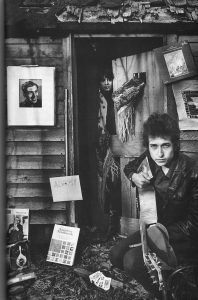
Once more the location is in Woodstock, but this time it’s in the garden of Peter Yarrow’s mother’s house.

On March 15, 1965 they gather objects around Bob, in front of a little shed. This time he’s accompanied by Sara.

It’s finally decided not to use this photograph  ‘Unfortunately, we did it too good,’ Kramer reminisces in his book Bob Dylan by Daniel Kramer (Citadel Books, 1967)

‘The photo resembled too much the one on Bringing It All Back Home.’
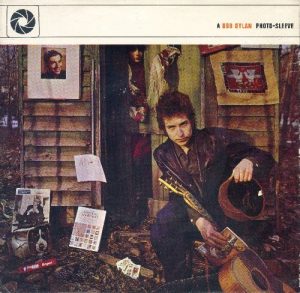
                                      The title of the album is probably a reference to the return to the musical roots of his youth and at the same time also the shift of the focus of new songs from universal concerns to more personal conflicts.

On the other hand, the title can also be interpreted as an answer to the British Invasion in the wake of The Beatles. The young Brits brought rock ‘n’ roll back to the American charts.

Dylan took up the gauntlet, setting a new standard for the genre and thus reclaiming it for the country of origin.
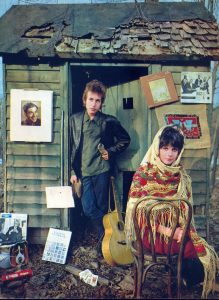
The latter interpretation may have been the basis for renaming the album in some European countries after the first single from the album: Subterranean Homesick Blues.

That title was even kept for a long time during the transition from LP to CD.


Other articles from this series

What else is on the site?

We have a very lively discussion group “Untold Dylan” on Facebook with over 3600 active members.  (Try imagining a place where it is always safe and warm).  Just type the phrase “Untold Dylan” in, on your Facebook page or follow this link 

You’ll find some notes about our latest posts arranged by themes and subjects on the home page of this site.  You can also see details of our main sections on this site at the top of this page under the picture.

The index to all the 603 Dylan compositions and co-compositions that we have found on the A to Z page.

If you are interested in Dylan’s work from a particular year or era, your best place to start is Bob Dylan year by year.

On the other hand if you would like to write for this website, or indeed have an idea for a series of articles that the regular writers might want to have a go at, please do drop a line with details of your idea, or if you prefer, a whole article to Tony@schools.co.uk

And please do note our friends at  The Bob Dylan Project, which lists every Dylan song in alphabetical order, and has links to licensed recordings and performances by Dylan and by other artists, plus links back to our reviews (which we do appreciate).

Posted in Uncategorized | 4 Comments

Why does Dylan like Van Morrison?

By Aaron Galbraith and Tony Attwood

Sir George Ivan “Van” Morrison OBE (generally known as Van Morrison) became known, at least to British fans of the R&B scene for songs such as Gloria and Baby Please Don’t Go.

And the band holds a particular place in Tony’s memory, because Tony played in a band that supported Them in their early days when “Baby Please Don’t Go” was a highlight of their performance.

The second Them album, not unreasonably called, “Them Again” contained a fine cover of Dylan’s “It’s All Over Now, Baby Blue”.

The band worked with Bert Berns (who wrote Twist and Shout and produced Baby Please Don’t Go) with the release of the hit single “Brown Eyed Girl”. After Berns’s untimely death, Morrison was given a very small amount of time to complete “Astral Weeks” by the record company. It sold slowly at first, but subsequently reached great acclaim.

What Van Morrison brings to music which is not commonplace in the music of Dylan is the soul side of R&B, as well as a link back to Irish music which undoubtedly appeals to Dylan.  “Astral Weeks” is often known as a stream-of-consciousness narrative, that undoubtedly appeals to Dylan.  He was indeed knighted both for his music and for his services to tourism in Northern Ireland.

Morrison moved out on his own in 1967, and after recording “Astral Weeks” Van and his wife moved out to Woodstock. “Van fully intended to become Dylan’s best friend,” she recalled. “Every time we’d drive past Dylan’s house … Van would just stare wistfully out the window at the gravel road leading to Dylan’s place. He thought Dylan was the only contemporary worthy of his attention.”

In 1971 Van toured the US and introduced the most amazing version of “Just Like A Woman” to his setlist.

In the summer of 1989 Bob and Van jammed together on Philopappos Hill, a place where the ancients believed the muses lived. The event was filmed for a documentary film called “One Irish Rover”. The pair played several Morrison tracks including “Crazy Love”, “One Irish Rover” and one of my favourite Morrison songs “Foreign Windows”.

Lastly, “Foreign Windows”, with Bob on harmonica

Also in 1989, Bob played an amazing version of the “Tupelo Honey” track “And It Stoned Me”.

https://youtu.be/OwXBnVjXXn0

The pair have toured together several times , including in 1998, with Joni Mitchell also sharing the bill. Some nights Bob would be the headliner, some nights it would be Van while Joni played the middle set each night. Here is a fine version of “Knockin’ On Heaven’ Door” from the same year.

In a 1991 Belfast show the pair joined up again to give us “Tupelo Honey”

Bob has this to say about the song, “”Tupelo Honey” has always existed, and that Morrison was merely the vessel and the Earthly vehicle for it.”

Then in 1998 at a New York show they joined up for a fantastic version of Merle Gilgore’s “More And More”. Dylan had previously performed the song with Joan Baez in 1965 at the Savoy Hotel and Morrison would subsequently include his take on his “Pay The Devil” album in 2006.

In 2002 Bob played Morrison’ 1991 track “Carrying A Torch” 6 times. The song was originally from the “Hymns To The Silence” album. Morrison also recorded the song as a duet with Tom Jones. So to finish things off here is Bob’s fantastic version.

https://m.youtube.com/watch?v=kh35OwZlStk

Undoubtedly it is the originality of, and Irish links in, Van Morrison’s music, plus the element of soul, that gives Bob Dylan a feel for his music.  Plus of course the fact that as a musician Van Morrison is highly original, following his own course, not being derailed by the whims or wishes of those around him.  They are also of the same generation, that must also help.

An index to the complete “Why does Dylan Like” series can be found here.

What else is on the site?

We have a very lively discussion group “Untold Dylan” on Facebook with over 3600 active members.  (Try imagining a place where it is always safe and warm).  Just type the phrase “Untold Dylan” in, on your Facebook page or follow this link 

You’ll find some notes about our latest posts arranged by themes and subjects on the home page of this site.  You can also see details of our main sections on this site at the top of this page under the picture.

The index to all the 603 Dylan compositions and co-compositions that we have found on the A to Z page.

If you are interested in Dylan’s work from a particular year or era, your best place to start is Bob Dylan year by year.

On the other hand if you would like to write for this website, or indeed have an idea for a series of articles that the regular writers might want to have a go at, please do drop a line with details of your idea, or if you prefer, a whole article to Tony@schools.co.uk

And please do note our friends at  The Bob Dylan Project, which lists every Dylan song in alphabetical order, and has links to licensed recordings and performances by Dylan and by other artists, plus links back to our reviews (which we do appreciate).
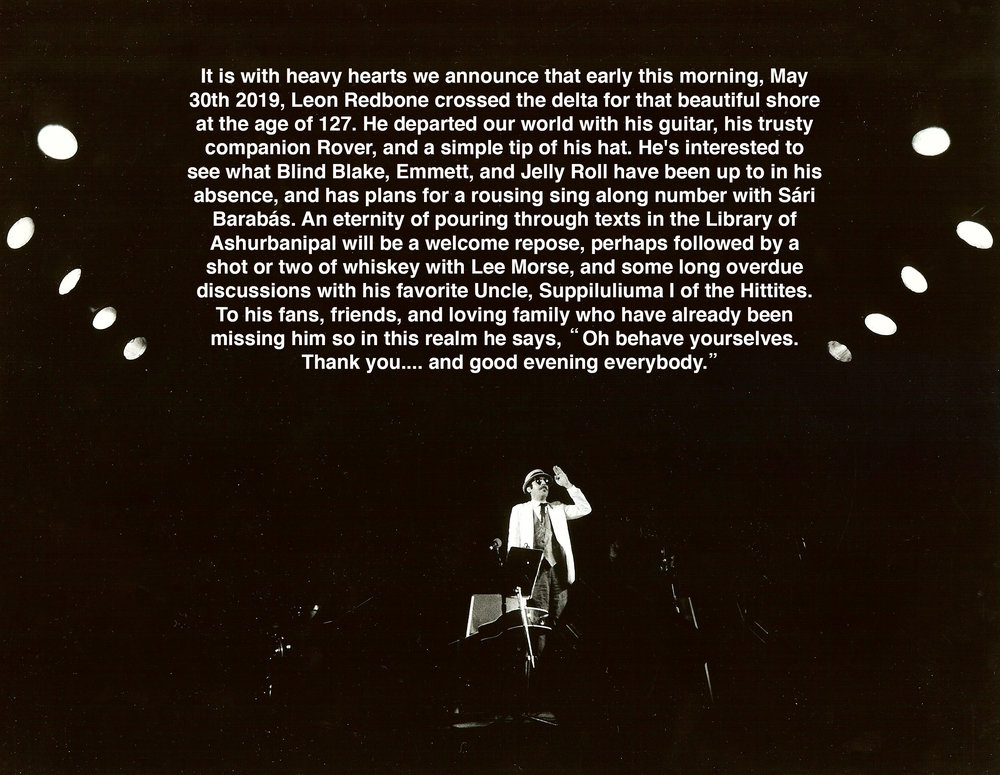
Posted in Uncategorized | 4 Comments