Red River Shore (1997) part 8:  He is no one

by Jochen Markhorst

VIII       He is no one

Well I’m a stranger here in a strange land
But I know this is where I belong
 According to legend, Sean Lennon, John and Yoko’s son, triggered the song. In 1989, Sean visits Billy Joel in the studio, they got talking and Sean complains about the misery of our time, AIDS and wars and crises, and how hard it is to be 21 in this day and age. Ah yes, says Joel, we felt the same when we were 21. “Yeah, but at least when you were a kid,” counters Sean, “you grew up in the fifties, when nothing happened.” Do you really believe that, asks the Piano Man in surprise. Korean War, the Hungarian Uprising, the Little Rock Nine… a lot of stuff happened. I don’t know anything about it, Sean answers. I have to write about this, Joel thinks, I have to explain to Sean’s generation that this kind of epic struggle is of all times.

“The chain of news events and personalities came easily—mostly they just spilled out of my memory as fast as I could scribble them down,” says Billy. “I had a chord progression that originally belonged to a country song I was trying to write, and I sandwiched the words into those chords—‘Harry Truman, Doris Day,’ okay, so far so good—but then I didn’t know what to call the song, and therefore what words to use in the chorus.”

Something with “fire”, anyway. Rolling Stone publisher Jann Wenner drops by the studio these same days and disapproves of both Dancing Through the Fire (“that sucks”) and Waltzing Through The Fire. In the end, Jann thinks “We Didn’t Start The Fire” is cool. The lyrics are a recapitulation of 118 events, loaded names, controversial films and influential books, interspersed with the now-familiar chorus, and it becomes a No. 1 hit. Not really one of Joel’s great masterpieces, but at least more sincere and exciting than the bland “The Fires Of Time” by The Bellamy Brothers.

Looking back, Billy Joel himself is not too proud of the song either;

“Even I realized I hated the melody. It was horrendous, as I said at the time; it was like a droning mosquito. What does the song really mean? Is it an apologia for the baby boomers? No, it’s not. It’s just a song that says the world’s a mess. It’s always been a mess, it’s always going to be a mess.”
(Fred Schruers – Billy Joel. The Definitive Biography, 2014)

Still, the song has a value. The Scholastic Weekly uses the lyrics as a teaching aid, and indeed, Sean Lennon’s generation now does see the 1950s a bit more nuanced, with less rose-tinted glasses.

And just like in “The Fires Of Time”, Dylan comes along in “We Didn’t Start The Fire” as a historical landmark;

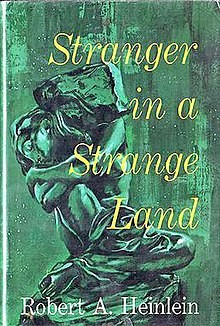
Hemingway, Eichmann, "Stranger in a Strange Land"
Dylan, Berlin, Bay of Pigs invasion
"Lawrence of Arabia", British Beatlemania
Ole Miss, John Glenn, Liston beats Patterson
Pope Paul, Malcolm X, British politician sex
JFK – blown away, what else do I have to say?

… when Joel, in his – almost chronological – enumeration, has arrived at the 1960s. Between Hemingway’s suicide, the Eichmann trial, the construction of the Berlin Wall and the Bay of Pigs Invasion – so we are in 1961, the year Dylan scored his record deal. And the year in which the infamous “Stranger In A Strange Land” was published, the overwhelming socio- critical science fiction novel by Robert Heinlein. Bowie didn’t like it (“It was a staggeringly, awesomely trite book”), but the novel is on the bookshelf of the front fighters from the sixties scenes, as David McGowan shows in his wonderful book Weird Scenes Inside The Canyon (2020). Zappa is a fan, as are Gene Clark, Grace Slick, Charles Manson, Jim Morrison and David Crosby, to name but a few. Heinlein himself lives in Laurel Canyon (at 8775 Lookout Mountain Avenue) during those years, and not only his book, but he, personally, too lingers at the crossroads of revolution, hippie rock, avant garde and Hollywood.

It seems that Dylan is thinking of Heinlein’s protagonist Valentine Michael Smith when he opens the sixth verse of his “Red River Shore” with the overused expression stranger in a strange land. The phrase itself, of course, has been around for 27 centuries or so (already spoken by Moses in Exodus 2:22, “And she bare him a son, and he called his name Gershom: for he said, I have been a stranger in a strange land”, and Moses probably didn’t get it from himself either), and is almost always used as Moses intended: to express displacement, literal non-home-ness and consequent discomfort. The feeling that even Bram Stoker’s Count Dracula fears (“But a stranger in a strange land, he is no one”), the feeling that Mark Twain’s Chinese alter ego Ah Song Hi incorporates into a letter home with words that we also hear in Dylan’s “I Was Young When I Left Home”: “I was to begin life a stranger in a strange land, without a friend, or a penny, or any clothes but those I had on my back” (Not a shirt on my back, not a penny on my name, sings He-who-never-wrote-a-letter-to-his-home in Dylan’s song). Madonna (“Wash All Over Me”), Herman Melville, Pete Townshend, U2, journalists, Robbie Robertson (in the beautiful, atmospheric Lanois production “Somewhere Down The Crazy River”), Albert Camus and Sophocles… the expression is used gladly and often in all times in all corners of the cultural spectrum – and always to express that something or someone does not belong here.

But Heinlein’s protagonist in Stranger In A Strange Land, Michael Smith, is a stranger who, as Dylan says, knows that this is where he belongs, here, on Earth. Michael is born aboard a spaceship on its way to Mars. The landing fails fatally and baby Michael is the only survivor. Raised by Martians, he is discovered twenty-five years later by a next, this time successful, Mars expedition and taken back to Earth. He belongs here – but remains an alien. About the situation Mowgli finds himself in when he goes to the village, how Tarzan feels like Lord Greystoke, the state of mind of the civilised savage John in Brave New World and of the surveyor K. in Kafka’s The Castle: “But I know this is where I belong”.

It is a beautiful, both poetic and Kafkaesque situation sketch, stranger here in a strange land, but I know this is where I belong. Uncanny and frustrating, meaningless and indeterminate; it is the existentialist version of an unrequited love – like the love for a girl from the Red River shore.


To be continued. Next up: Red River Shore part 9: A floating nothing

———

Jochen is a regular reviewer of Dylan’s work on Untold. His books, in English, Dutch and German, are available via Amazon both in paperback and on Kindle:

Untold Dylan was created in 2008 and is currently published once or twice a day –  sometimes more, sometimes less.  Details of some of our series are given at the top of the page and in the Recent Posts list, which appears both on the right side of the page and at the very foot of the page (helpful if you are reading on a phone).  Some of our past articles which form part of a series are also included on the home page.

Articles are written by a variety of volunteers and you can read more about them here    If you would like to write for Untold Dylan, do email with your idea or article to Tony@schools.co.uk.

We also have a Facebook site with over 14,000 members.
Posted in Uncategorized | 1 Comment

A Dylan cover a Day: If you Gotta Go, please go and do something different

By Tony Attwood

There are some Dylan songs that I really think ought to be covered by other artists, but which no one seems to want to try.  “If you ever go to Houston” is one such.   Listening to it today, I can just hear what I would want to try if I were a) a lot younger and b) still playing in a band.   Indeed I think after finishing this little piece I might pop downstairs and see what I can do on the piano.

So I moved on to “If you gotta go” but before I get to that, I would add that while looking just to see if anyone had had a bash at Houston, I did discover this from Don Gibson recorded in 1976.  The song has nothing to do with Bob’s composition, but I wonder if Bob overtly or subliminally took his title from there.

Mind you, “Midnight special” also has the line “If you ever go to Houston”  so maybe that was the source.  Bob was certainly there having been invited to play harmonica on the original recording of that song with Harry Belafonte.   Here’s one of the run-through takes with Bob…

All of which finally brings me on to “If you gotta go go now”.

The first-ever cover version was by The Liverpool Five.

Despite their silly name (well, I think it is silly, but then I’m a Londoner, so I would do) they were one of those warm-up bands that seemed to turn up all over the place playing at concerts of The Lovin’ Spoonful, Stevie Wonder, The Kinks and The Rolling Stones, the Beach Boys, The Righteous Brothers and The Byrds.  And probably a lot more.

As for the music – for me, it’s too much of a plod which takes all the fun out of the song.

The next one is also not to my taste but my goodness it really made me smile…

Oh that plinky guitar in between verses!

One of the funny things about this song is that it seems to inspire people to do all sorts of funny things with it – if you see what I mean.  Just listen…

Somewhat better, because the singer understands what the words are about, is the Cowboy Junkies version.  The only problem is the band are seemingly fighting with each other to be part of the overall sound.  Didn’t they have producers in those days?

But there is always someone with some musical intelligence who can apply him or herself to making more out of the composition.  And finally, I found one (and you should hear some of the covers that didn’t make it to this edition, some of them really are pretty lacking in understanding of what music is actually about.)

And yes I would say this version has been worth waiting for.

Tony Skeggs is a Cavern Club performer and there’s a little bit about him through that link.

But I must include the Fairport Convention version, just because it is so silly and funny and just whacky.   And I always love whacky.

Here’s a list of most of the articles from this series…

Posted in Uncategorized | Leave a comment

Never Ending Tour, 2004, Part 4 More jazz, regulars and rarities

This is part of a series covering the whole of the Never Ending Tour.  You can find an index to all the articles here.

By Mike Johnson (Kiwipoet)

When I came to the end of Part 2 of my survey of 2004, which I entitled ‘The Jazz Connection,’ I thought I had done a pretty good job of covering the jazzier side of Dylan’s music for that year.

In fact, I’d missed out big time by forgetting two songs that Dylan did with the Wynton Marsalis Band, a big jazz band with a traditional line up of horns as in the late 1940s. The reason for my slip, or rather my poor excuse, is that these two performances were not part of Dylan’s regular tour schedule, not part of the NET, but part of a project by the Wynton Marsalis Band to perform with a number of different artists. Dylan took time out from the NET in early July to make these recordings, which are live.

So here they are. I have to say that Dylan sounds rather subdued, if not constrained. He sounds oddly flat. He certainly doesn’t sound as relaxed as he does with his regular band. These performances are interesting, rather than exciting. My own feeling is that Dylan would have needed more performing with this band to properly find his feet. He does sound as if he is not entirely in his element, and perhaps a little nervous; Wynton Marsalis is one formidable cat.

I’m also rather surprised that Dylan chose two of his old stand-bys, ‘It Takes A Lot to Laugh, It Takes A Train to Cry’ and ‘Don’t Think Twice’ rather than his newer, jazzier songs like ‘Million Miles’ or ‘Summer Days.’ These might have been a better fit.

Here’s ‘It Takes A Lot to Laugh’

At least that one is a blues, and swings. ‘Don’t Think Twice’ sounds like even a more awkward fit.

Don’t Think Twice

Back with the regular NET, I also missed this jazzy performance of ‘Sugar Baby’ from “Love and Theft”. The difference from the album version is that here (Pittsburgh, 7th Nov) Dylan gives the song more swing. It becomes less dirge-like. The song is a melancholy reflection on a past relationship with that wider context that Dylan is so masterful at providing:

Every moment of existence
seems like some dirty trick
Happiness can come suddenly
and leave just as quick
Any minute of the day the bubble could burst
Try to make things better for someone,
sometimes you just end up making it a thousand times worse

Sugar Baby

I finished off Part 2 with two wonderful performances of ‘Summer Days,’ one from the famous Glasgow concert and the other from Rochester, equally brilliant. If you didn’t catch those, don’t miss them. However, I missed out the most interesting, if not the best. At Comstock Park (24th August), Dylan played the song with well-known jazz guitarist Tommy Morrongiello. Morrongiello rips into it and Dylan does his usual sterling performance. I might have missed this because the recording is not quite as crisp as those from Glasgow and Rochester.

Summer Days

Enough with my sins of omission! Hovering close to my list to include in the Jazz Connection post was this rocking version of ‘To Be Alone With You.’ I have a fondness for the rip-snortin performance of this song from 2003, where Dylan appears to be channelling Jerry Lee Lewis, and while Dylan’s vocal is similar in this 2004 performance, the backing is quite different, and reminiscent of early jazz-influenced rock and roll. Listen to the backing carefully, and you can imagine it played with horns, late jump jazz style. If the original ‘Rock around the Clock’ man, Bill Haley, had played this song he might have done it like this. Of course, he could never have sung it like this. (20th March, Toronto)

To Be Alone With You

Of course, there are crossovers between blues and jazz. Each has influenced the other in their evolution. In 1963 the great blues singer Sonny Boy Williamson released a song called ‘Help Me,’ which built a strong blues riff that Dylan was to use in these later versions of ‘It’s All Right Ma.’   If you want to hear the origin of that riff, and Sonny Boy’s recording can be found here.

Interestingly, thinking of Dylan’s most recent album, the Blues Foundation describes Sonny Boy as ‘a strong-willed bluesman known for his rough and rowdy ways.’

However, whether or not that riff entirely suits ‘It’s All Right Ma (I’m Only Bleeding)’ is another matter. Maybe I can’t get past the fast-paced, solo acoustic versions Dylan played right from the start in 1964, and which you can hear with wonderful effect in 1991 (See NET, 1991, Part 1), but this later arrangement is too rigid, even though Dylan gives it a bit of swing. What makes ‘Help Me’ work is the simplicity of the lyric and the short lyrical line. Neither of those things are true of ‘It’s All Right Ma,’ the words don’t always fit easily into the musical line, and the tempo may be a little lumbering for the song. That’s a personal take; it’s still a powerful song, powerfully performed. This is another one from Glasgow.

It’s All Right Ma (A)

Much as I like the Glasgow performance, I think it is eclipsed by this one from Amherst, 20th Nov. A superior vocal performance?

It’s All Right Ma (B)

Another protest song that Dylan gave a bit of a swing in 2004 is ‘Hard Rain.’ You could almost waltz to it. In that respect it’s moved a long way from the original folky ballad of the original. Giving a lilt to it like this certainly moves it along, although it’s far from jazz. I’ve included it here because of the outstanding nature of this acoustic performance. There’s nothing old and tired about this performance, from Motil, 7th October. Dylan tears out the vocal like there’s no tomorrow (and maybe there isn’t). Listening to this masterpiece, inadequately described as an ‘anti-war’ song (it is, but it is also much more than that), I can’t help thinking of the present war in Ukraine. I saw a heart-rending picture of a child with a rifle from that war, and thought of that line from the song ‘I saw guns and sharp swords in the hands of young children.’

Time doesn’t age this song, not as long as we are still ‘wounded in hatred’ and war continues. The song has never been timelier. Its images feel like they are hot off the press.

Hard Rain

We switch countries to catch this performance of ‘I’ll Be Your Baby Tonight’ from the Glasgow concert, and the light-hearted harp break that kicks the song off. I was never going to be able to fit in all of Dylan’s outstanding harp solos into one post, although I got quite a few of them into my last post, NET, 2004, part 3. I had a few songs left on the cutting room floor from that post, and ‘I’ll Be your Baby Tonight’ was one of them, as the harp work is brief enough, but it’s a great mood setter. This is a nice change of pace.

I’ll be your baby tonight.

Now for a rarity. We have to go back to 1995, and before that to 1992, to find ‘Unbelievable’ from Under The Red Sky. It’s a hard-hitting rocker aimed, as is so much of Dylan, at the rank, godless materialism of modern America:

It's undeniable what they'd have you to think,
It's indescribable it can drive you to drink.
They said it was the land of milk and honey,
Now they say it's the land of money.
Who ever thought they could ever make that stick.
It's unbelievable you can get this rich this quick.

That’s as trenchant as anything Dylan wrote during his protest era. Just as trenchant, hitting another familiar Dylan theme, the imminence of war, we find this:

Kill that beast and feed that swine,
Scale that wall and smoke that vine,
Feed that horse and saddle up the drum.
It's unbelievable, the day would finally come.

Dylan is the master of fusing the political and the personal. His anguish at the state of the world slips easily over into a personal anguish. This is what that godless materialism has done to our relationships:

Once there was a man who had no eyes,
Every lady in the land told him lies,
He stood beneath the silver skies
And his heart began to bleed.
Every brain is civilized,
Every nerve is analyzed,
Everything is criticized when you are in need.

The ending is as dark as you might care to find.

Turn your back, wash your hands,
There's always someone who understands
It don't matter no more what you got to say
It's unbelievable it would go down this way.

That’s as true today as it was in 1991.

I’m quoting at length here, partly because the chance won’t come again, this is the last time Dylan will perform the song, and partly because to my mind these are some of the finest lyrics Dylan wrote. It’s too easy to miss them because of the hectic pace of the song. I keep imagining how the song might sound if he slowed it down a bit, lingered over those incomparable lyrics.

You go north
And you go south
Just like bait in a fish’s mouth
Must be living in the shadow of some kind of evil star
It’s unbelievable, it would get this far

Again, thinking of Ukraine, these lines give me a shiver.

Unbelievable

I think that ‘I Believe in You’ qualifies as a rarity, although it was performed twelve times in 2004, having something of a revival in 2003/4. This passionate avowal of faith belongs to Dylan’s gospel period (1979 – 81), although taken out of context, it doesn’t have to be seen as a Christian song, more like a great love song. It is however a demanding song in terms of the vocal. We have to be convinced of the intensity of that faith that is unshaken by anything and everything that the world can throw at it, when you are forsaken by friends and when ‘white turns to black.’

This Glasgow performance achieves that, no question.

I believe in you

That’s it for now. Back soon with a look at of the rockers Dylan performed in 2004.

Kia Ora.

Posted in Uncategorized | 1 Comment

Red River Shore (1997) part 7: Please try to make it rhyme

By by Jochen Markhorst

VII        Please try to make it rhyme

Well we’re living in the shadows of a fading past
Trapped in the fires of time
I’ve tried not to ever hurt anybody
And to stay out of the life of crime
And when it’s all been said and done
I never did know the score
One more day is another day away
From the girl from the red river shore

Cosmologists will agree. Before the Big Bang there was an endless, timeless Nothing, then a brief flash of light, gravity, sulphur storms, atoms, C-beams glittering in the dark near the Tannhäuser Gate and event horizons, and after this brief flash, the flash in which we exist, the All shrinks back to a singularity and there will be an endless, eternal Nothing again. Nothingness without any Something, so also without matter, time or light. Nabokov puts it a little more simplified: “Life is just one small piece of light between two eternal darknesses,” and Dylan a little more poetically: “We’re trapped in the fires of time.”

This fifth stanza of Dylan’s “Red River Shore” illustrates (finally) that the song is a Time Out Of Mind song. After the New Morning rhetoric of the first verse, the Freewheelin’ imagery of the second, the Nashville Skyline clichés of the third, and the Street-Legal poetry of the fourth, we’re back to the world-weariness of “Standing In The Doorway”, the melancholy of “Not Dark Yet”, the despondency of “Cold Irons Bound”. Just take the opening line.

Living in the shadows of a fading past” is a great, classic line with which Dylan announces in eight words the overarching theme of his twenty-first-century oeuvre. It echoes À la recherche du temps perdu and Neil Young’s Dylanesque gem “Time Fades Away”, the old protest song “Which Side Are You On?” (are we living in the shadow of slavery) and Original Sin, it has the couleur of every film noir between The Maltese Falcon and Touch Of Evil, and it would have been an even nicer album title than Time Out Of Mind.

Classical, almost archaic beauty – though therefore not too original. All the stronger hits the subsequent image, trapped in the fires of time.

“Fires of Time” is a rather unusual image. Which is remarkable, really – after all, it’s a not too far-fetched, extremely strong and very visual metaphor to express the destructive power of Time. It has the potential to trigger a plethora of related metaphors with burning, heat, flames and smoke, with the added bonus of the religious, autumnal connotation of ashes to ashes. But Dylan resists that temptation – this one, remarkable trapped in the fires of time remains unexplored, and colleagues don’t pick it up either after this. Yes, a single exception like The Bellamy Brothers song makes an attempt. Little successful, unfortunately – their “The Fires Of Time” (on The Anthology, Vol. 1, 2009) is a somewhat overcooked throwaway with a tiresome enumeration of historical milestones à la Billy Joel’s “We Didn’t Start The Fire”, but full of stylistic embarrassments (“The Roman Empire fell, they found some dinosaur bones”).  And with a modest salute:

From Buddy Holly to Hendrix
From Haggard to Jones
From Elvis to Dylan
From The Beatles to The Stones
Well, the guitars twang
And the poetry rhyme
And they rocked our world
Right through the Fires of Time


… with some awkwardly mixed away, presumably Hendrixesque-meant guitar fury after “Hendrix”, and ditto, presumably Dylanesque-meant harmonica honking after “Dylan”.

The Bellamys are forgiven – they have given the world “Let Your Love Flow” and “If I Said You Had A Beautiful Body Would You Hold It Against Me”, so they can do whatever they like. And in their defence: Dylan doesn’t do any better with fires of time either.

The remainder of this fifth stanza, after that intriguing and potentially fruitful opening, is disappointingly flat – and stylistically rather weak, if we are honest. I’ve tried not to ever hurt anybody and to stay out of the life of crime is a bumpy verse line with clichés nonchalantly pasted together, and the following And when it’s all been said and done I never did know the score is of the same ilk (though less bumpy). It even comes awfully close to filler lyrics; as if the song poet has already designed the beautiful closing line One more day is another day away from the girl from the red river shore, and for now just bridges the road thereto with rather haphazard grab finds from his inner jukebox.

I’ve tried not to ever hurt anybody has a somewhat alienating “John Wesley Harding” echo, for example (he was never known to hurt an honest man), although it is quite likely that Dylan has long since forgotten that song. Oh well, he knows the word combination from dozens of other songs too, of course. Charley Pride could, after borrowing I could never be free in the third verse, be a candidate supplier again (from “You’re So Good When You’re Bad”, his no.2 hit from 1982). But another Nashville Cat probably appeals more to Dylan;

So let me say this, I never tried to hurt anybody
Though I guess there's a few, that I still couldn't look in the eye
If I've got one wish, I hope it rains at my funeral
For once, I'd like to be the only one dry

… the bittersweet, funny “I Hope It Rains At My Funeral” from 1971. By Tom T. Hall, who is so wittily dismissed by Dylan in his 2015 MusiCares Speech. He recalls reading an interview in which Tom was “bitching about” a James Taylor song. Coincidentally, Dylan tells, he was just listening to a song by Tom T. Hall on the radio; “I Love” – indeed a quite corny, über-sentimental drag of a song;

“Now listen, I’m not ever going to disparage another songwriter. I’m not going to do that. I’m not saying it’s a bad song. I’m just saying it might be a little overcooked. But, you know, it was in the top 10 anyway.”

Still, he does quote effortlessly half the lyrics – and Tom T. Hall’s name is of course also under “I Washed My Face In The Morning Dew” and especially the successful “Ode to Billie Joe” rip-off “Harper Valley P.T.A.”, so The Storyteller probably does have some credit with Dylan.

Somewhere in that same corner of that inner jukebox, Dylan also finds the other clichés, or so it seems. When it’s all been said and done we know from a hundred songs, and if Dylan’s muse indeed does hang around in the country corner at the moment, then it may have been lifted from Charlie Rich’s “Who Will The Next Fool Be” – or picked up via Jimmie Davis’ evergreen “It Makes No Difference Now” (recorded by everything and everyone from Gene Autry to Willie Nelson and from Fats Domino to Merle Haggard, but the ultimate version is Ray Charles’). Although Dylan himself will attribute this particular line to Buddy Holly’s “I’m Gonna Love You Too”;

“Buddy Holly. You know, I don’t really recall exactly what I said about Buddy Holly, but while we were recording [Time Out Of Mind], every place I turned there was Buddy Holly. You know what I mean? It was one of those things. Every place you turned. You walked down a hallway and you heard Buddy Holly records, like “That’ll Be the Day.” Then you’d get in the car to go over to the studio and “Rave On” would be playing. Then you’d walk into this studio and someone’s playing a cassette of “It’s so Easy”. And this would happen day after day after day. Phrases of Buddy Holly songs would just come out of nowhere. It was spooky. But after we recorded and left, you know, it stayed in our minds. Well, Buddy Holly’s spirit must have been someplace, hastening this record.”
(Murray Engleheart interview for Guitar World, 1998)

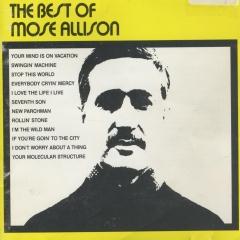
“Phrases of Buddy Holly songs would just come out of nowhere.” And then Elvis probably does supply I never knew the score (from Lonnie Donegan’s “I’ll Never Fall in Love Again”). Or a dozen other songs, of course; the phrase is as generic as the life of crime in the verse line before. It is tempting, though, to think that Dylan subconsciously is revealing a secret love for the immortal Mose Allison there, and for his superior “Your Mind Is On Vacation”;

You're quoting figures, you're dropping names
You're telling stories about the dames
You're always laughin' when things ain't funny
You try to sound like you're big money
If talk was criminal, you'd lead a life of crime
Because your mind is on vacation and your mouth is
Working overtime

Mose Allison – Your Mind Is On Vacation

… not a very likely scenario, no. But if so, Dylan must have taken the last line to heart: “If you must keep talking please try to make it rhyme”.

To be continued. Next up: Red River Shore part 8: He is no one

————————-

Jochen is a regular reviewer of Dylan’s work on Untold. His books, in English, Dutch and German, are available via Amazon both in paperback and on Kindle:


Posted in Uncategorized | 7 Comments

King Crimson And Yellow Dylan (Part II)

By Larry Fyffe

Previously:

So it can be posited that the lyrics of “The Court Of The Crimson King” sets up a tournament  between the purplish-red king, and the “yellow jester”; that is, Bob Dylan who  alludes to biblical verses in his songs:

On soft grey mornings widows cry
The wise men share a joke
I run to grasp divine signs
To satisfy the hoax

(KIng Crimson: The Court Of The Crimson King)

According to the Holy Bible, King Ahab, marries Jezebel from the land of the Philistines and Phoenicians; to please her the king allows the worship of Baal, a fertility god, and along with that the statue of the Golden Calf. As a consequence, Northern Israel (Samaria) becomes separated from King Solomon’s once united country.

The next king of Samaria sustains an injury, and  seeks the aid of Baalzebub. Angered, the Hebrew God of southern Judah tells Elijah to challenge the strength of Baalzebub by smiting the northern king’s soldiers; no Jesus-type is prophet Elijah – he calls fire down upon their heads.

Then Elijah says to the wayward king:

Forasmuch as thou has sent messengers 
To enquire of Baalzebub ...
Therefore, thou shalt not come down off that bed ...
But shall surely die
(II Kings: 1)

The band members of ‘King Crimson’ take on the role of  Baal-ze-bub, the Lord of the Flies, the bringer of plagues upon the wicked who do not worship him or the Golden Calf:

I wait outside the pilgrim's door
With insufficient schemes
The black queen chants
The funeral march
The cracked brass bells will ring
To summon back the fire witch
To the court of the crimson king
(King Crimson: The Court Of The Crimson King)

Alluding to:

The cracked bells, and washed-out horns
Blow into my face with scorn
(Bob Dylan: I Want You)

In the Bible, little David upstages Goliath, the Philistine giant who has the god Baalzebub on his side.

More than once Dylan struggles with the symbol of death known as Baalzebub/Beelzebub – transformed into Satan by the authors of the New Testament.

Therein, strict Jewish priests accuse the Christian messiah Jesus of having the Lord of the Flies on His side:

But when the Pharisees heard of it, they said
This fellow doth not cast out devils
But by Beelzebub, the prince of devils

 (Matthew 12: 24)

Taking on the role of a modern-day Elijah, Dylan, ahead of Crimson, burlesques biblical stories to criticize America’s military involvement in the Vietnam mess:

The king of the Philistines his soldiers to save
Puts jawbones on their tombstones, and flatters their graves
Puts the pied pipers in prison, and fattens their slaves
Then sends them out to the jungle
(Bob Dylan: Tombstone Blues)

Posted in Uncategorized | 3 Comments

A Dylan Cover a Day: If not for you, and a rant against prosody

By Tony Attwood

A nice bouncy version from Barry Hay to begin which has a surprise sudden ending.  I thought they’d keep it going longer!

And as the second example, something completely different – which I think shows the beauty of this song.  It is very simple, and as such lends itself to be interpreted in many different way.

But I am really not at all sure about the sudden introduction of the timpani in the middle 8; it seems a bit too obvious in terms of “the sky would fall”, although the rest is beautifully re-imagined.  After all the careful delicacy it sounds like one of those moments when the producer insists on having his say.

Indeed, why is it that otherwise fully competent arrangers and producers do suddenly feel the need for prosody – where the sound has to reflect the meaning of the words.  It invariably sounds false to me, and indeed makes me think that either the arranger or producer had incredibly limited musical knowledge, or one or the other of them is treating the audience with utter contempt.   We are all able to understand the meaning of the song without having a musical illustration to help us along.  I do wish they’d stop doing it.  Dylan never feels the need for it – so why do the re-interpreters?

What is needed is imagination.  And just to show that even with very simple songs it is possible to go in all sorts of directions, this is Terrance Simien and the Zydeco Experience.

I’ll show my ignorance here by confessing I didn’t know what Zydeco meant – so I looked it up on Wiki.  You probably knew this already but if not, here is their take…

Zydeco  is a music genre that evolved in southwest Louisiana by French Creole speakers which blends blues, rhythm and blues, and music indigenous to the Louisiana Creoles and the Native American people of Louisiana.”  There is plenty more here.

And finally this is the one that gave me the most enjoyment from a little bit of searching around for versions I’d not heard before.  It is just so unpretentious, and even the sudden introduction of harmonies in the vocal works elegently.

Indeed now I come to think of it, elegance is the key to this song.

Here’s a list of most of the articles from this series…

Posted in Uncategorized | 2 Comments

Red River Shore (1997): VI  Misery is but the shadow of happiness

by Jochen Markhorst

VI         Misery is but the shadow of happiness

Well I’m wearing the cloak of misery
And I’ve tasted jilted love
And the frozen smile upon my face
Fits me like a glove
But I can’t escape from the memory
Of the one I’ll always adore
All those nights when I lay in the arms
Of the girl from the red river shore

In Overwatch, one of Blizzard Entertainment’s most successful multiplayer first-person shooter games, we hear it again, spoken by the Japanese fighting hero Hanzo: “If you sit by the river long enough, you will see the body of your enemy floating by.”

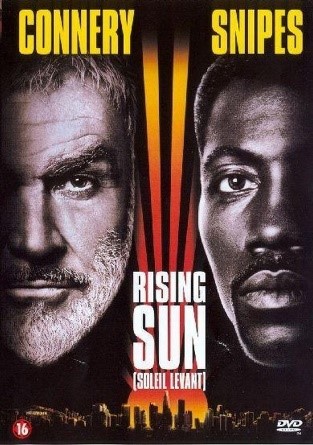
Presumably copied from the fairly successful crime thriller Rising Sun (1993), in which Sean Connery plays a former police captain, John Connor, expert on Japanese affairs. Throughout the film, “Connor-san” sprinkles ancient Japanese wisdom and proverbs, and towards the end of the film there is an appropriate moment to throw in the floating corpse aphorism. And the scriptwriter, in turn, presumably took it from James Clavell’s bestseller Shōgun (1975), where it is also presented as a “Japanese wisdom”.

Just as often it is attributed to – of course – Sun Tzu, to The Art Of War, and the Most Erudite Man of the Western World, Umberto Eco, muddies the already murky waters further in the Postscript to The Name Of The Rose (1980): “But there is an Indian proverb that goes, ‘Sit on the bank of a river and wait: your enemy’s corpse will soon float by’.”

Enough confusion, all in all, to drive Western sinologists in particular to a mild state of frenzy. Especially since the original Chinese – not Japanese – wisdom is a completely unsuccessful translation of Confucius; “The time is passing like a river running day and night,” is the best approximate translation – the Chinese characters for passing time can be understood as passed away, deceased, and from there a well-meaning, but slightly too creative translator went wrong. In any case, Confucius does not speak at all of floating corpses.

The beautiful metaphor wearing a cloak of misery has a similar life cycle. Throughout the centuries, it has been attributed to literary gifted journalists (New York Times reporter Paul Montgomery, 1968), to nineteenth-century Polish authorities warning against dziady, criminal beggars who swindle respectable citizens “under the cloak of misery”, to French composer Gabriel Fauré (“Je ne me sense plus qu’un affreux manteau de misère et de découragement sur les épaules – I feel that there is on my shoulders nothing more than a terrible cloak of misery and discouragement,” from a letter dated August 1903, discussing his encroaching deafness), and whatnot. And to Dylan, of course.

However, the source is as old as that floating corpse: Confucius’ colleague and contemporary Lao Tze. It may comfort the easily appalled sinologists that the quotation has survived more than twenty-five centuries undamaged:

Misery is but the shadow of happiness
Happiness is but the cloak of misery

… from the immortal Tao Te Ching, the most important writing of Taoism, The Book Of The Simple Way.

Still, it’s not very likely that the songwriter Dylan, leafing through the Tao Te Ching, put a tick in the margin here. This whole fourth verse seems, after three verses full of country and folk clichés, a deliberate attempt to leave the Simple Way, and to take a turn to the narrow, thorny path. So: not I’m feeling blue, but I’m wearing the cloak of misery. Not: my baby left me, but I’ve tasted jilted love. And not: I’ll remember you, but I can’t escape from the memory of the one I’ll always adore.

All right, that last line may have a vague echo of Hank Thompson’s “I Cast A Lonely Shadow”, which, not only because of its lyrics, but also because of its sound, could be a candidate for a place on Dylan’s Time Out Of Mind;

I sit and watch the candle and the flicker of the flame 
My writhing shadow twists and turns as though it is in pain  
I'm trying to escape the memory my mind recalls  
And I cast a lonesome shadow on these lonely, lonely walls

…and, of course, “jilted love” and variants with “jilted” can also be found in Dylan’s jukebox. In Freddie King’s “Woman Across The River”, for instance (1974, with a band, incidentally, consisting only of Dylan disciples: Jim Keltner, Leon Russel and Carl Radle). Or, to stay more in the Hank Thompson mood, Red Foley’s “Jilted” (also a hit for Teresa Brewer in 1954). Even more attractive, though, is the idea that Dylan was inspired by his art brother Heinrich Heine, one of the greatest Jewish poets of the 19th century;

Wandere! 
Wenn dich ein Weib verraten hat, 
So liebe flink eine andre; 
Noch besser wär es, du ließest die Stadt 
Schnüre den Ranzen und wandre!

Away!
If by one woman thou'rt jilted, love
Another, and so forget her ;
To pack up thy knapsack, and straight remove
From the town will be stil better

The same goes for the Cole Porter-like the frozen smile upon my face fits me like a glove. Poetic and so visual, as Dylan would say, and not too hackneyed. The formidable Etta James snarls a frozen smile (in the funky “Power Play”), and Dylan may have made a mental note when listening to the overly ambitious “The Modern Adventures of Plato, Diogenes and Freud” that his faithful organist Al Kooper wrote for the debut album of Blood, Sweat & Tears in 1968;

And the clock on the wall is a bore
As you wander past the door
And find him lying on the floor
As he begs you for some more, 
you frozen smile

… where the poet Dylan will at least notice the unusual aaaab rhyme scheme, that he himself once used for “Love Is Just A Four-Letter Word”. But the loudest association, and probably also a trigger for Dylan, is the evergreen “Behind A Painted Smile” (1968) by the indestructible Isley Brothers, who have now entered their eighth decade. With a protagonist who deals with adversity in a tougher way than Dylan’s protagonist does: “If I can’t have your love, I don’t need your sympathy.

However, too thin all of it, to be worthy of the honourable label “paraphrase”. And that cloak of misery is an absolutely unusual metaphor in the art of song. No, the song poet Dylan has now sat on the bank long enough, watching the river flow, has seen all kinds of wreckage float by, and now takes a turn to the narrow, thorny path.

To be continued. Next up: Red River Shore part 7: Please try to make it rhyme

—————–

Jochen is a regular reviewer of Dylan’s work on Untold. His books, in English, Dutch and German, are available via Amazon both in paperback and on Kindle:


Posted in Uncategorized | 2 Comments

Mixing-Up The Fluids: Red Crimson And Yellow Dylan

By Larry Fyffe

The Sound School of Dylanology tends to wash away the historical meaning of words by focusing on the sound loosed by the alliteration, rhythm, and rhyme, and the beat and tempo of the music that accompanies them.

The School is hallmarked by its pointing out Dylan’s comments on the sound in his lyrics and music as if the singer/songwriter/musician intends that any inherent meaning of words doesn’t mount to a hill of beans.

Comparing Dylan’s “Gates Of Eden” and King Crimson’s “Court Of The Crimson King” clarifies matters somewhat. Crimson out-Dylan’s Dylan whose diction can be described as Baroque with extended and, at first glance, rather odd metaphors that are quite often black in tone.

The poetry of William Blake is brought to mind in many of the works of both artists.

Out-Dylaning Dylan however does not make the Crimson song senseless; words, regardless of what the writer’s or speaker’s intentions may be or not be, take on a life of their own. The brain of the reader or listener to the songs will more likely than not seek out a unity in the fragmented, seemingly sometimes meaningless, diction chosen by the artists.

You do not have to be a Structuralist to know which way the words are flowing.

Dylan’s lyrics can be considered Baroque while Crimson mixes Baroque-like music with the light-scattering and sensory images of the Rococo diction style:

The gardener plants an evergreen
While trampling on a flower
I chase the wind of a prism ship
To taste the sweet and sour
(King Crimson: The Court Of The Crimson King)

In his version of “Gates Of Eden”, DM Stith goes completely Baroque in both the way he emotes the words, and the music he chooses to accompany them, choices not necessarily pleasing to the ear of a  listener of modern-day pop music.

In King Crimson’s court, the “yellow jester” might even be a reference to a rival of the buzzing, purplish “Lord Of the Flies”.

With an acoustic guitar and harmonica, Bob Dylan introduces a mixture of folklore, folk songs, the blues, literary works, the Bible, and classical mythology into the popular music industry of the day.

In the ancient voices of the “humour”-pseudo- scientists of yore, yellow coloured bile be linked to the four supposed basic elements: earth, air (wind), fire, and water. As well as to summer, yellow bile is related to fire, and if there is too much of the fluid within the body, to anger:

The yellow jester does not play
But gentle pulls the strings
And smiles as the puppets dance
In the court of the crimson king
(King Crimson: The Court Of The Crimson King)

Black bile is connected to earth, autumn, and sadness; crimson blood to air, spring, and optimism.

Words come laden with meaning from historical times  – rusty is a reddish-brown colour, crimson faded with the passing of time:

The rusted chains of prison moons

As shattered by the sun
I walk around, horizons change
The tournament's begun
(King Crimson: The Court Of King Crimson)

Earlier, so indicated in the following lines:

With a time-rusted compass blade, Aladdin and his lamp
Sits with Utopian hermit monks, sidesaddle on the Golen Calf
And on their promises of paradise, you will not hear a laugh
(Bob Dylan: Gates Of Eden)
Posted in Uncategorized | 1 Comment

An extra Dylan cover a day: More idiot wind

By Tony Attwood

https://lgeb.bandcamp.com/track/viento-idiota

This little note is by way of a thank you, and by way of a more generalised request.   I’ll start with the request first.

Because of the reach of Untold Dylan and the generally positive way in which the site is viewed by a fair number of Dylan fans, people write in to me with thoughts and ideas about Dylan and the site.  And that is great – we’ve got half a dozen regular writers working on the site, but I know that lots of people don’t fancy writing a whole article, so they want to send in suggestions for something one of us could perhaps try.

And I guess this is why I have been sent the link above – it is to a superb recording of Idiot Wind in Spanish.  And I very much do hope that if you like the song as much as I do, you’ll play it.

Indeed if you missed the recent Dylan Cover a Day article on Idiot Wind, it will make a nice extra piece of listening.

But quite often when I get a follow up sent to my email address, what is missing is the context.  In this case I can guess that the context is “I saw your commentary on Idiot Wind and thought you might like to hear this version as well, and perhaps even give it a mention on the site.”   Although of course it could have been, “Talk about being an idiot, how could you miss this version?”

To be fair, I’m sure it is not that last approach, but this is a moment for me to make the point.  If you are writing to me please do remember that I am getting on a bit, and just because I wrote about something yesterday, that doesn’t mean I can remember what I wrote yesterday.  Well, maybe I can, but to be safe, please do give me a bit of context.

So thank you Francisco Garcia for forwarding this recording.  I am not sure if you are a fan of the band, or a member of the band, or the lead singer of the band, or…  But I’m taking it that you wanted me to consider this for inclusion on the site, and I have considered, like it a lot, and have put it up.  Hope I did what you wanted!

By the way, it would be nice to know (in English if possible) something about the band.  Any chance of that?


Posted in Uncategorized | 2 Comments

Red River Shore (1997) part 5: Mom says the pills must be working


by Jochen Markhorst

V          Mom says the pills must be working

Well I knew when I first laid eyes on her
I could never be free
One look at her and I knew right away
She should always be with me
Well the dream dried up a long time ago
Don’t know where it is anymore
True to life, true to me
Was the girl from the red river shore

 Calvin and Hobbes, the brilliant comic strip by Bill Waterson, is one of the best and most successful newspaper comics of the twentieth century. Graphically often small masterpieces (Waterson had to fight for a long time to be allowed to deviate from the standard, obligatory panel format), infectious humour – as often hilarious as it is sardonic and moving – great acting by all the characters both mimically and in terms of body language, and a wealth of highly quotable, intelligent one-liners (“A good artist’s statement says more than his art ever does”).

Calvin has his adventures with his great friend Hobbes, a stuffed tiger who is only in Calvin’s imagination a real tiger – well, a real anthropomorphic tiger, anyway. Bill Waterson does view this plot-driving feature in a more nuanced way, though:

“The so-called “gimmick” of my strip — the two versions of Hobbes — is sometimes misunderstood. I don’t think of Hobbes as a doll that miraculously comes to life when Calvin’s around. Neither do I think of Hobbes as the product of Calvin’s imagination. Calvin sees Hobbes one way, and everyone else sees Hobbes another way. I show two versions of reality, and each makes complete sense to the participant who sees it. I think that’s how life works. None of us sees the world exactly the same way, and I just draw that literally in the strip. Hobbes is more about the subjective nature of reality than about dolls coming to life.”

… in which Waterson seems to get a bit caught up in his apparent, and understandable, desire to be the authority on Calvin and Hobbes; he argues rather cumbersomely that Calvin has his own version of reality, which is different from “everyone else’s” reality. Which, of course, is a rather laborious way of saying “vivid imagination”. Or, less innocently: “hallucinations”. Waterson has, after all, already opened Schrödinger’s box, and is past the point where he could claim that Hobbes can be simultaneously both alive and not-alive.

On 31 December 1995, ten years after the launch date, the very last Calvin and Hobbes appears, to the chagrin of millions of fans. It is an open ending. A melancholy, moody Sunday comic strip in colour, in which Calvin and Hobbes sled down the hill in the last panel, while Calvin exclaims: “Let’s go exploring!”

“I believe I’ve done what I can do within the constraints of daily deadlines and small panels,” Waterson writes in his farewell letter, and he never changes his mind.

The loss and the emptiness are still felt today and are countered by dozens of rip-offs, copies, unofficial continuations and loving fan-art. All build on the “gimmick” that Hobbes exists only in Calvin’s imagination. The best, and usually most respectful rip-offs try to provide the series with a “real”, closed ending. And the most successful of these is from an anonymous artist who uses a classic staging. Calvin is sitting at the kitchen table doing his homework. Hobbes is surprised. “You’re working on your report already? It’s not due til Tuesday!” “Yeah, I know,” says Calvin, without looking up, “Mom says the pills must be working.” It’s snowing, says Hobbes, “and I thought, maybe… we could…” Now Calvin looks up for a moment. “Sorry, what? I wasn’t listening. I really have to finish this.” In the last picture, Hobbes is a stuffed tiger and Calvin is at work. In contrast to the three colourful ones before it, the panel is entirely in shades of grey.

But most artistic fans choose the “years later” variant, in which an adult Calvin holds his old stuffed tiger, wistfully realising that the dream dried up a long time ago.

The third stanza of “Red River Shore” seems to give away where the songwriter wanted to go with his song. “Dream”, “True to me”… a narrator who, looking back, misses his imaginary lover, his hallucination perhaps. And it is fitting that the songwriter paves the way there with clichés, paraphrases and nods to old folksongs, those old songs full of legend, myth, bible and ghosts, as Dylan says in an interview – after all, he wants to express the melancholy of the man who longs for something he never had.

In previous stanzas we have heard echoes of “John Hardy” and “Buffalo Gals”, the old “Red River Shore” and “Bonnie Woods” and “Mary” and whatnot, and here in this third stanza the songwriter persists; slaloming along fragments of mainly country classics, it seems. Hank Williams’ “Be Careful of Stones That You Throw” and “Howlin’ at the Moon”, Charley Pride’s “Please Help Me I’m Falling”, Peggy Lee’s “My Heart Stood Still”, Marty Robbins… with a bit of cutting and pasting, the entire third verse, with its ingrained word combinations like “one look at you”, “I could never be free” and “I knew right away”, can be constructed from the country section in Dylan’s jukebox. With a short turn to Warren Zevon, whom Dylan admired: from the first time I laid eyes on her I knew that she’d be mine from “Jeannie Needs A Shooter”, another “New River Shore”-like song about a fatal crush on a girl whose trigger-happy father keeps the narrator violently away from his daughter…

The bard ignores a characterological problem along the way. The romantic, swooning I knew when I first laid eyes on her I could never be free is followed by the slightly threatening, stalkerish One look at her and I knew right away she should always be with me. In keeping with the tone and character of the narrator, of course it should have been: I should always be with her. But then, that doesn’t rhyme. And you want your songs to sound good.

The suggestion that the narrator is now beginning to realise that his memories of the Girl from the Red River Shore seem to be constructed memories, memories of a fantasised time with an imaginary pretty girl, is first suggested by the ambiguous the dream dried up a long time ago. The admission that he doesn’t even know where it is anymore reinforces that suggestion, and the wistful true to life, true to me seems to seal it. “True to me” is clear enough, and “true to life” is a remarkable choice of words. “True to life”, not “true to facts”, that is. Dylan himself uses the phrase several times in interviews as well as in his autobiography Chronicles, and always to express the power of folk music. To explain the magic of “I Dreamed I Saw Joe Hill”, for example, and less specific about folk music in general:

“It was so real, so more true to life than life itself. It was life magnified. Folk music was all I needed to exist.”

… which, coincidentally probably, is also very similar to the words with which Odysseus praises the song of the blind bard Demodocus: “Surely the Muse has taught you, Zeus’s daughter, or god Apollo himself. How true to life, all too true …” (in the translation by Fagles, 1996).

Odysseus cannot hold back his tears when he hears Demodocus singing about the past. Dylan’s narrator is not far off either.

To be continued. Next up: Red River Shore part 6: Misery is but the shadow of happiness

———-

Jochen is a regular reviewer of Dylan’s work on Untold. His books, in English, Dutch and German, are available via Amazon both in paperback and on Kindle:

Posted in Uncategorized | 3 Comments

Dylan Cover a Day: Idiot Wind

By Tony Attwood

Important note: in this article I mentioned that I knew little about the Minchmins, but thankfully we’ve now got the details – please see the comments section below the article.

I can’t imagine that one could be a Dylan fan and not be moved by “Idiot Wind”… by which I mean that there are Dylan songs I really don’t care for very much, and wouldn’t choose to play, but my feeling is, if you don’t like “Idiot Wind”, really how can you be a Dylan fan.  The song is so utterly Dylan.  It is unique.

Which makes doing a cover version of the piece quite difficult – but people do try and occasionaly (in my personal estimation) really add something to the original.

Lucinda Williams toured with Dylan and Tom Petty, so if she’s good enough for Bob…

I must admit that I nearly didn’t think of including this track, largely because I remember the start which someone just doesn’t work for me, but listening again after a while that seems far less of initial.

Above all she adds a real feeling of anger of her own which develops – one might almost say “matures” as the song progresses.   I think it is that unique way of singing; you can both see and hear that there either her own personal input from experience in the execution of the song, or she is really inside the song.   Like a superb actor, she has become the part and one forgets it is her.

Some really interesting hesitations in the timing add to the feeling, and the band are exactly there as well, fully appreciating what she is bringing to the production.

Just an advance note, on my computer the screen goes black after three minutes or so.  But really it is the music that is what we are here for.

The Coal Porters are described as “alt bluegrass” and bluegrass needs some “alt” for me to appreciate it.  I guess I just come from the wrong culture to understand what the appeal is.

But this is brilliant.  Even the banjo is kept under control – I mean, just think about it.  A plucked banjo on Idiot Wind!!!???   But it is fun (which again is another contradiction) and it works.

And I really don’t understand how it can work, because how can a thoroughly nasty composition become a piece of fun without either the music destroying the lyrics or vice versa.  But it works.

Gerard Quintana and Jordi Batiste have developed a series of Catalan covers of Dylan, who Quintana says is his musical inspiration.  They formed ‘Miralls de Dylan’ (‘Mirrors of Dylan’), and released a series of albums featuring Dylan’s songs.

I live this because so much feeling comes across – which of course is double hard when singing in what is not your native tongue.  (I mean I struggle even to get the words right let along put emotion into them, when attempting French).

Of course we all know the song off by heart, but somehow a little extra flowed from this performance into my soul (if I have a soul that is).

The Minch Mins

For this final version you’ll have to click on this link…

https://theminchmins.bandcamp.com/album/even-more-blood-on-the-tracks

And then scroll down to track four and click on that.

There is a fantastic energy and invention in this song which takes us to the edge, but never over it.  I find it really refreshing and exciting – and that takes some doing with a song that we’ve probably all heard a thousand times.

The extra energy that the production puts into song is so easy to get wrong because it just becomes more and more emphasis on every note and word but the band get there by changing the arrangement as the singer throws in more emphasis.

And I do love the instrumental section at the end (although don’t quite understand why the radio voice is added, but maybe it means something that I just don’t get – unless it is a simplistic representation of what mindless talking is all about… but then I think I knew that.).

There is precious little about the singer and band on the internet so I’d be grateful to learn some more.   What I did find on the website that has this recording is this

“This track by track re recording of Bob Dylan’s ‘Blood On The Tracks’ wast the brainchild of creative genius yet humble space tech wizard James Minchau. Upon hearing of this quest the thick string’d yet nimble sir, Richard Cummins breaketh through the fourth mure and hath reached into yond dimension, collecting souvenirs to ordain the garden.

“and thither t wast”

It’s a tough song; I think these performers each help me understand it that little bit more.

There’s a list of the other songs covered in this series below.

———-

Untold Dylan was created in 2008 and is currently published once or twice a day –  sometimes more, sometimes less.  Details of some of our series are given at the top of the page and in the Recent Posts list, which appears both on the right side of the page and at the very foot of the page (helpful if you are reading on a phone).  Some of our past articles which form part of a series are also included on the home page.

Articles are written by a variety of volunteers and you can read more about them here    If you would like to write for Untold Dylan, do email with your idea or article to Tony@schools.co.uk.  Details of some of our past articles are also included on the home page.

We also have a Facebook site with over 14,000 members.

Posted in Uncategorized | 3 Comments

Bob Dylan: Bring Me My Boots Of Burning Gold

by Larry Fyffe

As more and more people move from small towns to big cities, the particular style of “blues” music changes, but the melancholic sentiment oft-expressed therein remains:

Now, tell you, mama, now, I'm sure gonna leave this town
'Cause I been in trouble ever since I set my suitcase down
(Ishman Bracey: Leaving Town Blues)

https://youtu.be/Hed-UnEpMJE

As demonstrated in the lyrics of the country-rock song beneath:

City's just a jungle, more games to play
Trapped in the heart of it, trying to get away
I was raised in the country, I been working in town
I been in trouble ever since I set my suitcase down
(Bob Dylan: Mississippi)

Melancholic lyrics are retained even with an upbeat country-style of music:

Well, I never felt more like running away
But why should I go
'Cause I couldn't stay
Without you
You got me singing the blues

(Guy Mitchell: Singing The Blues ~ Melvin Endsley)

Brought down a peg is the sentiment expressed in the following lyrics with its country-sounding music:

If you'd see me this way
You'd come back, and you'd stay
Oh, how could you refuse
I've been living the blues
Every night without you
(Bob Dylan: Living The Blues)

The upbeat country-style music accompanying the lyrics beneath creates a feeling of contentment; the singer too happy in his unhappiness.

Sometimes I think about leaving
Doing a little bumming around
Throw my bills out the window
Catch me a train to another town
But I go back to working
I got to buy my kids a brand new pair of shoes
I drink a little bit of beer that evening
Sing a little bit of these workingman blues
(Merle Haggard: Workingman Blues)

Melancholic the music, and somewhat desperate the sound be in the lyrics below:

Meet me at the bottom, don't lag behind
Bring me my boots and shoes
You can hang back or fight your best on the front line
Sing a little bit of these workingman blues
(Bob Dylan: Workingman's Blues, no. 2)

Next there’s fast-moving music with the dark humour of them “talking blues”:

Mama's in the pantry, preparing to eat
Sister's in the kitchen, a-fixing for the feast
Papa's in the cellar, a-mixing up the hops
Brother's at the window a-watching for the cops
(Chris Bouchillon: New Talking Blues)

That’s a-heared in the following song:

Johnny's in the basement, mixing up the medicine
I'm on the pavement, thinking about the government
The man in the trench coat, badge out, laid off
Says he's got a bad cough, wants to get paid off
(Bob Dylan: Subterranean Homesick Blues)

Posted in Uncategorized | Leave a comment

Never Ending Tour, 2004, part 3, Harping On

This is part of a series covering the whole of the Never Ending Tour.  You can find an index to all the articles here.

By Mike Johnson (Kiwipoet)

When looking at 2003, we noticed that Dylan played the harmonica more than in the previous years. (See 2003, part 2, “Pounding pianos and hectic harps”.)

Since Dylan was only interested in the piano as a background, rhythm instrument, the humble harp became his only lead instrument. While we have some beautiful examples of harp work from 1996 to 2002, he rarely played it more often than once or twice per concert, if at all. By 2004 he was playing it four or five times per concert, much to the delight of his harmonica fans (like me).

We saw in the last post how Dylan started to use the instrument in a jazzy, what I call his ‘muted trumpet’ style, and how effective that was.

In this post I will further explore Dylan’s 2004 harmonica playing, and how his style of playing developed as he moved from his ‘squeaky’ sound, playing the high mercurial notes he loves so much, to a richer, fuller sound in the instrument’s mid-range.

A good place to start is with this performance of ‘This Wheel’s On Fire,’ an elusive and mysterious song from the Basement Tapes, often associated with The Band who played it on their first album, Music From Big Pink.

Dylan steers the song away from the woozy, psychedelic versions of the 1960’s into something harder, darker and more trenchant, something perhaps more fitting to the rather sordid tale it seems to be telling. I think the song alludes to drug deals (‘getting your favours done’), but the circumstances of the song are left deliberately vague. That which is ‘tied up in a sailor’s knot’ and hidden ‘in your lace’ remains unrevealed.

Dylan kicks off and finishes this performance, from Poughkeepsie (4th August), with the harmonica, aiming for a sharp, mid-range sound. It’s worth pausing to reflect on how different this harp style is from Dylan’s 1960s and 70s harmonica playing. This newer, more wah-wah sound, is a result of Dylan being able to hold the instrument in both hands, cradling it the way blues players do, to get that modulated sound – very different from when he was using a brace to hold the harp to his mouth while he played the guitar. While in the post-2002 period he did play a lot with one hand, playing the piano with the other, I believe that for this kind of sound, he would need to use both hands.

This wheel’s on fire (A)

Compare that to this version from Newcastle (22nd June). Dylan is in good voice at Newcastle, ready and willing to push his vocal, go for the higher notes. There’s a powerful harp break to finish.

This wheel’s on fire (B)

Gentle and restrained is how I would describe the harp playing on this performance of ‘Under the Red Sky.’ (9th Nov, East Lansing.) The band plays very sweetly on this one, a fragile song reflecting on our creativity, rooted in the fairy and folk tales of our childhood. We could go really deep here, and see the song as a celebration of the divine syzygy, the little boy and the little girl, the sun and moon, and the sadness of their parting as the creative spirit ‘runs dry.’ It is a sad little song, and this is a moving performance of it, with lyrical instrumental prelude before Dylan begins to sing.

Under the Red Sky (A)

That was so nice, let’s pop back to Newcastle and hear it again. Here Dylan’s rich, husky voice comes into its own. He almost whispers. His voice caresses the song into being, and the harp solo at the end, although brief, is touched by anguish and is a fine example of the sounds Dylan can get from the instrument when playing it with both hands. Still gentle but not quite so restrained.

Under the Red Sky (B)

‘Ring Them Bells’ is not a song we associate with the harmonica. In fact, prior to this one, I can’t think of a single example. This song might suggest that Dylan never lost his Christian faith, although direct expressions of it become rare. In that respect ‘Ring Them Bells’ (1989) could be seen as a throwback to the gospel era. Maybe, but the terms of that faith are curiously antique, formal and oddly abstracted.

Ring them bells ye heathen from the city that dreams
Ring them bells from the sanctuaries cross the valleys and streams
For they're deep and they're wide
And the world is on its side
And time is running backwards
And so is the bride

‘Ye heathen’? And what is this about time running backwards? Like many Dylan songs, this may not be quite what it appears to be. The symbology of the fortress and the lilies remains open-ended rather than necessarily Christian.

This one is from Washington DC, Warner Theatre (4th April). As had become a widespread practice, he opens the song with the harp, using it as a prelude for the verses to come. Again, Dylan’s voice is quite remarkable, rough and throaty, rich and gravelly, but he doesn’t let that hold him back from delivering a heartfelt performance.

Ring them bells

While on the subject of songs from Oh Mercy, remember the intense performance of ‘Shooting Star’ in 2003 (See NET, 2003, part 2)? Well, he pulls it off again in 2004, using the same arrangement, if a little slower in tempo, and achieving pretty much the same effect. It is interesting to compare the two performances. There is no loss of intensity, far from it; the 2004 version might even have the edge because of the power of Dylan’s vocal performance. Another one ripped out from the back of his throat, the harp sharp as a razor and full of yearning. The loss of possible love/salvation is keenly felt. This one’s from Saint Paul, 10th March.

Shooting Star

For a change of tempo, we move to ‘Most Likely You Go Your Way’ from Blonde on Blonde, and a tranche of 1960s songs. Because of the powerful and distinctive ambience of that album, and constant listening to it as a teenager, I’ve never really been able to get with subsequent performances of the songs. They just burned themselves too deeply into my brain. Several times I’ve mentioned ‘Visions of Johanna’ in that regard. But I have to admit that this vigorous ‘Most Likely You Go Your Way’ comes close to capturing the triumphant tone of the original – you go your way and I’ll go mine and see how you like it. Time will tell who will come out on top. (Note by the way the awkward ‘has fell’ to make the rhyme.) Listen to the relish with which he sings:

You say you're sorry for tellin' me stories
You know I believe are true
Say ya got some other, other kind of lover
And yes, I believe you do

 You go your way

Hardly the whining, adolescent tones of the album, but this gutsy, hard-hitting performance nails the song, no doubt of that.

I’m not sure we can say the same thing about ‘It’s All Over Now Baby Blue.’ When looking at the 2003 performance, I commented that the song was in trouble. The somewhat rigid, baroque arrangement constricted the song, and while this 2004 Rochester performance is an improvement, to my ear, Dylan is struggling to get the song across. Again, we are haunted by earlier, superb performances; the tenderness of this farewell song is too easily lost. Still, Dylan was in top form at Rochester and he uses all the formidable resources of his voice to make the arrangement work, although the vocal at times seems too emphatic to me. Some nice, piercing harp work, however.

It’s all over now Baby Blue

Readers might recall the powerful ‘Mr Tambourine Man’ from 2003 (see NET, 2003, part 6). Once more, we have a baroque arrangement that gives the performance the same kind of intensity that we’ve heard with ‘Shooting Star.’ In 2004 Dylan attempts to repeat that success, but I’m not so sure. The 2004 vocal is marked by persistent upsinging, and as with ‘Baby Blue,’ the musical structure seems to hem the song in rather than liberating it. It’s hard to hear that one hand waving free.

There is some interest to be found in Dylan’s rough ‘n tumble vocals, despite the upsinging, but even the harp break at the end sounds somewhat rote, somewhat tame and muted compared to the intensity of the 2003 performance, which is in turn based on a passionate guitar version from 2001, (see NET, 2001, part 1) which is the most successful of this style. Dylan tries to pull it off again with this performance from East Lansing…

Mr T Man

Readers might also recall the powerful ‘Desolation Row’ from the Berlin concert in 2003 (see NET, 2003, Part 1), the urgent piano and blistering harp. That performance remains one of my all-time favourites. Dylan tries to pull it off again at East Lansing, 2004 and comes very close with a great vocal. Choosing between these two versions might be a matter of personal taste, but for me the guitar break in 2004 is not as clean as in 2003, the upsinging intrudes again, and the closing harp break, good as it is, is not recorded well enough to have the impact it needs.

Desolation Row

‘Girl from the North Country’ is another song to receive the baroque treatment (almost a madrigal sound) in 2004. This fares somewhat better than the others of this style we have considered in this post. Garnier bows the double bass, Dylan sings gently and softly, and the jazzy harp break is just what the song needs to balance the rigidity of the musical form. Dylan must have thought so too for he returns to the harp to play a duet with the guitar, with the guitar mimicking his phrases. It’s a crowd-pleaser this one.

Girl from the North Country

I’ve run out of space, with a few songs on my list not covered, but I’ll slip them into a later post. I’ll make my escape along with the drifter with ‘Drifter’s Escape.’

I thought this hard-edged rocker had peaked a couple of years ago, but listening to this performance from Toronto (19th March) I’m forced to conclude that the song is very much alive and well and blistering along in fine style.

I must be losing my grip, however, because listening to the guitar breaks, which are not quite wild enough for my taste, I find myself nostalgic for Dylan’s own wacky guitar interjections back in the day when he still played the instrument (try the two performances in NET, 2001, part 4). Still, Dylan roars out the vocal, the piano digs into the rhythm, and the song finishes with some squealing harmonica flourishes. All in all, a real blast.

Drifter’s escape

I’ll be back soon to join the maestro with more from 2004.

Kia Ora

—————–

Untold Dylan was created in 2008 and is currently published once or twice a day –  sometimes more, sometimes less.  Details of some of our series are given at the top of the page and in the Recent Posts list, which appears both on the right side of the page and at the very foot of the page (helpful if you are reading on a phone).  Some of our past articles which form part of a series are also included on the home page.

Articles are written by a variety of volunteers and you can read more about them here    If you would like to write for Untold Dylan, do email with your idea or article to Tony@schools.co.uk.

We also have a Facebook site with over 14,000 members.
Posted in Uncategorized | Leave a comment

Red River Shore (1997) part 4: I got a gal named Sue


by Jochen Markhorst

IV         I got a gal named Sue

Well, I sat by her side and for a while I tried
To make that girl my wife
She gave me her best advice when she said
"Go home and lead a quiet life."
Well, I've been to the east and I've been to the west
And I've been out where the black winds roar
Somehow, though, I never did get that far
With the girl from the Red River shore

In 2012, Rolling Stone publishes its list of the 500 Greatest Albums Of All Time and at no. 50 is Here’s Little Richard from 1957. The eulogy ends with a stately certification: “Tutti Frutti still has the most inspired rock lyric on record: A wop bop alu bop, a wop bam boom!” Five years earlier, Mojo Magazine was even more enthusiastic. In June 2007, a panel of self-proclaimed experts compiles “Big Bangs: 100 Records That Changed the World” and “Tutti Frutti” is number 1 (The Freewheelin’ Bob Dylan is 4, “Like A Rolling Stone” 17).

It is – naturally – a defensible choice. But if legendary producer Bumps Blackwell had been a little braver, or a little less commercial, he would have kept the original lyrics – which are truly a most inspired rock lyric and probably a few degrees more world-changing. In Charles White’s The Life and Times of Little Richard – The Authorised Biography by Little Richard from 1984, the man himself tells the story:

“I’d been singing Tutti Frutti for years, but it never struck me as a song you’d record. I didn’t go to New Orleans to record no Tutti Frutti. Sure, it used to crack the crowds up when I sang it in the clubs, with those risqué lyrics: Tutti Frutti, good booty/If it don’t fit, don’t force it/You can grease it, make it easy… But I never thought it would be a hit, even with the lyrics cleaned up.”

… and in the next verse the lyrics are no less “risqué”, just as clearly the words of an excited homosexual man:

Tutti Frutti, good booty
If it's tight, it's all right
And if it's greasy, it makes it easy

No, thinks Bumps Blackwell. First, he worries about Little Richard’s appearance;

“He was so far out! His hair was processed a foot high over his head. His shirt was so loud it looked as though he had drunk raspberry juice, cherryade, malt, and greens and then thrown up all over himself. Man, he was a freak”

… and then he let Dorothy LaBostrie clean up the text and partly rewrite it to the less scabrous lyrics with which Little Richard would change the world just as much. The Beatles, Chuck Berry, The Stones, Elvis… all recognise the song’s primal power. And up in the High North, in Hibbing, “Tutti Frutti” hits the radio in November 1955 as well, crushing the young Bobby Zimmerman. On the so-called John Bucklen Tape from 1958, the oldest tape recording of Dylan making music, we hear a musical declaration of love, “Hey Little Richard”, in the first seconds, and further on how the seventeen-year-old Bobby passionately puts his hero on a pedestal: “Elvis copied all the Richard songs – Rip It Up, Long Tall Sally, Ready Teddy, err – what’s the other one…”

“The other one” is, of course, “Tutti Frutti” – it is clear that the young Zimmerman by now has either Here’s Little Richard or a stack of singles in his record box. And that the songs have ingrained themselves in the receptive brain of the adolescent. Echoes of “Long Tall Sally” can be heard in “Subterranean Homesick Blues” and in “Tombstone Blues”, “Slippin’ And Slidin’” leaves traces in “Just Like Tom Thumb’s Blues”, and in the Basement Little Richard’s spirit hovers over enough fragments (shreds of “Rip It Up” and “Ready Teddy” in “Tiny Montgomery”, for instance).

And in 1997 we hear another slice of “Tutti Frutti”. In “Red River Girl”:

I got a gal, named Sue,
She knows just what to do.
I've been to the east, I've been to the west, 
But she's the gal that I love the best.

“I’ve been to the east and I’ve been to the west” is deeply implanted in Dylan’s memoria musica. The first incisions are done by Little Richard, and when Dylan immerses himself a few years later in Woody Guthrie, Pete Seeger, old folk songs and The Carter Family, the word order gets fixed. “John Hardy”, for example, has also been somewhere at the front of Dylan’s inner jukebox for sixty years;

I've been to the East and I've been to the West
I've traveled this wide world around
I've been to that river and I've been baptized
So take me to my burying ground

… as well as one of the founding fathers of American ballads and folk songs, “Reuben’s Train”;

I've been to the East, I've been to the West
I'm going where the chilly winds don't blow
Oh me, oh my I'm going where the chilly winds don't blow

With which Dylan, by using that one classic line, comes pretty close to how he describes his early songs in 1984: “I crossed Sonny Terry with the Stanley Brothers with Roscoe Holcombe with Big Bill Broonzy with Woody Guthrie… all the stuff that was dear to me.”

The rest of the verse, the surrounding lines, suggest that with “Red River Shore”, Dylan consciously, and perhaps somewhat forcefully, tries to return to precisely this method. To make that girl my wife is another formulaic line that has been around for centuries in broadside ballads, folk songs and variations of “Pretty Peggy-O”, the song Dylan recorded back in ’62. In the age-old “The Bonnie Woods o’ Hatton” for instance;

Ye comrades and companions, and all ye females dear,
To my sad lamentations, I pray you lend an ear;
There was once I lo'ed a bonnie lass, I lo'ed her as my life,
And it was my whole intention to make her my wedded wife.

… and in almost every arrangement of “Buffalo Gals” (Louisiana Gals, Bowery Gals, Philadelphia Gals, Alabama Gals, Round Town Girls, Midnight Serenade… the nineteenth-century song exists in dozens of variations);

She was de prettiest gal in de room.
I am bound to make dat gal my wife

According to Alan Lomax’s American Ballads And Folk Songs, her name is Sue, by the way; “I met a girl named Sue. So just like Little Richard’s “Tutti Frutti”: I got a gal named Sue, she knows just what to do – “all these songs are connected,” as Professor Dylan said in his MusiCares speech.

Anyway, “Red River Shore”. The most beautiful line of this second verse, and I’ve been out where the black winds roar, seems to be a Dylan original. True, with a clear echo from “A Hard Rain’s A-Gonna Fall”, but as an image, it is unusual in the art of song. At most recognisable to viewers of the Finnish Netflix series Sorjonen (English title: Bordertown). Over the credits of Episode 3 of the, for now, final Season Three, on 15 December 2019, fans like Stephen King suddenly hear an appealingly dated-sounding folk-rocker with garage sound:

Black winds, take this soul of mine
Take me to the dark below
Lord, I want to die
In the night, I killed my love
Black winds, take away my life
Oh, Lord, let me die


… “Black Winds”, an obscure 1965 single by an obscure band from Oregon, Little John and The Monks. Obscure enough, in any case, to have a place in Dylan’s mythical inner jukebox. Very unlikely, though. But still.

To be continued. Next up: Red River Shore part 5

———-

Jochen is a regular reviewer of Dylan’s work on Untold. His books, in English, Dutch and German, are available via Amazon both in paperback and on Kindle:


Posted in Uncategorized | 6 Comments

Dylan released and unreleased: A Musical Tribute To Woody Guthrie

By Aaron Galbraith and Tony Attwood

Aaron: On January 20, 1968, three months after Guthrie’s death, Harold Leventhal produced A Musical Tribute To Woody Guthrie at New York City’s Carnegie Hall, starring, among others, Joan Baez, Judy Collins, Bob Dylan, Jack Elliott, Arlo Guthrie, Richie Havens, Pete Seeger, Tom Paxton, and Odetta.

Whilst most performed solo and acoustic, Dylan was accompanied by The Band. They performed 3 songs, all subsequently released on the souvenir album released in 1972.

I ain’t got no home

Tony: Some of these recordings leave me feeling that Bob just turned up with the guys and performed after one quick run through, but this is really thought through – most obviously with the repeat of the title line at the end of the verse.

Maybe the guys just how more time on this occasion, or maybe Bob felt that Woody Guthrie’s memory deserved the best he could deliver.

It is also a great re-interpretation of the song with no sense of irony in the lines about the working man being poor.  It just how it was, and how it is.

Dear Mrs Roosevelt

Tony: I’m not by any means an expert on Woody Guthrie, only knowing his work through my interest in Dylan.  And I must admit that this is not a song I knew until this moment.  I’ve just had a quick look on line to find a recording of Guthrie performing it but I can’t.  Even Spotify doesn’t have any other recordings.

It certainly is a beautifully constructed piece – I am sure the original wouldn’t have had all those key changes, but they work wonderfully.  And of course this being Bob, he did all that work on finding the song and getting the rehearsals perfect, and then never played it again and never recorded it.

Please do write in if you know the story behind the song and its rescue.

The Grand Coulee Dam

Tony: At least this is a song I know!  Although it is a really well-worked original arrangement.   In fact that seems churlish – it is superb.  Here’s the original

Aaron: As the show ended cries of “We Want Dylan” went up. Finally Pete Seeger came out and said, “Woody wants to say to you to take this music to the world, because if you do, maybe we won’t have any more fascists.”

Dylan released and unreleased: the series

—————–

Untold Dylan was created in 2008 and is currently published once or twice a day –  sometimes more, sometimes less.  Details of some of our series are given at the top of the page and in the Recent Posts list, which appears both on the right side of the page and at the very foot of the page (helpful if you are reading on a phone).  Some of our past articles which form part of a series are also included on the home page.

Articles are written by a variety of volunteers and you can read more about them here    If you would like to write for Untold Dylan, do email with your idea or article to Tony@schools.co.uk.  Details of some of our past articles are also included on the home page.

We also have a Facebook site with over 14,000 members.
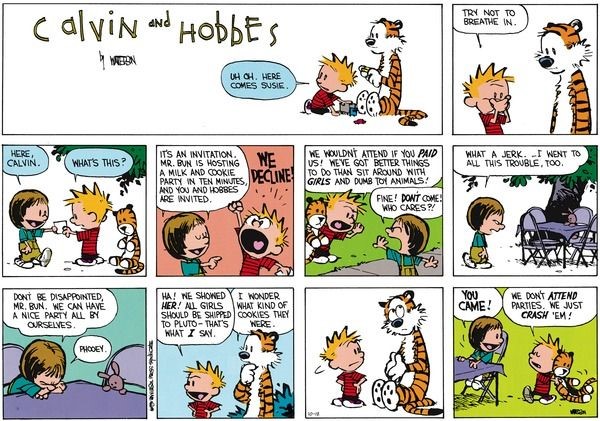
 

Posted in Uncategorized | 2 Comments

Bob Dylan And More William Blake

See also: Bob Dylan And Faith: William Blake

by Larry Fyffe

Singer/songwriter/musician Bob Dylan drinks water from the historical wells of traditional folk songs, and from works of literature.

As previously pointed out, themes drawn from the poetry of preRomantic William Blake have a big influence on Bob Dylan:

I wander through each chartered street
Near where the chartered Thames does flow
And mark in every face I meet
Marks of weakness, marks of woe
(William Blake: London)

As evident in the song lyrics below:

Oh, time is short, and the days are sweet
For all intended purposes
And passion rules the arrow that flies
A million faces at my feet
But all I see are dark eyes
(Bob Dylan: Dark Eyes)

Here’s a poem that counterbalances mankind’s scientific reasoning with visions from the artistic imagination:

Mock on, mock on, Voltaire, Rousseau
Mock on, mock on, 'tis all in vain
You throw the sand against the wind
And the wind blows it back again

That is, scientific rationalism left to itself produces the dark “Satanic” mills of industrial capitalism that dismisses the human potential to establish a naturally balanced, everlasting light in Eden – for the benevolence of all earthly inhabitants:

To see the world in a grain of sand
And a heaven in a wild flower
Hold infinity in the palm of your hand
And eternity in an hour
(William Blake: Auguries Of Innocence)
Motifs reflected in the song lyrics beneath:
I have gone from rags to riches 
In the sorrow of the night
In the violence of a summer's dream
In the chill of a wintry light
In the bitter dance of loneliness fading into space
In the broken mirror of innocence on each forgotten face
(Bob Dylan: Every Grain Of Sand)

Below, lyrics by a British songster who takes his stage name from Blind Willie McTell:

So how can you tell me you're lonely
And say for you the sun don't shine
Let me take you by the hand
And lead you through the streets of London
Show you something to make you change your mind
Have you seen the old girl
Who walks the streets of London
Dirt in her hair
And her clothes in rags
(Ralph McTell: Streets Of London)

The song above echoes the sentiment expressed in the one following:

Oxford town, Oxford town
Everybody's got their heads bowed down
Sun don't shine above the ground
Ain't a-going down to Oxford town
He went down to Oxford town
Guns and clubs followed him down
All because his face is brown
(Bob Dylan: Oxford Town)

Posted in Uncategorized | Leave a comment

Simple Twist of Fate: Dylan as you have never heard him before

Engineering and artistic endeavour: Paul Thompson.  Apologies: Tony Attwood

Because the main point of this article is a re-engineered version of a rehearsal of “Simple Twist of Fate” by Bob Dylan, here is the music first.  Explanations follow…

Last year we published a version of Maybe Someday as you will have never heard it before, using the same technique.  If you missed that article I would urge you to read it now, before going on.

But if you really don’t want to go back here’s the key sentence…

Paul: There’s a music editing program that’s been around for about a year called Spleeter. One can use it fairly easily to split a song into various instruments, such as vocals, drums, bass, and so on. I just used it on “Maybe Someday” (see article linked above) to remove the backing vocals through the instrumental break, as well as the end.

“I have to agree it sounds a lot better that way. I also lowered the drums and bass, since 1980s production tends to have too much of that.”

Paul then sent Untold Dylan another song that he had worked on in the same way, and because a) organisation and Tony don’t mix and b) Paul was far too polite to endlessly hassle about why his next piece had not appeared, the article gathered metaphorical dust.  But finally, the article has re-emerged and here it is…

Paul wrote at the time, “Here’s another one I want to send you cos I think I significantly improved it with an edit. It’s from the sample 1984 tour rehearsal. The take broke down partway through and then restarted. I edited it to make one coherent version. Again, I had to change the speed of one of the versions to get them to match. Note how the lyrics are drastically different from the album version.”

And just in case you read on from the top, rather than play the music, here it is again…

I’m really sorry Paul.  I’ll try and do better in the future.  Tony.

Posted in Uncategorized | Leave a comment

Dylan Cover a Day: “I’ll remember you”: how not to go over the top

By Tony Attwood

The trouble with highly emotional, slow songs is that there is a temptation to go over the top with the expressiveness of the vocalist, as if to say, “you won’t understand these lyrics unless I show you what the emotion within them is”.

But this is nonsense, for as Bob showed in the version below it is completely unnecessary.  By taking out the emotion from the performance and singing it in a dead straight way, it becomes much more powerful as this recording shows.

I’m not saying this is a perfect rendition of the song, but by adopting this approach Bob gets us to think about and feel the desperate sadness of the lyrics, in a way that is hidden when vocalists try and express the meaning as sound rather than letting the words and the simple melody speak for themselves.

The trouble is few producers would ever dare to allow a vocalist to take on this approach.  So what can very decent performers they do with the song?

Jimmy LaFave takes it very gently with a beautiful and delicate instrumental opening.  And although he puts in a fine and varied vocal, he manages to stop it going over the top.  Thus he retains the original feel of Dylan, but with the melody restored rather than removed (as in the Dylan version above).

As a result, the rendition is beautiful indeed…

It is the ladies who seem drawn to this type of song, and Amy LaVere is to be congratulated by keeping the simplicity of the song.  However the break up of the rhythm might seem necessary because they have made so much of that rhythm earlier, but it doesn’t actually help – that double beat near the end of the verse is grating.

Fried Green Tomatoes keep the accompaniment under control, which is really what is needed, and even the harmonies are kept within the context of the song, but the build-up with the female vocalist improvising lines over the music is ludicrous.  You don’t need a shouted-out, “Oh yes I did” in a song like this. In fact it is the absolutely last thing we need.

Thea Gilmore however normally has a much deeper understanding of what Bob’s songs are actually about, and either she has an arranger utterly sympathetic to what fits her voice or else she is telling the arranger what to do.  Either way it works very well indeed.

This really is how it should be done – even the harmonies in the middle 8 (“Didn’t I try”) which is the part where arrangers normally go over the top, are beautifully done.

Generally however the notion that “Keep it simple” is a valid concept when making a recording, is one that is lost on most producers.

———

Untold Dylan was created in 2008 and is currently published once or twice a day –  sometimes more, sometimes less.  Details of some of our series are given at the top of the page and in the Recent Posts list, which appears both on the right side of the page and at the very foot of the page (helpful if you are reading on a phone).  Some of our past articles which form part of a series are also included on the home page.

Articles are written by a variety of volunteers and you can read more about them here    If you would like to write for Untold Dylan, do email with your idea or article to Tony@schools.co.uk.  Details of some of our past articles are also included on the home page.

We also have a Facebook site with over 14,000 members.
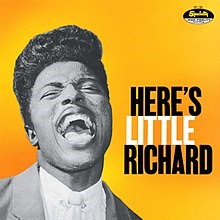
Posted in Uncategorized | Leave a comment

Red River Shore part 3: Pretty angels all flying in a row

by Jochen Markhorst

III         Pretty angels all flying in a row

Some of us turn off the lights and we live
In the moonlight shooting by
Some of us scare ourselves to death in the dark
To be where the angels fly

Pretty maids all in a row lined up
Outside my cabin door
I’ve never wanted any of ’em wanting me
’Cept the girl from the Red River shore

 The song starts indeed a bit undylanesque, a bit pre-war. An opening with such an aphoristic, moralistic reflection is not uncommon with Heine or Brecht, from parables and Christian lyricism, and from antique ballads altogether, but so far Dylan deemed it too old-fashioned. True, the archaic, slightly edifying-sounding introduction “some of us…” has been used twice in his catalogue, but both times at the end of the song, in the classical way, to express an overarching, concluding moral in the final couplet. Both times also quite similar in content, by the way. Both in “Walls Of Red Wing” (Some of us’ll end up in St. Cloud Prison, and some of us’ll wind up to be lawyers and things) and in “George Jackson (Some of us are prisoners, the rest of us are guards) to proclaim the cynical message that all of us are either victims of the system or enforcers of the system.

For “Red River Shore”, Dylan moves the some of us-formula to the opening lines, but (fortunately) without a socio-critical undertone. It does foretell, though, a preachy, ethical morality; if the forthcoming lyrics turn out to be a ballad with a tragic life or love story, then we may expect some wise lesson – or so this aphoristic opening seems to promise. And then one as might be distilled from Oscar Wilde’s famous aphorism, from “We are all in the gutter, but some of us are looking at the stars.”

Semantically it is only a small step to Dylan’s “Some of us turn off the lights and we live in the moonlight shooting by”, and in terms of content it does seem to want to express approximately the same thing: we all are in the darkness, in the gutter, miserable, but comfort is to be found in beauty, something like that.

Wilde’s aphorism, by the way, has completely detached itself from its original meaning. The quote comes from his first big hit, from his first comedy of society, from Lady Windermere’s Fan (1892), is spoken by Lord Darlington and in the context of the dialogue means something like “all men are immoral bastards, but some can hide that very well behind charm”. But freed from its context, the quote gains tremendously in poetic brilliance and depth, to be overshadowed perhaps only by that other perfect quote from Lady Windermere, “I can resist everything except temptation.”

A first problem, and perhaps a first explanation of Dylan’s apparent dissatisfaction with the song, is offered by these opening lines. Some of us turn off the lights and we live in the moonlight shooting by, as he seems to be singing, or Some of us turn off the lights and we lay up in the moonlight shooting by, as it says in the official Lyrics and on the website, is both semantically and poetically a bit weird – not to say just weak. “Moonlight shooting by”? All of us have the childhood memory of the night journey back home in the car, pleasantly warm and safe in the backseat, while the light of the street lamps shoots by. But the poet probably does not want to evoke this association. Nor, we may assume, anything like the Star Wars Stormtroopers shooting with light and missing all the time.

Comparably problematic is the next, equally aphoristic, metaphor: “Some of us scare ourselves to death in the dark / To be where the angels fly.” This time not only semantically and poetically, but now syntactically a confusing mess as well. “We frighten ourselves, and very much so, in order to dwell in a place where celestial beings flutter around”? – it is hard to understand this particular sequence of words in any other way. Well alright, through laborious detours and with acceptance of cheap symbolism, something like “we live a cramped life in ignorance, for fear of not being admitted to Heaven’s Kingdom,” or something like that could be extracted – but that would be a very pathetic moral to accompany the coming, sad lost-love lament about the Red River Girl.

No, it actually seems as if Dylan is seeking his 1965 form, his sound-over-meaning mode, as if Dylan tries to do “consciously what I used to do unconsciously,” as he says in 1978 Matt Damsker interview. And as he, in a variation, a few years after “Red River Shore” will repeat in the CBS “60 Minutes” special interview with Ed Bradley (2004):

BD: I don’t know how I got to write those songs.
EB: What do you mean you don’t know how?
BD: All those early songs were almost magically written. Ah… “Darkness at the break of noon, shadows even the silver spoon, a handmade blade, the child’s balloon…” Well, try to sit down and write something like that.

So, stylistically at most, this somewhat strange opening to “Red River Shore” is still Dylanesque in a way. We see a familiar stylistic feature, the surprising metaphor, the stylistic device that Dylan seems to use more consciously as the years go by. The poetic brilliance of a metaphor like to be where the angels fly may be debatable – and rigid Christian interpreters probably deny that it is meant metaphorically at all. And maybe a playful Dylan is only incorporating a playful nod to the Meat Puppets song played so smashingly by Nirvana in 1994 during the MTV Unplugged session, “Lakes Of Fire”;

Where do bad folks go when they die?
They don't go to heaven where the angels fly
They go to the lake of fire and fry
Won't see them again 'till the fourth of July
I knew a lady who came from Duluth
Bit by a dog with a rabid tooth
She went to her grave just a little too soon
And flew away howling on the yellow moon

… but the flying angels metaphor is surprising anyway. With the same surprising power as the whole world got me pinned up against the fence in “‘Til I Fell In Love With You”, for example, or my soul has turned into steel in “Not Dark Yet”. Or, for that matter, shadowing a silver spoon. But without the relevance that the metaphors in these other Time Out Of Mind songs have. At least, a bridge to the following Pretty maids all in a row lined up outside my cabin door is completely opaque.

In June 2020, when Douglas Brinkley interviews Dylan for the New York Times and asks about the Eagles reference in “Murder Most Foul”, the pretty maids-verse retroactively takes on a different connotation;

Your mention of Don Henley and Glenn Frey on “Murder Most Foul” came off as a bit of a surprise to me. What Eagles songs do you enjoy the most?

“New Kid in Town,” “Life in the Fast Lane,” “Pretty Maids All in a Row.” That could be one of the best songs ever.

Until that remarkable outpouring in 2020, the verse seemed an unspectacular derivation – from the eighteenth-century nursery rhyme “Mary” perhaps;

Mary, Mary, quite contrary,
How does your garden grow?
With silver bells and cockle shells,
And pretty maids all in a row.

… but a connection with Joe Walsh’s atypical contribution to Hotel California seemed a bit absurd. And still isn’t too obvious, really. Melancholy is a common denominator, but the line to “Red River Shore” is not much thicker than that. Which doesn’t matter to Walsh, of course. Two months after that New York Times interview, fellow composer Joe Vitale tells Rolling Stone what an impression Dylan’s words make:

“Coming from Bob Dylan, it doesn’t get any better than that. I called Joe immediately. And he goes, ‘I know what you’re calling about.’ I said, ‘This is so cool, Joe.’ He was excited, too. He thought that was really cool. I printed out that article and framed it.”

It was like, Joe means to say, to be where the angels fly.

To be continued. Next up Red River Shore part 4: I got a gal named Sue

———

Jochen is a regular reviewer of Dylan’s work on Untold. His books, in English, Dutch and German, are available via Amazon both in paperback and on Kindle:


Posted in Uncategorized | 15 Comments

Bob Dylan And Patti Page Part 5 (and two fine Mississippis)

by Larry Fyffe

A sentimental and rapturous love song:
And in the centre just you and me dear
My heart beats like a hammer
My arms wound around you tight
And the stars fell on Alabama last night
(Patti Page: Stars Fell On Alabama ~ Parish/Perkins)

Below, with a line slightly reworked, the atmosphere turns dark:


Stars fell over Alabama, I saw each one
You're walking in a dream whoever you are
Chilled are the skies, keen as frost
The ground's frozen hard, and the morning is lost
(Bob Dylan: 'Cross The Green Mountain ~ 'Tell Tell Signs' rendition)

Beneath, we’re surrounded again by a vision of happiness:

All I do is dream of you
The whole night through
And with the dawn I still go on
And dream of you
You're every thought, you're every thing
You're every song I ever sing
(Patti Page: All I Do Is Dream Of You ~ Freed/Brown)

Downcast the mood once more:

From a cheerless room
In a curtain gloom
I saw a star from heaven fall
I turned and looked again, but it was gone
All I have, and all I know
Is this dream of you
(Bob Dylan: This Dream Of You)

Brightness returns:

Now we never will roam
From the streets of Laredo
Never want to lose the spell
For here we fell in love
(Patti Page: Streets Of Laredo ~ Evans/Livingston)

A sad song follows:

As I walk out in the streets of Laredo
I walk out in Laredo one day
I spied a young cowboy all wrapped in white linen
Wrapped in white linen, and as cold as the clay
(Joan Baez: The Streets Of Laredo ~ traditional)

Likewise, sad be the lyrics beneath with a line borrowed from above:

Now the emptiness is endless, as cold as the clay
You can always come back, but you can't come back 
all the way
Only one thing I did wrong
Stayed in Mississippi a day too long
(Bob Dylan: Mississippi)

PS from Tony: please leave the video running; there’s a second fine version of Mississippi in the video that follows.

————

Untold Dylan was created in 2008 and is currently published once or twice a day –  sometimes more, sometimes less.  Details of some of our series are given at the top of the page and in the Recent Posts list, which appears both on the right side of the page and at the very foot of the page (helpful if you are reading on a phone).  Some of our past articles which form part of a series are also included on the home page.

Articles are written by a variety of volunteers and you can read more about them here    If you would like to write for Untold Dylan, do email with your idea or article to Tony@schools.co.uk.  Details of some of our past articles are also included on the home page.

We also have a Facebook site with over 14,000 members.
Posted in Uncategorized | 3 Comments