’Til I Fell In Love With You (1997) part 4


by Jochen Markhorst

IV         It Keeps Rainin’

Junk is piling up, taking up space
My eyes feel like they’re falling off my face
Sweat falling down, I’m staring at the floor
I’m thinking about that girl who won’t be back no more
I don’t know what I’m gonna do
I was all right ’til I fell in love with you
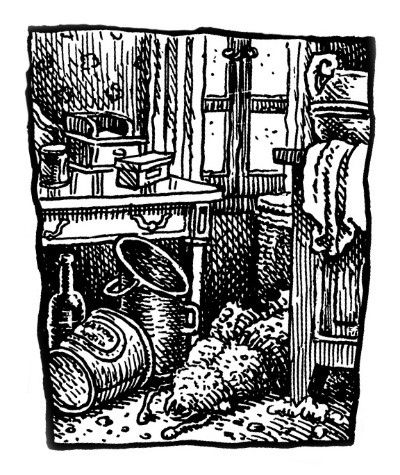
“He soon got used to the various changes in his room. It had become a habit in the family to push into his room things there was no room for elsewhere, and there were plenty of these now.” The family treats Gregor more and more as what he, in fact, is: an annoying insect. At first, Grete, the sister who has taken on the care, still has a loving urge to give “him as wide a field as possible to crawl in and of removing the pieces of furniture that hindered him,” but after the painstaking process of habituation and the growing irritation, Gregor’s room degenerates into a junk room. Junk is piling up, taking up space.

Dylan communicates in this fourth verse the same claustrophobic feeling as Kafka in Die Verwandlung (“The Metamorphosis”, 1912), but we may assume that in “’Til I Fell In Love With You” it is meant purely metaphorically – to express a panic-stricken state of mind of the protagonist. He feels, just like the narrator in “Mississippi”, trapped and tight as the corner that I painted myself in, and

Time is pilin’ up, we struggle and we scrape
We’re all boxed in, nowhere to escape

An identical state of mind, very similar word choice (Time is pilin’ up versus Junk is piling up; thinking about Rosie versus thinking about that girl; my eyes go blind versus my eyes feel like they’re falling off my face )… it starts to look like “’Til I Fell In Love With You” is one of the reasons for Dylan’s unforgivable decision to discard “Mississippi” from Time Out Of Mind.

It might even be the same narrator, one might think after hearing the last two stanzas. In the last verse of this song, the narrator considers going “Dixie bound”, the narrator in “Mississippi” has meanwhile arrived in the South, coming from the North (“I got here following the southern star”). And seems to be haunted by a similar unspeakable something that is insinuated in this song now, at the end.

The narrator’s panic-stricken claustrophobic attack in “’Til I Fell In Love With You” is followed by a bizarre emotion that is hard to fathom: “My eyes feel like they’re falling off my face”. Either he is crying very, very hard, or his subconscious has a very strong need to stop seeing something. In the canon, we recognise at most a half-resemblance of the latter option to the gruesome climax in Oedipus Rex, when Oedipus is so shocked by the crimes he has unknowingly committed that he gouges out his eyes. And furthermore, we only know about eyeballs popping out from Spongebob and Tex Avery’s whistling wolf in Little Red Walking Hood – but it is highly unlikely that Dylan is trying to drive the listener’s associations towards Looney Tunes. No, apparently there is something particularly shocking there, so shocking that the eyes want to leave their owner. But what?

The lyrics are, as we can reconstruct thanks to the outtakes on Tell-Tale Signs, largely pasted together from scraps of the rejected “Marchin’ To The City” (57% of the 277 words come from that outtake), making it less obvious that Dylan had a narrative in mind when he sat down for “’Til I Fell In Love With You”. It’s more like, as in many Dylan songs, Dylan gets inspired by his own words while he’s writing, arrives at a hint of a scenario, and then doesn’t worry about plot holes or incongruities – it’s lyrical poetry, after all.

He seems to want to build in a hint of a murder ballad now, about halfway through the song’s lyrics. The opening, with its claustrophobic panic attack, is then retroactively given a kind of logical underpinning; Sweat falling down, I’m staring at the floor / I’m thinking about that girl who won’t be back no more suggests the aftershock of a dramatic climax, of a man who, panting, stands bent over the corpse of the woman he has killed to his own dismay – she won’t be back no more, I don’t know what I’m gonna do. In which, incidentally, Dylan incorporates a nod to Fats Domino, to his 1961 hit “It Keeps Rainin’”, probably out of playfulness. At least, the way Dylan, especially in live-versions, sings “she won’t be back no more”, is very much à la Domino’s “she won’t be back no mo’ah’” – also as a rhyme word for the preceding “floor”, by the way;

She left me reelin' an rockin'
Walkin' the floor
She lef' a note last night
She won't be back no mo'

Reasoning back, the preceding stanzas are then something like fragments of a bitter quarrel, fragments of scenes, echoes of reproaches back and forth. A sentence like I’m gonna win my way to wealth and fame is, in that scenario, not spoken by the protagonist, but by his female counterpart while she is packing her suitcase. “I feel like the whole world got me pinned up against the fence”, the second line, expresses the strangling panic attack that overwhelms the narrator when she says she is going to leave him. And so, with some adjustments, each line of the text can be interpreted as a non-chronological account of a murder and the run-up to it.

It is, of course, a facile interpretation. Well, lazy even. All exaggerations, incongruities and untruths in the text would then be explained by the stressed, and therefore unreliable, state of mind of the narrator in the first minutes after a traumatic event. But then again – still more conclusive than the interpreters who get no further than “a pretty nasty song” (Heylin), “reflections of a man who still trusts in God” (Beckwith), a lost love (Weir) or “dull and pointless” (Kevin P. Davis in Judas! #19).  But, by far, most commentators and Dylanologists ignore the song.

Still, everyone does agree that he is in some kind of trouble, this narrator. He should leave. And go South, for some reason…


To be continued. Next up ’Til I Fell In Love With You part 5 (final): Still among the living, all of them


Jochen is a regular reviewer of Dylan’s work on Untold. His books, in English, Dutch and German, are available via Amazon both in paperback and on Kindle:


Untold Dylan

If you feel you’ve something new and different to say about Bob Dylan or his music, and would like to offer it to Untold Dylan for publication, we’d be delighted to hear from you.  Please write to Tony@schools.co.uk

If you’d like to explore other thoughts on Dylan and his music please do visit our Facebook group which has over 14,000 members.  Just go to Facebook and search for Untold Dylan.

Posted in Uncategorized | 8 Comments

Bob Dylan And The Prophets

By Larry Fyffe

With his thorough knowledge of the Holy Bible, the stories of the biblical prophets, who are often strangers in strange lands, are likely spinning around in the back of Bob Dylan’s conscious as well as his unconscious Jungian mind.

Positing these prophet stories, such as those of Moses, Elijah, and Ezekiel, to be templates for Dylan’s narrative song lyrics is therefore not an overreach when plausible links thereto, sometimes obverse ones, can be pointed to.

Rather blatant that the cloak of the faithful young prophet Samuel is donned in the following double-edged song lyrics; his mentor Eli pays no heed to  Samuel’s message of warning:

And he was told these few words
Which opened up his heart
"If you can't bring good news, don't bring any"
(Bob Dylan: The Wicked Messenger)

At other times, the reference to a prophet is more oblique.

For example, Big Jim, in the song below, as the wayward King Solomon who is punished by having  his United Kingdom divided:

Big Jim was no one's fool, he owned the town's only diamond mine
He made his entrance looking so dandy, and so fine
With his body guards, and silver cane, and every hair in place
He took whatever he wanted to, and he laid it all to waste
(Bob Dylan: Lily, Rosemary,  And The Jack Of Hearts)

According to the Old Testament, Elijah gets swept up by God in a whirlwind, but is going to be later sent back down to Earth to save wayward Hebrews:

Behold, I will send you Elijah the prophet
Before the coming of the great and dreadful day of the Lord
And he shall turn the heart of the father to the children
An the heart of the children to their fathers
Lest I come and smite the earth with a curse
(Malachi 4: 5, 6)

So the song lyrics below can be construed; the narrator takes on the role of the  frustrated nemesis of Jezebel – a modern-day Elijah, as it were – who foretells of the coming of the Jewish Messiah:

Well, I went back to see about'er once
Went back to straighten it out
Everybody that I talked to had seen us there
Said they didn't know who I was talking about
(Bob Dylan: Red River Shore)

Another warning beneath from Elijah, black-humoured though it be:

You don't know me, darling
You never would guess
I'm nothing like my ghostly appearance would suggest
I ain't no false prophet
I just said what I said
I'm just here to bring vengence on somebody's head
(Bob Dylan: False Prophet)

https://youtu.be/kWzgB6KWsdc

Untold Dylan

If you feel you’ve something new and different to say about Bob Dylan or his music, and would like to offer it to Untold Dylan for publication, we’d be delighted to hear from you.  Please write to Tony@schools.co.uk

If you’d like to explore other thoughts on Dylan and his music please do visit our Facebook group which has over 14,000 members.  Just go to Facebook and search for Untold Dylan.

Posted in Uncategorized | 2 Comments

A Dylan cover a day: Love is just a four letter word

By Tony Attwood

Jochen has written an excellent series on “Love is Just a Four Word” (links at the end of this piece) and at the end he considered the cover versions of the song.

And in reality, there’s nothing to add about the song, which is what I invariably find with Jochen’s commentaries (although that doesn’t always stop me) – but I thought I would do a little exploring to see if anything else had turned up since he wrote his piece.  And to remind you, in case you need reminding, of the covers that Jochen covered (if you see what I mean).

One that Jochen did find was the recording by John Winn which is quite remarkable

And he surprised me (even if no one else) with this version from Darren Holter – and returning to that today I really did enjoy it again.

Anyway, trying to find something new, what was new (for me at least) was the Sound Symposium…

which just shows what can be done with a song if one starts with a desire to go in a new direction.   Of course, it is the lyrics that power the song as much as the music, so a lot is lost here, but it made an interesting diversion on a wet saturday morning in July.

I did find one which is a version by Earl Scruggs and Joan Baez.

And I know this is going to look like the Joan Baez show but it is interesting to contrast this with her original recording, and what really is surprising is that someone thought that it was a good idea to put in an extra bit of instrumental whatnot after each line.  It is particularly pronounced in the first verse, although the twangy guitar does get occasional outings throughout the piece – which I find extraordinarily annoying.  I mean, what sort of person listens to this song and then says, “Hey, let’s put in a bit of twangy guitar.”

Besides, didn’t anyone then reply, “Errr… why have we got that in there exactly???”

It really is as if the producer thought, “Actually this song is rather dull, we’d better throw in some random sounds here and there – I know let’s put in some twang, twang is always good.”

For me the accompaniment in this piece absolutely destroys the song and all its meanings.

Thankfully Ms Baez later realised that she had been betrayed by the production team and doing it her way was a much better idea.  That doesn’t mean singing it solo, but it means keeping the accompaniment in the background.  The song has a natural bounce, the lyrics really are fun (which is why the repeated melody works so well), and yes it can be an enjoyable experience.

Why the Lord allowed humankind to invent musical producers is completely beyond me.

Which finally brings me to the ultimate, ultimate.   And if you have been plodding through the examples I have offered above will come as a contrast.  The melody is dropped to a new lower key, and everything starts off sounding a little bit more like a song with an edge – which is what Dylan wrote.  “Kept my mouth shut” stands out now, those changing and unexpected vocal harmonies add back in the element that Dylan had in the lyrics from the start.

We no longer need and certainly don’t want any more meandering ideas in terms of accompaniment.   Who needs instrumentation when this sort of inventiveness in terms of harmonies is on offer?

If you have a mind to, and the time, please just listen to the multiple vocal lines and how they change the meaning of the lyrics, as well as change themselves verse by verse.

It is a stunning masterpiece of performance.

In fact, this is a song that has quite a covering on Untold Dylan.  We even included it in our Dyaln Obscuranti album – of which more below.

First, here’s the index to Jochen’s series on the song…

And to conclude, a reminder of the Dylan Obscuranti album we created

As you can see, it is a bit of a favourite.


If you feel you’ve something new and different to say about Bob Dylan or his music, and would like to offer it to Untold Dylan for publication, we’d be delighted to hear from you.  Please write to Tony@schools.co.uk

If you’d like to explore other thoughts on Dylan and his music please do visit our Facebook group which has over 14,000 members.  Just go to Facebook and search for Untold Dylan.
And finally, here’s a list of the earlier articles from Dylan Cover a Day

Here’s a list of most of the articles from this series…

Posted in Uncategorized | 3 Comments

’Til I Fell In Love With You (1997) part 3: Ballad Of A Smalltown Boy

by Jochen Markhorst

III         Ballad Of A Smalltown Boy

 Neon Park (1940-1993) was a colourful and versatile illustrator, cartoonist and designer, whose clients included Playboy and DreamWorks, but his lasting fame is mainly due to the beautiful album covers he drew for Little Feat – apart from the 1971 debut album, Park provided every Little Feat album up until his death, i.e. up to and including 1991’s Shake Me Up, with great, often witty covers. Apart from his technical craftsmanship, Neon Park distinguishes himself by his playfulness; the men of Little Feat usually let him do what he wanted, which resulted in covers full of hidden allusions, obvious persiflages, winks and Hieronymus Bosch-like frenzies. Like the cover of Sailin’ Shoes (1972): a pie with women’s legs, swinging on a tree swing, watched by both a giant snail and Mick Jagger dressed as Thomas Gainsborough’s Blue Boy from 1770.

A running gag throughout his career are duckfaces; Marilyn Monroe, Humphrey Bogart, Marlene Dietrich… he paints them in iconic, recognisable poses, but replaces body and face with enlarged, humanised Donald Ducks. And Little Feat did not escape this either; the last album with Lowell George, Down On The Farm (1979), is decorated with one of Parks’ most perfect covers: a sexy Duck posing as one of Gil Elvrgen’s famous pin-ups from the fifties: “The Finishing Touch”.

It is a brilliantly chosen template to illustrate the title song of Little Feat’s album:

They all asked about you
Down on the farm
The cows asked, the pigs asked
The horses asked, too
All want to know why to the city
You moved, changed your name to Kitty
What's come over you?
It ain't true; it ain't true, Linda Lou
Say it ain't true, Linda Lou

… the classic story of the local beauty who tries to satisfy her lust for wealth and fame in the Big City, and goes down with it. For Neon Park, the exceptional opportunity to place its running gag in a narratively correct context; this one time, the banality of something as mundane as a duck, placed in an alienating, glamorous setting, does actually make sense.

The plot is over-familiar and has been milked in dozens of films, novels and songs. Usually rather kitschy and moralistic. The one-hit wonder John Collins Cunningham scored a hit with “Norma Jean Wants To Be A Movie Star” in 1974 (“She died in L.A. in a lonely room”), Elton John’s brilliant, enchanting ballad “Cage The Songbird”, Bob Seger’s compelling “Hollywood Nights”… kitschy or not, the theme often brings out the best in artists.

For this third verse of “’Til I Fell In Love With You”, Dylan borrows clichés and motifs from all those identical, doomed fame-chaser stories;

Boys in the street beginning to play
Girls like birds flying away
When I’m gone you will remember my name
I’m gonna win my way to wealth and fame
I don’t know what I’m gonna do
I was all right ’til I fell in love with you

… whereby in Dylan’s mind there are probably no Elton John or Bob Seger buzzing around, but one of the pillars of all those lonely-at-the-top songs: Johnny Cash’s corny “Ballad Of A Teenage Queen” from 1958, recorded for his first compilation album Sings The Songs That Made Him Famous. Certainly not a highlight of Cash’s discography, this ballad with its hard-to-enjoy penny novelette content and its super sweet happy ending, but it provides a motif and some jargon for a Dylan song – and that’s worth something. And a No. 1 hit in the Country Charts it was as well, nonetheless;

Then one day the teenage star
Sold her house and all her cars
Gave up all her wealth and fame
Left it all and caught a train

Though with Dylan too, as with Cash and unlike Elton and Seger and Cunningham, the motif of the hollow pursuit of wealth and fame does not bring out the best. This central stanza of “’Til I Fell In Love With You” falls a bit out of tune. These four lines are the only lines that don’t emotionally connect with the chorus lines I don’t know what I’m gonna do / I was all right ’til I fell in love with you, they are the only lines in which the narrator’s tone is not defeated and despondent, but rather one of venom and revenge. Childish, that just wait, you’ll be sorry wailing of verses three and four, and not fitting for the state of mind of the main character as we get to know it in the other four stanzas.

Still, apparently, its inclusion was a well-considered decision by the songwriter. After all, the lines come from the preliminary study of “’Til I Fell In Love With You”, from the outtake “Marchin’ To The City #1” that we know from Tell Tale Signs: The Bootleg Series Vol. 8. Thanks to that wonderful Bootleg Series episode, we also know that Dylan himself initially had some reservations about these trite lines: in #2 of “Marchin’ To The City”, the version that also musically resembles the final product “’Til I Fell In Love With You”, these lines have been deleted and replaced by the admittedly very sentimental, but thematically more appropriate “Sorrow and pity through the earth and the skies / I’m not looking for nothing in anyone’s eyes”. However, somewhere between the recording of this version and the final recording of “’Til I Fell In Love With You”, these lines are also deleted and Dylan returns to that just wait, you’ll be sorry wail of “When I’m gone you will remember my name / I’m gonna win my way to wealth and fame”.

A rather incomprehensible intervention. But then again, it is the literary intervention of a small-town boy who left home to pursue wealth and fame and a Nobel Prize for Literature in the Big City, and who, as we all know, has succeeded incomparably –

All want to know why to the city
You moved, changed your name to Dylan
What's come over you?

… is a question no one will ever ask Robert Zimmerman.


To be continued. Next up ’Til I Fell In Love With You part 4:


Jochen is a regular reviewer of Dylan’s work on Untold. His books, in English, Dutch and German, are available via Amazon both in paperback and on Kindle:


Posted in Uncategorized | Leave a comment

Other people’s songs: Copper Kettle (please make it to the end)

Songs and performances selected by Aaron Galbraith, commentary by Tony Attwood

Aaron: Clinton Heylin writes, “‘Copper Kettle’…strikes all the right chords…being one of the most affecting performances in Dylan’s entire official canon.” The track opened side 3 of Self Portrait in 1970.

The song was composed by Albert Frank Beddoe in 1953 (or 1946!) and made popular by Joan Baez.

Tony: Bob’s voice is in good form, and sustains the slow tempo.  The big difference to the feel that he gets from that delivered by Joan Baez is in the chord sequence – she emphasises the minor chords, particularly at the end of the verse, which gives an utterly different feel to the song.   The sadness comes through – a sadness for the days past, and concerning perhaps the battle with the authorities, which somehow to me is lost in Bob’s version.

Aaron: Bobby Womack , recorded in Lookin’ for a Love Again, 1974

Tony: The emphasis of one word per bar rising quickly to the virtuoso vocal performance seems to me a little too much for what is in essence a folk song.  It becomes “listen to my voice, look at one I can do” and I am not at all sure that is right for this song.   Really one has to abandon the lyrics to listen to this, and I get the feeling that maybe the singer and producers expected no one to know what the song was about.  Or maybe they didn’t

As for repeating “the moon” three times – what is the point?  Sorry, but it does nothing for me except to suggest an awful lot of showing off, which turns me off.   In fact as I come to think about it, one of the wonderful things about Bob is that he never ever shows off, neither in his studio work nor on stage.  There never is any feeling that he is saying “Look at me, listen to me”.  It’s much more, “Here it is, take it or leave it.”

Aaron: Jump, Little Children recorded a fantastic version last year during lockdown

Tony: That’s a great way of making the video and yes, finally Aaron, I am with you.  This is a terrific recording, with brilliant harmonies and exquisite orchestration.   Now at last I am not bothered by the lyrics…

And notice the return of the minor chord at the end.

As for the instrumental break – I just wish it was longer.   And that pause around 3 minutes 15 seconds is brilliant.

But above everything else, I think a word of thanks must go to the producer for the way the whole thing is mixed, and the thought that goes into the arrangement.  One might think that around four minutes it is coming to an end, but then they pick it up again.

And still, there is more as we get the coda starting around 5 minuts 20 seconds.  The pianist does something very odd showing us a picture, and then trotting away for a while before returning for the last exciting run-through.

Oh, that is what the contemporary re-enactment of folk music is all about.   Done with a complete understanding of the origins of the song, using quality musicians in sympathy with each other and with the music and with the arrangement.  Brilliant, brilliant, brilliant.

Previously in this series…

Posted in Uncategorized | 2 Comments

Bob Dylan And The Fighting Irish (Part VII – conclusion)

Bob Dylan And The Fighting Irish (Part VII)

by Larry Fyffe

Seamus Heaney be an Irish poet who’s influenced by fellow Irish poet Patrick Kavanaugh, a Post-Romantic.

AntiYeatian, the poem below; by death love can be taken away forever:

On Graflon Street in November we tripped lightly along the ledge
Of the deep ravine where can be seen the worth of passion's pledge
The Queen of Hearts still making tarts, and I not making hay
Oh I loved too much, and by such and such is happiness thrown away
(Patrick Kavanaugh: Raglan Road)

So best perhaps to take a devil-may-care attitude towards the matter – as expressed in the song lyrics beneath:

Go lightly from the ledge, babe
Go lightly on the ground
I'm not the one you want, babe
I'll only let you down
(Bob Dylan: It Ain't Me Babe)

Words can just get in the way of love relationships, sexual or otherwise, according to the lyrics in the song quoted below:

Now, when all the bandits that you turn your other cheek to
All lay down their bandanas and complain
And you want somebody you don't have to speak to
Won't you come see me Queen Jane
(Bob Dylan: Queen Jane Appoximately)

Poet Heaney depicts below the vacant micro-world that’s found in “Waiting For Godot”; Dante’s bigger Hell and Heaven be not there.

But the thoughts of a loving mother are; and that’s what makes all the difference.

Take what you gather from coincidence:

When all the others were away at mass
I was all hers as we peeled potatoes
They broke the silence, let fall one by one ....
And again let fall. Little pleasant splashes
(Seamus Heaney: When All The Others Were Away At Mass)

The larger Dante-like world is presented in the following song –  though humorous, quite bleak that world is:

I took my potatoes
Down to be mashed
Then I made it over 
The million dollar bash
(Bob Dylan: Million Dollar Bash)

In “Waiting For Godot”, the only contented character apparentlty is the Nietzsche-like slave – therein, the bent-over man walks like a crab, and accepts his fate:

Reminds of the lines below:

I should have been a pair of ragged claws
Scuttling across the floors of silent seas
(TS Eliot: The Love Song Of J. Alfred Prufrock)

Humorous, the song lyrics be beneath:

Try to avoid the scandals ....
The pump don't work
'Cause the vandals took the handle
(Bob Dylan: Subterranean Homesick Blues)

Not so much the following poem – irony there be; akin to William Wordsworth, spring’s a sign of an organic, regenerative spirit; but the son assists  his father at his labour with a correlated iron pump:

In it's throat, ice founding itself
Upon iron. The handle
Paralysed at an angle
(Seamus Heaney: The Rite Of Spring)


Posted in Uncategorized | Leave a comment

Never Ending Tour, 2006, Part 3 Walking through the cities of the plague

By Mike Johnson (Kiwipoet)

‘Bob Dylan’s spookiest song.’

‘Eerie.’

‘One of his darkest songs.’

‘Dylan at his bone chilling best.’

‘Mysterious blues-noir, virtually magic realist in places.’

‘This is a dying world; dead gods, dead morals and dead hopes 
litter the roadside. Dylan blends mythology, ancient poetry, 
folk and blues to create a landscape of pure corruption - 
and I absolutely love it.’

These are some of the comments, gleaned from Reddit and Wikipedia, on ‘Ain’t Talkin,’ the last and for me the best song on Modern Times. It is a song full of strangeness, terror and violence. That violence, Dylan as the bringer of vengeance, entered his work when he started to immerse himself in the Roman Classics, Ovid and Catullus.

I don’t have the space here for a full exploration of the song, so I’ll just make a couple of comments. The real mystery is who is narrating? Whose point of view are we hearing? I suggest that the narrator is perhaps Ovid himself or some like figure from Roman times, someone who’s been banished, exiled, and is full of resentment and hate.

Well, the whole world is filled with speculation
The whole wide world which people say is round
They will tear your mind away from contemplation
They will jump on your misfortune when you're down

Consider that second line. It can only come from the world of antiquity, where the roundness of the world was matter for speculation rather than knowledge. Dylan has captured the mindset of Ovid as he travels to this place of exile, to ‘the last outback at the world’s end’ (Ovid, Black Sea Letters 2.7.66) and this may be the song’s greatest achievement.

Appeals to the ‘mother’ or ‘mama’ have deep roots in Dylan’s songwriting (Oh, mama, can this really be the end…’). The injunction to ‘pray from the mother’ in ‘Ain’t Talkin’ is mysterious and powerful. We’re not to pray to the mother, or for the mother, but from within the mother.

They say prayer has the power to heal
So pray from the mother
In the human heart an evil spirit can dwell
I am a-tryin' to love my neighbor and do good unto others
But oh, mother, things ain't going well

So why do the lyrics on the official bobdylan.com change them to this?

They say prayer has the power to help
So pray for me mother
In the human heart an evil spirit can dwell
I’m trying to love my neighbor and do good unto others
But oh, mother, things ain’t going well

Perhaps somebody thought that it made more sense that way, but it’s not what he sings.

Finally, in this darkest of songs, we find this wonderful flash of humour:

Well, it's bright in the heavens and the wheels are flyin'
Fame and honor never seem to fade
The fire gone out but the light is never dyin'
Who says I can't get heavenly aid?

Maybe the gods really are on Dylan’s side.

In this song Dylan’s organ playing comes into focus. Those distant, sustained notes, both churchy and circus-like, are eerie in their own right. Like the soundtrack to a Dario Argento horror movie, as ghostly and uncanny as the song itself.

This song doesn’t come fully into its own as a performance piece until 2007. This early attempt is from New York City (20th of Nov).

Ain’t Talkin

There is a deep vein of prophecy that runs through this. ‘Walkin through the cities of the plague’? That line brings us from Antiquity to our own modern times.

‘Ain’t talkin’ is a walking song, and so is ‘Lovesick’ from Time Out of Mind. The narrator is also walking to his emotional exile, walking through a shadow world, through ‘streets that are dead.’ Through haunting images of love and a lost paradise. If any song anticipates ‘Aint’ Talkin’ it’s this one. A subdued, anguished performance. 7th April Los Vegas.

Lovesick

And since we are in this dark and spooky mood, why not go to ‘Cold Irons Bound,’ another concentrated dose of alienation from an emotional exile. It’s not overtly a walking song, but the imagery suggests a journey through the Apocalypse:

Well, the road is rocky and the hillside's mud
Up over my head nothing but clouds of blood

It begins with a descent into madness (‘I’m beginning to hear voices and there’s no one around’) and ends in abject surrender (‘I’m on my bended knee’). This performance, also from Los Vegas, marks a break from previous approaches to the song. The shrieking guitar opening is gone and the descending riff carries us through the song which has become softer, slower and more threatening.

Cold Irons Bound

‘Lonesome Day Blues’ gets us off our feet and into a vehicle but the flight, or the pilgrimage, is never-ending:

Well, I'm forty miles from the mill, I'm dropping it into overdrive
I'm forty miles from the mill, I'm dropping it into overdrive
Set my dial on the radio I wish my mother was still alive

And despite the swinging blues rhythm, the mood is still dark and some of the imagery spooky.

Last night the wind was whispering, 
   I was trying to make out what it was
Last night the wind was whispering something, 
   I was trying to make out what it was
Yeah I tell myself something's coming, but it never does

This one’s from Madison (31st Oct)

Lonesome Day blues

Dylan had the good sense never to play  ‘Lonesome Day Blues’ and ‘Till I Fell In Love With You’ one after the other, because when put together, as I am doing now, we can see how similar they are. Dylan was accused of lack of invention by writing these generic-sounding urban blues songs, which showed how little the critics understand the blues, the repetitive and generic nature of it. Even the subject matter, the woes of love and poverty, doesn’t change much. The differences are in tempo and style.

‘Till I Fell In Love With You’ is not a strict twelve-bar, three-chord blues but close enough for us to feel the blues roots of the song. In terms of mood, ‘Till I Fell’ takes us back to the soul-shredding anguish we find in ‘Cold Irons Bound.’ (Boston, 12th Nov)

Till I Fell in love with you (A)

Good as that recording, and performance, is, it is rivalled by this one from Stockton (3rd April)

Till I Fell in love with you (B)

We can make that three in a row from the same bag by adding ‘Honest With Me.’ The lyrical territory is familiar, but what fascinate me are these hints of narrative, of a journey, the discovery of things ‘too terrible to be true.’

Well, I came ashore in the dead of the night
Lot of things can get in the way 
     when you're tryin' to do what's right

The intriguing ‘I’.

I’m glad Dylan got rid of the distracting guitar riff from the album and early performances, to this leaner, darker arrangement. Another excellent recording from Stockton.

Honest With Me

‘Blind Willie McTell’ finds that darkness in fragments of American history.

Seen them big plantations burning
Hear the cracking of the whips
Smell that sweet magnolia blooming
See the ghost of slavery ships

We despair of a world in which ‘power and greed and corruptible seed’ are all we can see. It’s a solid performance (Madison) but I must once more complain about the missing verses. I would happily forgo the instrumental breaks, which don’t do much, to have those verses back. The one quoted above, and this unforgettable portrait:

There's a woman by the river
With some fine young handsome man
He's dressed up like a squire
Bootlegged whiskey in his hand

He just goes on bowdlerising this magnificent song. You have to go back to the original 1984 recordings to hear the song in its entirety.

Blind Willie

‘High Water’ sustains the apocalyptic mood, the sense of environmental and moral chaos. This Stockton performance has slowly become my favourite, maybe because of that instrumental ascending riff, maybe the slowed tempo, maybe Dylan’s committed vocal performance. The whole thing comes together very sweetly.

High Water

Surely ‘To Make You Feel My Love’ must be one of Dylan’s most melancholy love songs (‘Born in Time’?). The weariness of the long-distance lover. It’s the melody that carries the melancholy. And yet, we’d do anything for love, go to any extreme.

I'd go hungry, I'd go black and blue
I'd go crawling down the avenue
No, there's nothing that I wouldn't do
To make you feel my love

We’re back in Stockton again for this wonderful tear-jerking performance. The gentle, minimal background brings Dylan’s inventive vocal to the fore. The way he drops in the odd talky line makes it sound very down-home.

To make you feel my love.

Things change, moods shift. Suddenly we don’t care about things we once felt deeply about. Despair may be replaced by a devil-may-care abandon. That’s what seems to be happening in ‘Things have Changed.’ Things have not changed but we have, our attitude to things has. But I remain suspicious of what Dylan espouses here, since his passion for singing out his feelings hasn’t changed one bit. (Los Vegas)

Things have changed

I’ve never particularly liked ‘Tweedle Dee & Tweedle Dum’ but I’m not quite sure why. Maybe because I can’t feel its affective centre. Dylan songs make us feel things, ever since he asked ‘How does it feeeeel?’ rather than ‘what do you think?’ Still, my own indifference to the song is not a good reason for not including this excellent Los Vegas performance. Admirers of the song will delight in this one.

Tweedle Dee.

For a complete shift of mood, well away from ‘cities of the plague’ we’ll finish with two performances of ‘Summer Days.’ Despite the fact that ‘Summer days and summer nights are gone,’ this is a celebratory song:

Everybody get ready, lift up your glasses and sing
Everybody get ready to lift up your glasses and sing
Well, I'm standin' on the table, I'm proposing a toast to the king

Always remembering that the same old bullshit, political and personal, has not gone away.

Politician got on his jogging shoes
He must be running for office, got no time to lose
He been suckin' the blood out of the genius of generosity
You been rolling your eyes, you been teasing me

Here’s the Stockton performance. The song sounds as antique and jazzy as ever. Makes us think of big band music from the late 1940s, post-war reverie.

Summer Days (A)

I rather like this version from Foggia (Italy), 19th July.

Summer Days (B)

That’s it for this part of the journey. I’ll be back soon with some more strange brews from 2006.

Until then

Kia Ora

Posted in Uncategorized | Leave a comment

Dylan cover a day: Like a Rolling Stone

By Tony Attwood

Aaron and I have looked at covers of Like a Rolling Stone in the past and included The Rolling Stones, Bob Marley, Mick Ronson with David Bowie, Jimi Hendrix and  Sebastian Cabot.

So I am not going back to them again, but instead raising the question, are there any others that tickle my fancy?  (Is that a totally last century English English expression or is it used elsewhere?  I really don’t know – it means are there any others that I rather like).

And I do quite like Vanguart because of the slight changes to the accompaniment (is that a viola in the backing?), melody and the harmonies that are added.  It’s a bit like an old friend wearing, not a new coat, but maybe just a new hat.  Mostly it is a faithful copy, but just those slight variations make it feel like a worthy re-visit.

And then by way of total contrast….

And if you are skipping through this little piece just to see what oddities I’ve come up, please do pause to play this right through.   It is not so much that it is a superb version (although I do think it is very good), it is just such a brilliant total reimagination of the possibilities of the song.  Maybe others have reworked the song in such a radically different way – but this is done so elegantly.  It is a song for the conclusion of a rather sad day… and the end is just exquisite if even more utterly sad than expected.

Taking rock songs and turning them into superb acoustic pieces are what the Mayries do… if you don’t know the duo, do go exploring.

It takes nerve and determination to take a song as well known as this and completely rework it, and to make it work takes a lot of talent too.   Which is why so many people who have tried to rework the song have done so with something that is not much more than “let’s do it as Bob did” version.

I don’t always feel that a total re-working is something I want to hear over and over but quite often such re-workings do give me new insights.   And certainly, new insights by the bucklet load is what I get from Caecilie Norby.    If you are still with me, and have another three minutes  to spare, do try this.   I do hope you find it worthwhile.

Here’s a list of most of the articles from this series…

Posted in Uncategorized | Leave a comment

’Til I Fell In Love With You (1997) part 2: Burning Down The House

This week saw the release of Jochen’s book on Time Out Of Mind; a song-by-song analysis of all the songs on this late masterpiece plus the outtakes “Red River Shore”, “Dreamin’ Of You” and “Marchin’ To The City”. Plus, as a bonus, “Things Have Changed”, which for reasons not entirely clear is considered a TOOM song by Dylan and his publisher.

Available as paperback and e-book in German, English and Dutch on Amazon. The English version is also available as a hardcover: www.amazon.com/dp/B0B47QDLPK

—————————-

 Previously

 by Jochen Markhorst

II          Burning Down The House

“Whoever does the words has a very hard job. That’s the sharp edge of the music. Whatever else the music is doing, if there are words there, you know that is going to be the focal point of the music for so many listeners. And you can really fuck it up with words. If they’re not good, you can totally wreck the whole thing,” Brian Eno says in an interview with Michael Engelbrecht for the German magazine Jazzthetik (March 1996).

It seems atypical of the grand master of soundscapes, of the artist who, early in his career, increasingly moved away from songs with vocals and made mainly instrumental records. Ten years earlier, in the fascinating account of Eno’s conversation with John Cage in Musician (September 1985), he is quite unambiguous:

“But I have the same feeling about lyrics. I just don’t want to hear them most of the time. They always impose something that is so unmysterious compared to the sound of the music they debase the music for me, in most cases.”

… but it is very much in line with his statements ten years later; Eno loves language, or rather vocals, but not the “de-mystifying” effect that its content can have. “I cut the language up,” he explains, “a few words will come out – space – another word – another six words – space – another two words. So the language really keeps falling apart. In a way, it’s like using language and trying as hard as possible to break the meaning down, and see what’s left. See where the meaning still comes out of it.”

Which does sound very much like William Burroughs’ cut-up technique, and it is, in fact:

“What I did is, I took little tiny phrases, pieces of sentences from a magazine describing Serbian torture in Bosnia, a porno magazine, and an article about homeless people in London. I took these phrases, then I have a randomiser, so that I can start to throw them together in new ways.”

In fact, a copy of Burroughs’ working method, so to speak. And of the writing process that Dylan already imitated in the sixties, and according to writing partner Larry Charles still practices in the twenty-first century, so around Time Out Of Mind as well. Charles, who co-wrote the script for the Dylan film Masked And Anonymous in 2003, reveals that the Bard literally has a box full of slips of paper and torn-off scrap sheets, full of one-line ideas, loose metaphors and whatnot. During the writing process, the box is placed on the table, Dylan turns it over and starts moving snippets back and forth;

“He takes these scraps and he puts them together and makes his poetry out of that. He has all of these ideas and then just in a subconscious or unconscious way, he lets them synthesize into a coherent thing.

“And that’s how we wound up writing also. We wound up writing in a very ‘cut-up’ technique.”

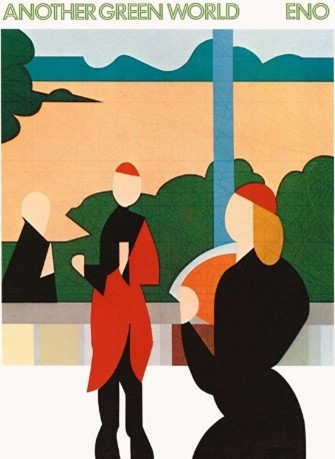
Explicitly, Eno words his philosophy in the opening track of the wonderful 1975 album Another Green World, in “Sky Saw”;


All the clouds turn to words
All the words float in sequence
No one knows what they mean
Everyone just ignores them

…over which Eno then sings contextless strings of words like “Open stick and delphic doldrums / Open click and quantum data”. But with hindsight, the technique has been recognisable since his first solo album Here Come The Warm Jets (1973). And apparently, Eno also converts David Byrne. The second Talking Heads album produced by the prodigious Briton, Fear Of Music (1978), opens with the song Eno and Byrne wrote together to an adapted text by Dadaist Hugo Ball, “I Zimbra”. The lyrics consist of meaningless strings of words like “A bim beri glassala glandride / E glassala tuffm I zimbra”. The lyrics of the songs on their collaborative project, the 1981 successful My Life In The Bush Of Ghosts, are entirely construed of sampled sound fragments from radio sermons, talk shows and Lebanese singers.

David Byrne can manage without Eno after that, and has learned a valuable lesson: the next world hit “Burning Down The House” is constructed by Byrne, very Dylanesque, from collected scraps, fragments and scribbles. “I [would] just write words to fit that phrasing… I’d have loads and loads of phrases collected that I thought thematically had something to do with one another, and I’d pick from those,” as he reveals in an interview on NPR’s All Things Considered (December 1984). In which he also gives a glimpse of what else can be found in his box: word combinations that were originally included in “Burning Down The House” but were rejected again. “I have another body”, for example, and “Pick it up by the handle”.

It does demonstrate, all in all, a funny art fraternity of Brian Eno, David Byrne and Bob Dylan. Thanks to the release of the outtake “Marchin’ To The City” on The Bootleg Series Vol. 8: Tell Tale Signs (2008), we know that Dylan also used scissors and glue to create “Til I Fell In Love With You”. Apart from the chorus line, the second verse features two lines from that rejected outtake too;

Well, my house is on fire, burning to the sky
I thought it would rain but the clouds passed by
Now I feel like I’m coming to the end of my way
But I know God is my shield and he won’t lead me astray
Still I don’t know what I’m gonna do
I was all right ’til I fell in love with you

… the first two lines, that is – lines of verse that no doubt emerged from that legendary “very ornate, beautiful box” as well. Which also suggests an unimportant, but again amusingly similar thematic fascination. Eno’s box seems to contain a disproportionate number of word combinations with “fire” and the likes (which is demonstrated in the titles alone; “Baby’s On Fire”, “The Paw Paw Negro Blowtorch”, “Here Come The Warm Jets”, “Burning Airlines Give You So Much More”, “Over Fire Island”, “St. Elmo’s Fire”, “Lava”…). The same applies to the first time David Byrne starts cutting and pasting:

Ah, all wet
Hey, you might need a raincoat
Shakedown
Dreams walking in broad daylight
365 degrees
Burning down the house

https://youtu.be/FBUe_v6Mi70

“He takes these scraps and he puts them together and makes his poetry out of that”… Larry Charles’ testimony about Dylan’s methods seems to apply one-to-one to Byrne’s “Burning Down The House”. The coincidental similarities in content with “’Til I Fell In Love With You” are meaningless, of course. On the other hand: “Take something that is all accidents and chance events,” Eno teaches in that same 1996 interview, “and then make it all happen again.”

To be continued. Next up ’Til I Fell In Love With You part 3: Ballad Of A Smalltown Boy

 ————————-

Jochen is a regular reviewer of Dylan’s work on Untold. His books, in English, Dutch and German, are available via Amazon both in paperback and on Kindle:


Posted in Uncategorized | 6 Comments

Bob Dylan And The Fighting Irish (Part V & VI)

Bob Dylan And The Fighting Irish (Part V)

By Larry Fyffe

Little is known about the imagined and constructed design of the micro- and macro-Universe envisioned by the pre-Christian oral-centric Druids of Ireland. That is, except that which is supposed by Roman traders and Christian priests, and filtered down through the ages in writing.

In his book “The White Goddess”, British poet Robert Graves, the son of a minor Irish poet, manufactures a history of ancient Ireland whereby the Celts balance off the Greek/Roman/Christian mythologies of an Almighty Father:

All saints reviled her, and all sober men
Ruled by the God Apollo's golden mean
In scorn of which we sailed to find her 
In distant regions likeliest to hold her
(Robert Graves: The White Goddess)

In the following verse, an American poet picks up on the motif of the watery female principle pervading the natural world – an imaginative and alliterative mental construction that is missing in the Christian religion:

She was the single artificer of the world
In which she sang. And when she sang, the sea
Whatever self it had, became the self
That was her song, for she was the maker. Then we
As we beheld her striding there alone
Knew that there never was a world for her
(Wallace Stevens: The Idea Of Order At Key West)

Graves pushes back the “I am” poem “The Song Of Amergin” into preChristian times though it has a rather postChristian outlook in its written form.

In another book by Graves, we learn that Jesus is the first-born of Roman-appointed ‘king’ Herod; he allows his son to be sacrificed for the sake of keeping order in the land promised to the Jews.

Apparently, there are no truths outside the Gates of Eden.

Irishman Samuel Beckett is influenced greatly by James Joyce’s “Finnegans Wake”, a book that seeks to demonstrate that all languages are foreign and absurd to isolated groups of humans; nothing but mumbo-jumbo.

In Beckett’s play “Waiting For Godot”, no wisdom is revealed in regards to the seeming meaninglessness of human existence in the grand scheme of things; there are no women therein; not a White Goddess of birth, love, and death anywhere.

The meaning of the play is masked and marked by language filled with irony.

It matters not how long the two main male characters wait for the arrival of the mysterious, and all-knowing “Godot”; the name a portmanteau, perhaps composed of ‘God’ and ‘eau’ (‘water’, feminine in French); fire, earth, wind, and water considered the four basic elements in ancient Alchemy.

Nothing is delivered; not even a rope for the two stationary, albeit ageing men, to finally take some action even if it’s to hang themselves from the tree under which they are standing:

Hope deferred maketh the heart sick
But when the desire cometh
It is a tree of life
(Proverbs 13:12)

Not unlike the dark Godot-like perspective expressed in the following song lyrics:

In creation where one's nature neither honours or forgives
I and I
One said to the other, "No one sees my face and lives"
(Bob Dylan: I and I)

Rich-Fried Nietzsche served up at the written tableau beneath:

Gonna get down low, gonna fly high
All the truth in the world adds up to one big lie
(Bob Dylan: Things Have Changed)


Bob Dylan And The Fighting Irish (Part VI)

From the point of view of many of the writers referred to as “Existentialists”, every person has the responsibility to come up with a satisfactory purpose for his/her own existence; then this plan must be put into action, for better or worse; there’s no assigned position in society awaiting him (especially)or her to give an individual authenticity.

Samuel Beckett’s absurdist play “Waiting For Godot” pulls the rug out from under the optimistic boots of these Existentialists  – any chance of an individual finding a satisfying life in modern society is no longer there; it’s gone.

In his day, Friedrich Nietzsche calls for individual action, but in Beckett’s Wonderland of capitalist economic over-production partnered with poverty, its two main male characters, except for the need of life-sustaining necessities like something to eat, and a place to sleep, cannot bring themselves to do anything.

On the stage, they both look like they’re moving, but basically they just walk around in circles within the perimeters of a spiritually barren landscape.

Eden's not in flames; it's in ashes.

The narrator in the following song lyrics could be from Beckett’s Post Existentialist world:

I know it looks like I'm moving, but I'm standing still
Every nerve in my body is naked and numb
I can't even remember what it was I came here to get away from
(Bob Dylan: Not Dark Yet)

In the song lyrics beneath, the Stoicism found within Thomas Hardy’s Romantic Realistic writings will have to do; there’s no use waiting around for Godot with some supernatural news; he’s not coming:

Relationships of ownership, they whisper in the wings
To those condemned to act accordingly, and wait for succeeding kings
And I try to harmonize with songs the lonesome sparrow sings
(Bob Dylan: Gates Of Eden)

In the following song lyrics, the light spread by the American Transcendentalist writers of the past faintly glows through the ŕain drops.

Everything is broken and fragmented; no transcendental spiritual source of èternal beauty, and everlasting unity appears:

I like your smile
And your fingertips
Like the way you move your hips
I like the cool way you look at me
Everything about you is bringing me misery
(Bob Dylan: Buckets Of Rain)

Akin to the tragic song based on the actual historical settlement in Canada (“Red River Valley”), love for a daughter of a native ‘Indian’ chief, in the song below, does not last.

Reality steps up:

Well, the white man loved an Indian maiden
Look away you rolling river ....
Across the wide Missouri
Shenandoah, I love your daughter
(Bob Dylan: Shenandoah ~ traditional, Dylan, et. al.)

And if there’s Realism, Satire can’t be far behind:

On the bank of the river stood Running Bear, young Indian brave
On the other side of the river stood his lovely Indian maid ....
As there hands touched, and their lips met
The raging river pulled them down
Now they'll always be together
In their happy hunting ground
(Johnny Preston: Running Bear ~ Richardson)

Posted in Uncategorized | Leave a comment

Other people’s songs: What’ll I do?

By Aaron Galbraith and Tony Attwood

Aaron: I don’t plan on looking at too many of the Sinatra tracks, just the few that I really like. This Irving Berlin piece appeared on Shadows in the Night in 2015.

Tony: My late father played piano and saxophone in dance bands, and I was brought up listening to the classics of bygone days, including this track, which became one of my favourites, even though I spent most of my early years listening to rock n roll.

But I’m sorry to say I don’t find Bob adds anything much to this gorgeous song.  He sings, the orchestration is perfect, but for me it doesn’t add anything to all that I already knew about the piece.

Aaron: George Gershwin called Berlin “the greatest songwriter that has ever lived”, and composer Jerome Kern concluded that “Irving Berlin has no place in American music—he is American music.”

Tony: The first thing to know about Gershwin must always be that he wrote “Alexander’s Ragtime Band” which single-handedly started a revolutionary dance movement that spread across the whole of America and Europe – rather clever for a single song.

And later he wrote “White Christmas” which would be enough for anyone  – although it is reckoned he wrote over 1500 songs all told – more than Dylan in fact.  Actually I think he is the only person who has written songs of note who has written more songs than Bob.

And the third thing about him is that he could only play in F sharp – although I think later he did learn to play in other keys.   And all this for the greatest songwriter who ever lived!

Aaron: In the UK this song was used as the theme song for Birds of a Feather. In the US it was famously used in one of the funniest scenes in the Golden Girls.

The song has been covered by many artists of great renown. Here are three of my favourite versions:

Willie Nelson from December Day: Willie’s Stash, Vol. 1 in 2014

Tony: This is a rendition of the song that really gets much closer to the whole essence of the song in my opinion – although it is quite different from the many hit versions of the song.   There is a need, and again of course this is just my opinion, to feel the loss and loneliness that is inherent in the song, and I am not sure that this is here in this version.  I’m not sure of the guitar at the end either.

Aaron: Harry Nilsson from A Little Touch of Schmilsson in the Night in 1973

Tony: This guy had one of the most beautiful voices ever, and he seemed to lose his way in life in a manner that I could never fathom.  He died so young – aged 53 – but at least we have unbelievably wonderful early recordings such as this, to remind us of what a staggeringly wonderful voice he had.  I still have the LPs I bought of his music as a youngster.

Aaron: Art Garfunkel from Some Enchanted Evening in 2007

Art Garfunkel had that sort of voice too, which made this a natural song for him as well.   This is an utterly beautiful recording.

And since I don’t normally get a chance to write about Art Garfunkel I am going to slip in one of those recordings that whenever I hear it brings tears to my eyes – literally, so I have to stop typing.

That is not just a beautiful song but a staggering rendition.  It was written by Jimmy Webb, the only person ever to have received Grammy Awards for music, lyrics, and orchestration.  If you have a moment, please listen through to the end – there’s a live version after the recorded version.

OK that last bit has nothing to do with Dylan, but Dylan showed us how much he valued the great songs from the classic American songbook, so that’s my excuse and I’m sticking to it.

Previously in this series…


Posted in Uncategorized | Leave a comment

Dylan Cover a Day: License to kill

by Tony Attwood

This song has to be on the list of Dylan cover articles simply because of the utterly unexpected version by Elvis Costello.   Every aspect of the song beyond the lyrics has been re-examined and replaced. Yes the melody remains much the same although not always.  But really this is a remarkable remake of the whole song.

Maria Muldaur goes less far but deliver a just as effective retrospective on the song which just forces me to listen to the lyrics afresh.  I think it is the gentle accompaniment and the way the vocal harmonies work.  And it is all kept under control.

These recordings respect the original and then add to it in their own way, but what to make of the opening of Cowboy Junkies with the laughter?  I can’t imagine what the point is of keeping that on the recording.  It is a beautiful rendition, well planned, well-executed, and delightful to listen to.  And yet someone put in the laughter?  It’s beyond me.

Finally Tom Petty is always present in my memory – you may well have to adjust the volume for this live recording.  I don’t really have to say anything about this.  It just is Tom Petty.  What more is needed?

Here’s a list of most of the articles from this series…

Posted in Uncategorized | Leave a comment

’Til I Fell In Love With You (1997) part 1

This week saw the release of Jochen’s book on Time Out Of Mind; a song-by-song analysis of all the songs on this late masterpiece plus the outtakes “Red River Shore”, “Dreamin’ Of You” and “Marchin’ To The City”.

Plus, as a bonus, “Things Have Changed”, which for reasons not entirely clear is considered a TOOM song by Dylan and his publisher.

Available as paperback and e-book in German, English and Dutch on Amazon. The English version also available as a hardcover: www.amazon.com/dp/B0B47QDLPK


by Jochen Markhorst

I           The Day Before You Came

Rolling Stone dismissed them, or rather their album Arrival (1976, the album with “Dancing Queen” and “Money, Money, Money”) as “muzak mesmerizing in its modality”, their already “vapid lyrics” being reduced to “utter irrelevance”. More than 40 years later, Björn nods in recognition and grins: “I mean, they were harsh, those critics.” “Yeah,” Benny adds, “we had the wrong clothes and the wrong image overall – but I have to say: I didn’t care much. I don’t think anyone did.” (CBS Sunday Morning, October 2021).

The opinion of a few conceited music journalists should indeed hardly matter when you have such a massive fan base and score such astronomical sales figures. And the opinion of the real connoisseurs and professionals, successful musicians, will probably weigh more heavily too. Led Zeppelin recorded their last studio album, In Through The Outdoor, at Abba’s Polar Studios, and in between Robert Plant painted Stockholm red together with Björn and Benny. Elvis Costello never disguises his admiration, borrows the triumphant grand piano lick of “Dancing Queen” for his biggest hit “Oliver’s Army”, bases the Bacharach collaboration “This House Is Empty Now” on a line from “Knowing Me, Knowing You” (on walking through this empty house, tears in my eyes), and goes on to reveal in his autobiography that they listen to Arrival on the tour bus and “our Abba cassettes, even early recordings in Swedish that I proudly purchased at the service stations and listened to faithfully.”

Even more unlikely but convincingly documented is the Abba love of Nirvana’s Kurt Cobain (he adored the Abba cover band Björn Again), and of the Sex Pistols. In his 1994 autobiography No Irish, No Blacks, No Dogs, Johnny Rotten admits that “Pretty Vacant” was based on “SOS”.

“Glen [first bass player Glen Matlock] was a closet Abba fan, and funny enough, so was Sid [Sid Vicious, Matlock’s successor]. We got rid of one Abba fan and got another one in its place. Once Sid ran up to the girls from Abba in the Stockholm airport to ask for their autograph. Sid was completely drunk and stuck his hand out. They screamed and ran away.”

Nevertheless, we have to agree, reluctantly, with one point being made by those sour critics: the “vapid lyrics” of “I Do, I Do, I Do, I Do, I Do”, “Mamma Mia”, “Fernando” and all the other million sellers do not have much depth or poetic brilliance. With one, extraordinary, brilliant exception: the poetic masterpiece “The Day Before You Came”.

It is, perhaps tellingly, the last song Abba wrote and recorded, and in more ways than one (lyrically, arrangement, the sparse melody line) is a break from the trend. It does seem to be a first step towards the next career of “the unmolested masterminds behind ABBA” (Costello) Benny and Björn, a step towards musicals. The lyrics tell, in stripped-down prose but still with fascinating, Dylanesque vagueness, how a banal, uneventful life of the female protagonist is definitively and irrevocably capsized by – presumably – a brief, sweeping love affair that is already over. I was all right ’til I fell in love with you;

Must have left my house at eight, because I always do
My train, I'm certain, left the station just when it was due
I must have read the morning paper going into town
And having gotten through the editorial, no doubt I must have frowned
I must have made my desk around a quarter after nine
With letters to be read, and heaps of papers waiting to be signed
I must have gone to lunch at half past twelve or so
The usual place, the usual bunch
And still on top of this I'm pretty sure it must have rained
The day before you came


What Agnetha veils or at best insinuates in “The Day Before You Came” is expressed by Dylan’s “’Til I Fell In Love With You” in baroque multicolour. The dazed lady from Abba’s song acknowledges that until The Day she “had no sense of living without aim”, and “at the time I never even noticed I was blue”, thus merely insinuating that now her state is the dramatic opposite. Dylan’s narrator is not insinuating. On the contrary:

Well, my nerves are exploding and my body’s tense
I feel like the whole world got me pinned up against the fence
I’ve been hit too hard, I’ve seen too much
Nothing can heal me now, but your touch
I don’t know what I’m gonna do
I was all right ’til I fell in love with you

… but the emotional state of the protagonist is, of course, exactly the same: total despair after a devastating love affair. Just as the structure chosen by both Dylan and Björn Ulvaeus is identical. In Abba, four interchangeable stanzas tell the same story four times; the mind-numbing monotony in which the protagonist floats through life, culminating in the recurring refrain line the day before you came. In Dylan’s song, five interchangeable stanzas describe the same story five times: the inner battlefield of the crushed protagonist, culminating in the recurring refrain line I was all right ’til I fell in love with you.

Stylistically, the lyrics (obviously) differ enormously. Ulvaeus’ lyrics have the couleur of a to-do list, deliberately of course, brilliantly blurred by that endless row of I must haves. Eloquent – again, deliberately – it is not. Dylan, on the other hand, is far from restrained. To describe the state of his protagonist, he plunders his inner jukebox, the books on his bedside table, his meandering, associative brain, Henry Rollins and the Bible. Naturalism versus expressionism, to put it a bit more academically.

This guy is one of the few sparked-up protagonists on Time Out Of Mind, one might be inclined to think after the explosive opening line. All the other men are burned-out, world-weary, sometimes even zombie-like creatures, but this man seems quite over-stimulated, tormented by smothering, suffocating oppression. The image, however, does not last; already in the third line, the line borrowed from Henry Rollins I’ve been hit too hard, I’ve seen too much, the numbness descends again – this sucker, too, is stricken and defeated.

It looks like a core line. The lines around it are filled with echoes from other songs, or so it seems. Dylan has sung “against the fence” a few times on stage with Van Morrison, in Van The Man’s beautiful “And It Stoned Me” (“We just stood there gettin’ wet / With our backs against the fence”), although the word combination is not too distinctive.

Nor is her “healing touch”. John Hiatt’s “Through Your Hands” has a similar image, and in recent years has been sung by Don Henley, by David Crosby, and by others – the song may have entered Dylan’s ears as well. The appeal for Dylan, however, will lie mainly in its evangelical connotation. “Nothing can heal me now, but your touch” is, evidently, a messianic image, and archaically and biblically expresses the salvation sought by the poor protagonist of Dylan’s song.

And by Agnetha as well, of course.


To be continued. Next up ’Til I Fell In Love With You part 2: Burning Down The House


Jochen is a regular reviewer of Dylan’s work on Untold. His books, in English, Dutch and German, are available via Amazon both in paperback and on Kindle:


Posted in Uncategorized | Leave a comment

Bob Dylan and the Fighting Irish (parts III and IV)

by Larry Fyffe

There’s a fatalistic motif in ancient Irish oral-based pagan narratives that imaginatively compares human life to plants, trees, hills, and the recurring change in the seasons.

A conflict arises with the written-down stories of the Christian religion when it arrives in Ireland; it’s a religion that foresees better times ahead in a spiritual After Life; the responsibility lies with the behaviour of earth-bound humans as to whether they get there or not.

Observed through the lens of Christian scribes, the pre-Christian Druid priests create, along with many subordinate gods and goddesses, a main female goddess who represents regenerative, cyclical nature, and a main male god who fools around with a river goddess; his illicit son Aengus dreams of a beautiful partner whom he recognizes when she for a time turns into a swan; he transforms himself into a swan, and they fly off together.

Could be that Christian authorities ‘discover’ Druid writings and rework them into poems that fit the dogma of the One God (of a Trinity).

Much later the “Druid poem” is translated into modern English:

I am the salmon in the water
I am the lake in the plain
I am the word of wisdom
I am the head of the spear in battle 
I am the God that puts fire in the head
And spreads light in the mounds of the hills

Below, a modern Irish poet bent on sourcing out actual Druid thought takes the above poem as authentic; ancient Ireland for him takes off her cloak to reveal an other-worldly land filled with magicians, fairies, fortune-tellers; and a pot of gold at the end of every endless rainbow.

The narrator in the poem catches a trout that turns into a beautiful girl who then vanishes:

I went out the the hazel wood
Because a fire was in my head ....
I will find out where she has gone
And kiss her lips and take her hands
And walk among long dappled grass
(WB Yeats: Song Of The Wandering Aengus)

In any event, the following song lyrics are drawn, to one degree or another, from the deep and ancient well of the Irish imagination:

You're  gonna have to leave me now, I know
But I'll see you in the sky above
In the tall grass, in the ones I love
(Bob Dylan: You're Gonna Make Me Lonesome When You Go)

That is to say – If human history, in both the macro- or minor-realms, does not repeat itself in fact, it does in the filtered-out, pattern-seeking memory of the human mind.

It could be said in the song lyrics beneath that the  material-oriented Druids of yore are resurrected back to life as spiritualistic neo romantic (the Jungian collective unconscious, if you like):

Well, I'm a stranger in a strange land
But I know this is where I belong
l'll ramble and gamble for the one I love
And the hills will give me a song
(Bob Dylan: Red River Shore)


Bob Dylan And The Fighting Irish (Part IV)

And I'm reading James Joyce
Some people they tell me
I got the blood of the land in my voice
(I Feel  A Change Coming On ~ Dylan/Hunter)

Good chance that Joyce himself would have written:

“I got the blood of Ireland in my Vico”

Vico, an Italian writer, deposited that history follows recurring cycles with transitional periods – divine/theocratic with its language marked by metaphor – heroic/aristocratic marked by metonymy – human/democratic marked by irony.

Said it could that the members of the Sound School of Dylanology find a mean-tour
in Joyce’s “Finnegans Wake” where English words are so jungled up that their sound-dew over-elm any cents; the reader is pun-ished by puns, and joyous portmanteaux.

Its title can be taken as metonymy to mean “Irishmen Wake Up” or a sound-pun on “end (fin) again”.

Accordion-ly, it seems best to forget a-tempting any meaning therein, and instead con-cent-rate on the sound of words as if they were no more than emotion-evoking musical notes.

Rob Dylan, the little welsh, is the order of the day in the song lyrics below ~ his poe-ticks are picked:

The goat-and-daisy dingles
(Dylan Thomas: Under Milk Wood)

Bequeathed in the line of the song beneath:

The cloak and dagger dangles
(Bob Dylan: Love Minus Zero)

Singer/songwriter/muician Bob Dylan sometimes walks quite quietly down the James tract, carrying a big sack in witch the listeners’ Ear-train gets lost.

Innuedo, “fuck” is not in the double-edged song lyrics below:

And she's all the time in my neighbourhood
She cries both day and night
I know it because it was there
It's a mile stone, but she's down on her luck
She's daily salooning about to make it hard to buck
(Bob Dylan: I'm Not There)

In the end though, Irishman James Joyce might have penned:

Let's go for a walk in the garden
So far and so wide
We can shite in the shade by the mountain-side

Rather than the puritanical:

We can sit in the shade by the fountain-side
(Bob Dylan: False Prophet)

Joyce does like to play around with word sounds:

My sweet little whorish Nora – you had an arse full of farts that night, darling ….
Goodnight, my little farting Nora, my dirty little fuckbird
(James Joyce: Letter To Nora)

Turned-down lots in the following song lyrics:

You are as whorish as ever
Baby you could start a fire
I must be losing my mind
You're the object of my desire
(Bob Dylan: I Feel A Change Coming On ~ Dylan/Hunter)

Nevertheless, bobbing Dylan seldom meets a penish pun that he doesn’t like –
like ‘male’/’mail’ … if he can get it up:

Well, I ride on a mail train, babe
Can't buy a thrill
Well, I've been up all night
Leaning on my window sill
(Bob Dylan: It's Takes A Lot To Laugh, It Takes A Train To Cry)

Posted in Uncategorized | Leave a comment

Other people’s songs: You go to my head

Previously in this series…

By Aaron Galbraith and Tony Attwood

Dylan’s version of this pop and jazz standard appeared on disc 3, track 7 of Triplicate.

Aaron: Composed by J. Fred Coots with lyrics by Haven Gillespie, it has been this described as a “minor masterpiece”.

Noted jazz critic Ted Gioia had this to say, “’You Go to my Head’ is an intricately constructed affair with plenty of harmonic movement. The song starts in a major key, but from the second bar onward, Mr. Coots seems intent on creating a feverish dream quality tending more to the minor mode. The release builds on the drama, and the final restatement holds some surprises as well. The piece would be noteworthy even if it lacked such an exquisite coda, but those last eight bars convey a sense of resigned closure to the song that fittingly matches the resolution of the lyrics.”

I’m hoping Tony can help us out with what all that means!

Tony: So no pressure on me then!   The coda comment is interesting.   The critic is writing about the last four lines

Though I'm certain that this heart of mine
Hasn't a ghost of a chance in this crazy romance
You go to my head
You go to my head

and codas were fairly common in popular music before the days of rock n roll when what we normally got was just verse after verse or verse and chorus.

It’s a very poignant ending, saying I know this is going to end in disaster, and I’m going to get hurt, but I can’t stop.  I suspect a lot of us have felt that and then cast the thoughts aside because the relationship is so exciting.  We’ll take it at any cost.

I rather like the line before the coda…

You intoxicate my soul with your eyes

and had I had the talent to come up with a line like that I’d have stopped there.  Now that is a line and a half.   But I’ve never been sure of Bob’s voice being suited for this type of music.

Aaron: Bryan Ferry – had a UK Top 40 hit with his version in 1975.

The opening lines are

You go to my head
And you linger like a haunting refrain
And I find you spinning round in my brain
Like the bubbles in a glass of champagne

and with the melody jumping around, here we get the instruments doing the same.  I think the inventiveness of the arrangement is a brilliant accompaniment to Brian Ferry’s exquisite voice.  Sorry Bob, I think you were outgunned in every way.

I think this arrangement works much better with the coda, but then the impact of the coda is lost in the endless repeat of the last line.  I know they wanted to make the song longer, but it is a great shame to do that.

Aaron: Chuck Berry – this was included on his final album “Chuck” in 2017… the same year Triplicate was released.

Tony: The version Aaron supplied from the USA won’t play in the UK so I’ve added a second link that does work where I am.

Tony:  This the one I prefer – which surprises me.  But having the two vocalists and adding the rock-blues beat, and the piano – it is so relaxed it just seems to work perfectly.  They don’t feel the need for the coda.  And with that version, nor do I.  The “intoxicate my soul with your eyes” line is good enough for any ending.

Absolutely love that version.  I’d never guess it was Chuck.


Posted in Uncategorized | 1 Comment

One more day in Mississippi part 2

Previously: One More Day in Mississippi part 1

Looking line by line at Dylan’s third act masterpiece

by Christopher Deutsch

All my powers of expression and thoughts so sublime
Could never do you justice in reason or rhyme

Dylan’s singing to what he refers to on Rough and Rowdy Ways as the Mother of Muses. He captures the frustration of an artist who’s lost it and isn’t sure he’ll get it back. It feels like Armageddon to the artist who told us, “He not busy being born is busy dying.” I love the last couplet here. He’s well attuned to what he can do, and in this moment, he’s convinced it isn’t enough.

Only one thing I did wrong
Stayed in Mississippi a day too long

 Out first pass through the chorus.

In “Every Grain of Sand”, Dylan sang that he doesn’t “have the inclination to look back on any mistake.” This felt true at the time but a few years later and he’s lamenting the lost songwriting years of the early and mid-nineties. He’s expressed how difficult this period was and even with the triumph of Oh Mercy, he was clearly searching as far back as Empire Burlesque (the list of co-writers and covers on Knocked Out Loaded and Down in the Groove is a giveaway). It’s as if he emerged from his Christian period reborn but unsure of himself. He’s the rare ageing icon with plenty more to say but for the first time trying to adapt to the world around him instead of insisting on his terms. Here he’s acknowledging his missteps. But there’s confidence too. It was only one day too long!

Well, the devil's in the alley, mule's in the stall
Say anything you want to, I have heard it all

I was thinkin' about the things that Rosie said
I was dreaming I was sleeping in Rosie's bed

 Ah, Rosie. So much has been made of Rosie. As mentioned, having heard the Alan Lomax Parchman Farm recordings he would have heard the Rosie version. And he’s thinking about it. This whole sequence has a beautiful stream of conscious feel, and he delivers this last line with a wink. We can’t take every Dylan line too seriously.

Walking through the leaves, falling from the trees
Feeling like a stranger nobody sees

So many things that we never will undo
I know you're sorry, I'm sorry too

 I wonder here if he’s speaking to his audience. They aren’t blameless and it’s been a rocky relationship, but he’s willing to set it all aside.

 Some people will offer you their hand and some won't
Last night I knew you, tonight I don't

I need somethin' strong to distract my mind
I'm gonna look at you 'til my eyes go blind

Well, I got here following the southern star
I crossed that river just to be where you are

Leaving Minnesota, Dylan would have crossed the Mississippi River on his way to New York. This is a nice play on the upcoming reference to Mississippi. He followed his muse to the center of it all. On Street Legal he tells us, “Sacrifice was the code of the road.” It’s applicable here too. He blazed a trail that took him to the mountaintop, only to later find himself in the (Mississippi) valley.

Only one thing I did wrong
Stayed in Mississippi a day too long

Well my ship's been split to splinters and it's sinking fast
I'm drownin' in the poison, got no future, got no past

Dylan’s been broken down, but there is a freedom to this annihilation. No future expectation. No past to live up to.[2] The reference to poison recalls “Pledging My Time” and his poison headache. That may have been an artful description of a hangover…here perhaps he’s alluding to his problematic alcohol use during this period (he reportedly quit drinking in 1994). But the next line is upbeat. This emptiness is liberating…

But my heart is not weary, it's light and it's free
I've got nothin' but affection for all those who've sailed with me

Dylan’s hurt at being disparaged for his Christian output was revealing. He has spoken and written about his appreciation for those who stuck with him. He comes out and says it here.

Everybody movin' if they ain't already there
Everybody got to move somewhere

Stick with me baby, stick with me anyhow
Things should start to get interesting right about now

 Time Out of Mind, Love and Theft, and Modern Times are now considered a classic Dylan trio of albums that ushered in a new era of cultural relevance and praise. He couldn’t have known all that was coming but he did know he was writing important songs again. Like the first jolt forward of a car that’s been stuck in a ditch, it won’t be smooth. But it will be interesting. I love that he doesn’t say things could get interesting. He’s more certain than that.

My clothes are wet, tight on my skin
Not as tight as the corner that I painted myself in

 He’s remarkably candid. He knows perfectly well where he stands, what’s being said about him.

I know that fortune is waitin' to be kind
So give me your hand and say you'll be mine

Well, the emptiness is endless, cold as the clay
You can always come back, but you can't come back all the way

 These contradictory lines show the range of feeling at play. Fortune is waiting to be kind and yet the emptiness is endless. He’s thinking about his own mortality and legacy. There’s the sly reference to a career comeback but he’s also recognizing that a piece of him is in everything he’s done. He can come back but not all the way, not whole, not the way he was before. This line takes on potent new meaning as we continue our slow creep back to normalcy only to discover that things will never be the same.

Only one thing I did wrong
Stayed in Mississippi a day too long

Dylan wrote these words when he was approaching sixty and at a crossroads. That picture he paints of feeling boxed in and stuck is particularly resonant now. But there is a sense of hope in “Mississippi”. The mistakes or missteps are in the past. It’s time to bite down and swallow hard. Dig in and chase the muse. Perhaps my sense of this song is colored by the last two years of isolation and uncertainty, but that’s what makes Dylan’s art so compelling. It transcends time and circumstance, so much so that its meaning becomes deeply personal. He speaks for us and with us. At this point it feels like we’ve all stayed in Mississippi a day too long. The question is, upon our return, what comes next?

___________

[2] Dylan returns to the ship metaphor twenty years later on “Beyond Here Lies Nothin’” where he sings about love and mortality. “Well, my ship is in the harbor and the sails are spread.” The ship, his heart, has found home and there is peace and comfort in the moment.

Posted in Uncategorized | Leave a comment

Bob Dylan and the Fighting Irish (parts 1 and 2)

By Larry Fyffe

Part I

From the get-go, the lyrics and music of Bob Dylan have been influenced by Irish songs and poems – his songs do not come out of thin air.

The following song lyrics reference a particularly cold winter in Britain:

So now I'm leaving London, boys
Well, the town I'll soon forget
Likewise its winds and weather
Likewise some people I met
But there's one thing that's for certain
Sure as the sun shines down
I'll never forget that Liverpool gal
Who lived in London town
(Bob Dylan: Liverpool Gal)

“Liverpool Gal” the lost early recording of Dylan’s song 

Referenced in the song below are the days of the ’49 gold rush in America, but “united we will be” has Irish political overtones:

So fare thee well, my own true love
When I return united we will be
It's not the leaving of Liverpool that grieves me
But my darling when I think of thee
(The Dubliners: The Leaving Of Liverpool ~ traditional)

Opened up to the general search for individual independence in the reformated song lyrics below:

So well thee well, my own true love
We'll meet another day, another time
It ain't the leaving that's a-grieving me
But my true love who's bound to stay behind
(Bob Dylan: Farewell)

At Ballynalee, the British occupiers are defeated by Irish fighters:

A table with glasses and drink was set
Then says the lassie turning to me
"You are welcome, Raftery, so drink a wet
To love's demands in Ballynalee"
(Anthony Raftery: The Lass From Ballynalee ~ translated)

The search for freedom in modern authoritarian society be the motif in the lyrics beneath:

Today and tomorrow, and yesterday, too
The flowers are dying like all things do
Follow me close, I'm going to Ballinalee
I'll lose my mind if you don't come with me
(Bob Dylan: I Contain Multitudes)

The following poem refers to Charles Parnell who, though an Anglican, be an Irish nationalist:

Come gather round me Parnellites
And praise our chosen man
Stand upright on you legs awhile
Stand upright while you can
(WB Yeats: Come Gather Round Me Parnelites)

Below, broadened into a non-time-bound song of protest against the
status quo:

Come gather 'round people
Wherever you roam
And admit that the waters
Around you have grown
(Bob Dylan: The Times They Are A-Changing)

Then there’s the long poem by the Irish bishop of yore who conversed with angels:

From the east, the smiling purple 
From the south, the pure white wondrous
From the north, the black blustering moaning wind
From the west, the bubbling dun breeze
(Oengus The Culdee: The Creation Of The Universe ~ translated)

Referred in the song lyrics beneath:

Well, I been to the east, and I been to the west
And I been out where the black winds roar
Somehow, though, I never did get that far
With the girl from the Red River Shore
(Bob Dylan: Red River Shore)

Bob Dylan And The Fighting Irish (Part II)

Early poets in isolated Ireland combine the real external world around them
with that of the inner world of the creative imagination; later they’re influenced by literary movements “from away” such as Gothic Romanticism and Romantic Transcendentalism.

Below, in an Irish poem of the seventeenth century, contented the narrator be with his wife; he dismisses the “miss”. However, he does not dismiss the possibility of finding a path that leads to someone he likes better:

Keep your kiss to yourself
Young miss with the white teeth
I can get no taste from it
Keep your mouth away from me
(Take Those Lips Away ~ translated)

The narrator in the song lyrics beneath turns the ‘mouth’ above into Post-Modern metonymy; here he addresses the woman he dismisses as “madame”; no ‘supernatural’ eternal love object is she:

Get lost, madame, get off my knee
Keep your mouth away from me
I'll keep the path open, the path in my mind
(Bob Dylan: I Contain Multitudes)

A Victorian decadent Irish poet rebels against overt physical sex not being the subject found in the  early poetry of Ireland; frowned upon then as it is in the Victorian era.

Preceded by the poetry of frustrated sexual union by Dante Rossetti, the Decadents proclaim that the Romantic Transcendentalist movement is dead; that dark Nature reveals nothing to its human inhabitants, and peace comes only with death:

And all men kill the thing they love
By all let this be heard
Some do it with a bitter look
Some do it with a flattering word
The coward does it with a kiss
The brave man with a sword
(Oscar Wilde: The Ballad Of The Reading Gaol)

Below, an alternate version of a song, the orginal too based on narratives from the New Testament:

I'll tell you something
Things you never had you'll never miss
Tell you somethng else
A brave man will kill you with a sword
A coward with a kiss
(Bob Dylan: Gonna Change My Of Thinking)

The modernist Irish poet below combines the realisic, albeit imaginitive, view of the natural world presented in earlier Irish poetry – a diverse material world absent of the concept of transcendental love – mixed with the belief that ideal of love, truth and beauty reveals itself through the flowerly world of Nature:

And when the white moths were on the wing
And the moth-like stars were flickering out
I dropped the berry in a stream
And caught a little silver trout
(WB Yeats: The Song Of The Wandering Aengus)

The Romanic elements above half-heartedly toned down by the narrator in the following song lyrics:

Build my a cabin in Utah
Marry me a wife, catch rainbow trout
Have a bunch of kids who call me 'pa'
That must be what it's all about
(Bob Dylan: Sign On The Window)

Posted in Uncategorized | 3 Comments

Dreamin’ Of You (1997) part 8 (postscript)

by Jochen Markhorst

VIII       Harry Dean

 When “Dreamin’ Of You” is released in the autumn of 2008, 21 years after its recording and subsequent discarding, the song gets the full glare of the spotlight. It is chosen to promote the upcoming release of the overwhelming The Bootleg Series Vol. 8: Tell Tale Signs: Rare and Unreleased 1989-2006. Fans can download the song for free, it is released as a single and a promotional music video is recorded.

The video is irresistible. Harry Dean Stanton is always a joy to watch, especially when he gets to play his own archetype: the old, worn-out, even-tempered odd-jobber, preferably in a sweltering heat, driven by some private obsession. The Harry Dean Stanton from Paris, Texas, from his last movie Lucky (2017), the lost yankee on gloomy Sunday-carnival-embassy-type, as Dylan, in the 1985 Biograph booklet, typified the main characters in “Just Like Tom Thumb’s Blues” and “Señor”.

The Dylan-Stanton connection is documented, not least by the gentlemen themselves. In interviews, Stanton is often enough tempted to tell an anecdote about their friendship, which began in 1973 on the set of Peckinpah’s Pat Garrett & Billy The Kid, in which both of them starred.  And, a-typically, the friendship even moves Dylan to a rare on-stage revelation, in Blackbushe, 15 July 1978: “This song is inspired by a man named Harry Dean Stanton. Some of you may know him,” at the announcement of “Señor”. And three days earlier, in Gothenburg, Dylan lifted another tip regarding the same song:

“This is a new song written about six months ago on a trip through the southern part of the … northern part of the States. Anyway it’s entitled Tales Of Yankee Power”

… apparently referring to a road trip of which Harry Dean Stanton has given more details. The friends undertook sometime in 1977 a three-days holiday trip by car from Guadalajara to Kansas City to visit Leon Russell, so Dylan’s apparent slip of the tongue “through the southern part of the … northern part of the United States” is pretty much correct.

The anecdote, plus Stanton’s film image, plus his unique charisma with the paradoxical quality of being simultaneously jaded and driven, make Harry Dean a perfect interpreter of the moving mini-portrait sketched in the video clip. Harry Dean, the slacker, who sells self-produced bootlegs and follows his hero Bob Dylan across the United States. We see him sweating and slaving away with tapes and cassette tapes and covers, and we see the genuine love of a Dylan fan – occasionally Harry Dean picks up a guitar, a few times he mutters the words to “Dreamin’ Of You”. And we get a few snippets that suggest an underlying tragedy when we see Stanton looking at a photograph. A photograph that he always carries with him, in the car and in hotel rooms and in his workroom: an old black-and-white photograph of an attractive lady with an old-fashioned hairdo in old-fashioned clothes, about twenty-one years old. A love from the days gone by, apparently.

“I’m dreaming of you,” Harry Dean mumbles wordlessly along with the lyrics.

——————-

Jochen is a regular reviewer of Dylan’s work on Untold. His books, in English, Dutch and German, are available via Amazon both in paperback and on Kindle:


Posted in Uncategorized | Leave a comment

Other people’s songs: Precious moments and some extras

By Aaron Galbraith and Tony Attwood

Previously in this series…

Dylan recorded this hymn for Knocked out Loaded where it was credited to “Traditional; arranged by Dylan”. It was, however, originally credited to J. B. F. Wright in 1925.

Tony:  I have a note that it was first recorded in 1928 by the Turkey Mountain Singers although not everyone agrees.  And whether they do or not, I can’t find a recording on the internet that I can offer.

Aaron: Many country and gospel singers have had a go. Here are a few that tried something different with the song:

Johnny Cash – far from my favourite Cash album but I do love the strings on this track

Tony: Not really my style of music, but I can appreciate the quality of the arrangement, both the orchestral instruments and the backing vocals.

Aaron: Tammy Wynette

Tony: The electric piano here works for me perfectly, as does the vocal style of Tammy Wynette.   This is the best so far for me (apart from Bob’s version and he has the advantage of me having heard it a few hundred times before.

Until around 1 minute 50 seconds when everyone suddenly decides to go fff.   And why?  It’s only there for a few seconds and for me it wrecks the whole piece.  Oh how I’d love to be able to go back and ask either the arranger or the producer why that happened.

And now there’s only one left to go

Aaron: Gerry Rafferty from the Posthumous album “Rest In Blue”

Tony: “Rest in blue” is a great name for an album and Gerry Rafferty has a very special place in my musical heart.  Of course, that is true for lots of people because he wrote “Baker Street”.  I also revere the memory of him because his first solo album was called “Can I have my money back”.  Brilliant!

In fact he is one of those artists who for me, never really did anything wrong or out of place, and I was devasted when I heard of his passing.   Of course, we never met and our paths never crossed (he was a very private person who didn’t like doing live shows) but there was something about his music that touched me in a very personal way.

I do try very hard to restrict myself to the agreement Aaron and I had when Aaron came up with the idea for this series, and so stick with his choices, but today I would like to slip in a song that is not directly linked to the main theme (Precious Moments) and vere off to honour Gerry Rafferty.

To put up a copy of Baker Street would be too obvious, and I’m sure everyone has a copy anyway so here is his last album…  and if nothing else please do listen to the first five minutes: “All Souls”.

Well I'm innocent 'til I'm proved guilty,
Yes I'm right 'til I'm proved wrong,
I don't need to prove my innocence,
Sometimes I'm weak, sometimes I'm strong.

Well I can't deny the feeling,
Yes I know, I'm in too deep
The only reason that I'm in this world,
Is to wake up from this sleep.

You and me Gerry.  You and me.

Posted in Uncategorized | 1 Comment

Bob Dylan And Jonah

By Larry Fyffe

Part 1

Christian organizations, especially big ones loaded down with Kafka-like bureaucracies, tell their members that they need faith in Jesus to perform seemingly impossible tasks like returning to an Edenic Paradise:

If ye have faith as a grain of mustard seed
Ye shall say unto the mountain
"Remove hence to yonder place"
And it shall remove
(Matthew 17: 20)

The song lyrics below say it’s faith in yourself that you need and which enables you to move others onward, as a flock of sheep, to achieve greater heights:

Gentlemen, he said
I don't need your organizations
i've shined your shoes
I've moved your mountains, and marked your cards
But Eden is burning; either get ready for elimination
Or else your hearts must have the courage for the changing of the guards
(Bob Dylan: Changing Of The Guards)

Woe unto the goat who uses not God-given talent:

Take therefore the talent from him
And give it unto him which hath ten talents
(Matthew 24: 28)

So inform the song lyrics quoted beneath:

I'm first among equals
Second to none
The last of the best
You can bury the rest
(Bob Dylan: False Prophet)

Satire is not without standing in the Holy Bible.

The following Hebrew prophet – Jonah – is sceptical; can’t believe God wants one to love an enemy,  but everywhere Jonah goes, and mentions how silly this is, the pagans convert.

Finally, after being stuck in a large fish or whale for a bit of time, Jonah preaches to those he considers the worst of the worst; all he says to them is that they’ll be turned over.

And wouldn’t you know it, they too convert.

Explains God:

And should I not spare Nineveh, that great city
Wherein are more than sixscore thousand persons
That cannot discern between their right hand, and their left hand
(Jonah 4: 11)

In the sombre song lyrics below, could be said that Johanna replaces Jonah:

He writes everything's been returned that was owed
On the back of fish truck that loads
While my conscience explodes
The harmonicas play the skeleton keys, and the rain
And these visions of Johanna are all that remain
(Bob Dylan: Visions Of Johanna)

Funnier is the following mixed-up song in which Arab could be taken as biblical prophet Jonah; he’s moved ahead in space and time:

Well, the last I heard of Arab
He was stuck on a whale
That was married to the deputy sheriff of the jail
(Bob Dylan: 115th Dream)

Part 2

The Holy Bible says of elitist King Jeroboam II of Northern Israel who prospers through war and trade, but, alas, worships the Golden Calf; the poor get poorer, and the rich get richer:

He restored the coast of Israel ....
According to the word of the Lord God of Israel
Which He spake by the hand of his servant Jonah
The son of Amittai, the prophet
Which was of Gath-Hepher
(II Kings14: 25)

Later comes the satirical ‘Big Fish” story about the Hebrew prophet Jonah from Northern Israel. The story  is taken by some Christian theologians, to be not a reference to the Babylonian Captivity of the Hebrews, but instead to a foretelling of Christ’s descent into Hell for a few days before He’s ascends to Heaven – perhaps to suffer further for the sins of all mankind:

Now that He ascended
What is it but that He descended first
Into the lower parts of the earth
(Ephesians 4:9)

Missing the point that Christ is simply laid in a tomb before it’s claimed Jesus be resurrected.

The Jonah fish story focuses on how easy it is to convince people to follow a false god; Jonah, due to his inherent human nature, has no intention of loving his enemies, thrown up on dry land be he or not by the fish.

The satire not lost in the following song lyrics; the narrator thereof dons the cloak of narrow-minded Jonah who sits in the shade, and awaits the destruction of his enemies – which in this case does not happen:

Let's go for a walk in the garden
So far and so wide
We can sit in the shade by the fountain-side
(Bob Dylan: False Prophet)

God, on the other hand, forgives those who sincerely turn away from false idols:

And God saw their works
That they turned from their evil way
And God repented of the evil
That He had said He would do unto them
And He did it not
(Jonah 3:10)

According to the song lyrics below, history has a way of repeating itself; Jonah’s back, and he’s still angry:

People starving and thirsting, grain elevators are bursting
Well, you know it costs more to store the food than it do to give it
They say lose your inhibition, follow your own ambition
They talk about a life of brotherly love
Show me someone who knows how to live it
There's a slow train coming up around the bend
(Bob Dylan: Slow Train)

Posted in Uncategorized | 4 Comments