Dylan cover a day: Make you feel my love; a performance that made me cry.

By Tony Attwood

If you really like this song, as indeed I think most Dylan fans do, then Untold Dylan must be the site for you, for we have covered it many times in many ways.

For example in the Bob Dylan Showcase series in which readers can send in their own recordings Denise Konkal was featured, as well as Jüri Aida.

Jochen has of course considered the song in depth and presented an extraordinary version by Pernilla Andersson which for both its outstanding orchestration and the lady’s vocals deserves most fulsome mention once again

But for Jochen that was not the pinnacle, for he gave that accolade to Josh Kelly.  This time the backing is utterly standard – it is the vocal in which the singer uses his sublime natural talent to deliver a performance in which we have not choice but to feel his love with him.    He (and his arrangers) can even be forgiven a verse of hmmmmmmms.  This is Dylan – the master wordsmith.  The man don’t need no hmmms.

And there’s a very interesting set of divergent views expressed in the comments section beneath.

Meanwhile, the cover versions go on and on – there are hundreds of them (really yes, hundreds).   But does anyone add anything new?

Of course, I have not listened to them all – it is a beautiful song, but there is a limit as to how many times one can listen.  Sometimes, I must admit, I hardly get past the opening but fortunately, this article is rescued by the sheer number of bands that have had a go.

As for example…

The band is Stories, the singer is Hunter, and what I love is that there is no pretentiousness here, no attempt to overdo what is already a perfect song.  The vocalist and the musicians know their job, they are very good at it, and they just deliver it straight.

As many musicians will confirm, this is actually a very hard song to perform, and there are some ghastly performances around where the vocalist clearly thinks she or he has got something new to offer, and has, except that something new is quite horrible.   I don’t normally give mention to versions of Dylan songs that really (in my opinion – and of course it is always in my opinion) get a song utterly wrong in every dimension, but just to show it is possible here is one such…

And it is amazing how often, in listening to various recordings today I came to the view that yes, this may be a fine singer and/or set of musicians, but they either should shoot the arranger or choose another song.  I will give one more example.  Of course if you enjoy this, that’s fine.  I just offer my views, and in my defence I would add that I try and offer an open door policy for articles on this site.  So if you want to write something about Dylan which counters my view you’ll have a fairly high chance of having it published.

And before we get to the good ones, here’s one more version that doesn’t work…  I just think Lucinda Williams hesitant approach to the vocals is exactly wrong for this song.   The message is clear and firm, not hesitant.  “There is nothing I wouldn’t do” is not a line of hesitancy.

And as I have suggested, this doesn’t mean I don’t think it is possible to play with this song.   I’ll offer two more versions where at the very least I think the performers and arrangers have given us not just a pleasurable listen, but an extra insight.   And not for the first time by any means I’ll contradict myself by saying yes clicks are possible.  A trifle annoying perhaps, but possible.

And, wow you are still with me!  Great because you will be rewarded, for at last… I found someone who in my view actually understood the song, then got inside it, then lived inside it, and then took the time to consider exactly what was going on.

What’s more it was recorded under really unusual circumstances.

The “Stilgoe in the Shed” show was performed on the internet daily during lockdown across 67 shows.  In a note Joe Stillgoe said, “All these songs mean different things to different people, but for me there’s an attachment because at a time when the days seemed to meld into one another, playing every day in the shed gave me a tangible memory for each flip of the calendar, and each song its own poignant place. They, and music in general, took on new meaning during the lockdown.”

Yes I’ll go with that.  I, like so many, had a very difficult lockdown, and found my way out by writing.  Joe Stillgoe, with infinitely more talent, did it by performing and recording songs.

This is how this song should sound.  Talk about “brings tears to my eyes”; this really does bring tears to my eyes.

The Dylan Cover a Day series

Posted in Uncategorized | 1 Comment

Champaign, Illinois (1969) part 3 (final): So that’s where the song is going

by Jochen Markhorst


III         So that’s where the song is going

I got a woman in Morocco
I got a woman in Spain
But the girl I love that stole my heart
She lives up in Champaign

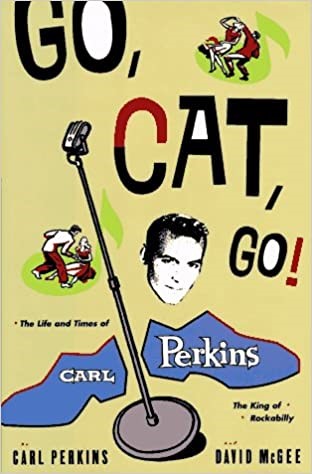
Still, according to that (auto-)biography with the great and inevitable title Go, Cat, Go! this was all Dylan had written before Carl Perkins took over. It’s not much, indeed. The clumsy, tautological third verse is just filler anyway, and it seems clear that the trigger, or the “catalyst”, as Dylan calls it, is just the beauty of the city name “Champaign”. “So that’s where the song was going all along,” the artist says in the 2020 New York Times interview with Douglas Brinkley, about the inspirational power of the three words “I contain multitudes”.

The mere word “Champaign” does indeed have a special power. Also, or especially, in the combination, as it is usually used, with sister city Urbana. “Champaign-Urbana” has an ingrained antithesis that is irresistible to any language artist. After all, “Champaign”, campania, means plain, field, while the Latin origin of “Urbana” is urbanus: from the city, urban, civilised. Plus, as a free bonus, the association with the homophone Champagne, with the festive bubbly drink.

“So that’s where the song is going,” Dylan the songwriter presumably decides, and will have little trouble finding a rhyme word to get there. “Spain” may not be the strongest rhyme word, but it does almost automatically force a filling of the corresponding verse – the formula I got a woman in… surfaces by itself, like the bubbles in a glass of champagne. Dylan, who actually has quite a reputation for disliking repetition, has used the formula himself, not so long ago, in “Outlaw Blues” (I got a woman in Jackson), which was already not too original back then either.

In 1927 Furry Lewis already sang Got a girl in Texas (“Rock Line Blues”), and a year and a half before Dylan struggled with this “Champaign, Illinois” Ray Pennington scored in the country charts with the song that would become a standard, with “I’m a Ramblin’ Man”: Got a girl in Cincinnati. But under Dylan’s skin, there are probably Otis Spann’s “Little Boy Blue” (I’ve got a girl in Chicago) and most certainly Hank Snow’s “I’m Moving On”, the biggest country hit of the 50s;

Mister Fireman please woncha listen to me 
I got a woman in Tennessee 
Keep on moving 
Keep a rolling on 
You're flying too high 
It's all over now 
I move on

An indestructible classic, recorded by The Stones, by Ray Charles, Emmylou Harris and whoever else. Arguably the most beautiful version is done by Johnny Cash, who recorded it again with producer Rick Rubin just before his death, but performed it in the 1980s together with Waylon Jennings, making it sound like a real Waylon Jennings song:

… with Johnny and Waylon taking the liberty of turning “I got a woman in Tennessee” into “got a pretty mama in Tennessee”. Dylan played the song with some regularity between 1986 and 1996 (23 times). Mostly as a song on the setlist, and sometimes just at the soundcheck or during rehearsals. Like in February ’96, in Phoenix, when he has “I’m Moving On” played after Hank Williams’ “(I Heard That) Lonesome Whistle” and before… Carl Perkins’ “Matchbox”. He seems to detect a connection.

Anyway, the I got a woman formula. Dylan seems to want to use it for a list song. A continuous enumeration of places where the narrator has women, who will then be crossed off at the end of each verse against that one woman in the chorus, against that incomparable thief of hearts from Champaign, Illinois. Not very inspired either, of course. Jimmy Martin’s “Freeborn Man”, for example, with the beautiful, all-encompassing verse

I got a gal in Cincinnati
Got a woman in San Antone
I always loved the girl next door
But anyplace is home

… and thirty years later, on the threshold of the twenty-first century, the formula has lost none of its force, as the phenomenon Lou Bega demonstrates in yet another list-song, but still irresistible mambo, in “I Got A Girl”:

I got a girl in Paris, I got a girl in Rome
I even got a girl in the Vatican Dome
I got a girl right here, I got a girl right there
And I got a girlfriend everywhere
I got a girl on the Moon, I got a girl on Mars
I even got a girl that likes to dance on the stars
I got a girl right here and one right there
And I got a girlfriend everywhere

There are hardly any fresh, original interpretations of the formula. Just one, in fact: Josh Ritter’s outer category song “Girl In The War” (The Animal Years, 2006);

Peter said to Paul
"All those words that we wrote
Are just the rules of the game and the rules are the first to go"
But now talkin' to God is Laurel beggin' Hardy for a gun
I gotta girl in the war, man I wonder what it is we done

… with the coincidental link to Dylan’s little ditty in Ritter’s final couplet:

But I gotta girl in the war, Paul her eyes are like champagne
They sparkle, bubble over, in the morning all you got is rain

But presumably Dylan is planning a more traditional use of the formula I gotta woman in. With as a gimmick something like Jimmy Martin’s “Freeborn Man”: exotic women all over the world versus the girl next door, here in Illinois. At least, that is what the first choice “Morocco” suggests. A geographical indication that seems to have an exotic sound for Americans more than for Europeans. Morocco is very close to Europe, but choosing Morocco as location in a film like Casablanca, in songs like the first song Graham Nash offers to Crosby and Stills in America (“Marrakesh Express”, 1969), as a retreat for poets like Burroughs, Ginsberg and Kerouac, and by Dylan himself in “If You See Her, Say Hello” (she might be in Tangier), to name but a few examples, illustrates that “Morocco” is associated by American artists with the excitement of faraway, strange and exotic. Especially unfortunate then is the following I got a woman in Spain; Spain is only forty kilometres from Morocco, which somewhat dilutes the idea of “I got women all over the world”. Plus: unintended of course, but many Europeans will think of the Spanish enclaves in Morocco (Ceuta and Melilla) – with just a little ill will, one might even see these two women as one and the same woman – I got a woman in Spain, Morocco.

Not what the poet means, obviously. Though perhaps he did notice the unintentional digression. Anyway, he gets stuck, still manages to squeeze out a weak filler (But the girl I love that stole my heart), and finishes it off with the catalyst, with She lives up in Champaign. Is that all there is? Yes, Peggy, that’s all there is.

Ah, there’s Carl Perkins. “Your song,” Dylan says. “Take it. Finish it.”

Jochen is a regular reviewer of Dylan’s work on Untold. His books, in English, Dutch and German, are available via Amazon both in paperback and on Kindle:


Posted in Uncategorized | 6 Comments

Bob Dylan As Endymion Parts I and II

By Larry Fyffe

“I wish I didn’t love you so much” ~ Casablanca

As Will Shakespeare reigns in the First Elizabethan Era, Bob Dylan reigns in the Second.

To the point ~

The Jungian template for a number of masterful songs by Bob Dylan is “Endymion” by John Keats; the poem based on ancient Greek/Roman mythology.

The three-folded Moon Goddess – represented, for instance, by virgin Diana, by mother Isis, and by crone Kali – falls in love with the beautiful mortal shepherd named Endymion.

He, in turn, desires to become immortal like she.

As expressed by the Bogart-like narrator in the following song lyrics:

Go over to London
Maybe gay Paree
Follow the river, you get to the sea
I was hoping we could drink from life's clear stream
I was hoping we could dream life's pleasant dream
(Bob Dylan: Marching To The City)

The mortal shepherd tries to change; endeavours to cease chasing after his concept of the ideal woman, represented by the great white moon. But he cannot resist doing so.

To escape one of the predicaments in which Endymion finds himself (while down in Pluto’s watery Underworld), the shepherd is required to help re-unite lovers who are floating around all alone:

The visions of the earth were gone and fled
He saw the giant sea above his head
(John Keats: Endymion, book ii)

Initially, singer/songwriter/musician Dylan (as narrator in the song below) doesn’t envision that problem difficult to solve; the sea is but a stream; the stream is but a dream:

The light in this place is really bad
Like being at the bottom of a stream
Any minute now
I'm expecting to wake up from a dream
(Bob Dylan: Dreaming Of You)

Easy does not turn out to be the case – instead, all Hell breaks loose:

The ghost of our old love has not gone away
Don't look like it, like it will anytime soon
You left me standing in the doorway crying
Under the midnight moon
(Bob Dylan: Standing In The Doorway)

Bringing to mind the Gothic poet of gloom standing by the moonlit doorway of doom:

For the moon never beams without bringing me dreams
Of the beautiful Annabel Lee
And the stars never rise, but I see the bright eyes
Of the beautiful Annabel Lee
(Edgar Allan Poe: Annabel Lee)

A thing of beauty gone can bring sorrow forever; leave a person stranded on the night’s dark Plutonian shore:

Last night I danced with a stranger
But she just reminded me you were the one
You left me standing in the doorway crying
In the dark land of the sun
(Bob Dylan: Standing In The Doorway)

And so it goes, the Gnostic-like poems of Keats and Poe cast their ghostly shadows over a number of songs by Bob Dylan.

Bob Dylan As Endymion (Part II)

John Keats reworks the mythology of Endymion; has the shepherd decide to settle down to an earthly existence after having tasted hellish death beyond the River Acheron, and heavenly immortality up on Mount Olympus.

In the Gothic-tinged poem “Endymion”, the three-spirited Moon Goddess, who accompanies the shepherd for a while as an Indian Maiden, transfigures herself into a caring Crone.

As such, Diana bears him painful news; despaired, he sees her body fading gaunt and spare; she tells mortal Endymion she’s sorry, but being immortal and divine, she can never be like he is – return youthful yet again she always will.

The White Goddess, coined so by Robert Graves, nevertheless says she will eternally adore the earth-bound shepherd, he being the creative artist that he is.

Come then, Sorrow
Sweet Sorrow ....
There is not one
No, no, not one
But thee to comfort a poor lonely maid
(John Keats: Endymion, book iv)

To endure sorrow in order to appreciate bliss is supposedly a wise message garnered from Nature, and expressed through the mercury-coloured lips of the poet of Autumn.

An Existentialist melancholic message that irks mightily the tough-minded narrator of the song lyrics below:

Sorrow and pity
Rule the earth and the skies
Looking for nothing
In anyone's eyes

(Bob Dylan: Marching To The City)

Accordingly, the moody Moon can  keep right on rolling along:

I would be crazy to take you back
It would go up against every rule
You left me standing in the doorway crying
Suffering like a fool
(Bob Dylan: Standing In The Doorway)

For Bob Dylan, or at least for the writer as narrator, John Keats is just too unhappy in his unhappiness while the sunshine Romantic Transcendentalist boys (like Ralph Emerson) tends be a bit too optimisitc given some of the harsher aspects of human existence.

Oh, oh, oh, lo and behold; the story does not end here. You see, Endymion has a sister, and her name is Poena.

She’s the Goddess of Divine Retribution and does not tolerate mistreatment without it being returned in kind.

So don’t go blaming the Moon in June:

The peaches they were sweet, and the milk and honey flowed
I was only following instructions when the judge 
                                      sent me down the road
With your subpoena
(Bob Dylan: Angelina)

Posted in Uncategorized | 3 Comments

Never Ending Tour 2007 part 1: The Light is Never Dying

By Mike Johnson

Odd, inflexible staccato rhythms, broken phrasing, tired dumpty-dum tempos, a broken circus barker voice, a curious rinky-dink organ…this is what I thought I had to look forward to in 2007, given the hole the NET appeared to have fallen into, at least among the commentators I read.

Imagine my surprise, therefore, as I was sorting my files, to find ‘Till I Fell in Love With You’ from the Birmingham concert (17th April). It was playing in the background, when I realized I had found something special. It’s a standard blues complaint, but it was swinging, as the 1940s big bands swung, and when Dylan started on the harp, I suddenly had a ‘best ever’ performance on my hands. The band was on fire. Dylan was blasting away like Paul Butterfield in the 1960s. I kept thinking I was hearing saxophones and trumpets but of course it is all guitars, guitars that sound like a big band. And Dylan’s full-throated harp.

I should have learned by this stage not to trust the critics, but insteda to trust my own ear. Fair to say that Dylan had been working on that song since 1997 (Time Out Of Mind), honing it, bringing forward its menacing beat, swinging it, slowly turning it into a solid performance like this. The success of this performance is a testament to the power of blues, however ‘generic’ it might sound to some. The theme of the song, that falling in love can be a total, life-wrecking disaster, has its underlying humour.

Junk is piling up, taking up space
My eyes feel like they’re falling off my face
Sweat falling down, I’m staring at the floor
I’m thinking about that girl who won’t be back no more
I don’t know what I’m gonna do
I was all right ’til I fell in love with you

(Note, these Birmingham recordings are the work of bootlegger Crystal Cat who we encountered back in 2005, famous for the sharpness and clarity of their recordings. See 2005, Part 1.)

Till I Fell in love with you

That was not the only pleasant surprise. I’d pretty much given up on expecting anything new and exciting from ‘It’s Alright Ma,’ as it had been stuck in a lumbering Sonny Boy Williamson riff for some years. Listening to this one, from Orillia (7th July), I was swept along by a new, hard rocking arrangement. The song hadn’t sounded so powerful in years. The sweeping attack on all things false and phoney was once more full of vitality, a compelling experience.

It’s Alright Ma (A)

Just four months earlier, at Stockholm, the song had still been in the Sonny Boy Williamson mode. It was swinging, but leaning towards the dumpty-dum. It was emerging into the version we’d hear at Orillia, but hadn’t quite got there yet.

It’s Alright Ma (B)

While that had a driving rock force carrying it along, this version of ‘It’s a Hard Rain Gonna Fall’ goes in the other direction, towards a lilting gentleness in counterpoint to the horrors being described. The performance seems to tiptoe around its subject matter as if these visions were too terrible to be described much above a whisper.

Hard Rain

These were not the only pleasant surprises in store for me as I worked through the material. Many of these songs sounded fresh and reinvigorated rather than old and stale. Take this ‘She Belongs to Me,’ from 14th April (Sheffield). Abandoning the slow, dirge-like tempo of previous years, and to which he will later return, Dylan belts this one out as a mid-tempo rock song. It has a catchy beat and a bit of swing to it. This is a bit of alright, I thought.

She belongs to me

I was also pleasantly taken with this thoughtful version of ‘Shelter from the Storm.’ Dylan abandons the upbeat tempo that made for such a great performance in 2005 (See NET, 2005, part 1) for a performance slower and more contemplative. This goes to show how different performances of the same song suit different moods. This one is gentle and contemplative. Incidentally, I notice that there are times, such as here, where Dylan can really sing and hit the high notes. It seems the circus barker appears when Dylan wants him to.

Shelter from the Storm

And sometimes that rinky-dink organ sound really works. When writing about this performance of ‘Simple Twist of Fate’ in my Master Harpist series (See Master Harpist, part 3), I commented on how Dylan’s circus-like organ added pathos to the scenes we are presented within the song, while the harp helped keep us at a whimsical distance from those scenes. I’d like to take that a step further. Dylan’s curious organ riffs put me in mind of an amusement park or fairground, and I see the two protagonists of the story with this in the background, maybe a Ferris wheel turning, gaudy lights flashing, tawdry music playing. The experience related may have happened many years before, and we are seeing it through the hurdy-gurdy of memory.

Suddenly this old masterpiece glitters with a new strength.

Simple twist of fate

On a lighter note, I was happy to find this performance of ‘Country Pie,’ a rarity for the NET and the last known performance of the song. It’s a delightful bit of fun and nonsense from Nashville Skyline. This one, from Stockholm, barely three minutes, is a cheeky little interlude. No matter how light-hearted and frothy Dylan can be in such rare moments, those innocents who assume he’s talking about a baked pie from the oven might look again:

Saddle me up my big white goose
Tie me on ’er and turn her loose
Oh me, oh my
Love that country pie

Country Pie

In the last post for 2006 (Part 4), I introduced the song ‘Ain’t Talking’ and said that the song came into its own in 2007. This is one of Dylan’s journeying songs, taking us on a wild trip through landscapes and emotional postures. The journey, I suggested, parallels and echoes the Roman poet Ovid’s journey into exile.

It is dark, violent and conveys a vision of an earth of endless suffering.

The sufferin' is unending
Every nook and cranny has its tears
I'm not playing, I'm not pretending
I'm not nursin' any superfluous fears

The mystic garden of paradise, with its ‘wounded flowers’ has been deserted. The spiritual guardian of the garden has departed.

Excuse me, ma'am, I beg your pardon
There's no one here, the gardener is gone

I’d like to begin with the St Louis performance (22nd Oct). It’s a beautifully clear recording with Dylan singing softly, with an almost ghost voice, emphasising the spookiness of the song.

Ain’t Talkin (A)

That was my favourite performance until I heard this next one (date unknown). Here the softness and spookiness of the song develop a hard edge. The vocal is a little more forceful.

Ain’t Talkin (B)

That was my favourite until I heard this one, from Birmingham. It may be that forward, Crystal Cat recording that does it, but the vocal is very strong. The spookiness of the song is still there, but that hard edge is now clearly despair and anger. A remarkable performance.

Ain’t Talkin (C)

I have to reiterate here that I think ‘Ain’t Talkin’ is one of Dylan’s best songs. The imagery is wide-ranging, but there is a focus and emotional coherence which lifts it into greatness. Interestingly, while Dylan is happy to drop verses out of his old, 1960’s classics like ‘Desolation Row’ and ‘Mr Tambourine Man’, all nineteen verses of ‘Ain’t Talkin’ are intact in these performances.

Staying with Modern Times, we come across the first performances of ‘Beyond the Horizon,’ which Dylan did not perform in 2006. This song is one of several (‘Bye and Bye’,’Moonlight’,’Spirit on the Water’…) which use happy, schmaltzy melodies from the era between the two world wars as a vehicle for lyrics of power, of subtlety, lyrics that are deceptively simple. The song appears to offer the comforts of banality, but there are deep currents beneath.

For ‘Beyond the Horizon’ Dylan uses that vacuous old song ‘Red Sails in the Sunset,’ written by Jimmy Kennedy and Hugh Williams in 1935, to create a song that evokes our most dear hopes that love will survive after death.

Beyond the horizon, in the springtime or fall
Love waits forever for one and for all

Beyond the horizon across the divide
'Round about midnight, we'll be on the same side
Down in the valley the water runs cold
Beyond the horizon someone prayed for your soul

However, the phrase ‘beyond the horizon’ does not simplistically stand for death. The ‘horizon’ might stand for any great divide in our lives, the point beyond which we cannot know.

Beyond the horizon the night winds blow
The theme of a melody from many moons ago
The bells of St. Mary, how sweetly they chime
Beyond the horizon I found you just in time

It's dark and it's dreary
I been pleading in vain
I'm old and I'm weary
My repentance is plain

Part of Dylan’s genius as a lyricist is his ability to use ordinary phrases, common sayings and cliches and bind them into something extraordinary. That is what he does here. The song has this breezy surface, as if it is just one of those mushy old love songs, while it actually explores some of our deepest feelings around love and death.

Beyond the horizon, 'neath crimson skies
In the soft light of morning I'll follow you with my eyes
Through countries and kingdoms and temples of stone
Beyond the horizon right down to the bone

I don’t know the date of this one, but I’m guessing that it’s from Manchester (5th Oct). The song was only performed fifty-eight times between 2007 and 2009, and this live recording is as good as it gets.

Beyond the Horizon

The best song to follow that is another from the same bag, ‘Moonlight’ from Love and Theft (22nd June, Atlantic City). Except for the refrain, which recalls the Carter Family’s 1928 recording of Joseph Wade’s song ‘Meet Me by the Moonlight’, the melody is Dylan’s own. Interestingly, it sounds as if it were borrowed. Wikipedia gives our editor a mention on this one: ‘According to Dylan scholar Tony Attwood, the song sees Dylan “playing with chords that he rarely if ever used before – chords of the type we might well find in the American popular songs of the 1920s and 1930s”’. We could say the same about ‘Po Boy.’

Moonlight

Ritual dictates that I finish this post with ‘All Along the Watchtower,’ still Dylan’s preferred final song.

A goose-stepping ‘All Along the Watchtower’? Well, it’s always had the drums of war thrumming along in the background, but here the song has turned into a frenetic march, goose-stepping for Armageddon. The vocal lines get chopped up by this relentless march. Even the softer parts sound weird with that menacing little organ. This one’s from St Louis.

Watchtower

That’s it for us this time around. Join me next time for more Dylan sounds from 2007.

Until then,

Kia Ora


Posted in Uncategorized | 3 Comments

Other People’s songs: When did you leave heaven? Plus Jack White and Pokey LaFarge

By Aaron Galbraith and Tony Attwood

This article is part of the series on Bob Dylan’s recordings of songs not written by himself.  A list of the previous articles in the series is given at the end.

The songs and example recordings are selected by Aaron in the US and passed over to Tony in the UK for commentary.  But sometimes (as here) something different finds its way into the article – as will become apparent in a moment.

Why did you leave heaven?

Aaron: Track 2 on the 1988 album Down in the Groove was Bob’s take of this Walter Bullock/Richard Whiting song

Heylin offers an explanation for the selection of the album’s tracks, “As it is, Dylan’s intent all along may have been to show the rich vein of music he listened to when growing up in Hibbing.”

Tony: The accompaniment to this song sounds very un-Dylan to me.  The strong drum beat at the start of each bar and then on the half beat at the end of the bar… I can’t recall anything quite like this on any other Dylan recording or performance.  And then the sudden cutting of half a bar of music before the resumption of the verse after the middle 8.  It is very, very unBob.  A triumph of production over the music, it seems to me, which is sad because although I find the lyrics somewhat mawkish, it is a fine song in its own terms.

Aaron: Some wonderful early film clips to show you here including the original version: Tony Martin from the 1936 musical film ‘Sing Baby Sing’. This was nominated for an Academy Award for Best Original Song in 1936.

Tony: That’s an all lady orchestra, including a female conductor [I wrote that before watching the whole video, from which it becomes quite apparent it is an all female ensemble!]  And apart from that it’s a bit of a shock to hear this as a straight 1930s popular song, which it does not resemble in any way in Bob’s treatment of the song.

It is actually from the movie “Sing Baby Sing” released in 1936.   It was written by Richard A. Whiting and Walter Bullock.

Aaron: Big Bill Broonzy recorded it for a short film on Broonzy called “Low Light, Blue Smoke” from 1956 (available on YouTube if you want to watch the whole film)

Tony: Wow, that’s an unexpected transformation.  I wonder (and maybe someone can help me on this), did this sort of reworking happen very often in the 1950s?  It is not something I have really looked at before – taking a popular song from the 1930s and transforming it into having something akin to a blues feel in the 1950s.

Aaron: Here are two modern artists’ versions of the song.

World Party from 2012

Tony: The opening guitar work sounds to me as if they are going to break into “Desolation Row”  And I wonder why it is there, because very quickly the guitars move right away from that.   Is it an admission to the fact that musicians had discovered the song through Dylan?

I rather suspect it is for World Party was in effect Karl Wallinger, and it is the sort of thing I can imagine him doing (World Party was, I think, what he did after leaving The Waterboys.  He also wrote “She’s the One” which Robbie Williams had a hit with.)

Of the examples so far this is the one that I like – and sorry to say I like it much more than Bob’s version, which still sounds to me, even on playing again, as if the accompaniment was added later by the production team in an attempt to beef the whole thing up.

Aaron: Pokey LaFarge from 2015

But now… Where on earth to begin writing about Pokey LaFarge?  Well first off I am going to have to admit that I have changed the recording from that which Aaron provided, because this live recording allows us to see the artist in person.  Hope that’s ok Aaron – won’t happen again, promise.

There is no way I can do justice to him and his work, but if I tell you that “Chittlin’ Cookin’ Time in Cheatham County” was produced by Jack White (yes that Jack White) and released on Jack’s own label, you will start to appreciate how highly this guy is valued by musicians.

Jack White also collaborated with LaFarge on “I guess I should go to sleep” from “Blunderbuss”.

OK, I have meandered a long way from Aaron’s starting point.  I can only hope that Aaron will forgive me and that you may have found something of interest here.

Previously in this series…

Posted in Uncategorized | 1 Comment

A Dylan cover a day: Oh for a re-imagining of Maggies Farm!

By Tony Attwood

I am sure someone somewhere has recreated Maggie’s Farm and done something totally different with the song, but from the cover versions I’ve been listening to, the main thrust of the musicians’ ideas seems to be play it fast, play it loud, belt it out.

But imagine it as a soft lilting melody, or maybe with a multiple set of chord changes rather than that one chord that dominates most of  the song.

And maybe it has been tried like that and I’ve just not found the recording.  Or maybe it simply can’t be made to work.

Linda Gayle taunts us for three seconds with the thought that maybe this will be a totally revised version, but no, everything about apart from the in-between verse instrumental break, is much the same.  It’s a belter.  But otherwise…

Zero Prophet know the message and do vary both the vocal line and the accompaniment and I like the idea but even with the lyrical changes and extended verses… well yes it is different, but somehow it doesn’t hold me completely.

The Blues Band go back to the basics of the song much more, just changing the pulse to make it a standard driving force, then adding the guitar to manipulate the end of each verse.

That little instrumental pattern which appears at the end of each and then after a new guitar lick all add to the entertainment, and it’s fun, so the best of the versions tried so far.

There’s no mistaking the metallic feel of Chicken Diamond and they know that we know the lyrics by heart.   I’m not sure I want to play it more than once but it was fun while it lasted, even if it is minimalist.

Jimmy Vivino taunts us with an interesting instrumental introduction, and the “no no more” vocals gives us some variety.   But after a verse we’ve more or less got it, and there seems nowhere else to go.

So to David Grisman and co who do give a totally new feel.  It’s so simple – let’s use a banjo rather than an electric guitar.  It somehow feels very authentic, as if it were composed long before Bob actually wrote it.

And the authenticity is kept by not changing the delivery at all.   What could have worked is the introduction of a folk violin part after the first verse, playing a counter melody.   In the end the promise of the new sound was not delivered, and there we were, hearing the same song again.


And the Dylan Cover a Day series

Posted in Uncategorized | 2 Comments

Champaign, Illinois (1969) part 2: Oh, how I love you


by Jochen Markhorst

II          Oh, how I love you

In most models, the universe was filled with an enormous energy density and enormous temperatures and pressures. Filled with jump blues by men like Wynonie Harris, the songs and stage presence of Chuck Berry and Little Richard, rockabilly, Arthur “That’s All Right Mama” Crudup, bluegrass, “Ida Red” and Louis Jordan… the confluence of these leads to a sudden, violent cosmic inflation: the Big Bang of Rock ‘n’ Roll, Elvis’ debut album Elvis Presley on 13 March 1956, the first rock ‘n’ roll million seller. And the ignition of that Big Bang is Carl Perkins, or rather his song, the opening song of Elvis Presley: “Blue Suede Shoes”, with which Perkins himself had scored his first and only No.1 shortly before.

Not a flash in the pan. After “Blue Suede Shoes” Perkins enriched us with songs such as “Matchbox”, “Honey Don’t” and “Everybody’s Trying to Be My Baby”, and Sir Paul McCartney declared the official canonization: “If there were no Carl Perkins, there would be no Beatles”.


In short, the music-historical importance of Carl Perkins is difficult to overestimate; the credit Perkins has is infinite. Though he did lose a little of that credit in 1996, two years before his death. Just like Dylan said about his idol Elvis (“I never met Elvis, because I didn’t want to meet Elvis […] Because it seemed like a sorry thing to do”), you should leave your image of the extra-terrestrial Carl Perkins intact. And not pollute it with too much information.

Go Cat Go! The Life and Times of Carl Perkins, The King of Rockabilly (1996) is a hybrid of autobiography and biography, written by Rolling Stone journalist David McGee. A concept that rarely works out well; a self-admiring protagonist and the uncritical admiration of the co-writer, who is almost by definition a fan, is a fatal combination. Life, by Keith Richards and James Fox, is a rare exception, and illustrates painfully clearly why the (auto-)biographies of big names like Dr. Ralph Stanley (Man of Constant Sorrow, 2010, with Eddie Dean), Judy Collins (Sweet Judy Blue Eyes, 2011) or Robbie Robertson (Testimony, 2016) are often such toe-curling exercises: unlike many of his colleagues, Keith does have self-mockery and the ability to put things into perspective.

The (auto-)biography of Carl Perkins lacks that, self-mockery and sense of perspective. With all its unpleasant consequences: superficial, self-cleansing self-reflection, unreliable anecdotes and embarrassing self-congratulation. Perkins’ account of his meeting with Dylan in January 1992 is a case in point. Perkins tells us that he is in New York, at the Plaza Hotel, and that Bob Dylan calls up to his room from the lobby. When Dylan enters his hotel room a few minutes later, Carl barely recognises him. Dylan is “fat”, and: “looked like seventy years old with his old beard and matted hair, cap on his head”. Perkins’ description of the ensuing greeting scene is weirdly alienating:

“He said, ‘Uh-uh. We’re brothers.’ And he hugged me. And I thought he wasn’t gonna turn me loose. His beard was scratchin’ my damn face – I’d just shaved. And he’s sayin’ in my ear, I love you, man. Oh, how I love you. I love you, Carl.’ And had tears in his eyes. ‘Let me look at you.’ And he just stood there. Said, I’m so thankful. You lived through it.”

Dylan also has a present for Carl, “a small gold pin in the shape of a guitar”, and hands it over with a seemingly rehearsed, monumentally trite talk:

“There’s three thoughts that go with that little guitar,” Dylan said. “One is for gettin’ well. Two is for gettin’ up and gettin’ back out. And number three is so the world can keep lovin’ Carl Perkins alive.”

… which Perkins thinks is deeply moving and he perceives it as “so poetic”. He promises to cherish the pin and even take it to his grave (in between they hug again, for the third time now), and Dylan is just as moved: “A man can’t ask for more than that,” he declares, according to Carl. And with that, Dylan leaves the room and Perkins’ life;

“Door shut,” Carl recalls. “The little bent-over fat man with the Army coat on and ragged guitar case faded into the streets of New York, and nobody knew who he was.”

“Built a little too close to the water,” as the Germans so aptly put it in relation to übersentimental, self-affected characters, men who are moved to tears by their own goodness.

It is all so out of character and implausible that it becomes almost comical. But then again, we are talking Carl Perkins, one of the Very Greats, one of the Patriarchs, an architect, a frontman and an eyewitness from the very beginning. So his memories, his opinions and his comments are music historically important, do matter one way or another. And: for the book, co-author David McGee conducted interviews with those involved – including Dylan, in 1994. The reason being, of course, the unique, one-off collaboration between Perkins and Dylan in 1969, the co-production of “Champaign, Illinois”, the little ditty that Carl would record shortly afterwards for his nice comeback album On Top.

Thanks to McGee’s research, we get a story about the song’s genesis. Perkins and Dylan meet during the television taping of a Johnny Cash special, so that must have been May 1, 1969. According to legend, Perkins then visits Dylan in his dressing room, where, again according to Carl, Dylan explains to him that he is not getting anywhere with a new song of his. He is stuck. And he sings out, “over a ragged rockabilly rhythm”:

I got a woman in Morocco
I got a woman over in Spain
But the girl I love
That stole my heart
She lives up in Champaign
I said Champaign,
Champaign, Illinois

… a first verse that remains largely unchanged. Only lines 2 and 3 change to Woman that’s done stole my heart, and the chorus line I certainly do enjoy Champaign, Illinois is missing. This seems unlikely, well: half true. Perhaps due to erroneous recall by the then 61-year-old Perkins (this recollection comes from an interview conducted by McGee in 1993). In any case, it is unlikely that Dylan has already added “Illinois” without having a rhyme word. But apart from this minor issue, Perkins’s account seems credible. Indeed, this is the only part of the lyrics that still has a somewhat dylanesque touch (mainly because of the completely unusual rhyme Spain / Champaign, of course). The rest of the lyrics are rather run-of-the-mill, so probably written by a poetically less gifted lyricist like Carl Perkins. Like the second verse:

The first time that I went there
They treated me so fine
Man alive, I'm telling you
I thought the whole darn town was mine

… in which alone the folksy darn already suggests that this was not written by Dylan.

Less credible again is Perkins’ further staging of the dressing room scene. Allegedly, Dylan plays this first, incomplete verse plus half chorus line, and asks Perkins, apparently unsure, “You think it’s any good?” And Perkins, He saw that it was good. He takes over Dylan’s guitar and easily dashes off the rest of the song:

Dylan sat transfixed as Carl worked out a loping rhythm on the bass strings with his thumb, filled in with some quick, stinging runs on the treble strings, and improvised a verse-ending lyric:

I certainly do enjoy
Cha-a-am-pai hane, Illinois

Dylan said: “Your song. Take it. Finish it.”

We weren’t there, of course, but: “transfixed”? Really? All right, it’s a nice song, but no more (well, less, actually). “Transfixed” is, again, very, very out of character. This is May 1969. Dylan already has been seeing quite a bit, this decade. He has worked with master guitarists like Michael Bloomfield and top musicians like Charlie McCoy, he was on stage with Johnny Cash just an hour ago, The Beatles and The Stones are courting him, he is jamming with George Harrison and Eric Clapton, and he has been around the world a few times… With all love and respect to Carl Perkins, Dylan is no longer a rookie who freezes like a rabbit in the headlights when Carl Perkins shakes a few common licks over an ordinary chord progression out of his guitar.

It’s hardly “Blue Suede Shoes”, after all.


To be continued. Next up Champaign, Illinois part 3: So that’s where the song is going


Jochen is a regular reviewer of Dylan’s work on Untold. His books, in English, Dutch and German, are available via Amazon both in paperback and on Kindle:


Posted in Uncategorized | 2 Comments

Bob Dylan: On the Way Home (Part V and VI)

by Larry Fyffe

The cryptic signs ‘penny’ and ‘day’ pop up in the following song lyrics:

You go in the field
You work all day
Way after night
But you get no pay
Promised some meat
A little bucket of lard
It's hard to be a renter on Penny's farm
(Bently Brothers: Back On Penny's Farm ~ traditional, et al)

Harks back to the song lyrics below:

'Tis the song, the sigh of the weary
Hard times, hard times, come again no more
Many a days you have lingered all around my cabin door
Hard times, come again no more
(Bob Dylan: Hard Times Come Around No More ~ Stephen Foster)

Bringing to mind:

Pretty maids all in a row lined up
Outside my cabin door
I've never wanted any of them wanting me
Except the girl from the Red River Shore
(Bob Dylan: Red River Shore)

And moreso in:

No, I ain't gonna work for Maggie's brother no more
Well, he hands you a nickel, he hands you a dime
And he asks you with a grin if you're having a good time
And he fines you every time you slam the door
(Bob Dylan: Maggie's Farm)

It’s pretty obvious that the cryptic clues from the movie “Now And Forever” found in Bob Dylan’s songs above – ‘day’ and ‘penny’ – lead down the path to Mary Magdalene’s “brother disciple”, John, and to the Day of the Pentecost.

Says he, if ye do not believe in Jesus as the Lamb of God, doomed ye shall be.

A sentiment endorsed in the song lyrics below; the narrator could well be John the Apostle, but certainly not Jesus Himself:

They say you looking for someone
Who's never weak but always strong
To protect you and defend you
Whether you are right or wrong
Someone to open each and every door ....
Someone to die for you and more
But it ain't me, babe
(Bob Dylan: It Ain't Me)

Brother John, if not misidentified,  gets to live for quite some time; dies of natural causes:

I John, who also am your brother
And companion in tribulation
And in the kingdom and patience of Jesus Christ
Was in the isle that is called Patmos
For the word of God, and for the testimony of Jesus Christ
(Revelation 1:9)

Bringing to mind Long Island:

Well, it's up in the morning trying to find a job of work
You can stand in one place till your feet begin to hurt
If you've got a lot of money, you can make yourself merry
If you only got a nickel, it's the Staten Island Ferry
And it's hard times in the city, living in New York Town
(Bob Dylan: Hard Times In New York Town)

Bob Dylan: On The Way Homeward (Part VI)

In the movie mentioned below, Jerry’s gal sacrifices her own reputation to save that of the father of Penny (Penelope) as seen through his daughter’s eyes:

Jerry: "I heard the news --
The big sacrifice scene with Penny"
(Gary Cooper: Now And Forever)

In the song lyrics beneath, depicted is a day in the hectic life of a modern Ulysses on the way home to faithful wife Penelope:

I read the news today, oh boy
About a lucky man who made the grade
(Beatles: A Day In The Life ~ Lennon/McCartney)

In the following song lyrics, sea-voyager John “Ulysses” Lennon is crucified after being falsely accused of bragging that the Beatles are bigger than Jesus:

I heard the news today, oh boy
They hauled your ship on the shore
(Bob Dylan: Roll On John)

In the above-mentioned movie, Shirley Temple plays the part of Penny, an innocent child who has faith in human goodness.

In the song lyrics below, such a bright outlook darkened:

Now the chimney is rotten
And the wallpaper's torn
The garden in the back
Won't grow no more corn

(Was Brothers: Shirley Temple (Mr Alice) Doesn’t Live Here Anymore – Bob Dylan et al)

Darkened, as presented in the next song lyrics:

Where are the men I use to sport with
What has become of my beautiful town
Wolf, my old friend, even you don't know me
This must be the end, my house is tumbled down

(Bob Dylan: Kaatskill Serenade ~ Bromburg)

Posted in Uncategorized | 3 Comments

Other People’s Songs: Fixing to Die

By Aaron Galbraith and Tony Attwood

Aaron: Dylan recorded “Fixin’ to Die” for his debut album. The liner notes say that it “was learned from an old recording by Bukka White”. Dylan’s arrangement uses a different melody and some new lyrics.

Tony:  As a youngster, I spent hours, weeks, months, listening to what Dylan did in playing this and how he sang it, and then trying (with a total lack of success) o do it myself.  It was such an inspiration – although I think it rather worried my parents.  But I had simply never heard a performance like this before this first Dylan album came along.

It is good to hear it again – I’d forgotten how fast Bob takes this, and how much energy he delivers.   Wow, even now it gives me goose bumps.

Aaron: Bukka White’s original

Tony:  The rhythm of this 1940 recording (which I think is the first ever recording of the piece) is completely different – it’s a bottleneck Delta Blues here, which it isn’t by the time Bob gets hold of it.   This really comes across with the way he sings “feel like I’m fixing TO die” in the open verse.     Apparently for this recording Bukka White borrowed the guitar from Big Bill Broonzy.  (I just find all these snippets so amazing).

I’m not fully versed in how the song changed over time but I wonder how much of the variation between this version and Bob’s was due to Bob, and how much came from other performers along the way.

But what I have read is that Bukka White never really made it as a blues singer, and the song didn’t become widely known until Bob released it.  That then led to a resurgence and hopefully Bukka White got some money out of the song.  He died in the 1970s.

However, although Aaron is the selector of songs, I thought I would slip this earlier version by Bob in as it contains some interesting variations which have more relationship with the Bukka White version.

Aaron: Many of Dylan’s 60s contemporaries also recorded versions of the song, including Dave Van Ronk and Buffy Sainte-Marie, using a similar template as White or Dylan.

Here are two artists who attempted to update the song for a modern audience

Robert Plant – titled “Funny In My Mind (I Believe I’m Fixin’ To Die)” for the 2002 Dreamland album

Tony:  This is not a recording I knew before now – wow it really does have some fun with the original.  I thought for a moment it was going to turn into a 12 bar blues, but then didn’t.  And that repeated harmonium that runs all the way through – that is a work of genius.  It ought to become tedious, but it doesn’t.

And then the sudden instrumental break which really has nothing to do with the song – except that by the time we come back to the harmonium it makes some sort of sense.

I’m not sure that much is gained by making the instrumental section that long – but stay with it because the main section does come back.  What a great find – thanks Aaron.

Aaron: Love & Special Sauce recorded the song as the title track of 2010’s Fixin’ to Die.

Tony:  I am always amazed at just how much can be got out of what is in essence a very simple song.  But by using the vocal harmonies this again takes us somewhere else once again.

I love this – and I have to admit before starting on this file I really had no idea just how much there was in this song.

Oh and by the way – don’t you dare stop listening until the full three and a half minutes are up.  I am ashamed to admit I nearly did because of that pause they stick in it.  The real ending is superb.

I’m really indebted to you for this one Aaron.  I had no idea there were such great versions of the song around.

Previously in this series…

Posted in Uncategorized | Leave a comment

The Never Ending Tour, 2006, part 4 Strange Brews

Part 4 Strange Brews

By Mike Johnson (Kiwipoet)

While I have been generally upbeat about Dylan’s 2006 performances, it’s not hard to see why some long-time followers of the NET became disillusioned, and why there were such sharp divisions in their camp. This performance of ‘Desolation Row’ from Lincoln, 25th October, is a good place to start to understand what was going wrong. Everything seems in place. The recording is good, Dylan’s voice is strong and forceful, the band sounds sweet and Dylan’s circuslike vamping on the organ does not seem out of place given the imagery of the song.

But something is off. It starts okay, but soon we get the feeling that Dylan is using his considerable vocal resources to make the song sound as unlike previous performances as he can. It’s not just the upsinging, he seems determined to throw his voice all over the place in an effort to make it sound different. He succeeds, but, we would argue, at the cost of the song.

Take for example the verse about Cinderella that begins around 3.40 mins. It may be the emphatic phrasing, the way he breaks the lines up so they don’t connect flowingly. This is a variation of the dumpty-dum effect we noticed in 2005 (See NET, 2005, part 5, Old Friends). You could argue that this is just another interesting variation, but I doubt it will go on anybody’s list of favourite performances.

Desolation Row

The case is clearer, perhaps, with this performance of ‘Mr Tambourine Man’ from Rome (16th July). It’s not just the missing lines and verses but that sense of disconnect from the song’s vital energies that is offputting. It’s all over the place.

Mr Tambourine Man (A)

At first I thought that the poor recording was the problem, so I turned to this one from Sun City (8th April), and in some respects it is better, and the performance gathers some intensity, with Dylan putting his all into the vocals, but the somewhat aimless instrumentals lose the tension. By the time we get to the last verse that emphatic, dumpty-dum quality has taken over, and the performance ends up less than exhilarating.

Mr Tambourine Man (B)

From the frying pan into the fire we go with the crowd-pleasing ‘It Ain’t me Babe’ from Springfield (22nd April). Again, it starts promisingly with an interesting new riff to carry it, and a forlorn harp break to open it, but it soon loses its springiness, becomes rigid and emphatic, and we struggle to retain our interest in the performance.

It ain’t Me Babe

Dylan also repeats words and phrases to fill out the vocal line. ‘I’m not the one you want, babe/ I’ll only let you down’ becomes, ‘I’m not the one, I’m not the one you want, babe/ I will only, only let you down.’ Never were truer words spoken.

I turned to the beautifully recorded Las Vegas performance to see if that was any better. The opening lines are sung like this:

‘Go away from my window, leave at your own chosen speed
I’m not the one, I’m not the one you want babe
Not the one you need.’

It’s marginally better than the Springfield performance but doesn’t catch fire.

It ain’t Me Babe (B)

‘The Time’s They Are A-Changing’ meets a similar fate. Again, we can’t fault the recording or the sound system. It’s another excellent recording from Las Vegas. Except for getting the words a bit mixed up, it’s a forceful vocal performance. All the elements are in place yet once more musical rigidity takes over, and Dylan’s vamping on the organ fails to provide the urgent rhythmical support that the piano provided in previous years. The tooting harp break at the end fails to offer any relief, rather emphasizes the rigidity of form. What’s happened to that lovely swing that used to carry this anthem?

Times they are a changing

Arguably, ‘Boots of Spanish Leather’ from the New York concert (20th Nov) fares a little better, owing to Dylan’s hushed, partly spoken performance, but the over-emphasis on the beat makes it sound like the others, and Dylan’s circus barker voice fails to carry the tenderness of the song. It’s too rough and abrasive for the sentiment.

Boots of Spanish Leather

At least with ‘To Ramona’ I thought that the natural waltz-time would carry the song without it having to fall into the dumpty-dum, and to some extent that’s true. The song flows along sweetly enough, and Dylan gives a performance full of feeling. Certainly, it’s the best we’ve heard so far in this post, and a rare harp break gives the performance an added interest. (Springfield, 22nd April)

To Ramona

The gentle, lilting opening to ‘Every Grain of Sand’ is promising, and to a large extent that promise is fulfilled, despite the upsinging and Dylan rinky-dinking on the organ. In this rather beautifully minimalist performance it becomes clear that it’s the way Dylan plays the organ that is partly the problem. The long sustained notes are not the issue, rather when he vamps to the beat, accentuating the dumpty-dum, that performance takes on that marionette feel. The liquid smoothness of the song has gone. (Sun City)

Every Grain of Sand (A)

That’s about as good as it gets. In this version from Boston (Nov 12) we can hear Dylan breaking up the flowing vocal line to accentuate the emphasis. He’s foregrounding the dumpty dum.

‘In the fury of the mo-ment
I can feel the master’s hand…
The flowers of indul-gence
And the leaves of yest-ter-year..’
And so it goes on…

Every Grain of Sand (B)

We can get away from all this by playing something fast. Something like ‘Maggie’s Farm.’ This is a foot-tapper from Stockton, and has a lot of bounce, but then, so did the original, the rock and roll ripper that shocked the folkies at Newport back in 1965. I like the new riff that carries the song, and while it’s a long way from any favourite performance, and you won’t hear me blathering about ‘best ever,’ it’s an enjoyable, celebratory experience.

Maggie’s farm.

A countrified ‘I’ll Be Your Baby Tonight’ from Las Vegas is a further antidote to musical rigidity. The crowd loves this rollicking version, which is not surprising. It’s a warm-hearted invitation to love, quite unique in the Dylan canon.

I’ll be your baby tonight

We move further from staccato rhythms with a particularly sweet and gentle performance of ‘Lay Lady Lay’ (Stockton). Raucous versions of this song, with the band joining in on the choruses, have long gone and the song has been restored to its original melodic form. If anything, a certain pathos has crept into the song with age. The singer doesn’t sound quite so smoothly confident as he once did; the outcome of the seduction not as sure as it might have been in his younger days. When you have to keep asking, the cause might already be lost.

 Lay Lady Lay (A)

This isn’t the only gentle, tremulous performance of the song. Here’s another one from Las Vegas.

Lay Lady Lay (B)

The apocalyptic ‘God Knows’ has always been pretty thumpy, if not dumpty-dum. Dylan has never messed much with this song, changed its pace or melodic line. It starts quietly and builds. This one from Sun City joins a long line of successful performances of the song. I particularly like the background riff which enhances the obsessive flavour of the song.

God Knows

For some years now Dylan has been developing a ‘John Brown’ with a Celtic flavour. The thumpy, heavy beat is a long way from the smooth rock version of 1994, but is a successful adaption of the song. It gives the anti-war story an ancient flavour. In that heavy beat we feel the threat of war, the tread of war. The dramatic confrontation between generations has not lost its power. (Madison, 31st 10th)

John Brown

Similarly, there is a natural stridency to ‘Masters of War.’ The slow, threatening arrangements reached their apex in the Berlin performance of 2005 (See NET, 2005, part 5), and Dylan stuck to the same arrangement in 2006. I miss the threatening rumble of the piano we found in 2005 but the churchy organ in this Boston performance is an interesting variation.

Masters of War

‘Don’t Think Twice’ is a bitter-sweet, reflective little song which Dylan has been turning into a celebration, allowing the song to build from those opening tender moments to a rousing end. That movement is evident here, with the crowd-pleasing slow-down at the end. It really is ‘all right’ after all. (Sun City)

Don’t think twice.

The vituperative ‘Positively Fourth Street’ originally derived its power from the mix of ‘happy,’ bouncy music with sharp-edged lyrics. The bounce has been replaced with that staccato dumpty-dum, and the circus barker sounds rough around the edges but the jeer has not been lost, even if the sweetness of the bitter pill has. (Boston)

I wish that for just one time you could stand inside my shoes
And just for that one moment I could be you
Yes, I wish that for just one time you could stand inside my shoes
You'd know what a drag it is to see you

Positively Fourth Street

Let’s finish this post, and the year 2006, with our old friend and NET companion, ‘Tangled Up in Blue.’ 2006 is very much a mixed bag with some exciting new sounds from Modern Times and some strange brews from yesteryear, with Dylan’s controversial organ playing in the spotlight. High, sustained quavering notes, emphatic rinky-dink rhythms that create a staccato sound so difficult for NET aficionados to deal with.

Next post we turn to 2007 for more of the same as Dylan enters more deeply into these new sounds he’s creating, for better or for worse. Those who find it all pretty hard to deal with will be relieved to hear that ‘Tangled Up In Blue’ hasn’t changed much, at least not yet. This song’s greatest days may be behind us, but listening to this hectic recital from Boston, we may for a moment convince ourselves that not much has really changed, that he keeps on keeping on just as he’s always done.

Tangled up in Blue

Kia Ora

Posted in Uncategorized | Leave a comment

Bob Dylan: On His Way Home (Parts III and IV)

by Larry Fyffe

Characteristic of Post Modern art is its use of fragmented thinking; associations that fly off in all directions.

In the movie mentioned below, Gary Cooper, plays the part of Penny Day’s criminal father; he struggles with his conscience – (daughter Penelope played by Shirley Temple); he says of the police:

“They don’t look so bad close – not nearly as big as when you’re running away from them”

(Now And Forever)

A line messed with a bit in the following song lyrics:

What looks large at a distance
Close up ain't never that big
(Bob Dylan: Tight Connection To My Heart)

Gary Cooper stars in another movie; it’s about a western sheriff who’s abandoned by the townsfolk; he must  stand alone against outlaws with his conscience and his gun – a movie with David Crosby’s father as cinematographer, a film that’s made in the days when artists and actors be blacklisted by the House Committee On UnAmerican Activities.

The otherwise-abandoned sheriff is helped only by his Quaker gal who shoots down one of the bad guys.

The following song is featured in the film where the size of the clock matters:

Do not forsake me, oh my darling
Wait along, wait along
I do not know what fate awaits me
And I must face a man who hates me ....
Look at that big hand move along
Nearing high noon

(Tex Ritter: The Ballad Of High Noon ~ Washington/Tiomkin)

In the song lyrics below, ‘penny’ and ‘day’ pop up – but there’s no happy ending to an actual event – the hero therein is killed by an extremist Christian:

Doctor, doctor, tell me the time of day
Another bottle's empty, another penny spent
He turned and slowly walked away
They shot him in the back and down he went
Shine your light
Moving on

(Bob Dylan: Roll On John)

Bob Dylan On The Way Home (Part IV)

Though somewhat shrouded in the fog of history with the Great Vowel Shift and ‘nick names’ derived from rhymes, the decoding of the important cryptic key words such as  “penny” and “day” in the song lyrics of musician/ singer/songwriter Bob Dylan is as easy as falling off a log.

As previously noted, it’s just a hop, skip, and a jump in time from the spelling and sound of Penny Day to Peggy Day, then to Maggie Day; and from there to Magdala and Magdalene.

Without the above historical knowledge of language, some Dylanologists dismiss some songs by Dylan out-of-hand; mischaracterize them as trivial ones.

For instance, many official interpretations of the New Testament Bible tag Mary of Magdala as either a prostitute or a reformed one who’s possibly still possessed by demons.

As a consequence, the following song actually has a deep cultural meaning behind it – is or isn’t Mary Magdalene a good girl?

Taking the song’s narrator to be Jesus (He affectionately calls his Father “Golly”), reformed Mary at first gets a thumbs up from Christ for her whitened-up purity:

Peggy Day stole my poor heart away
By golly, what more can I say
Love to spend the night with Peggy Day
(Bob Dylan: Peggy Day)

The trouble is that Golly’s Son can say more, and does; there’s the darkness of night hanging over Peggy/Maggie –  the shadow of a temptress, of the bejewelled Whore of Babylon no less:

Peggy night makes my future look so bright
Man, that girl is out of sight
Love to spend the day with Peggy night
(Bob Dylan: Peggy Day)

There’s a loud thunder clap heard in the mountains, and the religious take on Bob Dylan’s view of women becomes split in two forever and ever:

Well, you know ever even before I learned her name
You know I loved her just the same
And I tell'em all, wherever I may go
Just so they'll know that she's my little lady
And I love her so
(Bob Dylan: Peggy Day)

And that’s just how it goes:

What's your name?
Jerry
Mine is Penny Day
(Shirley Temple/Gary Cooper: Now And Forever)

Honour bright!


Posted in Uncategorized | 2 Comments

Dylan cover a Day: Love Sick (Updated)

By Tony Attwood

For a complete resume of “Lovesick” there is an article on this site by Jochen and of course he’s picked out some of the best covers there are.  But I had a couple of others to drop in, so I thought I’d give the song another feature.

And yes, I will admit it, there is a second reason.  For I am rather chuffed that for this song, an unknown (to me at least) Wikipedia editor, decided to give me lead billing (well, at least first mention) in the Wiki analysis.  It begins…

Dylan scholar Tony Attwood characterizes “Love Sick” as the “ultimate, absolute, total, complete lost love song” and “the strangest way ever to start an album – starting with what appears to be the end”

OK, I’ll stop there, since if you are really interested you can read the rest on wiki but I do think that is the first time I’ve seen myself referred to as a “Dylan scholar”.  It’s rather flattering, and actually I think I might mention it in passing at the dance tonight to one or two of my regular dance partners.  And a few friends.  And my daughters.  And the couple next door.  And the others in my company.  And…

Enough.  You know the song, you’ll remember how it starts desolate and gets ever lower.  So this might surprise you…

I really like that.  For a start it is so unexpected, and so imaginative, and  just shows that no matter how a piece is originally written, it can go anywhere, if the musicians and arrangers have enough imagination and talent.

Jochen particularly noted what I think is a live version of Lovesick by Trigger finger, and contrary to what I wrote before I have now got a copy – thanks Jochen.  It starts at 10 minutes 50 seconds, and then mutates into Ballad of a Thin Man.

Now when I couldn’t find that, and before Jochen (not for the first time by any means) put me back on the right track and I inserted instead the Mariachi El Bronx

Mariachi (I am told) is music from rural western Mexico that goes back to the 18th century of earlier and this track comes from Música Muerta Vol. 1 & Vol. 2.  It is available on Spotify, and if you want to explore the rest of their music I would suggest typing in Música Muerta in the search box.  You’ll then have this song and the rest of the album if you would like to hear that.  Although I do think Love Sick stands out above the rest.

But then I am a Dylan fan.

Jochen in this article gave us this wonderful rendition which most certainly bears repetition.

Jochen also reviewed a version by the Flemish band Triggerfinger but search as I might on Spotify and the internet at large, it avoids me.  If you know of a recording on line or can find it on Spotify please do write in with a link.

However another version found by Jochen is still available and that is by Duke Robillard.

And yes indeed this does give us a new insight, both because of the way the vocalist approaches the lyrics, and the use of the saxophones behind.   It would have been so easy to overuse them and yet they are restrained, and so much more poignant.  A superb version.

Interestingly there are so many songs called “Lovesick” (as I discovered when trying  to find the Triggerfinger version,) it is extraordinary that Bob could take such a well-worn word from songs of the past and find something completely new to do with it.

But that’s genius for you.

Anyway, because I can’t find any more versions that I can refer you to, here is the last live version of the song by Bob.

https://youtu.be/IlPUIJuwLQo


And the Dylan Cover a Day series

Posted in Uncategorized | 1 Comment

Champaign, Illinois (1969) part 1: You’re happy, Tim?

Champaign, Illinois (1969) part 1

by Jochen Markhorst

I           You’re happy, Tim?

“When you buy a cup of coffee today, do you still know who is responsible for it? Who makes that coffee? The gentleman here, of course, thinks it was Herr Starbuck. But you, Frau Bellini, and I, we both know: This Starbuck can’t cook everywhere at the same time. No one knows who made the coffee, the only thing we know for sure is that it wasn’t Herr Starbuck.”

 Er ist wieder da (by Timur Vermes, English title Look Who’s Back) from 2012 is a phenomenal sales success, despite lukewarm to scathing reviews. Millions of copies sold, a successful film and theatre adaptation, translations in more than 40 languages. The story is set in 2011 and the protagonist is Hitler who has risen from his ashes. The monologue above is an example of the satirical quality of the work; the resurrected Hitler does not yet understand these times, but his criticism, in this case the modern reflex to avoid responsibility, makes sense. And Hitler, who was resurrected only a few days ago, has not even been able yet to learn that “Herr Starbuck” also produces television programmes, records and films; Starbucks Entertainment has been around for five years at this point, late summer 2011. And has already scored big hits; Paul McCartney’s Memory Almost Full, for example, and the film Akeelah and the Bee (both in 2006).

Less commercially successful, but artistically partly very successful, is the Artist’s Choice CD series, compilation CDs filled with the choice of famous greats such as Ray Charles, Yo-Yo Ma and Willie Nelson. Bob Dylan selects his pick for the February 2008 release in the series, and it’s a beautiful CD. Eclectic as an episode of Theme Time Radio Hour, with lesser-known tracks by Dylan favourites like Wanda Jackson, Junior Wells and Ray Price, a few usual suspects (The Stanley Brothers’ “The Fields Have Turned Brown”, for example), and also featuring liner notes written by the bard:

“They’re a lot of different ways a record can get under your skin. Sometimes it’s the way they sound, sometimes it’s the words. Maybe it’s a guitar riff or a horn line or maybe you feel like the singer is talking right to you. Some people say it’s chemistry but chemistry is too much of a science. A great record is more like alchemy. Here’s a bunch of folks who somehow manage to turn lead into gold for a couple of minutes. I hope you enjoy them as much as I do.”

And his brief commentaries of the individual songs are just as charming and worth reading. Like the opening track, Pee Wee Crayton’s “Do Unto Others” from 1954: “I bet that John Lennon heard this record at a party once and probably didn’t even know who did it, but that guitar just stuck in his head” – elegantly referring to the fact that Lennon and Ringo have simply stolen the intro for “Revolution”.


The selection of Pee Wee Crayton’s “Do Unto Others” seems, in a nutshell, to be a symptom of Dylan’s weak-spot for shuffling and rearranging facts, styles, genres and artistic expressions. We know this postmodernist artifice – of course – from his music, which combines centuries of songwriting, diverse musical genres and paraphrases from both low and high culture into the oeuvre we all admire. But in other areas, Dylan is just as fond of creating mosaics. The screenplay of Masked & Anonymous, his autobiography Chronicles, his forging and his paintings – the common denominator of Dylan the literary man, Dylan the visual artist, Dylan the musician and Dylan the scriptwriter is: it’s a mixed up, muddled up, shook up world, to quote Ray Davies (“Lola”, 1970).

And that also applies to Dylan the DJ.

The listener examining the cover of that Dylan edition of Artist’s Choice is struck by the name of the “Compilation Producer”: Tim Ziegler. A name familiar from episode 66, “Lock and Key”, of the Theme Time Radio Hour, aired on 30 January 2008, nineteen days before Starbucks releases Artist’s Choice: Bob Dylan (Music That Matters To Him).

In this broadcast, the sixth song DJ Dylan plays is “Somebody Done Changed The Lock On My Door” by Wynonie Harris;

“Back in the forties, you couldn’t turn on the radio without hearing Wynonie “Mr. Blues” Harris. Here is one of his recordings for the King record label: “Somebody Done Changed The Lock On My Door”.

The DJ makes a small, insignificant mistake. King Records has indeed released plenty of Wynonie Harris’ records (the irresistible jump-blues monument Good Rockin’ Blues, for example, from which Elvis learned “Good Rockin’ Tonight”), but precisely “Somebody Done Changed The Lock On My Door” was not released by King Records. And so a phone call is made to the studio by a listening know-it-all, and a dryly comic dialogue unfolds with an increasingly grumpy Dylan:

TZ: “Yeah, I’ve been listening to the show all day, and that song you just played, “Somebody Done Changed The Lock On My Door”, well, you know, you told everyone that it was on the King record label and I went to Wikipedia, and sorry to tell you, it was on Apollo Records.”
BD: “Huh! Whaddayaknow. You’re probably right, Tim. You know, sometimes we tell you who wrote the song, what kind of music it is, who else recorded it, but you know sometimes we don’t get it right. I mean it’s important to remember this isn’t a classroom here; this is music we’re playing. This is music of the field, the pool hall, the back alley crap game, the barroom and the bedroom. We don’t want to make it dusty and academic. It’s full of sweat and blood, it’s like life itself. If every once in a while we get a name wrong, or we tell you it’s on the wrong label, it’s not gonna kill anybody, Tim. Just listen to the music.”
TZ: “Well, I hear what you’re saying, but you know… it was on the Apollo record label.”
BD: “Well, thanks for your call Tim.”
TZ: “Yeah thanks.”
BD: “Well, there’s just no pleasing some people. That was “Somebody Done Changed The Lock On My Door” by Wynonie Harris. On the Apollo record label. You’re happy, Tim?”

Funny. But the Dylan fan’s attention has already been caught shortly before, when the caller and the DJ are still exchanging pleasantries:

BD: Hello caller, you’re on the air. What’s your name and where you’re calling from?
TZ: Yeah, my name is Tim Ziegler, calling from Champaign-Urbana, Illinois…

Not only does Theme Time Radio Hour choose the very name of the “Compilation Producer” of the CD that will be released by Starbucks in a few weeks, but Tim Ziegler is also being dragged some 2,000 miles away from his hometown. The real Tim Ziegler has lived and worked on the West Coast all his life (and started his career in the music business, by the way, as a colleague of his current interviewer, as a DJ for KUSF-FM, the radio station of the University of San Francisco).

But for some reason, the mixing up, muddling up, shaking up DJ moves poor Tim from California to Champaign, Illinois…

To be continued. Next up Champaign, Illinois part 2: Oh, how I love you

Jochen is a regular reviewer of Dylan’s work on Untold. His books, in English, Dutch and German, are available via Amazon both in paperback and on Kindle:


Posted in Uncategorized | Leave a comment

Bob Dylan: They Killed Him

By Larry Fyffe

Bob Dylan: They Killed Him Part I

They shot him in the back, and down he went
Shine your light
Moving on
You burned so bright 
(Bob Dylan: Roll On John)

The song lyrics above lament the passing of John Lennon, alluding back to events, such as being trapped in a cave with a man-eating giant – from Homer’s “Odyssey”.

Anti-Establishment John appears at the The Cavern Club in Liverpool with The Quarry Men:

Sailing through the trade winds, bound for the south
Rags on your back just like any other slave
They tied your hands, and they clamped your mouth
Wasn't no way out of that deep dark cave
(Bob Dylan: Roll On John)

Unlike Odysseus, Lennon roams the streets of New York City undisguised and is gunned down by a Christian fanatic because the Beatle joked that the British band be more popular than Jesus.

Throwing filthy rags on his back like any other slave
He slipped into the enemy's city, roamed the streets
All disguised as a totally different man, a begger
(Homer: Odyssey,  Book IV ~ translated)

To add insult to the death, there are some Dylanologists who claim the elegy to John Lennon refers instead to John the Apostle who supposedly pens a biblical Gospel as well as the Revelation.

The Book of John (5:35) says of John the Baptist: “He was a burning and shining light”, but the last book of the Bible is based on the Book of Ezekiel – both books filled with buckets of flaming coals that are poured down upon the heads of all those condemned as “nonbelievers”.

Blasted in the Old Testament is Aholibah, defiled she is by big-cocked Egyptians and depicted as the whore to Babylonians in southern Israel:

For she has doted upon their paramours

Whose flesh is as the flesh of asses
And whose issue is like the issue of horses
(Ezekiel  23: 20)

So too the New Testament great whore of Babylon now drunken “with the blood of the martyrs of Jesus”:

For all nations have drunk of the wine 
   of the wrath of her fornication 
And the kings of the earth have committed fornication with her
And the merchants of the earth have are waxed rich
Through the abundance of her delicacies
(Revelation18:3)

Blasted too a neoBabylon of today – femaleless (no one to blame), under no God’s command, a neighbourhood bully:

Every empire that's enslaved him is gone
Egypt, and Rome, even the great Babylon
He's made a garden of paradise in the desert sand
In bed with no one, under no one's command
(Bob Dylan: Neighbourhood Bully)

The song “Roll On John”, on the other hand, expresses compassion for musician and singer John Lennon who stands for peace, not war.

Influenced by preRomantic poetry, a sorrowful song it is indeed:

Tyger, tyger, burning bright
In the forests of the the night
(William Blake: The Tyger)

Bob Dylan:  They Killed Him (Part II)

‘Tex’ Lennon romanticizes life in the hustle and bustle of New York City; for him, it has the appeal of frontier freedom as depicted in movies about the Old West.

But it’s also New Babylon; the buffalo are killed off:

Rumbling over the tumbleweed
Do we do the battering and tattering of the buffalo
Thundering in wild stampede
Where the buffalo roam
I'll build you a home
A home on the range for you
(Tex Ritter: Home on the Range ~ Hartford/Sanucci/Ritter)

The Britisher ought to have known better; for one thing he should have taken steps to avoid the Sirens.

In the Underworld of the Ancients, John , like the wandering Trojan Aeneas, gets one last chance  – across the river to the right lies Heaven; to the left Hell:

Roll on John, through the wind and snow
Take the right-hand road, and go where the buffalo roam
They'll trap in an ambush before you know
Too late now to sail back home
(Bob Dylan: Roll On John)

In the movie “Where The Buffalo Roam”, about the failure of idealistic activists in the 6O’s and 7O’s, “Highway 61” by Bob Dylan, is heard, along with the music of Neil Young.

Irony abounds in the following song lyrics; Lennon gets shot down by a Christian:

Slow down you're moving too fast
Come together right now over me
Your bones are weary, you're about to breathe your last
Lord, you know how hard it can be
(Bob Dylan: Roll On John)

In contrast, Odysseus on his return home to Greece from Troy is given the assistance of the goddess of Wisdom and War; after escaping from an island, he is able to fight off the anger of the sea-god (for blinding his son, the Cyclops), as well as confront any ambushes set by the suitors of his wife Penelope.

The goddess enables the Greek hero to sleep and recover after his ship is wrecked by Neptune:

Odysseus covers himself with leaves
And Athena sheds sleep upon his eyes
So that the night enfolds his lids
And speedily frees his  bones from weariness
(Homer: Book V~ translated)

How dare anyone claim that the Dylan song is not about John Lennon – compared with Odysseus:

How dare they:

In the forests of the night
Cover him over, and let him sleep
(Bob Dylan: Roll On John)

Untold Dylan

If you feel you’ve something new and different to say about Bob Dylan or his music, and would like to offer it to Untold Dylan for publication, we’d be delighted to hear from you.  Please write to Tony@schools.co.uk

If you’d like to explore other thoughts on Dylan and his music please do visit our Facebook group which has over 14,000 members.  Just go to Facebook and search for Untold Dylan.

Posted in Uncategorized | 2 Comments

Other People’s Songs: (The Blooming Bright Star Of) Belle Isle

By Aaron Galbraith and Tony Attwood

Aaron: Marc Bolan, of T.Rex fame, had this to say about the track, ”I’ve just listened to Dylan’s new album, and in particular “Belle Isle”, and I feel deeply moved that such a man is making music in my time…

“‘Belle Isle’ brought to my memory all the moments of tenderness I’ve ever felt for another human being, and that, within the superficial landscape of pop music, is a great thing indeed.”

Tony:  The problem I have is with the music to the lines

I spied a fair maid at her labour
Which caused me to stay for a while

which Bob copied directly as the music to

Though we kissed through the wild, blazing night time
She said she would never forget

for “I don’t believe you”, and having got that in my head I find it hard to disentangle the two.

But even trying to set that aside, I don’t know, it just doesn’t seem right to me.  Why add all the strings in the background?   I could see this if the song were taken at a slower pace, but is there really any need for them here as the music trots along at this speed?  (We can hear what it is like without them, in the “without overdubs” version, which I’ll add at the end.)

I also think Bob takes it too fast – which shows I must be in a crotchety mood this morning.  Maybe it is because many centuries ago I did spend a not completely successful three weeks on Belle Île, off the coast of Brittany, France, although I am not sure it is the Belle Isle of the song.

But then, what do I know?

Aaron: Noted “song interpreter” Ed Trickett, who sadly passed away just last month, including his version on his 1972 album The Telling Takes Me Home

Tony: Now this is more like it.  I think this is a lot closer to the original version – using the modal chords and the constant running of each verse into the next really is how this song should sound.  I really love this version.  This is indeed how such a delicate song should be performed.

I know Bob Dylan claimed it as one of his own compositions, and the music is his, but really that is stretching it a bit I think.  Still, Bob’s covering of the song has led to us including the Ed Trickett version on this site and for that Bob should be thanked!

Aaron:  Ex-Pixies front man Frank Black included his version on solo album Snake Oil

Tony: Now curiously, I find this better than Bob’s version, because there is no pretending that this has anything much to do with folk music, while at the same time it keeps the old style lyrics.  I am not saying I would want to play it a second time, but it is interesting, and it does drive me back to the Ed Trickett version.

Aaron: A version without the overdubs was released on Another Self Portrait in 2013.

Tony: And I am rather glad this was done, because I do think those violins were a mistake.

I’ve just been back to check, and in constructing our list of Dylan compositions on this site, we didn’t include this as a Dylan original, and I think that was the right decision.  But it is interesting to hear the original use of the music for

Though we kissed through the wild, blazing night time
She said she would never forget

Previously in this series…

Posted in Uncategorized | 2 Comments

Dylan’s songs of abstraction: all those visions

by Tony Attwood

One of my earliest ventures into Bob Dylan as a songwriter whose songs didn’t always make sense came with the article “Lo and behold”: but what does it all mean? 

Since then I’ve written two more parts to this thesis…

And all the while I have been trying to think of a phrase that might represent a type of Dylan song that doesn’t have a concrete meaning, but which has a feeling.

Of course, many such songs are then turned into songs of meaning by writers who appear to feel that all (or at least most) Dylan lyrics must have a meaning – especially those writers who want to find a specific message in Dylan that seems to suit their own version of the meaning of life.

But although that is a popular vision, I would contend it is not one that always fits what Dylan writes.  Consider:

Ain't it just like the night to play tricks 
   when you're tryin' to be so quiet?
We sit here stranded, though we're all doin' our best to deny it

Yep by and large that is pretty clear.  Sit in an dark, empty room and you hear things and maybe see things that are not there.  Did that curtain twitch?  What was that creak on the stairs?    Try to get to sleep and you’ll be amazed how many people pass by outside (or in the case of a house like mine, where very few people pass by, how loud those owls can be at times).

But then…

Louise holds a handful of rain, temptin' you to defy it.

Now of course all this can be explained.   Here’s one explanation taken at random...

“Dylan’s second line takes the form of an answer to the first. What tricks? The tricks of denial, perhaps the false consciousness that represses the earthbound nature of our existence. We must be on our guard, in case the night tempts us into denial of our finitude, he suggests. And Louise is to be on our side in this battle, urging us to defy the need to deny it. Louise wants more than friendship, though. She holds a handful of rain, tempting you. This is plainly a fertility image: Louise is womanly, and knowingly so – she offers tangible rewards. Repressing the urge to enjoy these offerings is itself denial, of a different sort.”

In taking this example, I am not trying to make fun of it, or suggest it is wrong, or that I know any better, but rather to say this is speculation, as indeed the author suggests with “perhaps” in the second line.

But just consider this: it is an interpretation, with no supporting evidence, because Bob has never given any supporting evidence.   We can say that some of the lines connect because there is quite a bit of information about the room and a bit about its occupants, but who they are and what if anything they represent is not at all clear.

Especially as verse two takes us somewhere completely different…

In the empty lot where the ladies play 
   blindman's bluff with the key chain
And the all-night girls they whisper of 
   escapades out on the "D" train
We can hear the night watchman click his flashlight
Ask himself if it's him or them that's insane

And then suddenly we are back to Louise and Johanna.

So my point is that all these lines, and all these people (Little boy lost turns up soon, and those jelly-faced women etc) can all be explained as representing a particular place and individuals.  And there could even be a story in there somewhere.   But also it is possible – and indeed easier – to consider all this as an abstract piece in which there are people, rooms, a train, anxiety, philosophical contemplation, fat old women, all flitting in and out of a reality that is not quite that reality most of us find beyond the curtains.

Now, in the world of science there is a rule known as “Occam’s razor” (although the spelling of Occam varies because the chap who invented the idea lived in the 14th century when spelling was variable) which basically says that unless there is clear evidence to the contrary the simplest explanation should be preferred to the more complex.

And I would contend that the simplest explanation of Visions is that it is about atmosphere in the same way that many abstract paintings are about atmosphere.

If ever there were a perfect example of this it is the conclusion of Visions…  Characters who we have not met before suddenly appear.  Objects that have not been mentioned now play a part.   Events happen that have no connection with the earlier verses.    And to end it all, the visions, which have never been explained, are the only thing that is left at the end.

The peddler now speaks to the countess 
     who's pretending to care for him
Sayin', "Name me someone that's not a parasite 
     and I'll go out and say a prayer for him"
But like Louise always says
"Ya can't look at much, can ya man?"
As she, herself, prepares for him
And Madonna, she still has not showed
We see this empty cage now corrode
Where her cape of the stage once had flowed
The fiddler, he now steps to the road
He writes ev'rything's been returned which was owed
On the back of the fish truck that loads
While my conscience explodes
The harmonicas play the skeleton keys and the rain
And these visions of Johanna are now all that remain

It is, in short, one of the greatest pieces of abstraction in song ever written.  And given that Bob wrote it early in his career, it is not surprising that he wrote many others in this genre.

The songs of abstraction is, in my view, a category of Dylan writing in its own right, and they are to be cherished, because they open up the doors not only to our own thoughts, but to the thoughts of arrangers, who find it possible to take the songs to all sorts of other places.

I am hoping to find the time to consider a few more examples in the near future.

But let me leave you, if I may, with one particular thought.

The harmonicas play the skeleton keys and the rain
And these visions of Johanna are now all that remain

If ever there were lines of abstraction in a piece of popular music here they are.  Yes of course you can invent a meaning for them, but why?  Dylan just gives us the abstraction.  Why is it necessary to go beyond that?

Untold Dylan

If you feel you’ve something new and different to say about Bob Dylan or his music, and would like to offer it to Untold Dylan for publication, we’d be delighted to hear from you.  Please write to Tony@schools.co.uk

If you’d like to explore other thoughts on Dylan and his music please do visit our Facebook group which has over 14,000 members.  Just go to Facebook and search for Untold Dylan.

Posted in Uncategorized | 5 Comments

Bob Dylan And  Don’t You Tell Henry

By Larry Fyffe

From Celtic mythology, the Shannon River in Ireland gets named after the granddaughter of the Son of the Sea diety: she supposedly opened a well, and out burst the mighty river.

Shamus Heaney’s poem “Rite Of Spring” perhaps references that myth.

From the mythology of native American ‘Indians’, the Shenandoah River gets named after the Daughter of the Stars; supposedly after the ground holding it gives way, the river flows from a mountain lake in Virginia.

James Joyce’s “Finnigans Wake” shows how the mythological culture and language of one country gets stirred in with the language and beliefs of another country when the latter becomes the dominant domain.

On the micro-level, artists feed off of one another’s works.

Off Samuel Beckett’s, for example:

I tell myself something is coming ...
but it never does
(Henry Rollins)

Mashed together the likes of Godot, the Nazz, the Crimson King, and now the Chokerman jumps aboard Pirate Jenny’s Black Freighter ~ with his black-humoured monologues:

He comes up to me, and says, "Are you registered to vote?"
(Henry Rollins)

The song lyrics beneath reference the absurdist writer/punk-singer above who commits the high sin of hubris; deludes himself that he can out-depress the master of the black dog:

I'm crossing the street to get away from a mangy dog
Talking to myself in a monologue
I think what I need might be a full-length leather coat
Somebody just asked me if I'm registered to vote
(Bob Dylan: Highlands)

Referenced above too be Robert Burn’s poem about the Highlands, and Washington Irving’s story about Rip and his dog “Wolf”.

In the song lyrics below, the young word-slinger Henry is figuratively gunned down by his own bullets:

I have nothing for you
I don't even have a self for myself anymore
(Henry Rollins)

As in:

Got nothing for you, I had nothing before
Don't even have anything for myself anymore
Sky full of fire, pain pouring down
Nothing you can sell me, I'll see you around
(Bob Dylan: Mississippi)

According to the Holy Bible, God punishes Moses because he claims credit for leading the Hebrew slaves out of Egypt when he actually stays  with the Isis princess too long; Moses dies looking over the Jordan River at the Promised Land.

As in:

You can't come back, not all the way
(Henry Rollins)

The “Nile of America” flows through Egyssippi:

Well, the emptiness is endless, cold as the clay
You can always come back, but you can't come back all the way
Only one thing I did wrong
Stayed in Mississippi a day to long
(Bob Dylan: Mississippi)

Posted in Uncategorized | Leave a comment

’Til I Fell In Love With You (1997) part 5 (final)

by Jochen Markhorst

V          Still among the living, all of them

Well, I’m tired of talking, I’m tired of trying to explain
My attempts to please you were all in vain
Tomorrow night before the sun goes down
If I’m still among the living, I’ll be Dixie bound
I just don’t know what I’m gonna do
I was all right ’til I fell in love with you

“South Bound Blues”, which Ma Rainey recorded with her Georgia Jazz Band in April 1924, is actually a non-blues, but no less influential; the lyrics offer a sampling of phrases, one-liners and word combinations that generations of songwriters will use gratefully. “You caused me to weep and you caused me to moan” from the refrain, for example. Pete Seeger copied and pasted it into his version of “Goodnight Irene”, Blind Blake took it, also in Chicago, into his immortal “Black Dog Blues” (1927), and somewhere in the 1930s the verse even infiltrated the granite monument “In The Pines”. At least; the first commercial recording of it (Dock Walsh, 1926) doesn’t have the line yet, Lead Belly, the moral owner of the song, recorded several versions and sometimes smuggles in “You caused me to weep, and you caused me to moan”, and in 1941 Bill Monroe records his version with “You caused me to weep, you caused me to mourn”. Although Monroe probably stole it from The Carter Family’s “Foggy Mountain Top” from 1929, to complete the circle to Dylan.

Anyway, it’s just one example of the fertility of “South Bound Blues”. Its author, the legendary Tom Delaney, has struck dozens of such piles under the blues canon in his career. In this “South Bound Blues” alone, templates like “my time ain’t long” (a pillar under Robert Johnson’s monumental “Dust My Broom”), “low-down, dirty ways” (“Thank you,” say Sonny Boy Williamson, Son House, Alberta Hunter and all the others), “you done me wrong”, and one that Dylan, too, respectfully steals:

Yes, I'm mad, my heart's sad
The man I love treats me so bad
He brought me out of my hometown
Took me to New York and throwed me down
Without a cent to pay my rent
I'm left alone without a home
I told him I was leavin' and my time ain't long
My folks done sent me money, and I'm Dixie bound

I’m Dixie bound”, then. Not that its use sheds much light on the plot of Dylan’s song. In this last verse, there is no shift like in other semi-narrative Dylan songs, there is no hint like in songs like “Desolation Row” or “Red River Shore” that turns the lyrics around or sheds a new light. We still hear an abandoned, resentful lover á la “Don’t Think Twice”. That moaner complained 35 years ago “You just kinda wasted my precious time,” this one whines, “My attempts to please you were all in vain.” Or like the hurt suitor in “Idiot Wind” who snarls at his lover that she’s too stupid to breathe, this one is equally spiteful and misguided when he growls “I’m tired of trying to explain.” Not a change in trend, all things considered, from the previous choruses.

Just like he continues to make quasi-lurid allusions, still blurred and ambiguous, in this final couplet. The rather melodramatic “If I’m still among the living” is as unclear as the “girl who won’t be back no more” from the previous verse, for example. Although the addition that he has to leave here, will flee to the South, at least confirms that something has happened, Something, in any case, that forces him to leave. After all, he is not sent away; the you has either left or is dead. Plus, that theatrical “If I’m still among the living” provides, again not for the first time in this song, a Biblical connotation; not only through the mere use of the word “among”, but especially thanks to Anyone who is among the living has hope (Ecclesiastes 9:4).

Well, it may not be too clear what is bothering the narrator or what is driving him – but still, a blues it is.

That also applies to one of the pillars under the musical accompaniment: Slim Harpo. “What’s the point in listening to us doing ‘I’m a King Bee’ when you can listen to Slim Harpo doing it?” Mick Jagger asks rhetorically in the Rolling Stone interview with Jonathan Cott in 1968. Slim Harpo, the name Dylan himself mentions when he tells in the interview with Mikal Gilmore (2001) which “reference records” he played to producer Lanois at the time, is a benchmark for Dylan, these years.

And he remains so; the Grammy Award-winning “Someday Baby” from 2006, for instance, is a rip-off of Slim’s “Shake Your Hips” from 1966 (also covered by The Stones), and the melody of the hit “Got Love If You Wanted” (which, incidentally, is not only on – again – The Stones’ set list, but also on Dylan’s), moves to Dylan’s “It’s All Good” in 2009.

For “‘Til I Fell In Love With You”, the reference record was probably one of Slim’s particularly beautiful gems: the hypnotic, brooding “Strange Love” from 1958, the B-side of the second single “Wonderin’ And Worryin'”. Songs, which James Moore aka Slim Harpo recorded just like his first single and hit “I’m A King Bee”, all in 1957, all in the same little studio of producer J.D. Miller in Crowley, Louisiana, all with the same musicians – then and there, with those men, the sound Dylan so diligently searches for is forged.

Forty years later, January 1997, when Dylan does his thing at Criterion Studios in Miami, they are all still alive; Gabriel “Guitar Gable” Perrodin, his brother John “Fats” Perrodin on bass and Clarence “Jockey” Etienne on drums. The studio in Crowley, Louisiana, also still exists, and is run by J.D. Miller’s son Mark Miller. Even Lovell Moore, Slim’s widow who came up with the name “Slim Harpo” for her husband James, and – uncredited – had written and co-written most of his hits, is still among the living. She is 72 then, and very much alive and kicking. “Slim wrote a bunch of his songs with his wife, Lovell…boy, do I wish I had a wife like that to help me write songs,” says DJ Dylan in May 2006, in episode 1, “Weather”, of Theme Time Radio Hour, announcing “Rainin’ in My Heart”.

So, Dylan could have saved himself a lot of searching for the right words and a lot of experimenting with the right sound if he had followed his own advice. If he had made a phone call to Mark Miller and visited Lovell with some flowers. If he, in short, had decided to be Dixie bound.

Jochen is a regular reviewer of Dylan’s work on Untold. His books, in English, Dutch and German, are available via Amazon both in paperback and on Kindle:


Posted in Uncategorized | 3 Comments

Bob Dylan Chops Up Zechariah

By Larry Fyffe

The Holy Biblical presents a rather cyclical view of history though there is supposed an “end time” coming at some unknown time in the future.

For example Elijah gives up for a time trying to convert the wayward, but God doesn’t.

He later sends another drought upon Baal-worshippers, famine symbolized by black horses, and the Zoroastrian Persians are victorious; they allow the Hebrews to return home from exile to Jerusalem and rebuild their Temple there.

To Zechariah explains an angel of the Lord that the north country of Babylonia has got its just desserts:

The black horses which are therein go forth to the north country
And the white horses go forward after them ....
Then cried he upon me, and spake unto me, saying
Behold, these that go to the north country have quieted my spirit 
   in the north country

(Zechariah 6: 6,8)

The prophet tells the Hebrews, as long as  they do not slack off again, that Northern Israel, Judah, and Jerusalem shall become as peaceful as the Garden of Eden:

And the streets of the city shall be
Full of boys and girls playing in the streets thereof
(Zechariah 8: 5)

The false prophet Zechariah is brought back to life in the following quite ironic song lyrics – his head seems to be missing:

Bring it to the corner where the children play
You can bring it on a silver tray
I'll bring someone back to life, spare no expense
Do it with decency and common sense
(Bob Dylan: My Own version Of You)

The narrator in the song lyrics below tips over the tables on God’s plan that is supposed to bring back Eden, but doesn’t:

Black Rider,  black rider, tell me when, tell me how
If ever there was a time, then let it be now
Let me go through, open the door
My soul is distressed, my mind is at war
Don't hug me, don't flatter me, don't turn on the charm
I'll take a sword, and hack off your arm 
(Bob Dylan: Black Rider)

God’s plan instead allows human history to repeat the same damn scenerio over and over again.

So expressed below; the horse riders have been on the job too long:

All the tired horses in the sun
How am I supposed to get any riding done
All the tired horses in the sun
How am I supposed to get any riding done
(Bob Dylan: All The Tired Horses)

Untold Dylan

If you feel you’ve something new and different to say about Bob Dylan or his music, and would like to offer it to Untold Dylan for publication, we’d be delighted to hear from you.  Please write to Tony@schools.co.uk

If you’d like to explore other thoughts on Dylan and his music please do visit our Facebook group which has over 14,000 members.  Just go to Facebook and search for Untold Dylan.

Posted in Uncategorized | 2 Comments

A Dylan Cover a Day: Love Minus Zero

An index to past episodes of this series appears at the end.

By Tony Attwood

Jochen has of course offered us a really detailed insight into Love Minus Zero (there’s a full set of links to that series at the end of this article) and within his series there are multiple examples of other people’s performances, and going back through them I felt that several of these were just this particular singer singing this particular song.  There’s no new insight to be gained, no re-interpretation, no re-imagining, just “hey that’s a lovely song, let’s do that.”

Which of course is just my view, and of course is ok, except that we all know the song so well, and have heard it so many times, I am not sure the straight interpretations are much more than background music.  And that’s a tragedy since Love Minus Zero is such a gorgeous love song.

And it is sad because when artists and their arrangers can’t find anything new within a song they start changing bits and pieces just for the sake of it, rather than because the new interpretation adds to our enjoyment and/or understanding.

Bridget StJohn falls into this category.   Maybe her version would work if just the melody was played with, but the accompaniment seems to diminish the imagery of the lyrics.  Too many twiddly bits it seems to me.

Agnes Chan however also has the idea of changing the song, and seems at first to get it right, retaining a lot of the original but with subtle rhythmic changes.  However the lead guitar gradually gets carried away with the freedom he’s been granted, and as the beat becomes clearer everyone is told to do a build-up, and unfortunately, it all falls apart and by the end it is pretty ghastly, in my view.  But at least the start really works.

Quite how any musician or arranger could think that this is a song that ought to build and build is utterly beyond me.

Now the Walker Brothers and their musical team know a thing or two about production, and how to handle the most wonderful attribute they had – those astonishing voices.  And that attribute is utilised to the full here.

Of course it is the Walkers so we are going to have the strings come in, but mostly they are kept under control and made very Walkerish.   They don’t quite fit with the lead guitar break, where clearly the guitarist has just been left to make it up as he goes along, but compared with the versions above, it’s not too bad.

Cockney Rebel with a full orchestral introduction… and surprisingly (for me at least) this is worthy of a listen.  But the problem is we all know the song so well, the slow moving strings find it hard to hold attention.   Which is presumably why they added an ever moving video, to distract from the music.

And ultimately, once again, after a minute or so I begin to wonder why I’m listening to this song which I know so well.  Maybe if it were just an orchestral piece with no vocals that would work…

Fleetwood Mac had a go too, and once again I had hope, but really?  I mean really?

Does this do justice to this delicate wonderful love song?

No, is the only answer I have.

And so to Judy Collins, who (if you have read any of my ramblings over the years) you’ll know I can always give the time of day to.

This is the best of the bunch, in my view, and her gorgeous voice holds the performance together but we really don’t need the plinky guitar behind her.

So, for once in a while, pretty mucyh a complete failure this time.  No one, does it as well as Bob.  No one finds another dimension.  No matter how hard they try.

Jochen’s series

And the Dylan Cover a Day series

Posted in Uncategorized | 2 Comments