Tarantula Island

By Larry Fyffe

Tarantula Island

In a secret “Untold Dylan” vault is locked a copy of the first edition of ‘Tarantula’ ~ a short book by Bob Dylan, entitled ‘Tarantula Island’.

Exclusive to our readers is a quick summary of the original pulp novelette.

 * * * * *

The book opens at a play where Prince Hamlet is addressing the skull of a court jester:

"Where be your gibes now?
Your gambols?
Your songs?"
(William Shakespeare: Hamlet, Act V, sc.i)

The Prince is compared to gospel singer Lady Aretha Franklin:

(P)rince hamlet - he's somewhere on the totem pole
he hums a shallow tune
"oh, killing me by the grave"
Aretha - lady godiva of the migrants
she sings too

(Bob Dylan: Tarantula)

The “Tarantula Island” version simply says that Hamlet’s song lyrics get stolen.

Note: sometime later additional lyrics, claimed to be intended for the first edition, are bootlegged under the label of “The Pig”:

Strumming my pain with his fingers
Singing my life with his words
Killing me softly with his song

(Roberta Flack: Killing Me Softly ~ Fox, Gimble, Lieberman)

A reference to a poet who’s admired by another poet (apparently not a very good one) appears in both the new and older editions of the novelette:

(F)ox eyes from abilene
garbage poet from the
greyhound circuit
& who has a feeling for the most lost
pieces of frost

(Bob Dylan: Tarantula)
That poet wrote the following poem:
The woods are lovely, dark and deep
But I have promises to keep

(Robert Frost: Stopping By The Woods On A Snowy Evening)

That poet later alluded to again in the song lyrics quoted beneath:

The evening sun is singing low
The woods are dark, the town is too

(Bob Dylan: Tell Old Bill)

Then there’s the big chapter in the first edition ~ a story about a hard-drinking pirate named Shirley Temple – goes by the nom de plume

“JC Penny”; gets arrested after stealing a big diamond necklace from a Danish ship; it’s hidden around the neck of her long-haired teddy bear.

Mentioned but a bit in the second edition:

(A) water logged pen & a bunch of old Shirley
temple pictures
with her neck in a noose was all I could find

(Bob Dylan: Tarantula)

Things get interesting right about now in the first edition ~

the curly-haired pirate is hanged, and her shack in the woods falls down.

Detailed later in the song lyrics below:

Now the chimney is rotten
And the wallpaper's torn
The garden in the back
Won't grow no more corn
(Was Brothers: Shirley Temple Doesn't Live Here Anymore: Dylan et.al)

Hanged she is, but not before Shirley tells her three-fingered boyfriend that she stashed the teddy bear with the necklace in a casket, and there’s a map hidden in the shack that’s in the back of the woods that shows the way to the treasure.

The name of Pirate Penny’s mysterious boyfriend is Jerry Day, but, honour bright, he says his name is Jerry Night.

Three-fingered Jerry hooks up with one the many former lovers of pirate Penny, with one who calls himself “Billy Bones”; says he’s from Key West, but he’s really from Key East.

Off they go hunting together for the treasure:

I was thinking about turquoise
I was thinking about gold
I was thinking about diamonds
And the world's biggest necklace
(Bob Dylan: Isis ~ Dylan/Levy)

Not to be  spoiler, I’ll just conclude my review by saying that the casket’s found, but the teddy bear’s gone!!
 

Posted in Uncategorized | 3 Comments

NET 2010 Part 2.2 Mostly Padova: Fires on the Moon (continued)

By Mike Johnson (Kiwipoet)

Net 2010 Part 2.1 concluded with a version of Cold Irons Bound.  Good as that is, it might not, however, be the best performance of the year for that song. I’m leaning towards this one from Clemson, also number 9 on the setlist, as a suitable rival for the ‘best ever’ stamp I gave a 2009 performance (See NET, 2009 Part 2). It’s partly the harp break; the soaring opening few notes, starting at 3.19 mins. Also, the recording is sharper though the sound is not as rich as Padova.

Cold Irons Bound (B)

For the fourth song in a row, Dylan keeps the harp, which he plays with one hand while playing the organ with the other, for ‘Under the Red Sky.’ These duets between harp and keyboard characterize this era, running from 2003 to 2012, when Dylan switches to the grand piano. Somewhat more upbeat than most performances of this song, it skips along with a bit of a swing. A ‘best ever’? Must be pretty close.

Under the Red Sky

‘Highway 61 Revisited’ often comes about three quarters of the way through a concert and is always good for kicking the energy level up. In 2009 we saw how Dylan used these fast songs to take us back to the good ol’ days of rock n’ roll, at least in spirit, but here with that ripping organ, the song is pushed towards the jazzier end of rock.

As with ‘Levee’s Gonna Break’ we hear Dylan using a few organ notes and his exquisite timing to create a mighty eight and half minute epic. We’ve never heard the song done quite like this – hypnotic and ecstatic.

Highway 61 Revisited

Number 12 on the setlist is ‘Can’t Wait’ which I covered in the last post. For readers who didn’t catch that remarkable performance, I can only urge you to go back to part 1, 2010 and listen to it. It’s a kicker.

Number 13 on the Padova setlist is ‘Thunder on the Mountain’ the opening track from Modern Times. This upbeat song is a great outpouring of words and a celebration of Dylan’s eclectic lyric writing. It leaps about all over the place, wherever the music’s coming from – ‘there’s hot stuff here and everywhere I go.’

Thunder on the mountain, rolling like a drum
Gonna sleep over there, that's where the music coming from
I don't need any guide, I already know the way
Remember this, I'm your servant both night and day

I can’t help thinking that that last line refers to us, his audience. Now fully in command of his material (‘I don’t need any guide’), he can serve us, as he’s always done, with this great storm of music. There’s a neat backing riff from Sexton and Kimball. Another enthusiastic vocal from Bob, but it pays to have the lyrics on hand. Note how the song quietens down in the middle for a minimal but rocking organ break. Dylan sounds more like Freddie Roach than ever here. Mr Jazz struttin’ his stuff. Try to keep your feet still!

Thunder on the Mountain

We swoop back to the sixties now to catch ‘Ballad of a Thin Man,’ a NET favourite. While few live performances have captured the eerie spookiness of the album version, this one comes close with a gutsy vocal and a gentle jazzy tooting harp. In 2011 Dylan will add an echo to his voice, but I think I prefer this heartfelt performance.

 Ballad of a Thin Man

Perhaps in recognition of its iconic status, Dylan likes to present his famous ‘Like A Rolling Stone’ towards the end of a concert, usually the third to last, as in this case where it’s number 15 on the setlist. A rousing song sure to energize the faithful for a penultimate burst of enthusiasm. This is a solid performance, but a little too much of the old dumpty-dum for me; instead of swinging, it bounces, but that doesn’t seem to bother the enthusiastic audience.

Like a Rolling Stone

‘Jolene,’ one of the ‘slighter’ songs from Together Through Life, often turns up near the end, number 17 on the setlist, as it is a swinging, crowd-pleasing number with a good old fashioned rock ‘n roll feel to it. Some fancy guitar work from Sexton and some scintillating organ from Bob. The kind of performance that leaves the audience wanting more.

Jolene

Before launching into his final number, ‘All Along the Watchtower,’ Dylan does an energetic introduction of the band. As it’s one of the few times he talks to the audience, it’s cool to listen to.

Band introductions

Finally, ‘Watchtower’ which hardly needs an intro from me at this stage. What is interesting here is that Dylan again moves to centre stage with the guitar. He ain’t no Jimi Hendrix, but the whole band have a lot of fun going out on this one. Wish I’d been there.

 Watchtower

So we leave Padova behind, but not 2010. There’s plenty more to come. See you soon.

Kia Ora

A full index of the 100+ Never Ending Tour articles appears here.

Posted in Uncategorized | Leave a comment

NET 2010 Part 2.1 Mostly Padova: Fires on the Moon

By Mike Johnson (Kiwipoet)

Every year of the NET we can find outstanding concerts, and some are memorable beyond their particular year. We remember Prague of 1995, Berlin 1996, Glasgow 2004 and Brixton 2005 as important milestones along the way. For 2010, the ‘best ever’ concert would have to be Padova, Italy, 15th June, notable for Dylan’s swirling, bluesy-jazz organ playing and overall energy. Dylan and band are on fire.

I’m going to work my way through that concert, with some comparisons to other performances. We’ll hear some great sounds, but also have a chance to see how Dylan was structuring his concerts at this stage of his performing career.

He likes to start with a warm up, something fast and familiar to his audiences, usually an early song like ‘Maggie’s Farm,’ ‘Rainy Day Woman’ or, in Padova, ‘Leopard-skin Pill-box Hat.’

Leopard-skin Pill-box Hat (A)

It pumps along and gets the blood moving but there’s not a lot to distinguish it from this one a few days later in Dornbirn, 19th June.

Leopard-skin Pill-box Hat (B)

Dylan likes to follow up the opener with something quieter and more reflective, also from his early years.

The Padova number 2 was ‘It’s All Over Now, Baby Blue’ which we heard in the previous post, where I also covered number 3 on the setlist, ‘I’ll Be Your Baby Tonight,’ one of Dylan’s warmest songs, and one which he’s still performing. I’m going to replace that with this mystery recording of ‘The Man In Me.’ My sources have this as coming from Belgrade, June 6th, but it does not appear on the setlist for that concert. It’s a fine version of the song, however, another centre stage performance, this time with harmonica.

The Man in Me

As he did at Linz (see previous post) he stays centre stage for ‘Tangled Up In Blue’ at number 4 on the setlist, which, in 2010, he tends to play without the harp, focusing instead on the guitar.

Tangled Up In Blue

Only when we get to number 5 on the setlist do we find a more recent song, in this case ‘The Levee’s Gonna Break’ from Modern Times. It’s a chuggy blues. With the first line repeated, it’s the third line that does the hard work:

Well, I look in your eyes, I see nobody other than me
I look in your eyes, I see nobody other than me
I see all that I am and all I hope to be

There’s a lot packed into that last line.

When Dylan switched from piano to organ in 2006, the keyboard sound was very much in the background, almost subliminal, and he rarely attempted an organ break, but 2008/9 saw Dylan increasingly confident of his organ sound and, while his playing would never be as melodically complex as, say, the rich jazz sound of Freddie Roach on his Hammond, by staying within his vamping, tempo-driven, ‘primitive’ style, he was able to deliver an exciting, jazzy, pulsing, organ break in ‘Levee.’ This must come close to a ‘best ever’ performance, rocking along for an epic eight minutes.

The Levee’s Gonna Break

That really got the joint jumpin’, while the next up number, the ominous ‘Masters of War,’ takes us back to the old ‘protest’ Bob without any loss of intensity from ‘Levee.’ Since 2003 Dylan has been playing a slow, funereal ‘Masters’ that can chill the blood. This Padova performance is just one in a long line of outstanding performances. The perfect song for the circus barker. Note how he repeats the last line of each verse, adding a chord. (For my ‘best ever’ version of the song in this style, check out the Berlin performance of 2005, see NET 2005 Part 5).

Masters of War

For number 7 on the Padova setlist, ‘I Don’t Believe You,’ Dylan pulls out the harmonica for the first time that evening, and once more goes centre stage. The sound is weighed towards the bass and Dylan’s voice is pure gravel.

 I Don’t Believe You

Dylan returns to the keyboard, but keeps his harp handy for a moving performance of his elegiac masterpiece, ‘Workingman’s Blues #2.’ Interesting to note that of the eight songs delivered so far, this is only the second from his later work, another from Modern Times. All the rest, except ‘Tangled’ have been sixties classics. You have to be in the mood for ‘Workingman’s Blues.’ Coming close to the middle of the concert, it’s the slowest song of the evening, and the most contemplative. The Padova audience is happy to welcome it, however. Wonderful vocal from Bob, with whimsical harp interjections.

Workingman’s Blues #2

Number 9 on the Padova setlist is a relentless, pounding performance of ‘Cold Irons Bound,’ from ‘Time Out Of Mind.’ This blistering rocker, a total change of pace from ‘Workingman’s Blues,’ might well be the stand-out performance of the evening.

Cold Irons Bound (A)


NET 2010 Part 2.2 will follow shortly.

A full index of the 100+ Never Ending Tour articles appears here.


Posted in Uncategorized | Leave a comment

A Dylan Cover a Day: Please Mrs Henry

by Tony Attwood

OK, so I am getting old, but looking at the title “Please Mrs Henry” it took me a few moments to recall how the song went.   I did get there, but it shows that as a Dylan composition, its impact on me hasn’t been that great.

And I was honestly surprised to be reminded that anyone had bothered to do a cover version: after all it is not a particularly inspiring song – at least not to me.  And that despite the fact that we have covered the piece before on Untold Dylan.  Obviously, my memory is fading.

But Jochen did find matters of interest therein in his review and suitably gave me a wrap over the knuckles noting a  “disgruntled Tony Attwood hears ‘quite a bit we don’t need to know’ and dismisses the song with some disdain.”  So that’s me put in my place.

Jochen found several covers that he took to be of interest – and there being a shortage of covers I found the same collection, and a few more.  Go to Jochen’s review for a different opinion.

“Marquee Mark” was the Crust Brothers only album I think, and it is not for me, primarily because it is not my type of music.  Quite simply it simply doesn’t do anything for me.  Maybe it does for you, in which case maybe you’ll enjoy that version above.

Cheap Trick does give us an entertaining opening which is taken at a speed that allows the music to make its mark, but once again musically I am a bit lost – which undoubtedly is a reflection of my age.   As above, I wouldn’t really want to play this twice.

Manfred Mann treat the song as a piece of music more than a set of sounds, which is how I hear the first two versions above.  And the chorus does come across as a chorus, distinguished from the verses, and that is, I guess, helpful.  As a result, I am inclined to focus more on the lyrics, although I am not sure they tell me too much.

Yes, “down on my knees I ain’t got a dime” is a good line, and they do give it some focus with an interesting backing, especially just after the two-minute mark.   Although I am not sure if this number of repeats to fade is quite worth it.

Trials and Tribulations also recorded (if I remember aright) “Open the Door Homer” and I’d say they made a decent fist of not very much material, giving us a pleasant rendition of the repeated rhyme, which fits in with but contrasts with the verse.    Given what I feel is the paucity of the original material, it’s a really good effort.

Just saying the lyrics is ok given the variation of the backing instrumentation, but I think by this stage I’ve listened to what I still find are uninspiring lyrics too often to find much of great interest in the song.   The instrumental verse sounds like it was going somewhere but then retreats into things we’ve heard before.

Nope, I have really tried take note of Jochen’s comments from four years ago, but I still can’t get anything out of this song.  Sorry – I hope you fare better.

Posted in Uncategorized | Leave a comment

The Tarantula Files parts 6 and 7

By Larry Fyffe

Part 6: Mad, Bad, And A Stranger To Know

(C)ompared to the big day
when you discovered lord
byron shooting craps
in the morgue
with his pants off
(Bob Dylan: Tarantula)

Byronic Man stays down in a dark hole most of the time.

‘Cept when he comes out to bite someone he wants to digest.

Said it might be that when atop his doghouse – wearing his “Tarantula” cape -, singer/songwriter/musician Bob Dylan is a self-centred Rimbaudian Poe-it, shooting popguns at everyone but himself.

But no…praise be to Neptune ~ though critical, the narrator also places himself on Desolation Row.

Below, lines about the protest songs of the day –  mocked be one because it’s a traditional lullaby that’s supposed to stir up the masses.

Snappy Snoopy is out for blood:

(I) gave my love a cherry
sure you did
did you ask her how it tasted
fool
you also gave her a chicken
n wonder you want to start a revolution

(Bob Dylan: Tarantula)

Watered-down rhetoric surfaces as protest against the bourgeois establishment:

I gave my love a cherry
That has no stone
I gave my love a chicken
That has no bone
I gave my love a story that has no end
And I gave my love a baby
That has no crying
(Pete Seeger: The Riddle Song ~ traditional)

“Crying-in-your-beer” country-and- western songs of the run-down members of the industrial working class, drawn away from their green romantic pastures, be another target of the bowman’s arrows:

(T)hrew away all of my lefty frizzell records
also got rid of my parka
you can keep my cow as I am now
on my road to freedom
(Bob Dylan: Tarantula)

An example beneath of a hard-drinking city man:

If I only knew where to find her
I'd crawl there on my hands and knees
Each tick of the clock's a reminder
She's one second farther from me
She's gone, gone, gone
Gone, gone , gone
(Lefty Frizzell: She's Gone Gone Gone ~ Howard)

Time passes slowly so the Tarantula puts his cynical time-machine in obverse – at least for a while, he does:

I've been hanging onto threads
I've been playing it straight
Now, I've just got to cut loose
Before it's too late
So I'm going
I'm going
I'm gone
(Bob Dylan: Going, Going, Gone)

For him, Christian hymns be not the opiate of the masses, but, hiding in the hemlock, the poisonous snake that curbs the desire that flows trough the heart of lonely individuals.

At the singer below stones are thrown, but she’s unsinkable – her Ship of Souls moves on (Franklin was torn between Jupiter and Apollo):

(A)retha
pegged by choir boys
& other pearls of mamas
as too gloomy
(Bob Dylan: Tarantula)

Part 7: Miss Lucy And Mr. Jinx

Said it could be that the pilgrims in Bob Dylan’s “Tarantula, on their way to New York City, are joined by one-legged satirist Al Capps, creator of the cartoon “Li’l Abner”;

From a Jewish background, the cartoonist becomes rich and famous ~ mocks Vietnam War protesters.

Further said it could be that Dylan burlesques Capp because the cartoonisrt becomes so mean-spirited.

Dylan writes the following antiwar lyrics:

Oh, his face was all shot up, and his hand was all blown off
And he wore a metal brace around his waste
He whispered kind of slow in a voice she did not know
While she couldn't even recognize his face
(Bob Dylan: John Brown)

In “Tarantula”, there’s Brown Dan who’s obversely given the the initials BD. Unable to go off to a foreign war where he could get his face blown off, Brown Dan sure knows how to deal with those anti-war protesters in America whom he claims support the Viet Cong.

When they come down to “Tex’s-ass”, that is:

(O)nward then when Brown Dan, the creep cop
who likes to kill bullfrogs
& whose boss keeps saying "he's got a bad knee but
you oughta see him run, babe
you oughta see'm run & chase them little chink
lovers when they come down the river"
(Bob Dylan: Tarantula)

Dylan’s living in Hibbing, Minnesota, with his Jewish parents, when the Suez Crisis happens; and the Ford Motor Company introduces the Edsel automobile.

Anti-Israel president Nasser nationalizes the Suez Canal with the rhetorical support of Britain’s American cousins who criticize the Israeli, French, and British invasion of Egypt. A bit later, the American-made car Edsel turns out to be a ‘lemon’, not so the British-made Jaguar.

History obviously burlesqued in “Tarantula”.

“Peewee” therein perhaps the personification of America:

Peewee drops his cookies
as up drives an XKE with Sandy Bob's cousin, Sandy
Slim, who shows everybody his pictures of Nasser
& says " hold it boys, I know all about these things
- I used to work at the edsel factory"
(Bob Dylan: Tarantula)

As Dylan’s book is ‘bootlegged’ before being officially published, conjectured it can be that ‘Peewee’ becomes the name of Al Capp’s cartoon character who’s a spoof of ‘wishy-washy’ Charlie Brown (from “Peanuts’, the newspaper cartoon by Charles Schultz).

In “Peanuts”, Lucy is always pulling away the football when Charlie Brown runs to kick it; in “Li’l Abner”, Joe Btfsplk, with a black cloud always over his head, is “The world’s worst Jinx!!”.

The two bathe in Jungian waters:

Mr. Jinx and Miss Lucy,
They jumped in the lake
I'm not that eager to make a mistake
(Bob Dylan: Things Have Changed)


Posted in Uncategorized | 1 Comment

Country Pie (1969) part 6: “A clear statement of Dylan’s present credo”


by Jochen Markhorst

VI         “A clear statement of Dylan’s present credo”

I don’t need much and that ain’t no lie
Ain’t runnin’ any race
Give to me my country pie
I won’t throw it up in anybody’s face

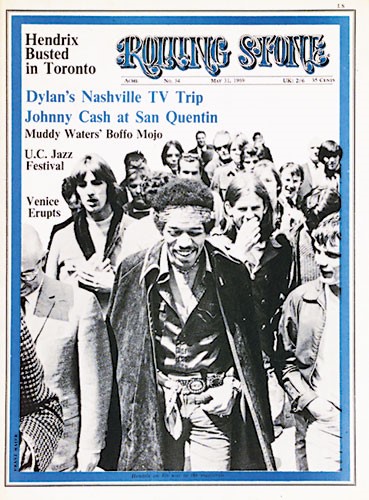
 Rolling Stone reviewer Paul Nelson thinks Nashville Skyline “could well be what Dylan thinks it is, his best album,” and writes a corresponding jubilant review, 31 May 1969. It’s a particularly friendly song-by-song review, and Nelson thus also dwells on “Country Pie”. And has an original opinion on the lyrics of this second bridge: Ain’t running any race/Get me my country pie [sic]/I won’t throw it up in anybody’s face is “a clear statement of Dylan’s present credo.”

Leaving aside the naive premise that the first-person narrator in the song is Dylan himself, which besides by common sense should by now have been adequately disproved by Dylan’s mantra, “credo” if you will, je est un autre, it is also puzzling what the reviewer considers a “clear statement”. None of those three verse lines is unambiguous. In fact, the third, I won’t throw it up in anybody’s face, is downright puzzling. From the overall tenor of the review, it can be deduced that Nelson qualifies the LP as a testament to Dylan’s “new-found happiness and maturity”, and elevates to “credo” then the arguably weakest verse line of the entire album, Love is all we need/It makes the world go round, from the bridge of “I Threw It All Away” (which Nelson, as if to illustrate the facile superficiality of his article, after the rattling quote of the give to me my country pie line from this second middle eight, again misquotes; it’s Love is all there is).

Content-wise, this second bridge falls a bit out of tune, here in “Country Pie”. No eccentricities such as giant geese, marathon violinists, Saxophone Joe with his hogshead or a pie assortment, but still Basement-style bollocks. Only the opening line I don’t need much and that ain’t no lie is untainted by this, with Basementesque humour. But Basementesque nonetheless; after all, filler lyrics that Dylan plucks here and there from his vast working memory, we also know from the Big Pink. Throwaways like “One For The Road” and “I’m Alright” consist entirely of rock and country clichés, and in gems like “Odds And Ends” or “This Wheel’s Of Fire”, the impovising song poet, as here in “Country Pie”, glues up the gaps between the frenzies with whole and half quotes from the canon.

Curtis Mayfield & The Impressions, then, would be an educated guess. In Basement songs like “I’m Alright” and especially “All You Have To Do Is Dream”, we have already heard more echoes of Curtis’ best Chicago soul records of the 1960s, People Get Ready (1965) and Keep On Pushing (1964), the record we also see on the cover photo of Bringing It All Back Home. Robbie Robertson, especially, is a fan, judging by the many Curtis guitar licks he sneaks into Dylan’s basement songs. And snippets of lyrics can be heard everywhere – like this “I don’t need much”, from People Get Ready‘s delightful opening track, the modest hit “Woman’s Got Soul”;

Now I'm just a regular fellow
I don't need much
I don't need a Cadillac car
Or diamonds and such
But the woman that I hold
She's got to have soul

Of course, “I don’t need much” is far too generic to attribute to one unique source – but if “Country Pie” is a Basement relic, which seems more than likely by now, Curtis is an obvious candidate. Just as, say, Chuck Berry’s “I Got To Find My Baby” (1960) can be designated as the obvious purveyor of the subsequent rock ‘n’ roll cliché that ain’t no lie – especially since we hear as many Chuck Berry echoes as Curtis Mayfield fragments in those same Basement songs;

I got to find my baby
I declare that ain't no lie
I ain't had no real good loving
Since that girl said goodbye

Well, technically not a Chuck Berry song, actually. But “I Got To Find My Baby” or “Gotta Find My Baby”, though written by Peter Clayton in 1941, is more or less confiscated by Berry – when The Beatles play the song (live at the BBC, 1963) they also seem to think they are covering a Chuck Berry song. With, incidentally, a splashy harmonica contribution by Lennon, which Dylan will also appreciate (although the 1956 version by the “King of the Harp” Little Walter probably is one step higher up in his gallery of honour).

Anyway, Dylan’s I don’t need much and that ain’t no lie is the remarkably unremarkable stepping stone to the terzet that the Rolling Stone critic considers “a clear statement of Dylan’s present credo”, to Ain’t running any race/Give to me my country pie/I won’t throw it up in anybody’s face.

That last line is of course the most striking, and especially for that peculiar “throw up in a face”. No mistake; that’s how it is published in the official Lyrics, and that’s how we hear Dylan sing it in both the official release on Nashville Skyline and in “Take 2” on The Bootleg Series 15 – Travelin’ Thru (the outtake released on The Bootleg Series 10 – Another Self Portrait is cut short a few seconds before this passage of text).

Weird; it’s admittedly conceivable that a playful Dylan, a certified slapstick fan, would want to do something with pie-in-the-face-throwing. “Daydream”, the 1965 Lovin’ Spoonful hit from his mate John Sebastian, is still in the air (A pie in your face for bein’ a sleepy bulltoad), and apart from that, any entertainer who has already sung thirteen pies, like Dylan at this point in “Country Pie”, will start throwing them, preferably in faces. But it takes a particularly villainous kind of humour to infect such an innocuous classic with the ambiguous “throw up”… and in particular “throw up in a face” is of a student-like nastiness that is miles away from all the homeliness and family happiness that reviewers like Paul Nelson see in it – bizarrely enough.


To be continued. Next up Country Pie part 7: I thought it was just a regular peach tree


Jochen is a regular reviewer of Dylan’s work on Untold. His books, in English, Dutch and German, are available via Amazon both in paperback and on Kindle:


Posted in Uncategorized | 3 Comments

Bob Dylan’s favourite songs: Death of an Unpopular Poet

By Tony Attwood

Aaron (with whom, as you may know, I have been writing the “Other People’s Songs” series) recently emailed me pointing out an article in Far Out Magazine from way back in August 2022, based on an interview given to HuffPost back in 2009.  In it Bob reveals his favourite songs from his favourite songwriters.

There are 14 songs covered and Aaron has suggested that we (by which he means I) might have a look at them.

So, having been totally ignorant of the article until this moment, but always willing to pick up a challenge, here we go with song number one. Jimmy Buffett: ‘Death of an Unpopular Poet’

This song was released in 1973.   The music is simple with the accompaniment being added to in the second verse, and then the broader orchestration in the middle 8.

But of course such an academic look at the music doesn’t convey the emotion of the song, following the theme of the ignored genius who is recognised only after he has passed away.

And indeed history is packed with such people; people as diverse as Bach and Turing, people who are either shunned because of what they are, or because they simply carried on creating or inventing, and were seemingly not that worried that they were not recognised, or who really were “before their time”.

And indeed history’s excuse for not recognising genius at the time is neatly encapsulated in the last line of the song, “He was just a poet who lived before his time”.  Although I must admit I have never been happy with that “before his time” notion, as it really does seem like a very poor excuse to me.  A way of excusing not making an effort to understand something that is different.

Thus, what it’s worth, my own view is that throughout the history of humankind, the defining what is good, worthwhile, honourable, etc etc has been used as a tool of power.  The “good” and “great” in artistic terms are often defined as a way of bolstering those in power.   Dylan himself, of course, has generally been an exception.

Thus Dylan’s choice of this song though is interesting in a different way; he has not suffered from the “ignored genius” syndrome, for he was recognised from the moment Freewheelin was released, if not with the first album, and he’s never looked back.  Indeed you only have to think not only of songs like “Masters of War” but also of the number of times that he has changed directions and ignored both the critics and the conventions of the day, to see that this is not an issue for Dylan.

Even the bile thrown at him as he moved from being a solo performer to having an electric band behind him did not make him succumb to the pressure of others, no more than does the occasional ultra-negativity of critics like Heylin (who as far as I know has not composed many, if any, songs) who set themselves up as arbiters of what is, and what is not, a great composition.

There’s also an interesting musical twist in that there is a temporary modulation in the sixth line (at the word “cry” in the first verse); a technique that Bob does not ever use (as far as I can remember).   Which combined with the musical arrangement and the way the melody works is very un-Dylan.   Bob has in fact chosen a song, that he would never write – at least not in this way.

In short, Dylan lavishes his praise (which personally I do agree, is absolutely due) on a song that he probably could not have written, at least musically, and I suspect lyrically (although Bob has ventured so far and wide lyrically one can never be quite sure that he hasn’t mentioned his pet dog somewhere – I am sure if he has someone will quickly point that out to me and I’ll feel utterly stupid for having forgotten.)

Bob has however touched on the topic of the lost hero, but he has done it in an utterly different way.  I’m thinking of “John Brown”, and one can’t get further from “Death of an unpopular poet” than “John Brown”, but the theme of the forgotten hero is the same.  (If you want to be reminded of John Brown there is a recording from the Never Ending Tour which I totally recommend, on this site).

so, overall, this is a moving and beautiful piece of music, and I can immediately see why Bob has put it at the top of his list.  Here are the lyrics…

I once knew a poet
Who lived before his time
He and his dog Spooner
Would listen while he'd rhyme
Words to make ya happy
Words to make you cry
Then one day the poet 
Suddenly did die

But he left behind a closet
Filled with verse and rhyme
And through some strange transaction
One was printed in the Times
And everybody's searchin'
For the king of undergound
Well they found him down in Florida
With a tombstone for a crown

Everybody knows a line
From his book that cost four ninety-nine
I wonder if he knows he's doin'
Quite this fine

'Cause his books are all best sellers
And his poems were turned to song
Had his brother on a talk show
Though they never got along
And now he's called immortal
Yes he's even taught in school
They say he used his talents
A most proficient tool

But he left all of his royalties
To Spooner his ol' hound
Growin' old on steak and bacon
In a doghouse ten feet 'round
And everybody wonders
Did he really lose his mind
No he was just a poet who lived before his time
He was just a poet who lived before his time

You’ll find more about our series on the home page

Posted in Uncategorized | Leave a comment

The Tarantula Files parts 4 and 5

Previously in this series

By Larry Fyffe

Part 4: Everybody loves a critic

The writer of the ‘novelette’ “Tarantula” mentions a number of interesting characters whom he meets along the road to New York Town.

Robert Burn’s there

Luther begins to whistle
Coming thru the Rye
(Bob Dylan: Tarantula)

Martin Luther, who’s also on the pilgrimage, apparently doesn’t realize it’s a dirty ditty:

O, Jenny's a-wet, poor body
Jenny's seldom dry
She dirtied her petticoat
Coming through the rye
(Robert Burns: Coming Through The Rye)

Author JD Salinger tells his ‘growing-up’ story; Burns’ title he deliberately quotes incorrectly:

The genre's gets a good scolding:

(Y)ou could start with a telephone book
- wonder woman - or perhaps catcher in the rye
they're all the same
& everybody has their hat on backwards
thru the stories
(Bob Dylan: Tarantula)

Below, on the journey, a Christian meets a Jew. “I come in peace”, the Christian claims.

Apparently, falsely accuses the Hebrew of sacrificing Christian children ~ like the little Simon of Trent

The Christian’s words mocked beneath:

(T)rip into the light here Abraham
What about this boss of yours ...
we can learn from each other
just don't try to touch my kid
(Bob Dylan: Tarantula)

The boss, the Almighty Himself, not left unscathed either; albeit humorously, in the song below:

Oh, God said to Abraham, "Kill me a son"
Abe said, "Man, you must be putting me on"
(Bob Dylan: Highway Sixty-One)

Riding along with the troupe, Clayton Moore from the TV series “The Lone Ranger” and  Richard Boone from “Have Gun Will Travel” get theirs too:

The good-guy-gunmen from the Old West both be silent on the issue of segregation; they’re sure TV comedy shows will come along, and fix up such social problems in no time:

(W)hile kemosabe & mr paladin
spend their off hours remaining separate but equal
& anyway why not wait for laughter to
straighten the works out meantime
(Bob Dylan: Tarantula)

In the following song lyrics, on a subject not considered that serious, humour abounds:

Well, the Lone Ranger and Tonto
Were riding down the line
Fixing up everybody's troubles 'cept mine
Somebody musta told'em
That I was doing fine
(Bob Dylan: Bob Dylan Blues)

But hold your horses, Huddie Ledbetter’s back, and he’s black:

(He) pulls a train
& makes love to Miss Julie Anne Johnson
(Bob Dylan: Tarantula)

Compares a gal to an axe (ie, “Miss Julie Anne Johnson”); as he does another to a slave driver’s whip lash (ie, Black Betty):

Good-bye Julie Ann Johnson, ahhh, oh Lord, ahhh
Gonna leave you, ahhh, oh Lord, ahhh
(Lead Belly: Miss Julie Ann Johnson ~  (Ledbetter/traditional)

—————–

Part 5: Hopalong Bob

William Boyd and Andy Clyde star in the western movie “Hoppy Serves A Writ”.

Milk-drinking black-clad, white-horsed, hard-riding lawman Bill “Hopalong” Cassidy, and his slapstick-sidekick “California” Carlson ride into Bob Dylan’s kaleidoscopic montage of movie stars acting as though they’re in the unfenced Old West – here supposedly located in Texas and Oklahoma.

The times they are a-changing.

“Talkies” take over. Silent movies are dead.

Nor do printed words talk:

(T)he audio repairman stumbles
thru the door with "sound is sacred
so come in and talk to us"
written on the back of his shirt
(Bob Dylan: Tarantula)

Louis L’Amour grabs the opportunity to make money by writing noveletts about Hopalong’s adventures:

Into the Valley of Burlesque the cowboy angels ride.

Mocked be that any sexual activity is pretty well outlawed in those Hoppy Days whether in stories, at the movies, or on tv:

(O)ut of his past appears Insanely Hoppy
screaming and dancing
(Bob Dylan; Tarantula)

He holds up a stagecoach, and takes the strongbox that contains a nursery rhyme:

Little Jack Horner
Sat in the corner
Eating his Christmas pie
He put in his thumb
And pulled other a plum
And said, " What a good boy am I"

Exchanges the nursery rhyme for a night of sex:

Listen to the fiddler play
When he's playing 'til the break of day
Oh me, oh my
Love that country pie
(Bob Dylan: Country Pie)

Sometimes things don’t go that well:

(E)xcept that I can't do anything with with my finger
& it's already beginning to smell
(Bob Dylan: Tarantula)

Onward, onward rides Hoppy, with his sidekick, into New Babylon.

In pursuit of the Golden Calf:

(T)he american flag turned green
& andy clyde kept pestering about a back paycheck
(Bob Dylan: Tarantula)

They’re not alone, don’t forget:

& all the rest of these people
that would make leadbelly a pet
(Bob Dylan: Tarantula)

The series continues…

Posted in Uncategorized | 2 Comments

Country Pie (1969) part 5: It’s weird, man

by Jochen Markhorst

V          It’s weird, man

Saddle me up my big white goose
Tie me on ’er and turn her loose
Oh me, oh my
Love that country pie

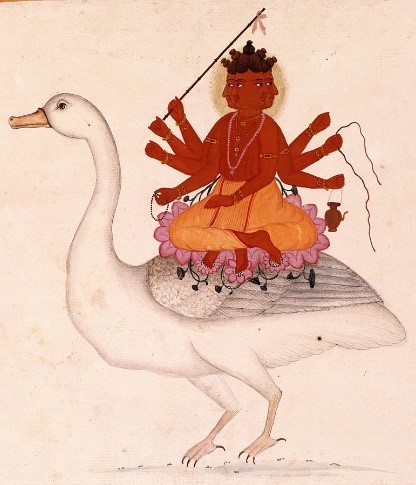
 The second most famous goose rider of all time is probably Nils Holgersson, the hero of Selma Lagerlöf’s irresistible 1906 children’s book. But then again, he does not ride a “big white goose”. First, Nils himself is magically reduced to the size of Tom Thumb by an angry gnome, and the goose he subsequently mounts, Mårten, is anything but “big”; he is the smallest and youngest gander on the farm. No, for that “big white goose” we will have to go to the most famous goose rider of all, to the other side of the world.

The Hindu gods all have their own vahana, an animal of their own that is their companion and means of transport, usually blessed with supernatural qualities. Vishnu has his eagle, Bhairava a dog, and Lakshmi travels on her own owl. And the God-Creator himself, the Supreme Being who created all these animals, fish and birds, Brahma, chooses for himself a big white goose – because geese can separate water from milk. Brahma sees this as a metaphor for being able to distinguish fact from fiction, lie from truth – which makes the goose good company.

We could even, with some creative wishful thinking, find a source, or rather: an inspiration for this, for the identification of Dylan’s protagonist with Brahma. Hermann Hesse’s Siddharta is obvious, and confidant Allen Ginsberg, too, is quite fascinated by Eastern wisdom and Hindu philosophy in these years, larding his poetry with Vishnu, Shiva and Brahma, Vedic mysticism and Sanskrit;

Parallels: in Montmartre Rousseau
                                daubing or Rimbaud arriving,
                                                the raw Aether
                shines with Brahmanic cool moonshine
                                aftertaste, midnight Nostalgia

… he writes, for instance (“Pertussin”, June 1968) – Brahma and his colleagues are regulars anyway in Ginsberg’s oeuvre between, say, 1960 and 1970. But a third possible source of inspiration, though anecdotal, is even more likely.

Assuming that “Country Pie” is indeed a forgotten relic from the Basement, we could then date the lyrics around the Bauls Of Bengal’s visit to Woodstock and to Big Pink, to Dylan, manager Grossman and the boys from The Band in the autumn of 1967. Dylan is said to be quite enamoured with the Bengali musicians, whom we also see standing next to him on the cover of John Wesley Harding. And that those itinerant storytellers have told Dylan why Sarasvatī is sitting on a swan, and that Suka, the parrot of the green god of lust and love Kamaveda, sometimes turns into four women – quite imaginable.

Images and stories to which Dylan is all too receptive; “Traditional music is based on hexagrams,” an impassioned Dylan argues to Nat Hentoff for a Playboy interview in autumn 1965. “It comes about from legends, bibles, plagues, and it revolves around vegetables and death. There’s nobody that’s going to kill traditional music. All these songs about roses growing out of people’s brains and lovers who are really geese and swans that turn into angels – they’re not going to die.” He seems to mean it. Shortly before this outpouring, he is equally inspired in another interview, the interview with Nora Ephron and Susan Edmiston for the New York Post (September ’65), stating in much the same words:

BD: Folk music is the only music where it isn’t simple. It’s weird, man, full of legend, myth, bible and ghosts. I’ve never written anything hard to understand, not in my head, anyway, and nothing as far out as some of the old songs. They were out of sight.
E/E: Like what songs?
BD: Little Brown Dog, “I bought a little brown dog, its face is all gray. Now I’m going to Turkey flying on my bottle.” And Nottamun Town, that’s like a herd of ghosts passing through on the way to Tangiers. Lord Edward, Barbara Allen, they’re full of myth.

Dylan improvises on the spot a lyric variation on the ancient, frenzied “Little Brown Dog”, which he probably learned about through Judy Collins (on Golden Apples Of The Sun, 1962):

I buyed me a little dog its color it was brown
Taught him to whistle to sing and dance and run
His legs they were fourteen yards long his ears they were broad
Round the world in half a day on him I could ride
Sing terry’o day

… which Dylan himself will record as “Tattle O’Day” in March 1970, a year after “Country Pie”, again with producer Bob Johnston. In which, by the way, he sticks to Judy Collins’ version of the lyrics – frenzied enough by itself, so no Turkey bound flying bottles.

At the Basement, we have already been able to hear how much those “far out, out of sight” songs then feed his creativity. “Don’t Ya Tell Henry”, “The Mighty Quinn”, “Yea! Heavy And A Bottle Of Bread”… songs with simple, catchy melodies, with word games and rhyme fun and above all: with exuberant tattle. Exactly, in short, what we hear here in “Country Pie”, and very much so in this particular verse, in which the protagonist admittedly does not ride around the world on a little brown dog in half a day, in which no dove-luring Eskimos loiter by, no forty-nine bats linger under an apple suckling tree, and in which no herd of moose flies to Tennessee (“Lo And Behold”) – but in which, at least as frenziedly, a protagonist does have his big white goose saddled, is tied on it rodeo-style, and will try to stay on when this big white goose is let loose.

A single tenacious Freudian might still manage to see veiled allusions to sexual intercourse even here, but then risks making himself a little ridiculous. After all, a scabrous interpretation implies comparing our poultry rider’s female counterpart to a “big white goose”. Any erotic expressiveness is thus definitely evaporated, unfortunately.

No, after Saxophone Joe and the toe-crushing hogshead, the nocturnal fiddler, the nine kinds of pie, and now this goose rider, we may finally say goodbye to both the – increasingly hard to follow – “domestic country song” proponents and the “bawdy pub ditty” subscribers. We truly are in the Basement. It’s weird, man, full of legend, myth, bible and ghosts.

To be continued. Next up Country Pie part 6: “A clear statement of Dylan’s present credo”


Jochen is a regular reviewer of Dylan’s work on Untold. His books, in English, Dutch and German, are available via Amazon both in paperback and on Kindle:


Posted in Uncategorized | Leave a comment

The Cowboy Angel Rides

by Larry Fyffe

Singer/songerwriter Bob Dylan ~ well known for adopting and adapting themes from traditional romantic ballads, from the Holy Bible too, about gamblers, outlaws, human nature, and hypocrisy:

Now Brennan being an outlaw
Upon the mountain high
With the calvary and infantry 
To take him they did try
He laughed at them with scorn
Until at last 'twas said
By a false-hearted woman 
Brennan cruelly was betrayed
(Brennan On The Moor ~ traditional)

Such traditional tales spoofed in the song  below:

So all you rambling gamblers, wherever you might be
The moral of this story is very plain to see
Make your money while you can, before you have to stop
For when you pull that dead man's hand, your gambling days are up
(Bob Dylan: Rambling Gambling Willie)

In the song beneath, for listeners who do not like unhappy endings, the songwriter gives a supposedly straight-shooting outlaw a faithful girlfriend:

It was down in Chaynee County
A time they talk about
With his lady by his side
He took a stand
And soon the situation there 
Was all but straightened out
For he was always known 
To lend a helping hand
(Bob Dylan: John Wesley Harding)

Not so in the movie in which Kirk Douglas stars as Jack Burns, a modern-day, horse-riding cowboy with a brave heart. A left-over romantic from days gone by, he doesn’t like to fenced-in; tries to help his friend Paul who’s in jail for helping ‘wetbacks’.

The ending of the movie is not a happy one. Jack and his faithful horse end up severely injured by traffic on a busy highway.

Says Paul’s wife near the beginning of the movie:

Men are idiots
You're an idiot
Paul's an idiot
You're all idiots
('Lonely Are The Brave')

Now there be words in need of wider wings:

Idiot win
Blowing through the dust upon our shelves
We're idiots, babe
It's a wonder we can even feed ourselves
(Bob Dylan: Idiot Wind)


Seems the chaos of old Babylon is back again. With tongue-in-cheek, and straight-faced, the authors of the following song romanticize what happens to an actual mobster-king of New York City ~ who apparently reforms – finds Christ – only to get shot down in cold-blood.

Believe it or else:

But Joey stepped right up, he raised his hand
Said, "We're not those kind of men
It's peace and quiet that we need
To go back to work again"
(Bob Dylan: Joey ~ Dylan/Levy)

It’s back-to-the-bible time:

My soul hath long dwelt with him that hateth peace
I am for peace, but when I speak
They are for war
(Psalm 120: 6,7)


Posted in Uncategorized | Leave a comment

Other people’s songs: Corrina Corrina

By Aaron Galbraith and Tony Attwood

Intro from Tony:  I should explain, in case you have not come across any of our joint articles before, that Aaron and I play a little game which keeps us amused, in which Aaron in the States selects the songs and simply sends them to me (in the UK) with only an occasional thought or spot of background by way of commentary.  I then set myself the of writing the commentary while the track is playing, largely to avoid me going off into some ludicrously boring musical analysis which interests me but no one else.

But I’ve doubled back this time to write this intro having written the article, because this collection is such, such fun.  You may of course be here just to read about and listen to Bob’s music, but I would urge you, if you have ten minutes, to play the musical examples Aaron has selected, in the order they are here.  It really does make for an enjoyable interlude in life – whatever your life is doing at the moment.

Aaron: Corrina, Corrina was first recorded by Charlie McCoy & Bo Chatman in 1928.

Tony: Wow, I knew it was an old song but I would have put it as being written at least ten years later.   One learns something every day!   (Actually, did you know there is a movie called Corrina Corrina?   I can’t say any more about it as I’ve never seen it, but I throw it in as a useless fact).   Anyway come to think of it, it was the Mississippi Sheiks that did a version and that would have been in the early 1930s – unfortunately, I seem to have the ability to retain useless bits of knowledge but not have the ability to tie them together into a meaningful unified package.

One more bit of information: the song seems to have eight verses (unless I lost count part way through) which is inordinately long for a song that just has two lines in the 12 bar format.  And especially for a song that actually doesn’t say very much other than “My baby left me”.

The B side of the recording above was called “In the gutter” I do remember that, but have no idea what it sounded like.  Just one more piece of useless information.

Aaron: The song has been recorded in a number of musical styles, including blues, jazz, rock and roll, Cajun, and Western swing.

Here is Cab Calloway’s jazz version from 1932.

Tony: I love the way the vocalist holds back by a fraction of a beat from the musical accompaniment all the way through, emphasising the fact that she’s gone and left him (he’s left behind, the vocals are a fraction of a beat behind, if you see what I mean).

But the real fun is in the instrumental break – I really do hope you have a moment to play this all the way through.   This was from the days when the vocals were just a warm up for the band and its arranger to show what they can do – including throwing in a verse in a minor key, before the vocalist comes in once more.   And just listen to that final instrumental break after that – that is musical fun and a half.  Absolutely love it.

Aaron: The Freewheelin’ Bob Dylan version incorporates lyrics from the Robert Johnson song Stones in My Passway: “I got a bird that whistles, I got a bird that sings”

Tony:  Of course as I noted above it is Aaron who chooses not just songs we look at but also the order in which the songs come – and wow, wow and thrice wow, what a fantastic contrast between the previous version – and how wonderful it is to hear Bob’s version again.  I can hear it in my head anytime I wish, but to take on the original once more after what must be a number of years is something else.   And to play it straight after the Cab Calloway version is just extraordinary.  I can honestly say I was not ready for it.  Great move Aaron!

Aaron: Joni Mitchell covered the song in 1988 on her album Chalk Mark in a Rain Storm, with the title “A Bird That Whistles (Corrina Corrina)”, Wayne Shorter adds a wonderfully evocative soprano sax solo.

Tony: Fabulous guitar introduction and accompaniment too, for a complete re-working of what is of course musically nothing more than a 12 bar blues.  And this shows us why the 12 bar format (A A B in musical terms) has been so popular for so long.

And that extraordinary voice of Ms Mitchell allows the accompaniment to be explored to the full – after all if the voice is going to fly why not the instrumentalisation?  Maybe the attempted move into bird song at the end is a bit too much to make we want to listen to this over and over, but if I had a copy without that conclusion I’d place it on my eternal play-list with the instruction, “play this at the wake.”

Aaron: Jumping forward to 2012, Beck recorded his cover for the charity compilation Every Mother Counts 2012.

Tony: One of the great things about this series is that it is even now after 40 episodes it can be full of surprises, and I’ve been surprised all the way through this selection – and here I am once again stunned.    Slowing the music down this far is quite a gamble given the format with the second line being a repeat of the first.   It requires musicality of the greatest level to be able to put that simple arrangement together and hold the listener’s attention – as it certainly did mine.

And yet it works.  Just pause (or go back and play it again) and listen to the guitar – it is so simple and yet it holds the song together – even though the words too are so utterly simple.

Oh my, what a fantastic collection.   I owe you for that, Aaron.

Previously in this series…

  1. Other people’s songs. How Dylan covers the work of other composers
  2. Other People’s songs: Bob and others perform “Froggie went a courtin”
  3. Other people’s songs: They killed him
  4. Other people’s songs: Frankie & Albert
  5. Other people’s songs: Tomorrow Night where the music is always everything
  6. Other people’s songs: from Stack a Lee to Stagger Lee and Hugh Laurie
  7. Other people’s songs: Love Henry
  8. Other people’s songs: Rank Stranger To Me
  9. Other people’s songs: Man of Constant Sorrow
  10. Other people’s songs: Satisfied Mind
  11. Other people’s songs: See that my grave is kept clean
  12. Other people’s songs: Precious moments and some extras
  13. Other people’s songs: You go to my head
  14. Other people’s songs: What’ll I do?
  15. Other people’s songs: Copper Kettle
  16. Other people’s songs: Belle Isle
  17. Other people’s songs: Fixing to Die
  18. Other people’s songs: When did you leave heaven?
  19. Other people’s songs: Sally Sue Brown
  20. Other people’s songs: Ninety miles an hour down a dead end street
  21. Other people’s songs: Step it up and Go
  22. Other people’s songs: Canadee-I-O
  23. Other people’s songs: Arthur McBride
  24. Other people’s songs: Little Sadie
  25. Other people’s songs: Blue Moon, and North London Forever
  26. Other people’s songs: Hard times come again no more
  27. Other people’s songs: You’re no good
  28. Other people’s songs: Lone Pilgrim (and more Crooked Still)
  29. Other people’s songs: Blood in my eyes
  30. Other people’s songs: I forgot more than you’ll ever know
  31.  Other people’s songs: Let’s stick (or maybe work) together.
  32. Other people’s songs: Highway 51
  33. Other people’s songs: Jim Jones
  34. Other people’s songs: Let’s stick (or maybe work) together.
  35. Other people’s songs: Jim Jones
  36. Other people’s songs: Highway 51 Blues
  37. Other people’s songs: Freight Train Blues
  38. Other People’s Songs: The Little Drummer Boy
  39. Other People’s Songs: Must be Santa
  40. Other People’s songs: The Christmas Song
Posted in Uncategorized | 1 Comment

Ace In The Hole


By Larry Fyffe

‘Drifting Too Far From Shore’ is a masterpiece of sarcasm, and a murder ballad to boot.

Movies impact how Bob Dylan writes his songs; he’ll take on the persona of one or more characters from famous films.

In the ‘Ace In The Hole’ movie, Kirk Douglas plays a hard-hearted reporter who seizes the opportunity to make lots of cash by cynically dwelling on the ‘human interest” aspects of the plight of an entombed individual named Leo Minosa, and sending the stories off to major newspapers.

Chuck Tatum’s goal is to attract a wide readership and a large crowd of paying customers to the site of the cave-in.

He meets his match – Leo’s wife. Lorraine’s willing to go along with the devilish scheme, but finds it difficult to play the part of a sweet wife; she’s not satisfied with the marriage, it’s boring.

No servile servant to Leo is she willing to be. Lorraine was going to leave town, but now has the chance to make some big bucks before she takes off on the bus. She’s an Eve archetype who’s bitten into Satan’s apple, and sees no problem tempting Adam with it.

The New Adam of the New Babylon is the movie’s unscrupulous reporter. He’s angry at Eve because she sees right through him. He makes sure that she knows he’s upset by asserting his physical prowess. He scares Lorraine, smacks her, to show he’s rightfully the boss at top of the hill, and it is he who is to be obeyed, not betrayed.

The sassy reporter also brags that he’s made sure, with the help of the corrupt local sheriff, that he’s in charge of the news-boat while other reporters flounder in the water.

Lorraine he’s concerned about. It’s she who could ruin the whole scene by drifting too far away from the biblical tale about paradise being regained in small-town New Mexico when Leo returns.

Take what you gather from coincidence:

Never no more do I wonder
Why you don't never play with me anymore
At any moment you could go under 
'Cause you're drifting too far from shore
(Bob Dylan: Drifting Too Far From Shore)

The following verse of the song lyrics could easily be inserted at the end of ‘Ace In The Hole’, a dark morality tale:

You and me had completeness
I gave you all of what I could provide
We weren't on the wrong side, sweetness
We were the wrong side
(Bob Dylan: Drifting Too Far From Shore)

In the movie, Chuck receives a phone call from New York City. It’s his old boss, a sensationalist newspaperman, and the cave-side scriptwriter now has his old boss over a barrel, demands a big raise, and his old job back; gets both. But not before the big-city man (like small-town Lorraine does) attempts to out-sass the smart-ass:

"Come on, Tatum.  How much for the Minosa story? Exclusive!
What? Don't you know there's a war on - somewhere"
(Ace In The Hole)

Similar to the sarcasm below that could just as well been hurled by ‘auteur’ Tatum at Lorraine for not properly emoting the words that he authors:

I've already ripped out the phones, honey 
You can't walk the streets in a war
I can finish this alone, honey
You're drifting too far from shore
(Bob Dylan: Drifting Too Far From Shore)

In the aforementioned movie, Leo’s father insists that the reporter take his and Mama’s comfortable room because he believes Chuck is sincerely doing all he can in an effort to save his son. Even brave enough to crawl into the dangerous tunnel to communicate with Leo.

Chuck’s not about to flirt with Leo’s supposed-to-be devoted servant Lorraine, for now anyway, because kind-hearted Papa Minosa is impressed by the reporter’s efforts; the sincere Christian treats Chuck like a son.

In the lyrics below the narrator thereof, similar to Chuck in the movie, makes himself out to be real tough, and at the same time, a real gentleman:

I ain't gonna get lost in this current
I don't like playing cat and mouse
No gentleman likes making love to a servant
Especially when he's in his father's house
(Bob Dylan: Drifting Too Far From Shore)

In the end, the Devil has the last laugh.

Lorraine survives; Chuck dies.

Perhaps he leaves a love letter for Lorraine (quoting from the James Stewart movie ‘Bend Of The River’):

I didn't know that you'd be leaving
Or who you thought you were talking to
I figured maybe we're even
Or maybe I'm one up on you
(Bob Dylan: Drifting Too Far From Shore)

The reporter in ‘Ace In The Hole’ realizes that, intended or not, he’s responsible for the death of Lorraine’s husband – as far as Chuck is concerned, he “murdered” Leo; might as well have hit him over the head with a stone.


Posted in Uncategorized | Leave a comment

Country Pie (1969) part 4: Sugar and spice and all things nice


by Jochen Markhorst

IV         Sugar and spice and all things nice

Raspberry, strawberry, lemon and lime
What do I care?
Blueberry, apple, cherry, pumpkin and plum
Call me for dinner, honey, I’ll be there

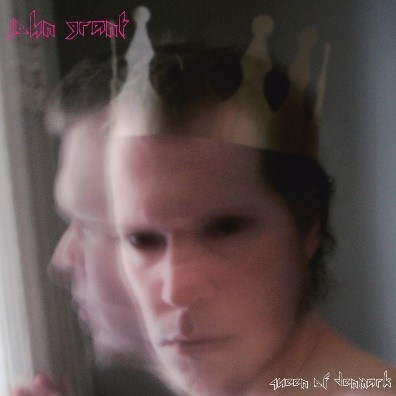
John Cale meets Dennis Wilson and Gilbert O’Sullivan in Twin Peaks and they play Tubular Bells – such a ponderous comparison perhaps remotely approaches the layered beauty of John Grant’s masterpiece Queen Of Denmark. Gordon Lightfoot is also in there somewhere. As are Jacques Brel and Abba. But that still would fall far short of the mark.

The Czars’ ex-frontman’s first solo album is arguably the best record of 2010, and track 2, “I Wanna Go To Marz” (actually just: “Marz”) is arguably the prettiest song of 2010, casually winking at the prettiest song of 1971, Bowie’s “Life On Mars?”  Grant’s life story invites one to see in the candy-coated ode more and less disguised references to his unhappy childhood as a lonely gay in a narrow-minded religious family in Colorado, or, easier still, to understand the candy tsunami as metaphors for his disastrous alcohol and drug addictions. And this is how many commentators explain the song. Given the sometimes painful candour of other songs on Queen Of Denmark perfectly understandable, but in this particular case the background is actually more poetic and still a touch more down-to-earth, as Grant explains:

“Marz was a sweet shop from my childhood. It’s now empty and for sale. But I got to visit beforehand, and the woman who served me as a child was still there. They still made all their own candies and ice cream. After it changed owners, I went back again and was given the original menus. In the song, I list all the names of the sundaes and drinks like Green River. The song is about the gateway back to childhood and innocence, when things haven’t become complicated.”

                                                                               (The Brighton Magazine, 22 January 2011)

Very prosaic then, in fact, the opening couplet – but this personal back-story provides a touching sheen that is more poetic than all the drug and other misery stories suspected by the critics and analytics;

Bittersweet strawberry marshmallow butterscotch
Polar Bear cashew dixieland phosphate chocolate
Lime tutti frutti special raspberry, leave it to me
Three grace scotch lassie cherry smash lemon freeze
I wanna go to Marz
Where green rivers flow
And your sweet sixteen is waiting for you after the show
I wanna go to Marz
We'll meet the gold dust twins tonight
You'll get your heart's desire, I will meet you under the lights

It has a naive, childlike poignancy, a nursery rhyme-like quality. Which we have been conditioned to since the nineteenth century, since Sugar and spice and all things nice / That’s what little girls are made of. And infectiously revived in 1964 by Smokey Robinson, once jokingly classified by Dylan as a great poet, in “That’s What Love Is Made Of”.


Music-wise, the first bridge of “Country Pie” is a rather old-fashioned, classic bridge. Still, as is common in pop songs, after the second verse, but not, as is common in pop music, a bridge from the verse to the chorus. The bridge of “Country Pie” is the B in an AABA structure, i.e. a bridge from verse 2 to verse 3.

Lyrically, it has the charm of sugar and spice and John Grant’s “Marz” – coincidentally with even the same flavours as in Grant’s little masterpiece (raspberry, strawberry, lemon and lime). But for those interpreters who want to stick to a scabrous interpretation, for whom pie = vagina, it is far from naive and childlike; here, then, the randy protagonist sings of the joys of promiscuity. Sort of like Jan Kiepura’s 1935 classic “Ob blond, ob braun, ich liebe alle Frau’n” (Whether blond or brunette, I love all women), of which the legendary Nina Hagen then makes, some forty years later, a next lesbian sultry, enlarging step, in “Auf’m Bahnhof Zoo” (Ob blond ob schwarz ob braun / Ich liebe alle Frau’n, 1978). And Waylon Jennings somewhere in between doing a witty variant in “Silver Ribbons” (on – what’s in a name – Nashville Rebel, 1966), incidentally a weak song on a weak album, despite support from Chet Atkins and Blonde On Blonde veterans Charlie McCoy and Hargus “Pig” Robbins;

I can't recall my mother she left when I was two
Brunets blondes and red heads were the only love I knew
Don't ask me where I'm going don't ask me where I've been
Those Silver Ribbons will take me there there and back again

And just as Dylan’s narrator doesn’t care either, apparently: whether raspberry, strawberry, lemon or lime, I love all pies.

Not a Dylan, all in all, singing with autobiographical candour his new life’s happiness as a good family man with a lovely wife and children in the Catskills – which is what so many critics and analysts seem so keen to hear in the song, and throughout the album (Scaduto: “down-home country songs”). Marqusee disqualifies it as “deliberate banality”. Heylin, who finds the song “embarrassing”, like most professional Dylanologists. “Over the edge of corniness,” writes Bob Dylan Commentaries. The reddit thread about the song swings back and forth between the supporters of the erotic interpretation and the innocents, who “think that it’s a song about being with your true love and sitting down to a nourishing delicious meal,” who find that it “evokes pure domestic bliss”, it’s “light-weight”, a “lil’ ditty”, it has “such a happy vibe”, “This is a song about pie” … the innocents are, by the way, firmly in the majority.

At the same time, the innocents – miraculously, and without exception – ignore the vast majority of the lyrics, all those fragments of text that, with the best will in the world, do not fit a sweet ode to domestic happiness. One Saxophone Joe getting an archaic whiskey keg on his toes, some neurotic violinist fiddling all night long – it requires quite a bit of mental acrobatics to hear “being with your true love” or “domestic bliss” in it. Not to mention the subsequent verses…


To be continued. Next up Country Pie part 5: It’s weird, man


Jochen is a regular reviewer of Dylan’s work on Untold. His books, in English, Dutch and German, are available via Amazon both in paperback and on Kindle:


Posted in Uncategorized | 2 Comments

A Dylan cover a Day: Peggy Day and Pledging my time

By Tony Attwood

Two songs today, because they come next to each other in the alphabetical order of Dylan songs and because in both cases cover versions are hard to find.   In the case of “Peggy Day,” this is a song for which I don’t think we’ve ever published a cover version – not even within Jochen’s five-part series on the song (there’s an index to the series at the top of part five).

And indeed with a little time on my hands before going out for my weekly walk with the Ramblers in the winter’s sunshine, I can only find one on the internet.

It’s a jolly bit of fun, which shows this is certainly a song that has cover possibilities – in terms of a second vocalist – the harmonies in the middle 8 are gorgeous as is the instrumental break.

The 1937 Flood

So that’s it, and even for me that seems a bit feeble for a complete article so I move on to the next song in the alphabetical order, which turned out to be just as problematic.

Pledging my time: Luther Johnson.

The problem with “Pledging” is that it is a dead straight 12 bar blues and for those who want to re-work Dylan there are so many other songs to try, why go for this one?  Here the band do a decent job, but in the end it is still as 12 bar blues.

By far, by far, by far +the best “Pledging” comes from Old Crowe Medicine Show, but it is one of their songs that they have not put on the internet.  However, it is on Spotify and really, really, really worth a listen.  They take it at full gallop, and by full gallop, I mean faster than you could ever imagine and then double the speed.   And then some.

If you have a Spotify subscription do go and listen to it.  I promise you will not go away disappointed – it is an absolute scream, played to perfection.   The whole song in under two minutes including the two instrumental breaks.

Glas Yngstrom

Back to the blues as blues, and it is, well, the blues.

Big Brass Bed

To be fair to this band they do try something a little different with the accompaniment which is well thought through and gives a far more relaxed, thoughtful approach which gives the listener time to contemplate the lyrics – perhaps for the first time in this sequence.   If one is going to approach this song as a straight blues, this is exactly how to do it.

There are plenty more versions if you want to go looking, but really I couldn’t find anything better.  It’s not that inspiring a song, so it does take a real bit of creative flair to get much more out of it… and I think if I were still in the music business, then once I had heard Old Crowe I would certainly be saying to the rest of the band, “First, we can’t do what they have done, and second even if we could we couldn’t do it that well, and third, having heard what Old Crowe did, what is the point of doing anything else?”

If you don’t want to pay for a Spotify subscription, then go and find a friend who has one.

The Dylan Cover a Day series

  1. The song with numbers in the title.
  2. Ain’t Talkin
  3. All I really want to do
  4.  Angelina
  5.  Apple Suckling and Are you Ready.
  6. As I went out one morning
  7.  Ballad for a Friend
  8. Ballad in Plain D
  9. Ballad of a thin man
  10.  Frankie Lee and Judas Priest
  11. The ballad of Hollis Brown
  12. Beyond here lies nothing
  13. Blind Willie McTell
  14.  Black Crow Blues (more fun than you might recall)
  15. An unexpected cover of “Black Diamond Bay”
  16. Blowin in the wind as never before
  17. Bob Dylan’s Dream
  18. You will not believe this… 115th Dream revisited
  19. Boots of Spanish leather
  20. Born in Time
  21. Buckets of Rain
  22. Can you please crawl out your window
  23. Can’t wait
  24. Changing of the Guard
  25. Chimes of Freedom
  26. Country Pie
  27.  Crash on the Levee
  28. Dark Eyes
  29. Dear Landlord
  30. Desolation Row as never ever before (twice)
  31. Dignity.
  32. Dirge
  33. Don’t fall apart on me tonight.
  34. Don’t think twice
  35.  Down along the cove
  36. Drifter’s Escape
  37. Duquesne Whistle
  38. Farewell Angelina
  39. Foot of Pride and Forever Young
  40. Fourth Time Around
  41. From a Buick 6
  42. Gates of Eden
  43. Gotta Serve Somebody
  44. Hard Rain’s a-gonna Fall.
  45. Heart of Mine
  46. High Water
  47. Highway 61
  48. Hurricane
  49. I am a lonesome hobo
  50. I believe in you
  51. I contain multitudes
  52. I don’t believe you.
  53. I love you too much
  54. I pity the poor immigrant. 
  55. I shall be released
  56. I threw it all away
  57. I want you
  58. I was young when I left home
  59. I’ll remember you
  60. Idiot Wind and  More idiot wind
  61. If not for you, and a rant against prosody
  62. If you Gotta Go, please go and do something different
  63. If you see her say hello
  64. Dylan cover a day: I’ll be your baby tonight
  65. I’m not there.
  66. In the Summertime, Is your love and an amazing Isis
  67. It ain’t me babe
  68. It takes a lot to laugh
  69. It’s all over now Baby Blue
  70. It’s all right ma
  71. Just Like a Woman
  72. Knocking on Heaven’s Door
  73. Lay down your weary tune
  74. Lay Lady Lay
  75. Lenny Bruce
  76. That brand new leopard skin pill box hat
  77. Lily, Rosemary and the Jack of Hearts
  78. License to kill
  79. Like a Rolling Stone
  80. Love is just a four letter word
  81. Love Sick
  82. Maggies Farm!
  83. Make you feel my love; a performance that made me cry.
  84. Mama you’ve been on my mind
  85. Man in a long black coat.
  86. Masters of War
  87. Meet me in the morning
  88. Million Miles. Listen, and marvel.
  89. Mississippi. Listen, and marvel (again)
  90. Most likely you go your way
  91. Most of the time and a rhythmic thing
  92. Motorpsycho Nitemare
  93. Mozambique
  94. Mr Tambourine Man
  95. My back pages, with a real treat at the end
  96. New Morning
  97. New Pony. Listen where and when appropriate
  98. Nobody Cept You
  99. North Country Blues
  100. No time to think
  101. Obviously Five Believers
  102. Oh Sister
  103. On the road again
  104. One more cup of coffee
  105. (Sooner or later) one of us must know
  106. One too many mornings
  107. Only a hobo
  108. Only a pawn in their game
  109. Outlaw Blues – prepare to be amazed
  110. Oxford Town


Posted in Uncategorized | Leave a comment

Haunted Tunnels

by Larry Fyffe

As noted before:

The seemingly immortal Achilles is a Greek warrior who’s sent to take Helen back from the Trojans.

But he’s betrayed by the Greek commander who steals a captured woman from him, and so Achille’s no longer interested in fighting on the side of the Greeks.

In the rather ambiguous song lyrics below, said it could be that Achilles decides to charm Aphrodite (Venus) who favours the Trojans, rather than bothering to rescue the Greek Helen from the Trojan Paris.

The dramatic irony is that Aphrodite does not trust Achilles though she appreciates Paris awarding her the beauty prize of a golden apple.

When it comes right down to it, what red-blooded guy, whether Greek or Trojan, would not dream of gaining the sexual favors of the Goddess of Love.

Wrong-headed though he may be, jealous-prone Paris doesn’t want Achilles around:

How come you get someone like him to be your guard
You know I want your loving, honey
But you're so hard
(Bob Dylan: Temporary Like Achilles)

In the end, Achilles gets killed by Paris with an arrow guided to the warrior’s unprotected heel by Apollo, who has his own reasons for helping the Trojans; does so perhaps with the help of Aphrodite.

Seems Helen’s just a pawn in their game.

Akin to themes presented by singer/songwriter/musician Bob Dylan in various renditions thereof.

In the movie “Ace In The Hole”, starring Kirk Douglas, a washed-out-for-drinking newspaper reporter cynically makes big bucks by writing about the attempted rescue of Leo who is trapped inside a sacred ‘Indian’ tunnel that he raids for artifacts, his regular business not doing well.

Named Chuck, the former reporter turns the event into a circus. He manages to delay the rescue in order to keep the crowds and money rolling in as long as possible; though it’s risky going into the tunnel, the cold-hearted reporter keeps in touch with the trapped man.

Lorraine, the wife of the man in the hole goes along with the money-making scheme because she’s been wanting to escape from her boring marriage, and now has the opportunity to do so with lots of cash in her purse.

She comes on to Chuck, but he gives her a smack because he wants her to act like a worried wife.

The attempted rescue takes too long, and the tightly confined Leo gets very sick; repentant the reporter is, but it’s too late; he sees to it that the dying man receives the last rites.

The leader of the big-time circus gets in trouble big time – Chuck’s already been stabbed with a pair of scissors by Lorraine in self-defence. At the request of her trapped husband, the reporter had presented Lorraine with a trashy stole, a hidden-away anniversary gift from her husband; she threw the stole on the floor, and Chuck had nearly choked her to death with it.

Against his own advice, it appears that the reporter has taken a genuine human interest in the story of the troubled life of the doomed man.

Chuck himself is dying from the wound inflicted by Lorraine. His last words ~ they’re made to his former boss who’s an honest newspaperman: “You can have me for nothing”. He then drops dead.

The movie morality-tale burlesqued in the following song lyrics:

Well, these times and these tunnels are haunted
The bottom of the barrel is too
I waited years sometimes for what I wanted
Everybody can't be as lucky as you
(Bob Dylan: Drifting Too Far From Shore)

https://youtu.be/lJPDvKIELY4

Posted in Uncategorized | Leave a comment

Country Pie (1969) part 3:  I’m your wicked Uncle Ernie

by Jochen Markhorst

III         I’m your wicked Uncle Ernie

Listen to the fiddler play
When he’s playin’ ’til the break of day
Oh me, oh my
Love that country pie

The interpreters who are so fond of assuming peasant obscenities in “Country Pie” are provided with ammunition from the second verse at the latest. It is 1969, and “playin’ ’til the break of day” is by now well established as concealing language for “making love all night long”. In the decades before the sixties, we could still sing “dance all night ’til the break of day” (“Sleepy Time Down South”, Bill Monroe’s “Uncle Pen”) fairly safely, without ambiguity suspicions, or “we’ll twist ’til the break of day” (Hank Ballard), or “party until the break of day” (Gene Pitney), or “cabaret until the break of day” (“Sleepy Time Gal”), and a hundred more variants, all of which sing of fairly harmless nocturnal, usually public entertainment.

Sexual charge enters – naturally – via the blues. At most, anyway, in the more clandestine blues is captured what should happen around the break of day. Ma Rainey sings as early as the 1920s, in “Ma Rainey’s Black Bottom’s Blues”;

Early last morning 'bout the break of day
Grandpa told my grandma, I heard him say
Get up and show your old man your black bottom
I want to learn that dance

… which already doesn’t leave too much to the imagination. Or like Lightnin’ Slim’s diction does give away what he means by I want to boogie to the break of day (“Just Made Twenty-One”), which The Allman Brothers also seem to understand (Boogie ’til the break of dawn, “Every Hungry Woman”), and even Pete Seeger sings along when Arlo Guthrie enriches the indestructible “Midnight Special”, though basically a prison song, with a spicy extra verse;

Now here comes jumpin' Judy
I'll tell you how I know
You know, Judy brought jumpin'
To the whole wide world
She brought it in the morning
Just about the break of day
You know, if I ever get to jumpin'
Oh Lord, I'll up and jump away

… all of which Dylan knows, of course, when he sings playin’ ’til the break of day in “Country Pie”. After all, he sang rather unambiguously less than a record-side and a half ago, some 20 minutes earlier:

Lay lady lay
Lay across my big brass bed
Stay lady stay
Stay with your man a while
Until the break of day
Let me see you make him smile

Less traditional, then, is the euphemism that Dylan opts for the male lover. When, in their bawdy upgrade of the already-raunchy “Good Morning Little Schoolgirl”, the Grateful Dead name a protagonist who dwells til the break of day with the little schoolgirl, it is a chauffeur who wants to ride your little machine. And otherwise, the lover at dawn is a dancer, a stranger or a boogie-woogie boy from the Henry Swing Club (Lightnin’ Slim), a rider or a midnight cowboy – but a fiddler he actually never ever really is.

Perhaps Keith Moon forever smeared the function designation, with his Tommy contribution “Fiddle About” (I’m your wicked Uncle Ernie / I’m glad you won’t see or hear me / As I fiddle about), but “fiddling” has always had dubious connotations anyway. Why Dylan chose it is unknown, obviously, but if he did indeed write the lyrics 1967 in the Basement, it must have been in the spur of the moment, without too much poetic consideration. Maybe this morning at the breakfast table “Wabash Cannonball” came by on the radio in the kitchen, and the poet rewrote the refrain Listen to the jingle into Listen to the fiddler, or the antique cowboy song “Midnight On The Water” buzzed through his head, with the opening words Play me a fiddle tune, sing me a song, or maybe Dylan is again just quoting; from the oldie “Silas Lee From Tennessee”, that is.

Even before Phil Harris achieves immortality as the voice of Baloo the Bear in Jungle Book (1967), Thomas O’Malley in The Aristocats (1970), and Little John in Robin Hood (1973), he has long made a name for himself with his 1950s monster hit, “The Thing” and the 1945 hit that is his signature song, “That’s What I Like About The South”. But Dylan may have been singing along with Harris’ version of “Open The Door, Richard” – the song that will pop up as “Open The Door, Homer” in the Basement this week. (On a side note: Tex Williams’ “Close The Door Richard (I Just Saw The Thing)” is a rather unique double-barrelled answer song to both of Phil Harris’ hits.)

Anyway, in that same novelty song corner is Phil Harris’s cartoonesque “Silas Lee From Tennessee” from 1949, in which we hear Dylan’s imperative from this second verse pass by verbatim a couple of times;

The music's ready to begin
So listen to the fiddler play
Take that carpet off the floor
Leave your shoes outside the door
Come on do your dancing chore

… without the slightest erotic allusion, of course – this is truly a violin player, a fiddler who enchants the whole crowd, from high to low, with his rousing fiddle playing:

Yes from Hollywood to Boston, Mass
Throughout the land the upper class
They’re choosing partners for a jamboree
And now at every swell affair
Who’s calling steps and fiddlin’ there
No-one but Silas Lee from Tennessee

Unpretentious and harmless, just like the other candidates from Dylan’s inner jukebox in which fiddling is performed; The Clancy Brothers’ “Ballad Of St. Anne’s Reel” (There’s magic in the fiddler’s arm), and Bill Monroe’s “Uncle Pen” – although a dirty mind presumably knows how to detect ambiguities in its chorus:

Late in the evening about sundown
High on the hill and above the town
Uncle Pen played the fiddle, lord how it would ring
You could hear it talk, you could hear it sing

But then again – a violin-playing maverick is an archetype in Dylan’s output. Einstein plays an electric violin on Desolation Row, the protagonist in “Early Roman Kings” commands Bring down my fiddle, in “Waitin’ For You” it’s a bit sombre (The fiddler’s arm has gone dead), and with the most famous of all, the one from “Vision Of Johanna”, we can go in any direction again, as it should be in a mercurial Dylan song;

The fiddler, he now steps to the road
He writes ev’rything’s been returned which was owed
On the back of the fish truck that loads
While my conscience explodes

… a fiddler in whom we can read all sorts of things, but a tireless lover fiddling with the missus’s country pie until dawn – no, that does seem a bit far-fetched.


To be continued. Next up Country Pie part 4: Sugar and spice and all things nice


Jochen is a regular reviewer of Dylan’s work on Untold. His books, in English, Dutch and German, are available via Amazon both in paperback and on Kindle:


Posted in Uncategorized | Leave a comment

More On Tennessee Williams

By Larry Fyffe

In the movie “Sweet Bird Of Youth”, Adonis-like drifter Paul Newman hooks up with an ageing movie actress. Realizing the clock is ticking, Chance Wayne hopes that the relationship will lead to his gaining fame and fortune for himself in Hollywood.

Chance returns with the alcohol-drinking, pill-popping actress to his hometown where he hopes to re-establish a relationship with ‘Boss’ Finley’s daughter. The drifter has really messed up the image of the daughter (she’s named Heavenly) as a chaste Southern belle; her politically-ambitious father (who keeps a supposedly-secret mistress named Miss Lucy) sees to it that Chance gets beaten up.

With the ageing actress, and the daughter, Chance leaves town, all three in search of the fading American Dream of their youth

The play by Tennessee Williams, on which the movie is based, is much darker. Chance does not leave with the actress who, as it turns out, becomes sought after by Hollywood; the daughter, who inherits her father’s wealth, gets revenge on the womanizing gigolo.

Akin to the theme of an imagined “paradise lost”, mournfully expressed in the song lyrics below:

So I just think I'll take my foolish pride
And put it on a south-bound freight, and ride
And go on back to the loved ones
The ones that I left waiting so far behind
 (Bobby Bare: Detroit City ~ Dill/Tillis)

As depicted by the narrator in the following Williams-influenced song lyrics, construed it can be that though the industrialized North has characteristics that turn it into a kind of a new Babylon, the imagined paradisal South of the defeated regime of the Boss Finleys be actually a living hell for belles and blacks:

I can tell you are torn
Between staying and returning 
Back to the South
You've been fooled into thinking 
That the finishing end is at hand
(Bob Dylan: To Ramona)

As well, Tennessee Williams’ play “A Streetcar Named Desire” is burlesqued in the song lyrics below:

Well, they're going to the country, they're going to retire
They're taking a streetcar named desire
(Bob Dylan: Tweedle Dee And Tweedle Dee)

Both “Streetcar” and “Sweet Bird” likewise in the song lyrics beneath:

I'm in the wrong town, I should be in Hollywood ....
Don't get up gentlemen, I'm only passing through ....
Mr. Jinx and Miss Lucy, they jumped in the lake
(Bob Dylan: Things Have Changed)

And there’s Paul Newman as Brick (saying to his father Big Daddy) in the movie version thereof:

"You don't know what love means. To you
it's just a four-letter word"
(Tennessee Williams: Cat On A Hot Tin Roof)

Echoed in the following song lyrics:

I thought that there was nothing more absurd
Than that love is just a four-letter word
(Bob Dylan: Love Is Just A Four-Letter Word)

Posted in Uncategorized | Leave a comment

Never Ending Tour: the absolute highlights 8: Girl from the North Country

By Tony Attwood

Dylan’s performances, like his songs, move from the fast, loud and aggressive down to the delicate, fragile and soft.

But this perfectly reasonable variation brings with it a problem, because some members of the audience can find it hard (at least on the occasion of the concert) to accommodate the changes during the gig, and insist on adding their own accompaniment.   (Indeed the lack of this audience accompaniment when I saw Bob perform in Nottingham, England, just recently, added enormously to my enjoyment of the event.  A more civilised restrained bunch of people, who knew that Bob was the performer, not them, one could not hope to meet).

So the recording I’ve selected as the next item in the “Absolute highlights” series reflects Bob’s performance, but not the overall quality of what you will hear.  Not because the recordist got something wrong, but because some of the audience were unable to shut up.  Yet Bob’s performance is so good, it is worth hearing again, and again, and not just to hear him singing, but to appreciate the work of those playing with him.

Of course, in many ways the song is hard to appreciate today (as is the case with so many others) because we know the lyrics so well.  But just focus, if you can, not only on Bob’s voice but also on the melody – it is subtly different from the album.

Well, if you go when the snowflakes storm
When the rivers freeze and summer ends
Please see if she’s wearing a coat so warm
To keep her from the howlin’ winds

The key point of course is that is Bob just wants to know how she his – he is saying   It means “be my eyes”, not “change her”.

The instrumental breaks (ignore the idiots screaming) are delicate and fine, exactly as is the memory that the singer possesses and which he seeks to have refreshed.  Thus the guitars entwine with each other to express the delicacy of all that she is.

He is tormented by the memory of her, and that comes over so beautifully in this rendition – aided very much by the instrumental breaks.  Just listen to the pedal steel guitar (I imagine this is Bucky Baxter) which is so utterly beautifully delicate and perfectly entwined with rest of the band.  Of course I know we would expect nothing else, but it is still such a pleasure to hear it and remember such a brilliant musician.

And when the opening verse returns, one is left wondering, why is it so hard to go back?

So if you’re travelin’ in the north country fair
Where the winds hit heavy on the borderline
Remember me to one who lives there
She once was a true love of mine

Of course we know, and those contradictory thoughts are expressed perfectly in the final instrumental verse – indeed that is why the instrumental verses are there, for in this version the engaging instruments constantly weave a connection with each other that ends up expressing in its own way as much as the lyrics can express.

This is, in short, a perfect example of music and lyrics working in total harmony expressing the feeling of loss, with the knowledge that no matter what, there is no going back.  The singer is trapped in his present, she is free and easy in her present.  Oh how he misses her.  Oh how he envies her.  But does he want to change anything?  Seemingly no.

Thus for me,  the music perfectly represents this entwining of emotions to an even greater depth than the gorgeous lyrics are able to do on their own.  And so this version of the song gives us more than the original, for now the music provides not just an accompaniment but also an additional strand which the lyrics cannot offer.

It is so beautiful it still makes me cry.

Posted in Uncategorized | 2 Comments

Like A Wagon Wheel

by Larry Fyffe

Zeus be the central and immortal God of the Cosmos; however, Greek/Roman mythology is dualistic, composed of both light and dark forces:

... Angelia, daughter of Hermes, might speak ...
Of the shining glory of Olympia
Zeus granted to them and theirs
(Pindar: Olympia, part VIII)

In the following song lyrics, the male narrator gives an ear to Mercury’s immortal female messenger from Mount Olympus.

Delivered from Zeus himself, but with the benefit of hindsight, and with a heavy bite of sarcasm.

Seems neither in Roman/Greek mythology nor in the Judeo-Christian religion does the narrator find that Angelia opens the door wide enough to explain the enigma of human existence:

Precious angel, under the sun
How was I to know you'd be the one
To show me I was blinded, to show me I was gone
How weak was my foundation I was standing upon
(Bob Dylan: Precious Angel)

In the song lyrics beneath, the narrator chooses to ignore Angelia’s advice altogether.

Maybe travel to Greenland:

Call me anything you like
I will never deny it
Farewell Angelina
The sky is erupting
And I must go where it is quiet
(Bob Dylan: Farewell Angelina)

In the following lyrics, the bemused male narrator challenges the female messenger, who’s apparently sent from the immortal ones, to a battle of wits.

His teeth of sarcasm bite deep.

Like himself, the narrator considers Angelina a mortal.

Nevertheless, he offers her a path of retreat up the steps to whatever perfect heaven she’s able to unravel in her mind:

I can see the unknown rider
I can see the the pale white horse
In God's truth tell me what you want
And you shall have it of course
Just step into the arena
(Bob Dylan: Angelina)

From the perspective of earth-bound human individuals, linked to the ‘mystical’ dualism of Ezra Pound’s ‘vortex’, and Yeat’s ‘gyre’ poetry, is depicted the concrete image of the ‘spiral’ stairs ~  human individuals, god-like, at the centre of their own existence whilst the external world spins around them:

I was born here, and I'll die here against my will
I know it looks like I'm moving, but I'm standing still
(Bob Dylan: Not Dark Yet)

Like a fixed axle upon which a wagon wheel rotates:

Rock me mama through the wind and the rain
Rock me mama like a south-bound train
Hey, mama rock me
Yeah, rock me mama like a wagon wheel
Rock me mama any way you feel
(Bob Dylan: Rock Me Mama)

Einstein disguised as Robin Hood.

Posted in Uncategorized | Leave a comment

Country Pie (1969) part 2: Slap that drummer with a pie that smells

by Jochen Markhorst

II          Slap that drummer with a pie that smells

Just like old Saxophone Joe
When he’s got the hogshead up on his toe
Oh me, oh my
Love that country pie

In 1978, in the interview with Jonathan Cott for Rolling Stone, he says much the same thing in much the same words: “Then I heard the Clancy Brothers and hung out with them – all of their drinking songs, their revolutionary and damsel-in-distress songs.”

Chapter 2, “The Lost Land”, of the autobiography Chronicles, the chapter set in New York, still before his first record deal in 1961, repeats it pretty verbatim. “I got to be friends with Liam,” Dylan writes affectionately there, “and began going after-hours to the White Horse Tavern on Hudson Street.” An Irish bar, full of guys from the old country, and there’s singing all night long. “Drinking songs, country ballads and rousing rebel songs that would lift the roof.” The rebellion songs particularly touch him, he claims, and for another half-page, the autobiographer explains what would attract him to them.

But when we take stock at the end of the decade, the hard numbers and bare facts do reveal that it was mainly the drinking songs and country ballads that got under his skin. “Brennan On The Moor” becomes the blueprint for “Ramblin’ Gamblin’ Willie”, Dylan turns “The Parting Glass” into “Restless Farewell”, “The Leaving of Liverpool” is transformed into “Farewell”, he uses, much to the displeasure of writer Dominic Behan “The Patriot Game” for “With God On Our Side”, “Reilly’s Daughter” comes along in “Seven Curses”, and we could go on and on. “You’re pals with the wild Irish rover and the wild colonial boy,” as he will say in his Nobel Prize speech – Dylan has grabbed copiously from the repertoire of his pals, the wild Irish Clancy Brothers.

Apart from all those appropriations, he is just as happy to play the songs unedited and unaltered, preferably also á la Clancy Brothers. “Moonshiner”, “The Old Triangle”, “Come All Ye Fair and Tender Ladies “… “They influenced me tremendously,” he tells Bono in 1984, Liam Clancy is “a phenomenal ballad singer.” Indeed: “I never heard a singer as good as Liam ever. He was just the best ballad singer I’d ever heard in my life – still is, probably” (interview with David Hammond, The Telegraph 18, Winter 1984).

Liam’s version of the old drinking song “Rosin The Bow” (or “Old Rosin The Beau”, or “Ol’ Roison The Beau” – even after the song’s first publication in 1838, variants with different lyrics and titles continue to emerge) was then played by Dylan in 1967 in the Basement with the guys from The Band, and an echo of it descends in this opening chorus of “Country Pie”;

When I'm dead and laid out on the counter,
A voice you will hear from below,
Saying send down a hogshead of whiskey to
Drink with old Rosin the Bow.
To drink with old Rosin the Bow,
To drink with old Rosin the Bow.
Saying send down a hogshead of whiskey to
Drink with old Rosin the Bow.

… that archaic “hogshead” (¼ tun, it’s an old capacity measure for liquor, derived from the Old Dutch oxhooft), which is far too unusual to penetrate into a Dylan song by any other means. Quite possibly Dylan heard A.L. Lloyd’s version “Rosin The Beau” on 1956’s English Drinking Songs, but if so, the Clancy Brothers still made more of an impression; Dylan sings the exact same version in the Basement that The Clancy Brothers sing with Tommy Makem on Come Fill Your Glass With Us (1959, the album with “The Parting Glass” and “The Moonshiner”) and again on The First Hurrah! (1964).

It is a second hint that “Country Pie” is baked up from leftovers from the Basement. The first was that revelation in that 1987 interview suggesting that Dylan wrote the song after he got rid of his toothache and could eat pie again, which must have taken place sometime in early 1967. And another hint is the name choice of the antagonist, “Saxophone Joe”. A name that fits wrinkle-free between Silly Nelly from “Million Dollar Bash”, Missus Henry, Tiny Montgomery, Skinny Moo and Half-Track Frank, Quinn the Eskimo, Minstrel Boy and Sunny Child the Overseer from “Joshua Gone Barbados”, and all those other colourful birds of paradise hopping around down there in the basement under the Big Pink. Again, a theoretical possibility is that the walking music encyclopaedia Bob Dylan is winking at an obscure B-side by The Memphis Five from the 1940s, “Saxophone Joe”, a run-of-the-mill novelty song with, at best, an antiquarian charm;

There’s a boy you ought to know
He’s a boy named Saxophone Joe
He goes bee-do-loo, bee-do-loo, bah-de-loo-doo-tweet 
That big old boy named Joe

… but the nonsensical plot, “Gee, I’m fond of rural pastry – just like Joe was when a keg of whiskey fell on his foot”, is a fourth, overarching clue to the suspicion that Dylan has unearthed an old Basement lyric here. After all, this has a tone and colour similar to the silliness in Basement gems like, say, “Yea! Heavy And A Bottle Of Bread” (Now, pull that drummer out from behind that bottle, bring me my pipe, we’re gonna shake it, slap that drummer with a pie that smells), “Tiny Montgomery” (Pick that drip and bake that dough, tell ’em all that Tiny says hello) or “Lo And Behold! ” (Now, I come in on a Ferris wheel, an’ boys, I sure was slick – I come in like a ton of bricks).

Just three fairly random examples of insane mise-en-scenes. There can effortlessly twenty more of this calibre be found on The Basement Tapes Complete – settings and snapshots of bizarre scenes in which Dylan, without any profundity, winks at half-familiar movie scenes, quotes without any relevance from old folk, blues or country songs, and paraphrases offhand from Bible, literature or The Oxford Dictionary of Proverbs. Like here in this first verse of “Country Pie”, that is;

– the opening line that seems to nod to Louis Jordan’s no. 1 hit from 1946, the irresistible “Jack, You’re Dead” (Just like old man Mose), with Ol’ Louis Jordan playing the saxophone, by the way;
– the eccentric borrowing of hogshead from a Clancy Brothers song;
– and the alienating, weird plottwist Love that country pie, introduced with the equally alienating, übercorny oh me oh my

… yep, we’re back at 2188 Stoll Road, West Saugerties, New York. Open the door, Homer.


To be continued. Next up Country Pie part 3: I’m your wicked Uncle Ernie


Jochen is a regular reviewer of Dylan’s work on Untold. His books, in English, Dutch and German, are available via Amazon both in paperback and on Kindle:


Posted in Uncategorized | Leave a comment