A Dylan Cover a Day: Oxford Town

By Tony Attwood

I have two versions of Oxford Town that I love so much I don’t really want to go and find anything else – largely because I love listening to these two tracks, and because I don’t want you going in another direction.  I want you to focus on these.

I really do like the way the verse is treated in the third line, which combined with the gentle harmonies really make this such an enjoyable listen.

And the sudden end is a surprise.  But fortunately, there is more for we also have Crooked Still.

The harmonies and sheer energy of Crooked Still make this enormous fun, but so does the musical ability of everyone involved.

And just in case you would like to hear some more Crooked Still, here you are….  do listen to it all the way through.

That’s not quite all on “Oxford Town” – it doesn’t seem to be a song that people want to cover – at least not in an enterprising and interesting way, although I am sure Jochen will.  For although I wouldn’t normally consider a recording made in an artist’s sitting room, I think this deserves a worthy mention.    If you want to discover more, I think this is the right link – don’t blame me if not.

The Dylan Cover a Day series

  1. The song with numbers in the title.
  2. Ain’t Talkin
  3. All I really want to do
  4.  Angelina
  5.  Apple Suckling and Are you Ready.
  6. As I went out one morning
  7.  Ballad for a Friend
  8. Ballad in Plain D
  9. Ballad of a thin man
  10.  Frankie Lee and Judas Priest
  11. The ballad of Hollis Brown
  12. Beyond here lies nothing
  13. Blind Willie McTell
  14.  Black Crow Blues (more fun than you might recall)
  15. An unexpected cover of “Black Diamond Bay”
  16. Blowin in the wind as never before
  17. Bob Dylan’s Dream
  18. You will not believe this… 115th Dream revisited
  19. Boots of Spanish leather
  20. Born in Time
  21. Buckets of Rain
  22. Can you please crawl out your window
  23. Can’t wait
  24. Changing of the Guard
  25. Chimes of Freedom
  26. Country Pie
  27.  Crash on the Levee
  28. Dark Eyes
  29. Dear Landlord
  30. Desolation Row as never ever before (twice)
  31. Dignity.
  32. Dirge
  33. Don’t fall apart on me tonight.
  34. Don’t think twice
  35.  Down along the cove
  36. Drifter’s Escape
  37. Duquesne Whistle
  38. Farewell Angelina
  39. Foot of Pride and Forever Young
  40. Fourth Time Around
  41. From a Buick 6
  42. Gates of Eden
  43. Gotta Serve Somebody
  44. Hard Rain’s a-gonna Fall.
  45. Heart of Mine
  46. High Water
  47. Highway 61
  48. Hurricane
  49. I am a lonesome hobo
  50. I believe in you
  51. I contain multitudes
  52. I don’t believe you.
  53. I love you too much
  54. I pity the poor immigrant. 
  55. I shall be released
  56. I threw it all away
  57. I want you
  58. I was young when I left home
  59. I’ll remember you
  60. Idiot Wind and  More idiot wind
  61. If not for you, and a rant against prosody
  62. If you Gotta Go, please go and do something different
  63. If you see her say hello
  64. Dylan cover a day: I’ll be your baby tonight
  65. I’m not there.
  66. In the Summertime, Is your love and an amazing Isis
  67. It ain’t me babe
  68. It takes a lot to laugh
  69. It’s all over now Baby Blue
  70. It’s all right ma
  71. Just Like a Woman
  72. Knocking on Heaven’s Door
  73. Lay down your weary tune
  74. Lay Lady Lay
  75. Lenny Bruce
  76. That brand new leopard skin pill box hat
  77. Lily, Rosemary and the Jack of Hearts
  78. License to kill
  79. Like a Rolling Stone
  80. Love is just a four letter word
  81. Love Sick
  82. Maggies Farm!
  83. Make you feel my love; a performance that made me cry.
  84. Mama you’ve been on my mind
  85. Man in a long black coat.
  86. Masters of War
  87. Meet me in the morning
  88. Million Miles. Listen, and marvel.
  89. Mississippi. Listen, and marvel (again)
  90. Most likely you go your way
  91. Most of the time and a rhythmic thing
  92. Motorpsycho Nitemare
  93. Mozambique
  94. Mr Tambourine Man
  95. My back pages, with a real treat at the end
  96. New Morning
  97. New Pony. Listen where and when appropriate
  98. Nobody Cept You
  99. North Country Blues
  100. No time to think
  101. Obviously Five Believers
  102. Oh Sister
  103. On the road again
  104. One more cup of coffee
  105. (Sooner or later) one of us must know
  106. One too many mornings
  107. Only a hobo
  108. Only a pawn in their game
  109. Outlaw Blues – prepare to be amazed
Posted in Uncategorized | Leave a comment

NET: The Absolute Highlights. Gates of Eden – perfection in desolation

By Tony Attwood

The Gates of Eden is a song about desolation and chaos, which has a remarkable quality within it that means it can be performed in many different ways while still retaining that sense of everything being lost, simply because we are standing outside and not inside the gates.

“Gates” is also one of those Dylan songs in which performers and arrangers have worked together in order to explore the final limits to which the song can be taken – in this case focussing ultimately on the chaos rather than the feeling of personal desolation.   If you are a regular follower of my ramblings on the subject you might recall the DM Sith version that I featured in an earlier article.

And then again there is the Totta Näslund version which is (in the UK at least) only available on Spotify, but is worth the subscription to that service on its own if you have no other way of hearing it.

Thus my point here is that “Gates” can take on many forms, and in this recording comes from 2000, Bob seeks out the bleakness within the song in a way that was never achieved on the original recording.

Bob is still performing in the same key as he did on the original LP version, but the whole feeling of the song is utterly different – a lower level, less strained, less urgent, more resigned…   On the album he really is pushing himself to put the message across, pushing forward, urgently trying to get through the whole set of lyrics, perhaps worried that we might turn away from such a long track.  But now in this live version he knows we will stay and listen, because he knows we are there with him.  It is established, he doesn’t need to convince us any more.

Thus the vocal part can be much cooler, much calmer, and the second guitar playing behind the chords is only needed occasionally.

Now the song is a statement of what we know, a reminder of what is, not a first announcement of the doomsday we have all been part of creating.  We’ve done it, it is here.  We are standing, looking out at the results of our folly.  As such the instrumental after the “Aladin and his lamp” verse, is quite different, reflecting in a meaningful way on the fact that no we will most certainly not hear any laughing.  But still we await the next lines, even though we know them.

Bob takes it down totally to tell us of how powerless we have all become, and that image of the lonesome sparrow becomes far more potent than ever before.

And the ultimate contradiction of those final lines overwhelm us, for yes, we now know, “All and all can only fall with a crashing but meaningless blow”.

And so when we ge to hearing that

At times I think there are no words but these to tell what's trueAnd there are no truths outside the Gates of Eden

we know it is true, as it always was.

Yet what is even more miraculous is that the song just plods along through those chord changes and lyrics we know so well, but it delivers a completely new if still utterly incomprehensible meaning.

And on top of all that, the first instrumental break after “you will not hear a laugh” is stunning.  So that when Bob sings, “And I try to harmonize with songs the lonesome sparrow sings,” the lonesome sparrow is there in the garden or at the door.

But here’s a further thought.   Two verses from the original are missing.  Why is that?   Because of the instrumental verses?  If so why those verses?

I have no answer, and in many ways there is no need for an answer, since the performance is, to my mind, one of the greatest moments in the history of Dylan on stage.    But in case you are wanting to ponder this, the two missing verses are

The motorcycle black Madonna, two-wheeled gypsy queen
And her silver-studded phantom 
    cause the gray flannel dwarf to scream
As he weeps to wicked birds of prey 
    who pick upon his bread crumb sins
And there are no sins inside the Gates of Eden

The kingdoms of experience, in a precious winds they rot
While paupers change possessions
Each one wishing for what the other has got
And the princess and the prince discuss what's real and what is not
It doesn't matter inside the Gates of Eden

This is not just a performance chosen for this series, this is, for me, one of the all time greatest moments of Bob Dylan on stage.  This takes a song I know inside out and upside down, and gives it a totally new life in a performance that is utter perfection.

Posted in Uncategorized | 3 Comments

Bob Dylan, George Byron And William Blake

by Larry Fyffe

The philosophy of a professional pirate ~ a professional pirate does not rob – he steals:

But I being fond of true philosophy
Say very often to myself, "Alas
All things that have been born were born to die ..."
(George Byron: Don Juan, Canto I)
Plays wasted words, proves to warn
That he not busy being born is busy dying
(Bob Dylan: It's Alright Ma)

But what is to be done? I can't allow
The fellow to lie groaning on the road
So take him up, I'll help you with  the load
(George Byron: Don Juan, Canto XI)
So when you see your neighbour carrying something
Help him with his load
And don't go mistaking Paradise
For the home across the road
(Bob Dylan: The Ballad Of Frankie Lee And Judas Priest)

***

Whose frown would put the spheres all out of tune
Whose smile makes all the planets dance with mirth
(George Byron: Don Juan, Canto V)
She looked at me with an irresistible glance
With a smile
That could make all the planets dance
(Bob Dylan: Marching To The City)

***

You are asleep; I won't attempt to wake ye
Sleep on, sleep on, while in you pleasant dreams
Of reason, you may drink of life's clear streams
(William Blake: You Don't Believe)
I was hoping we could drink from
Life's  clear streams
I was hoping we could dream
Life's pleasant dreams
(Bob Dylan: Marching To The City)

***

When He said, "Only believe, believe and try!
Try, try, and never mind the reason why!"
(William Blake: You Don't Believe)
Tell old Bill when he comes home
Anything is worth a try
Tell him that I'm not alone
That the hour has come to do or die
(Bob Dylan: Tell Old Bill)

***

Tiger, tiger, burning bright
In the forests of the night
What immortal hand or eye
Could frame thy fearful symmetry
(William Blake:The Tiger)

Tiger, tiger, burning bright
I pray the Lord my soul to keep
In the forest of the night
Cover'im over, and let him sleep


Posted in Uncategorized | Leave a comment

Country Pie (1969) part 1: People try and read so much into songs


by Jochen Markhorst

I           People try and read so much into songs

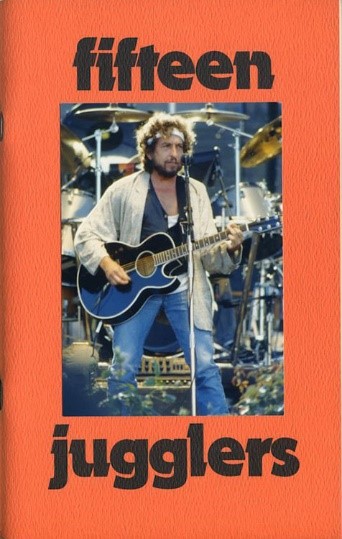
 In 1987, the fanzine Look Back publishes in issue #15, “Fifteen Jugglers”, a funny little interview with Dylan that a subscriber managed to score by pure coincidence.

Reader Phil A. Roddy works at a fitness club in those days. He gets a call one Tuesday from his boss. If Phil could come and open the club the next day after closing time for an unnamed big shot who wants to do his workout in peace. This does occur, every once in a while, so Phil is not too surprised. He is when, much to his excitement, he lets Bob Dylan in the next night.

He keeps his cool, well, up to a point anyway, and quietly observes how the then 45-year-old, muscular Dylan diligently and smoothly works hard for forty minutes on the various fitness machines. Afterwards, Dylan swims a few laps in the pool. When he then switches to the jacuzzi to relax, Phil gathers his courage, and, with tacit permission from the huge bodyguard, approaches Dylan. He confesses to being a fan and asks if he could do an interview for that fanzine Look Back. Dylan is relaxed, and allows it – on condition that Roddy doesn’t record anything, and he has to join him in the jacuzzi. Phil happens – lucky coincidence no. 2 – to have mastered shorthand, quickly grabs a few sheets and a clipboard, takes off his clothes and slips in.

It is a charming but otherwise unexciting interview. “How often do you work out?” and whether he has ever had weight problems, that level. But the latter question does lead the conversation into a remarkable song analysis. Dylan explains that he ate almost nothing in the ’65-’66s because of chronic toothache. But “when I had that motorbike accident, they did some root canal work for the next year and that took me out of pain I’d been in for two fucking years.” Which is a not too well-known, rather startling biographical fact, but Phil seems to miss it. At least, his follow-up question is rather silly; “So, at that time you began to exercise?” Fortunately, Dylan is apparently in a talkative mood, and, unlike Phil, he does stay on track:

“Not really, other than walking. I did one thing though. Man, did I eat. You name it. People try and read so much into songs. You know that song, Country Pie? That’s what it was about. Pie. In fact, for the first time in six years, I began to have a bit of a weight problem.”

Maybe Phil should have checked the calendar. Today is 1 April. And Dylan has a reputation, still in the 80s anyway, for having a penchant for talking complete nonsense with a perfectly straight face, April 1 or not. Still, it is quite surprising that this forgotten song in particular should bubble up in Dylan’s mind. It is almost twenty years ago that he recorded the track in two takes on a Friday night in Nashville, and after that he never looked back at it – and after this ad hoc interview in 1987 it will be another thirteen years before “Country Pie” appears on his set list (10 March 2000 in Anaheim, and then the song’s here to stay for a while: that year Dylan will perform “Country Pie” more than a hundred times).


More surprising though, is Dylan’s song analysis (“it’s about pie”). The introduction is undeniably true: “People try and read so much into songs.” True, plenty of pompous bullshit has been written about this song, yes. Back when the album was released, it took Hubert Saal only five days to crack the code in Newsweek (14 April 1969). The chorus, with all those different pies, is “a kind of declaration of independence,” Hubert explains. And:

“When Dylan talks of eating pies, all kinds, he means writing songs, all kinds. And when he goes on in the song to say “Ain’t runnin’ any race” he seems to be rejecting the musical direction his many admirers have chosen for him in the past or would choose for him in the future.”

Ridiculous enough, but at least kinder than Dylanologists like Mike Marqusee, Clinton Heylin (“embarrassing, un-Dylanesque drivel”) or John Hughes (“almost provocative vapidity”), who qualify the song as a throwaway. Fans, meanwhile, overwhelmingly lean towards Dylan’s own 1987 analysis, defending on the various forums opinions like “Bob Dylan basically just likes pie. I think we all do”. Though among them are some who prefer to milk the double entendre pie = vagina, and even, believe it or not, analysts who can explain that the song is about shooting heroin.

Two camps, then, at two extremes of the spectrum; on the one hand, the lazy interpreters who deny the song any depth or ambiguity, on the other, the overenthusiastic cryptanalysts who even cite Shakespeare to prove the supposed scatological content of the lyrics. Hamlet Act 3, Scene 2 then, of course. The scene where Hamlet wants to put his head between Ophelia’s legs. And assaults poor, dismayed Ophelia with doublespeak;

Ophelia
No, my lord!
Hamlet
I mean, my head upon your lap.
Ophelia
Ay, my lord.
Hamlet
Do you think I meant country matters?
Ophelia
I think nothing, my lord.
Hamlet
That’s a fair thought to lie between maids’ legs.
Ophelia
What is, my lord?
Hamlet
“Nothing.”

… with “country” being pronounced emphatically as cunt-ry, and “nothing” being a common euphemism in Elizabethan times for the female pubic region (“no-thing”, nudge nudge wink wink). And “pie” is established in twentieth-century America as a metaphor for vagina, so there you go, with your “country pie”.

It does seem a bit laborious, but alright, yes indeed: once you are in that tunnel of sexual innuendo, the rest of the lyrics are a treasure trove of ambiguities and obscenities. A second argument for entering that tunnel is the song lyric’s sky-high Basement couleur. One would be tempted to think that Dylan, leafing back through his notebook, has come across an old, unused lyric from the summer of 1967, a leftover pie as it were, a playful scribble from that summer in Woodstock with the guys from The Band in the basement of the Big Pink, carefree playing songs from the Good Old Days, shaking nonsensical songs out of his trouser leg, improvising little masterpieces out of thin air, and merrily shuffling and mixing folk, country and blues classics.

For that’s exactly what we hear already in the opening couplet of “Country Pie”…

To be continued. Next up Country Pie part 2: Slap that drummer with a pie that smells


Jochen is a regular reviewer of Dylan’s work on Untold. His books, in English, Dutch and German, are available via Amazon both in paperback and on Kindle:


Posted in Uncategorized | 1 Comment

The Never Ending Tour: The Absolute Highlights. It ain’t me babe. Go lightly.

By Tony Attwood

This is a recording I particularly want to include in this series – and I am sorry the volume is so low – I’m just hoping you’ve got enough on your computer or audio system to be able to hear it.

It has always struck me that “It ain’t me babe” can be approached in many ways – the singer can be regretful, annoyed, patronising, tired, whistful, bored…  But best of all, for me, the singer and the musical accompaniment needs to be saying the same thing, and sometimes I feel that this is not the case.  Indeed although I know it is sacriledge to criticise Bob’s understanding of his own music, I do get the feeling that sometimes on tour he has said to the band, “OK let’s try it like this” with reference back to what his lyrics actually say.

Here I think the meaning is simple and clear: “I am so really, really sorry, but I just can’t help you.”  And that is what, for me, the music needs to reflect.

And here in this low volume hard-to-hear recording (sorry about that, but the fact that we have a recording at all, is down to those who smuggle in their recording devices, and Mike Johnson’s perseverance in collecting all these recordings), Dylan gets that absolutely.    He really comes over as so sorry for her, but just knows that there is nothing he can do.  Not because she is doing anything wrong (although she is), but to quote from “Tangled,” the two of them have started from a different point of view.

So there does seem to me to be a connection here between the two songs; the two people who really do have a lot going for them as a couple, but not quite the right thing, and not enough of a thing to make it work.

I guess most of us end up at some time saying “sorry but this isn’t right” and so ending the affair (although I seem to be one of those people who tends to be on the receiving end rather than on the sending end, so I’ve not got too much experience of saying “it’s over”).  But what is so different here is line two: “Leave at your own chosen speed.”   For that line to make sense, the song has to be sung like this, and I get the feeling – overwhelmingly getting the feeling in fact – that Dylan has fully grasped the essence of what he has written in these lyrics.  It’s just that sometimes in other performances he really wishes he had written “just get out will you?”

For although the opening line of “Go away from my window” is horribly harsh (while at one level sounding rather poetic and gentle), and the woman’s demands in the opening verse are enormous – a total definition of a personality in fact – the singer really is sympathetic.   “Go lightly on the ground” is a beautiful, simple sentiment that needs this sort of gentle approach to the song as a whole, for any of it to make any sense.

Thus for all the harshness of the lyrics such as “Everything inside is made of stone” there is a gentility here.   The singer will absolutely not be the man to “come every time you call” but he is sympathetic to what she is.  He’s not telling her that her attitudes are unacceptable (although we might reach that conclusion on reading the lyrics through).

More than anything he is saying he’s sorry.   And in this version with its delicate, gentle accompaniment he really is.

There is a complete index to the 100 plus episodes of the full Never Ending Tour series (without comments from me) on the website.

Posted in Uncategorized | Leave a comment

The Tarantula Crawls Across The Circus Floor and Arachnida Is Dead

Previously in this series

by Larry Fyffe

(F)atty Aphrodite's mama - I bend to you
& with sex mad eternity at my vegetable show
(Bob Dylan: Tarantula)

Something’s up ~ it’s well known that Aphrodite’s not fat, not at all; said to be the daughter of the sea, the goddess of love is sexually alluring.

Not so well known perhaps is that Greek playwright Euripide’s mama sells vegetables in order to obtain money for her son’s education.

In the ancient Greek satirical play entitled “The Frogs”, according to its author Aristophanes anyway, the degenerate state of contemporary Athenian plays demands a return to the days when art was in the skilled hands of an educated elite rather than audiences having to sit through the works of lesser quality written by less-educated citizens.

Proclaims Aristophanes, it’s better still to have an educated playwright like Aeschylus who strives in his plays to bring out the best in people of all classes ~ rather than one like Euripides who considers human behaviour largely determined by an individual’s social status.

In the satirical play “The Frogs”, Dionysus, supposed a regenerative god, travels across the river to Hades where the demigod oversees a “Judgement of Paris”, so to speak.

On a balance scale, he weighs the content of dramas written by ‘old school’ Euripides, a writer of tragedies who brings the heroes of classical mythology down to earth, but then provides little advice on how to improve the rather stagnated state of the theatre in Athens; other than to spout forth what amounts to nothing more than dribble from the well-ordered Apollonian ‘intellectual’ establishment.

The weight of Aeschylus’ plays compared with those of Euripides demonstrates that the day has come for the latter’s tragedies to die, and be replaced by those written by Aeschylus who models himself after the heroic mythological gods (even a demigod like blunder-prone strongmam Hercules will do); at least offered would be some practical solutions to fix the fallen state of Athenian art; so too, the city’s economic and political woes would be addressed ~ though through the safety of humorous satire, of course.

Below, quoted from the short book ‘Tarantula’ below, lampooned are the critics of the innovative American poet Walt Whitman of modern times:

"(S)o you're out to save the world are you?
you imposter - you freak!
you're a contradiction!
you're  afraid to admit you're a contradiction!
you're misleading!

......

sincerely yours, Froggy

(Bob Dylan: Tarantula)

In the following ironic-filled song lyrics, the narrator thereof takes on the persona of a regenerative Dionysus, and mentions characters he’d bring back from the Underworld; brought back in order to improve the comparatively witless state that the modern entertainment industry has gotten itself into:

I study Sanskrit and Arabic to improve my mind
I want to do things for the benefit of mankind ....
I'll bring someone back to life, balance the scales
I'm not gonna get involved in any insignificant details
(Bob Dylan: My Own Version Of You)


Arachnida Is Dead

Do I contradict myself
Very well, then I contradict myself
I am large, I contain multitides
(Walt Whitman: Song Of Myself)

As pointed before, a darker critic of the state of society in modern times also has a big influence on the writings of Bob Dylan:

Welcome, tarantula
Black on thy back 
Is thy triangle and symbol
(Friedrich Nietzsche: Thus Spake Zarathustra ~ translated)

Clearly revealed in the lines beneath:

(A) girl with her back
full of ink
raises her hand
& says "Ernest Tubb"
(Bob Dylan: Tarantula)

The avenging Tarantula Man dances beneath the diamond sky with one of his eight legs waving free: he’s out of his hole, stinging those who dare tell him that all created humans are equal, and therefore conformity’s the golden rule.

Nay, everyone has his or her own, often hidden, talent; it’s now time to seize the opportunity, to exercise one’s will to power.

Not to wait for a reward way up yonder in a supposed Afterlife:

I've heard you say many times
That you're better than no one
And no one is better than you
If you really believe that
You know you have nothing to win
And nothing to lose
(Bob Dylan: To Ramona)

Friedrich Nietzsche be a spider caught in the web of his own time.

He accidentally stings the archetypical Eve who flees from the dusty pages of the

Judeo-Christian Bible.

The times they are a-changing:

The housewife is not here
She's running for congress
(Bob Dylan: Tarantula)

The story does not end there, however.

A black nightingale arrives with bad news ~  Arachnida is dead!

The Christians have killed him ~ squashed him with the Holy Bible for breaking the “Great Chain of Being”; thereby releasing Eve’s imprisoned inner soul, Lilith.

With the Big Tarantula dead, Paradise is regained … at least in part:

Covenant woman got a contract with the Lord
Way up yonder great will be her reward
Covenant woman, shining like a morning star
I know I can trust you to stay where you are
(Bob Dylan: Covenant Woman)

Posted in Uncategorized | 2 Comments

Girl From The North Country (1963) part 4 (final)


by Jochen Markhorst

IV         À la fille, qui fut mon amour

Dylan’s foray into the Great American Songbook, the triptych Shadows In The Night (2015), Fallen Angels (2016) and Triplicate (2017) is special, but not unique; in this category, Dylan is, for once, not a trendsetter. As it is, any record shop can fill quite a bin with pop and rock stars venturing into the American Songbook, with quite a few Big Names too.

Rod Stewart delivers a whole series (four albums), Bryan Ferry scores as early as 1999 with As Time Goes By, Lady Gaga even reaches the No. 1 position with Tony Bennett (Cheek To Cheek, 2014), and repeats that feat a few years later with Love For Sale (2021), Annie Lennox, Sir Paul McCartney, Cindy Lauper… one bin is probably not enough in this record shop, in any case.

In 2007, record stores can add the next Big Name: Art Garfunkel’s tenth solo album is called Some Enchanted Evening, and is, as the title suggests, Artie’s take on “I’ve Grown Accustomed to Her Face”, “I Remember You”, “Someone To Watch Over Me” and 11 more songs from the Songbook, the songs of Gershwin, Arlen/Koehler, Rodgers/Hammerstein, Burke/Van Heusen and Irving Berlin, the songs that rightly enjoy enduring popularity.

All too much Garfunkel cannot add, unfortunately. Well, his still crushingly beautiful, angelic voice, obviously – over which there is now a slight, not unpleasant rustle, by the way. Apart from that, though, the record is another staging post in the slow, gradual degeneration of Garfunkel’s records, which actually started from the first solo album, 1973’s successful Angel Clare: with each record, Garfunkel’s music becomes more sterile, ethereal and muzak-y.

Which, incidentally, is not just down to production; after the second album, the commercially and artistically successful Breakaway (1975), Art’s instinct for good songs seems to abandon him more and more. Breakaway still has only good to exceptional songs: Stevie Wonder’s “I Believe (When I Fall In Love It Will Be Forever)”, a brilliant version of Antônio Carlos Jobim’s “Waters Of March”, Paul Simon’s gem “My Little Town”, Albert Hammond’s beauty “99 Miles From L.A.” and especially the stratospherical Beach Boys song “Disney Girls” – but after this album, the decline irrevocably sets in.

In both the twentieth and twenty-first centuries, however, Garfunkel is wise enough to let his setlists lean on the Simon & Garfunkel repertoire. Mainly the more light-headed, ethereal songs like “For Emily, Whenever I May Find Her”, “A Poem On The Underground Wall” and “Kathy’s Song”, but crowd pleasers like “Sounds Of Silence” and “The Boxer” still keep it balanced. And among the ethereal songs, “Scarborough Fair” has now won a permanent place.

Since 2014, “Scarborough Fair” has not been off Art’s setlist; from the 1970s until 2013, Garfunkel has performed the song some 30 times, since 2014 it has been performed more than 100 times. To which he then usually adds a remarkable coda: after the final words parsley, sage, rosemary and thyme, the song gently flows, accompanied only by a single guitar, into

Remember me to one who lives there
She once was a true love of mine

If you go when the snowflakes fall
When the rivers freeze and the summer ends
Please see she has a coat so warm
To keep her from the howlin’ winds

If you’re travelin’ to Scarborough Fair
When the winds hit heavy on the borderline
Remember me to one who lives there
She once was a true love of mine

… a music-historically perfect coda, of course, but Dylan’s song seems to have fascinated him for some time now anyhow. Back in 1981, Art Garfunkel sings a particularly sterile version of Jimmy Webb’s “In Cars” on his understandably flopped album Scissor’s Cut in which suddenly, again in the coda, we hear Art singing “Girl From The North Country” alienatingly and mixed far, far back, like a ghost in the attic. Too weird and vague to be labelled a cover, but the use of Dylan’s song live, in the coda of “Scarborough Fair” that is, makes up for a lot.

Real covers abound, though. Hundreds, if not thousands. Almost all of them beautiful; the song just cannot be broken. At the very least worth mentioning is Rosanne Cash, who, in 2009, began her late father’s homework. Johnny Cash once gave Rosanne a list of “100 essential songs”, and for her album The List she records the first fourteen of them; classics like “Miss The Mississippi And You”, “Long Black Veil” and “500 Miles”… and “Girl From The North Country”.

Fine, but lacking the intensity of, say, Joe Cocker (with Leon Russel on Mad Dogs & Englishmen, 1970), Rod Stewart (who actually always produces great Dylan covers, this one is on 1974’s Smiler) or – especially – the American guitar beast Walter Trout. The studio version (Prisoner Of A Dream, 1991) is superb, but truly goosebump-inducing are the many live versions, in which Trout seems to get into The Zone every time. Not too surprising; in 2017, when Walter against all odds has survived liver cirrhosis thanks to a liver transplant and has returned to the spotlights, he declares from the stage in Leeuwarden, the Netherlands, that he owes everything to three foundations under his work:

  1. The release of Bob Dylan’s first album,
  2. The Beatles’ performance on 9 February 1964 on the Ed Sullivan Show, and
  3. Listening to Paul Butterfield for the first time.

… by which he no doubt does not mean Dylan’s actual first album, given his decades-long, unconditional loyalty to the girl from the North, but rather The Freewheelin’. “Girl From The North Country” he usually announces as “my favourite song, a song written by my friend Mr. Bob Dylan” – and always he uses the song to demonstrate his exceptional skill with the pinky-swell technique. Usually in the second solo.

Walter Trout– Girl From The North Country live:


(sound-wise, the live version on No More Fish Jokes, 1993, is much better – but the intensity of this 1991 recording in Holland is irresistible)

Jimmy LaFave, James Last, Ramblin’ Jack Elliott, Waylon Jennings, Link Wray, Eels, Eddie Vedder… throw blindfolded a dart into the record shop, and you’ll always hit a bin where a cover can be found. And by far the majority of these don’t stray too far from the original -all of them staying close in terms of tempo, instrumentation and elegance. Though one might get some extra goosebumps if the song is sung by a real girl from the north, by the enchanting Ane Brun for example, with a chilling interpretation on the beautiful album Leave Me Breathless (2017).

(Editor’s note: The video Jochen supplied isn’t playing in the UK, so I’ve added a second version below.  Hopefully one of these will work for you.  This recording is unbelievably moving).

Ane Brun – Girl From The North Country:

For the truly special je-ne-sais-quoi, we will have to look not only across national borders, but across language borders. The song can – of course – be found in all languages, and even dialects thereof, and it might be obvious to go first of all to a North Country to find a perfect cover. Plenty of choice there, too. “Flickan från landet i norr”, “Hvis du reiser nordover”, “Pigen fra det højeste nord”… more than one cover can be found in the national language in every Nordic country. But they, like German, Czech, Hebrew and all the others, have to lose out to the languages that just happen to always sound good: Italian and French.

French wins. There may be plenty Ragazzi del Nord, but none of our Italian friends match the sheer beauty of Francis Cabrel, when he joins forces with Jean-Jacques Goldman in 1999, picking up Hugues Aufray’s translation, and recording a thoroughly elegant, ultimately moving “La Fille du Nord” for the charity project Sol En Si.

Si tu passe la-bàs vers le Nord
Où les vents souffle sur la frontière
N’oublie pas de donné le bonjour,
À la fille, qui fut mon amour


A-t-elle encore ses blonds cheveux si long, c’est ainsi que je l’aimais bien… In retrospect, it’s a shame Echo lived in Hibbing. And not in Quebec, over the borderline.

 —————

Jochen is a regular reviewer of Dylan’s work on Untold. His books, in English, Dutch and German, are available via Amazon both in paperback and on Kindle:


Posted in Uncategorized | Leave a comment

The Bride and the Return of Tarantula

by Larry Fyffe

The Bride of Tarantula

Humour comes in handy-dandy when waiting around all day for the Messiah to come, but, like Godot, doesn’t show up:

How long can I stay drunk on fear out in the wilderness
Can I cast aside all this loyalty and this pride
Will I ever learn that there'll be no peace
That the war won't cease
Until He returns
(Bob Dylan: When He Returns)

Could be construed that in the following song lyrics, His Bride, that is, the followers of Christ, are impatient, if not downright dubious, about His promised return:

Well, if I come back
She said, we'll meet down by the station ...
Our days are bound to go
(Bob Dylan: Down By The Station)

Appears that if He doesn’t return soon, Satan’s standing by with a coat-full of apples:

It ain't easy to swallow, it sticks in your throat
She gave her heart to the man in the long black coat
(Bob Dylan: The Man In The Long Black Coat)

In Greek/Roman mythology, human mortals be barred from Mount Olympus; immortals like Zeus, his son Apollo, and Venus, are the only ones allowed upstairs – plus those who are considered worthy demigods like the violent-prone, though often jolly, wine-drinking dancing-fool known as Dionysus.

Could be a Dionysian archetype who makes the joke below:

(H)e tells me that Shakespeare's relatives killed his ancestors
& that now his brothers won't read Shakespeare
(Bob Dylan: Tarantula)

Rockabilly, another matter:

Give me one hand loose, and I'll be satisfied
Give me a free hand baby 'cause I wanna rock
Turn me loose, and maybe I will blow my top
(Charlie Feathers: One Hand Loose ~ Huffman/Chastain/Feathers)

The lyrics above burlesqued in the Leda-and-the-swan song below:

Saddle me up a big white goose
Tie me on'er,  and turn her loose
Oh, me, oh my
Love that country pie
(Bob Dylan: Country Pie)

With a scat of Lord Buckley’s satirical bells ringing all over:

In the jingle-jangle morning, I'll come following you ....
Yes, to dance beneath the diamond sky
With one hand waving free
(Bob Dylan: Mr. Tambourine Man)

The Return Of The Tarantula

Spiderman has nothing on Tarantula (papa ‘Honest Abe” created his own version of the Cosmos wherein the Afterlife is of little concern).

Hairy Tarantula is like the Raven of North American lore ~  a trickster and a jokester who will do almost anything to obtain a few slices of bread, and a bottle of heavenly whiskey.

Including teaching American history to school children:

(W)ho can tell me the name of the
third president of the United States -
a girl with her back full of ink
raises her hand & says "Ernest Tubb"
(Bob Dylan: Tarantula)

Apparently, the honest electric honky-tonker, endeavours with all his might to hold the Union together:

I'm walking the floor over you
I can't sleep a wink that is true
I'm hoping and I'm praying as my heart breaks in two
Walking the floor over you
(Ernest Tubb: Walking The Floor Over You)

In the lyrics below, however, the Tarantula, a stranger in a strange land, burlesques the sorrowful sentiment that’s expressed above:

Set'em up Joe, play "Walking The Floor"
Play it for my flat-chested junkie whore
I'm staying up late, and I'm making amends
While the smile of heaven descends
(Bob Dylan: Scarlet Town)

That earnest willingness to wait for divine intervention expressed in the song lyrics beneath:

I'm gonna spend the night like every night before
Playing ET, and I'm gonna play him some more
I got to have a shot of them Troubadours
Set'em up Joe, play "Walking The Floor"
(Vern Gosdin: Set'em Up Joe ~ Gosdin, et al)

To be Frank, according to the Tarantula, ET’s just getting too many accolades all over:

It's a quarter to three
There's no one in the place
Except you and me
So set'em up Joe
I got a little story you ought to know
(Johnny Mercer: One For My Baby ~ Mercer/Arlen)

Ready, Freddie – again it’s parody time in the following song lyrics wherein more than the artist’s inkwell is drying up.

Albeit with ambiguous lyrics akin to the gnostic-like “Down By The Station”, it seems the departure of a mere lover be damned; more important is that the supposedly soon-to-come Second Coming of Christ is stretching farther and farther out into the future:

One for my baby
One for the road
This bottle is dried up soon
And I'll be all cried up soon
I can't see no God up soon
It's a long way to go
(Bob Dylan: One For The Road)

A masterpiece of burlesque.

Posted in Uncategorized | Leave a comment

A Dylan cover a day: Outlaw Blues – prepare to be amazed

By Tony Attwood

I suspect that those whose minds allow them occasionally to let Dylan songs slip away from their memories, may well have forgotten “Outlaw Blues,” even though it appears on one of the most popular Dylan albums of all time.

Bob only played it once on stage, and it sits on “Bringing it all back home” swamped by “Gates of Eden,” “Tambourine Man”, “Love Minus Zero…” etc etc.

So as I say, it is possible you might have forgotten it, and as an introduction here’s the official Dylan video

Now given just how standard a 12 bar this is, you might suspect the number of covers is very small.  And yes thayt is true.  Indeed not only is the number small, but some of them are really just straight re-runs of this 12 bar played with the classic R&B chugging accompaniment, with the first line repeated, and then a third rhyming line.  Here’s one (but believe me there is better to come).

Indeed from my younger days I also remember Dave Edmunds having a bash at it.  It’s ok and there’s an interesting instrumental break, but not much more to say about it.  Actually, I remember Dave Edmunds better for “Queen of Hearts” which I recall playing endlessly in my youth, although I am not 100% sure why.  Funny to hear it again after all these years – its on the link a couple of lines above in case you are interested.

Anyway, here’s his Outlaw Blues – but please if by now you are thinking that I am really struggling to find anything interesting to offer here, please, please, please keep going…

So to follow my earlier point: is there a cover worth noting here?   Well yes there is.  And it really, really is good in every sense.  As a musical production, it is superb in itself, but additionally, as a re-arrangement of a classic 12 bar it is something very unusual.  I do hope you have a moment to listen to it.

The Morning Benders renamed themselves Pop Etc, supposedly after being told that the word “bender” had an unfortunate connotation in the UK.  And they have indeed had some success, particularly with the album “Talking through tin cans” (Best indie album of 2008 according to iTunes).

This recording really does show that no matter what the starting point is with a Dylan song, and no matter that hardly anyone else wants to know about it, there is always something else that can be done.

The Dylan Cover a Day series

  1. The song with numbers in the title.
  2. Ain’t Talkin
  3. All I really want to do
  4.  Angelina
  5.  Apple Suckling and Are you Ready.
  6. As I went out one morning
  7.  Ballad for a Friend
  8. Ballad in Plain D
  9. Ballad of a thin man
  10.  Frankie Lee and Judas Priest
  11. The ballad of Hollis Brown
  12. Beyond here lies nothing
  13. Blind Willie McTell
  14.  Black Crow Blues (more fun than you might recall)
  15. An unexpected cover of “Black Diamond Bay”
  16. Blowin in the wind as never before
  17. Bob Dylan’s Dream
  18. You will not believe this… 115th Dream revisited
  19. Boots of Spanish leather
  20. Born in Time
  21. Buckets of Rain
  22. Can you please crawl out your window
  23. Can’t wait
  24. Changing of the Guard
  25. Chimes of Freedom
  26. Country Pie
  27.  Crash on the Levee
  28. Dark Eyes
  29. Dear Landlord
  30. Desolation Row as never ever before (twice)
  31. Dignity.
  32. Dirge
  33. Don’t fall apart on me tonight.
  34. Don’t think twice
  35.  Down along the cove
  36. Drifter’s Escape
  37. Duquesne Whistle
  38. Farewell Angelina
  39. Foot of Pride and Forever Young
  40. Fourth Time Around
  41. From a Buick 6
  42. Gates of Eden
  43. Gotta Serve Somebody
  44. Hard Rain’s a-gonna Fall.
  45. Heart of Mine
  46. High Water
  47. Highway 61
  48. Hurricane
  49. I am a lonesome hobo
  50. I believe in you
  51. I contain multitudes
  52. I don’t believe you.
  53. I love you too much
  54. I pity the poor immigrant. 
  55. I shall be released
  56. I threw it all away
  57. I want you
  58. I was young when I left home
  59. I’ll remember you
  60. Idiot Wind and  More idiot wind
  61. If not for you, and a rant against prosody
  62. If you Gotta Go, please go and do something different
  63. If you see her say hello
  64. Dylan cover a day: I’ll be your baby tonight
  65. I’m not there.
  66. In the Summertime, Is your love and an amazing Isis
  67. It ain’t me babe
  68. It takes a lot to laugh
  69. It’s all over now Baby Blue
  70. It’s all right ma
  71. Just Like a Woman
  72. Knocking on Heaven’s Door
  73. Lay down your weary tune
  74. Lay Lady Lay
  75. Lenny Bruce
  76. That brand new leopard skin pill box hat
  77. Lily, Rosemary and the Jack of Hearts
  78. License to kill
  79. Like a Rolling Stone
  80. Love is just a four letter word
  81. Love Sick
  82. Maggies Farm!
  83. Make you feel my love; a performance that made me cry.
  84. Mama you’ve been on my mind
  85. Man in a long black coat.
  86. Masters of War
  87. Meet me in the morning
  88. Million Miles. Listen, and marvel.
  89. Mississippi. Listen, and marvel (again)
  90. Most likely you go your way
  91. Most of the time and a rhythmic thing
  92. Motorpsycho Nitemare
  93. Mozambique
  94. Mr Tambourine Man
  95. My back pages, with a real treat at the end
  96. New Morning
  97. New Pony. Listen where and when appropriate
  98. Nobody Cept You
  99. North Country Blues
  100. No time to think
  101. Obviously Five Believers
  102. Oh Sister
  103. On the road again
  104. One more cup of coffee
  105. (Sooner or later) one of us must know
  106. One too many mornings
  107. Only a hobo
  108. Only a pawn in their game
Posted in Uncategorized | Leave a comment

Other people’s songs: The Christmas Song


by Aaron Galbraith (in the USA) and Tony Attwood (in the UK)

(Note: a list of the other articles in this series is published at the end).

Aaron: It’s funny to think that most Christmas songs are written and recorded in summer, “I saw a spiral pad on his (Bob Wells’s) piano with four lines written in pencil”, Mel Tormé recalled. “They started, ‘Chestnuts roasting…, Jack Frost nipping…, Yuletide carols…, Folks dressed up like Eskimos.’ Bob didn’t think he was writing a song lyric. He said he thought if he could immerse himself in winter he could cool off. Forty minutes later that song was written. I wrote all the music and some of the lyrics.”

Nat King Cole recorded this song by Bob Wells and Mel Tormé three times, twice in 1946 and again in 1961. The 1961 version is generally regarded as definitive. In 2022, the recording was selected by the Library of Congress for preservation in the United States National Recording Registry as being “culturally, historically, or aesthetically significant.”   It is probably my favorite Christmas song.

Tony: He really did have an utterly astonishing and beautiful voice.  My dad (who rarely sang although he was a fine pianist and saxophonist) loved this song and this particular version.   So it is a recording I knew while living at home with my parents.

Aaron: Here is Bob’s version

Tony:  There’s a review of the 2009 album which says that “Dylan’s horse vocals had taken on a timbre so coarse that even the most fearsome Clint Eastwood character would tremble upon hearing him croon…. At times, it even seems like Dylan could’ve written ‘Hark the Herald Angels Sing’ back in 1739 and was simply reanimated by a festive Dr Frankenstein to mark the 270th anniversary of the track….  Perhaps as Leonard Cohen once suggested, Dylan was merely trying, in his way, to be free, ala ‘Bird on the Wire’.”

I’ve always regarded it as Dylan singing the songs he learned in his childhood at Christmas.  And in a way I can understand that, as for many years every Christmas I would go to the house of some friends for a party on Christmas Eve and play Christmas songs on the piano and everyone would sing along.   The singing was pretty awful (and after a few drinks so was my piano playing) but it was also fun seeing everyone again.

Bob’s recordings by and large aren’t something that I would want to play, and I don’t actually have a copy of the album in any form at home.  But, apparently, all the proceeds in the USA went to “Feeding America” (which I am told – as being English I didn’t know – is the largest charity working to end hunger in the USA.)  So on that basis the whole project gets a very positive vote from me.

And so, having found that out I feel a bit better about the whole thing. Not that I am going  to have this song playing in my house this Christmas but I think I get it.

Aaron: As you can imagine there are literally thousands of covers of this song. So here are just two that I like.

First, Paul McCartney from 2012, recorded with Diana Krall

Tony: I was never a Beatles fan, but here again I am moved to say, the guy had a good voice, which perhaps I had never appreciated, not liking the band’s music very much.  Perhaps that is because no matter where I have lived I’ve always thought of myself as a Londoner (which is where I was born and brought up, and where I studied for my research degree).

What can I say of this?  It’s gentle, it’s sweet, how can I object to it?   I won’t be seeing my youngest grandchild this Christmas (she lives with her father and my daughter in Australia) but yes if I were there and she had woken in the night I can imagine I might have ended up holding her in my arms and singing this to her.  It probably wouldn’t have put her back to sleep, but in my dreams it would.

Aaron: The Monkees from the album ‘Christmas Party’ (2018)

Tony: If I didn’t care much for the Beatles, then I certainly cared even less for the Monkees in my youth.   I think I’ve had enough of this song by now, and to my utter amazement if I had to say which version was best out of this lot I’d got for McCartney, which is not something I think I have ever said before.  The Monkees is the worst one for me.

So, Bob wanted to sing the songs he remembered from his youth.  Nothing wrong with that, and I hope it raised a lot of money.   Can I listen to something else now?

Previously in this series…

  1. Other people’s songs. How Dylan covers the work of other composers
  2. Other People’s songs: Bob and others perform “Froggie went a courtin”
  3. Other people’s songs: They killed him
  4. Other people’s songs: Frankie & Albert
  5. Other people’s songs: Tomorrow Night where the music is always everything
  6. Other people’s songs: from Stack a Lee to Stagger Lee and Hugh Laurie
  7. Other people’s songs: Love Henry
  8. Other people’s songs: Rank Stranger To Me
  9. Other people’s songs: Man of Constant Sorrow
  10. Other people’s songs: Satisfied Mind
  11. Other people’s songs: See that my grave is kept clean
  12. Other people’s songs: Precious moments and some extras
  13. Other people’s songs: You go to my head
  14. Other people’s songs: What’ll I do?
  15. Other people’s songs: Copper Kettle
  16. Other people’s songs: Belle Isle
  17. Other people’s songs: Fixing to Die
  18. Other people’s songs: When did you leave heaven?
  19. Other people’s songs: Sally Sue Brown
  20. Other people’s songs: Ninety miles an hour down a dead end street
  21. Other people’s songs: Step it up and Go
  22. Other people’s songs: Canadee-I-O
  23. Other people’s songs: Arthur McBride
  24. Other people’s songs: Little Sadie
  25. Other people’s songs: Blue Moon, and North London Forever
  26. Other people’s songs: Hard times come again no more
  27. Other people’s songs: You’re no good
  28. Other people’s songs: Lone Pilgrim (and more Crooked Still)
  29. Other people’s songs: Blood in my eyes
  30. Other people’s songs: I forgot more than you’ll ever know
  31.  Other people’s songs: Let’s stick (or maybe work) together.
  32. Other people’s songs: Highway 51
  33. Other people’s songs: Jim Jones
  34. Other people’s songs: Let’s stick (or maybe work) together.
  35. Other people’s songs: Jim Jones
  36. Other people’s songs: Highway 51 Blues
  37. Other people’s songs: Freight Train Blues
  38. Other People’s Songs: The Little Drummer Boy
Posted in Uncategorized | Leave a comment

Girl From The North Country (1963) part 3: Whatever “country” is

by Jochen Markhorst

III         Whatever “country” is
“John R. Cash was an American country singer-songwriter.” Thus opens the English Wikipedia page on Johnny Cash, and so do the French, German, Dutch, Russian, Chinese and about 90 more Wikipedia pages: Cash was first and foremost a country artist.

The Spanish calls him el Rey de la Música Country, the Portuguese personificação do country, and actually only the Letzenburgische (Luxembourg) does not mention a style of music in the first paragraph, but only mentions it at the end of the second paragraph:

Säi musikalesche Spektrum ass vun den 1950er Jore mat Country, Gospel, Rockabilly, Blues, Folk a Pop bis zum Alternative Country am Ufank vum 21. Joerhonnert gaangen.

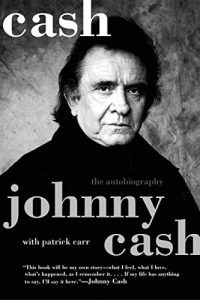
… so “country” still does come first. Whereon one could have an opinion, and Johnny Cash himself struggles with it too, in his autobiography. Firstly, with the term itself. “When music people today,” Cash philosophises, “performers and fans alike, talk about being ‘country,’ they don’t mean they know or even care about the country and the life it sustains and regulates.” The way of life depicted by “country” is long gone, he argues, and what remains are empty symbols of bygone culture. “Are the hats, the boots, the pickup trucks, and the honky-tonking poses all that’s left of a disintegrating culture?”

“The “country” music establishment, including “country” radio and the “Country” Music Association, does after all seem to have decided that whatever “country” is, some of us aren’t.”

In any case, he himself does not seem to fully understand either why he was pigeonholed as “country musician” from Day One, and that lack of understanding is palpable. His breakthrough hit “I Walk The Line” (1956) may have been a so-called crossover hit, as it reached No 19 on the pop music charts, but it established Cash’s name by conquering the combined country charts: six weeks at No 1 on the U.S. Country Juke Box charts, one week at No 1 on the C&W Jockey charts, and No 2 on the C&W Best Seller charts. And when Cash looks around, up there, he sees hits like Elvis’ “Heartbreak Hotel” and “Hound Dog”, Carl Perkins’ “Blue Suede Shoes”, Fats Domino’s “Blueberry Hill” and Gene Vincent’s “Be-Bop-A-Lula”, all of which rank collegially alongside Hank Snow, Kitty Wells, George Jones and Porter Wagoner and all those other country greats… reviewing the Billboard Top Country & Western Records of 1956, it is indeed a bit puzzling according to which criteria a song is labelled as “country”. At least in the Rock and Roll Hall of Fame, “I Walk The Line” is permanently listed among “The 500 Songs That Shaped Rock and Roll”.

He himself tries to arrange a first audition with Sam Phillips as a gospel singer, but that does not convince the legendary Sun Records producer. No market for it, he thinks. Cash then tries as a C&W singer, ironically (“My next try didn’t work, either – that time I told him I was a country singer”), is allowed to audition and performs some Hank Snow songs, a Jimmie Rodgers song, a couple of Carter Family songs, but that doesn’t please either. Phillips wants to hear a song of his own, so Cash then just plays “Hey Porter” (“Though I didn’t think it was any good”). The producer immediately catches on: rockabilly! And with that, Cash has his first record deal: “Come back tomorrow with those guys you’ve been making the music with, and we’ll put that song down, he told me.”

The stamp “country” is inescapable, though. And Cash conforms to it. For his second album (The Fabulous Johnny Cash, 1958), he writes songs like “Don’t Take Your Guns to Town” and “I Still Miss Someone”, and records songs by country greats like Bob Nolan and Cindy Walker. But we can already see the love for folk too: the second track is Cash’s adaptation of the time-honoured “Frankie And Johnny”, in his case “Frankie’s Man, Johnny”. Which again scores crossover; #9 on the Billboard country chart, 57 on the Hot 100. And he confesses this love of folk wholeheartedly in his autobiography: “I was deeply into folk music in the early 1960s”. So he has Dylan in his sights early on:

“I took note of Bob Dylan as soon as the Bob Dylan album came out in early ’62 and listened almost constantly to The Freewheelin’ Bob Dylan in ’63. I had a portable record player I’d take along on the road, and I’d put on Freewheelin’ backstage, then go out and do my show, then listen again as soon as I came off.”

With which he appears to be a true connoisseur; at most 2,500 copies of that first album were sold in 1962. So, by his own account, Johnny Cash did belong to that select club of buyers. More fascinating though, and more moving too, is the second part of his declaration of love, about his obsession with The Freewheelin’. His words are reminiscent of John Lennon’s in The Beatles Anthology (2000):

“In Paris in 1964 was the first time I ever heard Dylan at all. Paul got the record [The Freewheelin’ Bob Dylan] from a French DJ. For three weeks in Paris we didn’t stop playing it. We all went potty about Dylan.”

And decades later, looking back, both McCartney and Lennon point to its influence. “Norwegian Wood”, “I’m A Loser”, “You’ve Got To Hide Your Love Away”… “That’s me in my Dylan period again,” analyses Lennon in 1980, just before his death. Which Paul agrees, in 1984: “That was John doing a Dylan… heavily influenced by Bob. If you listen, he’s singing it like Bob.”

Cash – fortunately – does not sing like Dylan, but indeed: from 1962 onwards, when Cash says he is deeply into folk music, and so fond of listening to Dylan, we see a turnaround in repertoire choice. On Blood, Sweat And Tears (1963), which he recorded from June to August ’62, there are songs like “The Legend of John Henry’s Hammer” and “Casey Jones”, and in 1964 he records the successful Orange Blossom Special, with no fewer than three Dylan songs (“It Ain’t Me Babe”, “Don’t Think Twice, It’s All Right” and “Mama, You’ve Been on My Mind”).

It makes it all the stranger that Cash makes such a mess of the lyrics of “Girl From The North Country” on Nashville Skyline.

If we take him at his word, that he listened almost constantly to The Freewheelin’ Bob Dylan in ’63, before and after every gig on his portable record player, that alone is an impressive number of spins; in 1963, Cash did 61 concerts after the release of The Freewheelin’ (27 May 1963), so with that fact alone, we count 122 spins of “Girl From The North Country”. More than enough to have the lyrics indelibly imprinted on memory, one might say. But it actually goes wrong right from the start.

Alternately, the men apparently agreed. And presumably then the last verse, the repetition of the first verse, together. Dylan, with his new voice, does stay perfectly true-to-text, when he opens. However, when it’s Cash’s turn after that first verse, he does not sing the second verse, but the third. Sort of, anyway;

Dylan’s original                                                                  Cash on Nashville Skyline

Please see for me if her hair hangs long                  See for me that her hair’s hanging down
If it rolls and flows all down her breast                    It curls and falls all down her breast
[“frest”?]
Please see for me if her hair hangs long                  See for me that her hair’s hanging down
That’s the way I remember her best                          That’s the way I remember her best

… only the last line is unchanged. Which in itself is hardly a problem, of course. Dylan himself is the last person who thinks his lyrics are sacred; “They’re songs. They’re not written in stone. They’re on plastic” (SongTalk interview with Paul Zollo, 1991).

Dylan quickly switches gears and then sings the second verse himself, the verse Cash skipped. Ideally, The Man In Black would then do the fourth verse, but alas: he sets in the fifth, the last. Dylan is still alert and quick, and decides in a split second that this will be the last verse then, the two-part duet – Cash has only sung “If you’re…”, and Dylan is already joining in: “… travelin’, in the North Country fair”. The second line, Where the winds hit heavy on the borderline, then comes out smoothly, but by line three it goes wrong again. Dylan sings, as he should, Remember me to one who lives there, but his partner improvises Please say hello to the one who lives there. However, Cash has kept his ears open; when the men then sing the same verse one more time, he neatly follows the original lyrics.

Oh well, who cares. It is and remains an exciting combo of two giants showcasing their musical pleasure with a song that is so strong that it cannot be broken anyway. And who knows – perhaps Cash has just sown the first seed for “If You See Her, Say Hello” with his lyrics rehash here. Not an insignificant song either.


To be continued. Next up Girl From The North Country part 4 (final): À la fille, qui fut mon amour


Jochen is a regular reviewer of Dylan’s work on Untold. His books, in English, Dutch and German, are available via Amazon both in paperback and on Kindle:

 

Posted in Uncategorized | 3 Comments

Tarantula

By Larry Fyffe

When Bob Dylan’s song-visions are taken as a whole, revealed is what the singer considers a flaw in Christian thought. That is, the religion foresees the future as ending with the second return of Jesus Christ; supposedly an event very close to happening.

The expectation that all the troubles on earth will get better eventually also comes to an end.

The problem being that matters didn’t change much at all the first time around; with that, so departed the hope that saves humankind from the melancholy of nihilism.

Sorrowful though it may seem, hope for deliverance from the woes of the world is never lost when the future never ends.

In short, better a Messiah who never comes than a particular one who’s supposedly on His way.

Singer/ songwriter/musician Bob Dylan sources the narratives of Roman and Greek mythology as well as those of the Judaic and Christian religions. And the prescience of Alchemy.

The ‘messages’ contained in his works are more unified, less fragmented in the Postmodern style than many critics would have his readers and listeners believe. Dylan’s word-images (and accompanying music) act as objective correlatives to harden up abstract ideas and emotional feelings so they can better be transmitted to his audiences.

Best abandon all hope, however, ye who expect Dylan visions to come only in colours black and white; instead, the old symbolic elements of air, earth, water, and fire play a large part therein; they intermingle – sometimes they be in balance, other times out of balance.

By mixing up mythologies in his song lyrics, Dylan twists their stories around quite a bit; for instance, the virgin twin sister of Apollo loans Venus a giant scorpion for protection against the both the advances of Achilles and of Paris – or so one of his songs might be construed:

I watch your scorpion
Who crawls a cross you circus floor
Just who do you think you have to guard
(Bob Dylan: Temporary Like Achilles)

Archer Artremis, the moon (mona) goddess, hunts animals but she protects them too, especially those pregnant. When Orion is said to brag that he could easily kill all the animals in the forest, she sends a giant scorpion after him which stings Orion to death.

Artemis/Diana also slows down Greek ships on the way to Troy because the Greek commander Agamemnon brags that he be a better archer than she is.

Arache,  a mere mortal challenges Athena, the goddness of wisdom and crafts, to a contest; unwisely the human does the best weaving; the goddess becomes enraged, and Arachne hangs herself.

Not without pity, the goddess turns Arachne into a spider.

Dylan, it appears, into a Tarantula with Groucho Marxist eyes:

(Y)our problem is that you wanna better
word for world
(Bob Dylan: Tarantula)
Posted in Uncategorized | 2 Comments

A Dylan cover a day: Only a pawn in their game

Reminding me of just how lucky I have been.

by Tony Attwood

“Only a pawn” is such an idiosyncratic song, and a song sung by Bob in such a particular way, with the variations of timing and verse lengths, that at first sight it looks pretty well impossible to do anything with it that isn’t just a straight copy.

But I am delighted to say that this is not the case – delighted because I think it is a wonderful song, and one that the album recording by Bob doesn’t take to its ultimate point.

Fortunately however other artists seem to have been very reluctant to have a go.   Sadly not all recordings are available on the internet, but I’ve selected a few covers from those that are…

Lenny Nelson

Lenny Nelson turns the song into rock, which before I heard this I thought would not be possible.  And yet I found everything about this interesting, and indeed exciting except what happens with the title line.   But that of course is just a personal point – I don’t think “game” needs emphasising as happens here, but it’s a musical decision.   The problem for me is that doing that ending to each verse means that the ending of the whole piece doesn’t have much impact… but still that is a personal view.

Rich Robinson

This takes us right back to Bob’s version and I am not sure what the point is of doing the song in a way so similar to the original.  But if you find something in this version that Bob doesn’t manage to find in his own recording then fine.  And that brings me to what I think  is an interesting point – Bob only played this eight times in concert, concluding in 1964.  I wonder what he would make of it now.

Roy Bailey

Now this recording I treasure – not my favourite but one I am so glad I found.   This solo performance really does show us the incredible power of this song which seemingly Bob set aside having written, presumably deciding it was not suitable for concerts.

I write these commentaries sitting upstairs in my house in the countryside, looking today with winter firmly established, at the leafless trees and the frost on the grass.   There is no wind, and just a few birds circling.   The red kites have long since migrated.   I sit here alone.    This performance is utterly and totally overwhelming – although there is yet more to come.

Morrisey

Hearing the drum beat used here, it seems utterly obvious – as if it should have been there in every recording.

What makes the song unusual is that it is in 6/8 time – meaning six beats in a bar in two groups of three, but that phrases are of uneven length so we never know what is going happen.

This is one of my absolute all time favourite cover versions of any Dylan song.  If I ever feel I have forgotten how privileged a life I have been granted, this is the recording I use to remind me of just how lucky I have been.  How dare I ever be sad or anxious or worried.

The Dylan Cover a Day series

  1. The song with numbers in the title.
  2. Ain’t Talkin
  3. All I really want to do
  4.  Angelina
  5.  Apple Suckling and Are you Ready.
  6. As I went out one morning
  7.  Ballad for a Friend
  8. Ballad in Plain D
  9. Ballad of a thin man
  10.  Frankie Lee and Judas Priest
  11. The ballad of Hollis Brown
  12. Beyond here lies nothing
  13. Blind Willie McTell
  14.  Black Crow Blues (more fun than you might recall)
  15. An unexpected cover of “Black Diamond Bay”
  16. Blowin in the wind as never before
  17. Bob Dylan’s Dream
  18. You will not believe this… 115th Dream revisited
  19. Boots of Spanish leather
  20. Born in Time
  21. Buckets of Rain
  22. Can you please crawl out your window
  23. Can’t wait
  24. Changing of the Guard
  25. Chimes of Freedom
  26. Country Pie
  27.  Crash on the Levee
  28. Dark Eyes
  29. Dear Landlord
  30. Desolation Row as never ever before (twice)
  31. Dignity.
  32. Dirge
  33. Don’t fall apart on me tonight.
  34. Don’t think twice
  35.  Down along the cove
  36. Drifter’s Escape
  37. Duquesne Whistle
  38. Farewell Angelina
  39. Foot of Pride and Forever Young
  40. Fourth Time Around
  41. From a Buick 6
  42. Gates of Eden
  43. Gotta Serve Somebody
  44. Hard Rain’s a-gonna Fall.
  45. Heart of Mine
  46. High Water
  47. Highway 61
  48. Hurricane
  49. I am a lonesome hobo
  50. I believe in you
  51. I contain multitudes
  52. I don’t believe you.
  53. I love you too much
  54. I pity the poor immigrant. 
  55. I shall be released
  56. I threw it all away
  57. I want you
  58. I was young when I left home
  59. I’ll remember you
  60. Idiot Wind and  More idiot wind
  61. If not for you, and a rant against prosody
  62. If you Gotta Go, please go and do something different
  63. If you see her say hello
  64. Dylan cover a day: I’ll be your baby tonight
  65. I’m not there.
  66. In the Summertime, Is your love and an amazing Isis
  67. It ain’t me babe
  68. It takes a lot to laugh
  69. It’s all over now Baby Blue
  70. It’s all right ma
  71. Just Like a Woman
  72. Knocking on Heaven’s Door
  73. Lay down your weary tune
  74. Lay Lady Lay
  75. Lenny Bruce
  76. That brand new leopard skin pill box hat
  77. Lily, Rosemary and the Jack of Hearts
  78. License to kill
  79. Like a Rolling Stone
  80. Love is just a four letter word
  81. Love Sick
  82. Maggies Farm!
  83. Make you feel my love; a performance that made me cry.
  84. Mama you’ve been on my mind
  85. Man in a long black coat.
  86. Masters of War
  87. Meet me in the morning
  88. Million Miles. Listen, and marvel.
  89. Mississippi. Listen, and marvel (again)
  90. Most likely you go your way
  91. Most of the time and a rhythmic thing
  92. Motorpsycho Nitemare
  93. Mozambique
  94. Mr Tambourine Man
  95. My back pages, with a real treat at the end
  96. New Morning
  97. New Pony. Listen where and when appropriate
  98. Nobody Cept You
  99. North Country Blues
  100. No time to think
  101. Obviously Five Believers
  102. Oh Sister
  103. On the road again
  104. One more cup of coffee
  105. (Sooner or later) one of us must know
  106. One too many mornings
  107. Only a hobo
Posted in Uncategorized | Leave a comment

Other people’s songs: Must be Sanata (and a touch of Hey Jude)

by Aaron Galbraith and Tony Attwood

A list of previous articles from this series can be found at the end of the article.

Aaron: Dylan mentioned that he remembered first hearing “Must Be Santa” on Holiday Sing-Along with Mitch by Mitch Miller & The Gang.

Dylan’s version is a cover of Brave Combo’s 1991 version, from their album “It’s Christmas, Man!”

Dylan played that version of “Must be Santa” on the Theme Time Radio Hour Christmas episode and would later note in an interview that the song “comes from a band called Brave Combo. They’re a regional band out of Texas that takes regular songs and changes the way you think about them. You oughta hear their version of ‘Hey Jude.’”

Tony:  Now Aaron didn’t follow that point up so I have – here is Hey Jude that Dylan was referring to.   And I would add, if you are not impressed by the larking around at the start skip through to 45″ and play from there.  It really is quite fun.  Well, it made me smile.  I love the version of la la la la la la la (etc) at the end.  Lovely rhythmic change.

But back to Aaron’s text…

This is one of those situations in which the video Aaron has found in the USA isn’t available in the UK where I am.  I’m leaving his selection in, and below putting another version I’ve found by the same band which does work in the UK.

Aaron: Here is Bob’s version

Tony: So this sounds pretty much like part two of the version by Brave Combo that I have found works in the UK, so I guess I’m on the right track.   And OK if you are totally in the Christmas spirit, and the water pipes haven’t frozen etc etc then I guess it is great fun.

Perhaps my review this morning is suffering from the fact that last night I drove for 90 minutes in pretty awful conditions to an event only to get there to find it was called off.  Not putting me in the best mood – but I think all these songs are best played with lots of friends around and everyone in the Christmas spirit.  Which of course I’ll get to in time, I’m sure.

Aaron: She & Him recorded their version for 2016 album Christmas Party. Along the way they updated the list of presidents to include Obama and Hillary Clinton (“unfortunately Hillary never became president”).

Tony: The problem with the song is that there is not too much one can do with it – the repeated lines only make sense if performed as in the original, and the “Must be Santa” line can’t really be changed because of the fact that “must” comes in on the second beat of the bar which gives its distinctive sound.  Take that out and the song loses its essence – unless you are doing the Brave Combo style approach where anything goes.

I’m glad I found that one.  Really made me smile.

Previously in this series…

  1. Other people’s songs. How Dylan covers the work of other composers
  2. Other People’s songs: Bob and others perform “Froggie went a courtin”
  3. Other people’s songs: They killed him
  4. Other people’s songs: Frankie & Albert
  5. Other people’s songs: Tomorrow Night where the music is always everything
  6. Other people’s songs: from Stack a Lee to Stagger Lee and Hugh Laurie
  7. Other people’s songs: Love Henry
  8. Other people’s songs: Rank Stranger To Me
  9. Other people’s songs: Man of Constant Sorrow
  10. Other people’s songs: Satisfied Mind
  11. Other people’s songs: See that my grave is kept clean
  12. Other people’s songs: Precious moments and some extras
  13. Other people’s songs: You go to my head
  14. Other people’s songs: What’ll I do?
  15. Other people’s songs: Copper Kettle
  16. Other people’s songs: Belle Isle
  17. Other people’s songs: Fixing to Die
  18. Other people’s songs: When did you leave heaven?
  19. Other people’s songs: Sally Sue Brown
  20. Other people’s songs: Ninety miles an hour down a dead end street
  21. Other people’s songs: Step it up and Go
  22. Other people’s songs: Canadee-I-O
  23. Other people’s songs: Arthur McBride
  24. Other people’s songs: Little Sadie
  25. Other people’s songs: Blue Moon, and North London Forever
  26. Other people’s songs: Hard times come again no more
  27. Other people’s songs: You’re no good
  28. Other people’s songs: Lone Pilgrim (and more Crooked Still)
  29. Other people’s songs: Blood in my eyes
  30. Other people’s songs: I forgot more than you’ll ever know
  31.  Other people’s songs: Let’s stick (or maybe work) together.
  32. Other people’s songs: Highway 51
  33. Other people’s songs: Jim Jones
  34. Other people’s songs: Let’s stick (or maybe work) together.
  35. Other people’s songs: Jim Jones
  36. Other people’s songs: Highway 51 Blues
  37. Other people’s songs: Freight Train Blues
  38. Other People’s Songs: The Little Drummer Boy


Posted in Uncategorized | Leave a comment

Girl From The North Country (1963) part 2: La Gazza Ladra

by Jochen Markhorst

II          La Gazza Ladra

Ornithomancy it is called, divination based on bird behaviour. The ancient Romans, for example, released pigeons and the augurs would then interpret messages from the gods from their flight patterns. But all cultures have variations of it. The English owe the old nursery rhyme “One For Sorrow” to it, the counting rhyme that attributes predictive value to the number of magpies you see flying;

One for sorrow,
Two for mirth
Three for a funeral,
Four for birth
Five for heaven
Six for hell
Seven for the devil, his own self

… of which, of course, there are again dozens of variants. Illustrating the many superstitious myths surrounding the magpie. In Western culture, he usually does not come off well. The magpie is considered cunning and thieving, bad luck, associated with witchcraft and said to predict death. And, to add injury to the insult: “A single magpie in spring, foul weather will bring”.

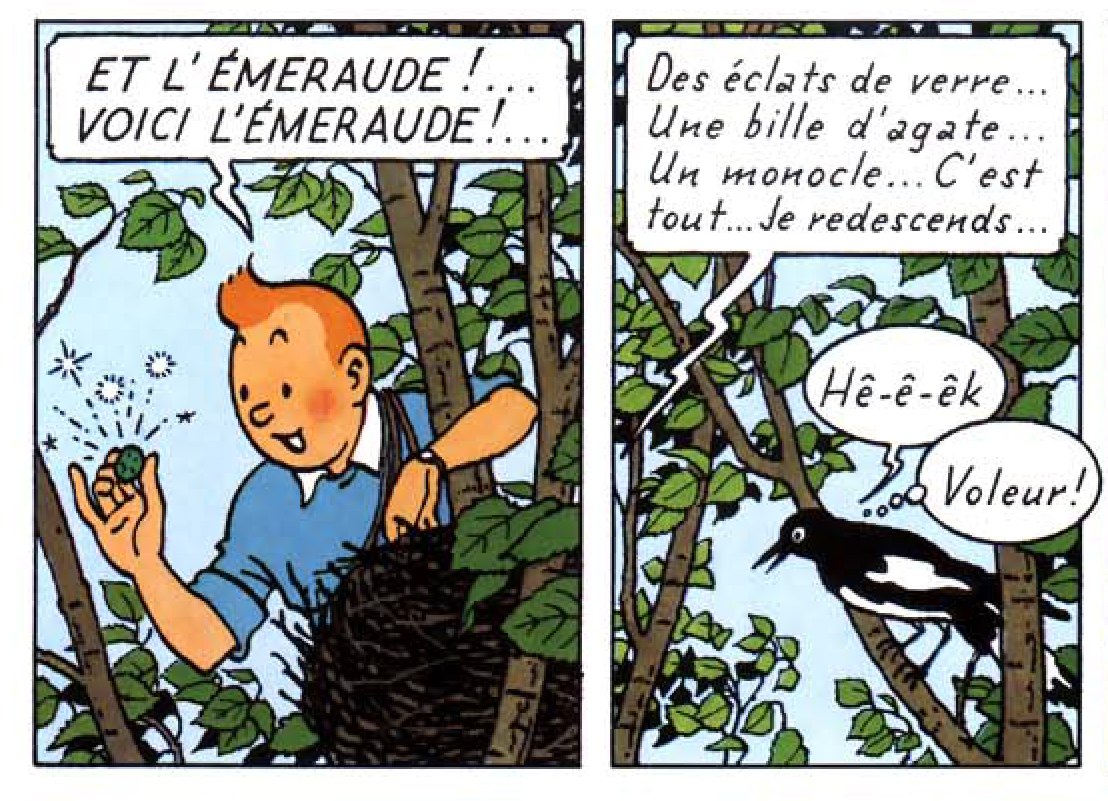
The myth that the magpie steals shiny things is actually quite new. Rossini wrote one of his most beloved operas, La Gazza Ladra (“The Thieving Magpie”, 1817, the opera with Rossini’s perhaps most brilliant overture) in 1817, in which a magpie steals a silver spoon. An innocent maid is falsely accused of the theft and sentenced to death. The popularity of opera also popularises this plot, which is then further milked in stories (Lilian Gask’s A Basket Of Flowers, 1910), in children’s books, cartoons and in comics. Culminating in Hergé’s graphically stunning, atypical, suspensefully uninspired but humorously irresistible Tintin and The Castafiore Emerald (1963) – all comedy-of-errors-like stories that build on the misunderstandings that arise when a magpie steals something of value.

It’s not true, by the way. Magpies are exceptionally intelligent birds (the only birds to pass the mirror test, for example), and are mostly curious. They have no particular inclination to steal shiny things. But the myth is persistent, and so we all understand what Martin Carthy means when he characterises Dylan with the words “He was a real magpie”.

To the indefatigable, enthusiastic German folklorist Jürgen Kloss and the brilliant work of love on his website Just Another Tune, we owe academic confirmation of Carthy’s apt observation. Kloss writes the fascinating article “…She Once Was A True Love Of Mine” and in it takes us along on a treasure hunt for the sources for “Girl From The North Country”, a scavenger hunt for the origins of all the shiny thingies found by the magpie Dylan.

Kloss acknowledges – of course – and discusses at length the influence of Carthy and “Scarborough Fair”, but also analyses that Dylan’s song is at best a vague copy of it, or less so, actually: “In fact the differences are so great that it can easily be called an original melody.” He then searches and finds a host of sources for the shiny things the magpie gathers. The motif anyway, of the messenger to remind the girl of her former lover, which Dylan already knows from songs like Johnny Cash’s “Give My Love To Rose”, and the Everly Brothers’ hit “Take A Message To Mary”. More notable still is Betty Carter’s “Tell Him I Said Hello”, from which theme and word choice descend both in “Girl From The North Country” and later in “If You See Her, Say Hello”;

When you see him
Tell him things are slow
There's a reason and he's sure to know
But on second thought, forget it
Just tell him I said hello
If he asks you when I come and go
Say I stay home 'cause I miss him so
But on second thought, forget it
Just tell him I said hello

Equally widespread is the use of “North Country” as an idealised place of carefree idyll, which Kloss finds in abundance in traditional folk songs, and Dylan’s recurring use of it in “North Country Blues”, “Ballad For A Friend” and in this song. Or the tender sigh Please see if she’s wearing a coat so warm, which the German scholar traces to yet other songs in Dylan’s baggage, songs like “Baby It’s Cold Outside” and Irving Berlin’s “I’ve Got My Love To Keep Me Warm”.

Just a few examples of the multitude of shiny things Dylan collects here and there for his song. And just as many arguments to classify the song as an exceptionally successful work in a long, long tradition – rather than as an individual expression of a personal, fundamental formative experience.

Indeed, Kloss also has a commendable aversion to the many biographical interpretations you inevitably come across, to the stubborn, childish attempts of exegetes who try to stick a name from Dylan’s environment on the Girl from the North Country.

One consensus among all those code-crackers is: Echo Hellstrom, a childhood friend of Dylan’s who has the misfortune of being blonde, leading to her having to walk around with the “Muse of Dylan” stamp for the rest of her life. Longer even; the mere fact that so many fans and Dylanologists want to understand the song as biographical historiography, and that the northern girl then “therefore” is Echo, gives her death news value. Hundreds of newspapers reported on 23 January 2018 that Echo Star Casey, nee Helstrom, “the woman rumoured to be the subject of Bob Dylan’s song Girl from the North Country” had died. The song has quite literally become the story of her life; her Wikipedia page describes her life in 761 words, and 697 of them are about Dylan and his song.

It might be a bit sad, such fame by association, and all the more so if that association seems to be fictitious and mainly due to sensationalist wishful thinking, but it is what it is. And in the end, for what it’s worth, Echo is for millions of people indeed a “shard of glass, an agate bead, a monocle”, well alright, maybe even “the emerald”, but in any case: at the very least one of the many shiny things with which the magpie Dylan embellishes one of his all-time greatest songs. No small feat, however you look at it.


To be continued. Next up Girl From The North Country part 3: Whatever “country” is


Jochen is a regular reviewer of Dylan’s work on Untold. His books, in English, Dutch and German, are available via Amazon both in paperback and on Kindle:
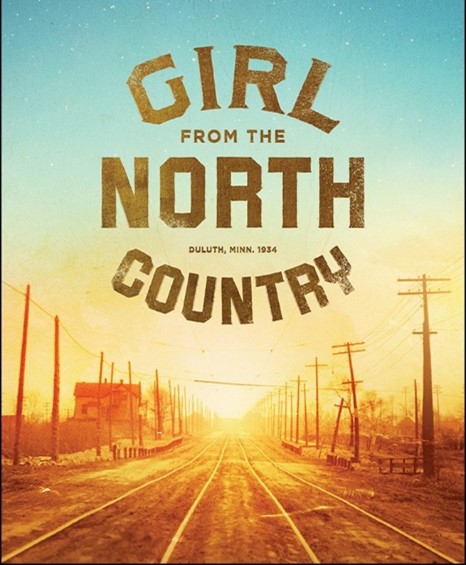
 

Posted in Uncategorized | 5 Comments

The Sea Of Mud

By Larry Fyffe

In Byron’s Baroque-like mock epic, adrift in a longboat, akin to those on the real raft of the Medusa, the name of Don Juan’s kindly tutor is drawn from a hat.

Bad luck he has, killed he is, and then eaten:

Part was divided, part thrown in the sea ....
The sailors ate the rest of poor Pedrillo
(George Byron: Don Juan, Canto II)

Juan abstains from the meal, and manages to survive while the others go mad. He gets cared for by a pirate’s daughter when washed up on shore.

She craves his body, but it’s not food she’s after.

Byron critiques the basic goodness of all humankind optimistically proposed by Romantic Transcendentalist writers like William Wordsworth.

So do the song lyrics below, but in a satirical manner that’s more in line with regards to the stage directions set down by the preachers of Judeo-Christian orthodoxy.

Everyone aboard the Titanic is punished no matter what the degree of the sins he or she  commits – if any:

They lowered down the lifeboats
From the sinking wreck
There were traitors, there were turncoats
Broken backs, and broken necks
(Bob Dylan: Tempest)

Seems the likes of Puritan John Calvin and preRomantic poet William Blake will just have to wait until they’re in the promised Afterlife to find out whether their souls get saved or not:

Calvin, Blake and Wilson
Gambled in the dark
Not one of'em would ever live
To tell the tale of the disembark
(Bob Dylan: Tempest)

Maybe actor Richard Wilson is referenced above by Dylan.

The British actor had once sat down for a mock interview based on the following song lyrics (perhaps conducted in some madhouse on Castle Steet):

Well, after he had gone I thought of what he'd said
And all his funny actions they kept running through my head
And when I felt my mind was drowning in a sea of mud
It seemed his pint of beer had turned into a pint of blood
(Strawbs: The Man Who Called Himself Jesus~ Cousins)

In the poem below, painters and printmakers Edward Calvert, Richard Wilson, William Blake, and Claude Lorrain are said to present the possibility of an earthly paradise:

When the greater dream had gone
Calvert, Wilson, Blake, and Claude
Prepared a rest for the people of God
(William Yeats: Under Ben Bulpen)


Posted in Uncategorized | 1 Comment

Never Ending Tour: the Absolute Highlights

By Tony Attwood

Writing of I and I” on this site Jochen said,

“The song does actually not have any other music history fame; it is no longer performed by Dylan, there are hardly any covers and it does not appear on compilation albums or overview works either. Pity, still. Granted, it does not have the monumental quality of “Hallelujah”, but it deserves more than oblivion.”


This recording was presented in the fourth part of the review of the Tour in 1998.

And although it is true that Bob has not performed it since 2004 – 18 years ago as I write – we have been left with at least one monumental recording of the song which brings across its power.

But it is power without much meaning – at least not much that I can find.  And I guess I thought of this recording and this song for this “Absolute Highlights” series because of that.

For as you may have noticed if you have been paying attention to my ramblings on this site, I don’t need songs to have meanings.  Some of Dylan’s songs do have meanings of course, some of them seem to mean one thing but actually say something quite different (“Times they are a changing” is my favourite example), some have meanings that are deliberately obscure (“Tangled up in blue”, of course) and some are just, well, they just are.

And these are the songs that I think are the hardest to deliver, because there is no coherence.   I mean what are we to make of

Outside of two men on a train platform there’s nobody in sight
They’re waiting for spring to come, smoking down the track
The world could come to an end tonight, but that’s all right
She should still be there sleepin’ when I get back

It is an abstract piece of music, and rather like abstract paintings, I love abstract songs.  But abstract songs are hard to get right unless the musical accompaniment is perfect, and that is so hard to do.  But that is what happens here.

Go back to the start and just listen to the way the guitar sets the scene, and then how Bob’s voice joins in – don’t worry about the lyrics just feel the sound.   For here Bob’s croaking voice is perfect for this piece.

And all the way through I am just waiting for the band to break loose and build upon all that Bob has done through his singing.  Then on two minutes the guitars play their first duet and suddenly I have the feeling this is not tangled up in blue but tangled up in the deepest black – not least as the guitars take it down again ready for the next verse.

For me this is a wonderful live version of an abstract song, which gathers up the idea that music can tell it like it is and be utterly abstract at the same time.

Someone else is speakin’ with my mouth, 
                      but I’m listening only to my heart
I’ve made shoes for everyone, even you, 
                      while I still go barefoot

Absolutely – and I really don’t want to say any more.  If you have the chance, stop doing everything else, go somewhere totally quiet, close your eyes, and play the recording.

Posted in Uncategorized | 3 Comments

Girl From The North Country (1963) part 1: He was a real magpie

by Jochen Markhorst

I           He was a real magpie

The sympathetic English folk giant Martin Carthy has an admirable talent for getting to the point with perfect metaphors. As to characterise an exceptional quality of young Dylan:

“He was a real magpie, but he had this wonderful creativity that went along with it. […] What he had was a memory like a piece of blotting paper. If somebody sang something that he thought was wonderful, he’d go back to his hotel and write down what he remembered. It might come out as a new song, but that’s where it would be from.”
(Tradfolk interview, 28 February 2018)

“He was a real magpie” is a wonderful, comprehensive image. Typifying not only the young troubadour with whom Carthy roams London from one folk club to another, but actually the old one as well. The magpie who picks up the shiny bits and takes them to his nest to build his own work of art. And Carthy illustrates his memories with familiar and less familiar examples. I heard him, he tells us, singing “Where have you been my blue-eyed son?”, and thought he was playing “Lord Randall” – until three seconds later I realised it was “A Hard Rain’s A-Gonna Fall”.

Dylan’s incredible memory for songs, as well as his lovingly copy/paste talent, has of course been spotted often enough as well, but rarely as evocatively as by Carthy: “What he had was a memory like a piece of blotting paper.” And reconstructing those memories, those quickly stored impressions, back in his hotel room, then become the basis for what “might come out as a new song”. In which he exposes a creative process, as it is described by the 62-year-old Dylan himself too, in the Robert Hilburn interview for the LA Times, November 2003 in Amsterdam:

“I’ll be playing Bob Nolan’s ‘Tumbling Tumbleweeds,’ for instance, in my head constantly — while I’m driving a car or talking to a person or sitting around or whatever. People will think they are talking to me and I’m talking back, but I’m not. I’m listening to the song in my head. At a certain point, some of the words will change and I’ll start writing a song.”

Incidentally, it is hard to find a song in Dylan’s oeuvre that features a “changed” “Tumbling Tumbleweeds”. “Rollin’ And Tumblin'” seems obvious, but doesn’t fit – in terms of atmosphere and pace, songs like “Life Is Hard” or “Moonlight” come closer, but presumably Dylan just mentions a song that comes to mind at this moment, during this interview.

However, there are plenty of songs in Dylan’s oeuvre where it is abundantly clear what the template is, of course. The old Irish drinking song “The Parting Glass” for “Restless Farewell”, for example, “Nottamun Town” becomes “Masters Of War”, or “No More Auction Block” for “Blowin’ In The Wind”; there are dozens of examples. And one of the most famous and celebrated is “Scarborough Fair”, from which Dylan sculpted one of his all-time greatest, “Girl From The Country”. According to lore, anyway.

“Scarborough Fair” was “my thing”, says Carthy. Every artist in that folk circle, in the late 50s, early 60s, had their own “signature song”, so to speak. Davey Graham had “Angi” (or “Anji” or “Angie”), Bert Jansch “Strolling Down The Highway” and Carthy had “Scarborough Fair”. He stopped playing it himself (“too much baggage”), but “I love the fact that Bob Dylan got ‘Girl From the North Country’ from it. It was very typical of him to do that – very him. In fact, he came back and he said [cue Bob Dylan impersonation], “I wanna sing you this!” And he started to sing it, and he was trying to do the guitar figure. He got halfway through the first verse and he said, “Oh man, I can’t do this!” [Laughs] He wasn’t really ready. He was just so excited about it.”

… and that “Scarborough Fair” was more or less taken away from him by Paul Simon doesn’t really bother him anymore either: “It was my signature piece, but it’s a traditional song, for god’s sake! Why shouldn’t he do it?” When Paul Simon performs in London in 1998, he apparently remembers a debt of honour, and invites Martin on stage to play the song together. The generous Carthy is happy to oblige.

Like Simon, Dylan is still aware of Carthy’s contribution decades after the fact, as evidenced by his words in the Rolling Stone interview in 1984:

“But I ran into some people in England who really knew those songs. Martin Carthy, another guy named Nigel Davenport. Martin Carthy’s incredible. I learned a lot of stuff from Martin. ‘Girl From The North Country’ is based on a song I heard him sing – that Scarborough Fair song, which Paul Simon, I guess, just took the whole thing.”

Which, by the way, contradicts his own quote in Nat Hentoff’s liner notes on The Freewheelin’. Hentoff writes there:

“Girl From The North Country was first conceived by Bob Dylan about three years before he finally wrote it down in December 1962.”

… and then quotes Dylan, who implicitly confirms this genesis: “That often happens. I carry a song in my head for a long time and then it comes bursting out.” Which is then rebutted by both Carthy and Dylan himself, and a first superficial song comparison indeed does demonstrate it; Dylan must have turned the old folk song into “Girl From The North Country” in the same days that he was introduced to Carthy’s version of “Scarborough Fair”, December ’62. That he would have walked around with it for “about three years” is one of the many fables peddled in those liner notes. And actually, the gravity of the template is somewhat overblown as well.

https://youtu.be/M32jmUmSZzU


The plot of “Scarborough Fair”, the dialogue about a love that can only be won if the other accomplishes impossible tasks (sewing a seamless cambric shirt, finding an acre of land between the salty seawater and the wet beach) evaporates, to be saved, in a way, for the equally stunningly beautiful sister of the girl from the North, for “Boots Of Spanish Leather”. A few phrases are taken verbatim – but not many; only Remember me to one who lives there / For once she was a true love of mine, in fact.

And the melody may be an echo, though not much more than that – the outline is recognisable, but the harmonic structure is really different. And so is the time signature – Scarborough is played in 6/8 or 3/4, Dylan plays an ordinary 4/4 metre. There are, in any case, plenty of songs in Dylan’s discography that are much more faithful to the template than “Girl From The North Country” is to “Scarborough Fair”. It is, in short, defensible that Dylan considers the song an own creation. Which, incidentally, Martin Carthy implicitly acknowledges when he says:

“He did actually annoy some people by being such an effective piece of blotting paper. I don’t understand that, personally. I think it’s fantastic. Somebody suggested that “Blowin’ In The Wind” was actually a reworking of a tune called “No More Auction Block”. I’ve no idea if that’s true. There’s only a limited number of notes in the scale, aren’t there? You gonna trip over each other at some point.”
(interview for Prism Films, 2013)


To be continued. Next up Girl From The North Country part 2: La Gazza Ladra


Jochen is a regular reviewer of Dylan’s work on Untold. His books, in English, Dutch and German, are available via Amazon both in paperback and on Kindle:
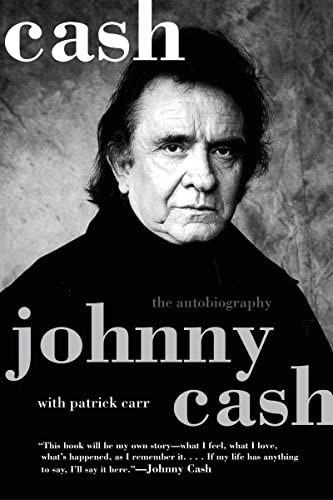
 

Posted in Uncategorized | 3 Comments

Through The Looking Glass Darkly

by Larry Fyffe

In reaction to the prudish Victorian establishment, symbolist-influenced Charles Swinburne puts a twist on the mythology of Phaedra who desires to have sex with her stepson, stung as she is by the poisonous scorpion of love set upon her by sea-shelled Aphrodite.

Swinburne expresses sympathy for the seemingly irrational passion Phaedra has for her stepson-prince, the son of Theseus, the heroic King of Athens.

The so-called ‘Decadents’ see no beautiful and caring world of Nature to be their guide in life in contrast to the more optimistic viewpoint held by the Romantic Transcendentalist writers.

Unlike the Sad-Eyed Lady of the Lowlands, the author depicts, in the lyrics below, an over-wrought Phaedra who is not prepared to face the trials and tribulations of life in a stoic manner.

Phaedra suffers greatly; craves to die because of her secret passion.

However, she’s not about to kill herself without first taking deceptive steps to clear her name after her stepson rejects her; she accuses him of rape.

For Swinburne, the use of sensual and symbolic language becomes the key to open the door into Phaedra’s secret and shadowy inner sanctum:

Yea, if my own blood ran upon my mouth
I would drink that. Nay, but be swift with me
Set the sword between the girdle and breast
For I shall grow a poison if I live
(Charles Swinburne: Phaedra)

The tragic mythological tale easily construed burlesqued into double-edged comedy in the following juiced-up song lyrics:

Well, Phaedra with her looking glass ...
She gets all messed up, then she faints
That's 'cause she's so obvious, and you ain't ...
I wanna be your lover, baby
I don't wanna be hers, I wanna be yours
 (Bob Dylan: I Wanna Be Your Lover)

Alluding to the Bard:

Look into thy glass, and tell the face thou viewest
Now is the time that face should form another
(William Shakespeare: Sonnet III)

Mad she may not be ~ could be that Phaedra comes up with her ill-fated schemes in an attempt to ensure that she has sons by the prince, as well as those by her husband King Theseus, in line for the throne; rather than any sons who might be sired by her biologically-unrelated stepson with someone else.


Posted in Uncategorized | Leave a comment

Other People’s Songs: The Little Drummer Boy

By Aaron Galbraith and Tony Attwood

In this series Aaron collects examples of Bob Dylan recording songs that he didn’t writte and Tony notes a few immediate thoughts as he listens.  This is episode 38 – details of all the previous episodes is given at the end of the article.

Aaron:

As with “Do You Hear What I Hear?”, The Little Drummer Boy was originally popularized by the Harry Simeone Chorale, in 1958.

The song was originally titled “Carol of the Drum”. Inspiration for “The Little Drummer Boy” came to songwriter Katherine Kennicott Davis in 1941. “when she was trying to take a nap, she was obsessed with this song that came into her head and it was supposed to have been inspired by a French song, ‘Patapan,’   and then ‘patapan’ translated in her mind to ‘pa-rum-pum-pum,’ and it took on a rhythm.” The result was “The Little Drummer Boy.”

Tony: This is one of those songs that seems to have been with me all my life – not a piece of music I particularly cared for but I must have heard it on the radio or TV as a child I guess, and my Dad would probably have played it to me on the piano.  I have, from a very early age, had the ability to hear a piece of chord-based music (such as this, and most pop and rock) and be able to remember it, and play it back on piano or guitar, or recorder…   As a party trick it impresses some people, but really it’s not that unusual in musicians.

So yes I remember it – another song from childhood days.  But it doesn’t do much to me.

Aaron: Joan Baez included her version on her own Christmas album Noël, in 1966

Tony: Because of the title and the lyrics it is inevitable that a drum has to be in there playing away – although what’s rather nice here is that the song is speeded up.  At least that is how it seems to me from a memory of other people’s versions of this.  I can’t recall it going at this speed before.

And that really does give this recording an edge.   And I like the way at the start of the verse there is a moment where it sounds as if the musicians have forgotten that they are doing the fast version, by stretching out the melody.

I was ready to be a miserable old man and criticise every version of this song, but this really is something else.   And it brings back a memory.  I’ve no idea how old I was at the time – maybe four years old but I was given a toy drum as a Christmas present and oh how my parents regretted that they did that!

Aaron: Here is Bob’s version – with the original official video

Tony:  So what does this add which we didn’t have before?   Before I first heard it I wondered what Bob would do, and it is a perfectly reasonable and decent version and the background chorus fits well.  In fact, it all fits well.   But I am not sure I want to play it again.

Aaron: There are literally hundreds of versions of the song, so I thought I would include two that I really like to finish off with.  First Everyone’s favorite Little Drummer Boy, Ringo Starr.

Tony: If you are a regular reader you will know that we sometimes have a problem in that a video that will play for Aaron in the USA won’t play for me in the UK.  That’s true here.  I’m including Aaron’s video and a Ringo Starr version I have found that plays in the UK.  I’ve hoping they are the same!

the UK playable video….

Tony: Now this one I like because it plays to Ringo’s strength and it is inventive and different.  It is also bouncy and jolly, and after a not very jolly night last night that’s what I want.  Love the introduction of the bagpipes at the end.  And really this point seems to be an important one to me – much depends on one’s mood at the time.  I write my pieces in the morning, sometimes before sometimes after breakfast.  The site would probably look very different if I wrote everything in the evening.

Aaron: Johnny Cash with Neil Young and Ben Keith

Tony: Big contrast with the fun and buzz of Ringo’s version, and really, throwing in the bell chime as a prelude to each new line is a bit obvious, but I suppose when it is Christmas that is what everyone wants.

I think I’ll go back and play Ringo’s version again.

Previously in this series…

  1. Other people’s songs. How Dylan covers the work of other composers
  2. Other People’s songs: Bob and others perform “Froggie went a courtin”
  3. Other people’s songs: They killed him
  4. Other people’s songs: Frankie & Albert
  5. Other people’s songs: Tomorrow Night where the music is always everything
  6. Other people’s songs: from Stack a Lee to Stagger Lee and Hugh Laurie
  7. Other people’s songs: Love Henry
  8. Other people’s songs: Rank Stranger To Me
  9. Other people’s songs: Man of Constant Sorrow
  10. Other people’s songs: Satisfied Mind
  11. Other people’s songs: See that my grave is kept clean
  12. Other people’s songs: Precious moments and some extras
  13. Other people’s songs: You go to my head
  14. Other people’s songs: What’ll I do?
  15. Other people’s songs: Copper Kettle
  16. Other people’s songs: Belle Isle
  17. Other people’s songs: Fixing to Die
  18. Other people’s songs: When did you leave heaven?
  19. Other people’s songs: Sally Sue Brown
  20. Other people’s songs: Ninety miles an hour down a dead end street
  21. Other people’s songs: Step it up and Go
  22. Other people’s songs: Canadee-I-O
  23. Other people’s songs: Arthur McBride
  24. Other people’s songs: Little Sadie
  25. Other people’s songs: Blue Moon, and North London Forever
  26. Other people’s songs: Hard times come again no more
  27. Other people’s songs: You’re no good
  28. Other people’s songs: Lone Pilgrim (and more Crooked Still)
  29. Other people’s songs: Blood in my eyes
  30. Other people’s songs: I forgot more than you’ll ever know
  31.  Other people’s songs: Let’s stick (or maybe work) together.
  32. Other people’s songs: Highway 51
  33. Other people’s songs: Jim Jones
  34. Other people’s songs: Let’s stick (or maybe work) together.
  35. Other people’s songs: Jim Jones
  36. Other people’s songs: Highway 51 Blues
  37. Other people’s songs: Freight Train Blues


Posted in Uncategorized | Leave a comment