Other people’s songs: Jim Jones

By Aaron Galbraith and Tony Attwood

Aaron: This song is usually known by its longer title “Jim Jones at Botany Bay”. It is a traditional Australian folk ballad dating from the early 19th-century.

One of the earliest recordings is by Marian Henderson from 1964

Tony: That two note counter melody from the flute but it is incredibly effective and when it suddenly turns into a short solo wow that is good.  Brilliant arrangement, and good work from the flautist Don Burrows.  In fact the who group of musicians are, I think, classical musicians.

To me, this is exactly what should happen if one is resurrecting traditional folk songs – and indeed the fact that it as an Australian folk song is something that should be noted because this is an Australian ensemble recreating and expanding the song with such care and feeling.

Aaron: Gary Shearston  recorded his version on his debut album Folk Songs And Ballads Of Australia.

Tony: This is another Australian version (and this focus on Australia is rather a coincidence given that my youngest daughter and granddaughter, live in Australia but are currently in England, and indeed are visiting me this evening – a great treat for me).  It’s a more straightforward rendering of the song, which of course would have originally been sung unaccompanied.

Gary Shearston was quite an interesting fellow, who was very much at the forefront of seeking out traditional Australian folk music and bringing it to a much wider audience than ever before.   He actually had a hit in the UK with “I get a kick out of you” in 1974.

Botany Bay is famous of course as being the site of James Cook’s first landing in Australia in 1770.  (Six days later most of the fleet sailed into Sydney Harbour).   Cook called it Stingray Harbour (for reasons I don’t need to explain) but changed the name after the naturalist on the expedition (Joseph Banks) pointed out just how many new varieties of life he was noting.  (Sydney Harbour is the largest natural harbour in the world, and one of the few places I ever proclaim as one that “you really ought to visit” to anyone who is silly enough to be listening to me at the time).

Aaron: Dylan’s version appears on Good As I Been To You.

Tony: I’d love to know how much of this is a re-invention of the song by Bob and how much is taken from a recording by someone else.

The lyrics of the song change from singer to singer, as is of course common with songs this old, each choosing a different moment in the history of the song on which to base their version.  There’s another version of the song yet to come but I’d like to drop in the lyrics Bob has used.

Come and listen for a moment, lads
And hear me tell my tale
How across the sea from England
I was condemned to sail
Now the jury found me guilty
Then says the judge, says he
"Oh, for life, Jim Jones, I'm sending you
Across the stormy sea
But take a trip before you ship
To join the iron gang
Don't get too gay in Botany Bay
Or else you'll surely hang
Or else you'll surely hang", says he
"And after that Jim Jones
It's high above on the gallows tree
The crows will pick your bones"

And our ship was high upon the sea
When pirates came along
But the soldiers on our convict ship
Were full five hundred strong
For they opened fire and somehow drove
That pirate ship away
But I'd rather have joined that pirate ship
Than gone to Botany Bay
With the storms ragin' round us
And the winds a-blowin' gale
I'd rather have drowned in misery
Than gone to New South Wales
There's no time for mischief there they say
Remember that, says they
Or they'll flog the poaching out of you
Down there in Botany Bay

Now it's day and night and the irons clang
And like poor galley slaves
We toil and toil, and when we die
Must fill dishonored graves
And it's by and by I'll slip my chains
Well, into the bush I'll go
And I'll join the bravest rankers there
Jack Donohue and co
And some dark night, when everything
Is silent in the town
I'll shoot those tyrants one and all
I'll gun the floggers down
Oh, I'll give the land a little shock
Remember what I say
And they'll yet regret they've sent Jim Jones
In chains to Botany Bay

Jack Donohue is an interesting reference: he was another deportee who was part of a gang called The Strippers, who were very well known in NSW in the early 19th century – and it is said, often supported by the servants of rich landowners in the state.

The gang was caught and sentenced to death in 1828 but Donohue repeatedly escaped capture – and became famous as one of the Wild Colonial Boys gang.  £20 reward (later increased to £200) was offered from his capture and the notices in 1829 announced him as being 22 years old and five feet four inches tall.

The gang were effectively highwaymen – and their reputation was enhanced by the notion that they only stole from the rich and gave some of their income to the poor.  An Australian Robin Hood in fact – although in this case a real person.

He was finally killed in a gun battle on 30 September 1830.

Aaron: More recently the song was sung live by Jennifer Jason Leigh in the Quentin Tarantino movie The Hateful Eight

Tony: Aaron has sent me a further video which doesn’t work in the UK – I’ll include it below but I can’t comment on it as I can’t see it .   Aaron – do you want to add a note as to what it is?

Tony: Aaron, thanks very much for this one.  Having no connection at all with Australia until my youngest daughter moved there, I’ve gradually been learning more about the country through regular visits (until covid put a stop to that) to see my daughter and her new family.  This is one more bit of knowledge about the country and its history to add.  I’m slowly getting the hang of the place.

Previously in this series…

  1. Other people’s songs. How Dylan covers the work of other composers
  2. Other People’s songs: Bob and others perform “Froggie went a courtin”
  3. Other people’s songs: They killed him
  4. Other people’s songs: Frankie & Albert
  5. Other people’s songs: Tomorrow Night where the music is always everything
  6. Other people’s songs: from Stack a Lee to Stagger Lee and Hugh Laurie
  7. Other people’s songs: Love Henry
  8. Other people’s songs: Rank Stranger To Me
  9. Other people’s songs: Man of Constant Sorrow
  10. Other people’s songs: Satisfied Mind
  11. Other people’s songs: See that my grave is kept clean
  12. Other people’s songs: Precious moments and some extras
  13. Other people’s songs: You go to my head
  14. Other people’s songs: What’ll I do?
  15. Other people’s songs: Copper Kettle
  16. Other people’s songs: Belle Isle
  17. Other people’s songs: Fixing to Die
  18. Other people’s songs: When did you leave heaven?
  19. Other people’s songs: Sally Sue Brown
  20. Other people’s songs: Ninety miles an hour down a dead end street
  21. Other people’s songs: Step it up and Go
  22. Other people’s songs: Canadee-I-O
  23. Other people’s songs: Arthur McBride
  24. Other people’s songs: Little Sadie
  25. Other people’s songs: Blue Moon, and North London Forever
  26. Other people’s songs: Hard times come again no more
  27. Other people’s songs: You’re no good
  28. Other people’s songs: Lone Pilgrim (and more Crooked Still)
  29. Other people’s songs: Blood in my eyes
  30. Other people’s songs: I forgot more than you’ll ever know
  31. Other people’s songs: Let’s stick (or maybe work) together.
Posted in Uncategorized | 3 Comments

NET 2009 part 5 Old things become new again

The Index to all 100 previous episodes of this series can be found here.

By Mike Johnson (Kiwipoet)

There's a moment when all old things
become new again
but that moment might have been here and gone

For Bob Dylan, no song has a fixed or final form. He grasped that if you try to make your live performance sound like your studio recording, you’ll end up imitating yourself*. We hear that over and over again with singers who want to sound just as they did when their songs became famous. Dylan escaped that trap, despite his audience’s nostalgia or attachment to the ‘originals.’ In this post I want to look at how, in 2009, Dylan renovated his older setlist.

But first, to a couple of rarities.

‘Billy,’ from the soundtrack to Sam Peckinpah’s Pat Garrat And Billy The Kid had never been performed live until the 22nd of March, 2009, when he performed the song for the first and only time at Stockholm. You can hear some of the audience gasp in surprise when they recognise the song. He had no need to make changes to this song; doing it in his cracked and aged voice is enough of an innovation.

It’s a powerful song about the doomed flight of the outlaw, and resonates with Dylan’s 21st Century fascination with sex and murder. Maybe that’s why he chose to revive it.

There’s eyes behind the mirrors in empty places
Bullet holes and scars between the spaces
There’s always one more notch and ten more paces
Billy, and you’re walkin’ all alone

Billy

‘Gonna Change My Way Of Thinking’ is an old tub-thumper from Dylan’s gospel period, last played in 1980, reappearing here in 2009 with a brand new set of lyrics, and would be played regularly through to 2011. ‘I’m gonna revitalize my thinking’ Dylan sings in this new version which is haunted by betrayal and death.

I'll tell you something,
Things you never had you'll never miss.
I'll tell you something,
Things you never had you'll never miss.
I'll tell you something else, a great man will kill you with a sword,
A coward with a kiss.

It’s an upbeat blues, driven here by a resounding organ and a triumphant vocal.

Gonna change my way of thinking

‘If You See Her, Say Hello’ had been performed eighty-eight times since 1976, and was last performed in 2009. In 1976, during the Rolling Thunder tour, he came up with a much starker set of lyrics, lyrics which put a different complexion on the song:

If you’re makin love to her
Watch it from the rear
You never know when I’ll be back
Or liable to appear

In this version, however, he returns to the original, but with some telling changes, not as vindictive as the 1976 version, but not as tender as the album version:

And although our separation
Cuts me to the bone
Gotta find somebody to take her place
I don’t like to be alone.

If you see her, say hello

(I don’t have the date for that one on hand, sorry.)

‘The Man in Me,’ off New Morning, is not a total rarity, having been played about a hundred times during the NET, and would disappear in the great purge of 2011/12. Lyrically, I think it’s one of Dylan’s weaker songs, but it can be heard as a love song, and this performance, (Boston, 15th Nov) is notable for its harp break, Donnie Herron’s gentle trumpet, and Dylan’s recent tendency to break into falsetto. We’ve had the upsinging, which has now largely disappeared or been integrated in Dylan’s vocal style, we’ve had the growl and bark which are still with us in 2009, and now we get the falsetto moments which will become a feature through to 2012. This mannerism tends to give the songs a hysterical edge; it sounds funny in a manic kind of way.

The man in me

‘Man in the Long Black Coat,’ another tale of seduction and murder (you can see it that way), had its peak performance years in the mid 1990’s (if you like the slow, spooky version), and would be last played in 2013. Here, Dylan does what he would shortly do with ‘Blind Willie McTell’ and put a swing to it. This changes the atmosphere of the song completely, creating a dissonance between the happy dance of the music with the darkest of dark tales. It’s not the last time Dylan would use such a dissonance.

(Amsterdam, 11th April)

Man in the long black coat

The mystical Chimes of Freedom is a song Dylan has struggled to make new again. It’s too vast and ambitious for easy renovations, and simply dropping out verses and putting in some circus, rinky-dink organ doesn’t do much for the song. It seems to be one of those songs that belongs firmly to his early, acoustic phase, and is difficult to transplant. Dylan gives it fair go here, but I have to say that if I want to get the full poetic grandeur of the song, and the vision behind it, I will return to the 1964 album version.

Here is one of the verses he doesn’t sing in 2009, a fine example of Dylan’s early lyrical power:

Through the wild cathedral evening, the rain unraveled tales
For the disrobed faceless forms of no position
Tolling for the tongues with no place to bring their thoughts
All down in taken-for-granted situations
Tolling for the deaf an’ blind, tolling for the mute
Tolling for the mistreated, mateless mother, the mistitled prostitute
For the misdemeanour outlaw, chased an’ cheated by pursuit
An’ we gazed upon the chimes of freedom flashing

The disrobed faceless forms of no position? Jeez Bob, where did you get a line like that? And how could you miss it out?

Chimes of Freedom (London 15th April)

‘It’s All Over Now, Baby Blue’ from the same era as ‘Chimes,’ Had its glory days in the 1990s, and whenever I think of the song I think of the soaring Prague performance of 1995 (see 1995, part 1: The Prague Revelation and other astonishments), but since then Dylan has experimented and struggled with this classic song, not always successfully. By 2009 he has dropped his baroque arrangements and turned the song into a mid-tempo foot-tapper. Despite missing a final harp break, it’s a more successful adaption than we’ve seen, and the circus barker is in fine voice (Boston, 15th Nov). He’s playing the guitar on this one.

It’s all over now Baby Blue


With ‘Gotta Serve Somebody’ we are on more familiar ground when it comes to innovation, at least in terms of the lyric; musically, its retained its original tub-thumping heart. There is huge range of variations in the lyric, it would take a book to unravel them, and he never sings it with the same words twice, it seems. Here, however, he strips it back to a few mostly familiar lines. (Amsterdam, 12th April)

Serve Somebody

The lyrics of a song like ‘The Ballad of Hollis Brown’ cannot be altered as it is a tightly constructed narrative with an obsessively linear drive. It doesn’t play fast and loose with time and place, like ‘Tangled up in Blue’ does, and so, like ‘John Brown’ and ‘Hattie Carroll’ the lyrics have to be firmly fixed in place. ‘Hollis Brown’ is rural blues, and here Dylan uses Donnie Herron’s banjo to give it that country flavour. Yet it remains that discomforting tale of rural poverty, murder and suicide. (Boston, 14th Nov)

Hollis Brown


The Wicked Messenger has turned it into a pre-rock chugger, really just a shadow of what it once was, nothing like the blistering hard rock versions of 1999 – 2004 with their searing harp solos. (See NET, 2001, part 4.)

The song had been slipping from Dylan’s set lists in the past couple of years, and would not be performed again after 2009. This recording is not up to the standard I prefer, it has a bit too much echo for my taste, but it’s worth including even if just to say goodbye to this NET stalwart, a song which invites comparison with its sister song from John Wesley Harding, ‘All Along the Watchtower.’

Another rocker from the same album, ‘Drifter’s Escape’ finally made its escape from the NET in 2005. I’m not entirely sure of the date of this one, but I suspect it is its final performance in Dublin, 6th May.

Wicked Messenger

‘Senor’ has grown somewhat quieter and more stately since the wild performances of 2003. This is a dark, brooding performance from Stockholm, with harp breaks that succeeds in being both gentle and piercing at the same time, much appreciated by the audience.

Senor (A)

The Rothbury performance ‘Senor’ is also worth checking out. The vocal is better recorded, and is possibly more passionate than Stockholm. The only drawback for me is that there are no harp breaks. The guitar breaks don’t do it for me.

Senor (B)

“It’s all Right Ma” is another song that’s been through many iterations in terms of musical arrangements, although the lyrics haven’t changed and Dylan tends not to drop verses despite the length of the song. For some years it became quite lumbering when put to the Sonny Boy Williamson riff from ‘Help Me,’ but in 2007 emerged as a fast-paced rocker, while its 2008 version with banjo has earned high praise from our editor, Tony Attwood. This performance from Amsterdam (11th April) is in the same vein. I don’t think it’s quite as mean as the 2008 performance. It needs to be ominous and threatening. This one has a bit too much bounce for me, but hell, who’s complaining, it’s a magnificent performance.

It’s all right ma

Despite some variation in tone over the years, from the desperate to the beguiling, Lay Lady Lay has remained pretty much the same. The softer versions have tended to be more convincing. The circus barker has not quite regained his crooning voice yet, that will come, but the song never fails to transport us into that state of hopeless desire when we’ll say anything just to get between the sheets with a lover. (Chicago)

Lay Lady Lay

‘I’ll be your baby tonight’ comes from the same bag. ‘Kick your shoes off, do not fear…’ This Stockholm performance catches the light-hearted humour of it. A minimalist jazzy harp break with a background sound of a vamping organ, pretty tasteful all around.

 I’ll be your baby tonight

I’ll stay in Stockholm to finish this post with a beaty performance with another NET familiar, and another upbeat song, ‘Watching the River Flow.’ It’s hard to get around this tribute to indolence. I think maybe I can skip it this time, but I never can. It doesn’t have raging harp breaks as it did in 2005, and it’s been stripped back to its basic beat, but it seems like we always want to keep our rendezvous with that old midnight café.

Watching the river flow

I haven’t yet done with this multitudinous year and will be back soon with what I hope will be the finale. Until then


Kia Ora

* Editor’s footnote: If you wish to pursue this issue of Dylan’s re-writing of songs further you might enjoy the series

Posted in Uncategorized | Leave a comment

Bob Dylan Pawns his Watch Parts V and VI

Bob Dylan Pawns His Watch (Part V)

by Larry Fyffe

According to detective Dupin, the Sun God Apollo uses one of his six crooked knives to get rid of Apostle James the Elder (Big Jim) because he, like his brother John, has been infected by the poisonous bites of Beelzebub; wants to be “the most High”.

Tricks Herold the Great into doing the deed:
And he killed James, the brother of John
With the sword
(Acts 12:1)

Declares Dupin, the ‘sword’ is encoded as a ‘penknife’ in the following song lyrics that the detective discovers while searching through Apollo’s drawers.

Seems Mother (Rose)Mary takes the blame:

Big Jim lay covered up killed by a penknife in the back ....
The only person missing on the scene was the Jack of Hearts
(Bob Dylan: Lily, Rosemary And The Jack Of Hearts)

https://theminchmins.bandcamp.com/track/lily-rosemary-and-the-jack-of-hearts

Dupin further explains that JOH=Jehovah=Apollo.

So he deduces from the Holy Bible:

For the Lord God
Is a sun and shield
(Psalm 84:11)

Apollo keeps it all within the family.

So encoded by Jesus Himslf:

And James, the son of Zebedee
And John the brother of James
And he surnamed them "Boanerges"
Which is, "The Sons Of Thunder"
(Mark: 3:17)

Even Apollo does not escape the wrath of his father Zeus.

He runs off with Mary Magdalene. Jesus is able to rid her of seven devils, but (akin to Eve) not of Beelzebub himself, the Prince of Darkness:

Was that the thunder that I heard
My head is vibrating, I feel a sharp pain
Come sit by me, don't say a word
Can it be that I am slain
Quick Magdalena, take my gun
(Bob Dylan: Romance In Durango ~ Dylan/Levy)

Not to worry though – the show about “The Sons Of Thunder” must go on.

All of these archetypes come back to life in one form or another.

Bob Dylan Pawns His Watch (Part VI)

He unharnessed the bull, and took out Dupin.

Little doubt has Poe’s detective that blue-eyed, yellow-haired Apollo does away with Apostle Bartholomew too.

Largely based on biblical lore that claims the apostle’s skinned alive in India due to his religious imperialism.

And, according to Dupin’s papers, because the musical Apollo’s killing spree is encrypted in the song lyrics below:

Others can be tolerant
Others can be good
I'll cut you up with a crooked knife
(Bob Dylan: Crossing The Rubicon)

https://youtu.be/mO6hQYiCBmE

Furthermore, Dupin continues, Bartholomew, like self-confessed John, obviously has a  “Napoleon Complex”.

His body possessed by Beelzebub:
And I saw, and beheld a white horse
And he that sat on him had a bow
And a crown was given unto him
And he went forth conquering
And to conquer
(Revelation 6:2)

Just look at the likes of people that Bart hangs around with.

Little wonder that Dupin has suspicions:

Simon (whom they also named Peter)
And Andrew his brother
James and John, Philip
And Bartholomew
(Luke 6:14)

Another encoded warning in song lyrics ~ the mythological religion of the Romans, whose chief god is Jove, is under threat because its temples are being desecrated by the beliefs of ‘Christian pagans’.

Even in the New Babylon of America where now the Golden Bullion is worshipped:

Seen the arrow in the door post
Saying, "This land is condemned
All the way from from New Orleans to Jerusalem"
(Bob Dylan: Blind William McTell)

Apollo has to act fast, and fast he does act; gets his idea of murder from the verse below:

And the AntiChrist said, "I will tell  thee"
And a wheel of fire came up out of the abyss
Having seven fiery knives
(Gospel Of St. Bartholomew)


Posted in Uncategorized | Leave a comment

A Dylan Cover a Day: Oh Sister

By Tony Attwood

This has never been one of my favourite Dylan songs – his performance (for me, and this is as ever a very personal reflection) is (in terms of the original Dylan release) too slow.   The viola and the harmonica clash, the percussion is too heavy, the instrumental verse after one vocal verse stops the song from progressing…   Of course none of that stops this being a song that millions love – it is just a personal reflection.   And for me only the middle 8 (We grew up together from the cradle to the grave…) saves it, (mysteriously in fact, as the lyric says) but then it is so short the relief hardly has a chance to settle in.

So it is with some trepidation that I steel myself to listen to a collection of cover versions.   And here there is relief.  If you have a moment, play Dylan’s own version first… and then go straight on to Lisa Wahladnt…

Lisa Wahlandt has rescued the song for me.  She sings it with the lightness I believe it needs, she has a stunningly beautiful voice, and the arranger knows exactly what she or he is doing.   Here the cello works to perfection, the middle 8 now sits simply in all its glory, and I can take in the emotions.

And just listen to what she does to the lyrics “from the cradle to the grave”.

If you would like to know a little more about this extraordinary performer she has a superb website.

Of course having started by saying that I find the Dylan version to be very hard going and then offered a performance of sublime and utter elegance, what else can be offered?

Actually nothing much – so you might want to stop reading here and just go back to playing the above version again, but if you insist on keeping on…

Andrew Bird and Nora O’Connor, in my view, get it half right, although my own view is that they could be with a totally different video, or maybe no video at all.

And listening to this version, it does seem to emphasize the feeling that this song presents a real problem in terms of accompaniment, although I don’t quite know why.  What is that strummed string instrument?  A banjo?  A strummed violin???   I am not at all sure, but whatever it is, I wish it wasn’t.  And I am not at all sure about the whistling either.  But take that out, and what one would have would be a lovely version of this piece.

So I am wondering if the arranger heard Bob’s version and thought, “ok we need some extraneous instrumental sounds in it,” without actually thinking, “Why do we need these extraneous instrumental sounds?”  After all, just because Bob and co did it, it doesn’t mean it’s right.

The introduction to Jimmy LaFave’s version brings hope that simplicity will be restored, and to a degree it is, but the sudden desire to emphasize individual guitar notes again surely comes from what the arranger of LaFave’s version hears on the Dylan original.  And sady Mr LaFave feels the need the throw in a few extra lorry loads of emotion, which I really don’t think are needed.  I don’t have a sister, but I did find out (earlier this year in fact) that I have a brother I never knew about.  We have now met once, and are about to meet for a second time.  So I think I know a little about having a brother, if not a sister.   And believe me this type of accompaniment has got nothing to do with the emotions that overwhelm me every time I think about my brother, just discovered, who through all my life I never knew existed).

But I digress.  Back with the music the accordionist then feels he/she needs a few twiddles…

Yes really there is something about this song that makes vocalists, arrangers and instrumentalists go over the top.  It is a simple, gentle song talking about powerful emotions.  What have twiddles got to do with it?

I’ve noted the work of VSQ a few times in the past and at least we know with them we won’t get any larking about with unexpected instruments.  Two violins, a viola and cello, that’s what you get.

The trouble is, the repetitive nature of this song doesn’t lend itself to the string quartet.  The lead violinist does a sterling job but we still get a feeling of chug-chug-chug which is not the slightest bit implied by the original or the lyrics.

And oh, the middle 8 is a disaster.  I had to stop the recording.

So, ten out of ten to Lisa Wahlandt, and minus several million out of ten to everyone else.  And after that I needed to clear my mind.

Now you might well not agree with me at all, in which case I’m amazed you’ve got this far, but as you are here, and in case you need lifting as I have feel I need lifting, having listened to these versions of what is beneath it all a beautiful song, here is a bit of fun, but with the same problem of an over-enthusiastic arranger.

What you find below is a fun song, but just listen to the instrumentation of the chorus (“Take it easy, take it light…”)   It is the same problem.  “OK guys we need something else in the chorus – how about a few thumps?”

But maybe it’s just me turning into a grumpy old man.  Maybe my adrenalin level is above the danger mark because I’m about to meet my brother for a second time.   If that is the case, take no notice.  Tonight I’m going to London to watch my football team tonight, a bit of shouting and cheering ought to sort me out.  (As long as my team win).

The Dylan Cover a Day series

  1. The song with numbers in the title.
  2. Ain’t Talkin
  3. All I really want to do
  4.  Angelina
  5.  Apple Suckling and Are you Ready.
  6. As I went out one morning
  7.  Ballad for a Friend
  8. Ballad in Plain D
  9. Ballad of a thin man
  10.  Frankie Lee and Judas Priest
  11. The ballad of Hollis Brown
  12. Beyond here lies nothing
  13. Blind Willie McTell
  14.  Black Crow Blues (more fun than you might recall)
  15. An unexpected cover of “Black Diamond Bay”
  16. Blowin in the wind as never before
  17. Bob Dylan’s Dream
  18. You will not believe this… 115th Dream revisited
  19. Boots of Spanish leather
  20. Born in Time
  21. Buckets of Rain
  22. Can you please crawl out your window
  23. Can’t wait
  24. Changing of the Guard
  25. Chimes of Freedom
  26. Country Pie
  27.  Crash on the Levee
  28. Dark Eyes
  29. Dear Landlord
  30. Desolation Row as never ever before (twice)
  31. Dignity.
  32. Dirge
  33. Don’t fall apart on me tonight.
  34. Don’t think twice
  35.  Down along the cove
  36. Drifter’s Escape
  37. Duquesne Whistle
  38. Farewell Angelina
  39. Foot of Pride and Forever Young
  40. Fourth Time Around
  41. From a Buick 6
  42. Gates of Eden
  43. Gotta Serve Somebody
  44. Hard Rain’s a-gonna Fall.
  45. Heart of Mine
  46. High Water
  47. Highway 61
  48. Hurricane
  49. I am a lonesome hobo
  50. I believe in you
  51. I contain multitudes
  52. I don’t believe you.
  53. I love you too much
  54. I pity the poor immigrant. 
  55. I shall be released
  56. I threw it all away
  57. I want you
  58. I was young when I left home
  59. I’ll remember you
  60. Idiot Wind and  More idiot wind
  61. If not for you, and a rant against prosody
  62. If you Gotta Go, please go and do something different
  63. If you see her say hello
  64. Dylan cover a day: I’ll be your baby tonight
  65. I’m not there.
  66. In the Summertime, Is your love and an amazing Isis
  67. It ain’t me babe
  68. It takes a lot to laugh
  69. It’s all over now Baby Blue
  70. It’s all right ma
  71. Just Like a Woman
  72. Knocking on Heaven’s Door
  73. Lay down your weary tune
  74. Lay Lady Lay
  75. Lenny Bruce
  76. That brand new leopard skin pill box hat
  77. Lily, Rosemary and the Jack of Hearts
  78. License to kill
  79. Like a Rolling Stone
  80. Love is just a four letter word
  81. Love Sick
  82. Maggies Farm!
  83. Make you feel my love; a performance that made me cry.
  84. Mama you’ve been on my mind
  85. Man in a long black coat.
  86. Masters of War
  87. Meet me in the morning
  88. Million Miles. Listen, and marvel.
  89. Mississippi. Listen, and marvel (again)
  90. Most likely you go your way
  91. Most of the time and a rhythmic thing
  92. Motorpsycho Nitemare
  93. Mozambique
  94. Mr Tambourine Man
  95. My back pages, with a real treat at the end
  96. New Morning
  97. New Pony. Listen where and when appropriate
  98. Nobody Cept You
  99. North Country Blues
  100. No time to think
  101. Obviously Five Believers
Posted in Uncategorized | Leave a comment

Marchin’ To The City (1997) part 3: You’ll be sorry when I’m dead

Marchin’ To The City (1997) part 3

by Jochen Markhorst

III         You’ll be sorry when I’m dead

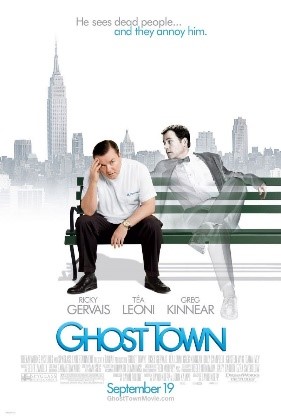
 Most films and stories in which a ghost roams the earth have such a scene. Sometimes romcom-like, as in Just Like Heaven (2005) and Ghost Town (2008), sometimes even corny (Topper, with Cary Grant, 1937), but mostly melancholic to just plain sad: the spirit wanders unseen over the stopping places of his life, stares lonely at playing children, sadly observes smiling people at outdoor cafes and his shadowy presence is noticed at most by a passing dog. Who, to the incomprehension of his owner, starts growling at an emptiness.

His sojourn in The Zone brings Dylan’s meandering creative mind a protagonist in death’s cave, chained to earth, so that is the direction where “Marchin’ To The City” now flows:

Boys in the street beginning to play
Girls like birds flying away
I'm carrying the roses that were given to me
And I'm thinking about paradise, wondering what it might be

… cinematic, indeed. First the wide-shot of a street scene where life goes on as usual, then the camera pans the protagonist with the loaded image of roses in his hand. Which reminds the Dylan fan of “Love Minus Zero”, of course (people carry roses, and make promises by the hour – where it also illustrates something like “life goes on”), but here the ghostly narrator insinuates that he has just attended his own funeral and taken some flowers from it. All the while musing about the next stop, “paradise”.

The latter does not survive. The image of the boys playing and the girls running has a lasting quality, is eventually taken to “‘Til I Fell In Love With You”. No such luck for the roses and paradise. Perhaps too sweet, too cute – both are discarded. The tenor is maintained, though; they are replaced by “When I’m gone you will remember my name” from verse 7.

In the end, the same net result as verse 5 will have, coincidentally;

Go over to London, maybe gay Paree
Follow the river, you get to the sea
I was hoping we could drink from Life's clear streams
I was hoping we could dream Life's pleasant dreams

… the first two lines are so good that they are reserved for the highlight “Not Dark Yet”, the lines after that survive up to and including “Marchin’ To The City #2”, and are discarded then. Beautiful lines, euphonious and beautifully poetically balanced with a not-too-bad imagery, lovingly stolen from William Blake’s famous “You Don’t Believe” from 1808;

You don't believe -- I won't attempt to make ye:
You are asleep -- I won't attempt to wake ye.
Sleep on! sleep on! while in your pleasant dreams
Of reason you may drink of Life's clear streams

… but nevertheless rejected by Dylan. Perhaps for stylistic reasons; they are the only lines of the whole song with a “we” perspective – although confusingly fiddling with personal pronouns is exactly what the poet Dylan usually integrates (cultivates, even) without any problem. In terms of content, there seems nothing wrong with it, nor with the subtext, with Blake’s conclusion That is the very thing that Jesus meant, / When He said `Only believe! believe and try! / Try, try, and never mind the reason why! – a message that must be close to Dylan’s heart.

Anyway, Blake is deleted again, but still inspires Dylan to an aphoristic interlude, to a sixth verse that opens with:

Well the weak get weaker and the strong stay strong
The train keeps rolling all night long
She looked at me with an irresistible glance
With a smile that could make all the planets dance

Ironically, the weakest verse of the song under construction, and it is rejected immediately, even before the #2. Understandable; the “aphorism” is a rather gratuitous variant on a worn-out cliché, the rolling train is admittedly dylanesque, but not much more than filler in which, with some good will, one might see a link to “life goes on” or something like that, and the closing lines, with the dancing planets are just awkward. Undylanesque anyway, though again lovingly stolen, as Larry Fyffe from Canada has found, from none other than Lord Byron;

'Bride of the Sun! and Sister of the Moon!'
('T was thus he spake) 'and Empress of the Earth!
Whose frown would put the spheres all out of tune,
Whose smile makes all the planets dance with mirth
(Don Juan, Canto V)

… but in this constellation still lousy poetry, like Dylan once reportedly said about Joan Baez’ writings.

It does not derail the train. The last stanza, the seventh, is clearly only a sketch, but it does give the persistent poet in The Zone words and images that will make it to the gallery of honour, to Time Out Of Mind:

My house is on fire, burning to the skies
I thought the rain clouds but the clouds passed by
When I'm gone you'll remember my name
I'm gonna win my way to wealth and fame

Okay, that second line comes out a bit clumsy. Corrected in #2 to, of course, I thought it would rain but the clouds passed by, as it will eventually appear in “’Til I Fell In Love With You”. And, although every word of this verse is deemed good enough for Time Out Of Mind, this combination of verse lines is not to the master’s liking – nor its position in the lyrics; it is just not a final couplet.

The first rudimentary steps to a ghost story in the third verse, the death’s dark cave couplet, leads the flow to When I’m gone, but otherwise, it’s not very coherent. The mother of “Marchin’ To The City”, the gospel “Wade In The Water”, pushes the associations with metaphors like My house is on fire, burning to the skies to religious connotations. “My soul is lost, I’m going to hell”, something like that. But is still quite underdeveloped – the words will find a better place in “’Til I Fell In Love With You”.

And it is suddenly no longer a melancholic spirit. “Just wait, soon I’ll be rich and famous and you’ll be sorry”… this is beginning to sound more like the childish, vindictive bleating of the aggrieved protagonist of The Police’s “Can’t Stand Losing You” (1978):

I guess this is our last goodbye
And you don't care, so I won't cry
But you'll be sorry when I'm dead
And all this guilt will be on your head

No, this is going the wrong way. Dylan puts the last two sentences aside. They don’t appear in #2. The burning house and the overhanging rain clouds are allowed to remain, but the wealth and fame are exchanged for the misery and regret from the first verse:

My house is burnin' up to the skies
I thought it would rain but the clouds passed by
Sorrow and pity through the earth and the skies
I'm not looking for nothing in anyone's eyes

… better, indeed. But still not good enough for “’Til I Fell In Love With You”.

 ————–

To be continued. Next up Marchin’ To The City part 4:

Jochen is a regular reviewer of Dylan’s work on Untold. His books, in English, Dutch and German, are available via Amazon both in paperback and on Kindle:


Posted in Uncategorized | 1 Comment

Bob Dylan Pawns His Watch (Parts III & IV)

Bob Dylan Pawns His Watch (Part III)

By Larry Fyffe

Detective Dupin points out that limited-thinking policemen, unlike the eight-year-old boy, miss evidence that’s right in front of their faces, evidence that clearly shows that Apollo and Mona track Apostle John to Turkey where he’s carved up with a crooked knife as if by a couple of enraged orangutans,

Poe’s poetic detective notes that Beelzebub is thereby cast out of John’s body, and Satan flees back to Tartarus.

Dupin notes too the evidence given up front in the Holy Bible that miracle-worker Jesus Himself must be possessed of Beelzebub:

But some of them said

He caste the out devils through Beezelbub
The chief of the devils
(Luke 11:15)

In any event, with St. John’s body liberated, his soul is directed down the right-hand road, and over the river by ferry to the Strawberry Fields of Elysium:

Roll on, John, roll through the rain and snow
Take the right hand road, and go where the buffalo roam
They'll trap you in an ambush before you know
To late to sail back home
(Bob Dylan: Roll On John)

https://fb.watch/gwSbkPta0d/

The story does not end there, however.  The Almighty allows St. John to return to the Upper World in bodily form where he finishes writing the Book of Revelation.

The vampiric Beelzebub, not one to give up, is right behind him, ready to possess others, whether John, Jesus, or simple railroad men.

Apollo’s sister, the Moon Goddess, warns her brother:

Mona tried to tell me
To stay away from the train line
She said that all the railroad men
Just drink up your blood like wine
(Bob Dylan: Stuck Inside Of Mobile With The Memphis Blues Again)

Apollo, the Sun God, as well as the God of Music, doesn’t care; fears not Satan any more than he does the Saint when John’s possessed by the Lord of the Flies.

Like Elijah, Apollo challenges the Devil to a contest:

I'm gonna make you play the piano like Leon Russell
Like Liberace, like St. John the Apostle
I'll play every number that I can play
I'll see you, maybe, on Judgment Day
(Bob Dylan: My Own Version Of You)

Hebrew prophet Elijah wins, so goes the story in the Holy Bible:

And Elijah said unto them
Take the prophets of Baal
Let not one of them escape
And they took them
And Elijah brought them down to the brook Kishon
And slew them there
(l Kings 18: 40)

Crimson-coloured Beelzebub is not at all amused that yellow-haired Apollo, whom he calls “Bunyan’s bunion”, wins all the races.

While he comes in second at best:

The keeper of the city keys
Puts shutters on the dreams
I wait outside the pilgrim's door
With insufficient dreams
(King Crimson: The Court Of The Crimson King)


Bob Dylan Pawns His Watch (Part IV)

Jesus, James, and John are on  the road to the lion-filled Coliseum.

They’re singing:

Got to hurry back to my hotel room
Where I've got me a date with Botticelli's niece
Yup, she promised that she's be right there with me
When I paint my masterpiece
(Bob Dylan: When I Paint My Masterpiece)

The three of them start laughing. A parchment falls to the ground.

Edgar Allan Poe’s detective Dupin finds the parchment; takes it down to Ida’s Cafe where he reads it while drinking a cup of coffee.

Sees written thereon a conversation between Zeus and son Apollo:

Oh, where have you been, my blue-eyed son
And where have you been, my darling young one
I've stumbled on the side of twelve misty mountains
I've walked and I've crawled on six crooked highways
(Bob Dylan: A Hard Rain's A-Gonna Fall)

Detective Dupin lights his pipe, holds the parchment up to the window, and notices that the last line quoted above has been changed to “on six crooked highways” from the original “with six crooked knives”.

And he recalls from his knowledge of history that Rome becomes known as “The City of the Seven Hills” after a big flood washes five of them away.

On a hunch, Dupin journeys to Greece in order to examine documents stored at the Court of Athena.

What he uncovers makes it clear why Apollo does what he does ~ the Sun-God  decides to side with the Trojans against the Greeks.

Yellow-haired Apollo believes that Beelzebub gets to have all the fun; gets to win all the battles.

Trojan leader Aeneas loses the Trojan War, escapes to Italy, and founds Rome; only to have it taken over by the followers of St. John.

Apollo knows that Hera, the wife of Zeus, is not his real mother, and she really hates the Trojans because Paris chooses Aphrodite as the most beautiful of three women –  Hera and Athena lose out because Aphrodite bribes Trojan Paris by promising to deliver Helen of Greece to him.

The motive now plain to Dupin as to why the Sun-God uses a crooked knife to carve up Apostle John.

The question now ~ who’s next in line for angry Apollo – aka, “Jack of Hearts”/”Mack The Knife”:

Oh the shark, babe, has such teeth dear
And he shows them pearly white
Just a jack-knife has old Mcheath, babe
And he keeps it out of sight
(Bobby Darin; Mack The Knife ~ Brecht/Weil))


Posted in Uncategorized | 1 Comment

Why does Dylan keep changing his songs 4: Taking chances

“It’s always been my nature to take chances”

By Tony Attwood

In this little series, I’ve tried to look at the reasons why Bob Dylan has repeatedly re-written and re-arranged his songs, and it turns out there are a lot of historical and personal factors that have combined to allow and indeed encourage Bob to do this constant re-writing.  And among other things, they lead me to thoughts about which songs he has kept in the repertoire, and which songs he has abandoned, as much as which songs have changed and changed, and which have been left alone.

And I have to admit that generally I am bemused: why would he abandon this song (which I really do think is one of the greatest pieces he has ever written) while he insists on playing that song (in which I really can’t see anything at all)?

The answer to that question, as with the answer to the fundamental question of why he keeps re-writing is buried in the notion of process, and in the notion of being a chance-taker, an experimenter.

My point is that Bob is going through a process as composer and performer that is utterly different from the process we go through as listeners and audience.  He enjoys experimenting and taking chances: he is the man running the show.  We on the other hand have the fixed recordings: the only chances we take are in going to the shows and buying the recordings.

Additionally, among the factors in the background that I have previously noted is the point that this is how folk music was before the gramophone – constantly being re-written.  And the fact that with the level of touring Bob does, if he never changed the songs, he and his band would get bored stiff.  So Bob the chance taker, the gambler, does the re-writes, just to see where it takes the music.   And he does them because that’s what he likes doing.

Thus we have the point that Dylan makes changes because he can – he’s a superbly inventive musician, so undoubtedly in many cases the new versions of old songs come to him without hours or days of hard work.  My guess is he can sit at the piano or pick up the guitar, and find a new way to play each song in a moment or two.  It might take quite a bit longer to get it right in the studio, but that initial change probably happens quickly.

Indeed for experienced musicians, making changes it isn’t very difficult – no more than becoming a new character on stage is very difficult for the experienced actor.   What is more difficult is finding radically new versions of an old song that are really worth contemplating – and this is one of the many areas where Bob has always stood head and shoulders above everyone else.

Now it is true that in the field of rewriting, there are all sorts of things one can do – one can play the piece faster or slower.  One can move from a minor to a major key.  One can change the chords (something which may go unnoticed by the average listener who has no experience of playing music, but which can have a profound effect on the way the music sounds).   One can even change the time signature so that instead of the song moving along as 1 2 3 4 1 2 3 4 1 2 3 4, it changes into 1 2 3 1 2 3 1 2 3 1 2 3.

“Times they are a changing” for example was written in the 1 2 3 1 2 3 approach (known as triple time, although written as 6/8 as a time signature.  So we hear

Come gather round people where ever you roam

with the accent on the words and syllables in bold.   Try performing that in the more standard (for pop and rock) four beats in a bar and you get a very strange effect in the rhythm.   There are many ways to do it, but one that is most obvious musically is

Come, gather round people (pause)

Where, ever you roam (pause)

So you have an accent on the words in bold, and pauses are put in to allow for the fourth beat.  The effect is utterly different.

To do that would sound strange indeed, because the essence of the song is changed.   But consider just how Bob changed “Restless Farewell” for the Frank Sinatra concert….

As a reminder here is where he started

And then it was re-written as….

https://youtu.be/n4auSH8_o5w

My guess (and of course since I have never had the overwhelming honour of being asked to play in Bob’s band, for the simple reason I am nowhere near good enough a musician to do so, apart from the fact that we’ve never met) is that when he starts re-writing a piece he takes one of these approaches: changing the chords, changing the melody or changing the time, and sees where it leads.

Now comes the problem: doing this sort of thing can take one so deep into the work that it becomes harder and harder to appreciate just how it will sound to the non-musical outsider.   One might feel as a fan that the re-write doesn’t work, but who is to say that feeling is reliable or indeed shared by the audience in general?

Of course, the same is true with writing the original song in the first place.  How does one know if it is any good?   Indeed one could say the same about a series of articles about Dylan.

Thus I think this question of why Bob keeps re-writing his songs is interesting, and indeed that interest of mine is reflected in the fact that when I have the chance as editor of this site to add the musical examples to an article, I really enjoy working through the cover versions to find one that works for me, and which maybe we haven’t featured very much.  But that’s not to say anyone else is bound to find it interesting.

————-

So let’s pull this together.  Bob sits at the piano and plays one of his old songs, and starts amending it by changing chords, time, melody, rhythm – not all of them normally, but enough to make a difference.

He plays it through quite a few times, and rather likes what he has done.   Who then is going to criticise his work and perhaps say, “No Bob that really doesn’t sound right?”

Of course, I don’t know the dynamics of the band but maybe Tony Garnier, having been with Bob so long, could say something.  Or maybe Mr Garnier is in the band because he’s an excellent bassist who doesn’t say anything out of turn!   But the fact is, whether someone makes a criticism of not, in the end Bob has to make a judgment.   And he makes it not as we do, on first hearing, but having experienced the entire process of re-writing the song, perhaps over a number of hours, or perhaps over a number of weeks.

And let us not forget that this process is going on with a work that Bob has performed maybe hundreds of times, or indeed maybe thousands if we take into account the original creation of the piece, the recording rehearsals, the show rehearsals and so on.

It is in fact an incredibly complex process and one I had a go at explaining in a small way in my piece “Dylan re-writes Dylan”   And like all complex processes sometimes it will work and sometimes not.

So, what to conclude?

First, re-writing and re-arranging is a complex process with numerous possible outcomes.

Second, that process takes time, during the course of which endless possibilities will be tried and rejected.

Third, by the end of the process, the composer will have become totally engaged with the piece in a way that most of us will never achieve and cannot imagine, and will most likely make judgments utterly different from those of the fan or the critic.

And so by the time we get to the final re-write our judgments are made from utterly different perspectives.   Bob is judging what he has got, through the lens of countless hours of evolution with the piece.   We come to it afresh and judge it as a one-off, without any knowledge of the process involved.   We are, in fact, listening to and understanding totally different things.  Bob has the whole process.   We have the original and the new version.  No wonder our judgments are not the same.

Which, of course, not only explains the multiple versions of some songs, but also how come Bob creates what we might hear as masterpieces, but which Bob rejects as somehow not being worthy of keeping.

And maybe that is the best place to stop my rambling and conclude with a song which to me is an utter, total complete masterpiece yet which Bob recorded and just left on the shelf.

Something in it, was wrong for Bob – maybe he just felt it didn’t work, maybe he felt that it could work if only he could find that extra nuance that would make it the masterpiece he felt it could be.

Bob makes judgments of this sort with every album, just as we make judgments when we hear the music – but really we are listening to the same music from different ends of different galaxies.  No wonder we often can’t understand his decision-making.


Posted in Uncategorized | 1 Comment

Dylan Cover a Day: Obviously Five Believers

By Tony Attwood

This is one of those Dylan songs that has always seemed to me to be a bit of a rush and a bit of a mess – and besides is so very closely related to “Good Morning Little Schoolgirl” (of which the less said the better) that it is really would not be remembered at all unless Dylan had written it and put it on the album.

And yet the origins wouldn’t matter if there was something new, or some particular insight in the song, but I’ve hardly ever found that to be the case.   There’s a review of the song by me on the site, but I’m not too sure that takes us very far – so if you want to learn more, Jochen has far more insight than me.    Interestingly though, with both came up with Toni Price’s version as one worth considering.

However ….

Old Crowe Medicine Show, as you will know if you are a regular reader, is a band I really admire, not least because they have given us a version of “Visions of Johanna” which is how I really think it should be performed.   And they have great fun with this piece – which is once again, really how it ought to be treated in my view.   And yes I know it was originally called “Black Dog Blues” with the suggestion that it is about depression, but I’ve never been able to find that concept in the music, and besides, Dylan chose to change the title, which either means the title is irrelevant, or it wasn’t about depression in the first place.

If you have time please do listen to the whole track – it is just fun, with brilliant musicians who have taken the idea and simply said, “let’s really go as fast as we can and see what happens.”  And what happens is just something else.

There is another version by the same band which is even crazier, via this link…

https://youtu.be/0IpOLaj4X3w

I just love the fun of that version, not because of the difficulty of playing it at that speed (and yes I have tried and failed).  I can sing it at hyper speed but it’s the music that makes it not the lyrics.

After that Eric-Scott Bloom seems almost sedate – and this is where I am on dodgy ground, for I may be getting people confused here.  I think that this is the same person who is known as Modartist (Facebook.com/modartist) but this could be one of my occasional confusions.  If you know more please say.

The music is fun, not pretentious in any way.

https://youtu.be/MaxB5i7iehw

Top Jimmy and the rhythm pigs, face the same sort of problems that anyone has in trying to cover this song – there is just so much in there, and most of it is seemingly unrelated, that it is difficult to know what to do without a total musical rewrite.  But the band really do manage to keep my interest and the accompaniment doesn’t overwhelm, which can always be the temptation with this sort of music.

There’s a great instrumental break with the saxophonist really knowing where’s he’s going which certainly makes this version worth hearing.

There is another problem however, in that Dylan’s instrumentation is so distinctive that everyone feels the song cannot exist without retaining it, so one version of the song does tend to merge into another.  (Which is incidentally yet another reason why Old Crowe stands out.)

Toni Price is the only female vocalist who seems to have taken this on and released a recording, and there are odd moments that took me by surprise, but not really enough to make me want to go back and listen again.

All things considered, these are all worth hearing, if you have a mind to listen, but no one can beat the Old Crowe.  And not for the first time.

The Dylan Cover a Day series

I’ve cleaned up the list of past articles in this series and it seems like we’ve reached 100 here, as well as with Mike’s “Never Ending Tour” series.  Although no one has checked my counting so I might be wrong.

  1. The song with numbers in the title.
  2. Ain’t Talkin
  3. All I really want to do
  4.  Angelina
  5.  Apple Suckling and Are you Ready.
  6. As I went out one morning
  7.  Ballad for a Friend
  8. Ballad in Plain D
  9. Ballad of a thin man
  10.  Frankie Lee and Judas Priest
  11. The ballad of Hollis Brown
  12. Beyond here lies nothing
  13. Blind Willie McTell
  14.  Black Crow Blues (more fun than you might recall)
  15. An unexpected cover of “Black Diamond Bay”
  16. Blowin in the wind as never before
  17. Bob Dylan’s Dream
  18. You will not believe this… 115th Dream revisited
  19. Boots of Spanish leather
  20. Born in Time
  21. Buckets of Rain
  22. Can you please crawl out your window
  23. Can’t wait
  24. Changing of the Guard
  25. Chimes of Freedom
  26. Country Pie
  27.  Crash on the Levee
  28. Dark Eyes
  29. Dear Landlord
  30. Desolation Row as never ever before (twice)
  31. Dignity.
  32. Dirge
  33. Don’t fall apart on me tonight.
  34. Don’t think twice
  35.  Down along the cove
  36. Drifter’s Escape
  37. Duquesne Whistle
  38. Farewell Angelina
  39. Foot of Pride and Forever Young
  40. Fourth Time Around
  41. From a Buick 6
  42. Gates of Eden
  43. Gotta Serve Somebody
  44. Hard Rain’s a-gonna Fall.
  45. Heart of Mine
  46. High Water
  47. Highway 61
  48. Hurricane
  49. I am a lonesome hobo
  50. I believe in you
  51. I contain multitudes
  52. I don’t believe you.
  53. I love you too much
  54. I pity the poor immigrant. 
  55. I shall be released
  56. I threw it all away
  57. I want you
  58. I was young when I left home
  59. I’ll remember you
  60. Idiot Wind and  More idiot wind
  61. If not for you, and a rant against prosody
  62. If you Gotta Go, please go and do something different
  63. If you see her say hello
  64. Dylan cover a day: I’ll be your baby tonight
  65. I’m not there.
  66. In the Summertime, Is your love and an amazing Isis
  67. It ain’t me babe
  68. It takes a lot to laugh
  69. It’s all over now Baby Blue
  70. It’s all right ma
  71. Just Like a Woman
  72. Knocking on Heaven’s Door
  73. Lay down your weary tune
  74. Lay Lady Lay
  75. Lenny Bruce
  76. That brand new leopard skin pill box hat
  77. Lily, Rosemary and the Jack of Hearts
  78. License to kill
  79. Like a Rolling Stone
  80. Love is just a four letter word
  81. Love Sick
  82. Maggies Farm!
  83. Make you feel my love; a performance that made me cry.
  84. Mama you’ve been on my mind
  85. Man in a long black coat.
  86. Masters of War
  87. Meet me in the morning
  88. Million Miles. Listen, and marvel.
  89. Mississippi. Listen, and marvel (again)
  90. Most likely you go your way
  91. Most of the time and a rhythmic thing
  92. Motorpsycho Nitemare
  93. Mozambique
  94. Mr Tambourine Man
  95. My back pages, with a real treat at the end
  96. New Morning
  97. New Pony. Listen where and when appropriate
  98. Nobody Cept You
  99. North Country Blues
  100. No time to think
Posted in Uncategorized | 3 Comments

Bob Dylan Pawns His Watch (Parts I and II)

by Larry Fyffe

As sure as “Roll on John” by Bob Dylan is about the biblical apostle St. John, more clear it could not be that the narrator in “Crossing The Rubicon” is out to get The Evangelist.

In the song, a time-shifted “Caesar” realizes that the apostle is in fact Beelzebub, the Lord of the Flies, in disguise.

Saint Jermone claims John survives being thrown in a vat of boiling oil, but the narrator in the song paints his wagon, crosses the brook-like Pyramus River (the Rubicon’s merely a symbolic stand-in), and assures one and all that the so-called “Evangelist” won’t escape death this time.

Indeed, the song is in the format of a murder ballad:

I'll cut you up with a crooked life, Lord 
And I'll miss you when you're gone
I stood between Heaven and Earth
And I crossed the Rubicon

After declaring that the Jews kill Jesus, St. John envisions that he’s saddled up a white horse, thrown off his cloak; revealing himself to be Beelzebub; now he is going after his arch-enemy the Almighty.

In short, Satan takes on an image akin to Napoleon Bonaparte:

And I saw, and behold a white horse
And he that sat on him had a bow
And a crown was given unto him
And he went forth conquering
And to conquer
(Revelation 6:2)

It’s up to the narrator, a golden-haired, lyre-playing Apollo character, to put an end to this disguised evil-doer, the Great Deceiver:

Show me one good man in sight
That the sun shines down upon
I pawned my watch, I paid my debts
And I crossed the Rubicon

Like a Robin Hood, the song’s narrator is a rebel, an enemy of King John:

How much longer can it last
How much longer can it go on
I embrace my love, put down my hair
And I crossed the Rubicon

It’s also clear that as the sun-god Apollo, the narrator is accompanied, at least in spirit, by his twin sister, the moon-goddess Mona (also known as Diana and Artemis):

Mona, baby, are you still in my mind
I truly believe that you are
Couldn't be anybody else but you
Who's come with me this far

The give-away of course is that apostle John is portrayed in the Bible as celibate.

However, the narrator declares:

I feel the bones beneath my skin
And they're trembling with rage
I'll make your wife a widow
You'll never see old age

Beelzebub has many ‘wives’ in fact:

Well, you have defiled the most lovely flowers
In all of womanhood

Knows that Beezelbub, a harbinger of death, having shape-shifted from a big fly into a big snake (in the Holy Bible, represented as the Morning Star known as “Lucifer”) in order to seduce Eve.

Says the serpent, bigger is better:

I will ascend above the heights of the clouds
I will be like the most High
(Isaiah 14:14)

Just goes to show that some people are too loose with the facts.


Bob Dylan Pawns His Watch (Part II)

The singer/songwriter/musician likes to mix mythologies and short stories.

Patmos is a Greek Island close to the shore of Turkey; its former name is Letois, Leto being the mother of the Sun God Apollo and Moon Goddess Artemis, fathered by Zeus in Olympian mythology. The twins lift the island from the bottom of the Aegean Sea.

One interpretation of the New Testament has Roman Emperor Domitian exile “Apostle” John there where he writes the “Book of Revelation”.

More than once the narrator in Dylan songs is depicted as Apollo.

For instance:

Blood drying in my yellow hair
As I go from shore to shore
(Bob Dylan: Angelina)

And this:

He's pulling her down
And she's clutching on to his long golden locks
(Bob Dylan: Changing Of The Guards)

https://youtu.be/rq1j1XaEEag

Throw a bit of clever Caesar salad into the mix, and you have “Crossing The Rubicon”.

All it takes is a little stir to mix Apollo, Artemis, and John together; add some Satire, and what do you get?

Apollo tracing down Apostle John who reveals himself to be the Antichrist  in Revelations 6:2.

Apollo’s there too:

And I saw another mighty angel come down from heaven
Clothed with a cloud
And a rainbow was upon his head
And his face was as it were the sun
And his feet as pillars of fire
(Revelation 10: 1)

Accompanied the ‘angel’ is by Diana, the Moon:

Mona, baby, are you still in my mind
I truly believe that you are
Couldn't be anybody else but you
Who's come with me this far
(Bob Dylan: Crossing The Rubicon)

However, without the help of Edgar Allan Poe’s detective who among us would have realized what the following lyrics mean?:

Go back to the gutter, try your luck
Find yourself a nice pretty boy
Tell me how many men I need
And who can I count upon
(Bob Dylan: Crossing The Ribicon)

Poe’s poet/detective Dupin explains that the eight-year-old boy is supposedly “lucky” because he wins at “guessing” whether marbles hidden in players’ hands are odd or even by taking into account “the reasoner’s intellect with that of his opponent”; therefore, the suspected ‘D’ decides to leave an object searched for by police ‘hidden’ in plain sight (The Purloined Letter).


Posted in Uncategorized | Leave a comment

Marchin’ To The City (1997) part 2: Loneliness is just a waste of time

by Jochen Markhorst


The four-part article series on “Marchin’ To The City”, an outtake from the Time Out Of Mind sessions, is a chapter from Jochen’s recent book “Time Out Of Mind – The Rising Of An Old Master”, available via Amazon.


II          Loneliness is just a waste of time

The freewheelin’ poet finds no further inspiration in the church, lets his protagonist rise from his wooden chair and opens the door to the outside world. We were not, as the gospel-like opening and languid blues accompaniment suggests, in a stuffy little church somewhere in Mississippi or Georgia on a sweltering summer’s day;

Snowflakes are falling around my head
Lord have mercy, it feel heavy like lead
I been hit too hard, seen too much
Nothing can heal me now but your touch

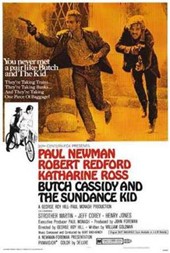
… but we are a lot farther north, and it’s a bleak winter’s day. Or perhaps a fairytale winter day, with snowflakes whirling picturesquely. The songwriter, meanwhile, seems to have made an inimitable associative leap to Butch Cassidy And The Sundance Kid.

It is a persistent story that has been repeatedly denied by Burt Bacharach himself, but on 5 March 2021, B.J. Thomas is quite resolute, in conversation with Bart Herbison, in another great episode of Tennessean‘s wonderful series “Story Behind The Song”:

“Burt had written the melody for Bob Dylan. I think he said he didn’t do that but there was a time where he did pitch it to Bob Dylan. He was the first to turn it down. It seemed like a Dylan song, but maybe not.”

… and B.J. Thomas is a well-informed source, of course. Ray Stevens also turns the song down, preferring to record “Sunday Morning Coming Down”, so in the end B.J. is the lucky Wilbury who gets to have “Raindrops Keep Fallin’ On My Head”.

This must have played out in the summer of 1969, shortly after Dylan recorded Nashville Skyline and “Lay Lady Lay”; Bacharach’s idea of giving the song to Dylan would not have been that crazy – and it is an attractive fantasy, the fantasy of what Dylan would have done with “Raindrops Keep Fallin’ On My Head” (aside from imagining how the confrontation with the notoriously perfectionist Bacharach would have gone down). It is, frankly, rather unlikely that Dylan could have done better than the untouchable monument built by Bacharach and B.J. Thomas. On the other hand: the cover by the Manic Street Preachers from Wales in 1995 demonstrates an unexpectedly tragic, gritty depth to the classic – a dimension that a Time Out Of Mind Dylan will surely enjoy.


Anyway, thirty years later, the song seems to be haunting Dylan’s mind again and going through the Dylan-o-matic;

“I’ll be playing Bob Nolan’s Tumbling Tumbleweeds, for instance, in my head constantly — while I’m driving a car or talking to a person or sitting around or whatever. People will think they are talking to me and I’m talking back, but I’m not. I’m listening to the song in my head. At a certain point, some of the words will change and I’ll start writing a song.”

… as Dylan explains to Robert Hilburn in 2003. But presumably, Dylan also considers the word change from “raindrops” to “snowflakes” not radical enough. And he’s right; “snowflakes are falling ’round my head” still keeps evoking Paul Newman and his antics on the bicycle. No, both this line and the subsequent filler “Lord have mercy, it feels heavy like lead” (Ray Charles’ “Lonely Avenue” buzzes around as well, apparently) will not survive, and have already been scrapped in #2 of “Marchin’ To The City”.

Which does not apply to the second half: “I been hit too hard, seen too much / Nothing can heal me now but your touch” does seem to please. The words are even promoted unchanged to the opening verse of “‘Til I Fell In Love With You”. Conceivable; apart from the perfect TOOM colour and stylistic beauty, the words have an evangelical connotation that surely appeals to Dylan. Something like “Somebody Touched Me” by The Stanley Brothers, which will also be on Dylan’s set list in the following years. Or Elvis’ “He Touched Me” of course, which Dylan values at least as highly, and whose tenor is the same as these two lines from Dylan’s song;

Shackled by a heavy burden
'Neath a load of guilt and shame
Then the hand of Jesus touched me
And now I am no longer the same

first the misery of the man “who has seen too much”, then the healing power of a touch, as it should be.

The Dylan-o-matic, the inner engine of the songwriter who writes his verses one after the other while he is in The Zone, is now starting to come up to speed. The third verse of “Marchin’ In The City” approaches the familiar poetic perfection;

Loneliness got a mind of its own
The more people around, the more you feel alone
I'm chained to the earth like a silent slave
Trying to break free out of death's dark cave

“Loneliness” is, of course, a motif that perfectly lends itself to marble one-liners. It is unambiguous, pitiful and universally recognisable. “Loneliness is the cloak you wear,” as the Walker Brothers unforgettably open their “The Sun Ain’t Gonna Shine Anymore”. Solomon Burke snarling that “loneliness is just a waste of time” (“Cry To Me”), Andy Williams looking for “a place where there’s just loneliness, where dim lights bring forgetfulness” and finding it on “Lonely Street”… all brilliant, unforgettable one-liners that would be utterly insignificant if “loneliness” were replaced by, say, “happiness”. After all, happy people are all alike; but every lonely man is lonely in his own way, to paraphrase Tolstoy.

And the Dylan of the late 90s, back at the top of his game, enriches this heartbreaking series of one-liners with the most beautiful of all: “Loneliness got a mind of its own” – with which the poet with frightening clarity expresses the irrational, destructive power of loneliness even with people around. And just as successful is the continuation; the suicidal despair of “chained to the earth”, the numbness of “silent slave” and the Odysseus-inspired suspense of “trying to break free from death’s dark cave”… it has the gloomy shine of “Not Dark Yet” and the despondency of “Dirt Road Blues”, the hopelessness of “Cold Irons Bound” and the sadness of “Standing In The Doorway” – with a stronger hint of metaphysics, though.

The ever-accelerating stream of inspiration seems to want to lead Dylan’s imagery to a ghost story. A soul that cannot be released from the earth as long as a fateful love binds him, something like that. After all, he is in death’s dark cave, is “chained” and seems unable to be seen by people around him. Which brings an evangelical connotation to the title and the chorus; the wandering soul is not on his way to, say, the Big Apple, not to just any city, but to a Heavenly Jerusalem, the city of gold, where the King, our Redeemer, the Lord whom we love, all the faithful with rapture behold.

A twist that Dylan will explore further in the following verses. But the beauty of this particular verse, the one that sets him on track, does not convince him. Too whiny, perhaps. It still does become the opening couplet of “Marchin’ In The City #2”, but after that, the self-directed loneliness, the silent slave and death’s dark cave all disappear into the Waters Of Oblivion, never to be heard again. Well, who cares. Dylan is in The Zone – he’ll write twenty more verses.


To be continued. Next up Marchin’ To The City part 3: You’ll be sorry when I’m dead

Jochen is a regular reviewer of Dylan’s work on Untold. His books, in English, Dutch and German, are available via Amazon both in paperback and on Kindle:


Posted in Uncategorized | 4 Comments

The Dark Romantic Dylan

By Larry Fyffe

Singer/songwriter/musician Bob Dylan places in many of his song lyrics visions of a recurrent view of history wherein light and dark forces are entangled with one another on both the micro- and macro- levels  ~ a viewpoint that the artist considers has roots in reality.

Julius Caesar, who invades Italy, is partially bald which he covers up by wearing a laurel wreath.

Could be said worthy of playing with ambiguous words in order to present a burlesque thereof:

How long can it go on
I embrace my love, put down my hair
And I crossed the Rubicon
(Bob Dylan: Crossing The Rubicon)

Another time, though ambiguous as all-get-out, it could be mused that Athena’s “aegis” serves a similar purpose:

How long can it go on
I based my love up on top of my head
And I crossed the Rubicon
(Bob Dylan: I Crossed The Rubicon)

Signs of aging are depicted as a thing of breauty in the lines below:

Thee sitting careless on a granary floor
Thy hair soft-lifted by the winnowing wind
(John Keats: To Autumn)

Less so the correlative in the song lyrics beneath:

The killing frost is on the ground
And the autumn leaves are gone
I lit the torch, I looked to the East
And I crossed the Rubicon

And in another rendition thereof:

The killing frost is on the ground
And the early days are gone
I lit the torch, I looked to the East
And I crossed the Rubicon
(Bob Dylan: Crossing The Rubicon)

Drawn from a following brighter poetic well:

The old that is strong does not whither
Deep roots are not reached by the frost
From ashes a fire shall be woken
A light from the shadows shall spring
(JRR Tolkien: All That Is Gold)

But more in touch with the dark Romanticism expressed below:

Have you not heard of that madman who lit a lantern
in the bright morning hours, ran to the market place
And cried incessantly, "I seek God, I seek God!"

The madman sarcastically tells those at the market place whither God hath gone:

 "God is dead. God remains dead.
And we have killed Him"
(Friedrich Nietzsche: The Gay Science ~ translated)

Not the first writer to say who is responsible for the death of God, or at least of His Son:

Therefore the Jews sought the more to kill Him
Not only because He had broken the Sabbath
But also said that God was His Father
Making Him equal with God
(Gospel Of John: 5:18)

Thus, it could be said, bringing a retort that is directed not at St. Augustine, not at Christ, not at God, but at St. John, The Lord of the Flies, who twists with his forked tongue, the Word of God:

I'll cut you up with a crooked knife, Lord
And I'll miss you when you're gone
(Bob Dylan: Crossing The Rubicon)


Posted in Uncategorized | 4 Comments

Rough and Rowdy Ways, Nottingham, UK. 28 October 2022.

By Tony Attwood

The traditional way of reviewing a Dylan concert is by listing the songs he and the band performed, and noting the variations in each one.  But, no I don’t think so – at least not for me.   Bob and tradition don’t really mix so why should the traditions of the reviews stay fixed?

Throughout his career Bob has turned every tradition upside down, inside out, and every other way imaginable.  The least a review can do is to be as un-normal as a Bob show, not least with a gig that began with “Watching the River Flow” and ended with “Every Grain of Sand” (before the PS to Jerry Lee).

Indeed Bob did have a surprise for us last night, even if the set list is pretty set these days, as at the very end of the show in Nottingham last night (28 October 2022 just to be clear), he came back on for the first encore of the tour (according to my mate Pat) to announce Jerry Lee Lewis’ passing, and playing an on-the-spot tribute.  It was all very simple, no long speech, just there, honest, memorable and perfect.  (There’s a recording below – unless I’m ordered to take it down).

But I’ve never really thought that going through a list of the songs Dylan sang on a particular night always is the best way of reviewing a concert, because a Dylan show is far, far, far more than a list of songs.  Such reviews are important, but there is also a need to capture the whole feel of the evening, making it about Bob, how he looks and sounds, and about the band, and indeed about the music and indeed the whole event is arranged.  It is a show, which is far more than a set of songs.

And more than ever, this was the perfect evening I wanted it to be, because of that lingering feeling, felt in driving to Nottingham and driving home after (having had a very convivial pint in the bar next door), negotiating as ever the closed motorways and traffic diversions, that this might be the last one I get to.   The tour began in November last year, and the signs say it goes on to 2024.  That makes it sound like it is going to be the finale.   Mind you, this is Bob we are talking about, so you never really know.

And Bob, of course, is an old man.  He’s 81, and how many 81-year-olds can hold the stage through a complete show like that?  Yes he has the lyrics in front of him on the piano, but so what?  The audience has got older with him so most of us would need reminding of some of them too.  And it says everything that everyone stayed in their seats until the very end – and it was a perfect venue for that.  Secure, sedate, the old folks watching their old hero.

The stage was huge, and the band took up the back half of it, leaving a big empty space in front of Bob, who was dead centre at the piano.  It sounds really odd, but it worked perfectly (you get a sense of it in the video below if that is still working by the time you read this) with the band in a semi-circle behind him.  No announcements, no chitchat, no “how you doing?” we just got the songs, excellently arranged to suit his traveling ensemble.

Of course, at such an event there is an element of the audience saying “thank you” to Bob for his lifetime’s work, which has touched so many of us in so many ways over so many, many years.  But it is also a night of perfect entertainment, not through major re-arrangements which means you don’t know what the song is until halfway through, but the gentle touches, the occasional tweaks to the lyrics, certain chord changes amended here and there…

Some of the early reviews of the tour talked about strange things being done with the lighting, the stage being in near darkness and the houselights turned up, but I don’t think we had any mucking about like that; Bob played it straight and perfect.  Bob centre stage behind the piano (no guitar playing at all) often standing (and if you’ve never done it, that is uncomfortable, unless maybe he’s had that piano cut down to size to suit him), vamping away.

I’m told also that Bob changes the way he sings the songs night after night.  Having only been to the one gig on the tour I don’t know if that’s true, but there certainly were some highly unusual melodic, rhythmic and stylistic inventions going on with the way he sang, and why not?  Every night is different, every night’s a show.  Maybe we just got lucky last night.  Maybe it’s always like that.

The Rough and Rowdy album, like the tour, has been described in many different ways.  “Impressionistic” is one, and I’ll go with that.   It is the impressionist school of music; something so hard to do and get right, the number of people who would even think of trying it is tiny.  The number of those who could pull it off, vanishingly small.

And impressionistic is good too, because if you’ve got “Crossing the Rubicon” at the heart of it all, what else can it be?

You’ve probably read a dozen reviews of the show by now, each noting the handful of oldies Bob has chosen for this tour, “Gotta Serve Somebody”, “I’ll Be Your Baby Tonight” and “When I Paint My Masterpiece”… just a reminder of what there was before.   Because Bob knows, as we know, we’ve got thousands of recordings of his work on stage from across the years – for surely you have been reading the “Never Ending Tour” series now actually at episode 100.

I should add, although I run Untold Dylan, I’m not one of those fans who travels across the continent watching Bob perform, noting the way songs are re-written from one venue to the next,  so I’m not about to trot off the Oxford or wherever he’s going next.  I’m happy with my memories of last night.

And not seeing Bob again doesn’t worry me, because my musical memory still seems to be roughly intact and I can hold a lot of last night in my head and revisit it, wondering at this moment how Black Rider managed to get even more menace out of it, and pondering what makes him choose those exact songs.  And most of all, keeping secure in my mind the memory of what was a staggeringly beautiful and meaningful evening spent with friends and the man I consider to be the greatest songwriter in this history of humanity.

And yes, I’ll admit it, driving home I was thinking that maybe I’ve added a tiny bit to the Dylan universe by running this website.  Past tours, all the songs, certain gigs, TV appearances, songs I adore which no one else ever mentions and Bob’s undoubtedly long forgotten (“I once knew a man” anyone?)… somehow last night, knowing that this might be the last time, it all came together.

That truly was a night that will stay with me for the rest of my life.  Here’s how it ended.

If you would like to write an article on anything to do with Bob, I’d be happy to hear from you.  Please email me at Tony@schools.co.uk – you can also find us on Facebook.  Just search for Untold Dylan.

Posted in Uncategorized | 8 Comments

NET 2009 Part 4 – foundations: the raw and the real (The real episode 100!)

Publisher’s note:

Upon publishing the previous episode of this series I excitedly announced it as episode 100, and it was not until Mike duly looked at my ramblings that it was pointed out to me that I couldn’t count, and it was actually number 99.  So now we do have the real episode 100.  My apologies to all for my previous error.     The most recent episodes cover 2009

This world is ruled by violence
But I guess that’s better left unsaid
(Dylan, ‘Union Sundown’)

By Mike Johnson (Kiwipoet)

What strikes me about Dylan’s 2009 performances is how stripped down they are: minimal backing, voice and harp to the fore, basic tempos and ‘primitive’ bluesy arrangements. Later Dylan would characterise his Sinatra covers as ‘uncovers’ and that’s what he’s doing with his own songs in 2009, uncovering their most fundamental forms, their unadorned selves; the foundations laid bare. The effect can be startling and disconcerting. Compare this beauty, ‘Till I Fell In Love With You’ to the swirling, more complex arrangement of 2007 (See NET 2007 Part 1: The light is never dying)

Till I Fell In Love With You

Same song, same tempo with simpler backing. (Rothbury, 5th July)

Dylan was fascinated with the sound produced by the old Chess and Race records of the 1940s and 50s. The black blues singers and country singers who recorded in those early studios were not trying to make pretty sounds but essential sounds, raw and real, rough and rowdy, songs infused with the blood of the land, songs about love and betrayal (or sex and murder as Jochen Markhorst would have it in his wonderful book Crossing the Rubicon) – and songs about natural disasters.

In this ‘High Water’ (Rothbury), gone are Donnie Herron’s marvelous banjo elaborations and even the harp goes for down-home blues, no fancy stuff, just the basic beat and the hard reality of the lyrics.

High Water

With regard to ‘Million Miles’ Jochen Markhorst, in his aforementioned book, says, ‘the narrator alarms us through small, ambiguous hints’ of violence that simmer underneath this song, and others from Dylan’s 21st Century output.

I'm drifting in and out of dreamless sleep
Throwing all my memories in a ditch so deep
Did so many things I never did intend to do

Gone are the distant, echoey effects of earlier performances with Dylan’s ‘muted trumpet’ style harp. Easy to add jazzy elaborations to this song. Not here – 12th April Amsterdam. Just a bit of Chicago Blues style guitar.

Million Miles

‘Rollin and Tumblin’ was always meant to be a rough and rowdy, hard-edged basic blues. Another night of sweaty insomnia and anger, that hint of violence again. (Rothbury)

I got up this mornin', saw the rising sun return
Well, I got up this mornin', saw the rising sun return
Sooner or later, you too shall burn

Rollin and Tumblin

‘My suffering heart is always on the line.’ And that slide-guitar brings it all back home.

‘The term slide guitar is most strongly associated with blues music. In the American South, the technique emerged among blues musicians around the turn of the 20th century, likely tracing its origin to that of the diddley-bow, an instrument of African derivation.’ (Britannica). This song could have been written by Leadbelly.

Even this apparently gentle ‘Spirit on the Water’ (12th April Amsterdam), with its hints of possible peace and reconciliation, has a bleak underside. Murderers are forever banned from paradise:

I wanna be with you in paradise
And it seems so unfair
I can't go to paradise no more
I killed a man back there

Spirit on the Water

‘Ain’t Talkin’ seethes with violence and death, from ‘something hit me from behind’ to:

Now I'm all worn down by weeping
My eyes are filled with tears, my lips are dry
If I catch my opponents ever sleeping
I'll just slaughter 'em where they lie

and:

They will crush you with wealth and power
Every waking moment you could crack
I'll make the most of one last extra hour
I'll avenge my father's death then I'll step back

This reminds us that the classical literature which Dylan evokes here is replete with murder and betrayal.

In this performance (12th Nov, Boston) Dylan forsakes the eerie, spooky sounds that characterised his earlier performances. It’s all upfront with a wonderfully snarling vocal.

Ain’t Talkin (A)

This performance from 12th April, Amsterdam is even more in your face and very immediate. This ain’t no ghost walkin and singin.

Ain’t Talkin (B)

Also from that Amsterdam concert we find ‘Sugar Baby,’ another song with ‘small, ambiguous hints.’

Some of these bootleggers, they make pretty good stuff
Plenty of places to hide things here 
   if you want to hide 'em bad enough
I'm staying with Aunt Sally, but you know, she's not really my aunt
Some of these memories you can learn to live with 
   and some of them you can't

That dumpty-dum I have been on about in recent posts is revealed as the most basic architecture of the song.

Sugar Baby

‘Cry A While’ gets stripped of its tempo, switching from fast to slow, and gets a basic riff that sounds a bit like ‘If You Ever Go to Houston.’  (27th March, Stockholm)

Again the hint of violence and betrayal, not just the ‘dirty back-stabbing phony’ of the first line but this suggestion that the day of reckoning is at hand and it won’t be pretty:

Well, you bet on a horse and it ran on the wrong way
I always said you'd be sorry and today could be the day
I might need a good lawyer
Could be your funeral, my trial

Sex and murder anyone?

Cry a While

Also from Stockholm ‘Summer Days’ gets a simple arrangement reliant on drums, bass and organ riffs. This jump jazz classic also gets the no frills treatment; gone is the fat, big band sound of 2005.

There’s no overt reference to sex and murder in this largely celebratory song, but there is a hint of the violent death Jesus met on the cross, and sexual innuendo, while those barking dogs are suggestive of betrayal:

My dogs are barking, there must be someone around
I got my hammer ringin', pretty baby, but the nails ain't goin' down

Summer Days

‘Honest With Me’ is another song which bubbles out of the sexual cauldron. ‘These memories I got they can strangle a man’ and violence becomes political.

I’m here to create a new Imperial Empire
I’m gonna do whatever circumstances require

Dylan has been stripping this song of its guitar embellishments for some time, honing it down to this lean mean machine.

Honest With Me

‘Beyond the Horizon’ is one of the sweetest of Dylan’s 21st Century output, yet at times seems to deal with the aftermath of crime or violence, alluded to but never stated.

There’s always a reason
someone’s life has been spared

he sings with disarming mildness. And

It's dark and it's dreary
I been pleading in vain
I'm old and I'm weary
My repentance is plain

But just what he has to repent is not made plain. It’s harder now to think of this as just a love song with a few tints. The ‘horizon’ after all lies ‘o’er the treacherous seas,’ where ‘night winds blow.’

This song gets the most radical makeover we’ve yet heard. The lushness, the lilt and swing of previous performances have gone; it’s not so comfortably melancholy. A single, simple series of picked notes provides the antique backing. It’s a lot starker, voice to the fore. This has slowly insinuated itself as my favourite performance. (Amsterdam 12th April.)

Beyond the Horizon

In ‘Trying to Get to Heaven’ the singer makes a final sinner’s run for salvation. There is grief and nostalgia here, but also a lurking terror:

People on the platforms
Waiting for the trains
I can hear their hearts a-beatin'
Like pendulums swinging on chains
When you think that you lost everything
You find out you can always lose a little more
I'm just going down the road feeling bad
Trying to get to heaven before they close the door

The word ‘pendulum’ suggests not only the clock-driven doom of time, but Edgar Allen Poe’s The Pit and the Pendulum, that huge blade swingin’ ever closer to the heart. How come I get the feeling the old Pearly Gates will be closed by the time the sinner arrives? (Boston, 15th Nov)

No radical revamp of this song, but the emphasis is on the voice. It’s raw and ragged; the voice suggests that hearts that are broken may not be mended. You just ‘seal up the book and not write anymore.’

Trying to Get to Heaven (A)

This performance from Stockholm is gentler, a little softer, although that might be the recording. Another wonderful vocal from Mr D.

Trying to Get to Heaven (B)

Violence and mayhem run loose in ‘Thunder On the Mountain’
The pistols are poppin’ and the power is down
I’d like to try something but I’m so far from town

Try what exactly? Conscience has us on the run. ‘I’ve already confessed – no need to confess again,’ he sings. Confess what? We can only guess.

The arrangement hasn’t changed much here at all. The same old bark and bounce. (Rothbury)

Thunder On the Mountain

In ‘Working Man’s Blues # 2’ he sings ‘My cruel weapons have been put on the shelf,’ but ‘the place is ringed with countless foes,’ who will ‘break your horns and slash you with steel.’  However, he won’t go passively:

I’ll drag ‘em all down to hell and stand ‘em at the wall

I’ll sell them to their enemies.

The emphasis here is on the struggle rather than the nostalgia; there’s no sweetening the bitter pill with soft seductive sounds. (Chicago 31st October)

Working Man’s Blues

Murder, however, lies at the very heart of ‘Tweedle-Dum & Tweedle Dee.’ The song ends with a Cain versus Abel style fratricide.

Tweedle-Dee Dee is a lowdown, sorry old man
Tweedle-Dee Dum, he'll stab you where you stand
"I've had too much of your company, "
Said, Tweedle-dee dum to Tweedle-dee Dee

From all this we might gather that murder is as American as apple pie. A manic performance from Dylan – hear his sarcastic laugh after the first verse. (Chicago) This performance is a lot more engaging than the album version, even if it is shortened a little. Dylan’s tendency, becoming evident in 2009, to break into falsetto is used to great effect here.

 Tweedle-Dum & Tweedle Dee

Raw and ragged certainly describes this brooding ‘It’s Not Dark Yet’ (15th Nov Boston). There’s no mayhem and murder here, but the scars show, scars that the sun (the Son?) didn’t heal.

My sense of humanity has gone down the drain
Behind every beautiful thing there is some kind of pain

Gone is the swampy ghostliness of Lanois’ studio sound. Dylan’s voice, the midnight circus barker, is sharp and upfront. The older his voice gets the better it suits the song. And the harp! Both lyrical and trenchant, wistful and despairing. Hard to find a better performance than this one.

Not Dark Yet

From the opening line ‘See the arrow on the doorpost’ to the closing vision of a world run by ‘power and greed and corruptible seed,’ in ‘Blind Willie McTell’ we are within the murderous violence of American history. From ‘them big plantations burning’ to ‘them tribes moaning’ and ‘the chain gang on the highway’ we are in a brutal, threatening world in which only the blues, in the voice of a blind blues singer, offers any consolation or relief.

Here the emphasis is on the rinky-dink organ. Within a year or so Dylan will put a big band swing to this song, and transform it, but here we get the most basic form of the melody, the stiff, jagged, up and down circus of the dumpty-dum. The ferris wheel of time and history – you can hear them in the organ – go on turning. (Amsterdam, 20th April)

Blind Willie McTell

We’re not quite done with 2009. I’ll be back soon with a wrap-up. And some rarities.

Kia Ora

Posted in Uncategorized | 1 Comment

A Dylan Cover a Day: Not Dark Yet – by and large the ladies have it

By Tony Attwood

Not Dark Yet was for me, the moment I first heard it, (and has remained ever since), one of the very greatest of all the Dylan songs.   I recall even in my original review noting how pivotal it was to Time Out Of Mind, and that was before I saw the Time magazine review which called it ‘the moody album’s center.’

I was also knocked out by the way Dylan expanded the structure of the song musically – if that is something you might be interested in, the article Jochen and I put together might help explain a little what makes it sound so different from your everyday song.

For me, it is a masterpiece of such stunning magnitude that even now, years later, I find it hard to put into words everything that there is in this song, and in Dylan’s arrangement on the album.  Treat this article therefore as a trivial introduction to the ultimate work of the master.

All of which made me wonder what others have done with it.   And to my delight, working through the catalogue there are some reinterpretations worthy of the song.

Lucinda Williams

Much depends on how the arranger and performers choose to arrange the performance, for the opening tells us both where we are, and if this isn’t just someone else playing around with a masterpiece.

Changes can be made by subtle shifts of emphasis and melody, along with tiny changes to the rhythm, and that is what we find here as each subtle change gives a new insight into what is being said.

And perhaps, dear reader, I should add, if you are reading this when you are aged 60 or less, come back when you are in your mid-70s and listen again and reflect further on your life and what it has meant.

Dave Gahan Soulsavers

A totally different concept as we hear from the musical introduction.  The rhythm is given a greater emphasis, which doesn’t prepare us for the caressing gentleness of the vocals – it gives the perfect impression of the individual awash in a never-ending, raging sea of emotions, which is exactly as I hear and feel it.

Just listen to the line “I don’t see why I should even care”.  The accent moves from “I” in “I should” and instead falls on “why”.  The meaning changes, new images appear.  That’s how it goes all the way through.  Brilliant.

Shelby Lynne and Allison Moorer

Extra emphasis on the percussion which contrasts with the vocals which change gently and then suddenly add oh-so-perfect harmonies.    And a perfect pause between the verses without any attempt to do something different… all that it needs is to hold what we have, and that is what it gives.

And those harmonies, oh how they develop in the second verse, leaving the electric piano to cast a total contrast with regimental-style percussion.

You’ll notice how there is nothing sacred with the key in which the song was originally performed – each performer is finding his/her own pitch for the message to be delivered.

And what I love about these arrangements is that both the instrumentalists and the vocalists amend the song to suit the nature of the message they have found in the song.

I particularly value this version as soon after hearing the songs I wrote a piano arrangement of the song but was utterly dissatisfied with what I achieved, and felt frustrated which put me in my place.  What you hear here is what I was trying to do on the piano, and failing completely.  If you have the time, play it once and just focus on the piano part.

If you want to make music express what is in the lyrics, that is how you do it.

Mary Ann Redmond

A perfect voice to work out a re-imagination of this song – and when I feel I can drag myself away from the vocals, suddenly a line of harmonies comes in.  Maybe if I’d been mixing this I’d have taken the drums down a little, but although that sounds better in my imagination, that’s not a guarantee that it would have worked.  It just feels like it could.

The Frisian version

A really interesting contrast with the Mary Ann Redmond version above.   And because I can listen to the sound of the lyrics without understanding them I can take in the whole of the song, as a piece of music without thinking about the words.

And my goodness it is so utterly beautiful and moving, simply as music.

Robert Křesťan

From the little I know of such things this must be in Czech and again I do love listening to the song without understanding the lyrics, as it gives new insights into just what Dylan was able to do with just four chords and a melody.

You’ve probably had enough by now, but if you want more try Jochen’s article on the song’s greatest recordings.

But just in case you can’t be bothered with that, here’s one track from that article, one that would have been central to my little piece today if Jochen hadn’t got there first.   A perfect choice to round this off.   If after all this, you are not crying your eyes out, then, well…. I just don’t know….  Severa Gjurin….

The Dylan Cover a Day series

Posted in Uncategorized | 11 Comments

Marchin’ To The City: I     The last verses might be better

“Marchin’ to the City”

by Jochen Markhorst

The four-part article series on “Marchin’ To The City”, an outtake from the Time Out Of Mind sessions, is a chapter from Jochen’s recent book “Time Out Of Mind – The Rising Of An Old Master”, available via Amazon.


Marchin’ To The City: I     The last verses might be better

The two versions of “Marchin’ To The City” that Tell Tale Signs bestows upon us are a very kind gift from the compilers to the fans and Dylanologists. The gift value is similar to “Dreamin’ Of You” in terms of lyrics (revealing how fragments move to a different song), with as a bonus a glimpse into the musical evolution: we hear how #1 opens as a gospel ballad, evolving into a slow blues, the switch to midtempo in #2, and therein already tentatively the shouted exclamations on the guitar that will eventually be so distinctive for “‘Til I Fell In Love With You”.

The search for the definitive Time Out Of Mind sound, meanwhile, is just as voyeuristic to follow. The primal version, the slow blues, is crystal clear, crispy, and Dylan’s voice hovers, with slight reverberation, over the music. In the second version, on Disc 3, Dylan’s voice is brought down to the studio floor, standing warm and intimate between the band – over which, incidentally, a damp blanket has been placed.

Somewhere after that, just before “‘Til I Fell In Love With You”, Lanois and Dylan seem to have decided to return to the sound of #1, and then square it, on almost every front: Dylan’s voice has double the reverb, as do the drums, two of the three guitars and Augie Meyer’s organ, but the bass, piano and third guitar retain the warm, humid #2 sound.

The pace finally ends halfway between “Marchin’ To The City” #1 and “Marchin’ To The City” #2. All three songs have the same, generic blues scheme (only the key rises by a semi-tone, from E♭ to the more guitar-friendly E).

Version 1 has seven stanzas, each ending with the same refrain:

Once I had a pretty girl
She done me wrong
Now I'm marching to the city
And the road ain't long

Marchin’ to the City version 1:

At least, almost the same. Now and then Dylan corrects the grammar (and sings she did me wrong), and the first time he sings the chorus, it’s still plural: once I had pretty girls. Presumably a deliberate attempt to not copy too literally from Del Shannon’s “Hats Off To Larry”;

Once I had a pretty girl
Her name it doesn't matter
She went away with another guy
Now he won't even look at her

… Del Shannon’s second single and second biggest hit after “Runaway”. And in fact not much more than a rip-off of his own “Runaway”. But apparently “Hats Off For Larry” is still at the front row of Dylan’s inner jukebox; the chorus line He told you lies now it’s your turn to cry cry cry is also borrowed by Dylan – we shall hear it a few years after the recording of “Marchin’ To The City”, in “Cry A While” on “Love And Theft” (2001).

Anyway, after that first chorus Dylan has already forgotten his semi-transparent cover-up – in the remaining six choruses plus all the choruses of #2 Dylan sings Del Shannon’s line in the “right”singular: Once I had a pretty girl. The rest of Shannon’s not-too-verbose schadenfreude song Dylan succinctly summarises with she done me wrong – a classic blues cliché we know from dozens of songs from the blues canon, from the country lexicon, to even symphonic rock (Genesis’ “Robbery, Assault And Battery”).

From Jimmie Rodgers’ 1931 “Travelin’ Blues”, Joe McCoy’s 1932 “You Know You Done Me Wrong”, and from the great Elmore James (“Coming Home”, 1957), but especially from “It’s All Over Now”, of course; the song that also cemented her turn to cry. A word combination Dylan, in variations, has sung often enough himself (“Man On The Street”, for example, and “Frankie & Albert”). A line that entirely on its own will impose itself on Dylan.

The concluding lines of the verse did not cost any blood, sweat or tears either: also lovingly stolen. From the old spiritual “Wade In The Water”, as recorded by Alan Lomax:

The enemy's great, but my Captain's strong
I'm marching to the city and the road ain't long

“Wade In The Water” is on Dylan’s repertoire in the early 1960s, as we know from the bootleg Minnesota Hotel Tape (recorded 22 December 1961), but back then he does not yet sing these words.

It seems that Dylan had the chorus first, and then opened the floodgates. “So that’s where the song was going all along,” as he says in the 2020 New York Times interview with Douglas Brinkley about the creation of “I Contain Multitudes”, adding “most of my recent songs are like that.” We are now looking over the poet’s shoulder into his draft. He is not yet concerned about cohesion, or even a motif. “Write twenty verses while you’re in The Zone,” is the writing advice Dylan gives to Mike Campbell. The polishing and scrapping will come later, the master teaches, just write uncritically first, and keep writing – “the last verses might be better than all the stuff you had.”

The first verse is apparently already a demonstration of that method. Most of it will be deleted again;

Well I'm sitting in church in an old wooden chair
I knew nobody would look for me there
Sorrow and pity rule the earth and the skies
Looking for nothing in anyone's eyes

Initially a classic opening for a novella; in the first two lines the introduction by means of the traditional who-where-what-why, then an attention-grabbing, wisdom-suggesting aphorism, and finally the beautifully poetic, resigned despondency Looking for nothing in anyone’s eyes.

Almost cinematic, this opening. The Fugitive, something like that. In a Catholic church, clearly, as the narrator seems mesmerized by an abundance of Stations of the Cross around him – sorrow and pity rule the earth and the skies. Which probably also brings in a first stagnation for the poet in The Zone; in the past decades, he has stated that Mercury rules, that the masters make the rules, that whoever got the gold rules, that lawbreakers make the rules, that this world is ruled by violence, and anyway: a protagonist who believes in the power of sorrow and pity is rather out of place on Time Out Of Mind – Dylan does, after all, create a world of despondency here, of abandonment and farewell, full of extinguished protagonists who at best strive for resignation.

So three lines that do not inspire the poet to a comprehensive narrative, but still lead him to the one line that will survive; I ain’t looking for nothing in anyone’s eyes will eventually be promoted to a verse line in one of the grandest black pearls of Dylan’s late work: “Not Dark Yet”.

Not a bad net result, all in all.


To be continued. Next up Marchin’ To The City part 2: Loneliness is just a waste of time

Jochen is a regular reviewer of Dylan’s work on Untold. His books, in English, Dutch and German, are available via Amazon both in paperback and on Kindle:


Posted in Uncategorized | 12 Comments

25 September: Oslo. First Rough and Rowdy Ways Tour show in Europe

By mr tambourine

September 25, 2022, Oslo, Norway, first Rough and Rowdy Ways Tour show in Europe and outside of the US.

Having followed all the setlists and information since the Milwaukee 2021 show, and having listened to most of the recordings that surfaced, the tour has been a joy for me so far and a privilege to follow.

I have listened to Oslo once prior to this review and it was briefly after the show ended, since the recording surfaced pretty quickly. Having listened to it just before writing this review, it was somehow worse than I remembered it to be.

Then I noticed that I haven’t listened to the Oslo recording after hearing it the first time in a month! I thought on first listen that it was a fabulous show, although to be fair, I wasn’t listening to the show as a whole, but I was listening to the fragments of the show and the individual performances of songs, which I felt were very strong.

And also, there was that feeling of appreciation for the recordings arriving so quickly and anytime you have any new Dylan to listen to – you’re more than happy to do so and grateful to be in such a position.

Then I started to wonder – if the Oslo show was so great, why didn’t I revisit it even once for a month now!?

I’ve been listening to fragments of individual performance that were surfacing from each show so far, reading the reviews, following the impressions of attendees etc – and along the way I completely forgot that there was an Oslo concert at all.

I was supposed to do a collaboration compilation with one of the admired Dylan fans in the forum universe, regarding the fall tour and its best or most unique performances, but we decided to give it up, in a mutual agreement. Despite giving up on the compilation, I still wanted to stick to my own promise to check out every show in full and see what’s going on deeper in the core of it all.

I decided to write a review and leave it to the public to see it. I let myself be completely open about what I feel, with no holding back.

The show began with pretty much a “business as usual” type of deal – Bob on guitar then on piano for Watching the River Flow. The guitar parts were just a rehearsal and nothing more. Same as in the summer in the US. I started to wonder why Bob would rehearse his guitar when he’s not gonna play it anyway for the rest of the show. The performance of River Flow was strong though, much stronger than most performances I’ve heard of it. Especially compared to most of the 2021 performances with the mic problems.

The show seriously picks up with the second song though, a song that’s never been really consistent on the tour so far for my taste, but here it’s phenomenal for some reason, and it’s of course Most Likely You Go Your Way. Far from one of my favorite songs in Dylan’s repertoire, but when it works, it can be a very powerful and relatable song in many ways.  I was in awe of Dylan and his performance and the show has just started. The rhythm of it was just so soothing for me and it made me even think that this song hasn’t aged a bit, even though it’s from 1966, and from an album like Blonde On Blonde.

Once we get to I Contain Multitudes, a song I love, the passion I felt in Most Likely You Go Your Way disappears as quickly as it arrives. The previous time I listened to Multitudes from Oslo, I felt it was a strong performance. Now, I was bored out of my mind. I don’t know what was bothering me, but I assume it was someone’s delivery – either Bob’s or the band’s – I’m not sure. But it almost got me to sleep, and the show just started.

False Prophet as the 4th song of the evening has a mighty task to already bail out a show from dreaminess – and it doesn’t quite get there but it was very close. Another arrangement change, which has become a regular type of thing ever since the summer US shows. This time, False Prophet sounds a lot more like False Prophet compared to the Crossing The Rubicon arrangement which it sounded like throughout most of the summer with nuances added as the tour progressed. It doesn’t sound like the typical False Prophet – it’s a little less aggressive than on the album. But the main problem is Bob’s lyrical fluffs, and there’s quite a few in this performance. If those were delivered the right way, Bob would’ve brought the house down with this one. Unfortunately, he fell short just a little bit, but the show definitely picked up a little after that.

When I Paint My Masterpiece is next, and compared to the previous time I heard it and heard about it when I saw some promise in it, this arrangement here, which is still a unique one for the entire year, is a mess. Coming after two songs that failed to live up to the bar set by Most Likely You Go Your Way, it gets the show going in the wrong direction where I felt it never quite recovered from. After this, even a few great performances couldn’t help drag it out of the gutter that it suddenly found itself in. Masterpiece has been a mess for a better part of the year, but it hits a new low here.

Black Rider, despite the strong performance, one of the better ones of the year and of the song in general so far when performed live, it can’t wash off the mess made by Masterpiece. Even Bob getting center stage for the first time doesn’t help. It feels so useless, which is a major shame.

My Own Version of You is next and it’s for the most part too mellow. The saving grace of the performance is the delivery of Bob and band of the final verse which is the best moment since Most Likely You Go Your Way and certain parts of False Prophet. The show has been lacking a little firepower like that the last few songs. This verse gives hope back to the show.

I’ll Be Your Baby Tonight is next and this is one of those songs that has shown a lot of progress in the summer. It continues here with a pretty strong performance, with a few flubs here and there that weren’t too much of a setback like the flubs in False Prophet.  It probably helps that Bob was joking before the performance, asking if he said ‘’thank you’’ right in Norwegian, which made me smile.

Crossing The Rubicon starts out with a more aggressive delivery than what I’ve been used to for most of the year. It keeps my attention for a while, and Bob’s vocal delivery is some of the best of the show so far, but the ongoing melody with no major changes and the lyrical delivery which just kinda gets lazier and lazier as the song progresses, makes me lose attention in the second part of the song for the most part. Some of the lyrics that are not on the record especially caught my attention, especially the delivery of the line ‘’and the night was comin’ on’’. That line and its delivery especially stuck with me.

After an unlikely (for me) Rubicon slugfest that almost put me to sleep like Multitudes did way back, it’s hard to recover from that so quickly. Even the beautiful performance of To Be Alone With You doesn’t help much. Another song that seriously developed in the summer, it continues to be a treat for the most part, although, some of the delivery of the new lyrics of the song are just too lazy for my taste. Some of those new lyrics are so good, but I think they need to be delivered more eloquently to get across.

Speaking of delivery, Key West, a personal favorite of mine probably in this set of songs, lacks that big time. The song with the most arrangement changes on this Rough and Rowdy Ways journey, that had another great arrangement addition in the summer, is feeling too dreamy at this point and lacks a better delivery. And it has come to my attention at this point how miserable the RARW songs were on this show so far. Something that I never thought would say. Songs that I have praised more than the so called non-RARW songs in the set.  This time, the non-RARW ones are blowing them right out of the gate.

Hearing Gotta Serve Somebody next doesn’t do anything for me, really. Kinda getting tired of this song after hearing it on every concert since 2018. It’s too much. The new arrangement in the summer was a fun thing, but it’s already old by now, for me anyway.

I’ve Made Up My Mind was the best performed song from the new album, but it still couldn’t wash off  the messy stuff that started creeping in my mind more and more. The show has gotten into a flow that I don’t personally enjoy much.

That Old Black Magic was played  again, previously played on the last night of the summer tour, which was the second night in Denver. One of the better performances of the entire show. Nice melody, nice singing from Bob. It’s a very refreshing sound and it makes me long for more songs in that sound in the set.

Mother of Muses feels emotionless completely and lifeless.

Goodbye Jimmy Reed has some nice moments but it’s not a song to close out the main set with. That would’ve been better suited for That Old Black Magic.

And then, you get the band introduction, some fun moments there, but nothing really to wash off some of the messy parts of the show.

Every Grain of Sand gets played, again emotionless, where Bob added a harp at the final instrumental solo, but it was not any good harp playing at all, Bob struggled to get in tune and gave  it up. What a sad ending to a show.

I can’t say that the music was bad throughout the show, these are obviously all pretty much great songs, it’s just that their delivery tonight was lacklustre. My critique would be: why would you have a few days of rehearsals before the show and then perform the exact same set of songs, with nothing really new, with lacklustre arrangements; uninspired compared to most of the summer shows. This seems now like an act that’s too forced in my opinion. Can you sometimes at least try to adapt to the circumstances?

That Old Black Magic would’ve been a better way to end the main set and then go to band intros or encore or whatever.

If this is Bob’s last concert in Oslo ever, it’s so underwhelming that I can’t even explain it. I hope it’s not, because  this one has no sense of finality to it, no sense of celebratory, triumphant feel to it. Which maybe is on purpose and maybe is a good sign? I don’t know. But it’s just a month past and this show has made me question my whole love for this tour so far.

I  have been on record defending this tour more than anybody probably, and praising it a lot. But now I’m beginning to question whether I was foolish to do so. This show is making me worry big time now and makes me hesitant if I should start reviewing the other shows at all.

Sometimes it’s just not your night. I felt this was a good time to maybe try out a song that Bob hasn’t tried out on the tour. It doesn’t need to be Blowin’ in the Wind or Rainy Day Women – in fact on the contrary. The lesser the better. And it doesn’t have anything to do with ‘’wanting a setlist change’’. It’s about the performance of songs.

And Bob knew this. He knew it wasn’t going his way. He tried mixing it up on Masterpiece, where he sent half of his band behind the curtain so he can try something else. And he failed. But he tried and I admire that. I wish he tried more throughout the show, because it was necessary.

The fact that Bob couldn’t adapt something else into the show, just to make it work as a whole, is very disappointing. Bob came very unprepared for this one.  Maybe he is old, but you would expect him to act more experienced in  a situation like this. But he doesn’t…

Posted in Uncategorized | Leave a comment

Bound in Irons

by Larry Fyffe

In ancient Mesopotamian mythology, Inanna/Ishtar persuades her father, the Sky God, by threatening to do bad things, to unleash the Bull of Heaven to attack well-dressed Gilamesh, a city king, because he refuses her sexual advances.

With the help of the king’s country companion, who pulls its tail, the Bull is slain. For his participation, the poor country fellow is punished by the gods – sent to the Underworld.

The Gilamesh narrative somewhat akin to that of biblical Jacob’s son who’s sold into Egyptian slavery by brothers envious of his many-coloured coat.

And it came to pass after these things
That his master's wife cast her eye upon Joseph
And she said, "Lie with me"
But he refused ...
(Genesis 39: 7, 8)

The master’s wife tells a different story about the episode whereby Joseph ends up in prison due to another coat of his being stolen. Just as his envious brothers had done with Joseph’s many-coloured one, dipped it in blood in order to falsely show Jacob that his son was killed and dragged away off by a beast:

(H)e came in unto me to lie with me
And I cried with a loud voice ...
That he left his garment with me, and fled
And got him out
(Genesis 39: 14, 15)

Narratives that could be said to be burlesqued by the following song lyrics about Rita, a farmer’s daughter:

I said, "Oh, no, no, I've been through this movie before"
I knew I had to split, but I did not know how
When she said, " Would you like to take that shower now?"
Well I couldn't leave unless the old man chased me out
'Cause I'd already promised that I'd milk his cows
I had to say something to strike him really weird
So I yelled, "I like Fidel Castro and his beard"
(Bob Dylan: Motorpsycho Nightmare)

And then there’s the song lyrics below:

I tried to love and protect you because I cared
I'm gonna remember forever the joy we shared
Looking at you, I'm on my bended knee
You have no idea what you do to me
I'm twenty miles out of town, cold irons bound
(Bob Dylan: Cold Irons Bound)


The narrator in the song above is rather jubilant given that he’s shackled, and supposedly on his way to prison.

After all, imprisoned Joseph ends up becoming a favourite of the Egyptian court because he interprets the Pharaoh’s dreams.

A Dylan spoof perhaps on the Puritan creed that God has already chosen who’s going to be saved and who’s not.

Akin to the Gilamesh mythology, in the Puritan allegory quoted beneath, the main character Christian has a companion who gets burned at the stake due to false testimony. Not so Christian; from Prince Beelzebub’s town that’s full of jugglers and clowns, Christian escapes alive; his friend lifted up to Heaven.

Says he ~ should you wish to accompany a Puritan you must:

... stand by him, too, when bound in irons
as well as when he walketh the streets with applause
(John Bunyan: Pilgrim's Progress, Section VII)

A motif that is observed in the following song:

But I was rich as I could be
In my coat of many colours
Momma made for me
Made just for me
(Dolly Parton: Coat Of Many Colours)

Posted in Uncategorized | Leave a comment

A Dylan cover a Day: No time to think

By Tony Attwood

I am going to break all the unwritten rules with this one.   The fact is that I can’t imagine not having Belle Brigade’s “No time to  think” in this series about Dylan’s covers even though a) I have raved about this performance many times before and b) I can’t find a single other cover version of the song that seems to me worth presenting.

Now that doesn’t mean, of course that there isn’t one: my searching system (I won’t dignify it with the word “research”) is meandering at best, so one hope I have is that you might know of another cover worthy of this wonderful song.  In which case please write in with the details.

There are, incidentally, other songs with the same title but which don’t have any relation to Dylan’s composition – and that makes it even more frustrating.  But most of all, if Belle Brigade can do it, surely so can others, by taking the essence of the song and travelling in a different direction.

Thus given that the one or two other versions of this song I have found are not, in my view, worthy of presentation, the article is going to be very short, which in turn means I can present a few other Belle Brigade pieces, just in case you are interested.  There are after all 2,884 other articles on the site to read if you really want to move on – or of course you could write an article yourself and send it to tony@schools.co.uk for consideration.

But meanwhile here is another Belle Brigade song – and if you are a person like me who tends to make quite quick judgements about pieces of music, do stay with this for a little while.  I think it is worth it.   I just love the way they use simple phrases in unexpected places, such as “constant competition”, “going out on Fridays” … and that sudden chord change thereafter.

Indeed moving on throught their videos, I really do wonder why this duo stopped recording

Just think, if they had continued and offered us a few more re-working of Dylan songs we could have had a few new insights into the music we normally cover here.

Of course I wouldn’t want you to think everything this couple did was perfect – there are other videos from them I have found which I really don’t want to present, but those above will show, I think, just how much talent there is / was in this band.

If you have a recording of any other Dylan cover by them, do let me know.  Or come to that another cover of “No Time to Think”.   Why haven’t other musicians tried the song?

The Dylan Cover a Day series

Posted in Uncategorized | 1 Comment

Man In The Long Black Coat (1989) Part 7: Somebody is out there feeding a fed horse

by Jochen Markhorst

VII        Somebody is out there feeding a fed horse

There’s smoke on the water, it’s been there since June
Tree trunks uprooted, ’neath the high crescent moon 
Feel the pulse and vibration and the rumbling force
Somebody is out there beating on a dead horse
She never said nothing, there was nothing she wrote
She went with the man
In the long black coat

In the eyes of most earthlings, the self-proclaimed animal welfare organisation PETA (People for the Ethical Treatment of Animals) is once again making a fool of itself in 2018. The organisation, which has been known to attract attention with über-assertive campaigns that, instead of garnering sympathy for the cause, garner mostly antipathy against itself, has this time targeted the most powerful opponent of all: Language. Proverbs like “to kill two birds with one stone” and similar expressions in which cruelty to animals is used metaphorically, lower our threshold for actually being cruel to animals, is the consideration. And thus deserve to be eradicated.

It is an action with a high Don Quixote quality. After all, language is a supertanker; far too powerful to be forced to change course by a few splashes against the stern. But, it has to be said, PETA’s criticism is constructive – the organisation offers alternatives. Instead of killing the two birds, we could say “feed two birds with one scone”, instead of bullying the bull by taking him by horns, we could take the flower by the thorns. It all leads, predictably enough, to a tsunami of sarcastic responses, almost all of which think to distinguish themselves by replying with yet another animal-abusing proverb.

Unfortunately, the vast majority of Twitter users have less comic talent than they seem to think, but a few do manage to elicit a smile, like US CBS talk show host Stephen Colbert, who thinks we have “bigger fish to fry” than this drivel.

Meanwhile, it must be feared that Dylan’s oeuvre would not pass PETA scrutiny unscathed. “I could eat a horse” (“Gonna Change My Way of Thinking”), “The Cat’s In The Well”, a dead pony (“Hard Rain”), a dog on a chain (“Only A Pawn In Their Game”), suck that pig (“Tiny Montgomery”), sharkskin suits (“Early Roman Kings”)… in fact, not a year goes by in Dylan’s career without him singing a combination of words that would stir the animal welfare organisation’s red pencils. But for now, he seems to be ignoring PETA’s suggestions. At least, the disrespectful, animal-unfriendly closing line of “The Man In The Long Black Coat”, Somebody is out there beating on a dead horse, has not yet been changed to the, admittedly rather dubious, feeding a fed horse, and still shines in all its cruel glory in official publications and on the site.

It’s a peculiar closing line. Or rather, a peculiar way to end a narrative. For a narrative it is, indeed; the poet may be insinuating and suggesting more than he is telling, but from the opening shot, the chirping crickets and the bent African trees, we are lured along through the how and why of the profound life changing event we know from the beginning (“she” has suddenly left the protagonist) in a fairly classic way, to the answer to the question: what happened after “she” went with the Man In The Long Black Coat without a word of farewell?

After all, after the where, the setting of the scene in the first stanza, we are introduced to the who, to the first-person’s male antagonist, in the second stanza. The third stanza with its philosophical aphorism about the unreliability of anyone’s conscience reveals the why; “she” has apparently fallen head over heels in love (“She gave her heart to the man to man in the long black coat”), and the bridge, after Dylan’s textual revision, offers insight into the narrator’s state of mind: evidently in an attempt still to stop her before she gets on the boat with the stranger, he has run to the river. He was just too late and now sadly stands on the bank.

Content-wise full of vagueness and dim suggestions, but still, the structure is pretty classic. We have an exposition, the rising action (or suspense, as a screenwriter would say), a climax, and the falling action… we have now, in short, had four of the five elements of a classic plot structure. We are only missing closure, a conclusion, a denouement if you will – at least some kind of epilogue to satisfy the listener’s curiosity about the ending and round off the story. Surely, there are questions left open.

The narrator Dylan knows that too, and he obeys it often enough; epic ballads like “Hurricane”, “Tin Angel”, “Lily, Rosemary And The Jack Of Hearts” and “Hollis Brown”, narrative intermezzos like the “Sun Pie Interlude” in Chronicles, to a certain extent, and a script like Masked And Anonymous all neatly meet the five requirements for a solid plot. And likewise, in this final stanza of “The Man In The Long Black Coat”, the narrator seems intent on fulfilling them.

The opening, There’s smoke on the water, it’s been there since June / Tree trunks uprooted, ‘neath the high crescent moon mirrors the exposition in the song’s opening lines, and “it’s been there since June” suggests a “months later” epilogue. The temporary lyric revision in which the crescent moon is replaced by a bloody moon foreshadows a fatal denouement, but is on reflection changed back – apparently, Dylan thinks the line “there’s blood on the moon” is either too unambiguous or redundant. Presumably redundant; the third line, Feel the pulse and vibration and the rumbling force, is just as ominous, just as predictive of a horrific outcome – well, even a touch more ominous, actually.

That expected horror ending is then a bit of an anti-climax. Somebody is out there beating on a dead horse is far too established a proverb to evoke macabre images or communicate horror. With some flexibility, the listener can understand this last stanza as a concluding epilogue, where the narrative perspective has switched back from the first-person to the omniscient narrator – who then recounts that months later, the abandoned husband is still spending his days on the waterfront, waiting for the return of the mother of his children. But his love is in vain, a smoke made with the fume of sighs, as the Bard says, the water a sea nourished with lovers’ tears (Romeo and Juliet, act 1, sc. 1). Smoke on the water, as it were. And in that scenario, that last line, beating on a dead horse, expresses little more than what it always expresses: that poor sod is wasting time and effort with no chance of success.

Right. Well, still more intriguing than someone feeding a fed horse, in any case.


Jochen is a regular reviewer of Dylan’s work on Untold. His books, in English, Dutch and German, are available via Amazon both in paperback and on Kindle:


Posted in Uncategorized | 2 Comments

Here, There, And Everywhere (parts 1 & II)

By Larry Fyffe

Part I

The ‘dissectors’ are invaluable in these times of Post Modernist literary endeavours where the artist deliberately leaves his or her ambiguous lyrics open to plausible interpretations by listeners and/or readers thereof. Employing both ‘high’ and ‘low’ art, Dylan goes beyond Art for Art’s Sake to popular art ~ for the artist’s own sake, and for the sake of his audiences as well.

Dylan said it best himself: “take what you have gathered from coincidence”. The singer/songwriter/musician makes many allusions, directly or indirectly, to other artists whether poet, painter, actor, novelist, playwright, short story writer, songwriter, or singer. That Dylan won the Nobel Prize in Literature says it all; surrounded he is by the great Jungian Sea.

So it goes ~ this wave, that wave, every way:

Take the high road, take the low road
Take any one you're on
(Bob Dylan: Crossing The Rubicon)

https://youtu.be/mO6hQYiCBmE

O ye'll take the high road
And I'll take the low road
And I'll be in Scotland afore ye
(Robert Burns: The Bonnie Banks Of Lock Lomond)

Well, the Rubicon is a red river
Going gently as she flows
(Bob Dylan: Crossing The Rubicon)

Flow gently sweet Afton
Among the green braes
(Robert Burns: Sweet Afton)
How does it feel, how does it feel 
To be without a home
Like a complete unknown
Like a rolling stone
(Bob Dylan: Like A Rolling Stone)

I'm a rolling stone
All alone and lost
For a life of sin
I have paid the cost
(Hank Williams: Lost Highway ~ Leon Payne)

He was never meant to win
He's a rolling stone
And it's bred in the bone
He's a man who won't fit in
(Robert Service: The Men That Don't Fit In)


Others can be good
I'll cut you up with a crooked knife
(Bob Dylan: Crossing The Rubicon)

And you can see the corner of her eye
Twists like a crooked pin ....
Put your shoes at the door, sleep, prepare for life
The last twist of the knife
(TS Eliot: Rhapsody On A Windy Night)
Give my love fame faster than Time wastes life
So thou preventest his scythe and crooked knife
(Wiliam Shakespeare: Sonnet One Hundred)


And the dying sun was going down
And the night was coming along
(Bob Dylan: Crossing The Rubicon ~ variant)
Oh, I hate see that evening sun go down
For I know I'm on my last go round
(Harper/Shirkey: Steamboat Man)


The evening sun is sinking low
The woods are dark, the town is too
(Bob Dylan: Tell Old Bill)

Like the sexton ringing the village bell
When the evening sun is low
(Henry Longfellow: The Village Blackmith)


Tell him that I'm not alone
That the hour has come to do or die
(Bob Dylan: Tell Old Bill)


Theirs not to reason why
Theirs but to do and die
(Alfred Tennyson: The Charge Of The Light Brigade)

The autumn leaves are gone
I lit the torch, looked to the East
(Bob Dylan: Crossing The Rubicon)


The falling leaves
Drift past my window
The autumn leaves
Of red and gold
(Nat King Cole: Autumn Leaves ~ Prevert/Kosma)

And wander to and fro on the avenues
Restlessly, while the wild leaves are drifting
(Rainier Rilke:  Autumn Day ~ translated)


O wild West Wind, thou breath of Autumn's being
Thou, from whose unseen presence the dead leaves
Are driven, like ghosts from some enchanted fleeing
(Percy Shelley: Ode To The West Wind)


Couldn't be anybody else but you
Who's come with me this far
The killing frost is on the ground
(Bob Dylan: Crossing The Rubicon)


Dangerous woman, demoralizing days
Will I adore your killing frost as much
(Charles Baudelaire: Overcast ~ translated)


Part II: Here There And Everywhere

The members of the so-called Dissector School of Dylanology (interpreters of Bob Dylan’s deliberately ambiguous song lyrics) are subjected to criticism even by Dylan himself, and members thereof often criticize one another.

The following song lyrics are rather well known:

A smile from your lips brings summer sunshine
Tears from your eyes bring the rain
I feel your touch, your warm embrace
And I'm in Heaven again
(Bobby Helms: My Special Angel ~ Jimmy Duncan.

A comparison made to the song lyrics below (very like a ‘murder ballad’, according to Herren Graley):

When the evening shadows and stars appear
And there is no one to dry your tears
I could hold you for a million years
To make you feel my love
(Bob Dylan: Make You Feel My Love)

The criticism: “I am not aware of any reference from Dylan to Bobby Helms or My Special Angel”.

But surely Dylan is aware of the song whether he mentions it or not.

The following poem’s well known with lines like:

Much I marvelled this ungainly fowl
to hear discourse so plainly
(Edgar Allan Poe: The Raven)

A comparison made to the song lyrics below:

The night blows cold and rainy
My love she's like some raven
At my window with a broken wing
(Bob Dylan: Love Minus Zero)

The criticism: “The symbolism of the raven in Dylan’s song is completely unclear”.

That is unlike in the poem by Poe where the raven is clearly a metaphor for the narrator’s dead lover; it’s a haunting hell-bird.

But the lover in Dylan’s song is very much alive  ~ she’s “like” a wounded bird; expressed through simile; it is she who is suffering; it is she who is haunted … possibly about a pregnancy she ends ~  “The bridge at midnight trembles/The country doctor rambles”.

Poe poetry here … there … but not everywhere.

Dylan Thomas words echo, too:

“The goat and daisy dingles” (Milkwood) with “The cloak and dagger dangles”.

The Dissectors who over-exercise the “Christ” angle in many of Dylan’s song lyrics receive no pity from me.

According to them, unnamed Jesus is represented a lot of times by someone else in Dylan’s song lyrics – sometimes even by a female figure –  that’s fine, but, alas, they apply the template too often.

Dylan has a Jewish background.

In any event, the analogy of the Christian Savior gets ploughed into the ground to such an extent that it is no longer makes an impact:

ie, My Own Version of You: “… the narrator seems to take on the identities of both

God and Jesus, as well as that of the creature he’s creating. Ultimately, such changes in his identity are required if he is to be saved.”

“I’ll be saved by the creature that I create” from the song lyrics sounds more like Dylan is determined to resurrect himself as an aging artist by re-creating himself, given that he recognizes that he is no longer the young man that he used to be.


Posted in Uncategorized | Leave a comment